LGBT books – The Gender Games: The Problem With Men and Women, From Someone Who Has Been Both – Juno Dawson
Two Roadsamazon.co.uk
£10.99
And another Juno Dawson – just this time not a novel. This time, Juno is telling her own story of transitioning, and bringing in some brilliant other voices to reflect also.
The blurb: Gender isn’t just screwing over trans people, it’s messing with everyone. From little girls who think they can’t be doctors to teenagers who come to expect street harassment. From exclusionist feminists to ‘alt-right’ young men. From men who can’t cry to the women who think they shouldn’t. As her body gets in line with her mind, Juno tells not only her own story, but the story of everyone who is shaped by society’s expectations of gender – and what we can do about it. Featuring insights from well-known gender, feminist and trans activists including Rebecca Root, Laura Bates, Gemma Cairney, Anthony Anaxagorou, Hannah Witton, Alaska Thunderfuck and many more, The Gender Games is a frank, witty and powerful manifesto for a world in which everyone can truly be themselves.
Three pro-establishment lawmakers have triggered a storm in Hong Kong’s political and academic circles after they suggested that authorities’ support for hosting the Gay Games locally next year was tantamount to backing same-sex marriage.
Accusing the trio of being “out of touch” with the public, veteran pro-Beijing legislator Regina Ip Lau Suk-yee and other activists on Thursday urged politicians to be “open-minded” and recognise that residents were increasingly tolerant regarding sexual orientation.
Speaking to the Post, Dennis Philipse, the co-chairman of the Gay Games, said they might have to scale down the event if they failed to get the government’s help with the venues.
Do you have questions about the biggest topics and trends from around the world? Get the answers with SCMP Knowledge, our new platform of curated content with explainers, FAQs, analyses and infographics brought to you by our award-winning team.
“It would mean Hong Kong, as a world city, is not able to secure venues for the Gay Games. This is something bad for Hong Kong’s international image. All we need is support with public venues, we never ask for any other kind of support,” he said.
Philipse said while he did not want to comment on some lawmakers’ criticisms, he hoped to clarify that the event was actually open for everyone from the public to participate.
“The public are very supportive and it’s never a small-circle event that is designed for LGBT+ groups,” he added, citing that when the Games were held in the United States, former US president Barack Obama gave an opening speech in show of support.
The debate over whether the government should facilitate the Games has also renewed a long-standing rift between conservative pro-establishment lawmakers and their liberal counterparts, who stand with activists supporting LGBT rights.
The row over the Games emerged on Wednesday during a Legislative Council meeting, when Ip, who is also an executive councillor, urged the government to offer more support to the event’s organiser, given the difficulty in finding sports venues – a call the Equal Opportunities Commission has echoed.
But at least three of her peers took issue with Ip’s idea, with Junius Ho Kwan-yiu brushing off suggestions the Games could help boost the local economy, saying he did not want the “dirty money”.
Lawmaker Priscilla Leung Mei-fun, meanwhile, said government support for the Games would equate to approval of same-sex marriage, and might even “tear apart society”, while another pro-establishment legislator, Holden Chow Ho-ding, said the government should stop backing the event.
Addressing the rift inside the camp, Ip on Thursday said her colleagues had overreacted and were “totally out of touch with young people”.
“They should learn to be more open-minded,” she told the Post. “Most young people have no problem with others who have different sexual orientations. I disapprove of any kind of smearing, especially when most of their comments were irrelevant to the Games.”
Asked whether they would withdraw their remarks, Priscilla Leung said she had simply made very fair comments, doubling down on her opinion that government departments should not put their names behind the event. The Post has also reached out to other lawmakers for comment.
Echoing Ip, Equal Opportunities Commission chairman Ricky Chu man-kin on Thursday told a radio programme that the Gay Games only aimed to promote the values of equality, inclusiveness and diversity, which were consistent with his commission’s remit and deserving of support. He also said he hoped the lawmakers could stop any kind of stigmatisation.
Founded as the “Gay Olympics”, and held every four years since 1982, the sports and cultural event aims to promote sexual diversity and features lesbian, gay, bisexual and transgender (LGBT) athletes and artists.
Hong Kong was announced back in 2017 as the next host city, marking the first time the Games would be held in Asia, and some 12,000 participants, regardless of their sexual orientations, could participate and compete in 36 sporting events, as well as 13 arts and cultural activities from November 11 to 19 next year.
Philipse said they would have to secure at least 56 venues for the event and they had so far been able to secure 21 private and outdoor venues.
Chinese University assistant professor Suen Yiu-tung, who specialises in gender studies, said some lawmakers had commented without understanding the Games. The event aimed to promote the concept that every person, regardless of sexual orientation, could participate in sports equally, he said.
“With the existence of the opposition camp in Legco in the past, the disagreement within the pro-establishment bloc on LGBT matters was less obvious,” he said. “The recent row has simply highlighted how backward some of them are.”
Suen said the lawmakers had neglected the fact that the Hong Kong public had been more accepting of LGBT groups in recent years. A study he carried out last year showed 60 per cent of respondents agreed or very much agreed that there should be legal safeguards against discrimination based on sexual orientation in Hong Kong.
LGBT rights have long been a contentious topic in Hong Kong.
Activists have been fighting for the rights of the LGBT community, but some pro-establishment lawmakers and religious groups have remained adamant that local traditional values would be undermined if concessions were made.
The government, while reluctant to legalise same-sex marriage, has been more tolerant of other moves, such as the Gay Games. Authorities have promised to meet the event organiser as many times as needed to see if any help is required.
In 2018, the Court of Final Appeal ruled in the landmark “QT case” that immigration authorities were required to issue spousal visas to same-sex partners.
But Hong Kong leader Carrie Lam Cheng Yuet-ngor said her administration had no plans to amend related policies on marriage or other social issues, as the court proceedings only centred on immigration.
Earlier that year, some pro-establishment lawmakers also spoke out against the appointment of two leading foreign judges, Baroness Brenda Hale and Beverley McLachlin, to Hong Kong’s top court over their support of same-sex rights.
Wylie Yeo Wai-wai, a member of Rainbow Action, one of the LGBT groups in the city, said some lawmakers had remained “out of touch”.
“Civil society is really supportive,” Yeo said. “We have never had so many people and businesses supporting Pride Month, compared with this year. It’s just those in Legco who are out of touch.”
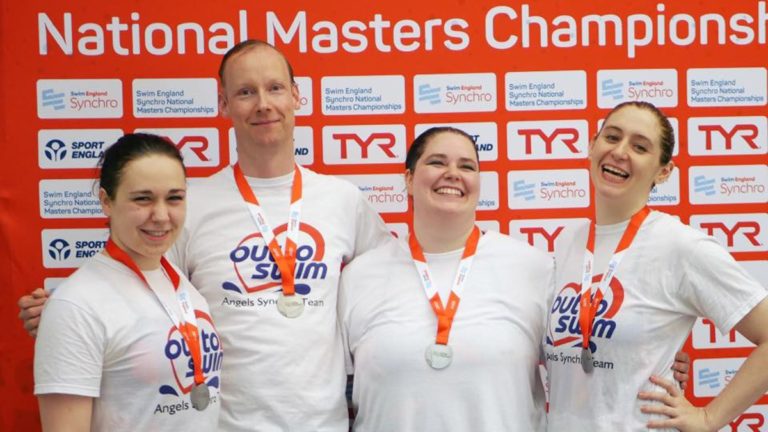
As part of a series of articles to mark Pride Month, artistic swimmer Stephanie Ramsay shares her experiences as a member of the LGBTQ+ community within aquatics.
Stephanie has been competing for the last five years with Out To Swim, the UK’s largest LGBTQ+ aquatics club and charity.
The club was founded in 1992 and has since gone on to attend competitions across the country and internationally.
Her love for and involvement with the club saw her take on the role as chair of the artistic swimming section shortly before the first UK lockdown in 2020.
Here, Stephanie explains why the community aspect of Out To Swim is so important, why she loves being part of a mixed artistic swimming team and what she thinks will be the role of LGBTQ+ clubs in the future.
Five years with Out To Swim
I joined Out To Swim back in 2016, not realising it was an LGBTQ+ club – I missed a lot of rainbows on the way in!
I came back into the sport after injury and saw it was a fantastic community, so I stayed around and ended up becoming chair just as the pandemic hit, so this is my second year in that role.
I’ve just loved being part of this club. As we are one of the few mixed clubs, and certainly one of the few mixed Masters artistic swimming clubs in the country, our aim is just to try to get as many people into artistic swimming as we can – and as many people of different genders into the sport to open it up.
It has been very much a white girls’ sport and it can be quite difficult to get into, so it’s about trying to open it up to as many people as possible.
All about the community
It seems like it would be a nice idea at some point to not need to have specifically gay, LGBTQ+ swim clubs or sports clubs in general – and when you look at Nationals, you see that we are a much better part of that wider swimming community now. Perhaps it is less essential.
But it’s about so much more than just an LGBTQ+ swim team, it’s that whole community that comes together, those shared experiences that you don’t necessarily get in a ‘straight’ club.
It’s where you can wear all your identities at once. It’s quite an interesting position to be in, to be part of a club where we are minorities within minorities within minorities.
Artistic swimming is such a small part of the aquatics community anyway. You then have adult beginners who are male, and we account for about 90 per cent of that particular population, all in one club.
That means we definitely have a lot of members who know what it’s like to be on the outside of a community – and when you’ve been there, I guess you just don’t want other people to be in the same situation, so let’s get people to be somewhere where they are comfortable.
I was lucky enough to win a Club Spirit Award at the Out For Sport awards earlier this year. That was really quite special.
Our swimmers are primarily queer of some variety. In our artistic swimmers, we have a much larger straight percentage. That’s because we have people that have come in with really strong backgrounds, who have been competing at national level within their own country.
They have trialled at other clubs and they’ve ultimately come back to us because we had created that community that they wanted to be part of. That was pretty special, to have heard that from a few people now.
The enthusiasm is ‘amazing’
From my perspective, I have lived quite a blessed gay life in that I’ve very rarely encountered any sort of homophobia. But one of the few times I’ve encountered it has been at an artistic swimming competition when they turned around and said, ‘you’re swimming with them?!’
To this day, I still don’t know whether it was, ‘why are you swimming with the gay club?’, ‘why are you swimming with the boys?’ or ‘why are you swimming with somebody who’s not as big a competitor at nationals?’
I have my views, I know which way it felt. So to have seen a little bit of that side of aquatics, to then have people who aren’t necessarily in that minority come in and say, ‘we just want to be part of this, we absolutely want to represent this club, we want to take it as far as we can and be involved and do all this’ – that is amazing.
Again, we’ve got a whole bunch of adult beginners, some are queer, some aren’t. To just be able to give that opportunity and see people really enthusiastic and then recommending it to their friends and then building on that, it’s great to see.
After all, the restrictions of lockdowns over the last 15 months, people are happy to be back as well!
Pride in Water involvement
Since the LGBTQ+ support network Pride in Water was first launched last August, I have tried to be involved. I initially turned up to the first meeting because I thought, ‘let’s see what this is about – it’s gay and it’s water, so let’s find out’.
I do think it’s an important thing to be a part of, and it’s important to make sure there’s representation across all of aquatics, to make sure everyone has a fair chance of being seen.
There have been so many stories from different members of Pride in Water about people who came out to them and didn’t feel comfortable at that time.
I think there is always going to be a need for LGBTQ+ sports clubs and that sort of thing, but it shouldn’t be the only place where you feel comfortable to be out as an athlete.
To have that universal acceptance would be a dream.
A gay Mormon has shared the moment he came out as gay to his religious father, and the reaction was not what he expected.
Austin Swink, from Port St Lucie, Florida, was 19-years-old and preparing to head off on a two-year mission trip.
Mormon missionaries are typically away from home for two years, often assigned to a foreign country and unable to return at any point to visit their families, so Austin wanted to break the news to his dad before he left.
He told USA Today: “I was about to leave on my mission for my church, and I got this feeling that I just needed to get it off my chest before I left, because it was weighing on me for so long, not saying anything.”
Although he said he and his dad, Vaughn Swink, had “always been pretty close”, Austin was terrified as the Mormon church, otherwise known as the Church of Jesus Christ of Latter-day Saints or LDS church, is not known for LGBT+ acceptance.
Austin decided to record the moment, but his dad’s reaction was completely loving.
As the teenager stuttered, “I’m gay”, his dad reached out for him.
He said: “Austin, I don’t care. I don’t care!”
As the gay Mormon 19-year-old broke down in tears, he continued: “Austin, listen, look at me. I don’t care. You’re okay! Are you a child of God?”
Austin said that he was, and his dad responded: “OK, that’s fine!”
Vaughn told USA Today: “It just makes sense for someone to be happy and not have to hide, and not say anything about how they’re really feeling.
“They’re just almost [feeling] like they have to lie to themselves and to others, that’s not right.”
“For him to come out is to be happy,” he added.
Austin, who is now happily out of the closet and has a boyfriend called Jason, received an outpouring of love after posting the video, with many of the comments coming from other young gay members of the Mormon church.
He said: “If you’re going through something like that, if you feel that you can’t be yourself, if you feel that your parents won’t love you anymore, I just want you to know that there are so many other people in this world that do love you.
“You’ll make it through, we all will make it through together. So don’t give up!”
A gay Mormon has shared the moment he came out as gay to his religious father, and the reaction was not what he expected.
Austin Swink, from Port St Lucie, Florida, was 19-years-old and preparing to head off on a two-year mission trip.
Mormon missionaries are typically away from home for two years, often assigned to a foreign country and unable to return at any point to visit their families, so Austin wanted to break the news to his dad before he left.
He told USA Today: “I was about to leave on my mission for my church, and I got this feeling that I just needed to get it off my chest before I left, because it was weighing on me for so long, not saying anything.”
Although he said he and his dad, Vaughn Swink, had “always been pretty close”, Austin was terrified as the Mormon church, otherwise known as the Church of Jesus Christ of Latter-day Saints or LDS church, is not known for LGBT+ acceptance.
Austin decided to record the moment, but his dad’s reaction was completely loving.
As the teenager stuttered, “I’m gay”, his dad reached out for him.
He said: “Austin, I don’t care. I don’t care!”
As the gay Mormon 19-year-old broke down in tears, he continued: “Austin, listen, look at me. I don’t care. You’re okay! Are you a child of God?”
Austin said that he was, and his dad responded: “OK, that’s fine!”
Vaughn told USA Today: “It just makes sense for someone to be happy and not have to hide, and not say anything about how they’re really feeling.
“They’re just almost [feeling] like they have to lie to themselves and to others, that’s not right.”
“For him to come out is to be happy,” he added.
Austin, who is now happily out of the closet and has a boyfriend called Jason, received an outpouring of love after posting the video, with many of the comments coming from other young gay members of the Mormon church.
He said: “If you’re going through something like that, if you feel that you can’t be yourself, if you feel that your parents won’t love you anymore, I just want you to know that there are so many other people in this world that do love you.
“You’ll make it through, we all will make it through together. So don’t give up!”
Glenn Burke was an amazing athlete, extremely likable and the glue to the clubhouse. Yet he was forced out of the major leagues after four seasons because of who he was: Major League Baseball’s first openly gay active player.
There hasn’t been a second — even though more than four decades have passed since Burke played outfield for the Dodgers and A’s.
MLB speaks of its advocating inclusion, diversity and equality. Twenty-nine of 30 teams are staging Pride Nights this month — the exception is the Texas Rangers — and the A’s have named their Pride Night on Friday to honor Burke. but the game’s changing culture hasn’t provided enough comfort for any gay players to come out of the closet.
“You’d hope it would be better now, but the evidence doesn’t support that,” author Andrew Maraniss said. “No gay player in the major leagues has come out since Glenn Burke. The level of homophobia is too strong.”
Maraniss wrote “Singled Out: The True Story of Glenn Burke,” which was published in March and chronicles Burke’s life. He said it’s not the fault of the gay player as much as “a society that still has much work to do to create an environment where a player would feel supported.”
Progress has been made. Billy Bean was named MLB’s ambassador for inclusion in 2014 and later became vice president and special assistant to Commissioner Rob Manfred, communicating with players about LGBT issues and sharing his own story. Bean had a six-year MLB career that ended in 1995.
Burke was open about his sexuality and knew teammates and management were aware of it. Bean did not feel he could come out until four years after his final big-league game.
“I feel we’re all pointed in the right direction,” Bean said of baseball being more accepting of a gay player. “The league across the board continues to grow and cultivate relationships that are the indicators and signs that a player needs to see.
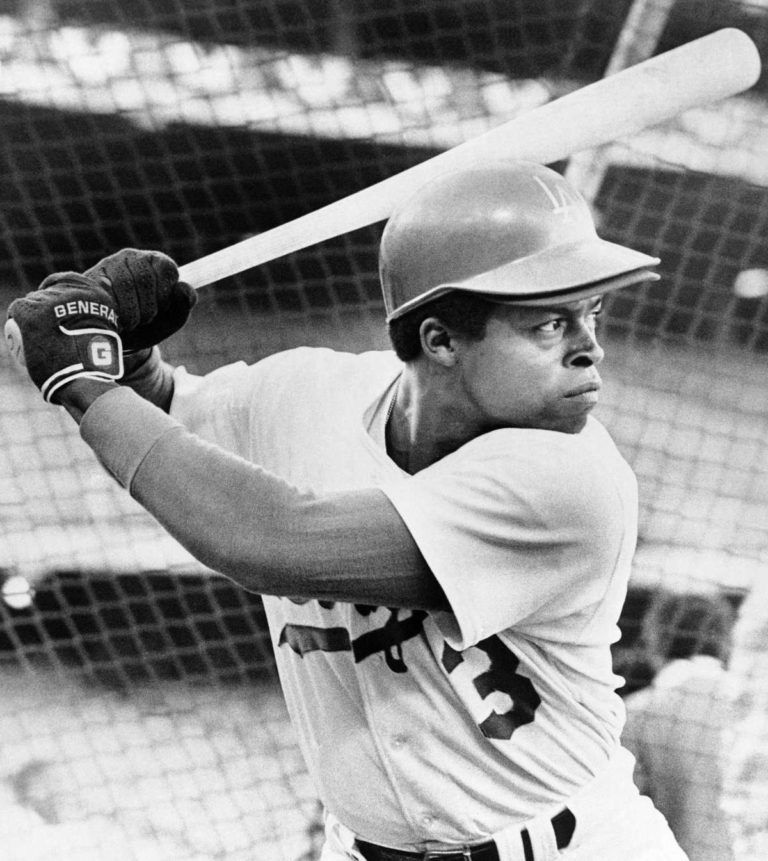
Glenn Burke taking some batting practice at Dodger Stadium in Los Angeles on Monday, Oct. 4, 1977 was given the call to start at center field for the Los Angeles Dodgers on Tuesday when they open the National League Championships against the Philadelphia Phillies.
Associated Press 1977
“When I was a player, there was no education, no messaging to players about social issues, no wellness conversations, no conversations about eliminating sexism or identifying sexism in the workplace. There’s so much that goes with playing in the major leagues now, and baseball completely understands and prioritizes that, and now we have allocated resources.”
Times have changed enough that players such as A’s outfielder Mark Canha and Giants outfielder Austin Slater are open about supporting a gay player.
“I would 100% embrace an LGBTQ+ person if they’re my teammate, even if they were on another team,” Canha said. “I would feel obligated to voice my support on social media. I would hope that they would be well-received in baseball. I would hope we’re at a point in 2021 where people are accepting of that and would embrace that.
“The more people that are popular in the game who voice their support, I think it’ll help the cause and help kids growing up to understand that there are a lot of different types of people who live their lives in different ways. … I’ll do my best to spread that message across baseball.”
Slater said, “You don’t want someone living in fear they’re going to be chastised because of their sexual orientation. It saddens me that someone feels that way, not only as a co-worker but a teammate.
“I would hope we can embrace that person and help him so he can feel comfortable. I think hopefully with all the movement and awareness not only on social media but around the globe, guys realize it’s important to be inclusive in baseball and sports.”
While both players speculate there’s a good portion of baseball that would accept a gay player, they realize it’s far from universal. Canha said, “I know a lot of people (in baseball) who don’t accept or support” the LBGBTQ+ people, let alone a potential teammate. And Slater wonders about drawbacks in the response, saying a player is “not only fearful that his teammates wouldn’t accept him but the reaction he’d get with the media making it a national story.”
Giants manager Gabe Kapler has his own efforts promoting inclusion, and said, “Absolutely no discrimination should be tolerated or accepted in any clubhouse. A gay player should absolutely be welcomed. However, I am also aware that coming out is a very personal, individual decision. I also know that it isn’t enough just to say those words.
“Creating an inclusive and welcoming atmosphere is something that requires constant work, effort and attention from everyone in an organization. I’m glad the Giants have begun to take those steps, and I’m glad we’re committed to taking more.”
Oakland A’s
It’s a far cry from Burke’s days. The Berkeley High School legend had such potential that then-Dodgers coach Jim Gilliam said Burke could be “another Willie Mays,” significant considering Gilliam was a close friend of Mays from their playing days.
Burke did not receive support from management either in Los Angeles or Oakland. Tommy Lasorda, his manager with the Dodgers, refused to acknowledge the sexuality of his own son, Spunky, even after Spunky died of AIDS in 1991. Burke and Spunky were friends.
“We all liked Glenn a lot not only on the field but off the field,” former teammate Dusty Baker said. “He was always fun-loving. We heard about some of the things baseball and the world might not have been ready for at that time. … A lot of people were guessing. But it didn’t change our idea about him personally.
“Not only did I stand up for him, but he was like my little brother. There were rumors about him and Spunky. I tried not to be judgmental of a person’s sexual preferences or anything. That’s what I was taught. Glenn was a heck of a dude, and I tried to help him off the field.”
Burke was good enough to start Game 1 of the 1977 World Series. But after the season, then-Dodgers general manager Al Campanis tried to pay Burke $75,000 to get married. “You mean to a woman?” asked Burke. Once Burke refused, Campanis looked to trade him and dealt him to the A’s in May 1978.
In Oakland, Burke played the rest of the 1978 season and two months into 1979 before quitting in early June. He tried a comeback in 1980, thrilled about the A’s new manager, Billy Martin, who had a similar background, playing ball at Berkeley High and Oakland’s Bushrod Park. However, Martin often spouted homophobic slurs, and said he’d refuse to play Burke. That led Burke to believe that Martin was homophobic.
Burke had knee surgery and, after his recovery, got demoted to the minors. Realizing Martin had no plan for him at the MLB level, Burke, in his athletic prime at 27, called it quits again after just 25 games, this time for good.
“Baseball had never been confronted with someone like Glenn before,” Bean said. “All the men who mistreated him or did not know how to accept him had never been given any resources to act otherwise. It’s essential we learn from it.”
While his sexuality was known within baseball, Burke didn’t tell his story to the media until 1982 when he was featured in Inside Sports magazine (“The Double Life of a Gay Dodger”) and on the “Today” show with Bryant Gumbel.
“He called me when Inside Sports was doing an article on him,” Baker said. “I said, ‘what do I tell them?’ He said, ‘You tell them whatever you want.’”
Maraniss, noting Burke’s .237 batting average and two career home runs, said it’s unfair to judge the outfielder’s statistics because of what he was facing.
“You could say Glenn played himself out of the major leagues with his numbers, but the mental aspect is so important, and just imagine if you’re walking on eggshells the whole time, wondering what people are thinking and saying about you, hearing the F-word in the stands and having your GM offer you a cash bribe to cover up your sexuality,” Maraniss said.
“No way you can fully develop your athletic abilities in that kind of environment.”
At the same time, Maraniss said he believes the game could be ready for openly gay players.
“A good segment of society would celebrate a gay player in the majors and admire his courage,” Maraniss said. “Lots of fans would get behind that player. He’d have the most popular jersey in the major leagues.
“Think of how inspiring it would be to young gay kids. Say a boy playing baseball who’s 12 or 13 and has that role model in the major leagues. The benefit of that would be immeasurable and inspiring in a way we have not seen before.”
The right environment would mean a team and teammates who would publicly embrace a gay player and call his presence no big deal — teammates such as Baker, who supported Burke during their Dodger days. Baker had learned from the legendary Hank Aaron, his Braves teammate, to be a mentor for young players, especially young Black players. Burke and Baker are also forever connected for the first high-five, which Burke offered at home plate after Baker hit his 30th home run on the last day of the 1977 season.
After his baseball career, Burke enjoyed hanging out in the Castro district, and he was dominating in a gay softball league. The good times didn’t last. Burke was plagued by money and drug issues and was hit by a car, which left him with a broken leg that didn’t heal. He served time in prison for grand theft and contracted the AIDS virus, the complications of which took his life in 1995. He was 42.
“We’re a very conservative game,” said Baker, who suggested MLB has its share of gay players because “baseball is a microcosm of our society.” The lesson learned from Burke’s story, Baker said, is “for us to be open-minded and accept a person (for) who he is.”
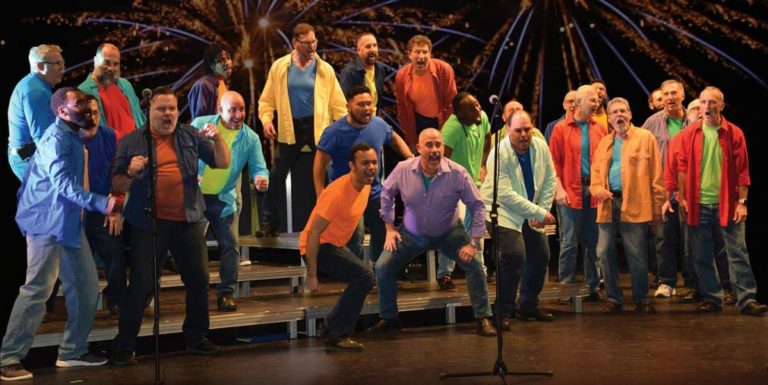
“It was in the sort of height of the gay and lesbian choral movement,” explained Greg McMahan, artistic director for the CTGMC. “Pretty much every city was having one, and a bunch of guys were hanging out at one of the bars downtown and said, ‘you know, we really should have a chorus here.’”
It didn’t take long before the first group held its first concert at Pride.
“Since then, we’ve gone through five different sort of generations of directors and membership, and believe it or not, we still have two original members from back then,” McMahan said, who joined the group in its second year. “When we first started, it was during the AIDS crisis, so a lot of our music was centered on loss and things like that. And also, just the fact that we could appear in public, as openly gay men was shocking at the time; it’s hard to believe that now. We take it for granted now, but it was quite a big deal.”
Over the years, the CTGMC has evolved and different artistic directors brought different things to the group. For instance, one of the directors was a big Broadway guy and had a very different sense of comedy and staging.
“It was a lot of very staged costumes, and every moment was choreographed and incredibly entertaining,” said Ken Sawicki, president of the CT Gay Men’s Chorus. “But it also meant our members were there three to four nights a week, plus all weekends. So, it was a lot of work. We love pleasing audiences, but taking care of our membership is sort of the most important thing to me, and making sure they’re fulfilled in what they do.”
The CTGMC is known for its comedy elements and crazy visuals, but naturally, it’s the singing that people love most.
1of3
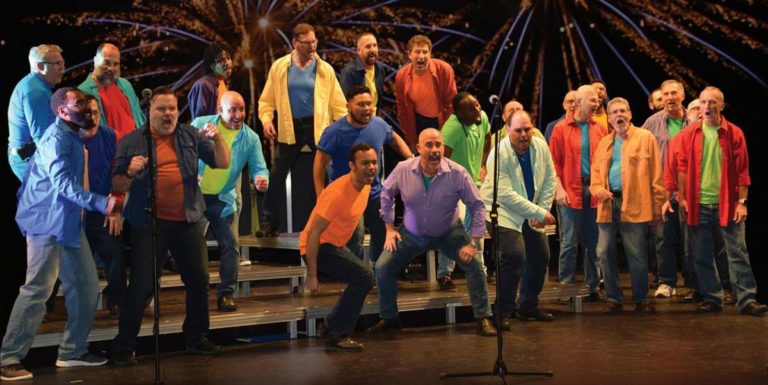
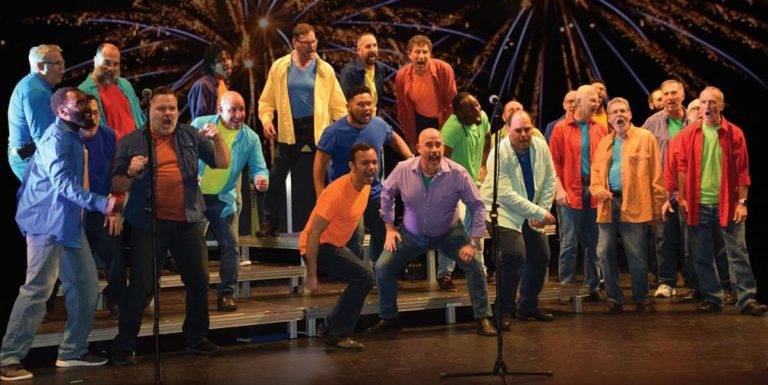
Over the years the chorus has evolved dramatically, it first formed during the AIDS crisis in 1986 and performed grief-oriented songs. Since forming the chorus has performed a variety of different musical genres.
“We always make sure that we sing really, really beautiful music and that we sing from our hearts,” Sawicki said. “Having all those things at the same time can sometimes be a tightrope to walk. When everything comes together, it’s a pleasure to walk out on that stage and I think the audience feels the pleasure we have in doing it.”
In addition to the members who have been there since the beginning and several who came in shortly after, the CTGMC currently has a lot of newer guys who Sawicki describes as “young, enthusiastic, talented, and wonderful on stage.” Plus, there are those in between who have joined through the decades, with singers aged 25 to 75 as part of the group today.
“It’s a really interesting and great mixture of different personalities, different ages, different perspectives,” McMahan said. “All anybody wants to do is to do a good job so that they know the show flourishes—everybody has this sort of great resolve to make it work. Everybody’s really, really friendly with each other. It’s kind of rare in the gay and lesbian choral community to have as much diversity as we do. I’m very, very proud of that.”
More Entertainment
The CTGMC is open to any male over 18 who sings and members can be gay, straight or bisexual, as long as they present as male on stage. Two auditions are held a year, one in spring and one in fall.
“We’ve had trans people who have presented as male, and then we also currently have one of our board members who is straight, married and has kids, and the whole family comes to our performances,” Sawicki said. “The auditions are fairly simple; they come in, they sing for us, we do some sight-reading things and they just need to bring a piece of music that they are comfortable with.”
When Sawicki joined, he admitted that he didn’t know how to read a note of music, but everyone was so helpful and generous with their knowledge of music.
“If I’m having trouble with notes or something isn’t right, someone is always there to help,” he said. “We have music majors, professional musicians and then some guys who just sing in the shower. So many different musical experience levels.”
When Covid forced the cancellation of rehearsals and their shows last year, the CTGMC decided to go virtual.
“We started making some videos of songs that we would put out there on our YouTube channel and social media, and they’ve gotten a good response,” Sawicki said. “We decided that instead of our usual holiday thing, which is in December, we did a Halloween extravaganza called ‘Scary Times, which I thought was pretty apropos. It got a great response.”
So much so that the group decided to switch up from its usual spring show to do a Valentine’s Day show called “Happy Endings,” a pastiche of musical numbers. “That was very fun to put together and everyone worked hard to put that together.”
It’s been a long time since the group has been able to get together live in person, but with everyone now vaccinated, they are meeting up later this month for the first time in 2021.
“We will be singing outside at the end of June at the Festival of Arts and Ideas in New Haven,” McMahan said. “The final night of that will be a big pride extravaganza night and that will be the first time we have sung together in person for more than a year and a half.”
The CTGMC will be doing some other events throughout the summer—both virtual and in-person, and in September will start rehearsals for its annual holiday show.
In a normal year, the group would hold an annual fundraiser and a monthly BingoMania event, where people dress in drag and fun costumes, but with Covid, both avenues for funding were halted. Thankfully, BingoMania returns on July 17.
“We’re looking forward to things getting back to normal,” Sawicki said. “We have a lot of exciting things planned now that things are starting to open up again and we’re all excited about being together and singing for everyone.”
For more information or to donate to the group, visit www.ctgmc.org.
“It was in the sort of height of the gay and lesbian choral movement,” explained Greg McMahan, artistic director for the CTGMC. “Pretty much every city was having one, and a bunch of guys were hanging out at one of the bars downtown and said, ‘you know, we really should have a chorus here.’”
It didn’t take long before the first group held its first concert at Pride.
“Since then, we’ve gone through five different sort of generations of directors and membership, and believe it or not, we still have two original members from back then,” McMahan said, who joined the group in its second year. “When we first started, it was during the AIDS crisis, so a lot of our music was centered on loss and things like that. And also, just the fact that we could appear in public, as openly gay men was shocking at the time; it’s hard to believe that now. We take it for granted now, but it was quite a big deal.”
Over the years, the CTGMC has evolved and different artistic directors brought different things to the group. For instance, one of the directors was a big Broadway guy and had a very different sense of comedy and staging.
“It was a lot of very staged costumes, and every moment was choreographed and incredibly entertaining,” said Ken Sawicki, president of the CT Gay Men’s Chorus. “But it also meant our members were there three to four nights a week, plus all weekends. So, it was a lot of work. We love pleasing audiences, but taking care of our membership is sort of the most important thing to me, and making sure they’re fulfilled in what they do.”
The CTGMC is known for its comedy elements and crazy visuals, but naturally, it’s the singing that people love most.
1of3
Over the years the chorus has evolved dramatically, it first formed during the AIDS crisis in 1986 and performed grief-oriented songs. Since forming the chorus has performed a variety of different musical genres.
“We always make sure that we sing really, really beautiful music and that we sing from our hearts,” Sawicki said. “Having all those things at the same time can sometimes be a tightrope to walk. When everything comes together, it’s a pleasure to walk out on that stage and I think the audience feels the pleasure we have in doing it.”
In addition to the members who have been there since the beginning and several who came in shortly after, the CTGMC currently has a lot of newer guys who Sawicki describes as “young, enthusiastic, talented, and wonderful on stage.” Plus, there are those in between who have joined through the decades, with singers aged 25 to 75 as part of the group today.
“It’s a really interesting and great mixture of different personalities, different ages, different perspectives,” McMahan said. “All anybody wants to do is to do a good job so that they know the show flourishes—everybody has this sort of great resolve to make it work. Everybody’s really, really friendly with each other. It’s kind of rare in the gay and lesbian choral community to have as much diversity as we do. I’m very, very proud of that.”
More Entertainment
The CTGMC is open to any male over 18 who sings and members can be gay, straight or bisexual, as long as they present as male on stage. Two auditions are held a year, one in spring and one in fall.
“We’ve had trans people who have presented as male, and then we also currently have one of our board members who is straight, married and has kids, and the whole family comes to our performances,” Sawicki said. “The auditions are fairly simple; they come in, they sing for us, we do some sight-reading things and they just need to bring a piece of music that they are comfortable with.”
When Sawicki joined, he admitted that he didn’t know how to read a note of music, but everyone was so helpful and generous with their knowledge of music.
“If I’m having trouble with notes or something isn’t right, someone is always there to help,” he said. “We have music majors, professional musicians and then some guys who just sing in the shower. So many different musical experience levels.”
When Covid forced the cancellation of rehearsals and their shows last year, the CTGMC decided to go virtual.
“We started making some videos of songs that we would put out there on our YouTube channel and social media, and they’ve gotten a good response,” Sawicki said. “We decided that instead of our usual holiday thing, which is in December, we did a Halloween extravaganza called ‘Scary Times, which I thought was pretty apropos. It got a great response.”
So much so that the group decided to switch up from its usual spring show to do a Valentine’s Day show called “Happy Endings,” a pastiche of musical numbers. “That was very fun to put together and everyone worked hard to put that together.”
It’s been a long time since the group has been able to get together live in person, but with everyone now vaccinated, they are meeting up later this month for the first time in 2021.
“We will be singing outside at the end of June at the Festival of Arts and Ideas in New Haven,” McMahan said. “The final night of that will be a big pride extravaganza night and that will be the first time we have sung together in person for more than a year and a half.”
The CTGMC will be doing some other events throughout the summer—both virtual and in-person, and in September will start rehearsals for its annual holiday show.
In a normal year, the group would hold an annual fundraiser and a monthly BingoMania event, where people dress in drag and fun costumes, but with Covid, both avenues for funding were halted. Thankfully, BingoMania returns on July 17.
“We’re looking forward to things getting back to normal,” Sawicki said. “We have a lot of exciting things planned now that things are starting to open up again and we’re all excited about being together and singing for everyone.”
For more information or to donate to the group, visit www.ctgmc.org.
“It was in the sort of height of the gay and lesbian choral movement,” explained Greg McMahan, artistic director for the CTGMC. “Pretty much every city was having one, and a bunch of guys were hanging out at one of the bars downtown and said, ‘you know, we really should have a chorus here.’”
It didn’t take long before the first group held its first concert at Pride.
“Since then, we’ve gone through five different sort of generations of directors and membership, and believe it or not, we still have two original members from back then,” McMahan said, who joined the group in its second year. “When we first started, it was during the AIDS crisis, so a lot of our music was centered on loss and things like that. And also, just the fact that we could appear in public, as openly gay men was shocking at the time; it’s hard to believe that now. We take it for granted now, but it was quite a big deal.”
Over the years, the CTGMC has evolved and different artistic directors brought different things to the group. For instance, one of the directors was a big Broadway guy and had a very different sense of comedy and staging.
“It was a lot of very staged costumes, and every moment was choreographed and incredibly entertaining,” said Ken Sawicki, president of the CT Gay Men’s Chorus. “But it also meant our members were there three to four nights a week, plus all weekends. So, it was a lot of work. We love pleasing audiences, but taking care of our membership is sort of the most important thing to me, and making sure they’re fulfilled in what they do.”
The CTGMC is known for its comedy elements and crazy visuals, but naturally, it’s the singing that people love most.
1of3
Over the years the chorus has evolved dramatically, it first formed during the AIDS crisis in 1986 and performed grief-oriented songs. Since forming the chorus has performed a variety of different musical genres.
“We always make sure that we sing really, really beautiful music and that we sing from our hearts,” Sawicki said. “Having all those things at the same time can sometimes be a tightrope to walk. When everything comes together, it’s a pleasure to walk out on that stage and I think the audience feels the pleasure we have in doing it.”
In addition to the members who have been there since the beginning and several who came in shortly after, the CTGMC currently has a lot of newer guys who Sawicki describes as “young, enthusiastic, talented, and wonderful on stage.” Plus, there are those in between who have joined through the decades, with singers aged 25 to 75 as part of the group today.
“It’s a really interesting and great mixture of different personalities, different ages, different perspectives,” McMahan said. “All anybody wants to do is to do a good job so that they know the show flourishes—everybody has this sort of great resolve to make it work. Everybody’s really, really friendly with each other. It’s kind of rare in the gay and lesbian choral community to have as much diversity as we do. I’m very, very proud of that.”
More Entertainment
The CTGMC is open to any male over 18 who sings and members can be gay, straight or bisexual, as long as they present as male on stage. Two auditions are held a year, one in spring and one in fall.
“We’ve had trans people who have presented as male, and then we also currently have one of our board members who is straight, married and has kids, and the whole family comes to our performances,” Sawicki said. “The auditions are fairly simple; they come in, they sing for us, we do some sight-reading things and they just need to bring a piece of music that they are comfortable with.”
When Sawicki joined, he admitted that he didn’t know how to read a note of music, but everyone was so helpful and generous with their knowledge of music.
“If I’m having trouble with notes or something isn’t right, someone is always there to help,” he said. “We have music majors, professional musicians and then some guys who just sing in the shower. So many different musical experience levels.”
When Covid forced the cancellation of rehearsals and their shows last year, the CTGMC decided to go virtual.
“We started making some videos of songs that we would put out there on our YouTube channel and social media, and they’ve gotten a good response,” Sawicki said. “We decided that instead of our usual holiday thing, which is in December, we did a Halloween extravaganza called ‘Scary Times, which I thought was pretty apropos. It got a great response.”
So much so that the group decided to switch up from its usual spring show to do a Valentine’s Day show called “Happy Endings,” a pastiche of musical numbers. “That was very fun to put together and everyone worked hard to put that together.”
It’s been a long time since the group has been able to get together live in person, but with everyone now vaccinated, they are meeting up later this month for the first time in 2021.
“We will be singing outside at the end of June at the Festival of Arts and Ideas in New Haven,” McMahan said. “The final night of that will be a big pride extravaganza night and that will be the first time we have sung together in person for more than a year and a half.”
The CTGMC will be doing some other events throughout the summer—both virtual and in-person, and in September will start rehearsals for its annual holiday show.
In a normal year, the group would hold an annual fundraiser and a monthly BingoMania event, where people dress in drag and fun costumes, but with Covid, both avenues for funding were halted. Thankfully, BingoMania returns on July 17.
“We’re looking forward to things getting back to normal,” Sawicki said. “We have a lot of exciting things planned now that things are starting to open up again and we’re all excited about being together and singing for everyone.”
For more information or to donate to the group, visit www.ctgmc.org.
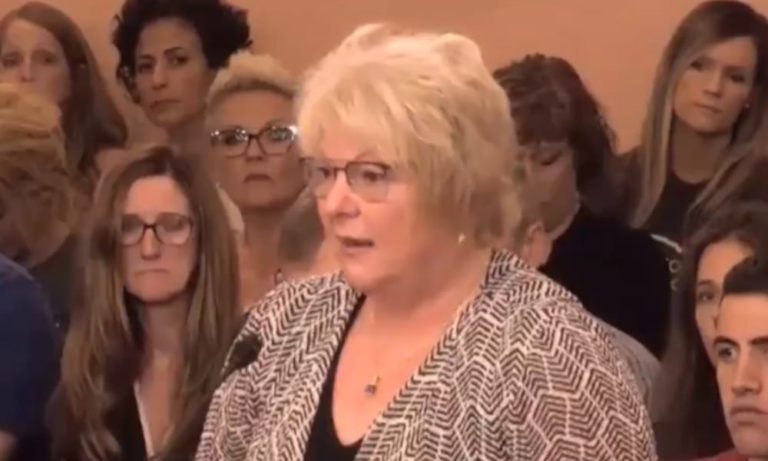
Sherri Tenpenny testifying before Ohio legislators. (Screen capture via Twitter)
An anti-LGBT+ doctor testified in front of the Ohio state legislature to say coronavirus vaccines make people feel magnetic.
In a moment that looked like a deleted scene from Parks and Recreation, osteopathic physician Sherri Tenpenny claimed that the vaccines cause forks, keys and other metal objects to stick to people’s foreheads.
Oh, and it is, of course, all linked to 5G network towers.
OHIO: Anti-vaccine *expert* witness claims vaccine causes forks and keys to stick to your forehead and it’s linked to 5G network towers…. Up there trying to out-Tennessee us! 😵💫🥴 pic.twitter.com/GdbQZHrdLv
— The Tennessee Holler (@TheTNHoller) June 8, 2021
“I’m sure you’ve seen the pictures all over the internet of people who have had these shots and now they’re magnetised,” Tenpenny told the Ohio House Health Committee Tuesday (10 June).
“They can put a key on their forehead. It sticks. They can put spoons and forks all over them and they can stick because now we think that there’s a metal piece to that.”
Can the COVID-19 vaccine make you magnetic? Obviously not, say actual experts
Tenpenny appeared before the committee, which scrutinises bills on health and social care, during a session that explored a ban on businesses, colleges and health facilities from requiring people to be vaccinated.
“There’s been people who have long suspected that there was some sort of an interface,” she said, “yet to be defined interface, between what’s being injected in these shots and all of the 5G towers.”
It goes without saying that, no, coronavirus vaccines do not contain microchips. No, they do not make you magnetic and no, you do not begin interacting with mobile phone towers.
In fact – and emphasis on the word “fact” – experts have disproved the notion that vaccines make people magnetic. Often, social media users peddling the claim have used oil and even tape to tack metal coins to their arms.
“Receiving a COVID-19 vaccine will not make you magnetic, including at the site of vaccination which is usually your arm,” the Center for Disease Control and Prevention said on a page on its website busting various myths.
Lawmakers were hearing from Tenpenny, among others, during a session that debated House Bill 248.
Unsurprisingly backed by 16 House Republicans, the measure would prohibit everything from hospitals to nursing homes mandating, requesting or even incentivising staffers getting vaccinated.
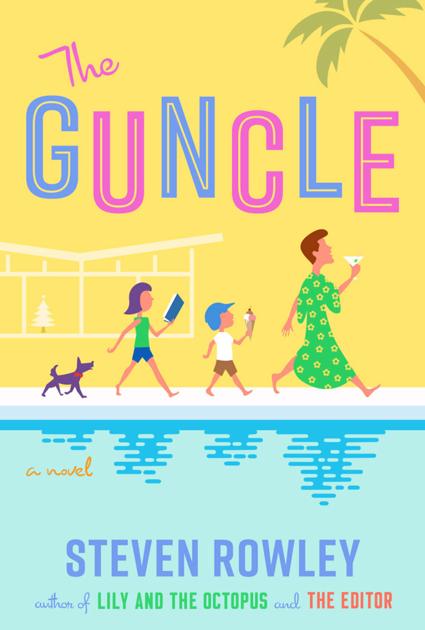
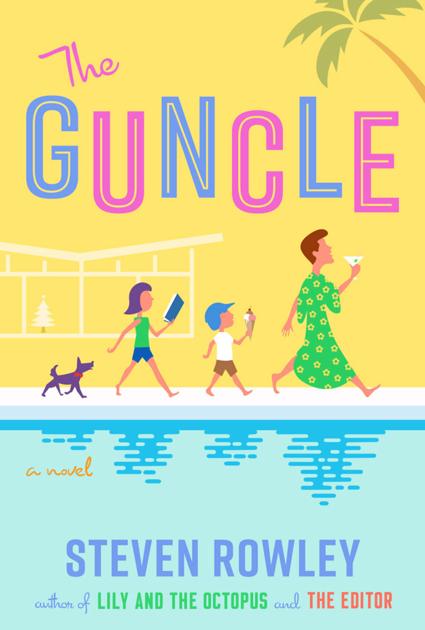
The final talk in the Truro Center For The Arts at Castle Hill series of free author talks will take place on Wednesday, June 16, at 7 PM. The talk will take place live over Zoom with host Karen Dukess interviewing Stephen Rowley, author of “The Guncle.”
“The Guncle” is a warm and humorous novel about a once-famous gay sitcom star whose unexpected family tragedy leaves him with his niece and nephew for the summer. Patrick, or Gay Uncle Patrick (GUP, for short), has always loved his niece and nephew. That is, he loves spending time with them when they come out to Palm Springs for weeklong visits, or when he heads home to Connecticut for the holidays. But in terms of caretaking and relating to two children, no matter how adorable, Patrick is, honestly, overwhelmed. So when tragedy strikes, Patrick finds himself suddenly taking on the role of primary guardian. Despite having a set of “Guncle Rules” ready to go, Patrick has no idea what to expect, quickly realizing that parenting, even if temporary, isn’t solved with treats and jokes.
Steven Rowley is the bestselling author of “Lily and the Octopus,” a Washington Post Notable Book of 2016 and “The Editor,” named by NPR and Esquire Magazine as one of the Best Books of 2019. Mr. Rowley’s fiction has been published in 20 languages. He lives in Palm Springs, California, with his partner, the writer Byron Lane.
Host Karen Dukess is the author of “The Last Book Party.” She has been a tour guide in the former Soviet Union, a newspaper reporter in Florida, a magazine publisher in Russia and a speechwriter on gender equality for the United Nations Development Programme. She has a degree in Russian Studies from Brown University and a master’s in Journalism from Columbia University.
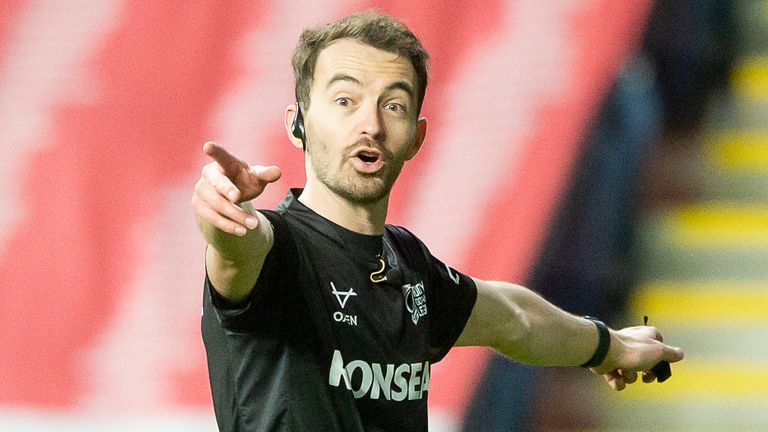
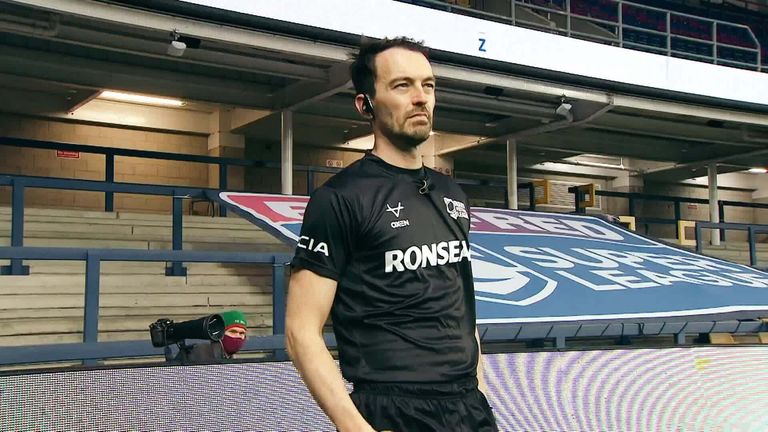
Round 9 of the 2021 Betfred Super League season will see the competition showing support for the Rainbow Laces campaign. Referee James Child, who publicly came out as gay in February, spoke to Sky Sports about its importance
By Fraser Dainton and Marc Bazeley
Last Updated: 10/06/21 12:39pm
Super League referee James Child publicly came out as gay in February
By his own admission, James Child never envisaged he would one day be gracing some of rugby league’s grandest stages.
Although he grew up supporting hometown club Dewsbury Rams, following them home and away with his family, Child was not one for playing sport and even when he took up refereeing at the age of 11 he had no particular ambitions to reach the top.
But these days he is firmly established as one of Super League’s top officials, with the highlight so far being taking charge of the 2017 Grand Final between Leeds Rhinos and Castleford Tigers, and the 37-year-old is in no doubt his younger self would be surprised at how his career has panned out.
“None of my friends were into rugby league and, to be honest, sport wasn’t my forte,” Child told Sky Sports. “When I was at school, if someone had said you’d have become involved in professional sport I would have been surprised.
“It’s probably the next best thing to being involved in the sport. If I wasn’t going to play, then I was at least part of the action.
“When we played football at school at lunchtimes, we’d take it in turn to referee and I quite enjoyed that – probably the power went to my head, no doubt! – so that why I thought I’d give it a go.
“When I was a kid growing up, I tried all sorts of different musical instruments for a few weeks and stopped, and I think my parents were convinced this was the latest musical instrument and would pass in a few weeks. But 25 years later or more, I’m still doing it.”
3:49 Referee James Child on Super League’s support for Rainbow Laces
Referee James Child on Super League’s support for Rainbow Laces
Child is no stranger to making big decisions week in, week out on the rugby field, but one of the biggest decisions he has made off it came in February this year when he publicly revealed his sexuality.
He had already come out as gay to his family, friends and refereeing colleagues – and, indeed, believes many others in rugby league already knew too.
Instead, Child’s desire to go public about his sexuality was a desire to make those who have hurled homophobic abuse at him from the terraces in the past think twice about doing so now this was out in the open.
“That was my main motivation for speaking out as I did earlier this year,” Child said. “It wasn’t a coming out story because my friends, family and colleagues have known about it for years and I think it’s been an open secret in the game anyway.
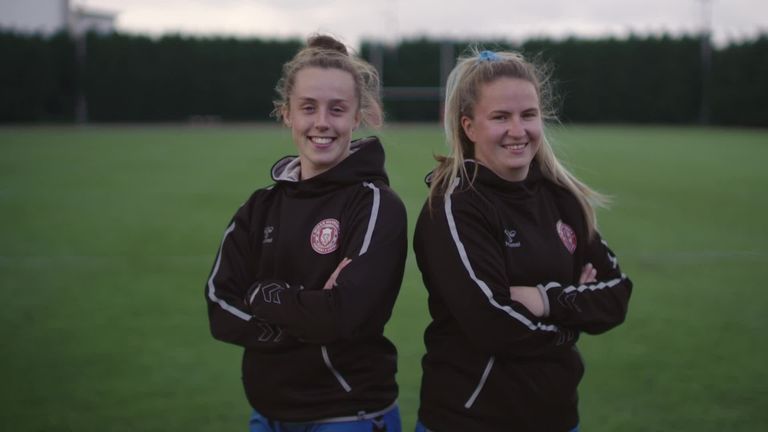
2:48 Ahead of Super League’s Rainbow Laces round, Wigan Warriors’ Becky Greenfield and Rachel Thompson talk about their experiences growing up and the importance of ‘being yourself’
Ahead of Super League’s Rainbow Laces round, Wigan Warriors’ Becky Greenfield and Rachel Thompson talk about their experiences growing up and the importance of ‘being yourself’
“It was more a case of if I can tell everybody I’m gay and I’m quite comfortable with the fact I’m gay – and it is then common knowledge – then if you want to homophobically abuse me then you’re doing so in the knowledge I am gay, which makes it different.
“In many ways it should be a non-issue, but hopefully me speaking up gives some representation for others.”
Round 9 of the Super League season, which kicks off with Castleford Tigers hosting Hull FC live on Sky Sports on Thursday, will see the competition supporting Stonewall’s Rainbow Laces campaign to raise awareness of issues surrounding discrimination based on sexuality and gender identity.
Players and match officials will be encouraged to support the campaign with clubs being provided with pairs of rainbow laces for players to wear, while perimeter boards at stadiums will highlight the campaign and supportive messaging will feature across Super League social media channels.
(CNN) — This past year most of us haven’t strayed far from the street where we live, what with Covid-19 lockdowns, stay-at-home orders and travel bans.
But whether you’re daydreaming about international travel, or just excited to branch out of your neighborhood into the city center, Time Out has some inspiration fodder ready.
The global media brand has rounded up what it calls the “world’s coolest” streets, as selected by some 27,000 city residents from across the globe.
To finalize the top 10, Time Out editors from each destination surveyed the suggested streets, focusing on each nomination’s food and drink highlights, cultural and nightlife offerings. The team also looked into how each street has cultivated a feeling of community, which has perhaps been more important than ever in the wake of the pandemic.
Community spirit
The food scene and community atmosphere on Melbourne’s Smith Street landed it the number one spot on Time Out’s list.
Josie Withers
Topping the list is Smith Street in Melbourne, Australia, a buzzy thoroughfare known for its independent stores, gay bars, live music venues and great restaurant scene.
The way in which the local community has rallied around Smith Street’s businesses during Melbourne’s lockdowns helped the street clinch the top spot, according to Time Out.
Tiny cocktail bar Above Board is one of the Smith Street spots highlighted in the list.
Owner and head bartender Hayden Lambert told CNN Travel that his team is “so excited” by the news, praising Smith Street’s “fantastic community.”
“We have long loved the area and have seen it evolve in so many ways over the last few years since Above Board opened in 2016,” Lambert said. “We feel the area is a melting pot of culture, good vibes and incredible venues!”
Bike-friendly Passeig de Sant Joan in Barcelona, took the number two spot on Time Out’s list.
Shutterstock
Number two on the list is Barcelona’s Passeig de Sant Joan. The Spanish street might not be as famous as Barcelona’s Las Ramblas, but Passeig de Sant Joan is known for being one of the city’s first green corridors — it’s got bicycle lanes, wide sidewalks, trees and lots of outdoor seating. Right now, it’s also hosting food market Mercat de l’Abaceria.
This London walkway is also known for its striking views of St Paul’s Cathedral across the river, and has plenty of outdoor — and indoor — food and drink delights.
Meanwhile stunning street art was what helped San Isidro in Havana, Cuba secure the number four spot on the list. At number five is Los Angeles’ sprawling Sunset Boulevard, one of the Californian city’s most famous streets.
Local view
Rua Rodrigues de Faria in Lisbon, number nine on Time Out’s list, is home to an incredible book store called Ler Devagar.
Shutterstock
This year is the first that Time Out has ranked the world’s coolest streets, although the company is known for producing a yearly round-up of the world’s coolest neighborhoods.
For 2021, Time Out says they wanted “to drill down a bit and go even more local.”
For each street, the company has recommended the best things to do, from checking out art complex WORM in Rotterdam (number 6) to drinking ice coffee at Bellapan Bakery on Rua Três Rios, São Paulo (number 7) to wandering the multi-level, booklovers’ paradise Ler Devagar, part of LX Factory on Rua Rodrigues de Faria in Lisbon (number 9).
Time Out calls streets “microcosms of everything we love about cities.”
“In a year when travel dreams were dashed and we had to stay closer to home, they helped us feel like we were a part of something bigger as well.”
Time Out’s Top 10 Coolest Streets
1. Smith Street, Melbourne, Australia
2. Passeig de Sant Joan, Barcelona, Spain
3. South Bank, London, UK
4. San Isidro, Havana, Cuba
5. Sunset Boulevard, Los Angeles, USA
6. Witte de Withstraat, Rotterdam, the Netherlands
Luke Larson’s wedding videography business has nothing to do with the fact that he’s gay.
Whether he’s working with a straight couple or an LGBTQ+ couple, he’s focused on them. He’s focused on sharing their story the best he can.
But the videographer is still proud about who he is.
“I don’t want people to think of a person as only their identities. We’re so much more than how we identify,” he said. “We’re capable beings. We’re all capable of accomplishing great things, giving love, being empathetic — and we’ve come a long way in Sioux Falls where I’ve seen so many people who are happy living their truths and doing things like running a business.”
The 28-year-old was one of several members of the city’s LGBTQ+ entrepreneurs who shared their stories with the Argus Leader about what it’s like to be an openly LGBTQ+ business owner in the city, and what they hope to accomplish as entrepreneurs.
As the number of LGBTQ-owned businesses in Sioux Falls grows, it’s integral to support those organizations, local business owners say. LGBTQ+ small business owners have a lot to be proud of — from overcoming barriers, creating successful businesses and navigating a chaotic year and pandemic.
South Dakota ranks last place in the Midwest and 48th overall by the State LGBTQ+ Business Climate Index for 2021, by Out Leadership’s annual report on state-by-state progress.
But LGBTQ-led businesses in South Dakota have forged on, and have helped foster an inclusive and vibrant atmosphere. Larson said he hopes to encourage aspiring LGBTQ+ business owners to make the jump.
“It’s great to see businesses out there that are succeeding and driving toward their goals — and as a side note, they’re queer-owned,” he said. “That’s just a bonus. It’s an extra treat.”
Here are the stories of several LGBTQ+ business owners in Sioux Falls in honor of Pride month.
Queen on the Scene: Being LGBTQ+ is ‘more than a demographic to market to’
Quinn Kathner-Tucker needed some Pride gear at a festival a few years ago. They found a booth and bought a few items. As they checked out, they chatted with the people running the booth.
The booth was neither LGBTQ+ owned and operated, nor interested in giving back to Pride and the various organizations looking to elevate queer voices — they were just in it for the sales.
“That lit a fire in me,” said Kathner-Tucker, a nonbinary lesbian. “Our community deserves better and more opportunity to support each other. I am more than just a demographic to market to for profit, and I want the community to feel the same.”
So they started their own business designing pins and accessories celebrating Pride and the LGBTQ+ community, called Queen on the Scene — a nod to Kathner-Tucker’s childhood nickname and to inspire confidence among their customers.
Pins are a form of expression to be “loud and proud,” Kathner-Tucker said, who was also president of Sioux Falls Pride from 2018 to 2020. They also have pins that aren’t specific to Pride, but can be bought by anyone.
“I felt the need to empower people’s voices without speaking,” Kathner-Tucker said, “and that’s what my pins are made to do.”
Their vision of rainbow capitalism is to provide visibility for the LGBTQ+ community and support other queer-owned and operated businesses and nonprofits.
Their campaign, the Purpose Program, works with nonprofits supporting the LGBTQ+ community mission to provide fundraising pins for the nonprofit.
“Queen on the Scene is all about giving back,” they said. “If we’re not moving forward together, then we won’t get there.”
While Kathner-Tucker has had plenty of support from the Sioux Falls community as a queer business owner, they still feel that the cards are stacked against them.
They’ve been yelled at on Phillips Avenue for simply wearing a Pride flag on their shirt, and they market specifically to people and organizations where they know the Queen on the Scene brand would be supported.
But it’s getting better, and Kathner-Tucker hopes that they can set an example for aspiring queer business owners. They recently started a wholesale partnership with RayGun, a popular Midwestern clothing company out of Iowa, and they want everyone to feel safe to be who they are, safe to start a business and safe enough to live a life in Sioux Falls without being harassed on the streets.
“Keep an eye on South Dakota,” they said. “We have a lot of passionate people in the LGBT community who are starting businesses everyday and are finding their fire and will help lift our state to a more progressive mindset.”
Full Circle Book Co-Op: Inclusion requires speaking out, staying proud
With a large flag out front titled P-R-I-D-E, Full Circle Book Co-op is anything but shy.
“We’ve been vandalized four or five times” because of the store’s outspokenness, said co-owner James Kurtz.
Staffed by LGBTQ+ people and led by an ally, the store speaks out in support of political topics like transgender students’ rights to participate in sports. And the small business poses its business model in support, too.
Full Circle is an event space and a relaxing afternoon hangout spot for anyone interested in art or reading. Located at 123 W. 10th St downtown, events are the center of the community. From burlesque, drag, live theater, erotic art and nude suspension to being an after-school coffee shop, board game and poetry slam center, there’s something for everyone at Full Circle.
Being welcoming is the store’s core theme. But the price and business model aren’t always very conducive to a typical downtown spot, where rent can be high.
Kurtz has also thought about being less outspoken in order to appeal to a wider base of customers. But that’s not going to happen.
“At the end of the day, do we need the support of the hate community? We do not. If that means that won’t get us over the tipping point in Sioux Falls, so be it,” Kurtz said.
The for-profit co-op made a decision to stay open through the pandemic, and is now getting popular again.
“Honestly one of my things is seeing the kids, all my baby queers, have a space,” said Rachelle Graham, a barista at Full Circle. “It makes me happy.”
Adrian’s Anomalies: Creating connections, challenging stereotypes drives art
17-year-old Adrian Day was homeless after his parents kicked him out of his Sioux Falls home after confiding in them that he is trans.
With nowhere to live and no one to support him, he funneled his emotions into his art and started selling his work online, hoping to use the money to fund his passion and to cover tuition at South Dakota State University.
Now 22 and a recent SDSU graduate, Day is a full-time illustrator and artist. Day said his identity as a trans nonbinary man informs who he is as a person, business owner and artist — and it helps him share his experience with others in the LGBTQ+ community.
“I find that a lot of people interested in my art are part of the LGBT community because they feel a connection to it,” Day said. “I like to draw monsters and express my feelings about what I’ve dealt with in my life, and a lot of people tell me they relate to it. My work helps explain stuff that they’ve never been able to talk about before.”
Day’s work is a gothic style, and while his work is relevant to anyone, people in the LGBTQ+ community are his biggest supporters. To recognize this support, he creates a Pride series each year. This year, the series focuses on monsters, each representing different flags of the LGBT community.
The figures represent people who are stereotyped as monsters, Day said. When he told his parents that he was trans, they saw him as “someone evil engaging in evil acts,” he said. But that’s not representative of who he is, and not representative of the many people he’s grown to know in the LGBTQ+ community.
His monsters do “nice things” in the paintings, such as picking flowers or gardening, to challenge the stereotypes people associate with others they don’t know, he said.
While Day didn’t find the Pride community until after he started transitioning, the community’s support has helped him build confidence in himself and his work.
“Pride is a big support system for one another to reassure each other that we’re still here and won’t let anyone stop us,” Day said. “Even if it seems like no one in your family supports you or anything, there are always people who will. You just have to do a little searching, and they’re not as far away as you think they are.”
Pasque Creative: ‘It’s OK to be out and own a business in South Dakota’
Hannah Boquet has owned her own photography and design business for 10 years, and she’s been open about how she’s a queer business owner since she started taking clients at Pasque Creative.
It’s part of who she is, informs how she works and is something she’s comfortable sharing. But she knows that’s not the same for other queer business owners in Sioux Falls.
“I think it’s a little scary to be in a new situation and being out about it. You don’t know how people will react and if people will stop giving you your business,” the 36-year-old mother said. “But I’ve been really surprised at how open and accepting everyone is in South Dakota.”
Pasque Creative is a family and commercial photography and videography business. Boquet started as an entrepreneur after she had her first child and didn’t want to sacrifice the time with her child to working demanding hours for another company again.
While she recognizes that there are a handful of openly queer business owners in Sioux Falls and South Dakota, she also wants to encourage aspiring LGBTQ+ business owners to start in Sioux Falls.
“I want to give people a push forward to know that it’s OK to be out and own a business in South Dakota, and especially in Sioux Falls,” Boquet said. “The mood and view around town is pretty open.”
Amare Ari: Standing out is key to empowering future business owners
Sometimes starting a business can be a drag, but “in Sioux Falls it’s easy to follow your dreams and be an entrepreneur,” said long-time designer Arianna James.
James has been sewing since she was five years old, and is known as the go-to person for clothing for all body types.
“I made my own Sgt. Pepper costume, and people started calling from there,” said James, owner of Amare Ari, her own solo business where she makes professional costumes, drag and vintage-inspired wear.
As a polyamorous person married to a drag performer and a performer in her own right, James is also a very out business owner. She’s made it part of her brand, as “clothing and fashion is one of the ways to express yourself.”
When the pandemic struck, James adjusted well and got a number of queer customers.
Her New Orleans-inspired design is in demand, with a rotating performer list of about 50 people and an inbox of requests on Instagram, she said. James was able to keep up her cutting, sewing and designing all at home — with feathers and beads essentially covering the first floor. Without overhead for a shop or advertising, she kept up business.
Her advice to other business friends of the LGBTQ+ community is to “be out about it.”
“I’ve stood out for awhile,” James said. “Now I help other people stand out.”
CHAMPAIGN – Many LGBTQ individuals experience issues such as prejudice and healthcare barriers, contributing to higher rates of mental illness among this community than the general population, according to nurse practitioner Kate Srikant.
Individuals often feel isolated, or that healthcare providers don’t understand their struggles, Srikant says.
Data from the advocacy group Mental Health America shows that in 2020, 4.5% of the U.S. population identified as gay, lesbian or bisexual. Of this population, 39% reported having a mental illness in the past year.
“These people go through daily struggles, frequently. And if you have to wait so long to get someone to help you take care of your mental health, you know, that can be dangerous,” Srikant says.
The Trevor Project’s 2021 national survey on LGBTQ youth found that 42% of LGBTQ youth seriously considered attempting suicide in the past year, including more than half of transgender and nonbinary youth.
Srikant is co-owner of KP Healthcare, a health clinic in Champaign that is offering free mental health screenings throughout Pride Month to raise awareness about LGBTQ mental health. Screenings assess risk factors and look for symptoms of a mental disorder.
Srikant says screenings can lead to appointments and be a connection to long-term care. Even with screenings, she says there can be hesitation in using these resources.
“I think it can be scary to take advantage of these opportunities when you know that ‘okay, the focus is on me, is this going to be completely confidential, am I going somewhere I’m really going to get help, is this going to be worth it?’” Srikant says.
Overall, Srikant says there needs to be more discussion on mental health in general.
“Mental health is really, really important to us. It’s just as important as physical health. We honestly just want to support everyone in getting the help they need,” she says.