Home Blog Page 85

Political Notes: With home purchase, SF gay rent board member resigns – Bay Area Reporter, America’s highest circulation LGBT newspaper

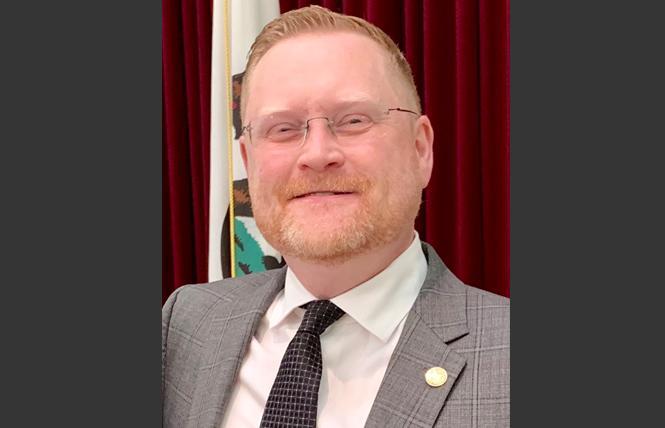
After two years as a tenant representative on the San Francisco Rent Board, Reese Aaron Isbell will be stepping down at the end of July. The gay mayoral appointee and his husband, Sheng “Bruce” Yang, are becoming homeowners.

Currently celebrating their fifth wedding anniversary in Alaska, the couple expects to complete the escrow process by August and move into their condo in one of the new buildings that have gone up in the city’s Mid-Market area. Yang, a software developer for a tech startup, was able to purchase the home on behalf of the couple.

“I have no assets myself. Only recently did he realize he could do it and wanted to do it,” said Isbell. “Of course I am very excited about it. I never imagined I would become a homeowner in my life, just like I never imagined I would get married, so sometimes things change.”

The couple had planned to travel to Alaska last year but had to postpone their trip due to the COVID pandemic. For Isbell, this will be his 52nd state he has visited, “if you count Washington, D.C. and Puerto Rico,” he said. “It is the one state I haven’t been to yet.”

Isbell, whose term was to expire in August 2023, told the Bay Area Reporter having to step down from the rent board is “bittersweet.” While he wished he could continue to serve, he is proud of what he has been able to accomplish over the last two years, from advocating for the housing needs of people living with HIV to calling for the Ramaytush Ohlone land acknowledgement that now begins each rent board meeting.

“I am happy with the time I have had working with the community and getting some things done at the rent board,” said Isbell. “I feel the need to step down as I don’t want to serve out the rest of my term when I no longer have the one qualification that matters, which is tenant.”

He added that, “Many things I wanted to do going onto the rent board I feel proud I have done or began.”

In his resignation letter to Mayor London Breed, Isbell noted, “With marriage, my husband and I are a team. Despite the fact that my own circumstances continue as an unemployed community activist, my husband’s first-time home ownership will also be the first time I will own a home. As a longtime tenant living in a small studio for over 20 years, home ownership was simply never something I could have imagined for myself before.”

Shared tenant experience
When Isbell, 50, first moved to San Francisco over two decades ago, he struggled to find affordable housing in the city. He ended up moving into a rent-controlled, studio apartment in the city’s Lower Nob Hill neighborhood. Yang moved in when they wed in 2016.

But when Isbell sought to add Yang’s name to the lease, their landlord tried to raise the rent. When the couple married, Yang received a green card and having documentation of his residence was a particular concern for the Chinese immigrant.

Isbell fought back as such a rent increase is illegal under the city’s rent laws. Eventually the matter was resolved without the couple facing a spike in their rent, though Yang’s name was never added to their lease.

The couple shared their experience publicly when Breed initially appointed Isbell to serve as a tenant representative on the city’s rent board in late March 2019. It was believed to mark the first time an out gay man had been named to the commission, as several gay men had earlier been appointed to the body but their being members of the LGBTQ community was not reported on at the time.

The five-person rent board is composed of two tenant representatives, two landlords, and a neutral person all appointed by the mayor. It oversees how much property owners can annually raise rents on rent-controlled units and resolves tenant complaints against their landlords.

Rather than renominate longtime rent board commissioner Polly Marshall, Breed chose Isbell for the seat. Her doing so irked both Marshall and tenant advocates, who were upset that the mayor had not consulted them about the pick and questioned Isbell’s qualifications for the role.

Members of the Board of Supervisors also raised concerns about seating Isbell, with even gay District 8 Supervisor Rafael Mandelman telling the B.A.R. at the time he did not support Isbell serving on the rent board and would vote to unseat him. With the supervisors expected to bounce Isbell from his rent board seat, Breed preempted them by making Isbell an alternate member of the oversight body.

In his place she named Kent Qian, a tenant and deputy city attorney for the Oakland City Attorney’s office. Qian had served as an alternate for Marshall on the rent board for seven years.

Serving as an alternate to Qian, Isbell could vote on commission matters if Qian needed to be absent from meetings. Otherwise, Isbell could be active in all other aspects of the board.

“Yes, it was a challenge two years ago moving forward in this role,” Isbell acknowledged. “Had I known I might become a homeowner two years later, I might not have pursued the role. But I had no idea that would happen.”

Back in 2018 lsbell left his position overseeing government affairs for the California Life Sciences Association in order to return to the Midwest to campaign for Democrats running in the November midterms. He moved back in with his parents in Independence, Missouri to help get out the vote that fall for fellow Missourian Claire McCaskill, who lost her reelection bid for U.S. Senate, and attorney Sharice Davids, who won her race to become Kansas’ first openly gay, Native American member of the U.S. House and was reelected last November.

After returning to San Francisco Isbell focused on his volunteer work as he sought employment. He worked on several campaigns, including as the campaign manager last year for Proposition A, known as the SF Health and Recovery Bond, and is now looking for a government affairs role.

Isbell had served on Breed’s Transition Policy Team after she was elected mayor in 2018 and focused on transportation issues. A former co-chair and board member of the Alice B. Toklas LGBTQ Democratic Club, he had also served on the board of the Friends of the San Francisco Public Library.

Despite being on vacation, Isbell told the B.A.R. he intends to Zoom into his penultimate meeting of the rent board on Tuesday night so he won’t miss one of his final meetings. His departure from the rent board next month will mean there will be no openly LGBTQ person serving on it.

With the oversight body focusing on racial equity issues during his tenure, Isbell, who is white, said he has spoken to Breed and the rent board staff about taking minority representation into consideration when seeking his replacement.

“I expressed my hope to the mayor and the rent board staff that for the appointment process they look at it through a racial equity lens and representing all our communities,” Isbell said. “I trust the mayor will make the right decision.”

Other LGBTQs looking to become first-time homebuyers can attend an upcoming free virtual seminar. As the B.A.R. reported in its News Briefs column, the LGBTQ+ Real Estate Alliance will hold a national first-time homebuyer seminar for queer people Wednesday, June 16, from 4 to 5 p.m. Pacific Time. Organizers said they believed this is the first such program ever offered specifically for the LGBTQ+ community. To sign up, click here.

Keep abreast of the latest LGBTQ political news by following the Political Notebook on Twitter @ http://twitter.com/politicalnotes

Got a tip on LGBTQ politics? Call Matthew S. Bajko at (415) 829-8836 or e-mail m.bajko@ebar.com

Help keep the Bay Area Reporter going in these tough times. To support local, independent, LGBTQ journalism, consider becoming a BAR member.


Munster Rugby announce two new member clubs – Limerick Post

Cork Hellhounds RFC

MUNSTER rugby have announced the addition of two new clubs as members of the Munster Branch of the IRFU. Cork Hellhounds RFC and Lisdoonvarna RFC.

The Cork Hellhounds are a LGBT-inclusive rugby club based in Cork, Ireland that were established in October 2020 with the aim of encouraging and promoting rugby among the LGBT community within the Munster region. Lisdoonvarna RFC are based in Clare and will provide another option for underage players in the region.

Sign up for the weekly Limerick Post newsletter

Their memberships were ratified following a Munster branch committee meeting on June 2. The Hellhounds train at the Munster Rugby training grounds on the Ringmahon Road in Mahon, on the south side of cork city as Lisdoonvarna train on the community owned Lisdoonvarna Failte CLG.

The North Clare based club will also be hosting the Give It A Try programme on July 27 run by the IRFU. This programme will offer a welcomed opportunity for girls within the region to learn how to play rugby in a friendly, fun learning environment which will boost the growth of the sport across the county but also potentially the province as a whole.

The City of Cork is no stranger to all-inclusive sports sides as the Cork Frontrunners and Cork Rebels FC cater to athletics and football enthusiasts. However, the Hellhounds will be the first rugby team within the province to openly do so and will take part and compete in the Munster domestic league over the coming months.

Hellhounds club founder Adam O’Brien stated:

“This is a great moment for sport in Cork. As there is still a perception, despite recent years of social progress on LGBT issues, that sport in one area which can be exclusive to LGBT people.

“Other cities have LGBT-inclusive rugby teams, including Dublin and Belfast, and they have seen great participation from both gay players and straight friends who wish to support and get involved. Wed love to see the same experience available in cork and were already off to a good start.”

The Hellhounds also intend to become members of International Gay Rugby, which organises several league competitions, including the Bingham cup, also known as the Gay Rugby world cup.

The cork side are currently recruiting and inviting new players regardless of experience to part take in training and to sign up. The two newest members are a refreshing addition to Munster Rugby and will look to have a positive domestic season moving forward.

The post Munster Rugby announce two new member clubs appeared first on Sporting Limerick.

Hitting homophobia in cricket for six – newframe.com

Under a speckled spring sky in the English village of Broxbourne, a cricket ball is delivered by a burly bowler with bad intentions. Suspended in coiled anticipation is Matt Earl, the opening batter for Graces Cricket Club. 

Though he is the only member of his team actively participating in the match at this time, he carries the fate of his compatriots on his shoulders. As CLR James wrote: “The batsman facing the ball does not merely represent his side. For that moment, to all intents and purposes, he is his side.”

This feels especially true now. Earl is gay. Ordinarily that would be an irrelevance. The cricket ball arcing towards him in search of his stumps, his edge, or his front pad couldn’t care less about his life beyond the boundary. But his teammates do. And because he is the embodiment of his side, at least for a moment, who Earl loves is relevant here.

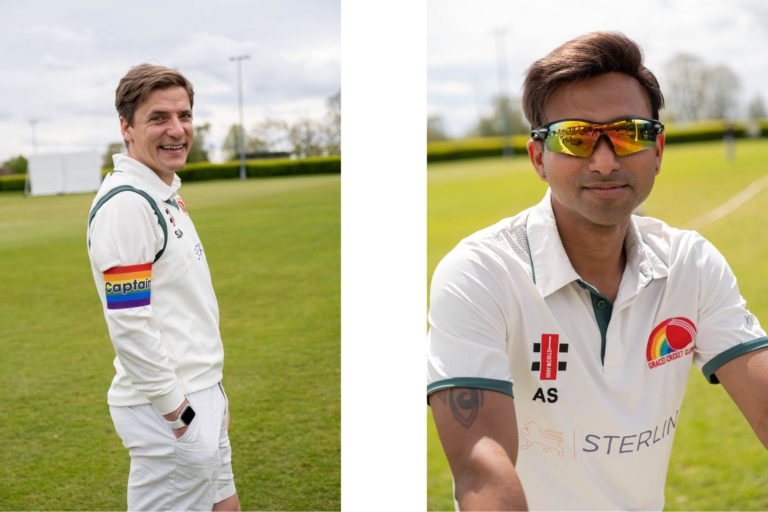
9 May 2021: From left, Graces captain Stuart Anthony and club all-rounder Arijit Sen.

Graces is the world’s first – and until last year, the only – cricket club made up of members of the LGBTQIA+ community. The team’s crest depicts a cricket ball arcing over a rainbow. Many of its players use bats with rainbow grips and wear boots with rainbow laces. The club’s skipper, Stuart Anthony, sports a rainbow-coloured armband with the word “captain” in a clear, unambiguous declaration of his status.

“In a perfect world, we wouldn’t exist,” says Anthony. “In a perfect world, there wouldn’t be a need for gay bars or gay sports clubs. But this isn’t a perfect world. People often ask me if we’re just perpetuating an exclusive mindset, if we’re shutting out the rest of the world. That’s an ignorant question. It ignores the prejudices that other people have and how difficult is for many gay people to be their authentic selves. We’ve created a safe space because there aren’t many of them out there.”

Indeed, after the BBC ran an article on Graces’ match against the Birmingham Unicorns rescheduled for 13 June – the world’s first contest between two LGBTQIA+ sides – the comment section below was awash with ignorance and hate. When the club launched an awareness drive with a video across its social media platforms, one bigot wondered “what their run-ups must look like”.

9 May 2021: Seam bowler Christopher Sherwood is the club’s press secretary.

“It’s to be expected,” says Chris Sherwood, the rangy opening bowler who serves as Graces’ press and publicity officer. “Those are the sort of comments that remind us why we exist.”

Sherwood was an avid cricketer in his youth in his native Leicestershire but lost touch with the sport when he moved to London. One of the few matches he played in a “straight team”, as he terms it, resulted in an incident that threatened to end his relationship with the game.

“I was ordering drinks at the bar and asked the bartender for a round of half-pints as we were all driving. The bartender said [in a deeper, cockney voice] ‘We don’t do half-pints here, mate. I’ll have to put your picture up on the gay wall.’ I wish I’d said something to him, but then I would have had to come out to my teammates who I barely knew. It was such a challenging moment. That sort of thing just isn’t an issue with Graces and thankfully none of our players have ever received any homophobic abuse on the field.”

Shattering stereotypes 

The club was established in 1996, when the attitude towards homosexuality and queer culture was vastly different than it is today. Though 13 years had passed since the British Social Attitudes Survey of 1983 found that more than 50% of British citizens regarded homosexuality as “always wrong” or “mostly wrong”, some lingering misconceptions persisted.

“There was a need for it at the time,” says co-founder Pat Sopp in response to a question about why the club was formed. “We were originally going to be just a supporters club, but most of us were keen on playing. It seemed a good idea at the time and we’re still going 25 years later. I suppose people resonated with that feeling of belonging and the authenticity of it all. That was more important than winning or losing.”

9 May 2021: Graces co-founder Pat Sopp says the club was originally supposed to be a supporters club, but many of them wanted to play as well.

Sopp’s final sentiment is not universally accepted throughout the club. Anthony is more aligned with this message. “It might sound clichéd, but we’re more concerned that people want to take part,” he says, but others stress the significance of results on the pitch.

“If we perform well, with batsmen scoring hundreds and our bowlers taking a lot of wickets, then no one can say we can’t play because we’re gay,” explains Arijit Sen, a fast-bowling all-rounder who played alongside Guatam Gambhir in age-group national training camps in Delhi, India. “If I produce a good performance on a personal level, that also serves as branding for the club. It might help recruit other players.”

Sherwood concurs: “Shattering that stereotype is important and we get to directly do that. We don’t get to see many gay role models at the elite level and that has a knock-on effect, keeping amateur players in the closet or abandoning the sport altogether. This perpetuates the stereotype that gay men don’t like sport, that they’re not good at sport, that they’re all effeminate. We’re in a position to challenge that.”

No longer alone

Until the Birmingham Unicorns came along, Graces have fought this battle alone in the cricket world. This is in stark contrast to other mainstream sports. The Bingham Cup, a biennial rugby tournament consisting of gay clubs, will celebrate its 10th edition next year and can draw on just under 100 clubs from around the world affiliated with the International Gay Rugby federation.

The International Gay and Lesbian Football Association is similarly well supplied with a global membership while the Gay Games, a multi-sport summer event similar to the Olympic Games, has provided a platform for gay athletes since 1982. 

Apart from cricket’s wider struggle with expanding its reach beyond the remnants of the British Empire, a more sinister barrier has stifled progress. Six of the 12 Test-playing nations are legally homophobic. In Pakistan, Sri Lanka, Afghanistan, Bangladesh, Zimbabwe and many of the Caribbean islands that form part of the West Indies, marriages or relationships between same-sex couples are criminalised. Punishments include forced hard labour, up to 15 years imprisonment and, in extreme cases, death by stoning.

11 April 2021: Former club captain Manish Modi. (Photograph supplied by Graces Cricket Club)

“This club has saved people,” says Manish Modi, Graces’ former captain and an enthusiastic speaker on the social importance of the club. “I came to the UK from India in 2004 in order to be a proud gay man. In India it’s now legal to be gay, but the perceptions are still very negative. But there are worse things than perceptions. I have teammates from some of those countries where they could have lost their life just for being themselves. It’s heartbreaking.”

This is why a few members of the club do not wish to be interviewed or have their picture taken. Some of them have yet to come out to their families back home. Doing so could have serious repercussions, not only for themselves, but for their loved ones too.

“I make a point of doing as many interviews as I can and to help carry the load,” says Modi, who has shared his story with the BBC, CNN and Sky. “I want to help others. I want to show them that there is a place where they can continue their love of cricket and be who they really are in their soul. I want to help people come out because I know how liberating that feeling can be. But I didn’t get there on my own. My Graces teammates helped me. In fact, last week someone told me that my interviews had helped him come out to his family. That’s a great feeling.”

‘We’re not here to change the whole world’ 

England Test captain Joe Root chastised West Indies fast bowler Shannon Gabriel in February 2019 for using a homophobic slur. “Don’t use it as an insult,” Root was heard to say on the stump microphone. “There’s nothing wrong with being gay.”

“That was a big moment, and it was wonderful to see someone like Joe Root stand as a vocal ally,” Sherwood says. “But as much as it meant a lot at the time, the momentum dissipated. I looked at the [International Cricket Council’s] stance on homophobia and I was disappointed. Because while they have very clear guidelines on racism, the same cannot be said for homophobia.”

The ICC’s anti-discrimination policy does condemn abuse and intimidation based on one’s sexual orientation, but with half of the main table occupied by homophobic countries, Sherwood is less than optimistic for sweeping change.

9 May 2021: Spectators watch Graces play a Chess Valley League fixture against Ickenham Cricket Club at the Broxbourne Cricket Club grounds in Broxbourne, Hertfordshire.

“But we’re not here to change the whole world,” he says, echoing Modi’s granular aims. “The fact that we’ve got a game against another gay club coming up is massive. Today, we’re in a competitive league and for the first time we’re fielding two teams on a Sunday. That was almost unthinkable back when we started. Change has come slow, but it is coming.”

That cricket ball delivered to opening batter Matt Earl did find his stumps. It was a filthy full toss that looped over his bat and made contact with the wooden poles behind him. He trudged off, incredulous, shaking his head at his misfortune.

“Hard luck,” his teammates say, offering scant consolation for a second-ball duck.

“That’s cricket, eh,” Earl replies. He’s right. It’s a remorseless game. Because of Graces Cricket Club, though, it’s also a more welcoming one.

If you want to republish this article please read our guidelines.

The Best LGBTQ Films & TV Shows On Amazon Prime UK – Bustle

For many years, Hollywood and the wider entertainment industry proved woefully inadequate when it came to meaningful LGBTQ+ representation. Creators would typically rely on archaic tropes that never came close to portraying the true beauty and complexity of queer communities. Thankfully, over the past couple of decades, things have begun to shift in the right direction. In 2020 alone, we saw shows such as It’s A Sin, Feel Good, Euphoria, and Schitt’s Creek rack up astronomical viewing figures thanks in no small part to their authentic and thoughtful approach to queer storylines.

While platforms such as the BBC, Channel 4, HBO, and Netflix are leading the way with LGBTQ+ inclusivity, Amazon Prime UK also has a range of shows and films on offer. The problem is, they’re slightly more difficult to find. With this in mind, I have gathered together a list of my top picks on the streaming site to save you having to do the leg work.

One of Amazon Prime’s most popular offerings is, of course, Transparent. Although the show has sadly been somewhat overshadowed by sexual assault allegations against its leading actor, it still represents an important turning point in pop culture for discussions around and representations of the trans experience. Elsewhere on this list, you’ll find box office hits such as Moonlight and Carol as well as lesser-known shows including Viscous, Drag Heals, and Being Me and a documentary from David Thorpe that will leave you with a lot to think about.

Keep reading to find out more about 15 of the top LGBTQ+ films and TV shows on Amazon Prime UK.

1

Transparent

Amazon Prime

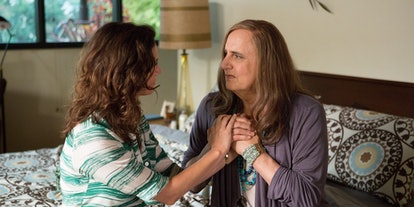
This Amazon original series revolves around the Los Angeles-based Pfefferman family as their lives change forever following their father Mort’s decision to transition into a woman named Maura. Upon its 2014 debut, the award-winning U.S. series made quite an impression with audiences and critics alike, and Prime subscribers can enjoy all five seasons of the hit comedy-drama in their entirety.

Watch on Amazon Prime UK

2

Do I Sound Gay?

This 2014 documentary follows filmmaker David Thorpe as he sets out on a journey to discover the origins of the stereotypical “gay voice.” With the help of family, friends, and famous faces including author Dave Savage, Tim Gunn, Margaret Cho, and more, Thorpe learns how internalised homophobia can influence the speech patterns of gay men, while also discovering that yearning for a different voice is not something exclusive to the LGBTQ+ community.

Watch on Amazon Prime UK via Icon Films

3

Moonlight

A24

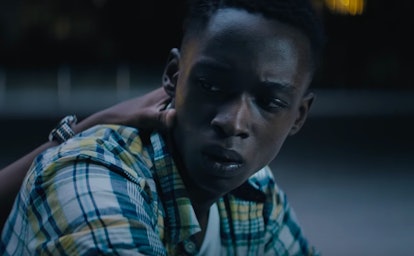
This Academy Award-winning drama chronicles the life of a young Black man, Chiron, from childhood to adulthood in Miami, Florida. Directed by Barry Jenkins and starring Mahershala Ali, Naomie Harris, and Janelle Monáe, the film follows Chiron’s journey into manhood, including the exploration of his sexuality, as he is guided by the love and support of the community that helped raise him.

Rent or buy on Amazon Prime UK

4

A Sinner In Mecca

Director Parvez Sharma fronts this 2015 documentary which follows the openly gay Muslim filmmaker as he travels to Mecca, Saudi Arabia to attend the annual Islamic pilgrimage known as the Hajj. In the film, Sharma captures his experience in Saudi Arabia on an iPhone, a place where filming is forbidden and homosexuality is punishable by death, with the hope of finding a place within his own religion that doesn’t condemns him.

Watch on Amazon Prime UK

5

Tomboy

Pyramide

This critically acclaimed drama tells the heartwarming story of 10-year-old Laure, who, after moving to a new neighbourhood, begins to embrace gender nonconformity. Taking on a new persona as Mikäel, their relationships and place in the community begin to change. However, with a fresh school term on the way, and increasing pressures from friends and family, Mikäel struggles to reconcile external forces with what they feel inside.

Rent of buy on Amazon Prime UK

6

Misfits

An LGBTQ+ youth centre in Tulsa, Oklahoma, is the subject of this eye-opening 2015 documentary, Misfits. Nestled within an extreme religious community, the OpenArms Youth Project welcomes youngsters during their formative years, many of whom have made the brave decision to be open about their sexuality. However, the cost of being yourself can be high, and this insightful doc follows the centre’s LGBTQ+ teens as they strive to live freely in a community that isn’t always so welcoming.

Watch on Amazon Prime UK via Dekkoo

7

The L Word

The L Word/HBO

This groundbreaking LGBTQ+ drama centres on a close-knit group of lesbian, bisexual, and transgender friends as they live and love in the Californian city of West Hollywood. The show originally ran for six seasons between 2004 and 2009, starring the likes of Jennifer Beals, Mia Kirshner, Pam Grier, and Laurel Holloman, among others. During the show’s final season, The L Word was honoured with a Special Recognition Award at the 2009 GLAAD Media Awards.

Rent or buy on Amazon Prime UK

8

Viscous

A refreshingly light depiction of LGBTQ+ relationships arrived with ITV’s 2016 sitcom, Vicious. This brilliant – but short-lived – comedy centres on an elderly gay couple portrayed by Sir Ian McKellen and Derek Jacobi, who share a hilarious love-hate relationship spanning 50 years. In addition to the pair’s never-ending banter, their lives also revolve around hosting an array of frequent guests. Complete with two of Britain’s finest acting talents, this Amazon Prime offering is an absolute must-watch.

Watch on Amazon Prime UK

9

Carol

StudioCanal

Set amid the glamour of 1950s New York City, Carol tells the tale of a forbidden affair involving a young female photographer and an older divorcée. Starring Academy Award-winner Cate Blanchett and Rooney Mara, this love against the odds story struck a chord with both audiences and critics upon its release, and with outstanding performances from the film’s leading ladies, the LGBTQ+ drama unsurprisingly went on to sweep the 2015 awards season.

Watch on Amazon Prime UK

10

Dating Amber

11

Akron

‘Akron’/Wolfe Video/Hulu/Am

This 2015 LGTQ+ drama follows the heartwarming love story between two college freshman and football players, Benny and Christopher. However, the pair’s budding romance is put to the test when a tragic event from the past involving their mothers comes to light, and in turn threatens to divide their respective families. Who, as it turns out, had actually first met years before.

Watch on Amazon Prime UK

12

Drag Heals

Created and hosted by Tracey Erin Smith, this fabulous Canadian reality series follows a group of gay men who have never worn heels or a wig as they begin to embrace their inner drag personas. With the assistance of Smith and expert drag queens and kings, the aspiring performers learn their craft in Canada’s first and only drag school with the ultimate goal of performing in a live drag show.

Watch on Amazon Prime UK

13

Love The One You’re With

Starring Donnie Hue Frazier, Anthony Bawn, and Danny Royce, Love The One You’re With tells the story of a couple, Avery and Miles, as they try and cope with the possible demise of a long-term relationship. Directed by Spencer Collins IV, the LGBTQ+ comedy-drama also delves into the issues faced by Black queer men in the world of modern dating.

Watch on Amazon Prime UK

14

Being Me

Through candid interviews with transgender youths, this insightful 2015 documentary explores the daily realities, experiences, and issues faced by younger members of the community. Directed by Erin Brown Thomas, the doc also aims to display what life is actually like for young transgender people, including 10-year-old Isabelle Lamgley, who feels their biological gender doesn’t reflect who they really are on the inside.

Watch on Amazon Prime UK

15

The Brandon Teena Story

Amazon Prime

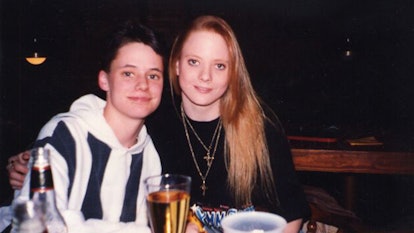
Directed by Susan Muska and Greta Olafsdottir, this 1998 documentary film explores the horrific 1993 murder of Brandon Teena through archive footage and interviews with those closest to the case. The film focuses primarily on the final few weeks of Brandon’s life in rural Fall City, Nebraska, while also spotlighting the homophobia that exists within communities across the United States.

Watch on Amazon Prime UK

16

Boy Meets Girl

Directed by Eric Schaeffer, this 2014 romantic comedy-drama stars Michelle Hendley as a transgender woman named Ricky, who resides within a small Kentucky town and has aspirations of finding love and one day moving to New York City to pursue a career in fashion design. While working towards her dreams as a barista, Ricky strikes up an unexpected friendship with a local woman that soon turns into a love affair.

Watch on Amazon Prime UK

17

Queer As Folk

Channel 4

18

Leave it on the Floor

Set within the Los Angeles ballroom scene, this 2012 musical drama centres on a young Black LGBTQ+ man named Brad, who is kicked out of his home by his homophobic parents. Directed by Sheldon Larry, the film follows Brad as he enters a new and exciting world with the House of Eminence, and is taken under the wing of the formidable ballroom performer, Queef Latina.

Rent or buy on Amazon Prime UK

A Kansas City Fashion Show Couldn’t Happen Last Year. A Film Made In Its Place Is Winning Awards – KCUR

In a traditional fashion show, models stride down a runway, pivoting into different poses to show off the shape and details of exquisite garments.

But like so many things in 2020, when the pandemic shut down most gatherings, the concept needed a transformation.

For the 20th annual West 18th Street Fashion Show in Kansas City, that meant creating a film instead of hosting the popular summer block party.

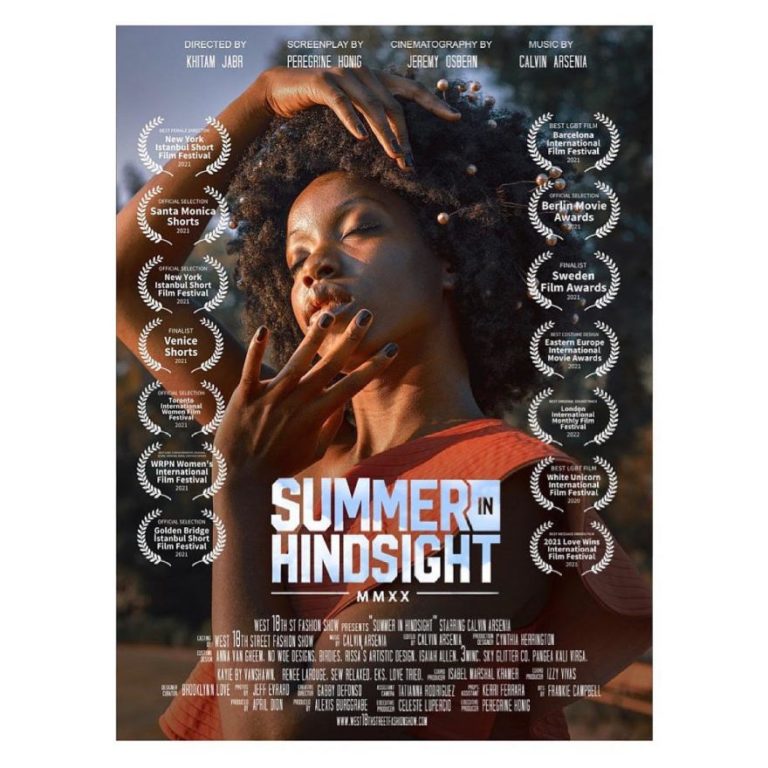
“Summer In Hindsight” premiered last October at the Boulevard Drive-In. Now, it’s making the festival circuit and racking up awards, including best female director at the New York Istanbul Short Film Festival and the best LGBT film at both the Barcelona International Film Festival and the White Unicorn International Film Festival.

While the film focuses on the garments, with each collection filmed in an iconic Kansas City location, it’s held together by a storyline featuring singer and harpist Calvin Arsenia playing an out-of-work musician making deliveries.

“There are a lot of internal references to Kansas City, although it was shot in a way that we wanted it to feel like it could be any city,” says Arsenia. “It’s a love letter to the city.”

061021_fashionmovie1.jpg

The story is set in a very specific time period, March 15 to May 25, from the day in 2020 that the pandemic really hit home for many artists until the murder of George Floyd. Arsenia wanders through museums and landmarks, navigating this strange world of empty spaces and hand sanitizer stations, swinging between ennui and anxiety.

“The more distance between the time we made the movie and the world that we are moving into now, the more significant those initial feelings are, of mask wearing, social distance, can’t see your friends, can’t see anybody, everything is awkward,” says Arsenia, who is also music director of the West 18th Street Fashion Show.

“We really tried to capture that weirdness, the unknown, just the unsurety that was happening so much at that time.”

It was during a ubiquitous Zoom meeting that visual artist and fashion show artistic director Peregrine Honig came up with the idea of showing a film at the drive-in. She called the drive-in the next day and snagged the last day of the season.

Then it was time to figure out how to make a movie.

“Making the film was a fusion of two words,” says Khitam Jabr, director of the film. She’d worked previously with Arsenia on a music video. While fashion and film are kissing cousins, centering the garments while creating a narrative arc to intrigue a film audience is no easy feat.

Arsenia served as music director, Honig wrote the screenplay and was a producer, and they brought in Jeremy Osbern as cinematographer.

With the exception of Osbern, though, the crew didn’t have much feature film experience. Nevertheless, Jabr credits the project’s “strong bones,” allowing a scrappy fly-by-night operation to craft an award-winning film.

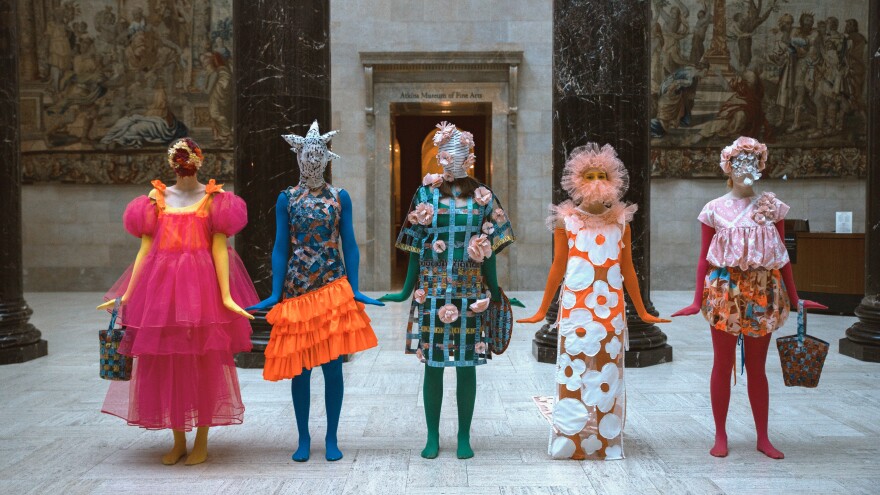
In nine days in August, crew members filmed ten collections in fifteen locations, visiting the Nelson-Atkins Museum of Art, Overland Park Arboretum, WWI Museum and Memorial, The National Museum of Toys and Miniatures, Kansas City Museum, and more. They were learning as they went, improvising and adjusting during planning, filming, editing, producing and even as they applied for festivals.

The practicalities of first-time filmmaking forced artistic decisions that were “accidently poignant,” says Arsenia. At first, Honig wrote a somewhat conventional screenplay, but after the first day of filming they scrapped it, opting for a more experimental art film.

In place of traditional dialogue, the film relies on text messages that pop up on screen, and the music, much of it written by Arsenia specifically for the film.

“After having experienced such a dire time in March, April, May, June, July of 2020, I didn’t feel like putting any of my old music into this,” he says, “because I felt like I was a different person and it would be inauthentic for me to use any of the songs from my previous records.”

He interviewed the designers and created a sound world for each collection, making for an eclectic soundtrack that also includes jazz vibraphone, soprano aria, and rap.

The project included more than a hundred people, from designers, to models, production assistants, musicians, and stylists, along with support in the community, with meals supplied by local restaurants and access to creative spaces.

“There are so many people in the city that feel like they’re a part of it,” Honig says.

Two weeks after filming, the film’s creators checked in with everyone, and no one had developed symptoms of COVID-19. “We’re very proud of how clean we kept our sets and how we respected each other,” Arsenia said.

The project also provided a chance to stay occupied while processing grief amidst nationwide protests at police brutality. “This movie is a testament to all of us, making space for each other’s ideas and trauma,” Honig says.

061021_fashionmovie2.jpeg

Kelby Reck

Models for “Summer in Hindsight” at the Nelson-Atkins Museum of Art

The premiere at the drive-in was a success. “When the credits rolled and everybody started honking their horns, it was very touching,” Jabr says.

The plot line of artist-turned-delivery person hit home for Jabr, who lives in Brooklyn. When the pandemic shut down her scheduled projects, she started working for a delivery service to make ends meet, until the opportunity to make a movie in Kansas City came along.

“Admittedly, I didn’t recognize the impact this project would have on me until after the fact. I was drowning in life and simultaneously floating…not realizing that directing this film is what kept me together at that moment,” she shares on Instagram.

Jabr attended the Harlem International Film Festival in May. “It was a really cool moment for a Midwest small town-ish girl,” she laughs. There, “Summer in Hindsight” won best experimental film.

Its producers plan to show the film to full capacity audiences this winter, hopefully in some of the locations from the shoot. This weekend, though, the 21st annual West 18th Street Fashion Show is back on the street, with safety measures in place for an in-person audience.

“When you feel like the world is ending—when the world has ended—your priorities change,” says Arsenia. “I do believe that this movie and everything that we created last year…are the products of a time when we thought the world was over. And it’s like, what would you do if today was your last day?

“Well, we would make a movie.”

Follow #SummerInHindsight to learn when and where the film will be screened in Kansas City this winter. “Summer Tableau,” the 21st Annual West 18th Street Fashion Show, is Saturday, June 12th. west18thstreetfashionshow.com

A Kansas City Fashion Show Couldn’t Happen In 2020. But A Movie Made In Its Place Is Winning Awards – KCUR

In a traditional fashion show, models stride down a runway, pivoting into different poses to show off the shape and details of exquisite garments.

But like so many things in 2020, when the pandemic shut down most gatherings, the concept needed a transformation.

For the 20th annual West 18th Street Fashion Show in Kansas City, that meant creating a film instead of hosting the popular summer block party.

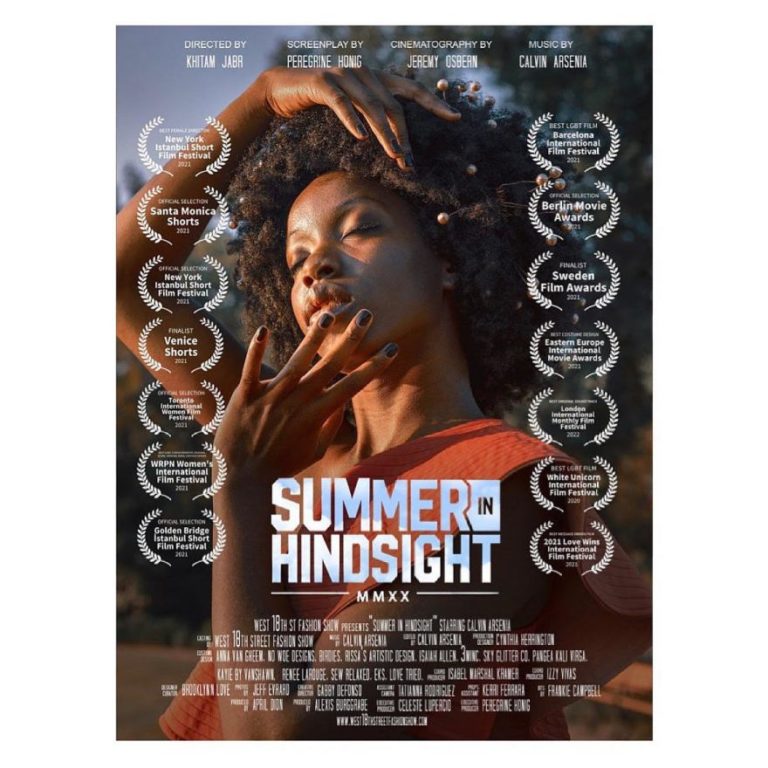
“Summer In Hindsight” premiered last October at the Boulevard Drive-In. Now, it’s making the festival circuit and racking up awards, including best female director at the New York Istanbul Short Film Festival and the best LGBT film at both the Barcelona International Film Festival and the White Unicorn International Film Festival.

While the film focuses on the garments, with each collection filmed in an iconic Kansas City location, it’s held together by a storyline featuring singer and harpist Calvin Arsenia playing an out-of-work musician making deliveries.

“There are a lot of internal references to Kansas City, although it was shot in a way that we wanted it to feel like it could be any city,” says Arsenia. “It’s a love letter to the city.”

061021_fashionmovie1.jpg

The story is set in a very specific time period, March 15 to May 25, from the day in 2020 that the pandemic really hit home for many artists until the murder of George Floyd. Arsenia wanders through museums and landmarks, navigating this strange world of empty spaces and hand sanitizer stations, swinging between ennui and anxiety.

“The more distance between the time we made the movie and the world that we are moving into now, the more significant those initial feelings are, of mask wearing, social distance, can’t see your friends, can’t see anybody, everything is awkward,” says Arsenia, who is also music director of the West 18th Street Fashion Show.

“We really tried to capture that weirdness, the unknown, just the unsurety that was happening so much at that time.”

It was during a ubiquitous Zoom meeting that visual artist and fashion show artistic director Peregrine Honig came up with the idea of showing a film at the drive-in. She called the drive-in the next day and snagged the last day of the season.

Then it was time to figure out how to make a movie.

“Making the film was a fusion of two words,” says Khitam Jabr, director of the film. She’d worked previously with Arsenia on a music video. While fashion and film are kissing cousins, centering the garments while creating a narrative arc to intrigue a film audience is no easy feat.

Arsenia served as music director, Honig wrote the screenplay and was a producer, and they brought in Jeremy Osbern as cinematographer.

With the exception of Osbern, though, the crew didn’t have much feature film experience. Nevertheless, Jabr credits the project’s “strong bones,” allowing a scrappy fly-by-night operation to craft an award-winning film.

In nine days in August, crew members filmed ten collections in fifteen locations, visiting the Nelson-Atkins Museum of Art, Overland Park Arboretum, WWI Museum and Memorial, The National Museum of Toys and Miniatures, Kansas City Museum, and more. They were learning as they went, improvising and adjusting during planning, filming, editing, producing and even as they applied for festivals.

The practicalities of first-time filmmaking forced artistic decisions that were “accidently poignant,” says Arsenia. At first, Honig wrote a somewhat conventional screenplay, but after the first day of filming they scrapped it, opting for a more experimental art film.

In place of traditional dialogue, the film relies on text messages that pop up on screen, and the music, much of it written by Arsenia specifically for the film.

“After having experienced such a dire time in March, April, May, June, July of 2020, I didn’t feel like putting any of my old music into this,” he says, “because I felt like I was a different person and it would be inauthentic for me to use any of the songs from my previous records.”

He interviewed the designers and created a sound world for each collection, making for an eclectic soundtrack that also includes jazz vibraphone, soprano aria, and rap.

The project included more than a hundred people, from designers, to models, production assistants, musicians, and stylists, along with support in the community, with meals supplied by local restaurants and access to creative spaces.

“There are so many people in the city that feel like they’re a part of it,” Honig says.

Two weeks after filming, the film’s creators checked in with everyone, and no one had developed symptoms of COVID-19. “We’re very proud of how clean we kept our sets and how we respected each other,” Arsenia said.

The project also provided a chance to stay occupied while processing grief amidst nationwide protests at police brutality. “This movie is a testament to all of us, making space for each other’s ideas and trauma,” Honig says.

061021_fashionmovie2.jpeg

Kelby Reck

Models for “Summer in Hindsight” at the Nelson-Atkins Museum of Art

The premiere at the drive-in was a success. “When the credits rolled and everybody started honking their horns, it was very touching,” Jabr says.

The plot line of artist-turned-delivery person hit home for Jabr, who lives in Brooklyn. When the pandemic shut down her scheduled projects, she started working for a delivery service to make ends meet, until the opportunity to make a movie in Kansas City came along.

“Admittedly, I didn’t recognize the impact this project would have on me until after the fact. I was drowning in life and simultaneously floating…not realizing that directing this film is what kept me together at that moment,” she shares on Instagram.

Jabr attended the Harlem International Film Festival in May. “It was a really cool moment for a Midwest small town-ish girl,” she laughs. There, “Summer in Hindsight” won best experimental film.

Its producers plan to show the film to full capacity audiences this winter, hopefully in some of the locations from the shoot. This weekend, though, the 21st annual West 18th Street Fashion Show is back on the street, with safety measures in place for an in-person audience.

“When you feel like the world is ending—when the world has ended—your priorities change,” says Arsenia. “I do believe that this movie and everything that we created last year…are the products of a time when we thought the world was over. And it’s like, what would you do if today was your last day?

“Well, we would make a movie.”

Follow #SummerInHindsight to learn when and where the film will be screened in Kansas City this winter. “Summer Tableau,” the 21st Annual West 18th Street Fashion Show, is Saturday, June 12th. west18thstreetfashionshow.com

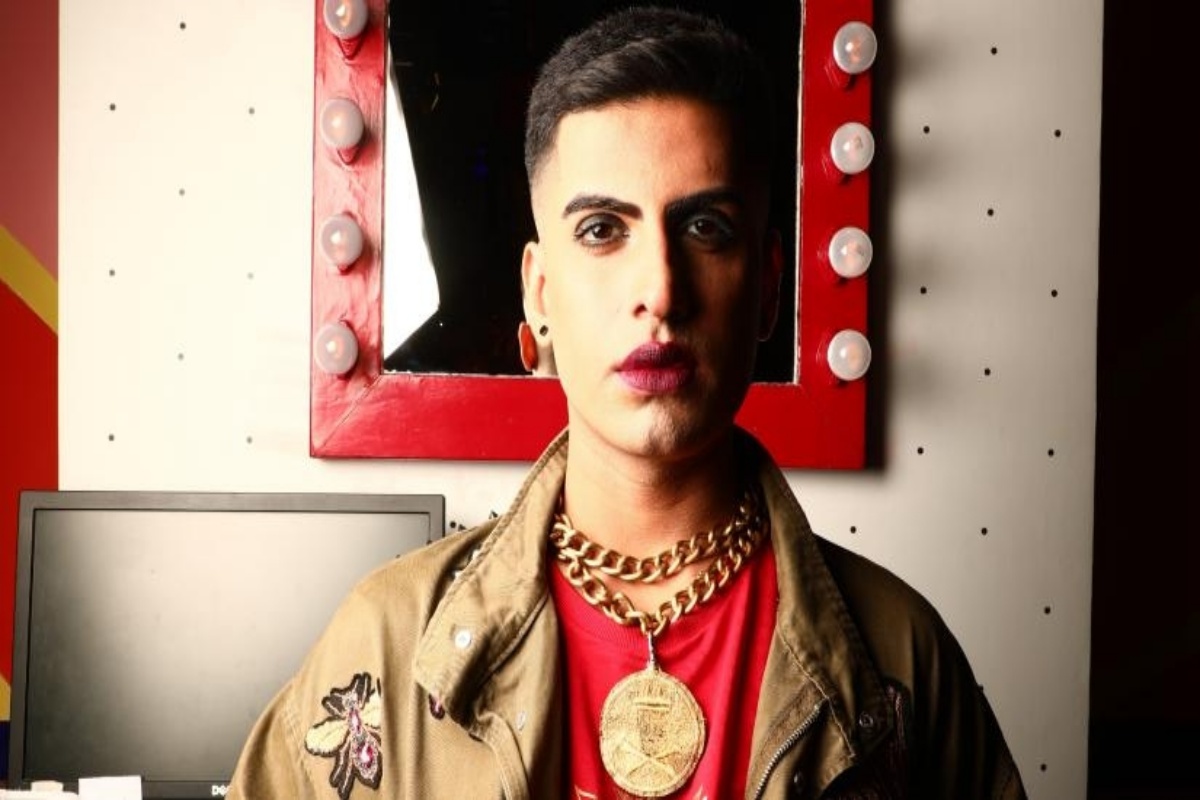
Love and let love, says gay icon Sushant Divgikar – The Statesman

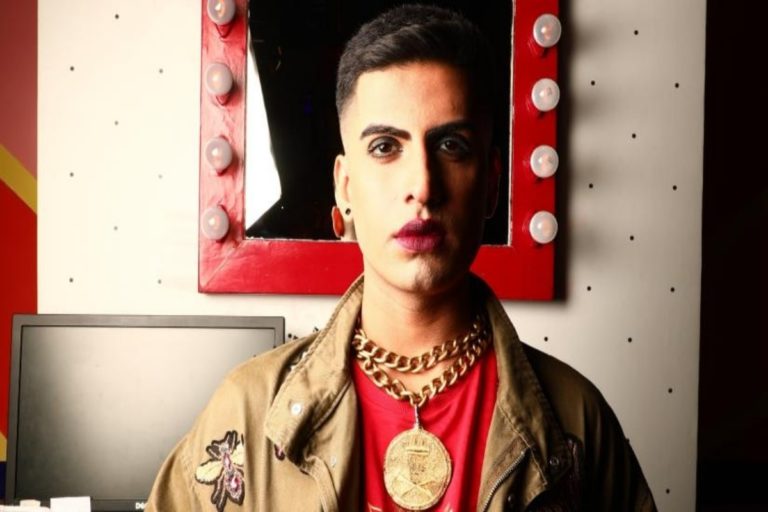
LGBTQ+ activist, performer and the winner of 2014 Mr. Gay India, Sushant Divgikar says it is “preposterous that some people think dehumanising an entire community of people is “funny and that it is OK to do so”.

The singer and drag icon also released and featured in a music video titled ‘Diamond’ and has recently crossed a million followers on social media.

The influencer-activist is also known under his drag alter ego Rani Ko-He-Nur. Divgikar joined the country’s singing competition, Sa Re Ga Ma Pa, which was broadcast on national television in 2018 — the same year the Indian Supreme Court repealed the Section 377 law criminalizing homosexuality.

Having been in the entertainment space since a decade and a half, Divgikar has been roped in by corporate houses and non-profits alike to discuss equality and equity and support their respective inclusion and diversity campaigns. Using his art to break barriers and by embracing his masculine and feminine side, he inspires people from all over the world to find courage to live their life fiercely and freely. He is also an industrial psychologist.

This Pride Month, Sushant Divgikar speaks in an interview:

You have been an active part of the entertainment and lifestyle industry for quite a few years. Would you say the journey to fame and success is more challenging for people with non-cishet identities?

Sushant: Yes. Now that you reminded me , it’s been 15 years I have been actively part of the entertainment industry. I wouldn’t say one person’s struggle is more or less than another’s but if you see an entire section of society such as the LGBTQIA+ community, that has constantly been dehumanised and discriminated against time and time again , you will instantly realise that a queer person’s life is met with by struggles and hurdles at every juncture. We need to be more mindful and be more inclusive as well as empathetic to sexual minorities and other minority groups that are glazed rather subconsciously by toxic patriarchy, toxic preconceived notions and unsettling, continuous conditioning!

Do you find enough mainstream representation of people from the LGBTQIA+ community? What are some stereotypes we can do away with?

Sushant: Absolutely not! Queer people are, in fact, misrepresented nearly all the time. We need to do better, collectively ! We have a lot of blood on our hands because of the way we have so conveniently made queer characters in mainstream pop culture and media, the laughing stock at every given opportunity. It is preposterous that some people think dehumanising an entire community of people is efunny’ and that it is OK to do so.

One of the certain stereotypes we need to do away with is that every queer person should only be shown as overly flamboyant. Another ridiculous and catastrophic stereotype we have we do away with is queer characters made to look like their libido is constantly touching the ceiling and that they will throw themselves at every person in the room. I especially detest instances where some filmmakers have shown gay characters literally looking like sexual predators and being disrespectful and bitchy all the time.

You have released your music video ‘Diamond’ this year. It speaks of rising above ‘labelling’ and acceptance of all. What are your thoughts about the song and video?

Sushant: Yes, that’s right. I thought of creating ‘Diamond’, along with my fellow bandmate, amazing musician and dear friend, Arthur Lobo along with our manager Niki (Parambir Kaur). We have spent a lot of time on this baby and we wanted people to experience what I personally have experienced more than once, empowerment. Empowerment because of self love and self acceptance. The song speaks of identifying one’s self worth and then celebrating it to become the truest, most authentic version of themselves. Each and every one of us is a diamond in our own right and that’s what the song portrays.

Do you think ‘Drag’ as a concept is understood in India outside designated safe spaces?

Sushant: Yes I do. I actually think we don’t give as much credit to our audiences as we should give. We are quick to judge the audiences without even understanding that they are open to learning and understanding the content they consume. More often than not, we put forth rubbish, senseless and mediocre content for them to consume because we think, they might not be evolved enough to understand intellectual and stellar content. But how can we judge the audiences when we haven’t even tried?

My audiences didn’t know what drag is. But today with the epower of art’, social media and other mediums of communication, such as radio , television and print media, I have made even people in remote villages and smaller towns, understand what drag is.

Despite homosexuality being decriminalized, there remain cultural and psychological barriers to its acceptance. Your thoughts.

Sushant: This is because some people in power (not generalising) are extremely toxic and don’t want to accept ground realities. They would rather be blissfully unaware about things they don’t know that confront what makes them uncomfortable — uncomfortable because they don’t have a clear conscience.

I agree. The psychological and cultural acceptance has still to grow in India but I believe that day is not far. Till that day comes, I just want to tell trolls and haters that your opinions and statements about me or anyone else, can never and will never dictate our realities.

People from the community often have trouble finding LGBTQIA-friendly psychologists and therapists. Being a psychologist too, how do you view this inaccessibility to non-judgmental mental health care for people who are often even more sidelined by the status quo?

Sushant: Mental health professionals who judge their clients should immediately resign! That’s all. There’s nothing more or less to add or subtract. Plain and simple. It is against ethics to judge and discriminate against your client, especially if you’re a mental health professional.

This month is Pride Month. Your message?

Sushant: I just want to tell everyone out there , regardless of whether you’re part of the rainbow family or not. Live and let live and love and let love.

Hungary’s Fidesz moves against LGBT community with 2022 vote in sight – Yahoo Eurosport UK

BUDAPEST (Reuters) – Hungary’s ruling Fidesz party has proposed legislation that bans disseminating what it calls content promoting gender change or homosexuality in schools, a move which activists said resembled Russia’s 2013 “gay propaganda” law.

Nationalist Prime Minister Viktor Orban’s government, which faces elections in early 2022 and promotes a strongly Christian-conservative agenda, has moved further against the LGBT+ community since last year. Poland’s ruling PiS party, Fidesz’s main European Union ally, has taken a similar stance for years.

The latest amendment, submitted to parliament on Thursday by Fidesz lawmakers to a bill that punishes paedophilia, says youngsters under 18 cannot be shown pornographic content, or any content that encourages gender change or homosexuality. This also applies to advertisements, the bill says. It also proposes setting up a list of organisations allowed to hold sex education sessions in schools.

“The new legislation proposed by Fidesz would seriously curb freedom of speech and children’s rights,” the Hatter rights group said in a statement, likening the bill to Russia’s gay propaganda law.

“This move endangers mental health of LGBTQI youngsters and prevents them getting access to information … and affirmative support.”

Hatter and six other rights groups called on Fidesz to withdraw the bill, which could go to vote next week.

In Russia, a 2013 law bans disseminating “propaganda on non-traditional sexual relations” among young Russians.

Gay marriage is not recognised in Hungary and only heterosexual couples can legally adopt children.

Orban’s government, which stepped up anti-LGBT rhetoric as the coronavirus crisis hit the economy, has redefined marriage as the union between one man and one woman in the constitution, and limited gay adoption.

It also outlawed legal status for all transgender people, including those who had already made the switch – retroactive legislation that the constitutional court has deemed unconstitutional.

Last year a children’s book, “Wonderland Is For Everyone”, that aimed to help youngsters learn to accept minorities and fight social ostracism, caused a stir in Hungarian politics, with the government labelling it “homosexual propaganda” that should be banned from schools.

Orban has scored three successive landslides since 2010, but opposition parties have united against Fidesz for the first time and caught up with it in opinion polls.

On Thursday Orban flagged a hike in the minimum wage and reaffirmed plans for a big tax refund to families in 2022, setting the stage for his reelection campaign.

(Writing by Krisztina Than; Editing by Giles Elgood)

Hungary’s Fidesz moves against LGBT community with 2022 vote in sight – Reuters

People attend the Budapest Pride march in Budapest, Hungary, July 2, 2016. REUTERS/Laszlo Balogh/File Photo

Hungary’s ruling Fidesz party has proposed legislation that bans disseminating what it calls content promoting gender change or homosexuality in schools, a move which activists said resembled Russia’s 2013 “gay propaganda” law.

Nationalist Prime Minister Viktor Orban’s government, which faces elections in early 2022 and promotes a strongly Christian-conservative agenda, has moved further against the LGBT+ community since last year. Poland’s ruling PiS party, Fidesz’s main European Union ally, has taken a similar stance for years.

The latest amendment, submitted to parliament on Thursday by Fidesz lawmakers to a bill that punishes paedophilia, says youngsters under 18 cannot be shown pornographic content, or any content that encourages gender change or homosexuality. This also applies to advertisements, the bill says. It also proposes setting up a list of organisations allowed to hold sex education sessions in schools.

“The new legislation proposed by Fidesz would seriously curb freedom of speech and children’s rights,” the Hatter rights group said in a statement, likening the bill to Russia’s gay propaganda law.

“This move endangers mental health of LGBTQI youngsters and prevents them getting access to information … and affirmative support.”

Hatter and six other rights groups called on Fidesz to withdraw the bill, which could go to vote next week.

In Russia, a 2013 law bans disseminating “propaganda on non-traditional sexual relations” among young Russians.

Gay marriage is not recognised in Hungary and only heterosexual couples can legally adopt children.

Orban’s government, which stepped up anti-LGBT rhetoric as the coronavirus crisis hit the economy, has redefined marriage as the union between one man and one woman in the constitution, and limited gay adoption.

It also outlawed legal status for all transgender people, including those who had already made the switch – retroactive legislation that the constitutional court has deemed unconstitutional.

Last year a children’s book, “Wonderland Is For Everyone”, that aimed to help youngsters learn to accept minorities and fight social ostracism, caused a stir in Hungarian politics, with the government labelling it “homosexual propaganda” that should be banned from schools.

Orban has scored three successive landslides since 2010, but opposition parties have united against Fidesz for the first time and caught up with it in opinion polls.

On Thursday Orban flagged a hike in the minimum wage and reaffirmed plans for a big tax refund to families in 2022, setting the stage for his reelection campaign.

Our Standards: The Thomson Reuters Trust Principles.

Pro-Beijing lawmakers in Hong Kong slam Gay Games as ‘disgraceful’ – Global Voices

Screen capture from Gay Games HK promotion video.

The following post is an English-language version of two Chinese-language reports published on the Stand News on June 10, 2021. It is published with modifications on Global Voices under a content partnership agreement.

Pro-Beijing lawmakers in Hong Kong are demanding local authorities disassociate themselves from the city’s preparations for Gay Games Hong Kong (GGHK) in 2022, echoing the Chinese Communist Party’s growing preoccupation with gender and sexual orientation.

The Hong Kong LGBT community in 2016 won a bid to host the Gay Games – an international sporting and cultural event that promotes tolerance towards sexual diversity.

If the event goes ahead it will be the first time the games have been held in Asia in the four decades since they debuted in San Francisco.

Several government departments including Invest Hong Kong and the Hong Kong Tourism Board have thrown their weight behind the plan. That is mostly because the games involving 12,000 participants from countries around the world are expected to bring in around HK$1 billion ($129 million) in benefits to the city.

Organizers expect up to 75,000 spectators from around the world for GGHK.

Notwithstanding these arguments, lawmakers Priscilla Leung and Junius Ho made clear their distaste for the event in a June 9 session of the Hong Kong Legislative Council (Legco).

Junius Ho said:

…residents who support me oppose same-sex marriage. It is your business what you do in your own room, but if you go out and do it in public, it’s disgraceful…after the Gay Games their next step will be legalization of same sex marriage. Officials should not get involved in this. It’s civil society’s business if they want to do it, but it’s wrong [for government] to throw money at this. I don’t want to earn such dirty money, it doesn’t matter if we earn HK$1 billion.

Priscilla Leung, concurred, noting that the games were less about sport and more a campaign for promoting LGBT rights, which she said might divide society.

Their comments came after Regina Ip Lau Suk-yee, another lawmaker, called on the government should to do more to help the Gay Game organizers to secure the venues they need. Ip has expressed support for the bid since 2016.

Liberal Hong Kong, but not for long?

Surveys in Hong Kong in recent years show a majority of people supporting same-sex marriage and legal protection of LGBT rights.

But the pro-Beijing lawmakers’ supporters in Hong Kong are in favor of more conservative values with heterosexual relations and reproduction at the core of social organization. Such views are in lockstep with Beijing’s gender education policy in recent years.

Earlier this year, the Education Ministry authored a policy proposal to promote masculinity in young men, amid a state-led discourse decrying the “feminisation” of this demographic. State and pro-government media have regularly complained about the popularity of male music and film stars known for their “delicate” good looks.

While there has been no indication so far that Hong Kong decision-makers will seek to block the holding of GGHK, the organizers are facing clear logistical challenges.

Thus far, GGHK has only managed to find half of the 56 sites they need for the games.

Without the help of government funded national sports associations, GGHK is only allowed to book sport venues six months in advance, rather than 12 months.

Up until last year, Hong Kong boasted East Asia’s only openly gay legislator – independent lawmaker Raymond Chan Chi-chuen, who entered the Legco in 2012. But Chan Chi-chuen quit the body last year in opposition to what he saw as Beijing’s attempts to manipulate the body. He is currently in police custody on subversion charges.

The mass resignation of pro-democracy legislators last November over Beijing’s decision to unseat four of their colleagues has left the Legco completely shorn of opposition voices.

Local LGBT+ groups have joined social media in slamming the pro-Beijing lawmakers’ comments.

In an interview with Hong Kong Free Press, Director of the Hong Kong Pride Parade Wylie Yeo said:

The civil society is really supportive, citizens really support LGBT…We have never had so many businesses supporting Pride Month as this year… it’s just the people remaining in the Legislative Council who is out of touch… they are the ones dividing Hong Kong. The situation now is that because they have turned and twisted the LegCo election system into entirely ‘one country, one system,’ homophobic garbage like them are the only ones remaining in the LegCo.

Ricky Chu, chairperson of the government’s Equal Opportunities Commission, pledged that his body would continue to offer assistance to organizers, and urged the public not to stigmatize the games.

Software Giant Refuses To Pay Queer Artist For Their Work As Part Of Pride Month Campaign – B&T

Queer Artist Ryan James Caruthers has publically slammed software company Unfold after it asked to use the artist’s work for free as part of its Pride Month social media campaign.

Caruthers took to Instagram to show screenshots of the conversation he had with Unfold after it asked the artist to share 12 of his images for its Pride Month social media campaign.

Unfold is part of SquareSpace, a company worth US$10 billion, according to TechRadarPro. The Unfold Instagram account has almost a million followers.

When Caruthers asked how much he would be paid to share his work, the artist claims he was told it would just be an ‘organic social feature’.

Caruthers replied, saying that in order to truly support queer artists, you need to pay them for their work.

One of the founders of Unfold, whose name has been covered to protect his privacy in the screenshots Caruthers provided, said in reply: “I strongly disagree with the sentiment that any effort that doesn’t include a dollar sign is exploitive.”

Caruthers’ post calling out the company for not paying artists went viral and has received over 53,000 likes so far. And, the backlash for Unfold was swift. 

Popular fashion Instagram Diet Prada, which acts as a fashion watchdog, shared Carthuers’ post calling out Unfold, with the software company issuing an apology less than 10 hours later.

Hong Kong man’s legal fight over late husband’s funeral faces fresh challenge – The Star Online

0

The Department of Justice has made a rare application to the High Court to overturn permission granted to a widower to challenge the Hong Kong government, after he was denied the right to independently make funeral arrangements for his late husband.

The court had granted Henry Li Yik-ho leave to apply for judicial review in March, soon after he launched the bid to challenge the Forensic Pathology Service’s decision not to let him identify the body of his spouse, Edgar Ng Hon-lam, at the Fu Shan Public Mortuary on December 9 last year.

Li had recalled a forensic pathologist telling him he needed authorisation to be the “official identifier” responsible for all after-death arrangements with various government departments, as his marriage was not recognised in Hong Kong. The couple married in Britain four years ago.

Do you have questions about the biggest topics and trends from around the world? Get the answers with SCMP Knowledge, our new platform of curated content with explainers, FAQs, analyses and infographics brought to you by our award-winning team.

Widower goes to court after he is denied right to plan husband’s funeral

But on Wednesday, senior assistant law officer William Liu Kwun-wa submitted there had been a “miscommunication” as the pathologist was only asking if Ng’s mother would agree to, not authorise, Li’s identification.

Liu further argued that the court should set aside the leave granted because the judicial review application was based on a fundamental “misapprehension” of government policy and in part academic when the relevant authorities had already handled most of the after-death matters – which included body identification, collection and cremation – with the applicant stated as the deceased’s spouse or husband.

“There was no such policy of discriminating same-sex couples as alleged,” Liu said. “There is no discrimination of the applicant at all.”

Henry Li says he is ‘very disappointed’ with the Department of Justice’s move. Photo: Department of Justice

The government counsel also said there was evidence to suggest this would not happen again in the future, as he revealed that the officer involved, senior forensic pathologist Dr Joey Lam Wai-man, had reflected on the incident.

“Upon reflection, I would also agree that there was no need for me to utter that remark, given my intention was only to confirm with Mr Ng’s mother that she had no objection to the applicant becoming the identifier,” Dr Lam wrote in his affirmation.

“I had no intention or whatsoever to demean, disrespect or diminish the dignity of the marriage between the applicant and Mr Ng,” he continued. “Had I known that this remark would be found by the applicant to be particularly hurtful or offensive I would not have uttered it at all.”

Liu acknowledged that the department’s application was rare, but he noted that it was made in good faith and not as an attempt to delay proceedings.

“The application was not lightly made,” Liu added.

The Fu Shan Public Mortuary. Photo: Wikipedia

But Li’s counsel, Azan Marwah, said they “do not accept the application was meritorious”, given the case involved substantive factual disputes, especially with the pathologist’s claims.

Referring to Ng’s postmortem report, Marwah pointed out that Dr Lam had circled Li’s name and wrote “on behalf of the deceased’s mother”. Underneath that line was another note made by the police, “spouse”.

Marwah said the Department of Health’s policy – governing the Forensic Pathology Service – of not recognising same-sex spouses was “very clearly recorded”, albeit the government does not call it a policy.

“Whether that constitutes a policy or guidance as suggested by the respondent, that must be a question of law,” he said.

Mr Justice Anderson Chow Ka-ming will hear full arguments on a date to be fixed. Should the DOJ succeed, Li’s application for judicial review would be effectively dismissed.

Ban on gay Hong Kong couple living in subsidised housing ‘discriminatory’: lawyers

Outside court, Li said he was “very disappointed” with the government’s move as he recalled how shocked and angry he had felt upon hearing the pathologist’s remarks the day after his husband died.

“I don’t mind a misunderstanding so long as the government would recognise same-sex marriage,” Li said. “Why is the government evading the question? I don’t understand.”

Li said his late husband’s ashes were currently kept at home and that he was waiting for the court to clarify the relevant statutes and policies so he could make the necessary application to scatter the ashes at sea, as his spouse had requested.

The red light and green light only existed because I’m gay

Henry Li

“Actually all spouses could do it,” he said. “The red light and green light only existed because I’m gay.”

Li’s challenge forms part of a larger LGBT movement in the city, in which his late husband also played a part.

Ng was known for winning his legal challenge in September against the marriage provisions in local laws governing intestacy and financial provision for dependents. The Department of Justice has lodged an appeal but the case has yet to be scheduled for hearing.

Li is also awaiting judgment on a separate challenge against a Housing Authority policy that prevented him from living with Ng, after they married each other in London in 2017.

More from South China Morning Post:

For the latest news from the South China Morning Post download our mobile app. Copyright 2021.

Mass for LGBT community criticized by Traditionalists in Brazil – Crux Now

SÃO PAULO – A Mass in memory of murdered members of the LGBT community has spurred controversy in Brazil.

While LGBT Catholic movements hailed the event as a sign of support to their cause, Traditionalists criticized what they said was as political act against the doctrine of the Church.

The Mass was celebrated on May 21 by the Archbishop of Salvador, Cardinal Sérgio da Rocha, and had been requested by two local LGBT rights organizations, the Center for Advocacy and Defense of the LGBT Rights in Bahia State (CPDD/LGBT) and the Beneficent Institution Conceição Macedo (IBCM).

Statistics released by national and international institutions have traditionally put Brazil at the top of the list of nations with the highest number of transgender people being murdered. In 2020, 175 transgender men and women were murdered in the South American country.

According to Renildo Barbosa, CPDD/LGBT’s director, the Archdiocese of Salvador promptly responded to the request for a Mass in for those of murdered members of the LGBT community.

“We saw it as a gesture of love and greeting from the Church. A lot of LGBT people believe in Christ and love the Catholic Church. A bridge has been built,” Barbosa told Crux.

Members of the LGBT community and spiritual leaders from other religions attended the Mass. Dressed in drag, the CPDD/LGBT’s communications officer sang a popular Brazilian version of Ave Maria.

In his homily, da Rocha remembered the large number of LGBT people killed in Brazil in 2020, especially in the Northeast region, where Bahia State is located.

“The Church is called to be a merciful mother; it suffers with the violence perpetrated against the people. […] Violence against the LGBTI+ population is a sad signal of a society which is used to constant violations of life, of dignity, of the rights of so many victims of brutal death,” the cardinal said.

He emphasized that no form of violence can be tolerated and that Brazilians “cannot get used to so many violent deaths, as if they were normal or inevitable.”

The Network of LGBT Catholic Groups said they were surprised by the Mass.

“We didn’t expect anything like that. The importance of a high episcopal authority accepting to celebrate a Mass for the victims of LGBTphobia is undeniable,” Cris Serra, the network’s coordinator, told Crux.

Serra stressed the fact that da Rocha used the abbreviation “LGBTI+”, and not the generic term “homosexual” more commonly employed by Church officials.

“When Cardinal da Rocha – the Primate of Brazil – said ‘LGBTI+’, he refused to condone the erasure of the people that we are and to repeat the Church’s rejection to listening to us and to recognizing the legitimacy of our experience and of what we have to say about ourselves,” Serra said.

The moment in time that da Rocha chose to do the celebration was also important, Serra added, considering that a few weeks earlier some parishes in Germany blessed same-sex unions as a reaction to the Vatican’s Congregation for the Doctrine of the Faith’s recent statement banning the practice.

“In the Catholic world of the Global North, there has been a noisy reaction to the statement, while here in Latin America the silence has been scandalous. So, it’s noteworthy that Cardinal da Rocha decided to express his stance like that,” Serra said.

For some conservative Catholics, the Mass in Salvador was based on propaganda.

The Dom Bosco Center, a Traditionalist Catholic lay association, criticized the liturgy. In a video posted on social media, Álvaro Mendes Jr., a member of the group, said that the data on murders of transgender people is unreliable.

“We obviously can’t believe that heterosexuals are out on the street killing homosexuals only for their orientation. What happens is always something else: A member of a couple kills the other, or the fact that violence in Brazil is high and a homosexual can be killed during a robbery, something that also happens to heterosexuals,” he claimed.

Mendes argued that the Mass in Salvador follows the same path of the German movement.

“What have the heretics been doing? Mainly two things: Destroying priesthood through the end of celibacy and destroying family,” he said. The loosening of sexual morality is part of the process, he added.

The Traditionalist Catholic website Fratres in Unum called the Mass as an event for “the ostentation and naturalization of homosexuality.”

“What’s happening to cardinals? Are those orders coming from above? What’s brewing? What will be the apex of all that? The election of an openly homosexual Pope?” the website rhetorically asked.

The article also questioned the statistical information on the killings of transgender people in Brazil and highlighted the fact that the cardinal didn’t take part in the distribution of Communion, leaving it to his co-celebrants “possibly in order to avoid pictures.”

Father Lázaro Muniz, one of the organizers of the celebration, denied that the Archdiocese of Salvador had any political motivated when it decided to celebrate the Mass.

“It wasn’t our initiative, but we welcomed it. Cardinal da Rocha accepted the request because the idea was to pray for the deceased, people who were killed due to LGBTphobia. That doesn’t change the Church’s point of view concerning that matter,” he told Crux.

Muniz added that the Church will always keep inviting people to conversion when it comes to homosexuality.

“But the Church has always been side by side with the oppressed and the marginalized,” he said.

Muniz also emphasized that the Church has always prayed for the dead.

“Maybe some people will think that now the Church is celebrating Masses for the LGBT, but we’ve always prayed for everybody who had been violently killed and for all deceased,” the priest said.

The archdiocese knew that there would be critics, both among the LGBT community and Traditionalist Catholics, he said. “But the cardinal focused on the spiritual good for the people,” Muniz told Crux.

New York Gender Recognition Act passes heads to Governor Cuomo – Los Angeles Blade

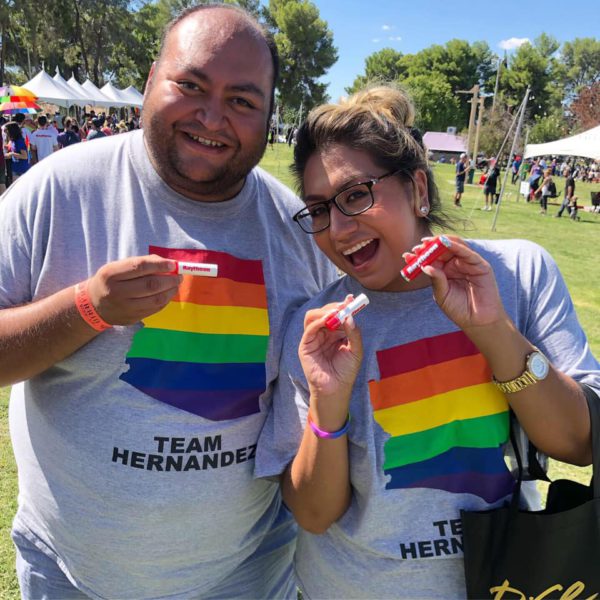
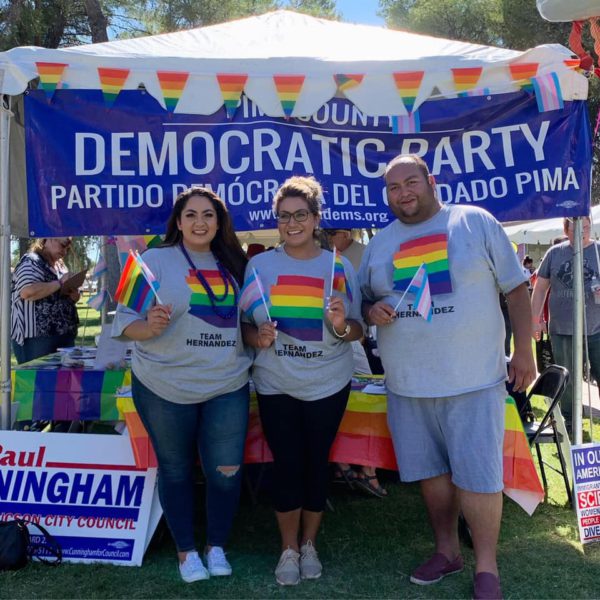
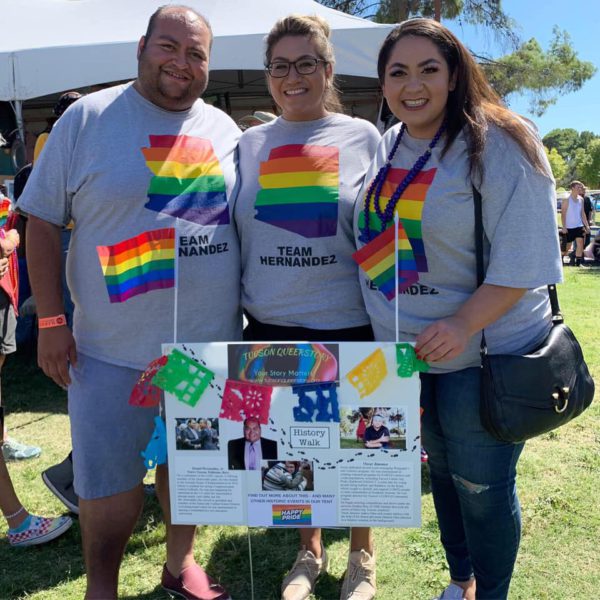
BISBEE, AZ. – Walking through this historic border town only eleven miles north of Mexico, the young man towering over his elderly woman companion listened intently. For Arizona State Representative Daniel Hernández, it was his first full day of campaigning as he was speaking with voters in Cochise County as a declared candidate in the race to represent Arizona’s Second U.S. Congressional District.

For Hernández though, this race brings his personal political story full circle. The thirty-one year old native of Tucson, while attending the University of Arizona in his hometown had a job as an intern for then Congresswoman Gabrielle Dee Giffords, who held Arizona’s 8th Congressional seat in the U.S. House.

It was a tragic event while working for Giffords that would change the trajectory of Hernández’s life, altering it forever.

Giffords, known affectionately as ‘Gabby’ by family, colleagues, friends, staffers and even voters, had held a constituent meet and greet at a Safeway in her district on January 8, 2011, when at around 10:10 AM that Saturday, a 22-year-old man armed with a pistol shot her in the head before proceeding to fire on 18 other people, killing six.

Hernández immediately went to Giffords’ aid applying pressure to the gunshot wound on her forehead, and made sure she did not choke on her blood. He and local paramedic Aaron Rogers were credited with saving her life. Then U.S. President Barack Obama, at a memorial service for the victims held in the arena at the University of Arizona after the mass shooting, called Hernández a hero.

Working for Giffords’ and seeing her commitment to public service for her fellow Arizonans, after graduation he went on to advocate for access to reproductive health care and education as program manager for Raíz, Planned Parenthood’s Latino outreach program.

Education has also been of critical concern stemming from his being the first-generation college student in his family. This factor propelling him to his first run for an elected office where he was elected to the board of the Sunnyside Unified School District in Pima County and later on where he became the youngest school board president in the district’s history.

Since 2017, Hernández has served in the Arizona State House’s 2nd District, and also as one of four openly gay law makers. In addition to being one of the youngest elected legislators he is also a co-founder of the House LGBTQ caucus.

He has worked with both Republicans and Democrats to pass bills protecting survivors of sexual assault and secure $20 million for school resource officers, counselors, and social workers. He also led the fight against legislation that would discriminate against LGBTQ Arizonans.

Now he says he wants to expand his reach and influences beyond the confines of the State House Chamber in Phoenix to ensure better “progressive” representation in Washington.

The son of an immigrant mother from Mexico and growing up in the Latino culture of Southern Arizona, he knows intimately the obstacles and challenges facing that community. But he also understands the challenges that confront all Arizonans especially now as the State recovers from the Coronavirus pandemic and the economic devastation it has wrought. But beyond the economic recovery healthcare and education are also very much priorities for Hernández.

Immigration concerns, border security, and racial injustice are also very much a part of his portfolio as he looks toward hopefully representing the people of his district.

The Blade had an opportunity to ask Rep. Hernández his take on policies, his platform, and questions regarding what he would desire to accomplish should he be elected.

What would you say is your number one- all out most important priority in your portfolio of issues that you are running on?

Asking me to pick just one is like asking me to pick my favorite dog out of the five my family owns. I think that for me the one that has risen to the top, particularly during the last year, is the issue of health care. I have seen firsthand the challenges that exist for many to have access to high quality, affordable health care. When I was seventeen, I nearly died from an autoimmune disorder called Graves’ Disease. My parents at the time were out of work and could not afford health insurance and I went months without real health care.

Eventually I was accepted into the state children’s health insurance program (SCHIP), a program which saved my life. As soon as I had access to insurance, I was able to get tests and treatment, but it took nearly a year. During that time, I started having lung and heart issues. While I was fortunate to be a child and qualify for SCHIP, too many people still don’t have access and even having a plastic card that says you have insurance isn’t enough.

In the last year I saw once again in the communities that I represent those issues around health care access. During the pandemic I worked with Republican Governor Doug Ducey to save a hospital where the next nearest hospital was 29 miles away in a retirement community. Due to a complex set of federal regulations this hospital had 2 weeks worth of money for payroll when they asked for help. I was able to help secure a $5.5 million dollar grant to keep it open in a rural community filled with seniors.

As recently as this February, the county that I represent on the border called because they were only receiving an allotment of 250 vaccines a week in a population of 50,000. I once again worked with our Republican governor and increased that amount to 1,500 doses a week and eventually that county became one of the most vaccinated in the state.

In the legislature I have worked to expand access to affordable health care insurance programs for small businesses. This was done in a bipartisan way to ensure that sole proprietors and small family businesses can buy into more affordable plans. I’m focused on protecting and defending the hard-fought progress of the Affordable Care Act. Let’s build upon this vital program and bring equity and access to all Americans regardless of whether they live in a city or rural community.

Let’s talk more about healthcare for a moment, especially for elderly folks and notably LGBTQ seniors, accessibility is an issue, insurance, medicaid and medicare. What do you propose to offer as solutions for some of the more problematic issues confronting seniors?

Caring for our seniors is particularly important to me. As life expectancies have increased and diseases such as HIV have become manageable, we have more seniors that are LGBTQ than ever before. By 2030 SAGE predicts we will have 7 million LGBTQ seniors in the United States. That number provides both opportunities and challenges for a system that is not quite prepared to care for these individuals with dignity. There are some great opportunities to look at the work being done by both SAGE and the AARP to help inform our decisions as policy makers on how to better support our LGBTQ seniors receive affordable high-quality health care.  

For facilities that are in-patient we must continue to require providers to undergo training for cultural competency on how to work with our community. The Center for Medicare and Medicaid Services instituted new rules a few years ago that require person centered care plans. While that is a positive step, we must create stronger requirements for trainings for staff and the care of LGBTQ seniors.

Outside of long-term care facilities, there are a few things I think we should do including increase funding and create incentives for local area agencies on aging to help keep seniors that can be independent in their homes. Over the long-term, having people live in their own homes with support will produce better health outcomes. Giving more funds but with requirements to create LGBTQ inclusive and supportive program will be critical.

Courtesy of the Daniel Hernandez for Congress campaign

The Dreamers and a path for citizenship for them as well as the 11 plus million undocumented immigrants in the United States, it seems that immigration reform always is the “can kicked down the road” without real solutions. What do you propose?

I have lived in Southern Arizona my whole life. It is an all-too-common trope that every few years politicians come to the border for photo opportunities to show how dangerous it is and how there’s a new “crisis”. The reality for most people along the border is that we live in partnership with our Mexican neighbors. Our neighbors in Mexico are important partners for trade and they are vital to the sustainability of cities in Southern Arizona.

We need to resist calls to label undocumented people as dangerous. We must work in a bipartisan way to bring people out of the shadows and create a pathway to citizenship. We can look at the work done in the recent past by people like Senators Schumer and McCain during the gang of eight in 2013. That bill that passed the Senate with 68 votes can serve as a template.

I think we have a unique opportunity to push this soon. But if we keep waiting for the perfect time the can will continue to be kicked down the road. We need politicians to stop talking about this problem and get working on it.

LGBTQ Equality. Some politico pundits and others suggest that passage of the Equality Act in a 50-50 split Senate makes it a political impossibility. Conversely others argue that Religious exemptions and carve outs will be the only means to gain passage or Republican support. Do you feel that a compromise is a reality or will it take removing the obstacle of the filibuster to be the only path forward?

Working in Arizona’s state legislature has not been a walk in the park. It has served as a good training ground for having to approach policy making with an eye towards educating and assuming best intentions. I have worked with community partners for years to educate my colleagues on LGBTQ issues and I’m proud to say that I was able to secure bipartisan support for my bill to create protections from discrimination in housing, employment, and public accommodations.

I’m going to take that same approach to Washington DC. I’m a firm believer that we can educate and get people to understand the reasons why the protections in the Equality Act are important. I’m hopeful that this will be done by the time I’d start serving in 2023. But if it’s not I’m ready to roll up my sleeves to work to ensure we educate those who don’t understand the issues to find new partners.

In a follow-up, given the legislative attacks on the Trans community this past legislative session as well as bills such as the anti-LGBTQ education measures, including the one you voted No on and ultimately was vetoed by the Governor- what measures can be taken to further protect the LGBTQ community?

First, we need to pass the Equality Act. Then we need to work to bring in new partners in the fight for LGBTQ equality. Through education we’ve built new alliances with the business community and with local Republican leaders. It is my hope that with this work we will reach a point where LGBTQ rights are no longer used as a political wedge issue.

Courtesy of the Daniel Hernandez for Congress campaign

You served as a Congressional Intern. How would you structure your office to better serve your constituents? Are meet and greets, town halls, and assemblies effective or do you favour a different approach? How would you prioritise the needs of your constituents?

In public life it is important that we go where people are. To wait for people to come to you means you will never fully know the needs of your constituents. This is why I always appreciated the “Congress On Your Corner” events that Gabby Giffords used to do. 

As a legislator I’ve driven all over southern Arizona to be accessible. During the pandemic I made sure to be out in my community from volunteering at vaccine distribution centers to helping constituents fill out information to get their stimulus checks. I’ve always been hands on. My plan is to be out in the community as much as possible and to hire staff that can help go to the most remote parts of the district to ensure we have coverage everywhere.

Jobs jobs jobs.’ It is the mantra of virtually every politician. But in reality, given the nature of the district, what would realistically bring greater economic stimulus in your opinion?

Depending on the part of the district the needs of the community differ. In Cochise County we need to invest in hard infrastructure like roads and bridges while in Pima county we need to find ways to help support startups particularly in the tech space. In both places we need to build out broadband infrastructure to better ensure access to commerce, telemedicine, and educational opportunities.

Education is key to success. What is your priority for Educational progress for your district and all Arizonans?

I’m extremely passionate about education. It’s why I ran for school board in 2011. Our schools need a strong advocate who will fight for our students and learning communities. During my tenure as a school board member, I tried to work to improve education but was hindered by massive cuts from the state.

Arizona has severely underfunded education for nearly two decades. My priorities are increasing funding for our k-12 and higher education institutions. We need to offer a livable wage particularly for our teachers to ensure we stem the loss of people leaving the profession due to high stress and low pay.

Courtesy of the Daniel Hernandez for Congress campaign

Finally, the First Nations have suffered greatly not only with the pandemic but also with a studied indifference from Washington especially in key areas of substance abuse, housing, and economic opportunities for Natives especially youth. What are some of your ideas to assist the tribal leaders and the elders in receiving better parity in dealing with the Federal and even the State government?

Arizona has 22 sovereign tribal nations and while I don’t currently represent any in their entirety, I have consistently worked to ensure we are listening to the needs of our Native American communities. My colleagues in the House Myron Tsosie and Arlando Teller taught me the importance of simply asking “Have Tribes been consulted on this?”.  Even though I have done my best to reach out to the Tribes, this taught me that I needed to work even harder to seek their input. My plan is to build upon the strong relationships I have, particularly with the tribes in Southern Arizona. I would establish a Native American Kitchen cabinet and meet with them regularly to hear about their needs. We need to not make assumptions and listen to these leaders directly about their needs.

Cancun: LGBT community demand justice for the case of a young gay man murdered and burned – The Yucatan Times

ancun: They demand justice in the case of a young gay man murdered and burned. Photo: (Sipse)

Since 2016 there have been more than 60 attacks against the LGBT community: none have been resolved

Cancun, QRoo, (June 10, 2021).- The murder of a man in Cancun , who was allegedly gay and had HIV, adds to other harassment against members of the LGBT community, of which none have been sanctioned, civil organizations denounced 

Jan Novak, president of the civil association Fusión G Playa Pride, acknowledged that although it is difficult to quantify the cases of aggression and harassment against members of the community of sexual diversity, so far this year there have been four cases in Quintana Roo .

“These are only the cases registered by the organizations or that have complaints, but there are many more cases that are not reported and in many there is serious violence. People sometimes do not go to the authorities out of fear and they do not report it, there are many cases like this that they do not want to report ”.

He said that the murder of a man in Supermanzana 231 -who was also allegedly tortured-, occurred last Saturday, June 5, is added to other cases of harassment against homosexual people in the municipalities of Tulum and Solidaridad.

There are more than 60 attacks against the LGBT community since 2016

Last February, in Tulum, a couple reported harassment and mistreatment by elements of the local police. However, the interviewee added that, despite the videos and other evidence presented, the elements that participated in this human rights violation were not punished. 

The other two cases occurred in Playa del Carmen. The first happened in April when members of the Solidaridad municipal police violated the rights of a gay couple who had allegedly been attacked by security personnel from an establishment.

“This is another case that is still open and we don’t know how it goes. In fact, the boys traveled the next day, but they filed their complaint and their complaint with Human Rights and Conapred (National Council to Prevent Discrimination) ”.

The second case occurred in May, when staff from the State Health Secretariat refused to care for a gay person with HIV, who was finally treated after seven hours and with the intervention of staff from the State Human Rights Commission. of Quintana Roo (Cdheqroo).

These cases are in addition to the more than 60 cases of attacks and harassment against people of sexual diversity that have occurred in Quintana Roo since 2016, Novak added.

Young gay man was murdered on June 5

The case occurred last June 5 in a barracks located at Supermanzana 231, Manzana 22, on Leona Vicario Avenue, one block from Rancho Viejo Avenue in Cancun.

The body was discovered by the victim’s father who requested help from the 911 emergency service.

A version about the murder indicates that the case could be related to a revenge, since apparently the now deceased infected another person.

Source: Sipse

The Yucatan Times
Newsroom

Comments

comments