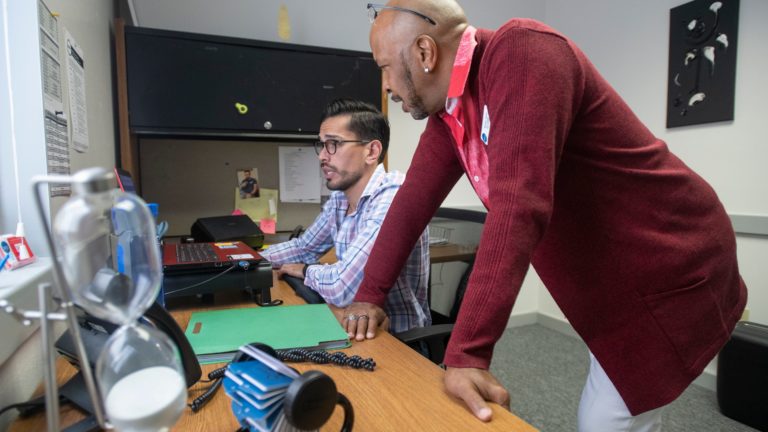
According to our Veterans Service Organization partners, there are an estimated 1 million Lesbian, Gay, Bisexual and Transgender (LGBT) Veterans in the U.S. Here at VBA, we remain dedicated to providing all Veterans, service members and their families with the benefits they have earned, regardless of sexual orientation. To help us better serve all who served, here are the answers to some of the most common questions we hear and what you can do to make a difference.
What benefits are available to LGBT Veterans?
We provide health care and benefits to all eligible Veterans, including those who identify as LGBT. VA recognizes all same-sex marriages without regard to where Veterans live. All Veterans in same-sex marriages who believe they are eligible for VA benefits should apply. Those denied claims based on prior guidance should re-apply for benefits.
Benefits for dependents and survivors, such as Survivor’s Pension, home loans and more, are also available. In addition, Veterans can select beneficiaries for a variety of benefits, regardless of sexual orientation. These benefits include:
LGBT Veteran Care Coordinators are also available at every VA health care facility to help Veterans navigate available services. More information on health care services is available at VA.gov.
How can Veterans upgrade their Character of Discharge?
Another common question centers around how Veterans can get their DD214 upgraded, making them eligible for benefits and services. The specific process for updating a discharge varies depending on a Veteran’s circumstances. VA’s Character of Discharge wizard allows Veterans to answer a simple set of questions to get step-by-step instructions.
What can I do to help ease Veterans’ concerns?
We want to alleviate any fears or concerns some LGBT Veterans may have when seeking assistance from VA and at all our VBA facilities. To ensure that we continue to provide world-class customer service to all Veterans, it is our duty to report any incidents of harassment, poor treatment or discrimination immediately. We must also refrain from making assumptions, use inclusive language, and remember that words mean different things to different people. Check out the Parents and Friends of Lesbian and Gays (PFLAG) National Glossary of Terms for evolving vocabulary and definitions.
Where can I get more information?
For more information, check out the Diversity and Inclusion training available from the Office of Resolution, Management, Diversity, and Inclusion.
Angela Childers-Conner is a marketing and communications specialist with VBA’s Office of Strategic Engagement.
On a Florida beach vacation with my family last week, I was under orders not to check my phone too much.
But I sneaked a peak last Friday afternoon and was heartened to see a tweet from a Bay Area sportswriter sharing the news that the Oakland A’s have renamed their annual Pride Night after Glenn Burke, the former Berkeley High baseball and basketball standout who went on to become the first openly gay Major League Baseball player with the Dodgers and A’s in the late 1970s.
This is a well-deserved posthumous honor for Burke, recognizing his unique contribution to the game and the enduring significance of his story. But as appropriate it is for the A’s to celebrate Burke, it also raises the question: Why didn’t the Dodgers do it first?
The Dodgers selected Burke in the 1972 MLB draft. The Dodgers invested in his development and a minor league career in which he hit above .300 four times and set stolen base records in two leagues. Longtime Dodgers player and coach Junior Gilliam shared the organization’s high opinion of their speedy and powerfully built outfield prospect: Burke had the potential, Gilliam said, to be the next Willie Mays.
Advertisement
Burke would not come close to living up to those lofty expectations, but he did start two games for the Big Blue Wrecking Crew in the 1977 National League Championship Series against the Phillies, and started Game 1 of the ’77 World Series at Yankee Stadium. He was a popular player in the clubhouse at a time when the roster was loaded with All-Stars. He is even credited with inventing the high-five as a Dodger.
The first openly gay major leaguer was a charismatic reserve on a great Dodgers team, and yet the franchise rarely acknowledges him. Searching Twitter, I can find only one time they’ve mentioned his name, an Oct. 2012 Tweet about the historic high-five. A search of his name on the Dodgers website turns up blank. When Burke was experiencing homelessness while dying of AIDS in the early 1990s, it was the A’s, and not the Dodgers, who offered assistance.
In researching my biography of Burke, “Singled Out,” I got the sense that this was a subject many Dodgers players and executives, past and present, preferred not to touch. The team’s marketing department acknowledged receiving but did not respond to several questions for this column, including questions asking for any examples of the team’s acknowledgment of Burke that I may have missed.
Even looking at the team’s long history of well-executed Pride Nights and support for LGBTQ organizations and causes, there has been something conspicuously missing: a meaningful connection to Glenn Burke and the team’s place in gay history. The A’s invited Glenn’s brother, Sidney, to throw out a first pitch six years ago, and their Pride event tonight will raise money for the Glenn Burke Wellness Clinic at the Oakland LGBTQ Community Center. (The Dodgers said they had “nothing special planned” to recognize Burke at their Pride Night tonight, “but that doesn’t rule out something in more in future years.”) I don’t know why the Dodgers haven’t made more of their connection to Burke, but there are elements of his experience the team might rather forget.
VIDEO | 07:50
LA Times Today: The story of Glenn Burke
Watch L.A. Times Today at 7 p.m. on Spectrum News 1 on Channel 1 or live stream on the Spectrum News App. Palos Verdes Peninsula and Orange County viewers can watch on Cox Systems on channel 99.
Following the 1977 season, Dodger Vice President Al Campanis offered Burke a hefty bonus if he’d get married.
“To a woman?” Burke replied, declining the bribe and setting the wheels in motion for his trade to Oakland in May 1978.
Advertisement
I’ve wondered when the franchise’s attitude toward Burke might change. But with last week’s announcement, the A’s have beaten the Dodgers to the punch in at least one highly visible way, 43 years after Burke played his last game for the Dodgers and 26 years after his death.
The situation reminds me of an interview I conducted with David Williams, the late African American athletic director at Vanderbilt University, when I was writing a biography of Perry Wallace (“Strong Inside”), the first Black basketball player in SEC history. Wallace attended Vanderbilt in the late 1960s and in many ways found his own campus to be as inhospitable as road trips to Mississippi and Alabama. Williams had arrived at Vanderbilt three decades after Wallace made history there and was stunned to learn the Nashville university had done nothing to honor him: “You mean to tell me the Jackie Robinson of the SEC played here and you’re not waving banners and shouting about it?” Williams recalled telling university administrators.
At Williams’ urging, that changed. Today there are two scholarships named after Wallace and an annual courage award in his name. His No. 25 jersey hangs from the rafters at Memorial Gymnasium, an oil portrait is placed prominently in an engineering building, and Perry Wallace Way winds its way through the Vanderbilt campus.
Advertisement
In the decade before his death in 2017, Wallace was invited back to campus many times to tell his story to new generations of students and to receive these deserved, even if late-in-coming, accolades. I asked him what it felt like to be honored by the same institution that had ignored him for so long. “Reconciliation without the truth is just acting,” he said. “But when the truth is present, real change and healing can occur.”
Vanderbilt ultimately decided to reconcile with Wallace in a truthful way, requiring first-year students to read “Strong Inside” two years in a row. Rather than hide from a painful era in the school’s history, administrators embraced it, challenging new students to learn about racism in the university’s past and to discuss how it affected people — and how they’d combat it — on campus today. The conversations were powerful.
“Reconciliation without the truth is just acting, but when the truth is present, real change and healing can occur.”
Perry Wallace
I simply wonder why the Dodgers have not taken a similar approach. I’ve got no ax to grind. I love the uniforms and the passion of the fans. My grandfather grew up in Brooklyn and was a fan. As a Vanderbilt guy, I root for Walker Buehler and David Price, and Mookie Betts is a Nashville hero too. And the Dodgers certainly deserve credit for their long history of reaching out to gay fans, while the Texas Rangers, for example, have never held a Pride Night.
Advertisement
But it appears that the Dodgers have not yet reached the reconciliation point with Glenn Burke’s story, truthful or otherwise. This is a shame, because as one of the most high-profile organizations in all of sports, the Dodgers could effect change, in a game that needs it, if they led an honest conversation on Burke’s experience as a gay major leaguer. There are no openly gay players in the Major Leagues today.
David Williams told me something else when I asked him about squaring his commitment to progress with the racism in his university’s past. People won’t forget but they will forgive past transgressions, he said, if they can see you’re making honest and meaningful strides toward progress; they care more about what you’re doing right now than what your predecessors did wrong in the past. Just ask the A’s. Manager Billy Martin told sportswriters he wasn’t going to let a f— like Glenn “contaminate” his team and banished him to the minors, never to return. Yet the team’s decision to honor Burke is celebrated.
The first openly gay Major League player was a Dodger. It’s time for the Dodgers to take ownership of the homophobia that prematurely ended Glenn Burke’s days in Los Angeles so that the organization can move beyond it, stake its claim to history by centering Burke’s experience, and lead the way for LGBTQ rights in baseball. There would be no more credible voice.
Bestselling author Andrew Maraniss writes sports and history-related nonfiction for teens and adults. He lives in Nashville and is on Twitter @trublu24. “Singled Out: The True Story of Glenn Burke,” was published by Philomel Books on March 2.
Hungary’s dominant ruling party has proposed legislation to ban dissemination of materials on sensitive gender and sexual topics in a move that is already drawing comparisons to Russia’s yearslong crackdown on “gay propaganda.”
The Fidezs-backed amendment — to a bill to combat pedophilia — was introduced to lawmakers on June 10, and bans spreading content that is seen to promote gender change or homosexuality in schools.
National-populist Prime Minister Viktor Orban and his Fidesz allies hold a supermajority in parliament that virtually ensures passage of priority legislation.
Orban’s government has backed a strongly conservative social agenda and stepped up anti-lesbian, gay, bisexual, and transgender (LGBT) moves as woes mounted amid the coronavirus pandemic.
It has already embedded a requirement that marriage be between a man and a woman in the constitution and banned adoption by same-sex couples.
The government also retroactively prohibited legal status for transgender people in a move that the Constitutional Court ruled was unconstitutional.
The new amendment tacked onto the anti-pedophilia bill says children cannot be shown any content that encourages gender change or homosexuality.
The ban would also apply to advertising.
It also suggests the creation of a list of groups that would be allowed to conduct sex-education classes in schools.
The Hatter Society, a local LGBT+ rights group, called the draft amendment an attempt to “seriously curb freedom of speech and children’s rights” and a move that “endangers mental health of LGBTQI youngsters and prevents them getting access to information…and affirmative support.”
The Hatter Society compared it to legislation enacted in Russia in 2013 that has been used to punish discussion of a broad range of LGBT messages, including efforts to educate or to confront discrimination against that community.
That Russian legislation targets “propaganda on nontraditional sexual relations” and has been widely condemned by domestic and international rights groups.
Government data help policymakers find and fix problems for people in need. But that’s tricky if some groups aren’t represented in the stats.
This is the case for the LGBTQ+ community, and it’s a huge problem. Here’s an example: The government’s monthly jobs report shows how many men and women, Black, White, Asian and Hispanic workers are unemployed. The stats lay bare a lot of inequities, but there are no comparable federal data on LGBTQ+ workers.
“We are invisible in federal statistics, when it comes to some policymakers,” said Justin Nelson, co-founder and president of the National LGBT Chamber of Commerce (NGLCC).
Put more bluntly: “If we don’t get counted, we don’t count,” said Cathy Renna, communications director at the National LGBTQ Task Force.
Invisible in the data
Official stats, including the Census, are used to decide how federal funds are distributed — to the tune of $1.5 trillion. But data gaps in the jobs reports, health surveys and the decennial Census affect millions of people: 5.6% of US adults identify as lesbian, gay, bisexual or transgender, according to a Gallup survey published in February.
Official data are needed “to ensure that LGBT people are included in efforts to reduce unemployment through increased labor force participation, as well as to monitor compliance with anti-discrimination provisions,” the researchers wrote earlier this year in support of adding LGBTQ+ questions to the Current Population Survey, which helps create the jobs report.
Recent research has found higher rates of poverty, unemployment, health disparities, and workplace discrimination among LGBTQ+ adults, according to the Williams Institute. The negative outcomes were even greater among transgender individuals and LGBTQ+ people of color.
Examples of how data can change outcomes for the LGBTQ+ community include the establishment of the Massachusetts Commission on LGBTQ youth, school training services and ongoing research after former Governor William Weld sought to respond to an increase in LGBTQ+ youth suicides; the improvement of individuals’ medical care following research asking patients about their sexual orientation and gender identity; and the creation of equity programs within the Los Angeles County Department of Children and Family Services following a study that showed LGBTQ+ youth were overrepresented in the youth foster system and experienced harsher treatment.
Although independent research from the UCLA School of Law’s Williams Institute and established pollsters such Gallup have provided some data about the community, that research just doesn’t carry the same weight as government stats in leading to funding of direct services and addressing the needs of people in the queer community, Renna said.
But the business of big, robust data sets is complicated.
Big data problems
Government statistics are pretty sophisticated and the methodology behind surveys goes through a lot of prodding. But when it comes to the LGBTQ+ community, government institutions haven’t done enough research yet to make broader improvements to the data.
The worry is that reporting errors on questions surrounding sexual orientation and gender identity may lead to much bigger errors in the eventual data.
“Questions for relatively small populations must be formulated especially carefully; if they are not, even relatively small sampling or reporting errors can lead to large errors in estimates,” the US Bureau of Labor Statistics told CNN Business in an email.
The questions the Census Bureau asks also have to go through an established process to review wording and effectiveness. Ultimately the Office of Management and Budget approves any new questions.
When the government surveys households, for example to learn about America’s employment situation, one person answers questions for other members of their household. That can make it harder to get accurate data on members of the LGBTQ+ community, especially if a person hasn’t come out to their family, or if the survey respondent is uncomfortable talking about another household member’s sexual orientation or gender identity.
“Not everyone’s out,” Renna added. “Some of us live in places where you can be fired if you come out.”
The NGLCC, which leans heavily on community-driven surveys and private sector research, has yet to meet with the Census and BLS on inclusive data-gathering efforts, Nelson said. But he said he is optimistic about the Biden-Harris Administration’s efforts to broaden the scope of its data collection.
President Joe Biden last week, in officially recognizing June as Pride Month, urged Congress to pass the Equality Act to ensure civil rights protections for members of the LGBTQ+ community and their families.
“We are a strong part of the economic fabric … not just in Pride Month,” Nelson said. “We need to get inclusive on data collection immediately, because the sooner we can normalize that data collection, the less opportunity there is for erasing it.”
A chicken and egg situation
The people behind government surveys are doing research to move toward a world in which official data are more inclusive.
Figuring out how to best ask about things as personal as sexual orientation and gender identity is at the forefront of that research. The willingness and ability to answer questions about sexual orientation and gender of other people is just as critical, the Census Bureau told CNN Business.
The last BLS research paper on the topic is from 2017. While it’s feasible for the government to ask these questions, the paper recommends more in-depth analysis.
“The reality is that it’s very chicken and egg,” Renna said. “If you don’t have the data, you can’t understand the community. If you don’t ask the community questions, you don’t have the data.”
Some government surveys already collect information on gender identity and sexual orientation, including the National Health Interview Survey, the National Crime Victimization Survey and the National Survey of Children’s Health.
Considering that only 20% of LGBTQ+ people live in same-sex married households, these surveys leave out the vast majority of the community, said Kerith Conron, the Blachford-Cooper research director and distinguished scholar at the Williams Institute.
And there is a greater dearth of data especially when it comes to LGBTQ+ youth, transgender people and gender identity, she added.
Earlier this year, Conron and her colleagues highlighted those and other inequities in a public comment urging the US Census Bureau and BLS to add sexual orientation, gender identity and sex assigned at birth questions to the Current Population Survey.
“There are ongoing health and economic inequities that aren’t going to go away unless people start paying attention to them,” she said in an interview with CNN Business.
Data on sexual orientation and gender identity aren’t collected consistently across states — for example, only 30 states included the SOGI module in a US Centers for Disease Control-backed behavioral risk survey in 2019. This creates big gaps in the data, particularly in regions such as the South and Midwest, Conron added.
“Those are the places where non-discrimination protections and social acceptance are also lacking,” she said. “In the places where people probably have worse conditions, [there are] less data available to see what’s going on for people.”
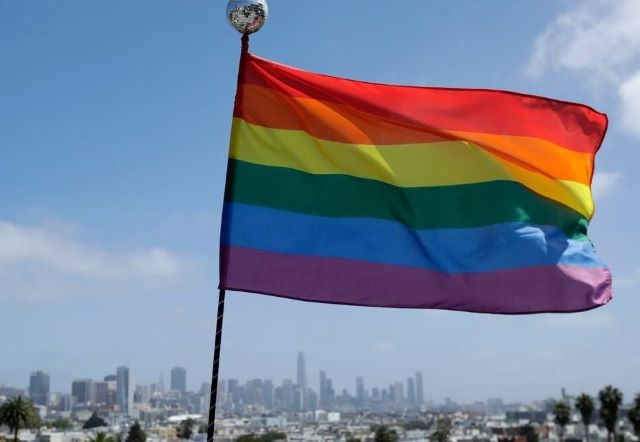
“You have had a blessed life,” Anthony commented with a touch of envy to me recently when I was recounting my 1970s coming out story as a gay teenager in Detroit. I was thinking about the blessing of being gay as I watched the rainbow pride flag being raised at City Hall in Foster City June 1, where it will bear witness to inclusion for the entire month.
It didn’t always feel like a blessing. I have had it a lot easier than many who struggle to accept themselves as gay. Their families and faith communities sometimes make it even harder. I had friends and teachers who supported me when I came out. I came out suddenly so I’ve never been in the closet as an adult. My dad found a magazine in my dresser that featured a racy picture of a Tom Selleck look-alike and confronted me. If it had been a Playboy instead he would have been happy. He said, “I wish we had never adopted you,“ and didn’t speak to me for 20 years. I never once went home until I was almost 40.
But my mother more than made up for this rejection. When she asked me, “Jimmy, are you a homosexual?” I wanted to die. I was so ashamed. My family was deeply religious; I feared she too would reject me. I considered lying, but I loved her too much to not tell the truth. I barely whispered, “yes,” when she hugged me and said: “Don’t let anybody ever tell you that God doesn’t love you.” Her reaction got me through a lot of challenges in the years to come.
Religion made things hard for our family, as it does for so many LGBT people. Many just give up on it, but my mother’s words kept me connected. I became a pastor in gay affirming churches, helping people who have been hurt by religion to reclaim their spirituality.
In my mother’s generation being gay was something that was seen as a sin or a sickness.
My devout mother was a research chemist, a proud graduate of a Jesuit university, and she wasn’t afraid to let her intellect inform her faith. She sought out her old Jesuit priest instructors, who helped her find Catholic theologians who accepted the scientific basis for homosexuality. She went to gay affirming masses offered by Dignity, a group for gay Catholics and their families. She informed her own conscience and called out the church for its unwillingness to engage modern psychology. My mother spent the rest of her life being part of my life, which included my gay life. I was an activist. I survived HIV and am still going strong. She didn’t miss any of it. My dad eventually came around, and we reconciled fully. He regretted all the years he missed out on because he misused his religion as a way of justifying his unwillingness to learn and grow. I can trace the inner strength I have to face a sometimes hostile world to the unconditional love of Jacqueline Downs Mitulski, and to her deep faith, her best gift to me. As we stood together at my father’s funeral at her church in Michigan, the pastor made a point of telling me not to come to communion. I was the one who had to restrain her from making a scene on my behalf. She had become the activist that she had raised me to be.
These were my memories as I watched the pride flag being raised in Foster City. Last year, the rainbow flag was up for a week after a brief controversy. Rabbi Corey Helfand and Peninsula Sinai Congregation raised their voices alongside Island United Church to advocate for the rainbow display. Their solidarity sent a message to LGBT people that religion can be our advocate, not just our oppressor. This is the kind of solidarity we must express with the transgender community, whose acceptance remains imperiled.
I’m proud that Island United Church’s flag was used in the ceremony. I appreciate this congregation that stands for God’s all inclusive love. In my lifetime, I have seen religious groups and institutions change in a move toward acceptance we couldn’t have imagined when I was growing up.
Parents: Love your children no matter what your religion says. God is greater than religion. LGBT people: Keep the faith — the world is still changing, and we have a place in it.
The Rev. Jim Mitulski is the interim pastor of Island United Church of Foster City, co-president of the Peninsula Multifaith Coalition and a member of the San Mateo NAACP and the Peninsula Solidarity Cohort.
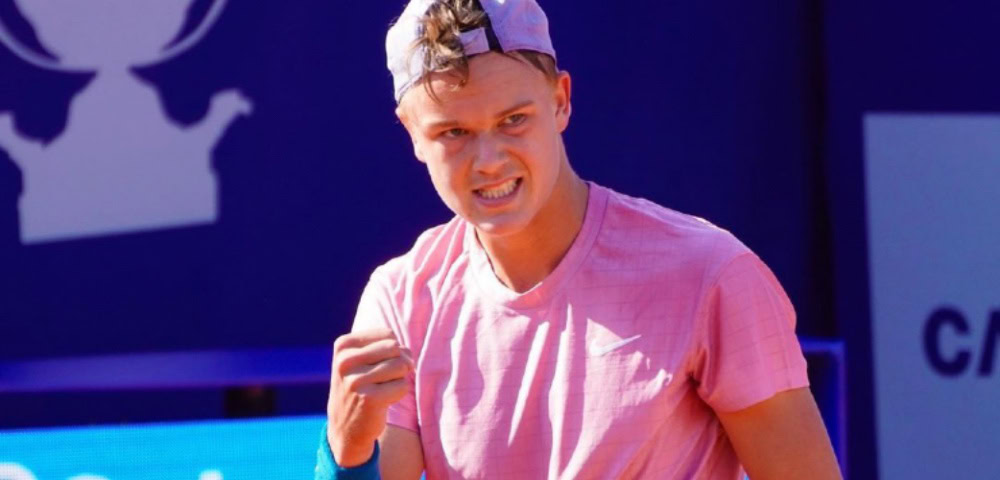
Eighteen-year-old Danish tennis player Holger Rune is the subject of a current investigation by the ATP tour after yelling gay slurs during a match against Tomas Martin Etcheverry in the semi-finals of the Biella Challenger in Italy on Sunday.
During the match, Rune uttered the phrases ‘you are a pussy player’ and ‘you are playing like a faggot ass’ to his opponent, then proceeded to shout ‘Allez, faggot’ when winning a point during a match.
The ATP confirmed the news via a statement issued to TV2 on Monday, saying that they are investigating the incident under the official code of conduct (section 8.04).
“ATP is committed to ensuring an inclusive environment for all players, staff and fans, and there is absolutely no room for homophobic remarks in tennis,” the statement read.
“According to section 8.04 N.2 of the Player Code of Conduct, ATP is in the process of investigating the comments of Holger Rune during a match on Saturday 5 June 2021 in ATP Challenger 80 in Biella.”
Homophobic Slurs Spark outrage
Advertisement
The former World Number One Junior’s comments sparked outrage across social media with many quick to call him out. In response and in somewhat of an apology, Rune alleged that the words were not directed at his opponent, but at himself.
“I want to take the opportunity to apologise if I offended anyone for using some bad wording to myself in my semi-final yesterday during some tough points. I am sorry for that, and this will of course not happen again.” Rune posted on Instagram.
However, this was not Rune initial wording, as was pointed out by Tennis podcaster James, Rogers posted on a twitter a screenshot of the original statement, which read”“I want to take the opportunity to apologise if I offended anyone for using some bad wording to myself in my semi-final yesterday. I love diversity more than anyone I know and people that know, they no that! Sorry for not being as perfect as you all expect.”
I don’t care about H*lger R*ne but this is one of the shittiest apologies I’ve ever seen pic.twitter.com/gYQ3S3JY16
“I don’t care about H*lger R*ne but this is one of the shittiest apologies I’ve ever seen” Rogers aptly captioned the post.
Homophobia In Sports
Unfortunately, Rune isn’t the first professional sports player this year to use such an excuse, after golf player Justin Thomas was similarly forced to apologised for using the word “faggot” during Tournament Of Champions in Hawaii.
Advertisement
Realising that his initial apology had done more harm than good and now on damage control Rune was quick to offer an second apology, this time saying “I’m young and I need to learn. Not that that allows me to say crap like that. I was taught a lesson, and I think it’s fair that people criticise (me). I’m really sorry and hope people will accept my apology,”
Yet the same day as Rune issued his apology, his mother and manager Aneke Rune hit out at V2 for ‘harassing’ her son for what she described as a ‘wrong comment’ saying that they were trying to ‘make news and gossip from a hard-working young man.’
“If you are a man you can apologise as Holger did if anyone felt offended by his words to himself in the match. Do NOT harass Holger for a wrong comment TV2 and who else is out there trying to make news and gossip from a hard working young man,” Aneke wrote on Instagram.
Det er vist lige i overkanten, hvis man mener, at det er chikane, “opdigtede” nyheder og sladder, når Holger Rune-sagen rulles ud. Heldigvis svarede den unge, myndige mand godt for sig, da han lagde sig fladt ned og sagde undskyld for en dumhed. #tennisdk#HolgerRunepic.twitter.com/YnEqp4Owqb
Rune is currently ranked 291st in the world, having claimed the French Open boys’ title in 2019 and recently won his maiden Challenger title in Biella. It is unknown, what if any disciplinary action Rune is now set to face for using such derogatory language.
If you feel distressed reading the story, you can reach out to support services.
For 24 hour crisis support and suicide prevention call Lifeline on 13 11 14
For Australia-wide LGBTQI peer support call QLife on 1800 184 527 or webchat.
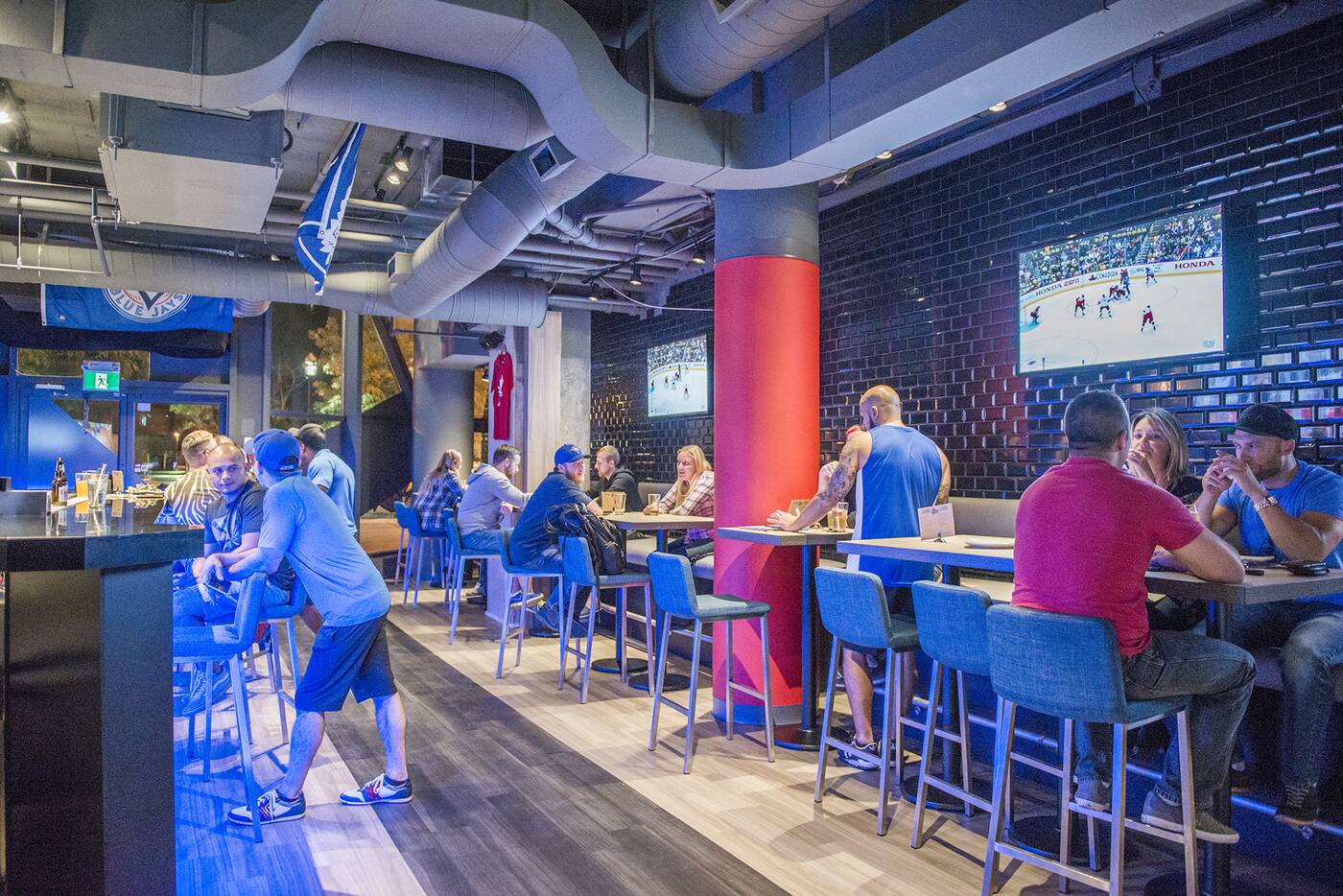
Toronto’s first gay sports bar has sadly closed permanently, quietly slipping out of existence during the pandemic.
Sincere Realty vice president and broker Margaret Liu confirmed that in late September 2020 she was asked to lease 31 St. Joseph St. where Striker Sports Bar had been, the city’s first ever LGBTQ+ sports bar. The space is up for lease.
She says at that time it went up for lease, the bar was already closed and the tenant had left, and that she never had a chance to meet with the owner.
The bar’s last public social media post was in March 2020.
Striker aimed to provide an inclusive environment as a sports bar. Photo by Hector Vasquez.
The watering hole had a reputation as one of the best sports bars in the city, and was owned by Oliver Douglas and Vince Silva. It was known as a welcoming environment for queer sports fans as well as a safe space for women to watch sports.
Not only were they Toronto’s first gay sports bar, they were also the first in Canada to have a “Frost Rail,” a strip on the bar covered in a thin layer of frost where you could keep your drink cold.
Striker could not be reached for comment on the closure.
The U.S. Army has released a new set of recruitment ads geared towards encouraging citizens to answer “The Calling.” In it, they feature five young Americans who “made the most important decision of their lives, for reasons as diverse as they are.” The ads feature people of varied race, including a white woman, a Black man and woman, a woman of Latin descent, and an Asian man. But not only are the individuals racially diverse, the recruitment ads are pro-LGBT as well.
One of the woke recruitment ads for the U.S. Army features Cpl. Emma Malonelord, who is described as a young woman who was “raised by two supportive mothers” and was raised by “such powerful role models in her life.” The description of her profile on the pro-LGBT recruitment ad read that she was “inspired by their courage and conviction” and was determined to “shatter stereotypes.”
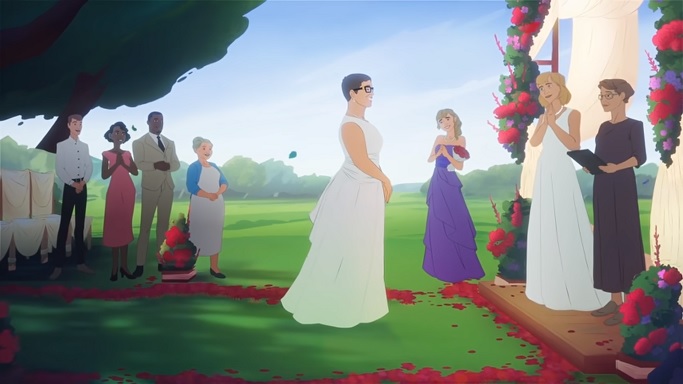
Cpl. Malonelord’s U.S. Army recruitment ad featured an animated same-sex wedding that recounted how her two mothers wed. Her family lived in California and she claims to have a “normal” childhood, except that she had two mothers, CNS News reported. But this is not the first time the U.S. Army has engaged with woke ideology.
According to the Military Times reported that in May, Senator Tom Cotton and Representative Dan Crewnshaw, two Republicans who both served in the U.S. military, launched a whistleblower website in which troops can submit complaints on “anti-American indoctrination seeping into parts of our military,” a description provided by Sen. Cotton. Through the site, they have received news on how woke ideology has infiltrated the U.S. Army.
Sen. Cotton, a former Army infantry captain, argued how one Marine reported his unit’s “mandatory military history training was replaced with training on police brutality, white privilege and systemic racism.” The Arkansas senator reported that this woke ideology training caused several officers to leave the unit.
In May, Rep. Crenshaw, himself a retired SEAL lieutenant commander, condemned the U.S. army’s teachings of woke ideology, taking to Twitter to share his thoughts and a link to the whistleblower website, “Enough is enough. We won’t let our military fall to woke ideology. We have just launched a whistleblower webpage where you can submit your story. Your complaint will be legally protected, and go to my office and @SenTomCotton.”
The Hill reported that during a line of questioning by Sen. Cotton, U.S. Defense Secretary Lloyd Austin denied that the U.S. military is a “fundamentally racist organization” and answered no to several of the senator’s questions. Sec. Austin argued, “The military, like any organization, will have its challenges, but I do not believe it is a fundamentally racist organization.”
“I would also say that diversity, equity and inclusion is important to this military now and it will be important in the future,” Sec. Austin said. “And so we’re going to make sure that our military looks like America and that our leadership looks like what’s in the ranks of the military.”
Sec. Austin also said the U.S. military is “making sure” that they stay the “the most effective and lethal fighting force in the world” no matter how diverse their recruits are.
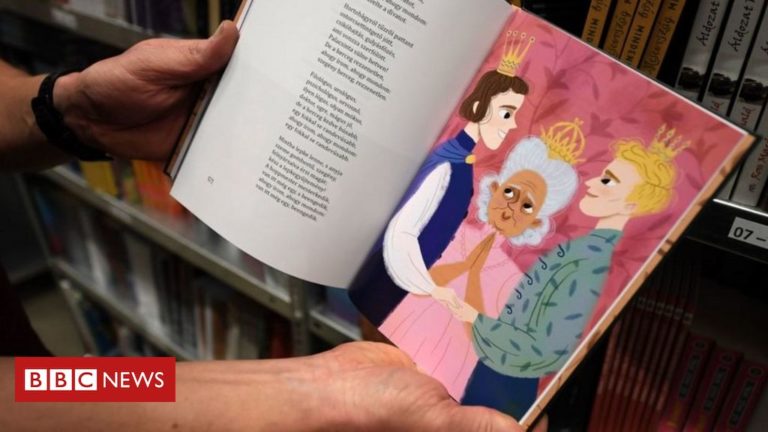
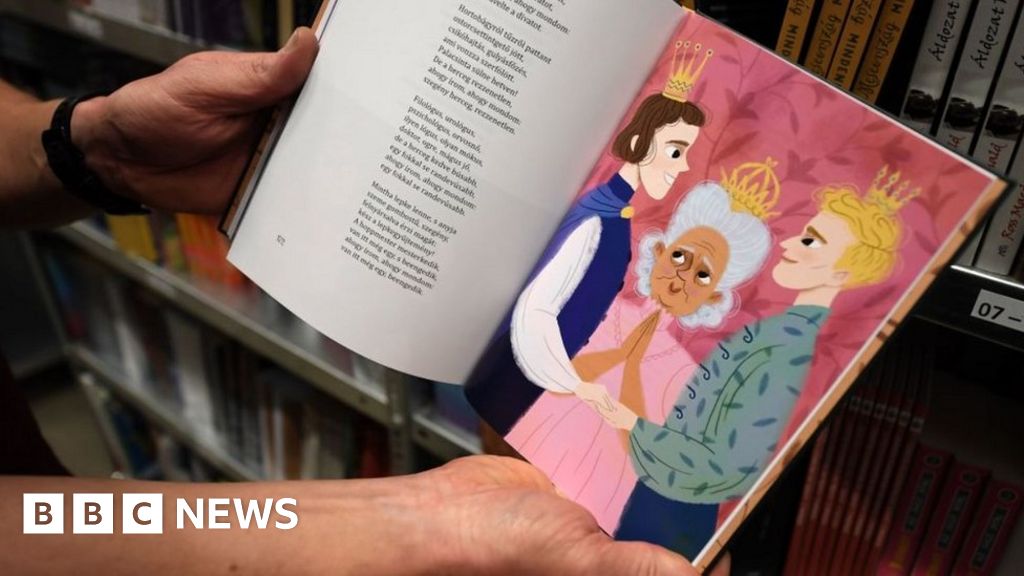
Last year the Fidesz government condemned a Hungarian children’s book, Wonderland Is For Everyone, which recasts fairy tale characters in roles representing minorities, notably Roma and gay people. Fidesz labelled it “homosexual propaganda”, saying it should be banned from schools.
1981 was a magical year for me. Alexander Godunov and Judith Jamison performed “Spell” as guest performers at Alvin Ailey American Dance Theater’s opening night gala, DREAMGIRLS was on Broadway, Diana Ross had a hit called “I’m Coming Out,” and Tom Browne had an R&B hit called “Thigh High” (Grip Your Hips and Move). I cheered as a University of Oklahoma cheerleader in the Sun Bowl as OU beat the University of Houston 40–14. Life was good. I still believed in a world with endless possibilities. However, by the summer of 1981, I’d heard about an illness that was primarily affecting white and Black gay men in L.A., New York City and San Francisco. The sickness, then called GRID (Gay-Related Immune Deficiency Syndrome) was infecting and killing gay people. Many Black gay friends believed we had no worries if we did not sleep with white men. They were wrong.
In 1981, Ronald Reagan was the U.S. president. Reagan did not utter the words AIDS until four years into his administration. Poor leadership and a deadly epidemic are a catastrophic combination. Imagine HIV/AIDS in a Trump administration. Reagan’s silence and neglect killed many Americans. By 1985, Rock Hudson had died, and Elizabeth Taylor had created AMFAR and become an international AIDS ambassador. The life span of a person diagnosed with HTLV III, now referred to as HIV-1, during that period was 18 months. HIV changed the trajectory of my life. I had just begun to live. My house and everything around me were on fire.
After 40 years of an HIV epidemic and HIV fatigue, the landscape has not changed much. Black gay men are still overrepresented in the Centers for Disease Control and Prevention’s Epidemic Surveillance Data. Organizations are still facing the challenges of stigma, bias and other social inequities. During the 1980s and 1990s, we represented about 35% of new infections. According to a CDC brief, “published research does not provide definitive answers about why new HIV infections among young, Black/African American gay, bisexual, and other men who have sex with men (MSM) have increased.” This statement is problematic. They are supposed to fund “effective” HIV prevention strategies. The CDC still does not know after 40 years why infections among Black gay men have increased? This lack of knowledge is a limitation of social science. I also believe it’s a governmental and a community failure.
Dr. Joseph E. Lowery, co-founder and president emeritus of the Southern Christian Leadership Conference, often said, When America gets a cold, Black America gets pneumonia. What has changed in 40 years? Not much. Structural inequities are still plaguing Black and brown communities. Many organizations continue to suffer from a lack of social and political capital. COVID-19 has effectively and efficiently demonstrated what many who live in my community already knew. There are still two Americas, both separate and equal, one for the rich and one for the poor. More succinctly, it might be said, two Americas: the served and the underserved; or the served, and the ignored.
I am happy HIV/AIDS is no longer listed as a top 10 disease by the World Health Organization (WHO). Pharmaceutical therapeutics continue to extend the lives of those who are living with HIV, which is now considered a chronic and treatable disease. However, the structural and human inequities have not improved the outlook for Black gay men. We are still overrepresented in the contemporary HIV/AIDS health statistics and underrepresented at the local and national leadership levels. I see glimmers of individual and institutional successes, and that gives me hope for the complete eradication of HIV/AIDS. Here’s to hoping we don’t have to wait another 40 years for a complete cure.
Maurice Franklin is former executive staffer of the Southern Christian Leadership Conference. He was director of SCLC Southern HIV/AIDS Faith Based Education Strategies. He has been at the epicenter of the modern Black Gay Lesbian, Bisexual and Transgender social justice movement. Franklin has completed an upcoming social equity article that will be published in “Lessons in Social Equity: A Case Study Book.”
CLEVELAND, Ohio – A brewery, wine company and hotel in Cleveland – and a chain restaurant – are offering releases to mark Pride Month, the celebration born out of the Stonewall riots in New York in 1969.
In keeping with the Pride flag’s color scheme, the products feature lively hues.
Beer
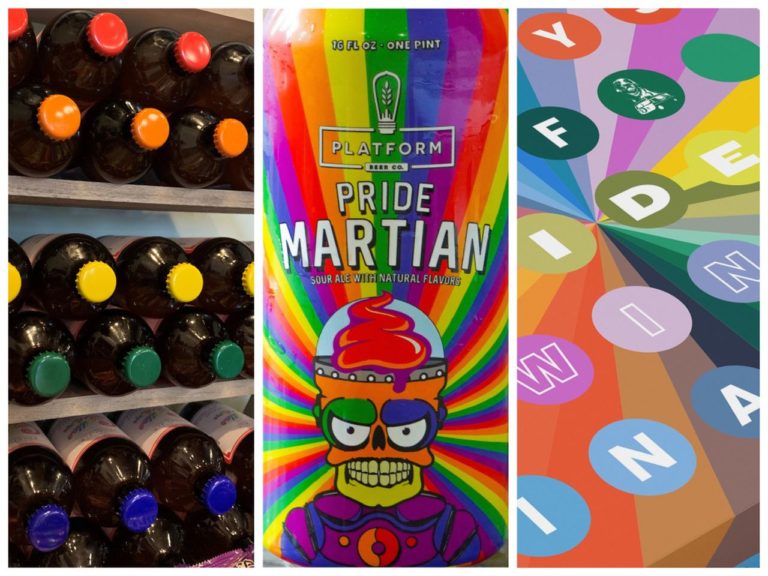
Platform Beer Co. has launched a limited-edition variant of its Martian Slushee Style Sour Ale, Pride Martian. A dollar from proceeds from each case of the beer sold in Ohio will benefit Stonewall Columbus this month.
Stonewall Columbus was founded in 1981 to increase acceptance of the gay, lesbian, bisexual and transgender (GLBT) community.
The series is associated with a color in the name for each of its variants (Blue Martian, Red Martian and Pink Martian), the brewery said in a release. Pride Martian, which embodies all the colors, is the third flavor variety in the series this year.
The ale is 6% alcohol and is billed as having flavors of sweet watermelon, tangy pineapple and candied cherries.
The center, founded in 1975, advocates for Northeast Ohio’s LGBTQ+ community through cultural-competency training, media representation and collaboration with community agencies.
Cleveland artist Katie Parland designed the box, which contains four wines: Rosé with bubbles, white wine with bubbles, white wine and red wine. It can be ordered online.
Cocktail
Betts Restaurant, on the first floor of the Kimpton Schofield Hotel, has introduced the Pride Cocktail to mark the month.
It’s billed as a colorful rendition of the neon sign that once graced the entry to an early gay-friendly bar in Cleveland. The hotel, at 2000 E. 9th Street, occupies the site of the former Cadillac Lounge, which opened in the 1940s.
The cocktail combines Absolut Vodka and mango hibiscus soda.
Two dollars from every cocktail sold will go to The Trevor Project, a national organization providing crisis intervention and suicide-prevention services to LGBTQ under 25.
The hotel also is offering a Pride Package, which includes a room, two Pride cocktails and a $30 credit to Betts.
Cake
TGI Fridays is serving up Carlo’s Bakery Rainbow Cake.
A portion of sales from every slice sold will support the LGBTQ+ youth-advocacy organization GLSEN, up to $25,000 through Wednesday, June 30.
GLSEN aims to create inclusive learning environments for all, regardless of race, sexual orientation, disability, gender identity and/or gender expression.
The restaurant chain’s rainbow-colored vanilla cake is layered with sweet cream frosting. The six-layer dessert is piled with vanilla icing and sprinkles.
The Dallas-based company has seven locations in Northeast Ohio.
I am on cleveland.com’s life and culture team and cover food, beer, wine and sports-related topics. If you want to see my stories, here’s a directory on cleveland.com. Bill Wills of WTAM-1100 and I talk food and drink usually at 8:20 a.m. Thursday morning. And tune in at 7:05 a.m. Wednesdays for “Beer with Bona and Much, Much More” with Munch Bishop on 1350-AM The Gambler. Twitter: @mbona30.
Get a jumpstart on the weekend and sign up for Cleveland.com’s weekly “In the CLE” email newsletter, your essential guide to the top things to do in Greater Cleveland. It will arrive in your inbox on Friday mornings – an exclusive to-do list, focusing on the best of the weekend fun. Restaurants, music, movies, performing arts, family fun and more. Just click here to subscribe. All cleveland.com newsletters are free.
Americans are evenly split on whether sexual orientation is a choice, or is determined by nature, according to a 2015 Pew Research Center survey, with roughly 40 percent of respondents on either side. But, the percentage of people who believe that sexual orientation is not a choice has nearly doubled over the past few decades, up from about 20 percent when the Los Angeles Times conducted a similar poll in 1985.
The myth has powerful legal ramifications: the strongest argument anti-gay activists can make to remove accommodations for discrimination against the LGBTQ community is the claim that LGBTQ people were not born into their sexuality, “choosing” instead to be a part of marginalized groups.
FACTS: A 2019 study by Andrea Ganna, et al published in Science looked at the genes of 492,664 people and concluded that “same-sex sexual behavior is influenced by not one or a few genes but many.”
Based on this and other evidence, most researchers have concluded that sexuality is determined by a combination of environmental, emotional, hormonal, and biological components, making sexual orientation not a choice but instead controlled by a variety of uncontrollable factors.
While there is no consensus about what combination of factors produces sexual orientation at the individual level, The American Psychological Association notes that “most people experience little or no sense of choice about their sexual orientation.”
MYTH: Gay relationships don’t last
This idea of homosexual couples not taking their relationships/partners as seriously as heterosexual couples derives, in part, from the history of gay couples not being able to affirm their commitment to each other legally.
FACTS: Several studies have been published refuting this myth, which included tens of thousands of gay, lesbian, and straight participants and their partners who provided feedback about the stability of their relationships.
A 2017 study of homosexual and heterosexual couples by researchers at Bowling Green State University found that different-sex and female same-sex couples had more stability in their relationships than male same-sex couples. BGSU concluded that this is because gay and bisexual men are exposed to more stressors that lead to problems in their relationships.
Research by UCLA psychologist Ilan Meyer has found that female same-sex couples prioritize emotional intimacy more than male same-sex couples, which resulted in their ability to support the partnership longer.
A pair of studies published in the journal Developmental Psychology in 2008 showed that same-sex couples are just as committed as heterosexual couples in their romantic relationships. One, by researchers at the University of Illinois at Urbana-Champaign, found that there was no difference in the level of commitment or relationship satisfaction between homosexual and heterosexual couples, and even found that lesbian couples were “especially effective at resolving conflict.”
MYTH: Bisexuality and pansexuality are the same thing.
For many people, bisexual is used as a catch-all term for anyone who is not heterosexual or homosexual. But in reality, there are many different forms of sexuality.
FACTS: Though both involve someone being attracted to more than one gender, bisexual and pansexual are not synonyms.
Bisexual people define their sexuality on the basis of romantic attraction to two sexes; hence the prefix “bi.” However, bisexuality has different conditions for each person. One bisexual male may be 30% attracted to men and 70% attracted to women. Or a bisexual female may be attracted evenly to both genders.
But gender categories are not limited to “male” and “female,” which allows for people to identify as nonbinary, or genderqueer, which means they do not identify as either male or female gender.
Bisexuals may or may not be romantically attracted to nonbinary people but even if they are, they are still considered bisexual. Nonbinary people also can identify as bisexual if they are attracted to male, female or nonbinary people as well.
Pansexuality relates to being attracted to all people regardless of their sexual orientation. This also includes agender people; those who do not identify with any gender. Though pansexual people are attracted to all genders, they are not attracted to every person. Personality, physique, morals, etc. also matter to pansexual people too.
MYTH: Same-sex parenting is harmful to children
The belief that heterosexual couples — and preferably married ones — make better parents, is deeply embedded in the belief systems of many Americans, for both political and religious reasons. Some advocates of this viewpoint, including many with a political or religious agenda, have opposed changing state policies to allow same-sex parenting and adoption.
FACTS: Statistics show that limiting parenting to heterosexual couples leaves many children out altogether rather than being adopted and fostered by gay couples who could give them the opportunity to thrive.
“Same-sex couples are seven times more likely than different-sex couples to be raising an adopted or foster child,” a UCLA Williams Institute brief concluded in July, 2018. It showed that between 2014 and 2016, among couples raising children, 2.9 percent of same-sex couples were raising foster children, compared to .4 percent of same-sex couples.
Adoption and fostering laws vary by state, but every year thousands of children age out before getting adopted or fostered, having long-term effects on their mental health. Only three percent of those who age out will earn a college degree. Seven out of 10 females who age out will become pregnant before the age of 21, according to the National Foster Youth Institute.
Divorce can have harmful effects on children. A 2020 HealthLine article lists depression, substance abuse, future issues in the child’s own relationships, and more. Rather than bash the parents for splitting up, however, the article offers ways to help children adjust. The same counsel can be given to children of gay parents when and if they experience bullying or anxiety.
MYTH: People who transition will regret it later in life
Arguments against gender confirming procedures, such as surgery and hormones, include the idea that there could be negative effects on the person receiving the treatment and that they may change their mind.
FACTS: Studies show that hormone therapy and surgery often help people who identify as transgender learn to love their bodies and greatly improve their mental well-being.
A 2017 study led by a team of Dutch researchers showed that gender dysphoria and body dissatisfaction plummeted after these procedures. The depression and “lower psychological functioning” that patients experienced before the procedure were all caused by the discomfort they felt in their own bodies, the researchers concluded. Hormone-based and surgical interventions improved body satisfaction among these patients.
A 2016 systematic review published in Neuropsychiatric Disease and Treatment found that estrogen hormone therapy positively affects the emotional and mental health of male-to-female transgender individuals. Patients reported a decrease in depression, feeling happier and more confident in their bodies, and fewer symptoms of dissociative issues.
A 2021 analysis of a 2015 survey published in JAMA Surgery found that transgender and gender-diverse people (TGD) who had gender-affirming surgeries “had significantly lower odds of past-month psychological distress, past-year tobacco smoking, and past-year suicidal ideation compared to TGD people with no history of gender-affirming surgery.”
“Deciding to transition was one of the most important and difficult decisions I have ever made,” Arin Jayes, 30, a non-binary trans man wrote in an email.
“I didn’t truly know it was right until after I did it. This statement may seem radical and scary. It’s a bit existential, even, because it took a leap of faith,” he said. “One may ask, “Why on earth would you do something so permanent if you weren’t sure?” As someone who has been there, I can say that if it doesn’t feel right, you know. It is important to trust yourself and your bodily autonomy.”
“HIV lives with me — I am not living with HIV,” Saul Villalobos said.
Villalobos, a Venezuelan immigrant and case manager at OASIS Florida, an HIV testing center and care facility in Pensacola, still remembers every detail of the day he was diagnosed five years ago.
It was midnight on Aug. 2, 2016, when he sat down with his physician at the IDET clinic in Barquisimeto and the four impending words of doom were presented before him: “Your results are reactive.”
In what he described as his “world coming to a full stop,” Villalobos knew from that moment that the entire course of his life was about to change. The thought of telling his family was terrifying and the state of political corruption present in the Venezuelan government left no room for an HIV/AIDS conversation, nonetheless proper medications and treatment.
HIV is the virus that can lead to AIDS, which is the late stage of HIV infection that occurs when the body’s immune system is badly damaged because of the virus.
The 40-year mark of the HIV pandemic and the first reported cases of AIDS fell on June 5. Today, there are treatments, easily accessible testing, services and programs and a range of prevention options including pre-exposure prophylaxis of PrEP.
HIV is a disease that affects about 37 million people as young as 13 years old worldwide, and of whom 22 million are on treatment.
Villalobos has learned to live, not just survive, as one of those statistics.
However, Kurt Goodman, executive director of OASIS Florida, said as numbers steadily rise and fall, the one issue that has not changed within those 40 years is the stigma surrounding AIDS, especially in Pensacola.
It is what drives people to avoid testing and treatment altogether. For years, clients have strolled through the back entrance of OASIS to avoid being seen by the public eye and once taken into care, refuse and hesitate to make life adjustments and take medications — a “sad” and “embarrassing” reality with a tough pill to swallow.
Although the “gay disease” stereotype surrounds the AIDS conversation today, Goodman counters that claim and urges everyone to become better educated on the trending numbers in heterosexual communities.
“43% of new HIV infections were heterosexual in Escambia and that percentage is climbing every year, partly due to ignorance and the very conservative area of Northwest Florida. The rate of new HIV infections is obviously a concern because we would like to be seeing significant decreases,” Goodman said.
Almost 1 million people still die every year from HIV because they are unaware they have the virus and are not on treatment or start treatment late, according to the World Health Organization.
From 2017-2019, 2,133 people have died from HIV in Florida, 38 of whom were in Escambia County, seven in Santa Rosa and three in both Walton and Okaloosa counties.
The new AIDS cases and death rates remain consistent annually. Last year, 16 people died of AIDS-related complications in Northwest Florida, according to Goodman.
“That’s 16 people who, if they were in care with us, would not have died. Anyone developing AIDS or passing away is only due to lack of treatment. I can’t stress enough how good HIV treatment is today — we’ve gone from a death sentence to a manageable chronic condition, if treated,” Goodman said.
In 2020, OASIS provided 15,437 units of medical treatment services medications, dental services, mental health services, housing services, food services and other social services to 8,841 clients at no cost.
Alexys Hillman, a family medicine doctor at Pensacola Osteopaths, said a seismic cultural shift needs to take place in Northwest Florida, and should have happened years ago.
Hillman said we need to end the “bootstrap mentality” that one day in the future, we will arrive at a happy ending with the spread of HIV/AIDS. She strives to remind people that living with the disease is not their fault and they shouldn’t be judged or blamed.
“Nobody considers that HIV is something that they necessarily need to worry about or anything that they need to think about, which deepens the stigma surrounding the disease even more — we need more preventative care as we don’t invest enough time or money in it,” Hillman said.
Last year, there was a 6% decrease in new HIV infections in Northwest Florida, a step in the right direction. But metropolitan cities like San Francisco are reaching milestones with new HIV diagnoses declining 19% from 204 diagnoses in 2018 to 166 diagnoses in 2019, according to the San Francisco Department of Public Health annual 2019 HIV report.
“Our trends should be decreasing in double digits. Those cities are essentially eliminating new HIV infections because they have such great programs in place and the public and media really get behind it and help drive that message,” Goodman said.
Yet Florida has the third highest rate of HIV diagnoses behind the District of Columbia and Georgia, totaling about 23.9 diagnoses per 100,000 people in 2019, according to Statista health care research expert John Elfein.
Both Goodman and Hillman stressed the necessity of sex education, safe sex and getting regularly tested in order to stray away from the judgmental mindset surrounding sex.
But HIV continues to have a disproportionate impact on certain populations, particularly racial and ethnic minorities, with Black communities nationally adding 42.1 HIV infection diagnoses per 100,000 people in 2019 and Hispanic and Latino persons adding 21.7 per 100,000, according to the Centers for Disease Control and Prevention.
With new research from OASIS Florida, Goodman said 1 in every 292 white adults have HIV in Florida, 1 in every 156 Hispanic adults and 1 in 49 Black adults.
“Those numbers really stick out to me as kind of a wake-up call, particularly in the heterosexual community here in Pensacola, that it really is affecting everyone,” Goodman said.
Hillman believes that HIV awareness, especially in Northwest Florida, is not strong enough due to the ongoing stigma surrounding LGBTQ communities and people of color.
“There are active organizations like OASIS Florida that can help bring an end to the spread of HIV in Northwest Florida as they do really great work — but not enough people know about it. It’s time to stop the judgment and start with education,” Hillman said.
Villalobos stressed how the stigma is not only present in the Pensacola community, but worldwide, where HIV is an issue decidedly ignored.
“The mindset of the conservative Catholic population doesn’t like to talk about it (HIV) too much. My sister, who is a neurologist, was the one person who educated me about it, on a personal level, but that education is not something the government and the public health system are willing to speak out about openly,” Villalobos said.
However, at his lowest point, Villalobos arrived in the United States in search of a better life. A disease Villalobos once unquestionably denied having has become an integral part of his life.
“I am now a model in the Pensacola community for HIV/AIDS prevention — so I guess I can say in some ways HIV saved my life,” Villalobos said.
For the first time since Gallup started tracking Americans views on gay marriage, a majority of Republicans say they support it.
Support for same-sex marriage has reached 70 percent for the first time, according to a Gallup poll released Tuesday. When Gallup started asking Americans about their opinions on same-sex marriage in 1996, 27 percent approved of it but support rose gradually and reached a majority level in 2011 for the first time.
The survey, conducted May 3-18, is based on a sample size of 1,016 adults with a margin of error of plus or minus four percentage points.
A small majority — 55 percent — of Republicans said they support gay marriage in the latest poll, compared to 16 percent who approved when asked about same-sex marriage in 1996.
After the landmark Supreme Court “Obergefell v. Hodges” decision in 2015, which legalized same-sex marriage in all 50 U.S. states and Washington D.C., overall support grew from 60 percent in 2015 to 67 percent in 2018.
“Once opponents of legalization, Republicans have mostly come to back it. Court and legislative challenges to the legal status of same-sex marriage have simmered down since the Supreme Court issued its decision,” Gallup researchers wrote.
Democrats have the strongest support of same-sex marriage, with 83 percent saying they approve in both 2018 and this year. More independents also support gay marriage, with 73 percent saying they approve compared to 68 percent to 71 percent who said the same from 2017 to 2020.
“On LGBT rights, everyone has moved on this issue,” Robert Jones, the founder of Public Religion Research Institute poll, told the New York Times. “Whether you’re talking about marriage equality, nondiscrimination protection — everybody has moved. Seniors have moved, white evangelicals have moved, base Republicans have moved.”
According to a 2019 Pew Research Center poll, 44 percent of Republicans surveyed said they support same-sex marriage.
Among religious respondents, 66 percent of “white mainline Protestants” and 61 percent of Catholics said they support gay marriage, according to Pew.
Although white evangelical Protestants have the lowest support among religious groups, approval has grown from 13 percent in 2001 to 29 percent in 2019, according to Pew.
“The increase in the share of adults who favor same-sex marriage over the past 15 years is due in part to generational change. Younger generations express higher levels of support for same-sex marriage,” the Pew survey reads.
Gallup also found that support for same-sex unions differed by age group. In the latest survey, 84 percent of those ages 18-34 said they support same-sex marriage while 72 percent of respondents ages 34-54 and 60 percent of those 55 and older said the same.
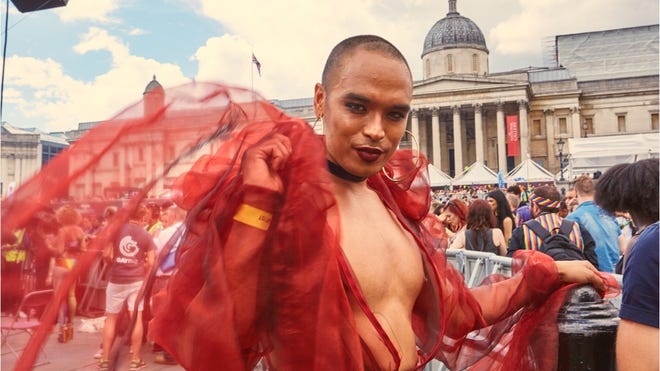
What organizers say will be the city’s first-ever LGBTQ Pride event is set to take place in Lebanon on June 26. The event intends to highlight the community’s visibility and show that the city has kept up with prevailing national cultural trends.
“Lebanon should have had one for years,” said Reese Sweigart, a member of the LGBTQ community who is the manager, talent scout, booking agent and sound engineer for The Church, a popular music venue and art gallery in Lebanon where the event is set to be held. “This is about equality and community and bringing people together.”
Officially titled Lebanon’s Got Pride, the all-day event is being organized by a number of individuals associated with Lebanon’s drag scene and progressive community.
Asked why it had taken so long for Lebanon to hold a Pride event, Sweigart attributed it to the area’s cultural and political conservatism and the decline in the city’s entertainment industry over the past decades. “It’s still a very Bible Belt-type community,” she said.
The event, situated at 39 S. 8th St., begins at 11 a.m. and has four major components: a potluck; a dance party; a DJ, scheduled for three hours between 1 and 4 p.m.; and finally, a drag show with about 10 or 11 performers, set to begin at 7 p.m. with a $10 charge. Aside from the show, all other parts are free to attend.
“It’s basically going to be a day-long party,” said Scott Church, owner of The Church.
Although intended to celebrate the LGBTQ community, a key aim is to reach out to the general public. “I want this to be an open and welcoming event, not just for the LGBT crowd, but for everyone else to be exposed to it,” Church said.
Even though she doesn’t exactly expect conservative local politicians to show up – although she said anyone is welcome, as long as they are respectful – Sweigart hopes some members of the city government will consider attending to address and support the community.
Inspiration for the event came from Whitley Nycole DeAire’, who has been a drag performer in Lebanon for more than a decade. DeAire’ said they had been planning an event like this going back three years, but as they do not live in Lebanon, they said they could only get road closures and other preparations approved if someone in town agreed to host it. “I needed someone to back me, and Scott said ‘let’s do it.'”
At 56 years old, DeAire,’ who grew up in Tennessee after being born in Chicago, said the environment for LGBTQ people in Lebanon is dramatically better than things were when they were younger. “This isn’t the late 60s anymore,” they said. “This is 2021. People need to actually see that there are LGBTQIA people around.”
LGBTQ people and causes have made some public advances in Lebanon in recent years. An anti-discrimination resolution was advanced in 2018, which included sexual orientation and gender identity or expression. In 2014, Rev. Frank Schaefer, pastor of Zion United Methodist Church of Iona, was reinstated after being defrocked, as a result of him officiating at his gay son’s wedding, and became a minor national celebrity.
Lebanon Valley College in Annville has also flown the gay pride flag and has celebrated gender and sexual diversity through a variety of initiatives. But “doing something on a college campus in Annville isn’t exactly a statement by the city of Lebanon saying we’re a welcoming community,” Church noted.
Alongside many enthusiastic responses, a spout of negative commentary has poured down upon organizers since the announcement of the event in community Facebook groups from residents with anti-LGBTQ sentiments. Sweigart expects more backlash over the event as awareness increases, but said that the people trying to find problems with the event are the types who would try to find problems in others regardless.
Church added that the types of comments made by such individuals don’t represent anywhere near the majority of the community anymore.
Church said mask-wearing and social distancing are recommended at the Lebanon event, and all recommendations and restrictions related to the coronavirus will be followed. Currently, the CDC does not recommend masking indoors among vaccinated people. He added that he expects 100-150 people to show up this year, but organizers view it as establishing the basis for a stronger presence in coming years.
“We still need this one to display to the city that this is a real thing. And then next year, it’s no-holds-barred.” Sweigart said she hopes in the future, vendors, food trucks, and local businesses can be part of the event.
DeAire’ believes the event will help change dynamics further toward acceptance of LGBTQ people in the community. ‘It’s going to show that we’re here, we’re not going anywhere. We’re here to stay.”
Hal Conte is a quality of life and Central Pennsylvania issues reporter for the Lebanon Daily News. You can find him on Twitter at @conte_hal.