

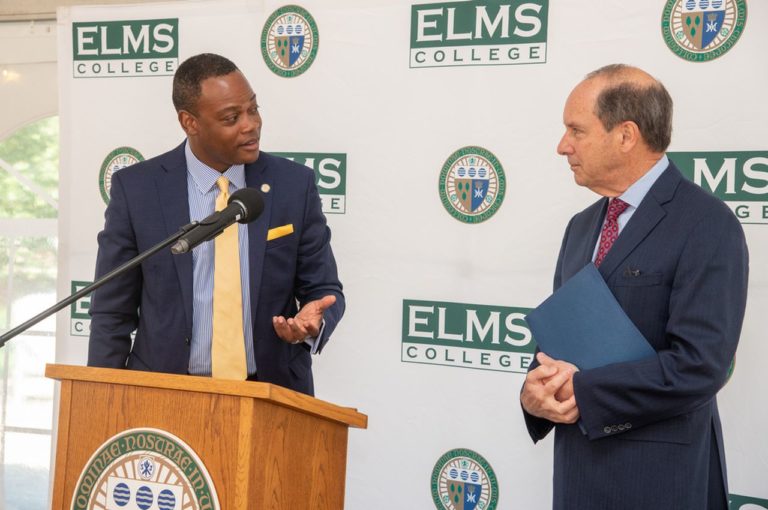

CHICOPEE — Although the United States appears to be emerging from the COVID-19 pandemic, the president and CEO of Baystate Health said he does not expect things will ever return fully to normal.
Instead, said Dr. Mark Keroack, people should get used to a new normal that may be around for decades.
Speaking at the fourth annual leadership breakfast at Elms College on Friday, Keroack said that when an event as profound as a global pandemic takes place, the world is forever changed in ways both good and bad.
“It is time to be thankful for our blessings. It is also time, I think, to reflect on what we’ve all been through and how our world has changed,” Keroack said.
“And there is always change.”
He noted that when the bubonic plague killed off one-third of Europe in the 14th Century, it led to a period of creativity in the arts, architecture and literature known as the Renaissance.
After the AIDS epidemic, which killed millions of people since the early 1980s, society developed a more permissive attitude toward gay, lesbian and transgender people, he said.
In the post-pandemic world, Keroack said “I have three predictions and one fervent hope.”
The three predictions are that the workplace has changed and employers need to take into account the wellbeing of current and future employees, that “virtual” meetings over the internet are here to stay, and that Americans will want and expect more out of their health care.
He said his one hope is that people will realize that there will be greater understanding and appreciation of the societal connections among people.
“The virus was trying to teach us a great lesson, if only we learn it. The health and wellbeing of each of us is connected to the health and wellbeing of all of us.”
Keroack, by virtue of his role at Baystate Health, was the most visible medical experts during the worst of the pandemic. He did countless interviews in print, on TV and radio about what was known about the virus and what was unknown. He offered advice to business, municipal and civic leaders on staying safe. He appeared regularly at Springfield Mayor Domenic J. Sarno’s coronavirus updates at City Hall.
As program emcee Rick Sullivan of the Western Massachusetts Economic Council, put it, “He is our Dr. Fauci.”
Keroack said the number of daily COVID-19 cases at Baystate hospitals is now below 20. At its peak, it was more than 100 per day every day for months at a time.
In all, Baystate facilities treated 4,100 cases and saw 540 deaths.
In the aftermath, more than 1,000 of Baystate Health’s 12,000 employees either retired early, resigned or requested special accommodations to be able to work remotely.
This has put a great strain on remaining staff, and forced Baystate Health to look for ways to look for and hire capable talent from around the region, which has always been historically difficult in the best of times, he said.
Employers in the future are going to make the development, safety and retention of the workforce a top priority.
“I used to think If I could just focus on what was best for the patient, that everything would be ok,” he said. “Now realize that it’s an equally important job for me to focus on the wellbeing of the team so they can give their best.”
Baystate is instituting a $15 per hour minimum wage for entry-level hospital support positions, and is looking for ways to hire more people of color, he said.
He said roughly 25% of Baystate Health employees are people of color, but in leadership positions and among doctors and nurses, is it closer to 10% to 15%.
Baystate is exploring ways to identify and correct what he called institutional biases in hiring.
“While many organizations are acknowledging systemic racism, very few have a road map on how to eliminate it or address it” Keroack said.
“Workforce issues are not just a question of economics, it’s not just a question of supply and demand. Not only will there be fewer workers in the next generation, but they will also be more diverse and demanding of workplaces,” he said.
The pandemic introduced people to virtual meetings, and he does not expect that to go away. Roughly 30 percent of doctor consultations with patients are done remotely over the internet, and both seem to like it that way, Keroack said.
“Consumers of all backgrounds and ages are now used to dealing with the world virtually and insisting on conveniences — and we are not going to be able to put that genie back in the bottle,” he said.
Roughly 25% of Baystate’s 12,000 employees work remotely, and productivity has surged. There are discussions ongoing about whether they need to be back at their offices.
Companies across the country will be having similar discussions, Keroack said. And if employees do not need to come to the office to get their jobs done, what do employers do with all the empty office space, he asked.
His third prediction is that there will be increased support for more government involvement in health care, even beyond the 70 percent it currently supports through Medicare, Medicaid, Veterans Affairs and the Affordable Care Act.
So many people lost their jobs and their health insurance when the economy shut down during the pandemic.
If it were possible for people to opt out of employer-based health coverage for a public option offered by the federal government, he said “there would be a stampede for the public option.”
“People will be expecting to spend less and get more for their health care dollar and they are right to do so. The United States has the most expensive system in the world and the clinical results that don’t even put us in the top 20 of modern industrialized nations,” he said.
Some 100 people attended the breakfast in person with an unknown number watching it remotely via Zoom.
Elms College President Harry Dumay said there are signs every day that the college will return to “as close to normal as possible” by the start of the fall semester.
The college is finalizing plans for in-person instruction, open dorms and dining halls, and a full range of athletics, he said.
Preliminary figures have the college on track to have one of its largest first-year classes in years, he said. The number of new students paying their deposit is 120% above the 2019 amount.
“What this all means is that we are currently on track for the largest first-year class in our history,” Dumay said. “I’m not counting our chickens just yet but the admission data are trending in a very positive direction.
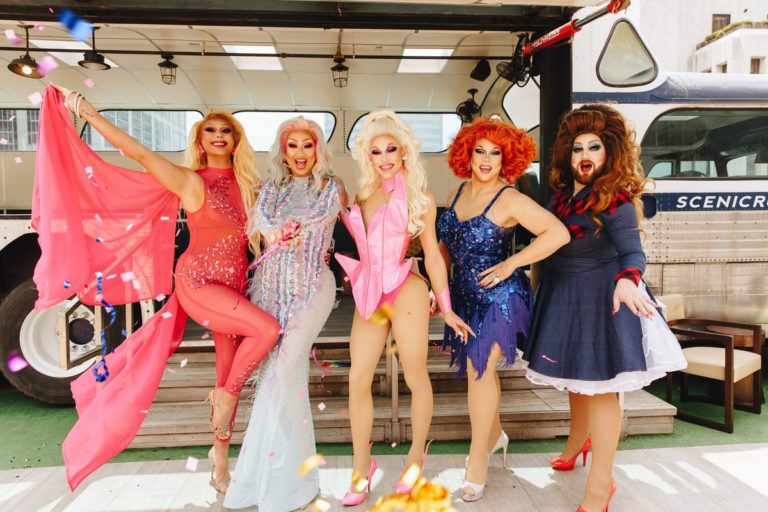
The month of June marks an International Pride Month, but because Nashville is just now waking up from its COVID-19 slumber, the Nashville Pride Festival and Parade is actually slated for September 18-19, 2021 at Bicentennial Capitol Mall and Park. (Here is a complete listing of the festivities.) But you don’t have to wait until September to join in a hearty “y’all means all” rally cry. You can support Nashville’s local LGBTQ+ community by giving business to any one of the numerous queer-owned businesses in the city, and by visiting its queer bars, spaces, and drag venues.
On the drag front, Nashville celebrates its talented queens at some of the hottest shows in town. See how drag has evolved into the art form it is today over brunch on Second Avenue’s Illusions: The Drag Queen Show. The BYOB wheels go round and round on The Big Drag Bus departing Church Street for a 90-minute excursion around town filled with performances, laughs, games, and a chance to get to know someone maybe you wouldn’t have otherwise. Located in Printer’s Alley, Dragville Brunch Party features local food, drink specials, drag bingo, performances, and karaoke with the Queen.
:format(webp):no_upscale()/cdn.vox-cdn.com/uploads/chorus_asset/file/22653101/BH1__6.jpeg)
For the month of June only, Bobby Hotel celebrates Nashville Pride with Sunday Drag Brunch on The Rooftop Lounge at Bobby Hotel complete with family-style food and a show by local drag performers, as well as special surprise headliners each show, including some big names from RuPaul’s Drag Race. Tickets are priced at $65 per person and include entrance, prix-fixe family-style menu, and one mimosa. Get your tickets on EventBrite.
There’s also a sold out Drag Brunch this weekend at CBD, coffee, and cocktail hang Anzie Blue — stay tuned for future related brunches in the area.
Even if you don’t deeply understand how Dolly transcends all musical genres, know that at the core of this celebration is the acceptance of all humans. And if you want to eat, drink and be Mary, these Nashville essentials should do the trick.
Note: Restaurants on this map are listed geographically.
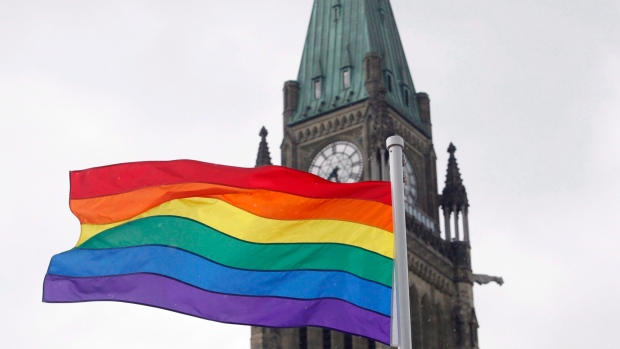

OTTAWA — The federal government has lost its attempt to block a Canadian Human Rights Commission inquiry into Health Canada’s role in a policy that prohibits sexually active gay men as well as some other folks in the LGBTQ2S+ community from donating blood.
On Friday, the Federal Court dismissed the federal government’s application for a judicial review, stating that despite the government’s arguments to the contrary, Health Canada is a proper party to the case, and the Canadian Human Rights Tribunal’s inquiry should continue.
In 2016, Christopher Karas brought a human rights complaint against Health Canada, alleging the agency discriminated against him on the basis of sexual orientation by denying him the ability to donate blood.
In 2019, the Canadian Human Rights Commission issued a preliminary decision that the case merited further investigation and referred the matter to a tribunal. This is what Attorney General David Lametti, on behalf of Health Canada, was fighting to stop the probe from going any further.
“The evidence collected warranted an inquiry by the Tribunal into Health Canada’s role in relation to CBS’s MSM [men who have sex with men] policy,” reads the decision from Judge Richard F. Southcott in part. “It appears there is a ‘live contest’ as to the exact nature of the relationship between Health Canada and CBS, which warrants further inquiry.”
Now, according to Karas’ legal team, barring an appeal, Health Canada will remain a responding party to the tribunal’s inquiry and will have to defend its involvement with the blood donation policy alongside Canadian Blood Services (CBS).
Throughout the proceedings so far Health Canada has argued that it has not discriminated against Karas as the agency has “no authority to rescind the policy” and a “limited role” to intervene in Canadian Blood Services’ work, unless it’s a matter of safety.
However, the submissions to the court presented to date indicate that Health Canada has been far more involved than it’s let on, playing an active role as the regulator that funds research into, and approves any blood donation screening criteria changes.
Further, in recent documents reviewed by CTVNews.ca, according to CBS, Health Canada required years of data collection and monitoring between each gradual loosening of the policy before it would consider further updates, something the agency denies in part.
In a recent email to CTVNews.ca regarding the documents, Gregory Ko, a partner with Toronto firm Kastner Lam, who is representing Karas, said that he anticipated that if the tribunal was allowed to continue its inquiry, “more evidence will emerge showing how Health Canada is a critical and necessary actor in the development of the gay blood ban.”
In a May interview with CTVNews.ca, Karas said that when he first learned that the federal government was looking to quash the case and potentially seek costs from him if their judicial review is successful, he was “shocked.”
“It was as if they were, you know, declaring war on queers,” he said.
Opposition MPs applauded the court’s decision to dismiss the government’s attempt to terminate the human rights inquiry.
“The Trudeau Liberals promised Canadians they’d stop the discriminatory blood donation ban on MSM. Once in office, they claimed they don’t have the power. This is false, and the courts are proving it,” tweeted NDP MP and health critic Don Davies.
Ending the blood ban is now a long-broken promise from the federal Liberals, with both Health Minister Patty Hajdu and Diversity and Inclusion and Youth Minister Bardish Chagger continuing to dismiss calls for them to intervene and change the rules as they once said they would.
“It is long past due for the federal government to put an end to the stigma and discrimination that men who have sex with men face in this country,” said Conservative MP Eric Duncan during a press conference earlier in June, vowing to keep pushing the issue throughout Pride month.
Instead, they cite ongoing research and say they are waiting for Canadian Blood Services and its Quebec counterpart Hema-Quebec to make submissions to move to a behaviour-based screening model.
CTVNews.ca has reached out to Hajdu and Lametti’s office for comment.
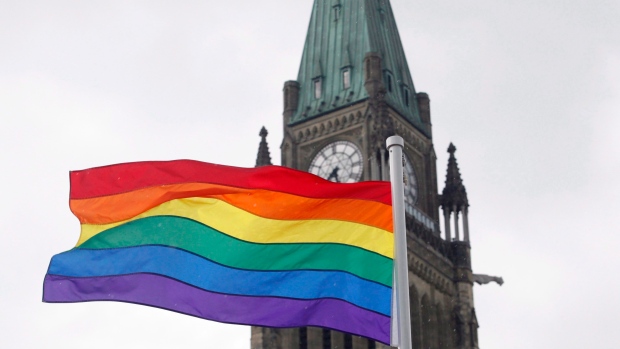
OTTAWA — The federal government has lost its attempt to block a Canadian Human Rights Commission inquiry into Health Canada’s role in a policy that prohibits sexually active gay men as well as some other folks in the LGBTQ2S+ community from donating blood.
On Friday, the Federal Court dismissed the federal government’s application for a judicial review, stating that despite the government’s arguments to the contrary, Health Canada is a proper party to the case, and the Canadian Human Rights Tribunal’s inquiry should continue.
In 2016, Christopher Karas brought a human rights complaint against Health Canada, alleging the agency discriminated against him on the basis of sexual orientation by denying him the ability to donate blood.
In 2019, the Canadian Human Rights Commission issued a preliminary decision that the case merited further investigation and referred the matter to a tribunal. This is what Attorney General David Lametti, on behalf of Health Canada, was fighting to stop the probe from going any further.
“The evidence collected warranted an inquiry by the Tribunal into Health Canada’s role in relation to CBS’s MSM [men who have sex with men] policy,” reads the decision from Judge Richard F. Southcott in part. “It appears there is a ‘live contest’ as to the exact nature of the relationship between Health Canada and CBS, which warrants further inquiry.”
Now, according to Karas’ legal team, barring an appeal, Health Canada will remain a responding party to the tribunal’s inquiry and will have to defend its involvement with the blood donation policy alongside Canadian Blood Services (CBS).
Throughout the proceedings so far Health Canada has argued that it has not discriminated against Karas as the agency has “no authority to rescind the policy” and a “limited role” to intervene in Canadian Blood Services’ work, unless it’s a matter of safety.
However, the submissions to the court presented to date indicate that Health Canada has been far more involved than it’s let on, playing an active role as the regulator that funds research into, and approves any blood donation screening criteria changes.
Further, in recent documents reviewed by CTVNews.ca, according to CBS, Health Canada required years of data collection and monitoring between each gradual loosening of the policy before it would consider further updates, something the agency denies in part.
In a recent email to CTVNews.ca regarding the documents, Gregory Ko, a partner with Toronto firm Kastner Lam, who is representing Karas, said that he anticipated that if the tribunal was allowed to continue its inquiry, “more evidence will emerge showing how Health Canada is a critical and necessary actor in the development of the gay blood ban.”
In a May interview with CTVNews.ca, Karas said that when he first learned that the federal government was looking to quash the case and potentially seek costs from him if their judicial review is successful, he was “shocked.”
“It was as if they were, you know, declaring war on queers,” he said.
Opposition MPs applauded the court’s decision to dismiss the government’s attempt to terminate the human rights inquiry.
“The Trudeau Liberals promised Canadians they’d stop the discriminatory blood donation ban on MSM. Once in office, they claimed they don’t have the power. This is false, and the courts are proving it,” tweeted NDP MP and health critic Don Davies.
Ending the blood ban is now a long-broken promise from the federal Liberals, with both Health Minister Patty Hajdu and Diversity and Inclusion and Youth Minister Bardish Chagger continuing to dismiss calls for them to intervene and change the rules as they once said they would.
“It is long past due for the federal government to put an end to the stigma and discrimination that men who have sex with men face in this country,” said Conservative MP Eric Duncan during a press conference earlier in June, vowing to keep pushing the issue throughout Pride month.
Instead, they cite ongoing research and say they are waiting for Canadian Blood Services and its Quebec counterpart Hema-Quebec to make submissions to move to a behaviour-based screening model.
CTVNews.ca has reached out to Hajdu and Lametti’s office for comment.


One of the country’s most esteemed novelists, Louise Erdrich, won the Pulitzer Prize for fiction for “The Night Watchman.” Other winners for books include the late Les Payne and daughter Tamara Payne for their Malcolm X biography “The Dead Are Arising.” The awards were announced Friday during a remote ceremony that honoured the best work in journalism and the arts in 2020, a year upended by the coronavirus pandemic, the racial reckoning after the police killing of George Floyd and the U.S. presidential election.
Marcia Chatelain’s “Franchise: The Golden Arches in Black America” won for history. Natalie Diaz’s “Postcolonial Love Poem” was the poetry winner and David Zucchino’s “Wilmington’s Lie: The Murderous Coup of 1898 and the Rise of White Supremacy” was cited for general nonfiction. Tania León composition “Stride” won for music. The judges commended for being “a musical journey full of surprise, with powerful brass and rhythmic motifs that incorporate Black music traditions from the U.S. and the Caribbean into a Western orchestral fabric.” “The Hot Wing King” by Katori Hall, a play set around a hot wing cooking competition, won the prize for drama during a theater season that saw most venues largely shuttered.
Advertisement
The drama award, which includes a USD 15,000 prize, is “for a distinguished play by an American author, preferably original in its source and dealing with American life.” The Pulitzer board hailed “The Hot Wing King” for its look at masculinity and how it is filtered “by the experiences of a loving gay couple and their extended family as they prepare for a culinary competition” Finalists included “Circle Jerk” by Michael Breslin and Patrick Foley,” and “Stew” by Zora Howard.
With most theaters closed during the pandemic, the Pulitzer Prize Board altered the requirements for this year’s drama award, allowing postponed or cancelled works, as well as plays produced and performed in places other than theaters, including online, outside or in site-specific venues during calendar 2020.
“The Hot Wing King” opened off-Broadway just days before the city’s theaters were closed.
Hall is the author of the Olivier Award-winning “The Mountaintop” and is a Tony Award-nominated co- playwright of Broadway’s “Tina — The Tina Turner Musical.” Previous playwrights honored include August Wilson, Edward Albee, Eugene O’Neill, Arthur Miller and Tennessee Williams. Recent winners include Annie Baker’s “The Flick,” Ayad Akhtar’s “Disgraced,” Stephen Adly Guirgis’s “Between Riverside and Crazy,” and Lin-Manuel Miranda’s “Hamilton.”
(This story has not been edited by Devdiscourse staff and is auto-generated from a syndicated feed.)
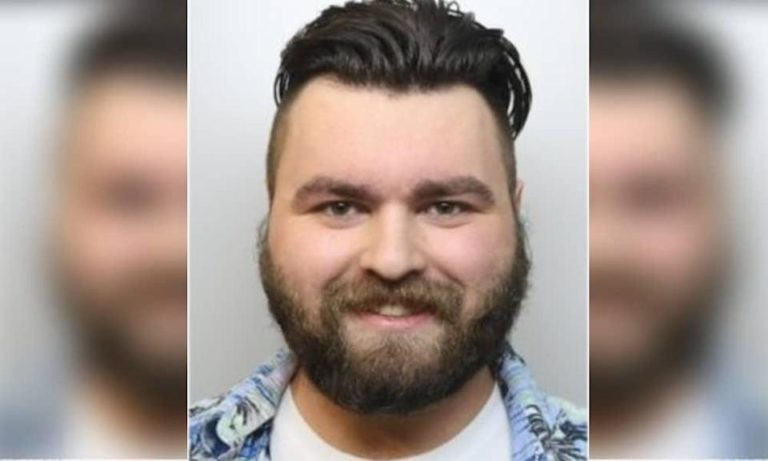

Andrew Dymock tearfully told jurors “thank you for killing me” as he was found guilty at London’s Old Bailey on Friday (11 June).
The 24-year-old had promoted the banned right-wing group System Resistance Network (SRN) while studying politics at Aberystwyth University between 2017 and 2018.
His trial heard how he used a Twitter account and a website to promote the group, which aimed to “stir up a race war” and “preached zero-tolerance” of non-white, Jewish and Muslim communities and described homosexuality as a “disease”.
Jurors were shown evidence of Dymock’s extreme racist and homophobic views, including a 2017 article he wrote entitled “Homosexuality: the eternal social menace”.
In it he stated that gay people “are simply degenerate and must be purged from society for the greater good”.
He is also said to have believed in what is known as the “Siege” ideology which advocates rape as a political weapon.
Dymock, who wore two LGBT+ pride pins on his lapel as he appeared in court, claimed the accusations of Nazism were at odds with his own sexuality. In multiple police interviews he denied being a Nazi and said he identifies as bisexual.
“I am bisexual but lean towards being homosexual, in direct conflict with Nazism,” he told detectives, insisting that the Nazis were “not far right”.
He denied being behind the accounts and claimed he was “set up” by his now former partner, who he said had failed to recruit him to join the far-right group National Action.
However, a search of his bedrooms at home and university uncovered ample evidence of his Nazi beliefs, including several books, flags, clothes, flags and badges with links to the extreme right wing.
And an examination of Dymock’s computer revealed longstanding extremist views dating back to when he was aged 17, with references to fantasies of “executing f****ts”.
Police found a picture on one of his devices showing a swastika cut into his girlfriend’s buttocks, which he later told detectives he had done using his fingernail.
Despite this, Dymock claimed that all material linking him to content on the sites was “planted in his possession without his knowledge”.
Prosecutor Jocelyn Ledward told jurors he was not being prosecuted for holding racist, anti-Semitic or homophobic beliefs, or for his “adherence to a neo-Nazi creed”.
“Rather, he is facing prosecution for his encouragement of terrorist activity, of violence, as a means to shape society in accordance with his beliefs, rather than through free speech and democracy,” she said.
Andrew Dymock was found guilty of five charges of encouraging terrorism, two of fundraising for terrorism, four counts of disseminating terrorist publications, possessing a terrorist document, stirring up racial hatred and hatred based on sexual orientation, and possessing racially inflammatory material.
His mother said: “National Action has done this.”
He is due to be sentenced on 24 June.


In his second round at the Palmetto Championship at Congaree, Brian Gay hit 16 of 14 fairways and 12 of 18 greens in regulation, finishing at 4 over for the tournament. Gay finished his round tied for 111th at 4 over; Chesson Hadley is in 1st at 11 under; Dustin Johnson is in 2nd at 7 under; and Chez Reavie, Harris English, Rob Oppenheim, Erik van Rooyen, and Doc Redman are tied for 3rd at 6 under.
On the 230-yard par-3 14th, Gay’s tee shot went 210 yards to the right side of the fairway, his second shot went 34 yards to the left side of the fairway, and his chip went 8 yards to the green where he rolled a one-putt for bogey. This moved him to 1 over for the round.
On the par-4 15th, Gay’s 118 yard approach to 5 feet set himself up for the birdie on the hole. This moved Gay to even-par for the round.
At the 475-yard par-4 17th, Gay got on in 2 and missed his par putt from 5 feet, finishing with a 3-putt bogey. This moved Gay to 1 over for the round.
After a drive to the right side of the fairway on the 445-yard par-4 18th hole, Gay had a 144 yard approach shot, setting himself up for the birdie. This moved Gay to even for the round.
After a 337 yard drive on the 360-yard par-4 third, Gay chipped his second shot to 4 feet, which he rolled for one-putt birdie on the hole. This moved Gay to 1 under for the round.
After a tee shot onto the 195-yard par-3 green seventh, Gay suffered from a tough three-putt for a bogey putting him at 2 over for the round.
Gay hit his second shot into the native area, he hit his next shot to the green and got down for bogey on par-4 ninth. This moved Gay to 3 over for the round.
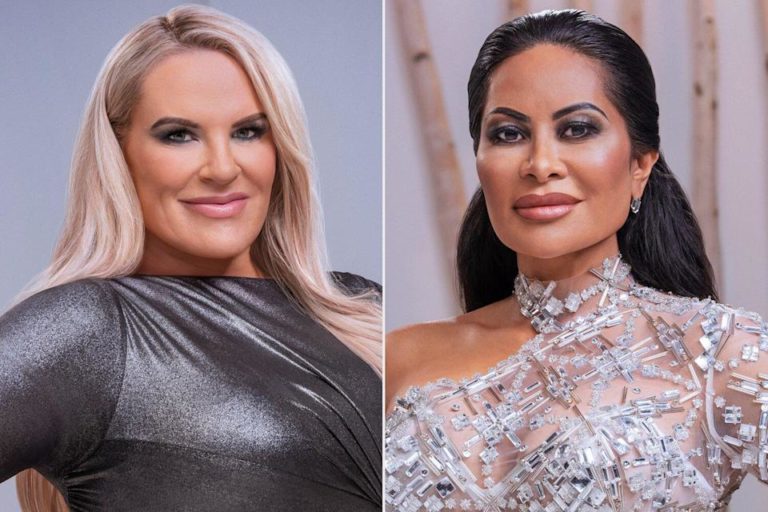

Chad Kirkland/Bravo (2)
Heather Gay is coming to Jen Shah‘s defense.
During the June 2 episode of the So Bad It’s Good With Ryan Bailey podcast, Gay, 38, defended her Real Housewives of Salt Lake City costar Shah, 47, after she was arrested and charged in a telemarketing fraud scheme earlier this year.
“I think that good people can do bad things, and she is claiming she is innocent,” Gay said. “Even if she gets … wrongfully convicted, she can make things right.”
“She can redeem herself,” the Beauty Lab co-founder continued.
She said elsewhere during the candid chat, “I guess I am passionate about second chances because … when I got divorced, I didn’t have a second chance,” and added: “And that sucks, you know?”
RELATED: Real Housewives of Salt Lake City‘s Jen Shah Arrested, Charged in Telemarketing Fraud Scheme

Chad Kirkland/Bravo/ Getty Jen Shah
Shah was arrested alongside Stuart Smith, one of her assistants who has also appeared on the reality show, in late March. The pair were charged with conspiracy to commit wire fraud in connection with telemarketing and conspiracy to commit money laundering.
“Jennifer Shah, who portrays herself as a wealthy and successful businessperson on ‘reality’ television, and Stuart Smith, who is portrayed as Shah’s ‘first assistant,’ allegedly generated and sold ‘lead lists’ of innocent individuals for other members of their scheme to repeatedly scam,” Manhattan U.S. Attorney Audrey Strauss said in a press release. “In actual reality and as alleged, the so-called business opportunities pushed on the victims by Shah, Smith, and their co-conspirators were just fraudulent schemes, motivated by greed, to steal victims’ money. Now, these defendants face time in prison for their alleged crimes.”
Shah and Smith, 43, allegedly carried out a nationwide telemarketing scheme with the help of others between 2012 and March of this year, according to the indictment. They are accused of having “defrauded hundreds of victims” with purported business services.
Prosecutors claim that Shah and Smith’s scheme was a “coordinated effort to traffic in lists of potential victims,” referred to as “leads.” From there, they allegedly sold those leads to telemarketing companies that would attempt to sell business services to the targeted individuals. The pair “received as profit a share of the fraudulent revenue per the terms of their agreement with those participants,” according to the indictment.
Never miss a story – sign up for PEOPLE‘s free daily newsletter to stay up-to-date on the best of what PEOPLE has to offer, from juicy celebrity news to compelling human interest stories.
Shah and Smith were each charged with one count of conspiracy to commit wire fraud in connection with telemarketing through which they allegedly victimized 10 or more persons over the age of 55, which carries a maximum sentence of 30 years, and one count of conspiracy to commit money laundering, which carries a maximum sentence of 20 years.
At their arraignment in April, both Shah and Smith pleaded not guilty to the charges leveled against them. Shah currently awaits her trial, which is set to take place later this year in October.
Previously, Shah was not asked to put up a specific amount of bond in the form of cash or property, but Assistant U.S. Attorney Kiersten Fletcher requested during the arraignment to update Shah’s bail conditions.
As ordered by the U.S. District Judge Sidney Stein, she had to put up a $1 million personal recognizance bond secured by $250,000 in cash or property, which had to be co-signed by “two financially responsible persons.” She had two weeks to comply with the new conditions and also had to hand over any travel documents, such as a passport, to the government, he added.
RELATED VIDEO: Jen Shah ‘Was Filming’ Real Housewives of Salt Lake City the Day She Got Arrested, Says Source
A source previously told PEOPLE that Shah was filming her hit Bravo series on the same day she was arrested.
“The cast left for a trip to Vail on Tuesday, including Jen. She was filming,” a source said, though a spokesperson for Bravo declined to comment when reached by PEOPLE.
The annual Southern Baptist convention begins Sunday in Nashville, an event predicted to bring together over 12,000 messengers from churches all over the nation to pray, vote on leadership, and debate theology and policies.
This is a significant event, given that the Southern Baptist denomination remains the largest Protestant group in the U.S. and the second-largest religious group in America, behind only Roman Catholics. The denomination — a fairly loose confederation of autonomous congregations without a strict or official hierarchy — includes an estimated 47,000 churches in the U.S.
The Southern Baptists came into being in 1845, breaking away from Northern Baptists who favored the abolition of slavery. Even today, some 176 years later, almost three-quarters of Southern Baptists continue to live in the South, more than double the percentage of the overall U.S. population in that region. (These estimates are based on an aggregate of data from Gallup polls conducted over the past nine years, which yields a sample of 437 individuals who named their religion as Protestant and then identified their denomination as Southern Baptist.)
Southern Baptists, once largely White, have made concerted efforts to reach out to other racial groups in recent decades, and the Gallup data show the percentage of Southern Baptists who are Black Americans is now at about the national average. (There is a caveat here. Seven in 10 Black Americans are Protestants, and of that group, over 60% identify as Baptists, although not necessarily Southern Baptists. Gallup’s estimates of Black Southern Baptists could include Black Americans whose Baptist denomination is misidentified in the survey process.) There are relatively few Hispanic or Asian Southern Baptists.
Protestants in general skew older than those who identify with most other religions, and are in particular older than the youthful “Nones,” or those with no religious identity at all. But Southern Baptists skew particularly older, with well over half identifying their age as 55 and older, compared with less than 40% of non-Southern Baptists. Looked at from the other end of the age spectrum, there are about half as many Southern Baptists under age 35 as there are among non-Southern Baptists. Baptists are also somewhat less likely to be college graduates than non-Southern Baptists, although their household incomes are just about at the national average.
As would be expected, Southern Baptists are quite religious on a relative basis and report significantly higher church attendance and personal importance of religion than non-Southern Baptists. Southern Baptists are also much more likely to self-identify as evangelical or born again.
The history of Protestantism is the history of continual breakups of Christian religious traditions into subgroups based on divergent opinions across an extraordinary array of doctrinal prescriptions, perspectives, interpretations and differences. The process is usually associated with controversies, as Protestant leaders and lay members argue, fight and dispute an endless list of theological and cultural issues. Southern Baptists, who came into being as a result of the controversy over slavery, remain no stranger to this process — and to this day are continually in the news because of one controversy or another.
Southern Baptist disputations mostly involve arguments that the denomination is straying from its fundamental roots. The 1970s and 1980s saw a politically shrewd and ultimately successful effort by conservative Southern Baptist leaders to take control of Southern Baptist agencies and seminaries. This resulted in a fracturing of the denomination, with churches leaving the denomination to become independent or to form other, more moderate groupings. And it wasn’t just churches that were disaffected. Former President Jimmy Carter and former Vice President Al Gore — raised as Southern Baptists — left the denomination in protest of its positions on cultural and values issues. More recently, well-known author and speaker Beth Moore left the denomination (saying in an interview that “I am still a Baptist, but I can no longer identify with Southern Baptists.”) Russell Moore (no relation), the influential head of the policy arm of the Southern Baptist Convention, created controversy with his statements of opposition to former President Donald Trump and recently resigned his position while criticizing the denomination’s handling of sexual abuse allegations over the years. And, the denomination has recently seen a number of black pastors leave the denomination over Southern Baptist leaders’ opposition to “critical race theory,” a telling point given the history of the denomination’s origin.
The Southern Baptist denomination, unlike the Catholic Church and many other Protestant denominations, is an agglomeration of independent, autonomous churches, and in theory has no hierarchy. But the denomination does have a “Faith and Message” document, last revised in 2000, which lays out the Southern Baptist statement of faith and positions on many theological and cultural issues. Plus, the elected president of the denomination, officers and professors at the denomination’s six seminaries, and influential pastors of large Southern Baptist churches help make clear the denomination’s de facto positions on key moral and values issues. These positions are generally in sync with the opinions of the majority of Southern Baptists, Gallup data show, but certainly not representative of the totality of all of its members.
One issue on which the Southern Baptist position has been clear is its opposition to anything other than heterosexual relations and heterosexual marriage. The denomination’s 2000 “Faith and Message” document states that “marriage is the uniting of one man and one woman in covenant commitment for a lifetime” and that “in the spirit of Christ, Christians should oppose racism, every form of greed, selfishness, and vice, and all forms of sexual immorality, including adultery, homosexuality, and pornography.” In a number of more recent statements, the Southern Baptists, meeting at their annual conventions, have reaffirmed their opposition to gay and lesbian relations. Just within the past several weeks, Robert Jeffress, the influential pastor of the 14,000-member First Baptist Church in Dallas, criticized Baylor University, the largest Baptist university in the world, in part because of the university’s position on allowing LGBTQ groups on campus. The executive committee of the Southern Baptist Convention earlier this year ousted two churches over allegations they were too inclusive of LGBTQ people.
But Gallup data show that Southern Baptists are by no means monolithically opposed to gay and lesbian relations and gay and lesbian rights. Half of Southern Baptists in Gallup’s 2013-2021 sample say same-sex relations between consenting adults should be legal, below the 71% for non-Southern Baptists, but certainly not reflecting universal disapprobation. Over one-third of Southern Baptists favor legal marriage between same-sex couples, much lower than non-Southern Baptists — but again, an indication of significant diversity of opinion on the issue.
Abortion has been another core position for Southern Baptists, who state their opposition in their “Faith and Message” document (“We should speak on behalf of the unborn and contend for the sanctity of all human life from conception to natural death.”) and in subsequent statements. In 2009, the Southern Baptists adopted a resolution condemning newly elected President Barack Obama for his support of pro-abortion policies, and at their 2019 convention, they adopted a resolution entitled “On Celebrating the Advancement of Pro-Life Legislation in State Legislatures.”
As is the case with LGBTQ rights, rank-and-file Southern Baptists are generally, but not totally, in tune with these anti-abortion stances. Two-thirds of Southern Baptists identify themselves as pro-life, well above the national average of 47% for the 2013-2021 period, and also higher than for Protestants as a group and higher than the 52% of Catholics who identify as pro-life. The majority of Southern Baptists agree that abortion should be legal in at least a few circumstances, with only a third saying it should be totally illegal. And 24% of Southern Baptists in Gallup’s sample say that abortion is morally acceptable, compared with 44% of non-Southern Baptists.
The Southern Baptist Convention does not officially endorse political candidates, but a number of prominent Southern Baptist leaders were strong and vocal supporters of Trump in 2016 and in 2020.
This reflects the well-documented support that highly religious White Protestants give to any Republican political candidate (and Trump), as I have discussed in some detail. Gallup data for the 2013-2021 period show that over six in 10 Southern Baptists identify with or lean toward the Republican party (62%), while 31% identify with or lean toward the Democratic Party. That compares to the rough parity between the two parties during the 2013-2021 period for non-Southern Baptists. Southern Baptists, in short, skew predictably Republican but are by no means monolithic in their political orientation; there are many Democratic Southern Baptists.
Similarly, Southern Baptists skew more conservative than non-Southern Baptists, as would be expected (58% vs. 36%, respectively), but over four in 10 Southern Baptists describe themselves as moderate (27%) or liberal (14%).
The number of Southern Baptists in the U.S. has been declining over the past 15 years, down from an estimated peak of 16 million in 2006 to 14 million in the last publicly released estimate. This isn’t surprising in and of itself, given the general trends of declining church membership and the increasing tendency for many Americans to abandon any formal or official Protestant faith at all.
Southern Baptist leaders are aware of these challenges, and certainly, they will be on the agenda at the Nashville meetings. As the publication Christianity Today noted, “Leaders are expected to address the downward trends in the denomination as well as recent debates over their approach to politics, race, women, and abuse.” One Georgia pastor and candidate for the Southern Baptist presidency remarked that “2020 is only the latest year of continued decline in major categories. Southern Baptists need a move of God. Let us pray and work to that end.”
The basic tension is the one faced by many religious organizations, including in particular the Catholic Church: How closely does a religious body hew to fundamental beliefs and policies that are increasingly out of touch with the trends in mainstream society? The Shaker religious sect held tenaciously to its core beliefs, including celibacy, and in the process dwindled away to nothingness. That’s an extreme example, but the question of the degree to which Southern Baptists adapt and change without losing their fundamental reason for being is at the center of their future. There is no easy answer. Other denominations have liberalized and relaxed their emphasis on doctrinal fundamentals, but they also continue to lose members. The Southern Baptist denomination is not going to lose its position as the largest Protestant group in the nation anytime soon, but if the decline in Southern Baptist membership continues, it will be much less of an influence than it has been in the past.
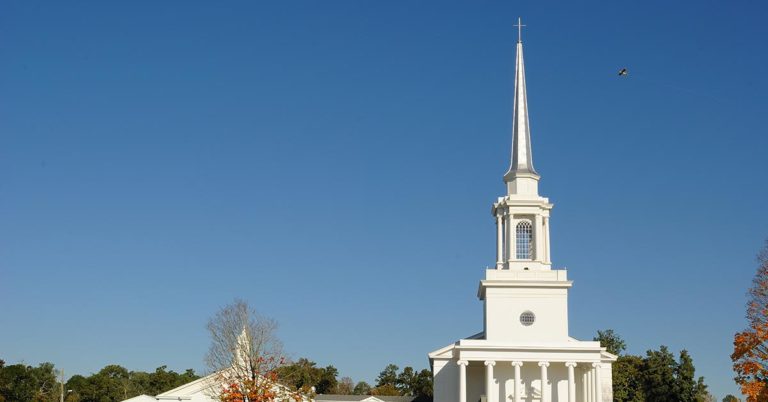
The annual Southern Baptist convention begins Sunday in Nashville, an event predicted to bring together over 12,000 messengers from churches all over the nation to pray, vote on leadership, and debate theology and policies.
This is a significant event, given that the Southern Baptist denomination remains the largest Protestant group in the U.S. and the second-largest religious group in America, behind only Roman Catholics. The denomination — a fairly loose confederation of autonomous congregations without a strict or official hierarchy — includes an estimated 47,000 churches in the U.S.
The Southern Baptists came into being in 1845, breaking away from Northern Baptists who favored the abolition of slavery. Even today, some 176 years later, almost three-quarters of Southern Baptists continue to live in the South, more than double the percentage of the overall U.S. population in that region. (These estimates are based on an aggregate of data from Gallup polls conducted over the past nine years, which yields a sample of 437 individuals who named their religion as Protestant and then identified their denomination as Southern Baptist.)
Southern Baptists, once largely White, have made concerted efforts to reach out to other racial groups in recent decades, and the Gallup data show the percentage of Southern Baptists who are Black Americans is now at about the national average. (There is a caveat here. Seven in 10 Black Americans are Protestants, and of that group, over 60% identify as Baptists, although not necessarily Southern Baptists. Gallup’s estimates of Black Southern Baptists could include Black Americans whose Baptist denomination is misidentified in the survey process.) There are relatively few Hispanic or Asian Southern Baptists.
Protestants in general skew older than those who identify with most other religions, and are in particular older than the youthful “Nones,” or those with no religious identity at all. But Southern Baptists skew particularly older, with well over half identifying their age as 55 and older, compared with less than 40% of non-Southern Baptists. Looked at from the other end of the age spectrum, there are about half as many Southern Baptists under age 35 as there are among non-Southern Baptists. Baptists are also somewhat less likely to be college graduates than non-Southern Baptists, although their household incomes are just about at the national average.
As would be expected, Southern Baptists are quite religious on a relative basis and report significantly higher church attendance and personal importance of religion than non-Southern Baptists. Southern Baptists are also much more likely to self-identify as evangelical or born again.
The history of Protestantism is the history of continual breakups of Christian religious traditions into subgroups based on divergent opinions across an extraordinary array of doctrinal prescriptions, perspectives, interpretations and differences. The process is usually associated with controversies, as Protestant leaders and lay members argue, fight and dispute an endless list of theological and cultural issues. Southern Baptists, who came into being as a result of the controversy over slavery, remain no stranger to this process — and to this day are continually in the news because of one controversy or another.
Southern Baptist disputations mostly involve arguments that the denomination is straying from its fundamental roots. The 1970s and 1980s saw a politically shrewd and ultimately successful effort by conservative Southern Baptist leaders to take control of Southern Baptist agencies and seminaries. This resulted in a fracturing of the denomination, with churches leaving the denomination to become independent or to form other, more moderate groupings. And it wasn’t just churches that were disaffected. Former President Jimmy Carter and former Vice President Al Gore — raised as Southern Baptists — left the denomination in protest of its positions on cultural and values issues. More recently, well-known author and speaker Beth Moore left the denomination (saying in an interview that “I am still a Baptist, but I can no longer identify with Southern Baptists.”) Russell Moore (no relation), the influential head of the policy arm of the Southern Baptist Convention, created controversy with his statements of opposition to former President Donald Trump and recently resigned his position while criticizing the denomination’s handling of sexual abuse allegations over the years. And, the denomination has recently seen a number of black pastors leave the denomination over Southern Baptist leaders’ opposition to “critical race theory,” a telling point given the history of the denomination’s origin.
The Southern Baptist denomination, unlike the Catholic Church and many other Protestant denominations, is an agglomeration of independent, autonomous churches, and in theory has no hierarchy. But the denomination does have a “Faith and Message” document, last revised in 2000, which lays out the Southern Baptist statement of faith and positions on many theological and cultural issues. Plus, the elected president of the denomination, officers and professors at the denomination’s six seminaries, and influential pastors of large Southern Baptist churches help make clear the denomination’s de facto positions on key moral and values issues. These positions are generally in sync with the opinions of the majority of Southern Baptists, Gallup data show, but certainly not representative of the totality of all of its members.
One issue on which the Southern Baptist position has been clear is its opposition to anything other than heterosexual relations and heterosexual marriage. The denomination’s 2000 “Faith and Message” document states that “marriage is the uniting of one man and one woman in covenant commitment for a lifetime” and that “in the spirit of Christ, Christians should oppose racism, every form of greed, selfishness, and vice, and all forms of sexual immorality, including adultery, homosexuality, and pornography.” In a number of more recent statements, the Southern Baptists, meeting at their annual conventions, have reaffirmed their opposition to gay and lesbian relations. Just within the past several weeks, Robert Jeffress, the influential pastor of the 14,000-member First Baptist Church in Dallas, criticized Baylor University, the largest Baptist university in the world, in part because of the university’s position on allowing LGBTQ groups on campus. The executive committee of the Southern Baptist Convention earlier this year ousted two churches over allegations they were too inclusive of LGBTQ people.
But Gallup data show that Southern Baptists are by no means monolithically opposed to gay and lesbian relations and gay and lesbian rights. Half of Southern Baptists in Gallup’s 2013-2021 sample say same-sex relations between consenting adults should be legal, below the 71% for non-Southern Baptists, but certainly not reflecting universal disapprobation. Over one-third of Southern Baptists favor legal marriage between same-sex couples, much lower than non-Southern Baptists — but again, an indication of significant diversity of opinion on the issue.
Abortion has been another core position for Southern Baptists, who state their opposition in their “Faith and Message” document (“We should speak on behalf of the unborn and contend for the sanctity of all human life from conception to natural death.”) and in subsequent statements. In 2009, the Southern Baptists adopted a resolution condemning newly elected President Barack Obama for his support of pro-abortion policies, and at their 2019 convention, they adopted a resolution entitled “On Celebrating the Advancement of Pro-Life Legislation in State Legislatures.”
As is the case with LGBTQ rights, rank-and-file Southern Baptists are generally, but not totally, in tune with these anti-abortion stances. Two-thirds of Southern Baptists identify themselves as pro-life, well above the national average of 47% for the 2013-2021 period, and also higher than for Protestants as a group and higher than the 52% of Catholics who identify as pro-life. The majority of Southern Baptists agree that abortion should be legal in at least a few circumstances, with only a third saying it should be totally illegal. And 24% of Southern Baptists in Gallup’s sample say that abortion is morally acceptable, compared with 44% of non-Southern Baptists.
The Southern Baptist Convention does not officially endorse political candidates, but a number of prominent Southern Baptist leaders were strong and vocal supporters of Trump in 2016 and in 2020.
This reflects the well-documented support that highly religious White Protestants give to any Republican political candidate (and Trump), as I have discussed in some detail. Gallup data for the 2013-2021 period show that over six in 10 Southern Baptists identify with or lean toward the Republican party (62%), while 31% identify with or lean toward the Democratic Party. That compares to the rough parity between the two parties during the 2013-2021 period for non-Southern Baptists. Southern Baptists, in short, skew predictably Republican but are by no means monolithic in their political orientation; there are many Democratic Southern Baptists.
Similarly, Southern Baptists skew more conservative than non-Southern Baptists, as would be expected (58% vs. 36%, respectively), but over four in 10 Southern Baptists describe themselves as moderate (27%) or liberal (14%).
The number of Southern Baptists in the U.S. has been declining over the past 15 years, down from an estimated peak of 16 million in 2006 to 14 million in the last publicly released estimate. This isn’t surprising in and of itself, given the general trends of declining church membership and the increasing tendency for many Americans to abandon any formal or official Protestant faith at all.
Southern Baptist leaders are aware of these challenges, and certainly, they will be on the agenda at the Nashville meetings. As the publication Christianity Today noted, “Leaders are expected to address the downward trends in the denomination as well as recent debates over their approach to politics, race, women, and abuse.” One Georgia pastor and candidate for the Southern Baptist presidency remarked that “2020 is only the latest year of continued decline in major categories. Southern Baptists need a move of God. Let us pray and work to that end.”
The basic tension is the one faced by many religious organizations, including in particular the Catholic Church: How closely does a religious body hew to fundamental beliefs and policies that are increasingly out of touch with the trends in mainstream society? The Shaker religious sect held tenaciously to its core beliefs, including celibacy, and in the process dwindled away to nothingness. That’s an extreme example, but the question of the degree to which Southern Baptists adapt and change without losing their fundamental reason for being is at the center of their future. There is no easy answer. Other denominations have liberalized and relaxed their emphasis on doctrinal fundamentals, but they also continue to lose members. The Southern Baptist denomination is not going to lose its position as the largest Protestant group in the nation anytime soon, but if the decline in Southern Baptist membership continues, it will be much less of an influence than it has been in the past.
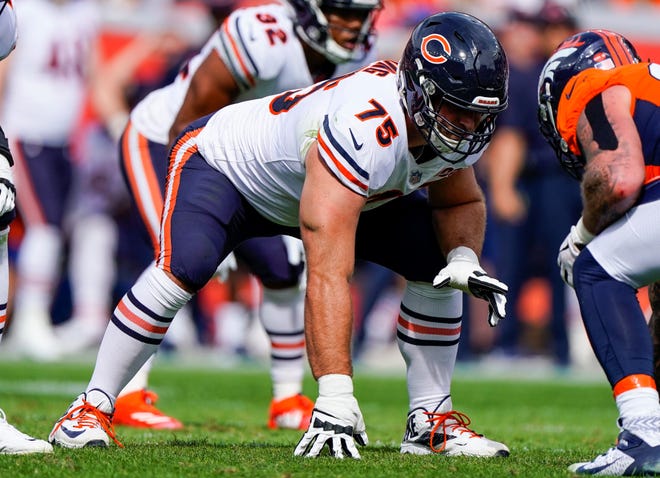

KANSAS CITY, Mo. — The offensive line that the Kansas City Chiefs aggressively overhauled this offseason has taken a hit with a knee injury to veteran Kyle Long during voluntary workouts that could require surgery and keep him out of training camp.
The 32-year-old Long came out of a one-year retirement designed largely to get him healthy to sign a one-year contract with the Chiefs, who completely recast their offensive line after it was decimated by injuries and opt-outs last season. But he failed to make it through three weeks of workouts before another injury sidelined him.
“We’ll just see how he does here. It doesn’t look like it’s ligaments, but we’ll see,” Chiefs coach Andy Reid said following the last of the workouts Thursday. “There’s a chance he has to have surgery on it, but we’ll see where it’s at.”
The Chiefs begin a three-day mandatory minicamp Tuesday, then are off until reporting to training camp in late July.
Long has spent most of his career at right guard, but he also was a Pro Bowl selection at right tackle, and the Chiefs were keen to see him play both positions. Now, they are looking at former starter Laurent Duvernay-Tardif returning from his opt-out to play right guard and veteran Mike Remmers or 2020 draft pick Lucas Niang to play right tackle.
The Chiefs are also high on Trey Smith, who fell to the sixth round of April’s draft due to his medical history.
“We’re lucky that we have some good players in there,” Reid said, “and then Larry is coming back. You add all of that in there with (Andrew) Wylie, who has a couple years of starting under his belt, and we should be OK.”
Duvernay-Tardif is expected at the mandatory minicamp, despite travel concerns due to COVID-19. He has been in his native Canada, where the trained physician spent last year helping people who contracted the coronavirus.
Despite the injury to Long, the Chiefs appear to be pleased with the work they put in the past three weeks, when several teams opted to skip voluntary workouts altogether. It was especially valuable for the past two crops of rookies, those who missed the entire offseason program last year because of COVID-19 and those just learning the NFL ropes.
“Of course it was tough for those guys that came in last year, to get their heads started in OTAs and minicamp,” said Chiefs linebacker Willie Gay Jr., who returned from a torn meniscus suffered in late January that kept him out of the Super Bowl.
“I’m catching onto things that I wasn’t catching onto last year,” he said. “It’s the basics that make good become great.”
WARD SIGNS
Chiefs cornerback Charvarius Ward signed his restricted free agent tender, which means he will earn about $3.4 million for the coming season. The 25-year-old Ward was traded to the Chiefs just before the start of the 2018 season and has been a valuable contributor in the secondary, starting 31 of 43 games over the past three seasons.
The Chiefs put an original-round tender on Ward in mid-March. That meant any other team could sign him, but the Chiefs would have had the right to match any offer.
VACCINATION QUESTION
Reid has indicated that the majority of players and staff have been vaccinated, though he has not gone out of his way to encourage players to get immunized. Rather, the Chiefs have provided information from the league and made physicians available to answer any questions.
“I’m doing what’s best for me: I’m getting vaccinated,” Gay said, “but it’s to help me to focus on things that are important, not worry about masks and having to catch COVID or anything like that. I’m just taking the information given.”
OVERLOOKED MOVE
While the Chiefs were busy rebuilding their offensive line, they quietly added defensive tackle Jarran Reed to fortify their defensive line. The move could have even more of an impact than expected because the Chiefs are toying with using incumbent defensive tackle Chris Jones as an occasional edge rusher.
“Chris is a great guy. You can tell this is his team and we’re following suit,” Reed said. “He’s a great player, real funny. A real cool dude. It’s self-explanatory how he plays. One of the best in the league.”


Security forces from the Russian region of Chechnya have reportedly abducted an LGBT woman following a Thursday evening raid on a women’s shelter in neighbouring Dagestan.
Khalimat Taramova fled Chechnya to the safe house in Makhachkala following death threats from her family. As the daughter of Ayub Taramov, a close associate of Chechnya’s tyrannical leader Ramzan Kadyrov, Ms Taramova’s sexual identity meant she had reason to fear for her life.
In messages to a crisis hotline on 28 May, shared with The Independent, Ms Taramova said she was “in danger and very nervous”. People like her were being murdered, she said.
Several days before armed police forced their way into the shelter, the Chechen’s name was added to a missing person’s database. In a video released on social media, she rejected that claim, saying she had left Chechnya voluntarily in order to escape assault.
Details of the raid were first reported by Svetlana Anokhina, a local journalist and activist who was present at the shelter when police arrived. In voice messages, the obviously distressed journalist said the women were tricked into opening the door to an officer inquiring about their safety.
“They dragged us down the stairs, and put us in a police car,” Ms Anokhina said. Another group of officers, apparently from Chechnya, headed upstairs to the flat: “The other girls were still there, without protection.”
A statement by the Russian LGBT Network, which has been instrumental in organising the evacuation of at-risk Chechens, said Ms Taramova and her partner were driven in another direction, over the mountains towards Chechnya. Her partner Anna, who is from central Russia, was released along the way.
Ms Taramova’s exact location is unknown.
Ms Anokhina, another two activists, and three women, were meanwhile transferred to a police station. They remain in police custody.
Katerina Neroznikova, a volunteer working at the women’s shelter, said it was likely that Ms Anokhina and another volunteer would be charged for supposedly impeding police work. Both volunteers were manhandled out of the shelter as they attempted to protect the women residents.
Lawyer Patimat Nuradinova later told The Independent the authorities had charged four women with violations of administrative law.
Ms Anokhina is one of the most prominent feminist activists working in the north Caucausus, helping vulnerable women and LGBT+ individuals escape abuse.
Like many others in the region, her work has put her in direct conflict with growing religious conservative sentiment, largely unchecked by federal law enforcement. Last year, she was forced to leave Dagestan temporarily after receiving death threats.
While LGBT and female rights are an issue across Russia, the north Caucasus presents particular dangers for sexual minorities. Beginning in 2017, scores of gay men began disappearing from Chechnya in what appeared to be a purge directed by the republic’s leader Kadyrov.
The Russian LGBT network say they helped evacuate over 200 people, but many more were unable to escape torture – and worse.
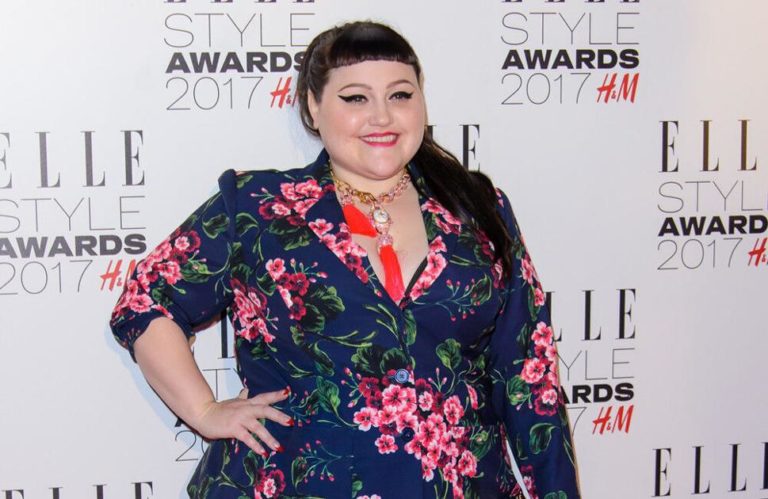

Beth Ditto had a boyfriend in high school despite knowing she was a lesbian.
The Gossip singer decided she would embark on a heterosexual relationship but she couldn’t suppress her gay feelings and kept breaking up with him because she knew she was living a lie.
Speaking on the ‘Homo Sapiens’ podcast, she said: “I had a high school boyfriend at the time but I cannot tell you how many times I broke up with him because I was gay.”
The 40-year-old music star explained that her boyfriend repeatedly refused to accept the break up.
She added: “I told him! I was like ‘I can’t do this’, but he was like ‘It’s okay, I can always take you back’.”
The pair were together during the latter years of high school, from the ages of 16 to 18, before Beth fled the small Bible belt town of Judsonia, Arkansas.
The punk rock singer moved to Washington, DC in 1999 to start Gossip with friends before releasing their debut studio album in 2001.
But Ditto also claimed that despite making it big in the music industry, she was never affected by the perils of fame and was often confused about the hostile attitude of the big city.
She told the podcast: “I was just the short fat kid who was nice to everybody.”
Beth found it difficult to understand why city folk were not as warm and welcoming as those from the South were.
The singer – who eventually disbanded Gossip to pursue a career in the fashion industry – added: “I did not get what people’s problem was when I moved to the North. I was like ‘Okay, there’s a stick up your a** I guess!’”
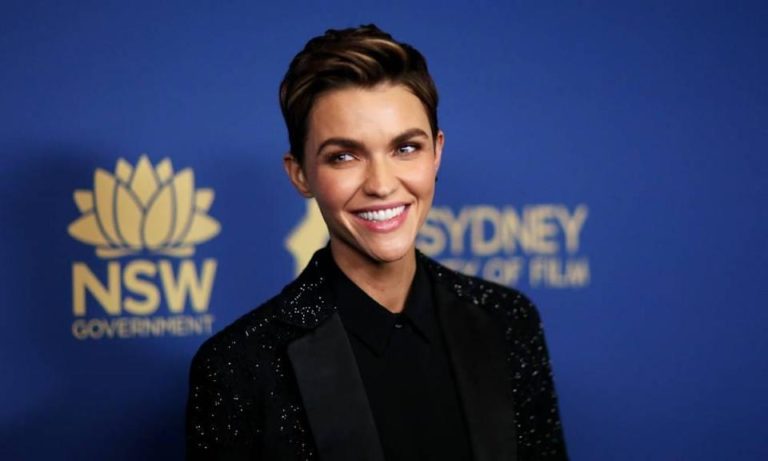

The former Batwoman star was one of five cover stars for GLAMOUR‘s digital Pride issue alongside Drag Race star Gottmik. Rose recalled what it was like for her to come out as lesbian when she was 12. She told GLAMOUR that she “might not have come out so young” if she realised how people would react to her sexuality.
“I didn’t know how to live without being open and honest about my identity, but I think I was also very young and maybe if I was a little bit older and I realised how homophobic people are, I might not have come out so young,” Rose said.
“I got bullied for it. I got tormented. I felt like I got crucified at school, and it was tough being the only gay person in that school.”
But Ruby Rose admitted that it was good that some people thought her sexuality wasn’t “taken as seriously” at the time. She explained that, by the time “everyone realised what” “being gay meant”, they had “gotten used to the fact” that being queer was an integral part of her identity.
Rose added that representation of LGBT+ identities in television was crucial to her growing up in Australia. She told GLAMOUR that The L Word came out when she was “getting ready to graduate” and “suddenly everyone at school was gay”.
“Because before The L Word, I didn’t know there was anyone else that felt like me and looked like me and had the same feelings,” Rose said. “It made life liveable for me.”
Ruby Rose previously spoken about the horrific bullying and abuse that she received after coming out at such a young age. She told The Guardian in March that she was verbally and physically abused and socially excluded by her classmates. The Orange Is the New Black shared that some classmates wrote “we hate Ruby” on toilet walls while others accused her of staring at them in changing rooms.
Rose said it got so bad that she was “hospitalised” and was “out of school for about five days” after being violently attacked by homophobic bullies. She described how a group hit her in the head with metal chairs and threw things at her “at a cafe” in front of “about 50 people”.
“They punched me. I ended up with lacerations, big bruises, concussion and also… just how much that horrifies your soul, your spirit,” Rose said. “I’d been bullied a lot, but not to this degree where I was worried for my life.”