Home Blog Page 73

LGBT Pride flags cut down in Waterford for second time – Irish Post

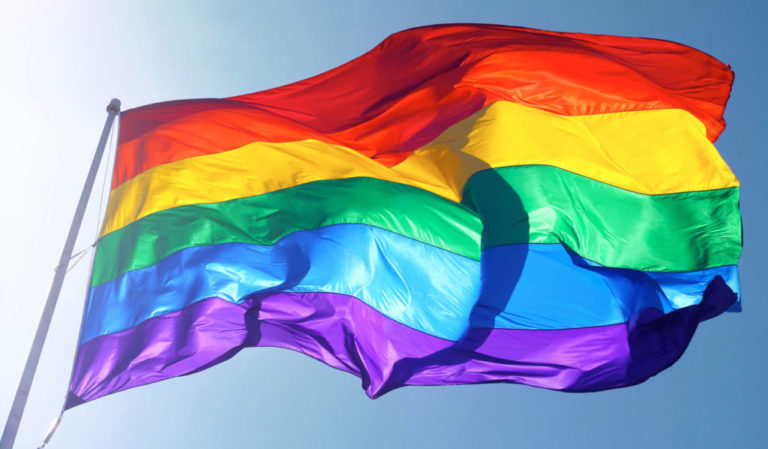
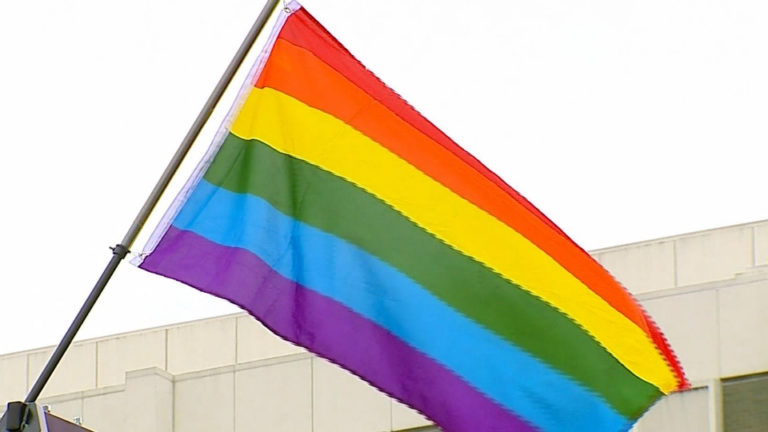
PRIDE FLAGS erected in Waterford to celebrate Pride month, as well as to mark last weekend’s Pride of the Deise celebrations, have been cut down for the second time.

Last weekend, a number of flags flying in the city were cut down and burned in the middle of the night, an act condemned as “disgusting” by Lord Mayor Damien Geogheghan.

Mr Geoghegan said it was acts of discrimination such as this why it was so important for Pride commemorations to take place, and said that Waterford is a ‘warm’ and ‘inclusive’ place, where the majority of citizens would be ‘disgusted’ by what happened.

The burned flags were replaced outside The Mall by new flags, but lasted just several days before they were cut down by vandals once more.

(Image: iStock)

Speaking to The Irish Examiner, Mayor Geoghegan said it was “appalling to think that this is the second despicable attack in the space of a week against the LGBTQ people of Waterford.”

He added: “I certainly didn’t expect it to happen again but regrettably it has.”

He confirmed that the matter has been reported to Gardaí and he is confident they will find the culprit.

New flags will be reinstated outside The Mall, and businesses across Waterford are encouraged to fly the flag themselves to show support and solidarity to the LGBT community.

“We can’t be deterred by this kind of behaviour,” said Mr Geoghegan. “We need to show that Waterford won’t tolerate this kind of behaviour”, adding that whoever was responsible was “in a minority and hold a minority view in Waterford”.

A man in his 40s was arrested last week in relation to the cutting and burning of the Pride flags and is set to appear in court on 6 July charged with Criminal Damage.

Investigations into the second act of vandalism are ongoing.

For many, Pulse memories are in their hearts and on their skin – Orlando Sentinel

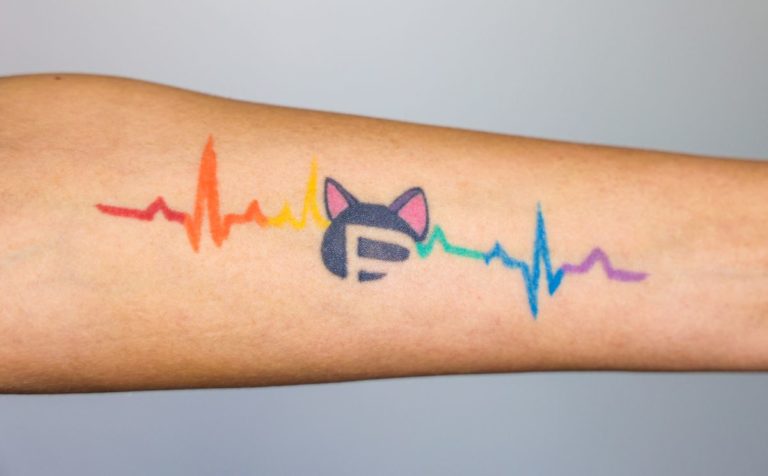
Ricardo Negrón Almodóvar, a survivor of the 2016 Pulse nightclub shooting, shows his tattoo in remembrance of the tragedy. Translated to English, the tattoo reads, “When hatred runs loose, you love in self-defense.” (Lizzie Heintz / Orlando Sentinel)

HIV no longer diagnosis without hope, but so many have died | HeraldNet.com – The Daily Herald

Frank Busichio started doing AIDS work at the Snohomish Health District in the early 1990s. He remembers those somber days, when the staff planted flowers at the agency’s building each month. It was a time to talk about everyone who had died from the virus.

“It was diagnosis to death,” he said.

That’s not the case today. There’s no cure for HIV/AIDS, but people treated with powerful antiretroviral drugs are living to see their later years.

From August 1992 to June 2009, Busichio was the health district’s HIV prevention and care manager. In those early days, he said, four case managers were each tasked with helping 50 people infected with the deadly virus. “Each one was a saint,” Busichio said.

As COVID-19 vaccines bring hope of beating the current pandemic, it’s easy to overlook an anniversary of another health crisis.

It was 40 years ago, on June 5, 1981, when the first five cases of what later became known as AIDS were officially reported in the federal Centers for Disease Control and Prevention’s Morbidity and Mortality Weekly Report. In those four decades, at least 700,000 people in the United States have died of HIV/AIDS — roughly 100,000 more than have died from COVID-19 since early 2020.

Busichio, 74, has a master’s degree in public health from Columbia University. His work with people affected by HIV began in 1987 in New York City with the Gay Men’s Health Crisis/Community Research Initiative.

“It was an amazing challenge, not being gay and not part of that community,” he said. “I was realizing it was so important.”

He’s still involved as the leader of AIDS Project Snohomish County. Founded in 1993, the nonprofit supports prevention efforts and helps people here living with HIV and their families. Before the pandemic, the group raised money through its Gay Bingo events, and hosted monthly friendship dinners for people affected by HIV.

Dr. Ann Dreyer was a co-founder, along with Busichio, of AIDS Project Snohomish County. An internal medicine physician who retired in 2017, she had what she described as a “very large HIV practice” at The Everett Clinic in Mukilteo.

The changes she’s seen in the outlook for people with HIV are extraordinary.

Dreyer wrote “Reflections of My Quarter Century in HIV Care,” an article in which she recalls the grim past.

She said that once someone was diagnosed with AIDS in the early 1990s, and had a T cell count under 200, “the mean time to death was less than two years.” She’d reassure patients that “although treatment options were limited, they would not be abandoned.” Her honest approach included talk of maintaining their dignity and controlling any pain.

What a difference antiretroviral therapy has made.

Today, someone diagnosed with HIV in their 20s or 30s may well have a normal lifespan, thanks to the medication, Dreyer said Friday.

The shift that’s made HIV a manageable condition came in about 1996, Dreyer said, with the development of protease inhibitors, the type of antiretroviral drug used in treatment. They work by blocking the virus from entering certain cells and making copies of itself.

Dr. Chris Spitters, the Snohomish Health District’s health officer, has also seen how medical research and innovation have made the prognosis for someone diagnosed with HIV “far better than it was during my medical training.” Still, he stresses prevention.

“In the late 1980s, most patients died within a year or two of being diagnosed with AIDS. Now it can be managed like a chronic disease,” Spitters said by email Friday. “Once we learned how it is transmitted and prevented, I never would have imagined that three decades later we would still have ongoing transmission.

“The health district still receives approximately 50 reports of newly diagnosed HIV each year,” Spitters wrote. Stopping preventable infections “is at the core of the health district’s communicable disease control mission.”

A local needle exchange program aims at preventing transmission among IV drug users.

According to a Snohomish Health District Summary of Reported Communicable Diseases, there were 52 newly diagnosed cases of HIV in 2019. Statewide, Department of Health figures show, 14,000 people were estimated to be living with HIV in Washington at the end of 2019.

James Ludwig is program manager of the medical case management team for Lifelong, an organization with a nearly 40-year history of helping people affected by HIV/AIDS. Through its Everett office, Lifelong serves 436 people, providing help with case management, housing, food, a dental program and testing.

In Snohomish County, about 1,200 people are living with HIV, Ludwig said.

“We’ve made huge progress in the last 40 years,” said Ludwig, adding that treatment has so evolved that the virus is managed with “one pill once a day.” The goal today, he said, is for HIV-positive people to become “undetectable,” making them unable to transmit the virus. And because of prevention strategies, few with HIV progress to deadly AIDS.

Early regimes “were difficult to take,” said Dr. Dreyer, who wrote of past treatments consisting of as many as 20 pills a day, with terrible side effects.

Years ago, tributes to those lost to AIDS marked a time in history. Journalist Randy Shilts was nominated for a National Book Award for his 1987 nonfiction “And the Band Played On: Politics, People and the AIDS Epidemic.” In the early 1990s, Tony Kushner’s “Angels in America,” which explored AIDS, won the Pulitzer Prize for Drama. Tom Hanks won an Oscar for his portrayal of a lawyer with AIDS in the 1993 film “Philadelphia.”

Twenty 12-foot-square panels of the NAMES Project AIDS Memorial Quilt were on display for several days in 2005 at Everett Community College. Each block had been lovingly created by a family member or friend, their grief expressed with a precious life remembered. By 2005, 324 people in Snohomish County had died of AIDS.

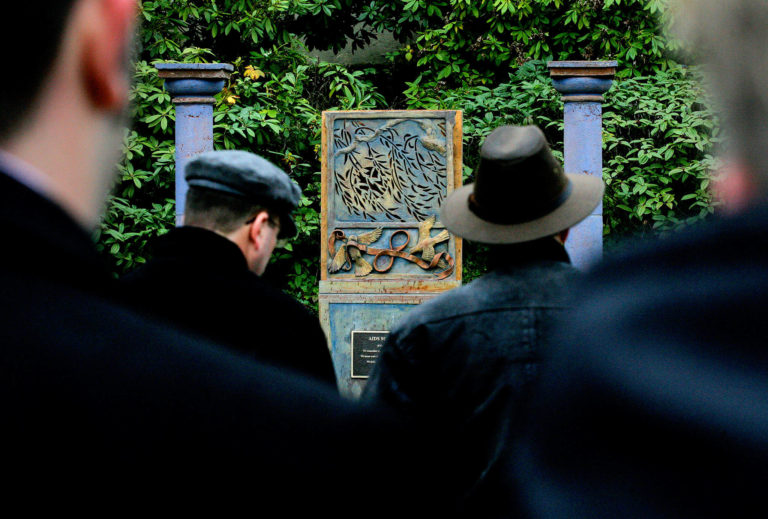
About 50 people attended the dedication of the AIDS Memorial of Snohomish County on Dec. 1, 2005. The memorial is on the west side of the Mission Building on the Snohomish County campus. (Michael O'Leary / Herald file)

An AIDS memorial stands on the west side of the Snohomish County Campus, near the Mission Building in downtown Everett. Busichio said it was a project of the Snohomish County Gay Men’s Task Force. The bas relief sculpture, depicting birds, leaves and ribbons, is set between two columns.

Dedicated Dec. 1, 2005, World AIDS Day, it was the first such memorial in the state. “We remember our friends and family lost to AIDS. We honor your struggles, your lives, and your memory,” says the memorial’s plaque.

The top of the sculpture’s textured wall is damaged, and needs a repair. With all the new construction nearby, the AIDS memorial looks forgotten. “We’re talking about what we can do about that. I think it’s important,” Busichio said.

“Our job is to keep that light shining,” he added. “Our role is advocacy, making sure people are still talking about HIV/AIDS.”

Julie Muhlstein: jmuhlstein@heraldnet.com

Talk to us

Gay Blize Obituary (1943 – 2021) – Missoula, MT – Missoulian – Legacy.com

Gay Fisher Blize, 1943 – 2021

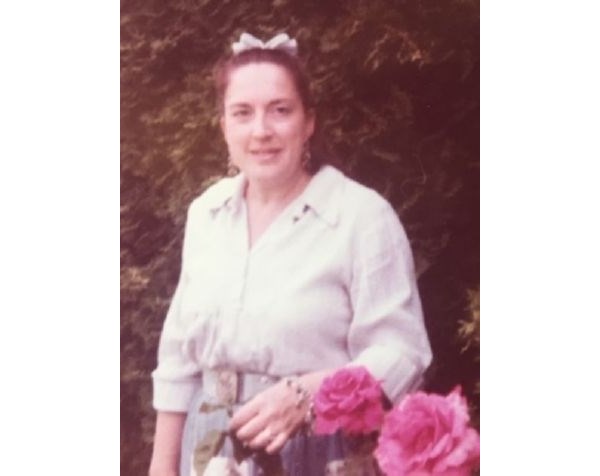
Gay Fisher Blize, 78, passed away peacefully, surrounded by her family on May 10, 2021.

Originally from Fort Wayne, IN, Gay was brought up in the theater. She performed as a professional ballerina as a child and a soloist with the Fort Wayne Ballet as a teenager. Gay attended Butler University, Ball State, and the University of Montana, earning degrees in Education, Anthropology, and Arts & Theater. While at UM, she taught and choreographed both ballet and modern dance. She developed the first-ever touring dance company in Montana in the late 60s and early 70s. Later in life, Gay worked for many years as a nurse’s aide at an assisted living facility caring for seniors and people with disabilities. In 1969, Gay married Missoula hairstylist, Lou Burton Blize, and was a devoted mother to their two daughters, Cara and Jeanette.

Gay was a firm believer in human rights and treating all people as we would like to be treated. She was a civil rights activist in the 1960s and advocated for causes she believed in throughout her life. She believed that education was the most important thing to keep us civilized and constantly evolving. She loved the fine arts, music, theater, dance, and film. Gay identified herself as a “universal humanist,” respectful of all people, beliefs, and ceremonies. Gay loved animals of all kinds and is survived by her Siamese cat, Mocha.

Gay is preceded in death by her mother and father Dorothy and David M. Fisher, her early dance partner and older brother, David M Fisher Jr., and her younger brother and close friend, Richard “Dick” Fisher. She is preceded as well by her husband Lou Burton Blize, who passed in 2011.

Gay is survived by her beloved daughters and sons-in-law: Cara and Josh Nikolaisen and Jeanette Blize and Adrian Sagan; and her four grandchildren: Hannah, Ally, Everett, and Emerson.

A Celebration of Gay’s Life will be hosted by her family in Missoula on Sunday, June 27, from 1 to 4 pm in the side yard at 101 W. Central Ave. We welcome you to join us in celebrating Gay with stories, memories, and creative expression. In lieu of flowers, please make a donation in Gay’s honor to the Jeannette Rankin Peace Center in Missoula.

Published by Missoulian on Jun. 13, 2021.

Gay Blize Obituary (2021) – Missoula, MT – Missoulian – Legacy.com

Gay Fisher Blize, 1943 – 2021

Gay Fisher Blize, 78, passed away peacefully, surrounded by her family on May 10, 2021.

Originally from Fort Wayne, IN, Gay was brought up in the theater. She performed as a professional ballerina as a child and a soloist with the Fort Wayne Ballet as a teenager. Gay attended Butler University, Ball State, and the University of Montana, earning degrees in Education, Anthropology, and Arts & Theater. While at UM, she taught and choreographed both ballet and modern dance. She developed the first-ever touring dance company in Montana in the late 60s and early 70s. Later in life, Gay worked for many years as a nurse’s aide at an assisted living facility caring for seniors and people with disabilities. In 1969, Gay married Missoula hairstylist, Lou Burton Blize, and was a devoted mother to their two daughters, Cara and Jeanette.

Gay was a firm believer in human rights and treating all people as we would like to be treated. She was a civil rights activist in the 1960s and advocated for causes she believed in throughout her life. She believed that education was the most important thing to keep us civilized and constantly evolving. She loved the fine arts, music, theater, dance, and film. Gay identified herself as a “universal humanist,” respectful of all people, beliefs, and ceremonies. Gay loved animals of all kinds and is survived by her Siamese cat, Mocha.

Gay is preceded in death by her mother and father Dorothy and David M. Fisher, her early dance partner and older brother, David M Fisher Jr., and her younger brother and close friend, Richard “Dick” Fisher. She is preceded as well by her husband Lou Burton Blize, who passed in 2011.

Gay is survived by her beloved daughters and sons-in-law: Cara and Josh Nikolaisen and Jeanette Blize and Adrian Sagan; and her four grandchildren: Hannah, Ally, Everett, and Emerson.

A Celebration of Gay’s Life will be hosted by her family in Missoula on Sunday, June 27, from 1 to 4 pm in the side yard at 101 W. Central Ave. We welcome you to join us in celebrating Gay with stories, memories, and creative expression. In lieu of flowers, please make a donation in Gay’s honor to the Jeannette Rankin Peace Center in Missoula.

Published by Missoulian on Jun. 13, 2021.

After a hiatus for many, Maine summer camps to open almost like normal – Press Herald

0

Nearly all of Maine’s summer camps are planning to reopen in the next few weeks, following a year when many didn’t operate and others were only able to welcome a small number of youngsters because of the threat of COVID-19.

Last year, about a third of all municipal recreation camps and more than 60 percent of overnight and day camps didn’t open, according to estimates from Maine camp and recreation associations. But this summer will not be without its challenges.

Camps are seeing brisk enrollments with kids eager to have a more normal summer and parents looking for a break from child care and remote learning. Many town rec camps and overnight camps are planning to run at close to their normal capacities, but with some lingering restrictions because of campers who are under 12 and too young to be vaccinated. Those include fewer field trips, masks for campers indoors and some social distancing.

Many town- and city-run recreation and day camps say it’s been more difficult than ever to find high school and college-age staff this year as the state experiences a glut of service and retail job openings. Adding to the labor shortage, camp operators say, is the fact that some educators and school bus drivers who usually work at camps in the summer have not reapplied this year, possibly in need of a break after a particularly stressful school year.

The McGonagle family of Gorham – Aya and Steve McGonagle with their children Carter, 11, Keegan, 7 and Emi, 6 – are looking forward to summer rec camp. Shawn Patrick Ouellette/Staff Photographer Buy this Photo

Maine’s overnight camps have had to scramble to replace staffers who regularly come to Maine from other countries and account for about 30 percent of Maine staffs some years. Many can’t return this year because of travel or visa restrictions. Some overnight camps are offering referral bonuses and aggressively recruiting among alumni and former staff.

Still, recreation directors, camp operators, parents and kids say they are excited for a return to a more normal summer at Maine’s 250-plus summer camps. Since last summer, 10-year-old Alexis Vergales of Charlottesville, Virginia, has been counting the days until her arrival at Camp Fernwood in Poland.

“Twenty-three,” she said, cheerfully, on the phone from Virginia in early June. “Last year, you could only hang out with kids in your (age) division and you couldn’t do the ropes courses or field trips or woodworking. I’m really looking forward to water skiing and seeing my friends. I like everything about camp.”

Alexis’ father, Jeff Vergales, is happy about camps getting back to normal, not only as a parent, but also as a physician who spends his summers working as camp doctor at both Fernwood and Camp Skylemar in Naples.

“I cannot express in words how important the camp experience is for my daughter and other kids. So many things got canceled for kids this year, so to have camps pretty close to back to normal is a great thing,” said Vergales, who is also a former counselor at Camp Skylemar.

FOR MANY, A NECESSITY

Ron Hall, executive director of Maine Summer Camps, said that more than 60 percent of overnight and day camps had no in-person sessions last year. He said about 28 percent had no revenue at all, while two-thirds of the camps saw revenue decline by 70 percent.

This year, he knows of only one out of the 170 overnight and day camps in the state that will not open for in-person campers this year – Camp Sunshine, a retreat for children with life-threatening illnesses and their families in Casco. The camp decided not to reopen this summer because it serves children who are immune-compromised and wanted to wait for more people in the general population to be vaccinated, said executive director Mike Katz.

Deb Smith, executive director of the Maine Recreation and Parks Association, said she has not heard about any of the 80 or so rec camps in the association not operating this summer.

Excellent Uwizeye 14, of Westbrook looks to pass the ball during a basketball game at the after-school program at the Intercultural Community Center in Westbrook. The center will be hosting a hybrid version of its summer program. Shawn Patrick Ouellette/Staff Photographer Buy this Photo

Maine lifted just about all state restrictions relating to COVID-19 in May, including the specific summer camp guidelines that the industry followed last year. This year, camps are following recommendations on summer camp safety from the federal Centers for Disease Control and Prevention, which include encouraging, but not requiring, vaccinations for anyone old enough. Campers or staff who aren’t fully vaccinated should wear masks indoors or in close quarters, and people should try to maintain 3 feet of distance, according to the U.S. CDC.

Because most camps will have kids under 12, they’ll use some social distancing and masking rules. Many also say they learned last year that they can do a lot of camp activities outside – where experts say transmission of COVID-19 is extremely rare – including eating meals and doing crafts. Still, every camp is adjusting its rules a little differently, based on their facilities, the age groups they serve, and the comfort level of both families and staff.

At the Intercultural Community Center in Westbrook, the summer program will operate with two in-person days and two remote days, plus one optional drop-in day, said Beatrice Mucyo, the director. Last summer, it was fully remote. While some summer camps give kids a break from school and their everyday lives, the summer program at the Intercultural Community Center is more of a necessity, with educational programs that help the children of immigrants improve English language and other skills. Because children under 12 can’t be vaccinated yet, Mucyo said some of the parents involved in the program feel more comfortable easing their kids into a hybrid model.

“It will be nice for kids to get out of the house more this summer, but we know not everyone is comfortable coming every day yet,” Mucyo said.

Rec camps across Maine also fill a child care need for working parents, many of whom have struggled over the past year to balance full-time jobs with taking care of children at home or juggling day care options.

Meredith Gay of York is especially glad that rec camp in her town is back this year, after it was canceled completely last year. As a single mother, Gay had to help her 8-year-old son with remote learning and ask family to help with his care last summer. She and her son are looking forward to a more normal summer, where he can swim and play with friends and she can focus on her job in health care.

“We are ecstatic that he can go to camp this year,” Gay said.

Robin Cogger, left, director, and Andy Kaherl, recreation coordinator, at York Parks and Recreation, are getting ready to open York’s summer camp this year. Gregory Rec/Staff Photographer Buy this Photo

York’s rec camp is returning at a slightly lower than normal capacity this year – 50 kids in each of two locations, compared to 60 to 90 each in other years, said Robin Cogger, director of the York Parks and Recreation Department. Cohorts or groups will stay separated again this year, she said, to avoid the entire group coming into contact with each other. Campers will also be masked when close together, and socially distanced, Cogger said. Like most rec camps, camps range in age from elementary schoolers to early teens, meaning many won’t be vaccinated. The camp will likely not go on field trips, because during the budget process it was unclear if they would be allowed or practical, Cogger said, so they weren’t included. Instead the camp will hire people to put on events at camp, like laser tag.

Demand for rec camp slots has varied from town to town. Many camps were reporting in late May they still had openings, while others filled up fast. Registrations at the five camps run by the YMCA of Southern Maine, including in Portland, are about 40 percent of what they were in 2019, before the pandemic, but about 130 percent of what they were last year, said Meaghan Woodsome, district executive for the YMCA of Southern Maine.

At Camp Ketcha, a nonprofit day camp in Scarborough, online registration opened Feb. 24 and the 200 or so spots per day were filled in about 10 minutes, said Tom Doherty, director of Ketcha Outdoors, which runs the camp. Camp activities will feature swimming in a pool and a pond, as well as games, sports and crafts. The camp won’t offer specialty weeks, like a Harry Potter camp, that it has offered in the past, Doherty said.

“It’s flattering that people want to come to our camp, but sad that families who have come for years might be shut out,” said Doherty, who said more spots might be added. The camp had more than 300 campers a day before the pandemic.

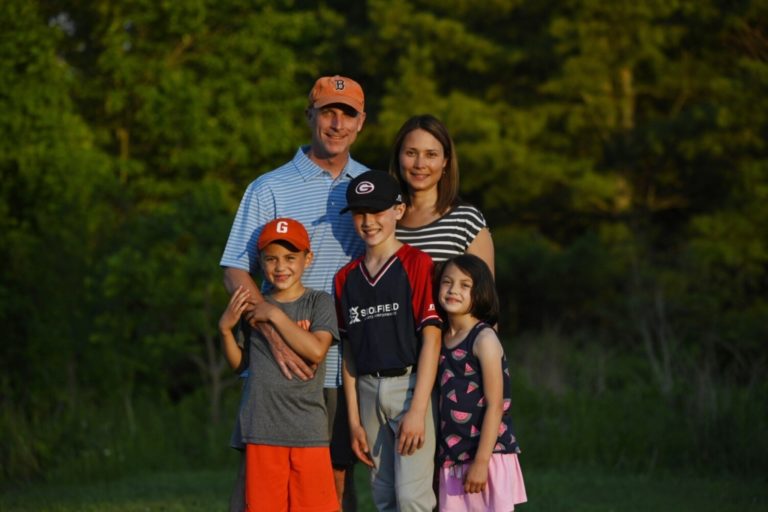
Steve McGonagle of Gorham says he’s been happy that the Gorham rec camps are running near full capacity this year, and have kept him and other parents aware of their plans all spring. His three children – ages 6, 7 and 11 – are all going to camp. He often travels out of town for his job in the insurance business, and his wife works as a chemist in a lab, so the day care provided by summer camp is important for them.

“Last year there was such uncertainty,” said McGonagle. “For the sanity of the parents and the kids, it’s great that this is happening.”

Ellyn Black, the owner of Camp Fernwood, sits by the campfire site Tuesday. Black has been preparing the camp for the arrival of campers and staff later this month. Derek Davis//Staff Pho

CAMP WORKERS WANTED

Several rec camp directors say they’ve had more trouble finding staff this year, but not enough to shut their camps down. In York, Coggins said she’s had to hire younger staff, 16- and 17-year-olds, where in the past she had more college-age applicants. One of York’s older new counselors, 19-year-old Marley Mailloux, said she applied because she really wanted a job outside and to work with kids. But she said her friends have had their pick of less strenuous jobs that pay around the same, minimum wage or a little better.

At the YMCA, Woodsome said hiring staff this year has been “challenging” but that the camps will be fully staffed when they open Monday. The branch runs five camps throughout southern Maine with a total of 40 counselors, but is “always looking to bring on additional staff” during the summer as needs change, Woodsome said.

Some teachers who worked at Saco rec camps in the summer are “a little more tired” after the pandemic school year and have asked to work fewer hours, but the camps will be fully staffed, said Ryan Sommer, the city’s parks and recreation director.

Gorham Parks and Recreation Director Cindy Hazelton said she’s been having trouble finding bus drivers this year and may have to cut down on field trips to local swimming holes or parks, unless she can hire about four more of them soon. Usually, she gets plenty of applications from people who drive school buses from September to June and are looking for a summer job to augment their pay.

“It could be fatigue after all they’ve been through, I’m not sure,” said Hazelton.

In pre-pandemic years, workers from other countries made up about 30 percent of the 13,000 staff members at Maine’s overnight and day summer camps, said Hall of Maine Summer Camps. This year, camps haven’t been able to rehire many of their international staffers because of travel restrictions from many countries into the U.S. and because many embassies aren’t doing visa interviews right now, he said.

Sebastian Bargmann, the assistant maintenance director at Camp Fernwood in Poland, prepares for the camp’s opening. Derek Davis/Staff Photographer

Camp Fernwood, the overnight camp for girls in Poland, normally has 30 to 40 staff members from other countries, about half returning from previous years, said Fritz Seving, one of the camp’s directors. But this year, the camp will have one new and four returning international staff members, all from Mexico, a country from which travel to the U.S. is allowed. Seving said some activities might have to be canceled because of understaffing.

Seving said he usually has many returning international workers who have experience at the camp, including counselors and others in supervisory roles. So this year he’ll have fewer people who are experienced at training new staff.

One of Camp Fernwood’s international workers who can’t come back this year is Nikki Wedermann, from Cape Town, South Africa. She works as a nanny during the school year and has been working at Camp Fernwood for 10 summers, recently as a waterfront director. Because of travel restrictions and embassies not taking in-person appointments for visas, she was not able to schedule an interview with the U.S. Embassy until late July, after camp starts.

“So this is my first year of not being at camp in a decade. I won’t be getting my annual dose of happiness,” Wedermann wrote in an email.

The Maine Teen Camp, an overnight camp in Porter, usually has 35 or more foreign workers on its staff of about 100, who come from Europe, South America, Asia and Australia, said co-director Matt Pines. As of early June, he had only one confirmed returning this year, from Mexico, but had others lined up to come from Mexico and Columbia. He said the camp is offering bonuses to staff members who recommend new applicants, but would not say for how much. He and other camp directors also say they’ve been recruiting more aggressively this year among camp alumni and former campers, to replace the foreign workers.

Pines said Maine overnight camps for years have attracted international workers who are looking for an interesting summer experience and have skills the camps need. For example, Pines said most water ski instructors at his camp are from Australia, as he is. He first came to Maine as a camp counselor in the late 1990s. Pines also thinks having an international staff makes for a better experience for the campers, by getting to meet people from around the world.

Seving and other camp directors say finding counselors, kitchen help and maintenance staff among Mainers has been especially difficult this year, with the state’s unemployment rate under 5 percent. Some service and retail businesses have been closing temporarily because they can’t find help. Early this month, Seving said he still needed to hire about four or five staff members before camp opens in late June.

“Working at a camp, where half of the campers probably won’t be vaccinated, can be a tough sell when you’re competing with places that are offering bonuses to wait tables,” said Seving.


Use the form below to reset your password. When you’ve submitted your account email, we will send an email with a reset code.

Golden anniversary – Arkansas Online

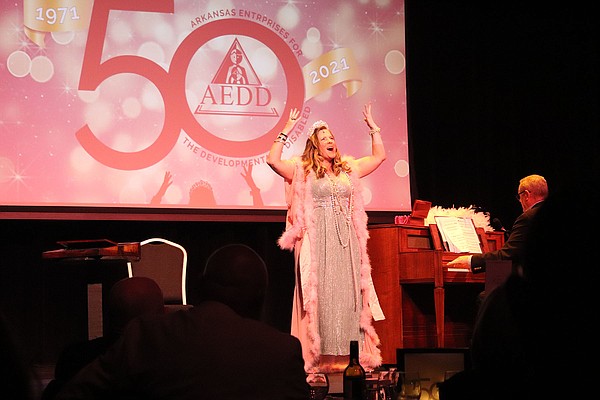
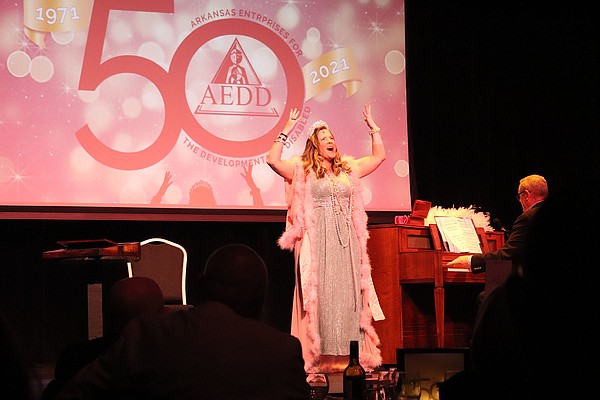
Curtain Call (formerly Curtain Call for a Cause), the yearly fundraiser for Arkansas Enterprises for the Developmentally Disabled, returned to a limited in-person format for its one show June 3 at North Little Rock’s Argenta Community Theater. The event was a celebration of Curtain Call’s 10-year run as well as the 50th anniversary of AEDD.

While virtual attendees picked up their meals and watched online, regular guests posed for photos on the red carpet outside the theater and, during the social hour, mingled, sipped libations and bid on silent auction items. The Premier Auction was open only to in-person guests.

Gallery: Curtain Call

[Gallery not loading above? Click here for more photos » arkansasonline.com/613curtain/]

The sit-down dinner, served by AEDD Auxiliary members, featured boxed appetizers and salads served prior to the succulent beef dinner provided by Catering to You. Pre-show remarks and features included a special appeal to donate to AEDD’s “$50K for 50 Years” campaign.

Due to continuing covid-19 precautions, the AEDD consumers who make up the ACTS in the Rock performing troupe did not put on an opening skit this year. But they were remembered via video, and the show — themed “Thanks for the Memories” and produced by Vincent Insalaco and Christen Pitts — didn’t disappoint.

Members of Untapped, the tap-dancing troupe that’s been a longtime Curtain Call act, returned for some fancy footwork. The audience was also treated to an “Italian Star Spangled Banner” piano performance by Dr. Alan Storeygard; the singing of “(Somewhere) Over the Rainbow” by Grace Pitts and “I Don’t Know How to Love Him” by Jessica Mylonas; Mariah Patterson’s performance of “If They Could See Me Now,” Daniel Collier’s Sinatra-competing rendition of “New York New York”; Jimmy Clark’s “That’s Entertainment”; Drew Jansen’s “Carpenter’s Arrangement” and Karen Clark’s lively “Glitter and Be Gay.” All performers gathered to conclude the show by singing “What I Did for Love.”

— Story and photos by Helaine R. Williams

Huge gas blast in central China leaves at least 12 dead and 138 injured – Yahoo News

0

A gas pipe explosion in the central Chinese city of Shiyan on Sunday morning killed at least 12 people and wounded 138 others, 37 critically, Reuters reports, citing state media. Many were trapped, according to CNN.

Stay on top of the latest market trends and economic insights with Axios Markets. Subscribe for free

The big picture: 155 people were evacuated from the city in Hubei province, as images posted to social media showed buildings flattened. Authorities have yet to announce the cause of the blast, but AP notes that “frequent deadly accidents” are usually linked to factors including poor safety standards.

More from Axios: Sign up to get the latest market trends with Axios Markets. Subscribe for free

Simon Cowell selling haunted mansion | Entertainment | insidenova.com – Inside NoVA

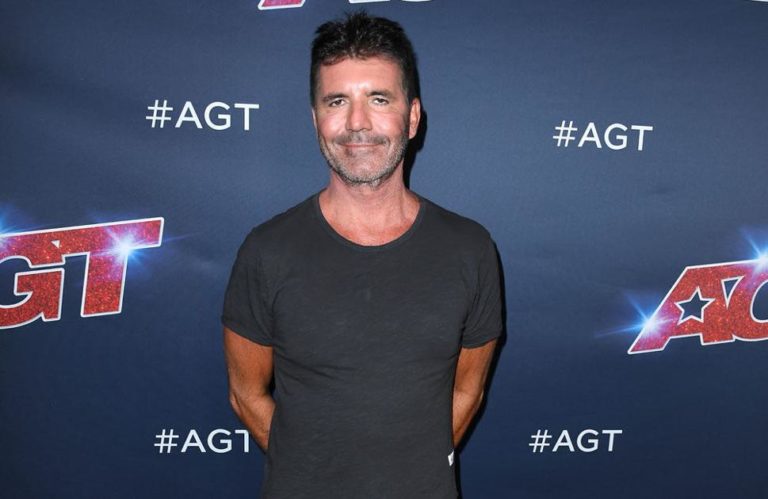
Simon Cowell is selling his “haunted” mansion.

The 61-year-old music mogul only bought the seven-bed property in South West London in 2018 and was recently granted planning permission to carry out renovations but he has now changed his mind and is putting it on the market.

A source told The Sun on Sunday newspaper: “Simon loved the property when he bought it, and had a list of changes and improvements.

“But he seems to have had a change of heart. So while it is not yet on the market, it’s likely to be listed for sale again very soon.”

The lavish property – which Simon had planned to improve with an outdoor pool, a bar, an extended sunroom and state-of-the-art security – is reportedly haunted by the gay lover of Roman Emperor Hadrian, according to previous owner Christopher Levett.

The hedge fund billionaire believes he brought in the soul of Hadrian’s lover Antinous in a statue in 2014 and although he donated the statue to a museum, he continued to hear strange noises in the house.

He previously said: “It was delivered in a crate.

“When I was locking up, I heard the sound of heavy objects being knocked over from the drawing room where Antinous was still lying in his box.

“The same happened the next two nights. But there was nobody there.”

A source added: “I know when Christian lived there the family heard unexplained noises. There’d be a bump from a bedroom then the next night a noise from downstairs.”

How Philly and beyond are celebrating Pride Month in person this year – Pennsylvania Capital-Star

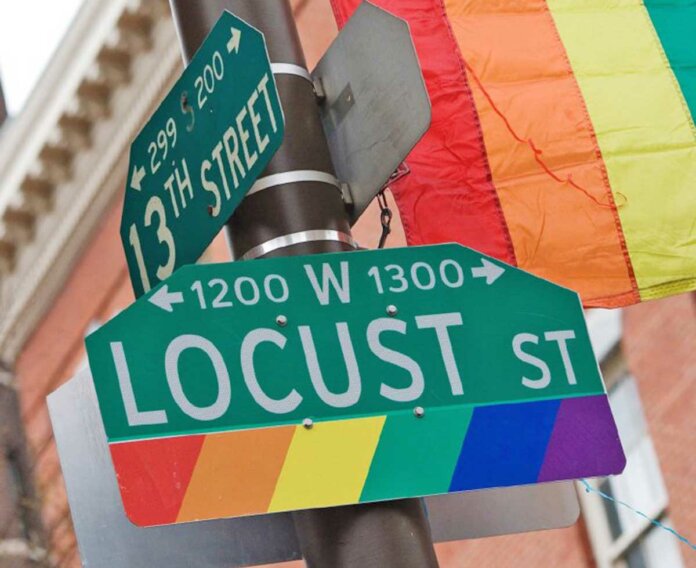
(Image via The Philadelphia Gay News).

By Michele Zipkin

PHILADELPHIA — With COVID-19 cases steadily falling in the Philadelphia area, many Pride events are happening in person this month.

While there won’t be a Pride parade in Philadelphia this year, Philly Pride Presents is planning a Pride festival for the first weekend in September at Penn’s Landing. Since case rates, and subsequently safety protocols, are subject to change, the organizers are playing things by ear.

Until then, there are plenty of options for celebrating Pride in Philadelphia and surrounding areas, both in physical and virtual locations. From drag shows to art exhibits, this year’s local and regional Pride offerings are nothing short of diverse.

While Pride Month is a time of celebration, it is also a time to commemorate and educate oneself about the Stonewall riots and the work that our LGBTQ+ elders, largely trans women of color, have done and continue to do to fight for safety and equal rights.

Various drag shows, ongoing 

There are many ways to enjoy drag this Pride month. Catch queens from the Philly Drag Mafia at two events: drag brunch hosted by Brittany Lynn at the Wayward brasserie on June 13, and at Drag Tea at the Sofitel on June 26. Grab your tickets fast because the first three iterations of the show sold out. Proceeds will go to William Way. Check out Tabu’s resident drag queens at their weekly drag brunch on Saturdays and Sundays, and the biweekly competition Cutthroat Queens, hosted by Onyx Ondyx, also at Tabu.

Doylestown Pride June 12-19

This week-long pride celebration includes a drag performance, concerts, outdoor film screenings, an educational event on the Stonewall riots, and community pop-up events. The Rainbow Room will host an outdoor queer youth open mic on June 16, and the Pride Music Party will take place on June 19, featuring performances from Froggy, Lizdelise and Sixteen Jackies. For more info on the event schedule, visit the Doylestown Pride Festival website.

Toms River Pride, June 13 

Hosted by Exit 82 Theatre Company, the 3rd annual New Jersey Pride event will consist of live performances and drag shows, family and partner-oriented activities, educational resources and local business promotions. All events will take place from 11 a.m. to 5 p.m., with a drag show fundraiser set for the evening of June 12. More info and updates can be found on the Toms River Pride Facebook page.

“With the privilege to celebrate comes a reminder that there is still work to be done to make our society more inclusive, like ensuring our transgender and POC brethren are protected and valued,” organizers and Exit 82 Theatre Company founders Billy Cardone and Keely Davenport said in a press release.

Image via The Philadelphia Gay News

Black Girl Magic, June 19

Philly drag queen VinChelle is bringing back Black Girl Magic live at Voyeur this Juneteenth for the first time in over a year. Enjoy performances by veteran and up-and-coming drag queens Sir Donyx, Poochie, Mae Rose, Marcha Pisces, Avery Goodname, Phi’ly Jawn, Mz Peaches, Deej Nutz and Lisa Lisa. Proceeds will benefit the organization COLOURS. For tickets and more information, visit Eventbrite.

Lehigh Valley Pride, August 15

Bradbury-Sullivan LGBT Community Center will be organizing a Pride event to take place in person this year on August 15. This outdoor event will feature performances by drag queens Kylie Sonique Love and Ariel Versace, as well as musical performances from Erin Mckeown, Crys Matthews and Regina Sayles. In line with the theme of “You are included,” the event will incorporate on-stage ASL interpretation, ADA restrooms and reserved seating for senior-age adults and people with disabilities. Additional information can be found at bradburysullivancenter.org/pride.

Creative Resilient Youth and the Youth Artist Program Art Exhibit, now through June 27 

The youth collective Creative Resilient Youth and the Young Artist Program are hosting their collaborative exhibit  “Roots Before Branches” from June 3-27 at Cherry Street Pier. The exhibit is the pinnacle of the Young Futurist Studies Series, led by Ras Stanford of the mental health collaborative Deep Space Mind 215, where members of CRY and YAP participated in workshops on Afrofuturism, world building and the culture of youth artist activism. The exhibit is free and open to the public Monday to Sunday from 7 a.m.-11 p.m. For more information, visit the Roots Before Branches Facebook page.

Moving Forward When the World Stopped: Queer Life 2020-2021, now through June 30

William Way LGBT Community Center produced this virtual art exhibit that walks viewers through a timeline of events and experiences from the past year. The works, created by 28 Philadelphia-area artists, encompass themes ranging from the hardship of living through the pandemic, how our relationship to technology has transformed and the capacity for communities to endure. Check out the exhibit at waygay.org/.

Cocktails for a Cause, ongoing through June 30 

Several Philadelphia establishments are participating in Cocktails for a Cause to raise money for Attic Youth Center, William Way LGBT Community Center, Philly Asian Queer and GALAEI. Lola’s Garden, Juno, Parks on Tap, Morgan’s Pier, Harper’s Garden, Craft Hall, The Garden at Cherry Street Pier and Rosy’s Taco Bar will participate in this fundraising effort, offering special cocktails that correspond to the colors of the Philadelphia Pride flag, which sports black and brown stripes. For more info, visit phillygaycalendar.com/.

Femme, masc, nonbinary meet-ups hosted by GALAEI  

The QTBIPOC social justice organization GALAEI introduced some new programs lately, so if you need to connect with your fellow femme, masculine or gender nonbinary folks during Pride (or any time), you can do so through TINGS — the organization’s trans, intersex, nonbinary, gender nonconforming services. Members of the org host meetings geared toward those who are femme (Tuesdays except the first Tuesday of the month), trans-masculine (Fridays), intersex (every first Tuesday) and gender nonconforming (every fourth Friday). Info regarding times, registration and access can be found here or on the GALAEI Facebook page.

PrideFLIX; The Virtual Pride Film Festival, now through July 7  

Not ready to venture out into the world yet? Relax and enjoy LGBTQ films from the comfort of your own home through PrideFLIX, an offshoot of the queer film festival qFLIX. The series launched June 1, and consists of documentaries, feature-length and short films. Info about tickets and show times can be found on the PrideFLIX website.

Michele Zipkin is a reporter for the Philadelphia Gay News, where this story first appeared

A Fantastic Woman, among the 10 best LGBT films according to critics – Tomatazos – Explica .co – Explica

Cinema is one of the most important windows that exist to exhibit fundamental issues for society, although on many occasions they do it indirectly through fantasy, comedy or terror, there are also productions, whether fiction or documentary, that explore certain themes in a more profound and evident way making use of drama or romance. Today, the topic of the LGBT community is something that has captured the attention of many, but it is not strictly new.

Keep reading: Moonlight: Barry Jenkins defends his film from the idea that he won for political correctness

On the occasion of Pride Month, named in memory of the 1969 New York riots, Rotten Tomatoes has released an updated list of the 200 best LGBT + themed movies of all time worldwide. Featured on this list are tapes of all genres and styles. According to the platform, each production was chosen taking into account the critical rating, the number of reviews, that they had characters that are gay, lesbian, bisexual, queer, etc., and that the story revolved around the topic.

Although currently there seems to be much more openness to homosexuality on the big screen, the truth is that more than 90 years ago there was already a film that proposed a relationship of this type: Madchen In Uniform, a 1931 German drama that features a young girl who falls in love with her teacher. This film, being released around the time of Nazi Germany, was banned and censored for a long time, but it had the opportunity to reach other countries.

Continue with: Luca Guadagnino doubts directing the sequel to Call me by your Name

It is important to recognize that, in recent years, films that represent the community in some way have also started to be recognized in award seasons. Proof of this is La Favorita – 100%, a film for which Olivia Colman won the Oscar for Best Actress for her portrayal of Queen Anne, who was intimate with her protégés. On the other hand, there is Luz de Luna – 98% Barry Jenkins, the first gay-themed movie to win the top Academy Award, Best Picture.
In the first places of the list could not miss Call Me By Your Name – 97%, directed by Luca Guadagnino and starring Armie Hammer and Timothée Chalamet; Pain and Glory – 96%, one of the most recent works by Pedro Almodóvar in which the filmmaker uses part of his life story to shape a film that leaves feelings on the surface. A Fantastic Woman comes from Latin America – 94%, the Chilean film that made a lot of noise during awards season for its tender, subtle and respectful portrayal of a transgender woman who must face the gazes that judge her.

It may interest you: Neil Patrick Harris advocates that heterosexual actors play LGBTQ characters

Of course, The Homeless Club couldn’t be left out – 94%, where Matthew McConaughey presents an evident acting maturity accompanied by Jared Leto; the relevance of this film, beyond showing characters from the LGBT community, shows one of the harsher, albeit realistic, sides of what it means to live with AIDS and fight to stay alive no matter what this implies.

It is worth mentioning that this list does not include series or movies made for television, although original productions from streaming services were taken into account. Below, you can read how the Top 10 of the best LGBT movies of all time came out:

09. BPM (Beats Per Minute).

08. A Fantastic Woman.

07. The Club of the Evicted.

05. Mädchen In Uniform.

03. Pain and Glory.

02. Call Me By Your Name.

01. Moonlight.

Aaron Sims to Run for Mark Amodei’s Congressional District Seat – KTVN

0

Aaron Sims to Run for Mark Amodei’s Congressional District Seat – KTVN Channel 2 – Reno Tahoe Sparks News, Weather, Video

Popular Stories 

Nevada News 

Campaign 2020 

What Is Philadelphia’s Old City Without Any Tourists? – Philadelphia magazine

0

Longform

When travel restrictions curtailed the red-white-and-blue-clad throngs, another group of ardent pilgrims took their place, and changed everything about how we saw our home.


old city tourism

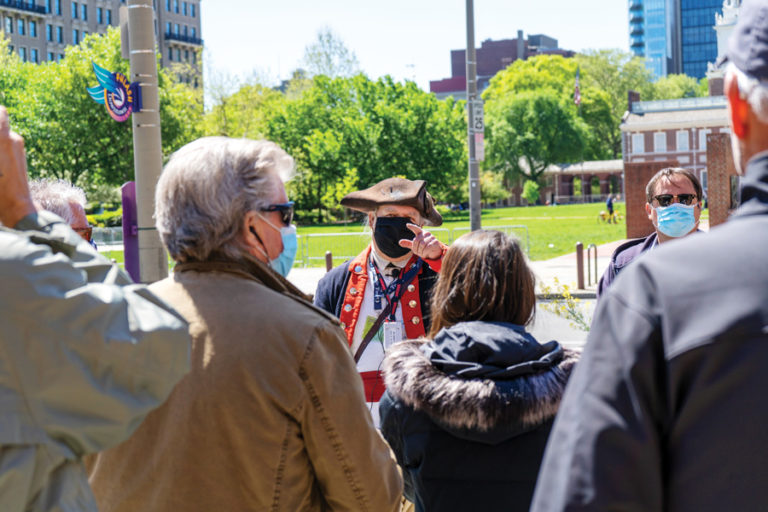
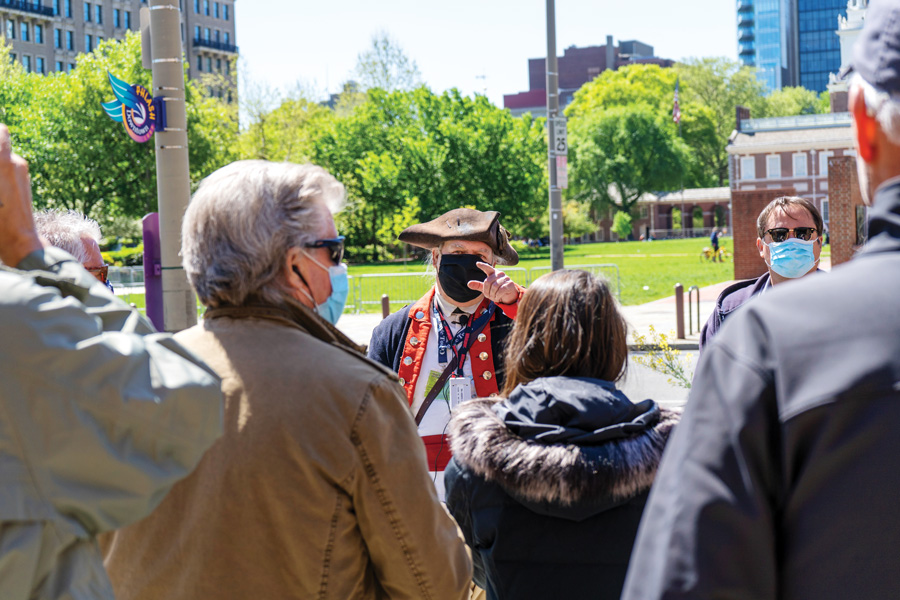
A “pirate” gives the tourist spiel on Independence Mall in Old City. Photograph by Drew Dennis

Last summer, for the first time in anyone’s memory, the tourists didn’t come.

For two decades, we’ve lived in Old City. “A block from the Betsy Ross House and two blocks from the Liberty Bell,” we tell out-of-town friends and family. There are other landmarks by which you can situate our address, but it’s always seemed more accurate to describe our home by its proximity to Colonial kitsch and American mythmaking. We don’t say that we’re a couple blocks from Ben Franklin’s grave or Independence Hall. It’s always been Betsy and the Bell. For us, it wasn’t the rich history that defined our neighborhood so much as the version of it that fit on the t-shirts and refrigerator magnets in the windows of the tourist shops that dot our blocks.

Our nephew was visiting with his mother one summer when he noticed the many cosplaying tour guides in their breeches, buckle shoes and tricorn hats. With all the conspiratorial seriousness a five-year-old can muster, he asked with concern, “Mom, why are there so many pirates here?” We once heard a little girl address her tour guide, who was in full Betsy drag, complete with the ruffled “mob cap” women wore in Colonial times, as “Mrs. Claus.” There are much more dignified ways to look at the importance and privilege of living in a historically significant area, but to us, it’s always been the place where Mrs. Claus and the pirates hang out every summer.

Still, we’ve had a somewhat complicated relationship with tourists over the years. We have hometown pride; we consider it our duty to be friendly and accommodating to any visitors we encounter. We’ve had the pleasure of seeing people from all over the world discover the charm of our cobblestones and our Ben Franklin impersonators. But there’s no denying the recurring sense that when it comes to a certain strain of American tourist, gay couples like us likely wouldn’t receive the same polite consideration if our roles were reversed. We moved here just before 9/11, and in the decades since, patriotic symbols were (re)weaponized as the country grew increasingly polarized and partisan. We first encountered the more conservatively patriotic type of tourists at the height of the Freedom Fries/“You’re either with us or against us” era, then kept meeting them anew through the embarrassing weirdness of the Tea Party years and, in the last few summers before lockdown, as they donned MAGA hats.

This doesn’t describe the majority of visitors, many of whom aren’t even American, of course. But we came to see the masses of mostly white, overwhelmingly heterosexual, traditionally dressed Americans who came here — the families in coordinated red, white and blue outfits, the church groups in their flag sweatshirts, the retirees in their Spirit of ’76 visor caps — as visitors from an America we didn’t tend to visit ourselves. We had this suspicion reaffirmed every time a group of them stopped us to ask for directions or restaurant recommendations. We’d see the sudden uncomfortable realization on their faces when we opened our big gay mouths and pointed them toward Penn’s Landing or the best cheesesteak place.

Of all the kitsch that surrounded us from April to September every year, there was nothing tackier or more ridiculous than the ill-fated Ducks, those unholy bus-boats that once lumbered down our street every half-hour at the height of tourist season before plunging into the Delaware River. There’s no way to explain the experience of looking out your front windows and seeing a bunch of people expressing their patriotism by playing kazoos while a tour guide with a microphone leads them in song — in a boat. Because these routes were timed, it was always the same song: “You’re a Grand Old Flag,” the words to which we still know like our Social Security numbers. Sometimes, when a Duck got stuck at a light outside our open windows, we’d snap and loudly sing along, pointedly omitting one letter from “flag.” At a time when it seemed like every state was passing anti-gay-marriage amendments before sending its voters here to eat our soft pretzels and Tastykakes, we bitterly joked that we were going to stand in our front window and make out in our underwear for the kazoo-wielding red-staters.

So yes; a long, complicated relationship, the lack of which we felt more than we ever could have predicted. In these guests’ absence, another group of ardent pilgrims took their place and changed everything about how we saw our home.

We aren’t just living in the birthplace of America. Because of the deep power of our neighborhood’s symbolism and how it touches people in different ways, we’re living at America’s crossroads.

There’s one neighborhood landmark we never even considered and barely noticed in all our time here: Philadelphia police headquarters, the Brutalist, handcuff-shaped roundhouse that sits a few blocks from Independence Hall. It’s a testament to our blind privilege that its presence barely registered over the years. But in Pandemic Summer, it was the hottest spot in the neighborhood. It wasn’t Ben Franklin’s or Betsy Ross’s face we saw on the street outside; it was George Floyd’s and Breonna Taylor’s. “You’re a Grand Old Flag” was replaced with “No justice, no peace!” The conservative white patriots of the yearly tourist trade stayed home, where we suspect some spent their time protesting mask ordinances, if not dabbling in insurrection. They were replaced by a multi-racial, queer and queer-friendly all-ages pilgrimage of justice warriors whose righteous anger seemed to be matched by their joyously defiant energy as they marched back and forth between the pillars of American symbolism and the seat of local law enforcement dozens of times that locked-down summer.

Philadelphia is one of the most historically significant cities in America, and Old City is its most historically significant neighborhood — a relatively small patch of land containing not only the birthplace of American democracy, but the birthplace of its mythology and iconography: a place where Thomas Jefferson drafted the Declaration of Independence, Ben Franklin flew his kite, and Betsy Ross (may or may not have) designed its most potent symbol. This past year, we realized that living here isn’t about the kitsch or the kazoos. It’s a holy ground for the two competing tribes of modern America: conservative, nationalistic patriots who take comfort in myths and symbols, and change-minded citizens who see it as the place where the promise of equality was first expressed but never truly delivered. People come here either to celebrate the paragons of America’s founding or to hold them accountable for their shortcomings. We aren’t just living in the birthplace of America. Because of the deep power of our neighborhood’s symbolism and how it touches people in different ways, we’re living at America’s crossroads.

Just as we know the usual flow of tourists will likely return in some form this summer, including many people who cheered on the storming of the Capitol or refused to make personal sacrifices in the wake of over half a million deaths, we are also all too sadly aware that somewhere, a Black person will die at the hands of a cop, or an Asian person will suffer the violent whims of racists, and those same protesters will make the call and rally their compatriots once more. Both of these patriotic tribes will cross paths outside our front door soon, and a summer of confrontations feels inevitable. If we learned anything this year, it’s that we owe our support far more to those rallying for freedom and justice than we do to those who think you can buy those things on a t-shirt or refrigerator magnet. They’ll have to find their own cheesesteaks. We’ll be too busy marching to help.


Tom Fitzgerald and Lorenzo Marquez are the authors of Legendary Children: The First Decade of RuPaul’s Drag Race and the Last Century of Queer Life; publishers of the Tom & Lorenzo blog; and hosts of the Pop Style Opinionfest podcast.

Published as “Between Betsy And the Bell” in “The City Survives” essay collection Six of Philly’s Best Writers on How the Past Year Changed the City — and Us Allin the June 2021 issue of Philadelphia magazine.

Fight for gay rights continues in Michigan – WOODTV.com

GRAND RAPIDS, Mich. (WOOD) —Western Michigan’s Cooley Law School hosted a community conversation in honor of pride month.

During the event, people spoke about the fight for equal rights.

News 8 spoke with Jay Kaplan, a lawyer who sat on the panel, about the progress that’s been made and the things that still need to happen.

“Our state’s civil rights law does not explicitly mention sexual orientation or gender identity,” Kaplan said.

He said there also isn’t any federal laws that explicitly protect people who are LGBT, and that the Equality Act, which has not yet been passed, would do so.

“Discrimination still occurs against LGBT people,” he said. “Not only in employment, but in housing and education and in public accommodations, and the discrimination is really pervasive against the transgender community.”

He said state legislatures are trying to pass laws that targets transgender youth.

“In Michigan, we have a bill introduced that would prevent transgender students from being able to play in high school sports in accordance to their gender identity,” he said.

He said it’s important for LGBT allies to speak up.

“We need our allies to speak out against LGBT discrimination,” Kaplan said. “It’s important for the ally voices to be there to say …  I believe this is the right thing to do, this is my son, this is my daughter, this is my friend, this is my neighbor, this is my colleague at work. Their voice is so powerful in the civil rights movement.”

‘American Idol’ alum David Archuleta says he’s a LGBTQ community member: ‘God made me how I am’ – USA TODAY

“American Idol” star David Archuleta is opening up about questioning his sexuality while encouraging others to show compassion toward the LGBTQ community.

The singer who was a Season 7 finalist of “American Idol” wrote a Saturday Instagram post announcing himself as part of the LGBTQ community, though he still has questions about how he identifies. 

“I came out in 2014 as gay to my family. But then I had similar feelings for both genders so maybe a spectrum of bisexual,” Archuleta wrote. “Also have learned I don’t have too much sexual desires and urges as most people … which people call asexual.”

Asexuality can be described as a person who doesn’t fit traditional standards and expectations around sexual desire. Many people in the LGBTQ community think of sexuality as a spectrum. Asexuality is just one end of spectrum with identities (gray areas) in between. 

Glossary:LGBTQ definitions every good ally should know

The 30-year-old singer wrote that asexuality “works” because of his religious commitment to not have sex before marriage, but wanted to aknowledge because he sympathizes with other LGBTQ members that may be “wrestling to follow” their religion. 

Archuleta was raised in The Church of Jesus Christ of Latter-day Saints and wrote that members of his faith along with Christians in general could “do better” by listening to the LGBTQ community. 

Pride 2021:We need to celebrate LGBTQ joy this Pride Month. Lives depend on it.

“You can be part of the LGBTQIA+ community and still believe in God and His gospel plan,” he wrote. “I’ve tried for almost 20 years to try and change myself until I realized God made me how I am for a purpose.”

“Instead of hating what I have considered wrong I need to see why God loved me for who I am and that it’s not just sexuality. So many other traits of who I am come from how I’ve been created,” he added. 

David Archuleta comes out during Pride Month in an Instagram post.

Archuleta wrote he didn’t feel “comfortable sharing” his experience but found it necessary. 

Coming out:Is coming out as a member of the LGBTQ community over? No, but it could be someday.

“Please have compassion because it’s most likely been an exhausting journey for them to be ok with the feelings they have and never have been able to change,” he wrote. 

More:‘Fixin’ to shock Oklahoma’: Dad supports gay son with pride flag in viral TikTok video

Other stars applauded him calling him “brave” and sharing how “proud” they are of him. 

“You are brave and you are loved,” wrote Grammy-winning singer Joy Williams

“Will & Grace” actor Leslie Jordan commented: “Proud of you sweet boy. You have an army of supporters. And now it’s time to live your best life.”

David Cook, who Archuleta was runner up to during his time on “Idol” also commented encouraging words: “Love you man, and so proud of who you are.”