Home Blog Page 72

Be gay, solve crimes in the Season of Pride sale event – PC Gamer

It may be the season of eternal conferences, but it’s also the season of Pride for many, which is why indie developer MidBoss are running the Season of Pride across Steam and Twitch during June and July.

Until the 23rd of June, a number of LGBTQ+ games will be on sale on Steam, divided into categories that suggest they really know their audience: who in the community does not recognise the rallying cry of “Be gay, [verb] crimes”?

The sale includes a number of recognisable indie hits, such as Gone Home, Monster Camp, and 2064: Read Only Memories, as well more hidden gems like geriatric dating sim Later Daters. Most of these games are available at a steep discount—including Monster Prom at exactly 69% off, let nobody say that choice of number went unnoticed.

In addition to the sale, MidBoss have partnered with a number of content creators on Twitch to create a schedule of “gayming” content throughout the month of July, where you can see more at the Season of Pride website. The line up includes both indie games from the sale and mainstream favourites—I spotted Dragon Age 2 and The Sims 4 among them.

The hope with Season of Pride is to surpass the money raised from last year’s event, with $25,000 having previously been donated to LGBTQ+ charities Trans Lifeline, Trevor Project, and GaymerX.

You can find the Season of Pride sale event on Steam until the 23rd of June, with the Twitch events following through the whole month of July.

Doyle hoping female influence can continue to grow at Ascot – Sky Sports

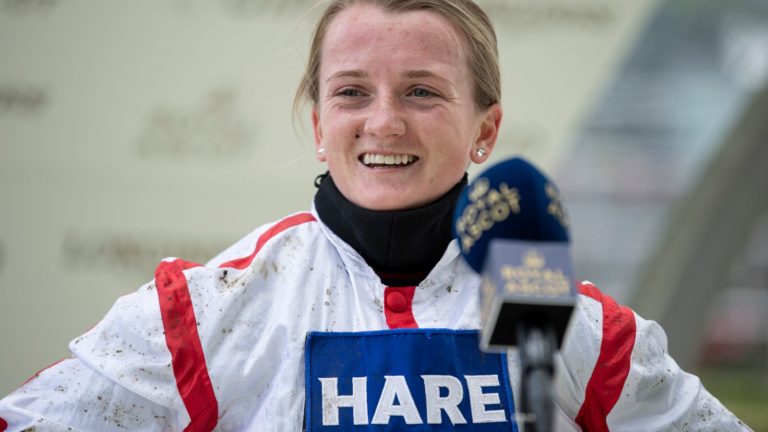
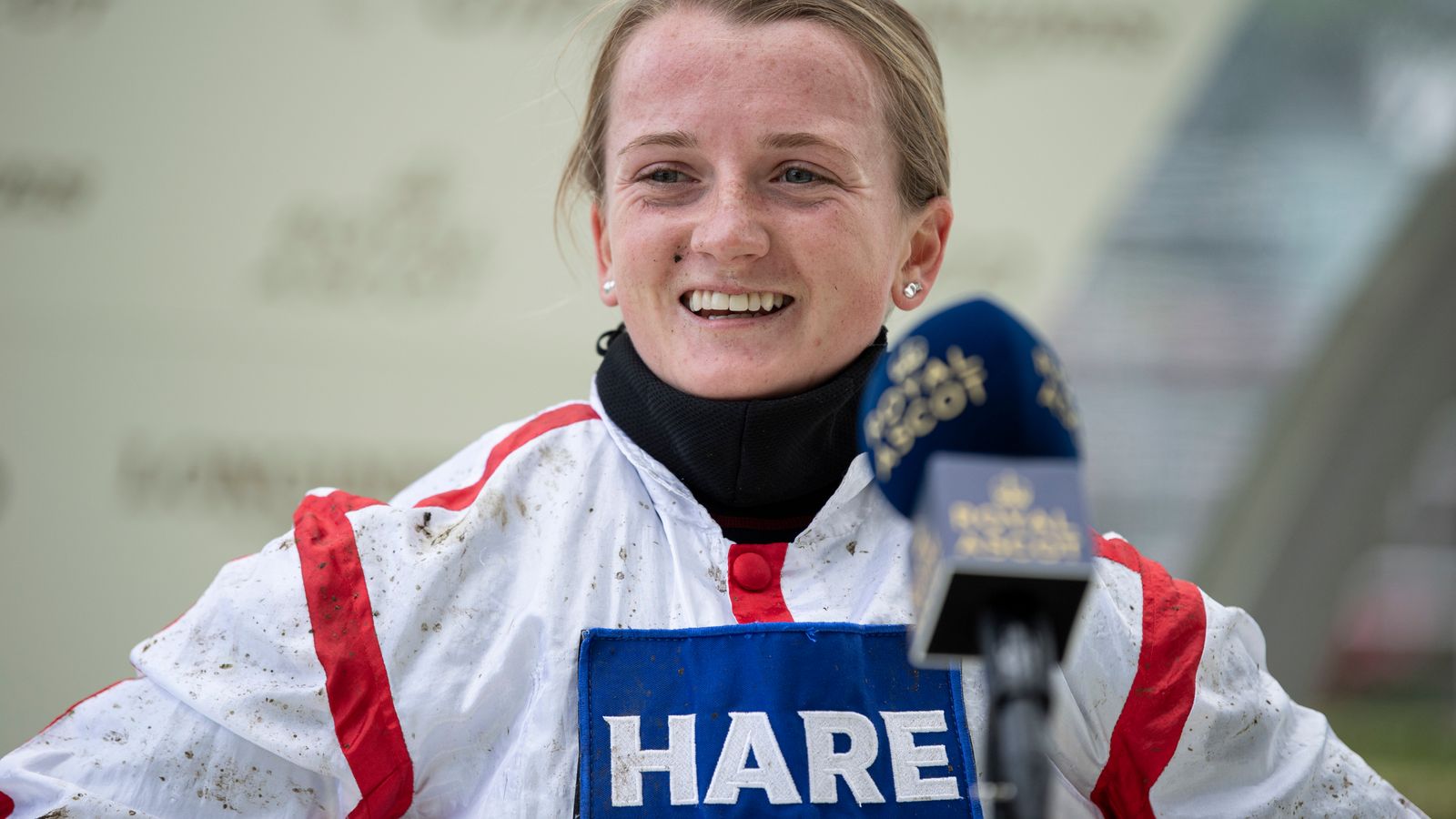
Female riders are looking to have more mounts than ever at Royal Ascot next week, with Hollie Doyle hoping her exploits, along with those of Hayley Turner, will inspire others.

Horse racing is one of the few sports in which men and women compete on level terms and in the past five years, the number of rides for female jockeys during Royal Ascot has increased dramatically from just one in 2016 to 27 last year.

Turner and Doyle are likely to lead the way in 2021 with Nicola Currie, Megan Nicholls and Saffie Osborne also set to be in demand during the five-day festival.

Doyle became the third woman in history to celebrate a win during the prestigious meeting alongside Gay Kelleway and Hayley Turner when winning the Duke of Edinburgh Stakes on Scarlet Dragon in 2020.

Turner also enjoyed a victory aboard Onassis in the Sandringham Stakes last year, becoming the first multiple-winning woman rider at Royal Ascot.

In 2019, she also won the Sandringham on Thanks Be to register a first victory for a female jockey at the Royal Meeting for 32 years since Kelleway. Turner is down to ride the Charlie Fellowes-trained Onassis in the Group Two Duke of Cambridge Stakes on Wednesday.

Doyle told Great British Racing: “It’s great to see that there have been a lot more women competing at Royal Ascot in recent years.

Latest Racing Stories

“We are just as good as men given the opportunity and I hope that other women continue to work hard and pursue their dreams of working in racing.

“Riding a winner at a festival like Royal Ascot is a dream come true. I was inspired by Hayley and hope now I can inspire young people too.”

Nicholls, daughter of 12-time champion jumps trainer Paul Nicholls, said: “It’s great to have seen Hayley and Hollie enjoy success at Royal Ascot over the last two years and I hope that this inspires other young people to pursue a career in racing.

“There are more and more opportunities for women in racing and their (Hayley and Hollie) success proves that.”

UK hosts world’s first LGBTQ+ cricket match – News24

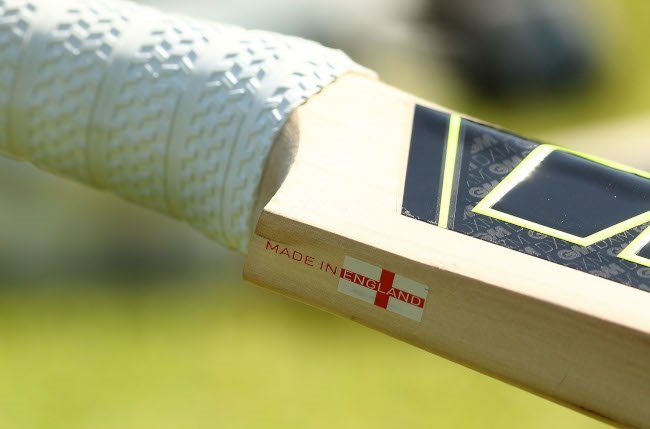
Cricket bat (Photo by Ryan Pierse/Getty Images)

Cricket bat (Photo by Ryan Pierse/Getty Images)

History was made on Sunday in a quiet corner of Birmingham, central England, as the world’s first match was played between two LGBTQ+ cricket teams.

Hosts Birmingham Unicorns were founded in March and contested just their second fixture against London-based Graces Cricket Club — England’s only other inclusive side.

The players received commemorative caps and posed for a group photo, while spectators enjoyed picnics and chilled drinks on a balmy afternoon.

“It’s more than just a game — it’s a statement,” Graces captain Stuart Anthony, 43, told AFP.

“If you’re into cricket, there’s a place for you. It doesn’t matter if you’re different — we have a home.”

Unicorns skipper Lachlan Smith, 45, added: “It’s a celebration of inclusion, demonstrating that LGBTQ people can have a place in cricket.

“There are lots of LGBTQ players who aren’t out in their clubs and wanted to play with us because that appeals to them.”

Smith initially sought advice from Graces about founding an inclusive team and both realised that playing each other would be a historic opportunity.

Governing body the England and Wales Cricket Board (ECB) and county team Warwickshire have supported them, as coronavirus restrictions are relaxed, allowing the match to go ahead.

Australia-born Smith grew up with cricket but later questioned its compatibility with his sexual orientation.

After 15 years away from the game, he needed two years to feel able to come out at his current club, while finding an LGBTQ-inclusive team in 2009 rekindled Anthony’s love for cricket after he became disenchanted.

“You aren’t going to be forever pilloried and feel bad. People will help on that journey through this sport we share and love,” Anthony said.

“There’s space for everybody to be themselves. That safe space is marvellous — we learn from it and share along the way.”

The ECB has supported the LGBTQ community in recent years through the Rainbow Laces and Rainbow Stumps campaigns.

Yet few professional cricketers have come out and other sports like football and rugby have arguably done more to promote LGBTQ visibility.

Graces became England’s first LGBTQ+ team in 1996 but it has taken 25 years for a second to come to the wicket — and arrange Sunday’s fixture at Weoley Hill Cricket Club.

Smith thinks a lack of role models and the expenses involved in cricket explain the lag and suggests inclusivity charters at recreational level could solve the problem.

“There’s got to be space for more inclusive clubs. It shouldn’t have taken 25 years,” he said.

“I don’t think cricket has taken seriously the whole idea of inclusivity around sexuality until the last three to five years — we shouldn’t be complacent.”

Anthony believes cricket has “a long way to go” to become more inclusive but thinks a younger generation will be more accepting of LGBTQ+ players.

National LGBT charity Stonewall welcomed the ECB’s support for inclusion but stressed that wider attitudes needed to change to achieve equality.

Director of programmes Liz Ward said: “Initiatives like this game bring us closer to the day where everyone, from players to fans, are able to be themselves on and off the pitch.

“Tackling anti-LGBT+ attitudes and behaviours cannot and must not rest on the shoulders of LGBT+ athletes alone.”

England Test captain Joe Root received praise after telling West Indies bowler Shannon Gabriel “there’s nothing wrong with being gay”, following Gabriel’s alleged homophobic remarks during a match in 2019.

“The more players, fans, clubs and organisations stand up for equality, the sooner we bat discrimination out and make sport everyone’s game,” Ward added.

ECB chief executive Tom Harrison praised both teams’ efforts as English cricket tries to become more accessible.

“I’m really excited about the game of cricket coming together to break down barriers and become more inclusive,” he said.

Letters to editor: Pride Month declaration and science – Record Searchlight

Pride Month declaration is a step forward for Shasta County 

At a recent Board of Supervisors’ meeting, the board voted 3-2 to proclaim June as Pride Month in our community. I applaud these efforts to show support for our LGBTQ members. These types of community support are important to the health of a community. The No. 2 cause of death among those 10-24 is suicide, and LGBTQ youth are almost five times as likely to attempt suicide than heterosexual youth. One way that we can have a dramatic change to this statistic is to be one accepting adult. It costs nothing and has zero to do with politics. Our love and light could literally save someone’s life. Imagine what power an entire community could have.  While I would have preferred this proclamation to be carried out with a unanimous vote, many voices were heard and show that there is much more than one accepting adult in Shasta County. 

— Erin Salazar, Redding 

Financial incentives to prevent COVID-19 is absurd 

It’s been 15 months of the CDC and the scientists telling us to wear masks and social distance. You are either going to protect yourself and others or you’re not. I think we have said it enough times that we can assume everyone has made up their mind by now. It is absurd that we have to give financial incentives to get people to protect their own health.

— Miles Langley, Redding 

Emotion uncalled for in Gay Pride Month debate 

Regarding the remarks Lee Macey made after the Board of Supervisor’s meeting on declaring June to be Gay Pride Month in Redding: She felt “teary” and uncomfortable and thought that there were negative feelings during the discussion. From what I read on the comments by Supervisors Jones and Baugh, I don’t see anything negative about their positions as they explained the reasoning behind their votes. Also, I don’t follow Mr. Moty’s statement that the proclamation is “being fair to all people.” We have to realize that setting aside a month to proclaim one group’s existence versus any other group in town is perhaps not what the board’s job is. We may have a large LGBTQ community here in Redding. I think that’s great. We may also have a large NRA members’ group in Redding. That’s fine too. Shall we carve out a month for them? Remember, both groups have been attacked by people who are against them. At any rate, getting emotional at a board meeting is probably nothing new. However, when Don Yost and Macey brought this before the board they should have been prepared to hear some frank discussion on both sides of the issue, and that is just fine also.

— Marsha Collins, Redding

Science and religion need not be mutually exclusive 

Recently, with COVID-19 vaccines in the news, people have begun to wonder about the validity of science. Many think religion and science cannot co-exist. Many think one cannot believe in science and still be a person of faith. But in Islam, there is no conflict. The Quran contains scientific knowledge. For example, that all life consists of water. And that the universe was formed by a “closed up mass that We opened out (21:31). In other words, the Big Bang. Science is knowledge based on a systematic study. The Bible talks about the importance of knowledge, as well, and states “When wisdom enters your heart and knowledge becomes pleasant to y our soul (Proverbs 2:10). God put in motion the forces, the science, that led to the foundation of our universe. Science occurs within divine providence. God led us to the science which has created medicines for diseases. God created the principles of science which led to the COVID-19 vaccine. We can see that religion and science don’t have to be at loggerheads. Getting the vaccine is like accepting a gift from God.

— Nusrat Kathleen Aziz, Redding 

Pride Month declaration was right thing to do 

I’m so grateful to the three members of our County Board of Supervisors — Chimenti, Moty, and Rickert — who stood up this week for the true embodiment of our Constitution through their action proclaiming Pride Month in Shasta County. While June is widely recognized as Pride Month in our country, it is especially important that we recognize it here: those who are considered “outside the norm” continue to experience exclusion and hate. I live close to the property where Gary Matson and Winfield Mowder were brutally murdered because of their sexuality. Every time I pass that house I think of that crime, and the loss of two precious lives. These lives were taken by two young people whose “Christian” identity taught them to hate. Confronting our past honestly through recognition of continued inequity is the first step toward healing. Big thanks also to VIVA Downtown, Redding Chamber, and Shasta County Arts Council for your help in getting the flag painted downtown: your partnership in our city/county looking forward is recognized and valued. Our three Supervisors and community partners are paving the way forward in creating a community that truly cares for one another, embraces the stranger, and –yes – grows economically. 

— Elizabeth Betancourt, Anderson 

No Mirage, Palm Springs Is a Queer Paradise – TravelPulse

0

When I think of Palm Springs, I picture iconic Hollywood stars of yesteryear retreating to their homes or favorite spots there—Frank Sinatra, Lucille Ball, Elizabeth Taylor, Zsa Zsa Gabor and the like. It’s almost an extension of Los Angeles, right? In fact, the gorgeous Coachella Valley became what it was partially because it wasn’t L.A. Many studio contracts back in the day stipulated that stars had to remain with a 100-mile radius of the studios. And Palm Springs, almost exactly 100 miles due east, was a perfect getaway.

Today, the area is well known as a playground for LGBTQ travelers, and especially as a popular retirement spot for gay couples. Visitors will find roughly a dozen gay men’s resorts, each modestly sized and with different vibes and price points. The city really is a queer nirvana, with its incredible diversity of mid-century modern architecture, endless shopping, restaurants and galleries and a bevy of popular nightspots.

MORE LGBTQ

Lodging Options

The Santiago Resort, less than a mile south of the city center, is a blissful getaway with unbelievable views of the mountains. Although located in a neighborhood, the resort’s all-encompassing two-story hedges afford a sense of privacy and exclusivity. We almost felt like movie stars ourselves while lounging at the pool at this clothing-optional gay men’s resort. Rooms are well-appointed and tasteful, and the food is superb, as well. A basket of free snacks is provided in each room, and a 24-hour cantina offers free beverages—from soft drinks to bottled water to a fancy coffee machine.

Breakfast here is a higher-end continental style, with plenty of offerings, from sinful to healthy. Both it and lunch are included; simply text your order (which comes from a local sandwich shop) to the front desk, and it magically appears at the appointed time. We enjoyed everything we tried here. The vibe at Santiago isn’t sexually charged like at some resorts we’ve been to in other cities; instead, it’s relaxed, fun and luxe.

One of the newer lodging options is the Margaritaville Resort Palm Springs, which is built around two extensive, resort-style pools, which were always humming with activity. Although this may sound like an adult-focused party property, we found plenty of families here, too. Most of the kids seemed to congregate at the smaller of the two pool decks, but both were a constant source of fun.

Margaritaville Resort Palm Springs
The main pool deck at the Margaritaville Resort Palm Springs. c

Our suite at Margaritaville was incredibly spacious and featured a clean, bright beachy vibe with some fun pops of color. The St. Somewhere Spa and connected Fins Up! Fitness Center were first class and include everything you need to get sweaty—or relax and indulge.

Speaking of indulging, we also sampled the comfortable and stylish INNdulge, another gay men’s resort, located in the Warm Springs part of town. INNdulge features a fun mid-century modern aesthetic, and the rooms include a nice kitchenette, helpful for longer stays. Our room had a great color palette and was spacious, with a large bathroom.

Breakfast is included here, and the large courtyard features sculptures and a sizable pool and hot tub. During our stay, a visiting group occasionally conducted naked yoga sessions in the courtyard, which made our poolside relaxing a unique experience, but one we didn’t mind! Downtown restaurants are a very short drive away, or even walkable during the more moderate temperature seasons.

Get Outside!

Palm Springs and the surrounding areas have a breathtaking variety of hiking and outdoor activities to partake in. We climbed the South Lykken Trailhead to the Simonetta Kennett vista point, which afforded a panoramic view of much of the city. We also drove to nearby Joshua Tree National Park, which has unbelievable rock formations and the fascinating namesake succulents.

Palm Canyon trail
The Palm Canyon trail within the Indian Canyons land is a lush oasis in between dry mountain peaks. (photo by Paul Heney)

Another particularly memorable experience was the Palm Canyon trail within the Indian Canyons land; admission to the whole area is $9 per person, and well worth it. Hiking through the lush palm-dotted canyon floor was magical and made me realize this was a real-life oasis. You can hike back a longer—and tougher—and hotter—parallel trail higher up the canyon to appreciate the oasis from above.

Lastly, don’t miss the famous Palm Springs Aerial Tramway, which ascends to 8,500 feet up San Jacinto Peak. There are numerous trails at the top, where the temperature is noticeably cooler than on the valley floor. There are breathtaking views at nearly every turn, and a restaurant at the mountaintop station allows you to sit for a while and just take it all in.

Palm Springs Aerial Tramway
The view from the top of the Palm Springs Aerial Tramway encompasses much of the region. (photo by Paul Heney)

More To See and Do

We did some pampering, too, while in town. Palm Springs Fine Men’s Salon, right near downtown, is a fantastic facility that offers everything from hair styling to coloring services, skin treatments, massages and more. We opted for a couples’ mani/pedi and were greeted with champagne upon arrival. The 90 minutes of relaxation flew by as we melted into our massage chairs, and we left feeling confident that we’d look the part of movie stars the next morning at the pool.

Given the history here, you can do some fun self-guided driving tours; pick up a map at the visitor’s center (which used to be the coolest gas station ever). We loved the tour of former celebrity homes and another of the city’s architectural treasures, of which there are many. Even wandering through the Uptown Design District can pass an entire afternoon, with so many wonderful and unique shops.

Palm Springs is a huge foodie town, too, and there’s just too much to even mention here. But suffice it to say that you can’t go wrong at places like Kaiser Grille, Zin American Bistro, Eight4Nine, Trio, Grand Central, LuLu California Bistro, Las Casuelas Terraza, Tommy Bahama’s Marlin Bar, MidMod Café or Roly China Fusion. More to come on this in a future article!

There’s a whole collection of LGBTQ bars and shops along a block of E. Arenas Road near the center of downtown—increasingly a rarity these days—and the district is usually hopping on evenings. COVID still has forced restrictions on seating arrangements, but hopefully that will change soon. The Gay Mart and Bear Wear shops were fun to stroll through, and there’s a club for almost any demographic or vibe.

All in all, I can’t believe it took us this long to discover Palm Springs—and we’re already planning our return to this queer paradise.

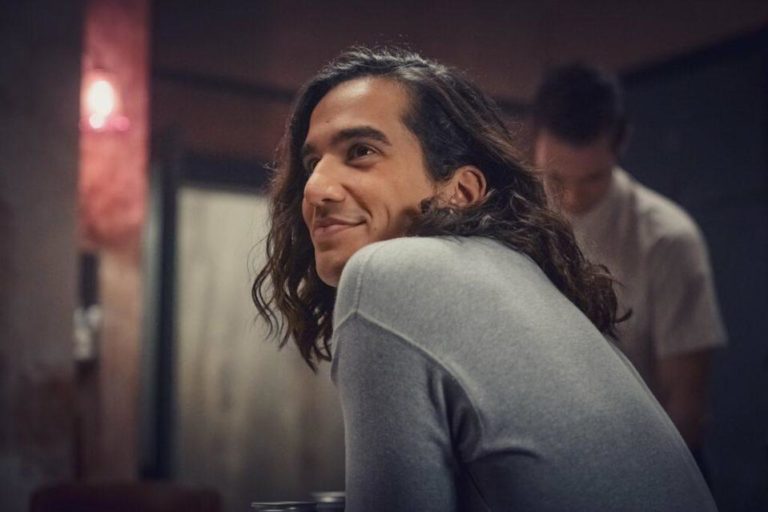
David Archuleta reveals he previously came out as gay. Now he’s “still trying to figure things out.” – LGBTQ Nation

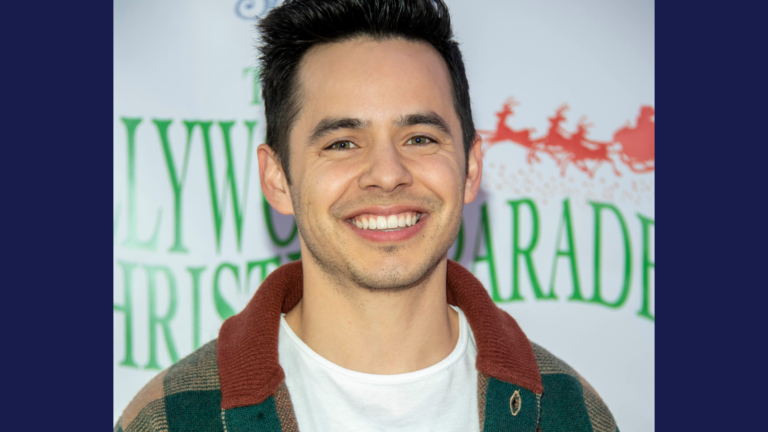
Singer-songwriter and former American Idol contestant David Archuleta has revealed that he came out as gay in 2014 to his family, but since has become unsure of how to label his sexuality since he “had similar feelings for both genders.” He also said that he has considered himself asexual because he does not have the urge to have sex, “which people call asexual.” The musician, who originates from Murray, Utah, and is Mormon, said that he wants people to have compassion for “those who are LGBTQIA+… like myself.”

“I don’t feel comfortable sharing it, but felt I needed to to bring more awareness to people in my same situation and let you know you’re not alone. You can be part of the LGBTQIA+ community and still believe in God and His gospel plan,” he said in Notes App posts to social media.

Related: Trans teen trying out for “American Idol” wows America… even Gene Simmons

Archuleta posted four screenshot of written messages from his Notes app, explaining his fluid sexuality and his struggle to understand it through his religious beliefs.

“I like to keep to myself but also thought this was important to share because I know so many other people from religious upbringings feel the same way. I’ve been open to myself and my close family for some years now that I am not sure about my own sexuality.”

Archuleta, currently 30 years old, was born in Miami before being raised in Utah and starting to sing at competitions at the age of 10. At 12 years old, he competed in and ultimately finished as the Junior Vocal Champion on Star Search 2 in 2003.

The teen became a worldwide sensation when he competed in the seventh season of American Idol in 2008, ultimately finishing second to David Cook. Joining  debut single “Crush” became an international, top-selling hit upon its release in August 2008. He would win six Teen Choice Awards, including one for “Best Tour” for opening up for then-Disney star and fellow out entertainer Demi Lovato, by the time he was 20.

In 2011, Archuleta announced he would take a hiatus as an entertainer to become a full-time missionary for the Church of Jesus Christ of Latter-Day Saints, although Begin, a cover album he recorded prior, was released in August 2012. He also recorded a miniseries and released  an album exclusive to the Philippines, Forevermore, in March 2012.

He began his hiatus around the end of 2012 and ended it in 2014. He has since released eight studio albums in total and authored a children’s book.

In his statement, Archuleta explained in detail how he has been unsure of his sexual orientation, although he’s had sexual feelings for one or multiple genders. He does not say if he’s had same-gender romantic inclinations or any same-gender relationships.

“I came out in 2014 as gay to my family. But then I learned I somewhat have similar feelings for both men and women so identify as being bisexual. I’m still trying to figure things out as I also have learned I don’t have as many sexual desires and urges as most people,” he wrote with a skull emoji, “which works i guess because I have a commitment to save myself for marriage,” adding the laughing emoji, “which people call asexual when they don’t experience sexual urges.”

“There are people experiencing the same feelings of being LGBTQIA+, (i know that’s a lot of letters that a lot of people don’t understand, but there are a lot of unique experiences people feel and live that make them feel isolated and alone that are represented) a lot of them wrestling to follow their beliefs that are so important to them as I have.”

He continues, “Idk what to make of it and I don’t have all the answers. I just invite you to please consider making room to be more understanding and compassionate to those who are LGBTQIA+, and those who are a part of that community and trying to find that balance with their faith which also is a huge part of their identity like myself.

“I think we can do better as people of faith and Christians, including Latter-day Saints, to listen more to the wrestle between being LGBTQIA+ and a person of faith. There are more than you may realize going through that wrestle after all the misunderstandings that come with it. I don’t think it should come down to feeling you have to accept one or the other.”

“Again I don’t feel comfortable sharing it, but felt I needed to to bring more awareness to people in my same situation and let you know you’re not alone,” he wrote, “I’ve tried for almost 20 years to try and change myself until I realized God made me how I am for a purpose. And instead of hating what I have considered wrong I need to see why God loved me for who I am and that it’s not just sexuality.”

He concludes, “Even if you’re left with so many more questions with faith and sexuality like me I believe being open to both questions and to faith is how we receive answers. God blesses those who ask. So let’s keep asking and seeking, and having compassion and patience. Thank you for listening.”

Archuleta received many messages of love and appreciation from across the internet for coming out about his sexuality.

“Love you man, and so proud of who you are,” said Cook, who became the American Idol winner ahead of Archuleta.

The ‘queer aesthetic’ is deeper than rainbow merch – Mashable

0

Mashable is celebrating Pride Month by exploring the modern LGBTQ world, from the people who make up the community to the spaces where they congregate, both online and off.


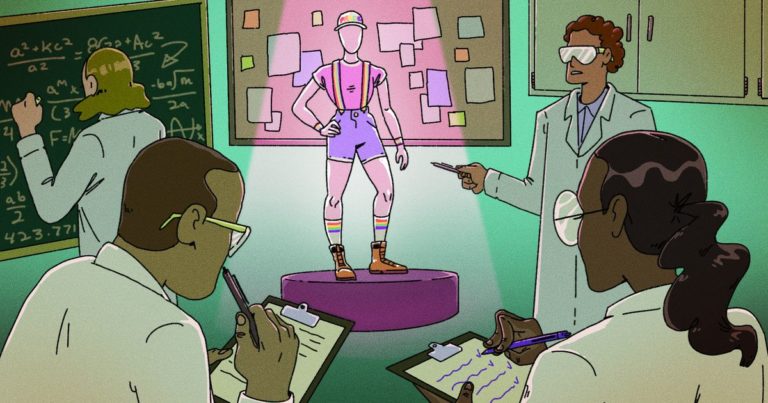
As well-intentioned as Pride merchandise may be, mullets and cuffed pants capture the “queer aesthetic” far better than anything dripping in rainbow logos. But that doesn’t mean they’re safe from rainbow capitalism. 

In a TikTok posted in April, Giulia Beaudoin asked viewers why a mirror selfie of someone with green hair, wire rimmed glasses, and black high-top Converse is “so much more gay” than a photo of herself dressed in rainbow suspenders and a hat emblazoned with “PRIDE.” 

“Yes, this was me two years ago, but this should be gay,” Beaudoin posited. “This should be so much more gay than the other picture, but it’s not. It’s just not.” 

One comment likened the first image to attending a college and the second to wearing the college’s merchandise. Another described the first image as an “authentic LGBTQ person in their full self expression” but the second as “giving Target Pride section.” Other comments described the second image as “commercialized queer,” “like a tourist,” and “how straight people dress when they’re trying to be supportive at Pride.”

Monetizing rainbows 

Rainbows have been a symbol of LGBTQ rights movement since the first iteration of the rainbow flag was flown at the San Francisco Gay Freedom Pride Parade in 1978. The United States has made significant strides in ensuring LGBTQ rights since, from the 2015 federal legalization of same-sex marriage to the Equality Act passed by the House of Representatives this year, which would explicitly shield individuals from discrimination based on sexual orientation. (The legislation still needs to pass through the Senate, provided it isn’t stymied by Republicans.) 

But since the first rainbow flags flew in the 70s, Pride celebrations — and the abundant rainbow iconography that accompany them — have come to be associated with commercialization, not liberation. Gen Z is the queerest generation yet; a Gallup poll published this year concludes that nearly one in six of respondents age 18 to 23 identify as queer or transgender. On social media, though, LGBTQ people are reluctant to embrace rainbow merchandise with the same vigor that companies seem to produce them. 

Target’s Pride merch, for example, was the laughingstock of TikTok for weeks. The company’s garish apparel and LGBTQ flag home decor sparked a TikTok trend of criticizing other corporations’ Pride wares. This generation of young adults may be the most openly LGBTQ, but many are disillusioned by “rainbow capitalism,” a phrase to describe the way LGBTQ liberation is monetized and used for social capital. Alex Abad-Santos described Pride as a “branded holiday” in a 2018 Vox piece, writing that the annual practice of pumping out rainbow products and donating a fraction of the proceeds “creates a context of so-called slacktivism, giving brands and consumers alike a low-effort way to support social and political causes.” 

In other words, it’s lazy.

Fashion and identity are linked

Beaudoin, who is a student, does not dress in rainbow suspenders or paint rainbow hearts onto her cheeks to celebrate her sexuality anymore. Instead, she told Mashable via Instagram DM, she expresses herself by dressing in the “queer aesthetic,” trading Pride merch for flared jeans and loudly printed coats. She added that most of her straight classmates opt for more mainstream clothing choices like sweatshirts and leggings, but she never goes to school “in a basic outfit.”

“Even though that’s fine, I like to stand out!” Beaudoin said. “I think this has to do with the fact that I’ve gotten comfortable with my sexuality because it allowed me to take the same principles I learned and apply them to different areas. I learned a lot about self-expression while figuring out my sexuality and now I use that with my fashion!” 

“Those things weren’t designed for gay people.” 

She noted that while rainbow merchandise “can show that someone is LGBTQ or an ally,” other ways of expressing gender and identity appear more authentic, since “those things weren’t designed for gay people.” 

The “queer aesthetic” is less of a defined style and more of a philosophy of presenting oneself; it proudly veers from conventional trends in favor of ones that subvert social niceties. The aesthetic ranges from the flamboyant to the austere, but regardless of visual presentation, each article of clothing or accessory is worn with intention. Styling yourself through a queer lens is a subtle signal to other queer people that you are part of their community. 

Sonny Oram, a queer fashion activist and founder of the fashion incubator Qwear, noted that most alternative fashion originated in queer communities first, particularly in Black trans circles. 

“Fashion is just such an important part of who we are. That’s the first time you tell someone, ‘I’m not straight.”

“Fashion is just such an important part of who we are,” Oram told Mashable in a phone call. “That’s the first time you tell someone, ‘I’m not straight.’ I think when we know that the mainstream society rejects us, or doesn’t welcome us, we kind of naturally gravitate towards style worn by people who will accept us.”

Oram added that gravitating toward certain styles that encompass the amorphous “queer aesthetic” can be subconscious, which it’s common for young people to dress a certain way before coming to terms with their own sexuality or gender identity. 

“I think a lot of it happens on a subconscious level sometimes, like, ‘Oh I don’t feel welcome there, so I’m going to wear this,” Oram continued. “Because this makes me feel comfortable without even necessarily knowing that you’re queer.” 

Fashion as a secret code

Using covert ways to signal belonging to the LGBTQ community is woven into queer history. Coming out or being outed non-consensually is a risk today, but was even more dangerous decades ago. LGBTQ people relied on using coded phrases to come out to each other. Terms like “family,” “a club member,” or “a friend of Dorothy’s” were used to describe themselves or another person as gay. The word “gay” itself was a one of these code words, and was originally co-opted from a phrase female sex workers used to refer to each other. The gay rights movement “outed” the word following the rebellion at the Stonewall Inn in 1969, University of California, Los Angeles sociology professor Abigail Saguy wrote in the Conversation. Gay men employed the “handkerchief code” to signal sexual preferences, and the beloved caribiner is a universal visual cue for lesbians

Dr. Sharon P. Holland, the chair of the American Studies department at the University of North Carolina at Chapel Hill, researches feminist, queer, and critical race theory that draws from her experience as a Black gender non-conforming woman. The history of flagging, she said, still manifests in the way queer people present themselves today. 

“Back in the day when there were pubs and bars that were on the down low, a color suggested…that you were a top or bottom. You could more easily partner with people,” Holland told Mashable during a phone call. and added that though less explicit, the way people dress now can indicate that they’re LGBTQ. “Gender and sexuality has become a style for us.”

Fashion, in addition to being a gender-affirming visual presentation or expression of identity, is just as much of a coded flag. Of course, nobody should feel pressured to present as “visibly queer.” Some are uncomfortable with diverting from the mainstream, and for many, it’s a matter of safety. The “queer aesthetic” itself, which is largely embraced as a more authentic representation of LGBTQ communities than the rainbow flag, is subject to commodification as well. Cuffed jeans and oversized earrings may have been more “queer” than a rainbow “Girlboss” shirt, but those cues can still be monetized. 

In an essay for the magazine Off-Kilter, Leyla Moy criticized the “queer aesthetic” norms of women in cuffed jeans and men in floral suits as “palatable, slight variations on trends that do represent increasing acceptance of visible gayness and gender noncomformity, but only to the extent that it minimally challenges heterosexual expectations.” 

Harry Styles, for example, is heralded as a queer icon for walking red carpets in flamboyant, gender nonconforming outfits. He famously enraged conservatives by wearing a Gucci gown and jacket on his December 2020 Vogue cover. TikTok star Noah Beck posed in fishnets and heavy black eyeliner for VMAN in March this year. Promotional content for Darren Criss’ recent single “I Can’t Dance” features the artist in heeled black boots and an electric green coat. 

The rise in prominent public figures testing the boundaries of gender norms provoked discourse over who can present themselves this way. Critics accused Styles, Beck, and Criss of “queerbaiting,” a marketing tactic that leads fans into falsely believing celebrities or fictional characters are LGBTQ because of the way they dress or interact with members of the same sex. Like rainbow Pride merch, it is often a disingenuous appeal to queer communities that doesn’t actually involve doing anything to represent or uplift them. 

Praising cishet celebrities whose outfits diverge from the heteronormative — or in the case of pop stars like Taylor Swift and Ariana Grande, make veiled references to same-sex relationships — is a hollow attempt at LGBTQ progress if those celebrities don’t identify as queer. That’s not a reason to write them off entirely, though. Rupi, Oram’s partner and fashion director at Qwear, pointed out that the fashion industry “has become more comfortable with mixing gendered items” in the last decade, and that unisex styles are more prominent than before thanks to a cycle of public figures normalizing crossing the binary. It would be unfair to praise Styles and other cishet celebrities as trailblazers, but their willingness to play with traditionally gendered clothing makes it safer for LGBTQ people to publicly exist. 

“Queerness in general has become more accepted by the mainstream and I think that fashion always came from queerness.”

“I just think it’s not cool to oppose anybody who wants to dress in any way. I feel like opposing anybody’s form of dress can be problematic,” Rupi said, adding that fans could appreciate Styles’ outfits while still honoring the activists who made it possible. “Queerness in general has become more accepted by the mainstream and I think that fashion always came from queerness. It was really the Black trans women who started all these styles.”

Subverting the norm

The “queer aesthetic” may not be a personal style, but it is a subversion of heterosexual norms. 

Holland remembers using kissing at the height of the AIDS epidemic to signal a distinct otherness. Regardless of gender or sexuality, Holland told Mashable, her circle of cis gay men, cis lesbian women, trans friends, and straight allies would greet each other by kissing on the lips. The beauty in it, she said, was that it made “straight people around us very uncomfortable” because “they couldn’t tell who we were at that point, and who we were to one another.” 

“Even though it was unsafe for us to do some things in public, at the same time, we engaged in activities that were public facing that mixed things up,” Holland recalled over the phone. “We’d all be together on our way to the club, maybe going to a house party, meeting up for coffee, and we’d engage in this activity of kissing one another.”

Holland said that onlookers were confused, as the perception of LGBTQ people was even more binary than it is today. The public displays of affection subverted the notion, and clearly showed visibly queer people engaging in “straight” activity. 

“There was safety in that they knew we were probably not straight,” Holland continued. 

And although the country is much safer for queer people to openly exist in today, LGBTQ rights are threatened every day — Black trans women started the LGBTQ liberation movement, but Black trans women today are disproportionately targeted by hate crimes. Though queerbaiting claims and arguments against the commodification of the “queer aesthetic” are valid, Holland marvels at the fact that her children and their friends can safely experiment with their style because subverting the heteronormative is so normalized. 

“As someone in the older generation…I tend to give a wide berth to our youth while they’re figuring themselves out because I think that is how we’re going to have the healthiest [understanding of] sexuality for everyone,” Holland said. “We just let people do their thing.”
Deadly attacks on Black trans women are going up. This grieving mom is fighting back – WRCB-TV

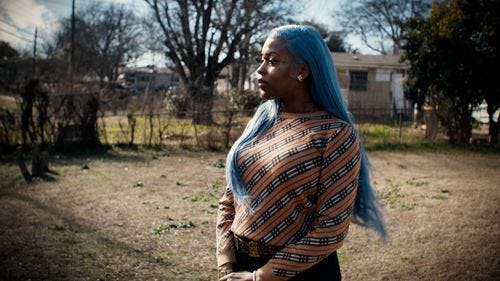
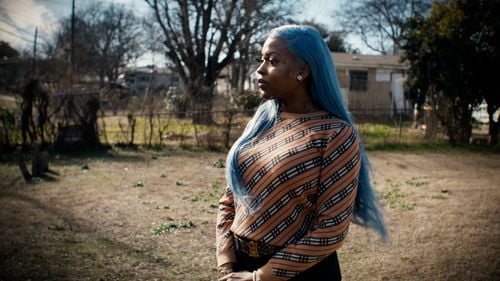
“This is very real for people, because if you are afraid of leaving your home at night, or walking home, or walking to the store, you’re really not free,” he told CNN. “If you are transgender, if you’re Black or Brown, because most of these deaths are Black or Brown transgender and gender nonconforming people, you are not able to exercise your freedom in this country.”

Kamala Harris is the first sitting VP to have marched in an LGBTQ pride parade – msnNOW


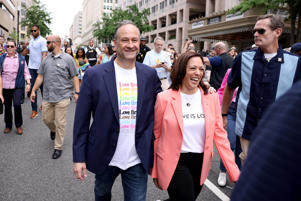
Kamala Harris et al. standing in front of a crowd posing for the camera: Vice President Kamala Harris and husband Doug Emhoff join marchers for the Capital Pride Parade on June 12, 2021 in Washington, DC. Photo by Anna Moneymaker/Getty Images

© Photo by Anna Moneymaker/Getty Images Vice President Kamala Harris and husband Doug Emhoff join marchers for the Capital Pride Parade on June 12, 2021 in Washington, DC. Photo by Anna Moneymaker/Getty Images

  • Vice President Kamala Harris participated in a Pride parade in Washington, DC, on Saturday.
  • She and second gentleman Doug Emhoff greeted marchers and wore “love is love” and “love first” shirts.
  • Harris called for the Senate to pass the Equality Act, which passed in the House earlier this year.
  • See more stories on Insider’s business page.

Kamala Harris on Saturday became the first sitting vice president to have marched in a pride parade.

She and husband Doug Emhoff attended the Capital Pride Walk in Washington, DC. Harris wore a shirt with the slogan “love is love” imprinted on it, while Emhoff’s said “love first” 11 times in multiple colors, resembling a rainbow.

“Happy Pride,” Harris told other marchers, according to WRC-TV, an affiliate of NBC News.

She also called for the government to pass the Equality Act, which would ensure federal protections for LGBT people. So far, the House has passed the Equality Act, but it’s unclear whether the Senate will take it up. Harris also issued words of support for trans people.

Video: Vice President Kamala Harris joins Pride parade in Washington D.C. (Daily Mail)

Vice President Kamala Harris joins Pride parade in Washington D.C.

What to watch next

UP NEXT

UP NEXT

“We need to make sure that our transgender community and our youth are all protected. We need, still, protections around employment and housing,” Harris said, according to WRC-TV. “There is so much more work to do, and I know we are committed.”

In numerous remarks, the Biden-Harris administration has indicated the LGBT community has its full government support.

Earlier in June, for example, in recognition of pride, the White House said “no one should face discrimination or harassment because of who they are or whom they love.”

“The President has the back of LGBTQ+ people across the country and will continue fighting for full equality for every American – including through continuing to urge the U.S. Senate to pass the Equality Act and provide overdue civil rights protections to LGBTQ+ people and families across the country,” the White House statement continued.

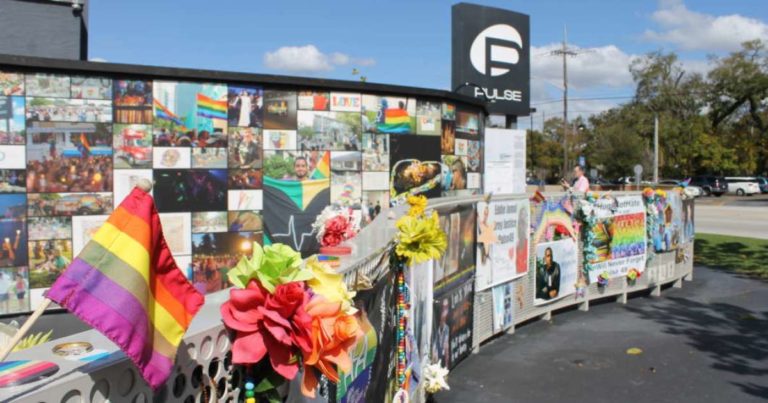
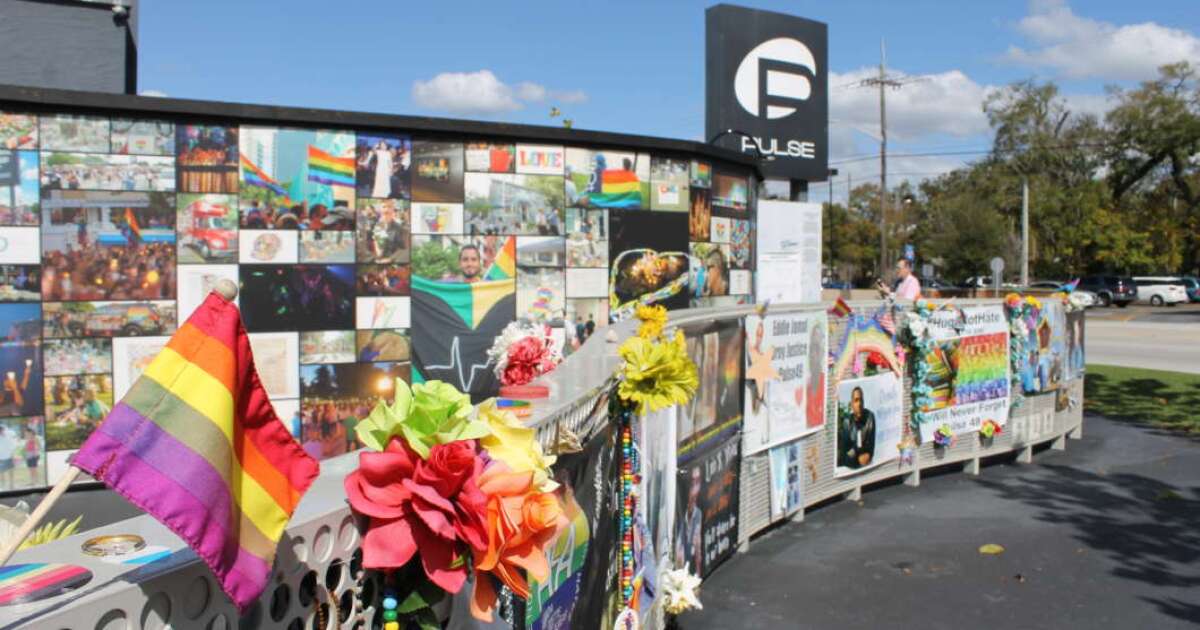
What’s Changed Since The Pulse Nightclub Shooting | WUSF Public Media – WUSF News

MICHEL MARTIN, HOST:

Like many cities, Orlando is adorned with rainbow flags and banners and lighting this June in a celebration of Pride Month, a month that recognizes the contributions of LGBTQ Americans to the history and life of this country. But this week, the city is also memorializing a tragedy.

Five years ago today, a gunman opened fire in Pulse nightclub, a gay club in Orlando, killing 49 people and wounding more than 50. It remains one of the deadliest mass shootings in U.S. history. It’s also the deadliest attack on a group of LGBTQ people. We have a remembrance this hour along with additional coverage on this network. But we wanted to start by asking if June 12, 2016, brought about change in any way.

We called two leaders in Orlando’s LGBTQ community for their thoughts about this. Representative Carlos Guillermo Smith is a member of the Florida House of Representatives from Orlando. He was elected in 2016 after the shooting and was the first openly LGBTQ Latinx lawmaker in Florida. He’s with us now. Representative Smith, thanks for being with us.

CARLOS GUILLERMO SMITH: Thank you for having me, Michel.

MARTIN: We also have with us George A. Wallace. He is executive director of LGBT+ Center Orlando. It’s a long-established community center with LGBT-specific services. Mr. Wallace, thank you so much for joining us as well.

GEORGE A WALLACE: Thank you. It’s my pleasure.

MARTIN: So, Representative Smith, if I could start with you, I understand you’d been to Pulse many times. And the night of the shooting was Latin night, and many of the victims were Latinx and other people of color. So I just wanted to start by asking, if you don’t mind – like, what does this day bring up for you?

SMITH: Well, it certainly brings up a lot of emotions and a lot of painful memories about this terrible tragedy five years ago that killed 49 mostly LGBTQ people of color. You said it in your intro. It was Latin night at Pulse when this mass shooting happened. And so there were so many individuals from the Hispanic and Latinx community who were directly impacted, who were killed. Half of those victims who were Hispanic were Puerto Rican. So there were so many communities that were really, really devastated by this. And five years later, I think it is important to reflect on what’s changed and what work we still have to do on so many fronts.

MARTIN: So, Mr. Wallace, I just wanted to – could you just broaden it out a little bit? And so what about the last five years? Has there been kind of a shape to that period for you that you could tell us about?

WALLACE: Five years ago, the city of Orlando shined bright following the tragedy. And we are a resilient community. There was an outpouring of love, not just here locally but from around the world. And I always preface pre-Pulse and post-Pulse because we are living in a different world. And five years later, we’re still healing. And in five years, we will still be healing. This is not something that just stopped.

MARTIN: And Representative Smith, you were already running for your seat in the Statehouse when the shooting happened. Did this change the way you thought about your campaign or what you were running for?

SMITH: It really solidified, you know, my commitment to advocating for fair and equal treatment of LGBTQ people and really committing to the issue of gun violence prevention. After Pulse, we certainly saw more love and acceptance for LGBTQ people here in Orlando. But then after his election, former President Trump banned transgender Americans from serving in the military. He rolled back a number of protections until last summer, the Supreme Court affirmed LGBTQ people are protected under the Civil Rights Act from discrimination in the workplace.

So there’s steps forward, and now we’re seeing backlash. Our governor just recently signed a bill banning trans students from playing in school sports. He vetoed critical funding for Pulse survivors. And the only way to ensure the pendulum swings back is to tell our stories, to be our authentic selves and to fight like hell.

MARTIN: George, what about you? And I want to go back to the funding that you mentioned, that earlier this month, Governor DeSantis vetoed – what was it? – a $150,000?

WALLACE: Yes, it was $150,000. And it was earmarked for mental health counseling and case management.

MARTIN: Well, how do you see what happened there? And how did you and other activists and civic leaders cope with that?

WALLACE: So I a hundred percent agree with Carlos. I saw it as an attack on our community. We asked him – why did you do this? And he said that he did not approve the funding because we don’t have a statewide impact, but we’re serving people from all over the state.

MARTIN: I know it’s kind of hard to sum these things up and kind of give a state of things, but how would you describe kind of the state of things? Do you think that would happened at Pulse has kind of – what difference do you think it’s made in your lives and in the lives of your community, you know, however you define it? So, George, do you want to start?

WALLACE: It’s hard. This is a hard week. And I just have to say that Orlando is such a resilient community. And I am thankful for the love and outpouring that the entire community, the state and the world is showing the LGBTQ brown and Black community here in Orlando.

MARTIN: And what about you, Representative Smith?

SMITH: Well, I can tell you what I’ve seen here on the ground in Orlando. Not only have we seen stronger solidarity with other minority communities after the attack at Pulse – you know, LGBTQ communities, Black Lives Matter, Boricuas, Muslims all working together to disarm hatred and bigotry – but we’ve also seen so many new queer Latinx activists, people of color who are emerging from the Pulse tragedy as powerful community leaders in their own accord. And I wouldn’t even say that they’re the future of the movement. They are the right now.

MARTIN: That was Orlando Representative Carlos Guillermo Smith. He was elected in 2016 after the shooting at Pulse nightclub. We also heard from George A. Wallace, executive director of LGBT+ Center Orlando. Thank you both so much for sharing some time with us today on this important day.

SMITH: Thank you, Michel.

WALLACE: Thank you.

MARTIN: Given the criticisms that came up in our interview, we thought it appropriate to reach out to Florida Governor Ron DeSantis for comment. A spokesperson responded with a statement. It reads, quote, “regarding the counseling program that serves Pulse survivors, that funding has never been dispersed as part of previous budgets,” end quote, adding that the governor’s most recent budget includes, quote, “an historic increase for community-based mental health services to ensure that all Floridians in need, including LGBTQ Floridians, are able to access vital support and resources,” end quote.

Regarding the Fairness in Women’s Sports Act, aka the transgender sports ban, the governor’s statement says that he is protecting women and girls from, quote, “the unfair treatment and discrimination that others have suffered in states that allow biological males to compete against biological females, unjustly putting outstanding women athletes at a disadvantage,” unquote.

The spokesperson added that Governor DeSantis recently signed a proclamation that observes June 12 as the Pulse Remembrance Day in Florida. Transcript provided by NPR, Copyright NPR.

It’s a Sin’s Nathanial Curtis weighs in on straight actors playing gay roles: ‘It has to be done with respect’ – Yahoo Eurosport UK

It’s a Sin star Nathaniel Curtis has said straight actors should only play gay characters if they’re willing to do it “with respect”.

The actor, who played Ash Mukherjee in the hit Channel 4 series, weighed in on the ongoing debate around whether straight actors should take on gay roles in an interview with Digital Spy.

Reflecting on the discrimination faced by the characters in It’s a Sin, Curtis said: “People who know what that’s really like are the ones to tell that story.”

He continued: “Not to say that, obviously, straight people can’t give beautiful performances. You think about Carol, and Cate Blanchett with Rooney Mara and Timothée Chalamet and Tom Hanks in Philadelphia. All these beautiful people.

“But I think it’s the respect. Even if you were to have straight people play these roles, it has to be done with respect.”

It’s a Sin star Nathaniel Curtis says double standards adversely affect queer actors

When asked how the film and television industry can improve on LGBT+ representation, Curtis said the “imbalance needs to be addressed”.

“Once that changes, then there will be more scope for other things to change. With the imbalance being: openly queer actors are not seen as equal to straight actors. They are not given the same opportunities. They are not given the same roles. They are not given the same positive publicity.

“You have a straight actor play a gay role, and throw them an Oscar. You have a gay actor play a straight role, and it’s like, ‘Who are they trying to kid?’”

Curtis blamed that double standard on the media and said there needs to be “equality” in the industry.

“But then there are lots of inequalities in the industry, unfortunately, which aren’t getting there.”

The actor went on to plead with writers to stop making a person’s sexuality their only character trait.

“Being queer is one of the least interesting things about me, in my opinion. Let’s stop seeing queer people as a separate species. They are an actor. That’s what they do.”

How the Anti-Abortion Movement Used the Progressive Playbook to Chip Away at Roe v. Wade – POLITICO

The Supreme Court is hugely important in these shifts, of course, but what’s often lost in the breathless coverage of the Court is that constitutional law does not simply emanate from the highest court in the land. Changes in society also percolate into the Court’s thinking. And even if abortion opponents do succeed in putting a stake through Roe, that won’t be the end of the story. Constitutional law can never be completely stable on matters of liberty and equality, on abortion or otherwise. A decision on Dobbs could speed the rollback of abortion rights across the country—but if abortion advocates heed the lessons of the campaign that got it here, it could just as easily trigger a backlash that ultimately writes abortion rights into black-letter law.

The long story of the fight against Roe is, in part, a strategy cobbled together from disparate ideas and approaches that once proved useful for abolitionists, civil rights activists and gay rights advocates.

Some of this connection is symbolic: Anti-abortion leaders have deliberately invoked the struggle for equal rights for Black people in a bid to rally wider political support for their own cause, portraying “the unborn” as a class of people with no other voice in American politics. (Dr. John Willke, the so-called “father of the pro-life movement,” even wrote a book called Abortion and Slavery: History Repeats.) In the aftermath of Roe, this appeal was an effort to lend legitimacy to a cause on which neither political party had firmed up a position. Conservative evangelicals, many of whom deeply opposed abortion, kept their distance from what they saw as a Catholic movement. Comparing their work to the clear moral good of abolitionism, however, made it easier for abortion foes to appeal to evangelicals, Mormons and other religious conservatives, helping to mainstream anti-abortion activism and open the door to a partnership with the Republican Party.

In a campaign to shift the scope of constitutional rights, marrying a social movement to formal power is always a critical step. Nineteenth-century anti-slavery activism and 20th- century anti-segregation efforts were grounded in churches and civic groups, but truly took off once their goals were incorporated into the reform agenda of a major political party. So too anti-abortion activism has been sustained by a potent union with the modern GOP.

In the 1980s, with Roe on the books and a constitutional amendment to ban abortion seemingly out of reach, abortion opponents rethought their approach to dismantling precedent, looking not to the 19th-century abolitionist movement but to the 20th-century civil-rights lawyers who took on school segregation. Groups like Americans United for Life brought a series of cases designed to chip away at Roe and make it seem increasingly incoherent.

While anti-abortion absolutists hoped for an outright ban (and focused on revising the text of the Constitution), other abortion foes increasingly proclaimed themselves to be incrementalists—an approach taken by lawyers like those in Thurgood Marshall’s NAACP, whose legal savvy led them to wait patiently for the right moment to strike.

Efforts by anti-abortion activists at the state and local level also reflect the use of a strategy that has already proved successful for gay rights advocates—one that focused on changing local laws, one step at a time, to make the values written into an earlier case appear to be out of step with contemporary constitutional law as well as public sentiment.

In 1986, gay rights suffered a setback when the Supreme Court decided Bowers v. Hardwick, rejecting the argument that liberty encompassed the right to engage in sexual activity between two people of the same sex. What followed was a concerted series of popular efforts to undermine that ruling. These took many forms, but one potent strategy entailed state and local organizing to decriminalize sex between consenting adults and to extend civil rights protections on the basis of sexual orientation.

In 2003, when the Court eventually overruled Bowers in Lawrence v. Texas, Justice Anthony Kennedy cited the repeal of sodomy laws and enactment of pro-equality laws as one reason why the logic of the earlier decision had “sustained serious erosion.” He also pointed to the fact that other legal rulings “contradict its central holding.” In other words, the social facts upon which precedent had been based were either wrong then or later proven incorrect. And he encouraged further use of out-of-court mobilization to erode precedent when he wrote that “As the Constitution endures, persons in every generation can invoke its principles in their own search for greater freedom.”

Anti-abortion forces have employed the exact same strategy by convincing legislatures to enact laws that reject the assumptions and values contained in Roe. In the 1980s, anti-abortion leaders focused on the idea of establishing “fetal personhood” as a national norm, pushing for fetal protection well outside the abortion context: in homicide laws, personal injury law, even child abuse law. These efforts proved remarkably successful: 38 states now treat an unborn child as a person in non-abortion homicide cases. Twenty-three states and the District of Columbia treat drug use by pregnant people as child abuse, lending support to arguments about the dignity of unborn life.

In the 1990s, anti-abortion leaders took a new tack, setting out to prove that Roe’s original grounding in women’s health and equality had it backwards because abortion allegedly made women sicker, more vulnerable and less free. Groups like Americans United for Life fought for state laws that required women to hear highly disputed statements about the risks of abortion—including its supposed connection to post-traumatic stress, regret, infertility and breast cancer. Red states from Texas to South Dakota passed such laws, which, though medically disputable, did contribute to a new set of legal norms. At the same time, they chipped away at the accessibility of the procedure itself; 23 states have since passed so-called TRAP laws (for “targeted regulations of abortion providers”), adding sometimes onerous new requirements for doctors and clinics.

So in 2021, not only has the Court’s personnel changed, but it’s weighing abortion questions in a new legal and political landscape. None of this means that Roe is certain to be repudiated in next year’s Supreme Court term, or ever. Nor does it tell us exactly where lines will be drawn by individual judges. But politics can alter the broader conditions in which cases are decided, generate new social facts and understandings for judges to ponder and perhaps embrace, and create pressure to repudiate what once seemed like settled law.

The current focus on “viability”—the question at the heart of the Dobbs case—is a new step in this politics of repudiation. In Roe v. Wade, the Court has held that there is a right to abortion until fetal viability, which now falls around the 24th week of pregnancy. Advances in neonatal care might move up the date of viability somewhat, but until now the point has held: Any future limits on abortion right would have to observe that line in the sand. The Court has preserved this “viability” line even as it repeatedly tinkered with abortion rights in response to politics.

To chip away at the “viability” norm, states have rushed to ban abortions much earlier in pregnancy—the Mississippi law now before the Supreme Court prohibits the procedure a full eight to nine weeks before viability. Georgia recognizes fetal personhood at six weeks. Alabama has sought to ban abortions outright, regardless of gestational time. Anti-abortion activists then point to all these moves as evidence that the viability norm encoded in Roe, just like the sexual-behavior norm encoded in Bowers, has now become an outlier—a relic of a time when American beliefs around abortion were far more permissive.

Virginia West Pride Fest drag queen show brings joy Downtown during Pride Month – The Columbus Dispatch

With the techno music from the stage in front of him thumping so loudly you’d swear it shook the ground, Phillip Skunza held his cup of vodka and soda water aloft and danced in circles so fast that it sent the colored beads around his neck swinging.

“I am so happy right now,” he said after walking away from the stage in order to be heard. “I think this is the start of something big.”

Hundreds gather for outdoor Pride celebration

He was one of several hundred people packed into a parking lot at District West Downtown for the Virginia West Pride Fest, which was billed as the largest outdoor Pride Month event in Columbus. Events were held both Friday and Saturday nights, with Saturday’s focused on drag performances and togetherness.

The event featured probably 25 drag performers and a set from the Fabulous Johnson Brothers band, and also raised money for the Columbus Gay Men’s Chorus.

For the second year in a row, because of the coronavirus pandemic, the Stonewall Columbus Pride Parade was cancelled during this Pride Month leaving a void for in-person gatherings.

Read about Pride Parade cancellation:The festival is still going virtual

But the District West event Saturday night was a party of its own. And one that Skunza said felt like a bit of an awakening.

The Pride Parade, he said, had grown so large and so full of corporate sponsorships that these organic events (the Franklinton neighborhood is holding its own Pride celebrations this year) that are happening and will only grow seem so hopeful.

“I think this could be a catalyst for change in how we do Pride in Columbus,” the 53-year-old who lives in Italian Village and works at the Happy Greek restaurant on N. High Street. “It’s just exciting to be back together again this year.”

Virginia West event features local, Ohio drag queen lineup

The drag performers Saturday night included, of course, Virginia West herself and Columbus’ own Nina West as well as several other local and Ohio drag queens, including India Ferrah from Dayton and Penny Tration from Cincinnati.

Read about Slammers in Columbus: One of the country’s last lesbian bars

Virginia West was busy with performances Saturday night but Sabrina Boykin, who helped organize the event, said it was critical to get everyone safely back together outside for Pride after such a lonely and challenging year.

“Virginia has always been like the mother of the gay community,” Boykin said, “so this was very important to her and everyone.”

Aaron Eckhardt, who uses they/them pronouns, could not agree more.

Eckhardt is executive director of the Buckeye Region Anti-Violence Organization (BRAVO), the part of Equitas Health that works with survivors of violence in the LGBTQ community. During the pandemic, they said, BRAVO’s caseload increased by about 160% over the previous year.

Saturday night’s party, then, was even more was necessary.

“It’s so amazing to be able to come out after the pandemic and actually see and touch and feel,” Eckhardt said. “Isolation can be a burden but we heal in community. And here tonight, this community knows we all have a home.”

Among the hundreds at the ticketed event — some who sat at VIP tables, some who brought their lawn chairs and the many who just danced and partied wherever they could find space — were Stephanie and Bridget Holiday.

For the couple, who moved to Columbus in 2019 and were married in March, this was their first Pride event in town. And they both agreed it could not have been any better.

“It’s such a sense of community to see people face to face and have all that happiness together that was missing in the pandemic,” said Bridget, a 30-year special-education coordinator at KIPP Columbus.

Her wife, a 32-year-old special education teacher at KIPP added: “It’s really encouraging here, to see the community growing together. Exposure, exposure, exposure and then maybe it won’t be so scary to people anymore.”

Among those who performed Saturday was AJ Quin, a Latina drag queen from Puerto Rico who lives on Columbus’ South Side. Quin, whose name when she isn’t performing is Armando Quintana Ceballo, said this was her first time performing at a Pride Fest and she couldn’t have asked for more.

With her shiny blue sequined and fishnet outfit clinging like a second skin and her blue and white hair flowing down her back, she took to the stage and worked the crowd up as she prowled and gyrated to the pulsing music.

But it was when she somersaulted down the catwalk and ended in a move known as a death drop, that the crowd really went wild. It is, she said, her signature move.

“This was a dream come true being here,” Quin said. “Everyone is just having so much fun.”

hzachariah@dispatch.com

@hollyzachariah

Sunday Notebook: State House turning into war zone – Sentinel & Enterprise

0

A top Democrat fighting with other Democrats. Republicans at war with Republicans.

Gov. Charlie Baker says politics is supposed to be a “team sport,” but at the moment both teams clearly have some clubhouse issues that need to be resolved before the 2022 season starts.

“It’s the political Twilight Zone, that’s what it is,” MassGOP Vice Chairman Tom Mountain said the morning after a contentious gathering of Republicans in Marlboro.

The infighting at the Massachusetts Republican Party reached a boiling point this week, while Secretary of State William Galvin lobbed some harsh critiques at House leaders over their plans for redistricting.

And in the middle of all that, the Legislature voted overwhelmingly in support of putting a Constitutional amendment to raise taxes on millionaires on the ballot in 2022. The largest tax hike in a generation is being pushed at a time when the state is awash in federal relief money, and critics said the wealth tax, which has polled well, might not be as lucrative as its boosters hope.

But supporters like Rep. Jim O’Day and Sen. Jason Lewis said the need for investment in schools and roads will outlast any one-time federal aid.

The same day Republicans on Beacon Hill were voting against the “millionaires’ tax” on Wednesday, warring factions of the party gathered in Marlboro behind closed doors and at odds over how to respond to state committee member Deborah Martell telling gay Republican Congressional candidate Jeffrey Sossa-Paquette it “sickened” her that he adopted children with his husband.

At the center of the maelstrom is MassGOP Chairman Jim Lyons, a social conservative who was already in a middle of an intraparty fight over how warmly to embrace the moderate and popular Republican governor. Lyons has called Martell’s comments “offensive,” but has defended her right to express her beliefs, rooted, he says, in Catholicism.

But by refusing to demand Martell’s resignation, Lyons has heard calls from elected Republicans, including 29 of the 30 House members and seven past party chairs, for him to resign instead.

It didn’t do much to foster party unity for Lyons to accuse House Republicans, all except Billerica’s Marc Lombardo, of bowing to the “woke mob.”

On Beacon Hill, Republicans found it easier to band together in opposition to the “millionaires’ tax,” a proposal to tack a 4% surtax on all annual income over $1 million with the goal of generating $1.9 billion in new money for transportation and education.

That revenue estimate hasn’t been updated since 2015, and the right-leaning Beacon Hill Institute came out with a report the day before the vote suggesting the wealth tax would more likely lead to about $1.2 billion in new revenue and cost thousands of jobs in the process.

“I said before I don’t think we should be raising taxes,” Baker said.

Sen. Patrick O’Connor, of Weymouth, was the only Republican to support advancing the proposal to the 2022 ballot, and with 159 votes in favor there was little opponents could do but begin to prepare for a bruising 17-month campaign.

The action at the Statehouse didn’t end there.

On the House side of the building, Democrats voted to reverse the order of operations for redistricting by having the Legislature redraw the boundaries of state and federal districts before cities and towns adjust their own local precincts based on new population trends.

Instead of using precincts as the building blocks for legislative and Congressional districts, lawmakers in charge of redistricting would use Census blocks. Precincts would be molded to fit after the fact. The change pitched by Assistant House Majority Leader Michael Moran would also remove the June 15 deadline for municipalities to re-precinct, which no one expects them to meet because the actual Census data they need has been delayed until later this summer.

Voting and civil rights advocates agree this change will lead to more cohesive districts, but Galvin, who like Moran comes from Boston’s Brighton neighborhood, has called it a “power grab” by House Democrats to strip municipalities of local control in the name of self-preservation.

While the House didn’t listen to Galvin’s warnings, it did tack on a permanent expansion of mail-in voting to a mid-year budget bill that would allow voters to cast ballots early and by mail before every biennial state primary and general election.

Galvin supports a permanent expansion of voting by mail, as well as same-day registration, which was not a part of the amendment authored by Elections Laws Committee Chair Rep. Dan Ryan.

The vote-by-mail process would be similar to that used during COVID-19 last year, with applications for ballots going first to registered voters, followed by ballots that must be returned before the close of polls on election day, except in a presidential election.

The House gave the Senate a lot to think about over the weekend, and in turn, the Senate sent the House an extremely time-sensitive piece of legislation that would extend a slew of pandemic policies set to expire Tuesday when the COVID-19 state of emergency lifts.

The Senate bill also touches upon voting-by-mail, but only extends the practice through Dec. 15. If the bill becomes law, it would also temporarily allow municipal boards to continue to meet remotely and permit restaurants to sell take-out cocktails, among other things.

To-go cocktails, and helping the restaurant industry generally, has been a top priority of late for Sen. Diana DiZoglio, who jumped into the race for auditor this week.

The Methuen Democrat won’t be facing opposition from Governor’s Councilor Eileen Duff, who abruptly ended her nascent campaign Friday due to family health concerns, but could find herself running against a Senate colleague, assuming his trial balloon doesn’t pop.

Taunton Sen. Marc Pacheco has apparently been making calls to gauge what kind of support he could expect should the long-time senator and climate change fighter take the plunge.

Rep. Tami Gouveia, a second-term Acton Democrat, is also keen on higher office, though she’s got her eyes on becoming lieutenant governor and formally launched her campaign Monday, the same day that Babson College business professor and former small business owner Bret Bero said he too would explore a run for number two.

STORY OF THE WEEK: Galvin vs. Moran; Lyons vs. Everyone.

Column: Add these 5 novels to your beach bag now – SouthCoastToday.com

BookLovers, Summer Reading Season is upon us. 

You supply the lemonade. I’ll supply the book suggestions. I’ll do this in a few installments, scattered throughout the summer, as part of my BookLovers Summer Reading Series. #DaleysPicks. We’ll kick it off today. Whether you’re headed to Horseneck, Round Hill, or your backyard: take these 5 books with you.

Lauren Daley presents her summer reading picks for 2021.

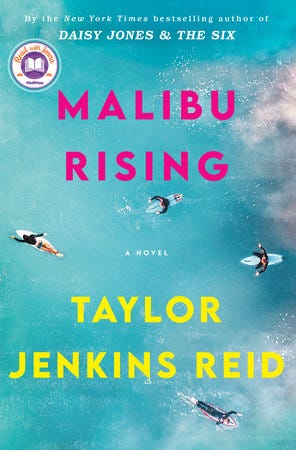
1. You might remember I loved Taylor Jenkins Reid’s “Daisy Jones & the Six,” naming it one of my best of ’19 picks  — and you haven’t read that one yet, read it. Wildly good. Reid has done it again with “Malibu Rising” — another period novel, with rock stars, this one taking place in 1983 California. The Riva siblings, kids of a famed rock star, throw an epic party at their mansion. It will burn down by the end of the night. That’s all you need to know. #Mustread.

Lauren Daley presents her summer reading picks for 2021.

2.  Alex Michaelides has done it again. Going by SouthCoast Century Clubbers lists, we all loved “The Silent Patient.” Michaelides returns with another page-turning mystery/thriller with “The Maidens.” From the publisher’s synopsis, Edward Fosca is a murderer. Of this Mariana is certain. But Fosca is untouchable. A handsome and charismatic Greek tragedy professor at Cambridge University, Fosca is adored by staff and students alike―particularly by the members of a secret society of female students known as The Maidens.

Mariana is a brilliant but troubled group therapist who becomes fixated on The Maidens when one is found murdered. She becomes convinced that Fosca did it. But why? When another body is found, Mariana’s obsession with proving Fosca’s guilt spirals out of control…

Lauren Daley presents some of her top summer reading picks.

3. “The Other Black Girl” by Zakiya Dalila Harris.

SouthCoast book clubs: this is your next read. A timely story and outstanding debut from a new talent. It’s a fun thriller, but also, there’s so much to unpack here. According to the publisher’s synopsis: 

Nella Rogers, 26, is tired of being the only Black employee at Wagner Books. So the editorial assistant is thrilled when Hazel joins the company…. But then  notes begin to appear on Nella’s desk: “Leave Wagner. Now.”

It’s hard to believe Hazel is behind these hostile messages. But as Nella starts to spiral and obsess over the sinister forces at play, she soon realizes that there’s a lot more at stake than just her career…

Lauren Daley presents some of her top summer reading picks.

4.  In non-fiction, “Somebody’s Daughter,” by Ashley C. Ford is a gripping memoir, and a heart-wrenching tale to read before Fathers’ Day. According to the publisher’s synopsis:

Ashley has put her dad on a pedestal. Despite having only vague memories of seeing him face-to-face, she believes he’s the only person in the entire world who understands her. He’s sensitive like her, an artist. There are just a few problems: he’s in prison, and she doesn’t know what he did to end up there.

Through poverty, puberty, and a fraught relationship with her mother, Ashley returns to her image of her father for hope and encouragement. In her search for unconditional love, Ashley begins dating a boy her mother hates; when the relationship turns sour, he assaults her. Still reeling from the rape, which she keeps secret from her family, Ashley finally finds out why her father is in prison….And that’s where the story really begins.

Lauren Daley presents some of her top summer reading picks.

5. “The Chosen and the Beautiful,” by Nghi Vo

Amazing. Vo reimagines “The Great Gatsby” with gay Asian characters and it’s brilliant. According to the publisher’s synopsis: 

Jordan Baker grows up in the most rarefied circles of 1920s American society—she has money, education, a killer golf handicap, and invitations to some of the most exclusive parties of the Jazz Age. She’s also queer and Asian, a Vietnamese adoptee treated as an exotic attraction by her peers, while the most important doors remain closed to her.

But the world is full of wonders: infernal pacts and dazzling illusions, lost ghosts and elemental mysteries. In all paper is fire, and Jordan can burn the cut paper heart out of a man. She just has to learn how.

Now get out there and start reading. I’ll see you on the beach, BookLovers.

Lauren Daley is a freelance writer and columnist. Contact her at ldaley33@gmail.com. Follow her at https://www.facebook.com/daley.writer She tweets @laurendaley1.