“We aim to manifest a countercultural relationship to exploitative, extractive, and excessive consumer capitalist culture, dedicated to carrying products made with care, concern, and awareness of their impact and design. Otherwild is committed to utilizing our resources to provide sustained support for our staff, vendors, and suppliers, as well as to grassroots activist and social justice organizations and via direct grants to makers through Anotherwild Fund.” – Otherwild Website
Otherwild is a queer and woman-owned marketplace, store, design studio, and event space in LA (and online, of course). It is community-focused with ethical practices and beautiful pieces of art and design that are uniquely Otherwild (that’s the only I can describe it). I am absolutely obsessed with this website and I want everything.
There were protests in Washington DC over Pride weekend after a horrifying viral video showed a security guard dragging a woman down stairs by her braids.
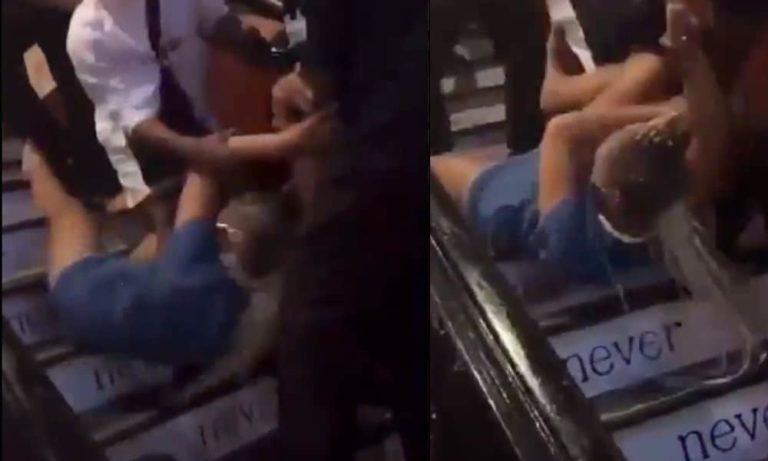
Footage taken at Nellie’s Sports Bar, a popular LGBT+ venue, shows other patrons jumping in and fighting with the security guard as he pulls her head first down the stairs.
The scene quickly grows chaotic as several people grapple with the guard in an attempt to separate him from the woman, who was later identified as 22-year-old Keisha Young.
“It was an altercation in there,” she told NBC 4 Washington. “They were trying to get some other people out because somebody else brought a bottle in there. Somehow I got mixed up in an altercation because I look like somebody else and I got hit and dragged down the steps.”
Young has started a GoFundMe to “pay for lawyer and doctor fees,” explaining that she lost her glasses, iPhone and shoes in the incident, and some of her clothing was ripped off.
“My body aches and I am bruised up,” she said. “I am aching all over my body, I can’t walk straight because my hip is in pain.”
The shocking video quickly spread online with the hashtags #JusticeforKeisha and #ProtectBlackWomen.
“Nellie’s brutalised a Black woman by dragging her down the steps by her hair,” wrote one person who shared the video. “We need our LGBTQ fam to boycott Nellies and show up tonight.”
Warning: the below video contains violent scenes.
CW: Violence Neillies brutalized Black Woman by dragging her down the steps by her hair. We need our LGBTQ fam to boycott Nellies and show up tonight. pic.twitter.com/wUfCAShdpU
“We were incredibly upset and disturbed to see the unfortunate event that took place at Nellie’s last night. We are undergoing a full investigation of the situation,” they said.
“At Nellie’s we foster an inclusive and safe environment, so events like this are completely unacceptable to us.”
A nurse based in Exeter has become the first gay man in Devon to give blood following a change in the rules around donations.
Today (June 14) – World Blood Donor Day – new eligibility rules have kicked in, meaning more men who have sex with men will be eligible to donate blood, platelets and plasma.
The questions asked of everyone when they come to donate blood in England, Scotland, and Wales will change, and eligibility will be based on individual circumstances surrounding health, travel and sexual behaviours evidenced to be at a higher risk of sexual infection.
Donors will no longer be asked if they are a man who has had sex with another man, removing the element of assessment that is based on the previous population-based risks.
Instead, any individual who attends to give blood – regardless of gender – will be asked if they have had sex and, if so, about recent sexual behaviours.
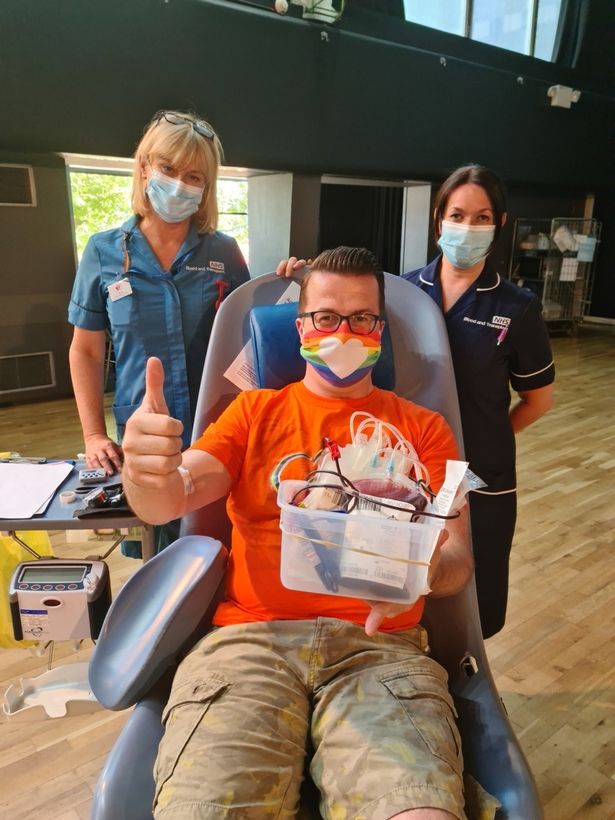
Darren Tudor-Green from Torbay donates his blood as new rules kick in (Image: Darren Tudor-Green)
Anyone who has had the same sexual partner for the last three months will be eligible to donate. The process of giving blood itself will not change.
Darren Tudor-Green, an auxiliary nurse at the Royal Devon and Exeter Hospital who is currently working at the Exeter Mass Vaccination Centre, has campaigned for three years for a change in the rules and is one of the first gay men in the country to give blood under the new rules.
Darren said: “I’m delighted things are changing. The amount of lives that could be saved may even increase with more donors now able to give.”
Kieran Loft, RD&E LGBTQ+ Network Chair, said: “It’s great that blood donation has been made more inclusive through a personalised risk assessment which is carried out for every donor.
“This will help us to remove some of the stigma surrounding same-sex relationships, as well as providing more blood for the critically ill. Well done to Darren for all his hard work – for donating his blood!”
Luke Pollard Labour & Co-op Member of Parliament for Plymouth Sutton & Devonport, Shadow Environment Secretary (Image: PA)
This news also follows years of campaigning by groups such as Freedom to Donate and the All Party Blood Donation Group, where Plymouth Labour MP Luke Pollard was secretary.
Pollard has welcomed the news and is now urging gay and bisexual men in the South West to come forward to donate.
“This is a landmark moment. As Plymouth’s first-ever openly gay MP, I have been supporting this campaign since I was elected,” said Pollard.
“Lifting the unfair rules not only means gay and bisexual men are no longer being discriminated against, it should mean more people are able to donate blood.
“I am calling on all gay and bisexual men in the South West to donate blood. Book your blood donation slot now. Donating blood saves lives, and now the discriminatory rules have been lifted, let’s get donating.”
The Intercom Trust is an LGBT+charity working across Cornwall, Devon, Dorset and the wider South West. Its chief executive Andy Hunt also welcomed the news.
He said: “This change has been a long time coming, and we are delighted and welcome this.
“The move makes donation an important step towards a selection policy based on an individualised assessment of risk instead of a discriminatory ban on gay and bisexual men.”
Ella Poppitt, chief nurse for blood donation at NHS Blood and Transplant, said: “Patient safety is at the heart of everything we do. This change is about switching around how we assess the risk of exposure to a sexual infection so it is more tailored to the individual.
“We screen all donations for evidence of significant infections, which goes hand-in-hand with donor selection to maintain the safety of blood sent to hospitals. All donors will now be asked about sexual behaviours which might have increased their risk of infection, particularly recently acquired infections. This means some donors might not be eligible on the day but may be in the future.
“Our priority is to make sure that donors are able to answer the pre-donation questions in a setting that makes them feel comfortable and safe, and donation is something that continues to make people feel amazing. Our staff have been trained to make sure these more personal conversations are conducted with care and sensitivity, and accurate information is captured.
“We are asking all blood, plasma and platelet donors to please consider the new questions alongside the existing health and travel questions before their appointment and to re-schedule if they do not meet the changed criteria to donate right now.
“We want donation to be a positive experience, and we are looking forward to welcoming donors as we move forward with these changes.”
Data around the impact of the donor selection changes will be kept under review and assessed 12 months after implementation to determine if changes are needed.
Robbie de Santos, director of communications and external affairs for LGBTQ+ charity Stonewall, said: “We welcome today’s historic change, which will help ensure more gay and bi men can donate blood and represents an important step towards a donation selection policy entirely based on an individualised assessment of risk.
“We want to see a blood donation system that allows the greatest number of people to donate safely, and we will continue to work with Government to build on this progress and ensure that more people, including LGBT+ people, can donate blood safely in the future.”
To become a blood donor, register and book an appointment by calling 0300 123 23 23, download the GiveBloodNHS app, or register online.
You can also donate plasma for antibody medicines that are used to save the lives of people with rare immune diseases – potential plasma donors should call 0300 123 23 23.
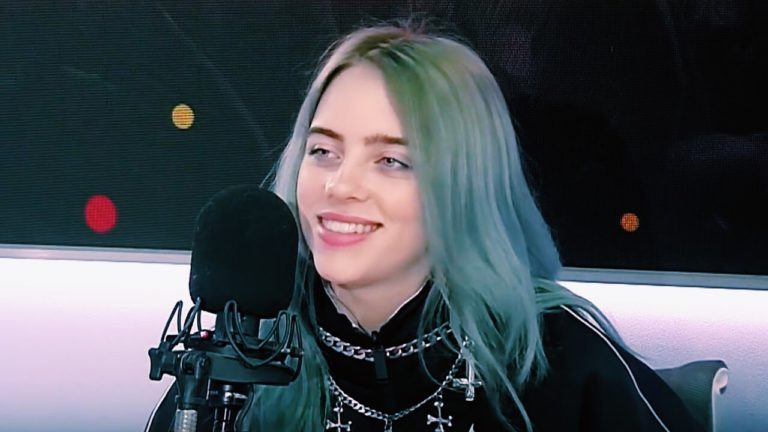
Billie Eilish sexuality has remained most frequently in question. Recently, the 19-year-old singer was also accused of queerbaiting but Billie Eilish has now turns the table in her recent instagram post where she wrote “I Love Girls”. Now fans are wondering whether Billie has just admits that she’s a gay or this is just a part of promoting her new song.
The popular American singer-songwriter has recently released her new song one week prior which is titled “Lost Cause”. The song was released on 2nd June 2021 and has gained 43 million views within one week on YouTube. The song became an instant hit among the fans and followers with 2.5 million likes and created a lot of buzz online as well. However, the video has also raised some controversies as some fans accused her for queerbaiting in her latest “Lost Cause” video.
Billie Eilish Accused of Queerbaiting
As soon as the new music video of “Lost Cause” by Billie Eilish released online, it created a lot of hype where some fans liked the concept while some people criticized her for queerbaiting. For those who are new to this term, queerbaiting is basically referred to a marketing technique usually used by the writers, authors, or entertainment creator etc. in order to make an attempt for attracting LGBT audience by hinting same-sex relationships or romance but in reality it never gets accomplished.
The popular 19-year-old star was seen hanging out and having fun with a group of girls in “Lost Cause” video. In the video, she is dancing, eating and playing Twister with the other girls. As soon as the video was out many speculated and questioned Billie Eilish sexuality along with accusing her for showing queerbaiting content video that has been done by all straight persons.
Singer Posts “I Love Girls” on Instagram
Amid the hype on social media where many people accusing her for queerbaiting, the singer recently posted some photos on her instagram where she shared behind the scenes of her latest song “Lost Cause” video. The pictures were fun as all the girls along with crew team members were enjoying the shoot but that was not something that grabbed viewers’ attention, instead the captain of that instagram post is currently creating a lot of buzz in social media.
In her latest post caption she wrote, “I Love Girls” on 10th June 2021, and the speculation started since then regarding her sexuality. The main motive behind the caption used by Billie is still not clear. Is she has really confirmed that she is a gay or is it nothing more than a simple captain that has nothing to do with her sexuality. Many followers are confused and asking her to briefly explain this captain, however, some of her dedicated fans are defending Billie by saying that she don’t need to explain herself or her sexuality to anybody.
New sex robots from leading AI robotics company RealDoll will be programmable as gay or straight, depending on your preference.
RealDoll famously created Harmony, an AI sex robot with an animatronic head and Scottish accent, in 2019.
Although Harmony was apparently designed a “bisexual flavour”, the company is now working on its first-ever male sex robot, Henry, and is creating artificial intelligence that will allow customers to programme their robot’s sexual orientation.
In a video posted by company representative Brick Dollbanger on Instagram, Matt McMullen, CEO of RealDoll subdivision Realbotix, said developing Henry’s AI software was “complicated”.
He said: “Not only do we need to create a different gender, we also need to create a sexual preference in the profile.”
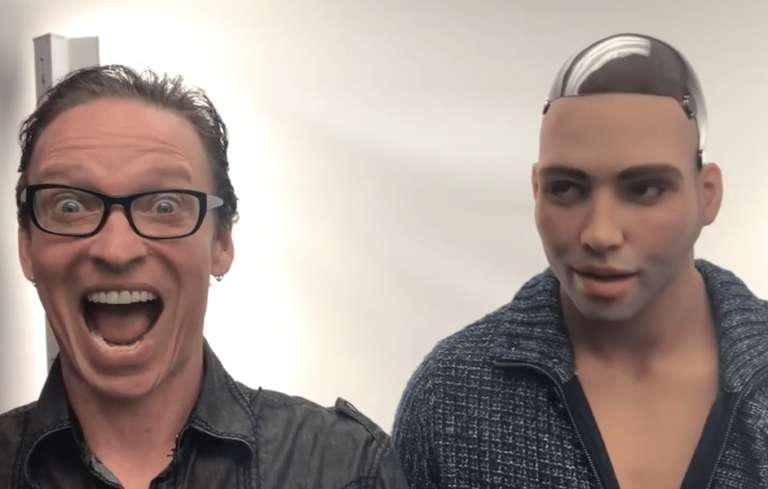
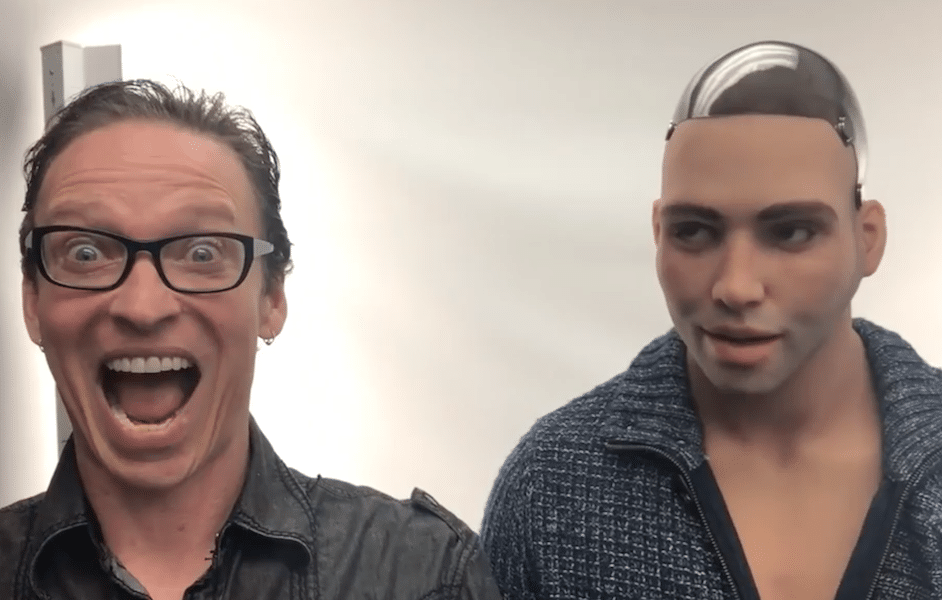
Realbotix CEO Matt McMullen (left) and Henry the sex robot (right). (Instagram/ brickdollbanger)
McMullen said that lesbian sex robots were also on the horizon, adding: “This would be something that would also propagate to the female platform as well.”
McCullen said that while he hopes to release Henry next year, the company still needs to “come up with that bionic penis“.
“We’re going to be working on some sort of very special insert for Henry so that he’s able to, you know, lift trucks with his penis or something,” he said.
He added that they were also developing “self-heating, self-lubricating erogenous zones” for both the male and female robots.
While RealDoll robots have moving heads and faces, which can recreate human facial expressions, McCullen said fully animatronic bodies will take years to become a reality due to safety concerns.
He said: “We’re already starting to animate the body, the problem is: When can a body be animated, and then be safe to throw into someone’s bed?
“A robotic arm that’s strong enough to lift the entirety of its silicone weight is pretty darn strong. If something goes a little bit off with that, it can take your head off.”
This week read about Kaylee Bryant coming out as queer, Hayley Kiyoko releasing a music video for “Chance,” and Anna Paquin fighting back against the trolls who criticize her bisexuality.
Kaylee Bryant is Queer!
Actress Kaylee Bryant took to Instagramto announce that she is indeed a member of the LGBT community.
The post read: “Hi My name is Kaylee and I’m queer! Happy Pride Month.”
The 23-year-old actress got her start as a “zombie slut” in season one of “American Horror Story” according to OUT.
Since then she has been a force to be reckoned with, making appearances in the “Santa Clarita Diet,” “The Real O’Neals” and “Legacies.”
In another recent Instagram post, the actress and model is working on her singing voice. Could she be practicing for a musical? Maybe she’s trying to add “singer” to her title?
For all we know, this young star is still blooming and it seems that the road ahead of her young career is still wide and vast.
Way to go Bryant!
Hayley Kiyoko Drops New Music Video for ‘Chance’
“Chance.” Image via YouTube.
When it comes to Hayley Kiyoko, you know whatever she makes is going to be a bop. She seemed to go all out on her new music video however for Pride Month.
Kiyoko dropped a new music video for her track “Chance,” which embodies the vibe and style for her nickname “Lesbian Jesus.”
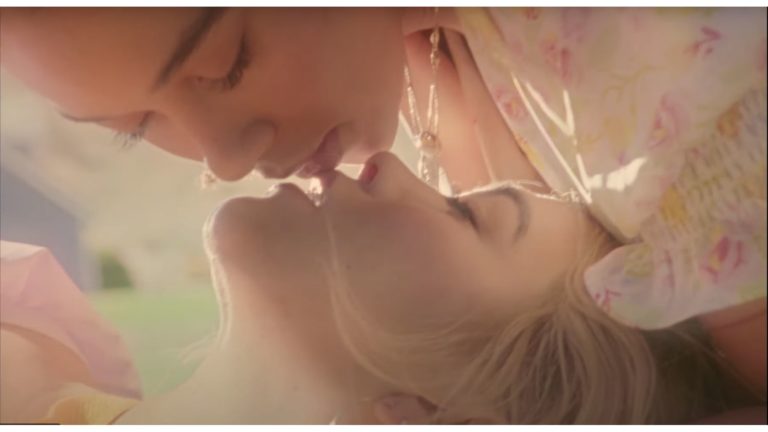
The YouTubevideo shows Kiyoko and actress Alexandra Shipp out on a ranch. It starts with Kiyoko helping out the girl who dropped some Granny Smith-looking apples on the ground, and the rest was history.
After that, the two embody the essence of a strong lesbian couple and the rest of the video shows the two having a great time with one another on the ranch.
Kiyoko said in an interview with Buzzfeed, “I was thinking about how I had all these opportunities with women, and how I just never took a chance on myself … Complaining and being upset that I didn’t have a chance with these women and I didn’t even take a chance on myself. I didn’t even believe in myself, that I was worthy or that I had something to offer. So that’s what inspired this song.”
Kiyoko and her team for the music video were all women! She told Buzzfeed, Kiyoko was amazed by the “female energy on set.”
Kiyoko described the making of “Chance” as a “family trying to make it happen,” and that’s what it felt like indeed. As if Kiyoko was looking and speaking to the viewer and encompassing them with her words.
Catch Kiyoko’s new music video for “Chance” on YouTube and it can also be streamed on all major platforms.
Anna Paquin Stomps Out Trolls
Anna Paquin. Image via Twitter.
Here’s a common occurrence — trolling! It seems like trolls are everywhere on the internet, which is pretty much true. It can be easy for them to get under someone’s skin, but what happens when a celebrity has had enough of their foolishness?
Anna Paquin can answer that question for you, since she has been at the center of all the trolling nonsense.
Paquin decides to fight back and speak her mind to online trolls that criticize her bisexuality.
In a recent Instagrampost, Paquin decided to speak up and give her trolls a piece of her mind.
She wrote, “Hey! FYI (for those unaware) June LGBTQIA+ pride month. So the folks who put their bigotry on display in the comment sections of my recent posts, why don’t you hit that unfollow button right now,” followed by her caption for the post which read, “… and go fuck yourselves.”
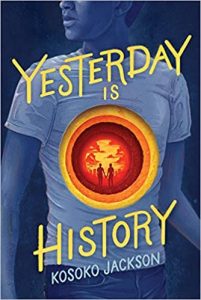
Seventeen-year-old Andre Cobb has survived cancer and is six months into receiving a life-saving donor liver as Kosoko Jackson’s achingly romantic time-travel drama, Yesterday Is History, opens. Andre is dearly loved by his parents, has a great best friend and, while he is struggling in school due to his illness-related absences, is still fortunate enough to attend a first-rate private Boston academy. Cognizant of his privilege, Andre is also restless and uncertain if his long planned pursuit of a medical career, heartily supported by his parents, is really the right choice to make. Then, in the midst of a stressful moment, he finds himself transported from his bedroom into the street in front of his house and quickly realizes that he has also been sent back in time.
So, here we go! It’s time for a grand adventure dealing with paradoxes about changing history and traveling to see famous people do famous things!
Or… it’s not. Yesterday Is History is far more focused on one story, one young man, and several big decisions about how his life is going to change. In 1969 he meets another teen, Michael, who is facing big challenges of his own. And then back to 2021, where he returns after a tantalizingly brief conversation with Michael, Andre has to figure out what is happening and how to control it. Fortunately, his donor’s family gets in touch and start teaching him about time travel, which is a genetic gift he has apparently picked up from his donated liver. They think it’s a great thing with little downside (as long as you follow some Prime Directive-like rules), a somewhat naive conclusion that Andre promptly dismisses while pointing out that he is Black and far more at risk in the past than they are. While he tries to learn what he needs to know, he finds himself jumping back to 1969 and Michael with little control. It seems they have formed a connection, which becomes much more significant when they acknowledge that both are gay.
Jackson dispenses with how time travel works very quickly, narrowing down on the relationships between Andre and Michael in the past and Andre and Blake, his donor’s brother, in the present. Blake is supposed to be teaching Andre how it all works, but his family is dealing with a massive amount of emotional fallout from their grief and no one is communicating well, which means Andre isn’t getting all the information he needs. He and Michael are also falling hard for each other, which brings into sharp relief how, as compared to 2021, being gay in 1969 is fraught with an enormous amount of peril. Even with only occasional visits, Andre is often the only bright spot in Michael’s life. But Blake… Blake understands how chaotic time travel can be and sees the impossibility of Andre’s love. On top of everything else is the weight of keeping all of this a secret from everyone he cares about and the fact that Andre’s physical health is still fragile. In the end, it’s not so much that he has to choose as that choice is thrust upon him, and he has to figure out how to make his love strong enough to survive it.
Yesterday Is History is a beautiful, romantic story that also manages to pack in a lot about growing up and taking ownership of your own future. Andre’s reflections on how race is a personally significant part of the time travel experience is a welcome aspect to the narrative, as are the discussions about how Michael’s existence as a young gay man in 1969, even though he is white, also places him in peril. More than anything though, this is a novel about the best kind of love: the sort that enriches everyone involved and endures long after a first, or last, meeting. Jackson has crafted something both thoughtful and quietly captivating that will likely be returned to again and again.
Colleen Mondor, Contributing Editor, is a writer, historian, and reviewer who co-owns an aircraft leasing company with her husband. She is the author of “The Map of My Dead Pilots: The Dangerous Game of Flying in Alaska” and reviews regularly for the ALA’s Booklist. Currently at work on a book about the 1932 Mt. McKinley Cosmic Ray Expedition, she and her family reside in the Pacific Northwest and Alaska. More info can be found on her website: www.colleenmondor.com.
While you are here, please take a moment to support Locus with a one-time or recurring donation. We rely on reader donations to keep the magazine and site going, and would like to keep the site paywall free, but WE NEED YOUR FINANCIAL SUPPORT to continue quality coverage of the science fiction and fantasy field.
(CLIFTON, NJ) — The Theater League of Clifton will hold auditions for its dinner/theater production of My Big Gay Italian Wedding on June 22 and 23 from 7:00pm to 9:30pm at Mario’s Restaurant (710 Van Houten Ave) in Clifton. Call backs are slated for June 24 from 7:00pm to 9:30pm, if necessary.
In the play, Andrew and Anthony are getting married – and everyone wants to “help”! My Big Gay Italian Wedding spins into a hysterical fiasco as everyone tries to have their way. From a saboteur ex-boyfriend to a loud, opinionated, outspoken Italian mother, personalities and culture collide in a music and dance-filled extravaganza.
The dinner/theater show will feature 14 cast members. Mike Stracco of Hawthorne is the director, while Clifton residents Mark Peterson and Jalmari Vanamo will serve as co-producers. Peterson is the president of the theater group.
Performance dates for the show are September 18, 24, and 25 at 8:00pm, September 19 and 26 at 4:00pm, October 1 and 2 at 8:00pm, and October 3 at 4:00pm. All performances will be held at Mario’s Restaurant.
My Big Gay Italian Wedding was written by Anthony Wilkinson. A born and raised New York native, Anthony is a graduate of NYU’s College of Arts and Sciences for English and Creative Writing. He started his career as an Intern Writer at ABC Daytime’s One Life To Live in 1996 and during his fourteen years there he worked his way up to the position of Associate Director. While in that position he earned three Daytime Emmy Awards and was a four-time recipient of the Directors Guild of America Award. Anthony’s original production of My Big Gay Italian Wedding started his other passion in the theatre world, when it opened Off-Broadway in 2003 at the Actor’s Playhouse and later moved to Theatre Four in the spring of 2004. In 2006, Anthony wrote and starred as “Rio La Rocca” in the Off-Broadway production of Boys Just Wanna Have Fun. Anthony restaged My Big Gay Italian Wedding in September of 2009 at the St. George Theatre for an audience of almost 2,000 people.
After much discussion and huge debates with regards to the topic, its rave reviews and success prompted an explosive revival on Restaurant Row with a full out Equity cast in April of 2010. The run was expected to last six weeks, and extended 14 times in the same location. During the run, the show hosted some major celebrities in efforts to help raise money and awareness for marriage equality and the Trevor Project. Aside from New York City, the show has already played in multiple cities in the US as well as Edinburgh, London, Vancouver, Hong Kong and parts of France.
Cast of My Big Gay Italian Wedding:
ANTHONY PINNUNZIATO – 20s – 30s male. Our every-man. Pollyanna guido from BayRidge. LEAD
ANDREW POLINSKI – late 20’s-30’s male. Handsome and stylish, yet devoted to one man only. Dashing and charming. LEAD
ANGELA PINNUNZIATO – late 40’s female. A lovingly over-bearing, overpowering Italian mother hen. Rules the roost with an iron fist and a wooden spatula. Anthony’s mother. LEAD
JOSEPH PINNUNZIATO/FATHER ROSALIA – late 40’s male. Joseph is Anthony’s loud Italian father whose word is law and whose home is his castle. Father Rosalia is the crush of every parishioner, both male and female. Note: These two roles can be played by the same actor if needed. LEAD
MAURIZIO LEGRANDE – late 20’s-40’s male. Outlandishly dressed, over the top, flamboyant wedding coordinator. Has an accent that cannot be pegged down. LEAD
GREGORIO – 20’s-30’s male. Smoking hot and extremely narcissistic. Does not take rejection will. Always has something up his sleeve. LEAD
MARIO – 20’s-30’s male. Uptight fashionista, Anthony’s best friend and protector. The most fabulous dancer in Brooklyn. Anthony’s Best Man. SUPPORTING
LUCIA – 20’s -30’s female. Brassy, trendy Italian woman. Anthony’s dependable, reliable best friend. A feminine, pretty lipstick lesbian, classy and sophisticated until challenged. Maid of Honor. SUPPORTING.
CONNIE – 20’s-30’s female. Lucia’s nemesis. Just as pretty, but much tougher. The gum chewing mouth of a truck driver who doesn’t take crap from anyone. Bridesmaid. SUPPORTING
MARIA – 20’s female. Anthony’s flighty, heavy-set,sweet and self-absorbed baby sister. Aspirations of stardom, but a fizzled sense of reality. She is a Broadway actress wannabe and fancies herself a tremendous singer. SUPPORTING
RODNEY – 30’s male. Sassy and spirited. Always up for an adventure. In love with Frankie. Reveals himself in drag in Act Two. All ethnicities can work in this role.
AUNT TONIANN – 30’s- early 40’s female. Angela’s fussy younger Italian sister.Lives to torment her brother-in-law. Sports the biggest of hair and always (thinks she’s) dressed to the nines. SUPPORTING
FRANKIE – late 20’s-late 30’s male. Tough,good-looking Italian stud. No-nonsense,out, and proud. The straight acting gay guy in the bunch. Groomsman. SUPPORTING
Founded in 2005, the Theater League of Clifton is a non-profit organization dedicated to fostering an appreciation of the arts through theatrical performances, while providing quality entertainment for all ages. The Theater League of Clifton welcomes volunteers in all aspects of performance and production.
Nana Duncan, one-half of the Two Twos Podcast, writes for PinkNews about how Black, British LGBT+ people deserve better in TV and film.
Growing up, I didn’t see anyone that looked like me on TV: dark-skinned and masculine. I craved representation because I craved validity. I did not realise how important visibility was until I got older, realising it factored in my fear of coming out. I believe that seeing yourself is critical in the journey of self-love.
Film has arguably one of the biggest impacts on society and therefore needs to be representative, but there is a notion that Black stories do not have an audience. It is a quiet one, said to Black creators in pitch meetings. I have heard this from Black writers countless times.
The UK film industry rarely commissions Black stories because they do not believe that our stories have an audience, and I find that astonishing. Black people are the drivers of culture, and we deserve to be represented. The only stories they seem to commission are the ones about gang violence to further perpetuate the falsehood that is Black on Black crime.
It is crucial that we explore alternative narratives to represent the multitude of nuanced Black experiences in our society. Being a womxn is one thing, being Black and British is another. My queerness adds another dimension to my identity. I am not Black before I am queer, I am not queer before I am Black, I am a queer Black British womxn.
There are so many layers to explore but it is this intersectionality that is often left out of stories. Where do Black British LGBT+ people go to see themselves? This is the reason I started my podcast, Two Twos Podcast, with my best friend Rosie Frimpong. The reaction from Black British queer people is what keeps us going – our podcast makes them feel seen.
Black British LGBT+ people exist in different forms, and we should be depicted in all our glory. We should not have to struggle to see ourselves in film and TV. We deserve to see ourselves through art because we are art, we deserve to see ourselves as superheroes, we deserve to see ourselves in love, and being loved.
I am exhausted of the over-explored genre that is Black trauma because it is mentally draining. If art is a medium we access to escape reality, it is not doing the job. It is time to adjust our lens and focus on universal stories from the Black perspective.
In the last 10 years, we have seen a progressive shift. We are seeing more Black characters and Black queer characters, however, the focus is usually their Blackness or their queerness.
Often, the queer stories that we do see are coming of age and coming out stories. While they are necessary, it is also important to see queer people in healthy relationships with family and romantic partners, experiencing the same things our straight counterparts, being loved, being supported, as human begins, on a human level.
For me, it was important to write a story about a Black queer woman, where the focus isn’t her queerness or her Blackness. My short film, Losing Joy, is a story about a young woman who struggles to deal with her grief and just so happens to be Black.
It’s isn’t necessarily Black pain, or Black trauma, it’s a universal pain from the perspective of a Black queer woman. Ultimately Losing Joy is about mental health, which we all have, and it’s about loss and love, which we have all experienced.
Black and Black queer creators have so many stories to share with the world, however, we are being ignored and overlooked because there is a glass ceiling.
For a long time, I was plagued with imposter syndrome. I did not see many faces that looked like mine. As a working-class Black British queer woman, I felt out of place and I almost gave up on writing. I recently read an article with the headline: “Majority of UK screen workforce from privileged backgrounds survey finds.”
It wasn’t surprising, but it was nice to see it quantified because oftentimes, I made myself believe that the industry was based on meritocracy and that I just had to work harder.
The truth is we don’t have trust funds, we don’t have generational wealth. So we graft and rise to the occasion every time and it is so hard. I don’t want it to be this hard for the next generation. I cannot afford to wait for the industry to tell me that I am good enough, I have to believe that I am good enough.
I made my first short with £1,000; I had to ask for a lot of favours. There are so many creatives willing to work on a quid-pro-quo basis, we cannot afford to pay one another because there is no funding. We ought to not only see ourselves on screen through an array of stories, but we also deserve to be compensated appropriately, for our contribution to art.
I have to validate myself, I cannot wait for someone to give me a seat at the table. I have to build my own table.
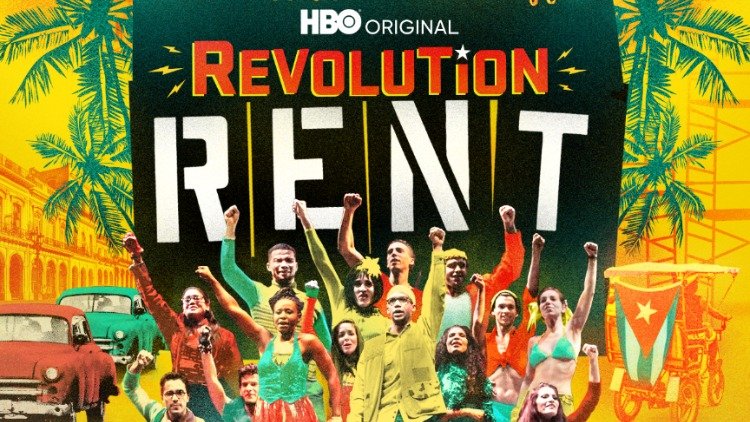
The trailer for the new HBO documentary has been dropped Revolutionary rent.. Directed by Andy Señor Jr. and Victor Patrick Alvarez, the film follows Señor Jr., who returns to his exiled parents’ hometown to stage the production of a Tony Award-winning musical. rent.. Revolutionary rent Neil Patrick Harris is Executive Producer, celebrating the 25th with his debut on Tuesdayth Anniversary of the show’s Broadway premiere.
“we rent As I was recording my journey in Cuba, I didn’t know how the story would unfold and our documentary would be published on HBO. rent He said in a statement on Broadway in the 90’s.
“Andy and I rent We traveled with him many years ago and were proud to see him bring his talents to Cuba, “said Harris. “”Revolutionary rent It is a continuation of our journey and a tribute to the power of theater and its ability to change lives. “
The documentary follows the entire production, from the first audition to the closing night of the show. It also shows Senor Jr.’s personal journey in exploring his heritage, past and cultural identity.
“Travel to Cuba to make this film was incredibly challenging and rewarding in a way I never imagined,” Alvarez said. “”Revolutionary rent It’s about the healing power of creativity and human connections in the face of adversity. “
In the exclusive clip below, Yosset Puentes, who played Roger in a Cuban production rentAdmire what you can do to change your mind and mind in the production and there.
“I’m gay. I’ve been out of the so-called closet for a long time, living completely free and expressing my sexuality,” he says. “Previously, our society didn’t really embrace the gay community. I think so. rent We do a lot to strengthen and expand the space needed by the gay community. It’s not about gays. It’s a story about love. “
See the clip and trailer below Here.. Revolutionary rent It will premiere in the East Pacific at 9 pm on Tuesday.
Source link Gay Actor Rouse Cuba’s HBO Revolutionary Rent First Production of Rent
Budapest, Hungary (AP) —Major human rights officials called on Hungarian lawmakers on Monday to reject legislation banning content that portrays or promotes homosexuality or sex reassignment to persons under the age of 18.
The appeal was filed in Budapest after a protest was planned against a bill backed by Prime Minister Victor Oban’s national government.
Oban’s conservative ruling party, Fides, submitted a bill last week and will vote on it on Tuesday. This includes measures aimed at combating pedophilia and other amendments prohibiting the transmission of information about LGBT people or same-sex relationships to young people.
Fides describes the law as an effort to protect children from pedophilia.
However, Lydia Gull, a senior researcher at Human Rights Watch, said that equating sexual and gender diversity with pedophilia risks damaging and endangering the dignity of LGBT people. Said there is.
Gull called the law “an ironic, unpleasant and deliberate attempt by the Oban government to trample the rights of LGBT people and make them essentially invisible in Hungarian society.”
Dunya Miyatovic, a Human Rights Commissioner of the Council of Europe, a major human rights group on the continent, has called on Hungarian lawmakers to dismiss the bill.
“We urge you to remain vigilant for such initiatives to limit human rights and promote measures to stigmatize some members of society,” Mijatovic said in a statement on Monday. Stated.
The Hungarian amendment prohibits the depiction or discussion of various gender identities and sexual orientations in public, including schools and the media.
Some human rights groups have compared the planned ban to the 2013 Discriminatory Russian Law, which bans the so-called Anti-Homosexuality Act, which is widely used as a means of discrimination.
Mijatovic said such legislation would increase prejudice against lesbian, gay, bisexual and transgender people. She also argued that international human rights groups have established that young people have the right to comprehensive sex education. This is not possible if discussions on LGBT issues are prohibited.
“The proposed legislative changes violate international and European human rights standards. It is misleading and false to claim that they are being introduced to protect children,” she said. ..
Given that Fides has a majority, the bill is expected to be passed.
Hungarian opponents are divided on this issue.
The right-wing Jobbik party has agreed on Monday that “promotion” and “sexual orientation of all kinds” of sex change should not be done, despite saying that there are some flaws. It is permitted by schools that have stated that they will vote for pedophilia bills and amendments.
Meanwhile, the Democratic Union on the left said it would boycott the entire session on Tuesday, not just voting for the anti-pedophilia bill, to protest Fides’ “hate” and “discriminatory politics.”
Suggest a fix
Source link Human rights authorities condemn Hungary’s anti-LGBT bill | WGN Radio 720
BUDAPEST, Hungary (AP) — Leading human rights officials urged lawmakers in Hungary on Monday to reject legislation banning any content portraying or promoting homosexuality or sex reassignment to anyone under 18.
The appeals came as protests were planned later in the day in Budapest against the proposed law, which is backed by Prime Minister Viktor Orban’s nationalist government.
Fidesz, Orban’s conservative ruling party, presented the legislation last week and plans to vote on the bills Tuesday. They includes a measure aimed at fighting pedophilia along with other amendments prohibiting transmitting information about LGBT people or same-sex relationships to youth.
Fidesz describes the legislation as an effort to protect children from pedophilia.
But Lydia Gall, a senior researcher at Human Rights Watch, said equating sexual and gender diversity with pedophilia hurt the dignity of LGBT people and risked putting them in danger.
Gall called the legislation “a cynical, distasteful and deliberate attempt by the Orban government to trample the rights of LGBT people and essentially make them invisible in Hungarian society.”
Dunja Mijatovic, the commissioner for human rights at the Council of Europe, the continent’s leading human rights body, asked Hungarian lawmakers to reject the legislation.
“I urge you to remain vigilant against such initiatives to push through measures that limit human rights or stigmatize against some members of society,” Mijatovic said in a statement Monday.
The Hungarian amendments would outlaw any depiction or discussion of different gender identities and sexual orientations in public, including in schools and the media.
Some human rights groups have compared the planned ban to a discriminatory 2013 Russian law banning so-called gay “propaganda,” widely viewed as a tool of discrimination.
Mijatovic said such legislation reinforces prejudice against lesbian, gay, bisexual and transgender people. She also argued that international human rights groups have established that young people have a right to comprehensive sex education, which is not possible if there is a ban on any discussion of LGBT issues.
“The proposed legislative amendments run counter to international and European human rights standards. It is misleading and false to claim that they are being introduced to protect children,” she said.
The legislation is expected to pass given that Fidesz has a majority.
The opposition in Hungary is divided on the matter.
The right-wing Jobbik party said Monday it plans to vote for the anti-pedophilia bill and amendments despite what it said were some flaws because it agrees that the “promotion” of gender change and “all kinds of sexual orientations” shouldn’t be allowed in schools.
Meanwhile, the center-left Democratic Coalition said it would boycott not only the vote on the anti-pedophilia bill but the entire Tuesday session to protest Fidesz’s “hate-mongering” and “discriminatory politics.”
Copyright 2021 The Associated Press. All rights reserved. This material may not be published, broadcast, rewritten or redistributed without permission.
A gay business consultant and real estate agent jumped into a crowded race to unseat an incumbent on the Atlanta City Council.
Jereme Sharpe joins an expanding field of challengers hoping to oust incumbent Councilmember Michael Julian Bond from the Post 1 At-Large seat on the council.
“I have the experience when it comes to organizing our neighborhoods and starting to lead us on the right track to a better future,” Sharpe told Project Q Atlanta.
Sharpe, 31, was born in Florida and grew up in Gwinnett County. The downtown Atlanta resident is a former board member of the Atlanta Policing Alternatives & Diversion Initiative. He’s now a licensed real estate agent and launched the Urbane Foundation, a consulting firm focused on alternative transportation, affordable housing and better business.
“So there were a lot of things I was already working on and I said hey this fits with what we need in the City of Atlanta and I’m going to run,” Sharpe said.
He was also motivated to jump into the council race after Evanston, Ill., became the first city in U.S. history to offer reparations to Black residents in March.
“I said wait a minute, you were able to get reparations at the city level? That’s when the light switch flipped on,” he said. “Reparations can be done on a local level and I’m gonna do it.”
If elected, Sharpe wants to improve public transportation, restructure the city’s housing processes and create better jobs with livable wages.
“If we can really fix those or at least get them in better shape or organized as they should be, we’ll be able to alleviate a lot of the other issues we have in our city,” he said.
Those issues include HOPWA, the city’s long-troubled federal housing program for low-income people with HIV. The HOPWA program is managed by Atlanta’s Department of Grants & Community Development. Sharpe would shift its management to the Atlanta Housing Authority and hire a HOPWA director.
“To my understanding, the [grant] money is there,” he said. “It’s the processes that need to be improved upon, and right now – yesterday.”
Sharpe would continue LGBTQ representation on the council. City Council member Antonio Brown became the first Black LGBTQ member of the council in 2019, but he is running for mayor instead of seeking a full term in the District 3 post.
“The LGBT community represents what Atlanta is,” Sharpe said. “It’s a part of Atlanta’s fabric, a part of Atlanta’s ethos. Representation is very much needed at all levels — at council levels, at neighborhood groups and across the city.”
Sharpe and Bond are joined in the council race by gay attorney Brandon Goldberg, educator Alfred Brooks and former Atlanta Board of Ethics member Todd Gray.
Other LGBTQ candidates running for Atlanta City Council include community organizer Devin Barrington-Ward in District 9, project manager Larry Carter in District 4, community activist Liliana Bakhtiari in District 5 and Mike Russell, who is running for council president.
Qualifying for Atlanta’s municipal’s races is in August and the elections are in November.