WASHINGTON (AP) — More than half the cosmetics sold in the United States and Canada likely contain high levels of a toxic industrial compound linked to serious health conditions, including cancer and reduced birth weight, according to a new study.
Researchers at the University of Notre Dame tested more than 230 commonly used cosmetics and found that 56% of foundations and eye products, 48% of lip products and 47% of mascaras contained high levels of fluorine — an indicator of PFAS, so-called “forever chemicals” that are used in nonstick frying pans, rugs and countless other consumer products.
A decision dismissing, on the merits, a therapist’s challenge to a Maryland law that bans gay conversion therapy must be taken off the books because he sued the wrong defendants, the Fourth Circuit said Tuesday.
Gov. Larry Hogan (R) and Attorney General Brian Frosh (D) are immune from suit in federal court over the law because they lack a sufficient connection to enforcing it, the U.S. Court of Appeals for the Fourth Circuit said.
Plaintiff Christopher Doyle didn’t name a proper defendant, so the court “may not consider the interesting First Amendment issues he raises,” it said.
KANSAS CITY, Mo. —The Kansas City Chiefs put the finishing touches on 10 days of organized team activities last week.
Up next, a mandatory three-day minicamp Tuesday through Thursday before the team takes a little more than a month off ahead of training camp in late July.
The minicamp serves as an extension of OTAs, with classroom instruction and team-related drills — 7-on-7, 9-on-7 and 11-on-11, to name a few — during on-field install sessions. Live contact will remain prohibited by the NFL until the pads come on in training camp.
With the table set for minicamp, here are five situations to monitor.
Who shows up?
The Chiefs, for the most part, enjoyed a strong showing throughout OTAs, which are voluntary. And at one point, the Chiefs had 81 of 90 players on the offseason roster participating in Phase II of the voluntary portion of their offseason workout program leading into OTAs.
Of note, defensive end Frank Clark and cornerback Charvarius Ward were not present on the practice field during the three days of OTA media availability. Chiefs coach Andy Reid didn’t specifically address why certain players weren’t at OTAs — and he didn’t have to, given the voluntary nature of the workouts.
Minicamp attendance, however, is mandatory and players are subject to fines if they fail to report without an excused absence.
And missing this minicamp won’t be cheap.
Under the new CBA, which was negotiated in 2020, a team can fine a player for an unexcused absence using an elevating scale: $15,980 for the first day; $31,961 for the second days; and $47,936 for the third day.
If a player misses all three days, he becomes subject to a $95,877 fine.
Patrick Mahomes Protection Plan
The Chiefs allocated more offseason resources to their offensive line than any other aspect of their roster, not only overhauling the starting lineup but also the depth behind it.
How do they envision it all coming together? Will it be rookie Creed Humphrey at center or free agent-signing Austin Blythe? With the Kyle Long injury, will Laurent Duvernay-Tardif step right back into his starting role at right guard after opting out of the 2020 season? Does Mike Remmers hold on to his right tackle starting job, or are the Chiefs higher on the potential of Lucas Niang?
A mandatory minicamp in mid-June might seem a little early to be making such decisions, but offensive line coach Andy Heck said the timing actually works out well for the Chiefs.
“I think that the sooner the better that you can figure that out and have guys start working together,” he said.
Who plays the edge?
After the Chiefs dropped to 19th in the league in sacks last season, they stated publicly that they were out to improve on the edge.
They’ve yet to make an impact addition — even bypassing Melvin Ingram after he visited them in Kansas City — because they believe the improvement can come in-house.
That in-house confidence would start with Chris Jones. He last played defensive end in former defensive coordinator Bob Sutton’s 3-4 scheme; during his Pro Bowl seasons of 2019 and 2020, he played mostly on the inside.
But the addition of tackle Jarran Reed will give the Chiefs the flexibility to push Jones back to the outside — if they’re willing to give up his production on the interior.
That’s a question current defensive coordinator Steve Spagnuolo has acknowledged he’s grappling with, and this week’s mandatory minicamp could offer a glimpse of his early leanings.
Sorting the linebackers
Anthony Hitchens is locked in at middle linebacker, but the Chiefs have decisions to make at the strongside and weakside linebacker spots.
Second-year pro Willie Gay Jr., who declared himself as “100 percent” healthy after sustaining a knee injury during the last postseason, and rookie Nick Bolton are under the spotlight. The Chiefs’ coaching staff will continue to give the two young linebackers a hard look alongside veterans Hitchens, Ben Niemann, Dorian O’Daniel and Darius Harris.
While it’s early, Gay and Bolton did their part during OTAs to generate enthusiasm from the coaching staff.
“Both those guys, we’re really excited to have and really looking forward to what they can do,” Spagnuolo said on the sixth day of OTAs.
The Chiefs won’t be able to fully evaluate Gay and Bolton until the pads come on. They’re linebackers, a position group known mostly for delivering jarring hits.
But how Gay and Bolton continue to grow within the scheme, with an understanding of position-group and individual responsibilities, will help set the stage for training-camp battles in which starting roles will be up for grabs.
Stay healthy
Long’s injury was unfortunate for the Chiefs’ offensive line, as he was projected to compete for a starting job at right guard.
His injury, sustained last week during the non-contact portion of the team’s offseason workout program, highlighted the importance of getting through OTAs in good health. While injuries are a part of the game, the Chiefs do not need another one, especially to a key player when the pads aren’t even on yet.
The Chiefs need to emerge from minicamp with no new injuries and enter the break relatively healthy for training camp.
In 2015 the Supreme Court handed down a monumental ruling sanctioning marriage equality, allowing same-sex couples the same legal right to marry as opposite-sex couples. After the decision was handed down, journalist Ruth Marcus of The Washington Postpenned an editorial, “Why there won’t be a gay marriage backlash,” arguing that “opposition to same-sex marriage is, literally, dying out.”
Six years after Marcus’ editorial, however, the accuracy of her prediction is questionable. According to a 2020 American Values Survey, 70 percent of Americans now support marriage equality, the highest ever and up from 61 percent in 2017. And yet the 2015 Supreme Court ruling triggered numerous laws targeting LGBTQ rights in the workplace, health care, housing, schools, and other public accommodation. For example, since 2016 several states have passed legislation allowing state-licensed child welfare agencies to cite religious beliefs for not placing children in LGBT homes. And at present, more than half of LGBTQ adults in the United States live in states without non-discrimination laws, meaning they can be fired because of their gender identity or sexual orientation.
Why has progress been accompanied by so many setbacks? The answer is that the manner in which things shake out is about more than just people: it’s about the system surrounding people, the context and conditions that prevent or support social change. In “The Water of Systems Change” we refer to six specific conditions within a social system: policies, practices, resource flows, relationships and connections, power dynamics and mental models. The coalition of proponents for marriage equality very explicitly focused on shifting each of these conditions in pursuit of their goals, and as evidenced by the 2015 Supreme Court decision, the coalition was tremendously successful for a period. Yet, like any system, the system surrounding marriage equality has been subject to what Canadian complexity theorist Brenda Zimmerman named “Snap Back.”1
According to Brenda, when trying to shift the patterns and behaviors in a system, it is important to acknowledge that systems naturally resist change. This is called system resilience, of which there are two kinds: engineering resilience and ecological resilience.
A good example of engineering resilience is the way in which bridges are built: Since the builders want the bridge to have some “give” in a hurricane, they build the bridge to withstand shocks to the system, while also building in “give” so the bridge snaps back in place once the storm is past.
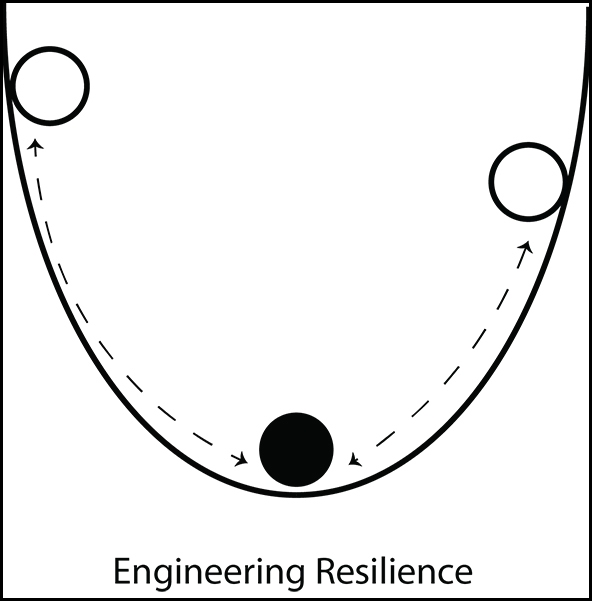
In engineering, maintaining the status quo is the point: If a bridge sways in high winds, it should be built so that it sways back when the winds pass. One way to illustrate the dynamic is to think about a marble in a bowl, as in the illustration below. The marble is in equilibrium when it is in the center of the bowl, but as the bowl tips one way or another the marble moves off equilibrium. As long as the side of the bowl is high enough, the marble will roll back into place. For an engineer, this is desirable.
By contrast, ecological resilience models the way systems adjust to changing conditions, often by finding new equilibriums. Unlike bridges, natural ecosystems like ponds, oceans, forests do best when they are able to adapt and change, moving from an initial equilibrium to a new equilibrium as context demands.
For systems thinkers, finding a new (and more desirable) equilibrium is the goal. As with the first example, if the walls of the bowl—or the threshold for change—is high enough, the marble won’t make it over the threshold to a new state of equilibrium. It will snap back to its existing equilibrium. However, if you can find ways to lower the threshold (in this case, walls of the bowl), the marble can jump to a new equilibrium when rocked. With a new equilibrium, snap back to the initial equilibrium becomes less likely.
If, in your work, you have been strategic and effective enough to shift the equilibrium of a system—as LGBTQ rights activists did through achieving the 2015 Supreme Court decision—a key subsequent goal should then be preventing the phenomenon of snap back by stymieing a return to the previous equilibrium.
What are some principles to consider if you are trying to prevent snap back?
Snap back happens at multiple levels of a system: the individual level (an individual accepts, then rejects a new job definition), the organizational level (a nonprofit’s staff embraces then pushes back on new strategy), the initiative level (the power players in a city shift to more inclusive community engagement and, seeing its challenges, revert to more authoritative decision making), or the societal level (a global movement to adopt stricter carbon standards backtracks in implementation). But to keep snap back from occurring, at any level, focus on strengthening the resilience of the system’s new equilibrium while, as much as possible, weakening system resilience, or “muscle memory,” of the old equilibrium.
Here are a few strategies:
Solidify new mental models (deeply embedded ways of thinking and doing that drive behavior) that you may have established. A key success factor in the marriage equality movement was shifting the popular frame regarding marriage equality from “same-sex couples should have equal rights” to “two people in love should have the right to get married.” The shorthand for this strategy became known as “love is love.” The shift in frame was to focus on empathy rather than anchoring people in their respective cultural values. What turned the tide of public opinion wasn’t a theoretical argument but an invitation for connection, speaking to the heart rather than to the head.
Establish new relationships between people in the system who are not currently engaged with each other. Othering takes place when one group of people have minimal contact with another group and begin to see the other group as different, inferior to themselves, and “the cause of the problem.” Othering of queer people remains prevalent in the United States, even though the majority of Americans know someone in their family, at work, or through social activities, who identifies as queer. For example, othering was on display in the 2018 Supreme Court case introduced by an Indiana bakery owner who refused, for religious reasons, to bake a wedding cake for a gay couple; the restaurant owner won the case. There is a growing body of work on how to address othering.
Support those who are marginalized in attaining positions of authority and power, in order to influence decision-making and the public narrative. As members of the LGBTQ population become more visible in positions of power, they help solidify the shaky equilibrium that exists today with regards to marriage equality and other LGBTQ rights, diminishing the odds of virulent snap back. Two exciting steps forward in this respect have been President Biden’s selection of Rachel Levine, a transgender doctor, for Assistant Secretary of Health and Human Services, and of former 2020 Presidential candidate Pete Buttigieg, the first openly gay presidential candidate, as Secretary of Transportation.
Our understanding of how best to prevent snap back remains a work in progress, and every systemic situation has its own dynamics. For example, one important perspective put forth by many in the LGTBQ community is that the strategy to pursue marriage equality was not sufficiently comprehensive or attentive to the needs of the larger LGBTQ community to mitigate snap back. This line of thinking suggests that the marriage equality movement diminished the ultimate goal for LGBTQ activism, which is to be fully accepted as different—“not like you”—versus being accepted as “more similar to you than you may think,” which was the “love is love” marriage equality strategy. As a result, many LGBTQ activists believe that, despite the positive marker of marriage equality becoming the law of the land, snap back was inevitable since the many underlying biases against queer people—particularly gender-nonconforming individuals, trans people, and queer people of color—were not sufficiently dealt with through “love is love.”
As you consider your systems change efforts, where should you be vigilant about preventing snap back? What strategies can you employ to increase the odds that snap back doesn’t occur in your situation? As you pursue system level strategies, how can you best consider the larger systemic context that could expose the underbelly of your assumptions?
1 Brenda, who coined the term, passed away too soon in 2016, while we were workshopping the concept of “Snap Back” with the intent to co-author an article on the topic. The past five years have compelled me to return to this concept in the hopes that it may be of use to systems change strategists in their work.
If you’re queer and disabled, you’re almost more likely to view a total eclipse than you are to see anyone like you on TV.
I’m lesbian and legally blind. Nearly one in five people in this country has a disability, according to the U.S. Census Bureau. There are LGBTQ, disabled people just as there are hetero folks with disabilities.
Yet, I’m shocked (in a “have I won the lottery?” way) whenever someone queer and disabled appears on screen.
This summer, there’s good news for LGBTQ and disabled folks.
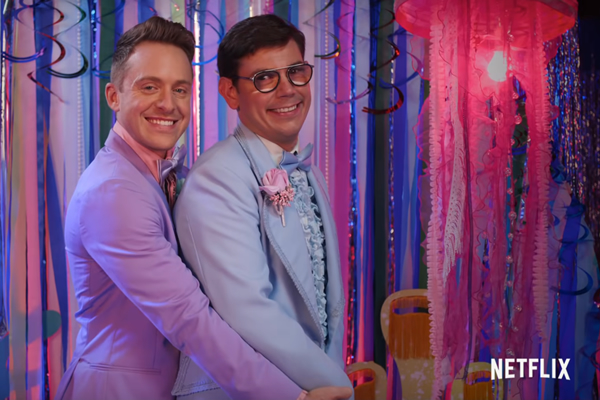
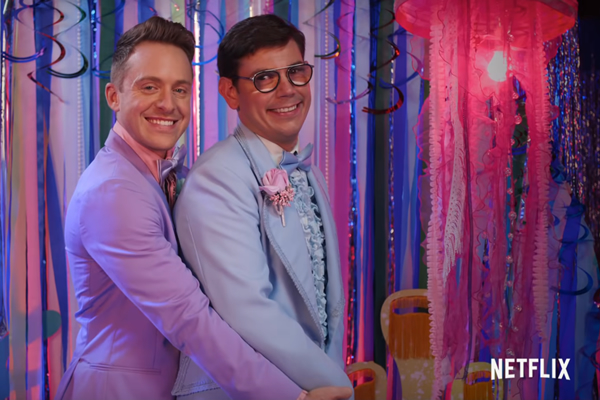
“Special,” the four-time-Emmy-nominated series, created, written by, and starring Ryan O’Connell, is now streaming on Netflix in its second and final season. Based on O’Connell’s 2015 memoir “I’m Special and Other Lies We Tell Ourselves,” the series is the story of a gay man with cerebral palsy.
Jim Parsons (of the “Big Bang Theory”), along with O’Connell, is executive producer of the show. This season, “Special” has been expanded from 12-17 minutes to 30 minutes per episode.
The character Ryan in “Special” is a younger, less experienced, avatar of O’Connell.
In season 1 of “Special,” Ryan gets a job as a writer at an internet start-up and moves out on his own. He had been living with Karen, his mom (Jessica Hecht). He’s become best friends with his co-worker Kim (Punam Patel) and lost his virginity to a caring sex worker.
Season 2 of “Special” has a “Sex and the City” vibe. Ryan is estranged from his mother. He’s having lots of sex. He loves Tanner (Max Jenkins) who’s in an open relationship with Richard. But, there’s chemistry between him and Henry (Buck Andrews) who’s neurodivergent.
The characters in “Special” seem privileged. But they have concerns. Kim struggles to pay her rent and navigate her love life. Karen must learn to care for herself after caring for Ryan for years. Ryan worries that he’s brought “trash wine” to a fancy dinner.
There are some non-disabled people of color on the show — most notably, Patel. Some of the supporting actors are disabled. But I wish there were some disabled characters of color on “Special.”
Yet, “Special,” though a comedy, depicts what life is often like if you’re queer and disabled. Take two stories from my life:
One evening, my date and I were at a restaurant. “Watch her! She might fall!” a stranger said as I walked toward the restroom. “I do and I enjoy it!” my girlfriend said.
Once, a woman at a gay bar told me I was “inspirational.” What had I done that was so inspiring? I’d sipped a beer.
Disabled people call this “inspiration porn.” If you do porn, it’s not the good porn.
I tell you these stories because many disabled and queer people have had such encounters.
“Special” makes the sexiness, queerness, brattiness, resilience, romance and street cred of disabled, queer life up close and personal.
It depicts us as three-dimensional human beings.
Filmmaker Dominick Evans directs FilmDis, a group that monitors disability representation on television. “Our research shows that multiple marginalized disabled people are rarely represented,” Evans, who is trans, non-binary and queer bisexual as well as multiply disabled, emailed me.
“Out of 250 television shows airing between 2019 and 2020, we found 1,198 disabled characters, but only 71 of those were also LGBTQIA,” he added.
It’s even worse for Black and Brown LGBTQIA disabled characters, Evans said.
Thankfully, things are improving. “Disability representation is getting better,” Beth A. Haller, co-editor of The Routledge-Companion to Disability & Media, emailed me.
For instance, “Everything’s Gonna Be Okay,” the American sitcom created by Australian, queer comedian Josh Thomas and streaming on Hulu, has two autistic actors as the leads, Haller said.
Thomas’ boyfriend on the show is a Black man with a Deaf father, Haller added.
More disability representation on TV can’t come soon enough. I can’t wait to see more of our queer, disabled stories.
Kathi Wolfe, a writer and a poet, is a regular contributor to the Blade.
Fighting stereotypes includes both educating the public with facts, as well as demonstrating the reality of a shared experience that shatters preconceived notions. Certainly for gay men, breaking free of societal prejudices and forging our own identity on our own terms, is an ongoing battle that we celebrate each June during Pride month. Remembering the earlier pioneers who dared to challenge the status quo, those brave trans sisters who through the first bricks at Stonewall, is fundamental in our path forward as we continue to fight for freedom of expression and the same rights for everyone.
Perhaps nothing better captures this idea of fighting for gay rights than an actual gay fighter. In 2019 an Australian man, Martin Stark, organized an association for LGBTQ+ boxers, and Instinct Magazine has an exclusive interview with him as he talks about the sport and the goals for his group.
Photo courtesy of www.worldgayboxingchampionships.org
Hi Martin, tell us a little bit about yourself and why you took up boxing.
“I am an amateur boxer and started training three years ago. I have the rare autoimmune condition Addison’s disease and almost died at the end of December 2017. Boxing is full body form of exercise increasing muscle tone, cardiovascular fitness levels while helping to strengthen bones and ligaments. The psychological benefits include stress relief, increasing levels confidence and self-esteem and improved co-ordination. Boxing has helped me manage stress and recover from PTSD.”
Photo courtesy of www.worldgayboxingchampionships.org
Tell us a little bit about your group.
“We are an Australian Not-For-Profit (NFP) company and will hold boxing championships for the LGBTQIA+ community aligned with Amateur Boxing International Association (AIBA) rules. We want to increase LGBTQIA + inclusion and participation in boxing. We do not yet have Affiliates and chapters as we are in our first year of operation and are focusing on organising our first championships.”
“I wanted to compete at the Gay Games in Hong Kong but boxing is not on the list so decided to create the World Gay Boxing Championships. There has never been a LGBTQ+ boxing championships and I wanted to provide opportunities for our community to participate in a safe and friendly environment.”
“In February 2023 we are holding the inaugural championships in Sydney coinciding with Mardi Gras and World Pride. The WBC, IBO, WBO and WBA have all provided statements of support. Boxing is a fantastic sport!”
What has been the response from the traditional boxing world?
“We have had tremendous support and allyship from non-LGBTQIA+ boxers and the boxing community. Boxing Australia and Boxing NSW are providing institutional support and helping us organise the championships. We have received statements of support from the World Boxing Council, International Boxing Organization, World Boxing Organization and World Boxing Association.”
And from the LGBTQ+ community?
“The response has been mainly positive with most people wishing us good luck and some wanting to help or participate. We have received fantastic support from the LGBTQIA+ sporting family particularly the Federation of Gay Games and Compete Sports Diversity Council. We are breaking the stereotype that boxing is a heteronormative sport and does not welcome the LGBTQIA+ community. I believe the heart of boxing is at the grassroots level and there is a new spirit of inclusion specifically within the LGBTQIA+ community. People all over the world practise boxing at their gym or local club for fitness and not everyone spars or fights in the ring.”
Great! Thanks so much for your time, Martin. And good luck with the club!
For more information on Martin and the gay boxing championships, jump over to their website:
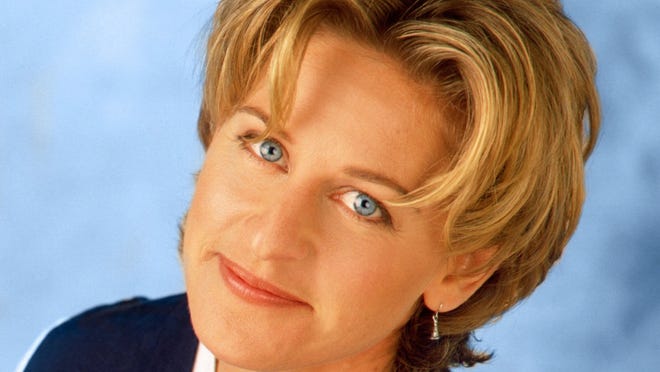
Less than 25 years ago, the very idea of a TV star and her sitcom character identifying as lesbian was earth-shaking, as Ellen DeGeneres‘ coming-out announcement became a major national story.
“The Puppy” episode of ABC’s “Ellen,” which aired in April 1997, was one of the biggest milestones in the recognition of LGBTQ actors, characters and storylines on television.
In the years before and since, TV has had a mixed record in portraying (and including) LGBTQ characters and actors.
Pride Month provides an important opportunity to focus on TV portrayals that helped viewers gain greater understanding or reflected the evolving attitudes of the public.
TV’s increasing inclusivity is evidenced by series such as Fox’s “9-1-1: Lone Star,” Hulu’s “Love, Victor” and Showtime’s “Billions,” and reflects the growing influence of prolific producers including Greg Berlanti, Ryan Murphy and Shonda Rhimes. A look at the major milestones:
Living up to its trailblazing reputation, Norman Lear‘s legendary comedy becomes the first sitcom with a gay storyline in 1971, as bigoted Archie has trouble believing an old buddy is gay. While many shows remained hesitant, other Lear shows introduced LGBTQ characters, including a gay couple on “Hot L Baltimore” (1975); a trans woman on “The Jeffersons” (1977); and a trans main character on the short-lived “All That Glitters” (1977).
‘That Certain Summer’ (1972)
Three years after the Stonewall Uprising in New York marked a turning point in the battle for LGBTQ rights, this ABC movie of the week offered what many consider the first compassionate portrayal of a same-sex couple (played by Hal Holbrook and Martin Sheen).
‘An American Family’ (1973)
This landmark documentary following the Loud family is primarily known as the precursor of reality TV – with the cachet of PBS – but it also stood out because one of the family’s sons, Lance, was openly gay at a time when society was less hospitable.
‘Soap’ (1977-81)
Jodie Dallas (Billy Crystal) was network TV’s first memorable gay series regular. In ABC’s over-the-top parody of daytime soap operas, Jodie goes from dating a football player to fathering a daughter with a woman who seduces him. (That also made him the first openly gay father in primetime.)
‘St. Elsewhere’ (1982-88)
NBC’s acclaimed medical drama was the first primetime drama to document AIDS with the story of a closeted politician. In 1985, NBC aired “An Early Frost,” the first TV movie dealing with AIDS, which followed a young gay man (Aidan Quinn) dealing with HIV and coming out to his parents.
‘One Life to Live’ (1968-2013)
As an openly gay teen, Billy Douglas (Ryan Phillippe) was a groundbreaking character in daytime television when he was introduced in 1992. The ABC soap featured other LGBTQ storylines during its five-decade run, receiving multiple GLAAD media awards. In 2009, “All My Children,”which featured daytime’s first lesbian character in 1983, presented another genre first: the same-sex wedding of Reese Williams and Bianca Montgomery.
‘My So-Called Life’ (1994-95)
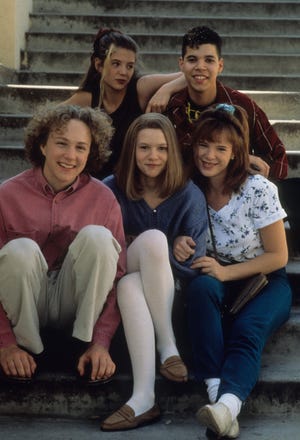
This much-praised but short-lived ABC high school drama featured Wilson Cruz as Rickie Vasquez, the first openly gay actor to play a gaymain character on a primetime series. Fifteen-year-old Rickie provided a sign of hope to LGBTQ youths who felt like they were all alone.
‘The Real World: San Francisco’ (1994)
Pedro Zamora, a young gay man who was HIV-positive, offered an empathetic human face to challenge hostile caricatures in the third season of the iconic MTV reality soap. He died of AIDS-related complications just hours after the season finale aired, but the attention he drew to AIDS and LGBTQ issues remains a lasting memorial that earned him praise from then-President Bill Clinton.
‘Ellen’ (1994-98)
Neither DeGeneres nor her sitcom character, Ellen Morgan, identified publicly as lesbian until 1997, late in the ABC comedy’s fourth season. After months of speculation, and at a time when such revelations could severely damage careers, both the star and her character revealed their true identities, Morgan in a funny airport scene and DeGeneres via Oprah Winfrey‘s talk show and Time magazine.
Unlike on “Ellen,” two gay characters were at the center from the beginning of this NBC comedy. When then-Vice President Joe Biden endorsed marriage equality in 2012, he cited the sitcom’s influence: “I think ‘Will & Grace’ probably did more to educate the American public than almost anything anybody’s ever done so far.” The U.S. Supreme Court legalized same-sex marriage three years later.
‘Queer as Folk’ (2000-05)
In 2000, Showtime’s drama featuring an ensemble of gay men living in Pittsburgh wasa sign of premium cable’s ability to focus on niche audiences, providing programming broadcast networks shied away from. In 2004, Showtime unveiled “The L Word,” a series that featured characters who identified as lesbian, bisexual and transgender. A sequel, “The L Word: Generation Q,” premiered in 2019.
‘Angels in America’ (2003)
HBO’s celebrated adaptation of Tony Kushner’s Pulitzer-winning play that contemplated the AIDS epidemic and contemporary politics, featuring such screen legends as Meryl Streep and Al Pacino, is one of many LGBTQ-oriented productions from the premium cable network.
‘Queer Eye’ (2003-07; 2018-)
Five gay men who were experts in such fields as fashion, grooming and interior design became media stars in this hit personal makeover show. Originally called “Queer Eye for the Straight Guy,” the Bravo series shortened its title in its third season to provide makeovers to a broader cross section of people. Netflix successfully rebooted the series in 2018.
‘Modern Family’ (2009-20)
ABC’shuge, broad-based sitcom hit introduced viewers to Mitchell and Cameron, a loving couple who adopt and raise a baby daughter, facing all the joys and challenges of parenthood. Mitch (Jesse Tyler Ferguson) and Cam (Eric Stonestreet), who married in the fifth season in 2014, offered a portrayal of LGBTQ characters that hasn’t always been common on TV.
‘RuPaul’s Drag Race’ (2009- )
In 2009, multitalented RuPaul launched a search for a drag superstar that celebrated LGBTQ identity. The iconic, long-running hit captivated viewers and has earned multiple Emmys. It began its run on Logo TV, a cable network with programming designed to appeal to LGBTQ viewers, before moving to VH1.
‘Orange Is the New Black’ (2013-19)
LaverneCox became the first openly transgender person to earn a Primetime Emmy nomination for her portrayal of inmate Sophia Burset in Netflix’s dramedy that centered on the diverse population of a minimum-security women’s prison.
‘Transparent’ (2014-19)
Amazon’s comedy-drama about an older trans woman and her family drew acclaim and awards, including a Golden Globe and a Peabody, and featured a crew that included dozens of trans workers. Some questioned the casting of cisgender male Jeffrey Tambor as Maura Pfefferman and, later, allegations of sexual harassment against him led to Tambor’s early departure.
‘Supergirl’ (2015-21)/’Black Lightning’ (2017-19)
Two of CW’s DC Comics series, both produced by Berlanti, broke new ground. In 2018, “Supergirl” introduced TV’s first transgender superhero Nia Nal/Dreamer (played by Nicole Maines, a trans woman) and “Lightning” launched network TV’s first lesbian superhero, Anissa Pierce/Thunder and later Blackbird (Nafessa Williams).
‘Arthur’ (1996- )
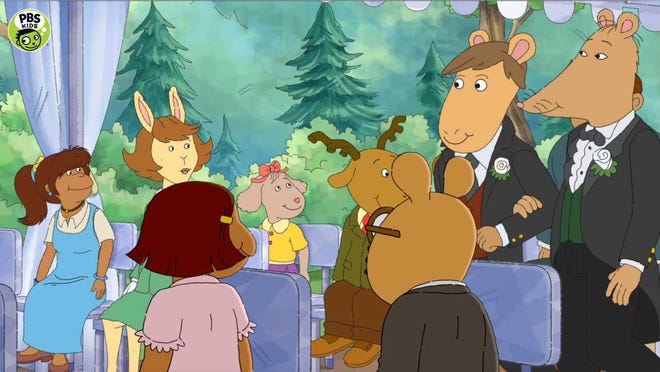
Mr. Ratburn, the beloved elementary school teacher on PBS’ animated children’s show, finally took the plunge in 2019, marrying chocolate shop owner Patrick. Arthur and other students, who attend the wedding, approved.
‘Pose’ (2018-2021)
Producer Murphy took viewers to New York’s drag ball scene in the 1980s and 1990s with this drama focused largely on the Black and Latino LGBTQ and gender-nonconforming competitors and a cast that featured five transgender actors. Billy Porter, who stood out as emcee and fashion designer Pray Tell, became the first openly gay Black man to win an Emmy as lead actor.
The Hungarian parliament passed a law on Tuesday that will ban the dissemination of any content deemed to promote homosexuality in schools—despite protests by businesses like Google and ViacomCBS—in keeping with right-wing nationalist Prime Minister Viktor Orban, up for reelection in 2022..
Photo by: zz/KGC-254/STAR MAX/IPx 2021 5/28/21 Prime Minister of The United Kingdom Boris Johnson … [+] greets Hungarian Prime Minister Viktor Orban on May 28, 2021 at 10 Downing Street in London, England, UK.
zz/KGC-254/STAR MAX/IPx
Key Facts
Specifically, the passed proposal involves the prohibition of discussions on LGBT issues, including gender change and homosexuality, to students under the age of 18 and was tacked onto a broadly supported separate bill that imposes harsher penalties on pedophilia, making it difficult to defeat.
Lawmakers from the ruling nationalist Fidesz party overwhelmingly voted in favor of the bill, while left-wing opposition lawmakers boycotted the vote.
The legislation comes ahead of next year’s election, where right-wing nationalist Prime Minister Viktor Orban of the ruling Fidesz party will seek a fourth consecutive term.
The provision to ban school talks on LGBT issues was widely condemned by the opposition and human rights activists who asserted the combined legislation wrongly conflates homosexuality with pedophilia.
Crucial Quote
“Using child protection as an excuse to target LGBTQ people is damaging to all children in Hungary,” stated Gwendoline Delbos-Corfield, a member of the European parliament.
Key Background
Unlike most other EU nations, gay marriage is illegal in Hungary and Orban’s government recently banned same-sex couples from legally adopting children. Upon taking over in 2010, Orban amended the Hungarian constitution to redefine marriage as the union between a man and a woman. Orban said at the time “The father is a man, the mother is a woman” and “every child has a right to receive Christian upbringing” and “every child has a right to live according to their sex at birth.” A gay rights organization in Hungary, Budapest Pride, has called on U.S. president Joe Biden to discuss the matter with Orban when he meets with him at the NATO summit in Brussels on Tuesday. Some international corporations that have operations in Hungary, including Google and ViacomCBS, also condemned the law.
Tangent
The new Hungarian law against the dissemination of LGBT content in similar to legislation passed by the Russia parliament in June 2013 which outlawed what it called the “propaganda of non-traditional sexual relations” among Russian students. Some activists have directly linked the current Hungarian legislation to the Russian “anti-gay propaganda” laws of 2013. David Vig, chief of Amnesty International- Hungary, said the bill has “dark echoes” of Russia’s laws and will “further stigmatize” LGBT people in Hungary, exposing them to “greater discrimination in what is already a hostile environment.”
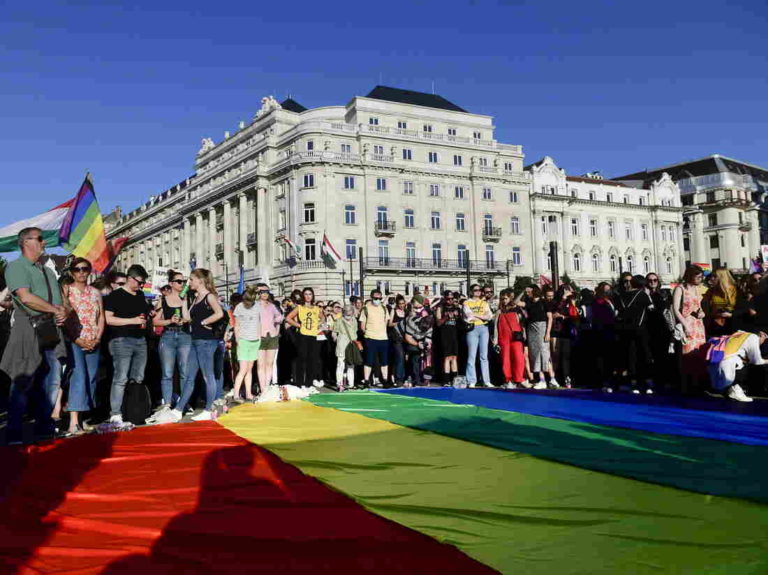
People unfurl a rainbow flag during an LGBT rights demonstration in front of the Hungarian Parliament building in Budapest, Hungary on June. 14, 2021. During the protest human rights activists called on lawmakers in Hungary to eject legislation banning any content portraying homosexuality or different gender identities to anyone under 18. Szilard Koszticsak/AP hide caption
toggle caption
Szilard Koszticsak/AP
People unfurl a rainbow flag during an LGBT rights demonstration in front of the Hungarian Parliament building in Budapest, Hungary on June. 14, 2021. During the protest human rights activists called on lawmakers in Hungary to eject legislation banning any content portraying homosexuality or different gender identities to anyone under 18.
Szilard Koszticsak/AP
BUDAPEST — Lawmakers in Hungary passed legislation Tuesday that prohibits sharing with minors any content that portrays being gay or transgender, something supporters said would help fight pedophilia but which human rights groups denounced as anti-LGBT discrimination.
The conservative ruling party of Hungarian Prime Minister Viktor Orban introduced the legislation, which is the latest effort to curtail the rights of gay men, lesbians, bisexual and transgender people in the central European nation.
Hungary’s National Assembly passed the bill on a 157-1 vote. The ruling Fidesz party has a parliamentary majority, and lawmakers from the right-wing Jobbik party also endorsed the measure. One independent lawmaker voted against it.
All other opposition parties boycotted the voting session in protest. Human rights groups had denounced the measure strongly, seeing it as a tool that could be used to stigmatize and harass residents because of their sexual orientations and gender identities.
Some human rights officials have compared it to the so-called gay “propaganda” law passed by Russia in 2013 which human rights officials say has become a tool to harass sexual minorities.
“On this shameful day, the opposition’s place is not in the parliament but on the streets,” Budapest Mayor Karacsony wrote on Facebook.
Lawmaker Gergely Arato, of the Democratic Coalition parliamentary grouping, said the changes violate the standards of parliamentary democracy, rule of law and human rights.
The legislation, presented last week by Fidesz, was on its face primarily aimed at fighting pedophilia. It included amendments that ban the representation of any sexual orientation besides heterosexual as well as gender change information in school sex education programs, or in films and advertisements aimed at anyone under 18.
Thousands of LGBT activists and others held a protest in Budapest on Monday in an unsuccessful effort to stop the legislation from passing.
Dunja Mijatovic, the commissioner for human rights at the Council of Europe, the continent’s leading human rights body, also had asked Hungarian lawmakers to reject the legislation, saying it reinforced prejudice against LGBT people.
The Fidesz party also successfully championed a law making it impossible for trans people to legally change the gender markers on their identity documents. Human rights officials say that puts them at risk of humiliation when they need to present identity documents.
“Today’s decision in #Hungary’s parliament represents another severe state discrimination against #LGBTIQ people,” Deputy Foreign Minister Michael Roth of Germany tweeted Tuesday after the new legislation passed. “This law goes against everything we regard as our common European values. Full solidarity and support for LGBTIQ people in Hungary.”
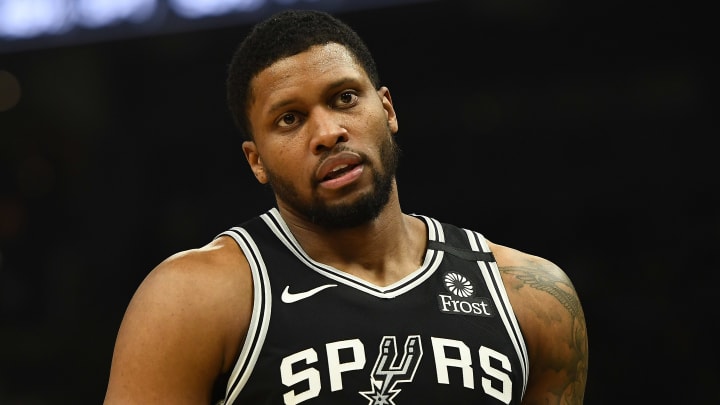
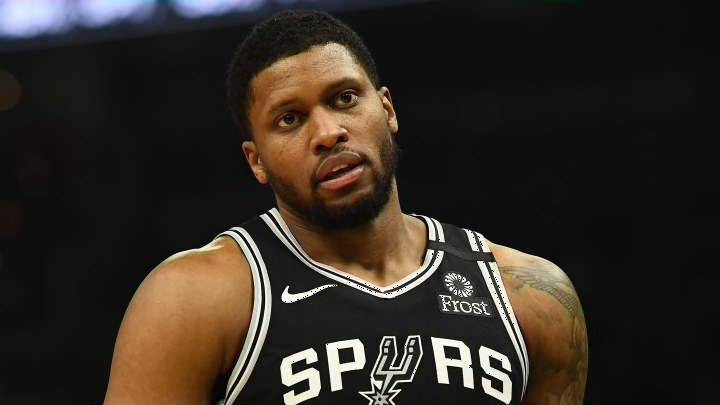
The San Antonio Spurs forward Rudy Gay will become a free agent this summer, possibly marking the end of his time with the team. After signing with the Spurs in 2017, Gay reinvented his game and emerged as a solid and reliable contributor.
In four seasons with the team, Rudy averaged a solid 11.9 points and 5.6 rebounds. While he’s definitely been productive, re-signing Rudy isn’t so clear-cut. There are a number of pros and cons that San Antonio should consider before they make a final decision on retaining his services.
Rudy provided the bench with some much-needed offense this season, averaging 11.4 points per game. In fact, he was San Antonio’s leading bench scorer and the fifth-leading scorer when you exclude LaMarcus Aldridge.
Gay also shot the ball well from three, connecting on an impressive 38.1 percent of a career-high 4.4 three-point attempts per game. That led the team among regular rotation players.
While Rudy provided the Spurs with scoring, he could also be too aggressive in looking for his own shot. Gay averaged an alarming 10 shots in just 21.6 minutes per game, occasionally disrupting the offense by taking ill-advised shots.
This was especially a problem when he wasn’t hitting shots, particularly two-point field goals, where he shot a team-worst 45.1 percent. Worse yet, he took shots away from young Spurs players such as Lonnie Walker IV and Devin Vassell.
Perhaps his aggression was due in part to him playing for a new contract. However, were he to return next season, Gay will have to do a better job of playing within the offense.
FCB Health New York’s leaders have more than their shareto crow about in the wake of 2020’s myriad disruptions, including a 25% jump in revenue and 27 new assignments. But the achievement about which they’re most proud is the launch of an internal product, the patient experience platform YuzuYello.
Its debut came so early in the pandemic that most of the people who worked on it hadn’t yet stocked up on hand sanitizer. According to FCB Health Network chief commercial officer Michael Guarino, the launch had originally been scheduled for early in 2020. When COVID-19 hit, however, the urgency to get the platform into the world intensified.
“COVID didn’t just limit patients’ access to care; it cut it off entirely,” he says. “But chronic disease wasn’t going away because of the pandemic. We felt we had to go ahead and launch.”
Pulling off the launch in two weeks, before everyone had mastered Zoom, was a daunting yet motivating prospect, he adds. “We were helping more people manage chronic conditions, and [the ability to do that] was built into all projects and assignments.”
FCB Health Network president and CEO Dana Maiman believes such efforts are what distinguish the agency (and the broader network) from the competition. In her mind, the YuzuYello rollout is emblematic of the need for today’s mega-firms to act more like product-driven companies than traditional ad agencies.
“We think of ourselves as a gigantic startup, because we’re always looking for ways to innovate,” she explains. “We’re tolerant of failures, so we can keep our test-and-learn approach going.”
Revenue jumped from an MM+M-estimated $280 million in 2019 to an estimated $350 million in 2020. Head count similarly spiked, from 874 people at the end of 2019 to 1,070 people a year later.
Significant hires at FCB Health New York included executive creative director Laura Mizrahi, who previously held the same role at Razorfish Health. “We do more broadcast work than any other health agency and she brings significant prowess in that area,” Maiman says.
Former W2O managing director Jenna Brownstein joined as group management director, while FCB Health mainstay Kathleen Nanda was elevated to chief creative officer. Maiman says that, all told, the agency invested $1 million in training its people in 2020, including working with an outside partner on inclusivity.
The YuzuYello launch may have been the year’s splashiest development, but FCB Health New York also took the wraps off a new dynamic content practice, which marries data, media, creative and tech in order to enable better personalization. The firm is also proud of its pivot to full-service virtual productions, ranging from drop-kit shoots to large-scale studio and location ones. The agency has completed more than 85 virtual productions since March 2020.
FCB Health Network chief product officer Graham Johnson says the company is enjoying this newfound ability to stretch, pointing to the opening of a new studio in Johannesburg. “People hear that and think, ‘That’s about finding lower prices in other markets.’ But it also gives us access to a greater breadth of talent and more diversity,” he explains.
It also adds flexibility. “We’re busy, but we don’t want to be in a situation where people are working 24 hours a day,” he continues, noting a continued need to reassess what represents healthy work/life balance in the remote-work era. “We need to operate in a follow-the-sun model.”
Johnson recently ran an innovation showcase, which featured technology-forward ideas, for agency members. The thinking behind it: That introducing people to Silicon Valley-worthy concepts will ultimately lead to breakthrough work.
By way of example, Johnson points to an FCB office in Brazil that has coordinated sales-rep training with Waze, the popular driving app. “If the rep needs to drive 18 minutes to see a client, he or she can access a helpful piece of content that’s less than 18 minutes long,” he explains.
For her part, Maiman notes that such endeavors are part of FCB Health’s ongoing effort to think more like an outsider. “We do not look at other agencies in the healthcare space. We look at other industries for inspiration,” she stresses.
At the same time, maintaining agency culture has proven a challenge during the pandemic, especially with regard to employees hired after the shift to remote work. Maiman says remote life has “forced us to think of new ways to bring people together, to bring our culture to life.”
On the client front, FCB Health New York claimed AOR engagements from the likes of Pfizer, Gilead, Sanofi Genzyme, Genentech, Gilead and Novartis. It also won assignments from Unilever, Senokot (for its over-the-counter laxatives), Avrio Health (for Betadine antiseptic) and UCB (for its epilepsy franchise).
Elsewhere, Maiman notes that three of the agency’s pro bono efforts, all underway prior to the invasion of COVID-19, were supercharged with relevance due to the pandemic. They included Disappearing Doctors, an effort to build awareness around physicians’ mental health and suicide prevention. As part of the agency’s longstanding relationship with the Gay Men’s Health Crisis, it introduced Blood Vessels, the latest in its Blood Equality campaign that endeavors to reverse the ban on blood donations by gay and bisexual men.
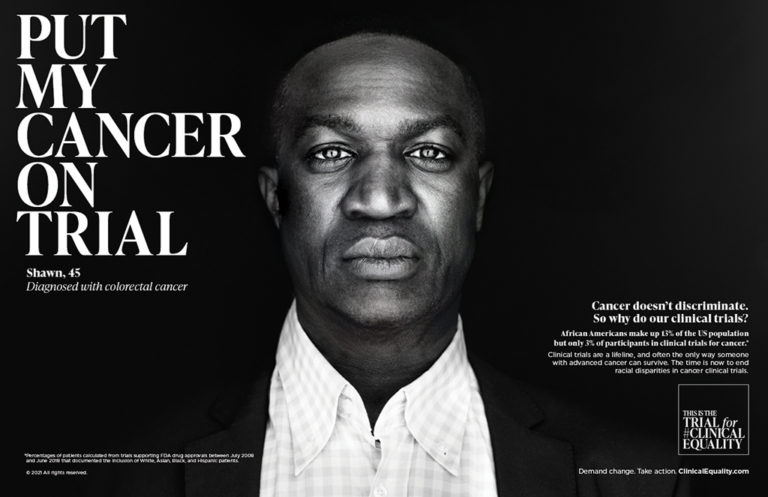
But none reached the emotional intensity of The Trial for #ClinicalEquality, an initiative dedicated to achieving racial equity in clinical trials. The problem has existed for decades, but between the killing of George Floyd and the gaping disparities in COVID-19 outcomes, the project took on an unprecedented urgency.
“One of the amazing things about being in healthcare advertising is that you can throw yourself into a cause and see meaningful results,” Nanda says. “You can impact a person’s life in ways that you can’t in other mediums.”
Partners at the American Society of Clinical Oncology were quick to respond to the finished work. “They were moved beyond words. They said, ‘Thank God. Finally,’” Nanda recalls. “Those kinds of moments let you know you’ve lit something in someone that hasn’t been lit before. And we could not have done any of this powerful work if it hadn’t been for the depth of understanding, insight and empathy that represents how FCB Health works.”
. . .
The idea I wish I had…
The work that FCB Chicago did for Walmart, Neighbors, was fantastic. The company mobilized immediately — in the very early days of the lockdown — and leveraged user-generated content and the beautiful voices of Walmart associates. The creative depicted not only what Walmart employees were feeling, but what we were all feeling. It captured the emotions of the moment in real-time. — Kathleen Nanda
Pride weekend festivities took a scary turn when a guy with a machete threatened a patron at Shaw’s Tavern, at 6th and Florida Ave., NW, around 3 PM on Saturday. According to a police report, the aggressor called the customer anti-gay slurs, flung cicadas at him as he ate, and told him “I’ll silence you” while wielding his blade. Authorities have since arrested a 13-year-old male and charged him with assault involving a dangerous weapon. The incident is being investigated as a potential hate crime.
Shaw’s Tavern co-owner Eric Heidenberger says he’s been in touch with the victim and “he’s doing OK—obviously, he’s a little startled.” Fortunately, no one was physically injured. But the incident is just the latest in a series of juvenile crimes targeting restaurant patrons and staff in one quickly gentrifying pocket of Shaw.
Over the past four or so months, Heidenberger says problems with unruly teens have escalated to a near weekly occurrence. The kids have unscrewed lightbulbs and throw them at patrons. Other times, they’ve tossed rocks or glasses of water at diners. Some of the troublemakers have walked in through windows and started verbal fights with people eating on the patio. Even if the police are called, the kids will sometimes return after an hour after they’ve gone. On occasion, Shaw’s Tavern has had to close its patio to avoid altercations, “which is tough, especially after the year we just had where businesses are having to close or alter operations.” Heidenberger is also an owner in bars and restaurants in Mt. Vernon Triangle and Dupont Circle but “nothing is as bad as it is right now in Shaw.”
“MPD has recommended that we call them as soon as possible but a lot of these things happen so quickly that if there’s a gap of a couple minutes, that’s our staff having to try to de-escalate some of these situations,” Heidenberger. “It puts our team in a tough position. As business operators, what matters most to us is the safety of our customers and our staff, and they don’t feel that right now.”
At nearby Korean barbecue restaurant Gogi Yogi, owner Daniel Kramer has dealt with kids throwing eggs at his windows. Some have demanded to use the restrooms, then assaulted staff who told them they were for customers only. Then on Sunday—a day after the machete incident—a stray bullet went through the transom above the restaurant’s front door during prime dinner hours. Kramer decided to close his business for the rest of the evening and all Monday. Heidenberger says he also closed his nearby restaurant 801 for the night because of the shooting.
Kramer says the incidents are all part of a larger trend in the neighborhood: “There’s a culture that has developed there of lawlessness and criminality that has not been sufficiently deterred by the powers that be,” Kramer says. “It starts with smaller things like riding dirt bikes without any regard for traffic laws, and it continues with open container and open air drug market at 7th and T. You just have a cascading level of crimes, and it keeps growing. Then you have assaults. Then you have thefts of property. This is where we are.”
Heidenberger and Kramer are among several nearby business owners who’ve been talking with MPD, DC Councilmembers, and youth outreach groups about trying to address the incidents. Shaw Main Streets Executive Director Alexander Padro says the group recently had a call with Uniting Our Youth, a non-profit that provides support programs for inner city youth and partners with two public housing sites in the neighborhood.
“They were actively engaged in trying to reach out to the youth that were involved—because it’s not like they are not known—but they had limited resources in terms of being able to actually do programming,” Padro says. In response, several Shaw businesses agreed to provide financial and in-kind assistance. Meanwhile, Heidenberger started his own non-profit several months ago called Hope for Youth DC that aims to galvanize restaurants to raise money and donate food and supplies for programs that similarly provide opportunities for young people.
“We’ve been trying to go about this in the most diplomatic, constructive way. This isn’t simply just an MPD issue. This is something that needs to get attention from top to bottom,” Heidenberger says. “We’re very sensitive to that fact that it is juveniles. We can’t put young kids into jail and expect that to fix the problem…What happens after that?”
Meanwhile, MPD says its Third District patrol has increased its presence in Shaw, including in the areas of recent crimes, and officers have been assigned foot beats in the area to engage with residents and business owners on a daily basis. The Alcoholic Beverage Regulation Administration also has a program that subsidizes the cost of off-duty police officers to help with security at nightlife establishments. Just a couple weeks ago, Padro says the DC liquor board granted Shaw Main Streets authorization to coordinate the deployment of these officers, beginning July 1.
For now, Gogi Yogi’s Kramer has taken matters into his own hands and hired his own private security seven days a week and off-duty MPD officers twice a week.
“There’s been a lot of talk lately, and the problem keeps getting worse,” Kramer says. “The District of Columbia needs to decide if they want this to be the new normal.”
My first Pride was a huge let down. I found myself discouraged by the lack of real diversity I saw and as a kid who had no choice but to be out due to my effeminate nature, it was sad. Recalling now, it would have been nice to see an older representation of myself, to see them living a life fulfilled, surrounded by people who I would want to be surrounded by, rejoicing in fellowship in the summer sun.
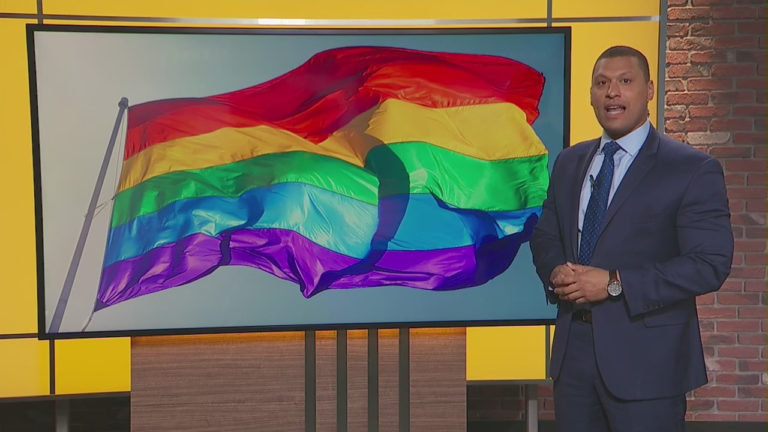
The idea of fellowship is such a strong concept in the gay community. We devote an entire month to Pride. People travel near and far to connect with each other and the opportunity to impact lives is subtly significant. “Showing up” is such a strong part of making the month everything it needs to be for everyone. Community is made of many different types of people; and in the gay community, we should strive to be as diverse as our flag. But it takes each and everyone of us to make each and every color of that flag vibrant, strong, and true. Participation is key.
Advertisements
The importance of showing up
I often wonder where the older representation of myself was during my first Pride. Were they OK? Did they spend time that day questioning the impact his presence would have? Did they give in to the notion that they didn’t matter? Why didn’t they show up?
It took until my early twenties to find queer friends who represented all that I see our flag to be. Every year I encourage them to join me at Pride, and every year a newcomer insists that it isn’t the place for them. I love having the pleasure of reminding them to “show up” at pride. It doesn’t matter how you feel the community has treated you, what you feel about the sponsors or venues, nor the presence of your ex, just SHOW UP. We have an obligation to one another to be visible and vibrant, if not for ourselves.
Show up.
Caleb Neal Raynor is a recent graduate of The University of Oklahoma, living in Tulsa, who seeks to bring light and empathy to this world through writing.
TUESDAY, June 15, 2021 (HealthDay News) — More teens in the United States are reporting their sexual identity as gay, lesbian or bisexual, nationwide surveys show.
Between 2015 and 2019, the percentage of 15- to 17-year-olds who said they identified as “non-heterosexual” rose from 8.3% to 11.7%, according to nationwide surveys by the U.S. Centers for Disease Control and Prevention.
“Although our analyses demonstrated that there has been a significant increase in the proportion of girls and boys that self-identified as gay, lesbian or bisexual, we cannot be certain if this represents a true increase of this magnitude, or if it reflects at least in part, greater comfort by teens with acknowledging a non-heterosexual identity on an anonymous questionnaire,” said Dr. Andrew Adesman, who led an analysis of the findings.
Adesman is chief of developmental and behavioral pediatrics at Cohen Children’s Medical Center in New York City.
Since 2015, the CDC’s Youth Risk Behavior Survey has included questions about respondents’ sexual identity and the sex of their intimate contacts. Before 2015, those questions were included only on some regional versions of the survey. Analysis of regional survey data between 2005 and 2015 had shown a rise in non-heterosexual sexual identity for both boys and girls.
The new, nationwide survey included 20,440 boys and 21,106 girls (average age 16 years).
In addition to the overall increase, the percentage of boys who identified as non-heterosexual rose from 4.5% to 5.7%. For girls, the increase was greater — from 12.2% to 17.8%, the findings showed.
Dr. Amy Green is vice president of research for The Trevor Project, a nationwide group that provides crisis intervention and suicide prevention services to non-heterosexual youth.
Green noted that young people today have greater access to information and language that can help them understand their identity.
“Gen Z youth also have the most positive attitudes towards the LGBTQ community, which can reduce the stigma associated with identifying in this way,” she said.
Green noted that The Trevor Project’s own surveys consistently find that young people understand and want to express the nuances of their sexual orientation.
“[This] is why we advocate for the collection of this information in both research and clinical settings, to better inform policies, programs and practices aimed at supporting the well-being of LGBTQ youth,” Green said.
Joseph Kosciw is research director of GLSEN in New York City, which has worked for 30 years to help schools become safer and more affirming for LGBTQ students. He hopes this study is reflective of that work and that schools are more welcoming places where students can be themselves.
“I think the climate [in schools] is better and youth are more comfortable,” he said. “And I also think that, in general, youth of the current generation are more open to just being who they are.”
When LGBTQ students are in supportive school environments, the teen years can be positive for them, he said. For others, school can feel unsafe and not affirming, Kosciw said. Even in such circumstances there can be spaces of hope and comfort, including Gender and Sexuality Alliance clubs, he added.
Supportive school environments include those where students see themselves reflected in protective policies, with the same access to the school and activities as everyone else. That includes locker rooms and bathrooms that align with their gender identity or being allowed to bring a same-sex date to the prom, Kosciw said.
“To the extent students can be a part of school life, they do better in school and they thrive, and so I think it can be an exciting time for many LGBTQ students,” he said. “And it really is the responsibility as a school to ensure that, by having their schools be safe and affirming spaces for them.”
The increase in teens who identified as non-heterosexual was not matched by a corresponding increase in same-sex intimate contact. Though the survey showed modest increases, they were not large enough to be statistically significant.
Adesman said the likely explanation for the higher proportion of girls who identified as gay or bisexual and corresponding increase in same-sex activity is because the stigma for boys remains far greater than that for girls.
“High school can be a very difficult time for teens in so many ways, and it is especially challenging for teens who identify as gay or bisexual,” Adesman noted.
“Knowing that gay and bisexual youth are at greater risk for social isolation and victimization, as well as emotional problems, school personnel and health care professionals need to be more vigilant regarding these concerns for what appears to be an increased proportion of high school students in the U.S.,” he added.
The findings were published online June 14 in JAMA Pediatrics.
SOURCES: Andrew Adesman, MD, chief, developmental and behavioral pediatrics, Cohen Children’s Medical Center, New York City; Amy Green, PhD, vice president, research, The Trevor Project, West Hollywood, Calif.; Joseph Kosciw, PhD, director, GLSEN Research Institute, GLSEN, New York City; JAMA Pediatrics, June 14, 2021, online
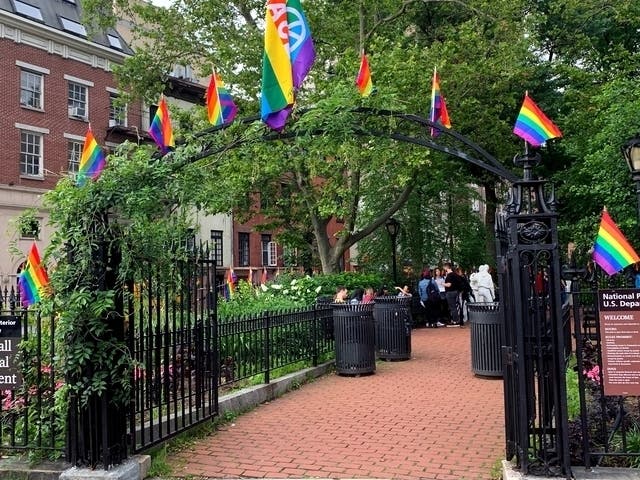
The Stonewall Inn is probably the best known site when it comes to LGBTQ history and activism. But there are hundreds of other touchpoints in this culture and history that have amazing stories behind them.
In buildings grand and non-descript, locations famous and private, there is rich LGBTQ history in just about every corner of New York City.
“We like to say that we’re making an invisible history visible,” said Andrew Dolkart, co-founder of the NYC LGBT Historic Sites Project.
CBS Local Digital Media personalizes the global reach of CBS-owned and operated television and radio stations with a local perspective.