Home Blog Page 57

13 LGBTQ friendly bars in Greater Cincinnati to check out – The Cincinnati Enquirer

June is Pride month! And this year, the jubilee is double as the community will be making up for the lost time due to the COVID-19 pandemic. 

Vaccinated folks can now safely embark on the town and live up this annual celebration to the fullest.

Greater Cincinnati boasts a number of nightlife hotspots for the LGBTQ community – here are some options:

More:Pride Month events in Greater Cincinnati 🏳️‍🌈

Bar 32

701 Bakewell St., Covington

Why go? Every night of the week, there are different specials from $6 domestic beer pitcher to $2 drafts to Jell-O shots at $1 apiece.

It also hosts karaoke nights and has pool tables. Check out its Facebook page to see some of the fun flyers that they’re posting every week.

Bar 901 at the Brittany

901 Race St., Downtown

Why go? This bar is gay-owned and staffed. It has an outdoor area with couches and tons of seating as well as plenty of art adorning the walls, private tables and a fully stocked bar.

Bar 901 is intimate and describes itself as, “a place you can come enjoy a drink AND have a conversation with your friends.”

Below Zero Lounge

1120 Walnut St., Over-the-Rhine

Below Zero is perfect for late-night dancing on the weekends. The first floor has a video juke box, draft and craft beers, coat check and a full bar.

Why go? There’s a stage, great party music and happy hour specials on Thursdays, Fridays and Saturdays. Stop by on Sundays for themed Drag Brunch and Thursdays for Karaoke. 

Its Facebook page says, “Open minded bar for open minded people where all are welcome and diversity is celebrated!”

Birdcage

927 Race St., Downtown

Why go? The Birdcage is a downtown bar that says it’s the “hottest LGBTQ+ bar and lounge.” This colorful bar is intimate, with drag shows that happen right in front of you rather than on a stage. There is space to dance, DJs, and a full bar that has seating and a VIP room.

There are bird decorations hanging from the ceiling, bird art on the walls, and craft cocktails. Happy hour specials daily, RuPaul’s Drag Race viewing parties, burlesque shows and more.

The Crazy Fox Saloon

901 Washington Ave., Newport

Why go? Drink specials every day of the week. Cheap jukebox, pool table, patio, free W-Fi, TVs, video and pinball games. “We think of ourselves as a great bar where all are welcome… Just happens that the owners are a gay couple” the bar’s Facebook page says.

The owners Carl D. Fox and Terry Bond were the first same-sex couple to get married in Kenton County in 2015. They regularly bring in food to share from doughnuts to homemade soup. The bar has basketball days, derby parties and even a Sausage Queen Festival.

e19 Lounge Bar & Discotheque

1905 Elm St., Over-the-Rhine

In 2021, e19 Lounge Bar & Discotheque is celebrating its first pride month in business. This Over-the-Rhine spot is all neon-lights, sleek lines and nonstop dancing. Owners Richard Cooke and Martin Wagner are no strangers to nightlife – they were inspired to open the bar after years of hosting monthly LGBTQ dance parties in venues across Cincinnati.

Why go? They may sling drinks, but they are more than a bar. The space bumps with dance music every night – and Thursday evenings, it’s transformed into a Pilates studio.

Home Base Tavern

2401 Vine St., Clifton Heights

Why go? Its Facebook says, “We offer daily specials, good friends and plenty of things to do.” There is a TV, pool tables, patio, pong, darts and a digital jukebox. Well drinks are quite cheap and expect lights and rainbows as decorations.

The bar is three rooms and on the smaller side, but the atmosphere is very welcoming. Bonus: Dogs are welcome inside, and the bar serves light snacks.

Good Judy’s

4169 Hamilton Ave., Northside

Nestled in Northside is a midcentury-modern, dreamy cocktail bar called Good Judy’s. It’s been a pastel paradise for the LGBTQ+ community since its inception in January 2020.

Why go? Not only is the space cute as could be – they keep their patrons entertained with Drag Queen and Drag King shows and Thursday-night tributes to pop culture icons like Rihanna, Brittany Spears and Ariana Grande. It is the perfect spot to have fun and to support local LGBTQ performers.

Main Event Speakeasy

835 Main St., Downtown

Why go? This bar opens at 5:30 a.m. most days. Yes, opens. Main Event has shows throughout the week, a dance floor, and a lounge available to book for private parties and events.

Main Event Speakeasy is keeping a star-studded lineup of Drag performers for Pride month, which can be found on its Facebook page.

MixWells

3935 Spring Grove Ave., Northside

Why go? This bar has everything from late night dance parties to performances including drag shows. The bar is dark with colorful flashing lights, DJs, a stage and a ton of opportunities to dance.

The patio is huge and the bar has themed nights regularly. There is a photo-booth and drink specials. The bar also offers classes where couples and groups can learn to make cocktails from Danny MixWells.

Old Street Saloon

13 Old St. #B, Monroe

Why go? Open talent nights, karaoke and amazing drag shows every weekend. This 18 and older bar is open Thursday through Saturday and each week has a different show. The stage is colorful and takes up much of the room with plenty of tables and seating around it. There are disco balls, colorful lights, backdrops and cheap drinks.

Rosie’s

643 Bakewell St., Covington

Why go? “Covington needed a bar that was accepting of everyone in the community – Rosie’s Tavern is that place for our neighbors… When you stop by, you’ll quickly see why we’re the friendliest bar in town,” according to its website.

There is art and signs hanging on exposed brick, a jukebox, draft beer and lots of hanging lights. Mondays have $2 well drinks.

Tillie’s Lounge

4042 Hamilton Ave., Northside

Why go? The front door has a red carpet and bright purple door. The bar has dark wood and deep colors, chandeliers, art and moody lighting. There is a back patio with plants and specialty cocktails. 

According to its website, the bar is named after Tillie the elephant, who was part of a traveling circus that paraded the streets of Northside in the early 20th century.
Here are all the bills impacting the LGBTQ community in Ohio – The Columbus Dispatch

The Ohio Legislature is reviewing several bills that would affect LGBTQ Ohioans.

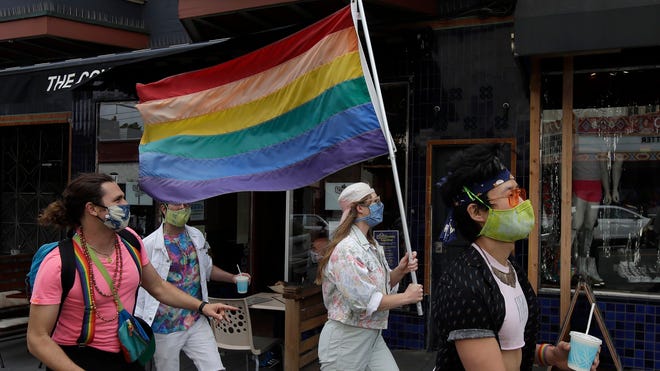
Ohio’s lesbian, gay, bisexual and transgender community is celebrating pride throughout June. 

The month-long celebrations have their roots in the 1969 Stonewall Uprising in New York City. The protests lasted for six days and are considered the tipping point for gay rights in America. 

We’ve come a long way, Sen. Nickie Antonio, a Lakewood Democrat and first openly gay Ohio legislator, said. But there is more work to be done. 

“I think there is a patchwork of welcoming in the State of Ohio,” Antonio said. “There are certainly cities and communities across the state that have worked very hard to let people know they are welcoming.”

There are still places where gay Ohioans can legally lose their jobs because of their sexual orientation. 

“What I really want is for everyone to know they are welcome in Ohio,” Sen. Michael Rulli, R-Salem, said. “I don’t think it’s more complicated than that.”

The two jointly sponsored the Ohio Fairness Act. The bill, which Antonio has kept introducing for the better part of a decade, would ban discrimination based on a person’s sexual orientation, gender identity or expression.

It’s backed by business groups like the Ohio Chamber of Commerce, but it’s not the only bill impacting the LGBTQ community. 

Here is a list of LGBTQ bills in Ohio’s legislature and where they stand.

Cultural competency training

Senate Bill 48 would require certain healthcare professionals (dentists, nurses, pharmacists, physicians, social workers) to receive cultural competency training in order to get or renew their licenses.

Supporters say this kind of training improves patient outcomes because people feel more comfortable when their doctors understand different cultural values, customs and traditions.  

The bill was introduced in February but has yet to have a hearing. 

Conscience clause

Republicans inserted a last minute amendment into the state budget that would let health care providers decline to provide any service “that violates the practitioner’s, institution’s, or payer’s conscience as informed by the moral, ethical, or religious beliefs or principles held by the practitioner, institution, or payer.”

LGBTQ advocates fear this language would give doctors legal cover to discriminate against members of their community.

Supporters say that’s not true. Doctors or nurses could say no to a specific treatment. It wouldn’t let them deny overall care to patients. 

Banning conversion therapy

Senate Bill 50 would ban conversion therapy for minors, a controversial form of therapy that aims to change a person’s sexual orientation or gender identity. 

The American Psychological Association has opposed conversion therapy since 1998, saying it “does not believe that same-sex orientation should or needs to be changed, and efforts to do so represent a significant risk of harm.”

Columbus, Dayton, Cincinnati and Toledo have all banned this kind of therapy but the state has not. The bill was also introduced in February but has yet to have a hearing. 

Ohio Fairness Act

A pair of bipartisan bills – Senate Bill 119 and House Bill 208 – were introduced in March . The bills would add sexual orientation and gender identity into Ohio’s existing anti-discrimination law.

“It’s a solid bill. It’s protecting your right to get a job,” Rulli said. “Sen. Antonio was very cautious. A lot of the controversial topics are not in this bill,”

For example, the bills include exemptions for religious organizations. Opponents like Sen. Matt Huffman, R-Lima, argue that it creates “another set of parameters for lawsuits that, of course, inevitably falls on the backs of small employers.”

Transgender athletes

Senate Bill 132 and House Bill 61 would ban transgender girls from playing on female sports teams in Ohio. 

Both Rep. Jena Powell, R-Arcanum, and Sen. Kristina Roegner, R-Hudson, say transgender girls have unfair advantages when it comes to sports. And their bills are meant to protect “the integrity of women’s sports.”

The Ohio High School Athletic Association’s policy on transgender student athletes mirrors the NCAA rules for college sports. Transgender girls can compete after a year of hormone therapy. 

Opponents say throwing these kids off their sports teams will harm their mental health. 

“We’re not talking about elite athletes here,” Rep. Mary Lightbody, D-Westerville, said. “These are children who want to play on a team with their friends.”

The Senate bill hasn’t had a hearing, but the House held its first hearing in April. 

Antonio doesn’t think either bill will become law though. 

“I believe that bill is more to communicate with a base group of people to instill fear where there should not be any,” she said. 

Bias-motivated crimes

Senate Bill 149 would revise Ohio’s hate crime laws from the revised code calls “ethnic intimidation” into “bias-motivated crimes” that include a person’s gender, sexual orientation or gender identity. 

The bill has yet to have a hearing. 

Anna Staver is a reporter for the USA TODAY Network Ohio Bureau, which serves the Akron Beacon Journal, Cincinnati Enquirer, Columbus Dispatch and 18 other affiliated news organizations across Ohio.

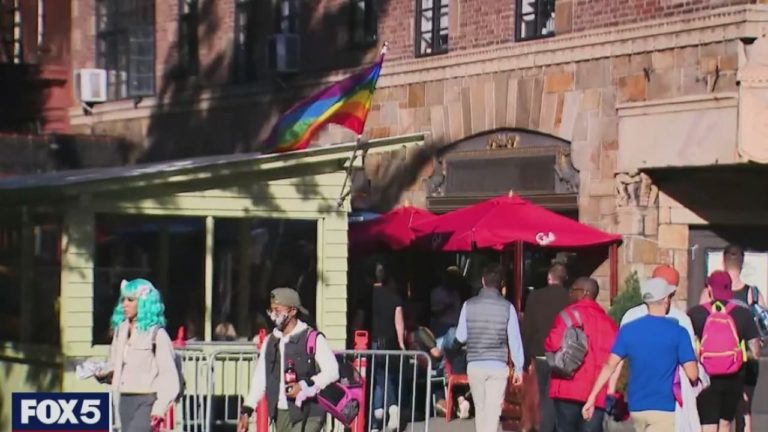
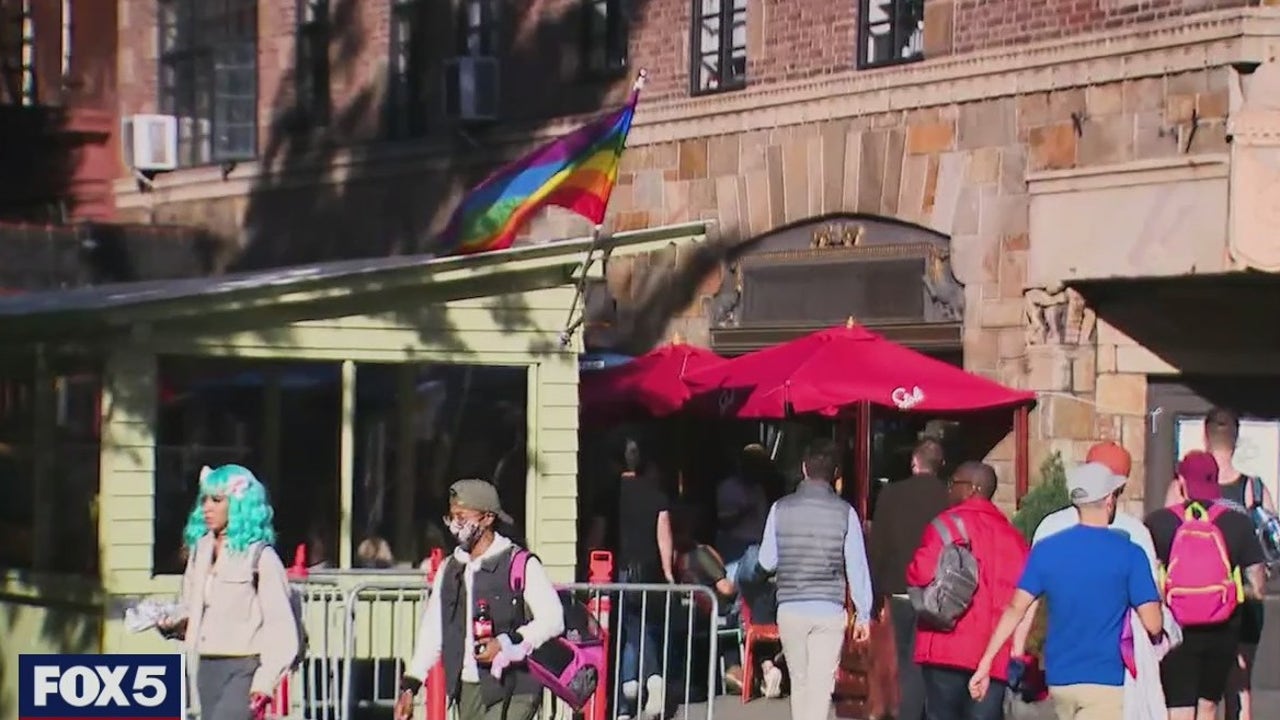
New York’s gay bars are still vital, especially post-COVID, owners say | Pride and Pandemic – FOX 5 NY

For many, a place colloquially known as a “gay bar” was the only place you could go where you weren’t compelled to lie about who you were.

“The gay community had nowhere else to meet publicly,” said Ken Lustbader, the co-founder of NYC LGBT Historic Sites Project.

“This was their place, their safe place to be themselves,” said Helen Buford, the owner of Julius’ Bar, “[a place] where they weren’t accepted anywhere else.

“[It’s] a place where they know if they hit on someone, they’re not going to get beaten up or murdered,” said Lisa Cannistraci, the owner of Henrietta Hudson.

“People could lose their jobs, their families, employment, religious associations,” Lustbader added. “So bars became really safe spaces.”

But the gay bar of the past was much different than the one we think of today where every inch is covered in rainbow flags.

“In many cases, they were private clubs with bouncers at the door,” Lustbader said. “They were bottle clubs, you had a sign, a fictitious name in many cases to get in.”

You’d have to either be in possession of an underground guidebook listing places considered “safe” or rely on word of mouth.

That was all because of state law.

“After prohibition, the State Liquor Authority is formed, which has a regulation that basically says if you serve people who are disorderly you can lose your license,” Lustbader said. “Disorderly people were considered homosexuals.”

Get breaking news alerts in the FOX 5 NY News app. Download for FREE!

But you could easily argue that a certain black-and-white photograph — showing a group of men being denied a drink — laid the groundwork for the gay bars of today. And Randy Wicker, on the far end of the bar in that photo, was one of those men.

“We were saying, ‘We are homosexuals and we want to order a cocktail,'” Wicker said.

That’s when the bartender held out his hand.

“Saying, ‘No, oh no, not here. ‘Cause we already have trouble with that,'” Wicker said.

See, those well-dressed patrons — some of the earliest gay rights protestors — knew that Julius’ Bar in Greenwich Village was already being closely watched by state authorities due to prior infractions. So those protestors thought something might go down. And that was the purpose that night.

“We wanted to have a place refuse to serve us for being homosexual,” Wicker said.

So they brought a photographer and newspaper reporter with them to document it. The incident has become known as the “sip in.”

“That would be the first case against homosexuals actually proactively documented,” Lustbader said.

And it all happened in 1966 — three years prior to the Stonewall riots, widely seen as the birthplace of the modern gay rights movement.

But this piece of history, Julius’ Bar, was almost gone for good thanks to COVID

“I had such a deflated feeling,” Buford said. “I was pretty down, I have to say. When we first closed, it was awful.”

But thanks to federal loans, community support, and donations from the LGBT-focused nonprofit Gill Foundation, the city’s oldest gay bar is here to stay.

But others — like Tom Johnson, the former owner of Therapy Lounge — weren’t as lucky.

“We sell drinks to people to pay for ourselves, to pay for our shows, to pay for everything,” Johnson said from his new home in Chicago. “If we’re not selling drinks, what are you going to do?”

In 2003, Therapy Lounge became one of the first gay bars to open up in Hell’s Kitchen, paving the way for a slew of others and changing the face of the neighborhood into one that, these days, has lot more rainbow flags that it used to.

But Therapy’s business model was no match for the past year’s COVID restrictions.

“We couldn’t open up for delivery to-go out of Therapy with burgers and nachos, and a 20-foot space in front,” Johnson said. “It just wouldn’t cut it when you have 5,000 square feet and the only time you really made money was on Thursday, Friday, or Saturday night when the place was at capacity for hours.”

But even though Johnson won’t be part of it, he said he is confident New York’s gay nightlife will come back.

Someone who will be a part of that comeback is Alexi Minko, even though for a period it was touch-and-go for his bar, Alibi Lounge.

“Like the kids say, ‘The struggle is real,'” Minko said with a laugh.

He has kept a remarkably upbeat attitude, considering the financial setback. See, like most gay bars, Alibi — one of the only gay- and Black-owned businesses in Harlem — was not accustomed to making money with curbside takeout.

“Because Alibi is not, was not, a restaurant. We were more a club-type of lounge establishment,” Minko said. “Between the months of April to June, it was absolutely impossible, it was a nightmare.”

He had to lay off five of his eight employees. But he said that thanks to donations and the generosity of his landlord, Alibi Lounge will stay open. And this Pride Month marks Alibi’s fifth anniversary.

Also still around — and celebrating its 30th anniversary — is the West Village‘s Henrietta Hudson, one of the city’s only remaining lesbian bars. But COVID has without a doubt left its mark here, too.

“COVID changed people,” Cannistraci, the owner, said. “It changed me.

And she said she knew the pandemic would also change customers’ attitudes toward a crowded space.

“I knew then packed dance floors would be the last thing to open,” she said. 

That is why after more than a year to finalize plans and undergo construction, Henrietta recently opened up with a renewed focus.

“I wouldn’t say COVID changed it — I’d say COVID activated it,” Cannistraci said.

The bar puts less emphasis on the dancefloor and more on a quieter, culinary experience.

“With all the isolation, I think people want to sit and actually look each other in the eye and talk to them,” Cannistraci said from her brand-new colorful outdoor dining structure. 

That right there is one of the reasons she believes that even in 2021 — with all the progress we’ve made — there is still a need for a gay bar. A need to meet other people who share the same shoes in a safe space.

“They sit down at the bar and you can see their shoulders just go down, and there’s this exhale,” Cannistraci said. “You know, they’re home.”

Johnson, the former owner of Therapy Lounge, called it “strength in numbers.”

“If you’re the only gay guy in a straight bar and they come at you with a pool stick and start beating you up,” he said, “it’s different when you’re all together and you have a more secure safe space, where like-minded people will protect you.”

Julius’ Buford said bars catering to the LGBTQ community can’t disappear. 

“People can’t go back in the closet,” she said. “They have to be free to be who they are and to love who they want to love.”

BARS MENTIONED

Julius’ | 159 W. 10 St., New York, N.Y. 10014 | 877-746-0528 | juliusbarny.com

Henrietta Hudson | 438 Hudson St., New York, N.Y. 10014 | 212-924-3347 | henriettahudson.com

Alibi Lounge | 2376 Adam Clayton Powell Jr. Blvd., New York, N.Y. 10030 | 917-472-7789 | alibiharlem.com

Lawmakers in Hungary pass anti-LGBT law ahead of 2022 election – Yahoo Eurosport UK

Hungary’s parliament passed legislation on Tuesday that bans the dissemination of content in schools deemed to promote homosexuality and gender change, amid strong criticism from human rights groups and opposition parties.

Hardline nationalist Prime Minister Viktor Orban, who faces an election next year, has grown increasingly radical on social policy, railing against LGBT people and immigrants in his self-styled illiberal regime, which has deeply divided Hungarians.

His Fidesz party, which promotes a Christian-conservative agenda, tacked the proposal banning school talks on LGBT (lesbian, gay, bisexual and transgender) issues to a separate, widely backed bill that strictly penalises paedophilia, making it much harder for opponents to vote against it.

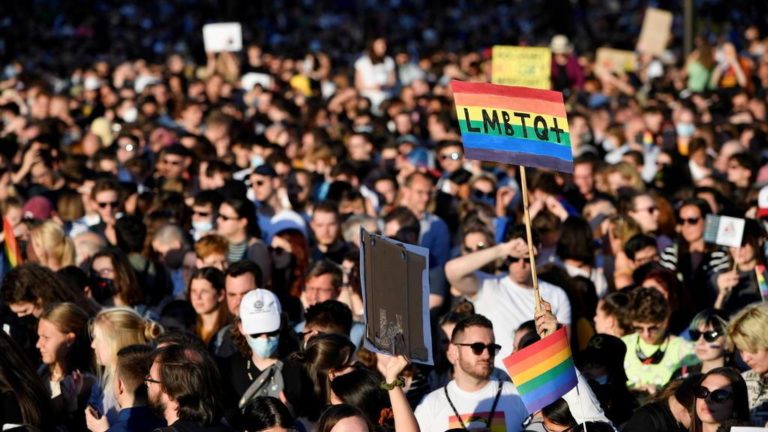
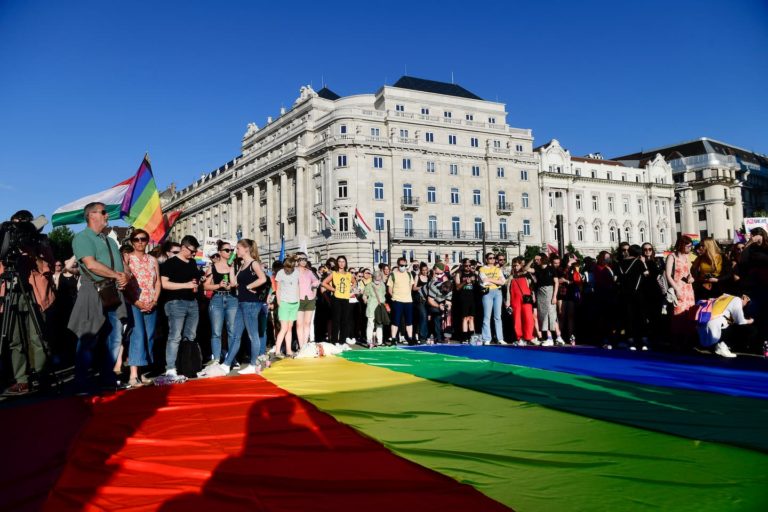
The move, which critics say wrongly conflates paedophilia with LGBT issues, triggered a mass rally outside parliament on Monday, while several rights groups have called on Fidesz to withdraw the bill.

Fidesz lawmakers overwhelmingly backed the legislation on Tuesday, while leftist opposition parties boycotted the vote.

Under amendments submitted to the bill last week, under-18s cannot be shown any content that encourages gender change or homosexuality. This also applies to advertisements. The law sets up a list of organisations allowed to provide education about sex in schools.

The U.S. Embassy in Budapest said it was “deeply concerned” by anti-LGBTQI+ aspects of the legislation.

“The United States stands for the idea that governments should promote freedom of expression and protect human rights, including the rights of members of the LGBTQI+ community,” it said in a statement on its website.

Restrictions

Gay marriage is not recognised in Hungary and only heterosexual couples can legally adopt children. Orban’s government has redefined marriage as the union between one man and one woman in the constitution, and limited gay adoption.

Critics have drawn a parallel between the new legislation and Russia’s 2013 law that bans disseminating “propaganda on non-traditional sexual relations” among young Russians.

Poland’s conservative ruling party Law and Justice (PiS), Fidesz’s main ally in the European Union, has taken a similarly critical stance on LGBT issues. Budapest and Warsaw are at odds with the European Union over some of their conservative reforms.

The European Parliament’s rapporteur on the situation in Hungary, Greens lawmaker Gwendoline Delbos-Corfield, slammed the new law on Tuesday: “Using child protection as an excuse to target LGBTIQ people is damaging to all children in Hungary.”

Orban has won three successive election landslides since 2010, but opposition parties have now combined forces for the first time and caught up with Fidesz in opinion polls.

(REUTERS)

Andrew Rannells: What To Watch Streaming If You Like The Book Of Mormon Star – CinemaBlend

Big Mouth (Netflix)

Big Mouth is an animated series that follows characters in their early teens as they explore their growing hormones, sexuality, emotions, friendship, and other important topics. The main voice cast includes Nick Kroll, John Mulaney, Jessi Klein, Jason Mantzoukas, Jenny Slate (who was replaced by Ayo Edebiri), and Maya Rudolph.

Andrew Rannells plays Matthew, the openly gay student in Big Mouth. Matthew began the series as a recurring character but has become increasingly more important to the show, especially as it dives into more topics like queer identity and sexuality. Big Mouth captures the awkwardness of growing up in a unique, strange, quirky, and funny way. It makes its adult viewers remember the cringe-worthy moments from their teen years and be thankful that those days are over.

Stream Big Mouth on Netflix.

Skipper’s Brew Coffee House celebrates “Big Gay Grand Opening” tonight – Mustang News

Since a second location of Skipper’s Brew Coffee House first opened downtown in February, co-owners and married couple Shari Rubino and Karen Pike say everything has gone better than expected. 

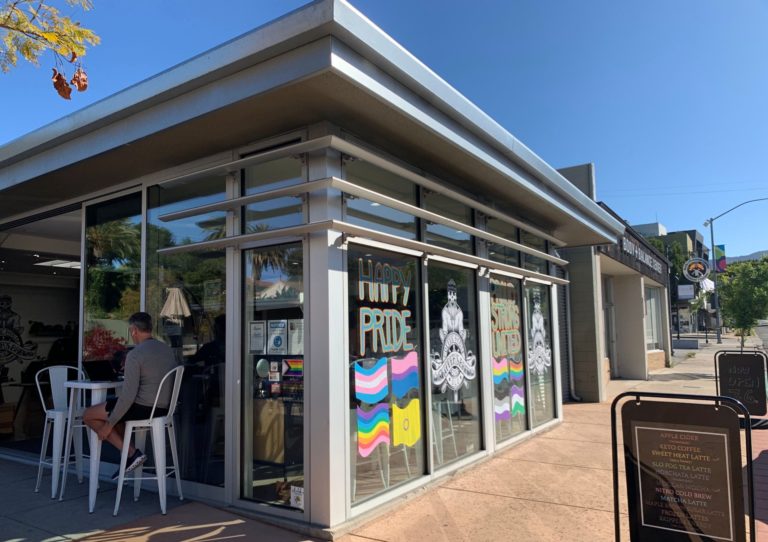
Now, Skipper’s Brew is hosting a “Big Gay Grand Opening” today, June 15, from 5 p.m. to 8 p.m. The event will include a DJ, a drag show, an Australian sausage sizzle and tacos from Hoagies Sandwiches & Grill. 

The grand opening is just one way Rubino and Pike are raising awareness that Skipper’s Brew is a female and LGBTQ+ owned safe space. 

“We just wanted to make sure that everyone knew that everyone is welcome,” Rubino said.

Recently, Skipper’s Brew partnered with the Gala Pride and Diversity Center to support the LGBTQ+ community — taking part in events such as a pride caravan that took place through downtown and ended at Skipper’s Brew with about 300 people.

“It was amazing; it was a night that everyone needed,” Rubino said.

Skipper’s Brew barista and Cuesta College student Eleanor Hudson said that she appreciates that Pike and Rubino use the ownership of their business to promote social change.

“It’s a risk, because you are making a political statement by doing it,” Hudson said. “But I’m really proud to be able to come into a job and be able to say…everyone’s equal and you can come here to a safe space.”

Compared to other coffee shops she has worked at, Hudson said the owners at Skipper’s Brew try to make it feel like a family.

“Parents have [their] queer children come in…because this is like a safe space for them,” Hudson said. “Here, I feel like it’s very much like a passion project and everyone is in on it.”

Pike and Rubino originally bought out an existing coffee shop in Morro Bay and reinvented the menu and interior. When they noticed many Cal Poly students drove to Morro Bay to drink their coffee, they felt a location in Downtown San Luis Obispo was necessary.

“Probably from the first weekend we opened the doors, it just hit the ground running,” Rubino said. “It’s been amazing.”

While not receiving federal assistance after the pandemic hit, Rubino and Pike took second jobs to help stay afloat. 

“The decision to open a second location wasn’t one we took lightly as we knew we were in the middle of a pandemic,” Rubino said. “We had such positive momentum with our Morro Bay location, we felt we would be successful in a second location.”

Although their San Luis Obispo location is smaller than their Morro Bay property, Rubino said that the foot traffic is the same.

During the week, Pike said the shop is full of business people, but they get a lot of students studying on the weekends.

“I honestly think it’s been a good mix of both — it’s almost split,” Pike said.

Skipper’s Brew is located at 1242 Monterey St. and is open seven days a week from 7 a.m. to 6 p.m.

Md. governor, AG immune from challenge to gay ‘conversion’ ban – Reuters

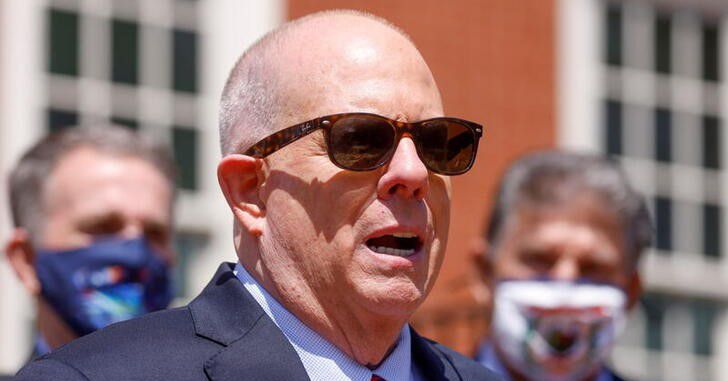
Maryland Governor Larry Hogan leads a news conference in Annapolis, Maryland, U.S. April 23, 2021. REUTERS/Jonathan Ernst

  • Therapist sued wrong parties, court finds
  • Panel does not address 1st Amendment claims

(Reuters) – Maryland’s governor and attorney general are immune from a therapist’s lawsuit challenging the state’s ban on offering minors so-called conversion therapy aiming to change their sexual orientation or gender identity, a federal appeals court has ruled.

A unanimous 4th U.S. Circuit Court of Appeals panel found Tuesday that plaintiff Christopher Doyle could not sue Governor Larry Hogan and Attorney General Brian Frosh in federal court because they were not directly tasked with enforcing the law, the Youth Mental Health Protection Act of 2018.

The panel left it up to a district court to decide whether Doyle could amend his lawsuit to name Maryland’s licensing board as a defendant instead.

Doyle’s lawyer, Mathew Staver of Liberty Counsel, and Hogan’s office did not immediately respond to a request for comment. A spokesperson for Frosh declined to comment.

Doyle filed the lawsuit in 2019, alleging that the conversion therapy ban violated his right to free speech under the 1st Amendment. He said that the law prevented him from offering treatment he claims some of his patients wanted.

U.S. District Judge Deborah Chasanow rejected the defendants’ argument that they were shielded by sovereign immunity, but in September 2019 dismissed the case.

She found that administering conversion therapy was not speech protected by the 1st Amendment but rather a form of conduct directed at minors. Therapists, she noted, were free to publicly express their opinions, but were only banned from practicing a particular treatment.

Circuit Judge Julius Richardson wrote Tuesday that Chasanow erred in finding that the governor and attorney general were not immune. He said that, while the Supreme Court’s 1908 decision in In re Young may allow state officials to be sued in federal court over unconstitutional laws, the officials must be directly tasked with enforcing those laws so that the federal court can enjoin them from doing so.

The Maryland law, he said, leaves enforcement to the state Board of Professional Counselors and Therapists.

Doyle “raises an interesting First Amendment question that would be a matter of first impression in this Circuit,” Richardson wrote. “But we may not address that question because Doyle cannot sue the Governor and the Attorney General in federal court under these circumstances.”

The panel, which also included Circuit Judges Paul Niemeyer and Diana Gribbon Motz, vacated all orders in the lower court and declined to rule on whether Doyle could amend his case to sue the board.

About 20 states and Washington, D.C., ban conversion therapy for minors.

Opponents of conversion therapy, including the American Psychiatric Association, say the practice stigmatizes lesbian, gay, bisexual and transgender people, and is linked to depression, anxiety and suicide. Supporters have offered religious justifications or said it is unethical not to offer clients the option.

In November, the 11th Circuit struck down conversion therapy bans in Boca Raton and Palm Beach counties in Florida, finding it violated therapists’ 1st Amendment rights.

The case is Doyle v. Hogan, 4th U.S. Circuit Court of Appeals, No. 19-2064.

For Doyle: Mathew Staver of Liberty Counsel

For Maryland: Kathleen Ellis of the Office of the Attorney General

Read more:

Florida bans on conversion therapy for children voided by U.S. appeals court

Brendan Pierson reports on product liability litigation and on all areas of health care law. He can be reached at brendan.pierson@thomsonreuters.com.

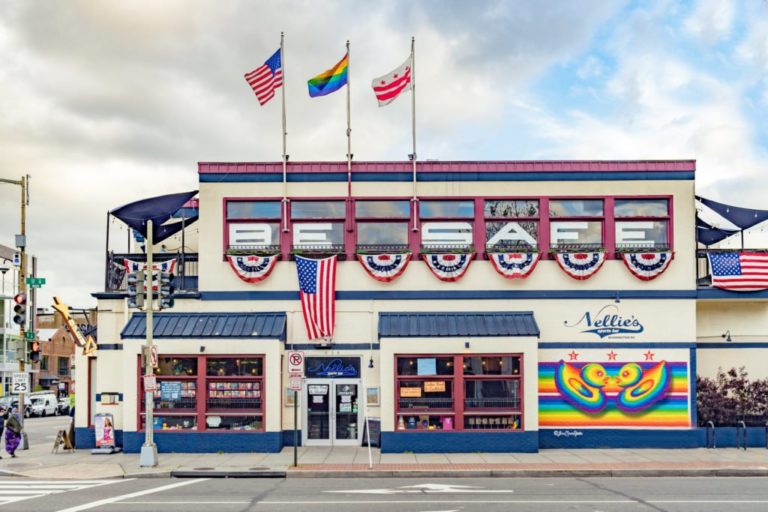
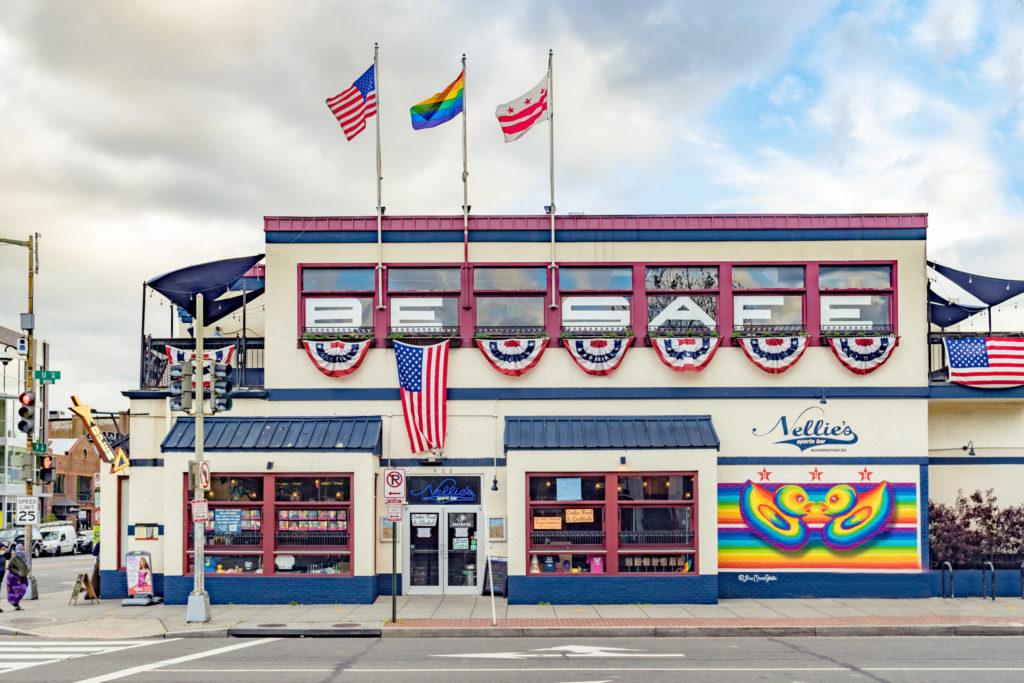
Protesters Are Throwing a ‘Boycott Nellie’s’ Block Party – Washingtonian

Days after an ugly incident where a Black patron was dragged down the stairs of Nellie’s, demonstrators supporting a boycott of the venerable U Street gay sports bar are planning  a Friday night “block party” on the street outside. Hosted by organizers from the social-justice advocacy group Harriet’s Wildest Dreams, the Ward 1 Mutual Aid organization, and the Black-led anti-racist group the Palm Collective, the block party will start at 7 PM in front of the bar.

Though the current protests were spurred by the Pride weekend incident involving 22-year-old Keisha Young, organizers allege the landmark bar has a history of discriminating against Black patrons. “This boycott comes after a long history of anti-Blackness by Nellies, as revealed by former Black workers, patrons, community advocates, viral videos, and displayed by Nellies blatantly antagonistic responses to calls for accountability,” an Instagram caption for the block party reads. “They have flown the blue lives matter/police flag in the face of murders by police proving that they do not respect or protect the Black queer and trans community.”

“Our investigation into the matter is ongoing, and we will cooperate with any law enforcement investigation, however we do not need to wait for the investigation’s conclusion before we take decisive action,” a representative from Nellie’s wrote in a statement to Washington City Paper. We offer a heartfelt apology to all who witnessed the horrific events of this past weekend. No matter what behavior occurred prior, nothing warrants mistreating, and disrespecting, one of our guests….We will use this time to listen and understand what more we can do to create the safe and friendly atmosphere our guests have come to expect from Nellie’s Sports Bar over the past 14 years.”

The protests have highlighted some racial division within the LGBTQ community. Nellie’s has terminated the security guard involved in the incident, and is closed for the next week to figure with its employees what changes need to be made. Young’s family is considering filing a police report and a civil claim against the bar.

Hungary passes law banning LGBTQ content for minors – The Washington Post

The new legislation comes as Orban gears up for elections, promoting a strongly conservative Christian agenda. In nearby Poland, the ruling Law and Justice party has made similar moves, with local councils passing legislation against “LGBT ideology.” Concern over the erosion of human rights protections has put both countries on a collision course with European Union officials in Brussels.

Baile de los 41 imagines secret life of Porfirio Diaz’s gay son-in-law – Mexico News Daily

After a rising political star in pre-Revolutionary Mexico marries the daughter of the president, he pursues not only higher office but also a clandestine romance with a gay man. His balancing between two worlds involves him in a wider controversy that remains a challenging subject in Mexico.

This is the basis of a new Netflix feature film that takes its name from the controversy in 1901 that inspired it: El baile de los 41 or The Dance of the 41 by Mexican director David Pablos.

The title refers to a drag ball held by a secret club of gay men in a private home in Mexico City that was raided by the authorities, resulting in the arrests of 41 men. According to Mexican lore, there was a 42nd attendee — Ignacio de la Torre, the son-in-law of then President Porfirio Díaz. De la Torre’s wife was Díaz’s daughter, Amada Díaz.

El baile de los 41 premiered on Netflix on May 12. It screened at several festivals beforehand, including its debut last year at the Morelia International Film Festival and a showing earlier this year at the San Francisco International Film Festival.

Director Pablos, who worked on the screenplay with Monika Revilla, was enthusiastic about the film’s Netflix premiere.

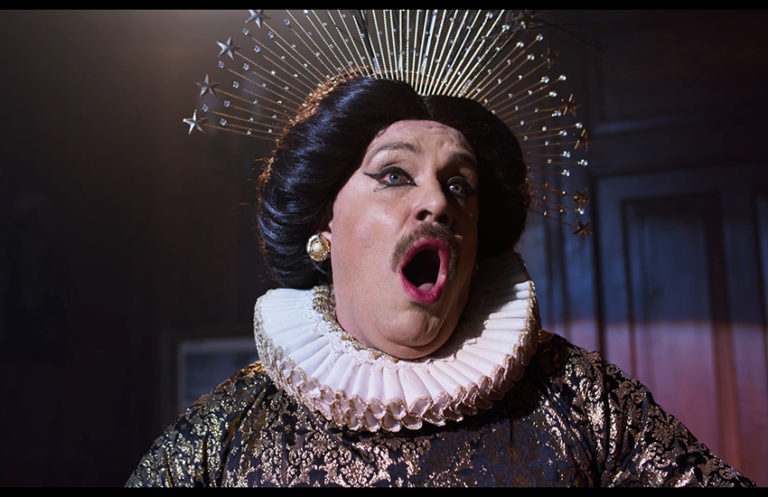
A still from the movie Baile de los 41.
A man in drag sings the Queen of the Night aria from the Mozart opera The Magic Flute in a still from the film El baile de los 41.

“I feel very, very lucky and happy and privileged because I know the kind of platform that [Netflix] is,” Pablos said, calling the streaming premiere “the real breakthrough, the real moment in which the film can go out into the world.”

As Pablos explains, Mexico has struggled to deal with the subject of homosexuality throughout its history. He notes the unpopularity of the number 41 in the army, on street addresses and in schools.

“This story is part of popular culture,” Pablos said, “and for me, it’s very important for presenting the coming out of the gay community, out of the closet here in Mexico. This [was] the first time homosexuality was talked about in the media, in newspapers. That’s why it became so important. Of course, the story back then became much more relevant not only because of homosexuality but also because the son-in-law of the president Porfirio Díaz was involved.”

Pablos credited Revilla — “a very close friend of mine” — with first learning about the Dance of the 41 and contacting him to suggest a film collaboration about it.

“Otherwise, I do not think I would have had the courage to decide to work on a film like this.”

The film stars Alfonso Herrera as Ignacio, Mabel Cadena as Amada, and Fernando Becerril as a mustachioed President Díaz in full military regalia, who personally decreases the number of arrested men from 42 to 41.

Scenes were shot in downtown Mexico City, including the Casa Rivas Mercado mansion, a rare example of period architecture that survived the Mexican Revolution. The mansion serves as Ignacio and Amada’s residence. The narrative also unfolds in the Mexican Congress where Ignacio works and at the gay club, including several explicit scenes.

This is not the first time that Pablos has taken on challenging subjects. His 2015 film Las elegidas (The Chosen Ones) was about prostitution and won him a Golden and two Silver Ariel awards, as well as a screening at Cannes.

El baile de los 41, however, necessitated a look into some puzzling historical questions. Among them is to what extent de la Torre was involved in the controversy.

“We know very little,” Pablos said. “Actually, Ignacio’s name was never mentioned in the media, in the newspapers. They did mention a few names, but Ignacio’s name was never there. There was no way to prove Ignacio was [at] this ball.”

Yet, Pablos said, not only did contemporary gossip identify de la Torre as the 42nd member of the group, but there was a more oblique connection made in a 1906 book about the controversy, Los cuarenta y uno.

“It’s a terrible book, I have to say,” Pablos said, describing its author as “very much in the mindset of that time of what masculinity was supposed to be.” Although de la Torre’s name does not appear in the book, Pablos finds signs of him within its pages: “There is a character [of whom the author] says, ‘This is one of the wealthiest men in Mexico. He is related to the president. He is part of the main inner circle of the president. He is the one [who is] like the leader of this clandestine group of gay men.’”

A still from the film Baile de los 41.
Porfirio Díaz’s daughter Amada (Mabel Cadena) prepares for her wedding to Ignacio de la Torre (Alfonso Herrera).

Pablos also looked at what happened following the scandal between de la Torre and his father-in-law.

“We do know Porfirio Díaz was very much disgusted with Ignacio,” Pablos said. “At first, [de la Torre] was his favorite son-in-law. Afterward, he became, like, unwanted.”

In the film, the ambitious congressman seemingly secures his political future by marrying Díaz’s daughter Amada. He presses his father-in-law for help in obtaining a governorship. Meanwhile, de la Torre develops a secret relationship with a gay man named Evaristo Rivas (Emiliano Zurita) and starts bringing him to the secret club.

“For me, part of the core of the film is this group of 42 men,” Pablos said. “It was important that when you would see them on screen, it would feel real.”

He sought a similar approach toward his protagonist, citing the unsympathetic account of de la Torre in Carlos Tello Díaz’s book El exilio about the Díaz family after the Mexican Revolution.

“Every time he mentioned Ignacio de la Torre, he also said Ignacio and Amada had a terrible relationship, they fought all the time,” Pablos said. “It even got to the point where he was beating her up.”

In writing the screenplay, Pablos said, “We did not want to make Ignacio a hero. We did not want to make him like a martyr. I wanted to make this portraying the real people, human beings, complex human beings, and portray this complex situation where he is at.”

Pablos found a resource in the Rivas Mercado mansion. He used the bright colors in its rooms as a contrast with Amada’s worsening relationship with her husband. As Ignacio refuses to give her a son, she tries to channel herself into other recourses, such as target practice outside and adopting a pet goat.

By the film’s end, Pablos said, the house is “a very important character.” Amada, he said, “becomes a prisoner in this house.”

The attendees of the Dance of the 41 also become prisoners and receive a brutal punishment in a scene that Pablos said left an impact on the actors who portrayed them.

“Most of [the] 42 men are gay in real life,” Pablos said. “So I think whether they want it or not, that touches on a wound I think any gay man has, especially in Mexico, which is a very heteronormative country, a very machista country … I don’t think a single gay man in Mexico has not been, at least once in his life, harassed or mocked or bullied or provoked. So this was, in a way, cathartic.”

Rich Tenorio is a frequent contributor to Mexico News Daily.

Canada’s LGBTQ population now 1 million — but hate crimes are rising too: Statistics Canada – CBC.ca

0

Canada is now home to about one million people who identify as members of the LGBTQ community, with people under the age of 25 accounting for a disproportionately large share of the LGBTQ population.

That’s according to a new report by Statistics Canada which seeks to paint a “statistical portrait” of the country’s LGTBQ population in recognition of Pride month.

The data, which Statistics Canada has been collecting since 2003, show that Canada’s LGBTQ population is skewed heavily toward young people.

Around 30 per cent of LGBTQ Canadians are between the ages of 15 and 24 — an age group that accounts for just 14 per cent of the non-LGBTQ population.

Only seven per cent of Canada’s LGTBQ population is 65 or older. People in the same age group make up 21 per cent of the non-LGBTQ population.

The report details a number of momentous developments and legal changes that have affected the lives of LGBTQ Canadians since the start of the 21st century, including the legalization of same-sex marriage and new protections for gender identity and expression written into the Canadian Human Rights Act.

Statistics Canada says those policy changes contributed to the growth in the number of same-sex couples. From 2006 to 2016, the number of same-sex couples in Canada grew by 60.7 per cent.

“This increase may be reflective, at least in part, of growing awareness and acceptance of sexual diversity in Canada,” said the report.

Hate crimes and economic vulnerability

But while many trends suggest Canada’s LGBTQ population is growing, the report also cites threats facing LGBTQ Canadians — such as the recent spike in hate crimes targeting people for their sexual orientation.

In 2019, police reported 263 such incidents, a 41 per cent increase over the previous year and the highest total since 2009.

Violent crimes accounted for more than half of those reported incidents.

LGBTQ Canadians also may have experienced more economic hardship during the COVID-19 pandemic than non-LGBTQ people, the report said.

People in the 15 to 24 age bracket experienced the largest number of job losses of any group during the pandemic. Since that group accounts for such a large share of the LGBTQ population, “it is likely that [LGBTQ] Canadians may be disproportionately affected by job loss during the pandemic,” the report says.

People who identify as LGTBQ also have lower average annual incomes than non-LGBTQ Canadians — $39,000 versus $58,000. That discrepancy could be explained in part by the fact that the LGBTQ population includes a large number of young people, who typically are not high-earners.

Statistics Canada is pledging to improve its reporting on the country’s LGBTQ population and to pay more attention to transgender people.

The 2021 census included for the first time a question about the respondents’ “gender” in addition to their sex at birth, which could help capture the number of Canadians who are transgender.

“This two-step approach will allow Statistics Canada to have reliable data on the trans population, including the gender non-binary population, and to help address information gaps about gender diversity in Canada,” the report says.

Celebrating LGBTQ Pride & Still So Much More to Stride Forward To Equality As Anti-trans Bills Continue To Be Submitted. – PR Web

Donna Weinberger, CEO LGBTQ Affirming Addiction Rehab, Inspire Recovery

Donna Weinberger, CEO LGBTQ Rehab, Inspire Recovery

“We’re celebrating the small victories for pride this year, but there’s so much more that needs to be done for queer and trans health rights,” says Donna Weinberger, CEO of LGBTQ rehab.

Last month, President Joe Biden announced that his administration will be reviving an anti-discrimination bill that will protect queer and transgender people from discrimination in healthcare. In response to Biden’s decision, Donna Weinberger of Inspire Recovery, a Florida-based rehab responded to the news stating:

“This decision will save thousands of lives across the country. So many of our clients come to us with severe mental health issues as a result of the ongoing trauma of being denied basic human rights just because they are queer and/or trans. Not being able to have access to the necessary healthcare, and gender affirmation treatment has severely harmed the trans community in particular.”

While the recent announcement from the Biden administration is taking the necessary steps, Donna Weinberger says that there is still so much more to be done:

“We’re celebrating the small victories for pride this year, but there’s so much more that needs to be done for the queer and trans health rights. A lot of our queer and trans clients come to us with severe underlying mental health issues as a result of oppression and discrimination. While this move is definitely a positive step towards equality for LGBT folks, there’s still so much that needs to be done to provide a safer world for our community.”

2021 has been a record-breaking year for anti-trans legislation, with over 117 bills submitted. Last month, Arkansas became the first state to ban gender-affirming care for transgender youth, which would prohibit physicians from providing hormone therapy and puberty blockers to young people under the age of 18. The ban would have also applied to people who have already begun and are in the middle of their gender-affirmation treatment. Florida and West Virginia have passed bills that would ban young trans kids from playing in schools’ sports teams that align with their true gender. Representatives in Alabama, South Dakota, Mississippi and Tennessee are petitioning for a similar bill to be passed.

Mental health and addiction have greatly impacted the LGBTQ community in recent years. According to the Substance Abuse and Mental Health Services Administration, people who identify as lesbian, gay, or bisexual are at greater risk for substance abuse and mental health issues compared to their heterosexual counterparts. Addiction and alcoholism treatment for the queer community is crucial now more than ever.

Inspire Recovery is a West Palm Beach rehabilitation center that specializes in recovery programs designed to cater to unique experiences and trauma related to recovering members of the LGBTQ+ community. Staff members and therapists are trained to accommodate and affirm clients’ gender identity and expression, and sexual orientation, and create a safe space for recovery despite the traumatic events that may occur outside of treatment. Inspire Recovery, aims to offer a safe and affirming space for trans and queer addicts and alcoholics.

Share article on social media or email:

EEOC Addresses LGBT Restroom Policies on Ruling Anniversary (1) – Bloomberg Law

Employers can’t bar workers from bathrooms or locker rooms that correspond to their gender identity, according to EEOC guidance published on the anniversary of a landmark U.S. Supreme Court decision that expanded protections for LGBT employees.

The U.S. Equal Employment Opportunity Commission released two online resources for employers and workers Tuesday, touching on the controversial topic of sex-based bathroom policies by citing the agency’s past opinions expressed in administrative cases brought by federal employees.

“In other words, if an employer has separate bathrooms, locker rooms, or showers for men and women, all men (including transgender men) should be allowed to …

Foes of Gay Games kicked by lam – Hong Kong Standard

Chief Executive Carrie Lam Cheng Yuet-ngor yesterday criticized legislators for “divisive” comments about the Gay Games set to be held next November.

Those criticisms came in a Legislative Council meeting last Wednesday, when several pro-establishment members opposed a call for officials to assist organizers of the games in booking government sports venues due to a fear the event would be linked to the same-sex marriage issue.

Among them, Junius Ho Kwan-yiu declared that holding the event in public was “disgraceful” and said any economic benefits from the event would be “dirty money.”

Without mentioning her targets, Lam said yesterday before the Executive Council meeting that it was much regretted some legislators became “a bit emotional” in expressing their views during discussions about the Gay Games.

Lam said she could not condone personally or as the chief executive remarks by individuals that would “unnecessarily divide society and even raise hatred among certain sectors in the community.”

Her administration, she added, had “no problem” with the purpose of the Gay Games, which is to promote inclusiveness and diversity, and officials would provide help in leasing government venues.

Responding to Lam’s words, Ho denied becoming emotional and said it was his way of expressing himself.

He does not discriminate against sexual minorities, Ho went on, but homosexuality could not be encouraged in case “natural” people are sidelined.

Lam was also asked to address concerns of the creative industry about new guidelines under the Film Censorship Ordinance. They include the guideline that films deemed to be endangering national security can be classified as not suitable for exhibition.

She admitted that the guidelines have caused “some anxiety” among people involved with the film and culture sectors, which officials would discuss with them to try to allay concerns.

Meanwhile, Lam did not think a speech on Saturday by Luo Huining, director of the central government liaison office, in which he attacked people who called for an end to one-party rule, put pressure on administration to take action against the organizers of Hong Kong’s June 4 vigils.

Lam said whatever action the administration took would be in accordance with the law.

A gay couple endured years of anonymous hate mail. Then they found out who was sending it. – LGBTQ Nation

LeeMichael McLean and Bryan Furze endured years of anonymous anti-gay harassment at their home in Milton, Massachusetts, but a remarkable turn of events has freed them from the abuse.

Handwriting analysis led them to the perpetrator who confessed to police that he was responsible. It was their friendly neighbor who always waved and made casual conversation.

Related: How many versions of the Pride flag are there now? You might be surprised.

The men are upstanding members of their community, proud parents, and served in local government. But that’s when things turned ugly, they say.

They started receiving dozens of magazine subscriptions with homophobic names on them. The men were confounded and police were unable to help since most magazines don’t require pre-payment. The perpetrator didn’t use a credit card that could be traced.

For five years the couple got magazines, newspapers, and solicitations under the offensive fake names. It stopped during the pandemic, but when the neighbor tried to resume the harassment, he made a major mistake.

He signed the couple up for a subscription to the Boston Globe, but the men already had a subscription. The paper sent them back the order request, made under the name “Michelle Fruitzey,” a play on the couple’s real names. The subscription request was handwritten.

“Thanks for taking a look, neighbors,” McLean said when he posted the story of what was happening along with a photo of the subscription card on a local neighborhood website. He quipped that the “joke is on them. What gay guy doesn’t want free issues of Vogue and Cosmopolitan?”

Their neighbors were stunned and quickly sprang into action. #iammichellefruitzey started trending as locals started hunting down who was responsible.

One resident submitted a Freedom of Information request for town election records and methodically went through them to try to match the handwriting. And they got a hit.

When detectives questioned the man, he confessed. He lived two doors away from them and had served with the couple as Town Meeting members.

“There was never any outward hostility,” Furze said.

“He told the officer that he was motivated by our outspokenness and our opinions about Milton’s politics and Milton’s future. I have some doubts about that.”

Still, the men have taken a negative and turned it into a positive. They’ve started selling T-shirts with the hashtag emblazoned on it for $30 each to help endow a scholarship for queer students. So far they’ve raised over $12,000.

“For us, this is not really about broadcasting the bad. It’s about embracing the good and finding ways to blow it up into something bigger,” Furze said.

“We can own this slur, this name, and feel better about it,” McLean added.