Home Blog Page 55

Rekha Basu’s column: New book ‘Katy Has Two Grampas’ reflects an Iowa family’s journey – Des Moines Register

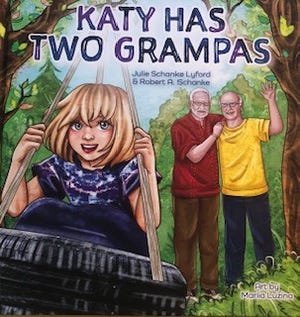
There’s a touching, beautifully illustrated new children’s book out that’s drawing five-star reviews on Amazon and bringing adult readers to tears. “Katy Has Two Grampas” is by an Iowa man, Bob Schanke, and his Minnesota-based adult daughter, Julie Schanke Lyford. The storyline stems from an experience Julie’s daughter had as a preschooler, and the authors say they don’t know of any previous children’s book to feature a pair of openly gay, married men as grandparents.

That seems appropriate coming from one of the first states to have recognized a right to same-sex marriage, and one whose population skews older: Close to 20% of Iowans are in their mid-60s or older. 

But the fact that the title character, Katy, has a pair of gay grandpas she’ll be bringing to class on Grandparents Day isn’t presented as the source of the trouble that follows; it’s her difficulty communicating that because of a speech impediment which her teacher doesn’t understand.

"Katy Has Two Grampas" is based on the father-daughter authors' life experiences.

It’s like night and day comparing the joyful public reaction to this story with the outrage generated by the 1989 seminal children’s book “Heather Has Two Mommies,” about a girl who was born through artificial insemination to a lesbian mother and her partner.  “Heather” became the American Library Association‘s ninth-most challenged book of the 1990s in the U.S., a lightning rod, according to the Los Angeles Times. “It was banned and challenged, the subject of public debate and railed against in Congress.”

The Katy book, titled as “an homage” to the Heather one, according to the authors, seems to have garnered only praise so far.

But the evolution of attitudes during that period was also true of gay couples themselves. Just consider Bob Schanke and his spouse, Jack Barnhart, the “Grampas” in the new book, who are in their 37th year as a couple and once never expected nor cared to marry. To Schanke, a now-retired college theater professor, marriage was “a straight thing to do.” He and Barnhart, a retired social worker, each had already been married, to women.

More:What are the origins of Pride Month? And who should we thank for the LGBTQ celebration?

In fact, before same-sex marriage was even perceived as a right worth fighting for, or one which could be won, some gay men and lesbians who finally felt safe coming out in the ’70s and ’80s saw marriage as another social construct of a straight society they didn’t need to emulate. But after the 2009 unanimous ruling by Iowa’s Supreme Court, when marrying each other actually became possible for Iowa’s same-sex couples, these two recognized the legal and financial advantages it could bestow. And on July 3, 2010, 25 years into being together, they had the profound experience of pledging an institutional commitment to one another.

Julie Schanke Lyford, her husband, Rafe Lyford, and their daughters, Katy and Madi, gather for Christmas in 2012 with Julie's father, Bob Schanke, second from left, and his husband, Jack Barnhart.

Meanwhile Schanke’s daughter, Julie — from his marriage to his former wife and still close friend, Ruth — had made her way into adulthood campaigning for those rights because of her dad. She traveled Minnesota with the group Minnesotans United for All Families to advocate for marriage equality. Asked how she felt as a high schooler when she’d first become aware her father was gay, she says matter of factly, “To me it was a non-issue. It was a bigger issue to him. He couldn’t understand why I wasn’t more upset about it. … He was my dad and I loved him.” 

From 2019:On this day 10 years ago, an Iowa Supreme Court ruling legalized gay marriage in the state

But she had to learn to navigate the attitudes of others in high school. “I was allowed to tell my best friend. She didn’t really speak to me anymore.” They’ve since become friends again. And then there were her own dating experiences. After some awful reactions to her father’s orientation from prospective boyfriends saying things like, “He can never be around our kids if we have them,” she devised a simple test to gauge their suitability on the first date. She’d go to Blockbuster and check out either “The Crying Game” or “The Birdcage,” both feature films with gay or transgender subtexts. If her dates were too shocked, it would be their last date. Her eventual husband, whom she married in 1999 and is still married to, Rafe Lyford, “was fabulous from Day 1.”

Today Lyford is in her early 50s, her daughter Katy is in high school and her other daughter Madi is in college. Schanke and Barnhart both are or soon will be 81, and are moving out of their longtime Pleasant Hill home with its hot tub, tiki hut, luscious lawn and renowned former treehouse where friends would gather. (My parents, my late husband and I were lucky to be among them.) They’re moving into a retirement community.  

More:The first Pride was a protest. For LGBTQ activists, action is still the priority.

Time passes, and some days you look up in amazement at how societal attitudes have evolved, to where Pride Month even feels mainstream. But there’s a cyclical aspect to it, and it’s easy to forget all the hard work of organizing and marching and advocating that went into changing laws and cultures — and the pushback.

You read the responses to this upbeat children’s book, which manages to subtly convey the universality of human experiences without sounding preachy or political, and note some don’t even mention the gay part. “Beautiful story about overcoming fear of public speaking,” said one Amazon review. “Absolutely beautiful example of how representation matters for all kids,” said another. One person wrote of her mother who had speech problems as a child but “was a product of a segregated school in the ’50s so no one cared if little Black children had any issues. However, when the speech teacher came to her high school and worked with her, it made all the difference.”

One woman wrote, “I had no queer role models, no one to tell me everything is OK or tell me that a woman does not HAVE to be with a man. I wish I had this book as a kid — my life would have gone very differently.”

Find the book

“Katy Has Two Grampas” is published by Wise Ink of Minneapolis and stocked in libraries from New Zealand to Manchester, England, and in 40 U.S. states. It’s widely available online.
After 40 years, AIDS still devastates communities of color | Opinion – The Philadelphia Inquirer

The Human Immunodeficiency Virus emerged 40 years ago this month and created an epidemic that still devastates the communities where it was found.

On June 5, 1981, the Morbidity and Mortality Weekly Report from the Center for Disease Control shared that five otherwise healthy gay cisgender men had been diagnosed with pneumocystis pneumonia—a rare pneumonia that typically shows up in people with suppressed or compromised immunity—and two had died. Then on July 3 of that year, the New York Times reported that 41 cisgender gay men had been diagnosed with a rare cancer, Kaposi’s Sarcoma. This was when it hit the fan for LGBTQ communities, Black and Latinx communities, injection drug users, and people with blood disorders who require transfusion.

This history has been largely seen through a white lens, an illness drawing attention for ravaging white men and cultural touchstones like the film Philadelphia, about a gay white man who had AIDS. But we know HIV has been affecting Black Americans in the U.S. since at least the 1960s. The whitewashing of the epidemic helps explain why today, even as HIV/AIDS rates decline across the U.S., Black and Latino Americans are eight and four times respectively more likely to be vulnerable for HIV infection than white Americans, and as of 2019 in Philadelphia, nearly 64% of newly diagnosed cases were of Black city residents, per Health Department data.

» READ MORE: As Philadelphia mourns Dominique ‘Rem’mie’ Fells, Black trans lives still matter | Opinion

It wasn’t until 1987 that scientists realized the first American to die of AIDS was likely a Black teenager: 15-year-old Robert Rayford from St. Louis, who died in May 1969. Medical providers, not clear on exactly what killed him, saved his blood and other specimens. On October 25, 1987, the Chicago Tribune reported that Rayford tested positive posthumously—that his preserved blood showed he had HIV infection.

Today, HIV has claimed the lives of at least 32 million people globally. In 2018 there were 346 deaths among people living with HIV in Philadelphia, 57 HIV-related, per Health Department data, showing we still have a fight on our hands against the epidemic locally.

Louie Ortiz-Fonseca, creator of the storytelling project Gran Varones, lost his uncle, aunt and father to AIDS and hopes to tell more diverse stories of the people impacted by the epidemic, launching a digital arts fellowship for “Latinx/Black-Latinx Gay, Queer, Bisexual, and Trans men and bois living with HIV aged 21-35 years old.”

» READ MORE: I convinced myself for years that AIDS didn’t shape me. I was wrong. | Perspective

Ortiz-Fonseca also tested positive for HIV in 2005 at age 27. Born in North Philadelphia and Black Puerto Rican, Ortiz-Fonseca has worked in nonprofit spaces since he was 15 and experienced the “complicated duality” of testing positive while doing HIV work. José DeMarco, also a Black Puerto Rican from West Philly, tested HIV positive in 1991. Joining ACT UP Philadelphia in 1996, the first direct action DeMarco organized called attention to the incarceration of a comrade and member of ACT UP, Gregory Smith. Smith was an HIV-positive activist in a Camden jail. He was convicted of attempted murder when police claimed that by biting an officer, he was knowingly transmitting HIV. Sentenced to 13 years in prison, Smith died of AIDS complications while incarcerated on November 10, 2003, at 40 years old.

Smith’s death was state-sanctioned and reflected HIV-phobia, since science shows HIV is not transmitted through saliva—and also reflects the legacy of HIV criminalization. The conservative American Legislative Exchange Council, which also drove “Stand Your Ground” laws, was responsible for criminalization laws requiring HIV-positive people to disclose their status before sexual activity, opening them up to accusations of exposing others to the illness.

» READ MORE: A Philly woman doesn’t falter showing up for HIV patients | Helen Ubiñas

This criminalization was folded into the 1990 Ryan White Cares Act, which required states to have a process for prosecuting those who “knowingly exposed” others to HIV in order to receive much-needed federal dollars to support people living with HIV/AIDS. Even today we see the stigma of criminality linked to HIV diagnosis. Mayor Jim Kenney publicly disclosed the HIV status of a former city employee charged with rape in 2017, violating privacy and irresponsibly linking HIV status to assault.

But community leaders are giving reason for hope. Tatyana Woodard, a Black trans woman from Nicetown, the mother of the Ballroom house Escada, and Prevention Services Manager at the Mazzoni Center, said there are more programs available for community members than before and we are seeing more leaders that reflect the community, noting that she is the rare trans woman in a management role across the city: “I think we still have a long way to go. I do believe that more of the community needs to be in leadership roles.” She added that she thinks “it’s very sad that we don’t get those opportunities for housing for jobs and, you know, other resources for trans women here,” and that before someone comes in for HIV testing, their other needs such as housing, food access, and gender-affirming support services should be met.

As we journey forward in our collective quest to end the HIV epidemic, may we remember the beautiful flowers bloomed and wilted by AIDS—and resolve in the future that no more lives are lost.

Abdul-Aliy Muhammad is an organizer and writer born and raised in West Philadelphia. @MxAbdulAliy

Japan Heads Into ‘Diversity’ Olympics Without Promised LGBT Law – Bloomberg

Japan’s parliament ended its session without passing a promised law on LGBTQ understanding, failing to fulfill a ruling party pledge just as the country is set to host what is meant to be a “diversity” Olympics.

A bill under which discrimination against LGBTQ individuals would be deemed unacceptable was dropped by Prime Minister Yoshihide Suga’s ruling party and officially died Wednesday when the current parliament session ended. On top of this, members of his Liberal Democratic Party were reported as making discriminatory remarks against sexual minorities during the discussion process, sparking protests outside the party’s Tokyo headquarters.

The ruling party’s failure to act strikes a sour note five weeks ahead of the opening ceremony for an Olympics that organizers said would be based around the concept of “Unity in Diversity.” Missing this opportunity could see the issue kicked down the road, potentially making Japan less attractive to the skilled foreign workers the aging country needs.

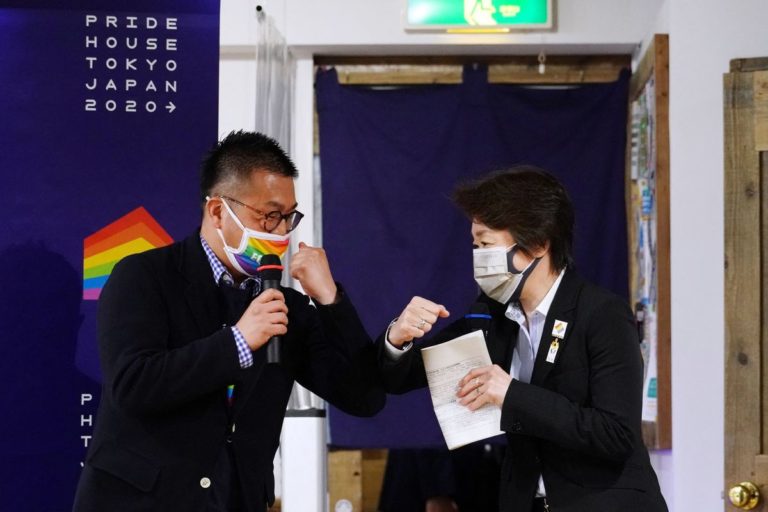
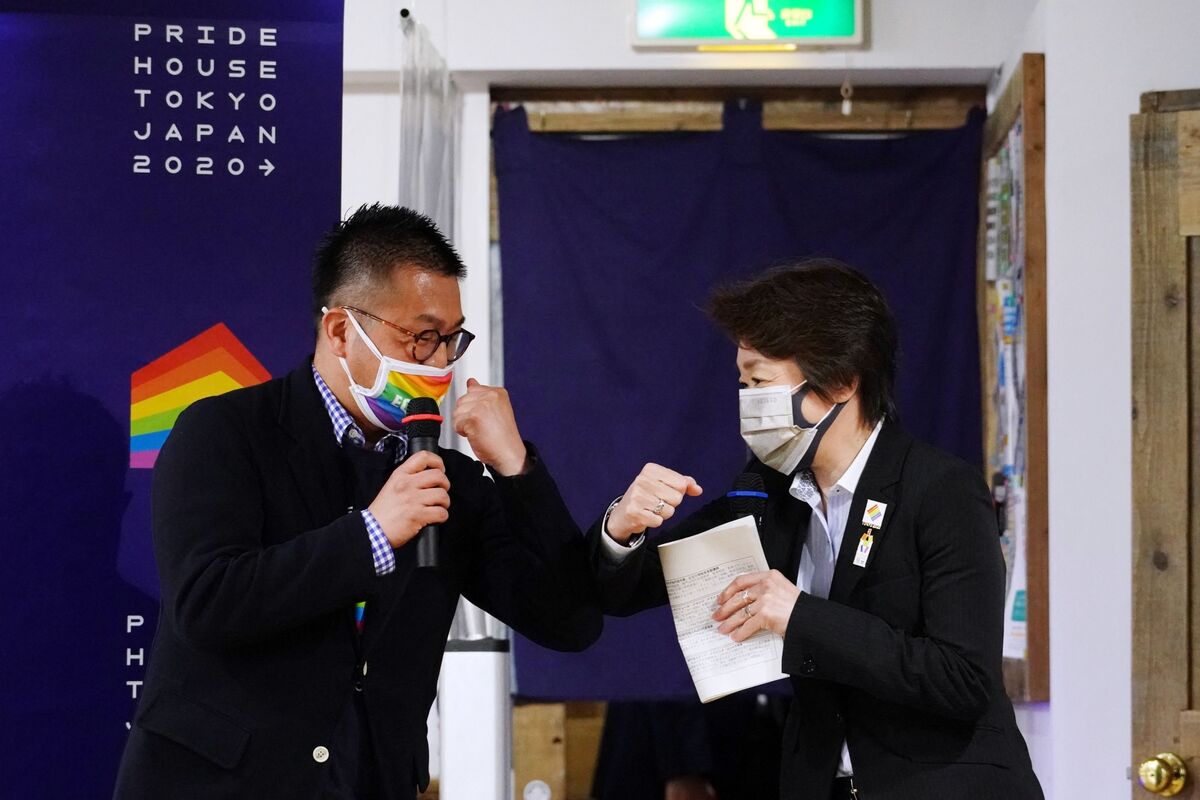
“The Olympic Charter clearly bans discrimination,” said Gon Matsunaka, head of Pride House Tokyo, a group that promotes LGBTQ understanding. “This is a breach of the contract with the International Olympic Committee.”

Japan lags its peers in the Group of Seven countries in several areas of civil rights protections for lesbian, gay, bisexual, transgender and questioning and/or queer people. The LDP had pledged in the 2019 upper house election to swiftly pass a bill promoting “correct understanding” of LGBTQ issues but the Asahi newspaper and other media have said conservative elements in the party have blocked progress.

“Since Japan is such a significant participant in the international business world, it is likely to become increasingly awkward for Japanese companies as well as the country’s political leadership if the country remains an outlier when LGBTQ equality has become more and more quotidian in that world,” said Jennifer Pizer, the law and policy director at Lambda Legal, which says it is the oldest and largest U.S. civil rights group for LGBTQ people and those living with HIV.

LGBTQ issues caused controversy at the Sochi Winter Olympics in Russia in 2014, which took place in the shadow of the country introducing anti-gay legislation. Former U.S. President Barack Obama and some other world leaders stayed away from the opening ceremony after the introduction of the law.

While Japan cannot be compared to Russia, where LGBTQ people are sometimes violently persecuted, “the Sochi example of public attention could serve as a helpful wake-up call for Japan’s leadership,” said Pizer. “The international spotlight will only grow brighter as the start of the games approaches.”

Diversity Olympics

Asked about the fate of bill on LGBTQ discrimination, Suga told parliament earlier this month he would work to fulfill promises to the public. He also agreed to a G-7 statement at the weekend pledging to tackle discrimination against LGBTQI+ populations.

The Tokyo 2020 website says diversity and inclusion are essential to a successful games, and inclusion will see people accepted and respected regardless of gender and sexual orientation, among other factors.

Nonetheless, the head of the organizing committee was forced to step down in February after making disparaging comments about women. Yoshiro Mori, a former prime minister, was replaced as Tokyo 2020 chief by Seiko Hashimoto, a female minister and former Olympic athlete.

Unease over the LGBT law may stem from concern it could lead to recognition of same-sex marriage, Matsunaka said. A survey published by the Asahi newspaper in March found that 65% of respondents said same-sex marriage should be recognized, compared with 41% in a similar survey in 2015. A majority of all age groups supported the change, apart from the over-70s, the paper said.

Japan moved a little closer to allowing such unions when a court on the northern island of Hokkaido in March ruled the lack of legal recognition for same-sex marriage violates the constitution. It was the first such judgment in favor of marriage equality but it fell short of making it legal.

Public Outrage Over Sexist Comments Forces Changes at Tokyo 2020

“Men in their 50s, 60s and 70s tend to be against same-sex marriage, and that is the gender and age of LDP lawmakers,” said Matsunaka. “Rather than reflecting the whole of Japanese society, the opinions of one group are preventing a change in the law. That shouldn’t be allowed.”

(Updates with end of parliament.)

Washington Blade Opinion | Pack your suitcase, it’s time to travel again 2 days ago – Washington Blade

0

MYTH: Being gay is a “choice”

Americans are evenly split on whether sexual orientation is a choice, or is determined by nature, according to a 2015 Pew Research Center survey, with roughly 40 percent of respondents on either side. But, the percentage of people who believe that sexual orientation is not a choice has nearly doubled over the past few decades, up from about 20 percent when the Los Angeles Times conducted a similar poll in 1985.

The myth has powerful legal ramifications: the strongest argument anti-gay activists can make to remove accommodations for discrimination against the LGBTQ community is the claim that LGBTQ people were not born into their sexuality, “choosing” instead to be a part of marginalized groups.

FACTS: A 2019 study by Andrea Ganna, et al published in Science looked at the genes of 492,664 people and concluded that “same-sex sexual behavior is influenced by not one or a few genes but many.”

Based on this and other evidence, most researchers have concluded that sexuality is determined by a combination of environmental, emotional, hormonal, and biological components, making sexual orientation not a choice but instead controlled by a variety of uncontrollable factors.

While there is no consensus about what combination of factors produces sexual orientation at the individual level, The American Psychological Association notes that “most people experience little or no sense of choice about their sexual orientation.”

MYTH: Gay relationships don’t last

This idea of homosexual couples not taking their relationships/partners as seriously as heterosexual couples derives, in part, from the history of gay couples not being able to affirm their commitment to each other legally.

FACTS: Several studies have been published refuting this myth, which included tens of thousands of gay, lesbian, and straight participants and their partners who provided feedback about the stability of their relationships.

A 2017 study of homosexual and heterosexual couples by researchers at Bowling Green State University found that different-sex and female same-sex couples had more stability in their relationships than male same-sex couples. BGSU concluded that this is because gay and bisexual men are exposed to more stressors that lead to problems in their relationships.

Research by UCLA psychologist Ilan Meyer has found that female same-sex couples prioritize emotional intimacy more than male same-sex couples, which resulted in their ability to support the partnership longer.

A pair of studies published in the journal Developmental Psychology in 2008 showed that same-sex couples are just as committed as heterosexual couples in their romantic relationships. One, by researchers at the University of Illinois at Urbana-Champaign, found that there was no difference in the level of commitment or relationship satisfaction between homosexual and heterosexual couples, and even found that lesbian couples were “especially effective at resolving conflict.”

MYTH: Bisexuality and pansexuality are the same thing.

For many people, bisexual is used as a catch-all term for anyone who is not heterosexual or homosexual. But in reality, there are many different forms of sexuality.

FACTS: Though both involve someone being attracted to more than one gender, bisexual and pansexual are not synonyms.

Bisexual people define their sexuality on the basis of romantic attraction to two sexes; hence the prefix “bi.” However, bisexuality has different conditions for each person. One bisexual male may be 30% attracted to men and 70% attracted to women. Or a bisexual female may be attracted evenly to both genders.

But gender categories are not limited to “male” and “female,” which allows for people to identify as nonbinary, or genderqueer, which means they do not identify as either male or female gender.

Bisexuals may or may not be romantically attracted to nonbinary people but even if they are, they are still considered bisexual. Nonbinary people also can identify as bisexual if they are attracted to male, female or nonbinary people as well.

Pansexuality relates to being attracted to all people regardless of their sexual orientation. This also includes agender people; those who do not identify with any gender. Though pansexual people are attracted to all genders, they are not attracted to every person. Personality, physique, morals, etc. also matter to pansexual people too.

MYTH: Same-sex parenting is harmful to children

The belief that heterosexual couples — and preferably married ones — make better parents, is deeply embedded in the belief systems of many Americans, for both political and religious reasons. Some advocates of this viewpoint, including many with a political or religious agenda, have opposed changing state policies to allow same-sex parenting and adoption.

FACTS: Statistics show that limiting parenting to heterosexual couples leaves many children out altogether rather than being adopted and fostered by gay couples who could give them the opportunity to thrive.

“Same-sex couples are seven times more likely than different-sex couples to be raising an adopted or foster child,” a UCLA Williams Institute brief concluded in July, 2018. It showed that between 2014 and 2016, among couples raising children, 2.9 percent of same-sex couples were raising foster children, compared to .4 percent of same-sex couples.

Adoption and fostering laws vary by state, but every year thousands of children age out before getting adopted or fostered, having long-term effects on their mental health. Only three percent of those who age out will earn a college degree. Seven out of 10 females who age out will become pregnant before the age of 21, according to the National Foster Youth Institute.

Divorce can have harmful effects on children. A 2020 HealthLine article lists depression, substance abuse, future issues in the child’s own relationships, and more. Rather than bash the parents for splitting up, however, the article offers ways to help children adjust. The same counsel can be given to children of gay parents when and if they experience bullying or anxiety.

MYTH: People who transition will regret it later in life

Arguments against gender confirming procedures, such as surgery and hormones, include the idea that there could be negative effects on the person receiving the treatment and that they may change their mind.

FACTS: Studies show that hormone therapy and surgery often help people who identify as transgender learn to love their bodies and greatly improve their mental well-being.

A 2017 study led by a team of Dutch researchers showed that gender dysphoria and body dissatisfaction plummeted after these procedures. The depression and “lower psychological functioning” that patients experienced before the procedure were all caused by the discomfort they felt in their own bodies, the researchers concluded. Hormone-based and surgical interventions improved body satisfaction among these patients.

A 2016 systematic review published in Neuropsychiatric Disease and Treatment found that estrogen hormone therapy positively affects the emotional and mental health of male-to-female transgender individuals. Patients reported a decrease in depression, feeling happier and more confident in their bodies, and fewer symptoms of dissociative issues.

A 2021 analysis of a 2015 survey published in JAMA Surgery found that transgender and gender-diverse people (TGD) who had gender-affirming surgeries “had significantly lower odds of past-month psychological distress, past-year tobacco smoking, and past-year suicidal ideation compared to TGD people with no history of gender-affirming surgery.”

“Deciding to transition was one of the most important and difficult decisions I have ever made,” Arin Jayes, 30, a non-binary trans man wrote in an email.

“I didn’t truly know it was right until after I did it. This statement may seem radical and scary. It’s a bit existential, even, because it took a leap of faith,” he said. “One may ask, “Why on earth would you do something so permanent if you weren’t sure?” As someone who has been there, I can say that if it doesn’t feel right, you know. It is important to trust yourself and your bodily autonomy.”

Opinion | Pack your suitcase, it’s time to travel again – Washington Blade

0

If you’re queer and disabled, you’re almost more likely to view a total eclipse than you are to see anyone like you on TV.

I’m lesbian and legally blind. Nearly one in five people in this country has a disability, according to the U.S. Census Bureau. There are LGBTQ, disabled people just as there are hetero folks with disabilities.

Yet, I’m shocked (in a “have I won the lottery?” way) whenever someone queer and disabled appears on screen.

This summer, there’s good news for LGBTQ and disabled folks.

“Special,” the four-time-Emmy-nominated series, created, written by, and starring Ryan O’Connell, is now streaming on Netflix in its second and final season. Based on O’Connell’s 2015 memoir “I’m Special and Other Lies We Tell Ourselves,” the series is the story of a gay man with cerebral palsy.

Jim Parsons (of the “Big Bang Theory”), along with O’Connell, is executive producer of the show. This season, “Special” has been expanded from 12-17 minutes to 30 minutes per episode.  

The character Ryan in “Special” is a younger, less experienced,  avatar of O’Connell.

In season 1 of “Special,” Ryan gets a job as a writer at an internet start-up and moves out on his own. He had been living with Karen, his mom (Jessica Hecht). He’s become best friends with his co-worker Kim (Punam Patel) and lost his virginity to a caring sex worker.

Season 2 of “Special” has a “Sex and the City” vibe. Ryan is estranged from his mother.  He’s having lots of sex. He loves Tanner (Max Jenkins) who’s in an open relationship with Richard. But, there’s chemistry between him and Henry (Buck Andrews) who’s neurodivergent.

The characters in “Special” seem privileged. But they have concerns. Kim struggles to pay her rent and navigate her love life. Karen must learn to care for herself after caring for Ryan for years. Ryan worries that he’s brought “trash wine” to a fancy dinner.  

There are some non-disabled people of color on the show — most notably, Patel. Some of the supporting actors are disabled. But I wish there were some disabled characters of color on “Special.”  

Yet, “Special,” though a comedy, depicts what life is often like if you’re queer and disabled. Take two stories from my life:

One evening, my date and I were at a restaurant. “Watch her! She might fall!” a stranger said as I walked toward the restroom. “I do and I enjoy it!” my girlfriend said. 

Once, a woman at a gay bar told me I was “inspirational.” What had I done that was so inspiring? I’d sipped a beer.

Disabled people call this “inspiration porn.” If you do porn, it’s not the good porn.

I tell you these stories because many disabled and queer people have had such encounters.

“Special” makes the sexiness, queerness, brattiness, resilience, romance and street cred of disabled, queer life up close and personal. 

It depicts us as three-dimensional human beings. 

Filmmaker Dominick Evans directs FilmDis, a group that monitors disability representation on television. “Our research shows that multiple marginalized disabled people are rarely represented,” Evans, who is trans, non-binary and queer bisexual as well as multiply disabled, emailed me.

“Out of 250 television shows airing between 2019 and 2020, we found 1,198 disabled characters, but only 71 of those were also LGBTQIA,” he added.

It’s even worse for Black and Brown LGBTQIA disabled characters, Evans said.

Thankfully, things are improving. “Disability representation is getting better,” Beth A. Haller, co-editor of The Routledge-Companion to Disability & Media, emailed me.

For instance, “Everything’s Gonna Be Okay,” the American sitcom created by Australian, queer comedian Josh Thomas and streaming on Hulu, has two autistic actors as the leads, Haller said.

Thomas’ boyfriend on the show is a Black man with a Deaf father, Haller added.

More disability representation on TV can’t come soon enough. I can’t wait to see more of our queer, disabled stories.

Kathi Wolfe, a writer and a poet, is a regular contributor to the Blade.

Development group welcomes Blue Water Candy, Atlantic Seafood to industrial park – Jacksonville Daily News

0
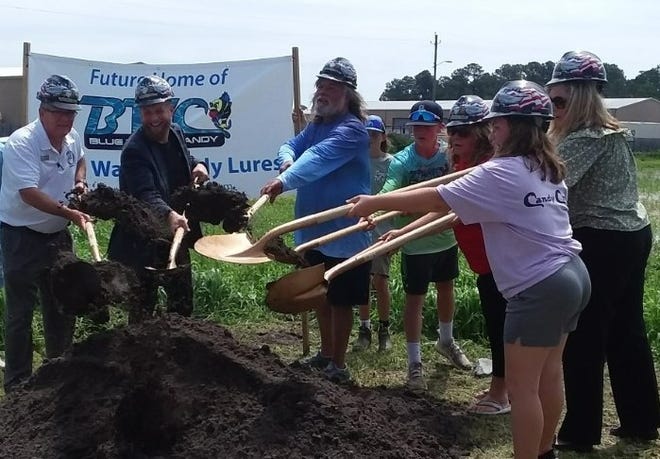
From left: Onslow County Commissioner Royce Bennett, Holly Ridge Mayor Jeff Wenzel, Captain Jodie Gay, grandson Connor Weaver, Terry Gay, JOED Chairman Susan Edwards. In the forefront, granddaughter Taylor Weaver at Blue Water Candy's groundbreaking ceremony in Holly Ridge Friday morning.

Members with Jacksonville Onslow Economic Development and officials with the Town of Holly Ridge celebrated breaking ground for Blue Water Candy locating their new facility at Camp Davis Industrial Park on Friday morning. 

A family-oriented fishing lure company, which started as a dream of a commercial fisherman, Captain Jodie Gay, along with his wife Terry in 2001, has become known around the world after growing from their dining room table to their garage, and now to Holly Ridge. 

The new location will be the first time that Blue Water Candy Lures has operated away from the family home.

“This groundbreaking is a momentous next step in the story of Blue Water Candy and JOED is proud to be a part of the celebration today,” JOED Chairman Susan Edwards stated during the event. “We take particular pride in this groundbreaking because this company represents all that is good and wholesome in the history of American small business.”

Edwards explained the company has gone from selling their first lure to a tackle shop in Wilmington, to offering 5,000 lure combinations along with custom options. 

In a time where labor shortages are impacting almost every business, Edwards shared the importance of a business like Blue Water Candy offering flexible employment options. 

While most of his 36 employees are on-site and full-time, some of his employees assemble lures and rigs from home, making employment ideal for off-season fishermen, schoolteachers, adult caregivers, students, and people with mobility challenges.

Holly Ridge gets $200K grant: nears development phase that would create 200+ jobs

“Blue Water Candy has found ways to attract their creative workforce. Many can work from home, at hours of their choosing, in some cases as a family team, or as a second job.”

County Commissioner Royce Bennett and Holly Ridge Mayor Jeff Wenzel, both serve on the board of directors for JOED, spoke on Gay’s success as entrepreneurs themselves. 

“As Camp Davis Industrial Park grows, employees will travel into, rather than out of Holly Ridge and Onslow County,” Bennett added. “Affirming that growth in Holly Ridge benefits the entire county — a rising tide lifts all boats”.

The site itself was said to have been agreed upon with a handshake between Gay and Camp Davis Industrial Park owner Tom Rollins three years ago. 

Gay spoke swimmingly of his family and employees, and especially to Rollins for honoring the original agreement, one Gay joked that the company may have already outgrown. 

“An entrepreneur is the only person willing to work 80 hours, so he doesn’t have to work 40 hours,” Gay added, who also thanked his distributors. 

Edwards also thanked Rollins and applauded his vision through a ten-year commitment to making Camp Davis Industrial Park a reality. 

“His intuition and knowledge of our regional marketplace were spot on, as evidenced by how quickly Camp Davis Industrial Park is filling up with the highest quality companies. The Town of Holly Ridge has demonstrated outstanding support of economic development by taking the rare step of publishing its aggressive economic development policy. 

47 new jobs coming to Holly Ridge

Another growing family business that has found success and is expected to have a big impact on the community also broke ground at the industrial park back in May. 

Atlantic Seafood Company has been running for over 50 years and is about the start construction of a 62,000 square foot warehousing and distribution facility in Holly Ridge. 

A press release from JOED explained the company has outgrown its current warehouse and has observed disruptions due to the construction of Hampstead Bypass.

‘Bottleneck‘: With Hampstead facing inevitable growth, residents say it’s coming too fast

Their current cold storage units allow them to maintain 600,000 pounds of product. The new facility will allow them to store over 2 million pounds of product.

Atlantic Seafood’s retail operations will remain at their current location in Hampstead, where the business started back in the 1940s. 

With the increase in storage, market expansion is very likely, according to the release. 

The company’s market along the eastern seaboard from Maryland to Florida is serviced by the company’s 20 route trucks and salesmen while supporting the North Carolina commercial fishing industry in the process. 

Atlantic Seafood is said to bring 47 jobs, with average salaries of $70,000 (twice that of the average Onslow County wage). They will also add over $5M to the Onslow County tax base.

The facility is expected to be operation by December 31. 

Officials added Holly Ridge and the industrial park are leaning forward in pursuit of Phase Two of the park, where the town takes over once grant goals are met. 

Phase Two will create 235 permanent jobs with above average salaries, based on third party estimates, and result in $22.5 million of private investment in the town’s tax base.

More than residential growthCamp Davis Industrial Park growing jobs

Reporter Trevor Dunnell can be reached by email at tdunnell@jdnews.com. Please consider supporting local journalism by signing up for a digital subscription for as little as $1 a month. JDNews.com.subscribenow

Before Stonewall, LGBTQ history was made at Bucks County Community College — and then forgotten. Until now. – The Philadelphia Inquirer

0

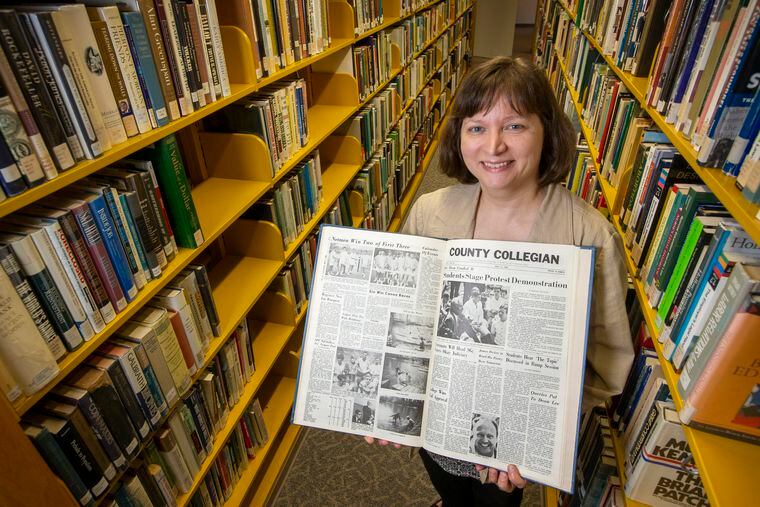
After word got around that Bucks County Community College would be hosting a talk by a “practicing homosexual” on May 9, 1968, the school’s president, Charles E. Rollins, received 100 complaints and decided to cancel the engagement three hours before it was to start.

As many as 200 students promptly held a demonstration that made headlines in college and local newspapers. They also made history a full year before the Stonewall riots launched the modern LGBTQ rights movement and eclipsed most of the pathbreaking events and organizations that preceded it.

Named for a mob-owned Greenwich Village bar that was frequently raided by police, the Stonewall uprising — with two fabulously fierce transgender women of color named Sylvia Rivera and Marsha P. Johnson as key players — began on June 28, 1969, and continued for six days. StonewalI energized, focused, and intensified the movement and ultimately gave birth to Pride Month.

“High-profile protests like Stonewall don’t come out of nowhere,” said the historian and author Marc Stein, who brought the forgotten Bucks County incident to light with the help of Monica Kuna, director of library services at the college in Newtown, Pa.

“We have documentation on another two dozen protests [nationwide] that were the context out of which Stonewall and the very successful movement of the 1970s and ’80s grew,” he said. “I am convinced there are a whole bunch of other [forgotten] actions would help us understand the road to Stonewall.”

Stein, a professor of history at San Francisco State University who earned his Ph.D. at Penn, said the protest was among the largest of any pre-Stonewall demonstrations and one of only two known to have taken place at a college campus before 1969.

“At other campuses and colleges around the state you started seeing activity a year or two after Stonewall, often at urban universities such as Penn and Temple,” said Barry Loveland, the coordinator of the Pa. LGBT History Network. The network is doing research for a traveling exhibit about LGBTQ activism on Pennsylvania campuses before and after Stonewall.

The fact that Bucks County College students rebelled after a gay activist — most of whom had likely never heard of him before — was barred from speaking at their picturesque suburban campus was “pretty amazing,” said Loveland.

During a recent interview from his Southern California home, Ralph Sassi, who was student government president at Bucks County in 1968, said a member of a new cultural activities group on campus sought his okay for the group’s plan to invite Dick Leitsch, the New York chapter president of the Mattachine Society, to speak.

Leitsch led Mattachine, founded as part of the fledgling ‘homophile’ movement in 1950, during the ”sip-ins” of 1966 that challenged regulations that made it illegal for New York bars to serve openly gay people. He died in 2018.

Sassi, who is not gay, was unfamiliar with Leitsch in May of 1968. But he saw no reason a student organization couldn’t use a mostly student-fee-supported fund to pay a speaker to appear on campus for a talk billed as The Problems of the Homosexual in Our Society.

“I really didn’t go into the background of what the politics of it were,” Sassi, 73, said from Southern California, where he is a retired travel industry professional.

Sassi estimated that 150 students attended the larger of two outdoor protests on the day of Rollins’ cancellation announcement. He can be seen in a County Collegian photo, wearing a tie and standing next to Rollins; the student government president told the crowd he was upset and disappointed by the decision, but asked those present to be respectful and orderly.

Rollins had been the founding president of the college and defended his decision to rescind the speaking invitation, saying it “would not be in the best interest of the student body or the community.” Rollins, who died in 2016, also took questions from students.

“I thought the best way was for everyone to be able to speak, and to listen,” said Sassi. “I thought it should be peaceful.”

Describing his own politics as “moderate to conservative,” Sassi also said that students “were trying to say they were mature enough to be able to listen to the subject in a college atmosphere. I thought there was nothing wrong with that.”

But some within the college and in the surrounding community did not share his evenhanded assessment. In an account of the protest posted on the website outhistory.org in April, Stein quoted comments made in local newspapers and letters to the editor in May of ‘68.

While some supported having Leitsch speak, mostly on First Amendment or academic freedom grounds, others expressed reservations, or horror, about what might have transpired had the lecture been allowed to proceed. Cries of “perversion” being taught and predictions of dire consequences from having “a homosexual … come onto the campus and bring his moral decay” were typical of the time.

But the hostility that erupted before and after the aborted lecture also underscores how bold it was for the Bucks County students, few if any of whom appear to have been ‘out’ in the modern sense, to demand a chance to listen to what a homosexual had to say.

“We don’t know how many of the students were true supporters of [LGBTQ] rights, or of Leitsch,” said Stein, 57, whose books include The Stonewall Riots: A Documentary History, and City of Sisterly and Brotherly Loves, which traces the early decades of the LGBTQ movement in Philadelphia.

But clearly, he added, “the Bucks County students were resentful, as were young people everywhere, about older people telling them how to live. A civil libertarian, anti-censorship mentality had taken hold by then and, for the students, homosexuality was no longer so taboo and so beyond the pale that it should fall outside of First Amendment protections.”

Lesbians, gay men, and transgender people “had been swept under the rug, but by the late Sixties the issue was coming in to the public consciousness,” said Daniel Brooks, the founder of New Hope Celebrates, an organization that promotes LGBTQ businesses as well as Pride Month activities in and around New Hope. The artsy tourist destination, located 10 miles north of Newtown, has long had a vibrant gay presence. Brooks also heads up the New Hope Celebrates History project, which is raising money for a documentary film that will tell the story of the local LGBTQ community.

Although Brooks, 71, said he was unaware of the college protest, “it doesn’t surprise me, because in 1968 everybody was protesting everything. It’s not surprising students would find [Leitsch being cancelled] a free speech issue and be very sensitive to it.”

Stein said he also was unaware of the protest until last year, when he noticed a three-paragraph story in a May 10, 1968 edition of the Inquirer while doing research that led him to Bucks County Community College’s Kuna, the library-services director.

“Last November, I received an email from Marc asking if somebody could look for information regarding this event that had taken place in 1968,” said Kuna, who had never heard of the protest, either.

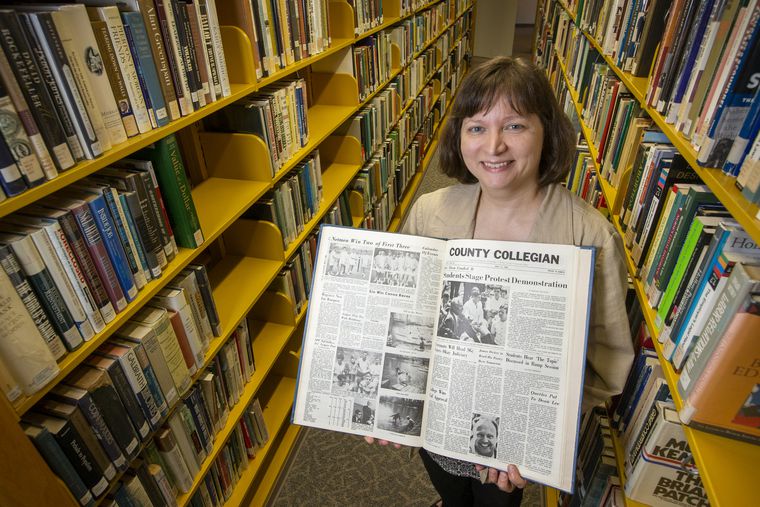
She credited library technician Andrew Gottesman with helping her locate bound copies of the County Collegian, which covered the protest and its aftermath.

“Sometimes the most valuable stuff is not online,” Kuna said. “I expected to find a quarter of a page or a small mention, but there were a number of photos and some follow up articles. They did a nice job documenting what had happened.”

Bob Skiba, the curator of collections in the LGBTQ archives at the William Way center in Philadelphia, noted that media coverage of pre-Stonewall protests tended to be skimpy, or nonexistent. Even the 1965 sit-in at Dewey’s, the Center City restaurant that refused service to openly gay people, went largely unnoticed at the time, he said.

As the 52nd anniversary of the Stonewall riots approach, it’s important the Bucks County event be remembered, said Skiba, “because it ties what was going on in gay activism in 1968 with what was going on with antiwar, civil rights, and feminist activism” on and off campus across the country.

Like the Philly Queer Spaces and Pa. LGBT History Network projects, Stein’s continuing research into pre-Stonewall activism is a way of making sure that what was often hidden in the past can be preserved for educational or even inspirational purposes.

“I’d love to have Marc come to campus and give a talk about his work,” Kuna said.

Stein said he hopes to do so.

Comedian Quinta Brunson says growing up in Philly launched a meme, a book and, now, a network TV show – The Philadelphia Inquirer

Quinta Brunson insists she has not graduated from the internet.

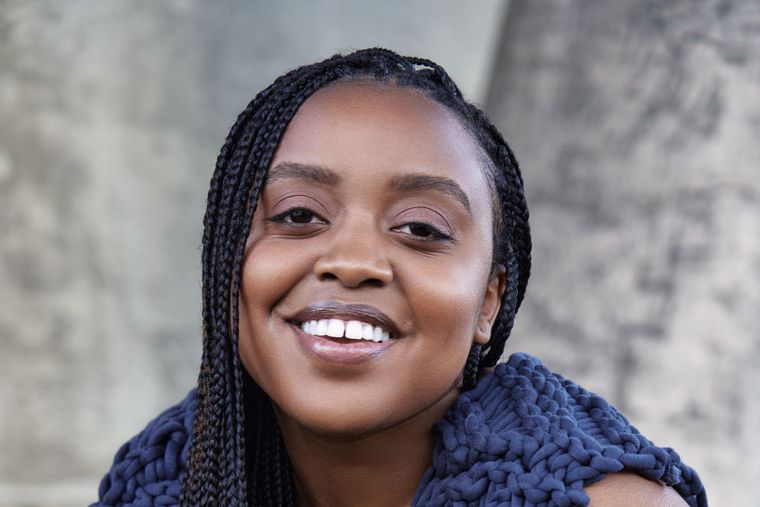
The Philadelphia native and one-time Apple Store technician whose 2014 comic Instagram video “The Girl Who’s Never Been on a Nice Date” became the viral “OOO He Got Money,” meme, which led to a job at Buzzfeed, then a role on HBO’s A Black Lady Sketch Show, has published a book of essays, She Memes Well, and has a new deal with ABC to create, write, produce, and star in a 13-episode workplace comedy series set in a fictional Philadelphia public school, Abbott Elementary.

“I refuse to turn my back on it,” Brunson said in a recent phone interview from Los Angeles, where the West Philly native moved to further her comedy, writing, and acting career, but was so homesick for the city that “has culture coming up through the cracks of the sidewalks” that she had to throw a party to “replicate the Philly feeling I’d been missing.”

“That line does not exist,” she said, speaking of the internet versus more traditional ways of creating. “Internet kids are more famous to the next generation than Kevin Hart.”

The internet has been a place of opportunity for young Black female comedians like Brunson, she says, a “space for marginalized voices,” a vehicle that shows, “how powerful, lo-fi, and accessible creativity could be.” Being a meme — an image, text, or video, shared over and over, morphing into cultural significance as millions get in on the joke — is one thing. But her book also shows how much craft and hard work are in the creative success equation.

Brunson still finds herself doing Philly things like filling a gift box with “oils and incense and Frooties,” which a friend pointed out was “the most Philly box I’ve ever seen in my life.” On Thursday, June 17, she will appear at a virtual event with poet Jasmine Mans at Philly’s Uncle Bobbie’s Coffee and Books at 7 p.m.

Brunson started this week in the writer’s room for her Abbott Elementary, a mockumentary-style comedy series inspired by both The Office and Brunson’s mom, Norma Jean Brunson, a Philly kindergarten teacher. It is set in a fictional Philly public school, where the 70-year-old custodian who voted for Kanye is teaching about the Illuminati in social studies class. It will have a midseason debut, likely in 2022.

Brunson hopes it will be the most Philly show this (City Avenue) side of Mare of Easttown. And yes, there will be Philly accents, though Brunson says she feels a bit “foiled” by the Philly-specific triumph of Kate Winslet’s accent and all things Philly on HBO’s Mare.

“I am a little jealous that they got to the Philly references before I did,” Brunson said. “I think what’s funny about Mare is, people were like, ‘Oh, she got the Philly accent down,’ and I was like, ‘That’s the white Philly accent.’ ”

“People are like, ‘Why don’t you sound like that?’ ” she said. “Because there are differences even within Philly, from South Philly to North Philly, to West Philly to … we don’t even have an East Philly.”

Easttown’s Mare has left plenty of room for West Philly’s Janine Teagues, Brunson’s second-grade teacher character in Abbott Elementary, Brunson says. (Her mom always wanted her to be a teacher). The Philly accent contains multitudes.

“Within that, you have the different people,” Brunson goes on, “you know, Black people are different from the white people are different from the Asian people in West Philly. And then we’re all different from all the people in North Philly.”

Brunson did not set out to write a memoir of growing up in Philly, a place she describes as “both rough and warm,” but She Memes Well, published this week by Houghton Mifflin Harcourt, reps Philly hard with meticulously observed scenes from her childhood and teens, remembered with a sharply funny eye and, at times, an understanding glance back at episodes of heartbreak and depression. Brunson’s own ambition comes into thrilling focus.

She dropped out of Temple University midway through her junior year after studying communications and advertising, and eventually made her way to L.A. in her early 20s, focusing on live sketch comedy, including “The Girl …” when a friend said, “You should put that character on the internet.” (Temple keeps reaching out to claim her as a favorite daughter, she says; she’s still waiting for the honorary degree.)

The fifth of five siblings (hence the name Quinta), in a protective Jehovah’s Witness family, she writes of riding SEPTA to school, attending experimental public schools, heading to the Gallery, her “after school temple,” buying $2.99 (“Cutetwoninetynine”) hoops at the hybrid corner store/beauty shops scattered throughout Philly, where you could buy “fake eyelashes, scratchers, Herr’s, magazines, mouthwash, airplane-sized bottles of Captain Morgan, candy, sandwiches.”

Brunson notes they are called “Poppy stores” when owned by Hispanics or Asians and selling food in the back, and “the beauty supply” when owned by Blacks or Asians and selling mainly hair and jewelry. The hoops worked to counter her nerd, art school identity, she writes. She admits to being a prom queen, though for the public Charter High School of Art and Design (CHAD, now closed), where proper Philly etiquette had her walking out the door to her prom to the tune of Beanie Sigel’s “Don’t Stop.”

“ ‘Don’t Stop’ may have meant a night full of fights and extreme gloating to some,” she writes, “but to me, it was elegance and prom night fanfare.”

Brunson also attended Ahali, a semi-rogue elementary school offshoot set up on the upper floor of Harrity Elementary School at 56th and Christian, where her mom taught kindergarten, with a curriculum that centered Black history in all classes.

She recalls going to a sawmill in Manayunk, where Ahali students built wooden boats, and learned about enslaved people being brought over in boats and using boats to escape captivity. The students then rode their boats down the center of the Schuylkill.

”This is what my people had to do? For freedom?” the young Quinta thinks, as she takes in the city from the inside of a boat. “As the waves of the Schuylkill River rocked my little body up and down, I could feel a deep connection to my history and also my future,” she writes.

The memory is an amazingly positive story from Philly public schools, she notes, but also: Ahali has since closed down.

About the current state of Philly, Brunson says she’s having some doubts, and not just because these great schools of her youth have closed. Her parents have moved to Landsdowne, but her siblings and cousins are still in West Philly. The persistent violence this last year has made Brunson rethink whether Philly is even a good place for her family to live anymore.

“Even if I was in Philly, I wouldn’t be in Philly right now,” Brunson said. “It’s something uniquely bad this summer and I think it’s a convergence of issues from the pandemic, and also social media; it’s just a lot of things that came together to make this year really hard as far as guns just being out of control and everywhere.”

Despite having a career basically birthed through the internet, Brunson said she’s had to personally pull back on her involvement with social media. But she still embraces the simple power, the minor miracle, really, of the meme.

Unlike some parts of social media, the meme still feels like a unifier, she says, a shorthand code for something so universal that it catapulted her expressive face and comic bit (the girl impressed by even the basic courtesies of a decent date that she exclaims, “ooo he got money”) and delivery on a worldwide loop that hasn’t stopped.

A second meme pops up every June for Pride Month that has Brunson saying, matter-of-factness implied, get over it, “People be gay.” This meme especially gives her joy, she says.

“I mean, the ‘He Got Money’ meme, it’s funny because it just like pops up randomly; people will pull that up, and wonder, ‘How’s this girl doing?’ and a bunch of people go, ‘Um, she’s doing pretty well.’ And it goes viral again.”

“The ‘People Be Gay’ meme is wonderful because I can count on it every single year. It comes around, and so that to me is so special. That a meme I’m in is connected to such a beautiful thing like a holiday, I absolutely love it. It brings me so much joy.”

The seeming simplicity of a meme disguises a “nuanced form of language,” Brunson says. She embraces it.

“Especially with the ‘People Be Gay’ meme, because it’s a simplification of a very complex idea,” Brunson said. “This meme belongs to the internet, and it belongs to the queer community. It doesn’t really belong to me.”

China’s LGBT Trust Can’t Be Bought – Jing Daily

Key Takeaways:

  • Estimates suggest that LGBT members in China number over 70 million, which puts their spending power at roughly $300 billion across industries — and counting.

  • Online platforms such as Bilibili are offering authentic support which drives traffic to members of the LGBT community, especially women as TV show representation and citizen visibility grows.

  • Luxury needs to avoid inauthenticity and rainbow capitalism in favor of specific causes where they can impose change, in addition to sharing far reaching messages of acceptance.

China is home to the largest gay social app in the world, Blued, which made history when it went public in 2020. Its founder, Ma Baoli or “Geng Le,” was awarded Man of Year by GQ China. Yet, every step forward is the result of generations of LGBT advocacy. As is the case globally, being “out” in China, whether gay, lesbian, transgender or other, comes with daily challenges.

While Pride has now become a global celebration of LGBT identities with increasing corporate involvement, it is foremost a protest and recognition of a community’s strength in the face of adversity. Brands who aim to attract China’s “pink yuan” need to remember this applies here as much as any country. 

Given China’s vast population, the spending power of its queer community should not be undervalued. Estimates suggest that LGBT members in China number over 70 million, which puts their spending power at roughly $300 billion across industries — and counting. Therefore, as companies seek more ways to engage and expand their Chinese consumer base post-pandemic, the onus is on them to understand and respect the “pink yuan” if they wish to court it. 

 The recent appointment of openly transgender icon Jin Xing as brand ambassador by Dior has been heralded as a milestone of positivity by citizens, showing that attitudes in China might be slowly shifting. Meanwhile, a number of local brands like NEIWEI and CoFANCY are actively supporting and endorsing these citizens on an ongoing basis.  

Although the parade has been disbanded, Pride Shanghai will hold a “rainbow party” this week sponsored by Absolut Vodka on June 19 and launch a Proud Stories podcast towards the end of the month. Here, Jing Daily explores China’s pink economy and how luxury can step up — not only for the month of June, but all year round.  

The growth of China’s LGBT community

From online platforms and advertising to mainstream TV dramas, citizens in China’s LGBT base are becoming more visible and vocal. This is amplified by netizen support online which has been on the rise too; for example, this year the hashtag “#517 the day to stand against homophobia” has over 1 billion views on Weibo. 

Beauty expert Linzi Zhan says that the award given to “Geng Le” last year shows how the issue has gradually entered public conversation: “Nowadays, China definitely offers a more open and freer macro context for discussing and expressing people’s perspectives of their sexual preference. You will see gay fashion editors and beauty experts share their beauty tutorials on Little Red Book.”

This exposure on social media has been helped by the likes of Bilibili, which Zhan says has been very encouraging of lesbian bloggers especially. “It offers traffic support for them though this might be biased with people considering content from females as very girly and gentle without offense,” she said. “Transgender beauty bloggers are more frequent on Bilibili and TikTok as well.” 

This popularity comes despite the difficulties faced by the group at work, school, or at home, as well as different geographical locations. But it’s the younger generations that are approaching the issue with a more open-mindset. Caroline Chen, co-founder of Top10 C-beauty brand CoFANCY, pinpoints them as leaders for change. 

“Millennial and Gen Z acceptance of this community is very high. Also, many young brands want to express themselves, be open, free and inclusive with trendy ideas.” Chen also notes advertising — even Alibaba has produced a same-sex advert — and entertainment as keys to pushing acceptance. 

Famous TV shows and dramas, animations and fan fiction are expressing stories with an LGBT slant, “albeit in an obscure way.” The popular breakout Chinese TV drama Word of Honor starring Gong Jun and Zhang Zhehan has recently dropped on Netflix and is based on a gay fiction. 

Following the success of The Untamed, Word of Honor is another TV show that taps China’s Boys’ Love (BL) phenomenon. Photo: Youku

On the flip side, some of these representations have been deemed too forward. Brands found this out when embroiled in a fan fiction debacle last year with idol Xiao Zhan in which followers were unhappy about the representation of their favorite idol in homoerotic literature and boycotted Cartier, Estée Lauder and Piaget. This backlash indicated that like many countries, there is still much anti-queer sentiment in China. 

What global brands can learn from local companies

The conversation of LGBT inclusivity in the luxury industry does not start and end in June. Consumers are becoming more discerning of brands who actually care about inclusivity versus brands who are faking it. Although some have year-long efforts, this year, many companies started to engage this base from May’s International Day Against Homophobia, Transphobia and Biphobia (IDAHOTB)

Laurence Lim Dally, founder at branding agency, Cherry Blossoms, suggests local names are doing a better job in addressing these issues as their approach is more emotional and authentic, notably through the topic of family rejection and reconciliation. “Many gay advertisements depict the empowering freedom but also the difficulty to live the life that you choose. They focus on real, authentic life stories, which make these campaigns more emotional.”     

Lim Dally points to uplifting campaigns from companies like phone maker Meizu and Didi which both encouraged acceptance and celebrated the freedom to love who you want. Intimates label NEIWAI has built diversity and body positivity into its company DNA from the start. “The campaign Nowness also stages the intimacy of gay couples through personal and intimate phone recorded testimonials — it’s a way to make gay people look ‘normal’ and to celebrate love.” 

The NEIWAI x XU ZHI campaign explores intimate relationships and features lesbian and gay couples. Photo: Screenshot, NEIWAI’s Weibo

For Spring 2021, homegrown activewear brand MAIA ACTIVE’s campaign told stories that challenged the norm, including one from a transgender woman. Its accompanying inclusive hashtag #SheCanMakeHerOwnDecision received over 12 million views in one week on Weibo. 

Western brands can do better

Put simply, the challenge for luxury brands is to resonate at a deeper level when speaking to these groups and addressing their struggles. This begins with industry leaders understanding that the fight for equality is not tied to one dimensional causes. Luxury needs to avoid “inauthenticity and accusations of rainbow capitalism,” Lim Dally reminds. 

Moreover, there’s a reason the acronym and the associated pride flag continue to grow, to fully represent the intersectionality that exists within the queer community. Particularly when dealing with China, brands would be well advised to focus on a specific cause where they can impose change, in addition to sharing far reaching messages of acceptance. 

Companies that have understood this nuance have fared well, from Jin Xing at Dior to Farfetch’s collaboration with drag queen @莲龙Kudos and voguer @莲莲ShirleyMilan. “All brands can show their care about LGBT fans in various ways, just don’t make it too commercial or utilitarian,” Zhan says. “Don’t be too obsessed with certain figures or over fascinating their lives on purpose. Put more emphasis on encouraging people to express themselves freely.” 

Farfetch spotlights drag queen @莲龙Kudos on its social media during Pride month. Photo: Screenshot, Farfetch’s Weibo

Beyond the fact that the gay market in China may be underestimated by Western brands, companies are increasingly aware they have a role to play in promoting diversity, rather than purely look to profit. “Any marketing or brand activities should not be used as a means to bring sales growth for the purpose, but always from the brand spirit, or attitude, from top to bottom,” Chen concludes. For many major luxury brands this means a deep rewriting of their history and internal culture. This will show they truly understand, respect, and genuinely want to support the community, not just take its pink yuan. 

As Pandemic Recedes in U.S., Calls Are Growing for an Investigative Commission – The New York Times

“We’ve just had the worst calamity in most living Americans’ lives — real deaths, real suffering, a lot of future issues, economic issues,” Mr. Schmidt said in his first interview about his involvement. “I would like to see a detailed analysis of what happened and I’d like to see recommendations to prevent it from happening in the future. I think Americans are owed that.”

Just as victims and their families were instrumental in calling for a 9/11 commission, coronavirus victims and their families are pushing for a Covid-19 panel. On Wednesday, after this article was published online, a victims’ group, Marked By Covid, issued a statement praising Mr. Zelikow’s effort and calling on President Biden to “support a full and transparent investigation.”

The planning group is not engaged in substantive interviews and has avoided key figures like Drs. Anthony S. Fauci and Deborah L. Birx, the Trump White House coronavirus response coordinator, who would be critical in any investigation. Instead it is conducting “listening sessions,” Mr. Zelikow said, to ask health experts, governors, mayors, business leaders and others what a commission should investigate.

With more than two dozen expert advisers from across the political spectrum, including two former Food and Drug Administration commissioners and a former director of the Centers for Disease Control and Prevention, the group has made detailed notes of these sessions and drafted a blueprint for a wide-ranging inquiry that would include, but hardly be limited to, an examination of the origins of the virus — including the contentious “lab leak” theory. That part of the inquiry would be conducted with national and international panels of scientists, Mr. Zelikow said.

“We’d like to know everything from the origins of the virus to how to make diagnostic testing more widely available to why we saw such big difference in the impact of the pandemic across different socioeconomic and racial and ethnic groups,” said Mark B. McClellan, an adviser to the group and former F.D.A. commissioner in the administration of George W. Bush.

Mr. Zelikow, a national security expert and former diplomat, is now a history professor at the University of Virginia. His group operates out of the university’s Miller Center for Public Affairs, in cooperation with Johns Hopkins University’s Center for Health Security and Bloomberg School of Public Health.

The Sept. 11 commission, created by an act of Congress that was signed into law at the end of 2002 by an initially reluctant Mr. Bush, was an independent, bipartisan panel that spent a year and a half investigating the attacks and the country’s preparedness for them, holding public hearings in what amounted to a national reckoning.

Gay couple sent bizarre homophobic magazine subscriptions – PinkNews

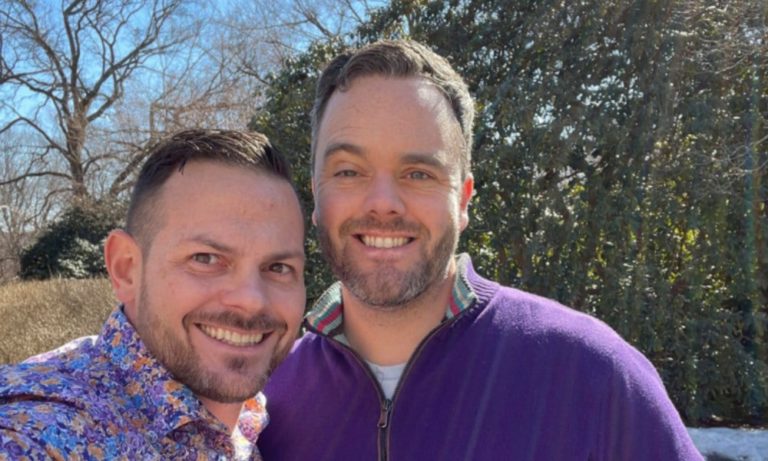
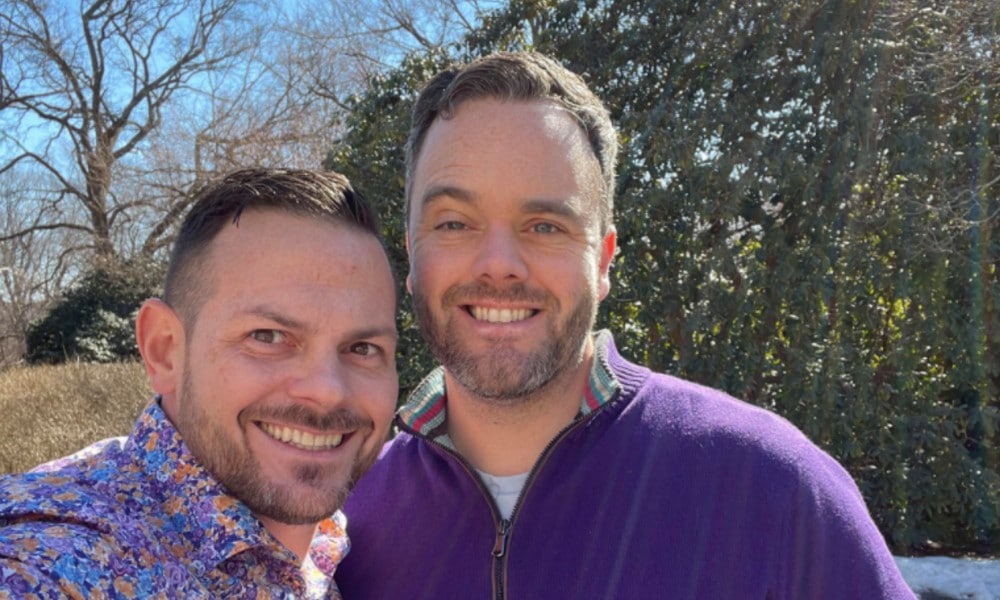
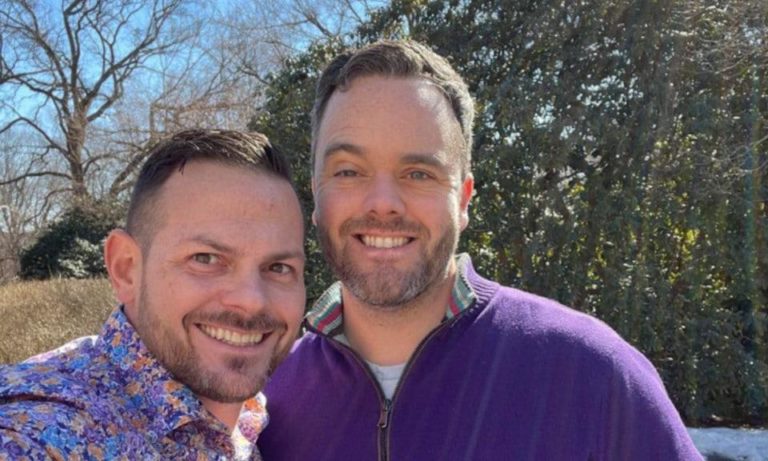
Bryan Furze and LeeMichael McLean were the target of a bizarre homophobic campaign (Facebook/LeeMichael McLean)

A gay couple who were harassed with homophobic magazine subscriptions found a way to put the abuse to good use with the help of their local community.

For five years, Massachusetts couple Bryan Furze and LeeMichael McLean endured a bizarre campaign of bigotry from an anonymous homophobe.

Around the time their son turned two, they began receiving a mysterious string of 30 magazine subscriptions ordered under fake, homophobic names, like “Michelle Fruitzey” and “Dick Likkors”.

“I think serving [in local government] was what caused the problem – if you want to call it a problem,” Mclean said in an interview with Milton Scene.

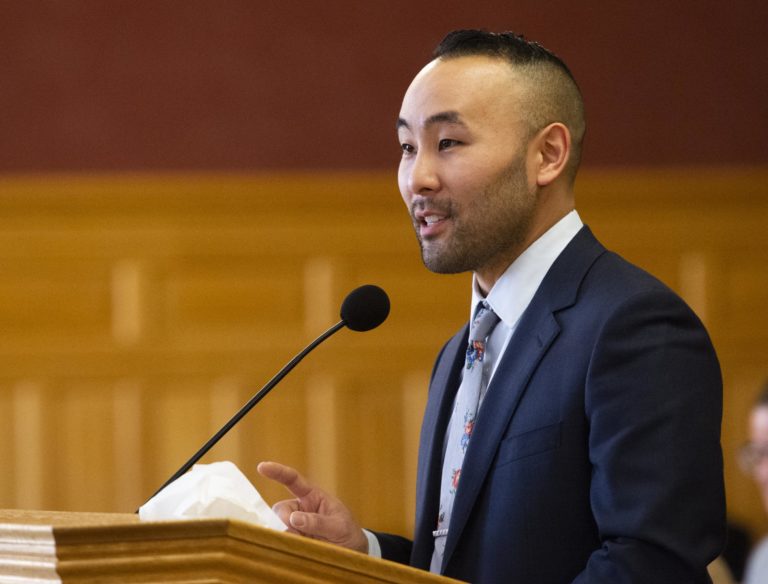
“I don’t know exactly the date the first issues started coming, but we were speaking at town meeting a lot, we were at the podium a lot, so we became very visible very quickly. We long suspected that was the reason somebody was harassing us.”

The couple alerted the police but had no leads to go on, until earlier this year, when the homophobe ordered “Michelle Fruitzey” a subscription to The Boston Globe.

Since the couple already had a subscription the Globe returned the order form, which included the perpetrator’s handwriting.

“Do you recognise this handwriting?” McLean asked his community on Facebook.

“I assume this is from the same person who signed my husband and I up for about 30 magazine subscriptions under the name ‘Dick Likkors,’ but joke is on them, what gay guy doesn’t want free issues of Vogue and Cosmopolitan?

“This one (fun new mash-up of our names while also calling us fruity… again, I own it) got returned to us because this idiot apparently thinks our house doesn’t already pay for journalism.”

The post happened to be spotted by a local resident with a knack for handwriting analysis, who made a public records request for nomination papers to compare voter’s signatures.

This kind stranger found a match – a neighbour who lived a few doors from the couple, and had shared hellos, waves, and casual conversation with them.

“There was never any outward hostility,” Furze told the Globe. They’d served in several town meetings with the individual and never thought of him as homophobic.

When confronted by the police the man apparently confessed. “He told the officer that he was motivated by our outspokenness and our opinions about Milton’s politics and Milton’s future,” Furze said. “I have some doubts about that.”

Police are now seeking a charge of criminal harassment against the man in Quincy district court. Furze and McLean might’ve been happy to leave the matter there, but their community had other ideas.

The hashtag “IamMichelleFruitzey” soon became a rallying cry in the Boston suburbs as people shared solidarity with the couple, sending them hundreds of messages of support online.

And besides being absolutely hilarious, the slogan has bolstered the couple’s critical fundraising campaign for a Gay Straight Alliance at two local schools.

Furze and McLean are now offering a t-shirt with the hashtag #IamMichelleFruitzey to anyone who donates, and the response was so overwhelming that they’ve beat their fundraising goal several times.

As of 15 June over $19,600 had been raised towards a $25,000 target, which Furze said would go towards endowing a lasting scholarship.

“For us, this is not really about broadcasting the bad. It’s about embracing the good and finding ways to blow it up into something bigger,” Furze told the Globe.

An added benefit, McLean said, is “we can own this slur, this name, and feel better about it”.

Crank harasses gay couple with bizarre homophobic magazine subscriptions. But it backfires, spectacularly – Yahoo Eurosport UK

A gay couple who were harassed with homophobic magazine subscriptions found a way to put the abuse to good use with the help of their local community.

For five years, Massachusetts couple Bryan Furze and LeeMichael McLean endured a bizarre campaign of bigotry from an anonymous homophobe.

Around the time their son turned two, they began receiving a mysterious string of 30 magazine subscriptions ordered under fake, homophobic names, like “Michelle Fruitzey” and “Dick Likkors”.

“I think serving [in local government] was what caused the problem – if you want to call it a problem,” Mclean said in an interview with Milton Scene.

“I don’t know exactly the date the first issues started coming, but we were speaking at town meeting a lot, we were at the podium a lot, so we became very visible very quickly. We long suspected that was the reason somebody was harassing us.”

The couple alerted the police but had no leads to go on, until earlier this year, when the homophobe ordered “Michelle Fruitzey” a subscription to The Boston Globe.

Since the couple already had a subscription the Globe returned the order form, which included the perpetrator’s handwriting.

“Do you recognise this handwriting?” McLean asked his community on Facebook.

“I assume this is from the same person who signed my husband and I up for about 30 magazine subscriptions under the name ‘Dick Likkors,’ but joke is on them, what gay guy doesn’t want free issues of Vogue and Cosmopolitan?

“This one (fun new mash-up of our names while also calling us fruity… again, I own it) got returned to us because this idiot apparently thinks our house doesn’t already pay for journalism.”

The post happened to be spotted by a local resident with a knack for handwriting analysis, who made a public records request for nomination papers to compare voter’s signatures.

This kind stranger found a match – a neighbour who lived a few doors from the couple, and had shared hellos, waves, and casual conversation with them.

“There was never any outward hostility,” Furze told the Globe. They’d served in several town meetings with the individual and never thought of him as homophobic.

When confronted by the police the man apparently confessed. “He told the officer that he was motivated by our outspokenness and our opinions about Milton’s politics and Milton’s future,” Furze said. “I have some doubts about that.”

Police are now seeking a charge of criminal harassment against the man in Quincy district court. Furze and McLean might’ve been happy to leave the matter there, but their community had other ideas.

The hashtag “IamMichelleFruitzey” soon became a rallying cry in the Boston suburbs as people shared solidarity with the couple, sending them hundreds of messages of support online.
And besides being absolutely hilarious, the slogan has bolstered the couple’s critical fundraising campaign for a Gay Straight Alliance at two local schools.

Furze and McLean are now offering a t-shirt with the hashtag #IamMichelleFruitzey to anyone who donates, and the response was so overwhelming that they’ve beat their fundraising goal several times.

As of 15 June over $19,600 had been raised towards a $25,000 target, which Furze said would go towards endowing a lasting scholarship.

“For us, this is not really about broadcasting the bad. It’s about embracing the good and finding ways to blow it up into something bigger,” Furze told the Globe.

An added benefit, McLean said, is “we can own this slur, this name, and feel better about it”.

Fr. James Martin on LGBT ministry: Love the ‘most important’ church teaching – National Catholic Reporter

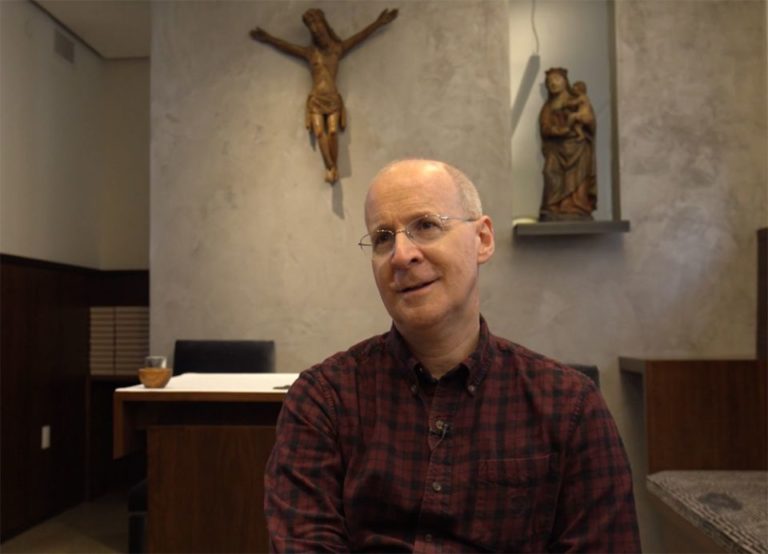
Jesuit Fr. James Martin is pictured in a still from the 2021 film "Building a Bridge." (NCR screenshot/Obscured Pictures)

Jesuit Fr. James Martin is pictured in a still from the 2021 film “Building a Bridge.” (NCR screenshot/Obscured Pictures)

Jesuit Fr. James Martin is one of the best-known Catholic advocates for LGBTQ dignity. Following the 2017 publication of the first edition of his book Building a Bridge: How the Catholic Church and the LGBT Community Can Enter into a Relationship of Respect, Compassion, and Sensitivity, Martin has spoken at events worldwide — and even to Pope Francis — about advocating for more compassionate treatment of the Catholic Church’s LGBTQ community.

Martin’s life and work is the subject of a new documentary, “Building a Bridge,” which was executive produced by Martin Scorsese and debuted June 15 at the Tribeca Film Festival. The film was directed by Evan Mascagni and Shannon Post, and will be available to stream for viewers in the U.S. on the Tribeca website starting June 16.

Ahead of the film’s release, NCR spoke to Martin about the documentary and his ministry. This Q&A has been edited for length and clarity.

NCR: What motivated you to participate in this film?

Martin: The filmmakers approached me a few years ago. The filmmakers are people who focus on social justice issues. And so I thought, “Sure, you can follow me around.”

I actually thought it was going to be a little YouTube video. I didn’t think it was going to be a real film. I thought even if they just put out a little film, it could help get the message out, and hopefully help more LGBTQ people and their families.

In the film, Fr. Bryan Massingale refers to this period as an “early spring” in the church’s relationship with the LGBTQ community. What signs of growth are visible in this relationship?

That metaphor was all Bryan’s. But there are signs of growth. You see signs of growth in Pope Francis’ openness to the LGBTQ community, his appointment of various bishops who are more welcoming to that community, and especially on the local level at parishes and schools, where you have many more outreach groups and programs for LGBTQ Catholics.

The mass shooting at the Pulse Nightclub, an LGBTQ nightclub in Orlando, Florida, was one of the worst in American history. Forty-nine people were killed. How did that tragedy galvanize you?

Jesuit Fr. James Martin embraces Christine Leinonen, who lost her son Drew in the 2016 mass shooting at the Pulse nightclub in Orlando, Florida in a still from the 2021 film "Building a Bridge." (NCR screenshot/Obscured Pictures)

Jesuit Fr. James Martin embraces Christine Leinonen, who lost her son Drew in the 2016 mass shooting at the Pulse nightclub in Orlando, Florida in a still from the 2021 film “Building a Bridge.” Leinonen, whose son was gay, is now an advocate for LGBTQ rights. (NCR screenshot/Obscured Pictures)

Before 2016, I had written about LGBTQ people and advocated for them from time to time in America magazine. But I had never really done anything formally. I had never been part of an LGBTQ outreach group or ministry.

The tepid response from many church leaders in the wake of the Pulse nightclub massacre just made me think that even in death, these people are invisible to the church. And so that led to a talk at New Ways Ministry, which led to a book, which led to this ministry, which I do with lots of other people. It invited me to be a little more public about advocating for the community.

What surprised you the most about the reaction to the first edition of your book Building a Bridge?

The reaction was shocking, both positive and negative. The positive reaction was surprising — it consisted of packed churches, standing ovations, long lines of people waiting to talk to me.

The book doesn’t challenge any church teaching, and I thought it was fairly mild. And yet the reaction — particularly from LGBTQ people and their families — was extraordinary. I was stunned. It was meant to be a little book — it’s physically little — and it was meant to be just a modest contribution to parish life. It certainly wasn’t intended to be a manifesto.

The negative reaction was shocking, too, especially the personal vilification. It was not simply people challenging or critiquing some of the things that I was suggesting — even though nothing is against church teaching — but personal attacks, which I still get online daily, and sometimes in person.

If I disagreed with somebody, I would never attack them personally. I wouldn’t say you should go to hell, you should be excommunicated, you’re a terrible Catholic or you’re a heretic. So that was kind of shocking. It revealed how much homophobia and hatred there is in the church, which was sad.

How do you handle these negative reactions to your book from conservative elements of the church and people who are posting abusive comments online?

It bothered me at the beginning, because it was such a surprise, but then I realized that if I’m going to pattern my life after Jesus, he dealt with this too, and he was free of the need to be loved, liked or approved of by people.

Jesuit Fr. James Martin walks through New York City in a still from the 2021 film "Building a Bridge," executive produced by Martin Scorsese. (NCR screenshot/Obscured Pictures)

Jesuit Fr. James Martin walks through New York City in a still from the 2021 film “Building a Bridge,” executive produced by Martin Scorsese. (NCR screenshot/Obscured Pictures)

So if it’s a legitimate critique or a thoughtful question, I’ll answer it, but if it’s just hatred, or homophobia, then I ignore it. I don’t let it in. I don’t let it make a claim on me. It’s just from homophobic, hateful, mean people. Some people are just mean. It has very little to do with theology. It’s like schoolyard bullying.

Parts of the film focus on Michael Voris, founder of the ultraconservative, anti-gay Catholic group Church Militant, who says in the film that he once identified as gay. What are your thoughts on Voris and his story?

It’s baffling to me, because he talks in the movie about his life as a gay man. And yet, he’s seemingly so angry about welcoming LGBTQ people into what is their church, too. I don’t want to comment on him, but as I say in the film, I hope he finds some peace in his life. Because Church Militant seems to be motivated mainly by anger.

I thought that the filmmakers did a good job of letting him explain his point of view. They flew out there, and they spent several days with him. No one can say that he wasn’t given a chance to tell his story.

On the more positive side, what were some of the most meaningful responses you received from readers of your book who connected with it?

Jesuit Fr. James Martin speaks about LGBTQ rights to an audience in a still from the 2021 film "Building a Bridge." (NCR screenshot/Obscured Pictures)

Jesuit Fr. James Martin speaks about LGBTQ rights to an audience in a still from the 2021 film “Building a Bridge.” (NCR screenshot/Obscured Pictures)

I get them every day through Facebook messages. I just got one an hour ago, from someone who talked about someone in their family who came out, who has read the book and felt more at home. Anytime I hear stories about people finding the book, and the book helping them to feel more at home in their church, is very gratifying.

Ninety-five percent of the responses are positive. If I go to a parish talk, there’ll be 400 people inside and five people outside protesting. Hearing from LGBTQ people or their parents who are trying to find a place in the church, and the book helps them to see how they’re already at home — that’s very gratifying. And it makes putting up with all the abuse online worthwhile.

The documentary touches on critiques of the first edition of your book from some LGBTQ Catholics. How did you respond to such suggestions in your second edition?

One of the great things about my publisher was that because there was so much of a response to the book, I asked them if I could do an updated edition, and they agreed immediately. Usually, that takes a year or two. I was able to incorporate a lot of the changes that people had suggested. I was very happy to be able to do that to make the book more realistic.

The second edition is almost twice as long as the first edition, and it has many more stories and much more explanation. I wrote the first edition thinking this would just be almost like a little handbook. But when I realized that so many people were using it as a resource for how they thought about LGBT issues in the church, I thought the book needs to be a lot fuller.

In the film, one critique of the first edition from the LGBTQ community was that the concept of “building a bridge” seemed to be asking LGBTQ people to meet the church halfway, when the church is the one with the institutional power. How do you understand the concept of “building a bridge”?

That was the most helpful critique. When I sketched that idea of a bridge, the idea that it would be a two-way bridge — that both sides would treat one another with compassion — made sense.

But LGBTQ Catholics challenged me, and they were right. The bridge lanes aren’t of equal size, because it is the institutional church that has marginalized the LGBTQ community, not the other way around. So I was very clear in the second edition that the onus is on the church to reach out, because they are in the position of institutional power.

You talk in the documentary about speaking out on LGBTQ dignity without challenging church teaching. Some people — like Fr. Bryan Massingale in the film — have said there are teachings that need to be changed in order to afford LGBTQ people full dignity within the church. How do you navigate the tensions between working within the church and pushing the church to respect LGBTQ people?

That’s a great question. I do that by encouraging the church first to listen to the experiences of LGBTQ people, and to take seriously their responses to some of these church teachings. Secondly, I do so by stressing something which is more fundamental, which is Jesus’s message of love, mercy and compassion.

I’m not challenging any church teaching. In fact, I’m trying to get people to pay attention to the most important church teaching, which is Jesus’s message of love. I think too often, we tend to say church teaching equals these three lines in the catechism about LGBTQ people or about homosexuals.

Church teaching is not just a few lines. It’s Jesus’ example. And in Jesus, we see someone who is consistently reaching out to people around the margins. To me, that’s the most fundamental of church teachings. I think that’s the one we’re overlooking the most.

Jesuit Fr. James Martin is pictured gardening in a still from the 2021 film "Building a Bridge." (NCR screenshot/Obscured Pictures)

Jesuit Fr. James Martin is pictured gardening in a still from the 2021 film “Building a Bridge.” (NCR screenshot/Obscured Pictures)

You’ve attained a high level of celebrity since Building a Bridge was published — both within the church and in mainstream media. How do you use this platform you now have?

It’s an outgrowth of my ministry as a Jesuit. And so it’s not just focused on LGBTQ people, but on spreading the Gospel.

The celebrity — I don’t get too wrapped up in that because as many people support me as despise me, so it’s easy not to get a big head. It’s easy to keep humble. Being invited to comment in the media and having a social media platform is just another way of reaching people.

And we need to go to where people are. That’s what Jesus did. He met people where they were and he spoke their language. These days, that’s being on Facebook, Twitter, Instagram and even TikTok.

In 2019, you had the opportunity to speak privately with Pope Francis. How did that conversation go?

He asked me not to talk about the details, so we could speak freely, but it was one of the high points of my life. We spoke for half an hour about LGBTQ ministry in the church. And I left feeling inspired and consoled and just elated. It was really profound for me. When I left his study, I literally felt like I was walking on air. I had never felt that before. I felt lighter. It was a turning point for me.

Where do you think the church needs to go from here? What challenges remain ahead for building bridges between the church and LGBTQ Catholics?

I think the first thing that the church needs to do is to listen to the experiences of LGBTQ people, which the church, for the most part, is still not doing. It’s preaching about them, and issuing condemnations about them and making statements about them without actually listening to them. That’s the first thing.

The second thing is the church has to stop targeting LGBTQ people for these firings, as if they’re the only ones whose lives don’t conform to church teaching.

And third, in countries where bishops still align themselves with discriminatory policies against LGBTQ people, the church should speak up.

An easy thing for the church to support would be the decriminalization of homosexuality. In some countries, you can be executed for being gay, and in other countries, people are rounded up. There was just a situation in Uganda where they arrested 44 people at an LGBT shelter. In many places, LGBT issues are life issues.

Those are some easy things the church could do. No. 1, listen; No. 2, stop targeting; and No. 3, advocate for them when their lives are endangered.

Enter your email address to receive free newsletters from NCR.

Gay And Bisexual Men Are Now Allowed To Donate Blood In England, Scotland And Wales – NPR

Gay and bisexual men in England, Scotland, and Wales can now donate blood, plasma and platelets under certain circumstances without having to wait three months, the National Health Service announced this week. Wilfredo Lee/AP hide caption

toggle caption

Wilfredo Lee/AP

Gay and bisexual men in England, Scotland, and Wales can now donate blood, plasma and platelets under certain circumstances without having to wait three months, the National Health Service announced this week.

Wilfredo Lee/AP

Gay and bisexual men in England, Scotland, and Wales can now donate blood, plasma and platelets under certain circumstances, the National Health Service announced this week in a momentous shift in policy for most of the U.K.

Beginning Monday, gay men in sexually active, monogamous relationships for at least three months can donate for the first time. The move reverses a policy that limited donor eligibility on perceived risks of contracting HIV/AIDs and other sexually transmitted infections.

The new rules come as the U.K. and other countries around the world report urgent, pandemic-induced blood supply issues.

Donor eligibility will now be based on each person’s individual circumstances surrounding health, travel and sexual behaviors regardless of gender, according to the NHS. Potential donors will no longer be asked if they are a man who has had sex with another man, but they will be asked about recent sexual activity.

Anyone who has had the same sexual partner for the last three months can donate, the NHS said.

“Patient safety is at the heart of everything we do. This change is about switching around how we assess the risk of exposure to a sexual infection, so it is more tailored to the individual,” said Ella Poppitt, Chief Nurse for blood donation at NHS Blood and Transplant, in a statement. “We screen all donations for evidence of significant infections, which goes hand-in-hand with donor selection to maintain the safety of blood sent to hospitals.”

People who engage in anal sex with a new partner or multiple people or who have recently used PrEP or PEP (medication used to prevent HIV infection) will have to wait three months to donate – regardless of their gender.

Why did the U.K. make this change?

The NHS moved to alter its blood donation eligibility rules following a review by the FAIR (For the Assessment of Individualised Risk) steering group. The panel determined an individualized, gender-neutral approach to determining who can donate blood, platelets, and plasma is fairer and still maintains the safety of the U.K.’s blood supply.

The findings were accepted in full by the government last December.

Researchers will continue to monitor the impact of the donor selection changes for the next 12 months to determine if more changes are needed, NHS said.

What is the policy in the U.S.?

Despite efforts by advocates to change regulations in the U.S, the ability for gay and bisexual men to donate blood is still restricted.

A ban on gay and bisexual blood donors has been in effect since the early 1980s when fears about HIV/AIDS were widespread.

The Food and Drug Administration’s current policy states a man who has sex with another man in the previous three months can’t donate. Federal rules previously made such donors wait 12 months before giving blood, but due to low blood supplies during the pandemic the federal government changed the policy in April.

The Red Cross said they are participating in a pilot study funded by the FDA using behavior-based health history questionnaires, similar to those used in the U.K.

Utah state attorney sorry for email rant to LGBT councilman – The Associated Press

SALT LAKE CITY (AP) — A Utah state attorney angry about being awakened from a nap has apologized for sending an expletive-laden email to an LGBT politician campaigning to be the first Asian American person elected to the Salt Lake City council.

Assistant Utah Attorney General Steven Wuthrich told Darin Mano he hated him and his family, then threatened to “do everything in my power to see you will never get elected to any office higher than (a) dog catcher.”

He sent the email after Mano knocked on his door Saturday looking for someone else living there who is a registered voter, either Wuthrich’s wife or roommate, Mano told the Salt Lake Tribune.

ADVERTISEMENT

Mano was appointed to the City Council and is now campaigning to be the first Asian American officially elected. Mano is also a member of the LGBTQ+ community and a father of four. He told Fox13-KSTU he was shocked and disturbed by Wuthrich’s message.

“It was hard not to wonder why that email was so particularly aggressive,” said Mano.

Wuthrich apologized in a statement Tuesday, saying he regrets the “ferocity and language” of the email and does not wish any harm to Mano or his family.

“I am taking steps to examine my reaction and find ways to ensure nothing like this ever happens again,” he said.

The Utah attorney general’s office has said officials take the situation seriously and are determining next steps.