Home Blog Page 54

Pride, Rainbows, Parades, and Free Mom Hugs! – tulsakids.com

0

Gl Mom Hugs 1

When my children were young, they loved to play a game called, “Would you still love me?” The game involved them thinking of the most outlandish, sometimes terrible acts they could think of, followed by the question, “Would you still love me?” It was playful verbal banter on the surface, but I’m sure a child therapist would interpret it differently. They needed to test the waters, to find out how sincere my unconditional love really was. My children wanted what all people crave, the assurance they will be accepted and loved no matter what.

Unfortunately, unconditional love isn’t always a given in a family.  One out of five young people do not identify as heterosexual. Many are rejected by their families when they have “come out” as gay, bisexual, pansexual, transgender, or anything that doesn’t fit in the traditional cisgender, heterosexual norm. June is Pride Month, a perfect opportunity to explore the parent-child relationship for the  LBGTQIA community. I had the pleasure of asking Sara Cunningham, the founder of Free Mom Hugs, a few questions.

1. How old was your son when he told you he was gay, and what was your reaction?

My son tried to have this conversation his whole life. I manipulated the conversation, thought it was a phase until he turned 21 – he said, “Mom, I met someone, and I need you to be okay about it.” I didn’t take the news very well. I said some things and acted in ways that I regret. I shamed him. When he came out of his closet, I went into mine. I was ignorant (at that time), believing that homosexuality was the “unpardonable sin, punishable unto death.” I had absorbed this idea that my son was going to burn in hell. I was clinging to my faith, and it was killing me. I was frozen in my fear.

2.  What was the process to reconcile your Christian faith with accepting that your son was gay?

It took some time. I didn’t know where to look for resources, and I thought I was the only mom with a gay kid in Oklahoma. I needed to hear from someone who shared my faith, “It’s okay to search this matter out.” It wasn’t until I found a private online FB group for moms with gay kids. It was there I found support and faith-based resources that helped me better understand what it means to love someone who’s gay.

I found resources on the history of human sexuality, science, and evidence, even testimonies from gay Christians. I learned that the scriptures used to condemn my son were misinterpreted, misunderstood, and misused. Lastly and most importantly, prior to my son coming out, he was often depressed, struggling with all sorts of anxiety. When my son began living authentically, he was happy. And that kind of fruit don’t lie. (That’s religious talk, the Southern Baptists folks will get it.)

3. What led you to start the organization Free Mom Hugs? 

I began meeting people in the gay community, hearing their stories, how they were being kicked out of their homes, alienated from their church families and many parts of society. I learned that my straight son has more rights than my gay son. I learned that conversion therapy (any type of therapy, practice, or prayer that would try to make a gay person straight) is still legal, sought out, and paid for in Oklahoma. With all of this information – I became accountable. Soon I was volunteering with the Oklahoma City Pride board and meeting the gay community here in Oklahoma. I fell in love and consider this community to be beautiful and Spirit-filled.

In 2015 I made a homemade button with the words “Free Mom Hugs.” I pinned it to my sundress and went to the Oklahoma City Pride Festival. With anyone who made eye contact with me, I would say, “Could I offer you a Free Mom Hug?” The first hug went to a young girl. As we embraced, she whispered in my ear that it had been four years since she had a hug from her mother because she’s a lesbian. My heart sank. I went home that day covered from head to toe with glitter. I also had horror stories ringing in my ears. That was the spark that started the (Free Mom Hugs) fire.

Gl Free Mom Hugs Logo

4. What does the organization do?

Our mission statement sums it up best: “Free Mom Hugs empowers the world to celebrate the LGBTQIA+ community through visibility, education, and conversation. And yes, we still give hugs!” We show up at Prides, I travel (and zoom), sharing the FMH story and what I’ve learned as an Ally with companies, schools, colleges, and places of worship. We have chapters in every state with dedicated volunteers representing FMH where they are, serving the community, being that loving presence, and speaking to laws and policies that are harmful to the LGBTQIA+ community and their families. Together we are making the world a better place for everyone.

5. Is Free Mom Hugs now a nationwide organization?

Yes, and I love that our Logo is also recognized worldwide.

Gl Free Mom Hugs Logo 2

6. What advice do you have for parents who have children who are LBGTQIA? 

Allow your child a safe space and the vocabulary to have the conversation. They are trusting you with the most tender, intimate part of their life. Let THEM SHOW YOU who they are. There are so many resources available today on the subject of Gender Identity and Sexual Orientation. Your Lesbian, Gay, Bisexual, Transgender, Queer and/or Questioning, Intersex, Asexual, Two-Spirit or however your child self-identifies, this child brings a BEAUTIFUL dynamic to your family. They are a gift from God, to be celebrated.

7.   The Tulsa Pride Parade is June 26th, will there be a Free Mom Hugs group there? 

Yes.

(Tulsa has many activities going on for Pride. Click here to see the schedule.)

8. What does the Free Mom Hugs group do at the parade? How can parents get involved?

Sometimes we have a FMH booth, sometimes we walk in a parade with a Free Mom Hugs banner, and sometimes we just show up and make ourselves available. Our only goal is to be a loving presence in the lives of those who need it the most. Go to www.freemomhugs.org, find your State Chapter, get your original Free Mom Hugs Shirt, and of course, donations are needed and appreciated. We are a non-profit organization with three paid staff, a National Board in Oklahoma City that oversees and supports State and International Chapters. Invite me to share the Free Mom Hugs Story with your group.

9. Is your organization connected to PFLAG in any way? 

We sometimes participate with and always point to the work of PFLAG, but we are not connected.

(PFLAG is an organization for lesbian, gay, bisexual, transgender, queer and their parents, families, and allies.)

10.  What else is important for people to know? 

I want people to know that even though advancements have been made in terms of visibility and equality, there is still much work to be done in making the world safer for our gay family and friends. Just as same-sex marriage is legal in the state of Oklahoma, so is Conversion Therapy. Under current law, my gay son can be denied housing, healthcare, even refused service in a public space. Our transgender family and friends are fighting for their lives. Find out where your State officials stand on legislation that protects the LGBTQIA2S+ community, like the Equality Act, and demand they pass it. It’s a matter of life and death.

Glossary of Terms

Some commonly used terms, but not an exhaustive list. For a complete list, click on this link.

LBGTQ: This is a common acronym. The letters stand for lesbian, gay, bisexual, transgender, and queer.

LBGTQIA: The above plus I for Intersex and A for asexual/aromantic/agender

Intersex: People born with sex characteristics that do not fit the typical definitions of male or female. It is estimated that the number of people born intersex may be as high as 1.7%.

Gay: A sexual orientation that describes a person who is emotionally or sexually attracted to people of their own gender. The term gay is commonly used to describe men.

Lesbian: A woman who is emotionally or sexually attracted to other women.

Bisexual: A person who is emotionally or sexually attracted to more than one gender.

Pansexual: A person who can be attracted to all different kinds of people, regardless of their gender identity.

Asexual: A person who doesn’t fit traditional standards and expectations around sexual desire. They may be attracted to people but not desire sex.

Aromantic: A person who experiences little or no romantic attraction to others.

Gender identity: How you feel and express your gender, which does not need to align with the sex you were assigned at birth.

Transgender: A person whose gender identity differs from the sex they were assigned at birth.

Cisgender: A person whose gender identity aligns with the sex they were assigned at birth.

Nonbinary: Someone who doesn’t identify exclusively as female or male. Someone who identifies as nonbinary often prefers pronouns of they/them rather than he/her. If unsure, ask them.

Ally: A person who is not LGBTQ but uses their privilege to support LGBTQ people and promote equality.

Homophobia: Discrimination, prejudice, fear, or hatred toward people attracted to members of the same sex.

Two-Spirit: “Two-spirit” refers to a person who identifies as having both a masculine and a feminine spirit, and is used by some Indigenous people to describe their sexual, gender and/or spiritual identity.

Resources

Books-  

“How We Sleep at Night. A Mother’s Memoir” by Sara Cunningham

“Torn: Rescuing the Gospel from the Gays-vs.-Christians Debate” by Justin Lee

“Walking the Bridgeless Canyon” by Kathy Baldock

“God and the Gay Christian” by Matthew Vines

Penguin and Random House have put together a list they call “The Ultimate LBGTQIA +Pride Book List” Click here to view that list.

Organizations-

Dennis R. Neil Equality Center:   The Neil Equality Center has been providing education and advocacy for people who are LBGTQIA and their allies since 1980. Located at 621 East 4th Street in Tulsa, they are open from 9 AM until 9 PM Monday through Sunday. The phone number is 918-743-4297.

Helpful Websites- 

Facebook Groups-

Free Mom Hugs:  https://www.facebook.com/FreeMomHugsOklahoma

PFLAG: https://www.facebook.com/PFLAG
The best private online FB group for Moms with children on the LGBTQIA+ spectrum. This private group offers a WELLSPRING of support and resources –  email Liz Dyer, and she can add you –  lizdyer55@gmail.com

Gl Happy Pride Month


Gl Sara Cunningham Pin

The Old Gays Sharing Their Coming Out Journeys Gives Us So Much Hope – Out Magazine

The Old Gays Sharing Their Coming Out Journeys Gives Us So Much Hope

The Old Gays are back at it again, giving us all the feels and proving that no matter where you are in your coming out journey, better, brighter, and more fun days are always ahead! 

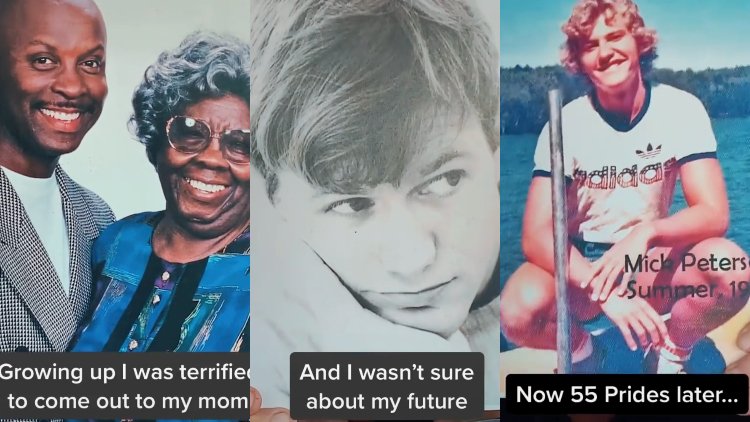
In a recent TikTok video promoting burger chain Shake Shack’s newest Pride-themed beverage offering, aptly called the Pride Shake, the fabulous foursome each share pictures of themselves when they were younger while talking about what life was like before they had come out of the closet

They juxtapose those vintage pictures with what they look like currently while also sharing how far they’ve come in terms of being an out and proud member of the LGBTQ+ community. 

“Growing up, my father was always trying to out me,” Old Gay member Bill Lyons starts off the video. “Well, here I am free, proud, and gay as can be.”

“Growing up I was terrified to come out to my mom,” Jessay Martin adds later on, showing off a heartwarming picture of him and his mother that was taken years ago. “But I finally worked up the courage to do it and she encouraged me to be myself. Well, here I am.”

And it’s safe to say the internet is obsessed with these wise, loving, and kind Old Gays. 

“Literally adopt me all of you, please,” one commenter wrote in reaction to the TikTok, which at the time of writing has over 2.2 million views and almost 700,000 likes. 

“Y’all give me so much hope,” added another.  

That they do! 

RELATED | This Lesbian TikToker’s Parents Had the Best Reaction to Her Coming Out

How the Patriots Foundation’s long-lasting partnership with local LGBTQIA+ flag football leagues came to be – Patriots.com

Football is a sport for everyone. Though there is still work to be done in terms of inclusion and acceptance at all levels, the perception that football is a place for all people – regardless of gender, age, sexual orientation – is one that is growing stronger every day.

For proof, look no farther than two local LGBTQIA+ flag football leagues.

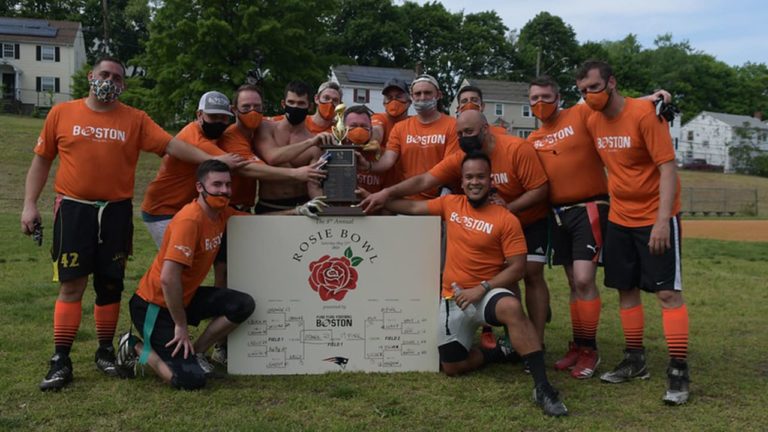
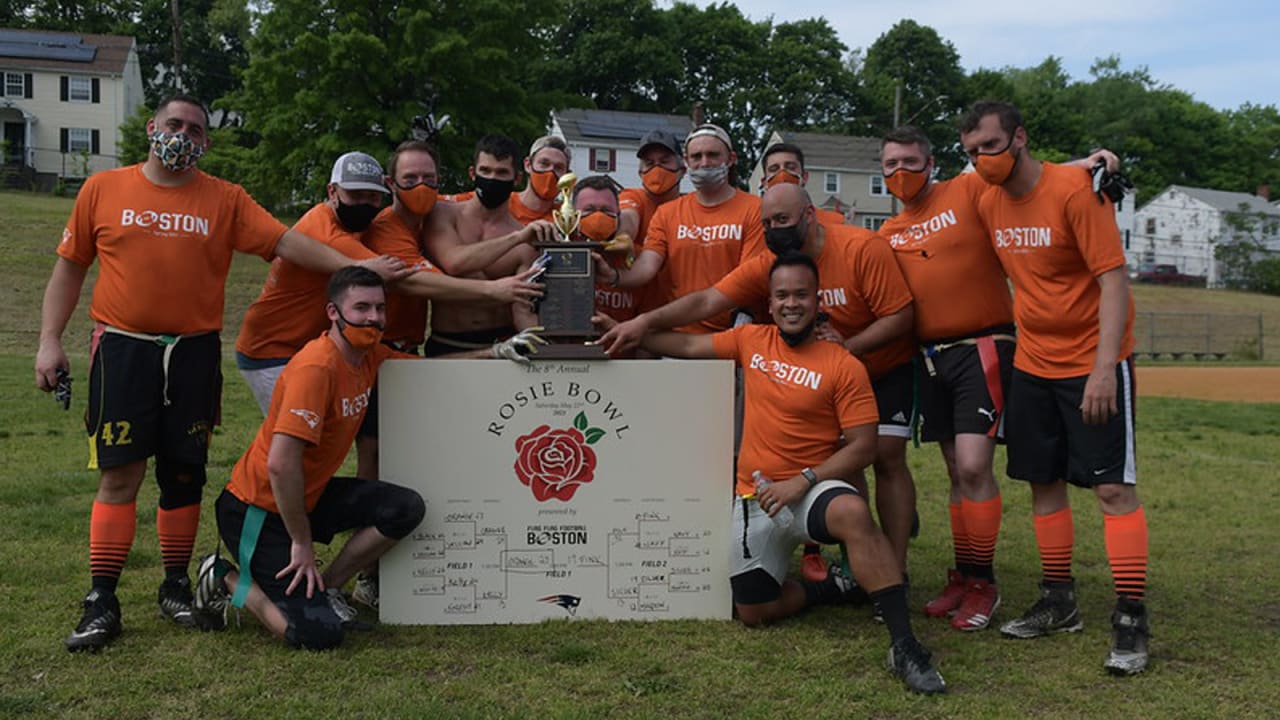
FLAG (Friends, Lesbians and Gays) Flag Football in Boston and the Providence Gay Flag Football League are both a part of the National Gay Flag Football League \[NGFFL\]. It’s a league specifically for LGBTQIA+ people and allies to compete, have fun, meet people and develop through football.

While FLAG Flag Football was born in 1998, with the Providence league splitting off on its own years later, over the last four years, both leagues have had a special ally in their corner: the Patriots.

In 2017, President of Kraft Family Philanthropies Josh Kraft learned about the leagues when he was honored at a PFLAG event. It didn’t take long for him to connect with the organizers, and that year, the Patriots became the first NFL team to sponsor the Gay Bowl, the NGFFL’s annual championship, when it was hosted in Boston. The Kraft family and the Patriots Foundation donated $25,000 to sponsor the game.

“I was floored when I got the call from Josh and said they were they were going to do it. It added so much legitimacy to what we’re doing as an organization, not just as athletes, but also in some of the things we do from a community perspective because there’s a big community aspect of what we do,” Dave Hamilton, who serves as an advisor to FLAG’s board, said. “It also added some credibility nationally as well because Robert [Kraft] came to our closing event for Gay Bowl, and it had athletes from all around the country. He got up on stage and gave a speech that was one of the greatest speeches that I’ve heard from him and talked about inclusion in sports. That ended up sending a ripple effect throughout the NFL across the country.”

According to OutSports.com, at the closing ceremony, Robert Kraft said, “We’re going to do a lot to build bridges in America through sports.” Josh Kraft echoed this sentiment this week.

“It’s been a privilege to be associated with the league for the last few years. It’s important to us because building bridges into every community is so important to us,” he said. “Building a bridge with the LGBTQ+ community is obviously important to us. We’re always hoping that we’re good allies, but our true aspiration is to be great advocates. Anybody that’s a fan of the Patriots, no matter who or what they are, is a fan of ours.”

In the four years since the initial partnership, the commitment has proven true. After the Patriots became the first NFL team to sponsor the Gay Bowl, a waterfall of support has come from across the NFL and in other leagues. The following year, the Broncos supported the Gay Bowl, as did every home team of the subsequent host cities.

In addition, the Patriots have remained financial partners of both FLAG and the Providence Gay Flag Football Leagues, sponsoring both leagues’ regular seasons every year since 2017.

“I think at the end of the day, it just gave that support to our local community and it just showed that at the national level, a national sports team wants to recognize us on that level and agree to set the tone throughout the rest of sports league,” FLAG Commissioner Tony Ardolino said. “I think you see in the NHL, all the other sports leagues, they’re also supporting the LGBT community. It just was groundbreaking at the time.”

Of course, in any sports league competition is high on the priority list, but for many players, the leagues aren’t just a chance to play. It’s a community. It’s a place for people to be authentically themselves. It’s a way to find yourself with full acceptance.

“It’s a special place. I think when you come to the fields that first weekend in the fall, a lot of people haven’t seen each other in maybe three months, and it’s just pure joy. Everyone’s excited. Everyone just wants to be out there, and everyone thinks about the friends they made from the league and the memories you have,” Ardolino said. “I met my significant other in the league. A lot of people have as well. It’s just a really fun atmosphere, and everyone is just welcoming. When I think about the league, it makes me smile just because I know how much fun we all have doing it.”

“We’ve seen people kind of come out of their shell a bit that were shy or timid just because they didn’t feel like they can be their true selves,” Hamilton said. “Now, they have that confidence to be able to excel on the field but also off the field.”

For LGBTQIA+ folks in particular, sports may not always feel like the most welcoming place. Many miss out on the chance to play in youth leagues or in high school for a variety of reasons — fear of being outed, bullying, anti-transgender laws. These flag football leagues are a chance to make up for lost time in a safe, comfortable and encouraging environment.

“This provided an outlet for folks that didn’t get to play sports in high school to do so afterwards. That was a safe environment for LGBTQ and allies to play,” Hamilton said.

Ardolino said he hopes there is a day when it ultimately doesn’t matter who someone is, how they identify or who they love. Until that day, at least it doesn’t matter on their fields.

“As a gay athlete, when we’re in high school or college, whenever we took the field, it was always probably in the back of our mind that we would never want our teammates to know that we were gay. We are probably in the closet,” he said. “A lot of us are probably in the closet because we didn’t want to be looked at as inferior or whatever because of that. I think when we step on the field for flag football that goes away. There’s no need to think about the fact that you’re gay or lesbian or bisexual. It just doesn’t matter.”

You can learn more about FLAG Flag Football here and the Providence Gay Flag Football League here if you’re interested in joining, sponsoring or learning more.

MUSC works to bridge gap in LGBTQ health care – Charleston Regional Business

Chase Glenn, MUSC's first-ever director of LGBTQ Health Services and Enterprise Resources, speaks at the hospital's Inclusion to Innovation Summit in 2019. (Photo/Provided)While serving as executive director at a local social justice organization, Chase Glenn performed a needs assessment for the region’s LGBTQ community. Part of that report focused on health care and concluded that the needs of the 1,400 people surveyed were not being met at the most basic level, such as doctors not knowing individuals’ sexual orientation.
That realization sent Glenn down an advocacy path that has led him to Medical University of South Carolina where he recently began serving as the hospital’s first-ever director of LGBTQ Health Services and Enterprise Resources. His position is nested under MUSC’s Department of Diversity, Equality and Inclusion.

In his new role, Glenn, a transgender man, is focused on closing the gap of disparity and making access and care more equitable, particularly to the LGBTQ community.

“I’m trans, so it’s personal for me,” Glenn said. “I have always sort of found myself in advocacy type roles. Even as a kid, I always had this sort of sense of right and wrong and what is just or not just in the world.”

The Illinois-native who has lived in Charleston since 2006 will engage internally with MUSC staff and students who identify as LGBTQ, and work to create a safe and welcoming work place for them. Externally, Glenn is challenged with improving health care for the region’s LGBTQ community and expanding education on what the hospital offers.

“LGBTQ folks are experiencing discrimination and hardship in every city and state across the country to some extent… What I found here is that the community is really resilient and strong, I think because they have to be,” he said.

Two jobs prior, Glenn worked as a customer success manager at Blackbaud, where he openly transitioned. He said he couldn’t be more thankful for the support he received from his colleagues, but felt a higher calling in 2017. That summer, he left to become executive director of Alliance for Full Acceptance, an organization in North Charleston that works to achieve equality and acceptance of LGBTQ people. While working there, Glenn joined MUSC’s Safe Zone Advisory Council and began a relationship with the hospital, specifically the DEI office. The partnership has been incredible since, he said.

That advocacy was how Glenn first met Dr. Willette Burnham-Willis, MUSC’s first-ever chief equity officer. MUSC has supported AFFA’s work for years, following along with Glenn’s successes. His LGBTQ needs assessment is one of the many reasons he was hired, Burnham-Willis said.

“His study on LGBTQ health in our regional communities is going to be pivotal in helping us identify where we want to begin to close those gaps,” she said.

Glenn’s new role is part of MUSC’s five-year strategic plan. Back in 2015, the medical system launched an initial focus on care disparity, building a foundation that has helped to launch this next series of work. In addition to eliminating health care disparities in the area, the hospital has a long-range plan of creating a center for LGBTQ care, with a focus on transgender care in particular.

Until recently, transition-related medical care was considered cosmetic by private insurance companies. In 2016, the Department of Health and Human Services issued a ruling stating that under the Affordable Care Act of 2010, individuals were protected from discrimination based on gender equality and sex stereotyping in health care facilities receiving federal money.

Still, for the 1.4 million transgender people in the U.S., according to UCLA’s Williams Institute, finding a health care provider who is knowledgeable about transgender health care is challenging.

“It all goes back to education and laying that ground work of success,” Glenn said. “It’s not about checking a box and saying we’ve done the training; we’ve had the conversation; we’ve updated that form or our mission statement. That isn’t the real change that needs to happen. It’s a continuous process, and it has to go from the bottom up to the top.”

Burnham-Willis thinks MUSC is in a position to take a leading role in academic health centers in terms of modeling what that looks like and being up front about their initiatives.

“We know that there are so many high-risk communities, LGBTQ+ being one of them, where we just have not distributed and given access to health care in the kinds of ways we should to those at-risk and underrepresented communities,” Burnham-Willis said.

Glenn has watched health care equality progress for gay and lesbian individuals, but admitted the needle hasn’t moved along at the same rate for transgender individuals. Burnham-Willis hopes that MUSC will become the hospital the LGBTQ+ community members see as the hospital of choice.

“We want to be their first choice, and we want to be their first choice because we are caring and inclusive and very attentive partner in their health care outcomes,” Burnham-Willis said.

Ireland Contracting Nightly Sports Call: June 15, 2021 (Pt. 2) – Yahoo News

Associated Press

Geneva regains diplomatic spotlight with Putin-Biden summit

A year ago, Geneva was largely down on its diplomatic luck: The Trump administration had an “America First” policy that shunned the internationalism the Swiss city epitomizes, and blasted some of its top institutions like the World Health Organization, the Human Rights Council and the World Trade Organization. The lakeside city, known as a Cold War crossroads and a hub for Swiss discretion, neutrality and humanitarianism, returns to a spotlight on the world stage Wednesday as U.S. President Joe Biden and Russian President Vladimir Putin come to town for a summit. It will mark the third time that Geneva has hosted U.S. and Russian leaders’ talks: The first was a multilateral meeting involving U.S. President Dwight D. Eisenhower and Soviet leader Nikita Khrushchev in 1955.

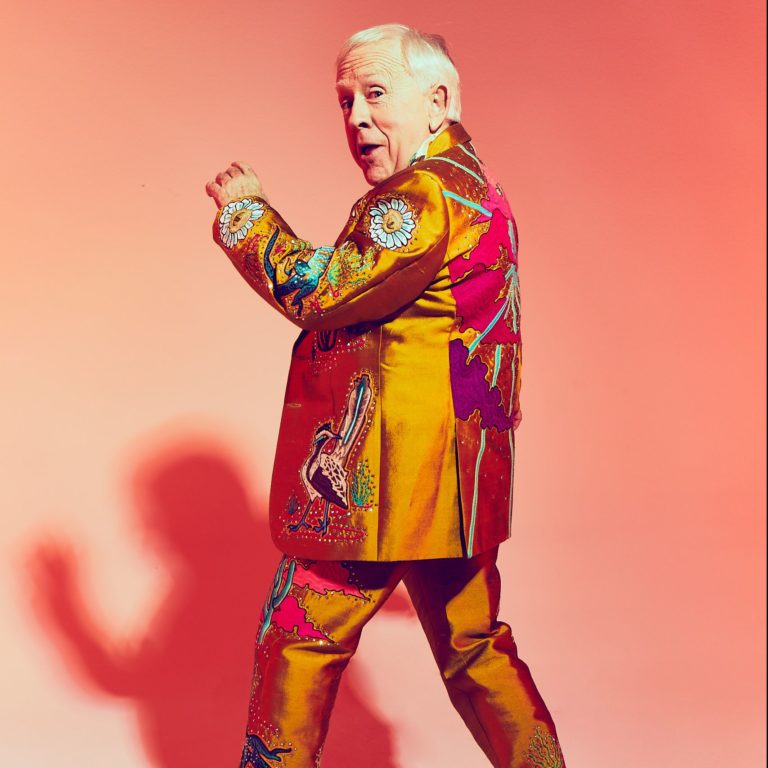
Going to Church with Leslie Jordan – Esquire

Leslie Jordan asks me to call him back in five minutes because someone’s come to install mama’s new curtains. This is as much of a break for me as it is for him because, if you’ve ever spoken to Jordan, you know that anything more than a ten minute conversation is best done with an intermission. Gives you time to breathe. Consult the Lord. Take a shot while he gives his new visitors the measurement for mama’s curtains because Jordan has stories. When we reconnect, I can hear birds chirping as he tells me, in his signature drawl, that he’s looking out over his mother’s property in Chattanooga, Tennessee, rocking on the front porch swing. I imagine that there is no better venue to take in a tall tale or two from a man not quite five foot.

As most interviews suggest, Jordan is promoting a project—Company’s Comin’ is his debut gospel album, featuring the likes of Dolly Parton and Eddie Vedder and Tanya Tucker. When I ask him if he’s angling for a Grammy, he erupts into excitement like he has never considered this once in his life. “Oh, my God. Oh!” he screams. “A Grammy? I don’t know,” the “o” sound in know stretching out like a slip and slide.

But what our conversation ultimately melts into is a chat about God. God and the South and being gay. As two Tennesseans, we talk about how people have actually told us we’re ignorant for dabbling in matters of faith and the divine. So why would a 66-year-old veteran actor, who’s found a new audience through social media fame during a pandemic, want to record a gospel album and talk about God (all while mama’s curtains are being put up)?

leslie jordan

Missing Piece Group

Well, why wouldn’t he? After all, he’s good friends with Eddie Vedder despite never really listening to Pearl Jam. And he toured with Tammy Faye Bakker in the later years of her life, so he knows God, or some version of him. And Dolly and him have talked about how Jesus felt about homosexuals, so his bases are pretty much covered!

A lot of people know Jordan from his viral Instagram-pandemic fame—he has nearly 6 million followers after all. Others know him from roles in Will & Grace or The Help or Sordid Lives, but this era of his career is for people to know Leslie Jordan: a 66-year-old, sober, gay Christian (or something like it) man who just wants you to be comfortable if you’re going to come over for a visit.

This interview has been edited and condensed for clarity.

To jump into things, did you ever imagine a year ago that you would have been making your Opry debut this spring?

No, that was not on my list of things. In 1982, I stepped off a bus in California and I had a whole list. I wanted to be on television and I wanted to get my SAG card and I wanted to work as an actor. That was my main goal.

And singing? My friend Travis Howard and I did not envision anything like this. We just loved getting together on Sunday and singing hymns. We put them on the Instagram and called it hymn singing. Let’s do some hymn singing. And all of a sudden we start getting [attention]. I even had to call my friend, Mike Lotus, who’s the executive producer on this. I said, “How did this happen? I can’t remember.” I never think about how it happened, but a lot of things are like that in my life. Things seem to work in my favor. I don’t know if it’s a past life or if it’s a, I don’t know what it is, but it’s been so much fun getting to make first of all.

The lineup of people that have joined this is crazy. I mean, that song with Eddie Vedder? C’mon.

Isn’t that pretty? And that is one of only two that were not real hymns. Danny Myrick wrote that keeping in mind the feel of the album. But that is not an old hymn, but when we sent it to Eddie, he just made it his own. And as my mother used to say, “Well, you’re just singing it for the Lord. Sing out, just sing loud.” So that’s the way I was taught. And thank goodness I have a musical ear because there’s a lot of people that sing for the Lord that are just… We had one old girl, I remember in my class, in my church choir, that the choir teacher would tell “Why don’t you just mouth it?” But anyway, I guess everybody does their best.

This content is imported from Instagram. You may be able to find the same content in another format, or you may be able to find more information, at their web site.

Did you have a connection to Eddie Vedder beforehand?

I had met Eddie through his wife. His wife came to see me. They live in Seattle and I used to have a comedy show that I traveled with, and we were doing a night in Seattle and she came and brought all her girlfriends. Eddie was supposed to come that night, but he was stuck in the studio. And so I had a connection through her over the years.

Then I was in Hawaii visiting my friend, Mike Lotus, that I mentioned. He said, “The Vedders want to have dinner with us.” I said, “Oh Lord, I can’t, no, I can’t go.” I didn’t want to go. “I’ll run out of things to say!” But it was just a lovely dinner. We had their eldest daughter who’s about 15; she was with us and we just yammered away. You know, I was never even a Pearl Jam fan. I remember “daughter, daughter,” remember that one? Something about daughter? Anyway, there was only a couple of songs that I knew of his. But I’m a huge Pearl Jam and Eddie Vedder fan now, at 66 years of age.

But that night, I looked at my watch and we sat there three hours, so we certainly didn’t run out of things to say. But he’s as real, as real, as real gets. That’s what I love, when you meet somebody that’s that famous, but you just feel like… That’s how Dolly was, like you’re just sitting with your best friend.

Oh, I can’t even imagine.

I tell you what was cute… I get a lot of people who see me on TV and they’ll say, “Can I have your autograph?” And I said, “And you want his too.” Because sitting right next to me was Eddie Vedder. I said, “That’s the autograph you want.” They didn’t even notice him, but that’s the power of television. I’ve done 30, 40 years on television, so I’ve got quite the recognizable face.

Seeing you throughout the years playing these very distinctive, flamboyant characters has been fun, but—to get personal—it’s been such a pleasure to see you being yourself over the past year. And this album, as a gay Tennessee kid who grew up Southern Baptist? It’s very special.

And you knew these songs.

I have the hardest time up here explaining to people how all those things can be in one package.

You are preaching to the choir. I know exactly what you’re trying to say. I would rather be known… let’s say you had a kid that you thought was going to be gay. I’d like a parent to be able to say [they’re gay] as if the kid was going to be left-handed. Not with pride. Certainly not with shame—just, it is. It’s not what we do and it’s not how we act, it’s just what we are. And I think we’re moving in that direction. I still think we got a lot of work to do, but gosh, if you only knew.

When I was a kid, I thought that I was maybe the only one. What a horrible thing to lay on a kid. And I think that it makes us a better people. Hang on. Can you hang on with me one second.

Of course.

Getting new curtains at my mother’s house. Hey sweetheart, I’m going to be finished here in a minute or two, can you call me back in five minutes?

Absolutely.

Five minutes later…

leslie jordan gospel

Missing Piece Group


I feel like this is a big question to hop right back into, but what was it like growing up in the church for you?

When I’m trying to be dramatic, I’ll say, “Well, I walked away from the church.” I never walked away. Everything we did, everything, was surrounding the church. Sunday morning, Sunday evenings. And it was a good childhood. And then I think the problem started when I realized I was gay. I just had nothing to do with the church anymore. So what’s interesting to me is to be 66 years old and have absolutely no ax to grind. I’m not quite sure how. I wish I had some wonderful stories of how I learned acceptance just over the years. I don’t know.

I’ve learned more about who I am and what I am, and I’m perfectly comfortable with it. I lost my father when I was 11. He was killed in a plane crash. And so, if I had had a dad, it might’ve been different. I have an uncle, but I don’t remember asking questions. I just knew queer was bad. I didn’t want to be queer, but I didn’t have a choice in it. Tell you when the real work began was when I got sober, when I was 42 years old. Because there was a lot of—22 years there—drinking and drugging and carrying on all over Hollywood. All of a sudden, you’re queen of everything. All the bars and everything. And you realize there was a lot of internal homophobia that I dealt with. That was when sort of the work began on the internal homophobia.

I think there’s some sort of divine reason that I got sober when I did, because I had to do the work. I don’t know where I’d be, if I didn’t. I know I’d still be drinking, probably, and carrying on and having fun, whatever. But I think at some point, I learned early in sobriety that if you put pen to paper, it slows your mind down to the speed of a pen and you get clarity, so I did a lot of writing and it’s interesting. I’ve journaled since I was 17 years old. And I don’t know why 17 or when exactly it started, but under my bed are books and books and books. And I read through those books and it’s almost like I don’t know who that is. I don’t know who that is! Who is that poor little thing with all that angst and carrying on? Everybody says, “Oh, go back and what you want to tell your younger self?” I’d tell myself, “Lighten up, girl.” You know?

I was 42 years old and I said to my sponsor, “Now, how do we deal with this whole gay thing in sobriety?” He goes, “Well,” he said, “You seem to be dealing wonderfully with it.” He said, “I think it’s important that your home group knows. And I think that just to clear the air, you should tell them.” I said, “From the podium?” And he said, “Well, it wouldn’t hurt. It would come up in conversation. As you tell your story, you say my name is Leslie Jordan and I’m an alcoholic. I’m also guy and blah, blah, blah, just let it come out.” And I said, “Oh.”

leslie jordan

Missing Piece Group

So the night I was supposed to speak, I was the guest speaker, and he said, “Tonight would be good night.” I called him. I said, “Do you think I should just tell them I’m gay?” He said “Well, hon, you’ve got to walk to the podium.” “You asshole. Walk to the podium.” So I probably walked up there like John Wayne. But the good news is I never think about that.

Now with this album… what about the Grammys? You thinking of maybe angling for a Grammy?

Oh, my God. Oh! A Grammy? I don’t know. I’ll say a funny thing. The song that I did with Dolly Parton went back and forth quite a bit. She is an artist and she is a musician and she takes it so serious. There was this one note that I couldn’t hit. She said, “I had a lot of my family come in and do some of the background vocals.” And I thought, “I didn’t know that. Oh, my God.”

She said some of her family come in and she said there was one note that she felt like nobody could quite get, so she said, “I sang over myself, which I don’t normally do. I did the high note and the low note.” She said, “Now, listen, honey, when we do this live,” and I thought, “I’m going to shit and fall back in it… when we do it live?” It had never crossed my mind that I would maybe… I mean, it could happen.

I mean, just beyond your wildest dreams, right?

Oh, it was beyond anything I would ever have dreamed. And to have met her too? People say, “What’s she like?” Well, you know what she’s like. What you see is what you get. She’s tinier than I thought she was. She’s tiny, tiny, tiny. Little, tiny waist. Little round butt, but just those little boobs. She’s just a doll baby.

I wish I had been able to listen to an album like this as a kid, because to have these hymns performed by yourself and Brandi Carlile and TJ Osborne. I mean, even Dolly. Dolly’s not gay, but Dolly belongs to us.

She is. She’s one of us. And she says… what’d she say in one of her interviews. She said, “Jesus talked about everything under the sun,” but she said, “Jesus never ever talked about homosexuality. Ever, ever, ever in any of his sermons or anything.” She’s with us. I loved that I was able to call [this album] Company’s Comin’, because that’s what I wanted the feel of it [to be].

I was explaining that intersection of identities to colleagues earlier—how there’s a campy familiarity to religion and gayness. I was talking about Tammy Faye Bakker too…

Wouldn’t it have been fun if Tammy was alive, if I’d have gotten her? I got to meet her two or three times over the years.

leslie jordan

Missing Piece Group

Oh, really?

Yeah. I kind of did a little tour with her. She wanted to open for me. She said, “I’ll be the opening act.” And I said, “Well, what are you going to do, Tammy, because this is a very secular crowd.” Not that we don’t want any kind of preaching, but of course, my manager jumped in with her and said, “You know, it’s a secular crowd.” And she said, “Well, I’m just going to sit around and talk to everybody.” She had no plans, so we didn’t know what to expect.

She wanted it to look like her bedroom, so we built her bedroom as a traveling set. And she just sat there. She just talked about Jesus, which is fine, but oh, it was just, almost like a nightmare. She wanted to sing with me. And we got up and danced around. I mean, it was in Palm Springs at one of those big, the Annenberg Hotel or whatever. Anyway, it was crazy. It was a a while ago, because she got real sick right after that.

I saw her right after. She said, “Do you know Dottie Rambo?” I said, “Oh my God, of course I do.” Dottie Rambo is another gospel singer, [with] the Rambo family. It’s one of those that goes way, way back. Anyway, Ms. Rambo decided she’s going to cure Tammy because she’s a faith healer. This was in Hollywood at a big service that she put together. She said, “Now lay down here, honey.” Tammy laid down on the ground. And they had what was called the modesty skirt. You know, a man came out with like a shawl thing they’d put over her legs, so nobody would see her legs. It was insane.

And then it got real weird because Dottie said, “Now where exactly is it?” And Tammy said, “Well, the cancer… the tumor is right about here, about the size of a quarter.” And she said, “Oh, size of a quarter, is that right?” And started praying over her and then went into tongues—a foreign tongue. You know how they do?

Yeah.

Oh my God. It was just the craziest thing I’ve ever been through.

This content is created and maintained by a third party, and imported onto this page to help users provide their email addresses. You may be able to find more information about this and similar content at piano.io

Tan France Talks ‘Queer Eye’ in ‘The Queer Bible’ Excerpt – menshealth.com

It wasn’t me who drove the plan forward to move to Manchester. It was my boyfriend. He wanted to live in a place where we could live more openly. We’d met in our hometown, a small Yorkshire town called Doncaster. We wanted to live without judgment and Manchester was the closest place to do it. We didn’t do it exactly together, but we moved at roughly the same time. I packed my bags for liberation just shy of my eighteenth birthday.

Oh my gosh, Manchester. It was absolutely eye-opening. I’d been going there for years anyway, because we have family close by, without ever discovering the city center. I only really knew the suburbs. South Manchester, and Chorlton in particular, was full of students and ex- students, which automatically meant that it was the most liberal place I’d ever lived in. We’d go out to the Gay Village around Canal Street and socialize among people who were not only openly gay but openly comfortable with their gayness. It was something I’d just never seen in my hometown, where being gay was still the subject of ridicule, gossip, and scorn. So, the majority of my experiences as a gay man I learned in Manchester.

For me, these were the places where I learned not to hide any of my femininity, at all. On the most basic level, it was about not needing to hide those things that were natural to me that I had felt the need to keep covert before. If I had a limp wrist, I had a limp wrist. A high voice? That’s fine, too. If I wanted to talk about Britney Spears, I could. It made me feel like I was safe to be the person I wanted to be and to no longer have to suppress the things inside of me that had previously been locked away. Because nobody, quite frankly, gave a fuck. I love Manchester for that.

The TV climate of the time was funny. Weird, not haha. It was the start of the millennium. Change felt imminent but not yet fully realized.

Courtesy of Dey Street Books

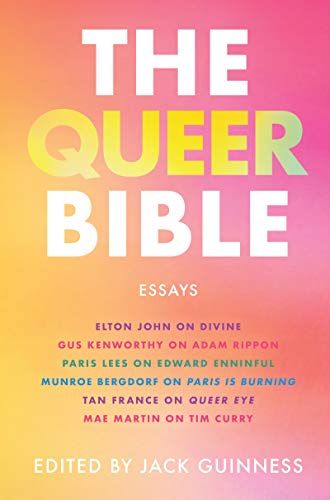
The Queer Bible: Essays

Dey Street Books amazon.com

$25.99

$22.99 (12% off)

The first gay people I saw on TV were the cast of Will & Grace. I’d known there were gay characters in the seventies and eighties, but not many, and I didn’t watch those shows anyway. But I would watch and be fascinated by the world of Will & Grace. What I found so fascinating was how clear it was to me that these people were not a version of me. They were either hyper-stereotyped versions of gayness, like the Jack character, or someone who was obviously played by a straight guy, like Will. Will would try to camp it up slightly but never quite enough to make a gay audience feel absolutely seen. These two extremes seemed to be on TV to make straight people feel comfortable about the idea of watching gay characters. And that was great, truly. They represented the possibilities of what a gay person might look like to that audience. But to a gay man watching the show it wasn’t entirely clear that they took in the multitudes of gayness. What about the men who didn’t have to try to camp it up?

Like I say, that was OK. Will & Grace was a scripted show with a clear intention. But then Queer Eye happened, and my mind was blown. It was the first show I’d watched gripped, where it was very clear that these people were gay, or queer—however they wanted to identify—24/7, around the clock, off camera as well as on. It was an important distinction for me. They talked in their own voices and said what they wanted to say, as identifiably real-life gay men. This was a first for me. The first time I felt like, what? We’re allowed to be ourselves on TV? That is insane.

Even though Queer Eye was—and still is—a makeover show, the presenters said what they wanted to say in their honest voices. They were true queer men. They reimagined what the word “queer” meant to me. Back in the day, when I was growing up, the word was only associated with shame. There was a long time when hearing the word at school sent a shudder through me. I wouldn’t hear it directed at myself because I was stupid enough or clever enough to pretend not to be queer. I can be angry for allowing myself to live that pretense at the time, but I forgive myself now because there was no option to behave any differently and remain unscathed. This is one of the reasons why I get it when people act from a place of shame and deny their true selves. Why did I have to convince these idiots that I was straight? Because the world is not set up for queer people. It’s built around a “straight” model, whatever that is. So sometimes living an imaginary or modified life is a question of survival in small towns. It certainly was then.

tan france center with the queer eye cast

Tan France (center) with the Queer Eye cast.

Rich PolkGetty Images

For me, being gay wasn’t a problem, but for other kids it was. “He’s a queer,” “he’s a poof.” That was a language I grew up with as routine. I heard it a lot, even if it wasn’t directed at me, and the whole idea of being gay was equated, in those little moments of casual cruelty, with feeling ashamed of something at your core. It wasn’t until I was in my thirties that I understood the word to mean something positive. Queer Eye must have triggered that. We’re not something straight; we are something different from that and that’s OK, that’s beautiful. We are queer, and for me, that started to mean different or unique. The word started to shed some of its negativity. Queer Eye had a lot to do with that. Now it fills me with pride to think that I am one of those Queer Eye boys. I’m not dancing to the same beat as everybody else, and that is fine. That makes me feel strong. It’s a source of great power, not having to conform to what people expect of you. I hate the word “normal” anyway, a word that now sounds like more of an insult than queer used to. Who, in all honesty, wants to be that bore?

I’ll be honest. When I got the Queer Eye job I only watched half an episode of the first American series, because I didn’t want to be inspired by the US original Fab Five and become a cheap knock-off of Carson. I didn’t want to subconsciously channel him in any way. But the British version had changed something in me back then in Chorlton when it ended up popping on my TV one night. It chimed with my new life.

“It brought a 360-degree gay experience right into the home. Not something that someone turned off and on for the camera.”

I can remember it coming on the TV as if it was yesterday. I was sitting with my boyfriend and was immediately struck by how fab these guys really were, in the best and worst possible way for the early 2000s. It was so weird that they referenced their life outside of the show, something actors on scripted drama or comedy could never do. They were naturally funny and charismatic and, most importantly, naturally queer. That felt so different to a script. It was so nice to imagine what their life might look like outside of the show—these men who didn’t take off the costume of a gay man and disappear back to the arms of their girlfriends.

Its appeal wasn’t that it was a makeover show and that I couldn’t wait to see the next episode. That it was nice, it was entertaining. What was truly revolutionary for me was that I was able to talk about it with my boyfriend and my friends, knowing that they were going back to their boyfriends or partners or however they articulated their queerness in a real way. That impacted me in the most positive way. It was something I simply hadn’t seen before. Somebody on TV allowed to talk about what their life was like outside the show was something I had never experienced before. It brought a 360-degree gay experience right into the home. Not something that someone turned off and on for the camera. These men were working together—who knows what their relationships were like off screen, but on screen they were helping somebody improve their lives by bringing their own, rounded, fully gay experience to bear on the most important aspects of their lives. Gay men were useful, at last! Gay men weren’t the butt of the joke anymore or wheeled on as a joke for comedic relief. Their opinions and expertise were respected, and their “gayness,” that point of difference, was central. That they were introducing their experiences to other people in an affirmative, positive way made the show somehow holistic. “Queer” suddenly felt like the opposite of shame.


Adapted from THE QUEER BIBLE by Jack Guinness, published by Dey Street Books. Copyright © 2021 by Tan France. Reprinted courtesy of HarperCollinsPublishers


This content is created and maintained by a third party, and imported onto this page to help users provide their email addresses. You may be able to find more information about this and similar content at piano.io

The Chicago Author Who Wrote the First American Novel to Feature Gay Themes – WTTW News

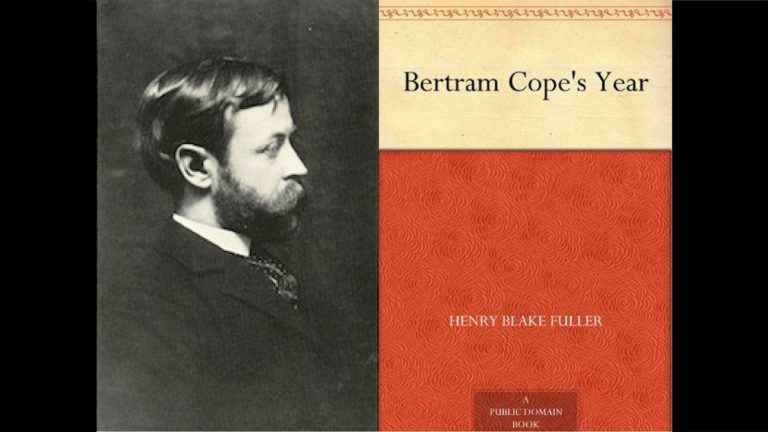
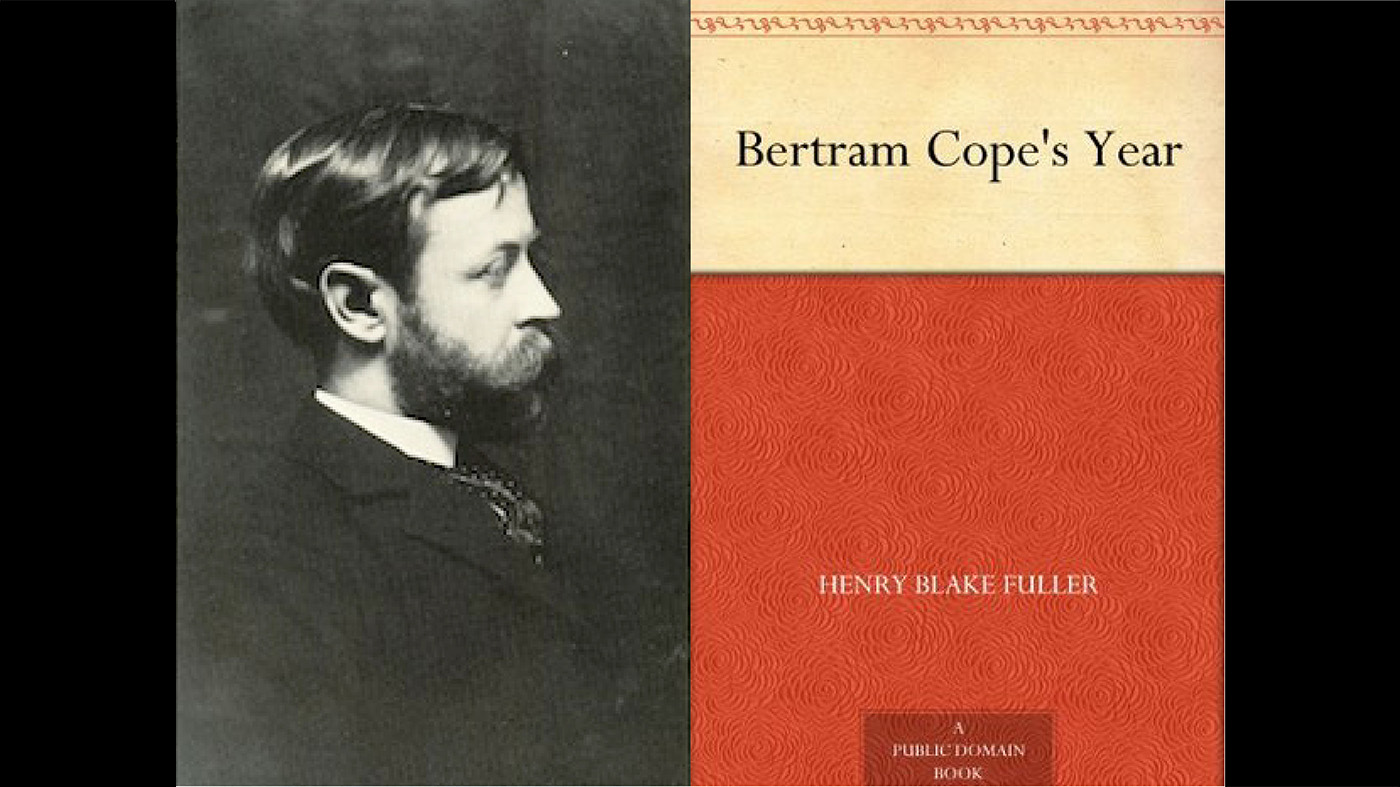
Henry Blake Fuller, an author who is now in the Chicago LBGT Hall of Fame, wrote what many consider the first American novel that explored LGBTQ themes. But his relationship with Chicago was complicated, and his writing style didn’t always paint the city in the most flattering light. 

Fuller was the author of The Cliff Dwellers and Bertram Cope’s Year. The latter is considered by many to be one of the first American novels that features gay characters and themes, while his play At St. Judas’s is given a similar distinction in American theater. 

Fuller was born in Chicago in 1857 and never left. He ran among some of the artistic greats in Chicago at the time, including Harriet Monroe, the founding editor of Poetry magazine; novelist Hamlin Garland; and architect Louis Sullivan. Chicago served as a source of inspiration for Fuller’s writing, but not always in a positive way. His biography in the Chicago LGBT Hall of Fame says he had a “love-hate relationship” with the city. 

Liesl Olson, director of Chicago Studies at the Newberry Library, which has a collection of Henry Blake Fuller’s papers, agrees with that assessment. 

“He was also totally crabby,” Olson said. “He didn’t actually have a whole lot of good to say about Chicago, but he stayed …. He was so committed to it in some ways.”

Fuller often expressed that crabbiness through a literary style often associated with Chicago called social realism.

“That’s probably what is most distinctively Chicago about his style,” Olson said of social realism, a mode of writing that shows “things as they are” and paints reality in a stark, unadorned way. In Fuller’s writing, that involved depicting materialism in the city, exploitation of workers, and the role of commerce and industry in Chicago.

“A character in one of his novels says, ‘It’s the only great city in the world to which all its citizens have come for the one common avowed object of making money,’” Olson says. Fuller’s writing often reflected that cynicism. 

Olson considers The Cliff Dwellers to be the best example of Fuller’s work and style. The novel, which was published in 1893, takes place in a Chicago skyscraper and offers an unflattering (and at times, misogynistic) portrait of money-centric businessmen and their wives. 

“Then, Hamlin Garland goes on to create an all-men’s literary club called Cliff Dwellers, which still exists,” Olson says. “Henry Fuller refuses to join. It’s just funny. He was just such a curmudgeon in that way.”

Though The Cliff Dwellers might be the best example of Fuller’s realism, it is Bertram Cope’s Year that is considered groundbreaking in hindsight for its inclusion of gay characters. The novel, published in 1919, when Fuller was 62 years old, takes place at a university modeled after Northwestern University and follows a young English teacher who becomes the love interest of both male and female characters. 

But Fuller’s thinking behind that novel — as well as his own sexual identity — aren’t clear.

“A lot of the correspondence around that book and letters from Henry Fuller were burned before his papers arrived at [Newberry Library],” Olson said. “So a lot of the documentation about how that novel was made, we just don’t have partly because of ‘homosexual themes,’ as they called it.”

Olson acknowledges the difficulty in examining the internal life of authors like Fuller.

“When you’re looking back at figures from the past who were not openly out — for so many political reasons, safety reasons, legal reasons — this is a common ethical quandary for historians and literary scholars. Who are you to out them when the record isn’t there?”

So why isn’t Fuller a bigger name in literature? Olson offers some theories. For starters, many of his novels are out of print and were never reissued. Fuller also “wasn’t a stylist in the same way that his peers were,” Olson said, so some of his novels weren’t as successful. Additionally, the “homosexual themes” in Bertram Cope’s Year and the anti-gay sentiment at the time the novel was released might have influenced Fuller’s reception as an author. 

“In the decades after his death, there may have been a disinterest in writers who were queer, in a sense that people didn’t want to touch those things,” Olson says.

But now, many who know Fuller’s name know him as the first American writer to tell a story about gay characters. Olson also thinks he contributed something important to the literary world, particularly in Chicago.

“I think Henry Fuller is the city’s first social realist, and social realism becomes a mode of critique that is distinctive to Chicago writers all the way into the twenty and twenty-first century. So if you want to trace that literary history of social realism, Fuller is where you start.”

Matt’s Picks (June 17-20): Springfield Public Library to screen Bee Gees documentary – The Register-Guard

This week in Eugene-Springfield, Matt’s Picks invites people back outside to celebrate several live, outdoor music and art shows (at a safe social distance). Keeping with music, the Bee Gees story will stream from the Springfield Public Library while the Eugene Public Library offers a fun night of trivia. 

Check out a dive into Springfilm’s streaming music documentary or jump to additional events below. And make sure to keep an eye on registerguard.com/calendar for all of this week’s goings-ons in the Southern Willamette Valley. 

‘How Can You Mend a Broken Heart,’ Springfield Public Library

Livestreaming via Zoom on Thursday, SpringFilm presents “The Bee Gees: How Can You Mend A Broken Heart,” with a discussion to follow.

Directed by Frank Marshall, the producer behind blockbusters from “Raiders of the Lost Ark” to “The Sixth Sense” to “Jurassic World,” the film follows the Bee Gees’ history, featuring revealing interviews with oldest brother Barry Gibb from his home in Miami and archival interviews with the late twin brothers Robin and Maurice.

Marshall runs through the Bee Gees’ many career transformations (and fabulous hairdos), beginning with Australian and British pop hits in the 1960s and into the fame that would tear them apart again and again. The Bee Gees lasted because that fraternal bond brought them back together again and again, most notably in the mid-1970s, after “accidentally” discovering Barry’s falsetto skills and diving into American soul and R&B. 

This crescendoed in 1978 with the “Saturday Night Fever” soundtrack, featuring eight Bee Gees tracks. In March 1978, the Bee Gees held the top two positions on the U.S. charts with “Night Fever” and “Stayin’ Alive,” the first time this had happened since the Beatles. On the Billboard Hot 100 chart for 25 March 1978, the Bee Gees bested even the Fab Four with five Gibbs brothers’ songs together in the top 10 (“Night Fever,” “Stayin’ Alive,” “If I Can’t Have You,” “Emotion” and “Love Is Thicker Than Water”).

While cultural stereotypes may elicit pursed lips for the band that represents disco, it’s easy to forget that the band sold more than 110 million records spanning four decades, according to The Guardian. The Bee Gees represented pop’s key bridge from the 1960s Beatles-era to 1980s Michael Jackson. Their music also happened to go hand-in-hand with gay night life, normalizing an alternative lifestyle and eliciting a vicious, violent reaction from conservative Americans.

When disco caught fire in 1978, the flame ended in a conflagration at the infamous Disco Demolition night at Comiskey Park in Chicago in 1979, which Marshall calls out for its overt racism in the film.

“How to Mend a Broken Heart’s” main theme, though, is the brothers’ fractious relationships — Robin and Barry the rival peacocks with Maurice as go-between and peacemaker. 

Marshall’s documentary is a fascinating journey through eras, a serious account with plenty of heavyweight input, including commentaries from Eric Clapton, Nick Jonas and Noel Gallagher, who turns out to be an interesting source on the internal dynamic of family-as-bandmates.

Join SpringFilm for a livestream of the 2020 HBO documentary at 6:30 p.m. Thursday, June 17 and afterwards participate in a fun discussion. “The Bee Gees: How Can You Mend A Broken Heart” can also be viewed via the library’s streaming video service at bit.ly/2SEQwzv. Join the live ZOOM stream free at wheremindsgrow.org/events

Highlighted events

  • “Be Here Now,” showing Friday through July 16 at the Maude Kerns Art Center, 1910 E. 15th Avenue. Gallery opens 10 a.m. to 5:30 p.m., Mondays through Fridays, noon to 4 p.m. Saturdays. Free; info at 541-345-1571 or mkartcenter.org.
  • “Bookish Brain Trivia Night,” 6 p.m. to 8 p.m. Friday at the Eugene Public Library Foundation. Free; eugene-or.gov/Calendar.
  • Left on Wilson’s first unplugged show kicks off at 6 p.m. Saturday at Slice Pizzeria and Bar, 325 Blair Blvd. $10 presale, $15 day of with limited tickets; 541-653-9937 or leftonwilson.com
  • Faroe Rum brings Celtic tunes to Oregon at 6:30 p.m. Saturday at The 3 Legged Crane Pub and Brewhouse, 48239 E. First St., Oakridge. Free with purchase; 541-782-2024 or 3leggedcrane.com.
  • “The Official Juneteenth Celebration” running from noon to 7 p.m. Saturday at Alton Baker Park, 200 Day Island Rd. Free; facebook.com/events/598153104913383.

Follow Matt on Instagram @CAFE_541. Questions or comments? Email him mdenis@registerguard.com. Want more stories like this? Subscribe to get unlimited access and support local journalism.

Indian Sprinter Dutee Chand is New Brand Ambassador of Senco Gold & Diamonds – Pragativadi

Kolkata: Senco Gold & Diamonds, one of India’s largest jewellery retail chain has signed the internationally acclaimed Indian sprinter and current national champion in the women’s 100m event, Dutee Chand as the company’s new brand ambassador. She will be promoting ‘Everlite’ – the light-weight jewellery range from Senco Gold & Diamonds. The brand is also celebrating the PRIDE month and has rolled out a new campaign in honour of the LGBT community #MorePowerToPride#loveislove.

As part of the PRIDE month celebrations, Senco Gold & Diamonds has also unveiled a new range of Everlite jewellery, named ‘Love is love Collection’. In a virtual event, Suvankar Sen, CEO, Senco Gold & Diamonds and the company’s new brand ambassador, Dutee Chand unveiled the new range of jewellery. The Love Collection offers a signature range of rings, ear-studs, chains and pendants in Gold and Diamond, and can be used as part of daily wear as well as for party wear. The price range of the collection starts from Rs. 12000 for both Gold and Diamond pieces.

Speaking on the occasion, Mr. Suvankar Sen, CEO, Senco Gold and Diamonds said:

Senco Gold and Diamond has always taken a very progressive approach towards its jewellery as well as life in general. Amid these tough times, we want to spread the gleam of hope with our Everlite brand. The new Love is love Collection is inspired from pure love and heart as it’s the love of our friends and family that is keeping us positive in these testing times. We are also honoured to have Dutee as our brand ambassador. She is a talented athlete our country is proud to have. She is set to feature in a race in the Olympic qualifying event next week, and we wish her all the best. We are confident that she will come out with flying colours in the Olympic qualifying event and make our country proud again at the grandest sporting event in Tokyo.
On associating with Senco Gold & Diamonds, Dutee Chand, said:

Dutee ChandIt gives me immense pleasure to be the brand ambassador of Senco Gold & Diamonds. I think this is a unique association of a jewellery brand with an athlete, and I am really happy that Senco Gold will be supporting me in my quest. I look forward to a successful relationship with them. I really hope I can visit a Senco Gold & Diamonds showroom once the pandemic and Olympics are over.
Zeuss Sports Entertainment Art Pvt. Ltd. was instrumental in getting Dutee Chand and Senco Gold and Diamonds together for this association.

June is celebrated as pride month worldwide. As a gesture of support for the LGBTQ community, Senco Gold & Diamonds celebrates the month every year with its own unique way. In 2019, Senco Gold had launched the ‘PRIDE Collection’ as a gesture of support for the LGBTQ community through a unique fashion show by a group of transgender men and women led by well-known Professor and LGBT activist Dr Manabi Bandyopadhyay.

Elderly Gay Men Share Their Stories in Shake Shack Advert That Is Melting Hearts Online – Newsweek

June is Pride month, when many companies and brands unveil adverts and social media campaigns to demonstrate their support for the LGBTQ+ community.

One of the most successful is a TikTok video made by a group called the Old Gays, to advertise Shake Shack’s new Pride shake—and people online are obsessed with it.

The footage, which was shared on June 14, shows the group’s journey of acceptance.

It begins with a shot of a vintage photo of a young man. A voice can be heard saying: “Growing up, my father was always trying to out me.”

The photo is then put down to reveal the speaker, an older man sitting in the back of a cab. He adds: “Well, here I am free, proud and gay as can be.”

Next comes another photograph: a black-and-white shot of a teenage boy.

A man says: “My father suddenly died while I was in college and I wasn’t sure about my future.”

This speaker is another elderly gentleman, who adds: “But here I am today. 78, proud and still chugging along.”

The next photo is of a man standing next to his mother, which appears to have been taken in the 1980s.

A new voice says: “Growing up I was terrified to come out to my mom.”

The speaker then reveals his face and goes on: “But I finally worked up the courage to do it and she encouraged me to be myself. Well, here I am.”

The final photograph shows a young man crouched in front of a body of water, with a voice explaining that it was taken “one year before my first Pride.”

He says: “I was uncertain of who I was. Now 55 Prides later…

The speaker then shows his face, telling the camera: “…I know exactly who I am.”

The clip cuts to all four men, standing together holding shakes, and saying: “The Old Gays are unshakable.”

The ad, which is captioned “Free, proud & gay as can be,” has been watched more than 2.1 million times on TikTok and has over 690,000 likes.

Thousands of viewers have left comments praising the four men and their stories.

One TikTok user, lilivitek, wrote: “Awww the throwback pics are so cool.”

Another person, Lex, added: “Such handsome men!”

Jlstal2 commented: “Omg I am crying this is so beautiful thank y’all for sharing.”

Daniel Anguaiano gushed: “Love is Love!!!!!!! Pride & Proud!!!!!!!!”

Justice stated: “Dammnnnnn y’all looked good and still do.”

Michal Ann Morrison wrote: “This is one of the most beautiful things I’ve ever seen!”

Gay Pride Protest
Stock image of a Gay Pride event. In a recent Shake Shack ad, elderly gay men share their stories.
Getty Images

Tupac Shakur’s estate releases unexpected Pride collection – PinkNews

Tupac Shakur’s estate has released Pride-themed march. (Raymond Boyd/Getty)

Tupac Shakur’s estate has released a new collection of merchandise to celebrate Pride Month – and all the proceeds will be donated to LGBT+ organisations.

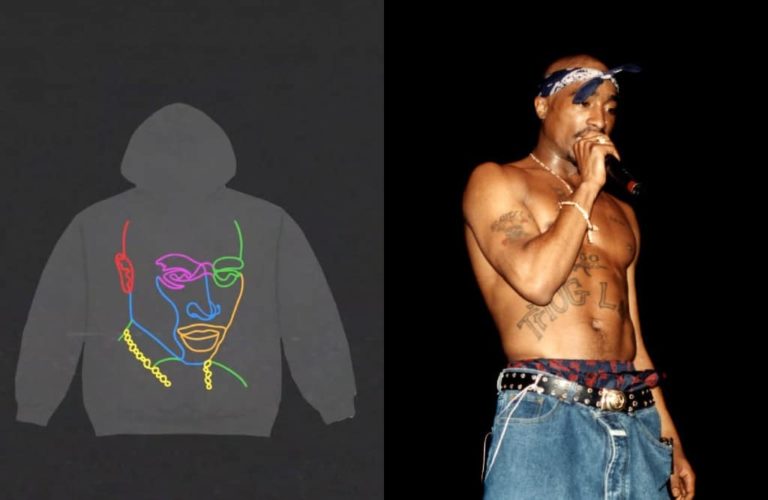
Tupac’s estate has released black hoodies with the word “Changes” emblazoned across the front in the Pride colours, along with an image of the late rapper on the back in the rainbow colours.

All proceeds will be donated to True Colours Unite, which works to eliminate homelessness among LGBT+ youth, and the Marsha P Johnson Institute, which fights for the rights of Black trans and gender non-conforming people.

The announcement arrived ahead of what would have been Tupac’s 50th birthday.

The merch has been met with a range of responses – some accused the estate of “disrespecting” Tupac’s legacy by putting words in his mouth, while others questioned why they weren’t releasing hoodies marking Juneteenth or reflecting on the fight for racial equality in America.

Some of the responses veered into homophobic territory, with social media users suggesting Tupac would never have supported the LGBT+ community.

However others were perplexed by bigoted responses, questioning why some assumed Tupac “wouldn’t support this”.

“I don’t understand where the negativity is coming from,” wrote one person.

Many of those commenting on social media have accused Tupac’s estate of trying to profit off his legacy, apparently missing the fact that all proceeds are being donated to LGBT+ organisations.

In 2012, Tupac Shakur’s family was forced to deny that the rapper was homophobic after music mogul Marion “Suge” Knight told Howard Stern claimed Tupac once called Dr Dre “a f****t”.

His family later said the claim was “totally false” and alluded to his friendship with gay fashion designer Gianni Versace as evidence that he was supportive of the gay community.

The legendary rapper – who was fatally shot in 1996 when he was just 25 years old – has a divisive legacy today. While he is remembered for having spoken out against inequality and abuse in his music, he also served eight months in prison after he was convicted of sexually assaulting a woman.

Kevin Durant proves one superstar is enough – Sky Sports

At the start of the third quarter in New York, the Brooklyn Nets found themselves down by 16-points. James Harden still hadn’t scored.

The sharp-shooting Joe Harris, who can’t seem to buy a shot since the opening two games of this series, was again 1-7 from the floor.

Other than Kevin Durant, only the veteran Jeff Green was in double figures for Brooklyn, while Milwaukee had Giannis Antetokounmpo, Khris Middleton and Jrue Holiday – in essence their own ‘big three’ – all off to relatively strong starts through the opening half.

The Nets were shooting 35 per cent from the floor, their opponents 54 per cent. At this point, it seemed the Bucks were cruising. Turns out if you cut off a couple of Cerberus heads then it is no more frightening than an oversized Andrex puppy.

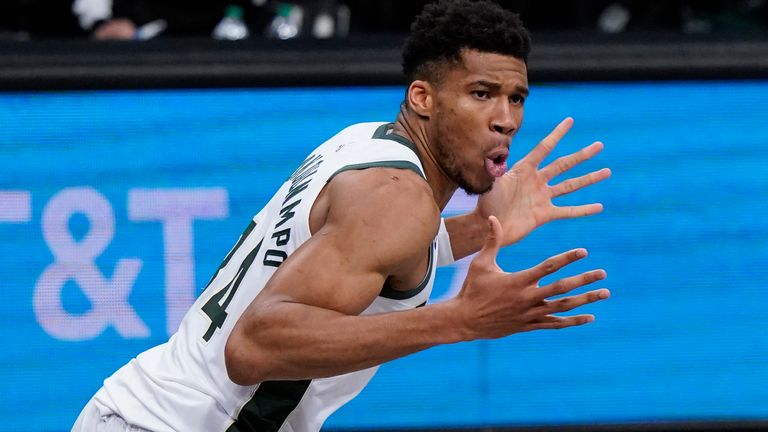
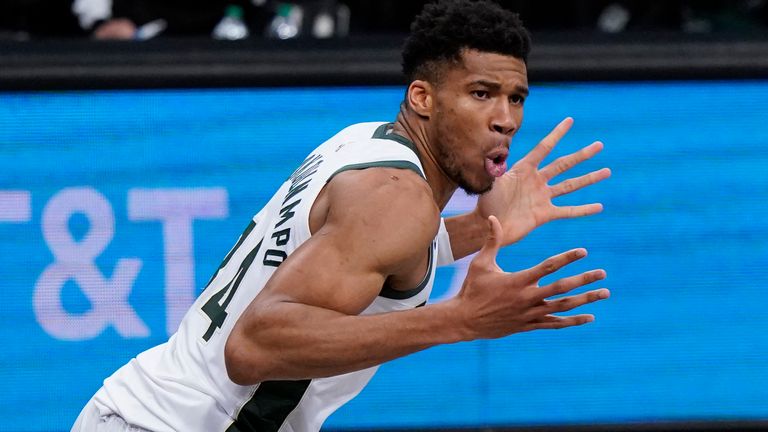
Milwaukee Bucks forward Giannis Antetokounmpo (34) reacts after dunking, next to Brooklyn Nets forward Blake Griffin (2) during the first half of Game 5 of a second-round NBA basketball playoff series Tuesday, June 15, 2021, in New York. 2:12
Giannis Antetokounmpo scores 34 points and 12 rebounds in the Milwaukee Bucks’ loss to the Brooklyn Nets in Game 5 of their NBA playoff series.

Two years on from a ruptured Achilles injury that would end most careers, these were dire circumstances for Kevin Durant. Not just in terms of this dramatic Eastern Conference semi-final series, which has fluctuated wildly from one direction to the next, but for the player’s overall legacy.

This is the Kevin Durant that left Oklahoma City to join the super-team Golden State Warriors after losing the Western Conference Finals to that very squad of players just a month prior.

The same Kevin Durant who, despite answering critics with two straight NBA championships and Finals MVP awards, has been treated with something close to ambivalence, if not outright disdain by most basketball fans given the way he singlehandedly shifted the balance of power in the league with that almost universally-ridiculed free agency decision.

The same Kevin Durant who did it again, despite an Achilles rupture that would keep him out for a full season, effectively telling the Brooklyn Nets in the summer of 2019: this is my team now. My good friend Kyrie Irving is coming, too.

Once again Durant had hand-picked the franchise he would make a perennial contender for the foreseeable future.

There were, of course, doubts from all corners that he would ever be the same player. After all, Achilles injuries have permanently reshaped the careers of the likes of DeMarcus Cousins, Rudy Gay, Wesley Matthews, Elton Brand and even the late great Kobe Bryant.

Only Dominique Wilkins had ever made anything close to a full recovery. Now Durant has, too.

Brooklyn Nets forward Kevin Durant reacts after sinking a 3-point shot against the Milwaukee Bucks during the fourth quarter of Game 5 of a second-round NBA basketball playoff series Tuesday, June 15, 2021, in New York. 2:09
Kevin Durant scores 49 points, 10 assists and 17 rebounds in the Brooklyn Nets’ Game 5 victory over the Milwaukee Bucks in their NBA playoff semi-final.

From the opening game of the season against the Warriors, his first in 552 days, Durant has looked every bit his old, utterly un-guardable self. In fact, he has from the first moment he touched the ball, strolling into a three-pointer over Andrew Wiggins (something like his replacement in Golden State) and barely bothering the net as he stroked the ball home. Ah, there it was. That familiar swish sound again.

For the rest of the league, this was ominous. It became even more so when James Harden forced his way to Brooklyn in January and the NBA could do nothing other than take a collective gulp and brace itself for the latest dynasty in the making.

They ended the regular season with the second seed and single most efficient offense of all time – scoring 117.3 points per 100 possessions – even with a constant slew of minor injuries to their star players and a rookie head coach in Steve Nash. Whatever doubts there were didn’t last long.

Brooklyn cruised past the Celtics in five games in the opening round, with only Jayson Tatum’s best Michael Jordan impression offering any kind of resistance, before losing Harden in Game 1 against Milwaukee, shrugging, and going 2-0 up anyway by way of a 39-point evisceration of the Bucks in Game 2.

Giannis and Middleton both scored over 30-points and grabbed over 10 rebounds to force their way back into the series in Game 3, the only teammates to do so in the playoffs since Steph Curry and – yep – Durant in 2017, before Irving sprained his ankle in Game 4 to give Milwaukee all the impetus they needed to level things 2-2.

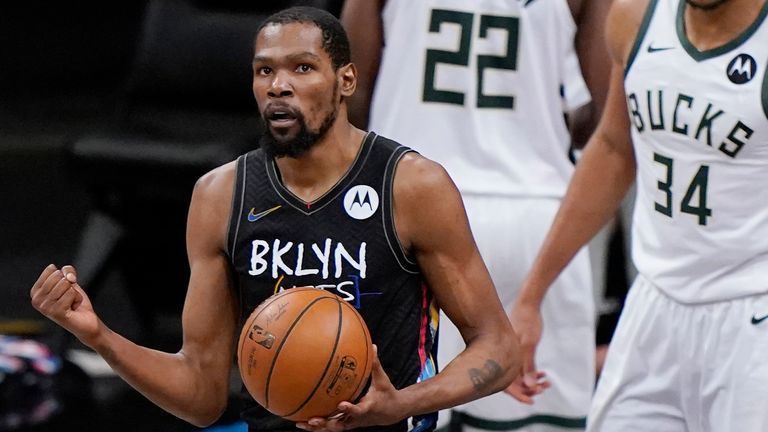
Brooklyn Nets forward Kevin Durant, left, clenches his fist next to Milwaukee Bucks forward Giannis Antetokounmpo (34) in the waning seconds of the Nets' 114-108 victory in Game 5 of a second-round NBA basketball playoff series Tuesday, June 15, 2021, in New York. 2:24
Take a closer look at Kevin Durant’s heroic performance for the Brooklyn Nets in Game 5 against the Milwaukee Bucks.

So that’s where we were last night, or at least where KD was, down 17 points without Irving and Harden struggling manfully alongside him, having clearly rushed back ahead of schedule fearing the worst.

To his credit, Harden battled for over 45 minutes despite not looking anywhere near fully fit. Maybe he needn’t have bothered. From the third quarter on Durant took over, taking the ball up the floor, calling for a high screen and scoring bucket after ruthless bucket.

He went for 31 points in the final 18 and a half minutes of the game, including 20 in the fourth quarter. Not only that, Durant played every single second – and the only player other than LeBron James to do so in the playoffs – and scored or assisted on 74 of Brooklyn’s 114 points.

You couldn’t help but feel that each frictionless jumper, not only a dagger through the heart of Milwaukee, was aimed at all those down the years who had told Durant he’d taken the easy route to success. The short cut. The cheat option.

Forget the bullish tweets Kevin, this is the only answer they’ll ever need.

1:05
Kevin Durant plays every minute of the Brooklyn Nets’ Game 5 victory over the Milwaukee Bucks to take a 3-2 lead in their playoff semi-final.

By the time Durant hit back-to-back three-pointers from the top of the arc to give Brooklyn a 97-96 lead with just under eight minutes remaining, the Bucks probably knew it was over then and there. Durant had that look about him, the scariest look in sport, a Hall of Famer smelling blood in the water, and didn’t blink even as the crowd roared unanimous approval around him.

The game’s best scorers – Curry, Damian Lillard, Luka Doncic et al – will always react along with the audience after such a momentum-reversing slew of points. They will let all the emotion out. They will celebrate. They will revel in their own brilliance. Not Durant.

It’s clear that whereas they play for the crowd, he plays only for himself, always quietly dispelling a point inside his own head, grimacing every time he checks the scoreboard and sees the other team in touching distance.

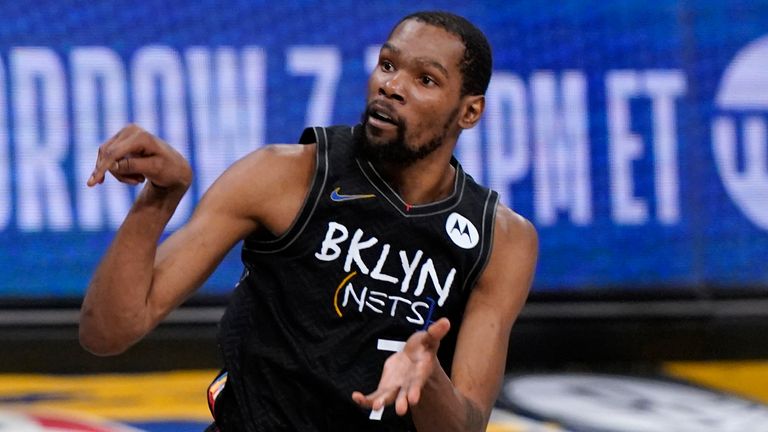
Brooklyn Nets forward Kevin Durant (7) watches as he sinks a 3-point shot during the fourth quarter of Game 5 of a second-round NBA basketball playoff series against the Milwaukee Bucks, Tuesday, June 15, 2021, in New York. 0:20
Kevin Durant scores a three-pointer to beat the buzzer for the Brooklyn Nets against the Milwaukee Bucks in Game 5 of their playoff series.

On a completely broken Nets play with 50 seconds left, he collected the ball off Harden on the run from half-court and with only three seconds left on the shot clock. He took two giant steps, pulled up over Khris Middleton and drained the three from a couple of feet beyond the arc to ice the game.

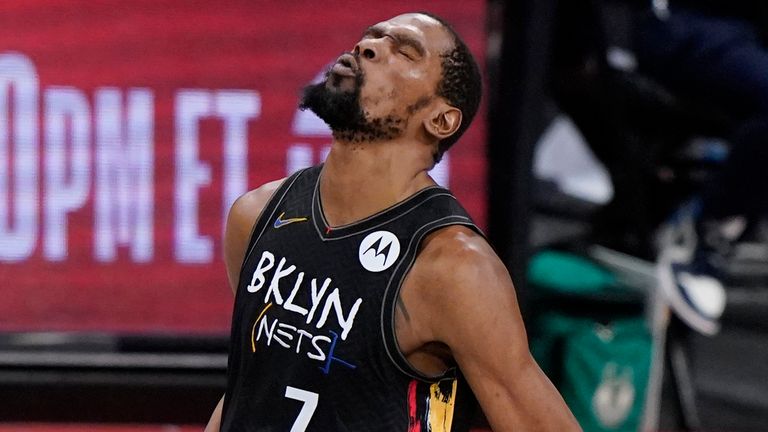
It’s the shot we’ve seen so often, that levitating high-arc release like a crane, the shot bombing down through the net like the wrecking ball attached to the end of it. Afterwards, he could only tilt his head back and exhale. As much as an exclamation point as Durant is ever likely to make.

In the death throes of the game, the Nets forward collected a crucial defensive rebound under his own basket and had two free-throws to match a playoff career-high 50 points. Durant missed the first and in typically merciless fashion castigated himself, before then hitting the second to bring up 49, a new franchise record for Brooklyn.

He added 17 rebounds and 10 assists, becoming the only player with that stat-line in NBA playoff history. Nash hugged him at the final whistle and looked as though he might never let go. In immediate response to the 114-108 defeat Giannis described him as the best player in the world.

Durant himself will likely pay no attention to the fallout from this, one of the most fearsome scoring performances the NBA playoffs has witnessed. He should, however, take a moment to bask in the grand irony of it all. That the player unfairly ridiculed for teaming up with Steph Curry, Draymond Green and Klay Thompson, then Kyrie Irving and James Harden, did this alone.

Kevin Durant just proved he didn’t need anyone all along.

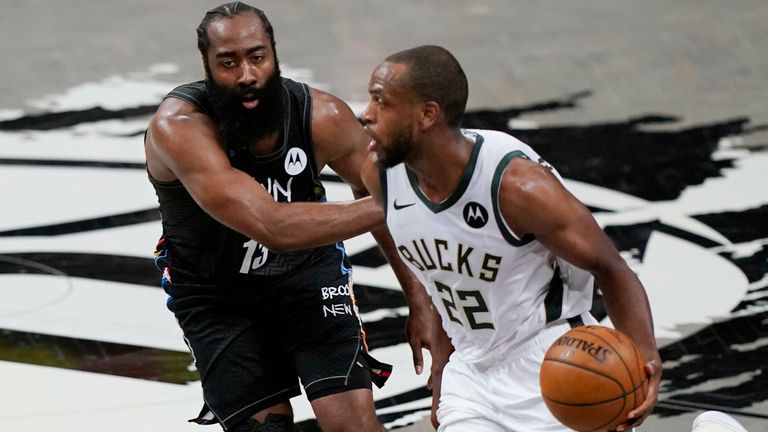
Brooklyn Nets guard James Harden (13) defends Milwaukee Bucks forward Khris Middleton (22) as Middleton drives to the basket during the first half of Game 5 of a second-round NBA basketball playoff series, Tuesday, June 15, 2021, in New York. 3:33
Highlights of the fifth game in the Eastern Conference semi-final between the Milwaukee Bucks and the Brooklyn Nets.

LGBTQ Youth In NC — And Beyond — Find Community And Mental Health Spaces Online During The Pandemic – WFAE

This story was originally published by North Carolina Health News.

When the Wake County chapter of the National Alliance on Mental Illness (NAMI) and the LGBT Center of Raleigh created mental health support groups for LGBTQ people struggling with mental illness, they didn’t expect to garner membership from across the country.

Those virtual spaces not only hosted youth from rural areas normally out of their reach in North Carolina, but also young people from Florida, California and even Canada.

“It was interesting to see how many people were finding this group as something that they wanted,” said Annie Schmidt, executive director of NAMI of Wake County.

Since the dawn of the internet, members of the LGBTQ community have created and used virtual spaces to find community and support. Because the COVID-19 pandemic forced many aspects of life online, digital mental health “safe spaces” have made their mark as a crucial resource.

Like other marginalized groups, the LGBTQ community has been disproportionately affected by the mental toll of the pandemic.

More than 80% of LGBTQ youth ages 13-24 surveyed by the Trevor Project, an organization that provides crisis and suicide prevention for LGBTQ youth, said the pandemic made their living situation more stressful. Some 70% of those surveyed said they had “poor” mental health during the COVID-19 pandemic.

Schmidt said she reached out to the LGBT Center of Raleigh to see what resources they could provide to help. The LGBT Center identified a gap when it came to LGBTQ youth.

“Our goal is to be supporting the mental health needs of everyone in all communities,” Schmidt said. “And we know that there are a lot of disparities within the LGBT community. A lot of it’s due to trauma and discrimination.”

The result was a virtual mental health peer support group that has met twice a month on Zoom since September 2020. The group is open to people of all ages, but it skews young, said facilitator Peg Morrison, who is also the director of programs at the state chapter of NAMI.

Because the group is peer support, that means that everyone attending, including both of the two facilitators, can raise their hands and say they both struggle with a mental health problem and are a member of the LGBTQ community.

Continuing Legacy Of Virtual LGBTQ Spaces

LGBTQ youth have persevered through the pandemic to make spaces where they have community, said Lora Pilcher, youth and family initiative coordinator at the LGBT Center of Raleigh.

Some of the youngest members of the center have created virtual spaces on Discord, a platform that had previously been used predominantly by gamers. There, they can chat, watch movies and even play video games together on a private server that is safe and moderated by the center, Pilcher said.

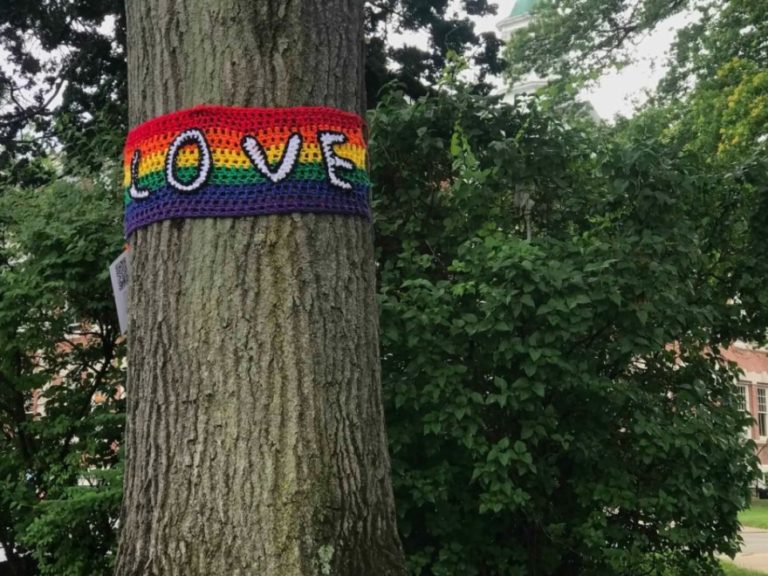
love-tree.jpg

Rose Hoban

“Throughout the pandemic they kind of supported each other in everything from socially transitioning, trouble with parents, trouble of coming out or being back in the closet because they’re stuck at home and not an affirming space, to just helping each other with homework,” Pilcher said. “It’s just been a really supportive and affirming space.”

Ash Hiser, a transgender man who founded TransGens, a discussion group for parents and their transgender or gender non-conforming children co-sponsored by the center, when he was in high school, said platforms like Discord helped fill the gap of in-person meet-ups.

“It’s a nice way to make connections outside of the official group setting where you may only see someone once a week or once a month, depending on what events you go to or whatever,” Hiser said.

But since the internet’s inception, LGBTQ people have found community on the internet, said JP Przewoznik, clinical assistant professor of social work at The University of North Carolina at Chapel Hill School of Social Work.

“In a lot of ways, despite mainstream society, we have found ways to connect with each other to mitigate loneliness,” Przewoznik said.

“My site to mitigate loneliness was not a virtual space,” Przewoznik said. “It was a physical space. It was a brick-and-mortar location known as the gay bar, a place that kind of is going out of existence. But these sort of chat rooms serve similar purposes.”

A Hybrid Model

“Virtual spaces have been and continue to be incredibly important for LGBTQ+ people in general,” Przewoznik said. “They are spaces where we are able to find comrades who are sharing our lived experiences to some degree. So I see that continuing and growing.”

But the LGBTQ community is not a monolith, they said, and so the pandemic affected different parts of the community in nuanced ways.

Many of the conversations the TransGens group has had are the same as before the pandemic, Hiser said. Virtual living gave some transgender youth who were newly out the opportunity to adjust to living as their authentic selves.

“If someone is newly out,” Hiser said, “they’re able to get more comfortable with their families and with themselves at home without having to also deal with the kids at school and stuff like that. There’s challenges as well, like with some of the learning systems that they use online, it’s hard for people to maybe change their names on there.”

Some support group regulars before the pandemic dropped off when programs transitioned online, Pilcher and Schmidt said, while new members who would not have been able to join the in-person groups due to geographic or transportation reasons have flocked to the programming.

To make the groups more inclusive, NAMI Wake County also provides digital safe spaces for those who may not be able to access their programming at home, so people can access reliable WiFi from inside their cars at various points throughout the county.

Originally, the goal was to transition the NAMI LGBT support groups to in-person at the LGBT Center of Raleigh once the pandemic eased. But because virtual programs have become such a vital resource to people outside of the geographic area, a hybrid model has become the goal.

“We decided to have it virtual with the pandemic,” Schmidt said. “And once we’re both operating programs more in person, our goal is to be able to offer it in person as well but still have a virtual component.”

For some people, K-12 schools are a safe space, Przewoznik said, depending on whether there are supportive adults and also whether students have unsupportive or violent home environments. For others, schools are not a safe space. A 2018 survey by the Human Rights Campaign found only a quarter of LGBTQ youth say they feel safe at school.

In that same vein, while virtual spaces have been revolutionary for some members of the community, others without access to broadband and other resources that would allow them to go on the internet could be excluded.

“We really have to have to invest in centering the most marginalized among us as LGBTQ+ people,” Przewoznik said, “to ensure that folks who do not have access to the sort of level of resources that, let’s say, people like myself have are getting what they need to thrive, and are able to feel in community and are able to feel like they are getting their psychological needs met.”

North Carolina Health News is an independent, non-partisan, not-for-profit, statewide news organization dedicated to covering all things health care in North Carolina. Visit NCHN at northcarolinahealthnews.org.

‘Fear is a liar. The world is ready’: LGBTQ+ sports media members on their experiences – The Athletic

Four years ago this month, after former NFL lineman Ryan O’Callaghan revealed on Outsports.com that he had planned to take his own life after professional football, a result of O’Callaghan living life as a closeted gay man, I hosted a roundtable on Sports Illustrated’s website with seven openly LGBTQ+ sports media members. You can read the piece from 2017 here, which includes the panelists’ coming-out stories.

This month I asked the same seven sports media members if they would return to participate in a similar panel. They all agreed. Some in the panel have since moved to new jobs or assignments.

The panel: