(JTA) — It’s June. For me, a lot happens this month. Father’s Day is coming up — my fifth as a father of twin boys. It’s Pride Month, and as a gay Jewish man, married with children, that means something. It’s also my father’s 41st yahrtzeit, the anniversary of his passing.
My dear father, Khalil. Who sweat like a pig in the roasting Philadelphia sun growing peppers and tomatoes next to the house, dressed in what by today’s standards could only be called Daisy Dukes (it was the ’70s). Who made us believe for the first nine or 10 years of our lives that chickens in his home country of Iran gave milk that had magical powers. Who was first a beloved pediatrician and then a psychiatrist, but when it came to helping children get past their nightmares, prescribing sticking feet out from under their blankets rather than drugs.
My dear father Khalil went by Kelly to fit in in his adopted country. When I was 11 1/2 years old, he was told that he had brain cancer and would die within a few weeks. He informed his doctors and my mother that he had lived to see his first son’s bar mitzvah, and he would live to see his other son’s as well. He endured a year and a half of hell on earth and slipped into a coma weeks before I turned 13.
During my tiny ceremony in our living room, to the shock of family gathered, he opened his eyes and extended his arm to me during my Torah reading. He held my hand and closed his eyes for the last time, having delivered a message of love to his younger son more powerful, more profound than anything wound in the scroll from which I was reading.
He died in his bed just a day later.
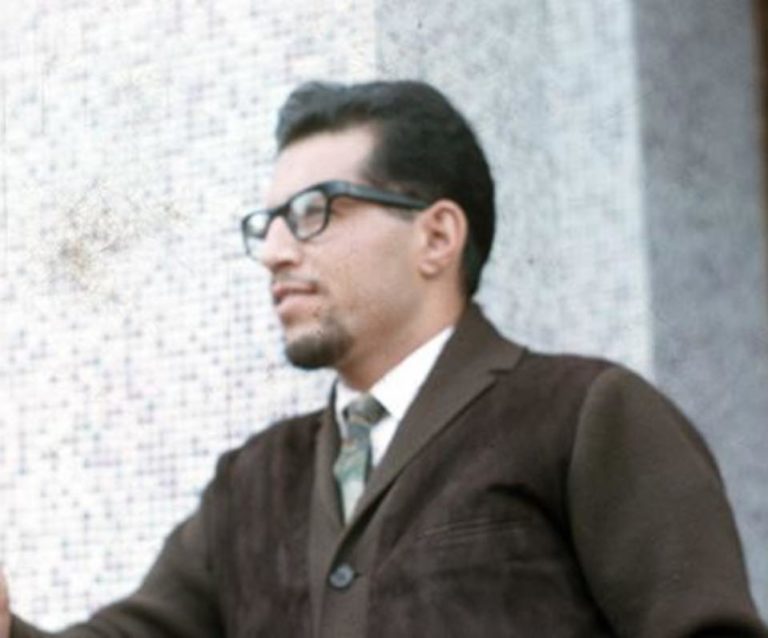
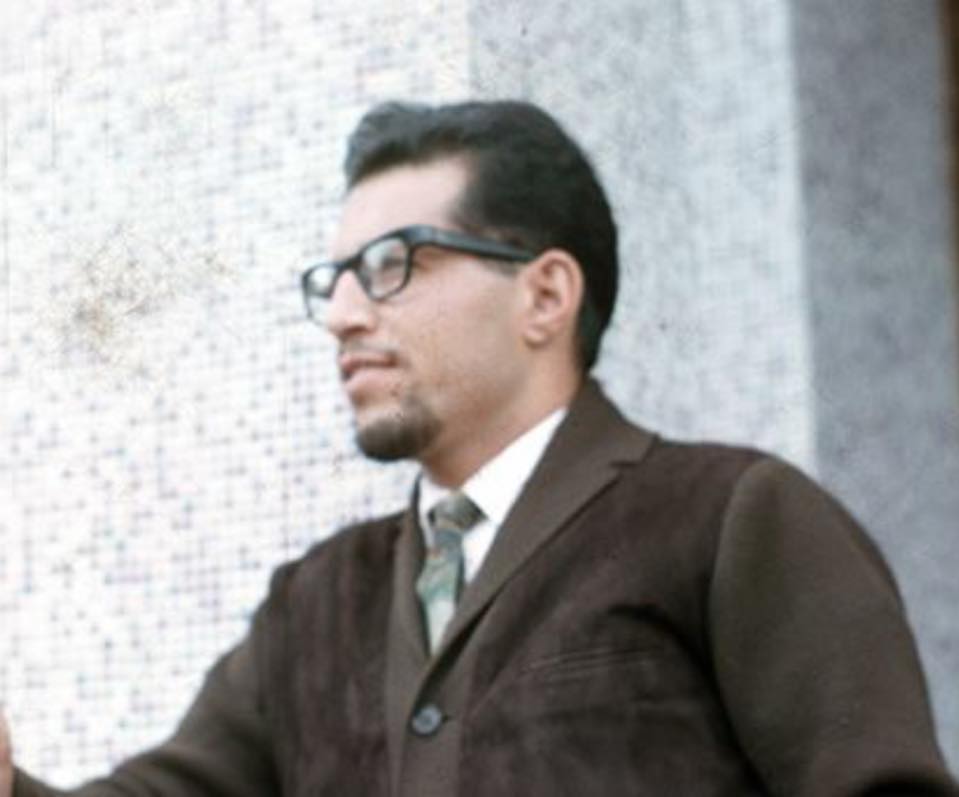
Alex Maghen’s father, Khalil Maghen, moved to America from Teheran in 1962. (Courtesy Alex Maghen)
My own kids were born via IVF and surrogacy 35 years later, in September 2015. Our wonderful surrogate went into labor during Yom Kippur, in what for a New Yorker and an Angeleno was the middle of nowhere: Oregon. The woods were so beautiful and there were no synagogues to be found. So I brought up the machzor on my phone and chanted Kol Nidre alone among the evergreens just outside the hospital. I broke pretty much all the rules of Yom Kippur that year – but as a gay man I was used to breaking my beloved people’s rules.
Our surrogate kindly – though certainly unintentionally – waited until after Neilah, Yom Kippur’s concluding service, to give birth to our wonderful boys. These boys who should not have been possible in this life of mine.
Parenting did not come easily for me. I didn’t grow up around babies. Mine and my husband’s families all live 10,000 miles away in Israel. The first year or two were brutal, scary and lonely.
We started our podcast, “Daddy Squared, The Gay Dads Podcast,” four years ago as much to help ourselves as to provide support and community for others. We talk about how gay men can become parents, how it’s different to be gay parents and, so often, how it’s not different at all.
Anyone who has kids will tell you – and Lord knows, they won’t shut up about it – that as your kids grow up you’ll spend more and more time thinking back to your own childhood and your own parents. Thank God, my mom is alive and well and hoks me a tshaynik endlessly from Tel Aviv.
As for my father, I’ve spent a lot of time thinking about who he was and what my life would have been with him had I not lost him at such a young age.
My father moved to America from Tehran in 1962 to finish his medical residency and, most probably, to be “cool.” He met my mother, and when she brought him home to meet her parents, he insisted on pretending to be Muslim to drive them nuts. Then when they brought out some food, he covered his head and began to say the Motzi (blessing over bread) to great joy and, I believe, a slap across the face for torturing the people who would become his in-laws.
Neither my father nor my mother have ever been religious or observant. But their passion for the Jewish people – their people, my people – was everywhere, always. Their love of the Jews was a love of history, of warmth, of family; unconditional.
And so, late at night, while I sit in the rocker and listen to my boys snore, I answer myself so easily: My father’s discomfort with my homosexuality may have occupied some small part of his conservative Persian background, but to him his children were everything. We, too, were his “people”; unconditional.
My boys are fluent in English and Hebrew, and spend their days with other little Jewish boys and girls in a school that embraces them and their two dads and recognizes the fire that burns within us for our people and our people’s future.
So it would seem that all of this is possible. I can be a gay man, a husband, a loving father, a loyal son, a devoted Jew and lover of Israel. I can live my own dream – and my father’s.
I still pray that the feeblest echo of my father’s love reverberates in how I raise my children, so they may be as blessed as was I, but I can’t imagine how this is possible. In the meantime, I’m going to try and learn to grow vegetables.
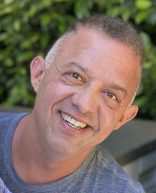
is a technology and entertainment executive in Los Angeles. He and his husband have five-year-old twin boys who attend Temple Israel of Hollywood School. Together they host “Daddy Squared, the Gay Dads Podcast.”
The views and opinions expressed in this article are those of the author and do not necessarily reflect the views of JTA or its parent company, 70 Faces Media.
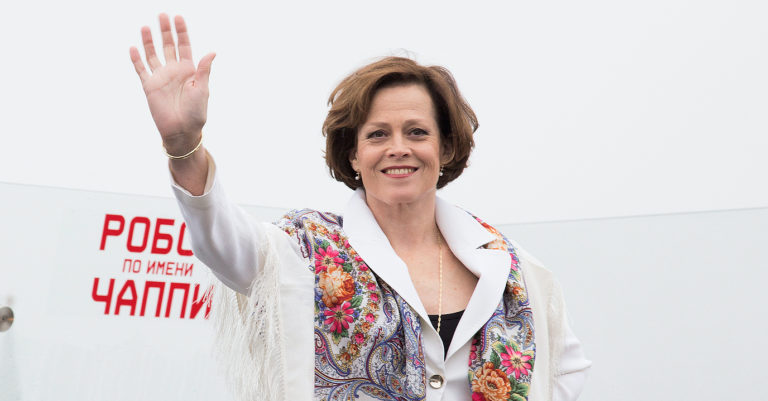
Actress and onscreen alien-slayer Sigourney Weaver took a moment to praise Michigan Gov. Gretchen Whitmer’s executive order barring state funds from being used for the purpose of performing conversion therapy on minors during a recent interview. Whitmer presented the order to the press during a Monday stop at the Ruth Ellis Center in Highland Park.
Weaver shared her feelings on the subject with Pride Source’s Chris Azzopardi in a phone chat yesterday.
“I’m so shocked that conversion therapy was being done in Michigan, which I think of as a very” – Weaver paused here, laughing briefly – “sophisticated place. And even state funds were being used to conduct conversion therapy against teenagers, which is heartbreaking because I believe that the attempted suicide rate for kids who have been through that is higher, understandably. I think that after this COVID year, where there was so much more isolation for LGBTQ youth, it’s really the opposite of what one would hope would happen this year.”
Still, Weaver agreed that the executive order is a step in the right direction, calling it “very positive.”
“I hope it’s being picked up all over, you know? Because good for her,” she said.
Weaver said she hopes the governor’s order will start a wave across the country, where LGBTQ+ rights, particularly trans rights, are under widespread attack: “Start banning conversion therapy instead of banning LGBTQ youth from sports teams and bathrooms,” she said.
Weaver knows a bit about which she speaks. In 2009, she played Mary Griffith in the true story “Prayers for Bobby.” Griffith is a deeply religious woman who cannot accept her son’s homosexuality. Eventually, the rejection proves too much for Bobby to bear and he jumped off a freeway overpass in front of an 18-wheeler. He died instantly. But Griffith was left behind with her grief and eventually finds solace in, of all places, the LGBTQ+ community and, specifically, from PFLAG.
The movie, which was filmed in Michigan and for which Weaver was nominated for both an Emmy and a Golden Globe, was a difficult one to make. In Pride Source’s new interview with the actress, she said the role of Mary Griffith was challenging for her. “I’ve never been more terrified of playing a part,” she said. “I just thought, ‘How am I ever going to do this? How am I going to turn myself into someone who has these ideas?’”
Lifetime will re-air “Prayers for Bobby” as part of its Pride Month lineup of special coverage. The film will show on the network at 10 a.m. on Sunday, June 20.
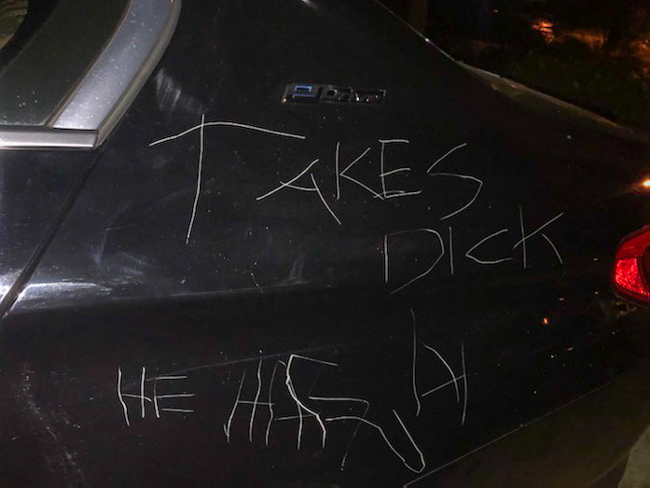
Someone etched “takes dick” into two cars in Brookhaven – one owned by a gay man – and slashed the tires of a vehicle in what one of the victims claimed could be a hate crime.
The incident happened outside the residence of Taner Bayram on Drew Valley Road on May 22. The perpetrators also carved “he has AI” in Bayram’s BMW, apparently stopping short of writing “he has AIDS.” “Takes dick” was also carved into a visitor’s Acura and its tires were slashed.
Bayram was inside with friend Jonathan Kennon when they heard a hissing sound shortly before midnight. They looked out the front door but didn’t initially notice anything amiss.
“Thirty minutes later when we stepped outside, we found the scratches and the slashed tires,” Bayram told Project Q Atlanta.
A preliminary investigation indicates that the vandalism does not appear to be a hate crime, according to Brookhaven police. But that could change if new evidence emerges, police said.
“The victim and the suspect are acquainted, and the damage occurred shortly after a quarrel between the known parties,” Lt. David Snively said.
Bayram confirmed that he knows the suspect.
“But this person denies it,” Bayram said. “If the police can confirm this person [did it], it will not be a hate crime. If they cannot, I’m going to assume it’s a hate crime.”
“Whoever the person – it could be a gay person or a homophobic person – this was just a horrible act. The fact that this happened blatantly on my property is a little offensive,” he added.
Kennon said he doesn’t know the suspect.
“It could have been a hate crime so yeah, but then it could have been an act of jealousy too so I really don’t know,” he said.
Bayram relocated from New York City to Atlanta a year ago. He moved to Brookhaven three weeks before the incident.
“I hope they find who it is. I’m not holding my breath,” Bayram said. “Crime in Atlanta is peaking. New York City has a lot of crime too, but Atlanta has taken it to another level.”
Brookhaven police asked anyone with information to contact them at 404-637-0477 or submit an anonymous tip by calling Crime Stoppers Greater Atlanta at 404-577-8477.
Some of us are cruise people and now that the cruise lines are back in business following the annus horribilus of 2020, people are booking their cruises for favorite Caribbean and Mexican destinations. Others though love camping and hiking and reuniting with nature through fishing or exploring the mountains of a preferred national park. Still others enjoy the excitement of the big city and seek a vacation that stimulates the senses with culture, food, and all of the allures of a metropolitan experience.
Hopefully Instinct Magazine’s Travel Thursday whets your appetite for whatever your whim, but I guarantee that if you like all of those, plus want to stand out from your friends by going somewhere completely off of the beaten track, we have just the destination for you!
Photo courtesy of Buck Jones
Slovenia is a country that is wedged in central Europe below Austria and next door to Italy. A former republic in the Socialist Yugoslavia, it gained its independence in 1991 in brief fight against the powers in Belgrade. While other countries in central Europe such as Poland and especially Hungary are slipping from a liberal, pluralistic political situation, Slovenia instead is embracing openness and toleration. As a result, it celebrates a vibrant gay scene and has much to offer.
Photo courtesy of Buck Jones
How to get there:
Once you decide that you want to explore this amazing country that has the most forested land as a percentage of its territory in Europe, has a thriving skiing and hiking passion among its citizens due to its Alpine peaks, enjoys the privilege of a slice of Adriatic coastline for long summer days in the sun, and boasts of having one of Europe’s most charming cities with its capital of Ljubljana, the question is how do you get there?
The easiest (and cheapest) way is to fly into Venice, Italy. Marco Polo International Airport gives you the opportunity to enjoy a romantic couple of days in Venice with its famed canals. From there you can take a regularly scheduled non-stop bus that will drop you off in the heart of Ljubljana two hours later.
Or you could fly directly into Ljubljana’s airport (as I did), but it will require you to transfer from a larger European city. I flew in from my home in Paris, but if I had done as the locals and flown into either Venice (or nearby Trieste), I could have paid significantly less for my travel airfare.
Photo courtesy of Buck Jones
What is there to do:
I spent three full days in Ljubljana, with one half day doing a side-trip to Lake Bled. The capital city of Ljubljana has a metro population of about 500,000 and is the home of the country’s university which is located in the town center. With its medieval castle sitting atop the biggest hill, the city itself sprawls out from under its shadow along the meandering Sava river. Inhabited since before the Romans colonized the region in 50 B.C., today the city has a blend of Renaissance, Baroque, Art Nouveau, and modern architecture that tantalizes anyone who loves beautiful buildings.
The heart of the city is along the river, so there are many bridges that span both banks allowing pedestrians to explore the old town while stopping frequently for drinks, sweets, snacks and meals at countless cafés and restaurants. Even though Slovenian is a Slavic language, all of the locals speak not only German, but also English. The country is a favorite destination for nearby Austrians, who dominated the country for centuries during the Austrian-Hungarian Empire. Today, their relationship is friendlier, with the Viennese spending freely in the inexpensive city.
Photo courtesy of Buck Jones
The city has several museums of note that I highly recommend. The first one is the National Museum on the history of Slovenia. There I spent a couple of hours learning about its rich history, particularly how it became its own constituent republic within Yugoslavia. The 20th century saw the country change hands from the Austrians (after World War One), to the Kingdom of Yugoslavia (originally called the Kingdom of Serbs, Croatians, and Slovenes), to Fascist Italy (during World War Two), to the Socialist Republic of Yugoslavia following the war, until it won its independence finally in 1991.
Photo courtesy of Buck Jones
The second museum that I particularly enjoyed is on a smaller scale, but no less fascinating. One of the most famous Slovenians is an architect who designed the iconic triple bridge in the town’s center, leading from the picture postcard Franciscan Church across the river towards the castle. Jože Plečnik’s legacy extends to several important buildings throughout the city, leaving his Art Nouveau / Viennese Secessionism style everywhere. His house is now a museum dedicated to his work, and is well worth a walk from the university to the quaint neighborhood he lived in.
Photo courtesy of Buck Jones
One of my favorite activities is to seek out cocktails at cool addresses. The best place to imbibe and gawk in Ljubljana is at the oldest skyscraper in town, the art deco Nebotičnik. Opened in 1933 this beautiful building on the city’s main street towers with 13 floors, and the observation deck on top has a beautiful art deco rooftop café with unparalleled views of the city. It’s the perfect spot to relax and chat with your new Slovenian friends.
Photo courtesy of Buck Jones
The gay scene:
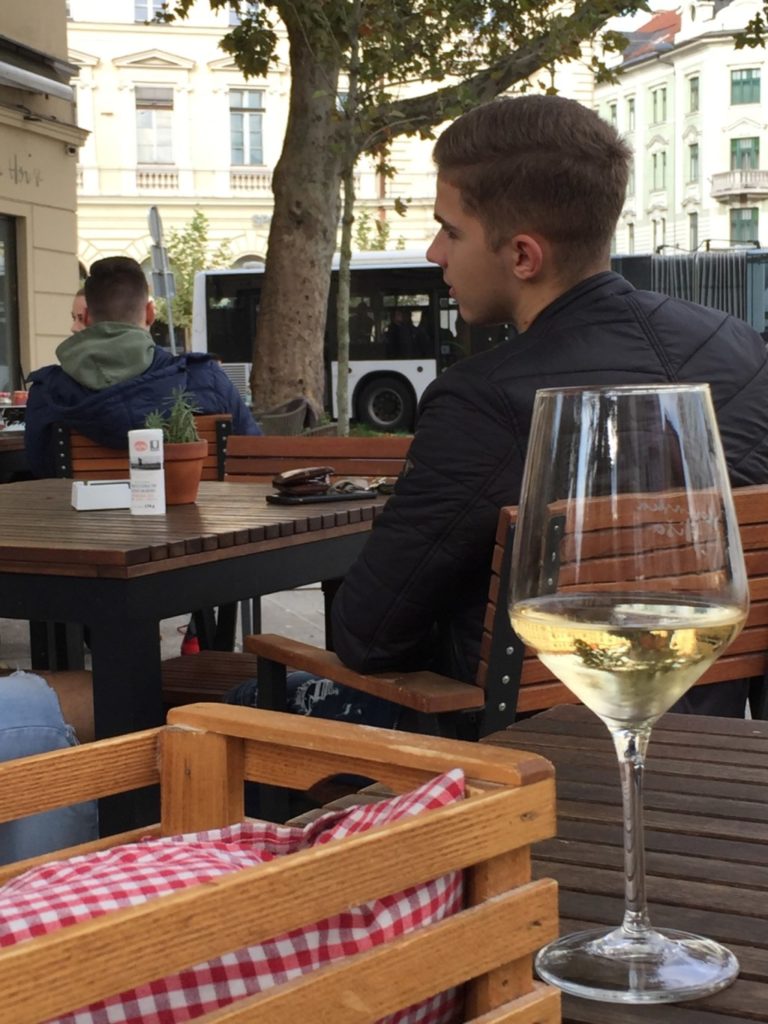
The country is very liberal minded and with tens of thousands of university students studying and living in the city of Ljubljana, it has a really friendly youthful vibe. 2021 Gay Pride is taking place this weekend (June 19th), but the city’s bars and cafés along the Sava river is where everyone celebrates life each and every day. Among the bars advertised as gay I can recommend the very friendly “Pritličje” (Mestni trg 2) which is right on the river, and nearby is the local favorite “Klub Tiffany” for dancing with a young college crowd. There is even a gay sauna (“District 35”) for those of you who enjoy an even more intimate setting.
Plečnik museum, Photo courtesy of Buck Jones
As mentioned earlier, every visit to Ljubljana should include a visit to nearby Lake Bled. Tickets for a private tour by a chartered shuttle can be bought at the tourism office in the old town, and the one hour ride out of the city into the foothills of the Slovenian Alps give you a sense of just how beautiful the surrounding area is. The remote mountain top castle overlooking the lake, with its picturesque little church perched on an island, can both be explored in a few hours, allowing you to come back to Ljubljana for a final day of fun.
Trips to the Adriatic coast and the town of Piran require another full day, but is highly recommended as well.
Photo by Alex Azabache from Pexels
This post is solely the opinion of this contributing writer and may not reflect the opinion of other writers, staff, or owners of Instinct Magazine.
The Supreme Court ruled on Thursday that the city of Philadelphia violated the Constitution by limiting its relationship with a Catholic foster care agency over the group’s refusal to certify same-sex couples as foster parents.The justices came down unanimously against Philadelphia and for Catholic Social Services.”The refusal of Philadelphia to contract with CSS for the provision of foster care services unless it agrees to certify same-sex couples as foster parents cannot survive strict scrutiny, and violates the First Amendment,” Chief Justice John Roberts wrote.CLICK HERE TO READ THE COURT’S DECISIONCatholic Social Services is affiliated with the Archdiocese of Philadelphia. The agency has said that its Catholic beliefs prevent it from certifying same-sex couples as foster parents.Philadelphia learned in 2018 from a newspaper reporter that the agency would not work with same-sex couples. The city has said it requires that the two dozen-plus foster care agencies it works with not to discriminate as part of their contracts. The city asked the Catholic agency to change its policy, but the group declined. As a result, Philadelphia stopped referring additional children to the agency.Catholic Social Services sued, but lower courts sided with Philadelphia.
WASHINGTON —
The Supreme Court ruled on Thursday that the city of Philadelphia violated the Constitution by limiting its relationship with a Catholic foster care agency over the group’s refusal to certify same-sex couples as foster parents.
The justices came down unanimously against Philadelphia and for Catholic Social Services.
Advertisement
“The refusal of Philadelphia to contract with CSS for the provision of foster care services unless it agrees to certify same-sex couples as foster parents cannot survive strict scrutiny, and violates the First Amendment,” Chief Justice John Roberts wrote.
Catholic Social Services is affiliated with the Archdiocese of Philadelphia. The agency has said that its Catholic beliefs prevent it from certifying same-sex couples as foster parents.
Philadelphia learned in 2018 from a newspaper reporter that the agency would not work with same-sex couples. The city has said it requires that the two dozen-plus foster care agencies it works with not to discriminate as part of their contracts. The city asked the Catholic agency to change its policy, but the group declined. As a result, Philadelphia stopped referring additional children to the agency.
Catholic Social Services sued, but lower courts sided with Philadelphia.
One month before the stay-at-home shutdown triggered by the coronavirus pandemic, Mayor Lori Lightfoot boldly declared that “poverty is killing us” and vowed to end it in Chicago “in the next generation.”
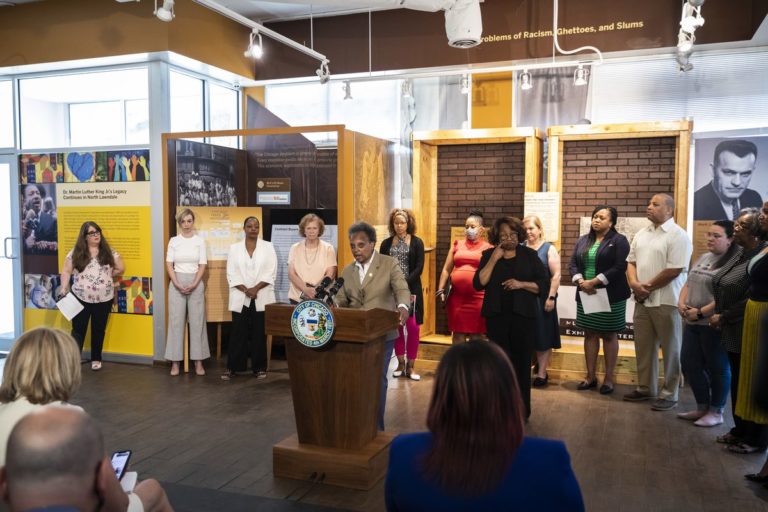
On Thursday, the first African American female and first openly gay mayor of Chicago made an equally bold political statement. She declared systemic racism a public health crisis.
Lightfoot said she can do nothing less after a pandemic that forced black and Hispanic Chicagoans to bear the brunt of the layoffs and deaths. It exposed Chicago’s ugly underbelly — higher crime rates in neighborhoods of color triggered, in large part by disparate access to health care, healthy food options, jobs and economic opportunity.
No wonder there’s a 9.2-year gap between the average life expectancy for Blacks and whites and a broader “death gap” in some African American neighborhoods.
Lightfoot noted that “80% of health outcomes are due to social factors, including housing, safety, education, economic opportunity — every single one of which have, through our history as a nation, been impacted by systemic racism. … That’s why we’re making this declaration today. Because we can no longer allow racism to rob our residents of the opportunity to live and lead full, healthy and happy lives.”
The mayor said she need look no further than her own parents to see how the “insidious nature” of systemic racism impacts the body and the mind in ways that are “just as, if not more, deadly.”
It “puts a cap on someone’s humanity,” destroys their “perception of themselves” and leaves them with “lasting mental illness, such as depression, anxiety and anger that turns into physical ailments.”
Mayor Lori Lightfoot declares racism a public health crisis in the city of Chicago during a news conference Thursday morning at the MLK Exhibit Center in North Lawndale.Ashlee Rezin Garcia/Sun-Times
Both her parents were born in the 1920’s and raised in the segregated South. Their dreams were crushed because every aspect of their growing up, every aspect of their community and their humanity was “defined by trying to stay out of harm’s way, simply because they were Black,” Lightfoot said.
“My mother wanted to be a nurse. My father wanted to be lawyer. But because they were Black and Black success was considered [not just] an anomaly, but worse, a threat, and became a target for retaliation, my parents, like so many others of their generation and other generations, were indoctrinated to believe that they would never, ever be able to reach for and accomplish their dreams,” she said.
“This was and still is the case for far too many Black residents and residents of color in our city. And ladies and gentlemen, it is literally killing us.”
Chicago is not the first major city to declare systemic racism a public health crisis. That distinction belongs to Milwaukee County in Wisconsin, where the trail was blazed two years ago.
Boston, Denver and Columbus, Ohio have followed suit.
Ayesha Jaco, executive director of West Side United, speaks at Thursday’s news conference at the MLK Exhibit Center in North Lawndale.Ashlee Rezin Garcia/Sun-Times
The American Public Health Association also has declared racism a public health crisis needing immediate attention. So have the Centers for Disease Control and Prevention, the American Medical Association, the American Association of Pediatrics, and the American College of Emergency Physicians.
Lightfoot said it’s only fitting for Chicago, a city with a long and documented history of segregation and disinvestment that continues to this day, to join the parade.
She made the announcement in North Lawndale, near the site where Dr. Martin Luther King Jr. had lived when he and his family moved to Chicago in 1966 to highlight the city’s notoriously segregated housing practices.
Beyond the symbolic value of Thursday’s declaration was something more concrete.
Chicago Health Commissioner Dr. Allison Arwady announced that $9.6 million in COVID-19 relief funding from the CDC would be dispersed to six “Healthy Chicago Equity Zones.”
Each zone will have its own lead organization, charged with “dismantling historical inequities” that have plagued Chicago neighborhoods.
They are: Phalanx Family Services (Far South Region); Greater Auburban Gresham Development Corporation (Near South); Swedish Covenant Hospital (North/Central); Northwest Side Housing Center (Northwest); Southwest Organizing Project (Southwest) and Rush University Medical Center on behalf of West Side United (West Region.)
Many of the designated organizations were part of the “Racial Equity Response Teams” created during the pandemic.
“Throughout [the pandemic], we have been led by data. We have targeted resources to the people and communities where they most needed. but we have also seen that, when one community is not well, the city is not well and cannot move ahead,” Arwady said.
“Now, we have to bring that same unrelenting focus to another more pernicious public health threat: racism.”
At Thursday’s news conference, Chicago Health Commissioner Dr. Allison Arwady announced the creation of six “Healthy Chicago Equity Zones” that will receive a total of $9.6 million in COVID-19 relief funding from the Centers for Disease Control and Prevention.Ashlee Rezin Garcia/Sun-Times
The Council of Europe, the continent’s leading human rights organisation, has called on Poland to annul its abhorrent so-called LGBT-free zones.
The council’s Congress of Local and Regional Authorities gathered on Wednesday (16 June) to adopt a resolution condemning the “rising anti-LGBTI hate speech and discrimination” sweeping across Poland.
It included a recommendation that central governments develop national action plans reinforcing anti-discriminatory and human rights measures, with a particular focus on LGBT+ people.
“Across Europe, the rights and recognition of LGBTI people are under pressure,” said rapporteur Andrew Boff.
“Rising hate speech is creating divisions between the citizens of our towns and regions. Against this, local and regional authorities must strengthen the social rights and well-being of their LGBTI citizens and promote dialogue. We have a duty to all our fellow citizens to create inclusive societies.”
Since 2019, more than 90 Polish towns and regions had passed resolutions declaring themselves free from so-called “LGBT-ideology”.
These “LGBT-free zones” now cover more than a third of the country, their homophobic rhetoric reinforced by the governing Law and Justice party, which has repeatedly positioned LGBT+ people as a corrosive threat to so-called traditional values.
The council acknowledged the discourse that attempts to “delegitimise” LGBT+ identities through the use of derogatory terms such as “propaganda of homosexuality”, “gender ideology” or “LGBT ideology”.
“Rising conservative and fundamentalist voices in Europe are increasingly politicising the issue of LGBTI identity and designating LGBTI people as scapegoats, questioning diversity in general, and LGBTI people’s human rights and the legitimacy of their identity, in particular,” they said.
They reiterated that “neither cultural, traditional nor religious values, nor the rules of a ‘dominant culture’ can be invoked to justify hate speech or any other form of discrimination,” including on the grounds of sexuality or gender identity.
It’s far from the first time the EU has moved to condemn Poland’s growing anti-LGBT+ sentiment. In December 2019 the European Parliament passed a resolution against public discrimination and hate speech, and encouraged funding to be withdrawn from nations that infringe this.
The Council of Europe cannot make binding laws, but it does have the power to enforce certain international agreements between European states. Their latest condemnation serves as an uncomfortable reminder of the widening gulf between president Andrezj Duda and his European counterparts.
WASHINGTON — The Supreme Court on Thursday unanimously ruled that Philadelphia may not bar a Catholic agency that refused to work with same-sex couples from screening potential foster parents.
Chief Justice John G. Roberts Jr., writing for six members of the court, said that since the city allowed exceptions to its policies for some other agencies it must also do so in this instance. The Catholic agency, he wrote, “seeks only an accommodation that will allow it to continue serving the children of Philadelphia in a manner consistent with its religious beliefs; it does not seek to impose those beliefs on anyone else.”
The decision, in the latest clash between anti-discrimination principles and claims of conscience, was a setback for gay rights and further evidence that religious groups almost always prevail in the current court.
Philadelphia stopped placements with the agency, Catholic Social Services, after a 2018 article in The Philadelphia Inquirer described its policy against placing children with same-sex couples. The agency and several foster parents sued the city, saying the decision violated their First Amendment rights to religious freedom and free speech.
Lawyers for the city said the case, Fulton v. City of Philadelphia, No. 19-123, was an easy one. When the government hires independent contractors like the Catholic agency, they said, it acts on its own behalf and can include provisions barring discrimination in its contracts.
Lawyers for the agency responded that it merely wanted to continue work that it had been doing for centuries, adding that no gay couple had ever applied to it. If one had, they said, the couple would have been referred to another agency.
A unanimous three-judge panel of the United States Court of Appeals for the Third Circuit, in Philadelphia, ruled against the agency. The city was entitled to require compliance with its nondiscrimination policies, the count said.
The case was broadly similar to that of a Colorado baker who refused to create a wedding cake for a same-sex couple.
In 2018, the Supreme Court refused to decide the central issue in that case, Masterpiece Cakeshop v. Colorado Civil Rights Commission: whether businesses may claim exemptions from anti-discrimination laws on religious grounds. It ruled instead that the baker had been mistreated by members of the state’s civil rights commission who had expressed hostility toward religion.
The foster care agency relied on the Colorado decision, arguing that it too had been subjected to hostility based on anti-religious prejudice. The city responded that the agency was not entitled to rewrite government contracts to eliminate anti-discrimination clauses.
Last year, Justice Clarence Thomas, joined by Justice Samuel A. Alito Jr., appeared to urge the court to reconsider the 2015 decision that established a constitutional right to same-sex marriage, Obergefell v. Hodges, saying it stigmatized people of faith who objected to those unions.
In his majority opinion in the Obergefell decision, Justice Anthony M. Kennedy, who retired in 2018, called for “an open and searching debate” on same-sex marriage, writing that “the First Amendment ensures that religious organizations and persons are given proper protection as they seek to teach the principles that are so fulfilling and so central to their lives and faiths, and to their own deep aspirations to continue the family structure they have long revered.”
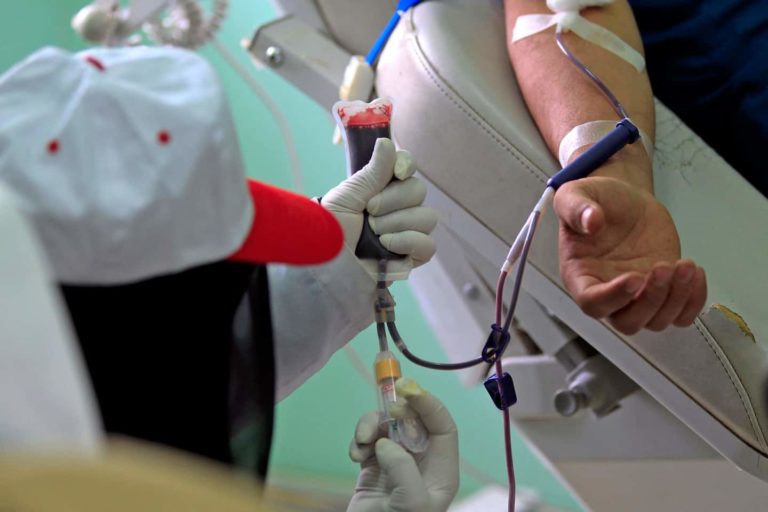
Previously, gay and bisexual men in England, Scotland and Wales were not permitted to donate within three months of having been sexually active, due to fears around the transmission of HIV/AIDS and other infections, despite studies showing no increased risk, as all donor samples are tested rigorously.
WASHINGTON (AP) — The U.S. Supreme Court has unanimously sided with a Catholic foster care agency that says its religious views prevent it from working with same-sex couples as foster parents. The justices say the city of Philadelphia wrongly limited its relationship with the group as a result of the agency’s policy. It’s a court victory for the group Catholic Social Services, which is is affiliated with the Archdiocese of Philadelphia. Chief Justice John Robert says Philadelphia’s stand “cannot survive strict scrutiny, and violates the First Amendment.” Catholic Social Services has said that its beliefs prevent it from certifying same-sex couples as foster parents.
Americans are evenly split on whether sexual orientation is a choice, or is determined by nature, according to a 2015 Pew Research Center survey, with roughly 40 percent of respondents on either side. But, the percentage of people who believe that sexual orientation is not a choice has nearly doubled over the past few decades, up from about 20 percent when the Los Angeles Times conducted a similar poll in 1985.
The myth has powerful legal ramifications: the strongest argument anti-gay activists can make to remove accommodations for discrimination against the LGBTQ community is the claim that LGBTQ people were not born into their sexuality, “choosing” instead to be a part of marginalized groups.
FACTS: A 2019 study by Andrea Ganna, et al published in Science looked at the genes of 492,664 people and concluded that “same-sex sexual behavior is influenced by not one or a few genes but many.”
Based on this and other evidence, most researchers have concluded that sexuality is determined by a combination of environmental, emotional, hormonal, and biological components, making sexual orientation not a choice but instead controlled by a variety of uncontrollable factors.
While there is no consensus about what combination of factors produces sexual orientation at the individual level, The American Psychological Association notes that “most people experience little or no sense of choice about their sexual orientation.”
MYTH: Gay relationships don’t last
This idea of homosexual couples not taking their relationships/partners as seriously as heterosexual couples derives, in part, from the history of gay couples not being able to affirm their commitment to each other legally.
FACTS: Several studies have been published refuting this myth, which included tens of thousands of gay, lesbian, and straight participants and their partners who provided feedback about the stability of their relationships.
A 2017 study of homosexual and heterosexual couples by researchers at Bowling Green State University found that different-sex and female same-sex couples had more stability in their relationships than male same-sex couples. BGSU concluded that this is because gay and bisexual men are exposed to more stressors that lead to problems in their relationships.
Research by UCLA psychologist Ilan Meyer has found that female same-sex couples prioritize emotional intimacy more than male same-sex couples, which resulted in their ability to support the partnership longer.
A pair of studies published in the journal Developmental Psychology in 2008 showed that same-sex couples are just as committed as heterosexual couples in their romantic relationships. One, by researchers at the University of Illinois at Urbana-Champaign, found that there was no difference in the level of commitment or relationship satisfaction between homosexual and heterosexual couples, and even found that lesbian couples were “especially effective at resolving conflict.”
MYTH: Bisexuality and pansexuality are the same thing.
For many people, bisexual is used as a catch-all term for anyone who is not heterosexual or homosexual. But in reality, there are many different forms of sexuality.
FACTS: Though both involve someone being attracted to more than one gender, bisexual and pansexual are not synonyms.
Bisexual people define their sexuality on the basis of romantic attraction to two sexes; hence the prefix “bi.” However, bisexuality has different conditions for each person. One bisexual male may be 30% attracted to men and 70% attracted to women. Or a bisexual female may be attracted evenly to both genders.
But gender categories are not limited to “male” and “female,” which allows for people to identify as nonbinary, or genderqueer, which means they do not identify as either male or female gender.
Bisexuals may or may not be romantically attracted to nonbinary people but even if they are, they are still considered bisexual. Nonbinary people also can identify as bisexual if they are attracted to male, female or nonbinary people as well.
Pansexuality relates to being attracted to all people regardless of their sexual orientation. This also includes agender people; those who do not identify with any gender. Though pansexual people are attracted to all genders, they are not attracted to every person. Personality, physique, morals, etc. also matter to pansexual people too.
MYTH: Same-sex parenting is harmful to children
The belief that heterosexual couples — and preferably married ones — make better parents, is deeply embedded in the belief systems of many Americans, for both political and religious reasons. Some advocates of this viewpoint, including many with a political or religious agenda, have opposed changing state policies to allow same-sex parenting and adoption.
FACTS: Statistics show that limiting parenting to heterosexual couples leaves many children out altogether rather than being adopted and fostered by gay couples who could give them the opportunity to thrive.
“Same-sex couples are seven times more likely than different-sex couples to be raising an adopted or foster child,” a UCLA Williams Institute brief concluded in July, 2018. It showed that between 2014 and 2016, among couples raising children, 2.9 percent of same-sex couples were raising foster children, compared to .4 percent of same-sex couples.
Adoption and fostering laws vary by state, but every year thousands of children age out before getting adopted or fostered, having long-term effects on their mental health. Only three percent of those who age out will earn a college degree. Seven out of 10 females who age out will become pregnant before the age of 21, according to the National Foster Youth Institute.
Divorce can have harmful effects on children. A 2020 HealthLine article lists depression, substance abuse, future issues in the child’s own relationships, and more. Rather than bash the parents for splitting up, however, the article offers ways to help children adjust. The same counsel can be given to children of gay parents when and if they experience bullying or anxiety.
MYTH: People who transition will regret it later in life
Arguments against gender confirming procedures, such as surgery and hormones, include the idea that there could be negative effects on the person receiving the treatment and that they may change their mind.
FACTS: Studies show that hormone therapy and surgery often help people who identify as transgender learn to love their bodies and greatly improve their mental well-being.
A 2017 study led by a team of Dutch researchers showed that gender dysphoria and body dissatisfaction plummeted after these procedures. The depression and “lower psychological functioning” that patients experienced before the procedure were all caused by the discomfort they felt in their own bodies, the researchers concluded. Hormone-based and surgical interventions improved body satisfaction among these patients.
A 2016 systematic review published in Neuropsychiatric Disease and Treatment found that estrogen hormone therapy positively affects the emotional and mental health of male-to-female transgender individuals. Patients reported a decrease in depression, feeling happier and more confident in their bodies, and fewer symptoms of dissociative issues.
A 2021 analysis of a 2015 survey published in JAMA Surgery found that transgender and gender-diverse people (TGD) who had gender-affirming surgeries “had significantly lower odds of past-month psychological distress, past-year tobacco smoking, and past-year suicidal ideation compared to TGD people with no history of gender-affirming surgery.”
“Deciding to transition was one of the most important and difficult decisions I have ever made,” Arin Jayes, 30, a non-binary trans man wrote in an email.
“I didn’t truly know it was right until after I did it. This statement may seem radical and scary. It’s a bit existential, even, because it took a leap of faith,” he said. “One may ask, “Why on earth would you do something so permanent if you weren’t sure?” As someone who has been there, I can say that if it doesn’t feel right, you know. It is important to trust yourself and your bodily autonomy.”
A NUMBER of homophobic posters have appeared in Waterford recently, sparking anger within Irish LGBT communities.
The posters, which were first spotted at the start of week, display the words ‘Straight Pride’, and feature a photo of a heterosexual married couple.
The caption also reads: “It’s natural, it’s worked for thousands of years, and you can make babies.”
It’s the third time in a week the city has been dogged by public displays of homophobia.
Over the weekend, LGBT pride flags – which were erected to celebrate pride month – were cut down and burned near City Hall.
LGBT campaigner Debbie O’Rourke said: “My first reaction was just shock, like, ‘what is this?’ And then it was like where are they?
Homophobic hate on show in Waterford City again tonight – covered the place in ‘straight pride’ posters. This follows the burning of a Pride flag and the cutting down of the replacement Pride flag in just over a week. #Pridepic.twitter.com/OMQdQBhhn0
“They were all along the Quay. The picture was of a poster on a phone box, but they were all along the Quay on poles. They were all around the town,” she told extra.ie.
“They were A4 sized posters, printed quality, all over the inner city. People are getting in touch to say they’ve seen them, but we think we have most of them down now.
“Straight pride is just not a thing. The language included in the poster, it’s not new, it’s nothing we haven’t heard before, they’re common things that are used against the LGBT community,” Debbie added.
“It’s similar to the messaging we saw and was used against us in the marriage equality campaign — that focus on family and on babies.
“There’s just a preoccupation with the sex that queer people have, it always comes up. We don’t have the same fascination with straight people’s sex lives.”
The posters have been reported to gardaí, and those that appeared in the city earlier this week have now been taken down, but Debbie says she fears there’ll be more.
“There are people in Ireland who hold those beliefs and are willing to act on them and that’s what’s scary,” she explained.
“We have to be wary, but it’s about not letting that fear win. That’s really important. For young people, they have much more fear than adults around coming out and things like that.”
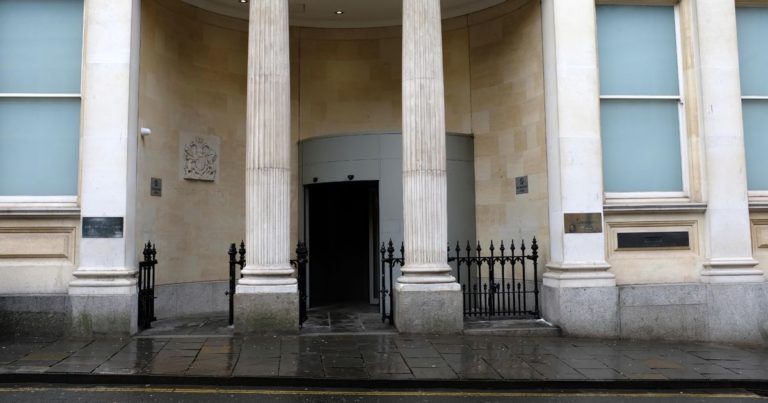
Judge Martin Picton stressed that, at the time, Rudd was suffering from schizophrenia.
The handed him a 12-month jail term suspended for 18 months.
He told Rudd: “What started out as an argument developed into an extremely dangerous situation where you were wielding a very large knife in a very aggressive way.
“You could have killed someone.”
The judge handed Rudd a mental health treatment programme with rehabilitation.
He was ordered to pay £500 compensation and a £100 fine for just being in breach of a previously suspended sentence.
Chloe Griggs, prosecution, said an argument flared between Rudd and Mr Ghalib.
She told Bristol Crown Court: “Mr Rudd accused Mr Ghalib of calling him gay.
“Mr Rudd made a reference to a weapon and Mr Ghalib saw him raise his arm and reach into his coat as if to take out a weapon.”
The court heard a commotion followed which was broken up.
But Rudd then told Mr Ghalib to follow him to his room so they could “sort it out”.
Miss Griggs said: “Mr Rudd entered the flat alone and Mr Ghalib waited in the corridor.
“Mr Rudd came out and ran towards him holding a knife.”
The court heard in a tussle that ensued Rudd swung the blade at Mr Ghalib but missed.
When Mr Ghalib ran off he realised his hand had been cut.
Rudd had a previous conviction for possessing a knife, the court was told.
Giles Nelson, defending, said there was a degree of provocation at a time when his client was suffering from a mental health disorder.
He said: “There have been no problems whatsoever since.”
The Columbia University School of Nursing announced Tuesday that it has established the Center for Sexual and Gender Minority Health Research to address disparities among the LGBT community.
The program is funded by the nursing school, located in Washington Heights, and has received grants from government agencies including the National Institutes of Health and the Institute of Aging.
The program had been planned for about four years, said Tonda Hughes, executive director of the center.
Although the nursing school in 2012 launched a program to study LGBT health, the new center—in partnership with the Columbia University psychiatry department—will focus on the role nurses, social workers, psychologists and other health providers can play in solving health inequities, Hughes said.
“There is inadequate research on LGBT health issues in our top 20 nursing journals,” Hughes said. The center will increase the amount of medical literature on such issues, she said.
At launch, the program supports about six doctoral or postdoctoral researchers and two junior faculty members. It is in the process of collaborating with other departments from Columbia, and the program could be expanded to support 25 researchers in the next few years, Hughes said.
“When I entered this field in the early ’90s, there were only a handful of studies about LGBT health issues, and they were mostly biased and cherry-picked,” she said. “I hope we can bring meaningful research to light and make a change.”
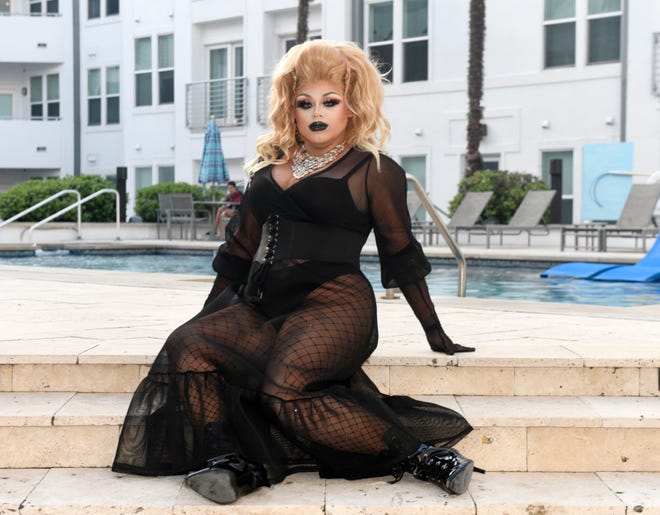
When Frank Reyna walks into a room, all eyes are on him.
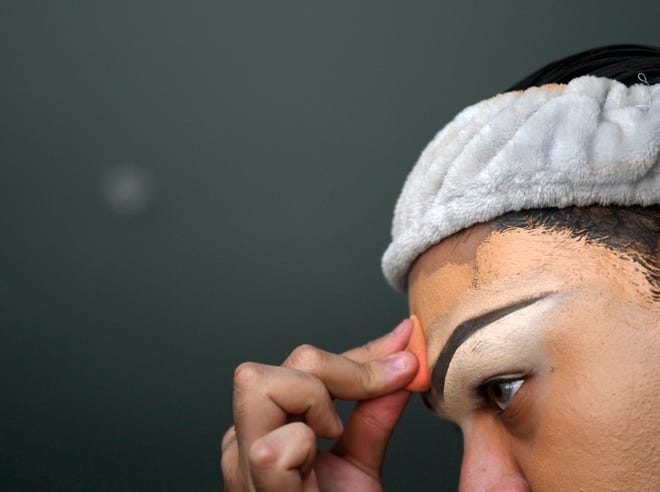
Not because he’s 6’2″, without heels, but because he radiates comfort, positivity and ferocity. Not only is Reyna a graphic designer and a professional makeup artist, he is a local drag queen who has been in the business of entertainment for nearly three years.
Reyna’s alter ego, “Frankie,” was born on Halloween 2017 after he worked up the courage to put himself in drag.
“Being a theater person, I just felt I resonated with drag so much because it was like theater and Halloween every day; my two favorite things,” Reyna said. “It was another vessel of art expression for me to do it without need, permission, want or reason.
“It’s a form of luxury to get dressed up and perform.”
From coming to terms with his sexuality in recent years to bringing his community together during the ongoing COVID-19 pandemic, Reyna is a queen for the people.
BEFORE THE HEELS AND WIGS
Reyna was born and raised in Sinton. He moved to the Sparkling City by the Sea after graduating high school in 2011.
Growing up, Reyna, now 28, said his parents celebrated the arts in their household with talent shows and vocal lessons. From a young age, he said his parents supported him with whatever he did.
“We always nurtured an environment to have fun for our kids,” Reyna’s mother, Roxana, said. “Since a small age, I knew he was going to be someone artistic.”
He knew at a young age he was different from most boys, but due to his Hispanic upbringings, he stayed in the closet out of fear of rejection. Reyna said his sister introduced him to “RuPaul’s Drag Race,” a reality-competition TV show to find America’s next drag superstar.
“For me, that show was very much a guilty pleasure and hidden,” Reyna said. “I remember just watching it on my internet browser with a whole bunch of different tabs open and the volume all the way down. I was scared for anyone to catch me watching it.”
Reyna didn’t come out of the closet until 2018, a year after he put himself into drag. He said his family members were the last people he told. Reyna said his family already suspected he was gay and accepted him regardless; they were waiting for him to let them know.
“They were waiting for me to blossom, and I think that’s why it took me such a long time to tell them,” Reyna said. “I was really apprehensive for a long time though. As many of us know, going through that internalized struggle telling our family, it’s so much more different than telling your friend from college or your best friend from childhood. It’s your family; your familia.”
His mother said she is proud of him, but is scared that people won’t understand the artistic component of his entertainment.
“Any mother that has a child would be scared their child would be harmed and not appreciated,” Reyna’s mother said. “He’s so talented. To think of where’s he at and where he’s come from, it’s inspiring.”
‘FRANKIE’ IS BORN
Initially, Reyna stepped into the entertainment scene as a vocalist. Wearing a leather jacket, black pants and a smoky eye, he would sing live at nightclubs while everyone else did a more traditional form of drag with glamorous outfits and lip-synching.
After working at MAC Cosmetics for a year and a half, some of the drag queens asked him to “paint” them for a photoshoot, pageant or a gig. Painting a drag queen is another term for applying makeup.
The thought never crossed his mind, but all it took was one queen to ask him why he’s not doing drag to take it into consideration. Reyna took a chance and debuted as “Frankie Stein” on Halloween in 2017.
He said his drag name was inspired by Frankenstein’s monster and the similarities between the two. Both being tall, weird and misunderstood.
The experience that night was one Reyna said he will never forget.
“I was so scared that night,” Reyna said. “When I’m singing I don’t get nervous, but it’s a completely different when you’re lip-synching. You’re really at the mercy of the energy from the crowd.”
Reyna said he isn’t a “stunt” queen, meaning he doesn’t perform splits, death-drops and kicks like other queens. He considers himself a lip-sync assassin.
“I really put a lot of focus and energy into subtlety, theatricality, precision, body isolation, eye movement and capturing every breath of the song and feeling it with my body,” Reyna said.
Ironically, Reyna said his favorite type of drag is the one he doesn’t perform: Stunts.
“Everybody brings something to the table that I always get excited to watch,” Reyna said. “Honey (Andrews) gives you Selena realness; Desiree (Brooks) is giving every spin and kick imaginable; Robyn (Valentine) gives high camp; Miss Matte is the supermodel of the world; Fiji does some of my favorite music of all time; Kitana (Sanchez) gives you a fantasy experience with her belly dancing; Naomi (Evans) does every dance move you can imagine; and Brittany (Andrews) gives you Las Vegas showgirl. They’re my family.”
‘MY CHOSEN SECOND FAMILY’
Normally, when a drag queen enters the world of drag she is brought into a drag family and adopted by a drag mother. A drag mother will guide the young ingénue in the world of drag while creating a name for themselves while also representing the mother’s legacy.
Reyna said he doesn’t have a drag mother; he has “drag tías.”
“Every single drag queen I have met has put forth support, criticism, guidance, reassurance, warmth and love,” Reyna said. “They are my chosen second family.”
His family consists of local drag queens Brittany Andrews, Kitana Sanchez, Desiree Brooks, Anastasia Davis, Robyn Valentine, Miss Matte, Naomi Evans, Fiji and Honey Andrews.
“Brittany and Kitana were my initial fairy drag mothers,” Reyna said. “They are two women who have such a strong advocacy for the LGBT community. Brittany would be the one to promote me at clubs and Kitana was behind-the-scenes making sure I was in the right-state-of-mind. My entire lineage of those who came before me have inspired me in one form or fashion.”
Incidentally, Reyna is a drag mother himself. He asked his friend Robert Garcia, otherwise known as Fiji, to be his drag daughter in early 2021, but the young queen was unsure if he was ready to step out into the nightlife.
“I was scared,” Garcia said. “It’s a big commitment; I wasn’t sure if I was ready for that. I realized I was going to have to start putting myself out there more and not just being a bedroom queen. I’m shy, so I just have to push myself to be more social and get my name out there.”
Garcia said he eventually agreed to be Reyna’s drag daughter so he can represent him and grow as an entertainer.
“She’s not my lap dog or personal assistant, she’s representing my legacy from now on,” Reyna said. “I know I push myself to do more than I’m capable of, but I don’t expect her to do that. That’s my journey; she’s has her own.”
Reyna said it’s more about following in his footsteps and not riding his coattail. But he doesn’t want Fiji to follow him down every pathway Reyna has taken. After a bad experience six years ago, he made the conscience choice to become sober and stay away from those vices.
“Pain is a universal language everyone can understand,” Reyna said. “Sometimes we utilize certain things in life that brings us harm to numb other things in life that have brought us harm. Especially as queer people, we are so persecuted constantly. Sometimes as a collective, we tend to trauma-bond.”
‘I WILL STOP RIGHT NOW’
During his first year of college, Reyna started to experiment with drugs and alcohol. He said it was part of the environment he was in at the time and was expected from him.
“I was comfortable drinking throughout the entire week, smoking marijuana and experimenting with prescription medication,” Reyna said. “I didn’t realize the more comfortable I got with experimenting with drugs and alcohol was from being in the closet. I didn’t want to deal with those demons.”
Reyna said by pushing his limits with drugs and alcohol rather than face his fears of coming out, he dropped out of college, burned bridges between people and overworked himself daily.
On Sept. 28, 2015, Reyna had mixed a cocktail of cough medicines and smoked marijuana. The combination threw him into a panic attack where he thought he was having a massive heart attack.
After paramedics arrived and carried him out his bed, he waited in the ambulance to find out the results of his EKG test. Reyna said he thought he was to die at 21 and that is how people would remember him. He felt embarrassed.
“I remember sitting in the ambulance by myself and asking God, ‘If you can pull me out of this, please,’ ” Reyna said. ” ‘I know I’ve (messed) up a lot and I know I’ve done some (stuff) I’m not proud of and I’ve done some (stuff) that would not make you proud of me.But if you can pull me out of this, please, I will never touch this (stuff) again. I will never drink again, smoke again, party again, experiment again and pop pills again. I will stop right now.’ “
After his prayer, the paramedic came in and informed him his EKG test came back normal. He’d had an anxiety attack.
That night was the moment he became sober. and He has not touched drugs or alcohol since. He is an advocate for marijuana usage recreationally, for pain management and mental healthcare, but chooses not to partake in it.
He said his reward for his sobriety was his drag.
“I know for a fact I would not exist if I didn’t make that conscience decision,” Reyna said. “With that sacrifice, I had time to pursue my career and fulfill my dreams. It was and still is worth it.”
MISS SWEETHEART 2019
In 2019, Reyna decided to compete and win the title in the Miss Corpus Christi Sweetheart 2019 drag pageant. A title in the drag community is like a gold star on your report card, Reyna said.
“It puts you a little higher in the rankings because people take you seriously,” Reyna said. “When you win that crown, you become one of the best of the best. I told myself I was going to do it and win it.”
The pageant was a two to three hour evening with three categories for the queens to compete in: Presentation, talent and audience response. Reyna said he was only able to spare $100 for the event, which made him realize how much drag is about using resources such as friends and craft stores.
His hard work and creativity secured him the title of Miss Corpus Christi Sweetheart 2019. He received a crown, sash, $150, a trophy, roses, bookings and a photoshoot.
For the one year as title-holder, Reyna said he was booked for events all the time.
“I was going extremely crazy trying to manage and juggle everything,” Reyna said. “After each show, I would tell myself the next one needs to be better, the wig needs to be bigger, the look needs to be polished and the mix needs to be funnier. It was just a constant pressure I put on myself. I didn’t want to be better than everybody else, I wanted to be the best version of myself for myself.”
Gig after gig eventually began to get the best of Reyna.
ON THE VERGE OF QUITTING
By January 2020, Reyna said he was burnt out. All the joy and happiness was sucked out of drag for him and it became a full-time job that he despised. He said he was mentally and physically exhausted.
Reyna said he felt he was running out of momentum, ideas, creativity, energy and inspiration with his drag. He had hit a creative wall that he could not get past.
“I was just ready to quit drag,” Reyna said. “That idea just seemed so enticing. I wanted to focus on my graphic designing and being a makeup artist. I was done with drag.”
What ultimately started as a hobby became a full-time career Reyna was not prepared for right away. He felt he never gave himself enough time to decide what he wanted to do with his drag aesthetic. Trusting opinions from other queens who had been in the game longer than him forced him to take their advice and not follow his own path.
“I would rebel against them after being told I need to stick with my initial horror-type look,” Reyna said. “That’s not what I wanted to be labeled as. I feel like I never got the chance, until now, to do what I wanted to do and look how I wanted to look. I used to feel super insecure when I was in drag. I never felt I had the ability to be sexual and pretty.”
It wasn’t until this year Reyna figured out what he wanted to do with his drag: Rebrand himself. He dropped the “Stein” and stuck with the one-word name like Cher or Madonna.
The following month, Reyna was due to relinquish his title of Miss Corpus Christi Sweetheart. That evening was the final straw for him due to nothing going the way he planned.
“The whole thing felt like a nightmare,” Reyna said. “After that, I told myself I was going to take a five month break from drag. Five felt like the perfect number to get some inspiration.”
Little did he know how COVID-19 would change the world.
THE PANDEMIC MENACE
After one week of his initial break, Reyna’s mom, a nurse practitioner, called him to inform him of how serious the virus was. He said he wrote her off as being paranoid and returned to drag a week later after being contacted for a handful of gigs.
One by one though, all the events lined up for him got cancelled due to the country shutting down. What he thought would last a few days, turned into weeks. Reyna said he did not leave his home for 28 days out of fear.
Being quarantined, Reyna, like others, went through a funk from being isolated for so long. He would see his drag accessories in his room and slowly started to miss drag and being around people. After watching a special on ABC where celebrities joined together virtually and performed Disney songs, he found the inspiration he was searching for.
“I called Kitana at 3 in the morning and told her I wanted to do drag at home,” Reyna said. “I told her I wanted to broadcast it so a whole bunch of people could see. I wanted to get footage from all the drag queens in the area and call it ‘Divas for Life.'”
Reyna chose that name because he said people needed to celebrate life at that moment. With so much death and sickness happening, he wanted to push that positive narrative for people to get their mind off what was happening in the world.
“I wanted to pull people out of their depths of sorrow,” Reyna said. “Drag is not always about looking sickening and stunning, it’s about using our platform to show the beauty in the world and using our voice as queer representation to heal. With healing brings progress.”
From the success of that show in April 2020, he was able to produce a second online event called “Divas of the Galaxy” four months later. After places began to open up slowly in town, Reyna reached out to Harbor Playhouse to bring the virtual show to the stage.
Amy Goldson, secretary of the board of directors with Harbor, said he had recently used the theatre for a virtual contest with Smashbox Cosmetics where he won a lifetime supply of makeup from the brand and was able to curate five social media posts for them.
“We had just gone black due to COVID,” Goldson said. “We were thinking of ways to bring money in because we still had bills to pay. We talked back and forth to figure out the best way to host an event like what he envisioned.”
“Night of the Living Divas” premiered in the fall of 2020 to a limited crowd due to safety precautions. Just like his online shows, he was able to produce a second show, “Diva Inferno,” for spring 2021 at the playhouse.
Goldson said the playhouse felt secure and safe with both productions even amid the pandemic.
“We did everything we could to maintain safety procedures with guests and the queens,” Goldson said. “We felt confident in Frankie with his show, and it was a great drag show. He’s so talented and creative.”
This experience gave Reyna an even bigger inspiration to bring the local community a bigger drag experience in the future.
“I think it’s definitely a possibility that we can start branching out and doing drag in even more spaces in our community that would offer a full, live audience experience,” Reyna said. “Especially now that people are becoming vaccinated and the COVID numbers are going down. My dream would be to have a show at the amphitheater at Cole Park. Even a full on drag show at Concrete Street. Who’s to say that one day we won’t be able to sell out the American Bank Center.”
Reyna said it’s all about baby steps, but he isn’t afraid to accomplish his dreams.
‘LIFE IS TOO SHORT TO WAIT’
In drag, Reyna said he fells a strong sense of empowerment. It makes him feel as if he was wearing a suit of armor. Drag gives him a sense of protection.
Being queer and a drag queen, Reyna has come across his fair amount of antagonists. He said he has learned when people have something bad to say about him, it’s their way of trying to feel stronger.
“The opposite of ignorance is education,” Reyna said. “As queer people, the best thing you could do is always educate somebody on their ignorance. I always try to come at adversity in that form, with a sense of compassion.”
Reyna said he hopes to continue to inspire fearlessness in his community, his family, his supporters and himself.
“My advice to the future queer artists of the world that are just starting out: Pay your dues, put in the work, know your limits, take care of your mind, body and spirit and above all, be kind to people,” Reyna said. “Give people a compliment; make someone’s day. We aren’t always aware of the experiences someone’s endured before they cross our path, but we have the ability to shift that direction into something sparkles a bit brighter.”
With some secrets hidden up his sleeve for future endeavors, Reyna said we all have one life to live so we have to live it to the fullest.
“Life is too short to wait to achieve your dreams and goals,” Reyna said. “Use your full potential to be the best you can be. I know I am.”






:format(webp):no_upscale()/cdn.vox-cdn.com/uploads/chorus_asset/file/22665254/HEALTHCRISIS_061821_15.jpg)
:format(webp):no_upscale()/cdn.vox-cdn.com/uploads/chorus_asset/file/22665593/HEALTHCRISIS_061821_09.jpg)
:format(webp):no_upscale()/cdn.vox-cdn.com/uploads/chorus_asset/file/22665602/HEALTHCRISIS_061821_08.jpg)