Home Blog Page 436

Exercise 11 Minutes a Day for a Longer Life – The New York Times

0

Some past research had suggested the answer is no. A 2016 study involving more than a million people found, instead, that men and women needed to exercise moderately for about 60 to 75 minutes a day in order to diminish the undesirable effects of sitting.

That study, though, like most similar, earlier research, asked people to remember how much they had moved or sat, which can be problematic. We tend to be unreliable narrators of our lives, overestimating physical activity and underestimating how much we sit. But if large numbers of people misremember this way, the paradoxical result is that exercise looks less potent than it is, since the studies’ “active” people appear to have needed plenty of exercise to gain health benefits, when the objective amount of exercise they actually completed was less, and this smaller amount produced the gains.

So, for the new study, which was published last week in a special issue of the British Journal of Sports Medicine devoted to the World Health Organization’s updated physical activity guidelines and related research, many of the authors of the 2016 review decided to, in effect, repeat that earlier research and analysis, but, this time, use data from people who had worn activity monitors to objectively track how much they moved and sat.

The scientists wound up gathering results from nine recent studies in which almost 50,000 men and women wore accelerometers. These studies’ volunteers were middle-aged or older and lived in Europe or the United States. Combining and collating the nine studies’ data, the scientists found that most of the volunteers sat a lot, averaging close to 10 hours a day, and many barely moved, exercising moderately, usually by walking, for as little as two or three minutes a day.

The researchers then checked death registries for about a decade after people had joined their respective studies and started comparing lifestyles and life spans. Dividing people into thirds, based on how much they moved and sat, the researchers found, to no one’s surprise, that being extremely sedentary was hazardous, with people in the top third for sitting and bottom third for activity having about 260 percent more likelihood of premature death than the men and women who moved the most and sat the least. (The researchers controlled for smoking, body mass and other factors that might have influenced the results.)

Braunwyn Windham-Burke Hid Lesbian Identity Behind Substance Abuse – SheKnows

0

Coming out is a scary endeavor, no matter how well you think your family and friends are likely to respond. And it’s even scarier when you’re on Bravo’s Real Housewives of Orange County with your husband and seven kids — but today, Braunwyn Windham-Burke stepped up to the plate and spoke her truth anyway. “I am a lesbian,” the reality star wrote on Instagram. “At 43 years old, I’ve finally been able to accept this part of myself and I’ve realized there are no rules about when someone should come out. This is my time.” And in a deeper interview with GLAAD, Braunwyn reflects on why she was able to keep this part of herself hidden for so long, and admits that the substance abuse issues she recently addressed played a big role in suppressing the truth.


In a video interview with GLAAD’s Anthony Ramos, Braunwyn explained how she came to this moment of wanting to come out, a process she says started with her getting sober and learning how to sit with her feelings for the first time.

“This year, I got sober, which I know there is a correlation between the two,” said Braunwyn. “One of the main reasons I drank was I’ve always been uncomfortable in my own skin. I always felt a little bit not right especially in social situations and so when you get sober you sort of just have to sit in that uncomfortable.”

“There was a good chunk of my life during quarantine that was devoted to taking inventory: why do I feel these resentments toward my husband?” she continued. “I slowly but surely got to the core of it, which is, I’m with the wrong gender. And that’s something that is really hard to get over until you admit it and then start working on it.”

Braunwyn clarifies that she’s always known inside she was attracted to women. But it’s taken decades to feel like living her truth publicly was even an option.

“I’m just now starting to feel like I’m becoming the woman I was supposed to be,” she says. “So, for me to be living completely authentically and say, ‘I’m a lesbian. That was who I have always been.’ This isn’t something that is new ‘cause that I think is what a lot of people will think. ‘Oh, suddenly you’re one.’ No, I’ve always known it. But it took me personally 42 years to be comfortable enough in my own skin to say that.”

Now, Braunwyn is happily dating a woman named Kris while remaining married 4to husband Sean, with whom she’s sharing a home but not a bedroom.

“We are in uncharted territory,” she laughs. “I mean, we go to parties together! She came over the other night, hung out with the family…This sort of became something that I didn’t want to hide anymore, and I didn’t want to keep a secret anymore. I wanna be able to go out to dinner with whoever I want without judgment. You know, as long as my husband was OK and the person I was dating was OK and knows everything. I didn’t wanna have to hide this anymore.”

Braunwyn knows that, as a reality star, she’ll still have plenty of people offering up their judgment unasked. But having the acceptance of her family and loved ones has let her live freely for the first time ever, and made her brave enough to go public. As the first lesbian Real Housewives star, Braunwyn just made history.

Before you go, click here to see all the celebrities who have talked about being bisexual, sexually fluid, pansexual, or queer. 
Dakota Johnson

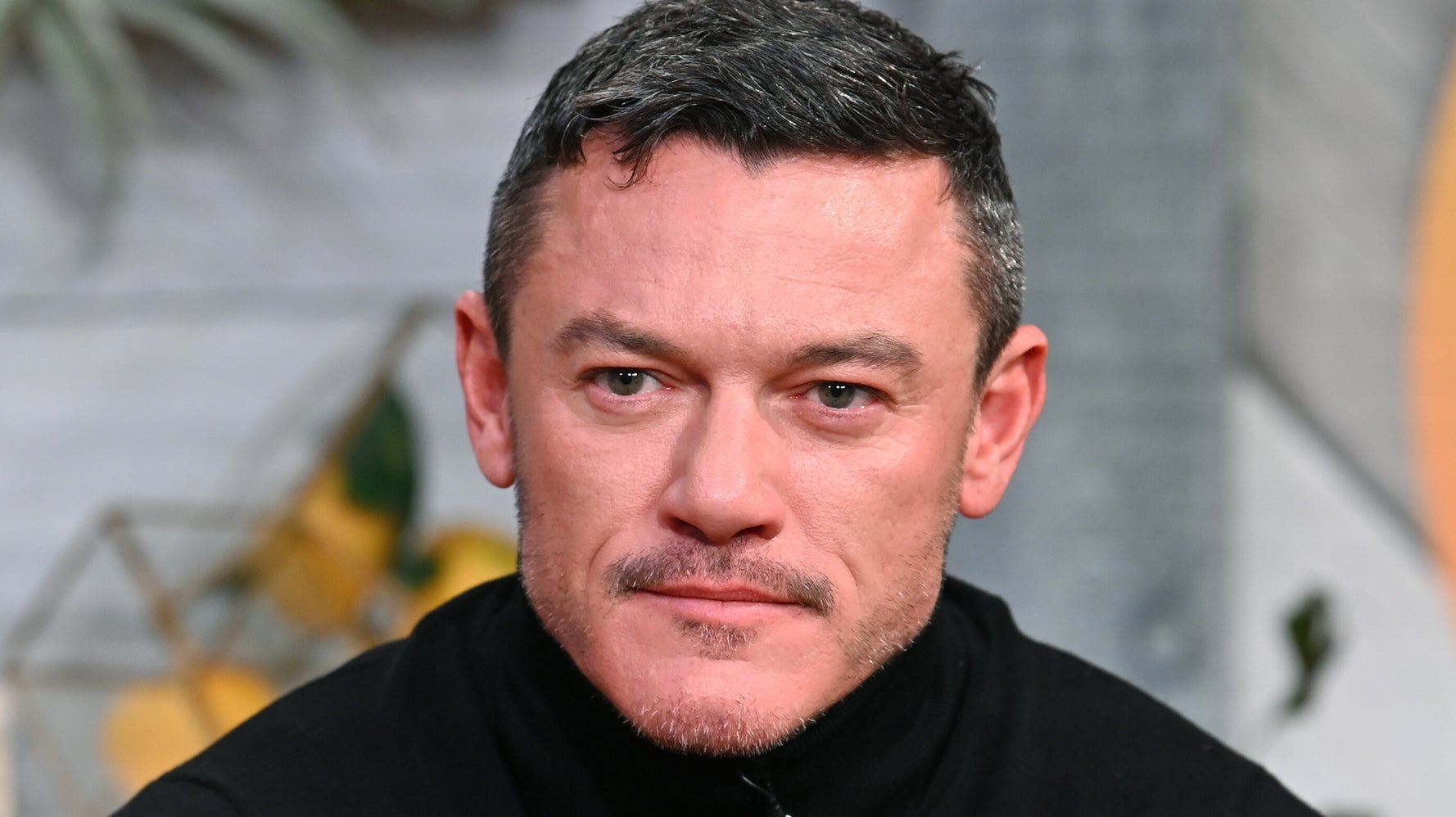
Luke Evans: ‘I’ve Never Been Ashamed’ Of Being Gay – HuffPost

As Luke Evans found success in Hollywood, he may not have put forth a definitive statement about his sexuality ― but that doesn’t mean he was trying to hide it.

The actor was named Attitude’s 2020 “Man of the Year,” and told the British LGBTQ publication that accusations that he had kept quiet about his authentic self in prior interviews and on social media were simply “not true.”

“My career was public, I was photographed, and all that stuff,” Evans said. “My personal life just became the last thing that I had. Also, what was strange was that when people did find out that I was gay, there was a lot of articles and stuff written saying that I was hiding it, and I wasn’t.”

Growing up a Jehovah’s Witness, Evans struggled to come to terms with his sexuality as a teen. At 16, he left his home and his religion to pursue an acting career. “There were a lot of bullies in my school, and I was an easy target,” he recalled. “I needed to find my identity, and I needed to be independent of my family, find my voice and be a happy, gay teenager.”

For Evans, having that journey made speculation that he’d chosen to stay closeted even more hurtful.

“I just wanted to get online and I wanted to pick up the phone and say, ‘Do you realize I left home at 16 because I was gay?’ I went into the world as a kid, because I had to,” he said. “I am proud and happy, and I’ve lived a very big life that I’m super happy with. And I’ve never been ashamed.”

These days, the 41-year-old is very much a bankable star, with well-received performances in the “Hobbit” and “Fast and the Furious” franchises. Earlier this year, it was announced he would reprise the role of Gaston ― which he first played in the 2017 live-action remake of “Beauty and the Beast” ― in a forthcoming spinoff series for the Disney+ streaming service.

“I hope that I’ve broken down a lot of barriers, just because I’m trying to represent my community, but I can’t represent everybody,” said Evans, who has been romantically linked to Miami-based art director Rafael Olarra. “And I certainly can’t please everybody. I just have to do it my way.”

As to the advice he’d give to young LGBTQ people who may be struggling to come to terms with their true selves, he added, “You can be happy with yourself and you can also be whoever you want. You can have any career you want and nothing should dictate what you do because of your sexuality.”

16 Professional Athletes That Came Out as LGBTQ+ in 2020 – Out Magazine – Out Magazine

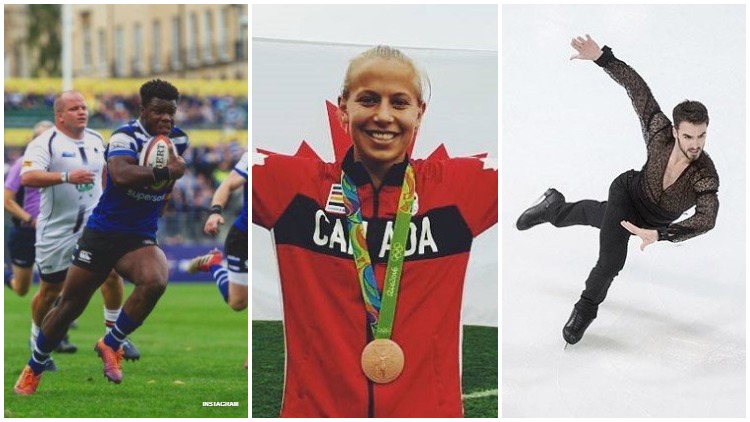
Rugby is a brutal sport, akin to American football without pads, but the decision to come out of the closet was still frightening to English professional player Levi Davis. In the end, he texted teammates to reveal he was bisexual rather than coming out in person.

“Hi guys. I just want to tell you something that’s been eating away at me for four years now,” Davis recalled of the text. ‘I want to be open and honest with you boys, as friends and team-mates. I’m bisexual.”

Davis learned he had nothing to fear, as he received nothing but support from fans and teammates alike after coming out.

Pat Patterson, WWE’s 1st gay superstar and creator of Royal Rumble, dies at 79 – KABC-TV

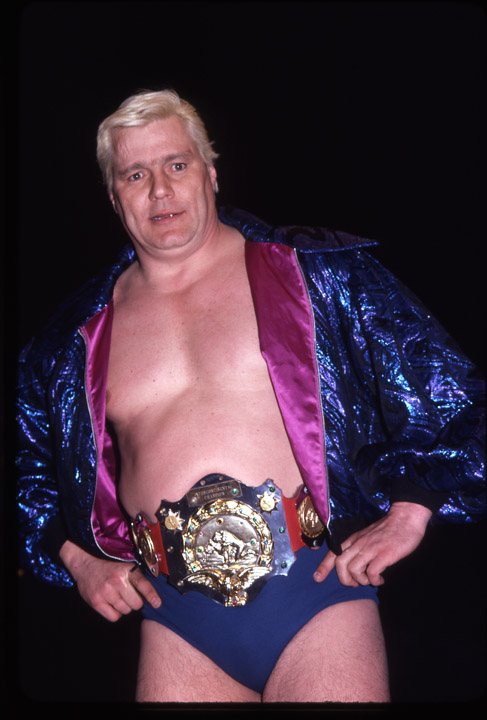
Legendary pro wrestler Pat Patterson who came out as the first gay superstar in WWE has died.

The sports entertainment company announced Wednesday that Patterson passed away at the age of 79.

A longtime employee of the WWE, Patterson was hailed as a pioneer for the LGBT community within the sport.

Even though his coming out was long-known within wrestling circles, Patterson chronicled his life in the industry in his 2016 autobiography “Accepted: How the First Gay Superstar Changed WWE.”

Additionally, the Canada-born Patterson is forever known as WWE’s first-ever Intercontinental Champion, a prestigious title outside of the company’s world championship, and the creator of one of the company’s most unique matches, the 30-person “Royal Rumble” match.

“In a career spanning six decades, the renaissance man left an indelible mark on the industry in the ring, on the microphone and behind the scenes,” WWE stated, alluding to his one-time stint as TV color commentator and his latter day role as a match producer and consultant.

He wrestled from 1958 until 1984, but still remained a fixture of WWE’s televised programming, regularly appearing alongside company chairman Vince McMahon.

“In his 25-plus years in WWE, Patterson was synonymous with making history,” WWE said.

Copyright © 2021 KABC-TV. All Rights Reserved.

‘RHOSLC’s Lisa Barlow Breaks Down the ‘I Don’t Know Heather Gay’ Drama and More From Season 1 (Exclusive) – Entertainment Tonight

‘RHOSLC’s Lisa Barlow Breaks Down the ‘I Don’t Know Heather Gay’ Drama and More From Season 1 (Exclusive) | Entertainment Tonight


21 professional athletes who identify as LGBTQ – INSIDER

  • Throughout history, professional athletes in many different sports have identified as LGBTQ.
  • Michael Sam, Ryan Russell, and Ryan O’Callaghan are all former NFL athletes who have come out as LGBTQ. 
  • Sheryl Swoopes, Megan Rapinoe, and Billie Jean King are athletes who identify as lesbians. 
  • Caitlyn Jenner, Patricio Manuel, Fallon Fox, and Renée Richards are all transgender athletes. 
  • Visit Insider’s homepage for more stories.

While Hollywood has slowly become more accepting of the LGBTQ community, the world of sport still has work to do.

According to a Human Rights Campaign report from 2019, 70% of LGBTQ people do not come out to their teammates and coaches while playing a sport. Additionally, 82% of athletes have witnessed homophobic or transphobic language in their sport, according to the OutSport Survey. 

Throughout history, however, there have been athletes who have proudly stood up for who they are, and who have been supported by their teammates and fans.

From the NBA to the NFL, here are 21 past and present athletes who have come out as LGBTQ.

Pat Patterson, the first openly gay pro wrestling star, has died at 79 – NBC News

Pro wrestling icon Pat Patterson, the industry’s first openly gay star and a long-time lieutenant of promoter Vince McMahon, has died, officials said Wednesday.

The WWE Hall of Fame member was 79.

Pat Patterson at the 53rd Cauliflower Alley Club Reunion Convention at the Gold Coast Hotel & Casino in Las Vegas, Nev. on May 1, 2018.George Napolitano / MediaPunch

“A true trailblazer of the industry, Patterson was linked to many ‘firsts’ in sports-entertainment throughout his storied career,” World Wrestling Entertainment said in a statement. “In a career spanning six decades, the renaissance man left an indelible mark on the industry in the ring, on the microphone and behind the scenes.”

Pro wrestler John Cena said he’ll never forget Patterson’s friendly demeanor and zest for life.

“Pat Patterson lived life as it should be lived with passion, love and purpose,” Cena said in a statement. “He helped so many and always entertained with a story or joke. He will live on in my life always. Love you Patrick.”

Hossein Khosrow Ali Vaziri, better known as The Iron Sheik, tweeted an all-caps eulogy of his contemporary, lauding Patteron’s “beautiful mind for this business and beautiful heart for this world.”

“I don’t know what to say other than I love you,” he wrote. “My heart is broken. God bless you and your family. Thank you for your friendship.”

Long-time WWE referee Charles Robinson said he’ll miss seeing his old friend in the ring, backstage, on press row and even at the karaoke bar.

“One of the greatest minds in the business and just an all around great guy,” Robinson said. “I will miss him and his karaoke! RIP my friend. You are a hero to many!”

The teenaged Patterson was thrown out of his home in Montreal after coming out to his parents and did the unthinkable — immigrated to America to make it in the hyper-macho world of pro wrestling, he wrote in his 2016 biography, “Accepted: How the First Gay Superstar Changed WWE.”

He was the first to hold the title of “Intercontinental Champion” in 1979, and his early 80s rivalry with Sgt. Slaughter took pro wrestling to new heights of popularity.

It culminated in the famed “Alley Fight at Madison Square Garden” in New York City on May 4, 1981.

In the 1990s “Attitude Era” of the sport, Patterson was paired with fellow Hall of Fame member Gerald Brisco, performing as CEO McMahon’s “stooges.”

In various storylines, they’d interfere in matches not involving them and pull other unsportsmanlike hijinks, often in conflict with the era’s prime protagonist “Stone Cold” Steve Austin.

After retiring as a performer, Patterson served as a color commentator and worked behind the scenes in a long career that “helped lay the foundation” of today’s WWE, according to McMahon.

“Pat Patterson was more than the first Intercontinental Champion & father of the Royal Rumble Match,” McMahon said in a statement on Wednesday.

“He helped lay the foundation for WWE as we know it. His mentorship shaped careers, his creativity sparked innovation and his friendship lifted spirits. Love you, Pat. We miss you.”

Cyd Zeigler, co-founder of Outsports.com, said the impact of Patterson’s career cannot be understated.

“Having a gay man with a seat at the decision-making table at a company like the WWE was and is incredibly important,” Zeigler said.

“While he wasn’t out publicly, he was there helping make key creative decisions that were piped into TV sets across America. The visibility of his coming out years later was great, but having a seat at the table and making sure the people around him knew he was gay, the power of that can’t be overstated.”

Call for reopening of gay men’s health clinic – RTE.ie

0

Campaigners are calling on the Health Service Executive, today World Aids Day, to reopen the country’s only dedicated gay men’s health clinic.

The Gay Men’s Health Service, located at the Meath Primary Care Centre in Dublin, has been closed for the last nine months since the onset of Covid 19.

The service has been running for nearly 30 years, providing vital services and helping thousands of people over that time.

Since March and the coronavirus pandemic, the clinic has been closed with staff redeployed elsewhere.

The demand for the services is constantly increasing, according to the clinic’s most recent annual report which states that last year over 11,000 men attended the facility.

The HSE said the clients have been redirected to clinics and hospitals elsewhere during the pandemic but campaigners, including Bill Foley from Gay Health Network, want the facility to reopen as soon as possible.

He says: “It’s vitally important as it’s the only specialised clinic that targets gay men and men who have sex with men, in terms of sexual health.

We need your consent to load this rte-player contentWe use rte-player to manage extra content that can set cookies on your device and collect data about your activity. Please review their details and accept them to load the content.Manage Preferences

“And on World Aids Day in Ireland it’s an unfortunate thing to announce that the specialised service that treats and prevents HIV is not open.”

The closure is happening as Ireland saw an all-time high of 536 new HIV cases last year, and there are concerns that 2020 will see similar numbers.

Stephen O’Hare from HIV Ireland says: “What we see from the weekly stats from the Health Protection Surveillance Centre is that the rates of newly notified cases are staying on a par in what we’ve seen in previous years, and that really is a worry”.

The HSE has said services at the clinic are expected to reopen in January.

Years after coming out, gay athletes upset by lack of change – Associated Press

BRISBANE, Australia (AP) — David Kopay and Ian Roberts live on different sides of the Pacific Ocean. Both took giant leaps of faith when they came out.

And at a time when it had never been done in their sports.

Kopay is a 78-year-old former National Football League running back living in Palm Springs, California and known as the first professional athlete to reveal he was gay. He came out in 1975 after his NFL career ended.

In 1995, Roberts became the first high-profile Australian sports person and first professional rugby player in the world to come out as gay.

Some 45 years after Kopay’s open disclosure, and 25 after Roberts’, both men are united in their disappointment that a higher proportion of gay athletes haven’t come out, and that homophobic language on the sporting fields is still rife.

ADVERTISEMENT

“It’s ignorance more than anything else, they try to hide their own insecurities by putting down other people,” Kopay told The Associated Press in a telephone interview, speaking of homophobic slurs. The call interrupted his rearranging in a new apartment of photos and other memorabilia from an eight-year NFL career that spanned five teams beginning with the San Francisco 49ers in 1964.

More Spors Stories:

“It’s horrible to hear that kids are being targeted. I’ve sacrificed so much to try and change this problem,” Kopay added. “I know most people don’t mean anything when they use these horrible words, but . . . you have no idea what people are thinking.”

Roberts, who has forged an acting career since retiring, played for two more rugby league seasons after coming out. A powerful front-row forward who played for the national team, Roberts wishes he had done it sooner.

“It was the worst-kept secret. Everyone knew I was gay. I wish I had come out from Day One,” the 55-year-old Roberts told the AP in a telephone interview from a movie set near Sydney where he’s working in the third season of the “Mr. Inbetween” series. “Personally, it was kind of empowering when you come out, there were some wonderful stories as well, people came to me and said how happy they were with me.”

Kopay’s comments about homophobic language and Roberts’ about coming out as gay are at the forefront of two studies published Wednesday by Melbourne’s Monash University.

The first analyzed survey responses from 1,173 lesbian, gay, and bisexual people aged 15 to 21 and living in the United States, Britain, Canada, Australia, New Zealand or Ireland. Authors described it as the first study to investigate whether LGB youth who “come out” to teammates are more likely to be a target of homophobic behavior than those who do not.

ADVERTISEMENT

“Some gay athletes who have come out as adults have said fears that LGB young people will be the target of homophobic behaviors if they come out to their teammates are unfounded,” said lead author Erik Denison from Monash’s Behavioural Sciences Research Laboratory. “We hoped this was true given young people generally have positive attitudes toward gay people.

“Being the target of homophobic behavior is harmful to the health of LGB young people and increases their risk of depression, suicide, and self-harm.”

The study also showed that young people who came out were significantly more likely to report they’d been the target of homophobic behaviors in sport settings.

The second Monash study investigated why some athletes use homophobic language.

“Sports organizations, LGBTQ advocacy groups, and government officials typically assume homophobic behavior is driven by homophobic attitudes in sports,” Denison said. “Over the last two decades, dozens of educational resources, advertising campaigns, and initiatives such as Pride Games have been developed to end homophobia in sports. These approaches do not seem to be working because studies consistently find homophobic language continues to be frequently used by male athletes.”

A sports inclusion website updated to coincide with the release of the two studies was created, it says, to “illustrate the lack of meaningful action on homophobia and transphobia in sport.”

It includes a timeline of other famous sports people who came out, including Billie Jean King and Martina Navratilova in 1981, and English soccer player Justin Fashanu in 1990. Fashanu retired in 1997 and committed suicide in 1998 at the age of 37.

Roberts said he heard homophobic remarks on the field but he was heartened when, after he’d announced he was gay, the North Queensland Cowboys made him captain.

“The Cowboys, they were fantastic,” Roberts said of the Townsville-based National Rugby League club. “Yes, they had a gay captain. Yes, there were naysayers, but they would have have been in a minority.”

Back across the Pacific Ocean and to Kopay in his new apartment, where the former NFL player says he “thought coming out would make it easier for other athletes to be open about their sexuality . . . I hoped to make a difference so others in my position would have the freedom to be who they are.

“But it was such a painful experience, it was horrible,” Kopay added in a separate interview with Monash University. “I sacrificed so much . . . I couldn’t get a job, couldn’t get a coaching position, no one wanted to hire me. It was like I committed murder.”

Roberts said reasons like those are behind many players not wanting to come out until they are finished their careers.

“That is a shame,” Roberts said. “I have heard along the gay grapevine, that still happens . . . waiting until they retire because of their fears.”

Still, Kopay remains bewildered why more gay athletes haven’t come out.

“I have often been asked if I thought that more gay athletes would come out in sport, and I have always said it was just a matter of time,” Kopay says. “I could never have imagined that nearly 50 years later we would still have no openly gay athletes in America’s Big 4 sports (baseball, football, basketball and hockey). We also don’t have many around the world.

“We now have gay marriage but we don’t have any openly gay athletes in the NFL. It makes no sense.”

___

More AP sports: https://apnews.com/apf-sports and https://twitter.com/AP_Sports

CSUF Faculty Share Expertise and Receive Recognition | CSUF News – CSUF News

0

Cal State Fullerton faculty and staff took part in virtual presentations, published scholarly research and received recognition for their work. These are the items submitted during November 2020. 

PRESENTATIONS/SCREENINGS

Penchan Phoborisut, assistant professor of communications, presented “Reimagining the Practice of Citizenship: The Visuals of the Unruly Youth in Thailand” to the Center for Southeast Asia Studies at the University of California, Berkeley. Phoborisut also participated in the roundtable “Uprising in Thailand,” organized by the University of Wisconsin-Madison’s Center for Southeast Asian Studies.

Bey-Ling Sha, dean of the College of Communications, sat on various virtual panels and presented:

  • “Education With an Equity Lens: What Democracy Looks Like to Next-Gen Public Relations Leaders” for the Institute for Public Relations and the Public Relations Society of America, Educators Academy, digital series Race in the PR Classroom: Special Edition Featuring 15 Leaders in PR Education; 
  • “Building Relationships With Student Publics: How the First-Year Seminar Creates a Campus Community,” with Deanna Leone, associate dean of the College of Communications, to the Educators Academy Super Friday Session 1 of the international conference of the Public Relations Society of America;
  • “Professionals in Public Relations: The Higher Calling” as the invited keynote to the annual conference of the Japan Society for Corporate Communication Studies; and
  • “Intercultural Public Relations: Implications for Deans in Managing Relationships and Conflicts With Strategic Publics” for D4D, Books by Deans for Deans, hosted by the Council of Colleges of Arts & Sciences.

A film short by Mun Chee Yong, assistant professor of cinema and television arts, was screened at the 31st annual Singapore International Film Festival. The Mandarin, Teochew, Cantonese-language “21 Days” follows a man’s desperate quest for signs of his deceased mother’s spirit.

PUBLICATIONS

Shelly Arsneault, professor of political science, co-authored a new textbook, “Managing Nonprofit Organizations in a Policy World, Second Edition.”

Brenda Bowser, professor of anthropology, co-authored “The Impacts of Coastal Dynamics on the Saco de Pedra Shell in Midden Northeast Brazil” in Quaternary International.

Siobhan Brooks, associate professor of African American studies, published a new book “Everyday Violence Against Black and Latinx LGBT Communities.”

Jochen Burgtorf, professor of history, published two co-edited volumes, one in German, and one in English: “Von Hamburg Nach Java: Studien zur Mittelalterlichen, Neuen und Digitalen Geschichte (“From Hamburg to Java: Studies in Medieval, Modern and Digital History”) and “The Templars, the Hospitallers and the Crusades.”

Ed Collom, director of faculty affairs and records and professor of sociology, published “Getting a Barista Job: Adjudicating the Impact of Human Capital, Social Capital, Age and Gender” in the Open Journal for Sociological Studies. 

Guadalupe Espinoza, associate professor of child and adolescent studies, co-authored a book chapter “Cyberbullying Perpetration and Victimization Among Ethnic Minority Youth in the United States: Similarities or Differences Across Groups?” in “Child and Adolescent Online Risk Exposure.”

Gary Germo, associate professor of human services, co-authored “Generativity and Shared Agency With Foster Youth for Education” in the Journal of Applied Developmental Psychology.

Alice Lee, assistant professor of public health, authored a commentary “Could Microchimerism Play a Role in Ovarian Carcinogenesis?” in the International Journal of Epidemiology.

Robert Lockie, associate professor of kinesiology, co-authored: 

Melissa Montgomery, Robert Lockie and Derek Pamukoff, associate professors of kinesiology, co-authored “Association Between Knee- and Hip-Extensor Strength and Running-Related Injury Biomechanics in Collegiate Distance Runners” in the Journal of Athletic Training.

Tabashir Nobari, assistant professor of public health, co-authored “Severe Housing-Cost Burden and Low-Income Young Children’s Exposure to Adverse Experiences: A Cross-Sectional Survey of WIC (Women, Infants and Children) Participants in Los Angeles County” in the Maternal and Child Health Journal.

Shaun Pichler, professor of management, co-authored the article “The Virtuous Cycle of Diversity” published in the Human Resource Management Journal. The research sought to understand how firms respond to social performance problems through diversity. 

Kit Seaton, assistant professor of art, teamed up with author Jennifer Dugan to illustrate “Coven.” The young adult graphic novel is scheduled to publish in fall 2022.

Kay Stanton, professor of English, comparative literature and linguistics, authored the chapter “‘For Me, I Am the Mistress of My Fate’: Lucrece, Rape Culture and Feminist Political Activism,” in Shakespeare / Sex: Contemporary Readings in Gender and Sexuality.

Tara Suwinyattichaiporn, assistant professor of human communication studies, and Zac Johnson, associate professor of human communication studies, published their study “The Impact of Family and Friends Social Support on Latino/a First-Generation College Students’ Perceived Stress, Depression and Social Isolation” in the Journal of Hispanic Higher Education. Related: Mental Health of Latinx College Students Improves With Social Support

AWARDS AND APPOINTMENTS

Shaun Pichler, professor of management, was named an Outstanding Reviewer in the 2020 Emerald Literati Awards for Excellence by Equality, Diversity and Inclusion: An International Journal, for his contributions to the journal in 2019.

Chelsea Reynolds, assistant professor of communications, had her article “Building Theory From Media Ideology: Coding for Power in Journalistic Discourse” named Best Article in the 43rd volume of the Journal of Communication Inquiry.

Bey-Ling Sha, dean of the College of Communications, was appointed to the Society of Professional Journalists’ board of directors for 2020-21. Sha was also appointed to the advisory committee for the Center for Diversity, Equity and Inclusion for the Institute for Public Relations. 

Anthony Sparks, associate professor of cinema and television arts, will write and develop a new scripted series titled “Choir” after signing a first-look deal with Blumhouse Television. Sparks will serve as showrunner and executive producer for the series based on “America’s Got Talent” runners-up Detroit Youth Choir.

Submit publications, presentations, awards or honors for this monthly roundup to newssubmissions@fullerton.edu.

LGBT Center of Greater Reading Announces Emergency Fund – bctv.org

0

READING, Pa.: In response to the increasing economic crisis and social risk faced by the LGBTQIA+ population, the LGBT Center of Greater Reading announced the establishment of the Rainbow Relief Fund, an emergency resource to aid those in critical and urgent need.

“LGBT youth are 120% more likely to experience homelessness, and we have witnessed the need for a fund like this first-hand,” said Michelle Dech, Executive Director. “Our professional training, support programs, events, and advocacy are mainstays of the Reading and Berks County community. When we looked at what our community still needs, we identified an opportunity to affect change and make an instant impact. Our Rainbow Relief Fund will do just that.”

The emergency fund will be used to aid those in immediate need. Funds will help cover or defray the costs of food, gas, temporary shelter, or transportation. An LGBT Center donor is matching contributions up to $2,000 to kickstart the fund. Applications are available on the LGBT Center website, via email request to [email protected], or by stopping in to the center. Applicants must identify as LGBT+ or be the parent or legal guardian of an LGBT+-identifying youth.

“While COVID-19 highlighted the issue for a critical relief fund, the truth is that our community experiences these issues at an alarming rate,” said Tim Gruesel, president of the board of directors. “Personal crisis situations can escalate quickly. We know we can help fill this urgent need in Berks County.”

Those wishing to donate can visit the LGBT Center’s website at https://www.lgbtcenterofreading.com/, by calling (610) 864-5800, or by mailing a check to 1501 N 13th St, Reading, PA 19604. To earmark donations for the Rainbow Relief Fund, write “Rainbow Relief Fund” in the memo line or notes section of your submission.

About the LGBT Center of Greater Reading

The LGBT Center of Greater Reading provides support, advocacy, and resources to the Greater Reading LGBTQ+ Community and its allies. The LGBT Center of Greater Reading is registered as a 501 (c) (3) non-profit organization. Its vision is to be the leading expert resource to the LGBTQ+ community and allies for advocacy, support, services, and fellowship on every aspect of the quality of life continuum.

The New STEM Gap: Study Confirms Gay Men Are Less Likely Than Straight Men To Be In STEM Fields – Forbes

A study that suggests straight men outnumber gay men might be easily dismissed as “no duh.” But it turns out, there’s more to this research than the obvious. It pulls back the curtain on yet another gap in how colleges and universities educate — and corporations employ — people in four specific disciplines: science, technology, engineering and mathematics, or STEM.

First, there’s a misconception among most American adults about just how many LGBTQ people there are in the U.S. A 2019 Gallup poll showed that most American adults believe that almost one in four of us is either gay or lesbian. But according to researchers, our LGBTQ population is actually far smaller.

A study published by Statista in 2017 determined that about only one in 100 American women, and two in 100 American men, identify as gay: Put another way, that’s 1% of the U.S. is lesbian, 2.2% of all American men are gay. Statista says another 4% of all Americans identify as bisexual; Transgender Americans account for only 0.6% of the U.S. population, the Williams Institute at UCLA concluded in 2016.

Given that LGBTQ Americans amount to a smaller population than heterosexuals, it’s been presumed but not proven they also are outnumbered in fields like science, technology, engineering and mathematics.

MORE FOR YOU

Until now, researchers have focused largely on the gender gap in STEM, where the U.S. Department of Commerce reports women are still drastically under-represented in higher education and hold fewer than 25% of STEM jobs, even though women fill close to half of all jobs in the U.S. economy. This has been the case since at least 2010, despite college-educated women increasing their presence in the overall U.S. workforce.

For the first time, researchers have confirmed another gap exists, this one impacting gay, lesbian and bisexual people studying and working in STEM.

Ten days ago, Vanderbilt University announced two economists had concluded that gay men in same-sex couples are 12% less likely to have a STEM-related bachelor’s degree than straight and bisexual men whose partners were women. According to Vanderbilt’s news release, their research suggests that discrimination and workplace harassment may bar or force qualified scientists out of the jobs for which they were educated and trained.

The economists found that the sexual orientation gap between straight and gay men is greater than the STEM racial divide, a 4-point disparity between Black men and white men.

However, the racial gap and sexual orientation gap remain far smaller than the aforementioned female to male gender gap: Vanderbilt described it in its news release as “the 21-point chasm between women and men in STEM.” Efforts to close the gender gap will likely impact this newly-confirmed sexual orientation gap, the researchers concluded.

When there are more women in STEM occupations, they found, there are also more gay men in those same occupations. This, they say, suggests that closing the STEM gender gap may also help reduce the sexual orientation gap in STEM.

The economists did make an important finding regarding lesbian women: “There is essentially no gap among bachelor’s degree holders in STEM degrees between women in same-sex couples and women in different-sex couples,” the researchers wrote, referring to couples consisting of one man and one woman. But that’s not all they found:

“We observe that a larger share of women in same-sex couples are in STEM occupations than women in different-sex couples.”

Economics Prof. Christopher S. Carpenter, Ph.D., whose nickname is Kitt, collaborated on this research with Prof. Dario Sansone, Ph.D. of the University of Exeter in the U.K.

Dr. Carpenter is the E. Bronson Ingram Chair and Professor of Economics and Director of Vanderbilt’s LGBT Policy Lab. Dr. Sansone is a former Vanderbilt postdoctoral scholar and current economics lecturer at Exeter. They published their paper, Turing’s children: Representation of sexual minorities in STEM, in the journal PLOS One on Nov. 18.

For their paper, Carpenter and Sansone studied 142,641 men and women in same-sex couples and 10.8 million couples consisting of a man and a woman. Their data was provided by the U.S. Census American Community Surveys from 2009–2018, and the Centers for Disease Control’s National Health Interview Surveys, conducted between 2013 and 2018.

Among those same-sex couples, 1,213 self-identified as lesbian or gay women, 1,524 self-identified as gay men, 1,113 women and 426 men self-identified as bisexual. In addition, 279 women and 208 men responded that they identified as “something else.”

Carpenter told me via email they did not find bisexual men “were differentially likely to have STEM occupations than similarly situated heterosexual men.” When asked about the total absence of data regarding transgender people — given that someone who is trans also can be gay, lesbian, bisexual, asexual, poly, pan or any sexual orientation, Carpenter had this to say:

“We are absolutely aware that trans folx can be of any sexual orientation. To be clear: we do not observe gender identity/transgender status of anyone in any of the data we use. It is a data limitation that we try to be clear about in the paper.”

Carpenter and Sansone noted in their paper that although they could not directly comment on STEM representation differences associated with gender identity due to those data limitations, their work is yet another reminder that nationally representative research is desperately needed into both sexual and gender minorities in STEM.

Doing so would go a long way toward better understanding LGBTQ representation in education and in the private sector, as well as the barriers and challenges faced by the community, they wrote.

Something else Sansone and Carpenter found “particularly interesting:” men in same-sex couples with bachelor’s degrees achieved a degree in STEM at a far lower rate than men in heterosexual relationships.

Men in in same-sex couples with bachelor’s degrees are 34.5% less likely to have completed that bachelor’s degree in a STEM field than men in different-sex couples who earned a bachelor’s degree. That’s despite being 43.6% more likely to have a bachelor’s degree at all than men in different-sex couples.

Sansone wrote in their paper that this finding suggests that the factors that perpetuate the very large gender gap in STEM fields — “heteropatriarchy, implicit and explicit bias, sexual harassment, unequal access to funding, and fewer speaking invitations” — are related to this newly identified gap in STEM fields between gay men and heterosexual men. He also concluded that misperceptions of all gay men as feminine and all lesbians as masculine contribute to the sexual orientation gap:

“Addressing these gaps could increase efficiency by improving group decision — making, company performance and the quality of scientific work. In addition, increasing the number of LGBQ people in STEM could help to alleviate the chronic shortage of workers in these fields.”

Their bottom line: with no national scientific body currently collecting data on LGBTQ people in STEM, the sexual orientation and gender gaps can only be closed with more research, and fewer obstacles to those already studying and working in those fields.

“A lack of data, coupled with well-documented discriminatory practices against LGBQ scientists across STEM fields, has left the research community and policymakers with no clear sense of the scope of improvements that need to be made,” added Carpenter. “As with all systems, diversity is a strength. We intend for our findings to contribute to the body of research that will shape data-informed policy that protects and encourages diverse participation in STEM.”

Read the full paper by Dr. Carpenter and Dr. Sansone by clicking here.

Israeli Tourism Ministry Warns Against Discussing Sensitive Topics With UAE Citizens – NPR

0

Israeli tourists deplane from a FlyDubai flight from Tel Aviv to Dubai, on Nov. 28. Malak Harb/AP hide caption

toggle caption

Malak Harb/AP

Israeli tourists deplane from a FlyDubai flight from Tel Aviv to Dubai, on Nov. 28.

Malak Harb/AP

Don’t promote democracy, talk about the royal families or comment on treatment of foreign workers.

Israel is advising tourism professionals and businesspeople to avoid discussing those and other sensitive political topics with residents of the United Arab Emirates, as it protects its new peace deal with the Gulf Arab country and promotes new daily flights between Dubai and Tel Aviv, launched last week.

“United Arab Emirates: Do and Do Not,” the tourism ministry’s 29-page Hebrew-language advisory published Nov. 8, is the first public Israeli government comment on the issue of Emirati political freedoms, but it stops short of criticizing alleged abuses.

“The United Arab Emirates is not a democratic country and it is not acceptable to speak about democracies as a preferred model of government,” the advisory says. It also recommends “not to speak to Emiratis about the royal families,” “avoid speaking about local politics” and “avoid speaking about government or state policy towards foreign workers.”

The ministry says the guidelines are not government policy but cultural sensitivity tips aimed primarily at Israeli tourism operators preparing to receive Emirati visitors, whenever Israel lifts its COVID-19 ban on incoming tourism. It aims for 100,000 Gulf visitors in the coming years, with many expected to visit Islam’s third-holiest site, the Al-Aqsa Mosque in Jerusalem.

Although the two countries shared quiet ties for years, it’s largely a new cultural encounter. Israeli passport-holders traveled in special delegations by invitation only, and Emiratis were not previously known to visit Israel.

The deputy mayor of Jerusalem has asked Israeli officials to update security protocols at the airport, where Arab and Muslim visitors regularly face stringent questioning, so anticipated Emirati visitors will receive a warmer welcome.

The tourism ministry is also offering some recommended “do’s”: Praise the UAE’s accomplishments in the Middle East. Use the term “female empowerment” instead of “feminism.” Set up business meetings with Emiratis at least three weeks in advance. Hotels seeking Emirati guests should consider setting up separate swimming areas for men and women.

The advisory also includes a code of conduct on dress and customs for Israelis traveling to the UAE for business. Airlines are introducing multiple daily nonstop flights.

The new route to Dubai is fueling a buzz for travel-hungry Israelis marooned at home during the pandemic and eager to visit a part of the region previously off-limits. The UAE is one of just a few destinations Israel allows residents to visit without quarantining upon return.

The author of the advisory, Yossi Mann, says Emiratis — governed by dynastic rulers with limited elections for an advisory council — are wary about dysfunctional political systems and failed democracy movements and prefer a system of tribal family affiliations. He worries that raising sensitive political topics could cast a shadow on the Israel-Emirates peace deal, signed in September, which he calls a breakthrough in Jewish-Muslim relations after years of hostility.

“They’re still a traditional society. They’re doing huge progress for them and they should do it step by step,” says Mann, a senior lecturer in Mideast studies at Bar Ilan University, researcher at the Herzliya Interdisciplinary Center and a consultant to oil and gas companies in the region. “Because I believe there is a new era between Jews and Muslims, I think we should be sensitive to them. They are making a courageous step.”

Israel is also worried its citizens could misbehave while vacationing in the UAE.

The UAE Ministry of Foreign Affairs and International Cooperation did not respond to NPR’s request for comment on the Israeli advisory.

The State Department’s travel advisory for U.S. citizens in the UAE offers similar advice on behavior and dress, and warns travelers they could be arrested or deported for “making derogatory statements about the UAE, the royal families, the local governments or other people.” But unlike Israel, the U.S. has also reported human rights concerns there.

The UAE has promoted religious tolerance and female politicians, and, this month, allowed unmarried couples to live together and relaxed alcohol bans. But it bans political parties and labor unions, arrests democracy advocates and government critics, criminalizes gay sex and has not effectively prevented abuse of foreign workers, who make up the majority of the population, according to the State Department.

Analysts and activists in both Israel and the Gulf criticized the Israeli approach.

“Gulf citizens are worldly and engage in the topics that the Israeli government is steering its tourists from,” says Bader Al-Saif, a Kuwait-based fellow with the Carnegie Middle East Center. “It’s how one engages in these topics that would matter.”

“The message is: be silent. If you want to go to the UAE, and have a collaboration with them, don’t talk about anything that would light a fuse,” says Eitay Mack, a left-wing Israeli human rights lawyer.

If the oil-rich Gulf country begins to invest in Israeli universities and institutions, he warns it could quash Israeli criticism of Gulf policy, much as Chinese investments in Australian universities are alleged to have led to pro-China censorship.

“After the UAE … bring all their money, it will be much harder to do this discussion. Now is the time to set the rules,” Mack says.

Elizabeth Tsurkov, a research fellow at the Forum for Regional Thinking, a progressive Israeli think tank, says Israel is expected to lobby for Emirati interests in Washington as it has done with Egypt and Jordan, and already reportedly mediated the sale of Israeli spyware to Emirati officials to track dissidents.

“Israeli citizens should question this alliance with an authoritarian regime,” Tsurkov says. “Most countries around world have normal relations with these regimes. But not all countries go and do lobbying work on behalf of those regimes. Not all countries sell spyware to hack into phones of activists.”

In August, Israeli Prime Minister Benjamin Netanyahu said the UAE was an “advanced democracy” in an interview with an Emirati TV news channel. He posted it to Twitter, then deleted it shortly after.

Sami Sockol contributed to this story from Jerusalem.

Gay Blake | News, Sports, Jobs – The Daily Times

Gay Karen Blake, 80, of New Cumberland, WV, passed away on Wednesday, November 25 at Golden Oaks Residential Boarding Care, Follansbee, WV.

Born on January 10, 1940 in Littleton, WV, Gay was the daughter of the late Price and Nellie (Antill) Gorby. She is also preceded in death by an infant brother, a brother, Rodney Gorby, and a sister, Mary Lou Garrison.

Gay was a 1957 graduate of Hundred High School and a retired Special Education teacher for Hancock County Schools. She was a member of Tomlinson Run Church of Christ. Gay held memberships with the New Cumberland Women’s Club, Red Hats Club, Beaver Valley Antique Club, and served on the WV State Special Olympics Committee.

Gay is survived by her loving husband of 60 years, Joseph “Joe” Blake of New Cumberland, two sons, Joe (Tammie) Blake, and Todd (Shannon) Blake of New Cumberland; three grandsons, Logan, Travis and Connor Blake, and several beloved nieces and nephews.

The family would like to thank Chris Piccirillo and the staff at Golden Oaks, and also Amedisys Hospice for the kind and compassionate care Gay received.

There will be no visitation and funeral services will be held privately. A memorial and celebration of Gay’s life will be planned at a later date.