(Boston)– Prior research has revealed sexual minority youth (lesbian, gay, bisexual) are more likely to carry weapons both outside of and within school. However, until now, no study has examined the degree to which bullying and harassment is associated with weapon carrying among this group.
A new study has found youth who report carrying a weapon have higher odds of experiencing bullying and bullying-related victimization. Minoritized student populations, especially sexual minority youth disproportionately experience bullying and bullying victimization.
“Pediatricians should recognize that experiencing bullying and feeling unsafe are associated with weapon carrying, particularly among sexual minorities,” says corresponding author Carl Streed, Jr., MD, MPH, FACP, assistant professor of medicine at Boston University School of Medicine (BUSM).
Using the Youth Risk Behavior Survey to examine the prevalence and likelihood of carrying weapons by sexual identity, the researchers examined self-report of adverse experiences (being bullied, skipping school due to fear for personal safety) and performed analysis to estimate the odds of carrying a weapon. When surveyed by sexual identity, 14 percent of heterosexual, 21.8 percent of gay/lesbian,18.5 percent of bisexual and 17.4 percent of “not sure” students reported carrying a weapon in the past 30 days.
The odds of carrying a weapon were significantly increased for youth who skipped school due to feeling unsafe at school, had ever been threatened with a weapon in the past year and had ever been in a physical fight. Compared to heterosexual female peers, sexual minority women had increased odds of carrying a weapon. “Pediatricians and professionals who work with youth should recognize that reported experiences of bullying may not be the most salient indicator of risk for weapon carrying among all youth, and that other fears of or experiences with bullying are crucial to screen for among sexual minorities in particular,” adds Streed, who also is a primary care physician and research lead in the Center for Transgender Medicine & Surgery at Boston Medical Center.
According to the researchers, this work is critical in the current political climate that is witnessing an erosion of LGBTQ acceptance (GLAAD, 2019) and is leading to a potential increase in minority stress through the bullying of certain youth populations, particularly sexual minority youth. They believe future research should investigate associations between longitudinal trends in bullying and attitudes toward sexual and gender minority persons in U.S. politics.
###
These findings appear online in Journal of Interpersonal Violence.
Disclaimer: AAAS and EurekAlert! are not responsible for the accuracy of news releases posted to EurekAlert! by contributing institutions or for the use of any information through the EurekAlert system.
The long-vacant Madison’s and White Haines buildings Downtown may soon see renovation work begin. A virtual tour of the area hosted by CASTO and The Edwards Companies earlier today unveiled new details on plans for the properties as a part of a larger makeover project.
The idea to renovate the buildings and construct a new 12-story hotel on the adjacent parking lot were first presented by The Day Companies in 2015, but failed to materialize. Instead, The Edwards Companies are planning to move forward with a version of the plan that would include the same mix of renovation, new construction, and some new outdoor public spaces.
“Certainly those areas can use a little TLC,” stated Jeff Edwards, President and CEO of The Edwards Companies. “We’re in the process of working with the city to extend Pearl Alley north of Gay Street and into a new sculpture garden and more public spaces that we plan to create here.”
“This is probably the most architecturally intact and healthy retail, restaurant and activity center in all of Downtown Columbus so we want to build upon what’s already on Gay Street,” he stated. “We’ve already had conversations with a number of art galleries interested in relocating here.”
Edwards also mentioned plans to have a large hanging sculpture installed above the intersection of Gay Street and High Street, designed by artist Janet Echelman.
“We think it will be an iconic symbol for the neighborhood and set the neighborhood up as a real arts and entertainment district,” he added.
In August, the White Haines and Madison’s buildings were awarded historic tax credits to assist with renovations. Currently, there is no timeline for the project’s completion.
Walker is the co-founder of ColumbusUnderground.com and TheMetropreneur.com along with his wife and business partner Anne Evans. Walker has turned local media into a full time career over the past decade and serves on multiple boards and committees throughout the community.
Steve Kornacki broke down the NFL playoff picture on NBC’s “Sunday Night Football.” (Photo by Sean … [+] Zanni/Patrick McMullan via Getty Images)
Patrick McMullan via Getty Images
NBC election guru Steve Kornacki charmed NFL fans Sunday night with his perky personality while breaking AFC and NFC playoff odds. But his appearance on “Sunday Night Football” was more than just a fun diversion. It was an important moment for gay people in sports.
Kornacki is openly gay, and by earning a slot on NBC’s signature NFL broadcast, he shows LGBTQ belong everywhere in sports — including the traditionally macho world of NFL studio shows.
Host Mike Tirico called on Kornacki Sunday to analyze both conferences’ playoff pictures. Kornacki brought back his heralded big board, but instead of showing the results from Fulton County, it displayed the playoff chances for each team. Instantly, Kornacki put some of the day’s most significant games in perspective. Derek Carr’s magical game-winning touchdown pass to Henry Ruggs III may have only increased the Raiders’ playoff chances to 49%; however, losing to the Jets would’ve dropped Las Vegas’ postseason odds to 10-15%.
As Kornacki said, the Raiders “averted catastrophe.”
Meanwhile, he explained why the Ravens still possess a 47% chance to make the playoffs — they have the easiest schedule left in the league — and touted the Giants for their big swing following a win over Seattle.
Kornacki, whose effervescence and sleepless Election Week marathon prompted the creation of the famed “Kornacki Cam,” came out as gay in 2011. In his coming-out piece, Kornacki writes about how he struggled to conflate sports fandom with his identity as a gay man.
MORE FOR YOU
“After a trip to Cape Cod with a friend and his family, the kid’s mother said her favorite moment was watching ‘straitlaced Steve’ struggling to make sense of all the hedonism around him when we drove out to Provincetown,” he wrote on Salon. “I remember seeing drag queens and men dressed in skimpy attire and thinking to myself: Get me out of here so I can watch a baseball game.”
I can relate. Growing up a sports-obsessed teenager, I struggled to come to terms with my sexuality, and buried myself into my aspiring career as a sportswriter. It’s easy to avoid introspection when you always have a project to work on.
Since coming out, I have learned to couple my love for men with my love for sports. Four years ago, I came out on WEEI, one of Boston’s sports talk radio behemoths. I’m currently the deputy managing editor of Outsports, an outlet dedicated to covering LGBTQ athletes and their stories.
I enjoy ball games and drag queens.
The coming-out process is a journey, and we’re always evolving. On Sunday, Kornacki’s evolution reached the point where he was featured on “Sunday Night Football” in his trademark khakis. That’s pretty cool.
While there is a growing number of openly LGBTQ sportswriters, there is a dearth of openly LGBTQ sports broadcasters — especially when it comes major men’s team sports. There is not a single openly gay national play-by-play announcer or color analyst for the NFL, NBA or MLB.
National NFL pregame shows stick to the sports broadcasting norms. The hosts set the table, and the ex-jocks are the experts. Neither of the three major networks — CBS, NBC or FOX — employ a woman as a studio host or analyst on their signature NFL pregame programs (former Raiders executive Amy Trask is featured on CBS Sports Network).
Kornacki breaks the traditional studio show mold, and his sexuality was rightly not a topic. He was simply there to break down the playoff field, like any other expert.
And he was spectacular. Going against the grain pays off.
It has been said that if you repeat a lie enough times, it becomes the truth. So it is with the false narrative that our Constitution cannot provide civil liberties and equal protection for members of the LGBT community while it simultaneously respects individual religious beliefs and practices.
Despite being in a nation that sprouted from seeds of personal liberty, freedom and individual rights, the politically manufactured controversy that pits religion against equal rights has come before the United States Supreme Court repeatedly over the past four decades. During that time, the LGBT community has achieved significant and life-changing successes in multiple cases and were finally able to cast aside the fallacious judicial theory that the moral views of some should be permitted to segregate and do harm to others.
However, oral arguments in those cases over the past four decades were peppered with moral condemnation of the LGBT community and off-color humor one might hear in a frat house. The resulting High Court opinions were fractured and included scathing dissents from Chief Justice Rehnquist and Justices Scalia, Thomas and Alito that were filled with invectives against gays and lesbians, denigration of a “so-called ‘homosexual agenda,’” and comparisons of LGBT status to “adult incest, prostitution, masturbation, adultery, fornication, bestiality, and obscenity.”
The dissenters champion the views of a minority of Americans whose animosity toward gays and lesbians is rooted in their religious beliefs. They add cosmetic phrases like “sincerely held” to soften the true nature of these exclusionary religious beliefs, and they describe those views as so-called “traditional Christian values” to falsely ascribe them to the divine, as if Jesus himself opposed LGBT rights.
In doing so, the dissenting opinions claim both a moral superiority to denigrate LGBT people and widespread support for imposing this righteous piety in the nation’s law books. This concept of “morals legislation,” as Justice Scalia called it, is actually a conflation of the legitimate lawmaking process that advances societal norms and prohibits conduct generally agreed to be unacceptable with a legislative process that incorporates exclusionary religious views that reject LGBT civil rights protections and marriage equality.
Under the erroneous circular logic advanced in these Supreme Court dissents, in order to not violate the free exercise of religion clause, the government elevates the so-called “sincerely held religious beliefs” that reject LGBT people as sinners because they offend “traditional Christian values.” In short, the dissenters seek to do that very thing the Constitution forbids: make a law respecting the establishment of a religion. The dissenters do not see it that way, and previously decried the Supreme Court majority’s rejection of the “morals legislation” model that transacted in the adoption and enforcement of laws designed to withhold civil rights protections and liberties from the LGBT community.
In recent weeks, there has been a seismic shift in the legal analysis that will be brought to bear on the Court’s docket. Several of the Justices are on record championing Originalism as legitimate Constitutional scholarship—something it is not, as discussed in my last New Jersey Law Journal monthly column.
Justices Thomas and Alito, the two most severe opponents of LGBT equal rights, are clearly feeling emboldened. They began the new SCOTUS term with a joint statement in which they committed to work to protect “traditional Christian values” from “the court’s cavalier treatment of religion” which will manifest initially in their calculated efforts to rescind the right to marriage equality for committed same-sex couples and their families established in Obergefell v. Hodges, 576 U.S. 644 (2015). Justices Thomas and Alito pointedly stated, “By choosing to privilege a novel constitutional right over the religious liberty interests explicitly protected in the First Amendment, and by doing so undemocratically, the Court has created a problem that only it can fix. Until then, Obergefell will continue to have ‘ruinous consequences for religious liberty.’”
Their joint “statement … respecting the denial of certiorari” in Kim Davis v. Ermold, et. al, 592 U.S. ____ (2020), was stunning for numerous reasons, not the least being the sense of unseemliness that pervades judicial operations as Supreme Court Justices appear to foment political and legal efforts to destabilize the five-year old Obergefell decision and undercut its legitimacy. Indeed, the Kim Davis certiorari denial that served as the vehicle for delivering Justice Thomas and Alito’s joint statement represents one of numerous examples of significant resistance to implementation of marriage equality, especially in provincial areas of the country.
The Justices’ decision to speak out in this manner and on this particular matter was also curious because there is much more to Kim Davis’ story than her notoriety as a former Kentucky county clerk who refused to issue a marriage license to a gay couple as required by state law following the Obergefell ruling.
First, while Davis’ religion did not approve of same-sex marriage, apparently it did approve of Davis’ four marriages to three men during her lifetime. More importantly, the county clerk who issued those four separate marriage licenses apparently approved. Second, Kentucky voters drummed Davis out of office following her refusal to issue the marriage license to the gay couple. Third, Kentucky state and federal courts rejected Davis’ claims that she should not be required to do the job she gets paid to do by Rowan County residents because she did not support marriage equality. Instead, Davis was held liable to the gay couple she refused to service and ordered to pay hundreds of thousands of dollars in damages and attorney fees.
Justice Alito has also taken his advocacy outside the court room in recent months to deliver speeches to private organizations including the Federalist Society. Using language that clearly demonstrates he has no intention of feigning impartiality, he expresses frustration about name-calling and insults hurled at people because of their faith: “You can’t say that marriage is a union between one man and one woman. Until very recently, that’s what the vast majority of Americans thought. Now it’s considered bigotry.” In response, I will merely say how unfortunate for Justice Alito that he has not spent his life as a gay man because then he would really know what name-calling and insults are.
The renewed consideration of backtracking on LGBT civil rights is disturbing and dangerous to those of us who have seen much worse times for our community. Considering that the overwhelming majority of Americans support the freedom to marry, the efforts to undo LGBT civil rights advances coming from the highest offices in the federal judiciary do two grave harms. First, they reflect an arrogance that one can impose their own minority religious perspective, values and views on others. Second, they erode confidence in the fairness and impartiality of the judiciary that is critical to its operations and success.
The rights of LGBT people to get married, raise families, have jobs, and not be subjected to criminal penalties for their private intimacy should not be a war—or “culture war,” as Justice Scalia patronizingly referred to it in his dissent in Lawrence v. Texas, 539 U.S. 558 (2003). For well over a half century, the Supreme Court has repeatedly recognized that the Equal Protection of the law is a Constitutional promise to every person, even those with whom we disagree. Despite the many differences across our humanity, in recent years, the Court has refused to allow “gay persons … [to be] treated as social outcasts” and has enshrined their “dignity and worth” as privacy rights rooted in the Constitution. Masterpiece Cakeshop v. Colorado Civil Rights Commission, 584 U.S. __ (2018).
Thomas Prol is a partner at Sills Cummis & Gross, P.C., in Newark, and was the first openly gay president of the New Jersey State Bar Association (2016-17). He writes a monthly column for the NJ Law Journal. The opinions expressed are his own.
After the year we’ve all had, it can be easy to feel like a sack of coal right now this Christmas.
But that’s why it’s the little things that matter this holiday season, whether a Zoom call with pals to catch-up and drink eggnog or buying a cheeky jumper to giggle over during Christmas Jumper Day (11 December).
So, for those who like to take “make the yuletide gay” very, very literally, we’ve roped together some of our own favourite festive fits that are completely and utterly queer.
Available on Amazon, PinkNews‘ lesbian, gay, bisexual, transgender and queer Christmas jumpers are ones you’ll want to show off with pride this holiday season.
Want to be out and proud at the dinner table and tick off your weirdly homophobic Aunt Karen who just got into the mulled wine all at the same time? Then buy this Christmas jumper, because annoying conservative relatives, dear reader, is the true meaning of Christmas.
Whether you’re the queer cousin, the gay uncle or the lesbian aunt, Christmas is the perfect time to fully embrace the role that, let’s face it, makes you the most fabulous member of your family. Period.
Les’ be honest, it’ll be love at frost sight with this “Les be Jolly” sweatshirt, decorated with unicorns in the colours of the lesbian pride flag. Red and green is so overrated and overdone, anyway.
Who needs subtlety during the one time of year where your house is completely drenched in tinsel and fairy lights? Help spread the Christmas queer with this “Camp as Christmas” jumper and don’t worry, we’ll only say “Christmas” one more time in this sentence.
A hoodie with horns, so careful now, you may get horny wearing it. Perfect for your LGBT+ pals whom you love so deerly, our reindeer jumpers come in a kaleidoscopic array of LGBT+ pride flag-themed colour-ways, whether gay, lesbian, bisexual, ace or trans.
Well, we guess anything you don is automatically gay apparel. But sleigh the competition with this gay Christmas sweatshirt that’s hard to mistle(toe) – after all, what more do you want out of a jumper that has a glistening unicorn wearing a red bow tie?
We, for one, don’t think it’s at all on the nose (a red one, that is) to say this asexual Christmas jumper is totally ace.
Show the world that, yes, despite rumours that you’re a regular Grinch, you really do have a heart with this Chrismas jumper, also available as a hoodie.
For even more LGBT+ themed products, visit PinkNews.Shop and buy some great products, while supporting our LGBT+ journalism.
Sergio Aragon and Jesus Gutierrez had been operating Gay Pride Apparel for a year and a half when they saw their creations out “in the wild.”
On June 28, the west Phoenix couple was at the Queer Liberation March in New York City when they saw “not one but three different people wearing one of our shirts.”
“I’m like, go tell her it’s us! We’re Gay Pride Apparel!” Aragon said.
But that wasn’t “the coolest thing that’s ever happened” to the co-owners since they launched their online apparel brand in January 2019.
No, their crowning moment was an unexpected celebrity shout-out from “Riverdale” and “Hustlers” actress Lili Reinhart.
On Aug. 16, Reinhart, who’d recently come out as bisexual on Instagram, wore a Gay Pride Apparel sweatshirt with the logo “Sounds gay; I’m in.”
This happened just days after Gutierrez quit his full-time job creating marketing campaigns at Tiffany & Co., he said.
“It was … a very reassuring moment of like, ‘OK, maybe we’re on to something,’” he said.
“Out of all gay brands out there, she picked (us),” Aragon said.
Gay Pride Apparel was born from a Phoenix love story
Gutierrez and Aragon, both 25, lived “blocks from each other” growing up in west Phoenix.
It wasn’t until after they’d graduated from college that they realized they were in love.
They met at Frank Borman School in sixth grade, and their friendship “really started to flourish” at Maryvale High School, Aragon said. Their similarities are uncanny: Both are first-generation Americans — their parents are from northern Mexico — with three younger siblings each.
“For me, growing up (in west Phoenix) really gave me this thirst and drive to do better and make sure that I can provide for my family,” Gutierrez said. “I think my dream was always to do something greater for the community. And it always stemmed from growing up in west Phoenix.”
Though they’d gone their separate ways after high school — Gutierrez to Arizona State University and Aragon to the University of Arizona — they maintained their friendship, which “slowly blossomed into a beautiful relationship both as a couple and now as business partners,” according to a press release. Together, they moved to New York City and worked for major retail brands.
Making Pride year-round: ‘Our community deserves better’
Gay Pride Apparel began as a “creative outlet and also as a way to kind of take back the Pride merchandise,” Gutierrez said.
The couple’s vision to “build a community of empowered, authentic and proud humans” was born out of seeing New York City transform for LGBT Pride month in June.
“Seeing the shift from May to June and seeing every single storefront put a rainbow and plaster rainbows everywhere was very, like, ‘Wait, where were you, like, two weeks ago?’” Gutierrez said.
When June 31 arrives, he said, clean-up is already underway. But the duo doesn’t see Pride as something to be celebrated for only a month.
“A lot of the companies would come out with seasonal products, and we kind of felt that our community deserves better,” Gutierrez said. “We wanted to be present year-round.”
In New York, Aragon and Gutierrez were inspired by the 50th anniversary in 2019 of the Stonewall uprising and learning about the history of the modern gay rights movement.
“We stick to our roots, and we … no matter what platform we have, whatever happens, we want to make sure that we speak up,” Aragon said. “We’re in the community, and it’s two of us. That’s what makes us, I think, a little bit special is that we are both LGBT-owned and minority-owned.”
At Gay Pride Apparel, Aragon and Gutierrez say they seek ethically sourced clothing and accessories to “promote acceptance and equality for all.” They’re “not artists or designers,” according to Gutierrez, and their ability to create the illustrations featured on T-shirts, tote bags and mugs is self-taught.
They have teamed up with several artists — including Meg Lee, who identifies as a trans non-binary person and created the “Sounds gay; I’m in” design that Lili Reinhart wore — to expand their offerings.
The couple wants their customers and community to celebrate their individuality safely. Gay Pride Apparel packages arrive in discreet packaging. Purchases show up with an abbreviated vendor name on credit card statements.
These decisions were made with the “understanding that not everyone is out of the closet or lives in safe spaces where they can be themselves,” according to a press release. One dollar from each sale is also donated to a nonprofit organization of the customer’s choosing.
“We’re just authentically us, authentically representing a community,” Gutierrez said.
Between COVID-19 and protests against racial injustice, Pride month was different this year. At Gay Pride Apparel, Aragon and Gutierrez had to adapt to unprecedented events.
They scaled back their marketing campaigns for June and instead focused on “giving back to all the social justice movements going on,” Gutierrez said. “Our messaging became more about equality for everyone, not so much for Pride.”
The annual Phoenix Pride festival had been scheduled for early April, then postponed to November before it was canceled for 2020. Now it’s scheduled for April 10-11, 2021.
“There’s too much going on in the world during Pride for anyone to really be focusing on apparel items. So it definitely hurt us personally,” Gutierrez said. “So personally, professionally and business-wise, it was just a very somber time as opposed to (the usual) celebratory.”
‘The dream that our parents came to the U.S. to give us’
It was during this time that Aragon and Gutierrez realized they were longing for Mexico City after their pre-coronavirus trip there this year. So they decided to make some major life changes.
“We fell in love with New York and moved there, then we fell in love with Mexico City, and here we are,” Gutierrez said. “Being here and seeing different kinds of queer people and seeing how they identify … the movement here is different than the movement in the U.S.”
“(I’ve noticed) how different it can be to express yourself here than it is like in the States — or in New York, specifically,” he added.
They have fewer neighbors who identify as LGBTQ in Mexico City, but the culture is “catching up” in terms of being progressive, the couple thinks. They also noted that same-sex marriage has been legal since 2009 in Mexico City, compared to 2011 in New York.
Moving their operations to Mexico was possible because both Aragon and Gutierrez had quit their jobs this summer to run Gay Pride Apparel together full-time.
“We left our corporate jobs and (are now) living the American dream and the dream that our parents came to the U.S. to give us,” Gutierrez said.
“We feel like being in Mexico City, we’re able to find ourselves more as who we are and where we come from,” Aragon said.
Balenciaga is going around the world in 58 looks for its Pre-FW21 collection. Having hacked Gucci’s lavish centennial collection last week, the Spanish luxury house returns with a largely unisex collection that relies on relaxed fits and easy-to-wear pieces.
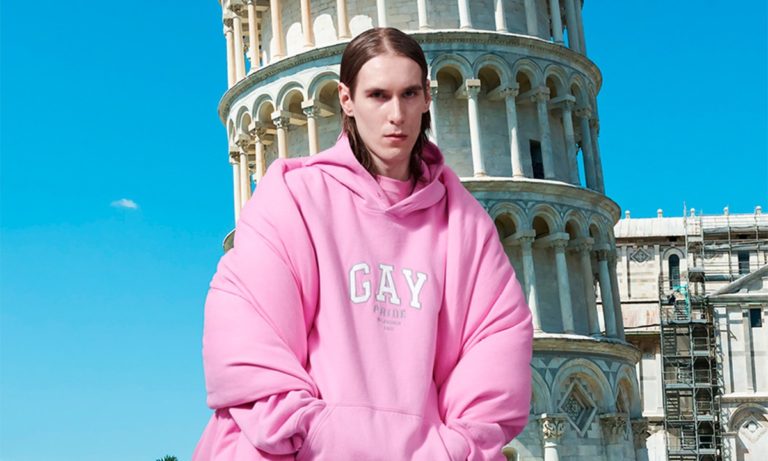
Photographed by Patrick Welde, the lookbook features models superimposed in front of iconic tourist attractions from around the globe — reflecting our socially distant present while anticipating the return of international travel.
The Winter Collection reimagines notions of casual and formalwear with nineties tracksuits-inspired padded coats, parkas, and fleece jackets and intentionally creased and large fitting silhouettes. Elsewhere, Balenciaga playfully appropriates the GAP with oversized hoodies and tees emblazoned with the word “GAY.”
Other standout pieces include a quilted black wedding dress-inspired coat decorated with rose patterns, lace, and ribbons that tie around puffy sleeves and a tall, stiff collar as well as slouchy, one-size-fits-all dresses disproportionally stretched in width.
The Balenciaga Toe heels return, recreated in soft leather. Meanwhile, the cut-up, DIY style Runner sneaker is added to Balenciaga’s footwear collection, which also features an Essex boot, buckled at the ankle, and a clog-inspired Sabot Heel.
The Winter 21 look book is accompanied by a “Feel Good Video” made in collaboration with Kamilya Kuspanova and Anton Bialas. The video features neither products nor advertising. Instead, it is created solely to “evoke a positive emotion using visuals and sounds that have been scientifically proven to instill joy in most people.” The montage pieces together clips and effects to create a digital palette cleanser. Watch it below.
Central Europe has welcomed gay travelers in recent years with the ascent of gay rights and gay marriage. Eighteen European countries have legalized gay marriage, and 11 countries recognize same-sex unions, which means that gay travelers can feel welcome and safe in Europe. Almost all of these countries have thriving gay communities and sponsor events, gay pride celebrations, and cultural happenings.
This is our list of the most popular gay cities and resorts in Central Europe.
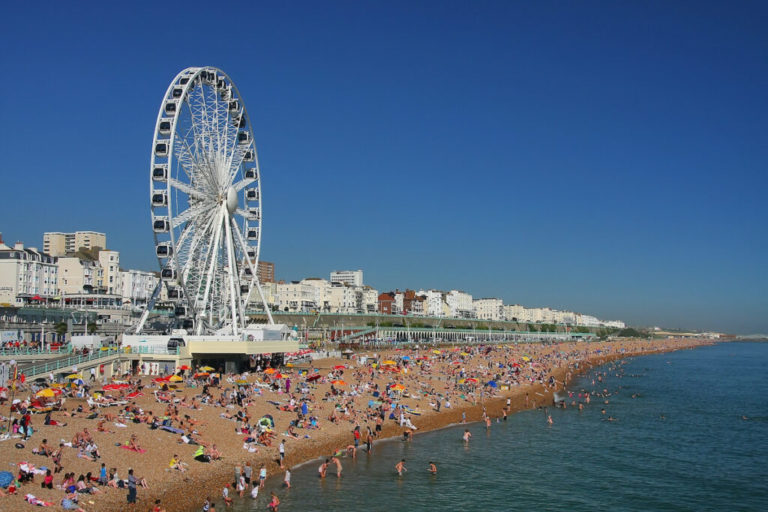
The seaside town of Brighton, England, just a 60-minute train ride from central London, has a thriving gay community and is also a popular LGBTQ destination for travelers.
February is LGBTQ history month, and Brighton pays tribute to the achievements of gay individuals and organizations with films, tours, books, art, and talks.
There are a number of LGBTQ public artworks in parks in the city, including a street art piece, Kissing Policemen, by world-famous street artist Banksy, and a striking, 12-foot-high AIDS memorial sculpture fabricated in bronze by artist Romany Mark Bruce.
Other gay events in Brighton include the Brighton Pride, a Trans Pride, the Eyes Wide Open Festival, regular performances by the Gay Men’s Chorus, Bent Double, a monthly gay comedy night, and gay theater at the Marlborough Pub and Theater.
Most of Brighton’s nightlife is situated in the Kemptown district and recommended places include Club Revenge, Legends Bar, The A Bar, Charles Street Tap, and The Marlborough.
Brighton is also a popular LGBTQ wedding destination with a wide variety of venues from elegant to quirky fun, including the Royal Pavilion, the Brighton Racecourse, the Brighton Palace Pier, and the British Airways i360, a 530-foot-high tower with panoramic views.
Denmark was the first country in Europe to legalize same-sex marriage in 1989 and has long been at the forefront of advancing gay rights on the continent.
Copenhagen, the capital city of Denmark, is known for its gay-friendly attitude.
Events during the year include a World Aids Day event on December 1 at Jailhouse Bar with the sale of traditional Christmas cards, with proceeds going to the AIDS Foundation, Copenhagen Pride in June and February, and in 2021, EuroGames, an international gay sporting event similar to the Olympics.
Bars more than dance clubs define nightlife in Copenhagen. There are a number of mature, friendly bars in the vicinity of City Hall square, such as Cafe Intime, with live music, Oscar Bar, with an ample outside terrace, Vela, a lesbian cocktail bar and dance club, and Kiss, Kiss, a friendly bar that stays open extra late. The alternative bar and club area is the Meatpacking District near the Central Station.
Pro Tip: There are smoking and non-smoking bars in Copenhagen, so check ahead of time if you are smoking intolerant.
Hotels catering to LGBTQ include Skt Petri, a four-star design hotel in the Latin Quarter and close to the gay section of the city, the Hotel Danmark, a boutique hotel in the center, and for the budget-minded, CitizenM Copenhagen Radhuspladsen.
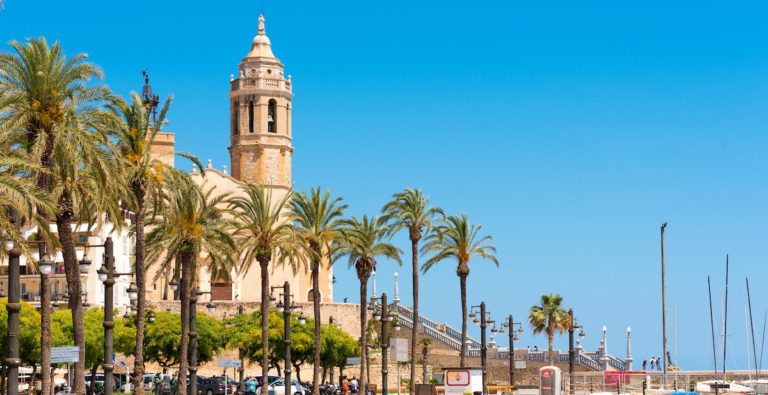
Just a 30-minute train ride from Barcelona brings you to Sitges, a lively gay beach destination, similar to Provincetown in the U.S.
Sitges is the biggest gay beach destination in Europe for a good reason, as there are three gay beaches in the small town, including Bassa Rodona, which has a beer and cocktail bar and live music after 4 p.m., Platja de l’Home Mort, a nudist beach, with a bar and cafe, and Playa de las Balmins, a clothing-optional beach.
Pro Tip: Platja de l’Home Mort is about an hour-walk from Sitges (you can also take a taxi). The beach has pebbles, so bring a blow-up raft and rubber shoes.
In February, Sitges hosts a Carnival, and the huge parade that goes through town has lots of glitter and glam, with circus and drag acts.
Gay restaurants, cafes, and bars jam the streets of Sitges, and some of the more well-known ones are Beach House, a beachfront cafe with Latin food and cocktails. Parrots Pubs, Central Bar Cafe, with live entertainment, and the Queenz Bar, a cabaret and dance club with drag performances.
Amsterdam is historically known as one of the most culturally progressive cities in the world as far as gay rights because same-sex relationships were legalized in 1811. Today Amsterdam is a highly visited destination for LGBTQ tourists with its large gay community and an extensive selection list of gay bars, clubs, gay-owned shops, and cultural events.
Amsterdam is beyond gay friendly with four main gay neighborhoods. If you want to acquaint yourself with the gay scene and activities of the city, head to the Gay Tourist Information Centre, which will happily dispense all the information you need to know, including hotels, bars, parties, shops, and local publications.
Reguliersdwarsstraat is the main gay street with upscale, gay-owned boutiques, cafes, and restaurants. Quentin Golden Bear Hotel, a small, cozy hotel, has been around since just after WWII.
Amsterdam honors its LGBTQ citizens with The Homomonument, a monument in the city center that commemorates all the gay men and women persecuted because of their sexuality in WWII.
Most of the dance parties and dance clubs are located near Halvemaansteeg Amstel and Rembrandt Square.
The Greek isle of Mykonos with its white stucco buildings, crystalline blue water, and sun-kissed beaches, is a much sought after gay playground. The gay-friendly island has been attracting LGBTQ travelers since the 1980s.
Among the gay beaches in Mykonos are Paraga, a sand beach, Elia, a long and wide beach that is clothing optional, Agrari, a little more secluded and less touristy, and Super Paradise Beach, with the recently opened JackieO’ Beach Club.
The Xlsior Mykonos International Summer Gay Festival is a splashy event happening the last week of August with over 30,000 people from around the globe attending. Eight parties are planned during the 7-day festival with dancing, DJs spinning, and live performances.
A few of the preferred hotels and accommodations in Mykonos are Oniro Suites, a five-star luxury resort located on a high cliff overlooking the Aegean Sea with just 29 rooms, Little Rochari, gently priced with a pool and located in the hills, Rania Apartments, centrally located with studios and one- and two-bedroom apartments, and Myconian Utopia, a luxury hotel near Elia Beach, with an indoor and outdoor pool, a gym, and some rooms feature a private swimming pool.
Not to be overlooked by London, Manchester has become the other favorite gay city of England. Canal Street, the gay village of Manchester, is the obligatory must-visit place packed with bars, clubs, and restaurants. Many of the locations in the popular British television show from the late 1990s Queer as Folk were filmed in Manchester and are instantly recognizable.
The big gay events on the annual calendar include Drag Fest UK, a three-tier event in April with live performances, comedy, and lip-syncing, Manchester Pride, a massive celebration with over 200,000 people attending and stars such as Graham Norton and Ariana Grande, and the Queer Media Festival in November, a gay digital festival with LGBTQ storytelling using virtual reality, mobile filmmaking, and podcasting.
A fun idea to get acquainted with Manchester is to take a gay tour. Gaily Tours organizes a fun night tour where you visit the best clubs and bars in Manchester, and the price also includes a free drink.
Although it’s technically in the Middle East, Tel Aviv has topped the list as the most gay-friendly city in the world by gay organizations. With its open attitude, beautiful beaches mixed with a modern urban metropolis, and favorable Mediterranean weather, Tel Aviv is a magnet for gay travelers. There are close to 100,000 gay residents in Tel Aviv, which is 25 percent of the population of 400,000 people.
The biggest event of the year is the Tel Aviv Gay Pride Parade, which is the largest in the Mideast/Asia and one of the most popular in the world, with over 250,000 people in attendance. The festivities last for 7 days, starting the second week of June, and the highlight is the Friday Pride Parade. The parade starts at 12 p.m. at the intersection of Ben Tsiyon Boulevard and Melchett Street and winds its way through the streets of Tel Aviv, with thousands cheering, and culminates at Charles Clore Beach. An all-out party on the beach, it includes performances, speeches, food stands, and dancing with live DJ’s spinning.
The TLVFest is the premier gay film festival in the Mideast. The festival strives to promote tolerance and acceptance against the tide of homophobia in many Mideast nations. It is also in solidarity with Palestine, inviting Palestinians to work with and be part of the festival.
The 10-day film festival takes during Gay Pride week in June and screens international LGBTQ films along with panel discussions, forums, and interviews with filmmakers and actors.
Central Europe has welcomed gay travelers in recent years with the ascent of gay rights and gay marriage. Eighteen European countries have legalized gay marriage, and 11 countries recognize same-sex unions, which means that gay travelers can feel welcome and safe in Europe. Almost all of these countries have thriving gay communities and sponsor events, gay pride celebrations, and cultural happenings.
This is our list of the most popular gay cities and resorts in Central Europe.
The seaside town of Brighton, England, just a 60-minute train ride from central London, has a thriving gay community and is also a popular LGBTQ destination for travelers.
February is LGBTQ history month, and Brighton pays tribute to the achievements of gay individuals and organizations with films, tours, books, art, and talks.
There are a number of LGBTQ public artworks in parks in the city, including a street art piece, Kissing Policemen, by world-famous street artist Banksy, and a striking, 12-foot-high AIDS memorial sculpture fabricated in bronze by artist Romany Mark Bruce.
Other gay events in Brighton include the Brighton Pride, a Trans Pride, the Eyes Wide Open Festival, regular performances by the Gay Men’s Chorus, Bent Double, a monthly gay comedy night, and gay theater at the Marlborough Pub and Theater.
Most of Brighton’s nightlife is situated in the Kemptown district and recommended places include Club Revenge, Legends Bar, The A Bar, Charles Street Tap, and The Marlborough.
Brighton is also a popular LGBTQ wedding destination with a wide variety of venues from elegant to quirky fun, including the Royal Pavilion, the Brighton Racecourse, the Brighton Palace Pier, and the British Airways i360, a 530-foot-high tower with panoramic views.
Denmark was the first country in Europe to legalize same-sex marriage in 1989 and has long been at the forefront of advancing gay rights on the continent.
Copenhagen, the capital city of Denmark, is known for its gay-friendly attitude.
Events during the year include a World Aids Day event on December 1 at Jailhouse Bar with the sale of traditional Christmas cards, with proceeds going to the AIDS Foundation, Copenhagen Pride in June and February, and in 2021, EuroGames, an international gay sporting event similar to the Olympics.
Bars more than dance clubs define nightlife in Copenhagen. There are a number of mature, friendly bars in the vicinity of City Hall square, such as Cafe Intime, with live music, Oscar Bar, with an ample outside terrace, Vela, a lesbian cocktail bar and dance club, and Kiss, Kiss, a friendly bar that stays open extra late. The alternative bar and club area is the Meatpacking District near the Central Station.
Pro Tip: There are smoking and non-smoking bars in Copenhagen, so check ahead of time if you are smoking intolerant.
Hotels catering to LGBTQ include Skt Petri, a four-star design hotel in the Latin Quarter and close to the gay section of the city, the Hotel Danmark, a boutique hotel in the center, and for the budget-minded, CitizenM Copenhagen Radhuspladsen.
Just a 30-minute train ride from Barcelona brings you to Sitges, a lively gay beach destination, similar to Provincetown in the U.S.
Sitges is the biggest gay beach destination in Europe for a good reason, as there are three gay beaches in the small town, including Bassa Rodona, which has a beer and cocktail bar and live music after 4 p.m., Platja de l’Home Mort, a nudist beach, with a bar and cafe, and Playa de las Balmins, a clothing-optional beach.
Pro Tip: Platja de l’Home Mort is about an hour-walk from Sitges (you can also take a taxi). The beach has pebbles, so bring a blow-up raft and rubber shoes.
In February, Sitges hosts a Carnival, and the huge parade that goes through town has lots of glitter and glam, with circus and drag acts.
Gay restaurants, cafes, and bars jam the streets of Sitges, and some of the more well-known ones are Beach House, a beachfront cafe with Latin food and cocktails. Parrots Pubs, Central Bar Cafe, with live entertainment, and the Queenz Bar, a cabaret and dance club with drag performances.
Amsterdam is historically known as one of the most culturally progressive cities in the world as far as gay rights because same-sex relationships were legalized in 1811. Today Amsterdam is a highly visited destination for LGBTQ tourists with its large gay community and an extensive selection list of gay bars, clubs, gay-owned shops, and cultural events.
Amsterdam is beyond gay friendly with four main gay neighborhoods. If you want to acquaint yourself with the gay scene and activities of the city, head to the Gay Tourist Information Centre, which will happily dispense all the information you need to know, including hotels, bars, parties, shops, and local publications.
Reguliersdwarsstraat is the main gay street with upscale, gay-owned boutiques, cafes, and restaurants. Quentin Golden Bear Hotel, a small, cozy hotel, has been around since just after WWII.
Amsterdam honors its LGBTQ citizens with The Homomonument, a monument in the city center that commemorates all the gay men and women persecuted because of their sexuality in WWII.
Most of the dance parties and dance clubs are located near Halvemaansteeg Amstel and Rembrandt Square.
The Greek isle of Mykonos with its white stucco buildings, crystalline blue water, and sun-kissed beaches, is a much sought after gay playground. The gay-friendly island has been attracting LGBTQ travelers since the 1980s.
Among the gay beaches in Mykonos are Paraga, a sand beach, Elia, a long and wide beach that is clothing optional, Agrari, a little more secluded and less touristy, and Super Paradise Beach, with the recently opened JackieO’ Beach Club.
The Xlsior Mykonos International Summer Gay Festival is a splashy event happening the last week of August with over 30,000 people from around the globe attending. Eight parties are planned during the 7-day festival with dancing, DJs spinning, and live performances.
A few of the preferred hotels and accommodations in Mykonos are Oniro Suites, a five-star luxury resort located on a high cliff overlooking the Aegean Sea with just 29 rooms, Little Rochari, gently priced with a pool and located in the hills, Rania Apartments, centrally located with studios and one- and two-bedroom apartments, and Myconian Utopia, a luxury hotel near Elia Beach, with an indoor and outdoor pool, a gym, and some rooms feature a private swimming pool.
Not to be overlooked by London, Manchester has become the other favorite gay city of England. Canal Street, the gay village of Manchester, is the obligatory must-visit place packed with bars, clubs, and restaurants. Many of the locations in the popular British television show from the late 1990s Queer as Folk were filmed in Manchester and are instantly recognizable.
The big gay events on the annual calendar include Drag Fest UK, a three-tier event in April with live performances, comedy, and lip-syncing, Manchester Pride, a massive celebration with over 200,000 people attending and stars such as Graham Norton and Ariana Grande, and the Queer Media Festival in November, a gay digital festival with LGBTQ storytelling using virtual reality, mobile filmmaking, and podcasting.
A fun idea to get acquainted with Manchester is to take a gay tour. Gaily Tours organizes a fun night tour where you visit the best clubs and bars in Manchester, and the price also includes a free drink.
Although it’s technically in the Middle East, Tel Aviv has topped the list as the most gay-friendly city in the world by gay organizations. With its open attitude, beautiful beaches mixed with a modern urban metropolis, and favorable Mediterranean weather, Tel Aviv is a magnet for gay travelers. There are close to 100,000 gay residents in Tel Aviv, which is 25 percent of the population of 400,000 people.
The biggest event of the year is the Tel Aviv Gay Pride Parade, which is the largest in the Mideast/Asia and one of the most popular in the world, with over 250,000 people in attendance. The festivities last for 7 days, starting the second week of June, and the highlight is the Friday Pride Parade. The parade starts at 12 p.m. at the intersection of Ben Tsiyon Boulevard and Melchett Street and winds its way through the streets of Tel Aviv, with thousands cheering, and culminates at Charles Clore Beach. An all-out party on the beach, it includes performances, speeches, food stands, and dancing with live DJ’s spinning.
The TLVFest is the premier gay film festival in the Mideast. The festival strives to promote tolerance and acceptance against the tide of homophobia in many Mideast nations. It is also in solidarity with Palestine, inviting Palestinians to work with and be part of the festival.
The 10-day film festival takes during Gay Pride week in June and screens international LGBTQ films along with panel discussions, forums, and interviews with filmmakers and actors.
Each day has felt like a week, each week… you get the idea
But be of good cheer! The Outsports list is here
With stories of athletes: gays, lesbians, bi, trans and queer:
Winners enjoy hot cocoa, and losers get warm beer!
Steve KornackiPhoto By: NBC/NBCU Photo Bank via Getty Images
The political analyst, who is gay, brings his talents to analyze the NFL playoff possibilities this Sunday.
NBC Sports might want to avoid asking out gay national political correspondent Steve Kornacki to draw maps when he appears on its football broadcast this weekend.
Working on a video highlighting LGTBQ sports equality in Kentucky was the catalyst for Justin Mathis to begin his coming out journey.
Dave Kopay is the latest retired gay male athlete to ask why there aren’t more openly gay players in elite team sports.
R.I.P. Pat Patterson, 1941-2020Pro Wrestling Illustrated
Pat Patterson has passed away, leaving a legacy that had a profound impact on me and so many others.
Patterson did it all in pro wrestling, proving that LGBTQ identities belong in every sector of the industry.
Swish Appeal reports WNBA owners generally lean Democratic. But can the political activism of WNBA players be just as impactful as the high-dollar.
Kyle Winn
Golf ‘at its core is a conservative white straight cis-male dominated industry,’ says Kyle Winn. ‘It has gotten better, but we have a long way to go.’
Wallace won a silver medal in the first-ever Olympic trampoline competition, all in front of his home crowd.
Christine Rebstock
Decorated amateur bowler Christine Rebstock is beginning to live her truth and bring her game back to life as well. Rebstock beams up to The Trans Sporter Room next week!
Kirsti Miller was a national sports star growing up. In the second half of her life, she wants to increase visibility for trans kids everywhere.
Left to right: Olympian Greg Louganis, Bodybuilder Raif Derrazi and Triathlete Josh Hipps.Louganis: PR NewsWire. Derrazi and Hipps: Instagram
For World AIDS Day, HIV+ Olympic legend Greg Louganis, International bodybuilder Raif Derrazi, who is living with AIDS and U.S.A.F. 1st Lt. Josh Hipps, a triathlete, shared their challenges and achievements while living with HIV.
In 1994, the Giants set an example for the rest of baseball by devoting a game to HIV/AIDS charities. They’ve continued it every year since.
A variety of Rainbow Laces are now available.stonewall.org.uk
Boxing title contender Kristen Fraser says Stonewall U.K.’s campaign is changing the conversation.
Fuller’s success as Vanderbilt’s kicker shows the best players can be anybody.
We chatted with 2 gay dads who are coaches, co-presented by Gays With Kids.
Gareth Thomas
Thomas was honored as a sports personality at this year’s British LGBT awards for his HIV advocacy.
Cloud, Packer and Lynch were honored for their advocacy in multiple cultural causes.
That’s all for this week! I’ll bring you a fresh list of winners and losers next Saturday. Got a name I missed, or want to challenge my choices? Comment here or on Facebookor Instagram,tweet at us, message me via any social media, or just plain email me at outsports@gmail.com Thanks, and be good to yourself and one another!
The seaside town of Brighton, England, just a 60-minute train ride from central London, has a thriving gay community and is also a popular LGBTQ destination for travelers.
February is LGBTQ history month, and Brighton pays tribute to the achievements of gay individuals and organizations with films, tours, books, art, and talks.
There are a number of LGBTQ public artworks in parks in the city, including a street art piece, Kissing Policemen, by world-famous street artist Banksy, and a striking, 12-foot-high AIDS memorial sculpture fabricated in bronze by artist Romany Mark Bruce.
Other gay events in Brighton include the Brighton Pride, a Trans Pride, the Eyes Wide Open Festival, regular performances by the Gay Men’s Chorus, Bent Double, a monthly gay comedy night, and gay theater at the Marlborough Pub and Theater.
Most of Brighton’s nightlife is situated in the Kemptown district and recommended places include Club Revenge, Legends Bar, The A Bar, Charles Street Tap, and The Marlborough.
Brighton is also a popular LGBTQ wedding destination with a wide variety of venues from elegant to quirky fun, including the Royal Pavilion, the Brighton Racecourse, the Brighton Palace Pier, and the British Airways i360, a 530-foot-high tower with panoramic views.
Three transgender people allege they suffered abuse at a Miami jail last year after police arrested them during Black Lives Matter protests.
The Transgender Legal Defense and Education Fund in a letter it sent to Miami-Dade County Mayor Daniella Levine Cava on Wednesday notes Christian Pallidine, a college student who identifies as a trans man, was attending a Black Lives Matter protest in downtown Miami on May 31, 2020, when Miami-Dade police officers arrested him and charged him with violating a county-wide curfew.
Pallidine arrived at the Turner Guilford Knight Correctional Center a short time later, and the letter notes personnel abused him because of his gender identity.
“The staff at TGK subjected Mr. Pallidine to degrading and outrageous treatment because he is transgender,” it reads. “TGK staff forced him to strip and display his genitals in front of a group of officers — part of a series of invasive, pseudo-medical, sexualized procedures conducted on him for no legitimate purpose. TGK staff also belittled Mr. Pallidine, publicized his transgender status to others, asked gratuitous questions about his anatomy, and called him derogatory names.”
The letter, among other things, notes Pallidine underwent an examination that “focused solely on his transgender status” and it “took place in a public area where others could easily see and hear him and the person questioning him.” The letter says the officer who conducted the exam asked him “multiple questions about his genitals and plans for future medical care, such as, ‘Do you want a penis in the future?’”
Pallidine alleges he was forced to take a pregnancy test “because of his genitals” and officers mocked him because of his gender identity. Pallidine also says officers forced him to undergo a strip search and placed him in solidary confinement before his release.
Jae Bucci and Gabriela Amaya Cruz on July 19, 2020, attended a rally and march for Black trans women in downtown Miami. Miami-Dade police officers brought them to the Turner Guilford Knight Correctional Center after they arrested them.
Bucci, who is a teacher and makeup artist, on Wednesday during a virtual press conference that TLDEF, the Southern Poverty Law Center and the Harvard LGBTQ+ Advocacy Clinic organized, said the gender marker on her ID is female and the Miami-Dade Police Department processed her as such. Bucci noted Turner Guilford Knight Correctional Center personnel also processed her as female, but she said an officer told her, “Aha, I knew it. That’s what I was looking for” after she disclosed her gender identity.
Bucci said her friends were not able to find her because officers had reclassified her as male. Bucci told reporters that officers placed her with male prisoners and, like Pallidine, forced her to undergo an “illegal strip search in front of several officers.”
“They tugged at my piercings, drawing blood, and forcibly tried to remove my hair, assuming it to be a wig,” said Bucci.
“They forced me to sit with men … I was put in danger,” she added. “I needed protection. I asked to be seated with other women, but the guards were only hyper-focused on my genitals, repeatedly calling me a man.”
Bucci said she was later placed in solitary confinement “for hours with no contact, food, water, leading to a panic attack where I began to self-harm and contemplate suicide.” Bucci said officers also forced her to wear men’s clothing “with my breasts clearly visible.”
Jae Bucci (Photo by Emely Virta)
Amaya Cruz — a barista, artist and activist — said she suffered many of the same abuses that Bucci and Pallidine described once she arrived at the Turner Guilford Knight Correctional Center.
Amaya Cruz told reporters the officers did not know whether to place her with female or male inmates once she disclosed her gender identity to them.
She said officers forced her to remove her wig before they took her mugshot.
Amaya Cruz said she objected to male officers patting her down, and they told a female colleague that “he’s saying he’s a woman, but he’s a man. He has a dick still.”
Amaya Cruz said the female officer did her pat down and allowed her to fill out paperwork in which she disclosed her gender identity. Amaya Cruz said the officer allowed her to sit with other female inmates.
Amaya Cruz was born with ectrodactyly, a rare genetic disorder that limits finger movement, but she was subject to “excessive force” during the pat down and when guards took her fingerprints.
Amaya Cruz said the female officer who did her pat-down told her to change into a pair of basketball shorts and a white t-shirt before her release.
“I was so uncomfortable and I just complied because my only reaction was I don’t want to be here any longer,” said Amaya Cruz. “At that point I felt uncomfortable, humiliated, my gender was being yelled out the entire night. My gender identity was not being taken seriously in any way.”
Gabriela Amaya Cruz (Photo by Sonya Revell/Southern Poverty Law Center)
TLDEF Staff Attorney Alejandra Caraballo told reporters the “health and safety of our clients were jeopardized by the willful and wanton treatment by the officers at TGK.”
“The current policies followed at TGK are woefully inadequate and are discriminatory on their face, which will inevitably lead towards the targeted harassment of trans people in custody,” added Caraballo.
Harvard LGBTQ+ Advocacy Clinic Founding Director Alexander Chen also took part in the press conference alongside Arianna Lint, chief executive officer of Arianna’s Center, an organization that serves trans women in South Florida. Tatiana Williams, co-founder and executive director of Transinclusive Group, which also works with trans people in South Florida, also participated.
“The change has to happen, as we all mentioned, structurally,” said Williams. “It has to happen at the top.”
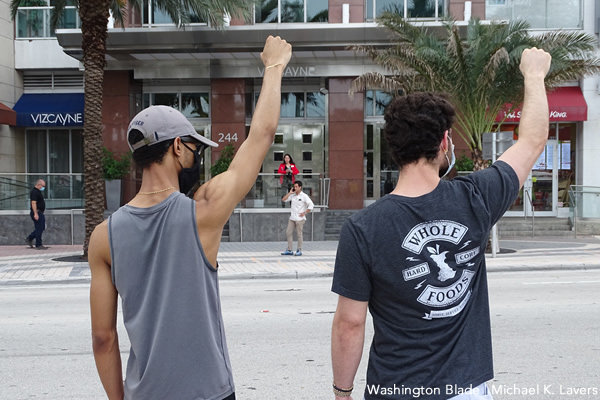
Two men hold their fists in their air during an anti-police brutality protest in downtown Miami on June 1, 2020. (Washington Blade photo by Michael K. Lavers)
The letter to Levine Cava calls for her office to “reach a resolution” with Pallidine, Bucci and Amaya Cruz without litigation that specifically addresses several points:
1) “Policy and procedure updates to address the issues faced by our clients and other transgender community members.”
2) “Meaningful accountability measures for MDCR (Miami-Dade Corrections and Rehabilitation Department) staff that go well beyond what Internal Affairs currently provides.”
3) “Appropriate discipline for the MDCR staff involved in the inappropriate treatment of our clients.”
4) “Updates to county records concerning our clients and their gender.”
5) “Compensation to our clients as allowed by law; and reasonable attorneys’ fees and costs as allowed by law.”
“We have achieved similar results working with officials elsewhere in the country, and are confident we can do the same here,” reads the letter.
Chen echoed this point during the press conference.
“We have every expectation that we will be able to come to an accord with the county that will both do justice to our plaintiffs and protect transgender people in the county going forward,” he said.
Lint, like Chen, noted Levine Cava championed LGBTQ rights when she was a member of the Miami-Dade County Commission until she succeeded now-Congressman Carlos Giménez last November.
“I am calling on Mayor Levine Cava to continue this support for the transgender community by taking steps to address the mistreatment of transgender individuals in Miami-Dade County jails,” said Lint. “Arianna’s Center is committed to working with Mayor Levine Cava to eradicate prejudice against the transgender community in our prisons, jails, detention centers and through the whole criminal justice system.”
Levine Cava’s office has not returned the Washington Blade’s request for comment.
Queer and transgender patients face steep barriers to getting quality health care.
The majority of transgender patients (70%) experience discrimination when they seek out care, leading nearly half (44%) to avoid the emergency department when they need acute care, according to a 2018 study. Close to one-third of trans patients lack regular access to healthcare, a 2017 poll found.
“This community has an absolutely horrible experience with healthcare and has very particular and specific needs,” A.G. Breitenstein, an investor, entrepreneur, and queer health advocate, told Fierce Healthcare.
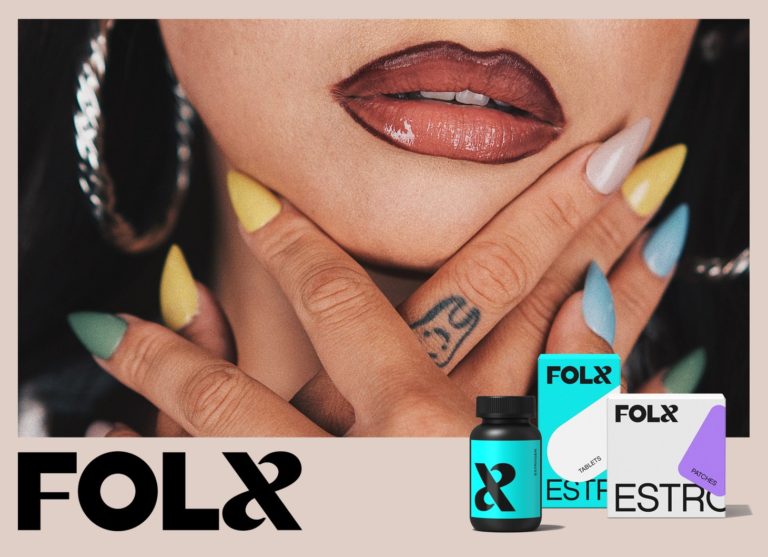
To help break down these barriers, Breitenstein founded Folx, a telehealth platform designed specifically for the queer and transgender community. The startup works like a One Medical for the LGBTQIA+ (lesbian, gay, bisexual, pansexual, transgender, genderqueer, queer, intersexed, agender, asexual and ally) community, she said.
Folx launched with $4.4 million in seed funding from Define Ventures, Bessemer Venture Partners, and Polaris Partners.
Boston-based Folx combines access to a specialized network of queer and trans clinicians with a tailored focus on clinical offerings that are typically marginalized in traditional health settings. The startup focuses on providing patients gender-affirming hormone therapy, sexual health, and family creation services. Other services include erectile dysfunction treatment, PrEP, and STI testing.
Each offering includes unlimited on-demand clinical support, at-home lab testing, and home-delivered medications. Folx does not accept insurance, but medical plans will be offered at prices similar to or below most co-pay/deductible rates, the company said.
A telehealth platform is well-suited to deliver these healthcare services for this community, said Breitenstein, who identifies as genderqueer and nonbinary.
“It’s not about being diagnosed, so much as it’s about being able to live your life the way you want to and not be judged or harassed in the process,” she said. “This is a community that doesn’t want to go into traditional physical healthcare settings because a lot of them are alienated from it. At the same time, we don’t have that enormous challenge of needing real diagnostic accuracy as we’re really talking about treatment and self-selected treatment.”
Removing barriers and stigma
For many LGBTQIA+ people, who challenge gender and sexual norms, healthcare is a minefield filled with boundaries, shame, discrimination and flat-out violence. A 2015 study (PDF) found that about 42% of female-to-male transgender adults reported verbal harassment, physical assault or denial of equal treatment in a doctor’s office or hospital.
In addition, insurance coverage can be confusing, it’s difficult to get appointments, and talking about topics like sex or gender dysphoria to practitioners who don’t understand are just some of the common hurdles the community faces on a day to day basis, according to Breitenstein.
The startup aims to democratize and destigmatize healthcare so LGBTQIA+ people feel seen, heard, and most of all, respected, she said.
A 30-year veteran of the healthcare system, Breitenstein was the founder and chief product officer of Humedica, a clinical analytics company that was acquired by Optum in 2013. She then worked at Optum Analytics and helped to spin out the company’s venture arm, Optum Ventures. She also has served on the board at other fast-growing digital health companies including Buoy Health, LetsGetChecked, Vim, and WellSky.
Targeting an untapped market
Folx is tapping into a community that historically has been underserved in the healthcare market. About 4.5% of U.S. adults—11 million people—identify as LGBT; about 1.4 million people identify as transgender. Among the 18-34 population, about 20% identify as LGBTQ, according to a GLAAD survey. Folx is targeting an addressable market that’s nearly 39 million people in the U.S., Breitenstein said.
Folx has built a team of LGBTQIA+ doctors and nurse-practitioners who provide patients with customized medical plans that fit their needs and goals.
“It’s about being able to speak with and interact with a doctor who understands their lives and speaks to them with respect, uses their pronouns appropriately and has queer confidence as far as understanding the basic biology,” Breitenstein said.
She adds, “As a company dedicated to hiring queer and trans people, the personal experiences they’ve had prior to Folx are deeply embedded in the solutions and thoughtful experience design.”
There are a growing number of digital health companies focused on this space. Queerly is an online marketplace where LGBTQ people can connect with vetted and trained providers, telehealth tools and concierge health. Plume is a digital health service focused exclusively on the transgender community and has expanded into employee benefits.
Breitenstein believes the future of virtual care and digital health will move more toward aligning technology with a particular group of people and their specific health needs.
“If you look at Livongo, they took the diabetic population and said ‘what platform does the diabetic population really need’ and that’s a fundamentally different approach from a Teladoc or Amwell. We think about Folx as the next level by focusing on specific segments and demographics and tailoring the experience to who they are and what they want,” she said.
LGBT+ creators have been among the most popular on TikTok in 2020 with the #ImComingOut hashtag reaching 2billion views.
The platform has shared its top trends for the year among its UK audience, including queer beauty artists and non-binary singing star Sam Smith.
However, it hasn’t all been plain sailing for the LGBT+ community and TikTok in 2020. The company updated its policies after it admitted suppressing some queer content.
More positively, TikTok’s #ImComingOut hashtag was one of the most popular this year.
While it didn’t quite reach the heights of #IsolationGames, designed to help people survive coronavrius lockdown, it ranked in the top 10 for the year. Likewise #BlackLivesMatter also made the list.
The #ImComingOut hashtag reached 2billion total views across the platform. For those unfamiliar with the platforms format of two to 60-second videos, here’s just one example:
Meanwhile non-binary singer Sam Smith proved one of the most popular celebrities on TikTok in 2020.
They performed live with TikTok star Holly H, sharing snippets of their new songs and gaining a huge 2million followers.
That ranked them as the seventh most popular celebrity on the platform, although far behind TV chef Gordon Ramsay, with 15.4million followers.
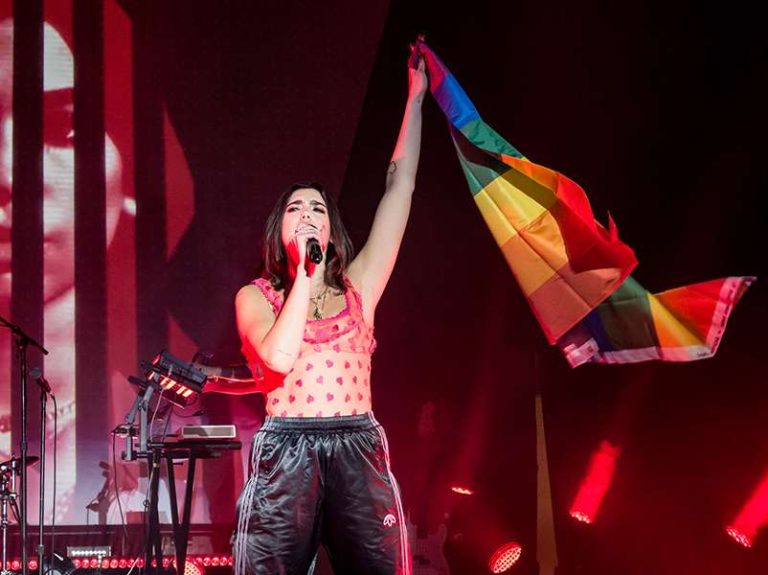
Meanwhile another English singer-songwriter, Dua Lipa, a keen LGBT+ advocate, got to the number three spot, with 4.3million followers.
However, the platform is also making stars of the LGBT+ creators who may well have not come to the public’s attention without it.
One example are boyfriends @matthewandryanuk. They have entered TikTok royalty, racking up almost 3million followers who enjoy laughing along to their videos, like this one:
It came after the video-sharing app apologized for suppressing some LGBT+ content.
Researchers had discovered that the platform stopped content, including videos showing men holding hands, from going viral in some countries. It became clear the app had ‘shadowbans’ on some LGBT+ hashtags in countries including Jordan, Russia and Bosnia.
He told them the platform restricted some gay and trans content, and videos from plus-size and disabled users with good intentions. The plan was to prevent online bullying. However he admitted it was a ‘terrible idea’ and promised it would stop.







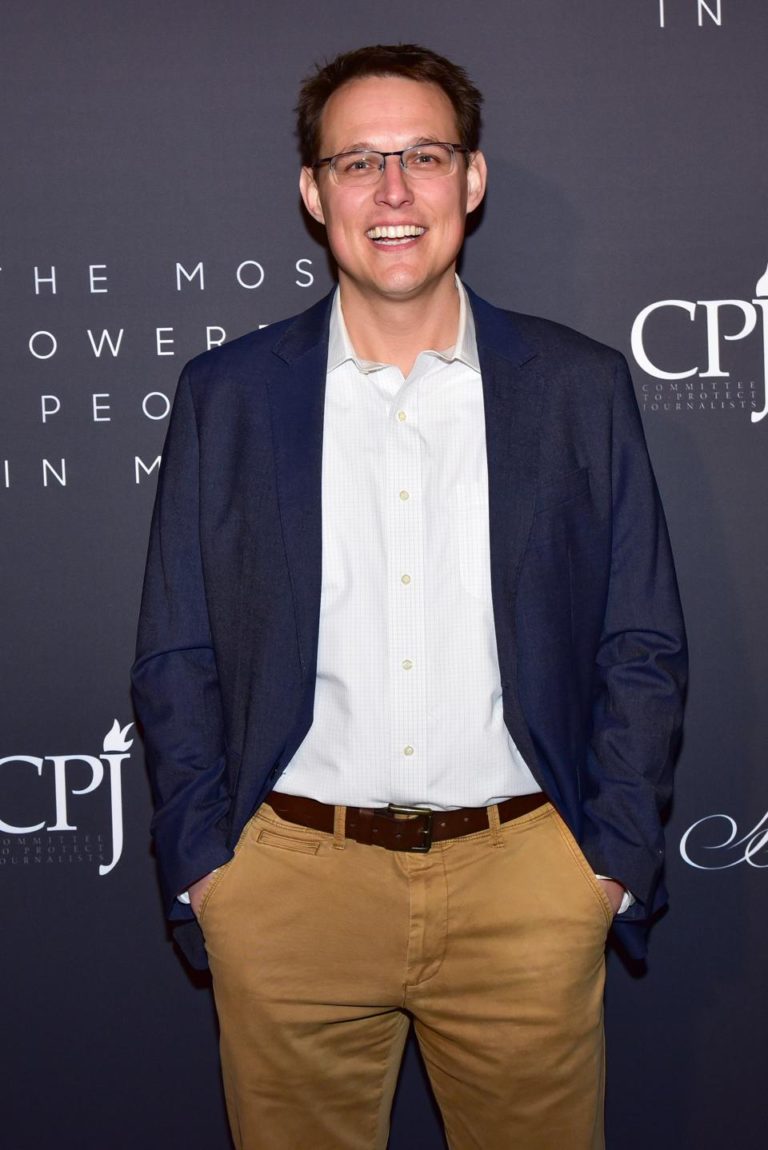

 Photo Credit: Zerbor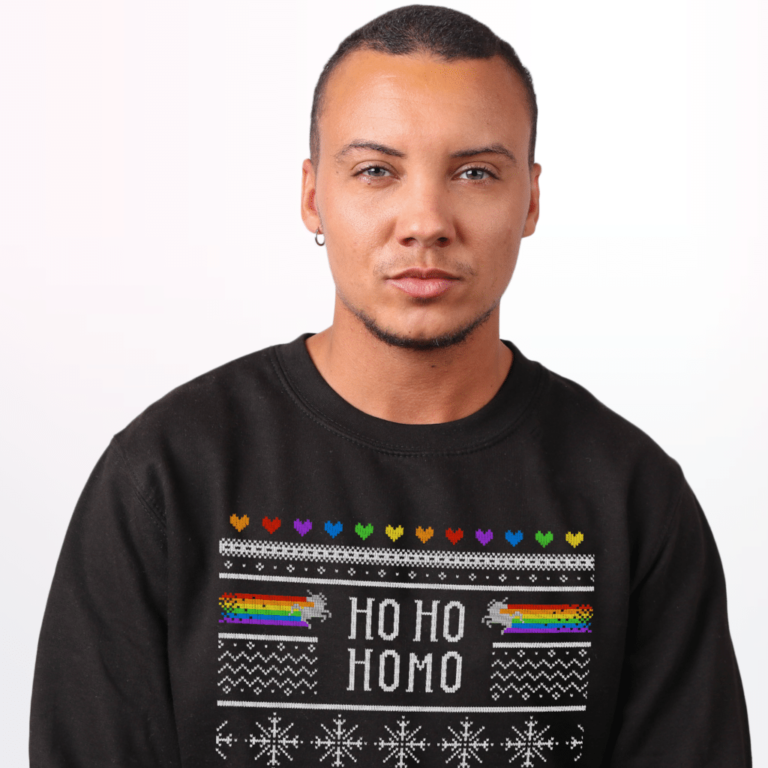








:format(webp):no_upscale()/cdn.vox-cdn.com/uploads/chorus_asset/file/22142598/1229555323.jpg)
:format(webp):no_upscale()/cdn.vox-cdn.com/uploads/chorus_asset/file/22145602/patterson925.jpg)
:format(webp):no_upscale()/cdn.vox-cdn.com/uploads/chorus_asset/file/22126599/KyleWinn1.jpg)
:format(webp):no_upscale()/cdn.vox-cdn.com/uploads/chorus_asset/file/22127951/CHRISTINE_CIVILIAN_THREE_OPENER.png)
:format(webp):no_upscale()/cdn.vox-cdn.com/uploads/chorus_asset/file/22133181/2020_AIDS_RibbonLouganisDerraziHipps.jpg)
:format(webp):no_upscale()/cdn.vox-cdn.com/uploads/chorus_asset/file/22132622/RAINBOW_LACES_2020.png)
:format(webp):no_upscale()/cdn.vox-cdn.com/uploads/chorus_asset/file/4110188/gareth_thomas_ad.0.jpeg)