Home Blog Page 43

Press Roundup: Debate Continues on the Ban on ‘Gay Promotion’ Among Minors – Hungary Today

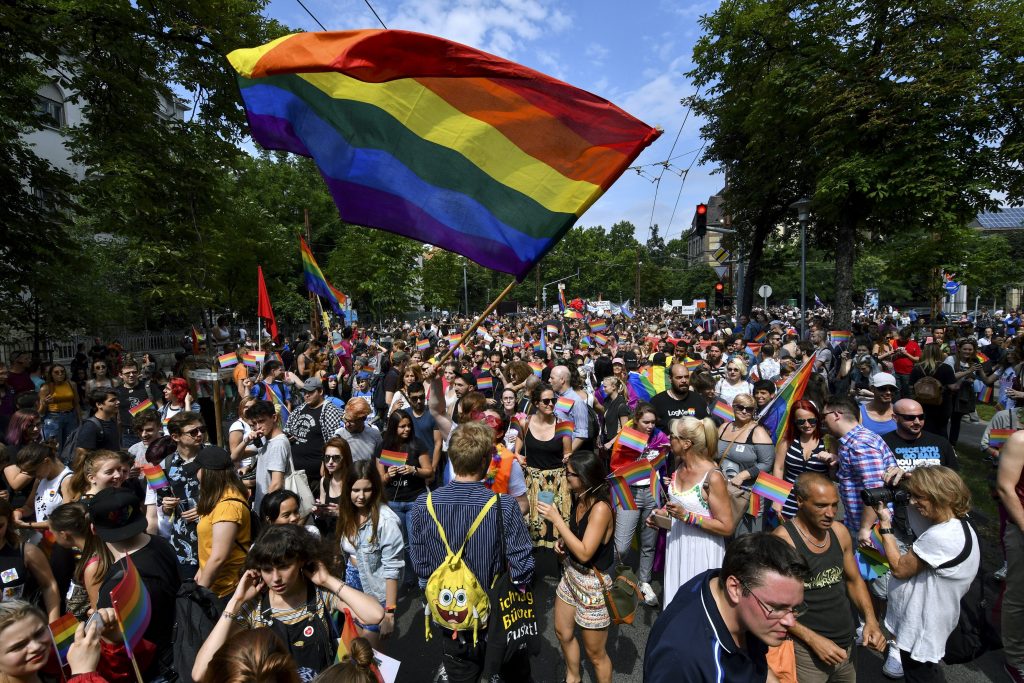
The two sides trade sharp accusations about the bill enacted by Parliament on Tuesday, which bans the ‘promotion or wanton representation’ of pornography, paedophilia, same-sex and transgender life among children under 18.

Hungarian press roundup by budapost.eu

Related article

Press Roundup: Debate on the Ban on the ‘Promotion of Homosexuality’

Press Roundup: Debate on the Ban on the 'Promotion of Homosexuality'

Ahead of the vote in Parliament on Tuesday, left-wing critics condemned a bill banning the promotion of homosexuality among children under the age of 18. Pro-government authors passionately disagree with criticism of the bill. Hungarian press roundup by budapost.eu On 24.hu, Zsolt Kerner warns that the law blurs the difference between paedophilia and homosexuality. He defines […]Continue reading

On Magyar Hang online, Dávid Lakner agrees with a historian who sees the ban on ‘gay representation’ for minors as akin to anti-Semitic legislation in Hungary from 1938. In both cases, they assert, the authorities have restricted the rights of a ‘genetically determined’ group. Meanwhile, Lakner hopes that the law will backfire, as according to a fresh IPSOS poll, 59 percent of Hungarians support equal rights for gays.

Magyar Nemzet’s Ottó Gajdics argues, on the other hand, that while adults may well choose the identities and lifestyles they wish, the upbringing of children should be firmly under parental control. Those who cannot accept that, he concludes, may rightly be suspected of ‘political paedophilia’, that is, of intending to use children for political purposes.

On Mandiner, Mátyás Kohán recalls his own personal experience attending a Catholic school in California four years ago, where the pro-Fidesz columnist met intolerance towards his view that homosexuality runs against the textual teaching of the Scriptures. He wouldn’t mind if ‘enlightenment’ in schools was aimed at telling the young that gays exist and must be tolerated, but he does mind the kind of ‘indoctrination’ which transforms immature people into ‘djihadi warriors’, he continues.

Related article

Hungary’s New Law Against ‘Promoting Homosexuality’ Generates International Outcry

Hungary's New Law Against ‘Promoting Homosexuality’ Generates International Outcry

The news about Hungary’s new law banning the ‘promotion of homosexuality’ was met with huge outcry, not only in Hungary but also internationally. Several leading European Union politicians have condemned the new regulation, which they say is completely contrary to the laws and values of the EU. On Tuesday, The Hungarian parliament passed a new […]Continue reading

Choices about sexual identity, in his view, must be made by people at a mature age. In America, on the other hand, very young children are inculcated with groupthink and intolerance. Banning such ‘indoctrination’ of children, Kohán writes, does not amount to oppressing homosexuals. It is a Christian duty, he concludes, without which ‘we are doomed, just as the leading nation of the free world is falling apart before our eyes’. His article is entitled ‘On the ban on well-poisoning’.

Featured photo illustration by Márton Mónus/MTI

Victoria’s Secret is overhauling its image. Is it enough to regain relevance? – CNN

Written by Jacqui Palumbo, CNN

Less than two years after Victoria’s Secret pulled the plug on its star-studded annual fashion show, known for runway looks that combined strappy lingerie with enormous wings, the brand is retiring its supermodel “Angels” for good.

Taking their place is a new group of seven ambassadors, called the “VS Collective,” who are known for their advocacy work in gender equality and body positivity, and who represent a wider range of body types and sexual and gender identities.

The collective — which includes soccer player Megan Rapinoe, actress Priyanka Chopra Jonas and plus-size model Paloma Elsesser — will work on new product lines and multimedia content, as well as supporting women’s causes for the company, according to a press release.

“This is a dramatic shift for our brand, and it’s a shift that we embrace from our core,” said Victoria’s Secret CEO Martin Waters in a statement.

Waters was promoted in February, as Victoria’s Secret’s parent company, L Brands, attempted to sell it off to a private equity firm in a $525 million deal that ultimately fell through. (Victoria’s Secret now has plans to become its own publicly traded company.) On Wednesday, Waters told the New York Times that he doesn’t see the Angels “as being culturally relevant” any more.
Priyanka Chopra Jonas is one of the seven new members of the VS Collective.

Priyanka Chopra Jonas is one of the seven new members of the VS Collective. Credit: Rich Fury/Getty Images

The about-face comes after years of criticism that Victoria’s Secret was promoting dated ideas of femininity and that its collections were made for a narrow range of body types. According to Women’s Wear Daily, the brand had a 19% market share in the US women’s intimate apparel space as of December 2020, down from 32% in 2015. Last year, L Brands announced that it was shutting a quarter of Victoria’s Secret stores, and more followed earlier this year.

“Especially over the last five years, public criticism of Victoria’s Secret’s narrow and exclusive beauty ideals has been building and its sales started to decline,” said Chantal Fernandez, a senior correspondent at trade publication The Business of Fashion, over email. “The rebrand announced this week is the first real significant indication of how VS is trying to move its marketing forward.”

The rise and fall

The intimate apparel brand, founded in 1977, helped shape what was considered sexy in the late 1990s and early ’00s, with supermodels like Adriana Lima, Tyra Banks and Gisele Bundchen pictured smoldering in its home catalog of bras, bikinis, business casual looks and loungewear.

Younger models like Karlie Kloss and Doutzen Kroes later took up the Angel wings, but as women’s apparel began trending toward more diverse body types and identities, Victoria’s Secret appeared slow to follow.

Models including Karlie Kloss, Adriana Lima, Doutzen Kroes and Candice Swanepoel have defined the "Angel" era of Victoria's Secret.

Models including Karlie Kloss, Adriana Lima, Doutzen Kroes and Candice Swanepoel have defined the “Angel” era of Victoria’s Secret. Credit: Jamie McCarthy/Getty Images

In 2018, Ed Razek, the chief marketing officer for L Brands, faced backlash for a Vogue interview in which he stated he didn’t think the brand’s annual show, which debuted in 1995, should include “transsexuals” — an outdated term deemed offensive by many in the LGBT community. That year’s show turned out to be the last, only drawing 3.3 million viewers compared to 9.7 million in 2013.
The following year, Victoria’s Secret hired its first transgender model: Valentina Sampaio, who now joins the VS Collective. But the overhaul of the brand’s image may be a case of too little, too late, Fernandez said.

“For a long time, Victoria’s Secret set a powerful standard for aspiration and beauty in this country and, globally, that drove billions of dollars in sales and generated a lot of buzz for the company,” she said. “But it was blind to how culture changed over the last decade, especially in the post-MeToo era. Today’s shoppers want to see themselves in ads, and they want to know that brands have some kind of value system that aligns with theirs.”

In 2015, Kloss parted ways with Victoria’s Secret after two years as an Angel, telling Vogue in 2019 that she left because she “didn’t feel it was an image that was truly reflective of who I am and the kind of message I want to send to young women around the world about what it means to be beautiful.”
British plus-size model Paloma Elsesser has previously modeled for Rihanna's Savage X Fenty Show, which rose as a challenger to the Victoria's Secret Fashion Show.

British plus-size model Paloma Elsesser has previously modeled for Rihanna’s Savage X Fenty Show, which rose as a challenger to the Victoria’s Secret Fashion Show. Credit: Kevin Mazur/Getty Images

The company now faces a competitive and increasingly inclusive market, with brands like American Eagle’s Aerie and Rihanna’s Savage X Fenty positioning themselves as the remedy to Victoria Secret’s narrow demographic — and others, like ThirdLove and CUUP, aiming to redefine bra-sizing entirely.

“(Customers) have more alternatives than women did in the ’90s and early 2000s,” Fernandez said, though she noted that Victoria’s Secret still has the means to stay ahead of the pack.

“Victoria’s Secret still has the largest market share in the US and very high brand recognition, and if they can evolve their product and distribution as well, they may be able to grow quickly again,” she said, adding, “It’s going to require more than just an interesting group of spokeswoman.”

Top image: Soccer star and gender equality advocate Megan Rapinoe

YouTube Removes Australian Web Series ‘Ding Dong I’m Gay’ – Star Observer

In the middle of Pride Month, YouTube has removed the channel of an Australian series from LGBTQI creators. 

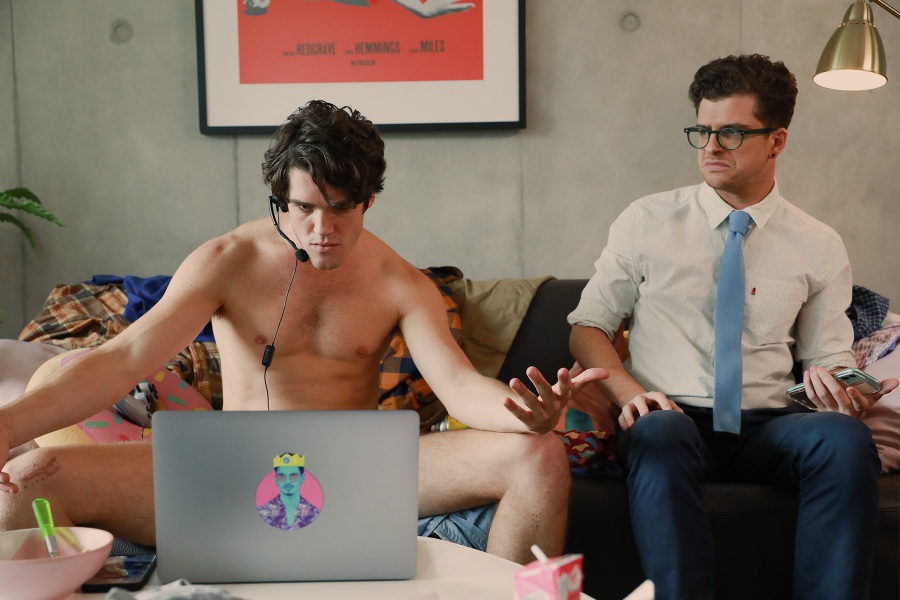
Ding Dong I’m Gay was released last year, with weekly episodes detailing the story of Cameron who, six years after coming out and moving to Sydney, sees his dreams of elite parties and mini-breaks with jaw-lined boyfriends flatline. The six-episode web series was made with funding from Screen Australia and Screen NSW.

Advertisement

Creator of the show, Tim Spencer, said the decision to delete the entire channel in the middle of Pride month was “beyond disappointing”. 

“The not-so-subtle message it gives LGBTQ creatives and audiences is that our identities are confronting, wrong and do not deserve to be seen,” he said. 

“It feels really disempowering to be censored so brutally and unfairly, particularly this month.” 

Spencer said the deletion came with no warning and follows the earlier censorship of episode four in which a male character performs oral sex on another male character.  The Star Observer reported this at the time and after enquiries, it was later reinstated by YouTube. A representative from YouTube had then confirmed that the episode meets the community standards and was removed in error. 

Advertisement

In its latest decision, YouTube has removed the entire channel and all six episodes of the show. “The visuals of Ding Dong I’m Gay were very carefully composed to ensure they met YouTube’s policy around sexual content,” Spencer said. 

“We made sure the sexual content is not gratuitous, that no genitalia is ever seen, and the episodes were locked to 18+ audiences. 

“As a rule, the sex scenes in Ding Dong I’m Gay were always written and shot for humour, not for titillation.”

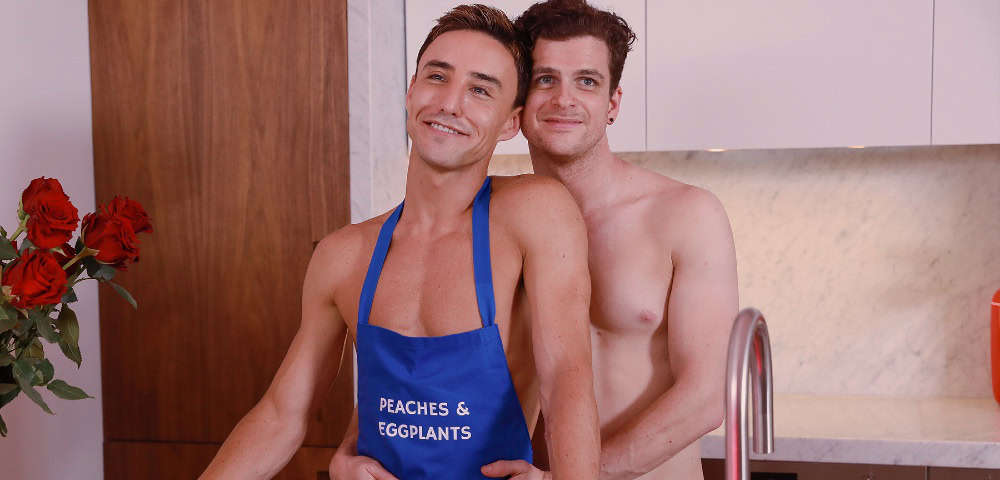
Brayden Dalmazzone and Tim Spencer in ‘Ding Dong I’m Gay’ Season 1. Photographer: Maja Basker

Spencer said viewers have seen heterosexual films and television deal with bad sex between a man and a woman for decades. He added there is plenty of heterosexual content on YouTube that shows oral sex. 

“Why are LGBTQ creatives and audiences not afforded the same opportunity to make light of our sexual disasters,” Spencer asked. 

“My fellow producers and I have been so excited to bring this series to YouTube and engage with our audience there. 

“I only hope that YouTube chooses to re-instate the channel and this unfair decision does not undo all our hard work to create an LGBT sex-positive comedy.” 

The creators have appealed the decision, but have received an email to say it has been denied. Star Observer has contacted YouTube for comment and will update the story when they respond. 

Danica Roem’s message to LGBTQ youth: ‘You have to care’ about politics – KTEN

“I figured, okay, if it goes badly, ‘April Fools!’ If it goes well, I’ll let it ride,” she explained. “I thought it was the safest day of the year for me to do it because if I just did on like April 2, it would just be like, ‘Um, I have questions. What are you trying to tell us?”

Tokyo LGBTQ center head hoping Olympics spark social change – The Mainichi – The Mainichi

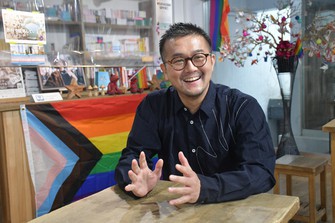
Gon Matsunaka, head of Pride House Tokyo Legacy, speaks at an interview at the LGBTQ community center on May 27, 2021. (Kyodo)

TOKYO (Kyodo) — With the eyes of the world on Japan during the Tokyo Olympics, Gon Matsunaka, head of the country’s first permanent LGBTQ community center, hopes the games will prove a catalyst in fostering a society in which discrimination is no longer accepted and diversity is embraced.

Matsunaka, who has dedicated himself to improving the rights of sexual minorities, has personally experienced the anxiety and difficulties commonly confronted by lesbian, gay, bisexual, transgender and queer or questioning people in Japan, ranked among the lowest of developed countries in legal inclusivity for those groups.

“It is our community’s wish that the Olympics and Paralympics will become a transitioning point. Since the world will focus on Japan, we want to use that attention to drive change,” Matsunaka, who leads Pride House Tokyo Legacy, said in a recent interview.

The LGBTQ hub, located on the second floor of a building in the capital’s thronging Shinjuku district, is the latest to join the Pride House movement that began at the 2010 Winter Olympics in Vancouver. The mission is to welcome LGBTQ athletes, fans and their supporters, while also providing learning opportunities.

Operated by a consortium consisting of nonprofit groups, 15 Tokyo Games sponsors and 21 embassies, the center, decorated with rainbow flags, contains over 1,000 books, a small cafe and space for counseling. The door is open to anyone.

The 45-year-old Matsunaka said the Tokyo Games, set to open on July 23, are “not just any Olympics and Paralympics” due to organizers’ stated ambition to push for wider diversity and improved inclusivity.

The International Olympic Committee charter stipulates individuals must not face discrimination of any kind and the reference to sexual orientation was included in the code after Russia held the 2014 Sochi Winter Games amid international concern and commentary over its anti-gay legislation.

With its “Unity in Diversity” slogan aimed at building a world that is more tolerant of difference, Tokyo may now be able to boast the first transgender athlete to ever compete at an Olympics. New Zealand weightlifter Laurel Hubbard is expected to compete in the women’s over 87-kilogram category, her entry coming after the IOC adopted in 2015 new guidelines for transgender athletes.

“Sports have been considered the final frontier in Europe and the United States, where understanding (of sexual minorities) has developed at schools and workplaces. Sports are said to be the area where discrimination is most severe,” Matsunaka said.

“But in Tokyo, we want to change many aspects in society, not just sports. Our focus goes beyond sports,” he said.

Under an official program running alongside the Tokyo Games, members of the consortium have taken on different projects, including holding a discussion session on creating safe spaces for LGBTQ people at universities and companies, as well as staging pride events.

During a visit to the center in April, Seiko Hashimoto, president of the Tokyo Games organizing body, said, “As for the understanding of sexual minorities, it is the duty of the organizing committee to engage in the sorts of activities that could allow people to think of the Tokyo Games as a turning point.”

Having operated during the 2019 Rugby World Cup, the LGBTQ house was initially set to open for a limited time to coincide with the Olympics and Paralympics in 2020.

But it became a permanent facility in October as the novel coronavirus has swept the world, forcing many people to stay at home as much as possible to prevent the spread of infections.

The operators saw the need to offer a place for sexual minorities, especially young people, who have increasingly said they are feeling more uneasy about not having access to support networks they had pre-pandemic.

Since its opening, the center has received more than a thousand visitors from a wide age group. There have been high school students coming as part of classes, or parents bringing a child who has questions around sexual identity to talk to the staff to learn more.

In Japan, about one in 11 people identify as LGBT or belonging to another sexual minority group, according to a survey by Japanese advertising agency Dentsu Inc. But people say the country lacks support infrastructure, both from the psychological and legal aspects.

Japan is the only country among the Group of Seven industrialized economies that has not legalized same-sex unions, while the Organization for Economic Cooperation and Development placed the country at 34th among 35 on ensuring equal rights for sexual minorities.

Japan’s main ruling party decided against submitting to this year’s ordinary session of parliament that ended Wednesday a bill to promote greater public awareness of sexual minorities, a call that advocacy groups say goes against the core values of the Olympics.

Matsunaka is also apprehensive that an explanation about LGBTQ is not included in many textbooks for elementary and junior high school students. “This is dangerous,” he said, because children who think they may be gay or transgender do not get access to sufficient information during a crucial time and the lack of knowledge can also lead to bullying.

A native of the central Japan city of Kanazawa, Matsunaka said he became aware that he was gay during his elementary school years, and he does not have very positive memories from growing up. He felt unable to confide in his parents or his siblings and left for Tokyo to attend Hitotsubashi University.

While he kept his sexual orientation hidden during his school years in Japan, telling his friends that he had a girlfriend amid pressure to fit in, it was when studying abroad for about a year at the University of Melbourne he was able to come out to his peers.

At the Summer Games in 2016, Matsunaka was in Rio de Janeiro with his previous job with Dentsu. Thinking about the Tokyo Games four years later, he said “it was like a dream” to be able to make the most of the sporting extravaganza as a platform to improve the environment for the LGBTQ community.

But when in the Brazilian city, Matsunaka heard that a Hitotsubashi University graduate student had died the previous year when he had plunged from a building on campus in an apparent suicide. The man was outed as gay by a fellow student on a messaging app.

Hearing the news, Matsunaka said he could not breathe as he thought about the plight of the man and how close it was to home for him. The incident influenced his decision to quit his job with the advertising agency and change the direction of his life.

Following a one-year postponement because of the pandemic, the Tokyo Olympics will be different from any other games. There will be no spectators from abroad, and athletes will not be able to casually visit a place such as the LGBTQ center due to COVID-19 restrictions on movement.

“We just have to do whatever that can be done. We had been considering how to provide visitors from abroad a safe place or how to share information with athletes, but now we are thinking about what we can do,” Matsunaka said.

“There is so much that needs to be done, we just need to select what we can do,” he said.

The Rainbow Disconnection – The Bull and Bear

0

Pride Month is one of my favorite times of the year. Although I would prefer if people celebrated the lesbian, gay, bisexual, and transgender community with the same enthusiasm year-round, I adore seeing openly out, closeted, and questioning people celebrate who we are and the rich history of some of the strongest people to have ever lived.

As a young lesbian, I love to witness all the symbols that define this month of open appreciation for LGBT people and progress. There are rainbow crosswalks, a plethora of people sharing their story and their beautiful faces on social media, and even rainbow Ugg Boots. Then, of course, there are the Pride parades, which are, without a doubt, the best parties to exist on the face of the planet. I feel comforted by the allies that elevate and support our identities and freedom to love who we love and express ourselves as who we are. 

But in the midst of our celebration, it is easy for our heterosexual peers, even our allies, to be blinded by the shallow display of rainbows and LGBT symbols that undermine the historical background that allows us to show off our pride in the first place. Corporations take this month as an excuse to profit off of essential LGBT icons, consequently minimizing what makes Pride the riotous event it originally was. Block parties and Google Doodles make Pride more digestible for straight people to swallow without putting in the effort to understand the radical politics of the movement’s origins. 

Pride began as a protest—have you ever hear of the Stonewall Riots? As a piece of history known only as “the beginning of Pride” by most people and corporations, the people of colour and LGBTQ+ activists who risked everything to protect the community from persecution and hate are ignored in favour of the ‘trends’ month. On the morning of June 28, 1969, the LGBT-owned Stonewall Inn was bombarded with a police raid. In response to this unfounded attack, the LGBTQ+ community present at the time enacted a riot that continued until July 3. Multiple activist groups, such as GLAAD (The Gay and Lesbian Alliance Against Defamation) were born in the wake of Stonewall. 

Corporations take this month as an excuse to profit off of essential LGBT icons, consequently minimizing what makes Pride the riotous event it originally was.

We owe the freedoms and rights we’ve worked so tirelessly to own and preserve to our predecessors, especially Black and Hispanic transgender people, many of which are credited for founding spaces for the community to continue the battle against homophobia. But when perusing the Target Pride section that never fails to pop up on June 1st, you won’t find any merchandise dedicated to this history. You’ll certainly come across plenty of rainbows, perhaps other LGBT flags, and shirts that vaguely hint towards Pride, but you’re unlikely to encounter slogans that discuss HIV/AIDS prevention or campaigns to end conversion therapy.   

Why do corporations like Target avoid realistic depictions of Pride and prefer simple catchphrases like “Love is Love,” you may wonder? Obviously, the answer has been obvious to us LGBT+  folks for quite some time; these companies don’t actually care about us. This supposed support of the community is just a front for making a profit. Think of Valentine’s Day, Christmas, Hanukkah, and nearly all other major holidays; they’ve become corporate money-making machines, and now Pride and Black History month are being moved through the same processes of mechanization. 

It’s frankly disgusting in some ways. LGBT + history left very little room for celebration and was realistically plagued by hatred, death, and oppression from nearly all powerful organizations. Corporate rebranding of Pride to cater more towards straight people and the more “accepted” members of the community (white gay men, especially) distorts the true meanings of this month and excludes communities that receive comparatively little appreciation from society. People who are racialized and also hold LGBT+ identities are especially impacted by this ignorance; as Black trans women are being murdered at an alarming rate, capitalism blinds its audiences from these tragedies during the prime time to educate and act against these injustices. 

They’ve become corporate money-making machines, and now Pride and Black History month are being moved through the same processes of mechanization.

Pride is not a gateway to corporate prosperity. It’s a single word, one month that embraces and honors the past, present, and future of the LGBT+ community. Decades of loved ones lost, protests organized, rights confiscated, and later repossessed, stand behind the entirety of this community. Capitalism has no place in the celebration as something that has objectified our identities and exploited our expression. Pride is not a fad to be revised to better appeal to heteronormative values.
If you’re looking for a Pride outfit to wear or art to share, consider browsing/promoting small, LGBT-owned Canadian businesses, such as Fluide, BlackQueerMagic, and Priape here in Montreal. You can also consider attending Pervers/cité, a non-commercial Pride celebration alternative. We are meant to uplift one another, both this month and in the subsequent eleven. So, hold out a hand to your community and help us give corporations a rainbow-colored middle finger.

Out on the field: Life as an LGBTQ student-athlete at Brown – The Brown Daily Herald

When a high school student decides to play a sport at the collegiate level, signing a letter of intent means more than just new opportunities. In the world of varsity athletics, teammates train side-by-side in practices and spend hours packed together in buses for travel games. Committing to a team means committing to its community — and the social dynamics that shape it.

During his high school recruiting visit with Brown track and field, Philip Batler ’20 came to campus bearing in mind the question of how his identity as a queer athlete would fit into the team culture. He first became interested in running competitively in middle school, and throughout high school his growing passion pointed him toward a collegiate athletic career. But Batler knew that there was more to athletics than just competing. As he met potential teammates and coaches on College Hill, he also paid close attention to the social atmosphere.

Navigating interpersonal relationships as a queer student-athlete can be complicated by identifying outside of a presumed heterosexuality still predominant in the American mainstream. Within this environment where individuals are expected to be cisgender and heterosexual, every relationship requires deciding whether or not to voice one’s identity and brace for the ensuing response.

But when Batler visited the team, something surprising happened: he met another gay track athlete for the first time. Although the two were never on the team simultaneously — he was a senior on the team when Batler was visiting as a senior in high school — they stayed in touch, and Batler came to view him as a mentor.

“It’s just been amazing because he essentially lived my experience, just four years earlier than I did, and so I would always go to him for advice,” Batler said.

Similarly, Gus Hirschfeld ’21, who was a part of the men’s crew team until his graduation this past May, found that the presence of other queer rowers shaped his experience on his team and made him feel more comfortable eventually coming out.

“Every single year I was on our team there was always an out athlete, so it wasn’t like I was going at it alone. There were always people on the team before me and after me who were also identifying as queer,” he said. “I felt very fortunate to be on a team that had a culture where I didn’t really have to think twice about how I was presenting.”

Visibility and embracing identity

For Batler and Hirschfeld alike, there was always someone to turn to on their team to talk about queer issues. The visibility of other queer athletes helped them embrace their queerness, as teammates’ coming out brought to light an often unseen diversity that challenged heteronormativity.

“That mentorship of somebody who lived that experience as a queer athlete is really just a priceless friendship and mentorship that I’m just so grateful for,” Batler said. “He really did teach me a lot about how to be myself.”

But while, for some, queer visibility in athletics came to serve as a bridge between their individual identity and team culture, for others, the absence of openly queer athletes on their varsity team reinforced a culture of heteronormativity, making them worried by the thought of being the only “out” person on their team.

“Coming into school, I was almost banking on the fact that there would be another girl on my team that would be queer — especially playing field hockey, traditionally a pretty queer sport,” Calista Manuzza ’23 said.

For Manuzza, who grew up in New Jersey playing a variety of sports with her older sister, athletics had always been tied to her social life. Most of her friends in high school played field hockey. But in her first semester at Brown, she found no openly queer athletes on her team: something she found alienating.

“I was really hoping that when I got to school that one of (my teammates) would be obviously queer and I could just bond with that person,” she said. “When I didn’t have that right off the bat, I was devastated. I was like, ‘How am I going to reach out to anyone?’ I felt like that was my easy in, if I could find another person.”

When queer athletes are faced with the possibility of being the only queer-identifying person on their team, it can be isolating and make embracing identity all the more challenging, she explained.

“I realized it was really easy eventually to come out, because no one had a problem with it,” Manuzza said. But knowing there were other queer athletes on the team “definitely would have made it a much easier experience and a much less anxious experience.”

Performing on and off the field

For many queer athletes, heteronormativity is often embedded in the culture of their sports.

“Athletics in general are very competitive,” Hirschfeld said. For male athletes, “tied to competition a lot of the time is being alpha about things and obviously just like ‘beating up’ on your opponent or things like that.” According to Hirschfeld, even phrases like “beating up” used to describe competition in male athletics are rooted in a performance of a certain ‘macho’ form of masculinity.

According to Batler, sports often fall within a gender binary, where contact sports like football, basketball and hockey are perceived as more masculine. This can reproduce the desire for athletes in non-contact sports to perform masculinity and heterosexuality in a way that can be alienating for queer athletes.

“Whether it was middle school, high school or college … (in other athletes’ perception) track definitely falls more on the feminine side, because it’s a non-contact sport, a lot of us wear either short shorts or Spandex (and) it’s not one of the big four (hockey, basketball, baseball and football) that you have on primetime TV,” he explained.

As a result, many athletes feel the need to overcompensate for the feminine perception of their sport, Batler said, by exceedingly putting masculinity on display. 

While Batler noted that, for him, this issue was less prevalent at Brown, it still created pressure to present in a way that did not align with how he personally identified.

“I was very much into this concept of, ‘I’m gay, but I’m not like other gay people,’” he said. “I was really yearning to be liked and to fit in with straight men, and my teammates.”

But, for Hirschfeld, playing a non-contact sport was freeing. Because the perception of crew landed outside of traditional notions of masculinity, he felt more comfortable expressing himself. “It really didn’t matter who I was with,” he said. “It really was the epitome of a team sport.”

This performance of gender also extends into social life, Claire Pisani ’23 MD ’27, a member of the women’s water polo team, explained. Varsity teams often socialize with other teams, hosting parties and mixers together. For Pisani, this social scene can be a highly heteronormative one in which women are expected to present in a traditionally feminine way and be desirable to straight men.

This social environment, paired with water polo’s perception as an aggressive, more masculine sport implicitly pressures female athletes to “dress a certain way and act a certain way with other men’s teams,” she said. 

Pisani doesn’t fault her teammates for the alienation she felt, but rather the reality of the lack of queer representation on her team. 

Before she came out, conversations on Pisani’s team were often centered upon relationships but were rarely inclusive to queer student-athletes. “The norm was very, ‘Oh, what guys have you been hooking up with?’ and ‘Oh, what men’s team are we mixing with?’ and ‘How do we get this men’s team to want to mix with us?’” she explained. 

Manuzza agreed, adding that “mixing with teams is so heteronormative.”

“My team has mixed with tons of teams, and it’s always our team and a male team,” she said. “Because a lot of girls on my team will complain that they don’t have any friends that are girls outside of the team, I’m like, ‘Why don’t we mix with another female team?’” But the response from her teammates was lukewarm, she said.

Manuzza also noted the issue of male athletes crossing boundaries with her in social settings, disregarding her sexual orientation. “I’ve talked to some of them and been like, ‘Hey, would you ever do that to another guy who likes women?’ and they’re like, ‘No, of course not,’” she said. “Well, I should be comparable to that because I’m not interested in men, and I don’t want you to grab me.”

Even in drinking games at parties, Manuzza found that she was expected to fit into a heteronormative ideal — one that was not easy to break free from.

Many drinking games with other teams put her in provocative situations oriented toward heterosexual students. She felt that, despite being queer, if she were to opt out of the demands of the game, it would be “a little taboo.” 

When she pushed her teammates to make these games more inclusive, they saw little value in altering the rules for just one person. 

‘Well, why are we going to change it just for you?,” she recalled them saying. “You’re the only one.’”

“It’s easy to forget that there could be other queer people if there’s nobody who’s actively out,” Pisani said. “Sometimes things are said when they forget there are queer women or gay women who aren’t as feminine.”

“There’s only a few of use who are willing to stand up and say, ‘Yes, I’m queer,’” Manuzza said. “It’s definitely an uphill battle.”

Challenging the student-athlete stereotype

Despite the challenges of being a queer person in a heternormative space, many queer student-athletes find that their teams are supportive and help them feel more comfortable expressing themselves. For Pisani, the women’s water polo team has been a support system as she navigates Brown as a queer person.

But perceptions of athletes as close-minded or homophobic from those outside the athletic community can make queer student-athletes feel sidelined, discouraging them from calling attention to negative experiences out of fear of reinforcing stereotypes. 

Stereotypes deeming athletes close-minded can also make it harder for athletes to feel accepted and socially integrated within the University as a whole, Pisani explained.

“A lot of my teammates have expressed feeling very isolated and looked down upon by even regular students who think that they just got in because they’re good at sports,” she said. “I think there’s a big impostor syndrome, a collective impostor syndrome, among a lot of my teammates and other athletes I’ve talked to.”

Batler added that while, on one hand, the only time he heard homophobic slurs used on campus was in the locker room, outside of the athlete community he felt athletes were stigmatized as homophobic or close-minded in a way that did not fully encapsulate his personal experience.  “It was really frustrating to have this community that I was actually really proud to be a part of … be painted as homophobic when I had teammates that loved me. They accepted me,” he said.

At times, the stigma of athletes as homophobic can even contribute to the erasure of queer athletes. When all athletes are presented as homophobic or close-minded, Batler said, it reinforces a heteronormative perception of athletes that can make it harder for queer student-athletes to express themselves and overlooks their contributions to the athlete community.

“Sometimes people just generalize athletes as this monolithic community,” Batler added. “There’s a lot of complexity to us and we contribute a lot more than just being the jocks in the room.”

For Manuzza, despite being queer herself, these stereotypes made it challenging for her to feel welcomed in queer spaces at the University or get to know students outside of athletics.

“There is definitely a little bit of a boundary between the athletes and the non-athletes at Brown,” she said. “I found it hard to make friends with people, because as soon as I say I’m an athlete they kind of detach from the conversation … so I found it really hard to make other queer friends in that setting.” 

Creating community

For many, spaces created by and for those understand what it means to be a queer student-athlete are needed.

In the fall of his junior year, Batler reached out to faculty within the athletic department with the idea for a new club: the Student-Athlete Gay Alliance. While it was hard to get people to come at first, over time the organization provided a meaningful space for queer athletes to talk about their experiences and be themselves.

“Being surrounded by people who knew exactly what you were going through was really incomparable, a phenomenal experience and just something I really valued. Not to be arrogant, but I’m really proud of how we built it,” he said. “I really feel like it was a community and group of people I was so fortunate to have gotten to meet and share that space and time with.”

Today, SAGA still faces challenges in maintaining membership — Pisani and Manuzza noted that few male athletes come to events — but it continues to offer queer student-athletes a space they may otherwise lack.

“Having someone who understands the intersection of (the queer student-athlete identity) when there’s not that many people in that space has been such an amazing experience,” Manuzza said. 

Moving forward, there is still room to for the University to improve the queer student-athlete experience, including from an administrative level. In March, Athlete Ally released its Athletic Equality Index, which considers “nondiscrimination policy, trans inclusion policy, sexual harassment policy, fan code of conduct, collaboration with activist groups, LGBTQ+ educational resources and pro-LGBTQ+ training for staff and athletes” in collegiate athletic programs. Brown received a score of 45 out of 100 — the third-lowest in the Ivy League.

“We want to make sure that LGBTQ-identified student-athletes, like all LGBTQ-identified students, are supported by the wide range of resources in the Division of Campus Life,” Eric Estes, vice president for campus life, wrote in an email to the Herald. “It’s important that our LGBTQ-identified students see themselves as represented and affirmed across the staff that support their experience outside the classroom.”

Estes emphasized that the University has taken measures to increase support and representation for the LGBTQ community at an administrative level. This has been reflected in an increase in the staffing and budget of the LGBTQ Center, including an annual budget increase of 276 percent for the LGBTQ Center since Fiscal Year 2016, and a focus on “compositional diversity in our hiring in Campus Life over the past five years,” he explained.

“These and other important commitments of resources and support … lift up and benefit the entire LGBTQ community, including student-athletes,” he added.

Meanwhile, the intergenerational work of queer student-athletes building support in their community one person at a time is changing the way queer athletes experience Brown.

“I’m hoping that when they get to Brown, there’s more of a greeting for queer athletes right up front. I felt like I had to wait a few months of being at Brown before I was even exposed to the fact that we had a queer group for athletes,” Manuzza said. “I’m just hoping that it will be something people will be proud to say they’re a part of.”

Batler hopes that future queer athletes and their intersectional identities will be welcomed wholeheartedly.

“It’s not that it’s brushed under the rug, it’s that you’re celebrated for it. Like, yes, we love that you bring this to the table, not just as an athlete, but we love that you contribute this other voice to the community that we build as a team,” Batler said. “What I hope for is just a level of openness that has never been seen before.”

And, for Batler, seeing his younger teammate kiss another boy at a track team party gave him the sense that, one way or another, progress was being made.

“I was like, wow, I don’t think I would have been that confident to do that” as an underclassman, he said. “That just made me feel excited. I hope — no, I don’t hope, I know that it’ll just keep getting better for each incoming class.”
[EXCLUSIVE] Love School’s Poojan on coming out as gay to his parents: ‘I did it in a very horrible way’ – Times Now

[EXCL.] Poojan Solanki on coming out as gay to his parents

[EXCL.] Poojan Solanki on coming out as gay to his parents&  | &nbspPhoto Credit:&nbspInstagram

Key Highlights

  • Poojan Solanki is the runner-up of Love School 4
  • In an exclusive interview, he revealed how he came out as gay to his parents
  • Poojan also spoke about celebrating the first day of the pride month with his friends

Poojan Solanki had participated in the fourth season of Love School, hosted by ex-couple Karan Kundrra and Anusha Dandekar. He not only participated in the show but also turned out to be the runner-up of the reality show with Dev Sood. Poojan and Dev were the first gay couple to do a show on national TV. As of now, Poojan is happy enjoying the pride month.

In a recent interview with Times Now Digital, the Love School 4 runner-up revealed how his parents reacted when he came out as gay to them. Not just that, Pooja also revealed how he opened up about his sexuality to his mom and dad.

Revealing how he came out as gay to his parents, Poojan said: 

“With my parents, I texted my mom and told her to tell my dad and it was so insane to say that. I did it in a very horrible way. Like I didn’t wanna face it so I knew I  was going out to my friend’s place to stay for two days. And that was the time I didn’t choose it, I was like I can’t handle this, I have to say something. It’s too long. I had come out to a lot of people. It already had been 2 years or so that my parents didn’t know about it. So I like I need to blurt it out. That’s what I did. And uneventfully, I had to come back home on the same day and I had to face it.”

And when he did meet his parents at home, here’s what happened:

But then, my parents didn’t know how to process the information. But they chose the best thing they could do is they did not react about it. Like they had an idea of it since a very long time but they chose to react like nothing had happened. It was pretty comforting. They just wanted to create a comfortable space for me.  So that was really heartwarming. It was pretty pleasant. They treated me like it was every other day. There wasn’t a special treatment and there wasn’t a negative treatment. There was nothing, it was like ‘ya sure’. Because my parents are like that, it was very calculative non-emotional reaction, it was very beautiful, I just enjoyed it.”

On a concluding note, Poojan revealed how he celebrated the first day of pride month. Firstly, he wished everybody on Instagram. And later, here’s what he did: “I have a group of friends with whom I decided that, on the first day of pride (month), we will be recording a video, that would be somehow beneficial to the community in some way. We made this video about celebrating our queer friendship of 10 years. Because that is something we do not see out there a lot. In queer communities, we don’t see long-lasting friendships and even normally. So, we made a video on that talking about tricks and tips and a lot of things, just to celebrate our 10 years and putting that out in the pride month.”

City of Bartlett drops case over man’s front yard gay pride display – WREG NewsChannel 3

City of Bartlett to take man to court over front yard gay pride display


City of Bartlett to take man to court over front yard gay pride display – WREG NewsChannel 3

City of Bartlett to take man to court over front yard gay pride display


GOP chairman battling party members over anti-gay email – GazetteNET

GOP chairman battling party members over anti-gay email<br />


  • Tim Jean Tim Jean

Associated Press

Published: 6/17/2021 8:24:38 PM

BOSTON — In a state where Republicans struggle against lopsided odds, Massachusetts GOP Party Chair Jim Lyons has found himself in a scorched political battle — not with Democrats, but with members of his own party, including the state’s top Republican, Gov. Charlie Baker.

The latest dust-up came when Lyons, a former state lawmaker, refused to sanction a GOP official for saying in an email that she was “sickened” that a gay Republican congressional candidate had adopted two children with his partner.

The internecine brouhaha erupted after the May 15 email from GOP committeewoman Deborah Martell was made public. In the email, Martell said of Republican congressional candidate Jeffrey Sossa-Paquette: “I heard he was a ‘married’ homosexual man, who adopted children. I was sickened to hear this.”

The comments drew swift condemnation, including from inside the party. Baker called them “disgusting and unacceptable.”

“I’ve been a Republican here in the commonwealth of Massachusetts for 40 years. I’ve run statewide three times. And I’ve gotten to know the nature and views of the vast majority of the Republican Party in Massachusetts and people of Massachusetts. And those comments, those ideas, do not represent the views of Republican Party or people in Massachusetts, period,” Baker said last week in response to Martell’s e-mail.

“If you want to be in public life, it’s important you appreciate that you are part of a big fabric,” he added, “Bigotry has no place in the commonwealth.”

Martell didn’t respond to an email seeking comment. Sossa-Paquette has said he won’t tolerate any bigotry coming out of his party.

Baker wasn’t alone in calling for Martell to step down.

Nearly every elected Republican in the state Legislature — including 29 of 30 House Republicans — has also called for Martell’s removal from the 80-member state committee.

“These comments are totally unacceptable because they are divisive and offensive,” GOP state Sens. Patrick O’Connor and Senator Ryan Fattman said in a statement. “Anyone who would make such statements is not suited to serve in a position of leadership in the Massachusetts Republican Party.”

The conservative Lyons, however, refused to pressure Martell to resign, saying he was standing up for free speech and religious freedom and was opposed to what he labeled “cancel culture.”

“Members of the Massachusetts House Republican caucus are demanding that I force a woman of deep Catholic faith to resign from the Massachusetts Republican State Committee,” he said in a written statement. “I acknowledge that she wrote in a manner that was offensive. However, Massachusetts Republican Party bylaws are clear: freedom of speech and religious liberty are values that are unbending and uncompromising.”

Lyons said he hoped that “both individuals involved in this controversy can and will unite behind our shared values” and respect the fact that “not everybody holds the same views, as each individual’s faith affects and shapes their beliefs.”

“We as Republicans must not act as the far-left wants us to,” he added.

There’s not a lot of love lost between Lyons and Baker. In the wake of the controversy, Lyons backed off a plan to exclude Baker and other elected Republicans from the state party’s executive committee.

The increasingly bitter infighting comes as the party struggles for political relevance in a state where every statewide office — other than the governor’s and lieutenant governor’s — is held by Democrats.

Democrats also claim both U.S. Senate and every congressional seat and overwhelming majorities in both the Massachusetts House and Senate. Republicans make up less than 10 percent of the state’s electorate.

The one bright spot in recent decades for Massachusetts Republicans has been the governor’s office. Those Republicans who have successfully won the top seat have largely been seen as more moderate compared to the national party as a whole.

Baker famously distanced himself from former President Donald Trump, refusing to vote for him in 2016 and 2020. During his first unsuccessful bid for governor in 2010, Baker ran on a ticket with an openly gay member of the Legislature, fellow Republican Richard Tisei.


Dave & Dujanovic: Talking to your LGBTQ+ child – KSL NewsRadio

SALT LAKE CITY — A growing number of Americans are starting to publically identify as LGBTQ+. A recent Gallup poll found a 5.6% increase in those who subscribe as lesbian, gay, bisexual or transgender. That is percentage is up 4.5% from when the last poll was conducted in 2017. 

The Gallup poll also discovered younger generations primarily make up the LGBTQ+ spike. About 15.9% of people born between 1997-2002 (also referred to as Generation Z) identify as a member of the LGBTQ+ community. 

Despite the increase in LGBTQ+ folks, mental health issues remain prevalent, especially among young populations. 

Dr. CJ Powers, the director of Psychology Training at Huntsman Mental Health Institute, joined Debbie Dujanovic and guest host Ethan Millard, also a host of the KSL Nightside Project, to discuss mental health, suicide and LGBTQ+ youth in Utah.

Sexual identity

As more young adults begin to realize their sexual orientation, parents are a vital part of ensuring their kids feel accepted and seen. 

“I want to talk about the mental health component,” Debbie said. “When it comes to our kids and those who are gay, and still keeping it a secret, give us a picture of what is it doing to them. If they don’t feel like they can tell Mom and Dad? If they don’t feel feel like they can tell a friend?”

And the problem is more common than expected. 

“It’s really tough,” Dr. Powers said. “Our sexual identity is a core part of our identity. And so, when kids are struggling to come out or live congruently with what they’re feeling inside, it creates a tremendous amount of stress. And then if they haven’t come out to their friends, there’s no place for that, for them to get support.”

Suicide

Suicide is the second leading cause of death among LGBTQ+ youth ages 10-24, according to the Trevor Project. In Utah, LGBTQ+ youth are 8.5 times more likely to attempt suicide if their parents reject their identity. 

“We know that suicide is a big problem among youth in this state. Do we have any data, or are you able to kind of detect how many of those suicides are directly related to this dynamic of being young, in Utah being gay and feeling like you have no real future,” explained Dr. Powers. 

“Youth who are with a minority sexual identity and feel rejected in that identity have about an eight to 10 times higher rate of attempted suicides — similar in terms of rates of depression and substance abuse. Just risky behaviors, generally.” 

Talking to your LGBTQ+ child

Navigating the conversations with LGBTQ+ can be difficult. But having those crucial conversations can be critical to their mental health and stability. 

“What advice would you give a parent — and let’s say it’s a parent who’s always viewed the gay community with hostility and suspicion, generally anti- in their overviews. They discover that they have a child who’s gay. What do they need to think about right now?” Ethan asked.

“When I work with families who are struggling to come to terms with their child coming out,” Dr. Powers said, “it is not the parents — it’s not that they don’t love their son or their daughter, they love them very much.

“Often it’s kind of fear or grief: ‘We thought they’re gonna have children and all these other things or it conflicts with our religious beliefs and what we’ve been told is right. So it’s often not a lacking in love, it’s lacking in early understanding.

“I think helping those families through that, making sure that they are communicating to their child — ‘Hey, we’re struggling with this, and we love you’  — so they don’t have to just embrace it if it’s not genuine, but then do the work to learn to truly educate yourself,” Dr. Powers said.

‘Are you gay?’

“Dr. Powers, I’m gonna ask you something,” Debbie said. “Occasionally, I’m known for being blunt. Is it OK as a parent to sit your child down and just point-blank ask them, ‘Are you gay?’ Is that the way to go about it?”

“I would generally discourage that,” Dr. Powers said. “Well, it depends on the parents’ intention, but I think often the child is going to feel very put on the spot if they’re not ready to share that. It would feel very threatening.”

“How do we ask the question so we can make sure our kids know we love them?” Debbie asked.

“I think that the best thing to do if you’re suspecting is demonstrate that you are either affirmative toward your own beliefs about homosexuality or you’re willing to look into it and get yourself educated about it,” Dr. Powers said. “You’re showing them, hey, if you are gay, I’m going to love you and accept you anyway . . . creating a safe space where they can come out.

“When they’re ready to, they will  or maybe they’re still figuring it out themselves. Some people kind of know pretty early on, they’re gay; other people, it takes a while,” he said.

Dave & Dujanovic can be heard weekdays from 9 a.m. to noon. on KSL NewsRadio. Users can find the show on the KSL NewsRadio website and app, a.s well as Apple Podcasts and Google Play. 

Pride month TikTok drive encourages stem-cell donations from gay, bi men – CTV News

SASKATOON — Justin Saint was crushed in university when they discovered donating blood wasn’t legal because of who they were dating.

“I was actually part of a team that organized the blood drive. But then I got a boyfriend and it went well, so that meant I had to stop participating in my own freaking blood drive,” Saint, who uses they and them pronouns, told CTVNews.ca over the phone.

“A lot of us were baffled by the rules,” said Saint, now a Vancouver-based make-up artist and drag performer. Since the 1990s, Canadian policies — which are currently being contested — have banned sexually active gay, bisexual and some trans men from donating blood.

As of 2009, however, they’ve been able to donate stem cells and bone marrow if they’re between the ages of 17 and 35, and are free of blood-borne diseases, including HIV or hepatitis B and C.

But not a lot of people know that, Saint and others in the community said.

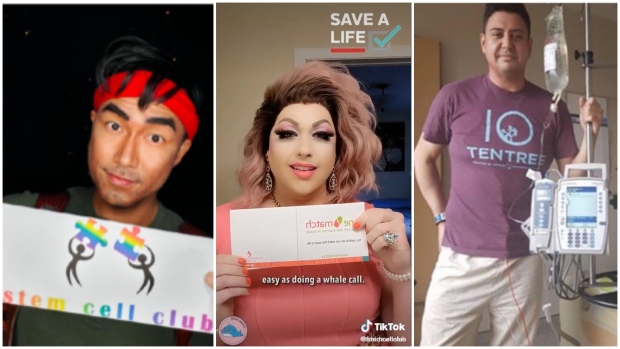
So to cap off the end of Pride month, the national “Saving Lives with Pride” campaign is encouraging all Canadian men who have sex with men to register as potential stem-cell donors. It’s all being run by Stem Cell Club, a Canadian donor recruitment group, and people can register online here.

Organizers and other drag performers are using infographics and short TikTok videos to bring awareness as to how easy it is to give cheek swabs or any temporary side-effects.

In Saint’s short video, he played exaggerated versions of himself in conversation, correcting misinformation about stem-cell donations and who was eligible.

Other videos deal with the same theme of misinformation, employing popular comical filters or dance remixes on the platform. A lot of them use down-to-earth language that avoids medical jargon, to connect with younger audiences.

Tyson Cook has been putting out videos about the topic, recording himself as he puts on make-up and transforms into his drag alter ego Freida Whales. He said using the platform is crucial in connecting with Canadians who spend a lot of time on the app and might not encounter information like this through more traditional means.

“The message is making sure everyone is included, [with] diversity everywhere as much as possible. Because it’s not just the cis, straight white men that can donate and help out. Everyone is eligible to help out,” Cook told CTVNews.ca in a phone interview.

The campaign will run from June 21 to 30 but people can donate at any time afterwards. Many of the videos link back to where people can register or find out more.

This latest drive is similar to a push last February to shore up the number of Black stem-cell donors, another underrepresented group in the registry.

The reason this matters is because recipients need matches from donors with similar ancestral backgrounds. Saint, a Filipino-Chinese man, said “it could be that one queer person could be the match right now.”

Joel Koettle, a gay surgical nurse in B.C. who was diagnosed with Leukemia, strongly supports the campaign. The Métis man received a stem-cell transplantation in 2018 and, to this day, still thinks about his donor in Germany.

“Who knew that someone from the other side of the world would be a match. We are planning on meeting at some point when he comes to Canada. At which point, I plan on thanking him for his gift. I consider him my hero,” Koettle said online.

The national campaign has been in the works for the past year but Stem Cell Club first began spreading the word in LGBTQ2S+ communities in 2018 and 2019, when volunteers recruited hundreds of new potential donors in person at Pride festivals across Canada.

Saving Lives with Pride organizer and hematologist Dr. Warren Fingrut said he and his team are aiming “to destigmatize gay, bi, queer donation and to let these demographics know that they will be treated well and with respect as donors.”

Fingrut, who’s been running workshops advocating for a more inclusive blood system, has also enlisted transplant physicians to help get the word out.

“Race, background, nationality, sexual orientation, gender identity… stem cells look the same, no matter where they come from,” Dr. Arjun Law, a transplant hematologist at Princess Margaret Hospital in Toronto, said in a YouTube video.

Cook took it a step further, saying donations could be a subtle way to potentially combat people’s prejudices.

“It might help out someone who is not accepting of a queer lifestyle. And then maybe they’ll realize: that person looked out for me even though I wasn’t looking out for them and that they’re actually good people.”

Supreme Court backs Catholic agency in LGBTQ foster care dispute case – Yahoo News

Associated Press

Biden signs bill making Juneteenth a federal holiday

President Joe Biden signed legislation Thursday establishing a new federal holiday commemorating the end of slavery, saying he believes it will go down as one of the greatest honors he has as president. Biden signed into law a bill to make Juneteenth, or June 19, the 12th federal holiday. The House voted 415-14 on Wednesday to send the bill to Biden, while the Senate passed the bill unanimously the day before.

‘Summer of 85’ Review: A Sunny Gay Romance With a Dash of Despair – Yahoo Entertainment

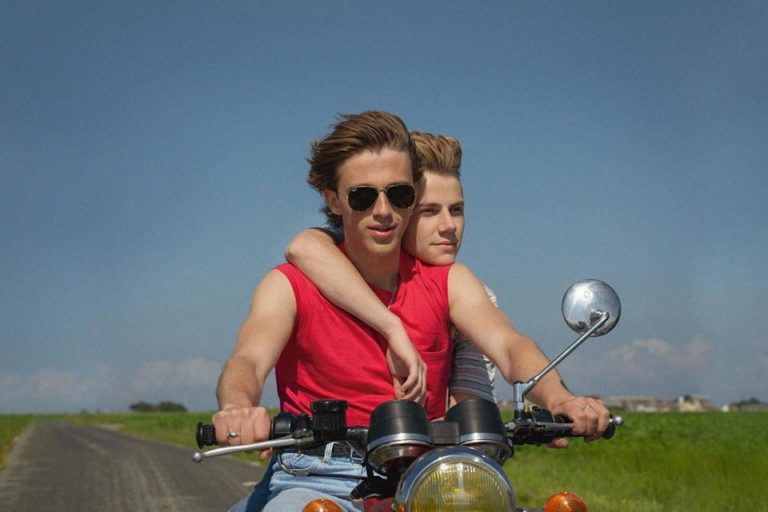
Benjamin Voisin (left) and F&#xe9;lix Lefebvre (right) in Fran&#xe7;ois - Credit: Music Box Films

Benjamin Voisin (left) and Félix Lefebvre (right) in François – Credit: Music Box Films

François Ozon’s Summer of ‘85 — which adapts the YA novel Dance on My Grave, by Aidan Chambers — is but not always easy to like. It’s a gay teen romance out of France, equal parts sun-drenched coastal pas de deux between an unlikely pair of friends and despairing exploration of young loss, with all of it hinging on a promise between these men that’s proven to be miscomprehended. It’s a story which, to really dig out the minutiae of feeling, winds up splitting itself in half, before-and-after style, with the crucial pivot point being the grave-gallivanting promised by the title of the Chambers novel. How we get there, what it all means, what it feels like to revisit in retrospect: this is the emotive strand that pulls us forward through Ozon’s movie, to say nothing of these men’s lives.

There is, understandably, a world of difference between that before and after. Summer of 85 starts with the proclamations of an inexplicably gloomy young man — OK, a 16-year-old — named Alexis (Félix Lefebvre), who tells us up front that he’s obsessed with death. Not corpses, not gore, but death itself. “Bathtubs already remind me of coffins,” he tells us — a strange sentiment from such a bright, hopeful face as his. But it’s also a tip of the hat to Ozon’s tone throughout this movie, which allows its young hero to toe the line of morose self-pity of youth without dripping into parody. That wouldn’t work in this story, in which Alexis will be forced to confront genuine loss — and, to make it worse, face some unintended consequences of that loss.

More from Rolling Stone

I suppose that in a film based on a book titled Dance on My Grave, a body must necessarily get buried. The film makes no secret of who that is: David (Benjamin Voisin), Alexis’s friend and first love. In one half of the film, Alexis, implicated in that death, is reckoning with it, or rather being reckoned with: people are trying to make sense of something he does, and the movie, it seems, takes us backward in order to do precisely the same.

It takes us back to the heat of that summer; New Order on the soundtrack is but one of the nods to the moment confirming that the ‘85 of the title is to be taken literally, but also as a marker of distance: a sense of retrospective romanticizing adds the already-lush romance of the story. David saves Alexis during a mishap at sea; they instantly become inseparable. What happens is what’s expected to happen — what you’d want to happen, with all the comfort and security of affection, the utter safety of it, playing out onscreen between these actors with natural grace.

Yet it’s often the stuff surrounding their ties to each other that proves even richer, more daring. We’re strung along by the utter mystery of whatever it is that earns David the status of a “future corpse,” in Alexis’s telling; but we’re compelled, too, by the tensions in their lives: the teacher encouraging Alexis to become a writer despite the working-class hyperfocus of his father, for example, or the efforts, in the film’s other half, of an investigator to make it all make sense. There’s a version of this film that would feel awkward for so much of its highs being undercut by such despairing lows. But Ozon’s attention to the naturalness of it all — the easy rhythms of conversation, the unremarkable fact of a morning boner — makes the extremes feel all the more plausible.

And the feeling all the more tangible, even as Alexis’s reflective obsession with death feels overdone, distracting. Lefebvre and Voisin are more than charismatic: They’re seamless, casual, with only those nods to teenage moroseness pulling us sideways, not because they’re dark, but because the darkness lacks for a philosophical center, despite its gestures toward that fact. This is intentional: Alexi is a teenager. But it’s in tension with Ozon’s actual tone; its richer, wiser, middle-aged dashes of insight, which come out less in what’s felt and said than in what each scene makes of what’s felt and said.

If not for its grim departures from the feverish affections of gay youth, Summer of 85 might be easily mistaken for a Call Me By Your Name hand-me-down. The flirtations, the dance scenes, the sculpturally perfect bodies and minds of its central pair, so brazen with intimacy, so robust with ideas about art — it is all pleasurably (numbingly) familiar. Much of it would feel interchangeably beautiful with that other film if not for Ozon’s finer, less exoticizing hand with the men’s surroundings. Ozon and his actors are less keen to show off, and the movie is better for it. The lovely sparks of interest generated by the film’s extended cast help — especially the heartbreaking Valeria Bruni Tedeschi, as David’s mother, whose eyes are an expressive wonder, and Melvil Poupaud as the teacher Lefebvre. The sympathies are abundant and warm.

But they’re only half of the story. The grim stuff, well, it does make a difference. Ozon’s credible handling of the Summer of 85s twined stories invisibly guides us through the film’s romantic departures and quiet crises. You really do start to wonder where it’s all going — a fine trick of the storytelling on display since, long before the end, you realize: you already know.

Best of Rolling Stone