this link is to an external site that may or may not meet accessibility guidelines.
this link is to an external site that may or may not meet accessibility guidelines.
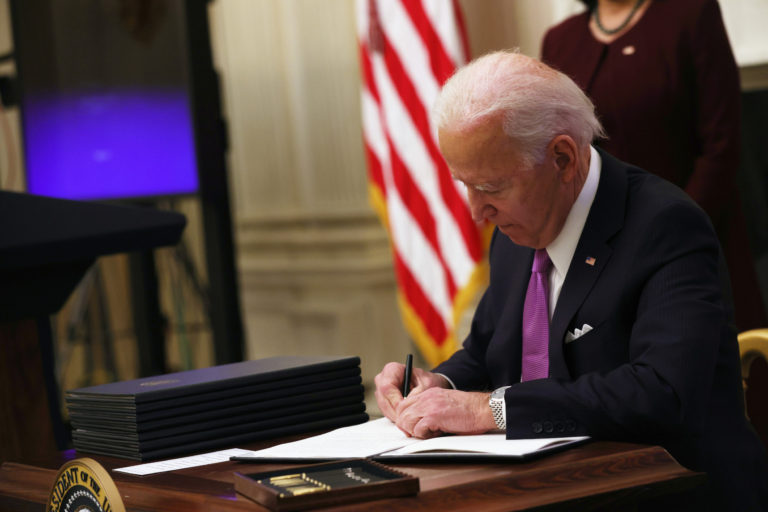
President Joe Biden‘s executive order to strengthen anti-discrimination protections for the LGBTQ community has sparked concerns about what impact it might have on female sports.
Rights campaigners have welcomed the order titled “Preventing and Combating Discrimination on the Basis of Gender Identity or Sexual Orientation.” But opponents say it would force schools to include transgender athletes in girls’ sports and unintentionally put cisgender athletes at a disadvantage.
Biden’s order aims to protect gay and transgender people against discrimination in aspects of American life such as schools, health care and the workplace.
It extends the interpretation of last year’s Supreme Court ruling that gay and transgender employees were covered by the Civil Rights Act of 1964, which prohibits discrimination “because of sex.”

Biden’s order clarifies that “sex” includes sexual orientation and gender identity. “Children should be able to learn without worrying about whether they will be denied access to the restroom, the locker room, or school sports,” the executive order states.
But journalist and author Abigail Shrier warned of the move by Biden on his first day in office and referred to speculation that public schools will have funding pulled if they do not allow transgender female athletes to compete in girls’ sports.
“Any educational institution that receives federal funding must admit biologically-male athletes to women’s teams, women’s scholarships, etc. A new glass ceiling was just placed over girls,” she tweeted, adding that the order “unilaterally eviscerates women’s sports.”
Her message was retweeted by Erielle Davidson from the Jewish Institute for National Security of America who described Biden’s order as a “sad day for women’s sports” because it would mean that “women must compete against biological males at the risk of injury and loss of title.
“Don’t ever tell me this is ‘pro-woman.’ It’s not. It’s destructive and malicious.” Davidson added. Ryan Anderson from the conservative Heritage Foundation wrote that “in reality, it spells the end of girls’ and women’s sports as we know them.”
By forcing biological female athletes to compete against biological male athletes in competitive sports, we are taking away women’s opportunities on and off the field.
The Protection of Women and Girls in Sports Act will level the playing field.https://t.co/3ejhrYulzu
— Congressman Greg Steube (@RepGregSteube) January 21, 2021
On day 1, Biden unilaterally eviscerates women’s sports. Any educational institution that receives federal funding must admit biologically-male athletes to women’s teams, women’s scholarships, etc.
A new glass ceiling was just placed over girls.https://t.co/cGWZqDpxl8
— Abigail Shrier (@AbigailShrier) January 21, 2021
On the same day Biden gave the order, Representative Greg Steube (R-FL) tweeted that “by forcing biological female athletes to compete against biological male athletes in competitive sports, we are taking away women’s opportunities on and off the field.”
On Thursday, Steube reintroduced the Protection of Women and Girls in Sports Act which he had put forward earlier in the month before Biden took office and which is backed by 13 other GOP lawmakers.
In a statement, he said the bill would “protect women and girls in competitive sports. It states that “in athletics, sex shall be recognized based solely on a person’s reproductive biology and genetics at birth.”
In 16 states there are policies aiding the inclusion of trans/non-binary/GNC (gender non-conforming) students in high school athletics, according to Transathlete.
In 2020, 17 states introduced bills to restrict athletes’ participation in sports based on their gender assigned at birth, but Idaho has so far been the only one to pass a bill into law, although this has been blocked pending a lawsuit.
After the hashtag #BidenErasedWomen started trending on Thursday, LGBT activists responded by saying the executive order was simply a move towards a more inclusive society.
“Biden has simply said that he’s not going to allow people like me to be discriminated against for using female toilets, as we’ve always done,” transgender writer Paris Lees tweeted.
Meanwhile the Human Rights Campaign has described it as “the most substantive, wide-ranging executive order concerning sexual orientation and gender identity.”
The following graphic provided by Statista looks at state protections for LGBTQ people in the workplace.

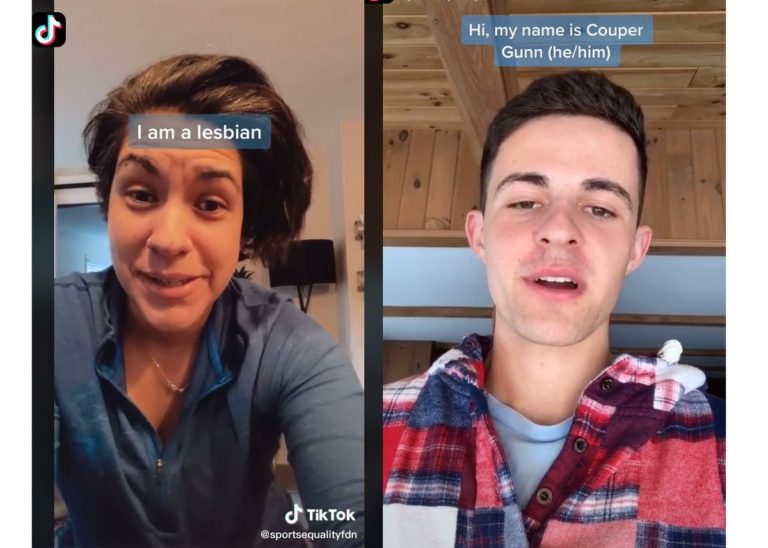
TikTok — the world’s leading app for short-form mobile video — is now also the home of out LGBTQ athletes and coaches and other folks involved in sports invested in spreading acceptance.
The five-year-old Sports Equality Foundation launched the account in partnership with Outsports on Jan. 11. In just eleven days, @sportsequalityfdn has more than 5,200 followers and its roster of a dozen videos has garnered more than 65.5K likes.
The newest, hottest video uploaded to the app is by college wrestler Mack Beggs, whose battle to compete as a the young man he is made headlines starting in 2017. “I am a trans advocate for the trans community in sports,” Beggs says in his video.
Beggs is a transgender man, and the other LGBTQ athletes who have recorded videos represent a rainbow of orientations, from gay to lesbian to queer, and a variety of identities and sports.
Kena Gilmour, recently named the inaugural NCAA Division III LGBTQ Athlete of the year, delivered a message to closeted athletes in his video: “Know that you’re not alone and that there is an entire community of people that has your back and is rooting for you.”
One year ago, the Washington Post called TikTok “the soul of the LGBTQ internet.” One of the originators of the account, college soccer captain Couper Gunn, told Outsports this is one more way to reach those souls, lost, found and closeted.
“I have public TikTok and Instagram accounts because I know that as a queer athlete, I can show closeted athletes that not only is it OK to be queer and an athlete,” Gunn wrote in his Coming Out story, “but that the ability to be proud of who you love and how you identify is empowering.”
:format(webp):no_upscale()/cdn.vox-cdn.com/uploads/chorus_asset/file/22251974/Sports_Equaity_2.jpg)
Gunn’s introductory Sports Equality video has been viewed almost 14K times, which isn’t surprising since his own account has 10K followers and his videos have recorded more than 101K likes.
Most of the TikTok videos feature everyday athletes and newcomers to TikTok, like college tennis coach Maria López, whose “I AM” video reveals she is Venezuelan, lesbian and a dog mom. The hope is that more people will step forward and record their own videos, expanding the effort toward greater LGBTQ inclusion in sports.
“This tik tok initiative is so inspiring for several reasons,” out UCLA softball coach and Sports Equality co-founder Kirk Walker told Outsports. “It came out of the hearts and minds of young LGBTQ athletes and the potential reach to the next generation of LGBTQ sports advocates is tremendous. Their desire to reach and empower closeted and LGBTQ athletes in the TikTok world has catapulted Sports Equality into this social media space.”
Coach Walker, who is also the driving force behind two Facebook pages dedicated to LGBTQ people in sports — GO! SPACE and Equality Coaching Alliance — recorded his own “I AM” video.
High school state soccer champion and now college athlete Josh Leafer recorded and produced the very first of the “I AM” videos. He said he did it to help others.
“I’m doing this because I was never comfortable enough to come out to my soccer team in high school,” Leafer told Outsports. “They were my brothers off and on the field, but I felt like if I ever came out, then I would be treated differently, and that terrified me. The Sports Equality Foundation is a platform for queer athletes, closeted or not, and it’s a platform I wish I had when I was scared to come out. I know someone out there is currently having the struggles I once had, and with the help of the Sports Equality Foundation they can ease better into their true life.”
“The Sports Equality Foundation and Outsports TikTok initiative has the power to reach an unprecedented number of youth and teens in ways not yet fully realized by the LGBTQ+ sports advocacy movement,” said LGBTQ youth sports advocate and educator Micah Porter, who is both an adviser and the star of a video that is now in production. “It is inspiring to see our young leaders in the movement illuminate new and engaging ways to change the landscape of inclusivity in sports for our LGBTQ+ community.”
“The response has been great and more importantly we have already added several new members to GO! SPACE and Equality Coaching Alliance that we would never have gotten connected with,” Walker added. “The passion and energy of our organizing committee is contagious and inspiring. Kudos to their individual and collective efforts. I can’t wait to see what the future holds.”
If you’re not a TikTok user, you can check out all the videos by clicking this link. If you would like to make an “I AM” video, contact the Sports Equality Foundation via email at sportsequalityfdn@gmail.com or visit the foundation’s site on Facebook by clicking here and follow @sportsequalityfdn on Instagram by clicking here.
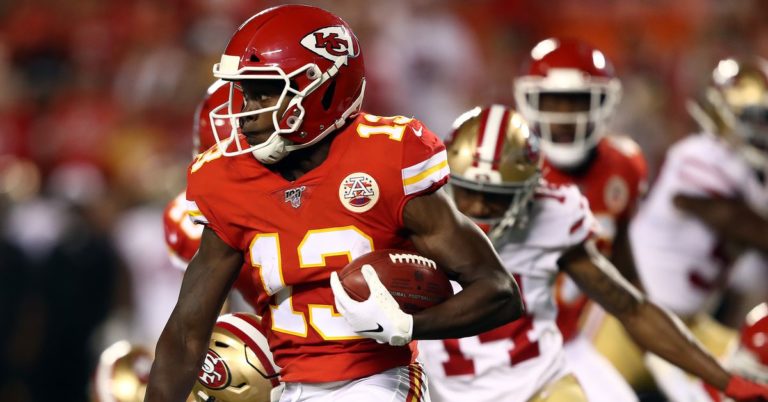

Some people still believe that the NFL is a “homophobic” monolith where it’s “dangerous” to be gay.
Despite Outsports chronicling literally dozens of pieces of evidence to the contrary, there’s a continued belief amongst some that NFL players would overwhelmingly reject a gay player if he came out. One Outsports reader recently claimed NFL players would try to kill that person.
Of course, this is ludicrous. So we set out to figure out how many current NFL players have already played on the same team with an out gay teammate. We found 39 current NFL players, who were on a roster for the 2020 season, who have already had an out gay teammate. Four of them will be playing in the NFC or AFC Championship Game this weekend.
In addition, dozens of other players have played against an opponent they knew to be gay.
Those gay athletes are all still alive today.
These 39 current NFL players have played with at least five gay or bisexual men who were out to their team while they were on the same team. Those LGBTQ men (with the years they were out on their teams):
Mason Darrow, OT, Princeton Tigers, 2015-2016
Scott Frantz, OT, Kansas State Wildcats, 2017-2019
My-King Johnson, DE, Univ. of Arizona Wildcats, 2017-2018
Michael Sam, DE, Univ. of Missouri Tigers, 2013; St. Louis Rams, 2014
Chip Sarafin, OL, Arizona State Sun Devils, 2014
Some of the players who played with these out athletes played in the same unit or similar positions. For example, Markus Golden played defensive end at Missouri behind Sam. Charles Harris redshirted that year but also would have been in meetings and learning from Sam, who went on to win SEC Defensive Player of the Year. Dalton Risner played on the Kansas State offensive line with Scott Frantz.
Of all the out players, Michael Sam has the most former teammates — 16 — still in the league (not surprising, given he was out throughout training camp with the Rams).
The Arizona Cardinals have the most players we know have played with an out gay teammate. At least six of the players on the Cardinals’ 2020 roster — about 10% of the team, — has already had a gay teammate they knew of. And they have collectively played in college with all five out gay players.
With that experience, solid veteran leadership, a coach in Kliff Kingsbury who has lauded gay football player Scott Frantz, and a front office that has demonstrated an embrace of LGBTQ people, it is easy to make the case that an out gay player with the Cardinals would be welcomed.
Of course many other NFL players have played with a gay or bi teammate before they came out (e.g., Dustin Colquitt played, and was good friends, with Ryan O’Callaghan), or played with a teammate who has come out privately but not publicly.
These are the current NFL players to have played with an out gay or bi man on their team (with that team and their current team listed):
Tavon Austin, St. Louis — WR, Green Bay Packers
Rams selected him No. 8 overall in the 2013 draft.
Quinn Bailey, Arizona State — OT, Denver Broncos
Bailey redshirted in 2014 with the Sun Devils. He’s played two games for the Broncos in two seasons.
Kalen Ballage, Arizona State — RB, Los Angeles Chargers
Drafted by the Miami Dolphins in 2018, Ballage has 629 career rushing yards and seven touchdowns.
Daren Bates, St. Louis — LB, Tennessee Titans
Bates was on and off the active roster of the Titans in 2020.
Evan Boehm, Missouri — C, Free Agent
Was on the Jaguars practice squad in 2020.
Stephen Carlson, Princeton — TE, Cleveland Browns
Carlson has spent two years with the Browns.
Jared Cook. St. Louis — TE, New Orleans Saints
Two-time Pro Bowler, has been in the league for over a decade.
Dane Cruikshank, Univ. of Arizona — S, Tennessee Titans
Cruikshank was drafted in the fifth round of the 2018 NFL Draft by the Tennessee Titans.
Sean Culkin, Missouri — TE, Baltimore Ravens
Spent most of 2020 on the practice squad, playing in one game.
Cody Davis, St. Louis — S, New England Patriots
Has played in the NFL for eight seasons with three different teams.
Seth Devalve, Princeton — TE, Arizona Cardinals
A fourth-round pick by the Cleveland Browns in 2016, Devalve has four career TDs.
Jamil Douglas, Arizona State — OG, Tennessee Titans
Drafted by the Miami Dolphins in 2015, won Super Bowl LI with the Patriots in 2016.
Demetrius Flannigan-Fowles, Univ. of Arizona — DB, San Francisco 49ers
Flannigan-Fowles started 36 of his 50 career games at Arizona, before signing with the 49ers as a UFA in 2020.
D.J. Foster, Arizona State — RB, Arizona Cardinals
Signed by the New England Patriots as a UFA in 2016, winning Super Bowl LI with the team.
Garrett Gilbert, St. Louis — QB, Dallas Cowboys
Gilbert started one game in 2020.
Markus Golden, Missouri — LB, Arizona Cardinals
Spent 1.5 seasons with the Giants between his two stints with the Cardinals.
Zane Gonzalez, Arizona State — K, Arizona Cardinals
Cleveland Browns drafted him in the seventh round in 2017.
Matt Haack, Arizona State — P, Miami Dolphins
Haack has been with the Dolphins since he was signed as a UFA in 2017.
Charles Harris, Missouri — DE, Atlanta Falcons
First-round pick by the Miami Dolphins in 2017.
Johnny Hekker, St. Louis — P, Los Angeles Rams
Has been with the Rams since 2012. Named to four Pro Bowls.
Jesper Horsted, Princeton — WR, Chicago Bears
Two-time first-team Ivy League in college.
Lamarcus Joyner, St. Louis — S, Las Vegas Raiders
In seven NFL seasons Joyner has had four picks and a score.
John Lovett, Princeton — TE, Green Bay Packers
Used as a QB, RB and WR at Princeton, he was moved to TE and FB when the Chiefs signed him in 2018.
Matt McCrane, Kansas State — K, Cleveland Browns
McCrane played in the XFL last year before landing on the practice squad of the Browns.
Connor McGovern, Missouri — C, New York Jets
Drafted by the Broncos in 2016.
Rodney McLeod, St. Louis — S, Philadelphia Eagles
Helped the Eagles to their first Super Bowl title.
Mitch Morse, Missouri — C, Buffalo Bills
A second-round pick by the Chiefs in 2015.
Alec Ogletree, St. Louis — LB, New York Jets
He was second-team All-Pro in 2016 with the Rams.
Byron Pringle, Kansas State — WR, Kansas City Chiefs
Pringle has a Super Bowl ring with the Chiefs after being signed by Kansas City in 2018.
Damarious Randall, Arizona State — S, Seattle Seahawks
In three seasons with the Packers he had 10 interceptions and two touchdowns. In 2020 he was active for 10 games for the Seahawks.
D.J. Reed, Kansas State — CB, Seattle Seahawks
He’s had 10 career starts with two interceptions and two forced fumbles.
Caraun Reid, Princeton — DE, Jacksonville Jaguars
Has played with seven different NFL teams since 2014.
Dalton Risner, Kansas State — OG, Denver Broncos
Risner was drafted by the Broncos in the second round of the 2019 NFL Draft. He’s started all 32 games of his NFL career.
Duke Shelley, Kansas State — CB, Chicago Bears
The cornerback has started two games in his two NFL seasons.
J.J. Taylor, Univ. of Arizona — RB, New England Patriots
For the Patriots during the 2020 season, Taylor rushed in six games 23 times for 4.8 yards per carry.
Reggie Walker, Kansas State — LB, Arizona Cardinals
The linebacker was 2019 Honorable Mention All-Big 12. He was signed by the Cardinals in 2020 as a UFA.
Jace Whittaker, Univ. of Arizona — CB, Arizona Cardinals
Whittaker started all of his games with Arizona during his senior season in 2019. In his rookie season he played in four games for the Cardinals.
Renell Wren, Arizona State — DT, Cincinnati Bengals
Wren was a fourth-round pick in 2019. He redshirted his freshman year in 2014.
Greg Zuerlein, St. Louis — K, Dallas Cowboys
Named to the Pro Bowl in 2017.
If you think I’ve missed a current NFL player who’s played with an out gay or bi teammate, be sure to leave the information in the comments below.
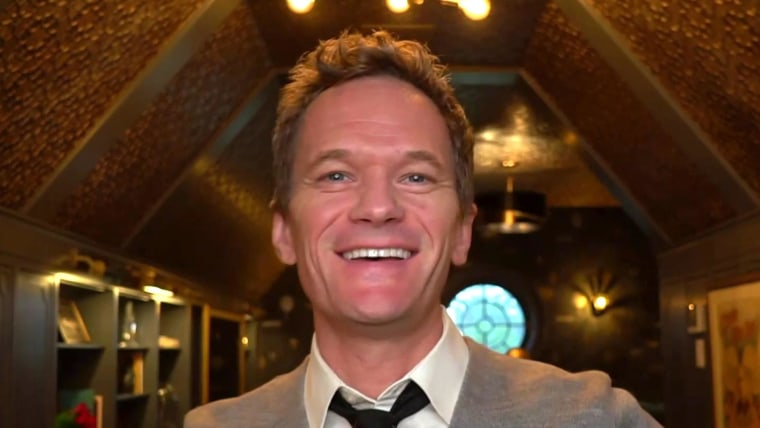
On the subject of “Queer as Folk,” the groundbreaking early 2000s drama that featured mostly straight actors playing gay, Harris said he was a big fan.
“It was one of the real true turning points for me as examples of sexy guys behaving as leads in something of import, not as comic sidekicks,” the “Doogie Howser, M.D.” star said. “I think there’s something sexy about casting a straight actor to play a gay role, if they’re willing to invest a lot into it. There’s a nervousness that comes from the newness of it all. To declare that you’d never do that, you might miss opportunities.”
But not everyone obviously agrees. Back in November, out actor Wentworth Miller said he wouldn’t participate in a “Prison Break” revival, if one happens, because he is done playing straight characters.
“At this point in my life/career, it’s what feels interesting, inspiring, right,” he wrote. “That said, do I want to see more gay parts played by gay actors? Yes. It makes a difference performance-wise (IMO), but also bec straight actors playing ‘gay’ centers straightness. Doesn’t matter if they’re ‘acting’ — I still know what I’m looking at.”
Kristen Stewart also recently opened up about the topic of straight actors playing gay, saying she thinks “about this all the time.”
“I would never want to tell a story that really should be told by somebody who’s lived that experience,” Stewart said. “Having said that, it’s a slippery slope conversation because that means I could never play another straight character if I’m going to hold everyone to the letter of this particular law. I think it’s such a gray area.”
For Harris, he intends to continue playing straight characters.
“In our world that we live in you can’t really as a director demand that (an actor be gay or straight),” he said, adding the question: “Who’s to determine how gay someone is?”

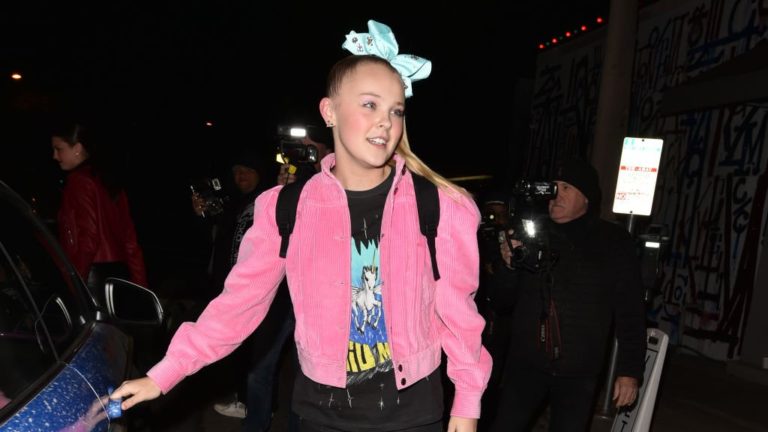
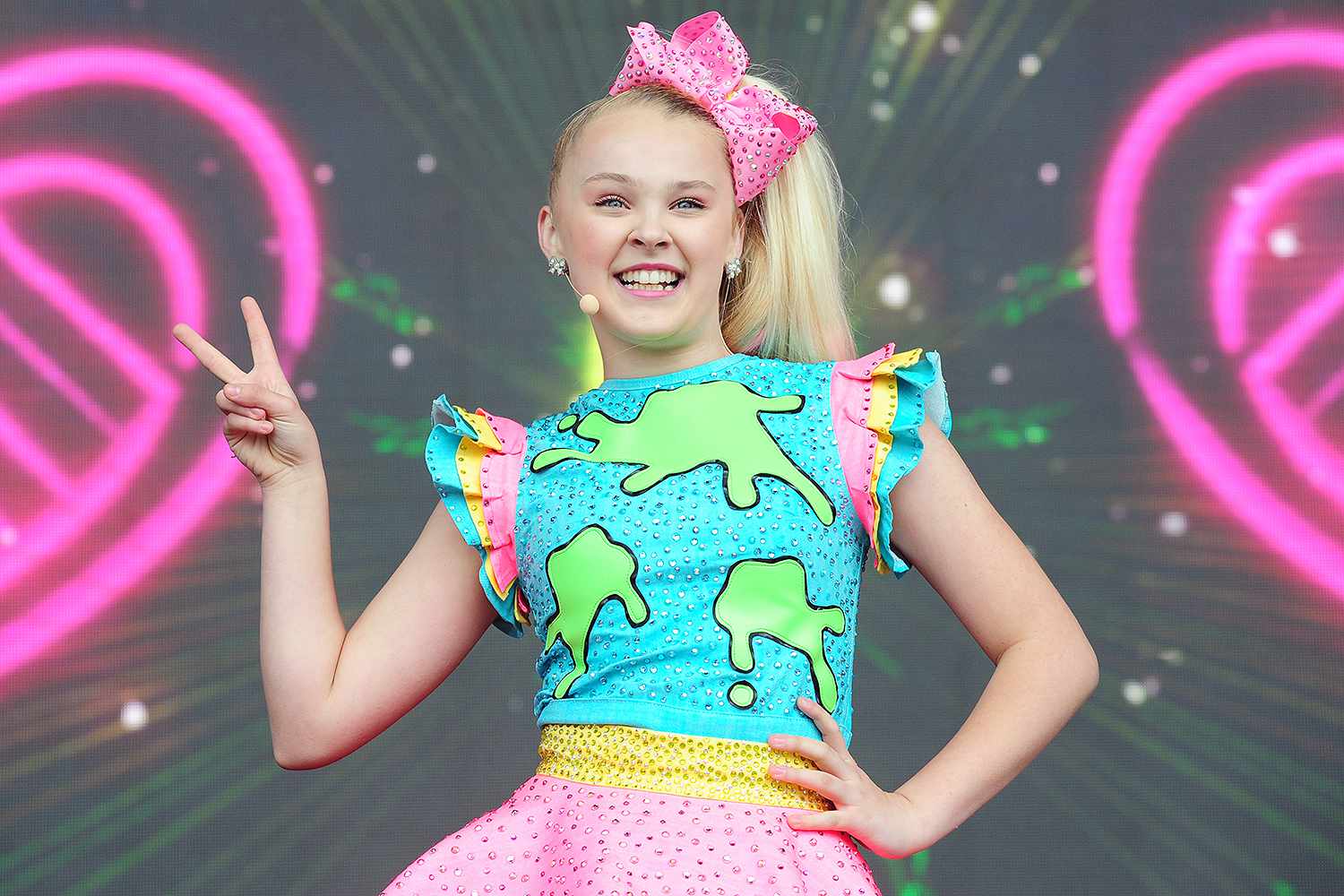
Fans think Jojo Siwa came out as gay in a recent TikTok video. She hasn’t confirmed it yet, but here’s all the evidence.
If you were on Twitter on Wednesday, you probably saw Jojo Siwa’s name trending. Amid Joe Biden’s Inauguration, everyone suddenly stopped talking about politics and instead began to discuss the 17-year-old social media star, but why?
Well, Jojo posted a new TikTok video, and fans think it was her way of coming out as gay. Whilst she hasn’t yet confirmed the rumours, the evidence certainly is convincing.

On Wednesday (January 20th), Jojo Siwa took to TikTok to post a video that fans think has a much deeper meaning than first seems.
The social media personality posted a short clip in which she sang and danced to Lady Gaga’s Born This Way.
At first glance, the video doesn’t seem like anything out of the ordinary, as Jojo often takes to the app to post dance videos. However, fans think Jojo was actually coming out as gay, and here’s why.
There are a number of different reasons why fans think the video was Jojo’s way of coming out as gay.
Firstly, the song Born This Way is widely regarded as an LGBTQ anthem. The song, which was released in 2011, is inspired by music from the 1990s which empowered women and the gay community and has been described by Gaga herself as her ‘freedom song’.
The particular part of the song that Jojo sang along to in her video also gave an indication that she was coming out. Coming from a verse near the end of the track, the lyrics said:
“No matter gay, straight, or bi,
Lesbian, transgendered life,
I’m on the right track baby,
I was born to survive.
No matter black, white or beige
Chola or orient made,
I’m on the right track baby,
I was born to be brave.”
In the video, Jojo also played flashing multicoloured lights which could symbolise the LGBTQ+ rainbow pride flag, and her signature Jojo bow had small rainbows on it.
If that wasn’t enough evidence that Jojo was coming out as gay, there’s more. A number of different LGBTQ content creators have commented on the TikTok video congratulating Jojo.
Avery Cyrus said “Awh the little rainbow bow, you’re so precious” whilet James Charles wrote: “I’M SO HAPPY FOR YOU.”
Bretman Rock commented “Happy for you Jojo” with a rainbow emoji and Anna McDaniel said: “JOJO SIWA JUST CAME OUT OH.”
However, Jojo is yet to confirm whether the coming out rumours are true.

In other news, Chrissy Teigen’s bullying drama explained as Pete Davidson’s SNL Skit takes a jab
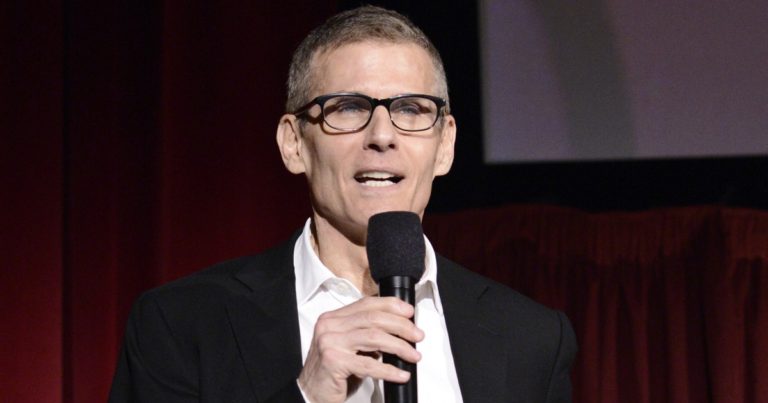
LOS ANGELES – In the spring of 2012, the gay rights organization the Human Rights Campaign asked Michael Lombardo, then the president of HBO, to host an event for Vice President Joe Biden. Not a fundraiser, mind you — but a meet-and-greet for the vice president to reach out to LGBTQ people in the entertainment industry.
The event was meant to be healing. As President Barack Obama and Vice President Biden sought re-election, Hollywood’s queer community felt that the administration had not done enough. Sure, Obama had signed a bill in 2010 repealing the Clinton administration’s disastrous military policy, “don’t ask, don’t tell;” and yes, the following year, Obama had instructed the Justice Department to stop defending the Defense of Marriage Act. But for monied LGBTQ people in the entertainment industry — who had supported Obama in 2008, only to see California’s discriminatory Proposition 8 pass during his election — they wanted more from the administration than just rescinding a few hateful policies of the past.
Lombardo, his spouse Sonny Ward and their two children, opened their Los Angeles home to Biden. The vice president arrived, Lombardo tells Variety, and instead of going outside to work the crowd, “He sat down and talked to our kids — and to us — as a human. Totally unguarded, totally present for my kids, in a way that moved us enormously.”
He was so engaged with them, Lombardo remembers, that Biden’s handlers had to say to him, “Enough, Joe,” prompting him to keep moving to the group of grownups waiting to meet him outside.
On May 6, 2012, shortly after the event at their home, Ward received a text from his aunt in Mississippi, saying they should turn on “Meet the Press.” David Gregory had asked Biden whether the administration was reevaluating same-sex marriage. Biden said he deferred to Obama, but went on to mention “Will & Grace,” and warmly told the story of meeting Lombardo and Ward’s kids. What it comes down to, Biden said, is simple: “Who do you love?”
With that one extemporaneous anecdote, Biden had not only gotten ahead of Obama on the same-sex marriage issue, but lapped much of the Democratic Party establishment. Three days later, Obama rushed out his own announcement in an interview with Robin Roberts, telling her that he, too, supported gay marriage.
Lombardo, now president of global television at Entertainment One, stayed in touch with Biden, supporting his 2020 candidacy when few in the entertainment industry did, and hosted another event at his home early in the primaries. “Our kids are much older now, and he is still Joe Biden — he spent time with them,” Lombardo says. “They connected with him in a real way.”
He sees Biden as the antidote for the toxicity of the Trump years.
“I think his morality, humanity and authenticity are rare,” Lombardo says. “After four years of what we’ve seen in Washington, all of those qualities are what we desperately need of right now.”
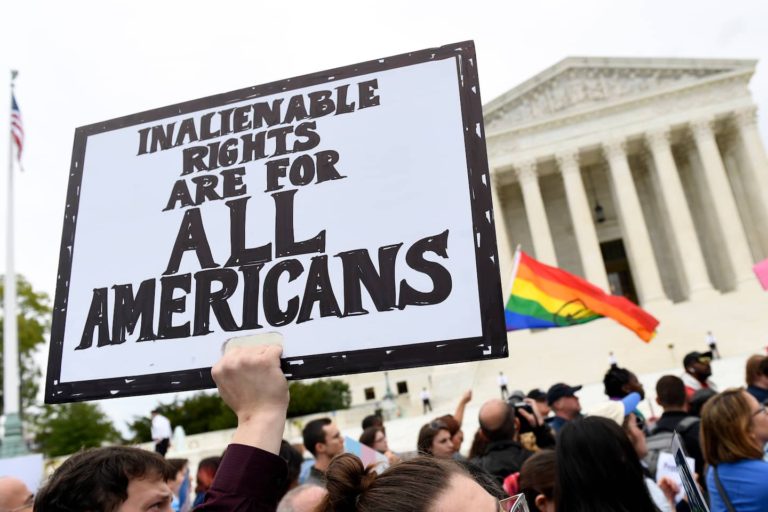

“Children should be able to learn without worrying about whether they will be denied access to the restroom, the locker room, or school sports,” Biden’s executive order states. “Adults should be able to earn a living and pursue a vocation knowing that they will not be fired, demoted, or mistreated because of whom they go home to or because how they dress does not conform to sex-based stereotypes. People should be able to access healthcare and secure a roof over their heads without being subjected to sex discrimination.”
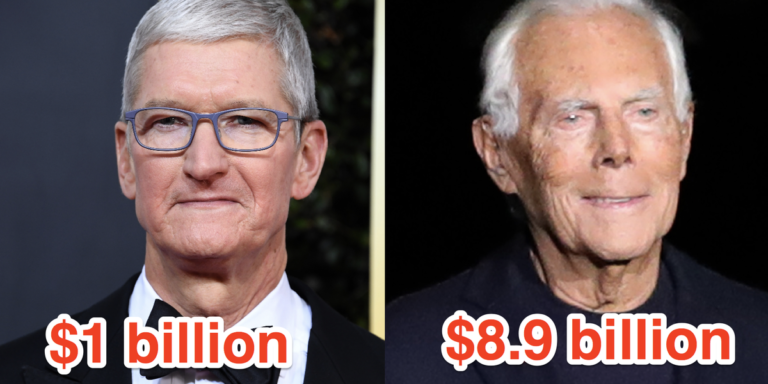
While the elite group of billionaires and millionaires lacks diversity, some members of the LGBTQ community have managed to break through.
People who identify as LGBTQ have earned net worths that near or exceed 10 figures by inheriting empires, building companies, or creating brands.
Here are 10 of the richest LGBTQ people in the world.
SMITHSONIANMAG.COM | Jan. 21, 2021, 12:36 p.m.
Writer and social commentator Roxane Gay chuckled while describing her first visit to a lesbian bar—Panic Bar in Lincoln, Nebraska. “I was 21,” she says, “Maybe 20.” Gay describes the bar, which closed this fall, as a dive, and summed up why it was special: “It was just cool to go, and know that there were other lesbians in the world.”
Bar manager Jo McDaniel has similar reminiscence of Phase 1, an iconic lesbian bar in Washington D.C. ‘s Capitol Hill neighborhood that closed its doors permanently in 2016. “It was a force,” she says of the establishment that was once the longest operating lesbian bar in the country and where she tended bar. “Losing such an institution was incredibly difficult for D.C.” Upon learning of the bar’s unexpected closure, patrons expressed their shock on Facebook. “Wow! I thought that I would never see the day that Phase 1 would close down,” wrote one. Another declared, “There is no place left.”
D.C. is far from the only city to lose its beloved lesbian bars. Across the country, nightlife spaces dedicated to queer and gay women have been closing at a staggering rate over the past 30 years. (The Panic Bar shuttered for good in November after first closing temporarily due to the Covid-19 pandemic.) In the late 1980s, an estimated 200 lesbian bars existed in the United States. By 2019, researchers believed only 15 remained.

Gay, who lives in Los Angeles, says she doesn’t understand why there are so few bars—L.A.’s last one closed in 2013. “It doesn’t make sense that a city of this size, with a lesbian population that is significant, has no bars,” she says.
Despite their ever-decreasing numbers, lesbian bars still matter. More than a safe space for people of marginalized genders—including transgender and nonbinary people—to gather, these bars figure strongly into queer history. “They’re community centers, they’re fun places to meet other lesbians and/or bisexual women. And they can be sexy spaces,” says Gay. “I think that they’re vital.”
While numbers began dwindling before the pandemic began, owners and patrons of the remaining lesbian institutions are now even more worried for their futures as nightlife and service industries have been hit especially hard by regulations designed to minimize the spread of Covid-19. After initial closures, some bars were allowed to reopen over the summer, but most never returned to maximum capacity. The onset of winter and a second wave of infections have left watering holes in limbo. Some are closed again, others have seen reduced service hours and many are left to wonder how they’ll weather the cold months when outdoor service is difficult, if not impossible. These fears are compounded for lesbian bars, which cater to a more narrow demographic and take in less money, because women, trans people and nonbinary folks tend to have less “leisure dollars” due to pay inequity and discrimination. Shelley Brothers, who’s co-owned Seattle’s Wildrose for 20 of its 36 years, says they’re committed to fully reopening despite financial worry. She and her business partner took part-time jobs this year and, for the first time in two decades, were forced to lay off employees. In the spring, most of the remaining lesbian bars launched GoFundMe campaigns to help pay bills and support staff.
The idea of losing these bars catapulted two Brooklyn filmmakers into action. In October, Erica Rose and Elina Street launched the Lesbian Bar Project, a nationwide fundraising campaign to help the bars stay afloat through the pandemic. In total, the project’s month-long efforts raised $118,000, to be split evenly among 13 bars. (Texas’ two bars—Dallas’ Sue Ellen’s and Houston’s Pearl Bar—opted out of the donations to help the others.) Now, as they ride the second wave of Covid-19 infections, with reduced staff, reduced hours and newly implemented safety plans, the bars are thankful for the project’s aid. Money from the Lesbian Bar Project will go towards two months of rent for Denver’s Blush & Blu, which reopened earlier this month at 25 percent capacity.
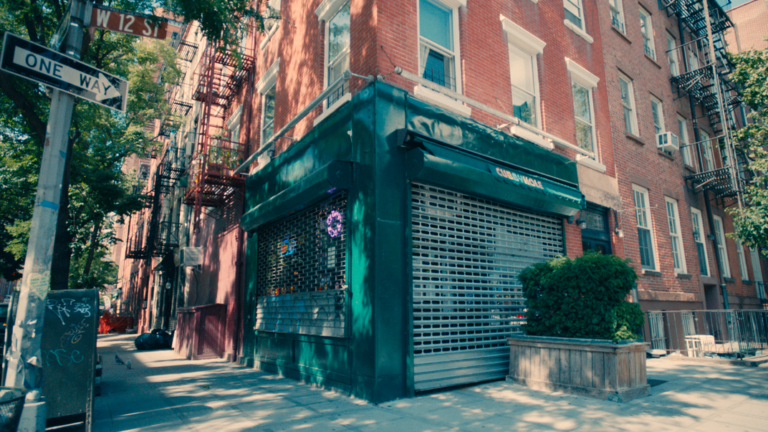
Rose and Street first imagined the Lesbian Bar Project during New York’s stay-at-home order. Fueled by reports on the country’s declining lesbian bar scene, the city’s lockdown provided time to reflect on the importance of physical, queer gathering spaces. “When something is taken away from you, that’s when you realize you really do need it,” Street says. Rose and Street both credit New York’s Cubbyhole, an LGBTQ bar in the West Village, for helping them come out and find their community. “When I walked into Cubbyhole, I immediately felt this access and visibility to queer women being themselves. That was a wake-up call: This is who I am, and I have a space to do that,” Rose says. Ensuring others have the space to “actualize their feelings and live their queer authentic” lives has been her driving force in creating the Lesbian Bar Project.

Along with producers Lily Ali-Oshatz and Charles Hayes IV, actress Lea DeLaria of “Orange is the New Black,” and financial support from Jägermeister, the Lesbian Bar Project was born of a mission to celebrate, support and preserve the remaining bars. By fundraising and spreading awareness through a short PSA and their website, the project seeks to ensure these spaces “not only survive but thrive in a post-pandemic landscape.”
Rose and Street describe the support the project received as “humbling.” The work has launched the filmmakers on a longer journey to develop a docu-series, which they hope to release in 2022, on the importance of lesbian bars.
Women who are attracted to women have been gathering for centuries, but according to Katherine Ott, a curator at the Smithsonian’s National Museum of American History, America’s first lesbian bar remains unknown. “I don’t think anyone knows the first bar, and if they claim to know it, they’re lying,” says Ott.
Some historians credit San Francisco’s Mona’s 440 Club, which opened in 1936, as the first, but the blog Lost Womyn’s Space notes the 1933 repeal of Prohibition led to Chicago’s first lesbian and gay bars, so it’s possible Roselle Inn opened before Mona’s. According to Gwen Shockey, founder of the ADDRESSES PROJECT, which documents lesbian and queer women’s spaces in New York City, one of New York’s earliest “ladies bars” was Café Des Beaux Arts, active from 1911 to 1921. Shockey describes the establishment as a “meeting place for middle to upper class women,” who were likely white.

Ott suggests lesbian bars—or their prototypes—began even earlier, when cities enacted dress laws prohibiting people from wearing clothing of the opposite sex in public. Columbus, Ohio, instituted its ordinance in 1848; Memphis, Tennessee, did so in 1863. Growing in popularity over the 1860s, Ott says eventually 40 cities had anti-cross-dressing laws.
“[Bars] must have started when the cross-dressing laws and vice laws [legislation that criminalized “vices” such as prostitution, opiate use and polygamy] started,” explains Ott, as bars offered some semblance of safety.
Writer Joan Nestle, cofounder of the Lesbian Herstory Archives, insists, “from the 1920s on,” gathering places for queer women and men existed in America’s big cities. She entered New York’s Greenwich Village lesbian bar scene in the late 1950s, when most lesbian and gay bars were mafia-owned. “Organized crime, always interested in a quick, desperate buck, played an important role in keeping these bars open,” Nestle says. Bar owners frequently paid off police to keep the watering holes open, but raids were not uncommon.
Patrons were sometimes arrested for visiting “immoral” establishments or violating dress laws, notes a 2015 Vice article. This largely affected butch women and “passing women”—women who “lived, worked, dressed as men,” says Nestle, adding the term transgender men didn’t exist in lesbian communities until the 1970s. Because women could be arrested for wearing men’s clothing, Nestle recalled a young butch who sewed lace on her socks to decriminalize herself.
Black and Puerto Rican women attended New York’s downtown bars, and Nestle spoke of a thriving bar life for black gays, lesbians and passing folks in Harlem and Spanish Harlem from the 1930s to the 1950s. A 2019 thesis from architect Gwendolyn Stegall suggests Harlem’s LGBTQ scene of the era provided respite for black lesbians who were not always welcome in the Village.
Despite risks, lesbian bars became spaces for women to come out, find others and meet lovers. Desire lived in those bars, but so did community. “[They] were filled with the rituals of a despised people,” says Nestle, “who made the world they needed.”
As the gay rights movement gathered momentum following the 1969 Stonewall Riots, lesbian bars continued to evolve, solidifying their importance. They became places where organizers met and brainstormed, and the site of numerous fundraisers once AIDS gripped the gay community. “In-person gathering enabled our community to demonstrate and march and form the activist organizations that led to the Gay Rights Movement,” says Shockey.

Marlene Colburn, cofounder of New York’s Dyke March, remembers hosting recruitment parties for both the Lesbian Avengers and the Dyke March at various West Village lesbian bars, including Crazy Nanny’s (1991 to 2004), Cubbyhole (at its original location, where Henrietta Hudson now stands, 1983 to 1990), and Henrietta Hudson (opened in 1991).
“Every group I’ve ever been in would go [out after demonstrations],” remembers Maxine Wolfe, who helped start Act Up’s women’s committee, the Lesbian Avengers and the Dyke March. “There were restaurants and bars we went to, but mostly they were spaces where you could be who you are.”
Yet lesbian bars have never been perfect. Like the outside world, racism, transphobia and biphobia existed within, and many were inaccessible to disabled women. “So there was always tension,” Ott says. “The bars were never a really good solution to all of the discrimination and hate. Inside the bars, or inside the groups of women who went to the bars, was all the shit that was happening outside.”
Shockey agrees, noting that many of New York’s lesbian bars of the bygone era were not always accepting of queer women of color. And Wolfe described a practice known as “carding,” in which bars would only card women of color to exclude them. Colburn experienced something similar in the early 1980s, while trying to meet a date a Shescapes event—a lesbian bar party. She was barred from entry and told a private party was happening inside. Unable to contact her date, Colburn hung around. She saw white women admitted and women of color turned away. (A successful discrimination lawsuit was brought against Shescapes for denying black and brown people events admission in 1985.) Dress codes were another tool used by bars to prohibit entry to black and brown lesbians.
Lesbian bars have struggled to keep up with rapid societal changes, including greater LGBTQ acceptance, the internet and a more gender-fluid community. With dating apps and online communities, bars aren’t necessary for coming out and connecting with queer women. “There are so many different ways people socialize now that wasn’t possible [before],” Ott says. (Gay men’s bars have struggled with similar issues to a lesser degree.) Stegall’s thesis notes much of the queer community “claim that ‘lesbian’ leaves out bisexual women and trans people, who definitely have been historically (or even sometimes currently) shunned from the community.” Younger generations of queer women—including Rose and Street—have embraced a more inclusive community. They believe lesbian bars exist for people of all marginalized genders.
These factors, compounded by gentrification and income disparities between men and women, have largely contributed to declining bar numbers. Julie Mabry, owner of Pearl Bar, notes that, even before Covid-19, women had less disposable income, which means lesbian bars typically don’t ask for cover charges or provide bottle service, yet they pay the same increasingly high rents as gay and straight bars. Those same rising costs also push out residents who called those neighborhoods and bars home.

The Lexington Club, San Francisco’s cherished lesbian/queer bar closed in 2015 after nearly two decades due to the changing landscape of the city’s Mission District. Once home to working class Latino families and the “epicenter” for queer women in San Francisco, says former bar manager Benjamin McGrath, the neighborhood began attracting new residents during the tech boom of the mid-2000s. McGrath describes the neighborhood at the time as one of the fastest gentrifying areas in the city. Rents, for small local businesses and homes, skyrocketed. Despite being an internationally known bar that drew visitors from all over, McGrath says, “We paid the bills because of our regulars.” Regulars, that is, who could no longer afford to live in the Mission.
In October 2014, Lila Thirkield, owner of The Lexington Club, announced her decision to sell the bar, writing on Facebook: “Eighteen years ago I opened The Lex to create a space for the dykes, queers, artists, musicians and neighborhood folks who made up the community that surrounded it. Eighteen years later, I find myself struggling to run a neighborhood dyke bar in a neighborhood that has dramatically changed.”

The decline in bars has not meant an end to queer nightlife. Across the country, pop-up parties and monthly events for lesbians and queers were thriving before Covid-19 and will likely continue in the pandemic’s wake. As for whether the bars are worth saving, most agree they are. But Nestle insists it’s up to younger women, who make up a major swath of the bars’ clientele, to decide.
McDaniel, missing the Phase 1 community in D.C., helped open A League of Her Own, a new queer bar in the city’s Adams Morgan neighborhood, in 2018, with owner Dave Perruzza. The bar is located in the basement of Pitchers, Perruzza’s gay sports bar.
“D.C. can be a lonely city, so providing a place where you know you can find your people is absolutely our mission,” says McDaniel. “Space like this is necessary for a community to connect and thrive. I’m just grateful we’ve been able to find more ways to provide that, even in uncertain times.”
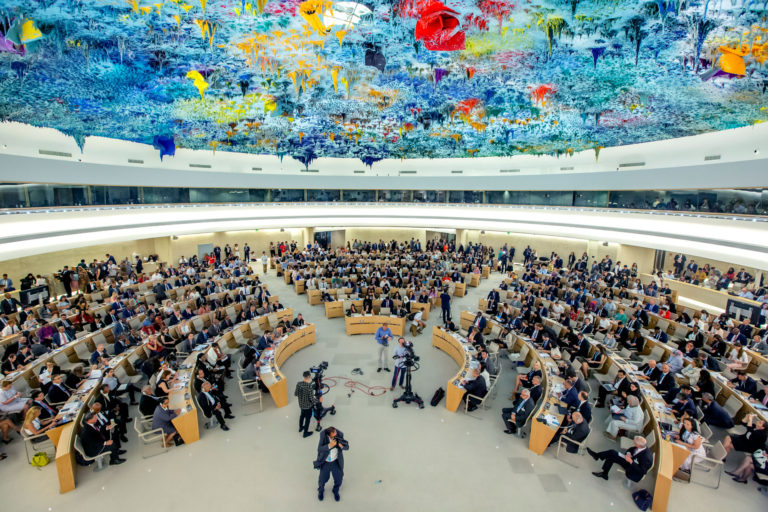
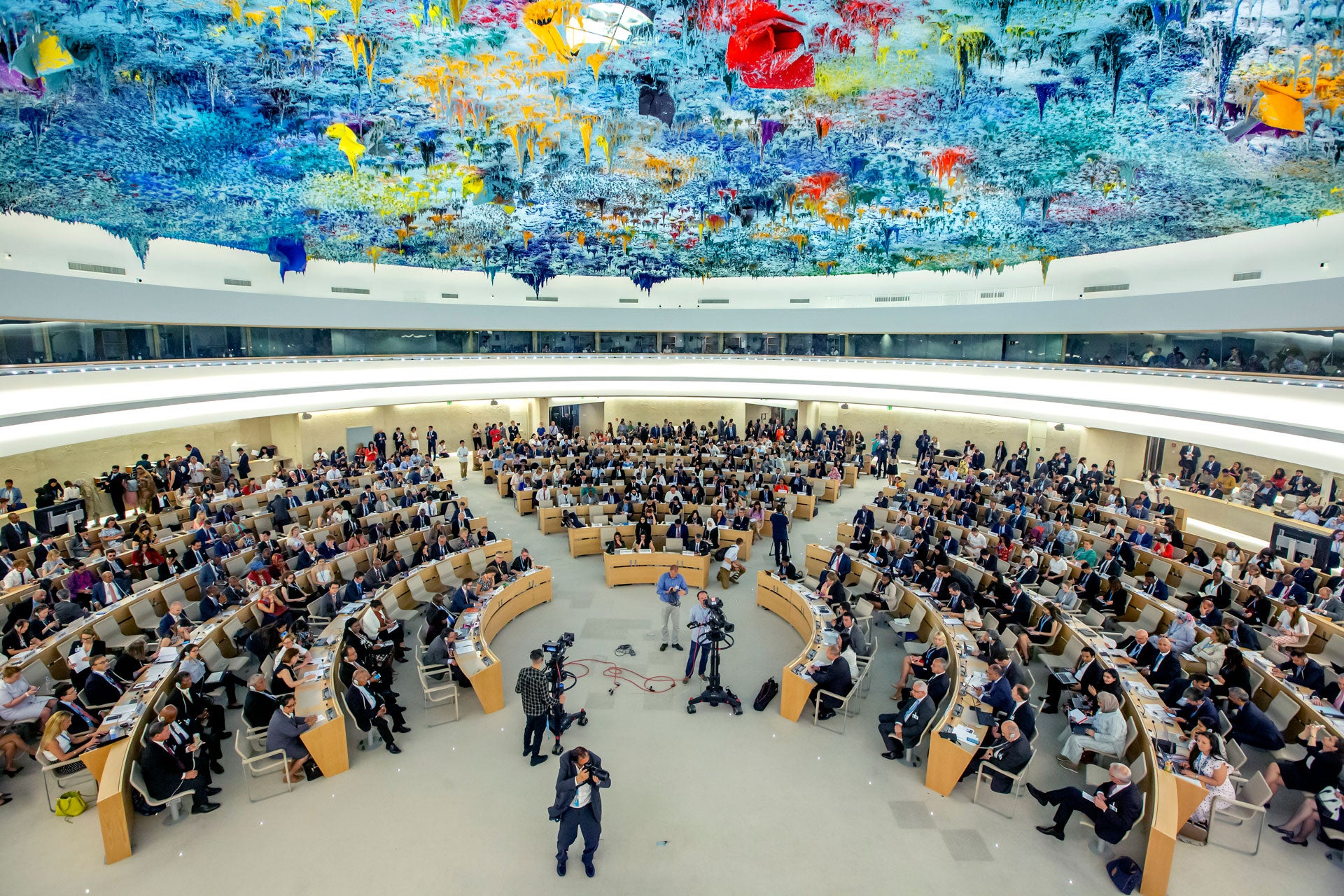
(Geneva) – Saint Lucia and Saint Kitts and Nevis should decriminalize same-sex relations and adopt comprehensive anti-discrimination legislation protecting lesbian, gay, bisexual, and transgender (LGBT) people, Human Rights Watch said today.
During the Universal Periodic Review (UPR) of the two countries’ human rights records on June 19 and 20 at the United Nations Human Rights Council, United Nations member states expressed serious concern over the nations’ laws that criminalize same-sex sexual conduct, in violation of international human rights law. Both countries prohibit “buggery,” imposing sentences of up to 10 years. Saint Lucia also criminalizes “gross indecency” in private between consenting persons of the same sex.
“While colonial-era buggery and gross indecency laws in Saint Lucia and in Saint Kitts and Nevis are seldom enforced against consenting people, their impact is pernicious,” said Cristian González Cabrera, LGBT rights researcher at Human Rights Watch. “Laws criminalizing same-sex conduct reinforce prejudices and provide social and legal sanction for discrimination, violence, and prejudice against LGBT people.”
Established in 2006, the UPR involves a comprehensive review of the human rights records of all UN member states by other countries every five years. Nongovernmental organizations, as well as the country under review, can contribute reports to inform the review process. Saint Lucia and Saint Kitts and Nevis are required to respond to the recommendations by June.
UN member states also said that Saint Lucia and Saint Kitts and Nevis should adopt comprehensive laws that prohibit discrimination on grounds of gender identity and sexual orientation, such as in housing, education, or health care.
A 2018 Human Rights Watch report “‘I Have to Leave to Be Me’: Discriminatory Laws against LGBT People in the Eastern Caribbean” documented discrimination, violence, stigma, and prejudice against LGBT people in Saint Lucia and in Saint Kitts and Nevis.
Toby, a 38-year-old gay man in Saint Lucia, told Human Rights Watch that exclusion and ostracism by his family drove him to five suicide attempts and to leave home. Toby also said members of the public pelted him with stones in 2015 during Carnival. In April 2016, he and his partner were attacked as they were entering their home one afternoon: “[I knew] it was motivated by us being gay because the term ‘buller’ was used. As we were entering the house, a car pulled out, two persons jumped out … a gun was raised and they tried to pull the trigger, but the trigger did not work. I told my boyfriend to run. They stabbed me, several times, the deepest one was below the navel. My boyfriend was also attacked with stones.”
Nicholas, a 20-year-old gay man from Saint Kitts and Nevis, told Human Rights Watch he lived with constant fear and uncertainty. “You are not safe,” he said. “You have to hide who you are. Otherwise they will get physical, shouting things … I was threatened by my own mother, [she told her sons that] if any of us is ‘anti-man’ she would kill us.” When Nicholas and his boyfriend were outed on social media while they were both high school students, Nicholas was taunted and aggressively harassed for the remainder of his school days. Nicholas experienced suicidal thoughts and once attempted suicide due to social exclusion.
International human rights law establishes that matters of sexual orientation and gender identity, including consensual sexual relations, are protected under the right to privacy and the right to be protected against arbitrary and unlawful interference, or attacks on private and family life and one’s reputation or dignity. Criminalizing same-sex intimacy violates these international standards, as the UN independent expert on protection against violence and discrimination based on sexual orientation and gender identity has affirmed.
The Organization of American States has urged states “to adopt the necessary measures to prevent, punish, and eradicate” discrimination based on sexual orientation and gender identity. Core treaties like the International Covenant on Civil and Political Rights, the International Covenant on Economic, Social and Cultural Rights, and the American Convention on Human Rights – which Saint Lucia and Saint Kitts and Nevis should ratify, as many states recommended during the review – have been interpreted by courts and authoritative treaty bodies to ban such discrimination, as have a variety of other international instruments and sources of law.
“Saint Lucia and Saint Kitts and Nevis should heed the recommendations of UN member states and provide their residents protection on the basis of sexual orientation and gender identity,” González said. “LGBT people are part of the social fabric of the island nations and deserve the same respect and rights as everyone else.”
Background
Section 133 of Saint Lucia’s Criminal Code on “buggery” criminalizes consensual same-sex conduct. Section 132 of the Code on “gross indecency” exempts from punishment any act “committed in private between an adult male person and an adult female person, both of whom consent,” but lacks protection for private acts between same-sex persons.
Saint Kitts and Nevis’ Offences Against the Person Act 1986, Chapter 4.21, Section 56 criminalizes “sodomy and bestiality” and defines the terms by referencing “the abominable crime of buggery, committed either with mankind or with any animal.” Section 57 of the same Chapter allows courts to add “hard labor” to a criminal sentence.
Neither country has a comprehensive law that prohibits discrimination on grounds of gender identity and sexual orientation. Section 131 of Saint Lucia’s 2006 Labour Act does prohibit employers from “unfairly dismissing” a person on the basis of their sexual orientation or sex, but does not explicitly prohibit such dismissal on the basis of gender identity.

Pro rugby player Devin Ibanez wasn’t expecting global attention when he came out publicly via Instagram. He explains how he’s tackled the media…

Three weeks ago, rugby player Devin Ibanez posted for the first time to his newly created Instagram account.
The post contained three photos of Devin with his boyfriend, Fergus Wade, and a message of hope for the future – that by living a more authentic life as an out gay man, he would find greater happiness and also have a positive impact on others.
Since then, the Massachusetts-born flanker has been featured across the global LGBT+ media space, seen his story of suffering a life-threatening injury while playing in England shared on Sky Sports, and attracted over 5,000 followers already to his Insta.
Devin, who most recently played with Major League Rugby club New England Free Jacks, is one of just a handful of male rugby players who have played the game professionally to have come out publicly as gay or bi, anywhere in the world.

So what’s his experience been like so far, having made such a big personal announcement? What does the nature of his coming out journey tell us about being LGBTQ+ in sport in 2021? And what are his future plans in rugby?
In our latest Q&A article for Sports Media LGBT+, we put all these questions to Devin.
And with January 21 marking Devin and Fergus’s three-year anniversary, there’s no better time to chat to ‘That Gay Rugger’ about his story, particularly how he’s tackled the media…
JH: Hi Devin! Thank you for sharing your story so publicly, and for getting in touch with us – the last few weeks must have felt like a bit of a whirlwind! When you reflect back, what did you anticipate from creating your @thatgayrugger account – and how has the reaction been for you?
DI: It’s been a whirlwind! I truly didn’t anticipate this type of response when I made that post. In years past, when I had planned on coming out publicly during an active MLR season, I was more mentally prepared for a potentially large response. When I made the post on December 29, I felt like I had to do it for my own mental health, as well as Fergus’s.
The reaction has truly blown me away. I hoped that it would be impactful and inspire some others, but I never could have anticipated how far our story has spread. I’ve heard from people from France, Italy, Lebanon, England, Scotland, Tunisia and more. I’ve received overwhelmingly positive feedback about my decision from teammates, family, friends and strangers. I’ve had the chance to connect with people who have had similar experiences in the sport who have told me how much my story has impacted them.
While I would like to say that every single response has been positive, that hasn’t been the case. The negative remarks have been drowned out by the positive, but they are still there nonetheless. The rugby community in particular has been incredibly supportive overall.
The media so far has been quite overwhelming, but in the best way possible. I have been truly humbled by the amount of publications reaching out asking more about my story. I never could have imagined that it would resonate with people from so many different places.
The LGBTQ+ media I have worked with so far have been especially helpful and supportive. They’ve helped me hone my story and given me a platform to spread my message of LGBTQ+ inclusivity and equality in sport.
I know a little about Massachusetts – my fiance and I went there on holiday a few years back. What was it like growing up there – and also, as part of that, growing up gay?
Overall, I enjoyed my time growing up in Brookline, which is a bordering town of Boston, and my family has been based here my whole life. I was a bit of a handful as a child, so I struggled fitting in at school. I just had a tremendous amount of energy and traditional schooling required me to be in one place for hours at a time which was a struggle!

But Brookline is a very accepting place in terms of being welcoming to the LGBTQI+ community. So in that sense, I had it very easy growing up here, and there were several gay students who were out at my high school.
However, I didn’t feel comfortable coming out while I was at Brookline. Although I knew it was an overall accepting place, I was serious about rugby and being immersed in a hypermasculine culture where homophobic terms were quite common, I felt it was better to keep my sexuality to myself. So I can’t imagine how difficult it would be to grow up in places where there are no out gay students or support systems.
Even under what many would consider ideal conditions in my community, I still struggled with coming out immensely. However, I just told myself that my sexuality didn’t matter and that it wasn’t relevant.
Take us back to the beginning of your sports journey. How did you get into rugby, and what were your experiences like in the sport as a teenager?
Getting into rugby was an interesting journey to say the least. My primary sport going into high school was actually ultimate Frisbee and growing up, my favourite sport to follow was baseball. When I first got to high school, I decided to give American football a go. That was a complete disaster. I hated the pads, I was afraid of the contact, and I was called a ‘f****t’ and bullied mercilessly.
Since there was no official ultimate Frisbee team at Brookline, I decided to try my hand at baseball instead. I went into freshman team tryouts with no baseball experience, hoping for the best. That went about as well as you could expect, and I was one of only four players who did not make the team.
Fast forward a year, and I still hadn’t found a sport to play at high school. I had always been a very active kid and loved to compete, even if I wasn’t a particularly talented athlete. I wasn’t very fast, strong, or coordinated – truly a triple threat! One day, I decided to sit down with a school guidance counselor and look through what sports were offered. That’s when I saw rugby. The only thing that I knew about rugby was that my friend played it and that it was a contact sport.
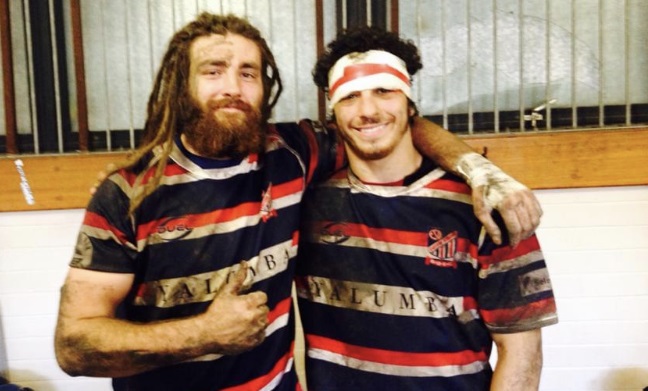
I decided to give it a shot and instantly fell in love. One of the first things I remember about playing rugby was all of the positive reinforcement from my teammates and coaches. In football, it seemed to constantly be about bringing someone down or one-upping each other. Rugby brought me such a sense of community and support. My fear of contact quickly disappeared as I began to get positive feedback from my team.
It quickly became clear that this was a sport I could potentially excel at. I started on our first side for every match, despite it being my first season playing. I decided then that I wanted to pursue the sport full-time. I began training and playing in the fall, spring, and summer to maximise my potential.
While I came into my own as a player, I still found myself hesitant to share about my sexuality. Rugby did not exist in a vacuum free of homophobia. I still found team-mates and sometimes coaches freely using the word ‘gay’ to describe things that were stupid, or using the word to belittle others. I did my best to keep my head down and fit in and improve as a player.
You met Fergus three years ago. What brought you together, and what can you tell us about how you fell in love?

Fergus was in Boston doing research for a Harvard Lab. We met in December 2017, just before he went home to be with his family for the holidays. We met the same way that many couples do, online through a dating app!
We began by talking about my experiences in England [Devin played for Scarborough RUFC in 2017] and instantly hit it off with our similar sense of humour. After talking for a few weeks on and off, I decided to ask him if he wanted to meet up in person. We met and I ended up taking him to my favourite Thai place and we talked for hours.
It felt so natural and I fell for his genuinely kind heart and quick wit. After sharing a lovely meal together, we went back to my apartment and I showed him my rooftop. It was there that we shared our first kiss. We managed to see each other a couple more times before he left to go home for break.
We kept talking every day while he was back home and began making plans to spend more time together when he came back. When he got back to Boston, it felt like we were reuniting after knowing each other for a long time. It felt so easy and we wanted to spend as much time together as possible. After a couple weeks of being inseparable, Fergus asked me if I wanted to make it an official relationship. I was over the moon and said yes without a second thought. We began to see each other almost every day and were essentially living together. We would take trips away on the weekends when I didn’t have rugby matches and spent as much time together as possible.
It all happened very quickly, but suddenly we were essential parts of each other’s lives. The time began to fly by and Fergus’s year in Boston came to an end. We were devastated, but we figured a long-distance relationship probably was not realistic. Our final night together was a mess of sobbing, emotions, and dread for what was next. As the days and weeks following his return to England went by, the idea of leaving our love in the past felt wrong. We were still talking every day and both clearly still wanted to be with each other. We decided to hell with practicality, we were going to do everything in our power to make this work. We now have our three-year anniversary on January 21.
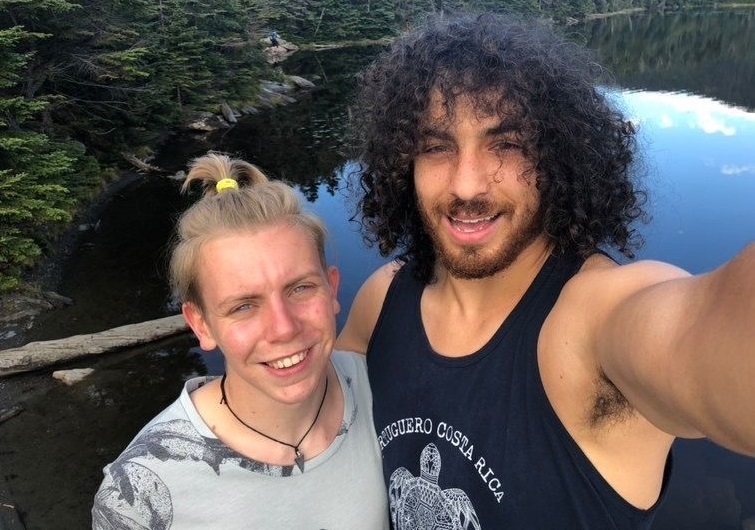
What would you say to another athlete who’s seen your Insta account and all the media coverage and is contemplating possibly doing something similar?
The best advice I can give is to take your time and wait until you’re ready. Everyone moves at their own pace and there’s no right or wrong time to come out, it’s entirely dependent on you and your own experiences. Take the time to build up a strong support system and prepare yourself for the potential media attention. Reach out to organisations that help athletes prepare to come out publicly, such as Sports Media LGBT+.
While I’m happy that I decided to come out publicly that day, I was not fully mentally prepared for the attention it was going to bring. Having a support system in place and a plan for how to navigate the media will go a long way and make the process much more manageable.

I hope that more athletes will come out so that over time, it will be less necessary to be prepared for that level of attention. But also know that you will be met with overwhelming positivity and love from around the world for sharing your story. That you may impact people in ways that you didn’t think you could just from pursuing a sport that you love. Being able to potentially impact people in that way is so special and I’m truly humbled and touched by those who reached out to me with their support.
How can our industry can make the coming out experience less intimidating for male athletes like yourself, particularly in team sports?
I’m not sure that the media can do anything to make the process easier. The fact remains that until more male athletes feel comfortable coming forward in this way, there will always be a disproportionate amount of media attention on them.
I’m truly grateful that the media has covered my story in the way that it has and allowed me to reach so many people. But I can also understand why the idea of dealing with that level of media attention would be daunting to so many people.
Were there any other athletes who inspired you? We help to share stories in order to empower others in our LGBT+ in sports community to be authentic too, whether they are publicly out or not.
I’ve always found Gareth Thomas to be a huge inspiration. His struggles and the way he was embraced by his former teammates at the highest level of the sport really resonated with me.
But someone closer to home who really inspired me to continue on my journey was Rugby United New York coach Tiffany Fa’ae’e. When she became the first female professional coach in Major League Rugby, she received such an amazing response. Any negative comments were completely drowned out by a wave of positivity and the young people she inspired.
I saw how much her visibility and representation mattered and it gave me a glimpse into the potential positive impact I could have. Her story inspired me to push harder and do everything in my power to follow through on my goal of becoming an out gay professional player.
One of the biggest stories in sport recently has been the Justin Thomas homophobic language incident on the PGA Tour. What are your thoughts on that, and the effect of hearing words like ‘f****t’ uttered so casually by guys like him in sports?
I was extremely disappointed, but not at all surprised by the incident. As someone who has been among male athletes in a competitive setting, it’s very clear that homophobic language is still a prevalent part of sports culture. I think that there’s a perception among male athletes that using homophobic language is the same as any other swear or bad word. In the sense that it’s just a word that you can throw out there when you’re frustrated that doesn’t have any reverberating effects.
This is something I think is important to express to participants in sport who do not identify as LGBTQ+. As someone who was a closeted athlete for most of his life in sport, language matters. I was often looking for ways to identify who would support me if I were to come out publicly without explicitly sharing my sexuality with them. The language that my teammates used was one of the easiest things that I was able to monitor and identify.
When you hear people freely use homophobic language or use it as a way to belittle others, it will resonate with you. It will contribute to an ever-growing seed of doubt that your teammates may not accept you or have your back. I think it’s important to try and convey the harm that these words can have, regardless of context. The fact that your words could be contributing to someone feeling unsafe or unsure of their place in the sport is one that should make all athletes think twice.
What are your ambitions now, in rugby and in life more generally? Any other closing thoughts?
Rugby-wise, my goal is to continue playing at the highest level possible for as long as I can, whether that means signing with Major League Rugby again, or finding a team closer to Fergus in the UK. Another personal goal is to become the first out gay captain of Team USA for the 2022 World Maccabiah Games in Israel. That would be a tremendous honour and an accomplishment I would take immense pride in.
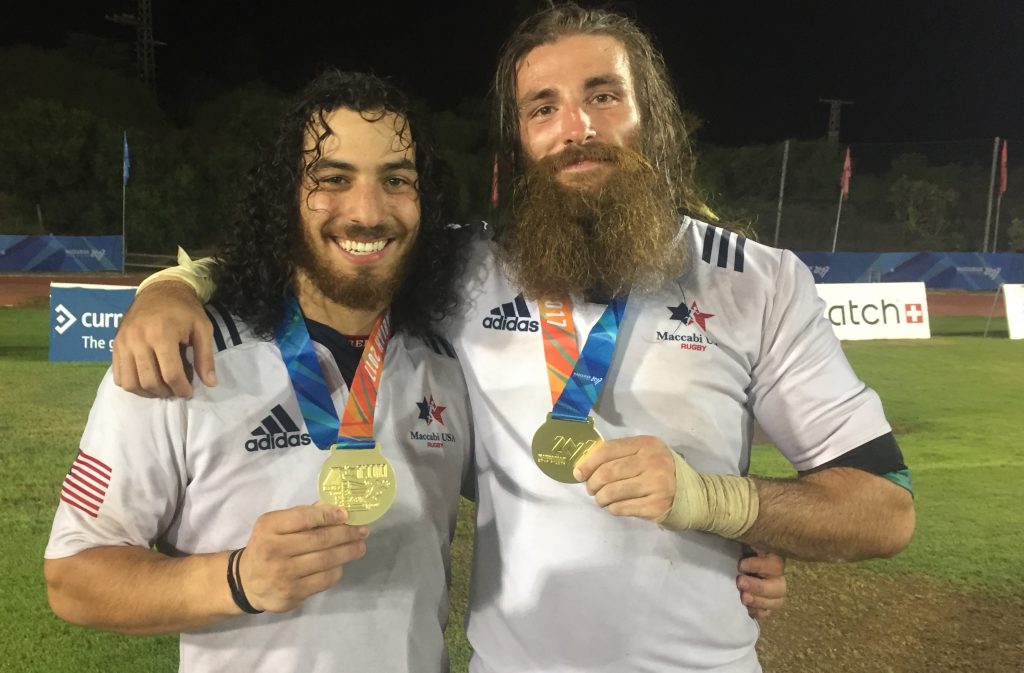
Beyond playing, I also hope to pursue coaching across the globe and being an advocate for LGBTQI+ inclusivity in sport. My goal is to reach as many people as possible who may be impacted by my story and try to inspire them to be themselves openly without fear of backlash. I want to travel the world and be as visible as possible in hopes that this process will be much easier and less daunting for the next out gay athlete to come forward in rugby.
Thank you to Devin – follow him on Instagram at @thatgayrugger.
Sports Media LGBT+ is a network, advocacy, and consultancy group that is helping to build a community of LGBT+ people and allies in sport. Learn more about us and see our calendar of forthcoming events here.
Like Devin’s, your story could help to inspire other people – you don’t have to be famous to make an impact, and there are huge gains to be made both personally and more widely in sport. Start a conversation with us, in confidence, and we’ll give you the best advice on navigating this part of your journey. Email jon@sportsmedialgbt.com or send a message anonymously on our Curious Cat.
Further reading…
Athletics Pride Network’s Gareth Burrell shares his coming out story
Jak Ball: Coming out lifted a mental weight off my shoulders
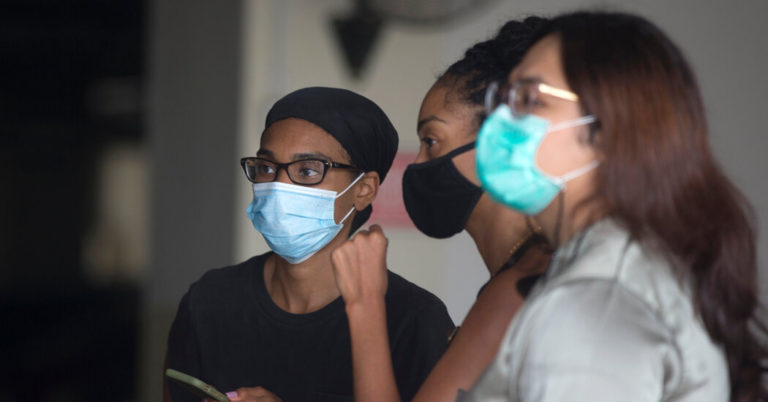

BANGKOK — An American woman who has been living in Bali during the pandemic was deported on Thursday after she praised the Indonesian island as “queer friendly” and offered to help foreigners enter the country despite its coronavirus travel ban.
Indonesian immigration officials detained the woman, Kristen Gray, 28, overnight Tuesday and said she was being deported for “spreading information that could unsettle the public.” They also accused her of “carrying out dangerous activities” and endangering public order by not obeying rules and laws.
“I am not guilty,” she told reporters outside the immigration detention center on Tuesday. “I put out a statement about L.G.B.T. and I am being deported because of L.G.B.T.”
Her arrest came three days after she posted a thread on Twitter extolling the ease of her low-cost life in Bali and its tolerant community, and promoting an e-book, “Our Bali Life Is Yours,” that she wrote with her partner, Saundra Alexander. The couple also offered tutorials for people wanting to move to the island.
Ms. Gray and Ms. Alexander, 30, were deported on Thursday morning after flying to Jakarta from Bali on Wednesday evening and staying overnight. They boarded a flight to Los Angeles with a stopover in Tokyo.
“Deportation activities were carried out smoothly,” said Jamaruli Manihuruk, head of the Bali immigration office.
The women’s lawyer, Erwin Siregar, had said that the deportations were undeserved and that the couple had not broken any laws. Their goal was to help people come to Bali after coronavirus restrictions are lifted, he said.
“They are good people,” Mr. Siregar said. “They can persuade tourists to come to Indonesia after the pandemic is over without a cent of payment. We should thank them, not deport them.”
Bali, which is predominantly Hindu, unlike the rest of majority-Muslim Indonesia, is highly dependent on tourism and has long cultivated a reputation for tolerance in a country that is increasingly conservative. But with the ban on international tourists, many hotels and tourist destinations have closed. Balinese workers have struggled to make a living, and the tourism industry has been desperate to bring back visitors.
In her lengthy Twitter thread, Ms. Gray, who is Black, praised Bali as a place welcoming of Black people. She also boasted about living an elegant lifestyle on a shoestring budget, comments that set off a firestorm of criticism among Indonesians on social media.
Some complained that foreign tourists like Ms. Gray had helped drive up prices on the island and limit opportunities for Balinese outside the service industry.
“Why do Americans think their peace of mind is worth gentrifying a whole island and pushing locals out of their own lands and into low-paying jobs,” one commenter wrote on Twitter.
In her thread, Ms. Gray said that she and Ms. Alexander left the United States last January in part because of the high cost of living, and that she found living in Bali much more rewarding and less expensive.
“This island has been amazing because of our elevated lifestyle at a much lower cost of living,” she wrote. “Being a digital nomad is everything.”
She said she was paying $400 for a treehouse compared with $1,300 for a studio in Los Angeles.
The couple initially planned to stay six months but remained in Bali after the spread of the coronavirus halted most international travel. Indonesia barred foreign visitors from the worst-hit countries in March, and soon after extended the ban to all foreign tourists.
In a statement, the Bali immigration office said Ms. Gray’s Twitter posts could “unsettle the public” by suggesting that the island was tolerant of gay men and lesbians in a country that does not recognize same-sex marriage. It also accused her of spreading information about the ease of entering Indonesia during the pandemic.
In one of her posts, Ms. Gray wrote that the couple’s e-book included “direct links to our visa agents and how to go about getting into Indonesia during Covid.”
One observer on Twitter noted that it was ironic for Ms. Gray to claim she was a victim of discrimination after praising Bali as a queer-friendly destination.
“You said Bali is queer-friendly but then you also said you were discriminated for being gay in a homophobic country,” the observer wrote.
Mr. Siregar, the lawyer, said the sudden deportation was unfair to the couple because they did not have a chance to prove their case in court and had only a few hours to pack their bags and say goodbye to the dog they had adopted. He accused immigration officials of deporting them because of the criticism on social media.
“They are kindhearted people,” he said. “They like to help poor children and buy them food. It is proof they don’t want to live selfishly. I wonder why good people like them are being deported.”
Ms. Gray’s Twitter account was no longer public by Tuesday, and the couple’s e-book was no longer available online.
Dera Menra Sijabat contributed reporting from Jakarta, Indonesia.
WASHINGTON, D.C. – People around the world have struggled for more than a year while stuck at home for school and work. But this physical and social isolation has taken a particularly tough toll on LGBTQ+ youth, data and interviews show.
That’s because the pandemic cut many gay and transgender youth off from the places and spaces where they feel free to be themselves and forced them to spend a lot more time with family members who may not accept them.
“A lot of my friends are in the closet…and being stuck at home, they can’t really get out into the world,” said K.C. Elowitch, a 14-year-old transgender student in Rockville, Md. “At school, they were able to do whatever they wanted and be whoever they wanted. Now being stuck at home with [their families] is a lot more stressful.”
Elowitch was one of 11 young people, ages 14 to 22, who participated in a recent LGBTQ+ youth mental health focus group hosted by the Urban Health Media Project, a Washington-area nonprofit that trains diverse high school students from under-resourced communities to do multimedia health and social issue journalism.
Elowitch’s experience was echoed by others in the focus group.
“I was in a bad place when I was closeted,” said Wendy Nichols, a 22-year-old trans woman who began transitioning last summer. “Not just mentally, but literally and physically.”
Living with transphobic parents made it “hard to be comfortable with myself,” said Nichols.
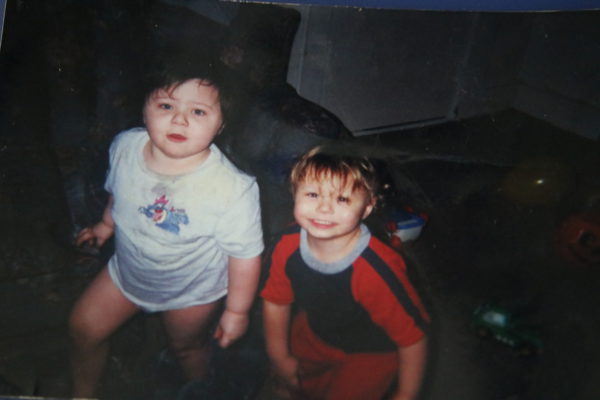
Wendy (left) is shown with her twin brother (right)
Focus group members honed in on topics that make it hard to be LGBTQ+, including:
Participants were encouraged to share openly, and were led through the 90-minute discussion by professionals, and fellow members of the LGBTQ+ community. The focus group was co-moderated by Heidi Ellis and Josh Rivera. Ellis, who identifies as lesbian, was a senior adviser at the U.S. Environmental Protection Agency in the Obama administration and now runs her own advocacy and consulting company. Rivera, Money & Consumer Editor at USA TODAY, is gay and chairs the newspaper’s diversity committee.
The focus group participants talked about what they would like addressed by the media and what they would like to see change. They emphasized topics such as safety, gender identity, and safely coming out to others.
Roman Sardo-Longo, a 16-year-old trans male who joined the virtual focus group from Cleveland, said having more LGBTQ+ representation in the media could help other young people more easily accept peers like him.
“It took me a while to come out [as trans] because I was terrified that my friends would not understand, that they weren’t gonna get it, that they would think it was a weird thing they would have to accommodate for,” he said.
Others shared their experiences with religious beliefs that oppose LGBTQ+ identity and sexuality.
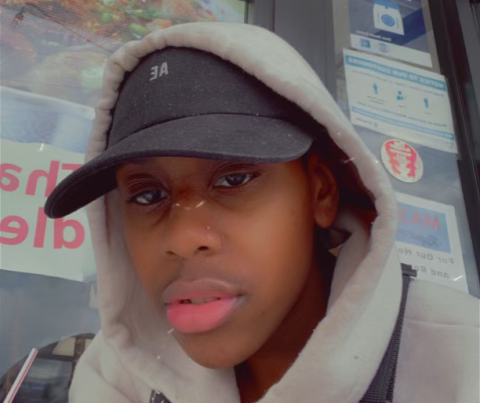
Tris Buchanan, a DC high school senior, is shown in a recent selfie.
Tris Buchanan, 17, lives in Washington, D.C., and identifies as gender-fluid. Buchanan’s parents’ Christian religion played a big role in their struggle to come out.
“Some die-hard Christians…say God does not like gays, God doesn’t like anyone who’s part of the LGBTQ community,” said Buchanan. “Homophobes use the Bible and use God as excuses.”
Nichols, who also grew up in a conservative Christian household in Texas, said the concept of “toxic masculinity” also greatly affected her as she was growing up.
“I was told, ‘Men don’t cry,’ ” said Nichols. “I grew up with that and it skewed my views.”
When Nichols was 16, she finally decided to tell her family she identified as a woman. Her late mother, who had struggled with mental illness since a serious brain injury in a car crash, took Nichols for a drive and threatened to drive them both into the river if her daughter didn’t retract the statement. So Nichols did.
But last June at 21, Nichols began transitioning to a female by taking hormones she got off the Internet. She didn’t have health insurance and lived nearly five hours from the nearest health care provider who would treat her. After her father died of cancer last August, she moved to the Washington, D.C., area to live with a friend she met online.
When that didn’t work out, Nichols became homeless and called the LGBTQ+ youth shelter Casa Ruby. There, she found comfort with others like her and within two months, was connected to the transitional housing where she can now live for the next 18 months, if needed. She begins a new job as a receptionist in early May.
Nichols, who struggles with substance use and what she believes is depression, said she’s feeling more hopeful than ever that “one day I can overcome it all.”
“The future seems so bright now,” she said. “I’m not stuck in a place where I couldn’t be myself or dreading the next bad thing as I did for most of 2020 when I was preparing for my father to pass away.”
UHMP also just completed a workshop on the relationship between housing and health, including LGBTQ+ youth homelessness in D.C. and Baltimore. That story will run soon in the Blade. Another reporting workshop this summer will explore youth mental health, with a special focus on the LGBTQ+ and Black, Indigenous and People of Color (BIPOC) communities. UHMP is seeking applications for 20 high school students to attend.
UHMP is also pursuing reporting on topics proposed by the young people who attended the focus group. Two participants are working on a story about the additional challenges faced by LGBTQ+ youth with learning disabilities.
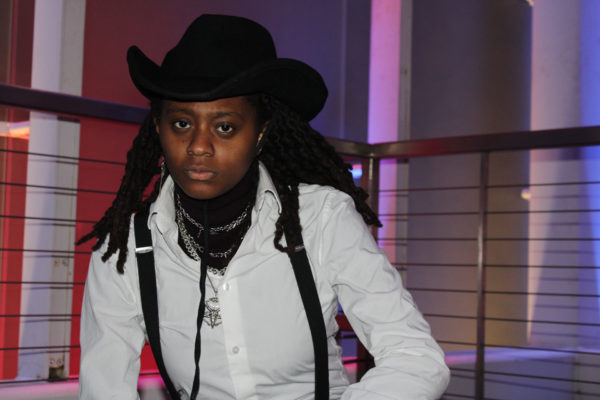
Jojo Brew, 18, is a DC high school senior and photographer.
Jojo Brew, an 18-year-old trans male in Washington, D.C., who participated in the focus group, believes the LGBTQ+ community should produce positive content on social media sites such as Instagram in order to raise awareness and promote understanding of gender and sexuality issues.
To that end, he’s begun interviewing and photographing other LGBTQ+ teens in the D.C. area for visual articles and social media posts and told a little of his own story for Instagram. Brew is also helping plan a June 18 LGBTQ+ event co-hosted by UHMP in Washington, where he hopes young people who may not be out can be “one with the community” even if they don’t speak publicly.
“Having that exposure to other LGBTQ+ people, they’d realize they aren’t the only ones going through a tough time,” said Brew. “They want to be heard and feel some type of love.”
Brew was recently awarded a Children’s Defense Fund fellowship grant to chronicle the sense of community in Southeast Washington and is working with UHMP to capture and share the stories of LGBTQ+ youth in the D.C. area.
UHMP is looking for LGBTQ+ people of all ages who are willing to be interviewed about youth mental health. We’d like to hear from youth and adults on all topics, including the impact of the reactions of community, government, parents, religious organizations and peers to youth gender and identity. What helped you weather challenges that could help the next generation? Let us know at [email protected]
Vanessa Falcon is a UHMP intern and senior at Miami Lakes Educational Center in Florida. Jayne O’Donnell, former health policy reporter at USA TODAY, is UHMP’s founder.

netflix
Even though the LGBTQ+ population is on the rise in the United States, lesbian and gay relationships are still underrepresented in media. But the good news is, the beautiful diversity of human experiences are appearing in films more and more often. According to the 2020 GLAAD media report, of the 118 films released from the major studios in 2019, 22 included LGBTQ characters. That’s the highest percentage of inclusive films in the report’s history. And that representation matters. Media that shows LGBTQ people normalizes love between two people of the same gender, educates viewers on the long and difficult journey toward equal rights, or reinforces the fact that that gay, lesbian and LGBTQ people are just like everyone else.
For newly out or young viewers, that validation can make them feel seen and heard. That’s a powerful thing, especially for those who don’t otherwise have a safe place to share who they really are. No matter your favorite genre, one of these lesbian movies will certainly hit the spot. But a word of warning: some of them can get a little hot and heavy. We’ve made a note of that where applicable, so you can save them for date night. Whether you want to help your LGBTQ teenager feel accepted or need a good film to watch with your partner, you’ll find something to love here.
Advertisement – Continue Reading Below
This content is created and maintained by a third party, and imported onto this page to help users provide their email addresses. You may be able to find more information about this and similar content at piano.io
Advertisement – Continue Reading Below
