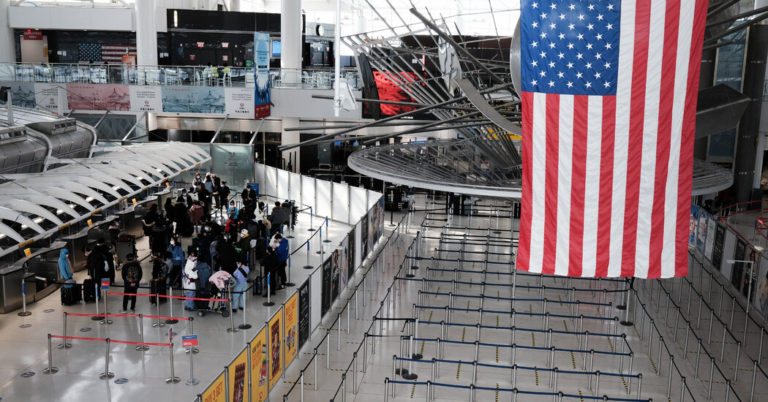
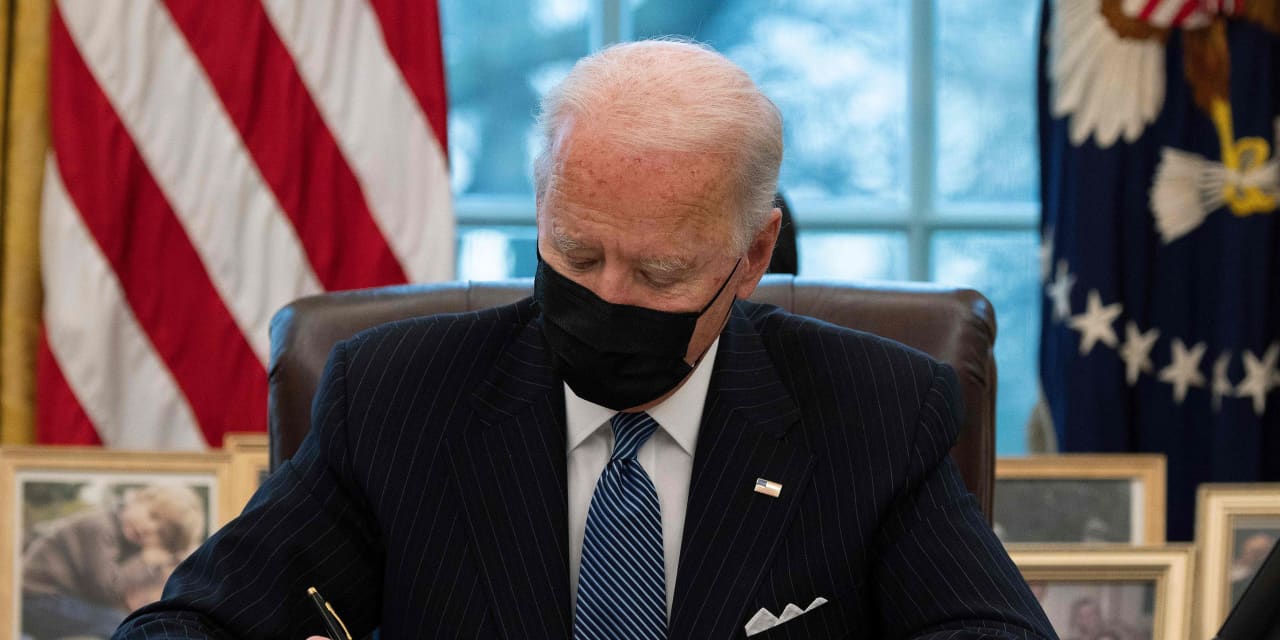
Travel by noncitizens into the United States from South Africa will be banned over concerns about a coronavirus variant spreading in that country. And bans put in place last year on travel from Brazil, 27 European countries and Britain will be extended, the Biden administration announced on Monday.
Dr. Anthony S. Fauci, the government’s leading infectious-disease specialist, has said that the variant of the virus in South Africa appears to be more highly contagious.
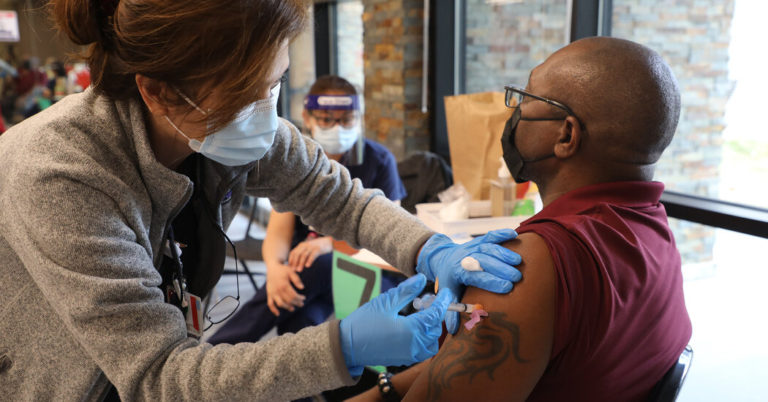
Moderna said its vaccine is effective against the new variants of the coronavirus that have emerged in Britain and South Africa. But the immune response is slightly weaker against the South African variant, so the company is developing a new form of the vaccine that could be used as a booster shot against that virus.
The new director of the Centers for Disease Control and Prevention, Dr. Rochelle Walensky, has predicted the vaccine supply would not increase until late March. Federal health officials and corporate executives have said it will be impossible to increase the immediate supply of vaccines before April because of a lack of manufacturing capacity. But a third vaccine maker, Johnson & Johnson, is expected to report the results of its clinical trial soon; if approved, that vaccine would also help shore up production.
Mr. Biden’s travel ban will go into effect Saturday and apply to non-U.S. citizens who have spent time in South Africa in the last 14 days. The new policy will not affect U.S. citizens or permanent residents, officials said.
On his last full day in office, President Donald J. Trump tried to eliminate the Covid-19-related ban on travel from Britain, Ireland, 26 countries in Europe and Brazil, saying it was no longer necessary. Jen Psaki, the White House press secretary, said on Monday that the ban would remain in place.
“With the pandemic worsening and more contagious variants spreading, this isn’t the time to be lifting restrictions on international travel,” she said.
Ms. Psaki also said the Biden administration intended to hold regular public health briefings three times a week, beginning on Wednesday.
The first confirmed case of the Brazilian variant in the United States has been identified in Minnesota, the state’s health department said on Monday. It was found in a Minnesota resident who had recently traveled to Brazil.
The variant now spreading in South Africa appears to have not yet reached the United States. Over two dozen countries have now reported cases of the variant.
In addition to the travel bans, Mr. Biden issued an executive order last week requiring that all international travelers present negative coronavirus tests before traveling to the United States. The move extended a C.D.C. requirement for the tests that was issued by the Trump administration but was set to expire on Tuesday.
Queer men have been sharing their stories of sexual violence under the hashtag ‘Me Too Gay’. (Envato Elements)
#MeTooGay started trending in France after huge numbers of queer men came forward to share their experiences of sexual violence on Twitter.
Some gay men simply shared the age they were when they were first sexually assaulted along with the hashtag, while others told heartbreaking stories of being raped by friends, colleagues and complete strangers.
“He was my first time,” one person simply said, alongside the hashtag.
“I was in MY prime,” one Twitter user wrote. revealing that they were sexually assaulted on three separate occasions throughout their formative years: “I was 16 then 18 then 20.
“And every time I thought it was my fault and I REFUSE to stay silent for another 21 years.”
One person opened up about their experience of sexual abuse at the hands of a colleague, revealing the pain and suffering they endured in the aftermath, when they had to see him at work every day.
Another tweeted: “I was 17. He forced me to take him into my home. He made me do things. When I tried to fight back, it turned him on. Even when I managed to kick him out I felt dirty, tainted.”
One person simply wrote: “I was 15. I said no.”
In one particularly shocking story, a person shared: “I forced myself to blackout so I wouldn’t remember what happened. When I cam to, he was gone and I was bleeding. Couldn’t tell a soul – until today.”
The deluge of tweets has led to an outpouring of support from the wider LGBT+ community in France, with many praising the men for coming forward and sharing their stories of sexual violence.
#MeTooGay is currently trending in France. LGBTQ+ victims of sexual assault are sharing their stories. It’s heartbreaking. Unfortunately, it does not seem that tackling sexual violences & sexual harassment are a priority for the Government. Love & support to the victims💜.
Flora Bolter, co-director of LGBT+ rights group l’Observatoire LGBT+ de la Fondation Jean Jaurés, told FRANCE 24that queer people often stay silent about their experiences of sexual violence because they fear it could lead to backlash against the wider community.
“We’re [already] experiencing strong discrimination because people have this shortcut of stereotyping, and linking LGBT persons to sexual predators,” she said.
“So it’s always been very difficult to broach and address the question of sexual violence within the LGBT+ community because there has been this fear of speaking out and [thereby] fuelling homophobia.”
Statistics suggest that LGBT+ people are at greater risk of sexual assault than their straight and cisgender counterparts.
According to the Human Rights Campaign, various factors such as poverty, stigma and marginalisation can put queer people at a higher risk of facing sexual abuse.
A few of the U.S.’s Catholic Bishops have joined together to voice their support of LGBTQ people.
Ten U.S. Catholic Bishops, including Bishop John Stowe of Lexington Kentucky and Archbishop John Wester of Santa Fe, have written and signed the statement with the help of the Tyler Clementi Foundation, according to American Magazine. The Tyler Clementi Foundation is an organization that fights LGBTQ bullying in schools, work, and religious spaces.
Image via the Tyler Clementi Foundation
“As we see in the Gospels, Jesus Christ taught love, mercy and welcome for all people, especially for those who felt persecuted or marginalized in any way; and the Catechism of the Catholic Church teaches that LGBT people are to be treated with ‘respect, compassion and sensitivity,’” the statement reads.
It then adds, “All people of goodwill should help, support, and defend LGBT youth; who attempt suicide at much higher rates than their straight counterparts; who are often homeless because of families who reject them; who are rejected, bullied and harassed; and who are the target of violent acts at alarming rates.”
“The Catholic Church values the God-given dignity of all human life and we take this opportunity to say to our LGBT friends, especially young people, that we stand with you and oppose any form of violence, bullying or harassment directed at you,” the statement says before concluding with, “Most of all, know that God created you, God loves you and God is on your side.”
“General Audience with Pope Francis” by Catholic Church (England and Wales) is licensed under CC BY-NC-SA 2.0
Currently, the Catholic Church teaches that homosexuality is “objectively disordered” and condemns same-sex sexual acts. But the Church has lately been pushing for accepting and respecting gay people. The whole, “love the sinner, not the sin” argument. Even that phrase is starting to become outdated, though, as more high ranking officials express pro-gay sentiments.
In the past few years, Pope Francis has expressed support of gay people. He compared anti-gay rhetoric to Nazi propaganda in 2019. Then in 2020, he was filmed supporting same-sex unions in the documentary Francesco.
“Homosexuals have a right to be a part of the family. They’re children of God and have a right to a family,” he said in the film. “Nobody should be thrown out, or be made miserable because of it.”
He then added, “What we have to create is a civil union law. That way they are legally covered. I stood up for that.”
Though, that doesn’t erase the continuing incidences of Catholic officials and organizations firing or ostracising LGBTQ individuals within their spaces. There’s still more work to be done.
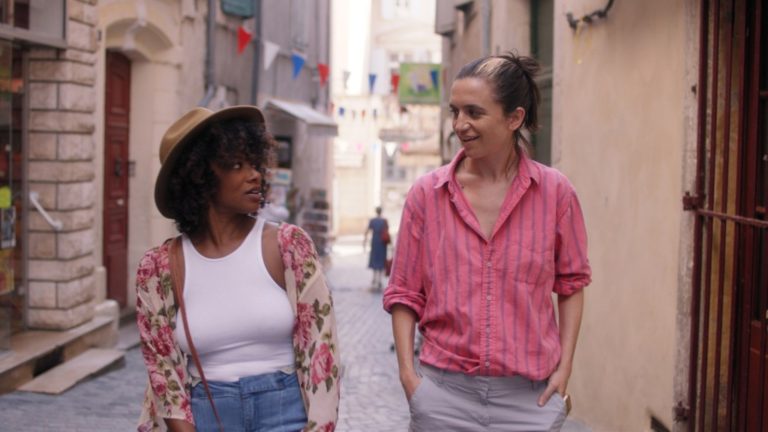
Idella Johnson and Hannah Pepper appear in Ma Belle, My Beauty by Marion Hill, an official selection of the NEXT section at the 2021 Sundance Film Festival. Courtesy of Sundance Institute | photo by Lauren Guiteras. All photos are copyrighted and may be used by press only for the purpose of news or editorial coverage of Sundance Institute programs. Photos must be accompanied by a credit to the photographer and/or ‘Courtesy of Sundance Institute.’ Unauthorized use, alteration, reproduction or sale of logos and/or photos is strictly prohibited.
GLAAD and Outfest are joining together to shine a spotlight on the LGBTQ content releasing at this year’s Sundance Film Festival.
Earlier this month, we shared with the fact that the 2021 Sundance Film Festival is going digital. The festival, which honors films and filmmaking, includes several LGBTQ films this year. And, again, GLAAD and Outfest are working together to make sure those films get their recognition. The organizations will host a Queer House and offer panels, discussions and performances.
“GLAAD is thrilled to lock arms with our friends at Outfest for this year’s virtual Sundance Film Festival, building upon both organizations’ long legacy of supporting LGBTQ-inclusive films and filmmakers at the festival that is known around the world as the birthplace of the ‘New Queer Cinema,’” GLAAD’s director of entertainment media Jeremy Blacklow said in a statement. “From GLAAD’s long track record of LGBTQ programming during Sundance, through Outfest’s hugely successful Outfest House just last year, we are proud to once again amplify and celebrate the groundbreaking LGBTQ films premiering at Sundance in 2021.”’
A still from At the Ready by Maisie Crow, an official selection of the U.S. Documentary Competition at the 2021 Sundance Film Festival. Courtesy of Sundance Institute. All photos are copyrighted and may be used by press only for the purpose of news or editorial coverage of Sundance Institute programs. Photos must be accompanied by a credit to the photographer and/or ‘Courtesy of Sundance Institute.’ Unauthorized use, alteration, reproduction or sale of logos and/or photos is strictly prohibited.
Outfest executive director Damien Navarro added, “Seeing how meaningful it was to see our brief partnership in programming at last year’s inaugural Outfest House on Main Street at Sundance, it was quickly obvious why Outfest and GLAAD should partner in a more meaningful and expanded way this year. Providing our community, our filmmakers, and their stories from this year’s Sundance programming slate as well as voices from across our industry will cover subjects and topics that we believe are top of mind and that should be given a platform to amplify their wisdom.”
The six day event will begin on January 29 and continue till February 3. Several talents will participate including Rita Moreno, Wilson Cruz, GLAAD’s Head of Talent Anthony Ramos, the cast and crew of The World To Come and more. You can find out more about the event at Sundance’s virtual main street.
(Tokyo) – Prime Minister Yoshihide Suga of Japan should commit to introducing a law to protect against discrimination on the basis of sexual orientation and gender identity, J-ALL, Athlete Ally, All Out and Human Rights Watch said today. 116 human rights and lesbian, gay, bisexual, and transgender (LGBT) organizations sent a letter supporting such legislation to the prime minister on January 25, 2021, six months ahead of the day when the torch is scheduled to be lit at the Tokyo Olympics.
Tokyo was slated to host the 2020 Summer Olympics, but the International Olympic Committee and the Japanese government postponed the games for a year due to the Covid-19 pandemic. The Tokyo 2020 Summer Games are advertised as celebrating “unity in diversity” and “passing on a legacy for the future.” To do this, Japan needs to enact a national anti-discrimination law to protect LGBT people and athletes in a way that meets international standards. The groups are running an #EqualityActJapan campaign in Japanese and English in support of a law to prohibit discrimination on the basis of sexual orientation and gender identity.
“LGBT people in Japan, including athletes, are entitled to equal protection under the law, but currently we have only one known openly out active athlete and many remain in the closet from fear and stigma,” said Yuri Igarashi, director of the Japan Alliance for LGBT Legislation (J-ALL), an umbrella organization of 80 LGBT organizations in Japan. “The Olympic Games give Japan a wonderful opportunity to introduce and pass protections so that everyone in society can live openly and safely.”
The Olympic Charter expressly bans “discrimination of any kind,” including on the grounds of sexual orientation as a “Fundamental Principle of Olympism.” Japan has also ratified core international human rights treaties that obligate the government to protect against discrimination, including the International Covenants on Civil and Political Rights and on Economic, Social and Cultural Rights.
“We have seen through history the power of the Olympics to mobilize athletes and fans to speak out for what they believe in, from Tommie Smith and John Carlos protesting racism in 1968 to the Principle 6 campaign fighting for LGBT athlete rights in 2014,” said Hudson Taylor, founder and executive director of Athlete Ally. “Sport teaches us that we are stronger when we stand together, and now is the time for the global sport community to stand in solidarity with the LGBT community in Japan.”
Japanese LGBT groups have pressed for six years to pass legislation to protect their rights, and their progress is seen in sharply changing attitudes in Japanese society, with public support for LGBT equality surging in recent years. In November, a nationwide public opinion survey found that 88 percent of those polled “agree or somewhat agree” with the “introduction of laws or ordinances that ban bullying and discrimination (in relation to sexual minorities).”
“This year, all eyes will be on Japan,” said Matt Beard, executive director at All Out. “In these trying times, the Olympic Games will be a welcome and much-needed celebration of humanity in all its beautiful diversity. By granting LGBT people protection from discrimination, Japan can prove that it truly supports the Olympic spirit of promoting tolerance and respect.”
Japan has increasingly taken a leadership role at the United Nations by voting for both the 2011 and 2014 Human Rights Council resolutions calling for an end to violence and discrimination based on sexual orientation and gender identity. But LGBT people in Japan continue to face intense social pressure and fewer legal protections than other Japanese.
“By passing landmark legislation to protect LGBT people including athletes, Japan not only can be a global LGBT rights leader, but it would also become part of Japan’s permanent Olympic legacy,” said Kanae Doi, Japan director at Human Rights Watch.
NEW YORK (AP) – Declaring “God is on your side,” a Roman Catholic cardinal, an archbishop and six other U.S. bishops are declaring their support for LGBT youth and denouncing the bullying often directed at them.
It comes in a statement released by the Tyler Clementi Foundation, named for the Rutgers University student who took his own life in 2010 after being targeted by online harassment.
Among those signing the statement are Cardinal Joseph Tobin, the archbishop of Newark, New Jersey, and Archbishop John Wester of Santa Fe, New Mexico.
Catholic teaching holds that LGBT people should be respected, loved and not discriminated against, but considers homosexual activity “intrinsically disordered.”
Copyright 2021 The Associated Press. All rights reserved.
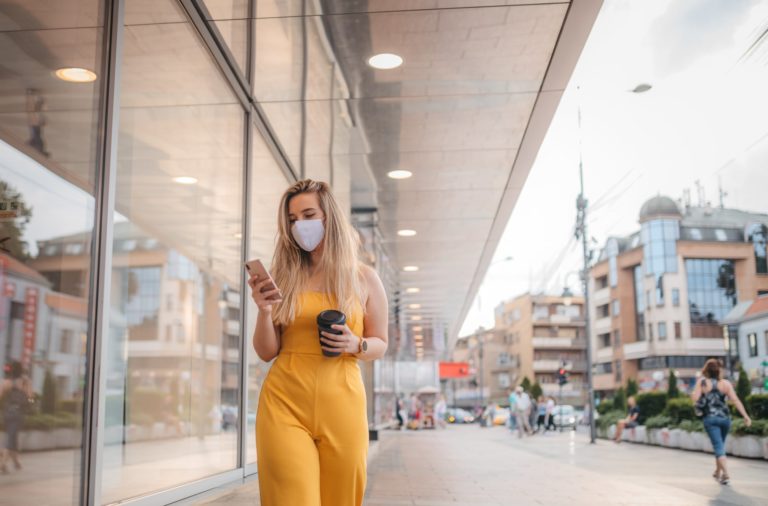
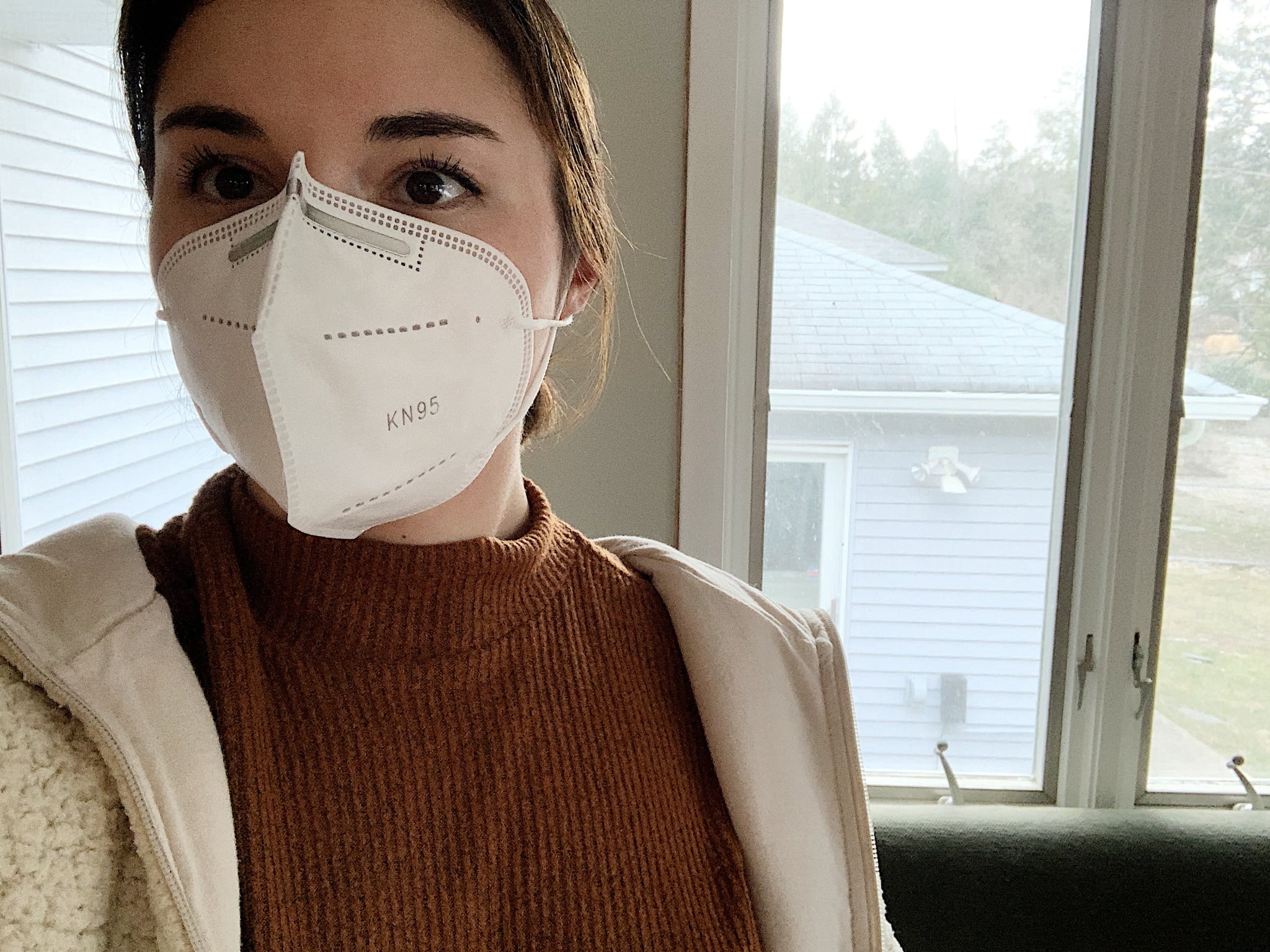
KF94 masks are premium face masks made in South Korea — and Sonali Advani, MBBS, assistant professor of medicine at Duke University, told NPR that the “KF” in “KF94” stands for “Korean filter.” According to The New York Times, it blocks 94 percent of viral particles (hence the “94” in “KF94”). It has ear loops like a cloth face mask and is disposable. Although it can be reused, The New York Times reports that it won’t last as long as cloth masks. And, these medical-grade KF94s are actually widely worn by the public in Korea. The YouTube video below showcases how to put on the KF94.
Epidemiologist Eric Feigl-Ding, MD, ScD, an adjunct senior fellow with the Federation of American Scientists, wrote on Twitter, “Personally I find the South Korean KF94 very comfortable. The KF94 creates a bigger gap in front of your mouth to speak clearly. And I sometimes forget I’m even wearing it because it doesn’t touch my lips or corner of my mouth.” He added that it has a folding system by your nose and chin — what NPR describes as “side flaps.” NPR also describes it as a “mash between an N95 and a typical cloth mask.”
What Is the Difference Between the KF94 Mask and N95 Mask?
A KF94 is reportedly equivalent to the N95 respirator, but more available. It won’t fit as tightly to the face as N95 masks do — plus N95s, as the name suggests, have 95-percent filtration instead of 94. One very small study published in August 2020 concluded that the KF94 and N95 mask both efficiently blocked SARS-CoV-2 particles from spreading when COVID-19 patients coughed.
This study did not test filtration in the other direction — the effectiveness of protecting the wearer from viral particles coming in — though medical-grade masks are, in general, said to be the gold standard when it comes to protecting the wearer from airborne viral particles when they inhale. These medical-grade KF94s are being used by the public in Korea, and Purvi Parikh, MD, an immunologist and allergist with Allergy & Asthma Network, told POPSUGAR that N95 masks, KN95s (which we highlight below), and surgical masks continue to be the go-to medical-grade masks used in healthcare settings in the US. (Note: two nurse friends of mine wear N95s at work, and one said she makes sure to wear her N95 while treating COVID-19 patients specifically.)
What Is the Difference Between KF94 and KN95 Masks?
KF94 masks have 94-percent filtration efficiency, and the other, KN95, is advertised as having 95-percent filtration efficiency. The KN95 is essentially an N95 mask that meets the standard in China. The FDA granted, then reissued, emergency use authorization for KN95 masks in the US, but some KN95 masks were actually shown not to be as effective filtration-wise as N95 masks (so, healthcare professionals should only use ones clearly approved by the FDA). As we mentioned, KF94 masks have ear loops and many KN95 masks also have ear loops, as opposed to the elastic head bands of N95 masks.
Image Source: POPSUGAR Photography / Sam Brodsky
Where Can I Get KF94 Masks?
While Dr. Feigl-Ding said he directly orders KF94 masks from South Korea, they are available on Amazon in packs ($40). However, be wary of knockoffs. As he and other experts have pointed out, there are counterfeit ones being sold online. Stephen Morse, PhD, an epidemiology professor at Columbia University, told NPR that people should always stick to KF94 masks that are manufactured in Korea.
Are KF94s Better Than Cloth Masks?
KF94s are better than cloth masks in terms of filtration and protection from airborne viral particles — after all, they’re medical-grade masks — but you can still wear cloth masks, which continue to be recommended for everyday use in the US. “To be clear, cloth masks do work, too, just to a lesser degree,” Dr. Feigl-Ding said, especially when it comes to filtering your own viral particles (though there is growing evidence that even cloth masks can protect the wearer to a degree).
Dr. Advani told NPR, “When it comes to use in day-to-day activities, overall surgical masks and three-layered cloth masks perform pretty well.” Dr. Parikh told POPSUGAR that you may want a “higher-filtration mask for higher-risk activities, like public transport or grocery shopping.” She stressed that medical-grade masks should be reserved for patients with compromised immune systems, healthcare workers, and essential workers. “The general public should be fine with triple-layered [cloth] masks,” she said. “What will protect most is distancing and avoiding large gatherings, especially indoors.”
So, as it stands right now, if you’re sticking to cloth masks, look for multilayered ones, and still rely on social distancing practices when around others. If you’re going to purchase KF94s, choose wisely, staying away from options that are not manufactured in Korea.
POPSUGAR aims to give you the most accurate and up-to-date information about the coronavirus, but details and recommendations about this pandemic may have changed since publication. For the latest information on COVID-19, please check out resources from the WHO, CDC, and local public health departments.
A week after French incest victims took to Twitter to break the country’s taboo on inter-family sexual abuse, male gay victims of sexual violence have followed suit by using the #MeTooGay hashtag to speak out about abuse they have never before dared to share for fear it would trigger a homophobic backlash against France’s already vulnerable LGBT+ community.
Advertising
“I was 11, and had the body of a child. He was 16-and-a-half and had the body of an adult. It started with blackmail. Then by forced penetrations, humiliations, and disgust as my body entered puberty. It lasted for 6 years.”
Since Thursday, Twitter has seen an outpouring of heartbreaking testimonies like these from French gay men who have finally chosen to break the silence on the abuse they suffered as children, young men, or even as adults.
The public declarations come on the heels of the publication this month of a book accusing prominent French intellectual Olivier Duhamel of sexually abusing his step-son.
The revelations, which led to a preliminary investigation into the case and to Duhamel’s resignation from several prestigious posts, helped break the French taboo on incest, with the creation of a #MeTooInceste hashtag, and has since also lifted the lid on other hushed subjects, such as sexual abuse targeting male gays.
#metoogay J’avais 11 ans, et un corps d’enfant. Il en avait 16 et demi et un corps d’adulte. Ça a commencé par du chantage. Puis par des pénétrations forcées, de l’humiliation, et du dégoût a mesure que mon corps devenait pubère. Ça a duré 6 ans.
Flora Bolter, co-director of the Paris-based rights group l’Observatoire LGBT+ de la Fondation Jean Jaurès, told FRANCE 24 that many gay victims of sexual abuse have felt forced to stay silent about their experiences for fear it would cause a backlash against the LBGT+ community itself.
“We’re [already] experiencing strong discrimination because people have this shortcut of stereotyping, and linking LGBT persons to sexual predators,” she said.
“So it’s always been very difficult to broach and address the question of sexual violence within the LGBT+ community because there has been this fear of speaking out and [thereby] fuelling homophobia.”
‘No one believed me’
Matthieu Foucher, a French journalist who already in September published an article calling for the creation of a #MeTooGay hashtag under which male gay victims of sexual abuse would feel safe to finally come forward, was one of the first to share his story on Twitter.
“I was 10 or 11. No one believed me when I told them. It partially messed up my teens and my family, [and] delayed my coming out for I don’t know how many years. It’s taken me years to be able to talk about it.”
Others also testified about the difficulty of speaking out about such abuse as a gay male man. “It’s so hard to talk about. It’s so hard when you’re raised amid homophobia, when you have to fight to be who you are, when you try to create a safe space for yourself, and then find yourself a victim all over again,” Twitter-user Matthias Parveau wrote.
Alexandre Rupnik, a local politician in Marseille, shared how he had been abused in a dark staircase in France’s second largest city in 2018 but had chosen to never report it to police “because it felt useless, I was convinced I would never be listened to because I don’t fit the image of a victim of sexual violence.”
Harsh climate in France
In her interview with FRANCE 24, Bolter said that the climate for French male gays is harder than in many western English-speaking countries, not the least because not enough effort is made to collect reliable data on the subject. “There’s also much more done in terms of procedures and practices – in the UK there are helplines for male survivors of sexual violence – that we do not have in France.”
Bolter welcomed the use of the hashtag saying “we’re just now breaking the surface of this silence and this taboo.”
French rights group SOS Homophobie has hailed the flood of testimonies that have come to light since the creation of the #MeTooGay hashtag, saying it “marks a necessary liberation of speech for victims of sexual violence. These people need to be listened to, and protected.”
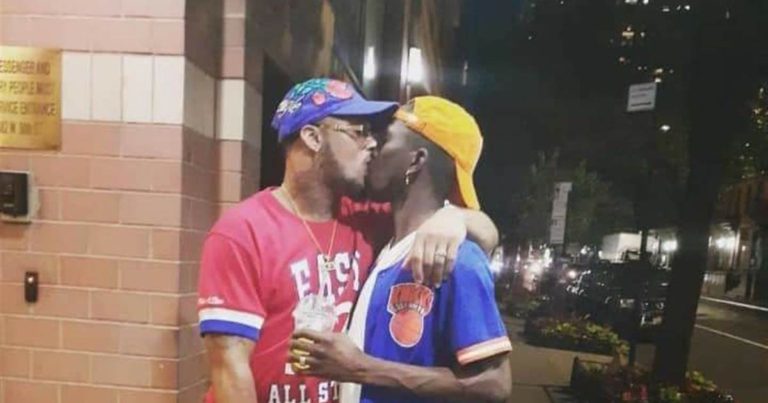
A gay New York City couple say they were harassed and asked to leave a restaurant this month because of their sexuality.
Nelson Ayala and Jamel Brown Jr., who live in the Bronx, say the incident happened at the nearby Puerto Rican restaurant La Isla Cuchifrito. They say a woman who worked behind the counter made homophobic remarks after they had ordered.
Nelson Ayala, left, with Jamel Brown Jr., right.Courtesy Nelson Ayala
In a video taken by Ayala and shared with NBC News, the employee can be heard saying “hombre, mujer” repeatedly, which translates into “man, woman.” She then says, in a mix of English and Spanish, “Everything correct my family: hombre, mujer, nino y nina,” adding the Spanish words for boy and girl. In a separate video shot by Ayala, the woman can be heard repeatedly apologizing.
The restaurant has since fired the employee, and Boyd Cole, a relative of the owner, said, “In no way do they condone the comments made by their former employee.”
Ayala, however, said that he and Brown don’t accept the apology.
“They apologized, and they offered us a meal, but this is not something that should just go away,” he said.
Because the incident happened in New York City, the men have legal recourse.
“New York state law and New York City law prohibit sexual orientation discrimination in public accommodations such as restaurants,” Richard Saenz, an attorney at the LGBTQ civil rights group Lambda Legal, told NBC News. “In NYC, if you experience discrimination, you have a right to file a complaint with the NYC Commission on Human Rights.”
Ayala and Brown said they plan to file such a complaint.
Related
While those who are discriminated against in businesses and other public accommodations have recourse in New York City and New York state, that’s not the case across the country.
There are currently 21 states, including New York, that explicitly prohibit discrimination based on sexual orientation and gender identity in state law, with five more that interpret their existing sex discrimination prohibitions in public accommodations to include discrimination based on sexual orientation and gender identity, according to the Movement Advancement Project, an LGBTQ think tank. The project also notes that in states without state-level protections, municipalities may provide nondiscrimination protections at a local level.
Last month, for example, NBC News reported on a same-sex couple in North Carolina who were told by an employee of a wedding venue in Winston-Salem that the business does “not host same-sex marriage ceremonies.” Rick Su, a law professor at the University of North Carolina, said the couple had little hope of legal recourse.
“North Carolina has no state law on public accommodations not related to disabilities and no anti-discrimination laws protecting LGBT identity,” Su told NBC News at the time. “Given there is no federal law protecting LGBT [people] either, this would mean that the wedding venue is free to discriminate.”
While advocates are hopeful the Biden administration will pass additional nondiscrimination protections, until that happens there will continue be a patchwork of laws across the U.S. when it comes to anti-LGBTQ discrimination protections in public accommodations. To help LGBTQ Americans navigate this patchwork, several advocacy groups offer free resources: Lambda Legal has a legal help desk, while Movement Advancement Project has a detailed policy map.
As for Ayala and Brown, they said there have been rallies with LGBTQ activists outside La Isla Cuchifrito, and they hope the protests will encourage businesses owners and managers to provide better training for employees and let the community know that if someone else is discriminated against, “this will be the outcome.”
“We will all come together as one, and will let people hear our voices,” Ayala said.
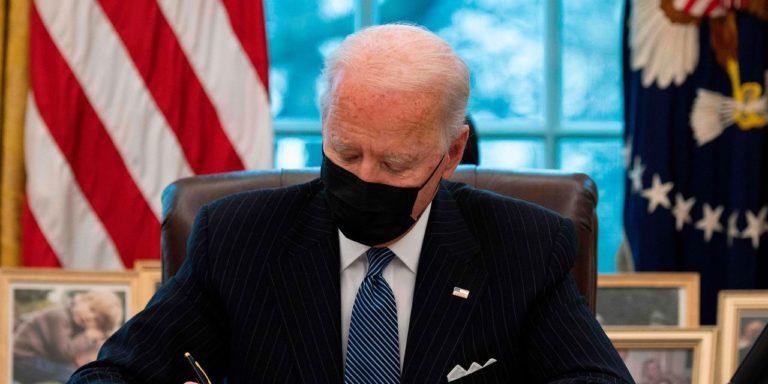
President Biden will ban travel by noncitizens into the United States from South Africa because of concern about a coronavirus variant spreading in that country, and will extend similar bans imposed by his predecessor on travel from Brazil, 27 European countries and Britain, his press secretary said on Monday.
Mr. Biden’s travel ban is a presidential proclamation, not an executive order; typically, proclamations govern the acts of individuals, while executive orders are directives to federal agencies. It will go into effect Saturday and apply to non-U.S. citizens who have spent time in South Africa in the last 14 days. The new policy, which was earlier reported by Reuters, will not affect U.S. citizens or permanent residents, officials said.
On his last full day in office, President Donald Trump tried to eliminate the Covid-19-related ban on travel from Brazil, Britain and much of Europe, saying it was no longer necessary. Jen Psaki, now the White House press secretary, said at the time that ending the ban was the wrong thing to do; on Monday, she announced during her regular briefing that it would remain intact.
“With the pandemic worsening and more contagious variants spreading, this isn’t the time to be lifting restrictions on international travel,” she said.
Ms. Psaki also said the Biden administration intended to hold regular public health briefings three times a week, beginning on Wednesday. She said Mr. Biden would be “briefed regularly” on the pandemic, adding, “I suspect far more regularly than the past president.”
The first confirmed case of the Brazilian variant in the United States has been identified in Minnesota, the state’s health department said on Monday. It was found in a Minnesota resident who had recently traveled to Brazil.
The variant now spreading in South Africa has not yet reached the United States, but it has been reported in more than two dozen countries.
In addition to the travel bans, Mr. Biden issued an executive order last week requiring that all international travelers present negative coronavirus tests before leaving for the United States. The move extended a requirement by the Centers for Disease Control and Prevention that was issued by the Trump administration but set to expire on Tuesday.
A White House official said Sunday that the C.D.C. would not issue waivers from that policy as some airlines had requested.
Annah Bender and Janet Lauritsen co-authored a paper titled “Violent Victimization Among Lesbian, Gay, and Bisexual Populations in the United States: Findings From the National Crime Victimization Survey, 2017–2018” in the February 2021 issue of the American Journal of Public Health. (Photos by August Jennewein)
The notion that members of the lesbian, gay, bisexual and transgender community are disproportionately the targets of violence is a widely accepted truth in the United States.
It’s been supported by many community-based studies over the years.
But national surveys of crime and victimization, until recently, have ignored sexual orientation and gender identity when examining the prevalence of violence across the country. That’s finally changing.
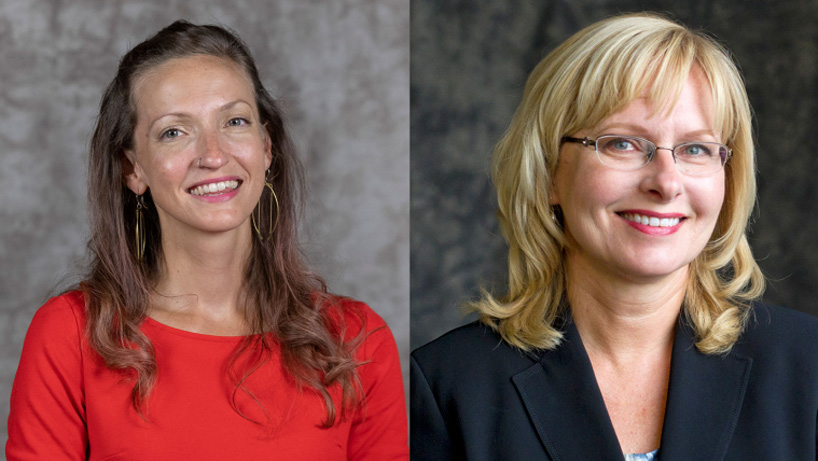
University of Missouri–St. Louis researchers Annah Bender, an assistant professor in the School of Social Work, and Janet Lauritsen, a Curators’ Distinguished Professor in the Department of Criminology and Criminal Justice, have examined data from the 2017 and 2018 National Crime Victimization Surveys, which for the first time asked respondents to self identify as lesbian, gay, bisexual or heterosexual persons. They found that LGB persons are made victims of violence at rates two to nine times higher than their heterosexual peers.
“For many health equity researchers, community advocates, and policymakers concerned about the health and wellbeing of sexual minority individuals, the findings are both a long-sought stanza and an expected chorus in a recitation of violence,” wrote John R. Blosnich, an assistant professor of at the Suzanne Dworak-Peck School of Social Work at the University of Southern California, in an editorial that accompanies their paper in the journal’s February issue.
Lauritsen, one of the nation’s leading scholars on violent crime victimization, was eager to be able to fill in that gap in scholarship when she learned the data was being collected.
She was also grateful to have Bender collaborating. The two met when Lauritsen appeared at meeting of the Office of Research Administration to speak to new faculty members about the process of applying for grants. They bonded over their shared research interests.
“I’m interested in in violence, particularly interpersonal violence, intimate partner violence and experiences of trauma in underserved and under-resourced populations,” Bender said. “So that includes LGBT communities.”
Lauritsen and Bender got right to work last March when the results of the NCVS surveys were released and did a thorough analysis of all the findings, using multivariable models to assess the risk for violence associated with LGB status. They submitted their paper for publication in May, and it was accepted after revisions, in October.
The data collection also included gender identity questions, but the sample size for the transgender population was insufficient to produce reliable victimization rates.
But the total victimization rates and rates of victimization of serious violent crimes was significantly higher for both gay and bisexual men and lesbian and bisexual women, even if there was sufficient reporting of particular subcategories of crime – for example, robbery – to draw scientifically valid conclusions.
Bisexual females also experienced the highest rate of both total and serious violent victimization among those surveyed.
“It took a long time for the LGBT community to get recognized as stakeholders whose victimization is worth being measured,” Lauritsen said. “Politically, it took a long time and a lot of research to get these kinds of items on federal surveys. We didn’t know how they would perform – whether people would be willing to admit in a survey what their sexual orientation or gender identity was, and it turned out better than expected. There was fear that it wouldn’t get a sufficient reporting from the widespread population, especially among older people.”
Both Lauritsen and Bender see this as just the beginning of the research that’s needed.
“A lot of the findings raise more questions,” Bender said. “We want additional years of data from the NCVAS that include these questions about sexual orientation and gender identity, so that we can look at the intersections of race and ethnicity with sexual orientation and see what do the risks look like? Does it change at all if you add in those different traits and demographics?
“One of the things too that John Blosnich, who wrote the commentary about our paper, brought up is the fact that Federal Statistical surveys about mortality don’t include sexual orientation or gender identity questions. So that begs the question, is there a difference in those rates if the rates of violence against this population are higher than that for heterosexuals? Are the rates of homicide different, too? There are lots of directions that this could possibly take us in terms of research.”
Lauritsen also hopes to be able to see trends over time, though the NCVS data was already a step forward over previous surveys in that it asked respondents about violent victimization specifically in the previous six months and not over the entirety of their lives.
But this paper reflects an important first step in collective understanding.
“I’m just really happy to see that the claims that have been made in the field are no longer anecdotes,” Lauritsen said. “They’re facts now.”
President Biden signed an executive order Monday that will reverse the Trump administration’s ban on transgender people serving in the U.S. military. It is one of many steps the Biden administration is taking to support the LGBT community — and it comes at a time when many LGBT Americans continue to face discrimination at work.
The executive order immediately prohibits the armed forces
from discharging members or denying re-enlistment on the basis of their gender
identity. Additionally, the order directs the military to begin a review and
correction of service members’ records in cases where this occurred.
The order does not appear to immediately allow new transgender recruits to join the military, but it gives the secretaries of defense and homeland security 60 days to update the president on their progress in implementing the order.
Biden’s defense secretary, retired Army Gen. Lloyd Austin, spoke in favor of the ban reversal during his Senate confirmation hearing last week. “I support the president’s plan or plan to overturn the ban,” Austin said. “If you’re fit and you’re qualified to serve and you can maintain the standards, you should be allowed to serve.”
The Trump administration had reversed Obama-era efforts to remove barriers for transgender Americans
The Obama administration had originally announced a policy that would allow transgender Americans to serve openly in the military — previously, service members could be discharged for being transgender. The military had planned to begin allowing transgender Americans to enlist starting in July 2017.
But in 2017, former president Donald Trump made a surprise announcement on Twitter TWTR, -1.16% that he would no longer allow transgender Americans to serve openly in the military. Trump claimed that the military had to shoulder “tremendous medical costs” by allowing transgender people to join.
Roughly two years later, the Defense Department under Trump
finalized the policy, which did not ban transgender people from serving
outright but prohibited transgender troops from transitioning and required most
to serve in the gender they were assigned at birth.
Trump’s ban attracted multiple legal challenges. Many advocates for the lesbian, gay, bisexual and transgender community pointed to a 2016 study that showed that the Pentagon’s health costs would only increase between $2.4 million and $8.4 million annually, a small fraction of the armed forces’ total health-care expenses.
“Our fight to end the transgender military ban was about equal opportunity, fairness and service, and President Biden’s order today honors those shared national values,” Jennifer Levi, the director of the transgender-rights project at GLBTQ Legal Advocates & Defenders, said in a statement supporting Biden’s order.
“Transgender Americans can and will bring needed skills to our armed forces at every level, and I look forward to seeing our nation benefit from the contributions of a new generation of transgender leaders and patriots.”
The reversal is part of Biden’s broader efforts to support LGBT Americans
Biden’s administration has taken multiple steps beyond the transgender military ban reversal to provide more support to the LGBT community.
Last week, Biden issued a separate executive order stating that it was the policy of his administration “to prevent and combat discrimination on the basis of gender identity or sexual orientation.” Under that view, the White House argues that Title VII of the 1964 Civil Rights Act prohibits discrimination on the basis of gender identity and sexual orientation.
The executive order cited a recent Supreme Court decision that supported this interpretation of the law in employment-discrimination cases.
Since Biden signed that executive order, the Justice
Department has already taken steps to reverse policies that had just been
ushered in by the Trump administration.
Less than a week before Biden’s inauguration, the Justice Department sent out a memo that aimed to limit the scope of the Supreme Court’s ruling that protected LGBT people. The Trump administration had filed a brief in the case arguing that Title VII did not cover discrimination based on sexual orientation. But the acting head of the Justice Department revoked the Trump administration’s memo on Friday.
Before the Supreme Court’s ruling, no federal law explicitly banned LGBT workplace discrimination
The Supreme Court’s recent ruling was landmark for the LGBT community because prior to it, no federal protections were codified in the law.
Many state and local governments had banned workplace discrimination against LGBT people, such that more than half the country’s population lived in an area with these protections. Nevertheless, transgender Americans have faced rampant discrimination.
More than one in four transgender people have lost a job due to bias, according to the National Center for Transgender Equality.
Transgender people of color experience incidents of discrimination at even higher rates. A 2009 report co-authored by the National Gay and Lesbian Task Force and the National Center for Transgender Equality found that 97% of transgender people had been mistreated at work in some way, including being denied access to an appropriate bathroom or being removed from contact with clients.
Workplace discrimination can have a serious impact on transgender workers’ well-being, including their mental health. It is one of the reasons transgender individuals are twice as likely as the general population to be unemployed or to live in poverty, Jillian Weiss, the former executive director of the Transgender Legal Defense and Education Fund, told MarketWatch in 2017.
“They have difficulty with finding housing and maintaining stability in their lives,” she said.
The Biden administration’s efforts could have a significant impact on people’s safety at work, as research suggests LGBT people’s comfort with being out in the workplace has worsened in America.
A study conducted by Out Now, an LGBT consulting firm based in the Netherlands, found that the percentage of LGBT individuals in the U.S. who were out to everyone at work dropped from 44% in 2010 to 38% in 2015. The U.S. was the only country studied where this figure declined.
On Monday, Moderna said its vaccine is effective against new variants that have emerged in Britain and South Africa. But the immune response is slightly weaker against the variant discovered in South Africa, so the company is developing a new form of the vaccine that could be used as a booster shot against that virus.
And Dr. Rochelle Walensky, the new C.D.C. director, offered a blunt assessment of the vaccination campaign on Sunday, predicting that supply would not increase until late March.
Federal health officials and corporate executives agree that it will be impossible to increase the immediate supply of vaccines before April because of lack of manufacturing capacity. A third vaccine maker, Johnson & Johnson, is expected to report the results of its clinical trial soon. If approved, that vaccine would also help shore up production eventually, though the company has manufacturing issues of its own.
“I can’t tell you how much vaccine we have, and if I can’t tell it to you then I can’t tell it to the governors and I can’t tell it to the state health officials,” Dr. Walensky told “Fox News Sunday.”
Mr. Biden’s travel ban is a presidential proclamation, not an executive order. Typically, proclamations govern the acts of individuals, while executive orders are directives to federal agencies. It will go into effect on Saturday and apply to non-U.S. citizens who have spent time in South Africa in the past 14 days. The new policy, which was reported earlier by Reuters, will not affect U.S. citizens or permanent residents, officials said.
The airline industry had no immediate comment on the new travel bans. But airline officials point to studies by the World Health Organization showing that the impact of travel bans on curbing the spread of infectious disease is limited. President Donald J. Trump came under intense criticism after he banned travel from China, and the ban proved porous as tens of thousands of people still came into the United States from that country.
“I think of travel bans as helpful but hardly foolproof,” said Dr. Ashish Jha, the dean of the Brown University School of Public Health. Mr. Trump’s China travel ban “probably slowed things down, and that’s reasonable,” he said. But travel bans need to be coupled with other policies to be useful, he said.
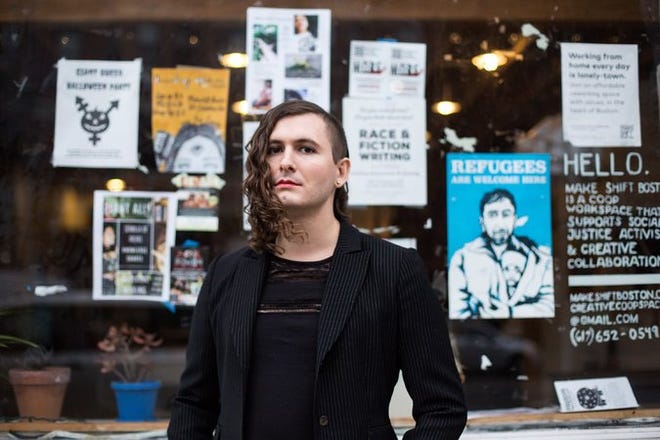
For most people, beauty and grooming regimens have changed drastically during the pandemic, but for some members of the LGBTQ community – and particularly transgender people – makeup-free and natural hair trends have, at times, felt less freeing and more restrictive.
“I hadn’t even realized how important it was to me that my hair looked a certain way, until I couldn’t go to get it cut for a really long time,” Evan Greer, who is transgender and non-binary, says.
Kate Mason, an assistant professor of sociology and women and gender studies at Wheaton College, adds: “I know for a lot of people who are masculine-presenting lesbians or people who are non-binary or trans-masculine, early on in the pandemic, a lot of people were really panicked about their inability to get a haircut.”
Some members of the LGBTQ community already grapple with gender dysphoria – psychological distress between someone’s birth sex and gender identity – and appearances can make a difference.
“(In the queer community) gender presentation is a little bit different, which is to say it’s driven less by dominant social norms for femininity and more by, ‘How can I present myself in a way that telegraphs my gender identity or sexual orientation or both?'” Mason says.
For organizational consultant Van Bailey, his inability to express his gender has been jarring. He is trans-masculine and queer.
“Part of my ways to combat dysphoria is the ability to have control of my body,” Bailey, 37, says. “What that means for me is the ability to go out in the world and dress how I want to dress or, even in a sense, create space for myself.”
There’s a balance between feeling the need to present a certain way, several members of the LGBTQ community told USA TODAY, and finding comfort in not putting forth as much styling effort.
“On the one hand, there are some people who might be experiencing this as a chance to relax and feel more comfortable in their bodies, but for other people, lack of access to different types of stylists can cause a lot of discomfort,” Mason says.
Greer says that pre-pandemic when she would go out to a show, concert, or party, she tended to put more effort into expressing gender. There’s less pressure to do that at home.
“When you’re home with yourself and your pets, and your computer, it’s easy to almost exist in a space outside of that,” Greer, 35, says. “There is something about having other people around to present a gender to that impacts the way I think people see themselves.”
Still, she’s discovered that her hair getting shaggy is one of the few things that makes her feel dysphoric.
Mason also says that anecdotally, “masks have put a real dent in the gender presentation of several high femme queer women in my circles, who have had to get creative in the absence of being able to put on a bold lip when they go out.”
Greer, for her part, likes that her mask covers the part of her face that sometimes shows remnants of facial hair – not to mention that she has several transgender Pride masks.
For Zoom calls, Greer dons dangly earrings and wears glasses as a way of communicating gender and style. She also uses her physical space to tell the story of who she is to, with a poster of Marsha P. Johnson in her background. Johnson, a Black transgender woman, is often credited as the person who threw the first brick or shot glass to start the Stonewall riots in 1969.
Rebecca Dooley, 25, from Richmond, Virginia, says she publicly came out as gay in August and has been grateful for the space to play with her style without scrutiny.
“I didn’t think my feminine style totally matched my identity, but the pandemic helped me experiment in the privacy of my own home,” she says. “I still love good hoops and sparkly eye shadow sometimes, but I’ve also become way more comfortable in my own skin and wearing a men’s shirt and sneakers … and owning it.”
Instagram has proven a boon for people looking for style inspiration during the pandemic. “A lot of people are showing their DIY home haircuts or figuring out how to style their long hair,” Mason says. She referred to one such account, @butchhairquarantine.
“People who had short hair cuts were feeling like if their hair started growing out that people were going to mis-gender them and they’re going to be feeling dysphoria,” she adds.
Bailey says he’s invested more time in his day-to-day skincare routine, which he typically felt rushed to do every morning, and sought out examples from other queer and transgender people. Some accounts he’s enjoyed are @dapperq, @plussizetransguy and @menofsize; he’s quick to note that there is less visibility for trans-masculine people and has also struggled to find more folks of color.
Greer notes the internet is a double-edged sword but trans folks all over want to be supportive – whether that’s through video tutorials for hair and makeup or finding professional support in the way of counseling or therapy.
Overall, Bailey now feels more grounded.
“I have been connecting to my body in a very different way,” he says.
A group of U.S. Catholic bishops, including a cardinal and an archbishop, have signed a statement of support for L.G.B.T. youth, telling them, “God created you, God loves you and God is on your side.”
“As we see in the Gospels, Jesus Christ taught love, mercy and welcome for all people, especially for those who felt persecuted or marginalized in any way; and the Catechism of the Catholic Church teaches that LGBT people are to be treated with ‘respect, compassion and sensitivity,’” reads the statement, released by the Tyler Clementi Foundation, an organization that fights L.G.B.T. bullying in schools, workplaces and faith communities.
Among those signing the statement were Cardinal Joseph Tobin, archbishop of Newark, and Archbishop John Wester, who leads the Archdiocese of Santa Fe.
“All people of goodwill should help, support, and defend LGBT youth; who attempt suicide at much higher rates than their straight counterparts; who are often homeless because of families who reject them; who are rejected, bullied and harassed; and who are the target of violent acts at alarming rates,” the statement continues.
A group of U.S. Catholic bishops, including a cardinal and an archbishop, have signed a statement of support for L.G.B.T. youth, telling them, “God created you, God loves you and God is on your side.”
“The Catholic Church values the God-given dignity of all human life and we take this opportunity to say to our LGBT friends, especially young people, that we stand with you and oppose any form of violence, bullying or harassment directed at you.”
Archbishop Wester said in a phone interview with America that he signed the statement because he wanted L.G.B.T. young people to know “you have worth, you have value and you’re a child of God.”
A former high school teacher, Archbishop Wester said bullying can be especially toxic for young people who are trying to come to terms with their sexual orientation, especially when either they or others misinterpret church teaching on homosexuality to convey the notion that being gay itself is sinful.
The Catholic Church teaches that homosexuality is “objectively disordered” and condemns sexual acts between people of the same sex as sinful. But at the same time, it says that gay people “must be accepted with respect, compassion, and sensitivity. Every sign of unjust discrimination in their regard should be avoided.”
Archbishop Wester said young L.G.B.T. people may sometimes misinterpret church teaching about homosexuality and incorrectly think they are somehow cut off from God’s love as a result.
Archbishop Wester said that he signed the statement because he wanted L.G.B.T. young people to know “you have worth, you have value and you’re a child of God.”
“We have our teachings, which we prize and cherish, but those teachings need to be understood in the proper context of love and mercy,” he said. “Sometimes people can make equivocations, ‘Well if it’s a sin to engage in a homosexual act, then I must be terrible person.’ The church doesn’t doesn’t teach that and it’s important [young people] don’t get that erroneous impression.”
He added, “I think it’s tragic that young people in the L.G.B.T. community are bullied and made fun of,” calling it “another form of bigotry and prejudice that we see in our country today.”
Bishop John Stowe, who leads the Diocese of Lexington, Ken., told America he signed the statement because he has heard from alumni and students in his diocese’s Catholic schools who said bullying of L.G.B.T. students can be a serious challenge.
“Sometimes offensive remarks were left unchallenged or even laughed at by faculty,” Bishop Stowe said in an email. “I have heard from other L.G.B.T. Catholics that what other students experienced as the best years of their lives were often traumatizing experiences for them as they experienced social rejection and concerns about God’s love for them and whether they had any hope of salvation. Too often these students have felt isolated, sometimes even afraid to get support from parents and family.”
Last year, Bishop Stowe and Archbishop Wester appeared in a video offering support to the L.G.B.T. community. They had been scheduled to attend a conference about pastoral care and L.G.B.T. people, organized by James Martin, S.J., that was rescheduled because of the pandemic. (Father Martin, an editor-at-large at America, assisted the Tyler Clementi Foundation in contacting bishops who might be interested in signing the statement.)
“I think it’s tragic that young people in the L.G.B.T. community are bullied and made fun of,” Archbishop Wester said, calling it “another form of bigotry and prejudice that we see in our country today.”
Other bishops who also signed the statement have previously expressed support for L.G.B.T. Catholics, including Cardinal Tobin. In 2017, he spoke to a group of about 100 L.G.B.T. Catholics who gathered at Newark’s Cathedral Basilica of the Sacred Heart, and in 2019, he told NBC News that he found the church’s language around homosexuality to be “very unfortunate” and “hurtful.”
Bishop Robert McElroy, who heads the Diocese of San Diego, also signed the statement. In 2016, he supported the idea that the church should apologize to L.G.B.T. people for historic mistreatment and calling for church teaching on the topic to use “language that is inclusive, embracing [and] pastoral.”
Bishop Steven Biegler of Cheyenne and Bishop Bishop Edward Weisenberger of Tucson, as well two retired auxiliary bishops, Bishop Thomas Gumbleton of Detroit and Bishop Dennis J. Madden of Baltimore, also signed the statement.
The Tyler Clementi Foundation is named for the Rutgers University student who died by suicide in 2010 following an act of online bullying. According to the Centers for Disease Control and Prevention, lesbian, gay and bisexual youth are bullied and attempt suicide at higher rates than their heterosexual peers. Trans students report higher rates of bullying, suicidal ideation and attempts at suicide than non-transgender students. The C.D.C. says schools can help combat suicide by encouraging respect for students and working to reduce bullying and harassment.
Jane Clementi, Tyler’s mother and the co-founder of the foundation, told America the foundation seeks affirmative statements from religious leaders to L.G.B.T. youth because she has “seen firsthand how important it is to have positive messages in religious communities to influence people.”
“I hope that a young L.G.B.T. person will read this statement and feel supported, know they are not alone and know that there are members of their faith community that support them,” Jane Clementi said.
“I hope that a young L.G.B.T. person will read this statement and feel supported, know they are not alone and know that there are members of their faith community that support them,” Ms. Clementi said, adding that she hopes the parents of L.G.B.T. children will not feel isolated if they belong to faith traditions that historically do not support L.G.B.T. people.
This is not the first faith outreach effort by the Tyler Clementi Foundation. It is organizing a campaign aimed at leaders in the Southern Baptist tradition and has tried to combat faith-based conversion therapy programs. On its website, the foundation says, “Treating LGBTQ people as less valued, preaching at LGBTQ people, and calling LGBTQ people’s sexual orientation or gender identity ‘sinful’ are all potential examples of religion-based bullying.”
There are about 430 bishops in the United States, and with just eight signing onto the statement, Ms. Clementi, who was raised Catholic and who today attends a Protestant church, said she hopes others will sign on as well.
“We’re trying to start a conversation,” she said, noting that the statement “does not go against any Catholic teaching, which I have come to know as being a message of love, mercy and inclusion.”
“That is so important for the church to shine to the world,” she added.