Home Blog Page 421

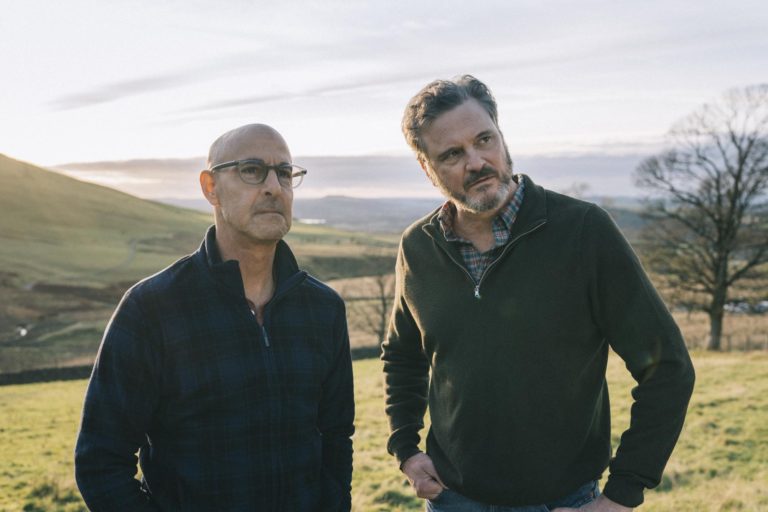
‘Supernova’ stars Colin Firth and Stanley Tucci discuss their controversial choice to play gay characters – Yahoo Entertainment

The Daily Beast

Horrific: D.C. Sniper Boasts of Post-Shooting Sex With Accomplice in New Doc

ViceIn I, Sniper, Lee Boyd Malvo speaks at length about the 2002 reign of terror he and partner John Allen Muhammad carried out in the Washington, D.C., area, resulting in ten deaths. Yet despite using audio clips from his phone calls as narration, Vice’s eight-part docuseries (premiering May 10) is most notable for putting its prime emphasis on the pair’s innocent victims, and the countless friends, family members and loved ones left to cope with unthinkable tragedy. To its admirable credit, it’s a true-crime affair that seeks to understand its “monsters” while simultaneously recognizing—and highlighting—the fact that such comprehension doesn’t necessitate empathy, especially when the atrocities in question are as inexcusably heinous as these.Spearheaded by director Ursula Macfarlane, I, Sniper’s calling card is those phone conversations with Malvo from Virginia’s Red Onion State Prison, where he’s currently serving multiple life sentences. In them, the killer recounts, in exacting and chilling detail, both the sniper attacks he perpetrated as a 17-year-old, and the troubled upbringing in Jamaica that led him into the welcoming arms of Muhammad, a Gulf War veteran with a surplus of rage and a desire to unleash it on his homeland. Abandoned by his dad, abused by his mom, and eventually left to fend for himself, Malvo found in Muhammad a father figure who promised to love him as he did his own biological offspring. From the outset, though, theirs was a bond built on exploitation, with Muhammad becoming not only Malvo’s surrogate parent, but also his lover—as well as his mentor, pouring all of his long-simmering hate and resentment into the impressionable, desperate-for-acceptance teen.The Tragic End to Wrestling’s First Great ‘Madman’Muhammad’s gripes were many—he despised the military, white people, and just about every American institutional structure. However, he reserved his greatest enmity for second ex-wife Mildred, who dared to take back her kids after Muhammad had kidnapped them. The loss of his (abducted) brood seems to have been the proverbial match that lit Muhammad’s homicidal spark, and he soon began molding Malvo into his instrument of destruction. Friends and relatives suspected that something was up with their relationship, but no one foresaw what was to come: the cold-blooded murder of Keenya Cook, the niece of Mildred’s friend in Tacoma, Washington, followed by violent robberies, shootings and slayings in Arizona, Louisiana, Alabama, and Georgia. All of those initial acts were merely a test run for Malvo and Muhammad’s grand scheme in Washington, D.C., the epicenter of American power, and thus Muhammad’s venue of choice to strike fear into the heart of the republic by proving that everyone was vulnerable—even children.What transpired was a 22-day nightmare in which 13 individuals (white and Black, young and old, well-off and working-class) were shot, 10 of them fatally, in D.C., Maryland, and Virginia. Because Malvo and Muhammad’s intention was to terrorize in increasingly escalating fashion, each victim was chosen at random at gas stations, on street corners, and in parking lots that afforded the killers ideal vantage points and easy escape routes. They committed these crimes in a customized 1990 blue Chevy Caprice, with Malvo lying in the trunk and firing through the rear keyhole. It was a stealthy plot, and the two benefited from the fact that an early eyewitness said they’d seen a white box truck near the scene—thereby sending police, for the better part of the next three weeks, on a wild goose chase for the wrong vehicle. With no other ballistics-related leads, law enforcement was stymied, which proved to Malvo that Muhammad was right: no one could stop them from exacting their revenge.The question, of course, is revenge against what? I, Sniper connects the dots of Malvo and Muhammad’s troubled pasts and despicable 2002 presents, but no convincing argument is made that Muhammad—the mastermind behind this madness—had suffered losses that weren’t of his own making. Be it his unhinged military tenure, his marital craziness, or his transformation of Malvo into an assassin, Muhammad comes across as a man righteously angry over things that were his own fault. As for Malvo, his cold, clinical recitation of his murderous conduct (and claims of remorse) neuters any sorrow one might feel for his adolescent travails. His present-day compunction is far too little, too late, just as the case he makes for his own victimhood vis-à-vis Muhammad sounds like an accurate and yet insufficient explanation. He knew that gunning down men, women and children was dreadfully wrong, and yet in order to maintain Muhammad’s affection, he actively, and enthusiastically, chose to do it—and even got a thrilling kick from it, as he explains that post-shooting sex with Muhammad was exceptionally exciting.Malvo and Muhammad’s rampage of “retribution and punishment” was unforgivable; as Montgomery County Police Chief Charles A. Moose says, “There’s just no excuse for their behavior. None whatsoever.” To hammer home that point, I, Sniper consistently juxtaposes Malvo’s recollections with prolonged, heartrending interviews with the wives, brothers, aunts and friends of the duo’s victims, as well as some of those who survived their encounters. Those accounts turn out to be vital, providing an up-close-and-personal view of the anguish and trauma that Malvo and Muhammad brought about, and the lingering scars left by this ordeal. They’re the human face of this awful tale, stricken with grief, regret, guilt and fury over senseless crimes that robbed them of loved ones who were simply at the wrong place at the wrong time.Comprised of news reports, crime scene footage, 911 calls, Malvo-penned illustrations, maps and chats with patrolmen, detectives, reporters and doctors, I, Sniper is comprehensive enough to earn the description “definitive.” Yet more than its insight into the mind of its young subject—and, by extension, Muhammad, who was executed in 2009 by lethal injection—what separates it from much of the true-crime pack is its dogged refusal to forget the real, incalculable horror at the center of its story. Malvo is frequently heard but never seen, while the countenances of his and Muhammad’s victims (and those close to them) remain front-and-center throughout. That directorial decision is critical and commendable, allowing the series to pay fitting tribute to the individuals who deserve to be remembered, while keeping its central villain largely faceless, in the dark and out of sight, where he chose to live and kill with his murderous mentor, and where he’ll now remain for the remainder of his days.Read more at The Daily Beast.Get our top stories in your inbox every day. Sign up now!Daily Beast Membership: Beast Inside goes deeper on the stories that matter to you. Learn more.
Americans like sports, but heterosexual men especially do – The Ohio State University News

Nearly nine out of 10 Americans say they enjoy sports at least a little, but heterosexual men more commonly identify as passionate sports fans, a new study suggests.

A survey of nearly 4,000 American adults found that only 11% said they did not identify as sports fans at all. Over 40% were passionate fans, identifying themselves as being “quite a bit” or “very much so” sports fans.

About 60% of heterosexual men in the survey identified as passionate sports fans, compared to about 40% of both heterosexual women and lesbians. About 30% of gay men reported being passionate sports fans.

Chris Knoester“We found that U.S. adults respond overwhelmingly that they are sports fans,” said Chris Knoester, co-author of the study and associate professor of sociology at The Ohio State University.

“Sports fandom is an ingrained part of our culture and central in the lives of many people.”

The study, published this week in the Sociology of Sport Journal, was led by Rachel Allison, associate professor of sociology at Mississippi State University.

“One of the advantages of the survey data in this study is that it has a relatively large sample of individuals who identify as a sexual minority or as nonbinary in terms of their gender identity, which has not been the case in most previous studies,” Allison said.

“It allowed us to show that while heterosexual men are particularly likely to identify as strong sports fans, there are substantial numbers of people across gender and sexual identities who are also passionate fans.”

Survey data came from the National Sports and Society Survey (NSASS), sponsored by Ohio State’s Sports and Society Initiative.

The survey was completed by 3,993 adults who volunteered to participate through the American Population Panel, run by Ohio State’s Center for Human Resource Research. Participants, who came from all 50 states, answered the survey online between the fall of 2018 and spring of 2019.

Because NSASS participants are disproportionately female, white and Midwestern, the researchers also weighted the survey results to reflect the U.S. population more accurately. This resulted in modest increases of about 5% in the population estimates of the number of passionate sports fans.

While there has been growing attention in the United States to women’s sports, and to gay and lesbian participation in sports, there hasn’t been good data on how a variety of gender and sexual identities are reflected in the larger sports fan community, Knoester said.

Rachel AllisonThis study gives a preliminary look. About 27% of those surveyed identified as lesbian, gay, bisexual or a sexual identity other than heterosexual. About 3% of respondents identified as nonbinary.
Overall, heterosexual men tended to identify as “quite a bit” of a sports fan, the findings suggest. In contrast, heterosexual women, lesbians and gay men were more likely to say they were “somewhat” of a sports fan on average.

But while heterosexual men are clearly more likely to be big sports fans than gay men, lesbians and heterosexual women have similar interest in sports, according to the results.

“Identifying as lesbian does not seem to discourage sports fandom like identifying as gay does for men,” Allison said.

The researchers also explored whether early childhood experiences shaped sports fandom in adults. As expected, people who said they thought of themselves as athletes during childhood and who frequently thought about sports were more likely to be fans as adults.

People who said they were mistreated in sports-related interactions during their lifetime – such as being called names or being bullied – were less likely to be sports fans as adults.

But the researchers did not find that childhood sports experiences or mistreatment accounted for gender and sexual identity differences in how much adults identified as sports fans.

Allison said it is clear that the historic masculine, heterosexual culture of sports is changing. She documented some of those changes in her book Kicking Center: Gender and the Selling of Women’s Professional Soccer.

But she said the results of this new study suggest it may not have changed enough to make some women and sexual minorities comfortable to identify as sports fans.

“We’ve clearly moved beyond the era of open hostility to women, lesbians and gay men in sports,” Allison said.

“But the extent to which we’ve moved from tolerant to fully inclusive cultures isn’t necessarily clear. We may be in this period of transition.”

Knoester and Allison said sports organizations on all levels, from professional to youth, still need to do more to be inclusive to individuals with different gender and sexual identities.

“You aren’t born being a sports fan. The differences in fandom we found here in this study are socially and culturally produced to a great extent, and they can be changed,” Knoester said.

China Wants to Mitigate Male ‘Feminization’ With More Gym Class – Sixth Tone

0

China’s education ministry on Thursday responded to a top political adviser’s call for more physical education as an antidote to the supposed “feminization” of young men, rekindling a fierce online debate about masculinity and traditional gender norms.

The ministry said it would recruit better gym class instructors and improve their teaching methods by introducing incentives such as free college education. The goal of this would be to cultivate masculinity in young men by balancing physical strength and mental health.

The response came after a delegate of the Chinese People’s Political Consultative Conference, a top political advisory body, had suggested that Chinese schoolboys are “weak, self-effacing, and timid,” and may be unduly influenced by so-called little fresh meats — handsome, well-groomed, delicate-featured celebrities in the vein of K-pop stars. The proposal also described the feminization of Chinese boys as “a threat to the development and survival of our nation.”

The ministry’s endorsement of the delegate’s proposal prompted immediate backlash on microblogging platform Weibo, with some netizens saying they felt appalled that the country’s top education authorities were being “openly sexist.” As of Friday afternoon, a related hashtag had been viewed more than 240 million times.

Lots of gay guys love the gym and have big muscles. You don’t see gyms changing their sexuality.

“Education is about nurturing children to become decent human beings,” wrote one Weibo user. “It shouldn’t be about setting gender standards for men and women. Learning to be a good person should come first.”

Among a minority of netizens, however, are those who agree that Chinese boys should be manlier and more athletic. “Finally, the education ministry does something right,” wrote a Weibo user who claimed to be a teacher. “Boys now are in dire need of more exercise so they can be manlier. They’re too gentle these days.”

Chinese authorities have long been preoccupied with a looming “masculinity crisis” and have proposed several solutions to this perceived problem, with some grassroots support. Last year, an article published by the state-run Xinhua News Agency ignited debate on whether hiring more male teachers would result in boys becoming more masculine. But with kindergarten, primary, and middle school teachers being disproportionately female, men already have an easier road to such jobs, getting offers even with lower qualifications than female applicants.

In 2019, the popular Chinese video-streaming site iQiyi was criticized for blurring the earrings of male participants on a reality show. And in 2016, Sixth Tone wrote about the rising number of gender education programs purporting to teach boys how to act like men.

Most recently, gym class has been touted as the silver bullet to ensure that boys grow into men. In September, the country’s top sports and education authorities announced that physical fitness would soon carry greater weight on the national high school entrance exam, while also suggesting that gym class should be considered as an addition to the national middle school core curriculum, alongside the usual academic subjects.

Some experts have praised giving gym class a higher profile while also expressing skepticism about how this would cultivate masculinity. Lü Jidong, head of the physical education department at Shanghai University of Finances and Economics, told Sixth Tone it’s a false equivalence to assume that sports make boys manlier.

“It’s correct that more fitness and more exercise can improve the overall well-being of our children, but the feminization issue is more psychological,” Lü said. “To give an extreme example, lots of gay guys love the gym and have big muscles. You don’t see gyms changing their sexuality.”

Cui Le, a Ph.D. student at the University of Auckland’s Faculty of Education and Social Work, says the idea that male “femininity” should be corrected is rooted in sexism and discrimination. “This approach to education will only encourage stereotypical gender concepts and enable serious bullying based on sexual identity and gender expression,” he told Sixth Tone.

Instead, Cui encourages China’s education authorities to do more academic research on sex and gender norms. “The research is especially important for sports education, as this field in particular is inundated with stereotypes and gender discrimination,” he said.

Editor: David Paulk.

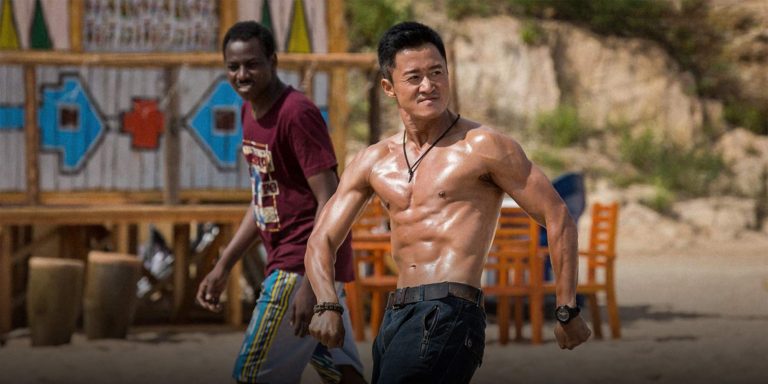
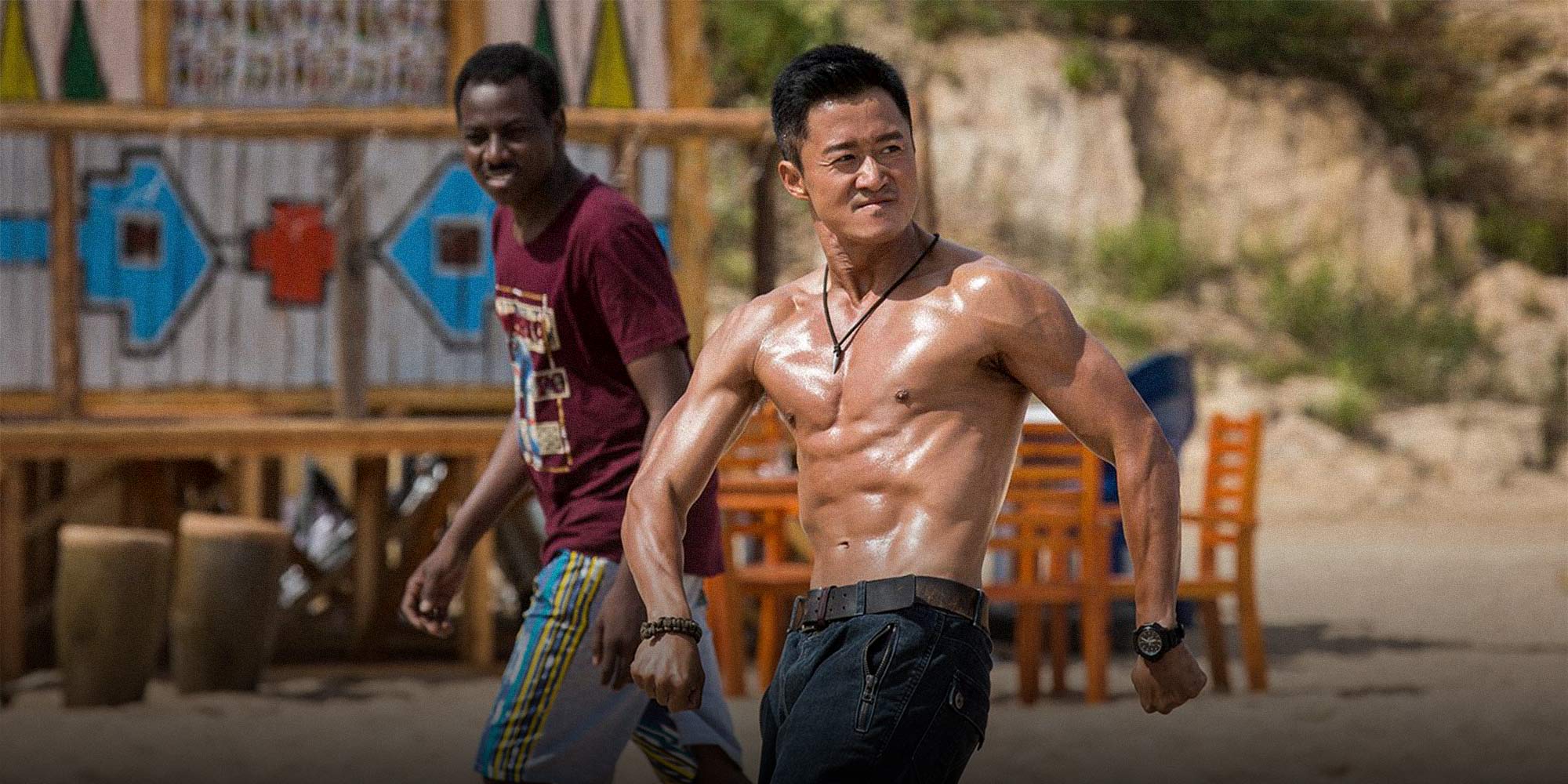
(Header image: A still frame from the 2017 film “Wolf Warrior 2.” From Douban)

Gay men don’t have to be butch or masc to be NFL or Super Bowl fans – Outsports

When I first came out as gay — and yeah, this was ancient times before Tom Brady had ever won a Super Bowl — there was a sense amongst many in our community that gay guys who said they liked sports were just putting on an act.

When I talked with friends and acquaintances about watching football or playing in a flag football league, I regularly heard other gay men throwing labels at me like “butch,” “masc” and “straight-acting.”

Guuuuurrrrrrl, how wrong they were.

Six Brady Super Bowl titles, 21 years of Outsports and a few Gay Bowl championships later… for me, my love of sports has never been an act.

Yet this past Sunday, watching the NFL Playoffs, an old trope surfaced again in a text message from a friend: “Football… so masc”

Ugh.

A crime against humanity? Hardly.

Yet I still recalled those days of being called “straight-acting” in the late Nineties, as though I were putting on an “act” by spending a Sunday at Jim’s house glued to a tough-to-watch Lions-Cardinals matchup. Jake “The Snake,” find me salvation!

Sports and being gay, for me, have always intertwined. Literally days after I came out to a friend for the first time, I was introduced to Jim Buzinski at LA Pride. He was working a booth recruiting people for the LA gay flag football group.

In Jim and the guys playing pickup football every Saturday, I found my identity as a gay man.

If anything, being gay has enhanced my appreciation for sports.

Yet some gay men still find the need to marginalize my sports fandom as “masc” or “butch.” It’s almost reflexive, without thought. There seems to be a need to dismiss it like some passing fad.

Beyond it being kinda dopey, I cringe at what these messages say to some guys who, like me all those years ago, are just looking for their place in the community. I definitely got the message in my 20s that I didn’t belong in the gay community. Today, a text like that gets a roll of my eyes, but for a lot of other guys, it stings.

Many gay and bi men feel already marginalized in a sports world that still centers too much on heterosexuality. To have our own LGBTQ community throw out these tired labels only exacerbates that.

We all know many of the traditional manifestations of “masculinity.” And yeah, the sports world has pushed a lot of money and effort into building an aura around sports that reflects that.

Yet I also know amazing people who absolutely love sports and turn those “masc” traditions on their head.

I think of drag queen diva Ms. Jackie Dupree, and winning a championship with her in the New York Gay Football League.

I think of Shanda Leer and Coco Baskets, other drag performers who embrace their love of sports.

Then there are the gay, bi and queer athletes who occasionally want to wear some nail polish or thoughtfully applied makeup. [Raises hand.]

The idea that someone has to have a certain personality to love football is so 1995.

For years, people have told me that one of the goals of Outsports is to undermine stereotypes of gay men. There’s a half-truth there. To be sure, we have wanted to show that gay, bi and queer men can love and embrace sports like anyone else.

Yet no one at Outsports has ever tried to define masculinity for anybody else. We’ve always maintained a full and wide embrace of fandom. You don’t have to throw a perfect spiral or cheer for an NFL team to be “masc.”

And if you do throw a perfect spiral, you can do it in heels any time you like.

I love watching football. I’ve loved playing the sport and I love officiating the sport. I love football.

I’ve also been known to wear eyeliner and listen to Offer Nissim. Speedos at the beach? I’d have it no other way. Crying during Titanic? Every time.

So please, gay, bi and queer men, you really don’t need to push some false label on me or other guys because we watch football. And who knows, if you give it a try, maybe it’ll turn out better than that Will & Grace reboot.

Either way, we’ll see you at the (socially distant) nacho bar on Super Bowl Sunday.

This Fitness Brand Just Released the Coolest Line of Bags – POPSUGAR

0

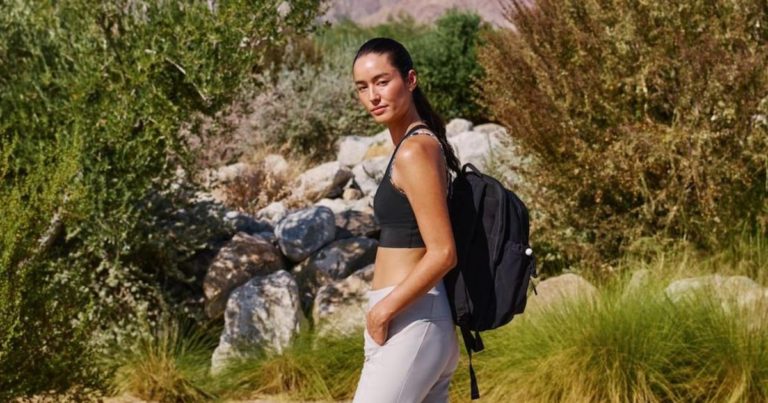
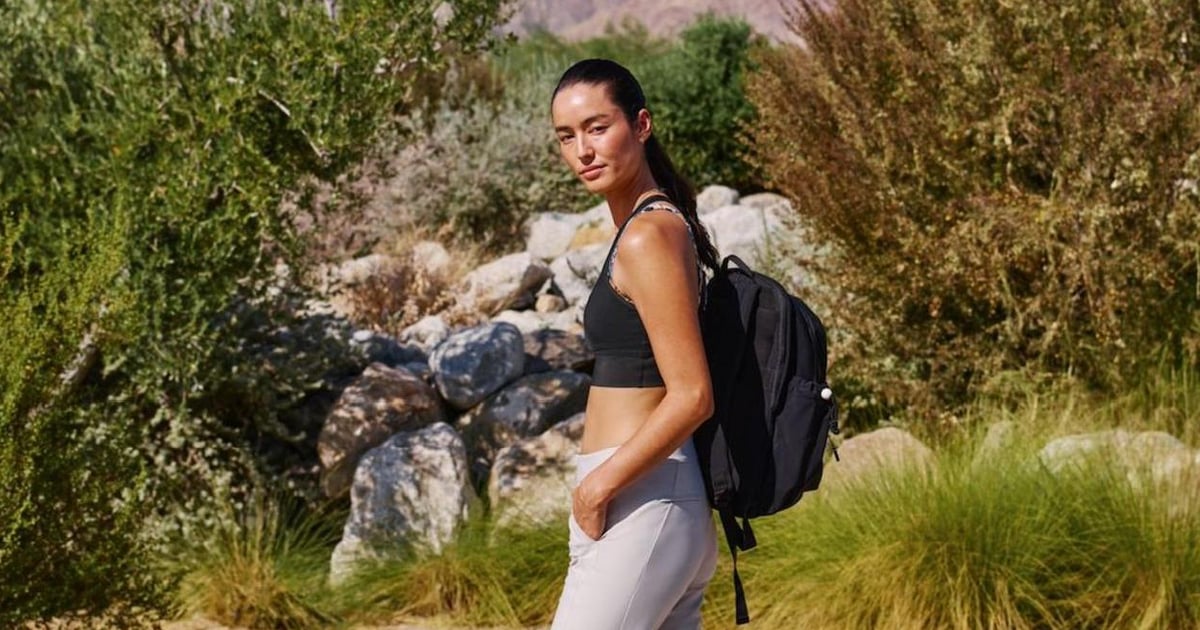
So, I have a little red Prada nylon backpack that I’ve owned for decades that goes everywhere with me. Running errands for returns, hiking on the isle of Dominica… I truly understood that 10 Things I Hate About You line, “… but I love my Prada backpack.” However, taking a look at it this summer, I realized it’s very sun-weathered, salt stained, and maybe I should look into some alternatives for fitness gear. You know, something that’s lightweight, can handle a little sweat or salt spray, and still looks chic.

Fitness and lifestyle brand Athleta has launched a new accessories collection that seemingly has me covered! The brand’s Kinetic collection comfortably carries my essentials and is very eye-catching in colors and design. Athleisure friendly, the styles also look great when I just want a working out look. You know, when you’re having a Princess Diana moment in a sweatshirt and bike shorts. Plus, everything is made with recycled nylon — a high performance material that helps lessen our environmental impact. The inner lining is also antimicrobial. They designs are also wipe clean — great for my travels.

Check out the different styles of the Kinetic line and see what piece works for you!

Your Abs and Glutes Will Be Sore For Hours After This 10-Minute Bodyweight Workout – POPSUGAR

0

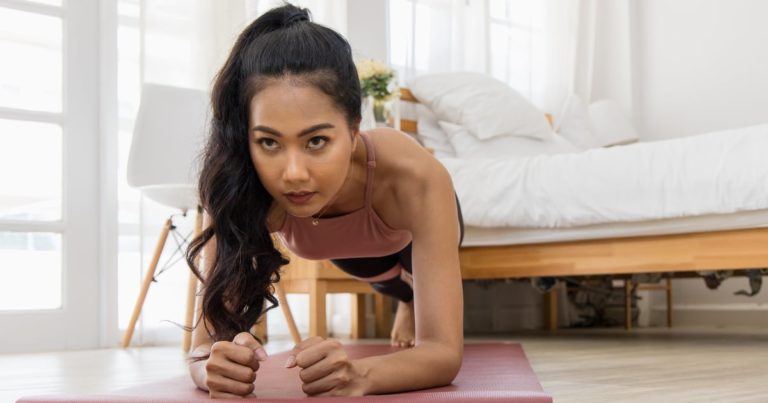
If all you have is 10 minutes, and all you want to do is work your core and glutes, then look no further. This quick, 10-minute ab and butt workout has your name all over it.

Created by AFLCA-certified personal trainer Cindy Yu (@cindyyufitness on Instagram), this routine focuses on strengthening your glutes and core in a fast and efficient way. And while these muscles are often targeted for aesthetic reasons, Yu told POPSUGAR the benefits go way beyond that. “Having strong glutes will help strengthen your entire posterior chain,” aka the important muscles along the back of your body, she said. Strengthening your core, meanwhile, can help with stability, balance, injury prevention, and even pain reduction in everyday activities.

This workout contains just five moves and Yu offers advanced and modified versions for each one, so you can tailor it to your abilities. Ready to get to work? Check out the full workout below.

Quick Core and Butt Workout

Directions: Warm up with two to three minutes of light cardio, such as jogging, jumping jacks, marching in place, or skipping. Then begin the workout, doing 30 seconds of each move and completing as many reps as you can with proper form within that time. Once you finish the first exercise, go straight to the second with no rest in between, if possible. If you’re new to this style of training, feel free to rest as needed in between exercises. Once you’ve completed the fifth exercise, rest for 30 seconds. Then begin the circuit again, repeating for four rounds.

After the fourth round, cool down by walking on the spot and completing static stretches.

Exercise Time
Plank with leg lift 30 seconds
Bear pose glute squeeze 30 seconds
Glute bridge with alternating leg lift and crunch 30 seconds
Crunch hold with leg lift 30 seconds
Hip raise heel lift abduction 30 seconds

Biden Signs Most Far-Reaching Federal Protections For LGBTQ People Yet – NPR

0

President Biden has signed an executive order to combat discrimination against LGBTQ people in health care, housing and education. The action is the most far-reaching of any federal protections yet.

AILSA CHANG, HOST:

On his first day, President Biden issued an executive order to combat discrimination based on sexual orientation and gender identity. Then this week, he lifted a ban on transgender individuals in the military. As NPR’s Leila Fadel reports, LGBTQ advocates say the moves are transformational.

LEILA FADEL, BYLINE: President Joe Biden’s executive order is the most far reaching of any federal protections so far.

TAYLOR CHANDLER WALKER: I can’t even begin to tell you the relief that I felt.

FADEL: That’s Taylor Chandler Walker. She’s a transgender health coordinator. She says that she faced discrimination trying to find a primary health care provider near her home last year outside Washington, D.C.

CHANDLER WALKER: The feeling was that they knew they had the power of the Trump administration behind them to act the way they were acting instead of being all accommodating to people regardless of gender identity.

FADEL: The new executive order interprets last year’s Supreme Court decision on employment discrimination, known as Bostock, more broadly. That decision found discrimination against LGBTQ people is sex discrimination. Biden’s order interprets that to mean LGBTQ people are also protected in the areas of health care, housing and education. Omar Gonzalez-Pagan is a senior attorney at the civil rights group Lambda Legal. He says the executive order…

OMAR GONZALEZ-PAGAN: Adopts and augments some of the arguments that we have been making since the issuance of the decision by the Supreme Court last year, which is that any law that prohibits discrimination on the basis of sex also prohibits discrimination based on sexual orientation or gender identity…

FADEL: He says it’s the opposite of what the Trump administration did. It actively worked to roll back protections, most notably for transgender people.

GONZALEZ-PAGAN: So it is truly a transformational approach. But it is an executive order, and we certainly want to see more permanent solutions put in place and – like the Equality Act because, as we know, a change in administration may mean a change in executive orders.

FADEL: The Equality Act would extend all federal civil rights laws to LGBTQ people through legislation rather than relying on the courts. The Alliance Defending Freedom, a conservative Christian organization that Trump’s administration aligned with, is criticizing the Biden executive order. Christiana Holcomb is legal counsel there.

CHRISTIANA HOLCOMB: This administration is attempting to stretch Bostock beyond its legal bounds and basically rewrite federal law by executive fiat, something that Congress has for decades declined to do.

FADEL: Among the arguments her organization is making is how the executive order extends to education, and that includes interscholastic sports.

HOLCOMB: So if we want to have a future where young women can continue to medal, to be on the podium, to be state champions, we must protect the female sex category.

FADEL: Civil rights advocates say this is fearmongering. Transgender youth face so much harassment, it makes it hard for them to even stay in school, let alone participate in sports. And among those who do, some are better athletes than others, just like everyone else. LGBTQ advocates call the sports argument the latest salvo to prevent equality.

KATHLEEN O’DONNELL: I feel like every time LGBT came up the last four years, it was always negative. It was really hard to see a light.

FADEL: That’s Kathleen O’Donnell in Montana. She’s faced both housing and employment discrimination because she’s married to a woman.

O’DONNELL: Biden’s only been there for a week (laughter) basically, and we are already seeing some positive come out of it. It just is – I mean, it’s relieving is probably the best way to describe it.

FADEL: She hopes the executive order gives local LGBTQ advocates more tools to help them at the state level, where discriminatory bills often emerge. For instance, in her state of Montana, a bill that would restrict young transgender athletes is advancing in the state legislature.

Leila Fadel, NPR News.

Copyright © 2021 NPR. All rights reserved. Visit our website terms of use and permissions pages at www.npr.org for further information.

NPR transcripts are created on a rush deadline by Verb8tm, Inc., an NPR contractor, and produced using a proprietary transcription process developed with NPR. This text may not be in its final form and may be updated or revised in the future. Accuracy and availability may vary. The authoritative record of NPR’s programming is the audio record.

Biphobia: Definition, effects on health, seeking help, and more – Medical News Today

0

Biphobia, or monosexism, refers to the belief that monosexuality is superior. Monosexuality refers to the sexual and romantic attraction to only one gender.

The prevalence of this belief can have an impact on the mental, physical, and sexual health of people who are bisexual.

In this article, we will be replacing the term “biphobia” with “monosexism.” This is because “biphobia” places an emphasis on the irrational fears of an individual as opposed to the systems in place that affect a person’s health.

This article will discuss what monosexism is and how it can impact a person who is bisexual. It will also look at where a person can find support.

Monosexism refers to when people who are bisexual experience stigma, prejudice, and discrimination because of their sexual orientation.

The LGBTQIA Resource Center state that people who identify as bisexual typically have sexual and romantic attractions toward people of the same and other genders. Some people may use the terms bisexual and pansexual interchangeably, though some consider them to be different.

A person has a monosexist attitude when they believe that every relationship should be opposite-sex. In other words, they believe that men should only ever have romantic and sexual relationships with women.

People can also experience monosexism from within LGBTQIA+ communities. Some people within these communities may believe that people can only have romantic or sexual relationships with one gender. They may also believe that it is not possible for a person to be attracted to two or more genders.

Examples of monosexism

Some examples of monosexism include:

  • saying that all people experience same- or opposite-sex attraction but never both
  • saying that everyone is bisexual, as this invalidates the experiences of those who truly are bisexual
  • telling people who are bisexual that they have straight privilege, as members of bisexual communities can experience discrimination from both straight and LGBTQIA+ communities
  • saying that bisexual people are “greedy” or promiscuous, which insinuates that bisexuality is not a legitimate sexual orientation
  • asking a person who is bisexual if they will ultimately settle on relationships with men or women, as this insinuates that everyone will eventually be either gay or straight

Internalized monosexism means that a person who is bisexual has internalized these negative ideas about their sexual identity.

Some examples of internalized monosexism include bisexual people believing that:

  • their sexual orientation is a phase and that they will eventually become either gay or straight
  • people with their sexual orientation are sexually promiscuous
  • people with their sexual orientation are incapable of maintaining monogamous relationships or are more likely to cheat on their monogamous partner

Discrimination toward those who are bisexual can cause barriers when trying to access health services. This can affect people’s mental, physical, and sexual health.

One 2016 systematic review notes that members of LGBTQIA+ communities are more susceptible to:

  • sexually transmitted infections (STIs)
  • sex without protection
  • cervical cancer
  • breast cancer
  • obesity
  • substance use
  • mental health conditions
  • bullying

The review states that this may, in part, be due to poor access to healthcare and discriminatory practices from healthcare professionals.

The review looked at studies worldwide and found that people in LGBTQIA+ communities experience misconduct, restrictions, prejudice, and verbal abuse from professionals in health facilities.

Some people in LGBTQIA+ communities do not seek help from healthcare professionals due to a fear of this discrimination.

This can lead to people hiding their sexual orientation to avoid experiencing these types of discrimination. However, healthcare professionals who treat their patients as though they are heterosexual do not always meet the needs of people in LGBTQIA communities.

Experiencing monosexism can also affect a person’s mental health.

For example, one 2017 literature review notes that people who are bisexual report higher rates of mental health conditions than those who are monosexual.

The researchers found that people who are bisexual are more likely to experience anxiety and depression. In addition, they are also more likely to consider suicide.

Another study found that women who are bisexual may experience more social stress. This may be due to the double discrimination of both heterosexism and monosexism from the heterosexual and the gay and lesbian communities.

Heterosexism is another term for “homophobia.” This refers to the assumption or belief that everyone should be heterosexual.

This stress can result in a greater risk of mental health conditions, such as eating disorders, self-harm, depression, and anxiety.

People who are bisexual have a higher risk of several conditions than people who have an attraction to one gender.

Substance use

People who are bisexual may be more likely to develop substance use disorders than those who are monosexual.

Researchers found that those who are bisexual may be more likely to drink heavily, use marijuana, or use other drugs.

Additionally, bisexual women are also more likely to report binge drinking than women who are straight or lesbian. The literature review also notes that bisexual men are more likely to report binge drinking than gay men.

Sexual health

Most sexual health studies focus on HIV among men who are bisexual or gay.

Although rates of HIV are typically higher among gay men, the 2017 literature review notes that bisexual men are more likely to take part in behaviors that may be risky. Some examples of these behaviors include:

  • having sex at a younger age
  • having more sexual partners
  • not using a condom as often as they should
  • using substances before having sex

There have been fewer studies into the sexual health of women who are bisexual.

There is some evidence to suggest that African American women who identify as bisexual are twice as likely to have genital herpes than African American women who identify as straight.

There is also evidence to suggest that compared with women who identify as straight or lesbian, bisexual women are more likely to have a higher rate of STIs and teenage pregnancy.

There are several ways that people can be an ally. These include the following:

  • correctly referring to a person as bisexual and not using the terms “straight,” “lesbian,” or “gay” when referring to them
  • correctly referring to a person as bisexual regardless of the gender of their partner, as a bisexual person does not become straight, gay, or lesbian because of their partner’s gender
  • understanding that bisexuality is not a phase and that those who identify as bisexual are not confused, indecisive, or lying
  • understanding that bisexuality does not make a person promiscuous or make it more likely that they will cheat on their partner
  • using the correct term to refer to a person who is part of a bisexual community, as some may prefer to identify as pansexual, omnisexual, or otherwise

Monosexism refers to discrimination and oppression from others due to a person’s attraction to two or more genders.

People can experience monosexism from both straight and LGBTQIA+ communities.

Monosexism can have an impact on people’s mental, physical, and sexual health, and it can affect a person’s ability to receive appropriate healthcare.

77 Lashes for a Gay Couple in Indonesia – Human Rights Watch

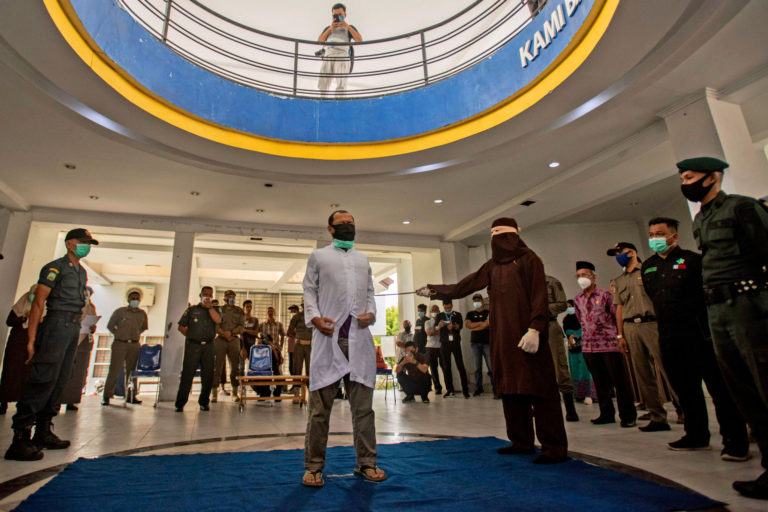
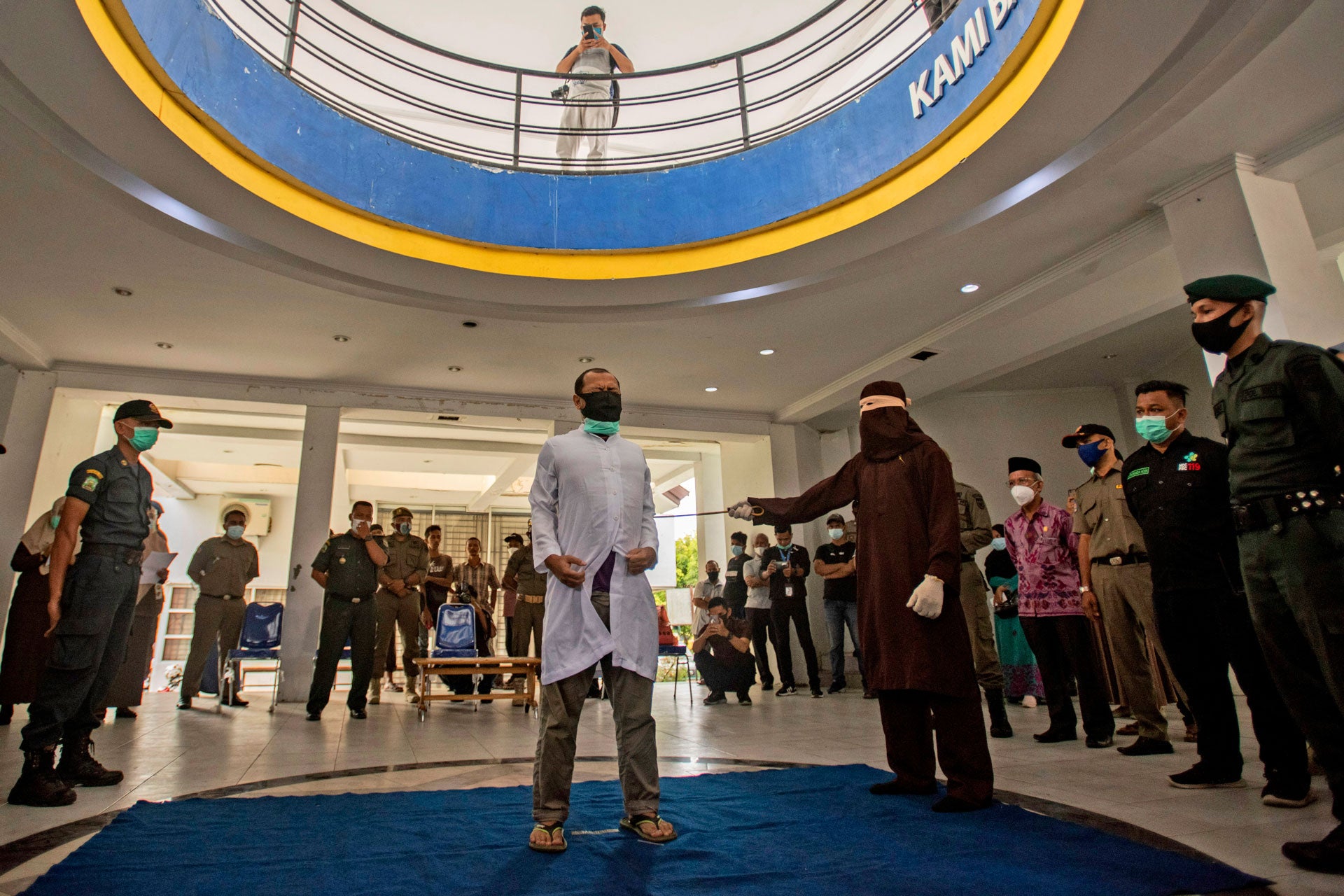
Authorities in Indonesia’s Aceh province publicly flogged two gay men 77 times each on Thursday after a vigilante mob raided their apartment in November, allegedly caught them having sex, and handed them over to the police. The whipping—recognized as torture under international law—was punishment under the province’s Sharia (Islamic law) regulations, which forbid same-sex conduct.

The floggings are part of a longstanding pattern of targeted abuse by Acehnese authorities against lesbian, gay, bisexual, and transgender (LGBT) people.

In 2012, then-Banda Aceh deputy mayor Illiza Saaduddin announced a “special team” to make the public more aware of the “threat of LGBT,” posting an image of herself on Instagram holding a handgun and vowing to flush gays out of Aceh. In October 2015, special Sharia police arrested two women, ages 18 and 19, on suspicion of being lesbians for embracing in public, and detained them for three nights before sending them to religious “rehab.” An episode nearly identical to this week’s flogging happened in 2017 – including vigilantism, police involvement, prosecution under grossly discriminatory Sharia regulations, and public flogging.

The abuse also is part of a five-year anti-LGBT campaign driven by many of Indonesia’s national and local leaders with harmful rhetoric and repeated failure to punish abusers.

Aceh is the only one of Indonesia’s 34 provinces that can legally adopt bylaws derived from Sharia (though such provisions are spreading elsewhere in the country). Over the past decade, Aceh’s parliament has adopted Sharia-inspired ordinances that criminalize everything from non-hijab-wearing women, to drinking alcohol, to gambling, to extramarital sex. The province’s 2014 Criminal Code bars both male and female same-sex behavior.

And while the spectacle of public torture in Aceh is horrific, authorities across the country continue to lead or participate in arbitrary raids and arrests in private spaces. Increasingly, authorities are using a discriminatory pornography law as a weapon to target LGBT people. The crackdown has contributed to a major public health crisis: HIV rates among men who have sex with men were already spiking, and the attacks of the last five years have stoked fear and inhibited vital HIV prevention work.

The Indonesian government has made commitments in principle to protect LGBT people. But it seems President Joko “Jokowi” Widodo’s slogan of “unity in diversity” does not genuinely extend to protecting everyone – including the two men mercilessly flogged today.

JoJo Siwa Cements Herself As A Powerful Gay Icon With Sassy Response To A Woman’s Comment – Pedestrian TV

0
To sign up for our daily newsletter filled with the latest news, goss and other stuff you should care about, head HERE. For a running feed of all our stories, follow us on Twitter HERE. Or, bookmark the PEDESTRIAN.TV homepage to visit whenever you need a news fix.

Last week, the queer community rejoiced as we gained a very powerful member: one JoJo Siwa.

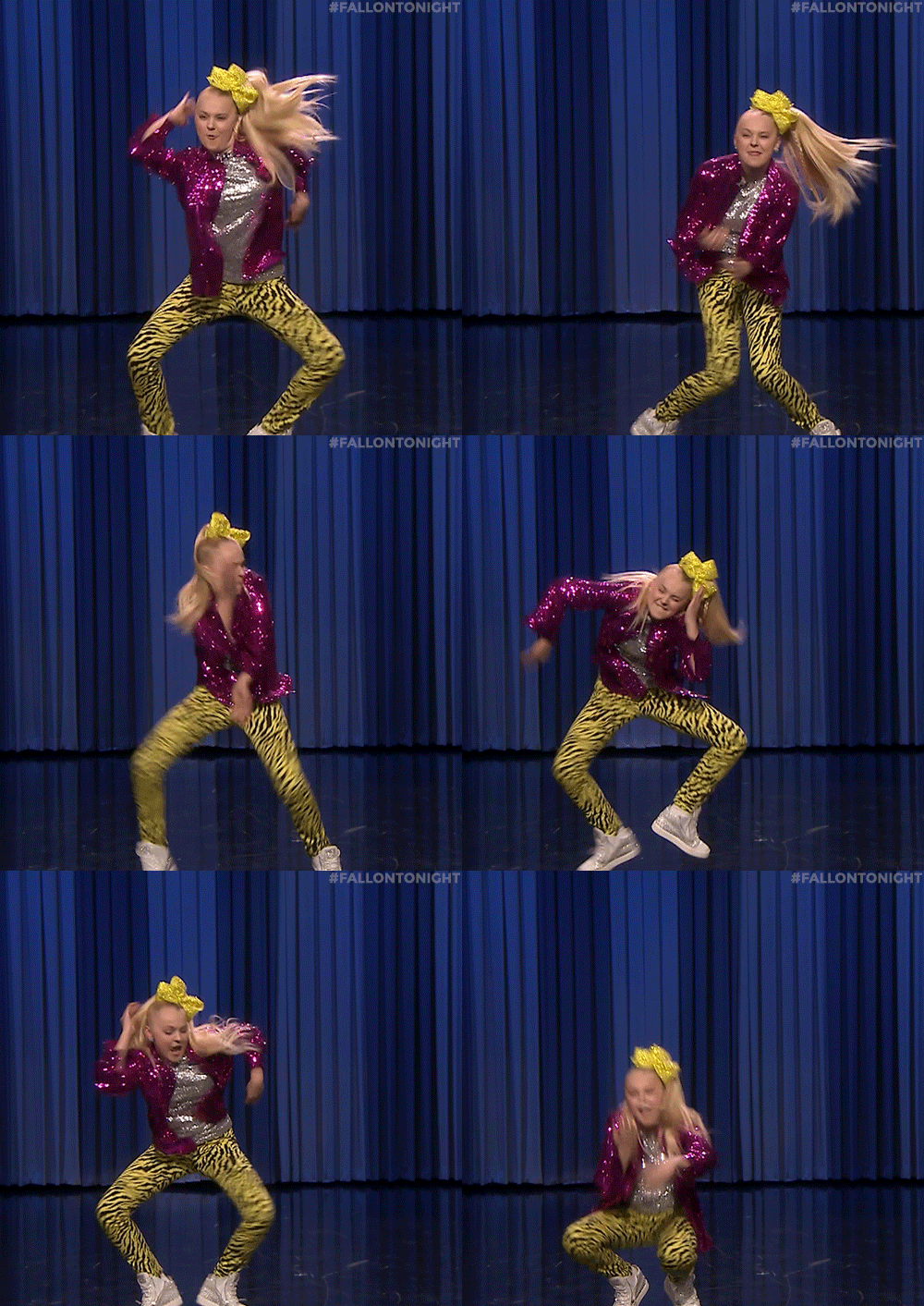
The Dance Moms star turned record breaking kids performer announced to the world that she was gay by sharing a piccy where she wore a shirt gifted to her by her cousin, emblazoned with: “Best gay cousin ever.”

She subsequently shared a video where she said that she’s happier than she’s ever been and if you’re aware of JoJo Siwa and her usual level of happiness, you’ll know that this must mean she’s pretty darn happy.

I mean:

But while most fans have been supportive of JoJo Siwa since coming out, there was one nasty-ass woman who left a comment on the star’s social media, telling her that she will not be allowing her daughter to stan her ‘cos she’s gay.

“My daughter will never watch you again,” the mother wrote. Fucking gross, right?

Well, JoJo Siwa cemented herself as a queer icon by responding with a shady clapback that’s succinct and subtle with just the right amount of sass.

While I feel like most people would try to change the woman’s mind, JoJo simply responded: “Okay!”

It’s the exclamation mark for me. Girl, bye.

In the video JoJo Siwa shared last week, she recalled a discussion with her parents in which her mother said she realised “about two years ago” that her daughter didn’t “only like boys.” Both her parents were very supportive, Siwa added.

“Somebody asked, ‘What label are you?’ You know, I have thought about this, and the reason why I’m not ready to answer is because I don’t really know this answer,” she said.

“I think humans are awesome. I think humans are really incredible people. I right now am super-duper happy and I want to share everything with the world, I really do, but I also want to keep things in my life private until they’re ready to be public.”

She added: “But right now what matters is that you guys know that no matter who you love, that it’s OK. And that it’s awesome. And that the world is there for you.”

Throughout the livestream vid, JoJo Siwa reiterated to her fans how happy she was.

“No matter what, I love you guys. I have your backs for forever,” she said. “If I could give you any advice, do whatever it is that makes you happy.”

Peep the full thing below:

More Stuff From PEDESTRIAN.TV

New York City Recognizes LGBT-Owned Businesses as Minority-Owned Businesses — Here Are the Details – JD Supra

0
New York City now recognizes LGBT-owned businesses as minority-owned businesses, which will give LGBT-owned businesses an opportunity to compete for billions of dollars of government contract opportunity. This new designation was announced on Tuesday, January 19, 2021, by New York City’s Department of Small Business Services (SBS) in partnership with the National LGBT Chamber of Commerce (NGLCC). Kelley Drye is a longtime National Legal Partner of the NGLCC, and is proud to stand with the NGLCC as it continues to promote its LGBT initiative in business inclusion throughout the public sector.

According to the NGLCC, SBS has approved a measure to include NGLCC Certified LGBT Business Enterprise (Certified LGBTBE®) suppliers in public contract and procurement opportunities throughout the city. The SBS, in partnership with the NGLCC, will fast-track LGBT-owned businesses into New York City certification programs, including the Minority and Women-owned Business Enterprise (M/WBE) and Emerging Business Enterprise (EBE) Programs.

The M/WBE Program aims to increase New York City contracting opportunities and involvement among certified M/WBE businesses. The SBS states that New York City spends up to $17 billion per year on goods and services. Certification allows businesses to compete for contracting opportunities and access growth-encouraging programs.

Certification programs were previously open only to minority and women-owned businesses, in addition to socially and historically disadvantaged individuals. As a result of this designation, LGBT-owned businesses certified with the NGLCC will now have access to the same opportunities as minority-owned businesses. LGBT-owned businesses will also be eligible for scholarship programs, mentorship and leadership training, and other business development tools to help foster business growth.

The M/WBE Program

In 2005, New York City Mayor Michael Bloomberg signed Local Law 129, which established participation goals for minority and women-owned business on City contracts. N.Y.C. Admin. Code §§ 6-129 (Lexis 2020). SBS reports that Local Law 129 helped to increase the number of M/WBE businesses certified to participate in the City’s program from 700 to more than 3,500, with certified businesses winning more than $3 billion in City contracts.

Local Law 1 of 2013 encourages New York City agencies to buy more goods and services from certified businesses. The City’s certification programs promote the growth of the City’s M/WBEs and other eligible businesses. The NYC Mayor’s Office of Contract Services explains that the M/WBE Program was created to help alleviate the disparity between City contract awards to specific ethnic and gender groups and address the representation of those groups within the local New York City market.

Recognizing LGBT-owned businesses as minority-owned businesses is an administrative policy change directed by Mayor de Blasio and SBS. There is a bill currently pending in the City Council that would codify this policy into a legally binding data collection, study, and tracking mechanism that will strengthen LGBTBE inclusion throughout City contracting services. Specifically, the bill proposes to require SBS to certify LGBT-owned businesses, administer programs for such business as may be established by law, and publish a directory of such businesses.

How to Get Certified

Getting certified allows LGBT-owned businesses to compete for City contracts, and certification is the first step in making New York City aware that a business is LGBT-owned. LGBT-owned businesses that want to take advantage of the new program need to get certification from the NGLCC and register with the SBS database.

[View source.]

Why shaming people won’t change pandemic behavior – Vox.com

0

On December 31, a group of gay men intended to celebrate the passing of another year with a cruise in the open ocean, just off the coast of Puerto Vallarta. That day, the ocean had other plans.

From dry land, I saw the videos first on Twitter — men in life jackets and speedos pulling other men in life jackets and speedos onto rescue boats. Local news site Out and About PV confirmed that a boat had sunk, reporting that all partiers were rescued without harm. And then the now-infamous Instagram account “GaysOverCovid” made it go viral.

Over the last few months and peaking in the days surrounding New Year’s Eve, @GaysOverCovid has exponentially multiplied its follower count on Instagram to more than 133,000 since being created in July. The secret to the growing follower count — perhaps not the name, which doesn’t really roll off the tongue — is shame.

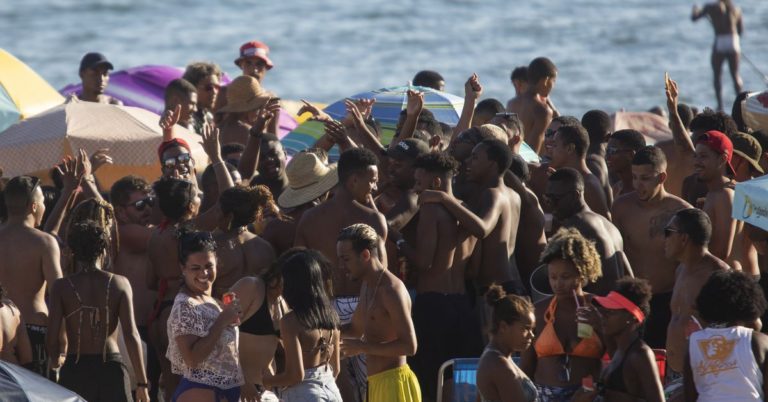
GaysOverCovid (GOC) and the many copycat accounts like it repost social media content from people violating coronavirus guidelines by throwing parties, traveling, and attending huge gatherings. In GOC’s case, the violators happen to be predominantly white gay men, including influencers with thousands of their own followers, who are going to massive, maskless parties. (These events, known generally and even pre-Covid as circuit parties, are worth their own separate article.) Don’t be like the “gays over covid,” the account warns, or you might end up being made an example of.

The outing of those who blatantly flout health guidelines and put others in danger can feel satisfying. When massive parties are shut down — or when, by a twist of fate, the ocean decides to swallow a boatful of unmasked partiers — it may look a lot like justice. (Fortunately, in Puerto Vallarta, no one on the capsized boat was reported injured.)

But the rise of GOC’s popularity has driven another conversation about whether schadenfreude does any good at all. Big public health initiatives to curb drunk driving and secondhand smoke rely on shame, but those concerns aren’t quite the same as the coronavirus pandemic. And if you ask public health experts, as satisfying as chastening others can feel, they’ve learned it can actually do harm when it comes to an urgent public health crisis.

Why shaming someone feels like the right thing to do

The primary appeal of GOC’s account, to me, was the lack of self-awareness of some of its subjects. Wanting to go to a party after spending the last 10 months inside is normal. Wanting to hang out with strangers is normal. Wanting to travel to a different country again is normal. What’s baffling isn’t even that people would break all these rules (please don’t), but rather that they would post about it on social media. All the more confusing if they were, as some of the GOC subjects are, health professionals or had major social media followings and paid sponsorships.

The desire to post your foolishness on social media is sadly common. But in talking to public health experts and public health behavioral specialists, the desire to shame people is pretty common too. Shame is one of the tools we use to establish boundaries, and those boundaries establish the structure and behavior that we, as a civil society, approve of and disapprove of.

David Abrams, a professor of social and behavioral sciences at NYU who studies addiction, said that we first see boundaries of acceptable and unacceptable behavior in childhood. As kids, we learned things like washing our hands, or sharing toys, or doing our homework before we watch television. When we broke rules, we were shamed.

“Punishment and shaming, I think, [are some of] the strongest and most powerful ways to try to get people back in line when they deviate,” Abrams told me.

Shaming and embarrassing people on social media is essentially replicating what we’ve been taught to do when we see bad behavior; it’s an attempt to get said behavior back in line. Ridicule is, in its way, setting a boundary; in this case the boundary it’s attempting to impart is “you shouldn’t travel internationally to party and frolic with a bunch of people in a place where hospitals are at their capacity and then return home and potentially put anyone you come into contact with at risk.”

But it’s the same motivation and message as shaming people going to concerts or shaming people who are holding weddings or shaming people who aren’t wearing masks.

Abrams pointed out that sometimes this shaming works. In April of last year, Vice President Mike Pence paid a visit to the Mayo Clinic without a mask. That visit was photographed and picked up by news outlets which pointed out that he wasn’t just putting himself at risk but was also putting at-risk people at risk. After that instance, Abrams said that Pence began adhering to masks more often, especially in public.

After GOC called out various partiers, some apologized publicly. Barry’s Bootcamp, where at least one partier worked, sent a company memo about quarantining and social distancing. Not unlike Abrams’s Pence example, some people who were shamed showed remorse and promised better behavior in the future.

But the problem is that while shame can be effective for some people, it has its drawbacks. And in a public health sphere, experts say that the downsides have a history of outweighing benefits.

“Shame does have some negative consequences, not the least of which is it makes you feel embarrassed and guilty,” Abrams said. “And in effect, it makes you want to run away and feel terrible about yourself.”

Feeling terrible about yourself doesn’t always result in good behavior.

Shame doesn’t work

The drawback with shaming individuals is that it can cause negative reactions and more negative behavior. It happened with the HIV/AIDS epidemic that still afflicts the US today. It happens with addiction and mental illness. An adverse, very serious reaction to shame is that it doesn’t encourage people to get the help they need.

“Shaming people in any situation really creates a barrier for individuals,” said Jen Balkus, an infectious disease epidemiologist at the University of Washington. Balkus says that this barrier can make it harder to “acknowledge situations where they may have encountered risk.”

In assessing how the HIV/AIDS epidemic was handled, public health officials learned that shame didn’t eliminate risky behavior. Instead, shame drove people to hide or not disclose that behavior. Those reactions are what Balkus and public health officials fear, and what they say is happening in the current pandemic.

“Individuals who might be shamed by their peers or others might not disclose that they were around people where there could be the opportunity for exposure,” Balkus said of the Covid-19 pandemic. As a result, they may not feel comfortable getting tested, and they may not quarantine or consider other precautions.

HIV/AIDS and Covid-19 are two very different diseases, and the comparison between the two isn’t linear. But Balkus said that the lessons that epidemiologists learned from addressing the HIV/AIDS epidemic could inform the conversations we have about the coronavirus. That means eliminating stigma, encouraging people to get tested, promoting better behavior and risk reduction, and teaching people what to do if exposed.

“We learned from the HIV epidemic how to talk with people and to work with them,” Balkus said, adding that it’s important to have “an open dialogue to understand what behaviors folks are engaging in and what choices they could make to reduce risk.” Good communication doesn’t mitigate risk entirely, but “it’s about helping empower people to make the best decisions in the moment,” she told me.

The goal is to shift from shaming people into better behavior to modeling and encouraging better behavior — the other, more powerful, side of the boundary.

Balkus and Abrams both said that consistent positive encouragement is a much more effective tool in public health. The absence of it can also help explain why people are, say, going to giant parties despite the amount of risk involved.

Because of the variation in rules — like how indoor dining restrictions and capacity limits vary from state to state — and inconsistent behavior from public leaders, there’s confusion, doubt, and even defiance against the guidelines among the general population. That there are so many people going to these parties or not wearing masks or not paying attention to social distancing measures seems to indicate a failure of getting a message across rather than just a staggering number of individual failures.

That’s a failure on the structural and policy level, Balkus said. “From the very beginning of the pandemic, we have had a fragmented and state-by-state response. It’s really made it incredibly difficult to both try to get a handle on transmission and keep it as low as possible, and keep our communities as safe as we can in this moment,” she said.

What makes this all frustrating is that the shaming seems to be coming from a place of concern and safety. It’s not bad to worry about the danger these parties present. Just because public health officials acknowledge that shame is bad doesn’t mean they think that these parties don’t present a danger.

There are times shame has worked: In the US, we’ve effectively shamed drunk driving and secondhand smoke, achieving a consensus. Giant gatherings during the pandemic — circuit parties, weddings, underground celebrations, etc. — have a lot in common with these public safety concerns. The attendees of these events could potentially infect people who might not even have attended, much the way a drunk driver could cause a fatal accident with another driver or a smoker could affect nonsmokers around them.

Balkus and Abrams said that there are similarities, but the main difference is that the US had years and years to curb drunk driving and smoking. We don’t have that kind of time with the pandemic. We’ve all been asked to change our behavior in such a short amount of time, and the way out isn’t to shun each other. Rather, it’s to care for one another and really focus on amplifying and pushing public health policy and guidelines in clear and helpful ways.

And experts understand that figuring out that balance between shame, concern, stigma, empathy, and policy isn’t easy.

“We are all facing this pandemic together. Nobody is excluded from the hardships. And so I think for all of us, it’s just, it’s really just challenging both to find that empathy for others, and also take care of ourselves. But I think that’s super important to do,” she said.

Give Your Workout Wardrobe a Refresh With Our Picks From Athleta For Under $100 – POPSUGAR

0

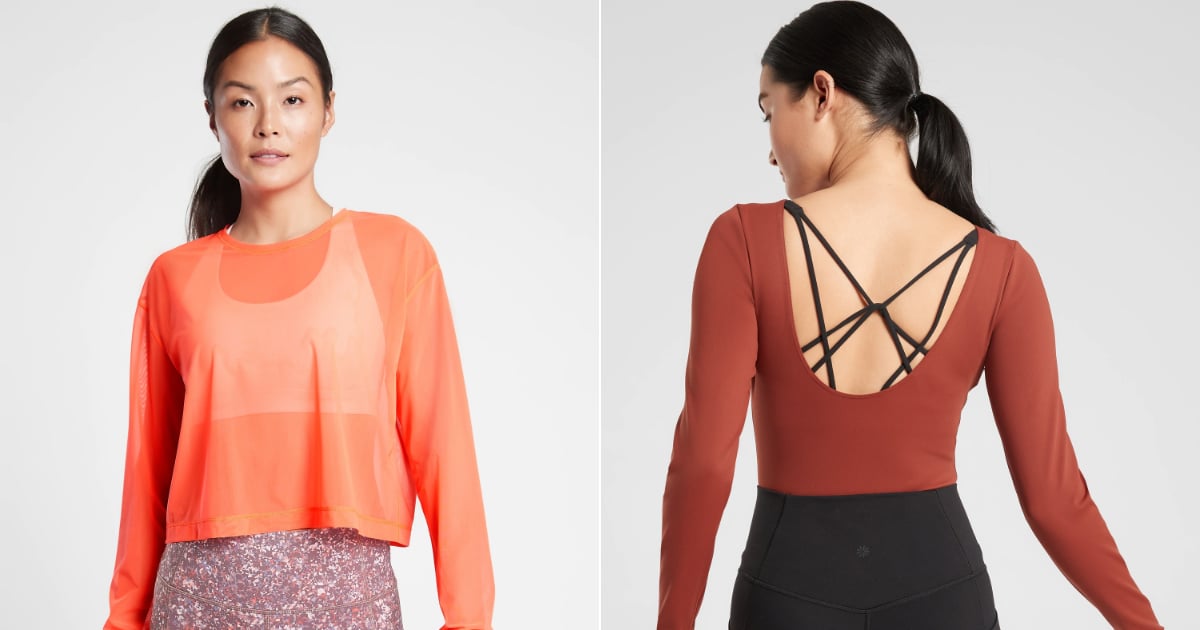
Whether you’ve been working out regularly for the last several months or it’s one of your 2021 resolutions, you have to wear something . . . and a new piece may be just the motivation you need to get moving. After all, when your mind wants to stay put on the sofa, adding a new top can be the extra push to get yourself up and going (or it can’t hurt to try, anyway).

Athleta has a ton of sporty pieces well-suited for indoors or warmer climates, and plenty of wintry options, too. We picked out items we love, all for under $100, including leggings, tanks, and hoodies — and several are on sale now as well. There’s definitely something here that fits your fitness plans, so ready, set, go check them out ahead.

With no gay bar or space to call its own, Newport’s LGBTQ community feels ‘isolated’ – newportri.com

0

NEWPORT — Even before the COVID pandemic, Daniel Cano-Restrepo said the LGBTQ community in the city had felt estranged.

“There is a community out there, it’s just somehow disconnected,” Cano-Restrepo said. “A gay bar or an LGBT establishment, of course there is a need for that, and the community will respond to that place.”

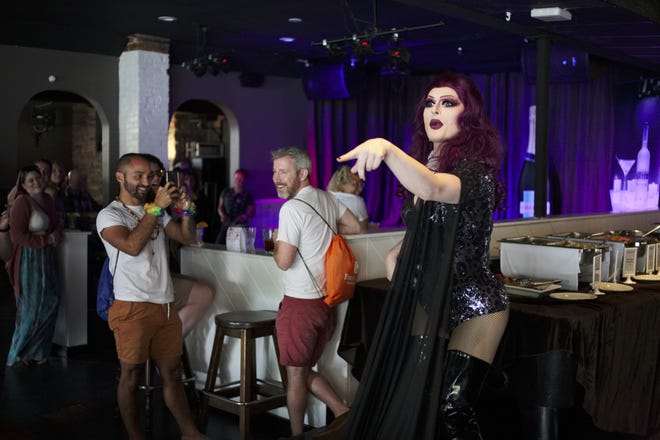
A member of the drag theater troupe Trailer Park Girls performs at Parlor on Broadway during Newport Pride weekend in 2018. Looking on are Daniel Cano-Restrepo, left, and Sean O'Connor, who run the website NewportOUT. O'Connor says while some establishments have held LBGTQ-friendly events, a gay bar or something similar is needed.

Cano-Restrepo and his partner, Sean O’Connor, run NewportOUT, a website dedicated to marketing Newport as a tourism destination to LGBTQ travelers. Although several bars host events for the community, the two said the area still needs a space to socialize and express themselves.

“It would certainly be a huge asset for the community, not only locally, but for, you know, that travel tourism aspect of things,” O’Connor said.

Several gay bars have opened and closed in the city, but there has not been one in operation since 2006. The last one, Castaways, was open for just two years at the former location of the city’s longest-running gay bar, David’s, which had closed years before.

Castaways, the last gay bar in Newport, was open for just two years before closing in 2006.

Lionel Pires, the owner of Castaways, remembers when more than one gay bar dotted downtown Newport, drawing in tourism from the LGBTQ community in the late 1970s and early 80s. Back then, he said, Easton’s Beach was predominately populated by gay men and women.

“The bars here were busy, really, really busy,” Pires said. “But of course, that was right at the beginning of the AIDS epidemic, which really changed everything. It’s hard to put into words how devastating it was to the whole gay community. But here, it was a very small town and there were a lot of locals who died and unfortunately, they died quietly, a lot of them in shame.”

Tragically, one of those who passed away was David Lilly, who owned David’s. After David’s was sold, Pires said the community was left without a home in Newport. Around 1995, Pires attempted to buy the building, at 28 Prospect Hill St., and reestablish a gay bar.

The effort to establish a bar in that location was rife with barriers, from neighbor complaints about having a bar in the area to struggles obtaining a liquor license from the City Council, an issue eventually picked up by local news outlets.

Lionel Pires stands in front of his nightclub Castaways, where the windows are boarded up after a vandal smashed them in March 2004. Pires called the act a hate crime.

Ultimately, Pires did open Castaways, but a week after the bar opened, someone smashed the windows to the place while Lionel and his partner slept upstairs. “It terrorized the community,” he said. “The whole community felt like we were targeted. Awful. It was awful.”

After two years, during which the bar hosted parties, events, women’s nights and weathered regular visits from police over false noise complaints, Castaways closed in 2006, unable to keep up with a recently opened dance club in Middletown, Pires said. 

“There were people in their early 20s to who it was like their second home,” Pires said. “I mean, it was a community, and they had never had it, and so this was the first time that existed, and they were good patrons.”

For about 15 years, Pires said he has been wanting to create an LGBTQ space in Newport, mainly some form of private club for the LGBTQ community that could be run by a nonprofit. However, he said he’s having difficulty finding people willing to sit on the board of directors. 

“I feel like if the gay community doesn’t do something about it … then this opportunity will be gone for us,” Pires said. “I worked for a long time with Discover Newport to try to increase gay tourism here and one of the issues with that is, if there isn’t a bar, people aren’t going to come. Because even if you do the mansions or whatever, there’s nothing to do after.”

He envisions the space as a cultural center that could turn into a bar. He said this kind of club could fit more of the needs for the diverse people under the LGBTQ umbrella.

As someone who identifies as nonbinary, Newport Health Equity Zone strategy specialist Rex LeBeau said although they would like to see a gay bar in Newport, they agree a traditional gay bar would not necessarily fit the needs of the entire community.

Most gay bars cater specifically to gay men or feature bathrooms separated by gender, which can be discouraging to transgender and nonbinary people. 

Additionally, since bars have been the main hosts for LGBTQ events in Newport, it can be difficult for LGBTQ Newporters who struggle with substance abuse to attend community events.

“It’s not a fully sort of inclusive space,” LeBeau said. “Being queer is hard and a lot of people use things as coping mechanisms, whether that’s smoking, or drinking, or weed to reduce anxiety … So especially for the folks that are in recovery, events happening at a bar are going to be prohibitive in some ways.”

Participants in a Pride Ride prepare to take off from America's Cup Avenue in 2018.

Like Pires, LeBeau has worked to establish LGBTQ resources in Newport with the Newport Health Equity Zone and Channing Memorial Church. Lebeau said the only consistent space for LGBTQ socialization in Newport has been the Gay-Straight Alliance at Channing Memorial Church.

“Because Newport doesn’t have the infrastructure or mindset, programs, spaces to make people feel welcome and safe and find people like them, queer folks have to look elsewhere,” LeBeau said. “Providence is a real beacon for that because there’s a huge amount of diversity in Providence in terms of what organizations are queer friendly.”

Pires said he hopes to see some sort of LGBTQ space return to Newport, if not created by him, then created by the next generation.

“Isolation is suffering,” Pires said. “You have a community here that is isolated. You’re online, but it’s not an organic thing. You don’t see the people, you know … it’s just about finding the people who are going to say, ‘Yeah, we’re gonna make this work.’”