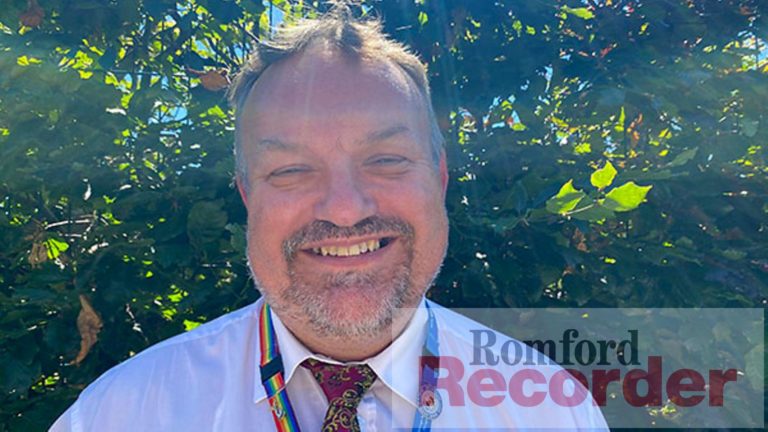
A security advisor has shared why he became an ally member for the Barking, Havering and Redbridge University Hospitals Trust (BHRUT) LGBT+ network for this Pride Month 2021 and called for others to do the same.
Mark Stephens, who works mostly at Queen’s Hospital in Romford but also across BHRUT, has shared his Pride story in celebration this June.
Attending BHRUT’s LGBT+ Network for staff – which relaunched in 2019 – Mark said he remembers finishing the meeting and colleague commenting on the fact that he is straight.
He said that it didn’t bother him much, but got him thinking: “What did it matter if I was?”
“I’ve seen a difference in how people are treated right back to my days in the military in the early 80s, when my girlfriend at the time was kicked out for being accused of lesbianism, just for lying on opposite ends of the same bed with another female,” Mark said.
You may also want to watch:
“The rule was that you had to have at least a foot on the floor. We’ve come a long way since then and I find that the inclusivity between staff in our trust is mostly good, however, I’ve seen the way patients and visitors sometimes react to our staff due to their sexuality.”
As an ally member in the LGBT+ network, Mark provides support to its chair and head of patient experience, Victoria Miles-Gale, who said he is the most “consistent ally”.
She said: “He supports us in everything we do and this makes a huge difference to me, to our network’s members, and our wider LGBT+ community, including those we care for.
“I am so grateful to Mark for his support, and would like to encourage more of our colleagues to join us as allies.”
Mark said: “I’m proud to be an ally and doing my bit to ensure our trust can offer the most inclusive service for our LGBT+ community.
“We need more people to become allies to challenge negative behaviour and help us get to a place where everyone is treated equally, on a level playing field.”
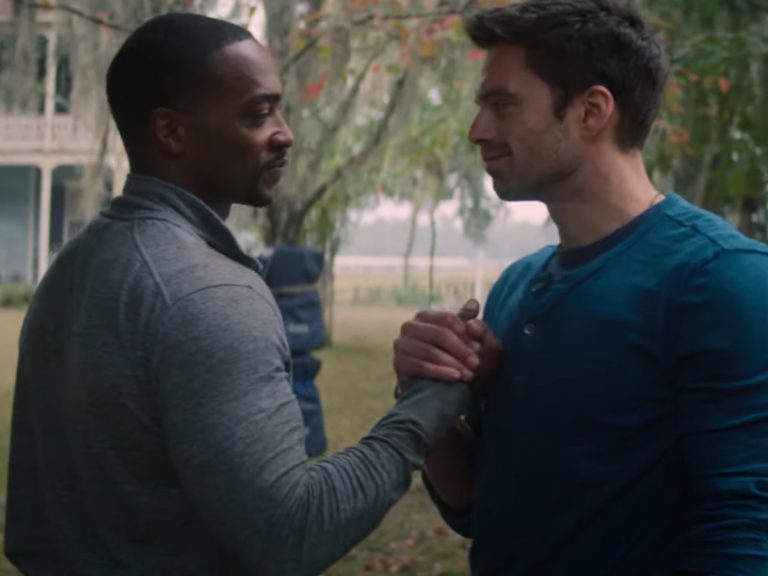
In the series, Sam and Bucky are depicted as having a close friendship with discussion from fans that perhaps the two characters share a romantic connection.
Mackie was asked about the fan speculation surrounding his character’s relationship with Stan during an appearance on Variety’s Awards Circuit podcast.
The actor, however, confirmed that the friendship is purely platonic.
“So many things are twisted and convoluted,” he said. “There’s so many things that people latch on to with their own devices to make themselves relevant and rational.”
“The idea of two guys being friends and loving each other in 2021 is a problem because of the exploitation of homosexuality,” Mackie continued.
“It used to be guys can be friends, we can hang out, and it was cool. You would always meet your friends at the bar, you know. You can’t do that anymore, because something as pure and beautiful as homosexuality has been exploited by people who are trying to rationalise themselves.”
Fans were quick to react to Mackie’s comments, criticising him for his choice of words.
“Anthony Mackie should’ve just said the ship was cute and called it a day,” wrote one fan. “I understand where he’s coming from, he just needed to word it better.”
Another echoed the same sentiment, writing: “I get the point Anthony Mackie was trying to make but he definitely should’ve worded it better. It’s totally not wrong for gay people to wish to see representation on the big screen, in the world’s biggest franchise. Also idk why he compared being a Superhero to being masculine…”
“Why did he have to say 4 paragraphs instead of saying, ‘it’s cute!’ and keep it moving,” wrote someone else.
One fan added: “Anthony Mackie waited until pride month to talk about how annoying it is for gay people with virtually no representation in the MCU to head cannon their faves as gay.”
Another user wrote: “Me, a queer person: *shipping my favs* Anthony Mackie: This is an exploitation of homosexuality.”
“Did anthony mackie pull a ‘why can’t guys be friends without it being gay’ on sambucky,” added someone else.
“Please stop asking about gay shipping in 2021 i would prefer to be blithely unaware that anthony mackie is so uncomfortable with queer readings of his character that he thinks he can’t hang out at a bar with his dude friends,” said another user.
Some took issue with Mackie’s comment surrounding the importance of a “sensitive masculine figure”, stating there’s “nothing more masculine than being a superhero and flying around and beating people up. But there’s nothing more sensitive than having emotional conversation and a kindred spirit friendship with someone you care about and love.”
One person wrote: “Anthony mackie: there’s nothing more masculine than being a superhero and flying around and beating people up. Female superheroes: Am I a joke to you?”
Others have defended Mackie over his remarks, with one person writing: “Anthony Mackie actually made a really good point about sensitivity in men being perceived incorrectly as a gay trait, and y’all intentionally misinterpreted the statement… this is Twitter and we thrive off negative attention, I guess.”
“You know what, I’m going to dunk on Variety here, for framing this thread in a way designed to provoke Twitter’s anger against Anthony Mackie,” wrote another user, who called out Disney instead.
“Disney knows there’s a massive shipping fan base for these characters and exploited that to get views, while not making the pair romantic so as not to lose homophobic viewers. It’s corporate queerbaiting at a much higher level than individual actors can control.”
They continued: “In this interview, Mackie has to justify the mismatch between the homoerotically-framed scenes and the heteronormative writing. He doesn’t want to get on his employer’s bad side and I also believe he’s trying *not* to say something homophobic, albeit clumsily.”
The Independent has contacted a representative of Mackie’s for comment.
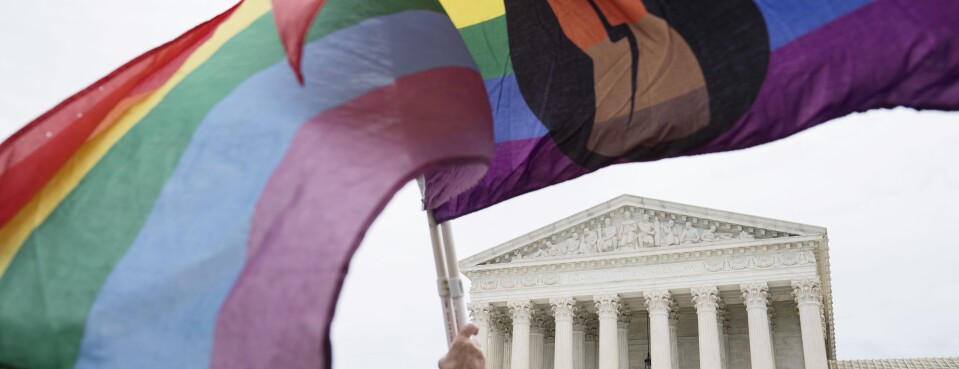
The ongoing debate surrounding religious exemptions to LGBT anti-discrimination laws remains unsettled for workplaces, after the U.S. Supreme Court’s narrow ruling in a same-sex foster parents case sidestepped the clash percolating in courts and Congress.
Thursday’s unanimous decision in Fulton v. Philadelphia found that a city ordinance violated the U.S. Constitution when officials excluded a Catholic charity from part of the city’s foster-care program because the group wouldn’t help place children with same-sex couples.
Attorneys and academics said the ruling fell short of a sweeping re-framing of religious rights under the Constitution, which would have undercut other discrimination statutes such as Title VII of the 1964 Civil Rights Act. The high court held in a landmark decision last year that Title VII protects LGBT workers.
“The immediate impact is fairly muted,” said Anthony Michael Kreis, an assistant law professor at Georgia State University, who focuses on constitutional and employment law. “The bigger fights about religious rights and LGBTQ people have been punted down the road for another day. Those fights will continue.”
The decision focused on the specifics of the Philadelphia ordinance, and left open larger questions about when a “neutral law of general applicability,” such as an anti-discrimination law, will violate the First Amendment’s protections for the free exercise of religion.
This clash between religious rights and anti-bias laws has raged in courts in employment and public accommodations cases, as well as on the Hill where a comprehensive LGBT rights bill known as the Equality Act awaits Senate consideration. There’s some indication that the high court will ultimately answer those broader questions, attorneys and academics say.
“They took a scalpel to the Philadelphia ordinance,” he said. “It wasn’t the ax that many LGBT groups feared.”
The Becket Fund for Religious Liberty, which brought the case to the Supreme Court, pushed for the court to upend its precedent for when laws clash with religious beliefs, but cheered the decision. In a statement, the nonprofit legal group said the justices “recognized that protecting faith-affirming agencies will ensure foster children in need have every opportunity available to find a loving home.”
Jennifer Pizer, law and policy director for Lambda Legal, said the decision could lead to confusion about when religious groups can discriminate, but added that it at least didn’t limit the government’s power to protect against bias.
“At the same time, we can’t help noticing that we have had a string of decisions in which the court has rejected a broad license to discriminate but has nevertheless found a way to rule on behalf of a religious claimant based on unique facts,” Pizer said.
Litigation Ahead
The foster care case had the potential to have a sweeping effect on government enforcement of anti-bias laws at work and beyond. In addition to Title VII, at least 23 states have specific anti-discrimination protections for LGBT individuals, according to Bloomberg Law.
“This decision will invite a lot more litigation,” said David Flugman, a partner at Selendy & Gay PLLC, who heads up the firm’s diversity and inclusion efforts. “The question now is how will courts deal with analogous factual circumstances as groups push for Free Exercise claims.”
After last year’s Supreme Court decision in Bostock v. Clayton County, GA, the question about religious defenses to workplace discrimination liability was left unaddressed.
“The Bostock decision was landmark, but it left as many questions open as it did closed,” said Michelle Phillips, a principal of Jackson Lewis P.C., who represents and advises employers.
It’s clear the Supreme Court is open to taking up broader questions about religion and other issues, she said.
In Texas, Christian groups are suing the U.S. Equal Employment Opportunity Commission to get a carveout from Title VII’s LGBT anti-discrimination requirements. They’re seeking to represent classes of employers that have religious and non-religious objections to homosexuality or “transgender behavior.”
“Is there a Constitutional right to discriminate that would override Title VII in some context? That remains a question,” said James Esseks, director of the LGBTQ & HIV Project for the American Civil Liberties Union.
Narrow for Now
In Fulton, Catholic Social Services asked the justices to revisit 30-year-old precedent governing religious exemptions from “neutral laws of general applicability” that don’t expressly target religion.
In concurring opinions, several justices noted that they could reconsider its 1990 decision in Employment Division v. Smith, which held that the First Amendment’s free exercise clause doesn’t prohibit states from applying neutral laws of general applicability to bar actions motivated by religion.
That case eventually led to the enactment of the 1993 Religious Freedom Restoration Act, which prohibits the federal government from burdening a person’s free exercise of religion, even if that burden stems from a neutral, generally applicable law.
Religious groups have long pushed to apply a strict test that would require the government to show that a neutral law of general applicability, if it burdens religion at all, is narrowly tailored to a compelling interest. Justices Samuel Alito and Clarence Thomas also advocated in their concurring opinions for this “strict scrutiny” test to apply.
Justices Stephen Breyer, Amy Coney Barrett, and Brett Kavanaugh indicated that the high court’s test for religious exemptions could be reconsidered, but this case didn’t present the proper vehicle.
Courts have also grappled with whether the Religious Freedom Restoration Act’s exemptions apply to Title VII discrimination claims, which LGBT workers can now file—an issue the Supreme Court could one day take up.
“This is a court that is protective of free exercise of religious liberties,” Selendy & Gay’s Flugman said.
This article discusses the ending of Pixar’s Luca.
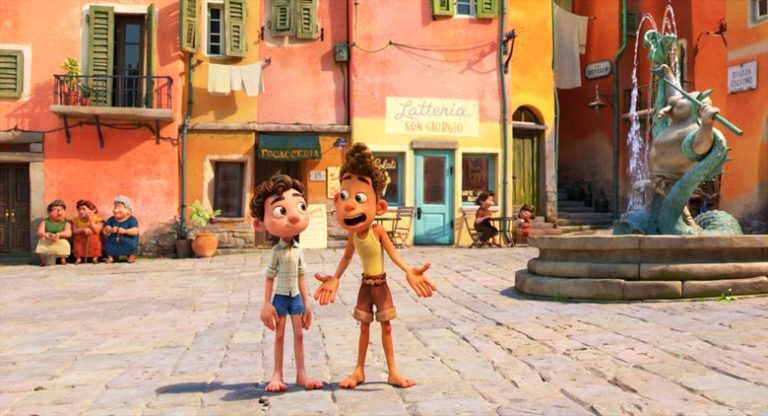
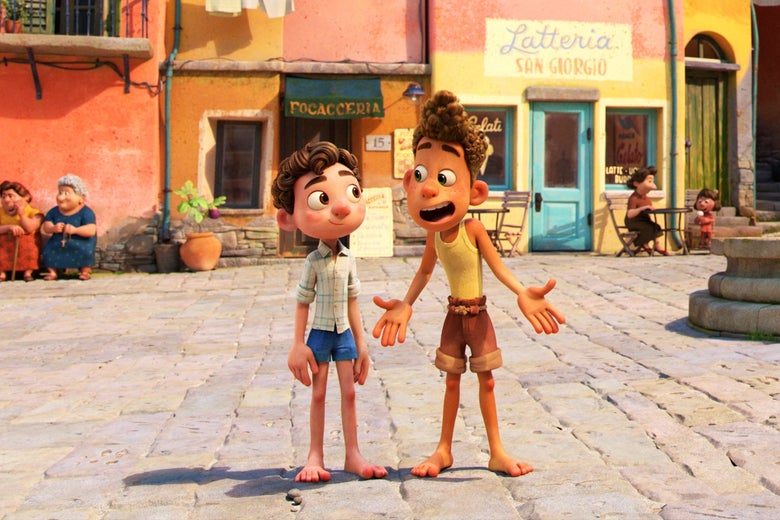
When director Enrico Casarosa says he didn’t intend to make Luca a gay romance, I believe him. The first trailers for the movie—about two boys, one more worldly than the other, growing closer while sharing swims and bike rides in the Italian countryside—invited some inevitable jokes about it being a kiddie Call Me by Your Name. And these jokes were only further encouraged by the fact that the new Pixar movie shares a name with that Oscar-winning queer romance’s director, Luca Guadagnino.But Casarosa has insisted that the movie’s central relationship is purely platonic. “I was really keen to talk about a friendship before girlfriends and boyfriends come in to complicate things,” he said at a press event. According to him, this coming-of-age story takes place in a “pre-puberty world.” The Call Me by Your Name-esque elements, he says, were based instead on his own experiences growing up with a childhood friend in Genoa. The name Luca, meanwhile, is surely another coincidence, since Luca is a very common Italian name.
Advertisement
Advertisement
Advertisement
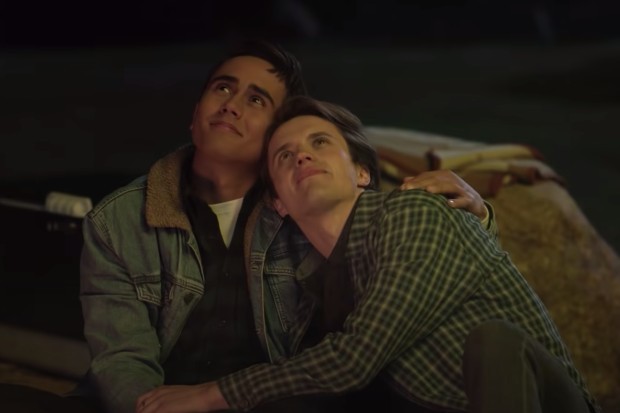
OK, but isn’t it still a little bit gay? Even beyond the superficial similarities to Call Me By Your Name, it seems, at the very least, open to interpretation. There’s no doubt that Luca offers an allegory about identity, passing, and the way people fear others who are not like them. In this case, the two boys’ true identity just happens to be their hidden natures as sea monsters. The titular character, a young sea monster, disobeys his parents and ventures above the surface, where he forms a close relationship with fellow sea monster Alberto. They have their share of moments that could be easily interpreted as puppy love, such as when they’re stargazing with their arms around each other, and their secret time together is liberating for them. It’s also forbidden. When Luca’s mother finds out about it, she doesn’t understand, and she’s afraid for him. She threatens to send him further into the depths—away from land, but also from Alberto’s influence.
Advertisement
The best of movies, TV, books, music, and more, delivered to your inbox.
The two boys run away together to the nearby town, where they are again misunderstood and must hide their identities from the hostile townspeople. Luca wants to attend school, but, as Alberto reminds him, there will always be a risk of ostracization—even violence—if the others find out what he really is. Alberto is also jealous of Luca’s burgeoning relationship with a local girl, Giulia. And when Alberto comes out, so to speak, as his true self, he is stung by Luca’s choice to throw him under the bus and remain closeted. The movie’s climax arrives when Luca finally decides to stand with Alberto and reveal his own identity. This in turn sparks defenses from their allies (including Giulia), and sets off a domino effect in which other members of the provincial town, including a pair of older women, announce that they, too, are sea monsters.
Advertisement
As an allegory for the closet, it’s a messy one, to be sure, and the experience of hiding parts of your identity has never been exclusive to the LGBTQ community. In the eyes of some viewers, the movie may come across an allegory not about sexuality but about race, or gender identity, or immigration status, or simply feeling out of place.
In the eyes of some viewers, the movie may come across an allegory not about sexuality but about race, gender identity, immigration status, or simply feeling out ofplace.
Still, there have been so many similar discussions about queer identity in Disney movies that you can almost predict the discourse ahead of time: “They’re gay!” “But why do they have to be gay? Isn’t it healthy to have a movie with two boys showing affection for each other without making it romantic?” “But why can’t they be gay?” It’s the same loop that played out with movies like Frozenand Brave. (“Why does a girl not wanting an arranged marriage mean she has to be a lesbian?” “Why shouldn’t she be a lesbian?” Repeat ad infinitum.)
Advertisement
Disney’s track record here doesn’t help matters. For both live-action and animated movies, the studio has overhyped what have become known as “exclusively gay moments,” tiny morsels of representation that are either so subtle you hardly notice them (a kiss between two women in the background of a Star Wars movie) or so plot-irrelevant that they can be easily chopped or overlooked by international censors (here’s looking at you, Endgame’s unnamed Grieving Man). Pixar at least seems to have learned a lesson about making too much of these moments: In Onward, an extremely minor character mentions having a girlfriend, but the character is still just that—extremely minor—even if the filmmakers were smart enough not to herald this development by tooting their own horns. Meanwhile, while Disney has congratulated itself and claimed to blaze new trails, plenty of other animation studios have been miles ahead of them: Laika’s ParaNorman, for example, featured an openly gay character way back in 2012.
Advertisement
Advertisement
Ironically, the Disney movie that gave us the term “exclusively gay moment” in the first place took a different tack: The live-action Beauty and the Beast’sLeFou is more in the spirit of the studio’s long-standing tradition of strongly queer-coded, if not explicitly gay, villains. Fans have since picked up on homoerotic undertones in Raya and the Last Dragonand the live-action Mulan, but these movies remain rainbow Rorschach tests, with audiences having to read between the lines or project their own meanings to find queer representation.
Luca seems firmly in this last tradition. How gay is it?Whatever the director’s stated intent, the answer seems to be: as gay as you want it to be. Are these two boys crushes? Are they friends? Can the movie be an allegory for coming out either way? All you can do is squint until something takes shape.
This article discusses the ending of Pixar’s Luca.
When director Enrico Casarosa says he didn’t intend to make Luca a gay romance, I believe him. The first trailers for the movie—about two boys, one more worldly than the other, growing closer while sharing swims and bike rides in the Italian countryside—invited some inevitable jokes about it being a kiddie Call Me by Your Name. And these jokes were only further encouraged by the fact that the new Pixar movie shares a name with that Oscar-winning queer romance’s director, Luca Guadagnino.But Casarosa has insisted that the movie’s central relationship is purely platonic. “I was really keen to talk about a friendship before girlfriends and boyfriends come in to complicate things,” he said at a press event. According to him, this coming-of-age story takes place in a “pre-puberty world.” The Call Me by Your Name-esque elements, he says, were based instead on his own experiences growing up with a childhood friend in Genoa. The name Luca, meanwhile, is surely another coincidence, since Luca is a very common Italian name.
Advertisement
Advertisement
Advertisement
OK, but isn’t it still a little bit gay? Even beyond the superficial similarities to Call Me By Your Name, it seems, at the very least, open to interpretation. There’s no doubt that Luca offers an allegory about identity, passing, and the way people fear others who are not like them. In this case, the two boys’ true identity just happens to be their hidden natures as sea monsters. The titular character, a young sea monster, disobeys his parents and ventures above the surface, where he forms a close relationship with fellow sea monster Alberto. They have their share of moments that could be easily interpreted as puppy love, such as when they’re stargazing with their arms around each other, and their secret time together is liberating for them. It’s also forbidden. When Luca’s mother finds out about it, she doesn’t understand, and she’s afraid for him. She threatens to send him further into the depths—away from land, but also from Alberto’s influence.
Advertisement
The best of movies, TV, books, music, and more, delivered to your inbox.
The two boys run away together to the nearby town, where they are again misunderstood and must hide their identities from the hostile townspeople. Luca wants to attend school, but, as Alberto reminds him, there will always be a risk of ostracization—even violence—if the others find out what he really is. Alberto is also jealous of Luca’s burgeoning relationship with a local girl, Giulia. And when Alberto comes out, so to speak, as his true self, he is stung by Luca’s choice to throw him under the bus and remain closeted. The movie’s climax arrives when Luca finally decides to stand with Alberto and reveal his own identity. This in turn sparks defenses from their allies (including Giulia), and sets off a domino effect in which other members of the provincial town, including a pair of older women, announce that they, too, are sea monsters.
Advertisement
As an allegory for the closet, it’s a messy one, to be sure, and the experience of hiding parts of your identity has never been exclusive to the LGBTQ community. In the eyes of some viewers, the movie may come across an allegory not about sexuality but about race, or gender identity, or immigration status, or simply feeling out of place.
In the eyes of some viewers, the movie may come across an allegory not about sexuality but about race, gender identity, immigration status, or simply feeling out ofplace.
Still, there have been so many similar discussions about queer identity in Disney movies that you can almost predict the discourse ahead of time: “They’re gay!” “But why do they have to be gay? Isn’t it healthy to have a movie with two boys showing affection for each other without making it romantic?” “But why can’t they be gay?” It’s the same loop that played out with movies like Frozenand Brave. (“Why does a girl not wanting an arranged marriage mean she has to be a lesbian?” “Why shouldn’t she be a lesbian?” Repeat ad infinitum.)
Advertisement
Disney’s track record here doesn’t help matters. For both live-action and animated movies, the studio has overhyped what have become known as “exclusively gay moments,” tiny morsels of representation that are either so subtle you hardly notice them (a kiss between two women in the background of a Star Wars movie) or so plot-irrelevant that they can be easily chopped or overlooked by international censors (here’s looking at you, Endgame’s unnamed Grieving Man). Pixar at least seems to have learned a lesson about making too much of these moments: In Onward, an extremely minor character mentions having a girlfriend, but the character is still just that—extremely minor—even if the filmmakers were smart enough not to herald this development by tooting their own horns. Meanwhile, while Disney has congratulated itself and claimed to blaze new trails, plenty of other animation studios have been miles ahead of them: Laika’s ParaNorman, for example, featured an openly gay character way back in 2012.
Advertisement
Advertisement
Ironically, the Disney movie that gave us the term “exclusively gay moment” in the first place took a different tack: The live-action Beauty and the Beast’sLeFou is more in the spirit of the studio’s long-standing tradition of strongly queer-coded, if not explicitly gay, villains. Fans have since picked up on homoerotic undertones in Raya and the Last Dragonand the live-action Mulan, but these movies remain rainbow Rorschach tests, with audiences having to read between the lines or project their own meanings to find queer representation.
Luca seems firmly in this last tradition. How gay is it?Whatever the director’s stated intent, the answer seems to be: as gay as you want it to be. Are these two boys crushes? Are they friends? Can the movie be an allegory for coming out either way? All you can do is squint until something takes shape.
This article discusses the ending of Pixar’s Luca.
When director Enrico Casarosa says he didn’t intend to make Luca a gay romance, I believe him. The first trailers for the movie—about two boys, one more worldly than the other, growing closer while sharing swims and bike rides in the Italian countryside—invited some inevitable jokes about it being a kiddie Call Me by Your Name. And these jokes were only further encouraged by the fact that the new Pixar movie shares a name with that Oscar-winning queer romance’s director, Luca Guadagnino.But Casarosa has insisted that the movie’s central relationship is purely platonic. “I was really keen to talk about a friendship before girlfriends and boyfriends come in to complicate things,” he said at a press event. According to him, this coming-of-age story takes place in a “pre-puberty world.” The Call Me by Your Name-esque elements, he says, were based instead on his own experiences growing up with a childhood friend in Genoa. The name Luca, meanwhile, is surely another coincidence, since Luca is a very common Italian name.
Advertisement
Advertisement
Advertisement
OK, but isn’t it still a little bit gay? Even beyond the superficial similarities to Call Me By Your Name, it seems, at the very least, open to interpretation. There’s no doubt that Luca offers an allegory about identity, passing, and the way people fear others who are not like them. In this case, the two boys’ true identity just happens to be their hidden natures as sea monsters. The titular character, a young sea monster, disobeys his parents and ventures above the surface, where he forms a close relationship with fellow sea monster Alberto. They have their share of moments that could be easily interpreted as puppy love, such as when they’re stargazing with their arms around each other, and their secret time together is liberating for them. It’s also forbidden. When Luca’s mother finds out about it, she doesn’t understand, and she’s afraid for him. She threatens to send him further into the depths—away from land, but also from Alberto’s influence.
Advertisement
The best of movies, TV, books, music, and more, delivered to your inbox.
The two boys run away together to the nearby town, where they are again misunderstood and must hide their identities from the hostile townspeople. Luca wants to attend school, but, as Alberto reminds him, there will always be a risk of ostracization—even violence—if the others find out what he really is. Alberto is also jealous of Luca’s burgeoning relationship with a local girl, Giulia. And when Alberto comes out, so to speak, as his true self, he is stung by Luca’s choice to throw him under the bus and remain closeted. The movie’s climax arrives when Luca finally decides to stand with Alberto and reveal his own identity. This in turn sparks defenses from their allies (including Giulia), and sets off a domino effect in which other members of the provincial town, including a pair of older women, announce that they, too, are sea monsters.
Advertisement
As an allegory for the closet, it’s a messy one, to be sure, and the experience of hiding parts of your identity has never been exclusive to the LGBTQ community. In the eyes of some viewers, the movie may come across an allegory not about sexuality but about race, or gender identity, or immigration status, or simply feeling out of place.
In the eyes of some viewers, the movie may come across an allegory not about sexuality but about race, gender identity, immigration status, or simply feeling out ofplace.
Still, there have been so many similar discussions about queer identity in Disney movies that you can almost predict the discourse ahead of time: “They’re gay!” “But why do they have to be gay? Isn’t it healthy to have a movie with two boys showing affection for each other without making it romantic?” “But why can’t they be gay?” It’s the same loop that played out with movies like Frozenand Brave. (“Why does a girl not wanting an arranged marriage mean she has to be a lesbian?” “Why shouldn’t she be a lesbian?” Repeat ad infinitum.)
Advertisement
Disney’s track record here doesn’t help matters. For both live-action and animated movies, the studio has overhyped what have become known as “exclusively gay moments,” tiny morsels of representation that are either so subtle you hardly notice them (a kiss between two women in the background of a Star Wars movie) or so plot-irrelevant that they can be easily chopped or overlooked by international censors (here’s looking at you, Endgame’s unnamed Grieving Man). Pixar at least seems to have learned a lesson about making too much of these moments: In Onward, an extremely minor character mentions having a girlfriend, but the character is still just that—extremely minor—even if the filmmakers were smart enough not to herald this development by tooting their own horns. Meanwhile, while Disney has congratulated itself and claimed to blaze new trails, plenty of other animation studios have been miles ahead of them: Laika’s ParaNorman, for example, featured an openly gay character way back in 2012.
Advertisement
Advertisement
Ironically, the Disney movie that gave us the term “exclusively gay moment” in the first place took a different tack: The live-action Beauty and the Beast’sLeFou is more in the spirit of the studio’s long-standing tradition of strongly queer-coded, if not explicitly gay, villains. Fans have since picked up on homoerotic undertones in Raya and the Last Dragonand the live-action Mulan, but these movies remain rainbow Rorschach tests, with audiences having to read between the lines or project their own meanings to find queer representation.
Luca seems firmly in this last tradition. How gay is it?Whatever the director’s stated intent, the answer seems to be: as gay as you want it to be. Are these two boys crushes? Are they friends? Can the movie be an allegory for coming out either way? All you can do is squint until something takes shape.
Researchers have spoken and they confirm the fact that gay relationships can be happier than hetero coupling. This may come as a surprise to you. Social stereotypes often portray gay relationships as fickle, dysfunctional and even unhappy.
Needless to say, building a stable relationship requires some work. It doesn’t matter what your sexual orientation is. Trust, communication and compromise will always be required to have a harmonious relationship with a special someone.
If you’re struggling a bit and you don’t know how to boost happiness in your relationship, the following guide will give you some practical tips. Don’t hesitate to address whatever isn’t working right now. The sooner you do it, the stronger your relationship will grow.
Healthy boundaries come first
Boundaries are universally important, whether you’re in a gay or a straight relationship.
Both of you should be on the same page as far as what’s permissible and what isn’t. Having a discussion about boundaries doesn’t limit self-expression and opportunities for happiness and spontaneity. On the contrary—boundaries create a healthy framework within which you can explore each other safely.
Many people think that boundaries pertain solely to sex but this isn’t the case.
Other important issues you’ll need to talk about include lifestyle, monogamy, problem solving and even finances. Chances are that you have different views on these important topics and you’ll have to work together to reach a mutually-beneficial solution.
Learn how to conquer the hard moments
Are you one of the people eager to get out when the going gets tough? If so, you could be missing on an opportunity to have something stable and exciting in your life. It’s essential to learn how to deal with the difficult moments.
If you find a way to make that happen, you’ll be rewarded in the end. Studies suggest that older gay adults who are married tend to be healthier and happier than singles.
Understand the fact that a happy gay relationship is not a conflict-free relationship. On the contrary, conflict gives you a chance to learn something new and to address situations in a constructive way. If you manage to do so, you’ll emerge much stronger on the other side.
Conflict resolution and handling difficulties is all about communication. And communication itself is about speaking and about active listening. Learning to put yourself in the other person’s shoes will reveal a side of the story you could have completely ignored before. So, try to keep an open mind and be patient. Don’t make emotional or angry decisions. Giving yourself some time to process and come up with a rational resolution will typically result in an issue that’s fairly easy to overcome.
Work on making your sex life better
Unless you’re asexual, passion and amazing sex will play a role in keeping your relationship strong. For many gay couples, it’s the glue that holds two people together.
Sex is often naturally great in the beginning of the relationship. As time goes by, however, the passion and novelty will subside. Unless you’re willing to undertake a proactive approach, sex can even get boring in a few years. If you’re committed to happiness, do focus on maintaining some amazing sex life.
Once again, this is dependent on good communication and getting to know each other well.
A willingness to try out new things and share fantasies will also contribute to higher levels of satisfaction. Don’t be afraid of bringing up the subject of using sex toys like a double dildo or playing out a fantasy. Chances are that your partner will be pretty receptive of such an idea.
Learn to respect and value your differences
Have you entered a relationship with the ambition to eventually change your partner and turn them into a “better” person? If so, you’re in for a major failure.
It’s not your job to transform someone and if that’s your mission, chances are that the relationship will fail sooner or later. Instead of trying to do a makeover, focus on respecting your differences. Your version of a better person isn’t necessarily the right one. You aren’t meant to be changing others. If you cannot accept your partner for who they are, chances are that you’re not a good pairing.
Differences are the salt of the earth and they make relationships exciting. Learning to value your partner’s uniqueness can actually make your relationship much more diversified and stable. There’s a reason why the saying opposites attract exists. As clichéd as it is, this saying does hold some validity.
Find a strong and supportive community
LGBTQ couples can often feel left out and socially-isolated. This social vacuum can be problematic, creating additional relationship challenges that straight people don’t have to face. Having a loving and supportive extended family is obviously great but if you don’t, you’ll need to do something about it.
Try to work things out with your family as a first step. You could be worried about rejection or them disapproving of your partner. Still, keeping an open mind and trying to communicate the specifics of the situation may turn the situation around.
In the event of actually being rejected, you’ll need to work on a different kind of support system. Friends, mentors and counselors can all contribute to your life. Make use of opportunities to enrich yourself, to get assistance and to communicate with someone understanding and empathetic. Such a support network would make it much easier to address challenges whenever these arise in your relationship.
The same applies to your partner. Try to maintain a good relationship with their family. If that isn’t possible, get them involved in your social circle and try to establish a new one.
A final essential step to mention is a focus on safety. The world has become more accepting of gay relationships than ever before but bigotry still exists.
So, should you be holding hands while walking on the street or kissing your partner in public? That’s really up to you. Just be mindful of the surroundings and don’t underestimate risks. If you manage to assess situations rationally, you’ll get to enjoy a lot of safety and a chance to be your genuine self without a worry in the world.
He announced he would leave the priesthood altogether, and then spent four years, as he put it, in the wilderness. He had a “double coming out” to his parents, about leaving the priesthood and being gay, and they didn’t talk to him for years. He bumped into priests he knew at cruising spots and various bathhouses, including one in a building owned by the Vatican. He said he went to drug-fueled parties at the Abbey of Montecassino, which traces its roots back to St. Benedict. He earned some money with private lessons in Latin and religion and some initial reporting jobs, but he felt lost.
In 2013, a Cardinal delivered a letter from Mr. Lepore explaining his situation to the newly elected Pope Francis. In October, Mr. Lepore’s phone rang, with Francis telling him he admired him for his “consistency” and “courage” in not living a double life, and that he wanted to help him with his economic travails, according to Mr. Lepore.
(A Vatican spokesman did not return a call for comment.)
But except for an envelope with 2,000 euros, about $2,400, from another Cardinal (“a kindness”), no job ever materialized. Francis signed his dispensation papers in August 2014, removing him from the clerical state.
Free from the church, Mr. Lepore threw himself into activism for gay rights. In February 2019 he became the star witness of Frédéric Martel’s buzzy book “In the Closet of the Vatican,” where Mr. Lepore’s estimate that 80 percent of the Vatican staff are gay made a splash.
Later that year, Ivan Scalfarotto, a politician who is now an undersecretary in Italy’s Interior Ministry, told the new editor of Linkiesta about a guy who knew everything about the Vatican. The editor, Christian Rocca, was intrigued. Mr. Lepore sent him an article about the Vatican’s dim view of the suddenly pious turn of the nationalist leader Matteo Salvini. Mr. Rocca sent it to a Vatican official he knew who assured him it was spot on.
“I discovered this gem,” Mr. Rocca said.
Last year Mr. Rocca floated the idea of a daily column in Latin, which he admitted was not great for search engine optimization, but seemed like it might be fun.
BUDAPEST, June 18 (Reuters) – Daniella Milla Tokodi says she feels finally free as she dances in spectacular costumes in a drag queen show at a Budapest bar popular with the lesbian, gay, bisexual and transgender (LGBT) community.
The 31-year old Hungarian said she had known she was gay from when she was a young boy. Following final surgery in 2018 transforming her from a man to a woman, she said she broke into tears when she saw herself in the mirror and finally felt happy in her “soul and body”.
“It was a relief … Since then I am able to look into people’s eyes. I can communicate with people, I feel whole.”
That feeling is now overshadowed by worry over a string of laws passed by Prime Minister Viktor Orban’s right-wing government that critics say undermine LGBT+ rights, with the latest this week that bans the “display and promotion” of homosexuality and gender change among under-18s, in schools and in the media.
It follows another law last year banning gender change in identity documents, something Daniella was able to do after she started her transition in 2014.
“I am obviously concerned by it and how the next generation will grow up. It is not by chance that there are a lot of gay, transgender suicides because if someone cannot become fulfilled what can they do? Should they hide?,” Daniella said.
A survey of 2,000 people by the HATTER society, a Hungarian LGBT+ group, showed that 42% thought about suicide while 30% had attempted it. Suicide thoughts occurred mostly among teenagers, about 64% of respondents, it said.
Orban defended the new legislation on Thursday, writing on his website in English that it “does not conflict with any lofty ideals or European laws. The new Hungarian law simply states clearly that only parents can decide on the sexual education of their children”.
His critics say Orban, who faces an election next year, has grown increasingly radical on social policy, railing against LGBTQ+ people and immigrants, which has deeply divided Hungarians and upset the LGBT+ community.
“HUGE TABOO”
Orban’s Fidesz party, which promotes a Christian-conservative agenda, tacked the proposal banning school talks on LGBT+ issues to a separate, widely-backed bill that strictly penalises paedophilia.
The move, which critics say wrongly conflates paedophilia with LGBT+ issues, prompted a mass rally on Monday, while rights groups have called on Fidesz to withdraw the bill and the European Commission has opened an inquiry into it.
The new law also sets up a list of organisations allowed to provide education about sex in schools.
Drag queen “Elona Musk”, who did not want to use his real name, has worked in a volunteer group that visits schools to educate children about diversity.
Elona himself had a tough time in high school, feeling that he had to hide that he was gay. He grew up in Romania where he said homosexuality was a “huge taboo”.
He moved to Hungary from Transylvania 10 years ago and in his day job, he works for a multinational company. The new law scares him as he fears he will not be able to continue his volunteer work.
“I think this is just one step and it will continue with new and new laws.”
Critics have likened the new legislation to Russia’s 2013 law that bans disseminating “propaganda on non-traditional sexual relations” among young Russians.
It also affects the LGBT+ community’s main media outlet, Humen magazine and online news portal.
Its editor Zsolt Erdei says it is still unclear whether they will be able to display their free printed magazine in public places. The online version will have to be preceded by an age 18 warning.
Writing by Krisztina Than; Editing by Emelia Sithole-Matarise
The original Queer Eye returned for one night onE! Entertainment’s Reunion Road Trip: Queer Eye For the Straight Guy. Thom Filicia said he’d be interested in keeping the party going.
Filicia, who is an original cast member from the 2003 series, said he is often asked about a Fab Five reboot. “If the context were correct,” he told Showbiz Cheat Sheet. “The thing is today things are so different than when we were doing it back then. And I think if we could do something that was relevant to what was happening today, I think that it would be a really interesting and fun journey. But it would have to be something that’s really relevant to sort of what’s going on in the world today.”
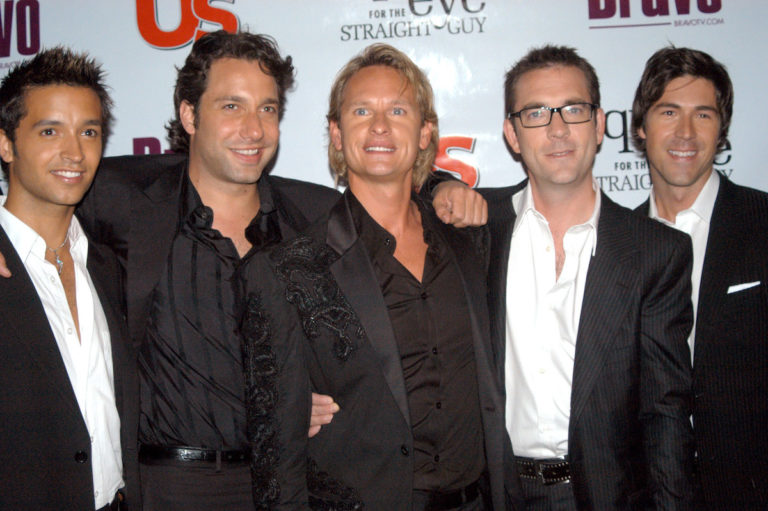
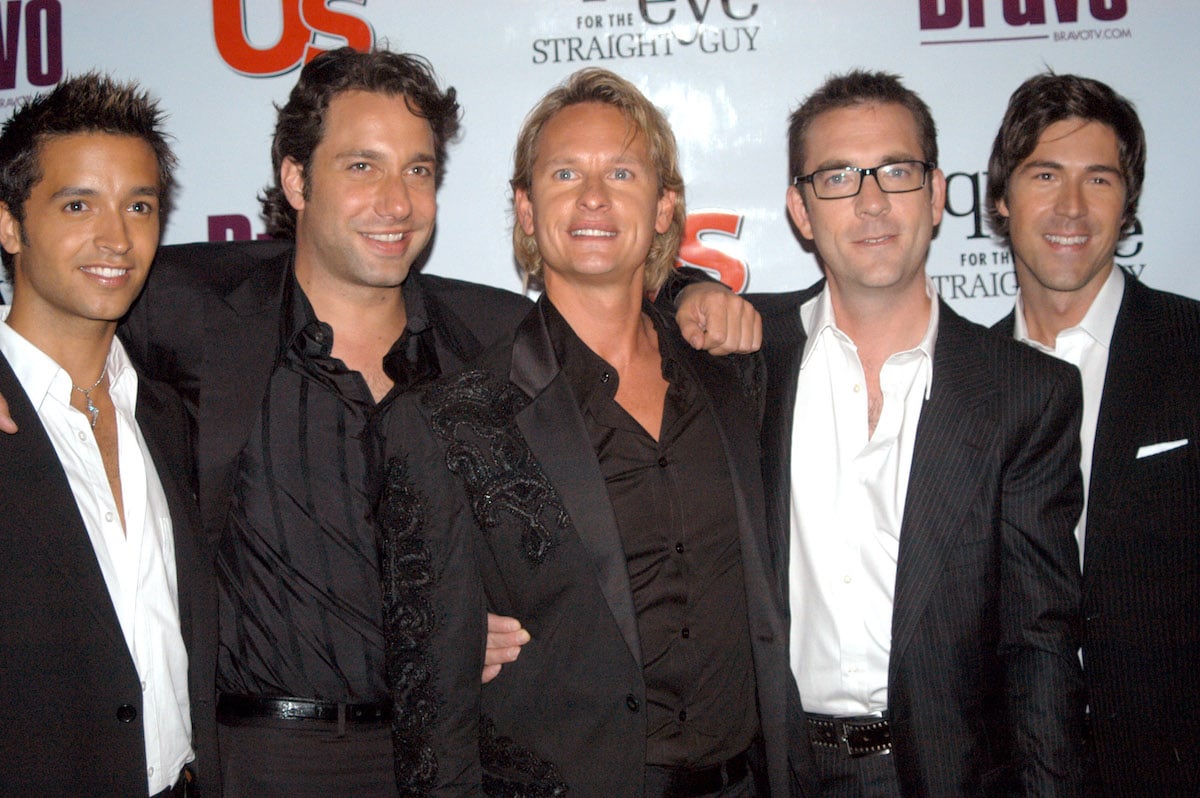
The original Queer Eye for the Straight Guy cast: Jai Rodriguez, Thom Filicia, Carson Kressley, Ted Allen, and Kyan Douglas | Shane Gritzinger/FilmMagic
Thom Filicia from ‘Queer Eye for the Straight Guy’ muses about why the concept was so magnetic
The new Netflix version of Queer Eye follows the same concept as the original show. The premise is that five gay men who are experts in their field band together to help a deserving individual or “hero.”
The original show, which featured Filicia as the “design doctor,” starred five gay men who help a straight man find his groove. Carson Kressley was the “fashion savant,” Ted Allen was the “food and wine connoisseur,” Kyan Douglas acted as the “grooming guru,” and Jai Rodriguez was the “culture vulture.”
The series debuted on Bravo long before reality television found its footing. But it became an instant smash hit, positioning Bravo to become a force for reality television. Filicia looks back and wonders if the series was embraced because the country was in a different place culturally or if the cast truly made magic.
“We didn’t know if it was just because at that time it was a new idea,” he said. “So we didn’t know if people were responding to us or this kind of really crazy, new, fresh concept. And I think what’s really interesting is that it was a crazy, fresh new concept that was really cool and interesting.”
“But I do think that there was a sort of magic and this sort of serendipity in our coming together as five people and the wackiness and spontaneity,” Filicia continued. “And I think it was kind of like a perfect mix. And I think it’s the way that we rip off of one another. I think it has a certain energy and sort of freshness to it that I think clearly still exists, which is cool.”
Reality television has changed since the original ‘Queer Eye’ debuted
While the Queer Eye concept remains rooted in kindness and humor, Filicia observed how reality television has changed, and not necessary for the better.
“I think when we started in reality television, it was a little bit of the Wild West,” he recalled. “It wasn’t defined yet. It could be anything we wanted it to be. There was no network that was kind of giving us a bit of a narrative that they were hoping for drama or you know, arguing … and so we didn’t have any of that.”
“And I think that reality television, personally, it’s not something that I gravitate toward today,” he continued. “Because it doesn’t necessarily have what I like to take away from television,” he said. “I look at TV for fun and information ideas. I like people that are clever and fun and interesting and have a positive message and then are doing something that does make you smile and it does make you laugh and it does make you feel good.”
Thom Filicia hopes to see reality television take an optimistic turn
“I think today, we could really use a dose of [levity] in television,” Filicia added. “So I think that a lot of the yelling and arguing, just never really hit home with me. However, I think it hit home with a lot of people.”
“But I’m guessing moving forward,[especially after the last year] it’s nice to watch TV and see really uplifting and positive, happy things happening that are interesting,” he said. “That has information and ideas that make sense to improve our environment. And take us to a higher level or better place. And I think that have fun doing it. Why not?”
Reunion Road Trip: Queer Eye For the Straight Guy, streams on Peacock for the entire month of June.
PEOPLE BELIEVE Many things, some are wise and some are not. English law considers it the right to retain and express those beliefs for good reason. In recent years, the court has ruled that catastrophic climate change, ethical veganism, and beliefs in “the ability to communicate with the spirit through media” are all “respectable in a democratic society.” In 2019, the referee considered something else. In other words, “there are only two genders, male and female.”
Listen to this story
Enjoy more audio and podcasts with iOS Or Android..
The plaintiff is Maya Forstayer, a tax expert, who lost her job at an American think tank after tweeting about her beliefs. She summarized them as follows: Men are adult men, and “gender does not change.” These beliefs were recognized by employment referees as “not worthy of respect in a democratic society.” On June 10, the ruling was overturned.
The decision is important to both Ms. Fourstayer and Stonewall, a large campaign charity. Being transgender identifies you as something other than the gender of your birth and “does not have (or does not have) a particular body part” but “absolutely transgender identity. It’s the core, something that doesn’t change. ” There is. ” It describes another view as “transphobia”.
Stonewall promotes this doctrine, widely known as “gender self-identification,” through the Diversity Champions scheme. NHS Trust, MI6, the military and the Ministry of Interior have signed up for. The business model of the scheme is simple. Companies give money to Stonewall. Stonewall ensures that the policy is in line with the idea and badges it as diverse and comprehensive. One of the founders of the charity and now a critic, Simon Fanshaw believes that employers like it, at least in part. ..
However, the result was contrary to freedom of religion and speech in the workplace. Naomi Cunningham, an employment barrister and co-founder of the campaign group Fourstayer of Sex Matters, has decided that all major institutions must practice Catholicism for everyone. It seems. “And suddenly, the rest of us woke up and realized that we were under theocracy. [that] Everyone has to pay for lip service. She suggests that Stonewall’s claim that transubstantiation is not a physical issue reflects Catholic belief in transubstantiation. Men “may hold a man’s accident, but in essence it’s a woman’s accident.”
There are some signs that confidence in Stonewall may be beginning to decline. In May, the official body, the Commission on Human Rights, announced that it would withdraw from the Diversity Champions scheme. Other large organizations are gone, and Liz Truss, Minister for Women and Equality, says all government agencies should.In the article Times In May, Matthew Parris, another co-founder of Stonewall, said, “Stonewall got lost.” He asked what it was doing, involved in an attempt to suppress freedom of speech.
Fanshaw believes the Stonewall tragedy is part of a wider range of malaise in political debate. He points out that a recent ruling upheld Ms. Fourstayer’s right to her beliefs, as well as the right of others to believe in the superiority of gender identity over biological sex. True inclusion means “building a very broad alliance.” Instead of doing it like a stone wall, he says, “I’m sitting in the corner of the room with a bag on my head that shouts” bigot “to people.” ■■
Editor’s Note: Earlier versions of this article mistakenly described Maya Forstater as a “defendant.” We apologize for the error.
This article was published in the UK section of the print version under the heading “Stone walling”.
I have only the utmost respect for Russell T Davies. At the start of the year, his AIDS drama It’s A Sin had such a profound impact on me that I didn’t stop crying for a week. The powerful miniseries was brilliantly executed across the board, from the script to the direction and, of course, the on-screen talent led by four openly gay young actors. Davies took a strong stance on his casting choices in an interview with Radio Times, revealing he had made a conscious effort to cast gay actors in gay roles and arguing that assigning such characters to heterosexual performers sacrifices any “authenticity”. My admiration for his work notwithstanding, I have to say that I disagree.
Advertisement
Of course, this is a nuanced matter that should be approached on a case-by-case basis. There have been countless instances in the past where a heterosexual actor has been hired to portray an LGBTQ+ character and has done so by falling back on stereotypical caricatures. James Corden recently fell foul of this with his widely criticised performance in The Prom, and I currently await Jack Whitehall’s “openly gay” character in Jungle Cruise with an acute sense of dread. But the implication in Davies comments, which seem to suggest that every performance by a straight actor in a gay role is invalid, simply isn’t true – and the evidence is plain to see.
In Pride Month, coming-of-age comedy drama Love, Victor returns to Disney Plus for its second season and it’s a true delight to have the show back. After the first batch of episodes saw the title character fighting to suppress his sexuality – going so far as to attempt a relationship with a female classmate that inevitably ended in tears – the second instalment sees a more open and confident Victor Salazar as he navigates life with his first boyfriend. It’s a heartwarming story that doesn’t sugarcoat the difficult reality of coming out, but maintains a hopeful and optimistic tone that never fails to put a smile on my face.
The entire cast of up and comers is full of endearing performances, with Michael Cimino (Annabelle Comes Home) and George Sear (Alex Rider) leading the pack as fledgling couple Victor and Benji. In real-life, both men identify as straight and are quite aware that their casting in these high-profile roles is a point of contention among some in the community. As a result, they’ve taken the gig seriously, consulting with LGBTQ+ people in their own lives and endeavouring to be strong allies in the ongoing fight against discrimination. The end result is a grounded and sensitive portrayal of a gay love story, offering positive and relatable representation to many people across the world – some of whom need it quite desperately.
Astoundingly, Cimino has received death threats for being a straight actor in an LGBTQ+ show, but these are drastically outweighed by the heartfelt messages of gratitude from people who see themselves in his performance and Victor’s story. Indeed, there is no “one size fits all” approach to representation so it’s disheartening to see some people attempt to tear down a show like Love, Victor based on casting alone, particularly when the performances are compelling, respectful and mean so much to fans.
Michael Cimino and George Sear in Love, Victor season twoHulu/YouTube
This situation is no fluke, either. Earlier this year, I stumbled upon the short-lived comedy drama United States of Tara on Amazon Prime Video, taking a punt on it based on nothing more than lockdown-induced boredom and an appreciation for Toni Collette. The series quickly became an obsessive binge-watch for me, following artist Tara Gregson (Collette) as she attempts to maintain an ordinary family life while coping with dissociative identity disorder. Although the main story was undeniably gripping, I found myself more invested in the continuing subplot around Tara’s teenage son, Marshall (Keir Gilchrist).
He’s a nerdy, sarcastic high schooler whose homosexuality is one small aspect of him, but not the focus. In short, I looked at him and vividly saw myself at that age, with so much of the character’s dialogue and story directly applicable to my own experience. Of course, partial credit should go to head writer Diablo Cody (Juno) for creating the character, but a crucial component of his success is Gilchrist’s performance across a rollercoaster three-season story arc – which ultimately moved me to tears in the final episode. That the actor himself identifies as straight doesn’t change the fact that he was perfectly cast in the role (I only wish I discovered the show sooner – I strongly believe it would have helped me in my teenage years).
In collaboration with a writer or filmmaker who truly understands the LGBTQ+ community, there’s nothing to prevent a straight actor from giving a moving performance in a gay role. We need only look towards the big screen for numerous other examples, from Trevante Rhodes in Moonlight to Taron Egerton in Rocketman. These demonstrate that a given role should always go to the best person for the part, regardless of sexual preference. In some cases, that will be a member of the LGBTQ+ community, while in others a heterosexual person could prove to be a better fit – but audiences and casting directors would benefit from keeping an open mind.
Taron Egerton and Richard Madden in Rocketman (2019)SEAC
A different concern is that this approach to casting could lead to fewer roles for LGBTQ+ actors, but that argument assumes the majority want to be pigeonholed into only playing characters from the community. I don’t believe this is the case, but I do acknowledge that the reluctance of some directors to cast gay actors in straight roles might be causing this misconception. With notable exceptions like Russell Tovey and Matt Bomer, there is a lingering stigma that has prevented many gay actors from finding success as heterosexual characters – suffice to say, it needs to be stamped out. But the correct course of action is not vilifying or “cancelling” heterosexual talent who accept gay roles, under the condition they are genuine LGBTQ+ allies and are dedicated to putting in the work.
The gay characters featured in both Love, Victor and United States of Tara have given me a lot of joy and comfort over the past six months, and it upsets me to think how they could be unrecognisable in a world where casting is confined to a more restrictive lens. After all, a well-trained actor will have experience playing a wide range of people, making it almost disrespectful to the craft to say that portraying a queer person is beyond their comprehension – despite all existing evidence to the contrary.
From rights and laws to registering a partnership and tying the knot, we explain all you need to know about gay marriage in Switzerland.
While still not as progressive as other countries in Europe, Switzerland has come a long way when it comes to LGBT+ rights. And, as of December 2020, this includes the legalization of gay marriage in Switzerland. This followed the parliamentary amendment to the Swiss Civil Code to define marriage from “a union between a bride and a groom” to a “union between two people”.
This marked an important victory for same-sex couples in the country; especially as it came several years after most other western European states had already passed the law. That said, it also saw a fair amount of criticism. In fact, in April 2021, opponents of gay marriage even gathered enough signatures to force a binding referendum on the matter. This might end in the overturning of the law. At the time of writing, the referendum “against marriage for all” is set for 26 September 2021.
To help you navigate the current – and, hopefully, future – rights around gay marriage in Switzerland, this guide covers the following:
lingoking
Need to translate your marriage documents? You need the professionals at lingoking. On their easy-to-use online platform, you’ll get access to their international network of 5,000 translation experts from around the world. Whether you need a one-off translation for your marriage documents or a dedicated interpretor for your new life abroad, you’ll find the right professional for your needs on lingoking.
The history of gay marriage in Switzerland is relatively new. The country is one of the safest in the world for the LGBT+ community. It guarantees some key rights to its LGBT+ citizens. This covers everything from ensuring equal treatment before the law to deeming discrimination on the basis of sexual orientation and identity illegal.
That said, it has also had some serious catching up to do in terms of same-sex relationships. The Swiss government recognized same-sex unions in 2007 and legalized same-sex marriage in December 2020. By comparison, the Netherlands first recognized gay unions in 2001; followed by France in 2013, England and Wales in 2014, and Germany in 2017.
The passing of the new bill – which now includes wording that allows gay and lesbian couples to tie the knot – has been the result of multiple rounds of debate since 2013. It finally succeeded after a vote of 136 to 48 with nine abstentions in the National Council (lower house); plus 24 to 11 with seven abstentions in the Council of States (upper house).
But the recognition of gay marriage in Switzerland is also a result of shifting attitudes among Swiss people. In a November 2020 poll conducted by the LGBT umbrella organization Pink Cross, for instance, 82% of respondents expressed approval of same-sex marriage in strong or mild terms; an increase from 69% in 2016.
Besides legalizing gay marriage in Switzerland, the amendment also grants lesbian couples access to sperm donation. This also extends the role of parent to the woman not carrying the child. Furthermore, it allows same-sex couples that are currently in a registered partnership to convert their union into a marriage; thus opening up a whole new set of rights for both parties.
Advertisement
The laws on gay marriage in Switzerland
Requirement and rights in Switzerland
For a gay couple to tie the knot in Switzerland, both parties must be over 18 years old and have the capacity to consent. In addition, one or both individuals must be a Swiss national or reside in Switzerland.
Unlike same-sex civil partnerships, marriage provides the rights to obtain citizenship and the joint adoption of children. The ‘official’ union also facilitates a series of social and legal rights that two partners living together outside of marriage or in a registered partnership do not have access to.
For instance, marriage – hetero or gay – makes it easier for the parents of a child to be granted parental authority. Unmarried couples, on the other hand, must make a joint written declaration in order to establish joint parental authority. Married couples are also taxed jointly, have the right to inherit in case of their spouse’s death, and don’t have to sign a cohabitation agreement when they live together; something unmarried couples must do.
With the new bill, lesbians can also access sperm donation. This represents a major change from the previous legislation in Switzerland. That specified that sperm donation was only allowed for married heterosexual couples; not for unmarried couples, singles, or homosexual couples. That said, the referendum, which is planned for September 2021, might bring this recently achieved progressive shift to a crashing halt.
Opposition to the gay marriage bill
Indeed, under Switzerland’s direct democracy system, new laws can be challenged and put to a referendum if more than 50,000 valid signatures are collected within 100 days. Opponents of the gay marriage bill gathered more than 60,000 valid signatures; decrying gay unions as “fake marriages,” and insisting that only a man and a woman could wed.
The Swiss People’s Party (SVP), the Democratic Christian Party (CVP), and the Federal Democratic Union (EDU) are all in favor of the same-sex referendum. They have been campaigning with the slogan, “Yes to marriage and family, no to marriage for everyone.”
However, Operation Libero, a liberal political movement that launched in the aftermath of the Swiss immigration referendum in October 2014, is currently campaigning to keep the law in place. In April, it gathered 100,000 signatures for a petition that stated, “it is important that people in Switzerland can get married irrespective of their sexual orientation or gender identity.”
Advertisement
Attitudes towards gay marriage in Switzerland
Attitudes and opinions towards gay marriage in Switzerland really vary, ranging from the progressive to the still extremely conservative; hence the current controversy over the same-sex marriage bill.
Public opinion on gay marriage in Switzerland
Like in most Western countries, attitudes towards gay marriage in Switzerland differ depending on several factors. This includes people’s political inclinations, religious beliefs, and upbringing. However, overall, the Swiss have been increasingly supporting LGBT+ rights, particularly in recent years. Shortly after voters backed an anti-gay discrimination law in February 2020, a survey by Pink Cross showed that four out of five people were in favor of extending the right to marry to same-sex couples.
In November 2020, the organization released another survey, indicating that 82% of the country’s residents supported marriage for same-sex couples. Such support is especially strong in cities like Zurich, Geneva, and Basel, the centers of gay life in Switzerland.
Zurich Pride, 2019
Despite this, gay individuals and couples continue to endure hostility from the most conservative factions of the country. This is namely members of the Swiss People’s Party (SVP), the Democratic Christian Party (CVP), and the Federal Democratic Union (EDU). They all look down on gay rights and are currently campaigning against gay marriage.
Sadly, this hostility has sometimes turned physical. After the anti-gay discrimination law passed, for instance, members of the gay community told Switzerland’s 20 Minuten paper that they were often physically attacked, and some even hospitalized. Other groups of young men told the same paper that they felt it was okay to hit openly gay couples, even suggesting that they could be “cured with a few blows”.
Religious attitudes towards gay marriage in Switzerland
Sexual orientation is no longer a burning issue in Switzerland, except for among some conservative religious groups which may demonstrate their opposition. That said, they do so in a peaceful manner. Still, gay couples can’t marry in a church, and with the country being predominantly Catholic, some opposition to gay marriage continues to exist due to religious beliefs. Moreover, members of the Democratic Christian Party (CVP) have often shown overt hostility towards gay people. Some politicians have even gone as far as tweeting statements like “man plus man doesn’t go”.
Getting married in Switzerland
The process that same-sex couples need to follow in order to tie the knot in Switzerland is not unlike that of heterosexual couples. Here is an outline of that process.
Applying for a marriage license in Switzerland
Gay couples planning to get married in Switzerland have to submit an application for preparation of marriage at the Registry Office where they intend to tie the knot. They must do this at least three months in advance of their wedding date.
Besides the application form, the future newlyweds must also sign a special declaration concerning the conditions for the marriage. This declares that they meet the requirements for marriage; i.e. they are both over 18, not previously married, and not related to each other. They must also declare that the documents presented are up to date, complete, and true. The fee for the application is between CHF 300 and CHF 400 throughout Switzerland.
The Civil Registrar then performs the marriage publicly in the town hall in the presence of two adult witnesses. You can find more information about the legal requirements and paperwork in our guide to weddings in Switzerland.
Advertisement
Registering a same-sex partnership in Switzerland
Registering a same-sex partnership in Switzerland is fairly straightforward. That said, partnerships don’t provide the same rights as marriage. This includes the right to obtain citizenship and the joint adoption of children.
Registering a same-sex partnership in Switzerland
To register a same-sex partnership in Switzerland, the couple has to apply at the Civil Registry Office of their place of residence; or that of their partner. Depending on the circumstances, couples need to present different documents. The Civil Registry Office can specify these and you can also find details on the information sheet on registered partnerships.
Should they want to host their ceremony in a place other than their Civil Registry Office district, the couple can request so once their application has been processed. They must then follow this through within three months, with their identity documents and authorization in hand.
Witnesses don’t have to be present for same-sex partnership proceedings. At the end of the ceremony, the registrar will issue a deed of partnership, which the couple has to sign and can take home. In some registry offices, it is also possible to exchange vows and rings after the official ceremony. The cost of registering a partnership in Switzerland is between CHF 400 and CHF 500.
Advertisement
Recognition of gay marriage by other countries
Notably, not all countries recognize gay marriages from other countries. Below is a list of countries that do and do not consider civil unions and registered partnerships made in Switzerland valid in their own country.
Countries that do recognize gay marriage in Switzerland
Currently, 31 of the 50 countries and the 8 dependent territories in Europe recognize some type of same-sex union. Most of them are members of the European Union. As it is part of the EU, Switzerland marriages are therefore valid in these countries, too.
Besides Switzerland, same-sex marriages are legally valid and performed in Austria, Belgium, Denmark, Finland, France, Germany, Iceland, Ireland, Luxembourg, Malta, Netherlands, Norway, Portugal, Spain, Sweden, and the United Kingdom.
Furthermore, Andorra, Croatia, Cyprus, the Czech Republic, Estonia, Greece, Hungary, Italy, Liechtenstein, Monaco, Montenegro, San Marino, and Slovenia recognize some form of same-sex civil union. In addition, Bulgaria, Lithuania, Romania, and Slovakia recognize same-sex marriages performed within the EU and grant legal residence to couples with an EU citizen.
If you plan to take up residence in Switzerland after marrying or registering a partnership, bear in mind that your foreign spouse or partner will need a residence permit and may require an entry visa.
Countries that don’t recognize gay marriage in Switzerland
Several European countries don’t recognize any form of same-sex union. Those are Armenia, Belarus, Bulgaria, Croatia, Georgia, Hungary, Latvia, Lithuania, Moldova, Montenegro, Poland, Russia, Serbia, Slovakia, and Ukraine. Of these, however, Croatia, Hungary, and Montenegro recognize same-sex partnerships, while Armenia recognizes same-sex marriages performed abroad.
It is important to note that should you travel to these countries with your spouse, then your legal civil status as a married couple won’t hold any official value in the eyes of the law.
Useful resources
The Library of Congress – read more about parliament votes to allow same-sex marriage in Switzerland
Pink Cross – the official website of Switzerland’s national umbrella organization of gay and bisexual men
Regenbogen Familie – a website for the umbrella organization for LGBT+ families in Switzerland
The NYC LGBT Historic Sites Project, a local nonprofit advocating for recognition of historic buildings with queer pasts, lists the Stonewall Inn on its interactive map of LGBTQ+ sites in the city — along with over 350 additional, though perhaps lesser-known, sites of significance.
“The goal of the project is to broaden people’s knowledge of the city’s LGBT history, beyond the globally-recognized Stonewall Inn in Greenwich Village,” Project Manager Amanda Davis said during an online panel hosted by the Preservation League of New York State last Thursday. “And in doing so, help push the conversation forward in rethinking how we interpret historic sites.”
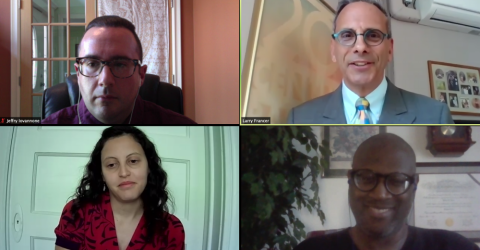
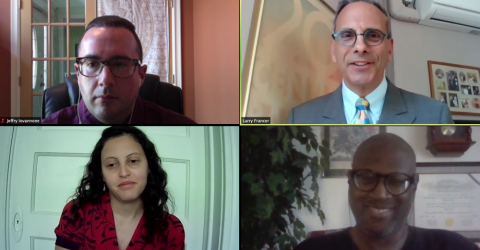
At last week’s event, Davis was joined by historic preservation consultant Jeffrey “Free” Harris and Jeffry Iovannone, who spotlights LGBTQ+ landmarks in a blog series for Preservation Buffalo Niagara, for brief presentations and a conversation moderated by Larry Francer, the associate director of the Landmark Society of Western New York. The panelists addressed the unique hurdles of nominating sites for formal recognition based specifically on their LGBTQ+-related histories, but also spoke to the impact that such designations hold for the queer community.
Davis, Harris and Iovannone presented detailed information on a selection of LGBTQ+ sites in New York, most already bearing landmark status. For a building to be nationally recognized as a landmark, it must be nominated to the National Register of Historic Places. The Stonewall Inn, Davis explained, was the first building in the U.S. to be recognized as a landmark for its significance as a site of LGBTQ+ history. Now, ten such sites in the city are similarly recognized by the state and national registers.
Trials and Tribulations
In addition to outlining the NYC LGBT Historic Sites Project’s mission, Davis also dove into the challenges facing those who wish to register buildings as landmarks for their roles in LGBTQ+ history. The group, led by historians with ties to Columbia University, has penned a “historic context statement” for New York City to help situate individual sites within a broader history of queer culture in an effort to make the process of reviewing a building for landmark status more straightforward. Still, other hurdles persist.
“Owner consent is needed for a property to be listed on the National Register … and this can be a challenge when an owner doesn’t want to be associated with LGBT history,” Davis said.
Davis also mentioned that convincingly “identifying” historic figures as part of the LGBTQ+ community can prove difficult.
Beyond locating new sites for historic landmark recognition, Davis and others acknowledged that in some cases, pre-existing landmark listings must be amended to include reference to sites’ LGBTQ+ pasts, which may have originally been neglected. “History is not fixed,” Davis said. “We can go back in time and re-evaluate and include narratives that were left out.”
In other cases, sites of LGBTQ+ importance are in jeopardy of ceasing to exist altogether. “A lot of our sites are located in places that usually go through a great deal of change, neighborhoods that change,” explained Harris, whose presentation focused on African American LGBTQ+ historical sites. “They’re in areas that, you know, over time we see that they are gentrified or they’re torn down.”
In Western New York, there are currently no landmarks recognized exclusively for their ties to LGBTQ+ historical figures or events by the National Register of Historic Places — a reality which Iovannone hopes to soon change.
Underscoring LGBTQ+ Stories
The mission of Preservation Buffalo Niagara’s “Gay Places” initiative, which Iovannone cofounded in 2020, is not only to commemorate LGBTQ+ sites in Western New York, but also to shift the narrative that queer history is rooted solely in hotspots on either coast of the country.
“If we have sites in places like Buffalo or Rochester, right, that are listed on the National Register and have that sort of prestige and authenticity,” he explained, “it makes it much more, I think, difficult to ignore what happened outside of large cities on the coast.”
In addition to crafting blog posts that dive into LGBTQ+ history in the area and hosting informational events, Iovannone also broke ground on nominating the former home of transgender activist Peggie Ames, located in Clarence, New York, for landmark status with the National Register of Historic Places.
Presentations acknowledged that sites with LGBTQ+ significance can be appreciated even without official landmark status, especially through events that engage the local community, like walking tours. Still, Davis, Harris and Iovannone agreed that landmark status is a valuable way to recognize and legitimize the community’s history.
“There’s no question in my mind,” Harris said, “that the honorific of a National Register listing is important to people.”