Home Blog Page 412

What Is The Equality Act? Anti-Discrimination Law Explained – NPR

0

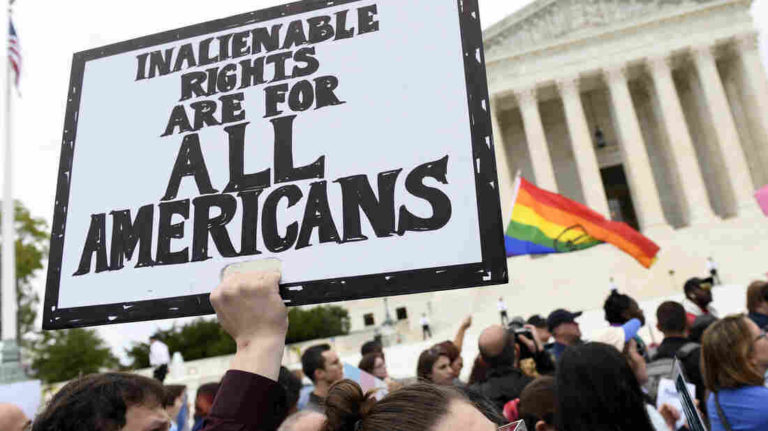
Protesters gather outside the Supreme Court in Washington where the Court on Oct. 8, 2019, as the court heard arguments in the first case of LGBT rights since the retirement of Supreme Court Justice Anthony Kennedy. Susan Walsh/AP hide caption

toggle caption

Susan Walsh/AP

Protesters gather outside the Supreme Court in Washington where the Court on Oct. 8, 2019, as the court heard arguments in the first case of LGBT rights since the retirement of Supreme Court Justice Anthony Kennedy.

Susan Walsh/AP

Updated Feb. 25, 4:39 p.m. ET

The House of Representatives voted on Thursday to pass the Equality Act, a bill that would ban discrimination against people based on sexual orientation and gender identity. It would also substantially expand the areas to which those discrimination protections apply.

It’s a bill that President Biden said on the campaign trail would be one of his top legislative priorities for the first 100 days of his presidency. The House vote was largely along party lines, passing with the support of all Democrats and just three Republicans. The bill now goes to the Senate, where its fate is unclear.

When House Democrats introduced the bill last week, Biden reiterated his support in a statement: “I urge Congress to swiftly pass this historic legislation,” he wrote. “Every person should be treated with dignity and respect, and this bill represents a critical step toward ensuring that America lives up to our foundational values of equality and freedom for all.”

But it’s also controversial — while the Equality Act has broad support among Democrats, many Republicans oppose it, fearing that it would infringe upon religious objections.

Here’s a quick rundown of what the bill would do, and what chance it has of becoming law.

What would the Equality Act do?

The Equality Act would amend the 1964 Civil Rights Act to explicitly prevent discrimination based on sexual orientation and gender identity.

The bill has been introduced multiple times before and previously passed the House in 2019. However, the law’s impact would be different in practical terms now than it was then.

That’s because the Supreme Court ruled in June of last year, in Bostock v. Clayton County, that the protections guaranteed by the 1964 Civil Rights Act on the basis of sex also extend to discrimination against lesbian, gay, and transgender Americans. The logic was that a man who, for example, loses his job because he has a same-sex partner is facing discrimination on the basis of sex — that, were he a woman, he wouldn’t have faced that discrimination.

This act would explicitly enshrine those nondiscrimination protections into law for sexual orientation and gender identity, rather than those protections being looped in under the umbrella of “sex.” However, the Equality Act would also substantially expand those protections.

The Civil Rights Act covered discrimination in certain areas, like employment and housing. The Equality Act would expand that to cover federally funded programs, as well as “public accommodations” — a broad category including retail stores and stadiums, for example.

(“Public accommodations” is also a category that the bill broadens, to include online retailers and transportation providers, for example. Because of that, many types of discrimination the Civil Rights Act currently prohibits — like racial or religious discrimination — would now also be explicitly covered at those types of establishments.)

One upshot of all of this, then, is that the Equality Act would affect businesses like flower shops and bakeries that have been at the center of discrimination court cases in recent years — for example, a baker who doesn’t want to provide a cake for a same-sex wedding.

Importantly, the bill also explicitly says that it trumps the Religious Freedom Restoration Act (commonly known by its acronym RFRA). The law, passed in 1993, set a higher bar for the government to defend laws if people argued those laws infringed upon religious freedom.

Under the Equality Act, an entity couldn’t use RFRA to challenge the act’s provisions, nor could it use RFRA as a defense to a claim made under the act.

What proponents say

Supporters say that the Equality Act simply extends basic, broadly accepted tenets of the Civil Rights Act to classes of people that the bill doesn’t explicitly protect.

“Just as [a business] would not be able to turn away somebody for any other prohibited reason in the law, they would not be able to do that for LGBTQ people either. And we think that’s a really important principle to maintain,” said Ian Thompson, senior legislative representative at the ACLU.

The bill also would be national, covering states that do not have LGBTQ anti-discrimination laws. According to the Human Rights Campaign, an LGBTQ advocacy organization, 27 states do not have those laws.

Supporters additionally say the bill would cement protections that could otherwise be left up to interpretation.

“President Biden issued an executive order directing agencies to appropriately interpret the Bostock ruling to apply not just to employment discrimination, but to other areas of law where sex discrimination is prohibited, including education, housing, and health care,” the Human Rights Campaign wrote in support of the bill. “However, a future administration may refuse to interpret the law this way, leaving these protections vulnerable.”

And with regard to RFRA, proponents argue that the bill would keep entities from using that law as a “license to discriminate,” wording echoed by Human Rights Watch and many other Equality Act supporters.

What opponents say

The question of religious freedom is the main issue animating people against the Equality Act.

Douglas Laycock, a law professor at the University of Virginia, has criticized the Equality Act since its 2019 introduction. He told NPR in an email that the law is “less necessary” now, after the Bostock decision.

Furthermore, while he supports adding sexual orientation and gender identity to federal anti-discrimination statutes, Laycock believes that this bill goes too far in limiting people’s ability to defend themselves against discrimination claims.

“It protects the rights of one side, but attempts to destroy the rights of the other side,” he said. “We ought to protect the liberty of both sides to live their own lives by their own identities and their own values.”

Another key fear among opponents of the Equality Act is that it would threaten businesses or organizations that have religious objections to serving LGBTQ people, forcing them to choose between operating or following their beliefs.

Could it pass?

The Democratic-led House passed the Equality Act in 2019 with unanimous support from Democrats (as well as support from eight Republicans), and it passed in similar fashion in the current Democratic House.

The Senate is more uncertain. Democrats in the Senate broadly support the bill. Sens. Kyrsten Sinema of Arizona and Joe Manchin of West Virginia, among the most moderate Democratic senators, signed a letter in support of it last year.

But the bill would need 60 votes to avoid a filibuster in the Senate. Maine Republican Sen. Susan Collins cosponsored the bill in 2019, but not all of her fellow, more moderate Republicans are on board. Utah Sen. Mitt Romney, for example, told the Washington Blade that he won’t support the act, citing religious liberty.

“Sen. Romney believes that strong religious liberty protections are essential to any legislation on this issue, and since those provisions are absent from this particular bill, he is not able to support it,” his spokesperson told the Blade.

It’s uncertain how other moderate Republicans might vote. Alaska Sen. Lisa Murkowski, who supported the narrower Employment Nondiscrimination Act (ENDA) in 2013, has yet to respond to NPR’s questions about her support of the Equality Act.

And while Ohio Sen. Rob Portman, who likewise supported ENDA, didn’t give a definitive answer on his support, his response made it clear that he could object to it on religious grounds.

“Rob opposes discrimination of any kind, and he also believes that it’s important that Congress does not undermine protections for religious freedom,” his office said in a statement. “He will review any legislation when and if it comes up for a vote in the Senate.”
On Deck today: Brock McGillis, Matthew Mitcham, Nyla Rose – Outsports

sHello and welcome to On Deck Circle for today, Wednesday, Feb. 24, 2021.

Your need to read time today is 90-seconds.

Today’s LGBTQ Sports History Highlight:

It was on this day in 2017 that out trans basketball coach Layne Ingram started on testosterone. Happy T Anniversary, Layne! In addition to reading about him on Outsports and on his blog, you can watch the Black History Month TikTok video he made for the Sports Equality Foundation. Click here to view:


Today’s Outsports Headlines:

Chelsea Mitchell Terry Miller Connecticut
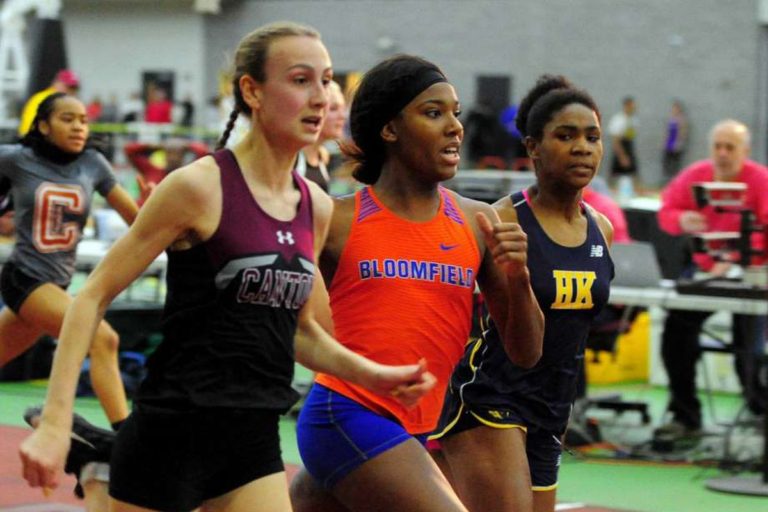
So much for “unbeatable.” On the left is Chelsea Mitchell, a cisgender girl, beating transgender athlete Terry Miller, center, in 2020. She did so at least twice within 8 days of filing a federal lawsuit claiming she could not win against a trans athlete.
Photo by Christian Abraham, Courtesy of CT Post, Hearst Connecticut Media, used with permission.
Nona Lee poses for a picture high above Toronto’s baseball stadium.
You might say Nona Lee sees Major League Baseball like few people do!
Arizona Diamondbacks

Other LGBTQ Sports stories making news…

Gay Olympian Matthew Mitcham Tried to ‘Train’ Himself to Be Straight

And here’s today’s roundup of anti-trans legislation news:


Today’s SB Nation’s top story…

Tiger Woods Injured In Rollover Car Crash
This is the SUV that golf legend Tiger Woods was driving when seriously injured in a rollover accident on February 23, 2021 in Rolling Hills Estates, Calif.
Photo by David McNew/Getty Images

Top LGBTQ News…

GOP Lawmakers Flag Religious Gripes With LGBT Rights Bill (requires subscription)

Boris Johnson has an LGBT+ ‘blind spot’, says first openly gay MP

Cyrus Veyssi is breaking boundaries in queer and Persian spaces, one makeup look at a time


Today’s OutShout:

Kudos, Brock McGillis! GO! SPACE is showcasing the former hockey goalie’s message.

Brock McGillis says he loves being gay.
Brock McGillis
Facebook

If you’re an LGBTQ person in sports looking to connect with others in the community, head over to GO! SPACE to meet and interact with other LGBTQ athletes, or to Equality Coaching Alliance to find other coaches, administrators and other non-athletes in sports.


Social Media Spotlight:

AEW Wrestler Nyla Rose wants you to watch her beat the hell out of a dentist tonight on TNT, or so she tweeted:

If you want your social media post to be included here, or to share one showcasing LGBTQ sports, email us the link at outsports@gmail.com or tag @Outsports on Instagram or Twitter!


Today’s Outsports Podcast:

Nearly every day of the week, Outsports has a new podcast for your enjoyment. Today, former volleyball player and coach-turned social justice advocate Jen Fry of Jen Fry Talks beams up to The Trans Sporter Room! Listen here:

This and all Outsports podcasts are available on Apple Podcasts, Google Podcasts, Spotify and on every platform where you find Outsports!


Today’s Sports Calendar:

MLB Spring Training:

Full-squad workouts are underway. Click here for MLB’s guide to your favorite teams’ schedules.


NHL:

Click here for ESPN’s schedule of men’s pro hockey action today.


NBA:

Click here for ESPN’s schedule of men’s pro basketball action today.


NCAAM:

Click here for ESPN’s schedule of men’s college basketball action today.


NCAAW:

Click here for ESPN’s schedule of women’s college basketball action today.


SOCCER:

Click here for ESPN’s schedule of soccer action today.


Share your thoughts in the comments below or email us at outsport@gmail.com

A new On Deck Circle posts every weekday morning on Outsports.com

‘Katy Has Two Grampas’ tells a family’s story of gay grandfathers – startribune.com

0

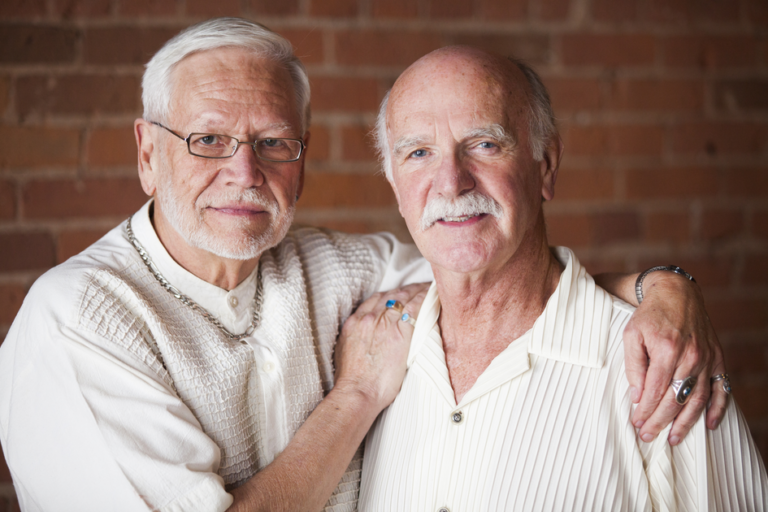
When Julie Schanke Lyford went looking for a book that paralleled her daughters’ blended extended family, she couldn’t find one.

“We owned every book there was on diverse families, but there was nothing out there to show them theirs,” said Lyford, 52, of West St. Paul. “At the time I thought, maybe we can find someone who could write our story for us.”

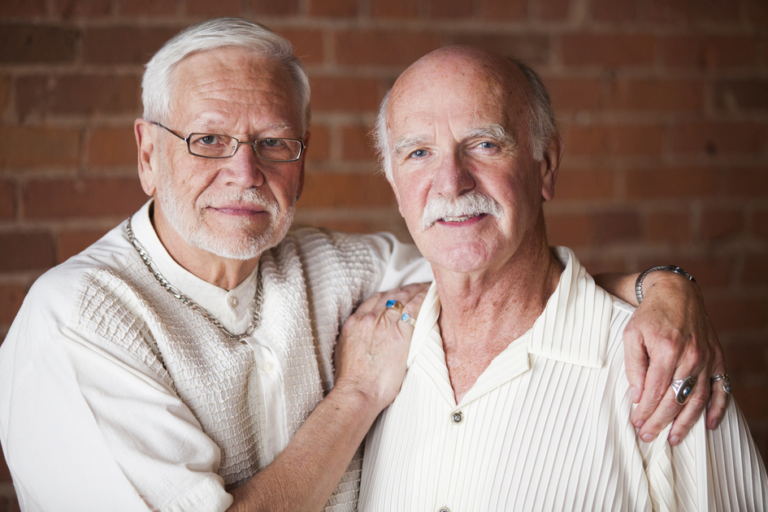
When Lyford and her father, Robert Schanke, found unexpected time on their hands during the pandemic, they got around to crafting the picture book they had long imagined. It features a girl with two grandfathers. Not just one from Mom’s side and one from Dad’s, but a pair of “grampas” married to each other.

“Our grandkids don’t know life without two grandfathers. But when no one has seen a gay grandparent they might not think of this as normal or even think about it at all,” said Schanke, 80, a retired college professor. “We wanted to show a loving, modern family like ours.”

An incident that happened to Lyford’s younger daughter became the basis for “Katy Has Two Grampas,” published this winter with illustrations by Mariia Luzina.

As a first-grader, Katy, both in the book and in real life, spoke with a lateral lisp. When she told her teacher that she was bringing her “grampas” to school for a Grandparents Day event, her teacher thought that she intended to say “grandpa and grandma,” and corrected her.

This left Katy nervous about standing in front of her class to introduce them, worried that her classmates, too, would misunderstand her speech. But when the time comes in the book, Katy rallies her confidence and announces, “These are my grampas, and you know what? They’re married … TO EACH OTHER!” She goes on to talk about fun times the trio shared, including playing on a backyard tire swing.

“The goal was to show Katy didn’t mind bringing her two grandpas, she minded talking in front of the class because of her anxiety about her lisp,” said Lyford. “That’s real and that’s relatable.”

Gay grampas represent

Lyford had just graduated from high school in a small town in Iowa when her father and mother divorced. Schanke then came out and has been with his partner Jack Barnhart for 35 years; they wed in 2009 when Iowa legalized same-sex marriage.

While same-sex marriage became legal in Minnesota in 2013 and across the U.S. in 2015 when the Supreme Court recognized the unions, the father-daughter team were surprised when they could not get their hands on picture books with unambiguous depictions of married gay grandparents.

“We did our due diligence and our search turned up just two picture books that hinted at the relationship,” said Lyford.

Schanke followed up with letters to the authors of the two books that showed a child with two grandfathers.

“In the books it didn’t say if they were a grandfather and a great-grandfather, or maternal and paternal grandfathers. It wasn’t explicit that they were married. I asked both authors why they didn’t make [the relationship] clear and they both told me they wanted it implied, so readers would take it any way they wanted,” said Schanke.

“But that doesn’t make it a clear representation, which I think is so valuable.”

Mirrors and windows

It was three decades ago when “Heather Has Two Mommies,” a groundbreaking picture book about a girl with lesbian parents, was published to controversy. It was even banned in some communities.

In recent decades, children’s books have expanded to show a greater diversity in families across the board. Educators see value in providing young readers with stories that let some children see their own lives reflected on the page while exposing other children to experiences that are not like their own.

In an influential essay, children’s literature scholar Rudine Sims Bishop wrote that “children need windows and mirrors. They need mirrors in which they see themselves and windows through which they see the world.”

“The idea that there are LGBT characters in children’s books is not a new phenomenon but we still don’t have enough of them,” said Lisa Von Drasek, curator of the Children’s Literature Research Collections at the University of Minnesota Libraries.

“I expect we will see more intergenerational stories about these families as more people who are out and growing older tell their stories. I only see the positives in showing these loving relationships.”

Message of inclusion

Lyford’s experience as the daughter of a gay dad proved transformative. As an ally and an activist, she first officiated at same-sex commitment services, campaigned for Minnesota’s marriage equality amendment and then organized the Wedding Tent at the Twin Cities Pride Festival, earning her an award of recognition from Lavender magazine.

She hopes the book she conceived and co-authored with her father will continue her message of inclusion.

“Gay people have to continue to come out. So do children with gay parents and so their grandchildren, too. In my bubble, this is how it has always gone but I want to push the boundaries,” she said.

“Katy Has Two Grampas,” published by Minneapolis-based Wise Ink, is available for $17.95 in hardback at katyhastwogrampas.com, through online booksellers and at Mischief Toy Store, 824 Grand Av., St. Paul.

More Americans identify as LGBT than ever before: Poll – ABC News

A new poll has found that more adults identify as lesbian, gay, bisexual or transgender than ever before.

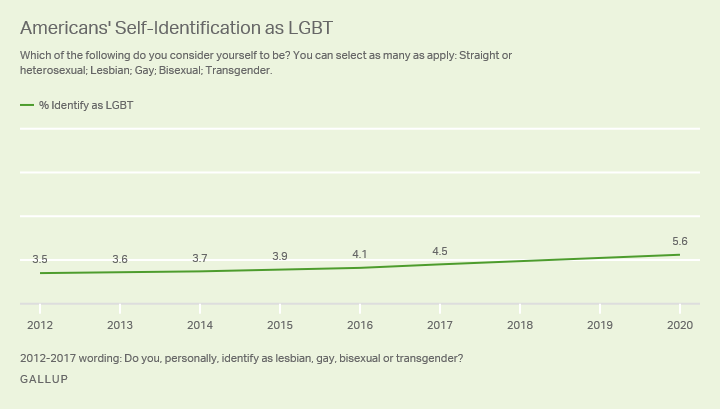
According to a Gallup poll released Wednesday, 5.6% of United States adults identify as LGBT. That’s up from 4.5%, based on the company’s 2017 data. In 2012, when Gallup began tracking the measure, that number was 3.5%.

For the first time, Gallup also asked respondents to indicate their precise sexual orientation, as opposed to responding “yes” or “no” to whether they identify as lesbian, gay, bisexual or transgender.

The poll found that more than half of LGBT adults (54.6%) identify as bisexual, about a quarter (24.5%) as gay, 11.7% as lesbian and 11.3% as transgender. An additional 3.3% used a different non-heterosexual term to describe their sexual orientation, such as queer or same-gender-loving. Respondents could give multiple responses, bringing the total to over 100%.

Notably, the generational group that has the highest percentage of people who identify as LGBT is the youngest — Generation Z (born 1997 to 2002) — with 15.9%. That compares to 9.1% of millennials (born 1981 to 1996), 3.8% of Generation X (born 1965 to 1980), 2% of baby boomers (born 1946 to 1964) and 1.3% of traditionalists (born before 1946).

“One of the main reasons LGBT identification has been increasing over time is that younger generations are far more likely to consider themselves to be something other than heterosexual,” Gallup said.

Most Gen Z adults who identify as LGBT say they are bisexual (72%), the poll found. That would mean 11.5% of Gen Z adults in the U.S. are bisexual, Gallup determined.

The increase in the nation’s LGBT population was not surprising to Samantha Johnson, event manager of youth-focused events for NYC Pride, which organizes one of the largest annual pride marches in the world.

“We’re breaking generational curses” like homophobia within the household and schools, Johnson told ABC News. “The visibility within media and events like NYC Pride — these are all contributing factors to these numbers.”

Johnson has witnessed firsthand a growing enthusiasm among LGBT youth. In 2017, NYC Pride began hosting Youth Pride, geared toward those ages 13 to 24, as part of its monthlong Pride festivities. That first year brought out 1,500 people, she said. The following year, there were 3,000. In 2019, the free event moved to Central Park, where more than 10,000 people attended.

Last year’s NYC Pride was canceled due to the coronavirus pandemic, but Johnson is working on hosting Youth Pride virtually this year on June 26.

“We are here to provide a safe space for this generation to pass on to the next generation,” she said.

The latest Gallup poll results were based on more than 15,000 interviews conducted in 2020 with Americans ages 18 and up and may be an underestimate due to “older Americans not wanting to acknowledge an LGBT orientation,” it said.

“This poll confirms what we have long known — that the LGBTQ community is powerful and a growing force in the United States, and around the world,” Human Rights Campaign President Alphonso David said in a statement. “Young adults, in particular, feel empowered to publicly claim their identities — a compelling finding and validation for the past generations of LGBTQ advocates who have long fought for full equality.”

Amid the findings, David called on Congress to pass the Equality Act “to secure consistent and explicit anti-discrimination protections for LGBTQ people across all areas of life.”

The comprehensive legislation, which the Congressional Equality Caucus introduced in the House last week, protects LGBT people from discrimination in the workplace, housing, service and public accommodations.

President Joe Biden has also called on Congress to pass the bill. “No one should ever face discrimination or live in fear because of who they are or whom they love,” he said in a statement.

ABC News’ Tony Morrison and Robert Zepeda contributed to this report.

More Americans identify as LGBT than ever before, including 15% of Gen Z adults: Poll – KABC-TV

NEW YORK — A newly released poll shows that 5.6% of American adults now identify as lesbian, gay, bisexual or transgender.

The analytics firm Gallup reported that their current estimate of self-identified gay and trans Americans is up from 4.5%, based on their previous 2017 data.

More than half of LGBT adults (54.6%) identify as bisexual. About a quarter (24.5%) say they are gay, with 11.7% identifying as lesbian and 11.3% as transgender. An additional 3.3% volunteer another non-heterosexual preference or term to describe their sexual orientation, such as queer or same-gender-loving.

The poll, released Wednesday, found that younger generations are far more likely to identify as LGBT, especially Gen Z. One in six adult Gen Z-ers (ages 18 to 23 in 2020) do not consider themselves to be heterosexual.

This percentage decreases with age, with 2% or fewer Americans born before 1965 identifying as LGBT, according to Gallup.

Gallup noted that it cannot determine whether the generational differences reflect a true shift in American sexual orientation or if more younger people are willing to identify as gay, trans or other in a country that’s increasingly more accepting of LGBTQ+ rights.

Conversely, Gallup acknowledged that the poll cannot represent the population of non-heterosexual adults who do not want to acknowledge an LGBT orientation.

Along with a generational divide, gender differences are seen in self-reported sexual identity. Women are more likely than men (6.4% to 4.9%) to identify as LGBT, and the majority who do call themselves bisexual (4.3%). Among non-heterosexual men, the majority identify as gay (2.5%).

“This poll confirms what we have long known — that the LGBTQ community is powerful and a growing force in the United States, and around the world,” said Alphonso David, president of the Human Rights Campaign. “Young adults, in particular, feel empowered to publicly claim their identities — a compelling finding and validation for the past generations of LGBTQ advocates who have long fought for full equality.”

The polling is based on 15,000 interviews conducted throughout 2020 with Americans aged 18 and older.

Copyright © 2021 KABC-TV. All Rights Reserved.

Gay-Listers Guide: Tel Aviv With Sherry Vine – Forbes

0

Gay-Listers Guide is a series of destination glimpses through the personal experience of prominent LGBT personalities. 

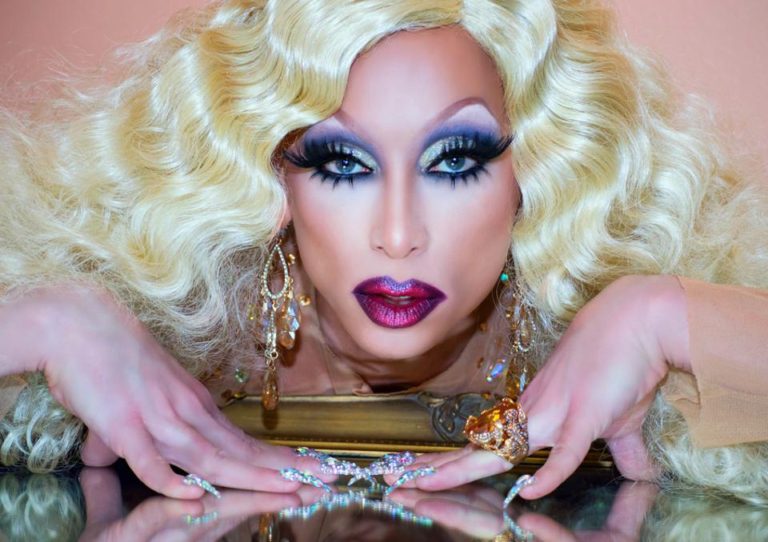
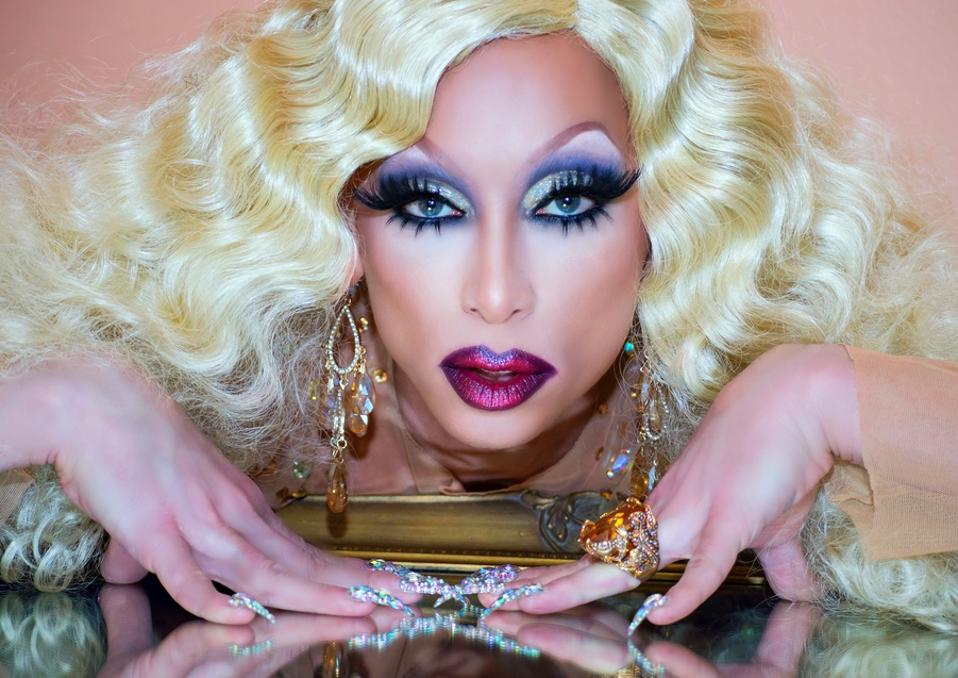
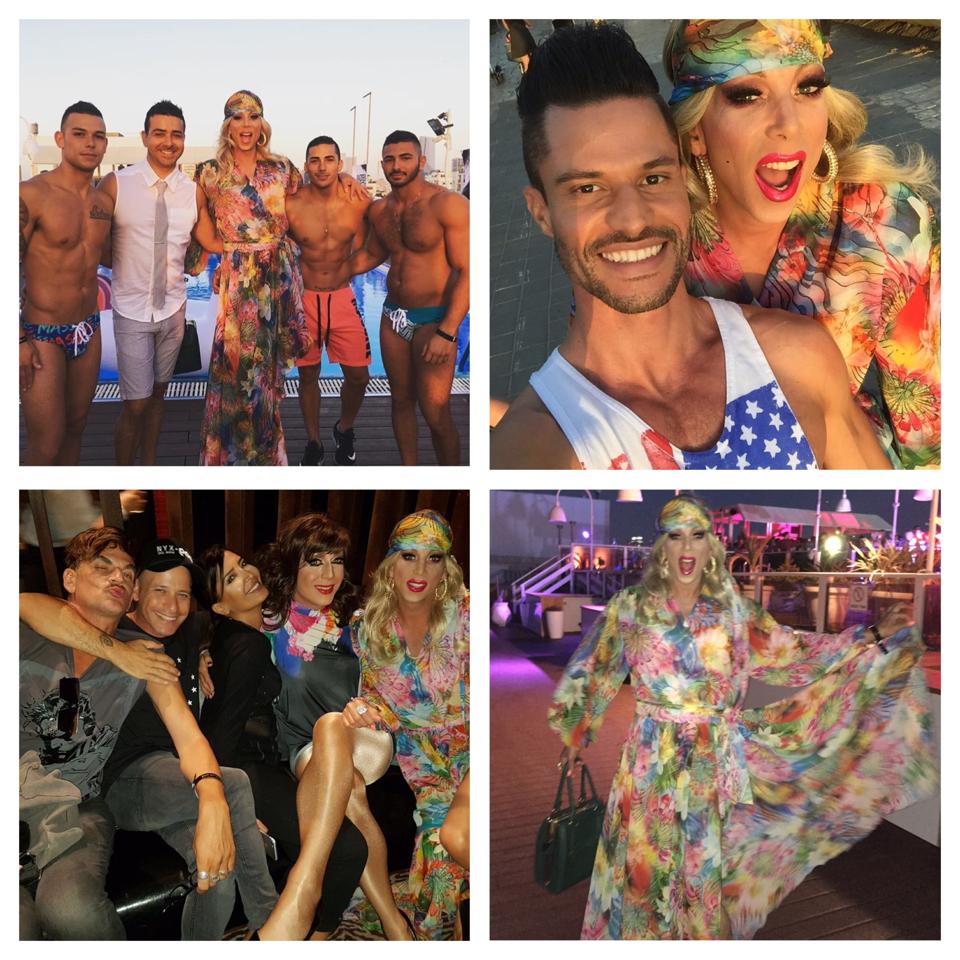
In this edition of Gay-Listers Guide, legendary New York City drag queen, actor and musician Sherry Vine takes us to her current favorite place in the world, Tel Aviv, Israel.

How much time have you spent in Tel Aviv?

I’ve been to Tel Aviv four times, always in the month of June. My longest visit was for 2 weeks and the shortest was four days.

What’s your favorite memory there?

It’s so hard to pick just one! I have been a guest of the Tel Aviv International LGBT Film Festival (TLVFest) and was presented with The TLVFest 2019 Honorary Award for my “contribution to the art of drag.” That was definitely an honor and highlight.

Your worst memory?

Waking up at 3 a.m. to get in drag to do a 6 a.m. show at a club in Jerusalem. She wasn’t pretty!

MORE FOR YOU

What do you love most about Tel Aviv?

I adore all of my friends there, and the local queens. There is a surprisingly large and active LGBTQ+ scene. The last time I was there for Pride, in 2019, I was shocked that every single store had a pride flag in the window.

What do you not love?

It’s hard to separate myself from the politics but I think it’s political to go there, in the Middle East, and do drag shows.

Where are your favorite places to eat in Tel Aviv?

I can’t remember the name of this restaurant I found—very small, off the beaten path—but they had the most delicious dish I have ever had anywhere in the world. It was a fish stew with garlic, pistachios, olives and a tomato-based sauce. Divine! Also, I love the restaurants in Jaffa where they bring like 20 small dishes of hummus, eggplant, etc.

And to drink?

NYX Hotel Tel Aviv has a rooftop where we all love to gather for drinks. They usually have a DJ, and it’s quite popular. And any place near the beach.

What do you love to do here during the day?

I’m a Pisces and I feel right at home on the beach! Tel Aviv is small enough that you really can walk everywhere. I love to wake up, load up on coffee, walk to the beach and lay out for a few hours. Then walk back and shower, paint my face and hit the town.

Favorite clubs or nighttime hangouts here?

It seems to always change. Every time I go, the queens take me somewhere I’d never been before that’s “the party.” I know that’s not helpful! The dance party on the gay beach (Hilton Beach) is amazing! I’ve also gone to several parties at Tel Aviv Cinematheque to have drinks and socialize in the lobby.

Do you have a favorite place to stay here?

NYX Hotel!

Describe the LGBT scene here, and what an LGBT visitor should be sure to check out.

Tel Aviv is a gay mecca and very international. I met people from all over the world there. Pride is a very popular event—one of the biggest I’ve ever seen. I suggest picking a part of the city and walking and exploring, then another area the next day. The markets are massive and exciting, and Rothschild Boulevard is beautiful. Very touristy, but lovely shops, restaurants and small cafés where you can grab a coffee and keep walking. Don’t forget the beach!

What else should we know?

The locals sometimes have a wall up at first, but it’s easy to poke through and then you’re friends for life.

Anything new to plug?

Look for my new TV show, The Sherry Vine Variety Show, on OUTTv, airing this April. And, of course, my “live from my living room” online shows.

(This conversation has been edited and condensed for clarity.)

‘Disturbing incidents and trends’: Iowa Regents agree to new policies, create penalties for free speech violations – Des Moines Register

0

Following controversies over free speech this fall, the state’s Board of Regents voted to approve policies Wednesday aimed at bolstering free discussion on college campuses, including penalties for free speech violations and restrictions on public policy positions by college leadership.

Since the onset of the school year, an Iowa State University professor barred arguments that opposed topics like Black Lives Matter and gay rights and a conservative student group tweeted that people should “Arm up” after Joe Biden won the presidency; University of Northern Iowa student government leaders prevented an anti-abortion student group from forming, saying it could create a hostile environment on campus; and questions swirled at the University of Iowa after the College of Dentistry summoned a student to a disciplinary hearing for publicly supporting a Trump executive order.

Questions about how to handle such incidents and the climate that similar events create on a college campus prompted Board of Regents President Michael Richards to create a committee charged with analyzing the condition of free speech at the three universities in November.

“The Board of Regents and our universities absolutely support free speech and open dialogue. Every faculty, staff and student must feel confident that their constitutional rights are protected on our campuses and that they will not face retribution for exercising their rights,” Richards said at a Wednesday meeting. “We must be honest and recognize that there have been several recent events when this expectation has not been met.”

Free Speech Committee will remain a permanent fixture of the Regents

On Wednesday, the regents unanimously approved 10 recommendations made by the board’s Free Speech Committee, which currently consists of Regents David Barker, Nancy Boettger and Zack Leist.

The committee will remain a permanent fixture of the Regents and be responsible for handling free speech complaints, reviewing policies, conducting surveys and research, and ensuring universities provide yearly training on free speech. Regents are planning to incorporate the full set of recommendations into current Board of Regents policy and present the final language for approval in April. 

The universities will also be expected to add “policies and procedures, including penalties for violations of free expression,” to current policy language. The regents did not elaborate on what those penalties might entail at the meeting. 

Members of college leadership will also be barred from taking institutional positions on policies unless it’s in conjunction with the Board of Regents. 

“When the university itself, or its departments and administrators, take stands on social issues, individuals are discouraged from thinking for themselves, and the mission of the university is compromised,” Barker said at the meeting Wednesday.

The Free Speech Committee, he said, was created “to consider policy changes to counter what we see as disturbing incidents and trends that threaten freedom of expression and freedom of academic inquiry.”

Committee recommendations echo incidents from 2020 fall

Earlier this month, the Republican-led House Government Oversight Committee summoned representatives from the three regents universities to testify about free speech issues on their campuses.

In August, an Iowa State professor’s syllabus said students could not “choose any topic that takes at its base that one side doesn’t deserve the same basic human rights as you do (ie: no arguments against gay marriage, abortion, Black Lives Matter, etc).”

The university took “corrective action” against the professor after that stance came to light.

“We very quickly moved from this, again, disappointing, egregious action by one faculty member, addressed that situation, and now have put into place a systemwide approach to prevent that from happening in the future,” President Wendy Wintersteen said of the incident at the Feb. 2 legislative hearing.

The recommendations by the Regents’ Free Speech Committee require syllabi to include a statement in support of free speech, a measure Iowa State has already implemented. The statement is expected to be reviewed at the beginning of each course.

Regents also voted to approve policy language that would prohibit members of university leadership — including presidents, vice presidents, deans and department directors — from taking institutional positions on policies unless the statement is made alongside the Regents.

It’s not uncommon for university leadership to take policy positions, and University of Iowa President Bruce Harreld, other top administrators, and 29 members of the College of Dentistry publicly condemned an executive order by the Trump administration just last fall.

The order prohibited universities and other public institutions from holding certain diversity trainings that it said suggested individuals can unconsciously hold racist or sexist thoughts. Critics of the order said it clamped down on diversity efforts that challenge systemic racism and, in December, a federal judge in California issued a preliminary nationwide injunction against it.

“We are deeply disappointed in both the intention behind and the language used in the executive order, which carries the force of law,” Harreld wrote in a campuswide statement at the time.

Leadership of the dentistry school, including the dean, sent an email in October to the entire college condemning the order. Many students and faculty replied.

One student, Michael Brase, said he thought the university should support the executive order and asked for further clarification about the dental school’s position on it. College leadership then summoned Brase to a disciplinary hearing for “unprofessional conduct” related to the exchange of emails.

But the hearing never happened because Brase contacted state legislators with concerns about his right to freedom of speech being violated.

The dentistry college’s dean, David Johnsen, apologized to members of the House Government Oversight Committee earlier this month about the incident, both for his public condemnation of the executive order and for the college’s initial decision to summon Brase to a hearing.

► More:University of Iowa’s College of Dentistry dean wrong to apologize to lawmakers over Trump criticisms

Under the committee’s recommendations, the universities would also be prohibited from permitting “discrimination or denial of educational benefits” because of a student or organization’s viewpoint.

In October, student government leaders at the University of Northern Iowa denied a student’s request to form a local chapter of Students for Life of America, a national nonprofit that opposes abortion, arguing that the group would create a hostile environment on campus.

University President Mark Nook eventually overturned the student government’s decision, though, citing students’ free speech rights.

“I hope that the recommendations that we have are well-received and actions are taken on them to prevent any further incidents,” Regent Leist said of the policies voted on at Wednesday’s meeting. “However, I do know, with our recommendations, (that) we will never completely eliminate freedom of expression issues — because, after all, we all have the right not to agree with each other.”

What are the full recommendations?

According to regents documents, the full recommendations are:

  1. Each syllabus will have a statement comparable to the ISU statement: Iowa State University supports and upholds the First Amendment protection of freedom of speech and the principle of academic freedom in order to foster a learning environment where open inquiry and the vigorous debate of a diversity of ideas are encouraged. Students will not be penalized for the content or viewpoints of their speech as long as student expression in a class context is germane to the subject matter of the class and conveyed in an appropriate manner.
  2. The syllabus free speech statement will be reviewed at the beginning of each course.
  3. Reaffirm that university resources will not be used for partisan activities. Registered student organizations and individual students will still be able to utilize university facilities and email.
  4. The universities may only take an institutional position on policy matters, in conjunction with the Board. This includes presidents, vice presidents, deans and department directors.
  5. Universities will not permit discrimination or denial of educational benefits because of the viewpoint of a student organization or a student.
  6. Establish the Free Speech Committee as a permanent committee of the Board of Regents to review free speech complaints passed along by the Executive Director, annually review all free speech policies of the Board and universities, review the university training for improvements and every two years do a survey on free speech to all faculty, staff and students.
  7. Universities will be required to post the Board’s and university policies and procedures on their webpage, including how to appeal to the Board regarding violations of free expression
  8. Universities will be charged with adding policies and procedures, including penalties for violations of free expression to its current process for violations of university or Board policies.
  9. The Board of Regents will review and compile data from the most recent campus climate surveys and national surveys regarding free speech. The Free Speech Committee will determine if additional survey of all members of each university regarding free speech is warranted during the fall semester 2021. Once completed this information will be presented to the Board.
  10. Universities will be required to provide training on the free speech to all students, faculty and staff on an annual basis. The presidents will appoint the appropriate campus members to assist the Free Speech Committee to develop a common module for free speech at all three universities.”

Cleo Krejci covers education for the Iowa City Press-Citizen. You can reach her at ckrejci@press-citizen.com or on Twitter via @_CleoKrejci.

‘Katy Has Two Grampas’ tells a family’s story of gay grandfathers – Minneapolis Star Tribune

0

When Julie Schanke Lyford went looking for a book that paralleled her daughters’ blended extended family, she couldn’t find one.

“We owned every book there was on diverse families, but there was nothing out there to show them theirs,” said Lyford, 52, of West St. Paul. “At the time I thought, maybe we can find someone who could write our story for us.”

When Lyford and her father, Robert Schanke, found unexpected time on their hands during the pandemic, they got around to crafting the picture book they had long imagined. It features a girl with two grandfathers. Not just one from Mom’s side and one from Dad’s, but a pair of “grampas” married to each other.

“Our grandkids don’t know life without two grandfathers. But when no one has seen a gay grandparent they might not think of this as normal or even think about it at all,” said Schanke, 80, a retired college professor. “We wanted to show a loving, modern family like ours.”

An incident that happened to Lyford’s younger daughter became the basis for “Katy Has Two Grampas,” published this winter with illustrations by Mariia Luzina.

As a first-grader, Katy, both in the book and in real life, spoke with a lateral lisp. When she told her teacher that she was bringing her “grampas” to school for a Grandparents Day event, her teacher thought that she intended to say “grandpa and grandma,” and corrected her.

This left Katy nervous about standing in front of her class to introduce them, worried that her classmates, too, would misunderstand her speech. But when the time comes in the book, Katy rallies her confidence and announces, “These are my grampas, and you know what? They’re married … TO EACH OTHER!” She goes on to talk about fun times the trio shared, including playing on a backyard tire swing.

“The goal was to show Katy didn’t mind bringing her two grandpas, she minded talking in front of the class because of her anxiety about her lisp,” said Lyford. “That’s real and that’s relatable.”

Gay grampas represent

Lyford had just graduated from high school in a small town in Iowa when her father and mother divorced. Schanke then came out and has been with his partner Jack Barnhart for 35 years; they wed in 2009 when Iowa legalized same-sex marriage.

While same-sex marriage became legal in Minnesota in 2013 and across the U.S. in 2015 when the Supreme Court recognized the unions, the father-daughter team were surprised when they could not get their hands on picture books with unambiguous depictions of married gay grandparents.

“We did our due diligence and our search turned up just two picture books that hinted at the relationship,” said Lyford.

Schanke followed up with letters to the authors of the two books that showed a child with two grandfathers.

“In the books it didn’t say if they were a grandfather and a great-grandfather, or maternal and paternal grandfathers. It wasn’t explicit that they were married. I asked both authors why they didn’t make [the relationship] clear and they both told me they wanted it implied, so readers would take it any way they wanted,” said Schanke.

“But that doesn’t make it a clear representation, which I think is so valuable.”

Mirrors and windows

It was three decades ago when “Heather Has Two Mommies,” a groundbreaking picture book about a girl with lesbian parents, was published to controversy. It was even banned in some communities.

In recent decades, children’s books have expanded to show a greater diversity in families across the board. Educators see value in providing young readers with stories that let some children see their own lives reflected on the page while exposing other children to experiences that are not like their own.

In an influential essay, children’s literature scholar Rudine Sims Bishop wrote that “children need windows and mirrors. They need mirrors in which they see themselves and windows through which they see the world.”

“The idea that there are LGBT characters in children’s books is not a new phenomenon but we still don’t have enough of them,” said Lisa Von Drasek, curator of the Children’s Literature Research Collections at the University of Minnesota Libraries.

“I expect we will see more intergenerational stories about these families as more people who are out and growing older tell their stories. I only see the positives in showing these loving relationships.”

Message of inclusion

Lyford’s experience as the daughter of a gay dad proved transformative. As an ally and an activist, she first officiated at same-sex commitment services, campaigned for Minnesota’s marriage equality amendment and then organized the Wedding Tent at the Twin Cities Pride Festival, earning her an award of recognition from Lavender magazine.

She hopes the book she conceived and co-authored with her father will continue her message of inclusion.

“Gay people have to continue to come out. So do children with gay parents and so their grandchildren, too. In my bubble, this is how it has always gone but I want to push the boundaries,” she said.

“Katy Has Two Grampas,” published by Minneapolis-based Wise Ink, is available for $17.95 in hardback at katyhastwogrampas.com, through online booksellers and at Mischief Toy Store, 824 Grand Av., St. Paul.

Pixar Trends After Reveal Of Next-Generation US Mail Truck – Towleroad

0
US mail truck

The U.S. Postal Service on Tuesday unveiled its next-generation mail delivery truck, and Twitter users think it looks like something out of a Pixar movie.

From the U.S. Postal Service: “Under the contract’s initial $482 million investment, Oshkosh Defense will finalize the production design of the Next Generation Delivery Vehicle (NGDV) — a purpose-built, right-hand-drive vehicle for mail and package delivery — and will assemble 50,000 to 165,000 of them over 10 years. The vehicles will be equipped with either fuel-efficient internal combustion engines or battery electric powertrains and can be retrofitted to keep pace with advances in electric vehicle technologies. The initial investment includes plant tooling and build-out for the U.S. manufacturing facility where final vehicle assembly will occur.

“The NGDV vehicles will include air conditioning and heating, improved ergonomics, and some of the most advanced vehicle technology — including 360-degree cameras, advanced braking and traction control, air bags, a front- and rear-collision avoidance system that includes visual, audio warning, and automatic braking. The vehicles will also have increased cargo capacity to maximize efficiency and better accommodate higher package volumes stemming from the growth of eCommerce.”

Said USPS Chief Executive Officer Louis DeJoy: “As the American institution that binds our country together, the U.S. Postal Service can have a bright and modern future if we make investments today that position us for excellence tomorrow. The NGDV program expands our capacity for handling more package volume and supports our carriers with cleaner and more efficient technologies, more amenities, and greater comfort and security as they deliver every day on behalf of the American people.”

But what about those sorting machines????

LGBT Identification Rises to 5.6% in Latest US Estimate – Gallup Poll

Story Highlights

  • Estimate has risen more than one percentage point from 2017 update
  • Majority of LGBT Americans say they are bisexual
  • One in six adults in Generation Z consider themselves LGBT

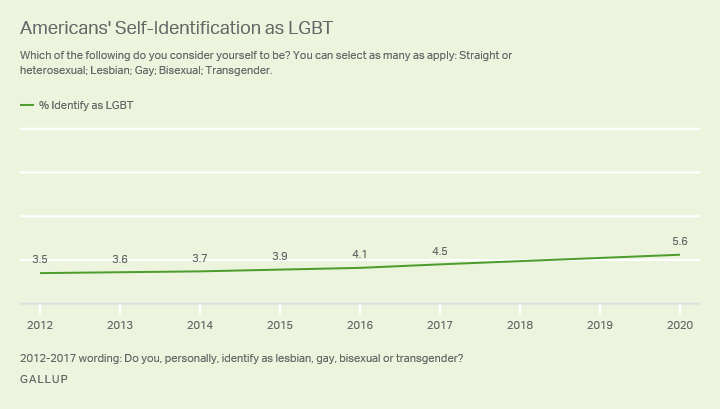
WASHINGTON, D.C. — Gallup’s latest update on lesbian, gay, bisexual or transgender identification finds 5.6% of U.S. adults identifying as LGBT. The current estimate is up from 4.5% in Gallup’s previous update based on 2017 data.

Line graph. Gallup trend in self-identification as lesbian, gay, bisexual or transgender. In 2020, 5.6% of U.S. adults identified as LGBT. That is up from 4.5% in 2017, the last year it was asked, and 4.1% in 2016. Between 2012 and 2015, 3.5% to 3.9% of U.S. adults identified as LGBT.

Currently, 86.7% of Americans say they are heterosexual or straight, and 7.6% do not answer the question about their sexual orientation. Gallup’s 2012-2017 data had roughly 5% “no opinion” responses.

The latest results are based on more than 15,000 interviews conducted throughout 2020 with Americans aged 18 and older. Gallup had previously reported annual updates from its 2012-2017 daily tracking survey data, but did not routinely measure LGBT identification in 2018 or 2019.

The identity question asked in 2020 offers a greater level of detail than the question asked in previous years. Now, respondents have the ability to more precisely indicate aspects of their sexual orientation or gender identity. In addition to being able to identify whether they are lesbian, gay, bisexual or straight, respondents may also specifically identify whether they are transgender.

Different approaches to measuring LGBT status can produce varying estimates of its incidence in the U.S. population. Results from Gallup’s new question do appear comparable to those from its prior question. The 1.1-percentage-point increase in the 2020 estimate (using the new question) compared with the 2017 estimate (using the old question) is about what would have been predicted from the recent trends. The LGBT percentage rose an average of 0.3 points per year in 2016 and 2017. Assuming that trend continued the past three years, the total increase would have been about one percentage point.

Majority of LGBT Americans Identify as Bisexual

More than half of LGBT adults (54.6%) identify as bisexual. About a quarter (24.5%) say they are gay, with 11.7% identifying as lesbian and 11.3% as transgender. An additional 3.3% volunteer another non-heterosexual preference or term to describe their sexual orientation, such as queer or same-gender-loving. Respondents can give multiple responses when describing their sexual identification; thus, the totals exceed 100%.

Rebasing these percentages to represent their share of the U.S. adult population finds 3.1% of Americans identifying as bisexual, 1.4% as gay, 0.7% as lesbian and 0.6% as transgender.

Americans’ Self-Identified Sexual Orientation

Which of the following do you consider yourself to be? You can select as many as apply: Straight or heterosexual; Lesbian; Gay; Bisexual; Transgender.

Among LGBT U.S. adults Among all U.S. adults
% %
Lesbian 11.7 0.7
Gay 24.5 1.4
Bisexual 54.6 3.1
Transgender 11.3 0.6
Other (e.g., queer, same-gender-loving) 3.3 0.2
Percentages total more than 100% because respondents may choose more than one category.
Gallup, 2020

LGBT Identification Not Uncommon Among Younger Generations

One of the main reasons LGBT identification has been increasing over time is that younger generations are far more likely to consider themselves to be something other than heterosexual. This includes about one in six adult members of Generation Z (those aged 18 to 23 in 2020).

LGBT identification is lower in each older generation, including 2% or less of Americans born before 1965 (aged 56 and older in 2020).

Americans’ Self-Identification as LGBT, by Generation

LGBT Straight/Heterosexual No opinion
% % %
Generation Z (born 1997-2002) 15.9 78.9 5.2
Millennials (born 1981-1996) 9.1 82.7 8.1
Generation X (born 1965-1980) 3.8 88.6 7.6
Baby boomers (born 1946-1964) 2.0 91.1 6.9
Traditionalists (born before 1946) 1.3 89.9 8.9
Gallup, 2020

The vast majority of Generation Z adults who identify as LGBT — 72% — say they are bisexual. Thus, 11.5% of all Gen Z adults in the U.S. say they are bisexual, with about 2% each identifying as gay, lesbian or transgender.

About half of millennials (those aged 24 to 39 in 2020) who identify as LGBT say they are bisexual. In older age groups, expressed bisexual preference is not significantly more common than expressed gay or lesbian preference.

Americans’ Self-Identified Sexual Orientation, by Generation

Bisexual Gay Lesbian Transgender Other
% % % % %
Generation Z (born 1997-2002) 11.5 2.1 1.4 1.8 0.4
Millennials (born 1981-1996) 5.1 2.0 0.8 1.2 0.4
Generation X (born 1965-1980) 1.8 1.2 0.7 0.2 0.1
Baby boomers (born 1946-1964) 0.3 1.2 0.4 0.2 0.0
Traditionalists (born before 1946) 0.3 0.3 0.2 0.3 0.1
Figures represent the percentage of all adult members of each generation who have that sexual orientation
Gallup, 2020

In addition to the pronounced generational differences, significant gender differences are seen in sexual identity, as well as differences by people’s political ideology:

  • Women are more likely than men to identify as LGBT (6.4% vs. 4.9%, respectively).
  • Women are more likely to identify as bisexual — 4.3% do, with 1.3% identifying as lesbian and 1.3% as something else. Among men, 2.5% identify as gay, 1.8% as bisexual and 0.6% as something else.
  • 13.0% of political liberals, 4.4% of moderates and 2.3% of conservatives say they are lesbian, gay, bisexual or transgender.
  • Differences are somewhat less pronounced by party identification than by ideology, with 8.8% of Democrats, 6.5% of independents and 1.7% of Republicans identifying as LGBT.
  • There are no meaningful educational differences — 5.6% of college graduates and 5.7% of college nongraduates are LGBT.

Bottom Line

At a time when Americans are increasingly supportive of equal rights for gay, lesbian and transgender people, a growing percentage of Americans identify themselves as LGBT. With younger generations far more likely than older generations to consider themselves LGBT, that growth should continue.

The pronounced generational differences raise questions about whether higher LGBT identification in younger than older Americans reflects a true shift in sexual orientation, or if it merely reflects a greater willingness of younger people to identify as LGBT. To the extent it reflects older Americans not wanting to acknowledge an LGBT orientation, the Gallup estimates may underestimate the actual population prevalence of it.

One of the biggest recent advances in LGBT rights was the legalization of same-sex marriage nationwide. Gallup’s new estimates on same-sex marriages and domestic partnerships in the U.S. can be found here.

Editor’s note: On Feb. 26, 2021, some article text was revised to clarify aspects of sexual orientation versus gender identity.

Learn more about how the Gallup Poll Social Series works.

Poland Breaches EU Obligations Over LGBT, Women’s Rights – Human Rights Watch

0

For 30 days, beginning January 17, European Union commissioners received daily Twitter notifications linking to personal stories of lesbian, gay, bisexual and transgender (LGBT) Poles who have been harmed  by the  so-called “LGBT Ideology Free Zones” or anti-LGBT “Family Charters” in nearly 100 Polish regions, towns, and cities.

The tweets were part of a campaign led by two Polish LGBT groups, Campaign Against Homophobia (Kampania Przeciw Homofobii, KPH) and The Equality Foundation (Fundacja Równości, FR), calling on EU Commissioners to initiate an infringement procedure – a legal action that can lead to referral to the European Court of Justice – against Poland. The “LGBT-free zones” and other discriminatory measures, activists asserted in a legal complaint submitted to the European Commission in September, breach Poland’s legal obligations under the EU Charter of Fundamental Rights and a European Council directive for equal treatment in employment and occupation.

The “Infringement Now” campaign is the latest salvo in an ongoing political tug-o-war between a far-right nationalist government, which welcomes the economic benefits of EU membership but shows utter contempt to the obligations associated with it, and advocates for EU institutions to play their role as guardian of the rights protected by EU treaties. Together with the fate of the country’s judiciary and the ongoing pressure on its media and civil society, the rights of LGBT people and of women and girls are among the battlegrounds for Poland’s future.

 Last August the EU Commission cancelled grants  for six Polish towns that had declared themselves  “LGBT-ideology free zones.” While that measure was more symbolic than material, it was a boiling point in a dispute that had been simmering for years.

LGBT rights have symbolic currency on both sides. For the Warsaw mayor and 2020 presidential candidate Rafał Trzaskowski of the centrist Civic Platform Party, being an outspoken LGBT ally speaks  to his vision of an inclusive society and pro-EU Poland. In 2019 Trzaskowski signed an LGBT+ declaration for Warsaw, a 10-point plan for overcoming discrimination and promoting equality.

In the wake of the controversy sparked by his pro-LGBT stance, the ruling Law and Justice Party (Prawo i Sprawiedliwość, PiS) intensified its anti-LGBT rhetoric, ensuring that LGBT rights became a key battleground in the 2019 parliamentary elections. And in the run up to the 2020 presidential election, the PiS candidate and president Andrezj Duda signed the so-called “Family Charter.” which opposes same-sex marriage and adoption rights as well as comprehensive sexuality education in schools.

Why do questions around gender and sexuality stoke such intense passions? This scenario is neither new nor unique. Minorities have invariably been scapegoated in situations of conflict.  Rights around individual autonomy, in this case, the rights of LGBT people, together with reproductive rights, protections against domestic violence, and sex education have become emblematic of broader social values, Poland’s relationship with the EU and the strength of human rights writ large. 

This has been accompanied by other attacks on rights. In July 2020, Poland’s justice minister announced that he would pursue withdrawing the country from the Istanbul Convention that seeks to combat violence against women, including domestic violence. In January, amid widespread protest, a Constitutional Tribunal ruling that virtually bans legal abortion went into effect after the government bypassed Parliament to put the issue before the politically influenced court.  A bill that would potentially  criminalize anyone providing sex education, is pending.

With PiS returned to power and proceeding apace with its anti-LGBT agenda, LGBT advocates and their supporters are doing their best to use the limited options for redress in Poland. The Polish Ombudsman has challenged the adoption of anti-LGBT declarations before local administrative courts, and succeeded in four cases, although public prosecutors have appealed these decisions. LGBT advocates have appealed to human rights norms that transcend national boundaries, such as the appeal to the European Commission to censure Poland for breaching its human rights obligations. As Bartosz Staszewski, of the Lublin Pride Association said: “We cannot count on our government, we cannot count on our president, the only thing we can count on is the European Union.”  

Membership of the EU comes with obligations, such as adherence to the EU’s founding values including respect for human rights and the core principles of non-discrimination and tolerance. In December 2017, in response to problematic judicial reforms, the European Commission triggered Article 7 of the EU Treaty against Poland, which can lead to suspension of a member state’s rights if it is found to persistently breach those values.

Given Poland’s sustained attack on the human rights of LGBT people, as well as women and others, the European Commission can and should do more. Initiating an infringement procedure would send a strong message that these kinds of policies have no place in the EU, could press the Polish government to change route, and would offer a chance to the EU Court of Justice to reaffirm states’ obligations to protect, not neglect, their LGBT citizens.

In Poland human rights and  tenets  of democracy are under threat, including the independence of the judiciary and free press. In this assault, LGBT rights are seen as a soft target. In standing up for the rights of LGBT people in Poland, the EU would be moving not only to protect the rights of  a vulnerable minority, but human rights writ large.

One in 10 LGBT Americans Married to Same-Sex Spouse – Gallup Poll

0

Story Highlights

  • 9.6% of LGBT adults in the U.S. are married to a same-sex spouse
  • Number of same-sex marriages have increased since 2016
  • Opposite-sex marriages, partnerships more common among bisexual adults

WASHINGTON, D.C. — About one in 10 LGBT adults in the U.S. (9.6%) are married to a same-sex spouse, with a slightly smaller proportion (7.1%) living with a same-sex domestic partner. Half of LGBT adults have never been married, while 11.4% are married to an opposite-sex spouse and 9.5% are either divorced or separated.

Overall, less than 1% of U.S. adults are married to a same-sex spouse. The greatest percentage of Americans, 47.7%, are married to an opposite-sex spouse.

U.S. Adults’ and LGBT Adults’ Marital Status

U.S. adults LGBT adults
% %
Married to opposite-sex spouse 47.7 11.4
Married to same-sex spouse 0.6 9.6
Living with opposite-sex domestic partner 8.1 9.2
Living with same-sex domestic partner 0.4 7.1
Single/Never married 22.9 50.5
Separated 2.4 2.0
Divorced 9.5 7.5
Widowed 5.9 2.5
No opinion 2.6 0.4
Based on aggregated data from 2020 Gallup polls
Gallup

These results are based on aggregated data from 2020 Gallup surveys, encompassing interviews with more than 15,000 U.S. adults. According to Gallup’s latest estimate, 5.6% of U.S. adults identify as lesbian, gay, bisexual or transgender, with over half of them saying they are bisexual. LGBT identification is most prevalent among young adults, explaining the high proportion of the subgroup that has never been married.

The percentage of LGBT adults in same-sex marriages appears to have leveled off after increasing following the Supreme Court’s 2015 Obergefell v. Hodges decision that legalized same-sex marriages nationwide. In the six-month period before the Obergefell ruling, Gallup found that 7.9% of LGBT adults were in same-sex marriages. That percentage increased to 9.6% in the first year after the decision (through June 2016) and is the same in the 2020 average.

However, because of the growth in LGBT identification in recent years, coupled with the growth in the U.S. population more generally, the number of same-sex marriages has likely increased significantly. In the pre-Obergefell decision period, Gallup estimated that 0.3% of U.S. adults overall were married to a same-sex spouse. In the first year after that ruling, the proportion of U.S. adults in same-sex marriages was 0.4%, and is 0.6% today.

Extrapolating those percentages to the U.S. population suggests that an estimated 1.5 million U.S. adults are married to a same-sex spouse, which would translate to about 750,000 same-sex marriages. Previously, Gallup estimated there were 368,000 same-sex marriages before the Obergefell decision and 491,000 in the first 12 months after it.

Same-sex marriage rates are similar among most demographic subgroups of U.S. adults, although the percentage does exceed 1% among higher-socioeconomic-status Americans — those in upper-income households (annual incomes of $100,000 or more) and those with education beyond a four-year college degree. The percentage of people married to a same-sex spouse also exceeds 1% among political liberals, Democrats and those with no religious affiliation.

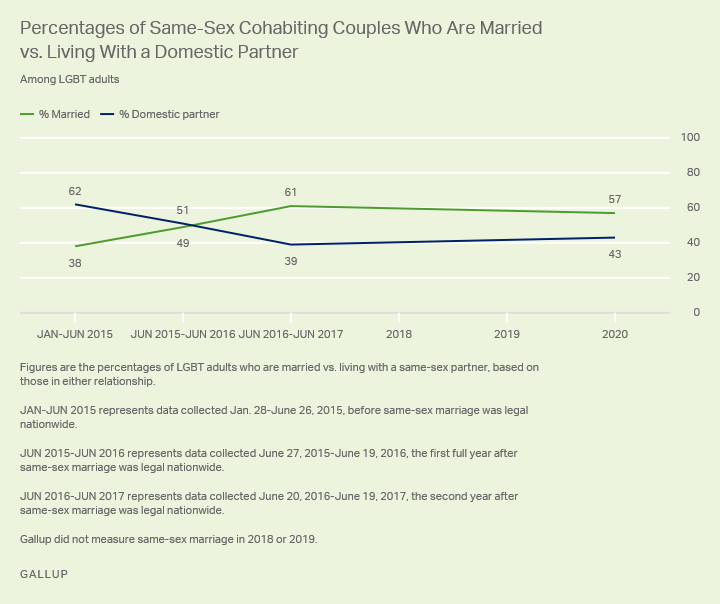
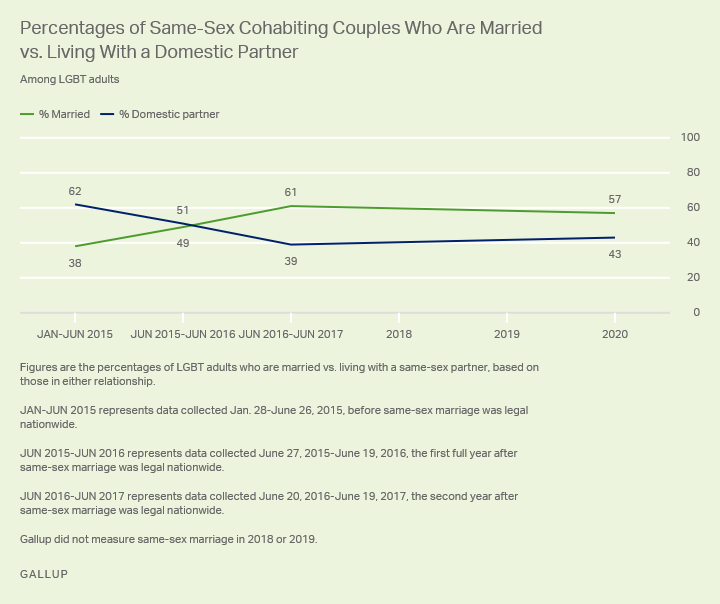
Additionally, Gallup trends show that same-sex cohabiting couples are increasingly opting for marriage rather than domestic partnership. In the months leading up to the nationwide legalization of same-sex marriage in 2015, many more LGBT Americans in same-sex cohabiting couples were living together but not married (62%) as opposed to being married (38%). In the first 12 months after same-sex marriages were legalized, the split was roughly even, with 49% being married and 51% not married. Since then, about six in 10 same-sex couples have been married, including 57% in the 2020 data.

Line graph. Proportion of same-sex cohabiting couples who are married versus domestic partners. From January to June 2015, before the Supreme Court ruled same-sex marriages were legal, 62% of same-sex cohabiting couples were domestic partnerships and 38% were married. In the first year after the Supreme Court ruling, 51% were domestic partnerships and 49% marriages. Since then, the majority of same-sex cohabiting couples have been marriages.

Same-Sex Committed Relationships Uncommon for Bisexual Adults

Notably, same-sex marriages are largely confined to gay, lesbian or transgender adults. Only 1.0% of bisexual adults — who comprise the largest segment of the LGBT population — report being married to a same-sex spouse. Meanwhile, 17.2% of bisexual adults are married to a spouse of the opposite sex, which explains why LGBT adults overall are somewhat more likely to be married to an opposite-sex spouse than to someone of the same gender.

Bisexual adults are also much less likely to have a same-sex domestic partner (2.7%) than to have an opposite-sex domestic partner (13.3%), which also leads to more LGBT adults in opposite-sex than same-sex domestic partnerships.

As might be expected, the patterns are different among gay and lesbian adults, who are much more likely to be in same-sex marriages and domestic partnerships than to be married to or in domestic partnerships with members of the opposite sex. Still, close to half of gay and lesbian adults identify their marital status as single.

Marital Status Among U.S. Adults Who Identify as Bisexual vs. Gay or Lesbian

Bisexual adults Gay/Lesbian adults
% %
Married to opposite-sex spouse 17.2 0.3
Married to same-sex spouse 1.0 23.9
Living with opposite-sex domestic partner 13.3 1.6
Living with same-sex domestic partner 2.7 15.9
Single/Never married 55.5 47.8
Separated 1.0 1.3
Divorced 8.0 6.1
Widowed 1.4 1.9
No opinion 0.0 1.0
Based on aggregated data from 2020 Gallup polls; Gallup does not have sufficient data to report reliable, separate estimates for gay vs. lesbian adults, or for transgender adults.
Gallup

Gallup does not have sufficient data for transgender adults to yield reliable estimates of marital status among that group.

Bottom Line

Same-sex marriages are not common in the U.S., or even very common among LGBT adults. But they are becoming more prevalent in the U.S. because of the increase in the LGBT population more generally and because more same-sex cohabiting couples are opting to marry rather than be unmarried partners.

What is unclear is how marital rates among LGBT adults will change as the population grows older and many reach the age when they would want to be in a committed relationship. Though it has been more than five years since same-sex marriage became legal, LGBT adults aged 30 and older are much more likely than non-LGBT adults in the same age group to describe their marital status as single (27.5% vs. 10.9%, respectively).

But decisions about entering committed relationships will be coming at a time when societal trends and attitudes are moving away from marriage. The 48% of Americans who reported being married in 2020 is down from 55% less than a generation ago, in 2006. Additionally, fewer Americans today than in the recent past believe it is important that people be married if they have children together, or if they want to spend the rest of their lives together.

It is unclear what those attitudes are among LGBT Americans, but young adults, nonreligious people, Democrats and political liberals — the subgroups most likely to be LGBT — are among the least likely subgroups to see marriage as being relevant.

And while many LGBT adults may decide not to get married, Americans increasingly support their right to marry a same-sex partner if they choose to do so.

Learn more about how the Gallup Poll Social Series works.

Global Trends in LGBT Rights During the Covid-19 Pandemic – Human Rights Watch

0

It’s impossible to evaluate what the year 2020 looked like from the perspective of lesbian, gay, bisexual and transgender people’s rights without recognizing how Covid-19 put a spanner in the works and made for an especially tumultuous year, including for LGBT people. The Covid-19 pandemic exposed fault lines of inequality, leaving some more vulnerable than others regarding infection, prognosis, and economic impact – including within LGBT communities. In countries where LGBT people face social stigma, moral opprobrium and legal discrimination, they have fewer economic opportunities, and more likely to be poor, particularly in contexts where some LGBT people were left out of government’s economic recovery measures. While struggling with the fallout of Covid-19, LGBT people also contended with an onslaught of run-of-the-mill homophobia and transphobia, wielded by governments, politicians and ordinary members of the public.

Anti-LGBT bias was directly evident in responses to Covid-19 in all regions of the world. In Uganda police detained some 20 LGBT homeless youth on spurious charges of breaking Covid-19 restrictions and tortured them in prison. In the Philippines, village officials humiliated LGBT people while enforcing curfew. In South Korea, social media users scapegoated LGBT people after some media linked an outbreak to gay clubs. In Panama, police and private security officials discriminated against transgender people while enforcing a gender-based quarantine. Hungary’s populist leader Viktor Orbán used Covid-19 emergency powers to rush through discriminatory legislation against transgender people.

Rejecting Rights

The US government under former president Donald J. Trump sought to push back against rights claims related to sexual orientation and gender identity, sending a dangerous signal to governments around the world that such rights are disposable. It established a Commission on Unalienable Rights (CUR), framed as a corrective to a so-called “proliferation of rights.” The commission set out to distinguish between fundamental and so called extraneous rights, creating a false hierarchy in which women’s rights and LGBT rights were at the bottom rung and property and religious rights at the top. In short, the CUR sought to create a US blueprint for rights at odds with principles of universality and indivisibility. The CUR was formed in the context of a roll back of LGBT rights in the US under the banner of religious exemptions, most notably a systematic attack on the rights of transgender people.

In one retort to the Trump administration’s attempts to circumscribe rights, the US Supreme Court declared that federal law bans employment discrimination based on sexual orientation and gender identity. It interpreted reference to “sex” in Title VII of the Civil Rights Act, which makes it illegal for employers to discriminate in employment on various grounds, as inclusive of sexual orientation and gender identity, in a ruling with far-reaching implications for other non-discrimination protections, in the US and potentially elsewhere. Any ambiguity in the existing law would be dispelled if the US Congress reintroduces and passes the 2019 Equality Act, a bill passed by the US House of Representatives but stalled in the Senate, and which expressly prohibits discrimination based on sexual orientation and gender identity in education, housing, public spaces, federally funded programs, credit, and jury service. Congressional Democrats and the administration of Joseph R. Biden have both signaled their intention to prioritize the bill this session. Given that so many important advances have been made through the US courts, the appointment of three conservative judges to the US Supreme Court, and dozens to federal courts throughout the country, is a concern for the enduring protection of LGBT rights in the US. A ruling on Fulton v. City of Philadelphia, which asks whether Philadelphia may require agencies to abide by its nondiscrimination policy and place foster kids with same-sex couples, is expected in 2021 and will serve as a bellwether for court protection of LGBT people’s rights.

The United Kingdom has become a vocal battleground over trans rights, as an unusual alliance of social conservatives, some feminists and their supporters on the left have aligned in disavowing transgender identity, based on an essentialist view of gender as immutable, and presenting it as a threat to women and children, and the protection of women and trans people’s rights as a zero sum game. In December the High Court ruled that children under 16 could not consent to drugs known as puberty blockers, designed to give trans identified youth time to decide on gender transition by delaying the onset of puberty. Puberty blockers are part of the standard of care for trans youth in several countries including the Netherlands and the US. A former patient had brought suit against the Tavistock clinic, the only National Health Service gender clinic, saying she had not been adequately assessed by the clinic before being placed on puberty blockers and now regretted her subsequent decision to transition. The case occurs in a politically charged environment in which some groups are pushing back against trans inclusion, to the detriment of trans youth who are particularly vulnerable, with limited treatment options. In this case, the court unfairly singles out transgender care for heightened scrutiny, a particularly significant blow after the conservative government of Prime Minister Boris Johnson failed meaningfully to amend the Gender Recognition Act in response to trans groups’ demands for a rights-respecting path to legal gender recognition, a move the previous Conservative government had promised. It is likely that trans issues will remain at the center of ongoing culture wars, in the UK and elsewhere. In politically charged times those perceived to embody ambiguity are invariably singled out for heightened scrutiny.

Meanwhile, Poland and Hungary hard right conservative governments stoked anti-LGBT sentiment in the name of family values, obscuring the real objective: a distraction from their anti-democratic power grabs. In additional to anti-trans legislation, Hungary banned adoptions by same sex couples, while Poland’s president likened LGBT to an ideology worse than communism, signed a “Family Charter” pledging to block gay marriage, adoption by same sex couples, and the teaching on LGBT issues in schools, and also encouraged the increasing numbers of local authorities declaring themselves to be “LBGT free” zones.

While the US and UK saw some claw back of rights related to sexual orientation and gender identity, Egypt refused to recognize the terms “sexual orientation” and “gender identity” at all during its Universal Periodic Review, the peer review mechanism of the UN, effectively denying the existence of LGBT people—while routinely detaining them. Egypt is one of the worst offenders in a context of criminalization, violence and discrimination in all regions of the world, detaining dozens of LGBT people and submitting them to abuses including forced anal exams. In June, activist Sarah Hegazy, who had been detained, tortured and sexually assaulted in an Egyptian prison for having the temerity to wave a rainbow flag at a music concert in Cairo in 2017, took her own life in exile in Canada. Despite Egypt’s appalling rights record, condemnation from other governments is inadequate, since Egypt is seen by allies as a strategic security partner—a shortsighted view that does not consider the long-term consequence of bolstering a regime that systematically rides rough shod over human rights.

Abuses in Medical Settings

Egypt was not alone in performing unscientific forced anal exams, that can rise to the level of torture: medical practitioners in Tunisia, Uganda, Tanzania, and Sri Lanka, among others, were complicit in performing them in 2020.

The year saw a growing international momentum for an end to conversion therapy, the practice of attempting to change an individual’s sexual orientation or gender identity. Countries including Albania, Australia, Canada, France, Germany, Malta, Ireland, New Zealand, Spain, United Kingdom, have either enacted some form of ban or taken steps towards doing so. The EU has also called on states to ban the practice. The UN Independent Expert on Combatting Violence and Discrimination based on Sexual Orientation and Gender Identity presented a report to the UN on the topic. Conversion therapy has been shown to cause considerable harm, especially to children. In some instances, it is regarded as a form or torture or cruel, inhuman and degrading treatment. That said, there is room for caution given some jurisdiction’s reliance on vague and overly broad definitions of what constitutes ‘conversion therapy’ and overreliance on punitive criminal penalties that may themselves further violate rights. A rights-respecting, holistic approach is called for including tailored legal bans, public education, and psychosocial support for survivors.

Boston Hospital became the second major children’s hospital in the US (joining Lurie’s Children’s Hospital in Chicago) to refine its standard of care for intersex children, reversing course on conducting some cosmetic, non-consensual surgeries. These developments auger well for an end to medically unnecessary, non-consensual surgeries on intersex children, although a legislative effort to ban such surgeries in California was unsuccessful. As the new year dawned, it brought promising news that India’s child rights agency was recommending a country-wide ban on these so-called “normalizing” surgeries.

Unexpected Allies

In October, a video documentary was aired on the life and times of Pope Francis that included an extract from an interview in which he expressed support for civil unions. Despite the fact that official doctrine of the Catholic Church remains unchanged, Pope Francis has had a moderating influence with regard to discrimination based on sexual orientation–both through his ‘who am I to judge?’ stance and his refocus on critical issues of our time such as poverty, inequality and climate catastrophe over traditional sexual moral issues. His endorsement of civil unions takes this stance a step further, lending the Vatican’s weight to a message long advanced by gay advocacy groups that society will not fall, and will indeed be strengthened if the civil, secular law provides orderly recognition of same-sex relationships.

Going into 2021, LGBT rights advocates should build on successes challenging medical abuses–while being wary of resorting to criminalization as a one-size-fits-all solution—and should push back against efforts to narrow the scope of what constitutes a human right or who should enjoy such rights. They should also be mindful of the stark reality laid bare by the Covid-19 pandemic: fault lines of inequality underlie every social movement, and if struggles for the human rights of LGBT people leave out those who are socially and economically marginalized, only some will benefit.

1 in 6 Gen Z adults are LGBT. And this number could continue to grow. – The Washington Post

0

“But at that point,” Jasper said, “I was already familiar with the stuff they were teaching.”

Jasper is a member of Generation Z, a group of young Americans that is breaking from binary notions of gender and sexuality — and is far more likely than older generations to identify as something other than heterosexual.

One in six adults in Generation Z identifies as LGBT, according to survey data released early Wednesday from Gallup, providing some of the most detailed and up-to-date estimates yet on the size and makeup of the nation’s LGBT population.

Gallup’s latest survey data, based on more than 15,000 interviews conducted throughout 2020 with Americans age 18 and older, found that 5.6 percent of U.S. adults identify as lesbian, gay, bisexual or transgender, up from 4.5 percent in Gallup’s findings based on 2017 data.

At a time when the majority of Americans support gay rights, more than half a decade after the Supreme Court legalized same-sex marriage, it’s clear that a growing percentage of the U.S. population identifies as LGBT, Gallup’s researchers said. What’s less clear is why. Is it because of a real shift in sexual orientation and gender identity? Or is it because of a greater willingness among young people to identify as LGBT?

If the latter is true, it’s possible the latest findings are undercounting the actual size of the population, Gallup said. Moreover, the 2020 survey data captures only the oldest segment of Generation Z, those ages 18 to 23.

“As we see more Gen Z become adults, we may see that number go up,” said Gallup senior editor Jeff Jones.

Non-binary Americans get candid on how they define gender and the difference between gender and sexuality. (Ross Godwin, Nicole Ellis/The Washington Post)

Phillip Hammack, a psychology professor and director of the Sexual and Gender Diversity Laboratory at the University of California at Santa Cruz, said the Gallup findings are “extremely exciting” and are consistent with his own research about young people identifying as LGBT in California.

A key reason for this growth is the Internet, he said. When Hammack was coming out in the 1990s, there was no YouTube, no Instagram, no easy way to research sexuality or gender outside a library or a Gay-Straight Alliance group. Today’s teenagers have all this information at their fingertips.

“The rigid lines around gender and sexuality are just opening up for everybody,” Hammack said. “Young people are just doing it. … They’re leading this revolution, and they’re forcing scientists to take a closer look.”

The ‘silent majority’ of the LGBT community

Unlike Gallup’s surveys in previous years, which simply asked respondents to answer “yes” or “no” to whether they identify as LGBT, the 2020 survey allowed respondents to give a greater level of detail about their identity.

The findings provide a window into the largest subset of LGBT Americans, a group that Hammack calls “the silent majority of the LGBT community”: bisexual people.

More than half of LGBT adults identify as bisexual, the Gallup survey data found, while a quarter say they are gay, 12 percent identify as lesbian, 11 percent as transgender and 3 percent as another term, such as queer. (Respondents could select multiple responses.) That means 3.1 percent of Americans identify as bisexual.

And in Generation Z, bisexual people make up an even greater share of the LGBT community — 72 percent said they identify as bisexual. This means that nearly 12 percent of all Gen Z adults identify as bisexual, and about 2 percent each identify as gay, lesbian or transgender.

In comparison, about half of millennials who identify as LGBT say they are bisexual, while in older age groups, identifying as bisexual is about as common as identifying as gay or lesbian.

Despite making up such a large proportion of the LGBT population, bisexual people still face pervasive stigma from both within and outside the community, Hammack said. Some of this stigma is rooted in notions that people are either gay or straight, and in messaging during the 20th century that focused on biological “born this way” arguments for gay rights.

“Post-marriage equality, we’re liberated now,” Hammack said. “Legitimacy of sexual diversity has kind of arrived, and people recognize that.”

But bisexual adults are much less likely than gays and lesbians to be “out” to the important people in their lives, according to a Pew Research Center analysis of survey data from Stanford University. And among bisexual people with partners, almost nine in 10 are married or in a relationship with someone of the opposite sex, Pew found.

New survey data also released Wednesday from Gallup found that 17 percent of bisexual adults are married to a spouse of the opposite sex, while 1 percent are married to a spouse of the same sex. Meanwhile, 13 percent live with an opposite-sex domestic partner, while 3 percent live with a domestic partner of the same sex.

Jenny Granados-Villatoro, 18, remembers when she first realized she had a crush on her friend, a girl in one of her classes in middle school. She started noticing little things her friend did — how she would twirl her pencil around in a full circle, how she would sit in her chair with her legs crossed a certain way.

She started reading about bisexuality and asking herself: “Why am I feeling this way? Is it normal to feel attraction to two genders?” Even in her diverse and LGBTQ-friendly high school in Montgomery County, it was difficult for her to come out to her friends and family as bisexual. She said she has heard people in the LGBTQ community say they are hesitant to date someone who is bisexual because “they’re afraid that in the end, someone will realize, “I’m not actually interested in you,” she said. “A lot of people will think it’s just a phase.”

Her parents, who are devout Catholics from El Salvador, still have a hard time wrapping their heads around the concept, she said.

“They always ask me, ‘Do you think you’re going to end up marrying a woman or a man?’ ” Jenny said. “If I were to have come out as lesbian, it would have definitely been an easier concept for them to grasp.”

Women are more likely than men to identify as bisexual

A closer look at this population reveals another striking phenomenon — women are more likely than men to identify as LGBT, and especially as bisexual.

More than 4 percent of women identify as bisexual, while less than 2 percent of men identify as bisexual. Meanwhile, 1 percent of women identify as lesbian and less than 3 percent of men identify as gay.

Research from the Williams Institute at the UCLA School of Law has similarly found that a key driver of the growth in the LGBT community has been a surge in bisexual women and girls. Bisexual women make up the largest group of LGBT adults — about 35 percent, according to a Williams Institute analysis of data from three population-based surveys. More than one in 10 U.S. high school youth identifies as lesbian, gay or bisexual. And among them, 75 percent are female and 77 percent identify as bisexual.

Why are women and girls more likely to identify as bisexual than men and boys?

Kerith Conron, research director at the Williams Institute, said more research is needed to understand this pattern. But, she said, “my theory would be it’s more acceptable for girls to identify as bisexual.”

“The policing of young people is particularly pronounced for boys, to be masculine,” Conron said. “And for girls, to be bisexual isn’t necessarily perceived as a significant deviation from femininity.”

In a similar way, among those who Hammack surveyed for his research, young people who were assigned female at birth were more likely to identify as nonbinary, meaning they are neither male nor female — or they identify as a combination of both.

Perhaps this is rooted in the idea that it’s more socially acceptable for girls to be masculine, but not for boys to be feminine, said Jasper Swartz, the nonbinary 16-year-old in Maryland.

“A woman wearing a suit is something that is not shocking or taboo or anything. But when Harry Styles wore a dress on the cover of Vogue, everyone was getting so angry,” Jasper said. “It’s not that women are inherently more bisexual than men. I think it’s that women, they’re not quite as scared of being queer; they’re more open to exploring it.

“If the culture was more open for men,” Jasper added, “I think that many of them would be bisexual and nonbinary and every different flavor of queer.”

But Jasper thinks this culture is quickly shifting. The closure of schools during the pandemic and the surge in popularity of TikTok have given many young people the freedom to express their gender in new ways on social media, and to examine the gender binary more critically.

“A lot of people are realizing, why do we have to live our lives this way?” Jasper said.

Read more:

Best Stability Ball Workouts For Abs – MensXP.com

0

Staying fit and exercising regularly is a form of self care for many. However, with so many different forms and types of workouts, it can get intimidating, especially for a beginner. 

Whether you’re into fitness or not, you must have seen people exercising with a gym ball. This underrated gym equipment is also known as a stability ball or an exercise ball. 

Today, we will not only talk about the many lesser known benefits of using an exercise ball but also share 5 high intensity gym ball exercises with you. 

Pull up your socks because it’s time to get that dream body! 

Benefits Of An Exercise Ball 

When it comes to fitness, most of us tend to rely on weight training as the best form of resistance. However, using a gym ball is a great way too. More so, buying fancy gym equipment can be really heavy on the pockets, while buying an exercise ball is way cheaper. 

Coming to the health benefits, a gym ball is popularly used for active sitting. Which means your muscles are active, even when you’re sitting, especially if it’s for long hours at an end (anyone still working from home?). 

Other than that, it also helps in strengthening your spine and improving overall posture. Adding a gym ball to your core workouts is an excellent way to amp up the difficulty levels. Lastly, it also helps in improving flexibility. 

Now that you know all about the many benefits of using a gym ball in your workouts, here are some intense exercises to get your heart rate up!

Benefits of using exercise ball infographic ©MensXP

1. Gym Ball Crunches

This is one of the most popular gym ball exercises. We all know how to do abdominal crunches, but if you really want to work those abs, try doing crunches on an exercise ball. It’s not as easy as it looks. This exercise will not only strengthen your abs but also your back. 

Benefits of using an exercise ball

© MensXP

2. Jack Knife Exercise

Taking it up a notch, our next gym ball exercise will definitely work your abs. Start off by getting into an elevated high plank position, with a gym ball under your feet. Next, rolling your legs over the ball, tuck your knees inwards, towards your chest. Go back to the initial position by straightening out your legs and repeat. Make sure to not sink in your back and you are sure to feel that burn! 

 A man doing crunches on a gym ball

© iStock

3. Hamstring Curl

Like we said, gym ball exercises help with the back and core the most. This next exercise is a great example of the same. Lie on your back with an exercise ball tucked under your foot. Place your arms on your side and lift up your hips. Now squeeze in your abs and bend your knees, drawing the ball closer to your hips. 

Your knees should be pointing upwards towards the ceiling in this position. Now straighten them out and repeat, while making sure that your hips aren’t touching the ground.

Hamstring curl on a gym ball

© iStock

4. Decline Push-Ups

Push up is one of the most versatile bodyweight exercises out there, with so many variations for you to try. Well, today we will only talk about decline push ups using an exercise ball. All that you need to do is tuck in a ball under your feet and do your push-ups as you normally would. Balancing on the ball while doing the push-up adds an extra challenge for your core.

Decline push ups on an exercise ball

© iStock

5. V-Pass Exercise

The last one on our list of best gym ball exercises is a form of leg raise. If you like doing leg raises for your abs, you’ll love this one. Lie on your back and place the gym ball between your feet. Make sure your knees are straight. Now all that you need to do is pass the ball from your legs to your hands, while raising your legs and arms. Repeat this and make sure to bring your arms and legs all the way down each time. 

V-pass stability ball exercise

© iStock

The Bottomline 

Now go ahead and try out these gym exercises for yourself. Trust us, they aren’t as easy as they seem. If you want stronger abs and back, these exercises will not disappoint you! 

Explore More