A new Gallup poll published on Feb. 24 shows 1 in 6 Gen Z adults identify as LGBT. These results represent a remarkable jump from 2017, when 4.5 percent of Americans identified as LGBT, a number that has now risen to 5.6 percent just three years later.
The number of kids who identify as LGBT, especially trans and bisexual, has absolutely skyrocketed. If you think this is a natural or organic development, you’re deluded. The media, Hollywood, and the school system actively recruit children into the LGBT ranks. pic.twitter.com/xqzZ5OaJ8U
The increase is indeed dramatic, yet it doesn’t fully tell the whole story. Why? While the population of Americans identifying as LGBT has risen steadily since 2012, last year the question was expanded from a simple “yes” or “no” to LGBT identity to include specific categories to choose from. Only one identity group showed a dramatic increase: bisexual women.
Of the 5.6 percent of all adults who identify as LGBT, 3.1 percent identify as bisexual, making up 54.6 percent of all LGBT adults. When broken down to the Gen Z age group (those aged 18 to 23), 11.5 percent identify as bisexual. In contrast, 5.1 percent of millennials and only 1.8 percent of Gen X identify as such. Across the board, all other categories, which include gay, lesbian, transgender, and others, remained steady.
Phillip Hammack, a psychology professor and director of the Sexual and Gender Diversity Laboratory at the University of California, Santa Cruz responded with excitement to the survey:
The rigid lines around gender and sexuality are just opening up for everybody … Young people are just doing it. … they’re leading this revolution, and they’re forcing scientists to take a closer look.
The data, however, doesn’t quite argue that point. Women are more likely to identify as LGBT than men, with 4.3 percent identifying as bisexual and only 1.8 percent of men identifying the same.
One in ten high school students identify as LGBT. Of these, 75 percent are female, and 77 percent identify as bisexual. As detailed by the Washington Post, the Williams Institute at the University of California at Los Angeles has found that 35 percent of LGBT adults are bisexual women.
Further, Hammack argues that his research shows young women are more likely to identify as “non-binary” or “gender-fluid.” The Gallup poll didn’t provide the option to identify gender identity separately from sexual orientation, but more Gen Z adults identified as transgender than as lesbian.
So why are young women exceedingly more likely to identify as neither gender and bisexual? The argument that today’s society is more accepting and readily allows people to be their true selves doesn’t account for this exclusive, targeted change in women.
Neither does the argument for a genetic or natural human biological component. The poll does not indicate a rise in LGBT Americans — it tells us gay and transgender numbers are stable and, yet, very suddenly, there has been an increase in bisexual women who reject female identity.
If the breakdown of celebrities who came out in 2020 is any indication, men overwhelmingly come out as gay while women tend to come out as bisexual, pansexual, or simply queer. In practice, bisexual identity, similar to non-binary and gender-fluid identity, may not require as big of a social change or commitment as being gay or transgender.
According to a Pew Research Center survey from Stanford University, nine in 10 bisexual people in a committed relationship are with someone of the opposite sex. This does not mean bisexuality is invalid as a sexual orientation or to suggest bisexual people are simply “going through a phase,” but identifying as bisexual doesn’t necessarily alter their lifestyle the way being gay or transgender would.
As Abigail Shrier discussed in great detail with in-depth research in her book, “Irreversible Damage: The Transgender Craze Seducing Our Daughters,” the power of social contagion and peer group identity is important to consider:
Between 2016 and 2017, the number of gender surgeries for natal females in the US quadrupled; in the UK, the rates of gender dysphoria for teenage girls are up 4,400 percent over the previous decade.
Indeed, as 16-year-old Jasper Swartz — who identifies as non-binary — expressed to the Washington Post, all of her friends are “queer in some way.”
Rather than reflecting the natural progression of openness to human variation in sexuality and gender identity, it seems to better reflect a pop culture fad to be included in the LGBT spectrum in any way possible. This seems especially true for younger people, who are inundated with LGBT education, culture, and positivity and, as Abigail discusses in her book, find meaning in being different, unique, and rebellious, along with their friends. As indicated by the Gallup survey, as people age, their identities become more stable and bisexuality drops significantly.
Like non-binary and gender-fluid identities, bisexuality also offers an even more unique form of social oppression because both sides of the spectrum are suspicious of true identity. Jenny Granados-Villatoro, 18, told the Post that her parents struggle to understand her identity as bisexual and gender fluid.
She reported, “They always ask me, ‘do you think you’re going to end up marrying a woman or a man? If I were to have come out as lesbian it would have definitely been an easier concept for them to grasp.” Grey-area identities may offer more social clout and sense of rebellion and uniqueness than traditional gay or transgender identities, but with less dramatic personal changes.
For young women seeking identity and being part of a special or important group, all they have to do is cut their hair short, dress like a boy, and declare themselves non-binary or bisexual to gain instant victimhood status and self-validation. If it becomes too much and they still get the exciting thrill of being LGBT, they can always slip back into safer roles. For advocates of female identity and rights like Shrier, this can be a dangerous place to be:
Anxiety-ridden, middle-class girls who once engaged in cutting or anorexia were now wearing ‘binders’ (breast-compressing undergarments), taking testosterone and undergoing voluntary double mastectomies.
Layshia Clarendon, a non-binary lesbian who plays for the WNBA, shared her “top surgery” on social media:
It’s hard to put into words the feeling of seeing my chest for the first time free of breasts, seeing my chest the way I’ve always seen it, and feeling a sense of gender euphoria as opposed to gender dysphoria … Sighhhh … freedom … freedom at last.
For young women, queer identity can often mean hiding or even removing all aspects of natural female attributes, whereas young queer men are encouraged to decorate themselves and blend masculine and feminine traits in celebration of all gender expression.
While LGBT media and advocacy insist on projecting a narrative of anti-LGBT hatred oppressing vulnerable LGBT youth, the reality appears to be that LGBT identity is a highly desirable social status, a state of things both positive and negative. On the one hand, it demonstrates how far LGBT equality has come, but on the other, it diminishes and trivializes the experience of LGBT Americans.
Ultimately, for gay and transgender people, little has changed. For young women, however, queer identity may just be the newest fashion trend they are eager to show off on social media.
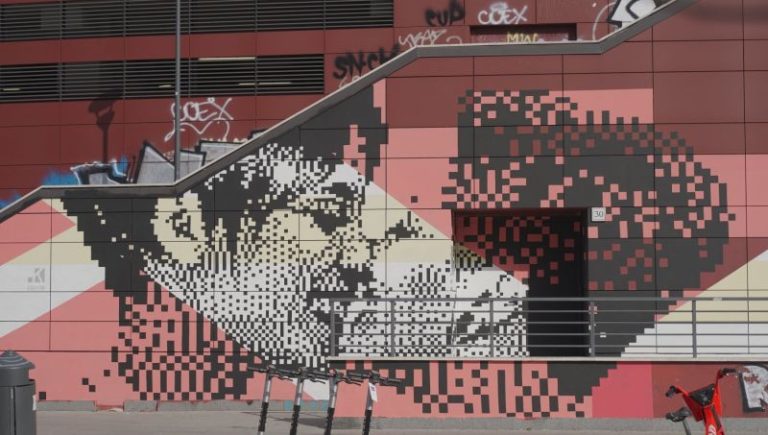
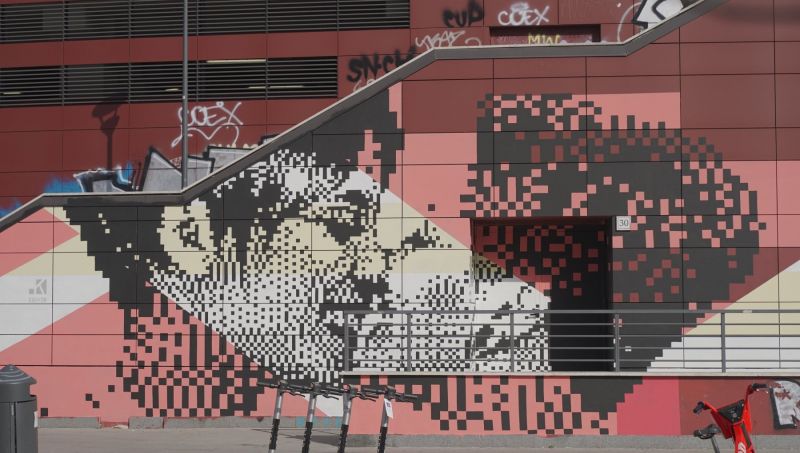
Italy’s first mural, authorised by public body, of two women kissing.
Rome has unveiled a mural of two women kissing in what is the first lesbian street art to be authorised by a public body in Italy.
The pixel art mural, located outside the Metro B Jonio station in the city’s suburbs, was created by street artist Krayon, with the collaboration of Zon Productions agency and the support of the local town hall (Municipio III) authorities.
“Before today no public institution in Italy had ever authorised murals showing a kiss between two women or two men,” stated actor Paolo Turano, on behalf of Gay Help Line.
The mural contains the toll-free number 800713713 for the contact centre against homotransphobia which listens and offers support to victims, receiving about 20,000 calls each year.
Turano said that efforts to create the mural date back eight years and that despite “favourable opinions” expressed verbally “there were always bureaucratic problems.”
The location of the mural is also symbolic for the LGBTQ+ community.
“It is situated in the Tufello district not far from the plaque in memory of Paolo Seganti (who was killed in a homophobic attack in 2005) to whom the Gay Help Line is dedicated,” Turano told Italian newspaper La Repubblica.
The 15-m wide mural, which will be inaugurated officially at 16.00 on 1 March, can be found at Via Scarpanto 30.
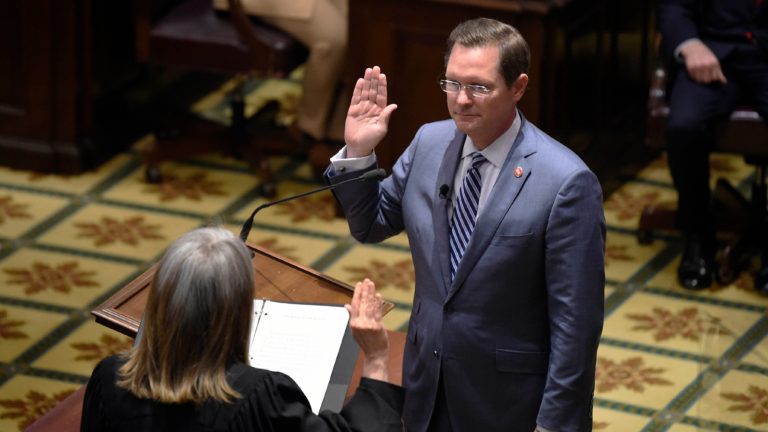
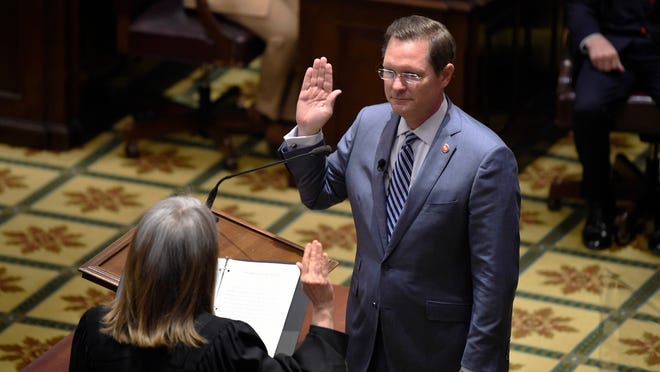
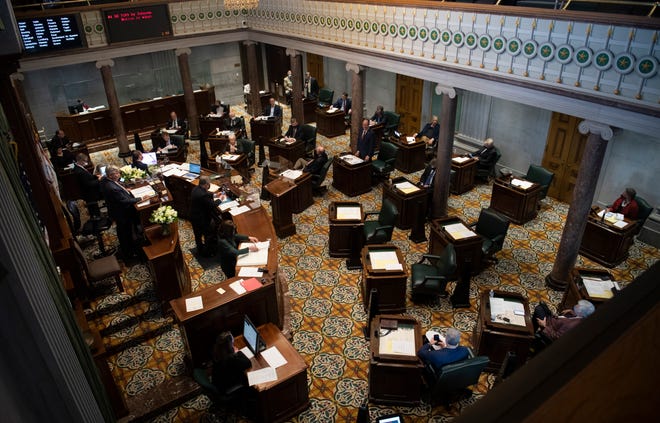
The Tennessee Senate voted 27-6 Monday night to approve a bill that would effectively ban transgender student athletes from participating in middle and high school sports under their gender identity.
The House has not yet scheduled a final vote on the bill.
SB228/HB3, filed by Sen. Joey Hensley, R-Hohenwald, and Rep. Scott Cepicky, R-Culleoka, would require transgender athletes in middle and high schools to compete under their sex at birth. The bill includes no exception for transgender athletes receiving gender-affirming care, such as hormone blockers.
Bill advocates argue barring transgender female athletes from participating in sports promotes fairness, but LGBTQ rights scholars and activists deem the science behind the bill misplaced and the legislation discriminatory toward transgender teens.
In Tennessee, there is also no evidence of transgender athlete participation in school sports. But supportive lawmakers say the bill addresses a potential problem.
“To say it’s not a problem in Tennessee may be true, but it will be a problem in Tennessee probably sooner than we think,” said Sen. Kerry Roberts, R-Springfield.
The legislative push in Tennessee mirrors efforts spanning across at least 21 states, according to a Tennessean analysis. Bills in at least six states, including Tennessee, have now passed in at least one legislative chamber.
Bill sponsors share similar talking points and many of the bills include identical clauses linked to language drafted by outside interest groups such as the conservative Alliance Defending Freedom, a well-funded politically active nonprofit that does not disclose its donors.
Bill sponsors, such as Hensley, referenced the performance gap between males and females due to their sex differences. While biological males are generally stronger than females, the athletic performance gap — largely affected by testosterone — is not prominent until puberty, according to a 2018 study published in Endocrine Reviews. Hormonal treatments for transgender people have also proved effective in increasing or suppressing testosterone, the study shows.
Sen. Richard Briggs, R-Knoxville, acknowledged testosterone levels play an important role in athletic performance. Both the International Olympic Committee and the National Collegiate Athletic Association allow transgender athletes to compete given that they undergo gender-affirming therapies or take testosterone tests, Briggs said.
But Briggs said it’s only fair to allow transgender athletes to participate with guidelines in place making sure transgender athletes do not have a biological edge. Tennessee Secondary School Athletic Association, he said, does not have them.
“Unless the TSSAA has some sort of guidelines, it’s not fair to (allow) the transgender females to be competing against natural females, particularly if they are not on any sort of testosterone suppression therapy,” he said.
Rick Colbert, general counsel for TSSAA for 35 years, could not be immediately reached for comment Monday night.
In a previous interview, Colbert told The Tennessean the association has never had to deal with the issue of transgender athlete eligibility. But should the issue rise, he said the association would follow the “All 50” model policy developed by the LGBT Sports Foundation, which outlines a process allowing a committee to determine a transgender student’s eligibility to participate.
Roberts said transgender athlete participation is a “problem” across the nation because several states have policies in place allowing transgender athletes to compete under their gender identity.
“For anyone in this chamber to say that this is not a problem or this is not going to be a problem, or we don’t need to deal with it … it is a problem that is emerging with a great deal with steam. ” he said. “To deny that it’s a problem is to deny reality.”
Lt. Gov. Randy McNally, R-Oak Ridge, voted in favor of the legislation Monday night despite previous reluctance to support similar bills in past sessions. The Senate speaker, who cautioned lawmakers to heed potential federal funding cuts and move gingerly with the transgender athlete bill, showed reticence over the past years about bills critics said would harm LGBTQ rights.
McNally signaled support for the bill last week but acknowledged there is no evidence of transgender athlete participation in school sports in Tennessee. But the bill aims to address a problem that could happen, he said.
“It’s not really a problem yet,” McNally said Thursday. But with policies in place, he said “it’d be easier if there were an issue like this occurring.”
Opponents warn of discrimination, legal battles, economic loss
Democratic lawmakers slammed the legislation Monday night for targeting transgender and intersex children and warned of potential loss of federal funding.
Sen. Heidi Campbell, D-Nashville, said the bill attacks a hypothetical problem that does not exist and could harm the mental health of transgender children.
“The argument in favor of this legislation is about hypothetical situations that might happen,” she said. “What isn’t hypothetical is the tearful moms of trans kids I spoke to on the phone last week, worried about psychological effects that this bill has on their child, or the pediatricians who have emailed me that this bill will hurt children and cause irreparable damage to them psychologically and physically.”
The bill would create a problem instead of solving one, said Senate Minority Leader Jeff Yarbro, D-Nashville.
“In passing this legislation, we’ll actually create a whole host of problems for the state … from the danger of economic harm to tarnishing our reputation, we’ll be endangering the $3.1 billion in Title IX funds that we do receive to support women athletes. And we’ll be setting ourselves up for litigation yet again that we’ll likely lose,” he said. “In passing this, we’re not gonna help a single person.”
Advocacy groups, such as the American Civil Liberties Union and the Tennessee Equality Project, have opposed the bill and warned of the unintended consequences the legislation has on the transgender communities.
Hedy Weinberg, executive director of ACLU’s Tennessee chapter, said the group is willing to fight the matter in court.
“Protecting women’s sports is important, but transgender girls do not threaten them,” she said in a Monday statement. “The vast majority of transgender students are not elite athletes. They just want to play sports for fun, with friends and classmates, to feel a sense of community and camaraderie, and to learn to respect and work together with coaches and teammates.”
“Supporters of SB228 never produced evidence that there is a need for this legislation,” TEP Executive Director Chris Sanders said. “It never was about sports. It was always about discrimination against transgender students.”
Reach Yue Stella Yu at yyu@tennessean.com or 615-913-0945. Follow her on Twitter at @bystellayu_tnsn.
Want to read more stories like this? A subscription to one of our Tennessee publications gets you unlimited access to all the latest politics news, podcasts like Grand Divisions, plus newsletters, a personalized mobile experience and the ability to tap into stories, photos and videos from throughout the USA TODAY Network’s 261 daily sites.
Michigan lawmakers have reintroduced legislation to expand the state’s civil rights law by including protections against discrimination for LGBT people.
Sponsored by Rep. Laurie Pohutsky, D-Livonia, House Bill 4297 would add sexual orientation and gender identity or expression to the list of protected classes under the Elliott-Larsen Civil Rights Act, which prohibits discrimination based on several factors when it comes to employment, housing and public accommodations.
As it’s currently written, the law protects people from discrimination based on religion, race, color, national origin, age, sex, height, weight, familial status, or marital status.
The bill was introduced in the House last week and has 51 co-sponsors, with Republican Rep. Tommy Brann, R-Wyoming, joining the Democratic caucus in sponsorship.
The reintroduction is the latest step in a years-long effort to include additional protections for Michigan’s LGBT residents, a cause that’s garnered support among business leaders and advocacy groups, but historically hasn’t gained traction in the Republican-led Legislature.
Chatfield’s record on the issue sparked a wave of intense criticism when he was hired as CEO of Southwest Michigan First early this year. Eleven days after his hire was announced, Chatfield resigned from the post, and organization officials said they are making internal changes to increase diversity, equity and inclusion in the hiring process.
Gov. Gretchen Whitmer has indicated her support of making the change to Michigan’s civil rights law and in 2019 extended protections to cover people based on sexual orientation and gender identity within the state workforce and for state contractors and services. She also renamed a state office building after the two co-sponsors of the original law, Daisy Elliott and Mel Larsen.
The group Fair and Equal Michigan is also leading an effort to change the law via ballot initiative in 2022 due to legislative efforts stalling in recent years.
Last fall, the group submitted 483,461 signatures to the state for its initiative to amend the Elliott-Larsen Civil Rights Act to add gender identity and sexual orientation to the list of protected classes.
Initially, Fair and Equal Michigan was collecting signatures in preparation for a 2020 ballot initiative. The COVID-19 pandemic interfered with those plans — the group successfully petitioned the Court of Claims for a time extension to gather the remaining signatures needed due to the stay-home orders interfering with the ability to meet normal petition signature requirements.
House Bill 4297 not the only bill introduced so far this session that would expand what’s covered under Michigan’s anti-discrimination law.
Rep. Sarah Anthony, D-Lansing, last week reintroduced legislation to include hair texture and protective hairstyles as “traits historically associated with race” in the law, effectively banning discrimination against people based on how they wear their hair.
Her bill, House Bill 4275, specifically references braids, locks and twists as examples of hairstyles that would be protected from discrimination. It was also referred to the House Judiciary Committee.
There have been at least eight instances in Virginia where the panic defense was used, with the last case in 2011, according to Carsten Andresen, a researcher and criminal justice professor from Austin, Texas. He said he has tracked 200 homicide cases nationally where the panic defense was attempted. Andresen reached out to Roem in support of the bill.
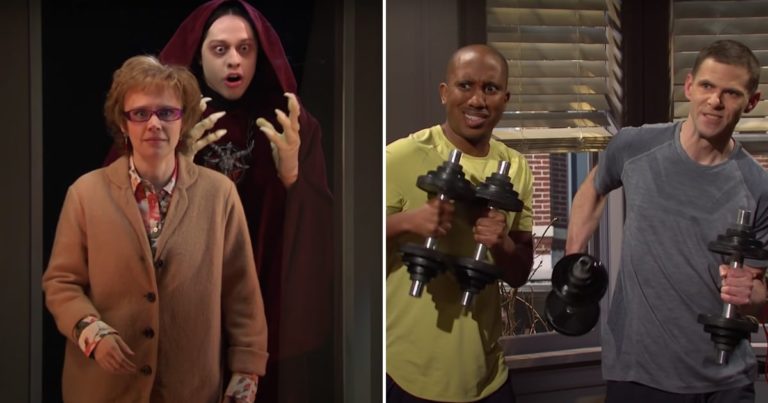
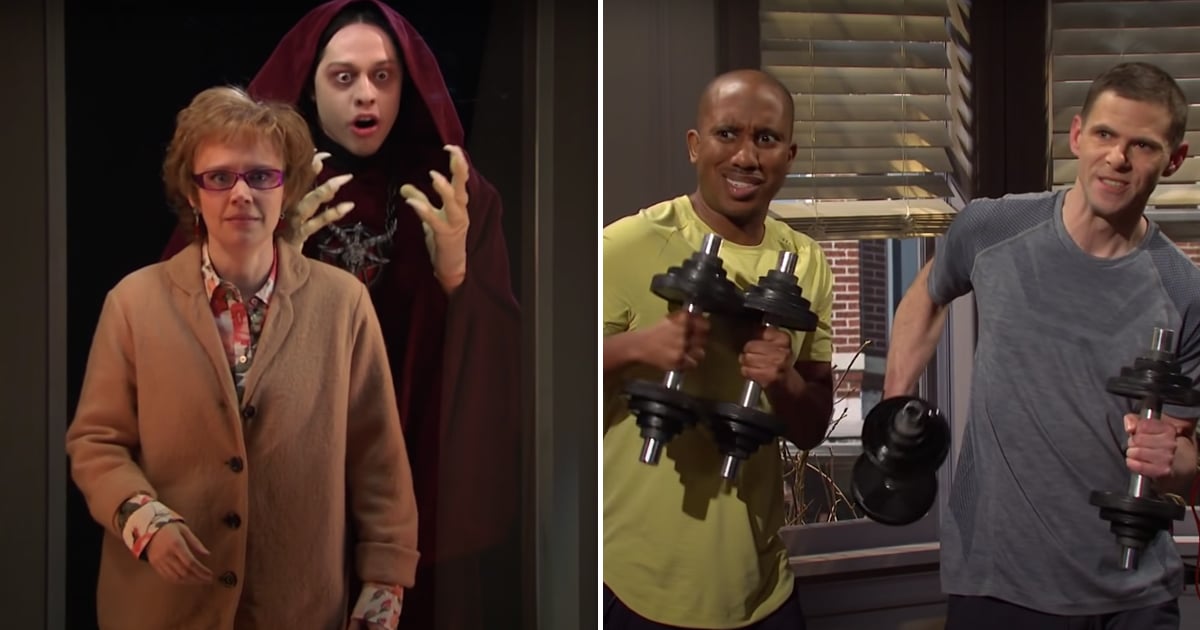
Someone please tell Saturday Night Live to let me work out at home in peace. First, the NBC sketch comedy show dragged the Peloton hype, and on Feb. 27, SNL‘s cast took things one step further with a pointed (but hilarious) Mirror Home Gym parody. Ever wonder what it’d be like if your Mirror was cursed? No? Well, let SNL provide some unwanted nightmare fuel.
I must admit, despite the digs at home workouts, this skit kept me laughing. Host Nick Jonas is a convincing weights instructor to Chris Redd and Mikey Day, but Kate McKinnon and Pete Davidson really steal the sketch as Shannon Delgado and Azuzal the demon. Don’t ever make a devilish deal with your workout equipment folks, no matter what gains it promises you. Check out the eerily funny skit in full, above.
On April 25, 1965, three teenagers refused to leave Dewey’s Restaurant in Philadelphia after employees repeatedly denied service to “homosexuals and persons wearing nonconformist clothing,” according to Drum magazine, which was created by the Janus Society, an early gay rights group.
The teens were arrested and charged with disorderly conduct, and Janus Society members protested outside of the restaurant for the next five days, according to Marc Stein, a history professor at San Francisco State University.
“Every single element of what we know of as Pride and gay rights and, especially, the pre-Stonewall homophile movement, was borrowed from the Black Freedom Movement.”
Eric Cervini, LGBTQ Historian
“Unlike so many other episodes, it kind of combined issues of homosexuality and trans issues,” Stein, author of “Rethinking the Gay and Lesbian Movement,” told NBC News.
On May 2, three more people staged a second sit-in at Dewey’s. Though the restaurant called the police, the protesters weren’t arrested, and after a few hours they left voluntarily, according to a Janus Society newsletter. The Society wrote that the protests and sit-ins were successful in preventing future denials of service and arrests.
The sit-in at Dewey’s is among a long list of examples that show a “direct line” to the Black civil rights movement, according to Stein. Specifically, sit-ins organized by gay activists in the ‘60s appear to be directly inspired by protests held in 1960 by Black college students at Woolworth’s lunch counter in Greensboro, North Carolina, against racial segregation.
Black students wait in vain for food service at this F.W. Woolworth store in Greensboro, North Carolina, on April 20, 1960.Greensboro News & Record, AP file
Early LGBTQ activists (though they didn’t use that acronym at the time) adopted many of the civil rights movement’s strategies, Stein said, and they relied on much of the foundation laid by Black civil rights activists.
But the two movements weren’t necessarily separate — they often overlapped — and so influence happened in a few ways, Stein said.
“Influence can be the influence of ideas, and specifically, ideologies, influence of strategies,” he said. “Influence can also come in the form of people who move between movements, or who are engaged in multiple movements, and we do have examples of that in the early LGBT movement.”
The influence — or ‘plagiarism’ — of ideas
Queer activists were building a movement long before the 1969 Stonewall uprising in New York City, which is widely referred to as a turning point in the LGBTQ rights movement. Though Stonewall was a pivotal moment, activists like Frank Kameny were organizing for gay rights well before.
Kameny co-founded the Mattachine Society in Washington, D.C., one of the first homophile groups (“homophile” being the adjective of choice at the time), and he drew strategies directly from the Black civil rights movement, according to Eric Cervini, a historian and author of “The Deviant’s War,” which focuses on Kameny and the early gay rights movement.
“Every single element of what we know of as Pride and gay rights and, especially, the pre-Stonewall homophile movement, was borrowed from the Black Freedom Movement,” Cervini said. “Frank Kameny’s primary role, what made him so brilliant but also complex of a historical figure, was that he served primarily as a Xerox machine copying different elements of the Black Freedom Movement and applying that to a previously nonmilitant, nonprotesting movement.”
Oct. 12, 201601:03
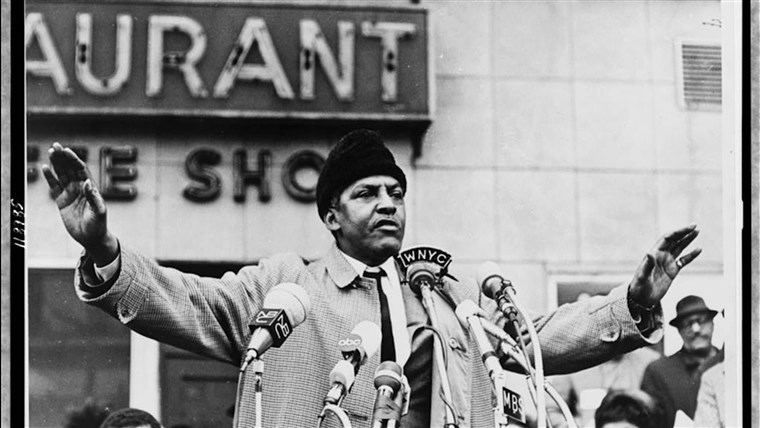
For example, Cervini said Kameny and a delegation of eight Mattachine Society of Washington members attended the 1963 March on Washington for Jobs and Freedom, where Martin Luther King Jr. delivered his “I Have a Dream” speech. The march was organized by Bayard Rustin, who had been arrested in 1953 for having sex with another man. In 1963, Sen. Strom Thurmond, R-S.C., a segregationist, called Rustin a “sexual pervert” on the Senate floor in an effort to discredit the march, according to Out History.
Kameny and the delegates saw that, even though Rustin had been exposed, 200,000 Americans still attended the march, and it became a historic moment, according to Cervini.
“So these white gay activists, who previously had been refusing to take to the streets, looked around and said, ‘Maybe it’s time, maybe not right now, but maybe in the near future,’” Cervini said. (In fact, in 1979, activists would organize a National March on Washington for Gay and Lesbian Rights, which drew an estimated 200,000 protesters, according to the National LGBT Chamber of Commerce).
People hold signs as they participate in the National March on Washington for Lesbian & Gay Rights in Washington, DC, on Oct. 14, 1979.Bettmann Archive/Getty Images file
Within a year of the 1963 march, gay rights activist Randy Wicker began picketing the U.S. Army Induction Center in New York City, and a few months after that, Kameny began picketing the White House and Philadelphia’s Independence Hall. Cervini also noted that Kameny modeled his phrase “Gay Is Good,” which was used on protest signs and buttons, on the Black Power movement’s “Black Is Beautiful.”
A few years later, in 1966, Wicker and three activists with the Mattachine Society’s New York City chapter organized a “sip-in” at Julius’ Bar to challenge a New York State Liquor Authority rule that said bars couldn’t serve “disorderly” customers. In practice, bars would refuse to serve LGBTQ people out of fear that they’d lose their liquor license. The sip-in, like the sit-in at Dewey’s, used the same tactics as the college students at Woolworth’s lunch counter, according to Stein.
After pouring their drinks, a bartender in Julius’ Bar in New York City refuses to serve Mattachine Society members John Timmins, Dick Leitsch, Craig Rodwell and Randy Wicker on April 21, 1966.Fred W. McDarrah / Getty Images file
Stein said Black civil rights movement strategies also affected how early LGBTQ activists conducted peaceful demonstrations. A coalition of gay and lesbian organizations held a yearly peaceful protest at Independence Hall called the Annual Reminder from 1965 to 1969, which Stein said were influenced by the early civil rights demonstrations in which demonstrators were instructed to dress respectably, with women in dresses and men in suits.
Cervini said civil rights demonstrators dressed up as a “reclamation of morality that was so effective when you look at the images of Montgomery or Birmingham or Greensboro.” He said Time magazine even drew attention to the fact that young civil rights activists looked like they were going to church, and, as a result, “How can you possibly claim that those Southern whites are the ones protecting morality?” he said. “So the early gay activists tried to emulate that same tactic, by using respectability as a political tool.”
Barbara Gittings and other gay rights activists picket outside the White house in 1965.Kay Tobin Lahusen / NYPL
On the other hand, gay and trans activists were also affected by the Black Power movement and urban uprisings, according to Stein. He said LGBTQ rebellions like the 1966 Compton’s Cafeteria riot in San Francisco and the Stonewall uprising a few years later were likely influenced by events like the 1965 Watts Rebellion in Los Angeles, where six days of riots erupted between police and the predominantly Black community.
“I would argue that the Black Power movement was just as influential as the civil rights movement,” Stein said. “Black Power ideologies and strategies came to influence the movement very much so in the second half of the ‘60s and then into the ‘70s, so there were both of those influences — peaceful, respectable demonstrations on the one hand, and a more aggressive militant action sometimes including riots on the other.”
Crowd attempts to impede police arrests outside the Stonewall Inn on Christopher Street in New York’s Greenwich Village in 1969.New York Daily News via Getty Images
Cervini said FBI reports explicitly connect the Black Freedom Movement and the early homophile movement.
“We can connect those two movements — Bayard Rustin, Frank Kameny and Randy Wicker — through FBI surveillance, and from informants within these organizations,” Cervini said. “They were the ones informing the FBI that the gays, the homosexuals were learning from and discussing copying the Black Freedom Movement.”
“This idea of a coalition between these two organizations — that the Black Freedom Movement might be inspiring this other group of American citizens who are also marginalized, and the fact that they may both be taking to the streets, perhaps in coordination — that is what scared them the most,” Cervini said of the FBI and Southern racist segregationists.
Frank Kameny and Mattachine Society of Washington members marching in New York, June 1970.Kay Tobin Lahusen / NYPL
However, the homophile movement, at least in New York and Washington, never made that coalition a reality, Cervini added.
He said he uses the word “plagiarism” to describe how Kameny used civil rights tactics without working with or crediting the activists whose tactics he used.
“You are using and borrowing tactics from another movement, but not giving proper credit and not making space for people at the intersection of those two movements,” Cervini said. “I think it raises the question of the moral acceptability of that.”
Influence by intersection
In some cities, there was more of a coalition and less borrowing. The idea of one movement having an “influence” over the other could give the false notion that the fight for Black civil rights was comprised entirely of Black activists and the fight for LGBTQ rights was solely made up of whites, cautioned Steven Fullwood, co-founder of the Nomadic Archivists Project, which documents and preserves Black history.
“There’s Black people in parts of both of those movements,” Fullwood said, noting that there were Black people involved in both the Mattachine Society and Daughters of Bilitis, the first lesbian rights group.
Marsha P. Johnson.Netflix
Fullwood also mentioned Marsha P. Johnson, who is credited as being a central figure in the Stonewall uprising, and Cervini cited Ernestine Eckstein (also known as Ernestine Eppenger), who was active in the Black Freedom Movement and the Daughters of Bilitis in the ‘60s.
Stein also gave the example of Kiyoshi Kuromiya, a Japanese-American, anti-war activist who participated in the Annual Reminders at Independence Hall and had previously gone South and participated in civil rights marches. Kuromiya co-founded the Gay Liberation Front’s Philadelphia chapter and became a spokesperson for a homosexual workshop at the Black Panther’s Revolutionary People’s Constitutional Convention in September 1970, according to Stein.
He gave a presentation “to the huge audience of the convention to applause,” Stein said of Kuromiya, citing this as one of many examples showing that the movements weren’t fragmented or divided at the time in some cities.
“They were uniting against police violence, state repression, capitalist exploitation and, after all, the Stonewall rebellion was at least in part about a business exploiting its gay, trans customers,” Stein said. “So it kind of illustrates the way those issues came together at those particular episodes.”
“Any movement that does not take into account the intersectional approach is never going to achieve true liberation.”
Steven Fullwood, Nomadic Archivists Project
Some of the major LGBTQ demonstrations, including the 1965 sit-in at Dewey’s Restaurant, took place in racially diverse communities, according to Susan Stryker, a scholar of queer and trans history.
She said the sit-in is an example of tactics developed in the Black civil rights struggle “becoming useful in situations that are not organized specifically around race, but are organized around questions of sexuality and gender expression and gender presentation.”
“So, is that a borrowing of civil rights tactics?” Stryker asked. “Or is it people who are perhaps familiar with this in different contexts of their own lives saying … ‘We need to do the same thing on this issue’?”
Stryker said there was also a huge overlap between people who were organizing for racial and economic justice and queer and trans rights in the 1966 Compton’s Cafeteria riot, which she described as “one of the first instances that we know about of militant trans resistance to police-based oppression.”
The legal blueprint
Many major legal gains for LGBTQ people are also in part due to arguments developed by civil rights lawyers.
“The legal strategy challenging racial segregation, which was pioneered by the NAACP in the 1940s, was really the wellspring from which the LGBTQ equality movement grew,” said Alphonso David, a civil rights lawyer and the first Black president of the Human Rights Campaign, the country’s largest LGBTQ rights group.
Thurgood Marshall, attorney for the NAACP, arrives at the Supreme Court in Washington, August 22, 1958. The Associated Press
In the 1940s and ‘50s, Thurgood Marshall, who led the NAACP, spent a decade challenging segregation on public transportation, in restaurants and in public schools, David said. Marshall argued a number of cases related to segregation, and then in the mid-’50s he argued Brown v. Board of Education in front of the Supreme Court, which ruled that U.S. state laws segregating schools were unconstitutional.
“It took more than a decade of litigation and argument testing combined with really a lot of sweat equity and strategic partnerships with grassroots organizers to successfully challenge racial segregation in the U.S. Supreme Court,” David said.
Marshall’s legal strategy, which involved using the due process and equal protection clauses of the 14th Amendment, served as a model that the LGBTQ movement used to challenge the criminalization of homosexuality and the denial of marriage rights.
“We are indebted to the civil rights leaders of the past, because they were really instrumental in outlining the essential objective, which was the guarantee of equal protection and how that should apply to all of us,” David said.
Plaintiff Jim Obergefell, bottom center, speaks to the media outside the Supreme Court after the Obergefell vs. Hodges gay marriage ruling on Friday, June 26, 2015. Andrew Harrer / Bloomberg via Getty Images
Gay rights lawyers also built on major Black civil rights decisions to achieve same-sex marriage, according to David. In 1967, the Supreme Court held in Loving v. Virginia that laws banning interracial marriage violate the due process and equal protection clauses. “In that case, the Supreme Court held that, yes, there is a fundamental right to marry,” he said.
This same argument was successfully used nearly half a century later in Obergefell v. Hodges, David said, where it was argued that “denying same-sex couples the right to marry violates both the due process and the equal protection clauses of the U.S. Constitution — and we won.”
“So that is one perfect example where you see the arguments that were advanced during the civil rights struggle to at least recognize equality for racial minorities being used and applied in the context of LGBTQ people,” he added.
‘The same goal’
There has been significant overlap between the civil rights and LGBTQ equality movements, Fullwood said, and that’s a key takeaway.
“What we have to appreciate is that the arguments that were used in the civil rights movement in the 1960s involved LGBTQ people,” Fullwood added, citing a speech given by Black Panther Party founder Huey Newton in 1970.
Outlining the group’s position on the two emerging movements, Newton wrote: “Whatever your personal opinions and your insecurities about homosexuality and the various liberation movements among homosexuals and women (and I speak of the homosexuals and women as oppressed groups), we should try to unite with them in a revolutionary fashion.”
The sister of Layleen Polanco, a trans woman who died in Rikers Island Jail in 2019, speaks to a crowd gathered outside the Brooklyn Museum for a rally and march for Black transgender lives on June 14, 2020.Sekiya Dorsett
Today’s activists, Fullwood said, have to think about the LGBTQ equality movement as involving Black people and the racial justice movement as involving LGBTQ people.
“Any movement that does not take into account the intersectional approach is never going to achieve true liberation,” he said. “The Black and the LGBTQ movements have the same goal.”
Fullwood said he’s pleased with the kinds of activists who are engaging multi-issue platforms that “call for different, insightful ways to resist oppression,” but that he’s occasionally run into the phrase, “This isn’t your grandmother’s movement.”
“If that’s the sentiment, I say this: You better hope it’s your grandmother’s movement, because she and thousands like her made it possible for you to have the language, perspective and insights that you enjoy today,” he said. “This is not new. Read. Research. Build. You exist in a river of resistance. Know and embrace that history. It’s waiting.”
‘We didn’t think about it at the time but representation matters’
Warning: This article includes references to suicide and mental health issues.
The skies were clear, the snow was firm and fans had turned out in their thousands – 18 February 2018 was a perfect day for spectacular slopestyle in South Korea.
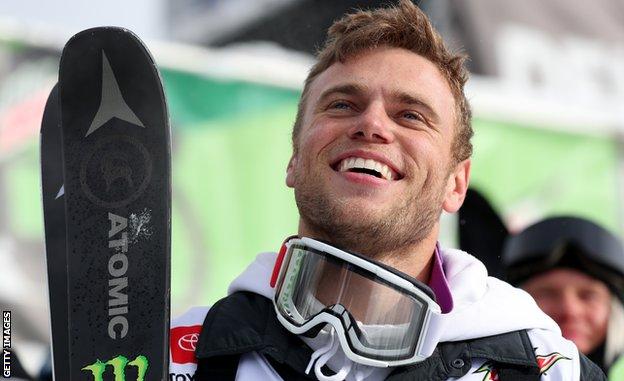
Gus Kenworthy was looking to better his surprise silver from the event’s Olympic debut four years earlier in Russia and the skier was confident. Preparation had been very different this time around.
Before Sochi 2014 he’d been “terrified of being outed” in a country where ‘promotion of homosexuality’ was illegal and had worried he might be chased out of the sport.
Now the American was one of two openly gay men in the USA team. He’d been “so shocked” by the way the LGBT+ community and a plethora of sponsors had backed him after coming out in 2015 that he was desperate to thank them with success in Pyeongchang.
Unfortunately, things didn’t go to plan. But he still found himself at the centre of a dizzying global focus, for unexpected reasons.
Kenworthy fell on his first run in the final and suffered a similar fate in the second, leaving him “devastated” as his Olympic medal bid ended.
All he wanted was to quietly retreat to the comfort of family and friends, but his agent intervened and directed him towards the eager reporters desperate for his attention. Kenworthy was confused.
“They were all going ‘tell us about the kiss’ and I had no idea what they were talking about,” he tells BBC Sport.
Without his knowledge, American broadcaster NBC had been filming him live as he spoke to family and kissed his boyfriend before heading up to the start.
Thanks to the power of social media, the kiss became one of the most iconic images of the Games and was celebrated as a significant step towards the greater acceptance of the LGBT+ community within elite sport.
“It was such a tame kiss,” says Kenworthy with a smile. “For sure I’d have made it more dramatic if I’d known it was going to be this big deal moment!
“As a kid if I’d seen that it would have signalled to me that I was OK, that I was safe, there was a future for me. It would probably have saved me a lot of years of heartache.”
Kenworthy was five when he realised he was “different” to other boys. He worried about it.
With no obvious high-profile gay role models, he would mimic the views of friends, as well as his older brother, in the hope of “appearing normal”. He would go to extreme lengths to hide his “big, dark secret”.
“It played a pretty debilitating role on my mental health because I had this fear and dread that there was something wrong with me,” he says.
“When I was on ski trips with overnights, I would make sure I was the last person in the room to fall asleep because I was scared I’d talk in my sleep and out myself as gay.
“I thought that if people found out then no-one would speak to me again, that I’d be kicked out of my home and would never have a career in skiing. It was super damaging.”
Kenworthy’s anxiety only grew during his teen years, when team-mates would casually use homophobic language, describing the weather or judging a course they didn’t like as “gay”.
“It didn’t help that everything to do with sponsors and contracts is based around image,” he adds.
“With no-one else in my sport ‘out’, I got it into my head that no-one would want to be associated with the ‘gay skier’ so everything would be taken away from me.”
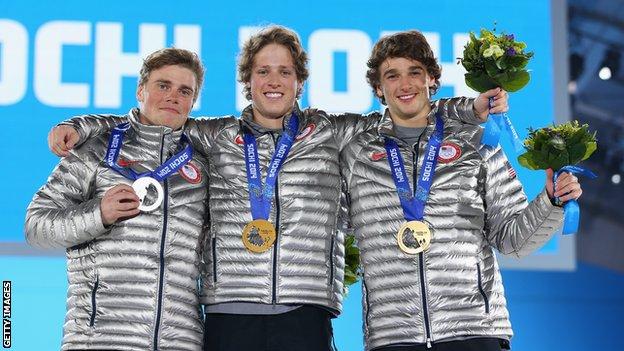
Now aged 29, Kenworthy (left) was 22 when his silver helped the USA sweep the men’s slopestyle skiing medals at Sochi 2014
Homophobia was drawn into the mainstream spotlight in the build-up to the Sochi 2014 Olympics after the host nation – Russia – introduced new ‘anti-gay’ legislation, provoking widespread criticism across the globe.
Unsurprisingly Kenworthy was in a “weird head space” going into the Games, with his fears and anxiety heightened, so he tried to blend in and lay low.
“I felt like I was going into the lion’s den because it was a country and political atmosphere that completely didn’t support me,” he says. “Then I was thinking, ‘well, I don’t even support me and I’m not even brave enough to stand my ground and be who I am’.
“I had a boyfriend at the time who was out there working in the media and he was also in the closet and it felt like this forbidden love.”
Despite the stress, it was a highly successful Olympics for the slopestyle specialist, as he claimed silver as part of a historic USA podium lockout.
However, what should have been an incredible time – as he achieved a lifelong dream – quickly became a living nightmare.
“I had a secret plan to come out in Russia as a middle finger to the legislation, as a kind of protest,” Kenworthy says. “I didn’t do it, I was too scared and wasn’t ready, but it ate away at me.
“Then there was the media tour, which following a medal is the most exciting and fun thing that happens to most athletes as you’re showered in attention and appreciation, but I was really struggling and I considered killing myself.
“It didn’t help that we were doing all of these interviews the day before Valentine’s Day and in each one they were asking us ‘who’s your celebrity crush?’ or ‘who’s your dream date?’ and I felt so fake and horrible about myself lying in all of them.”
Some 18 months later he could no longer tolerate living a double life. After revealing his sexuality to family and friends he then came out publicly.
“I got to the point where I couldn’t go on like it anymore,” he says.
“I’d also had this realisation that I’d kind of got everything I wanted in terms of an Olympic medal and X Games medals so if I did lose everything and I was chased out of the sport I felt I could leave with my head held high.”
The response was more positive than he could ever have imagined.
Kenworthy has recently switched international allegiance and now represents Great Britain – the country of his birth
“With each person I told this huge weight was lifted off my shoulders,” recalls Kenworthy. “I felt so free and liberated, which was incredible and heart-warming.
“I then did it in a really public way to reach anybody who, like me, was in the closet and felt for whatever reason that they couldn’t come out. It was amazingly well-received.”
What followed was a season which Kenworthy describes as his “best ever” and a podium finish in every event he entered.
Heading into the Winter Olympics of 2018, Kenworthy was one of the favourites. With the backing of the LGBT+ community, an army of personal sponsors and a supportive tweet from his “idol” Britney Spears, he was feeling confident.
There were those who were not quite as supportive, though.
“Some of the stuff on social media was really dark,” he says. “Because [US figure skater] Adam Rippon and I were both ‘out’, we were receiving death threats.
“People would tweet us saying ‘I hope you break your legs’, ‘I hope the world gets to watch you get hurt’ or ‘I hope you break your neck and die’. Stuff other athletes didn’t have to deal with.”
Kenworthy’s two falls meant he finished 12th – last place – in the slopestyle final. While he is still disappointed with the result, he looks back on the Games much more positively.
“It’s incredible that the kiss was broadcast and beamed into homes all around the world and in countries where homosexuality is still illegal,” he says.
“I know it was just a tame kiss and one we didn’t think about at the time, but representation matters.”
Kenworthy is still hoping for one last medal-winning moment at what he expects will be his final Winter Olympics in Beijing next year, and he will do so in British rather than USA colours after switching to represent the nation of his birth.
“My mum is British and for the last eight years she’s proudly waved the USA flag for me,” he says.
“Now I’d love to wave the Union Jack for her, so I’m going for Team GB and GB Snowsport, who have been so supportive.”
Canadian figure skater Eric Radford made history by becoming the first openly gay male Winter Olympic champion at Pyeongchang 2018 and Kenworthy now dreams of following him by topping the podium himself in China.
“Getting back on the podium while representing Great Britain and the LGBT+ community would mean everything,” he says.
“Actually, it would be my crowning achievement.”
If you’ve been affected by issues raised in this article, there is information and support available on BBC Action Line.
A group of beachgoers in Mexico proved that when people join together and stand up for justice, you can triumph in even the direst of circumstances.
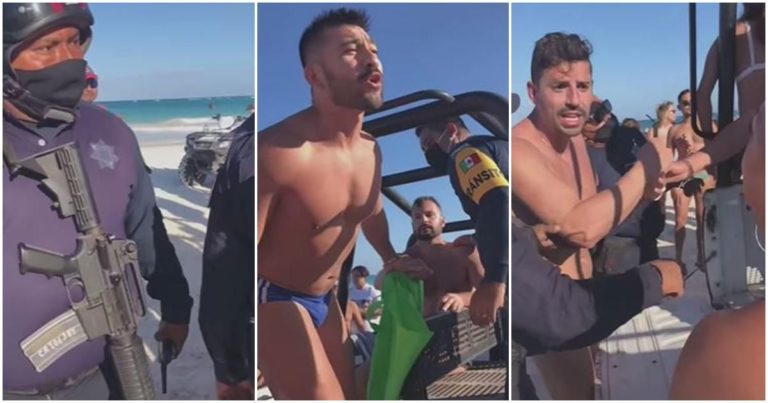
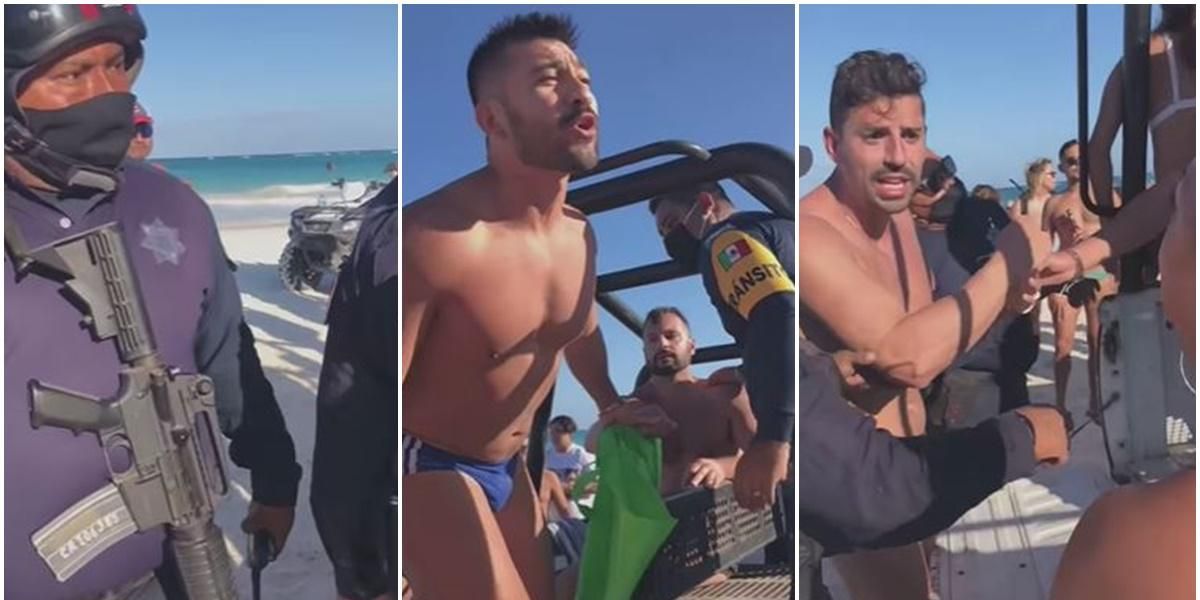
Municipal police in Tulum, Quintana Roo got received a tip that there were men allegedly committing “immoral acts” on the beach. So the officers, armed with AR-15 rifles, picked up two Canadian men.
“The officers approached a group of young foreigners,” local politician Maritza Escalante Morales recounted in her video. “After about 20 minutes passed, a patrol car arrived and proceeded to arrest them with handcuffs.”
When Escalante asked the officers why the two men were being arrested, she learned it was “because they were gay and they kissed.” However, two men are allowed to legally kiss in Mexico. The officers claimed they were being arrested because they did so in front of children.
“The policemen were violent, and gave arguments such as ‘there are families and children and they cannot be watching this,'” Morales later said.
When the police loaded the two men into the back of their truck, a crowd began to mobilize around the vehicle. They booed and jeered the police. The crowd rallied around the men chanting “No!” and “I’m gay, too!”
Morales captured the incident on video.
“We are gay, that is why they are taking us,” one of the arrested tourists says in the video.
“They were not committing any crime, we were by their side, at no time did they do anything wrong, simply by kissing like any other couple,” Morales later wrote. “I am FURIOUS because it is not possible that in the 21st century this type of oppression against the LGBT+ community continues.”
However, the protests worked. Even though the police were heavily armed they capitulated to the angry crowd and let the two men go. It was a beautiful display of the power a crowd can have when they stand up for what’s right. Especially when the two men weren’t doing anything wrong or illegal.
Homosexuality is legal in Mexico and same-sex marriage has been allowed for over a decade. But that doesn’t prevent some authorities from overstepping their boundaries and threatening LGBT people.
According to World Nomads tourism site, in Mexico “The culture is stronger than the printed law, and each Mexican state can override national decriminalization laws by finding ‘adjacent’ excuses — like public decency laws — for making an arrest in rare situations.”
The site urges LGBT people to be cautious about expressing public affection in the country.
“Basic displays of same-sex affection, like kissing and handholding in public (except for in or around a gay bar in, say, Mexico City), are invitations for scrutiny and potential backlash, which wouldn’t be much different from a small, conservative, rural town anywhere in the world,” the site continues.
The incident has resulted in several human rights groups filing complaints with Mexico’s government. It has also inspired a “kiss-in” at the beach to protest the actions of the police.
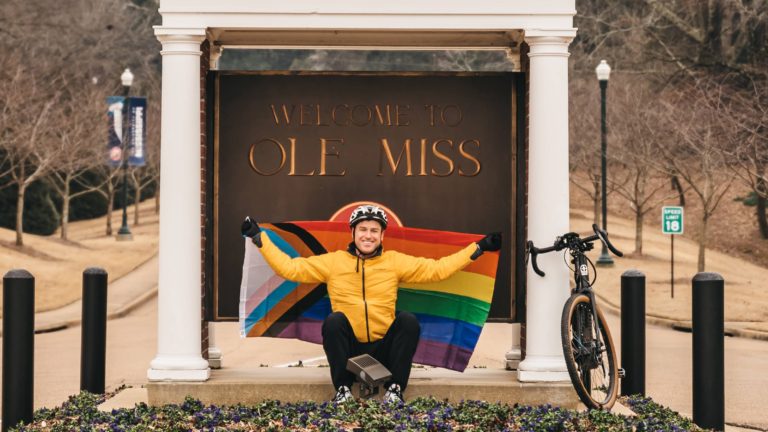
A former Memphian turned “fulltime adventurer” is running across the state of Mississippi — sometimes in an Elvis jumpsuit (hello, Tupelo!), sometimes in a unicorn onesie (so long, Oxford!) — to promote the idea of “diversity and inclusion in outdoors culture.”
Mikah Meyer, 34, first earned national attention in 2019, when he became the first person to visit all 419 sites administered by the National Park Service during a single — albeit three-years-long — journey.
That effort largely was motivated by Meyer’s own wanderlust. However, his current exploit is tied to his status as a “fulltime adventurer” (in Meyer’s own words) — a fitness enthusiast, motivational speaker, “social media warrior” (according to MTV), and LGBTQ advocate.
“I live on one end of the Mississippi River in the state where it begins,” said Meyer, a resident of Downtown Minneapolis. “I moved there because it’s a state that has a lot of LGBTQ protections, the culture is very welcoming. I feel welcomed to be my authentic self there.
“And then I come down to the other end of the Mississippi River, and I’m hearing from local Mississippians who say, ‘I’m gay, and I have a partner, and I could never come out, for fear of being fired,'” Meyer said. In addition, the Mississippi state legislature currently is considering anti-transgender bills that are opposed by the Human Rights Campaign and other progressive advocacy groups. “So depending on what end of the Mississippi you live on, your life as a queer person will be very different.”
A University of Memphis-trained countertenor soloist who sometimes helps fund his adventures with vocal performances at churches, Meyer began his 170-mile “Run Across Mississippi” — Northern Mississippi, to be precise — on Feb. 1. He is scheduled to cross the finish line at 4 p.m. Sunday, Feb. 28, in the parking lot of Horseshoe Tunica, the casino at 1021 Casino Center Drive. For the final mile, he’ll be escorted by a Batmobile owned by his old U of M classmate James Fyke, the “Bluff City Batman.” The public is invited to attend, to take pictures and to cheer Meyer on (in a safe, socially distanced way, of course).
Meyer’s Mississippi run comes four months after his 210-mile “Run Across Minnesota,” which also was intended to promote diversity and inclusion in what he calls “outdoors culture.” To that end, Meyer has founded a nonprofit advocacy group, Outside Safe Space. (Information on Meyer and his efforts can be found at his website, mikahmeyer.com.)
‘Mississippi should be a safe space’
Meyer said at the time he began his parks quest, “I was sort of hiding the fact that I was gay because I was afraid it would offend people and they wouldn’t want to donate to my crowdfunding.”
However, people following his journey online who began checking out his social media accounts became aware of his identity. “I started getting messages from (LGBTQ) people telling me when they’re camping with their partner, or holding hands on a trail, they’ll hear people say, ‘Why do they have to rub my face in it out here?’ or ‘We’re out here with our family, go back to the city.’ It was sort of this moment from God to shake me awake and say, ‘Mikah, you really need to be open about yourself.'”
Meyer said his message is much more positively received in 2021 than it was even just a few years ago. He now undertakes his “adventures” with the support of three major sponsors: the Eddie Bauer sportswear and outdoor gear company; the Schwinn Bicycle Company; and Brooks Running, a sports equipment company.
As a result, his “Run Across Mississippi” is well chronicled. Generally, he covers about 6.5 miles a day, accompanied by photographer Madeline Elli, on her electric bicycle, and filmmaker Derek Dodge, who is working on a documentary about Meyer. (Dodge’s previous feature, “Hurley,” about American race car driver Haywood Hurley, is currently on Hulu.)
Partly for the cameras, partly for himself, Meyer sometimes dresses whimsically or flamboyantly on his run, to draw attention to his cause. The choice of Elvis jumpsuit for the leg of his journey that took him to the King’s birth town of Tupelo was perhaps predictable, but it’s likely no drivers on any Magnolia State highway expected to see a man running along the road in a rainbow tutu or what Meyer calls a “unicorn onesie.”
Explained Meyer: “Because so many people perceive Mississippi as so dangerous to LGBTQ people, by being here and being out and proud and being who I am, I think I can really promote the idea that Mississippi should be a safe space.”
Born and raised in Nebraska, Meyer came to Memphis to study music at the University of Memphis, and he still has plenty of local friends and connections. In fact, his unofficial headquarters for the Mississippi run is the Memphis home of Lawrence Edwards, director of the Memphis Symphony Chorus.
Although he lived here only about four years, “Memphis had a big impact on me,” Meyer said. “That’s why I still have a 901 phone number. Memphis is where I felt like I became an adult, it’s where I came out of the closet, and it’s where I feel I found myself.
“When I’m at home in Downtown Minneapolis, the water I run over every day on my runs is the water that will eventually make its way down to Memphis.”
ORLANDO, Fla. — Once known for singer Anita Bryant’s anti-gay rights campaign and a ban on gay and lesbian adoptions, Florida is now home to two metro areas with among the highest concentrations of gay and lesbian coupled households in the U.S., according to a new report released by the U.S. Census Bureau.
Orlando and Miami had the fourth and sixth highest percentages respectively of same-sex coupled households in the U.S., according to the report released this week using data from the bureau’s 2019 American Community Survey.
San Francisco, Portland and Seattle topped the list. Austin was No. 5 and Boston came in at No. 7. But they were joined in the top 10 by some unexpected metro areas like Baltimore, Denver and Phoenix. Noticeably absent were three of the nation’s largest metros: New York, Los Angeles and Chicago. Though they have some of the nation’s most visible LGBTQ communities, the vastness of their metro areas dilutes the concentration.
Related
The appearance of these metros on the list shows that tolerance isn’t limited to large coastal cities, gay rights advocates said.
“You often think of LGBTQ people in large cities like San Francisco, but we’re everywhere,” said Jeremy LaMaster, executive director of FreeState Justice, a Baltimore-based LGBTQ advocacy organization for Maryland.
The report focused on same-sex couples, both married and unmarried, and not gays and lesbians who are single. About 1.5 percent of all coupled households nationwide were same sex. The cities on the top 10 list ranged in concentration from San Francisco’s 2.8 percent to Baltimore’s 2 percent.
In the District of Columbia, which was categorized along with states in the report, 7.1 percent of coupled households were same sex.
In Florida, acceptance of LGBTQ communities has been driven at the local level, with passage of human rights ordinances, fast-growing populations from all over the world and gay-friendly companies from the hospitality and entertainment industries, said Nadine Smith, executive director of Equality Florida, an LGBTQ advocacy group.
While Orlando already had a visible gay community with out elected officials and workforces like Disney World with large numbers of gays and lesbians, the collective grief from the massacre at the gay Pulse nightclub in 2016 helped push that acceptance into more conservative corners of civic life such as local churches.
“Miami is a port city and Orlando is the epicenter of amusement parks and hospitality, so it makes perfect sense,” Smith said of the high concentrations of same sex households. “The cities have led the way for sure, rebuilding Florida’s image from a really hateful history.”
Related
That history stretches back to the 1970s. That’s when Bryant, an early-1960s pop singer and brand ambassador for the Florida Citrus Commission, headed a campaign that led to the repeal of an ordinance in Miami-Dade County prohibiting discrimination based on sexual orientation in one of the earliest organized fights against gay rights. Florida also was the last state in the U.S. to end its ban on gay and lesbian adoption when a court ruled it violated equal protection rights in 2010.
Austin, Orlando and Phoenix have been among the metropolitan areas with the largest population growth in recent years.
Phoenix’s general meritocracy, which comes from being a relatively young community with a constant influx of new arrivals, has made it welcoming to gay and lesbians, said Angela Hughey, president of ONE Community, a business coalition that advocates for inclusion and equality.
“It’s a very broad city and we are in every neighborhood,” Hughey said Thursday.
In Baltimore, residents have had an appreciation for a camp aesthetic that now would overlap with queer culture. A favorite son, after all, is filmmaker John Waters, and the city celebrates the unconventional, as evidenced by the annual HONFest where celebrants sport beehive hairdos and cat-eye sunglasses. The city also has a vibrant vogue ball scene.
“Part of me feels like I need to give a shout-out to John Waters,” said LaMaster, referring to the filmmaker behind cult movies made in Baltimore, such as “Pink Flamingos” and “Hairspray.” “But it’s not just John Waters. There is a rich heritage and history that can be found here.”
LaMaster, who lived in New York City before moving to Baltimore, said the Maryland city lacked the visible gay scene found in a neighborhood like Chelsea in New York City. But Baltimore made sense for same sex couples wanting to set up households in a state that has been a leader in laws prohibiting discrimination based on sexual orientation and gender identity, as well as allowing second-parent adoptions, he said.
“The work isn’t done. That’s my takeaway,” La Master said. “Even though there has been tremendous progress, I think there’s always room for improvement.”
Will knowing where all the gays live help you decide where to move? I think knowing where there is a great concentration of people “like us” is a wonderful thing. It’s fun hanging out with fellow gays. I know I moved to Wilton Manors, Florida area because there was a great gay population.
But what about if the number was focused on same sex couples. Would that be of interest? I think yes, again, as it might help us see where couples are welcome, owning homes together, raising families, and maybe, just maybe, they met there and this is the place to find love.
So where are all the same sex couples at in the United States? Here are some of the results form a study released this week using data from the bureau’s 2019 American Community Survey. Not sure why no other resource out there didn’t provide a link to the study, but it can be found here. Here’s our take on the numbers.
Does the map above surprise you? Nope, not really. Dark purple is pretty good alignment with the protectors of Democracy and where many of the states were first to give marriage equality to the LGBTQ community.
But when you break it down to cities within these darker spots. The more well-known gayborhoods get washed out when per capita comes into play. The state map is great, but as you know Tallahassee is very different than St. Pete or For Lauderdale.
Florida is home to two metro areas that have the highest concentrations of gay and lesbian coupled households in the U.S., according to a new report released by the U.S. Census Bureau. Most others reporting on this just said Miami and Orlando, but the picture is bigger than that. When you say Miami, the question always comes up, is it Miami or more of Southern Florida, which in this case the reports of Miami should instead say Miami-Fort Lauderdale-Pompano, which are the larger cities in Miami-Dade, Broward, and Palm Beach counties respectively, which are the three big blue counties of Southern Florida. The other area of Florida is not as large population wise at les than half or the households of So Flo, a comparison of 1.1 million overall households to 0.5 million households of the Disney area of Florida. But for the gay comparison, the Orlando metro area has 2.4% same-sex households to the MIA/FTL/PBC of 2.2%
San Francisco, Portland, and Seattle topped the list. Hate when they don’t label Portland as being in Oregon as Portland, Maine has some great stats on equality, diversity that have them nationally ranked, too. We are able to mark a Texas city at number 5. with Austin. If you look at the list above, Boston and Denver are niot much of a surprise for most of us, but many were happy to see some newcomers to the obvious with Baltimore and Phoenix.
But where are the big boys? What about New York City, Columbus, OH, Chicago, and Los Angeles? Unfortunately, we are talking about per capita and once you add in so many people and so many straight couples, the NYC, CHI, LA LGBT numbers are too diluted to appear.
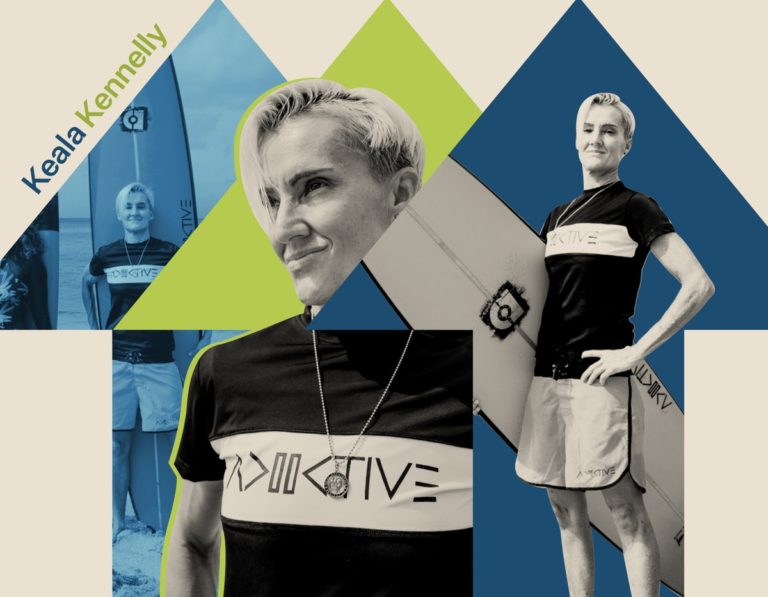
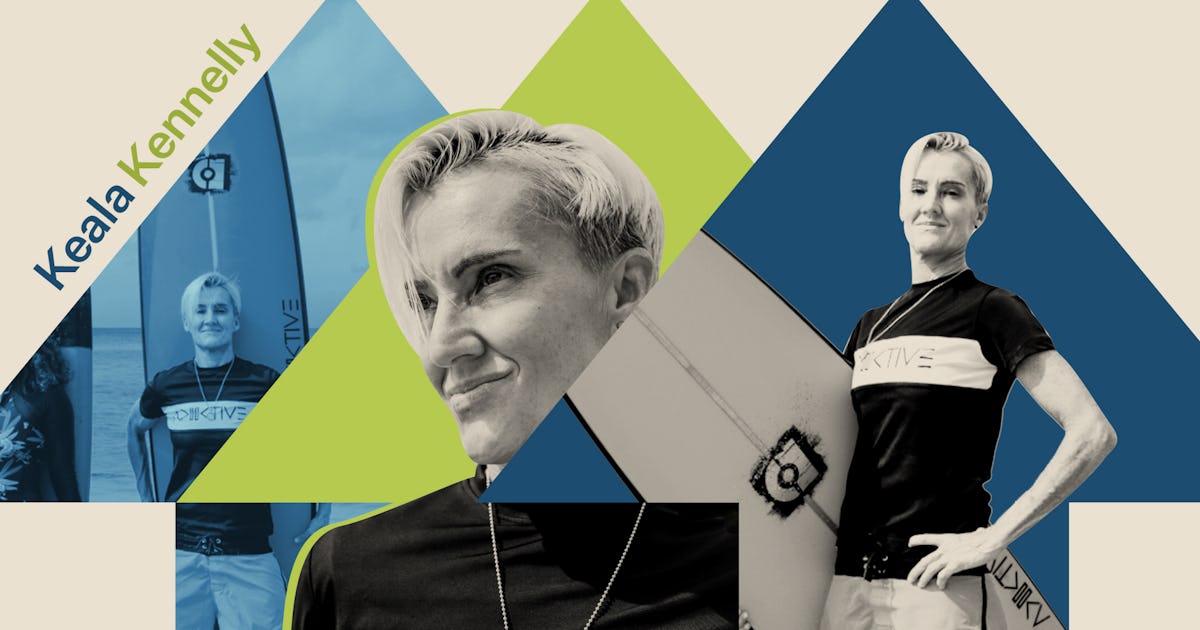
In “The Level Up,” changemakers in the fitness and wellness industries tell us how they’re making an impact in their communities, from pushing for inclusivity to promoting body acceptance and so much more. Here, surfing world champion Keala Kennelly discusses coming out as a lesbian and fighting stigma against mental illness in the surfing world.
Keala Kennelly, 42, has been surfing for as long as she can remember. Growing up in Kauai, Hawaii, she didn’t have the opportunity to compete in surf competitions against other girls — so, she took on the guys starting at age 7. Generally, she won.
From a young age, she knew that to pursue being a champion surfer, she’d have to crash through a lot of barriers. The name-calling and gender-shaming from other kids was relentless, even in grade school. “They made it pretty rough,” she tells Bustle, but she still wanted to make — and ride — the biggest waves she could.
After graduating high school, Kennelly went right to the pros. She gathered a lot of big-time wins after being accepted into the World Championship Tour, an elite competition hosted by the World Surf League, spanning multiple events, locations, and months. However, Kennelly says that there was intense pressure to hide who she is: between competing on tour, coping with undiagnosed bipolar depression, and being in the closet, she says, “I don’t know how I survived those years.”
“The competitive surfing world and the surfing industry overall seem really laid-back, but it’s really not that way,” she says. “Even before I got out on the World Championship Tour, I heard all these cautionary tales, like ‘You don’t want to associate yourself with anybody who’s a lesbian or presumed to be a lesbian.'” It took her finding other gay surfers to realize she could be open about her sexuality and be a pro surfer.
Below, Kennelly explains how she decided to come out as a lesbian and about her mental health.
What was surfing like as a kid in Kauai?
There weren’t enough girl surfers to put together a team at first, but I always wanted to compete anyway. Even when we got enough girls for competitions, I still wanted to compete with the boys, too. I liked to push myself, and I liked being challenged. I didn’t want to win only when it was easy — I wanted to win when it was a real challenge.
Against that backdrop, what made you decide to come out?
Those years before I came out were really hard. I had undiagnosed bipolar depression and was having lots of suicidal ideation at that time. The dishonesty and hiding who I was, not living my truth — it was eroding me from the inside out. I lived on pins and needles, trying not to get outed all the time. It was really scary.
But I just got to a point, toward the end of my time on tour, where I said, “I can’t do this anymore. I don’t care what happens.” It’s not like I made some big statement — I just started bringing girlfriends on tour and not introducing them as friends. I would just kind of say, “This is my girlfriend, deal with it.” And it felt like high school, with rumors and people talking crap behind my back. That was part of the reason why I left the tour and didn’t go back to it.
What has the surfing world been like for you since you came out?
I lost most of my sponsors after starting to live my life as an out lesbian — I was told that I was no longer “marketable,” even though I was nominated for an ESPY and was the first woman to be invited to the Eddie Aikau Big Wave Event. But I’m still in the surfing world and pioneering big wave surfing, so living my truth doesn’t mean I can’t surf — no matter what sponsors say.
I feel like my contributions to the sport have made some positive changes, not just in terms of women getting more events and equal prize money pay, but also in terms of people coming out. Tyler Wright is another out championship surfer now, and it’s so important because it helps LGBT youth say, “I can be me and still accomplish what I want.”
Tell me about how living with bipolar depression has impacted your surfing, or vice versa.
I finally got diagnosed three years ago. My diagnosis was another thing where I didn’t think I could be open and coming out about my bipolar and my mental illness. I’d already come out as a lesbian, and then I had to have a second coming out as a mentally ill person?
I have a friend from the tour, Sunny Garcia, who was struggling with depression. He was open about it on social media, so I reached out to him privately. He said that I shouldn’t be afraid of asking for help. He attempted suicide soon after. After that, I felt like, “OK, I have to be open about my mental illness, because if I can help just one person, then I need to do this.” It was very similar to coming out as gay. I know it’s helped a lot of people, and that’s worth it.
What opportunities do you see for creating community for LGBTQ+ people and folks with mental illnesses in the surfing world?
A lot of community things are unspoken. I’d be hanging out with one of my good friends on tour; we’d be at barbecues where it was all women, and some were sitting really close together.It was this unspoken thing, a safe space, kind of like ‘don’t ask, don’t tell.’ But even though it was never really talked about, I felt like I was in a support group.
I spent so many years being ashamed, hiding who I am. But I needed to show people that it’s not shameful to be me. I’m proud of who I am, and when you come out, you’re teaching people that you are not something to be ashamed of. Tyler Wright was sponsored by Rip Curl before coming out and they didn’t drop her, which is nice to see. She’s so much more accepted today than I was 10 years ago, which means that there’s been progress — and that’s just what the community needs.
This interview has been edited and condensed for clarity.
Jason Tan Liwag is an openly gay scientist, actor, and writer. He is the president of Queer Scientists PH – an organization featuring the narratives of queer Filipino scientists globally. In 2020, he was declared one of Attitude Magazine’s 101 LGBTQ Trailblazers Changing the Worl…