Home Blog Page 409

What Percentage of Americans Are LGBT? – Gallup Poll – Gallup Poll

0

Results for this Gallup poll are based on telephone interviews conducted in 2020 with a random sample of 15,349 adults, aged 18 and older, living in all 50 U.S. states and the District of Columbia. For results based on the total sample of national adults, the margin of sampling error is ±1 percentage point at the 95% confidence level. All reported margins of sampling error include computed design effects for weighting.

Each sample of national adults includes a minimum quota of 70% cellphone respondents and 30% landline respondents, with additional minimum quotas by time zone within region. Landline and cellular telephone numbers are selected using random-digit-dial methods.

Minister, LGBT advocate plans bid for NC Rep. Cawthorn seat – WBTV

ASHEVILLE, N.C. (AP) – A western North Carolina county commissioner and LGBT activist says she’ll seek to unseat first-term GOP Rep. Madison Cawthorn next year.

Democrat Jasmine Beach-Ferrara of Asheville announced her bid on Wednesday.

She’s criticized Cawthorn for his words challenging the results of the November presidential election, including his speech in Washington on the day of the riot at the U.S. Capitol.

Beach-Ferrara is a Buncombe County commissioner, United Church of Christ minister and founder of the Campaign for Southern Equality.

Cawthorn was one of the youngest members ever elected to Congress when he won the 11th District seat in November at age 25.

Copyright 2021 AP. All rights reserved.

How LGBT Americans Identify – Statista

The Statista “Chart of the Day”, made available under the Creative Commons License CC BY-ND 3.0, may be used and displayed without charge by all commercial and non-commercial websites. Use is, however, only permitted with proper attribution to Statista. When publishing one of these graphics, please include a backlink to the respective infographic URL. More Information

This Queer Modeling Agency Is Serving Looks and Creating Opportunity in Brownsville – Texas Monthly


This Queer Modeling Agency Is Serving Looks and Creating Opportunity in Brownsville – Texas Monthly


Style & Design

Founded by Fish Fiorucci, Lady Gaga’s former muse, the f10 modeling agency is focused on building a fashion community in the Rio Grande Valley.

Andres Vidal, an f10 model, shot in Brownsville in February 2019.
Vanessa Tellez

When I walk into the casting call in Weslaco, Texas, it feels like I’ve entered an exciting side quest in the video game that is South Texas. The giveaway is the fashion. The room is filled with a masked-up mix of gender-bending Hispanic kids in chunky platforms, dyed mullets, and denim miniskirts. Nolan Navarro, the showrunner of the day, towers over me in ten-inch, patent leather, thigh-high boots. Hushed techno is playing on a Bluetooth speaker while the would-be models get their measurements taken. 

Confident and warm, Navarro, who uses the moniker Fish Fiorucci, founded the f10 (internet-speak for f10rucci) modeling agency last September. Based in Brownsville, the agency represents primarily Latino and non-white faces in and around the Rio Grande Valley. Run by queer folks, for queer folks—though being queer is not a requirement—the agency allocates a good chunk of its roster to nonbinary, gender-nonconforming, and transgender people. Its models have walked in fashion shows for brands like Hardeman, Bode, and DYNE, as well as for local RGV designers like Data-Mosh and Max Tijerina. Some of them, like Anissa Garza and Isaac Garcia, have even gone on to sign with international modeling agencies such as Wilhelmina and Major Models. 

As the founder and “mother agent” of f10, Fiorucci (who uses they/them pronouns) is tapped into a network of casting calls for both editorial and commercial work. Once they hear of a job, they scan their roster of fifty faces and decide if anyone would be a good fit. Then, they send over “digitals,” the industry term for plain, unedited photos of a model’s front-view and profile, to the casting agent in hopes of getting a placement. 

“There’s something that’s happened here in the Valley that has kept us behind for so long as artists,” Fiorucci bemoans in between shooting photos of their new prospects. “But I did my work, I came back, and now I’m just here to share all that information.” Although they’re just 23 years old, their experience is vast. Fiorucci has walked in major shows for designers like Luar and Palomo Spain at New York Fashion Week. In 2019, they were tapped by Lady Gaga to serve as a muse for the music superstar’s beauty brand, Haus Laboratories. Then, the born-and-bred Brownsvillian brought that expertise back home. Fiorucci is the main organizer behind Brownsville Fashion Week, through which they’ve put on avant garde fashion shows along the border wall and in historic Brownsville locations.

Fiorucci is no stranger to the ins and outs—and the shadiness—of the commercial modeling world. They hope to steer young RGV models clear of exploitation and abuse, which can include low- or no-payment gigs, mistreatment on set, or, especially for the genderqueer models, discrimination in the industry. In the process, they hope to highlight the often-overlooked beauty of the Valley. “There’s a huge opportunity at the moment for South Texas to get the light that it finally deserves,” Fiorucci says.

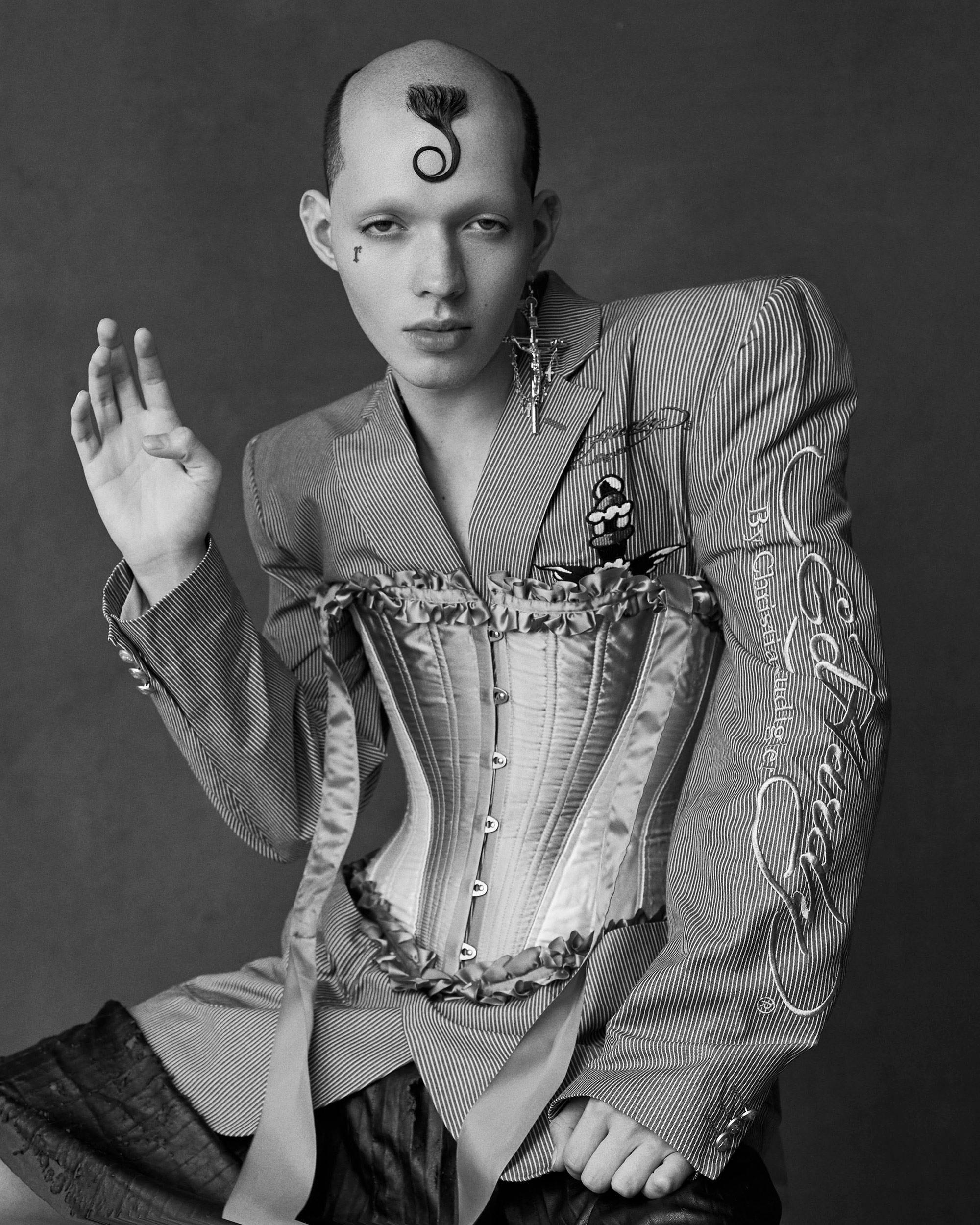
Model and F10 founder Fish Fiorucci shot in Brownsville in December 2019.
Model and f10 founder Fish Fiorucci shot in Brownsville in December 2019.
Brenda Bazan

The queer identity of f10 adds a comfort level for transgender and nonbinary models, who are forced to navigate an industry that almost always separates gigs into “male” and “female.” Until the industry begins to see gender as a spectrum, the key is openness and communication, Fiorucci tells me. “I always make sure the models are comfortable with job bookings before I confirm. Forcing nonbinary models to work in cisgender atmospheres can be very harmful and triggering for many people, including me.”

Throughout the next four hours, over twenty ambitious young faces show up to the casting call, eager to be part of the fashion community that Fiorucci is cultivating in the RGV. There’s Liz, the classically Mexican–looking beauty with strong bangs and an even stronger jaw. Kaleb, who has movie-star looks and American Eagle–esque biceps that make you wonder how he hasn’t been scouted already. Marisol poses assuredly in front of the camera wearing a choker and rock-band tank top, armpit hair on full display. Eighteen-year-old Mat (they/them) is delicate and shy, yet feels comfortable exuding femininity in their shots. There’s even Trish, a twelve-year-old transgender girl who walks in with her aunt and little brother. “I want the world to know me,” she says, with an infectious sparkle in her eye. “I wanna be on billboards. I wanna be everywhere.” The shop owner lets Trish play dress-up, and the bubbly middle schooler jumps at the opportunity. (It bewilders me that she isn’t yet famous on TikTok.)

Though f10 is still new, Fiorucci has long served as a mentor for undiscovered talent in the Valley. And whereas most Texas agencies don’t even have divisions for trans or nonbinary models, f10 makes it a point to lead with them. “My faces are special because they’re the brave ones in the Valley,” Fiorucci tells me. “They’re the ones who put themselves out there and wanted a little bit more out of life.”

In Brownsville, according to 2019 census estimates, 94 percent of residents are Hispanic and nearly 30 percent live below the poverty line. The border town is rich with culture, but fraught with residents who struggle to make ends meet. “The hustle to survive is real,” new model Marisol explains. “For me, living in the Valley is a constant struggle for justice and expression.” For a lot of these young people, modeling is an escape. For those who want one, it could even be a ticket out.

It’s embedded in the f10 ethos not just to embrace otherness, but to seek it out. The city of Brownsville has been supportive, giving Fiorucci multiple proclamations and grants to throw fashion shows. Fiorucci is a founding member of Brownsville’s first-ever LGBTQ task force, a city-sponsored program that was created just last year by local drag queen Beatrix. In spite of the city’s support, Fiorucci says there’s still a ways to go before changing residents’ attitudes about equality. “We raised our first equality flag a few months ago at the city’s visiting center, and the place got vandalized and someone stole the flag,” Fiorucci tells me. “People are not allowed to dream down here.”

It’s nearing the end of the day, but before heading back in from a smoke break, Fiorucci gives the team a stern reminder: “Remember to ask people about their pronouns. There are nonbinary people here—just don’t be afraid to ask.” 

F10 model Katrina Ortega shot in Brownsville in May 2019.

Katrina Ortega, an f10 model shot in Brownsville in May 2019.

Fish Fiorucci

F10 model David Danko shot in Brownsville in November 2020.

David Danko, an f10 model shot in Brownsville in November 2020.

Fish Fiorucci

The next day, we meet at Fiorucci’s house in downtown Brownsville for a small kick-back with some of f10’s models. Despite the agency’s queer ethos, not all models identify as queer. There are straight, cisgender faces like John Judas, 20, who works at Walmart and looks like he could be the male lead in the next Pedro Almodóvar film. Alejandro, 23, goes around offering everyone cheese and crackers. “Growing up, I was constantly surrounded by machismo, or toxic masculinity,” Alejandro tells me. “I didn’t feel allowed to express myself fully. But f10 welcomed my authentic self with open arms.” 

I start to understand how f10 is not just a modeling agency: it’s a small, invigorated community that is leading the paradigm shift in Brownsville. “I’ve always imagined Brownsville to be the center point between New York and L.A. for fashion,” Fiorucci says. Geographically speaking, that comment makes sense, but it also touches on the untapped potential of a place like the RGV. “If anything, the people coming out of Brownsville are producing amazing results because growing up, nobody expected us to make any noise, which just added fuel to the fire,” Alejandro adds. 

Their words ring true to me, a Latino queer person with strong ties to Brownsville. When you’re surrounded by a general intolerance toward queerness for so long—not to mention by the increasing number of Latino Trump supporters in the border region—it almost pushes you to be even weirder, to be even more queer. And with so many people from major cities like New York and L.A. migrating to Texas, Brownsville is in position to become a new creative hot spot.

I envision Fiorucci walking down the street in their stripper heels, shaved head, and face tattoo, and realize that they must garner unwarranted attention sometimes. “I’ve been approached many times downtown, even when I look normal, by people who just wanna f— with me,” they tell me. 

My mind kept going back to Trish, the twelve-year-old trans girl who lit up the room when she walked in. Too often, the queer experience is defined by the moments in which your identity gets ripped away from you. “My parents would hide my heels for the longest time,” Fiorucci tells me. “It really took a toll on me.” So many of us have moments like that. But Trish’s contagious zest for life, as well as her family’s unrelenting support, signals a change for queer dreamers in the Valley. “I’m so blessed to be born in a family like this,” Trish explains. 

As I get on the highway to go home, I pass the newly built SpaceX South Texas launch site. One day, rockets are meant to be launched from the coast. But Fiorucci and their chosen family of forward-thinking young people are already launching the Valley into the future, turning potential energy into kinetic, and turning looks as an added bonus. “You have to put it in their face,” Fiorucci explains. “Or else they’re not going to pay attention.”


‘Raya and the Last Dragon’ Review: A Wonderful Film, and a Missed Opportunity | Arts – Harvard Crimson

What is, at first, most striking about “Raya and the Last Dragon” are the comparisons it evokes.

Its opening scene, as Raya zooms through the desert on her spherical companion Tuk Tuk, evokes Rey and BB-8 in “Star Wars: The Force Awakens.” The world — with its five tribes, each with a distinct fighting style and color scheme — feels very “Avatar”-esque. Even the story, of a young, courageous warrior princess who journeys across the known realm to restore a magical stone that will vanquish the dark, evil blight that plagues humanity, sounds a heck of a lot like “Moana.”

Similarities are unavoidable — hero’s journey and all that — and just because a film is reminiscent of others doesn’t automatically make it hackneyed and stale. Still, “Raya and the Last Dragon” doesn’t wow in the same way other Disney powerhouses do. It doesn’t have the subversiveness of “Frozen,” nor the pointed social commentary of “Zootopia” or the immersive imaginativity of “Wreck-It Ralph.” This isn’t to say that “Raya and the Last Dragon” is bad; it’s an uplifting, action-packed, beautifully animated film with a lot of heart, and a worthy addition to the Disney canon. But being a part of that canon inevitably comes with limitations.

In the film, Kelly Marie Tran voices Raya, an inspiring sign that, despite the racist harassment Tran faced following the release of “Star Wars: The Last Jedi” in summer 2018, Tran remains unfazed. When a young Raya is betrayed by her friend Namaari (Gemma Chan), the evil Druun are released upon the world, turning most of humanity, including Raya’s father Benja (Daniel Dae Kim), into stone statues. Six years later, Raya seeks the help of a magical dragon, Sisu (Awkwafina) — along with a motley crew of friends, including Boun (Izaac Wang), a 10-year-old shrimp chef; Little Noi (Thalia Tran), a toddler con artist; and Tong (Benedict Wong), the hulking sole survivor of the Spine tribe — to vanquish the Druun and save the world.

The film features an almost all-Asian cast — the first of the studio’s films to do so. This is, indeed, progress, but in a post-”Crazy Rich Asians” world, one must ask: Is it enough? Despite being set in the fictional Southeast Asia-inspired world of Kumandra, most of the voice actors are not Southeast Asian, nor are Don Hall and Carlos López Estrada, the film’s directors. And while Disney did create a “Southeast Asia Story Trust” composed of outside specialists to advise the creative team, it feels, in many ways, like a half-baked effort — one that (as the casting decisions make abundantly clear) is complicit in Southeast Asian erasure, that prioritizes looking like a Southeast Asian story instead of actually being one.

The film is, inarguably, action-adventure. Its chase scenes, fight sequences, and huge action set pieces leave no room for side plots or catchy musical numbers; it opts, instead, for an epic, soaring instrumental score from James Newton Howard (“The Hunger Games,” “The Dark Night”). The fight choreography is especially gripping; Qui Nguyen, who co-wrote the screenplay with Adele Lim (“Crazy Rich Asians”), served as one of five martial arts consultants on the film — and it shows. I don’t pretend to be an expert on Pencak silat or Muay Thai, but the fighting feels different: distinctive and detailed to a level that few animation studios have managed to achieve.

That being said, the film is hardly devoid of charm and whimsy. “Have you ever done a group project, and there’s that one kid who didn’t pitch in as much but still ended up with the same grade?” Sisu asks, with a modern patois that feels out of place for a 500 year-old dragon. Indeed, Awkwafina is the film’s comedic heart, with Nguyen and Lim’s script providing her with plenty of opportunities to flex her signature goofball energy.

Not even the pandemic, it seems, could compromise the studio’s unmatched visual standards. Despite being made from over 400 individual homes, “Raya and the Last Dragon” is as beautiful as ever. It’s no easy task to capture the idiosyncrasies of the myriad landscapes that constitute Southeast Asia, but the film does a pretty bang-up job. From rolling grasslands to marshy canals, from ornate temples to bustling, kaleidoscopic night markets, the film is a masterpiece of sound design, lighting, and especially production design: managing to balance several distinct visual landscapes without ever feeling overwhelming or confusing.

But the true beauty of “Raya” is, I think, less visual and more thematic. The film doesn’t glorify its protagonist; it doesn’t push the typical “only our protagonist can save the world” message that seems to be the default of action-adventure blockbusters. “Raya and the Last Dragon” is, in fact, a direct refutation of that. It’s a film about trust, about believing in and forgiving people, even when it’s difficult to do so — a message that, at a time when young people are less trusting than ever, is a particularly powerful one for Disney to affirm.

The most powerful message of this film, however, is one that it never actually makes.

Raya’s relationship with Naamari has all the trappings of a romantic subplot, the same adversary-to-ally-to-romantic partner progression that’s followed in “Beauty and the Beast” or “Tangled” — only notably without the climactic kiss scene. It’s reminiscent, in some ways, of watching Elsa’s journey from “not explicitly straight” in “Frozen” to “possibly gay?” with Honeymaren in “Frozen 2,” eliciting the same bated breath, anticipation, and ultimate disappointment.

One could argue that “Raya and the Last Dragon” has moved past needing a teenage romantic interest, that it eschews the typical Disney romance in favor of a deeper, more character-centric plot. And this is a perfectly fine argument; indeed, it’s one that “Moana” makes quite well. But the parallelism, the character arcs, the hand holding and tense, lingering glances between Raya and Naamari — they make it hard to see this as anything other than queerbaiting.

That said, “Raya and the Last Dragon” is still a good film — a great film, even. It does a lot, not just to exemplify the beauty and power of animation, but also to further Asian American representation in an often white, male industry.

I just wish it did a little bit more.

“Raya and the Last Dragon” releases in select theaters and is available on Disney+ with Premier Access on Mar. 5.

— Arts Chair Kalos K. Chu can be reached at kalos.chu@thecrimson.com. Find him on Twitter @kaloschu.

Gay asylum seeker in Mexico enters US – Washington Blade

Despite having President Biden in the White House and Democratic majorities in both chambers of Congress, efforts to update federal civil rights laws to strengthen the prohibition on discrimination against LGBTQ people by passing the Equality Act are all but dead as opponents of the measure have contorted it beyond recognition.

Political willpower is lacking to find a compromise that would be acceptable to enough Republican senators to end a filibuster on the bill — a tall order in any event — nor is there the willpower to force a vote on the Equality Act as opponents stoke fears about transgender kids in sports and not even unanimity in the Democratic caucus in favor of the bill is present, stakeholders who spoke to the Blade on condition of anonymity said.

In fact, there are no imminent plans to hold a vote on the legislation even though Pride month is days away, which would be an opportune time for Congress to demonstrate solidarity with the LGBTQ community by holding a vote on the legislation.

If the Equality Act were to come up for a Senate vote in the next month, it would not have the support to pass. Continued assurances that bipartisan talks are continuing on the legislation have yielded no evidence of additional support, let alone the 10 Republicans needed to end a filibuster.

“I haven’t really heard an update either way, which is usually not good,” one Democratic insider said. “My understanding is that our side was entrenched in a no-compromise mindset and with [Sen. Joe] Manchin saying he didn’t like the bill, it doomed it this Congress. And the bullying of hundreds of trans athletes derailed our message and our arguments of why it was broadly needed.”

The only thing keeping the final nail from being hammered into the Equality Act’s coffin is the unwillingness of its supporters to admit defeat. Other stakeholders who spoke to the Blade continued to assert bipartisan talks are ongoing, strongly pushing back on any conclusion the legislation is dead.

Alphonso David, president of the Human Rights Campaign, said the Equality Act is “alive and well,” citing widespread public support he said includes “the majority of Democrats, Republicans and independents and a growing number of communities across the country engaging and mobilizing every day in support of the legislation.”

“They understand the urgent need to pass this bill and stand up for LGBTQ people across our country,” David added. “As we engage with elected officials, we have confidence that Congress will listen to the voices of their constituents and continue fighting for the Equality Act through the lengthy legislative process.  We will also continue our unprecedented campaign to grow the already-high public support for a popular bill that will save lives and make our country fairer and more equal for all. We will not stop until the Equality Act is passed.”

Sen. Jeff Merkley (D-Ore.), chief sponsor of the Equality Act in the Senate, also signaled through a spokesperson work continues on the legislation, refusing to give up on expectations the legislation would soon become law.

“Sen. Merkley and his staff are in active discussions with colleagues on both sides of the aisle to try to get this done,” McLennan said. “We definitely see it as a key priority that we expect to become law.”

A spokesperson Senate Majority Leader Charles Schumer (D-N.Y.), who had promised to force a vote on the Equality Act in the Senate on the day the U.S. House approved it earlier this year, pointed to a March 25 “Dear Colleague” letter in which he identified the Equality Act as one of several bills he’d bring up for a vote.

Despite any assurances, the hold up on the bill is apparent. Although the U.S. House approved the legislation earlier this year, the Senate Judiciary Committee hasn’t even reported out the bill yet to the floor in the aftermath of the first-ever Senate hearing on the bill in March. A Senate Judiciary Committee Democratic aide, however, disputed that inaction as evidence the Equality Act is dead in its tracks: “Bipartisan efforts on a path forward are ongoing.”

Democrats are quick to blame Republicans for inaction on the Equality Act, but with Manchin withholding his support for the legislation they can’t even count on the entirety of their caucus to vote “yes” if it came to the floor. Progressives continue to advocate an end to the filibuster to advance legislation Biden has promised as part of his agenda, but even if they were to overcome headwinds and dismantle the institution needing 60 votes to advance legislation, the Equality Act would likely not have majority support to win approval in the Senate with a 50-50 party split.

The office of Manchin, who has previously said he couldn’t support the Equality Act over concerns about public schools having to implement the transgender protections applying to sports and bathrooms, hasn’t responded to multiple requests this year from the Blade on the legislation and didn’t respond to a request to comment for this article.

Meanwhile, Sen. Susan Collins (R-Maine), who declined to co-sponsor the Equality Act this year after having signed onto the legislation in the previous Congress, insisted through a spokesperson talks are still happening across the aisle despite the appearances the legislation is dead.

“There continues to be bipartisan support for passing a law that protects the civil rights of Americans, regardless of their sexual orientation or gender identity,” said Annie Clark, a Collins spokesperson. “The Equality Act was a starting point for negotiations, and in its current form, it cannot pass. That’s why there are ongoing discussions among senators and stakeholders about a path forward.”

Let’s face it: Anti-LGBTQ forces have railroaded the debate by making the Equality Act about an end to women’s sports by allowing transgender athletes and danger to women in sex-segregated places like bathrooms and prisons. That doesn’t even get into resolving the issue on drawing the line between civil rights for LGBTQ people and religious freedom, which continues to be litigated in the courts as the U.S. Supreme Court is expected any day now to issue a ruling in Fulton v. City of Philadelphia to determine if foster care agencies can reject same-sex couples over religious objections.

For transgender Americans, who continue to report discrimination and violence at high rates, the absence of the Equality Act may be most keenly felt.

Mara Keisling, outgoing executive director of the National Center for Transgender Equality, disputed any notion the Equality Act is dead and insisted the legislation is “very much alive.”

“We remain optimistic despite misinformation from the opposition,” Keisling said. “NCTE and our movement partners are still working fruitfully on the Equality Act with senators. In fact, we are gaining momentum with all the field organizing we’re doing, like phone banking constituents to call their senators. Legislating takes time. Nothing ever gets through Congress quickly. We expect to see a vote during this Congress, and we are hopeful we can win.”

But one Democratic source said calls to members of Congress against the Equality Act, apparently coordinated by groups like the Heritage Foundation, have has outnumbered calls in favor of it by a substantial margin, with a particular emphasis on Manchin.

No stories are present in the media about same-sex couples being kicked out of a restaurant for holding hands or transgender people for using the restroom consistent with their gender identity, which would be perfectly legal in 25 states thanks to the patchwork of civil rights laws throughout the United States and inadequate protections under federal law.

Tyler Deaton, senior adviser for the American Unity Fund, which has bolstered the Republican-led Fairness for All Act as an alternative to the Equality Act, said he continues to believe the votes are present for a compromise form of the bill.

“I know for a fact there is a supermajority level of support in the Senate for a version of the Equality Act that is fully protective of both LGBTQ civil rights and religious freedom,” Deaton said. “There is interest on both sides of the aisle in getting something done this Congress.”

Deaton, however, didn’t respond to a follow-up inquiry on what evidence exists of agreeing on this compromise.

Biden has already missed the goal he campaigned on in the 2020 election to sign the Equality Act into law within his first 100 days in office. Although Biden renewed his call to pass the legislation in his speech to Congress last month, as things stand now that appears to be a goal he won’t realize for the remainder of this Congress.

Nor has the Biden administration made the Equality Act an issue for top officials within the administration as it pushes for an infrastructure package as a top priority. One Democratic insider said Louisa Terrell, legislative affairs director for the White House, delegated work on the Equality Act to a deputy as opposed to handling it herself.

To be sure, Biden has demonstrated support for the LGBTQ community through executive action at an unprecedented rate, signing an executive order on day one ordering federal agencies to implement the U.S. Supreme Court’s decision last year in Bostock v. Clayton County to the fullest extent possible and dismantling former President Trump’s transgender military ban. Biden also made historic LGBTQ appointments with the confirmation of Transportation Secretary Pete Buttigieg and Rachel Levine as assistant secretary of health.

A White House spokesperson insisted Biden’s team across the board remains committed to the Equality Act, pointing to his remarks to Congress.

“President Biden has urged Congress to get the Equality Act to his desk so he can sign it into law and provide long overdue civil rights protections to LGBTQ+ Americans, and he remains committed to seeing this legislation passed as quickly as possible,” the spokesperson said. “The White House and its entire legislative team remains in ongoing and close coordination with organizations, leaders, members of Congress, including the Equality Caucus, and staff to ensure we are working across the aisle to push the Equality Act forward.”

But at least in the near-term, that progress will fall short of fulfilling the promise of updating federal civil rights law with the Equality Act, which will mean LGBTQ people won’t be able to rely on those protections when faced with discrimination based on sexual orientation or gender identity.
Gay YouTuber asks; Should gay guys ever pretend to be straight? (video) – Los Angeles Blade

BURBANK – In the wake of an in-depth investigation into the Hollywood Foreign Press Association (HFPA), the organization responsible for the Golden Globes by the Los Angeles Times, which revealed a lack of racial diversity among its voting members and various other ethical concerns, NBC Universal announced Monday the network would not broadcast the 2022 Golden Globes ceremony.

This past February ahead of the HFPA’s 78th Annual Golden Globes ceremony, HFPA board chair Meher Tatna told Variety magazine that the organization that the organization of international journalists which covers the film, television, and entertainment industry has not had any Black members in at least 20 years.

Actor Sterling K. Brown,  a Golden Globe winner and two-time nominee, posted to Instagram; 

Criticism of the HFPA, which puts on the Globes and has been denounced for a lack of diversity and for ethical impropriates, reached such a pitch this week that actor and superstar celebrity Tom Cruise returned his three Globes to the press association’s headquarters, according to a person who was granted anonymity because they weren’t authorized to speak publicly about the decision, the Associated Press reported.

“We continue to believe that the HFPA is committed to meaningful reform. However, change of this magnitude takes time and work, and we feel strongly that the HFPA needs time to do it right,” a spokesperson for NBC said in a statement.

“As such, NBC will not air the 2022 Golden Globes,” the spokesperson added. “Assuming the organization executes on its plan, we are hopeful we will be in a position to air the show in January 2023.”

NBC’s decision comes as Vogue reported that the backlash to the HFPA came swiftly and decisively. Some of Hollywood’s biggest studios, including Netflix, Amazon, and WarnerMedia, announced they were severing ties with the organization until efforts were made to increase diversity and stamp out corruption, while a group of more than 100 of the industry’s biggest PR firms released a statement in March in which they pledged to boycott the ceremony for the foreseeable future. 

The HFPA did not immediately respond to inquiries by media outlets requesting comment about NBC’s decision.

In February, the organization said it was “fully committed to ensuring our membership is reflective of the communities around the world who love film, TV, and the artists inspiring and educating them.”

“We understand that we need to bring in Black members as well as members from other underrepresented backgrounds, and we will immediately work to implement an action plan to achieve these goals as soon as possible,” it said.

HFPA also announced a full timetable through this summer for implementing promised reform initiatives in response to NBC’s decision.

“Regardless of the next air date of the Golden Globes, implementing transformational changes as quickly — and as thoughtfully — as possible remains the top priority,” the HFPA board said in a statement. “We invite our partners in the industry to the table to work with us on the systemic reform that is long overdue, both in our organization as well as within the industry at large.”

GAFCON leaders at odds over pastoral care of gay Christians – Episcopal News Service

GAFCON leaders at odds over pastoral care of gay Christians

By Rebecca Paveley

Posted Mar 3, 2021

[Church Times] The Archbishop of Nigeria Henry Ndukuba has rebuked members of the conservative Anglican Church in North America (ACNA), for what he calls a “subtle capitulation to recognize and promote same-sex relations among its members.”

The cause of Ndukuba’s rebuke, issued Feb. 26, was a pastoral statement issued by ACNA on Jan. 19 on sexuality and identity, which included discussion of language describing Christians who are gay. It said: “To insist on the adjective ‘gay,’ with all of its cultural attachments, is problematic to the point that we cannot affirm its usage in relation to the word ‘Christian.’”

It commended instead the use of “Christians who experience same-sex attraction”; but its conclusion invited bishops to discern usage in their own dioceses, as appropriate.

Read the full story in Church Times here

Japan: Adopt LGBT Equality Act Before Olympics – Human Rights Watch

0

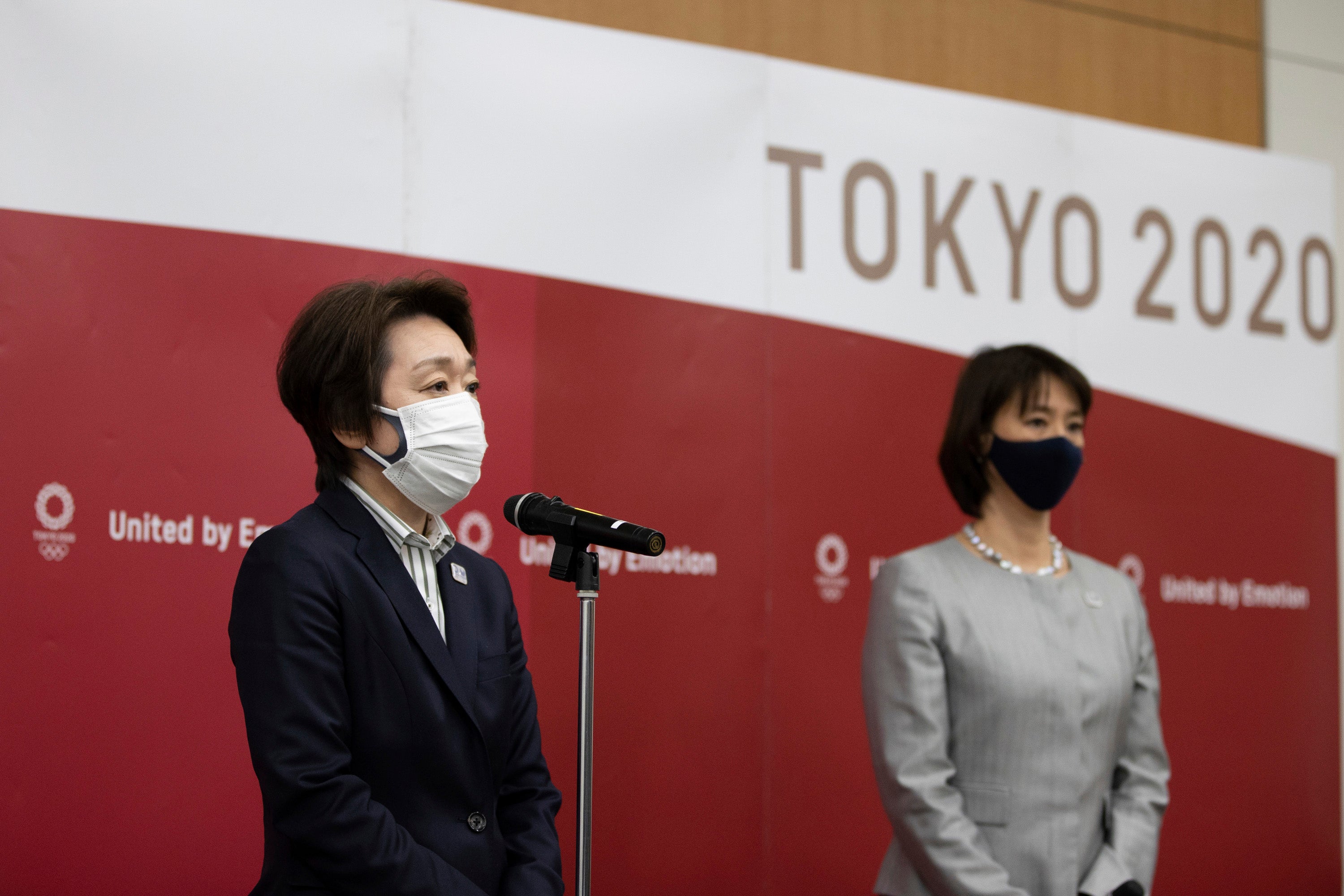
(Tokyo) – The Tokyo Organizing Committee of the Olympic and Paralympic Games (TOCOG) should support LGBT nondiscrimination legislation to protect everyone in Japan from discrimination based on sexual orientation or gender identity, seven members of TOCOG’s Human Rights, Labor, and Participation Committee said.

In a February 26, 2021 letter to TOCOG’s new president, Seiko Hashimoto, the committee members urged TOCOG, as well as the Japanese Olympic Committee and Japanese Paralympic Committee, to promote passage of an anti-discrimination law during the current National Diet session ahead of the Tokyo Olympic and Paralympic Games scheduled for this summer. 

“Japan’s national government should enact an anti-discrimination law in keeping with the Olympic Charter’s ban on ‘discrimination of any kind,’ including sexual orientation and gender identity,” said Kanae Doi, Japan director at Human Rights Watch and a member of the TOCOG Human Rights, Labor, and Participation Committee. “TOCOG’s sustainability and human rights experts urge TOCOG’s new president to support passage of an LGBT Equality Law before the Tokyo Games to bring Japanese law in line with international standards.”

Tokyo was slated to host the 2020 Summer Olympics, but the International Olympic Committee (IOC) and the Japanese government postponed the games for a year due to the Covid-19 pandemic. The Tokyo 2020 Summer Games are advertised as celebrating “unity in diversity” and “passing on a legacy for the future.” Japan should enact a national anti-discrimination law to protect lesbian, gay, bisexual, and transgender (LGBT) people in accordance with international human rights standards. Human Rights Watch, along with 115 human rights and LGBT organizations, also sent a letter to Prime Minister Yoshihide Suga on January 25 in support of such legislation.

Hashimoto was elected TOCOG’s president on February 18, after the previous president, former prime minister Yoshiro Mori, resigned over his discriminatory comments against women earlier in the month. On February 24, Hashimoto announced a new gender equality team at the TOCOG, and stated that “Gender equality and women’s empowerment is going to be something that will be promoted.”

A 2020 study by the Organisation for Economic Co-operation and Development (OECD) ranks Japan next to last for laws on LGBT Inclusiveness for developed countries. It says that: “LGBTI-inclusive laws are particularly critical for creating a culture of equal treatment of LGBTI individuals. One cannot expect to improve the situation of sexual and gender minorities if, to begin with, the law does not protect them against abuses or excludes them from social institutions.”

Although the Tokyo Metropolitan Government adopted an ordinance that protects LGBT people from discrimination in line with the Olympic Charter in October 2018, many Tokyo Olympic competitions, including the marathon, race walk, golf, fencing, and surfing, will take place outside of Tokyo, in Hokkaido, Saitama, Chiba, Shizuoka, Kanagawa, Miyagi, Fukushima, and Ibaraki prefectures. Foreign and Japanese LGBT athletes, officials, workers, and fans will expect to be protected from discrimination.

In his October 2020 message for the opening of Pride House, a facility to build awareness and support for LGBT rights, Thomas Bach, president of the International Olympic Committee, said that he hoped the facility “will be successful and become a legacy of the Tokyo Games.”

“The Tokyo Summer Olympic and Paralympic Games represent an unrivaled opportunity for Japan to bring its laws into compliance with international nondiscrimination standards,” Doi said. “The TOCOG, Japanese Olympic Committee, and Japanese Paralympic Committee should act together to support Japan’s government to meet the expectations of the International Olympic Committee and thousands of visiting athletes and fans by passing an LGBT equality law.”

What Percentage of Americans Are LGBT? – Gallup Poll

0

Results for this Gallup poll are based on telephone interviews conducted in 2020 with a random sample of 15,349 adults, aged 18 and older, living in all 50 U.S. states and the District of Columbia. For results based on the total sample of national adults, the margin of sampling error is ±1 percentage point at the 95% confidence level. All reported margins of sampling error include computed design effects for weighting.

Each sample of national adults includes a minimum quota of 70% cellphone respondents and 30% landline respondents, with additional minimum quotas by time zone within region. Landline and cellular telephone numbers are selected using random-digit-dial methods.

Polish court acquits activists who put LGBT rainbow on icon – Daily Mountain Eagle

By VANESSA GERA
Associated Press

WARSAW, Poland (AP) — A Polish court on Tuesday acquitted three activists who had been accused of desecration and offending religious feelings for producing and distributing images of a revered Roman Catholic icon altered to include the LGBT rainbow.

The posters, which they distributed in the city of Plock in 2019, used rainbows as halos in an image of the Virgin Mary and the baby Jesus. Their aim was to protest what they considered the hostility of Poland’s influential Catholic Church toward LGBT people.

The court in the city of Plock did not see evidence of a crime and found that the activists were not motivated by a desire to offend anyone’s religious feelings, but rather wanted to defend those facing discrimination, according to Polish media.

The case was seen in Poland as a freedom of speech test under a deeply conservative government that has been pushing back against secularization and liberal views. Abortion has been another flashpoint in the country after the recent introduction of a near-total ban on it.

One defendant, Elzbieta Podlesna, said when the trial opened in January that the 2019 action in Plock was spurred by an installation at the city’s St. Dominic’s Church that associated LGBT people with crime and sins.

She and the other two activists — Anna Prus and Joanna Gzyra-Iskandar — faced up to two years of prison if found guilty.

An LGBT rights group, Love Does Not Exclude, welcomed the ruling as a “breakthrough.”

“This is a triumph for the LGBT+ resistance movement in the most homophobic country of the European Union,” it said.

The image involved an alteration of Poland’s most-revered icon, the Mother of God of Czestochowa, popularly known as the Black Madonna of Czestochowa. The original has been housed at the Jasna Gora monastery in Czestochowa — Poland’s holiest Catholic site — since the 14th century.

Podlesna told the Onet news portal that the desecration provision in the penal code “leaves a door open to use it against people who think a bit differently.

“I still wonder how the rainbow — a symbol of diversity and tolerance — offends these feelings. I cannot understand it, especially since I am a believer,” Podlesna told Onet.

Podlesna was arrested in an early morning police raid on her apartment in 2019, held for several hours and questioned over the posters. A court later said the detention was unnecessary and ordered damages of about $2,000 awarded to her.

Because of all the attention the altered icon has received, it is now a very recognized image in Poland, one sometimes seen at street protests.

Gen Z leads LGBT shift – Washington Post

0

Jasper Swartz, 16, of Takoma Park, Md., identifies as nonbinary and uses the pronouns they/them. (Bonnie Jo Mount/The Washington Post)

The “Bachelor” franchise is facing a public reckoning after revelations about a contestant’s racist past. Style reporter Emily Yahr and Vulture writer Ali Barthwell explain what happened, and what this episode can tell us about Bachelor Nation and reality television as a whole.
The pandemic has been dragging on for almost a year now, and we want to hear from listeners about how you’re coping. Record a voice memo telling us who you are, where you live and what you’ve been doing in the past year to find joy. Send it to postreports@washpost.com.

Living Into Equity This Bisexual+ Health Awareness Month – Human Rights Campaign

Since it first began in 2014, Bi+ Health Awareness Month has been dedicated to raising awareness about the startling social, economic and health disparities facing the bi+ community. Bi+ people experience greater health disparities compared to our gay and lesbian peers and a lack of research on those disparities, as well as biphobia in medical settings. These disparities include higher rates of mood disorders, substance abuse, eating disorders, cancers and more.

We also know that people living at the intersections of multiple marginalized identities experience greater and compounded disparities, including health disparities. This includes bi+ people of color and others. Last year, today and tomorrow, the movement for racial justice reminds us that all of our work is and must be intersectional and equitable. That’s why the Bisexual Resource Center chose “Equity” as this year’s theme for Bi+ Health Awareness Month. This month, we’ll be centering the voices of those in the bi+ community who carry intersectional and multiply marginalized identities, including bi+ people of color, bi+ trans and non-binary people and more.

HRC has a number of resources that can be helpful to bi+ people this month and year-round:

The Explosion In Queer Sexuality Among Kids Is Not A Natural Trend — For young American women – The Federalist

A new Gallup poll published on Feb. 24 shows 1 in 6 Gen Z adults identify as LGBT. These results represent a remarkable jump from 2017, when 4.5 percent of Americans identified as LGBT, a number that has now risen to 5.6 percent just three years later.

The increase is indeed dramatic, yet it doesn’t fully tell the whole story. Why? While the population of Americans identifying as LGBT has risen steadily since 2012, last year the question was expanded from a simple “yes” or “no” to LGBT identity to include specific categories to choose from. Only one identity group showed a dramatic increase: bisexual women.

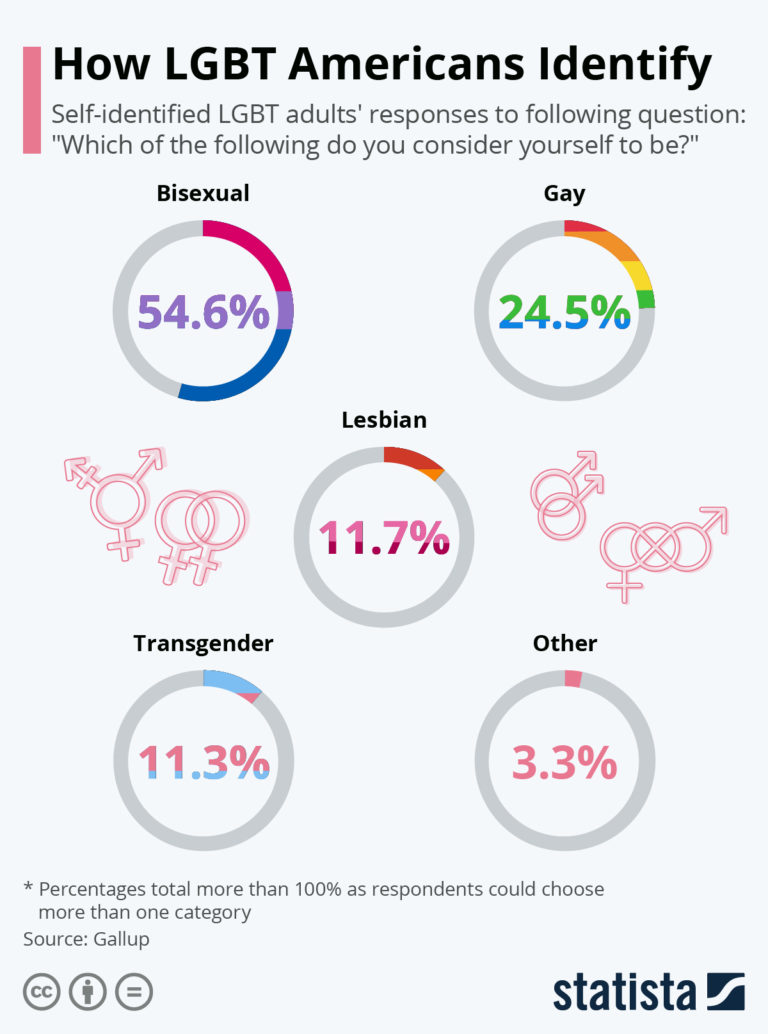
Of the 5.6 percent of all adults who identify as LGBT, 3.1 percent identify as bisexual, making up 54.6 percent of all LGBT adults. When broken down to the Gen Z age group (those aged 18 to 23), 11.5 percent identify as bisexual. In contrast, 5.1 percent of millennials and only 1.8 percent of Gen X identify as such. Across the board, all other categories, which include gay, lesbian, transgender, and others, remained steady.

Phillip Hammack, a psychology professor and director of the Sexual and Gender Diversity Laboratory at the University of California, Santa Cruz responded with excitement to the survey:

The rigid lines around gender and sexuality are just opening up for everybody … Young people are just doing it. … they’re leading this revolution, and they’re forcing scientists to take a closer look.

The data, however, doesn’t quite argue that point. Women are more likely to identify as LGBT than men, with 4.3 percent identifying as bisexual and only 1.8 percent of men identifying the same.

One in ten high school students identify as LGBT. Of these, 75 percent are female, and 77 percent identify as bisexual. As detailed by the Washington Post, the Williams Institute at the University of California at Los Angeles has found that 35 percent of LGBT adults are bisexual women.

Further, Hammack argues that his research shows young women are more likely to identify as “non-binary” or “gender-fluid.” The Gallup poll didn’t provide the option to identify gender identity separately from sexual orientation, but more Gen Z adults identified as transgender than as lesbian.

So why are young women exceedingly more likely to identify as neither gender and bisexual? The argument that today’s society is more accepting and readily allows people to be their true selves doesn’t account for this exclusive, targeted change in women.

Neither does the argument for a genetic or natural human biological component. The poll does not indicate a rise in LGBT Americans — it tells us gay and transgender numbers are stable and, yet, very suddenly, there has been an increase in bisexual women who reject female identity.

If the breakdown of celebrities who came out in 2020 is any indication, men overwhelmingly come out as gay while women tend to come out as bisexual, pansexual, or simply queer. In practice, bisexual identity, similar to non-binary and gender-fluid identity, may not require as big of a social change or commitment as being gay or transgender.

According to a Pew Research Center survey from Stanford University, nine in 10 bisexual people in a committed relationship are with someone of the opposite sex. This does not mean bisexuality is invalid as a sexual orientation or to suggest bisexual people are simply “going through a phase,” but identifying as bisexual doesn’t necessarily alter their lifestyle the way being gay or transgender would.

As Abigail Shrier discussed in great detail with in-depth research in her book, “Irreversible Damage: The Transgender Craze Seducing Our Daughters,” the power of social contagion and peer group identity is important to consider:

Between 2016 and 2017, the number of gender surgeries for natal females in the US quadrupled; in the UK, the rates of gender dysphoria for teenage girls are up 4,400 percent over the previous decade.

Indeed, as 16-year-old Jasper Swartz — who identifies as non-binary — expressed to the Washington Post, all of her friends are “queer in some way.”

Rather than reflecting the natural progression of openness to human variation in sexuality and gender identity, it seems to better reflect a pop culture fad to be included in the LGBT spectrum in any way possible. This seems especially true for younger people, who are inundated with LGBT education, culture, and positivity and, as Abigail discusses in her book, find meaning in being different, unique, and rebellious, along with their friends. As indicated by the Gallup survey, as people age, their identities become more stable and bisexuality drops significantly.

Like non-binary and gender-fluid identities, bisexuality also offers an even more unique form of social oppression because both sides of the spectrum are suspicious of true identity. Jenny Granados-Villatoro, 18, told the Post that her parents struggle to understand her identity as bisexual and gender fluid.

She reported, “They always ask me, ‘do you think you’re going to end up marrying a woman or a man? If I were to have come out as lesbian it would have definitely been an easier concept for them to grasp.” Grey-area identities may offer more social clout and sense of rebellion and uniqueness than traditional gay or transgender identities, but with less dramatic personal changes.

For young women seeking identity and being part of a special or important group, all they have to do is cut their hair short, dress like a boy, and declare themselves non-binary or bisexual to gain instant victimhood status and self-validation. If it becomes too much and they still get the exciting thrill of being LGBT, they can always slip back into safer roles. For advocates of female identity and rights like Shrier, this can be a dangerous place to be:

Anxiety-ridden, middle-class girls who once engaged in cutting or anorexia were now wearing ‘binders’ (breast-compressing undergarments), taking testosterone and undergoing voluntary double mastectomies.

Layshia Clarendon, a non-binary lesbian who plays for the WNBA, shared her “top surgery” on social media:

It’s hard to put into words the feeling of seeing my chest for the first time free of breasts, seeing my chest the way I’ve always seen it, and feeling a sense of gender euphoria as opposed to gender dysphoria … Sighhhh … freedom … freedom at last.

For young women, queer identity can often mean hiding or even removing all aspects of natural female attributes, whereas young queer men are encouraged to decorate themselves and blend masculine and feminine traits in celebration of all gender expression.

While LGBT media and advocacy insist on projecting a narrative of anti-LGBT hatred oppressing vulnerable LGBT youth, the reality appears to be that LGBT identity is a highly desirable social status, a state of things both positive and negative. On the one hand, it demonstrates how far LGBT equality has come, but on the other, it diminishes and trivializes the experience of LGBT Americans.

Ultimately, for gay and transgender people, little has changed. For young women, however, queer identity may just be the newest fashion trend they are eager to show off on social media.

Gay asylum seeker in Mexico receives date to enter US – Los Angeles Blade

WASHINGTON – The U.S. Department of Health and Human Services announced Monday morning that the Biden-Harris Administration will interpret and enforce Section 1557 of the Affordable Care Act (ACA) and Title IX’s prohibitions on discrimination based on sex to include discrimination on the basis of sexual orientation and gender identity.

The announcement came minutes before a scheduled hearing before the U.S. District Court for the District of Massachusetts in BAGLY v. HHS, Equality California’s lawsuit challenging the Trump-Pence Administration’s “Rollback Rule.”

The Trump-era policy undermines the ACA’s nondiscrimination protections on the basis of sex — including pregnancy, gender identity and sex stereotyping — as well as protections for patients with limited-English proficiency and those living with chronic illnesses, including HIV. Because the issues in BAGLY v. HHS are broader than what the Administration announced today, the Court scheduled a hearing on the government’s motion to dismiss for June 3rd at 2:30 PM EST.

In reaction to the HHS announcement, House Speaker Nancy Pelosi issued a statement Monday:

“Today, the Biden Administration has taken essential and potentially life-saving action to affirm that all people in America have the right to quality, affordable health care – no matter who they are or whom they love.  During this time of pandemic and always, it is vital that the most vulnerable have access to care, including LGBTQ Americans, who have long suffered injustice and discrimination that has left them dangerously exposed to health risks.
 
“The Trump Administration’s decision to greenlight anti-LGBTQ discrimination in health care in the middle of a pandemic was an act of senseless and staggering cruelty, made in blatant defiance of our values and a Supreme Court ruling made just a month prior.  
 
“Congressional Democrats together with the Biden Administration are proud to uphold the equal right of every American to access the care that they need to pursue a life of dignity and health.  We must now build on this progress and enact the House-passed Equality Act to fully ban anti-LGBTQ discrimination in our nation.”

In addition to Equality California, co-plaintiffs in BAGLY v. HHS include Darren Lazor, The Boston Alliance of Gay, Lesbian, Bisexual and Transgender Youth (BAGLY), Callen-Lorde Community Health Center, Campaign for Southern Equality, Equality California, Fenway Health, and Transgender Emergency Fund.

Lazor is a transgender man near Cleveland, Ohio, who experienced numerous counts of discrimination from healthcare providers on the basis of his gender identity from 2012 to 2017. He is a member of Equality California. Plaintiffs are represented by National Women’s Law Center (NWLC), the Transgender Law Center (TLC), the Transgender Legal Defense & Education Fund (TLDEF), the Center for Health Law and Policy Innovation (CHLPI) of Harvard Law School and law firm Hogan Lovells.

The lawsuit asserts that the new rule violates the Administrative Procedures Act by being contrary to law, arbitrary and capricious and a violation of the Equal Protection Clause of the 14th Amendment. Notably, it was published on June 19,  just days after the June 15, 2020 U.S. Supreme Court ruling in Bostock v. Clayton County, which found that it is unlawful sex discrimination to fire employees based on sexual orientation or gender identity.
The lawsuit also asserts that the new rule will embolden discrimination and harm LGBTQ+ patients and people seeking reproductive health care, further stigmatize abortion and other pregnancy-related care, harm patients with limited-English proficiency, especially immigrants, and harm people with chronic illnesses, including those living with HIV. The rule will also create confusion about the scope of protections against discrimination under federal law. 

Trans people, like plaintiff Darren Lazor, already face disproportionate discrimination in health care settings, including mistreatment by insurers and humiliation and harassment by doctors – problems that are exacerbated for trans people of color and trans people living in rural regions and the U.S. South. In seeking to deny trans people access to the healthcare they need, the Trump Administration had placed trans people, and especially Black trans women, in danger through deliberately harmful governmental action.

“We are thrilled by the news that the Biden-Harris Administration will take initial steps to reverse President Trump’s dangerous, discriminatory Rollback Rule, which undermined healthcare nondiscrimination protections critical to the LGBTQ+ community, and trans people in particular,” said Equality California Executive Director Rick Chavez Zbur.

“As the world recovers from a global pandemic, it’s more important than ever that every American have access to quality, affordable healthcare without fear of harassment and discrimination. We remain hopeful that under Secretary Becerra and Assistant Secretary Levine’s leadership, HHS will continue to take further steps to rescind the Trump-era regulation and address the harms that it has caused,” he added.