Home Blog Page 406

How to Find an LGBTQIA+ Affirming Therapist – Healthline

0

We include products we think are useful for our readers. If you buy through links on this page, we may earn a small commission. Here’s our process.

Looking for a therapist can sometimes feel like a needle-in-a-haystack situation: You need someone well-trained, experienced, and effective at treating your particular issues. You need someone who “gets” you and creates a space where you feel safe and supported. And then there’s the whole issue of affordability.

Given the long history of discrimination, health disparities, and “corrective” treatments that have made therapy downright dangerous for LGBTQIA+ folks, finding the right therapist is no small feat. Where do you even begin?

This Q&A may help.

A good place to start your search is by asking yourself what you want to accomplish in therapy. Clarifying your goals up front can save time and money, and it can help you locate a therapist with the right training.

It’s also important to consider your list of must-haves and deal-breakers:

  • Do you want a therapist with expertise and training in a particular therapy approach, such as affirming cognitive behavioral therapy?
  • Do you want to work with a therapist who has a certain gender identity?
  • Do you want a therapist who is experienced in treating certain conditions, such as PTSD or recovery from sexual assault or abuse?
  • Do you want a therapist who is a member of the LGBTQIA+ community and who may be able to understand some of your experiences firsthand?
  • Would you feel comfortable working with a therapist who isn’t LGBTQIA+ but is an educated and culturally aware ally?
  • Do you want to work with a therapist who shares other aspects of your identity and understands intersectionality?

If you’re not sure what basic knowledge an affirming therapist should have, take a look at the American Psychological Association’s practice guidelines or the list of competencies compiled by the Society for Sexual, Affectional, Intersex, and Gender Expansive Identities (SAIGE).

These lists explain the attitudes, beliefs, and skills a good therapist should have. Reading the lists could help you establish your baseline expectations for how you should be treated in therapy.

Once you’ve defined your goals and outlined the qualities you’d like in a therapist, you can start looking for recommendations.

The short answer is that you should gather referrals from people you trust. Friends, colleagues, healthcare professionals, staff at community centers, and people in organizations that specialize in meeting the needs of LBGTQIA+ people are all good resources.

You may find referrals especially valuable if they come from people who know you, who understand the mental health issue you want to address, or who share aspects of your identity that you believe may be central to your therapy.

Nobody is just one identity. Every individual has a personal history, a community of origin, and a here-and-now community, as well as aspects of identity related to gender, sexuality, race, spiritual tradition, economics, education, talents, health issues — you name it. Identity is a complex, beautiful puzzle to piece together.

Here are some places to look for resources that may help you connect with a therapist who fits with your individual needs:

If you’re working, you may want to check with your benefits department to see if there is an employee assistance program with mental health services.

If you’re a part of a faith community that supports the rights of LGBTQIA+ people, you might locate resources and referrals through that organization.

Most colleges and universities also offer mental health counseling to students on campus, or you can ask for a referral at a campus LGBTQIA+ center.

Once you’ve narrowed your search to several promising leads, it will probably be worth your time to read each therapist’s online profile and any research or writing they’ve published.

Doing this kind of homework up front can give you valuable insight into the therapist’s approach to treatment, guiding philosophies, and communication style.

As you explore your therapist’s individual profile and the website of the practice as a whole, notice whether they specify pronouns. If they do, it’s a good sign that the practice respects gender diversity. You can also look for statements expressing the practice’s commitment to inclusion.

It’s also important to verify the therapist’s credentials with your state’s licensing board. Many states also enable you to search for official complaints or censures on the therapist’s record.

Give yourself permission to ask any question that matters to you. In the week leading up to your appointment, you may want to jot them down so you don’t have to rely on your memory during the initial appointment.

If you’ve had a negative experience in therapy before, you may want to spend some time thinking about what you didn’t like, so you can ask questions to head off a similar experience with your new therapist.

A 2020 research review found that many LGBTQIA+ people have experienced poor quality mental healthcare in the past because their mental health professionals either didn’t understand their needs or held stigmatizing, heteronormative assumptions and beliefs.

The Human Rights Campaign and Mental Health America have created questions to help you be sure a prospective therapist will be LGBTQIA+ affirming. You can download and print this list of questions to take with you or consider emailing them to a prospective new therapist in advance.

In addition to these important questions, here are some nuts-and-bolts practicalities you may want to address:

  • Is the therapist a provider in your insurance network?
  • How long will it take to get to your therapist’s office from home or work?
  • Does the therapist offer a sliding scale or income-based fee schedule?
  • What’s the appointment cancellation policy?
  • Are the office hours compatible with your work schedule?
  • Does the therapist offer virtual visits?
  • How does the office staff treat you when you call to schedule or reschedule an appointment?

If you live in an area where the in-person options are slim, or if your schedule doesn’t make it easy to connect with a therapist during regular office hours, telehealth or online therapy might be a good choice.

The COVID-19 pandemic broadened the online options for many kinds of healthcare — and it made lots of people more open to the possibility of working with a healthcare professional on a screen.

The biggest benefit of online counseling is that it expands your choices, allowing you to connect with therapists whose expertise might not be available nearby.

In a 2018 survey conducted in Austria, therapists reported that the number one reason to use online therapy is that it “bridges distances.” The other top benefits: Online therapy is discreet, and it increases your time flexibility.

Recent research has shown that having access to online therapy can be especially important to LGBTQIA+ people in rural areas with fewer resources. The study also revealed that online therapy still needs development when it comes to meeting the needs of LGBTQIA+ clients.

You might want to explore Pride Counseling, a subsidiary of the online therapy platform BetterHelp. Talkspace is another popular option. Many practices, such as The Gay Therapy Center, offer both in-person and virtual sessions.

Online therapy might not be a good option for you if:

  • your health insurance plan doesn’t cover online therapy
  • you have a serious mental health condition
  • you are in an emergency situation and you need immediate help
  • you need a psychiatrist who can help you with hormone therapies
  • you want an in-person therapy experience

If you decide to try online therapy, it’s a good idea to read online reviews of the providers you’re considering. While everybody’s experience is unique, reading reviews can save you time and frustration by pointing out drawbacks you might otherwise have to discover on your own.

It happens. Your first impression of your new therapist turns out to be wrong, the hoped-for connection doesn’t materialize, or your needs just change. It’s OK to switch therapists if the first one doesn’t work out. You don’t need a reason, ever, to change therapists.

Finding a new therapist after you’ve invested in the relationship certainly isn’t ideal. To reduce disruption and stress, it might be worthwhile to meet with several therapists before you choose one. Many therapists are happy to have a brief phone or online “interview” so you can determine if their experience and style are what you need.

If you’re in immediate danger — if, for example, you’re thinking about harming yourself or someone else, please reach out to a helpline or crisis center like the National Suicide Prevention Lifeline at 800-273-8255.

Contact a trusted friend, family member, or healthcare professional, or consider calling 911 or your local emergency number if you can’t get in touch with them.

There are so many more resources than there used to be, and you are not alone. There are hundreds of trained people all over ready to help.

You can find someone to listen and support you at any of the centers below.

Your success in therapy is shaped, in large part, by the “therapeutic alliance” between you and your therapist. Research shows that when you and your therapist share a clear understanding of your treatment goals and how you will achieve them, you’re more likely to participate actively in therapy to achieve those goals.

When you feel empathy from your therapist, studies show, you are more likely to find therapy sessions rewarding, successful, and engaging. Researchers say you may feel your therapist is “sharing the emotional load” with you.

This positive connection is especially important for LGBTQIA+ folks pursuing therapy. Discrimination, microaggressions, and health disparities are already part of the daily experience of most LGBTQIA+ people.

When you add the number of people who have been subjected to harmful procedures like conversion “therapy” — a disproven, discredited, and dangerous method — the importance of finding a safe, knowledgeable, and culturally aware therapist becomes even clearer.

Most health insurance plans cover mental health services. You’ll probably need to contact your benefits administrator or consult your provider network to be sure your therapist is covered.

Medicare and Medicaid both pay for mental health services, too.

If you don’t have health insurance or your deductibles are high, you may also be able to access low-cost or no-cost services through:

Some online therapy providers may be able to connect you to a therapist who offers income-based pricing.

If you are an LGBTQIA+ person trying to leave an abusive relationship, you may be able to free get counseling services and support through a local domestic violence organization. Many offer therapy for children as well.

Finding an affirming, empathetic therapist can be life changing. Taking these steps could make the process easier for you:

  • Clarify your goals.
  • Identify your deal breakers and must-haves.
  • Gather referrals from people you trust.
  • Leverage LGBTQIA+ organizations in your search.
  • Consider online therapy and support groups.
  • Ask all the questions.
  • Reach out to a helpline if you’re in immediate need.

And last — but definitely not least — keep searching until you find a therapist who meets your needs. Your well-being is worth the effort, intuition, and time you’ll invest.
Faith Leaders Divided Over Equality Act And LGBTQ Rights – NPR

0

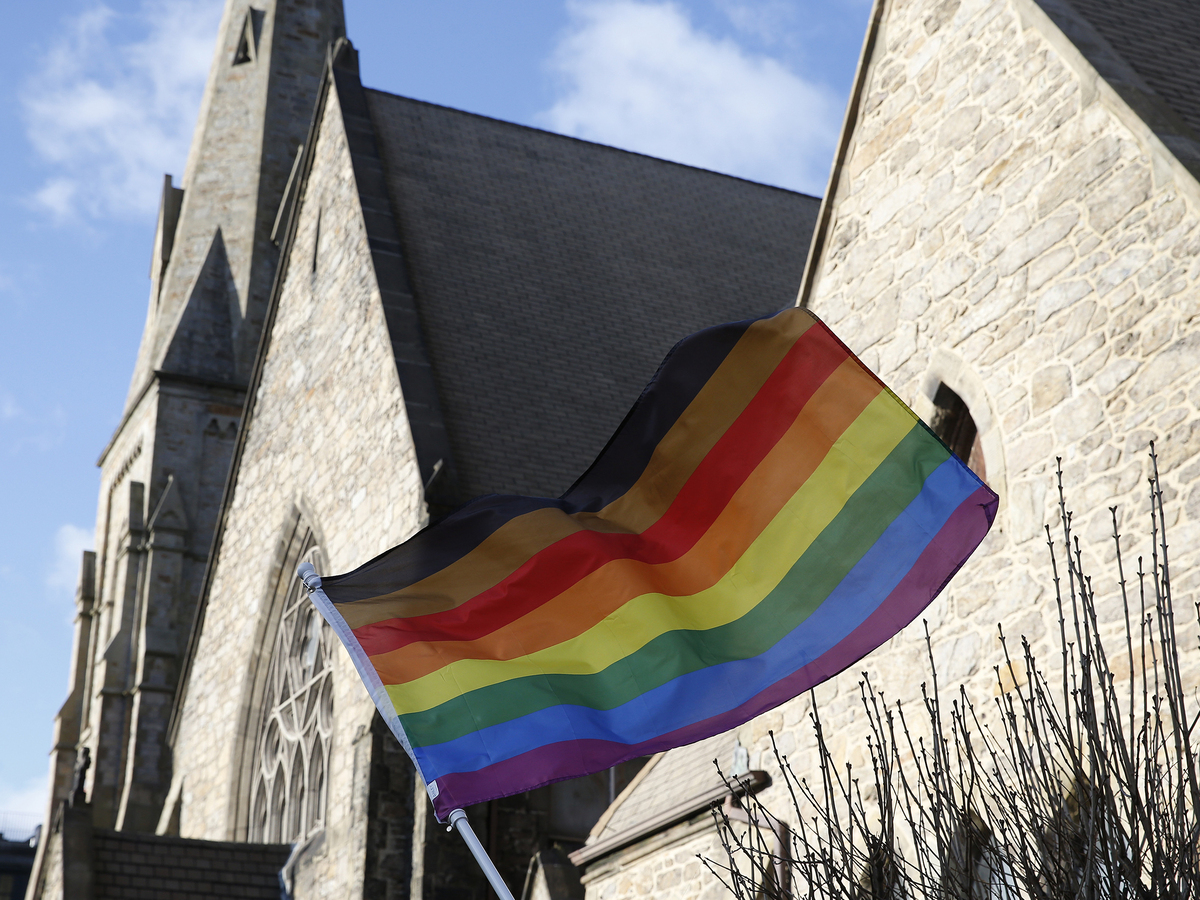
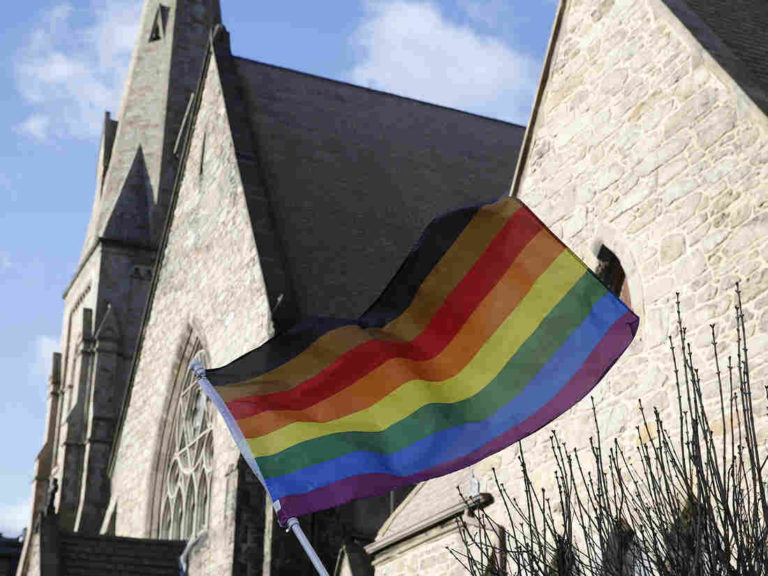
Faith groups are deeply split over the Equality Act. Evangelicals, Catholics, Latter-day Saints and Orthodox Jews say it limits religious freedom. Mainline Protestants and other progressive faith groups support it. Jessica Rinaldi/Boston Globe via Getty Images hide caption

toggle caption

Jessica Rinaldi/Boston Globe via Getty Images

Faith groups are deeply split over the Equality Act. Evangelicals, Catholics, Latter-day Saints and Orthodox Jews say it limits religious freedom. Mainline Protestants and other progressive faith groups support it.

Jessica Rinaldi/Boston Globe via Getty Images

A potential revision of federal civil rights law to extend protection to LGBTQ people could soon get a long-delayed vote in the U.S. Senate, but concerns about its implications for religious freedom cloud its prospects for final passage.

The Equality Act, which would ban discrimination based on sexual orientation and gender identity, has twice passed the House. Republicans in the Senate have until now blocked its consideration, but Democratic control there should finally ensure at least a hearing.

Support for LGBTQ rights has increased dramatically since passage of the Civil Rights Act of 1964, when same-sex marriage was unheard of and homosexuality was widely seen as immoral.

“Public sentiment is with us,” says Rep. David Cicilline, D-R.I., an openly gay legislator and the lead Equality Act sponsor in the House. “This is going to be a vote that’s going to be remembered in the history books, and I think people are going to want to be on the right side of history.”

Faith groups are deeply split over the proposal. Despite large majorities of the U.S. population favoring expanded LGBTQ rights, many faith groups still hold conservative ideas about marriage and sexuality and fear the Equality Act would punish them for adhering to those beliefs. Mainline Protestant denominations and other progressive faith groups have lined up in support of the legislation.

Among those in opposition are the National Association of Evangelicals, the U.S. Conference of Catholic Bishops, the Church of Jesus Christ of Latter-day Saints, the Seventh-day Adventist Church and the Coalition for Jewish Values, representing Orthodox rabbis. Together, the groups represent a broad swath of U.S. religious denominations.

“The Equality Act as written actually is devastating to the institutions that I represent,” says Shirley Hoogstra, president of the Council for Christian Colleges & Universities.

Under Title VI of the Civil Rights Act, institutions that engage in racial discrimination can be barred from receiving federal funds. The Equality Act would extend that provision to cover discrimination based on sexual orientation and gender identity.

Many faith-affiliated schools, however, require that students abide by strict moral codes related to sexual conduct, or they have gender-segregated housing that does not accommodate transgender people. Critics of the Equality Act say such policies would mean that students attending those schools could lose access to government aid programs.

“I couldn’t have gone to Southern Adventist University without student loans, which I’m still paying off,” says Todd McFarland, associate general counsel for the Seventh-day Adventist Church. “The threat is there, that we would lose that funding and the ability of our students to get Pell Grants, to get student loans.”

Critics of the Equality Act also fear it could open the door to lawsuits based on perceived employment discrimination based on religious beliefs.

Support for the Equality Act among Republicans has actually slipped since it passed the House in 2019, when eight Republican members voted to approve it. Just three House Republicans voted for the measure this year. Although Sen. Susan Collins, R-Maine, co-sponsored the 2019 bill, she has declined to sponsor the Equality Act this year.

Hoogstra, from the Christian colleges organization, thinks Democrats may also rethink their support for the bill when they recognize the depth of religious opposition.

“You think Democrats don’t want school lunch money going to religious schools? Really? Once they study the unintended or intended consequences, they’re going to want amendments,” she says. “We’re going to have Democrats who say, ‘I’ve got religious people. I’ve got Christian colleges. I’ve got yeshivas. I’ve got Latter-day Saints, Seventh-day Adventists. And I’m not going to pass a draconian bill.’ “

Hoogstra’s group, along with Seventh-day Adventists, Latter-day Saints and members of some other denominations, support an alternative approach, called the Fairness for All Act, which also extends anti-discrimination protections for LGBTQ people, but with more religious exemptions.

Cicilline, who largely drafted the Equality Act, says existing civil rights law already includes religious exemptions. Institutions with a proven commitment to their beliefs, he says, may not have to worry whether policies in accord with those beliefs would threaten their funding.

“The determination would have to be made as to whether or not the decisions they are making are connected to their religious teachings and to their core function as a religious organization,” he says, “or is it a pretext to discriminate?”

Such a determination would presumably be made by the courts. Perhaps the most controversial provision in the Equality Act is a provision that claimants cannot use the Religious Freedom Restoration Act (RFRA) of 1993 to challenge any application of the legislation.

“RFRA has been used in ways that are not what Congress intended,” says Cicilline. “It says you must have a compelling state interest if you are to burden the free exercise of religion. We’ve established that ending discrimination is a compelling state interest. So it wouldn’t make sense to apply RFRA.”
But that could mean religious schools could face expensive legal fights if they challenge the Equality Act, according to McFarland, the Seventh-day Adventist lawyer.

“We don’t think judges are the right people to do this,” he says. “We think the legislative body should draft a law that is in fact constitutional.” At stake, according to McFarland, is the First Amendment right to free exercise of religion.

The renewed drive to challenge the Equality Act on religion-based grounds has prompted some faith groups to ramp up support for the legislation. Among them are the Evangelical Lutheran Church in America, with nearly 4 million members, the U.S. Episcopal Church, other mainline Protestant denominations and most Jewish congregations. All have moved in recent years toward more tolerant positions in areas related to marriage and sexuality.

“It’s only been a little over a decade that our own movement has come to understand homosexuality and gender identity in different ways,” says Rabbi Jacob Blumenthal, CEO of the Rabbinical Assembly, an international association of rabbis in the Conservative tradition.

“We basically looked at the tradition and began to understand that the Jewish value of Kevod HaBeriyot, the dignity of every individual, is equal to or even takes precedence over some of our older tradition around attitudes toward homosexuality,” Blumenthal says.

Indeed, one lesson of history is that religious beliefs evolve in response to changing cultural attitudes. The transformation, in part, reflects altered interpretations of scripture and tradition. Theological discussions around issues of marriage and sexuality reflect this trend.

Retired Episcopal Bishop Gene Robinson, the first openly gay bishop in the Episcopal Church, likes to quote a story from the biblical account of the Last Supper.

In Robinson’s telling, Jesus says to his disciples, “There is much that I would teach you, but you cannot bear it right now. So I will send the Holy Spirit, who will lead you into all truth.”

“And the question I always ask my brothers and sisters in the conservative denominations,” Robinson says, “is, ‘Could it be that God is leading us into a deeper truth about gay and lesbian, bisexual, transgender people?’ “

Given that religious beliefs do change over time, that evolution may be more important than new legislation for the promotion of LGBTQ rights.

TV’s queer explosion (washingtonblade.com) – Washington Blade

0

Although queer representation is down slightly on scripted TV shows this year with 70 (9.1 percent) of all 773 series regular characters out as some form of LGBTQ+, representation has been so vast in recent years, there’s still more queer TV content than any one person could possibly consume. Last year’s record was 10.2 percent according to January’s GLAAD annual report. 

Here’s what’s returning and upcoming. This list isn’t exhaustive, but it’s a thorough start. 

Original dramedy “GENERA+ION” debuts this Friday on HBO Max with three episodes. Look for two more on March 25 and another on April 1. Eight more will drop later in the year. It’s being billed as a “dark yet playful half-hour series following a diverse group of high school students whose exploration of modern sexuality (devices and all) tests deeply entrenched beliefs about life, love, and the nature of family in their conservative community.” It explores sexuality and gender fluidity. Of its 15 writers, 11 are LGBTQ. 

Prisha (Shalini Bathina) came out last year on Apple TV+’s dramedy “Little Voice.”

The current fourth season of ABC’s “The Good Doctor” has introduced Dr. Asher Wolke (Noah Galvin), who’s gay. Not much storyline prominence thus far, though. Mondays at 10 p.m.

Search Party” on HBO Max is in its fourth season (a fifth has been announced) and features Elliott Goss (John Early), a gay narcissist. 

CBS’s “S.W.A.T.” is in its fourth season and features Chris Alonso (Lina Esco), who’s bi and has explored polyamory. It’s on Wednesday nights at 10. 

Josie Totah plays Lexi, a sharp-tongued trans cheerleader on the new “Saved by the Bell” reboot on Peacock. Premiering last November, it’s already been renewed for a second season. 

Netflix’s “Bridgerton,” a period drama, debuted in December and has already been renewed for a second season. Gay content has been minor thus far. Fans were expecting more when a brief gay sex scene was teased in a trailer but didn’t show up until the fifth episode and featured a minor character at that. 

The CW’s “Riverdale” (based on the Archie comics) was renewed last month for a sixth season. Season five is airing now. Despite many LGBTQ characters throughout its run, the show has been accused of queerbaiting by showing same-sex kisses in teasers that turned out to be larks or minor anomalies in the actual storylines. Fans have also balked at the limited attention same-sex couples on the show, such as Kevin Keller (Casey Cott) and Moose (Cody Kearsley) or Cheryl (Madelaine Peetsch) and Toni (Vanessa Morgan) (aka “Choni”) have received. 

Season two of “Zoey’s Extraordinary Playlist” on NBC is in the midst of its second season. It moves to Sunday nights at 9 when it returns March 28. Alex Newell (“Glee”) plays Mo, Zoey’s genderfluid neighbor, a DJ. 

The CW’s “Walker,” a reboot of “Walker, Texas Ranger,” debuted in January and has already been renewed for a second season. Keegan Allen plays Liam, the lead character’s gay brother. It airs Thursdays at 8 p.m.

The CW’s “Legacies,” a spin-off of “The Originals” that tells of the adventures of Hope Mikaelson (Danielle Rose Russell), airs Thursday nights at 9. It’s in the midst of its third season and has been renewed for a fourth. Character Josie Saltzman (Kaylee Bryant) is a bi witch. 

NBC’s neverending warhorse “Law & Order: Special Victims Unit” continues on Thursday nights at 9 in its 22nd season (it’s been renewed for two more). It was revealed that Kat Azar Tamin (Jamie Gray Hyder) is bi in last season’s finale. It was a big deal for the franchise, which hadn’t featured a gay character in its regular cast (FBI psychiatrist George Huang) since season 12. 

Elite” continues on Netflix featuring the relationship of Omar (Omar Ayuso) and Ander (Aron Piper). This grisly Spanish teen drama has been renewed for fourth and fifth seasons. A Rolling Stone critic said the show “attempts to go places on the sexuality spectrum where few have dared to tread before.”

No date or title yet for season 10 of “American Horror Story” but look for it sometime this year on FX. Kathy Bates, Leslie Grossman, Billie Lourd, Sarah Paulson and more are back. Macaulay Culkin will also be in the cast. The show has been renewed through a 13th season. The gay-helmed series (Ryan Murphy) always features LGBTQ characters. Past seasons “Murder House,” “Asylum” and “Hotel” are fan favorites. 

Netflix’s “Grace and Frankie,” starring Jane Fonda and Lily Tomlin as friends whose husbands leave them for each other, was slated to resume shooting its farewell seventh season, postponed by COVID, in June. It’s Netflix’s oldest still-running series. No premiere date has been announced.

HBO’s “Euphoria” season two is in limbo. Cast and crew were ready to start shooting last spring when COVID hit. It’s slated to start shooting in Los Angeles on April 5. No premiere date has been announced. The show has been widely praised for its varied, nuanced portrayal of Gen Z queer life with eschewing of traditional LGBTQ identities and way more fluidity on the sexual orientation and gender identity spectrums. Jules Vaughn (Hunter Schafer, who’s trans) is a trans girl who becomes friends with lead character Rue Bennett (Zendaya). 

Look for the eighth season of “Brooklyn Nine-Nine” later this year. The police procedural comedy has drawn fans for its queer characters such as Rosa Diaz (Stephanie Beatriz) and Captain Raymond Holt (Andre Braugher).

Anissa (Nafessa Williams) made history on “Black Lightning” as the first queer superhero of color on TV. Look for its fourth and final season this year.

Dear White People” wraps this year featuring Lionel Higgins (DeRon Horton), a black queer man struggling with his identity. It’s adapted from gay director Justin Simien’s film of the same name.

Filming began last month for season 11 of AMC’s “The Walking Dead” with 24 episodes slated to air into next year. A spin-off featuring Daryl and Carol is slated to air in 2023. The show drew fan ire when it axed off two queer characters (Tara and Jesus) in season nine in 2019. Character Felix Carlucci (Nico Tortorella), head of security at the Campus Colony, was kicked out of his house for coming out. 

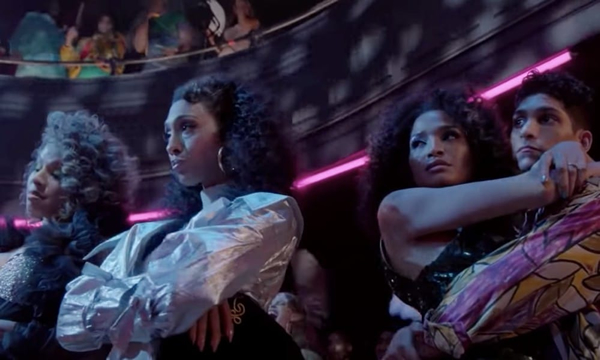
Pose” returns May 2 with the first two episodes of its abbreviated third season. There will be just seven total. This will be the final season for the groundbreaking show that follows the ballroom scene/queer nightlife in the early 1980s. It’s another fan hit from the Ryan Murphy omniverse. The finale is June 6.

Star Trek: Discovery’s” fourth season is slated for release on Paramount+ sometime this year. Filming started last November and is set to end in June. Paul Stamets (Anthony Rapp) and Hugh Culber (Wilson Cruz) became the first openly gay characters in a “Star Trek” franchise series in 2017. Adira (Blu del Barrio) and Gray (Ian Alexander, who is trans in “real life”) were introduced as the first trans and non-binary characters in the show’s third season. It’s set a decade before the action of the original series. 

Hulu’s “The Handmaid’s Tale” returns with its fourth season on April 28. It’s also been renewed for a fifth season. Lesbian actress (and D.C. native) Samira Wiley is in the cast again as is Alexis Bledel, who plays lesbian character Emily Malek, an Emmy winner for her work on the show. 

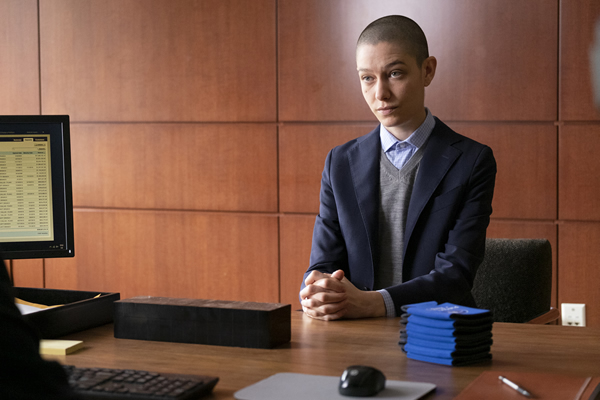
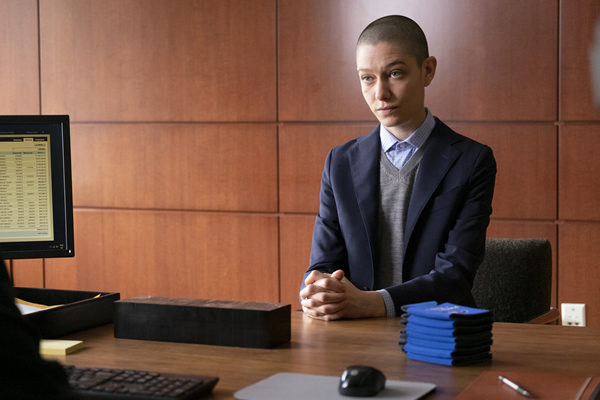
Season five of Showtime’s “Billions” was suspended mid-season last year with five episodes left to air (production — you guessed it — was halted by COVID). Although a sixth season has been ordered, no air dates for the rest of season five has been announced. Asia Kate Dillon, non-binary in “real life” and on the show, stars as Taylor Mason. 

Asia Kate Dillon as Taylor, who’s non-binary, on ‘Billions.’ (Photo courtesy Showtime)

The Conners” is airing its third season now on ABC Wednesday nights at 9. Darlene’s (out actress Sara Gilbert) 13-year-old son Mark (Ames McNamara) is non-binary and likes boys. It evolved out of the “Roseanne” reboot. 

Fox’s “Call Me Kat” debuted in January and features out actor Leslie Jordan as Phil, a newly single gay man and head baker at Kat’s cafe, and out singer/actor Cheyenne Jackson playing straight as Max, Kat’s friend and former college love interest. The season wraps March 18. No word yet on a second season. It airs Thursday nights at 9. Reviews and ratings have been mixed. 

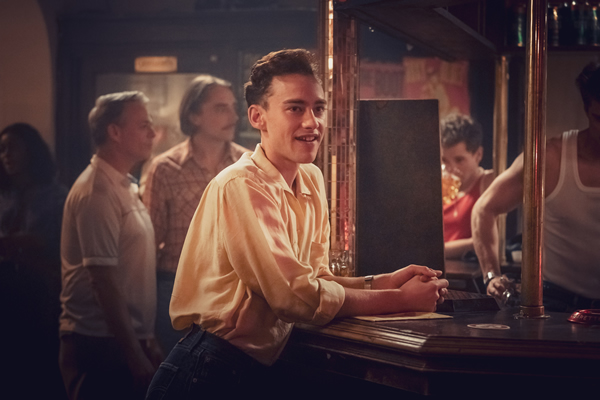
The five-part Brit miniseries “It’s a Sin” finished its run in February on the U.K.’s Channel 4. Olly Alexander (Years & Years) stars as Ritchie Tozer, one of a group of gay men who move to London in 1981. The series follows them through a decade. Creator Russell T. Davies is the auteur behind the original British “Queer as Folk.” It’s streaming in the U.S. on HBO Max. Reviews have been stellar.

Olly Alexander in ‘It’s a Sin.’ (Photo courtesy WarnerMedia)

Sarah Paulson plays the titular role on Netflix’s “Ratched” and Cynthia Nixon co-stars as Gwendolyn, her love interest. It’s a prequel to “One Flew Over the Cuckoo’s Nest,” the classic 1975 film. No date yet on when season two will be released. 

Amir Bageria plays “Sid” Pakam, a closeted gay Indian-American and high school senior on last fall’s teen Netflix drama “Grand Army.” It hasn’t been officially cancelled but no word yet on a second season either.

Also from last fall is the HBO drama “We Are Who We Are,” co-created and directed by Luca Guadagnino (“Call Me By Your Name”), a coming-of-age story set on a U.S. army base. Several of the teen characters are figuring out their sexuality and gender identity as the show unfolds. Chloe Sevigny and Alice Braga play same-sex moms to 14-year-old Fraser (Jack Dylan Grazer). “Call Me” alums Timothee Chalamet and Armie Hammer make cameos. No word yet on a second season. 

No LGBT characters yet on “Emily in Paris,” the Netflix dramedy, but it’s from the “Sex and the City” creative team and has been renewed for a second season.

The Real Housewives of Orange County” finished its 15th season in January. Braunwyn Windham-Burke, who joined in the 14th season in 2019, came out as a lesbian in December. Look for season 16 this fall.

Punky’s (Soleil Moon Frye) BFF Cherie (Cherie Johnson) is a lesbian on Peacock’s “Punky Brewster” revival. Its 10-episode debut season is available now. 

The fourth and final season of Netflix’s “Atypical” will premiere sometime this year. It features lesbian duo Casey (Brigette Lundy-Paine) and Izzie (Fivel Stewart). 

Fivel Stewart (left) and Brigette Lundy Paine in ‘Atypical.’ (Photo by Beth Dubber, courtesy Netflix)

Peter (Brendan Scannell) is the gay best friend to Tiff (Zoe Levin), a dominatrix, on Netflix’s “Bonding.” Its second season dropped in January. 

Netflix’s “Chilling Adventures of Sabrina” wraps this year and has featured a pan warlock romance and a trans character. Its fourth season dropped Dec. 31. 

David Berry plays Lord John Grey who’s secretly gay and has been called “one of the most complex and interesting” characters in the historical Starz “Outlander” books and show. A sixth season is expected. 

Netflix’s “The Haunting of Bly Manor” introduces Dani (Victoria Pedretti) and her girlfriend Jamie (Amelia Eve) against a gothic/thriller backdrop. No word yet on another season. 

Queer Eye” only had one season six episode in the can last year when COVID hit. Production has not resumed but the show will eventually return. 

On Netflix’s “The Politician,” Ben Platt stars as Payton Hobart, a presidential hopeful who finishes high school (season one) and is now a student at NYU (season two). Rahne Jones plays Skye Leighton, his black, gender-nonconforming former running mate now helping with his campaign. Jessica Lange, Gwyneth Paltrow, Judith Light and even Bette Midler are in the cast. Another Ryan Murphy production. No word yet on a third season. 

RuPaul’s Drag Race” season 13 airs its 10th episode (of a likely 14) March 12 at 8 p.m. on VH1. That means the finale is about a month away. “All Stars” season six is expected this summer at its new home on Paramount+. A second season of the U.K. edition is airing now on BBC iPlayer. 

Netflix British dramedy “Sex Education” will be back for a third season sometime this year. No date yet. Teen Otis Milburn (Asa Butterfield) lives with his sex therapist mom (Gillian Anderson) and gay best friend Eric (Ncuti Gatwa). Anwar (Chaneil Kular) is another out student in the cast. Netflix has said it’s one of its most popular shows. 

Netflix’s “Special” is also in limbo it appears. In December, 2019 it was renewed for a second season but no updates since. It follows a gay man named Ryan Hayes (Ryan O’Connell; the series creator and star who based it on his memoir) with mild cerebral palsy who decides to go after the kind of life he wants. It has strong reviews and ratings on Rotten Tomatoes. 

Tiny Pretty Things” debuted in December on Netflix and features two primary gay characters. Brennan Clost plays Shane, an openly gay ballet dancer having sex with his roommate, Oren (Barton). A second season is likely but hasn’t been confirmed. 

Several characters on the Netflix hit “The Umbrella Academy” are queer and it’s treated as mostly tangential. Klaus (Robert Sheehan), an addict who can commune with the dead, is pan, for one. The fantasy show is a comic book adaptation about a dysfunctional family who each possess superpowers. A third season is underway. 

Canadian sitcom “Letterkenny” just released its ninth season in December and 10th and 11th seasons are planned. It streams on Hulu and tells of residents of a small farming town. Several are LGBT but it’s never treated as a big deal. 

A second season of Hulu’s “Love, Victor” will premiere in June. Michael Cimino plays the title role, a hispanic gay teen. It’s a TV adaptation/spinoff of the hit 2018 gay teen dramedy “Love, Simon.” 

The 2017 “Dynasty” reboot is proving surprisingly resilient. It was renewed for a fifth season last month on The CW. Production on the fourth season resumed last October and will start airing May 7. Steven, the gay son played by James Mackay, will be back. He was written out of the third season. 

Hulu’s “Everything’s Gonna Be Okay,” from Aussie comedian Josh Thomas, features Matilda, a teen with high-functioning autism, exploring her fluid sexuality and her gay brother’s relationship failures. Its second season drops April 8. 

The CW’s “Legends of Tomorrow” returns for its sixth season on May 2. White Canary (Caity Lotz) is bi. She’s one of the heroines in the Arrow-verse based on characters from DC Comics. 

The CW’s “Batwoman” season two is airing now (regrouping with the absence of Ruby Rose in the title role) and a third season has been ordered. Ryan Wilder (Javicia Leslie)/Batwoman is now the central protagonist with Kate Kane/Batwoman presumed dead. The new Batwoman is also a lesbian.

Wynonna Earp” returned to finish its fourth and final season this month on Syfy/Netflix. Lesbian side couple WayHaught have become fan favorites. 

Good Trouble,” with multiple queer characters, is in the midst of its third season. It’s on Wednesdays at 10 p.m. on Freeform and is a spin-off of “The Fosters.” 

A “Gossip Girl” reboot on HBO Max promises “lots of queer content.” No date yet. 

This is Us” is in the middle of its fifth season. It airs Tuesday nights at 9 on NBC and features Tess Pearson (Eris Baker), who came out in season three. 

Good Girls” returned for its fourth season this month. It airs on NBC Mondays nights at 10 and features Isaiah Stannard as Ben Marks, a trans son of one of the main characters. 

NBC’s “New Amsterdam” is airing its third season now and two more have been ordered. Dr. Iggy Frome (Tyler Labine) is gay. It’s on Tuesday nights at 9. 

Martin Scorsese interviews lesbian Fran Lebowitz on the seven-part Netflix documentary “Pretend It’s a City.” 

Max Baker (Sara Waisglass) is a lesbian teen on Netflix’s dramedy “Ginny & Georgia,” which has been generating buzz since its maiden season released on Feb. 24. 

Jesse James Keitel plays Jerrie Kennedy, a transfeminine/nonbinary sex worker on ABC’s crime/thriller “Big Sky.” It’s on hiatus but will return. 

Brian Michael Smith made history as the first out black trans man in a regular series role on network TV as Paul Strickland on Fox’s Ryan Murphy-created procedural drama “9-1-1- Lone Star,” a spin-off of “9-1-1.” Its second season is airing now on Monday nights at 9. There are also gay characters on both shows. 

Safiya Masry (Indira Varma), a warden on ABC’s legal drama “For Life” is a lesbian. It’s in its second season now airing Wednesday nights at 10. 

ABC’s new sitcom “Call Your Mother,” which debuted in January, features Lane (Austin Crute), Jackie’s (Racel Sennott) gay best friend and roommate. It’s on Wednesday nights at 9:30.

Son Ian (Cameron Monaghan) and daughter Debbie (Emma Kenney) are gay on Showtime’s longrunning dramedy “Shameless.” Its 11th season continues through April 11. 

Superstore” ends its sixth and final season on March 25. Mateo (Nico Santos) is gay on the NBC sitcom. It’s on Thursday nights at 8. 

Jackson West (Titus Makin Jr.) is a gay officer on ABC’s “The Rookie,” currently in its third season. It’s on Sunday nights at 10. 

Longrunning Brit soap “Hollyoaks” is teeming with LGBT characters presented multi-dimensionally. Gay character John Paul McQueen (James Sutton) has been on and off the front burner for a decade. Also worth checking out are “Emmerdale” and “EastEnders,” whose current Ben/Callum love story is a fan favorite. 

Also of note:

Tina,” a documentary on the life of rock icon Tina Turner, debuts on Sunday, March 28 at 8 p.m. on HBO and HBO Max. It promises “a wealth of never-before-seen footage, audio tapes … photos and new interviews.”

Aretha Franklin is the focus of the third season of National Geographic’s docudrama series “Genius.” Cynthia Erivo stars as the late soul legend. Its eight-episode arc debuts March 21. 

Other shows with LGBT characters whose networks have said are returning but for which no date has been announced: “Betty” (HBO); “Feel Good” (Netflix); “Gentleman Jack” (BBC One/HBO); “It’s Always Sunny in Philadelphia,” renewed in December for four more seasons, a sitcom record (FX); “Killing Eve” (BBC America); “The L Word: Generation Q” (Showtime); “Sex Education” (Netflix); “Twenties” (BET); “Supergirl” (The CW); “Never Have I Ever” (Netflix); “What We Do in the Shadows” (FX); “Motherland: Fort Salem” (Freeform); “Hightown” (Starz); “The Flight Attendant” (HBO Max); “Dead to Me,” whose upcoming third season will be its last (Netflix); and “Insecure” (HBO, for a fifth and final season).

Recently ended shows with LGBT characters include: “The Queen’s Gambit” (Netflix), “How to Get Away With Murder” (ABC), “One Day at a Time” (POP), “The Magicians” (Syfy), “Schitt’s Creek” (CBC/POP TV), “Vida” (Starz), “Work in Progress” (Showtime/Hulu), “Council of Dads” (NBC), “Someone Has to Die” (Netflix), “Trinkets” (Netflix), “Teenage Bounty Hunters” (Netflix), “Tales of the City” (Netflix), “Kipo and the Age of the Wonderbeasts” (animated, Netflix) and “What/If” (Netflix). 

Want a succinct overview of the history of LGBT people on TV? Check out “Visible: Out on Television,” last year’s five-episode survey on Apple TV+ from Ryan White. 

French Minister Rightly Shocked by Poland’s Anti-LGBT Zones – Human Rights Watch

0

“I will go to an ‘LGBT-free zone’ in Poland,’” said Clément Beaune, French Secretary of State for European Affairs, in a December interview in which he also publicly came out as a gay man. But when he asked to visit Kraśnik, authorities denied him access. Kraśnik is one of almost 100 regions and municipalities in Poland that have endorsed discrimination against lesbian, gay, bisexual and transgender (LGBT) people by declaring themselves “LGBT-ideology free” or adopting “charters” that promote an exclusively heterosexual model of families.

The Polish government’s shameful decision to prevent a gay official from visiting a part of the country, one suspects at least in part because of his sexual orientation, is a stinging reminder of how much the populist Law and Justice (PiS) ruling party’s policies have impacted the rights of LGBT people. LGBT activists have increasingly faced arrests and spurious charges for nonviolent acts, like placing  the rainbow flag on public monuments.

The government’s crusade against so-called “gender ideology” also targets women’s rights. On International Women’s Day, massive protests took place against ruling by the politically-compromised Constitutional Tribunal that virtually eliminated legal abortion in the country. Women’s rights activists face increasing arrest, harassment, and physical threats.

Attacks on women’s and LGBT rights come amidst a broader erosion of judicial independence and pressure on media and civil society critical of PiS.

Beaune’s trip is also a reminder that France, which will hold the EU’s rotating presidency from January to June 2022, could do much more to confront democratic backslides in Poland and other EU countries. In addition to Viktor Orbán’s crackdown in Hungary, Slovenia recently came under the spotlight for Prime Minister Janez Janša’s efforts to curb media freedom and intimidate journalists.

France’s EU presidency should oversee responses to these attacks against rule of law in the EU. This should start with pushing the European Council to revive scrutiny on Poland and Hungary under Article 7 – the mechanism dealing with EU governments that put the Union’s founding values at risk – and pressing the Commission to condition access to EU funds to respect for the rule of law.

France should ensure its leadership centers on serious efforts to defend human rights everywhere in the EU.

Decades Before Meghan, Princess Diana Broke Royal Barriers by Speaking About Mental Illness – POPSUGAR

Trigger warning: The following article mentions suicidal ideation, self-harm, depression, and experiences with eating disorders.

In the first interview since their departure as senior members of the royal family, Meghan Markle and Prince Harry spoke with Oprah Winfrey about some exciting news — they’re expecting a baby girl! — but in that same interview, which aired in the United States on Sunday, March 7, the two also discussed painful subjects. Meghan revealed that her mental health had been declining due to a culmination of forces working against her: she said she was continuously silenced, that she and Archie faced racism from the royals, and that she was not physically or mentally protected from the slander of the British tabloids. She had reached a breaking point, leading to suicidal ideation that was “very clear and very scary.” This, according to Harry, was a terrifying reminder of similar struggles his mother, Diana, Princess of Wales, faced.

“My biggest concern was history repeating itself. I’ve said that before on numerous occasions very publicly. And what I was seeing was history repeating itself, but more, perhaps, or definitely far more, dangerous because then you add race in and you add social media in,” the Duke of Sussex said. “And when I talk about history repeating itself, I’m talking about my mother.” Harry went on to say, “When you can see something happening in the same kind of way, anybody would ask for help.” Meghan and Harry did ask for help from the royal family, although the institution did not intervene.

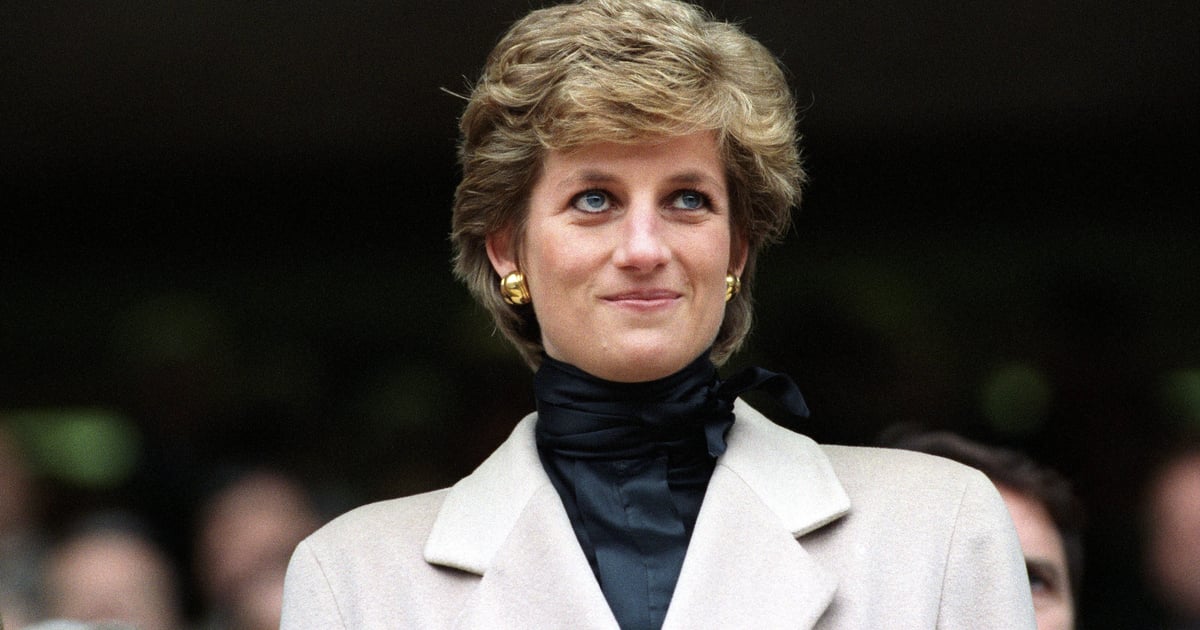
Before her tragic death in August 1997, Princess Diana openly addressed postpartum depression, bulimia, and self-harm. She challenged the stigma around mental illness, encouraging others to get the help they need while, at the same time, she faced mounting pressures as a royal in the spotlight with a marriage going south.

Ahead, check out three separate times that Princess Diana spoke powerfully about mental illness. We also suggest streaming Diana: In Her Own Words, in which you can hear narrations Diana sent to journalist Andrew Morton. Through her openness and willingness to share personal experiences, the princess gave us an inside look into her struggles and encouraged others to reflect on and support their mental health.

LGBTQ Travel Safety in Croatia: 39th Most Popular Country in the World – Total Croatia News

0

March 9, 2021 – When it comes to traveling, Croatia has been known as a gay-friendly destination, even though not all Croatians in every part of the country are fond of accepting gay and lesbian couples. In a recent study, LGBTQ travel safety in Croatia ranks 39th on the list of 150 world’s most popular countries for LGBTQ+ travel.

The research has been conducted by Asher and Lyric Fergusson, an Australian-American married couple, who write and do the research studies on topics that help travelers to travel safely. They have now taken an in-depth look at LGBTQ+ rights, country by country, reviewed individual laws and gathered data from various trusted international sources to create the definitive “LGBTQ+ Travel Safety Index” that shows safest, as well as least safe countries for LGBTQ+ travel.

After more than 250 hours of research, they made a list of 150 most (and least) popular countries, where Croatia took 39th place. We reviewed the information brought out about Croatia and added some useful information about LGBTQ+ communities in Croatia.

Croatia in the first third of best countries for LGBTQ+ safety

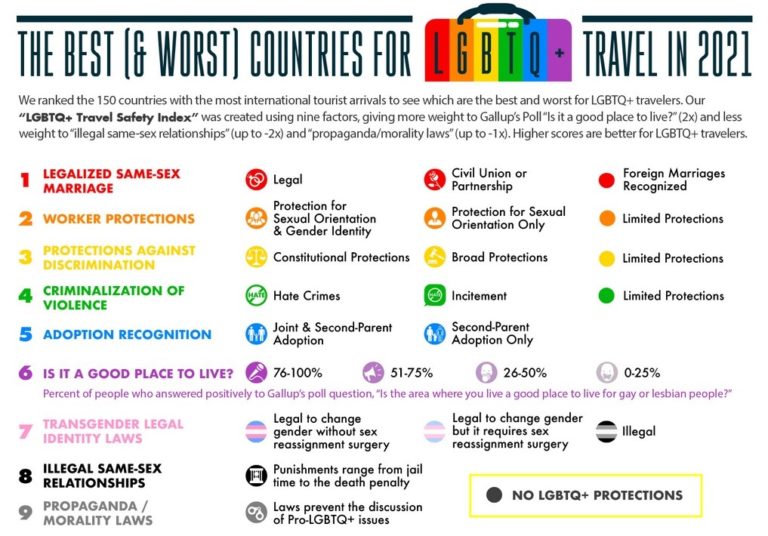
In a comprehensive overview, researchers listed 150 countries from worst to best regarding travel safety for LGBTQ members. The criteria according to which they made a list consists of ten critical factors:

  • Legalized same-sex marriages
  • Worker protections
  • Discrimination protections
  • Criminalization of violence
  • Adoption recognitions
  • Quality of life
  • Transgender legal identity laws
  • Illegal same-sex relationships
  • Morality laws

LGBTQ_safety_travel_index_-_list_guide.jpg

Source: Asherfergusson.com

According to the data collected by these criteria, the researchers gave Croatia an index of 188 points and a grade C+ from most safe to highest dangerous places (A to F), placing it among the first third of the best countries in the world in terms of LGBTQ+ safety.

In Croatia, the same sex-relationships are legal since 1977. However, same-sex marriage or families are not permitted, but same-sex life partnership is (i.e., civil union). The Life Partnership Act came into force back in 2014, and since then, hundreds of life partnerships have been concluded, with male life partnerships being slightly more common than female. Also, it is legal to change gender without sex reassignment surgery.

Violence against the members of the LGBTQ community is considered a hate crime in Croatia. Although this study says only sexual orientation is protected in Croatia, the truth is, both sexual orientation and gender identity are protected by numerous Croatian laws. The protections against discrimination are broad, although not constitutional. Croatian Constitution still does not include same-sex families, defining marriage only as “a life-long community of woman and man.” However, one year ago, the Constitutional Court gave the right to same-sex couples in Croatia to be foster parents. Before, only single gay people could adopt children.

LGBTQ_safety_travel_index_-_Croatia.jpg

Source: Asherfergusson.com

The top ten safest countries for LGBTQ+ travel are Canada, the Netherlands, Sweden, Malta, Portugal, Belgium, the United Kingdom, Spain, Norway, and France. At the very end of the list, being the world’s least safe countries for LGBTQ+ travel are Nigeria, Saudi Arabia, Malaysia, Malawi, Oman, Jamaica, Myanmar, Qatar, UAE, and Yemen.

Interestingly, the study shows that less than 25 percent of people said Croatia was a good place to live, according to Gallup’s poll question’s votes. These statements are arguable since one can experience life and circumstances in Croatia only by visiting it personally. Nonetheless, many places in Croatia have been gay-friendly for a long time, especially tourist destinations.

LGBTQ-friendly destinations in Croatia

Among Croatia’s popular tourist destinations, Dubrovnik is considered the most LGBTQ-tolerant, while its neighboring island of Lokrum welcomes gays on nudist beaches. Of other popular Croatian coastal destinations, Split, Rovinj, Krk, Rab, Rijeka, and Hvar also welcome members of the LGBTQ community. Rab island has also become the first declared gay-friendly destination in Croatia.

Naturally, any larger town in Croatia that depends on tourism is accommodating, and gay and lesbian couples won’t face discrimination. Some even go that far as to say that Croatia is one of the most tolerant countries in Europe for LGBTQ+ travelers. Meanwhile, people in smaller towns in rural parts of Croatia, due to their high traditional and religious values, tend to be very judgemental.

Last year, Croatia saw 66 new same-sex life partnerships, increasing for as many as 47 life partnerships than in 2019. Most of them were registered in Zagreb and Primorje-Gorski Kotar and Istria counties. The first gay marriage was even held in Slavonia, in Kutjevo, where such marriages are still not very well accepted among citizens, which gained a lot of interest there.

Bigger cities such as Zagreb find same-sex marriages and LGBTQ communities acceptable, as proven by the Zagreb Pride celebration of many years standing, even in pandemic-marked 2020. Still, a recent horrific hate crime perpetrated in Zagreb’s Maksimir Park against a gay man, when two attackers threw a Molotov cocktail on him and caused him second-degree burns. Zagreb Pride association later condemned the attack, calling it the “worst anti-gay hate crime ever reported in Croatia.” They and such associations, most of which are located in Zagreb, are trying to improve the position of LGBTQ people in the community, i.e., in Croatia.

Pride celebrations have also been organized in Croatian cities of Split and Osijek, while some other supporting celebrations occasionally happened in Rijeka and Pula as well. Also, Croatia’s numerous music festivals and carnivals always welcome LGBTQ music lovers.

Although not all Croatians are tolerant, nor does Croatia have all legal protections for gay or lesbian persons, it seems like times are slowly changing for the better in creating a safe and tolerant environment for LGBTQ+ people.

For the latest travel info, bookmark our main travel info article, which is updated daily

Read the Croatian Travel Update in your language – now available in 24 languages.

Join the Total Croatia Travel INFO Viber community.

TINITUS- a new fashion world led by inclusivity, diversity, and solidarity – Los Angeles Blade

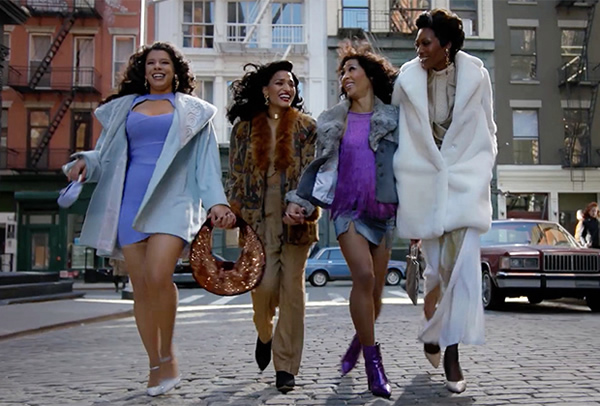
The final season of “Pose” will begin to air on FX on Sunday, May 2, at 10 p.m. ET. (Photos courtesy of FX)

When the COVID pandemic hit in the early months of 2020, there were certainly more pressing and essential worries for us to grapple with than how it would impact the next season of a TV show. Yet it’s a testament to the power of “Pose” that many among its legion of fans were at least as concerned about the show’s disruption as they were about the possibility of running out of toilet paper.

The powerhouse FX drama — which spotlights the legends, icons and ferocious house mothers of New York’s underground ball culture in the late 1980s — had already made history. Not only did it feature the largest cast of transgender actors in regular roles, it boasted the largest recurring cast of LGBTQ actors ever included in a scripted series.

In its first two seasons, the show racked up accolades and honors (including a Primetime Emmy for Billy Porter as Outstanding Lead Actor in a Drama Series) while breaking new ground for the inclusion and representation of queer people — and especially transgender people of color — in television, both in front of the camera, and behind it. With the end of its second season in August 2019, fans were hungry for a third — but thanks to COVID, its future was suddenly in question.

So, when word came that the show’s third season would have its debut on May 2, it was the best news since finding out the vaccines were finally going to start rolling out. But it was bittersweet: Along with confirmation of the series’ imminent return came the sad revelation that the new season would also be the last. “Pose” would be coming to an end with a final, seven-episode arc.

As any viewer of show can attest, there were a lot of threads left hanging when last we saw its characters. That means there’s a lot of ground to cover in these last chapters in order to give everyone — characters and audience alike — the closure they deserve.

The show’s official synopsis goes like this: It’s now 1994 and ballroom feels like a distant memory for Blanca, who struggles to balance being a mother with being a present partner to her new love, as well as her latest role as a nurse’s aide.

Meanwhile, as AIDS becomes the leading cause of death for Americans ages 25 to 44, Pray Tell contends with unexpected health burdens. Meanwhile, a vicious new upstart house is emerging in the ballroom world, and the members of the House of Evangelista are forced to contend their legacy.

Obviously, there are a lot of details left hidden in that broad overview, and fans are undoubtedly full of questions about what they can expect to see.

Fortunately, the bulk of the show’s main cast convened on Zoom last week (along with show co-creator and Executive Producer Steven Canals and Executive Producer Janet Mock) for a press conference to discuss their “Pose” experience, and while they didn’t exactly give away any spoilers, they definitely dropped some tantalizing hints about what’s in store for audiences in the farewell season.

In truth, most of the discussion was dominated by reminiscences and expressions of mutual appreciation, sure signs that the feeling of family we see onscreen is something that has taken hold off screen, as well. But in between the affectionate banter, the cast and creatives addressed several questions that might be most on viewers’ minds.

Perhaps the most pressing of these — why, after only three seasons, is the critic-and-audience-acclaimed show calling it quits? — was taken on by Canals, who explained:

“I always knew what the beginning and what the end of the narrative would be. And when Ryan Murphy and I first met in September of 2016, we felt really strongly that that particular narrative made sense. And so, while we certainly could have continued to create narrative around these characters and in this world, and we certainly had a conversation in the writers’ room about it … I think we all agreed that it just made sense for us to ‘land the plane,’ if you will, comfortably — as opposed to continuing to give an audience story that just simply didn’t have any real core intention or a real thrust towards specificity.”

Also of interest was the obvious subject of how the parallels between the current pandemic and the AIDS crisis that looms over the show’s narrative might be reflected in the new episodes. While he didn’t hint at any direct connections in “Pose,” Porter used the subject to underscore a theme that has always been one of the show’s most important elements:

“I think the parallels are quite profound. I know that as a Black gay man who lived through the AIDS crisis, I have been dealing with a lot of PTSD during this COVID time. It’s very reminiscent of what it was like then. The best news about that is that I survived. We got through it, and there is another side to it. We can get to the other side.

“I feel like that’s what ‘Pose’ really accomplishes this season, reminding the public that it’s when we come together and when we lead with love [that] we get to the other side.”

Mock elaborated on the theme of resilience by discussing the importance of showing the strength of House mothers like Blanca and Electra (Dominique Jackson), who hold together — and lift up — their entire community:

“It’s that matriarchal power and lineage that I think the ballroom is, and what trans women are to one another, that then feeds everyone else and enables them to shine and have all the things that they want in the world. For me, it is [about] that celebration […] of Black trans women — that they’ve created this space, that they brought everyone else in with them, and that, at the end of the day, they are often the ones most often forgotten.

“I think with this season, I want everyone across the industry, the audience, to realize that. I think it’s essential, and it’s important.”

Mock also talked about the way “Pose” focuses on the small, day-to-day lives of its characters as much as it does the larger-than-life splendor of the ballroom culture in which they participate:

“We wanted to ensure that we show the everyday, mundane moments, as well as the great, grand celebrations. The ballroom is are presentation of what it means to congregate and share testimony and to love on each other, and our show is a celebration of the everyday intimacies. So, for us, while we were plotting these big, grand moments […] we wanted to bring in traditions — weddings, matrimony, all this stuff — that our characters get to engage in. We wanted to be a part of the tradition of that, and all the moments that a family shares together. We wanted to make sure that all of those things were celebrated in this.”

When discussion turned to the unprecedented level of support and collaborative inclusion with which the show’s queer cast were bestowed by Ryan Murphy and the rest of the creative staff — from the presence of trans women like Mock and Co-producer Our Lady J in the writers’ room to the extensive reliance on the insights and talents of real-life members of the ballroom community — Jackson was quick to add that besides giving the show its ferocious authenticity, it gave her an increased recognition of her own worth:

“I will never, ever, ever walk into a space thinking that I need to impress them […] I will never walk into a space being fearful of my identity stopping me from anything. Because of this journey, when I walk into spaces now, my identity is not because I’m an abomination. My identity is a plus. My identity is my value. So, when I walk into spaces now,they need to impress me. You can be the biggest Hollywood director, producer, whatever, but you’re not going to take my story or relay stories that are reflective of my life or my existence and make them into anything you want, because of ‘Pose,’ because of Ryan, because of Steven, because of Janet and Brad [co-creator/executive producer Falchuk), because of Our Lady J, because of my cast members.

“I will never walk into spaces or live a life or an existence thinking that I need to impress anyone.”

Porter concurred, adding:

“There was never, ever a space in my brain to dream what‘Pose’ is, what Pray Tell is. I spent the first 25-plusyears of my career trying to fit into a masculinity construct that society placed on us so I could eat.‘Pose,’ and Pray Tell in particular, really taught me to dream the impossible […] the idea that the little, Black church sissy from Pittsburgh is now in a position of power in Hollywood in a way that never existed before. You can damn sure believe that I will be wielding that power and there will be a difference and a change in how things go from here on out.”

If the cast members themselves have found themselves feeling more empowered thanks to “Pose,” so too have the millions of LGBTQ people — and allies — who have tuned into it since its premiere in 2018. The show is one of those rare entries into the cultural lexicon that simply allows its queer and trans people to live authentic lives, giving long-withheld representation to countless viewers who were able to see themselves reflected back from the screen for perhaps the very first time.

It’s that powerful sense of validation provided by “Pose” that keeps it standing tall in an entertainment market now providing so much LGBTQ inclusion that it’s becoming dangerously easy to take it for granted.

Whatever moments of heartbreak, joy, and celebration “Pose” brings us as it plays out its final act — and there are sure to be many — we can all be sure it will leave us with a message expressed through an oft-heard line of dialogue that Mock says she found herself writing “over and over again” during the series’ run:

“You are everything, and you deserve everything this world has to offer.” It’s that nurturing sentiment the “Pose” has been instilling in us from the beginning, like a mother to us all.

And that’s why so many of us can’t wait until the first two episodes of its final season air at 10 p.m. (both Eastern and Pacific), Sunday, May 2, on FX.

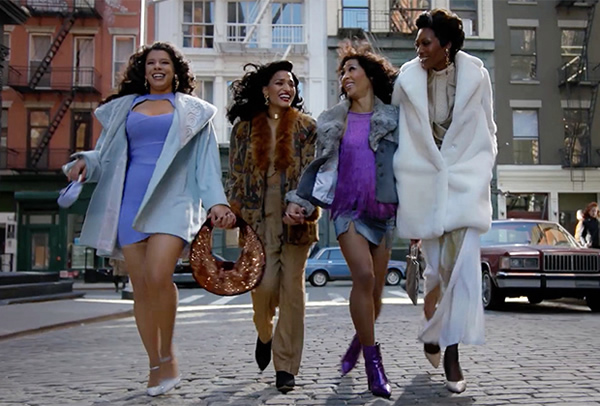
The final season of “Pose” will begin to air on FX on Sunday, May 2, at 10 p.m. ET. (Photos courtesy of FX)

Is The New ‘Super Straight’ Trend Transphobic? – Instinct Magazine

0
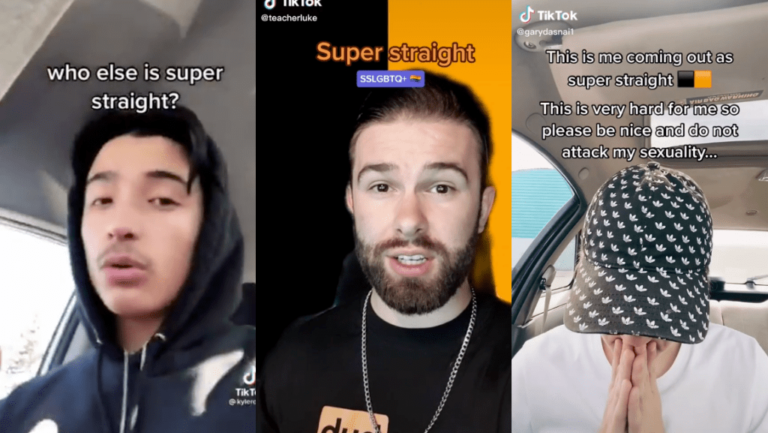
Screenshots of different TikTok videos of those claiming to be ‘super straight’ (Photo Credit: [from left to right] Super Straight revolution Twitter Page, Teacher Luke TikTok, and garydasnai1 Tik Tok)

If you have been on social media recently, you might have possibly come upon a new term that is polarizing.  The term in question is ‘super straight’ and it is defined by those who are using it as dating someone of the opposite sex who was born that way. 

According to Distractify, a TikTok user by the name of Kyle Royce appeared to be the first person to coin the term ‘super straight’ in a video that was pulled from the platform.  However, the video was reposted to Twitter.  In the video, Royce refers to being ‘super straight’ as a sexual orientation and insists it is not transphobic.

The trend has taken on a life of its own on TikTok with the hashtag, ‘#superstraight’ receiving over 116 million views.

A Twitter used named AntiFash Gordon posted a tweet with a screenshot of a thread from the website 4chan which appears to instruct users to do the exact tactics that are occurring on both TikTok and Twitter.

Many have responded to the trend by calling out those who identify themself as ‘super straight’ as transphobic.

While the ‘super straights’ are claiming they are being discriminated against.

Another level added to the whole trend is a ‘super straight’ pride flag with the colors black and orange with some versions have the letters ‘SS’ in the center of each color.

While Royce remains on TikTok, he has started a GoFundMe page on Sunday, March 7 with text on the page claiming:

After creating the original “Super Straight” video, I have received an insane amount of backlash and death threats. People found my family and have been set to ruin our lives; even attacking my mother’s business. Especially since I got COVID-19 currently and am homeless, stuck staying at my girlfriend’s house: some help and funding would be so greatly appreciated from the Super Straight Community

As of Monday evening, Royce has raised $535 of his $100,000 goal.

It should also be noted that this trend is going on three weeks before International Transgender Day of Visibility.

What are your thoughts on the ‘super straight’ trend? Let us know in the comments or on our social media accounts.


Sources: Distractify, AntiFash Gordon Twitter Page, GLSEN

Tunisia: Harassment, Arbitrary Detention of LGBT Rights Activist – Human Rights Watch

0

Update: On March 17, 2021, the Court of Appeal in Tunis ordered Rania Amdouni released. The appeals judge confirmed Amdouni’s conviction but suspended her six-month sentence, and increased the fine from 18 dinars ($6.5) to 218 dinars ($78).

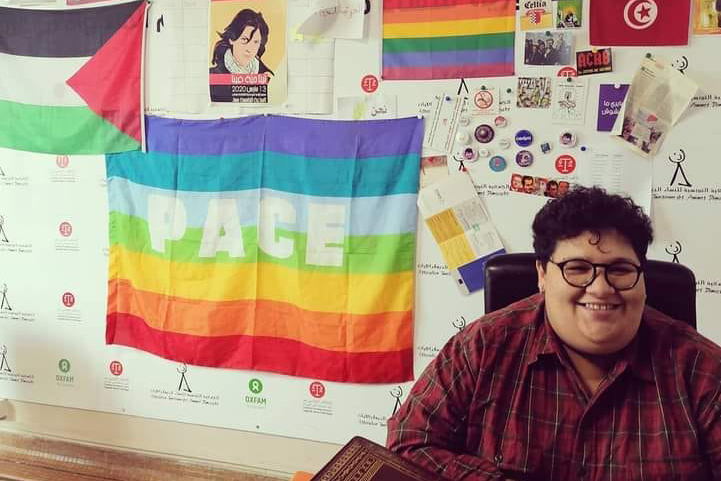
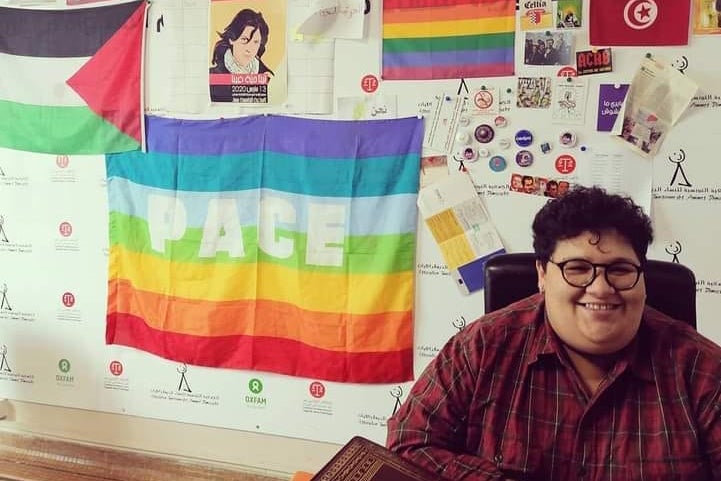
(Beirut) – A Tunisian court sentenced a prominent LGBT rights activist on March 4, 2021, to six months in prison and a fine for shouting outside a police station after officers refused to register her harassment complaint, Human Rights Watch said today. The activist, Rania Amdouni, 26, is in a women’s prison in Manouba, west of Tunis, where her lawyer said she has faced harassment by prison guards due to her gender expression.

Police arrested Amdouni on February 27 at 8 p.m. after she left the 7 eme police station in downtown Tunis in a distraught state, said her lawyer Hamadi Hanchiri. At the station, Hanchiri said, police officers had refused to register Amdouni’s complaint relating to repeated harassment she said police officers subjected her to on the street and online. Police officers in the station then proceeded to harass her based on her presumed sexual orientation and gender expression. Amdouni began shouting on the street outside the station and cursing the Tunisian police system, Hanchiri reported.

“The police response to Amdouni’s complaint keeps her from getting protection and undermines public confidence in law enforcement and the Tunisian justice system,” said Rasha Younes, lesbian, gay, bisexual, and transgender (LGBT) rights researcher at Human Rights Watch. “By arresting and sentencing Amdouni, Tunisian authorities are sending an appalling message to victims of discrimination that they have nowhere to turn and that any objection could land them in prison themselves.”

Based on her behavior outside the station, Hanchiri said, on March 1 the prosecutor of the Tunis First Instance Tribunal charged Amdouni with “insulting a public officer during the performance of his duty,” punishable by up to one year in prison under article 125 of the penal code, “causing embarrassment and disruption,” and “apparent drunkenness.” On March 4, the Cantonal Court in Montfleury, southwest of Tunis, found Amdouni guilty on all charges and sentenced her to six months in prison and a fine of 18 Tunisian dinars ($6.50). The lawyer submitted an appeal on March 5.

Hanchiri, who took on Amdouni’s defense on behalf of Damj Association, a Tunis-based LGBT rights group, said that her case file presented in court included no evidence of her targeting a police officer at the station or on the street, or any indication that she had been drunk. The case file says that Amdouni was in a “disorderly state” and had “offended police honor” by shouting and cursing outside the station, as a basis for her conviction, Hanchiri said.

Amdouni was leaving a restaurant in downtown Tunis on February 27 when a police officer in the street began verbally harassing her and ridiculing her based on her gender expression, which prompted her to go to the nearest police station and file a complaint. “Amdouni has been facing consistent harassment by police in the street and online for months, which caused her to suffer severe mental health consequences and break down,” Hanchiri said.

Mohammed Amin Hdeiji, a lawyer who accompanied Amdouni to the 7 eme police station on February 27, told Human Rights Watch that police officers in the station ridiculed Amdouni’s appearance and harassed her based on her presumed sexual orientation. “Eight police officers surrounded her and repeatedly insulted her, and one told her, ‘You are a homosexual, you will not win against us, and we will not allow you to defame police officers,’” Hdeiji said.

Hanchiri spoke to Amdouni, who told him that at the Manouba women’s prison where she is detained, women prison guards have repeatedly entered her cell at night while she was sleeping, insulted her using derogatory language relating to her sexual orientation and gender expression, and threatened her for attempting to complain about the police, he said.

Human Rights Watch has documented violations by Tunisian security forces against activists at protests, including targeting LGBT activists with arbitrary arrests, physical assault, threats to rape and kill them, and refusing them access to legal counsel. Amdouni’s case was among those Human Rights Watch documented, which included police singling her out at protests due to her gender expression and LGBT rights activism.

In an interview in February before her arrest, Amdouni told Human Rights Watch that since January she has been subjected to online harassment, bullying, and threats of violence, including death and rape. Human Rights Watch reviewed many of the Facebook posts, including by individuals who identified themselves as police officers, harassing Amdouni based on her gender expression and presumed sexual orientation. A member of parliament, Seif Eddine Makhlouf, ridiculed her on his personal Facebook page based on her gender expression. Amdouni has since deleted her social media accounts.

On January 11, the police searched for Amdouni near her residence, and asked neighbors if she was there, which prompted her to leave her neighborhood and hide out, she said: “I don’t feel safe, even in my apartment. Police came looking for me in my neighborhood. My life is threatened, and my mental health is deteriorating. People are staring at me in the street and harassing me online.”

The right to privacy and nondiscrimination are reflected in Tunisia’s 2014 constitution under article 24 and article 21, respectively. However, the absence of accountability and reliable complaint systems, as well as the lack of nondiscrimination legislation based sexual orientation and gender identity under domestic law, limit LGBT people’s access to redress, creating an environment in which police may abuse them with impunity, Human Rights Watch said.

The UN Human Rights Committee, in its general comment on article 19 of the International Covenant on Civil and Political Rights, which Tunisia has ratified, stated that, “The mere fact that forms of expression are considered to be insulting to a public figure is not sufficient to justify the imposition of penalties […]. Moreover, all public figures […] are legitimately subject to criticism and political opposition.”

Tunisia’s parliament should reform article 125 of the penal code because of the various ways that it can be interpreted by authorities to limit free expression, Human Rights Watch said.

The Yogyakarta Principles, on the application of international human rights law in relation to sexual orientation and gender identity, instruct states to “[…] prevent and provide protection from cruel, inhuman or degrading treatment or punishment, perpetrated for reasons relating to the sexual orientation or gender identity of the victim, as well as the incitement of such acts.”

Tunisian authorities should ensure that complaints, including Amdouni’s, are handled confidentially and swiftly, following a clear procedure, and that people can submit complaints without fear of reprisals, Human Rights Watch said. The authorities should also ensure that no victim of discrimination is denied assistance, arrested, or harassed based on their sexual orientation or gender identity.

“The Tunisian government claims it is committed to protecting individual freedoms, but prosecuting individuals who report violations of their rights shows that this rhetoric does not match reality,” Younes said. “Tunisian authorities should investigate allegations of police harassment against Amdouni and stop using the judicial system to persecute her.”

New Disney princess is gay and has feelings for her enemy, says Kelly Marie Tran – PinkNews

Raya, from Disney’s Raya and the Last Dragon, is gay – according to Kelly Marie Tran, at least.

Tran plays the latest Disney princess Raya in the movie Raya and the Last Dragon. She admitted in an interview with Vanity Fair that, when she was recording her role for the animated film, she decided there were feelings between Raya and her longtime enemy Namaari.

Even though their relationship isn’t official, Tran said she believed Raya had more than platonic feelings towards Namaari, who is voiced by Gemma Chan. She told Vanity Fair she is “obsessed with Namaari” and Chan, which rubbed off on her portrayal of Raya.

“I think if you’re a person watching this movie and you see representation in a way that feels really real and authentic to you, then it is real and authentic,” Tran says. “I think it might get me in trouble for saying that, but whatever.”

The film, which premiered on Disney Plus, takes places in a magical re-imagined Earth known as Kumandra. A warrior named Raya is determined to find the last dragon, stop the sinister monsters known as the Druun and save humanity.

Raya and the Dragon hints at Raya being gay

Vanity Fair hinted that Disney may be subtly confirming that Tran’s character is, in fact queer. The magazine pointed out that Raya is introduced in the film wearing an outfit that looks shockingly similar to the costume worn by the main character in Nickelodeon’s TV series The Legend of Korra.

Korra, the main character of the series, was confirmed to be in a relationship with her companion Asami. The two women walked into a spirit portal, hand-in-hand and gazingly fondly at each other at the end of the series.

One of the co-creators of the show wrote in a blog post: “Our intention with the last scene was to make it as clear as possible that yes, Korra and Asami have romantic feelings for each other.”

Disney has been tiptoeing around LGBT+ inclusion for a while now

Fans have been eagerly awaiting more LGBT+ characters and stories in Disney, and the filmmaker has been teasing about this coming to fruition. The Beauty and the Beast live-action featured an “exclusively gay moment” as the character LeFou, Gaston’s manservant, explores his feelings about the major character.

Star Wars: The Rise of Skywalker – in which Kelly Marie Tran also appeared – featured the first gay kiss in the franchise’s history, even though the moment was ridiculously subtle.

Disney even toed the line on LGBT+ representation by announcing that Valkyrie would be the first official LGBTQ superhero in the Marvel Cinematic Universe, but there has still been no explicit exploration of the character’s sexuality in any of the movies she has appeared in.

Marvel has since been hyping up more LGBT+ representation in their upcoming film The Eternals, which features the MCU’s first out gay hero.

Covid-19 Relief Bill Fulfills Biden’s Promise to Expand Obamacare, for Two Years – The New York Times

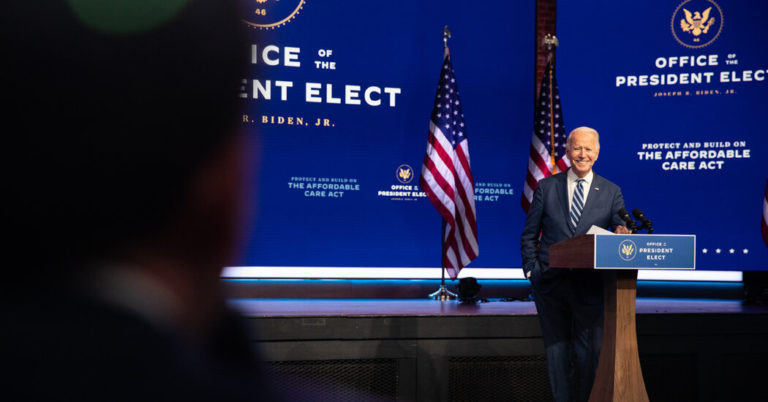
WASHINGTON — President Biden’s $1.9 trillion coronavirus relief bill will fulfill one of his central campaign promises, to fill the holes in the Affordable Care Act and make health insurance affordable for more than a million middle-class Americans who could not afford insurance under the original law.

The bill, which will most likely go to the House for a final vote on Wednesday, includes a significant, albeit temporary, expansion of subsidies for health insurance purchased under the act. Under the changes, the signature domestic achievement of the Obama administration will reach middle-income families who have been discouraged from buying health plans on the federal marketplace because they come with high premiums and little or no help from the government.

The changes will last only for two years. But for some, they will be considerable: The Congressional Budget Office estimated that a 64-year-old earning $58,000 would see monthly payments decline from $1,075 under current law to $412 because the federal government would take up much of the cost. The rescue plan also includes rich new incentives to entice the few holdout states — including Texas, Georgia and Florida — to finally expand Medicaid to those with too much money to qualify for the federal health program for the poor, but too little to afford private coverage.

“For people that are eligible but not buying insurance it’s a financial issue, and so upping the subsidies is going to make the price point come down,” said Ezekiel Emanuel, a health policy expert and professor at the University of Pennsylvania who advised Mr. Biden during his transition. The bill, he said, would “make a big dent in the number of the uninsured.”

But because those provisions last only two years, the relief bill almost guarantees that health care will be front and center in the 2022 midterm elections, when Republicans will attack the measure as a wasteful expansion of a health law they have long hated. Meantime, some liberal Democrats may complain that the changes only prove that a patchwork approach to health care coverage will never work.

“Obviously it’s an improvement, but I think that it is inadequate given the health care crisis that we’re in,” said Representative Ro Khanna, a progressive Democrat from California who favors the single-payer, government-run system called Medicare for All that has been embraced by Senator Bernie Sanders, independent of Vermont, and the Democratic left.

“We’re in a national health care crisis,” Mr. Khanna said. “Fifteen million people just lost private health insurance. This would be the time for the government to say, at the very least, for those 15 million that we ought to put them on Medicare.”

Mr. Biden made clear when he was running for the White House that he did not favor Medicare for All, but instead wanted to strengthen and expand the Affordable Care Act. The bill that is expected to reach his desk in time for a prime-time Oval Office address on Thursday night would do that. The changes to the health law would cover 1.3 million more Americans and cost about $34 billion, according to the Congressional Budget Office.

Representative Frank Pallone Jr. of New Jersey, who helped draft the health law more than a decade ago and leads the House Energy and Commerce Committee, has called it “the biggest expansion that we’ve had since the A.C.A. was passed.”

But as a candidate, Mr. Biden promised more, a “public option” — a government-run plan that Americans could choose on the health law’s online marketplaces, which now include only private insurance.

“Biden promised voters a public option, and it is a promise he has to keep,” said Waleed Shahid, a spokesman for Justice Democrats, the liberal group that helped elect Representative Alexandria Ocasio-Cortez and other progressive Democrats. Of the stimulus bill, he said, “I don’t think anyone thinks this is Biden’s health care plan.”

Just when Mr. Biden or Democrats would put forth such a plan remains unclear, and passage in an evenly divided Senate would be an uphill struggle. White House officials have said Mr. Biden wants to get past the coronavirus relief bill before laying out a more comprehensive domestic policy agenda.

The Affordable Care Act is near and dear to Mr. Biden, who memorably used an expletive to describe it as a big deal when he was vice president and President Barack Obama signed it into law in 2010. It has expanded coverage to more than 20 million Americans, cutting the uninsured rate to 10.9 percent in 2019 from 17.8 percent in 2010.

Even so, some 30 million Americans were uninsured between January and June 2020, according to the latest figures available from the National Health Interview Survey. The problem has only grown worse during the coronavirus pandemic, when thousands if not millions of Americans lost insurance because they lost their jobs.

Mr. Biden has already taken some steps to address that. In January, he ordered the Affordable Care Act’s health insurance marketplaces reopened to give people throttled by the pandemic economy a new chance to obtain coverage. He also took steps to restore coverage mandates that had been undermined by his predecessor, including protecting those with pre-existing medical conditions.

The stimulus bill would make upper-middle-income Americans newly eligible for financial help to buy plans on the federal marketplaces, and the premiums for those plans would cost no more than 8.5 percent of an individual’s modified adjusted gross income. It would also increase subsidies for lower-income enrollees.

The White House and Democratic backers of the bill say its health care provisions represent the most significant expansion of the Affordable Care Act since it was passed, and perhaps the only expansion politically possible. With an evenly divided Senate, they note, there is very little chance of passage for a more fundamental restructuring, like Medicare for All.

“I understand the desire to really overhaul the system and make it simpler, but I think there is also the political reality of what can be pushed through,” Dr. Emanuel said.

Health care remains a powerful political selling point for Democrats with voters, who consistently give Democrats an edge when asked which party they trust most to handle the issue. Republicans have spent the last decade trying to undermine the Affordable Care Act in the courts and trying to repeal it in Congress — without success.

“I think that argument has been fought and lost,” said Whit Ayres, a Republican pollster, conceding that the repeal efforts are over, at least for now, with Democrats in charge of the White House and both houses of Congress.

Republicans have always said that their plan was to repeal and replace the health law, but after 10 years they have yet to come up with a replacement. Mr. Ayres said his firm is working on “coming up with some alternative health care message” that does not involve “simply throwing everybody into a government-run health care problem.”

Yet polls show that the idea of a government-run program is gaining traction with voters. In September, the Pew Research Center reported that over the previous year, there had been an increase, especially among Democrats, in the share of Americans who say health insurance should be provided by a single national program run by the government.

The poll found that 36 percent of Americans, and 54 percent of Democrats, favored a single national program. When asked if the government had a responsibility to provide health insurance, either through a single national program or a mix of public and private programs, 63 percent of Americans and 88 percent of Democrats said yes.

The debate over Medicare for All was a stark dividing line between progressives and more mainstream Democrats during the 2020 elections. Mr. Sanders and Senator Elizabeth Warren of Massachusetts staked their candidacies on it, only to lose the nomination to Mr. Biden.

But in contested House primaries, support for Medicare for All helped give a boost to candidates like Jamaal Bowman of New York, Marie Newman of Illinois and Cori Bush of Missouri. All ousted Democratic incumbents last year in primary races that featured health care as a central issue.

“I would argue there is more momentum for Medicare expansion given the pandemic and the experience people are having,” said Mr. Khanna, the California congressman. “They bought time, but I think at some point there will be a debate on a permanent fix.”

This TikToker Really Said Marsha P. Johnson Is His Fashion Inspiration – Pride.com

One cis, straight TikToker is facing online criticism after he said the reason he’s able to wear nail polish and pearl necklaces in his everyday life is because of legendary transgender pioneer activist Marsha P. Johnson. (Yes, you read that right.) 

To make a long, cringe-y story short, a recent TikTok video from influencer Cooper Neidecker went viral on Twitter over the weekend because in it, he can be seen defending his personal style (which is literally just painted nails, a pearl necklace, and a basic, striped button-down shirt) against critics by citing Marsha P. Johnson (one of the leading figures of the modern queer rights movement) as his fashion inspiration.  

“I didn’t invent this style, and I never claimed to have,” Neidecker said in the clip. “I actually credit Marsha P. Johnson, a transgender woman of color, to be the person that I get all of my fashion inspiration from. She is the trailblazer.”

“But I’m rockin’ the look!” he concluded. 

If you think his video was weird and tone-deaf, especially since nothing Neidecker is wearing looks or even remotely resembles/channels the exuberance and joy of a beloved and important LGBTQ+ icon like Marsha, then you aren’t alone. 

Once the Twitterverse caught wind of Neidecker’s video, the jokes and memes started rolling in. (And rightfully so!) 

In true “influencer who messed up” fashion, Neidecker took to his TikTok to issue a two-part apology video to explain his side of things.

@filmcooper

Link to her charity in my bio

original sound – Cooper Neidecker

@filmcooper

Link to her charity is in my bio

♬ original sound – Cooper Neidecker

“I said that Marsha P. Johnson is the reason that I dress the way that I dress, which is such a dumb, f*cking thing to say,” Neidecker explains in his apology. “Holy sh*t that was a dumbass thing to say, and I’m really, really sorry.” 

He continued: 

“I don’t know if you can tell, but I don’t dress like her. I don’t dress like her at all. What I was trying to say is that without her, the world wouldn’t be where it is today, and people wouldn’t be dressing the way that they dress because she had a ripple effect on people accepting themselves and dressing how they want. That’s what I meant to say, but oh, I f*cked up. It seemed like something totally out of left field and unrelated, and it didn’t make sense and I’m sorry that I said that.”

(At least he’s self-aware now??)

In an effort to make amends for the gaffe, Neidecker said he’d be donating to the Marsha P. Johnson Institute and urged his 635,000+ TikTok followers to do the same if they can.

Oh influencer culture…you never cease to amaze me!

Op-ed: City should pull advertising from newspaper pushing anti-gay views – NOW Toronto

0

Motion set to go to council on Wednesday describes attacks on LGBT Youth Line by Italian-Canadian newspaper Corriere Canadese as “homophobic and transphobic”


On Wednesday, Toronto city council is scheduled to debate a motion tabled by Councillor Kristyn Wong-Tam to cancel the city’s advertising in the Italian-Canadian newspaper Corriere Canadese.

The motion describes recent articles published by the newspaper and its publisher, former Liberal MP Joe Volpe, as “homophobic and transphobic.” The articles took aim at the Toronto Catholic District School Board (TCDSB) and its listing of the LGBT Youth Line as a resource on its website. The motion argues that the articles are not in keeping with the city’s “human rights and anti-harassment/discrimination policies.”

The LGBT Youth Line is a peer-support network that offers an outlet for young people who are often confused and exploring their sexuality. In January, Volpe categorized the LGBT Youth Line as “a smut site…[that] promotes the purchase and sale of porno paraphernalia for sexual activities.” Volpe has also described the site as a “recruitment site… to attract children.” He has served Councillor Wong-Tam with a libel notice, calling her motion a “direct attack on the reputation and business of Corriere Canadese.”

Pillars of the LGBTQ2S community have always faced backlash by opposition whose loudness is often matched only by their ignorance and hatred. Of course, people can believe what they want to believe, but this must be a dialogue, and there must be a response.

Corriere Canadese was once a paper that kept connected a community that was filled with people who came to Canada with little to their names and in search of new opportunities. It’s a common story. The paper served to speak to them in their own language. It informed and unified.

But I don’t recognize the Corriere of today. It is not the paper that I used to pore over with my dad in coffee shops in and around Toronto. Its current voice is combative and unfriendly and disguised in a sensational faux-populism.

In his writings, Volpe conveniently omits the decades of life-saving and life-affirming services that the organization has provided, attacking anyone who dares to defend it along the way. He paints the LGBT Youth Line with nefarious intention, evidence of its lack of understanding of how someone struggling with their sexuality might bring them to an anonymous network in the first place. This woeful ignorance is alive throughout the pages of Corriere these days and now it’s threatening young people’s access and awareness of a valuable resource.

One person’s voice cannot speak for an entire community, and we cannot allow that voice to define another, especially if this person traffics in stereotypes, mischaracterizations and vicious name-calling.

The Italian-Canadians that I know are welcoming and compassionate; they value family, togetherness and love. What is being espoused in Corriere is divisive, untrue and seeks to dismantle much of what makes our city and our country the place that it is.

LGBTQ2S youth are approximately 14 times at higher risk of suicide and substance misuse. Up to 40 per cent of youth experiencing homelessness identify as LGBTQ2S. Queer and trans youth face tremendous barriers not just because of their identities but because of a lack of support from institutions that are responsible for their well-being.

Yes, we host one of the biggest Pride parades in the world, but do we look out for the most vulnerable amongst us when the sun isn’t shining? We can, and we have to.

The motion brought forward by Wong-Tam is an opportunity to hold Corriere accountable. Toronto and its council have the chance to put its public money where its mouth is and refuse to direct funds to platforms that amplify dangerous and destructive representations of the LGBTQ2S community, its allies and the organizations that have been pillars of strength in our community.

Our elected officials will be judged by their choice to wield their power to defend those who have much less and are at risk. This is the time to be unwavering and clear about what we will and will not tolerate.

We are all in a tough spot right now with the pandemic. Students and young people who are struggling and feeling isolated under normal circumstances are even further burdened and disconnected. They deserve to know that they don’t have to stew in fear and shame; they can pick up their phones, open their laptops and connect right away with someone who can help. Toronto city council should take the steps to ensure that it does not amplify those who wish to bring affirmation and love down.

Jean-Paul Bevilacqua is a lawyer and professor at Osgoode Hall Law School.

@nowtoronto

FAS Dean Gay Says Harvard Planning for ‘Full Return’ in Fall 2021 | News – Harvard Crimson

Faculty of Arts and Sciences Dean Claudine Gay said in a Friday interview that Harvard is currently planning for fall 2021 with the “overriding goal” of “charting a path to a full return for our students, our faculty, and staff.”

Gay said she is eager for Harvard to regain its “campus-based identity,” and she hopes fall 2021 will include “as much in-person learning as possible” for undergraduates.

Gay acknowledged, however, that despite the “positive a set of trends” in regard to reduced Covid-19 spread on campus this spring, she foresees that “there might be some form of the pandemic still with us” in the fall.

“I’ve been really pleased by on-campus conditions this spring, and we have yet another day of no new infections,” Gay said. “But what I will say is that any planning that we pursue has to build in flexibility because, again, one of the challenges of the pandemic is its unpredictable course and our need to pivot more than once in order to continue to put health and safety first while also preserving and advancing our academic enterprise.”

Gay said the in-person teaching pilots this spring — led by Dean of Undergraduate Education Amanada J. Claybaugh — will help prepare the FAS for the possibility of hybrid learning in the fall, which would include in-person and online components for larger courses.

FAS will continue to seek advice from the Division of Continuing Education, whose Extension School has delivered courses via Zoom for the last five years, she added.

“It helped that the FAS is home to the Division of Continuing Education, and because of that, we had some already in-house expertise in learning effectively online and were able to draw on that to help with our pivot last March,” Gay said. “We’re again drawing on those in-house expertise and experience as we undertake the pilots this spring in hybrid learning.”

In spring 2021, undergraduate enrollment dipped nearly 20 percent from the previous year as some students chose to defer their studies. Their potential return — or delayed arrival, in the case of freshmen — in the fall leaves open the possibility that an usually high number of students will opt to live on campus, Gay acknowledged.

“Certainly, as we contemplate the fall, we are thinking hard about what enrollment might be like, and what it means to continue to pursue residential liberal arts education in a context where we may have a larger number of students enrolled,” Gay said.

Harvard previously stated that it cannot guarantee housing during the 2021-2022 academic year to students who took time off this past year.

As Harvard approaches the one-year anniversary of its shift to remote operations due to the Covid-19 pandemic, Gay said she was “enormously proud” of the “incredible resilience” of Harvard affiliates, citing staff, faculty, and students’ flexibility to adapt to remote learning and teaching.

“Even through [the pandemic], we’ve actually managed to also have some positive experiences,” Gay said. “Our faculty have brought creative and innovative approaches to remote teaching.”

“Our students have embraced the opportunities of remote learning and have worked incredibly hard to make the most of what has been a challenging, challenging year, and certainly not what they imagined college to be,” she added.

Gay said her “greatest disappointment” in planning for the current school year was not providing sophomores at the College the opportunity to return to Harvard’s campus.

“If there is a single great kind of regret, it would be that sophomores have had to stay off campus for this long,” she said.

—Staff writer Meera S. Nair can be reached at meera.nair@thecrimson.com.

—Staff writer Andy Z. Wang can be reached at andy.wang@thecrimson.com.

Lawmakers face ‘reckoning’ on expanding LGBT protections in civil rights act, supporters say – MLive.com

0

Whether it’s through legislation or at the ballot box in 2022, expanded civil rights protections for Michigan’s LGBT residents are coming, advocates said during a Monday news conference.

Michigan’s Elliott-Larsen Civil Rights Act currently protects people from discrimination based on several factors when it comes to employment, housing and public accommodations: religion, race, color, national origin, age, sex, height, weight, familial status or marital status.

There have been several efforts in recent years to add sexual orientation and gender identity or expression to that list of protected classes, both in the Legislature and via ballot initiative.

In a Monday virtual news conference in support of the latest iteration of the bills in the House and Senate, Gov. Gretchen Whitmer and lead legislative sponsors, Sen. Jeremy Moss, D-Southfield, and Rep. Laurie Pohutsky, D-Livonia, said that while progress has been made on advancing LGBT rights in Michigan, it’s time to address gaps in the law.

“With this bill, Michigan has the opportunity to become a model of equality,” Whitmer said. “Every step we take toward enshrining protections on the basis of gender identity and sexual orientation will impact Michiganders for generations to come.”

The reintroduction is the latest step in a years-long effort to include additional protections for Michigan’s LGBT residents, a cause that’s garnered support among business leaders and advocacy groups, but historically hasn’t gained traction in the Republican-led Legislature.

Senate Bill 208 and House Bill 4297 both have a Republican co-sponsor — Rep. Tommy Brann, R-Wyoming, and Sen. Wayne Schmidt, R-Traverse City. Both Moss and Pohutsky said they were confident that more Republicans would support the measure if it were put up for a floor vote in either chamber.

And with signatures for an effort to change the law via ballot initiative in 2022 currently pending, they said leadership in the Republican-led Legislature won’t be able to ignore the issue this session.

“There is a reckoning coming on this,” Moss said. “We can either pass the ballot proposal as introduced, we could pass the legislation as introduced or we could go to the public. And public support for this far exceeds the leadership of the state Senate or state House of Representatives.”

Related: Michigan lawmakers reintroduce bill to add LGBT protections to civil rights act

Last fall, the group Fair and Equal Michigan submitted 483,461 signatures to the state for its initiative to amend the Elliott-Larsen Civil Rights Act to add gender identity and sexual orientation to the list of protected classes.

Initially, Fair and Equal Michigan was collecting signatures in preparation for a 2020 ballot initiative. The COVID-19 pandemic interfered with those plans — the group successfully petitioned the Court of Claims for a time extension to gather the remaining signatures needed due to state stay-home orders interfering with the ability to meet normal petition signature requirements.

Jey’nece Poindexter, a co-chair of the Fair and Equal Michigan initiative, said LGBT residents still face marginalization and violence despite progress that’s been made, noting she and other transgender women of color are at “the end of the totem pole when it comes to respect and inclusion and real equitable interest.”

She said supporters of anti-discrimination protections for LGBT residents are done waiting for the Legislature to affirm their rights.

“We are no longer asking for permission to have respect of our lives and to be recognized as human beings,” she said. “We are pushing forward, and either you want to join us, or you don’t. We’re going.”

In the Legislature, a 2014 bipartisan push to change the law backed by former Republican Rep. Frank Foster ultimately failed, and Foster himself lost his re-election bid during the primary to former House Speaker Lee Chatfield, who did not support expanding anti-discrimination protections to LGBT residents during his tenure.

Chatfield’s record on the issue sparked a wave of intense criticism when he was hired as CEO of Southwest Michigan First early this year. Eleven days after his hire was announced, Chatfield resigned from the post, and organization officials said they are making internal changes to boost diversity, equity and inclusion in the hiring process.

Pohutsky said the landscape “has changed profoundly” on LGBT rights since the idea of expanding the Elliott-Larsen Civil Rights Act was first introduced. Citing the ongoing COVID-19 pandemic, Pohutsky said it’s important all Michigan residents can support and rely on each other as they take steps to rebuild.

“If there is anything that we have learned through this time, it’s that when our backs are against the wall, it doesn’t matter who the person fighting beside you loves or what their gender identity is,” she said. “It does matter, though, when those same characteristics are used to deny them housing or public services.”

In 2019, Whitmer extended protections to cover people based on sexual orientation and gender identity within the state workforce and for state contractors and services. She also renamed a state office building after the two co-sponsors of the original law, Daisy Elliott and Mel Larsen.

Related coverage:

LGBT anti-discrimination campaign turns in nearly 500,000 signatures for 2022 ballot proposal

Michigan House Speaker not interested in expanding civil rights law to include LGBT protections

Southwest Michigan First apologizes after Lee Chatfield resigns, promises ‘inclusive’ search for next CEO

Lawmakers, Whitmer renew push to expand civil rights protections to Michigan’s LGBTQ residents

Lee Chatfield made LGBT friends in Lansing, and they don’t see his resignation as a ‘win’