FORT LAUDERDALE, Fla. (AP) — A member of a men’s chorus group unintentionally slammed into fellow chorists at the start of a Pride parade in South Florida, killing one member of the group and seriously injuring another, the group’s director said Sunday, clarifying initial speculation that it was a hate crime directed at the gay community.
Wilton Manors Vice Mayor Paul Rolli and Fort Lauderdale Mayor Dean Trantalis said the early investigation shows it was an accident. The driver was taken into custody, but it was unclear whether he had been charged.
“The early investigation now indicates it looks like it was a tragic accident, but nobody’s saying finally what it is,” Rolli told The Associated Press in a phone interview.
The driver and the victims were a part of the Fort Lauderdale Gay Men’s Chorus family, a small 25-member group of mostly older men.
“Our fellow Chorus members were those injured and the driver is also a part of the Chorus family. To my knowledge, this was not an attack on the LGBTQ community,” President Justin Knight said in a statement Sunday, calling it “an unfortunate accident.”
Rolli was on the float in front of the chorus truck along with Fort Lauderdale Mayor Dean Trantalis and other city officials. Trantalis said the driver of a pickup truck suddenly accelerated when he was told he was next in the parade, crashing into the victims.
Rolli was on the other side of the float and didn’t witness the crash, but jumped off immediately and ran to the victims. In the confusion, it was unclear what happened.
“People were really distraught and some people were crying,” said Rolli, who explained that the crash happened in an area where the floats were lining up, so there weren’t as many parade-goers. “I was getting phone calls from people I knew at the other end waiting for the parade saying, ‘Is this true? Is that true, do we have anything to worry about?’ You don’t know at that point.”
Fort Lauderdale Police Detective Ali Adamson told reporters Saturday that authorities were investigating all possibilities from the collision. The police department did not immediately respond to additional questions about the investigation Sunday.
Trantalis, who is Fort Lauderdale’s first openly gay mayor, initially told reporters the act was deliberate, adding to the confusion Saturday night.
“It terrorized me and all around me … I feared it could be intentional based on what I saw from mere feet away,” he said in a Twitter statement Sunday. “As the facts continue to be pieced together, a picture is emerging of an accident in which a truck careened out of control.”
Wilton Manors is a tight-knit community near Fort Lauderdale with a vibrant downtown filled with cute shops, where people line up for Rosie’s famous hamburgers or to gossip and drink at Georgie’s Alibi Monkey Bar.
Photos and video from the scene showed Democratic U.S. Rep. Debbie Wasserman Schultz in tears while in a convertible at the parade.
In a statement Saturday night, Wasserman Schultz said she was safe but “deeply shaken and devastated that a life was lost.”
“I am so heartbroken by what took place at this celebration,” she said. “May the memory of the life lost be for a blessing.”
A spokesman for the chorus said the director did not want to give interviews, adding that many members of the small group witnessed the fatal crash and were deeply shaken.
“The reason people like Wilton Manors is the whole community is one big family and that’s how we treat each other … and this has really rattled a lot of people,” said Rolli. “Even if it’s an accident, just the loss of a life.”
June is Pride Month, commemorating the June 1969 police raid targeting gay patrons at the Stonewall Inn in New York that led to an uprising of LGBTQ Americans and served as a catalyst for the gay rights movement.
When Nix Campbell came out as gender fluid early last year to a friend, after living with social anxiety for over a decade, the relief was palpable.
Even when the coronavirus crisis began to seep into every aspect of life, Nix chose to consider it a blessing rather than a curse.
‘The pandemic actually aided my coming out,’ they remember. ‘Trying to fit in with certain norms was a massive source of anxiety for me, so when society essentially ground to a halt, that pressure to fit in was stripped away.’
However, estranged from most of their family and having spent almost a year in relative isolation – while unable to seek the face-to-face support they relied on before the pandemic struck – Nix has been forced to cope alone and their initial sense of calm has been replaced by feelings of extreme loneliness and frustration.
Being unable to access mental health services has also affected them in a big way.
‘It’s challenging at times,’ Nix admits. ‘I’ve often felt trapped and alone. I’ve relied a lot on my friends and I’m so grateful for them, but there are moments where I feel I need to reach out to other places and there just isn’t much out there.’
Recent research has revealed that more than half of LGBT+ people have suffered depression in the last year, while three in five experience anxiety. At the same time, 31% of LGBT+ people have thought about taking their own life.
Meanwhile, a study earlier this year from University College London, the University of East Anglia and City, University of London outlined a clear mental health disparity between sexual orientations, with 40% of bisexual and 24% of lesbian and gay respondents suffering from depression and anxiety – compared to 16% of straight people.
Yet despite such high figures among LGBT+ community, Paul Martin, Chief Executive of the LGBT Foundation, feels that although much has been done to raise important awareness surrounding the mental health impact of lockdown, ‘lesbian, gay, bisexual and trans communities have been absent from much of the narrative.’
‘LGBT communities already face a wide range of health inequalities throughout their lives so will likely be disproportionately affected by the crisis in many ways,’ he adds.
What makes this all the more alarming for many is that pre-pandemic figures from the government’s ownLGBT Action Plan had already highlighted that sexual orientation and gender identity could have an impact on physical and mental wellbeing, with self-harm, drug use and depression more common with the LGBT+ community, according to the Mental Health Foundation.
Add to the mix the restrictions that have forced many to stay inside, feel isolated, unable to access support and fearful of their health, the spread of Covid-19 has basically injected rocket fuel to a mental health crisis within a community already at a higher risk.
When Nix first came out as gender fluid it was a relief, but with no one to talk to during lockdown their mental health was impacted (PIcture: Nix Campbell)
Nix was first diagnosed with social anxiety 13 years ago and complex post traumatic stress disorder in 2019 following a difficult childhood.
‘It is an ongoing process of healing, understanding and acceptance,’ they explain. ‘It’s always going to be there. It leaves a permanent hole inside of you.’
Before lockdown, Nix was under the care of a community link worker to help access wellbeing services in the local area, but as the pandemic struck availability hit rock bottom.
‘It came to a standstill as there was nothing I could be linked to since everything was closed or inoperative,’ they say. ‘They’d call every so often to check in with me, but there wasn’t a lot more they could do.
‘But for me, even just a point of contact would have been good – a person or place to reach out to that understands my needs and actually cares about my wellbeing.’
Since the pandemic began the impact of coronavirus has continually laid bare the pressures placed on support services that were already at breaking point.
In response, thegovernment announced a Mental Health Recovery Action Plan in March this year, with a £500m boost in funding as part of its expansion in mental health services, which aims to respond to the consequences of the pandemic by specifically targeting groups that have been most impacted.
However, for some LGBT+ people, poor mental health is just the tip of the iceberg – the result of a combination of other issues exacerbated by the pandemic.
According to research conducted by charity OutLife, social isolation has more than doubled during lockdown, with over half of LGBT+ people experiencing it ‘very often’ or ‘every day’.
Additionally, Home Office figures show that drug use amongst gay and bisexual men was three times higher in the last year compared to heterosexual men, while for lesbian and bisexual women, usage was more than four times higher than heterosexual women.
Data from May 2020 also revealed that nearly 20% of LGBT+ people were concerned that the coronavirus crisis would lead to substance misuse, or even trigger a relapse.
Stonewall’s Kieran Aldred says that some members of the LGBT+ community have been disproportionately affected by the pandemic (Picture: Kieran Aldred)
‘Covid-19 has affected all of our lives but marginalised groups, including some members of the LGBTQ+ community, will have been disproportionately impacted by unemployment, homelessness and lack of healthcare access. At Stonewall, we will continue to fight for a world where all LGBTQ+ people are free to be themselves, wherever they are.’
Following the NHS decision to cancel all non-emergency surgical procedures so staff could focus on Covid-19 patients, around 10million people are currently waiting for ‘non-essential’ surgery.
For trans people, this is no exception. With an increasing number of gender-affirming surgeries also being put on hold, many are now facing a crisis of identity.
When the first wave of the pandemic hit, Evan (not his real name) had waited over 30 months for his first appointment with an NHS gender identity clinic (GIC) to discuss the next stage of his transition. Prior to that, he had spent almost £8,000 on private hormone therapy and top surgery in 2017, following a diagnosis of gender dysphoria.
Yet, despite significant progress in his journey towards full medical transition, Evan’s transfer to the NHS that same year meant he was forced to go through the entire system again – another diagnosis, requiring two more opinions before the approval of hormone treatment, then a further two opinions before surgery referrals could be made.
Finally, in March 2020 Evan attended his first face-to-face appointment – two days before the UK entered its first lockdown.
‘The meeting itself went well,’ he remembers. ‘The doctor was friendly and seemed to appreciate the binder full of medical notes detailing my transition up to that point.
‘However, on my journey home, sitting in the middle of an eerily empty train with the pandemic bearing down on the UK like an approaching sandstorm, I couldn’t help but feel intensely frustrated. Almost cheated, in a way.
‘I’d waited so very long to finally be seen by the NHS and get my official transition underway.’
Evan started his surgery to transition four years ago, however it has now stalled due to the cancellation of millions of non-essential procedures during the Covid crisis (Picture: supplied)
Describing the impact of having his surgery cancelled, Evan says, ‘I cannot even begin to tell you how soul-crushing it is for me, having been on hormones for nearly four years and more than three years post-top surgery, looking for all the world like a cisgender man.
‘To have had a brief taste of essential care, only to wonder when or if it will continue, has really impacted my mental health in a negative way,’ he explains.
Although official NHS guidelines suggest a maximum waiting time of 18 weeks for a first GIC appointment In the UK, the reality is it can take up to three years. It can then take several years to receive gender-affirming healthcare, such as hormone replacement and other procedures. An investigation by the BBC in January just last year revealed that more than 13,500 trans and non-binary adults were on a waiting list for an NHS identity clinic in England.
Despite having socially transitioned nearly four years ago – coming out to his partner, family and close friends while changing his name – Evan feels the delays have made it increasingly difficult for him to embrace his new identity.
‘I live with dysphoria everyday about this in-between body I’m in; it affects my self-confidence, my relationship with my partner – and even things as mundane as how far I can travel.’
Stonewall’s Keiran Aldred adds that the distress caused by waiting lists will have ‘undoubtedly been exacerbated by the suspension of these services during the pandemic’.
But while Covid-19 has heightened the extensive range of health inequalities among LGBT+ people, the pandemic has magnified another issue that has always plagued the community – homelessness.
According to Jesse Ashman, Partnerships Manager and Recovery Worker at the Outside Project, which runs the UK’s first permanent LGBT homeless shelter, the pandemic is a ‘crisis situation’.
Research by Stonewall found that 20% of LGBT+ people will experience homelessness at some point in their lives, while the Albert Kennedy Trust found that nearly 70% of LGBT+ homeless youth are likely to have experienced rejection, abuse and violence.
Jesse Ashman, who works for the UK’s first permanent LGBT homeless shelter, says the pandemic is a ‘crisis situation’ (Picture: Jesse Ashman)
‘For many people, there’s no single event that results in sudden homelessness’, Jesse explains. ‘Instead, it is due to a number of unresolved problems building up over time.
‘LGBTIQ+ people are more likely to face discrimination in their daily lives and are less likely to be able to access identity-responsive or inclusive services, both of which compound and make homelessness more likely.’
But while the shelter has been able to stay open, being one of the few spaces that homeless LGBT+ people can still access, the pandemic has placed immense pressure on its ability to carry out services.
‘There’s really no part of our work that the pandemic hasn’t touched – making it more challenging, more urgent and more important to be able to support people than ever before.
‘We’ve also not been able to do our usual dual-purpose outreach and fundraising visits to local LGBTIQ+ venues, meaning fewer people will have heard about the work we do.’
Jesse adds that the actions that would be required to improve outcomes for LGBT+ people in times of crises ‘are the same as are needed to support those of us more marginalised to begin with.’
According to Rob Cookson, Deputy Chief Executive of the LGBT Foundation, not enough has been done by the government and other public bodies to understand and act on the needs of LGBT+ communities.
While the future is unclear for Nix and Evan, both say it hasn’t prevented them from embracing some feelings of positivity during such an uncertain time.
Despite being ‘nervous’ about the eventual lifting of all coronavirus restrictions, Nix is looking forward to being able to socialise with friends, and has found support in the form of virtual LGBT+ mental health groups.
‘Some of the old anxieties about trying to fit in are creeping out,’ they admit. ‘But they are not as strong, as I know things about myself that I didn’t know before – like embracing my wild side – and that gives me some confidence in holding myself in public.
‘It would also be nice to talk to someone in person about the uncovering of my identities. Online and Zoom socialising can only go so far.’
According to the LGBT Foundation, not enough has been done by the government and other public bodies to understand and act on the needs of LGBT+ communities (Picture: Getty Images/iStockphoto)
Now over a year since Evan’s first appointment with the gender identity clinic, he is still yet to hear from his clinician about a follow up.
‘At this point, it’s anybody’s guess as to when I’ll be seen next and how many times I’ll need to be seen overall before I can be referred for gender-affirming surgery,’ he says.
‘It’s difficult to find hope in the current situation as it stands. No gender-affirming surgeries of the type I require are being performed at all for the foreseeable.’
However, Evan refuses to give up.
‘I find strength in my relationships with my partner, and my sister, and with my close friends who have made it clear that my gender has no bearing on their love and support for me,’ he insists.
‘But it’s the young people with whom I work and interact, especially the trans and non-binary ones that motivate me to carry on,’ he explains. ‘To be a young person coming out as trans in the UK in 2021 takes an incredible amount of bravery.
‘If they can do it, without the advantages of financial security that I enjoy as an adult, then I can carry on as best as I am able to.
‘To every trans person who hasn’t completed their medical transition, whether or not a surgery is involved, I’d say: don’t give up; you are worth fighting for, and we are fighting for you.’
With the pandemic continuing to pose an unprecedented challenge for society, experts are worried about just how much it will carry on discriminating against the LGBT+ community.
‘We are already seeing the disproportionate impact on LGBT communities, particularly on those who are most marginalised – LGBT people of colour, disabled LGBT people and older LGBT people,’ explains Rob Cookson.
‘The next phase of the pandemic is going to be equally as challenging. That’s why It is vital that more is done by public bodies to understand the specific needs of communities so that we can ensure no one is left behind.’
Who to contact for support
If you are having a difficult time, no matter how large or small call the Samaritans on 0845 7909090.
For emotional support, you can contact the LGBT Foundation on 0845 3 30 30 30 or 0161 235 8034 (10am-10pm, daily) or email info@lgbt.foundation. Alternatively, you can call the National Lesbian and Gay Switchboard on 0300 330 0630 10am-11pm seven days a week.
If you’re a young LGBT+ person struggling with a housing situation, you can contact akt’s live chat 10am-4.30pm five days a week. Alternatively, you can make an online referral here.
Kay Lahusen was the first openly gay photojournalist to be published in the US (AP)
Revered as the first openly gay photojournalist to be published in the US, Kay Lahusen, who has died aged 91, was one of the most prominent and influential gay rights activists campaigning in America throughout the second half of the 20th century. Coming of age during the 1950s, she recorded the early picketing in both Washington DC and Philadelphia as well as at the Pentagon and the White House. While her extensive output has been widely shared for decades, her images have also remained an invaluable guide to the characters, events and movements in LGBT+ history. She may not have looked like a revolutionary, but there can be little doubt that she was.
The only daughter of a Cincinnati car mechanic, Katherine Lahusen, universally known as Kay, spent much of her childhood in the care of her grandparents, George and Katherine. Brought up in a somewhat intellectual household with strict Christian Science values, she also relished life in the great outdoors – American football, horse riding, shooting, archery – and at summer camp she enjoyed success in the boxing ring. Her interest in photography began after she received a tiny box camera as a gift. Educated initially at a private girls’ school, she graduated from Withrow High School in 1948. She had intended to become an architect, but instead read English at Ohio State University.
It was there that she began her first serious relationship, which lasted for six years. When her partner left her to get married, a devastated Lahusen then moved to Boston, becoming a reference librarian for The Christian Science Monitor. While looking to explore her sexuality, she came across a book, Voyage from Lesbos, written by Robert Robertiello, in which he claimed to have “cured” three lesbians. Lahusen sought him out and told him that she did not want to be cured but to find more like-minded women. Robertiello guided her to the Daughters of Bilitis (DOB), the first lesbian activist group in the US, who published The Ladder, America’s first nationally distributed lesbian magazine.
After attending the group’s meetings for a while, it was in 1961, at a DOB picnic in Rhode Island, that Lahusen first met Barbara Gittings. Born in Vienna in 1932, the daughter of a US foreign service diplomat, Gittings is regarded by many as the mother of the gay rights movement. The pair subsequently became a couple, remaining together for 46 years until Gittings’s death in 2007. Both became major contributors to The Ladder, Gittings as editor and Lahusen as art editor. They persistently sought to change the magazine’s title to A Lesbian Review, but the board of the DOB would only approve its use as a subtitle. In response, they kept making the font larger.
Lahusen (right) among demonstrators calling for the protection of homosexuals from discrimination in 1976 (AP)
Although women in loving relationships with other women have been producing art for centuries, the transition to an increased openness was expedited by Lahusen’s numerous contributions to the magazine. She was instrumental in reducing its dependence on simple line drawings, replacing them with her own photographs. Initially shot from behind, in shadow, or behind sunglasses to protect people’s identities, all this changed after 1966, when Lilli Vincenz, a prominent lesbian activist, posed for the magazine’s cover with her face in full view. By the end of Lahusen’s time with the publication, there was a waiting list of women eager and willing to follow Vincenz’s example.
Lahusen contributed articles at The Ladder and elsewhere under the pseudonym Kay Tobin, which was a name she reportedly found in the phone book and thought would be far easier for people to remember than her own. Both her writings and photographs acted as a cornerstone of the New York-based Gay News Weekly. In 1972, alongside fellow activist Randy Wicker, Lahusen profiled many of the movement’s early leaders in a volume titled The Gay Crusaders. A further collaborative project, this time with Tracy Baim, was a book paying tribute to her former partner, Barbara Gittings: Gay Pioneer. Her work also featured in the recent book Love and Resistance: Out of the Closet into the Stonewall Era.
From 1965 until 1969, Lahusen organised and led the “Annual Reminder” protests, held every year on 4 July in front of Philadelphia’s Independence Hall. Going on to co-found the Gay Activists Alliance in 1970, she is said to have pounded on the roof of the limousine of the former Supreme Court justice Arthur Goldberg, then running for New York governor, after he told her that he had more important things to do than talk about gay rights. He eventually released a more conciliatory statement. Two years later, she played a pivotal role in persuading the American Psychiatric Association to strike homosexuality from its Diagnostic and Statistical Manual of Mental Disorders (DSM).
Latterly, having dealt in real estate, Lahusen moved into an assisted living facility, where she regularly hosted “the gay table” in the dining room. This she greatly missed when the Covid-19 pandemic forced everyone to eat alone in their rooms. Her ashes will now be interred alongside those of her former partner in a bench designed to express their love for one another. It bears the words, “Gay Is Good.”
Kay Lahusen, photographer and activist, born 5 January 1930, died 26 May 2021
Keeping you in the know, Culture Queue is an ongoing series of recommendations for timely books to read, films to watch and podcasts and music to listen to.
A family of two dads and two young sons lay sprawled among white bed sheets, their hair mussed, pillows pushed aside during the reflexive movements of sleep. The boys take up most of the space despite their small frames; one child reaches his arm across his father’s neck, their faces pressed together in a tender hug.
Such a photograph would have been extraordinarily rare just decades ago, but now it is one of many published in the book “Dads,” a four-year visual archive of gay fatherhood across America that began in 2016. The dad responsible for the book is Bart Heynen, a Belgian portrait photographer who now lives in Brooklyn. And though the early morning photo he took of his own family sleeping was shot in Antwerp, he included it among the collection of images from New York, Utah, Alabama, Nebraska, Minnesota, California, and all the other states he visited to take portraits of fathers at home.
“I felt a little bit lonely as a gay dad — although there are two of us — but lonely in the sense that all the other families I knew were straight parents,” Heynen said in a video call, explaining why he began photographing the series. “I also thought it was important for (my kids) to see other families with gay dads.”
“Dads” is a four-year photo series of gay fathers around the country. Credit: Bart Heynen/powerHouse Books
Heynen has been with his partner Rob Heyvaert for 25 years after sharing an elevator ride in their building in Antwerp. When they began their relationship, same-sex marriage wasn’t legal in in Belgium, and kids were far from Heynen’s mind. Even in their progressive country, same-sex adoption wasn’t legalized until 2003, and paid surrogacy is still banned.
When, a decade ago, Heynen and Heyvaert wanted to start a family, they decided to look for an egg donor and surrogate far from home, in California — a state with more progressive and inclusive laws. (In the US, while same-sex parents have fought for their rights since the 1960s and 1970s, the laws for paid surrogacy remain patchwork by state.)
Now they have their 10-year-old twins, Ethan and Noah, who often joined Heynen on his shoots. Heynen recalled that Ethan, fascinated by other two-father families, loved to ask them, “Who’s the papa and who’s the daddy?”
The spectrum of fatherhood
“Dads” seeks to show the full spectrum of fatherhood in the US: married couples, single fathers and widowers; families in the cities and the suburbs; men of different races, ethnicities and religion; and family units that include close relationships to surrogates.
And the book is publishing at a time when their rights are still being contested at the country’s highest court. This week, the Supreme Court ruled in favor of a Roman Catholic foster agency that lost its contract with the city of Philadelphia for refusing to work with same-sex couples.
“For many people, the book will be an introduction to gay fatherhood. And so I wanted to walk a fine line between showing that our families are the same as any other straight family,” he explained. “But at the same time, we have a lot of unique characteristics that are not found in straight families, starting with creating the family.”
Heynen was often present for special moments, including the first hours of a newborn’s life. Credit: Bart Heynen/powerHouse Books
Including some of the women who acted as surrogates for the family was particularly important. For Heynen, they represent additional love and care and help illustrate some of the decision-making that, though not exclusive to them, all gay fathers must contend with. Adoption or surrogacy? Who will be the biological parent? How much will they share with their kids? Will the surrogate be transactional in nature, or will someone close to the family carry the child to term?
In Heynen and Heyvaert’s case, they met the birth mother in California only one month before Ethan and Noah were born due to the rules of the agency they used.
“We were extremely nervous…and then it was a wonderful (but) very intense moment,” Heynen recalled. “I took photographs because I wanted to show my kids all of us together so they could see because they’re not allowed to see their biological mom until they’re 18.”
Changing the image
Heynen’s images often reveal these decisions and the hardships and joy they bring. In one instance, he photographed Mow and Chris cradling their newborn at a gas station during their 14-hour car ride from Tennessee back to their home in New York, as paid surrogacy was not allowed in New York until earlier this year. Another portrait shows the deep bonds of an entire extended family involved in a baby’s birth: Elliot and Matthew are pictured in Omaha, Nebraska with their daughter, Uma, as well as Elliot’s sister and Matthew’s mother, who were Uma’s egg donor and surrogate, respectively.
In Salt Lake City, Utah, Heynen spent the day with Bryce Abplanalp and Jeffrey Wright, their two children, and Julie, their surrogate. The couple, who met as adults, were raised Mormon, serving as missionaries before eventually leaving the church.
“We always knew that we wanted to have kids… (but) we really struggled to find a surrogate because we do live in Utah,” Abplanalp said in a video call. “Most of the women are Mormon, and Mormons don’t believe in gay marriage and gays having kids.”
Heynen shows how much love can go into a single birth. Here, baby Uma is pictured with her parents, aunt (her egg donor) and grandmother (her birth mother). Credit: Bart Heynen/powerHouse Books
After a years-long process, they met Julie, who lives a half-hour away with her husband and two kids. They now see each other every couple of weeks, with and without their children, forming a lasting bond between the two families.
“I don’t think we realized the type of relationship that we would have now,” Abplanalp said. “I mean, we’re really good friends.”
Heynen, as well as the fathers he photographed, hope that the photographs in “Dads” will dispel some of the hurtful stereotypes that still linger around gay fatherhood.
DaRel and Charles Barksdale are raising their three-year-old adopted son Braeden in Mitchellville, Maryland. Charles recalled a time when a woman asked them in an airport, “What do you guys know about taking care of babies?”
“I think that this (book) is going to hopefully help change the image of fathering,” said Charles Barksdale, pictured here with husband DaRel and son Braeden. Credit: Bart Heynen/powerHouse Books
“I’ve worked with children my whole life,” Charles said, explaining that he works in schools as a speech pathologist. “I know a lot about taking care of babies. I think that this (book) is going to hopefully help change the image of fathering.”
Abplanalp said he and Wright have never shied away from sharing their own experiences. Abplanalp never knew when he was younger that fatherhood would be possible for him as gay man. “We don’t try to be role models or make ourselves any more important than we are,” he said. “We’re just trying to be as visible as we can to help somebody else who is in a dark place and doesn’t know everything that’s possible in the world.”
“Dads,” published by powerHouse Books, is available June 29.
Hosted by West Hollywood couple Yan and Alex, the dads use each episode to chat parenting and relationships, and lately have been focusing each episode on the gay rights and fatherhood pathways by country, and inviting a gay father from each location on as a guest.
This black comedy-drama of the early aughts was genre-defying and barrier-breaking in many ways, but it has been particularly hailed for the onscreen romance of Michael C. Hall and Mathew St. Patrick, who played a interracial gay couple who eventually marry and adopt two children.
This YA coming-of-age novel follows high schooler Sal, who was adopted into a loving Mexican American family by his gay father, when he begins to question his identity and place in the world during his senior year.
This one-hour documentary followed the family lives of four gay families and the legal and cultural hurdles the men faced to become fathers. The director and producer is Johnny Symons, himself a gay father of an adopted son with his partner in the Bay Area.
Savage became an internationally recognized sex columnist and activist in the 1990s and ’00s for his frank cultural insight into gay relationships and identity. This book, which became an Off-Broadway show a decade later, detailed the rollercoaster he and his boyfriend experienced in order to enter parenthood.
This story was updated to reflect the Supreme Court ruling in favor of a Catholic foster agency’s refusal to work with same-sex couples in Philadelphia.
The UK gay blood ban was lifted on Monday, coinciding with the World Blood Donor Day campaign this week. Equality advocates are using the opportunity to apply pressure to the Australian Lifeblood Service to follow suit.
Just.Equal Australia spokesperson, Rodney Croome, said, “The UK approach is win-win because it means there will be more safe blood for those in need, and less stigma and discrimination faced by those gay, bisexual and transgender people who have been unfairly excluded.”
“Risk of infection with HIV and other diseases through blood transfusion arises from the safety of a donor’s sexual activity, not the gender of their sexual partner, and the UK policy recognises this fact by shifting to an assessment of each individual’s risk.”
Advertisement
“We urge the Australian Lifeblood Service to lift its gay ban as soon as possible so that Australians in need can benefit from more safe blood and so there is less unnecessary discrimination in obtaining that blood.”
APAUZ — Push for Australia to follow UK’s new policy for gay blood donors: Australia’s blood donation authorities should follow the lead of their UK counterparts and lift blanket bans on gay men donating blood, LGBTIQ … https://t.co/CpGVISnWJP
As reported in the Star Observer in October last year, it was announced at the time that Australia was changing it’s draconian 12 month celibacy rule, which went into effect in January this year. That change now means that Australian Men who have Sex with Men (MSM) only need to be able to sign that they’ve had three months of celibacy, meaning abstaining from anal or oral sex, before they can give blood.
Advertisement
Unfortunately, you’re out of luck if you’re a MSM who happens to be on PrEP, with the Australian Lifeblood Service website noting “if you’re taking pre-exposure HIV prophylaxis (PrEP) you’ll need to wait 12 months since your last dose before you can donate. This is because there is evidence that shows PrEP impacts the ability of our tests to pick up early HIV infection”
UK Gay Blood Ban gone
United Kingdom has changed its rules and “All blood donors who have had one sexual partner and who have been with their sexual partner for more than three months, will now be eligible to donate regardless of their gender, the gender of their partner, or the type of sex they have.”
Under previous rules in the UK, all men who have sex with men had to abstain from sex for three months in order to donate.
The Economist has published this handy chart showing where gay and bisexual men cam donate blood and where we can’t.https://t.co/eA5W2WZ9ZB
Croome wants the rules in Australia to align more closely with the UK model, which takes an individual risk assessment approach to accepting blood donations.
Croome said that, “in the wake of developments in the UK and other countries we will increase our advocacy in Australia.”
“Our goal is to have the blanket ban on gay blood donation lifted well before World Blood Donation Day 2022, and replaced with a new policy of screening all donors for the safety of their sexual activity.”
Dutch Prime Minister Mark Rutte has denounced Hungary’s new law intended to ban ‘promotion of homosexuality’, newswire ANP reported. The law, initiated by the party of Prime Minister Viktor Orban, prohibits sharing with minors any content that portrays being gay or transgender. It also conflates pedophilia with LGBTQ+ issues.
The law is “totally in conflict” with the idea that the EU is also a community of values, Rutte said in the Tweede Kamer on Thursday. The annual debate on the State of the EU was held there, in which MEPs also participated in addition to MPs. The controversial legislation was passed by lawmakers in Hungary on Thursday.
Rutte said that the Dutch Minister of Foreign Affairs, Sigrid Kaag, will urge the European Commission to “do everything” possible to take action against Hungary. According to Rutte, she will be supported in her efforts by her French and Danish counterparts.
Eleven parties in the Dutch Parliament, representing a large majority, also signed a motion on the issue. They demanded a parliamentary ruling “against the breakdown of the democratic constitutional state and the violation of fundamental human rights in Hungary.”
The law has been described as another attack on the central European country’s sexual and gender minorities ahead of 2022 elections deemed crucial for Orban. The measure, also denounced by human rights groups, triggered numerous protests in front of the Hungarian parliament this week.
“Yesterday, 10,000 people showed up in Budapest to protest against the hateful amendments that puts a ban on education and advertising that is deemed to “popularize”, or even depict, consensual same-sex conduct or the affirming of one’s gender to children,“ Amnesty International stated.
Yesterday, 10,000 people showed up in Budapest to protest against the hateful amendments that puts a ban on education and advertising that is deemed to “popularize”, or even depict, consensual same-sex conduct or the affirming of one’s gender to children. pic.twitter.com/4iYC3gGTj3
(CNN) — Disney World’s Magic Kingdom bills itself as “the most magical place on Earth,” which is only true if you buy in completely. There, the pretzels are shaped like Mickey Mouse, the air on “Main Street USA” circulates the scent of fresh-baked cookies and Cinderella herself might blow you a kiss from a parade float.
Reality has no bearing at a Disney theme park — which is part of the parks’ appeal to many LGBTQ fans. A trip to a Disney park promises an escape from life as you knew it, permission to experience unfettered, childlike wonder and pose for photos with both Mary Poppins and Sadness, the perpetual downer from “Inside Out.”
Many queer and trans Disney fans are aware of the spell they’re under, which typically fizzles out somewhere in the parks’ prodigious parking lots or on the drive back. But they buy in anyway, because at the parks, they feel at home.
“The feeling of escaping reality and the harsh impact of society seems to just disappear once you walk into the park gates,” said Franky Dalog, a transmasculine park employee.
Franky Dalog, pictured in front of Cinderella’s castle and in an outfit inspired by “Raya and the Last Dragon,” works for Disney.
Courtesy @Frankytheshorty
Disney’s brand of manufactured Americana feels real to the queer and trans people who’ve dedicated their personal and professional lives to the brand. The parks have convinced them that magic exists within its walls — that there’s a toothless, candy-coated world where no one questions whether they belong.
Disney parks take them back to childhood
For many LGBTQ Disney fans, coughing up the cash for a Disney park ticket is worth the nostalgia trip. Disneyland, Disney World and their international sister parks capitalize on guests’ childhoods, which, for adults of all ages, are likely tied to the popular Disney films they grew up with.
“Growing up and watching ‘Snow White’ or watching ‘Cinderella’ as a queer little boy, just having this fantasy of Disney … it always felt like love,” said Joél Morales, director of operations at the LGBTQ+ Center in Orlando.
Morales said Orlando’s proximity to Disney World’s four parks is partially what drove him to move to the area, which is one of the most vibrant and populous LGBTQ communities in the country.
Disney was America to a young Uriel Diaz, whose parents emigrated from Mexico and raised him in Texas. Though his parents couldn’t afford to take their four children to Orlando to visit the parks in person, the films were the soundtrack to his life.
Uriel Diaz, pictured in front of Ariel’s grotto, went to Disney World for the first time when he was 30.
Courtesy Uriel Diaz
“To them, giving their kids ‘the best’ was the American dream, and in their eyes, that was Disney,” he said of his parents. “They filled my entire childhood with magic.”
He finally made the trip to Magic Kingdom when he was 30, when the park was decorated for Christmas. The magic was “amped up to 1,000,” Diaz said. It was just as perfect as he’d always imagined.
Queer fans identify with characters
Despite the parks’ queer appeal, Disney films had, up until recently, largely ignored LGBTQ characters. LGBTQ characters in newer films often appear in comparatively minor roles or experience more subtle romantic moments onscreen.
But queer fans who spoke to CNN said they see phases of their own stories reflected in protagonists who often begin their hero’s journeys as outsiders.
“I think it’s something a lot of gay people connect with, to be honest, even though there was zero representation in the movies themselves,” said Gregory Gaige, a Disney blogger from the UK. “It’s the whole sense of getting a ‘happily ever after’ in the end that we all yearn for.”
Gregory Gaige and his fiancé got engaged at Disney World. Cast members helped organize the surprise proposal.
Courtesy Gregory Gaige
Gaige saw parallels to homophobia and coming out in “The Little Mermaid,” in which Ariel is told she can’t be the version of herself she dreams of being, so she must leave her underwater home to transform. He loves Hercules and Belle of “Beauty and the Beast” for the same reason — their greatness, what makes them special, is unappreciated and unnoticed by those around them until they find the place where they belong. Hercules sings quite plainly about it in the song “Go the Distance.”
Elsa, the snow queen of “Frozen,” is widely speculated to be a queer-coded Disney hero (though she is portrayed as violent and unstable at times). She’s made to suppress her unique powers from the rest of the world, which inhibits her ability to connect with people — a subtext that culture scholar Angel Daniel Matos quickly identified as one of the queerest stories in Disney’s canon in a 2014 essay.
“After Elsa discovers and unleashes her ‘queer’ identity, she is able to collapse the binaries that have regulated and haunted her life,” wrote Matos, an associate professor of gender, sexuality, and women’s studies at Bowdoin College.
“Conceal, don’t feel, don’t let them know,” Elsa sings in the inescapable anthem, “Let it Go.” She ends the song by literally letting her hair down and testing out her powers for the first time. She’s liberated.
“I don’t have to explain to anyone why my favorite Disney princess is Queen Elsa,” Dalog said.
Disney is starting to improve inclusion efforts
Long before Disney made conscious efforts for wider inclusion, queer fans of one Mickey Mouse had already established their own communities within the fandom. Gay Days, a weeklong vacation that encourages same-sex couples and their families to spend some time at the parks and in Orlando’s gay scene, came about in 1991.
The event was controversial when it began to boom in popularity. But today, the “controversy… has disappeared,” according to the history section of its website.
“The protesters and the warning signs at the Magic Kingdom entrance have been replaced by smiling cast members,” the site says.
Many LGBTQ fans have made careers out of their Disney fandom and their experiences at the parks as queer people.
Diaz is known for “bounding” — that’s the term among Disney devotees for stylishly and subtly dressing up as a favorite Disney character to circumvent the park’s restrictions against adult costumes. He’s recently posted photos as Cruella, mimicking her two-toned hair (which he extended to his beard and brows), and Cinderella’s Fairy Godmother, designed to inspire his fellow queer Disney bounders.
Megan O’Kane has been a Disney fan all her life. She regularly visits Disneyland Paris with her girlfriend.
Courtesy Megan O’Kane
Megan O’Kane, based in Northern Ireland, runs a successful Disney blog and Instagram account, where she documents her travels to Disneyland Paris with her girlfriend. She said her love for Disney has “completely changed [her] life.”
“We have never felt anything but welcome, safe and comfortable in the parks,” O’Kane told CNN.
The fans told CNN they think Disney is improving its inclusion of LGBTQ fans and employees. In recent years, the Paris theme park has hosted Pride parties throughout June. The company, when reached by CNN for comment, pointed to recent changes to its employee dress code and new Pride-themed products as examples of newer inclusive measures. In April, Disney expanded its strict employee dress code to include “gender-inclusive hairstyles, jewelry, nail styles and costume choices,” even going so far as to approve “appropriate visible tattoos.”
Even material tokens of inclusion, like pins designed with the colors of the transgender or bisexual flags and the rest of this year’ Rainbow Collection, can feel meaningful to fans, said Dalog.
He said he feels “safe and supported” at the parks because he knows how many of his fellow cast members are LGBTQ, too. He noted that while the company doesn’t go “out of [its] way” to include trans folks, he feels tiny bursts of joy when he sees a cast member use their preferred name on their nametag.
Sometimes the fantasy falters. Dalog said he’s seen guests harass LGBTQ visitors, which requires cast member intervention. But guests will always have an employee who’s been on the receiving end of harassment, too, and will stand up for them if needed, he said.
To some LGBTQ fans, the magic never fades
Disney parks don’t always live up to the fantasies they promised young queer people like Morales.
“It’s a whole other thing when you’re in there — the reality of it,” he said.
Despite greater efforts to be inclusive in recent years, Walt Disney Company, which seems to have fingers in every pot in media and beyond, has in the past been far from an exemplary ally to its many queer and trans employees and guests. Holding fast to its family-friendly image was a priority for much of its history and, during some points, it “took a high-profile stand against open homosexuality in its parks,” like banning same-sex dancing, according to an Orlando Weekly oral history of Disney and Gay Days.
Disney fans told CNN they were pleased with Disney’s progress since those days, but they also said that the company should do more to make all LGBTQ fans feel supported in their parks. All of them opined that they want to see an LGBTQ protagonist in a major Disney film, and many of the fans told CNN they want to see a queer person of color onscreen. But, ultimately, their love for Disney lies not in its representation or its capitalistic efforts at inclusion — it’s just the euphoria they feel when they’re in the alternate world of the theme parks.
Elijah Stewart fulfilled his dream of making Disney magic as a performer and salesperson at Magic Kingdom.
Courtesy Elijah Stewart
Elijah Stewart works as a Magic Kingdom cast member, singing and working at a storefront. The crown jewel of Disney’s Florida parks was the first place where he felt overcome with joy and wonder. He “grew up rough,” he said, and waltzing down the street holding Snow White’s hand as a child was freeing.
“Making people happy and making magic for others is something I love to do,” he told CNN. “Now look at me, performing and selling merchandise at the most magical place on Earth!”
The glamor of Disney is imperfect in that it often requires work to maintain. But for the queer folks who loved Disney World before it loved them back, that magic is real — and it’s that magic that’s shaped their lives.
There is nothing inherently wrong with setting a TV show in San Diego but shooting it in Los Angeles. The gorgeous La Jolla beach house shared by the title characters in Netflix’s “Grace and Frankie” is actually located in Malibu, but the show’s funny bone is still in the right place. The fi…
MEMPHIS, Tenn. (WMC) – HIV, COVID-19 & the Black LGBTQ Community Lunch was held in Memphis Friday and featured a number of panelists for the conversation.
Dr. Darnell Gooch, who is a pastor with Cathedral Praise Church, says this month is a time to celebrate but also learn what options are available to help everyone live healthy lives.
“It is very important for us to have these discussions so that we can put the information out to communities within the Memphis and tri-state area, so that individuals and vulnerable communities can have access to care and be able to understand why it is very important to be able to take the vaccinations as well as to be able to live and thrive for those individuals especially that do have HIV and those who do not have HIV,” said Gooch.
A number of events are scheduled this weekend in honor of Pride Month. Tri-State Black Pride is set to host a music festival at the Levitt Shell Sunday.
In 1975 Mike Parish and Tom Hughes met at a tea party organised by the support group Gay Icebreakers. Nervous, Parish sat on the sofa wondering what to say, when a young chap the same age leaned forward from the opposite end and smiled at him. And that was it. Six months later, they moved in together.
They are still living together 46 years on. They can claim proudly to be part of a generation that broke new ground for same-sex couples; meeting only eight years after the decriminalisation of homosexuality, and at 20 years of age they were both under 21, the legal age for consent at the time.
A lot has changed for the better. However, Parish says that as an older couple they’re still at the frontier, pushing forward, whether they want to be or not.
Ten years ago, Hughes was diagnosed with dementia and Parish is now his carer as well as his husband. But when he accompanies Hughes at health appointments, he’s grown used to being mistaken for his brother – and even occasionally his son.
“If someone had said to me that when you’re 66 you’ll still have to come out, I wouldn’t have believed them, but we do,” explains Parish. “Every time we have an appointment with people we don’t know, we have assumptions made about our relationship. And while I understand it’s not meant rudely, I wish they would ask what our relationship is first.”
It all contributes, he says, to a feeling that somehow their love doesn’t quite belong. It’s why, when he and Hughes sat down to watch an advanced copy of the film Supernova in their home outside Bath, it felt like a cool, refreshing drink.
The film, which stars Colin Firth and Stanley Tucci as a couple on a driving holiday to visit friends and family in the Lake District, resonated deeply with its portrayal of a couple dealing with a diagnosis of dementia.
Parish would have watched it regardless, because of the dementia theme; but suddenly, here was a story like theirs being told through a couple, which felt like it could really be them.
Parish says: “It’s not the side of a same-sex relationship that you see portrayed almost anywhere else. That going on holiday and seeing friends and family is exceedingly normal for us.
“The whole film felt exceedingly normal, which is down to the value of the acting and the actors. They really did make it look like they’ve been together a long time.”
Colin Firth and Stanley Tucci star as a couple dealing with a dementia diagnosis in the film Supernova
Credit: Television Stills
As we chat over video link, Hughes, 65, is dozing next to him on the sofa. It’s late afternoon, always a sleepy time, but I can sense he’s listening to our conversation. “He’s still cogent and aware but unable to speak,” says Parish. “Which of course is a great loss when you’ve been with someone for so long.”
Hughes lost the ability to talk in 2018. Parish admits he struggles to recall the faded lilt that betrayed his Glasgow roots. A year later the couple moved from London to the countryside, where they would have more space to manage Hughes’s condition.
There are over 300 different types of dementia. Hughes was diagnosed with HIV in 2003, and began to experience mild memory problems five years later. He also found it more difficult to understand new tasks.
By 2011, these symptoms were affecting his work as a pensions adviser, forcing him to retire on medical grounds due to HIV-associated neurocognitive disorder.
The scene in Supernova where Firth’s character pops into a service station for supplies only to return and find Tucci has disappeared brought back the horror of all the times something similar happened to Parish.
“That made my stomach flip. We were at the South Bank Centre once and he wandered off. I phoned him and said ‘Where are you?’ and he said, ‘I don’t know.’ It’s much more frightening than it comes across in the film.”
In late 2014, Parish retired from his job with the fire brigade, where he trained people in emergency incident management, to care for Hughes full-time – a role he describes as “living the life of two people”.
Hughes, he says, has met his illness with the same laid-back nature he has had his whole life.
“It’s very difficult to get him into a flap, unlike me. That’s where we work together,” says Parish, adding more soberly: “He has, without frustration, fallen into this process in the decline of his cognitive abilities. And the benefit there isn’t only to the people around him, but to himself as well. Otherwise he would get very stressed.
“Many other people with dementia have massive frustration and anger that they can’t find the right word.”
It helps that Parish has had decades of experience in reading his body language and mood to make up for that loss.
It is not the retirement either of them planned. Yet, Parish says, there was never a model for the course their relationship might run.
“We were at a time when there weren’t people on television or role models that you could identify with.
“My brother knew there was a map for his life: get married, buy a house, have kids. He didn’t have to follow it, but it was there.”
In 2019 Mike and Tom moved to the countryside in Somerset for more space to manage Hughes’s condition
Credit: Jay Williams
Parish, meanwhile, recalls phoning up Icebreakers and telling them he thought he was gay and would quite like to meet other people. “That was quite a big thing for me. Determining who you are and your sexuality.
Back then, choosing that path meant that you risked losing your family, friends, or even your job. So I had to be very cautious.”
Meanwhile, it was Hughes who had been posting the very stickers for Icebreakers on the London Underground that Parish had spotted. Reflecting on that first meeting, Parish says: “I feel very lucky because he’s been a stable rock for me.”
Even now when he gets worked up about something, Parish will ask himself what Hughes would have said to him to help him calm down.
At times he has felt the need to talk to other gay couples who are living with a partner with dementia, but struggles to meet any. “I go to a support group where I’m the only gay person going through this, and I think, ‘Surely I’m not the only one?’”
A Stonewall report from 2018 revealed that one in seven LGBT people (14 per cent) avoid seeking healthcare for fear of discrimination from staff.
He worries that the accumulation of encounters of intolerance means gay couples are less likely to seek help and support. “They don’t hurt but they add up. You start asking yourself, do you really fit in? Are you really part of this human family?
“If the person you love most in the world is declining and then you’re having to engage in events where you don’t feel comfortable, the burden is too much for some people.”
He hopes that Supernova’s release in cinemas this month, which has been much delayed due to the pandemic, will serve to change that. To him it’s not important that the main actors aren’t gay, but rather that the story feels authentic.
“It’s an awful word, but it does give you validation. Yeah, we do that, we’re like them. It is incredibly important to see people who reflect you and have that acceptance.”
“It will also show that same-sex relationships are as deep and long-lasting as heterosexual ones. And face similar challenges.
“I love Tom to the core. I would do anything for him and caring for somebody is the biggest gift you can give someone. It’s a very honourable thing to do.”
Supernova, only in cinemas, from June 25
Alzheimer’s Society is here for anyone affected by dementia. For information, advice and support please visit the website call Alzheimer’s Society Dementia Connect support line on 0333 150 3456
SÃO PAULO – A Brazilian priest in the city of Tapurah, in Mato Grosso State, is being investigated by prosecutors after a video of him criticizing a homosexual TV journalist with a anti-gay slur went viral.
Father Paulo Antônio Mueller was preaching at the pulpit on June 13, one day after Lovers’ Day, a date when Brazilians celebrate love and romance. A short video of what seems to part of his homily shows him talking about the Catholic view on dating.
“Dating for us is not like Globo [a major TV network in Brazil] showed this week. Two viados [a Portuguese slur best translated as “faggots”], I’m sorry, two viados. A reporter with a little viado called Pedrinho, I mean, Felipe, saying: ‘Prepare lunch, I’m coming home. I miss you, Felipe.’ Ridiculous,” Mueller said.
The priest alluded to another video that became viral in Brazil last year. On Lovers’ Day in 2020, TV Globo reporter Erick Rianelli sent a message to his partner Pedro Figueiredo on air. The video was shared by thousands again this year.
Mueller told churchgoers to consult the Bible and see in the Book of Genesis that God “created man and woman.”
“That’s marriage. They can call the union of two viados and two lesbians the way they want, but not marriage. Please! That’s a lack of respect towards God, it’s sacrilege, it’s blasphemy. Marriage is something beautiful and dignified. Sentiment, love, is for a man and a woman,” he added.
The clip was shared by LGBT rights activists and spurred outrage in the South American country.
A few days later, Mato Grosso State prosecutors informed that they launched an inquiry to determine if the priest had perpetrated any crime.
“The Mato Grosso State prosecutors launched that investigation because the Supreme Court has recently decided that acts of homophobia should be treated in a similar way that acts of racism, which are crimes according to the Brazilian law,” explained Catholic lawyer Cláudio Langroiva Pereira, a professor at the Pontifical Catholic University of Sao Paulo.
Pereira said all citizens must be held responsible for their acts when “their rhetoric harms fundamental human rights.”
“I consider that he extrapolated the right to freedom of speech which the Brazilian State grants him. The Supreme Court equates homophobia to hate speech. His own institution, the Catholic Church, doesn’t authorize him to say such things,” he added.
Pereira, who is a member of the Archdiocese of Sao Paulo’s Justice and Peace Commission, added that “the institution of marriage has its own doctrine in the Catholic Church, and that many civil models of marriage doesn’t correspond to it.”
“But that doesn’t mean that people should be discarded by society. Pope Francis has been saying that everybody has a right to be welcomed and to live happily,” he said.
Father Antonio Manzatto, a theology professor at the Pontifical Catholic University of Sao Paulo, told Crux, “Freedom of speech is not an end in itself.”
“Freedom of speech is a tool for the building of a more democratic world. If some kind of speech is not able to build that reality, it cannot claim ‘freedom’. Or else we’ll ask for freedom of speech to tell lies,” he said.
Manzatto said that the Catholic Church opposes any kind of discrimination that may harm human dignity. He argued that the current political atmosphere in Brazil, impacted by conservative President Jair Bolsonaro’s rhetoric, somehow influenced Mueller’s words.
“That priest’s rhetoric is fully backed by the social segments that support the current administration’s absurdities. If several Evangelical segments notoriously support such policies, part of the Catholic Church also does,” he added.
João Victor Oliveira, a member of an LGBT Catholic movement in Brazil, said that one should not mention the right to freely express something that “is forbidden by law.”
“In a country where homophobia is a crime, when someone insists is manifesting such ideas by using religion as a disguise to a political agenda, what’s really being requested is a license to kill,” he told Crux, alluding to the high rate of killings of LGBT people in Brazil.
Oliveira added that Mueller “treated the journalist in an insulting way, with the intention of stigmatizing him.”
“Stigmas reduce our possibilities in life and are based on the idea that we’re less human than everyone,” he said
Cris Serra, who coordinates the Network of LGBT Catholic Groups in Brazil, noted that “this kind of manifestation at the altar is very frequent.”
“The difference is that it was recorded in video, because now Masses are being broadcasted on-line. But we [LGBT Catholics] know this kind of rhetoric very well,” Serra said, adding that several cases of suicide among LGBT Catholics are related to “hate speech that we hear in the Church.”
MEMPHIS, Tenn. (WMC) – HIV, COVID-19 & the Black LGBTQ Community Lunch was held in Memphis Friday and featured a number of panelists for the conversation.
Dr. Darnell Gooch, who is a pastor with Cathedral Praise Church, says this month is a time to celebrate but also learn what options are available to help everyone live healthy lives.
“It is very important for us to have these discussions so that we can put the information out to communities within the Memphis and tri-state area, so that individuals and vulnerable communities can have access to care and be able to understand why it is very important to be able to take the vaccinations as well as to be able to live and thrive for those individuals especially that do have HIV and those who do not have HIV,” said Gooch.
A number of events are scheduled this weekend in honor of Pride Month. Tri-State Black Pride is set to host a music festival at the Levitt Shell Sunday.
Debates over how to approach racism continue to expose divisions across America, but some believe an unlikely alliance is providing a model for bridging those gaps.
On Monday, the president of The Church of Jesus Christ of Latter-day Saints walked into a news conference linked arm-in-arm with the president of the NAACP on one side and a Black former student of Martin Luther King Jr. on the other to announce a multimillion donation to the UNCF (United Negro College Fund) and other initiatives to help underprivileged Blacks and improve racial understanding.
The president of the UNCF described his organization’s new relationship with the church as jaw-dropping. He said he hoped the Latter-day Saint commitment to Black higher education would become a national story.
The groups should stand as an example to the nation, said the Rev. Amos C. Brown, who studied under King as a young man and now is the NAACP’s emeritus director of religious affairs.
“Our democratic republic is under siege, but this very partnership of the NAACP and The Church of Jesus Christ of Latter-day Saints will be the saving factor to redeem the soul of the United States of America, so that we shall indeed become one nation under God, indivisible, with liberty and justice for all,” he said.
Building goodwill
He suggested that others would gain by learning from the way the church, NAACP and UNCF are working together.
“I thank God that God enabled me at the age of 80 to stand here for this historic moment to say to America, ‘Look at The Church of Jesus Christ of Latter-day Saints, look at the NAACP,’ for if you take what they use of love, civility, justice and peace, you won’t lose.”
The Rev. Amos C. Brown, representing the NAACP, and President Russell M. Nelson of The Church of Jesus Christ of Latter-day Saints stand next to each during the announcement of a new partnership between the two organizations during a press conference at the Church Administration Building in Salt Lake City on Monday, June 14, 2021.Scott G Winterton, Deseret News
As the nation recognizes a new national holiday on Saturday, Juneteenth, established by Congress and the White House this week to celebrate the end of slavery in the United States 156 years ago, is it possible that an unlikely and arguably underreported relationship could become such a valued example?
It shouldn’t be taken for granted and it does matter, said another national observer, who pointed to the growing impact of what he said is a similarly surprising relationship that arose six years ago.
“This does remind me of the relationship-building that allowed the Utah Compromise in 2015,” said Jonathan Rauch, senior fellow at the Brookings Institution.
The Utah Compromise is a law passed by the Utah Legislature that has become an example that it’s possible to protect gay, lesbian and religious Americans at the same time. It codified religious freedom protections for religious people and churches while adding legal protections for lesbian, gay, bisexual and transgender people in housing, employment and public accommodation.
It passed after seven years of relationship-building across many groups, including LGBTQ leaders and The Church of Jesus Christ of Latter-day Saints.
“The compromise could not have happened without years of building trust in an even more fraught situation, and turning a cobra-mongoose relationship into a conversation,” Rauch said. “What we learn from politics is that so much of it is about personal relationships and learning to trust the other party you’re dealing with and building goodwill and then taking that goodwill back to your community and helping people understand that maybe they can see this former adversary in a different light. So it’s very difficult but very important. And the (Latter-day Saint relationship with the NAACP and UNCF) does remind of that big compromise. And it really matters.”
Reaching the people
Latter-day Saint and NAACP leaders have been collaborating for three years, but this week’s announcement expanded the relationship to include the UNCF (United Negro College Fund) and major new financial commitments — a total of $9.25 million — from the church.
Both church and NAACP leaders said their initiatives are designed to spread their collaboration downstream to their members.
The church and NAACP will identify six metro cities where they will organize people to work together in new local relationships and where the church will provide a total of $6 million in humanitarian aid over three years.
“We envision a lot of our members from the church, through our program Just Serve, which is national and encourages service, will team up with the Black sororities, the Urban League, NAACP and others and come together with resources to build a model of collaboration and cooperation to deal with some of the tough inner-city questions,” said Elder Jack N. Gerard, a General Authority Seventy and executive director of the Church Communication Department.
Leveraging existing strengths
NAACP President and CEO Derrick Johnson said the the church and NAACP are playing to their strengths with the humanitarian aid, UNCF scholarships and a $250,000 grant to fund a 50-student trip to Ghana to study the Transatlantic slave system allow. For example, the church has worldwide experience providing vision services through Latter-day Saint Charities.
“As we continue to work with the church to figure out what are the real needs of our targeted areas through an assessment process, there are skills and competencies and other things that the church can bring to bear, to provide the necessary support,” Johnson said.
“Can you imagine a fifth grader who has yet to have an eye exam and he’s struggling in class because he can’t read not because he lacks capacity, but because he doesn’t have glasses? So we’re looking at things such as that, where the church membership can actually add value to the quality of life of targeted communities we serve. So those are three components that we have identified that keep both the church and NAACP squarely within our mission, so that we can serve and help those that we care about.”
Those components are promising, said Rauch, whose new book, “The Constitution of Knowledge: A Defense of Truth,” will be published next week.
“I would tell the cynic, you might even be right about the intentions going into this, but once this partnership develops, assuming it does, a lot of actual good could come from it,” he said. “So let’s not take for granted these first steps, even if you’re not 100% convinced of the motives, and even if this does not, in your view, begin to expunge the full record of racism in the LDS Church.”
Rauch then compared the church-NAACP relationship with what occurred this week in Nashville, where Baptist factions fought over systemic racism.
“There was a big fight at the Southern Baptist Convention,” he said, “and in a very narrow vote, a fairly moderate president won over a very right-wing culture war candidate, but it was close, and I am so struck by the different ways that Mormons versus evangelicals are reacting to cultural change, and not just hot-button issues like gay marriage but also the racial reckoning that’s happening more broadly.
“Evangelicals are doubling down on attacking critical race theory and saying it’s ungodly, circling the wagons. A lot of evangelical pastors are calling pastors a squish or a traitor if they even want to talk about race. Not all of them are — there’s a split in the evangelical community — but that is a community that’s reacting in a very defensive, reactive way. But the Mormon reaction has been very different — just as conservative theologically, but culturally and politically much more willing to engage in a constructive way and say, ‘How can we be helpful in this situation?’ instead of, ‘How can we hunker down and resist these horrible trends?’”
Rauch said the Utah Compromise was similar: It didn’t change the church’s theology but sought to do something constructive. The church’s work with Black organizations “sounds like a parallel,” he said. “And that is not to be taken for granted. I’ve asked people why evangelicals and Mormons are reacting so differently to the cultural pressures right now. People say it’s because Mormons have living memory or recent historical memory of oppression and evangelicals don’t, so maybe that’s it, but in any case this strikes me as another very good example of the large difference in approach of these two institutions.”
The Rev. Brown of the NAACP said the national race crisis is an opportunity.
“This partnership (with the Latter-day Saints) sees this extreme situation as being the opportunity for a faith community in America to do more than just talk the talk, but walk the walk, of telling the truth, of being trusting with each other, respecting the worth and the dignity of everyone regardless of how different they may be, and remaining transparent,” he said. “That’s the reason why this partnership that Brother Wil (Colom), Brother Derrick (Johnson), President Nelson, Elder (Jack) Gerard and others of the First Presidency — that’s why it has been so fruitful, because we have been transparent, we’re trusting of each other and we are able to tell the truth in love, respect and as God would have God’s children at their best do it.”
“We likewise call on government, business and educational leaders at every level to review processes, laws and organizational attitudes regarding racism and root them out once and for all,” said the op-ed, which was signed by President Nelson, Johnson, the Rev. Brown and NAACP Chairman Leon Russell.
A simple start to solving a complex problem
They have built their still-nascent relationship on a simple premise, Elder Gary E. Stevenson of the Quorum of the Twelve Apostles said in Monday’s news conference: Ask what can you do for others and come up with something that begins a process.
“It’s a complex problem,” he said, “and rather than trying to describe a complex solution, I think that the genius behind the collaboration, the cooperation between three very distinct different entities in the NAACP, United Negro College Fund and The Church of Jesus Christ of Latter-day Saints is to think of a very simple approach: Do something for others.”
NAACP officials said education-minded church leaders asked what they could do to help Black students. That led Johnson to introduce them to UNCF CEO Michael Lomax.
“I think we have made so much progress, and I think people are gonna underestimate the impact of what’s coming,” said Wil Colom, NAACP special counsel to Johnson. “This is certainly not the end. This is just the beginning. There’s much more in discussion, and there’s certainly much more to happen, and it’s going to be even more impressive.
“I think this is a wise step. Let’s do things that we can comfortably do together and where we both have skill sets that make it easy for us to make progress. That’s one reason the United Negro College Fund is involved, because of their skill set. Just Serve has a skill set. We were really talking about how you bring skill sets together. That’s the reason why I think this is a great first step. So I’m happy with what’s going on, and I’m willing to work hard.”
‘We’re on our way…’
Lomax’s wish for widespread national coverage hasn’t happened yet. The Southern Baptist Convention drew far more national media coverage. But politicians around the country are aware of the Utah Compromise today. It now is the core of a Congressional bill called the Fairness for All Act.
Congress hasn’t voted on it, isn’t likely to do so soon, and no other state legislature has passed a version of it, either, in part because of increased partisanship in the United States. A Deseret News analysis of state-level, religion-related bills proposed in 2018 showed that only 19 of 140 had bipartisan sponsorship.
But on Thursday, the nine U.S. Supreme Court ruled unanimously on a religious freedom/LGBT case. The Alliance for Lasting Liberty, of which The Church of Jesus Christ of Latter-day Saints is a member, released the following statement:
In the last calendar year, the Supreme Court of the United States has handed major victories to religious rights (in Fulton vs. City of Philadelphia) and LGBT rights (in Bostock vs. Clayton County). Both sets of rights are important, and the Court has now established major guardrails clearly protecting them.
Still, the Court’s decision does not comprehensively address the issues covered by the Fairness for All Act and the power to do so belongs to Congress. All nine members of the Supreme Court and the vast majority of Americans clearly believe that LGBT rights and religious freedom both deserve respect and protection.
We continue to call on Congress to pass comprehensive federal legislation that protects LGBT people and the free exercise of religion.
The Rev. Brown called on the nation to watch the NAACP and the church, whose leaders also have decried racism from the podium in their international, semiannual general conferences. He said he hoped others would look at their relationship and follow their example.
“We are on our way,” the Rev. Brown said, “and we ain’t gonna let nobody turn us around.”
Anthony Mackie has stirred controversy on Twitter for his take on Marvel fans rooting for a romance between his and Sebastian Stan’s characters.
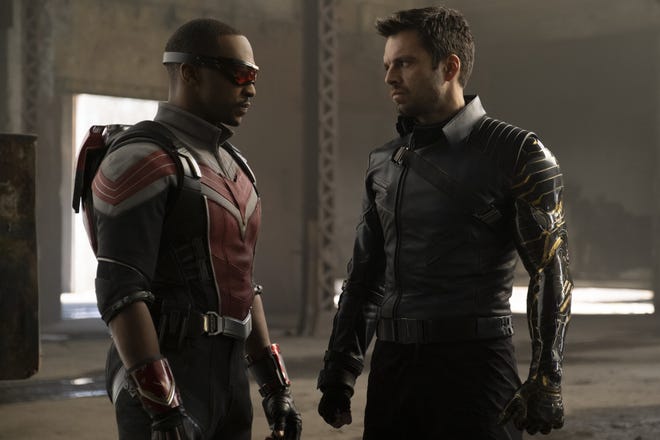
During Thursday’s episode of Variety’s “Awards Circuit” podcast, Mackie, who plays Sam Wilson, AKA Falcon, in the Marvel Cinematic Universe, was asked about fans “outright wanting Sam and Bucky (Barnes, played by Stan) to become a couple.”
Mackie, who stars alongside Stan in the Disney+ miniseries “The Falcon and the Winter Soldier,” replied that “in this day and age, so many things are twisted and convoluted.”
“There’s so many things that people latch onto with their own devices to make themselves relevant and rational,” he added.
Mackie went on to say that “the idea of two guys being friends and loving each other in 2021 is a problem because of the exploitation of homosexuality.”
“It used to be guys could be friends, we could hang out, we could do this, and it was cool,” he continued. “You would always meet your friends at the bar, but you can’t do that anymore, because something as pure and beautiful as homosexuality has been exploited by people who are trying to rationalize themselves.”
Mackie also said it’s important for him to represent “a sensitive, masculine figure” and that closeness between two men doesn’t always insinuate romance.
“There’s nothing more sensitive than having emotional conversations and a kindred-spirit friendship with someone that you care about and love,” he said. “And you can call it a ‘bromance’ or whatever they call it, but it’s literally just two guys who have each other’s backs, and you don’t have that now. You can’t find that now.”
He continued: “There’s no bro-code between bros in 2021, and that’s the thing. I think for a younger generation they don’t understand if I say that Sam and Bucky have a bro-code that cannot be broken or altered or, in any way, shape or form, changed.”
Mackie’s comments garnered mixed reactions on Twitter, where many users took issue with him shutting down the idea that Sam and Bucky could become a couple.
“Me, a queer person: *shipping my favs*,” wrote @pineapplebreads. “Anthony Mackie: This is an exploitation of homosexuality.”
“please stop asking about gay shipping in 2021,” wrote @dogunderwater. “i would prefer to be blithely unaware that anthony mackie is so uncomfortable with queer readings of his character that he thinks he can’t hang out at a bar with his dude friends.”
Other users said Mackie raised a valuable, though poorly worded, point.
“Anthony Mackie actually made a really good point about sensitivity in men being perceived incorrectly as a gay trait, and y’all intentionally misinterpreted the statement because… this is Twitter and we thrive off of negative attention, I guess,” wrote @CadenToMyHazel.
“I get the point Anthony Mackie was trying to make but he definitely should’ve worded it better,” wrote @AdvitInHiding. “Its totally not wrong for gay people to wish to see representation on the big screen, in the world’s biggest franchise. Also idk why he compared being a Superhero to being masculine…”
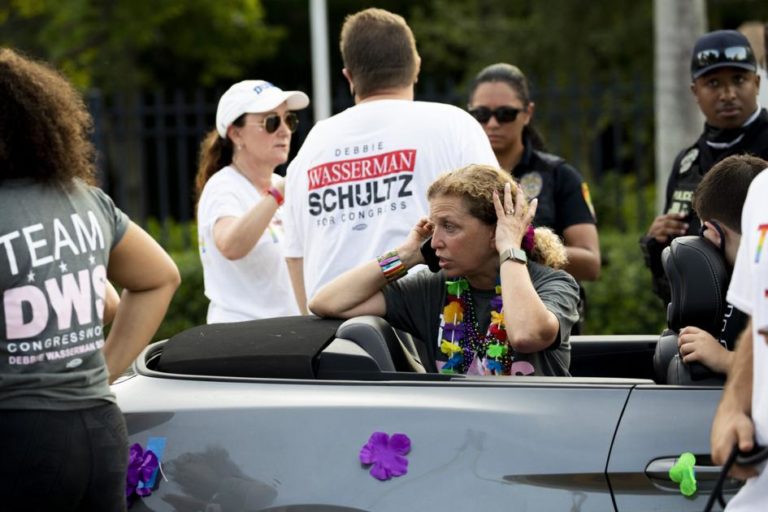

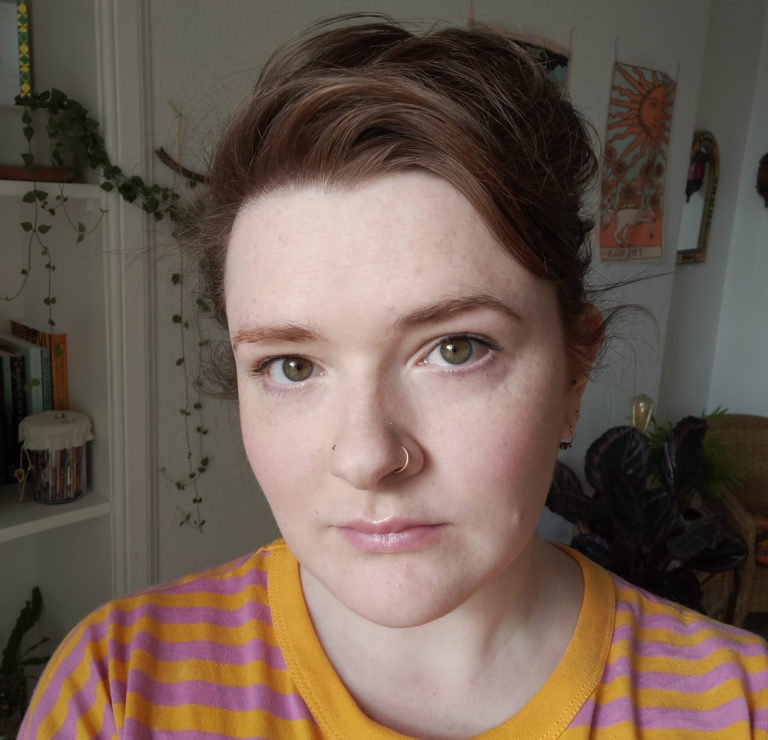


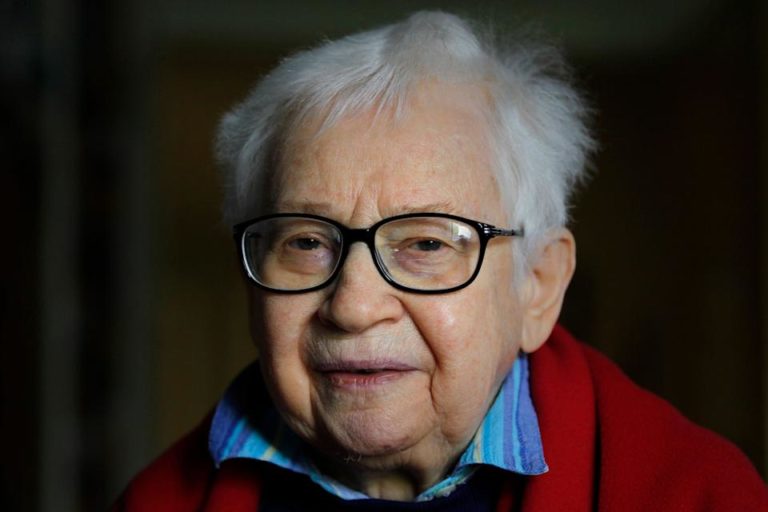







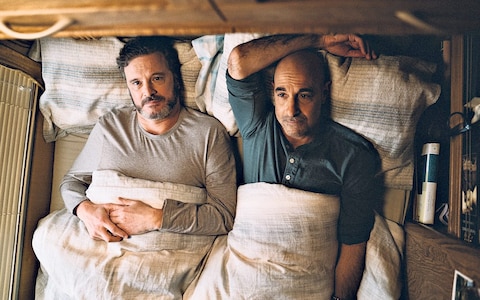




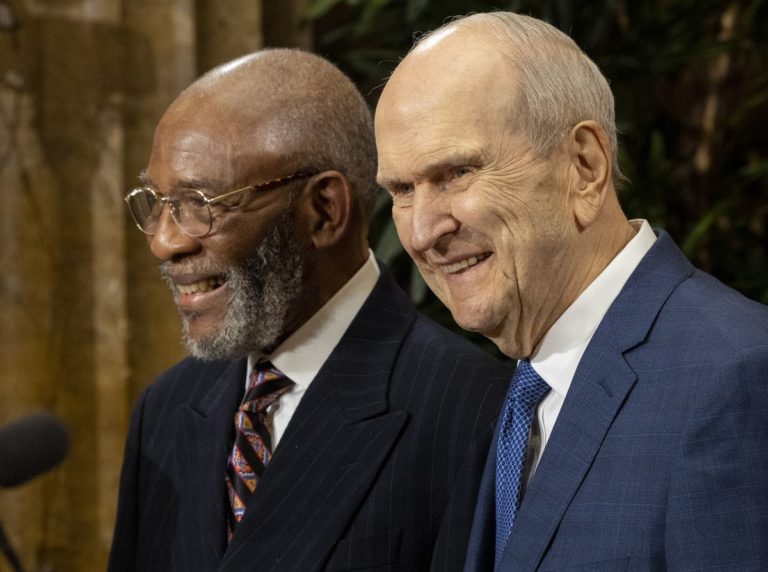
:format(webp):no_upscale()/cdn.vox-cdn.com/uploads/chorus_asset/file/22658472/merlin_2874107.jpg)