Home Blog Page 348

Bake Me A Wish! Celebrates Gay Pride with Delicious, Hand-Crafted, Fresh-baked “Happy Pride” Cake, Exclusively for the Month of June – Yahoo Finance

TipRanks

Raymond James: These 3 Stocks Have Over 100% Upside on the Horizon

We’re now in the heart of earnings season, and investors are paying close attention as companies report their financial results from the first quarter of 2021. It’s a routine, in some ways, but in others, there has never been an earnings season quite like this. It’s the first one post-pandemic, but perhaps more importantly, the results are coming out during a time of nearly unprecedented government stimulus spending. There’s no real comparison to tell just how the inflows of cash are going to impact the bottom lines. Weighing in from Raymond James, strategist Tavis McCourt has put his finger on some of the key points for investors to take cognizance of. First, McCourt notes that the “S&P 500 2021 consensus EPS continues to move higher, almost on a daily basis, and has increased another 2% in the first two weeks of earnings season.” McCourt identifies the correct historical setting to the current conditions: “We normally see forward earnings revisions positive in the first 1-2 years of an economic recovery…” The comparison breaks down, however, as the estimate revisions just keep moving higher. “…analysts/management teams/this strategist, continue to underestimate the positive impact fiscal support (not ‘modelable’ as it’s never been done in this fashion before) is having on corporate earnings,” McCourt added. Bearing this in mind, we wanted to take a closer look at three stocks that have earned Raymond James’ stamp of approval. Accompanying a bullish rating, the firm’s analysts believe each could climb over 100% higher in the year ahead. Running the tickers through TipRanks’ database, we got all the details and learned what makes them such compelling plays. Landos Biopharma (LABP) We’ll start with a newcomer to the markets. Landos Biopharma held its IPO just this past February, when it started trading on the NASDAQ. The company is a clinical-stage biopharma firm, with a focus on autoimmune diseases. Landos uses a proprietary computational platform to develop new drug candidates, and has identified seven so far. The lead candidate is BT-11 (omilancor), a new treatment for patients with ulcerative colitis. BT-11 is a small molecule that targets the Lanthionine Synthetase C-Like 2 (LANCL2) pathway, an action designed to limit gastrointestinal impact. In January of this year, Landos reported positive results from BT-11’s Phase 2 proof-of-concept trial, with remission rates of 11.5% at week 12 for patients with once-daily oral dosing. Landos plans to expand the omilancor clinical trials, with a Phase 3 study in ulcerative colitis patients and a Phase 2 study in Crohn’s disease patients scheduled for later this year. The company’s other drug candidates are at earlier stages of the development pipeline, but it did have positive results to report from its candidate NX-13, another potential for ulcerative colitis. In a Phase 1 tolerability trial on healthy volunteers, the company reported no adverse results while meeting all primary and secondary endpoints. A Phase 1b study is planned for the second half of 2021. Among the fans is Raymond James analyst Steven Seedhouse, who sees the value factor in the company’s novel approach. “[New] mechanisms particularly in chronic immune disorders 1) carve out a potentially larger slice of the TAM pie in the leading indication (in this case UC) and 2) open the door to follow-on indications once the new mechanism is validated in one immune disorder. The value proposition for BT-11 in theory is it could be like Otezla (PDE4 inhibitor), which was acquired by Amgen for $11.2B net of tax benefits at 7x prior year (2018) sales of $1.6B,” Seedhouse opined. Looking ahead, to the longer term, Seedhouse believes that Landos has charted a profitable path. “Mild UC patients comprise >50% of patients with active disease. The vast majority drugs approved or in development for UC over the last 20 years target the highly competitive (but smaller) ‘moderate to severe’ patient market, while the larger ‘mild to moderate’ population remains largely untapped outside of 5-ASAs and corticosteroids. Substantial efficacy and safety in 5-ASA refractory mild to moderate patients will help BT-11 reach our estimated unadjusted peak sales of ~$1B,” the analyst added. In line with these comments, Seedhouse rates LABP an Outperform (i.e. Buy), and his $33 price target suggests room for an impressive 219% upside in the coming year. (To watch Seedhouse’s track record, click here) Landos Biopharma has caught the analysts’ attention in its short time as a public company, and already has 4 reviews on record. These break down to 3 Buys and 1 Hold, for a Strong Buy consensus rating. Shares are priced at $10.18, and their $25.50 average price target implies an upside of 146%. (See LABP stock analysis on TipRanks) Haemonetics Corporation (HAE) Haemonetics Corporation is major player in the blood business. It produces a full range of blood collection and separation products, along with the software to run the machines and service agreements to maintain them. The US market for blood products has hit $10.5 billion last year, and its largest segment, plasma products and blood components, makes up some 80% of that market. Haemonetics’ product line is designed to meet the needs of that segment. HAE shares showed steady growth from last August through this February – a sustained period of 85% share appreciate. Earlier this month, however, HAE dropped 35%, to its lowest level in over three years, on news that CSL Pharma had declared intent not to renew its supply agreement with Haemonetics. The agreement, for supply and use of the PCS2 plasma collection system, provided Haemonetics with $117 million in revenue – or nearly 12% of the company’s total top line. In addition to the lost revenue, Haemonetics will have to swallow an additional $32 million in one-time losses related to the cancellation. The current supply agreement expires in June of next year. Analyst Lawrence Keusch, watching Haemonetics for Raymond James, saw fit to maintain his Outperform (i.e. Buy) rating on the stock, even after the CSL announcement. “We concede that Haemonetics has turned into a ‘show me’ story as it will be important for investors to understand the evolution of the corporate strategy in light of the loss of the CSL contract… we believe that Haemonetics can mitigate the estimated $0.85 impact to earnings from the contract loss (the company has ~14 months to right-size the organization) and move toward additional market share gains. We anticipate that it will take some time to gain visibility on a renewed course of growth,” Keusch noted. Keusch is willing to give HAE the time it needs to recover and return to a growth trajectory, and his $155 price target shows the extent of his confidence – a 128% upside for the stock over the next 12 months. (To watch Keusch’s track record, click here) Overall, Haemonetics shows a 5 to 2 breakdown in Buy versus Hold recommendations from the Wall Street analysts, giving HAE shares a Moderate Buy consensus rating. The stock has a $122 average price target, suggesting ~79% upside from the current trading price of $67.96. (See HAE stock analysis on TipRanks) Maxeon Solar Technologies (MAXN) Let’s shift gears, and look at the solar technology sector. Maxeon manufactures and sells solar panels world-wide, under the SunPower brand outside the US and in its own name inside the States. The company spun off of SunPower last summer, when the parent company split off its manufacturing business. Maxeon, the spin off company, is a solar panel maker, with a product line worth $1.2 billion in annual revenue, more than 900 patents in the solar industry, and over 1,100 sales and installation partners operating in over 100 countries. In the fourth quarter of 2021, the last one reported, Maxeon showed a solid sequential revenue gain, from $207 million to $246 million, an 18% gain. Earnings, which had been deeply negative in Q3 – at a $2.73 per share loss – were positive in Q4, when EPS came in at 11 cents. Raymond James’ Pavel Molchanov, rated 5-stars by TipRanks, is impressed by the company’s overall position in the market, and sees positives outweighing negatives. “This is a commodity story, with a near-term margin structure that is weighed down by legacy polysilicon supply. We are fans of the company’s above-average exposure to the European market, soon to be bolstered by the European Climate Law; as well as its joint venture participation in China, whose already world-leading PV newbuilds may get a further boost from the newly launched carbon trading program,” Molchanov wrote. To this end, Molchanov rates MAXN an Outperform (i.e. Buy), and sets a $45 price target indicating room for 127% growth in the year ahead. (To watch Molchanov’s track record, click here) MAXN shares have managed to slip under the radar so far, and have only garnered 2 recent reviews; Buy and Hold. The shares are priced at $19.86, with a $34 average target that indicates room for ~71% growth by year’s end. (See MAXN stock analysis on TipRanks) To find good ideas for stocks trading at attractive valuations, visit TipRanks’ Best Stocks to Buy, a newly launched tool that unites all of TipRanks’ equity insights. Disclaimer: The opinions expressed in this article are solely those of the featured analysts. The content is intended to be used for informational purposes only. It is very important to do your own analysis before making any investment.

FERRARI TO ANNOUNCE FIRST QUARTER 2021 FINANCIAL RESULTS ON MAY 4 – Yahoo Finance UK

Globe Newswire

The Global Smart Packaging Market is expected to grow by $ 2.89 bn during 2021-2025 progressing at a CAGR of about 7% during the forecast period

Global Smart Packaging Market 2021-2025 The analyst has been monitoring the smart packaging market and it is poised to grow by $ 2. 89 bn during 2021-2025 progressing at a CAGR of about 7% during the forecast period.New York, April 27, 2021 (GLOBE NEWSWIRE) — Reportlinker.com announces the release of the report “Global Smart Packaging Market 2021-2025” – https://www.reportlinker.com/p06063699/?utm_source=GNW Our report on smart packaging market provides a holistic analysis, market size and forecast, trends, growth drivers, and challenges, as well as vendor analysis covering around 25 vendors.The report offers an up-to-date analysis regarding the current global market scenario, latest trends and drivers, and the overall market environment. The market is driven by the growing demand for product quality and freshness and increase in demand for printed electronics. In addition, growing demand for product quality and freshness is anticipated to boost the growth of the market as well.The smart packaging market analysis include end user segment and geographical landscapesThe smart packaging market is segmented as below:By End User• Food and beverage• Healthcare• Personal care• Automotive• OthersBy Geographical Landscape• North America• Europe• APAC• South America• MEAThis study identifies the product launches across industries as one of the prime reasons driving the smart packaging market growth during the next few years.The analyst presents a detailed picture of the market by the way of study, synthesis, and summation of data from multiple sources by an analysis of key parameters. Our report on smart packaging market covers the following areas:• Smart packaging market sizing• Smart packaging market forecast• Smart packaging market industry analysisThis robust vendor analysis is designed to help clients improve their market position, and in line with this, this report provides a detailed analysis of several leading smart packaging market vendors that include 3M Co., Amcor Plc, Avery Dennison Corp., BASF SE, Emerson Electric Co., Huhtamäki Oyj, Insignia Technologies Ltd., International Paper Co., RR Donnelley & Sons Co., and Stora Enso Oyj. Also, the smart packaging market analysis report includes information on upcoming trends and challenges that will influence market growth. This is to help companies strategize and leverage all forthcoming growth opportunities.The study was conducted using an objective combination of primary and secondary information including inputs from key participants in the industry. The report contains a comprehensive market and vendor landscape in addition to an analysis of the key vendors.The analyst presents a detailed picture of the market by the way of study, synthesis, and summation of data from multiple sources by an analysis of key parameters such as profit, pricing, competition, and promotions. It presents various market facets by identifying the key industry influencers. The data presented is comprehensive, reliable, and a result of extensive research – both primary and secondary. Technavio’s market research reports provide a complete competitive landscape and an in-depth vendor selection methodology and analysis using qualitative and quantitative research to forecast the accurate market growth.Read the full report: https://www.reportlinker.com/p06063699/?utm_source=GNWAbout ReportlinkerReportLinker is an award-winning market research solution. Reportlinker finds and organizes the latest industry data so you get all the market research you need – instantly, in one place.__________________________ CONTACT: Clare: clare@reportlinker.com US: (339)-368-6001 Intl: +1 339-368-6001

Gay couple tie the knot at the foot of an erupting Icelandic volcano – PinkNews

Icelandic couple Sumarliði and Jón tied the knot while surrounded by streams of lava (Styrmir & Heiðdís / Pink Iceland)

It was lava at first sight for one gay couple who found the perfect wedding venue at the foot of an erupting Icelandic volcano.

Reykjavik residents Sumarliði and Jón had hoped to tie the knot in September last year until they were forced to postpone their wedding due to COVID.

But when the Fagradalsfjall mountain began showing volcanic activity a month ago, they realised their plan B could be even more incredible.

“It was beyond perfect, a day we’ll never forget,” Sumarliði told the Observer.

Living in a geothermal hotspot with around 30 active volcano systems means the couple are used to the odd eruption – but even so, Fagradalsfjall is quite the spectacle.

The “quiet” eruption on the Reykjanes peninsula is the first in the area for 800 years, and the steaming streams of lava have drawn around 50,000 visitors in the last few weeks.

With the help of Pink Iceland, an LGBT-owned wedding and travel company, Sumarliði and Jón jumped at the chance to use the phenomenal backdrop for their special day.

(Photo: Styrmir & Heiðdís / Pink Iceland)

“The whole idea was very last-minute as we then had four days to find suits, polish our rings, get Sumarliði’s hair cut, and meet with Árni, the wedding officiant,” Jón told Queerty.

For their next challenge the grooms had to trek for more than two hours through snow and wind just to reach the spot.

“The volcanic eruption site lies in a valley about 90 minutes from where we parked. So we hiked together in full hiking gear with trekking poles and the whole nine yards,” Jón said.

“The hike was fun but we had to walk through a snowstorm most of the way which stressed Sumarliði out as he was terrified of freezing to death once he’d changed into his wedding suit.”

Fortunately the skies cleared as the couple erected a pop-up tent and changed into their wedding suits – and then the volcano did all the rest.

“As we were about to start the ceremony, a wall in the crater burst and a slow river of neon-orange lava flowed past us as we said our vows, exchanged our rings and got married,” they said.

“Then we popped the champagne, had some cake, and Styrmir and Heiðdís, our wedding photographers, took photos of us in front of the fresh lava.

“It was a beautiful, awe-inspiring, and yet terrifying experience to get married in front of this majestic wonder of Mother Nature.”

Gay couple tie the knot at the foot of an erupting Icelandic volcano
(Photo: Styrmir & Heiðdís / Pink Iceland)
Gay couple tie the knot at the foot of an erupting Icelandic volcano
(Photo: Styrmir & Heiðdís / Pink Iceland)
Gay couple tie the knot at the foot of an erupting Icelandic volcano
(Photo: Styrmir & Heiðdís / Pink Iceland)

As you can imagine, pulling off the perfect wedding ceremony on an active volcanic site was no easy task.

Birna Hrönn Björnsdóttir, a wedding planner for Pink Iceland, said they scouted for a possible location several days earlier but had to turn away because of dangerous volcanic gases.

“We were well aware we were not in charge. Mother Nature is in charge,” she told the BBC. “So one of the security measures was to have a gas measurement type of thing with us at all times.

“We had the luxury of picking from three craters that were erupting when we got there. And almost immediately, as we chose the spot, after we had hiked for three or four hours, the sky kind of cleared and we got a blue sky.”

Local vulcanologists predict the eruption could continue for months, if not years, so Sumarliði and Jón are unlikely to be the last to take advantage of the natural phenomenon.

After Sumarliði and Jón’s success Pink Iceland is welcoming more couples to visit the volcano, “as long as they are not racist, sexist or queerphobic”.

“Our dedication is to equality, kindness and support of all love,” Björnsdóttir said.

Gay couple celebrate their love by tying the knot next to ‘beautiful, awe-inspiring’ erupting volcano – Yahoo Eurosport UK

It was lava at first sight for one gay couple who found the perfect wedding venue at the foot of an erupting Icelandic volcano.

Reykjavik residents Sumarliði and Jón had hoped to tie the knot in September last year until they were forced to postpone their wedding due to COVID.

But when the Fagradalsfjall mountain began showing volcanic activity a month ago, they realised their plan B could be even more incredible.

“It was beyond perfect, a day we’ll never forget,” Sumarliði told the Observer.

Living in a geothermal hotspot with around 30 active volcano systems means the couple are used to the odd eruption – but even so, Fagradalsfjall is quite the spectacle.

The “quiet” eruption on the Reykjanes peninsula is the first in the area for 800 years, and the steaming streams of lava have drawn around 50,000 visitors in the last few weeks.

With the help of Pink Iceland, an LGBT-owned wedding and travel company, Sumarliði and Jón jumped at the chance to use the phenomenal backdrop for their special day.

“The whole idea was very last-minute as we then had four days to find suits, polish our rings, get Sumarliði’s hair cut, and meet with Árni, the wedding officiant,” Jón told Queerty.

For their next challenge the grooms had to trek for more than two hours through snow and wind just to reach the spot.

“The volcanic eruption site lies in a valley about 90 minutes from where we parked. So we hiked together in full hiking gear with trekking poles and the whole nine yards,” Jón said.

“The hike was fun but we had to walk through a snowstorm most of the way which stressed Sumarliði out as he was terrified of freezing to death once he’d changed into his wedding suit.”

Fortunately the skies cleared as the couple erected a pop-up tent and changed into their wedding suits – and then the volcano did all the rest.

“As we were about to start the ceremony, a wall in the crater burst and a slow river of neon-orange lava flowed past us as we said our vows, exchanged our rings and got married,” they said.

“Then we popped the champagne, had some cake, and Styrmir and Heiðdís, our wedding photographers, took photos of us in front of the fresh lava.

“It was a beautiful, awe-inspiring, and yet terrifying experience to get married in front of this majestic wonder of Mother Nature.”

Gay couple tie the knot at the foot of an erupting Icelandic volcano

Gay couple tie the knot at the foot of an erupting Icelandic volcano

Gay couple tie the knot at the foot of an erupting Icelandic volcano

Gay couple tie the knot at the foot of an erupting Icelandic volcano

Gay couple tie the knot at the foot of an erupting Icelandic volcano

Gay couple tie the knot at the foot of an erupting Icelandic volcano

As you can imagine, pulling off the perfect wedding ceremony on an active volcanic site was no easy task.

Birna Hrönn Björnsdóttir, a wedding planner for Pink Iceland, said they scouted for a possible location several days earlier but had to turn away because of dangerous volcanic gases.

“We were well aware we were not in charge. Mother Nature is in charge,” she told the BBC. “So one of the security measures was to have a gas measurement type of thing with us at all times.

“We had the luxury of picking from three craters that were erupting when we got there. And almost immediately, as we chose the spot, after we had hiked for three or four hours, the sky kind of cleared and we got a blue sky.”

Local vulcanologists predict the eruption could continue for months, if not years, so Sumarliði and Jón are unlikely to be the last to take advantage of the natural phenomenon.

After Sumarliði and Jón’s success Pink Iceland is welcoming more couples to visit the volcano, “as long as they are not racist, sexist or queerphobic”.

“Our dedication is to equality, kindness and support of all love,” Björnsdóttir said.

LGBT News New Jersey | Gay, Lesbian, Bisexual, Transgender news – Out In Jersey

Rainbow FamilyU.S. News and World Report writer crunches the numbers

The 2010 census marked the first time that same-sex married couples will be counted as such in the decennial population count. During the 2000 census, even when no state recognized same-sex marriages, many gay couples listed themselves as spouses; now that five states, plus the District of Columbia, issue licenses to same-sex couples, the bureau will be able to count them more accurately, and that data will be released for the first time ever this November.  Danielle Kurtzleben’s article in U.S. News and World Report avaialble here.

April Hunter: Newcastle fighter’s statement of pride recognised with awards nomination in Lesbian Visibility Week – Sky Sports

A photo posted on social media by April Hunter from her holidays could have caused her to be sent to prison.

“It ended up in all the newspaper saying: ‘Boxer risks jail,'” she tells Sky Sports.

Hunter was kissing her girlfriend Jenny Hogg in the photo, and she captioned the post: “Illegal to be gay in the Maldives and other Muslim countries still in this day and age is mental.

This was the photo that April Hunter posted
Image: Hunter’s holiday snap brought her global media attention but she says her and girlfriend Jenny Hogg have always been ‘very open’ about who they are

“Anyways this is our thought.”

The social post made headlines around the world in February 2020, and drew praise for Hunter for her pride and visibility.

She now reflects: “You can get lashings or eight years in prison for being gay in the Maldives.”

Hunter has since been recognised with a nomination at the 2021 DIVA Awards, with the winners set to be announced on Thursday night. The ceremony is a focal point of Lesbian Visibility Week, which is celebrating the work and activism of LGBT+ women across society.

The Sport category shortlist reflects those whose “achievements have helped promote equality and inclusion on and off the field”.

Hunter jokes: “Do you think it was because of the Maldives picture?

“Me and Jen are very open. It’s good what [the DIVA Awards] are doing – allowing people to be who they want to be.

“It’s a different age now, isn’t it?”

The 25-year-old is undefeated in her first three fights of a career that began a year-and-a-half ago. She won last Friday night in Spain against Elsa Hemat via majority decision and hopes to return to the ring in June in her home city of Newcastle.

She has an ally in Tony Bellew, the ex-cruiserweight champion who is now her manager.

Last September, Bellew posted proudly at the wedding of his brother, who is gay, which “was really positive”, according to Hunter.

Bellew is also good for a pep talk, such as in the build-up to Hunter’s victory over France’s Hemat in Barcelona. She laughs: “His advice to me was: ‘Punch her head in!'”

She is a former football player who was once on Newcastle United’s books until a serious knee injury curtailed her hopes and led to a downwards spiral in her mental health.

It is how she discovered boxing, she says: “I just went to the gym to lose weight. I had put on weight after injuring my knee through football.

“I fell in love with it – in my first session, I was sparring with the lads.

April Hunter
Image: Hunter is now training at the Rotunda in Liverpool but hopes to fight again in her hometown of Newcastle early this summer

“Even when I was terrible, I was saying: ‘I want to be a world champion’.

“It has saved me from going down a bad path. It has kept me on the straight and narrow.

“I was a tearaway.

“You hear a lot of people with this story. Boxing keeps people right.”

Lesbian Visibility Week runs from Monday, April 26, to Sunday, May 2.

Sky Sports is a member of TeamPride which supports Stonewall’s Rainbow Laces campaign. Your story of being LGBT+ or an ally could help to make sport everyone’s game. To discuss further, please contact us here.

Illinois players to watch after successful spring game outings – Daily Illini

Last Monday, the Illini played their annual spring football game to showcase how the team has progressed since new head coach Bret Bielema and his staff took over. A lot has changed on both offense and defense for Illinois, and fans got a glimpse of what to expect for the fall.

One of the thinnest positions on the team heading into 2021 is the wide receiver group. Josh Imatorbhebhe, the team’s top receiver over the past two seasons, left the Illini for the NFL Draft. The only other players who caught a significant amount of passes last season were Brian Hightower, Donny Navarro and tight end Daniel Barker, leaving a lot of unknowns within the group.

However, two receivers that showed during the spring game that they could have a bigger role come the fall were Khmari Thompson and Carlos Sandy. 

Thompson transferred to Illinois from Missouri after the 2019 season. No one was really sure how he would be used, whether it be as a receiver or primarily on special teams due to his speed. Last season he appeared in five games and was mostly used as a kick-off returner.

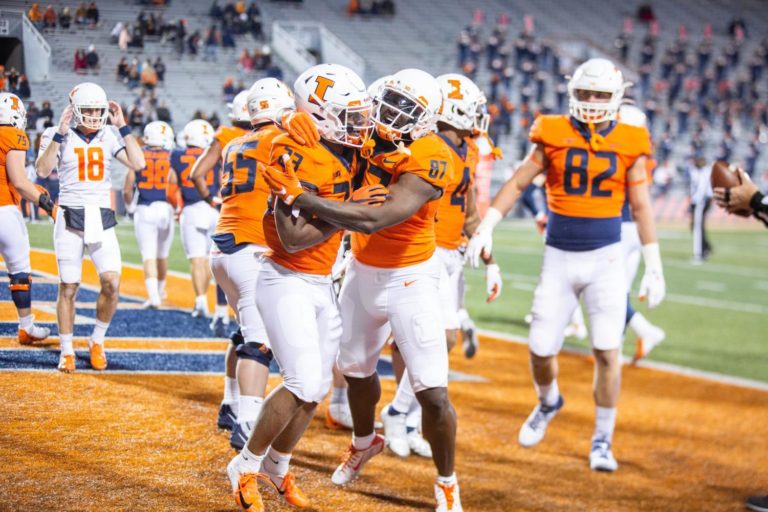
Despite not being in the receiver group much last year, Thompson was placed on the first team for the spring game and appeared as a wide receiver. He made a significant impact as well, totaling 40 reception yards and catching quarterback Brandon Peters’ only touchdown pass. 

“He’s a guy that has been diligent about his work,” Bielema said of Thompson. “A lot of times when I’m leaving at night … he’s still here in the building watching film and trying to get better. I really think he’s seeing the benefits of putting in hard work and the rewards that come out of it.”

Sandy is a senior and has been at receiver for the past three seasons, but he hasn’t seen much action at all. His first career touchdown didn’t come until his junior year, which caused many people to be a little surprised when he was also placed on the first team. 

Though he hasn’t gotten much action yet in his time at Illinois, that seems like it will change come the fall. Sandy caught Peters’ first pass of the day and ended with 56 reception yards, including a long of 24. 

“Carlos is a guy that’s really jumped out to me here as of late,” Bielema said. “Carlos has grown every practice.”

Another guy that almost surely will be catching more passes than he did last season based on his performance in the spring game is tight end Luke Ford.

Ford came to Illinois as a transfer from Georgia, and despite a lot of hype surrounding his name, he wasn’t used the way many expected in his first year with Illinois. He caught just two passes last season, leaving questions as to how he would be used under the new staff.

This new staff sees a lot more value than last year’s staff did, though, because Ford had one of the best games out of everyone on the field. He caught all five of his targets, was second on the team with 88 yards and scored a touchdown. 

“I appreciate Luke’s effort,” Bielema said of Ford. “I think just in this short time I’ve been around him, I’ve seen his maturity level and just in everything he’s doing take a big step forward. You put in time, and you get rewarded for it, and he’s really bought in.”

Unlike the receiving core, one of Illinois’ strongest groups may be the running backs. Whether Mike Epstein decides to come back, the running back room looks to be strong, as showcased during the spring game.

Chase Brown was used with Epstein as the main running back last year. Brown had a solid spring game, but two guys that also impressed that haven’t seen the field much yet as Illini were Chase Hayden and Reggie Love III. 

Hayden came to the Illini this year after playing under Bielema at Arkansas for two years before transferring to Eastern Carolina. He hasn’t done much in his college career yet, but his senior season at Illinois may change that.

Hayden carried the ball seven times during the game for 52 yards and a touchdown, averaging 7.4 yards per carry. Bielema has watched him since high school and is excited to make him a part of his offense come the fall. 

“Chase has been a guy that’s impressed me from back in the high school days,” Bielema said. “Plays with good pad level, understands it, sees where he’s going. I really thought he’d be a good addition for us here, and he’s kinda turned into that. … Should be a valuable player for us in our offense.”

Love III played in six games for Illinois last year as a freshman and didn’t do anything significant. He had only 10 carries all year, but his role is set to change significantly his sophomore season. 

Love III received a ton of high-profile offers while in high school and is someone the Illini have been excited to play for two years. He is a little smaller at 5-foot-11 but makes up for it with his quick feet. Love III ran for 63 yards and a touchdown during the spring game.

“Reggie has been impressive to me,” Bielema said. “You wanna look for three things: how quick their feet are, how well they can accelerate and decelerate and how well they can play laterally by going forward, … and he really displays all of that.”

Defensively, there wasn’t a lot to show during the spring game. The competition of backups didn’t allow the defensive backs or linebackers to show anything off, but there were position changes to look out for, two of which showed out in the game.

Isaiah Gay and Owen Carney Jr. both made the switch to outside linebacker from the defensive line despite neither of them seeing  outside linebacker action in their college careers. But due to defensive coordinator Ryan Walters’ different schemes, he moved Gay and Carney Jr. to OLB, and both showed out.

Gay and Carney Jr.’s names seemed to be called out all night, as the two combined for six tackles and three sacks with a lot of hurry-up on the opposing quarterback. It was only one game, but Bielema is excited to see the duo perform in the fall. 

“Isaiah’s been an intriguing guy since we arrived here,” Bielema said. “Obviously a guy that’s put together the right way and a very impressive athlete. I think when you have Owen Carney and Isaiah Gay on the edges there, … it’s gonna be tough to move the ball against us.”

The spring game ended in a 65-15 blowout for the first team and didn’t tell fans everything they needed to know for the upcoming season, but it did give an idea of what’s to come this fall. On both offense and defense, it appears many players will take on bigger roles than they have before as Illini, and they were able to show that off to fans during the spring game. 

@JPietsch14

[email protected]

Denver gets a gay sports bar, Tight End, in time for spring season – The Know

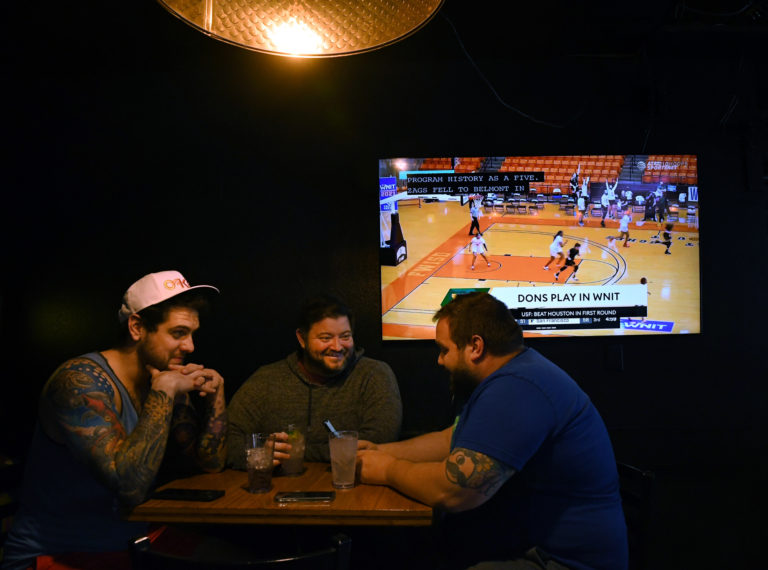
Todd Brown, left, Aaron Scoresby, and Seth Koonce, right, join other patrons at the newly-opened Tight End, Denver’s first gay sports bar, on April 24. The bar has an outdoor patio, nine televisions, and a full cocktail and beer menu. (Kathryn Scott, Special to The Denver Post)

Tight End, a sports bar built for Denver’s gay community, has officially opened at the East Colfax address previously occupied by Streets Denver.

Owner Steven Alix took over the space this month after Streets closed at the end of March. That two-decade-old bar had faced a particularly difficult final year in the pandemic; its owner John Elliott died in November after his second COVID-19 diagnosis.

RELATED: Streets of London owner John Elliott dies after contracting COVID-19 a second time

Now Alix, who also owns X Bar and Squire Lounge, wants to create an intentional gathering space in the former punk rock venue. (When Elliott had purchased Streets in 2018, he also sought to change its more recent reputation as a neo-Nazi hangout.)

Customers gather at the newly-opened Tight End, Denver’s first gay sports bar, on April 24. (Kathryn Scott, Special to The Denver Post)

The new Tight End will partner with gay sports leagues across Denver, Alix said. And while a giant Streets of London awning still covers the front of the building — “We’re working on that.” — the inside features nine TVs and a full bar, and opens onto turf-covered front and back patios.

“All the big cities have these sports bars and ours didn’t,” Alix said. “Plus, we’re a huge sports city anyway, we have all the big national teams here. It seemed like the perfect match.”

1501 E. Colfax Ave., 303-861-9103, 3 p.m. to 2 a.m. Monday through Saturday and noon to 2 a.m. Sunday, food available from 3 Guys Pies next door, tightendbar.com

Subscribe to our new food newsletter, Stuffed, to get Denver food and drink news sent straight to your inbox.

Solomon Alidor-Hamilton becomes Justin Fashanu Mental Health Ambassador – Canaries.co.uk

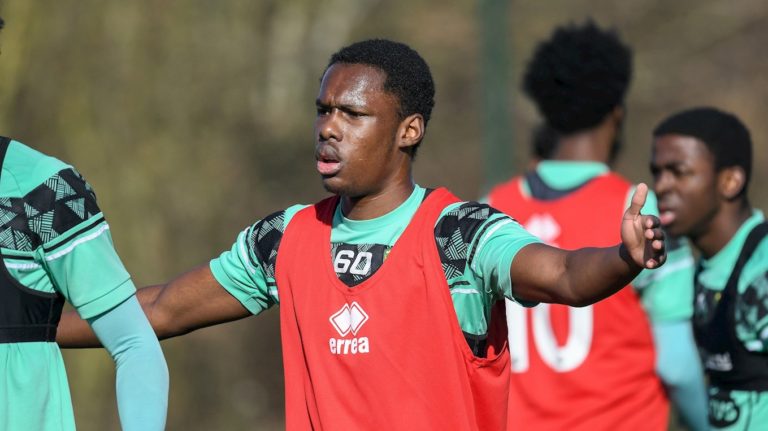
Norwich City Under-18s player Solomon Alidor-Hamilton has become a Justin Fashanu Mental Health Ambassador in partnership with the Justin Fashanu Foundation.

The U18s player joins Under-23s goalkeeper Jon McCracken and winger Tony Springett, replacing Caleb Richards after he joined Kidderminster Harriers in January.

Much like his U23s counter-parts, Alidor-Hamilton will work closely with the Academy’s player care department as a middle-man for teammates to go to and discuss any issues that may arise.

The roles first emerged back in July 2020, when it was announced that the title would be made in tribute to former Norwich City player and football’s first openly gay footballer, Justin Fashanu. His niece, Amal Fashanu, runs the foundation in his name to raise awareness on mental health, homophobia and racism issues in the sport.

Speaking on taking on the role, Alidor-Hamilton said: “The things that have happened to me personally this season drove me to make this decision. I think it’s a good thing to help others with their mental health issues coming from a place where I’ve gone through it.

“My experience can help people that are going through the hard times, I think I can help make them feel alright and be their support.

“When you have a positive mindset, you can get a good performance out of yourself. Making sure your mental health is on track can help out there on the pitch as well.”

Discussing the support he’s receiving in his new role from the pre-existing ambassadors and player care, Alidor-Hamilton spoke highly of their help in getting him started in his new role.

“From their experience, being older than me as well, I can talk to them and they can help me so I can be strong in that role. Having their support in this role is very good.

“Clive [Cook, head of player care] said he’ll put me in some courses to help with being a good mental health ambassador, so it’ll be good for me to learn off that and move forward with this.”

Public Health Watch: Latest STI Numbers for US a “Call to Action” – Contagionlive.com

We may be in the midst of the COVID-19 pandemic now, but we’ve arguably been dealing with another epidemic for some time.

New data released from the US Centers for Disease Control and Prevention on April 13 has revealed that reported annual cases of sexually transmitted infections (STIs) across the country reached an all-time high for the sixth consecutive year in 2019, the most recent year for which figures are available. Fueling the most recent increase, in 2019, are an estimated 2.5 million new cases of chlamydia, gonorrhea, and syphilis, the three most-reported STIs nationally.

Given that the findings highlight the continuation of an ongoing trend, they hardly come as a shock. Still, experts urge both healthcare professionals and the public to view them as a “call to action.”

“These data are not new—we have been seeing these increases for several years. But what is truly concerning is that the increases in STIs are among racial, ethnic, gender, and sexual minority groups, who may not have safe or available access to sexual health services,” Jill Blumenthal, MD, an associate professor of medicine in the Antiviral Research Center at the University of California-San Diego Medical Center told Contagion®. “The time is absolutely now for infectious disease specialists and public health professionals to work collaboratively alongside these affected populations to develop innovative strategies to reach those most impacted by these trends.”

Although there was a nearly 30% increase in reportable STIs between 2015 and 2019, the burden of these diseases is “not equal,” to use the CDC’s phrase. Black Americans were 5 to 8 times as likely to be diagnosed with an STI during the period, compared to White Americans. Similarly, American Indian or Alaska Native and Native Hawaiian or Other Pacific Islander people had 3- to 5-fold higher risks for STIs compared to White Americans, while Hispanic/Latino people had up to double the risk.

In addition, gay and bisexual men made up nearly half of all primary and secondary syphilis cases in 2019, and rates of gonorrhea within this group were 42 times that of heterosexual men in some parts of the country.

What’s particularly alarming about these figures, according to observers, is that they run counter to trends seen in other “Western” or “developed” countries. Indeed, based on figures from the World Health Organization (WHO), Europe, for example, has managed to keep the incidence of STIs relatively low, outside of an uptick in chlamydia cases in the mid-2000s and rises in gonorrhea incidence 10 years earlier.

“We are one of the few … developed countries without comprehensive sex education in schools—and this has been true for the 40 years of my life,” Megha Ramaswamy, PhD, MPH, professor of population health at the University of Kansas School of Medicine in Kansas City, said. “This alone is sufficient to explain disparities in sexual health respective to other Western countries. We also don’t have universal health insurance and have incredible stigmas about sex, pleasure, and sexual health—all of which contribute to these disparities. The US is also unique in the West in its politicization of women’s health and sexual health, which does a huge disservice in terms of policies, programs, and resources that might mitigate the STI burden.”

In addition to bolstering sex education programs in schools and destigmatizing sex and sexual health, school, public health, and political leaders nationally must get behind initiatives that “normalize” safe sex practices and make STI prevention options, such as preexposure prophylaxis (PrEP) for HIV and the HPV vaccine, “ubiquitous,” Dr. Ramaswamy added. To date, uptake of PrEP “remains relatively low, due to issues with reimbursement, provider biases, lack of provider knowledge, diffusion of misinformation through media sources, and individual lack of sexual health literacy,” she noted.

“Until those issues are addressed, we really can’t expect to realize the benefits of these innovations,” she said.

Blumenthal agreed. “There are many factors that are likely driving these trends [in STI rates]—including… decreased condom use among vulnerable populations and provider complacency—but one of the most significant is decreased funding for and access to STI services, which has been exacerbated during the COVID-19 pandemic,” she said.

Meaning: We can’t afford to lose sight of the epidemic because of the pandemic.

Centene Corporation Reports First Quarter 2021 Results And Increases 2021 Guidance – BioSpace

  • Diluted EPS of $1.19; Adjusted Diluted EPS of $1.63
  • Raises Total Revenue and Adjusted Diluted EPS Guidance

ST. LOUIS, April 27, 2021 /PRNewswire/ — Centene Corporation (NYSE: CNC) announced today its financial results for the first quarter ended March 31, 2021, reporting diluted earnings per share (EPS) of $1.19 and adjusted diluted EPS of $1.63.

In summary, the 2021 first quarter results were as follows:

Total revenues (in millions)

$

29,983


Health benefits ratio

86.8

%

SG&A expense ratio

8.4

%

Adjusted SG&A expense ratio (1)

8.1

%

GAAP diluted earnings per share

$

1.19


Adjusted diluted EPS (1)

$

1.63


Total cash flow provided by operations (in millions)

$

43


(1) A full reconciliation of the adjusted SG&A expense ratio and adjusted diluted EPS is shown on page six of this release.

“Centene is off to a strong start in 2021, with solid revenue and earnings growth. We are increasing our full-year guidance, driven by the positive first quarter momentum and the tailwinds we expect to persist throughout the months ahead,” said Michael F. Neidorff, Chairman, President and Chief Executive Officer of Centene. “While we remain vigilant around the unique dynamics of the current operating environment, we are confident in the strength of our diversified healthcare enterprise and the compelling avenues for growth and value creation across our portfolio. We continue to drive forward our technology strategy and the combination with Magellan remains on track to close in the second half of 2021, providing us with additional capabilities to expand access to care and nurture a fully integrated model across behavioral and physical health.”

First Quarter Highlights

  • March 31, 2021 managed care membership of 25.1 million, an increase of 1.3 million members, or 5%, compared to March 31, 2020.
  • Total revenues of $30.0 billion for the first quarter of 2021, representing 15% growth compared to the first quarter of 2020.
  • Health benefits ratio (HBR) of 86.8% for the first quarter of 2021, compared to 88.0% in the first quarter of 2020.
  • Selling, general and administrative (SG&A) expense ratio of 8.4% for the first quarter of 2021, compared to 9.9% for the first quarter of 2020.
  • Adjusted SG&A expense ratio of 8.1% for the first quarter of 2021, compared to 8.6% for the first quarter of 2020.
  • Diluted EPS for the first quarter of 2021 of $1.19, compared to diluted EPS of $0.08 for the first quarter of 2020.
  • Adjusted diluted EPS for the first quarter of 2021 of $1.63, compared to $0.86 for the first quarter of 2020.
  • Operating cash flow of $43 million for the first quarter 2021, reflecting a $910 million delay in premium payments from one of our states.

Other Events

  • In March 2021, Centene announced its Hawaii subsidiary, ‘Ohana Health Plan, was selected by the Hawaii Department of Human Services’ Med-QUEST Division to continue administering covered services to eligible Medicaid and Children’s Health Insurance Program (CHIP) members for medically necessary medical, behavioral health, and long-term services and supports. The new statewide contract is anticipated to begin July 1, 2021.
  • In March 2021, Centene partnered with the YWCA USA to deploy Young Women Choosing Action, an innovative program designed to engage 13- to 19-year old girls from low-income families, especially individuals of color, over the course of three years.
  • In March 2021, Centene announced the expiration of the the waiting period under the Hart-Scott-Rodino Antitrust Improvements Act of 1976 with respect to the Company’s proposed acquisition of Magellan Health Inc.
  • In March 2021, Centene partnered with several members of the Pro Football Hall of Fame to increase education and awareness around COVID-19 vaccines through a series of new 15-, 30- and 60-second public service announcements, with a particular focus on communities of color.
  • In March 2021, Centene announced Katie Casso had been named Senior Vice President, Corporate Controller, effective April 1, 2021. Christopher Isaak, Senior Vice President, Corporate Controller and Chief Accounting Officer announced his retirement, effective April 30, 2021.
  • In March 2021, Centene announced four executive leadership appointments to support the Company’s continued growth and innovation. Brent Layton was appointed to President of U.S. Health Plans, Products, and International. Sarah London was appointed to President, Health Care Enterprises and Executive Vice President, Advanced Technology. Shannon Bagley was appointed to Executive Vice President, Chief Administrative Officer. H. Robert Sanders was appointed to Executive Vice President, Global Human Resources. The appointments were effective March 1, 2021.
  • In February 2021, Centene announced its Hawaii subsidiary, ‘Ohana Health Plan, was selected to continue administering services through the Community Care Services program in partnership with the Hawaii Department of Human Services’ Med-QUEST Division. The new three-year, statewide contract is anticipated to begin July 1, 2021.
  • In February 2021, Centene issued $2.0 billion 2.50% Senior Notes due 2031 and used the proceeds, together with cash on hand, to complete a tender offer to purchase for cash any and all of the outstanding aggregate principal amount of the $2.2 billion 4.75% Senior Notes due 2025 (the 2025 Notes) and subsequently redeemed the 2025 Notes that remained outstanding following the tender offer, including all premiums, accrued interest and costs and expenses related to the redemption.
  • In January 2021, Centene began administering the Buckley Prime Service Area Pilot in the Denver, Colorado area, which is a TRICARE pilot program for value-based payment arrangements not currently an option in the fee-for-service T2017 reimbursement model.

Accreditations & Awards

  • In February 2021, Centene’s subsidiary, Ambetter of Absolute Total Care, earned Accreditation from the National Committee for Quality Assurance (NCQA).
  • In January 2021, the Human Rights Campaign (HRC) Foundation named Centene a 2021 Best Place to Work for LGBTQ Equality for the fourth consecutive year, after receiving a score of 100 percent on the HRC’s Corporate Equality Index (CEI). The CEI is a national benchmarking tool on corporate policies, benefits, and practices that improve the experiences of lesbian, gay, bisexual, transgender, and queer employees.
  • In January 2021, for the third consecutive year, Bloomberg named Centene in its 2021 Gender-Equality Index (GEI), which lists companies recognized as global leaders in advancing women in the workplace. Organizations included in the elite list represent 44 countries and regions from around the world and are spotlighted for their efforts to ensure a more equal workplace.
  • In January 2021, Centene’s subsidiary, Centurion, earned the Telehealth Accreditation from the Utilization Review Accreditation Commission.
  • In January 2021, Ascension Complete, Centene’s joint venture with Ascension, earned Accreditation from the NCQA.

Membership

The following table sets forth our membership by line of business:


March 31,


2021


2020

Traditional Medicaid (1)

12,307,400


10,397,900


High Acuity Medicaid (2)

1,529,000


1,488,200


Total Medicaid

13,836,400


11,886,100


Commercial

2,384,300


2,728,200


Medicare (3)

1,138,500


918,400


Medicare PDP

4,109,700


4,416,500


International

597,400


599,900


Correctional

144,900


172,000


Total at-risk membership

22,211,200


20,721,100


TRICARE eligibles

2,881,400


2,864,800


Non-risk membership

4,400


216,200


Total

25,097,000


23,802,100


(1) Membership includes TANF, Medicaid Expansion, CHIP, Foster Care and Behavioral Health.

(2) Membership includes ABD, IDD, LTSS and MMP Duals.

(3) Membership includes Medicare Advantage and Medicare Supplement.

The following table sets forth additional membership statistics, which are included in the membership information above:


March 31,


2021


2020

Dual-eligible (4)

1,086,300


879,000


Health Insurance Marketplace

1,900,900


2,199,300


Medicaid Expansion

2,267,400


1,764,600


(4) Membership that is eligible for both Medicaid and Medicare benefits.

Revenues

The following table sets forth supplemental revenue information ($ in millions):


Three Months Ended March 31,


2021


2020


% Change

Medicaid

$

20,191


$

17,401


16

%

Commercial

3,898


4,119


(5)

%

Medicare (5)

3,757


2,656


41

%

Medicare PDP

582


600


(3)

%

Other

1,555


1,249


24

%

Total Revenues

$

29,983


$

26,025


15

%

(5) Membership includes Medicare Advantage and Medicare Supplement.


Statement of Operations: Three Months Ended March 31, 2021

  • For the first quarter of 2021, total revenues increased 15% to $30.0 billion from $26.0 billion in the comparable period of 2020. The increase over the prior year was due to a full quarter of WellCare and the ongoing suspension of Medicaid eligibility redeterminations, which was partially offset by an overall decrease in Marketplace membership, state premium rate adjustments and risk sharing mechanisms, and the repeal of the health insurer fee.
  • HBR of 86.8% for the first quarter of 2021 represents a decrease from 88.0% in the comparable period in 2020. The year-over-year decrease was attributable to lower medical utilization trends due to the COVID-19 pandemic and lower costs associated with the flu. The decrease was partially offset by higher testing and treatment costs associated with COVID-19, state premium rate adjustments and risk sharing mechanisms, and higher COVID-19 and traditional utilization in the Marketplace business.
  • The SG&A expense ratio was 8.4% for the first quarter of 2021, compared to 9.9% in the first quarter of 2020. The decrease was due to lower acquisition related expenses, the ongoing suspension of Medicaid eligibility redeterminations, and the leveraging of expenses over higher revenues as a result of recent acquisitions.
  • The adjusted SG&A expense ratio was 8.1% for the first quarter of 2021, compared to 8.6% in the first quarter of 2020. The adjusted SG&A expense ratio benefited from the ongoing suspension of Medicaid eligibility redeterminations, the leveraging of expenses over higher revenues due to recent acquisitions, and decreased ongoing compensation costs due to restructuring activities.
  • The effective tax rate was 25.9% for the first quarter of 2021, compared to 64.9% in the first quarter of 2020. The effective tax rate for the first quarter of 2021 reflects the repeal of the health insurer fee beginning in 2021. The 2020 effective tax rate was also driven by the non-deductibility of certain acquisition related expenses and the tax impact associated with the Illinois divestiture. For the first quarter of 2021, our effective tax rate on adjusted earnings was 25.4%.

Balance Sheet

At March 31, 2021, the Company had cash, investments and restricted deposits of $25.6 billion and maintained $369 million of cash and cash equivalents in our unregulated entities. Medical claims liabilities totaled $12.8 billion. The Company’s days in claims payable was 49 days, which is a decrease of two days over the fourth quarter of 2020 due to the timing of medical and pharmacy claims payments. Total debt was $16.8 billion, which included $152 million of borrowings on our $2.0 billion revolving credit facility at quarter end. The debt to capitalization ratio was 38.5% at March 31, 2021, excluding $184 million of non-recourse debt. Our debt to capital ratio would have been 38.0% at March 31, 2021, when netting unregulated cash and cash equivalents with debt, and excluding non-recourse debt.

Outlook

The Company’s guidance has been updated to reflect the following:

  • ongoing suspension of Medicaid eligibility redeterminations to August 1,
  • the extensions of the California pharmacy services to July 1 and New York pharmacy services through 2022,
  • the Marketplace special enrollment period,
  • the recent Oklahoma contract awards,
  • Medicare membership, sequestration, and the fee schedule increase, and
  • updated expectations regarding state premium rate adjustments and risk sharing mechanisms.

These items will be further discussed on our conference call. The Company’s annual guidance for 2021 is as follows:


Full Year 2021


Low


High


Total revenues (in billions)


$

120.1


$

122.1


GAAP diluted EPS


$

3.68


$

3.90


Adjusted diluted EPS (1)


$

5.05


$

5.35


HBR


87.1

%


87.7

%


SG&A expense ratio


8.4

%


8.9

%


Adjusted SG&A expense ratio (2)


8.3

%


8.8

%


Effective tax rate


24.7

%


26.7

%


Diluted shares outstanding (in millions)


589.0


592.0


(1) A full reconciliation of adjusted diluted EPS is shown on page six of this release.

(2) Adjusted SG&A expense ratio excludes acquisition related expenses of $186 million to $218 million and severance costs due to a restructuring of $70 million to $80 million.

Conference Call

As previously announced, the Company will host a conference call Tuesday, April 27, 2021, at approximately 8:30 AM (Eastern Time) to review the financial results for the first quarter ended March 31, 2021. Michael Neidorff and Jeffrey Schwaneke will host the conference call.

Investors and other interested parties are invited to listen to the conference call by dialing 1-877-883-0383 in the U.S. and Canada; +1-412-902-6506 from abroad, including the following Elite Entry Number: 9872494 to expedite caller registration; or via a live, audio webcast on the Company’s website at www.centene.com, under the Investors section.

A webcast replay will be available for on-demand listening shortly after the completion of the call for the next twelve months or until 11:59 PM (Eastern Time) on Tuesday, April 26, 2022, at the aforementioned URL. In addition, a digital audio playback will be available until 9:00 AM (Eastern Time) on Tuesday, May 4, 2021, by dialing 1-877-344-7529 in the U.S. and Canada, or +1-412-317-0088 from abroad, and entering access code 10153375.

Non-GAAP Financial Presentation

The Company is providing certain non-GAAP financial measures in this release as the Company believes that these figures are helpful in allowing investors to more accurately assess the ongoing nature of the Company’s operations and measure the Company’s performance more consistently across periods. The Company uses the presented non-GAAP financial measures internally to allow management to focus on period-to-period changes in the Company’s core business operations. Therefore, the Company believes that this information is meaningful in addition to the information contained in the GAAP presentation of financial information. The presentation of this additional non-GAAP financial information is not intended to be considered in isolation or as a substitute for the financial information prepared and presented in accordance with GAAP.

Specifically, the Company believes the presentation of non-GAAP financial information that excludes amortization of acquired intangible assets and acquisition related expenses, as well as other items, allows investors to develop a more meaningful understanding of the Company’s performance over time. The tables below provide reconciliations of non-GAAP items ($ in millions, except per share data):


Three Months Ended March 31,


2021


2020

GAAP net earnings attributable to Centene

$

699


$

46


Amortization of acquired intangible assets

195


166


Acquisition related expenses

47


313


Other adjustments (1)

102


23


Income tax effects of adjustments (2)

(83)


(72)


Adjusted net earnings

$

960


$

476


(1) Other adjustments include the following items:

(a) debt extinguishment costs of $46 million and $44 million for the three months ended March 31, 2021 and 2020,
respectively;

(b) severance costs due to a restructuring of $56 million for the three months ended March 31, 2021;

(c) divestiture gain of $93 million for the three months ended March 31, 2020; and

(d) non-cash impairment of $72 million for the three months ended March 31, 2020.

(2) The income tax effects of adjustments are based on the effective income tax rates applicable to each adjustment.


Three Months Ended March 31,


Annual Guidance
December 31, 2021


2021


2020


GAAP diluted earnings per share attributable to Centene

$

1.19


$

0.08


$3.68 – $3.90

Amortization of acquired intangible assets (3)

0.25


0.23


$0.99 – $1.01

Acquisition related expenses (4)

0.06


0.49


$0.24 – $0.28

Other adjustments (5)

0.13


0.06


$0.14 – $0.16

Adjusted diluted EPS

$

1.63


$

0.86


$5.05 – $5.35


(3) The amortization of acquired intangible assets per diluted share presented above is net of an income tax benefit of $0.08
and $0.07 for the three months ended March 31, 2021 and 2020, respectively, and an estimated $0.31 to $0.32 for the year

ended December 31, 2021.

(4) The acquisition related expenses per diluted share presented above are net of an income tax benefit of $0.02 and $0.08 for
the three months ended March 31, 2021 and 2020, respectively, and an estimated $0.08 to $0.10 for the year ended
December 31, 2021.

(5) Other adjustments include the following items:

(a) debt extinguishment costs of $0.06 and $0.06 per diluted share, net of an income tax benefit of $0.02 and $0.02 for
the three months ended March 31, 2021 and 2020, respectively, and an estimated $0.05 to $0.06 per diluted share,
net of an estimated income tax benefit of $0.02 for the year ended December 31, 2021;

(b) severance costs due to a restructuring of $0.07 per diluted share, net of an income tax benefit of $0.02 for the
three months ended
March 31, 2021 and an estimated $0.09 to $0.10 per diluted share, net of an estimated income
tax benefit of $0.03
for the year ended December 31, 2021;

(c) gain related to the divestiture of certain products of the Company’s Illinois health plan of $0.10 per diluted share,
net of income tax expense of $0.07 for the three months ended March 31, 2020; and

(d) non-cash impairment of our third party-care management software system of $0.10 per diluted share, net of an income
tax benefit of $0.03 for the three months ended March 31, 2020.


Three Months Ended March 31,


2021


2020

GAAP SG&A expenses

$

2,367


$

2,384


Acquisition related expenses

46


295


Restructuring costs

56


Adjusted SG&A expenses

$

2,265


$

2,089


To provide clarity on the way management defines certain key metrics and ratios, the Company is providing a description of how the metric or ratio is calculated as follows:

  • Health Benefits Ratio (HBR) (GAAP) = Medical costs divided by premium revenues.
  • SG&A Expense Ratio (GAAP) = Selling, general and administrative expenses divided by premium and service revenues.
  • Adjusted SG&A Expenses (non-GAAP) = Selling, general and administrative expenses, less acquisition related expenses.
  • Adjusted SG&A Expense Ratio (non-GAAP) = Adjusted selling, general and administrative expenses divided by premium and service revenues.
  • Adjusted Net Earnings (non-GAAP) = Net earnings less amortization of acquired intangible assets, less acquisition related expenses, as well as adjustments for other items, net of the income tax effect of the adjustments.
  • Adjusted Diluted EPS (non-GAAP) = Adjusted net earnings divided by weighted average common shares outstanding on a fully diluted basis.
  • Debt to Capitalization Ratio (GAAP) = Total debt, divided by total debt plus total stockholder’s equity.
  • Debt to Capitalization Ratio Excluding Non-Recourse Debt (non-GAAP) = Total debt less non-recourse debt, divided by total debt less non-recourse debt plus total stockholder’s equity.
  • Average Medical Claims Expense (GAAP) = Medical costs for the period, divided by number of days in such period. Average Medical Claims Expense is most often calculated for the quarterly reporting period.
  • Days in Claims Payable (GAAP) = Medical claims liabilities, divided by average medical claims expense. Days in Claims Payable is most often calculated for the quarterly reporting period.

In addition, the following terms are defined as follows:

  • State Directed Payments: Payments directed by a state that have minimal risk, but are administered as a premium adjustment. These payments are recorded as premium revenue and medical costs at close to a 100% HBR. The Company has little visibility to the timing of these payments until they are paid by a state.
  • Pass Through Payments: Non-risk supplemental payments from a state that the Company is required to pass through to designated contracted providers. These payments are recorded as premium tax revenue and premium tax expense.

About Centene Corporation

Centene Corporation, a Fortune 50 company, is a leading multi-national healthcare enterprise that is committed to helping people live healthier lives. The Company takes a local approach – with local brands and local teams – to provide fully integrated, high-quality, and cost-effective services to government-sponsored and commercial healthcare programs, focusing on under-insured and uninsured individuals. Centene offers affordable and high-quality products to nearly 1 in 15 individuals across the nation, including Medicaid and Medicare members (including Medicare Prescription Drug Plans) as well as individuals and families served by the Health Insurance Marketplace, the TRICARE program, and individuals in correctional facilities. The Company also serves several international markets, and contracts with other healthcare and commercial organizations to provide a variety of specialty services focused on treating the whole person. Centene focuses on long-term growth and the development of its people, systems and capabilities so that it can better serve its members, providers, local communities, and government partners.

Centene uses its investor relations website to publish important information about the Company, including information that may be deemed material to investors. Financial and other information about Centene is routinely posted and is accessible on Centene’s investor relations website, http://www.centene.com/investors.

Forward-Looking Statements

All statements, other than statements of current or historical fact, contained in this press release are forward-looking statements. Without limiting the foregoing, forward-looking statements often use words such as “believe,” “anticipate,” “plan,” “expect,” “estimate,” “intend,” “seek,” “target,” “goal,” “may,” “will,” “would,” “could,” “should,” “can,” “continue” and other similar words or expressions (and the negative thereof). Centene (the Company, our, or we) intends such forward-looking statements to be covered by the safe-harbor provisions for forward-looking statements contained in the Private Securities Litigation Reform Act of 1995, and we are including this statement for purposes of complying with these safe-harbor provisions. In particular, these statements include, without limitation, statements about our future operating or financial performance, market opportunity, growth strategy, competition, expected activities in completed and future acquisitions, including statements about the impact of our proposed acquisition of Magellan Health (the Magellan Acquisition), our recently completed acquisition of WellCare Health Plans, Inc. (WellCare and such acquisition, the WellCare Acquisition), other recent and future acquisitions, investments and the adequacy of our available cash resources. These forward-looking statements reflect our current views with respect to future events and are based on numerous assumptions and assessments made by us in light of our experience and perception of historical trends, current conditions, business strategies, operating environments, future developments and other factors we believe appropriate. By their nature, forward-looking statements involve known and unknown risks and uncertainties and are subject to change because they relate to events and depend on circumstances that will occur in the future, including economic, regulatory, competitive and other factors that may cause our or our industry’s actual results, levels of activity, performance or achievements to be materially different from any future results, levels of activity, performance or achievements expressed or implied by these forward-looking statements. These statements are not guarantees of future performance and are subject to risks, uncertainties and assumptions. All forward-looking statements included in this press release are based on information available to us on the date hereof. Except as may be otherwise required by law, we undertake no obligation to update or revise the forward-looking statements included in this press release, whether as a result of new information, future events or otherwise, after the date hereof. You should not place undue reliance on any forward-looking statements, as actual results may differ materially from projections, estimates, or other forward-looking statements due to a variety of important factors, variables and events including, but not limited to: the impact of COVID-19 on global markets, economic conditions, the healthcare industry and our results of operations and the response by governments and other third parties to COVID-19; the risk that regulatory or other approvals required for the Magellan Acquisition may be delayed or not obtained or are subject to unanticipated conditions that could require the exertion of management’s time and our resources or otherwise have an adverse effect on us; the possibility that certain conditions to the consummation of the Magellan Acquisition will not be satisfied or completed on a timely basis and accordingly the Magellan Acquisition may not be consummated on a timely basis or at all; uncertainty as to the expected financial performance of the combined company following completion of the Magellan Acquisition; the possibility that the expected synergies and value creation from the Magellan Acquisition or the WellCare Acquisition will not be realized, or will not be realized within the respective expected time periods; the risk that unexpected costs will be incurred in connection with the completion and/or integration of the Magellan Acquisition or that the integration of Magellan Health will be more difficult or time consuming than expected; the risk that potential litigation in connection with the Magellan Acquisition may affect the timing or occurrence of the Magellan Acquisition or result in significant costs of defense, indemnification and liability; a downgrade of the credit rating of our indebtedness, which could give rise to an obligation to redeem existing indebtedness; the inability to retain key personnel; disruption from the announcement, pendency, completion and/or integration of the Magellan Acquisition or from the integration of the WellCare Acquisition, or similar risks from other acquisitions we may announce or complete from time to time, including potential adverse reactions or changes to business relationships with customers, employees, suppliers or regulators, making it more difficult to maintain business and operational relationships; our ability to accurately predict and effectively manage health benefits and other operating expenses and reserves, including fluctuations in medical utilization rates due to the impact of COVID-19; competition; membership and revenue declines or unexpected trends; changes in healthcare practices, new technologies and advances in medicine; increased healthcare costs; changes in economic, political or market conditions; changes in federal or state laws or regulations, including changes with respect to income tax reform or government healthcare programs as well as changes with respect to the Patient Protection and Affordable Care Act and the Health Care and Education Affordability Reconciliation Act (collectively referred to as the ACA) and any regulations enacted thereunder that may result from changing political conditions, the new administration or judicial actions, including the ultimate outcome in “Texas v. United States of America” regarding the constitutionality of the ACA; rate cuts or other payment reductions or delays by governmental payors and other risks and uncertainties affecting our government businesses; our ability to adequately price products; tax matters; disasters or major epidemics; changes in expected contract start dates; provider, state, federal, foreign and other contract changes and timing of regulatory approval of contracts; the expiration, suspension, or termination of our contracts with federal or state governments (including, but not limited to, Medicaid, Medicare, TRICARE or other customers); the difficulty of predicting the timing or outcome of pending or future legal and regulatory proceedings or government investigations; challenges to our contract awards; cyber-attacks or other privacy or data security incidents; the possibility that the expected synergies and value creation from acquired businesses, including businesses we may acquire in the future, will not be realized, or will not be realized within the expected time period; the exertion of management’s time and our resources, and other expenses incurred and business changes required in connection with complying with the undertakings in connection with any regulatory, governmental or third party consents or approvals for acquisitions, including the Magellan acquisition; disruption caused by significant completed and pending acquisitions making it more difficult to maintain business and operational relationships; the risk that unexpected costs will be incurred in connection with the completion and/or integration of acquisition transactions; changes in expected closing dates, estimated purchase price and accretion for acquisitions; the risk that acquired businesses will not be integrated successfully; restrictions and limitations in connection with our indebtedness; our ability to maintain or achieve improvement in the Centers for Medicare and Medicaid Services (CMS) Star ratings and maintain or achieve improvement in other quality scores in each case that can impact revenue and future growth; availability of debt and equity financing, on terms that are favorable to us; inflation; foreign currency fluctuations and risks and uncertainties discussed in the reports that Centene has filed with the Securities and Exchange Commission. This list of important factors is not intended to be exhaustive. We discuss certain of these matters more fully, as well as certain other factors that may affect our business operations, financial condition and results of operations, in our filings with the Securities and Exchange Commission (SEC), including our annual report on Form 10-K, quarterly reports on Form 10-Q and current reports on Form 8-K. Due to these important factors and risks, we cannot give assurances with respect to our future performance, including without limitation our ability to maintain adequate premium levels or our ability to control our future medical and selling, general and administrative costs.

Centene’s claims reserving process utilizes a consistent actuarial methodology to estimate Centene’s ultimate liability. Any reduction in the “Incurred related to: Prior period” amount may be offset as Centene actuarially determines “Incurred related to: Current period.” As such, only in the absence of a consistent reserving methodology would favorable development of prior period claims liability estimates reduce medical costs. Centene believes it has consistently applied its claims reserving methodology. Additionally, approximately $108 million was recorded as a reduction from premium revenues resulting from development within “Incurred related to: Prior period” due to minimum HBR and other return of premium programs.

The amount of the “Incurred related to: Prior period” above represents favorable development and includes the effects of reserving under moderately adverse conditions, new markets where we use a conservative approach in setting reserves during the initial periods of operations, receipts from other third party payors related to coordination of benefits and lower medical utilization and cost trends for dates of service March 31, 2020, and prior.

Cision View original content:http://www.prnewswire.com/news-releases/centene-corporation-reports-first-quarter-2021-results-and-increases-2021-guidance-301277392.html

SOURCE Centene Corporation

   
Company Codes: NYSE:CNC  

Stephen Fry reveals he met ‘several’ closeted gay Tory MPs in the 80s – Yahoo Eurosport UK

Stephen Fry has claimed he met “several gay but not out” Conservative MPs during the 1980s and 1990s.

The actor and broadcaster sat down with Alan Cummings for Student Pride on Saturday (24 April) to discuss It’s a Sin, the landmark drama that enthralled Britain with its sobering portrayal of the AIDS epidemic.

Stephen Fry played Arthur Garrison, an MP desperate to conceal his sexuality from prime minister Margaret Thatcher. At the event he described how some closeted lawmakers built wall after wall to keep their truth a secret at the time.

“He’s a gay but not out Tory MP,” Fry said of Garrison before adding: “I met several gay but not out Tory MPs in the course of 1980s and 1990s.

“It’s a very strange thing to trying to talk to MPs because you’re really talking to two people.

“First of all this façade that represents [constituencies]: ‘My constituencies feel this and my constituencies feel that, they’ve urged me to vote this way, they’ve told me this, most people in Britain feel this and I understand and hear them.’

“And then behind that façade is a usually quite an intelligent person,” Stephen Fry continued, “with a certain amount of skill and aptitude, and they’ll say: ‘I know, but I can’t.’

“You think, now this is a deep flaw in our politics. People are speaking and behaving not as they feel and know, but as they feel they should.”

While discussing the personal journeys queer folk go on to realise their truth, Cummings commented on how as much as gay men are part of the LGBT+ community, many “have never even met a trans person”.

“So it’s kind of weird that we’re so desperate for some sort of recognition that we’ve had to join and scrabble together in this acronym band.

“But it is so important that we do that, and it’s important that we remember the persecution that’s gone before us and will come again, no doubt.

“I still think you should fight for your individuality within that. That is what I have always done. I like ‘queer.’

“I think queer is a really good word, because it’s not just about what you do with your underpants. It is about a sensibility. I always say I am queer.

“I feel technically bisexual – I live with a man, I’m married to a man, and I’ve had sex with many women, and I still feel [bisexual].”

‘I wish someone would have told me’: Buckeye Ranch launches LGBTQ mental health campaign – The Columbus Dispatch

LGBTQ young people are at a higher risk for mental health conditions, especially depression, suicidal ideation, and anxiety disorders – and the pandemic and social isolation has only exacerbated these issues, says Rhonda Cumberbatch, an in-home clinician at Buckeye Ranch, which recently launched its, “I Wish Someone Would Have Told Me” campaign.

Andrew Levitt’s first exposure to mental health treatment was as a child, when his parents took him to see a therapist because they thought he might be gay.

“The initial introduction wasn’t necessarily positive, but it grew into a very positive experience,” Levitt said.

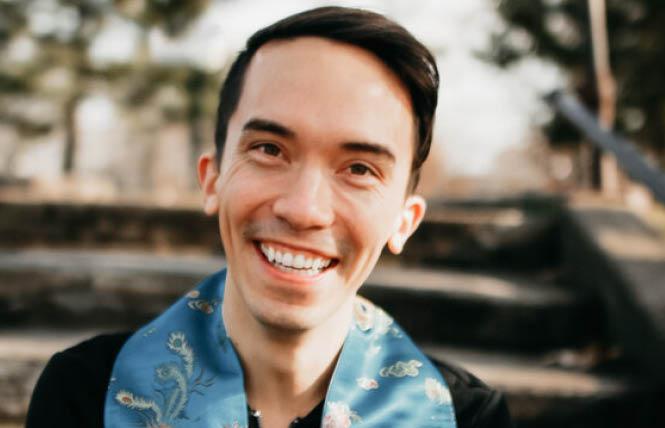
In line with his broader mission of teaching self-love and acceptance, Levitt — more commonly known by his drag queen stage name Nina West — has joined Buckeye Ranch, one of central Ohio’s oldest and best known youth services agencies, in its new campaign to promote discussions about mental health in the LGBTQ community. 

The campaign, “I Wish Someone Would Have Told Me,” features video and written testimony from people about the messages they wished they had received as young people exploring and questioning their gender orientation and sexual identity. Dr. Patricia Gentile, psychiatric director at Buckeye Ranch, said the campaign aims to not only promote open conversations about mental health in the LGBTQ community, but to highlight LGBTQ-specific resources.

Health campaigns:Columbus leaders encourage LGBTQ+ community to get vaccinated for COVID

Validating people from a young age is vital to their emotional health and success — and it’s even more crucial for LGBTQ youth, Levitt said.

“LGBTQIA+ people are intrinsically told that who they are is not right by culture and society and by a mass media,” said Levitt, 42, of Columbus’ Harrison West neighborhood. “We are told that we are a blemish and we shouldn’t exist.”

Andrew Levitt, who is best known by his stage name Nina West, said too often LGBTQIA+ people are told they don't fit in, a message that Buckeye Ranch hopes to dispel with its new "I Wish Someone Would Have Told Me" campaign.

Fighting loneliness, depression, mental illness

In her experience working with LGBTQ youth, Gentile said she’s noticed how a lack of validation exacerbates mental health problems.

“They’re often isolated, feel alone, feel different, feel like something’s wrong with them and don’t feel worthy,” said Gentile. “And then they have a lot of confusion about why they’re experiencing things in a different way than other people.”

Even when he came out as lesbian in high school, Hayden Yokum, 24, said he didn't feel quite right. Yokum came out as transgender in 2019 and is now recovering from gender confirmation surgery.

A 2020 national survey showed that 40% of LGBTQ people aged 13-24 seriously considered suicide in the past year — with more than half of transgender and nonbinary youth reporting so. More than half of LGBTQ youth reported experiencing symptoms of major depressive disorder and 68% of LGBTQ youth reported anxiety symptoms in thepast two weeks, according to the report by The Trevor Project, a national nonprofit group that provides crisis intervention and suicide prevention services to LGBTQ people under the age of 25.

LGBT issues:Transgender military ban lifted by Biden, giving Ohioans hope

Before coming out as a transgender man, 24-year-old Hayden Yokum, of Bexley, came out as lesbian in high school after a friend threatened to out Yokum. His mother is lesbian and started taking Yocum to Columbus Pride when he was five and his friends were supportive.

But he was the only queer person in his friend group and felt isolated, and without anyone to talk to who understood his experience, Yokum struggled with his mental health.

“Even when I did come out then, it didn’t feel quite right still,” he said. “I went through high school, never really talked about it much or really expressed myself in the ways that I wanted to.”

Yokum said he developed depression in high school, which culminated in self-harm and suicide attempts. It wasn’t until college, where he formed friendships with other LGBTQ people, that Yocum said he was comfortable enough to explore his gender expression. 

Yokum said he toyed with the idea of being transgender during college and began accepting it as part of his identity in summer 2019.

“As soon as I said it out loud to someone I was like, ‘Oh, now it feels perfect,’” Yokum said. He started testosterone in April 2020 and is currently recovering from gender confirmation surgery.

Health news:Mental health care in the Black community: ‘It helps to see someone who looks like you’

Although Yokum’s friends were supportive and understanding, not all young LGBTQ people experience the same validation upon coming out.

According to the Trevor Project’s 2020 mental health survey, one in three LGBTQ youth reported being threatened or physically harmed due to their gender orientation or sexual identity. Sixty percent of respondents experienced discrimination due to their identity, and more than a quarter of LGBTQ youth experienced homelessness, were kicked out, or ran away from home.

Levitt said repeatedly hearing harmful messages about one’s identity can make someone internalize those beliefs.

“I can’t even tell you how many times I heard, ‘Oh, you’re going to die of AIDS. You’re going to die alone. You’re gonna die young. No one’s going to love you,’” Levitt said.

Rhonda Cumberbatch, an in-home clinician at Buckeye Ranch, struggled with self-esteem when younger and felt compelled to follow a “certain pattern of life” as the child of Christian ministers.

Growing up the child of Christian ministers meant Rhonda Cumberbatch often felt expected to follow a “certain pattern of life.”

Cumberbatch, who uses she/him pronouns, struggled with self-esteem and grappled with worries about “not following the rules.”

Cumberbatch’s parents found it very difficult to reconcile their religious beliefs with Cumberbatch’s identity — something Cumberbatch struggled with as well.

“I got what my parents did and taught. I got why they couldn’t accept it at the time, but it didn’t make it any easier. It didn’t make it any more possible for me to feel good about me,” said Cumberbatch, an in-home clinician at Buckeye Ranch and youth advocate for the Buckeye Region Anti-Violence Organization.

‘I wish someone would have told me’ 

Yokum emphasized the importance of allowing people to question their identity. Looking back, he said there were times he wanted to explore the feeling of being transgender, but he was scared of being ostracized.

“Even if you feel scared yourself and you don’t want to share it outwardly yet, I think it’s really important to allow yourself to feel these things and explore them and know that it’s not as scary as it might seem,” said Yokum. He said it can be hard to remember that there are people and resources who will accept people as they are, without questioning their identity.

Without any positive representation of gay men in media growing up, Levitt said he had no example to aspire to become, he only had the negative messages that had been repeatedly told to him. He eventually found safe and uplifting people in the Columbus LGBTQ community who dismantled the stereotypes, but for so long he didn’t see success as a possibility for himself.

“I wish someone would have told me that I would have thrived, because I’m thriving,” Levitt said.

Working with LGBTQ youth solidified Cumberbatch’s appreciation and amazement at their resilience in the face of discrimination and invalidation. Cumberbatch said it is important to let LGBTQ youth know there are people and places that are safe and affirming, and that it is OK to live their authentic selves.

Most of all, Cumberbatch wanted to feel worthy, especially among family.

“I wish that they would have been able to say, ‘We see you. We appreciate you. We love you,’” Cumberbatch said.

sszilagy@gannett.com

@sarahszilagy

LI’s Preszler talks about memoir, boatbuilding – Newsday

Trent Preszler came to Long Island for a job interview in 2003 and immediately fell in love.

“I’m still amazed all these years later that you can be 80 miles from Times Square, paddling in these pristine waters and feeling like you’re all alone,” he says.

Preszler was living in a beach house on Peconic Bay in 2014, when a phone call from his estranged father launched him on the odyssey chronicled in his moving memoir, “Little and Often” (William Morrow, $26.99). His father died shortly after their tentative reconciliation, leaving him a set of tools with which Preszler decided to build a canoe. Speaking from his new home in Riverhead, he explained how that process helped him to better understand his father — and himself.

You write in an author’s note, “My greatest wish in writing this book is to help people.” Can you elaborate?

I often wonder how different my life would be if I had heard a story like this when I was a boy. I didn’t have any mentors or anyone I could look to as an example of how to go through the world as an openly gay man. I hope that there will be gay kids or families that are struggling with these kinds of relationships who read this and find some glimmer of hope.

I’ve also been heartened by conversations with people who are not gay and maybe haven’t always had the best relations with their parents and have been driven by the book to have the sorts of conversations they’ve always wanted to have. I hope that by seeing my vulnerability and what I went through that people can see hope for whatever they’re struggling with.

You felt out of place as a boy in South Dakota but also as an adult in New York “too gay for the country but too country for the city.” Did building the canoe heal that split?

Absolutely. I was able to bridge my young self and my grown-up self and, more importantly, I realized that I could just be my own man. One of my favorite lines in the book is when I finish the canoe and I feel that it’s speaking to me: “Whomever you made yourself into, that is who you always were.” Who I am today is who I have always been, but there were parts I ignored or kept out of sight because I thought I had to act a certain way to fit into a certain crowd.

Using his tools also helped heal the split with your father, bringing back memories of how close you were when you were a child.

In the moment of building, there would be a limited thought like, “Oh, this is the rasp he used to shoe horses.” The beauty of a memoir is that you can go back and dig through those memories. I kept iPhone pictures of everything, the stages of the boat and the tools, and those really helped me to go back five years and think, “What was I thinking when I took a picture of Dad’s rasp and surfed the web for pictures of horses?” It ended up being therapy for me twice; building the boat helped me bridge a lot of gaps in who I am, then writing it down crystallized all the lessons I had learned from that experience.

The most important lesson you learned from him was how to tackle hard problems one step at a time: “Little and often makes much.”

Not just hard things; beautiful things also happen little and often: the way trees grow or a glacier scours the earth. I think it has universal applications for the human condition.

Building a canoe is definitely a matter of “little and often,” and your memoir describes it in a lot of detail. Why was that important?

I didn’t want this to be just an emotional memoir about family, but I also didn’t want it to be a boatbuilding manual. I wanted readers to feel by the end of the book that they built a book, too. It wasn’t just, “I waved my hands and this boat happened”; they could actually experience why it was so excruciatingly hard. I hoped that would make the emotional parts of the story resonate more deeply. “We’re building a boat and we’re sanding and — what’s this about his Dad?” If I didn’t have these two themes to play off each other in the narrative, I don’t think it would have been a compelling story.

LGBTQ Agenda: Gay Minneapolis pastor centers queer people of color in new book – Bay Area Reporter, America’s highest circulation LGBT newspaper

A gay Asian American United Methodist pastor — whose Minneapolis church is just blocks away from where George Floyd was murdered last year by a former police officer — has come out with a new book about how queer people can live the Christian faith.

“Staying Awake” by the Reverend Tyler Ho-Yin Sit was published April 6.

Sit, a pastor at New City Church, recalled the tense days in the aftermath of Floyd’s death. Derek Chauvin, then a Minneapolis police officer, was convicted in Floyd’s May 2020 murder on April 20.

“Where we meet is very near George Floyd Square,” Sit told the Bay Area Reporter. “We’re one block south of Lake Street. When you saw burning images of the uprising, that was on Lake Street.

“We had a vigil, an online vigil that had tens of thousands of viewers,” he continued. The church organized patrols to help with neighborhood safety. Some, walking through alleyways, “found bottles of gasoline stashed away, wood soaked in gas, and banners with swastikas,” Sit said.

“I think the takeaway is that as a church we believe that Jesus saves us; and not just saves our souls: Jesus cares about justice, and communities caring for each other,” Sit added.

The Reverend Dana Neuhauser has served at New City Church since 2017.

“I actually was at the site, at the corner of 38th and Chicago [streets] when the verdict was announced,” Neuhauser told the B.A.R. “It was a mixture of shock, relief, and people feeling energized by the decision. But, also, there is a widespread and profound recognition that this is one small piece of a much bigger puzzle and there is a lot of work to be done.”

Sit, 32, describes his book as an introduction to Christianity that centers queer people of color. It examines “nine key Christian practices that Christians who care about social justice have done, and framing it in the lives of queer people of color, like me,” he said.

These practices are worship, centering the marginalized, prayer, groups, Sabbath, leadership development, generosity, planting, and what Sit called “putting it all together,” or “weaving all these so that they are a part of your life.”

Sit said that while many conservative Christians view LGBTQ people negatively, in fact queer people have special spiritual gifts.

“My third chapter is dedicated to prayer, and queer people are particularly spiritual,” Sit said. “I’ve met so many queer people drawn to prayer, to meditation, because they have had to wrestle with questions of identity and belonging since puberty. In my experience in the gay community, queer people are hungry and drawn to God — and, the opposite of what the conservative church says, we are very spiritually mature.”

Sit estimates that 40-50% of his congregation “is queer in some way.”

Neuhauser, who is bisexual, said she met Sit in 2015.

“Tyler has a unique gift of being extremely dynamic, but also being a compassionate and attentive pastoral presence,” Neuhauser said. “He brings a high-energy style in front of large groups of people, but when people are seeking more compassionate care he is also really attentive to people. So, it’s a unique blend of those gifts that come through in his ministry.”

As the B.A.R. previously reported, the United Methodist Church (the second largest Protestant denomination in the United States, and the third largest Christian denomination) is experiencing deep divisions over the issues of same-sex marriage and LGBTQ clergy. A conference last year that would have discussed whether to allow those United Methodists opposed to same-sex marriage and LGBTQ clergy to split from the denomination was postponed due to the COVID-19 pandemic.

Sit says he wants to “create space that not only tolerates people, but celebrates queerness as a gift from God.”

Sit is also applying his Christian faith to the struggles being faced by the Asian American community.

According to an analysis released last month by the Center for the Study of Hate and Extremism at California State University, San Bernardino, reported hate crimes targeting Asian Americans in 16 of the largest U.S. cities increased some 150% in 2020, even though reported hate crimes overall decreased 7%.

A number of high profile hate crimes against Asian Americans coincided with rhetoric associating the COVID-19 virus with Chinese people in particular, including former President Donald Trump’s oft-used “China virus” moniker.

“I’m queer and Christian and Asian American, so it’s been an interesting time to put these in conversation with each other,” Sit said. “One of the things we in the [Asian American and Pacific Islander] community deal with is the narrative of perpetual ‘foreigner-outsider’ status. If we ‘look Asian,’ it means we’re not ‘from here,’ no matter how long we’ve been here. … Language like ‘China virus’ exacerbates that perpetual foreigner status.”

Sit said other Americans need to recognize the ways in which Asian Americans have contributed to the fabric of the U.S.

“Asian Americans have been around for 150 years and have shaped this country in significant ways,” Sit said. “Viewing Asian Americans as foreigners and outsiders is a tool of white supremacy, and erases who we are as a people.”

When viewed from a Christian perspective, Sit said that biblical religion values foreigners and outsiders; and from a queer perspective, Sit said that being an outsider is an experience LGBTQ people particularly can empathize with.

“Throughout the Bible, there is a strong discourse on welcoming the stranger, welcoming foreigners and practicing extravagant hospitality,” Sit said. “One thing we do, when we do that, is reckon with our fear of others. The love of God is greater than our fear of outsiders. Especially as queer people: most queer people I know what it’s like to be profoundly excluded. If we can hold on to that feeling and use it to empathize with other marginalized people, it’s a powerful way to bring about justice.

“Queer people know what the tomb is like — the tomb of Jesus, that was sealed after the crucifixion,” Sit continued. “The act of coming out is a microcosm of the resurrection in the world. When we come out of the closet, we honor the God who made us queer. It’s not just about ‘It’s OK you’re gay.’ It’s saying ‘your queerness is a particular way God is breaking into the world, and we need to zoom in on it, focus on it, and cherish it.'”

LGBTQ Agenda is an online column that appears weekly. Got a tip on queer news? Contact John Ferrannini at j.ferrannini@ebar.com

Help keep the Bay Area Reporter going in these tough times. To support local, independent, LGBTQ journalism, consider becoming a BAR member.