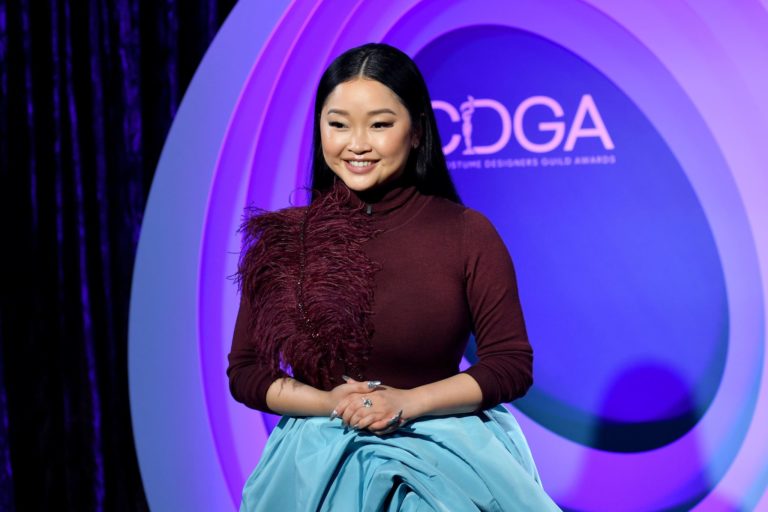
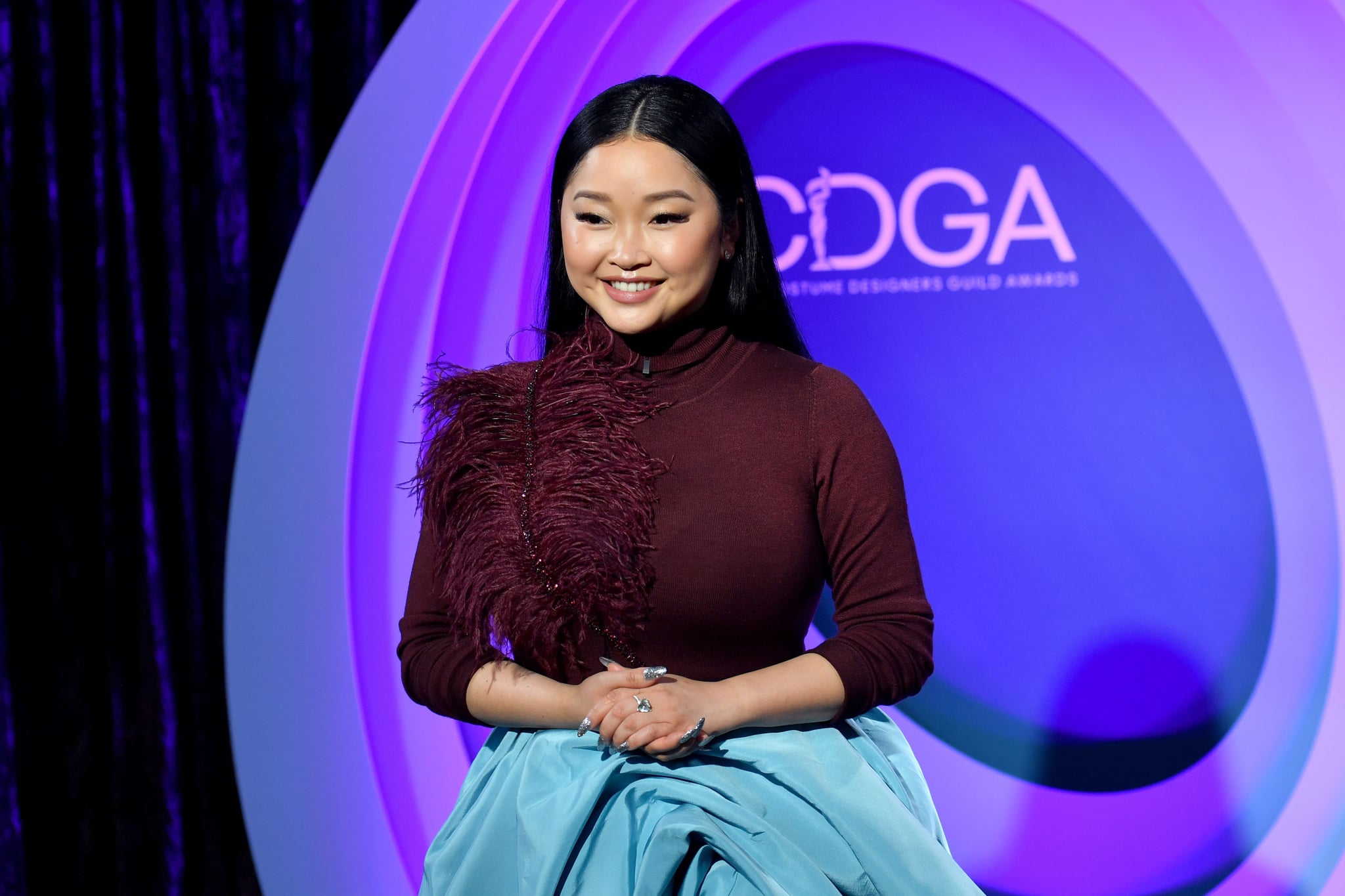
Growing up, Lana Condor’s relationship with fitness was complicated. She detailed in a recent cover story for Self a history of body dysmorphia stemming from her time as a dancer. Condor explained to POPSUGAR, “In my childhood, just being such an aggressive dancer, working out . . . I don’t know . . . I think it kind of felt like very forced. I really had to be in the best physical condition of my life.” At one point, she was dancing so much that ballet just didn’t bring her joy anymore, she recalled. Now, though, she aims to choose workouts that do bring her joy.
“I had some real body issues because of it,” Condor said of ballet. “This messed up standard of beauty that you typically found in the ballet world, I always felt I didn’t fit that body image. I always felt not happy with myself. So now, most of my workouts are focused on workouts that I just genuinely enjoy, that make me feel better.” Aside from committing to sweat sessions with a trainer, she is a huge Zumba fan (Condor is actually joining Zumba’s virtual 20th birthday celebration on April 29 at 1 p.m. ET that you can livestream on YouTube!).
The 23-year-old To All The Boys I’ve Loved Before star was first introduced to Zumba during summer dance programs around age 13 when it was mixed in with the pointe- or partner-work sessions. She reflected on how those classes offered freedom away from the structure and precision of classical ballet. Zumba classes were also part of the curriculum at her performing arts high school school, and the in-person and virtual classes now act as a fun workout “to supplement my deep hate for lifting weights,” Condor said. It’s true: she hates lifting weights (“I hate all of that. I hate it, I hate it so much, but I do it, but I hate it!!!”).
“Zumba brings me so much joy and gets my heart rate up and makes me feel happy,” Condor said, adding that it was a “nice little reprieve” during the “dark times” of the COVID-19 pandemic when she and partner Anthony De La Torre were holed up in their house together.
Condor also is into biking “because I like being able to work out but sit down” (um, same!). “It’s so easy to create bad workout habits where you’re working out not to feel your best and to be happy” and instead, she noted, to achieve unrealistic beauty standards. “I definitely had to take active steps to be working out for me and for my joy, rather than anything else.”
One South Australian man says he suffered harassment after he brought a Tom of Finland bag to his gym.
According to the Star Observer, tailor and designer Jeff Trahair is the proud owner of a DIY Tom of Finland bag. He fashioned the kit bag from a shower curtain that contains “very PG Tom of Finland images.” But when he took the bag to the Aquatic and Recreation Centre in Campbelltown, Trahair began to feel unwelcome in his community.
According to Trahair, the fitness center’s management sent him an email on March 26, 2021. The email stated that the fitness center had “received feedback from patrons that some of the attire that you have been wearing whilst in the pool area is not very child friendly.” The fellow patrons and management felt that his bag was “inappropriate” for children and asked him to refrain from carrying the bag to his gym.
“For example, I have personally seen your bag which has a graphic image of males on it as well as a broach of male genitalia,” a follow-up email from April 1 elaborated.
Image via Jeff Trahair
“The images are not explicit sexual ones at all!” he told the Star Observer. “They are all very PG and good fun. I have used the bag for years in all Adelaide pools and never experienced anything like this. In fact, quite the opposite – people usually comment positively.”
As Yahoo News reports, Jeff Trahair dealt with a long email thread between himself and the center’s management. The experience led to him feeling “humiliated and harassed.”
“I now feel very unwelcome and stigmatized attending the ARC,” Trahair said.“It appears to me that the processes you have used have been covert, amounting to not much more than the compiling of a secret dossier about me by a highly opinionated vigilante witch hunt.”
In the end, Jeff Trahair canceled his membership. Though, he added that he’s happy to no longer be wrapped in that negative experience. Despite that, Trahair is considering approaching the state equal opportunity commission to explore justice for discriminatory treatment.
For Adam M. Kassim, directing Mosaic Theater Company’s virtual production of West Bank-based playwright Dalia Taha’s “Keffiyeh/Made in China,” a collection of slice-of-life stories from the occupation, has been a gift.
It’s offered the Palestinian American director a way to reconnect with his “Palestinian side,” and has helped to ease a strained relationship with his father.
“But it’s a gift that comes with responsibilities,” explains Kassim who lives in Boston with his husband he met on Facebook 15 years ago. “One of the great things about the play is the way it investigates how the occupation effects the daily lives of people and their most intimate relationships which is so different from what the media portrays them. It’s important that audiences see this.”
Though “Keffiyeh” debuted in 2012 and was subsequently published as part of the anthology “Inside/Outside: Six Plays from Palestine and the Diaspora,” Kassim, 38, didn’t get around to reading the play until after being tapped by Mosaic to direct.
“It’s unlike anything I’d read before,” he says. “First thing, structurally and aesthetically it’s unique. Neither entirely realistic nor linear, the scenes are connected thematically. In American theater plays trend toward naturalism, things that are cinematic and filmic and this was the opposite. It’s the Ramallah-based playwright’s undeniable celebration of theatricality that drew me to the work.
However, because it isn’t cinematic, the filming experience can be extremely challenging, he says. “But lucky for me, I’m working with a wonderful production designer, Mona Kasra. She figuratively holds my hand as we talk about scenes and do story boarding for hours. She’s been my work wife.”
“Keffiyeh” is being streamed in seven short (ten to fifteen-long) episodes to be released incrementally every two weeks through July. A mix of humor, drama and sadness, the episodes vary in style and content, and the actors are drawn from a cast of five.
The play’s first (currently-released) episode, “60 Second,” features Dina Soltan and queer Palestinian American performance artist Fargo Tbakhi as a man and woman who following tragedy attempt to connect inside “the finite time of a viral video, a digital resurrection, and a playwright’s mind.”
Upcoming episodes include titles like “Craving Mangoes,” “Crowdedness,” and “The Unhappy Writer.” Mosaic’s decision to film Keffiyeh was the confluence of various factors, explains Serge Seiden, Mosaic’s managing director and producer.
Besides fulfilling Mosaic’s mission to present independent, intercultural, entertaining, and uncensored programming, they needed a work that would serve as a Voices from a Changing Middle East Festival offering; respond to We See You, White American Theater letter, an accountability report has been published, acknowledging over 100 theater organizations across America that have responded to the BIPOC demands of the community; and satisfy a more collaborative decision making process in the absence of an artistic director.
“And, of course, COVID-19 played into our decision,” he adds. “The scale of the project — filming scenes in a black box space at Atlas Performing Arts Center – worked for us.”
Additionally, Mosaic was pleased to present an authentic voice with a play written by a Palestinian. “We also like that it’s not didactic,” Seiden adds. “It’s not a play about politics per se. It’s a play about ordinary people’s lives under occupation.”
“Mosaic is responding to the ongoing challenge of the occupation through art. It just happens that our latest offering is being released at the time of a terrible upwelling of violence. If anything, it’s more important for people to know these are human beings suffering. They are more than victims or numbers.”
“Keffiyeh” is presented in seven episodes now through July and is included with the purchase of a 21/22 Membership. A stand-alone “Keffiyeh” subscription is also available for purchase.
At present there is no vaccine for HIV. However, one may be possible in the future. Scientists continue to research and investigate the possibility.
Scientists have performed a phase 1 clinical trial which confirmed that the first stage of a potential HIV vaccination is safe, and may be effective in working against HIV.
HIV is a virus that progressively weakens the immune system, and affects more than 38 million people globally. While there are effective antiviral treatments available for people with HIV, there is presently no vaccine to prevent it.
Treatments for HIV are lifelong, and the mental and physical health effects of the virus remain challenging for many. In some parts of the world access to treatments and prevention is limited, resulting in high numbers of new infections and HIV-related deaths each year.
Keep reading to learn more about a potential HIV vaccine, some alternative HIV prevention options, an overview of treatment options, and the general outlook for the condition.
According to the International AIDS Vaccine Initiative (IAVI), researchers have failed to produce an effective HIV vaccine, despite decades of work, because of the nature of the virus.
Most of the surface of the virus is coated with sugar molecules, which do not trigger an immune response. This makes it difficult to produce a vaccine, as vaccines are focused on triggering a slight immune response in a person in order to build up antibodies. Additionally, the parts of the HIV virus that are exposed are extremely variable. This makes it difficult to produce a vaccine that would be effective in all cases of the virus.
Like the virus which causes COVID-19, HIV has spike proteins on its surface that it uses to gain entry to host cells.
However, the genes that make up the HIV spike proteins are very effective at rapidly mutating. This results in millions of different HIV strains. Because of this, it is difficult to find antibodies that can neutralize all the different strains.
There are various HIV prevention methods, including:
Medication
PEP: If a person is exposed to HIV through bodily fluids like semen, vaginal fluid, or blood, they should talk to a healthcare provider about taking post-exposure prophylaxis (PEP).
PEP refers to taking medication to prevent HIV after possible exposure, and must be started within 72 hours of the exposure. People should take PEP for 28 days, in the form of pills.
If a person takes PEP according to instructions, it is highly effective at preventing HIV. The medication is safe but may cause side effects such as nausea.
PrEP is medication for people at risk of HIV, such as those who face repeated or ongoing exposure to the virus. If people take it correctly according to prescription, it is highly effective at preventing HIV from sex or the use of shared needles.
There are two medications approved for use as PrEP. Truvada is for all people at risk of HIV through sex or injection drug use. Descovy is for people at risk through sex, except people assigned female at birth who are at risk of contracting HIV through vaginal sex.
PrEP is safe, but may cause side effects including headaches, nausea, and fatigue.
ART: If a person with HIV is taking the medications prescribed for antiretroviral therapy (ART), the medication can reduce the amount of HIV in their blood, which is called the viral load.
ART can reduce the viral load to the point where it becomes undetectable. People with an undetectable viral load have no risk of transmitting the disease to others through sex or needle sharing, or to babies from pregnancy, birth, and breastfeeding.
Inappropriately discarded drugs can harm people, animals, and the environment. It is essential to dispose of any unwanted medication safely. Read our guide on medication disposal here.
People should use silicone or water-based lubricants to help stop condoms from slipping or breaking during sex.
A person could choose types of sex that are less risky. There is very little risk of contracting HIV through oral sex, compared to vaginal or anal sex.
If a person has HIV, ART can make their viral load undetectable so they don’t pass on the virus.
Drug use
A person should avoid sharing needles, syringes, or other drug injection equipment.
People who use drug injection equipment should use new, clean equipment each time they inject. Many communities offer syringe service programs (SSPs), which give out new needles and safely dispose of old ones.
People who do share drug injection equipment should take PrEP as prescribed.
People should avoid having sex while high on drugs, as they will be more likely to engage in risky sexual behaviors.
People who do share drug injection equipment should clean it with bleach. A disinfected syringe is not as safe as a new, sterile syringe, but can reduce the risk of HIV and viral hepatitis.
A person should speak to a healthcare provider or counselor if they are struggling with substance abuse disorder.
Seeking help for addiction may seem daunting or even scary, but several organizations can provide support. If you believe that you or someone close to you is struggling with addiction, you can contact the following organizations for immediate help and advice:
Mother to baby transmission
Mothers who want to prevent transmitting HIV to their babies should get tested as soon as possible. Early diagnosis and treatment can help prevent transmission to the baby more effectively.
If a mother has sexual partners who engage in high-risk behaviors, they should get tested again in their third trimester of pregnancy.
If a person is considering becoming pregnant and has a partner with HIV, they should consider taking PrEP. This may help protect them and their baby from contracting HIV while the mother is pregnant, during pregnancy, and while breastfeeding.
A person who has HIV should take ART as prescribed throughout their pregnancy and childbirth. A doctor may prescribe the baby ART for 4–6 weeks after birth.
A person with HIV should avoid breastfeeding the baby to reduce the risk of transmission.
People with HIV are treated with antiretroviral therapy (ART). People on ART take a combination of HIV medications every day. This is called an HIV treatment regimen.
ART is recommended for everyone who has HIV. The treatment prevents the virus from multiplying, which reduces the amount of HIV in the blood, known as the viral load. Less HIV in the body means the immune system is protected, and prevents HIV from advancing to AIDS.
ART is not a cure for HIV, but helps people with HIV live longer, healthier lives.
As ART reduces the viral load of HIV, it also reduces the risk of transmission.
The only way for a person to be diagnosed with HIV is for them to have an HIV test. The Centers for Disease Control (CDC) recommend everyone between the ages of 13 and 64 get tested for HIV at least once. People at higher risk of infection should get tested regularly.
If a person gets a test in a lab or healthcare setting, a healthcare provider or lab technician will take a sample of their blood. If it is a rapid test, a person may be able to wait there for their results. If not, it can take up to several days for a person to receive their results.
If the test result is positive, healthcare professionals will conduct follow-up tests to confirm infection and measure the viral load. Counselors will be able to answer questions about the diagnosis and provide referrals for treatment.
HIV treatment is lifelong. While there is currently no cure for or vaccine against HIV, a person can control it with proper medical care and ART. Most people get control of the virus within 6 months.
ART is recommended for all people with HIV, regardless of how healthy they are or how long they have had the virus. People should start treatment as soon as possible. If a person delays treatment, the virus will continue to harm their immune system, will put them at higher risk of developing AIDS, and will increase the risk of transmitting the virus to their sexual partners.
Treatment is usually very well-tolerated but can cause side effects in some people, including:
nausea and vomiting
diarrhea
difficulty sleeping
dry mouth
headache
rash
dizziness
fatigue
pain
A positive HIV diagnosis can also result in mental health side effects, brought on by dealing with the stigma of HIV and adjusting to living with the virus. It is important for people with HIV to seek help and support for the emotional, mental, and physical effects the virus may cause.
There are many organizations that offer support for people with HIV. The CDC recommend:
HIV care and treatment
Learn about HIV stigma and discrimination
Find mental health treatment
Find help paying for HIV care
Other organizations include:
While there is no vaccine for HIV, there may be one in the future, as scientists are attaining good results from early clinical trials.
There are various prevention methods for HIV, including medication, safer sex practices, and HIV-safe drug practices.
Treatment for HIV is antiretroviral therapy, an HIV treatment regimen that includes taking medication daily.
HIV testing is the only way to diagnose the condition. After diagnosis, a person should start treatment as soon as possible in order to reduce their viral load.
HIV can have a physical, mental, and emotional impact. Seeking professional medical help is very important.
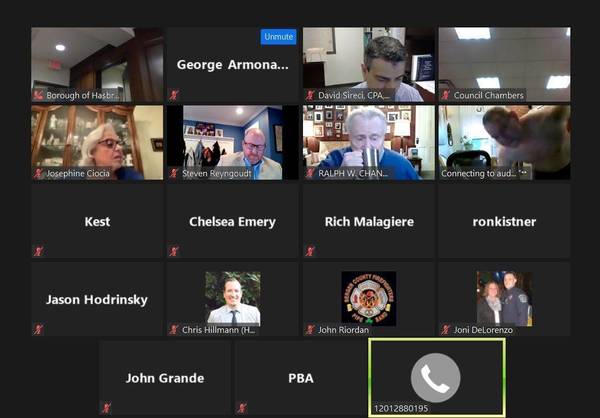
HASBROUCK HEIGHTS, NJ – After months of deliberations and statements from several residents, the Hasbrouck Heights Council voted 4-2 not to raise the Pride Flag on the flag pole at Borough Hall Tuesday evening. The council met in executive session to hear from Borough Attorney Richard Magliare and discuss the issue before coming back into session.
Magliare’s opinion is privileged, which is why the council met in executive session, but came back and Hasbrouck Heights Mayor Jack DeLorenzo explained the reason for the meeting and asked if any of the Council members would like to make a motion.
After stating that the putting the matter up for a motion had never been discussed in the executive session, Councilman Christopher Hillmann entered the motion raise the Pride Flag during Pride month in June which was seconded by Councilman Steven Reyngoudt.
Sign Up for Hasbrouck Heights/Wood-Ridge/Teterboro Newsletter
Our newsletter delivers the local news that you can trust.
You have successfully signed up for the TAPinto Hasbrouck Heights/Wood-Ridge/Teterboro Newsletter.
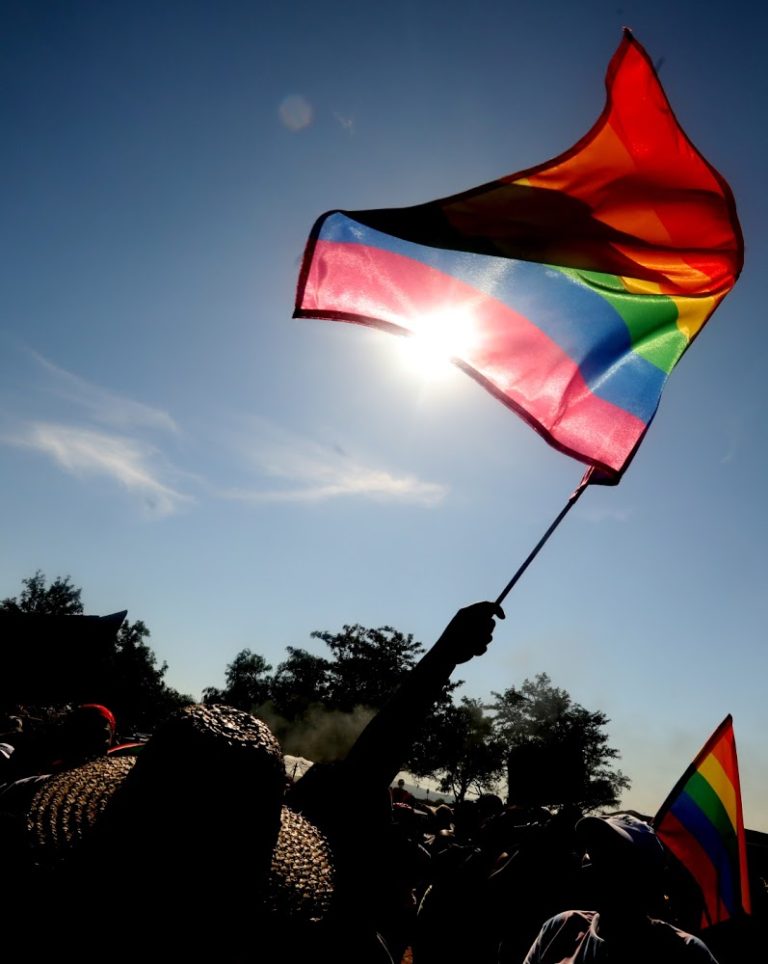
A pride flag typically refers to any flag that represents a segment or part of the LGBTQ community, in this case referring to the notion of gay pride. The rainbow flag is the most widely used LGBTQ flag and symbol in general. June is recognized as Gay Pride Month.
When put to a vote, without public discussion or debate, Council members Michael Sickels, Josephine Cioccia, Ron Kistner and Russell Lipari voted against the motion, while Hillmann and Reyngoudt voted for it.
Later during the public comment session of the meeting, Hasbrouck Heights resident Jason Hodrinsky, who has been vocal in pushing for an answer on whether or not the flag would be flown since February, offered his legal opinion on the matter, and what he believed, was the basis for the decision, Shurtleff v City of Boston, before being cut off by Mayor Delorenzo. DeLorezo stated that they were not going to debate the issue.
They further clashed when Hodrinsky attempted to ask each of the Council people who voted against the issue to defend their position., with Hodrinsky challenging the Mayor if he had the authority to dictate whether the Council could answer.
Shurtleff v City of Boston had been mentioned by Borough Attorney Emeritus Ralph Chandless at the April 13th meeting as a reason Hasbrouck Heights needed to exercise legal caution, and it was not just a matter of raising a flag to recognize a particular cause or group. (As Maglaire’s advice to the council is privileged, it can only be speculated that this was the basis of the vote.)
At the last meeting, DeLorenzo stated that he was in favor of raising only the three official flags government property recognized by the State of New Jersey – the United States Flag, the New Jersey State Flag, and the POW Flag and Borough property. He encouraged that anyone on private property was welcome to fly the flag if they chose.
Photo from the Philadelphia Gay News (Photo by Megan Keller Photography).
By Michele Zipkin
More and more LGBT community centers are holding vaccine clinics to get shots into the arms of people in marginalized communities. The Bradbury-Sullivan LGBT Community Center in Allentown was the first non-healthcare provider to hold such a clinic, the center’s executive director, Adrian Shanker, said.
“There’s only a couple of the LGBT healthcare providers in the state, so there’s still huge gaps,” he told the Philadelphia Gay News. “It’s really critical that we can offer COVID-19 vaccination in trusted spaces like here in the Lehigh Valley at Bradbury-Sullivan LGBT Community Center or in Philadelphia at places like William Way, or Mazzoni or Philly FIGHT. It really is critical that more of this work can happen around Pennsylvania.”
Bradbury-Sullivan Center staff held their first clinic on March 19, with a second dose clinic on April 16, and they held another first dose clinic on April 2, with its corresponding second dose clinic set for April 30. They are planning another first/second dose clinic with dates TBA. In partnership with Lehigh Valley Health Network, the center will have administered 1600 shots to 800 community members over the course of their clinics.
“We know already that this place is a safe haven for us to go in times of stress whenever that is, so it’s really important for me as a member of the LGBTQ community to participate and to go to a place like Bradbury-Sullivan,” said community member Will Morris. “I do not think I would have the experience I had anywhere else.”
LGBT community centers often provide comfort for queer individuals seeking to be vaccinated in trusted environments, by trustworthy individuals. A fair amount of trans and nonbinary people received vaccines at Bradbury-Sullivan Center, Shanker said, many of whom communicated to staff that they felt more at ease getting vaccinated at an LGBT community center than a public health establishment.
Shanker said reasons included “dealing with [things] like needing to put your legal name down on a website to schedule because that’s what’s attached to someone’s electronic health record. We have to use the same forms, but people trust us.”
Those seeking a vaccine from Bradbury-Sullivan Center sign up via phone. “If we need to have their legal name, which we do, we’re also making a note of their chosen name so they’re referred to [as such] when they arrive,” Shanker added.
For Nat Kenyon, development intern at Bradbury-Sullivan Center, getting vaccinated at an LGBT center that he knows and trusts was meaningful to him. “It definitely increases the comfort and accessibility,” Kenyon said. “I myself am trans, and there’s always that doubt in medical practitioners, or there is for a lot of people at least. You don’t always know if they’re competent, you don’t always know what to expect, whether to bring up if you’re trans. Walking into the LGBT center, you know you’re going to be treated with respect and kindness no matter what.”
Although the vaccine is now available to all Pennsylvanians 16 and up, the state was in an earlier phase of vaccine eligibility when Bradbury-Sullivan Center began its vaccination efforts, when people had to communicate why they qualified to be inoculated. For people living with HIV, disclosing their status in a semi public space at a mainstream clinic would not have been ideal, Shanker pointed out. Bradbury-Sullivan Center staff carried out that part of the registration process over the phone to maintain people’s privacy.
Not only is it vital for LGBTQ people, people of color, and other minority communities to be able to get vaccinated in a trusted, culturally-competent space, it is equally important that they have reasonably easy access to the vaccine. In Pennsylvania and across the U.S., virtually no data exists on LGBTQ communities’ ability to access the vaccine, in part because the state and the CDC do not include sexual orientation or gender in their vaccination tracking efforts, Shanker said.
“There’s a gap in knowledge and information,” he added. “But certainly we know that a majority of people coming to the center based on our intake data are LGBTQ. We also know that we have approximately 5% higher than the state average of BIPOC (Black and indigenous people of color) community members receiving their vaccine with us.”
Shanker emphasized the need to be intentional about making vaccine accessibility a priority for minority communities, including queer and trans people, those living with HIV, BIPOC people, folks with disabilities and intersections thereof.
“There’s a variety of reasons why people may be less able to receive the vaccine elsewhere, part hesitance and part physical access issues, and in part just a lack of trust,” Shanker said. “We’re trying to resolve these issues as best as we can with the limited vaccines we’re able to offer.”
Just being able to receive the vaccine proved an emotional experience for some people, Shanker said. “That’s how I felt when I received it,” he continued. “I physically have been at the vaccine clinics that we’ve had at the center, and people are really grateful and thankful that the science existed to make that vaccine possible, and grateful for the sacrifices of so many healthcare workers over the past year. There are a lot of emotions behind being able to get to that moment.”
It was sad to read in The Journal that the George’s Ballroom building cannot be saved.
My husbnd, Keith, was a musician and played trumpet with the New Ulm bands. On several occasions, George asked me to sell tickets up until the dance ended at 1 a.m.
Another note: At that time, in the 40’s and 50’s, women were not allowed in the ballroom unless they were wearing a dress or skirt.
Discrimination against lesbian, gay, bisexual and transgender people costs Eastern European countries almost 2% a year in economic growth, a coalition of dozens of global companies promoting LGBT+ inclusion said on Tuesday (27 April).
Hungary, Poland, Romania and Ukraine are losing billions of dollars each year due to the lack of equal workplace rights for LGBT+ people and factors such as higher health costs related to HIV/AIDS and depression, said Open For Business (OFB).
They are also facing a “brain drain” of skilled workers and struggling to win foreign investment, found OFB, which is backed by tech giants Google and Microsoft, Barclays and Deutsche Bank, spirits group Diageo and accounting firms PWC, EY and KPMG.
“Countries that are more open (in terms of LGBT+ rights) are generally speaking financially and economically in a much better place,” the report’s lead author George Perlov told the Thomson Reuters Foundation.
Gay sex is legal in all four countries, but none allow same-sex marriage and LGBT+ people have faced physical attacks, which make it hard to live openly.
In Poland, about 100 municipalities have signed declarations saying they are free of “LGBT ideology”, leading the European Union (EU) last year to withhold funding.
European Commissioner for Equality, Helena Dalli, who was behind the EU decision, said tackling discrimination against LGBT+ people would be beneficial economically, not just in terms of equality and fairness.
“It will also give companies that embrace it a competitive edge in attracting and retaining talent,” she said in a statement.
The report, which was part-funded by Google, also found a majority of local companies in the four countries backed LGBT+ equality and diversity in the workplace.
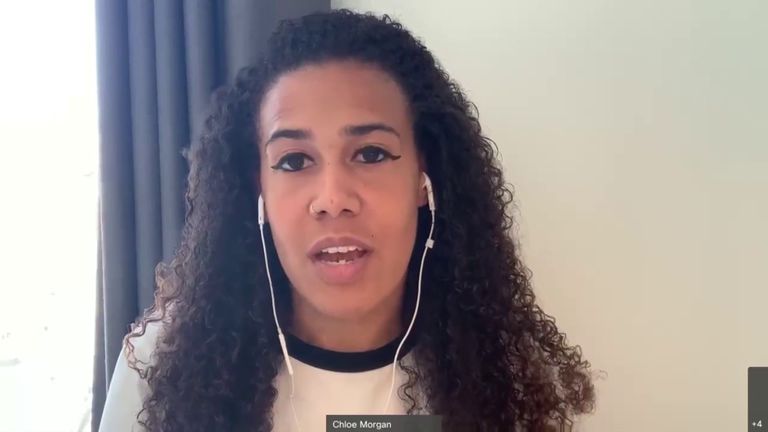
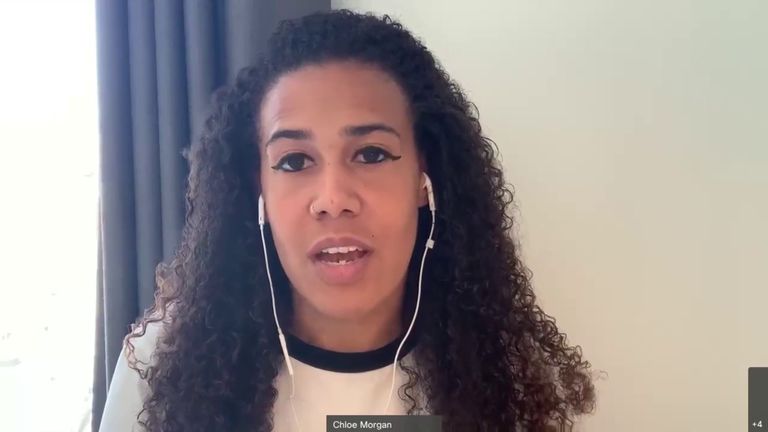
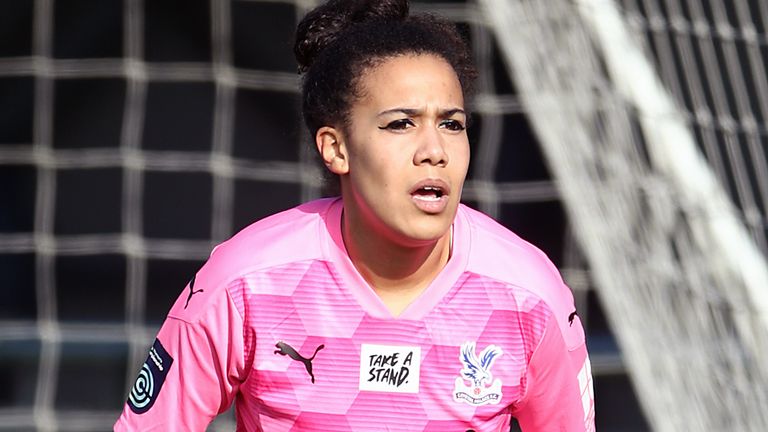
Chloe Morgan is always alert to the call for action, whether she’s keeping goal for Crystal Palace or helping others get the right result.
Morgan spent six years with Tottenham – broken briefly with a loan stint at Arsenal – before switching clubs last summer to play for Crystal Palace in the FA Women’s Championship.
The 31-year-old juggles her football commitments with her day job at a national law firm, where she specialises in cases relating to serious brain injuries.
That would be enough to fill anyone’s diary, but Morgan somehow manages to cram so much more into hers. She is the goalkeeping coach and diversity and inclusion officer with Goal Diggers FC, an award-winning amateur club for women and non-binary people. In September, she joined the board of the influential network organisation Women in Football. In recent weeks, M-Power Goalkeeping Coaching has been squeezed into her Twitter bio as well.
The programme is designed to help boost the ranks of shot-stoppers coming through in the women’s game, and with Bristol City’s Sophie Baggaley and Leicester’s Championship title-winner Sophie Harris already on board for the first coaching camp in June, there will be no shortage of ‘keeper knowhow for attendees aged six to 16 to soak up.
As with Goal Diggers, Morgan wants to make sure everyone feels welcome – it’s all abilities, all-inclusive.
“I’m really excited about it,” she says, speaking at a panel event hosted by the Woman@Sky and LGBT+@Sky network groups for Lesbian Visibility Week.
“M-Power is specifically for girls and women, including trans, and non-binary people. It’s about trying to encourage more people to get into goalkeeping because I think it’s still one of those areas, for the men’s and women’s games, that has not been at the forefront of agendas. Outfield players have always taken priority.”
She’s determined to change the perception of the position and catch the next generation falling in love with the women’s game.
“Personally, I think goalkeeper is the best position on the pitch!” she says with a smile. “It’s your last line of defence and if you’re not letting in any goals, you’re not losing games!
“It always surprises me that it’s the position that gets given the least attention. The premise of M-Power is to redress that balance and to try and get more women, girls, and non-binary people involved in goalkeeping, from grassroots up to the elite level.”
Having frequently seen friends and fellow players swerve the gloves, Morgan is familiar with a major reason for depleted ‘keeper numbers – the fear factor.
“There is often that fear of the unknown with going in goal. I’ve spoken to so many women and non-binary people who will only go in goal if it’s the last position and they have to, or because they’re rotating. There’s just such a reluctance there.
“The fear is that they don’t know what they’re doing, or they’re going to mess up or make a mistake. I just want to give people the tools and the techniques and encourage them to see goalkeeping as fun and creative – a very diverse and unique position.”
For Morgan, diversity in sport is something to be celebrated even more than a hard-earned clean sheet. She was named on the most recent Football Black List, and is nominated in the Sport category at Thursday’s DIVA Awards, a key event being held in Lesbian Visibility Week.
Community counts and she believes fiercely that everyone should be made to feel welcome, particularly if they’re LGBT+ and uncertain about fitting in. Football is no exception, although she is wise to the pressures of the professional game – men’s and women’s.
“I would only ever encourage any player to come out if they felt supported, safe, and they wanted to,” she explains.
“Being gay is something that’s very personal to someone, and you should never tell someone to come out and ‘be the martyr’ who leads at the front. Your sexuality and your private life is completely down to you.
“But I would absolutely love for there to be an environment and a safe space for footballers to all feel they can show themselves on and off the pitch. I feel a lot of the women’s football community do – it’s probably one of the more inclusive spheres to be in.
“I felt comfortable coming out and being openly gay. That wasn’t an issue for me. I haven’t received any backlash and I feel quite fortunate.”
0:43 Morgan, speaking on a Sky panel event to mark Lesbian Visibility Week, says it’s important to her that fellow players who are also LGBTQ+ feel welcome in the game
She holds a concern, however, that as the profile of women’s football soars, and the attention it gets increases, players may begin to feel their lives have become too public and the strong LGBT+ representation fades as a consequence.
“It’s becoming more of a mainstream product, and visibility does sometimes create issues,” she says.
“Women were banned from playing for such a long time. Once we were allowed, there was a sense of having to fight against discrimination on a gender basis. That’s made the environment more cohesive and accepting.
“Now, that might change a bit. You’re going to get more voices, more opinions. But having players who are not just out but who are speaking out in interviews against issues, that will help going forwards. We started from humble beginnings, and that made us more inclusive.”
Image:In her various roles, Morgan will look to ensure there is no let-up in the fight for all forms of equality in sport
An awareness week for LGBT+ women across society is worth shouting about, feels Morgan, and she is not surprised to see the message resonating in sport. As the Women’s Super League and feeder leagues prepare for an exciting new chapter from the 2021/22 season, she stresses the need to embrace spirit and character.
“What I want to do is maintain the growth and continue to have the same ethos. That will also take responsibility from broadcasters and commercial partnerships celebrating the LGBT+ community in women’s football because it is such a massive part of the women’s game, and it’s a unique facet.
“I’d love to see sponsors being very much on board with having LGBT+ athletes and promoting that, and I don’t just mean at Pride or at LGBT+ History Month.”
Keeping visibility woven into the fabric of women’s football? With Morgan where she needs to be, it sounds like the game is in safe hands.
No protection 27 years into democracy, activists say
No protection 27 years into democracy, activists say
PREMIUM
Freedom Day will mean nothing to members of SA’s LGBTQI+ community as long as queer people continue to be killed and persecuted.
That was the unequivocal message from lesbian, gay, bisexual, transgender, queer and intersex (LGBTQI) activists as a march to the Union Buildings in Pretoria was held on Tuesday to honour slain Nelson Mandela Bay resident Andile “Lulu’ Ntuthela, murdered in March allegedly because of his sexual orientation. ..
There is liberation in oppression. When society marginalizes queer people, then they can’t apply their rules to us. We can do whatever we want, and what we want is sex.
The short film Trade Center tells the tale of anonymous gay hookups in the underbelly of New York’s most towering erection. Several men fondly recollect the fondlings of a bygone era.
Their voice-over is appropriately disembodied. They could be anyone. They could be phantoms. But their passion was real and it consumed a generation of LGBTQ+ individuals craving the human touch, no matter how fleeting or derided.
One narrator explains, “People who were doing dirty things, no matter what it was, if it was drugs, sex or whatever, found those kind of places.”
And the hottest hotspot of all was the staircase under the buildings.
“The thing about that stairwell that made it so popular was the cops never patrolled it and you could hear someone coming from several floors above or below. Basically, nobody took these stairs except horndogs who used it as a secluded sex spot.”
Another voice goes into graphic detail about the logistics of performing and receiving oral sex on a terraced surface. One partner would stand over the other, allowing his manhood to dominate the proceedings, and then they would swap positions, like a lascivious waltz up and down the stairs.
The film pivots deftly from the intimate to the infuriating, documenting how Giuliani’s regime began cracking down on restroom romances.
“Lunch hour was typically out of control and the cops would periodically try to bust it up by standing around for a while with their walkie-talkies turned up loud for effect. Or they’d knock a nightstick on the stalls and bark something like, ‘OK, ladies, time to break it up!’ But the minute they’d leave, the boys would be back at it.”
The element of taboo was a lubricant for these lavatory lotharios, but the ultimate danger loomed even larger.
“I’ve talked to at least one guy who was there in one of those tearooms when the planes hit those buildings. I’ve visualized it happening and it’s impossible that all those other people could have gotten out.”
Tragedy tore away the covers, exposing the stealthy joys that were lurking in the crevices of Manhattan.
“The powers that be all of a sudden acknowledged everything. Within weeks of that event, the whole world started changing very rapidly… The World Trade Center was the both literal and also metaphorical end.”
Moans from the past continue to echo through the queer experience. Our desires may be buried for decades or even centuries, but our souls persistently find their way to the surface.
Luong The Huy, 33, is director of the Institute for Studies of Society, Economy and Environment, which “works for the rights of minority groups in Vietnam to envision a more equal, tolerant and free society in which everyone’s human rights are respected and individuality valued.”
Huy began LGBTI (lesbian, gay, bisexual, transgender and intersex persons) advocacy work in 2008.
In 2011 he joined the LGBTI rights movement and worked on the community’s advocacy and capacity building work, dealing with the media, schools and health centers.
He was on Forbes Vietnam’s “30 Under 30” list as one of the 30 most inspiring people under the age of 30 in Vietnam in 2016 and Asia Society’s “Asia 21 Young Leaders” list of accomplished young professionals in the Asia Pacific in 2018.
In 2018 he got a Fulbright scholarship and a Dean’s Fellowship Award to pursue a Master of Laws (LL.M.) at the University of California, Los Angeles, with specialization in law and sexuality.
In 2019 he returned to Vietnam and continued to work at iSEE.
In a post on his social media page, Huy said he is nominating himself for seats in the national and Hanoi legislatures with the sole purpose of “contributing to the development of the capital city and the nation.”
Describing himself as “an expert, researcher, social worker, the voice of young people, a non Party-member who works outside the political and business spheres and has lots of experiences in working with foreign organizations,” he said he has the potential to enrich policy discussions, making them relevant to all walks of life.
From now until election day on May 23 he plans to meet voters in Hanoi, focusing on youths and seeking to engage them in politics.
There are eight other self-nominated candidates for the 15th NA, including two each in Hanoi and Ho Chi Minh City.
The central government has nominated 203 and local governments, 665.
Of the candidates, 45.3 percent are women, 21.3 percent belong to ethnic minorities and 8.5 percent are non-Party members.
If you thought I wouldn’t use the Relays Edition as a way to further my own Gay Agenda, you’d be wrong. After all, there’s nothing that persists quite like systems of oppression and heteronormativity.
I am an avid consumer of all things gay television. I’m the type of person who will hear about a shred of representation in a six season long television show and watch the whole thing, just to see two women kiss. The issue is, shows with queer characters, particularly queer women, don’t ever last that long.
You see, one of the most popular trope in queer media is known as “bury your gays.” This refers to the phenomenon in which TV shows unceremoniously kill off their gay characters. Aside from simply pissing off queer viewers, the trope passively signifies that gay individuals can never attain true happiness and instead are destined for tragedy. It also allows producers to avoid showcasing positive examples of queer love and happiness. For a community haunted by homophobic violence and the AIDS epidemic, you might understand why this trope has never gone over particularly well. For viewers like me, always in search of the smallest bit of positive representation, it’s downright demoralizing.
That’s where the Netflix of it all comes in. Netflix, ever a liberal paragon, is trying out a new tactic, one that I have taken to calling, “cancel your gays.” While the “bury your gays” trope is all about killing off your gay characters, “cancel your gays” takes a more formal approach by cancelling the show all together, typically after a single season. The shows in question are typically centered around the lives, voices, and identities of queer women. Some recent examples of this trend include “Teenage Bounty Hunters,” “Everything Sucks,” and my personal favorite, “I Am Not Okay with This.”
When fans have pointed out the “cancel your gays” trend on social media, people usually respond in one way: Netflix can’t control what people watch. To a certain extent, this is true. Maybe the average Netflix viewer doesn’t want to watch shows centered around queer women. However, Netflix is a multi-million dollar business, with plenty of advertising revenue to go around. They have the ability to advertise on social media, in Times Square, and probably on the Moon, if they so pleased. Instead, Netflix actively seems to be choosing not to divest time and resources to these shows. I never saw promotional material about any of the three programs I listed above; if I hadn’t been so deeply invested in gay Twitter discourse, I probably wouldn’t have known they existed at all.
Without promotion, Netflix is letting these shows get lost in the algorithm, never to be seen again. And of course, when that happens and viewership is inevitably low, it gives them an excuse to stop producing the show all together. Even if this plot isn’t as genuinely sinister as I’m making it seem, as a queer viewer, it feels like no one is fighting for the voices of queer female characters on screen. Netflix makes itself out to be “woke” but they’re not putting in the actual effort to ensure effective and positive representation across it’s platform.
I’m not going to pretend like I know everything about the television industry, nor am I going to pretend like I have any power over Netflix’s business ventures. However, what I do know is the one thing I can do is continue to watch shows that put queer women at the forefront. If Netflix isn’t willing to fight for queer women on screen, I will gladly take my business elsewhere – or, at the very least, simply watch season one of “I Am Not Okay with This” for the eighth time.
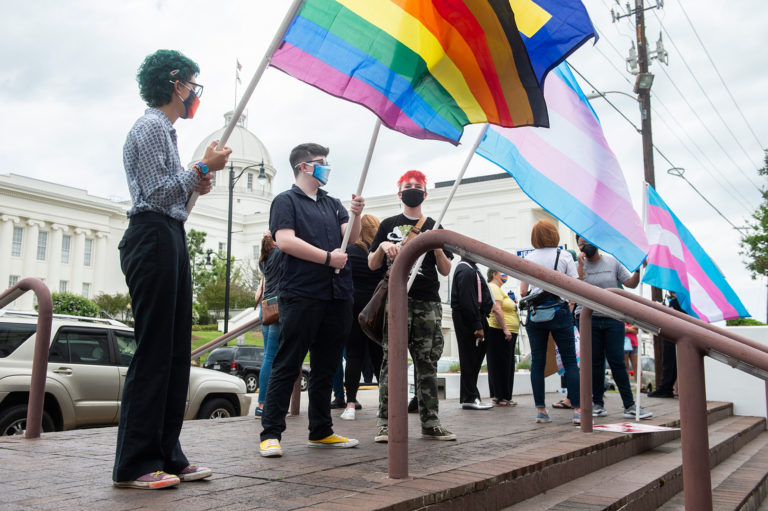
In this Tuesday, March 30, 2021 file photo, demonstrators in support of transgender rights hold flags during a rally outside the Alabama State House in Montgomery, Ala. Five states have passed laws or implemented executive orders this year limiting the ability of transgender youths to play sports or receive certain medical treatment. There’s been a vehement outcry from supporters of transgender rights but little in the way of tangible repercussions for those states. (Jake Crandall/The Montgomery Advertiser via AP)
Five states have passed laws or implemented executive orders this year limiting the ability of transgender youths to play sports or receive certain medical treatment. There’s been a vehement outcry from supporters of transgender rights — but little in the way of tangible repercussions for those states.
It’s a striking contrast to the fate of North Carolina a few years ago. When its Legislature passed a bill in March 2016 limiting which public restrooms transgender people could use, there was a swift and powerful backlash. The NBA and NCAA relocated events; some companies scrapped expansion plans. By March 2017, the bill’s bathroom provisions were repealed.
So far this year, there’s been nothing comparable. Not even lawsuits, although activists predict some of the measures eventually will be challenged in court.
Rodrigo Heng-Lehtinen, deputy executive director of the National Center for Transgender Equality, says he’s surprised by the lack of backlash, but believes it will materialize as more people learn details about the legislation being approved.
“A lot of Americans are still getting to know trans people and they’re learning about these issues for the first time,” he said. “Over time, they get to know their trans neighbors, they get outraged by these bans, and corporations respond It’s just a matter of time.”
The president of a major national LGBTQ-rights organizations, Alphonso David of the Human Rights Campaign, attributed the lack of backlash to lack of awareness about the potential harm that these laws could cause to transgender young people.
“Some people in this country have not come to terms with treating trans people like human beings,” David said. “It’s now coming to a head.”
One batch of bills seeks to ban transgender girls from competing on girls’ sports teams in public schools. Such measures have been enacted in Alabama, Arkansas, Tennessee and Mississippi, and implemented by an executive order from Gov. Kristi Noem in South Dakota.
Another batch of bills seeks to ban gender-affirming medical treatments for trans minors — including the use of puberty blockers and hormone therapy. Arkansas legislators approved such a measure over the veto of Republican Gov. Asa Hutchinson, and similar measures are pending in Alabama, Tennessee and Texas.
Echoing concerns of major medical associations, Dr. Michele Hutchison — who runs a transgender medicine clinic at Arkansas Children’s hospital — says the ban in her state is raising the risk of suicide among some of her patients and forcing some families to wonder if they should move to another state.
More than 400 companies —— including Tesla, Pfizer, Delta Air Lines and Amazon —— have signed on to support civil rights legislation for LGBTQ people that is moving through Congress, advocates said Tuesday.
And last week, the Human Rights Campaign took out a full-page ad in the New York Times appealing to corporations to denounce the anti-trans bills that have proliferated in Republican-controlled legislatures.
The letter, signed by David, urged corporate leaders “to take action now by publicly denouncing state legislation that discriminates against people, refusing to advance new business in states that are hostile to corporate values and refusing to support sporting events where transgender athletes are banned.”
More than 85 companies have signed a statement drafted by the HRC — including Amazon, American Airlines, Apple, AT&T, Facebook, IBM, Microsoft, PepsiCo, Pfizer and Union Pacific. In polite language, the statement implies a threat: “As we make complex decisions about where to invest and grow, these issues can influence our decisions.”
Overall, the corporate response remains “insufficient,” David said. “But I think we are seeing a turning of the tide as we put more pressure on companies.”
One of the companies signing the HRC statement is the technology giant Oracle Corp., which is planning to bring 8,500 jobs and a $1.2 billion investment to Nashville, Tennessee, over the coming decade. Joe Woolley, who heads the Nashville LGBT Chamber of Commerce, has expressed hope that Oracle — which has not threatened to cancel its plans — might use its leverage to prompt reconsideration of Tennessee’s anti-transgender legislation.
Woolley also says organizers of at least three conventions are considering pulling those events out of Nashville because of the bills, though he has declined to identify them.
Thus far, Tennessee Gov, Bill Lee has signaled that any criticism from the business community won’t sway him.
“Organizations have opportunities to weigh in on the legislative process but ultimately, Tennesseans, through their elected representatives, determine the law in our state,” said Casey Black, a spokesperson for Lee.
In Texas, a coalition called Texas Competes released a letter April 19 signed by more than 40 businesses and chambers of commerce in the state denouncing a batch of pending bills as “divisive, unnecessary and economically dangerous.”
Specifically, the letter denounced “efforts to exclude transgender youth from full participation in their communities.”
In Montana, where a transgender sports ban has won initial approval in the Republican-controlled House and Senate, lawmakers added an amendment stipulating that the measure would be nullified if the federal government withheld education funding from the state because of the policy.
The concern stems from an executive order signed by President Joe Biden banning discrimination based on gender. Montana universities receive around $350 million annually in federal funding, of which $250 million goes towards student loans and grants to cover tuition costs — money that university officials say could be at risk if the administration deemed the sports ban to be unacceptable discrimination.
The extent of any emerging backlash to the anti-trans laws will hinge in part on the NCAA, which played a pivotal role in the North Carolina case.
The NCAA’s Board of Governors issued a statement April 12 expressing strong support for the inclusion of transgender athletes.
“When determining where championships are held, NCAA policy directs that only locations where hosts can commit to providing an environment that is safe, healthy and free of discrimination should be selected,” the statement said. “We will continue to closely monitor these situations to determine whether NCAA championships can be conducted in ways that are welcoming and respectful of all participants.”
Alphonso David said the Human Rights Campaign welcomed the statement, but wanted an even tougher stance from the NCAA, with explicit warnings that events would not be held in states with anti-trans laws.
“The time for concrete actions is now,” David said Monday in a letter to NCCA leaders. “This is a national crisis, and one that necessitates united action, including from the NCAA.”
“Saturday Night Live” is fielding major criticism for its choice to tap Tesla owner and technocratic billionaire Elon Musk as host, and this time, the call is coming from inside the house. On April 24, NBC announced that Musk would host “Saturday Night Live” on May 8 alongside musical guest Miley Cyrus. While mainstream outlets applauded the headline-grabbing choice, apparently with no thought as to whether or not a CEO is the best choice for a comedy show, backlash to the choice brewed quickly.
Many comedians shared confusion about the choice on social media, including a few of the actual “SNL” cast members who will have to work with him. Though the posts disappeared almost as quickly as they circulated, the screenshots remain. In addition to a general bland stiffness and complete lack of comedy experience, a few expressed thinly veiled disapproval of Musk’s political alignments at a time when wealth inequality is exacerbating almost every social issue in this country.
More from IndieWire
Recent breakout star Bowen Yang, the first gay male cast member in the show’s history and the first Asian American, was not shy about his feelings. Over on his Instagram story, he reacted to the announcement of Musk’s casting with a frowning emoji. He then got a little bolder, posting commentary over Musk’s tweet of “Let’s find out just how live ‘Saturday Night Live’ really is” that asked, “What the fuck does this even mean.”
Fellow cast member Andrew Dismukes, also a writer on “SNL” since 2017, posted on his Instagram: “ONLY CEO I WANT TO DO A SKETCH WITH IS CHER-E OTERI” alongside a photo of former “SNL” star Cheri Oteri.
Longtime player Aidy Bryant was a bit more subtle with her criticism, but arguably more political. She merely shared a quote from Bernie Sanders soon after the announcement: “The 50 wealthiest people in America today own more wealth than the bottom half… that is a moral obscenity.”
Though not a cast member, “Desus and Mero” writer Josh Gondelman was able to take a funnier, and more pointed, approach: “Elon Musk hosting SNL is huge for guys still making ‘that’s what she said’ jokes who think they’d be great at hosting SNL,” Gondelman tweeted.