San Francisco street artist fnnch has attracted a tsunami of online hate in recent months, and even more of that exploded when he was confronted by one of his critics in a now widely seen Instagram video.
Fnnch’s honey bear stencil murals may have started out as benign and goofy, but many local artists and other commentators have lately been expressing disgust at both their ubiquity and their blandness — and at the artist’s ability to get them plastered in San Franciscans’ windows all over town when “he’s not even from here.” The window bears, as KQED explains, date back to last May when fnnch launched the family-friendly Honey Bear Hunt — conceived as a way for parents with small children to have an added pandemic activity while walking neighborhood streets.
“It was a more urban take on what was happening in the suburbs during the early days of shelter in place: instead of putting actual teddy bears in windows for neighborhood children, people could display fnnch’s honey bear, and kids could follow his virtual map to find them,” KQED’s Rae Alexandra writes. “He sold 3,500 bear window displays in four days.”
That ubiquity, and the fact that fnnch (a straight, cis, white male who was not born in SF) got commissions from queer organizations like the LGBT Center and the Sisters of Perpetual Indulgence — among other nonprofits — to create honey bears for them, has led to a backlash.
Some of the backlash seems to be about the over-saturation of the image across the city. Some is about the bears’ lack of artistic merit. And some is about the fact that fnnch is perceived as taking work away from other local artists, and seems to have been broadly embraced by newly arrived, privileged residents — and fnnch himself is a transplant.
Add to that that he made the mistake of saying, in the video below, that he was an “immigrant” from Missouri. The video was shot as fnnch and some associates were attempting to clean up graffiti that had been painted over the trio of bears on the side of the LGBT Center at Octavia and Market.
The person holding the camera says to fnnch, “You understand that these bears have become synonymous with gentrification and displacement of the artists that come from here?”
And he replies (dumbly), “I’m an immigrant here. I came from Missouri.”
The mural was subsequently re-tagged with “fuck fnnch,” among other things.
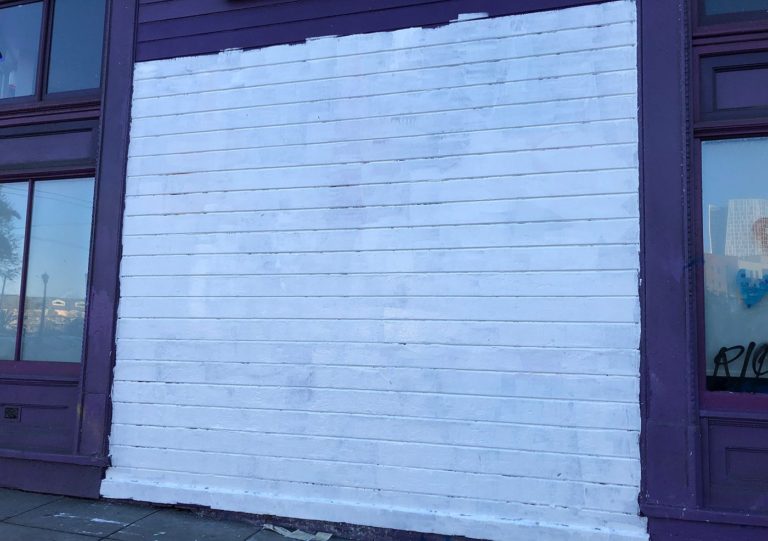
As of Tuesday, a new coat of primer went up over the mural at the LGBT Center.
SFist has reached out for comment about why the center decided to paint over it — assuming it was them — but we have not yet heard back.
In the video, fnnch says, “This wall has been empty for 100 years.” He says that he reached out to the Center, got approval for the mural, and he said the plan was to make the wall available to other local artists on a rotating basis after that.
The person shooting the video, who goes by DoggTown Dro on Insta, says, “You don’t get why people are defacing your shit?” He then says that the person who tagged the mural originally might have been an artist who would have liked to do a proper mural that wall, and there’s anger that fnnch can get his art everywhere. “How come you can but we can’t?” he asks.
Expressing satisfaction that the LGBT Center mural had been removed, DoggTown Dro writes on another post, “I see Honey Bears in the White transplant’s windows of homes my friends, my family, and myself used to live in, play and eat in. They’re all completely gone now in lieu of what feels like a neo wave of techie yupper ass colonization in which shitty clip art bears are the national flag.”
He adds, “The community informed me of the individual behind the pander Bears and the community heard the war cry. And within ONE week we as #FriscoStrong had Fnnch’s shit ass bears removed indefinitely. We WILL reclaim our city. We will NOT let Gentrifiers dictate our culture.”
D.C. Mayor Muriel Bowser announced on April 26 that the city’s COVID-related public health restrictions are being eased one step further by the lifting of a ban on live entertainment at bars, restaurants and nightclubs beginning May 1.
The mayor’s revised public health order is expected to provide a boost to the city’s gay bars, which will be allowed on a limited basis to resume offering live entertainment, including drag shows, which club owners have said have been a longtime popular form of entertainment.
The new order also expands the maximum number of people allowed to be seated at a single table from six to 10 and lifts a requirement that customers must order at least one food item when seated outdoors. The order leaves in place a requirement that a food item must be served when customers are seated indoors.
While welcoming the limited easing of some restrictions, nightlife advocates expressed disappointment that the new mayoral order leaves in place a 25 percent capacity limit on the number of people allowed for indoor dining and bar service along with a required 6′ distancing between tables and seating areas. Also left in place in the new order is the requirement that all customers in bars and restaurants must be seated at all times.
In addition, the mayoral order leaves in place a ban on seating at or ordering drinks from a service bar if the bar is staffed by a bartender or another employee. It also leaves in place a requirement that bars, nightclubs, and restaurants close at midnight instead of the pre-pandemic closing times of 2 a.m. on weekdays and 3 a.m. on weekends.
Nightlife advocates point out that Maryland has raised its occupancy limit for bars and restaurants to 50 percent and Virginia no longer has a capacity limit, although it requires all patrons to be seated and requires tables to be spaced at a distance in observance of social distancing.
Virginia Gov. Ralph Northam last week further eased the state’s restrictions on restaurants and bars by allowing bartenders to serve customers at indoor bar tops.
David Perruzza, owner of the Adams Morgan gay sports bar Pitchers and its adjoining lesbian bar League of Her Own said he too welcomes the lifting of the ban on live entertainment, which had been in place for about year. Perruzza said he would be offering the first drag show his bars has had in about a year on May 6.
But Perruzza said that like other D.C. gay bars, most of which operate in small or medium size buildings, the requirement that all customers must be seated and that tables must be separated by a distance of at least 6′ limits the number of customers that can enter his establishments, which include dining, even if the capacity limit were to be raised to 50 percent.
He said if a 50 percent capacity limit is put in place, the space in his two bars would only allow a 33 percent capacity due to the 6′ social distancing rule.
“What would help us is to let people sit at a bar,” Perruzza said. “My whole staff has been vaccinated. So why no bar service now?”
Mark Lee, coordinator of the D.C. Nightlife Council, a local trade association representing bars, nightclubs, restaurants and other entertainment businesses, has said the initial closing of all bars and restaurants early last year due to the COVID outbreak and the subsequent 25 percent indoor occupancy limit has had a devastating impact on many bars, restaurants and nightclubs.
Lee and other nightlife advocates point out that many of these venues are struggling to stay in business due to the dramatic loss of revenue brought about by the drop in the number of customers.
“The reality is that D.C. remains an outlier throughout the region and across the nation for the worst restaurant and bar restrictions,” said Lee, who is calling on Bowser to “move the same science-based and health-safe level of re-opening opportunities as in both neighboring and nationwide jurisdictions.”
Added Lee, “As all of the local area health metrics continue to improve and vaccination access is now readily available to all, our city needs to finally and immediately restore indoor capacity to 50 percent, allow seating of guest groups at bartender stations, and return to full operating hours by eliminating the midnight service curfew.”
Dr. LaQuanda Nesbitt, director of the D.C. Department of Health, has said nationwide data have shown that restaurants and bars have been among the high-risk places where the coronavirus is transmitted from person to person. But both Nesbitt and Bowser have said in recent weeks that city health officials are closely observing the declining number of new infections among D.C. residents and will be looking at further easing of the current restrictions within a month or two.
D.C. Mayor Muriel Bowser announced on April 26 that the city’s COVID-related public health restrictions are being eased one step further by the lifting of a ban on live entertainment at bars, restaurants and nightclubs beginning May 1.
The mayor’s revised public health order is expected to provide a boost to the city’s gay bars, which will be allowed on a limited basis to resume offering live entertainment, including drag shows, which club owners have said have been a longtime popular form of entertainment.
The new order also expands the maximum number of people allowed to be seated at a single table from six to 10 and lifts a requirement that customers must order at least one food item when seated outdoors. The order leaves in place a requirement that a food item must be served when customers are seated indoors.
While welcoming the limited easing of some restrictions, nightlife advocates expressed disappointment that the new mayoral order leaves in place a 25 percent capacity limit on the number of people allowed for indoor dining and bar service along with a required 6′ distancing between tables and seating areas. Also left in place in the new order is the requirement that all customers in bars and restaurants must be seated at all times.
In addition, the mayoral order leaves in place a ban on seating at or ordering drinks from a service bar if the bar is staffed by a bartender or another employee. It also leaves in place a requirement that bars, nightclubs, and restaurants close at midnight instead of the pre-pandemic closing times of 2 a.m. on weekdays and 3 a.m. on weekends.
Nightlife advocates point out that Maryland has raised its occupancy limit for bars and restaurants to 50 percent and Virginia no longer has a capacity limit, although it requires all patrons to be seated and requires tables to be spaced at a distance in observance of social distancing.
Virginia Gov. Ralph Northam last week further eased the state’s restrictions on restaurants and bars by allowing bartenders to serve customers at indoor bar tops.
David Perruzza, owner of the Adams Morgan gay sports bar Pitchers and its adjoining lesbian bar League of Her Own said he too welcomes the lifting of the ban on live entertainment, which had been in place for about year. Perruzza said he would be offering the first drag show his bars has had in about a year on May 6.
But Perruzza said that like other D.C. gay bars, most of which operate in small or medium size buildings, the requirement that all customers must be seated and that tables must be separated by a distance of at least 6′ limits the number of customers that can enter his establishments, which include dining, even if the capacity limit were to be raised to 50 percent.
He said if a 50 percent capacity limit is put in place, the space in his two bars would only allow a 33 percent capacity due to the 6′ social distancing rule.
“What would help us is to let people sit at a bar,” Perruzza said. “My whole staff has been vaccinated. So why no bar service now?”
Mark Lee, coordinator of the D.C. Nightlife Council, a local trade association representing bars, nightclubs, restaurants and other entertainment businesses, has said the initial closing of all bars and restaurants early last year due to the COVID outbreak and the subsequent 25 percent indoor occupancy limit has had a devastating impact on many bars, restaurants and nightclubs.
Lee and other nightlife advocates point out that many of these venues are struggling to stay in business due to the dramatic loss of revenue brought about by the drop in the number of customers.
“The reality is that D.C. remains an outlier throughout the region and across the nation for the worst restaurant and bar restrictions,” said Lee, who is calling on Bowser to “move the same science-based and health-safe level of re-opening opportunities as in both neighboring and nationwide jurisdictions.”
Added Lee, “As all of the local area health metrics continue to improve and vaccination access is now readily available to all, our city needs to finally and immediately restore indoor capacity to 50 percent, allow seating of guest groups at bartender stations, and return to full operating hours by eliminating the midnight service curfew.”
Dr. LaQuanda Nesbitt, director of the D.C. Department of Health, has said nationwide data have shown that restaurants and bars have been among the high-risk places where the coronavirus is transmitted from person to person. But both Nesbitt and Bowser have said in recent weeks that city health officials are closely observing the declining number of new infections among D.C. residents and will be looking at further easing of the current restrictions within a month or two.
A SOGI data nightmare Regarding your article that the San Francisco Health Department lags other city agencies in collecting LGBTQ health data euphemistically called SOGI (since we need a separate acronym): good [“On LGBTQ data, SF health department lags other city agencies,” April 15]. There was a time when gay people really just wanted to be left alone to do their own thing. The last thing we need in these post-Snowden days of mass surveillance is a convenient government database. The Nazis found the “Jude” data collection from the 1930 census to be quite convenient.
Imagine, you show up to Zuckerberg San Francisco General Hospital in an ambulance for a broken leg and your gleefully displayed vaccine passport connects you to the health department’s SOGI database and it flashes to the triage nurse: “Oh, he’s a homosexual.” Now you get some judgmental doctor who sees blood and is afraid to work with blood in homosexuals and without telling you orders an HIV viral load test — even though it isn’t FDA approved for diagnostic or screening purposes and has a 20-70% false positive rate on HIV negatives, and traumatic injury is one of the conditions known to cause false positives. Now it comes back “positive” (which means nothing when used off-label) and you get sent over to the SFDPH for “surveillance” and they put you in a databases as a “suspect case” and then use your identity to inflate their “probable cases” for Ryan White Part A funding claims — for the rest of your life.
Meanwhile, your own treatment is delayed because the doctors don’t want to work with you until they get back the results of this lousy PCR test, and they’ve also called the SFPD officers who responded to the accident where you broke your leg, and they freak out because one of them accidentally touched blood, and now they come in and say, “Aha! You have viremia!” and then instead of asking you whether you want to take HIV meds immediately based on this bogus off-label test you didn’t know they were going to administer, and they trigger Stevens-Johnson syndrome and now your skin is falling off and you’re in critical at the ICU when really all you just wanted was them to put your leg in a cast. When you wake up then they say you have to keep taking the meds and when you respond, “Well, I want to have a confirmatory test and perform a differential diagnosis,” they come back with a psychiatrist and have you declared “in denial” and then get you declared insane and force medicate you … and send you a bill.
All because of the SOGI data.
Thomas J. Busse San Francisco
Nothing lucky about Lucky Strike I am very upset to see the Lucky Strike cigarette ad on your pages [April 22 print edition]. Cigarettes kill nearly half a million Americans each year from smoking-related diseases, like emphysema, lung cancer, and so on, and to see this ad in a gay newspaper is very disturbing. I am an MD and I know what I am talking about. Many people in America do not know about it but I know, believe me. I see a lot of them in San Francisco General Hospital every day. We’re doing vaccination against COVID-19 right now, and smoking problems became in the shadow. But look, how many kids in our schools try to smoke cigarettes every day? I am sure that the gay community of San Francisco is against it too, but this kind of ad helps Americans to kill themselves. I understand that we need money. But all the money in the world cannot buy health. Lucky Strikes is not lucky at all, because it is deadly.
Georgy Prodorov San Francisco
Help keep the Bay Area Reporter going in these tough times. To support local, independent, LGBTQ journalism, consider becoming a BAR member.
The Organization for Refuge, Asylum and Migration recently launched an in-depth research project to examine the conditions of LGBTQ asylum seekers and refugees at the Kakuma Refugee Camp in northern Kenya.
The study is in response to the April 12 death of Chriton “Trinidad” Atuhwera.
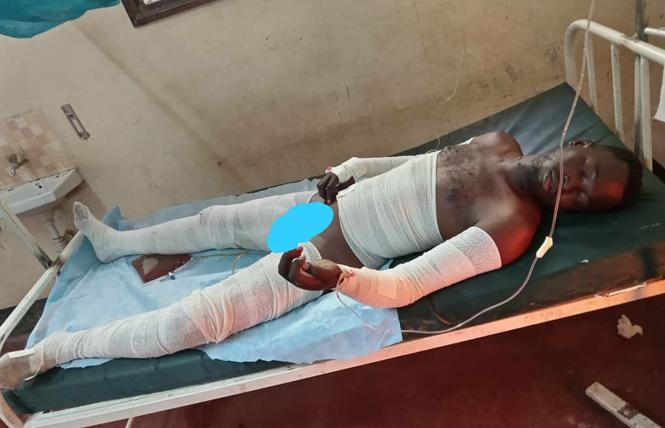
The 32-year-old LGBTQ Ugandan asylum seeker activist died due to complications caused by his burn wounds and other untreated health issues at Kenyatta National Hospital in Nairobi, Kenya’s capital.
“Our teams on the ground did their very best to ensure the best medical care was provided to the victim,” wrote Dana Hughes, senior regional communications officer at the United Nations High Commissioner for Refugees, in an April 15 email responding to the Bay Area Reporter’s questions.
Atuhwera and fellow Ugandan gay refugee activist Jordan Ayesigye suffered severe burns from a fire-bomb attack on Block 13, where a group of LGBTQ refugees live at Kakuma, during the early hours of March 15. Ayesigye was also taken to the Nairobi hospital and was in “stable, not critical condition,” as queer refugee activists told the B.A.R. He is “expected to be discharged soon,” Hughes wrote, emphasizing the hospital’s burn unit is considered one of the best in the region.
ORAM, the first organization to work specifically on behalf of LGBTQ refugees, has worked with Kakuma’s queer asylum seekers and refugees since 2019, but not directly with residents of Block 13, said Steve Roth, ORAM’s executive director, and Kakuma gay refugee activist Wavamuno Benon.
ORAM is a subsidiary of Alight, a Minneapolis-based organization that works with 3.5 million displaced people in 17 countries around the world. The organization helped launch microbusinesses making and selling soap and raising chickens to sell eggs to help LGBTQ asylum seekers and refugees sustain themselves and promote tolerance among other refugees in the camps in partnership with Upper Rift Minorities in 2019.
Upper Rift Minorities is a human rights organization that works on behalf of some of the most marginalized communities in northern Kenya.
Roth, a gay man, recognized the stark fact that asylum seekers and refugees are living in UNHCR camps longer, sometimes for years, while waiting to be resettled in other countries. Politics, including those in the United States, are making the situation harder by increasingly closing borders and capping the number of refugees to resettle.
Closed borders leave refugees, including LGBTQ refugees, in an impoverished limbo in transit countries like Kenya, Roth told the B.A.R. The situation is now compounded by the global pandemic, he texted April 26.
“LGBTIQ refugees and asylum seekers in Kakuma have faced untold challenges in their ongoing quest to live safe and authentic lives,” Roth stated in the release. “We know that the situation they face in Kakuma refugee camp is complex and multilayered.
“ORAM is committed to working with our partners including Rainbow Railroad to develop a true and complete understanding of the challenges facing LGBTIQ refugees in Kakuma, uncovering root causes, and identifying sustainable solutions,” he added, clarifying to the B.A.R. that ORAM wants a “complete cross-section of people, views, and experiences.”
ORAM is collaborating with Canadian- and U.S.-based Rainbow Railroad, an organization that assists LGBTIQ people flee violence and persecution, for the UNHCR-endorsed study.
The agency will provide the unidentified Kenyan-led researcher with information about the LGBTIQ refugees living in the camp in addition to conducting interviews with the camp’s queer residents, community leaders at the camp, and lead stakeholders, according to the release.
The researcher’s goal is to speak with “LGBTQ residents of Kakuma across all groups, categories, nationalities” and more to obtain a well-rounded understanding of the situation.
According to ORAM, approximately 300 known LGBTQ asylum seekers and refugees reside at Kakuma Refugee Camp. Most of the queer refugees living at the camp are from Uganda; others fled persecution in Burundi, Congo, Ethiopia, Rwanda, Somalia, and several other countries.
The assaults, abuses, and discrimination LGBTQ refugees face at the camp from other refugees and authorities have made headlines since 2018.
Some gay refugee activists, like Benon, escaped the camp, securing safer accommodations elsewhere in the country, usually in Nairobi, while they wait for the UNHCR to process their Kenya asylum and refugee resettlement applications.
Refugees must apply for asylum first in Kenya before applying for refugee resettlement with the UNHCR.
The Biden administration pledged to reinstate prioritizing resettling LGBTQ refugees and to increase the number of people the U.S. would agree to resettle. Last week, President Joe Biden received severe criticism when he attempted to backpedal on his pledge by retaining former President Donald Trump’s refugee cap.
“We are glad that the Biden administration has agreed to reconsider” the 62,500 refugee resettlements that he promised for 2021, Roth texted to the B.A.R., adding it was “unacceptable” for the administration to backtrack.
LGBTQ refugees at Kakuma, particularly residents of Block 13, have spoken out and protested against anti-gay attacks by fellow refugees and authorities and the lack of protection at the camp since 2018. Atuhwera’s death and Ayesigye’s recovery are serving as catalysts as they keep fighting for protection.
UNHCR officials and LGBTQ residents of Block 13 continue to disagree regarding the realities on the ground in the camp and Ayesigye’s recovery.
Benon and other LGBTQ activists in Kenya and the U.S. insisted in Facebook messages to the B.A.R. that nothing has changed at Block 13 since Atuhwera’s death.
UNHCR officials have not visited the compound. Benon wrote April 20 that police raided it and attacked residents with guns and sticks while searching for gay activist Gilbert Kagarura, who spoke with Reuters after Atuhwera died.
Ayesigye remains in critical condition, he said, despite UNHCR statements reporting UNHCR doctors cared for Ayesigye during his recovery, and he is ready to be released from the hospital.
Hughes defended the agency, stating to the B.A.R. it has pursued discussions, support, and mental health assistance for LGBTQ refugees to reduce tensions and deployed additional police forces, especially in sensitive neighborhoods. Additionally, it has sent agency doctors to oversee Ayesigye’s care and recovery.
In an April 15 release responding to the queer refugee’s passing, Fathiaa Abdalla, UNHCR’s representative in Kenya, expressed the agency’s sadness over Atuhwera’s death and called for Kenyan authorities to investigate.
“We urge the Kenyan authorities to accelerate their investigation into the alleged attack and hold those responsible to account,” she said.
The agency has “contacted police to ask for an update on the investigation as it is crucial that those responsible are held to account,” Hughes wrote to the B.A.R.
ORAM stated, “There is a clear need for further action and support, based on facts and taking into account the current situation on the ground.”
ORAM added that the “lack of clear, detailed and well-rounded information regarding the situation experienced by LGBTIQ refugees in the camp also creates challenges for those interested in helping to ensure the rights and well-being of this community.”
The goal of the organization’s study is to identify overarching issues, pinpoint solutions and make recommendations to address systemic challenges facing the community.
Help keep the Bay Area Reporter going in these tough times. To support local, independent, LGBTQ journalism, consider becoming a BAR member.
President Joseph R. Biden Jr. is a cradle Catholic whose positions on immigration, the death penalty, economic justice and environmental stewardship are aligned with policy recommendations of the U.S. bishops and other faith leaders. Mr. Biden has demonstrated his commitment to religious freedom by revoking his predecessor’s so-called “Muslim ban” on immigration and widening the path for refugees, including religious refugees, to find sanctuary in the United States.
Nevertheless, Mr. Biden’s policies on “abortion, contraception, marriage and gender,” noted in that order by Archbishop José H. Gomez of Los Angeles, president of the U. S. Conference of Catholic Bishops, are disturbing to many Catholic leaders. In his statement on Mr. Biden’s inauguration, the archbishop denounced the president’s decision to rescind the “Mexico City policy,” an executive branch requirement that foreign nongovernmental organizations receiving U.S. aid certify that they do not “perform or actively promote abortion as a method of family planning.”
Archbishop Gomez used the occasion of Mr. Biden’s inauguration to express “deep concern” for “the liberty of the Church and the freedom of believers to live according to their consciences.” As a candidate, Mr. Biden promoted a plan to “safeguard our nation’s religious communities” and “restore a national culture of inclusiveness that encourages individuals of all faiths to celebrate their beliefs openly and without fear of harm or reprisal.”
Mr. Biden’s policies on “abortion, contraception, marriage and gender” are disturbing to many Catholic leaders.
As president, Mr. Biden has announced his respect for “our cherished guarantees of church-state separation and freedom for people of all faiths and none.” So why is Archbishop Gomez concerned about religious freedom under President Biden?
What is religious freedom? Mr. Biden has pledged to protect the traditional concept of religious freedom as expressed in the Free Exercise Clause of the U.S. Constitution, described in Supreme Court rulings from 1990 and 1993 as “[T]he right to believe and profess whatever religious doctrine one desires” and to be “free from discriminatory treatment.” But Archbishop Gomez espouses a much broader interpretation that permits believers not only to worship as they choose but to “live [all aspects of their lives] according to their consciences.” This assertion of religious rights goes far beyond what is promised by the First Amendment.
Conscientious scruples have not, in the course of the long struggle for religious toleration, relieved the individual from obedience to a general law not aimed at the promotion or restriction of religious beliefs. The mere possession of religious convictions which contradict the relevant concerns of a political society does not relieve the citizen from the discharge of political responsibilities.
Under controlling Free Exercise precedent, religious practitioners are subject to all “generally applicable” “valid and neutral” government regulations as long as the government is not motivated by anti-religious animus. The Supreme Court also has read a “ministerial exception” into the application of federal employment laws. This exception protects religious employers from employment law claims brought by employees who perform “religious functions” like leading students in prayer.
In 1993, Congress determined that religious practitioners needed greater protection from government interference, so it passed the Religious Freedom Restoration Act. The R.F.R.A. subjects federal laws that “substantially burden religious exercise” to a strict scrutiny standard, which means they must be “narrowly tailored” to meet a “compelling government interest.”
Strict scrutiny is a litigator’s dream and a regulator’s nightmare. As Justice Antonin Scalia opined in 1990, strict scrutiny creates “an extraordinary right to ignore generally applicable laws” and cannot be “limited to situations in which the conduct prohibited is ‘central’ to the individual’s religion since that would enmesh judges in an impermissible inquiry into the centrality of particular beliefs or practices to a faith.”
Archbishop Gomez espouses a broader interpretation of religious freedom that permits believers not only to worship as they choose but to “live [all aspects of their lives] according to their consciences.”
Health Care and L.G.B.T. Rights The 2010 passage of the Affordable Care Act spawned numerous lawsuits that greatly expanded religious rights. In Burwell v. Hobby Lobby (2014), the Supreme Court applied the R.F.R.A.’s religious protection to religiously motivated, closely held corporations; and, in Zubik v. Burwell (2016), it gave credence to the argument that the mere filing of a form may constitute a “substantial burden” on religious rights. In Little Sisters of the Poor Saints Peter and Paul Home v. Pennsylvania (2020), the court upheld, but did not require, President Donald J. Trump’s expansion of religious exemptions beyond faith to “conscience based” objections.
The entire A.C.A. may be struck down by a pending Supreme Court decision, but should the law stand, Mr. Biden will have the challenge of drafting a new rule that grants female employees the health insurance, including access to contraception, required by the A.C.A. while meeting the formidable demands of the Little Sisters of the Poor.
The ballooning of religious liberty occasioned by successful challenges to the contraceptive mandate of the A.C.A. thrilled religious rights advocates, but they may regret having pushed so far. The religious liberty pendulum, having swung far from the original confines of the Free Exercise Clause, may be swinging back to the center.
The R.F.R.A. was enacted with the approval of 97 senators, including Joseph R. Biden Jr. of Delaware. Since then, the R.F.R.A.’s intended narrow exemption for religious observance has become a wide passage through which all conscientious objectors, including those engaged in secular activities like running arts-and-crafts businesses, may pass. Consequently, President Biden now supports passage of the Equality Act, which would supersede the R.F.R.A. and leave religious objections to L.G.B.T. anti-discrimination laws to be judged by Free Exercise Clause standards.
The Fairness for All Act is opposed by both the U.S.C.C.B and L.G.B.T. activists, which means it is either dead in the water or the perfect compromise. The Supreme Court’s decision in Bostock v. Clayton County (2020), which acknowledged that federal sex discrimination laws apply to gay and transgender employees, may affect legislative negotiations.
Whatever the outcome of these legislative initiatives, Mr. Biden’s conflict with religious groups may be eased when the court decides Fulton v. City of Philadelphia, a case that challenges the denial of foster care contracts to agencies that decline to place children with same-sex couples because of religious objections. Should the court rule that the Free Exercise Clause includes the right to deny services to same-sex couples, Mr. Biden would be obligated to honor that right.
Mr. Biden has announced his respect for “our cherished guarantees of church-state separation and freedom for people of all faiths and none.” So why is Archbishop Gomez concerned about religious freedom?
Covid-19 controversies One of the many executive orders signed by Mr. Biden on his first day in office required the implementation of mask wearing on federal property, at transportation hubs and on public conveyances (planes, trains and buses). While mask wearing has been promoted as a sign of Christian love, there are religious practitioners who object to mask mandates. Religious objections to Mr. Biden’s mask order are unlikely to succeed even under the R.F.R.A.’s strict scrutiny standard, as the burden of wearing masks in public places is low and the compelling nature of this lifesaving public health initiative is high.
A federal vaccination mandate is unlikely until Covid-19 vaccines are readily available and receive full Food and Drug Administration approval. To date, the F.D.A. has only granted emergency use authorization for three Covid-19 vaccines. Mandating use of a drug that is not F.D.A.-approved may be prohibited by the very law that created the emergency use authorization.
Consequently, even the U.S. military is not currently requiring soldiers to be vaccinated. Vaccination is physically intrusive and, for some, a religious burden, but a properly crafted federal vaccination requirement could overcome strict scrutiny if, for example, it did not force believers to be injected with serum produced by or tested on genetic material derived from fetal cell lines.
No president seeks controversy with religious leaders, particularly with leaders of one’s own faith. Mr. Biden began and will end his presidency in substantial agreement with Catholic leaders on, returning to Archbishop Gomez’s statement, “the death penalty, immigration, racism, poverty, care for the environment, criminal justice reform, economic development and international peace” and disagreement on abortion and L.G.B.T. rights.
But presidential powers are limited. If Mr. Biden wants his presidency to have a lasting impact on religious freedom, he and his fellow Democrats must craft legislation acceptable to Republican senators. The White House has not yet commented on possible revisions to the Equality Act, but the response should forecast Mr. Biden’s legacy on religious freedom.
MONTPELIER, Vt. (WFFF) – For several years, Vermont has used an incentive program in an attempt to attract new residents and chip away at the state’s longstanding demographic challenges. Now, lawmakers are hoping to re-up the New Vermont Employee Incentive Program with an emphasis on drawing in people who work from home.
The concept of offering a cash incentive to relocate to Vermont has managed to grab attention, with hundreds of people taking advantage of the program. In an era where more people are able to work from home, Department of Economic Development Commissioner Joan Goldstein said this year could bring a big boost to the program.
I think we can all agree that, for the most part, dating apps suck. We all have to sift through the mirror selfies, the bots, and the “not here for a long time, here for a good time” profiles hoping to find something—anything!—worth pursuing.
But if you are queer, finding love on dating apps is significantly harder. Your dating pool seriously shrinks, and less options = less opportunity to meet someone special.
Get Access to *All* of Cosmo
For that reason, it’s super important to make sure you’re downloading dating apps that are LGBTQ+ friendly. This makes it so that you can be more intentional about who or what you’re looking for.
And luckily for you, I’ve compiled a list of the le best queer dating apps. Not only can these apps help you potentially find love, but they can also help you find a sense of belonging.
For your pleasure, here’s what you should download right now:
1. Thurst
Who it’s for: Queer community as a whole
Thurst functions similarly to the mainstream heteronormative dating apps, as in you see people’s profiles one at a time and can decide if you like them or not. The major benefit of Thurst is that there is an array of options when choosing how you identify. In terms of sexuality, you can choose anything from abrosexual to iculasexual, and most things in between. Along with that, gender is a blank space that you can fill in however you choose on your profile. (We love to see it.)
These settings make it one of the most inclusive dating apps in terms of how you define yourself. However, the app itself operates at a less than revolutionary standard. It often freezes and can be buggy. Le sigh.
Unlike other dating apps, Lex doesn’t allow you to post photos. You can connect to your Instagram, but it’s not required. So in other words, it’s basically like a queer Twitter where you can see what’s happening globally or just in your local area. You can use Lex for any type of relationship: dating, fuck buddies, friends, business partners. There’s a big focus on community building, and no tolerance for hate. The app can be buggy at times, but overall, it’s a solid option.
Cisgender, heterosexual people are basically the only people excluded. Though it was made as a dating app, it in some way functions as a social media app. It has a feed—much like Facebook’s, that allows you to see what others on the app are doing. For example, there’s an event page to view upcoming queer events in your area and there is also a function to join “communities,” which allows you to meet people with similar interests. Of course, HER can also be used to swipe left or right for a soul mate, but its extra functions make it so much more than that.
Here’s the bad news: The major drawback with Her is the paywall. If you want to see someone who has swiped right on you: paywall. If you want to chat with someone who is online near you, but you haven’t matched yet: paywall. If you want to have a decently lengthened conversation with someone you already matched with: paywall. If you have an extra $25.99 a month you will have a great time. But for those single ladies on a budget, this one may not be The Move.
Please, please, please say goodbye to Grindr. Scruff works similarly, but is focused on more than just hookups. It also includes a global feature, so you can get access to men far away from you, and that makes it easy to meet people in different cities when you want to travel. Plus, the app even shows you queer events near you so you can connect in person (back when people are allowed outside).
JSYK though, Scruff is primarily targeted toward hairy men (otters, bears, and cubs specifically). It also recently added a paywall ($20 a month), which makes access to its features annoying at best.
This app does not care how you identify in terms of gender, ethnicity, ability etc., as long as you are bisexual or pansexual. This helps make a safe space for those who are attracted to multiple genders to find each other. It also includes a space for you to list almost anything else about yourself: hair color, eye color, height, religion, star sign, education, political beliefs, pets, body type, etc.
While these descriptions lean on the side of superficiality, especially given you can only choose from their list of options, they also make it easier for finding a partner who you share beliefs with. BiCupid functions like a cross between Tinder and Grindr, where you can swipe left or right, or you can peruse profiles of others on the app.
Most other dating apps either implicitly or explicitly include some form of sexualization, but Ace Dating aims to create a space for asexual people to connect and form a community. Plus, it offers the opportunity to video chat with your potential partners.
It’s great in theory, but be prepared for some bugs: You can enter search parameters, but they don’t work, and users also reported an overwhelming number of bots, making it difficult to connect with real people.
Though its target audience is those who identify as transgender, anyone can use Transdr to find someone. Transdr also includes a “Lifestyle” page where you can post pictures and updates of what’s going on in your life, similar to how Facebook functions. This helps create communities among the app’s user base. The downside of this app is that a lot of its users are cis men, which can lead to the fetishization of the trans community. In theory this app is great, but in practice, be wary about your time spent here.
Is tinder a garbage hole full of fuck boys? Yeah. But everyone is on it, so it’s much easier to meet someone. Specialized dating apps have limited pools of users, but if you want to play a numbers game, Tinder is the right option. You will have to evade couples looking for thirds, but overall, it’s great. You have access to the whole community, and you’ll have better odds at finding a partner—or maybe just a hookup if that’s what you want.
As we all know, Hinge is similar to Tinder in that your surrounded by the straights. But it also, like Tinder, has the benefit of everyone being on it. It is targeted specifically at dating so it’s perfect for those looking for a relationship. They also added a video chat function during the pandemic so you can do a virtual first date. You’re also much less likely to run into fetishizing straights than you are on Tinder. Sometimes the best queer dating app is the one designed for straight people.
This content is created and maintained by a third party, and imported onto this page to help users provide their email addresses. You may be able to find more information about this and similar content at piano.io
This week read about Courtney Stodden being inspired by two celebrities to come out, a trans teen talking about her dreams of playing girls’ sports, and Kellogg’s releasing rainbow Pride cereal.
Model Says Elliot Page and Sam Smith Inspired Them to Come Out
Courtney Stodden wanted to be as comfortable in their identity as they are on the runway. After a long internal struggle, Stodden is now confident in their gender identity — and they have Elliot Page and Sam Smith to thank.
“For the longest time I would sit in the shadows and watch brave souls like Elliot Page, Sam Smith and other mainstream celebrities come out,” they said to Page Six. “I knew I felt the same as them, but I was afraid I would be ignored because I present as high-femme non-binary.”
Stodden also credits their newfound confidence to their fans.
They said their LGBT fans inspired them to “live my truth fearlessly regardless of my presentation.”
HRC Releases Moving Video of Trans Teen Who Hopes to Play Sports
Rebekah. Photo via HRC.
Fourteen-year-old Rebekah just wants to play sports with her friends. But due to pending anti-trans bills, she fears she won’t be able to.
A video by the Human Rights Campaign highlights Rebekah, who loves to play field hockey with her friends.
“When we’re on the field, my teammates, they just see me as me,” she said. “They see me as a teammate who they’re going to play with, who they’re going to win with, who they’re going to lose with, and just someone who they will work with together.”
By sharing Rebekah’s story, the HRC hopes to turn people against the anti-trans bills that will keep transgender athletes from competing within their own gender.
Kellogg’s Releases Rainbow Pride Cereal
“All Together.” Credit: Kellogg’s.
While cereal brand Kellogg’s already has a brand of rainbow cereal, “Froot Loops,” the company has decided to launch a cereal designed to celebrate the LGBT community.
The heart-shaped cereal will be rainbow-colored and covered in edible glitter inside a box featuring various mascots from other Kellogg’s cereal.
Last year, the company released a similar pride cereal, but at a greater cost and only sold online. This year, the cereal will be $3.99 a box and sold in stores.
Kellogg’s will also be donating $3 for every box purchased to GLAAD, an LGBT organization, if a copy of the receipt is uploaded to their website.
Each week ‘Beyond the G’ looks at news featuring the many letters of our LGBTQIA+ spectrum.
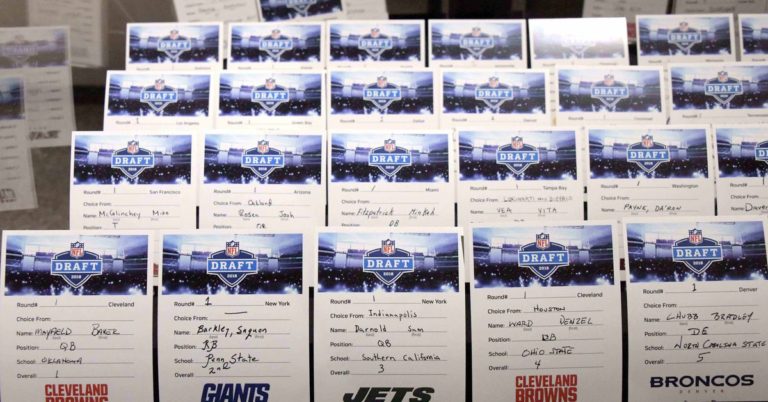
“At the risk of ending up on Old Takes Exposed, it doesn’t seem like there’s as much trade activity right now as there usually is,” Rapoport said during Tuesday’s edition of NFL Total Access. “Now, depending on which quarterbacks are available in the top 10, I would expect there to be at least serious discussion about trading up for one quarterback in the top 10 just based on who probably is taken and where that quarterback ends up going. Absent that, I just don’t hear a ton of trade chatter.”
Rapoport noted that part of the reason might be that teams have fewer players on their draft boards graded as opening-round picks.
“And maybe the reason why is after you get to — let’s say pick No. 7 or 8 — there’s just not a lot elite, premium guys. So what teams are nervous about is trading from let’s say inside the top 10 to 14, 15, 16, 17 because the quality of guy is just not there. I think that’s one thing that teams are sort of afraid of. There is a point where you basically stop taking a player you have rated as a first-rounder. Is that 16? Is that 17? It differs for each team.”
“Yeah, that would be really predicated on your board. And you know we have X amount of names there that we feel are first-round value — guys that can come in and step up right away. I think if we get into that zone where our cutoff might be — currently it’s at 16-17 names that we feel are impact starters [who cold] come in and play right away — I think if it makes sense for us in regards to one of those 16-17 players dipping into the teens or 20’s to get aggressive.”
Of course, Veach answered this question two hours before anyone knew the Chiefs were about to trade their first-round pick to the Ravens. It’s very likely Veach already knew the deal was going to happen — his press conference took place almost an hour after it had originally been scheduled, which should have been a clue to reporters that something was afoot — but it still didn’t occur to anyone to ask Veach about trading into the first round.
But that’s not likely to happen — unless, by some miracle, one of their top-rated prospects falls all the way into the very late 20s. Even then, the Chiefs would likely have to trade more of their 2022 draft assets in order to get back in — or perhaps throw in a player like Khalen Saunders, who simply couldn’t find a way back onto the field when undrafted free agent Tershawn Wharton stepped up in 2020. Saunders still has a year remaining on his rookie deal and might solve a need on another team.
But it’s probably wise not to hold your breath for that.
In the meantime, one of the possible trades that’s been mentioned in recent weeks — the Denver Broncos trading up to grab whoever the fourth or fifth-drafted quarterback turns out to be — now seems less likely after their trade for veteran Teddy Bridgewater. (Or… depending on your point of view… more likely).
The Washington Football Team, which owns the No. 19 pick, has done legwork on a potential trade up, making phone calls to teams in or around the top 10. We’ve talked to a few personnel evaluators who think Washington’s target is not a quarterback. Most sizable jumps are for a passer, though, and it requires parting with serious draft capital to make it happen.
They also reported that depending on how things shake out, the Carolina Panthers could trade either up or back. But when they wrote those words, one thing was true that isn’t true now: Bridgewater was a Panther.
The team also has toyed with the idea of having two high-pedigree quarterbacks on rookie deals, recently acquired Sam Darnold and a new guy. We’re told that if Fields is there at No. 8, they’ll at least consider that move, as they have him graded highly. But other teams aren’t buying that, believing Carolina is all-in on Darnold and is trying to leverage more picks.
So in the end, it’s hard to say whether things will become more lively on Thursday night. Either way… we’ll be watching.
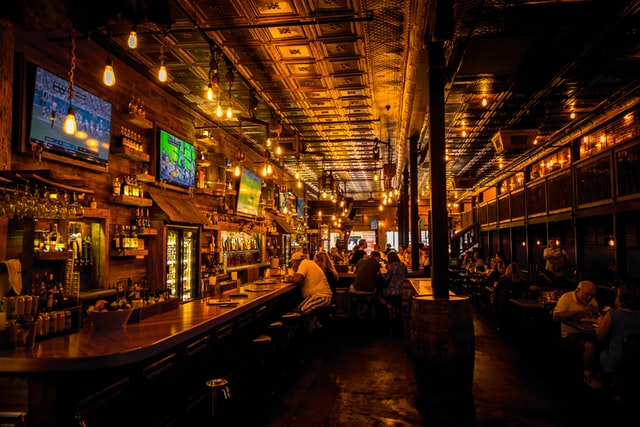
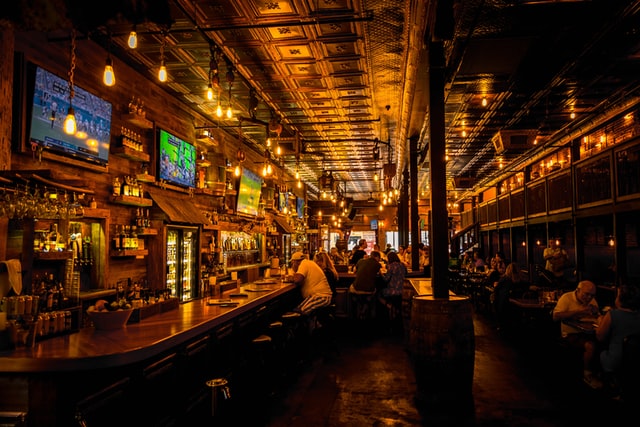
Below is a list of the top and leading Pubs in Columbus. To help you find the best Pubs located near you in Columbus, we put together our own list based on this rating points list.
Columbus’s Best Pubs:
The top rated Pubs in Columbus are:
Byrne’s Pub – serves delicious pub favorites in a relaxing space for small and large gatherings
Cavan Irish Pub – the only gay Irish bar in the area with a laid-back atmosphere and friendly flairs that guarantees a memorable experience.
Mac’s Proper Pub – gathers people to eat, talk, and unwind with the best selections of food and live music
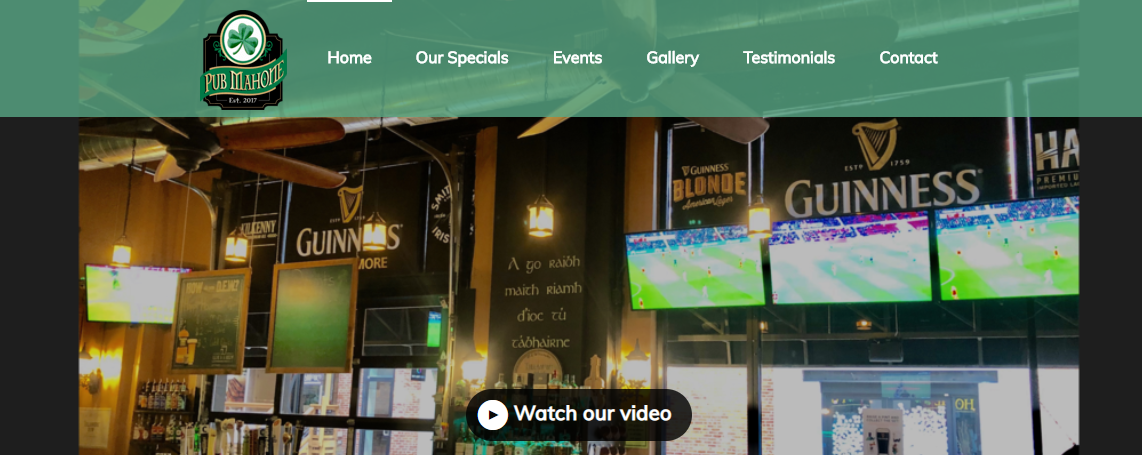
Pub Mahone – has a complete line of beers, spirits, and wines to enjoy with
R Bar Arena – bright and modern brewpub that features typical pub grub and drinks
Byrne’s Pub
Byrne’s Pub serves delicious pub favorites in a relaxing space for small and large gatherings. They have a welcoming staff that warmly attends to the diners and visitors. Furthermore, they serve Bua which is an Irish Whiskey. They constantly strive to serve the most genuine Irish whiskey with a lasting finish. Their Bua has no added flavorings and undergoes five-barrel maturation. Moreover, they serve pub favorites like chicken and dumplings, BBQ ribs, and shepherd’s pie. There are also sections of burgers and sandwiches.
“They have great service and selection at the bar. Great place for live music. Bathrooms are clean. They do a good job of serving people even though they get very busy. They have a decent sized parking lot and there is street parking near by. I highly recommend overall.” – Craig Neutzling
Cavan Irish Pub
Cavan Irish Pub is the only gay Irish bar in the area with a laid-back atmosphere and friendly flairs that guarantees a memorable experience. They have various events that make relaxation and enjoyment in one. This includes Saint Patrick’s Day karaoke and kegs and eggs. There are complimentary meals served. Furthermore, there is a bingo and drag race watch party. There are entertainment staff hat has years of experience with music and lighting. They have executive DJs and some resident DJs.
Products/ Services:
pub
Location:
Address: 1409 S High St, Columbus, OH 43207 Phone: (614)-725-5502 Website: cavanirishpub.com
Reviews:
”Really nice selection of beers, good prices on drinks. Friendly staff. Relaxed atmosphere, mostly male crowd. One of the funniest drag performances I’ve seen.” – Chris Murray
Mac’s Proper Pub
Mac’s Proper Pub gathers people to eat, talk, and unwind with the best selections of food and live music. The pub has been open to the public since 1988. It has been a comfortable place to relax ever since. Furthermore, there are traditional and Scotch spirits on tap. There are also selections of beers that freely flow as the conversation goes. Moreover, they serve burgers, salads, and sandwiches. Some of the selections are plant-based burgers, tuna melt, portabella, and Italian beef sandwiches. They also serve shrimp baskets, steak, and chips, and steak pie.
Products/ Services:
pub
Location:
Address: 693 N High St, Columbus, OH 43215 Phone: (614)-221-6227 Website: macsproperpub.com
Reviews:
”This place is amazing. Traveling for video collecting. Just happened to park in front of here and the fries and mac daddy burger was amazing. Fresh tea; and great alcohol drinks! Very clean. Great staff. Great service.” – Autumn Jones
Pub Mahone
Pub Mahone has a complete line of beers, spirits, and wines to enjoy with. There are also dishes to choose from. They specialize in serving Irish favorites with music and drinks. There are also sports vents that are played within the pub. Furthermore, they serve Irish dumpster fries and honey better pretzels. There are also chicken sandwiches, fried fish sandwiches, and pub burgers. Moreover, they have beers on draft and cans. Some of the selections are Bud, Coors, and Blue moon Land Grant. Rotating beer options are available. Their wine selections include chardonnay, Moscato, and cabernet.
”Dinner at Pub Mahone tonight. The food is incredible. Irish Egg rolls and sliders are savory and the best I have ever had. Chef Derek made a great irish menu. Beautiful Irish Pub atmosphere. Will be back many times! Can’t wait to try more.” – Shanna Crawford
R Bar Arena
R Bar Arena is a bright and modern brewpub that features typical pub grub and drinks. There is also patio seating for a more relaxed dining experience. There are also a lot of televisions that play live music and sports. furthermore, there are wraps served in a flour tortilla with kettle chips. Their selections include chicken, bacon ranch, chipotle chicken, and buffalo chicken. Moreover, there are specialty pizzas like four cheese and veggies. Their 12-inch pizzas have a draft-your-own option with toppings like bacon, meatballs, and mushroom to choose from.
Products/ Services:
pub
Location:
Address: 415 N Front St, Columbus, OH 43215 Phone: (614)-221-4950 Website: rbararena.com
Reviews:
”Had lunch here today. Great, attentive service. The burger was juicy and delicious. Awesome place to hang out before or after an event at the arena. Restrooms were clean. Fun Blue Jackets’ memorabilia all over. Nice drink specials with reasonable prices.” – Albert Kozusko
Jeanie Burford is a reporter for Kev’s Best. After graduating from UCLA, Amy got an internship at a local radio station and worked as a beat reporter and producer. Jeanie has also worked as a columnist for The Brookings Register. Amy covers economy and community events for Kev’s Best.
Residents anywhere in Texas—including those living in the Lone Star State’s rural outer reaches—now have better access to virtual health services related to HIV/AIDS and the needs of the LGBTQ community. The nonprofit Texas Health Action (THA) recently launched TeleKind, a statewide telehealth service that allows Texans 18 and older to make confidential virtual health appointments.
What’s more, in a press release about the launch of TeleKind, THA highlights that it offers “comprehensive sexual health services regardless of gender identity, gender expression, race, creed, sexual orientation, immigration status, or ability to pay.”
Hi! Welcome to TeleKind, Texas’ virtual sexual health and gender affirming care clinic where all services offered are 100% free. How can we help you? ????https://t.co/uuTjJwlsvppic.twitter.com/qnL1R6ZDTv
“Our approach to health care is radical in its simplicity: We prioritize kindness and innovation to meet our patients where they are,” said THA’s chief executive officer, Christopher Hamilton, in the release. “Some Texans are being left behind from critical sexual health care, like HIV/STI [sexually transmitted infection] prevention and treatment, especially those in areas without clinics that specialize in judgement-free sexual health services.”
TeleKind offers at-home testing for HIV and STIs as well as services for pre-exposure prophylaxis (PrEP), the daily pill HIV-negative people can take to prevent them from contracting the virus.
Scientists estimate PrEP to be about 99% effective among men who have sex with men and 88% to 90% among heterosexual men and women (though researchers believe the latter number is likely higher). For more details, see “How Well Do U=U and PrEP Work? The CDC Updates Its Answers.”
There’s now a greater need for HIV and STI services because many clinics have been closed the past year due to the COVID-19 pandemic. As the National Institutes of Health predicted last year, the rates of STIs—including syphilis, gonorrhea and chlamydia—are at their highest levels ever and constitute “a major public health crisis worldwide and in the United States.” The groups most affected include youth ages 15 to 24, gay and bisexual men and pregnant women.
Like many stories, it started with a kiss. Except for one 15-year-old girl, it wasn’t the start of a typical teenage first romance story, but the end of her life as she knew it. That one innocent act would see her expelled from school, shamed by a public caning, abandoned by her family and made a pariah in her community.
Her crime? Kissing a girl.
Forced out of school, Alice, whose name has been changed for safety reasons, underwent threats of assault, rigorous prayer sessions to banish her “demons” and complete social isolation. In the east African country of Uganda, Christianity dominates cultural and social attitudes. “In such a faith-based country, anything that the Bible says is wrong is wrong,” said Alice. “They called me evil.”
At the time, the punishment for homosexuality in Uganda was life imprisonment. As of 2014, it’s the death penalty.
“About 60 to 70% of asylum seekers we get are from [Uganda and Jamaica],” said Al Green, LGBT Asylum Task Force Director in Worcester, himself an asylum seeker from Jamaica. A ministry of Hadwen Park Church, it supports LGBTQI individuals who are fleeing such persecution in their home countries. Others come from other African countries such as Nigeria, Kenya, Tanzania and Morocco as well as the South American nations of Brazil, Colombia and Honduras, along with Pakistan and Saudi Arabia.
According to the International Lesbian, Gay, Bisexual, Trans and Intersex Association, same-sex relationships between consenting adults are criminalized in 70 countries. The Task Force readily supports these individuals, who oftentimes arrive with just the clothes on their back. In addition to helping navigate the asylum process, they provide a place to stay and help in finding work. While starting over in a new country under such circumstances is a daunting prospect, for people like Alice it is a challenge they gladly accept, as it cannot be worse than what it took to get here.
After her mother died, Alice’s father had her married off to an older man, the start of seven years of constant abuse. She called them, “the worst years of my life, forced to do unspeakable things, and punished for almost anything.” After a couple of years, she gave up trying to stay alive, and in fact, Alice said she “hoped that he would come back particularly drunk and kill me because I just wanted my life to end.”
After engineering a harrowing escape, Alice found out she was pregnant. In the end, she had little choice but to keep the baby since abortion is illegal in Uganda and there is no equivalent of Western-style adoption. With the help of good Samaritans, she finished her high school education, got a job, and began to support herself and her child, though her sexual orientation remained a closely guarded secret. However, when she learned that small grassroots organizations were trying to coordinate aid to the LGBTQI community in Uganda, despite the hostile climate, she joined the fledgling efforts.
Though the risks were substantial, until this point, Alice thought she had just been existing, with her only goal being making ends meet. Now she had bigger dreams — a larger purpose beyond just survival. “I had never felt like I was worth anything or good at anything,” she said, “but just to know that I had reached out and given others the strength to stand up for themselves was much more than I could ever have imagined.”
That was the impetus Alice needed to stop caring what others thought of her. “I said, to hell with all these things” and stepped up her involvement in activities like fundraising, grant writing, connecting people with medical services. She had started out wanting to tell her story so others would know they were not alone but she ended up doing much more than that.
Alice soon got involved in efforts to help LGBTQ Ugandans in rural areas of the country. This decision would set off a chain of events that would see her not only leave her home country but cross a continent and an ocean to end up in Worcester.
Though survival was no longer her only concern, it still rated quite high. During that time, the country passed the 2014 anti-homosexuality law that shifted the sentence for gay individuals from life in prison to death, “so the hate was total.” All activities to support LGBTQ individuals were still very much underground, regarding how information was disseminated and how venues for meetings were not shared until the day, for fear of police raids and other violence. The organization she worked for changed phone numbers almost every month, trying to stay ahead of the authorities tracking them. Police and other government investigators soon caught up, and after the organization’s director’s home was raided and computers confiscated, activities and initiatives stopped entirely.
By this point, Alice was living with her girlfriend. Because she had a child, she was often able to deflect suspicion, and neighbors and acquaintances just assumed she and her partner were sisters. However, the constant fear of whether any seized material or interrogated colleagues would reveal their identities took its toll, and after the raid, they broke up for fear of being found out. “You always lived in fear of what information was out there about you,” Alice explained.
Worcester resident Lamar Brown-Noguera, who came to the U.S. in 2014 from Jamaica, agrees that inherent homophobia in a society has an insidious effect not only on those being actively targeted but also those doing their best to stay hidden. He also connected with the task force when he sought asylum and described his situation in his home country as debilitating — to not know when “you might receive ‘jungle justice’ and become another statistic.” The chronic stress and fear of looking over their shoulder impacts quality of life on all levels, from family to the social scene to the work space.
When Brown-Noguera first came to the U.S., he was torn between staying and going back home. But the “psychologically crippling” mental space that homophobia has created in the very masculine culture that dominates his country was what convinced him not to return. “There’s a religious cultural narrative that fosters a deep-seated element of homophobia and the queerness of men threatens that masculine cultural dominance,” he explained. In addition, there is no legal structure to protect those who may identify as LGBTQI, and by law, being gay is illegal and one can go to prison for 10 years maximum with “hard labor.”
The day Alice thought she might become a statistic came when she saw a car parked outside her workplace. As she kept her head down and kept walking, the car door opened and she said, “I just knew.” There had been stories about people being abducted and tortured so she started screaming for help when she was dragged to the car. “The next thing, I found myself in a room with that feeling where you think ‘this is it for me,’ that I would never see the light again.”
Two men interrogated her, claiming she was trying to overthrow the government, promote homosexuality, and take foreign aid to destabilize the country. She was held for over a week, tortured and assaulted and looking back on it, she admitted, “I think while I was there, part of me just died.” Shockingly, one of her captors smuggled her out in the back of a truck, only to leave her “in the middle of the night in the middle of nowhere.” Hitchhiking a ride back to town, she was able to make contact with her sister and was reunited with her son.
Unfortunately, this was only a momentary respite. Her sister’s family didn’t want her around — “trouble enough being a lesbian,” Alice explained, “but now that the authorities were after me, they wanted nothing to do with me.” Nevertheless, her sister borrowed money so Alice and her baby could flee the country to the U.S. Through the connections of a relative, she stayed with a Ugandan family where she did housework. With only one month on her legal visa and nowhere to turn, she was frantic about her future.
That was when she was assaulted by the man of the family, who threatened her into silence saying no one would believe her and he would have her son taken away to be “put in those cages because you’re illegal in this country.” Desperate for options, Alice wrote to an acquaintance about her situation, who invited her to a meeting of the LGBT Asylum Task Force in Worcester.
Asylum seekers are those who seek protection, often individually, because they have suffered persecution on the basis of race, religion, membership in a particular social or political group or for any other aspect of their identities. Refugees, on the other hand, come in larger groups under a government program.
Pastor Judy Hanlon, senior minister of Hadwen Park Congregational Church and co-founder of the Task Force, further clarifies that they cannot help refugees who get support, housing and “all the things that we provide our asylum seekers” from the federal government. The interchangeable use of the terms refugee and asylum seeker is common, according to her, but they try very hard to make sure that this essential difference is clear and it is why the Task Force exists. “It is a complicated situation and often difficult to understand but if they were refugees, there would be no need for us to spend thousands of dollars per month, which would come from the government.” Once refugees have been cleared for resettlement, the U.S. government works with national resettlement agencies to help them restart their lives in America.
At any time, the Task Force represents 24 to 28 asylum seekers, Green said, which costs around $30,000 per month. The task force has leases to several apartments in the city but last year, they were able to purchase a multi-unit building after a two-year search, which will go a long way toward reducing program costs.
“It has been a mixed year for us,” said Green, “while network events like monthly meals and workshops have been difficult, we have still been able to fundraise last year more than any other before.”
Though they took in more money, they are also spending more money during the pandemic, since quarantining incoming asylum seekers at hotels leads to more expenses. The Task Force has had to modify the intake process especially as the previous administration instituted a year-long pause on work permits, which meant they were supporting asylum seekers for that entire period while still receiving new arrivals. Usually asylum seekers are not allowed to work upon arrival but as they receive their authorization to work, they leave the program. Since that has been slow to happen in the past year, they were housing asylum seekers for longer than usual.
The organization assists asylum seekers who are here legally by providing housing, food, a small monthly stipend, a connection to pro bono attorneys, healthcare providers and mental health support. In addition, the organization also provides workshops that help asylum seekers acquire bank accounts and learn about their rights. It works with organizations across the city, including the Family Health Center of Worcester, Inc., which connects asylum seekers with primary care doctors and resources to help them through the process, focusing on a trauma-informed approach.
To be granted a work permit and a Social Security number, it may take asylum seekers more than a year — Alice only just received her work permit, despite having arrived in 2019. During that time, they are not eligible for most forms of governmental support, which can lead to desperate times. In fact, the Task Force was begun to help an asylum seeker from Jamaica who was starving and homeless while he was going through the process. Since 2008, it has helped more than 200 people from more than 20 countries gain asylum. “We have a 100 percent success rate,” said Green, who noted that because the task force provides housing and a stipend, it gives asylum seekers ample time to prepare a solid case.
Social, as well as legal, integration can be a bumpy road. Coming to Worcester in April 2014, Brown-Noguera had heard how Massachusetts is painted as a more liberal, open environment but he finds that he still has to moderate how vocal he can be about certain issues even in the LGBT community. “The complexities of my identity do not afford me the same opportunities as other activists may have,” so he tries to work more on the back end rather than being on the forefront of protests and causes that he supports. “Going to marches opens people up more to interactions with law enforcement and as a queer person of color, those encounters can entangle you in legal situations that could put an end to your immigration status.”
For example, he could attend a protest with an American citizen, and if they both got arrested, the American would be bailed and go home but for Brown-Noguera, ICE could be called in.
He calls it a “struggle to communicate with other queer activists” since it is difficult to be the voice that individuals expect you to be “when I don’t know what statements will affect my own immigration status/security.”
Brown-Noguera currently works for AIDS Project Worcester and runs the LGBTQ youth program. He also works with Fenway Health and is a member of Boston Public Health Commission HIV/AIDs initiative. In addition, he is part of Queer the Scene, a creative agency of Worcester queer community members working to raise queer and BIPOC voices through local partnerships, and help LGBTQ immigrants integrate into the community and further intersectionality.
That last one is close to Brown-Noguera’s heart and he remembers that black queer individuals first shouldered the burden of spotlighting queer issues. He is passionate about the importance of recognizing the importance of intersectionality in America, where queer life is painted as perfect but glosses over the struggles of those “integrating into American life” like people of color and newcomers.
“White privilege transcends all social groups and even being a white gay male offers a certain naivete, creates a bubble and insulates but cuts off curiosity to learn more ‘since it doesn’t affect me.’” Americans, he feels, want evidence of how being white makes their life easier rather than how not being white makes your life harder.
At the end of Alice’s first Task Force meeting, the organizers directed her to Hanlon as someone who could help her, who was understandably hesitant with the religious connection, as fundamentalist Christianity plays a major role in Uganda’s anti-LGBT policies. “My experience with church and pastors was different,” she commented darkly, “but Pastor Judy was amazing.”
Hanlon connected Alice with a gay couple who invited her to stay with them till the Task Force found a place for her to live, but her circumstances were further complicated when she found she was pregnant again from the assaults by the man in the family that she had trusted. “It felt like my life was going in circles,” she said. Discovering the Task Force changed everything and Alice was able to find legal resources and get a roof over her head. But, most importantly, the Task Force accepted and welcomed her as part of a new community.
They helped her choose between her options for the pregnancy and where Alice was once planning to give the newborn up for adoption, she changed her mind. Presently, having received her work authorization last month, she is now looking for work. “Here we are 11 months later.”
Seeking asylum is a lengthy process, but one that LGBT individuals are willing to wait out. They have usually spent time hiding out in their own countries before collecting enough money to get out. While they may never recover from their trauma and human rights violations, from being treated as second class citizens in their own countries, they look to the promise of a better life.
“We’re in it for the long haul,” Green said. “Until you can legally work to support yourself, we’ll be there supporting you.”
Ewan McGregor is standing by his casting as legendary designer Halston in an upcoming five-part Netflix series about the late icon’s life.
McGregor said in a new cover story interview with the Hollywood Reporter that when taking on the role as the gay designer, he was concerned about the backlash that might come with it. McGregor, who identifies as straight, has played gay characters before in The Pillow Book and I Love You Phillip Morris.
McGregor told THR that “if it had been a story about Halston’s sexuality more, then maybe it’s right that gay actors should play that role. But in this case—and I don’t want to sound like I’m worming out of this, because it’s something I did think a lot about—I suppose ultimately I felt like it was just one part of who he was.”
While discussing a 2019 Hollywood Reporter Actor Roundtable where Billy Porter said “straight men playing gay—everyone wants to give them an award,” McGregor said he hears the discussion and “respects both sides.”
“I haven’t walked in Billy Porter’s shoes. I don’t know what it’s like to lose out parts when you might feel it’s to do with your sexuality. So I can only respect his point of view.”
Also in the discussion, McGregor spoke extensively about reprising the role as Jedi master Obi-Wan Kenobi in the upcoming Star Wars series Obi-Wan Kenobi on Disney+, taking place a decade after 2005’s Revenge of the Sith. His return to the character was once set to be a film, before 2018’s Solo: A Star Wars Story underperformed. And even after the project was announced in 2019, McGregor couldn’t say much.
“I’d see stuff on social media like, ‘They better cast Ewan as Obi-Wan,’ and I wasn’t able to say anything,” he explained. “But it was pretty humiliating to think that [Disney] might be thinking about casting someone else.”
McGregor also spoke on the ever-divisive Star Wars prequels, sharing that it “was hard they didn’t get well received. That was quite difficult. They were universally not very much liked.” Toward the end of Ewan’s original run as Obi-Wan, director George Lucas had begun to opt for less physical sets and more bluescreens, making it increasingly difficult for the actors.
“After three or four months of that, it just gets really tedious—especially when the scenes are…I don’t want to be rude, but it’s not Shakespeare,” McGregor told THR. “There’s not something to dig into in the dialogue that can satisfy you when there’s no environment there. It was quite hard to do.”
Compared to the last time he grabbed his lightsaber, he’s feeling more excited than usual for the new series. “I’m really excited about it,” he said. “Maybe more so than the first ones, because I’m older—I just turned 50—and I’m just in a much better place.”
Asked if fans’ hopes of a young Luke Skywalker will come to pass, he hedged with a simple, “That’s very possible. I don’t know.”
MILWAUKEE — Flowers Forever remembers the day when she was just eight-years-old. She wanted her name to be ‘Flowers,’ and not the name her parents gave her.
What You Need To Know
A name change in Wisconsin can cost upwards of $400, even without an attorney
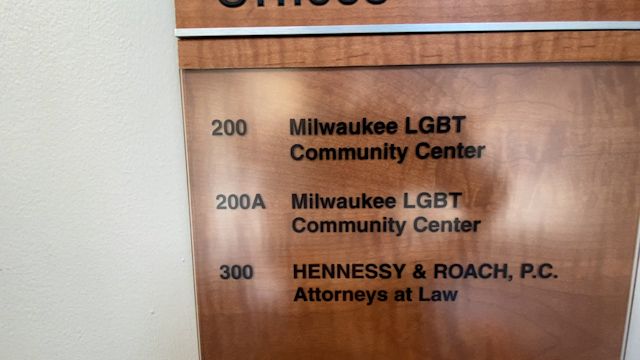
The Milwaukee LGBT Community Center started a name change workshop to help the transgender population change their names
Nearly 70 people have been able to get financial help through the workshop
She was sitting in her grandparents’ garden.
“I remember having moments of sincere comfort, like, alone, just being around those carnations and flowers,” said Forever. “One day when I was back there on a fall day, I remember it was cold and they were dying. I just felt like, this is my name. At the time, I didn’t know they were carnations. So, I was just like, they’re flowers. And I was like, “Flowers! That sounds like me!”
In August 2019, Forever was at an event with the Milwaukee LGBT Community Center. She was almost ready financially to get her name changed, when she met Alex Corona, the Transgender Program Coordinator at the community center.
“She just really benefitted the opportunity to get it done now, and for me, that was like a breath of fresh air,” Forever said.
A name change in Wisconsin can cost upwards of $400.
There is a lot of paperwork and red tape someone has to go through, which has to be filed with their county clerk.
They have to publish an announcement in a local newspaper once a week for three weeks, and then have a hearing in front of a judge.
“It was almost like, stress-inducing,” Forever said.
That stress is something Corona and the Milwaukee LGBT Community Center want to help get rid of for transgender people in Milwaukee.
“Having our names legally affirmed has been such a weight lifted and a burden removed, and really creates more truthful, honest people because they can be who they are openly, publicly, and legally,” said Corona.
She started a workshop in 2019 to help people change their names.
The workshops and court hearings happen virtually right now because of the COVID-19 pandemic. But, that has not slowed them down.
‘I was sitting in on a session where the judge changed the person’s Zoom name as he announced it being official and I was just like, that is such a sweet, sweet thing,” Corona said.
The workshop has helped nearly 70 people finance their name changes, and many more just work through the process.
Forever said she is eternally grateful.
“To have our names? That, to us, is just a part of getting to a place about feeling good about ourselves in our transition,” Forever said.