Home Blog Page 315

German parishes plan blessings for lovers, including gays – Union of Catholic Asian News

Catholic chaplains in parishes across Germany plan to invite people to “blessing services for lovers” on and around May 10.

The campaign, “Love Wins,” was launched in Hamburg, reported the German Catholic news agency KNA. The campaign’s website said the aim was to celebrate “the diversity of people’s different life plans and love stories” and to ask for God’s blessing.

Gay and lesbian couples are also invited, which is attracting public attention because the Vatican Congregation for the Doctrine of the Faith said in mid-March that the Catholic Church had no authority to bless same-sex relationships.

Subscribe to your daily free newsletter from UCA News

Thank you. You are now signed up to Daily newsletter

KNA reported the Vatican statement has been widely criticized among Catholics in Germany.

“I have blessed buildings and sugar-beet-harvesting machines,” said Father Burkhard Hose of Würzburg. “So why not also people who love each other?”

Father Hose and Father Bernd Mönkebüscher, a theologian from Hamm, have gathered about 11,000 signatures against the ban on blessing same-sex couples, KNA reported.

In the case of requests to bless same-sex couples, pastoral ministers are bound by their conscience

Birgit Mock, vice president of the Catholic German Women’s Federation, said: “The current discussion could lead to a historic step: a positive appreciation of responsibly lived sexuality in the Catholic Church in Germany.”

Mock and Bishop Helmut Dieser of Aachen head one of four working groups of the Synodal Path reform project. Their group deals with sexual morality, and the church’s approach to homosexuality is among its topics.

Bishop Dieser has made clear that his office does not allow him to give a mandate to bless gay couples, but added: “In the case of requests to bless same-sex couples, pastoral ministers are bound by their conscience.”

Bishop Georg Bätzing of Limburg, president of the German bishops’ conference, criticized the blessing services. “They are not suitable as an instrument of church-political manifestations or protest actions,” he said.

Related News

The Vatican is increasingly critical of the debates in Germany, but grassroots members are becoming ever more vocal in their demands for reforms.

Father Hose, a college chaplain, noted the Orthodox Church commemorates the biblical patriarch Noah May 10. God made a covenant with Noah after the flood — under the sign of a rainbow. That is not far removed from the colors of the rainbow flag of the gay rights movement.

Metropolitan Hilarion of the Moscow Patriarchate of the Russian Orthodox Church has praised the Vatican’s ban on blessing same-sex couples. On this point, the teachings of the Roman Catholic and Orthodox churches were in agreement, he said.

From an Indian Director Writing Gay Love Stories to Teachers Afraid of Coming Out in Ireland, This Week in Int’l LGBT News – SouthFloridaGayNews.com

This week read about Ekta Kapoor defending herself against critics for writing same-sex love stories, and teachers in Ireland being scared of losing their jobs if they come out.

Indian Director Challenges Critics Questioning Same-Sex Love Stories

Ekta Kapoor, a producer and director, took to Twitter to defend her right to explore LGBT storylines.

According to Gay Times, Kapoor reflected on the positive reception they have received online and in the press. Her most recent project follows the life of a woman who is trying to discover her true identity.

“This is for everyone who has been asking me why we are releasing two same-gender love stories in a span of two months. To them, I would like to say that we do millions of opposite-sex love stories & no one asks that,” Kapoor tweeted.

Kapoor has pushed for greater acceptance and tolerance in her six-part post.

“Staying closeted could be claustrophobic, in a world where accepting one’s sexuality and gender choice is a constant struggle, let’s normalize these love stories one step at a time,” Kapoor said, according to Gay Times.

Teachers Afraid Of Losing Jobs If They Admit To Being LGBT

Teachers

Photo via PxHere.

Out of the 4,000 primary teachers across Ireland, many of them are afraid to come out about their sexual identity or gender orientation in the case it will affect their chances of getting a job or promotion.

Despite legislation making it illegal for religious-run schools to discriminate against LGBT teachers, it continues to happen.

According to The Independent, Joe McKeown, the incoming president of the Irish National Teachers’ Organisation (INTO), told the union’s annual conference that much has been accomplished in recent years in terms of protecting job rights for teachers, regardless of gender identity or sexual orientation, in both the north and south.

McKeown stated that patron bodies and boards of management would show their inclusiveness by displaying a notice in the staffroom, making LGBT books accessible, and delivering instruction on homophobic and transphobic bullying, among other things.

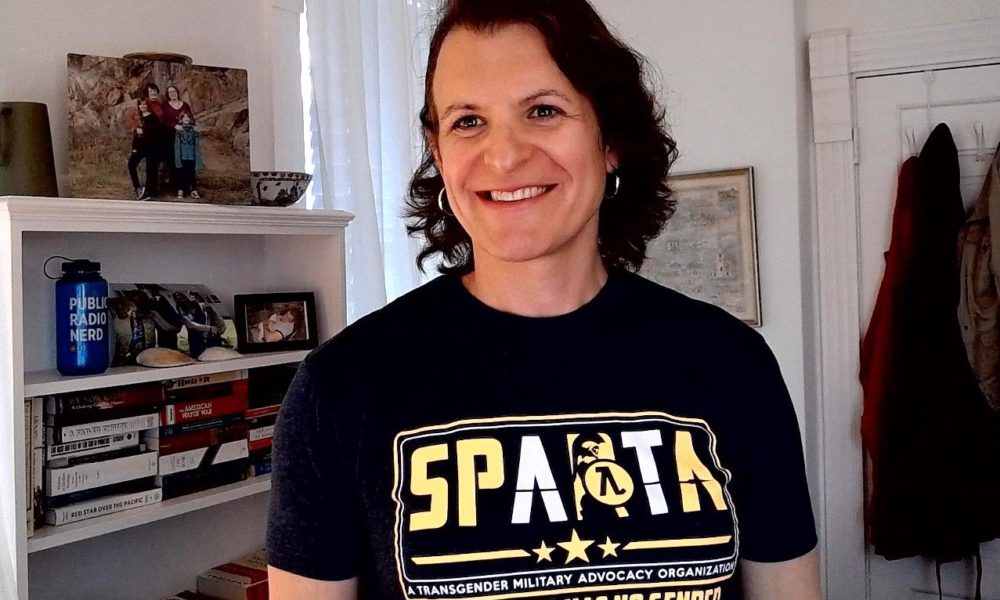
National transgender military advocacy group elects new president – Washington Blade

D.C. Mayor Muriel Bowser announced on April 26 that the city’s COVID-related public health restrictions are being eased one step further by the lifting of a ban on live entertainment at bars, restaurants and nightclubs beginning May 1.

The mayor’s revised public health order is expected to provide a boost to the city’s gay bars, which will be allowed on a limited basis to resume offering live entertainment, including drag shows, which club owners have said have been a longtime popular form of entertainment.

The new order also expands the maximum number of people allowed to be seated at a single table from six to 10 and lifts a requirement that customers must order at least one food item when seated outdoors. The order leaves in place a requirement that a food item must be served when customers are seated indoors.

While welcoming the limited easing of some restrictions, nightlife advocates expressed disappointment that the new mayoral order leaves in place a 25 percent capacity limit on the number of people allowed for indoor dining and bar service along with a required 6′ distancing between tables and seating areas. Also left in place in the new order is the requirement that all customers in bars and restaurants must be seated at all times.

In addition, the mayoral order leaves in place a ban on seating at or ordering drinks from a service bar if the bar is staffed by a bartender or another employee. It also leaves in place a requirement that bars, nightclubs, and restaurants close at midnight instead of the pre-pandemic closing times of 2 a.m. on weekdays and 3 a.m. on weekends.

Nightlife advocates point out that Maryland has raised its occupancy limit for bars and restaurants to 50 percent and Virginia no longer has a capacity limit, although it requires all patrons to be seated and requires tables to be spaced at a distance in observance of social distancing.

Virginia Gov. Ralph Northam last week further eased the state’s restrictions on restaurants and bars by allowing bartenders to serve customers at indoor bar tops.

David Perruzza, owner of the Adams Morgan gay sports bar Pitchers and its adjoining lesbian bar League of Her Own said he too welcomes the lifting of the ban on live entertainment, which had been in place for about year. Perruzza said he would be offering the first drag show his bars has had in about a year on May 6.

But Perruzza said that like other D.C. gay bars, most of which operate in small or medium size buildings, the requirement that all customers must be seated and that tables must be separated by a distance of at least 6′ limits the number of customers that can enter his establishments, which include dining, even if the capacity limit were to be raised to 50 percent.

He said if a 50 percent capacity limit is put in place, the space in his two bars would only allow a 33 percent capacity due to the 6′ social distancing rule.

“What would help us is to let people sit at a bar,” Perruzza said. “My whole staff has been vaccinated. So why no bar service now?”

Mark Lee, coordinator of the D.C. Nightlife Council, a local trade association representing bars, nightclubs, restaurants and other entertainment businesses, has said the initial closing of all bars and restaurants early last year due to the COVID outbreak and the subsequent 25 percent indoor occupancy limit has had a devastating impact on many bars, restaurants and nightclubs.

Lee and other nightlife advocates point out that many of these venues are struggling to stay in business due to the dramatic loss of revenue brought about by the drop in the number of customers.

“The reality is that D.C. remains an outlier throughout the region and across the nation for the worst restaurant and bar restrictions,” said Lee, who is calling on Bowser to “move the same science-based and health-safe level of re-opening opportunities as in both neighboring and nationwide jurisdictions.”

Added Lee, “As all of the local area health metrics continue to improve and vaccination access is now readily available to all, our city needs to finally and immediately restore indoor capacity to 50 percent, allow seating of guest groups at bartender stations, and return to full operating hours by eliminating the midnight service curfew.”

Dr. LaQuanda Nesbitt, director of the D.C. Department of Health, has said nationwide data have shown that restaurants and bars have been among the high-risk places where the coronavirus is transmitted from person to person. But both Nesbitt and Bowser have said in recent weeks that city health officials are closely observing the declining number of new infections among D.C. residents and will be looking at further easing of the current restrictions within a month or two.

LGBTQ skaters shine at CineYouth – The Depaulia

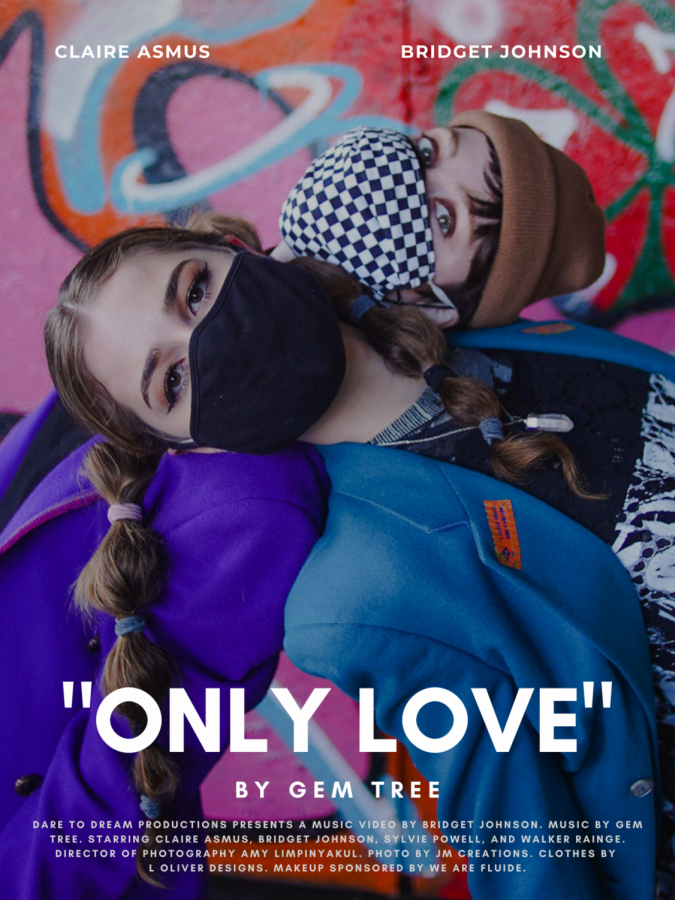
Bridget Johnson wants to put good energy into the world with her films. Her music video for the song “Only Love” by Gem Tree is featured in the category “Lights, Camera, Lockdown” in the 16th international CineYouth Festival.

Johnson, a senior at DePaul, wanted to subvert some of the stereotypical LGBTQ+ storylines in film by creating a feel-good music video following a budding romance between two female skaters. Local musician Gem Tree’s sweet voice serenades over the couple as they skateboard around Chicago and fall in love.

Originally created for Johnson’s music video production class at DePaul, the film grew into a bigger project as it was sponsored by the fashion brand L Oliver Designs and New York City makeup company We Are Fluide.

Johnson’s production company, Dare to Dream Productions, centers around telling “stories from marginalized voices including the LGBT community, BIPOC and nontraditional [stories] from nontraditional filmmakers and voices.”

“Only Love” is the first music video that Johnson has directed. You can get tickets to the CineYouth Film Festival today. The festival runs from May 6-13 and admission is free.

The DePaulia interviewed Johnson to hear more about her work. The following Q&A has been edited and condensed for clarity. 

Q: Can you start by telling me a little bit about your film and the inspiration behind it? 

A: Bridget Johnson: I never star in my films normally but the other actress, Claire, and I decided to collaborate and make a music video with positive representation for the queer community because there’s a lack of happy endings in LGBT storylines. When lesbians are portrayed in music videos, [they are often] sexualized. We wanted to change that and create something that would be cute and kind of simple too. Skateboarding is something that I’m very passionate about, and Claire and I have that same love for skateboarding that we share. 

So you drew a little bit of inspiration from your own life to put into the music video. 

Yes, it’s definitely based on our experiences that we’ve had together.

How did you connect with Gem Tree and decide to use the song “Only Love” for this project?

Gem Tree is a local artist that I actually found on SoundCloud. I chose her because I really connected with her lyrics and I like how she’s also trying to put positive energy into the world. That’s what I’m trying to do as a filmmaker. 

Did you reach out to Gem Tree at all? What was her reaction to your film being put into the festival? 

I did reach out to her and her management company and they were very excited that CineYouth is playing the music video. There’s going to be [an official] release of the music video on her YouTube channel. She’s going to promote it on social media and make some Instagram videos, so I’m excited for that too. 

I did some digging and I found your YouTube video pitching your concept, and I was wondering how that concept changed and evolved into the music video that it is today? 

Wasn’t there a boy in it? Yes, there was going to be a boy. We had a little problem with finding an actor to play a love interest because of Covid and also [finding] someone who skated. We wanted to have real skaters in the music videos; everyone you see on screen is a part of the skate community in Chicago. We’re a part of this skate crew called Onward, which is like a skate community for nontraditional skaters. But going back to the question of how things changed, it was definitely based on resources and time.

Were there any other ways that Covid impacted the filming or the general production of the music video? 

We had to wear masks, and as an actor it’s hard to show your facial expressions when you’re covering your mouth, especially when it’s a [romantic] music video. Eye contact with Claire was super important to get across that we were starting to fall in love in the video. At the skate park, we wanted to stay six feet away, everyone had masks on, we had a hand sanitizer on set — all the protocols that filming asks for. 

Could you talk a little bit about what directors do and what your process is as a director? 

The main responsibility of the director is to work with actors [to] help them get to their emotions to achieve genuine performances to make the audience feel these visceral feelings and connect with their characters.

Directors manage everyone, but their main responsibility is to work with actors and to create the overall vision of the film and to collaborate. I think a great director is someone who will listen to everyone on set.

There’s a hierarchy in the in on a film set and P.A.s, production assistants, are kind of at the bottom. I think a good director will work with everyone and ask even a P.A. like, what do you think about this or how are you doing? I think it’s really important for a director to make everyone feel appreciated, because you’re on [set] for so long, like 12, 14 hours. There’s got to be that person that brings up the energy and makes sure everyone is feeling good about everything.

Are you working on any projects right now or is there something that you’re looking forward to doing in the summer? What’s next for you as a director or a filmmaker? 

Yes, so right now I’m doing a Zoom film. It’s an LGBT romcom about two older lesbians in their 60s meeting for a blind date on zoom. In the summer, I’m hopefully going to Greece to help out a director that I have an internship with on her second feature film.

I graduate this year. It’s a little nerve-wracking, but it’s also very exciting because I’ve worked hard, and I know what I want to do and the impact I want to make. It’s all about putting in the action and probably moving to L.A. [For what] I want to do, narrative features, you most likely have to be in L.A. That’s the big dream of mine. I’ve had that dream since I was 12, so now it’s all about making it happen. 

Gay couple’s Pride flag stolen by a surprising neighbourhood bandit – PinkNews

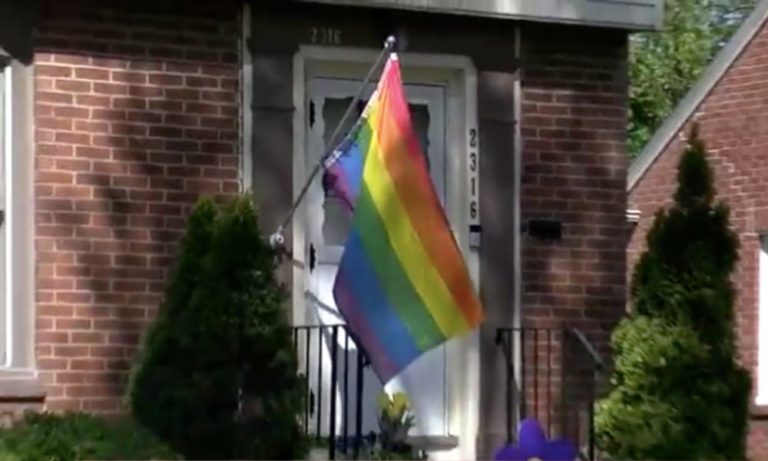
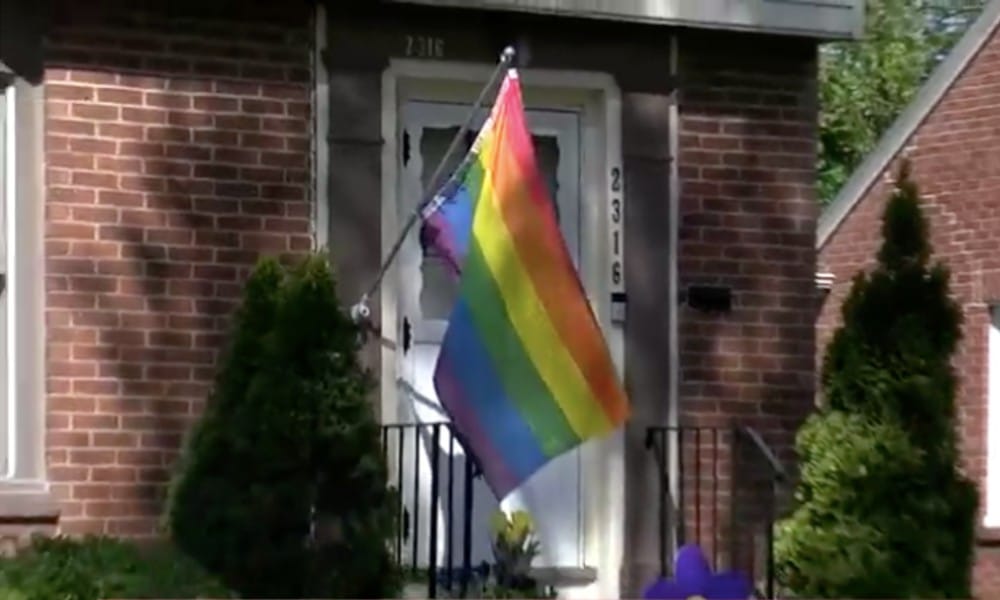
A gay couple feared the worst when their Pride flag was stolen from outside their house, but the culprit wasn’t quite what they expected.

Charlie Olivo and his husband live in a quiet, friendly neighbourhood in University Heights, Ohio – so when their Pride flag disappeared last week, they were shocked.

They assumed it was one of the many cases of Pride flags being stolen or burned by homophobic bigots, as they certainly wouldn’t be the first.

When Olivo turned to social media on Tuesday (27 April) in hopes that it might’ve been caught on nearby security footage, neighbours were outraged to hear what happened.

Locals immediately rallied round the couple, including Joe Hochhieser who offered to replace the Pride flag and donate ten more to those who wanted them.

“We kind of live in this time where there’s a lot of negativity. I thought, how can we spread a little bit of joy, how can we spread a little bit of light?” he told 19 News.

But as the hunt for the culprit brought the community together, no one realised the Olivos’ dog Daisy was already on the case.

Later that night the flag-knapper returned to the scene of the crime and Daisy was ready.

“Our dog started barking out the window and like directly at the tree,” Olivo said. “So I opened the blinds, looked out the window and saw this little red and orange stripe.

“I said ‘Oh my gosh, I think that’s our Pride flag’ and I looked and saw a big, fat raccoon walking up the limb, back and forth.”

It turns out the furry fiend had snatched the flag off its pole and scurried up a tree, where it had used the rainbow fabric to build a stylish nest right in their front yard.

“We were shocked and a little bit like, ‘Oh my gosh, we can’t believe this happened,’” Olivo said, relieved to know the story had an innocent explanation.

“It was very heartwarming, pretty funny but a good ending. He can keep the flag,” he added.

And the neighbours have kept theirs too – so now there are ten new Pride flags flying in the neighbourhood, 11 if you count the raccoon’s.

Gay couple’s Pride flag stolen from outside their home. But the story doesn’t end in disaster, for once – Yahoo Eurosport UK

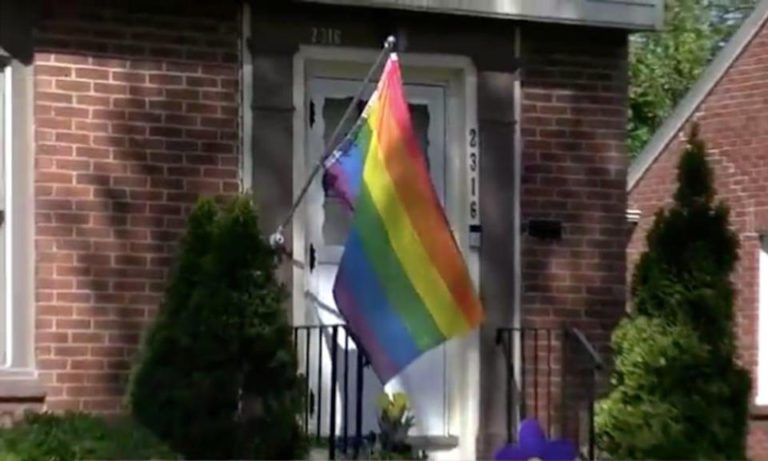
A gay couple feared the worst when their Pride flag was stolen from outside their house, but the culprit wasn’t quite what they expected.

Charlie Olivo and his husband live in a quiet, friendly neighbourhood in University Heights, Ohio – so when their Pride flag disappeared last week, they were shocked.

They assumed it was one of the many cases of Pride flags being stolen or burned by homophobic bigots, as they certainly wouldn’t be the first.

When Olivo turned to social media on Tuesday (27 April) in hopes that it might’ve been caught on nearby security footage, neighbours were outraged to hear what happened.

Locals immediately rallied round the couple, including Joe Hochhieser who offered to replace the Pride flag and donate ten more to those who wanted them.

“We kind of live in this time where there’s a lot of negativity. I thought, how can we spread a little bit of joy, how can we spread a little bit of light?” he told 19 News.

But as the hunt for the culprit brought the community together, no one realised the Olivos’ dog Daisy was already on the case.

Later that night the flag-knapper returned to the scene of the crime and Daisy was ready.

“Our dog started barking out the window and like directly at the tree,” Olivo said. “So I opened the blinds, looked out the window and saw this little red and orange stripe.

“I said ‘Oh my gosh, I think that’s our Pride flag’ and I looked and saw a big, fat raccoon walking up the limb, back and forth.”

It turns out the furry fiend had snatched the flag off its pole and scurried up a tree, where it had used the rainbow fabric to build a stylish nest right in their front yard.

“We were shocked and a little bit like, ‘Oh my gosh, we can’t believe this happened,’” Olivo said, relieved to know the story had an innocent explanation.

“It was very heartwarming, pretty funny but a good ending. He can keep the flag,” he added.

And the neighbours have kept theirs too – so now there are ten new Pride flags flying in the neighbourhood, 11 if you count the raccoon’s.

Magazine makes humiliating mistake by mixing up gay authors of color in LGBTQ issue – LGBTQ Nation

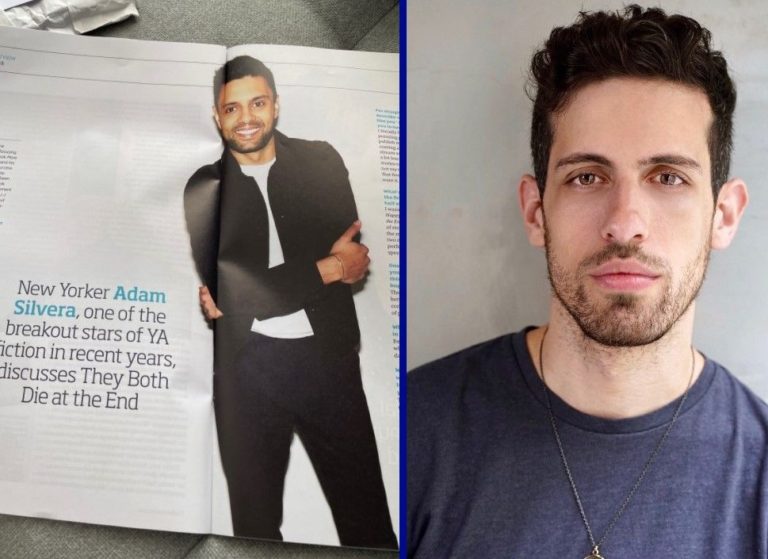
A magazine made a “humiliating” mistake when an interview of gay Puerto Rican author Adam Silvera was published with a picture of gay Pakistani author Mohsin Zaidi.

“This is… not Adam Silvera?” writer Juno Dawson wrote with an image of the article in The Bookseller, a publishing industry magazine. Silvera wrote They Both Die at the End, a critically-acclaimed novel that’s the source of an upcoming HBO series.

Related: Children’s book author Jacqueline Wilson comes out at age 74

Last week’s edition of The Bookseller had an “LGBTQ+ spotlight” and included an interview with Silvera. But the photo that ran with the interview was actually a picture of Mohsin Zaidi, who wrote A Dutiful Boy, a memoir that draws from his experiences growing up gay and Muslim in the U.K.

“It is humiliating to have written a piece in the very same issue about the gatekeepers of the book world, the power in giving diverse voices a platform and thanking the industry,” Zaidi wrote in a statement.

“Minorities are not window-dressing, which is, unfortunately, the distinct impression one is left with when a working culture fails to instill the importance of being able to tell the difference between someone who is South Asian and (a very talented) person who is Latinx.”

“What sucks about this The Bookseller business is that there’s no attention on the article itself which is highlighting the success of a story about queer Latinos by a queer Puerto Rican,” Silvera wrote on Twitter. “Really hope The Bookseller can make this right.”

Bookseller editor Phillip Jones said that the mistake was his fault, not the interviewer Matthew Todd’s. He offered to run the article again with the right photo and said that the online version had been corrected.

In the profile, Silvera discussed not having many books growing up that told stories from a gay perspective and that he also felt the pressure to write about straight people.

“I literally found myself writing straight narrators when pursuing publication,” he said. “I didn’t know we were allowed to publish stories with queer narrators because I wasn’t coming across them.”

“My career would be a lot less revolutionary if I had just added more straight stories to shelves already overflowing with them. That’s not my truth and not a story I’m bursting to tell. I wish that freedom and joy for every marginalized writer, if they want it.”

Artist Yulia Tsvetkova, Accused of Distributing Pornography, Begins Hunger Strike – Observer

Yulia Tsvetkova on an iPad on 16 July 2020. Ulf Mauder/picture alliance via Getty Images

In mid-April, it was reported that Yulia Tsvetkova, a Russian feminist artist, was being put on trial because of accusations that she had distributed pornography. Tsvetkova, who faces up to six years in prison, allegedly posted drawings of vaginas on the social media site VKontakte; the artist was also fined twice for disseminating gay “propaganda.” Tsvetkova had already been detained for a year and half leading up to the April hearing that took place, and now, the artist has apparently begun a hunger strike in order to advocate for herself. Tsvetkova is striking to protest against the proceedings of her trial, and to demand that her trial be made public.

“I realized that I can no longer sit quietly and watch the disgrace that is happening in the country and how my life is being derailed,” Tsvetkova wrote in a post on Facebook. “Would you like to judge me? Please, please. But do it openly. I demand to open my process to the public…I demand that I be able to defend myself by all legal means, and allow a public defender into the process.”

The organizations Memorial and Amnesty International have officially placed Tsvetkova on a list of people who’re being politically prosecuted, and the artist’s mother has vehemently denied that her daughter would distribute pornography. In the past, the artist has also been fined for running an online group that was LGBT-themed, and for making a drawing in support of LGBT families. In April, Russian President Vladimir Putin formally banned same sex marriage in Russia, and the country has been vehemently cracking down on LGBT rights for years.

“They also say about hunger strikes that it should be declared only if you are ready to go to the very end,” Tsvetkova continued in her post. “And here’s the big question, am I ready to die? I don’t know. But I strongly know that I am not ready to live the way I am now, in cowardice and meanness.”

Halston trailer: Ewan McGregor stars as iconic gay fashion designer in new Netflix drama – The Independent

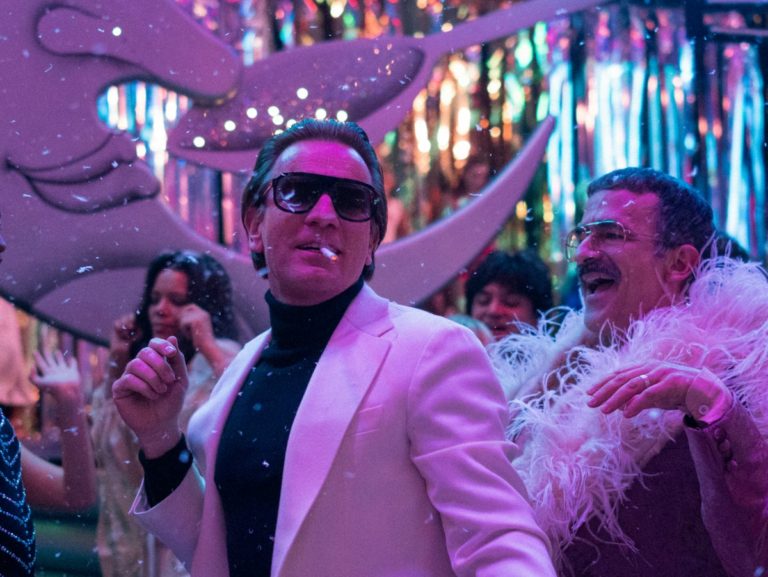
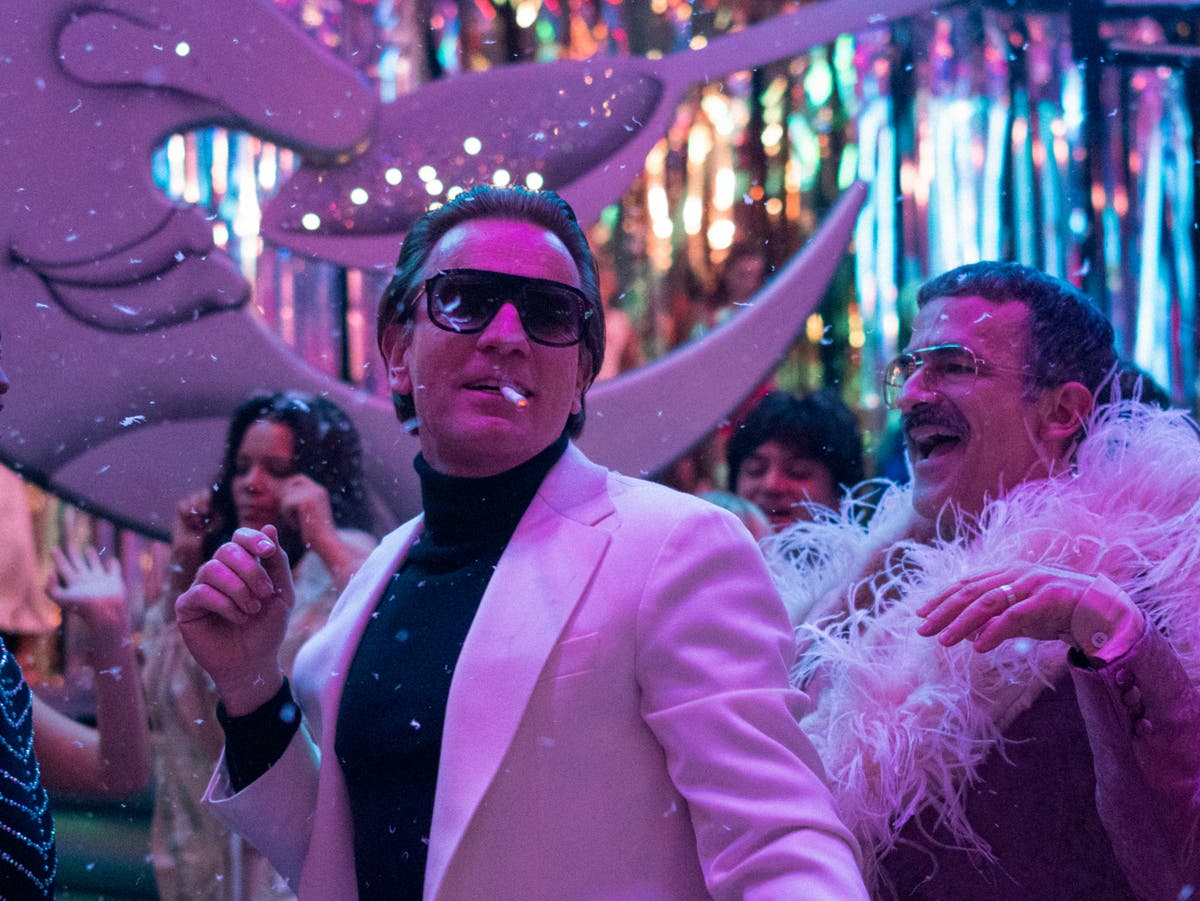
Netflix has dropped the trailer for Halston, sharing a first glimpse of Ewan McGregor in character as the iconic gay fashion designer.

Roy Halston Frowick was an American designer who rose to international fame in the 1970s. He is best known for designing the pillbox hat worn by Jackie Kennedy at her husband’s inauguration. He died in 1990 of Aids-related cancer.

Set to Depeche Mode’s “Enjoy the Silence”, the trailer sees McGregor’s Halston on a mission to “change the face of American fashion”, obsessing over the finer details and attending drug-fuelled parties.

“I’ve been an outsider my whole life until one day I just stopped giving a flying f***,” he can be heard saying.

McGregor recently defended his casting as a gay character, saying: “If it had been a story about Halston’s sexuality more, then maybe it’s right that gay actors should play that role. But in this case – and I don’t want to sound like I’m worming out of this, because it’s something I did think a lot about – I suppose ultimately I felt like it was just one part of who he was.”

Halston runs for five episodes on Netflix and has been executive produced by Ryan Murphy.

It will arrive on Netflix on 14 May 2021.

Murder by Numbers director Ed Fear on making the ‘really really gay’ game – PinkNews

Ed Fear / Murder by Numbers. (Mediatonic)

When he was writing Murder by Numbers, Ed Fear didn’t set out to create an LGBT+ game. Instead, it just sort of…happened.

“It wasn’t until quite near the end where I was like this game is really really gay!” he says. “It just happened slowly… it just leaked out of me into the game over the two years.”

The detective-puzzle game for Switch and PC became a sleeper hit in 2020, thanks to sharp writing, a clever mix of nonogram puzzles and storytelling, and a big dose of campy fun.

It was the first game directed by Fear, who’s worked at developer Mediatonic for over nine years, which allowed him newfound freedom to inject the game with LGBT+ representation.

“I am really interested in making games that are just queer flavoured rather than queer-centric,” he says, noting the prevalence of indie games exploring queer themes. “What about just putting more queer stuff in more games rather than being ‘this is for a specific market’?”

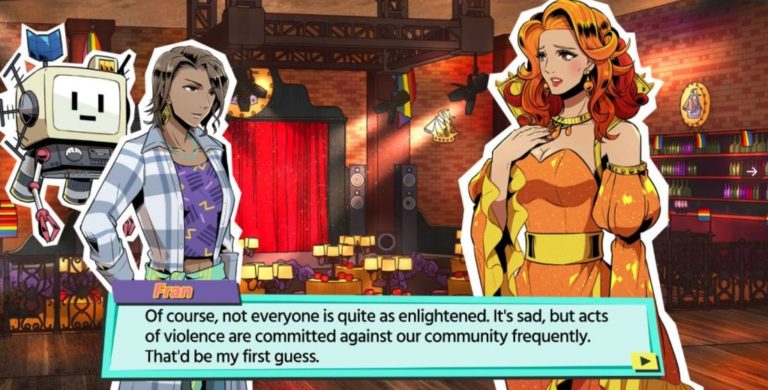
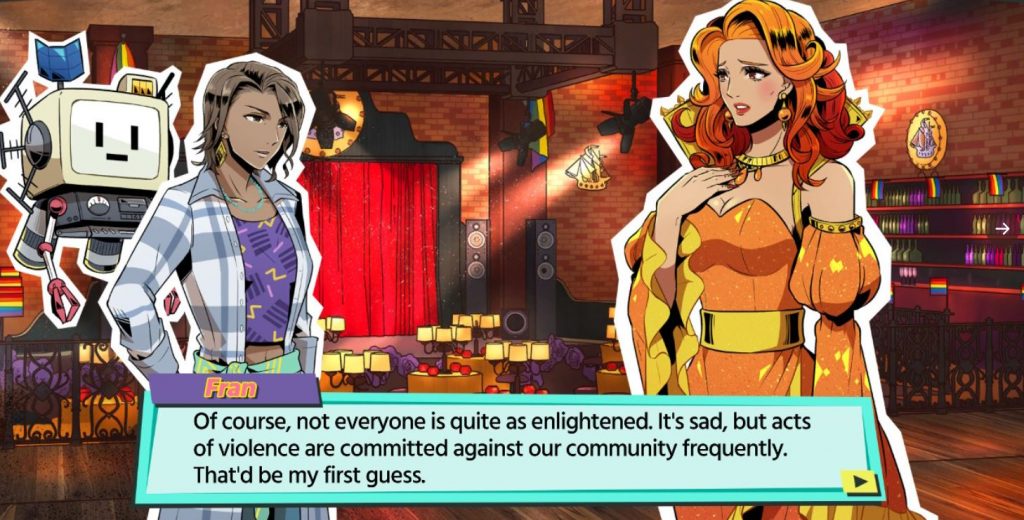
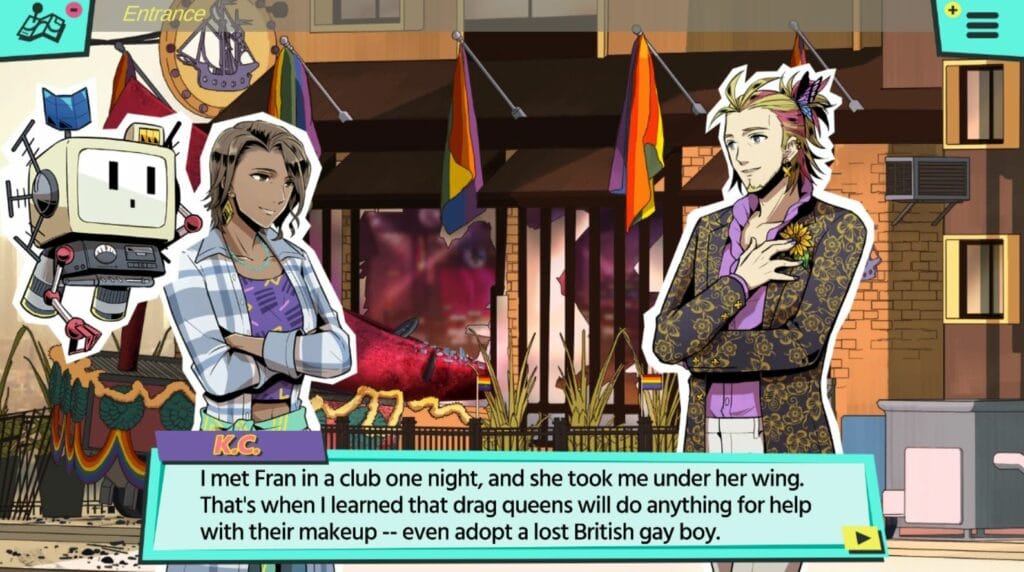
Murder by Numbers centres on Honor Mizrahi, a TV actor turned detective who solves murder mysteries with the help of a flying robot named S.C.O.U.T. While its story isn’t inherently queer, side characters like gay stylist and best friend K.C. and a murder case set in a drag bar add more than just a bit of personality.

“I’m also interested in getting aspects of queer culture across to people who wouldn’t necessarily experience them otherwise,” says Fear, who was surprised at the reception from straight fans who appreciated the game’s subtle education on drag culture and LGBT+ language.

“I didn’t set out to do that, but…there definitely is value in also just making things generally a bit more queer rather than going specifically for that.

“I’m just interested in giving a nice fun campy queer vibe to things that I do.”

Murder by Numbers
Murder By Numbers. (Mediatonic)


That vibe emanated from the team at Mediatonic who worked on
Murder by Numbers. It something of a smaller side project for the developer, with Fear initially given just six weeks to develop a prototype as part of his pitch. The final team was a mixture of people from across the company who just happened to be predominantly LGBT+ and would egg each other on, pushing for more representation in the game.

“We used to spritz ourselves with make-up setting spray every day, I don’t know why but it just became a thing that we did as a little ritual!” jokes Fear.

“[The game is] a product of the environment and the nice thing about that is that I now have firsthand experience of what it’s like when you get diverse people on a team. Without even trying they end up making something that is a lot more diverse than it otherwise would have been even though nobody sits down and goes ‘my agenda today is to get this in a game’. It just happens because of the environment.”

The representation extends to the theme song, performed by gay popstar Bright Light Bright Light. The game’s composer Masakazu Sugimori was keen to write a vocal song and Fear eventually realised it would fit with an animated introduction to set the tone of the game from the start. Listening to Bright Light Bright Light’s Choreography album provided the final nugget of inspiration.

“I suddenly thought his voice would be perfect, it would be cheesy but knowingly cheesy which was exactly what I was going for,” he says.

Within a matter of hours the singer had responded to Fear’s request with a quick demo. 

“It was amazing, it was so great to get him on board because I’m a fan, but also it felt really great to get another LGBTQ artist involved in the game. Once we got his vocals back it was perfect and it fully helped sell the vibe I was going for. I was so grateful that he did it.”

Japanese character artist Hato Moa is a big fan of Drag Race and was keen to design drag characters – the perfect excuse for Fear to set part of the story in a drag bar. And a big inspiration for the character of gay stylist K.C. was Queer Eye’s Jonathan Van Ness.

“I made her watch Queer Eye because Jonathan Van Ness was quite an inspiration for me for the character of K.C.,” says Fear. “Obviously they’re not completely the same as K.C., but I wanted someone who had that unapologetic – very much not ashamed and living life out loud. I found that really inspiring watching the show.”

Murder by Numbers
Murder by Numbers. (Mediatonic)


A key challenge for Fear was balance: balancing the opposing elements of story and nonogram puzzles for a satisfying experience for both nonogram newcomers and veterans. But also in terms of representation, ensuring there’s enough representation without it feeling stereotyped.

“I was very worried about how people would feel about the representation that is in the game,” says Fear. “It was very nerve wracking writing a gay character [K.C.] and thinking are people going to hate him? Are people going to say this is terrible representation? And am I going to feel like if I’m a gay writer and I can’t write a gay guy, am I literally useless?

“If I don’t do this character as he has come to me, because I’m worried what other people will say, am I in some way invalidating these parts of me that are K.C.? Am I saying that being a fem gay man is a bad thing?

“Eventually I came to the realisation, similar to the gameplay, that I’m not going to please everyone and you can’t ever expect one character to fully encapsulate the gay experience… No one is a full representation of the huge spectrum of our community.”

Fear chose to set the game in the 90s, partly for gameplay reasons – modern day smartphones would negate the need for much of Honor’s sleuthing – but also for the vibrant and “atrocious” fashion that would ensure the game stood out among other visual novels.

And stand out it did. Despite not marketing Murder by Numbers as a specifically LGBT+ game, it’s been embraced by the community and been nominated for multiple gaming awards.

Fear is surprised at the positive feedback the game has received, both from the LGBT+ community and straight players. Despite his worries at including representation in the game, particularly with K.C., it was ultimately worthwhile.

“I’ve never worried so much about something in my life! I’m really happy that I did take that chance, brave the possible storm and be true to this character that I saw in my head and fly a flag for the fems!”

Murder by Numbers is out now on Switch and PC (via Steam).

HBO Max Green Lantern show can fix a big problem with superhero movies – Inverse

Sorry, Ryan Reynolds: a new Green Lantern is coming to town.

Last week, HBO Max’s planned Green Lantern TV series marked its first major bit of casting: Finn Wittrock as Guy Gardner, the fourth Earthling to carry the title Green Lantern in DC Comics, and one whose bad-attitude reputation precedes itself.

But the TV series from Seth Grahame-Smith, Greg Berlanti, and Marc Guggenheim won’t just cover Gardner’s tenure as a ring-slinger. Fan-favorites and new characters will make up the series, as Green Lantern takes an ambitious approach to serialized superhero storytelling, charting the Green Lantern Corps and its members across multiple decades.

If it sounds kind of ground-breaking in theory, that’s because it is — the way it’s sketched out, the Green Lantern series could very well set a new precedent for superhero storytelling writ large and fix one of the biggest things holding Marvel and DC movies back.

What is the Green Lantern TV series?

The description for Green Lantern, courtesy of The Hollywood Reporter is: “Green Lantern reinvents the classic DC property through a story spanning decades and galaxies, beginning on Earth in 1941 with the very first Green Lantern, secretly gay FBI agent Alan Scott, and 1984, with cocky alpha male Guy Gardner and half-alien Bree Jarta. They’ll be joined by a multitude of other Lanterns — from comic book favorites to never-before-seen heroes.”

Those unfamiliar with the lore of the Green Lanterns might find themselves, understandably, a bit skeptical about the property given the disappointing 2011 film, which even Reynolds has used as the butt of jokes. But never fear — after all, Green Lanterns must overcome great fear — because the storied saga of the Green Lanterns is one of DC’s greatest odysseys, blending elements of space opera, intergalactic crime, and cosmic horror.

Imagine if Star Trek, The Departed, and Event Horizon had a beautiful alien baby and you start to get the picture. Brilliant comics that have seen equally brilliant creators such as Bill Finger, Gil Kane, Alan Moore, Len Wein, Geoff Johns, and Grant Morrison among its many architects.

How Green Lantern can change superhero TV and film forever

In allowing Green Lantern to span decades, HBO Max has an opportunity to present the multitude of different tones and styles that have defined the Green Lantern comics over the decades.

While certain elements will thankfully be updated to reflect modern commitments to inclusivity, like Alan Scott living as a gay man in the 1940s, other elements like fashion and politics can reflect the time, and create a richer sense of legacy. And while fan-favorite GLs like Hal Jordan and John Stewart seem to be taking a backseat in this series (at least for now), the decision not to be confined by one setting or time period opens up the door for a bunch of different Lanterns to appear and all have equal time in the spotlight.

And that’s not even getting to the different color Corps that could later appear.

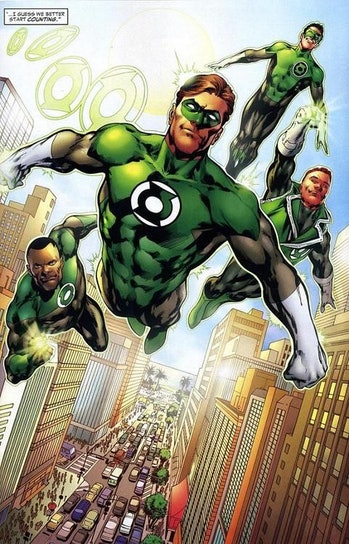
While there’s little doubt we’ll see familiar alien members of the Green Lantern Corps play a role (like Kilowog, Abin Sur, Ch’p, Salaak, Mogo, and Tomar Tu), hopefully, we’ll also see some of the more recent additions to Earth’s defenders as well. Simon Baz, Jessica Cruz, and SoJourner Mullein would all be welcome additions who could name drop Hal Jordan, John Stewart, and Kyle Rayner to whet fans appetites before their eventual appearances.

And lest we not forget, this time-spanning format also allows viewers to see the full scope of Thaal Sinestro’s rise and fall, and plant the seeds for the Sinestro Corps in a way that feels like character-driven payoff rather than a post-credit scene (looking at you, Green Lantern ’11).

The power of anthology superhero stories

Should the Green Lantern series’ decades-spanning format prove successful, it’s easy to imagine other superhero series within the DCEU and Marvel’s Cinematic Universe doing something similar.

Already there are reports of Disney+ planning a Wolverine anthology series that would see each season follow the iconic X-Man in a different era of his long life. While this would naturally be different from Green Lantern in that it would focus on one central character, it would also allow for much of Wolverine’s comic history to be covered, from the 1800s, through WWII, the Weapon X program, Japan in the 80s, right up until he joins the X-Men. Imagine the opening sequence from 2009’s X-Men Origins: Wolverine pulled apart so that each moment in time becomes a season populated with familiar adversaries and lost loves from Wolverine’s past.

One movie can’t do that. Marvel couldn’t even really do that in over 20 films stretched out over a decade. But the medium of television is perfectly suited for the era-spanning anthologies that comics readers take for granted.

So much of comic book storytelling is built around legacy, the passing of a mantle, or the actions of the past bearing fruit in the present. We’ve certainly seen this accomplished in superhero movies that use real-time. Now, there’s an opportunity to go beyond that; to have our prequels and sequels exist simultaneously, mirroring the experience of reading comics.

As superhero media continues to dominate our culture, creators are only becoming more fearless in how they approach the material. We no longer have to wonder which characters will be popular enough to matter on screen. They all matter, and the future couldn’t be brighter.

Green Lantern is currently in development for HBO Max.

As restrictions thaw, Long Beach’s gay bars are coming back after a dark year – Long Beach Business Journal – Long Beach News

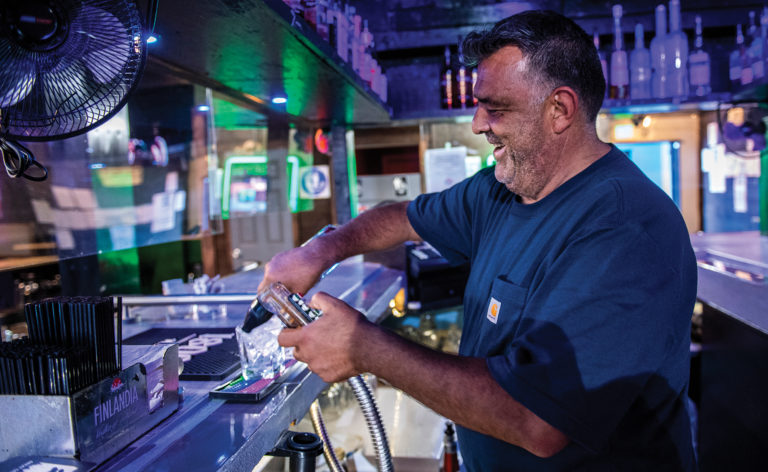
Michael Romero, owner of The Crest, works behind the bar at his North Long Beach establishment, Wednesday, April 28, 2021. Photo by Thomas R. Cordova.

On a brisk Monday evening at the Mineshaft, a 43-year-old gay bar situated on the Broadway Corridor, the slow business hours of the establishment belie the boisterous jubilation inside—if only celebrated by five men.

The men laugh and converse as they sip beer and vodka cranberry cocktails. They’ve got a lot to catch up on; for several of the men in attendance, it’s the first time they’ve seen one another in over a year.

Though the COVID-19 pandemic put immense strain on communities across the board, for the Long Beach gay community, 2020 was especially isolating.

“I feel like we’ve lost a lot of connection, and this year has made it worse,” said 46-year-old Ryan Schroeder, who lives near the bar.

With restrictions on public gatherings especially stringent on enclosed spaces like bars, many of the city’s gay bars were closed through the bulk of 2020 and into this year.

Many owners feared for the survival of their businesses, not just for their own livelihoods, but for the sake of the gay community, which has historically found sanctuary and community inside their establishments.

“It’s a place where you can go and be yourself and not be ridiculed by anybody. You can show PDA and not and not be afraid that somebody is going to hurt you,” said Michael Romero, who owns The Crest in North Long Beach.

Last year was especially tough for Romero, he said, as it marked not just his 60th birthday but the 25th anniversary of his bar in Long Beach. His plans to celebrate were throttled.

Pride week, and the annual parade that is traditionally celebrated in mid-May, was always a joyous and lively period, drawing in huge crowds to his bar and others in the city.

The city announced that it would not host the annual Pride parade in-person this year and opted for a virtual celebration as a safety precaution since the event would draw tens of thousands of people. Though it was already a blow for the gay community to forgo last year’s celebration, this year is just as demoralizing.

“It’s definitely put a strain on me just being a gay person and not being able to partake,” Romero said. “I love decorating the bar for it, meeting all the new people, to see everybody so happy.”

Though Romero said his bar will be open for Pride Week, he won’t be advertising any special events and will be operating in accordance with the city’s guidelines. The boisterous nature of Pride isn’t conducive to county health precautions, which require patrons to stay seated at their tables with their respective parties.

“Everybody wants to go from table to table and socialize and meet people,” he explained.

There may be some relief soon, however. Los Angeles County qualified for the “yellow tier” the week of April 26—which is the least restrictive in the state’s “blueprint” for COVID-19 metrics. If the county reports low numbers again on Tuesday, May 4, health officials could move to open bars indoors at 25% capacity for the first time in more than a year.

And if the state maintains its current trajectory on COVID-19 numbers, the governor has said everything will open back up on June 15.

Vehicles zoom past construction along Cherry Avenue in front of The Crest, Wednesday, April 28, 2021. Photo by Thomas R. Cordova.

That doesn’t however, diminish the disappointment over this year’s Pride celebration.

At the Mineshaft, the five men who recently gathered echoed similar sentiments of dismay regarding the news of a virtual Pride, and wistfully recalled past celebrations. The liveliness, seeing rainbow flags on every corner, watching thousands of people blissfully “just being themselves,” Dan Nakori, 72, said.

Rob Ramone Flores, who lives across the street from the Mineshaft, said he made sure to celebrate last year’s Pride in his own way at home with a couple of cocktails and some Zoom calls. Though Flores said he frequents other bars in the city, gay bars like the Mineshaft feel like home.

“There are certain times when I just want to be around gay people,” he said. “Whenever I walk into a gay bar, yeah, I want to have a good time and be silly, but when I walk into these doors, I’m walking on the shoulders of people who have paved the way for all of us to feel free to come to a [gay] bar.”

Long Beach has a long history with gay bars dating back to the 1970s, said Carlos Torres, the new executive director of the LGBTQ Center Long Beach on Retro Row. Ripples, one of the first and longest-running gay bars in the city opened in 1972 and after 47 years closed its doors in 2019. Que Sera, the city’s first lesbian bar, opened in 1975.

“In the early days, some of these businesses were started underground, like speakeasies where you had to have their own password to enter because of harassment, particularly by police,” Torres said. “Police would frequently raid known gay establishments because for the longest time homosexuality was considered a mental illness, in Europe and the U.S. as well.”

Though historically Long Beach has been progressive and open-minded of its queer residents, during the `70s and `80s the Long Beach Police Department was notorious for entrapping members of the LGBTQ community, particularly gay men in bars and at “cruise spots” where they frequently met for sexual encounters.

Even the inaugural Long Beach Pride Parade in 1984 was a hard-fought win for the gay community and lasted only 30 minutes despite drawing thousands.

The following year, Judi Doyle, the Long Beach Lesbian and Gay Pride Parade president, said she was threatened with violence in the weeks leading up to the 1985 march, as reported by Los Angeles LGBTQ newspaper, The Pride.

Long Beach has certainly made strides since and is lauded for its inclusivity and celebration of the queer communities. But this doesn’t detract from the relevance and necessity for spaces like the Mineshaft, The Falcon, The Brit, the Silver Fox and other gay bars in the city.

“Considering all the legislation that is before state houses right now regarding access to sports by transgender individuals, I think spaces like gay bars continue to be ground zero for that community to be able to employ that sense of belonging,” Torres said.

Torres also pointed to the recent destruction of the rainbow-painted lifeguard tower near 12th Place as an example of why safe spaces are still needed for the LGBTQ community.

“Despite the progress, there is still a lot of a lot of bias out in the world,” he said.

Caitlyn Jenner’s First Public Comments Since Running For Governor Are Causing A Stir – Nicki Swift

In late April 2021, Caitlyn Jenner announced that she was throwing her hat in the ring, asking Californians to vote for her to replace current California governor Gavin Newsom in light of a recall election in the state.

In her first public comments after announcing her bid for governor, Jenner spoke to TMZ about the country-wide discussions on allowing transgender athletes to compete in girls’ sports. “I oppose biological boys who are trans competing in girls’ sports in school,” she said. “It just isn’t fair. And we have to protect girls’ sports in our schools.” The gold-medalist doubled down on her comments via Twitter, writing “I didn’t expect to get asked this on my Saturday morning coffee run, but I’m clear about where I stand. It’s an issue of fairness and we need to protect girls’ sports in our schools.”

The comments caused a stir on social media, with other celebrities weighing in and calling out the star. “Caitlyn Jenner is no friend of the LGBTQ community. Don’t call her an actvist. She’s a menace,” actor George Takei wrote. Another user called out Jenner, saying she “doesn’t represent trans people,” and “represents no one but herself, power hungry, ready to step on other trans people for political gain.”

Parental Attitudes to Kids’ Sex Orientation: Unexpected Findings – Medscape

For gay and lesbian individuals, consistency in parents’ attitudes toward their child’s sexual orientation, even when they are negative, is an important factor in positive mental health outcomes, new research shows.

Matthew Verdun

Study investigator Matthew Verdun, MS, a licensed marriage and family therapist and doctoral student at the Chicago School of Professional Psychology at Los Angeles, Los Angeles, California, found that gays and lesbians whose parents were not supportive of their sexual orientation could still have good outcomes.

The findings were presented at the virtual American Psychiatric Association (APA) 2021 Annual Meeting.

High Rates of Mental Illness

Research shows that members of the gay and lesbian community experience higher rates of mental illness and substance use disorders and that psychological well-being declines during periods close to when sexual orientation is disclosed.

Verdun referred to a theory in the literature of homosexual identity formation that describes how individuals go through six stages: confusion, comparison, tolerance, acceptance, pride, and synthesis.

Research shows a U-shaped relationship between subjective reports of well-being at these six stages. The lowest rates occur during the identify comparison and identify tolerance stages.

“Those stages roughly correspond with the time when people would disclose their sexual orientation to parents and family members. The time when a person discloses is probably one of the most anxious times in their life; it’s also where their rate of well-being is the lowest,” said Verdun.

Verdun said he “wanted to know what happens when a parent is supportive or rejecting at that moment, but also what happens over time.”

To determine whether parental support affects depression, anxiety, or substance abuse in members of the gay and lesbian community, Verdun studied 175 individuals who self-identified as gay or lesbian (77 males and 98 females) and were recruited via social media. Most (70.3%) were of White race or ethnicity.

Participants completed surveys asking about their parents’ initial and current level of support regarding their sexual orientation. They also completed the nine-item Patient Health Questionnaire (PHQ-9), the seven-item General Anxiety Disorder (GAD-7), and the 20-item Drug Abuse Screening Tool (DAST-20).

The investigators categorized participants into one of three groups on the basis of parental support:

  • Consistently positive

  • Negative to positive

  • Consistently negative

A fourth group, positive to negative, was excluded from the analysis because it was too small.

Verdun was unable analyze results for substance abuse. “The DAST-20 results violated the assumption of homogeneity of variances, which meant the analysis could result in error,” he explained.

Analyses for the PHQ-9 and GAD-7 showed that the consistently positive group had the lowest symptom scores.

“People whose parents were accepting had the lowest scores for anxiety and depression,” said Verdun.

For both the PHQ and GAD, the findings were significant (P < .05) for the consistently positive and the consistently negative groups in comparison with the negative-to-positive group.

The difference between the consistently positive and the consistently negative groups was not statistically significant.

Surprise Finding

Previous research has shown that current levels of parental support relate to better mental health, so Verdun initially thought children whose parents were consistently supportive or those whose parents became supportive over time would have the best mental health outcomes.

“But, interestingly, what I found was that people whose parents vacillated between being accepting and rejecting over time actually had significantly more mental health symptoms at the time of the assessment than people whose parents were consistently accepting or consistently rejecting,” he said.

Although the study provided evidence of better outcomes for those with consistently unsupportive parents, Verdun believes some hypotheses are worthy of further research.

One is that people with unsupportive parents receive support elsewhere and could, for example, turn to peers, teachers, or other community members, including faith leaders, and that symptoms of mental illness may improve with such support, said Verdun.

These individuals may also develop ways to “buffer their mental health symptoms,” possibly by cultivating meaningful relationships “where they’re seen as a complete and total person, not just in terms of their sexual orientation,” he said.

Gay and lesbian individuals may also benefit from “healing activities,” which might include engagement and involvement in their community, such as performing volunteer work and learning about the history of their community, said Verdun.

Mental health providers can play a role in creating a positive environment by referring patients to support groups, to centers that cater to gays and lesbians, to faith communities, or by encouraging recreational activities, said Verdun.

Clinicians can also help gay and lesbian patients determine how and when to safely disclose their sexual orientation, he said.

The study did not include bisexual or transsexual individuals because processes of identifying sexual orientation differ for those persons, said Verdun.

“I would like to conduct future research that includes bisexual, trans people, and intersectional groups within the LGBTQIA [lesbian, gay, bisexual, transgender, queer, intersex, asexual] community,” he said.

Important Research

Commenting on the study, Jeffrey Borenstein, MD, president and CEO of the Brain and Behavior Research Foundation and editor-in-chief of Psychiatric News, said the work is “extremely important and that it has the potential to lead to clinical guidance.”

The finding that levels of depression and anxiety were lower in children whose parents were accepting of their sexual orientation is not surprising, said Borenstein. “It’s common sense, but it’s always good to have such a finding demonstrate it,” he said.

Parents who understand this relationship may be better able to help their child who is depressed or anxious, he added.

Borenstein agreed that further research is needed regarding the finding of benefits from consistent parenting, even when that parenting involves rejection.

Such research might uncover “what types of other supports these individuals have that allow for lower levels of depression and anxiety,” he said.

“For this population, the risk of mental health issues is higher, and the risk of suicide is higher, so anything we can do to provide support and improved treatment is extremely important,” he said.

American Psychiatric Association (APA) 2021 Annual Meeting: Abstract 5426. Presented May 3, 2021.

For more Medscape Psychiatry news, join us on Facebook and Twitter.
Next Big Thing: 10 Rising Doc Filmmakers Who “Speak Truth to Power” – Hollywood Reporter

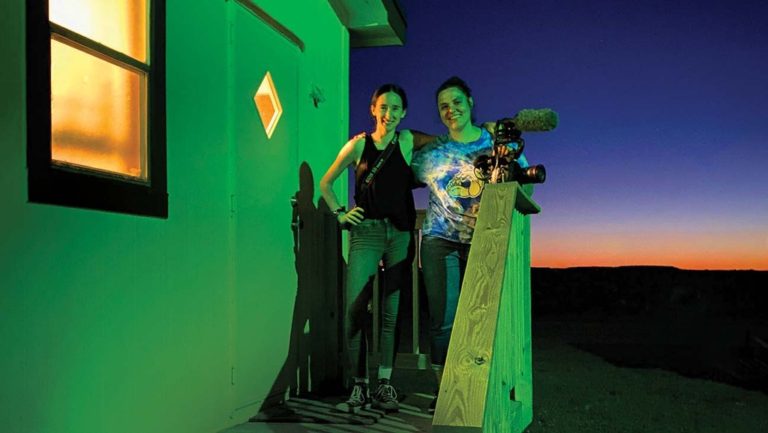
Cusp literally starts out with a bang, where, in a seemingly tranquil meadow bathed in magic-hour light, a kid in his late teens in NRA country fires off several rounds from an assault rifle. But Cusp is not about that boy, it’s about the underage teenage girls he and his buddies are trying to impress.

Recently acquired by Showtime Documentary Films, Cusp focuses on three adolescents, Aaloni, Autumn and Brittney, roughly 16 years old, during the waning days of summer in a rural Texas town. Their main pastimes are boys, booze and blunts. In this context, questions of sexual consent become murky and the phrase “no means go” barely raises eyebrows. Their surroundings appear both pastoral and bleak, and free-floating anxiety seems to hang in the air like cigarette smoke.

Filmmakers Bethencourt and Hill — both photographers making their feature directorial debut — met the girls by chance on a road trip and embedded themselves in their lives, capturing them at their most emboldened and vulnerable. “We gained mutual trust through time, genuine curiosity and, most of all, bonding over our shared experiences of girlhood,” explain Bethencourt and Hill, in an email.

Honesty and candor prevail, given that it was a crew of two, with one shooting while the other recorded sound, trading duties as need be, using mostly natural light and a minimal filmmaker presence. “We wanted it to feel like it was all from their world,” they said, “so we leaned in to what was already available.”

Accolades U.S. Documentary Special Award for Emerging Filmmaker, Sundance 2021

Reps Hayley Hashemi, WME; Jennifer Levine, Untitled Entertainment

Inspiration “We were especially drawn to [photographers] who have captured girlhood and scenes in interesting and distinct ways, like Melissa Ann Pinney, Lauren Greenfield, Justine Kurland, Nan Goldin and so many others.”

What’s next Both filmmakers are working on separate narrative projects. — STEVE CHAGOLLAN