Home Blog Page 313

Legislation allows LGBTQIA+ businesses to register with the City of Pittsburgh’s procurement platform – South Pittsburgh Reporter

City of Pittsburgh Council members Erika Strassburger and Bruce Kraus have introduced legislation allowing LGBTQIA+ businesses to specifically register with the City of Pittsburgh‘s procurement platform, Beacon.

This allows LGBTQIA+ businesses not only to self-identify, but to gain access to the full suite of business development and trainings that the city offers the Disadvantaged Business Enterprises (DBE’s). Councilperson Strassburger partnered with the National LGBT Chamber of Commerce (NGLCC) as well as their local affiliate The Three Rivers Business Alliance (3RBA), Mayor Bill Peduto, the city’s Law Department, Office of Management & Budget, Equal Opportunity Review Commission (EORC), and the Office of Equity to ensure LGBTQIA+ Businesses are properly recognized, honored, and included within the City of Pittsburgh‘s business community.

“It has been my honor to work with the Three Rivers Business Alliance, the National LGBT Chamber of Commerce, the Mayor’s office as well as many other City departments and Commissions to put pen to paper and allow LGBTQIA+ business owners to more easily participate and do work with the City,” said Councilperson Strassburger. “This bill represents one more step in our march toward equity here in Pittsburgh. I’m hopeful this will help expand and grow our city’s LGBTQIA+ businesses that are already making a positive impact here.” 

“Thanks to the work of our Equal Opportunity Review Commission and Office of Equity to remove barriers and improve procurement processes, the city has increased the number of contracts awarded to minority and women-owned business enterprises and invested over $23 million in the growth of these small businesses,” said Mayor William Peduto.

“I am proud to support this legislation sponsored by Councilperson Strassburger and Councilman Kraus that will expand the city’s efforts and enable the City to work with LGBTQIA+-owned firms. Pittsburgh‘s economy only grows stronger when we uplift diverse businesses.” 

“I am delighted to sponsor this much-needed legislation that Councilmember Strassburger has introduced,” said Councilman Bruce Kraus. “In Pittsburgh, our pride as a city is based in unity. This legislation brings us closer to creating a City that is welcoming for all, with a more unified vision for the future that we want to build.” 

The City of Pittsburgh is invested in creating a healthy, diverse, inclusive, and thriving business environment so that business owners and consumers of all backgrounds will feel at home here. In addition to opening up this new option for business owners, the city will now be able to track and collect data from LGBTQIA+ businesses, allowing the city to better support these businesses through state and federal funding initiatives.

“Pittsburgh has a legacy of leadership in promoting inclusivity throughout the many industries that power its economy. Now Governor Wolf’s historic 2016 Executive Order including LGBT Business Enterprises throughout Pennsylvania will take root and grow in the city economies across the Commonwealth. This victory for inclusivity has once again proved our core values that ‘diversity is good for business’ and that ‘if you can buy it, a certified LGBT-owned business can supply it.’ We are excited to see LGBTBEs in every field, from construction to catering and everything in between, help grow the economy of Pittsburgh and beyond,” said NGLCC co-founder and president Justin Nelson and CEO Chance Mitchell. 

“With this legislation, Pittsburgh joins the growing number of metropolitan areas which include NGLCC-certified LGBT Business Enterprises among the city’s pool of certified companies to ensure they have equitable access to contracting and procurement opportunities throughout the city,” said 3RBA’s President Ronald L. Hicks, Jr., of Porter Wright Morris & Arthur LLP.

“For LGBT citizens, this inclusive initiative provides fair and equal access to contracting opportunities and economic development programs that drive innovation, create jobs, and promote economic growth throughout the Greater Allegheny region. We are glad to be a part of this historic legislation, and we look forward to working with other municipal authorities and private companies to diversify their supplier networks.”

City code already recognizes Minority-Owned Business Enterprise (MBE), Women-Owned Business Enterprise (WBE), and Veteran-Owned Small Businesses. Now the City of Pittsburgh‘s Code will include Lesbian, Gay, Bisexual, Transgender, Queer, Intersex, and Asexual Business Enterprise (LGBTBE). 

The Equal Opportunity Review Commission oversees all contracting for the City of Pittsburgh, ensuring that all businesses have the same opportunity to work with the City and participate in requests for proposals.

If you or someone you know would like to register their business with the City of Pittsburgh‘s e-procurement service, please contact the EORC by phone at 412-255-2543, 412-255-2528, or online at https://pittsburghpa.gov/beacon/index.html.
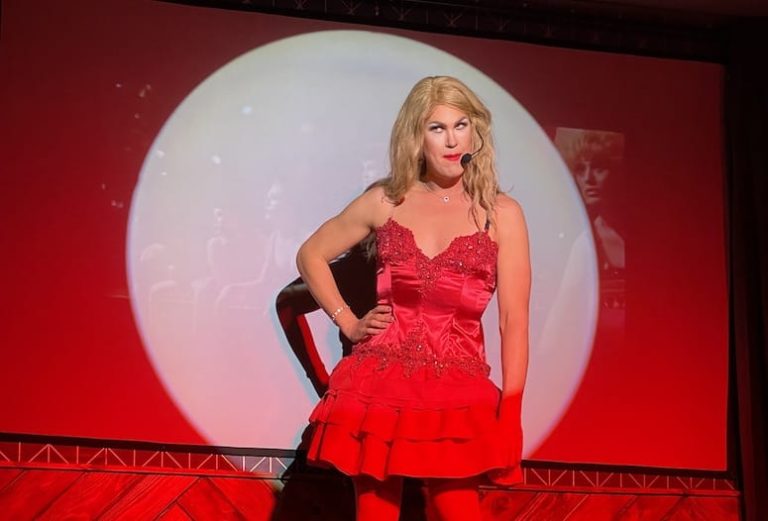
LA Drag Queen Has this Desert Gay Bar All in a ‘Pickle’ – Palm Springs Life

pickle drag queen

Pickle takes over the spotlight May 2 with her one-woman cabaret show at One Eleven bar in Cathedral City. She will return for two more shows, May 16 and May 30.
PHOTOGRAPH COURTESY ONE ELEVEN BAR

If he had been pressed to name one person who would be part of two of perhaps the biggest moments in his life, John Wiersma would have never guessed a drag queen named Pickle.

But there she (aka John Faragher) was, performing at his wedding to husband Greg and then helping him mark his part-ownership of the newly renovated One Eleven bar in Cathedral City on May 2.

Pickle brought her “Pickle’s Follies” act to help christen the revamped stage area inside the bar, which has been a mainstay of the LGBTQ community for more than three decades. She plans to return May 16 and May 30 for two more shows, and possibly more down the road.

Wiersma used to see Pickle perform at the Flaming Saddle in West Hollywood, and he thought her cabaret-style show ranging from singing, dancing, and comedy, would be a perfect fit for the One Eleven.

picklepalmsprings

PHOTOGRAPH COURTESY ONE ELEVEN BAR
Pickle describes her “Pickle’s Follies” as song and dance from old musicals, especially Sweet Charity.

“We love her because she’s the unusual drag queen that does it all,” Wiersma says. “So I think that her style of entertainment fits in really well with our bar — live entertainment and a variety show act. And she’s funny, she connects well with our audiences. So I think it has to be something fresh and new that people haven’t seen, but fits in well with our bar.”

For her part, Pickle is loving the desert. “I have a lot of memories from my childhood,” she says. “My grandfather had a condo in Palm Springs where we visited at weekends. Later I kept on visiting Palm Springs. I really love the whole vibe, and I love Palm Springs style, the sort of like wicker, and the smell of desert and pools.”

Palm Springs Life spoke further with Pickle.

What was the attraction to bringing your show to the desert?

I was really attracted by the offer to perform out there. I love performing for the gay community. I also love performing for the older members of the gay community as well, because they tend to get more or my references, because I’m kind of an old-school girl.”

What can audiences expect to see during your show?

The cabaret show will have lot of songs and dance from the old musicals. I’m structuring it around the musical Sweet Charity. It’ll be like seeing an old school kind of drag cabaret review. I am singing live! I do not lip sync. I also have the tendency to bring in some of my personal experiences, into my work. So I would expect a loose plot, a lot of songs, and a good time.

Is the cabaret show a temporary event to promote the reopening of the bar or are you creating a more permanent show going forward?

Depending on the audience reaction and the response we’ll see how to move forward. I would definitely anticipate coming back and doing more shows. If I do come back, I probably will build a new show.

If it is permanent, will there be more performers featured going forward?

I definitely plan on bringing guest performers. I love working with guests. I always try to bring the best performers in, because I think it’s fun. I think that people can definitely anticipate a future with lots of different queens and different singers and dancers.

What have the last 14 months been like for you since the shutdown?

The shutdown has been kind of a twofold. It’s been really challenging for the same reasons that I think it’s been challenging for everyone. The lack of security, especially financially has been challenging, but also the general fear, and the sadness for the loss of so many lives. I tend to be a glass-is-half full kind of person. Which is also one reason why I chose Sweet Charity as the first musical that I’m exploring, because it’s about this eternal optimist.

You appeared and won your episode on Dodgeball Thunderdome in September 2020. How did you get a spot on that show? Was there any reluctance on the part of the show’s producers to enlist a drag queen? What did the experience teach you? How has it helped your career?

pickleoneeleven

PHOTOGRAPH COURTESY PICKLE DRAG QUEEN

Dodgeball Thunderdome was such a wonderful experience, and definitely not an experience that I anticipated participating in. They reached out to me, because they specifically wanted a drag queen on the show. I was really touched, because the entertainment landscape is so different now compared to 10 years ago; they actively were looking for a drag queen to participate. There was definitely no hesitation on their part. There was hesitation on my part, because it was essentially an obstacle course.

It was definitely a nonconventional thing for me to do in drag. It was such a freeing experience, getting down and dirty in the mud really taught me what my work, as drag queen, is all about. They brought me back to the joy, what I love about drag, which is that it’s just fun, and it doesn’t have to be polished, and it doesn’t have to look a certain way. It just has to touch people and spread joy. The people really enjoyed having me there, and it was really a heartwarming experience.”

Under current Covid precautions, capacity inside the One Eleven is limited to 30 people for cabaret shows.

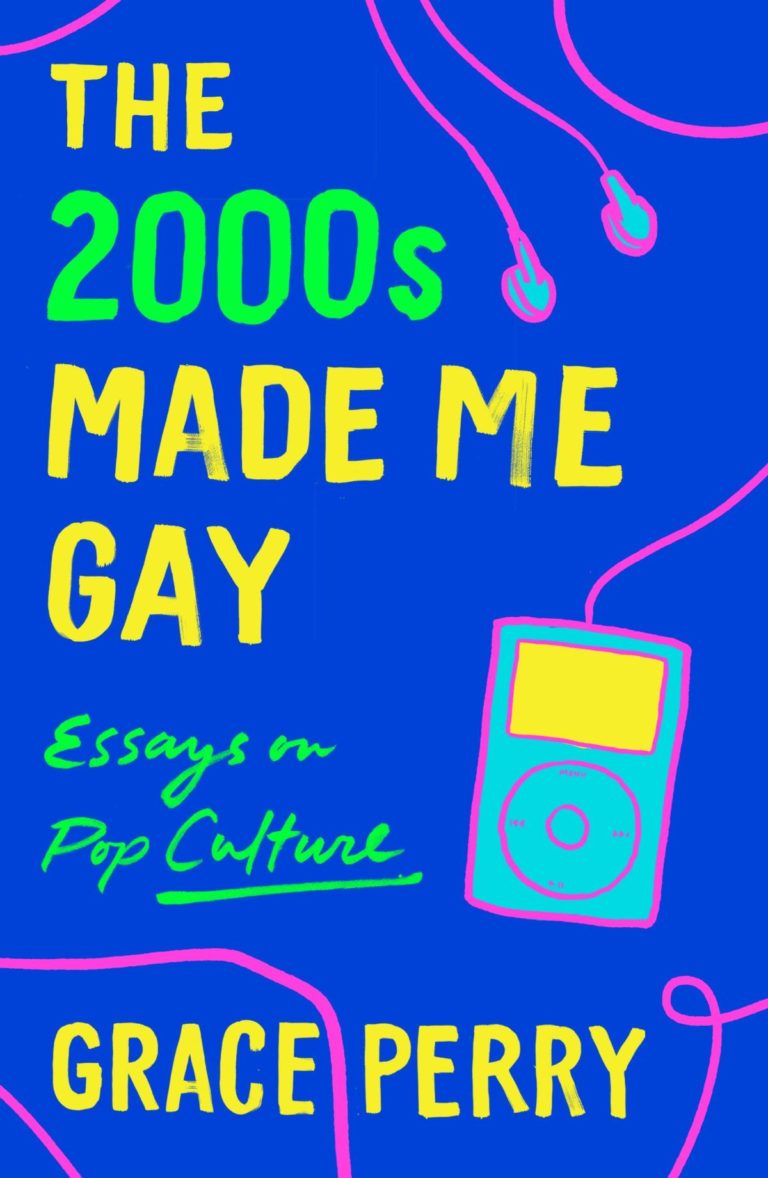
#ReadWithPride: The 2000s Made Me Gay by Grace Perry – The Nerd Daily

“Perhaps, thinking of pop culture as escapism isn’t the right framing at all. Maybe it’s actually vacationism, or retreatism, or getting – the – fuck – away – for – a – whileism. And like most getaways , we usually bring some kind of souvenir back with us.”

I felt equal parts called out and validated by this book and really, that’s all you need to know to pick it up. If you grew up smack dab in the middle of the height of popular culture—the early 2000s—chances are, you can at least relate to half of the essays in this book. If you’re also part of the LGBTQIAP+ community and only realised in hindsight that the way you thought about Serena van der Woodsen wasn’t because you wanted to be her but because you wanted to be with her, then I can guarantee that this collection will become your gay bible. Grace Perry discusses pop culture that shaped us every step of our tweenhood, from Mean Girls and Harry Potter to Disney Channel Original movies and anthems like I Kissed a Girl and doesn’t hold back when it comes to eliciting just how frighteningly damaging some representations have been in her journey to coming out as gay.

Perry is blunt and funny in her examination of the early 2000s gay heroes—it’s equally nostalgic and uplifting to reminisce about the gay heroes we created back in the day before casual queerness and actual on-screen representation became more regular (still not enough, but we’re getting there!). From dissecting Lindsay Lohan’s “fall from grace” and the media’s lesbophobia (as well as Lohan’s later dismissal of her wlw relationship) to the very difficult topic of Harry Potter, its transphobic creator and the queerbaiting of releasing the news about Albus Dumbledore being queer without any hints in the actual novels, this book sure knows how to pack a punch, expose stereotypes and highlight how much we are influenced by depictions of queer characters, especially by those that aren’t all too positive.

Though I have my favourites from these essays, the ones that really stuck with me were those that highlighted how much internalised homophobia is a systemic issue. Detailing the queerbaiting that went on with the release of Katy Perry’s earth-shaking I Kissed a Girl made me remember my own youth and how I used to scream those lyrics way before realising I was part of the LGBTQIAP+ community. Similarly, it was incredibly enlightening to read Perry’s analysis of Mean Girls, a movie that has become a classic and remains iconic with its witty humour, and realise that a lot of movies that shaped who we are actually had some of the worst representation of gay characters. Perry also addresses the way in which teens infused these narratives with queer subtext to feel seen and boy, if that didn’t hit home.

Beyond the analysis of texts Perry offers, I also really loved the tidbits we got about her own journey because they read so similar to my own—and probably a bunch of other millennials’—experience. Perry’s move from someone who dresses as a tomboy to someone who kisses her girl friends but is totally not gay, to someone who supports the LGBTQIAP+ community but totes isn’t part of it herself, to discovering her own identity…it was a rollercoaster that I’m sure many can relate to.

All in all, I strongly urge every millennial (or human being who still uses pop culture references from the 2000s—you are the backbone of society, my friends) that wants to reminisce about their 2000s experience to pick up this book—Grace Perry’s collection of essays is equal parts reflective and a call to do better in the representation of the LGBTQIAP+ community. A timely piece of literature that you won’t want to miss out on!

The 2000s Made Me Gay is available from Amazon, Book Depository, and other good book retailers, like your local bookstore, as of June 1st 2021.

Will you be picking up The 2000s Made Me Gay? Tell us in the comments below!


Synopsis | Goodreads

See also

Must Have YA Book Series

From The Onion and Reductress contributor, this collection of essays is a hilarious nostalgic trip through beloved 2000s media, interweaving cultural criticism and personal narrative to examine how a very straight decade forged a very queer woman

“If you came of age at the intersection of Mean Girls and The L Word: Read this book.” ―Sarah Pappalardo, editor in chief and co-founder of Reductress

Today’s gay youth have dozens of queer peer heroes, both fictional and real, but Grace Perry did not have that luxury. Instead, she had to search for queerness in the teen cultural phenomena that the early aughts had to offer: in Lindsay Lohan’s fall from grace, Gossip Girl, Katy Perry’s “I Kissed A Girl,” country-era Taylor Swift, and Seth Cohen jumping on a coffee cart. And, for better or worse, these touch points shaped her identity, and she came out on the other side, as she puts it, gay as hell.

Join Grace on a journey back through the pop culture moments of the early 2000’s, before the cataclysmic shift in LGBTQ representation and acceptance―a time not so long ago, that people seem to forget.


‘Viral’: Film Review | Hot Docs 2021 – Hollywood Reporter

0

In this documentary composed only of YouTube videos, Udi Nir and Sagi Bornstein follow seven Gen Z vloggers during the unprecedented year that was 2020.

To appreciate the roving, sometimes gauche nature of Viral, a new documentary following seven YouTube vloggers in 2020, one must consider its experimental form. Premiering at the Hot Docs Canadian International Documentary Festival, the film, directed by Udi Nir and Sagi Bornstein, is entirely composed of YouTube videos. This means it is at the mercy of its source material, which privileges authenticity, skews confessional and doesn’t lend itself to an orderly narrative.

Nir and Bornstein specialize in this kind of experimentation. For their previous documentary, #Uploading_Holocaust, the duo scoured the web for videos of Israeli teens who documented their school trips to Poland, where they learned about the Holocaust. The filmmakers’ goal was to witness how a younger generation identified with a visceral historical moment and what that revealed about collective memory and trauma.

With Viral, the pair takes a stab at applying their formal approach to more recent history and a broader range of experiences. The film examines Generation Z and the year 2020, two subjects that could be observed, queried and probed from a number of angles. After all, almost a third of the world’s 7.7 billion people are considered members of Gen Z. They live across the globe, their stories informed by the shifting sociopolitical landscapes of their homes, their varying cultures, their religions, their gender and sexual identities, and so much more.

The year 2020 is a task, too: There were 365 days, each of which, during a time of pandemic and global uprising against anti-Black racism, felt like a year in and of itself. It would be impossible for an 87-minute documentary to engage adequately with all of the relevant material, so while the effort is impressive, Viral wobbles under the weight of its own potential.

The film, which is structured chronologically, begins in December 2019, on the cusp of a new year. Clips of vlogs uploaded during that period appear in quick succession, evoking promises of renewal. We meet our protagonists, YouTube vloggers with different follower counts (presumably tracked to show their growing influence) at this hopeful moment: Jessica Cox (@BB Tequila), a Black single mom and stripper in South Carolina who wants to launch a makeup and beauty business; Cassandra Grimbly (@Cass and Jay), a white South African dancer and singer who joins the entertainment crew of a cruise ship, where she later meets her boyfriend, Jay; Shakir Subhan (@Mallu Traveler), a Malayali Indian who embarks on a solo bike ride from India to Europe; Nathaniel Drew (@Nathaniel Drew), an Argentinian who moves to Paris at the start of the year to, in his words, find himself; Tina Mayer (@Tinie Planet), a white woman who lives in a van and has big plans to travel throughout Europe; Justin Marcus (@Justin Marcus), a gay Afro-Latino New Yorker who dreams of moving to Miami; and Riley Tench (@Riley Tench), a white Alaskan light technician working on a cruise ship in China.

For this crew, 2020 was to be the year of new businesses, new friends, new homes and new adventures. Viral leans heavily on its maudlin score to set up the inevitable emotional disappointment that follows. It needn’t have — viewers, who have lived this history, know better.

News of the novel coronavirus hits our protagonists hard and quickly. In these moments, Nir and Bornstein rely on clips of speeches by various world leaders — from Emmanuel Macron and Boris Johnson to Donald Trump and Jacinda Ardern — delivering virus news and updated lockdown measures to mark the passage of time. Their jovial and naively assured tones are chilling to hear one year later. The early days of misinformation surrounding the virus, how it spreads and how people should protect themselves — most notably the crusade against masks — feel surreal in retrospect.

Crushed and confused, the seven vloggers try to make sense of the impact the virus and the changing restrictions will have on their lives. Trapped on their respective cruise ships, Cassandra and Riley wrestle with the banality of confinement. Shakir and Tina navigate border closures, optimistic about their ability to continue traveling. Unable to strip anymore, Jessica enthusiastically dives into her business. Nathaniel crosses a follower milestone, but finds that this achievement won’t liberate him from his existential dread. Justin, who remains the most upbeat throughout the film, wonders about his future in New York. All adjust to their constantly fluctuating situations while trying to manage emotional states teetering between cautious joy and total despair.

Summer heightens the psychic and corporeal toll of the virus. Impatience — with the government, with staying inside, with uncertainty — replaces idealism. The Black Lives Matter movement and racial uprisings around the world become the focus of the film, galvanizing Jessica and Justin to protest. Jessica, in particular, takes a moment to open up about the challenges she faces as a Black woman in America and what she will do to protect her son. “Jakai, one day if you’re watching this, know that your mom loves you,” she says at one point, addressing her toddler.

Emotional and intimate moments like these, which illuminate, instead of merely displaying, a vlogger’s life, expose the weakness in the film’s broad scope. With so much ground for the doc to cover, the more interesting personal narrative strands — ones that make viewers feel invested, reveal why someone might be drawn to vlogs or consider the inevitable parasocial relationships formed with subscribers — feel like they are competing against, instead of complementing, national and international headlines.

In that way, Viral embraces Gen Z as its subject without sufficiently regarding the conditions of their world. It treats coronavirus as the event instead of an event that revealed (and continues to reveal) the fault lines of society and the ways governments fail their people. (I would have welcomed more clips acknowledging these institutional failures rather than an extended shot of a Greta Thunberg mural or the instrumental and a cappella interludes.)

Throughout the documentary, many of the vloggers rely on narratives of individualism. They ask themselves how they can make their lives better and what they can do differently. And while these questions matter to some degree, they can also be corrosive, failing to take into account just what kind of world these young adults have inherited.

Venue: Hot Docs
Production companies: gebrueder beetz filmproduktion, Udi V Sagi
Directors: Udi Nir and Sagi Bornstein
Producers: Christian Beetz, Udi Nir, Sagi Bornstein
Executive producers: Georg Tschurtschenthaler
Editor: Sagi Bornstein
Music: Nils Kacirek & Milan Meyer-Kaya, Lauterfisch Music
World sales: Dogwoof

87 minutes

Fake bomb planted at gay club caused Charing Cross evacuation – My London

The ‘suspicious package’ which caused Charing Cross station to be evacuated was a fake bomb planted in a gay nightclub, it has been revealed.

Some of the stars of Ru Paul’s Drag Race UK were rehearsing at Heaven nightclub for an upcoming show when police stormed in to investigate after an anonymous tip-off claimed a bomb had been planted inside the gay venue.

The scare resulted in Villiers Street being cordoned off, Charing Cross station being evacuated, and widespread disruption to train and underground services through Embankment, Charing Cross and Waterloo East.

The bomb turned out to be a hoax, but it left those inside the venue in shock.

The Met Police said the circumstances suggest the incident could be ‘an intentional hoax’ and an investigation is underway to determine whether there was a homophobic motive behind the fake bomb.

Drag queens The Vivienne, Tia Kofi and Veronica Green were some of the big names involved.

A source at the venue told The Sun : “The drag queens had been rehearsing for their upcoming show Drag Queens of Pop and had been posting on social media that they were at Heaven.

“The door was later found to be open and it seemed like someone had got in during the rehearsals. It seemed like a targeted attack because, due to Covid restrictions, the place is usually empty.

“But it appeared someone knew they were there and planted the hoax package.”

Jeremy Joseph, who runs the club, took to Instagram to share how frightening the incident was and branded the person behind it a ‘sick individual’.

Jeremy wrote: “That was the most dramatic rehearsal ever.

“There had been a bomb threat and everyone was evacuated, except poor me, as we waited for police dogs to arrive, as the venue has been in lockdown apart from rehearsals.

“I had to walk round with the police & sniffer dogs to check the venue.

“I’m not going to lie, it was frightening, but I cant praise the police dog team enough, they were amazing, they have to enter a building not knowing if it is real or a hoax.

“Whoever made that call is nothing but a sick individual, but police took every precaution before re-opening the streets & I cant thank them enough.”

Get London’s biggest stories straight in your inbox


MyLondon’s brilliant new newsletter The 12 is packed with news, views, features and opinion from across the city.

Every day we’ll send you a free email at around 12pm with 12 stories to keep you entertained, informed and uplifted. It’s the perfect lunchtime read.

The MyLondon team tells London stories for Londoners. Our 45 journalists cover all the news you need – from City Hall to your local streets.

Never miss a moment by signing up to The 12 newsletter here.

A Met police spokesman said: “The circumstances in which the item was found suggest that it was part of an intentional hoax and an investigation is under way to identify the person or persons responsible.

“There is no indication, at this early stage, of a particular motive but that will form one of the key lines of enquiry for officers as their investigation continues”.

Anyone with information about this incident, who has not already spoken to the police, should call 101 providing the reference CAD3901/03MAY.

Information can also be provided to Crimestoppers, anonymously, by calling 0800 555 111.

LGBTQ Agenda: Activists impressed with Biden’s first 100 days, but say real challenges lie ahead – Bay Area Reporter, America’s highest circulation LGBT newspaper

0

While President Joe Biden’s campaign seemed to some like a throwback to a bygone era, his first 100 days in office have shown that he aspires to be a transformational leader — and can be, if he is pushed enough.

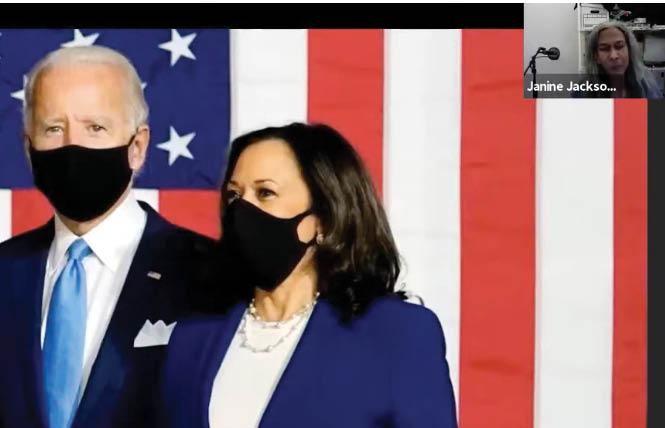
That was the consensus coming out of “The First 100 Days: LGBTQ Rights, Racial Equity, and Reproductive Justice,” a webinar hosted by the Williams Institute and the Criminal Justice Program at UCLA School of Law, and the African American Policy Forum in New York City.

The webinar was held April 29, Biden’s hundredth day as president, and one day after his first address before a joint session of Congress.

Brad Sears, the interim executive director and founder of the Williams Institute, which studies LGBTQ demographics, began the late afternoon session by setting the agenda for the discussion.

“I think this panel reflects the institute’s commitment to doing research on anything impacting LGBTQ people in our full diversity, including racial equity, reproductive justice, and immigrant issues,” Sears said.

With that, Sears handed off the virtual mic to Janine Jackson, the program director of Fairness and Accuracy in Reporting. Jackson discussed the historic importance of the milestone.

“Franklin Roosevelt stormed out of the gates in the midst of the Great Depression and started the New Deal,” Jackson said. “This marker of 100 days has come to represent not just the ability of a new president to make their mark, but to set the tone for the new term.”

Jackson stressed that while many people may be thankful that anybody but Donald Trump is the president now, that would be a very low bar by which to judge Biden.

“We’re going to be discussing the early returns of an administration that came into office after a particularly fraught election. Indeed, if you compare it to the last 100 days of the Trump administration — a time the country came perilously close to implosion — it’s probably understandable to congratulate the new administration for bringing us to safer harbors,” Jackson said. “Last night, he said white supremacy is terrorism and said to trans Americans that the president has your back. That’s not what we’re used to hearing, but it doesn’t mean don’t stay mindful of whether the Biden administration achieves.”

Filibuster an obstacle to legislation
Rashad Robinson, president of the civil rights nonprofit Color of Change, said that the filibuster is a chief obstacle to moving the needle on racial equity. He was joined in this sentiment by Congressman Mark Takano, a gay Democrat who represents California’s 41st Congressional District in Riverside County.

“What’s coming up now after the first 100 days are the real important things,” Robinson said. “Will Biden engage and lean in about the filibuster? Because in 2022, I can’t go to the Black community and say we couldn’t pass this legislation because of something called the filibuster … but vote like you did before.”

A majority vote in the U.S. Senate could end the filibuster’s 60-vote threshold on legislation, but Democratic senators Joe Manchin (West Virginia) and Kyrsten Sinema (Arizona), who is bisexual, are opposed to ending it.

Takano called the filibuster “the Edmund Pettus Bridge of this century,” referring to the bridge in Selma, Alabama where, in 1965, civil rights demonstrators, including the late Georgia Congressman John Lewis, were initially violently prevented from crossing by police.

(The filibuster was often used by Southern Democrats to stop or slow down civil rights legislation.)

“We need to cross that bridge,” Takano said. “No less than our democracy is at stake. … What weighs on this president is knowing he can’t govern as a restorationist president — he has to govern aspirationally. He knows his presidency is the beneficiary of organizers in the state of Georgia.”

Takano said that with the filibuster out of the way, Senate Democrats could pass landmark voting rights, police reform, immigration, and reproductive rights legislation. The Equality Act, which would add sexual orientation and gender identity to the Civil Rights Act of 1964, is also in danger of not passing out of the Senate due to the filibuster. It passed the House in February.

Robinson agreed with Jackson that Biden has surprised people by governing with an eye toward making lasting changes.

“He’s governing differently than what a lot of us imagined,” Robinson said. “Knowing Biden ran as a restoration candidate — very different from [Barack] Obama, who ran as a change candidate, or Trump, who ran as a ‘change the rules’ candidate — there has been ways our collective movements have tilled the soil in ways, have helped achieve things in ways that we didn’t know would be on the agenda. And yet, at the same time, we are wrestling with a limited idea of what’s possible. I’m impressed about some things but I think there is more to go.”

Robinson said that the events of 2020 pushed more people to see structural racism and the importance of addressing it, but that “we have to hold the line between real solutions and fake solutions, corporate enablism versus corporate accountability, what’s a good use of our time and what’s not a good use of our time.”

Abortion rights still threatened
Alexis McGill Johnson, the president and CEO of the Planned Parenthood Federation of America, said that she agreed with initial Biden moves on reproductive rights, but is frustrated Biden is not more vocal about the issue at a time when many states are attempting to limit them.

In February, for example, South Carolina Governor Henry McMaster (R) signed a law making abortion illegal after a fetal heartbeat is detected. A federal judge blocked the new law from going into effect, but anti-abortion forces hope it, or restrictions in other states, will provide the Supreme Court the opportunity to overturn precedents, such as Roe v. Wade, that guarantee the right to an abortion.

“What we heard last night [was] … no mention of reproductive freedom,” Johnson said, referring to the president’s address. “The inability to name it with the bully pulpit, even though [Biden] is passing executive orders, harms our ability to name it strongly and organize our allies.”

Biden, who held an anti-abortion voting record during his first two decades in the Senate, came around to his party’s position by the 2000s. Personally opposed to the procedure, Biden agreed to oppose the Hyde Amendment (which bans federal funding of abortion) only when running for president last cycle.

Still Johnson said that the administration is supporting reproductive rights more quietly.

“We’ve seen policies like Title X, the lifting of the global gag rule, and the lifting of restrictions on telemedicine,” Johnson said. “At the same time the thing we are most afraid of in the reproductive rights movement is that reproductive rights are going to be treated as a bargaining chip.”

The global gag rule, routinely implemented by Republican administrations and rescinded by Democratic ones, blocks U.S. funding for non-governmental organizations that provide abortion counseling or referrals, expanded abortion services, or that advocate for decriminalization of abortion.

Some 500 proposed restrictions on reproductive freedom have been introduced in statehouses in the last 100 days, Johnson said, and “17 cases are one step away from a newly-made Supreme Court that could overturn Roe.”

Biden announces higher refugee admissions cap
Jennifer Chacón, a UCLA professor focusing on immigration law, offered her assessment of the administration’s moves in its first 100 days. While applauding the end of some of the more draconian measures implemented during the Trump administration, Chacón said there is a lot of work to do.

“The Trump administration made over 1,000 changes to immigration law,” Chacón said. “In addition to the travel bans, there were changes to internal immigration enforcement procedure, changes to asylum requirements, the Remain in Mexico policy, the deliberate and cruel policy of family separation and changes in the public charge rule. So the Biden administration has its work cut out for it, and has made some inroads, but you see how the baseline isn’t very good.”

While there has been “a substantive change in tone,” Chacón said, there is “still a long way to go with 10 million undocumented people, two-thirds of whom have been here over 10 years,” and “the Biden administration is on track to resettle fewer refugees this year than any year under his predecessor.”

Biden elicited a strong backlash from immigration advocates last month when, after promising to increase the Trump-era refugee cap, he decided to maintain the 15,000 refugee limit. The White House quickly reversed course.

Biden had a May 15 deadline by which to raise the cap. On May 3, he announced that the annual refugee admissions cap will be raised to 62,500 annually.

Yet, “the sad truth is that we will not achieve 62,500 admissions this year,” Biden stated in a news release. “We are working quickly to undo the damage of the last four years.”

In the first fiscal year of his presidency, Biden seeks a goal of 125,000 refugee admissions.

“We are going to use every tool available to help these fully-vetted refugees fleeing horrific conditions in their home countries,” Biden stated.

“Joe Biden is not governing like a restorationist president,” Takano said. “Even when he has moments like the refugee caps, I was one of many signatures on a letter led by [Democratic Minnesota Congresswoman] Ilhan Omar that called on President Biden to revise those caps, and he reversed course. What saves this president, in my eyes, is his willingness to listen.”

LGBTQ Agenda is an online column that appears weekly. Got a tip on queer news? Contact John Ferrannini at j.ferrannini@ebar.com

Help keep the Bay Area Reporter going in these tough times. To support local, independent, LGBTQ journalism, consider becoming a BAR member.

‘Pipeline’ lands emotional gut-punch – YourObserver.com

Dominique Morisseau’s “Pipeline” is timely. (It’s a damn shame, but it’s a fact.) The “Pipeline” of the play’s title refers to the school-to-prison “pipeline” for African-American teenagers. For Black youth, an outburst of adolescent anger can be a “Go Directly to Jail” card in the Monopoly game of life.

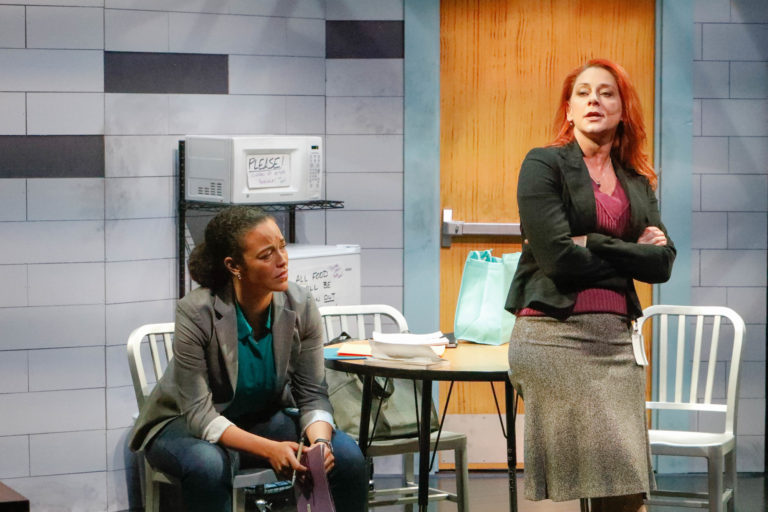
Nya (Renata Eastlick) knows this pipeline all too well. She’s a recently divorced single mother who teaches in a public high school in the inner city. She sees outbursts of violence every day — and knows that a few seconds of rage can translate to a life behind bars. To spare her son Omari (Donovan Whitney) this fate, Nya and her ex-husband Xavier (Joel PE King) sent him to a private boarding school. But Omari has a temper — and just slammed a white teacher into a smartboard over a perceived racist slur. It’s Omari’s third strike. At best, the school will expel him. At worst, he’s on the prison pipeline. As the play opens, Nya’s circling the vortex of a panic attack after hearing this bad news. When Omari runs away, she gets pulled in.

Why is Omari such an angry young man? A lesser playwright would offer a buzzword equation. White privilege + systemic racism = Black rage. Morisseau doesn’t. Her play doesn’t even define “pipeline.” You either know it, or you get it.

Morisseau’s characters feel like real people. But they’re larger-than-life — and burn far brighter. It’s the difference between a flashlight and a laser beam. 

L. Peter Callendar’s direction honors the playwright’s hyper-reality. His approach to dialogue and physicalization seem natural, never stagey. But he doesn’t shy away from the white-hot intensity of the play’s brightest and darkest moments. When it’s time to go big, he doesn’t play it small. The actors don’t, either. 

Eastlick’s Nya is a powerful woman — more importantly, she’s real. Eastlick avoids the tropes of the saintly single mother. Her Nya is flesh-and-blood. She feels and she bleeds. Whitney’s characterization of Omari also defies cliché. He’s an angry young Black man. His sense that others have reduced him to that stereotype explains much of his anger. Emerald Rose Sullivan is great as Jasmine, Omari’s fiery, fearless, eloquent girlfriend.

King is understated and wounded as Xavier, Omari’s father and Nya’s ex. Xavier pays for his offspring’s boarding school — but his bond with his son is broken. King is heartbreaking in the scene where Omari declares his hatred and total rejection of his father. Xavier walks away — and he might not come back. Emilia Sargent is a spitfire as Laurie, Nya’s friend and fellow teacher. Her character has just returned to school after a bit of reconstructive surgery (an angry parent slashed her face). Laurie’s outer scar can be repaired. Her inner scar? Maybe not. Isaac Esau Gay is also affecting as Dun, the school’s overworked security officer. The man does his best, but he can only be in one place at a time. The students’ rage is everywhere.

It all adds up to an incandescent script and unforgettable characters. It’s powerful on stage, and isn’t lost in translation to streaming video.

Bill Wagy understands the logic (and magic) of film. What you’ll see is a three-camera video, edited from two live performances. Starting with this footage, Wagy created a subtle editing rhythm from different camera angles. It’s a record of a stage performance, but it’s also a movie, and it works on those terms. Nicely done.

Kudos also to Adrienne Pitts’ true-to-life costumes and Adam Spencer’s stark set design for conveying this world’s unforgiving exterior reality. Patrick Russini’s soundscape, Jay Poppe’s video projections, and Alex Pinchin and Joseph Oshry’s lighting pull you into the characters’ interior lives. Their alchemy transmutes their stream-of-consciousness to sight and sound.

Now let’s get back to the playwright. She defies expectations, and I want to make sure you don’t have any before experiencing her work.

Morisseau is a master of language. Her play delivers several hypnotic soliloquies — disguised as long cell phone messages or angry monologs. Words matter in her play, and she frames the action as a counterpoint between two works of literature: Gwendolyn Brooks’ poem, “We Real Cool” and Richard Wright’s novel, “Native Son.” The poem is an incantatory ode to hopelessness: a prophecy of death for young Black males, and Nya’s greatest fear. Wright’s novel revolves around the fear, loathing and killings of a 20-something Black man named Bigger Thomas. Omari’s white teacher repeatedly asks him if he can relate to the character’s “animalistic rage.” Omari asks the teacher to drop it. The teacher doesn’t, and gets an answer he wasn’t ready for. As to the playwright …

She refuses to give you the answer.

“Pipeline” is a political play, but not a polemic. Morisseau lets you think for yourself and doesn’t do your homework for you. Her strategy is empathy. The playwright gets you inside the characters’ skins. But she goes for the head as well as the heart. She raises challenging issues, but that’s a side-effect. “Pipeline” begins and ends with character. Morisseau’s people are complicated, messy and full of contradictions. They’re all-too-human, and living in a world that’s blind to their humanity. Our future depends on that perception. And it’s not always easy …

At the play’s end, Omari offers his mother a 10-point checklist to help Nya see his humanity. The 10th commandment is missing. Why? He’s still working on it …

In the end, there’s no final answer.

The playwright leaves it up to you to fill in the blank.

Playwright Dominique Morisseau will speak at a WBTT Voices community forum on May 4 at 6 p.m. This live Zoom video is free, but registration is required at the theater’s website.  

More than half of gay and bisexual Gen Z boys say they’ve come out to their parents – Upworthy

Some 75 years ago, in bombed-out Frankfurt, Germany, a little girl named Marlene Mahta received a sign of hope in the midst of squalor, homelessness and starvation. A CARE Package containing soap, milk powder, flour, blankets and other necessities provided a lifeline through the contributions of average American families. There were even luxuries like chocolate bars.

World War II may have ended, but its devastation lingered. Between 35 and 60 million people died. Whole cities had been destroyed, the countryside was charred and burned, and at least 60 million European civilians had been made homeless. Hunger remained an issue for many families for years to come. In the face of this devastation, 22 American organizations decided to come together and do something about it: creating CARE Packages for survivors.

“What affected me… was hearing that these were gifts from average American people,” remembers Mahta, who, in those desperate days, found herself picking through garbage cans to find leftover field rations and MREs to eat. Inspired by the unexpected kindness, Mahta eventually learned English and emigrated to the U.S.

“I wanted to be like those wonderful, generous people,” she says.

The postwar Marshall Plan era was a time of “great moral clarity,” says Michelle Nunn, CEO of CARE, the global anti-poverty organization that emerged from those simple beginnings. “The CARE Package itself – in its simplicity and directness – continues to guide CARE’s operational faith in the enduring power of local leadership – of simply giving people the opportunity to support their families and then their communities.”

Each CARE Package contained rations that had once been reserved for soldiers, but were now being redirected to civilians who had suffered as a result of the conflict. The packages cost $10 to send, and they were guaranteed to arrive at their destination within four months.

Thousands of Americans, including President Harry S. Truman, got involved, and on May 11, 1946, the first 15,000 packages were sent to Le Havre in France, a port badly battered during the war.

Thousands of additional CARE Packages soon followed. At first packages were sent to specific recipients, but over time donations came in for anyone in need. When war rations ran out American companies began donating food. Later, carpentry tools, blankets, clothes, books, school supplies, and medicine were included.

Before long, the CARE Packages were going to other communities in need around the world, including Asia and Latin America. Ultimately, CARE delivered packages to 100 million families around the world.

The original CARE Packages were phased out in the late 1960s, though they were revived when specific needs arose, such as when former Soviet Union republics needed relief, or after the Bosnian War. Meanwhile, CARE transformed. Now, instead of physical boxes, it invests in programs for sustainable change, such as setting up nutrition centers, Village Savings and Loan Associations, educational programs, agroforestry initiatives, and much more.

But, with a pandemic ravaging populations around the world, CARE is bringing back its original CARE packages to support the critical basic needs of our global neighbors. And for the first time, they’re also delivering CARE packages here at home in the United States to communities in need.

Community leaders like Janice Dixon are on the front lines of that effort. Dixon, president and CEO of Community Outreach in Action in Jonesboro, Ga., now sends up to 80 CARE packages each week to those in need due to COVID-19. Food pantries have been available, she notes, but they’ve been difficult to access for those without cars, and public transportation is spotty in suburban Atlanta.

“My phone has been ringing off the hook,” says Dixon. For example, one of those calls was from a senior diabetic, she remembers, who faced an impossible choice, but was able to purchase medicine because food was being provided by CARE.

Today, CARE is sending new packages with financial support and messages of hope to frontline medical workers, caregivers, essential workers, and individuals in need in more than 60 countries, including the U.S. Anyone can now go to carepackage.org to send targeted help around the world. Packages focus on helping vaccines reach people more quickly, tackling food insecurity, educational disparities, global poverty, and domestic violence, as well as providing hygiene kits to those in need.

From the very beginning, CARE received the support of presidents, with Hollywood luminaries like Rita Hayworth and Ingrid Bergman also adding their voices. At An Evening With CARE, happening this Tuesday, May 11, notable names will turn out again as the organization celebrates the 75th Anniversary of the CARE Package and the exciting, meaningful work that lies ahead. The event will be hosted by Whoopi Goldberg and attended by former Presidents Barack Obama, George W. Bush, Bill Clinton, and Jimmy Carter, as well as Angela Merkel, Iman, Jewel, Michelle Williams, Katherine McPhee-Foster, Betty Who and others. Please RSVP now for this can’t-miss opportunity.

From Your Site Articles

Related Articles Around the Web

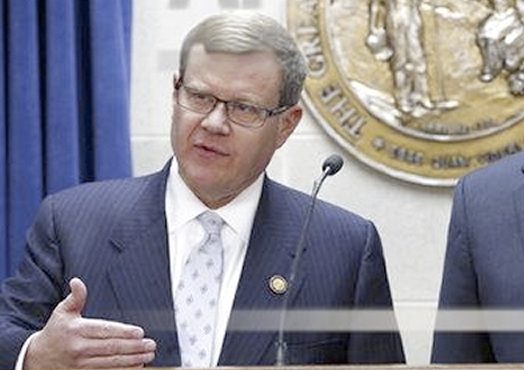
NC House speaker says transgender sports bill has been set aside – Our Community Now at Colorado

RALEIGH (AP) — The North Carolina General Assembly won’t advance legislation this year preventing transgender girls and women from competing in school sports labeled for biologically female athletes, a top legislative leader said. “The House will not be taking up that bill,” House Speaker Tim Moore told The Associated Press in an interview. “We’ve spoken with the bill sponsors and others and simply believe that there’s not a need to take it up at this time.” The inaction marks another decision by state Republicans to step away for now from controversial LGBT legislation rather than face criticism that GOP leaders in other states have experienced. Those actions, however, have failed to generate broader backlash. Senate leader Phil Berger’s office said last week that there would be no votes on a bill that sought to limit medical treatments for transgender people under 21 and punish doctors who facilitate that treatment, adding that there was no pathway for it to become law. The House is setting aside the “Save Women’s Sports Act,” which was pushed by social conservatives and other groups who said young women were in danger of losing spots on high school and colleges teams and sports titles to athletes who were born male, creating inherent unfairness. LGBT-rights groups strongly opposed the legislation. Parents and children told a judiciary committee hearing this month that the prohibition would harm transgender girls who want to fit in and would amount to discrimination. No similar bill was filed in the Senate this year. Moore expressed skepticism that the sports bill would have had enough votes to be adopted into law. Vetoes by Democratic Gov. Roy Cooper, an LGBT rights supporter, are tough for Republicans to override because their majorities aren’t veto-proof. Moore called the transgender sports bill a solution in search of a problem that hasn’t yet surfaced in North Carolina as in other states. Since 2019, the North Carolina High School Athletic Association has received less than 10 requests from teenagers who identify as a different gender than on their birth certificate and seek to participate in formal athletics. “We’re not really hearing any complaints about that where it’s an issue,” Moore told the AP late Wednesday. Moore moved the transgender sports bill from the Judiciary Committee to the Rules Committee, where measures that the majority party doesn’t want to take up often get sent to die. That action happened Monday, the same day Apple Inc. announced the construction of its first East Coast campus in the Raleigh-Durham area and the creation of at least 3,000 jobs over the next decade. Berger and Moore told reporters at a Monday news conference celebrating the Apple expansion that the company demanded no actions on legislation. Cooper did say that Apple CEO Tim Cook told him the repeal of North Carolina’s 2016 transgender bathroom bill was “important in their decision making,” as was the recent end of a moratorium on local government nondiscrimination ordinances. Moore told the AP that parking the transgender sports bill had no connection to the Apple announcement. Rather, he said, the decision was the result of discussions within the House Republican Caucus. Rep. Mark Brody, a Union County Republican and chief sponsor of the legislation, said Wednesday that he feels pretty confident the measure got derailed because “Apple’s come to town” but lacked hard evidence. Brody said the measure would have gone all the way to Cooper’s desk if House leadership had given the green light to vote on it, but a veto would have occurred. “I’m disappointed that it isn’t moving,” Brody said, adding that the conflict will resurface when a transgender girl wins a state championship in a sport designated for women. “I think the issues are not going to go away.”

The Fast Break – May 3, 2021 – The UConn Blog

CLICK HERE to subscribe to The Fast Break newsletter and get this weekly source for UConn sports sent directly to your inbox every Monday!


The latest UConn athletics news


Video highlights

  • Plenty of more plays like these coming during Jalen’s junior year:
  • The power of Paige Bueckers infiltrates the booth at Citi Field:


Photos of UConn’s finest

Feast your eyes on the Huskies’ ice palace of the future:


Find out what UConn coaches are up to on and off the court

  • Coach Penders reflects on Sunday’s come-from-behind win over Bucknell:


Catch up on former UConn players working across the sports world

  • Rudy Gay just keeps on scoring:
  • Matt Barnes remains armed and dangerous:
  • Amida Brimah scores first NBA bucket:


Revisit special moments in UConn sports history

  • Byron Jones going 27th to the ‘Boys remains a lasting memory for Randy:


Learn about non-profits and causes worthy of UConn Nation’s support

In a little over a year, the partnership between Foodshare and the CT Food Bank has provided a whopping 7,835,053 meals and counting to Connecticut residents suffering from food insecurity! What makes this accomplishment even cooler is that the President and CEO of CT Food Bank/Foodshare is a UConn grad!

CLICK HERE to learn more about this incredible organization and find out how you can lend a hand to help a fellow UConn fan feed hungry folks in CT!


A parting sentiment from The Fast Break team

Christyn Williams joins Paige Bueckers and Azzi Fudd on list of top 25 women’s college basketball players for upcoming season but younger tandem getting all the attention for good reason:


Be sure to follow The UConn Blog on social media!


CLICK HERE for Championship Collection gear!

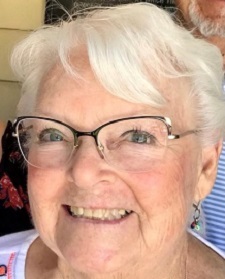
Gay B. Lefebvre, 82, gifted artist and teacher – Port City Daily

Gay B. Lefebvre

SOUTHPORT — Gay Lefebvre, 82, loving wife and mother, passed away Sunday, May 2, 2021. She was born Nov. 15, 1938, in Middletown, Connecticut, to Ruth and Carl Byloff. Gay graduated from East Hampton High School, East Hampton, Connecticut, where she met her beloved husband of 60 years, Richard H. Lefebvre. They raised two daughters in Johnstown, New York.

Gay was a gifted artist and teacher. With two young children at home, she returned to school and graduated with high honors from Skidmore College, Saratoga Springs, New York, in 1976. With over 30 years as an educator, Gay spent most of her career as a secondary level art teacher and chair of the art department for the Fonda-Fultonville Central School District. She loved teaching and impacting the lives of young people. She was known for her listening ear, her fiery spirit and her straight talk with her students. She was a tenacious champion for those who needed her most.

After retirement, Gay continued her career as a professional wildlife artist and her art was shown and sold in many esteemed galleries on the East Coast. Her spirit will live on through the lives of the students that she touched and her incredible artwork that is held in numerous private collections throughout the country.

Gay was a member of several art guilds; supported the community of artists in and around her home in Southport; and enjoyed her summers in York Beach, Maine. She was an avid reader, ardent traveler, skilled gardener and always interested in political and current events at the local and national levels.

Preceded in death by her mother Ruth Byloff; father, Carl Byloff; and her sister, Carol Dulaney, Gay is survived by her loving husband, Richard; daughters, Kim and Ann (Mika); grandchildren, Wesley, Dana and Nathan; as well as additional extended family and lifelong friends.

For those who wish to do so, memorial contributions may be made to SECU Hospice House of Brunswick, 955 Mercy Lane, Bolivia, NC 28422; or the Adirondack Center for Loon Conservation, P.O. Box 195, Ray Brook, NY 12977.

Share online condolences with the family at Peacock-Newnam & White Funeral and Cremation Service.

Print Friendly, PDF & Email

Some German parishes plan blessings for lovers, including gays – Catholic Review of Baltimore

BONN, Germany (CNS) — Catholic chaplains in parishes across Germany plan to invite people to “blessing services for lovers” on and around May 10.

The campaign, “Love Wins,” was launched in Hamburg, reported the German Catholic news agency KNA. The campaign’s website said the aim was to celebrate “the diversity of people’s different life plans and love stories” and to ask for God’s blessing.

Gay and lesbian couples are also invited, which is attracting public attention because the Vatican Congregation for the Doctrine of the Faith said in mid-March that the Catholic Church had no authority to bless same-sex relationships.

KNA reported the Vatican statement has been widely criticized among Catholics in Germany.

“I have blessed buildings and sugar-beet-harvesting machines,” said Father Burkhard Hose of Würzburg. “So why not also people who love each other?”

Father Hose and Father Bernd Mönkebüscher, a theologian from Hamm, have gathered about 11,000 signatures against the ban on blessing same-sex couples, KNA reported.

Birgit Mock, vice president of the Catholic German Women’s Federation, said: “The current discussion could lead to a historic step: a positive appreciation of responsibly lived sexuality in the Catholic Church in Germany.”

Mock and Bishop Helmut Dieser of Aachen head one of four working groups of the Synodal Path reform project. Their group deals with sexual morality, and the church’s approach to homosexuality is among its topics.

Bishop Dieser has made clear that his office does not allow him to give a mandate to bless gay couples, but added: “In the case of requests to bless same-sex couples, pastoral ministers are bound by their conscience.”

Bishop Georg Bätzing of Limburg, president of the German bishops’ conference, criticized the blessing services. “They are not suitable as an instrument of church-political manifestations or protest actions,” he said.

The Vatican is increasingly critical of the debates in Germany, but grassroots members are becoming ever more vocal in their demands for reforms.

Father Hose, a college chaplain, noted the Orthodox Church commemorates the biblical patriarch Noah May 10. God made a covenant with Noah after the flood — under the sign of a rainbow. That is not far removed from the colors of the rainbow flag of the gay rights movement.

Metropolitan Hilarion of the Moscow Patriarchate of the Russian Orthodox Church has praised the Vatican’s ban on blessing same-sex couples. On this point, the teachings of the Roman Catholic and Orthodox churches were in agreement, he said.

Also see

Copyright © 2021 Catholic News Service/U.S. Conference of Catholic Bishops

Some German parishes plan blessings for lovers, including lesbian and gay couples – National Catholic Reporter

BONN, Germany — Catholic chaplains in parishes across Germany plan to invite people to “blessing services for lovers” on and around May 10.

The campaign, “Love Wins,” was launched in Hamburg, reported the German Catholic news agency KNA. The campaign’s website said the aim was to celebrate “the diversity of people’s different life plans and love stories” and to ask for God’s blessing.

Gay and lesbian couples are invited, which is attracting public attention because the Vatican Congregation for the Doctrine of the Faith said in mid-March that the Catholic Church had no authority to bless same-sex relationships.

KNA reported the Vatican statement has been widely criticized among Catholics in Germany.

“I have blessed buildings and sugar-beet-harvesting machines,” said Fr. Burkhard Hose of Würzburg. “So why not also people who love each other?”

Hose and Fr. Bernd Mönkebüscher, a theologian from Hamm, have gathered about 11,000 signatures against the ban on blessing same-sex couples, KNA reported.

Birgit Mock, vice president of the Catholic German Women’s Federation, said: “The current discussion could lead to a historic step: a positive appreciation of responsibly lived sexuality in the Catholic Church in Germany.”

Mock and Bishop Helmut Dieser of Aachen head one of four working groups of the Synodal Path reform project. Their group deals with sexual morality, and the church’s approach to homosexuality is among its topics.

Dieser has made clear that his office does not allow him to give a mandate to bless gay couples, but added: “In the case of requests to bless same-sex couples, pastoral ministers are bound by their conscience.”

Bishop Georg Bätzing of Limburg, president of the German bishops’ conference, criticized the blessing services. “They are not suitable as an instrument of church-political manifestations or protest actions,” he said.

The Vatican is increasingly critical of the debates in Germany, but grassroots members are becoming ever more vocal in their demands for reforms.

Hose, a college chaplain, noted the Orthodox Church commemorates the biblical patriarch Noah May 10. God made a covenant with Noah after the flood — under the sign of a rainbow. That is not far removed from the colors of the rainbow flag of the gay rights movement.

Metropolitan Hilarion of the Moscow Patriarchate of the Russian Orthodox Church has praised the Vatican’s ban on blessing same-sex couples. On this point, the teachings of the Roman Catholic and Orthodox churches were in agreement, he said.

The First Look at Marvel’s ‘The Eternals’ Has Us Gay Screaming – Pride.com

The First Look at Marvel’s The Eternals Has Us Gay Screaming

The pandemic stopped the world in its tracks in 2020, but now we’re slowly and surely starting to inch our way back into some semblance of normalcy, and that includes going back to movie theaters to indulge in our favorite superhero titles! After a whole year without a new theatrical release from Marvel Studios, it looks like 2021 is the year our standom becomes solidified with four (yes, four) brand new releases, including Oscar-winning director Chloé Zhao’s reportedly queer-inclusive, action-packed film The Eternals

In a brand new sizzle reel of some of the Marvel Cinematic Universe’s best moments of the past — and things to look forward to in the future — we FINALLY get to see a few looks at the highly-anticipated Eternals team, the likes of which include Angelina Jolie, Salma Hayek, Richard Madden, Kit Harington, Gemma Chan, Kumail Nanjiani, and Brian Tyree Henry. 

Queer Marvel fans have been waiting for on-screen representation for A LONG TIME, so The Eternals can’t come soon enough! Back in 2019, Marvel Studios president Kevin Feige told Good Morning America during the D23 Expo that the film was going to have an explicitly gay, married superhero, a first for the popular Disney-owned studio known for its robust roster of comic-themed live-action films.

“He’s married, he’s got a family, and that is just part of who he is,” Feige told Good Morning America about a then mysterious gay character.

Then in early 2020, gay actor Haaz Sleiman confirmed who the mysterious queer characters was when he said he would be playing the husband of Brian Tyree Henry’s Phastos.

“I just shot a Marvel film with the first openly gay superhero, The Eternals,” Sleiman told NewNowNext about his role. “I’m married to the gay superhero Phastos, played by Atlanta’s Brian Tyree Henry, and we represent a gay family and have a child.”

“The world may change and evolve, but the one thing that will never change: we’re all part of one big family,” the official description of the teaser reads. (And just like that, tears have started to flood our gay, geeky eyes.) 

Watch the Marvel Celebrates the Movies sizzle reel below! 

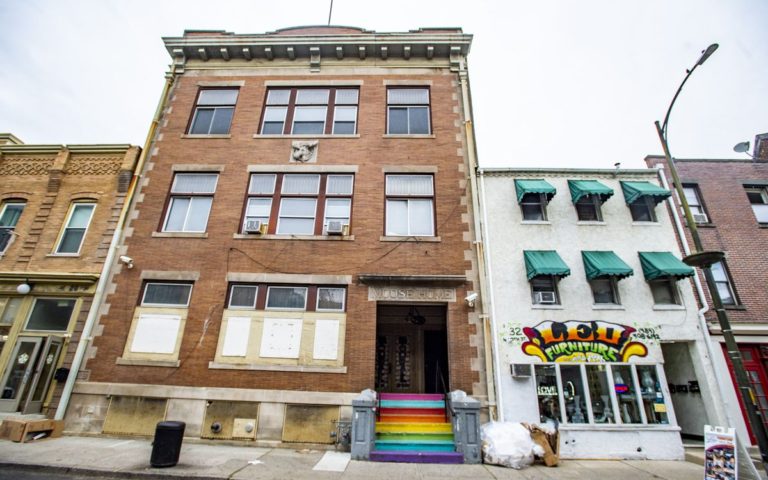
Stonewall, the Lehigh Valley’s last gay club, under contract to be sold, putting future in doubt – The Morning Call

If it closes, the Stonewall would be the third Valley gay club to shut its doors for good in the last five years. Candida’s Bar in Allentown closed in 2017, and Bethlehem’s Diamonz Nightclub closed in 2016. Restaurants, bars and nightclubs also are at the tail end of one of the hardest business climates in history: a global pandemic that led to widespread government restrictions on social gathering, especially indoors. The Stonewall, for one, lost a good portion of its 2020, including a lengthy closure at the start of the pandemic, from March 14 to June 26.