TJ Osborne is not happy after Tennessee lawmakers blocked the passage of a state resolution to honor him.
As per the measure, the singer, 36, is the “first and currently only openly gay artist signed to a major country music label.” Osborne, who came out as gay in February, was also referred to as “a trailblazer and a symbol of hope for those country music artists and fans alike who may have felt ostracized from a genre they hold dear.”
Earlier this week, Jeremy Faison used his power as the chair of the House Republican Caucus to block the resolution after it was passed unanimously in the state Senate. “We have some concerns on this SJR, and I’d like to send it back to naming and designating,” he said in a video via The Tennessee Holler. Pressed on about “the source of those concerns,” he said, “it wasn’t heard in committee, and I feel like it needs to be.” 63 representative voted in favor of sending the measure back to a committee and the responses from several country titans were heard loud and clear.
First up, TJ retweeted the clip via the Brothers Osborne‘s official Twitter account, writing, “We’ve lived in this state for over half of our lives. @JeremyFaison4TN honored Ben Shapiro who doesn’t even live here. Jeremy, let’s have lunch one day. On us. Would really like to know more about you as a person.”
“I wish I could say this didn’t hurt, but it does,” Osborne continued via Instagram Story, reposting a message of support from Maren Morris. Kacey Musgraves also chimed in, writing, “Massively disappointed in TN House Republicans for blocking my friend @TJOsborne for being honored because HE’S GAY!?”
Later on, Faison tried to play nice, tweeting, “I would be honored to break bread with you,” to Brothers Osborne. “We’ll message you directly, @JeremyFaison4TN,” the account replied.
Osborne came out in an interview with TIME, revealing that he’s known that he was gay since he was young and has been out to friends and family for years. “I’m very comfortable being gay,” he said. “I find myself being guarded for not wanting to talk about something that I personally don’t have a problem with. That feels so strange.”
Mike Davidson and Alan Hughes on Ireland AM. (Virgin Media Television)
Conversion therapy advocate Mike Davidson was grilled by gay host Alan Hughes about his stance on queer people’s rights and freedoms on live TV.
Davidson runs Core Issues Trust, a Northern Irish charity that claims to support “men and women with homosexual issues who voluntarily seek change in sexual preference”.
He appeared on Virgin Media Television‘s Ireland AM on Thursday morning (6 May), where in a wide-ranging interview he vehemently denied that he practices conversion therapy, claiming he instead offers “conversation therapy” to LGBT+ people who want to change their identity.
He claimed that Core Issues Trust helps people understand “whether they want to proceed into a gay identity and continue with those behaviours or go in a different direction”.
When asked directly if he thinks being gay is wrong, Mike Davidson spoke of his own efforts to rid himself of same-sex desires.
“I can only speak for myself. I was a married man very much in conflict and I had a choice and together my wife and I made the decision that I would look for help if I could do that, and that’s what I did over a period of a couple of years – three years – I got professional help,” Davidson said.
“Mike, I’m not suggesting that people don’t have the right, I’m asking you, do you think it’s wrong to be gay?” a frustrated Hughes asked him.
“If you ask my opinion it’s not the best way to go. I think it has consequences for individuals and society.”
Mike Davidson on Ireland AM. (Virgin Media Television)
Hughes told Davidson that he still wasn’t answering the question, asking him once again if he thinks it’s wrong to be gay.
In response, Davidson said people “have to be what they are” and said he wants to “protect the choices” of those who seek therapy to change their identity.
Davidson went on to claim that people of “mixed sexual attraction” – better known as bisexual or pansexual people – should have an “open choice” to access conversion therapy and disavow their sexual orientation if they see fit.
I think probably it was a combination of the fact that I felt I had a conscience, I just felt this was innately wrong.
“If a person is bisexual, which I guess people would describe me as, and they choose to enhance the heterosexual side of their bisexuality, that should be an open choice because that is something that a very large percentage of the proportion of the population would seek if they could,” Davidson said, providing no evidence to back up his claims.
When asked why he wanted to disavow his sexual attraction to men, Davidson said: “I think probably it was a combination of the fact that I felt I had a conscience, I just felt this was innately wrong, and yes, I did have a faith as a child perhaps nominally, later on as a teenager in a much more committed way. So I wouldn’t deny that my faith and my understanding of the scriptures have influenced me, they certainly have.”
Gay presenter Alan Hughes asked Mike Davidson if he has a problem with his marriage
Tensions reached a climax when Davidson baselessly claimed suicidal ideation remains high among queer people in countries where same-sex marriage has been legalised.
“Sorry Mike, where are we going with this? What’s suicide got to do about being gay?” Hughes asked him.
He urged Davidson to “not go down the road” of claiming that gay people are at higher risk of suicide because of their sexuality.
Towards the end of the tense interview, Hughes asked Davidson if he has a problem with the fact that he is married to a “lovely husband”.
“I want to respect your legal right. If you’re asking me my own world view, I would say that marriage is between one man and one woman for life and those are the principles that I hold to.”
Hughes asked him: “Everyone’s entitled to their point of view, but are you homophobic? Are you a bigot? Are you homophobic and biased against gay people?”
Mike Davidson claimed that he is not homophobic because he has “been there” and “struggled” with his own sexuality.
“Now I have no doubt that you have a genuine relationship with the person that you are married to. And that’s your right and your privilege, but not everybody wants that, and I’m just saying we need to protect their rights,” Davidson said.
Many took to social media to share their frustration with Davidson’s comments, while others said it was “dangerous” and irresponsible for Ireland AM to have him on as a guest in the first place.
This organisation promotes conversion therapy as an option for vulnerable LGBTQ+ who may be struggling with their sexual orientation
Giving them a platform of this kind is incredibly dangerous and could have serious consequences for young LGBTQ+ people who may be watching https://t.co/MqnoJOCcDw
Omg I am just shocked 😳 me as a straight person thinking how damaging for any gay person out there,that is not sure of there sexual preferences is this guy for real
The conversation comes just weeks after Northern Ireland’s Assembly voted overwhelmingly in favour of a motion that calls for conversion therapy to be banned in the region.
Conversion therapy has been widely discredited by almost every major psychiatric body, while the United Nations has called for the torturous practice to be banned worldwide.
When GoPride.com broke the news about the alleged corruption case against former CMSA treasurer Michael O. Rice II to the tune of more than $160,000, most of our readers wanted to know:
Thankfully, non-profit financial information is public information.
According to the 2018 Internal Revenue Service filing by Rice, “Chicago MSA” Form 990 Line 8 reports a collection of $610,624. The previous year, it had collected $593,752.
It paid a previous year salary or other “employee” compensation of $13,315.
In that filing, Rice reported that he collected $5,550 in compensation to himself from the organization’s coffers. The only other person reporting to have been paid from the coffers that year was CMSA Board Vice President Matthew Herek for only $660.
Total functional expenses for the previous year was $590,135. $508,607 was from program service expenses while $81,528 was from management and general expenses.
Rice is accused of dipping into this pot of expenses.
At the end of that year, there was a balance of $107,428 sitting in the bank account before replenishment from members and grants.
With about 4,000 members, the coffer swells each year.
In 2014, the “public support” revenue totaled $619,025.
In 2015, it totaled $632,735. It was a banner year for LGBT sports participation.
In 2016, CMSA collected $625,305.
In 2017, it collected $593,177.
In 2018, the revenue stood at $599,875.
So, “public support”—fees from membership—made up 99% of what’s in the coffers for CMSA to spend.
In his eight years as treasurer of CMSA, Rice is believed to have pocketed over $160,000 by pilfering from these amounts bit by bit, small check by small check. But it ballooned to where he could not hide it anymore.
And then, according to CMSA attorneys, he tried to cover it all up when the Board wanted to audit everything.
He changed the names on check records to show checks weren’t written to himself, but rather to vendors.
Interestingly in 2017, Rice was sued by the State of Illinois for $13,120. A judgment was made against him to pay it all back.
Because of CMSA’s huge dollar take each year—dollars from individual people who wanted to open up their wallets so they could have fun on their free time playing sports—what happened with Rice is more than a black eye.
Their Board put an indebted guy in charge of their “charity” (the classification the IRS gives CMSA) worth more than a half million dollars each year, for eight years.
This crime is a full body bruising.
The Board of CMSA has more than a policy and procedure problem. It now has a trust problem from its participants.
A collection of recent and classic international short films about gay, lesbian, trans, and straight characters all coming of age, Altered Innocence Volume 1—out May 25 on DVD, Blu-Ray, and available on demand—is described as a “cinematic mixtape.” The 7 shorts film are a mixed bag, with music videos dividing up the program, but there is certainly something for everyone.
The program opens with a new HD restoration of Cam Archer’s video “Our Time” by Imperial Teen, featuring a young man dancing and dressing in a mirror to the titular song. It’s a pleasant amuse bouche.
The first short, Gabber Lover, by Anna Cazenave Cambet, from 2016, is the sole lesbian entry. Teenager Mila (Mila Lendormy) kisses her crush Lorie (Laurie Reynal), only to be rebuffed. As Mila grapples with the consequences of her actions, Lorie tries to reach out and make peace. Gabber Lover builds its tension between the two girls right up to the satisfying conclusion.
Doors Cut Down, directed by Antonio Hems, is arguably the best short in the program. Originally made in 2000, and getting an HD restoration for this re-release, it recounts the experiences of Guillermo (Israel Rodríguez), a handsome gay teenager who cruises for sex in the local shopping mall. He tries to keep his behavior discrete, but he gets into trouble seducing his English tutor (Juan Carlso Rubio), or coordinating a tryst with a local mechanic, Asier (Pablo Puyol). Doors Cut Down is a classic queer short that celebrates Guillermo’s sexuality even as others try to shame him. It is gratifying that this film is back in circulation.
The program continues with a cheeky and hyperviolent music video by Yann Gonzalez and entitled “Les Vacances Continuent.” This short allows viewers to shift gears for the next two films that depict straight characters.
After School Knife Fight from 2017 is writer/director Carline Poggi and Jonathan VInel’s poignant drama about unspoken desire. The title refers to the name of the band comprised of Roca (Lucas Doméjen), Näel (Pablo Cobo), and Nico (Nicolas Mias), with Laetitia (Marylou Mayniel) singing vocals. Roca has long harbored a crush on Laetitia, but he is afraid to tell her. When Laetitia announces she will be leaving to go study elsewhere, Näel encourages Roca to tell her the truth. After School Knife Fight features a terrific performance scene that expresses the characters’ anxiety about the future. (Näel is worried about his career options.) This is a beautifully made and acted short about growing up.
Bunny, from Scotland, is Shaun Hughes’ 2018 short about Buckley (Connor Newall), a young man who wears rabbit ears as a means of coping with the death of his mother. When his idiosyncratic behavior is challenged by a group of new arrivals in his trailer park, things come to a head. This short is a raw drama about difference, mental illness, and trauma, and it is quietly powerful.
Altered Innocence Volume 1 shifts up its tone again with an experimental short, GUO4, directed by Peter Strickland. This eye-popping 4-minute film from 2019 depicts a physical fight between two naked men (Gyula Muskovics and Csaba Molnár) in a locker room. What is more, it is told entirely through stop-motion photography.
Terror, Sisters! is the program’s trans entry, an outrageous 2019 horror comedy by director/cowriter Alexis Langlois. When the Kalthoum (Nana Benamer) meets her friends for a drink, they are all fed up with being victims of transphobia. Wanting respect, they imagine various scenarios for revenge, from a campy, candy-colored baking class to activists burning their government ID cards in retaliation for refusing their rights and not being recognized by their preferred gender identity. There is also a nightclub scenario where Léo (Féliz Maritaud) is punished for abusing Kalthoum. Terror, Sisters!, however, soon folds in on itself, but it makes a valid point about fantasy and reality in a way that is empowering.
The last music video, “Niemand’ (Kompromat) by Bertrand Mandico, is a violent entry about a woman in a car accident. It is shot in a highly stylized manner and leads into the last two films, which feature younger boys.
Gambozinos (Wild Haggis), director João Nicolau’s 2013 film, is the weakest entry. It is a slow drama set at a summer camp, where a 10-year-old boy (Tomás Franco) is crushed on Tania (Isabel Portugal) and bullied by older campers. There is also a monster (Pedro Leitão) the boy befriends. This frustrating short could have been pulled from the lineup.
The last film, Jakt (Hunt), from 2018, is writer/director Gjertrud Bergaust’s grim but gripping short about Asgaut (Håvid Kringstand Hagen), a 14-year-old boy in a Norwegian village. When Asgaut is bullied by some older local boys, Kjell (Cato Skimten Storengen), a local farmer, rescues him. Seeing that the boy needs some friendship, Kjell invites Asgaut to help him care for his lambs. But despite the fatherly relationship that develops between Kjell and Asgaut, a complicated situation arises that has a lasting impact. Jakt is incredibly potent, but it does end this provocative anthology on a downbeat note.
Gary M. Kramer is the author of “Independent Queer Cinema: Reviews and Interviews,” and the co-editor of “Directory of World Cinema: Argentina.” Follow him on Twitter @garymkramer
Authorities are warning gay and bisexual men in Atlanta about a string of robberies targeting victims found through the popular gay dating app, Grindr.
The robberies “have shown a very concerning pattern,” according to the Atlanta Police Department.
On Wednesday, Sgt. Rodney Jones, who works in the APD robbery unit, said at a press conference that from February to May, “we’ve had eight instances where male victims were lured to remote locations by the use of the Grindr app.”
“The suspect would use the Grindr app to exchange and identify victims, trying to lure them to a dating location. After the date concludes, the suspect would then rob the victim, often taking wallet, keys, or even vehicles,” Jones said.
Most of the incidents have taken place in northwest Atlanta, but some have also occurred in the city’s southeastern quadrant.
Victims are typically taken to a remote location within that area, where the crime takes place.
The suspect “typically has a handgun” and the men go on a “normal date,” authorities said. “After the date concludes, they’ll just rob the person of their belongings.”
Investigators believe that one person is likely responsible for the crimes in northwest Atlanta. “In zone 3 (south and southeast) we’re dealing with possibly two more suspects.”
Officer Eric King said that there are a number of things people can do to protect themselves.
“Find a partner or a friend that you trust that you can notify when you’re going to meet somebody,” King, who’s APD’s LGBTQ liaison, said.
He also suggested potential dates to “meet at a grocery store. Meet at a public place before you reconvene somewhere more intimate.”
Anyone with information about the incidents are encouraged to contact Crime Stoppers Atlanta at 404-577-8477, text information to 274637, or visit the Crime Stoppers website.
Tips can be submitted anonymously and can be eligible for rewards of up to $2,000.
Grindr is a location-based social networking and dating application that uses members’ GPS positions to chat with people nearby. Since it launched in 2009, the app became massively popular among gay and bisexual men in the U.S. and abroad.
As of December 2020, it had nearly 13 million monthly users worldwide.
By Hugo Greenhalgh LONDON, May 6 (Thomson Reuters Foundation) – Scrapping gay sex bans around the world is vital to fighting the spread of HIV because it would encourage more people to get tested, Britain’s former health minister during the 1980s AIDS crisis said on Thursday.
Norman Fowler, who this month takes up an ambassadorial role at the U.N. agency UNAIDS, said many people are unwilling to come forward for HIV tests in countries that effectively criminalise homosexuality. “That’s going to have a vast effect upon any population,” Fowler told the Thomson Reuters Foundation in a telephone interview.
“It means they don’t come forward for testing and it means that they come forward far too late for testing.” Gay sex is illegal in 68 countries worldwide, according to the ILGA advocacy group.
As Britain’s secretary of state for health between 1981 and 1987 during the government of Prime Minister Margaret Thatcher, Fowler oversaw the country’s first HIV/AIDS awareness programme – facing widespread resistance, even from the late PM. “I’m afraid that she was what these days might be called a sceptic on this whole area,” said Fowler, 83.
“Her position was quite near to a number of the religious leaders who simply said, as much as they said anything, that we should be pursuing a ‘moral’ campaign,” he added. Thatcher’s concerns stemmed partly from what she saw as the explicit nature of some of Britain’s early HIV/AIDS awareness campaigns, which began in 1986.
An initial proposal for an advert mentioned “risky sex”, which Fowler said Thatcher thought “would offend people and … tell young people things about which they knew nothing, with the implication that it would encourage them”. Thatcher’s scepticism was indicative of attitudes towards gay men and the wider LGBT+ community at the time, recently highlighted in the hit British television series “It’s A Sin”, which Fowler praised for its accurate depiction of the era.
While gay sex was partially decriminalised in England and Wales in 1967, there was still an unequal male age of consent up until 2001. Famously, Queen Victoria’s refusal to believe lesbians existed meant that the age of consent for straight and gay women remained equal.
‘HEROIC EFFORTS’ In 1988, when Thatcher was still prime minister, her Conservative administration passed a law banning local authorities from “promoting” homosexuality.
Fowler supported the legislation, which was overturned in England and Wales in 2003, and later also voted against a possible equalisation of the age of consent at 16. He said he regretted both decisions.
“That was a mistake,” he said. “And I’ve never made any bones about that.” In his new role at UNAIDS, which he takes up after stepping down as the speaker of Britain’s upper parliamentary chamber on April 30, he will be focused on highlighting the battle to combat AIDS as COVID-19 dominates global health concerns.
“There’s a real danger that the world is going to forget about the crisis and problem of AIDS because obviously the COVID issue is foremost in people’s minds,” Fowler said. “But the fact is that AIDS – in spite of all the heroic efforts that have been made over the past 20 years – remains an enormous problem.”
While anti-HIV/AIDS measures have seen transmission rates plummet in more developed countries, 1.7 million people were newly infected with HIV in 2019, according to UNAIDS. Globally, more than 38 million are living with the virus.
“The issue of AIDS remains a very central one, and although it may not be as evident in Europe, it certainly remains very evident in whole swathes of the world,” Fowler said.
(This story has not been edited by Devdiscourse staff and is auto-generated from a syndicated feed.)
Gay sex is illegal in dozens of countries around the world, deterring many people from coming forward for HIV testing, according to former British health minister Norman Fowler
By Hugo Greenhalgh
LONDON, May 6 (Thomson Reuters Foundation) – Scrapping gay sex bans around the world is vital to fighting the spread of HIV because it would encourage more people to get tested, Britain’s former health minister during the 1980s AIDS crisis said on Thursday.
Norman Fowler, who this month takes up an ambassadorial role at the U.N. agency UNAIDS, said many people are unwilling to come forward for HIV tests in countries that effectively criminalise homosexuality.
“That’s going to have a vast effect upon any population,” Fowler told the Thomson Reuters Foundation in a telephone interview.
“It means they don’t come forward for testing and it means that they come forward far too late for testing.”
Gay sex is illegal in 68 countries worldwide, according to the ILGA advocacy group.
As Britain’s secretary of state for health between 1981 and 1987 during the government of Prime Minister Margaret Thatcher, Fowler oversaw the country’s first HIV/AIDS awareness programme – facing widespread resistance, even from the late PM.
“I’m afraid that she was what these days might be called a sceptic on this whole area,” said Fowler, 83.
“Her position was quite near to a number of the religious leaders who simply said, as much as they said anything, that we should be pursuing a ‘moral’ campaign,” he added.
Thatcher’s concerns stemmed partly from what she saw as the explicit nature of some of Britain’s early HIV/AIDS awareness campaigns, which began in 1986.
An initial proposal for an advert mentioned “risky sex”, which Fowler said Thatcher thought “would offend people and … tell young people things about which they knew nothing, with the implication that it would encourage them”.
Thatcher’s scepticism was indicative of attitudes towards gay men and the wider LGBT+ community at the time, recently highlighted in the hit British television series “It’s A Sin”, which Fowler praised for its accurate depiction of the era.
While gay sex was partially decriminalised in England and Wales in 1967, there was still an unequal male age of consent up until 2001.
Famously, Queen Victoria’s refusal to believe lesbians existed meant that the age of consent for straight and gay women remained equal.
‘HEROIC EFFORTS’
In 1988, when Thatcher was still prime minister, her Conservative administration passed a law banning local authorities from “promoting” homosexuality.
Fowler supported the legislation, which was overturned in England and Wales in 2003, and later also voted against a possible equalisation of the age of consent at 16.
He said he regretted both decisions.
“That was a mistake,” he said. “And I’ve never made any bones about that.”
In his new role at UNAIDS, which he takes up after stepping down as the speaker of Britain’s upper parliamentary chamber on April 30, he will be focused on highlighting the battle to combat AIDS as COVID-19 dominates global health concerns.
“There’s a real danger that the world is going to forget about the crisis and problem of AIDS because obviously the COVID issue is foremost in people’s minds,” Fowler said.
“But the fact is that AIDS – in spite of all the heroic efforts that have been made over the past 20 years – remains an enormous problem.”
While anti-HIV/AIDS measures have seen transmission rates plummet in more developed countries, 1.7 million people were newly infected with HIV in 2019, according to UNAIDS.
Globally, more than 38 million are living with the virus.
“The issue of AIDS remains a very central one, and although it may not be as evident in Europe, it certainly remains very evident in whole swathes of the world,” Fowler said.
(Reporting by Hugo Greenhalgh @hugo_greenhalgh; Editing by Helen Popper. Please credit the Thomson Reuters Foundation, the charitable arm of Thomson Reuters, that covers the lives of people around the world who struggle to live freely or fairly. Visit http://news.trust.org)
Police in Atlanta issued a warning about one and possibly up to three men using Grindr to lure gay men to a remote location where they are robbed. In the last four months at least eight gay men have been robbed, sometimes violently, after the conclusion of a first date with a man they met on the popular gay dating app. At a press conference Wednesday, representatives from the Atlanta Police Department’s robbery unit gave updates on their investigation, and the department’s LGBTQ+ liaison was on hand to provide tips on how to stay safe while dating or hooking up.
“From February to May, we have had eight instances where male victims were lured to remote locations by use of the Grindr app,” Sergeant Rodney Jones of the APD robbery unit. “After the date concludes, the suspect will rob the victim, often taking their wallets, keys. or even vehicles.”
In each instance reported to police, the victim entered into a conversation with their assailant who used a stolen photo for their catfished profile. Jones said the conversation eventually migrated “off the app” and continued “through text messages.”
Police have identified a specific profile linked to at least some of the crimes, but released no further details to protect the integrity of the ongoing investigation. Investigators said their suspects are dark-skinned Black males, roughly six feet tall with four-inch-long dreads. Most of the crimes have occurred in Zone 1, the city’s northwest quadrant, but some have occurred in the southeastern Zone 3 quadrant. Police suspect a single male has committed the crimes in Zone 1, with one and possibly two suspects involved in Zone 3.
Jones described one incident that occurred last month, where a man picked up his Grindr date only to have a gun pulled on him after they had driven to a remote location within the city.
“Give me the car and everything you got,” Jones said the alleged robber told his victim, before stealing the car.
Most of the robberies are armed, Jones said, noting “the person typically has a handgun” and adding “they’re on a normal date, and after the date concludes they’ll job rob the person of their belongings.”
Officer Eric King, LGBT liaison for the APD, provided the community with helpful tips on how to stay safe while dating using Grindr.
“Find a partner or a friend that you trust that you can notify when you’re going to meet somebody,” King said, also adding to “meet at a public place before you reconvene somewhere more intimate.”
Most importantly, though, King advised people to take control of the situation and “listen to your inner voice,” especially if it tells you something is wrong or doesn’t feel right.
Please send your events, meetings, etc., to pgriffin@thedestinlog.com at least 2 weeks in advance.
Embroiderers’ Guild
The Sand Dunes Chapter of Embroiderers’ Guild of America will meet for a stitch-in from 12-3 p.m. May 8 in the Religious Education building, Holy Name of Jesus Catholic Church, 1200 Valparaiso Blvd. in Niceville. Call 496-3466.
Toast to the Coast: A Cocktail & Culinary Celebration
Join in at HarborWalk Village for Toast to the Coast: A Cocktail and Culinary Celebration featuring local cuisine, signature beverages, and live entertainment at 2 p.m. May 8. Area restaurants will showcase matched samplings — a light bite with a complimentary cocktail. Purchase tickets at https://www.eventliveus.com/purchase/event/2204688.
Street Art Festival
The new Street Art Festival takes place from 10 a.m. to 6 p.m. May 8 and 9 at Grand Boulevard Town Center in Miramar Beach. Artists, families, friends and school groups will create works of art using only chalk and their imaginations. Awards will be announced Sunday at 5 p.m. Continuous live music and family lawn games will be featured in Grand Park, and a full cash bar will be available.Mother’s Day Mimosa Brunch
Celebrate all things Mom at FOOW with bottomless bubbles and muffins from 8 a.m. to 2 p.m. May 9 at 34 Goldenrod Circle in Santa Rosa Beach. All Moms will receive one complimentary mimosa and a muffin, with a keepsake recipe card as a gift. A la carte pricing on food with regular menu available for purchase. Reservations are preferred at 850-534-5050.
Havana Beach Mother’s Day Brunch Buffet
Celebrate Mom with a visit to Havana Beach Bar & Grill, 63 Main St. in Rosemary Beach, from 9 a.m. to 1 p.m. May 9. Buffet will feature a multitude of dishes that are sure to delight Mom and all of her guests. Open to the public; $75+ per adult, $40++ per child (ages 4-12)). Reservations preferred at 588-2882.
Lionfish Restaurant Week
Emerald Coast Open’s Lionfish Restaurant Week is back from 12-10 p.m. May 9-15 in Destin. Local chefs will highlight lionfish with unique dishes to bring awareness to the lionfish invasion in the Gulf of Mexico. Restaurants include Crab Trap Destin, May 9; Marina Cafe, May 10; Dewey Destin’s Harborside, May 11; La Paz, May 12; Harbor Docks, May 13; and AJ’s Seafood & Oyster Bar, May 15.
Wednesday Night Concert Series
Enjoy free live entertainment with the Shenanigans from 7-9 p.m. May 12 on the Events Plaza stage at The Village of Baytowne Wharf.
• May 19: Chris Alvarado
• May 26: The Shakedown
• June 2: Cadillac Willy
• June 9: Biscuit Miller and The Mix
• June 16: Will Thompson Band
• June 23: Luke Langford
• June 30: Dion Jones & The Neon Tears
• July 7: Boukou Groove
• July 14: Forrest Williams Band
• July 21: Six Piece Suits
• July 28: Rust & Gold
Grief Class
Beginning at 1 p.m. May 13, Destin United Methodist Church will have grief classes discussing different stages of grief and how they apply to loss. Loss which include life, relationships, health, careers and self worth. For more information and registration, contact Ken Gay at 582 2548 or email kengay.kg@ gmail.com.
Bubbly Baytowne
Enjoy an evening full of free champagne (21+) and shopping during Bubbly Baytowne from 5-7 p.m. May 13 at The Village of Baytowne Wharf.
Blessing of the Fleet
Destin’s 64th Annual Blessing of the Fleet will be held May 13 at the docks behind Brotula’s Seafood House and Steamer Restaurant on the Destin harbor. The event begins at 4 p.m. with a Captains’ Worship and Prayer Service to be held under a large tent. The public is encouraged to attend. Then local clergy will process to the dock to begin blessing vessels. A community fish fry will begin at 5:30 p.m. with a suggested meal donation.
Concerts in the Village
M80s bring music to the Mattie Kelly Arts Foundation’s Dugas Stage at 7 p.m. May 13. Admission is $15/adults, $10/active-duty military, and children (12 and under) and MKAF members are free.Purchase tickets online at Eventbrite. Gates open 6 p.m.
• May 20: A Brother’ Revival, an Allman Brother Tribute
• May 27: Deana Carter
• June 3: The Tams
• June 10: Kara Grainger
• June 17: Petty Hearts, Tom Petty Tribute
• June 24: Air National Guard Band of the South
Music on Main
West Hine performs from 7-9 p.m. May 14 at “Music on Main” concert series in DeFuniak Springs. Guests are invited to enjoy a listening room experience at the historic Florida Chautauqua Theatre, 840 Baldwin Avenue. Doors open at 6 p.m. for cocktail hour. Guests can grab a bite to eat before the concert at one of the downtown restaurants or from the food truck setup in front of the theatre. Tickets purchased in advance are $15/adults and $5/children and are available at fcweb.org/musiconmain. Ticket prices increase $5 on the day of the show.
May 21: Longleaf Drive
May 28: The Wortheys
Nothin’ Funner Than Summer
Spend a day exploring exhibits before hiking to Camp Longleaf at E.O Wilson Biophilia Center’s Nothin’ Funner Than Summer from 9 am. to 2 p.m. May 15 in Freeport. Free for members-use; code in email. Adults $8 and children 3-12 $5. Pre-registration required at eowilsoncenter.org or call 835-1824. Food will be available for purchase.
Lionfish Festival
The Florida Fish and Wildlife Conservation Commission (FWC) has announced the seventh annual Lionfish Removal and Awareness Festival is scheduled for May 15 and 16 at AJ’s Seafood and Oyster Bar and HarborWalk Village in Destin. Come out and celebrate the fight against invasive lionfish with the FWC and Destin–Fort Walton Beach. Activities will include fillet demonstrations; family-friendly games and activities; art, diving and conservation booths; and the world’s largest lionfish spearfishing tournament, the Emerald Coast Open. Satisfy your taste buds by visiting any of the participating locations of Lionfish Restaurant Week May 10-14 for your chance to try this delicious invasive.
Sunday Cinema
Grab a lawn chair or blanket and cozy up at 8 p.m. May 16 on the Events Plaza Lawn at Baytowne Wharf for the free movie “Coco,”:a featured film on the big screen.
May 23: Ralph Breaks the Internet
May 30: Incredibles 2
June 6: Maleficent
June 13: Croods A New Age
June 20: Secret Life of Pets 2
June 27: Moana
July 11: Hotel Transylvania 3: Summer Vacation
July 18: Pete’s Dragon
July 25: Sing
Hydroflight Monday
Enjoy shows from fly-board extraordinaire Ben Merrell over the lagoon at The Village of Baytowne Wharf at 6:30 and 8:30 p.m. Mondays, May 17-Aug. 2.
Boomin’ Tuesday
Turn your eyes on the sky at Baytowne Wharf and watch as the sky lights up with a fireworks show over the Lagoon at 9:15 p.m. Tuesdays, May 18-Aug. 3. Also, a DJ Dance Party with DJ Mike Whitty begins at 7 p.m. in the Events Plaza.
Magical Thursday
Magic, music, and mayhem with Baytowne Wharf’s featured pirate Captain Davy takes you on an adventure with two magic shows at 7 and 8 p.m. Thursdays May 20-Aug. 5.
Mattie Kelly Arts Center
Enjoy classic rock music from a local band at the Mattie Kelly Arts Center Amphitheater for Goldilocks & the Dancing Bears May 26. Doors open 6 p.m.; music begins at 7 p.m. Food trucks and beverages will be available for purchase. Tickets are $10, kids under 12 are free. Call the Box Office for tickets at 729-6000 or visit https://mattiekellyartscenter.org/.
• Highway 98 Country welcomes live country music at Hot Country Night featuring Parmalee June 12 at the Mattie Kelly Arts Center Amphitheater in Niceville. Doors open at 6 p.m. Duchess performs prior to Parmalee taking the stage. Tickets are $20.
• Jesus Christ Superstar is the 2021 Summer Musical. This year’s show will be Jesus Christ Superstar at 7:30 p.m. July 21-24 and 2 p.m. July 25 on Mainstage.
Memorial Day Celebration
Kick off your summer with a free Memorial Day Celebration at The Village of Baytowne Wharf from 7-9 p.m. May 29 and 6-9 p.m. May 30. Enjoy music with Forrest Williams Band on Saturday and TBD on Sunday. Kids activities and a patriotic fireworks show also on Sunday evening.
Memorial Day Program
The Village of Baytowne Wharf will hold a free Memorial Day Program at 5 p.m. May 31. The Sandestin Veterans present a program in honor of our veterans.
Food Truck Fest Destin
Orange Beach Breeze brings the Food Truck Fest from 11 a.m. to 8 p.m. June 20 at Mattie Kelly Cultural Arts Village in Destin. The fest will feature many food trucks in the Panhandle, vendors exhibiting and selling gifts, crafts, jewelry, personal care products and more. This is a family-friendly event. Entry fee is $5 with 12 and under free. Visit www.foodtruckfestdestin.com for more information.
Smoke on the Coast
Destin Commons will host 15 local non-profit organizations at the 10th annual Smoke on the Coast BBQ & Fireworks Festival from 5-10 p. m. July 3. Each non-profit organization teams up with a restaurant or BBQ aficionado. Cast your vote for $1 for your favorite BBQ team, support their mission, and enjoy a day of family fun.
Bluegrass Wednesday @ Grayton Seafood Co.
Grayton Seafood Co. invites you to join them from 6-9 p.m. Wednesdays for live music and outdoor dining under the stars featuring Longleaf Drive. The Santa Rosa Beach boys play acoustic folk, rock, and bluegrass.
Hump Day Market:
Hump Day Market @ Monet Monet, 100 E. County Hwy. 30A in Grayton Beach, will be held each Wednesday from 10 a.m. to 2 p.m. Shop with local vendors, everything from fresh local produce, fine art, funky art, handmade jewelry, coastal clothing, arts and craft for the kids, as well as, PoBoys and specialty foods by Grayton Beach Catering.
Redd’s Fueling Station
Redd The Singing Bartender is back on Tuesdays, Thursdays and Saturdays with a live band Fridays at Redds Restaurant on 30-A. It is located in Blue Mountain Beach behind Sallys By The Sea Store gas station convenience store, 2320 W County Hwy. 30A in Santa Rosa Beach. Dinner table reservations suggested. Call or text 850-325-0252. Check out the menu at www.reddsbar.com.
Fitness Field Day
Get a workout for mind and body at WaterColor Inn’s Fitness Field Day at 8 a.m. first Friday of each month at Marina Park, 238 Watercolor Blvd. W. in Santa Rosa Beach. This one-hour program offers a High Intensity Training workout, followed by a cooldown with Yoga. Open to the public for ages 9 and up. $15++ per person. Register by emailing wc.workout@stjoeclub.com or call 534-5950.Grand Boulevard Farmers Market
Grand Boulevard Farmers Market takes place every Friday and Saturday from 9 a.m. to 1 p.m. at Grand Park in the heart of Grand Boulevard in South Walton. Bring your shopping bag and load up on local produce, eggs, jams and pies. Homemade soap, good olive oil, and pickled things are all there for the taking.
Rosemary Beach Farmers Market
Come browse the 30A Farmers Market in Rosemary Beach on Sundays from 9 a.m. to 1 p.m. The local farmers market takes place on Sundays year round, and Thursdays throughout the summer months, in North Barrett Square along Scenic 30A.
Despite outrage amid legal questions, the Rye City Council voted to fly an LGBTQ pride flag on city property this June.
With the matter dating back to last year, the City Council on Wednesday unanimously approved displaying the pride flag, meant to voice support for the local lesbian, gay, bisexual, transgender and questioning community.
Leading up to the vote, the city pursued legal advice to ensure that flying the rainbow colored flag would not lead to unintended consequences. But the holdup frustrated activists who wanted the flag approved without delay.
During the meeting, Mayor Josh Cohn said the council hired a legal firm to explore several First Amendment issues involving the city. The concern was, if the city flew the pride flag, would it also need to fly flags from other entities that Rye opposed. The potential of litigation was a concern, Cohn had said previously.
“I remain, as I was before, a supporter of the LGBTQ+ community in Rye, though I would say that some in that community or other supporters of that community have failed to understand how one who is a city fiduciary might need to discharge that responsibility at the same time as he remains an ally,” Cohn said Wednesday.
The flag would appear at city hall and at Rye Recreation at 281 Midland Ave. and will go up every June starting this year.
The decision comes after residents criticized council members last month for not signing off on raising the flag ahead of obtaining legal consultation. An online petition with close to 500 signatures urged the council to take action.
Councilwoman Sara Goddard, who voted not to retain counsel last month, said it was clear without legal advice the flag could be flown without problems arising. She called it disappointing that the issue was dragged out.
The topic dates back a year ago, Goddard said, when the council opted not to fly a pride flag.
“There’s no doubt that this is a community-wide appeal, a very passionate one,” Goddard said. “And it’s clear we have each other’s backs in this town.”
The New York Civil Liberties Union sent the city a letter Wednesday advising Rye officials they would not open themselves to litigation and urged them to fly the pride flag.
“As long as the City keeps and has kept control of what flags it wishes to fly, what is flown on the flagpole is the ‘speech’ of the City of Rye,” wrote Lucia Hermo, Hudson Valley chapter deputy director, and Beth Haroules, senior staff attorney.
Odessa Meulbroek, a Rye High School junior, said while she appreciated the council’s support of the flag, the situation could have been handled differently. The delay as legal advice was sought was disheartening to the LGBTQ community, Meulbroek added.
Meulbroek was one of a handful of Rye students who spoke passionately in support of the flag Wednesday night.
Councilwoman Pam Tarlow said the legal advice, which cost about $10,000, also looked into other free speech issues in the city. She said there was “never a thought” the flag would be rejected.
“I can tell you in executive session, and I’m breaking a rule here, I said, ‘We are raising that flag, I’m not turning those kids down,’ and I got six nods,” Tarlow said.
Executive sessions are typically not discussed publicly.
Rye joins other municipalities in Westchester, including county government, New Rochelle and Bedford, to fly the flag, Goddard said during an April council meeting.
“The pride flag’s a symbolic representation of equality, inclusion and tolerance,” Goddard said on April 21. “This is not a cause, but principles that have been nationally recognized.”
David Propper covers lower Westchester County. Reach him at dpropper@lohud.com and follow him on Twitter: dg_props. Our local coverage is only possible with support from our readers.
British Christians have announced plans to oppose government attempts to ban “conversion therapy,” which they believe would have a negative impact on their ministries, missions, and even prayer to God.
According to a report from WND, Simon Calvert, Deputy Director for Public Affairs at the Christian Institute, stated: “A ban on spiritual guidance and prayer would be tyrannical and unworkable. Do they expect police, prosecutors and courts to decide which kinds of prayer are criminal and which are not?”
“Most people would be horrified by the prospect of someone being convicted for praying ‘the wrong kind of prayer.’ We must not allow activists to exploit legitimate concerns as a cover for pursuing anti-religious agendas,” he added.
The director also said that a legal case will automatically follow if the government “caved into demands to widen the ban to include the ordinary, everyday activities of churches,” noted WND.
Writing for the faith group, lawyer Jason Davis noted in a well-documented opinion that progressives who express concern over “conversion therapy” will put everyday activities such as church preaching and religious counseling at risk.
The activist group states that the concept of “conversion counseling” is used to convert homosexuals into heterosexuals. For the most people, counseling may help control unwelcome same-sex desires.
Jason Coppel, QC, cautioned that prayer, evangelism, church attendance, baptism, and communion may all be construed as violations of a broad conversion-therapy statute, such as the one recently enacted in Victoria, Australia.
Churches who adhere to the Bible’s teaching about gender and sexuality have been singled out lately in a British Parliament controversy regarding laws that will prohibit so-called “conversion therapy.”
Per Christian Institute, British MP Alicia Kearns said that the said planned restriction wouldn’t impair religious freedom.
Speaking to her peers, she said that “religious liberty is fundamental, but so too is people’s liberty to live their lives free from identity-based violence and abuse.”
Kearns also demanded that all prayer “inconsistent with LGBT theology” be prohibited.
Conversely, Counselors for individuals with unwelcome sexual desires oppose the word “conversion therapy,” defining it as an ideological term used by LGBT critics to equate supportive spiritual treatment and talk therapy with unethical activities.
A Case of Christian Sovereignty Within A Secular Context
The Westminster Hall controversy centered around a motion to make it a crime to conduct conversion counseling in the United Kingdom or to send citizens overseas for it.
Several Members of Parliament referred to prayer and spiritual care as “conversion therapy,” a term that was also used to portray “torture.”
In an article for The House journal, Kearns recently criticized “prayer sessions” used to assist individuals with unwanted desire as an abhorrent activity equivalent to electroshocks and “corrective abuse”
“Conversion therapy,” as described by Kearns, is any effort to prevent anyone from revealing their preferred gender identity or sexual preference.
She said that a prohibition would include “not only conversion therapy” for the purpose of changing one’s sexual preference,” but also “aggressive efforts to prohibit anyone from revealing their own identity.”
Parents would risk criminal prosecution if they assisted their children in such treatment states the lawmakers.
According to Parliamentarian Elliot Colburn, conversion therapy may take the form of “pseudo-psychological treatments and aversion therapies to religious that are religiously based, such as purification or fasting.”
MP Angela Eagle criticized “being told by faith leaders or your family that you are sinful.”
“Being told to pray harder to change and to question your innermost feelings and thoughts … none of that should be legal,” she said.
However, Coppel stated in his study that such regulations will contradict current human rights laws in the United Kingdom, which uphold “church organizations’ ability to preach” their views on sexual ethics and gender identification.
Additionally, he stated that requiring parents to support a child’s wish to ‘change sex’ will jeopardize parents’ rights to raise their children according to their values.
Those convictions, he wrote, “are not eccentric or peripheral matters of belief. They have a long history within Christian theology and sexual ethics.”
He also argued that courts have “consistently regarded those convictions as covered by Article 9 of the ECHR” and “deserving of consideration.”
The Big Picture
For years, LGBT groups have worked to curtail the work of Christians and Christian churches.
According to Josiah Hesse, a writer for the London Guardian newspaper, prayer had devolved into “conversion therapy” in 2018.
The outpouring of support was sparked by the broadcast of a video of Emily Thomes’ testimony by Anchored North, an evangelical media outlet.
The community creates videos in the vein of BuzzFeed, and this one is named “Love is Love.”
Though marketed similarly to pro-LGBT ad strategies, Thomes’ argument is that by the influence of Jesus Christ, an individual may be set free from same-sex attraction.
“It’s not gay to straight, it’s lost to saved,” she said.
The principle of conversion counseling presupposes that there is a treatable root mechanism for same-sex attraction. Although such therapy is prohibited for teenagers in most jurisdictions in the United States, those prohibitions on the First Amendment’s freedom of expression and faith continue to be questioned.
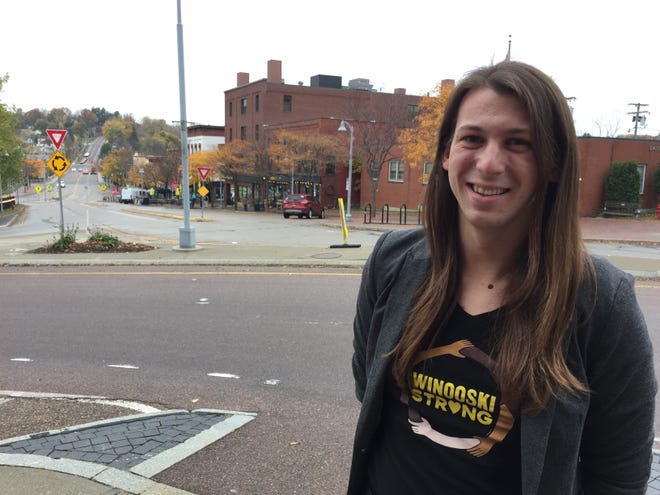
Gov. Phil Scott signed a bill into law on Wednesday banning the so-called “panic” defense, in which defendants claim the discovery of their victims’ sexual orientation or gender identity made them panic and react violently.
Scott said in comments recorded on YouTube that the bill “sent a message to Vermonters, that your identity should never be an excuse for someone to cause you harm.”
“What this bill does is make sure a victim’s sexual orientation or gender identity can’t be used to defend or justify a criminal act, or to lower a sentence,” he said.
The main sponsors of the bill were Rep. Mari Cordes, D-Lincoln, and Rep. Taylor Small, P/D-Winooski. Small is the first openly transgender person to serve in the Vermont Legislature.
‘Panic’ defense has been used successfully
Across the country, juries have acquitted dozens of murderers of their crimes through a defense team’s use of the “panic” defense, according to The National LGBT Bar Association.
One of the most recognized cases, the LGBT Bar says on its website, is that of Matthew Shepard. a 21-year-old college student in Wyoming who was beaten to death by two men in 1998. The men attempted to use the LGBTQ+ “panic” defense to excuse their actions, and the defense is still being used today, despite public protest, according to the LGBT Bar.
The bill Scott signed into law on Wednesday makes it clear that a defendant’s discovery of the victim’s “actual or perceived” sexual orientation or gender identity does not justify the defendant’s use of force against the victim.
That includes “circumstances in which the victim made a nonforcible, noncriminal romantic or sexual advance toward the defendant.”
Bill was long time coming
Scott thanked Small and other co-sponsors of the bill, and acknowledged that the LGBTQIA Alliance of Vermont and the Pride Center of Vermont have been advocating “for change and equality for years.”
“While this effort is a step in the right direction, we know there is still more work to do to ensure all Vermonters, regardless of identify, feel safe and protected in our state,” Scott concluded.
The other states, in addition to the District of Columbia, which have banned the “panic” defense in LGBTQ+ cases are:
California
Illinois
Rhode Island
Nevada
Connecticut
Maine
Hawaii
New York
New Jersey
Washington
Colorado
Virginia
The LGBT Bar reports that legislation is pending federally as well as in multiple states.
Contact Dan D’Ambrosio at 660-1841 or ddambrosio@freepressmedia.com. Follow him on Twitter @DanDambrosioVT. This coverage is only possible with support from our readers.
For too long, we have left young people behind when it comes to empowering them to make their own decisions about dating and relationships. The requirements in Massachusetts that schools teach sexual education does not require the lessons to be medically accurate, age appropriate, or inclusive. That is a serious mistake.
As an openly gay student at the Greater Lawrence Technical School in Andover, I’ve had the experience of our sexual education classes being provided by an aggressive male gym teacher, who continued to point me out during the classes stating that for me things would be “different.” The class didn’t provide me with any information regarding what a healthy, safe relationship would look like with other men, something that many high school students think about. I found the experience embarrassing and didn’t have supportive family members who’d be willing to provide such information. We can do better.
An Act Relative to Healthy Youth— or the Healthy Youth Act (S.318/H.673)— will give Massachusetts youth the foundation they need to protect their health and plan their futures. The legislation will ensure that districts offering sex education provide age-appropriate, medically accurate information. It will require those districts to teach consent, the benefits of delaying sex, how to build healthy relationships, and how to prevent pregnancy and STIs when a person does have sex.
It will also require the curricula used to be LGBTQ-inclusive. And it will enhance the ability of parents and guardians to exempt their children from school-based sexual education.
We need to empower youth with the education and resources that will help them build healthy relationships. They need to learn what a healthy relationship is and what it is not, so they can avoid sexually transmitted disease, infections, and instances of violence and mistreatment. We need to support young people to be able to make their own decisions in an ever-changing world that is moving faster, not slower.
Please contact your state representative and state senator in support of the Healthy Youth Act so that every school district throughout Massachusetts will be required to provide this information to every student. It’s better when we are all on the same page. Let’s do our young people justice and give them these necessary life tools.
Matthew J. Shochat The letter writer is an associate member of the Boston Ward 17 Democratic Committee and a Dorchester resident.
When I was 35, I collected every targeted web ad that popped into my browser for a month. It was a lot of ads: more than 3,000 in total. I hadn’t done this on a whim. I was working with my team at the Office for Creative Research to build a tool called Floodwatch, a browser extension that allowed anyone to collect and view all of the web ads that were being targeted toward them.
Image: MCD, a division of Farrar, Strauss and giroux.
The project was born from a conversation I fell into one morning, on a train from Oxford to London, with Ashkan Soltani. Ashkan was, at the time, a privacy researcher and journalist with a byline at TheWashingtonPost.In the next few years, he’d go on to win a Pulitzer and serve as chief technologist at the Federal Trade Commission. In between stories of computational intrigue and white hat hacking and TSA harassment, Ashkan shared with me a particular lament. In his work investigating the vagaries of online advertising, it was extraordinarily challenging to gather data, because individual users spend their online days in their own personalized version of the web.
To get around this, Ashkan would set up little farms of headless browsers — virtual web users without screens or keyboards or brains. He’d set these zombie users loose, wandering from website to website, following specific patterns that would fool ad trackers into thinking they were a particular kind of user, from a specific place, and belonging to a certain demographic. Using this approach, Soltani could see how the web looked from the perspective of a young Black man in Georgia, or a senior citizen in Greece or a middle-aged white couple living on the Upper West Side with a keen interest in luxury goods.
There were two problems with these beheaded armies. First, as diligently as Ashkan might try to model a real user’s behavior, the virtual users were just that: models. They contained few of the unpredictable whims that define your web-browsing behavior or mine. Rarely would they check travel prices to North Dakota on a whim, or tangent off to learn about flying squirrels.
Second, there was a limit to how many headless browsers could be set into action. To get a real sense of the machineries behind web advertising, and the ways in which it discriminated, Ashkan and other researchers like him needed more data.
At first, Floodwatch was simple. It collected ads and then showed them back to you in a scrolling wall, a cascade of gaudy commercialism. In the background, it’d make your anonymized ad data available to trusted researchers, along with however much demographic information you were willing to share.
When I started using the tool, I was surprised by the sheer number of ads that I was seeing, typically more than 100 per day. Scrolling through weeks and then months of them, I could see patterns of my life reflected: Every time I was in an airport, for example, I’d be barraged with hotel and rental car ads. There were also families of ads that seemed to make little sense; for weeks I’d see dozens of ads a day for legal training. In the background were the stalwart advertising categories of my internet life as a middle-aged male: watches, flashlights, key chains.
Inspired by a project called Cookie Jar by the digital artist Julia Irwin, I paid 10 strangers $10 each to tell me, in writing, what kind of a person I was, based only on what they could deduce from my thousands of browser ads. I’m a 26-year- old from Montreal, a 27-year-old in Vegas, and a retiree with a penchant for photography. Mostly I’m unemployed. I’m a garner, a fashionista, an occasional beer drinker and a dog owner. I graduated from a community college, I like to travel, and I wear glasses. Also, I might be Jewish.
My ad-based biographers got a few things right. I do indeed wear glasses, I enjoy perhaps slightly more than the occasional beer, I travel a lot, and I have a dog. The rest, though? These things are detritus from my digital life, signals that advertisers, in their zeal to garner a click, took too seriously. My browser is perhaps more zigzagged than most because I tend to wiggle into strange rabbit holes quite often as I’m researching for artwork or articles.
Still, this is a common theme when people are confronted with their web personas, according to advertisers: Signals from side roads of browsing activity seem to be taken as seriously as the thoroughfares. A bigger shared response from people who used Floodwatch to get a look at their browser history doppelgangers is that, by and large, they are deeply erroneous. And yet a lot of money is spent on assembling your profile, building a picture of you that can be used to make the purchase of ad space in your web windows a little less of a gamble.
That the government, Facebook, and the Ford Motor Company know things about you seems a given. But the fact is that many of the things they “know” are statistical kludges, pieced together from some combination of data, chance and guesswork. The pervasive branding message of web-era capitalism is that these tactics are effective; that by collecting great quantities of data and processing it with sophisticated machine learning algorithms, these surveillant interests can get some precise idea of not only where we are and what we’re buying but who we are. That advertisers in particular have an ability to get at our true selves with their computational machinery.
In the last 25 years, a ramshackle computational system has been duct-taped together, one that operates in the very briefest slice of time between when you load a web page and when that page is fully rendered in the browser. All of this vast machinery was developed for a simple purpose: to put an ad into your web browser that you are likely to click.
In recent years, this massive system of trackers and servers and databases designed for placing ads has been turned in other directions — to insurance, to health care, to HR and hiring, to military intelligence. To understand living in data’s ubiquitous condition of being collected from, it’s important to know how ad targeting was meant to work, how it works differently against different people and how, at the root of it, it doesn’t really work at all.
For a few years in the 1980s, I ran a dial-up bulletin board system called the Hawk’s Nest. Bulletin board systems (BBSs) were a community-based precursor to the internet; while DARPA and other scientific and military interests were creating the technical backbone for what would one day support the web, BBS system operators (sysops) and users were figuring out how social spaces could exist on phone lines. My own BBS had only two lines, which meant that at most two userscould be online at the same time, but a social group of a few hundred hung out on the Nest, leaving messages for one another on boards and sharing software of dubious legality in the file areas.
One of the defining experiences of the BBS era was waiting.
If the dial-in line was busy,you’d have to wait to log in. If you wanted to talk to a friend, you’d have to wait for them to show up. If you wanted to download even the smallest of files, you’d have to wait, the whole time praying that no one else in the house would pick up the phone. Today’s web browsers cache an image in your computer’s memory, storing the bits and bytes until the image is complete, only then drawing it to the screen. My BBS client would render the image as it loaded; I’d watch as the (black-and-white) picture was painfully assembled, one line of pixels at a time.
When I got to college in 1993, I landed a job at the library teaching new students how to use the internet. Actually, the job was first to teach students what the internet was (almost none of them had an email address before coming to the school), and then teaching them how to use it. The first public web browser, Mosaic, had been released earlier in the year, and it was with genuine enthusiasm that I’d show the students how to load an image from a server across the world.
I’d enter in the URL, and then we’d all wait 10 seconds for the image to appear — a 64-by-64-pixel picture of the MonaLisa.It wasn’t unusual for there to be applause.
Two years later, I moved into newly built university housing and experienced for the first time the joy of broadband. The building was wired up for ADSL, and downloads ran at four megabits per second, a speed that is still pretty respectable today. I’d just built my own web page, and I remember refreshing it again and again, marveling at how fast my carefully photoshopped buttons loaded against the tiled putting-green-grass background. It seemed clear to me that it was a matter of time before pretty much all of the web would appear instantly into a browser.
Indeed, the web as it first existed was fast. The New York Times launched its first website in January 1996, and the page was 49 kilobytes in total; from my room at the University of British Columbia, I could load it in a tenth of a second, less than half of a blink of an eye.
And then, around the turn of the century, the web slowed down. Today a media site’s page typically takes around one-and-a-half seconds (four blinks) to load. Part of the reason for this, of course, is that the content has gotten bigger — high-res images, preloaded videos, web fonts, JavaScript libraries. But the main reason for today’s delay in serving up nytimes.com or weather.com is due to placement of advertising.
Before a web page fully loads, a complicated network of ad sellers and buyers, data brokers and real-time exchanges activate to “place” web ads into your browser. Ads sold directly to you, or to the person advertisers believe you are.
Cookie Monsters
Here is what happens in the space of a second and a half:
When you arrive at a web page, a request is initiated for one or several advertisements to be placed in a particular spot on the page. In the lingo of online marketing, delivery of an ad is called an impression. An impression request is assembled, which includes information about the page you’ve arrived on (that it’s a news story, that it’s in the culture section, that it mentions cheese) and also whatever the publisher of the page already knows about you.
This personal information almost certainly includes your IP address (the electronic signature of your device) and data about you that is stored in any number of cookies. Cookies are local files stored on your computer that hold information about your online behavior. Most important, they store unique identifiers for you, such that the next time that cookie is loaded, the owners of the page can know with confidence that it was you who came back.
Indeed, the first cookie ever deployed, by the Netscape website in 1994, was used only to check to see if the user had already visited the site. Today’s cookies are elaborate chocolate-chip-with-shredded-coconut-and-flax-seeds-and-dried-cranberry-affairs; the cookie stored by The NewYorkTimescontains 177 pieces of data about you, with strange labels like fixed_external_8248186_bucket_map, bfp_sn_rf_2a9d14d67e59728elbiSb2c86cb4ac6c4, and pickleAdsCampaigns, each storing an equally cryptic value (160999873%3A1610106sg, i s4s942676435, [[“c”:“4261”,”e”:1518722674680,”v“:1}J).
Advertising partners can also deliver and collect their own cookies; loading nytimes.com today without an ad blocker sees 11 different cookies written or read from your machine, including ones from Facebook, Google, Snapchat and DoubleClick.
Once a request for an impression is put together from available user data, it’s sent off to the publisher’s ad server. There, a program checks to see if the request matches any of its presold inventory: Whether, for example, a cheese maker had already bought advertisements for stories that mention cheese, or if a real estate developer had bought placements for anyone who comes from a particular ZIP code (easily gleaned from your IP address).
If there’s not an ad ready to be placed, the impression request is sent off to one of several ad exchanges. These exchanges are bustling automated marketplaces in which thousands of ad impressions are sold every second.
Prospective ad buyers communicate with other servers to build on the data that they already have about the user. A data broker might think they know a lot about your identity from your IP address — that you live in Chicago, that you have a gym membership, that you drive a Honda, that you have a chronic bowel condition, that you belong to a gay dating site, that you vote Democrat. This data (right or wrong) is sold to the prospective ad buyer all with the intention that they might make a better decision on whether to buy your ad impression.
So far, 65 milliseconds (a fifth of a blink) have elapsed. The impression request has been assembled and sent, brokers have been consulted and a particular data picture of you has been brought into focus. Now the ad exchange holds a real-time auction to bid on the chance to show you an advertisement. As many as a dozen potential ad sellers might be vying for space in your browser, and depending on who you are and what you’re reading, the price for an ad might range from a tenth of a cent to more than a dollar. The auction takes another 50 milliseconds.
The highest bidder is granted the chance to place an ad on your page, and the image is delivered, loaded and rendered. The page is loaded, Cheese of the Month Club waits eagerly for a click, and you, the user, are blissfully unaware of all that has happened.
In the space of a second, we see much of capitalism in miniature. Market research and sales teams and purchase and delivery shrunk down to milliseconds. Google’s and Yahoo’s ad exchanges use a procedure for auction that traces its roots to 19th-century stamp collectors: The second-price sealed-bid auction, also known as the Vickrey auction.
In this type of sale, bidders submit bids without knowing what others in the auction are proposing to pay. The party that bids the highest wins, but they win for the second-highest price. Mathematical models have shown that this structure for an auction encourages “truthful bidding”; that is, the parties involved tend to bid around what they believe the actual value is. The shortcomings of the Vickrey auction — namely, the chance that two bidders could collude, lowering their bids collaboratively while ensuring that one party wins — are mitigated by the extraordinarily short auction time. There’s not much space for collusion in one 200ths of a second.
Discriminating Data
The first banner ads appeared on the top of Wired magazine’s affiliate HotWired’s home page on October 27, 1994. That evening, the publishers held a rave, got drunk on Zima and celebrated breaking the internet.
“People told us if you put ads online, the internet would throw up on us,” said Wired’s co-founder Louis Rossetto. “I thought the opposition was ridiculous. There is hardly an area of human activity that isn’t commercial. Why should the internet be the exception? So we said, ‘Fuck it,’ and just went ahead and did it.”
One of the first 12 ads was for AT&T. It featured a block of text filled with a confetti of random colors that read, “Have you ever clicked your mouse right HERE?” Beside the text was an arrow pointing to the words “YOU WILL.”
The combination of bad design and arrogance seems, in hindsight, very fitting. AT&T had paid $10,000 to place that ad, and it wanted to know if it had worked, so Rossetto’s colleagues went line by line through server logs, counting how many people had clicked on the image.
What followed was a decade-long game, played against a backdrop of elevator pitches and VC funding. Advertisers asked for more and more: How many people clicked, and then who clicked and from where. Developers built systems to track these things, and then other things.
“Can we place different ads to different people?” the corporations asked. Dutifully, the web teams built systems just for this, wrangling together a system of cookies and indexed user data. And then came the ad servers and exchanges, the data brokers and the rest, a mudslide of collection and hopeful correlation. No one, it seems, paused to ask whether any of this was a good idea, whether it was legal, whether their targeting tech might be used for more nefarious purposes than selling phone-and-internet packages. Or, it turns out, whether any of it actually worked.
In 2013, Latanya Sweeney, then the chief technologist at the Federal Trade Commission, published research showing disturbing racial discrimination in Google’s AdSense product, one of its most popular and pervasive ad placement systems. She showed that on pages containing personal names — for example, a staff page at a research institute — AdSense was placing particular ads much more often for people with names assigned primarily to Black babies such as DeShawn, Darnell and Germain. These ads were suggestive of an arrest record in ways that ads placed for white-sounding names (Geoffrey, Jill, Emma) were not.
In 2016, ProPublica set out to buy blocks of web advertisements for rental housing from Facebook and requested they be targeted to a number of very specific user sets: African Americans, wheelchair users, mothers of high school kids, Jews, Spanish speakers. It picked these groups on purpose because they are protected by the federal Fair Housing Act, which prohibits any advertisements that discriminate based on race, color, religion, sex, handicap, familial status or national origin.
“Every single ad,” ProPublica wrote, “was approved within minutes.”
Facebook quickly apologized. “This was a failure in our enforcement,” mea-culpa-ed Ami Vora, the company’s vice president of project management, “and we’re disappointed that we fell short of our commitments.” It promised to fix the problem.
In 2017, ProPublica repeated the experiment. It even expanded the groups it attempted to purchase for, adding “soccer moms,” people interested in American Sign Language, gay men, and Christians. As in the previous experiment, its ads were approved right away. Facebook again promised to fix the problem, although it took a while: In March 2019, Facebook announced that advertisers could no longer target users by protected categories for housing, employment and credit offers.
Why did it take Facebook so long to close the doors on a practice that was fundamentally illegal? It might have been bureaucratic inefficiency, or a failure to prioritize legal compliance ahead of its more favored metrics of user counts and ad spends. Or, it might have been because Facebook knew the problem of discriminatory ad targeting went deeper than anyone might have imagined.
Early in the summerof 2019, a group of researchers from Cornell demonstrated that even when ad buyers are deliberately inclusive, the workings of the massive and convoluted delivery machine can exclude particular groups of users. On Facebook, they showed that the company’s efforts at financial optimization, combined with its own Al-based systems designed to predict ad “relevance,” colluded to show content to wealthy white users, despite neutral settings for targeting.
Using clever methodologies designed to isolate market effects from Facebook’s own automated systems, the researchers demonstrated results that feel similar to those of Matthew Kenney’s word2vec investigations. Housing ads were routed based on race, with certain ads delivered to audiences of more than 85 percent white users and others as little as 35 percent.
Employment ads showed high bias to gender, as well as race. Jobs for janitorial work more often appeared in feeds of Black men. Secretarial jobs were more often shown to women. Jobs in the AI industry ended up in front of mostly white men. In all of these cases, no specific choice was made by the buyers to direct ads to a certain demographic; Facebook took care of the discrimination all by itself.
What this study and others like it suggest is that the ad-targeting machine itself is biased, breaking the protections laid out in the federal Fair Housing Act and indeed in the Constitution. There are no check boxes needed to target (or exclude) white people or Black people, trans people or Muslims or the disabled, when the system obediently delivers ads based on its own built-in biases.
Facebook and other ad-centered platforms have spent a decade being trained on the reward of per-ad profits, and they have dutifully learned to discriminate.
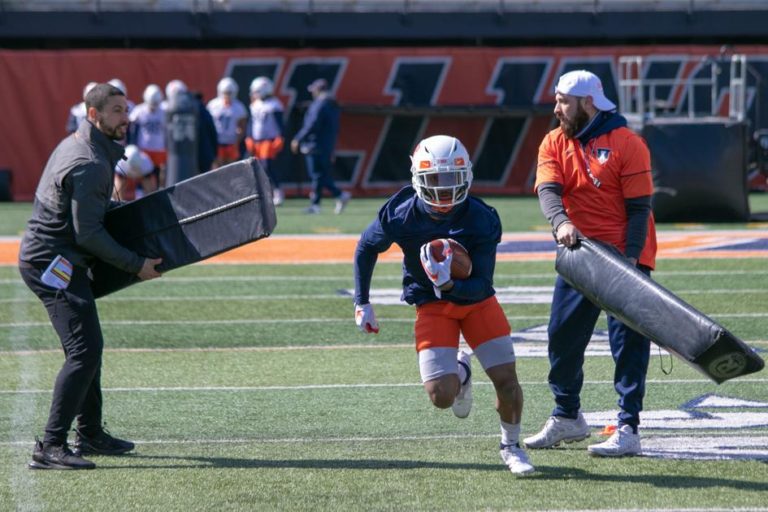
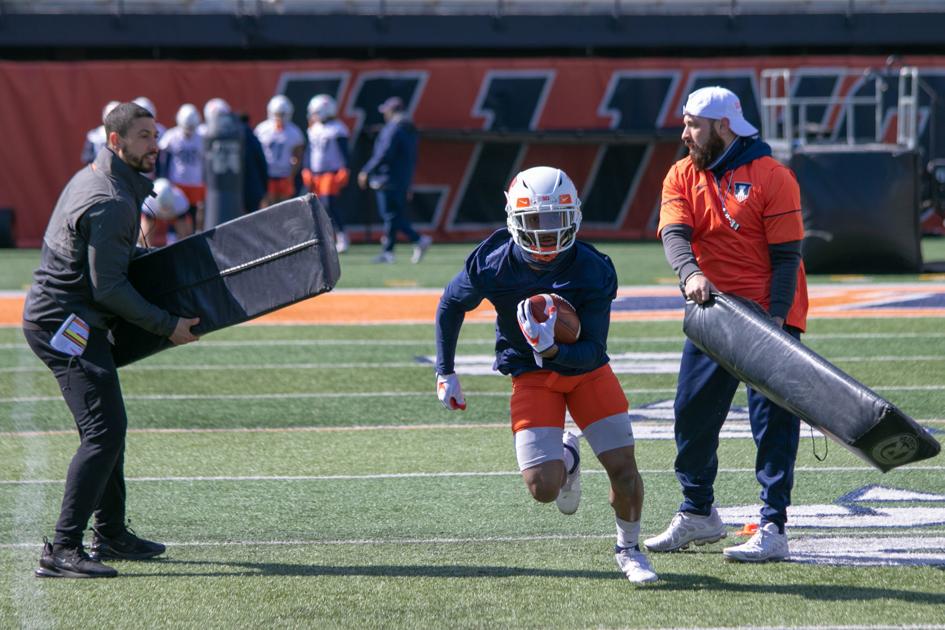
Isaiah Williams moving from quarterback to wide receiver isn’t the only Illini changing positions heading into the 2021 season. ‘I’m excited where that’s at,’ first-year Illinois coach Bret Bielema said. ‘It’s a group that saw some things that they did, made some suggestions to guys about moving positions and they jumped at it, and for the most part, converted on a big, big scale.’ Sports Editor Matt Daniels breaks down the changes:
Marquez Beason
Tantalizing speed made him one of the top prospects the Illini landed during the Lovie Smith era. But a torn ACL sustained in training camp in August 2019 wiped out his freshman season. The 5-foot-11, 185-pound Dallas native did start two games last season at cornerback, but he will wear No. 81 this season instead of No. 3 and will try to catch passes from Brandon Peters at wide receiver instead of trying to pick him off in practice.
Josh Beetham
Walk-on from Yorkville got practice reps at quarterback last season. Now, the 6-foot-5, 235-pound redshirt freshman will try to find his way onto the field at tight end. He won’t get nearly as much attention as the other former Illini quarterback who will try to catch passes this fall, but he adds depth at a position that needs it.
Kyron Cumby
Much was made about the speed the 5-foot-8, 180-pound Texas native has when he signed with the Illini. A running back in high school who could also catch the ball out of the backfield, Cumby spent his first two seasons at Illinois as a wide receiver. But only caught five passes for 47 yards. Cumby could still post the same numbers this fall, but he will do so at running back now after getting only two carries for 11 yards so far in his career.
Cooper Davis
He’ll now line up on the opposite side of the line of scrimmage. The redshirt freshman saw time in two games along the defensive line last season, but the former defensive end has moved to tight end. He rivals fellow tight end Luke Ford with his size (6 feet, 6 inches and 235 pounds) and will try to mimic Ford’s pass-catching skills now.
Preston Engel
The sophomore is entering his fourth season at Illinois and is now listed as a tight end. The 6-foot, 260-pound Normal Community product and former offensive lineman played a few snaps last season as a fullback and tight end in jumbo, goal-line situation packages for the Illini. He won’t look out of place now, however, when he’s in there blocking or trying to catch passes, having switched his number from 58 to 80.
Caleb Griffin
He’ll now don the number — 5 — formerly worn by Illini legends like Rashard Mendenhall and Mikel Leshoure. The 6-foot-3, 220-pound Danville native might get a chance to catch a touchdown pass and then kick the extra point. Griffin is staying in his role of trying to contribute both at receiver and place kicker in 2021.
Michael Marchese
Vernon Hills native knows his way around Memorial Stadium. Entering his fifth season with the program and now on scholarship for the first time, the 6-foot-4, 210-pound Marchese has seen time at safety and linebacker, but he will now ply his trade with the tight ends. He has had his hands on the football before, with two fumble recoveries and two interceptions, so catching passes won’t be a completely foreign concept.
Marc Mondesir
St. Rita graduate has played both at defensive end and defensive tackle. Now, the 6-foot-2, 240-pound Chicago native joins other former defensive linemen — like Owen Carney Jr., Isaiah Gay and Seth Coleman who moved to outside linebacker before spring ball — in the outside linebacker group entering his fifth season.
Ben Schultz
Champaign Central graduate joined the Illini as a walk-on shortly before the 2019 season. The 6-foot-3, 210-pound redshirt freshman has yet to play in a game during his first two seasons, but if he does in 2021, it’ll be at outside linebacker. Schultz spent his first two seasons working with the defensive backs during practice, but he will now get a chance to impress new assistant coach Kevin Kane with his reps in workouts.
Dylan Thomas
Walk-on from Monticello caught a ton of passes from previous News-Gazette Player of the Years Caleb Hanson and Braden Snyder with the Sages. But injuries marred the former wideout’s first three seasons at Illinois. Now, the 5-foot-11, 185-pound Thomas has a new number (22 instead of 85) and a new position (safety).