Home Blog Page 262

GOP candidate explains “the girl in my bathtub” & vows to fight “gay bashing” with “macho” men – LGBTQ Nation

It isn’t often that a local political campaign’s website makes national attention, but Chuck Peruto isn’t your typical candidate. He’s running unopposed for District Attorney in Philadelphia, Pennsylvania in the GOP primary.

Peruto’s website features an explanation for “the girl in my bathtub” and promises to appoint a special “gay bashing” prosecutor who would look “as opposite of gay you can imagine” so they’d win more cases.

Related: No one likes Caitlyn Jenner according to “bleak” new poll

In 2013, Julia Law, Peruto’s former paralegal, was found dead in his bathtub. He was on vacation with his family at the time. The two had been dating for a month and a half.

Peruto was cleared of any wrongdoing after a grand jury investigation initiated by “a bitter enemy of mine,” District Attorney Seth Williams, but his rambling “about me” section paints him as the victim of the accident and Williams as the villain.

“Instead of me hiding and refusing to give a statement or explaining myself, I took to Facebook, and called him every name in the book,” Peruto writes. “At one point, I actually offered to fight him in front of the District Attorney’s Office with his 3 police guards observing.”

A former Democrat, Peruto says he’s running because he loathes the current District Attorney, Larry Krasner. He promised he would drop out of the race if Krasner loses the Democratic primary.

Peruto’s website also featured a section on “gay bashing” that has now been removed. He promised to appoint a special-full time prosecutor with some questionable qualifications.

“Having tried some three hundred jury trials, I know what it takes to win them, and it would not be my preference to have a prosecutor who would be remotely perceived as gay arguing these cases before a jury,” the section read. “I would assign an older, seasoned prosecutor who looks as opposite of gay you can imagine.”

“When you have a very effeminate male prosecutor, it could possibly be perceived that the prosecutor if going after the defendants because he’s gay,” Peruto told Billy Penn. “I want to make sure we have a very macho prosecutor to defend the rights of gay people to live in harmony and in peace.”

Asked why he took down that section, “The public’s not ready, it’s too controversial.”

Area Sports Roundup, May 12 | Local Sports | sentinelsource.com – The Keene Sentinel

Blackbirds earn statement win over Goffstown

GOFFSTOWN — Two days after a drama-filled loss to Goffstown, the Keene High baseball team took game two between the teams, beating the Grizzlies, 7-2, Wednesday in Goffstown.

Senior Zach Mooers kicked things off with an RBI triple in the first inning and added a home run in the fifth.

Alex Charles and Cal Tiani also drove in runs during the three-run fifth inning to break things open.

Peter Haas pitched five innings for Keene and allowed just one unearned run on two hits while striking out five. Sharik Khan closed the door in the final two innings, allowing one run on two hits.

Keene moves to 8-2 on the season and is scheduled to visit Manchester Central Thursday at 4:30 p.m.

Wildcats fall in a tight contest against Lebanon

WALPOLE — The Fall Mountain baseball team fell to Lebanon, 8-7, Wednesday at Hubbard Field in Walpole after the Raiders broke a 7-7 tie in the top of the sixth inning.

Domonic Van Laere Nutting pitched four innings, giving up six earned runs on eight hits.

Lucas Roy pitched the final three innings and gave up three hits and one unearned run, the game-winner in the top of the sixth.

Van Laere Nutting also had two hits on the day. Noah Gutierrez had one hit and two RBI. Hayden Chandler, Curtis Hosley, Lucas Gay and Foster Willet also had hits for the Wildcats.

Fall Mountain (4-4) next visits Mascoma Valley Monday at 4:30 p.m.

Blackbird softball team falls to Goffstown

GOFFSTOWN — After beating Goffstown earlier in the season, the Keene High softball team found a different result Wednesday, losing 6-2 in Goffstown.

Goffstown went down in order in the first inning, but kept the pressure on the rest of the game and scored two runs in the second, one in the third, two in the fourth and one in the sixth.

Keene broke in to the scoring column in the top of the sixth inning. Laurel Clace got on base on a fielders choice, then Taylor Swift singled to put runners on first and second. Sydney Maclean followed with a hard double down the third base line to plate both runners.

Emma Bartlett took the loss on the mound, pitching six innings, giving up 10 hits while striking out eight and walking three.

Keene visits Bedford next Wednesday at 4:30 p.m.

Keene boys tennis team swept by Lebanon

The Keene boys tennis team lost to Lebanon for the second time this week Wednesday in Keene. The Blackbirds fell 9-0.

Dillon Rodgers and Max Santos put up a fight in third doubles, but ultimately fell, 9-7, in the tiebreak.

Keene (5-6) travels to Bedford Wednesday to kick off the final week of the regular season.

Keene boys track stays undefeated with win

The Keene boys track team took care of business Monday against Goffstown, winning 84-49 in Keene to move to 5-0 on the season.

Keene won eight of the individual 15 events and the 4 X 400 relay, while narrowly losing the 4 X 100 Relay by 12/100th of a second.

Keene took the top three places in three events (800, 1600 and High Jump) while posting numerous state meet qualifying performances.

Outstanding performances included:

Torin Kindopp — 1st 800 (2:03.25) and 2nd 1600 (4:55.17)

Freshman Ian Cardinale — 1st 1600 (4:54.28)

Jonathan Hills — 2nd 1600 (4:55.17) 2nd 800 (2:11.16)

Bradley Baybutt — 1st HJ (6’0”)

Jonas O’Mara — 1st 110 High Hurdles (16.78), 1st 300 Intermediate Hurd (44.78)

William O’Connor — 1st 400 (54.94)

Peter Shield — 1st Triple Jump (40’00”), 2nd LJ (18’01.75”)

Dean Truesdell — 1st Javelin (120’01”)

4 X 100 Relay — 2nd — 47.019 (Jacob Migneault, Shield, Erik Nolan, O’Connor)

4 X 400 Relay — 1st — 3:52.08 (O’Mara, O’Connor, Nolan, Kindopp)

Keene’s final dual meet of the season will be at Keene’s Alumni Field track Tuesday against Bedford at 4:30 p.m.

Other scores from around the region

Softball: Lebanon 18, Fall Mtn: 8

Girls lacrosse: ConVal 10, Lebanon 9

Getting Back Out Into the World Safely: Must-Know Advice For LGBTQ+ Travelers – pride source.com

0

As travel rebounds and some international borders open to US residents — especially, or exclusively, if you’re fully vaccinated — you’ll need to pack more than a suitcase to ensure safe trips during the pandemic’s latter days, and far beyond.
After all, it’s not quite a COVID-free world yet, nor will it be for a while. (And yes, I’m death-staring at the self-destructive, reckless, stupid gays who traveled to dance parties and other superspreader events during the heights of the pandemic.)
Since the world packs travel hazards besides COVID-19, from accidents to dangerous local scum and villainy targeting queer tourists, here’s some dead serious and hunty advice and resources for LGBTQs to take into consideration. Bon safe voyage, bitches!

Get insurance that covers COVID-19 (and yes, your hubby too)

Before booking that flight, cruise, hotel or car rental, secure a travel insurance policy. Be sure it covers COVID-19 related calamities, including hospitalization and cancellations on either your end or that of the airline, cruise line, hotel, tour company, etc. (as many learned since March 2020, their policies did not).
For several years before the pandemic hit, I took out an annual individual policy with Allianz (they’ve added COVID-19 benefits to some policies), which I made one claim on during early 2019 for a doctor’s visit in Singapore. The claims process was easy and paid out in a timely manner — a simple urgent-care illness situation that included medication.
When my husband joined me in Bangkok for just a week, I purchased a single trip policy from Travel Guard for him (which does not appear to cover COVID-19 as of now). LGBTQ-friendly insurance company Seven Corners, meanwhile, offers policies for both singles and same-sex couples, and can even ensure you stay together if a medical Evac is required for one partner: check out the video about clients Daniel & Felipe on their LGBTQ landing page. Seven Corners also offers policies covering COVID-19. Lastly, if you have homeowners’ insurance, inquire whether your personal property is covered against destruction or theft while traveling.

Geotag the shit out of everything!

Be sure to activate your phone, pad and laptop’s geolocation features. Worst-case scenario, you know beyond a shadow of a doubt that your iPhone’s been stolen if it’s suddenly five miles away from where you last left it on a table and can deactivate the device (also, though: don’t leave your iPhone on a table).
I’ve learned it’s an all-too-common practice for airlines to take bags off planes pre-departure if the vessel’s too weight-heavy or may excessively tax its fuel supply. They won’t always confess yours lost the lottery and where it’s chilling out, but Apple’s new tracking device, AirTag, will essentially spill the tea.

Know the LGBTQ+ laws of the land

Homosexuality is still illegal and even punishable by death in parts of the world. Some of these antigay laws entail toothless legislative holdovers, like Singapore’s Penal Code Section 377A, which remains on the books despite ongoing legal challenges and an open, even thriving local gay scene (and entertainers like “Drag Race Thailand” queen Vanda Miss Joaquim).
As of April 2021, countries with death penalty on the books for same-sex relations include Iran, Saudi Arabia, Afghanistan, Pakistan, Northwest Africa’s Mauritania, Nigeria, Somalia, Yemen, and the United Arab Emirates.
Beyond the personal safety issue, there’s also the question of whether to spend money in places inhospitable to LGBTQs either socially or politically, like transphobic Arkansas, Jamaica and hateful-assed Poland, which continues to piss off the rest of the European Union with its never-ending conveyor belt of antigay and anti-semitic bullshit.
I’ll admit, I like visiting Poland. I’m part Polish, although you’d never tell by looking at me. But one night, casually taking photos in a Kraków gay bar, a young gay Pole lunged at me from across the room (he actually dove underneath a table, like a submarine missile, to make a straight beeline), asking why I was shooting in his direction, both enraged and terrified. That was the last photo I took in a gay space. Alternately, to some, traveling to these places is a form of activism, visibility being a necessary part of change, while also supporting the local LGBTQ+ businesses and community.
Human Rights Watch maintains a series of online maps of countries with anti-LGBTQ+ and anti-gender expression laws, plus those with age of consent disparities between same-sex versus heterosexual individuals. It’s worth a look. So is travel bloggers Asher & Lyric’s whopping 150-country list of best and worst countries for LGBTQ+ travel in 2021, while our own U.S. State Department boasts a fantastic information and resource page for LGBTI international travelers. There, you can find safety tips, how to reach U.S. Embassies and Consulates while abroad (“Consular officers will protect your privacy and will not make generalizations, assumptions, or pass judgment,” it promises) and a TSA info page for Transgender Passengers.

Google where you’re going before booking tickets

Googling your destination and “antigay” could produce up-to-the minute news developments that may inform your plans. A Molotov cocktail attack on a Laguna Beach, California gay bar in mid 2020, for example, is a pretty clear “maybe not right now.”
Egypt has long entailed an LGBTQ+ traveler’s fave, but the past few years saw an increase of disturbing antigay and anti-trans violence, harassment and detainment by the police. Largely Islamic Indonesia keeps seeing waves of political crackdowns on and vilification of queers — including raids of Jakarta bathhouses and, just this past August, a private gay party — while Indonesia’s Aceh province is ruled by Sharia law and sees public lashings and life-destroying shamings (plus, this border-crossing cyber hate campaign bullshit). Indonesia’s island of Bali, however, is extremely LGBTQ-positive and tolerant, and not informed by hateful fundamentalism. Go there, henny!

Show respect and be smart about PDAs

Life isn’t always a gay cruise or a strut down Santa Monica Boulevard. In some cultures, PDAs between people of any gender or sexual identity are completely frowned upon and offensive, so look that up and, even better, look around you once you arrive. Watch (nonchalantly, not in some creepy way) how locals behave before indulging in PDAs (don’t be surprised to see men affectionately holding hands like “Sex and the City” girlfriends in Arab countries or India; it’s a cultural norm, despite the homophobia). Conversely, if you’re in a known gayborhood like Tokyo’s Shinjuku Ni-chome or Mexico City’s Zona Rosa, live out loud and flash those conservative locals the gayest smile you can.

Back up critical documents and send to a cloud service

I’ve never been pickpocketed (and probably jinxed myself writing that), but if this ever happens or you misplace important documents, a wallet, etc., have copies ready in the cloud, including booking numbers and, of course, travel insurance policy. iCloud, DropBox, whatever — just be sure it’s an encrypted service. Now you can more easily request replacements and access important numbers to cancel credit cards.
If you’re legally married or partnered, also have copies and cloud backups of your marriage license and anything related to power of attorney and medical access. Especially here in the good ol’ freedom-y USA, some nosy “Christian” nurse in an Arkansas or Texas hospital may attempt to refuse a same-sex spouse access to a hospital unless you’re packing legal documents and a winnable lawsuit.

Don’t let your lube spill all over your suitcase like mine did

Ask me about the time the large bottle of Swiss Army silicon lube, which I had previously opened and used some of, burst inside my suitcase en route to Thailand, where I discovered that silicon lube isn’t even available (the good news: three cycles through the laundry and the stains were out of my shirts). Bring new, unopened bottles of your favorite lube(s), pack them in a couple of ziplock bags and a large padded envelope, and make sure they — and any liquid for that matter — aren’t too tightly pressured by all your other stuff.
If you have preferred brands of condom, bring those too. In some countries, condom brands and sizes can be very different from ones available in the US — just like clothing. You’ll be hard pressed to find anything like an XL-sized Magnum in Japan. “Foreigners definitely think that Japanese brands in general are too small,” admits Andrew Pugsley, a gay Tokyo-based Canadian expat whose excellent gay vlog Tokyo BTM is chock full of insider deets on the culture, city and queer nightlife.
Japanese condoms are also supremely thin — all the way down to .01 millimeter, which is basically like wearing thick air — which some may appreciate (and take home in mass quantities, just sayin’), but others find less assuring than Lifestyles or Trojans and hard to roll down without tearing. And yes, I’ve conducted many experiments for the sake of “research.”

Watch out for the catfish… and sharks

It can happen anywhere in the world, including home, but apps and hookup sites are swimming with scam artists and bad news freaks. In some countries, apps are used by homophobes and zealous antigay police to entrap, jail and torture LGBTQs. In other cases, you could get robbed, especially in second and third world countries where first-world tourists represent an easy, even deserving in their eyes, mark.
If you do meet someone online, take precautions. In countries where locals target tourists, five-star hotels will often require visitors leave their ID at the front desk and won’t allow them to retrieve it and leave until you give a sign-off by phone. If someone refuses to visit your five-star hotel (especially if they use the, “I don’t like hotels because they’ll treat me like I’m a prostitute” excuse), that’s a red flag. And if you do have a new “friend” over, put those valuables in the safe first.

Always keep your medications on you (but not recreational drugs)

Don’t put your PrEP in check-in luggage. I repeat: Do not put your PrEP in check-in luggage. Ever. If it’s medication you need daily, you’re risking missed doses should that bag get lost (or purposely purged from the plane to lighten its load: see above), and worse, if the drug isn’t readily available where you’re headed. Keep them in your carry-on only!
Also, for fuck’s sake, don’t bring recreational drugs into a country where you can go to jail for it. It’s a really wise use of 60 seconds on Google to look that up, because tourists will not be treated with leniency. It’s a lesson you don’t want to learn.

3 Reasons Why The Gays Should Visit Las Vegas This Year vegas – Out Magazine

We can’t wait to experience Circa Resort & Casino, the first resort to open in downtown Las Vegas in 40 years that fully merges gaming, accommodations, and other entertainment. Sports lovers will be amazed at the space, which houses the world’s largest sports betting area with three stories and a 78-million-pixel HD screen, new entertainment and gaming options, a multilevel pool amphitheater (yes, please!), and an indoor/outdoor 8,400-square-foot Legacy Club on the 60th floor of the hotel tower. Wine and dine like it’s always your first time, darling.

Former foster child abandoned for being gay testifies before Congress – PinkNews

Former HRC youth ambassador Weston Charles-Gallo testifying before Congress (Twitter/@HRC)

A former foster child adopted by two fathers after being abandoned for his sexuality has urged Congress not to stand in the way of loving LGBT+ families like his.

On Wednesday (12 May) Weston Charles-Gallo, a former youth ambassador for the Human Rights Campaign, bravely testified in support of the bipartisan Every Child Deserves a Family Act (ECDF).

The bill would prohibit any federally-funded child welfare services from discriminating against prospective parents based solely on their sexual orientation, gender identity or marital status, as well as the sexuality or gender identity of the child involved.

This law is critical for young people like Weston, who entered the foster care system at 14 when his parents neglected him for coming out as gay. He experienced a year of hospitalisations, shelters and foster home placements before finally, at 15, he received the amazing news: “I was going to be adopted.”

“I have since learned that many, many LGBT+ foster youth never get that news,” he told lawmakers.

Weston was lucky: he found a loving home with two fathers and six siblings, who gave him the love and support he needed to grow into his authentic self.

“My dads showed me what it was like to witness a true marriage and live a normal life, expressing the meaning of family,” he said. “Before I lived with them I never pictured myself marrying someone or even having a family, but they proved to me that anything is possible.

“Without them in my life constantly supporting and encouraging me I don’t know where I would be, or even if I would be alive today. I finally found a home where I can live my authentic self.”

He stressed that in the conversation about same-sex couples fostering and adopting, all too often the message of giving needy children “safety, stability and love” is forgotten.

Why keep qualified parents from giving children the lives they deserve but never imagined?

“I urge committee member to focus on that mission, not on the personal beliefs of adults,” Weston said.

“If it wasn’t for my two dads taking a chance on me and helping me embrace my sexual orientation, the colour of my skin and who Weston is, I wouldn’t be here to share my story.

“When a child enters the foster care system they just want to find a family that loves them unconditionally and supports them continuously. Why keep qualified parents from giving children the lives they deserve but never imagined? Because that is exactly what my fathers did for me.”

More than two million LGBT+ people would consider serving as foster or adoptive parents but face barriers due to existing state laws, regulations and policies, according to PFLAG.

Many states like Florida, Utah, Mississippi, Nebraska and Utah have policies that directly disadvantage LGBT+ and unmarried parents, leaving children vulnerable to the individual biases of agencies and case workers.

As well as increasing adoption rates, proponents of the ECDF bill say it would decrease risk factors for youth in foster care, yielding an annual cost savings of $3-$6 billion.

But most importantly, the legislation is about putting the needs of the child before all else.

“We should find more loving families like my dads that can be affirming of all kids in care,” Weston told members of Congress. “I want to ask all policy makers, foster care parents and social workers to take the time to put yourself in our shoes and think about what you wanted as a child.

“LGBT+ youth aren’t going anywhere, we’re here, and we’re asking to be heard and loved for who we are.”

Gay man fights ‘discriminatory’ policy that bans him from donating blood. Ottawa tries to block it – CBC.ca

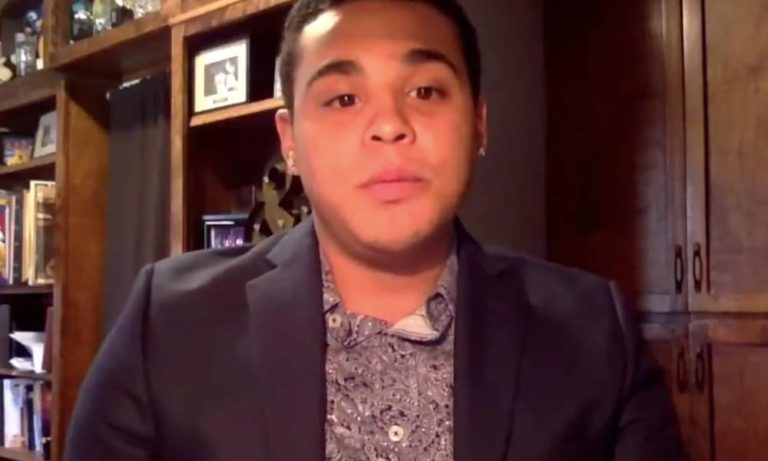
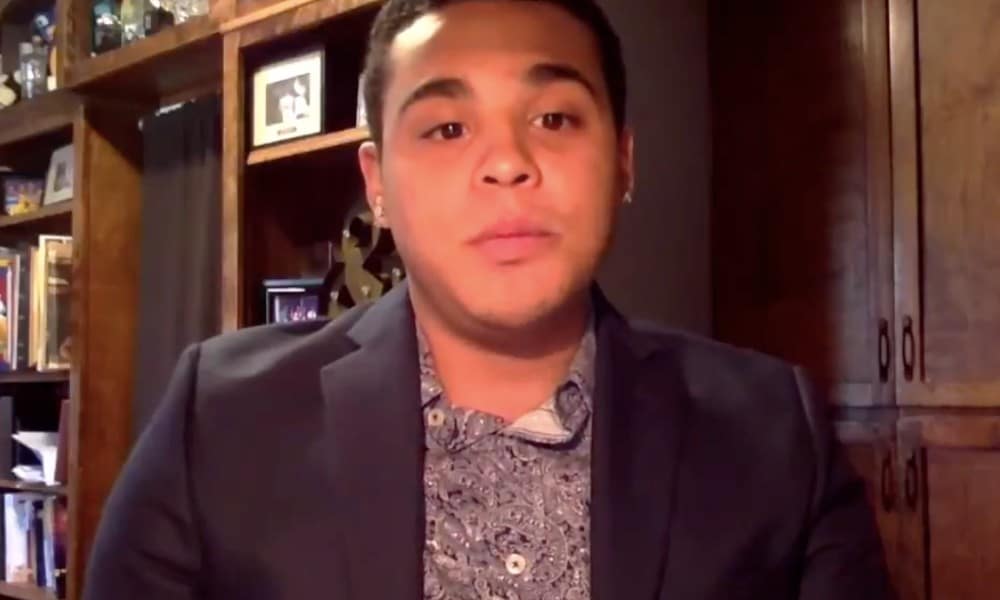
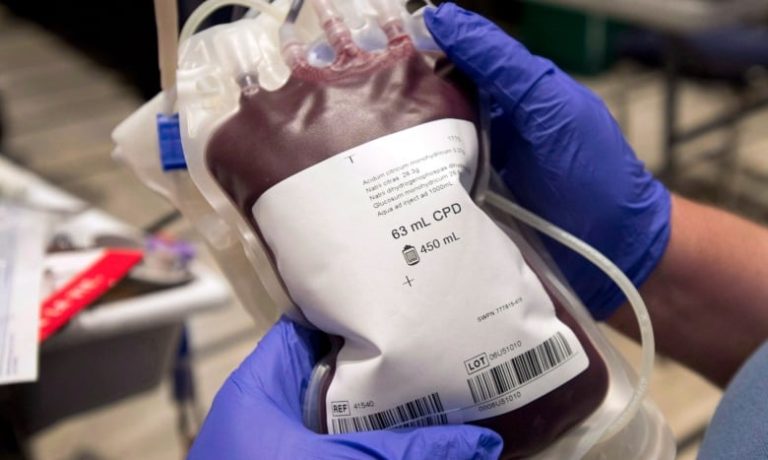
A gay man in Ontario will be in court later this month arguing that Health Canada discriminates against him by overseeing the ban preventing men who recently have had sex with other men from donating blood.

The federal government has been trying to block that challenge, arguing it has no power to change Canadian Blood Services’ donor criteria.

A federal court judge will hear the case on May 27.

The case dates back to 2016, when Christopher Karas first brought a human rights complaint against Health Canada. He accused the department of discriminating against him on the basis of his sexual orientation through its role in upholding Canadian Blood Services’ policy of prohibiting men who have sex with men from donating blood in Canada unless they’ve been celibate for a period of time.

When Karas first applied to the Canadian Human Rights Commission, that period of time was one year; it has since been dropped to three months.

For years, the not-for-profit Canadian Blood Services has argued the deferment period is necessary because HIV is more prevalent among men who have sex with men — sometimes referred to as the MSM population. The non-profit screens out MSM with its donor health assessment questionnaire before accepting donations.

Karas said the ban weighed on his sense of self-worth and made him feel that “he was of very little value.”

“To have erroneous policies that are archaic and discriminatory like this, barring donors and discouraging donors from donating and creating stigma, is an inappropriate way for our blood system to operate,” he said.

“What kind of society do we want to live in? Do we want to live in a society where LGBTQ people are set aside, are excluded and not given the opportunity to fully participate?”

The federal government is going to court to block a human rights complaint accusing it of backing Canadian Blood Services’ policy on donations from gay and bisexual men. (Ryan Remiorz / The Canadian Press)

Karas and his lawyer Gregory Ko argue that while Health Canada does not directly take blood donations, it grants regulatory approval to Canadian Blood Services’ screening.

“Health Canada is intimately involved in implementing, certainly approving, this blood ban that is imposed on gay folks,” Ko said.

“Their fingers are frankly all over this.”

‘No public interest in pursuing a complaint,’ says Health Canada

Health Canada disagrees, saying it has never issued a directive requiring Canadian Blood Services to adopt the ban. The department says it only reviews the blood service’s policies and procedures for safety reasons and has no legal authority to direct the arm’s-length agency to do anything.

Canada’s Blood Regulations do authorize the department to ask Canadian Blood Services to address an emerging health issue, such as SARS or the West Nile virus. Health Canada says that has no application to Karas’ complaint because his situation is not an “emerging health issue” or a “potential epidemic.”

“There is no public interest in pursuing a complaint against a party like Health Canada who has not committed the alleged discrimination and has no authority to rescind the policy giving rise to the alleged discrimination,” says part of Health Canada’s submission to the Canadian Human Rights Commission in 2019.

That year, the commission sent Karas’ complaint for further inquiry by the Canadian Human Rights Tribunal, saying preliminary evidence indicated a relationship between Health Canada and CBS that warranted further investigation.

“It is not plain and obvious at the preliminary stage that the respondent is not a party to the alleged discrimination,” said the human rights commission.

Now, the Attorney General of Canada, on behalf of Health Canada, is trying to stop that inquiry and is seeking a judicial review of the Canadian Human Rights Commission’s decision at the Federal Court level.

In court documents filed earlier this year, the government repeated its claim that Health Canada did not discriminate against Karas and also accused the Canadian Human Rights Commission of pursuing an unfair investigation.

“The Commission failed to interview Health Canada witnesses who could have established Health Canada’s limited role as a regulator of blood safety,” says the document.

“The Commission’s decision reflects this one-sided and incomplete investigation. It fails to consider any of Health Canada’s submissions.”

The commission said it would not offer a comment for this story, citing ongoing court proceedings.

‘Big optics concern,’ says lawyer

Ko said the federal government’s attempt to trigger a judicial review is tantamount to trying to end the human rights tribunal inquiry.

“The approach that the federal government has taken is both surprising and quite aggressive,” he said.

The government is also seeking costs, which Karas said would impose a substantial financial burden.

“There’s this David-Goliath story,” he said.

Prime Minister Justin Trudeau waves a flag as he takes part in the annual Pride Parade in Toronto on Sunday, July 3, 2016. The Liberal government continues to promise to end what it’s called the “discriminatory” ban on blood donations. (Nathan Denette/Canadian Press)

Ko said he believes Ottawa is using the challenge in an attempt to disassociate itself from the allegations of discrimination. 

“There’s a big optics concern,” he said. “Certainly [it’s] a government that does not want to shine a light on its involvement in this discriminatory policy, and that’s kind of what is disturbing about the move on the part of the federal government.”

The challenge comes as the Liberal government continues to promise to end what it’s called the “discriminatory” ban on blood donations. The promise was made in both the 2015 and 2019 federal elections.

When asked how the government reconciles the court challenge with that promise, a spokesperson for Health Minister Patty Hajdu said he couldn’t comment because the case is before the courts.

“I think that should be concerning to all of us, given that they’ve been so vocal on this file but have been unwilling to act,” said Karas.

“There hasn’t been any political will. And I think that we need to continue to push on that.”

Dear Abby: Should man tell wife of 25 years that he’s been gay all along? – Chicago Sun-Times

DEAR ABBY: I have been married more than 25 years and have kids. I’m also gay. I always have been, but when I was a teenager, it wasn’t acceptable and I always believed I would just outgrow it, or learn to live with it. Then came the computer era and the internet — things I never dreamed of while growing up. They changed my life, yet I’m still closeted.

I have had two gay relationships. Both lasted less than a year. I feel like my whole life has been a lie, and I pretty much screwed up my wife because of it. I did provide her with all the creature comforts financially, and gave her two beautiful kids.

I just don’t know if it’s worth coming out at this point in my life. I’m also reluctant because I don’t have a guy in my life right now, although I am looking. It’s just so difficult. I’m torn about how to live the remainder of my life. Please help. — CLOSETED IN THE MIDWEST

DEAR CLOSETED: Because you are looking for a partner, it looks like you really don’t plan on sticking around once you find one. Tell your wife the truth so she can decide how she would like to spend the rest of HER life. She may need help from a licensed therapist to deal with the ramifications of your disclosure, so be prepared because it may be a shock when she learns the person she has spent the last quarter of a century with is not exactly who she thought he was .

DEAR ABBY: I was adopted and recently came across my biological family. It’s huge. I suffer from severe depression and now know that most of my bio family does, too.

During the past year, my husband and I decided to tackle it head-on with medication, and there has been a noticeable change in me. My husband is very supportive, and we are close. Problem is, I want to meet my out-of-state bio brother alone. He’s the only full sibling I have, and our connection is uncanny.

My husband is a hyper extrovert, and I don’t want his charming antics to distract from this moment (although usually I love it). He, however, says he can’t agree. He’s afraid something with the new family will set off a depressive episode, and I’ll be too far away for him to get to me. That’s understandable. But what do I do? I still feel the same. Is he right or am I? — CONNECTING IN CALIFORNIA

DEAR CONNECTING: Not knowing how serious your depressive episodes have been, my instinctive reaction is to advise you to listen to your husband. Surely he wouldn’t have to be with you every minute and could stay at a nearby hotel or motel while you are seeing your sibling.

That said, if there is any chance that an episode could result in you becoming self-destructive, it is important to discuss this visit with the therapist who prescribes your medications before making any plans to go. Do tell your husband that if he accompanies you, you would like him to tone down his need for attention so he won’t distract from your experience or your brother’s.

Dear Abby is written by Abigail Van Buren, also known as Jeanne Phillips, and was founded by her mother, Pauline Phillips. Contact Dear Abby at www.DearAbby.com or P.O. Box 69440, Los Angeles, CA 90069.

To order “How to Write Letters for All Occasions,” send your name and mailing address, plus check or money order for $8 (U.S. funds), to: Dear Abby — Letter Booklet, P.O. Box 447, Mount Morris, IL 61054-0447. Shipping and handling are included in the price.

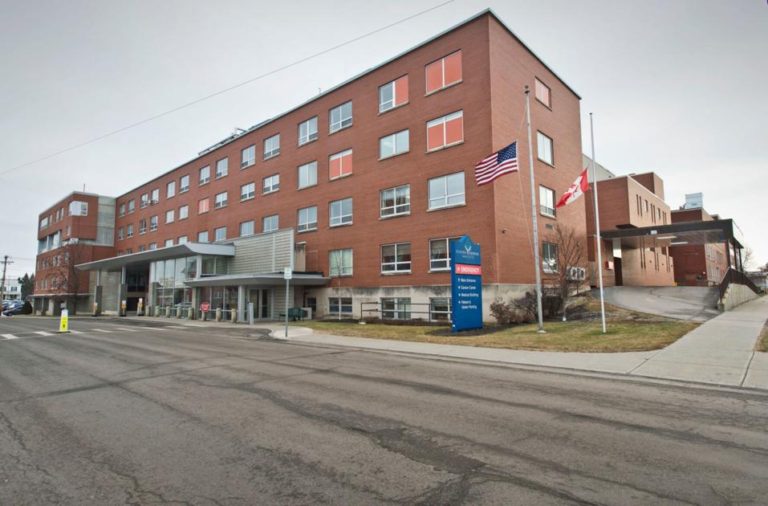
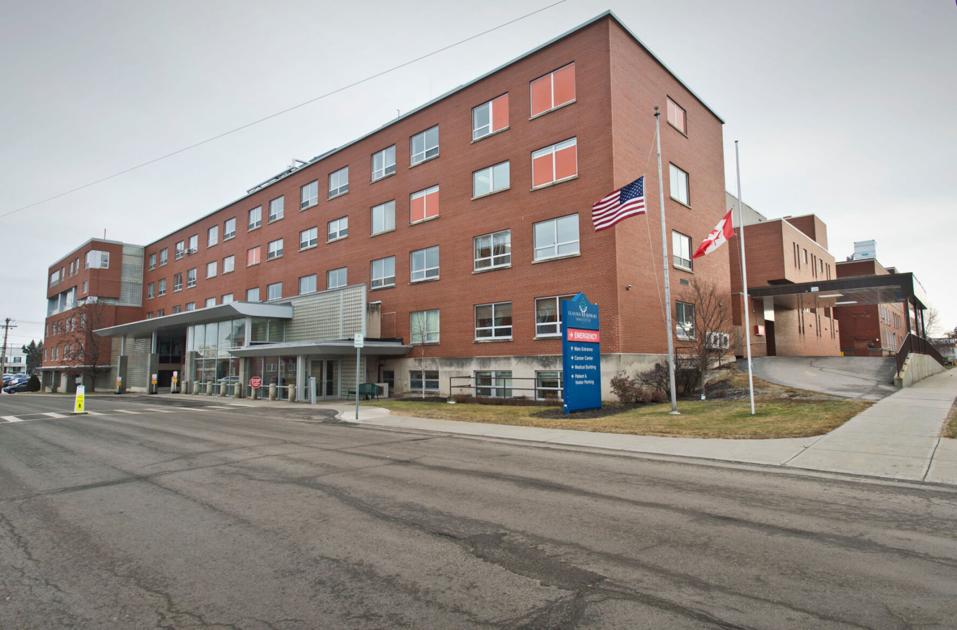
Claxton-Hepburn Medical Center promotes May as Mental Health Month – NNY360

OGDENSBURG — May is National Mental Health Month, and Claxton-Hepburn Medical Center is taking this opportunity to raise awareness of trauma and its impact on children, families, and our communities’ physical, emotional and mental well-being. Mental health is an essential piece of a person’s overall health.

With proper treatment and prevention, people can recover from mental disorders and live full, productive lives. Hospitals and healthcare systems like Claxton-Hepburn play a key role in providing behavioral health care and helping the patient find resources available in our community.

We create unique partnerships to address behavioral health issues in non-traditional ways. These efforts have significantly improved the outlook for those affected by mental illness. Mental Health Month gives us all an opportunity to recognize the tremendous strides this Nation has made in promoting mental health and increasing the public’s knowledge that effective services and support are available.

“Mental Health Awareness is critical now more than ever,” Dr. Pakkam Rajasekaran, a psychiatrist at Claxton-Hepburn, said in a press release from the hospital. “Between isolation and loneliness of COVID-19, loss of jobs, loss of family members, and ongoing uncertainty, all of these contribute to a sense of restlessness and hopelessness. Children are even more vulnerable and often express their distress in other ways such as behaviorally. Our community offers a wide variety of help with dedicated and resilient providers and staff to work together to help through ongoing struggles and for a better overall future.”

In the 2019 Community Health Survey of St. Lawrence County adult residences, 11.5% of respondents reported that they had been diagnosed with a mental health condition. One of the harsh realities of mental illness is suicide which has become a public health crisis in St. Lawrence County. In fact, according to a 2020 Community Health Survey of St. Lawrence County Adult residences, the optimism about one’s mental health has decreased significantly in St. Lawrence County between 2018 and 2020, currently at 15%, up from 8%.

According to the National Alliance for Mental Ill, about 90% of people who die by suicide had shown symptoms of a mental health condition, according to interviews with family, friends, and medical professionals. Lesbian, gay, and bisexual youth are four times more likely to attempt suicide than straight youth. Transgender adults are nearly 12 times more likely to attempt suicide than the general population. 78% of people who die by suicide are male. The annual prevalence or serious thoughts of suicide are: 4.8% of all adults, 11.8% or young adults (age 18-25), 18.8% of high school students, and 46.8% of lesbian, gay, and bisexual high school students.

The good news is that there is now more than ever many reliable mental health resources in St. Lawrence County and 69% of St. Lawrence County residents are aware of at least one resource to which they could refer somebody to who seemed at risk for suicide. Unfortunately, only 8% of those residents referred somebody and/or accessed suicide prevention services.

Dr. Dhruv Modi, a psychiatrist at Claxton-Hepburn, said, “These issues are real. We have to overcome the stigma against mental illness and encourage people in need to reach out. There is hope and treatment available.”

Claxton-Hepburn Medical Center offers a comprehensive mental health treatment program for both inpatients and outpatients.

The opening of a new children’s mental health inpatient unit, scheduled for later this summer, will provide comprehensive inpatient mental health treatment for children and adolescents under 18 years of age. This unit’s addition compliments Claxton-Hepburn’s continuum of care that begins in the Emergency Department and continues through inpatient units and the Wellness Center. To learn more, visit www.claxtonhepburn and click on Mental Health Services tab.

As an Amazon Associate I earn from qualifying purchases.

Billy Porter and Zachary Quinto to play gay dads on Proud Family reboot – Gay Times Magazine


Entertainment Weekly via Disney+

Disney+ is adding some diversity to the streamer with their upcoming Proud Family reboot.

Titled The Proud Family: Louder and Prouder, the series will see the return of the original cast and a few more high-profile names including Pose’s Billy Porter and Heroes’ Zachary Quinto as the franchise’s first ever gay couple.

The stars will play Randall Leibovitz-Jenkins and Barry Leibovitz-Jenkins, respectively, the adoptive parents to Keke Palmer’s 14-year-old activist character Maya Leibovitz-Jenkins.

Another new addition to the cast is EJ Johnson, who takes over the role of Michael Collins from Phil LaMarr. Michael is Penny Proud’s flamboyant best friend and son of the school coach who is often bullied for his non-conformity.

Louder and Prouder will continue to tell the story of Penny (Kyla Pratt) and her bonkers family, which includes her mother Trudy (Paula Jai Parker), father Oscar (Tommy Davidson), twin siblings BeBe and CeCe and grandmother Suga Mama (JoMarie Payton).

The series will also see the return of Dijonay Jones (Karen Malina White), LaCienega Boulevardez (Alisa Reyes), Zoey Howzer (Soleil Moon Frye), Uncle Bobby (Cedric the Entertainer) and Felix Boulverdez (Carlos Mencia), among others.

Announced in February, Louder and Prouder is currently in production at Disney Television Animation and will be released on Disney+ in 2022. Bruce W. Smith and Ralph Farquhar, who led the original series, return as executive producers.

Calvin Brown Jr is the co-executive producer and story editor, Jan Hirota is producer and Eastwood Wong is art director.

Proud Family originally ran for two seasons between 2001 and 2005 before concluding with a television movie. The series received critical acclaim and was nominated for several awards throughout its run.

The entire series is now available to stream on Disney+.

IDAHOBiT events to promote intersectionality, resilience, allyship – Washington Blade

Caitlyn Jenner was quickly repudiated by LGBTQ advocates after she entered California’s recall election as a gubernatorial candidate — and her fellow transgender Republicans are mixed over whether or not to back her up.

Transgender Republicans are few in number, but some are in high-profile positions and have been working with their party to change its approach and drop its attacks on transgender people, whether it be in the military, public bathrooms, or school sports.

Jordan Evans, a Charlton, Mass.-based transgender Republican who unsuccessfully last year ran to become a Massachusetts Republican State Committee Woman, told the Washington Blade she had high hopes for Jenner as a fellow transgender candidate, but they were quickly dashed after her campaign launched.

“My feelings changed quickly after Caitlyn made it clear that she was less interested in using this opportunity to present the Republican Party and conservative movements with an accessible and high-profile introduction to the trans community and simply wanted to be a trans woman who espoused the same destructive approaches that we just so happen to be seeing all over the country,” Evans said.

Evans said the high hopes she had were based on the transgender advocacy she said Jenner was doing behind the scenes and the potential for two prominent LGBTQ Republicans to run for governor in California. After all, Jenner may soon be joined in the race by Richard Grenell, who was U.S. ambassador to Germany and acting director of national intelligence before becoming the face of LGBTQ outreach for Trump’s failed re-election.

But Jenner’s approach to the gubernatorial recall in California, Evans said, is “putting trans youth at risk for a campaign that isn’t even transformative for Republicans during this volatile time.”

“Even her current messaging is superficial and does nothing to help dispel claims that she’s unqualified,” Evans said. “The only positive thing that I’ve seen come from this is conservative mainstream media using her correct pronouns, but that is not worth the damage that she’s inflicting.”

Much of the disappointment over Jenner’s campaign is the result of her essentially throwing transgender kids under the bus as part of her campaign at a time when state legislatures are advancing legislation against them, including the bills that would essentially bar transgender girls from participating in school sports.

Jenner, declining to push back on these measures and assert transgender kids have a place in sports, instead essentially endorsed the bills shortly after she announced her candidacy.

“If you’re born as a biological boy, you shouldn’t be allowed to compete in girls’ sports,” Jenner told TMZ, which asked her about the hot-button issue during a Sunday morning coffee run.

Jenner dug deeper into MAGA-world at the expense of solidarity with the transgender community. Last week, Jenner retweeted Jenna Ellis, who has a notoriously anti-LGBTQ background and was criticized just last year for refusing to use the personal pronouns of Rachel Levine, who’s now assistant secretary of health and the first openly transgender presidential appointee to win Senate confirmation.

Jennifer Williams, a New Jersey-based transgender Republican who unsuccessfully ran for a seat in the New Jersey General Assembly last year, said via email Jenner “did much good for several years by educating millions of people around the world about transgender folks,” but won’t countenance the candidate’s remarks on transgender kids in sports.

“In regard to her current run for California governor, her recent comments regarding transgender youth playing sports are confusing,” Williams said. “Just last year, she said that she supported transgender female athletes. Caitlyn should consult with tennis great Billie Jean King, soccer star Megan Rapinoe or WNBA legend Candace Parker on the subject of transgender athletes in women’s sports, as they are very well versed on the matter.”

At a time when state legislatures are pushing through legislation targeting transgender youth, restricting their access to sports and transition-related care, Jenner’s refusal to repudiate those measures has become a focal point for opposition to her candidacy from LGBTQ advocacy groups, who say she’s “out of touch” (although none were supporting her even before she made those comments).

The LGBTQ Victory Fund, which supports LGBTQ political candidates and public officials, has signaled it wants nothing to do with Jenner.

Sean Meloy, vice president of political programs for LGBTQ Victory Fund, said Jenner hasn’t applied for an endorsement from the Victory Fund “and she shouldn’t bother to.”

“Her opposition to full trans inclusion – particularly for trans kids in sports – makes her ineligible for the endorsement,” Meloy said. “There are many great trans candidates running this cycle who are champions for equality.”

To be sure, Jenner used her celebrity status as a former reality TV star and Olympic champion on behalf of transgender lobbyists, urging donations to groups like the National Center for Transgender Equality and going to Capitol Hill to lobby Republicans on transgender issues. Jenner has also given money for transgender kids to attend college, giving transgender advocate Blossom Brown a check for $20,000 on “The Ellen Show” in 2015.

Blaire White, a transgender conservative and YouTube personality, drew on these examples of Jenner helping transgender youth in a video earlier this month and said the two once had dinner together, but wasn’t yet ready to make a endorsement.

“I will say that until she lays out all of her policy positions and until she’s more on record in long form really talking about what she wants to do for the state of California, I can’t say for sure I would vote for her and would not vote for her,” White concluded in the video. “What I can say is: I’m interested. And also, being under Gavin Newson’s governorship, I would literally vote for a triple-amputee frog over Gavin Newsom, so she already has that going for her.”

Jenner’s campaign couldn’t be reached for comment for this article on the repudiation of her campaign from LGBTQ advocacy groups.

Gina Roberts, who’s the first transgender Republican elected to public office in California and a member of the San Diego GOP Central Committee, said she’s neutral for the time being as an elected Republican Party leader, but nonetheless had good things to say about Jenner’s candidacy.

“I think it’s awesome,” Roberts said. “It’s kind of indicative of how cool the Republican Party in California is because nobody really cares or it makes any difference. I mean, I was the first elected GOP transgender person in California and I think we’re ready for No. 2.”

Asked whether Jenner’s comments about allowing transgender kids in sports was troubling, Roberts said that wasn’t the case because she has her own reservations.

“I have pretty much the same opinion because … there’s so many nuances in that,” Roberts said. “If somebody transitions after they’ve gone through puberty, there is a big difference, especially in high school. If they transition beforehand, it’s not a big deal.”

A gun enthusiast and supporter of gun owner’s rights, Roberts said she competes in women’s events in shooting sports, but there’s a difference because she doesn’t “really have any advantages all those young, small ladies can pull a lot faster than I do and shoot faster than I do.”

Roberts concluded she’ll personally make a decision about whom she’ll support in the California recall election after Grenell announces whether or not he’ll enter the race, but can’t say anything until the San Diego GOP Central Committee issues an endorsement.

“He’s a good friend of mine, too,” Roberts said. “I know both of them. I think they’d both be certainly better than Gavin Newsom, I have to stay neutral until the county party decides who they’re going to endorse. I will support somebody or another in the endorsement process, but I can’t publicly announce it.”

Although LGBTQ groups want nothing to do with her campaign, Jenner’s approach has garnered the attention of prominent conservatives, who are taking her seriously as a candidate. One of Jenner’s first interviews was on Fox News’ Sean Hannity, a Trump ally with considerable sway among his viewers. Hannity was able to find common ground with Jenner, including agreement on seeing California wildfires as a problem with forest management as opposed to climate change.

Kayleigh McEnany, who served as White House press secretary in Trump’s final year in the White House and defended in the media his efforts to challenge his 2020 election loss in court, signaled her openness to Jenner’s candidacy after the Hannity interview.

“I really enjoyed watching @Caitlyn_Jenner’s interview with @seanhannity,” McEnany tweeted. “I found Caitlyn to be well-informed, sincere, and laser-focused on undoing the socialist, radical, a-scientific policies of Biden & the left. Very good.”

In theory, that support combined with Jenner’s visibility might be enough to propel Jenner to victory. In the recall election, California will answer two questions, whether California Gov. Gavin Newsom should be recalled, and if so, which candidate should replace him. The contender with the plurality of votes would win the election, even if that’s less than a majority vote, and become the next governor. There isn’t a run-off if no candidate fails to obtain a majority.

With Jenner’s name recognition as a celebrity, that achievement could be in her reach. After all, Arnold Schwarzenegger won the 2004 recall election in California as a Republican based on his celebrity status, and ended up becoming a popular governor.

But the modest inroads Jenner has made with the acceptance of conservatives and potential to win isn’t enough for other transgender Republicans.

Evans, for example, said Jenner’s candidacy is not only a disappointment, but threatening the potential candidacies of transgender hopefuls in the future.

“It’s difficult to be in electoral politics, and that’s even more true when you’re a member of a marginalized community,” Evans said. “Caitlyn’s behavior is making it even more challenging for the trans community to be visible in a field where we desperately need to be seen. She’s casting a tall shadow on our ability to have a voice and is giving credibility to lawmakers and local leaders simply unwilling to view us with decency and respect.”

Williams said Jenner should avoid talking about transgender issues over the course of her gubernatorial run “and instead focus on the hard, critical policy issues facing California.”

“It is a state in crisis and she has to run a very serious campaign and not rely on her celebrity or LGBTQ status to win over voters’ hearts and minds — just like all other LGBTQ candidates around the country need to do when they run for public office,” Williams said.

Hookup culture and heteronormativity: Reflections from a gay athlete – Middlebury Campus

Sabrina Templeton

Less than a month from graduation, I’ve recently caught myself doing that thing most seniors do at this point in our college careers: reflecting on all of the moments over the past four years — both miniscule and monumental — that have made this place home. Looking back, my time at Middlebury has a distinct before and after — a divide defined by that fateful day last March when a single email tilted our world on its axis. It’s not surprising to realize that I have grown and changed drastically over the past four years, but in a time defined by “a new normal,” there is an even more poignant sense that the campus I first stepped onto in September 2017 is not the same one that I will be leaving behind.

Many of my best memories at Middlebury have been shaped by my experiences as a student-athlete, an identity that remains significant despite the loss of my senior season and this semester’s absence of most of my teammates. From the moment I stepped onto this campus, it seemed like there was a place for me here. Being part of a team was an immediate comfort in a college environment that was so new and intimidating. It was simple: I was on the hockey team so I would always have a table to sit at during lunch, people to say hi to as I walked to class and a place to go on Friday and Saturday nights. Outwardly, it looked like I fit in. But having a team doesn’t necessarily mean having a sense of belonging; feeling like there is a place for you often comes with the corresponding pressure to change yourself to fit into it. 

Even the identities I hold closest are not free from the distinct discomfort that comes when I enter a space that is not built for me. I am a hockey player, but I am also gay, and at Midd those two identities sometimes feel conflicting. On Friday and Saturday nights, my team would make its weekly pilgrimage to Atwater, a social scene that is athlete-centric but also aggressively heteronormative. In the beginning of the night, screaming along with my teammates to whatever music was blasting over the speakers, I did feel like I belonged. Inevitably, though, the entire mood would shift. The boys’ team would enter and suddenly, I was on the outside looking in — standing and watching as everyone else chatted and flirted and danced, keeping up a performance to gain a stranger’s fleeting attention. 

Most people think the ticket into an Atwater party is the athlete identity. But as gay athletes know, that’s not the case. The key is being straight — being able to play into the hypersexual dynamic that plagues Atwater every weekend. And while to some extent everyone may feel the artifice of it all, when there’s nothing to gain at the end of the night, playing this game feels like a greater sacrifice. 

So most nights, I would leave early, opting to walk home alone instead of pretending to be someone I’m not. The next morning, I would sit quietly at the breakfast table, listening as my teammates recapped the night’s escapades. Every weekend it was the same thing — I would muster the enthusiasm to attend the next event, only to realize that nothing had changed: I was still an outsider. And as much as I wish I could walk away, it’s not as simple as just finding something else to do with my weekends. There’s always a choice to be made: leave a part of myself behind in order to fit in, or miss out on memories shared with my teammates and friends.

I am not an anomaly. It is no secret that Middlebury doesn’t always feel like a place for everyone. The Campus’ 2019 Zeitgeist survey found that almost 1/3 of surveyed students felt othered here, a sentiment shared by a greater proportion of students of color, members of the LGBTQ+ community and recipients of financial aid. We know that many of the social spaces at this school leave people feeling left out or uncomfortable. So why has it been so hard to make a change?

The truth is that there is nothing holding us back from reshaping the way we interact. But we need to listen to the voices of people who are struggling and we need to understand that even if we feel like we belong, someone else may feel unwelcome. Tradition is not unshakeable, and adhering to it is not always the right thing to do, especially when it comes at the expense of inclusivity.

I have no doubt that soon, weekends will again be filled with music blaring from the open windows of Atwater suites, and that Sunday breakfasts will consist of spirited recounts of the night before. But as we seek a return to normal, what’s stopping us from rethinking what “normal” meant in the first place? For all of the horror and heartbreak we have experienced over the past year, we’ve been able to step back from many of the social structures that we took for granted before. Even though this pandemic has fractured many of our college experiences, Middlebury now has a unique opportunity for a fresh start — to carefully consider who our spaces have historically been built for — and to rebuild them so they are welcoming to all. Let’s not waste it.

Meghan Keating is a member of the class of 2021.

Colorado Among States Extending Benefits To Veterans Discharged Because Of Their Sexual Orientation – Colorado Public Radio

Gay and lesbian military members have been able to serve openly since 2011, when Congress repealed the controversial “Don’t Ask, Don’t Tell” policy.

But for some who were expelled for being gay before the repeal, their less-than-honorable discharge status means they can’t access vital veterans benefits. Advocates for LGBT service members estimate as many as 114,000 were discharged for being gay between World War II and 2011.

Now, states are passing laws to expand benefits to LGBT veterans.

Rhode Island, New York, and Colorado are among the states that recently have restored state military benefits. Several other states are considering similar legislation.

“This needs to be corrected at the federal level as well,” said Colorado State Senator Dominick Moreno, “but at least at the state level we were able to create this classification that if you are an LGBT veteran, and you received an other-than-honorable discharge because of your sexual orientation or gender identity, then you deserve access to all of those state benefits.”

Moreno, a Democrat, helped write a new law that restores state benefits like education opportunities and military burials. But that still leaves major benefits – like full VA health care and the GI bill – out of reach. States cannot upgrade military discharges on their own.

“Ultimately, it’s really a federal issue – particularly if people are seeking health care under TRICARE or if they’re seeking all those other benefits – that needs to happen at the federal level,” Moreno said.

Congress has considered a federal version of the state bills several times. It would offer blanket discharge upgrades to most veterans who were kicked out. But the measure hasn’t gone anywhere.

“We’ve been fighting this fight for a really long time,” said Jennifer Dane, Executive Director of the Modern Military Association of America, an advocacy group for LGBT service members. “It gets to the Ways and Means Committee, and it comes back usually that it’s too expensive.”

In Colorado, legislators who voted against the state law had other problems with extending benefits to veterans with less-than-honorable discharges.

Republican Representative Richard Holtorf, an Army veteran, argued on the House floor that it would undercut discharge decisions the military has already made. And, Holtorf said, rules are rules.

“The expectation for all service members is that you will follow general orders, you will follow command policy and command directives, you will follow the UCMJ as it is written at the time of the service,” Holtorf said.

That argument doesn’t work for Ashton Stewart. He runs a program called SAGEVets, helping older LGBT veterans in New York get access to benefits.

“Legislators are hiding behind the integrity issue,” Stewart said. “It’s because they don’t want to address the issue that’s really happening here, which is discrimination.”

Stewart helped craft New York’s “Restoration of Honor” law. He hopes that as more states pass similar laws, the federal government will be pressured to make the same changes.

Former Navy sailor Louis Miller from Bronx, N.Y., was kicked out for being gay in 1992. He said he didn’t try to upgrade his other-than-honorable discharge until recently.

“I knew I was fighting a losing battle,” Miller said. “I didn’t try, because I knew I couldn’t win.”

But when Miller applied for state veterans benefits in New York, he got one of the first approvals after the state law took effect last year.

“[The military] gave me a bad piece of paper, but you can’t take away what I did there,” Miller said. “You can’t take away my honor. What you took away was my recognition of it. The restoration of honor in New York state, that’s what it does: it gives me some recognition.”

And, it opens up access to dozens of state veterans benefits like tuition assistance and property tax breaks.

Miller said he’s always been proud of his service, and now he’s proud that New York State recognizes it, too.

This story was produced by the American Homefront Project, a public media collaboration that reports on American military life and veterans. Funding comes from the Corporation for Public Broadcasting.

Recharge in Woodstock, Va. – Washington Blade

Palm Springs, Calif., is a perfect vacation destination when you feel safe to travel again. With outdoor hiking and adventures, there is plenty of room to spread out and enjoy the desert and mountain scenery. The LGBTQ life is back open (socially distanced, outdoor dining and drinking, masks required). The LGBTQ scene includes a vibrant downtown street, Arenas, where most (but not all) of the bars are located.

The city is nestled against the dramatic San Jacinto Mountains. The often-snow-capped peaks tower over the desert community, which is arguably the most LGBTQ friendly in the country. Palm Springs is one of seven or so cities in the Coachella Valley.

GETTING THERE: I took Southwest Airlines, which has stared service from Oakland, Denver, and Phoenix, to the very handy Palm Springs Airport. To get downtown, walk across the street to the Civic Center bus (#2) to get to your hotel. I took American back through Phoenix. Service was top notch on my favorite legacy carrier, which had great in-flight entertainment and charging stations for your devices in the seat. You can also take Amtrak direct three times a week or do an Amtrak bus/train combo to get to Palm Springs. The Sunline system also runs a bus to Riverside to connect with the commuter rail system into Los Angeles.

WHAT TO DO: Hike the Indian Canyons, the ancestral home of the Agua Caliente Band of Cahuilla Indians. The desert oasis features the native Washington fan palm trees, which are the only palms actually native to the Golden State. Both Andreas and Murray Canyons are great for hiking. Palm Canyon runs along a river filled with palms and is an easy hike for all. Bring plenty of water as it can get hot on the trail.

Also hike the Henderson Trail as well or the trails at the end of Ramon Street. Both are free. Check out the modern mid-century architecture including north of downtown.

Don’t miss the LaQuinta Farmers Market on Sundays in Old Town LaQuinta (down the valley a bit). The LaQuinta Resort nearby was the destination for movie stars like Greta Garbo where you can still see her house. The beautiful grounds are worth a visit even if you don’t stay at this posh resort. Stop by Lulu’s Home and Fashion Accessories in Old Town La Quinta.

Visit the Lotus Garden Center in Palm Desert for art work and garden accessories. Take the Tram to the top of the mountain. Advance reservations are required.

Early risers may want to go for a walk or a run with the Palm Springs Front Runners/Walkers. Get the meeting times and locations at psfr.org. Work out at the World Gym. Day passes available.

WHERE TO EAT: The Public Greens Café has great juices. Enjoy the French pastries at Peninsula Pastries. Bouschet Wines also serves food in the parking lot on weekends. The creative bistro food is a must (www.boushet .com). You will find all three just south of downtown in the Sun Center strip mall. Nature’s Health Food (555 Sunrise) has great and healthy salads and other treats. Enjoy the take-out food at the park across the street.

Sherman’s Restaurant is great for New York-style deli food. You will find them downtown. The Native Food Café has a great meat free taco salad. Casa Mendoza’s Restaurant in La Quinta has great Mexican Food.

NIGHTLIFE: There’s a bar for everyone on Arenas Avenue downtown. Stacy’s has jazz and piano. Hunter’s is great for happy hour. You will find the leather crowd at the Eagle 501. Quad Z and Chill Bar are also fun as are Black Book Bar and Grill and Streetbar. Do some shopping at Gay Mart while you are in the neighborhood. All have set up outside seating to maintain social distancing and masks are required.

The Tool Shed at 600 E. Sunny Dunes Road is also fun. Enjoy a slice of pizza for $1. Farther out is the Barracks, which has a packed Sunday beer bust.

WHERE TO STAY: You cannot beat the value of the Motel 6 Downtown (660 S. Palm Canyon Drive). Just steps from Starbucks, the French Bakery, the Organic Restaurant, the Antiques District, and the Tool Shed Bar. Other options include the LGBTQ resorts, including those on Warm Sands Drive (just east of downtown). The Best Western downtown is also handy (and is right next to the Arenas area). I have also stayed at the Courtyard by Marriott. Also recommended is the Ace Hotel and Saguaro. You will find the LGBTQ resorts on Warm Sands and other locations. The Santiago resort is also very nice.

UPCOMING EVENTS: The Dinah Shore golf tournament has been moved to this fall. The Pride Parade may (or may not) be held in November.

TRAVEL TIPS: Summer is your value season as temps can be toasty. Also, you will need a reservation on weekends as the city is quite popular with the LA crowd. During the week is quieter.

Check current COVID-19 restrictions before any travel. When I was there, masks were required everywhere – inside and out including on hiking trails and sidewalks. Check COVID-19 travel recommendations from the CDC, the state of California, and Riverside County before booking your reservation to the area.

For more information, Visit Palm Springs, the official tourism website, has all you need to plan your Palm Springs vacation (visitpalmsprings.com). Check out their LGBTQ guide which has all the information you need including on the variety of LGBTQ resorts.

Bill Malcolm is America’s only LGBTQ value travel writer. Based in Indianapolis, he has written more than 30 columns that have appeared in LGBTQ publications around the country. His opinions are his own. He is not recommending travel unless authorized by the CDC, the State of California, and Riverside County. Check current COVID travel recommendations and restrictions before deciding to travel.

Post-pandemic international LGBTQ travel surge expected – Washington Blade

0

Palm Springs, Calif., is a perfect vacation destination when you feel safe to travel again. With outdoor hiking and adventures, there is plenty of room to spread out and enjoy the desert and mountain scenery. The LGBTQ life is back open (socially distanced, outdoor dining and drinking, masks required). The LGBTQ scene includes a vibrant downtown street, Arenas, where most (but not all) of the bars are located.

The city is nestled against the dramatic San Jacinto Mountains. The often-snow-capped peaks tower over the desert community, which is arguably the most LGBTQ friendly in the country. Palm Springs is one of seven or so cities in the Coachella Valley.

GETTING THERE: I took Southwest Airlines, which has stared service from Oakland, Denver, and Phoenix, to the very handy Palm Springs Airport. To get downtown, walk across the street to the Civic Center bus (#2) to get to your hotel. I took American back through Phoenix. Service was top notch on my favorite legacy carrier, which had great in-flight entertainment and charging stations for your devices in the seat. You can also take Amtrak direct three times a week or do an Amtrak bus/train combo to get to Palm Springs. The Sunline system also runs a bus to Riverside to connect with the commuter rail system into Los Angeles.

WHAT TO DO: Hike the Indian Canyons, the ancestral home of the Agua Caliente Band of Cahuilla Indians. The desert oasis features the native Washington fan palm trees, which are the only palms actually native to the Golden State. Both Andreas and Murray Canyons are great for hiking. Palm Canyon runs along a river filled with palms and is an easy hike for all. Bring plenty of water as it can get hot on the trail.

Also hike the Henderson Trail as well or the trails at the end of Ramon Street. Both are free. Check out the modern mid-century architecture including north of downtown.

Don’t miss the LaQuinta Farmers Market on Sundays in Old Town LaQuinta (down the valley a bit). The LaQuinta Resort nearby was the destination for movie stars like Greta Garbo where you can still see her house. The beautiful grounds are worth a visit even if you don’t stay at this posh resort. Stop by Lulu’s Home and Fashion Accessories in Old Town La Quinta.

Visit the Lotus Garden Center in Palm Desert for art work and garden accessories. Take the Tram to the top of the mountain. Advance reservations are required.

Early risers may want to go for a walk or a run with the Palm Springs Front Runners/Walkers. Get the meeting times and locations at psfr.org. Work out at the World Gym. Day passes available.

WHERE TO EAT: The Public Greens Café has great juices. Enjoy the French pastries at Peninsula Pastries. Bouschet Wines also serves food in the parking lot on weekends. The creative bistro food is a must (www.boushet .com). You will find all three just south of downtown in the Sun Center strip mall. Nature’s Health Food (555 Sunrise) has great and healthy salads and other treats. Enjoy the take-out food at the park across the street.

Sherman’s Restaurant is great for New York-style deli food. You will find them downtown. The Native Food Café has a great meat free taco salad. Casa Mendoza’s Restaurant in La Quinta has great Mexican Food.

NIGHTLIFE: There’s a bar for everyone on Arenas Avenue downtown. Stacy’s has jazz and piano. Hunter’s is great for happy hour. You will find the leather crowd at the Eagle 501. Quad Z and Chill Bar are also fun as are Black Book Bar and Grill and Streetbar. Do some shopping at Gay Mart while you are in the neighborhood. All have set up outside seating to maintain social distancing and masks are required.

The Tool Shed at 600 E. Sunny Dunes Road is also fun. Enjoy a slice of pizza for $1. Farther out is the Barracks, which has a packed Sunday beer bust.

WHERE TO STAY: You cannot beat the value of the Motel 6 Downtown (660 S. Palm Canyon Drive). Just steps from Starbucks, the French Bakery, the Organic Restaurant, the Antiques District, and the Tool Shed Bar. Other options include the LGBTQ resorts, including those on Warm Sands Drive (just east of downtown). The Best Western downtown is also handy (and is right next to the Arenas area). I have also stayed at the Courtyard by Marriott. Also recommended is the Ace Hotel and Saguaro. You will find the LGBTQ resorts on Warm Sands and other locations. The Santiago resort is also very nice.

UPCOMING EVENTS: The Dinah Shore golf tournament has been moved to this fall. The Pride Parade may (or may not) be held in November.

TRAVEL TIPS: Summer is your value season as temps can be toasty. Also, you will need a reservation on weekends as the city is quite popular with the LA crowd. During the week is quieter.

Check current COVID-19 restrictions before any travel. When I was there, masks were required everywhere – inside and out including on hiking trails and sidewalks. Check COVID-19 travel recommendations from the CDC, the state of California, and Riverside County before booking your reservation to the area.

For more information, Visit Palm Springs, the official tourism website, has all you need to plan your Palm Springs vacation (visitpalmsprings.com). Check out their LGBTQ guide which has all the information you need including on the variety of LGBTQ resorts.

Bill Malcolm is America’s only LGBTQ value travel writer. Based in Indianapolis, he has written more than 30 columns that have appeared in LGBTQ publications around the country. His opinions are his own. He is not recommending travel unless authorized by the CDC, the State of California, and Riverside County. Check current COVID travel recommendations and restrictions before deciding to travel.

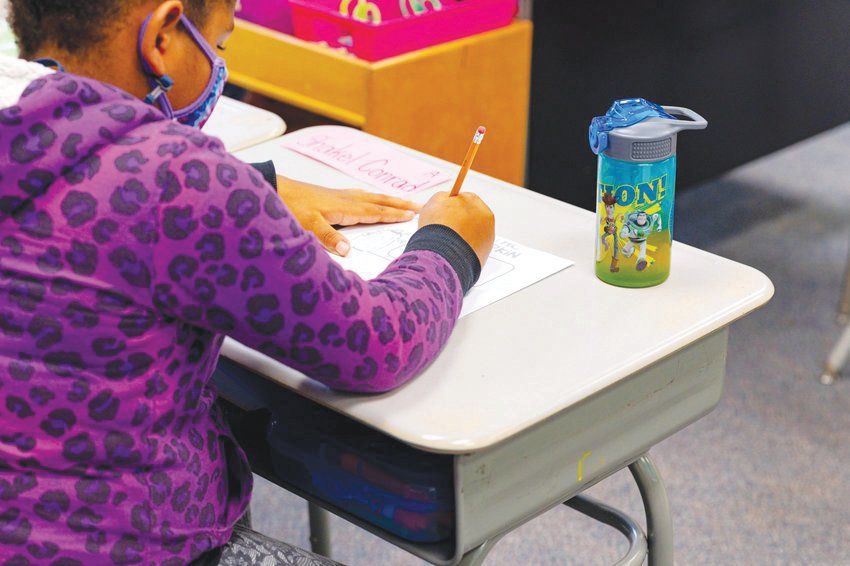
‘It’s Not About Me’: CHCCS Teachers Provide Support Through Pandemic – Chapelboro.com


As local K-12 schools begin to wrap up their spring semesters, some teachers are still trying to come to terms with the past year.

Michelle Gay is a 5th grade teacher at Northside Elementary School in Chapel Hill. Throughout the pandemic, Gay has had to continuously adapt her lesson plans as students moved from a fully remote to a hybrid, in-person learning model.

“It’s definitely been a learning curve,” Gay said. “I think the more we’ve done it the better it’s gotten and there are definitely some days I feel really great about it and some days where I want to check in with the online kids separately to see if they feel like they’re being heard as much.”

Gay said she’s had to get creative when it comes to making sure every child is included in the classroom – whether it’s projecting the online learners’ screens or finding ways to help remote students interact with those learning in-person.

“I’ve got a little cart that I can take around with me throughout the classroom with a computer on it, so kids are interacting with each other,” Gay said. “So, we’ll have different days where it’s like ‘hey let’s come and look at this kid’ and I’ll cart the computer over to that student.”

Gay said ongoing changes to the district’s learning models has been hard on a lot of students – especially on top of baseline pandemic stressors. However, the return of some students to the classroom following spring break was a light in the dark.

“I know my students who are back in person tell me everyday how excited they are to be back in person,” Gay said. “I have students that threaten to come in on Saturdays. I’ve definitely been spending a good chunk of time checking in on kids’ social and emotional health and making sure we’re including that in our curriculum.”

The effects of the pandemic, however, hasn’t just taken a toll on students. Gay said looking after her own emotional well-being has been an important step in serving her students and herself. Sometimes that means being able to disconnect when she leaves the classroom or simply just taking it all one day at a time.

“We haven’t really thought a lot past the end of this year,” Gay said. “I think there has been a lot of really positive things that have come out of this year, but it has been really exhausting.”

Zach Lord is an 8th grade social studies teacher at McDougle Middle School in Carrboro. He said the transition to remote and then hybrid learning was not a natural one for him.

“It is definitely a challenge because part of me just wants to focus all of my attention on the in-person kids because they’re right there in front of me, but I know the education of the remote kids is just as important,” Lord said. “So, it is very difficult to find that healthy balance between engaging with the remote kids and engaging with the in-person kids.”

He said the most difficult part of teaching this past year has been adapting all his curriculum to fit these new learning models and changing the way he taught his classes.

“I’m a very up and active mobile teacher, just constantly walking around, talking with my hands, so sitting behind a desk teaching was very difficult,” Lord said.

In April when the Chapel Hill-Carrboro City Schools district transitioned to a hybrid learning model, Lord said his students were excited to come back from day one.

“It was awesome,” Lord said. “It was like the first day of school again. You could feel the excitement and energy in the air – everybody happy to see one another and interact for the first time in a semi-normal situation since March of 2020.”

Despite having to adjust his plans, adopt his curriculum and fundamentally change the way he teaches, Lord said when push comes to shove, it’s about the kids.

“Yeah, I might be burnt out, yeah I might not like it, but the big picture is the kids because they are the future,” Lord said. “It’s not about me, it’s never about me – it’s just being there for them. If I could go back a year in time and just tell myself ‘hey this is going to be hard on you but it’s going to be even harder on the kids.’ So just be a shoulder to lean on for the kids is what I would say I’ve learned the most through all of this.”

Lead photo via Peyton Sickles.


Chapelboro.com does not charge subscription fees. You can support local journalism and our mission to serve the community. Contribute today – every single dollar matters.