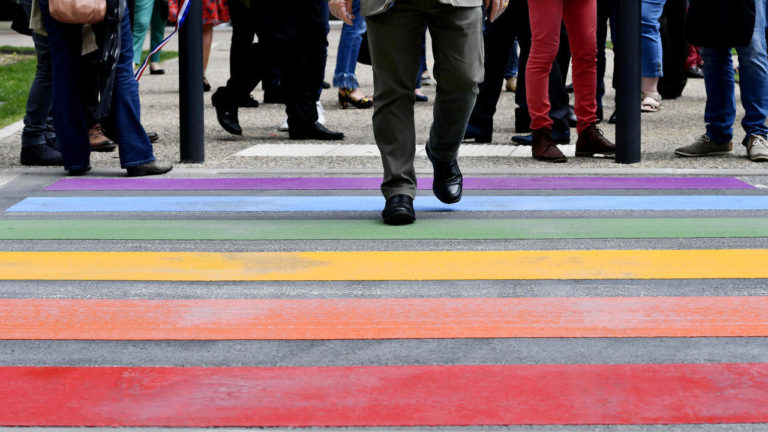
Covid-19 lockdowns led to an increase in anti-LGBT violence within families in France in 2020, according to associations supporting lesbian, gay, bisexual and transgender people. These groups say they have been under increased pressure to urgently find lodgings for young people thrown out on the street because of their sexual orientation.
Advertising
“There have never been so many domestic violence situations to deal with,” said Matthieu Gatipon-Bachette, spokesman for the Inter-LGBT association, speaking with FRANCE 24 ahead of the the International Day Against Homophobia, Transphobia and Biphobia on May 17.
“For some young people, their coming-out to their family has gone very badly,” he added. “They usually have a support network in their school and from their friends. But, with the various lockdowns, they found themselves alone and some were confronted with violent reactions when their sexual orientation came out. Others were even thrown out of their homes by their families.”
Gatipon-Bachette, director of an accommodation centre for LGBT people in Metz, has received an unprecedented number of requests from young people living in outlying and suburban areas. Clémence Zamora-Cruz, a member of the association Au-delà du genre, which supports young transsexuals, reported a similar experience to FRANCE 24: “During the lockdown, young people called on us to mediate with their families and we had a few cases of children being chased out of their homes. We managed to get them to safety, but it was very difficult.”
A ‘misleading’ drop in anti-LGBT incidents
Anti-LGBT incidents recorded in France actually officially decreased by 15% in 2020, the ministry of the interior announced on May 12. This reported drop marked a halt to the continuous increase noted since 2016, when these figures were first published, including a steep rise over the last two years (36% in 2019 and 33% 2018).
Some 1,590 victims of homophobic or transphobic crime were recorded in France in 2020, compared to 1,870 in 2019. According to the ministry, almost a third of victims suffered “anti-LGBT” insults (31%) and a quarter suffered non-sexual physical violence (26%). Among the victims of physical violence, half (51%) were unable to return to work.
However, the ministry itself warns that these figures are “misleading” since they are based on the number of complaints registered and do not reflect the reality of anti-LGBT attacks. “Victims rarely register complaints,” the ministry stresses.
According to a survey conducted over the period 2012-2018, “only about 20% of victims of anti-LGBT threats or violence and only 5% of victims of anti-LGBT insults file complaints”, the ministry points out.
“The lockdowns strongly affected people registering complaints,” says Gatipon-Bachette. “The circulation of Covid-19 has deterred people from moving around and getting together, but victims often ask us to accompany them when they are making this type of complaint. They don’t want to go alone.”
Improving police training
A lack of police training to deal with this type of situation constitutes another obstacle. “Police don’t always record the homophobic nature of attacks,” explains Gatipon-Bachette. This is despite measures included in a three-year plan unveiled by the government last year, such as the development of ongoing training for LGBT referents within police stations and gendarmerie brigades to improve the reception of victims. “This must now be implemented”, insists Gatipon-Bachette.
On the ground, associations have decided to take their own initiative. Flag!, an LGBT+ group representing agents of the interior and justice ministries, has developed its own app to help victims anonymously report the violence they suffer on a daily basis. “When they have finished their report, they are guided towards public agencies or aid groups to ensure they receive help and no longer feel alone and isolated”, the association says.
Domestic violence goes unreported
Other obstacles are more difficult to overcome. “We sometimes don’t even realise that we are victims of homophobia when we are called a ‘faggot’ or a ‘queer’. It takes a bit of distance to realise this,” Étienne Deshoulières, a lawyer for the support network Stop Homophobie, told FRANCE 24. The association, which supports legal proceedings for homophobic insults, receives around 2,500 calls every year.
When victims are young and not supported by their families, the process becomes more complicated. “When the people close to them are not aware of their situation, younger people often don’t want to let them know that there was a homophobic element to the violence or robbery they were victims of,” explains the spokesperson for Inter-LGBT.
In this context, it is even more difficult to assess anti-LGBT violence within families. “It is extremely hard to denounce your own relatives”, notes Zamora-Cruz. This makes it even more problematic to quantify domestic violence, which means it gets excluded from official figures.
Covid-19 lockdowns led to an increase in anti-LGBT violence within families in France in 2020, according to associations supporting lesbian, gay, bisexual and transgender people. These groups say they have been under increased pressure to urgently find lodgings for young people thrown out on the street because of their sexual orientation.
“There have never been so many domestic violence situations to deal with,” said Matthieu Gatipon-Bachette, spokesman for the Inter-LGBT association, speaking with FRANCE 24 ahead of the the International Day Against Homophobia, Transphobia and Biphobia on May 17.
“For some young people, their coming-out to their family has gone very badly,” he added. “They usually have a support network in their school and from their friends. But, with the various lockdowns, they found themselves alone and some were confronted with violent reactions when their sexual orientation came out. Others were even thrown out of their homes by their families.”
Gatipon-Bachette, director of an accommodation centre for LGBT people in Metz, has received an unprecedented number of requests from young people living in outlying and suburban areas. Clémence Zamora-Cruz, a member of the association Au-delà du genre, which supports young transsexuals, reported a similar experience to FRANCE 24: “During the lockdown, young people called on us to mediate with their families and we had a few cases of children being chased out of their homes. We managed to get them to safety, but it was very difficult.”
A ‘misleading’ drop in anti-LGBT incidents
Anti-LGBT incidents recorded in France actually officially decreased by 15% in 2020, the ministry of the interior announced on May 12. This reported drop marked a halt to the continuous increase noted since 2016, when these figures were first published, including a steep rise over the last two years (36% in 2019 and 33% 2018).
Some 1,590 victims of homophobic or transphobic crime were recorded in France in 2020, compared to 1,870 in 2019. According to the ministry, almost a third of victims suffered “anti-LGBT” insults (31%) and a quarter suffered non-sexual physical violence (26%). Among the victims of physical violence, half (51%) were unable to return to work.
However, the ministry itself warns that these figures are “misleading” since they are based on the number of complaints registered and do not reflect the reality of anti-LGBT attacks. “Victims rarely register complaints,” the ministry stresses.
According to a survey conducted over the period 2012-2018, “only about 20% of victims of anti-LGBT threats or violence and only 5% of victims of anti-LGBT insults file complaints”, the ministry points out.
“The lockdowns strongly affected people registering complaints,” says Gatipon-Bachette. “The circulation of Covid-19 has deterred people from moving around and getting together, but victims often ask us to accompany them when they are making this type of complaint. They don’t want to go alone.”
Improving police training
A lack of police training to deal with this type of situation constitutes another obstacle. “Police don’t always record the homophobic nature of attacks,” explains Gatipon-Bachette. This is despite measures included in a three-year plan unveiled by the government last year, such as the development of ongoing training for LGBT referents within police stations and gendarmerie brigades to improve the reception of victims. “This must now be implemented”, insists Gatipon-Bachette.
On the ground, associations have decided to take their own initiative. Flag!, an LGBT+ group representing agents of the interior and justice ministries, has developed its own app to help victims anonymously report the violence they suffer on a daily basis. “When they have finished their report, they are guided towards public agencies or aid groups to ensure they receive help and no longer feel alone and isolated”, the association says.
Domestic violence goes unreported
Other obstacles are more difficult to overcome. “We sometimes don’t even realise that we are victims of homophobia when we are called a ‘faggot’ or a ‘queer’. It takes a bit of distance to realise this,” Étienne Deshoulières, a lawyer for the support network Stop Homophobie, told FRANCE 24. The association, which supports legal proceedings for homophobic insults, receives around 2,500 calls every year.
When victims are young and not supported by their families, the process becomes more complicated. “When the people close to them are not aware of their situation, younger people often don’t want to let them know that there was a homophobic element to the violence or robbery they were victims of,” explains the spokesperson for Inter-LGBT.
In this context, it is even more difficult to assess anti-LGBT violence within families. “It is extremely hard to denounce your own relatives”, notes Zamora-Cruz. This makes it even more problematic to quantify domestic violence, which means it gets excluded from official figures.
The final four “American Idol” contestants are leaving it all on the stage — though one contestant was notably absent from this week’s episode.
On Sunday’s show, which aired live coast-to-coast, the four remaining singers took on songs by their own personal idols, receiving guidance from guest mentor Finneas O’Connell — a singer, songwriter and record producer who goes by the mononym Finneas. The contestants later returned to sing original singles, followed by songs they performed earlier in their “Idol” journeys.
Though this episode was originally set to feature the final five, Caleb Kennedy, 16, left the competition last week after a controversial video of him surfaced on social media. Host Ryan Seacrest barely touched on Kennedy’s absence on air, saying at the top of the show that the high school student “will not be continuing in the competition” despite making the top five.
In a Snapchat post, Kennedy appeared beside someone wearing what seems to be a Ku Klux Klan hood. Kennedy’s family said the video was recorded when he was 12, and his mother, Anita Guy, said the video “was taken after Caleb had watched the movie ‘The Strangers: Prey at Night’ and they were imitating those characters.”
“Caleb doesn’t have a racist bone in his body,” she added.
Judges Lionel Richie and Luke Bryan gave their thoughts on the controversy in a virtual Q&A after the show. “First and foremost, as judges and as a judges panel, we love these kids, and we get emotionally involved,” Bryan said. “We wish nothing but the best for Caleb, and it does make for a very, very challenging and upsetting week.”
Richie added that he hopes this will be a learning experience for the teenager.
“We grow up, and we make mistakes, and we look at our lives behind us many, many times, and we say, ‘God, what was I thinking about when I did that?’ This is one of those situations,” he said.
As usual, Bryan, Richie and Katy Perry offered feedback as fans voted at home for who they wanted to see in the final three.
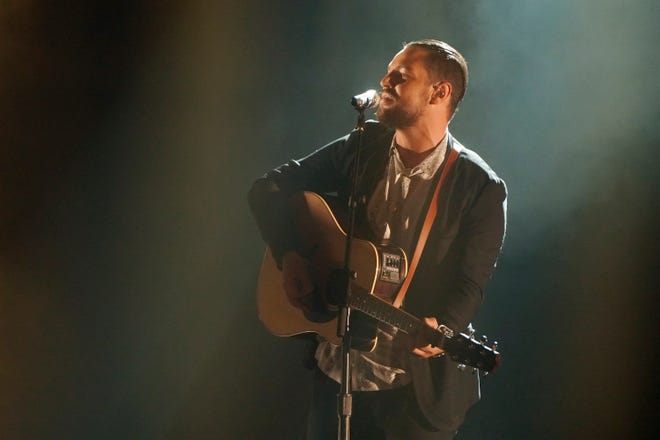
According to Bryan, Beckham made the top four because he’s genuine and authentic. Richie agreed, telling the singer that fans “fell in love not only with your voice but with who you are.”
“That’s a genuine quality of being a star,” Richie added.
Later in the show, Beckham returned for his original song “23,” followed by Chris Stapleton’s “You Should Probably Leave,” which he sang during Hollywood Week.
After pointing out that “23” dominated the country music chart after its release, Perry told Beckham he’s clearly a rock star already.
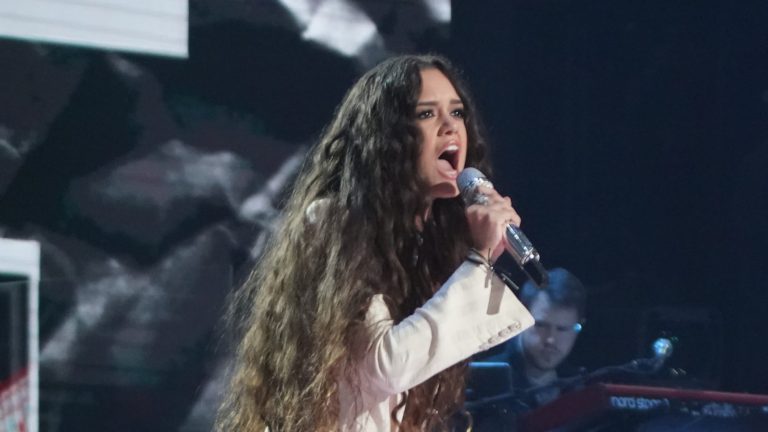
Casey Bishop’s personal idol is someone Finneas knows well: his sister and collaborator, Billie Eilish. The 16-year-old sang Eilish’s “wish you were gay,” which Finneas co-wrote.
“The greatest honor as a songwriter is hearing the song covered, and Casey’s got an incredible instrument,” the mentor said.
Bryan told Bishop she “crushed every aspect” of her performance. “In my opinion it was your best,” he added.
Richie praised Bishop for keeping the audience on their toes.
“You were in a moment that made us wonder, ‘What is she going to do next?’ ” he said. “You killed it my dear.”
Later in the show, Bishop killed it again with her original song “Love me, Leave Me” and Mötley Crüe’s “Live Wire,” which she sang in her first audition. But unlike her audition, the teen got to jam to a live band instead of singing acapella.
Perry marveled at the high school student’s versatility.
“I just can’t believe that you can sing ‘Somewhere Over The Rainbow’ a couple of episodes ago so elegantly and then get down on your knees for ‘Live Wire,’ ” Perry said. “You check all of the boxes. You are ready to party.”
Grace Kinstler
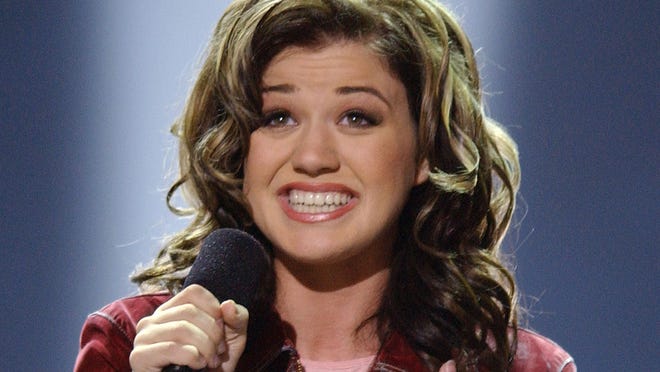
College student Grace Kinstler’s personal idol also happens to be an “American Idol”: Kelly Clarkson, who won the show’s first season when Kinstler was only 1yearold.
Like Clarkson, Kinstler said she wants to become a role model to girls who feel different. She sang “A Moment Like This,” which Clarkson belted out during the season one finale after wining the show.
“You have thought of yourself as trying to be something unique,” said Richie. “You are your normal. It’s totally fresh to everything else in the world. That’s what makes a star.”
Perry revealed her cousins are rooting hard for Kinstler to win. “You are a lot like Kelly Clarkson, and she is a bonafide mega star,” the judge added.
The college student later returned to sing her original song “Love Someone” followed by Demi Lovato’s “Father,” which she sang during the showstopper round.
“All of our birds are about to leave the nest,” said Richie. “Artistry, check. Star power, check. Your future, check.”
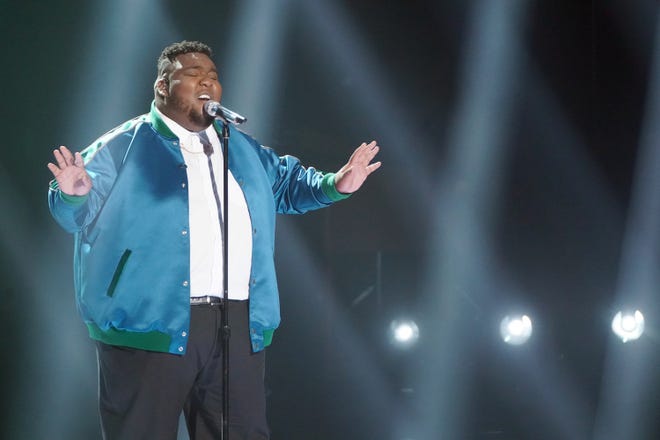
Caretaker Willie Spence, who Finneas said has “one of the best voices I’ve ever heard,” gave a rousing performance of “Glory” by Common and John Legend, Spence’s personal idol.
As usual for Spence, his performance garnered divine praise from the judges.
“I’m so glad you took us to church,” exclaimed Perry. “It was connected. It was spiritual… I’m speechless.”
Perhaps the highest compliment came from Bryan. “You’re literally going to save people’s lives with your voice,” the judge said, as tears streamed down Spence’s face.
Spence returned for equally powerful performances of his original song “Never Be Alone” and Beyoncé’s “I Was Here.”
Perry said Spence proved he has “that connection to that next realm.”
Who went home?
At the end of the episode, Seacrest revealed Beckham, Spence and Kinstler made the top three, which meant Bishop was eliminated.
Post-show, the teen reflected on becoming more confident through “Idol.” Before her audition, most of Bishop’s singing experience came from belting into her hairbrush at home.
“I’m really proud of myself, and everyone else,” she said. “Earlier, during the show, I wasn’t so comfortable, and I think it was noticeable. And now I am.”
The season finale of “Idol” airs at 8 pm ET next Sunday, when Spence, Kinstler or Beckham will be declared the winner.
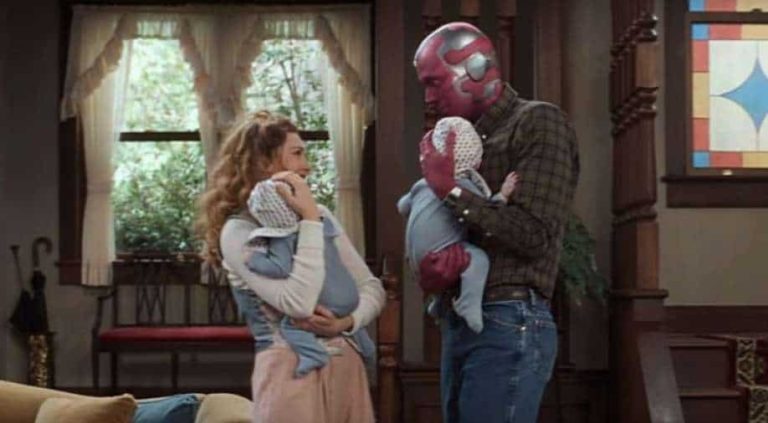
Marvel superhero series “WandaVision” was the big winner at the MTV Movie and TV Awards on Sunday, as Sacha Baron Cohen poked fun at his recent Oscars loss — with a little help from Borat, Bruno and the gang.
“WandaVision,” which takes characters from Marvel’s record-breaking superhero blockbuster films and shifts the action to the Disney+ streaming platform, won four awards at the Los Angeles ceremony, including best show.
The oddball but acclaimed series set in a bizarre, sitcom-inspired world also bagged best performance in a series for its star Elizabeth Olsen, best villain for Kathryn Hahn, and “best fight.”
“This is bananas, this whole thing — this whole year has been so trippy,” said Hahn, one of several stars to refer to the pandemic’s impact, with the live in-person award show taking place in Hollywood a year after the previous edition was canceled.
The late Chadwick Boseman — who surprisingly failed to posthumously win best actor for “Ma Rainey’s Black Bottom” at last month’s Oscars — was honored for best performance in a movie.
The awards do not differentiate between male and female actors, and have been honoring Hollywood since 1992 with “golden popcorn” statuettes for unconventional categories including “best kiss.”
Taking place at the start of the summer blockbuster season, and voted for online by the public, the awards tend to recognize more mainstream and commercial favorites than other ceremonies.
“To All the Boys: Always and Forever” — the conclusion to Netflix’s trilogy of teenage romantic comedies adapted from Jenny Han’s young adult novels — was named best movie.
Baron Cohen won a non-competitive award — accepting in a video that saw him arguing with various of his own comic and frequently inappropriate personas such as Borat and Ali G.
“Right before anyone else does it, I am officially canceling myself,” joked Baron Cohen.
“I was actually really looking forward to this after losing at the Oscars. You can keep it. Go on, you’re a caricature,” he told his gay Austrian fashionista alter-ego Bruno, handing over his statuette.
Baron Cohen had been nominated for best supporting male in “The Trial of the Chicago 7” and best adapted screenplay for “Borat Subsequent Moviefilm,” but failed to win either Academy Award.
Scarlett Johansson was also honored for her career by MTV on Sunday.
The inaugural “MTV Movie & TV Awards: Unscripted” celebrating reality television will take place Monday.
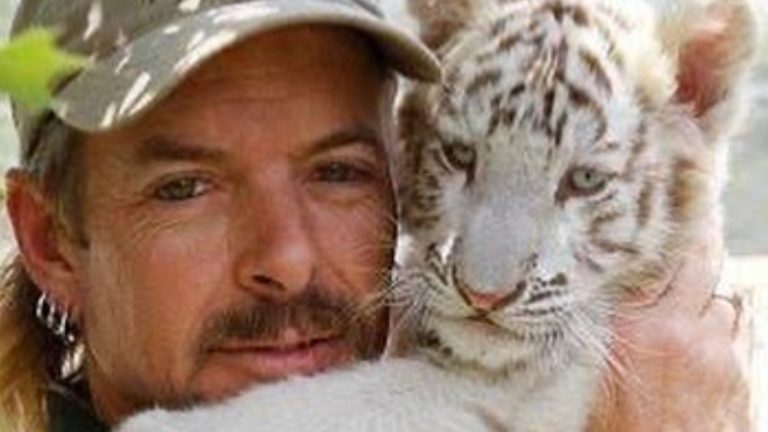
Joe Exotic has been seeking to be freed almost from the moment the jail door swung shut on him. His lawyer has tried to get his sentence overturned on the grounds that the jury was biased against him. When former President Trump was compiling a list of inmates to pardon prior to his leaving office, the Tiger King petitioned to be among them. When Trump ignored his plea, Maldonado-Passage concluded that he was “too gay” to win the sympathy of the far-right-leaning president (via HuffPost).
The most recent wrinkle in the case involves a new health revelation. According to the most recent post on his Twitter account, Joe Exotic says that a recent medical test has revealed “my PSA count came back very high for prostate cancer.” He added that the prison will facilitate further testing to determine the stage of his cancer. The former big-cat owner is asking President Biden to give him the pardon his predecessor refused “so I can go home and get proper medical care and proper food.”
Some followers of his account offered supportive words; one said, “Oh Joe my heart breaks for you. Wishing you some peace. I wish you weren’t there.” But others were less sympathetic, noting the poor treatment the Tiger King’s animals received in his sanctuary. A representative comment noted, “Life sucks. It’s called consequences. Many people sadly die in prison. Just like many of those poor big cats spent their lives locked in tiny cages. Karma …”
It’s been said that walking is one of the best ways to get healthy and I’ll be the first to admit that I don’t do it enough.
It doesn’t mean I’m not trying, especially at work.
I now make the short walk from North TV to the North Attleboro Post Office whenever something needs to be mailed. One of those trips was Tuesday when I mailed a DVD of the recent Century Game.
The three-minute walk requires two crossings of busy South Washington Street, which isn’t always easy.
Last week was a perfect example. I was on my way back to the office when I entered the crosswalk in front of the Community School. There were no cars coming from the downtown area and only a couple of vehicles were approaching from the south.
I always make sure to step off the curb when I’m ready to cross because I’ve heard motorists are not required to stop for pedestrians unless they are standing in the crosswalk.
A small school bus approached from the left. I can’t say that I was surprised that the driver was exceeding the 20 mph limit in front of the school, few people do. I was stunned, however, when she sailed by me without slowing down.
The car behind the bus also buzzed by as I attempted to cross. They were driving a car with Rhode Island license plates, so I wasn’t shocked.
Family and friends know that I am far from being a perfect driver. In fact, the city of Providence has bagged me two times since I moved my game to Triggs Memorial Golf Course a couple of years ago.
The first was in 2019.
Pattie called me one afternoon to tell me we had received a citation in the mail for failing to stop at a red light. “That can’t be,” I answered in reply.
It was, a traffic camera mounted on a telephone poll on Smith Street snapped multiple photos of my silver SVU. The first showed the signal light as red with my car just short of reaching the stop line. Another photo showed me advancing through the intersection and a third was a tight shot of my license plate.
I mailed the check for $75.
A second notice arrived in the mail last month. This time the infraction was for exceeding the speed limit in a school zone on Chalkstone Avenue. I was cited for going 31 mph when the limit was 20.
The fact I was going 31 was because I thought the speed limit was 30, as it is on most of the busy street.
Once again, there was no denying it was my car, but I couldn’t remember passing a school.
A search on Google Earth quickly revealed that the Nathanael Greene Middle School is on the left a short distance past the Roger Williams Medical Center.
I even clicked on street view to find if the area is marked a school zone. I soon found a 20 mph sign after the road curves right just before it leads down a down a hill.
A photo of the location could be listed in the dictionary next to the words “speed trap.”
Ignorance is not a legitimate defense, so I paid the $50 fine.
The good news is that the infractions did not result in points assessed and higher insurance costs for years to come.
I researched some more and found out that the entire area is loaded with traffic cameras due to its proximity to a number of schools (Mt. Pleasant High School, LaSalle Academy and Rhode Island College are also nearby) and a state law allowing cameras within a quarter-mile of any type of school.
Providence issued 63,000 such violations two years ago.
In spite of the $125 I’ve had to pay, I’m a big fan of the traffic cameras and believe that they have made me a better driver, not only on my way to and from Triggs, but everywhere.
It’s time for Massachusetts to do the same.
Think of how much money local communities would collect because of our proximately to Rhode Island and their drivers, especially for failing to signal when turning.
Turkey ranked the second worst country in the European Union for LGBT people, according the 2021 “Rainbow Europe” ranking compiled by Brussels-based NGO advocating for LGBT rights, ILGA-Europe.
A total of 49 countries were ranked in the index, which factors in both the “social climate’’ and the legal situation for LGBT people, with Turkey scoring above only Azerbaijan.
Malta, Belgium and Luxembourg led this year’s ranking with 94, 74 and 72 percent, respectively, while Monaco (11 percent), Russia (10 percent), Armenia (eight percent), Turkey (four percent) and Azerbaijan (two percent), occupied the bottom of the index.
In April, the head of Turkey’sDirectorate of Religious Affairs, the country’s top religious body, called on people to “oppose the illnesses and decay to lineage“ brought on by the “evil” of homosexuality.
Earlier this year, Interior Minister Süleyman Soylu called LGBT students at Istanbul’s prestigious Boğaziçi University and LGBT community at large “deviants”, while President Recep Tayyip Erdoğan has outright denied the existence of LGBT persons in the country.
The report also covered restrictions on freedom of assembly and attacks targeting LGBTI human rights defenders and their work.
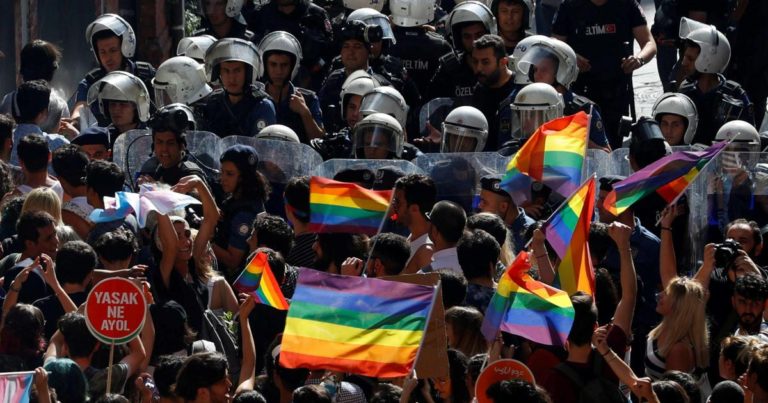
“Police used tear gas and other violent measures against participants of the women’s rights march, and forcibly took LGBTI flags from those marching,’’ it said, referring to a March 4 protest marking International Women’s Day.
Later in the same month, four students from Istanbul’s prestigious Boğaziçi University were detained by the police for possession of rainbow flags, Turkish media reported.
Being LGBT has never been criminalised under the modern Turkish republic, but LGBT-focused events have been banned in the country since 2015, after the Istanbul Pride attracted some 100,000 participants in 2014.
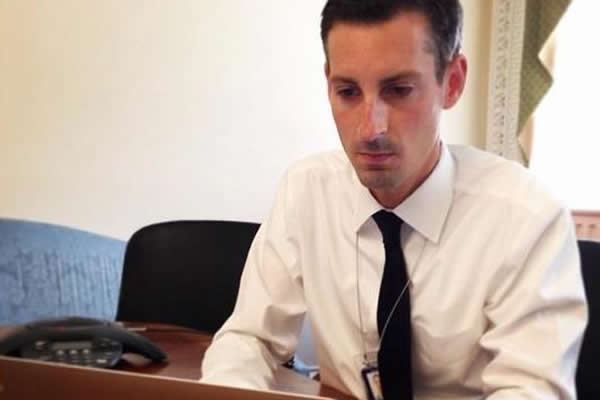
State Department spokesperson Ned Price on May 14 said the decriminalization of consensual same-sex sexual relations is one of the five priorities for the Biden administration in its efforts to promote LGBTQ rights abroad.
“The United States over the course of years has made some progress, but neither I, nor I think any objective observer should be satisfied with where we are,” Price told the Washington Blade during a telephone interview. “There’s a lot more work to do.”
President Biden in February signed a memorandum that committed the U.S. to promoting LGBTQ rights abroad. Price told the Blade the decriminalization of homosexuality is “one of the many reasons why” the White House issued it.
“It is one of the many reasons why Secretary Blinken is so focused on this issue as well,” said Price.
Homosexuality remains criminalized in nearly 70 countries around the world.
Saudi Arabia and Iran are among the handful of countries that impose the death penalty upon anyone found guilty of engaging in consensual same-sex sexual relations. Bhutan and Gabon are among the nations that have decriminalized homosexuality in recent years.
The Trump administration in 2019 tapped then-U.S. Ambassador to Germany Richard Grenell to lead a decriminalization initiative. Price declined to tell the Blade whether he feels the campaign was effective.
“Across the board I generally have a posture of not characterizing the last administration,” said Price. “I’ll leave them to speak to their record.”
Price told the Blade the Biden administration will also work to protect LGBTQ migrants and asylum seekers.
“When it comes to the (issue of) irregular migration, this is not just a challenge at our border,” he said. “This is fundamentally a challenge that starts in the region and if we are to address the migrant flows that reach our borders, we’re going to have to start in the region and that’s precisely what we’re doing.”
Activists in Honduras, El Salvador, Guatemala and other countries with whom the Blade has spoken say violence and discrimination based on gender identity and sexual orientation are among the factors that prompt LGBTQ people to flee their homes and travel to the U.S.
Price did not say whether any of the $4 billion in aid the Biden administration has pledged to spend in order to help mitigate the causes of migration from Central America’s Northern Triangle will specifically go to LGBTQ rights groups or HIV/AIDS service organizations. Vice President Kamala Harris late last month announced an additional $310 million in aid to “address” what Price described as “the root causes of irregular migration and to provide people with the confidence that they need not undertake the very dangerous journey north to the United States and that they can be confident in their lives in their home countries.”
“Oftentimes that is about economic opportunity, but there are cases in which it has more to do with discrimination and persecution,” Price told the Blade. “And so, we recognize that our approach to addressing those underlying drivers has to be holistic, given there are a range of factors and that’s why we’re working with a variety of groups on the ground and also understanding that marginalized communities, including the LGBTQI community, in the region, that there needs to be meaningful partnership there as well.”
“USAID (U.S. Agency for International Development) is deeply engaged in this work, the State Department is engaged in this work as well and will continue to be, knowing that if we’re going to make progress, if we’re going to address the underlying root causes of irregular migration, we need to attempt to address all of them,” he added.
Price told the Blade the administration’s three other global LGBTQ rights priorities are funding efforts “to protect human rights and to advance nondiscrimination around the world,” respond to anti-LGBTQ human rights abuses and “building coalitions and engaging international organizations in the fight against this discrimination.”
“We have said across the board that one of the pillars of our foreign policy is the recognition that, yes, the United States is the most powerful country on the face of the Earth,” said Price. “We have tremendous sway and influence the world over, but we also recognize that in every challenge in virtually every arena, we will be able to do more, we will be able to be more effective, we’ll be able to be more persuasive and act more decisively when we bring our allies and partners along with us and this administration has put a great deal of emphasis on our alliances, our partnerships, but also those like-minded, as we call them, partners.”
Price added the U.S. recognizes “the values we share with our closest partners in the world are incredibly important.”
“They provide us with a similar framework and a set of priorities on which to act and of course working together to protect, but also to promote the rights of LGBTQ populations around the world,” he told the Blade. “It is a core tenet of what we share with our like-minded allies and partners. You will see us doing this on a bilateral basis. You will see us doing this on a multilateral basis, within blocks and groupings, and also at the U.N. as well. We will seek to press this case in all of those contexts.”
Price spoke with the Blade three days before the International Day Against Homophobia, Biphobia and Transphobia, which commemorates the World Health Organization’s 1990 decision to declassify homosexuality as a mental disorder. Blinken on Sunday in a statement acknowledged IDAHOBiT.
“The message of ‘Together: Resisting, Supporting, Healing!’ is especially poignant as this year’s IDAHOTB theme,” said Blinken. “Ending hatred and violence against LGBTQI+ persons requires collaborative action from us all.”
“The United States is doing its part,” he added. “Within the first weeks of his administration, President Biden issued a memorandum instructing all U.S. federal agencies working abroad to ‘ensure that U.S. diplomatic efforts and foreign assistance promote and protect the human rights of LGBTQI+ persons.’ And that important work is well underway.”
Blinken in his IDAHOBiT statement also referenced the same five priorities that Price discussed with the Blade.
“Working together, we can create a world that respects and celebrates the dignity of all individuals,” said Blinken. “It is in partnership that we will achieve our goal of a rights-respecting, inclusive society where no one lives in fear because of who they are or whom they love.”
(Photo courtesy of the International Day Against Homophobia, Biphobia and Transphobia committee)
Blinken in March announced the State Department has disbanded the Commission on Unalienable Rights, a human rights advisory committee his predecessor created that LGBTQ activists sharply criticized.
He announced last month the State Department will once again allow U.S. diplomatic installations to fly the Pride flag. The position of special U.S. envoy for the promotion of LGBTQ rights abroad within the State Department’s Bureau of Democracy, Human Rights and Labor has remained vacant since 2017, but Blinken has pledged to make it an ambassador level post.
The Trump administration in 2018 withdrew from the U.N. Human Rights Council, which in recent years has emerged as a vocal champion of LGBTQ rights around the world. Blinken in February announced the U.S. will “reengage” with it.
Price is the first openly gay State Department spokesperson.
“I know that every time I say something I am speaking on behalf of the Department of State, on behalf of Secretary Blinken, on behalf of the U.S. government, sometimes on behalf of President Biden,” he told the Blade. “I’m not sure what I fully appreciated before actually coming into this job is that I’m actually speaking to the LGBTQ community around the world.”
Price said he received emails and tweets from around the world after the Biden transition team announced his appointment. Price told the Blade that some people were “seemingly in shock,” while others had “some degree of delight that a member of the LGBTQ community would be put in such a public facing role in an American administration.”
“I understand this work is not about me,” Price told the Blade. “I’m never offering my personal opinion, but I think that I’ve come to understand that there is meaning in having an openly gay man in a role like this. There is meaning for the LGBTQ community at home, but especially in this role there is meaning and value attached to having that be the case around the world, and especially around the world where members of the community are routinely and often times systematically persecuted.”
But in the end, it wasn’t enough: After three months of competing on “American Idol,” Casey Bishop’s run on the show came to an end Sunday. Now the Estero teenager is returning home to Southwest Florida.
Host Ryan Seacrest offered condolences and congratulations to the Top 4 singers Sunday, just moments before announcing who would go on to the show’s finale May 23.
“I just want to say that it has been amazing to watch all of you,” Seacrest said. “Probably the best Top 4 we’ve ever had — ever — on ‘American Idol.’
“So congratulations to each one of you. Thank you for what you’ve given us.”
But only three of the night’s singers would get to compete in next week’s finale. And the last of those singers to be announced came down to Bishop and Boston’s Grace Kinstler.
“One will take that coveted final spot and head home for a hero’s welcome,” Seacrest said, referring to planned hometown visits by the Top 3 this week. “And the other’s ‘Idol’ journey will come to an end tonight.
“The final person to compete in the finale next week, live, is … Grace.”
The audience erupted into applause at the news.
“Congratulations, Grace!” Seacrest said. “Which means we have to say goodbye to Casey. Let’s hear it for Casey, ladies and gentlemen!”
The night capped three months’ worth of “Idol” performances for Bishop, who sang everything from Soundgarden’s “Black Hole Sun” and Alanis Morissette’s “Ironic” to Judy Garland’s “Over the Rainbow” and the jazz standard “My Funny Valentine.”
Most of those performances were met with raves from the show’s three judges. That included the four songs Bishop sang Sunday.
Lionel Richie jumped out of his chair and seemed stunned after Bishop’s high-energy performance of Motley Crüe’s hard-rocking classic “Live Wire.”
“What — what was that?” Richie said. “You can be so whimsical, and right in the middle of this whole thing, you … drop … the … bomb.
“I loved it. It’s stardust all over you. I want front-row seats and backstage passes.”
Luke Bryan had a similar reaction after Bishop sang Billie Eilish’s “wish you were gay.”
“That was crushed,” Bryan told her. “I mean you just crushed every aspect of that whole thing. In my opinion, it was your best, it was your best, it was your best. … Great job!”
The “American Idol” finale airs at 8 p.m. Sunday, May 23. Kinstler will perform with Chayce Beckham and Willie Spence.
One performer was conspicuously absent from Sunday’s show: South Carolina’s Caleb Kennedy.
Kennedy, 16, left the competition last week after a controversial video surfaced on social media. The three-second video shows Kennedy sitting beside someone who appears to be wearing a Ku Klux Klan hood. Kennedy has said he was 12 at the time.
That reduced Sunday’s show to four performers instead of the planned five, and there was only one elimination instead of two.
Here’s a closer look at what Bishop sang Sunday, and what the judges said:
Billie Eilish’s ‘wish you were gay’
To get ready for her performance, Bishop worked with producer and singer-songwriter Finneas, brother to pop star Billie Eilish. Each of the Top 4 singers sang a salute to one of their musical idols.
Finneas said he was impressed by Bishop and her voice. “She’s got such a rich tone,” he said. “I can’t believe she’s only 16.”
Bishop performed Eilish’s “wish you were gay” in front of video screens shaped like Polaroid pictures. Afterward, the judges praised her performance.
Richie talked about how the show had pushed Bishop to come up with her own stage persona.
“You now own your persona,” he said. “You were in a moment that made us wonder what she is going to do next. You killed it, my dear. I loved it.”
Bishop performed these two songs back-to-back: Her new single “Love Me, Leave Me” and Motley Crüe’s hard-rock classic “Live Wire.”
Bishop and the rest of the Top 4 singers released original songs last week recorded with well-known music producers. Bishop’s pop song, “Love Me, Leave Me,” was recorded with two-time Grammy winner Ian Fitchuk.
After performing that one, Bishop sang “Live Wire” — the same song she’d sung for her “Idol” audition in February. This time, it was full-speed, loud and with a full rock band.
Perry called Bishop’s single her new favorite song.
“I just can’t believe that you can sing ‘Somewhere Over the Rainbow’ a couple of episodes ago, so elegantly, and then get down on your knees for ‘Live Wire.’ You check all the boxes. You are ready to party.”
Finneas’ ‘Break My Heart Again’
This emotional duet from Bishop and Chase was the last performance of the night Sunday. Finneas’ pop ballad was released in 2018.
The judges didn’t make any comments.
Connect with this reporter: Email crunnells@gannett.com or connect on social media at Charles Runnells (Facebook), @charlesrunnells (Twitter) and @crunnells1 (Instagram).
“American Idol” top four finalist Casey Bishop made a bold move Sunday night, sitting down with mentor Finneas to take on Billie Eilish’s “Wish You Were Gay.” She rocked the song’s co-writer/producer, and the judges, too — yet, despite all that love, apparently not everyone wished she would stay.
“So, you’re singing my sister’s song,” Finneas said to the 16-year-old Estero, Florida native about the track. “The greatest honor as a songwriter is hearing the song covered, and Casey has got an incredible instrument,” he continued, advising the teen to sing the song as if “these are lyrics you just thought up before you started singing.”
More from Variety
Dressed in white, Bishop delivered an emotional version of the song that had the judges lavishing praise on the performance.
“You just crushed every aspect of that whole thing,” Luke Bryan gushed. “In my opinion it was your best; it was the perfect song to choose and seeing you have so much fun with Finneas.” Bryan had predicted early in auditions that Bishop would win the singing competition. Lionel Richie said she found her “personae,” while Katy Perry declared Bishop a future star.
“I mean, you found your stardust and you’re rolling around in it,” Perry said. “You found that instant identity. You look up to Billie Eilish, but whether or not you win ‘American Idol,’ you are going to be your next hero.”
But Bishop’s “Idol” journey came to an end Sunday night, as Chayce Beckham, Willie Spence and Grace Kintsler came to comprise the top three and move on to the hometown performances and next week’s finale. That season capper will feature performances by former Fleetwood Mac member Lindsey Buckingham, Alessia Cara, Chaka Khan, Fall Out Boy, Luke Combs, Macklemore, Mickey Guyton, Sheryl Crow and all three “Idol” judges.
Before her elimination, Bishop reminded America of what the judges liked in the first place with a full-blown rendition of her audition song, Motley Crue’s “Live Wire” –only this time with the full band rocking out behind her.
“I want front row seats,” said Richie.
After her original audition, Bishop scored online praise from Motley Crue and other celebrities, including SZA and “American Idol” season 10 alum Haley Reinhart, along with Chris Cornell’s daughter, Lily, after her performance of Soundgarden’s “Black Hole Sun.” She has performed alongside Incubus singer Brandon Boyd for a pair of duets, including “Wish You Were Here,” covered Alanis Morisette’s “Ironic,” impressed Coldplay singer Chris Martin with her take on “Paradise” and did a complete change-up with a softer cover of “Over the Rainbow” from the movie “The Wizard of Oz.”
After the debut of her single “Love Me, Leave Me,” Perry declared the track — recorded with Ian Fitchuk, one of Kacey Musgraves’ producers — her “favorite song.”
Bishop scored huge praise from Finneas as well.
“That kind of spontaneity —she’s got such a rich tone, I can’t believe she is only 16,” he said.
Bishop, who admitted to being a huge fan, told the producer that Eilish’s music has helped her through “hard times.”
“I don’t feel alone when I listen to your music,” she said.
Bishop also joined “Idol” contestant Chayce Beckham for a beautiful duet on the Finneas ballad “Break My Heart Again.”
TORONTO – The bond between a father and his daughter through the eons of time oft times has lent itself to a simple phrase, ‘Daddy’s little girl.’ As a father celebrates every milestone, from scrapped knees and the childhood joys of discovery in the world around her to walking her down the aisle and watching her get married- to greeting his first grandchild, that bond is unshakeable.
However, for the LGBTQ+ community, especially the Trans community more often than not the example of that kind of a bond is fleeting at best and fiction at worst. But then too not necessarily in a broad stroke way as exemplified by a Dad from Toronto, Ontario, Canada.
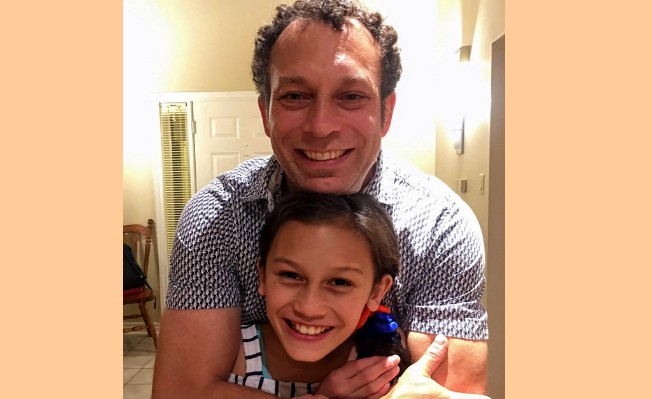
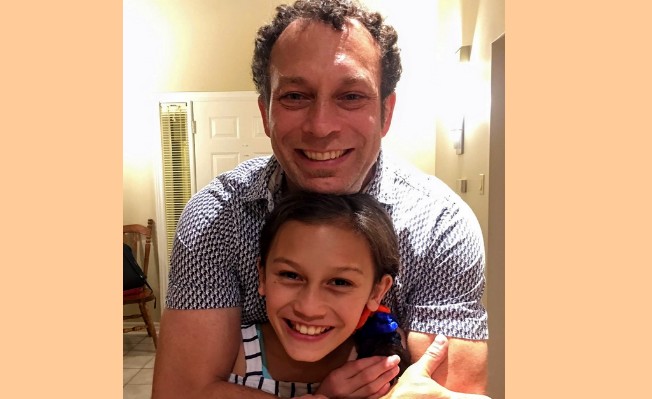
Meet Jamie Alexander, the proud father of a 12 year old trans girl who alongside his daughter Ruby has created a business that not only caters to other Trans kids like her, but embraces them in a unique and affirming way.
The Alexanders launched RUBIES, in part to a family trip to the Central American. Alexander became concerned over the issue of what should Ruby wear to the beach in a country that may not be ready for a girl like her. Then in a larger sense, what of the thousands of other Trans girls? From that sense of practicality an idea was born and an online enterprise was launched.
On the company’s website it reads, “The question practically answered itself: form-fitting clothing for trans girls. Each pair of RUBIES bikini bottoms and underwear features a soft compression that provides worry-free comfort and helps keep everything in place. It’s designed for the beach, the gym, the pool, or the dance lessons – without the slightest compromise in style.”
Alexander wrote about their journey together in 2019 in an essay (below) condensed and edited for clarity;
Ruby’s relationship with girls clothing and shoes as she navigated her gender identity may have started as early as three years old. I had exposed her to a music video of a silhouetted Beyoncé no-no-no-ing while expounding the virtues of being a single lady. Ruby would dance around in my wife Ange’s black patent leather pumps busting out PG-13 moves.
A few months prior I had listened to a podcast on This American life or some such show about a father who discovers his boy was exhibiting gender fluid behaviour (a term I would not learn until later). He discussed his eventual acceptance starting with the purchase of a pink bike complete with silver streamers. When I heard this at the time I frankly was thanking the stars that Ruby was obsessed with fire trucks and cars. I figured dancing in mommy’s shoes was something any little kid might want to do.
When she was five her princess obsession kicked off into high gear spurred on by Princess Fiona from the fractured fairytale Shrek. The release of Tangled solidified my role as prince in her hourly staging of Disney’s take on Rapunzel. Ruby’s head was always wrapped up in multiple bedsheets knotted together and dangled down a flight of stairs to aid her rescue. That performance ran every day for a solid year. After that Ruby would star in and direct plays with her friends. She defied gravity as Elphaba in Wicked and sung a heart wrenching rendition of I Dreamed a Dream from Les Mis, unknowingly singing the definitely not-so-appropriate-for-a-7-yr-old song about how her childhood was robbed by a man.
From early on Ruby would only wear tank tops and held disdain for shirts that would cover her shoulders. I traveled a lot for work at this time and it took me a while to realize that the souvenir t-shirts I would bring home would lay dormant in her drawers. One time I opened her room and she was hacking away at the sleeves of one of my latest gifts with a pair of scissors. From then on we would snip off those unnecessary bits of fabric to suit her style.
Ruby was accepted at an arts school that every spring selects thirty girls and thirty boys out of five hundred kids who sing, dance and act their way through a series of auditions that pay much more attention to passion than aptitude. Ruby had the former in spades and to our surprise was accepted to the school.
I had to call the principal and explain that they may for the first year have a gender imbalance at the school now that one of their prospective male students was going to start school as a girl. As if it was destiny that year in a bureaucratic error they had accepted thirty-one boys and twenty-nine girls. The principal was overjoyed that this bungle could be reversed. (As an aside, Principal Lucas was one of the most supportive and influential figures in Ruby’s school life).
Ruby like most other tween girls her age has taken a liking to makeup and hair care (she had already started pilfering Ange’s blush when she was six!). Unlike some more responsible parents, we are quite liberal in our parenting when it comes to makeup and have few rules except not to use Mommy’s more expensive products! Despite the fact that her makeup is now flawless, since you know, eleven year old girls need to use concealer, there were at least a few days where Ruby unwittingly showed up at school in clown face.
With the whirlwind of activities at school and after school such as swimming, gymnastics and dance came the necessity to buy swimwear, leggings and leotards causing no end to anxiety about how Ruby can safely wear form fitting clothing. For a while it was board shorts for swimming and the beach and gymnastics in frumpy sweatpants.
After a while we both started to feel more comfortable among friends and family with her wearing clothing that any other kids of her age might wear, like two piece bikinis and tight leggings. On one occasion after a trip to the beach while camping I was told by friends who came along with their kids that Ruby is wink wink nudge nudge “quite confident”.
This is all coming from very supportive peeps that, including myself are not accustomed to seeing the male form in women’s clothing. Not too long ago my parents, also incredibly supportive people, contacted me to awkwardly ask if I knew what Ruby had been wearing at my sister’s pool. I asked them what they were worried about because Ruby sure as hell didn’t seem to be bothered. I jokingly thought that perhaps there were transphobic people hiding out in the trees near my sister’s quite private swimming pool.
A few months ago, Ruby and I went on a sixteen day trip to Panama, every day of which we were experiencing new adventures together. There were many chances to go swimming and we decided together that for safety Ruby would continue wearing her board shorts.
I feel bad for being reluctant to let my daughter wear what she wanted from when she started begging me to dress as a princess for Halloween. Ultimately, we were and continue to be worried about her safety, and being a responsible parent is about making difficult decisions. Perhaps if Ange and I were steeped in the LGBTQ community it would come more natural, but this is all fairly new to us.
While we have gone to a number of pride marches over the years we have now transitioned from spectators to participants. The last two trans marches have had great turnouts and we all can bask in the open affirmation of Ruby’s identity. Last June with an ever expanding number of marchers, spanning at least three city blocks, it was the first year when the streets were lined with allies showing their support after some unfortunate events at a march in a less accommodating city the week prior. This was a truly moving experience for the whole family and Ruby was glowing for days afterwards.
I would like to imagine a world where kids can wear whatever they want irrespective of their anatomy. I am certain in another generation this will be the case, at least in the progressive cities of North America. In the meantime we can find ways to help our kids express themselves safely.
The Blade spoke to Alexander Monday about the company and he expressed his determination to manufacture a clothing line that would lift up and ensure greater body positivity for transgender children. But he also expressed his and Ruby’s determination to make a difference for the Trans kids that needed to be uplifted and have their gender identity validated.
Alexander pointed out that is an important and nuanced matter, especially clothing with the right coverage ensures more than just comfort and support—it can provide physical safety, too. Transgender youths are subject to bullying and violence at much higher rates than cisgender youths, a reality he and his wife Angela were acutely aware of. Their concern spurred a thorough online search for bottoms with better compression.
Alexander had done his research and found that even with the tens of thousands of Trans kids just in the United States and his native Canada, there were few options for clothing that would be gender affirming for those young people.
“All the products were for trans adults then sized down. There were no brands that spoke to trans kids, who are the same as other kids and just want something that resonates with them,” he said.
In October of 2019, Alexander left his role as Chief Technology Officer at a software company he’d founded to start a new business: RUBIES. His mission was to create form-fitting bikini bottoms for transgender girls and non-binary kids under the age of 14. More importantly, he wanted to build a brand that uplifted trans kids.
“There’s a big political focus in the transgender community, which I’m grateful for. But, I didn’t want to go that route with RUBIES,” he said. “I wanted to focus on celebrating trans kids. Because that’s what they are: they’re just kids. And we should celebrate them the way we celebrate all other kids.”
Though wholly new to apparel and fashion, Jamie was no stranger to entrepreneurship, having previously built three successful businesses. He poured himself into the inclusive fashion industry and joined the Fashion Zone at Ryerson, (In Toronto) which helps aspiring entrepreneurs start apparel businesses. The Fashion Zone provides budding entrepreneurs with access to equipment, workshops, and industry advisors and professionals.
It was there that he met a local garment engineer, Olena Vivcharyuk. Alexander’s vision resonated with Olena, and she helped design and sew the first bikini bottom prototype for RUBIES.
With her help, Alexander produced 25 bikini bottom prototypes, and was ready to start testing them. He knew from his former roles that it was integral to get as much feedback as possible, as early as possible.
As a member of various groups on Facebook for parents with transgender children, Alexander knew how close-knit the community was and quickly realized parents would be open to their kids trying out the bottoms. In exchange for their time and feedback, RUBIES offered them free bikini bottoms by mail.
What Alexander didn’t expect was just how much enthusiasm he’d encounter. “I was overwhelmed with the positive responses. But, the first set of bottoms were completely wrong by a full size. Every single prototype. It was a mess,” he said, laughing. But that didn’t deter him.
Ten iterations later, Alexander was ready to launch the Ruby Shaping Bikini Bottom product. Within two months, RUBIES had shipped over 250 pairs.
These days as summer approaches and people are finally able to escape the clutches of the coronavirus pandemic and travel to the beaches, pools, and lakes or just playing in their own backyards, Trans kids will be able to feel free to be themselves and have some much needed body positivity.
The Blade asked Ruby how she felt about being able to provide a gender affirming swim-wear line to young trans girls and others? She told the Blade she feels proud to be part of company that is changing people’s lives Her message for young Trans people, “To be yourself. Only you get to decide who you want to be.”
Finally, she says that she wants to let other trans and non binary kids know that there are so many others in the world just like them and that they are not alone.
For more information about the Alexander’s company you can head here:
The Top 4 onAmerican Idolhad one last chance to impress viewers and be voted into the finale. Caleb Kennedy exited the competition after an old video surfaced of him with someone who looked to be wearing a Ku Klux Klan hood.
The quartet kicked off the festivities by choosing a song inspired by their own personal idol. This week the hopefuls were mentored by FINNEAS and later put in pairs to perform two of his own creations. The Grammy-winning songwriter, producer, and artist also took the stage for “Till Forever Falls Apart” with Ashe. Idol 2019 winner Laine Hardy and 2018 alum Michael J. Woodard were in the house to watch the current crop of finalists.
In anIdolfirst, the hopefuls went into the studio with top producers Tricky Stewart, Ross Copperman, and Ian Fitchuk to record original singles, which they sang live on the show. Judges Katy Perry, Luke Bryan, and Lionel Richie gave the emerging talent high marks. Luke also showed how it’s done with his latest hit “Waves.”
By night’s end, Ryan Seacrest announced Chayce Beckham, Grace Kinstler, and Willie Spence made into the finale next week. Casey Bishop, a favorite, reached the end of her journey on the show.
Did America make the right decision? Let’s check out the highlights.
Casey Bishop
Casey tellsFINNEAS how much his sisterBillie Eilish’s music means to her. It’s why she chose Billie’s “wish you were gay,” which FINNEAS co-wrote, for the idol round. He was impressed by the 16-year-old’s talent, especially at a young age. Luke felt she crushed it, calling it her best performance. Lionel said she now owns her persona and killed it. Katy said she found her stardust and instant identity. Next Casey sang her original “Love Me, Leave Me” and revisited her bedroom audition song “Live Wire” by Mötley Crüe. Lionel was blown away by her range. Katy agreed and felt she checks all the boxes. Luke rocked out.
Chayce Beckham
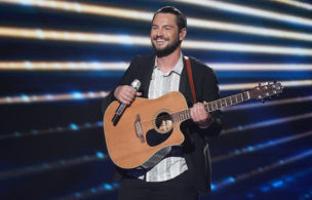
FINNEAS was feeling Chayce’s tone, describing it as earnest. His advice for Chayce was to focus on the lyrics and the camera while not letting the band overtake him. The 24-year-old performed “Colder Weather” byZac Brown Band for his personal idol song. Katy said the guitar looks good on him and that he was born on theIdolstage. Luke appreciates his realness. Lionel wanted Chayce to know that people genuinely like him. In the next round performed his original single”23″ (number one on the country charts) and “You Should Probably Leave” by Chris Stapleton. Luke liked the production specifically on the original. Lionel said he underwent a complete transformation. Katy called him a rock star.
Grace Kinstler
FINNEAS enjoyed hearing Grace’s voice. She picked originalIdolwinner Kelly Clarkson’s “A Moment Like This” as her personal idol song. The 20-year-old called Kelly an inspiration, not fitting in a specific mold. Lionel said there are many young ladies who just need her to tell them it’s okay to be themselves. Kelly thought it was a cool song choice and that she is a lot like Kelly Clarkson. Luke called her voice vocal pyro. Grace performed her original single “Love Someone” followed by “Father” by Demi Lovato, dedicated to her late dad. Luke felt the Demi song was made for her to sing and the melody on the original. Lionel sees artistry, star power, and a bright future. Katy liked the original song and was touched by it.
Willie Spence
FINNEAS told Willie that he has one of the best voices he has ever heard. Willie’s personal idol song is “Glory” by John Legend. There was a LOL moment when FINNEAS said, “You know [John Legend] is onThe Voice,” Willie responded with, “I know, but I like this show more.” It turned out to be a good song choice in the judge’s eyes. Katy felt like she was taken to church. Luke told Willie that he will literally save people’s lives with his voice, taking them out of dark places. Lionel said he is uplifting to the point of getting chills. He premiered his original “Never Be Alone” along with a cover of “I Was Here” by Beyoncé. Lionel said he is a giant of a voice and presence. Katy said she has that connection and stepping into his power. Luke said he is a teddy bear that flips into beast mode when the cameras are on for him to perform.
Idol Duets
FINNEAS told Grace and Willie how he wrote the 2020 single “What They’ll Say About Us” as a tribute to the late Nick Cordero. The two powerhouses went into knowing the important meaning. Later Casey and Chayce took on ”Break My Heart Again” from FINNEAS’ 2019 debut EPBlood Harmony.FINNEAS mentioned he was listening to a lot of Frank Sinatra during that period. Casey and Chayce no doubt closed the jam-packed show on a high note.
The 41 acres of beachfront just south of Long Island’s mainland were a relative refuge beginning in the 1940s, when homosexuality could mean jail, losing one’s job and being disowned.
Unlike nearly anywhere else in the U.S. at that time, in Cherry Grove, two people of the same sex could hold hands in public, dance together, and more. Those who didn’t conform to traditional norms of sexuality and gender felt freer to socialize outside of the closet. There were Broadway stars in drag and risqué humor thrived.
Inaccessible even today except by water, the Fire Island community was one of America’s first gay beach towns.
It’s the subject of an exhibition called “Safe/Haven: Gay Life in 1950s Cherry Grove,” which opened last Friday at the New-York Historical Society’s outdoor yard. It runs through Oct. 11. Admission is free but timed, with tickets available online.
“When you get on the ferry, and the ferry gets just past the Sayville channel, and the throttle opens up on the ferry, and you’re in the Great South Bay, and you are leaving America, it is just this incredible opportunity to just feel the weight of the world wash behind you,” State Assemb. Deborah J. Glick of Manhattan, who first visited Fire Island in 1972, said Friday at the exhibition’s opening reception.
Through 70 photographs, plus images of news articles, ads, tickets, a menu, cards, and party favors and invitations, the exhibition tells the story of this tiny community in a tiny hamlet on the barrier island south of Long Island.
One of the curators, Susan Kravitz, 77, of Roslyn Heights, said she hopes the exhibition shows how despite those oppressive and dangerous times for gay people, life at Cherry Grove offered “unleashed joy and playfulness,” even before the history-changing riots in 1969 at the Stonewall Inn augured in the modern gay-rights movement.
“You’ll see that people in these photographs were joyous. They were having a great time. They were happy. You could feel the laughter that was going on,” said Kravitz, a seasonal renter who first went there in 1979.
Depicted are the ferries and water taxis that would shuttle Grovers in and out; the campy, outdoor, themed parties (“Baby Party,” “Hat Party,” Diaper Party,” “Animal Party”); the uninhibited sexuality expressed despite the risk of police raids; the cabaret, theater and film people, and actors, artists and poets such as W.H. Auden who found their way to Cherry Grove; even people just relaxing on the beach.
But it wasn’t a completely safe haven.
The 1950s were a time when nearly everything about homosexuality and nontraditional expressions of gender were illegal: bars could lose their licenses for allowing gays to gather, sodomy was punishable by jail or fines, as was failing to wear a sufficient amount of clothing corresponding to traditional gender norms.
So, the exhibition says, as long-standing locals and families from the mainland sought to “reclaim” the area — there was nude sunbathing and cruising — the Suffolk County Police Department and other cops would routinely conduct raids, handcuffing arrestees to telephone poles before ferrying them to jail. Reports of the arrests — complete with names, addresses and employers — would be printed in the local newspapers, including in Newsday and The Suffolk Times.
One article on display at the exhibition reports the arrest, and guilty plea hours later, of a 29-year-old man for “conduct offensive to public health and decency.” He was to be jailed in Riverhead for 180 days.
Police did little to stop drunken teens from the mainland who would go across the bay to harass and beat up Grovers, according to the exhibition.
Before it was a gay mecca, Cherry Grove was frequented by a small community of Long Islanders from the Sayville-Patchogue area who came to go fishing or spend summertime with their kids. Still, there were also gay Grovers, as they came to be known, particularly theater people who were among the first set to venture there from New York City.
After the Great New England Hurricane of 1938 swept in, which the National Weather Service calls “one of the most destructive and powerful hurricanes in recorded history,” with Long Island in its path, Cherry Grove began to transition.
Wrote Esther Newton, author of 1993’s “Cherry Grove, Fire Island: Sixty Years in America’s First Gay and Lesbian Town”: “Cherry Grove, a place few others wanted, was where gay men and women began building their summer capital.”
Matthew Chayes, a Newsday reporter since 2007, covers New York City Hall.
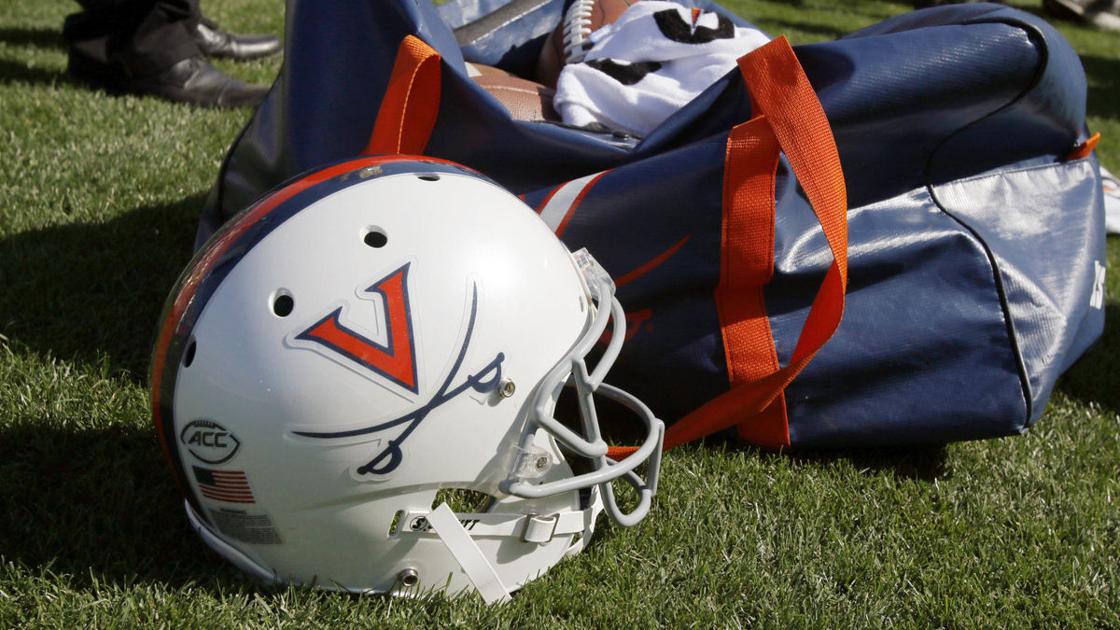
Stevie Bracey, a three-star linebacker from Georgia, verbally committed to the Virginia football team’s 2022 recruiting class Sunday. Bracey announced the decision on social media.
Virginia was one of the few Power 5 programs to offer Bracey, according to 24/7 Sports. Indiana, Syracuse and Minnesota were the other Power 5 programs to offer the linebacker. He received significant interest from top-tier Group of 5 programs and a few FCS schools. Army, Liberty and UCF all offered Bracey.
He becomes the fourth verbal commitment in Virginia’s 2022 recruiting class. He joins Will Hardy as players in the 2022 class from Georgia. Trey McDonald and Karson Gay are both from Tennessee, as all four of UVa’s current verbal commits are out-of-state prospects.
Bracey is a good athlete who has played a few positions in high school. In addition to being a standout linebacker, Bracey played tight end on offense. He also has experience at long snapper, contributing to the special teams unit.
Listed at 6-foot-1 and 215 pounds, Bracey plays with a good combination of power and speed. While there’s room to fill out his frame, Bracey doesn’t lack toughness at the position.
He fits the mold of a Virginia linebacker commit. While not a five-star prospect receiving dozens of Power 5 offers, there’s athleticism and toughness that can be developed. Bracey will play a final season of high school football before joining UVa and embarking on his collegiate career.
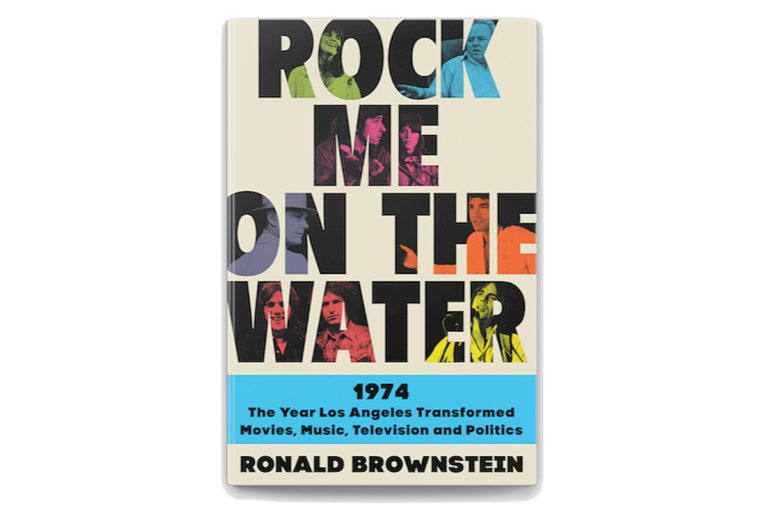
Combining the multi-media worlds of show business, Brownstein, a political correspondent and analyst, expertly discusses the political currents in the sea of artistic output in the 1970s. Each of these forms of entertainment were created during Richard Nixon’s demise, and California Governor Jerry Brown’s rise in popularity. The 12 chapters of the book act as a calendar, each month marking a significant moment in America’s cultural history of 1974.
In Brownstein’s discussion of Hollywood, Jack Nicholson and Warren Beatty prove to be his main characters as he examines Chinatown and Shampoo. He also shows a stark shift happening in the film industry at this time as a younger generation of film school graduates crept into the industry dominated by old men. Elsewhere in the book, he describes how Jane Fonda transitioned from a movie star into an anti-Vietnam war activist working from a Los Angeles headquarters.
At the heart of Brownstein’s musical conversations are Linda Ronstadt, Jackson Browne, and occasionally the Eagles. He writes of music executive David Geffen, who promised musicians an artistic “asylum,” where they could focus on their compositions, while he handled the business side of things. This led to the foundation of Asylum Records, which signed the majority of Laurel Canyon’s legendary artists. Featuring interviews with Ronstadt and Browne, the book offers insight into what it was really like to be part of Laurel Canyon’s musical community.
Brownstein argues that one of the “greatest nights in television history” was a CBS lineup in 1974: All in The Family, M*A*S*H*, The Mary Tyler Moore Show, The Bob Newhart Show and The Carol Burnett Show. He shows how the writers and actors all confronted uncomfortable subject matters such as blatant racism, the Vietnam War and the ideas of the modern woman.
It’s easy to see why Brownstein chose to name the book after Browne’s song “Rock Me on the Water.” It weaves together the threads of collaboration, creativity and politics that run throughout the book into a paisley-printed, patchouli-scented tapestry. Browne gave Ronstadt his blessing to include the song on her album. Her backing band was none other than Glenn Frey, Don Henley, Randy Meisner, and Bernie Leadon – otherwise known as the Eagles. Browne’s own version of the song features David Crosby’s harmonies and the percussion stylings of legendary session musician, Russ Kunkel.
Just as Browne sings of each natural element in “Rock Me on the Water,” Brownstein’s new book showcases the cultural elements of Los Angeles in 1974: movies, music, television, and politics.