There are multiple ways to prompt change in human or institutional behavior. The most effective of these tend to focus on monetary factors and prestige.
When Brigham Young University chooses to remain silent while one of the school’s religion professors uses a derogatory term on social media against one of its students, simply bringing the professor’s actions to the attention of the public is unlikely to prompt BYU (at least based on the school’s previous behavior) to discipline or censure the professor. Having the university sustain a financial setback or lose face, however, is more likely to have school officials take notice.
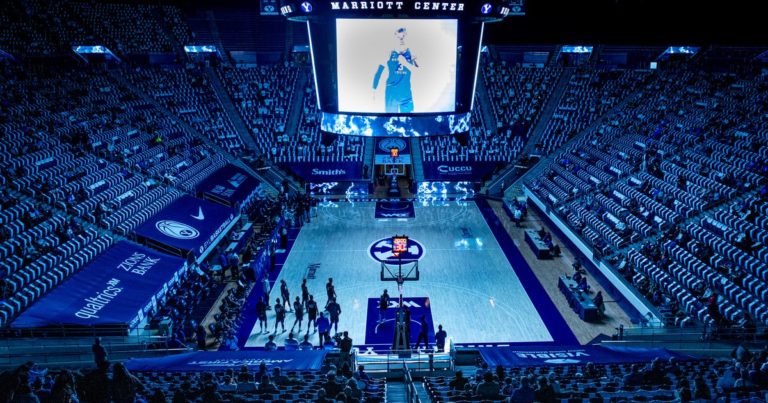
This would be accomplished most easily with a specific approach taken by other universities to BYU’s athletic program. In 2010, the school, presuming its football program was on par with Notre Dame in terms of national popularity, self-inflicted a wound that continues to fester a decade later. BYU elected to resign from the Mountain West Conference the following year to be an independent in football and join the West Coast Conference (all relatively small, church-affiliated colleges) in most other sports.
As a result, the football team does compete against schools such as USC, Washington and Boise State, but must also fill several games on the schedule with teams such as UMass, Liberty, Georgia Southern and Idaho State. Other sports languish in a minor conference. (Sorry, Gonzaga’s prowess in basketball does not lift all boats.)
What if other universities (supported by their alumni, current students and student athletes), in protest of BYU’s treatment of its LGBTQ students, refused to schedule games with the school? What if the NCAA elected to take a firmer position on member institutions’ codes of conduct toward LGBTQ inclusivity? Would BYU’s administration sit up and pay attention? Would they allow the athletic department (and a portion of the school’s reputation) to continue its downward trajectory?
BYU is a private, church-owned university. They are free to make policy without regard to state funding or public opinion (both within and outside of the church), so long as those policies do not violate federal, state or local laws.
The school, however, must realize that we live in an increasingly diverse and interconnected world that extends far outside of Provo and Utah County. Its graduates must know or learn how to interact and work with individuals from different religious, cultural and ethnic backgrounds.
Reluctance by other universities to interact with BYU on the fields and courts of sport would force a momentous decision — will the school administration begin to support its LGBTQ and other marginalized students? Or will it be relegated to isolation akin to the bison on Antelope Island?
Alex Karmazin
Alex Karmazin, Draper, is a physician who practices medicine in Provo and Salt Lake City.
Thinking about having sex on prom night? There’s this huge misconception that everyone is having sex, which makes you feel like you have to do it, too. But it’s such a big decision, and there’s so much to consider before going for it. In this week’s How 2 Deal, therapist Lindsay Fleming, LPC, walks us through everything to consider before deciding whether or not to take the plunge.
Remember when Brie Larson just casually held a pull-up for one entire minute? Well, Larson and her trainer Jason Walsh decided that wasn’t quite intense enough and upped the ante again in a clip the Captain Marvel star shared on Instagram today. This time, Larson jumps up into a pull-up position, bends her knees towards her chest, and places a weighted chain across her legs to add extra weight. As Walsh says, as he’s piling the chains onto her lap: “Why not?” (I mean, I can think of several reasons.)
That’s not even the toughest part. No, that would be when Walsh tells Larson to lower down in increments, first dropping so her arms are at 90-degree angles, then down a little bit more, then straightening her legs to drop the chains, before dropping back to the floor. You can even see Larson’s arms shaking as she tries to stabilize on the bar. “Not so bad!” Walsh says at the end. Yeah, OK, speak for yourself, because my arms were shaking just watching! I’m with Tracee Ellis Ross, who said Larson is “unreal” in the comments section of the post. Yep, that about sums it up. Check out the Larson’s arm-burning variation above, and if you’re inspired to start holding some pull-ups of your own, here are a few beginner exercises to get you there, no weighted chains involved.
New offering is one of the first funds to enable investing in companies committed to the LGBTQ+ community
WEST HOLLYWOOD, Calif., May 18, 2021 (GLOBE NEWSWIRE) — LGBTQ Loyalty Holdings, Inc. (OTC PINK: LFAP) (“LGBTQ Loyalty” or “the Company”), a diversity-and inclusion-driven financial methodology and data company, announces through its wholly owned subsidiary, Loyalty Preference Index, Inc., the launch of the LGBTQ + ESG100 ETF (NASDAQ: LGBT) today.
“I am thrilled that the launch of the LGBTQ + ESG100 ETF has arrived. Today is an important day for advancing equality, as we showcase companies that align and support the LGBTQ community through this announcement. Seeing the trading symbol ‘LGBT’ listed on Nasdaq is truly historic,” said Martina Navratilova, former Hall of Fame professional tennis player and member of the LGBTQ Loyalty board of directors.
The LGBTQ + ESG100 ETF is one of the first funds designed to serve the principles and values of the LGBTQ community and its allies. The fund provides investors with the methodology and results related to performance of the top corporations that embrace ESG principles in the workplace and advance equality. The LGBTQ + ESG100 ETF offers investors access to U.S. large-cap equity securities of companies that have demonstrated a commitment to LGBTQ diversity and inclusion, along with ESG compliance, as part of their corporate social responsibility fundamental mandate.
“I’m very proud to be part of this doubly beneficial effort: it provides supporters of LGBTQ equality with access to investments that reflect their values, while simultaneously rewarding businesses that demonstrate that ethical behavior and profitability are fully compatible,” said Barney Frank, Former U.S. Congressman, Chairman of the House Financial Services Committee and member of the LGBTQ Loyalty board of directors.
The fund will track the LGBTQ100 ESG Index (Ticker: LGBTQ100), powered by Fuzzy Logix, which identifies the top 100 corporations that most align with the LGBTQ community across America. It is the first-ever index to incorporate LGBTQ community survey data into the methodology, generating a benchmark of the nation’s highest-performing companies that are most committed to advancing equality.
For the 18-month period from November 2019 to April 2021, the Index generated a 43.84% return versus a 37.65% return for the S&P 500, while keeping volatility lower by 66 basis points of the benchmark. The Index was most recently reconstituted in March 2021.
“The launch of the much-anticipated LGBTQ + ESG100 ETF, is at a consequential time for the LGBTQ community and our supportive allies, and a monumental time for advancing equality. We are proud to provide investors with the means to invest in top corporations that align with their interests, and embrace equality, diversity and ESG principles in the workplace.” said Bobby Blair Executive Chairman of the Board.
Investors can learn more about the LGBTQ + ESG100 ETF at: www.PALETFs.com
About LGBTQ Loyalty Holdings, Inc.
LGBTQ Loyalty is a diversity- and inclusion-driven financial methodology and data company that quantifies corporate equality alignment with the LGBTQ community and minority interest groups. The Company has benchmarked the first-ever U.S. Loyalty Preference Index, which it believes empowers the LGBTQ community to express their preferences for the nation’s high-performing corporations most dedicated to advancing equality. The Loyalty Preference Index, branded as LGBTQ100 ESG Index, is an environmental, social and governance (ESG) Index, offering an added perspective for those seeking to align with equality-driven, ESG-responsible corporations. LGBTQ Loyalty’s leadership includes seasoned authorities in the financial industry and LGBTQ community. For more information, please visit www.lgbtqloyalty.com.
About Fuzzy Logix
We accelerate analytics. We use it to deliver high-impact business outcomes in Banking, Finance and Healthcare. Our state-of-the-art tool – FastINDX – allows 10-100x faster creation and turnkey management of Indexes and alpha-seeking Portfolios using a global database of 100K+ financial instruments. You can find us at www.fuzzylogix.com and www.fastindx.com.
Please consider the Fund’s investment objectives, risks, and charges and expenses carefully before you invest. This and other important information is contained in the Fund’s summary prospectus and prospectus, which can be obtained by visitingwww.PALETFs.com or call 1-866-690-3837. Read carefully before you invest.
Investing involves Risk. Principal loss is possible. Shares of any ETF are bought and sold at market price (not NAV), may trade at a discount or premium to NAV and are not individually redeemed from the funds. Brokerage commissions will reduce returns. Additional Fund risks include: Technology Sector Risk, Healthcare Sector Risk, Finance Sector Risk, Concentration Risk, Cyber Security Risk, and Liquidity Risk. For additional information please see the prospectus.
This information should not be relied upon as research, investment advice, or a recommendation regarding any products, strategies, or any security in particular. This material is strictly for illustrative, educational, or informational purposes and is subject to change.
A strategy or emphasis on environmental, social and governance factors (“ESG”) may limit the investment opportunities available to a portfolio. Therefore, the portfolio may underperform or perform differently than other portfolios that do not have an ESG investment focus. A portfolio’s ESG investment focus may also result in the portfolio investing in securities or industry sectors that perform differently or maintain a different risk profile than the market generally or compared to underlying holdings that are not screened for ESG standards.
Past performance is no guarantee of future results. Volatility is measured by standard deviation which is a statistical measurement of variations from the average. One basis point is equal to 1/100th of 1%, or 0.01%.
Please read the prospectus and its risk disclosure before investing.
Certain statements may constitute a forward-looking statement, including those identified by the expression “expect” and similar expressions (including grammatical variations thereof). The forward-looking statements are not historical facts but reflect the author’s current expectations regarding future results or events. These forward-looking statements are subject to a number of risks and uncertainties that could cause actual results or events to differ materially from current expectations. These and other factors should be considered carefully and readers should not place undue reliance on such forward looking statements. These forward-looking statements are made as of the date hereof and the authors do not undertake to update any forward-looking statement that is contained herein, whether as a result of new information, future events or otherwise, unless required by applicable law.
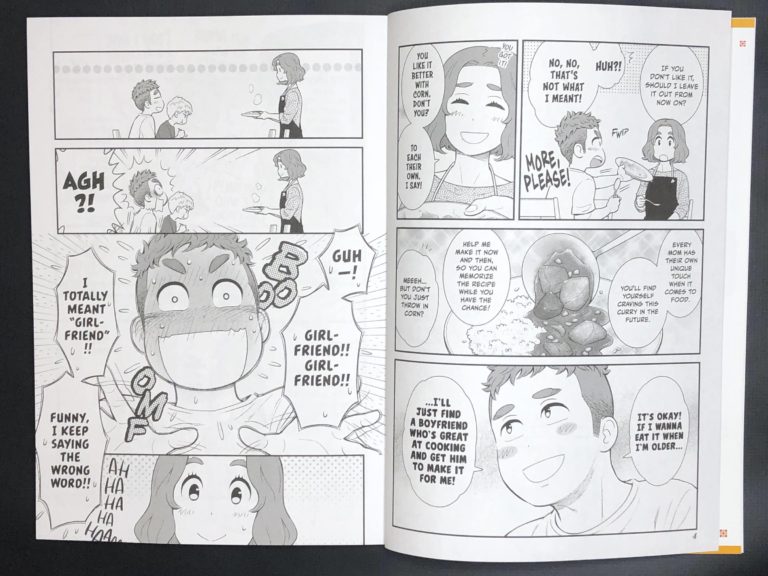
Tired of sifting through superficial boys’ love manga disguised as LGBT storylines? A recent series by manga author Okura might be more your speed. ‘I Think Our Son is Gay’ has received hundreds of glowing reviews since it was first published in Japanese in 2019. The series now has three volumes as well as a newly published English edition for international readers.
Photo: twitter.com/SquareEnixBooks
As you could probably guess from the title, the story is centred on a mother who has a growing feeling that her eldest son, Hiroki, could be gay. As Hiroki enters his first year of high school, homemaker Tomoko notices small clues that suggest her son has more interest in boys than girls. Rather than jumping to her own conclusions or questioning Hiroki directly, however, she resolves to give him the space to discover his identity in his own time and contemplates the best ways to support him.
As a slice of life manga, ‘I Think Our Son is Gay’ is an upbeat and humorous chronicle of the awkward stage between adolescence and adulthood, but the values explored in the series go beyond its feel-good storyline. Touching on topics ranging from asexuality to being forced out of the closet, the manga also provides the opportunity for cis-identifying readers to learn about how to be better allies to LGBT friends and family members.
Volume One of ‘I Think Our Son is Gay’ is now available in English for ¥1,579. You can order a copy here.
Tired of sifting through superficial boys’ love manga disguised as LGBT storylines? A recent series by manga author Okura might be more your speed. ‘I Think Our Son is Gay’ has received hundreds of glowing reviews since it was first published in Japanese in 2019. The series now has three volumes as well as a newly published English edition for international readers.
Photo: twitter.com/SquareEnixBooks
As you could probably guess from the title, the story is centred on a mother who has a growing feeling that her eldest son, Hiroki, could be gay. As Hiroki enters his first year of high school, homemaker Tomoko notices small clues that suggest her son has more interest in boys than girls. Rather than jumping to her own conclusions or questioning Hiroki directly, however, she resolves to give him the space to discover his identity in his own time and contemplates the best ways to support him.
As a slice of life manga, ‘I Think Our Son is Gay’ is an upbeat and humorous chronicle of the awkward stage between adolescence and adulthood, but the values explored in the series go beyond its feel-good storyline. Touching on topics ranging from asexuality to being forced out of the closet, the manga also provides the opportunity for cis-identifying readers to learn about how to be better allies to LGBT friends and family members.
Volume One of ‘I Think Our Son is Gay’ is now available in English for ¥1,579. You can order a copy here.
Inside Allentown’s Cathedral of St. Catharine of Siena, with its tall stained-glass windows and sanctuary suffused with a soft golden glow, the man in the black shirt and slacks could be mistaken for a clergyman.
He is, in fact, by someone who calls him “Father.” But Donald Maher isn’t a priest. He’s a Berks County attorney who practices labor and employment law, fitting subjects for the Irish-American son of a New York labor leader Maher likens to tough-guy actor James Cagney.
Law is his career. His vocation, though, is a decades-long ministry to gay Catholics, one that began in Manhattan at the height of the AIDS epidemic in the 1980s.
It was a tumultuous time, to say the least, with activists targeting institutions they blamed for impeding LGBTQ equality and progress against the disease — governments, pharmaceutical companies and, notably, the Catholic Church. In one of the most notorious incidents of the time, activists disrupted Mass at St. Patrick’s Cathedral in Manhattan; one took Communion and spit the consecrated host on the floor.
Maher, 66, a gay man who grew up in Brooklyn and came out as a teen, favors loving outreach over shock tactics. But he is striving to ignite the passion of that era’s activism in the five-county Allentown Catholic Diocese. He sees an opportunity as the LGBTQ community is finding a bigger voice and higher visibility as part of the broader rights movement.
To that end, he has been lobbying Bishop Alfred Schlert and other leaders to make more direct public statements about the place of gay and transgender people in the church, and to allow him to mount a full-scale, publicized outreach.
Whether that happens or not is an open question. Schlert says he and Maher are equally committed to welcoming LGBTQ people into the church and nurturing their spiritual lives. Where they diverge is on fundamental Catholic doctrine about human sexuality, and the bishop can’t promote a ministry that might contradict that doctrine.
“Some of what Donald wants me to permit is above my pay grade,” Schlert said, noting that a bishop’s role is to preserve teachings that have been handed down over millennia.
Maher argues that unbudging adherence to doctrine — putting the letter of the law over human nature — means the church can never move forward.
“Our churches need to be concerned with bringing the presence of Christ to the community on all issues of social justice,” he said, sitting for an interview outside St. Catharine’s.
The cathedral is the mother church of the diocese — an apt symbol in Maher’s vision, because the church is charged with nurturing and protecting all of its children.
It isn’t, he said. And that can hurt people.
‘Love,
welcome
and respect’
In America, at least, the AIDS crisis has eased because of treatments that have turned the disease from a death sentence into a chronic but manageable condition. But Maher and other activists still see members of the LGBTQ community suffering issues that long predated AIDS — discrimination and harassment that leave them far more prone than the general population to mental health issues and drug dependency.
Outreach by church leaders to the historically marginalized group could not only further societal acceptance but help reverse the decadeslong decline in church membership, Maher said, pointing to one study that found 39% of former Catholics cited the treatment of LGBTQ people as their reason for leaving.
Gay and transgender people, and their families and allies, “have been judged harshly and walked away,” Maher said.
Last year, after attending a conference on gay issues with a well-known Jesuit priest, the Rev. James Martin, Maher formed “Out in the Diocese of Allentown.” He describes the ministry — which is not sanctioned by the diocese — as one of “love, welcome and respect” for LGBTQ Catholics and their families.
It’s not his first such effort. He founded the Gay and Lesbian Catholic Ministry at his former parish in Manhattan, St. Paul the Apostle, in the early 1990s, when he and other activists were fighting the exclusion of gay Catholics from the city’s St. Patrick’s Day parade. Through Maher’s efforts, St. Paul’s held what may have been the first “Pride Mass” in 1993, one that devolved into chaos when shouting protesters injured the priest as they tried to tear off his lapel microphone.
Jason Steidl, a Catholic theologian and visiting assistant professor of religious studies at St. Joseph’s College in Brooklyn, said Maher brought phenomenal energy and creativity to parish-level outreach.
At a time when the LGBTQ community and the Archdiocese of New York were continually clashing, “he saw the distance between the gay and lesbian communities and the church, and he wanted to reconcile those communities through himself,” Steidl said. “There weren’t too many prominent LGBTQ Catholic ministries and Donald decided to do something about that.”
Steidl said Catholics, in some form or another, have been organizing to provide pastoral care to the LGBTQ community as far back as the 1940s.
“Donald wasn’t the first and he certainly won’t be the last,” he said. “But he showed what could be possible at the parish level.”
After the 9/11 terror attacks, Maher developed post-traumatic stress disorder and entered a treatment program in Pennsylvania. He expected to return to New York but ended up relocating to Albany Township.
He brought his passion with him.
“I’ve been at this a long time,” he said. “I consider myself graced to do this and consider my voice prophetic.”
By that, he means that his vision of a church that puts the LGBTQ community on equal footing with the straight community — sanctioning same-sex marriages, for example — is inevitable.
The only sanctioned LGBTQ outreach programs in the diocese now is called “Courage,” which teaches people with same-sex attraction to support one another in a life of chastity and prayer. Another program, “EnCourage,” provides support to family and friends of LGBTQ people.
Maher said “Courage” is deficient because it asks people to deny something fundamental to their nature.
“It’s a ‘pray not to be gay’ ministry,’ he said. “A very rejecting, damaging ministry.”
‘An element of sacrifice’
Maher speaks highly of Bishop Schlert. The two have met several times, and Schlert allowed Maher to publish an Advent essay on the diocesan Facebook page, in which Maher explains his ministry and invites readers to contribute ideas for it. The post received hundreds of likes and shares.
Schlert said he finds Maher personally engaging and well-versed in church teaching and history. On one level, he said, both want the same thing — for LGBTQ people to be assured the church welcomes them, loves them and wants them to live fulfilling spiritual lives.
“I understand very much their desire, and I couldn’t agree more that they should be welcome in the church,” he said. “I’ve been a priest for 34 years and in August I will have been a bishop for four years, and I wouldn’t be doing my job if I didn’t welcome people.”
Eventually, though, that welcome meets the clear line of church doctrine — which, despite the controversy it generates, is straightforward. God created men and women to enter loving communion with one another — marriage — and to bear and nurture children.
While same-sex attraction isn’t sinful, homosexual activity is, because by nature it can’t be open to life. So LGBTQ Catholics are called to a life of chastity, as are heterosexual people outside marriage.
“Every bishop struggles with it,” Schlert said of this intersection of inclusion and doctrine. “I don’t struggle with the teaching. It’s the pastoral approach where the art comes in.”
The doctrine doesn’t solely apply to LGBTQ people living non-chaste lives, but all unmarried Catholics in that state.
“I have to tell the cohabiting heterosexual couple that communion isn’t open to them either,” Schlert said. “We’re all called to a level of chastity depending on our state in life. There is an element of sacrifice that goes with every lifestyle, every vocation. When we say those things, it’s easy to perceive ‘I’m not welcome here.’ But that’s not the reality.”
One of the most painful experiences some LGBT people suffer is rejection by their parents. Schlert has counseled many people struggling after a child has come out.
“If they’re not accepting of a gay child, I say ‘Love them,’” he said. “Don’t excise them from your family.”
‘Who am I
to judge?’
The LGBTQ Catholic movement gained momentum with the 2013 election of Pope Francis, whose emphasis on pastoral leadership over the letter of doctrine seemed to open doors long believed shut. His famous answer early in his pontificate to a question about gay men pursuing the priesthood — “If a person is gay and seeks God and has good will, who am I to judge him?” — became a rallying cry.
Since then, the pontiff has elated and disappointed the community by turns. He criticized gender theory, but invited a transgender man who had been rejected by his priest to come to the Vatican. He said Christians should apologize to gay people for mistreating them, but in March approved a Vatican statement that priests can’t bless same-sex unions because “God cannot bless sin.”
Donald Maher with the Rev. James Martin, a Jesuit priest and bestselling author of “Building A Bridge,” a book on Catholic outreach to the LGBT community.
Donald Maher with the Rev. James Martin, a Jesuit priest and bestselling author of “Building A Bridge,” a book on Catholic outreach to the LGBT community. (Robert Metzger/Contributed photo)
On the “Out in the Diocese of Allentown” Facebook page, which is the main public face of his ministry, Maher makes the case for the LGBTQ community’s place in the Christian vision, mixing humor and seriousness in about equal measure.
One meme portrays Jesus saying “Guys, I said I hate FIGS.” The reference is to the homophobic banners sported by protestors from the notorious Westboro Baptist Church, contrasted with the account of Jesus withering an unproductive fig tree. The lesson of the story is that people who produce no spiritual fruit lead lives worthy of condemnation.
Other posts touch on the travails of LGBTQ people, particularly the youngest. Confronted by confusion, bullying and rejection, they attempt suicide at a shockingly high rate — more than 30%, according to one study.
Maher wants to do much more. He presented an outline of his plans to the diocese. It calls for LGBTQ education in churches and schools, parish pride events, public forums and dozens of other programs backed by the hierarchy.
Schlert said he has to proceed cautiously in endorsing programs, especially when laypeople take on the role of educators.
“My hesitancy has always been ‘I have to promote the teachings of the church,” he said. “I have to have a level of confidence that they’ll be upheld.”
‘We’ll do it ourselves’
In reaching out to the diocese’s LGBTQ community, Maher is not alone. Mel Kitchen, an Upper Saucon Township woman whose eldest son came out a decade ago, founded a support group for LGBTQ families called “You Are Mine.”
Kitchen, who works in the Pride Center at Lehigh University, tried to set up a program at her parish in Center Valley four years ago, but her appeals were rejected three times in six months.
She didn’t quit. She set up a table at “Pride in the Park,” Allentown’s annual LGBTQ celebration.
“I put a sign up,” she said. “People were like ‘Catholic? LGBTQ? What?’ But some people signed up. My philosophy was ‘If you build it, maybe they will come.’ If we can’t get parishes to work with us, we’ll do it ourselves.”
Kitchen finally found a home for the ministry at the St. Francis Center for Renewal in Hanover Township, Northampton County, which is run by the School Sisters of St. Francis.
“It was important to me to find some kind of (church-related) facilities as an affirmation to folks that they were loved and wanted,” she said. “The day I called they said, ‘Absolutely you can do this here.’”
In-person monthly meetings at St. Francis ended with the pandemic, but virtual meetings continue, drawing about a half-dozen participants on average. Kitchen believes that number would grow if she were allowed to spread the word about it within parishes, perhaps with notices in church bulletins.
Like Maher, Kitchen regards the “Courage” program to be deeply flawed, not much different than the conversion therapy that seeks to “cure” same-sex attraction.
“I understand where the church is coming from where celibacy is concerned, but we don’t ask people who they’re sleeping with,” she said. “You don’t ask anybody who walks into any ministry what they’re doing (sexually). I don’t know the answer to getting people back into the pews. I do know that unless you’re out in the community and meeting people where they are in everyday life, you’re sunk.”
In Maher, Kitchen has found a kindred spirit, someone who sees LGBTQ issues as part and parcel of the social justice movement that includes Black Lives Matter and other groups.
“You start down this road of social justice and it becomes social justice for everything,” she said, “not just LGBTQ issues. They are all tied together because we are not a single-issue people.”
Maher, she added, “has the capacity to engage. He has a wonderful heart and he looks for the good in everyone. Donald should be applauded.”
Steidl, the theologian, whose forthcoming book on LGBTQ ministry includes a chapter on Maher, called the soft-spoken lawyer “relentless.”
“He’s a man of ideals, of values,” Steidl said. “I think the (St. Paul’s) ministry was a fruit of his faith, a very deep Catholic faith. For about 10 years it was one of the most active gay and lesbian ministries in the U.S. He pushed and pushed and did really incredible things while he was there.”
Maher has no plans to stop. He said he will never lack energy for the work he is doing, because he believes it is inspired by the Holy Spirit.
“I’m not going anywhere,” he said. “I’m in this for the long game.”
TORONTO – The bond between a father and his daughter through the eons of time oft times has lent itself to a simple phrase, ‘Daddy’s little girl.’ As a father celebrates every milestone, from scrapped knees and the childhood joys of discovery in the world around her to walking her down the aisle and watching her get married- to greeting his first grandchild, that bond is unshakeable.
However, for the LGBTQ+ community, especially the Trans community more often than not the example of that kind of a bond is fleeting at best and fiction at worst. But then too not necessarily in a broad stroke way as exemplified by a Dad from Toronto, Ontario, Canada.
Meet Jamie Alexander, the proud father of a 12 year old trans girl who alongside his daughter Ruby has created a business that not only caters to other Trans kids like her, but embraces them in a unique and affirming way.
The Alexanders launched RUBIES, in part to a family trip to the Central American. Alexander became concerned over the issue of what should Ruby wear to the beach in a country that may not be ready for a girl like her. Then in a larger sense, what of the thousands of other Trans girls? From that sense of practicality an idea was born and an online enterprise was launched.
On the company’s website it reads, “The question practically answered itself: form-fitting clothing for trans girls. Each pair of RUBIES bikini bottoms and underwear features a soft compression that provides worry-free comfort and helps keep everything in place. It’s designed for the beach, the gym, the pool, or the dance lessons – without the slightest compromise in style.”
Alexander wrote about their journey together in 2019 in an essay (below) condensed and edited for clarity;
Ruby’s relationship with girls clothing and shoes as she navigated her gender identity may have started as early as three years old. I had exposed her to a music video of a silhouetted Beyoncé no-no-no-ing while expounding the virtues of being a single lady. Ruby would dance around in my wife Ange’s black patent leather pumps busting out PG-13 moves.
A few months prior I had listened to a podcast on This American life or some such show about a father who discovers his boy was exhibiting gender fluid behaviour (a term I would not learn until later). He discussed his eventual acceptance starting with the purchase of a pink bike complete with silver streamers. When I heard this at the time I frankly was thanking the stars that Ruby was obsessed with fire trucks and cars. I figured dancing in mommy’s shoes was something any little kid might want to do.
When she was five her princess obsession kicked off into high gear spurred on by Princess Fiona from the fractured fairytale Shrek. The release of Tangled solidified my role as prince in her hourly staging of Disney’s take on Rapunzel. Ruby’s head was always wrapped up in multiple bedsheets knotted together and dangled down a flight of stairs to aid her rescue. That performance ran every day for a solid year. After that Ruby would star in and direct plays with her friends. She defied gravity as Elphaba in Wicked and sung a heart wrenching rendition of I Dreamed a Dream from Les Mis, unknowingly singing the definitely not-so-appropriate-for-a-7-yr-old song about how her childhood was robbed by a man.
From early on Ruby would only wear tank tops and held disdain for shirts that would cover her shoulders. I traveled a lot for work at this time and it took me a while to realize that the souvenir t-shirts I would bring home would lay dormant in her drawers. One time I opened her room and she was hacking away at the sleeves of one of my latest gifts with a pair of scissors. From then on we would snip off those unnecessary bits of fabric to suit her style.
Ruby was accepted at an arts school that every spring selects thirty girls and thirty boys out of five hundred kids who sing, dance and act their way through a series of auditions that pay much more attention to passion than aptitude. Ruby had the former in spades and to our surprise was accepted to the school.
I had to call the principal and explain that they may for the first year have a gender imbalance at the school now that one of their prospective male students was going to start school as a girl. As if it was destiny that year in a bureaucratic error they had accepted thirty-one boys and twenty-nine girls. The principal was overjoyed that this bungle could be reversed. (As an aside, Principal Lucas was one of the most supportive and influential figures in Ruby’s school life).
Ruby like most other tween girls her age has taken a liking to makeup and hair care (she had already started pilfering Ange’s blush when she was six!). Unlike some more responsible parents, we are quite liberal in our parenting when it comes to makeup and have few rules except not to use Mommy’s more expensive products! Despite the fact that her makeup is now flawless, since you know, eleven year old girls need to use concealer, there were at least a few days where Ruby unwittingly showed up at school in clown face.
With the whirlwind of activities at school and after school such as swimming, gymnastics and dance came the necessity to buy swimwear, leggings and leotards causing no end to anxiety about how Ruby can safely wear form fitting clothing. For a while it was board shorts for swimming and the beach and gymnastics in frumpy sweatpants.
After a while we both started to feel more comfortable among friends and family with her wearing clothing that any other kids of her age might wear, like two piece bikinis and tight leggings. On one occasion after a trip to the beach while camping I was told by friends who came along with their kids that Ruby is wink wink nudge nudge “quite confident”.
This is all coming from very supportive peeps that, including myself are not accustomed to seeing the male form in women’s clothing. Not too long ago my parents, also incredibly supportive people, contacted me to awkwardly ask if I knew what Ruby had been wearing at my sister’s pool. I asked them what they were worried about because Ruby sure as hell didn’t seem to be bothered. I jokingly thought that perhaps there were transphobic people hiding out in the trees near my sister’s quite private swimming pool.
A few months ago, Ruby and I went on a sixteen day trip to Panama, every day of which we were experiencing new adventures together. There were many chances to go swimming and we decided together that for safety Ruby would continue wearing her board shorts.
I feel bad for being reluctant to let my daughter wear what she wanted from when she started begging me to dress as a princess for Halloween. Ultimately, we were and continue to be worried about her safety, and being a responsible parent is about making difficult decisions. Perhaps if Ange and I were steeped in the LGBTQ community it would come more natural, but this is all fairly new to us.
While we have gone to a number of pride marches over the years we have now transitioned from spectators to participants. The last two trans marches have had great turnouts and we all can bask in the open affirmation of Ruby’s identity. Last June with an ever expanding number of marchers, spanning at least three city blocks, it was the first year when the streets were lined with allies showing their support after some unfortunate events at a march in a less accommodating city the week prior. This was a truly moving experience for the whole family and Ruby was glowing for days afterwards.
I would like to imagine a world where kids can wear whatever they want irrespective of their anatomy. I am certain in another generation this will be the case, at least in the progressive cities of North America. In the meantime we can find ways to help our kids express themselves safely.
The Blade spoke to Alexander Monday about the company and he expressed his determination to manufacture a clothing line that would lift up and ensure greater body positivity for transgender children. But he also expressed his and Ruby’s determination to make a difference for the Trans kids that needed to be uplifted and have their gender identity validated.
Alexander pointed out that is an important and nuanced matter, especially clothing with the right coverage ensures more than just comfort and support—it can provide physical safety, too. Transgender youths are subject to bullying and violence at much higher rates than cisgender youths, a reality he and his wife Angela were acutely aware of. Their concern spurred a thorough online search for bottoms with better compression.
Alexander had done his research and found that even with the tens of thousands of Trans kids just in the United States and his native Canada, there were few options for clothing that would be gender affirming for those young people.
“All the products were for trans adults then sized down. There were no brands that spoke to trans kids, who are the same as other kids and just want something that resonates with them,” he said.
In October of 2019, Alexander left his role as Chief Technology Officer at a software company he’d founded to start a new business: RUBIES. His mission was to create form-fitting bikini bottoms for transgender girls and non-binary kids under the age of 14. More importantly, he wanted to build a brand that uplifted trans kids.
“There’s a big political focus in the transgender community, which I’m grateful for. But, I didn’t want to go that route with RUBIES,” he said. “I wanted to focus on celebrating trans kids. Because that’s what they are: they’re just kids. And we should celebrate them the way we celebrate all other kids.”
Though wholly new to apparel and fashion, Jamie was no stranger to entrepreneurship, having previously built three successful businesses. He poured himself into the inclusive fashion industry and joined the Fashion Zone at Ryerson, (In Toronto) which helps aspiring entrepreneurs start apparel businesses. The Fashion Zone provides budding entrepreneurs with access to equipment, workshops, and industry advisors and professionals.
It was there that he met a local garment engineer, Olena Vivcharyuk. Alexander’s vision resonated with Olena, and she helped design and sew the first bikini bottom prototype for RUBIES.
With her help, Alexander produced 25 bikini bottom prototypes, and was ready to start testing them. He knew from his former roles that it was integral to get as much feedback as possible, as early as possible.
As a member of various groups on Facebook for parents with transgender children, Alexander knew how close-knit the community was and quickly realized parents would be open to their kids trying out the bottoms. In exchange for their time and feedback, RUBIES offered them free bikini bottoms by mail.
What Alexander didn’t expect was just how much enthusiasm he’d encounter. “I was overwhelmed with the positive responses. But, the first set of bottoms were completely wrong by a full size. Every single prototype. It was a mess,” he said, laughing. But that didn’t deter him.
Ten iterations later, Alexander was ready to launch the Ruby Shaping Bikini Bottom product. Within two months, RUBIES had shipped over 250 pairs.
These days as summer approaches and people are finally able to escape the clutches of the coronavirus pandemic and travel to the beaches, pools, and lakes or just playing in their own backyards, Trans kids will be able to feel free to be themselves and have some much needed body positivity.
The Blade asked Ruby how she felt about being able to provide a gender affirming swim-wear line to young trans girls and others? She told the Blade she feels proud to be part of company that is changing people’s lives Her message for young Trans people, “To be yourself. Only you get to decide who you want to be.”
Finally, she says that she wants to let other trans and non binary kids know that there are so many others in the world just like them and that they are not alone.
For more information about the Alexander’s company you can head here:
Will the WWE resume their Saudi Arabia shows? The promotion hasn’t staged a single one of their biannual events in the kingdom since February last year.
Despite all the backlash, the WWE have continued to maintain their relations with the Kingdom of Saudi Arabia. The country has been criticized for curtailing LGBT equality, leading a war of attrition in Yemen, suppressing women’s rights a several other counts of severe human rights abuses,
Since 2018, the WWE have hosted two events a year in the country, starting from the Greatest Royal Rumble. The last event there was the Super ShowDown back in February last year. The pandemic prevented the company from travelling. However, it seems that a return to the country may soon be on the cards.
Will the WWE resume their Saudi Arabia shows?
According to a tweet from the Saudi General Sport Authority’s Ministry of Sport, the country are re-opening for soccer games. While this does not necessarily mean that the WWE will travel to the county this year but with sporting events limited since last year due to the pandemic, this is good news for the promotion.
#We_returned 📣 to the stands to fill them with cheering and support 👏🏼 and to the matches to fuel the excitement and enthusiasm 🔥pic.twitter.com/Zp5xGmws5s
This also falls in line with a previous report by Wrestlevotes, who claimed back in April that multiple WWE sources were indicating that a return to Saudi Arabia was “very much on the table” before the end of 2021.
“Multiple WWE sources were indicating that a return to Saudi Arabia was “very much on the table” before the end of 2021. “
Two WWE sources indicate that an event in Saudi Arabia prior to the end of 2021 is very much on the table.
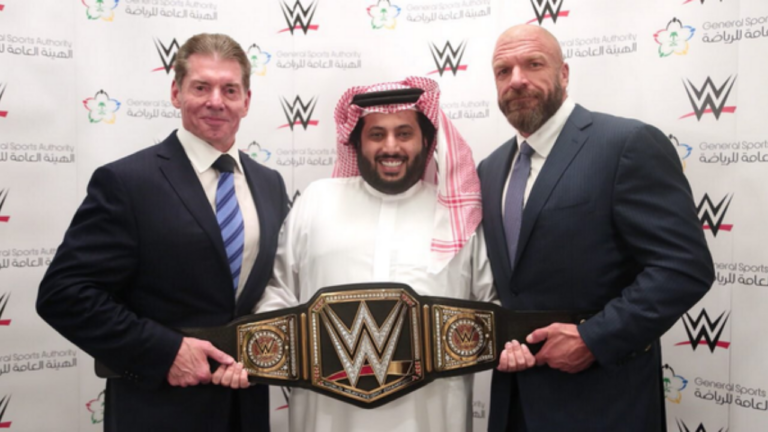
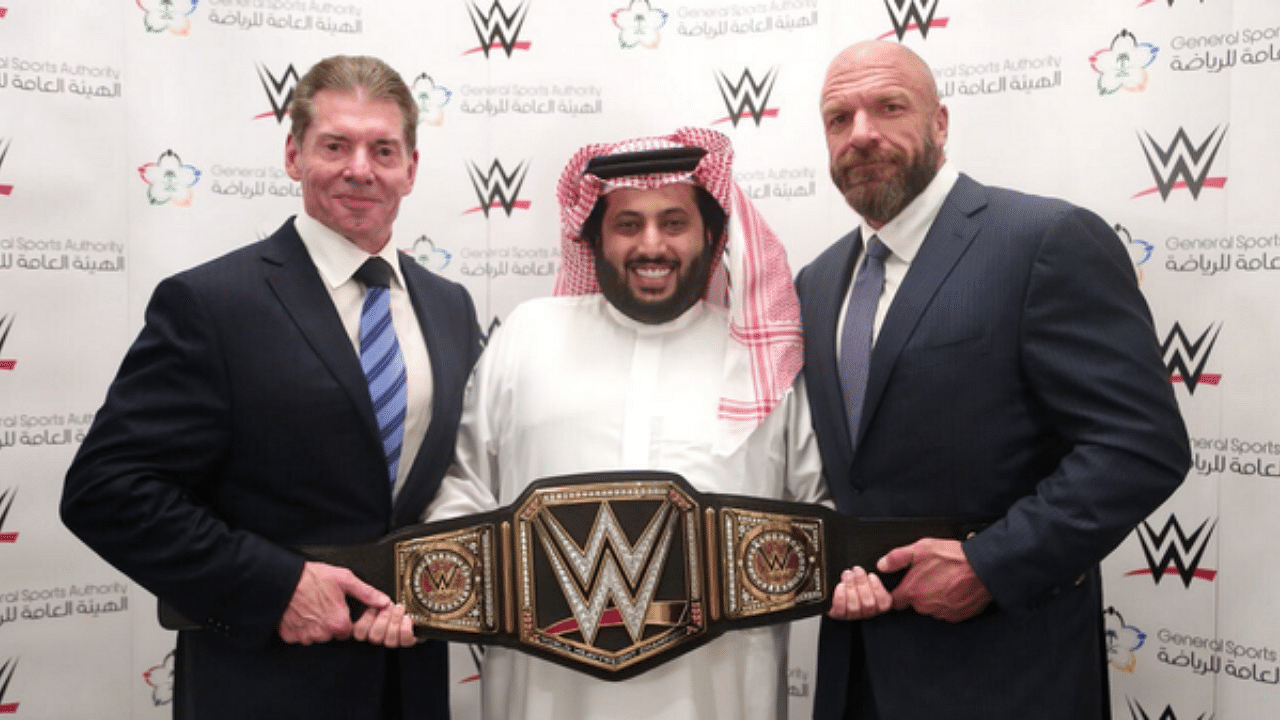
The WWE and the Kingdom of Saudi Arabia announced in 2018 that they were entering into a 10-year strategic multi-platform partnership to support the Saudi Vision 2030 initiative; which is the Kingdom’s social and economic reform program.
Five events have since taken place, with the deal requiring WWE to stage two events in the country every year.
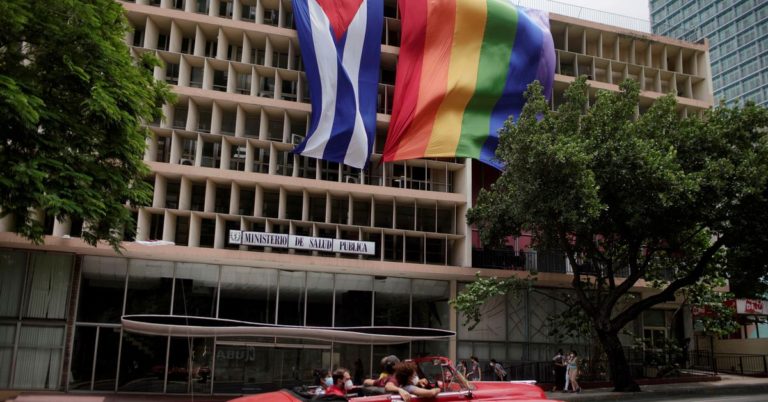
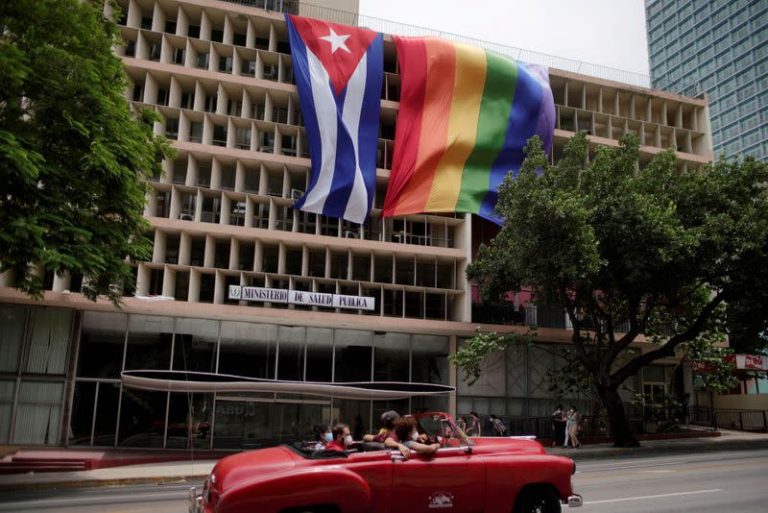
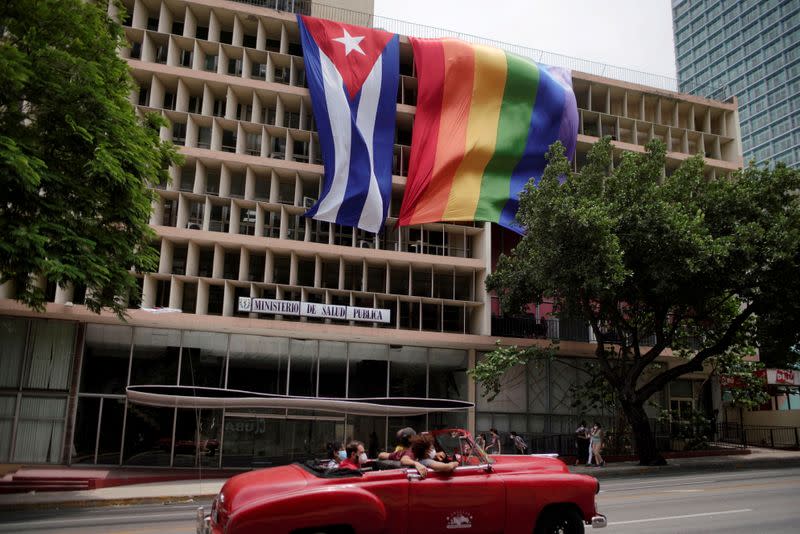
People pass in a vintage car in front of a rainbow flag hanging beside a Cuban flag at the Health Ministry building in Havana, Cuba, May 17, 2021. REUTERS/Alexandre Meneghini
Cuba draped its health ministry with a giant rainbow flag on Monday to mark International Day against Homophobia, in a key year for LGBT+ rights as the Caribbean country decides on a new family code that could approve same-sex marriage.
Cuba, which sent gays to correctional labor camps in the early years after its 1959 leftist revolution, made considerable advances in LGBT+ rights in the 2000s and 2010s, despite the widespread persistence of machismo.
The island nation introduced the right to free sex-change operations, banned workplace discrimination on the basis of sexual orientation, and started holding annual congas against homophobia – Cuba’s equivalent of gay pride.
Forced to suspend the conga this year due to the COVID-19 pandemic, Havana added a touch of gay pride through the giant rainbow flag instead. Authorities say they will project the flag onto two colonial castles in Old Havana at night as well.
“I never thought I would live to see the flag of the sexual diversity movement hung next to the Cuban one on such an important institution as the health ministry,” said Teresa de Jesus Fernandez, coordinator of the national network of lesbian and bisexual women, after posing for a photo with the flag.
Cuban President Miguel Diaz-Canel, who as a young provincial leader bucked party orthodoxy by backing an LGBT-friendly bar, wrote on Twitter on Monday the country was committed to guaranteeing all rights for all people.
Many members of the LGBT+ community say, however, they have been frustrated by a slowdown in the pace of change in recent years while a handful of other Latin American countries have moved forward with approving gay marriage.
Activists were further irked by the 2018 decision to withdraw an amendment to Cuba’s new constitution that would have opened the doorway to same-sex unions after campaigning by evangelical churches.
Authorities decided instead for the controversial issue to be determined in the update to the family code, a draft of which is slated to be unveiled at parliament’s July session, before it is eventually submitted to a referendum.
“We’ve already made it this far,” said LGBT+ activist Yasiel Valdes Girola, referring to the flag outside the health ministry. “What remains is for the new family code to recognize the legal union between two people, regardless of gender or sex, and the opportunity to build a family.”
Some LGBT+ activists complain that bringing about change in society has been complicated by the fact that grassroots campaigning outside state institutions is at best tricky in Cuba, and at worst causes run-ins with Communist authorities.
Two years ago there was a schism in the LGBT+ community when a small group of activists held an independent gay pride march, which eventually was dispersed by police. Authorities denounced it as an attempt to undermine the government.
Meanwhile, churches that oppose gay marriage have powerful platforms for spreading their message which they wielded to their advantage during the constitutional revamp, gathering signatures for a petition against the article that would have opened the door to gay marriage and railing against it at church gatherings.
HAVANA (Reuters) – Cuba draped its health ministry with a giant rainbow flag on Monday to mark International Day against Homophobia, in a key year for LGBT+ rights as the Caribbean country decides on a new family code that could approve same-sex marriage.
Cuba, which sent gays to correctional labor camps in the early years after its 1959 leftist revolution, made considerable advances in LGBT+ rights in the 2000s and 2010s, despite the widespread persistence of machismo.
The island nation introduced the right to free sex-change operations, banned workplace discrimination on the basis of sexual orientation, and started holding annual congas against homophobia – Cuba’s equivalent of gay pride.
Forced to suspend the conga this year due to the COVID-19 pandemic, Havana added a touch of gay pride through the giant rainbow flag instead. Authorities say they will project the flag onto two colonial castles in Old Havana at night as well.
“I never thought I would live to see the flag of the sexual diversity movement hung next to the Cuban one on such an important institution as the health ministry,” said Teresa de Jesus Fernandez, coordinator of the national network of lesbian and bisexual women, after posing for a photo with the flag.
Cuban President Miguel Diaz-Canel, who as a young provincial leader bucked party orthodoxy by backing an LGBT-friendly bar, wrote on Twitter on Monday the country was committed to guaranteeing all rights for all people.
Many members of the LGBT+ community say, however, they have been frustrated by a slowdown in the pace of change in recent years while a handful of other Latin American countries have moved forward with approving gay marriage.
Activists were further irked by the 2018 decision to withdraw an amendment to Cuba’s new constitution that would have opened the doorway to same-sex unions after campaigning by evangelical churches.
Authorities decided instead for the controversial issue to be determined in the update to the family code, a draft of which is slated to be unveiled at parliament’s July session, before it is eventually submitted to a referendum.
“We’ve already made it this far,” said LGBT+ activist Yasiel Valdes Girola, referring to the flag outside the health ministry. “What remains is for the new family code to recognize the legal union between two people, regardless of gender or sex, and the opportunity to build a family.”
Some LGBT+ activists complain that bringing about change in society has been complicated by the fact that grassroots campaigning outside state institutions is at best tricky in Cuba, and at worst causes run-ins with Communist authorities.
Two years ago there was a schism in the LGBT+ community when a small group of activists held an independent gay pride march, which eventually was dispersed by police. Authorities denounced it as an attempt to undermine the government.
Meanwhile, churches that oppose gay marriage have powerful platforms for spreading their message which they wielded to their advantage during the constitutional revamp, gathering signatures for a petition against the article that would have opened the door to gay marriage and railing against it at church gatherings.
(Reporting by Reuters TV and Sarah Marsh; Editing by Karishma Singh)
Chris Herrington covers the Memphis Grizzlies and writes about Memphis culture, food, and civic life. He lives in the Vollentine-Evergreen neighborhood of Midtown with his wife, two kids, and two dogs.
A Croatian archbishop on Monday asked for a pardon from gay people who felt rejected by the Church, an unprecedented move in the staunchly Catholic country. Archbishop Mate Uzinic warned that some Catholics wanted to “serve Christ and the Church with discrimination, aggression and violence… targeting homosexual people”. He used the international day against homophobia on Monday to express regret that some Catholics still refused to accept 2016 guidelines widely seen as softening the Church’s stance on homosexuality. In the 2016 document, Pope Francis wrote that “every person, regardless of sexual orientation, ought to be respected in his or her dignity and treated with consideration. “I regret that there are still Catholics who do not agree with this,” Uzinic, archbishop of Rijeka, wrote on Facebook. “I seek pardon from homosexual people for they can still feel rejected from the Church due to that … and also for not getting a careful pastoral guidance that should be guaranteed to them,” the archbishop said. Croatia, an EU member since 2013, where almost 90 percent of people are Catholic, has seen a gradual liberalisation of gay rights in recent years. But gay people still face threats and the country’s conservative society remains under the strong influence of the Catholic Church, which still refuses to accept the legitimacy of gay unions.
COMMENT DISCLAIMER: Reader comments posted on this Web site are not in any way endorsed by The Standard. Comments are views by thestandard.ph readers who exercise their right to free expression and they do not necessarily represent or reflect the position or viewpoint of thestandard.ph. While reserving this publication’s right to delete comments that are deemed offensive, indecent or inconsistent with The Standard editorial standards, The Standard may not be held liable for any false information posted by readers in this comments section.
By Aaron Humes: May 17 is recognized as The International Day Against Homophobia, Biphobia, Intersexism and Transphobia, a day conceived in 2004. It recognizes and raises awareness of violence, discrimination, and repression of LGBT communities worldwide, which in turn provides an opportunity to take action and engage in dialogue with the media, policymakers, public opinion, and wider civil society.
In a statement today, the United Belize Advocacy Movement (UNIBAM) led by Caleb Orozco listed five ongoing situations that impact the rights and lives of LGBT Belizeans.
First, UNIBAM claims COVID-19 related regulations are being used to harass or amplify systemic intimidation against LGBTI Belizeans.
Next, it says Cabinet has yet to take a position about applying equal protection under the law in new and previous legislation, with the collapse of the Equal Opportunities Bill under sustained pressure from the religious and particularly evangelical community last year.
Third, the organization says there is little to no economic data for the admittedly small LGBTI population of Belize, who nonetheless contribute to the economy.
Fourth, there is no categorization of crimes against LGBT persons in the Belize Crime Observatory.
And finally, five years after the original Supreme Court ruling and two years after it was modified but upheld by the Court of Appeal, there has been no progress on fully modifying and implementing changes to section 53 of the Criminal Code, which as presently interpreted excludes persons of the same sex from being accused of intercourse “against the order of nature.”
The LGBT community of Belize wants to be protected and wants to be seen and heard as full citizens, the organization asserts. “We call on cabinet to show leadership on LGBTI human rights with specific legislative actions that matter to our livelihoods,” it concludes.
* Lockdown seen fuelling chemsex parties among gay, bi men
* Campaigners warn of risks from unprotected sex, drugs
* Chemsex users seeking help find scant official support
BANGKOK, May 18 (Thomson Reuters Foundation) – Beam, a gay sex worker, used to go to a “chemsex” party about once a month before the coronavirus pandemic shut Thailand’s bars and clubs. But since then, the drug-fuelled gatherings have become much more frequent.
As Thailand grapples with a third COVID-19 wave, campaigners are warning of the health risks posed by an apparent increase in chemsex – where mainly gay and bisexual men meet to take drugs such as crystal meth or GHB and unprotected sex is common.
Beam, 34, who also works as a porn actor and regularly meets his clients at the parties, said changes to people’s working routines under lockdown had made the gatherings more popular.
“It’s now a golden opportunity for partygoers,” Beam, who asked not to give his full name to protect his identity, told the Thomson Reuters Foundation.
Chemsex users are at risk of drug addiction or overdoses, as well as mental health problems, campaigners said, and Thai media have recently carried reports about chemsex-related violence including physical assault.
As in other parts of the world, where authorities have voiced concern over the phenomenon, the parties are widely advertised on Twitter and gay dating apps like Blued and Grindr.
At Bangkok Rainbow Organization, an LGBT+ NGO, the president, Nikorn Chimkong, said chemsex was “now a new normal” and that the trend was evident in an increase in inquiries about the pre-exposure prophylaxis (PrEP) anti-HIV drug.
He said about 30 or 40 people per month contact the group every month nowadays to ask about the drug, a once-daily pill that protects people from becoming infected with the virus.
That compares to less than 10 before the pandemic, with the majority taking the pills before chemsex parties, he said.
LACK OF SUPPORT
Three current and former chemsex partygoers, and experts supporting users, said Thai public health providers lack the knowledge needed to support those seeking help for chemsex use.
Elsewhere in Asia, too, there are no harm reduction programmes that simultaneously address the risk of drug use and the sexual activity of gay and bisexual men and transgender women, found a recent report by APCOM, a health advocacy group for gay and bi men.
In Europe, where surveys in Britain, Spain and the Netherlands have found that 30-45% of gay and bi men have engaged in chemsex at least once, doctors warned in 2019 that the practice was refuelling epidemics of HIV in urban areas.
Earlier this year, Britain increased penalties for GHB following two high-profile trials, one of which detailed the drug’s use in the rape of almost 50 men.
In Thailand, where gay sex and drug use is widely frowned upon, people who want support for chemsex issues are often reluctant to seek help for fear of being stigmatised, campaigners said.
“There are very few service providers that make users feel like they are another human being,” said Midnight Poonkasetwattana, APCOM executive director.
“These are the groups that we must provide services for in order to reduce their risks of HIV.”
ASSAULTS, OVERDOSES
One place that does offer help is KRUBB Bangkok, a gay social club and community centre, which opened about nine months ago and provides chemsex counselling services for gay men.
Sergeant Shaowpicha Techo, a psychologist at a Bangkok health centre who also sees patients at KRUBB, said he was seeing up to a dozen patients per week compared with one or two before the pandemic.
Thailand does not have official statistics on chemsex, but the Bangkok Metropolitan Administration said up to 90% of gay and bisexual men who have used their healthcare services have experimented with chemsex. Most are aged between 20 and 40.
Anggoon Patarakorn, deputy director of the government’s Princess Mother National Institute on Drug Abuse Treatment, said he had not noticed a surge in chemsex during the pandemic, but acknowledged officials did not yet have expertise on the issue.
“We’re not giving special priority (to this group) at this time, but we may focus on them more in the future,” he said.
The Royal Thai Police’s anti-narcotics bureau declined to comment.
News reports of assaults and fatal overdoses at chemsex parties prompted a group of campaigners to form a network called Safety Net in June last year to support chemsex users.
Aiming to raise awareness among government officials and health workers, it is also working on a first aid handbook for users including advice on what to do if someone overdoses.
Arthur, a 32-year-old actor and model who asked to be identified only by his nickname, has had less work during the pandemic and said he had been attending chemsex parties more often as a result.
But the regular drug use took a toll on his mental health and he is now seeking treatment and helping Safety Net.
“I have hurt myself (from cutting) and attempted suicide many times in the past,” he said. “About five of my friends have died from drugs … and now I want to help other people.” (Reporting by Nanchanok Wongsamuth @nanchanokw; Editing by Helen Popper and Rachel Savage. Please credit the Thomson Reuters Foundation, the charitable arm of Thomson Reuters, that covers the lives of people around the world who struggle to live freely or fairly. Visit news.trust.org)