Home Blog Page 233

From Japan Lacking LGBT Protections to a Widower Winning a Case After Claims of Discrimination, This Week in Int’l LGBT News – SouthFloridaGayNews.com

This week read Japan’s bill falling short of adding protections to the LGBT community, and Ken Haire winning his pension case after claiming discrimination by CN Rail in Canada.

Widower Settles Pension Case After Claims Of LGBT Discrimination

Since originally being refused rights to his late partner’s CN Rail pension because he was in a same-sex relationship, Ken Haire has won his fight.

According to CBC, Haire received a letter from the railway officially recognizing him as the common-law spouse of Gerry Schwarz, who was an employee there for 30 years. It also included a lump sum for missed payments over the span of nine years plus interest after Schwarz’s death.

Until 1998, same-sex couples were not considered qualified spouses under CN’s pension scheme. Although the move was not retroactive, the firm said it is reviewing how the policy impacts workers who retired before 1998.

“After all those years and all the people he had worked with, they still didn’t acknowledge the fact that Gerry and I were a couple,” Haire told CBC. “We were a couple in every sense of the word. It really did hurt.”

Japan’s LGBT Bill Falls Short

Japan

Photo via Adobe.

Japan currently lacks any national regulations shielding LGBT people from discrimination, and a new survey ranks Japan at the bottom of a list of developing country rules on LGBT inclusion.

According to Human Rights Watch, The LGBT Equality Act, a draft statute, is currently undergoing intensive negotiations between Japan’s ruling and opposition parties. The conservative ruling Liberal Democratic Party declared in April that during the current Diet session, which ends in June, it will pass an LGBT law.

However, the bill introduced by the ruling party at the LDP’s Special Mission Committee on Sexual Orientation and Gender Identity merely allows the government to promote awareness of LGBT people. It omits non-discrimination safeguards and falls short of the government’s universal human rights commitments.

Many Japanese LGBT rights organizations are opposed to the draft law, fearing that the weak wording would have little real guarantees. Opposition parties are calling for a bill that prevents them from discrimination.


Vote: Make your choice for Local Player of the Week for May 10-May 15 – Abilene Reporter-News

Here are the top performers from the Abilene high schools vying to be the Reporter-News Local Player of the Week for the week ending May 15.

We continue to give you a vote in the Player of the Week selection process. The poll opens Tuesday this week at 2 p.m. and stays open through Thursday at 2 p.m. The winner will be announced Thursday night and in Friday’s paper.

Local sports logo

This year, the public vote will account for part of the selection process.

The six nominees for the Week of May 10-May 15 are:

Amyah Starks, Abilene High, Softball

Starks made the most of two games against Southlake Carroll in the region quarterfinals. She finished with five RBIs in the two games. Starks had a four-RBI effort in Game 2 that included a go-ahead three-run home run in the bottom of the sixth inning. 

Reed Hughes, Wylie, Baseball

Hughes delivered the big hit as his RBI triple proved to be the game winner as the Bulldogs beat El Paso Andress in a one-game area playoff. 

Minely Avila, Wylie, Softball

Avila made her final two games count, including a Game 2 victory to hold off elimination. She went 4 for 4 with a pit of doubles and an RBI in the 9-5 win. In Game 3, Avila provided the only offense with a three-run home run. She also caught all 14 innings behind the plate. 

Dash Albus & Brooks Gay, Wylie, Baseball

The usual starters combined to take care of business in Wylie’s one-game playoff. Albus pitched four shutout, one-hit innings with three walks and four strikeouts, but got the no decision. Gay came in for the final three innings, allowing one earned run on two hits with a walk and four strikeouts to get the win in the 3-2 victory against Andress. 

Kaleigha Kemp, Cooper, Softball

Kemp helped pace a Lady Cougar offense that has been historic this postseason once again in a sweep of El Paso Hanks. She went 3 for 4 with a double and a team-high three RBIs in the 9-7, Game 1 win. She followed with four hits, including two home runs, three runs scored and another team-high four RBIs in Game 2’s 15-8 victory to reach the region semifinals for the first time since 1996.

Or vote HERE.

Jordan Hofeditz covers Abilene high schools and colleges, Big Country schools and other local sports. Follow him on Twitter at @jhofeditz. If you appreciate locally drive news, you can support local journalists with a digital subscription to ReporterNews.com.

Namibia allows gay couple’s surrogate twins to enter – Eyewitness News

0

JOHANNESBURG – Namibia said Tuesday it had issued travel documents to twin infants of a gay couple born to a South African surrogate mother after weeks of legal wrangling.

Last month, a Windhoek High Court threw out a bid by the couple, 38-year-old Phillip Luehl and his Mexican husband Guillermo Delgado, 36, to force the government to issue the documents.

But a fresh court application on Monday saw the government backtracking even before the new case was heard.

The government said it received the applications for the travel certificates at a time when there was a change of guard in the home ministry.

The new minister Albert Kawana studied the earlier court documents and “authorised the issuance of emergency travel certificates applied for”, the ministry said in a statement on Tuesday.

This “is a very positive step forward,” one of the fathers, Luehl, told AFP.

“We are of course happy, but also at the same time perplexed that it takes such an immense amount of fighting and resources, and emotional strain to get a simple bureaucratic decision taken,” he told AFP.

The twins were born in the eastern South African port city of Durban on 13 March and have been living in Johannesburg.

Homosexuality is illegal in Namibia under a rarely enforced 1927 sodomy law dating back to South African rule.

Namibia’s home ministry has refused to recognise the couple’s December 2014 marriage in South Africa.

Download the Eyewitness News app to your iOS or Android device.

Gay activist upset at Ottawa’s attempt to block challenge of blood-donation ban – Times Colonist

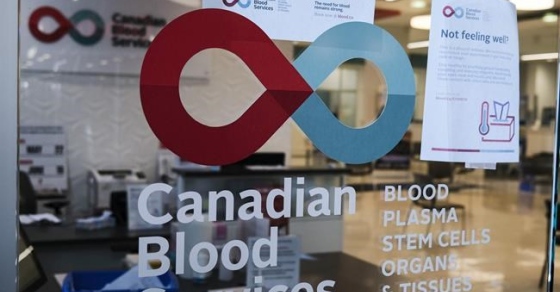
OTTAWA — A man who is challenging Canada’s policy that prohibits sexually active gay men from donating blood wants to know why the Trudeau government is trying to block his case, despite a 2015 Liberal pledge to end the ban.

Christopher Karas brought a human-rights complaint against Health Canada in 2016 and three years later the Canadian Human Rights Commission decided to refer the matter to a tribunal for a more substantial probe.

article continues below

But the federal government has since launched a judicial review to stop the complaint from going further, arguing that it is about a policy not set by Health Canada, but rather by the Canadian Blood Services — an arm’s-length agency.

Karas says he is confused and upset Ottawa is challenging his case, especially since Prime Minister Justin Trudeau has promised repeatedly since 2015 his government would end the gay blood ban.

“I was caught off guard when I saw the application for judicial review because it was my impression that the federal government wanted this policy to be eliminated. But we’re seeing here the complete opposite,” Karas said in an interview.

“From the very beginning, I’ve felt of very little value, I’ve felt that I can’t contribute and this was just confirming that … I would have thought by now we would have made more progress.”

The policy of excluding men who have had recent sex with men (MSM) from donating blood or plasma — originally a lifetime ban — was implemented in 1992 after thousands of Canadians were infected with HIV and hepatitis C through tainted blood products.

Donor eligibility criteria has changed since then, including in 2019 when Health Canada approved requests from Canadian Blood Services and Hema-Quebec to decrease the deferral period of the time men must abstain from sexual activity with other men before donating blood from one year to three months.

Trudeau has pledged multiple times since 2015 to eliminate the gay blood ban and to date his government has committed $3 million toward research on moving toward more behaviour-based donation policies.

But despite repeated calls from health and LGBTQ2S advocates and despite an explicit mention of Trudeau’s promise in Health Minister Patty Hajdu’s mandate letter, no further policy changes have materialized.

In its legal application to the Federal Court, the government argues it is “not a proper party to a complaint about the MSM policy.”

“Health Canada does not require, implement or administer the MSM policy or any other blood screening policy,” the federal government says in its judicial review application.

“CBS (Canada Blood Services) develops its policies and procedures independently, and at arm’s length, from Health Canada.”

It further argues the independence of the blood agency from the federal government from political interference is “a cornerstone of Canada’s blood system” and was one of the key recommendations of the Krever Commission, launched in response to Canada’s tainted blood scandal.

But Karas’s lawyer, Shakir Rahim, argues this argument doesn’t hold water because Health Canada is the regulator for the country’s blood system, and therefore has a role in the Canadian Blood Services’ policies, including the MSM ban.

“They’re trying to say that the actions of Health Canada as it relates to the blood ban should just not be examined at all, and that raises a lot of concerns, particularly because it is this government and its successive ministers of health, that have taken a position that they are going to end the blood ban,” Rahim said.

“(This) sets up a bit of a contradiction that we think is at the heart of the problems with the government’s case here.”

The issue has been raised multiple times over the years by opposition MPs in the House of Commons, including last week during question period.

NDP Leader Jagmeet Singh and Conservative health critic Michelle Rempel-Garner both pressed government ministers on the issue, calling it discriminatory and homophobic.

“This is harmful and upsetting to the gay community. That is clear and the Liberals know it,” Singh said.

“Why did the prime minister campaign on withdrawing this ban when he is now defending it in court?”

Deputy Prime Minister Chrystia Freeland said she “agrees that this is a discriminatory practice that is hurting a lot of Canadians” and promised Ottawa is “working very hard right now to eliminate it.”

“At the same time, we respect the independence of Canadian institutions, especially when it comes to medical and scientific issues.”

The judicial review is scheduled to be heard in Federal Court on May 27.

This report by The Canadian Press was first published May 18, 2021.

LGBT Center Hosts COVID-19 Vaccination, HIV and STI Testing Event on Friday – WMFE

Stay tuned in to our local news coverage: Listen to 90.7 WMFE on your FM or HD radio, the WMFE mobile app or your smart speaker — say “Alexa, play NPR” and you’ll be connected.

Orange County residents can get a COVID-19 shot and get tested for HIV and other STIs at the LGBT Center in Orlando on Friday. 

The Johnson & Johnson vaccine and HIV, Hepatitis C and other STI testing will be available at the LGBT Center on Friday from 12 noon until 6 pm.

Center Director George Wallace says it’s crucial for good health not just to get the vaccine, but also to know your status.

“Orlando ranks in the top five for new HIV infection rates. And we’ve come so far. But there’s still so much more work to do. And HIV is so stigmatizing and it’s so important for people to know their status so that they’re protected and they’re protecting the people that they love.”


Harmony Healthcare Orlando will be distributing vaccines and conducting testing on site. Practice Manager Brett Rigas says the testing is fast and easy.

“It does take about twenty minutes. It is in a confidential setting with a tester and the patient. We do the HIV and the Hepatitis C testing, usually we do those together because they take about the same time to come back. Then we also will conduct the testing for syphilis, gonorrhea, chlamydia as well.”

Anyone getting vaccinated must be at least 18 years of age or older, but testing starts as young as 13 years old.


PGA Championship: Groups and tee times for the second round at Kiawah Island – Sky Sports

A total of 156 professional players, including 99 of the world’s top 100, are set to tee off for the second round of the second major of the year at Kiawah Island Resort’s Ocean Course on Friday; watch the PGA Championship live on Sky Sports Golf with coverage starting at 1pm on Friday

Last Updated: 18/05/21 7:32pm

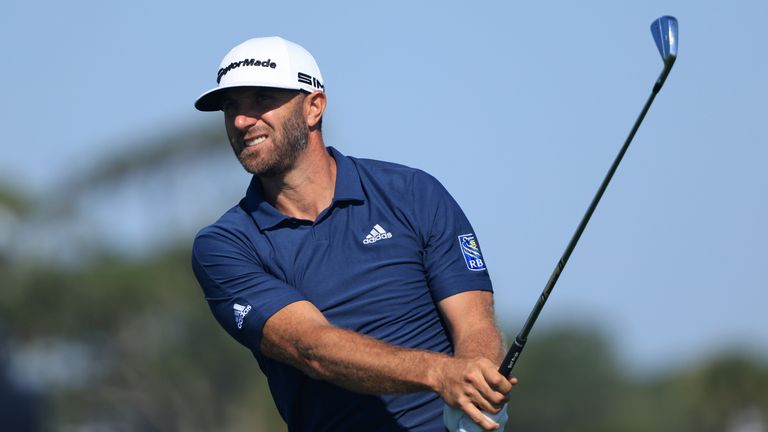
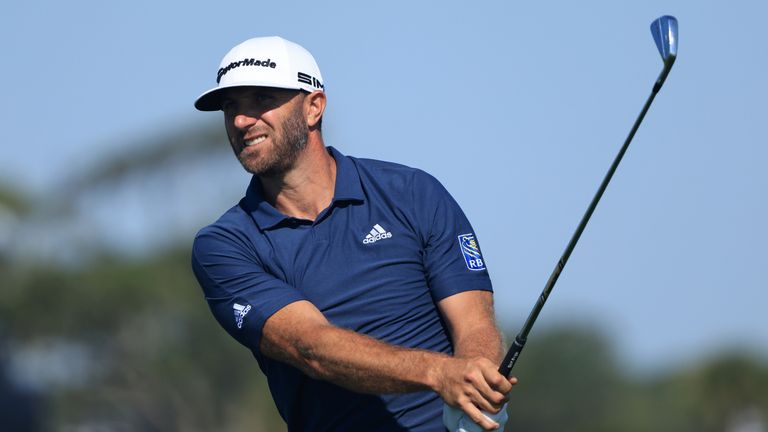
Dustin Johnson will start on the 10th hole at 1.44pm on Friday

Dustin Johnson will start on the 10th hole at 1.44pm on Friday

Groups and starting times for the second round of the 2021 PGA Championship at Kiawah Island Resort’s Ocean Course.

USA unless stated; (CP) denotes PGA club professional

All times BST

Starting from Hole One

1200 Si Woo Kim (Kor), Danny Balin (CP), Jim Herman

1211 Sami Valimaki (Fin), Richy Werenski, Joe Summerhays (CP)

1222 Tim Pearce (CP), Sam Horsfield (Eng), Sebastian Munoz (Col)

1233 Rich Beem, YE Yang (Kor), Shaun Micheel

1244 Joaquin Niemann (Chl), JT Poston, Aaron Rai (Eng)

1255 Adam Hadwin (Can), Branden Grace (Rsa), Rasmus Hojgaard (Den)

Live PGA Championship Golf

May 21, 2021, 1:00pm

Live on

1306 Carlos Ortiz (Mex), Jazz Janewattananond (Tha), Russell Henley

1317 Kevin Streelman, Andy Sullivan (Eng), Christiaan Bezuidenhout (Rsa)

1328 Ian Poulter (Eng), Sungjae Im (Kor), Brian Harman

Get the best prices and book a round at one of 1,700 courses across the UK & Ireland

1339 Antoine Rozner (Fra), Brandon Stone (Rsa), Chez Reavie

1350 Omar Uresti (CP), Maverick McNealy, Victor Perez (Fra)

1401 Lucas Herbert (Aus), Tyler Collet (CP), Brandon Todd

1412 Takumi Kanaya (Jpn), Ben Cook (CP), Mackenzie Hughes (Can)

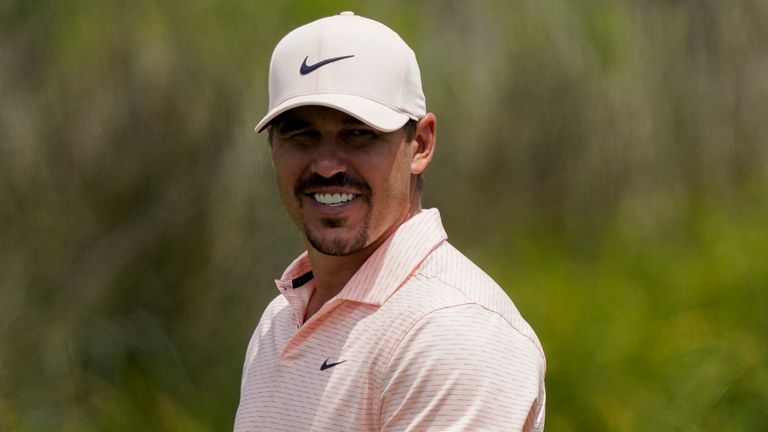
Brooks Koepka plays alongside Rory McIlroy and Justin Thomas in the first two rounds

Brooks Koepka plays alongside Rory McIlroy and Justin Thomas in the first two rounds

1730 Harry Higgs, Ben Polland (CP), Talor Gooch

1741 Harold Varner III, Rob Labritz (CP), Brendan Steele

1752 Marc Leishman (Aus), Garrick Higgo (Rsa), Paul Casey (Eng)

1803 Adam Scott (Aus), Tyrrell Hatton (Eng), Rickie Fowler

1814 John Catlin, Robert MacIntyre (Sco), Cameron Champ

1825 Francesco Molinari (Ita), Zach Johnson, Scottie Scheffler

1836 Thomas Detry (Bel), Ryan Palmer, Louis Oosthuizen (Rsa)

1847 Lee Westwood (Eng), Xander Schauffele, Viktor Hovland (Nor)

1858 Rory McIlroy (NIrl), Brooks Koepka, Justin Thomas

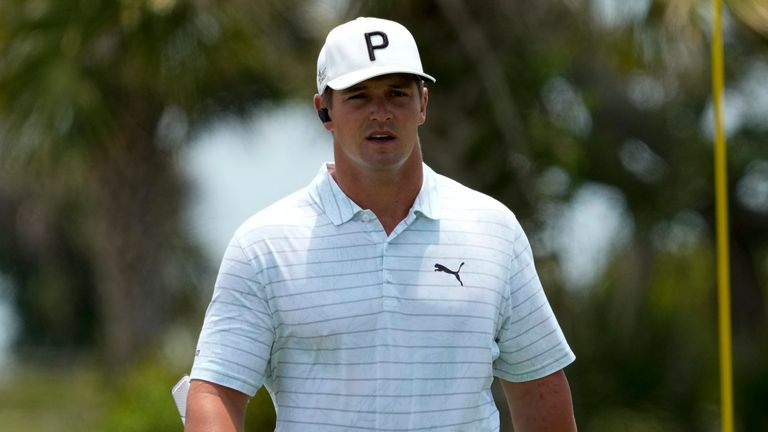
1909 Collin Morikawa, Hideki Matsuyama (Jpn), Bryson DeChambeau

Bryson DeChambeau starts on the first at 7.09pm on Friday

Bryson DeChambeau starts on the first at 7.09pm on Friday

1920 Matt Wallace (Eng), Erik van Rooyen (Rsa), Charley Hoffman

1931 Brian Gay, Brett Walker (CP), Chan Kim (Kor)

1942 Sonny Skinner, Aaron Wise, Kalle Samooja (Fin)

Starting from Hole 10

1205 Frank Bensel Jr (CP), Robert Streb, Kurt Kitayama

1216 Wyndham Clark, Daniel van Tonder (Rsa), Alex Beach (CP)

1227 Abraham Ancer (Mex), Sam Burns, Max Homa

1238 Corey Conners (Can), Matt Fitzpatrick (Eng), Tony Finau

1249 Phil Mickelson, Padraig Harrington (Irl), Jason Day (Aus)

1300 Patrick Reed, Jon Rahm (Esp), Tommy Fleetwood (Eng)

1311 Gary Woodland, Cameron Smith (Aus), Justin Rose (Eng)

1322 Daniel Berger, Steve Stricker, Billy Horschel

1333 Webb Simpson, Jordan Spieth, Will Zalatoris

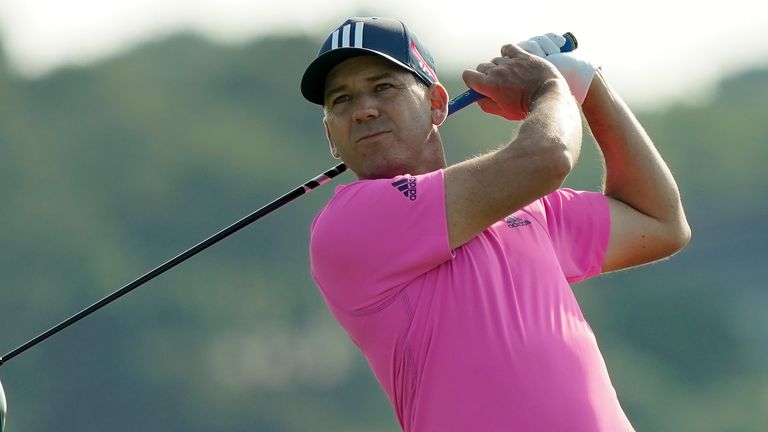
1344 Shane Lowry (Irl), Dustin Johnson, Sergio Garcia (Esp)

Sergio Garcia will play alongside Johnson and Shane Lowry in the first two rounds

Sergio Garcia will play alongside Johnson and Shane Lowry in the first two rounds

1355 Patrick Cantlay, Matt Kuchar, Thomas Pieters (Bel)

1406 Cam Davis (Aus), Pete Ballo (CP), Chris Kirk

1417 KH Lee (Kor), Dean Burmester (Rsa), Greg Koch (CP)

1725 Patrick Rada (CP), Cameron Tringale, Adam Long

1736 Matt Jones (Aus), Larkin Gross (CP), Dylan Frittelli (Rsa)

1747 George Coetzee (Rsa), Derek Holmes (CP), Byeong Hun An (Kor)

1758 Tom Hoge, Bernd Wiesberger (Aut), Joel Dahmen

Live PGA Championship Golf

May 21, 2021, 10:15pm

Live on

1809 Jimmy Walker, John Daly, Jason Dufner

1820 Martin Laird (Sco), Kevin Kisner, Hudson Swafford

1831 Henrik Stenson (Swe), Danny Willett (Eng), Bubba Watson

1842 Martin Kaymer (Ger), Charl Schwartzel (Rsa), Keegan Bradley

1853 Stewart Cink, Alex Noren (Swe), Harris English

1904 Jason Kokrak, Kevin Na, Tom Lewis (Eng)

1915 Stuart Smith (CP), Emiliano Grillo (Arg), Jason Scrivener (Aus)

1926 Peter Malnati, Brad Marek (CP), Lanto Griffin

1937 Rikuya Hoshino (Jpn), Denny McCarthy, Mark Geddes (Eng) (CP)

Watch the PGA Championship throughout the week live on Sky Sports Golf! Live coverage begins with the opening round on Thursday May 20 from 1pm on Sky Sports Golf and Sky Sports Main Event.

AAMC launches Principles of Trustworthiness to help build community connections – AAMC

“I always go back to Tuskegee.” “I don’t [want to be] a guinea pig.” “Can we get White people to test it out first?” “The system continues to fail me on a regular basis.”

These are some thoughts shared by diverse individuals in response to questions about COVID-19 vaccines, racial injustice, clinical research, and a history of health disparities in the United States.

The interviewees — 30 of them reflecting local voices from across the country — spoke with community leaders and health equity experts in late 2020 to help create the AAMC’s new Principles of Trustworthiness project.

A product of the recently established AAMC Center for Health Justice, the effort is designed to help institutions connect with local communities in meaningful ways. It’s built around a toolkit that offers 10 principles to increase trustworthiness and a range of materials for applying them (details in sidebar). The hope is that it will help heal long-standing distrust of such institutions as medicine and public health among groups that have been marginalized and under-resourced.

Distrust of medicine often is quite understandable, experts note.

Many Black people bear the memory of the infamous syphilis study performed in Tuskegee, Alabama, from the 1930s to the 1970s and of gynecological surgeries done without anesthesia on enslaved Black women in the 1800s. Latinx individuals recall anti-poverty policies last century that resulted in the sterilization of one-third of Puerto Rican women without their consent. And a marked history of structural health inequities that continues today fosters deep skepticism about the medical system.

Distrust is also driving some of the hesitation around COVID-19 vaccines. Although confidence has grown, 20% of Black people and 16% of Hispanic people said in April that they would not get the vaccine or would do so only if required.

But trust-building is about much more than just the current vaccination efforts, according to Karey Sutton, PhD, director of research for the Center for Health Justice. “The work needs to continue long after this public health crisis ends,” she says.

In fact, adds center founding director Philip Alberti, PhD, “Community engagement to build trust is not a thing you do. It’s how you do all things.”

AAMCNews sat down with Alberti and Sutton to discuss why trust is so essential, what often blocks it, and some of the most effective ways to earn it.

Can you talk a bit about the history underlying distrust of medicine?

Sutton: There’s a long history of medical abuse and experimentation going back to slavery. It’s important that we call out this history because we’re in a national conversation about distrust in medicine but haven’t ever really fully confronted the racist history of this country.

Alberti: And the injustice is ongoing. When we got a brand-new disease in the coronavirus, we managed to immediately create new injustices. We’ve seen inequities in who can and can’t avoid exposure because of long-standing systems that created certain communities’ inability to avoid infection and their difficulty accessing care when needed. We shouldn’t lose sight of how we are reinforcing inequities and injustices today.

The project asked 30 people how institutions could earn trust. Did a particular theme emerge?

Sutton: We heard about the importance of genuine relationship-building. We heard that organizations should be out in the community interacting with patients and community members.

There are organizations that have had a history of doing research projects in the community where they get what they want and then leave — and they don’t return again until they want something else. That’s very transactional. That’s not building a real relationship with a community that’s sustained.

Alberti: There’s a range of what that kind of genuine presence could mean. It could mean living in the community with the patient population that you’re serving. It could mean frequenting local businesses. It could mean breaking bread at community tables. If you’re a clinician making referrals to social service agencies, you also could visit those places to better understand the connections you’re making for your patients.

One of the 10 principles states that the community is already educated, and that’s why it doesn’t trust you. What does that mean?

Sutton: In the past, we’ve often heard people in medicine say that we need to educate a community about a vaccine or about something else, when, in fact, the community is already educated. It’s often educated in reasons not to trust.

People know when you’re trying to do this work just for performance purposes. They’re not going to trust you if they don’t see that you’re really willing to do the work in a humble and authentic way.

Also, institutions need to recognize that the community has expertise of its own to share. An example is work that one institution has done to involve community members in their flu vaccine campaigns. Before anything is put out, they have informal conversations about the images and words they plan to use, and it’s been very effective. People from the community said they disliked negative messaging. These communities are resilient and have survived years of abuse and injustice, so they wanted language that celebrates their strengths.

Another principle says, “There’s more than one gay bar, one ‘Black church,’ and one bodega in your community.” Can you explain that?

Alberti: The work of community engagement can’t be lazy work. We can’t rely on the same community assets over and over because they might not be representative of everyone in the community. I think a lot of organizations tap into the same four or five people for years and years and years, not recognizing that communities are dynamic. Assets develop; they come and go. Also, there’s diversity within communities. There isn’t a monolith.

So this principle is about getting out there and understanding the whole landscape of potential partners.

How can the principles be applied to efforts to increase COVID-19 vaccine confidence?

Alberti: There are two answers.

First, the work really has its eyes on the next health crisis, heaven forbid there is one. If our public health, medical, and government institutions had demonstrated their trustworthiness over the last 20, 30, 40 years, we wouldn’t have this current level of vaccine hesitancy. A lot of current efforts focus on building trust in a vaccine. But trustworthiness isn’t about trust in a vaccine. It’s about trust in the systems that develop, allocate, distribute, and dispense a vaccine.

I do think that if organizations really use this toolkit in the spirit with which it is intended — to show that they’re really willing to set aside their own power and their own hubris and engage in a bidirectional exchange of ideas and expertise — then there can be conversations around the vaccines. With creating this space for conversations, I think we can have some impact on COVID-19 vaccine hesitancy — within our own organizations as well as the communities they serve.

How is the trustworthiness project different from other long-standing efforts to reach out to local communities?

Alberti: The community members with whom we spoke are not suggesting that our institutions reach out, but rather go in — and go all in — with humility, with respect, with the desire to listen and learn. The approach is about putting the onus where it belongs: on organizations with power to demonstrate that they will use that power justly. It’s really about demonstrating that you’re acting in ways that instill trust.

It’s also important to note that these principles are really not new. We did not invent the field of community engagement or trustworthiness. What’s new is more the way they’re presented — with very frank and direct language. This project allowed the AAMC to be a conduit for community voices. That’s why the feel is different, the tone is different.

What are some next steps for this project?

Sutton: We’ll have a series of webinars going over the principles, a video featuring experiences and insights from local community members, and a toolkit with activity and discussion guides. One of the great things about this project is it’s really focused on actions. Components of the toolkit walk you through step by step from point A to point Z.

This also is a broad enough toolkit that it’s applicable to many different types of organizations that have relationships with communities or need to have relationships. As we move forward, we also hope that any organization that interfaces with communities would use this toolkit, including schools and police departments. This is not just focused on academic medicine, because this isn’t just an academic medicine problem.

Given that distrust can be quite deep, are you hopeful that academic medicine can build sorely needed trust?

Alberti: I do feel hopeful. In my 20-plus years in this field, I’ve never seen the kind of sustained focus and dialogue on issues of racism and classism, of social and racial injustice, as we’ve witnessed over these last 18 months. So I’m optimistic that the conversation isn’t going away this time — which is amazing.

Our hope with this toolkit is to actually channel the current discourse, the passion and energy, in ways that can be productive in building relationships over the long term.

It’s a long game, a long arc — it’s not a quick fix. A community relationship should never end at the end of a project. When you get to number 10 in the list of principles, your next step is to go back to number one.

This interview has been edited for length and clarity.

Someone On Twitter Called Hairy Chests “Ick,” And Gays Responded In The Gayest/Thirstiest Way Possible – BuzzFeed

Honestly, after the *years* of being so ashamed of my body hair, this whole “ick” thing has me smiling. I literally would pluck, shave, do whatever it took to be smooth (and thus acceptable by the Pretty Gays) when I came out. Now? I’m a fucking gorilla and proud of it. 🦍✨💗

Some Guy Called Hairy Chests “Ick,” So Gay People Responded Exactly How They Always Do – BuzzFeed

Honestly, after the *years* of being so ashamed of my body hair, this whole “ick” thing has me smiling. I literally would pluck, shave, do whatever it took to be smooth (and thus acceptable by the Pretty Gays) when I came out. Now? I’m a fucking gorilla and proud of it. 🦍✨💗

LGBT rights in Northern Ireland – UK Human Rights Blog

18 May 2021 by

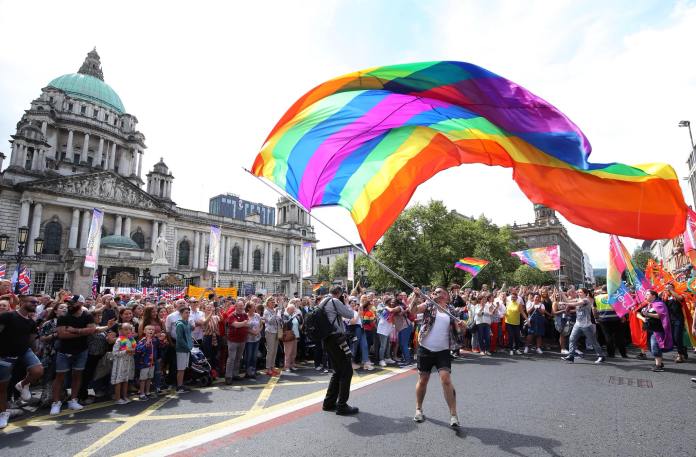
Belfast Pride
Belfast Pride, 2018 © Love Belfast

Introduction

In Northern Ireland, the Troubles are not the only part of its troubled past and present. In March this year, the Stormont administration found itself mired in controversy over women’s reproductive rights and access to abortion services. In April, a fresh controversy arose: a legislative ban on so-called “gay conversion therapy”. On 18 March 2021, Ulster Unionist Party MLAs Doug Beattie and John Stewart tabled a private member’s motion in the Northern Ireland Assembly calling for a legislative ban on the practice. The motion was debated on 20 April, with one amendment ringfencing religious activities from the proposed ban, taking centre-stage.

To characterise the debate which followed as polarising would be to put it mildly. The Assembly Hansard for 20 April records angry, frustrated exchanges between MLAs who called for safeguarding the LGBTQ community from harmful practices (condemned by the UN Human Rights Council as creating “a significant risk of torture”) and MLAs who called for safeguarding the free exercise of religion.

In the event, the DUP amendment failed and the UUP motion was passed unamended by 59 votes to 24, providing Communities Minister Deirdre Hargey MLA with a strong mandate to bring legislation to ban conversion therapy in Northern Ireland. However, that was not the end of the matter. In the immediate aftermath of the Assembly vote, the DUP signalled its intent to block legislation unless “robust protections for churches” were included. Eight days after the vote, the Northern Ireland First Minister and DUP leader Arlene Foster MLA faced significant rebellion in the party against her leadership and announced her intention to resign both the leadership of the DUP and the First Ministership. The extent to which the motion to ban conversion therapy played a part in the rebellion against Foster remains a matter for debate, especially given concerns about the impact of the DUP’s political stance on the very recently enacted access to abortion and same-sex marriage in Northern Ireland.

Almost a month later, Mr Justice Scoffield in the Northern Ireland High Court handed down judgment in JR111’s application for judicial review [2021] NIQB 48, declaring the language of “disorder” in the Gender Recognition Act 2004 (GRA) to be in breach of the ECHR.

As many around the world celebrated the International Day against Homophobia, Biphobia and Transphobia on 17 May, the events of the past month were a reminder of how different the story of LGBT equality was in Northern Ireland, compared to Great Britain.

Decriminalising sodomy

Until 1967, the sections 60 and 61 of the Offences Against the Person Act 1861 and section 11 of the the Criminal Law Amendment Act 1885 criminalised buggery, attempted buggery, assault with intent to commit buggery, indecent assault, gross indecency between men and the procuration and attempted procuration of indecent assault between men. Punishments always involved imprisonment, ranging from maximum terms of two years to ten years for the less “abominable” offences. Buggery, specifically described as “the abominable crime” in the 1861 Act, invited a term of imprisonment between ten years and life. This regime was more-or-less uniform across both England and Wales and Northern Ireland (devolution in the UK not having existed before 1921).

In 1967, following the Wolfenden Report’s recommendations, the Sexual Offences Act 1967 decriminalised sodomy between two men in private, aged 21 years or above, in England and Wales only. Sodomy was decriminalised in Scotland in similar terms by the Criminal Justice (Scotland) Act 1980. Although Northern Ireland had gained devolution in 1921 (including in criminal law), the then Stormont administration had not followed the England and Wales law reform and had in any event been abolished in 1973 after the start of the Troubles. As a result, responsibility over all of Northern Ireland’s governance had returned to Westminster and Whitehall. However, despite the UK Parliament considering draft legislation in 1978 to decriminalise sodomy in Northern Ireland, the result of a public consultation around this proposal proved too politically controversial to be realised.

Sodomy would not be decriminalised until after the landmark ruling of the European Court of Human Rights in Dudgeon v United Kingdom (1982) 4 EHRR 149, in which the Court decided that the breadth and absoluteness of the sodomy laws unjustifiably and disproportionately interfered with the right to private and family life under Article 8 of the European Convention on Human Rights (ECHR). Dudgeon would be invoked in 1988 to make a similar ruling in Norris v Ireland (1988) 13 EHRR 186 that the same sodomy laws in force in the Republic of Ireland were also in breach of ECHR rights.

Adoption rights

Before the Civil Partnership Act 2004 introduced a form of legal recognition for same-sex couples in the UK, the Adoption and Children Act 2002 allowed same-sex couples (and unmarried opposite-sex couples) to adopt children. However, its reforms did not extend to Northern Ireland (which had regained devolved government by then). Instead, adoption law in Northern Ireland continued to discriminate against unmarried opposite-sex couples and same-sex couples (whether or not civil-partnered). While the former found relief at the hands of the House of Lords in Re P [2009] 1 AC 173, same-sex couples in Northern Ireland would have to wait their turn until 2012.

Sitting in the Northern Ireland High Court, Mr Justice Treacy (as he then was) declared in The Northern Ireland Human Rights Commission’s application [2012] NIQB 77: “All individuals and couples, regardless of marriage status or sexual orientation are eligible to be considered as an adoptive parent(s)”. The central point in that judgment, affirmed on appeal, was the unjustifiable difference in treatment between same-sex couples who were completely excluded from being eligible to adopt (whether or not in a civil partnership) and opposite-sex couples, who could either adopt if married or adopt individually if unmarried.

Blood donation

In 2011, the UK Advisory Committee on the Safety of Blood, Tissues and Organs (SaBTO) recommended that men who have sex with men (MSM) be allowed to donate blood after a 12-month period since their last sexual contact. This was a significant change to the previous policy, in place since 1985, of a permanent ban for MSM in donating blood. The SaBTO recommendation was followed in Great Britain, but not in Northern Ireland.

The decision not to follow the SaBTO recommendation was made by then Northern Ireland Health Minister Edwin Poots MLA (currently the Agriculture, Environment and Rural affairs Minister) and found to be irrational by Treacy J in JR65’s application for judicial review [2013] NIQB 101. This was because, while the Minister had been entitled to maintain the permanent ban as a matter of public health concern, he could not also accept supplies coming from Great Britain which had been drawn following the 12-month deferral (which in fact he had). Treacy J’s findings were overturned in the Court of Appeal, where only the Lord Chief Justice would have allowed JR65’s cross-appeal about the permanent ban being disproportionate under EU law (especially the non-discrimination provisions under Article 21(1) of the Fundamental Rights Charter). Lord Justice Gillen and Lord Justice Weir were of the view that the Health Minister, who by then had changed, should be given a chance to make a new decision on the basis of the current prevailing circumstances and knowledge (following the CJEU decision in Léger v Ministre des Affaires sociales, de la Santé et des Droits des femmes (C-528/13)). Barely three months after the Court of Appeal’s judgment, the new Health Minister, Michelle O’Neill MLA (currently the deputy First Minister) announced an end to the permanent ban, moving to align with the 12-month deferral policy in Great Britain.

Same-sex marriage

Jubilation followed the legislation of same-sex marriage for Northern Ireland at Westminster, on an amendment moved by Conor McGinn MP to a government bill designed to keep the lights on in Northern Ireland while Stormont remained empty.

However, as with every other issue in the history of LGBT rights in Northern Ireland, the courts were not far from this debate. Two cases in particular sought to litigate the prohibition on same-sex marriage in Northern Ireland: Petitioner X, which concerned the recognition in Northern Ireland of a marriage between two men lawfully carried out in England, and Close and Others’ application for judicial review, which attacked the prohibition head on. In the High Court, both Petitioner X and Close and Others failed, while in the Court of Appeal, both succeeded to some degree. The central holding in both X and Close, that the lack of legislative extension of marital rights to same-sex couples did not breach the ECHR rights of LGBT individuals, was overturned on appeal. The basis for this was that, by the time X and Close were heard in the High Court, marriage equality legislation had been enacted in Westminster, Holyrood and Dublin and moreover had strong support in the Assembly (despite the Assembly’s support being defeated through the oft-criticised ‘petition of concern’ mechanism unique to Northern Ireland). Nevertheless, by the time the Court of Appeal handed down its judgments in X and Close, Westminster had legislated same-sex marriage for Northern Ireland, and so there was no point in making declarations as to the breach of ECHR rights.

Gender recognition

We now return to the start of this post – the judgment of Scoffield J in JR111. The Court’s conclusion to a lengthy and detailed judgment is in two parts: the first part (paras 131 – 139) outlines that, as a matter of discretion left to national authorities under the ECHR, the UK Parliament was and remains entitled to decide (via the GRA) that a medical element to gender recognition and transition be retained. The second part of the conclusion (paras 140 – 148) discusses the specific diagnosis that the GRA requires – gender dysphoria – and concludes that characterising it as a disorder is a breach of the right to private and family life under Article 8 of the ECHR. This is on the basis that “applicants for a [gender recognition certificate] face a quandary: in order to assert their legal rights to gender recognition, they must denigrate that aspect of their identity [gender] which the 2004 Act is in principle designed to vindicate”. This is all the more important given that the UK Government publicly states (as a result of the GRA reform consultation) that a transgender person does not and has never had a disorder. Moreover, the decision not to go down the route of legislative reform means that the Westminster Parliament has not had an opportunity to consider updating a statute that is 17 years old – in which time the medical understanding of gender has evolved considerably and the language of “disorder” has been rejected.

While the final relief in JR111 remains outstanding (the Court has directed further submissions on whether the language relating to gender dysphoria in the GRA can be “read down” or a declaration of incompatibility be made), it is important to outline the net effect of the judgment. The need for medical opinion as part of the gender recognition process remains, but the statute may not denigrate transgender people by characterising their experience as a disorder. This may well be a purely symbolic step, but as Schoffield J observed, “Words can and do matter in this context.”

Comment

Having had the doors to Stormont’s imposing Parliament Buildings shut on it time and time again, the long movement towards LGBT equality and dignity in Northern Ireland has turned, again and again, to the equally imposing but considerably warmer Royal Courts of Justice. The revolution in ECHR litigation brought about by the Human Rights Act 1998 (HRA) has played a large part in this movement. However, it is perhaps worth highlighting a growing revolution within this revolution and what this means for the future.

In nearly all of the judgments referenced here, the courts in Northern Ireland have stayed faithful to something known variously as the “mirror principle” or the “Ullah principle” (see Rosalind English’s post on this issue). When deciding matters on ECHR rights, our courts look to the Court of Human Rights at Strasbourg and generally keep up with it, going no further. In JR111, however, Schoffield J went into great detail about how, in any given field where a degree of latitude (“margin of appreciation”) is granted to individual countries under the ECHR, it is for a domestic court to decide ECHR compatibility as a matter of domestic law “with relatively unconstraining guidance from the Strasbourg Court”. This draws on Supreme Court judgments such as Nicklinson and DSD, in which the late Lord Kerr JSC provided a ringing endorsement of the idea that there has been a “retreat” from the need to only keep pace with Strasbourg. This is of course, not to say that the mirror principle has been consigned to history, but that there is a growing judicial acceptance of a simple fact: the rights contained in the HRA, despite deriving from international law, are domestic. Thus, when Strasbourg is silent, it is up to courts in the UK to decide for themselves what a right means, how it applies and whether it has been breached.

The domestication of ECHR rights greatly parallels the trajectory of LGBT rights in Northern Ireland: what started in Strasbourg in the 1980s has continued, 40 years later, in Belfast.

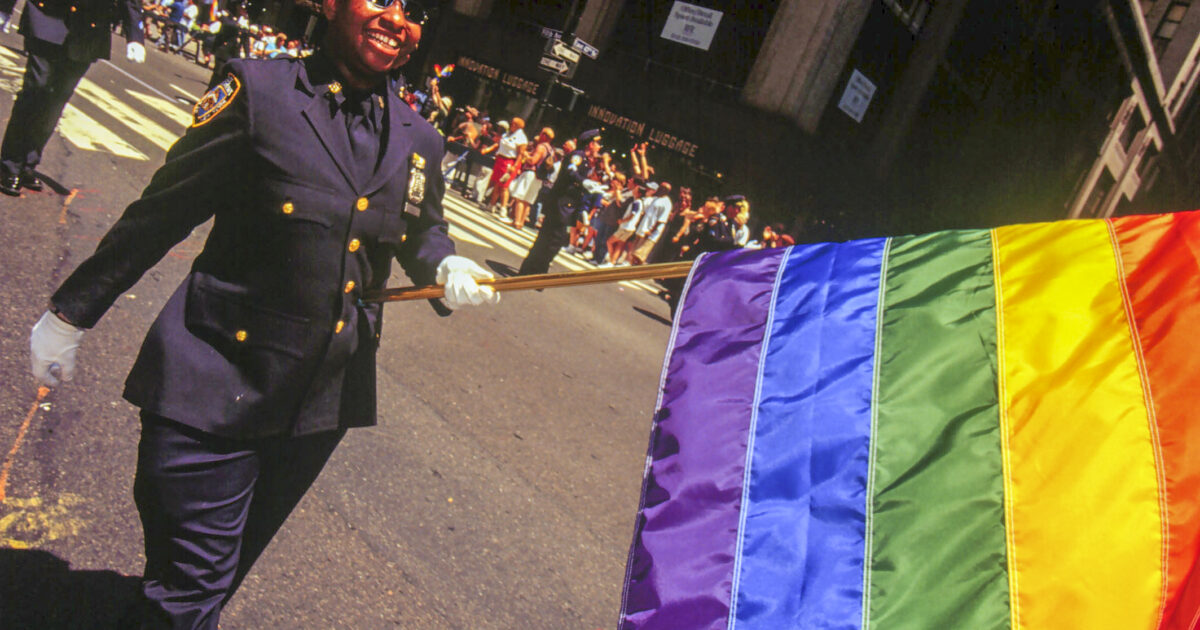
Gay Pride Parade Discriminates Against Gay Cops – Reason.com – Reason

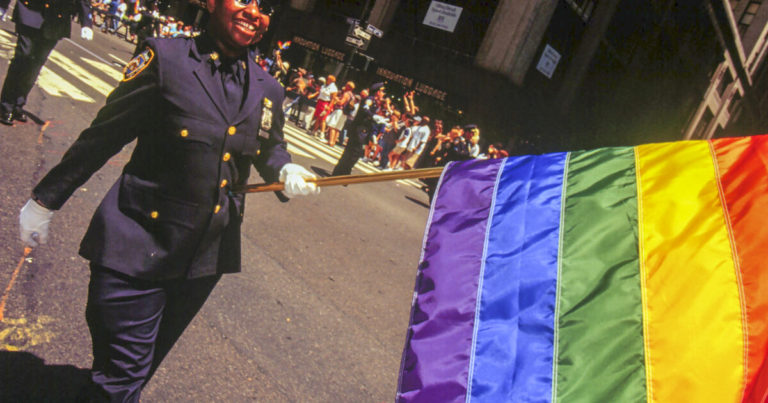
Many people know that New York’s legendary Gay Pride Parade was launched in response to the violent 1969 police raid of a Greenwich Village gay bar called the Stonewall Inn. Less well-known is that a key organizer of that initial defiant and celebratory march was a cop.

Not at the time, mind you. Fred Sargeant was then the 20-year-old manager of his partner Craig Rodwell’s Oscar Wilde Bookshop in the Village when he walked by the Stonewall melee, after which he and hundreds of others rioted in the streets for days against the heavy-handedness of the NYPD. But having helped midwife a new era of gay liberation, Sargeant soon decamped to Stamford, Connecticut, and decided to change policing culture from within.

“I wanted to see if I could make a difference, and having seen the situation at Stonewall and how the NYPD handled that, I thought I could do it differently,” Sargeant later told PBS. “Stonewall wasn’t the only riot I saw. I’d been caught up in riots in the Village before and watched what the police did.” Sargeant would rise to the rank of lieutenant before retiring.

That gradual commingling and grudging tolerance between activist and officer is now beginning to unravel. Late last week, bending to pressure that had intensified after the May 2020 police killing of George Floyd, organizers of 2021 Pride announced a five-year ban on parade participation by uniformed police and corrections officers.

“The sense of safety that law enforcement is meant to provide can instead be threatening, and at times dangerous, to those in our community who are most often targeted with excessive force and/or without reason,” NYC Pride organizers said in a statement.

“The community really called us out as an organization,” Pride Co-Chair André Thomas explained to The New York Times. “Because they felt that we weren’t necessarily living up to our mission, our higher ideals and standards.”

Those ideals apparently now include collective guilt and racial paranoia:

[T]he changes are meant to address concerns voiced by some transgender, Black and Latino people who say they felt unsafe marching in front of a police force that routinely targeted and victimized them. […]

“The issue is, how do we make Pride safe for the people who feel the most marginalized and have often been left out of the conversations about how Pride is run?” said Beverly Tillery, the executive director of the New York City Anti-Violence Project, an L.G.B.T.Q. rights group. […]

“As the police presence at Pride has grown over the years, the members of our community who are most marginalized, who are most harmed by police, have felt like Pride is not a safe place for them.”

There are several situations in which interacting with a heavy police presence could make members of a historically marginalized community feel tangibly—as opposed to rhetorically—unsafe: a massage parlor raid, a housing-project sweep, an immigration crackdown. It’s hard to imagine an event lower on that hierarchy of danger than a televised Gay Pride parade in the sunny streets of Manhattan featuring a phalanx of ebullient gay cops.

For decades, uniformed members of New York’s Gay Officers Action League (GOAL) were barred from participating in Pride—not by parade organizers, but by the NYPD, including long after the event had become a bipartisan civic celebration featuring the likes of Rudy Giuliani. Only in 1996, after filing a federal discrimination lawsuit, were the cops allowed by their own department to march in full dress.

In a press release Friday, GOAL said it was “disheartened” by what it called a “shameful” decision to “placate” activists, adding: “GOAL and our members have had our hands in every police reform and policy revision touching on the LGBTQIA+ community in New York City.”

Like all other parades in parade-happy New York, Pride will continue to have a police presence; just on the outside, one block away, and not as exhibitors. “The idea of officers being excluded is disheartening and runs counter to our shared values of inclusion and tolerance,” NYPD spokeswoman Sgt. Jessica McRorie told the Times. “That said, we’ll still be there to ensure traffic safety and good order during this huge, complex event.”

Some police critics and criminal justice reformers, including many I respect, will no doubt cheer this news, seeing it as a continuation of the recently accelerated push to disentangle police from unnecessary and potentially fraught interactions with the citizenry. But using an anti-discrimination event to discriminate against cops has its potential downsides, too.

If you demonize all cops as irredeemable, radioactive sources of potential violence and oppression, this may serve to discourage from police service precisely the types of people—those from historically marginalized communities themselves, and sensitive to the related policy concerns—who reform advocates have long been agitating for departments to hire.

Recruitment right now is not some academic issue: Cops in New York and elsewhere are retiring at rates not seen in years. The types of rookies willing to withstand the refrain that All Cops Are Bastards may not be as friendly to black transgender Pride marchers as the officer who literally sued their way into the parade.

There is a radical reaction to this complaint that’s popular among some progressives and libertarians, amounting to: So what? People shouldn’t become cops (or soldiers, or tax collectors, or immigration agents, or abortionists, or public school teachers, or practitioners of any fill-in-the-blank profession deemed by the beholder to be furthering evil). If fewer good people are attracted to fundamentally corrupt jobs, that’s a net gain for virtue, the argument goes.

Maybe. But also, on the planet we currently live on, there are not many countries where those professions do not exist. Often, jobs involving the use of deadly force are among the most respected in a society, and the most likely to be increased during times of real or perceived crisis. Until we achieve Anarchotopia, there are going to be cops, and (in the case of New York and many other polities where crime is on the dramatic rise) lots of them.

There are many strategies for diffusing tensions between law enforcement and the communities they serve, and many concrete ideas about bringing true reform to an overly violent and carceral criminal justice system (read Reason‘s October 2020 cover package, titled “Fix the Police,” for a primer). One of the biggest eye-openers for me since moving to New York is how many of those reform conversations are taking place on the badge side of the debate—police chiefs against “Stop, Question, and Frisk,” district attorneys who launch false conviction review units, vice cops who complain about the Drug War.

To treat those people as interchangeable cogs of a malevolent machine is not only inaccurate and nihilistic, it discourages reformers and encourages brutes. All at a time when rising violent crime threatens to undermine the public case for criminal justice reform.

Unpredictable things happen when people collide, rather than segregate. In that first parade in 1970, Fred Sargeant later recalled in the Village Voice, marchers had no idea whether the NYPD would just start cracking skulls. “There were no floats, no music, no boys in briefs,” he wrote. “The cops turned their backs on us to convey their disdain, but the masses of people kept carrying signs and banners, chanting and waving to surprised onlookers.” It was the beginning of a beautiful thing.

“I’ve marched in several other parades and have worked and watched countless others over the years, but the cheers and adulation shown to cops marching in pride by far & hands down is always the greatest and loudest out of them all,” Officer Anthony Nuccio wrote in an emotional Twitter thread Sunday. “The decision to ban gay cops from marching is absolutely disheartening and hypocritical. It does nothing but create an even deeper divide in our already divided city & community…. I will always be proud of the work GOAL has accomplished & how it has pushed & will continue to push from within the police department for positive changes. I’m proud to be a member of GOAL, I’m a proud gay man & I am equally proud to serve as a police officer.”

Deadly digging, bookend tribute shows, young minds rule Bonita film fest – Naples Daily News

When your science teacher tells you to “do your research,” be aware that knowing the truth could be the most rewarding, most burdening, or the most dangerous, position to be in.

That’s one of the take-aways from the Bonita Springs International Film Festival this weekend, May 21-23. (Details and ticket information are in the accompanying box.)

Co-chair Frank Blocker, theater and film organizer for the festival’s sponsor, the Center for the Arts Bonita Springs, noticed that. The unexpected results of digging deeper dominated the nearly 100 films entered in the festival, he mused: “For some reason, a lot of films used the idea of research.”

One young filmmaker short details the lengths Mote Marine Laboratory & Aquarium in Sarasota goes to document the effect of human interference on sea life. The word is even in its title: “Research, Rescue, Release” (3:10 p.m. Saturday, May 22)

Thriller ‘Mr. Jones,’ documentary ‘The State of Rodeo’ to premiere

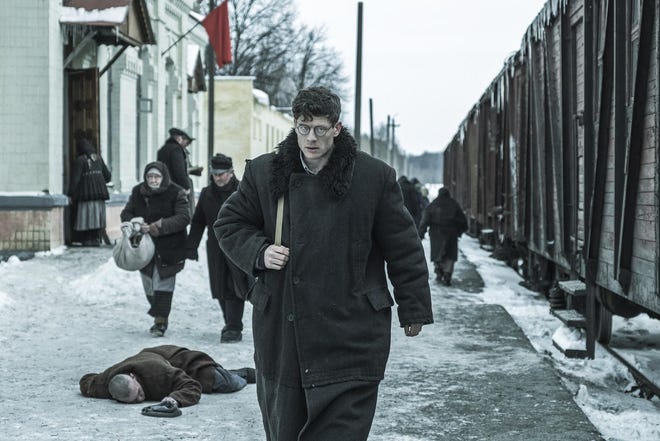
The most chilling example comes from the true story of “Mr. Jones,” scheduled for 12:59 p.m. Saturday, May 22. An enterprising reporter makes the horrific discovery that Stalin has created his “economic miracle” by extracting a percentage of crops that literally starves to death Ukrainians under Russia’s control. That slow massacre of millions was little publicized, and “Mr. Jones” explores just how it was kept so secret.

"Mr. Jones," a thriller based on the true story of a reporter who discovers the truth about Stalin's "economic miracle" is shown Saturday.

A generation vanishes:Naples Ukrainians illuminate a history of genocide

“The State of Rodeo” (2:50 p.m. Sunday, May 23) documents its origins in Florida. It  details the history of the riding and roping pageant for 500 years, from Native American cow keepers and Spanish conquistadors to range herders and computer-age cowboys. Yet another, the Canadian documentary “Sustenance” (4:40 p.m. Saturday, May 22) sleuths out who did the work, who got the money and how those ingredients that traveled to your dinner plate impact Earth.

Kathy Saldivar, festival cochair, said she was impressed with the number of young filmmakers entering. Saldivar, IT specialist for the center, has worked in some capacity with the festival since its inception seven years ago, and she says the pandemic probably stoked creativity. 

“We had a lot of young filmmakers under 18, and they sent in a little bit of everything. Some must have been putting on film what be what they’re feeling this year,” she said. “It’s like ‘Every kind of emotion I have,’ but somehow these kids managed to make good stories from it.”

They’re wrapped into the two Young Filmmakers Shorts packages at 10:30 a.m. and 3:10 p.m. Saturday. Storylines are both creative — a real estate agent confronts the poltergeist that keeps him from selling a house — and poignant, in the last meetings of high school friends bound for different colleges. There’s romance, or attempted romance. People survive apocalyptic times and dead-end jobs. 

The youth shorts also offer one of two LGBT+ films in its “Dreamer.” The other, a feature film, “Dating Amber” (12:30 p.m. Saturday, May 22), details the complications of two gay friends faking a heterosexual romance to fit into their high school culture.

Another love:Pope Francis’s support of gay unions draws SWFL reactions

The Bonita Springs International Film Festival tries to create a cross-section of films, said Blocker, which means they recruit several works that haven’t been entered. And by chance one of those, “Another Round” (7:30 p.m. Saturday, May 22) won the Oscar for best foreign film. 

“And we already had it booked here,” Blocker said. “We got lucky.”

The “r” word returns, as four Danish friends test a scientific theory that humans function better with just a slightly higher level of alcohol in their blood. Every day, they take a nip. The results ripple toward delightful, and eventually chaotic. 

A movie for the times, "The Cove" follows a young man's desperate journey through a lawless, violent post-pandemic world to find the one place free of a fatal virus.

It and the other films have talk-back sessions with staff or specialists in the areas they deal with. So stick around, and you’ll be able, for instance, to talk with Rose Brady, former bureau chief for Business Week in Moscow, after you see “Mr. Jones.”

And don’t forget the entertainment. Nightbird, a Stevie Nicks tribute band fronted by Angela Chang, warbles through the star’s hits from her time with Fleetwood Mac to solo on opening night Friday, May 21. There’s also a red carpet cocktail party at 6 p.m., with cocktails at 5, and a screening of — appropriately for an arts center sponsor — “Paint.” It follows three art school friends who try to sell their first painting in that most bizarre of markets, New York City.

And if “Two out of Three Ain’t Bad,” imagine getting three out of three with Meet Loaf, a tribute band to the star who made that song a hit. The closing night party Sunday, May 23, includes its concert with a cocktail party at 5 p.m. and a screening of the documentary, “The Last Sermon” at 6. Awards follow the screening.

Harriet Howard Heithaus covers arts and entertainment for the Naples Daily News/naplesnews.com. Reach her at 239-213-6091.

What: Seventh annual Bonita Springs International Film Festival, featuring films all day Saturday and Sunday and opening night and closing night parties. 

When: 5 p.m. Friday (opening night red carpet party, film and Nightbird concert), May 21, to 5 p.m. Sunday, Mary 23. An entire schedule of films appears on its website at artcenterbonita.org

Admission: $12 per film, $5 for students with ID; opening night red carpet party plus film and concert, $75; closing party plus film and concert, $65; 10-pack film pass, $100; festival badge including 10 films and both parties, $200

To buy:artcenterbonita.org

Man whose life was ruined by gay sex conviction wins court victory – PinkNews

A man convicted of consensual gay sex in the 1990s will not have to register as a sex offender in Montana in a seismic federal court ruling.

In 1993 when he was just 18, Randall Menges had consensual sex with two teenage boys at an Idaho camp.

He spent seven years behind bars for violating the state’s “crimes against nature” law, according to federal court documents, before being placed on Idaho’s sex offender registry.

Nearly three decades since, and as much as the sodomy charge has since been dubbed unconstitutional by the Supreme Court, Menges was forced to remain on the registry in both Idaho and then Montana, where he has since moved to.

Across both states, Menges’ status haunted him. He was swiftly rejected from jobs, lost friends and even had suicidal ideations – his life capturing the grievances some advocates feel about the registries for how they shove people into the margins.

But last Tuesday (12 May), he cried tears of joy after a federal judge ruled that Menges’s name should be stripped from Montana’s sex offender registry.

“None of the governmental interests in maintaining a sexual offender registry are served by Menges’ inclusion,” wrote US district judge Dana Christensen in his decision, according to the New York Post.

The statute, he said, caused Randall Menges “significant” hardships, and his name being kept on the registry is not in both the public or police’s interests.

“Under Montana’s constitutional scheme, having consensual intimate sexual contact with a person of the same sex does not render someone a public safety threat to the community,” he wrote.

“Law enforcement has no valid interest in keeping track of such persons’ whereabouts.”

It’s a vital victory after a years-long legal battle waged by Randall Menges, who sought to use Montana Attorney General over the state’s requirement he still be listed as a sex offender. The Montana Attorney General’s Office pushed back against his plea.

“I guess I’m just grateful, honestly, that the judge actually listened and was fair because for the last few years of my life,” Menges told reporters of the ruling, “I don’t feel like anything’s been fair.”

His lawyer, Elizabeth Ehert, said the ruling would enable Randall Menges to at long last rebuild a life dented by the decades-old and outdated charge. His life, she said, “has been utterly destroyed by the homophobic laws that made gay sex illegal”.

But for a victory long-fought came a swift backlash. Montana’s Republican attorney general Austin Knudsen has vowed to appeal the verdict.

His office told The New York Times that Christensen’s ruling “weakens our state’s sex-offender registry law, making kids and families less safe”.

“Montana law is clear,” they said, “if you are required to register as a sex offender in another state, you must also register here.”

Gay man convicted for consensual sex has name finally scrubbed from sex offender registry – Yahoo Eurosport UK

A man convicted of consensual gay sex in the 1990s will not have to register as a sex offender in Montana in a seismic federal court ruling.

In 1993 when he was just 18, Randall Menges had consensual sex with two teenage boys at an Idaho camp.

He spent seven years behind bars for violating the state’s “crimes against nature” law, according to federal court documents, before being placed on Idaho’s sex offender registry.

Nearly three decades since, and as much as the sodomy charge has since been dubbed unconstitutional by the Supreme Court, Menges was forced to remain on the registry in both Idaho and then Montana, where he has since moved to.

Across both states, Menges’ status haunted him. He was swiftly rejected from jobs, lost friends and even had suicidal ideations – his life capturing the grievances some advocates feel about the registries for how they shove people into the margins.

But last Tuesday (12 May), he cried tears of joy after a federal judge ruled that Menges’s name should be stripped from Montana’s sex offender registry.

“None of the governmental interests in maintaining a sexual offender registry are served by Menges’ inclusion,” wrote US district judge Dana Christensen in his decision, according to the New York Post.

The statute, he said, caused Randall Menges “significant” hardships, and his name being kept on the registry is not in both the public or police’s interests.

“Under Montana’s constitutional scheme, having consensual intimate sexual contact with a person of the same sex does not render someone a public safety threat to the community,” he wrote.

“Law enforcement has no valid interest in keeping track of such persons’ whereabouts.”

It’s a vital victory after a years-long legal battle waged by Randall Menges, who sought to use Montana Attorney General over the state’s requirement he still be listed as a sex offender. The Montana Attorney General’s Office pushed back against his plea.

“I guess I’m just grateful, honestly, that the judge actually listened and was fair because for the last few years of my life,” Menges told reporters of the ruling, “I don’t feel like anything’s been fair.”

His lawyer, Elizabeth Ehert, said the ruling would enable Randall Menges to at long last rebuild a life dented by the decades-old and outdated charge. His life, she said, “has been utterly destroyed by the homophobic laws that made gay sex illegal”.

But for a victory long-fought came a swift backlash. Montana’s Republican attorney general Austin Knudsen has vowed to appeal the verdict.

His office told The New York Times that Christensen’s ruling “weakens our state’s sex-offender registry law, making kids and families less safe”.

“Montana law is clear,” they said, “if you are required to register as a sex offender in another state, you must also register here.”

Mexico soccer federation PSA against anti-gay chant – Yahoo Canada Sports

The Canadian Press

Turnbull gets MLB’s 5th no-hitter, Tigers beat Mariners 5-0

SEATTLE (AP) — Spencer Turnbull pitched the fifth no-hitter in the majors this season, sending the Detroit Tigers to a 5-0 victory over the Seattle Mariners on Tuesday night. Turnbull, who led the big leagues with 17 losses two years ago, had never gone more than seven innings in any of his previous 49 starts over three seasons. The five no-hitters through May 18 match the 1917 season for the most in baseball history by that date. Turnbull’s no-hitter was the eighth in Tigers history and their first since Justin Verlander’s in Toronto on May 7, 2011. The 28-year-old right-hander got a great defensive play from third baseman Jeimer Candelario in the seventh inning and then struck out Mitch Haniger in the ninth to end it. Turnbull (3-2) struck out nine and walked two. Turnbull threw 117 pitches, 77 for strikes. Haniger was the only batter to hit the ball hard enough to threaten a base hit. METS 4, BRAVES 3 The New York Mets got homers from Jonathan Villar and Tomás Nido, an unlikely hit from Tommy Hunter and strong performances by a string of relievers to beat Atlanta. Villar hit a two-run shot in the third inning, and Nido won it for the Mets in the ninth with a tiebreaking drive into the left-field seats off struggling Braves closer Will Smith (0-4). One night after being struck in the face by a 95 mph fastball, Kevin Pillar brought New York’s lineup card to home plate before the game, a gesture that brought a huge sigh of relief to both teams. With his face swollen and badly bruised, Pillar still managed a smile as he shook hands with the four umpires and Braves coach Walt Weiss, who gave him a warm pat on the shoulder. Austin Riley and Freddie Freeman homered for Atlanta. Marcell Ozuna tied it for the Braves with a two-out, broken-bat single in the eighth off Jeurys Familia (2-0). TWINS 5, WHITE SOX 4 MINNEAPOLIS (AP) — Miguel Sanó homered three times, Jorge Polanco hit a game-ending RBI single and Minnesota beat Yermín Mercedes and the Chicago White Sox. Mercedes was the center of attention once again, one day after he hit a controversial homer in the ninth inning of Chicago’s 16-4 victory. Twins reliever Tyler Duffey was ejected for throwing behind Mercedes in the seventh, and that seemed to spark the slumping Twins. Sanó’s two-run drive off Aaron Bummer (0-2) with one out in the eighth tied it at 4. With two out and runners on second and third in the ninth, Polanco singled to right against Liam Hendriks. The Twins had dropped two in a row, including an ugly 16-4 loss to AL Central-leading Chicago on Monday night. Taylor Rogers (1-2) got three outs for the win. Jake Lamb and Yasmani Grandal homered for the White Sox, who had won three of four. Lance Lynn pitched six innings of two-run ball. YANKEES 7, RANGERS 4 ARLINGTON, Texas (AP) — DJ LeMahieu had a season-high three RBIs, including the tiebreaking, two-run double in New York’s big inning, and the Yankees beat Texas. LeMahieu went the opposite way for his double down the right-field line to cap a five-run fourth that put the Yankees up 5-3. That was the first multi-RBI hit this season for LeMahieu, who added a sacrifice fly to deep center in the sixth. Rougned Odor went 2 for 5 with two strikeouts against his former team in his return to the Yankees lineup after missing 12 games because of a sprained left knee. Nick Solak, now the Rangers second baseman, had a solo homer after an earlier RBI single for the first Texas run. Wandy Peralta (3-1) worked a scoreless inning. He took over for Yankees starter Jameson Taillon after Solak’s eighth homer of the season with two outs in the fifth got Texas within 5-4. Aroldis Chapman worked the ninth for his 10th save in 10 chances. Rangers starter Mike Foltynewicz (1-4) allowed five hits and a walk in a seven-batter stretch in the fourth, and the bases were loaded when LeMahieu greeted reliever Kolby Allard with the two-run double. GIANTS 4, REDS 2 CINCINNATI (AP) — Anthony DeSclafani gave up one run over seven good innings, Alex Dickerson hit a three-run homer and San Francisco beat Cincinnati. DeSclafani (4-1), who signed with the Giants after five seasons in Cincinnati, was outstanding in his first appearance back at Great American Ball Park, scattering six hits and striking out seven. Jake McGee pitched the ninth and got the Reds in order for his 11th save. Brandon Crawford also homered for the NL West-leading Giants, who took the first two of the four-game set with the Reds. Luis Castillo (1-6) struck out 11 through five innings and gave up three runs, all on Dickerson’s homer. CARDINALS 5, PIRATES 2 ST. LOUIS (AP) — Nolan Arenado hit a two-run homer, his fourth in four games, and St. Louis beat Pittsburgh. Tommy Edman added three singles and drove in two runs for the Cardinals, who returned home after dropping three straight at the Padres to win their fourth consecutive game this season against Pittsburgh. John Gant (3-3) gave up two runs and five hits in 5 1/3 innings to earn the win. Alex Reyes pitched the ninth to record his 12th save in 12 chances. JT Brubaker (3-3) gave up five runs and eight hits in 5 2/3 innings. INDIANS 6, ANGELS 5 ANAHEIM, Calif. (AP) — Josh Naylor hit a tiebreaking homer in the eighth inning and Cleveland snapped a four-game losing streak. Shohei Ohtani hit his major league-leading 14th home run for the Angels, who got bad news earlier in the day when Mike Trout was placed on the injured list with a strained right calf. The three-time AL MVP is expected to miss six to eight weeks. Justin Upton and José Iglesias also went deep for Los Angeles. The Indians jumped out to a 5-0 lead in the first but saw the Angels steadily rally and tie it in the seventh. Naylor, though, put Cleveland back on top when he drove a changeup from Alex Claudio (0-1) over the wall in right-center for his fourth homer of the season. José Ramírez also homered for the Indians. Zach Plesac (4-3) pitched seven innings and allowed five runs and seven hits to get his third win in four May starts. James Karinchak worked the ninth for his fourth save. CUBS 6, NATIONALS 3 CHICAGO (AP) — David Bote and Ian Happ homered, and the Chicago Cubs beat Washington. Chicago slugger Anthony Rizzo left the game because of tightness in his lower back, but the Cubs got enough big hits to come away with another win after pounding Jon Lester the previous day in his return to Wrigley Field. Bote broke a 3-all tie with a two-run homer against reliever Will Harris (0-1) in the sixth inning. Happ made it 6-3 with his drive to the basket in left-center against Wander Suero leading off the eighth. Keegan Thompson (2-1) tossed 1 1/3 innings after Zach Davies pitched into the sixth. Thompson also got his first major league hit when he singled in the sixth. Craig Kimbrel worked the ninth for his eighth save in 10 chances as the Cubs won for the fourth time in five games. ROYALS 2, BREWERS 0 KANSAS CITY, Mo. (AP) — Andrew Benintendi drove in the go-ahead run with two outs in the eighth inning and Kansas City spoiled a masterful start by Milwaukee’s Brandon Woodruff. Royals starter Kris Bubic, who had been working in long relief but got a spot start when Danny Duffy headed to the injured list, threw six innings of one-hit ball. Woodruff (2-2) allowed just four hits before walking Whit Merrifield and plunking Carlos Santana with two outs in the eighth. Brewers manager Craig Counsell brought in reliever Devin Williams to face Benintendi, who lined a single to right field that gave Merrifield just enough time to slide under Omar Narvaez’s tag at the plate. Narvaez immediately signaled for Counsell to challenge the safe call but it stood upon review. The Royals then tacked on a run when Salvador Perez hit a grounder to shortstop and Luis Urias threw wide of first base for an error. Jake Brentz (1-0) got just one out in the eighth but still earned his first career win. Josh Staumont picked up his fourth save. ATHLETICS 6, ASTROS 5 OAKLAND, Calif. (AP) — Ramón Laureano hit two home runs, then lofted a game-ending sacrifice fly in the ninth inning as Oakland ended Houston’s six-game winning streak. Laureano pumped his left fist when his one-out flyball off Bryan Abreu (2-2) reached center field and Mark Canha scurried home from third. Matt Chapman hit a tying double in the eighth after Canha’s sacrifice fly the previous inning. Yusmeiro Petit (5-0) pitched the ninth for the win as defending AL West champion Oakland moved 1 1/2 games up on the Astros and stopped their longest winning streak of the season. Kyle Tucker homered and Yordan Álvarez hit a two-run double in the first for Houston. RAYS 13, ORIOLES 6 BALTIMORE (AP) — Mike Zunino hit two home runs and Tampa Bay connected five times in all for its fifth straight win. Brett Phillips and Austin Meadows hit three-run homers in the second inning and Ji-Man Choi hit a late drive as the Rays matched their longest winning streak of the year. Tampa Bay is a season-high five games over .500 at 24-19. Baltimore has lost eight of its last 10 and fell to a majors-worst 6-16 at home. Matt Harvey (3-4) gave up six runs and seven hits in 1 2/3 innings in his shortest start since a 1 1/3-inning outing against the Chicago White Sox on Sept. 6 while pitching for Kansas City. Andrew Kittredge (4-0) pitched 1 2/3 scoreless innings in relief for the Rays. PHILLIES 8, MARLINS 3 PHILADELPHIA (AP) — Pinch-hitter Ronald Torreyes delivered a tiebreaking, two-run double in the eighth inning to lift Philadelphia. The Marlins took a 3-1 lead when Jazz Chisholm Jr. hit a two-run homer off a 100 mph fastball from Jose Alvarado in the top of the eighth. But the Phillies answered in the bottom half against relievers Dylan Floro (2-2) and John Curtiss. Alec Bohm had an an RBI double off the right-field fence. Odubel Herrera reached on an infield single and Andrew Knapp walked to load the bases. Nick Maton lined an RBI single to tie it. Curtiss entered and Torreyes lined the first pitch down the left-field line in his first at-bat since April 17. Jean Segura’s infield single knocked in another run. Bryce Harper ripped a two-run single to cap the seven-run rally. Phillies starter Zack Wheeler struck out 10, allowing one unearned run and five hits in seven innings. Archie Bradley (1-1) fanned the only batter he faced to earn the win in his first appearance since April 10. BLUE JAYS 8, RED SOX 0 DUNEDIN, Fla. (AP) — Hyun Jin Ryu pitched seven masterful innings, light-hitting Danny Jansen played a key offensive role and Toronto beat Boston. Ryu (4-2) scattered four hits and struck out seven. Travis Bergen, Tyler Chatwood and Rafael Dolis completed the five-hitter. Jansen had a second-inning RBI single and drew a pivotal walk during a three-run fourth as Toronto won for the ninth time in 12 games and improved to a season-high six games over .500. Jansen had two hits in three at-bats and raised his batting average to .143. Boston starter Eduardo Rodriguez (5-2) gave up five runs and 11 hits in five innings. DODGERS 9, DIAMONDBACKS 1 LOS ANGELES (AP) — Gavin Lux hit his first career grand slam and Julio Urías pitched three-hit ball into the seventh inning as Los Angeles won for the sixth time in seven games. Mookie Betts hit a leadoff homer and Chris Taylor added a tiebreaking, two-run shot in the fifth inning before Lux broke it open in the seventh, putting his second homer of the season into the short right field porch off Kevin Ginkel. Nick Ahmed had an RBI double for the injury-depleted Diamondbacks, who have lost six of seven after dropping the first two in this four-game set. Urías (6-1) retired 13 straight batters from the second inning until the seventh. Corbin Martin (0-1) yielded four hits, four walks and three runs over five innings in his Arizona debut and his first major league start in just under two years. The Associated Press