
Home Blog Page 221

Tennessee enacts bill banning gender-affirming Trans youth healthcare – Washington Blade

It is no secret that many LGBTQ individuals around the world live in fear of the negative implications that result from identifying outside the limits of cisgenderism and heteronormativity. For Africans living in Africa, this panic is even more pronounced as many are abused, jailed, or even murdered for simply existing as queer.

According to Global Citizen, homosexuality is still punishable by death in four countries on the African continent: Somalia, South Sudan, Mauritania, and Nigeria (in states where Sharia law applies). Only 22 out of the 54 countries on the African continent have legalized homosexuality, and South Africa is currently the only country where same-sex marriage is legally recognized by the government.

Although there has been some human rights progress for LGBTQ Africans, most recently with Angola decriminalizing same-sex sexual relationships, ill-sentiment toward queerness still runs rampant across the continent. So, many individuals are forced to leave their home countries and apply for asylum in Western countries like the U.S. and U.K., countries which, despite their queer-phobic cultures, are more accepting and safe to live in.

Ricky “Rikki” Nathanson is a transgender activist from Zimbabwe who received asylum from the U.S. in February 2019. Before filing for asylum in the U.S., police officers had arrested her in Bulawayo, Zimbabwe, after she had used a women’s restroom in a hotel. While in custody, the police officers physically tortured her and forced her to undergo invasive medical and physical examinations.

After her release from police custody, she filed a lawsuit against Zimbabwe’s Home Affairs minister, the commissioner of the Zimbabwe Republic Police, the assistant commissioner of the Bulawayo Central Police Station and the leader of the Zimbabwe African National Union-Patriotic Front (ZANU-PF) party’s Youth League, and later won this lawsuit. However, because of the mounting threats to her life in Bulawayo, she sought safety through the U.S.’s asylum process and relocated to the East Coast.

“When I compare myself to other people and friends who have been in similar situations to mine, my asylum process was extremely quick,” Nathanson mentions when speaking of her journey toward winning asylum. “I think that the most strenuous thing for me was the actual interview; it was nerve-wracking.”

Nathanson applied for asylum in 2018 after she attended OutRight Action International’s annual summit in New York, the organization of which she is a board member. She won her case and received asylum approximately six weeks after — a fairly quick result compared to numerous other cases that can take years before a final decision is reached.

Nathanson’s involvement with OutRight Action International proved to be a tremendous advantage as it provided her with an extensive network of friends in the U.S. who were able to support her asylum-seeking process and alleviate the stresses associated with it. This is usually not the case for many queer Africans who seek asylum in the U.S.

“The people at OutRight Action International were good to me, and they helped me with a bit of financial support. So, I was able to pay for my legal fees,” says Nathanson.

In addition, Nathanson’s lawyer, Elinor Tesfamariam, who is of Ethiopian descent and specializes in asylum cases, “knew what she was doing.” Therefore, her expertise coupled with Nathanson’s compelling story, provided for an airtight case that couldn’t be contested.

In Nathanson’s words, “My story spoke for itself.”

Casa Ruby hired Nathanson shortly after she won her asylum case. She is currently the D.C. group’s director of housing services.

The asylum process is demanding. Not only does one need legal representation, but they need financial resources to pay for said legal representation and also for their upkeep and wellbeing while in the U.S. This poses a challenge as one cannot apply for employment authorization until a year after they have completed the asylum application. So, this alienates many asylum seekers from severely needed employment and leaves them financially insecure as they navigate the torrent of preventing the possibility of having to return to their home country.

For those without strong connections in the U.S., a common way of finding help, whether financial or material, is through word of mouth. Because of their popularity, organizations like AsylumWorks have become safe havens and places of provision, fulfilling many asylum seekers’ basic needs such as buying groceries, paying for rent, and purchasing gender-affirming clothes and cosmetics.

“When applying for asylum, it’s really important to have efficient knowledge of the system; knowing what to do, who to contact, how to contact them, and how the system works,” Nathanson mentions, regarding the legal aspect.

“For the process to work as smoothly as possible, you need assistance,” she adds. “You need to be able to access a lawyer who will be able to file for you because the process is very particular, and any small mistake will result in your documents being returned to you. I have a friend of mine who forgot to sign a page and after he resubmitted his documents, he has been waiting 18 months for a response.”

Because of how inconvenient the process can be, Nathanson’s hope is that the current administration will revise the asylum process, especially the time it takes to win asylum.

AsylumWorks is what Executive Director Joan Hodges-Wu calls “a holistic suite of wraparound services and support to help asylum seekers address unmet needs that can interfere with their ability to participate in the immigration legal process.” The organization “empowers asylum-seekers to rebuild their lives with dignity and purpose,” and provides much-needed community that helps them to feel seen and heard.

“When people think of asylum, they think of attorneys … but people forget that it is incredibly difficult to work with an immigration attorney and fully participate in the process if there are barriers impeding your ability to connect,” says Hodges-Wu.

Through Prism, an LGBTQ support group, AsylumWorks is able to help queer asylum seekers meet their basic needs so that they can adequately focus their energy into the legal immigration process.

Prism provides community for LGBTQ asylum seekers by giving them the opportunity to meet with other queer asylum seekers and forge friendships that lighten the burden of acclimating to the U.S.

“One of the problems our LGBTQ clients face is that many of them are highly distrustful, naturally, of disclosing intimate parts of their history, and their true gender, or sexual orientation,” Geoffrey Louden, Prism’s facilitator, mentions. “Or even if they’re not sure of that, coming to terms with, going into an immigration attorney and recounting their history.”

Given this, Prism hosts weekly Zoom hangouts where individuals talk about any topics that interest them. Topics can range from introspective conversations about identity to light-hearted anecdotes about love prospects.

Prism offers a safe community for LGBTQ asylum seekers to be themselves, feel affirmed, and relate to others amid queer phobia, which can be prevalent in immigrant communities. So, regardless of how tough resettling in the U.S. may become, LGBTQ asylum seekers are guaranteed some sense of warmth and comfort in this organization.
Annual Black Pride Ball to take place on May 27 – Washington Blade

Writer and filmmaker John Waters says he grew up going to drive-in movies.

“We went every single night. With the same movie playing.“

He had a certain routine.

“I used to…drive in alone with two cases of beer covered in a blanket and with four people in the trunk.”

Now Waters is working to introduce a new generation to drive-in movie theaters, which are making a comeback because of the COVID-19 pandemic.

“When the pandemic happened, it did bring drive-ins back,” he said in a recent interview. “Most young people have never been to a drive-in. I think it’s a good answer [to the pandemic], and it’s a good atmosphere for certain types of movies.”

Waters is getting ready to host a double feature drive-in movie night on May 21, as part of the Maryland Film Festival that runs from May 19 to May 27. The theme is “Russian Shock Night at the Drive-In,” because he selected two Russian films to present: Why Don’t You Just Die! and The Road Movie.

This will be the third time during the pandemic that Waters has hosted a drive-in night for a film festival, after double features last year for the Provincetown International Film Festival, at the Wellfleet Drive-In Theatre on Cape Cod, and the New York Film Festival, at The Bronx Zoo.

This time the venue is Druid Hill Park, home of the Maryland Zoo in Baltimore. The film festival is creating a pop-up drive-in theater on the sloping lawn of the Mansion House, the zoo’s headquarters, in conjunction with Baltimore’s Department of Recreation and Parks. It will have a 52-foot-wide inflatable screen and space for 93 vehicles. The price of admission is $25 per car, and tickets sold out in a day.

The film festival is the first organization to get a permit for an in-person outdoor gathering on public property in more than a year from the city of Baltimore, where Mayor Brandon Scott has been cautious about allowing public events. The mayor wouldn’t allow the annual July 4th fireworks show at the city’s Inner Harbor or the annual Artscape festival in July.

“I’m proud to the first one,” said Waters, who came up with the idea for a drive-in during the festival. “I’m thankful that they’re letting us do it.”

Based on his experience at the other festivals, Waters said, he’s confident it will be successful. “I love the idea of the drive-in. I think it will be good, and it is safe. Everybody’s in their car. Even if you haven’t been vaccinated. Well, I hope you don’t come if you haven’t been vaccinated. But still, everybody’s in their car. It’s at a social distance.”

Waters, who lives in Baltimore, traditionally introduces a movie of his choice on Friday night of the annual film festival, and it’s a highlight of the event. Last year it didn’t happen because the festival was cancelled due to the pandemic.

This year the festival is back as mostly a virtual event, because the theater where it’s held is still subject to COVID-related seating restrictions. Organizers asked Waters to bring back his signature movie night. He didn’t want it to be online.

“I said, I hate virtual. I’m so sick of virtual,” he recalled. “They knew I had done a drive-in at the New York Film Festival, where we showed Salo and the Gasper Noe movie, Climax…It works well in the drive In.”

Film festival organizers, led by executive director Sandra Gibson, collaborated with city officials to identify the site and figure out the details. “You don’t have to be vaccinated, but you will have to wear masks…if you’re outside your car,” Gibson said.

The parks department didn’t place a limit on the size of vehicles or the number of people in a vehicle, although larger ones will be located towards the back of the lot, she said.

“If you have a hatchback, we’ll let you open your hatchback and sit in the hatchback,” she said. “We’ll let you sit in the back of a flatbed truck as long as you have a mask on. If you have an SUV that holds eight people, we’re fine with that as long as everybody can see. But they have said you have to stay in your car.”

Waters describes Why Don’t You Just Die! as “a grindhouse, seat-ripping blood-drenched family revenge comedy that begs to be seen in a drive-in with a crazy audience cheering from their cars,” and The Road Movie as “a dash cam documentary from hell that puts you live in the car accidents and near misses all for your rage viewing pleasure.”

He said the two movies are in line with the ones he usually picks for screenings in the film festival’s Parkway Theatre, “but these two I think are even better for a drive-in setting.”

The Road Movie, featuring footage compiled from Russian dashboard cameras, has a car-oriented theme that fits with the drive-in set-up and will be the second film of the night. “You’ll drive home safely after this one, I guarantee you,” Waters said.

He chose a Russian theme, he said, “just because I loved these movies and I knew that Russia was especially kind of unmentionable these days. I’m not a fan of Russia either, but maybe everybody could come dressed as Nikita Khrushchev and his wife, or Putin.”

Given the climate in Russia, “it’s just kind of amazing that these two movies ever got made there,” he said. “They’re pretty radical movies. Especially Why Don’t You Just Die!”

Waters said the location brings back fond memories, in part because the zoo is there and he lived nearby: “I’ve always liked Druid Hill…I used to live across the street at Temple Gardens Apartments for many years.”

He jokes that he’s a little suspicious that the city permitted his event but not the Fourth of July fireworks, citing COVID-19 as the reason.

“Maybe they hope we all get it,” he said. “That’s a new one. We had the censor board. Maybe this is a different way to censor.”

He said he hopes the 17-year cicadas, insects that are just coming out of the ground in Maryland after a 17-year hiatus, make an appearance when his movies are showing.

“I wouldn’t even be mad,” he said, if they “were smashing into the windshields while we were watching. But then we should have shown The Swarm.”

Given the park setting, “you can bet there might be some,” he went on, imagining the possibilities of an insect invasion on his movie night. “It would only add to the disaster theme and the insaneness of the event, to be attacked by nature at Druid Hill Park and watching crazy Russian movies.”

According to the website DriveInMovie.com, there are about 325 drive-in movie theaters currently operating around the United States, down from a peak of more than 4,000 in the 1950s.

Besides the ones in operation, “there are many more that are permanently closed but still remain standing and could potentially be reopened at some point in the future,” says the website, which lists the drive-ins in every state and those that have closed in the past 20 years. “In fact, there have been several drive-in theaters that have been reopened the past couple of years after sitting dark for 20 or even 30 years.”

The first “true” drive-in, the website states, was the “Automobile Movie Theatre” in Camden, New Jersey. It was opened on June 6, 1933 by Richard Hollingshead, a movie buff who initially experimented with showing movies in the driveway of his home.

Hollingshead got a U. S. patent for his drive-in, which the drive-in website describes as essentially a movie screen tied to some trees, a radio placed behind the screen for sound, a film projector on the hood of a car, and a strategy for spacing out cars. His slogan was “The whole family is welcome, regardless of how noisy the children are.”

But Hollingshead’s patent was later declared invalid, and that allowed others to follow his formula without paying him royalties. “Maybe one of the reasons Drive-In Movies are so much more popular in the United States than in other countries is because the drive-in movie is truly an American invention,” the website states.

Today, both vintage drive-ins and pop-up drive-ins are being put to a variety of uses, from sites for fundraisers to filming locations to settings for socially-distanced music performances. When traditional movie theaters were shuttered because of the pandemic, drive-ins became an alternative because the audience remains outdoors.

In some cases, the land is used for swap meets and flea markets when movies aren’t being shown. Joe Biden held drive-in rallies when he was running for President, and voters applauded by honking horns and flashing headlights.

Waters, who just turned 75 and has filmed all of his movies in and around Baltimore, is a drive-in aficionado.

“I’ve spent my whole life in the drive-in,” he said. “I’ve written about them. I grew up in the Timonium Drive-In…The Bengies Drive-In, we filmed Cecil B. Demented in for a week. I spent a week on the roof of that concessions stand.”

In Polyester, “I had an art drive-in,” he said. “The joke was that they showed art movies, and in the concessions stand they had caviar and champagne. That was filmed at the Edmondson Drive-in” in Baltimore.

For him and others in his generation Waters said, the drive-in was “the first apartment’ where “kids could actually get away from their parents.”

It also taught him about saving money by sneaking people in — something he doesn’t want to see on his night.

“I’ll be catching you if you try to sneak in in the trunk, let me warn you,” he said. “I know all the tricks sneaking in the drive-in.”

For this week’s event, the plan is that Waters will be there and will be visible on screen, introducing the movies. Though he’s been vaccinated, there won’t be a Meet-and-Greet session with fans, for safety reasons. “He knows that we’ve got restrictions and he may have his own,” Gibson said. “He’s really conscious that it’s still a pandemic.”

The city has come up with a list of rules and regulations for those with tickets. Besides the requirement that people wear masks when outside the vehicle, no food or drink may be consumed outside of vehicles. Car windows must be up when eating. Tailgating isn’t allowed. Everyone must pre-register and sign a parks department waiver before arriving.

Waters said he read all the rules and couldn’t find any restrictions against having sex in a vehicle during a movie.

“I guess that means you can have sex,” he said. “When I was young, that’s what everybody did.”

The same goes for drinking in a vehicle, he said. “That’s something you always did at the drive-in too.”

The list of rules and regulations is part of the traditional drive-in experience, because every drive-in has rules. In a way, Waters said, it also goes along with the theme for the night:

“It will feel like the Russian government is watching.”

Although the drive-in night is sold out, other tickets are still available to the Maryland Film Festival, including Pride Night and eight LGBTQ-oriented films viewable online. Information about the lineup is at mdfilmfest.com.

DC “gay panic” ban delayed by fence around Capitol installed after MAGA insurrection – LGBTQ Nation

A law that prevents defense attorneys from using the gay or trans “panic” defense has been delayed because of the Capitol insurrection.

Federal law requires all laws passed by the District to get congressional approval and the laws must be hand-delivered to Congress. The safety fence installed around the Capitol following the attack by former President Donald Trump’s followers prevented the legislation from being delivered.

Related: LEGO releases first LGBTQ Pride set because “everyone is awesome”

“What happened was when the Capitol fence went up after the January insurrection, it created an issue where we physically could not deliver laws to Congress per the congressional review period,” Eric Salmi, communications director for D.C. Council member Charles Allen, told the Washington Blade.

The bill requires a 60-day review by Congress. Under procedural requirements, the bill couldn’t be submitted until February 16 at the earliest. The added delay in delivering the legislation means that the law did not go into effect on May 12.

“There is a chance it goes into effect any day now, just given the timeline is close to being up,” Salmi said. “I don’t know the exact date it was delivered, but I do know the countdown is on. I would expect any day now it should go into effect and there’s nothing stopping it other than an insurrection in January.”

The gay and trans panic defenses are often used by defendants who are accused of violent crimes. They claim that the victim’s sexual orientation or gender identity made them panic.

For example, a straight man could claim that he went into a state of temporary insanity when he found out a woman he had sex with was trans and then attacked her.

The American Bar Association adopted a resolution calling for an end to the defense in 2013. Earlier this year, Vermont and Virginia added themselves to the list of 13 states that have banned the LGBTQ panic defense, and Oregon is set to become the next.

The gay panic defense has been used in several prominent cases. It gained national attention in a 1995 case where a gay man, Scott Amedure, told his straight friend Jonathan Schmitz that he was attracted to him on the Jenny Jones Show.

Three days later, Schmitz shot Amedure and turned himself into police, and he argued in court that he was “embarrassed” on national TV. He avoided a first-degree murder conviction and was convicted of second-degree murder.

The use of the gay panic defense received more public attention with the murder of Matthew Shepard, where his killers claimed that Shepard had “come onto” one of the duo. Similarly, the “transgender panic” defense gained prominence with the 2004 murder of Gwen Araujo in Newark, California.

D.C. residents have fought for years to become the 51st state. Becoming a state would nullify the law requiring congressional approval. While Democrats support the change, Republicans vehemently oppose it because the city overwhelmingly votes Democratic.

After President Joe Biden took office, the fence has been removed.

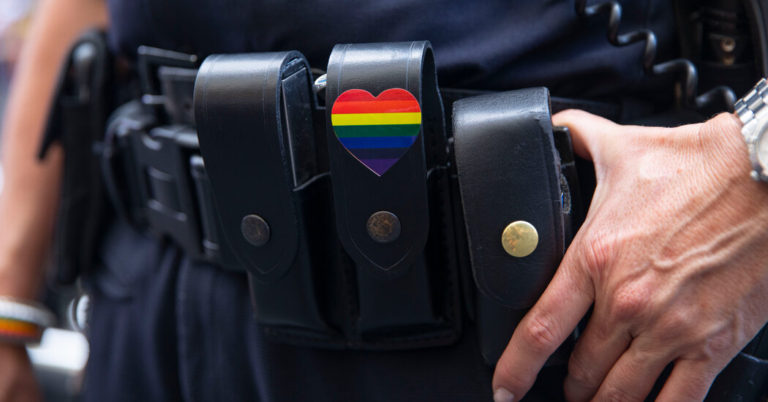
Opinion | The New York Police and the Gay Pride Parade – The New York Times

To the Editor:

Re “A Misstep by Organizers of Pride” (editorial, May 19):

I have to wholeheartedly disagree with your perception of the ban on uniformed police groups at New York’s Pride celebration as a misstep.

This is an appropriate and timely response to the collective trauma of a nation dealing with a year of reckoning regarding police brutality. For those of us who faced officers in riot gear, who were tear-gassed and shot at with rubber bullets less than a year ago while kneeling with our hands up in support of our Black community members, we respectfully ask officers to stay away.

For L.G.B.T.Q.+ officers, my response is this: You have an identity that is complex. But one part of that identity, as a police officer, makes me and others feel unsafe. This is a consequence of the policies of the unions you belong to, qualified immunity that is your extraordinary privilege, and the unspoken blue line that makes it nearly impossible for good officers to enact change in a dysfunctional system.

So yes, your uniform scares me. You need to determine if the two identities you hold are compatible. I don’t believe they are … yet.

So come to Pride — but leave your uniform at home.

Megan Moilanen
San Jose, Calif.

To the Editor:

As a left-of-center gay man living in Manhattan, I am disgusted by the decision to expel the Gay Officers Action League from the Pride parade. This boneheaded decision totally flies in the face of our alleged inclusiveness, and is hurtful to gay officers who are brave enough to “come out” and who are helping to change attitudes within the department.

There’s no sugarcoating this. This decision is clearly a kneejerk reaction to much-needed police reform. However, this only kicks and hurts those who are our friends. Shame on those who have made this destructive, and at best very misguided, decision.

Kurt Wieting
New York

To the Editor:

Truthfully, I am biased. I have been arrested because of the color of my skin. As a result, I have to monitor and think twice about my behavior around the police. “Will this action get me targeted?” I think to myself. “Will I be viewed as a threat?”

This has gone on for so long that it has become reflexive whenever I see the men and women in blue. It is impossible that I can be who I normally am around police officers. Therefore I applaud the decision to decrease the police presence at the Pride march since so many of my queer brethren react how I do.

It is antithetical to the idea of Pride — a time to celebrate who we are, a time not to be ashamed — to have a group of people who cause a large portion, if not majority, of us to recoil.

Frankly, I am surprised by the Times editorial. Until the vast majority of queer people are comfortable with it, the police presence should be kept to a minimum.

Gabriel Klansky
Brooklyn

To the Editor:

Thank you for your balanced editorial on the Pride organization’s misguided decision to ban police groups from the parade. You correctly point out that, for many years, gay men and lesbians at the parade were thrilled to have the police participate and were proud that there was an organization of L.G.B.T.Q. officers.

I also believe that the antagonism between the police and the L.G.B.T.Q. marchers is wildly overblown. In my 35 years at the parade, I have yet to see an unpleasant encounter with the cops. And although there surely have been some, I would not rush to judgment that the problem was police aggression. The cops around me at the parade have always been polite, helpful and often clearly supportive.

I will no longer participate in the parade though I am, in fact, a proud gay New Yorker. The political litmus test for inclusion is a step too far for me.

Peter Clark
New York

To the Editor:

Will this cycle never end? The oppressed become the oppressors, the marginalized become the marginalizers, the occupied become the occupiers. We see the disastrous effects of this cycle all over the world. This decision by the Pride parade organizers is shameful — nothing to have pride about.

Margaret Hurwitz
New York

Ferrets have fun in their brand new tunnel toy – Yahoo Entertainment

Associated Press

Vax and scratch: NY offers $5M lottery for newly vaccinated

Anyone who gets vaccinated at select state-run vaccination sites in New York next week will receive a lottery scratch ticket with prizes potentially worth millions, as Gov. Andrew Cuomo tries to boost slowing vaccination rates. The pilot program will offer prizes from $20 up to $5 million and run from Monday, May 24 to Friday, May 28 at 10 state-run sites, Cuomo said Thursday. “It’s a situation where everyone wins,” Cuomo said at a press conference in Buffalo.

Lights & Sirens | Melted cheese found on vehicle – Bucyrus Telegraph Forum

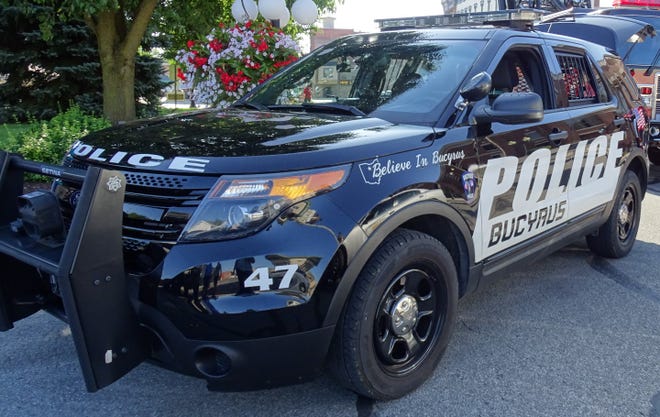
A Bucyrus Police Department patrol car.

Tuesday

INCIDENTS

Officers assisted with a vehicle lockout in the 500 block of South Highland Avenue. 9:37 a.m. 

Officers investigated a disturbance in the 1400 block of Woodlawn Avenue. 10:01 a.m.

A report of the theft of license plate was taken in the 1300 block of East Mansfield Street. 11:05 a.m.

Officers attempted to find a man in the 200 block of Woodlawn experiencing mental health issues. 11:21 a.m. 

Officers assisted with a residential lockout in the 500 block of South Sandusky Avenue. 11:38 a.m.

A report of melted cheese put on a vehicle in the 700 block of West Perry Street was taken. Noon. 

Officers investigated a report of possible child abuse in the 1800 block of East Mansfield Street. 12:49 p.m.

Officers picked up a found cell phone in the 1700 block of Marion Road. 1:11 p.m.

A report of a private property crash in Whetstone Plaza was investigated. 2:26 p.m. 

Officers assisted with a vehicle lockout in the 1000 block of Maple Street. 2:29 p.m. 

Officers checked the 100 block of North Lane Street after a report of kids on bikes riding in front of vehicles. 2:37 p.m. 

Officers spoke with a subject on station about an ongoing investigation. 3:38 p.m. 

Officers spoke with a subject on station about a civil issue. 4:17 p.m.

Officers spoke to a subject on station about a previous incident. 5:27 p.m.

Officers assisted the Crawford County Sheriff’s Office in the 1600 block of East Southern Avenue. 6:12 p.m. 

Officers investigated a juvenile complaint in the 600 block of Whetstone Street. 8:09 p.m. 

Officers investigated a domestic disturbance in the area of McKinley Street and Woodlawn Avenue. 8:10 p.m.

Officers investigated a suspicious person in the 400 block of North Sandusky Avenue. 8:58 p.m. 

Officers took a report of a private property crash in the area of Waterford Glen. 9:02 p.m. 

Officers investigated a 911 hang up in the 100 block of West Center Street. 9:33 p.m.  

A written traffic warning was issued in the area of North Sandusky Avenue and Bland Avenue. 9:57 p.m.  

A motorist was given a verbal warning for an equipment violation in the area of East Rensselaer and Walnut streets. 10:25 p.m.

Officers investigated a disturbance in the 100 block of West Center Street. 10:33 p.m.

Officers investigated a false alarm in the 700 block of Gay Street. 11:53 p.m. 

Thursday

INCIDENTS

Officers investigated a disturbance regarding a person experiencing mental health issues in the 700 block of Plymouth Street. 2:46 a.m.

Officers responded to a call of a person experiencing mental health issues in the 700 block of Gay Street. 3:15 a.m.

A subject came on station regarding a suspicious substance in a bag. 6:36 a.m.    

ARRESTS

A 29-year-old man was arrested on warrant out of Crawford County Sheriff’s office. He was released pending a court appearance. 12:51 a.m.

A 31-year-old man was arrested on a warrant out of Wyandot County Sheriff’s office. He was released to the custody of Wyandot County deputies. 2:11 a.m. 

Abraham, Cappiello earn top honors for Class of 2021 – Powell Tribune

0

This year’s Powell High School graduation ceremony will, thankfully, be different from last year’s. It will be held live and in-person at 2 p.m. Sunday in the high school auditorium. Graduating seniors have been allotted eight tickets each for friends and family to attend, keeping the size of the audience to about 50% capacity of the facility. It will also be livestreamed on Facebook.  

The Shoshone Learning Center will hold its graduation at 12:30 p.m. May 23 at the high school auditorium. 

Kadden Abraham is the Class of 2021’s valedictorian and Maggie Cappiello is salutatorian. Both seniors maintained excellent grades, took multiple concurrent college classes and were involved in various extracurricular activities. 

Neither of them actively sought the top honors in their graduating class, but said the positions resulted from attention to their school work.


VALEDICTORIAN

“It [being valedictorian] found me. Getting good grades and working hard in school has been important my whole life,” Abraham said. “Then, as a senior, it all fell into place.”

He focused on taking challenging classes, doubling up on math and sciences. He has earned 42 college credits, which means he will begin college as a sophomore, or very close.  

That college career will be put on hold for at least a year, though, as Abraham will spend next year on a church mission. The prospect has him excited, because this year the missionaries for the Church of Jesus Christ of Latter-day Saints are going to be allowed to travel abroad, if that is where the mission sends them. Last year, because of the pandemic, mission work was completed in the home country of the missionary.

Abraham can also use that year to decide where he will pursue his degree in chemical engineering. Right now, he’s leaning toward Brigham Young University in Provo, Utah. 

A running back and linebacker on the football team and a trackster with four events, Abraham is proud of his invitation to play in the 48th annual Wyoming Shrine Bowl All Star Football game, set for June 12 in Casper. He will play on the North team, along with teammates Riley Bennett and Jesse Trotter. Abraham is the vice president of the National Honor Society.

He credits his parents, Trenton and Collette Abraham, with being his biggest help and supporters, but he also took the time to thank a lot of other people who helped him along the way. 

“Definitely all my teachers, they were great. And there’s my ‘summer mom’ and boss, Kelly Long, at Olsen Enterprises.” Abraham said he has worked at the rental house business since he was just out of the eighth grade, making repairs.

The support Abraham received went a long way in deciding on his chosen career path. He was assigned a paper in freshman science and wrote about chemical engineering, and that paper helped cement his decision. 

“I have always really liked chemistry and engineering, and always liked working on solving the problems,” he said. 


SALUTATORIAN  

Maggie Cappiello is the salutatorian for the Powell High School class of 2021. She has a 4.25 weighted GPA at PHS, usually taking two college classes each term. Her first college class was a culinary class at Sheridan College, beginning a habit that has accrued more than 30 college credits. 

Like Abraham, Cappiello did not seek her designation as an honors graduate.

“I didn’t pursue it. Both my parents are teachers and I enjoy school and doing well in school,” she said.

Both of Cappiello’s older sisters were college honors students “and I learned by example because I’m the youngest.”

Cappiello didn’t know she was in the running for the honor until this year’s spring semester, just a few months ago. “Then I looked at it and knew it was a definite possibility,” she said. 

Originally, Cappiello wanted to attend a culinary school. Since then her plans have changed a little. She has decided to attend Michigan State University in East Lansing, Michigan, where she has been awarded a prestigious STARR scholarship, which will cover her expenses while she pursues a food science degree. Culinary school will come after that, she said.

“Culinary is a science, so there is a lot of math and science. But there are a lot more options with that [food science] degree and certifications,” she explained.

Cappiello is exploring those job options with her teachers and Jill Smith, who substitutes in the school district. Smith has a degree in food science and was instrumental in testing and packaging the products for Gluten Free Oats, a company Smith’s family previously owned and operated. Those converstations piqued Cappiello’s interest in perhaps working in the testing and packaging part of the food industry after graduation. 

Cappiello also said she owes a lot to her parents, Vin and Lisa Cappiello, who both taught in Cody schools; Vin Cappiello currently teaches at Powell High School, though he’s leaving the post at the end of the school year.

“They’ve been my support system,” Maggie Cappiello said of her parents. “My sisters were in college and I was pretty much an ‘only child’ during my high school years. 

“And they have been amazing,” she grinned. 

She went on to thank Denise Laursen, who has taught Cappiello since her freshman year. “She got me into food and really helped me find my niche,” Cappiello said. Laursen was also the SkillsUSA team coach and adviser who helped and encouraged Cappiello as she competed for and won a recent state championship in baking.

PHS math teacher Russ Schwahn was also on her list. Schwahn composed a letter of recommendation for the STARR scholarship that Cappiello believes was instrumental in her receiving the award. 

“He’s been one of my biggest supporters and he wrote the letter for the scholarship. I’ll always be in debt to him for that,” she said. “Plus, he is one of the best teachers I’ve ever had.”

In addition to her state championship in SkillsUSA, Cappiello has been a member of the National Honor Society for two years and performed in the jazz band as a sophomore and junior and in concert band her freshman year. She is an acolyte in her church, where she also helped with livestreaming services during the pandemic. Cappiello is a third degree black belt in taekwondo and was instrumental in forming the Gay-Straight Student Alliance at PHS, where she serves as president.

Cappiello has also been named a Balfour winner, an award given to the outstanding boy or girl based on academic resume, their extra curricular activities and ACT scores.


Balfour award

The male winner of the Balfour Award is PHS senior CJ Brown. 

Brown’s classes are similar in content to those of Abraham, and the two have had a lot of concurrent college classes together. Brown has a 4.3 GPA. He intends to pursue a degree in computer science because there are so many opportunities in the field. He will begin at the University of Wyoming in August, where he has received the Trustees’ Scholars Award, UW’s top academic scholarship. 

Brown has truly loved his dramatic experience while at Powell High School. He has been part of every production since he was a sophomore and credits Bob Hunt, who directs most of the shows, with changing him.

“He [Hunt] helped give me confidence, and that really helped me out. I used to be really shy,” he explained. The son of Beth and Clay Brown, CJ Brown hopes to land a job in computer science, maybe in a Big Tech corporation.

“Those are really good jobs,” Brown said. “It would be my dream job to work for one of the tech giants.”

The Powell High School Class of 2021 graduation exercises will be livestreamed at www.facebook.com/Powell-High-School-104661744681410/.

Baseball Debates: Does Swinging on a 3-0 Pitch Threaten Civilization as We Know It? – The Wall Street Journal

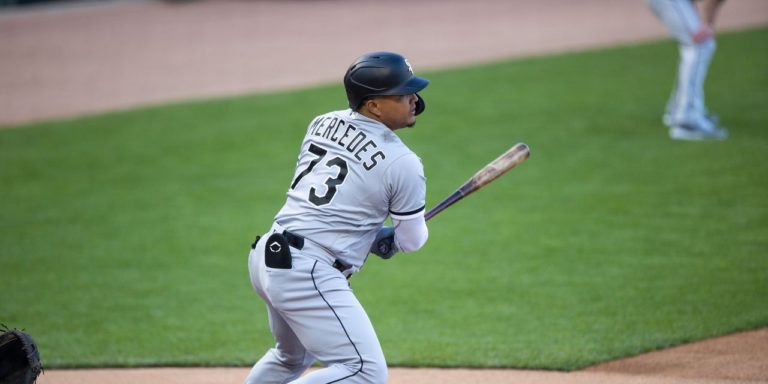
Baseball is always good for a few comically overwrought controversies per season, and the brouhaha of the moment concerns the Chicago White Sox, and whether or not rookie Yermin Mercedes desecrated the sport—or, perhaps, the entirety of human civilization—when he smacked a home run on a droopy 3-0 pitch from a utility player during a blowout win over the Minnesota Twins.  

Reactions to this appear to fall into two categories. The first reaction is, essentially, a shoulder shrug: He’s a hitter. I thought he was supposed to hit. If you don’t want him to hit, throw a better pitch. This was the reaction of some notable Major League ballplayers who supported Mercedes, including some of his White Sox teammates, as well as the 2020 National League Cy Young winner Trevor Bauer of the Dodgers, who tweeted: Dear hitters: If you hit a 3-0 homer off me, I will not consider it a crime.

The counter reaction is: Look, this is about sportsmanship—the White Sox were cruising to victory, let the pitcher try to throw a strike, there’s no need to rub it in by bashing a garbage-time homer. This is, interestingly, the position of the White Sox manager Tony La Russa, who criticized his own player for an unlicensed 3-0 hack, and wasn’t fazed the next night, when a Twins hurler appeared to retaliate by throwing a pitch that sailed behind Mercedes’s back. “I don’t have a problem with how the Twins handled that,” the 76-year-old Chicago skipper said.

(It might not rate well in our conflict-driven economy, but there’s also a third, decaffeinated take somewhere in the middle. It’s possible to think that 3-0 home runs in blowouts are a bit tacky, but also to have been thoroughly amused by Mercedes’s meaningless moonshot versus Minny. Complaining about home runs starts to sound like complaining about pizza.)

As always, a sense of proportion is useful. If baseball players continue to swing at 3-0 pitches in blowouts, I don’t believe we’re going to wake up one morning, and the moon will have replaced the sun, the rivers and oceans will be filled with Mountain Dew and fire, and all the neighborhood dogs will be driving around in cherry red Camaros, cranking Meatloaf.

Streaming series shows collision of music, history in 1971 – Olean Times Herald

NEW YORK (AP) — Chrissie Hynde wouldn’t make her own mark in music until a few years later, but her memories of how 1971’s daily soundtrack was tied to the times remain vivid.

Hynde had just dropped out of Kent State University in Ohio, where a year earlier four students were shot and killed by the National Guard. Neil Young’s incendiary song about the incident, “Ohio,” played as she told her story.

Her three words essentially provide the theme statement for the series’ producers. They document, through indelible work made that year by Marvin Gaye, Carole King, John Lennon and many others, how musicians responded at a time when the 1960s dream was dying and it was unclear what would replace it.

“Some people run away and hide themselves in drugs,” said James Gay-Rees, one of the series’ executive producers. “Some people write protest music and some people find their identity. It’s such a brilliant tipping point, really.”

It was the year of Gaye’s “What’s Going On,” No. 1 on Rolling Stone magazine’s list of the top 500 albums of all time. Joni Mitchell’s “Blue.” King’s “Tapestry.” Lennon’s “Imagine.” The Rolling Stones’ “Sticky Fingers.” Sly & the Family Stone’s “There’s a Riot Goin’ On.” David Bowie’s hit “Changes.” Gil Scott-Heron’s song that became a catchphrase, “The Revolution Will Not Be Televised.”

Gay-Rees was 4 years old at the time. It took three years to make the series, mostly because of the arduous task of securing rights to about 150 pieces of music, after he was intrigued by the David Hepworth book, “1971 — Never a Dull Moment: Rock’s Golden Year.”

After a somewhat unfocused first episode, the series settles in with more thematic subsequent pieces. One episode focuses on King and Mitchell and the breaking down of sexual barriers, while “The Revolution Will Not Be Televised” zeroes in on Black musicians and how they addressed issues like poverty and treatment by authorities with work that sounds fresh today.

Gay-Rees said he wanted to avoid the look of traditional music documentaries, with shots of creators sitting in control rooms talking about why they added this instrument or that beat.

More from this section

Instead, songwriting is talked about in the context of the times, so the series feels as much about the history of the year as the music.

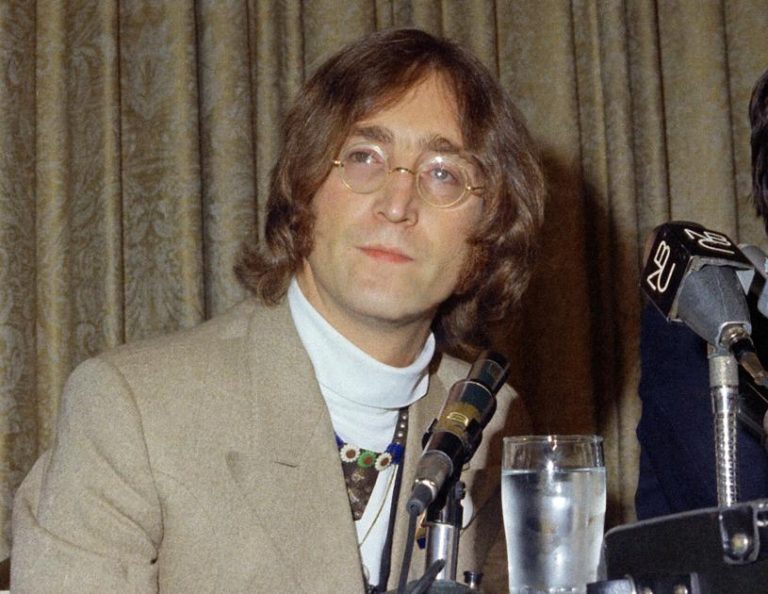
“You can’t really make a film about John Lennon writing ‘Imagine’ without asking why he wrote ‘Imagine,’” he said.

Besides the crucial music clearances, producers deserve credit for all of the video they dug up, including film of Lennon, producer Phil Spector and musicians recording the “Imagine” album. In another priceless clip, President Richard Nixon introduces a performance by the Ray Conniff Singers at the White House by saying, “if the music is square, it’s because I like it square.”

Nixon keeps a frozen smile as one of the singers holds up a sign protesting the Vietnam War.

Similarly, the “Revolution” episode contains brutal footage of the Attica Prison riot with a discussion of Aretha Franklin’s participation in a benefit for victims.

Other topics include the emergence of glam rock in the aftermath of the Beatles’ breakup, how James Brown and other Black artists fought against racism, the rise of hard drugs and how it affected artists like the Rolling Stones and Sly Stone, and how George Harrison’s “Concert for Bangla Desh” provided a template for future benefits.

While Gay-Rees said he’s “not prone to nostalgia,” it’s hard to dismiss the quality of the songwriting.

Was it the best year ever for popular music?

“You can argue whether it was ‘66 or 1950 or ’71,” he said. “But it was a pretty good year by anybody’s measure.”

Streaming series shows collision of music, history in 1971 – Hastings Tribune

NEW YORK — Chrissie Hynde wouldn’t make her own mark in music until a few years later, but her memories of how 1971’s daily soundtrack was tied to the times remain vivid.

Hynde had just dropped out of Kent State University in Ohio, where a year earlier four students were shot and killed by the National Guard. Neil Young’s incendiary song about the incident, “Ohio,” played as she told her story.

Her three words essentially provide the theme statement for the series’ producers. They document, through indelible work made that year by Marvin Gaye, Carole King, John Lennon and many others, how musicians responded at a time when the 1960s dream was dying and it was unclear what would replace it.

“Some people run away and hide themselves in drugs,” said James Gay-Rees, one of the series’ executive producers. “Some people write protest music and some people find their identity. It’s such a brilliant tipping point, really.”

It was the year of Gaye’s “What’s Going On,” No. 1 on Rolling Stone magazine’s list of the top 500 albums of all time. Joni Mitchell’s “Blue.” King’s “Tapestry.” Lennon’s “Imagine.” The Rolling Stones’ “Sticky Fingers.” Sly & the Family Stone’s “There’s a Riot Goin’ On.” David Bowie’s hit “Changes.” Gil Scott-Heron’s song that became a catchphrase, “The Revolution Will Not Be Televised.”

Gay-Rees was 4 years old at the time. It took three years to make the series, mostly because of the arduous task of securing rights to about 150 pieces of music, after he was intrigued by the David Hepworth book, “1971 — Never a Dull Moment: Rock’s Golden Year.”

After a somewhat unfocused first episode, the series settles in with more thematic subsequent pieces. One episode focuses on King and Mitchell and the breaking down of sexual barriers, while “The Revolution Will Not Be Televised” zeroes in on Black musicians and how they addressed issues like poverty and treatment by authorities with work that sounds fresh today.

Gay-Rees said he wanted to avoid the look of traditional music documentaries, with shots of creators sitting in control rooms talking about why they added this instrument or that beat.

Instead, songwriting is talked about in the context of the times, so the series feels as much about the history of the year as the music.

“You can’t really make a film about John Lennon writing ‘Imagine’ without asking why he wrote ‘Imagine,’” he said.

Besides the crucial music clearances, producers deserve credit for all of the video they dug up, including film of Lennon, producer Phil Spector and musicians recording the “Imagine” album. In another priceless clip, President Richard Nixon introduces a performance by the Ray Conniff Singers at the White House by saying, “if the music is square, it’s because I like it square.”

Nixon keeps a frozen smile as one of the singers holds up a sign protesting the Vietnam War.

Similarly, the “Revolution” episode contains brutal footage of the Attica Prison riot with a discussion of Aretha Franklin’s participation in a benefit for victims.

Other topics include the emergence of glam rock in the aftermath of the Beatles’ breakup, how James Brown and other Black artists fought against racism, the rise of hard drugs and how it affected artists like the Rolling Stones and Sly Stone, and how George Harrison’s “Concert for Bangla Desh” provided a template for future benefits.

While Gay-Rees said he’s “not prone to nostalgia,” it’s hard to dismiss the quality of the songwriting.

Was it the best year ever for popular music?

“You can argue whether it was ‘66 or 1950 or ’71,” he said. “But it was a pretty good year by anybody’s measure.”

Let’s get our state to abolish the Gay/Trans Panic Defense – Dorchester Reporter

To the Editor:

In July 2018, Otoni Eliseau was staying in the basement of the Philadelphia Baptist Church in Framingham with his friend, Jackson Sugrue, who all of a sudden became violent. Jackson would beat him; he’d smash his head against a coffee table; he took away his phone, repeatedly yelling at him ‘I know you like me. I know you’re gay,’ and he would hold him captive there for four days without food or water. Once Eliseau escaped, Jackson was arrested on charges of committing a hate crime. Jackson’s attorney, Kenneth Gross, would later state of Eliseau in court : “He was trying to entice my client to do things that were against his nature.”

In the 1990s, Scott Amendure brought Jonathan Schmitz onto The Jenny Jones Show to reveal that he had a crush on him. Following the taping of the episode, Schmitz purchased a shotgun, went to Amendure’s Michigan home, and shot him twice in the chest, killing him. Schmitz’s attorneys later claimed in court that he was mentally ill and became emotionally unstable after being humiliated because of Amendure’s interest in him.

In 2014, California became the first state to ban this legal defense strategy, followed by Illinois (2017), Rhode Island (2018), Connecticut, Hawaii, Maine, Nevada, and New York (2019), New Jersey, D.C., Colorado, and Washington (2020). This year, Vermont and Virginia, the first southern state to do so, joined the lineup.

Massachusetts has yet to do so, but you can help change that by contacting your local representative and senator and urging them to support An Act to Support LGBTQ Victims (H.D. 2275/S.D. 1183), which will make Massachusetts the 13th state to ban this legal defense strategy and protect our LGBTQ friends, neighbors, and families.

Texas, Iowa, Georgia, Maryland, Nebraska, Florida, Oregon, New Mexico, New Hampshire, and Minnesota all have similar waiting on possible passages.

Matthew J Shochat
Dorchester

3 2.png

LGBT Network demands resignations at boardwalk rally – liherald.com

A highly vocal crowd gathered on the Long Beach boardwalk last Sunday morning for a press conference at which LGBT Network officials called for the resignation of the city’s police commissioner and the City Council president.

The officials said that Commissioner Ron Walsh and council President John Bendo were responsible for a “homophobic” act in ordering the removal of a rainbow Gay Pride flag near the Riptides restaurant. The Pride flag has been on display for several years. It was re-located to the rear of Riptides two weeks ago, but after the press conference, Sunday was put back up on the boardwalk.

David Kilmnick, the Network’s chief executive, called three times for Walsh’s and Bendo’s resignations.

Kilmnick was joined on a podium at Edwards Boulevard and the boardwalk by Brian Wells, president of the Long Beach Police Department’s Police Benevolent Association. The PBA and Walsh have had a contentious relationship almost from the start of Walsh’s tenure in February.

“We are here to stand up against homophobic discrimination,” Kilmnick said.

Some in the crowd of about 100 people, however, shouted that Kilmnick wasn’t telling the truth. Phyllis Libutti, a Lido Beach resident, said she and others at the gathering stood for gay rights, but did not believe the city was being discriminatory.

“See my mask?” Libutti called out, referring to her colorful cloth face covering. “It represents Gay pride.”

At the end of the event, Kilmnick and other Network officials put the Rainbow flag back up on the boardwalk, not far from an American flag and a POW/MIA flag. It was unclear what action city officials might take. Walsh said at a city council meeting Tuesday night that the matter would be handled legally. He did not elaborate.

Kilmnick said that the Pride flag wasn’t political. “It’s about hope,” he said. “It’s about community.”

But he also struck a more strident tone. Looking out at the crowd, he said, “Today is about putting that flag back up. If you want to put a war on the LGBT community, this is a war you are not going to win.”

Jon Bell, an attorney for the Network, said the city was ”trampling” on the rights of Riptides and the Network in ordering the flag to come down.

In late March, Kilmnick said, Walsh and Bendo told Riptides owner Brian Braddish that the Pride flag “had to come down.”

Again, Libutti and others called out that Kilmnick wasn’t telling the truth.

“You can call your own press conference if you want,” Kilmnick shot back. “What’s missing here is the Rainbow flag.” Most in the crowd applauded.

Bendo, who stood only feet from the podium, said he had never had any such discussion with Braddish. The city, Bendo said, called Braddish’s Garden City attorney, Dennis Kelly, and asked him to instruct Braddish to take the flag off the boardwalk, which is city property. Braddish said on Sunday that soon afterward, he removed the flag and put it up at the rear of his restaurant.

That action was necessary, Bendo said, because the city had just told another resident, Michael Wasserman, to remove flags from his home and car that, in the starkest terms, disparaged President Biden and Vice President Harris.

Wasserman has filed a $25 million lawsuit against the city, claiming his rights were violated. On Sunday, Wasserman refused to talk to a reporter.

Bendo said that only flags that represent America can be flown in public places. “You can’t apply the law only to him,” he said, referring to Wasserman.

The Herald spoke with Walsh, who was not at the press conference, by phone earlier this week. He said he had never had a conversation with Braddish about the flag, and has spoken only to his attorney.

“This is political nonsense,” Walsh said. “I have a Police Department to run. I’m not going to engage in politics.”

Meredith Flug, who moved to Long Beach only six months ago, was among those in the crowd. “Stop focusing on the politics and focus on the message — that is, support the LGBT community,” she said, and then asked why Bendo and other city officials had “waited so long” to bring up the Pride flag.

Kilmnick also accused the city of trying to bully the LGBT Network into canceling the news conference. The city, he said, had issued a “hate-filled press release” on Friday saying that it had “two clues as to who may have encouraged the group into participating in this charade.” It named Wells and Robert Agostisi, the city’s former corporation counsel, noting that Agostisi is being sued by the city in an attempt to claw back hundreds of thousands of dollars in separation payments.

“We want these amateur tyrants out,” Wells told the crowd. “[Walsh] wants the Long Beach Police Department to be the thought police. He thinks of us a Long Beach recruits. He has treated my members like dirt.”

Bendo denied accusations that the city had tried to bully the LGBT Network, though he acknowledged that the city had contacted the organization on Saturday. “We believed what they were saying was false,” Bendo said.

City Council member Liz Treston said after the news conference that she was “disappointed” in both Kilmnick and Braddish, adding that the event was more about politics than anything else.

“I’m an advocate for all,” said Treston. “It’s terrible to call someone a homophobe.” The city, she said, was only trying to enforce its codes.

The LGBT Network announced its plans Friday. The city fired back Saturday, issuing a news release of its own, demanding that the organization apologize for “false and offensive assertions about the city, its council president and police commissioner.”

The PBA has listed a series of complaints against Walsh, who has denied all of them. Some focus on his character, and others on his policies.

Before the gathering, Braddish said, “In this day and age, to ask someone to take down the Pride flag is hurtful.”

LGBT Network demands resignations at boardwalk rally | Herald Community Newspapers – liherald.com

A highly vocal crowd gathered on the Long Beach boardwalk last Sunday morning for a press conference at which LGBT Network officials called for the resignation of the city’s police commissioner and the City Council president.

The officials said that Commissioner Ron Walsh and council President John Bendo were responsible for a “homophobic” act in ordering the removal of a rainbow Gay Pride flag near the Riptides restaurant. The Pride flag has been on display for several years. It was re-located to the rear of Riptides two weeks ago, but after the press conference, Sunday was put back up on the boardwalk.

David Kilmnick, the Network’s chief executive, called three times for Walsh’s and Bendo’s resignations.

Kilmnick was joined on a podium at Edwards Boulevard and the boardwalk by Brian Wells, president of the Long Beach Police Department’s Police Benevolent Association. The PBA and Walsh have had a contentious relationship almost from the start of Walsh’s tenure in February.

“We are here to stand up against homophobic discrimination,” Kilmnick said.

Some in the crowd of about 100 people, however, shouted that Kilmnick wasn’t telling the truth. Phyllis Libutti, a Lido Beach resident, said she and others at the gathering stood for gay rights, but did not believe the city was being discriminatory.

“See my mask?” Libutti called out, referring to her colorful cloth face covering. “It represents Gay pride.”

At the end of the event, Kilmnick and other Network officials put the Rainbow flag back up on the boardwalk, not far from an American flag and a POW/MIA flag. It was unclear what action city officials might take. Walsh said at a city council meeting Tuesday night that the matter would be handled legally. He did not elaborate.

Kilmnick said that the Pride flag wasn’t political. “It’s about hope,” he said. “It’s about community.”

But he also struck a more strident tone. Looking out at the crowd, he said, “Today is about putting that flag back up. If you want to put a war on the LGBT community, this is a war you are not going to win.”

Jon Bell, an attorney for the Network, said the city was ”trampling” on the rights of Riptides and the Network in ordering the flag to come down.

In late March, Kilmnick said, Walsh and Bendo told Riptides owner Brian Braddish that the Pride flag “had to come down.”

Again, Libutti and others called out that Kilmnick wasn’t telling the truth.

“You can call your own press conference if you want,” Kilmnick shot back. “What’s missing here is the Rainbow flag.” Most in the crowd applauded.

Bendo, who stood only feet from the podium, said he had never had any such discussion with Braddish. The city, Bendo said, called Braddish’s Garden City attorney, Dennis Kelly, and asked him to instruct Braddish to take the flag off the boardwalk, which is city property. Braddish said on Sunday that soon afterward, he removed the flag and put it up at the rear of his restaurant.

That action was necessary, Bendo said, because the city had just told another resident, Michael Wasserman, to remove flags from his home and car that, in the starkest terms, disparaged President Biden and Vice President Harris.

Wasserman has filed a $25 million lawsuit against the city, claiming his rights were violated. On Sunday, Wasserman refused to talk to a reporter.

Bendo said that only flags that represent America can be flown in public places. “You can’t apply the law only to him,” he said, referring to Wasserman.

The Herald spoke with Walsh, who was not at the press conference, by phone earlier this week. He said he had never had a conversation with Braddish about the flag, and has spoken only to his attorney.

“This is political nonsense,” Walsh said. “I have a Police Department to run. I’m not going to engage in politics.”

Meredith Flug, who moved to Long Beach only six months ago, was among those in the crowd. “Stop focusing on the politics and focus on the message — that is, support the LGBT community,” she said, and then asked why Bendo and other city officials had “waited so long” to bring up the Pride flag.

Kilmnick also accused the city of trying to bully the LGBT Network into canceling the news conference. The city, he said, had issued a “hate-filled press release” on Friday saying that it had “two clues as to who may have encouraged the group into participating in this charade.” It named Wells and Robert Agostisi, the city’s former corporation counsel, noting that Agostisi is being sued by the city in an attempt to claw back hundreds of thousands of dollars in separation payments.

“We want these amateur tyrants out,” Wells told the crowd. “[Walsh] wants the Long Beach Police Department to be the thought police. He thinks of us a Long Beach recruits. He has treated my members like dirt.”

Bendo denied accusations that the city had tried to bully the LGBT Network, though he acknowledged that the city had contacted the organization on Saturday. “We believed what they were saying was false,” Bendo said.

City Council member Liz Treston said after the news conference that she was “disappointed” in both Kilmnick and Braddish, adding that the event was more about politics than anything else.

“I’m an advocate for all,” said Treston. “It’s terrible to call someone a homophobe.” The city, she said, was only trying to enforce its codes.

The LGBT Network announced its plans Friday. The city fired back Saturday, issuing a news release of its own, demanding that the organization apologize for “false and offensive assertions about the city, its council president and police commissioner.”

The PBA has listed a series of complaints against Walsh, who has denied all of them. Some focus on his character, and others on his policies.

Before the gathering, Braddish said, “In this day and age, to ask someone to take down the Pride flag is hurtful.”

LGBT award recognition for two Middlesbrough champions of equality and diversity – Teesside Live

Two Middlesbrough equality and diversity champions were honoured at a prestigious regional awards event.

Community coordinators, Rama Saidykhan and Joe Carson, from Middlesbrough Council ’s Stronger Communities team, were recognised at the LGBT Alliance Awards.

The pair were named among finalists in the Local Authority Commitment to LGBT Communities category for their LGBT Home Free event in September 2019.

“We are very thankful to Hart Gables for shortlisting the SCM team for this great award.

“It was definitely a team effort and we would like to thank the SCM team – Shahda, Priya and Leah.

“Special thanks also go to Marion Walker and the entire service for their support – we would not have been able to do it without them,” Rama and Joe said.

Their Stronger Communities Middlesbrough event was part of the controlling migration fund programme.

The awards were created in 2020 by charity Hart Gables to celebrate commitments and achievements of local services and individuals which bring communities together.

Hart Gables is a support service across the Tees Valley for those who identify as LGBT+ and they work so that people are given equal opportunities.

The charity’s LGBT action development worker, Andy Towers said: “Validating an individual’s sexuality or gender with acceptance and kindness is key to spreading happiness and understanding.

“Stronger Communities has made reality projects such as LGBT Home Free, which raised awareness about the issues faced by local LGBT+ people seeking asylum, promoted community cohesion, and provided a supportive space in which local LGBT+ people seeking asylum can talk about their experiences and have their voices heard.”

The Stronger Communities team was shortlisted alongside Stockton Council, with Hartlepool Council Youth Service named the overall winner.

The LGBT Home Free project raised awareness of issues faced by local LGBT+ asylum seekers and allowed them to have their voices heard.

The team listened and was able to support Hart Gables to deliver a launch event and workshop to ensure the project would be sustainable and long lasting.

Jolande Mace, the council’s strategic cohesion and migration manager, said: “My team feels honoured to have been shortlisted for this important category.

“We promote community cohesion and work tirelessly at making Middlesbrough a place where people feel welcomed, safe, and free to be who they are.

“We look forward to further supporting this important agenda and to continue to promote a culture of awareness, understanding, and respect across our town.

“Warm congratulations to the Youth Service at Hartlepool Borough Council for winning the award.”

Sign up to Teesside Live’s newsletter here.

‘Green Lantern’: Jeremy Irvine Set to Play Gay Superhero Alan Scott – TV Insider

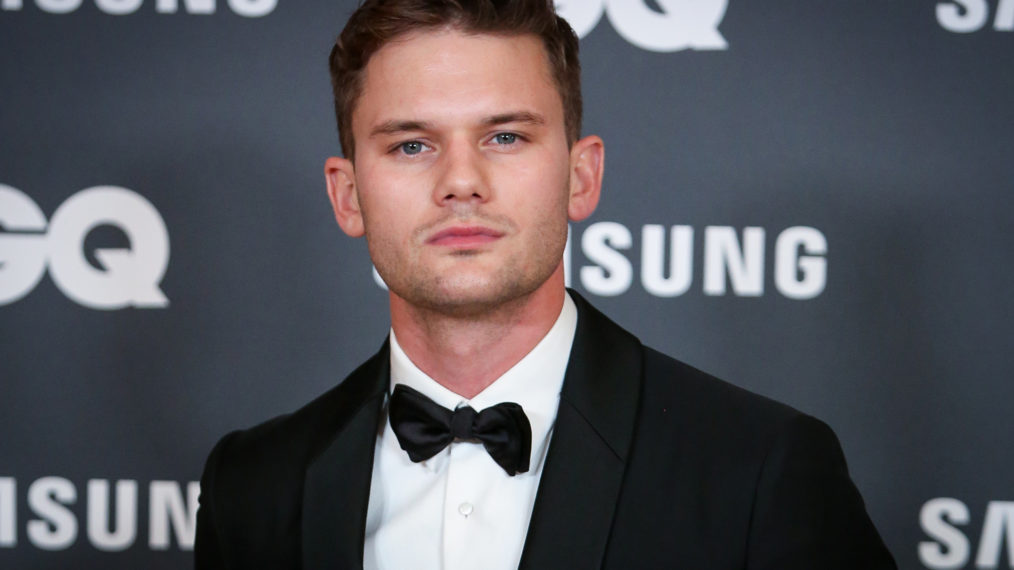
Jeremy Irvine is reportedly set to play Alan Scott in the upcoming ‘Green Lantern’ series on HBO Max. The DC Comics character recently came out as gay.

Irvine, who most recently played the lead in the Bourne spinoff TV series Treadstone, is said to be in talks to star in the role, according to Variety.

Working as a train engineer before life as a superhero, Scott gained his powers from a green flame that fell to Earth. He uses his skills to fight evil with the help of a magical ring that grants him various powers.

British actor Irvine would join American Horror Story star Finn Wittrock, who is set to play unstable superhero Guy Gardner in the upcoming series from executive producer Greg Berlanti and Warner Bros. TV. Given a ten-episode order last year, the show is expected to revolve around several Green Lanterns, with Jessica Cruz, Simon Baz and Kilowog featuring alongside Scott and Gardner.

Speaking with the Television Critics Association in January 2020, HBO Max head of original content Sarah Aubrey said that the show will span “several decades” and will focus on “two stories about Green Lanterns on Earth as well as one in space going into the Sinestro story.”

Irvine made his silver screen debut in 2011 in Steven Spielberg‘s adaptation of War Horse, for which he received a nomination for the London Film Critics’ Choice Award for Young British Performer of the Year. He has since starred in the ABBA-inspired movie Mamma Mia! Here We Go Again, as well as dramas Stonewall, The Professor and the Madman, and The Last Full Measure.

Green Lantern is one of many DC projects currently in development at HBO Max; this includes The Suicide Squad spinoff Peacemaker and a drama set around the Gotham Police Department. The streamer also recently announced two DC animated series in association with Cartoon Network, Batman: Caped Crusader and My Adventures with Superman.

HBO Max has yet to comment on Irvine’s potential involvement in Green Lantern.