Home Blog Page 220

Covid Vaccines Are Now on Wheels – The New York Times

0

From the East Coast to the West, health officials are taking the Covid-19 vaccines on the road.

Across the country, nurses, technicians, emergency medical workers and community partners are rolling up to the doorsteps, streets and churches of people who are homeless, who live in areas without reliable transportation or who have no internet access.

Their goal: to reach the unvaccinated stragglers in overlooked neighborhoods, plugging a vulnerable gap in the nationwide effort to outmaneuver death. Some people are encumbered by jobs or the responsibility of child care. Others struggle with dire poverty. Many are adrift, out of reach or uninformed.

Then there are the people of Sussex County, Del. Many live in poverty, more vulnerable to the deadly path of the coronavirus. A trip to the doctor or a vaccination appointment can mean enduring the time-gobbling navigation of irregular bus routes, or losing a day’s wages.

The Rev. Sonja Ayers of Mount Zion A.M.E. Church in Ellendale is among the community leaders who have joined the campaign to turn obstacles into opportunities. She said organizers had posted fliers, published bulletins and relied on word-of-mouth to reach people who have little access to computers or cellphones in an area struggling with a high infection rate.

“We are trying to make it convenient for them so that they can get vaccinated,” she said. “The most important thing is that we save ourselves and others.”

In a pandemic, inconvenience can dictate the difference between life and death.

So in April, teams from Beebe Healthcare and local partners wrangled a bus that had been used as a mobile library and repurposed it with workstations.

A nurse fills syringes. A scribe registers patients. Pop-up tents offer shelter for observation after the injection. Only the books on the bus have been left undisturbed, arrayed on their perches as the silent overseers of the lifesaving work suddenly underway amid the shelves.

“We have some incredible pockets of poverty in Sussex County,” said Kim Blanch, a nurse taking part in the effort. “We have broadband deserts. And Covid has just really highlighted so many of the disparities that have been present.”

When it comes to vaccinations, she said, “literally meeting people where they are is so important.”

It is a team effort, all eyes on the road. There are county officials, librarians and medical workers who monitor patients after a shot.

The care, however, does not end when needles are withdrawn from arms.

The bus is one big opportunity on wheels. On the sidelines, medics offer instruction in CPR and how to stop bleeding — another resource that the community might not have had access to before but may someday mean the difference between life and death.

“We live for this,” said Glenn Marshall, special operations manager for the Sussex County Emergency Medical Services. “It has been proven that hands-on interaction is what truly saves lives.”

There are a few bumps in the road to broader vaccination. Language barriers, fear of the jab and distrust in the government and skepticism about the virus can be obstacles.

But the numbers are adding up. The first event, on April 13, was held at A.C.E. Peer Resource Center for homeless people. Then the bus rolled into town parks, community centers, low-income housing complexes and other public locations, Ms. Blanch, the nurse, said.

“We are just creating that ease of access,” she said. “We call it the Magic Bus.”

About 50 people can be vaccinated in several hours. Spanish and Haitian Creole translators are on hand. Children who were already familiar with the bus as a touring library brought parents, sometimes translating for them, said Rachel Lynch, a librarian.

The workers, many of them volunteers, dispel misinformation, listen and sometimes talk about other subjects. Trust solidifies when the bus comes back with second doses.

That return is important to Luis Torres. On June 3, he gets his follow-up. Mr. Torres, 64, said that his first dose, on May 13, was possible only because the bus was stationed that morning at Bethel A.M.E. Church in Milton, a five-minute walk from where he lives.

It is also important to Thomas Harmon, 73, who had long ago requested a vaccine at a pharmacy. The call never came.

So when the project coordinator from the church told Mr. Harmon about the bus, he rode his bicycle there from his senior living residence.

“There is too much sickness going on,” Mr. Harmon said. “And I see people pass away.”

The Bread of Life Mission first opened its doors to people in need of shelter and food in 1939, as the Great Depression was coming to an end in the United States.

This year, the mission, which is just south of downtown Seattle, has taken on a new hardship, and relief is now coming in the form of a vaccine.

Fewer than half of all Washington State residents have been fully vaccinated, according to data compiled by The New York Times.

On May 17, a clinic on wheels set out to find the rest.

It took the fight against Covid-19 to Pioneer Square, an area with several missions and a large population of homeless people. The team from Harborview Medical Center parked in front of the Bread of Life Mission and erected white tents — one for administering the vaccines, another with folding chairs so recipients could rest after their shots.

And the people came. There were men without a home, like Thomas Dunlap, 52, who, by chance, noticed the mobile clinic and accepted the inoculation with relief. As did another homeless man, Michael Clinger, 57, who said he was “sick of wearing a mask.”

The team was mostly administering second doses of the Moderna vaccine, but they did not turn away anyone who asked for a first.

“It kind of looks like you got to get it if you want to do anything,” said Enrico DePaul, 54, who is unemployed and originally from Philadelphia. “I waited as long as I could.”

Nikki Somers, 53, an office manager for the Alliance for Pioneer Square, was a witness to the risk. “I had two friends that got Covid,” she said. “I definitely know it was real.”

Like other mobile vaccine sites across the country, the program is aimed at filling in what life’s hardships often deny in terms of opportunity, funds and access.

“It was quite amazing,” said Christl Gay Marcontell, 51, a Pilates instructor whose studio is across the street. “It was hard to find an appointment. I had been searching for two weeks, and I came out, and they were here.”

About a dozen miles from St. Cloud, Minn., a city of about 70,000 people, lies a fruit and vegetable farm owned and run by John and Julie Svihel. About 100 workers coax eggplants, berries, melons, sweet corn and other produce from sandy loam fields that stretch across 800 acres in the state’s central region.

The farm is one of several areas in Minnesota where lack of access to technology and transportation has defined the potential for life, death or debilitating illness.

Last year, when the pandemic started to gather force, its workers, who come from Mexico, Honduras, the Dominican Republic, South Africa, Romania, Moldova, Ukraine and Slovenia, adjusted their lives as so many others did across the country, and stayed put.

But they live in close quarters on the farm, cooking together, working in shifts. The potential for mass infection lurked.

Mr. Svihel was sure that they could have found somewhere to get a vaccine nearby: Downtown Foley was about five miles away. But the shifts of dozens of workers would have to be juggled, transportation organized and language barriers surmounted.

So the Svihels pursued a state initiative that would bring vaccinations to the farm, scheduling them during a pause in planting after a streak of freezing nights. On the afternoon of May 12, in a paved lot, they made way for the traveling clinic.

“The bus pulled in and tractors pulled out,” Mr. Svihel said.

Over the next three hours or so, about 60 workers were vaccinated with the Johnson & Johnson vaccine, which meant the bus needed to make only a single trip. Some of the South African workers declined. Others were fearful, but went ahead, Mr. Svihel said.

The Minnesota Department of Health, local partners and clinical support from Blue Cross Blue Shield started to address gaps early this year by transforming six city buses into clinics. Seats were removed and vaccination stations were installed. Personal protective equipment, canopies, tents and snacks were stowed aboard.

Teams of up to eight people ride along. Since April 12, the buses have rolled out to homeless-services providers, farms, rural communities and multifamily housing units, said Emily Smoak, a department planner.

Ten to 180 people can be vaccinated in one event, depending on its size, she said.

Ms. Smoak said the mobile clinic teams aimed to build trust and curb the impact of the virus on communities, not just drive through them and tally up numbers.

“We are showing up in communities and telling people: ‘You do matter. We are not just going to leave you out of the greater process.’”

Produced by Shelby Knowles and Jade-Snow Joachim.

Pathbreaking Trans Woman in French Rugby Says Time for Other Sports to Follow – News18

The first trans woman playing at the top level of amateur rugby with the endorsement of her national federation said on Thursday it was time for other countries and other sports to follow French rugby and let trans women play.

The French Rugby Federation defied the recommendation of the sport’s global governing body this week by decreeing that trans women should be allowed to compete. For Alexia Cerenys, who has already been playing unofficially as a flanker for the Lons Women’s Rugby team in the French Pyrenees for years, it was about time.

“From a personal point of view, I feel really proud to have this support and to see things change,” she told Reuters. “In this sense, I hope to see doors open for other federations to open up competition to trans people in all other sports.”

World Rugby has discouraged countries from letting trans women play, calling it a safety issue, because women who were born as men might have bigger bodies and hit harder.

Cerenys called such concern “unjustified”. She herself was initially worried that her body type might be an issue, but discovered it was not a problem in such a diverse sport.

“I was apprehensive about the changing room, how people will look at my body… And it was really for nothing,” she said. “Rugby itself is a sport where there is a huge range of different physiques.”

“In our team, I have a team mate more burly than myself, so (the safety concern) it’s not justified, it’s totally not justified. In fact, the hormonal treatment balances it out.”

Cerenys, now 35, quit rugby when she transitioned a decade ago. But she found herself missing the sport which she loved, and realised she wanted it to be part of her identity. She resumed playing in 2016 after four years of hormone therapy, which she says reduced her physical strength.

Serge Simon, vice president of the French Rugby Federation, said there was simply no good reason to take the sport away from people who have proven their love for it by fighting for the right to play.

“When you have someone telling you, ‘rugby is my passion’, who already has had a very long and painful path, one has to have a lot of conviction and strength to take on all these changes, who has a passion for rugby, and she’s telling you, ‘you’re taking away the joy in my life’… So you weigh the question and you realise that, actually there is no reason.”

Read all the Latest News, Breaking News and Coronavirus News here

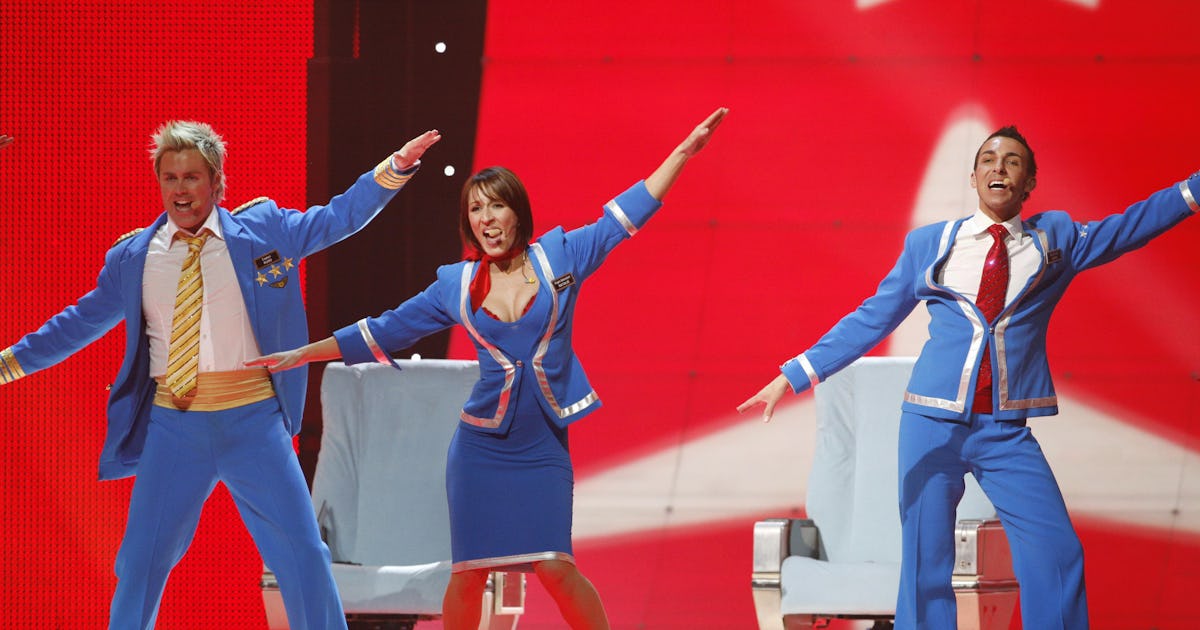
Where Can You Watch The Eurovision Song Contest Live In The UK? – Bustle

After it was postponed last year, Eurovision returns to our screens on May 22. By some miracle, the event happens to have arrived on the same week that bars and restaurants across parts of the UK have opened their doors for indoor drinking and dining. This means you may be able to enjoy the show live and surrounded by fellow Eurovision enthusiasts (at a safe distance).

In January 2021, the team behind Eurovision announced that the show would go on in Rotterdam, and viewers would be able to watch it on BBC One. Tickets were only available to people who already had one from 2020, and the Dutch government implemented considered COVID-19 restrictions ahead of the event.

What should you expect? Well, representing the UK this year is singer James Newman, with his song “Embers”. Plus they’ll be all the usual chaos and hilarity we’ve come to know and love.

While many venues are just re-establishing service after being closed during the pandemic, a number of places are opening their doors to Eurovision fans this Saturday evening. Below I have listed some on the venues in England and Wales’ biggest cities that are throwing special nights in celebration of the event. Unfortunately, having done some research into Scotland’s venues, it appears things are moving slightly more slowly, especially with Glasgow still in level three of lockdown, and Northern Ireland is not set to open indoor venues until May 24.

If you’re based in England or Wales, have a look at the list below to see if any bars near you are throwing a Eurovision shindig. Then, grab you glitter – and your face mask – and get ready for the most fun you’ve had since 2019.

Manchester

Bar Pop and Churchills, Manchester

When it comes to Eurovision, no one does it bigger than the organisers of Manchester Eurovision Party. They’ll be showing the final at Bar Pop and Churchills on Canal Street. Viva La Diva and Jackie Love will be in attendance, along with DJs to keep you dancing all night long.

G-A-Y, Manchester

G-A-Y Manchester is also throwing a Eurovision party. Entry wristbands are £3, and the night has aptly been given the title of ‘Social Distancing Saturday’. You’ll be able to watch the final here, and Veronica Green will host.

Times Square, Newcastle

If you’re wanting to watch Eurovision 2021 alongside your pals, surrounded by a fun atmosphere, head to the big screen at Times Square in Newcastle. You’ll need to buy a ticket and, once booked, you’ll be assigned a nation. If your nation wins, you get a prize! You’ll also have access to food and drinks vendors on site.

Camp & Furnace, Liverpool

Camp & Furnace is famous for its Eurovision watch parties, so it wasn’t about to let this year’s slip away. You’ll need to buy a ticket to get in, tables are for four or six people. The final will be shown on the big screen, followed by an after party.

Masquerade Bar, Liverpool

Liverpool’s Masquerade Bar will kick off its free Eurovision party at 8 p.m. Masquerade writes: “Join Miss Carmen for a night of Eurovision campness.” Who needs any more persuading than that?

Viaduct Showbar, Leeds

Viaduct Showbar in Leeds has a whole host of events leading up to the finale. The bar will show both semi-finals on big screens from 8 p.m, when you’ll also get to enjoy commentary from the DJs. Although it won’t be airing the finale, drag royalty Precious McMichaels will keep you up to date with the highs and lows of the competition as the scores come in on May 22.

Nottingham

The New Foresters, Nottingham

The New Foresters will be showing the Eurovision final both indoors and outside on May 22. Book your place, and maybe treat yourself to a VIP package, which includes a table, drinks, chocolate, and crisps. Madame Tess Tickle will be there to oversee proceedings.

The Glory, London

The Glory will be showing the Eurovision final across two floors on May 22. You’ll be able to attend the screening party, followed by parties hosted by Ma Butcher and John Ellen Ewing in The Euro Bar upstairs, while downstairs will transform into the glittering Euro Basement.

Jerusalem Bar and Kitchen, London

Eurovision may have taken a year off, but Jerusalem Bar and Kitchen is bringing it back with a bang. Your £10 ticket will grant you entrance to the screening party, along with a welcome drink, plus a goodie bag with everything you could possibly need for the night.

Royal Vauxhall Tavern, London

The legendary LGBTQ+ venue, the Royal Vauxhall Tavern was never going to miss Eurovision 2021. They’re starting their night a little earlier, at 6 p.m. It’s the first time they’re doing a live screening of the finale, and they’ve gone all out. They promise to bring “the spirit of Rotterdam to Vauxhall”, so expect the usual flags, goodies, and Eurovision hits all night.

Exeter Phoenix, Exeter

Are you ready for a night of international glamour? Enter Arina Fox, who is presenting the Eurovision party at the Exeter Phoenix. The night is set to be celebratory but relaxed, starting at 7 p.m, with the live screening from 8 p.m.

The Eagle Bar, Cardiff

The Eagle Bar in Cardiff is opening its doors to Eurovision fans for a live screening of the finale. You’ll be able to ride out the highs and lows of the night with a drink and your friends.

Activists plan tactics for fighting Uganda’s new anti-gay bill – Erasing 76 Crimes

Gay rights activists in Uganda have issued an advisory on how local and international supporters of LGBTQ+ rights should work to blunt the effects of Parliament’s recent passage of a new same-sex criminalisation bill.


From the African Human Rights Media Network


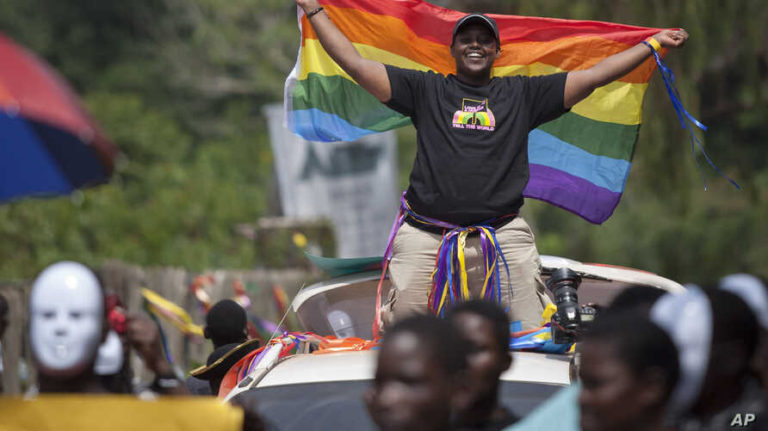
Ugandans take part in the Third Annual Lesbian, Gay, Bisexual and Transgender (LGBT) Pride celebrations in Entebbe, Uganda, in August 2014. (Rebecca Vassie photo courtesy of AP)

Advice to international supporters of LGBTQ rights included:

  • Discussions with Ugandan President Yoweri Museveni, urging him not to assent to the bill.
  • Quiet diplomacy with Ugandan officials.
  • Possibly blocking international travel by Ugandan members of parliament and other politicians who have publicly demonstrated their homophobia / transphobia.
  • Statements of solidarity for the LGBTQ community and concern about the effects of the bill.
  • Review of funding to the Ugandan parliament.

The advisory was developed following a meeting of LGBT activists and civil society leaders in Kampala, which was convened by Sexual Minorities Uganda (SMUG), the network of local LGBTQ+ organisations.

As the activists noted, Clause 11 of the bill would further criminalize same-sex sexual acts, which are already a crime under the existing Uganda Penal Code, criminalizing the private lives of adult and consenting same-sex-loving persons.

The advisory and call to action is reproduced verbatim below:

Guidelines on How to Engage on the Passing of the Sexual Offences Bill 2019 by Uganda Parliament

11/05/2021

Sexual Minorities Uganda (SMUG) as the network organization for lesbian, gay, bisexual, transgender, and queer organizations in Uganda.

On Thursday 6th May 2021, SMUG convened an emergency meeting with LGBTQ community leaders and civil society partners, on the passing of the Sexual Offences Bill with the meeting taking particularly concern on Clause 11 (i) which further criminalizes same-sex sexual acts even as the Uganda Penal Code Act already does, hence criminalizing the private lives of adult and consenting same-sex loving persons. The clause criminalizes and bans the penetration of another person’s anus with that other person’s sexual organ or with any object; and (ii) sexual acts between persons of the same gender.

The meeting sought clarity, expressed, and calmed fears on what the impact already is and will be should this bill be assented to by the President of the Republic of Uganda. Therefore, a series of actions were proposed. The meeting resolved the following;

  • That SMUG working with partners takes the lead role on advocacy on Clause 11.
  • That Diplomatic Core engages with our government.

  • Education and awareness of the Ugandan society about the actual dangers posed by Clause 11 as not only affect LGBTIQ persons.

  • Map out and reach out to Members of Parliament who did not sign the bill and those who will be returning to the next Parliament.

  • SMUG to reach out to other affected communities such as sex workers, PLWHIV [people living with HIV] etc in due course.

  • Issue guidelines on how local civil society, regional and international partners may engage in overturning the bill.

  • That SMUG convenes four urgent teams – Safety and Protection, Legal, Communication and Media, and Resource Mobilization. SMUG has over the weekend and yesterday held meetings of the Safety & Protection and the Legal team to discuss and draw up a protocol for the safety of the LGBTQ community and how we shall respond.

The following list of actions were agreed upon for effective engagement on the bill by regional and international partners.

Ugandan protester urges toleration for sexual minorities.

Call to action

We call on our local civil society, regional and international partners to engage in the following manner.

  1. Issue statements of solidarity to the LGBTQ community and express serious concern to Uganda government over this bill.
  2. Lobby and dialogue with the President of the Republic of Uganda NOT to assent to this bill.

  3. Engage in quiet Diplomacy with the Ugandan government and its political leaders.

  4. Consider issuing visa bans, to Ugandan Members of Parliament and politicians who have publicly demonstrated extreme homophobia /transphobia.

  5. Review funding to the Parliament of Uganda.

  6. Call on the Uganda government to guarantee security and safety for the LGBTIQ community in light of the bill.

  7. Call on the bilateral partners; A clear declaration on how the bilateral partners are engaged and engaging on this bill.

We also reiterate the following action as in SMUG Statement on SOB [the Sexual Offences Bill]:

  1. Sexual Minorities Uganda calls on the President of the Republic of Uganda to consider NOT assenting to the Bill because of the problematic Clause 11 that now classifies sexual and gender minorities as sexual offenders. Rather, we call on the President to reminisce on the effects the now repealed Anti-Homosexuality Act had on the human rights discourse for sexual and gender minorities.
  2. We also call on the Uganda Law Reform Commission to play a more technical role in advising Parliament on harmful laws that jeopardize other state-driven efforts such as the HIV prevention and control efforts by the Ministry of Health by driving sexual and gender minorities underground because they ate illegal.

  3. We call upon the Uganda Equal Opportunities Commission to seriously pursue the Constitutionality of sections of the Sexual Offenses Bill that impinge on the equality of ALL Ugandans as stipulated by the Equal Opportunities Commission Act.

  4. That the Uganda public should not take any action violent or otherwise towards persons who they know or perceive to be of same-gender loving.

Members of Ugandan LGBT community and key populations most at risk of HIV.

Background of the Sexual Offences Bill 2019

The Sexual Offences Bill 2019 was read for the first time on 24th November 2019 and referred to the Committee of Legal and Parliamentary Affairs for scrutiny as required Rules of Procedure of Parliament. It is a private member’s Bill sponsored by Uganda Women Parliamentary Association (UWOPA) and introduced by its Chairperson, Hon. Monica Amoding.

The Sexual Offences Bill 2019 is a resubmission of a Bill that was first introduced on 14th April 2016 and referred to the Committee of Legal and Parliamentary Affairs for scrutiny. The Sexual Offences Bill 2015 was withdrawn from the House on 24th February 2019 to incorporate the amendments that the mover proposed during the House’s consideration of the Bill.

The Bill is prompted by the need to cure the defects in the existing legislation, especially the Penal Code Act, Cap. 120, which, while it makes provision for several sexual offences, the provisions are outdated. The ingredients constituting the offences are narrow, given that they do not reflect the evolving trends in social attitudes, values, and sexual practices.

A member of Uganda’s LGBTQ community takes part in a Pride celebration.

Zack Snyder reveals his unmade 300 sequel — and it was a gay love story – MSN UK


a close up of Leonidas I: Justice League and Army of the Dead director Zack Snyder revealed that his 300 sequel idea was a gay love story about Alexander the Great that WB turned down.

© Warner Bros. Justice League and Army of the Dead director Zack Snyder revealed that his 300 sequel idea was a gay love story about Alexander the Great that WB turned down.

Zack Snyder has been retreading familiar ground. It’s not a criticism, and in fact, Snyder’s recent work has been well received by fans and critics alike.

His cut of the panned Justice League movie and his upcoming Army of the Dead prove that he’s a filmmaker unafraid of looking backwards, as well as ahead. But one franchise to which he was unable to return is 300. And not for want of trying.

The movies are based on the Frank Miller comics, and the first film was relatively well-received. The sequel, however, had a lukewarm reception with many citing it as a clear money-making gambit that was more style over substance.


Eva Green wearing glasses: Eva Green in 300 Rise of an Empire

© Warner Bros. Eva Green in 300 Rise of an Empire

Despite this, Warner Bros seemed ready to revisit ancient Greece. Speaking to The Playlist, the filmmaker revealed that to try and reinvigorate the franchise, Warner Brothers had asked him to write a script for a third and final 300 film.

He said: “I just couldn’t really get my teeth into it. Over the pandemic, I had a deal with Warner Brothers and I wrote what was essentially going to be the final chapter in ‘300,’”

“But when I sat down to write it I actually wrote a different movie. I was writing this thing about Alexander the Great, and it just turned into a movie about the relationship between Hephaestion and Alexander.


a close up of Leonidas I: Gerard Butler in 300

© Warner Bros. Gerard Butler in 300

“It turned out to be a love story. So it really didn’t fit in as the third movie. But there was that concept, and it came out really great.

“It’s called ‘Blood and Ashes‘, and it’s a beautiful love story, really, with warfare. I would love to do it, [WB] said no… you know, they’re not huge fans of mine. It is what it is.”

That Warner Bros decided not to make this film the third and final 300 movie doesn’t mean it could never get made. Many ancient stories are told through a modern heteronormative lens that simply didn’t exist in other cultures at other times.

Whether we want Zack Snyder to be the person to tell that story is up for debate. But regardless, that this potentially compelling love story has been written doesn’t mean another 300 movie won’t happen — or that Blood and Ashes will remain just a script.


Zack Snyder wearing a suit and tie: Zack Snyder at the Batman v Superman: Dawn of Justice premiere

© Kevin Mazur – Getty Images Zack Snyder at the Batman v Superman: Dawn of Justice premiere

Snyder has been one of the main focus points of ongoing issues in the industry — from studio control to sexism to artistic vision, he has managed to encapsulate and distil a lot of arguments on both sides of these conversations. Whatever your feelings about him, he is clearly a proponent of respecting the creative vision, even if that vision rubs people the wrong way.

In the case of Blood and Ashes, it’s a concept that wouldn’t go amiss. Alexander the Great is known to have had lovers of all genders, and that Hollywood made him into the pinnacle of heteronormative-masculinity isn’t a reflection on truth, but on our own narrow view of what it means to be a powerful and great man.

Someday, maybe, we’ll get Blood and Ashes. If Snyder’s recent Army of the Dead is anything to go by, we could get a version of it on Netflix. But that’s just speculation for now.

Zack Snyder’s Justice League out now on HBO Max in the US, and Sky Cinema and NOW in the UK.

Digital Spy’s digital magazine is back – and we’ve got an EXCLUSIVE interview with Dave Bautista. Read every issue now with a 1-month free trial, only on Apple News+.

Interested in Digital Spy’s weekly newsletter? Sign up to get it sent straight to your inbox – and don’t forget to join our Watch This Facebook Group for daily TV recommendations and discussions with other readers.

Rheta Baker nee Gay | Island Deaths – peicanada.com

The death occurred peacefully at Andrews of Stratford on Wednesday, May 19, 2021 of Rheta (Gay) Baker, age 106. Loving wife of the late Earle C. Baker. Mother of Donald (Marion) Baker. Aunt of Norene MacLeod and Vivian (Bill) Hay. Predeceased by her parents Nathaniel and Christina (MacLeod) Gay, brother Roland (Edra) Gay, and sister Vivian (Bill) Davidson.   Arrangements entrusted to MacLean Funeral Home Swan Chapel. A private funeral will be held at a later date. Online condolences may be made at www.macleanfh.com

Zack Snyder’s 300 sequel was a gay love story that WB said no to – digitalspy.com

Zack Snyder has been retreading familiar ground. It’s not a criticism, and in fact, Snyder’s recent work has been well received by fans and critics alike.

His cut of the panned Justice League movie and his upcoming Army of the Dead prove that he’s a filmmaker unafraid of looking backwards, as well as ahead. But one franchise to which he was unable to return is 300. And not for want of trying.

The movies are based on the Frank Miller comics, and the first film was relatively well-received. The sequel, however, had a lukewarm reception with many citing it as a clear money-making gambit that was more style over substance.

eva green in 300 rise of an empire

Warner Bros.

Despite this, Warner Bros seemed ready to revisit ancient Greece. Speaking to The Playlist, the filmmaker revealed that to try and reinvigorate the franchise, Warner Bros had asked him to write a script for a third and final 300 film.

He said: “I just couldn’t really get my teeth into it. Over the pandemic, I had a deal with Warner Bros and I wrote what was essentially going to be the final chapter in ‘300,’”

“But when I sat down to write it I actually wrote a different movie. I was writing this thing about Alexander the Great, and it just turned into a movie about the relationship between Hephaestion and Alexander.

gerard butler in 300

Warner Bros.

“It turned out to be a love story. So it really didn’t fit in as the third movie. But there was that concept, and it came out really great.

“It’s called ‘Blood and Ashes‘, and it’s a beautiful love story, really, with warfare. I would love to do it, [WB] said no… you know, they’re not huge fans of mine. It is what it is.”

That Warner Bros decided not to make this film the third and final 300 movie doesn’t mean it could never get made. Many ancient stories are told through a modern heteronormative lens that simply didn’t exist in other cultures at other times.

Whether we want Zack Snyder to be the person to tell that story is up for debate. But regardless, that this potentially compelling love story has been written doesn’t mean another 300 movie won’t happen — or that Blood and Ashes will remain just a script.

zack snyder at the batman v superman dawn of justice premiere

Kevin MazurGetty Images

Snyder has been one of the main focus points of ongoing issues in the industry — from studio control to sexism to artistic vision, he has managed to encapsulate and distil a lot of arguments on both sides of these conversations. Whatever your feelings about him, he is clearly a proponent of respecting the creative vision, even if that vision rubs people the wrong way.

In the case of Blood and Ashes, it’s a concept that wouldn’t go amiss. Alexander the Great is known to have had lovers of all genders, and that Hollywood made him into the pinnacle of heteronormative-masculinity isn’t a reflection on truth, but on our own narrow view of what it means to be a powerful and great man.

Someday, maybe, we’ll get Blood and Ashes. If Snyder’s recent Army of the Dead is anything to go by, we could get a version of it on Netflix. But that’s just speculation for now.

Zack Snyder’s Justice League out now on HBO Max in the US, and Sky Cinema and NOW in the UK.


Digital Spy’s digital magazine is back – and we’ve got an EXCLUSIVE interview with Dave Bautista. Read every issue now with a 1-month free trial, only on Apple News+.

Interested in Digital Spy’s weekly newsletter? Sign up to get it sent straight to your inbox – and don’t forget to join our Watch This Facebook Group for daily TV recommendations and discussions with other readers.

This content is created and maintained by a third party, and imported onto this page to help users provide their email addresses. You may be able to find more information about this and similar content at piano.io

Special’s Ryan O’Connell on season 2, gay sex, and Netflix’s “non-consensual” cancellation – digitalspy.com

Rainbow Crew is an ongoing interview series that celebrates the best LGBTQ+ representation on screen. Each instalment showcases talent working on both sides of the camera, including queer creatives and allies to the community.

Next up, we’re speaking to Special star and creator Ryan O’Connell.

Special season two spoilers follow.

Has a show ever been more aptly named than Special? Ryan O’Connell’s semi-autobiographical story is groundbreaking in every sense of the word. And no, we’re not just talking about season two’s already iconic rendition of “How Many Licks?”

Now that the length of each episode has been doubled in Special‘s second – and final – season, there’s even more space to explore the often unseen intersection between disability and queerness that this show depicts so well.

“We obviously are full of emotional moments, but it’s done through this ‘LOL’ lens,” says Ryan, and that’s more true than ever in season two. With a script that effortlessly juggles the fetishisation of cerebral palsy with a sad version of Lil’ Kim’s cunnilingus anthem, Special is one of those all-too-rare shows that really does have something new and vital to say.

That’s precisely what makes this story so special remarkable, and that’s also why we’re finding it hard to forgive Netflix for cancelling it after just two seasons. We caught up with Ryan to commiserate Special‘s premature end, and along the way, we also discussed gay sex, newcomer Buck Andrews, and why the show’s success has been so affirming.

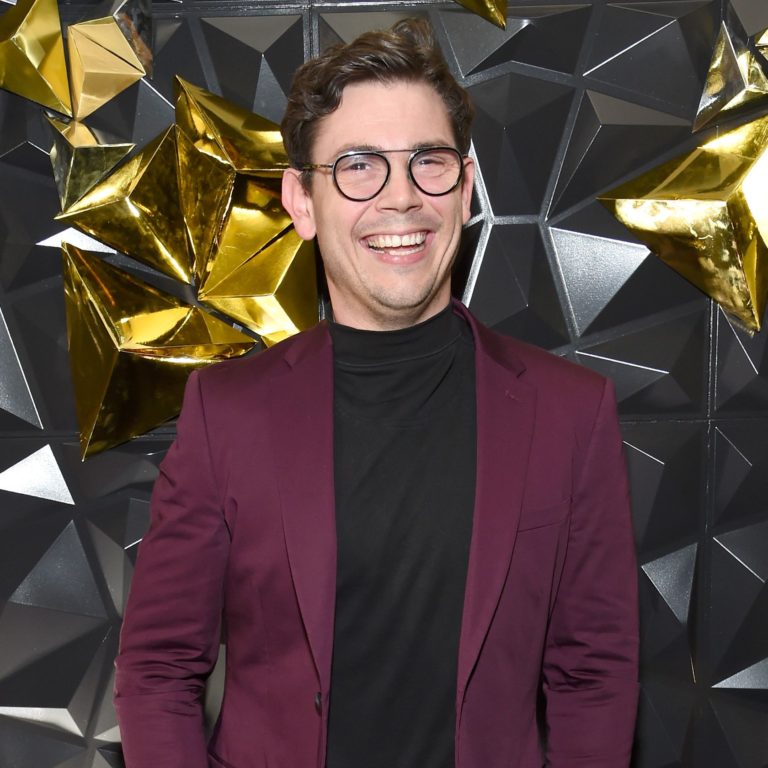
ryan o'connell attends 2019 netflix primetime emmy awards after party

Michael Kovac/Getty Images for Netflix

I have to start by asking: Why is Special ending after just two seasons?

Well, we got cancelled [laughs]. That’s why!

I was hoping it might have been your choice!

I know, I know. I think I would present a lot chic-er, if I was like, “This is my vision. I only envisioned two seasons, one of which was truncated. That’s my journey. That’s my story.”

But no, unfortunately, the show is ending non-consensually. But I will say that Netflix told us from the very beginning so I was able to cram really complete seasons in. I feel very, very happy with the way – it does feel, actually, like a full, complete story.

Did Netflix explain its decision to you?

I think they’re in a space where they’re subscriber-based. So I think they’ve found through the research of the algorithm or whatever the f**k that they don’t really get a lot of new subscribers from season three or season four of a show.

“We left Ryan in a good place. I don’t know what else we could do with that messy bitch.”

It’s not just Special that isn’t getting a season three. I think a lot of shows are not advancing between a second season and a third season. I think that’s the nature of Netflix and how it works, rather than a reflection on Special.

If Netflix hadn’t ended things, what would you envision next for Ryan in season three?

The funny thing is, I’ve gone through a journey with this show ending. First, I was upset. I really imagined three seasons. But now, it’s very bittersweet, because this show’s been with me for a very long time. We went out and pitched this in 2015. Season one aired in 2019. That’s four years.

And in between seasons one and two, there were two years. So this has been six years of my life. Most people get six seasons out of six years, and I got two.

jessica hecht as karen and ryan o'connell as ryan hayes in special season 2 on netflix

Beth DubberNetflix

I actually don’t really know what I would imagine for season three, because season two feels so complete to me. I’m kind of ready to move on, a little bit. It feels like we left Ryan in a really good place. I don’t know what else we could do with that messy bitch [laughs].

Season one had this unforgettable scene where Ryan loses his virginity and now season two delves even further into his sex life. Can you talk me through why it’s so important to continue showing gay sex like this on screen?

Gay sex is my muse. I will die on any gay sex hill. You know, I’ve been having sex since I was 17, not to brag, and I just feel like: why has gay sex not been portrayed the way that straight sex has?

I remember, when Girls came out, it was revolutionary at depicting the kind of bad sex that you could have. I always wanted to do that for gay sex. And not just bad sex. But the reality is, sex is a lot of different things. Sometimes, in a same-sex encounter, it can kind of vary from being amazingly erotic,to being kind of humiliating, to being empowering, to being embarrassing, to being funny. It can be all of those things.

“Gay sex seen on screen is usually cloaked in a sort of closeted shame, or it’s heavily eroticised.”

I don’t think I’m having sex wrong. I think the way I’m having sex is pretty normal. So I’m just like: why is there a stigma attached to it? Besides homophobia?

I just feel like the gay sex that we have seen on screen is usually cloaked in some sort of closeted shame, or it’s heavily eroticised, almost like porn. That didn’t feel true to me. So it was time to get to work!

And work you did! How do you feel about taking part in those nude scenes yourself?

I mean, it’s never my favourite thing. The first week of shooting season two, it was all the sex scenes, and I felt like I’d spent most of the week in a cock-sock. I didn’t love that. I remember sometimes being like, “Oh, goddamnit. Why am I doing this? This is so stupid!”

And then I remember, “Oh, I’m the bitch who wrote it. I have nobody to blame but myself.”

max jenkins as tanner and ryan o'connell as ryan hayes posing at a school dance in special season 2 on netflix

Beth DubberNetflix

I think there’s a part of me – as much as I loathe doing it, there’s an exhibitionist side to me that’s sort of like, “I dare you to look at my body. You’re going to have to look at my body.” Because it felt like bodies like mine were erased. It’s just really important to create that kind of visibility.

And Max Jenkins is a friend of mine. So I felt familiarity with him, and comfortable. He was really, really easy to shoot with. I feel like if I had a straight actor, and I was like, “OK, so this is what anal sex is about” – I would have deleted years off my life.

There’s a really pivotal storyline in season two where Ryan hooks up with a man who fetishises his cerebral palsy. Can you talk me through your decision to include that arc?

I personally have never been fetishised. I’m still looking for the right one. But I thought it was really interesting to tell a story about consensual sex that you wouldn’t necessarily consent to if you liked yourself more. I think we’ve all found ourselves in sexual situations that we have not loved, but we don’t really have the courage to find our way out of.

“There’s an exhibitionist side to me that’s like, ‘I dare you to look at my body.'”

To me, that sex scene was a really good marker to show Ryan’s growth, because I feel like at the beginning of the season, he’s operating from a place of: “I’m just lucky to be here! I’m just lucky that this hot actor who’s hot wants to f**k me! So he can f**k me however he wants!”

And through the course of the season, I think he does gain a lot more agency, to the point where he’s actually walking away from a potential love interest or relationship, because he wants to be alone.

I think fetishisation is really interesting. I don’t want to put a value judgment on it, because I think that fetishisation can be good if it truly is consensual, and it’s what both parties want. But I think it can exist in a grey area. And in Ryan’s case, he didn’t like it. But again, he didn’t have enough agency yet to say no.

Season two introduces a new cast member called Buck Andrews who is clearly going to be a fan-favourite from the get-go. Can you tell me how he got involved with the show?

Buck is on the spectrum with autism. He is sort of like, in a lot of ways, my twin. We’re very, very similar, in an Eerie Indiana way. I know that autism and cerebral palsy are different disabilities. Society doesn’t, because I get confused for autistic all the time. But I know that. It’s just like, meeting with Buck, I almost felt emotional, because it was the first time I’d really met someone that reminded me of myself, which I’d never had my entire life.

This content is imported from Instagram. You may be able to find the same content in another format, or you may be able to find more information, at their web site.

I was like, “OK, I’m hiring him, and I don’t even care if he knows how to type when he’s in the room. That’s what’s happening.”

So he ends up being the writers’ assistant, which he was great at. And then maybe a few weeks in, we started thinking about the character of Henry. And I was like, “Oh, that’s Buck.”

Because I knew he had charisma, and I knew he had magnetism. As a first-time actor with season one, I knew he already had the bones of what makes a good performer, and the rest he could learn. He auditioned, and he did such an incredible job, I was blown away.

I remember some people were saying, “He’s never acted before.” I was like, “I never acted before. What are you f**king talking about? I was a first-time actor who became the star of my show, bitch. Are you kidding?” I just feel like that’s the biggest joy of being able to do this show. It’s being able to give people opportunities that maybe others wouldn’t typically invest in.

tkarsh ambudkar as ravi and punam patel as kim laghari in special season 2 on netflix

Mitchell HaddadNetflix

At the end, I thought it was so interesting that Henry and Ryan became best friends, instead of a couple. I think a lot of people will be surprised by that.

That would be very straight. That is very heteronormative. When we were initially crafting it, I think we were naturally gravitating towards a love-triangle moment between Tanner, Henry, and Ryan.

I was like, “This doesn’t feel true to gay culture.” Gay culture is, a lot of times when you first meet someone, you being like, “Hmm. Should we f**k? Or are we just friends? Or should we just f**k and find out if we’re friends or not?”

There is that period when you’re sniffing around each other, seeing what the dynamic is. That just felt very, very true to queer life. So the way that it goes down – I mean, I love it. It’s almost antithetical to storytelling because you’re removing the stakes [laughs].

“It does a disservice to the community you’re representing if you don’t let them be awful sometimes.”

It’s like when they kiss, and Ryan says, “OK, I can’t be with you.” And then he goes to the prom, and he sees Henry. You’re expecting Henry to be disappointed. He’s like, “Babe, it’s fine. We kissed once. I brought a date.”

And it’s so true. I’ve kissed a lot of my gay friends once or twice, and then we moved into a friend zone. It’s not a big deal. So I just felt like that was exciting, to highlight that queer specificity. Because I think, again, people would be like, “It’s a love triangle. He should be with Henry.” It’s like, “No, babe, they are both bottoms.”

What do you want to see happen more in queer stories moving forward?

I just want to see complicated, messy characters. Representation is important and there is this need for diversity. But I just want to make sure that people don’t become holograms for their suffering. I think we need to grant people the full spectrum of the queer community.

I feel like we’re allowed to exist but within these narrow confines. People are super-complicated, and sometimes people are assholes, and sometimes people are not acting the way that you think a minority should act.

This content is imported from Instagram. You may be able to find the same content in another format, or you may be able to find more information, at their web site.

I think that initially, it was like, “Well, if this character’s disabled, he needs to be really amazing and sweet and loveable and this and that.” I think we’re ready to move past that. I think it does a disservice to the community that you’re representing if you don’t really let them be awful sometimes.

Ryan doesn’t always do the right thing in Special. Sometimes he is really selfish. When Tanner shits on his dick, he’s not considerate. It’s crazy, because Tanner was considerate to him in episode three when he had topping anxiety.

Ryan doesn’t extend that generosity to Tanner, which I thought was so interesting. Because, yeah, Ryan can be kind of a brat. Sometimes he doesn’t extend the generosity to people that is extended to him. And that’s OK. That’s allowed.

Would you mind sharing the kind of obstacles you’ve faced specifically because of your identity while working in this industry?

I don’t think people knew what to do with me. There’s no reference point for being queer and disabled in Hollywood. I don’t think people understood where to put me. So that was a real challenge. I had to really force my way in, and carve out space for myself – like, squeeze the f**k in. And that was really frustrating because I don’t see my existence as being that confusing or complicated. But just by virtue of no-one like me being really that visible, it is to some people.

“I don’t see my existence as being that confusing or complicated.”

You know, we went out, and we pitched Special in 2015, which, in woke Hollywood years, was like 400 years ago. People really loved the pitch, but they just didn’t know what to do with it. It felt like they were handed a hot potato and just needed to push it off to someone else.

That was really hard because, on a personal level, it kind of reaffirmed what I feared, which was that my existence is too fringe and too strange for anyone to understand, or it doesn’t have value.

That’s what’s been so affirming from the success of Special. I always knew that this story could resonate, even beyond being queer and disabled, because when you strip us down to our barest bones, we really are all very similar in terms of our wants and desires, you know? And that’s the whole point of storytelling. It’s to create empathy and understanding, and show people “we’re not all so different”.

Looking back over your career so far, what’s the one thing you’re most proud of?

I think, honestly, the sex scene in Special, because it was exactly what I wanted it to be. It’s very rare as an artist where the exact thing you wanted it to feel and look like, becomes exactly that. That scene was just so important to me.

ryan o'connell attends time 100 next

Jamie McCarthy/WireImageGetty Images

I knew when we shot it that we had something really amazing. I could feel it on set. And I remember, when we got the first cut – you know, the first cut is the deepest. It’s a nightmare. You get the first cut, and you’re like, “What did we…? How the f**k are we going to fix this mess?”

But that scene – even in its first iteration – was incredible. It felt like such a proud moment because it was just the complete distillation of the work that I want to do, and what I want to say.

Special season 2 is now available to watch on Netflix.


Digital Spy’s digital magazine is back – and we’ve got an EXCLUSIVE interview with Dave Bautista. Read every issue now with a 1-month free trial, only on Apple News+.

Interested in Digital Spy’s weekly newsletter? Sign up to get it sent straight to your inbox – and don’t forget to join our Watch This Facebook Group for daily TV recommendations and discussions with other readers.

Global progress report on HIV, viral hepatitis and sexually transmitted infections, 2021 – Accountability for the global health sector strategies 2016–2021: Actions for impact – World – ReliefWeb

Key messages

As the global health sector strategies for HIV, viral hepatitis and sexually transmitted infections (STIs) 2016–2021 near the end of their implementation period, this report provides accountability for the main achievements and gaps to date and highlights actions to take forward towards eliminating these diseases as public health threats by 2030. The report publishes new estimates for viral hepatitis with a threefold improvement in the completeness of reporting. It also publishes new estimates for the main STIs, providing a more accurate baseline to guide priorities in the forthcoming decade.

Global messages

1. HIV, viral hepatitis and sexually transmitted infections (STIs) are major public health threats worldwide. They account for more than 2.3 million people dying per year, which represents 14% of all deaths from infectious and parasitic diseases, digestive diseases and cancer. They also result in more than 1 million people newly infected each day and 1.2 million people developing cancer each year. If we lose focus now, the progress achieved so far will plateau with the risk of resurgence. Time is running short. To reach the 2030 targets, we need to accelerate progress, address specific gaps in implementation, and bring innovation to scale across the three diseases.

2. The epidemics and responses are at different stages. This strategy implementation period has seen tremendous progress, including achievement of the Sustainable Development Goals target to reduce the incidence of hepatitis B virus.

  • The global target of the Sustainable Development Goals and the global health sector strategy to reduce the incidence of hepatitis B has been met, as measured by the prevalence of hepatitis B surface antigen to less than 1% by 2020 among children younger than five years. Supported by childhood immunization and prevention, the reduction in the incidence of hepatitis B infection is one of the few Sustainable Development Goals health targets that is on track to be achieved. Sustained and regionally focused scale-up of the birth dose of hepatitis B vaccine and of treatment of the mother to prevent further hepatitis B transmission are required to achieve impact by 2030. In addition, there are massive gaps in hepatitis B diagnosis and treatment, including among the populations most severely affected and at higher risk.

  • New data show that 9.4 million people are receiving treatment to cure chronic hepatitis C virus infection, an almost 10-fold increase from the baseline of 1 million at the end of 2015. This scale-up of treatment has been sufficient to reverse the trend of increasing mortality from hepatitis C for the first time. In Egypt, universal access to treatment has resulted in declining mortality and incidence. However, improved data show that the number of people dying from hepatitis B and C worldwide still remains daunting at 1.1 million per year.

  • Two thirds of all living with HIV and 85% of pregnant women people living with HIV are receiving antiretroviral therapy, supporting a substantial decline in mortality related to HIV and AIDS. Treatment coverage in sub-Saharan Africa is uniquely higher than global coverage because of sustained partner and country financing.

  • The global response to STIs is gathering momentum after years of neglect. More countries have national strategic plans and updated guidelines to address STIs, and coverage of interventions such as syphilis screening of pregnant women in antenatal care and human papillomavirus vaccination, are increasing.

3. Yet many gaps remain. Most global 2020 targets have been missed, and accelerated action is needed to reach the Sustainable Development Goals in the next decade.

  • With an estimated 1.7 million people acquiring HIV in 2019, the number has fallen by 23% to the lowest since 2010. However, this remains far below the global target of less than 500 000 people newly infected by 2020. Ending the global HIV epidemic will require stronger commitment to address the inequalities, stigma and discrimination that continue to drive the epidemic and prevent many people from accessing the services they need. This is the focus of the United Nations High Level meeting on HIV in June 2021.

  • New data show that hepatitis B and C cause 1.1 million deaths and 3.0 million new infections per year. Only 10% of people who have chronic infection with hepatitis B virus are diagnosed, and 22% of which receive treatment. For hepatitis C infection, 21% of people are diagnosed and 62% of those diagnosed receive treatment. Price reductions have made hepatitis C treatment an affordable high-impact intervention, but coverage needs to increase nearly sixfold in the next decade to reach the 2030 targets for elimination.

  • New data on STIs show 374 million new cases per year. Other than slow declines in congenital syphilis, the incidence of most other STIs is plateauing despite ambitious targets. There is a major need to boost synergistic efforts to prevent and treat STIs, including HIV, among adolescent girls and young women and key populations. Global commitment, funding and an integrated public health approach are essential to bend the curve for these infections.

  • Although an increasing number of countries are organizing strategies and planning frameworks across HIV, viral hepatitis and STIs, most are missing important opportunities to integrate and link services and responses to provide people-centred services that also leverage efficiency at the primary health care and health system levels.

4. Stigma and inequalities facing the populations most vulnerable and at risk have to be addressed across all diseases to reach the Sustainable Development Goals. Key populations (including gay men and other men who have sex with men, people who inject drugs, sex workers, transgender people and prisoners) and their partners account for 62% of the people acquiring HIV. Viral hepatitis disproportionately affects those who are economically disadvantaged, displaced people and migrants and rural populations. Further, injecting drug use is a major contributor to the number of people newly infected with hepatitis C globally. Many of these population groups overlap with groups recognized as especially vulnerable to STIs. Access to prevention, harm reduction and health-care services for these populations is largely insufficient, and persistent stigma, inequalities, criminalization and other sociostructural barriers are preventing response efforts from reaching the people who need them most.

5. New WHO data show that HIV testing and prevention, as well as hepatitis B and C services, are among the most frequently disrupted services caused by COVID-19. HIV treatment, as well as STI services have also experienced disruption. The COVID-19 pandemic has forced all three disease programmes to innovate to deliver and maintain essential health services safely within community-led, community-based and differentiated models of care. Making full use of such people-centred and community-led innovations can further enable countries to fully leverage the capacity of health and community systems and respond to the needs of the most vulnerable people in an equitable and sustainable manner.

6. Regional differentiation in implementing the strategies has amplified progress. In the next stages, further granular and differentiated approaches should be developed by region, epidemic status and population to ensure that targets are reached in all settings and that no one is left behind. Chapter 4 of this report present dedicated regional messages.

7. Better data, greater focus on solutions to address gaps in prevention, treatment and delivery and renewed advocacy and demand creation will be needed to reach the 2030 Sustainable Development Goal targets. This report identifies 10 cross-cutting priority areas that must be strengthened across HIV, viral hepatitis and STIs to accelerate impact by 2030. They cover actions updated since 2018 based on successes and gaps for each of the five strategic directions. They also include new actions that align with the WHO Triple Billion targets to address social and structural determinants of these infections, promote joint management across diseases and draws on lessons from the COVID-19 pandemic to strengthen community engagement and service delivery.

  1. Leverage common people-centred and disaggregated data platforms, including strengthening digital health data and building capacity to analyse and use data for improving programmes.

  2. Scale up point-of-care diagnostics, self-testing and self-collection to reach everyone who is vulnerable, at higher risk and hard to reach, including key populations, infants and children and men who are not engaged in care; continue to simplify testing and treatment and improve links so that those already diagnosed can receive care rapidly.

  3. Achieve triple elimination of mother-to-child transmission of HIV, hepatitis B virus and syphilis and explore the expansion of the elimination focus to eliminating infection among children for the next phase of the global health sector strategies.

  4. Improve access to drugs and diagnostics by further reducing prices, including integrating costs in national health and domestic financing.

  5. Innovate to maximize the use of differentiated and people-centred service delivery options across HIV, viral hepatitis and STIs to tailor and deliver services according to people’s needs and preferences and train and empower more health-care workers to provide treatment where the availability of specialists is limited.

  6. Innovate to strengthen community engagement, community-based service delivery and community-led monitoring in the context of primary health care.

  7. Protect against the threat of antimicrobial resistance and other risks, including disruption of services because of COVID-19 and other global health emergencies.

  8. Strengthen joint responses for HIV, viral hepatitis and STIs with TB and other key comorbidities by further aligning programme management, service delivery and monitoring to support universal health coverage.

  9. Integrate sexual and reproductive health and rights into existing programmes, raise the profile of STIs and reinvigorate the emphasis on primary prevention.

  10. Address social and structural determinants that impact vulnerability and access to services and tackle the stigma, discrimination, criminalization and inequalities that undermine the response.

The lessons from the COVID-19 response provide a historical opportunity to foster greater solidarity and innovation in the response to communicable diseases over the next decade. Disease-specific responses and the goals of universal health coverage and global health security are mutually reinforcing and need to be advanced together. By taking decisive action now, we can prevent 2 million people from losing their lives each year and emerge stronger from the challenge of COVID-19 to reach the Sustainable Development Goals by 2030.

The HIV responses of the health sector must be strongly aligned with the Global AIDS Strategy 2021–2026, developed by UNAIDS with support from WHO. It also provides clear opportunities for synergy for the responses focused on viral hepatitis and STIs. The focus of the Global AIDS Strategy on addressing inequalities to end AIDS as a public health threat provides an important framework for all communicable diseases alongside the Strategy’s three interlinked priorities: maximizing equitable and equal access to HIV services and solutions; breaking down barriers to achieving HIV outcomes; and fully resourcing and sustaining efficient HIV responses and integrating them into systems for health, social protection, humanitarian settings and pandemic responses.

Regional differentiation, progress and gaps

  • The African Region leads the way in HIV testing and treatment and has the opportunity over the next decade to extend this to addressing hepatitis B and C virus and to syphilis transmission from mother to child in order to dramatically reduce the high burden of communicable diseases in the Region.

  • The Region of the Americas has led approaches to advance the triple elimination of mother-to-child transmission of HIV, hepatitis B and syphilis and to deliver services along the cascade for key populations. Over the next decade, they need to systematically fill gaps in the HIV, viral hepatitis and STI service cascades to leave no one behind.

  • The South-East Asia Region has some of the world’s leading programmes for key populations and community-based responses. Three countries in the Region have been validated for EMTCT of HIV and syphilis and four countries have been certified to have achieved hepatitis B control through immunization. Progress in the response to HIV and STIs has nevertheless plateaued. Financing for HIV, viral hepatitis and STIs needs to be sustained and expanded towards universal health coverage.

  • In the European Region, gaps in testing and treatment for HIV, viral hepatitis and STIs need to be filled rapidly. There have been major advances in hepatitis programme planning, but the estimated number of people acquiring HIV has been increasing.

  • The Eastern Mediterranean Region leads the way in scaling up testing and treatment for hepatitis C virus, accounting for 37% of the global total number diagnosed and 52% of the global number of people treated in 2019. Some countries have an opportunity to move towards elimination. The impact of these population-based approaches needs to be expanded and transferred to ensure that nobody is left behind in access to hepatitis B, STIs and HIV services.

  • The Western Pacific Region has made major progress in expanding access to services for hepatitis B and C virus, largely because of domestic funding and substantial drug price reductions. There is an opportunity to include viral hepatitis, HIV and STIs in national health financing.

The Premonition By Michael Lewis Highlights A Longstanding Need For Structural Reform Of The US Public Health Service – Forbes

In the face of horrific death tolls and unspeakable trauma, there has been a continued refrain of “never again” through the pandemic. We want the small comfort of knowing that the deaths have not been entirely in vain. Yet history demonstrates that without radical change to the culture in which our infectious disease authorities operate, we are destined to repeat similar if not the same mistakes.  

Many have placed the blame for America’s disastrous pandemic response on the atrocious leadership or lack thereof, of former President Donald Trump. While Trump has much to answer for, the blame does not lie solely with him, but also with the public health institutional failures.               

Public health decisions regarding infectious disease outbreaks need to be just that, data-backed decisions that prioritize the health and lives of our entire population above all else. They need to be free from political and economic pressures and guided by experts, not the reactions of the public. Public health officials should not live in fear of being fired for making evidence-based but publicly unpopular decisions when the cost is human lives. 

Containing an infectious disease outbreak takes swift and courageous decisions, yet the culture that has existed at the CDC for decades is one of complacency and caution which results in reckless endangerment to human lives. The focus is on procedure and precedent when one of the defining characteristics of an infectious disease outbreak is often novelty. They waste precious time trying to reach a consensus when it is often an impossible task. The very fact that the director of the CDC is appointed by and can be fired by the president rather than a council of scientific peers, creates a culture of biased decision making and yes-men.  

Those who dare to make risk-based recommendations about infectious disease outbreaks or implement policies that go against the grain of this culture, are not just rebuffed and ignored to the detriment of the population but told that the organization will actively work against them. 

MORE FOR YOU

This is the experience of real-life characters in Michael Lewis’s latest nonfiction book The Premonition. The book tells the story of a team of “dissenting doctors” who predict the impact of the Covid-19 pandemic and know what needs to be done to redress the situation yet are roadblocked by institutional dysfunction at each turn. 

Lewis writes about the time Dr. Charity Dean, Public Health Officer for Santa Barbara County is investigating multiple cases of Meningitis B on the USCB college campus. Knowing how short the window is for administering prophylaxis and how a few cases could spread, she moves quickly to shut down the college fraternities, and sororities and give 1200 students a prophylactic drug. The CDC disagrees with her decision and threatens to put their disapproval in writing, citing a lack of evidence for her approach (there is only one case every 4 years) and the fact that if she pursues multiple strategies they won’t know which one works. Dr. Dean goes ahead with her plan regardless and the cases cease. Her strategy is listed amongst other best practices in a report by the CDC on how to handle outbreaks of Meningitis on college campuses, published two years later. Despite her track record of success in this and other cases, Dr. Dean continues to butt heads with CDC and remains an outsider. When she tries to raise the alarm in January 2020 predicting the exponential growth of Covid-19, she is told to stop referring to Covid-19 as a pandemic.          

I also have personal experience as an outsider whose warnings about another pandemic went unheeded by public health authorities. When AIDS emerged, people were content to think of it as a gay man’s disease, something that happened to “them” and not to “us.” While terror and anxiety gripped those in the gay community in the early 1980s, the rest of the country kept on with the status quo. Similar to how so many believed that Covid-19 would not have a global impact outside of China. I was an outlier in believing that heterosexual individuals could be at risk for HIV/AIDs and publicly attacked in a book published by Journalist Michael Fumento, titled “The Myth of Heterosexual AIDS”.  

Early on, I tried to convince major pharmaceutical companies to develop a drug to treat HIV and prevent its spread. I met with the research heads for all the major companies – Bristol-Myers Squibb, Pfizer, Roche, Johnson & Johnson, and others – but I heard the same story everywhere: “Sorry, Bill, funds are already fully budgeted for this year.” Likewise, when I approached the chairs of the infectious disease and microbiology departments at the country’s leading universities, I was told that, “It’s scientifically interesting, but we just don’t have the money.” Worse, I was even told that “AIDS will never be an important enough disease.”

I also advocated for home testing of HIV in the 1980s, given the stigma surrounding HIV/AIDs, it seemed natural that allowing people to test in the privacy of their homes could dramatically reduce new infections. The CDC’s own survey confirmed this hypothesis, revealing that 29% of Americans would get tested for HIV if a home HIV test was available versus just 9% who intended to test using existing alternatives. Yet in meetings with federal health officials, I was laughed at for suggesting such a concept. Federal officials continued to insist that home tests were unsafe and unreliable, but the data from clinical trials summarized in the 1987 submission for premarket approval of a home test unambiguously demonstrated safety and efficacy. Both the FDA and CDC continued to oppose home tests. Again, I can draw parallels between this experience and the fact mass rapid antigen testing has never been adopted in the U.S. as a containment policy for Covid-19.           

The price of all this early complacency and ignorance towards containing the HIV/AIDs Pandemic was tens of thousands of lives lost. Like the doctors described in Lewis’s book I experienced the unique agony of understanding the solutions needed to save lives, but meeting roadblocks at every turn.            

Countries like Sweden, Italy, France, and the UK who have strong healthcare systems were still subject to multiple waves of infection throughout the pandemic because of sluggish and meek decisions or complacency by their public health authorities. Countries like China, Singapore, and New Zealand implemented swift and bold infectious disease control measures and were rewarded with astonishingly low case numbers and quick return to normal life. 

But distressingly, the CDC continues a campaign of complacency announcing a surprising national rollback of mask mandates for vaccinated individuals that is not linked to a case or infection rates but instead seems somewhat random. Many have speculated that this announcement was made to encourage vaccination. But with no way to prove vaccination, this just gives the unvaccinated a dangerous license to spread infection unmasked.                                                  

Infectious disease control is a noble yet unrewarding job, successes in containing disease outbreaks go unnoticed but mistakes bear the weight of human lives. The pressure is intense and as discussed warnings often go unheeded. Public health officials often garner little respect and low salaries for their qualifications. Lewis’s book ends with Dr. Charity Dean frustratedly leaving public service and launching a consulting company for infectious disease control, believing she will have a greater impact in the private sector. But infectious disease control is not an issue that should be handled by the private sector and we cannot afford to lose the talent that could help defend ourselves against the next pandemic.  We cannot afford to keep making the same mistakes.

SF Lesbian/Gay Freedom Band Overcomes Pandemic Challenges and Readies for Pride – San Francisco Bay Times – San Francisco Bay Times

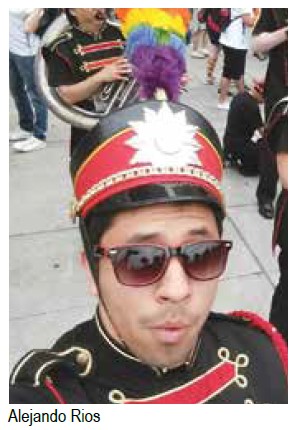
By Alejando Rios–

On March 3, 2020, the San Francisco Lesbian/Gay Freedom Band (SFLGFB) was conducting its second-to-last rehearsal ahead of its upcoming concert, Notes From the Peace Corps, produced in conjunction with the Northern California Peace Corps Association. Two days later, San Francisco announced the first known cases of COVID-19 in the city. Suddenly, we had a difficult decision to make: whether or not we should cancel our upcoming event that we had been working so hard for. After much thought, the executive decision was made not only to postpone our event indefinitely, but also to pause any future in-person rehearsals.

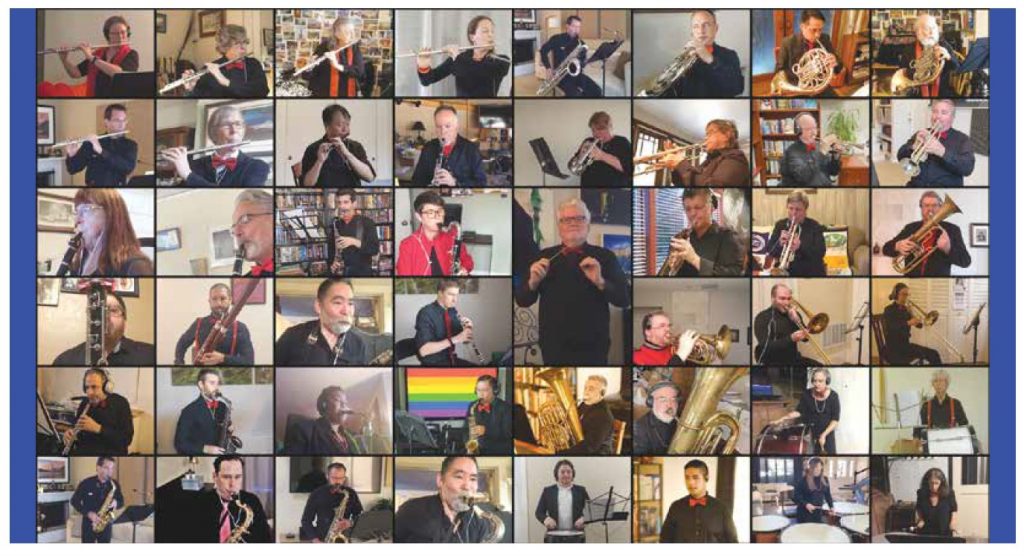
Having lost the auditory and physical sensations of rehearsing in person, the SFLGFB has been able to come back virtually to do what we do best—make music. It took some creativity and hard work from band members, partners, and our Artistic Director, Pete Nowlen, but we were able to overcome many technological challenges to revolutionize the way we rehearse.

“The virtual rehearsals and performances have been priceless to my mental well-being … having a regularly planned activity that I enjoyed gave me something to look forward to,” says alto sax player, Jeunesse Monroe-Speed.

This process was further fine-tuned by creating an online portal where band members could access an intuitive rehearsal guide, listen to reference recordings, and submit audio and video recordings.

With all recordings in hand and streaming platform selected, our production and editing teams were able to piece together each individual video to create a final orchestrated piece. The end result was an experience similar to one that you might find at an in-person concert: one that uplifted spirits during this time where we needed it most. The main goal was to ensure we were able to cater to a wide variety of audiences, as we wanted to keep true to our mission statement.

Our first virtual concert, aptly named Concert From Home, featured our Concert, Marching, and Pep bands. It also included appearances from our sister band in Portland, the Rose City Pride Band, and a special guest appearance by Mayor London Breed. This was a first of many online concerts that served as an opportunity to celebrate our community’s strength and hope for a brighter future, not only in our immediate community, but also across the U.S.

With the huge outcome of our first virtual performance, we followed the same format and produced our biggest annual event as a new virtual adaptation, Dance-Along Nutcracker: The Nutcracker Express. This time around, our protagonists, Clara and Fritz, were transported on a train ride back to adventures of prior Dance-Along’s, with new special appearances from our friends at this publication, the San Francisco Bay Times, “Betty’s List,” the Lesbian/Gay Chorus of San Francisco, and CHEER SF.

“Through remote/virtual technology, I was able to play again with two of my former bands, while also sitting in as a guest musician with others,” says alto sax player, Jamie Roberson.

Our spring concert, Bandwidth, added a bit more variety as it also featured performances from smaller ensembles. We had the great opportunity to highlight the world premiere of The Music of Will Marion Cook: Selections From Clorindy and In Dahomey, which celebrates the legacy and talent of popular music artist Will Marion Cook.

COVID-19 may have changed the world, but it did not break our spirit. It allowed the SFLGFB the opportunity to come together in a different way that extended our reach from local venues in the Bay Area to the homes of many across the country.

In celebration of Pride Month, our upcoming free virtual concert, Loud & Proud, will be featuring over a dozen LGBTQIA+ Pride bands from coast to coast. You’ll have a chance to join us on Saturday, June 26. Event registration is requested and open at https://loudandproudconcert.sflgfb.org/

Follow us on Facebook, Instagram, and Twitter for updates on this upcoming event and additional events in future.

Alejandro Rios is the Co-Director of Marketing for the San Francisco Lesbian/Gay Freedom Band.

Published on May 20, 2021

Kendall Jenner Shares the Importance of Being an Ally to Those With Anxiety – Vogue

“When you’re in the midst of a panic attack, the reason you’re calling someone is, one, because you’re scared. You want some sort of comfort,” says Kendall Jenner. “You might also want that distraction. And sometimes, as their supporter, you have to sit there and ride the wave with them.”

For the third installment of Open Minded, Jenner is joined by Dr. Curley Bonds, chief medical officer at the Los Angeles County Department of Mental Health, who breaks down how to step up as an ally for a loved one who is experiencing a panic attack or seems regularly anxious. “First of all, we need to recognize that anxiety is really common,” says Dr. Bonds. “The way to help as an ally is then to first recognize when someone is having usual anxiety and when it moves into where it is problematic and it interferes with their ability to function.”

The two go over some of the most common physical symptoms to look out for—elevated heart rate or heart palpitations, shortness of breath, feeling light-headed—and the psychological ones that can be harder to pinpoint, such as overthinking. Dr. Bonds then explains that those who experience extreme anxiety might be inclined to isolate themselves as a way to avoid triggering situations. To help, he encourages allies to listen, as well as share their own experiences and coping strategies to normalize the medical condition. Says Dr. Bonds: “When you experience someone else’s anxiety through their eyes, [try] to put it through your lens, telling them, ‘Hey, I’ve had this and it will get better.’”

Watch episode three of Open Minded above. 

Directed by: Posy Dixon

DP: Kevin Hayden

Camera operators: Yuya Kudo, Zachary Rockwood, and Sonja Tsypin

Key grip/gaffer: Kurtis Myers

Sound: Chris Omae

Edited by: Victoria Mortati and Daniel Poler

Color: Carlos Flores, Forager

Sound: Paul Vitolins and Nick Cipriano, Bang

Postproduction: Marco Glinbizzi

Series title montage: Chris Beckman

Title design: Jason Duzansky

Visual and audio design: Natalia Stuyk

Art director/set design: Alexis Johnson

Decorator: Christine DiStefano

Styling: Danielle Levi

Hair: Amanda Capomaccio

Makeup: Mary Phillips

Tailor: Bebe Aguirre

Executive producer: Marina Cukeric

Producers: Naomi Nishi, New York, and Jace Davis, Los Angeles

Line producers: Jen Santos and Jessica Schier

Production manager: Trina DeMattei

Location manager: Joe Burk

Production coordinators: Peter Brunette and Andressa Pelachi

Associate producers: Rachel Cantor, Stephanie D’agostini, and Arielle Neblett

Production assistant: Josh Crowe

COVID-19 supervisor: Carla Nora

Vogue: Robert Semmer, VP digital video programming and development; Mark Guiducci, creative editorial director; Sergio Kletnoy, entertainment director

Special thanks to:

Derek Blasberg

Maya Amolis

Dr. Ramani Durvasula

Ashleah Gonzales

Christy Welder

Jessica Edwards

Barb Solish

Katrina Gay

Dr. Ken Duckworth

YouTube Health

Medcircle

NAMI, the National Alliance on Mental Illness, is the nation’s largest grassroots mental health organization dedicated to building better lives for the millions of Americans affected by mental illness.

Gay teacher fired from Cathedral appeals dismissal of case against Indy archdiocese – IndyStar

Joshua Payne-Elliott, the gay teacher that sued the Archdiocese of Indianapolis after he was fired from a Catholic high school because of his same-sex marriage, is appealing the dismissal of his lawsuit

An Indiana trial court dismissed the lawsuit two weeks ago. Payne-Elliott filed the appeal Thursday. 

“We must continue to courageously show our families, friends, and students how to stand up to bullies,” he said in a press release Thursday. “The loving values of this community stand boldly above the divisive actions taken by the Archdiocese of Indianapolis, and we look forward to a proper review of this case.”

Payne-Elliott had worked as a world language and social studies teacher at Cathedral High School since 2006 when he was fired in June 2019. He is married to Layton Payne-Elliott, a teacher at Brebeuf Jesuit Preparatory School. They married in 2017. The couple have been at the center of a fight between their schools and the Archdiocese of Indianapolis, which directed the schools to fire both men. 

Brebeuf refused to fire Layton Payne-Elliott, so the archdiocese attempted to strip the school of its Catholic status, though the school appealed that decision and is still awaiting a final ruling. Cathedral fired Joshua Payne-Elliott to avoid the same fate.

Want more school news? Sign up for Study Hall, our weekly education newsletter

Joshua Payne-Elliott is one of three former employees who say they’ve been fired from Indianapolis-area Catholic high schools because of their same-sex marriages. 

Shelly Fitzgerald was suspended from her job as a guidance counselor at Roncalli High School in 2018 and later fired. Lynn Starkey, who worked in the Roncalli guidance office with Fitzgerald, was also fired because of her same-sex marriage.

Both women have also sued the archdiocese. Their cases, filed in federal court, are pending.

The archdiocese has said that it is not targeting LGBTQ individuals but that it can set whatever rules it wants for its schools and employees, like that they must live according to Catholic church doctrine. It began requiring a morality clause in teacher, administrator and counselor contracts at some of its schools six years ago, and at all Catholic schools  four years ago. That included independent schools, like Cathedral and Brebeuf. 

Joshua Payne-Elliott (right), pictured with his husband Layton Payne-Elliott, is suing the Archdiocese of Indianapolis.

In July 2019, Payne-Elliott filed a lawsuit filed in Marion County alleging that the archdiocese illegally interfered with his contractual and employment relationship with Cathedral High School, causing Cathedral to terminate him.

According to the lawsuit, Cathedral renewed Joshua Payne-Elliott’s annual teaching contract in May 2019. That contract did not include the morality clause that a same-sex marriage would violate.

The lawsuit states that one month after Payne-Elliott’s contract was renewed Cathedral’s president, Robert Bridges, told him that the archdiocese had “directed” Cathedral to terminate him and that Cathedral was following that directive. 

Winning record:High-powered lawyers defending Indianapolis archdiocese in LGBT suits

The Archdiocese of Indianapolis argued that the lawsuit was barred by the First Amendment to the U.S. Constitution, claiming in court documents that the First Amendment prohibits a secular court from interfering in internal church matters.

“This has always been a very simple case, because the Supreme Court has repeatedly affirmed the freedom of religious schools to choose teachers who support their religious faith,” said Luke Goodrich, vice president and senior counsel at the Becket Fund for Religious Liberty, in a statement released after the dismissal.

The trial court initially ruled that the lawsuit could move forward, but the Indiana Supreme Court sent the case back down and authorized the trial court to reconsider. The archdiocese sought to have the original judge removed from the case, accusing him of misconduct. The judge later recused himself, citing a number of personal and family health issues. 

The new trial court judge assigned to the case, Lance Hamner, dismissed the case in a one-page order that cited two trial court rules but did not include any other explanation for the decision. 

Kathleen DeLaney, Payne-Elliott’s lawyer, called the lack of explanation “unusual.”

“The order of dismissal offers no reason, no rationale, and no basis for the decision,” DeLaney said in a press release Thursday. “We have no way to know how the judge got to the decision.

“There are incredibly important constitutional and civil rights issues raised by this case. We look forward to presenting our case to the Indiana Court of Appeals.”

The Archdiocese of Indianapolis directed requests for comment to Becket, which is representing the church in all three lawsuits from former Catholic school employees.

“If the First Amendment means anything, it means the government can’t punish the Catholic Church for asking Catholic educators to support Catholic teaching,” said Becket’s Goodrich, “and we look forward to another ruling affirming this basic principle.”

Call IndyStar education reporter Arika Herron at 317-201-5620 or email her at Arika.Herron@indystar.com. Follow her on Twitter: @ArikaHerron.

‘Can’t Cancel Pride’ kick-offs celebration with star-studded livestream – Washington Blade

For the second year in a row, iHeartMedia is stepping up with a star-studded virtual celebration designed to keep the spirit of Pride alive and well during the still-ongoing restrictions of the Covid pandemic – and to raise some much-needed funds for the LGBTQ+ community.

“Can’t Cancel Pride,” presented by iHeart and Procter & Gamble, is a virtual relief benefit for the LGBTQ+ community, featuring performances and appearances from the most influential voices in the community as well as the biggest names in culture and entertainment. It’s the second installment for the livestreamed event, following a successful 2020 presentation which raised over $4 million to benefit the LGBTQ+ communities most impacted by COVID-19. This year’s event has a goal to raise even more in 2021, as the pandemic continues to have a damaging effect on the fundraising efforts that LGBTQ+ organizations rely on to survive.

The lineup of talent involved is truly stellar. Among the names scheduled to appear are Bebe Rexha, Brothers Osborne, Busy Phillips, Demi Lovato, Gus Kenworthy, Hayley Kiyoko, Jennifer Hudson, JoJo Siwa, Lil Nas X, Marshmello, MJ Rodriguez, Nina West, P!NK, Ricky Martin, Regard, Troye Sivan, Tate McRae, and many more. Diamond-selling singer-songwriter Rexha will also join iHeartMedia on-air personality Elvis Duran as host, as well as performing her new single “Sacrifice.”

The “Can’t Cancel Pride” livestream is just the beginning of iHeart’s Pride month. The event will kick off a month-long celebration throughout June, with iHeartMedia radio stations airing spots to encourage listeners to watch the event on demand, share their special Pride moments on social media using the hashtag #CantCancelPride, and support the participating nonprofits by visiting cantcancelpride.com or texting “RAINBOW” to 56512.

“As the country is returning back to normal and we are slowly starting to gather again, LGBTQ+ communities around the world are still feeling the devastating effects of COVID-19,” says iHeartMedia’s Chief Marketing Officer, Gayle Troberman. “We look forward to once again celebrating the incredible voices and allies of the LGBTQ+ community with an amazing night of music that will honor Pride and the communities’ fight for equal rights, all while benefiting six remarkable nonprofits that make an everyday positive impact.”

Marc Pritchard, Chief Brand Officer for P&G, says, “’Can’t Cancel Pride’ is about creating visibility for the LGBTQ+ community and showing them they are not alone. The impact of the COVID-19 pandemic remains heightened for LGBTQ+ people, who continue to face issues driven by persistent bias, intolerance and inequality. We want to use our voice to help bring much needed resources, support, acts of good, and love to this remarkable and resilient community.”  

Last year’s month-long celebration provided critical resources for its six nonprofit partners, including:

  • Helping CenterLink provide microgrants to 190+ LGBTQ+ community centers and organizations.
  • Supporting The Trevor Project’s lifeline, chat, and text crisis services, which served more than 14,000 crisis contacts from LGBTQ+ young people in June 2020 alone.
  • Aideing SAGE in forging connections and reducing isolation for LGBT elders during the pandemic.
  • Contributing to the National Black Justice Coalition’s federal public policy work and Youth And Young Adult Action Council.
  • Distributing proceeds to benefit LGBTQ+ individuals around the world through OutRight Action International’s COVID-19 Global LGBTIQ Emergency Fund.
  • Supported GLAAD’s Spirit Day, the world’s largest LGBTQ+ anti-bullying campaign.

P&G is joined in supporting “Can’t Cancel Pride” by several other brand sponsors, including Allē by Allergan Aesthetics, Dawn, General Motors, The Art of Shaving and GilletteLabs, Bounty, Charmin, Jared, Puffs, Downy, Tide, OLAY, and Tito’s Handmade Vodka.

The one-hour benefit special produced by iHeartMedia and P&G will stream on June 4, at 9 p.m., on iHeartRadio’sTikTok, YouTube, Facebook, Instagram TV pages, iHeartRadio’s PrideRadio.com and Revry, as well as broadcasting on iHeartMedia radio stations nationwide and on the iHeartRadio App. The event will be available on demand via iHeartRadio’s TikTok, YouTube, Facebook, Instagram TV pages, iHeartRadio’s PrideRadio.com and Revry throughout Pride Month until Wednesday, June 30.

For those among you who are vaxxed and ready to enjoy an in-person kick-off to Pride Month, June 4 is also the first night of OUTLOUD: Raising Voices, a three-day live concert event series at Los Angeles Memorial Coliseum. A global Pride celebration that will be also be streamed (for free) around the world, the event will join forces with Pride Live’s Stonewall Day to present a stellar line-up of performers curated by none other than Adam Lambert on behalf of the Feel Something Foundation. Sofi Tukker headlines on June 4, with Hayley Kiyoko topping the bill on June 5, and Lambert himself leading the pack for closing night on June 6. Additional acts performing during the weekend will include Daya, Tygapaw, Ryan Cassata, Madeline the Person, Mykki Blanco, Madame Gandhi, Malia Civetz, Vincint (feat. Parson James, Queen Herby and Ty Sutherland), Sam Sparro, Angel Bonilla, and many others. For details and tickets to the live event, visit the OUTLOUD website.

Two retro accessories from Amazon that we’re loving this summer – Yahoo News

The Telegraph

Boko Haram leader behind kidnapping of 300 girls seriously injured after trying to blow himself up

The notorious leader of Islamist terror group Boko Haram, Abubakar Shekau, has been seriously injured with some reporting he is dead after trying to blow himself up, according to intelligence sources. Shekau, the man behind the Chibok schoolgirl kidnapping in 2014, tried to kill himself to avoid capture when a rival group supported by the Islamic State surrounded him on Wednesday, sources told AFP. In a confidential briefing leaked to Nigerian media and seen by The Daily Telegraph, the country’s intelligence services said: “Shekau detonated a bomb and killed himself when he observed that the ISWAP fighters wanted to capture him alive.” But an intelligence source told AFP Shekau had managed to escape with some men after the attack. In 2016, men from Boko Haram defected to create a splinter group, known as Islamic State West Africa Province (ISWAP). While Shekau revelled in indiscriminate brutality, ISWAP refused to kill Muslim civilians in a ploy to more successfuly recruit from local communities. Bulama Bukarti, a Boko Haram specialist at the Tony Blair Institute for Global Change, told The Telegraph that if confirmed, Shekau’s death would be “a huge milestone, a turning point in Boko Haram’s history.” “If his death exacerbates the infighting, it means more killings on both sides and that would be positive news for counterterrorism. If his death leads to the reunification of Boko Haram, then it will become a unified force and they will continue to pursue civilian-friendly policy.” The brutal leader has been reported dead several times in the past, but each time he has issued statements or videos to rebut the claims. The cleric became the group’s leader in 2010 and launched a sadistic campaign of terror across the Lake Chad region into southern Niger, northern Cameroon and Chad. Hamstrung by low morale, a lack of resources and decades of corruption, the Nigerian military struggled to stop Boko Haram’s advance. “Shekau defied the Nigerian armed forces for 12 years, if it’s true it speaks volumes about how alarmingly powerful ISWAP is,” Mr Bukarti added. Despite frequent declarations of victory by the Nigerian government, Boko Haram and their breakaway group, ISWAP, have proved extraordinarily resilient. Reportedly, the jihadists have killed thousands of local soldiers over the last two years. More than 40,000 people have been killed and over two million have fled their homes due to the conflict in northeast Nigeria. Fighting has spread to parts of neighbouring Chad, Cameroon and Niger.