Home Blog Page 216

Self-stigma, especially around substance use, impedes HIV self-care among gay and bisexual men living with HIV who use drugs – aidsmap

A qualitative study sought to understand how internalised stigma affects HIV self-care among gay and bisexual men living with HIV who use substances. Men in this cohort experienced self-stigma stemming from multiple intersecting identities, including their HIV status, sexual orientation, race, effeminateness, poverty, and housing instability. Self-stigma around drug use was reported as the most burdensome stigma, as well as the largest barrier to HIV self-care.

The Centers for Disease Control and Prevention report that in 2018, only 65% of gay and bisexual men living with HIV in the United States were consistently seen for HIV care appointments and only 57% were virally suppressed. Further, evidence shows that gay and bisexual men who use substances, especially stimulants, often have less than optimal adherence to HIV care and inconsistently access HIV services.

The negative impacts stigma has on health are well documented. So is the impact of internalising these negative messages, or self-stigma. Prior research shows that HIV self-stigma is a barrier to HIV care, and that self-stigma around sexual orientation and/or drug use also present barriers to HIV care. This new study expands on our understanding of self-stigma as a barrier to HIV care as the first of its kind to look at the intersection and impact of multiple self-stigmas on HIV care behaviour.

Glossary

stigma

Social attitudes that suggest that having a particular illness or being in a particular situation is something to be ashamed of. Stigma can be questioned and challenged.

qualitative

Qualitative research is used to explore and understand people’s beliefs, experiences, attitudes or behaviours. It asks questions about how and why. Qualitative research might ask questions about why people find it hard to use HIV prevention methods. It wouldn’t ask how many people use them or collect data in the form of numbers. Qualitative research methods include interviews, focus groups and participant observation.

detectable viral load

When viral load is detectable, this indicates that HIV is replicating in the body. If the person is taking HIV treatment but their viral load is detectable, the treatment is not working properly. There may still be a risk of HIV transmission to sexual partners.

culture

In a bacteria culture test, a sample of urine, blood, sputum or another substance is taken from the patient. The cells are put in a specific environment in a laboratory to encourage cell growth and to allow the specific type of bacteria to be identified. Culture can be used to identify the TB bacteria, but is a more complex, slow and expensive method than others.

virological suppression

Halting of the function or replication of a virus. In HIV, optimal viral suppression is measured as the reduction of viral load (HIV RNA) to undetectable levels and is the goal of antiretroviral therapy.

Led by Dr Abigail Batchelder of Massachusetts General Hospital, this qualitative study sought to examine the impact of these intersecting stigmas experienced by gay and bisexual men living with HIV who use drugs through in-depth interviews. They recruited participants in the Boston Massachusetts area through advertising and outreach at diverse community locations and online through dating, hook-up, and social media sites.

Eligible participants were living with HIV, reported substance use (including alcohol) in the previous three months, were men who had sex with men, and were sub-optimally involved in HIV care. This was defined as having a detectable viral load, reporting less than 90% adherence to antiretroviral therapy, or missing two or more HIV care appointments in the previous year without rescheduling them.

Thirty-three men were included in the study. The average age was 51 and participants had been living with HIV an average of 19 years. Sixty per cent of participants were Black and 36% were White.      Thirty-six per cent of participants had a high school education or less, while 46% reported some college and 5% reported advanced degrees. Three quarters of participants made $20,000 or less annually.

Over half (58%) of participants identified as gay, 27% as bisexual, and 15% identified as “other”, which included straight. Most participants used multiple substances. Stimulant use was high (79%), as was tobacco use (76%), cannabis (67%), club drugs (40%), and alcohol only (18%). Most participants also reported using multiple substances, such as alcohol with stimulants (36%), alcohol, stimulants, and sedatives (15%), and alcohol, stimulants, opioids, and sedatives (12%).

The majority of participants reported some form of internalised stigma which impacted their HIV self-care, including self-stigma around HIV, sexual orientation, race, effeminateness, poverty, and housing status. Almost all participants reported self-stigma around drug use. Around half of participants explicitly discussed the intersection of their identities, and stigmas.

Participants emphasised how aspects of their identities were interrelated and could not be experienced singularly. The multiple stigmas compounded each other, affecting how men were judged by society, leading them to judge themselves:

“They think… you’re not only HIV, but you’re gay, you’re an addict… and it’s like, why are you even existing on life? ..That’s what my mind tells me …”

Many men perceived stigma from others, discussing rejection and a lack of belonging from their families and communities. This enacted stigma led to feelings of shame and internalised stigma:

“The society – they judge you. They judge you for the way you’re dressed, the colors you wear, the way you wear your hair. So you have all these things that’s not condoned, so, inside you’re hiding and covering up. So it takes it to … you don’t want to be exposed, but you want to be accepted, so you have all these things fighting with you inside you. Sometimes I want to take a stand publicly – then the fear of being exposed or ostracized or revealed or whatever – I don’t do it. Then I feel ashamed. Some part of me feels ashamed.”

Men is this study explicitly discussed being stigmatised and othered within communities they belonged to, such as the gay or HIV-positive communities, for personal characteristics such as effeminateness or housing instability. Participants who were religious, particularly Black men, also discussed this in-group stigma, noting that stigmas were exacerbated within the religious community.

One participant who identified as straight said that:

 “… the culture specifically that I largely identify with, the Black community and the Black church; those are two communities that are much of my identity. But, both of these have a lot of stigma around HIV, around sex, around sexuality.”

However, while almost all Black participants described racial discrimination as a challenge, being part of the Black community and being part of the Black church was described as a source of strength and belonging.

Few participants explicitly connected internal self-stigma around HIV status or sexual orientation as being related to their substance use. However, the men in this study described experiencing enacted stigma and discrimination related to multiple aspects of their identity. This led to feelings of shame and self-judgement. This internalised stigma both perpetuated and worsened substance use:

“Why can’t they just accept me for who I am? … and from there, it’s…downhill, because I start feeling bad about myself… I don’t want to feel that pain, so I’m going out to use. I’m going out to drink.”

Nearly all reported internalised self-stigma around substance use contributed to that use, more so than any other stigma. It was described as a cycle:

“You use drugs because you’re miserable. But you’re miserable because you use drugs. It’s like a Catch-22.”

The multiple stigmas compounded each other, affecting how men were judged by society, leading them to judge themselves.”

In this cycle, substance use to alleviate negative emotions resulted in more negative emotions and further use:

“I think what happened to me when I started using was the reason I’ve plummeted more into it… I was trying to numb every aspect of my emotions … I was trying to kill anything that felt vulnerable, like emotions. And I went from just puffs to at one point using the needles.”

This cycle often started a cascade leading to HIV care disengagement, isolation, and further self-stigma:

“I’ll go get high and I won’t take my meds, and it’s just like, I’ll destroy – because …people will be calling me and I’ll avoid people. And then I won’t care. I won’t care about myself, …”

Most participants reported self-stigma around substance use and the substance use itself as impacting HIV care behaviours:

“Sometimes … I don’t even like pills. I’ll do crack. That’ll solve it. (laughs) I’ll do alcohol. In my mind, that’ll solve it. But in reality, it doesn’t… Because I don’t have to think about anything. It takes me away from thinking about me and my life, and living with HIV, being gay, all that… It takes me away from myself so I don’t have to deal with myself.”

The results to this study offer the first look at how intersecting stigmas contribute to sub-optimal HIV care among gay and bisexual men living with HIV who use drugs. The most striking finding was that self-stigma around substance use was the most burdensome, had a cyclical relationship with substance use itself, and was the largest barrier to HIV self-care compared to the other stigmas. These results can help inform future research and interventions.
COVID-19 LIVE UPDATES | ‘HIV, Hepatitis B & C testing, treatment and prevention among the most disrupted services by Covid-19’: WHO – TimesLIVE

May 21 2021 – 09:27

Concern over ‘chemsex’ grows as Covid-19 shuts Thailand’s LGBT+ bars

Beam, a gay sex worker, used to go to a “chemsex” party about once a month before the coronavirus pandemic shut Thailand’s bars and clubs. But since then, the drug-fuelled gatherings have become much more frequent.

As Thailand grapples with a third Covid-19 wave, campaigners are warning of the health risks posed by an apparent increase in chemsex – where mainly gay and bisexual men meet to take drugs such as crystal meth or GHB and unprotected sex is common.

Beam, 34, who also works as a porn actor and regularly meets his clients at the parties, said changes to people’s working routines under lockdown had made the gatherings more popular.

Bob Foley: Rules of the road | Columns | thesunchronicle.com – The Sun Chronicle

0

Peter Gay’s most recent column (“Bring on the speed cameras,” May 17) got me thinking about driving practices in local communities.

His proposition of having unmanned cameras at intersections is a good idea based on being called on several of his law-breaking experiences. Overall, his observations are accurate reflections of local driving habits, but I have to disagree that Big Brother watching at every intersection is a good idea in a democratic society.

Driving behavior observed in my travels:

Most mornings, my wife and I take a lengthy walk to get the blood moving and get some exercise. It’s disconcerting to watch many drivers. Every day offers ‘noteworthy’ practices.

About one out of 10 or 12 drivers are on the phone. Often, our stroll takes us past the Mansfield Police Station. Observed drivers cruise by the station and the neon (well, probably LED) sign promoting ‘Hands Free Driving.’ I suppose phone users are following the rule. Their hands are free of the wheel. The most talented of this group will also have a coffee and cigarette in the other hand. Hands free driving indeed.

At the intersection by the municipal center and any other signal-outfitted cross roads, it is typical to see several cars speed up to ‘beat the light.’ Half the time, one or more drivers blow through the red light. Apparently, lights are simply suggestions for other drivers. Yellow suggests it’s time to speed up.

Speed limits? Simply suggestions. Ever drive through an area with your speed within a few mph of the limit? You quickly become the parade leader. Speed limits outside school zones rarely seem to be enforced. Drivers would be incensed if they were stopped at 35 in a 30 mph zone. Anyone traveling at 65 on an interstate is cursed.

Those of us who drove during the 1970s might recall the 55 mph limits imposed as an attempt to save gas. Fifty five on an interstate seems like a stroll in the park but I recall many being stopped exceeding that ridiculously slow limit. I guess those were the early days of failed attempts at reducing carbon fuel usage. The slower speeds imposed lowered traffic fatalities on interstate roads but have long since been abandoned.

How about crosswalks? Ever stop at the curb expecting drivers to stop to allow you to cross within the ‘protection’ of the painted lines? My father’s words from decades ago guides my decision to step off the curb. With Irish wisdom he would tell you: Doesn’t matter who is right or wrong, if a car hits you, you lose.

There are not many drivers who respect the stop for pedestrians rule: Massachusetts regulations are if a pedestrian is within 10 feet of the path of travel, the driver is obliged to stop for the walker. In its infinite wisdom, the state has included this warning in traffic regulations regarding pedestrians: 720 Mass. Reg. 9.09 notes: No pedestrian shall suddenly leave a sidewalk or safety island and walk or run into the path of a vehicle. Seems like a reasonable plan.

So there’s a synopsis of Mansfield driving behavior. I doubt it’s much different elsewhere.

Gay’s observations are accurate but his conclusion is wrong. Instead, he ought to have invoked John Wooden words that suggest something like ‘character is how you behave when no one is watching’.

We do not need more Big Brother governmental oversite of our behavior. May-be our character ought to be on display when no one is looking. Apparently, sadly it is when many folks get behind the wheel. Rules are for other people.

Streaming series shows collision of music, history in 1971 – Lewistown Sentinel

NEW YORK (AP) — Chrissie Hynde wouldn’t make her own mark in music until a few years later, but her memories of how 1971’s daily soundtrack was tied to the times remain vivid.

“Music said something,” the Pretenders’ leader and Rock and Roll Hall of Fame member says at the start of “1971: The Year That Music Changed Everything,” an eight-part documentary series that premieres Friday on the Apple TV+ streaming service.

Hynde had just dropped out of Kent State University in Ohio, where a year earlier four students were shot and killed by the National Guard. Neil Young’s incendiary song about the incident, “Ohio,” played as she told her story.

Her three words essentially provide the theme statement for the series’ producers. They document, through indelible work made that year by Marvin Gaye, Carole King, John Lennon and many others, how musicians responded at a time when the 1960s dream was dying and it was unclear what would replace it.

“Some people run away and hide themselves in drugs,” said James Gay-Rees, one of the series’ executive producers. “Some people write protest music and some people find their identity. It’s such a brilliant tipping point, really.”

It was the year of Gaye’s “What’s Going On,” No. 1 on Rolling Stone magazine’s list of the top 500 albums of all time. Joni Mitchell’s “Blue.” King’s “Tapestry.” Lennon’s “Imagine.” The Rolling Stones’ “Sticky Fingers.” Sly & the Family Stone’s “There’s a Riot Goin’ On.” David Bowie’s hit “Changes.” Gil Scott-Heron’s song that became a catchphrase, “The Revolution Will Not Be Televised.”

Gay-Rees was 4 years old at the time. It took three years to make the series, mostly because of the arduous task of securing rights to about 150 pieces of music, after he was intrigued by the David Hepworth book, “1971 — Never a Dull Moment: Rock’s Golden Year.”

After a somewhat unfocused first episode, the series settles in with more thematic subsequent pieces. One episode focuses on King and Mitchell and the breaking down of sexual barriers, while “The Revolution Will Not Be Televised” zeroes in on Black musicians and how they addressed issues like poverty and treatment by authorities with work that sounds fresh today.

Gay-Rees said he wanted to avoid the look of traditional music documentaries, with shots of creators sitting in control rooms talking about why they added this instrument or that beat.

Instead, songwriting is talked about in the context of the times, so the series feels as much about the history of the year as the music.

“You can’t really make a film about John Lennon writing ‘Imagine’ without asking why he wrote ‘Imagine,’” he said.

Besides the crucial music clearances, producers deserve credit for all of the video they dug up, including film of Lennon, producer Phil Spector and musicians recording the “Imagine” album. In another priceless clip, President Richard Nixon introduces a performance by the Ray Conniff Singers at the White House by saying, “if the music is square, it’s because I like it square.”

Nixon keeps a frozen smile as one of the singers holds up a sign protesting the Vietnam War.

Similarly, the “Revolution” episode contains brutal footage of the Attica Prison riot with a discussion of Aretha Franklin’s participation in a benefit for victims.

Other topics include the emergence of glam rock in the aftermath of the Beatles’ breakup, how James Brown and other Black artists fought against racism, the rise of hard drugs and how it affected artists like the Rolling Stones and Sly Stone, and how George Harrison’s “Concert for Bangla Desh” provided a template for future benefits.

While Gay-Rees said he’s “not prone to nostalgia,” it’s hard to dismiss the quality of the songwriting.

Was it the best year ever for popular music?

“You can argue whether it was ’66 or 1950 or ’71,” he said. “But it was a pretty good year by anybody’s measure.”

Today’s breaking news and more in your inbox

After intense debate, the Illinois Senate passes proposal that updates sex education courses in schools – WSIL TV

SPRINGFIELD, Ill. – After heated debate on the floor Thursday night, Illinois senators approved a proposal that could update personal health and sex education courses to make them more comprehensive and inclusive for students.

The bill addresses age and developmentally appropriate content for health courses. Students in Kindergarten through fifth grade would learn about consent, personal safety, and boundaries with others. The curriculum would address puberty and healthy relationships in third through fifth grade.

Meanwhile, more in-depth discussions about sexual health and relationships would occur between sixth grade and senior year.

“In recent years, the news has been filled with reporting on child sex abuse scandals, sexual harassment in the workplace, sexual assault on college campuses, and bullying of LGBTQ students and people of color,” said Sponsor Ram Villivalam (D-Chicago). “Our youth see this coverage.”

Still, Republicans feel the legislation crosses the line for what students should or should not learn in school.

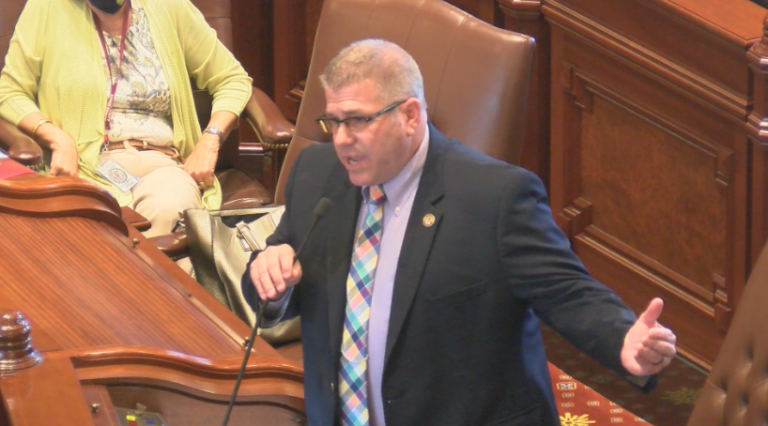
“Here we are dealing with absolute nonsense of putting perversion into our schools,” said Sen. Darren Bailey (R-Xenia). “Yeah, that’s what it is. It’s perversion.”

Democrats pushing for the measure quickly hit back against the conservative candidate for governor. Sen. Celina Villanueva taught sexual education for years before taking office. She called Bailey’s comments “Trumpian” talking points.

“At no point is it saying that a high schooler is gonna get the same education as a second grader. They don’t even get the same mathematical education,” Villanueva explained. “You can keep your perversion and we’ll push for actual education of our students.”

Unlike previous versions of the sex education bills, school districts will have the opportunity to opt-out of teaching the courses. That’s similar to the decision parents or guardians have now when students reach the age for sex education courses.

Simmons to Bailey: “Lead by example”

Sen. Mike Simmons (D-Chicago), a freshman lawmaker and openly gay Black man, also criticized Bailey’s comments on the floor.

“This is the Senate for the state of Illinois,” Simmons said. “I expect a certain degree of decorum and respect that we all would afford each other – I certainly intend to lead by example. I find the word perversion to be deeply offensive and would ask that it be stricken from the record.”

Sen. Neil Anderson (R-Moline) claimed none of the senators have a problem with “medically-accurate” information being taught in schools. He referenced anatomy and physiology as examples of good courses for students in Illinois. However, he felt the good intent behind the Democratic proposal served as a “fig leaf for a lot of bad things.”

“If you think that it is okay for a teacher in a public school to teach fourth and fifth graders what anal sex, oral sex, and dental dams are, then you should vote for this bill,” Anderson said. “If you think that maybe, just maybe, that goes outside of age-appropriateness, and that maybe that should be something that if you as a parent decide to teach your kid, then by all means, do it.”

However, the bill wouldn’t allow for sex education until sixth grade.

Keeping youth safe and healthy

Villivalam noted that standards for the courses could come from input from youth, parents, sexual health and violence prevention experts, and health care providers among others. Schools would also retain local control with the ability to decide the curriculum and other learning materials.

“I’m more than happy to have healthy discussion,” Villivalam said. “I understand that we’re all passionately advocating for our districts. Some of us want to make political speeches. At the end of the day, this is about keeping our youth safe and healthy with age and developmentally accurate and medically accurate information.”

The proposal passed on a partisan 37-18 vote. It now heads to the House for consideration.

New study could make it possible for more gay men to donate blood – WESH 2 Orlando

PARKER-BOWLES. STEWART: A NEW STUDY MAY MAKE IT POSSIBLE FOR MORE GAY MEN TO DONATE BLOOD. ONLY RECENTLY WHERE — WERE GAY MEN ALLOWED TO DONATE BLOOD. MICHELLE MEREDITH EXPLAINS. [SIRENS] MICHELLE: JUNE 12, 2016, THE PULSE MASSACRE. 49 PEOPLE DEAD, DOZENS INJURED, TO HELP PEOPLE STOOD IN LONG LINES TO DONATE BLOOD. BUT MANY GAY MEN WERE IN FOR A SHOCK. SINCE THE 1980’S, BLOOD DONATED FROM GAY MEN WAS NOT ACCEPTED — A BAN THAT STARTED DURING THE AIDS EPIDEMIC. >> BECAUSE THERE WERE NO GOOD TESTS FOR HIV TO TEST THE BLOOD WITH AN THE DISEASE WAS A LOT LIKE COVID WHERE THERE WAS NOT A LOT KNOWN ABOUT IT, AND UNLIKE COVID, IT COULD SPREAD THROUGH THE BLOOD SUPPLY. MICHELLE: ONLY IN 2015 DID THE FDA LIFT THE BAN TO DONATE BLOOD WITH STRICT GUIDELINES, IF THE GAY MEN REPORTED HAVING NO SEX WITH A MAN FOR A YEAR HE WAS ELIGIBLE. WHEN DONATIONS DROPPED DURING THE COVID PANDEMIC, THE TIME WAS CUT TO THREE MONTHS. STILL THERE’S A STIGMA. >> MY BLOOD IS JUST AS RED AS YOURS AND MY BLOOD CAN SAVE YOUR LIFE. SOMEONE ELSE’S LIFE. IT IS FRUSTRATING AND THERE IS ANGER THAT IS ASSOCIATED BECAUSE YOU WANT TO HELP. MEREDITH: THIS WEEK THE FDA ANNOUNCED A NEW STUDY IN THE WORKS THAT COULD ALLOW A GAY MAN TO DONATE ON A CASE BY CASE BASIS. FOR EXAMPLE, A COUPLE IN A COMMITTED RELATIONSHIP COULD QUALIFY. THE FDA HAS PARTNERED WITH O BLOOD AND THE CENTER IN ORLANDO TO MAKE IT HAPPEN. STUDIES BEING CONDUCTED HERE IN ORLANDO, SAN FRANCISCO, WASHINGTON, D.C., MIAMI, AND THEY ARE LOOKING FOR ABOUT TWO TO 300 PARTICIPANTS IN EACH STUDY. SCOTT HAS VOLUNTEERED AND EMBRACES THE IMPORTANCE. >> IF THEY GO DONATE BLOOD, THEY NO LONGER WILL BE EMBARRASSED, THERE WILL NOT BE ANY ANXIETY, JUST ANOTHER PERSON IN THE ROOM LIKE EVERYBODY ELSE. MICHELLE: AND ANOTHER STEP FORWARD IN THE FIGHT FOR GAY PEOPLE TO BE FULLY ACCEPTED IN AMERICAN SOCIETY ORANGE COUNTY, MICHELLE MEREDITH. SUMMER: THE RESULTS OF THE STUDY ARE EXPECTED TO BE READY BY THE END OF

Advertisement

New study could make it possible for more gay men to donate blood

On June 12, 2016, people stood in long lines to donate blood following the Pulse Massacre, which left 49 people dead and dozens injured.But many gay men were in for a shock. Since the 1980s, blood donated from gay men was not accepted. It was a ban that was started during the AIDs epidemic.In 2015, the FDA lifted the ban to donate blood with strict guidelines. If the gay man reported having no sex with a man for a year, he was eligible. When donations dropped during the COVID-19 pandemic, the time was cut to three months. Still, there’s a stigma.This week, the FDA announced a new study in the works that could allow a gay man to donate on a case-by-case basis. For example, a couple in a committed relationship could qualify.The FDA has partnered with Oneblood, and The Center in Orlando to make it happen.Now, the study is going to go on in Orlando, Miami, and Washington, D.C. They are looking for about 200 to 300 participants.It’s another step forward in the fight for gay people to be fully accepted in American society.The results of the study are expected to be ready by the end of the year.To learn more about the study, CLICK HERE.

On June 12, 2016, people stood in long lines to donate blood following the Pulse Massacre, which left 49 people dead and dozens injured.

But many gay men were in for a shock. Since the 1980s, blood donated from gay men was not accepted. It was a ban that was started during the AIDs epidemic.

Advertisement

In 2015, the FDA lifted the ban to donate blood with strict guidelines. If the gay man reported having no sex with a man for a year, he was eligible. When donations dropped during the COVID-19 pandemic, the time was cut to three months. Still, there’s a stigma.

This week, the FDA announced a new study in the works that could allow a gay man to donate on a case-by-case basis. For example, a couple in a committed relationship could qualify.

The FDA has partnered with Oneblood, and The Center in Orlando to make it happen.

Now, the study is going to go on in Orlando, Miami, and Washington, D.C. They are looking for about 200 to 300 participants.

It’s another step forward in the fight for gay people to be fully accepted in American society.

The results of the study are expected to be ready by the end of the year.

To learn more about the study, CLICK HERE.

LGBT hate crime bill polarizes Italy – POLITICO Europe

ROME — A proposed law that would criminalize violence and hate speech against LGBT people in Italy has thrown together an unlikely alliance of opponents.

Some feminists and lesbian associations have joined the Catholic church and the political right in opposing a bill that would add gay, transgender people and the disabled to the categories protected by a law punishing religion and race-based hate crimes.

Conflict over the proposed legislation has become an ideological battle at the heart of the culture wars in Italy, pitting freedom of expression against protection of those at risk of discrimination and victimization.

Catholic leaders say the so-called Zan bill, named for a Democratic Party lawmaker and gay rights activist Alessandro Zan, amounted to “a liberticide,” with conservatives warning the bill risks criminalizing those who publicly oppose gay marriage or adoptions by gay people. Opposition from some lesbian and feminist groups centers on concerns that recognizing gender identity could put at risk rights won by women.

But even among LGBT and feminist groups, there is great divide over the bill, with some groups splitting from a top national lesbian association after it came out against the legislation.

Although Italy approved same-sex civil unions in 2016, the country lags behind its EU counterparts and is on similar footing with the likes of Poland, the Czech Republic, Bulgaria and Lithuania in terms of anti-homophobia measures, according to ILGA Europe, a federation of groups pushing for civil rights. Italy placed 35th out of 49 European and Central Asian countries on a list ranking the legal and policy situation of LGBTI people compiled by ILGA.

A homophobia and transphobia helpline run by the Gay Center association in Italy receives about 20,000 requests for help a year from those who experience violence or threats.

The Zan bill was approved in the lower house of parliament last year. But its passage through the upper house, or Senate, for it to become law has been delayed by a change of government and obstruction by the right-wing League, for whom it has become a rallying cry at a time when, constrained by being in a so-called government of national unity, the party is struggling to differentiate itself.

The case of Malika Chalhy, a 22-year-old from Tuscany, who was thrown out of her home and sent death threats by her family when she came out as gay earlier this year has led to renewed calls for urgent approval of the bill.

But the League, which controls the Senate justice committee, has claimed that a vote on the bill is not a priority during a pandemic and would be divisive for the government of national unity, and refused to set a date for a debate in the Senate. Andrea Ostellari, chairman of the committee, denies obstruction. The League and the hard-right Brothers of Italy have put forward an alternative bill that would downgrade homophobic crimes to merely an aggravating factor in ordinary crimes, and fails to make any provision for transphobic crimes.

Adversaries of the Zan bill insist that their criticism is not homophobic but that they are preventing the creation of thought crime and have a problem with the phrase “gender identity.”

At a demonstration last weekend in Milan, Massimo Gandolfini, a conservative Catholic neurosurgeon and leader in the movement against gender politics in Italy, welcomed “the support of a diverse front from feminists to the bishops, from liberals to lesbians, that had united to oppose gender identity and limitation of freedom of expression.”

Speaking at the protest, League leader Matteo Salvini said it was a “gagging law” that risks putting in jail “those who think a mom is a mom and a dad is a dad.”

Gualtiero Bassetti, president of the Italian bishops’ union, told Italian media that “defending homosexual people from insults, attacks or violence has never been a problem.” He added that the term “gender identity” was moving into “dangerous territory,” because questioning the separate identities of men and women, fundamental for the church, is “unacceptable.”   

Left disunited

A group of 17 feminist and lesbian associations, invoking authors Germaine Greer and J.K. Rowling — who has faced accusations of transphobia for her tweets — while challenging the bill, said the term “gender identity” had been “weaponized against women.” If it were enshrined into law, they argued it could allow men to identify as women with negative consequences for the rights acquired by women over decades of struggle for emancipation, privacy and equal opportunities.

Using gender identity instead of biological sex means that “everything that is dedicated to women can be occupied by men who identify as women or say they perceive themselves as women,” the groups said in a statement.

When ArciLesbica, one of the country’s top national lesbian associations, signed onto the joint letter, several of its local affiliates distanced themselves from its stance.

Zan also rejected the letter. “To say that trans women are not real women is not acceptable,” he said. “We are talking about people who are particularly discriminated against.” There are more murders of transgender people in Italy than in any other European country, he said, “showing an extremely high level of cultural discrimination.”

His bill does not repress freedom of expression, he said, but only the inciting of violence and hatred. “If I say my son is gay and he should be burned to death, it is clear this is not an opinion but an instigation to violence.”

Zan said it was regrettable that the left was not united: “Unfortunately, some statements by historic and radical feminists have the same content as the extreme right and religious fundamentalists.”

Despite the setbacks for the bill, there are signs that the proposed Zan law has increased popular support.

Italy’s most influential Instagrammers, power couple Chiara Ferragni, a fashion mogul, and rapper Fedez, have taken the cause to heart. There were protests in favor of the bill in 54 towns and cities around Italy last weekend, suggesting the younger generation of Italians may be ready to address the lack of LGBT protection.

Even the feminists are changing, according to Zan. “The new generation of feminists are inclusive not exclusionary — for them, giving rights to someone doesn’t take away from the rights of someone else.”

Senators, Reps Back Tribe, LGBT Groups Foster Care Info Suit – Law360

Law360 (May 20, 2021, 9:44 PM EDT) — U.S. senators and representatives lent their support to a California federal suit brought by tribes and advocacy groups seeking to restore certain requirements in the foster-care system, saying such information is “crucial” to deciding where to distribute billions in taxpayer dollars.

The suit seeks to once again require foster care and adoption programs to monitor Indian Child Welfare Act compliance and collect voluntarily disclosed sexual orientation data. The California Tribal Families Coalition, the Yurok Tribe, the Cherokee Nation, Facing Foster Care in Alaska, Ark of Freedom Alliance, Ruth Ellis Center and True Colors Inc. sued HHS last year for eliminating the collection of this “irreplaceable” data — reversing Obama-era…

Lawmakers Back Tribal, LGBT Groups’ Foster Care Info Suit – Law360

Law360 (May 20, 2021, 9:44 PM EDT) — U.S. senators and representatives lent their support to a California federal suit brought by tribes and advocacy groups seeking to restore certain requirements in the foster-care system, saying such information is “crucial” to deciding where to distribute billions in taxpayer dollars.

The suit seeks to once again require foster care and adoption programs to monitor Indian Child Welfare Act compliance and collect voluntarily disclosed sexual orientation data. The California Tribal Families Coalition, the Yurok Tribe, the Cherokee Nation, Facing Foster Care in Alaska, Ark of Freedom Alliance, Ruth Ellis Center and True Colors Inc. sued HHS last year for eliminating the collection of this “irreplaceable” data — reversing Obama-era…

Special treats for fully-vaccinated Dodgers fans attending first Pride Night – Los Angeles Blade

INDIANAPOLIS – The NCAA LGBTQ OneTeam, a group of facilitators for a national training program that fosters LGBTQ+ inclusion in NCAA Division III athletics on Monday published a letter condemning the actions taken by Republican lawmakers in 28 states across the nation to introduce, pass, and have Republican Governor’s sign anti-transgender legislation.

2021 has been a record year for anti-transgender legislation, with 93 anti-transgender bills introduced across the country, the vast majority of which attempt to ban transgender women and girls’ participation in girls sports or ban transgender youth from accessing medically necessary, gender-affirming health care. 

Laws have been signed banning transgender women and girls’ participation in girls sports in Mississippi, Tennessee, and Arkansas, with Executive Orders being signed to the same effect in South Dakota.  LGBTQ Advocates and allies point out that those legislators have failed to provide examples of issues in their states to attempt to justify these attacks, laying bare the reality that these are attacks on transgender youth that are fueled by discrimination and not supported by fact. 

“Collegiate and professional sports organizations have had trans-inclusive policies for years without incident, and there is no reason any state would need a ban on transgender participation in sports,” the Human Rights Campaign pointed out in a media statement.

Aligned with the action taken by the NCAA LGBTQ OneTeam, the Miami Heat and the eSport giant Misfits Gaming have joined the growing list of sports leaders and business organizations condemning bans that would prevent transgender children from playing sports in school. 

The National Women’s Soccer League, the NCAA and women’s sports legends in basketball, soccer and wrestling are publicly opposing blanket bans targeting trans youth.

In a statement, a spokesperson for the team said: “The Miami HEAT champions diversity and inclusion both on and off the court. We believe sports are at their best when they bring people together to work, to play and to create a sense of belonging for all. Every young person deserves the opportunity to participate in athletics and experience the critical life lessons that sports offer such as wellness, dedication, problem-solving, and leadership. Sports should be welcoming for all.”

Cheryl Reeve, head coach of the WNBA Minnesota Lynx, denounced similar legislation being considered in St. Paul, calling out bill sponsors for using women’s sports as an excuse for harmful anti-transgender legislation. “Transgender exclusion pits woman athletes against one another, reinforces the harmful notion that there is only one right way to be a woman and distracts us from the real threats to women’s sports,” she explains.

Earlier this year, Utah Jazz owner Ryan Smith and team president Jim Olson met with bill sponsors in Salt Lake City to express concern that a ban on transgender kids participating in sports would not only negatively impact a community of young people that already face exponentially higher hurdles than their peers, but that such legislation could jeopardize the state’s relationship with the NBA and cost it the opportunity to host the NBA All-Star game in 2023. Smith’s opposition ultimately helped defeat the bill.

Professional and collegiate sports are huge revenue sources for states. The Miami Heat generated $266M in the 2019-2020 season and the growth of the eSports industry has been explosive, with revenue topping $1B globally in 2020. The legislation, if passed, could force the hand of sporting associations that have fairness and inclusion governance guidelines, leaving them no choice but to host events elsewhere.

Pressure is also coming from players. Last month, 545 collegiate athletes sent a letter to NCAA leadership calling on the organization to “ensure that the NCAA lives up to the guidelines and standards that they claim to uphold by making a firm statement that you will uphold the NCAA Anti-Discrimination Policy and only operate championships and events in states that promote an inclusive atmosphere”.

NCAA President Mark Emmert delivered a warning to lawmakers last week, penning a letter decrying the bills as “conflicting with the NCAA’s core values” and affirming NCAA board policy mandating that championship events take place in locations “free of discrimination”. Should a trans sports ban become law in Florida, the state’s 50 NCAA championship events scheduled through 2026 would be in jeopardy.

Dozens of major corporations have spoken out as well, with Airbnb, Amazon, Facebook, Google, Hilton, IHG Hotels, Instacart, Lyft, Microsoft, SunLife, Uber and others arguing that the business community has “consistently communicated to lawmakers at every level that such laws have a negative effect on our employees, our customers, our competitiveness, and state and national economies” and calling for “public leaders to abandon or oppose efforts to enact this type of discriminatory legislation and ensure fairness for all Americans”.

“We applaud the Heat and Misfits and the legion of sports and business leaders for standing on the right side of history — on the side of transgender young people,” said Nadine Smith, Equality Florida Executive Director. “Just like their peers, transgender kids participate in sports to find a place to belong. Major sports teams in Florida and the country have long understood this and sought to provide pathways into sports for young people of all identities. It is beyond time for the Florida legislature to stop these bills that are driven by election posturing not the needs of young people in our state. Lawmakers should heed the overwhelming calls for inclusion and put a stop to these bills.”

Pendleton Heights LGBT supporters: Gender identity is about human rights, not politics – The Herald Bulletin

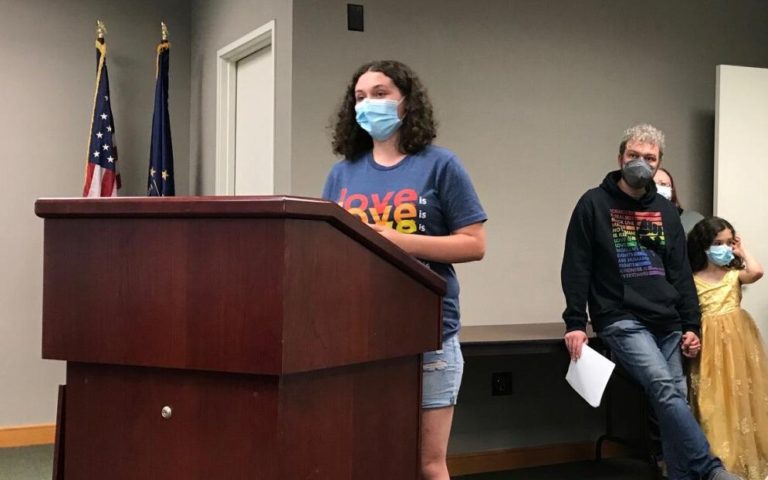
PENDLETON — LGBT student concerns are human right issues, not political issues. That was the message students, parents and teachers delivered Thursday to South Madison Board of Trustees at Thursday’s meeting.

Several speakers addressed the controversial issue of three teachers who were directed by the administration in April to remove LGBT pride flags from their classrooms because they were deemed political paraphernalia.

“Equal rights and someone being valid is not inherently political, even if it’s made that way by some politicians,” said parent James Wills.

He was one of about half a dozen LGBT people and supporters who addressed the board.

Wills said he was concerned about suicide rates among LGBT students.

“We rely a lot on the schools to take care of our children while they’re there,” he said.

Pendleton Heights sophomore Tai Wills, the only student to speak, said even though she has support at home, that of teachers may be all the support some LGBT students get. The flags, she said, told LGBT students that those teachers provided a safe haven.

“It frustrated a lot of us,” said Tai Wills, who identifies as bisexual. “Even for me, it speaks happiness because it means something to other people.”

Wills said she was concerned for the mental health of her LGBT classmates. South Madison in recent years suffered a rash of suicides and suicide attempts by students, some of whom were LGBT, in all grade levels.

She said Pendleton Heights administration has been less than supportive of LGBT students when pride flags were defaced and those who identified as LGBT were harassed by their classmates.

“That really hurts me because that affects their mental health,” she said.

Jasmine Clark said she came from Greenfield to show support.

“You have to know that children in your schools don’t feel safe to explore who they are. They don’t feel safe to express themselves,” she said. “You can’t learn when you live in fear like that.”

Taking down the flag and suppressing the discussion of LGBT students and their rights also does a disservice to straight and cisgender students, she said.

“Neutrality does not save kids’ lives,” she said.

Board president Bill Hutton came under fire by some speakers because of an email statement sent to students, parents and staff in which he said if LGBT flags are allowed, white supremacist flags must be allowed. He defended the comment as demonstrating that they are opposing factions.

“I wasn’t condoning white supremacy,” he said.

When Hutton said he didn’t know what the solution might be to balancing the free speech rights of these two groups, Chris Hanks offered a suggestion: check out the Southern Poverty Law Center’s website.

“There are several ways to determine what is hate speech and what is not,” Hanks said.

Hutton said he and the board would take the speakers’ comments under advisement.

“We’re open to suggestions. We want the best possibilities for students to be successful,” he said.

Diversifying the “Group” in Gay Men’s Group Therapy – The Good Men Project

I must’ve seen at least five or six different therapists in San Diego County before going to group therapy for gay men. I had developed anxiety from multiple encounters with homophobic and racist locals.

I moved from the safe spaces of San Diego State University to working and residing in the upscale, affluent Mission Hills. The neighborhood skewed younger in residents, and was adjacent to Hillcrest, the gay district of San Diego. Sadly, these people weren’t my Allies. Whether I was out during the day or night, I was met with homophobic slurs while holding hands with another man. My fiancé, while driving to the local Ralph’s, was pursued in his vehicle for having a Hillary Clinton bumper sticker. The driver hopped out of his car in front of the grocery store and instigated my fiancé into physical confrontation. In tandem, I watched him navigate strangers’ micro aggressions stemming from his accent, and anti-immigrant hate speech after he entrusted a new acquaintance enough to reveal his country of origin. We also didn’t anticipate speaking Spanish anywhere north of Downtown would be met with active aggression: San Diego is, after all, 35% Hispanic!

I started expecting hostility any time I stepped out, and by default, became wary of new acquaintances. My parents hadn’t raised me to navigate discrimination and I didn’t have the mental infrastructure to let these encounters roll of my shoulder. I knew I needed a therapist but I couldn’t vet them appropriately because few had a comprehensive profile online.

“It’s unfortunate that you’re running into discrimination, my friends have never brought up running into homophobia” said the first therapist, a cis-gendered heterosexual white guy. “Racism has never been my experience in San Diego, maybe they just find you attractive and that’s why they stare so attentively or ask questions about your background” said the next therapist, a cis-gendered heterosexual Indian-American woman. “You’re focusing on all the wrong things. Whether or not they’re racist or homophobic, by giving them your attention, you’re attracting them more into your life” said another therapist, a cis-gendered heterosexual white woman.

Nonetheless, I took the last therapist’s suggestion on trying group therapy for gay men in Point Loma, just across the San Diego Bay from a large military base. I arrived early and waited while the room filled one by one. Racially, I was in the minority, nevertheless, they were all gay.

Once our therapist arrived, she began moderating conversation and prompted us with sharing our reasons for attending.

Many of them shared a unique story about their relationship with their significant other and its challenges. Others talked about the stress of their job. She followed up with questions for them to elaborate and ultimately, she provided feedback. When she asked me my reason for attending, I shared the frequent discrimination I kept running into. I told of my story with a Trump supporter who chased after my boyfriend and I outside the grocery store in a vehicle for having the Equality sticker. I expanded on how I was harassed for speaking Spanish at a bar close to downtown. I shared the homophobic slurs that were yelled to me as I walked hand in hand with another guy. I talked about the fear my friend had about their family’s status in the US following the ongoing changes with undocumented people and the rage I felt in being unable to help them.

The room filled with a prolonged silence. Maybe they’re all processing, I thought. Our therapist didn’t say more than “Sounds like a lot of challenges.”

One of the guys spoke up and mentioned that the new presidency had caused a lot of “ignorance” out there. Ignorance, I thought. That’s an interesting word to use. I’d call it racism. Xenophobia. Empowering white supremacy. But sure, let’s just call it ignorance. I had another assert that it was a challenging period to live in but that one gets what they put out. He was essentially quoting the law of attraction. Because I have a desire to attract hostility into my life…

Interestingly, no one seemed surprised by the encounter with homophobia. Then why live here, I thought? Clearly you all accept the bigotry. Or they’re in denial, signaled by their defensiveness anytime I bring up the possibility that San Diego may be a conservative, racist town.

It only pissed me off to think this therapist’s expectations–that she would only need to deal with the problems faced by white gays. She must have deemed as “rogue elements” the disclosure of my trauma related to intersectional issues including race and immigration. Her “sounds like a lot of issues” response sent me home with a worsening mental state. This “therapy” clearly was not for people like me.

Resources for mental health in the US are scarce, and those that exist aren’t always the most cutting edge. It’s not that everyone isn’t suffering the impact of these shortcomings, but rather that certain populations are benefiting from the narrow bandwidth available; thus, creating the conditions for the “gay community” as just a vehicle for upholding white supremacy.

It was clear I didn’t belong in that town. Bigotry will never be normalized in my life. My mind made that clear the minute it responded with anxiety over acceptance. I was living in the wrong place. No amount of landscape, beach, “chill” lifestyle, or status can be seductive enough for me to override my desire to feel safe being who I am, wherever I am.

I’d like to think that the composition of group therapy sessions are based on the racial makeup of its geographical area, but that was simply not true in San Diego.

This post was previously published on Medium.

***

You Might Also Like These From The Good Men Project


Join The Good Men Project as a Premium Member today.

All Premium Members get to view The Good Men Project with NO ADS.

A $50 annual membership gives you an all access pass. You can be a part of every call, group, class and community.
A $25 annual membership gives you access to one class, one Social Interest group and our online communities.
A $12 annual membership gives you access to our Friday calls with the publisher, our online community.

Register New Account

Need more info? A complete list of benefits is here.

Photo credit: adrianna geo on Unsplash

Sports at a glance | News, Sports, Jobs – Altoona Mirror

Grizzlies send Spurs home

MEMPHIS, Tenn. — Dillon Brooks scored eight of his 24 points in the fourth quarter to help put Memphis ahead to stay and the Grizzlies eliminated the San Antonio Spurs 100-96 on Wednesday night in the first Western Conference play-in game.

The Grizzlies will play the Golden State Warriors or the Los Angeles Lakers, who played later late Wednesday night for the No. 7 seed, for the No. 8 seed Friday night and a first-round series starting Sunday against the top-seeded Utah Jazz.

Jonas Valanciunas had a season-high 23 rebounds and 23 points for Memphis. Ja Morant added 20 points and six assists. Jaren Jackson Jr. had 10 points.

DeMar DeRozan and Rudy Gay each scored 20 points for the Spurs.

NCAA wants decision soon

INDIANAPOLIS — The NCAA Division I Council plans to act on legislative proposals next month that would allow athletes to be paid to be sponsors, social media influencers and product endorsers, the governing body for college sports announced Wednesday.

The council will take up the issue at its meeting June 22-23 with the goal of having legislation in place by July 1. That would provide greater consistency in the name, image and likeness opportunities available to student-athletes nationally as state laws become effective on or around that date. Measures introduced in October would allow athletes to use their name, image and likeness to get paid.

The Associated Press

Today’s breaking news and more in your inbox

Let Them Play, “Fairness in Women’s Sports Act” Shouldn’t Restrict Transgender Athletes From Participating in Sports – Big Easy Magazine

“liftoff” by acase1968 is licensed under CC BY-NC-ND 2.0

Growing up, sports were a huge part of my life. Many of the things I learned on athletic fields have served me well in life – lessons about teamwork, fair play, and setting and achieving goals. The most important might have been from playing against those who were stronger or better skilled — learning to handle loss built more character than winning ever did.

Plus, there are other tangible benefits to be gained from sports. Beyond improving my general health, my active youth helped me become more comfortable with my developing body. Being physically fit helped me have the energy and mental focus I needed to get things done off the field, too.

Some of my best memories are of the enormous fun I experienced playing games, whether participating in intramural sports, playing on recreational teams or competing in tournaments. I’ve made lifelong friends among my teammates and even my competitors.

So, when I tell you that everyone should have athletic opportunities, I know what I’m talking about. In fact, I believe we should be expanding rather than restricting access to sports.

-ADVERTISEMENT-

The misnamed “Fairness in Women’s Sports Act” currently in front of the Louisiana legislature doesn’t do anything to protect students from discrimination on the basis of their gender identity. 

Let me address some of the reasons that are given by supporters of this harmful legislation.

Senator Mizel would have you believe trans athletes are taking a spot away from someone else. The argument is there are only so many opportunities for girls and women to play at the top level or get scholarships so it is unfair to allow trans athletes to compete.

I’m going to start by pointing out that the defenders of this bill can’t even show an example of this ever happening in Louisiana. Their premise that trans athletes will outperform their peers is not supported by the evidence. It just isn’t true that everyone assigned male at birth is automatically bigger, faster and stronger than anyone assigned female at birth. Further, transgender participation hasn’t led to a surge in transgender girls and women winning national championships. Most trans athletes perform within expected ranges for their age and gender identity. It is highly unfortunate that the few transgender girls and women who have achieved sports success have faced backlash instead of celebrations of their victories.

We can celebrate girls’ sports and protect transgender youth from discrimination, making sure that all young people can access the lessons and opportunities that sports afford. The first step is making sure your representative votes against SB 156 when it comes to the floor of the House.

Another argument against trans youth participation comes from the horrible notion of gender policing women athletes who weren’t feminine enough to be ‘real women.’ This bill invites policing and bullying of student athletes who do not meet gender stereotypes, and could empower any person to force any student athlete to undergo invasive physical exams or hormone tests in order to “prove” their gender. 

As someone with short hair and small breasts and labeled a tomboy, I have felt the humiliation of being pulled from women’s restrooms because I didn’t fit someone’s judgement of my gender.

Try to imagine how traumatizing it is to be pulled aside because someone didn’t think you belonged on the field and demanded you show proof or submit to a physical genital examination? Do you realize how easy it would be for a competitor or opposing coach to make such an accusation to explain their loss? There is enough bad sportsmanship out there already without weaponizing sports against anyone who is gender non-conforming.

The most pernicious argument about trans participation is the one about how unfair it is for men to compete against women in sports. Sometimes added to this is the need for safe spaces in locker rooms and restrooms.

In actuality, trans students have more to fear from their peers when it comes to being bullied, harassed and sexually assaulted while trying to use the restroom that best matches their valid identity. Almost 60 percent of transgender Americans have avoided using public restrooms for fear of confrontation, saying they have been harassed and assaulted.

Cisgender boys are not trying to sneak into girl’s sports to try and dominate the competition. As a point of fact, current Louisiana guidance from LHSSA on gender equity requires such athletes to undergo sex reassignment two years before competing!

Transgender kids, like other students, deserve the same opportunities to learn teamwork, sportsmanship, leadership and self-discipline through athletics, as well as building a sense of belonging with their peers. When transgender girls aren’t allowed to participate in girls’ sports—or transgender boys not allowed to play in boys’ sports—they miss out on this important childhood experience and all the lessons it teaches.

As a state, we will also miss out on the financial gains that come from hosting high level tournaments. In response to North Carolina’s discriminatory HB 2 legislation, the NBA moved the 2017 All-Star Game from Charlotte to New Orleans. It was the first time in US history that a professional sporting event was moved in response to anti-LGBT legislation. 

New Orleans is scheduled to host the NCAA Men’s Basketball Final Four in 2022.  NCAA has already made the statement on transgender participation that “When determining where championships are held, NCAA policy directs that only locations where hosts can commit to providing an environment that is safe, healthy and free of discrimination should be selected.”

Louisiana won’t be able to provide that environment if this bill passes. Please contact your district representative and let them know you oppose Senate Bill 156 and want them to vote against the measure. Find your Representative’s contact information here: https://legis.la.gov/legis/FindMyLegislators.aspx


Discrimination and ridicule: Life for Russia’s LGBTIQ+ community – SBS

Misha T is a Russian LGBTIQ+ activist; he spends a lot of time and energy to help unite the LGBTIQ+ community in Russia.

But he’s been repeatedly threatened and even attacked, both psychologically and physically.

“I was beaten twice. Once, when I was still young, my friends and I were attending a gay club, and a group of guys were there waiting for people who walk in or leave the club. 

“The second time was in 2012 when I was invited to a party, then people started to ask me why I didn’t have a girlfriend, and after I answered they just beat me up. That time I went to the police who just hushed up the case, they decided not to proceed with an investigation.”

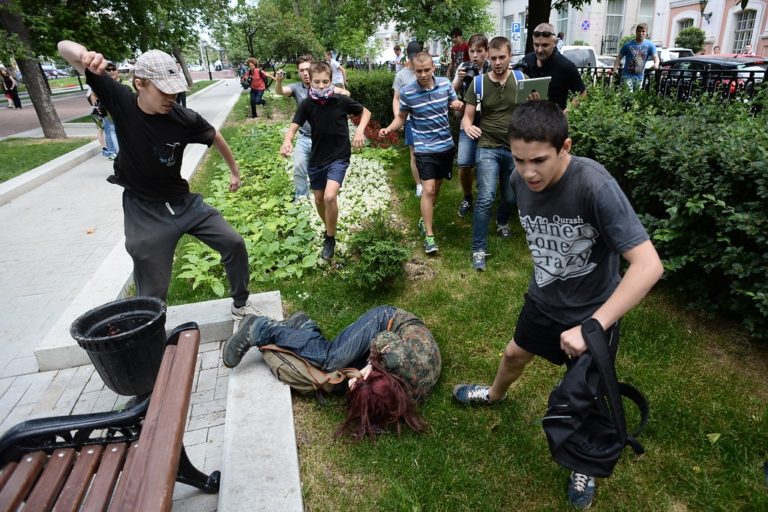
LGBT activists were attacked during an action 'Day of Kisses' against a homophobic bill in Moscow

LGBT activists were attacked during an action ‘Day of Kisses’ against a homophobic bill in Moscow

Flickr/Roma Yandolin CC BY 2.0

Amnesty International’s latest report says that LGBTI people continue to face discrimination and persecution in Russia.

It comes seven years after Russia’s ‘gay propaganda law’ was introduced in 2013, making it illegal to promote non-traditional sexual relations among those under 18; citizens, organisations and businesses could be fined for it. 

Amnesty noted that since then, constitutional amendments redefined marriage as a union between a man and a woman, reinforcing, it said “existing limitations on same-sex marriage and ensuing restrictions, including adoption by same-sex couples.”

LGBTIQ+ life in Russia 

Homosexuality was decriminalised in 1993, but anti-gay feelings remain.

Misha T says he also experienced the disclosure of his personal information.

“My information was shared on the so-called “spread list” of the homophobic site “Saw” that was created in Russia about two years ago and targets a number of LGBT activists, including me.

Gay rights activists march in St. Petersburg May 1, 2013.

LGBTIQ+ rights activists march in St Petersburg during a rally against a controversial law in the city that activists see as violating their rights.

AFP

“We filed our complaints, wrote to the Investigative Committee, the Prosecutor General’s Office – everywhere we were denied verification.”

The state does not want to protect us in any way.

Public disclosure of a personal information of LGBTIQ + people is a big problem because they often try to hide their homosexuality from other people, including family and employers.

According to rights organisation, Russian LGBT Network, in 2019 12.1 per cent of surveyed people were hiding their gender or sexual identity. In previous surveys respondents said they were more open to their friends (81.5 per cent) and least open to their family (11.6 per cent), illustrating that family remains one of the most insecure environments for LGBTIQ + people in Russia.

In order to obtain personal information, so-called fake dates are set up where people create fake profiles on dating websites, invite an LGBTIQ + person on a date, and then blackmail them for not disclosing their sexual orientation.

LGBT activist attacked during picket against homophobic bill, 2013

LGBT activist attacked during picket against homophobic bill, 2013.

Flickr/Roma YandolinFollow CC BY 2.0

Svetlana Zakharova, CEO of the Russian charity foundation Sfera, says that in some cases, LGBTIQ+ people can lose their jobs after their homosexuality has been disclosed.  

“There is an activist from St. Petersburg who searches on social media for homosexual, bisexual and transsexual people who work in the education industry,” she says.

“After collecting evidence this person writes letters to schools demanding to fire these employees.” 

Unfortunately, many people lost their jobs after this.

Misha T says he, too, had to quit his job because of his sexual orientation.

“When I started to actively advocate for civil rights in the community, I was asked to leave my job. The last day, when I left, my boss told me: ‘Stop your rubbish, get married – and everything will be ok.’

“After that, I could not find a job for a very long time, and I had to leave the city,” he says. 

Bess Hepworth, an Executive Director of advocacy non-profit organisation, Planet Ally Australia, thinks it’s important to discuss the problem in the media.

“The continual escalation of dignity, rights and free speech in Russia is very concerning,” she said.

“I think it’s important to understand that this has been a very long struggle and strategic persecution out of the media spotlight also, not just the horrifically barbaric purges in Chechnya.

I think if we look at countries in Europe such as Poland and Hungary to name just two, we have witnessed a rapid regress in safety and human rights of LGBTIQ+ citizens. 

It’s an important reminder, she says, of how quickly rights can be taken away and people don’t have to take them for granted or underestimate power structures or political coercion. 

Changes in political power have led to increases in violence, hate crimes and prohibited freedom of speech and movement.

Who are LGBTIQ+ refugees?

Misha T and his partner decided to move abroad about a year ago. They felt unsafe after meeting with a special services agent.

“An FSB officer met me near my parents’ house and offered to cooperate. He hinted that there would be big troubles, including problems with my documents on border control.

“It became clear for us that tough decisions had to be made, it would be impossible to stay longer”.

Russia LGBTIQ+ rights.

Protesters in London call for the Winter 2014 Olympic Games to be taken away from Sochi, Russia, because of the recently introduced laws.

AAP

Andrey Petrov, an executive director of the Stimul Group, a human rights organisation in Moscow, says that LGBTIQ+ parents also often become refugees.

We have several cases that relate to LGBTIQ+ parents and children. There was a case when the guys had to emigrate to the USA, because Russian authorities tried to take their children away. 

The gay couple have two adopted children. They asked for medical help when the child had a stomach ache. That’s how officials found out that the child was being brought up in a same-sex family. Doctors called the Investigative Committee, and the LGBT family was searched.

“They had to leave Russia very quickly, because they wanted to keep the children,” said Petrov. “The case has not yet been closed, it’s not safe for them to come back.”

LGBTIQ+ persecution in Chechnya

Another group of LGBTIQ+ refugees from Russia is represented by people from the southern Russian republic of Chechnya who have to run away due to persecution and torture.

Ms Zakharova says that her organisation has been evacuating LGBTIQ+ people from Chechnya since 2017.

As people often leave the region with one set of clothes, many even without documents, they provide them with housing, clothing, food, medical and psychological help. They assist a situation case by case and make a decision whether it is relatively safe for a person to stay in Russia. 

LGBTQI+ repression in Chechya

Candlelight vigil at Federation Square, Melbourne in solidarity with LGBTIQ+ men abducted, tortured and killed in Chechnya by Chechen authorities, May 16, 2017.

AAP

“People who leave Chechnya because of persecution and torture are constantly in danger in Russia,” she said.

“And it’s not safe for them even after leaving – we had cases when someone broke into our secret apartments, or people under our care were kidnapped. In February two people were kidnapped and taken back to Chechnya.”

Humiliation, not protection, by police

The Russian LGBTIQ+ network reports that in 2019, 152 people faced illegal detention in connection with gender identity and sexual orientation, 294 – with violation of the right to access medical services, parental rights were violated on 63 occasions, 377 respondents faced violation of their right to access products and services, 316 – with discrimination in the housing sector, 738 – with damage to property and 1113 – with unlawful access to their personal data.

Ms Zakharova says that in Russia LGBTIQ + people do not often go to the police, as many are afraid that they wouldn’t find any protection but instead would be humiliated.

“Several years ago, a teenager, who was 17 years old, was beaten on a fake date, his phone was stolen, and he and his mother went to the police to file a statement. The policeman told him: ‘You were beaten for a reason, you were beaten for being like this. And we do not protect such people,” Zakharova said.

Andrey Petrov confirms this:

People are afraid of discrimination, they are afraid of ridicule from the police, criminals know about it and take advantage of it.

However, both experts say that recently several convictions have been passed against the organisers of fake dates in Moscow and St. Petersburg.

Zakharova says activists are regularly detained right on the streets.

“This year in St. Petersburg there was an absolutely astonishing case when a group of teenagers came together, unfurled the rainbow flag and started taking pictures with it. The administration of that building called the police. All the teenagers were taken to the police station. They were later released without charge, but the situation is completely absurd.”

She says that thinking about those teenagers, the youngest of whom was 12 years old, makes her feel very sad.

Society is changing for the better, and the authorities seem to be stuck in their medieval ideas about what they want and how everything should be.

What can Australia do?

Bess Hepworth says that providing international solidarity can help to uplift the human rights defenders on the ground who are risking their liberty and sometimes their life at great psychological and physical toll to themselves, their loved ones and their community. 

“After marriage equality in Australia, some may have been mistaken in thinking that was the only important priority to progress queer rights and that only propelled the extreme right to mobilise against trans, non-binary and intersex people.

“It truly is about ensuring dignity, protection and safety for all our community.” 

Brighton Pride Parade - Brighton Supports LGBT Russia

Brighton Pride Parade – Brighton Supports LGBT Russia, 2013

Flickr/Dominic Alves CC BY 2.0

She points to Australia’s leading role at the Human Rights Council in recent years and active criticism of state actors who continue to violate the human rights system.

“I would say not to underestimate the power of applying firm but diplomatic pressure on our representatives both in embassies and consulates here in Australia but also at key UN posts in New York and Geneva.

“Get to know the ambassadors and also what upcoming opportunities there are for formal interventions to remind state actors to uphold their human rights obligations.”

I would also say support queer refugee-led organisations like the Forcibly Displaced People’s Network who can provide vital support for those who had to flee from such incomprehensible persecution.