Home Blog Page 204

‘Dance of the 41’ review: Powerful, tragic gay drama | NewsBytes – NewsBytes

Last updated on May 23, 2021, 06:49 pm

'Dance of the 41' review: Powerful, tragic gay drama
‘Dance of the 41’: The Spanish drama hits you

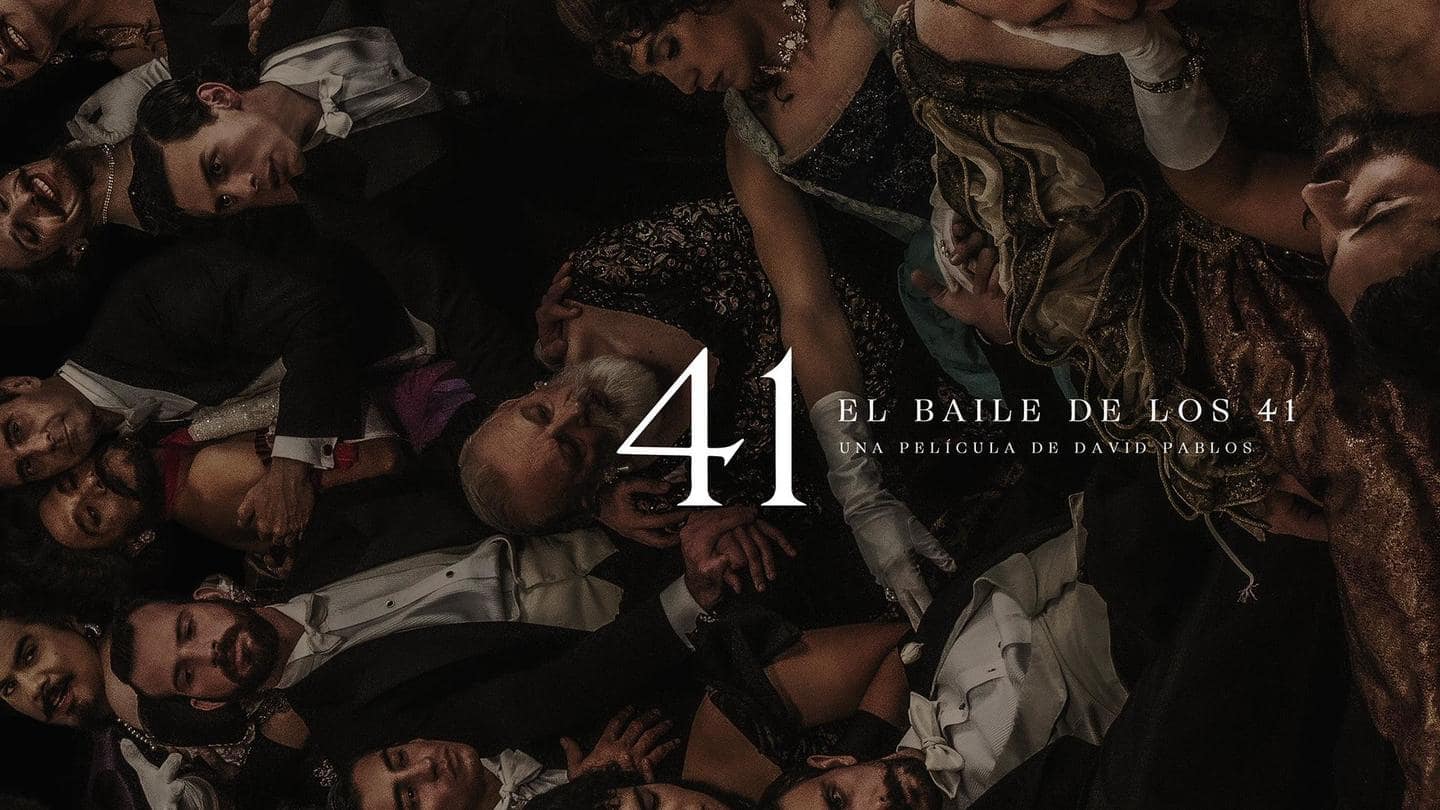
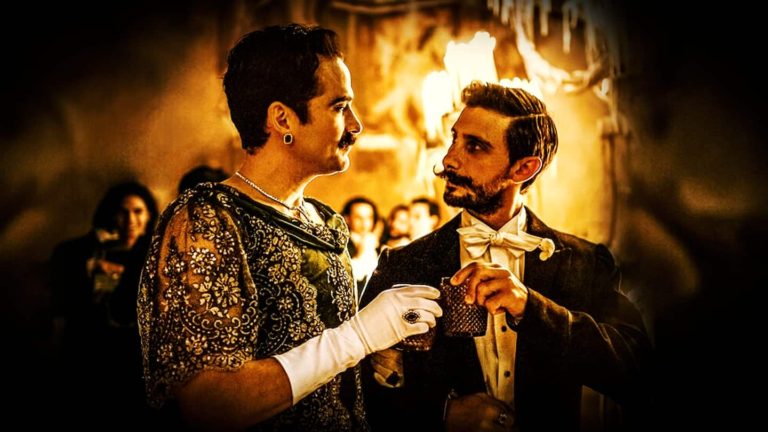
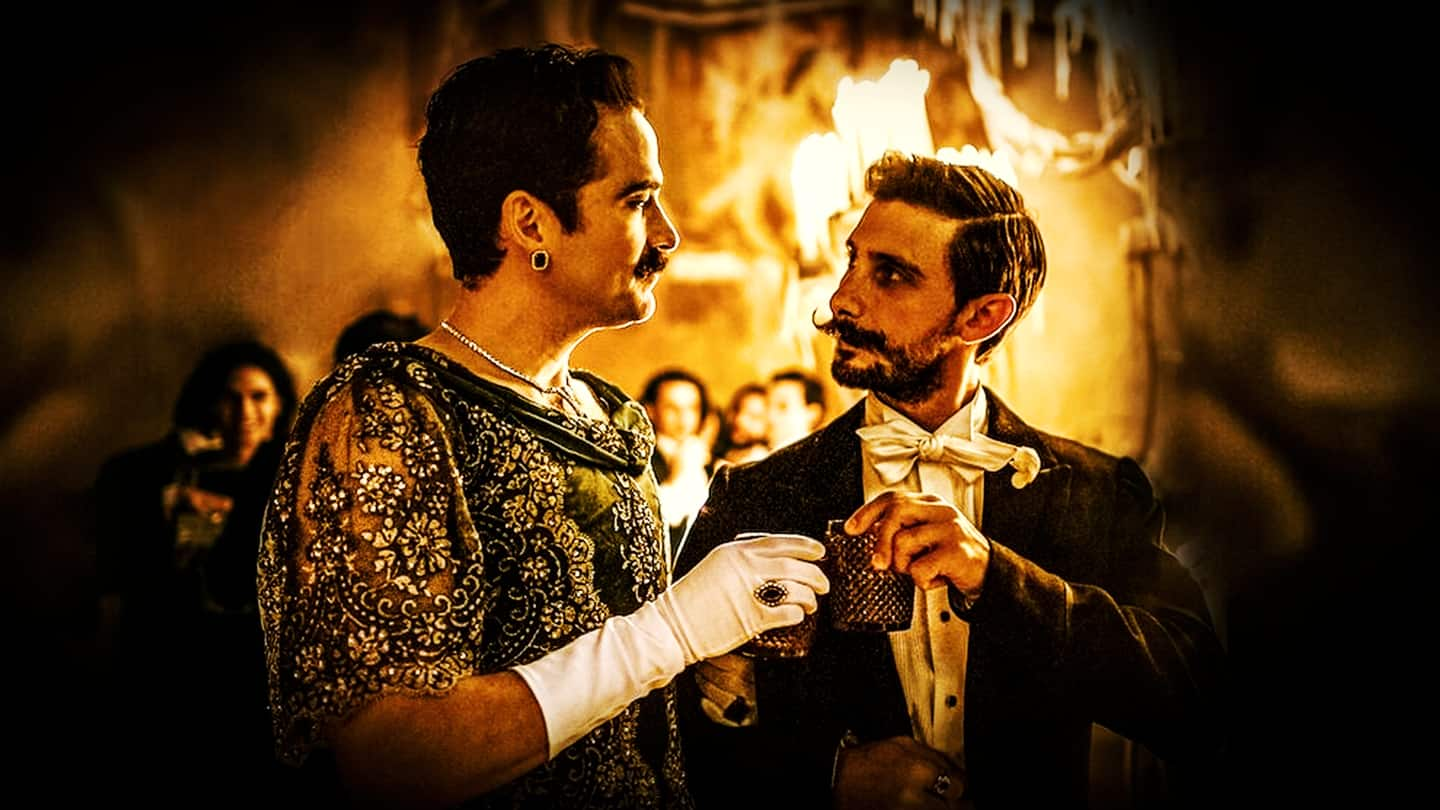
Mexican drama Dance of the 41 (original title: El baile de los 41) is now streaming on Netflix. The impactful film is based on a real-life high society scandal that took place in Mexico around the end of the 19th century. The story is about men who dressed up in women’s clothing and were held in an illegal police raid. Here’s our review.

Introduction

The period costumes instantly takes you to the 1900s

The film begins with the introduction of a politician named Ignacio de la Torre y Mier, played by actor Alfonso Herrera. He marries Amada Diaz (played by Mabel Cadena), the daughter of the then-president of Mexico. Their relationship was bound to have some friction. You’ll find out why soon. The beautiful period costumes and set of the movie instantly transport you to the 1900s.

Pacing takes time but picks up steam later on

Pacing takes time but picks up steam later on

The movie takes some time to pick up the pace and soon we come to know that Mier is cavorting with a young man named Evaristo Rivas, played by Emiliano Zurita. Remember, it’s the early 1900s and Mexico was then a hostile place for gay men to freely express themselves. Hence, the film shows a secret club that all these powerful men visit.

Men dressed up in drag rounded up by police

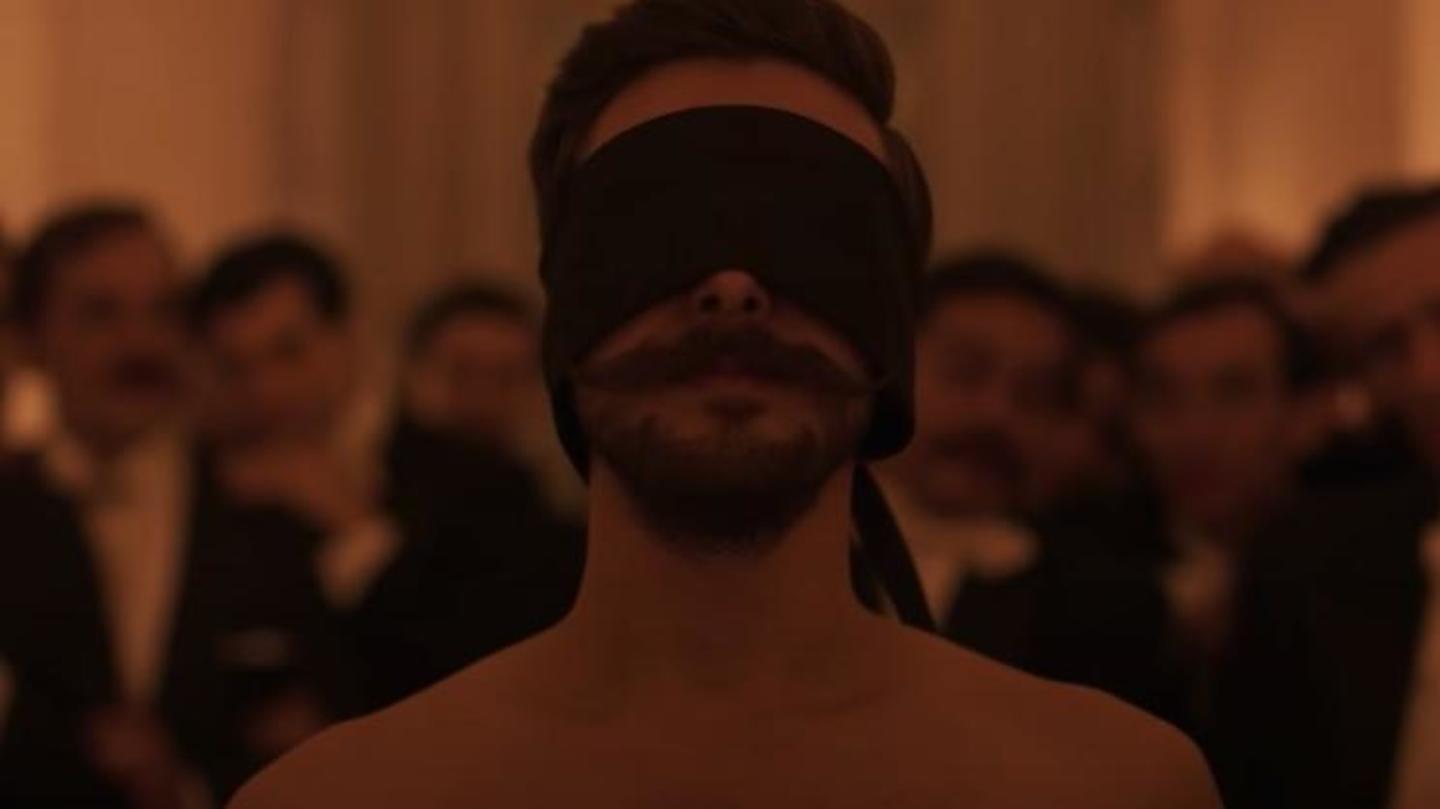
An annual ball is planned at the secret club, where some of the men are dressed in drag, and the rest in suits. This apparently happened in the real world back in the day, and the police illegally raided the place as the men were frolicking around enjoying each other’s company. The film captures the hardships of being gay at that time perfectly.

The final few minutes of the film will move you

The final few minutes of the film will move you

It is these last 20 minutes of the film that might truly get you! It is perhaps the most impactful scene and shows the cruelty and hatred people had for gay people. The men rounded up in the raid were mostly from the upper echelons of society and we see that they are being punished by naming and shaming them at a public plaza.

No second thoughts, go watch it! Final rating: 4/5

No second thoughts, go watch it! Final rating: 4/5

The opera-style music continues throughout the final scene as the men are physically tortured by the unruly crowd. This final scene could have gone wrong in so many ways, but it was impeccably shot. Go watch the film if you’re an LGBTQ+ ally or even have some curiosity about this insane event that took place over a century ago. Final rating: 4/5.

Gay police sergeant condemns Capitol Hill Pride’s ‘blatant hate’ after it bans cops from attending – RT

A gay sergeant with the Seattle Police Department has sent a scathing letter to Seattle’s Capitol Hill Pride, after it banned officers from attending the 2021 parade due to last summer’s riots and concerns about “white supremacy.”

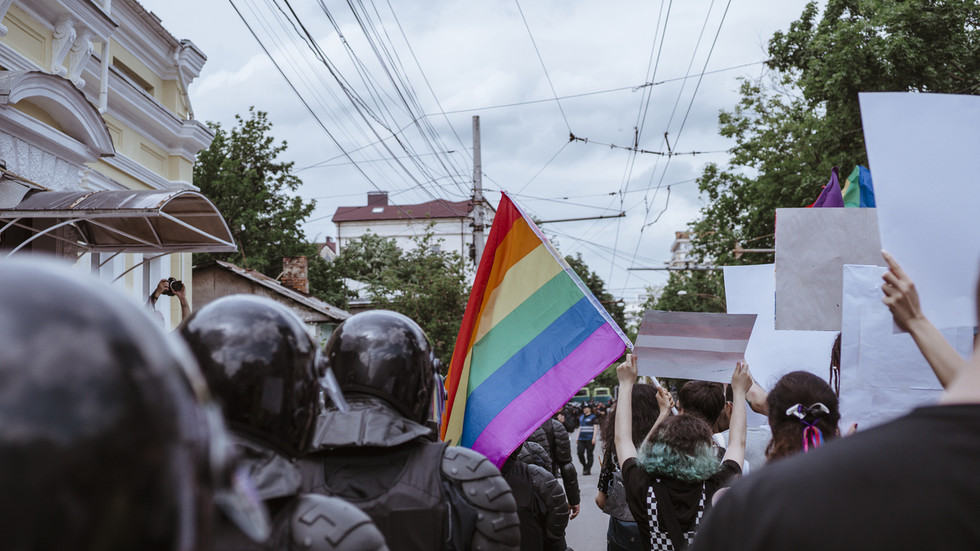
In a press release on Friday, Capitol Hill Pride – which has no connection to the larger, annual Seattle Pride – announced its ban against police officers attending the parade, which is due to take place on June 26 and 27.

Declaring its commitment to create “an atmosphere free of fear or harm,” the organization requested that police stick to the perimeters of the event, citing “ongoing concerns of white supremacy views within police departments,” among other reasons.

An unnamed police sergeant, however, shot back at Capitol Hill Pride in a letter on Saturday which was republished by the conservative Post Millennial news website, accusing the organizers of spreading hate.

Also on rt.com LGBT activists BAN police from Pride events in New York City to create ‘safer space’ for ‘marginalized,’ leaving gay cops baffled

Revealing himself to be a gay man with a “disabled military veteran husband” and two adopted “children of color,” the sergeant wrote that he “could not be more disappointed in what I and many LGBTQ officers feel” is Capitol Hill Pride’s “blatant hate” against police officers.

He also condemned the “hypocrisy” of not allowing offices to attend the parade, while at the same time requesting police protection from the perimeter “in the case someone treats you as you have us.”

Concluding that his protests against Capitol Hill Pride’s decision are his alone and not necessarily the department’s, the sergeant called on organizers “to do what’s right in the future.”

The Seattle Police Officers Guild has also condemned Capitol Hill Pride’s police ban “in the strongest language possible,” with guild president Mike Solan calling the move “disgusting, bigoted, discriminatory,” and contradictory to the “inclusive LGBTQ message.”

“Our LGBTQ members serve our community with distinction and pride. They value inclusiveness and demand respect not only for proudly being LGBTQ but for serving our community as police officers,” Solan declared, adding that anyone who “believes in their banishment has no place in Seattle.”

Also on rt.com New York Pride banning cops proves they aren’t about ‘inclusion’, they just want to follow the latest lefty trend

The unconnected and larger Seattle Pride issued its own statement on Friday disassociating itself from Capitol Hill Pride’s ban.

Pointing out that 2021’s event will be a completely virtual event due to the Covid-19 pandemic, Seattle Pride reiterated that it “is not in any way associated” with Capitol Hill Pride nor “their decision to disallow police participation.”

It did, however, say that: “Given concerns about policing in Seattle, Seattle Pride wants to hear from those most impacted and is inviting community input which it will be reviewing as it develops plans – and coordinates mandatory security requirements with the city – for next year’s parade.”

This is not the first time that a Pride event has banned police from attending, with the other most recent example being New York City Pride, which has banned police until at least 2025.

Like this story? Share it with a friend!

Tennessee moves to the forefront with anti-transgender law – Illinoisnewstoday.com

Nashville, Tennessee (AP) —Conservative lawmakers across the country have announced a series of anti-LGBTQ bills this year, but the state’s political leader is in Tennessee in enacting new legislation for transgender people. Does not exceed.

Parliamentarians passed, Republican Governor Bill Lee signed five new bills, already discriminating against vulnerable people, some laws are infeasible and could damage the state’s reputation I have consistently dismissed any concerns.

Proponents defend legal policy by policy, arguing that some protect parents’ rights, others protect girls and women, and others further improve equality. Opponents reject those claims.

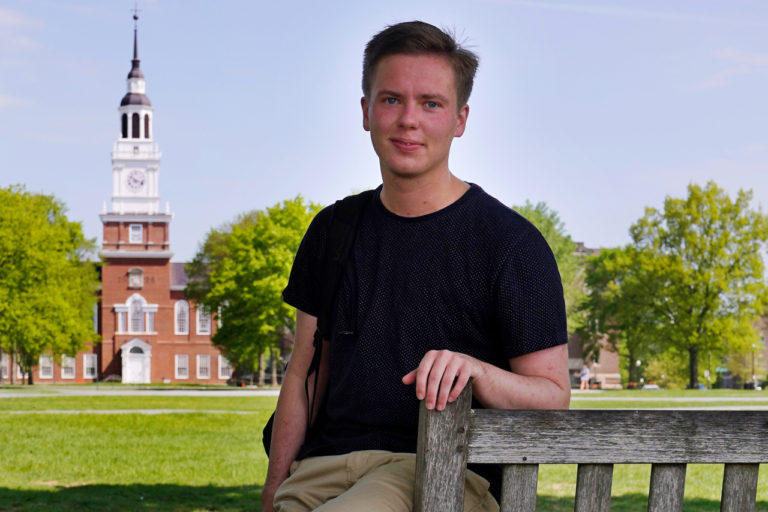
Colin Goodbread, a 22-year-old transgender student who grew up on the outskirts of Nashville at a university in New Hampshire, said new legislation could prevent Tennessee from calling her home again. I will.

“This kind of bill keeps me away from identifying Tennessee as my state, even though I spent most of my childhood in Tennessee,” said Goodbread, senior at Dartmouth College. I think it’s part of the reason. ” .. “I don’t want to go back there. I’m already attending an out-of-state university. I want to work outside the state. And they don’t want transgender people in the state enough. I made it clear. “

The emergence of Tennessee as an anti-LGBTQ leader came from a right-handed political change in a Republican-controlled state. Lee’s Republican predecessor has put a brake on some socially conservative legislation, but the emphatic Republican election victory, backed by strong support for former President Donald Trump, is that. Since then, I’ve been bold in Congress. That is the political situation in which Lee Seung-yuop will start re-election in 2022.

Parliaments in the other 30 states, mostly under Republican control, are considering banning trans-use from gender-identical sports teams. Twenty people considered a ban on gender-verifying medical care for transgender minors. The Human Rights Campaign calls 2021 the worst year of anti-LGBTQ law in recent history.

Tennessee has banned transgender athletes from playing sports in women’s public high schools and junior high schools this year. The state is initially prepared to require publicly available government buildings and businesses to post signs when transgender people use multi-person bathrooms and other facilities related to gender identity. it’s finished.

Public schools, on the other hand, are at immediate risk of losing proceedings if they force transgender students and employees to use multi-person bathrooms and changing rooms that do not reflect their gender at birth. Lee also signed a law requiring the school district to warn parents and allow them to opt out of classes 30 days before students are taught about sexual orientation and gender identity.

“Tennessee holds the crown of hatred,” said Lambda Legal’s senior lawyer, Sashab Shat.

The governor recently defended the school bathroom rules. “The bill provides equal access to all students,” he said.

The neighboring state of Arkansas is the only other state that bans gender-verifying care for minors and is one of three new transgender bans there. Montana has two new legal restrictions on transgender people. Sports bans have also been passed in several other states, including Alabama, Mississippi, and West Virginia.

Decades of cultural warfare over LGBTQ rights have recently focused on transgender Americans and are becoming more and more talked about in conservative news media.

The recent wave of bills has been backed by conservative groups such as the Heritage Foundation and the Alliance Defending Freedom, the latter providing model bills for transgender athletics bills. The promotion of the State Capitol follows the executive order of Democratic President Joe Biden, which bans discrimination based on gender identity.

According to a Trevor Project survey, 94% of LGBTQ youth say that recent political debates on this issue are having a negative impact on their mental health. Another question found that more than half of transgender and non-binary adolescents are seriously considering attempting suicide in the past year.

The Trevor Project has been contacted by 2,400 endangered young people in Tennessee over the past year, according to Secretary-General Amit Paley.

“Our son regularly asks,’When can I move or send me to a boarding school?’” Said a transgender eighth-grade son from a private school next fall. Amy Allen, who is afraid to turn into a public school, said.

The mayor of Nashville said that business signage requirements for bathrooms and other facilities are particularly in conflict with social policies from downtown Republican-controlled Parliament buildings, especially for growing and progressive cities. Warned that it could be harmful.

“This law is part of the anti-LGBT political foundation of hatred and division,” said Democratic Mayor John Cooper. “One of the risks of Nashville is that the hostility inherent in these signs can be as good as raising another. The sign” Don’t come here. ” We are a comprehensive city and it will not change. “

Some of Tennessee’s new legislation faces practical challenges.

Sponsors of the sign bill said people could file proceedings or district attorneys could ask judges to force companies to comply. However, her group remained neutral to the bill, as Amy Weirich, chairman of the Tennessee District Attorneys’ General Assembly, said the bill “did not say anything related to enforcement.”

“I can’t find anything that grants or provides me the responsibility or right to go to the civil court and ask the judge to enforce it, as it is written,” said Weirich, the district attorney of Shelby County. “.

Regarding the ban, supporters say Tennessee doctors are not currently offering pre-pubertal adolescent hormone therapy.

Proponents of the ban on sports teams could hardly cite local cases in Tennessee or across the country where transgender athletes are seen to have a competitive advantage. They argue that the rules provide a fair playing field.

Ally Chapman, mother and advocate of transgender sons, said the new law would signal a bad signal.

“I don’t know how to see it other than telling people that it’s about oppression, domination, and power,’you don’t exist,” she said.

Proponents say it will be important in the coming years. Many fear that legislative barrage will continue.

“The signal is,’Hey, see what we can do. This is the roadmap,” Chapman said. “They aren’t over.”

___

Whitehurst reported from Salt Lake City, Utah.

The Maligned Gay Metropolis: On Glenn Frankel’s “Shooting Midnight Cowboy” – lareviewofbooks

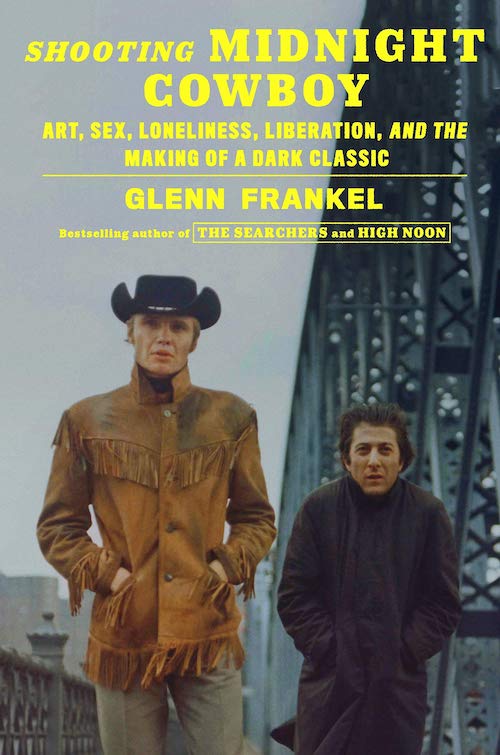
LIKE THE LEGENDARY FILM it inventories, Glenn Frankel’s Shooting Midnight Cowboy: Art, Sex, Loneliness, Liberation, and the Making of a Dark Classic is, above all else, a story about disillusionment. Below the surface of Jon Voight’s stint as a faux wrangler escort thwarted by Big Apple indifference in John Schlesinger’s 1969 picture, there remain countless untold tales of the production’s key players that Frankel has generously compiled.

There is Jamie — formerly James — Herlihy, the novelist and Anaïs Nin protégé who never escaped the shadows of his queer literary masterwork or his mentor. There is Waldo Salt, the House Un-American Activities Committee casualty and cannabis aficionado, whose redemption came in the form of an Academy Award for Best Adapted Screenplay for this very movie in 1970. There’s Dustin Hoffman, the actor’s actor who fought tooth-and-nail for the movie’s supporting role as the ailing Italian American grifter “Ratso” Rizzo — only to be disappointed as Voight’s star outshone his own in the final cut. There is Marion Dougherty, the astute casting agent who gifted Midnight Cowboy its iconic physiques and profiles, only for Schlesinger to refuse her request for a title card bearing her name. Their locking of horns would cost her Hollywood legitimacy for decades. In 2021, a West Side Story remake is already being extolled for its honest casting; though some critics are more preoccupied with whether or not Steven Spielberg can come close to Robert Wise and Jerome Robbins’s original 1961 effort, and rightfully so. In any event, West Side Story’s brave new world can make a little cowpoke movie like Midnight Cowboy seem a little jaundiced in comparison; whiter than Lena Dunham’s Girls, even. However, several anecdotes from the picture’s history and its imprinters are anything but. While filming, Dustin Hoffman requested that his character perform a racist gesture to render the Italian greaser more authentic. Schlesinger, never one for the reactionary, was quick to rebuff the supporting actor’s idea. There’s also Hugh A. Robertson, the Black Brooklyn-born movie editor who slagged on the British director’s creative interpretation of New York City throughout post-production. These racial tensions do not undermine the experience of Midnight Cowboy. If anything, they make this genuine 1960s gem seem all the more authentic. For every film-worker listed here, there are a dozen others mentioned in Shooting Midnight Cowboy’s pages, each with their own bittersweet tale to spin. Frankel shies away from none of these behind-the-scenes tensions, allowing the overarching theme of great art requiring hard work and hard feelings to flourish across the many tales told.

Midnight Cowboy’s narrative arc of optimism, unlikely friendship, and loss in a liminal place is one that Frankel has studied under magnification. It is mirrored in his book, which opens with an idealism rivaling Voight’s Joe Buck as he hums “Git Along, Little Dogies” in the film’s initial shots. For the first dozen or so of the book’s 22 chapters, the author firmly pivots between Schlesinger and Herlihy, the two buddies whose fraught relationship provides the narrative tension. Residing in disparate but influential cities in the postwar era, both men broke their necks to make art worth experiencing: Schlesinger climbing the professional ladder in documentary production, Herlihy savoring the literary inspiration afforded him by the Village’s creative class and Times Square’s tawdry delights — namely, well-endowed boys for hire.

Shooting Midnight Cowboy’s queer context is not all sock-stuffed denim crotches, spurs, and cruising, though those affects of gay metropolitan history are most plentiful. Instead of narrowly celebrating sex for sex’s sake, Frankel mines New York’s paper of record, no more aggressively than in Shooting Midnight Cowboy’s fifth chapter, “The Gay Metropolis.” By illustrating the city’s homophobic bent in the years leading up to and following Midnight Cowboy’s release, the author also depicts why the most enduring queer marriage will always be between our nelly art and the underground. Frankel references Edmund White’s memoir City Boy to show how queers located one another in a world that Charles Kaiser, a 17-year-old at the time, found “in complete denial […] that homosexuality even existed”: Back then people glanced back over their shoulders … Then we had to look back or we’d spend the night alone.

As with today’s politically engineered debates over trans existence, the real cultural hostility did not reside on 42nd Street’s darkest alleyways or within its watering holes, but in the mainstream cultural current. Today, these antiquated notions seem as pollutant as the chemicals General Electric dumped into the Hudson River during their time. Frankel revisits this dominant “intensely antigay” attitude with Robert C. Doty’s 1963 The New York Times article, “Growth of Overt Homosexuality in City Provokes Wide Concern,” where the writer found “overwhelming evidence” that queers were merely products of amoral rearing and lifestyle. It was a position that noted author Gay Talese would later celebrate in The Kingdom and the Power, his 1969 historiography of The New York Times, writing that Doty had penned a “superb article that was, by old Times standards, quite revolutionary.” This antipathy also ran amok through arts criticism. In 1961, Howard Taubman — also of The New York Times — declared that it was “time to speak openly and candidly of the increasing incidence and influence of homosexuality on New York’s stage — and, indeed, in the other arts as well.”

This panic-stricken reporting, paired with a ballooning budget and the ill temper of a heavy-drinking Irish Catholic lighting crew, did not deter Midnight Cowboy’s impressive dent in the city at the turn of the decade. The film opened in New York on Sunday, May 25, 1969, just one month shy of the Stonewall Uprising, to unprecedented long ticket lines. Many a pearl-clutching critic left the theater with at least one positive anecdote worth writing; but it was the queers — unaccustomed to seeing themselves in such a glaring light, or any light at all — who were starstruck by, though skeptical of, the picture’s efficacy in promoting the respectable gay liberation cause. That wasn’t something either Herlihy or Schlesinger had set out to accomplish when they first began working on the film; for them, it was fey high art or bust.

Unlike such exceptional biographers as Joan Schenkar or Jenn Shapland, Frankel doesn’t rely on imagination to guide the story he tells with a mastered, Pulitzer-earning succinctness. The enviably straightforward writing style he puts to such great use in Shooting Midnight Cowboy makes sense when one considers his roots: like Rizzo, he’s a Bronx boy, born into a working-class family in the wake of World War II. While Frankel fared better than his fictional shoe-shining film sibling, graduating from Columbia University in 1971, both still boast the same learned understanding and appreciation for New York City’s rogue economies and their geographies. He too, it seems, could recommend what to order from Veselka after a night of spinning tall tales at Julius’.

As a result, Frankel makes for the most trustworthy of narrators. Even if it seldom shows in his research-rich chapters, one gets the sense that his interest in this unlikely blockbuster came with, at minimum, a hearty dose of homegrown empathy and curiosity — a dying breed of a combination. Schlesinger inevitably acknowledged his sexuality publicly, though he continued to resist the “gay filmmaker” scarlet letter and the burgeoning New York queer arts and activism scene that came with it. Despite this resistance, his impact on queer cinema remains: each year, Provincetown International Film Festival bestows two first-time directors whose work honors Schlesinger’s legacy with an award in his name; New York’s own LGBTQ film festival, NewFest, has shown a number of Schlesinger’s films in its repertory program over the years. Perhaps this serves as the greatest disillusionment of all for that era’s organizers and today’s unapologetic queer artists alike: one’s queer idol sometimes rebuffs queer idolatry, even in death. Schlesinger’s stubborn stance is one many minorities in art have taken in LGBTQ history: at times to steal a seat at a table otherwise denied to them; at others, to evade the liberal marketing algorithm that remains endlessly obsessed with queers, their subcultures, and their stories. This reviewer holds compassion for both motives.

In the years following Midnight Cowboy’s release, screen culture has thumb-twiddled about how much skin to show in movies, how to show it, and when to show it despite the fact that less than two percent of today’s films feature sex scenes. These conversations only intensify when discussing the comparably nascent queer image. One of the biggest legends ascribed to Midnight Cowboy can help us cut through the discursive clutter to find approaches that can avoid inciting another MPAA moral panic over sex in cinema. Those presently championing the rights to creative expression for a new young Buck — Lil Nas X sliding down a stripper pole for a lap dance with the Dark Prince that, in equal measure, thrills queer folx and horrifies the empty piety of the pearl-clutchers — will surely appreciate the details of how Midnight Cowboy came to receive an X rating. And just as that hasn’t hampered Lil Nas X’s album sales and YouTube views, neither did the X rating foil Midnight Cowboy’s Academy Awards campaign for Best Picture. In a later chapter titled “The X Rating,” Frankel parses out this scandalous, all-too-New-York mythology. If any passage from Shooting Midnight Cowboy makes its way into film studies courses across the country, this should be the one. After all, it wasn’t the MPAA who looked down their noses at Schlesinger’s American opus. In reality, the MPAA gave Midnight Cowboy an R rating. Instead, it was Arthur Krim, the co-chairman of the filmmaker’s production company (the late, deplorable D. W. Griffith’s United Artists), who desperately wanted a second opinion and sought out Dr. Aaron Stern, a Great Neck, Long Island–based psychiatrist and Columbia University faculty member, to reclassify the film as X-rated.

Here’s how Frankel recounts that tale:

[Stern] clung to the conventional wisdom that homosexuality was a deviant lifestyle choice that children needed to be protected from at all times. Homosexuals, he argued, were narcissists who chose to be gay because they could only love people exactly like themselves. “Theirs was a choice born of fear,” he would later write. “They withdraw from the frightening demands of someone of the opposite sex and move into relationships with others who mirror themselves.” None of these sweeping generalizations were verified by actual research. They were merely Aaron Stern’s deeply cherished, fact-free opinions.

It was Midnight Cowboy’s “homosexual frame of reference,” Stern would explain in a 1971 radio interview, that caused him the most concern. “That’s no problem for an adult. If you choose the homosexual life, that’s fine. But before you make that choice, you should understand what homosexuality stands for. If you’re a thirteen- or fourteen-year-old, and you’ve never had intercourse with a woman that is gentle, tender, communicative, sensitive, and if the way in which it’s depicted by John Schlesinger in the film is your only criterion for evaluating intercourse — and if you recall the scene with Brenda Vaccaro, they get into a power struggle over who’s on top, and the next day she then says, ‘You’re one of the greatest I’ve ever had, and I’m telling my girlfriend about you.’ To a kid in the audience who’s never known a more meaningful interaction, he could completely distort this and be stripped away of his opportunity for meaningful choice.”

If Stern’s argument sounds familiar, that’s because the very same rhetoric is being delivered in dozens of lawsuits and legislative measures across the United States today to deny trans kids the rights to health care and the playing field. And it’s the same rhetoric deployed to malign the queer and benevolently queersploitative creative expression of popular artists like Lil Nas X and Cardi B. Krim ate out of Stern’s palm and self-assigned Midnight Cowboy an X rating. According to Frankel, Stern would go on to become a consultant for the MPAA before becoming a member, applying his psychoanalytic, anti-auteur posture to every film that crossed his desk — from Disney kid’s fare to evidently adult dramas — for several years.

Frankel spares us Midnight Cowboy’s greatest disillusionment for last: little has changed since the late 1960s. We queer artists remain Joe Bucks, optimistically singing It’s your misfortune and none of my own as we wash up and head out into a culture still keen on skinning us alive.

¤

Sarah Fonseca is a publicly educated film writer and essayist from the Georgia foothills who lives in New York City. Her work has appeared in Black Warrior Review, cléo: a journal of film and feminism, IndieWire, and the Lambda Literary Review, among others.

Tennessee moves to the forefront with anti-transgender laws – Minneapolis Star Tribune

NASHVILLE, Tenn. — Conservative lawmakers nationwide introduced a flurry of anti-LGBTQ bills this year, but no state’s political leaders have gone further than Tennessee in enacting new laws targeting transgender people.

Lawmakers passed and Republican Gov. Bill Lee signed five new bills into law, consistently dismissing concerns that they discriminate against an already vulnerable population, that some of the laws are unworkable and that they could damage the state’s reputation.

Supporters defend the laws policy by policy, arguing that one protects parental rights, others protect girls and women and one even improves equality. Opponents reject those claims.

Colin Goodbred, a 22-year-old transgender student raised in the Nashville suburbs who attends college in New Hampshire, says the bevy of new laws could keep him from ever calling Tennessee home again.

“I think that these sorts of bills are part of what is pushing me away from identifying Tennessee as my own state, even though I spent the vast majority of my childhood, I grew up, in Tennessee,” said Goodbred, a Dartmouth College senior. “I don’t feel like I want to return there. I’m already going to college out of state. I’m wanting to work out of state. And they’ve made it abundantly clear that they do not want trans people in the state.”

Tennessee’s emergence as an anti-LGBTQ leader grows out of a rightward political shift in a state Republicans already firmly controlled. Lee’s Republican predecessor tapped the brakes on some socially conservative legislation, but emphatic GOP election wins fueled by strong support for former President Donald Trump have emboldened lawmakers since then. That’s the political landscape in which Lee is launching his 2022 reelection bid.

Legislatures in 30 other states, most of them Republican-controlled, have considered banning trans youth from sports teams that align with their gender identity. Twenty have weighed bans on gender-confirming medical care for transgender minors. The Human Rights Campaign has called 2021 the worst year for anti-LGBTQ legislation in recent history.

Tennessee this year banned transgender athletes from playing girls public high school or middle school sports. The state is poised to become the first to require government buildings and businesses that are open to the public to post signs if they let trans people use multi-person bathrooms and other facilities associated with their gender identity.

Public schools, meanwhile, will soon risk losing lawsuits if they let transgender students or employees use multi-person bathrooms or locker rooms that do not reflect their sex at birth. Lee also signed legislation to require school districts to alert parents 30 days before students are taught about sexual orientation or gender identity, letting them opt out of the lesson.

“Tennessee is taking the crown for the state of hate,” said Sasha Buchert, a Lambda Legal senior attorney.

The governor recently defended the school-bathroom rule. “That bill provides equal access to every student,” he said.

Neighboring Arkansas is the only other state to ban gender-confirming care for minors, one of three new anti-transgender laws there. Montana has two new legal restrictions for transgender people. Sports bans have also passed in a handful of other states, including Alabama, Mississippi and West Virginia.

The decadeslong culture war over LGBTQ rights has focused on transgender Americans in recent years and has increasingly been a topic of discussion on conservative-leaning news outlets.

The recent wave of bills has had support from conservative groups including the Heritage Foundation and the Alliance Defending Freedom, with the latter offering model legislation for transgender athletics bills. The push in statehouses follows Democratic President Joe Biden’s executive order prohibiting discrimination based on gender identity.

A survey by The Trevor Project showed 94% of LGBTQ youth said recent political debates over the issue had negatively affected their mental health. A separate question found more than half of transgender and nonbinary youth seriously considered attempting suicide in the past year.

The Trevor Project has been contacted by Tennessee youths in crisis 2,400 times over the past year, according to Executive Director Amit Paley.

“Our son asks regularly, ‘When can we move, or can you send me to boarding school?'” said Amy Allen, whose 8th grade transgender son is dreading changing from private to public school next fall.

Nashville’s mayor warned that the business signage requirement for bathrooms and other facilities could be particularly detrimental for his growing, progressive-leaning city, which is often at odds with social policies coming from the GOP-dominated Capitol downtown.

“This law is part of an anti-LGBT political platform of hate and division,” said Mayor John Cooper, a Democrat. “One of the risks for Nashville is that the hostility inherent to these signs can be the equivalent of hanging up another sign: a ‘Do not come here’ sign. We are an inclusive city, and that won’t change.”

Some of Tennessee’s new laws face practical challenges.

The signage bill’s sponsor said people could file lawsuits or district attorneys could ask a judge to force businesses to comply. But Tennessee District Attorneys General Conference President Amy Weirich says the bill “doesn’t speak to anything having to do with enforcement,” so her group remained neutral on the bill.

“The way it’s written, I don’t see anything that allows or provides me the responsibility or right to go to civil court and ask a judge to enforce it,” said Weirich, Shelby County’s district attorney.

Regarding the medical treatment ban, advocates say no doctor in Tennessee currently provides youth hormone therapy before puberty.

Supporters of sports-team bans have largely been unable to cite local cases — in Tennessee or nationwide — where trans athletes were seen to have a competitive advantage. They argue that the rules will ensure a level playing field.

The new laws send a bad signal, said Aly Chapman, mother of a transgender son and advocate.

“I don’t know how to see it any other way than it’s about oppression, control and power and telling people, ‘You do not exist,'” she said.

Advocates say the next few years will be critical. Many fear the barrage of legislation may continue.

“The signaling is, ‘Hey, look at what we’ve been able to do. Here’s the road map,'” Chapman said. “They’re not done.”

___

Whitehurst reported from Salt Lake City, Utah.

Pastor wants LGBT+ people to wear ‘warning labels’ on their foreheads – Yahoo Eurosport UK

The Telegraph

Classy Josh Taylor unifies light welterweight division with victory over Jose Ramirez

Josh Taylor’s two knockdowns of rival Jose Ramirez in rounds six and seven proved the difference in the Scotsman’s history-making victory in their undisputed light welterweight unification fight in an exhausting, relentless battle in Las Vegas. By retaining his IBF and WBA belts and claimed the WBC and WBO titles from Ramirez to join Ken Buchanan as the second undisputed champion from Scotland, exactly 50 years after Buchanan was world lightweight champion in the two world title belt era, in 1971, Taylor has established himself as one of the sport’s truly elite fighters. Victory also made Taylor just the fifth champion to unify all the belts in a weight division in boxing’s four-belt era, after Bernard Hopkins and Jermain Taylor, at middleweight, former light welterweight champion Terence Crawford and cruiserweight king Oleksandr Usyk. What Taylor has in abundance, so clearly on display here, is high fighting IQ and technical excellence, a natural inclination towards a dogfight, spite in abundance, a great chin, heart and stamina. It makes him a very hard man to beat. It showed here against Ramirez, a man who did not know defeat prior to this contest. In a battle of will and skill, with Taylor alternating between clever boxing and movement, punctuating attacks to the body and head of Ramirez, and countering smartly, the judges Tim Cheatham, Dave Moretti and Steve Weisfeld all totalled their cards 114-112 in favour of the ‘Tartan Tornado’. Ramirez, meanwhile used all his rugged physicality in the early rounds in a close first half of the fight. A delighted Taylor will celebrate the historic moment with the inspirational Buchanan. “I did it just like you! I’ll see you when I get home. Much love. He’s a legend. You gave me so much inspiration to do it, and I’m just like you. See you soon, champ. I’ll be bringing the belts home to show to Ken,” said Taylor. “It hasn’t sunk in, really, and in all honesty I could retire now because I have fulfilled what I set out to do at the start. But when I look at it, I’m just getting started and I know I can get so much better. I could have boxed him more and made it easier for myself, but I got involved in a real battle in there.” Ben Davison, Taylor’s trainer, had always maintained that stylistically, and technically, his charge would always have the edge. “The key to success was discipline,” explained Davison. “We know Josh loves to get involved in a fight but we knew that there were fundamental errors that Jose Ramirez makes and it was so important for Josh to capitalize on those errors. Fortunately he was able to do so tonight.” Taylor – his promoter Bob Arum confirmed after the fight – is now likely to defend the titles against Englishman Jack Catterall, the leading challenger for the WBO belt. Arum said that the plan is to take Taylor back to Edinburgh to defend the titles. “That’s where I’d like to go next, and fight there, and if it’s Catterall, then great, but if there are bigger fights out there now, we will see” said Taylor, who furthered his unbeaten record to 18 fights. This was a first defeat for Ramirez, a Mexican American from California’s central valley, in his 27th contest. Other challenges could include a fight with Crawford, also promoted by Arum, who is a world champion at welterweight. “I’ve got nothing but love for Ramirez,” said Taylor post-fight, explaining why he had devised a plan of goading his rival during last week, which led to an altercation inside the Las Vegas hotel. “It was not disrespect [I was showing],” revealed Taylor. “It was all just part of the mind games to get in his head, to make him more eager to jump in at me, to use his aggression against him. “But the scorecards were too close,” added Taylor. “If I hadn’t got the two knockdowns, it would have been a draw, and that would have been ridiculous.” The knockdowns, indeed, demonstrated the brilliance Taylor possesses. A pinpoint accurate left out of a clinch felled Ramirez in the sixth, and a left uppercut in the seventh round sent his foe flat out on his back late in the period with referee Kenny Bayless allowing a long period of recovery for the home fighter. Taylor had just 10 seconds left in the round to look for a decisive finish, but the bell saved his rival. Thereafter, although Ramirez battled back obdurately with rugged determination in the championship rounds, fatigue, and having been hurt by Taylor prevented the penetration of his power shots which were more effective in the first third of the contest. After winning in Sin City, Taylor can look forward to huge support if the Scotsman is permitted a homecoming title defence in Edinburgh, a far cry from the partisan pro-Mexican crowd inside The Theater at Virgin Hotels Las Vegas. “What a sensational fight. Both men should be applauded, and a hearty congratulations to the new undisputed champion, Josh Taylor,” offered Arum. “The future is bright for both warriors.”

Louw Breytenbach crowned Mr Gay World SA 2021 – Boksburg Advertiser

TV presenter Louw Breytenbach, of Boksburg, took home the Mr Gay World South Africa 2021 crown.

The pageant was held on May 21 at The Galleria Conference & Events Venue in Sandton, where 12 contestants aged between 19 and 40 were vying for the title.

The 31-year-old founder of LALT House of Growth (HOG), also a mental health activist and social media influencer, said he entered the competition to raise mental health awareness, adding that his new platform will allow him the opportunity to draw attention to mental health.

“It felt like a movie, a mixture of disbelief and excitement ran through my veins. The other contestants were amazing and they all stood a good chance to win, which is why I still can’t believe that I walked away with the title,” said the newly crowned Mr Gay World SA.

“Mr Gay World South Africa is beauty with a purpose competition. It’s about what you can do for your community. “I would also like to thank Mr Gay World SA, my parents and those who supported me throughout the competition.”

Breytenbach will also represent South Africa in the Mr Gay World pageant in September, where he will compete against other titleholders from across the world.

Mental Health

According to Breytenbach, statistics shows that members of the LGBTIQA+ are two times more likely to take their own lives.

“At LALT we strive to make people aware of the importance of mental health. We recently started our annual Gate of Hope project for 2021,” he said.

To take part in this year’s mental health awareness, community members are encouraged to tie a green ribbon on the gate of the theatre house cocated at 20 Bartlett Road in Beyers Park. The public can also tie a gold ribbon to honour those lost to suicide. The campaign will run until the end of October.

For more information on the awareness campaign, members of the public can contact Breytenbach by email: [email protected]

Also Read: Drag queen Zenja Collins a true lady and activist for gay rights


Growing pressure on feds to end ‘homophobic’ ban on blood donation – Global News

Christopher Karas said he felt “powerless” and “worthless” when he first found out he could not donate blood at a clinic in Brampton, Ont. back in 2016 because of restrictions on men who have sex with other men.

That experience prompted Karas, who is gay, to file a complaint with the Canadian Human Rights Commission (CHRC) that same year. Fast forward to 2021, a federal court judge is expected to hear the case next week.

Read more: U.S. relaxes rules for gay blood donors amid coronavirus — will Canada go further?

“Our blood system should not only be safe, but should also be an equitable system which is accessible to all of us,” Karas, 25, told Global News.

Canada’s blood donation eligibility continues to remain a contentious issue, with critics and opposition members pressing the government to deliver on its long-standing promise of reversing the rule.

Story continues below advertisement

Under the current policy, a man who has had sex with a man must wait three months after his last sexual encounter before donating blood due to the supposed risk of spreading HIV.

Click to play video: 'Blood donation recommendations amid COVID-19 vaccinations' Blood donation recommendations amid COVID-19 vaccinations

Blood donation recommendations amid COVID-19 vaccinations – Apr 8, 2021

As part of a 2015 campaign promise, the Liberal party has vowed to end the ban on blood donations from gay men, which it considers discriminatory. At the same time, Ottawa is attempting to block Karas’ legal challenge in federal court.

Condemning the rule last week, New Democrat Leader Jagmeet Singh said it “makes absolutely no sense and has no basis in science.”

“Why does the prime minister continue to campaign to remove the blood ban yet right now is defending the blood ban in court?” Singh asked during question period in the House of Commons on May 13.

Story continues below advertisement

Deputy Prime Minister Chrystia Freeland responded, saying, “Our government absolutely shares those concerns, at the same time we respect the independence of Canadian institutions, especially when it comes to medical and scientific issues.”

Click to play video: 'Singh questions Trudeau’s support to end limits on blood donations from gay men' Singh questions Trudeau’s support to end limits on blood donations from gay men

Singh questions Trudeau’s support to end limits on blood donations from gay men – May 13, 2021

In 2019, Health Canada approved Canadian Blood Services’ (CBS) request to reduce the blood donation waiting period for men who have sex with men from one year to three months. Non-profit CBS operates as Canada’s blood authority and is independent from the Canadian government, but it is ultimately up to the feds to authorize changes in donation practices.

The deferral period has been shortened three times over the past eight years. Prior to 2013, there was a lifetime ban.

Read more: Trudeau promises ‘change’ to blood donation rules as government fights gay activist in court

Story continues below advertisement

But advocates say the focus should not be on identity or the timeline but on people’s behaviour — regardless of their background or sexual orientation.

“It’s unreasonable to say stop having sex for three months to donate blood,” said OmiSoore Dryden, associate professor in the Department of Community Health and Epidemiology at Dalhousie University.

“They don’t say that for heterosexual people who have many partners. They actually don’t ask heterosexual people how many partners they’ve had in the last three months and whether or not they used any kind of safer sex practices,” said Dryden, who is Black and identifies as a lesbian.

In a recent letter dated May 11 to Health Minister Patty Hajdu, Dryden said CBS should be held accountable for asking “racially stigmatizing questions” relating to Africa that were in effect for almost 20 years before being removed from the donor questionnaire in 2018.

Click to play video: 'First-time blood donation experience' First-time blood donation experience

First-time blood donation experience

“Canadian Blood Services and Héma-Québec should ask all donors the same questions, and those questions should be based on specific high-risk sexual behaviours, not who you love or what your gender identity is,” said Unifor, a Canadian private-sector union which has been campaigning for an end to the blood ban since 2018, in a statement on its website.

Story continues below advertisement

‘Too broad’

Canadian Blood Services tests all donated blood for diseases, including HIV, before the blood is used in a transfusion.

According to the most recent data from Health Canada, gay, bisexual and other men who have sex with men represented 49.5 per cent of all new HIV infections in 2018, despite representing approximately three-to-four per cent of the Canadian adult male population.

Read more: Conservative MP pushes health minister to end limits on blood donations from gay men

For any changes to the donor eligibility criteria to be approved by Health Canada, CBS says it has to provide evidence that the changes are safe.

“Canadian Blood Services is proactively engaged in the evidence-based evolution of this donor deferral policy,” the agency told Global News in an emailed statement.

Story continues below advertisement

“We know it’s important. Canadian Blood Services’ end goal is to implement behaviour-based screening for all donors rather than a waiting period for men who have sex with men,” CBS said.

A spokesperson for Hajdu said the health ministry continues to encourage CBS and Héma-Québec, Quebec’s blood operator, to move toward a behaviour-based model.

“We eagerly await a request from Canadian Blood Services and Héma-Québec to eliminate the ban, so that this discriminatory policy can come to an end,” Aisling MacKnight told Global News in an emailed statement.

Click to play video: 'Maritimers donate blood in honour of Canadian veterans' Maritimers donate blood in honour of Canadian veterans

Maritimers donate blood in honour of Canadian veterans – Nov 11, 2020

Most recently, in mid-May, CBS made a submission to Health Canada for a pilot project to establish alternative screening and collection processes that would enable men who have sex with men to donate source plasma. Health Canada aims to review the submission within 90 days.

Story continues below advertisement

According to Unifor, the current policy ignores scientific innovation in HIV and hepatitis C testing since the 1980s, that anyone can engage in high-risk sexual behaviours and that people exposed through heterosexual sex are most likely to be unaware of their HIV infection.

Read more: Canadian Blood Services honours top volunteer in Atlantic Canada

Some worldwide examples point in favour of eliminating the ban.

Italy dropped its ban in 2001, moving instead to a person-by-person risk assessment, and has not seen a significant increase in transfusion-related HIV transmission since the shift.

Portugal followed suit in 2010, as did Mexico in 2012. Instead of a ban, they’ve adopted risk-based deferrals with questions targeting high-risk sexual exposure.

Canada’s eligibility criteria is “too broad,” said Nathan Lachowsky, associate professor at the School of Public Health and Social Policy at the University of Victoria. It needs to focus on the specific risk practices that lead to someone acquiring HIV, he said.

“The current policy excludes all men for any kind of sex from donating blood and what we do know from decades of research is that that is too broad,” he told Global News.

Click to play video: 'Ontario man fights restrictions on gay, bisexual men donating blood' Ontario man fights restrictions on gay, bisexual men donating blood

Ontario man fights restrictions on gay, bisexual men donating blood – Oct 14, 2019

More than 90 per cent of men who have sex with men would donate blood if they were eligible, according to a 2019 poll by Community-Based Research Centre (CBRC).

Story continues below advertisement

In partnership with Héma-Québec, and with funding from Health Canada, CBS is supporting 19 research projects investigating various aspects of blood and plasma donors’ eligibility criteria and screening process.

Lachowsky believes there is enough data to be able to implement a change in policy now.

“This is a voluntary blood system, and so we need people to feel excited and invited to donate blood.”

— With files from Global News’ Sean Previl 

© 2021 Global News, a division of Corus Entertainment Inc.

A look at Canada’s ban on blood donation from gay men and what’s next | Watch News Videos Online – Globalnews.ca

Gay men and those who identify as men who have sex with men (MSM) were barred from donating blood or plasma in Canada starting in the 1980s after what was known as the “tainted blood scandal.” Since then, Canadian Blood Services has slowly been changing the ban, requiring this group of men to at first abstain from sex for up to five years, but now up to three months. Sean Previl takes a look at the history of the ban and what could be next.

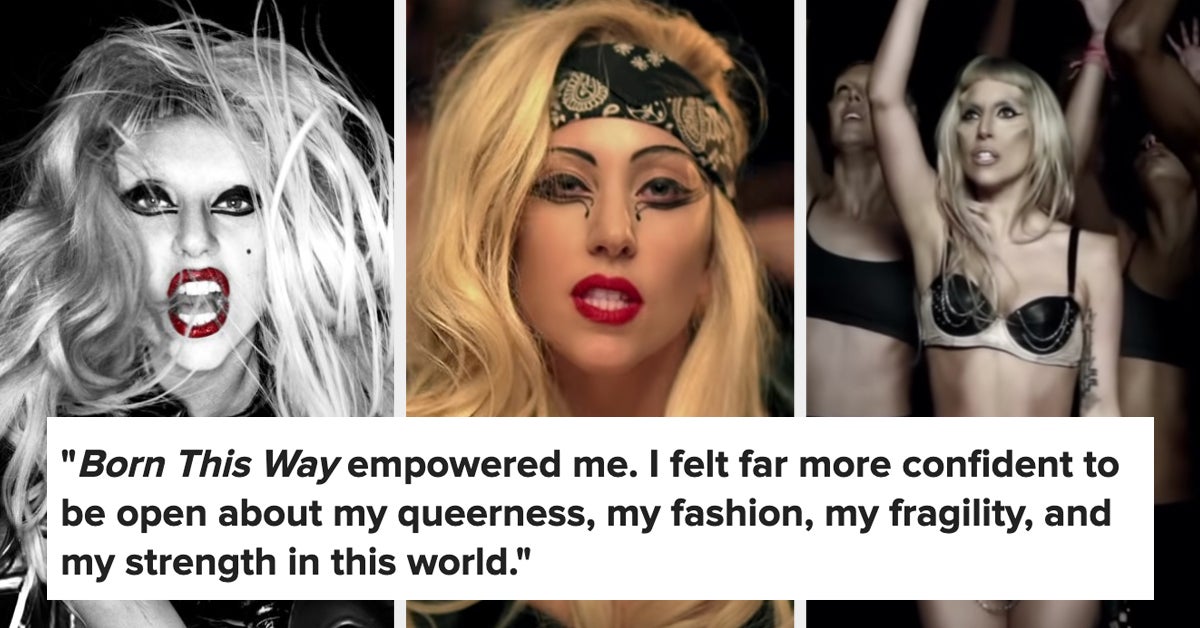
Lady Gaga Fans Shared How The “Born This Way” Album Changed Their Lives 10 Years After Its Release – BuzzFeed

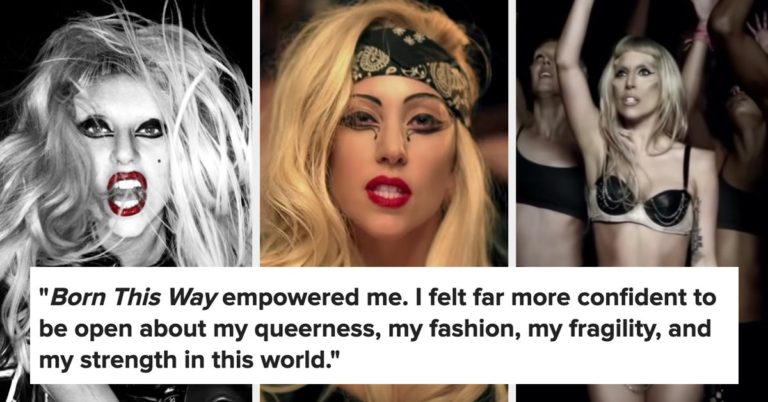
19. “So many songs on this album spoke to me on a different level! ‘Marry the Night’ is my all-time favorite song (and not just from Gaga’s collection). It’s still the song that I listen to when I’m not in a good place.”

“When the album came out in 2011, I didn’t have much of a connection to ‘Marry the Night’ and it was just another song and music video. It wasn’t until my life started falling apart that the song suddenly hit me in a way it never had before. When my six-year relationship completely disintegrated, when I was diagnosed with a brain malformation that threatened to rob me of everything that made me who I am (and terrified the hell out of me), when I thought I was going to quit my job and have to move, when my mental health took a significant downturn, and most recently when my dog, my soulmate, died…it was Gaga who was there to tell me that I needed to embrace the darkness and not give up on my life.

—Anonymous

Skepticism Of Science In A Pandemic Isn’t New. It Helped Fuel The AIDS Crisis – NPR

Dr. Lawrence Mass, who wrote the first article about AIDS in a U.S. publication, points to South Africa when reflecting on the legacy of AIDS denialism. The legacy, he says, is “the death — the preventable unnecessary deaths — of more of 330,000 people” there. Elias Williams for NPR hide caption

toggle caption

Elias Williams for NPR

Dr. Lawrence Mass, who wrote the first article about AIDS in a U.S. publication, points to South Africa when reflecting on the legacy of AIDS denialism. The legacy, he says, is “the death — the preventable unnecessary deaths — of more of 330,000 people” there.

Elias Williams for NPR

Forty years ago, Lawrence Mass, a young, gay doctor living in New York City, made history. It is the kind of history no one wants to make.

Mass began writing news stories about a disease that many did not want to acknowledge.

At the time, gay men were falling ill from a mystery illness that left them with severely compromised immune systems. Mass’s first article about it published May 18, 1981 for the New York Native, a gay newspaper. He’d gotten a tip from a friend who worked in a city ER and saw these cases up close.

Mass had been writing various stories for the gay press, first in Boston and then in New York City, for a couple of years. He focused on gay health care and specifically psychiatry.

His friend, the ER doctor, “was very concerned. She said there’s gay men in New York City intensive care units,” Mass said. “And she knew that I was trying to do outreach to the gay community about medical and health issues, there wasn’t really anybody else to call.”

The article Mass wrote was a landmark: it was the first story about AIDS in a U.S. publication.

That article carried this headline: Disease Rumors Largely Unfounded. But what was unfounded then would soon become one of the biggest pandemics the modern world had ever seen.

Mass said he was trying to stop what was then just a rumor and prevent a panic.

The article was a milestone in public awareness, and it marked the beginning of Mass’ journey as an AIDS writer and advocate. Through the 80s and 90s, Mass’ stories were prolific as he explored all aspects of the emerging science and denial.

But because science lacked any definitive answers for so long, some of those early theories turned out to be wrong, and with the lack of concrete information came misinformation and denial.

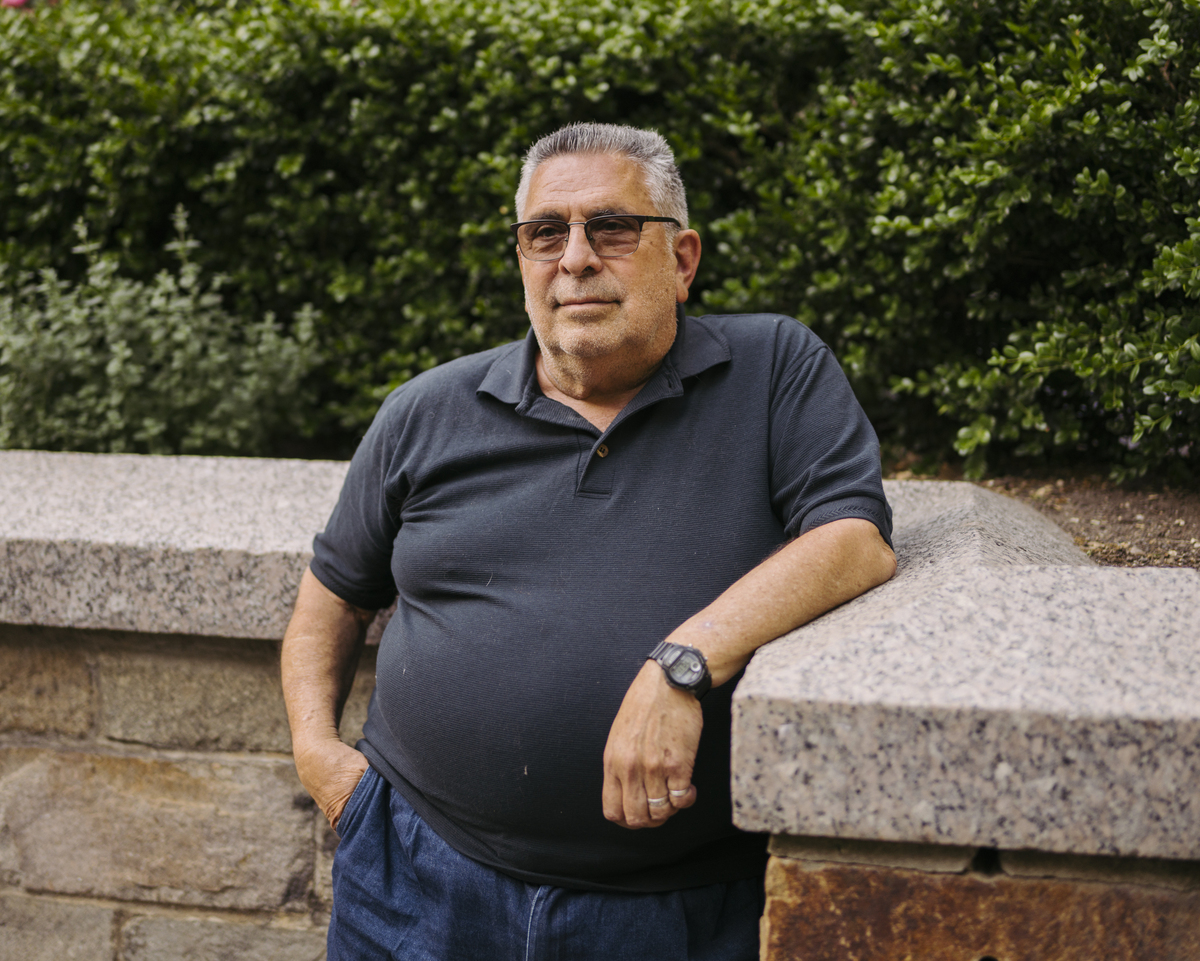
Dr. Lawrence D. Mass, who wrote for the New York Native magazine, poses for a portrait at Union Square Park in Manhattan on May 18, 2021. Elias Williams for NPR hide caption

toggle caption

Elias Williams for NPR

Dr. Lawrence D. Mass, who wrote for the New York Native magazine, poses for a portrait at Union Square Park in Manhattan on May 18, 2021.

Elias Williams for NPR

As often happens, when science is searching for the answers and formulating hypotheses, attractive theories get elevated to facts prematurely. And even after they’re disproved by solid scientific studies, the public may not get the news – the wrong ideas persist — and if it’s convenient, politicians may exploit the misunderstandings.

‘Speaking out of both sides of my mouth’

Mass moved to New York City at the tail end of the 1970s. He’d started coming out as gay in the years before his move. Mass said that after being treated by the first openly gay psychiatrist in the U.S. — Richard Colestock Pillard — and experiencing rabid homophobia while applying for psychiatric residencies himself, he turned his talents toward gay liberation.

“It was my entree into activism, really,” Mass said. “New York had a vibrant, unfolding gay life and gay, you know, outlets … bathhouses and bars and, you know, a very big active gay life.”

Mass had waited a long time to live this free, gay life, so when AIDS began tearing through his community, he was reluctant to change his behavior at first. But then as reports ballooned it became impossible to ignore that something was happening.

“I was having a lot of casual sex, including unprotected, unsafe sex, and I started curtailing that,” he told Morning Edition.

Then more gay men got sick. More died. And yet science was still in the dark.

“People didn’t know whether it was saliva or fellatio. There was questions about poppers — amyl nitrites — and people engaging in fist-f******,” Mass said. “The advice that we got was limit the number of partners with whom you have sex and try to make sure that they are healthy. People were already urging condom use but that was in some dispute.”

Left: Dr. Lawrence Mass (left) and gay activist and author Vito Russo (right) at a joint 40th birthday party for the two in 1986. Right: Mass (left) with his life partner Arnie Kantrowitz who is an author, activist and co-founder of GLAAD, and Vito Russo (right) early 80s. Dr. Lawrence D. Mass hide caption

toggle caption

Dr. Lawrence D. Mass

Left: Dr. Lawrence Mass (left) and gay activist and author Vito Russo (right) at a joint 40th birthday party for the two in 1986. Right: Mass (left) with his life partner Arnie Kantrowitz who is an author, activist and co-founder of GLAAD, and Vito Russo (right) early 80s.

Dr. Lawrence D. Mass

There was a lot in those early days that was disputed. At the outset, there were many who questioned whether it was even sexually transmitted. But playwright and author Larry Kramer was certain it was. “I was a good friend of Larry Kramer, and almost immediately we started talking about it. In very short order, Larry called together a gathering of people in his living room. And there were several of those meetings,” Mass said.

It was in those meetings that Mass, Kramer and four others would form the Gay Men’s Health Crisis — which evolved into an informational and social services organization for gay men with AIDS and their loved ones.

Kramer, who died at 84 in 2020, was every bit pugnacious as history remembers him to be, Mass said, but that fighting nature made him a potent organizer.

“Larry really took the bull by the horns and said ‘This is really a disaster. We have to deal with it. Nobody else is going to deal with it,’ ” Mass said. “Larry had so much anger and people felt that he had a lot of personal grudges with the gay community. I mean, he was very much an outsider kind of figure in a lot of ways. He was not widely beloved.”

Kramer had made his name in part by publishing the satirical novel Faggots, where he lambasted what he saw as an overly-sexualized gay culture of excess. So, when he called for gay men to cut back on sex, it was a recomendation that was easy for certain segments of the community to deny. Even Mass had his own disagreements with Kramer.

Mass (left), Larry Kramer – playwright and Gay Men’s Health Crisis co-founder (middle), and Rodger McFarlane (right) – GMHC’s first paid executive director at the opening of a 2006 GMHC exhibit at the Museum of the City of New York. Dr. Lawrence D. Mass hide caption

toggle caption

Dr. Lawrence D. Mass

Mass (left), Larry Kramer – playwright and Gay Men’s Health Crisis co-founder (middle), and Rodger McFarlane (right) – GMHC’s first paid executive director at the opening of a 2006 GMHC exhibit at the Museum of the City of New York.

Dr. Lawrence D. Mass

“I was in the middle with Larry. I knew Larry very well personally as a friend. I regarded him as a brilliant man who had important and valuable things to say, always, but who also had a lot of personal issues. He was very contentious, very difficult. I was his ally and supporter and colleague and friend, and at the same time, I was his critic.”

Kramer would eventually break from Gay Men’s Health Crisis because he felt the organization he had helped create was in its own denial and not forceful enough. He went on to form ACT UP — the AIDS Coalition to Unleash Power.

Mass continued continued publishing articles with the best information at the time, but he also kept living his life.

“I was speaking out of both sides of my mouth,” he said. “Basically, I was giving out these advisories about the epidemic, which were sincere and serious but at the same time, I wasn’t always following them as fully as they might have been followed or should have been followed.”

Peter Duesberg and the denialists

It would take three years after Mass’ article published for health officials to definitively link AIDS to what would come to be known as human immunodeficiency virus (HIV).

One form of denial was over – that personal kind that led so many to deny AIDS could be sexually transmitted — and another was just beginning. And this denial — that HIV wasn’t the sole cause of AIDS — would change science, right up to today.

To see how, let’s back up a bit to understand HIV and AIDS, and how the body responds with antibodies. Doctors often measure antibodies to this or that virus to determine if a person has had an infection or has had a strong enough response to a vaccine.

With AIDS, really sick people would turn up at the doctor’s office, and sure enough, they would have antibodies to the virus. But unlike some other diseases, people would then continue to get sicker; they wouldn’t get better.

Some scientists maintained that if people have antibodies for HIV, and they are still declining and dying, then it must not be HIV that is causing AIDS. It has to be something else.

The most prominent was Peter Duesberg, a professor of molecular biology at University of California-Berkeley. He was a leader in the field of cancer research. Initially he was championed in the gay press by the New York Native publisher and editor, Charles Ortleb. Duesberg blamed AIDS on a constant bombardment of activities he said lowered people’s immune system — like promiscuity and drug use.

At first, Duesberg raised difficult questions about the relationship between HIV and AIDS. But as science came to understand the virus better, and the unusual way it caused disease, the questions got answered to most scientists’ satisfaction. Not Duesberg.

In 1987, Duesberg’s denialism went semi-mainstream. The journal Perspectives In Cancer Research published his theory: HIV does not cause AIDS. A year later, a large scientific summit about AIDS in Washington, D.C., was held in large part, according to New Yorker journalist Michael Specter, who covered it for the Washington Post, to put Duesberg’s theories to rest.

“I asked him specifically at that forum: ‘If you’re so convinced that HIV does not cause AIDS, you have two daughters, why don’t you just infect them? I mean, you’d be protecting them.’ And he did not answer,” Specter said. “I was angry. You know, kids were dying. People were dying all over the place, and he was important. He’d done a lot of research. He was not a nobody.”

Specter said Duesberg got publicity from mainstream news because at the time his views cut against the grain of what most scientists were saying even then.

“Let’s face it, when you have a famous researcher saying the opposite of what everyone else says, you put them on the air,” Specter said. “You’d be crazy not to.”

Does this sound familiar? Think back to last year when President Trump said COVID-19 would disappear.

“It’s going to disappear. One day — it’s like a miracle — it will disappear. And from our shores, we — you know, it could get worse before it gets better. It could maybe go away. We’ll see what happens. Nobody really knows,” Trump said in a White House briefing in February 2020.

Or when he said COVID wasn’t very different from the seasonal flu.

“This is a flu. This is like a flu. It’s a little like a regular flu that we have flu shots for,” Trump said during another briefing also in February 2020.

Not unlike Duesberg’s initial media play, Trump’s position as the president of the United States gave him credibility, and thus, these statements aired repeatedly across news networks.

Also, not unlike Trump did initially with the coronavirus, President Ronald Reagan’s administration largely ignored the epidemic during his tenure. Reagan didn’t mention the word AIDS until 1985 — four years after the first report and around a year after HIV’s discovery. In those early years, his press secretary Larry Speakes even joked about the disease with reporters. After years of protests and scientific research, new medicines in the mid-1990s started to get the virus under control in the U.S. But in South Africa it was a different story.

AIDS denialism and South Africa

In the 1990s, HIV/AIDS was ravaging South Africa. According to one study, by 2000, 25 percent of all deaths there could be attributed to the disease.

President Thabo Mbeki went searching for a reason why.

“He was looking on this somewhat brand new thing called the internet,” Specter said. “And he ran across the statements of Duesberg, and they were exactly music to his ears.”

Mbeki was skeptical of Western medicine and more importantly of the cost of emerging treatments. He convened a conference in 2000 that included Duesberg and his supporters and his opponents.

South African president Thabo Mbeki speaks to scientists on May 6, 2000, at a panel in Pretoria. The panel includes dissident scientists who argue that AIDS is caused in third world countries by problems as poor hygiene. Yoav Lemmer/AFP via Getty Images hide caption

toggle caption

Yoav Lemmer/AFP via Getty Images

South African president Thabo Mbeki speaks to scientists on May 6, 2000, at a panel in Pretoria. The panel includes dissident scientists who argue that AIDS is caused in third world countries by problems as poor hygiene.

Yoav Lemmer/AFP via Getty Images

Duesberg’s claims then became Mbeki’s denial. A virus, they said, couldn’t cause a syndrome. Duesberg even served as an adviser to Mbeki, and Mbeki amplified Duesberg’s claims that AIDS was caused by poor nutrition, recreational drugs and even the new drugs that treated HIV.

“You can’t expect to take chemical at a dose that gets you so high that you can’t sleep anymore, you don’t eat anymore, and you have 10 or 20 sex partners a night and expect it to be totally inconsequential for your health,” Duesberg said in a 1996 documentary that has been making its way around the Internet ever since.

Even more recently, Duesberg appeared on Joe Rogan’s show: In 2012, he called HIV “one of the most harmless” viruses. This was at a point when 1.6 million people had died of AIDS, and long after very precise anti-HIV treatments had been proved to keep people alive for decades after being infected with HIV and nothing else.

NPR reached out to Duesberg for an interview, but, through his wife, he declined.

For Mass, Duesberg’s influence was one of “cultism and fanaticism” that spread like pollen around the world.

“You cannot reason with people, you cannot argue with people who are basically cultists, so they have their viewpoints and [are] completely entrenched,” he said.

The legacy of AIDS denialism

So what does the legacy of AIDS denialism tell us about the current state of COVID-19 denialism?

For Michael Specter, that legacy plays out in the mistrust of health experts.

“I think the legacy of AIDS denialism is that it raised doubts in a lot of people’s minds about whether the consensus that had been arrived at by 99.6% of all scientists was necessarily something they had to listen to,” Specter said.

Like when, during the COVID-19 pandemic, U.S. leaders sowed doubt in the need for testing, that children almost never transmit it, that there was no second wave of the virus and that if you stayed healthy, you’d be at low risk of sickness or death.

“When I was young, medical authorities were taken as gods, and you just did what they said, and I’m glad that world doesn’t exist anymore. But what we have now are people who think they know as much as anyone else and scientists are treated like any other interest group, like they’re the AFL-CIO or the teacher’s union,” Specter said. “We have trouble giving kids flu shots or the basic measles mumps, rubella shots because so many parents are skeptical of expertise.”

The legacy of Duesberg’s style of misinformation is haunting and profound, said Mass.

“HIV-AIDS denialism became a very serious, persistent phenomenon that resulted in the single greatest catastrophe in the history of AIDS, which didn’t happen until the early 2000s: the death — the preventable unnecessary deaths — of more of 330,000 people in South Africa,” he said.
Skepticism Of Science In A Pandemic Isn’t New. It Helped Fuel The AIDS Crisis – KUOW News and Information

At the time, gay men were falling ill from a mystery illness that left them with severely compromised immune systems. Mass’s first article about it published May 18, 1981, for the New York Native, a gay newspaper. He’d gotten a tip from a friend who worked in a city ER and saw these cases up close.

Mass had been writing various stories for the gay press, first in Boston and then in New York City, for a couple of years. He focused on gay health care and specifically psychiatry.

His friend, the ER doctor, “was very concerned. She said there’s gay men in New York City intensive care units,” Mass said. “And she knew that I was trying to do outreach to the gay community about medical and health issues, there wasn’t really anybody else to call.”

The article Mass wrote was a landmark: it was the first story about AIDS in a U.S. publication.

That article carried this headline: Disease Rumors Largely Unfounded. But what was unfounded then would soon become one of the biggest pandemics the modern world had ever seen.

Mass said he was trying to stop what was then just a rumor and prevent a panic.

The article was a milestone in public awareness, and it marked the beginning of Mass’ journey as an AIDS writer and advocate. Through the 1980s and ’90s, Mass’ stories were prolific as he explored all aspects of the emerging science and denial.

But because science lacked any definitive answers for so long, some of those early theories turned out to be wrong, and with the lack of concrete information came misinformation and denial.

As often happens, when science is searching for the answers and formulating hypotheses, attractive theories get elevated to facts prematurely. And even after they’re disproved by solid scientific studies, the public may not get the news – the wrong ideas persist — and if it’s convenient, politicians may exploit the misunderstandings.

‘Speaking out of both sides of my mouth’

Mass moved to New York City at the tail end of the 1970s. He’d started coming out as gay in the years before his move. Mass said that after being treated by the first openly gay psychiatrist in the U.S. — Richard Colestock Pillard — and experiencing rabid homophobia while applying for psychiatric residencies himself, he turned his talents toward gay liberation.

“It was my entree into activism, really,” Mass said. “New York had a vibrant, unfolding gay life and gay, you know, outlets … bathhouses and bars and, you know, a very big active gay life.”

Mass had waited a long time to live this free, gay life, so when AIDS began tearing through his community, he was reluctant to change his behavior at first. But then as reports ballooned it became impossible to ignore that something was happening.

“I was having a lot of casual sex, including unprotected, unsafe sex, and I started curtailing that,” he told Morning Edition.

Then more gay men got sick. More died. And yet science was still in the dark.

“People didn’t know whether it was saliva or fellatio. There was questions about poppers — amyl nitrites — and people engaging in fist-f******,” Mass said. “The advice that we got was limit the number of partners with whom you have sex and try to make sure that they are healthy. People were already urging condom use but that was in some dispute.”

There was a lot in those early days that was disputed. At the outset, there were many who questioned whether it was even sexually transmitted. But playwright and author Larry Kramer was certain it was. “I was a good friend of Larry Kramer, and almost immediately we started talking about it. In very short order, Larry called together a gathering of people in his living room. And there were several of those meetings,” Mass said.

It was in those meetings that Mass, Kramer and four others would form the Gay Men’s Health Crisis — which evolved into an informational and social services organization for gay men with AIDS and their loved ones.

Kramer, who died at 84 in 2020, was every bit pugnacious as history remembers him to be, Mass said, but that fighting nature made him a potent organizer.

“Larry really took the bull by the horns and said ‘This is really a disaster. We have to deal with it. Nobody else is going to deal with it,’ ” Mass said. “Larry had so much anger and people felt that he had a lot of personal grudges with the gay community. I mean, he was very much an outsider kind of figure in a lot of ways. He was not widely beloved.”

Kramer had made his name in part by publishing the satirical novel Faggots, where he lambasted what he saw as an overly-sexualized gay culture of excess. So, when he called for gay men to cut back on sex, it was a recommendation that was easy for certain segments of the community to deny. Even Mass had his own disagreements with Kramer.

“I was in the middle with Larry. I knew Larry very well personally as a friend. I regarded him as a brilliant man who had important and valuable things to say, always, but who also had a lot of personal issues. He was very contentious, very difficult. I was his ally and supporter and colleague and friend, and at the same time, I was his critic.”

Kramer would eventually break from Gay Men’s Health Crisis because he felt the organization he had helped create was in its own denial and not forceful enough. He went on to form ACT UP — the AIDS Coalition to Unleash Power.

Mass continued continued publishing articles with the best information at the time, but he also kept living his life.

“I was speaking out of both sides of my mouth,” he said. “Basically, I was giving out these advisories about the epidemic, which were sincere and serious but at the same time, I wasn’t always following them as fully as they might have been followed or should have been followed.”

Peter Duesberg and the denialists

It would take three years after Mass’ article published for health officials to definitively link AIDS to what would come to be known as human immunodeficiency virus (HIV).

One form of denial was over – that personal kind that led so many to deny AIDS could be sexually transmitted — and another was just beginning. And this denial — that HIV wasn’t the sole cause of AIDS — would change science, right up to today.

To see how, let’s back up a bit to understand HIV and AIDS, and how the body responds with antibodies. Doctors often measure antibodies to this or that virus to determine if a person has had an infection or has had a strong enough response to a vaccine.

With AIDS, really sick people would turn up at the doctor’s office, and sure enough, they would have antibodies to the virus. But unlike some other diseases, people would then continue to get sicker; they wouldn’t get better.

Some scientists maintained that if people have antibodies for HIV, and they are still declining and dying, then it must not be HIV that is causing AIDS. It has to be something else.

The most prominent was Peter Duesberg, a professor of molecular biology at University of California-Berkeley. He was a leader in the field of cancer research. Initially he was championed in the gay press by the New York Native publisher and editor, Charles Ortleb. Duesberg blamed AIDS on a constant bombardment of activities he said lowered people’s immune system — like promiscuity and drug use.

At first, Duesberg raised difficult questions about the relationship between HIV and AIDS. But as science came to understand the virus better, and the unusual way it caused disease, the questions got answered to most scientists’ satisfaction. Not Duesberg.

In 1987, Duesberg’s denialism went semi-mainstream. The journal Perspectives In Cancer Research published his theory: HIV does not cause AIDS. A year later, a large scientific summit about AIDS in Washington, D.C., was held in large part, according to New Yorker journalist Michael Specter, who covered it for the Washington Post, to put Duesberg’s theories to rest.

“I asked him specifically at that forum: ‘If you’re so convinced that HIV does not cause AIDS, you have two daughters, why don’t you just infect them? I mean, you’d be protecting them.’ And he did not answer,” Specter said. “I was angry. You know, kids were dying. People were dying all over the place, and he was important. He’d done a lot of research. He was not a nobody.”

Specter said Duesberg got publicity from mainstream news because at the time his views cut against the grain of what most scientists were saying even then.

“Let’s face it, when you have a famous researcher saying the opposite of what everyone else says, you put them on the air,” Specter said. “You’d be crazy not to.”

Does this sound familiar? Think back to last year when President Trump said COVID-19 would disappear.

“It’s going to disappear. One day — it’s like a miracle — it will disappear. And from our shores, we — you know, it could get worse before it gets better. It could maybe go away. We’ll see what happens. Nobody really knows,” Trump said in a White House briefing in February 2020.

Or when he said COVID wasn’t very different from the seasonal flu.

“This is a flu. This is like a flu. It’s a little like a regular flu that we have flu shots for,” Trump said during another briefing also in February 2020.

Not unlike Duesberg’s initial media play, Trump’s position as the president of the United States gave him credibility, and thus, these statements aired repeatedly across news networks.

Also, not unlike Trump did initially with the coronavirus, President Ronald Reagan’s administration largely ignored the epidemic during his tenure. Reagan didn’t mention the word AIDS until 1985 — four years after the first report and around a year after HIV’s discovery. In those early years, his press secretary Larry Speakes even joked about the disease with reporters. After years of protests and scientific research, new medicines in the mid-1990s started to get the virus under control in the U.S. But in South Africa it was a different story.

AIDS denialism and South Africa

In the 1990s, HIV/AIDS was ravaging South Africa. According to one study, by 2000, 25% of all deaths there could be attributed to the disease.

President Thabo Mbeki went searching for a reason why.

“He was looking on this somewhat brand new thing called the internet,” Specter said. “And he ran across the statements of Duesberg, and they were exactly music to his ears.”

Mbeki was skeptical of Western medicine and more importantly of the cost of emerging treatments. He convened a conference in 2000 that included Duesberg and his supporters and his opponents.

Duesberg’s claims then became Mbeki’s denial. A virus, they said, couldn’t cause a syndrome. Duesberg even served as an adviser to Mbeki, and Mbeki amplified Duesberg’s claims that AIDS was caused by poor nutrition, recreational drugs and even the new drugs that treated HIV.

“You can’t expect to take chemical at a dose that gets you so high that you can’t sleep anymore, you don’t eat anymore, and you have 10 or 20 sex partners a night and expect it to be totally inconsequential for your health,” Duesberg said in a 1996 documentary that has been making its way around the Internet ever since.

Even more recently, Duesberg appeared on Joe Rogan’s show: In 2012, he called HIV “one of the most harmless” viruses. This was at a point when 1.6 million people had died of AIDS, and long after very precise anti-HIV treatments had been proved to keep people alive for decades after being infected with HIV and nothing else.

NPR reached out to Duesberg for an interview, but, through his wife, he declined.

For Mass, Duesberg’s influence was one of “cultism and fanaticism” that spread like pollen around the world.

“You cannot reason with people, you cannot argue with people who are basically cultists, so they have their viewpoints and [are] completely entrenched,” he said.

The legacy of AIDS denialism

So what does the legacy of AIDS denialism tell us about the current state of COVID-19 denialism?

For Michael Specter, that legacy plays out in the mistrust of health experts.

“I think the legacy of AIDS denialism is that it raised doubts in a lot of people’s minds about whether the consensus that had been arrived at by 99.6% of all scientists was necessarily something they had to listen to,” Specter said.

Like when, during the COVID-19 pandemic, U.S. leaders sowed doubt in the need for testing, that children almost never transmit it, that there was no second wave of the virus and that if you stayed healthy, you’d be at low risk of sickness or death.

“When I was young, medical authorities were taken as gods, and you just did what they said, and I’m glad that world doesn’t exist anymore. But what we have now are people who think they know as much as anyone else and scientists are treated like any other interest group, like they’re the AFL-CIO or the teacher’s union,” Specter said. “We have trouble giving kids flu shots or the basic measles mumps, rubella shots because so many parents are skeptical of expertise.”

The legacy of Duesberg’s style of misinformation is haunting and profound, said Mass.

“HIV-AIDS denialism became a very serious, persistent phenomenon that resulted in the single greatest catastrophe in the history of AIDS, which didn’t happen until the early 2000s: the death — the preventable unnecessary deaths — of more of 330,000 people in South Africa,” he said. [Copyright 2021 NPR]
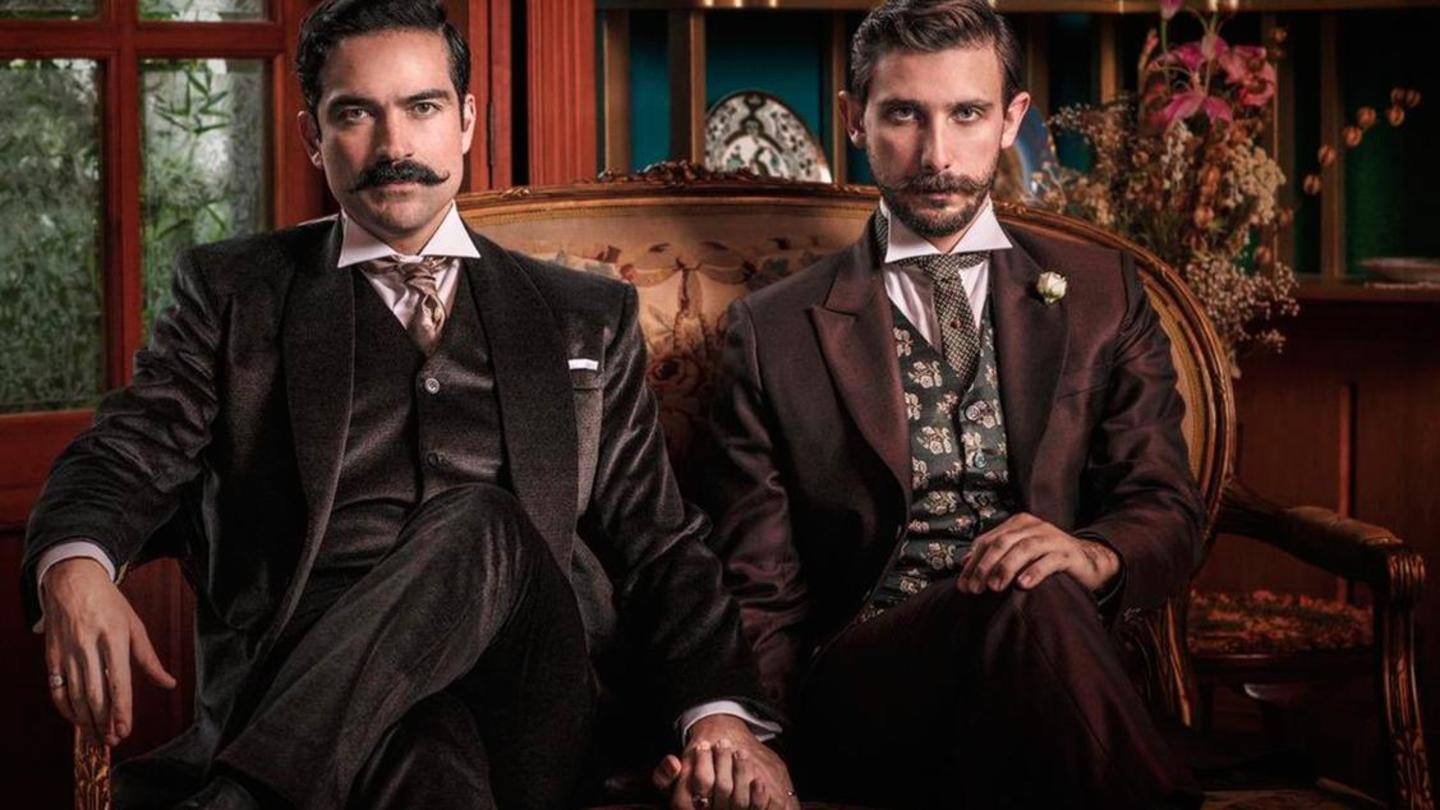
NBA DFS: Best/worst plays for Sunday, May 23rd – Fake Teams

Welcome to your daily NBA DFS digest at Fake Teams, gents. Every day I’m here with a handful of pro-tips to roster a winning team just a few hours from now. And on top of that, I’ll bring you some statistical trends from the past week of games!

Gotta Win The Day: Best/Worst DraftKings plays for tonight’s slate

  • Love: Trae Young (PG). Somehow, the algorithm is tagging Trae only with the eighth-highest salary of the slate. I mean, that’s high, but it’s not top-tier, which is pretty much all Trae is entering this one. Young projects to almost 50 FP against the Knicks, and it all makes sense. Young cooked New York for 55 FP back in January, for 40 in February, and finally for 53 a month ago in just 30 minutes of playing time (20-2-14-4 was the line, and he struggled with a 35% shooting from the floor). Everything points toward Trae’s exploding tonight and throughout the whole first-round series. The Knicks will have it easy in scheming against Atlanta if only because Trae is the clear must-stop guy, but that doesn’t mean he won’t find a way to demolish NY.
  • Hate: Donovan Mitchell (PG/SG). Dom is back after missing a lot of games during the home stretch. Mitchell hasn’t been on the floor for more than a month now having played his last game back on Apr. 16. And the truth is that although he had a bunch of great games in April, he also struggled a bit at the start of the month with four below-40 FP games in a row. Utah will need Dom and then some if they want to make a deep run, and although Memphis shouldn’t be that big of a problem it might take a bit for Mitchell to get into some rhythm. Let Mitchell marinate for a bit before playing him as we see how he comes back (he’s available tonight, but who knows what will the Jazz ask from him).
  • Love: Rudy Gobert (C). Gob, on the other hand… Rudy is virtually a must-play every day he’s in the slate of games. Biggie boy going against another great fantasy player (Valanciunas) while slightly cheaper than his foe tonight. Feel free to go with any of these two, because they will both put on bulky scores. Gobert disappointed a bit in his last outing against the Griz back in March with a low 8-12-4-1-2 line, but that was kind of an outlier in Rudy’s season as it was one of only four games all year in which he shot <50% from the floor and <30% from the free-throw line. Bet on a dub-dub here. Gob has six in a row averaging 13-17-1 lines with 2.2 stocks per game entering the playoffs while hitting 40 FP in four of those last six games.
  • Hate: Bradley Beal (SG/SF). Beal is going to cook because Beal just doesn’t know how not to. Only, Beal is a little bit banged up and that might go against his upside, not to mention the Sixers stiff defense. Keep in mind Brad is a freaking superstar. I mean, he’s going to most probably get his 40 FP because that is what Beal does and actually what he’s achieved in all of the last eight games he’s played. Is that fantasy mark good enough for someone with the seventh-highest salary on the day? Hmmm… I’m not entirely sure. There are other guards/forwards projecting to much higher ROIs than Beal. I’m a friendly one, so here are some names: Tobi, Rose, Simmons, RJ Barrett, and…
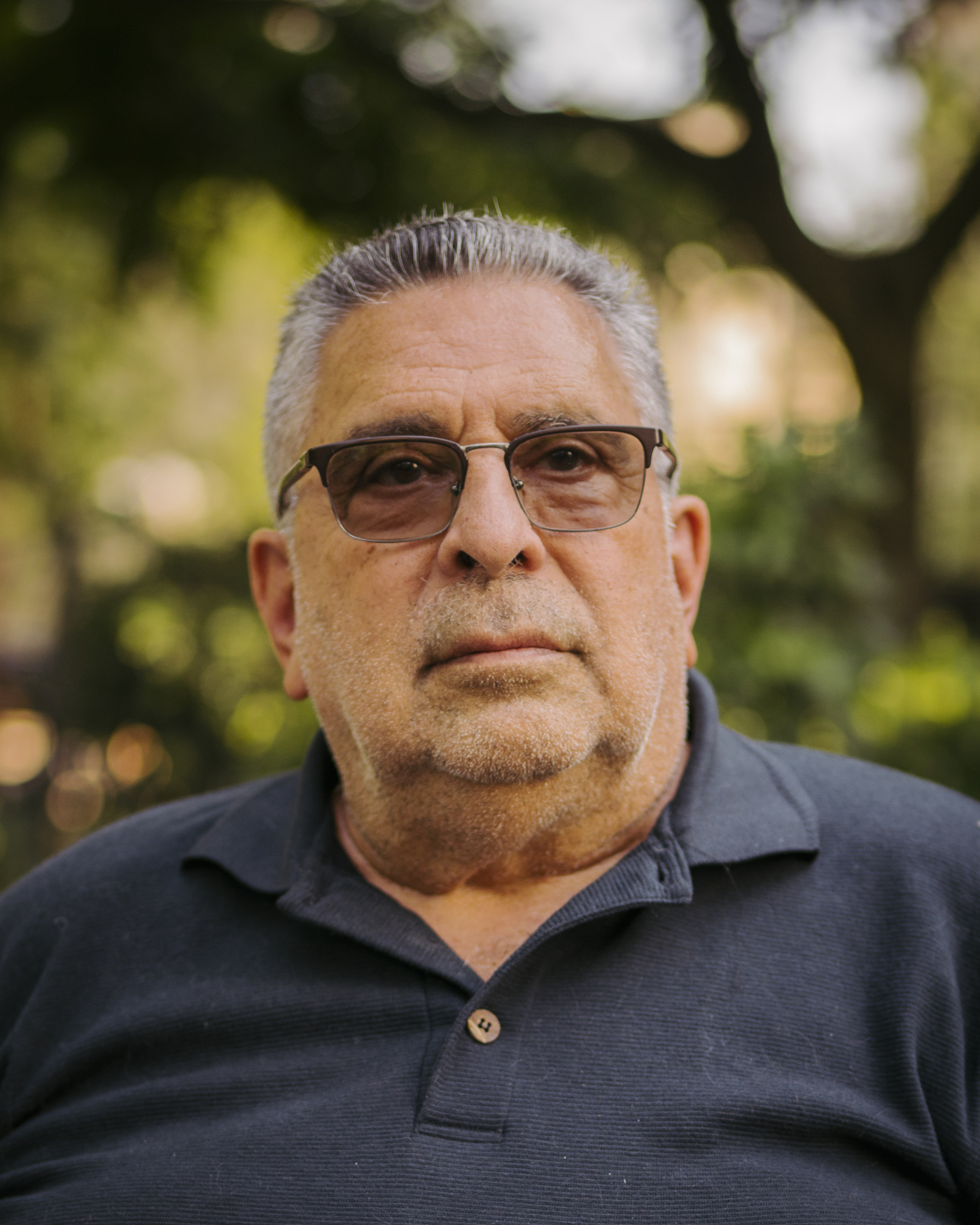
  • Love: Chris Paul (PG). CP3 is back at it. Another team, another postseason. This guy is just insane, and I’m full of the ringz talk, so just accept the greatness and move on folks. Paul is amazing, has put together a 16-5-9-1 season, shot 50/39/93 splits on the year, and averaged 39 FP per game. Do you know how many players have done that in this the year 2021 of our lord? Paul, Russ, Harden, Trae, Jokic, and Luka. That’s it. That’s the whole bunch. CP3 put up a dud against the Hawks at the start of May, sure, but he only played 34 minutes back then in that game. Other than that, this is May for Paul: 36, 69 (!), 43, 42, 48, 37, and 40 DKFP in the games he’s played. The per-minute efficiency is bonkers to say the least, and Christopher is a lock for a sound 19-3-9 any day, Lakers in front or not—by the way, he cooked the Lake Show with a 13-4-10-4-1 stuffed line for 42 FP on May. 9.

What’s cooking? Statistical trends from the Regular Season

  • Nikola Jokic is about to become the reigning MVP… in the NBA, but not in the fantasy world! Russell Westbrook, who has been on a tear for the last month-and-change, is the one on that front, folks. Westbrook closed the season averaging 58.2 FP per game, good enough to edge Nikola Jokic by a measly 0.6 FPPG!
  • On a pure counting basis, though, Jokic gets the edge as he played seven more games than Russ. The final tally is Jokic 3,914 FP, Russ 3,548 FP. No other player crossed the 3,400-FP mark on the year.
  • The most efficient player of the season was Giannis Antetokounmpo, who posted 1.72 FP/min in 57 games averaging 33.5 MPG. Both biggies Jokic and Joel Embiid rounded up the top-3 with similar scores of 1.62 FP/min.
  • It is reasonable to expect centers to top the Points Per Shot leaderboard as they operate in the paint most of the time. The top-3 players were Rudy Gobert (1.84 Pts/Shot), Jarrett Allen (1.78), and Dwight Howard (1.76). But there is a clear outlier among the top scorers: Kevin Durant with 1.70 Points Per Shot. That’s absolutely bonkers for a non-center player. If we don’t count Zion as a wing (he’s a biggie to me given his shooting profile), then Durant is the only qualified non-center in the top-20, with Jimmy Butler at no. 21 but already down at 1.51 Pts/Shot.
  • As stupid as it sounds even if nobody wants to acknowledge the feat anymore: Russ has just wrapped up his fourth season averaging a triple-double. What the hell, dude? Russ closed it on a 22-11-11 average line. Bonkers.
  • Silly cheap values (min. 30 games played): Kenyon Martin Jr., Ty Jerome, JaVale, Stewart, Brunson, Melton, Hart, Rudy Gay, Portis, Nunn, Robert Williams, Reiz, Cody Zeller, Whiteside, Diallo
  • A little more expensive but still with massive ROI: Olynyk, Garland, Thad Young, Plumlee, McConnell, Dray, Harrison Barnes, Derrick White, Lonzo, Holmes, Rose, Anunoby, Nurkic, Ant Edwards, Haliburton, Bobby Portis, Kemba
  • Some very expensive players not doing enough: Anthony Davis, Simmons, Booker, Ingram, Porzingis, Drummond, John Collins, Nance, Aaron Gordon, Kuzma, Harrell
  • Cheap points: McDermott, Monk, Quickley, Lonnie, Bacon, Reid, Poole, Bullock, Mills, Jerome, Grayson Allen, NAW, Monte Morris, Lamb, Forbes, Gary Harris
  • Cheap threes: Danny Green, Ellington, Bullock, Mills, Forbes, Monk, Jerome, Grayson, Shamet, Cam Johnson
  • Cheap boards: Willy Hernangomez, Stewart, Noel, Mo Bamba, Whiteside, Tony Bradley, Birch, Vanderbilt, Favors, Taj Gibson, Biyombo, Kleber, Bruce Brown, Kenyon, Baynes, McGee
  • Cheap dimes: Satoransky, Rondo, McLaughlin, Ish Smith, Tyus, Jerome, Saben Lee, Campazzo, Cam Payne, Cory Joseph, DJ Augustin, Monte Morris
  • Cheap steals: Thybulle, Danny Green, Campazzo, Neto, Caruso, Melton, Okeke, Noel, McLaughlin, Bazemore, Vanderbilt, Nwaba, NAW, Okoro, Cory Joseph, Iggy
  • Cheap blocks: Noel, Gafford, Mo Bamba, Bitadze, Stewart, Whiteside, Biyombo, McGee, Gasol, Thybulle, Taj Gibson, Reiz, Favors, Len, Pokusevski, Derrick Jones, Eubanks
  • Cheap FG% (min. 8 FGA): McDermott, Reid, Monte Morris, Bullock, Jerome, NAW, Cam Johnson, Jaylen Nowell

If you have any comment or question about the daily column, tonight’s games, players involved in them, or even season-long fantasy NBA topics, just drop it below or reach out to me on Twitter at @chapulana and I’ll get back to you as soon as I grab a keyboard!

Goat Milk Market Strategic Outlook by 2026 |Delamere Dairy, Emmi Group, Gay Lea Foods, Granarolo, Groupe Lactalis, etc – KSU | The Sentinel Newspaper – KSU | The Sentinel Newspaper

Goat-Milk-Market
Goat-Milk-Market

Latest research on Global Goat Milk Market report covers forecast and analysis on a worldwide, regional and country level. The study provides historical information of 2016-2021 together with a forecast from 2021 to 2026 supported by both volume and revenue (USD million). The entire study covers the key drivers and restraints for the Goat Milk market. this report included a special section on the Impact of COVID19. Also, Goat Milk Market (By major Key Players, By Types, By Applications, and Leading Regions) Segments outlook, Business assessment, Competition scenario and Trends .The report also gives 360-degree overview of the competitive landscape of the industries.

Moreover, it offers highly accurate estimations on the CAGR, market share, and market size of key regions and countries. Players can use this study to explore untapped Goat Milk markets to extend their reach and create sales opportunities.

Some of the key manufacturers operating in this market include: Delamere Dairy, Emmi Group, Gay Lea Foods, Granarolo, Groupe Lactalis, Hay Dairies, KAVLI, SUMMERHILL GOAT DAIRY and More…

Download Free PDF Sample Copy of the Report(with covid 19 Impact Analysis): https://www.globmarketreports.com/request-sample/102928

Our Research Analyst implemented a Free PDF Sample Report copy as per your Research Requirement, also including impact analysis of COVID-19 on Goat Milk Market Size

Goat Milk market competitive landscape offers data information and details by companies. Its provides a complete analysis and precise statistics on revenue by the major players participants for the period 2021-2026. The report also illustrates minute details in the Goat Milk market governing micro and macroeconomic factors that seem to have a dominant and long-term impact, directing the course of popular trends in the global Goat Milk market.

Market Segment by Type, covers: (Goat Milk, No Fat Goat Milk)
Market Segment by Applications, can be divided into (Food, Cosmetics)

Regions Covered in the Global Goat Milk Market:1. South America Goat Milk Market Covers Colombia, Brazil, and Argentina.2. North America Goat Milk Market Covers Canada, United States, and Mexico.3. Europe Goat Milk Market Covers UK, France, Italy, Germany, and Russia.4. The Middle East and Africa Goat Milk Market Covers UAE, Saudi Arabia, Egypt, Nigeria, and South Africa.5. Asia Pacific Goat Milk Market Covers Korea, Japan, China, Southeast Asia, and India.

Years Considered to Estimate the Market Size:History Year: 2015-2021Base Year: 2021Estimated Year: 2021Forecast Year: 2021-2026

*Get Upto $1000 Flat Discount on All License Type@https://www.globmarketreports.com/request-discount/102928

Reasons to buy:

  • Procure strategically important competitor information, analysis, and insights to formulate effective R&D strategies.
  • Recognize emerging players with potentially strong product portfolio and create effective counter-strategies to gain competitive advantage.
  • Classify potential new clients or partners in the target demographic.
  • Develop tactical initiatives by understanding the focus areas of leading companies.
  • Plan mergers and acquisitions meritoriously by identifying Top Manufacturer.
  • Formulate corrective measures for pipeline projects by understanding Goat Milk pipeline depth.
  • Develop and design in-licensing and out-licensing strategies by identifying prospective partners with the most attractive projects to enhance and expand business potential and Scope.
  • Report will be updated with the latest data and delivered to you within 2-4 working days of order.
  • Suitable for supporting your internal and external presentations with reliable high quality data and analysis.
  • Create regional and country strategies on the basis of local data and analysis.

Some Major TOC Points:

  • Chapter 1: Goat Milk Market Overview, Product Overview, Market Segmentation, Market Overview of Regions, Market Dynamics, Limitations, Opportunities and Industry News and Policies.
  • Chapter 2: Goat Milk Industry Chain Analysis, Upstream Raw Material Suppliers, Major Players, Production Process Analysis, Cost Analysis, Market Channels, and Major Downstream Buyers.
  • Chapter 3: Value Analysis, Production, Growth Rate and Price Analysis by Type of Goat Milk.
  • Chapter 4: Downstream Characteristics, Consumption and Market Share by Application of Goat Milk.
  • Chapter 5: Production Volume, Price, Gross Margin, and Revenue ($) of Goat Milk by Regions.
  • Chapter 6: Goat Milk Production, Consumption, Export, and Import by Regions.
  • Chapter 7: Goat Milk Market Status and SWOT Analysis by Regions.
  • Chapter 8: Competitive Landscape, Product Introduction, Company Profiles, Market Distribution Status by Players of Goat Milk.
  • Chapter 9: Goat Milk Market Analysis and Forecast by Type and Application.
  • Chapter 10: Goat Milk Market Analysis and Forecast by Regions.
  • Chapter 11: Goat Milk Industry Characteristics, Key Factors, New Entrants SWOT Analysis, Investment Feasibility Analysis.
  • Chapter 12: Goat Milk Market Conclusion of the Whole Report.
  • Continue…

For More Information with including full TOC: https://www.globmarketreports.com/industry-reports/102928/Goat-Milk-market

Key highlights of the Goat Milk Market report:• Growth rate• Renumeration prediction• Consumption graph• Market concentration ratio• Secondary industry competitors• Competitive structure• Major restraints• Market drivers• Regional bifurcation• Competitive hierarchy• Current market tendencies• Market concentration analysis

Customization of the Report:Glob Market Reports provides customization of reports as per your need. This report can be personalized to meet your requirements. Get in touch with our sales team, who will guarantee you to get a report that suits your necessities.

Get Customization of the Report@ https://www.globmarketreports.com/request-customization/102928

Contact Us:Glob Market Reports17224 S. Figueroa Street,Gardena, California (CA) 90248, United StatesCall: +1 915 229 3004 (U.S)+44 7452 242832 (U.K)Website: www.globmarketreports.com

RTE legend Gay Byrne’s daughter recalls ‘mortifying’ moment from teen years on Late Late Show – Dublin Live

0

Gay Byrne’s daughter has recalled a “mortifying” moment from her teenage years when her late father worked on RTE Radio.

Suzy and sister Crona appeared on Friday night’s Late Late Show to pay tribute to their dad.

The pair told of their memories of being raised by the TV and radio veteran, who died in 2019.

Suzy told host Ryan Tubridy: “When you’re in that life you know no different, that’s what it is, but in teenage years it is just mortifying.” The Howth woman explained how when she was in secondary school she was desperate to go to Wesley Disco with her friends.

But when she told her dad, he decided to send his radio team out to the event to do a report.

Suzy said: “The following day in school I go in and there is silence, everyone is furious with me.

“It comes out there was this big investigation on the Gay Byrne Hour and everybody was barred [from the disco].” After Gay’s team witnessed underage drinking, the broadcaster did not want Suzy socialising there.

She added: “I remember coming home and slamming the door and saying, ‘What have you done, why?’

Get the latest news in your inbox


A group of Anti-Lockdown protesters clash with Gardai) in Grafton Street, Dublin, during Level 5 Covid-19 lockdown. On Saturday, Fabruary 27, 2021, in Dublin, Ireland.

Sign up for Dublin Live’s breaking news newsletter by simply entering your email address here

The FREE email will land into your inbox every day. Whether it be traffic and travel, what’s on or crime – this newsletter will have you covered for everything.

You can unsubscribe from this service at any time. And rest assured that your data will not be shared with any other party.

“And he just said, ‘What’s the problem? They did a very good piece. I don’t know why you’re getting upset, there’s no way in hell you’re going near that place’.”