Home Blog Page 197

NFL’s San Francisco 49ers pick a Jew of color to lead their diversity efforts – JTA News – Jewish Telegraphic Agency

(J. the Jewish News of Northern California via JTA) — Though she calls herself an “art kid” at her core, Christina Jefferson is no stranger to contact sports.

Recently hired by the San Francisco 49ers to lead the NFL team’s diversity and inclusion efforts — a newly created position — Jefferson has a long history with a quite different, yet still bruising, athletic pursuit: roller derby.

In that sport, players in full pads and helmets race around an oval track in roller skates, jostling and jockeying for lanes, blocking and body checking each other along the way. Roller derby traces its roots to the 1930s but was revitalized on television in the 1960s with the help of Jewish Bay Area showman Jerry Seltzer. In a 2017 interview, Seltzer called the game a “symbol of women’s empowerment.”

Jefferson took to the sport living in Ohio in her early 20s. The activity would prove pivotal not only by demonstrating to an artistic soul the “magic” of team sports, but it’s also how she met Julie, her future wife. And it got her rolling on a path toward converting to Judaism.

“There’s something in me that loves the challenge of something brand new,” said Jefferson, a member of Congregation Sherith Israel, a Reform synagogue in San Francisco.

Her new position with the 49ers as director of Diversity, Equity and Inclusion, or DEI, marks an exciting opportunity for the 41-year-old human resources professional, who worked at several retail stores before climbing the corporate ladder. She earned a master’s degree in human resource management before becoming a senior manager at the cosmetics company Sephora.

DEI directors have seen a surge in demand across academia, in the nonprofit sector and in the corporate world over the past 10-15 years, inspired by changing attitudes toward race, demographic shifts and studies showing a diverse workforce can improve companies’ bottom lines. An influential 2015 report on financial performance from the consulting firm McKinsey showed companies with greater ethnic and racial diversity among staff performed “35 percent better than companies whose staff demographics matched the national average,” according to Forbes.

In the National Football League, initiatives to increase minority hires have existed at least since the 1980s, to varying degrees of success. Powerful positions in coaching, general management and ownership still do not match the diversity of the players, nor of the fans.
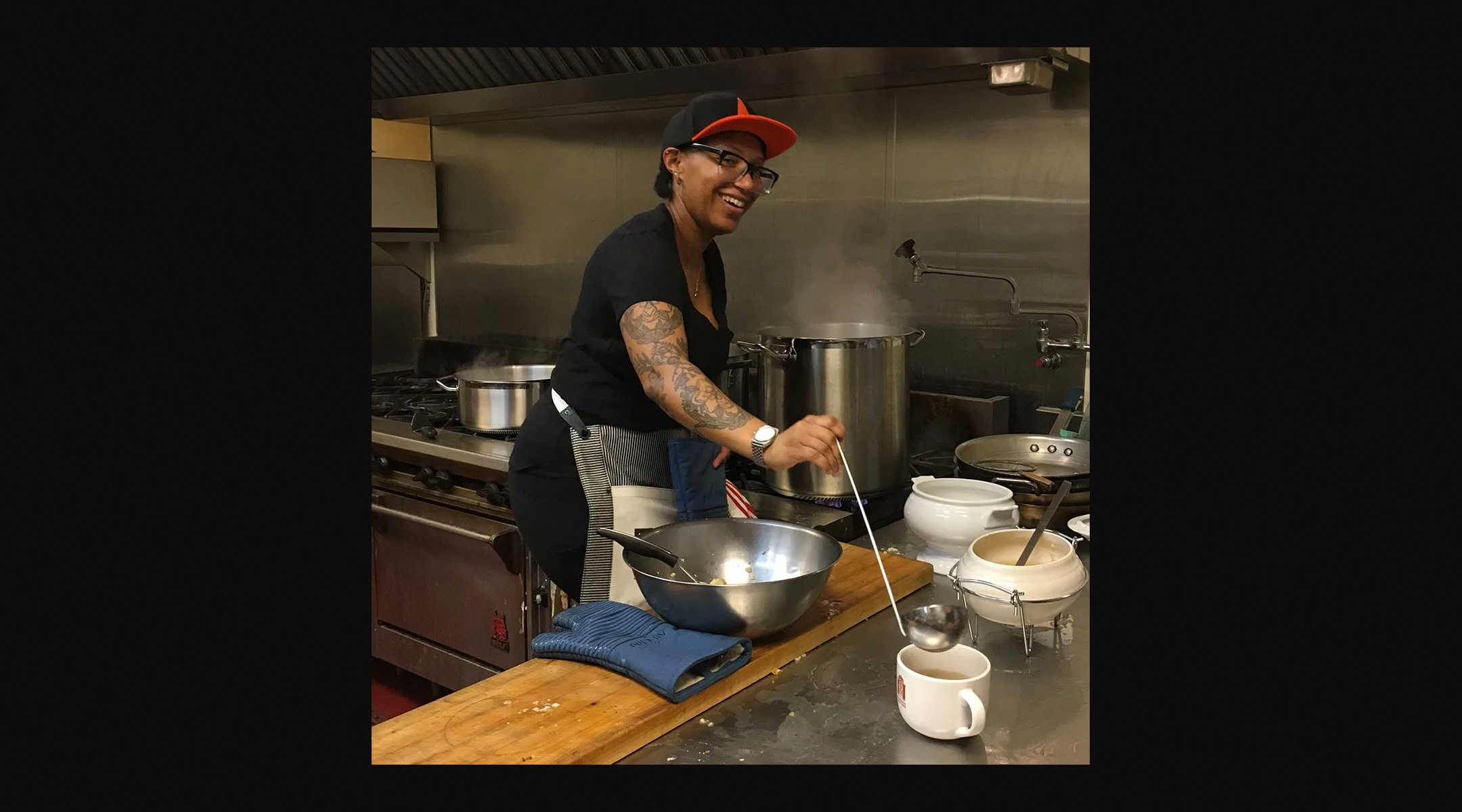
Christina Jefferson serves matzah ball soup at a 2019 Passover event at Congregation Sherith Israel. (Photo/Julie Driscoll)

Still, the league has accelerated its efforts to make workplaces more inclusive just in the past year. The police shootings of Breonna Taylor, George Floyd and Jacob Blake spurred an unprecedented wave of national protests, ignited calls for reform and transformed the sports world. Players across major professional leagues sat out games and practices on Aug. 26 in response to the shooting of Blake in Kenosha, Wisconsin, forcing the NBA to postpone its playoffs.

Amid the national reckoning, the 49ers become one of a batch of NFL teams — Jefferson estimated about nine — that have added DEI directors to their corporate offices.

“While our organization has long demonstrated a commitment to modeling the diversity of its fan base and society in our employment practices, there is always more we can do to attract diverse talent and ensure all employees feel respected and valued on a personal level,” the team’s president, Al Guido, said in a statement on April 1. “Christina Jefferson brings extensive knowledge and experience implementing best practices that will help us be a more successful organization in creating an inclusive environment where all people are excited to work and empowered to contribute.”

As a Black, lesbian Jew (with a bunch of tattoos), Jefferson described herself with a chuckle as a “unicorn” in the world of corporate America.

“As I moved up in my career, I noticed I was often the only person who looked like me,” she said. “It made me kind of stand out.”

To some, working in retail is “not a real job,” Jefferson said — but she’s been “damn-well determined to show people” otherwise. She was drawn to the endeavor as a form of service and a vehicle for mentorship.

“You catch people in college, in high school. You’re getting brand new people. I’d always tell my employees, even if you don’t stay in retail, you’ll be a better person after you work here,” she said.

Jefferson became a customer experience manager at Banana Republic in 2008, then a general manager. She worked for David’s Bridal and  Gap before moving to Sephora, becoming a senior manager of inclusion and diversity at its North American headquarters in San Francisco.

The move to diversity and equity work was a natural one. Throughout her career, Jefferson often found herself mentoring those who looked like her, or fellow queer people.

“I’ve always been in diversity work, I just didn’t realize it,” she said.

Jefferson grew up in a Baptist family in Indianapolis, though her mother did not push religion on her or her brother.

“She felt like we should wait until we were adults to decide,” Jefferson said.

She attended the University of Southern Indiana in Evansville, a city with a meager gay and lesbian scene. The school is located just a short drive from a “sundown town,” where Blacks historically were not allowed after sunset. Jefferson called it “Kentucky-ana.”

“It was a very interesting experience growing up in Indiana as a Black person,” she said. “When people don’t understand racism still exists in this country, you have to kind of laugh.”

Jefferson spoke with J. on April 20, the day a Minnesota jury convicted former police officer Derek Chauvin of the murder of George Floyd. The news loomed over the conversation, particularly as Floyd’s killing on May 25 of last year helped catalyze the reckoning on race that upended the sports world and brought us to the present moment.

On the guilty verdicts against Chauvin, Jefferson said they brought a modicum of relief, “some hope in this world.” Despite all the evidence, “so many folks out there, we just held our breath.”

Her journey to Judaism began near Columbus, Ohio, where she spent her early 20s working in retail and playing roller derby. Many of her friends were Jewish, and one Friday night she joined a friend, a referee in her roller derby league, at Shabbat services.

“He could say all the prayers so eloquently,” she remembers thinking. “I thought, one day maybe I’d be like that.”

Even though her friend had never been in that particular synagogue before, he fit in.

“The moment you start to say the v’ahavta [prayer], everybody knows all the words. It doesn’t matter what the cadence is, everybody can say them,” Jefferson said. “There was something about that … I was like, wow.”

She would study and convert in Ohio before moving to San Francisco in 2008, but not before meeting Julie Driscoll, also a roller derby referee. Driscoll’s family is Catholic, but she wasn’t raised with religion. The two became friends and stayed connected even as Jefferson moved around the country for work, including during a stint in Washington, D.C.

They started dating in 2012, and were married at Sherith Israel on Oct. 20, 2015. The officiant was Rabbi Larry Raphael, then the senior rabbi, who passed away in 2019.
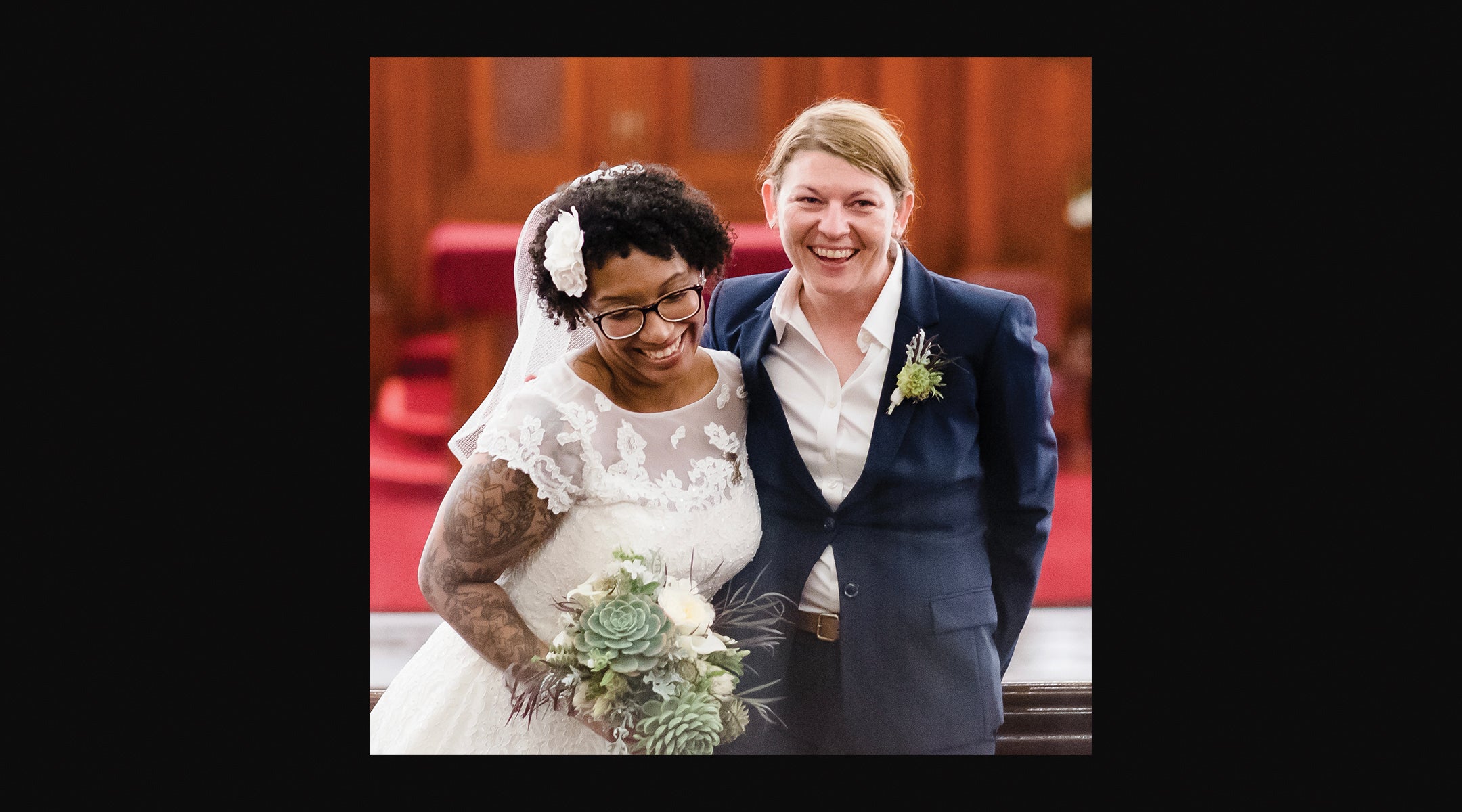
Christina Jefferson and Julie Driscoll were married at Congregation Sherith Israel in San Francisco on Oct. 15, 2015. (Chloe Jackman)

Driscoll took classes on Judaism before the wedding and learned a bit of Hebrew. She attends shul with Jefferson and is active in community service efforts at the synagogue, including the food service program, HaMotzi.

“You don’t need to be Jewish to be a hardcore volunteer,” Jefferson said. “That’s how we roll in this household.”

She’s quite active in the San Francisco Jewish community herself, serving on the board of directors at the Jewish Community Relations Council and as the membership committee’s chair at Sherith. She’s the shul librarian, too.

“I’m a giant nerd,” Jefferson said, laughing.

Though the 49ers and staff are working remotely now, when they return Jefferson will have an office at Levi’s Stadium. For players, voluntary offseason workouts began on April 19, but are being conducted remotely because of the pandemic. Mandatory minicamp begins in June, and preseason starts in August. Jefferson said she is honored to be working for a historic franchise.

In meetings outside the Jewish world, Jefferson often describes her life’s work – helping people of diverse backgrounds reach their professional potential and feel included in the workplace – as a form of social justice.

“Really it’s just tikkun olam,” she said. “How we can repair this broken world.”
Lady Gaga Reveals ‘Born This Way’ Was Inspired by Black Gay Activist – Advocate.com – Advocate.com

Lady Gaga Reveals Born This Way Was Inspired by Black Gay Activist

Born This Way has some spiritual roots.

Lady Gaga marked the 10-year anniversary of the gay anthem and its album by revealing that Carl Bean was its inspiration.

Born This Way, my song and album, were inspired by Carl Bean, a gay black religious activist who preached, sung and wrote about being ‘Born This Way,'” Gaga wrote Sunday on Instagram.

“Notably his early work was in 1975, 11 years before I was born,” she added. “Thank you for decades of relentless love, bravery, and a reason to sing. So we can all feel joy, because we deserve joy. Because we deserve the right to inspire tolerance, acceptance, and freedom for all.”

Bean was the founder of the Unity Fellowship Church Movement, a denomination that sought to be inclusive of LGBTQ+ people of color.  He was also a Motown singer. Bean covered “I Was Born This Way,” a gay disco hit first recorded by Valentino and written by Chris Spierer and Bunny Jones, in 1977. It is a clear predecessor to Gaga’s “Born This Way,” which upon its 2011 release became Gaga’s first number-one album. To date, it has been streamed 5.8 billion times worldwide.

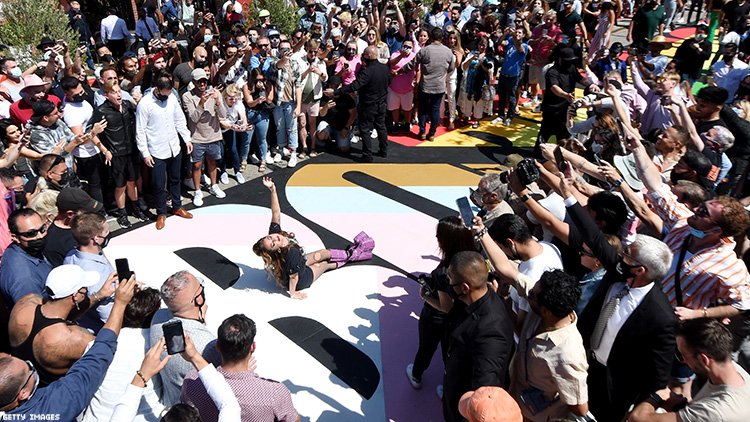
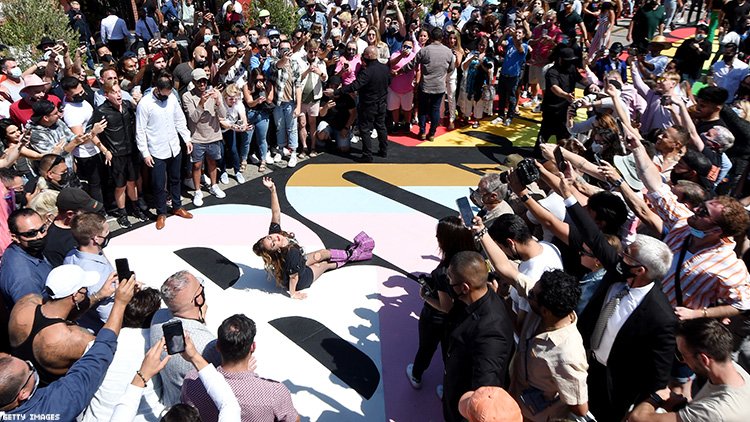
On Sunday, Gaga made a surprise appearance at the Abbey in West Hollywood to honor the gay bar’s 30th anniversary. In turn, the city honored Lady Gaga with a rainbow street mural on Robertson Boulevard, outside of the Abbey, and a declaration that May 23 will be Born This Way Day.

While at the Abbey, Gaga joined in the festivities. RuPaul’s Drag Race star Shangela, who appeared with the bisexual singer and actress in A Star Is Born, posted several videos from the celebration, in which Gaga can be seen singing along to the movie’s Oscar-winning song “Shallow,” taking photos with fans, and giving remarks alongside the Abbey’s founder, David Cooley.

See some of the posts below.

Lady Gaga Reveals ‘Born This Way’ Was Inspired by Black Gay Activist – Advocate.com

Lady Gaga Reveals Born This Way Was Inspired by Black Gay Activist

Born This Way has some spiritual roots.

Lady Gaga marked the 10-year anniversary of the gay anthem and its album by revealing that Carl Bean was its inspiration.

Born This Way, my song and album, were inspired by Carl Bean, a gay black religious activist who preached, sung and wrote about being ‘Born This Way,'” Gaga wrote Sunday on Instagram.

“Notably his early work was in 1975, 11 years before I was born,” she added. “Thank you for decades of relentless love, bravery, and a reason to sing. So we can all feel joy, because we deserve joy. Because we deserve the right to inspire tolerance, acceptance, and freedom for all.”

Bean was the founder of the Unity Fellowship Church Movement, a denomination that sought to be inclusive of LGBTQ+ people of color.  He was also a Motown singer. Bean covered “I Was Born This Way,” a gay disco hit first recorded by Valentino and written by Chris Spierer and Bunny Jones, in 1977. It is a clear predecessor to Gaga’s “Born This Way,” which upon its 2011 release became Gaga’s first number-one album. To date, it has been streamed 5.8 billion times worldwide.

On Sunday, Gaga made a surprise appearance at the Abbey in West Hollywood to honor the gay bar’s 30th anniversary. In turn, the city honored Lady Gaga with a rainbow street mural on Robertson Boulevard, outside of the Abbey, and a declaration that May 23 will be Born This Way Day.

While at the Abbey, Gaga joined in the festivities. RuPaul’s Drag Race star Shangela, who appeared with the bisexual singer and actress in A Star Is Born, posted several videos from the celebration, in which Gaga can be seen singing along to the movie’s Oscar-winning song “Shallow,” taking photos with fans, and giving remarks alongside the Abbey’s founder, David Cooley.

See some of the posts below.

“Safe/Haven: Gay Life in 1950s Cherry Grove” | New-York Historical Society | Manhattan, NY | Things to do in New York – Time Out New York Kids

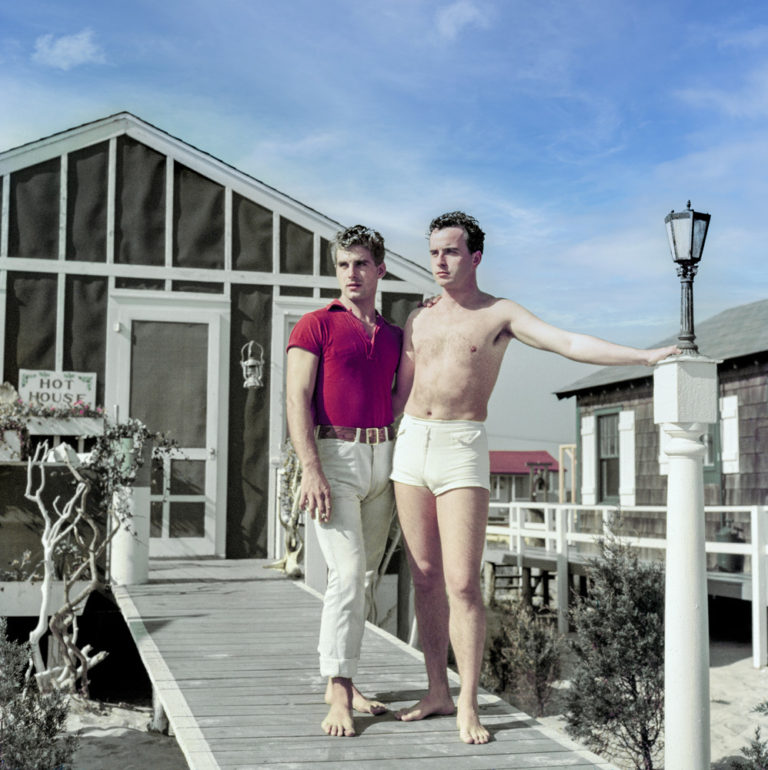
“Safe/Haven: Gay Life in 1950s Cherry Grove” is an intimate look at one of the first gay beach towns in the U.S. in Fire Island’s remote hamlet of Cherry Grove, located on the barrier island south of Long Island. Through about 70 enlarged photographs, ephemera and recorded accounts from members of the community, visitors can learn about their experiences and memories. Since the 1950s, Cherry Grove gave gay men and women a place to socialize out in the open—many met up at local restaurants or Duffy’s Hotel Bar, where same-sex dancing happened late at night. Some of these nights, plus summer events like theater performances, art shows, baseball and an end-of-season costume ball were captured in photographs. People from all kinds of backgrounds flocked to Cherry Grove—writers, artists, dancers, theater people, and Hollywood celebrities including Christopher Isherwood, Patricia Highsmith, and Tennessee Williams. Truman Capote, the novelist, playwright, and journalist whose flamboyant lifestyle contributed to his social celebrity, stayed at Carrington House just outside of the Grove in 1957, where he wrote parts of the novella Breakfast at Tiffany’s. Unfortunately, as more gay people arrived here in the 1950s, longtime residents tried to “reinstate decent behavior,” which spurred on police raids through the 1960s. More recently, after the 1960s, the community became more welcoming to Black and Latino gay people and working-class gay women began spending more time there. The community took another hit during the AIDS crisis in the 1980s. All of this and more is documented in this celebratory exhibit of Cherry Grove. “Cherry Grove on Fire Island became a weekend and summer destination for gay men and women in the pre-Stonewall era of the 1950s and 1960s,” said Dr. Louise Mirrer, president and CEO of New-York Historical. “At a time when they faced homophobia and persecution, the residents of Cherry Grove found a sanctuary where they could socialize and express themselves freely. We are proud to partner with the Cherry Grove Archives Collection to display these joyful images.” It’ll be on view in New-York Historical’s rear courtyard through October 11. Admission is free; timed-entry tickets can be booked online in advance.

Vote: Make your choice for Local Player of the Week for May 17-22 – Abilene Reporter-News

Here are the top performers from the Abilene high schools vying to be the Reporter-News Local Player of the Week for the week ending May 22.

We continue to give you a vote in the Player of the Week selection process. The poll opens every Monday at 2 p.m. and stays open through Wednesday at 2 p.m. The winner will be announced Wednesday night and in Thursday’s paper.

This year, the public vote will account for part of the selection process.

Local sports logo

The six nominees for the Week of May 17-22 are:

Riley Hood, Wylie Baseball

Hood helped power the Bulldogs into the region semifinals. He went a combined 7 for 8 with a double, a triple and six RBIs — including a four-RBI effort in Game 1 — as Wylie swept Canyon Randall 9-1 and 17-7 in the Region I-5A quarterfinals.

Ruth Hill & Kaitlyn Strain, Abilene High Tennis

Hill and Strain picked up some state hardware in San Antonio on Thursday. They rallied from an early 2-1 deficit in their Class 6A quarterfinal match to win 6-2, 6-2. They weren’t able to solve Round Rock High’s Ramitha Irrinki and DeCora Antoine, falling 4-6, 7-6 (1), 6-3 in the semifinal to earn bronze medals.

Brooks Gay, Wylie Baseball

Gay delivered a gem in Game 1 as the Bulldogs took control of the Region I-5A quarterfinal series against Canyon Randall. He pitched a complete game, allowing one run on four hits with no walks and eight strikeouts as Wylie won 9-1.

Aliyah Martinez, Cooper Softball

Martinez was a big part of the Lady Coogs’ Game 1 win against Aledo. She got on base and when she did, she came around to score. She was 2 for 3 with a walk and scored three runs. She hit a double and a triple and drove in a run in the 8-6 win.

Angelic Gonzalez, Cooper Softball

If runners were on base when Gonzalez came to the plate, they weren’t when she was done in Game 1 against Aledo. She went 2 for 2 with a walk and three RBIs. One of her hits went for a double in the Region I-5A semifinal opener.

J.T. Thompson, Wylie Baseball

Thompson was a force to be reckoned with in Game 2 against Canyon Randall. He went 3 for 4 with a double from the No. 2 spot in the lineup, drawing a walk and scoring a run. He finished with a game-high five RBIs as the Bulldogs won 17-7 in five innings.

Or vote HERE.

Jordan Hofeditz covers Abilene high schools and colleges, Big Country schools and other local sports. Follow him on Twitter at @jhofeditz. If you appreciate locally drive news, you can support local journalists with a digital subscription to ReporterNews.com.

‘The Quality Has Gone’: Archie Harrison’s HIV Journey, 1987-1988 – NPR

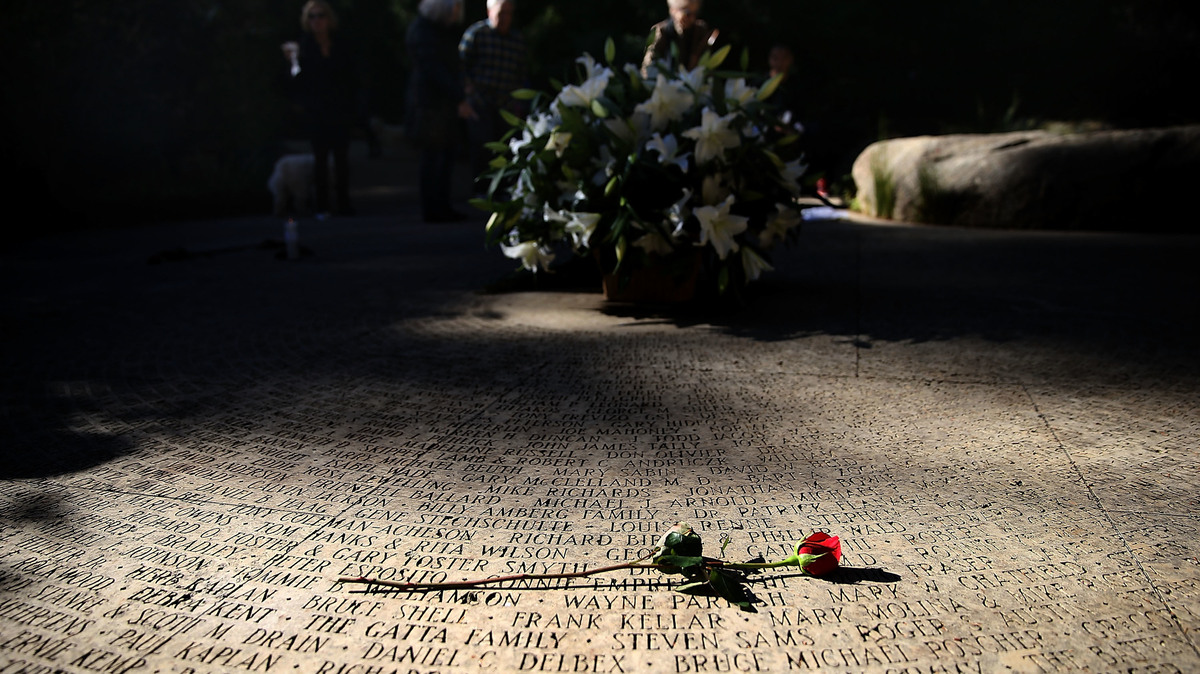
A flower lays on the engraved names of AIDS victims at the National AIDS Memorial Grove on December 1, 2015 in San Francisco, Calif. Justin Sullivan/Getty Images hide caption

toggle caption

Justin Sullivan/Getty Images

A flower lays on the engraved names of AIDS victims at the National AIDS Memorial Grove on December 1, 2015 in San Francisco, Calif.

Justin Sullivan/Getty Images

We are marking a milestone, 50 years of NPR, with a look back at stories from the archive.

I had been covering the frightening development of a disease that was striking mostly young, gay men in New York City and San Francisco in the early 1980s. Later, it would be learned that the cause was HIV. Effective treatments that promised a nearly normal lifespan would be developed. But that wasn’t our world — certainly, it wasn’t the world in which Archie Harrison found himself, infected with a virus that was killing him.

Harrison was just 31 when he was diagnosed. I first met him in the midst of reporting on the new treatment for HIV, AZT. It was hoped the treatment would reverse the disease process, but that was not to be the case. NPR’s science editor, Anne Gudenkauf, suggested we personalize our coverage by profiling an individual coping with AIDS. We decided on Harrison; he was smart, thoughtful and willing to push himself and his thinking.

Our first series of reports focused on Harrison’s efforts to get better. He exercised, changed his diet and continued working as an actor. In our very first story, we talked about how he intended to “fight it” and emerge healthy once again. Over the months, Harrison slowly succumbed to the devastation of the disease. His immune system plummeted, and he suffered a number of debilitating and difficult problems. Through what must have been a sad and terrifying journey for him, Harrison maintained his commitment to me, to NPR and to the series. Throughout this period, Archie received dozens of letters from listeners who were touched by his words.

These were the days when All Things Considered would air pieces running from 18 to 24 minutes. In individual cuts, Harrison would be thinking and feeling between speaking. Such was the power of the story; we could feel the silence. The silence struck me most one day, when Harrison, weak and skeletal, sat in a chair with his partner Drew balancing on the chair’s arm. In response to one of my questions, Harrison looked up at his partner, his eyes watery, and said, “The quality has gone.” Harrison was referring to his life. Not long after that interview, he decided to stop taking nutrition and no longer take medication. Harrison died peacefully, at 33, with Drew by his side.

Our story aired that evening on All Things Considered. It was one of the original “driveway moments” — listeners wrote in to say they had pulled over to the side of the road and cried. They were peeling carrots over the sink while their tears fell. Collectively, we had become very close to Harrison, whether we knew him personally or over the air. It was a lesson about commitment: to finish what you start, no matter the end; to share your feelings, no matter how hard; to make a difference with your life, no matter how short. Archie Harrison did. NPR simply helped. —Patti Neighmond, Correspondent, Health Policy, Retired 2021. Her reflection was adapted from This Is NPR: The First Forty Years.

October 4, 1986: AZT Treatment For AIDS: Who Gets It?

[In October 1986,] the Food and Drug Administration announced which AIDS patients will be eligible for the experimental drug, AZT. The drug is not a cure, but it is the only drug so far that has extended the lives of people with AIDS.

Archie [Harrison] says he knows AZT isn’t a cure. He tells us about his friends, friends with AIDS. There’s a good grapevine, so word about AZT travels fast between New York and California.

January 16, 1987: Profile of Archie Harrison, AIDS Patient on AZT Treatment

Archie Harrison: I don’t want to sound morbid about this because I don’t feel morbid about it. But when you get, when you get a diagnosis of a disease where they don’t have a cure and you’re told something like, “Oh, your life expectancy will probably be eight months to a year, maybe longer.” You can go one of two ways. You can take that as a death sentence and lie down and wait for it to come. And then, I really think that if that’s the route you choose, you will fulfill their prophecy and you will be dead in eight months to a year. Or you can start making every moment count.

March 17, 1987: AIDS Patient Improves With AZT Treatment

For Archie, this role is more than stagecraft. It’s important to him because he says education about AIDS has become a central part of his life now. He doesn’t want people to think AIDS is a strange and ugly disease. It’s an illness, he says, that real people suffer and real people help them through.

July 13, 1987: Archie Harrison Embraces Holistic Healing

Like many people who have faced serious or terminal illness, Archie is reexamining most aspects of his life. Not only is he concerned with physical things like food and exercise, but he’s also concerned about his state of mind and his emotional health.

August 20, 1987: Archie Harrison Develops Pneumonia

When you follow an AIDS patient who was on AZT, you can’t help noticing that he has a lot of hope for the future, hope that most AIDS patients don’t have. But as days go on, you also see times when infection takes hold of the body and life becomes difficult, even frightening. For Archie, it began about a month ago when he started complaining of a tightness in his chest. He began to worry. So did his lover, Drew, because those were the initial symptoms the first time Archie had pneumocystis a year and a half ago.

But like Archie, Drew still hoped for the best. This past year, the two had been studying natural healing. The idea that positive thinking can help the body fight disease. But positive thinking did not ward off the pneumonia.

December 29, 1987: Archie Harrison Doing Better; Opening Up To Parents

Archie Harrison: Last year, I had, I had a tendency to — I sensed the quality of running from death more then. And proving to yourself that you were a well person, the quality of the way you were then was like, “I am going to beat this.” And more than accepting it, you know — you accepted it, but there was a quality of like, “I’m still running.” You were still, you know, yourself. You were still running around acting like, not a normal person — but I mean — having like, a completely normal schedule, a typical New York stressed out schedule. And it just, you know, and a lot of that has changed out of necessity.

April 28, 1988: Archie Harrison’s Health Deteriorates; Change In Provider Impacts Care

Archie Harrison: I think that we wear our physical experiences on our face a lot. And I think my face looks like I’ve been through a lot more than it did, say, two years ago, that when I look at pictures of me — my, my acting picture — that there was a lot of stuff that face hadn’t been through that this one has been. And I notice it now, when I look at myself and I look at those pictures, I just think, “Boy, you know, that — that’s a different face.”

July 1, 1988: AZT Treatment, Food And Nutrition

Archie Harrison: I just never thought I would get — I would get to a point like this, in this illness, where all this would be […] like this — where we would have a tube in my stomach. And I’d be feeding myself that way. And then I would be as weak and I am and need so much help.

Just — it’s very different. Getting up and feeling the feeding bag and then letting it run in. And then, having to get up and clean the feeding bag. And it just gets tiring, doing that ten times a day. And the other thing is, I just — I feel — I don’t know. More than that, I feel like I’m not really living a life anymore. I’m just sort of maintaining one. And there’s not a lot to my life other than this feeding tube.

August 9, 1988: In Memoriam: Archie Harrison

Archie Harrison: My value system — my belief system — that I had set up for me, was that the world was responsible for everything that happened to me; the good and the bad. The world could give me love. The world could take it away. The world can give me diseases. The world can take them away. Doctors can take them away. That person, out there, will give me a cold. Bristol Myers will give me the drugs to take, to get rid of it.

It was all out there — everything, including getting love. It had nothing to do with in here. I just shut that off completely. And everything I was doing was that far out there. And because of out there. And that’s probably the single biggest lesson that I’m really starting to take hold of, is that it has nothing to do with out there. That out there is just a reflection of what’s going on in here to begin with.

Drew Tillotson: 13 Years After Archie Harrison’s Death

Drew Tillotson: All around our apartment was St. Clare’s Hospital. If I walked down Ninth Avenue, I would see the hospital where he had pneumocystis and nearly died. If I walked north and went up Ninth Avenue towards Columbus Circle, I would pass St. Luke’s Hospital where he was last ill. So all around where we lived represented the illness; it represented everything that had gone wrong and a lot of heartache.

DC trans women remembered at vigil – Washington Blade

0

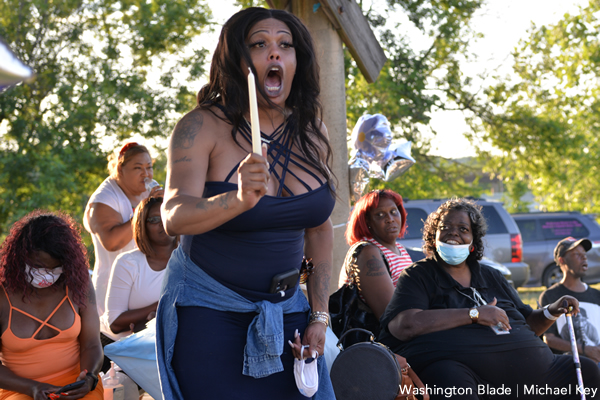
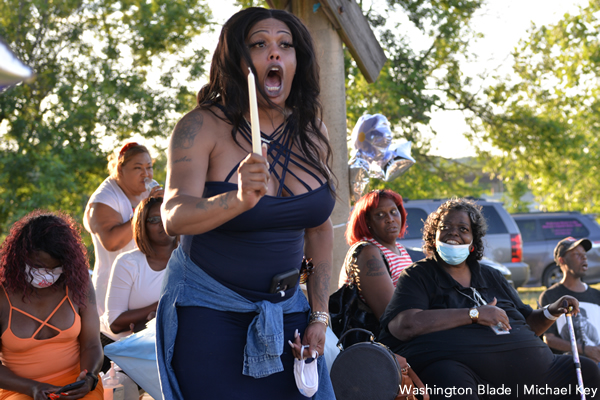
Close to 100 people turned out at River Terrace Park in Northeast Washington for a May 21 vigil to honor the lives of Nona Moselle Conner, 37, and Gisselle Hartzog, 30, two D.C. transgender women who died suddenly and unexpectedly on May 13 and May 18.

Friends and LGBTQ activists who participated in the vigil called on the community to honor the two women by speaking out and taking action to address the struggles that they and many other transgender women of color have endured due to prejudice and discrimination.

People who knew the two women, including Conner’s father, who spoke at the vigil, have said the cause of death for both women had yet to be determined, but there is no evidence of foul play such as physical violence.

Several of the speakers, who did not give their names or used only a first name, described Conner and Hartzog as caring, supportive, and loyal friends who lifted their spirits. They called the two women’s unexpected passing a tragic loss for themselves and for the community.

Transgender advocates Earline Budd, who works for the sex worker advocacy organization HIPS, and Adriana Chichi Carter, an official with the transgender and sex worker advocacy organization No Justice No Pride, were among the lead organizers of the vigil. Both called on the community to rally in support of the rights and wellbeing of transgender people like Conner and Hartzog.

“We need awareness. We need to start speaking,” Carter told the gathering. “We need to stop with the hatred or judging or competing,” she said. “And we need to uplift each other and guide each other and hold each other.”

Added Carter, “And each of you who know me know I give back and I’m here to speak for my community, our community, for all of us regardless of whether you’re trans, gay, straight. It does not matter. We are human…and when we lose somebody we love, we hurt.”

Conner was involved with No Justice No Pride along with other community-based organizations providing support for the trans community, including the organization Collective Action for Safe Spaces (CASS), where she worked as a program manager, according to a tribute to Conner on the CASS website.
Budd said the lives of Conner and Hartzog could have been saved.

“We’re here recognizing the lives of two angels, Nona Conner and Gisselle Hartzog, gone too soon,” Budd said. “We as a community tonight, I’m praying, especially those who are senior and trans, we must do more. We have to do more. We can’t stay silent anymore,” she said.

Terrance Wilson, Conner’s father, drew loud applause from the crowd when he told of how he overcame his own struggle to accept his daughter for who she was and has become an advocate for the trans community.

“First of all, I want to say thank you for your love, patience, donations, and kind words – the love means so much to me and my family,” Wilson told the crowd. “I want to say it’s my prayer that fathers all over the world don’t travel the same road that I traveled, that it took me a while for my heart to soften and for me to open up and really accept my child in this world,” he said.

“I believe that had I done something and opened up sooner, life would have been so much better,” he continued. “But I thank God for it because she did come to my heart,” he said, adding, “I love her, and I hurt every day. And I pray that all of you find love and everything you deserve.”

Wilson concluded by telling the gathering, “I committed myself and I told Miss Budd that I’m going to stand for you all. I’m going to be part of the community. I’ll be out speaking.”

Among the others who spoke at the vigil was Prince George’s County Council member Calvin S. Hawkins, who pledged to push for legislation to support the trans community both in P.G. County and nearby jurisdictions, including D.C.

“As a legislator I want you to understand, today we mourn,” he said. “But there comes a moment when action has to take the place of our mourning. Legislators must know how you feel,” he said, adding that he will work with the community to push for “legislation that makes those who believe it’s OK” to engage in violence or discrimination against the trans community to know they will be held accountable.

Also speaking at the vigil was Ruby Corado, founder and executive director of the D.C. LGBTQ community services center Casa Ruby. Corado has said both Conner and Hartzog had been clients at Casa Ruby. Corado told the Washington Blade last week that she spent time with Hartzog the day before Hartzog passed away, when Hartzog expressed optimism that she was about to be enrolled in a D.C. government housing program for the homeless.

D.C. authorities found Hartzog deceased at the site of a tent in a homeless encampment under a bridge near the intersection of 1st and L Streets, N.E.

Corado told the vigil the D.C. government has failed to take adequate action to provide needed programs to address the issue of housing and jobs for transgender people, especially transgender people of color.

Others involved in organizing the May 21 vigil were Corado of Casa Ruby, Shakita Chapman of HIPS, and JeKendria Trahan of CASS.

Marvel releases ‘Eternals’ trailer featuring its first gay superhero – Metro Weekly

marvel, eternals, gay, trailer, film
The cast of Marvel’s Eternals — Photo: Marvel / YouTube

Marvel has dropped the first trailer for Eternals, the latest entry in the Marvel Cinematic Universe and the studio’s first film to feature a gay superhero.

Directed by recent Oscar-winner Chloé Zhao, Eternals follows a group of immortal aliens who come to Earth and live secret lives for 7,000 years, before the events of Avengers: Endgame force them force them to reunite and protect humanity from their evil counterparts.

The star-studded cast includes: Angelina Jolie as Thena, a warrior who can form weapons out of energy; Richard Madden as Ikaris, the Eternals’ tactical leader who can fire cosmic energy, has super strength, and can fly; Gemma Chan as Sersi, an empath who can manipulate matter; Salma Hayek as Ajak, the Eternals’ spiritual leader who uses her abilities to heal; and Kumail Nanjiani as Kingo, who can fire energy projectiles from his hands.

Brian Tyree Henry stars as Phastos, an intelligent cosmic-powered inventor who secretly helps humanity progress technologically. He will be the MCU’s first openly gay superhero, and in the film will be married to an architect, portrayed by actor Haaz Sleiman.

The couple will also have a child, and the film will frankly portray of their relationship, including showing the men kissing — something that led to calls of boycotts from conservative outrage group One Million Moms, who accused Marvel of trying to “desensitize” families by “normalizing the LGBTQ lifestyle.”

Eternals is currently set for release on November 5. Watch the trailer below:


While Phastos will be the MCU’s first gay superhero, next year will bring Marvel’s first bisexual hero.

Thor: Love and Thunder will show Tessa Thompson’s Valkyrie as openly bisexual, with Thompson previously saying that Valkyrie will search for a queen to rule alongside her in New Asgard.

“As new king, she needs to find her queen,” Thompson said at San Diego Comic-Con in 2019. “That will be her first order of business. She has some ideas. Keep you posted.”

Marvel was criticized after the release of Thor: Ragnarok for reportedly editing out a scene depicting Valkyrie’s bisexuality.

Valkyrie is bisexual in Marvel’s comics, based on her relationship with Dr. Annabelle Riggs in the Fearless Defenders series.

Fans have been pushing for more LGBTQ representation in Marvel’s films after widespread backlash to “Grieving Man,” a background character in Avengers: Endgame who was the MCU’s first openly LGBTQ character.

Spider-Man star Tom Holland recently supported a gay version of his web-slinging hero, saying that Marvel’s films should “represent more than one type of person.”

And Brie Larson, who currently stars as Captain Marvel, said she wants to see more LGBTQ characters and heroes.

“I don’t understand how you could think that a certain type of person isn’t allowed to be a superhero,” she told Variety in April. “So to me it’s like, we gotta move faster. But I’m always wanting to move faster with this stuff.”

Read More:

Lego launching first LGBTQ set called “Everyone Is Awesome”

Cruella reportedly features Disney’s first prominent gay character

FX’s ‘Pride’ documents the modern LGBTQ+ rights movement

DC’s Gay Community Stands Together in the Face of Hardship – Thrillist

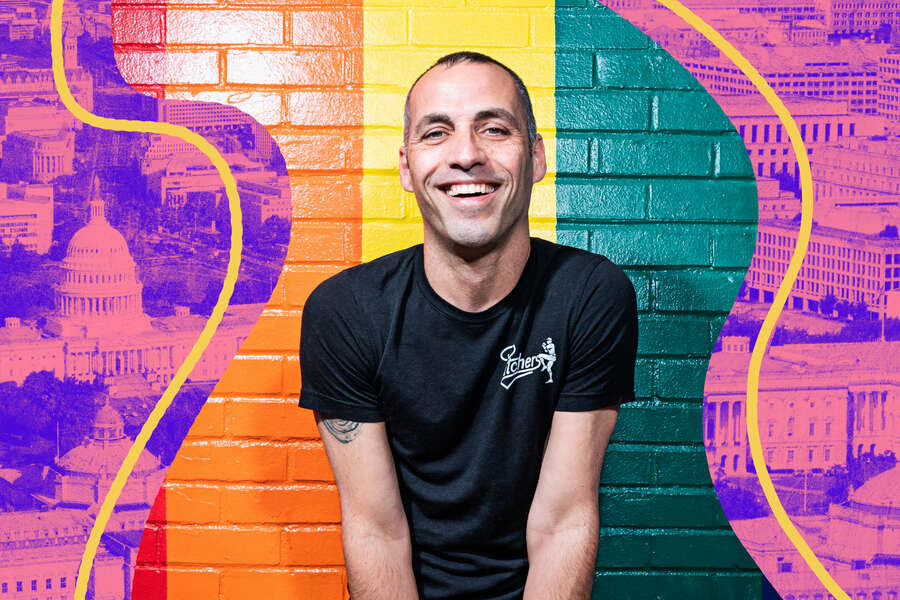
It’s the kind of place where you can go to any bar and feel comfortable. At my bars, Pitchers and A League of Her Own, we have a lot of transgender people who come in, and it’s great that they feel comfortable here. Because we have a lesbian bar attached, the gays don’t care that there are women in here because we’re all part of the same community.

I opened Pitchers in June of 2018 for Pride Weekend, that was our opening weekend. I said it was the hardest soft opening ever. And A League of Her Own opened in August. But [A League of Her Own] was always part of the plan. I think a lot of lesbians knew the bar was coming, so they came to Pitchers. There was always a part of me that felt bad there wasn’t a place for lesbians to go anywhere. We had Phase 1 back in the day, but people would ask me if there were any lesbian bars in the city, and I had to say: “no not really.” We’re the nation’s capital and we don’t have a lesbian bar? So when I was doing a tour of this space, I saw there was a whole separate entrance which I thought was perfect. It felt like A League of Her Own needed its own entrance and exit to make them feel like they truly had their own space.

My vision for the bar was for it to be a community bar. Say you live in Idaho and you’re in this little town—big enough that they have a gay bar, but still small—you’re forced to have lesbians, gay guys, transgender people, everybody, all backgrounds together in one space because you only have one space. That’s what I wanted to create. When you live in a big city, you have more spaces. But the more spaces you have, the more segregated the bars get because you have one type of person that goes to this bar and one type of person that goes to that bar. So I figured if I had one bar that had everything, it would create a feeling that everybody is welcome. And that’s really what we have here. When you walk in and you see a bartender, you’re going to see somebody who looks like you and that’s my goal. I just wanted to be the one bar in the city that everyone likes to go to because everyone feels comfortable there. 

Cornell sets protocols for healthy, safe Commencement | Cornell Chronicle – Cornell Chronicle

0

The ceremonies for Cornell’s 153rd graduating class will look different from other celebrations in the university’s past, due to safety precautions and protocols arising from the COVID-19 pandemic – but they promise to be just as festive, joyous and memorable as ever.

While Graduation Weekend 2021 will feature in-person Commencement ceremonies at Schoellkopf Field, Cornell will keep density low by holding four smaller ceremonies May 29-30.

Graduates are permitted to invite up to two guests for their in-person ceremony; those students have already received information on guest registration.

Preceding Commencement, an outdoor Ph.D. hooding ceremony will take place the evening of May 28 at Schoellkopf, and Senior Convocation – featuring noted author Roxane Gaywill be held virtually on Friday, May 28, at 8:30 p.m.

In accordance with rigorous New York state health and safety guidelines, Commencement attendees must abide by physical distancing requirements and wear face coverings, regardless of vaccination status, according to Cornell’s Office of University Commencement Events.

All Commencement ceremonies will be livestreamed at CornellCast. Recordings of the ceremonies will be available on the Office of University Commencement Events website at a later time.

If any of the Commencement ceremonies are canceled due to severe weather, they will not be rescheduled and degrees will be granted virtually.

The schedule of ceremonies at Schoellkopf Field is as follows:

Friday, May 28 – The University Ph.D. Hooding Ceremony, 7 to 8:30 p.m.

  • Guests arrive at parking lots and enter Schoellkopf Field with tickets and identification, 5:30 to 6:30 p.m.
  • Graduates arrive at Northwest gate (between parking garage and Schoellkopf Hall) 5:30 to 6:30 p.m.
  • Graduates process on to Schoellkopf Field, 6:30 to 7 p.m.
  • Ceremony, 7 to 8:30 p.m.

Saturday, May 29 – The first ceremony, 11 a.m. to noon. Guests arrive 8:30 to 10 a.m. The academic procession will start at 10 a.m. (Guests must exit the parking lots before 1 p.m., to accommodate the next ceremony.)

  • Cornell Graduate School
  • College of Veterinary Medicine
  • College of Human Ecology

Saturday, May 29 – The second ceremony, 4 to 5 p.m. Guests arrive 1:30 to 3 p.m. The academic procession will start at 3 p.m.

  • Samuel Curtis Johnson Graduate School of Management
  • Charles H. Dyson School of Applied Economics and Management
  • School of Hotel Administration
  • College of Agriculture and Life Sciences

Sunday, May 30 – The third ceremony, 11 a.m. to noon. Guests arrive 8:30 to 10 a.m. The academic procession will start at 10 a.m. (Guests must exit the parking lots before 1 p.m., to accommodate the next ceremony.)

  • College of Arts and Sciences
  • College of Architecture, Art and Planning

Sunday, May 30 – The fourth ceremony, 4 to 5 p.m. Guests arrive 1:30 to 3 p.m. The academic procession will start at 3 p.m.

  • School of Industrial and Labor Relations
  • College of Engineering

Graduates in Computer Science, Information Science, and Statistics and Data Science are affiliated with both the Cornell Ann S. Bowers College of Computing and Information Science and their degree-granting college: College of Agriculture and Life Sciences, College of Arts and Sciences or College of Engineering.

Health protocols

Public health protocol for guests: All ticketed guests attending the ceremonies must adhere to New York state public health guidelines. Upon arrival to the event, all guests are required to complete the pre-check process, where they will answer a health-screening questionnaire and provide documentation of vaccination (if guests have it) in order to pick-up a public-health wristband. Guests will be seated based on their vaccination status.

Full guest details on protocols and gate-entry requirements are available here on the Office of Commencement Events web site.

Face coverings and social distancing: Regardless of vaccination status, all guests are required to always wear face coverings, even when outside, and maintain six feet of physical distance between individuals while on campus.

Campus food options

Several Cornell Dining eateries will be open to the public for Commencement Weekend. Check Cornell Dining for eatery hours and menus. The facilities include:

  • Cafe Jennie in the Cornell Store;
  • Bus Stop Bagels and Trillium in Kennedy Hall;
  • Cornell Dairy Bar in Stocking Hall;
  • Becker House dining room, West Campus;
  • North Star dining room in Appel Commons; and
  • Bear Necessities at Robert Purcell Community Center.

Transportation and parking

Campus parking is free for guests beginning noon on Friday through 9 p.m. Monday. For the Friday, Saturday and Sunday ceremonies, as you approach campus from any direction, follow signs directing traffic to parking lots.

Ph.D. Hooding event parking – All roads and parking lots are open to the public throughout Friday. Please be mindful of designated accessible spaces and fire lanes, as these restrictions will be enforced, according to the Office of University Commencement Events.

Park and walk locations are listed here.

The main parking for the Ph.D. Hooding event is the Kite Hill lot, which is south of the Charles F. Berman Field (soccer stadium).

The Crescent Parking Lot (Schoellkopf) will be closed and the Hoy Parking Garage is designated for faculty and event staff only.

Commencement ceremonies parking – Road closures will be in effect at varying times on Saturday and Sunday, as detailed in the map here.

“Park and Ride” parking: Shuttle buses will travel from the parking areas at B Lot (near the College of Veterinary Medicine), TRB Lot, BTI Lot, North Morrison Lot and South Morrison Lot to Schoellkopf Field. Seating will be limited due to distancing requirements. Upon arrival, all guests are required to complete a health screening and show vaccination documentation at the pre-check stations adjacent to those lots. Bus riders must wear masks.

“Park and Walk” parking: Guests who are able to park and walk, are encouraged to do so. Upon arrival, all guests are required to complete a health screening and show vaccination documentation at the pre-check stations adjacent to Schoellkopf Field.

Please consult the Commencement Ceremony parking map for other parking options and take note of the pre-check locations.

Tompkins Consolidated Area Transit: TCAT bus service will operate on its normal schedule for Friday, May 28, and Saturday, May 29. TCAT will switch to summer service on Sunday, May 30. For details: tcatbus.com.

Safety and Security

The Cornell Police will conduct bag-check security at all Commencement ceremonies. There is no re-entry allowed during the events. If you exit Schoellkopf Field prior to the end of the event, you will not be allowed back in.

Cornell visitor text messages

Cornell visitors can sign up for emergency notifications, such as weather alerts, by texting “CornellVisitor” (without the quotation marks) to 226787.

For more details, please check the Cornell Office of Commencement Events website.

Netflix’s ‘Dance of the 41’ Shows Mexico’s Biggest Gay Scandal – Out Magazine

The new Netflix film Dance of the 41, tells the tragic true story behind one of the biggest gay scandals in Mexican history.

Dance of the 41 showcases a night over a hundred years ago when 41 men belonging to Mexico’s upper-class elite were arrested following a police raid on a Mexico City house. Police say they found them men dancing with each other, many in drag, and arrested them for “offense to morals and good manners.”

The film follows Ignacio de la Torre y Mier, who is rumored to have been the 42nd person arrested at the party, but was not charged because he was son-in-law to the President of Mexico. The scandal was the first time homosexuality was openly discussed in the Mexican media.

Alfonso Herrera (Sense8) plays de la Torre in the film directed by David Pablos and written by Monika Revilla. While de la Torre tries to balance his marriage to his wife Amada (Mabel Cadena), the daughter of President Porfirio Diaz (Fernando Becerril), he meets and falls in love with a man named Evaristo Rivas (Emiliano Zurita) who invites him to the infamous party.

Herrera told NBC News that he was excited to learn more about Mexico’s LGBTQ+ history. “You need to go to the past in order to understand who you are as a person or who you are as a society,” Herrera said. “What would have happened if Ignacio was not discovered as a gay man? He would have been one of the important Mexican figures from our history, but he was taken away from that because he was gay.”

After the arrests, some of the men charged were forced to go to labor camps, and some were made to perform labor while dressed as women so that others could mock them. 

Still in the country today, the number 41 is often avoided. Many buildings skip their 41st floor, the army doesn’t have a 41st battalion, and people even skip their 41st birthdays. But now, the number is considered a badge of honor for some LGBTQ+ Mexicans.

“We wanted to honor these men,” Herrera said of making the film. “We wanted to portray these men as men who wanted to be free, who wanted to be happy, and I think that David (Pablos, the director) did this in a very accurate way — in a very safe way — where they could be themselves.”

Dance of the 41 is playing on Netflix right now. 

RELATED: ‘The Eternals’ Trailer Gives Glimpse of Marvel’s First Gay Superhero

Oregon becomes 14th state to ban reviled LGBT+ panic defence. Just 36 to go – Yahoo Eurosport UK

Oregon became the 14th US state to finally ban the so-called “gay and trans panic defence” on Sunday (23 May), leaving just 36 more states to go.

Governor Kate Brown has signed Senate Bill 704 which brings to an end defendants being able to use a victim’s sexuality or gender identity to defend their actions.

“The passage of this bill will send a strong and proactive message that the perpetrator of a second-degree murder will not be able to excuse the crime simply based on who their victim is,” said the bill’s chief sponsor, Democratic lawmaker Karin Power, the Washington Blade reported.

The decades-old legal strategy, which has historically been used to lessen charges or shorten a sentence, argues that the defendant acted in a state of temporary insanity because of unwanted sexual advances from LGBT+ people.

Both legal experts and queer advocates alike have argued that such a defence places blame onto the victim – effectively codifying homophobia into law.

But, as SB704 reads: “The discovery of a victim’s actual or perceived gender, gender identity, gender expression or sexual orientation does not constitute reasonable explanation for extreme emotional disturbance or purposes of affirmative defense to murder in the second degree”.

Brown signing the ban into the books comes after the law glided through both houses this year, drawing unanimous approval in the state’s House of Representatives and a 29-1 victory in the Senate.

Oregon now joins 13 other states legislatures, alongside the District of Colombia, which have approved bans on the discriminatory panic defence.

Vermont and Virginia both banned the strategy this year, while similar measures are inching closer across a dozen state legislators, including Florida and Texas, according to the LGBT Bar, which is monitoring the passage of LGBT+ panic defence bans.

The panic defence itself stems from the outdated attitude that to be LGBT+ was to have a mental illness, according to a 2016 study by the Williams Institute. Such reviled notions have been widely discredited by leading healthcare organisations.

The American Bar Association urged all US governments to ban it in 2013.

Writing in a report, lawyers across the country described the defence which has been used since as early as the 1960s as a “remnant of a time when widespread public antipathy was the norm for LGBT+ individuals”.

“By fully or partially excusing the perpetrators of crimes against LGBT+ victims,” they wrote, “these defences enshrine in the law the notion that LGBT+ lives are worth less than others.”

My Daddies: Gay fathers publish LGBT+ kids picture book – PinkNews

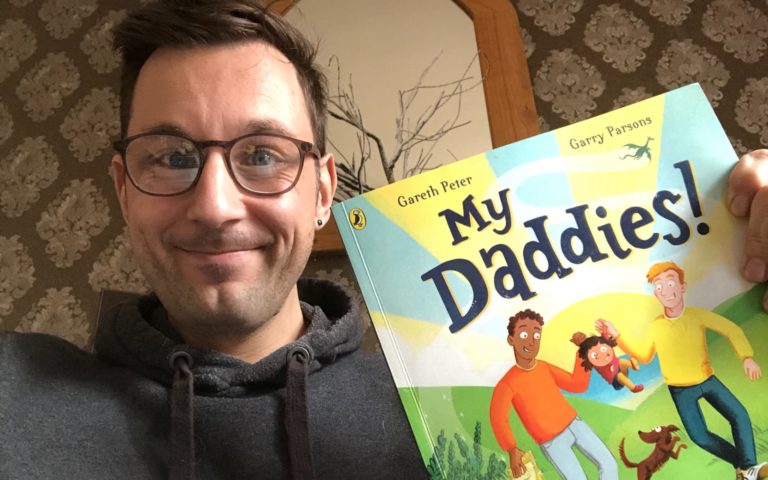
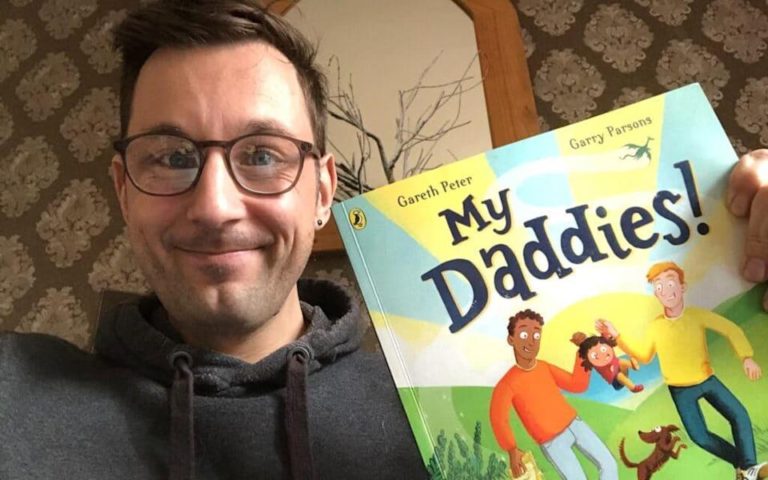
Gareth Peter with his book My Daddies. (Twitter)

Two gay dads have banded together to create a children’s picture book that represents their own experiences of raising children.

Gareth Peter wrote My Daddies about his experience of adopting two children with his partner. It was illustrated by Garry Parsons – the artist behind children’s classics The Dinosaur that Pooped – who is also a gay dad.

Peter, from Nottingham, told BBC News that he wrote the book after he and his partner noticed that there was a clear lack of children’s books with same-sex parents.

The father-of-two said: “When our first boy came to live with us I felt there was a complete lack of picture books with LGBTQ+ families in them, ones that included families like ours.

“I think it’s essential children are able to see themselves represented in books.”

He continued: “Schools are changing their policies around teaching relationships and sex education and I think it’s important there are colourful, fun, vibrant books that talk about a whole spectrum of families.”

My Daddies author Gareth Peter wants LGBT+ families to be represented

The 40-year-old said he knew he always knew he wanted to be a dad, but growing up gay in the 1990s made him think it wouldn’t be possible.

It was a “proud moment” for Peter and his partner when they adopted two sons, giving them the opportunity to hear the “magical word ‘daddy’” for the first time.

Peter said he wanted to capture that experience in his first children’s book.

“When a child of a blended or LGBTQ+ family sees our book, I hope they will see themselves,” he told the BBC.

“But when a child from another dynamic sees it, I hope they will accept that families come in all shapes and sizes.”

My Daddies is the first picture book about two gay fathers that has both an LGBT+ writer and illustrator published by Puffin.

“It’s a picture book that features a wonderfully likeable, fun and loving family that every reader will relate to, and answers an urgent need for more representations of gay characters in children’s literature,” said Puffin’s editor director Joe Marriott.

Proud gay dads publish adorable kids’ picture book about a girl with two fathers – Yahoo Eurosport UK

Two gay dads have banded together to create a first-of-its-kind children’s picture book that represents their own experiences of raising children.

Gareth Peter wrote My Daddies about his experience of adopting two children with his partner. It was illustrated by Garry Parsons – the artist behind children’s classics The Dinosaur that Pooped – who is also a gay dad.

Peter, from Nottingham, told BBC News that he wrote the book after he and his partner noticed that there was a clear lack of children’s books with same-sex parents.

The father-of-two said: “When our first boy came to live with us I felt there was a complete lack of picture books with LGBTQ+ families in them, ones that included families like ours.

“I think it’s essential children are able to see themselves represented in books.”

He continued: “Schools are changing their policies around teaching relationships and sex education and I think it’s important there are colourful, fun, vibrant books that talk about a whole spectrum of families.”

My Daddies author Gareth Peter wants LGBT+ families to be represented

The 40-year-old said he knew he always knew he wanted to be a dad, but growing up gay in the 1990s made him think it wouldn’t be possible.

It was a “proud moment” for Peter and his partner when they adopted two sons, giving them the opportunity to hear the “magical word ‘daddy’” for the first time.

Peter said he wanted to capture that experience in his first children’s book.

“When a child of a blended or LGBTQ+ family sees our book, I hope they will see themselves,” he told the BBC.

“But when a child from another dynamic sees it, I hope they will accept that families come in all shapes and sizes.”

My Daddies is the first picture book about two gay fathers that has both an LGBT+ writer and illustrator published by Puffin.

“It’s a picture book that features a wonderfully likeable, fun and loving family that every reader will relate to, and answers an urgent need for more representations of gay characters in children’s literature,” said Puffin’s editor director Joe Marriott.

Chemsex gay culture in Thailand not a farang issue at present – Pattaya Mail

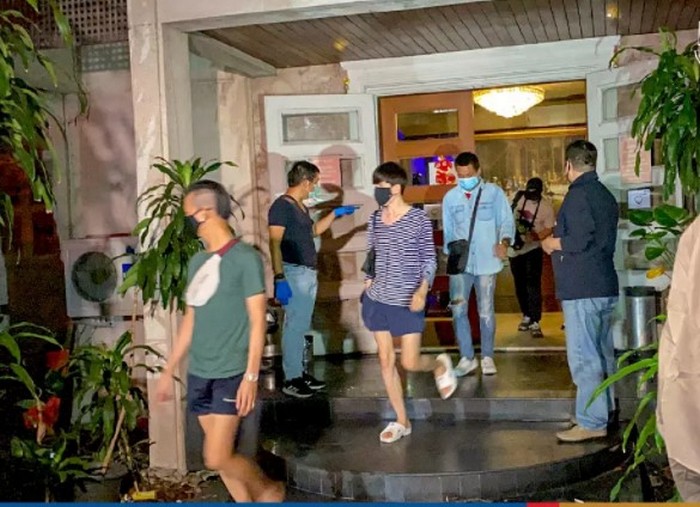
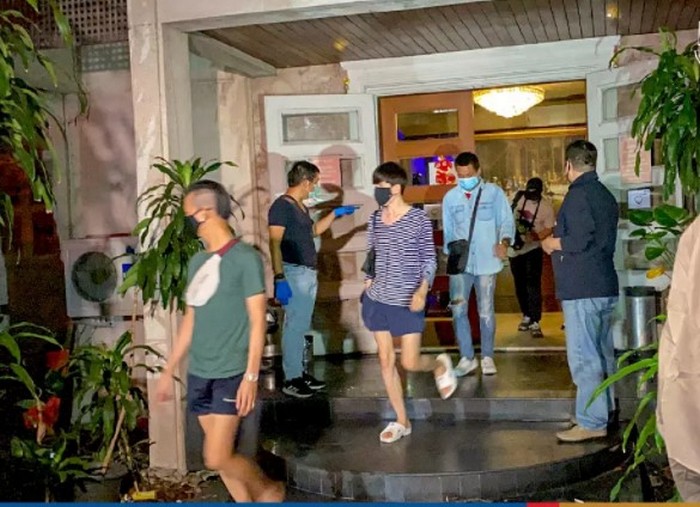
Party goers are escorted by police to the waiting police vans.

The arrest of dozens of men at the Faros Sauna 2 in Bangkok for breaching the country’s Covid-19 lockdown restrictions and committing drug-related crimes has highlighted the emergence of chemsex parties as the “new normal”.  Chemsex is the practice of having consensual and enhanced gay sex with multi-partners whilst under the influence of certain drugs such as crystal meth, mephedrone and GHB.

Much of the media here and overseas have given the impression that western tourists were participating in the event – for example using file photographs of anonymous white men in handcuffs – yet there is no evidence that any non-Thais were involved in this or, indeed, in some previous chemsex arrests in Thailand over the past eighteen months.  However, it has to be noted that a full list of those arrested has not been officially issued.  That’s not unusual.

The reality, of course, is that there are virtually no foreign tourists in Thailand right now.  The expats here are mostly work permit holders, with an income to protect, and settled retirees who know full well the dangers of breaking Covid-19 restrictions: they will lose their visas and be barred from re-entry.  According to the Bangkok Metropolitan Administration, the vast majority of those attending chemsex parties are aged 20-40.  Most expats are considerably older than that and are heterosexual.  Gay pensioners anyway do not provide the mainstay of the chemsex market.

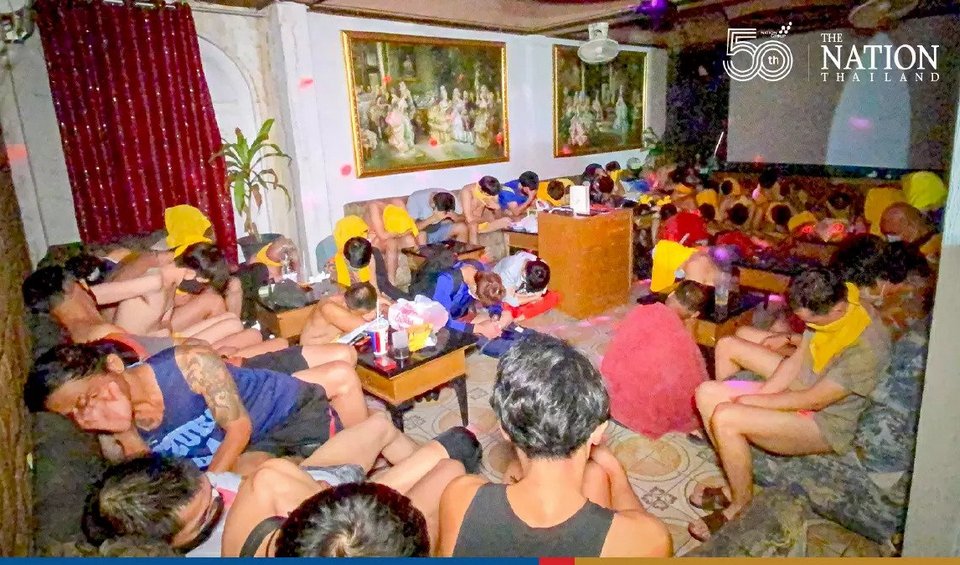
Dozens of men now wish they had stayed home that night. (Photo: The Nation)

A spokesman for KRUBB Bangkok, a gay counseling center, said that up to a dozen Thai patients per week were now turning up for help, compared with one or two before the pandemic.  Sergeant Shaowpicha Techo, a Bangkok-based psychologist, said no foreigners had turned up there.  Chemsex users are at risk off drug addiction or overdoses, as well as mental health problems, HIV infection and violence including physical assault and worse.  Not to mention being prime targets for the pesky virus to invade.

In April, the Thai government closed all bars and nightclubs in an attempt to curb the pandemic and, according to the Thomas Reuters Foundation, thus accidentally created another public health crisis – a spike in chemsex cases.  Gay hook-up apps such as Blued and Grindr allow their members to look for give-away tags such as “high and horny” or “party and play”, whilst chemsex parties are promoted in some countries on social media.

This stock photo was used in dozens of foreign reports to illustrate the arrest of westerners at the sauna.

But this publicity is not common in Thailand as a special police unit monitors Facebook, Twitter etc.  Several prostitution rackets here have been raided after unintentional internet tip-offs.  Yet the international perspective is awesome.  Rusi Jaspal, a professor at De Montfort University in Leicester, said “Chemsex is very pervasive and is now leading to physical and mental illness spreading to hard-to-reach groups across Europe.”  The International Association of Providers of AIDS Care described chemsex as a “challenge of proportions we cannot fully comprehend at this time.”

Sources at Pattaya and Banglamung police stations say they do not know of any chemsex prosecutions in the resort.  Nationally, the Royal Thai Police’s antinarcotics bureau declined to comment.  In Bangkok, the Princess Mother National Institute on Drug Abuse Treatment said it had noticed a surge in chemsex during the pandemic, but acknowledged that police and other officials did not yet have any expertise.

Chemsex is a growing yet concealed problem for Thai society.  The Bangkok Rainbow Association told Reuters that these parties are the “new normal” amid the pandemic.  They are usually well-hidden from prying eyes, though obviously vulnerable to informers.  Thai authorities would be foolish simply to dismiss the issue as a stupidity indulged by a tiny fringe.  Chemsex is potentially much more of a serious challenge than illegally drinking a couple of beers with your mates or neighbors.