Home Blog Page 195

If You Have “Good 4 U” on Repeat, You’ll Love This Fast-Paced Dance Cardio Workout – POPSUGAR

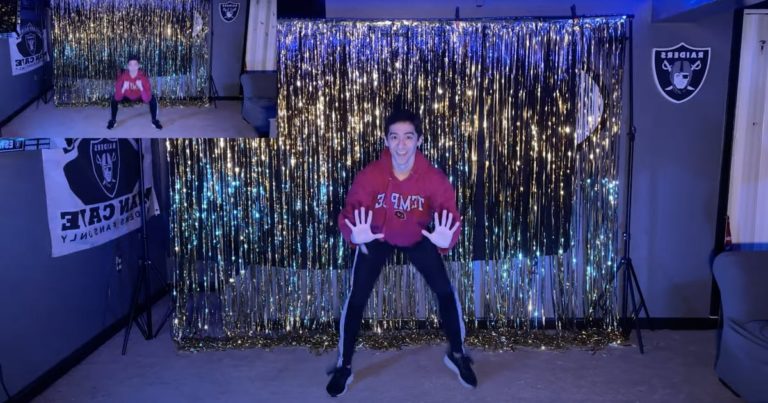
I can’t stop listening to “Good 4 U” by Olivia Rodrigo, and I’ve added it to my cardio playlist. Turns out I’m not the only one who can’t get enough of this infectious song: certified dance instructor Mikey Sanchez, known as Move With Mikey on YouTube, created this fun dance cardio workout set to the angsty song.

The workout starts out with squats and high kicks before moving into a high-energy dance workout. Don’t worry if you feel lost: Mikey shows a preview of each move before transitioning into it. And even if you don’t get the moves exactly right, who cares! It’s all about moving your body and having fun. So clear out some space and dance it out to what’s sure to be the song of the summer.

LA LGBTQ Theatre fires artistic director over sexual misconduct allegations – Los Angeles Blade

Photo Credit: City of Los Angeles

LOS ANGELES – According to a report by the Los Angeles County Department of Workforce Development, Aging and Community Services (WDACS) last month, 125,900 hospitality jobs and 37,000 arts and entertainment jobs were sadly lost last year.

If you look past Hollywood’s poignant acceptance speeches and enchantment of the red carpet, you will see a tremendous industry of people–caterers, party planners, publicists, stylists, florists, DJs, etc.– who tirelessly work to create magic during awards season.

But with the pandemic vastly changing Hollywood, countless red carpet-related industry jobs have been eliminated.

Ahead of the Independent Spirit Awards (April 22) and The Academy Awards (April 25) the Los Angeles Blade talked to industry experts about all the changes happening during the 2021 awards season.

“With the world facing so many bigger, more existential issues right now, this award season’s obviously been sort of disorienting on several levels. On a deeper level, some people might think glamorous celebs accepting golden trophies is a little, well, off point amid a pandemic,” John Griffiths, the Executive Director of the Society of LGBTQ Entertainment Critics (GALECA.org) said.

“With so much loss and depression, people seem to be basically saying ‘throwing glamorous awards shows is especially tone deaf.’
 It’s a good question- Who cares about Hollywood and self-satisfied stars and virtual red carpet fashion? It’s sort of weird. But the show should go on, as they say, because movies have a huge impact on society, and celebrating good work and stories and performances that inspire is always a good thing,” he added.

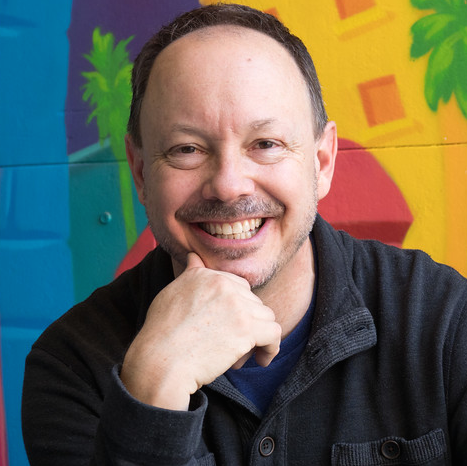
(Photo: John Griffiths)

The Society of LGBTQ Entertainment Critics is home to the Dorian Awards, which are are film and television accolades given by GALECA.

“The Oscars and all the kudos shows leading up to them, like our own Dorians, all help to put some special films, about immigrants, about inner-spirit, about humanity, about love, about the ravages of hate, on the world’s radar. Movies unite us, they can create change, help heal . . . so we shouldn’t underestimate shows that honor them,” Griffiths said.

“Awards shows having to go “virtual” with awkward hosts and nominees all with Zoom face and any live attendees six feet apart from each other is not a recipe for fun viewing. They have gotten stodgy over the years, so it’s been interesting to see which ones turn the frown upside down. So far, only the Emmys has seemed interested in getting creative—to fun effect,” he stated.

New York City- based Celebrity Jewelry Expert and Stylist, Michael O’Connor weighed in with his observations telling the Blade;

“COVID has really taken a toll on the fashion industry and on celebrity styling overall!! In previous years, the red carpet, the event itself and the many surrounding events provided a plethora of attending celebrities who wanted to look their very best for the events  – and would get photographed. This meant that you could not only showcase your styling expertise, but also you could use pieces from various fashion houses, jewelry designers and accessories designers to bring a vision to life, thereby creating numerous publicity opportunities for the brands themselves. 

These days, the potential universe of styling opportunities is severely limited. No red carpets, no surrounding events and in-home coverage of the nominees really brings the potential to showcase talent way down. Further, some celebrities feel that they should be more relaxed and less dressed up in their home environment. The whole situation is difficult for everyone, celebrities included, and certainly results in some underwhelming and uninspiring fashion.

“As a stylist who lives in NY and often styles celebrities in LA, the idea of virtual styling is not something totally new to me. I’ve been doing it for years. However, the current issues revolve more around the difficulties of fit, alteration and exchanging pieces out that don’t work together. One can’t simply go into a showroom and get a feel for how a necklace might lay on a neck or how low an earring drop is, or how a dress will hug the curves. That tactile sense and true visual understanding has been robbed. Therefore, more is reliant upon planning or going with brands/pieces that you already know. Otherwise, the chance that it all won’t come together perfectly is extremely high.”

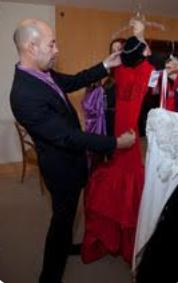
(Photo: Michael O’Connor)

Beverly Hills  Celebrity stylist Erick Orellana reflected- “Due to the lack of red carpet arrivals this year for award shows, I am hearing many fellow stylists who really depend on award season work are out of work until the industry rebounds. Since award shows are going virtual and events are at home, many celebrities are opting to  do their own glam or be a little more “relaxed” with it this year. As we saw with some of the celebs at the Golden Globes, winner Jodie Foster and her wife were in what seemed like their pjs.

Glam during these pandemic times has looked very different. During awards season, I believe hair and make up this year looks a bit more easy-going. Since most events are virtual, the most important part of hair and make up is the front side of the face. We are going to be seeing a lot of ponytail slick hair or to the side hairdos and I wouldn’t be surprised if some go for a soft romantic touch to their hair.

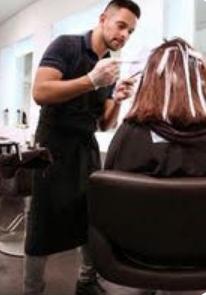
(Photo: Erick Orellana)

I think most celebrities are mainly working on just their upkeep versus do drastic changes right now. We are definitely seeing the return of the bank/curtain bang that is a nice way to change up a hairstyle without having to commit to a big change all over, since it’s mostly taking place in the front. It’s a good way to frame the face as well. We’re seeing more one tone hair color versus multi dimensional sense, and are also seeing a bit of a return of the 90s inspired hair trend. Most changes in hair have been very subtle since everyone’s really working on just trying to touch up their hair that hasn’t been seen by a stylist in a while, due to Covid restrictions and safety.”

Hollywood jewelry designer Charlie Lapson told the Blade;

“This year, the designers, stylists and clients are hardly meeting in person. Life has become an endless amount of FaceTime, ZOOM, and Skype meetings, reviewing the fabrics of the dress, and the jewelry options to coordinate. On some levels, it’s more efficient because we can interact several times without driving all over LA, and we don’t have to pack and unpack hundreds of pieces.

But the special moment of the actress trying on her choice of earrings, looking in the mirror and saying “these are perfect” just isn’t going to happen. It’s challenging because we’re not working the usual way. 

At the awards events this year, some of the sparkling accessories will be incorporating colorful gemstones. There has been conversations about jewels with Tanzanite, with its luscious deep blue and purple tone, which has become one of the top requests for 2021. 

Pearls of white and gray have been trending, thanks to Madame VP Harris. In addition to necklaces, they’ll be seen in earrings and rings. 

Diamond earrings in unique shapes will be trending, and hopefully ear cuffs will make their debut. Multiple rings across several fingers is something to look for, and then work into your own style.”

It is so devastating to know there are still so many people in our industry who are struggling for work.

“With little to no in person events, I am sad I no longer get to see or work with friends–everyone from event producers to florists to catering companies and designers. It is so devastating to know there are still so many people in our industry who are struggling for work.

The pandemic has totally changed the industry forever. Last year, for example, we did a total of 3 live events during Golden Globes weekend, this year two were canceled and one has gone completely digital. Now with little to no red carpet and the usual fanfare when arriving to events, they will just be limited to a couple of photographers,” Rembrandt Flores, founder, Entertainment Fusion Group said.

Rembrandt Flores

“There is nothing like an event in person, and I am excited to be involved with them again in 2022,” he added.

With no live events, the celebrity wrangling industry has suffered tremendously. Luckily for our agency, we weren’t so dependent on that type of work. We have doubled down heavily on digital and traditional press as well and working with influencers and celebrities for specific brand campaigns,” Flores noted.

LDP approves LGBT bill after delay sparked by conservative concerns – The Japan Times

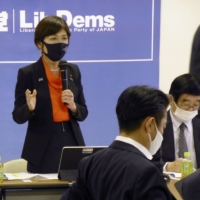
The ruling Liberal Democratic Party approved a cross-party bill Monday to promote greater awareness among the public of sexual minorities in Japan.

Approval of the bill was delayed in an LDP panel meeting last week due to conservative concerns that it would “affect society.”

The LDP, which emphasizes promoting understanding of the lesbian, gay, bisexual and transgender community, and the main opposition Constitutional Democratic Party of Japan, which focuses on eradicating discrimination, bridged their gap through consultations, according to lawmakers.

Based on the outline drawn up by the LDP panel, the bill includes the words “discrimination is unacceptable” among its philosophical ideals.

LDP lawmaker Kazuo Yana said in a party meeting last Thursday that members of the LGBT community went against the preservation of the species, while sexual minority couples were not “productive” — remarks that drew objections from opposition lawmakers.

Another LDP member, Mio Sugita, came under fire in 2018 for saying in a magazine article that the government should not support sexual-minority couples because they cannot bear offspring and thus are not “productive.”

Although a number of municipalities across Japan offer partnerships between members of the LGBT community, marriage is not legally recognized in the country.

In a time of both misinformation and too much information, quality journalism is more crucial than ever.
By subscribing, you can help us get the story right.

SUBSCRIBE NOW

PHOTO GALLERY (CLICK TO ENLARGE)

Flint’s Pride Festival continues to reflect community identities and prioritize health – East Village Magazine

By Melodee Mabbitt 

This year, Flint’s Pride Festival will once again be shaped in response to the need for disease prevention and centered on supporting identities that are most vulnerable within Flint’s LGBTQ+ communities.

In response to COVID-19 precautions, planning is underway for Flint’s Pride to include its annual barbecue and a series of small events throughout the coming summer, rather than the annual festival in June. 
(Photo source: www.wellnessaids.org)

It won’t be the first time Flint’s Pride celebrations have been affected by disease. Flint’s tenth annual Pride Festival was held as a virtual event last year because of the pandemic. And the event’s history is itself rooted in disease prevention and centered on identities within vulnerable populations.

“We’re not just regular event planners. We’re disease prevention,” said Stevi Atkins, CEO of Wellness AIDS Services, which has been central to organizing Flint’s Pride celebrations. 

“All of the communities we serve are at greater risk of death or harm because of the lack of cultural competence,” Atkins said. “All of our local health disparities are around racism. That’s it. Racism, homophobia, Islamophobia, and especially transphobia. Our Black trans women are still being murdered at rates that are unconscionable to allow.”

“We have had white gay men from outside of our community come give us feedback and basically imply that our event is too Black,” Atkins said. “It has been a challenge to help the community understand that Flint is over 60 percent BIPOC [black, indigenous, and people of color] and our event needs to at least reflect that.” 

Wellness Clinic logo (Photo source: wellnessaids.org)

Atkins said Flint Pride was developed partly in response to an outbreak of HIV in 2009 in Black men ages 17 to 37, especially those who identify as queer, gay, or bi. To reach vulnerable populations, HIV organizations had to be flexible over the years, offering services and testing at gay bars, parks, and other places that you wouldn’t typically find healthcare. Wellness has followed that approach, she said,  but by 2009 Flint had fewer gay bars or public spaces for LGBTQ+ gatherings and there was a need to get creative.

“At the time in Flint, there was no LGBTQ+ visibility at all,” Atkins said. In 2009, RuPaul’s Drag Race television series was just beginning and FX network’s series Pose had not yet appeared to bring “ball culture” into the mainstream. Ball culture developed as an underground subculture of Black and Latinx LGBTQ+ youth in New York City, in which people “walk” for trophies, prizes, and glory at events known as balls. 

In Flint’s Black LGBTQ+ communities, ball houses serve as alternative families to Black LGBTQ+ youth who often compete in drag performances and ball walking competitions to earn needed income by winning a pageant or category.
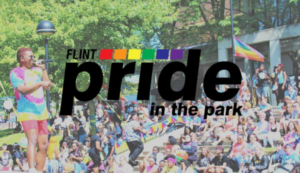
Pride in the Park photo from past years. (Photo source wellnessaids.org)

Making forays into these ball houses was necessary for Wellness AIDS Services to be able to connect in 2009 with the communities being most impacted by the local HIV outbreak, Atkins explained.  As they began to build relationships, especially with Black ball house fathers, it became clear that something more was needed. 

”It is hard to see yourself in progress, in history, if you don’t know that people who look like you were there,” Atkins said. “It was actually trans women of color pushing back at Stonewall. That is important to know in order to be able to see yourself in history.”

The Stonewall uprising was a series of spontaneous demonstrations in response to a police raid at the Stonewall Inn in New York City in 1969, and is widely considered one of the most important events leading to the fight for LGBTQ+ rights. 

Wellness organized Flint’s first Pride Festival in 2010 not only to help raise visibility of LGBTQ+ communities, but to build relationships external to small social groups by connecting LGBTQ+ communities and sharing feelings of being cared for and valued in a larger set of communities, and to celebrate the history of Black trans women as central in this work. 

(Photo source: www.wellnessaids.org)

Flint’s first Pride Festival was a small event in Kearsley Park with about 150 attendees, one food vendor, one sponsor, two tables set up by PFLAG and Wellness AIDS Services, and of course, drag performances. 

“We started having mini-balls at our first Pride event,” Atkins said, noting that Wellness was able to obtain their first physical location in 1986 because of local drag performers who donated their tips to buy the space. “It felt very community and the population we hoped to reach was who showed up,” she said.

In the following years, Flint’s Pride Festival grew through a partnership with Tendaji Ganges, the former executive director of Educational Opportunity Initiatives at the University of Michigan – Flint, and moved to the university’s pavilion on Saginaw Street downtown. 

Pride has continued to have balls, drag performances, and voguing competitions every year. “Having the space for local drag kings and queens is really important to us,” Atkins said. 

Flint’s Pride Festival has always been a smaller and more intimate affair than Pride festivals in larger cities, she said. In places like New York and Chicago, complaints among activists include concerns about Pride becoming too “corporate” as sponsors want their brands to seem supportive without making any sincere forays into LGBTQ+ communities, Atkins said.

That is not true in Flint. Though attendance and the need for porta-potties has grown, Atkins said obtaining sponsorships continues to be a struggle, largely funded by Blue Cross Blue Shield of Michigan and Wellness’s own general fund. However, Atkins believes the event sponsors are reflective of sincere supporters from within Flint’s community. 

At the last in-person festival in 2019, Pride had grown from the university’s pavilion, across Saginaw Street, and into Riverbank Park. More than three thousand people attended the event, which included more than 60 vendors, ranging from religious organizations to artists to community organizations. 

To be inclusive, organizers emphasize creating spaces for artists to sell their work and keeping vendor fees low by having five dollar spots and allowing nonprofits or people unable to pay to approach Wellness to find a way to be included. 

Pride Fest 2019 downtown Flint. (Photo source: Flint Pride Fest Facebook page)

Progress on LGBTQ+ issues locally has also contributed to the steady growth of the Pride Festival in Flint.

“Through the years, we have always had something to celebrate,” said Atkins noting national marriage equality passing in the U.S. Supreme Court in 2015, the passing of Flint’s local human rights ordinance around housing and accommodation in 2012, which Wellness worked with local activists Tunde Olinaran, Dale Weighill, and Nayyirah Shariff to spearhead and pass. Last year, Mayor Sheldon Neeley officially declared June as Pride Month in Flint.

“Every year it felt like more and more progress until the orange man,” said Atkins in reference to reality television gameshow host and former one-term president Donald Trump. “Really in Michigan, we started to slip backwards before Trump. Governor Rick Snyder had a lot of anti-LGBTQ+ language and legislation during his time.”

Though Flint’s Pride has never experienced violence or protests from opposition, there have been hard years like the Orlando Pulse shooting in 2016 when Pride created space for grieving and acknowledging that terrorist attack at a gay nightclub. “Kildee offered a great speech on it that year,” Atkins said, noting Kildee has been one of the most supportive elected officials. 

Atkins says she looks forward to one day running the front table again at Pride in-person. It is one of her favorite things to do.

“The energy, the vibration, the love. This is what community care looks like. Being able to show our LGBTQ+ population, especially with the intersection of BIPOC, that we care about them is huge for us,” Atkins said. “Being able to hug them and to embrace each other and get excited when someone is attending their first Pride. It is just an amazing energy and I love that role of being a hostess to welcome my community into my community.”

When Flint began organizing the first Pride Festival, Nayyirah Shariff was working as an organizer for Genesee County Healthy Sexuality Coalition,  a group of organizations and individuals interested in lowering rates of teen pregnancy and sexually transmitted diseases. Though that coalition no longer exists, Shariff continued to be involved through volunteering in the years since. 

“For a lot of people, Pride is where you get to wear rainbow wigs and heavy makeup and then you’re out there drinking beer. That is what you see in other, larger Prides”  Shariff said.  

“But then you also see people who bring ‘Yes, I am gay and also these other things.’ So other Prides may censor the most marginalized people are Black and trans women. So by centering those identities and saying Black trans lives matter, or allowing people to be gay and Muslim, it becomes more than just wearing a rainbow wig and allows people to have multiple identities. Like, intentionally making space for people to declare, ‘I’m not just a gay person. I am all of these identities and all of them deserve respect.’” 

Flint Pride Festival events this summer will be shared through the Flint Pride Facebook Page.

EVM reporter Melodee Mabbitt can be reached at melodee.mabbitt@gmail.com.

As Congress returns to funding earmarks, who will benefit? – Lock Haven Express

HUFFMAN, Texas (AP) — Don’t tell Laura Fields that providing $1.7 million to her flood-prone neighborhood would be wasteful spending. Her home in a Houston-area subdivision was filled with 10 inches (25 centimeters) of water during Hurricane Harvey.

“The stress of that was just horrific,” Fields said. “You know, to see fish swimming through your house, it’s not a good feeling,”

The money sought by her congressman, Republican Rep. Dan Crenshaw, to improve drainage and flood prevention in Huffman, Texas, is among thousands of requests that lawmakers have submitted as Congress begins to lift a moratorium on targeted federal spending, often referred to as earmarks.

Earmarking — often called “pork barrel” spending because lawmakers would divert funds to pet projects in their states — was put on hold a decade ago. Critics thought too many projects went to a handful of powerful lawmakers and fostered a “pay to play” culture in which campaign contributions were often solicited from lobbyists and others.

Now, earmarks are marking a sudden and robust return, revamped and renamed. Lawmakers in both parties have grown frustrated by their inability to shape spending legislation and worry that Congress has ceded too much of the power of the purse to the executive branch.

The experiment could rise or fall on the reaction from voters, particularly in places skeptical of Washington spending. Many Republicans in Congress are refusing to earmark as a matter of principle, characterizing it as graft. Crenshaw said in a statement that he was “proud” to advocate for resources that would help his constituents and that the flood control earmark “will ensure that we don’t have to spend even more resources recovering from future flood events.”

“This is not wasteful spending, no, sir, not at all,” Fields said. “These are our homes. This is where we’re supposed to feel safe and secure and not have to worry about every time a storm comes through.”

About $14 billion, or 1% of discretionary spending, will be devoted to earmarks in this year’s spending bills. The requests that lawmakers made, listed on the House Appropriations Committee website, go beyond the roads, bridges and research grants earmarked in the past.

Republican Rep. Garret Graves of Louisiana, for example, wants $775,000 for a mobile medical clinic offering free cancer screenings to rural residents in his district.

And Democratic Rep. Mary Gay Scanlon of Pennsylvania wants $650,000 for mental health professionals to team up with police or to intervene when someone is experiencing a mental health crisis.

It remains to be decided which projects will get funded. Lawmakers have been told they can put in up to 10 requests, but “nobody will be getting 10 requests,” said Rep. Rosa DeLauro, the Democratic chairwoman of the House Appropriations Committee.

Supporters of earmarks have set up guardrails to curb the complaints of corruption and waste that flared in the past. Still, more than 100 House Republicans and one Democrat have declined to participate in what is now being called “community project funding.”

Graves said he requested money for the mobile cancer screening unit because some communities in his district experience a higher rate of cancer than the national average.

“You hear over and over again, lack of access to care, difficulty getting appointments, affordability,” Graves said. “This kind of addresses all those historic deficiencies or challenges because it is the provider coming to you — sort of the 2021 version of the doctor with his or her little black bag doing house calls.”

Graves voted against reviving earmarks when members of the House GOP conference changed their rules earlier this year. He said the process could still be improved, but in the end, it’s better than letting federal agencies dictate where money goes. And he said there’s more accountability when lawmakers have to disclose their requests and defend them.

In one of her requests, Scanlon drew on the experiences of the past summer as people in Philadelphia and elsewhere protested the death of George Floyd and other African Americans at the hands of police.

“You know, we hear stories all the time about people calling 911 when someone is in mental health distress, and then police arrive and there’s misunderstandings and there can be fatal mistakes made,” Scanlon said.

Scanlon cited the death in Philadelphia of Walter Wallace Jr., who was fatally shot last year after he ignored orders to drop a knife. His mother said she had warned police her son was in the throes of a mental health crisis.

“Police arrived on the scene. They were not equipped with tasers,” Scanlon said. “It appears that they did not know how to de-escalate the situation, and within a minute, Walter Wallace had been shot multiple times and he died.”

She said that county law enforcement officials and the local emergency medical system asked for funding to help integrate mental health specialists with law enforcement. It was one of 10 projects she selected from about 60 applicants. The House Appropriations Committee will winnow that list even further.

“Setting the expectations very low because we don’t know if we’ll get anything has been part of the challenge of rolling out the program,” Scanlon said.

Earmarks still have many detractors in Congress. About half of House Republicans declined to request funding for local projects, including House Minority Leader Kevin McCarthy, R-Calif.

Club for Growth , a conservative group, said its report card grading member’s votes would include whether they signed a letter from Rep. Chip Roy, R-Texas, pledging to abstain from earmark requests.

The group said earmarks are used as “legalized bribery” to get lawmakers to support big spending elsewhere.

“By virtue of members of Congress saying, ‘I’m going to get my bridge’ or ‘I’m going to get my museum,’ or ‘I’m going to get’ whatever it is, you’re kind of beholden,” Roy said. “That’s what I think is the most problematic.”

Senate Republicans have maintained their conference rules banning earmarks, but lawmakers are not bound by them.

Separately, the House Transportation and Infrastructure Committee will include earmarks in a bill reauthorizing money for roads, bridges and transit programs. Democrats requested money for 1,775 projects and Republicans requested money for 605 projects.

As part of the vetting process, lawmakers must provide evidence of community support for the earmarks they seek.

In Texas, Harris County Commissioner Adrian Garcia said 40% of the homes in the Huffman neighborhood have flooded, some repeatedly.

Garcia said the money would be used to improve and widen existing roadside ditches and culverts that drain water, moving it to bayous and other waterways. The improvements are among the flood control projects that Harris County voters approved in 2018 through a $2.5 billion bond measure. In March, county commissioners said they were facing a $1.4 billion shortfall to fully fund the bond program’s flood control projects.

The federal money, Garcia said, will help close the gap.

“‘We’ve been waiting for four years (since Hurricane Harvey). We can’t wait any longer,” Garcia said.

Today’s breaking news and more in your inbox

LGBT and mental health are the focus of June 1 NAMI Four County meeting – Defiance Crescent News

ARCHBOLD — NAMI Four County’s meeting on June 1 will focus on mental health issues and the LGBT population with Stacy Flannery, founder of a local organization called Anchored LGBT+Youth; and Joshua Honaker as presenters.

According to the National Alliance on Mental Illness (NAMI), both adults and youth who identify as lesbian, gay or bisexual are more than twice as likely to experience mental health issues as their heterosexual counterparts.

The meeting, which is open to the public, will be held as both an in-person and virtual meeting starting at 7 p.m. at the Four County ADAMhs Board office, T-761 Ohio 66 south of Archbold.

During the pandemic, the in-person meeting will be limited to about 10 persons to allow for social distancing and wearing a face covering is required. To register for the in-person meeting, contact Wendy Jennings, NAMI executive director, at wendy@namifourcounty.org or by calling her at 419-405-3651. Only persons who have pre-registered can attend the in-person meeting.

Persons who would rather participate virtually must also call or email Wendy Jennings to get the meeting link to NAMI’s Zoom account.

NAMI Four County is an affiliate of the National Alliance on Mental Illness. In addition to meetings held the first Tuesday every month, it provides free community education programs and offers free peer led support groups for family and friends of loved ones who have a mental illness as well as support groups for persons with a mental illness. All programming is open to the public.

For more information about the programming and support groups, go to NAMI’s website: www.namifourcounty.org.

Trending Recipe Videos

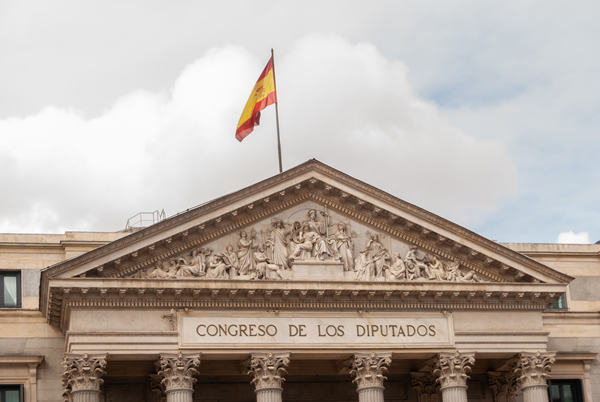
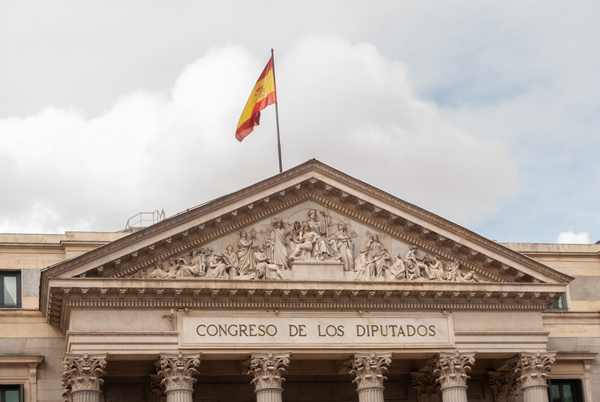
Spanish lawmakers reject transgender rights bill – Washington Blade

0

Close to 100 people turned out at River Terrace Park in Northeast Washington for a May 21 vigil to honor the lives of Nona Moselle Conner, 37, and Gisselle Hartzog, 30, two D.C. transgender women who died suddenly and unexpectedly on May 13 and May 18.

Friends and LGBTQ activists who participated in the vigil called on the community to honor the two women by speaking out and taking action to address the struggles that they and many other transgender women of color have endured due to prejudice and discrimination.

People who knew the two women, including Conner’s father, who spoke at the vigil, have said the cause of death for both women had yet to be determined, but there is no evidence of foul play such as physical violence.

Several of the speakers, who did not give their names or used only a first name, described Conner and Hartzog as caring, supportive, and loyal friends who lifted their spirits. They called the two women’s unexpected passing a tragic loss for themselves and for the community.

Transgender advocates Earline Budd, who works for the sex worker advocacy organization HIPS, and Adriana Chichi Carter, an official with the transgender and sex worker advocacy organization No Justice No Pride, were among the lead organizers of the vigil. Both called on the community to rally in support of the rights and wellbeing of transgender people like Conner and Hartzog.

“We need awareness. We need to start speaking,” Carter told the gathering. “We need to stop with the hatred or judging or competing,” she said. “And we need to uplift each other and guide each other and hold each other.”

Added Carter, “And each of you who know me know I give back and I’m here to speak for my community, our community, for all of us regardless of whether you’re trans, gay, straight. It does not matter. We are human…and when we lose somebody we love, we hurt.”

Conner was involved with No Justice No Pride along with other community-based organizations providing support for the trans community, including the organization Collective Action for Safe Spaces (CASS), where she worked as a program manager, according to a tribute to Conner on the CASS website.
Budd said the lives of Conner and Hartzog could have been saved.

“We’re here recognizing the lives of two angels, Nona Conner and Gisselle Hartzog, gone too soon,” Budd said. “We as a community tonight, I’m praying, especially those who are senior and trans, we must do more. We have to do more. We can’t stay silent anymore,” she said.

Terrance Wilson, Conner’s father, drew loud applause from the crowd when he told of how he overcame his own struggle to accept his daughter for who she was and has become an advocate for the trans community.

“First of all, I want to say thank you for your love, patience, donations, and kind words – the love means so much to me and my family,” Wilson told the crowd. “I want to say it’s my prayer that fathers all over the world don’t travel the same road that I traveled, that it took me a while for my heart to soften and for me to open up and really accept my child in this world,” he said.

“I believe that had I done something and opened up sooner, life would have been so much better,” he continued. “But I thank God for it because she did come to my heart,” he said, adding, “I love her, and I hurt every day. And I pray that all of you find love and everything you deserve.”

Wilson concluded by telling the gathering, “I committed myself and I told Miss Budd that I’m going to stand for you all. I’m going to be part of the community. I’ll be out speaking.”

Among the others who spoke at the vigil was Prince George’s County Council member Calvin S. Hawkins, who pledged to push for legislation to support the trans community both in P.G. County and nearby jurisdictions, including D.C.

“As a legislator I want you to understand, today we mourn,” he said. “But there comes a moment when action has to take the place of our mourning. Legislators must know how you feel,” he said, adding that he will work with the community to push for “legislation that makes those who believe it’s OK” to engage in violence or discrimination against the trans community to know they will be held accountable.

Also speaking at the vigil was Ruby Corado, founder and executive director of the D.C. LGBTQ community services center Casa Ruby. Corado has said both Conner and Hartzog had been clients at Casa Ruby. Corado told the Washington Blade last week that she spent time with Hartzog the day before Hartzog passed away, when Hartzog expressed optimism that she was about to be enrolled in a D.C. government housing program for the homeless.

D.C. authorities found Hartzog deceased at the site of a tent in a homeless encampment under a bridge near the intersection of 1st and L Streets, N.E.

Corado told the vigil the D.C. government has failed to take adequate action to provide needed programs to address the issue of housing and jobs for transgender people, especially transgender people of color.

Others involved in organizing the May 21 vigil were Corado of Casa Ruby, Shakita Chapman of HIPS, and JeKendria Trahan of CASS.

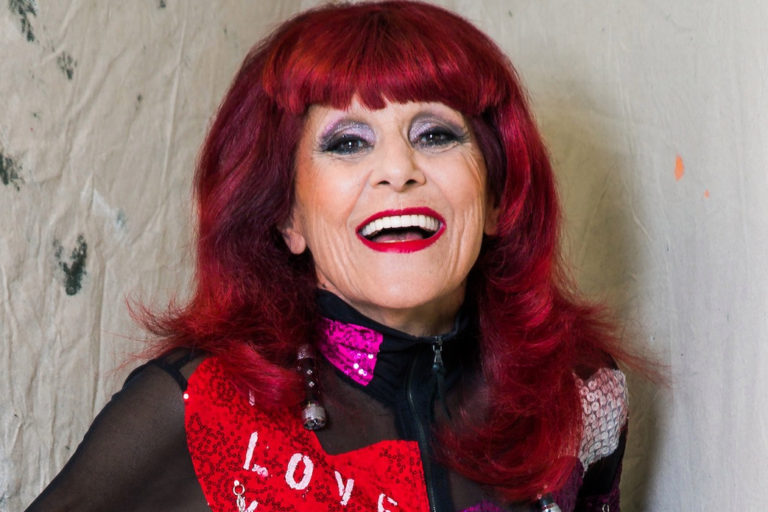
Patricia Field Talks ‘Emily in Paris,’ ‘Sex and the City’ and ‘Run the World’ – WWD

Far from coasting through the pandemic, Patricia Field seems to abide by a no-days-off work schedule.

Reached early Saturday evening in Paris, where she is working on the second season of Netflix’s “Emily in Paris,” Field also consulted on the just-released “Run the World” series. While millions identify her as the “Sex and the City” costume designer, fans won’t be seeing any of her selections in that show’s upcoming reboot “And Just Like That.” With a Lower East Side fashion gallery and consulting projects, Field is running on all cylinders. So much so that a weekend interview was the only time to connect.

After a full day of selecting 30 options for Lily Collins, she said, “I enjoy what I do. I feel like I do it intelligently. I have a philosophy of my own. Basically, I like happy clothes. So I have tended to do successful romantic comedies through the years.”]

Of course, there’s more to her innate sense of fashion, which even Field allows for — at least a little. “I do know that people enjoy watching my creations because they’re mine. They’re original. I’ll put together things that nobody else would put together. Everything comes from my brain and my eye,” she said. “If it feels good to me, I go with it. I don’t really look around and ask, ‘Are people going to like it? Are they not going to like it?’ I can’t do that. I find that inhibiting. I believe a person has to be free and believe in whatever they do. Of course, sometimes you have doubts. That’s only human. It’s about feeling what you do, enjoying it and getting a chance to laugh at it and be happy.”

As for not working on the “Sex and the City” reboot, she said, “The main reason was a time conflict. I wasn’t able to be in New York doing that and be in Paris doing ‘Emily in Paris.’ But I told them to call my very dear friend Molly Rogers, who also worked in my store back in the day. She did ‘Sex and the City’ with me from start to finish. She knew it well so she’s doing it. My dance card was full.”

Her “very positive creative relationship” with Kim Cattrall — who, as widely reported, isn’t returning for the reboot — has lasted through the years. “As a matter of fact, she’s getting married at City Hall for a second time so I sent her to Dior. They make this New Look jacket that is a laser type jacket that comes in at the waist. It’s cut very well. She went there and got it.”

Self-glorification is not her bag. “Yeah, it’s a distraction and it leads to nowhere. You can keep your name out there based on the work that you do. I do it because I enjoy it. It stimulates me and it’s fun,” she said. “Last night we were shooting a birthday dinner scene. Emily and her friends decided to have the birthday dinner in the courtyard of the building they live in. I thought, ‘Let’s just make this a beautiful tableau of costumes.’ It was like a fashionable birthday party. It looked kind of surreal. Here they were dressed up like they were going to the Oscars.”

Asked if she took issue with critics who felt the first season was too much of a cliché, Field said, “Not really because you know the French are like that. They don’t like anything. And I’ve known the French for many, many years. I think people have a right to say what they want to say. In the meantime from what I understand from here in Paris is that everybody is watching it. At the end of the day, that’s what counts. I don’t think Americans found it cliché at all.”

A striking and slim chartreuse green dress from Oscar de la Renta is one of the looks that will be featured in the second season, as well as Greek designers like Vasillis Zoulias, Maria Katrantzou, Des Hommes and Zeus & Dion. “I’m Greek and I have a lot of friends in Greece. I feel Greek designers really don’t get much international coverage,” she said.

For “Run the World,” she hired one of her protégés, Tracy Cox. (Another one of her protégés, Paolo Nieddu, is the designer for the series “Empire.”) “We used a lot of Black designers. The producers wanted us to feature them wherever possible and I was happy to do so. Growing up in New York, two of my best friends in high school were Black. The mother of one had a radio show in Harlem, and we’d go up there. One time her guest was Billie Holiday. I have an experienced history as a New Yorker going to public school. Also, my mother had a dry-cleaning business and she had several African Americans working for her. I was a young girl but they were like my uncles,” she said.

Asked about the move by many fashion companies to be more diverse with their executive teams and marketing, Field said, “There is a lot of, I don’t know if you want to call it pressure or an elevated consciousness because of everything that’s been going on, that it becomes correct to take that position. I’m glad. It’s not negative as long as it’s sincere.”

Discussing cultural issues recently with three of her young gallery employees, Field said she told them “to take it easy and enjoy life.” After suggesting they make a T-shirt imprinted with “I have no gender issues,” her employees advised that would be misinterpreted. “How can they interpret it wrong? I’m just saying it like it is. I am known for hiring people that nobody else would hire. I didn’t hire them because they were gay or straight or this or that. I hired them because their creativity caught my interest. I didn’t care what color they were, what gender they were, how old or young they were. If you catch my brain, that’s what I like.”

Growing up on the Upper East Side, Field’s mother ran that dry-cleaning business in the East Seventies and specialized in “fancy clothes,” she said. After school, Field learned about the delicacy of silk and how that had to be pressed by hand, and other fabrics, as well as lessons about business. “A very hard worker, who was totally proud and happy with what she was doing,” Field’s mother inspired her to do the same post-New York University, she said.

The road to costume designer started with a job at the former department store Alexander’s in the South Bronx that she would drive to in “a little Sunbeam Alpine, the car that was in ‘Butterfield 8′ with Liz Taylor. I would drive up there in my little designer outfits that I would buy from Loehmann’s in those days,” Field said.

At Alexander’s, one day three executives came marching down to the blouse department that she managed, wanting  to know why the numbers had increased so quickly and [by] so much. Field had ironed pre-packaged blouses and displayed them on bust forms that she had purchased instead of having plastic bags stacked on a table. “I said, ‘Come over here. This is probably why,’” she said with a laugh.

Decades later she has continued to seek a lot of clothes directly through consultant work or through the trends she creates as a costume designer. As for what designers might be missing, Field said “a lot of them, I’m not saying all of them, are missing inspiration. Maybe the ones that became famous got older and lost their touch. I’m not really sure. When I see designers trying to do streetwear, I really find it in a way disappointing.”

Having come of age during the days of Halston and Courrèges, Field questioned who is a designer of that level today. “The imagination has been stifled by making the numbers. It’s a shame for fashion. Fashion is an art. It’s a cultural statement of the times.”

She continued, “I want to know, ‘Why did Alber Elbaz get fired from Lanvin?’ I have no idea. He was great. Several years ago I walked down the street here one day and I saw him doing the windows. It’s that kind of love that is missing and has been replaced by numbers. If you love it, the numbers come in on their own. You don’t have to be so self-conscious about it.”

Fashion has lost a certain panache, as in the Battle of Versailles, she said. “It’s kind of in a way dead. I have a very good friend, who is a jeans wear designer. He was telling me their biggest customer is Costco. His company is making an amazing amount of business. That’s just an example. I’m not putting it down — don’t get me wrong. I’m just saying big business has taken over fashion…there is a certain allure that is gone. I mean, it’s sneakers and sweatshirts.

”Fashion comes in stages. It’s a trend and then it’s over. You get tired of your skinny jeans and then you want jeans with a full leg. That’s what fashion is about. I agree with that. Fashion is definitely an expression of the culture of the time. If people feel poor, they dress that way,” she said. “I think about the 1930s and the Depression. The colors were faded, and the shapes, even if they followed the body, they followed it loosely. It’s a mentality.”

All in all, Field said it is really important for people to know what they are good at, and to have the confidence to pursue their strengths, regardless of what there profession is. “Why do something that you’re not good at?” she asked. “Life is one time. You have to enjoy it and have fun together.”

Reached in her “beautiful apartment right next to the Louvre and right on the Seine” that was provided by Emily in Paris production company, Field said she was having a glass of wine in her kitchen drinking in the scenery. “You caught me at a really good time because I just came in from working all day,” she said.

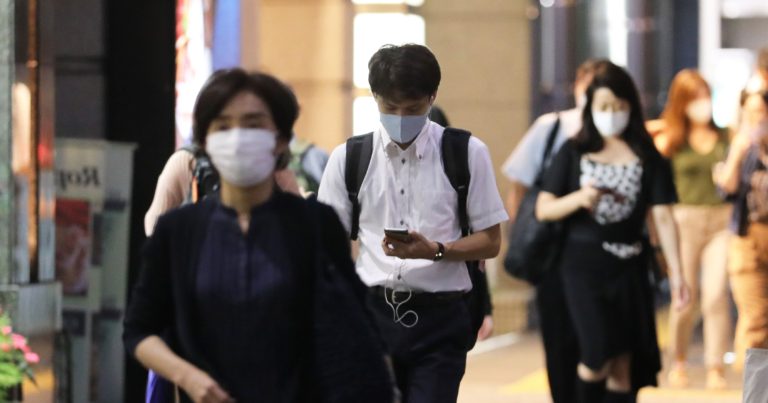
US advises against travel to Japan due to COVID-19 – National Herald

0

International Olympic Committee (IOC) Vice President John Coates said Friday that the postponed Tokyo Olympics would “absolutely” take place in two months, regardless of whether the Japanese capital is still in a state of emergency.

Tokyo, Osaka, and seven other prefectures have been under a state of emergency since April, and Japanese Prime Minister Yoshihide Suga added Okinawa to the list after the southern Japanese prefecture confirmed a daily record of 207 Covid-19 cases on Friday.

Public opposition to the Games in Japan has intensified in recent months as the country grapples with Covid-19. A recent poll published by Japanese newspaper The Asahi Shimbun showed that over 80 per cent of respondents opposed Tokyo hosting the Olympics this year.

WA Church Slammed Over Plans To Host Gay ‘Conversion Therapy’ Event – Star Observer

The Albany Baptist Church in Western Australia is hosting an event this Thursday called ‘Real Lives’ that features gay and trans speakers. LGBTQI+ activists have dubbed it an event that promotes  “conversion therapy” – a practice that is now banned in Victoria, Queensland and ACT. 

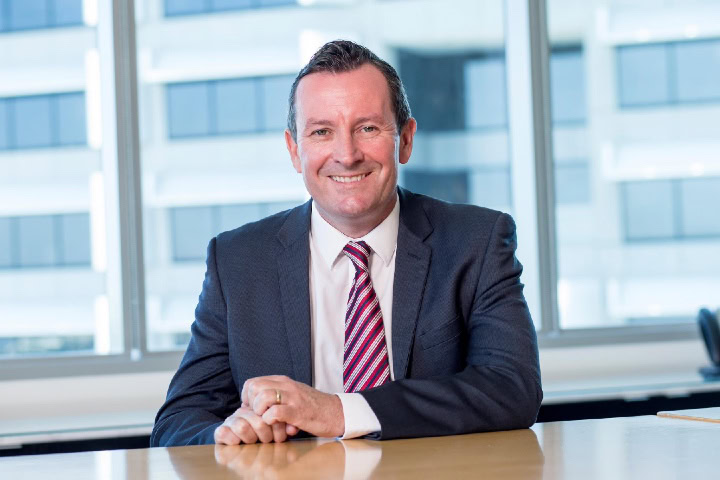
Conversion practices are not illegal in Western Australia, though Premier Mark McGowan  had in March promised that the state would ban the unscientific gay conversion practices if Labor was re-elected.

The news about the event, which features speakers who have “previously lived or identified as LGBTQ+, but who are now finding a new life in Jesus Christ”, was reported by ABC. 

Protests Planned Against Event

Local LGBTQI+ advocacy group Albany Pride announced on Facebook that they will be supporting those who protest the event outside the Church

Advertisement

“Although the church is denying this is “conversion” practice, it most certainly is just perhaps less obvious to the untrained eye,” the organization said.

Albany Pride, which cannot protest because they are not covered by insurance, said they would have a stall outside the church “providing information and a non-judgmental space to anyone that requires it.”

Church Says Will Go Ahead With Event

Despite criticism coming their way for hosting a homophobic event, the church in a post on Facebook last Saturday, said they were going ahead with the event scheduled for May 27.  The Church said they did not condone or support “coercive therapies”. 

“Albany Baptist Church will host an evening called Real Lives where some Christians who experience same-sex attraction and gender dysphoria will share their life stories in the context of the church community,” the statement attributed to a spokesperson from the church said. 

“As Christians, our belief is that God loves every person whatever their sexual attraction or however they identify. All are of equal value and dignity in His sight and in our sight. We do not support or condone the practice of any coercive therapies.”

“We are committed to respectful conversation with people who want to tell their stories. We want to honour the request from some same-sex attracted and gender dysphoric people to share their stories of how the Gospel of Jesus Christ has brought them hope,” the statement added. 

‘Conversion Practices Not Always Coercive’

Advertisement

Survivors of conversion practices pointed out that part of the problem is the misconception that all so-called conversion therapies are always coercive or violent. Often in religious and informal settings these take the form of “praying the gay away”. 

That is a distinction that was also sought to be drawn by faith-based organisations and conservative organisations while opposing the new law in Victoria that bans conversion practices. The organisations said the law encroaches on their right to religious freedom. 

“Conversion ideology teaches that the nature of LGBTQA+ identities are broken or disordered. It teaches that there is some negative cause to being LGBTQA+, which essentially means it can be ‘healed’, ‘cured’ or at least suppressed. This ideology is extremely common in faith groups all across the country, and is the basis of conversion practices,” Chris Csabs from survivor-led advocacy group SOGICE Survivors told Star Observer. 

Many churches who teach conversion ideology don’t consider themselves as being involved in ‘conversion practices’ because the media has perpetuated the idea that conversion practices are extreme and violent in nature. Most often, conversion practices look very different,” pointed out Csabs. 

WA Premier Promised Law Against ‘Conversion Therapy’

Earlier this year, WA Premier McGowan had promised the LGBTQI community that the state was opposed to unscientific conversion practices, that he termed a “cruel and misinformed practice”.

McGowan had said that his government would ban gay conversion practices by bringing in a law or rules to implement the national code of conduct for unregulated healthcare workers. However, it is not clear whether religious settings, like the event to be hosted by the Albany Baptist Church, would be considered illegal. 

Queensland became the first state or territory in Australia last year to outlaw conversion practices, but invited criticism for expressly leaving out religious settings. ACT passed a law banning conversion practices that covered both health as well as religious settings. 

The Victorian Law passed in February  and makes it a criminal offence to subject others to practices aimed at changing or suppressing their sexual orientation or gender identity that cause injury or serious injury. The Victorian law covers all settings, including health and religious organisations.

If you feel distressed reading the story, you can reach out to support services.

For 24 hour crisis support and suicide prevention call Lifeline on 13 11 14

For Australia-wide LGBTQI peer support call QLife on 1800 184 527 or webchat.

HPV vaccine success in gay and bisexual men – Cosmos Magazine

human papillomavirus ,HPV vaccine with needle on white background

Credit: Jes2ufoto / Getty Images.

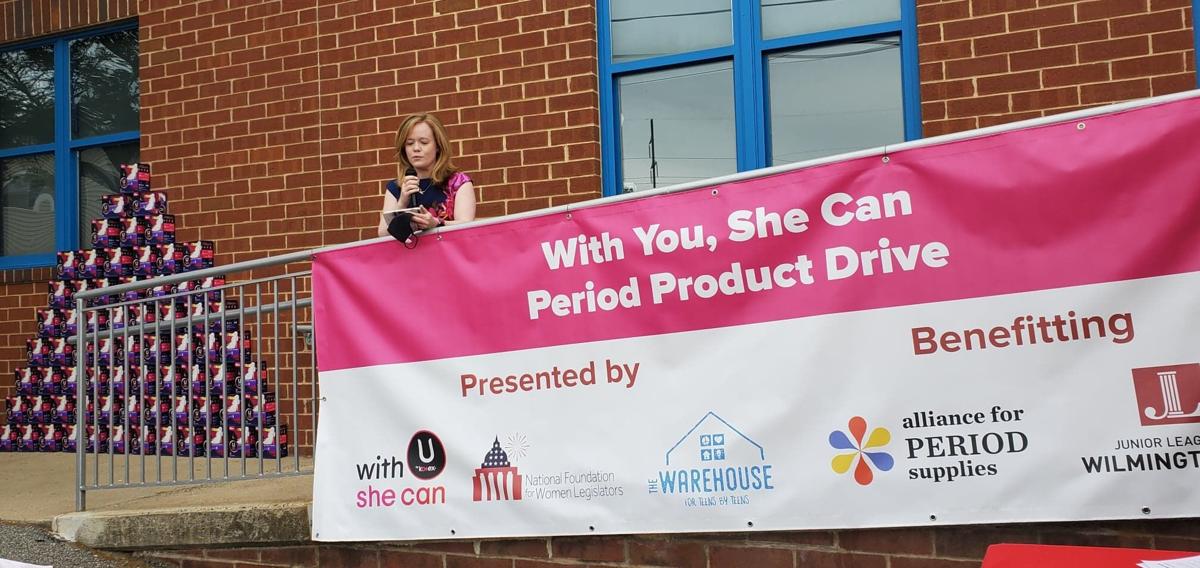
Senator Kyle Evans Gay at period products drive – WDEL 1150AM

Wilmington, DE (19810)

Today

Cloudy skies this morning will become partly cloudy this afternoon. High 76F. Winds SSW at 10 to 15 mph..

Tonight

Partly cloudy early with increasing clouds overnight. Low 66F. Winds SSW at 10 to 15 mph.

Updated: May 25, 2021 @ 4:58 am

The Huge Vivid 2021 Line-Up Has Been Announced – Broadsheet

Over the past few years Vivid has become a behemoth, drawing visitors from across the country and the world to check out light projections and installations, and big-name musical artists. But now, with Covid-19 continuing to rage and international borders shut (and state borders opening and closing as new outbreaks arise), the festival is returning to its roots – as a celebration for Sydneysiders. But that’s not to say its line-up, announced today, is in any way parochial. This year the festival will take over the CBD, with 50 light installations and projections, as well as 150-plus speakers across the festival’s Ideas program and 50 gigs.

The Vivid Ideas theme this year is Mavericks & Misfits. UK actor, presenter and body-positivity advocate Jameela Jamil (The Good Place) will chat via video link with Australian author and writer Jamila Rizvi about inclusivity and mental health. And the multi-talented rapper, author and actor Briggs is teaming up with Youtube cooking sensation Nat’s What I Reckon to chat about how music can support mental health and shape identity.

In addition to the headline performance by Sampa The Great, which was announced a couple of weeks ago, there’s much to love in this year’s Vivid Music line-up. Heaps Gay is taking over Luna Park for a “Kween’s Ball”, with two stages of live music and rides all night.

Lovers of kitsch should hit up Paddington RSL’s Rissole Rampage, which will feature performances by Donny Benet and Palms. Other artists include Betty Grumble, King Gizzard & the Lizard Wizard and Amyl & the Sniffers. While gigs will be held in classic Vivid venues such as the Opera House and Carriageworks, they’ll also get bums on chairs in some of the city’s best small venues: think Oxford Art Factory, Club 77 and the Bearded Tit. Gardening Australia legend Costa Georgiadis will even perform with his psychosexual funk band The More Please Orchestra at the National Art School, while Ngaiire will take to a stage at Parliament House – also (hilariously) the setting for an Ideas talk on whistleblowers in journalism.

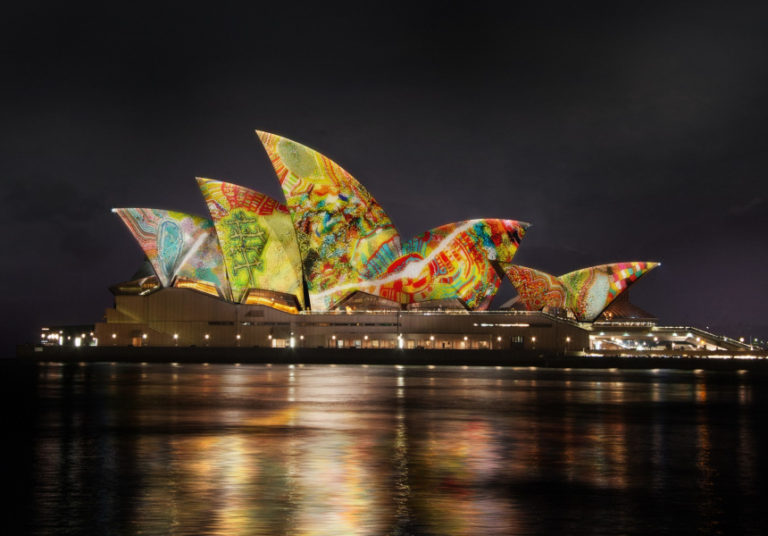
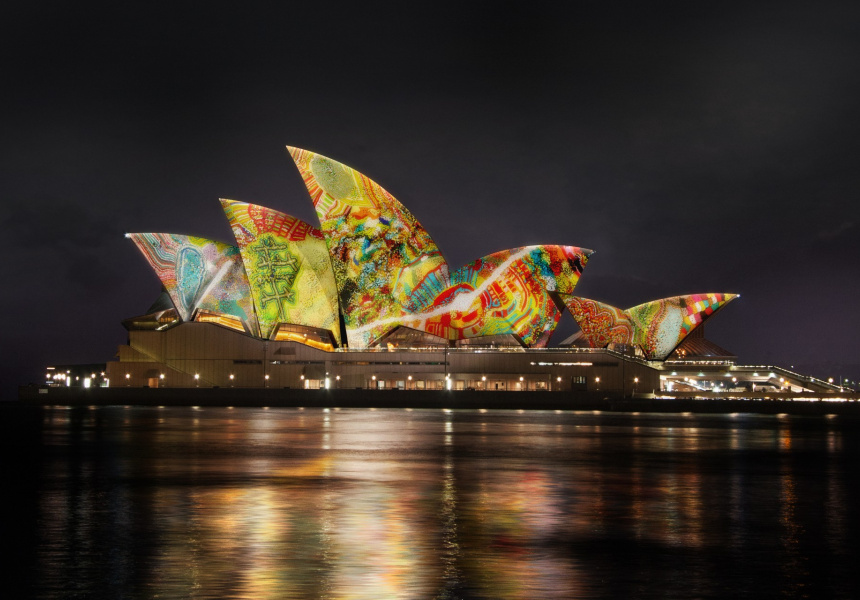
Finally, as ever, Vivid Light returns to take over the CBD with light projections and installations. For the first time, light projections across buildings (including the Opera House, the Sydney Harbour Bridge pylons and the MCA) will be thematically linked. Yarrkalpa (Hunting Ground) – a painting by Martu Artists and Curiious – has been animated by a group of local Indigenous artists and will be projected on the Opera House sails. There’ll also be a floating light walk on Darling Harbour, with platforms along the way encased in bubbles you can step into.
And this year you’ll have more time than ever before to check out live music, discussions and light projections: the festival is running for 23 nights, almost two weeks longer than in previous years. Visitors to the CBD to see the lights are encouraged to divide and conquer, visiting one precinct at a time (including the CBD, The Rocks, Darling Harbour, Barangaroo and Circular Quay) and lingering for a meal or drinks after they’ve checked out projections or gigs.

Vivid runs from August 6–28. Vivid Live tickets are on sale from 9am, Friday May 28.

vividsydney.com

Jeff Jacobs: Sun coach Curt Miller apologized for being wrong; now it’s Liz Cambage’s turn – CTPost

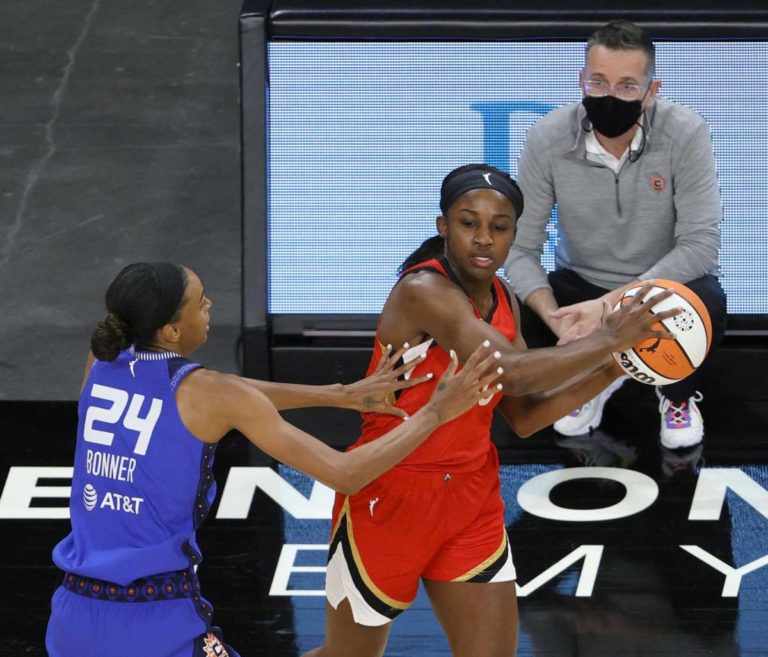
Before he was suspended for a game and fined $10,000, Curt Miller did the right thing Monday. He apologized.

“I made an inappropriate and offensive comment in reference to Liz Cambage’s height and weight,” the Connecticut Sun coach said. “I regret what I said in the heat of the moment and want to sincerely apologize to Liz and the entire Aces organization. I understand the gravity of my words and have learned from this.”

As a white, heterosexual, 65-year-old man, I realize some feel I am qualified to speak only about Social Security, baseball and prune juice. Education and life experience don’t matter. Good intentions don’t matter. Twenty-six years of covering women’s basketball matter not a whit. In some people’s eyes, perhaps even Liz Cambage’s eyes, my analysis should be confined to golf carts and enlarged prostates.

“I do not care for a white man’s opinion on racial issues,” Cambage recently wrote on another matter. “Never have. Never will.”

But hey, I like to live on the edge and I’m not going to shut up. Despite seven stents, two open-heart surgeries and a pesky cholesterol count, I look at the skim milk in the refrigerator on the odd day and reach for the whole milk for my Cheerios. Yep, on the edge.

So I’m going to say it. What Liz Cambage said in return to Curt Miller was racist and she needs to apologize or be disciplined by the WNBA. If she doesn’t care what a white man thinks, perhaps she’ll listen to some needed words from a white woman, league Commissioner Cathy Engelbert.

In an Instagram post late Sunday night, Cambage said there was something that happened Sunday in Las Vegas’ 72-65 loss to the Sun that needed her addressing.

In an attempt to get a favorable call from the refs, Miller brought up Cambage’s weight.

In the heat of the game, coaches exaggerate all the time to try to influence an official. An elbow becomes attempted manslaughter. A 5-10, 165-pound guard becomes 5-foot-nothing, 120 pounds when knocked down. And when the biggest person on the court is getting physical, they’re suddenly as big as a house, weigh 300 pounds, even a ton, and are still getting all the calls around the basket.

Conversely, my wife has long impressed on me, and I adhere to her words with a fanatical sense of self-preservation: “Never say anything to a woman about her weight.” I’m sure many other men have been similarly warned. Oops, have I broken an unwritten rule by writing this? Am I sexist? Or a sensitive man? Or should I go back to talking about the 1961 Yankees?

Of this, I’m sure. Body issues for women are real and serious. Her appearances in ESPN the Magazine’s Body Issue and with Rihanna’s lingerie brand stand as visual proof she doesn’t weigh 300 pounds.

“If there’s one thing about me is that I’ll never let a man disrespect me,” Cambage said. “Ever! Ever. Ever.”

With you 100 percent, Liz.

“Especially a little white one.”

What? What does race have to do with his remark? The answer is nothing and, given the volatile nature of the world, the words are way out of line.

“So to the coach of Connecticut,” she said, “I’m sorry little sir man I do not know your name.”

So it turned condescending. This is Miller’s sixth year as a WNBA coach. He took the Sun within one game of the WNBA title in 2019 and to the playoff semifinals last year. He is the Sun GM and coach. It’s Curt Miller, Liz. Curt Miller.

“The next time you try to call out a referee, trying to get a call, being like, ‘C’mon, she’s 300 pounds,’” she said. “I’m 6-8. I just double-checked, because I love to be correct and get facts. I’m weighing 235 pounds.”

OK, cool, but you may want to correct Wikipedia. It has you at 214.

“I’m very proud of being a big b****, big body, big Benz, bay-bee! So don’t ever try to disrespect me or another woman in the league. I don’t know if that’s how coaches run. Like you try to disrespect women like that from the sideline. You’re so lucky it was during a game.”

Cambage stared at the camera.

“You were so lucky I was doing my job.”

She’s talking trash now. She was applauded by many on social media. Some find it entertaining. Those last two sentences and the stare appeared like intimidation to me. Even a veiled threat.

“Any way to that little man, whole little tiny, where is you?”

She holds her index finger and thumb an inch or two apart. Yes, definitely intimidation.

“Stop trying to protect your insecurities, bay-bee. Pick up the phone. Call this psych (or sike). Because you’re projecting some bull (blank). Next time you try to disrespect me …”

Cambage is wagging her index finger at the camera now.

“Remember I’m 235. It might seem like 300 to your little eyes, but I’m 235, bay-bee.”

She mimed a couple of kisses, checked out, only to return: “I think there’s a big difference between players and player talking (blank) on the court, but for a coach for the other team to be yelling protected abuse — because we can’t do nothing back — is just crazy to me. And I be talking a lot and I didn’t even say nothing tonight.”

The story, leading with Miller’s apology, got national play Monday. And the more play the apology got the more I wondered if what Cambage had done wasn’t more damaging. She took it way too far.

Over more than five years with the Sun, Miller has shown himself to be a good man. He is a gay man in a world of team sports, a trailblazer. He has spoken openly. He is an inspiration in the LGBT community. Miller also has an adopted son who was sentenced to prison for armed robbery and he has openly shared his heartbreak and hope for him. This is no bully. He is a respectful interview, prone to long and thoughtful replies. Last summer, he coached with a big “Racial Justice” badge on his shirt. He cares.

In the heat of the fight, he went hyperbolic. He needed to apologize. He did. And later Monday night, Miller, who spoke to Cambage’s agent, amplified: “As a leader, words matter. It was inappropriate and offensive. It wasn’t directed at Liz, but it makes no difference. I’m disappointed in myself. I’m truly sorry. In a league where we empower women and have spent 31 years (as a coach) empowering women, it’s unacceptable.”

Miller would not directly address what Cambage said.

Cambage is a complex study. In 2019, she wrote a powerful piece in The Players’ Tribune about her fight with anxiety and depression. She also has been called a bully on the court. Allie Quigley and Stefanie Dolson said she’d call players “fat asses” on the court, something Cambage denied. Stef isn’t a liar.

More recently, Cambage threatened to boycott the Olympic Games in Tokyo, saying two Australian Olympic team promotional shoots lacked racial diversity. Her point was well made, yet her threat to boycott wasn’t especially well received. Cambage, the daughter of a Nigerian father and Aussie mom, backtracked. She will play in the Olympics.

When you say what Cambage did about not caring about white men’s opinions on race or demean someone one as a little, tiny man, you lose allies. We all need allies when the walk is righteous.

Trump and his ilk would probably brand me a socialist. I was once put on a blacklist by a religious group for supporting gays. Certainly, I have applauded voices in sports for speaking up on social issues, involving Black lives and the police. And that has brought no shortage of emails in my inbox imploring me to shut up and stick to sports. I will not shut up, but it has made me careful not to endorse the wrong message.

When LeBron James tweeted “You’re Next #Accountability” with an hourglass emoji at Columbus police officer Nicholas Reardon, it made me sick to my stomach. Ma’Khia Bryant’s death was tragic. She also was lunging at another Black girl with a knife when Reardon shot her. People began tweeting and saying all sorts of crazy stuff about him. If I were that other girl’s dad, I’d call him a hero. LeBron took down the tweet and admitted he fueled the wrong conversation.

Although this is certainly not a tragic situation — not even close — Liz Cambage must be careful not to fuel the wrong conversation.

jeff.jacobs@hearstmediact.com; @jeffjacobs123

Election of Poots: ‘If you are gay or a woman, be worried’ – NI community worker – The Irish Times

Northern Irish women from the Protestant community have described the election of Edwin Poots as the de facto leader of unionism, as “very worrying” and “depressing”.

Catherine Pollock (40), community worker in Derry living in the mainly loyalist Fountain area, told The Irish Times she didn’t “know whether to laugh or cry” at the result.

“Either way, if it had been Jeffrey Donaldson, it wouldn’t have been great, but that Poots is to be seen as representative of unionism is very worrying. He doesn’t believe in science. It’s just baffling. How do you reason with someone like that? If you are gay or a woman or are concerned about the environment, be worried.”

Catherine Pollock, a community worker in Derry

When put to her these were his private views, she said: “His private views don’t just look bad. They manifest themselves in real things that affect people. Gay rights, access to reproductive healthcare – he is not going to push any of that. It really does have tangible impacts on people’s lives.”

Poots is steeped in the DUP’s religious elements, and is on the traditionalist, Paisleyite wing of the party. He is opposed to the decriminalisation of abortion in the North and has courted controversy over his views on homosexuality and evolution – he is a creationist who believes the Earth was created about 4,000 years ago.

As minister for health he tried to maintain a ban on gay men giving blood which had been lifted elsewhere in the UK, a ban later found by the high court to be “irrational”, and also opposed same-sex couples being allowed to adopt children.

Emma Shaw (39) from east Belfast contributes to the relatively new Twitter account @herloyalvoice. It aims to “provide a platform for the voices of loyalist women…who are often marginalised and have not had the opportunity to have meaningful involvement in peace-building and policy work in Northern Ireland”.

Her reaction to the result was that “it’s pretty depressing”. Currently completing a Master’s degree in education policy at the University of Texas, she said many in her working-class, loyalist community feel their culture is “threatened… because we are seen as backward and ‘old-fashioned’.” The election of Poots will do little to improve that image.

Shaw is proud of her culture and traditions – like marching bands and bonfires to mark the night before the 12th of July – but feels these are attacked as showing loyalism as one-dimensional and with “no ideas, nothing to contribute to society”.

“We do have a lot to contribute. Loyalism is a wide, eclectic mix of social and political views. I think that is what @herloyalvoice does a good job of putting across. Everyone thinks all loyalists think the way the DUP thinks, and that’s not true.

“I am pro-choice in terms of women’s rights. My form of loyalism is different to someone else’s form of loyalism, but we all identify a loyalists and we all believe our culture and our traditions are important parts of who we are.”

Emma Shaw from east Belfast

‘Male-dominated environment’

Loyalist women are the ones who know the issues on the ground – whether in housing, childcare, education, Shaw said, but they aren’t heard by either politicians or the media. Many loyalist women, she adds, fear speaking publicly.

“On @herloyalvoice have faced a lot of backlash from lots of different angles. I was personally told to stick to wearing make-up and taking selfies.”

She believes if former leader of the DUP, Arlene Foster had been a man “she would have been treated with more respect” when suddenly forced to resign. “Politics in Northern Ireland is still a very male-dominated environment. That’s a big part of our country’s problems.”

Echoing Shaw, Pollock described as “really frustrating” that media and political leaders go to the Loyalist Communities Council – a body that includes ex- loyalist paramilitaries – when seeking “the voice of loyalism”.

“At grassroots level in unionism, even though women are hugely active, they are not given the same voice as they are within nationalism. Unionism is not as good in pushing women forward,” said Pollock.

Both hoped the election of Poots may force a debate about how their communities’ priorities and values are represented in politics.

“I’m increasingly challenging friends and family members who vote DUP. I ask, ‘Are you ok with that policy on gay rights?’ Maybe there will be more discussions about what they represent,” said Pollock.

Shaw hopes the result “gives other unionist parties such as Ulster Unionist Party and Progressive Unionist Party a chance to restructure and reform to attract voters who are done with the DUP.”

A new poll on Saturday, May 22nd, found that support for the DUP had fallen to 16 per cent. Support for Sinn Féin had risen to 25 per cent, putting Deputy First Minister Michelle O’Neill on course to be First Minister after next year’s elections.