Home Blog Page 185

Local Player of the Week: Wylie baseball’s Gay delivers again in region quarterfinal win – Abilene Reporter-News

Brooks Gay has put in solid start after solid start all season, and it was no different in the biggest start of his high school career.

The junior got Wylie baseball’s Region I-5A quarterfinal series against Canyon Randall off to a good start. He pitched a complete game, allowing one run on four hits with no walks and eight strikeouts as Wylie won 9-1.

Wylie pitcher Brooks Gay (19) delivers to the plate during Friday's District 4-5A contest against Lubbock Coronado at Bulldog Field on April 9, 2021. The Bulldogs scored two runs in the sixth inning to win 3-2.

For his efforts, Gay earned 47 percent of the 3,547 votes to be named the Abilene Reporter-News Local Player of the Week for the week ending May 22.

It was the first time, the Bulldogs had reached the region quarterfinals in Class 5A and they won the series with a 17-7, five-inning win in Game 2. Wylie takes on Aledo in the region semifinals in a three-game series beginning Thursday in Cleburne.

This week’s Top Five

1. Aliyah Martinez, Cooper Softball

Martinez was a big part of the Lady Coogs’ Game 1 win against Aledo. She got on base and when she did, she came around to score. She was 2 for 3 with a walk and scored three runs. She hit a double and a triple and drove in a run in the 8-6 win.

2. Riley Hood, Wylie Baseball

Hood helped power the Bulldogs into the region semifinals. He went a combined 7 for 8 with a double, a triple and six RBIs — including a four-RBI effort in Game 1 — as Wylie swept Canyon Randall 9-1 and 17-7 in the Region I-5A quarterfinals.

3. J.T. Thompson, Wylie Baseball

Thompson was a force to be reckoned with in Game 2 against Canyon Randall. He went 3 for 4 with a double from the No. 2 spot in the lineup, drawing a walk and scoring a run. He finished with a game-high five RBIs as the Bulldogs won 17-7 in five innings.

4. Angelic Gonzalez, Cooper Softball

If runners were on base when Gonzalez came to the plate, they weren’t when she was done in Game 1 against Aledo. She went 2 for 2 with a walk and three RBIs. One of her hits went for a double in the Region I-5A semifinal opener.

5. Ruth Hill & Kaitlyn Strain, Abilene High Tennis

Hill and Strain picked up some state hardware in San Antonio. They rallied from an early 2-1 deficit in their Class 6A quarterfinal match to win 6-2, 6-2. They weren’t able to solve Round Rock High’s Ramitha Irrinki and DeCora Antoine, falling 4-6, 7-6 (1), 6-3 in the semifinal to earn bronze medals.

Jordan Hofeditz covers Abilene high schools and colleges, Big Country schools and other local sports. Follow him on Twitter at @jhofeditz. If you appreciate locally drive news, you can support local journalists with a digital subscription to ReporterNews.com.

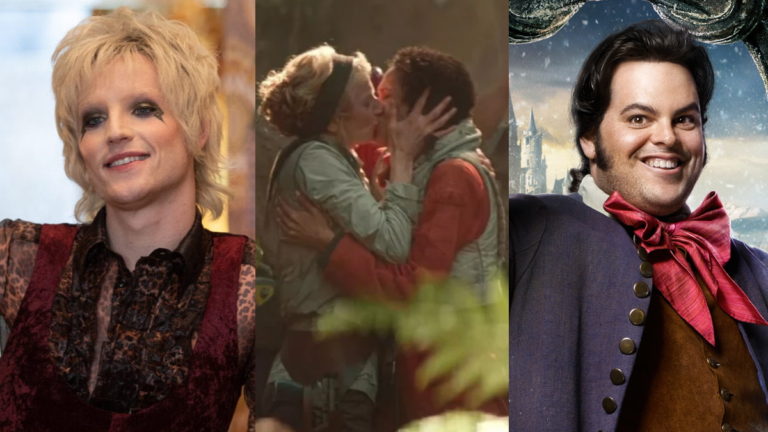
Congratulations to Disney’s 7th First Openly Gay Character – The Mary Sue

Cruella, Star Wars, and Beauty and the Beast

With the release of Disney’s Cruella on the horizon and reviewers taking to social media after screenings, reports have surfaced that we are FINALLY getting our very first openly gay character from Disney.

This should be cause for celebration, but as you can see from that ratio, Twitter didn’t take too kindly to that headline because, frankly, we’ve seen headlines like this many times before.

Like.

A LOT.

It’s been done SO much that someone made a meme out of it.

Openly gay actor John McCrea plays the character, Artie, the fashion-obsessed friend of Cruella. McCrea had this to say about the character in an interview with Attitude:

 “It depends on who you’re asking I suppose – but for me, yes, it’s official: he’s queer. But we don’t see him falling in love; there’s no social aspect to the character. It’s not beating you on the head with a stick. But his lifestyle is fabulous, he loves his life and it was so fun to play him.” Asked if the character was written as queer, John replied: “In one of the original scripts he was a drag queen, so I think he was always intended to be queer-representing I suppose, or somehow a member of the LGBTQ community. I imagine that was always the case.”

Later in the interview, McCrea says this:

“If I had a character growing up like that to watch on the screen I would’ve fallen in love. Also with the idea that he’s completely well-adjusted, very happy, and has a real lust for life. Those are things I’d find so exciting. He lives by his own rules. A wonderful line he says is: ‘normal is the harshest insult of all.’ A wonderful mentality to have.”

The problem for me, personally, isn’t what McCrea is saying, as to me it boils down to, “I see the character as queer, the character is fabulous and has a wonderful outlook on life.” That’s fine, and honestly, there’s a chance I’ll feel the same way about Artie whenever I get a chance to watch Cruella. McCrea isn’t even the first actor to come out and say something like this, a recent example being Kelly Marie Tran with Raya.

But these actors aren’t saying that their feelings on the character make it true, hell, they probably CAN’T say that because, well, none of the creative forces behind these works have said that it’s true. So no, these actors aren’t the ones who are out here declaring that a character is THE FIRST OPENLY GAY DISNEY CHARACTER IN HISTORY, that’s what certain news outlets are doing with Cruella.

And honestly, maybe Artie IS a fabulously gay character, but by building up our expectations after years of, well, building up our expectations, you’re doing a great disservice to the character, their story, and reminding everyone of the number of times we’ve been set up for failure with these preemptive outings. Because now, when I watch Cruella, I’m gonna expect Artie—and his queerness—to be hugely important to the story. Maybe it is. Maybe I’m being paranoid.

Or maybe this is what happens every time someone stamps that FIRST GAY label onto a headline.

I want to say that McCrea being gay has given outlets reason to flock to this idea harder than they have before, but this preemptive celebration of queerness is something that’s gone on for years. In the case of Cruella, it seems to be a combination of McCrea being gay, his Attitude interview, and what’s been said by reviewers online, but as noted in this article by Dani Di Placido’s for Forbes, Disney itself has done this “first gay” promise in the past:

It’s a familiar milestone for the company, as Disney has pioneered their “first” gay character at least 7 times, give or take; OnwardBeauty and the BeastJungle CruiseThe Rise of SkywalkerZootopiaToy Story 4, and Avengers: Endgame all feature minor characters who make exceedingly subtle references hinting at same-sex attraction.

Conveniently, these minuscule slivers of LGBTQ representation are so brief, so utterly irrelevant to the plot of these films, that they can be easily edited out for socially conservative audiences, as was the case with the quick lesbian kiss from The Rise Of Skywalker.

If you don’t remember who any of these “first” gay characters are, you’ll be forgiven, since as Placido says, they have very minuscule roles despite being heralded as the first. As an example, the Russos said some wonderful things about the importance of representation for Avengers: Endgame.

“It was important to us as we did four of these films, we wanted a gay character somewhere in them. We felt it was important that one of us play him, to ensure the integrity and show it is so important to the filmmakers that one of us is representing that. It is a perfect time, because one of the things that is compelling about the Marvel Universe moving forward is its focus on diversity.” – Joe Russo for Deadline

Well damn, that sounds fantastic! Which headliner character is it? Because if it’s so important to you, surely it’s a character whose name we’d remember, surely it’s not justblink and you’ll miss it scene via a therapy session because the guy says he went on a date with him and—

Oh.

It’s such a punch to the gut because there have been attempts to make big-screen Disney characters queer. Oscar Isaac spoke about it with Finn and Poe, and Tessa Thompson talked about it with Valkyrie. So we’re denied seeing any of the major players as queer, but as a consolation prize, we’re assured that “the gay” is coming and it’ll be so FIRST and HISTORICAL and—

Exactly!

But to answer the question, they’re in the background, dropping off their child at kindergarten, then later, picking the child up.

What’s really frustrating about these small moments that are celebrated in advance is that they actually receive backlash. The lesbian kiss in The Rise Of Skywalker was cut in certain countries while that Toy Story 4 scene was protested by One Million Moms. So not only does this early promise of great queer importance feel inadequate compared to the press it gets, this crumb of representation is seen as a negative by conservatives.

This, to me, just means that the folks who offered up this 2.5 millisecond moment will think they’ve done a great job because the conservatives are pissed off. Sure, many of us within the queer community are unsatisfied, but hey, that moment is being protested as being TOO GAY, so clearly there’s something there, otherwise, what are conservatives so mad about? Now when these creatives do these interviews they’ll talk about how they felt it was so important to include this significant moment no matter the pushback they get from conservatives, and as we all know, flat out hateful responses have a way to overshadow valid criticize, ie: queer audiences who are tired of empty promises.

It’s a chance for the bare minimum to get a pat on the back.

Honestly, I feel like I’m not asking for much as a Black queer woman, but moments like this make me feel like I’m asking for the world. If I point out the exhaustion of being promised a first, some might say to wait and see—even if we’ve seen this before. Others might say I’m ungrateful for what I’m getting, so why even bother giving me anything at all? Plenty of people won’t look at the full picture of how much work it is to try and be included in the media that we love, and how bitter it tastes to be promised that very thing, only for it to be in the background of the story.

They also don’t realize how it puts us on edge as companies like Disney approach canonically queer characters. After so many years of shallow promises and refusal for queerness, even when actors were all for it, I’m filled with excitement because I wanna see the likes of Young Avengers (which is SO unapologetically gay) on the big screen, but I’m also terrified about them reducing it to another unnoticeable FIRST moment that’ll be championed as something monumental. Even if I personally feel that there’s no way you can do Young Avengers without an overabundance of queerness, that fear is still there, because I keep being told to get hype over the bare minimum.

Dealing with a combination of “creative tries for inclusion and is denied” and “we promise there’s inclusion and that two seconds is really important” is so tiring, and at this point, I wish studios and outlets would just let us watch the damn movie and form our own opinion instead of trying to make that opinion for us.

I want queer representation, but that doesn’t mean you have to constantly try to lure me in with a 7th first. Just let the story speak for itself, unless, of course, you have to speak for the story because what you’re trying to sell me can be easily missed.

(Image: Disney)

Want more stories like this? Become a subscriber and support the site!

The Mary Sue has a strict comment policy that forbids, but is not limited to, personal insults toward anyone, hate speech, and trolling.—

Have a tip we should know? [email protected]

Roxane Gay Is Starting Her Own Publishing Imprint – The Cut

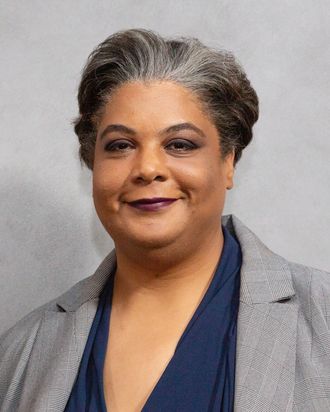
Photo: Gabriel Olsen/FilmMagic

Exciting news if you’re sitting on a debut novel manuscript (or just like to read): Best-selling author Roxane Gay announced this morning that she is launching her own publishing imprint, Roxane Gay Books, in partnership with Grove Atlantic and her editor, Amy Hundley. The imprint will publish three books per year, and for now, will accept agented and un-agented submissions, including fiction, nonfiction, and memoirs.

Throughout her career, Gay has made a point to advocate for underrepresented groups, and her imprint aims to amplify queer, feminist, and other underrepresented writers who might not have access to the industry.

“There are so many barriers and so many gates,” Gay said in an interview with the New York Times. “Let’s take them down.”

With her picks for the Audacious Book Club and previous experience running Gay magazine, Gay is excited to reenter the publishing world.

“I love having a hand in bringing brilliant writing into the world, and over the past 15 or so years, I’ve done that in various editorial capacities that have been incredibly gratifying,” Gay said in a statement via ABC News. “It has been a lifelong dream to have a literary imprint of my own where I could publish great books and have the support of a storied publishing house behind me.”

Top 10 Free Gay Dating Sites and Matchmakers Worth Trying – Cleveland Scene

click to enlarge image1.png

Gay dating is a fabulous thing, many gay dating sites and matchmakers will offer their services to help people connect and find their soulmates or someone to have fun from time to time. 

Free gay dating sites might not sound as promising as those with a paid subscription might, but you’d be surprised that some of them can compete with some of the best gay dating sites on the market.

The year 2021 brings lots more excitement to the dating game, and the competition between the sites keeps on heating up. New members keep on registering, and it’s up to the dating sites to lure them onto their platforms with the best offer that will guarantee a successful match to all willing to sign up for their services.

To give you a better insight, and help you in your search for someone to share precious moments with, here’s our list of the top 10 gay dating sites and matchmakers worth trying in 2021.

1. MenNation.com

MenNation.com is one of the biggest names in the gay dating industry, with around a hundred million members worldwide. The matchmaker has been around for quite some time, and it has grown into an exclusive place where many single men can find their soulmates or couples to find others to share their intimate moments.

The company responsible for the creation of MenNation.com is Various, Inc. that’s also a creator of one of the best dating sites around, AdultFriendFinder. For a site that’s been around since 1996, MenNation.com stands the test of time and keeps on delivering on its promises. It connects people with the same interests and allowing them to share unforgettable moments.

This gay dating site has a huge member base of gay men or women ready to share their thoughts and explicit material, and it’s a guarantee you’ll find someone that will fit your taste.

However, to get all the features unlocked, you’ll need to invest money by paying a monthly subscription from $34.95 per month or $14.95 for twelve months.

2. eHarmony.com

If you ever got interested in dating sites, there’s no way you haven’t heard of eHarmony.com that has been around since 2000 and is still relevant now in 2021.

eHarmony.com is a site where all gay men or women can find their soulmates as most of the users claim they’re registered to find someone with whom they can share their life.

Everyone interested in finding their true love will find eHarmony.com a perfect place for matching with people sharing the same interests, which later can lead to a happily ever after. 

The good side of eHarmony.com is that it offers a free downloadable app to its members that will make browsing and matching even more practical and simplified.

Anyone can comfortably browse the site on their phones and use all the features that the matchmaker offers. Even if you’re commuting to work and back, the app will be precious to kill some time and chat with other gay members.

Just as the previous site on our list, eHarmony.com needs a subscription, and the lowest price for a premium plan starts at 35.90 for one month.

3. Adam4Adam.com

As we mentioned above, free gay dating sites can be as good as those that you need a premium subscription to use all available features. 

Adam4Adam.com is one of the best examples of a gay dating site that’s completely free to use for all its members. “How do they manage to do that?”, you might ask. Well, Adam4Adam.com makes all the revenue from the ads and banner space sold on their site. It’s a unique way of handling their finances, and others could look up to this example.

Since the launch back in 2003, Adam4Adam.com accumulated over six million members in the US, and the numbers surged following the recent growth of the matchmaker’s popularity.

Anyone looking to try their luck finding their soulmate should give this gay dating site a try, as it won’t cost them anything to do so.

4. FabGuys.com

Let’s mention another free matchmaker where you can forget about using your credit card and enjoy all the features this gay dating site has to offer.

FabGuys.com is one of the best gay dating sites on the uprise in recent years, and many members switch using it solely for meeting new gay men free of charge.

For all those who want to become a member of a fast-growing community, FabGuys.com is a perfect place where you can meet other people with the same interests and meet the man or women of their lives.

The site has members from all sides of the world, and you can indulge in adventures with a solo man or with registered couples seeking others to share their bed and intimacy.

We recommend trying this matchmaker as many can find happiness in some of the simplest places on the planet- and FabGuys.com is just that.

5. Grindr

Grindr is one of the most active domains among the best gay dating sites, with millions of users sharing more than two hundred million messages daily. 

Slowly, it became one of the leading dating sites for all gay people who love sharing their moments with others in a virtual world.

One of the features that separate Grindr from its competitors is that members can state their health on their profile and state if they’re HIV positive or not.

In the gay community, HIV is a big issue, and many would love to know what they’re getting into before having an intimacy that could lead to the transmission of disease.

Grindr revolutionized this option, and it has been a valuable asset to them ever since. 

However, to use all the premium features of Grindr, you would have to pay a subscription starting at $13.00 per month for a basic package.

6. Taimi

Taimi offers a specialized app for the LGTB community that can match even the loneliest people and allows them to experience precious moments of passion.

Most of the members on this app come from the US, and anyone looking to find their soulmate within the states can register their profile for free on Taimi and start meeting new gay people.

Compared to other matchmakers on this list, younger members dominate the population on Taimi, and if you belong to a younger crowd, you won’t have an issue finding others that will be ready to meet.

Taimi offers many great features that you don’t have to spend any money to use, but the best of them will cost you a monthly subscription that’s quite expensive.

If you decide to pay for a one-month subscription, the pleasure will cost you $41.99 per month, but if you go for a twelve-month subscription, it will cost $6.00 per month.

7. GayCupid.com

If you watch TV often, there’s no way that you could miss on many commercials advertising GayCupid.com as one of the best dating sites that match gay men and women alike.

GayCupid.com is one of the most advertised sites in the US, with millions of members ready to mingle and experience an adventure of a lifetime.

If you’re single and ready to mingle, GayCupid.com is a perfect place where you can find people with the same interests and connect with them in a matter of minutes.

To register on this matchmaker and get the chance to meet new people, it will take only a few minutes to go through a sign-up process, and you get access to a 100% gay populated site.

A positive side of this gay dating site is that it offers a three-month free subscription, where you can test the site’s full features before spending any cash.

 A premium account compared to a free one will give you access to a much better experience, and it’s great to get to know what you’ll be getting when upgrading your account.

Subscription to this site is on the expensive side, and it costs $24.98 per month for the cheapest package.

8. Scruff

We’re getting close to the end of our list, but it doesn’t mean that the next couple of sites are worse than the previous ones.

On the contrary, Scruff is a gay dating app that matches anything mentioned above and competes with some of the best gay dating sites in the industry.  

Scruff dominates with the gay men looking for others to engage in long-term relationships they’ll remember until the rest of their lives.

Most of the members on this matchmaker come from the US- connecting to someone close by is made possible by allowing the app to track their location.

By connecting members that are in the same area, the match success rate is much higher than with any other site or app without this feature.

The price of premium access is in an average range, and it will cost $14.99 per month to get started.

9. Hornet

Hornet is one of the medium-range gay dating sites with over four million active members that search for their happiness online.

For all those inexperienced in online dating, Hornet is a perfect matchmaker to get used to the mechanics and features of any serious gay dating site.

Hornet claims that they’re not just an ordinary dating site, but more like a gay social network where members can share their experiences and get to know each other before taking steps to meet each other.

Verification that this site makes every member go through prevents fake accounts from registering and keeps the members safe from unwanted security breaches.

Hornet is not a free matchmaker. Even though you can use some of the features free of charge, it’s not even close to what you’ll get if you upgrade to a premium membership.

The basic package costs $9.99 per month, and it will unlock most of the features.

10. Gaydar

The last on our list, but not least, is a well-known site that offers its services through a mobile app downloadable to both Android and iOS.

Gaydar has one of the best interfaces that even those without computer skills can learn to use rather quickly.

Gaydar also uses the current location of the members and connects them based on the distance between them. Based on the distance between the members and their preferences, the matchmaker will connect them and recommend them to each other. It guarantees that most recommendations will not be in vain and that everyone can make the most out of them.

We recommend this site primarily based on many positive reviews that tell a story of a site that changed their lives by bringing a dose of excitement.

Gaydar is one of the cheapest sites that require a monthly subscription because the basic package costs $7.99 per month.

Conclusion

Online gay dating sites and matchmakers gain a lot of popularity in recent years, and we can only expect only great things to happen shortly.

With the incline of new members joining daily, online dating sites did a great job following up on high demand and providing content that can satisfy everyone’s taste.

We’re eager to see what will happen in the future and other great features we can expect from online dating sites.

Neo-Nazi arrested after terrorizing gay couple & vandalizing trans support center for months – LGBTQ Nation

A Canadian neo-Nazi has been arrested and charged with vandalizing a gay couple’s home as part of an ongoing campaign of terror aimed at the men and their two children. The couple has a Pride flag hanging on their porch that caught the man’s attention.

The man had previously been arrested and charged with vandalizing a transgender support center earlier this year.

Related: Former neo-Nazi avoids prison sentence after arguing being trans is punishment enough

Seth Bertrand repeatedly scrawled swastikas and racial and homophobic slurs on the Windsor-Essex Transgender and Allied Support office building and broke a window before being caught and charged in April.

But at the same time, officials say, he was terrorizing a gay family with two small children. Bertrand’s alleged harassment was so severe, the couple’s friends set up 24-hour surveillance of their home and they sent their children to stay with relatives.

And after days of nonstop abuse, the brazen neo-Nazi rang the couple’s doorbell and pretended to be a concerned neighbor. Bertrand asked to see the footage from the couple’s security camera to ensure his face couldn’t be seen.

Bertrand is accused of slashing tires on the couple’s cars along with any neighbors who parked on the street in front of their home. He smashed and ripped mirrors off of cars, carved “Fuck Fags” on one car, and left notes signed “Heil Hitler.”

“Our tires were slashed. We’ve had things broken off of our home. We had a camera ripped off of our house. We had the mirror from our neighbor’s car that got vandalized thrown at the big bay window in front of our home,” Aaron Bergeron told local media.

After the couple’s plight made the news, Bergeron and police say Bertrand approached the home asking to see the video footage to ensure he couldn’t be identified.

“It’s been scary and the fact that he was here and talking with my children, it makes me feel incredibly anxious,” Bergeron said.

Bertrand was identified by the footage – including where he approached the house during the day to try to destroy the evidence. He was also caught on video vandalizing the center after a local company donated security cameras to the facility.

Hello Facebook world! I am hoping that you can help me. The pictures that I have included in this post is the latest in…

Posted by Aaron Bergeron on Friday, May 14, 2021

Here is the video of the guy leaving the note and throwing the brick. Just so everyone know he missed the window but did do some damage to the window frame and the plants on the porch. I guess Corbin was right and he is jealous of our plants. #hatecrime #coward

Posted by Aaron Bergeron on Friday, May 21, 2021

Abilene Wylie juniors helping baseball team’s run to Region I-5A semifinals – Abilene Reporter-News

The Wylie baseball team is full of talented seniors, but don’t overlook the juniors who are helping fuel this year’s run to the Region I-5A semifinals.

Landon Williams, J.T. Thompson, Garrett Graham and Brooks Gay are a big reason the Bulldogs still ae playing. Beyond the starters, Wylie also can call on Dante Cano, Grayson Bearden and Jaxon Rutledge in relief on the mound. 

“They add to us. Whether it’s from a defensive spot or at the plate or on the mound, behind the plate, they’re a huge part of what we’re doing,” Wylie coach Grant Martin said. “We’re blessed and lucky to have them as a part of it.”

When the Bulldogs take the field against Aledo in the region semifinals, beginning 5 p.m. Thursday at The Depot in Cleburne, it will take everyone to win the best-of-three series. 

Local Player of the Week:Wylie baseball’s Gay delivers again in region quarterfinal win

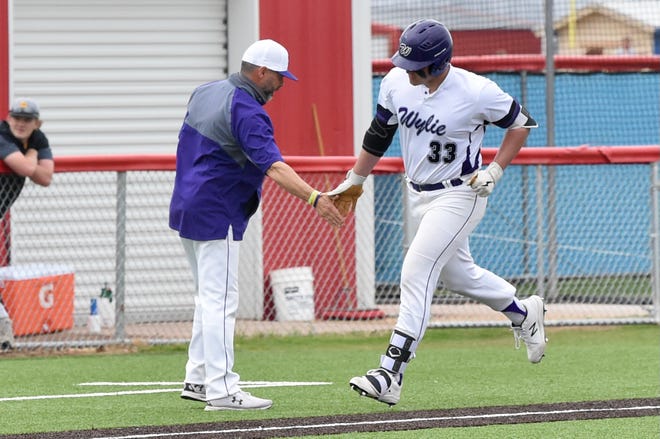
Wylie's Garrett Graham (33) is congratulated by head coach Grant Martin as he rounds third base following a home run against Midland Lee during the Abilene ISD Invitational. Graham is one of four junior starters for the Bulldogs as they begin the Region I-5A semifinals against Aledo on Thursday.

There’s also a little extra motivation.

The final game of the 2020 season before the shutdown was a 3-2 loss against Wylie’s former district foe. The Bulldogs haven’t forgotten.

“Really just looking forward to the game this week,” Williams said. “Looking to get revenge from last year’s 3-2 loss, I still remember that … I’m ready.”

Making up for lost time

There’s an extra emphasis on making this year count. With a big senior class and last year mostly put on hold, the Bulldogs came out with an added sense of urgency.

“I think we’re fortunate that we’re juniors right now,” Graham said. “Last year they were juniors and had almost their whole season canceled. We still have one more year and it’s good because you can tell everyone is striving to do their best because it’s (the seniors’) last year and we didn’t have last year.”

Wylie second baseman J.T. Thompson (9) throws to first for an out against Lubbock Coronado. Thompson is playing his first full season on varsity after last year was canceled.

The 2020 season would have been a good chance for the juniors to get playing time. With just three seniors after a large 2019 senior class, there were opportunities to get in the lineup. Without those games, they have made the most of each game this season.

“Last year was tough on everybody, it would have been a great year for them to get more games,” Martin said. “The great thing about it, they did see time early on, success early on and that’s a big deal. And the ability to play so many games this year will only help those guys moving forward, whether it’s in the playoffs or for them next year. They’ve done an outstanding job.”

Players such as Thompson stepped into new roles. His work at second base in tandem with shortstop Balin Valentine and wherever he’s placed in the lineup has been a big part of the team’s success.

More:Abilene Wylie finishes off Canyon Randall to sweep region quarterfinal baseball series

Thompson had three hits, scored a run and drove in five as the Bulldogs finished off the Region I-5A quarterfinal sweep of Canyon Randall from the No. 2 spot in the batting order.

“He’s very versatile in both places, at the plate and in the field,” Martin said. “He’s a tremendous defensive player, but his ability to hit it to different parts of the park is huge, too. He does a great job of hitting it where it’s thrown and has done a wonderful job of buying in. Having him up the middle, he’s made a lot of good plays and plays where maybe it’s not a diving stop, but it’s a play where you know it’s a hard play and a good play.”

Learning experience

Graham and Gay were regulars in the lineup as freshmen, getting a chance to play from the start.

Williams and Thompson would have gotten chances last year if it weren’t for the shutdown. 

But even the little bit they did get a chance to be in the varsity dugout was big.

“It helped so much, even just sitting on the rail getting mental reps from watching Balin (Valentine) and Tyler Martin,” Thompson said. “It helped me learn the game a lot more and I was thankful for the experience.”

This is the third senior class Graham has gotten to work with and learn from. Each one has helped build him as a player and will help him be a leader when his senior year comes.

Wylie's Garrett Graham (33) follows through and heads to first after hitting a single against Lubbock Coronado.

“Having the experience when you’re younger really helps,” Graham said. “You know how things are done and you can teach others how to do it on varsity. It’s good to learn from the older kids and then be able to pass it on to younger kids.”

If Gay is on the mound, Wylie has six seniors and four juniors in the starting lineup. And though they are a grade-level younger, they have played together for a long time. That includes Graham and Williams being on the Wylie Little League’s Junior League World Series team with a lot of the seniors.

“Those guys have done an exceptional job for us,” Martin said. “It’s a great mix. Those kids have played together for a long time. Those are guys, too, that have spent a lot of time together. We’ve talked about the seniors spending a lot of time together, but these guys in the junior class, too, have played a lot of games and the combination of the two have been great for us.”

Coach behind the plate

A lot has been made of the senior class’ college plans, but the junior class isn’t without collegiate talent.

For one, Williams is committed to Louisiana Lafayette. He is the latest in a line of Wylie catchers to play a big role for the team that includes state champions Lane Bourland and Caleb Munton.

Wylie catcher Landon Williams (23) waits for the ball behind the plate against Lubbock-Cooper/ Williams is the latest in a long line of talented catchers for the Bulldogs and as a junior is committed to Louisiana Lafayette.

“Landon does an exceptional job behind the plate for us,” Martin said. “His ability to throw the ball and control the run game is huge, but he does much more than that. He’s a great receiver of the baseball, he knows our pitching staff very well. We put a lot on him and, from that position, how important that is. He handles it well.”

Williams also puts a lot into working on his craft. He maximizes his time in the offseason to get the most out of the off-field work to be at his best on the field.

“So much work goes into the offseason,” Williams said. “Being a one-sport guy, I take a lot of pride in working out, eating a lot, trying to gain good weight. Then putting in time behind the plate, working on throw downs, long tossing, strengthening the arm and then leg work to be quick behind the plate.”

That work and trust has made him a vital part of the Wylie pitching staff without throwing a pitch. He is the go-between for the pitchers and Coach Martin.

“There’s times when he goes out and visits and I don’t have to come out of the dugout,” Martin said. “Then his ability to communicate with me when he comes back to the dugout. He knows the way I want to pitch, the way the kids want to pitch, and his total understanding of the situation has been huge for us.”

Wylie catcher Landon Williams (23) talks to Jaxon Hansen (39) after a pitching change against Lubbock-Cooper.

Whether it’s working with Gay or Dash Albus at the beginning of the game or a reliever when they come in, the relationship and trust is there between pitcher and catcher to get the most out of every pitch.

“We’ve played together for such a long time, I kind of know what they like to pitch in certain situations or what they don’t like to throw,” Williams said. “Being able to work with them every single day and in the offseason … it’s so much fun. We have so many guys who can come in and shut it down. It’s a lot of fun to catch them.”

Finishing strong

There is a lot of experience and leadership the juniors will be able to take with them into next season.

“It’s easy to learn from these guys,” Williams said. “They’ll talk to you and let you know what to do, what not to do. Next year it’s going to be great to be in that leadership role and lead those younger guys.”

But they aren’t ready for that to happen just yet.

Wylie's J.T. Thompson (9) hustles down the first-base line against Midland Lee during the Abilene ISD Invitational.

“This Friday coming back to our hometown, playing in front of our home crowd,” Thompson said. “I think it’s going to be really exciting.”

The Bulldogs are in the region semifinals because of the way the team has come together.

“The great thing about this is, everybody is pulling together, everybody is rooting for each other,” Martin said. “Our seniors have done a great job passing down what they’ve learned. Our juniors, next year as seniors, will do the same thing. That’s a huge deal, to get the opportunity to play early is awesome and great, but the reason they’re playing is because they’ve bought in to what we’ve been trying to preach to them. … Those guys have been constants and they’ll be better for it in the future and we’ll be better for it.”

Jordan Hofeditz covers Abilene high schools and colleges, Big Country schools and other local sports. Follow him on Twitter at @jhofeditz. If you appreciate locally drive news, you can support local journalists with a digital subscription to ReporterNews.com.

Americans Strongly Support Trans Rights — In Some Cases – NPR

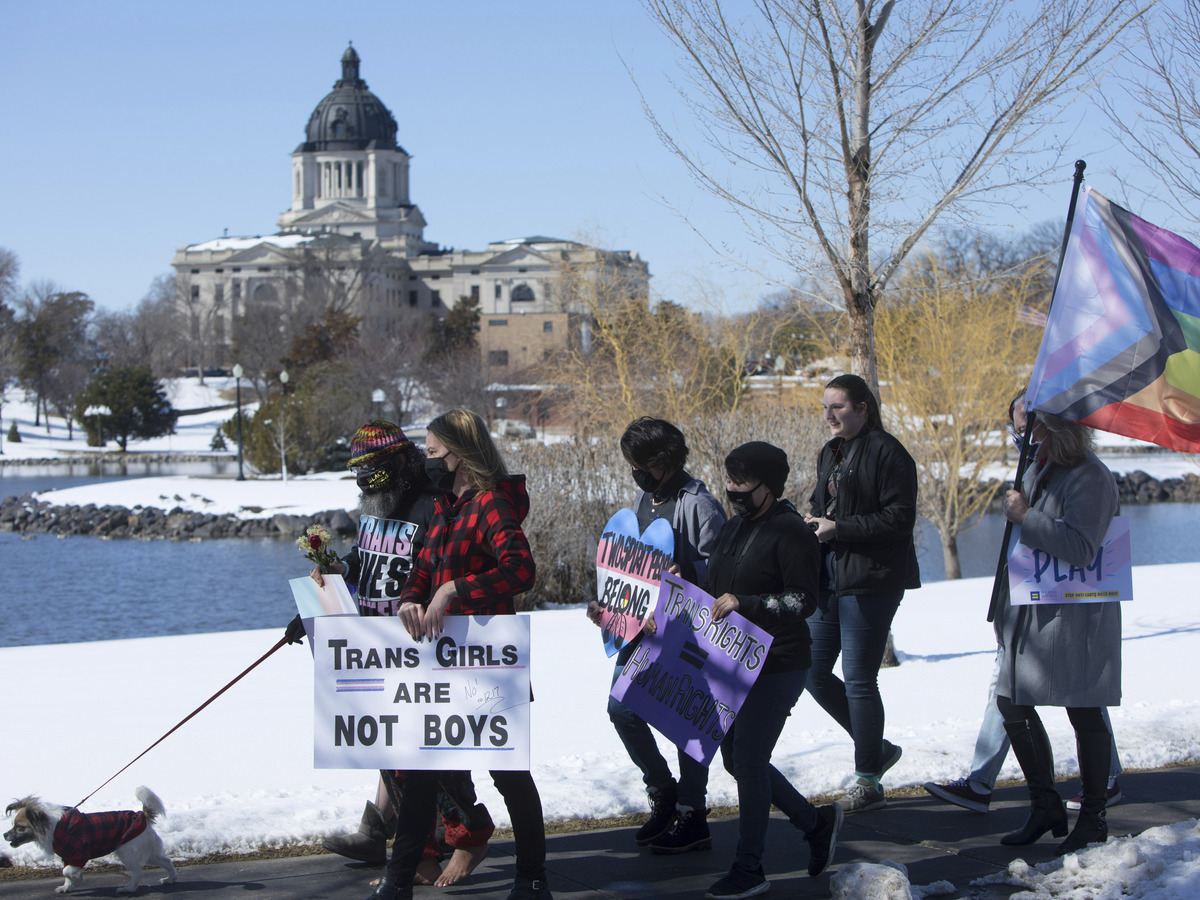
A new public survey reflects Americans’ “mixed views” on trans issues, Gallup says, as people said athletes should compete based on the sex listed on their birth certificates. Here, protesters march against a bill restricting transgender girls from sports teams in Pierre, S.D., in March. Toby Brusseau/AP Images for Human Rights Campaign hide caption

toggle caption

Toby Brusseau/AP Images for Human Rights Campaign

A new public survey reflects Americans’ “mixed views” on trans issues, Gallup says, as people said athletes should compete based on the sex listed on their birth certificates. Here, protesters march against a bill restricting transgender girls from sports teams in Pierre, S.D., in March.

Toby Brusseau/AP Images for Human Rights Campaign

Americans strongly support trans service members being in the military — even as they say trans athletes should compete in sports according to the sex listed on their birth certificates, according to a new Gallup survey.

In the survey, 66% of respondents said they’re in favor of openly transgender men and women serving in the U.S. military. But only 34% said trans athletes should be allowed to compete in sporting events that match their gender identity.

The survey, which was performed earlier this month, reflects Americans’ “mixed views” on trans issues, Gallup says. The numbers didn’t surprise Imara Jones, a journalist who is the creator of TransLash Media.

“Americans are deferential to the armed forces and have faith that if the armed forces set a standard and if people have met that standard, that people should be allowed to serve,” she says.

Sports bans on trans athletes, on the other hand, are “a solution in search of a problem,” Jones says, noting the small minority of transgender people in the United States.

More than 30 states have introduced bills that would ban transgender female athletes from participating in girls’ and women’s school sports, and a handful have approved absolute bans on trans athletes.

Referring to the recently lifted ban that kept transgender people from serving in the military, Jones says, “I think as [people] begin to spend more time on it and focus on it, that we’ll see a similar reversal” on sports bans targeting transgender athletes.

“I think that that was one of the issues with the trans military ban,” she says, “that this was not an issue that the military brought up, nor service members.”

It remains to be seen, Jones says, if people who are still forming their opinions about trans athletes will defer to the authorities in sports. After all, she says, schools and athletic associations were studying these issues for years before they became hot-button topics.

“These organizations have said that trans people should be allowed to compete in sports which match to their gender — that there is no impact, no difference,” Jones says.

In recent years, shifts in attitudes about gender and trans rights have been led by younger generations. But the poll found most young people think trans athletes should compete according to the sex listed on their birth certificates.

In the poll, 50% of Americans who are ages 18 to 29 said they have trans friends, relatives or co-workers in their lives — a far higher percentage than any other age group. Respondents were more likely to back trans service members and athletes if they have a trans person in their lives.

Despite that dynamic, 59% of people in the 18-29 age group said trans athletes should compete according to the sex listed on their birth certificates — a percentage that’s slightly higher than among the 50-64 age group, of which 58% said the same.

As Gallup puts it, “changes in views on LGBT issues are often driven by generational change, and at the moment, young Americans hold views similar to their elders’.”

Many Americans had not considered trans issues until recently. As Jones notes, most people in the U.S. don’t have any direct experience with a trans person.

Lots of Americans are figuring out what they think about trans issues — which they maybe had never thought about until a few years ago. What should people be thinking about as they navigate these ideas?

When asked what Americans should do to help them navigate the ideas that are now percolating in our society, Jones says they should start with education.

“You should seek trans resources or voices,” she says. “There are so many online, from the Transgender Law Center to The Trevor Project to the Trans Journalists Association. You should learn about the issue first before you make up your mind.”

Jones adds, “I think that people come to flip decisions on this because it’s not something that they spent a lot of time thinking about.”

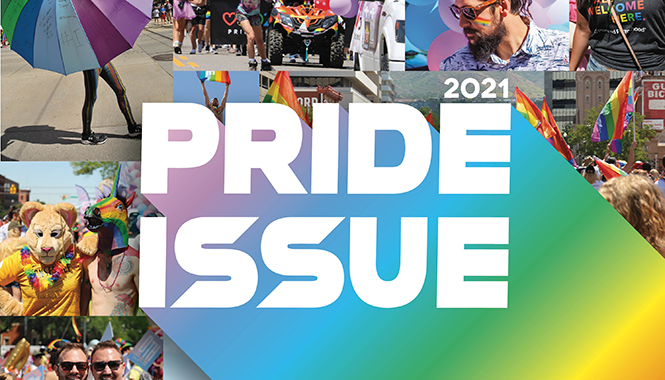
Pride Issue 2021 – Salt Lake City Weekly

cw_cover_210527.png

No matter where you get your Pride on, the sight of seeing so many effervescent souls converging in varying stages of dress and undress is indescribably powerful. That ribald “rainbow spirit” is outrageous, playful and proud. But it’s also sobering to think that much of the #lovewins talk of Pride is borne out of the collective wounds and painful memories that a good many LGBTQ have had to carry with them. Before there were rainbows, there were riots, protests and discrimination to overcome.

The Pride festival marks another year of survival and strength. A conservative hub like Salt Lake can so often make those outside the mainstream feel “othered” and excluded, and the act of being visible and seen for who you is incredibly healing.

That’s why, as cases of the pandemic appear to be slowing, it’s vital that the Utah Pride Festival bring us all together again. This year’s COVID-safe gathering will be greatly scaled back compared to past years’: no parade, live entertainment or vendors. If that sounds a little bit underwhelming, read on. Utah Pride Center CEO Rob Moolman will provide a multitude of reasons of why you should adorn yourself in your technicolor finest and come downtown to reconnect with your rainbow-loving besties.

In this issue, we’re excited to announce the possibility of a new queer bookstore as well as the bottling of a fresh batch of Ogden’s Own Five Husbands vodka. The locally distilled spirit spotlights five Utahns—are they brother-husbands?—some of whom you know.

For those of the LGBTQ persuasion who are grappling with coming out even if it means exiting the LDS church, Carolyn Campbell has provided a directory of organizations that can offer support and guidance.

And finally, Babs De Lay, who writes City Weekly‘s Urban Living column about local happenings and real estate trends, has scribed a piece about the golden era of women’s music as well as a touching tribute to a local icon, dear departed Charles Lynn Frost. De Lay, in her Urban Living column, also reflects on the early years of celebrating Salt Lake Pride.

And it’s good timing to announce that starting next fall, Weber State University in Ogden will be Utah’s first institution to offer a queer studies minor. The coursework will help graduates understand the unique challenges of those who identify with being LGBTQ and will equip students to create more inclusive workplace environments.
—Jerre Wroble

PS: For enquiring minds who’ve asked: The Miss City Weekly pageant is on COVID-hold again year. So, until the runway beckons again (hopefully in 2022), keep your drag alive!


STEVE CONLIN

  • Steve Conlin

Rainbow Gardens
Utah Pride Center’s Rob Moolman talks about an a-maze-ing (and COVID-safe) Pride Week.
By Jerre Wroble

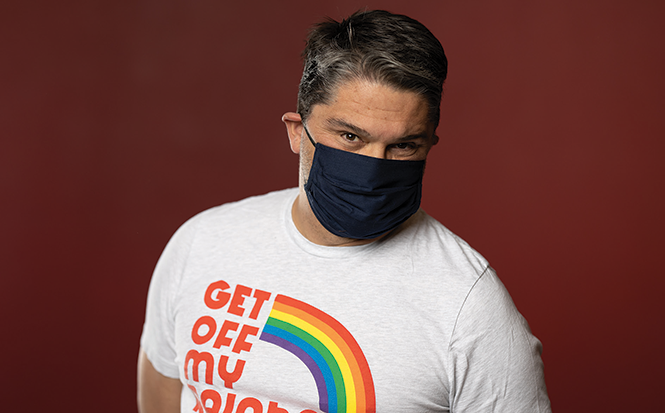
Rob Moolman has led the Utah Pride Center since February of 2018. After more than three years as CEO of the center, and two years before that on the UPC’s board, Moolman recently announced he will be leaving the nonprofit.

His tenure has been challenging but through it all, he brought his “engaging and calm demeanor,” as UPC board president Chris Jensen describes it, to the helm, helping guide UPC through recent well-publicized staff layoffs and criticisms. Moolman not only dealt with the impacts of staff reductions but also led the nonprofit “amid new community expectations, a new building, new program demands, the changing sociopolitical imperatives of 2020, as well as a financial crisis resulting from the pandemic,” Jensen says in a press release announcing the nonprofit’s search for a new CEO.

City Weekly caught up with Moolman in the countdown to the 2021 Pride festivities, which promises to be unlike any other the UPC has hosted.

City Weekly: After the year of COVID we’ve just been through, what’s the general state of Pride—in SLC and beyond?
Rob Moolman, Ph.D.: Pride is not something that goes away. While it might have been a little more difficult to see over the last few months, it has always been with us—think about all those rainbow flags you saw waving in communities and of the online celebrations we hosted through 2020.

We are happy to say that the celebrations are returning. They’re an important part of the fabric of the queer communities across the country and the world. We are making sure that the Pride events are safe for our communities which were disproportionately affected by COVID.

Salt Lake’s traditional Pride Festival and Parade are not happening this year due to COVID. Even still, UPC has created a unique celebration this year. How did the vision for it come about?
The 2021 Pride Celebration is unique, and we are so proud to be hosting it and to have a wonderful team of planners and volunteers putting together something that has never been done before. We pulled it off in 2020, when we were one of the only Pride Centers across the U.S. to host our Pride Road Rally—a large scale, successful, community-focused event—where we invited the communities to come out on National Coming Out Day to “drag Main.”

Our 2021 Pride Garden is going to be something quite special. This incredible event will probably never happen again—in this form and on this scale. It’s going to be fun, educational and offer an opportunity to come out of our houses, to be together again and to do so safely.

This original, one-time Pride Story Garden is an interactive outdoor exhibit curated with national and local partners. A limited number of guests will be allowed access to roam and find their way through this “a-maze-ing” exhibit that will tell “Our History, Our Stories, Our Communities.”

Twenty unique gardens will be available for guests to enjoy, each with their own theme that will include educational, artistic, informational and interactive elements with limited physical contact. Guests will have the option to purchase a Garden Games Gift Bag that includes toys and tools to enhance your garden experience as you partake in all interactive elements.

What can be done at this Pride celebration to raise awareness about important issues that impact the local LGBTQ community?
First: Come and find out about our history and our stories and the work of the LGBTQ+ communities in our story garden. As the expression goes—we are doomed to repeat history if we don’t remember it.

Second: Bring yourself and your voice to the Pride March and Rally (Utah Capitol, Sunday, June 6, 10 a.m.). In the past, the UPC has proudly hosted and organized the Dyke March, Trans March and the Pride March and Rally, which have all provided a space and opportunity to celebrate, recognize and give voice to our Lesbian, Dyke, Trans, Bi, Pansexual, Queer BIPOC and Non-Binary communities.

This year, we are asking people to join us for the Rainbow March and Rally, which will be one of the focal points of our week. We will “raise our voices” in support of all of these communities again as Utah’s LGBTQ+ community comes together to support each other, and to celebrate our roots and history.

What are small ways that people can make Pride Week more inclusive and diverse?
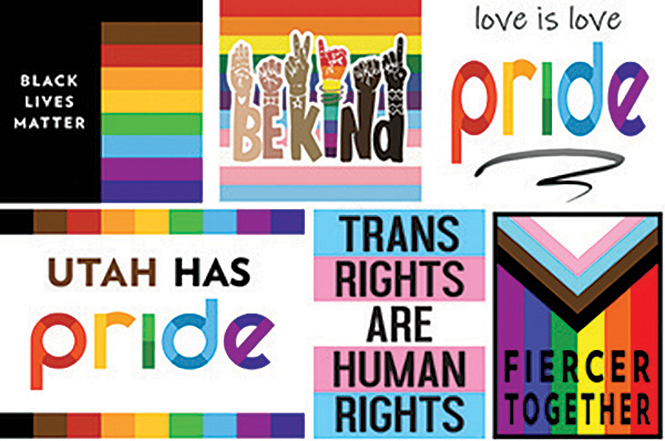
They can fly flags (Support Project Rainbow) or get yard signs from the UPC (pictured below) in order to show their visible support for their communities. I would also urge them to support local queer-owned and BIPOC-owned and -operated businesses and restaurants.

Yard Signs Available for Purchase:

rob-moolman_2.png

CW: In addition to putting on the biggest party of the year, how does the Utah Pride Center serve the community?
Rob Moolman: Our mental health programs are open to everyone and payment is on a sliding scale. The Utah Pride Center’s Community Counseling practices an affirmative approach to psychotherapy, working with our young and older folks to uncover their interpersonal concerns within the context of their gender identity or sexual orientation. Many of the issues addressed in the one-on-one meetings or the support groups cover all the identities listed above.

Our programs and events are vast and varied. We have some programs that focus on the very particular identities: Gay Mens support group, People of Color Program or TransAction.

And then we have other programs and events that strive to be an inclusive space for everyone. We also have celebrations and recognition of particular identities: Intersex Awareness Day, Trans Day of Visibility, etc.

Our education and training department provides cultural competency training: annual conferences, GSA/QSA work, school collaborations and Community Education Learning Series.

We have also just started Rainbow Wellness—which is like an adult-learning program that connects LGBTQIA+ community members and allies by providing wellness opportunities that nurture health and authenticity in mind, body and soul. It allows all of us to learn, grow and have fun together.

How is the Pride Center different from Equality Utah? 
Our amazing friends at Equality Utah are the advocates for our communities through the legislative period, and in many of the legal and political issues that crop up in our community. They advocate fiercely and fabulously for our communities.

The Utah Pride Center is the community-resource hub that offers programs and services for our community. For almost 30 years, we have provided the support for our communities when they needed it and provided ways to celebrate our fabulous identities.

The result of the work of Equality Utah is felt and seen at the UPC. It is an important relationship, and one we are proud to be connected with.

What’s the best way for newcomers to connect with the local LGBTQ community? 
Get onto a newsletter and mailing list. Follow the wonderful different organizations on Facebook or social media. Volunteer for the events. Come to the programs.

Rob, you will soon be leaving the helm of Utah Pride. Will you remain in Utah?
I am remaining in Utah and remain dedicated to the people and work that needs to be done in our community.

What have you loved about the job? 
The opportunity to serve our communities. To work with an incredible team of dedicated professionals. The joy of learning more. The importance of being involved in the important conversations that need to be held. Seeing the center grow and improve and survive through good times and tough times.

What’s been the most challenging part of your job?
2020!—Is that enough of an answer?

I also want to see the growth in outreach to more communities in need—particularly our Latinx and BIPOC queer communities. We have not done well in that work, and we recognize that. We need to do better and have been working very hard to improve those relationships.

What do you hope your legacy at Utah Pride will be?
Programs at the Utah Pride Center now include SAGE, the Utah Queer History Society, TransAction, an Education and Training Department, our People of Color program, our Latinx task forces, and our GSA Conference—these have emerged and grown in just three short years.

I think/hope my legacy will be:
• Increased the visibility of the UPC in the community
• Increased UPC’s community connection and focus on community voices
• Brought suicide prevention resources
• Improved UPC’s processes, structures and fundraising.


Utah Pride Week 2021 | June 1-7

This will be a unique celebration that replaces the annual Pride Festival and Pride Parade we’ve come to know and love. This may be the first and possibly the only time an event like this will take place, so be sure and catch the historic celebration.

To ensure the safety of attendees, the Utah Pride Center has planned events with COVID-19 restrictions in place. As such, the traditional parade and festival are not in the cards in 2021. In addition, there will not be the traditional food and beverage vendors, stages or live entertainment this year. That means no food or alcohol will be available at this year’s events but there will be water stations and hand-sanitizing stations. And UPC will follow the current government guidelines on masking, whatever they happen to be the first week of June (it’s always a good idea to pack a mask to be safe).

It is best to purchase your tickets in advance but there will be a limited number of tickets for purchase at the door. To manage the social-distancing effort, ticket holders may only enter the Story Garden at designated times.

And yes, Virginia, there will be selfie stations. Lots and lots of selfie stations throughout the gardens.

2021 Pride Week Celebration Schedule of Events

June 1: Pride Month Proclamations and Flag Raisings
The Utah Pride Center raises the Pride Flag at the Utah Pride Center (1380 S. Main, SLC), 9 a.m.
Flag Raising Ceremony with Salt Lake City Mayor Erin Mendenhall and Council members at Salt Lake City & County Building (451 S. State, SLC), 1:30 p.m.

June 2: Pride Interfaith Service
Virtual event where many faiths and traditions come together to celebrate and unite for a service of song, prayer and inspiration.
Virtual/Streaming/Zoom—Register for link at utahpridecenter.org/pride-interfaith-service, 7 a.m.

June 3-7: Pride Story Garden “Our History, Our Stories, Our Communities”
Washington Square, Salt Lake City & County Building
This is a maze-like interactive outdoor exhibit featuring 20 unique gardens with educational, artistic, informational and interactive elements. Garden themes include:
Utah Queer History
Salt Lake is Burning
Award Winners
Arts & Entertainment (North)
Community Stakeholders
Remembering Stonewall
Drag Queendom/Kingdom
Center Zone North
LGBTQ+ Around the World
Transcending Gender
Civil Rights Timeline
Sanctuary Secret Garden
Center Zone South
Studio 54 Dance Party
Retro Pop
Community Partners
Arts & Entertainment (North)
Tributes & Memorials
Flying Our Flags
PRIDE Garden

Hours:
Thursday, June 3: 12 noon-10 p.m.
Friday, June 4, through Monday, June 7: 10 a.m. to 10 p.m.
Tickets: $10-$25 per person, $10 for Garden Games Gift Bag (while supplies last). See ticket info below.

June 6: Rainbow March & Rally “Raise Our Voices”
Utah Capitol, 350 N. State, SLC
The rally starts at 10 a.m. A march will begin after the rally.
A 200-foot rainbow flag will be carried down State Street through rainbow-colored balloon arches that will join together to create a massive balloon arch consisting of a thousand balloons. The march turn east on 900 South and terminates at Liberty Park.

Tickets:
showclix.com/tickets/pridestorygarden Discount tickets are also available during weekdays.

Pride packages: Friends and families of four, or groups of 20, can come together and save with Pride Packages.

Unicorn donations: When buying your own ticket, consider being a unicorn donor by donating extra funds to help low-income members of our community. If you are in need of a “scholarship” ticket, complete an online application at utahpridecenter.org/pride-story-garden-scholarship-ticket-application.

All funds raised make the Pride Week Celebration possible and support the year-round UPC programs and services.

For more information, please contact prideinfo@utahpridecenter.org.
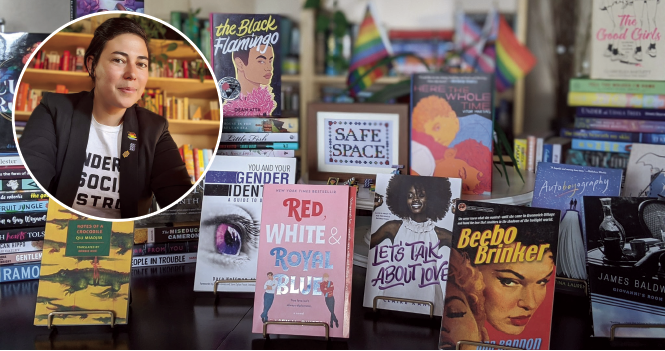

Kaitlyn Mahoney - COURTESY PHOTO

  • Courtesy Photo
  • Kaitlyn Mahoney

A New Literary Umbrella
Kaitlyn Mahoney looks for a gathering spot for her crowd-funded queer bookstore.
By River Coello and Sam Stecklow

Just in time for Pride month, a fundraising campaign to open a “queer little bookstore” in Salt Lake City has reached its $50,000 goal—and continues to grow. In the past year, LGBTQ rights—particularly trans rights—have come under attack, and racial justice efforts have been at the forefront nationwide and in Utah. The events of the past year made it clear to Under the Umbrella founder Kaitlyn Mahoney that a queer-led, gender-affirming, racially inclusive, all-ages, fully accessible multipurpose space is something desperately needed in Utah.

Mahoney—who uses both she and they pronouns—is a Provo native who has worked with words as a copy editor for her entire career and has long aspired to open a bookshop.

About a year and a half ago, they created an Instagram account to share queer books they were reading. The success of the account showed “such a need for people who are looking for diverse stories,” Mahoney told City Weekly in an interview.

Given the campaign’s success in the few short months since it launched in February, she was clearly right. With nearly 500 backers on Indiegogo, Mahoney is well on her way to bringing Under the Umbrella into fruition as a community-oriented space—”by queers for queers,” as she put it.

This is may be best illustrated by the $2,500 donation that put the campaign over the top. When Mahoney reached out to the donor, Alex Allan, to thank him, they learned that it was actually made on behalf of about 40 people in memory of Allan’s book-loving late husband, Brian Short.

Short had worked to foster a similarly inclusive literary space through a book club he ran at The King’s English in Salt Lake City, so when Allan learned of Under the Umbrella, he thought a donation to fund a shelf bearing Short’s name would be a perfect way to pay homage. “If I have a way to honor him that is everlasting and meaningful, I’m easily convinced,” he said.

Mahoney’s vision for their shop as a community space extends beyond the funding of the campaign. They are considering different types of leadership structures for the shop, including co-op frameworks used by other queer and feminist independent bookstores, like the Bluestockings Cooperative in New York City. This is particularly important to them when they consider the canon they hope to stock in the store, and the voices they intend to highlight.

“I think we just need to be aware of how other identities are marginalized within our already marginalized community,” she said. When asked about racial diversity specifically, she said that as a white person, she “should be listening and using my voice to amplify other people’s voices”—not only with their purchasing power, but also in the resources and programming the store will feature.

Mahoney will have a rich history of local queer literature to line the shelves of Under the Umbrella. A spotlight on the state’s LGBTQ authors created last year by the Mapping Literary Utah project, which is run by Utah poet laureate Paisley Rekdal, showcases a range of writers over the years—from Mormon suffragette Kate Thomas, to Harlem Renaissance novelist Wallace Thurman, to modern poets such as Willy Paloma and Natasha Sajé.

It is also important that the store be fully accessible, gender-affirming, sober and open to all ages to better support the more marginalized members of the queer community. A number of queer spaces—many of which are gay bars—have long been unwelcoming to these communities, are inaccessible to those under 21 and can be downright dangerous for those who struggle with addiction and substance abuse issues.

Finding a space that is both accessible to patrons with mobility disabilities and one that can accommodate gender-neutral bathrooms is one of Mahoney’s challenges. However, they are not deterred. Their goal is to open by the end of the summer, while having a presence at smaller events like Westminster College’s Pride Festival until then.

Beyond donating to the campaign, queer Utahns and their allies can support Mahoney’s vision in other ways. Book donations toward the shop’s stock and book suggestions and recommendations will go a long way in helping facilitate the store’s opening.

She is also seeking an indigenous artist from Utah for a paid commission for a land acknowledgement that will be present in the store, as it will stand on occupied Eastern Shoshone, Goshute, Paiute and Ute land. To learn more, visit undertheumbrellabookstore.com.
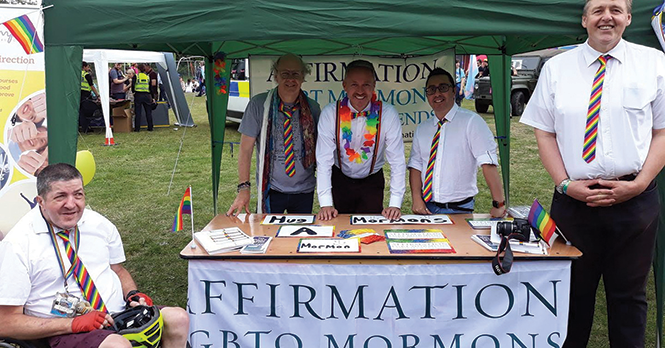

Groups like Affirmation provide “a landing place,” a place to heal and connect with others, so that those identifying as LGBTQ can get their feet on the ground. - COURTESY PHOTO

  • Courtesy Photo
  • Groups like Affirmation provide “a landing place,” a place to heal and connect with others, so that those identifying as LGBTQ can get their feet on the ground.

The Fallout of Coming Out
Support for Latter-day Saints who come out as LGBTQ
By Carolyn Campbell

“… God has commanded that the sacred powers of procreation are to be employed only between man and woman, lawfully wedded as husband and wife.”
—The Family: A Proclamation to the World,
The Church of Jesus Christ of Latter-day Saints

Verses such as this make it hard to figure out where one fits in if one doesn’t “fit in.” In Utah, especially, the LDS Church’s policy can be a bitter pill to swallow. It goes on to stress that “those who experience same-sex attraction or identify as gay can fully participate in the church, as long as they “live the law of chastity.” They may receive church callings, hold temple recommends, receive temple ordinances, and males may even be called to the priesthood.

LGBTQ folks who remain active in the LDS Church aren’t supposed to have “the blessings of eternal marriage and parenthood in this life.” They have to just wait for their eternal reward. Is it any wonder that there can be an extreme disconnect between those who grow up as faithful LDS members and then realize they are LGBTQ?

“Just as most of us, when we are at odds with our family, don’t usually abandon our membership in the family,” says Mormon Matters podcaster Dan Wotherspoon, “many LDS Church members care enough about their fellow community members, their ‘people,’ to stick around and be voices that call for more compassion and more thinking.”

As such, there are a growing number of organizations that provide support to Latter-day Saints who identify as LGBTQ. Want to know more about who they are and what they do? Here’s a sampling for those struggling to make peace with their Mormon affiliation.

Affirmation
President Nathan Kitchen once described Affirmation as a place to land. A Brazilian then commented that the word for “land” has a deeper meaning in Brazil. “It’s where you come home to rest.” That definition, says Kitchen, describes Affirmation’s role in the lives of queer and transgender people who are currently or formerly affiliated with the LDS Church. “We understand that as you come out or transition, you need very affirming support. There will be rejecting behavior and speech from those in your circle of orbit.”

Affirmation provides a landing place, so people don’t feel isolated; it’s also a place to rest and heal, Kitchen adds. “Often, we get caught up in our personal situations. One way to emerge from that is to realize that you have a community to give back to and be affirmed as your authentic self with no judgment.”

Even after people find their footing “in this life of being queer, Affirmation offers a complete network where all generations can help and mentor one another. If someone needs something specific, we have someone who has traveled that road and is willing to make it easier for the traveler.”

Affirmation originated in 1977 when a small group of BYU students experiencing same-sex attraction met together “to try to figure out what was happening to them.” Today, thousands of people in Affirmation chapters worldwide attend events, watch videos online and form friendships.

At Affirmation conferences, strangers become instant friends, “Because we have that common heritage that informs who we are.” After coming out himself, Kitchen followed the steps of Affirmation’s vision—land, rest, share and be authentic. “It really sets your feet on the ground.”
Affirmation.org

Latter Gay Stories Podcast and Resource Center
Kyle Ashworth served an LDS mission, married and had children—all to make his homosexuality go away. “What do you do when it doesn’t go away?” he asks, “That’s why we have Latter Gay Stories.”

This podcast’s goal is to help people know that “they are not alone, are not broken, and their best days are ahead,” says Ashworth. To achieve this purpose, “visibility is our No. 1 goal; to help normalize this topic and show the general community that LGBTQ families function the same as any other family.

When people understand the LGBTQ community better, this topic becomes [as comfortable as] your neighbor next door. It’s no longer abnormal or nuanced.”

The podcasts differ from discussions around an LDS bishop’s desk or ward council and are more like informal conversations at home around the kitchen table. Still, Ashworth hopes that those usually attending a bishop’s meeting will visit his Latter Gay Stories kitchen table. “I have a seat for them,” he says.

Now in its ninth season, Latter Gay Stories releases an interview episode every 7 to 10 days and a “coming out” story on Sundays. On Tuesdays, “In My Own Words” is a written feature, often submitted by listeners, that begins with ‘the “normal’ parts of a person’s experience—such as ‘I am a Baker.’

“It’s a play off of the old ‘I’m a Mormon’ campaign,” Ashworth says.
lattergaystories.org

I’ll Walk With You
A gay psychologist who experienced conflict when coming out to his parents founded I’ll Walk With you, a Facebook group that offers monthly virtual support groups for LDS parents to connect with others. “He felt that they needed a safe space to process and learn more about their children as LGBTQ,”‘ says Karen Penman, a group administrator. Today, 2,500 people worldwide are site members.

“We have parents who are brand new in finding out about their kids, people of all levels of faith—there is room for everyone,” says Penman, herself the mother of a transgender child. She says, “I had immense growth as a person as I became acquainted with other parents. I listened more to my child’s story, not just to solve but, rather, to be there and celebrate his life with him. Our son now has accomplished many things—graduating from high school and college and getting married. I am so grateful we were there at his side, rather than cutting ties because of religious beliefs.”
I’ll Walk With You
facebook.com/groups/WalkWithYouLDSParentsOfLGBTQ

Peculiar
After George Deussen and his wife, Alyson, lost their gay son, Stockton, to suicide five years ago, they felt compelled to help other families. They created Peculiar, a nonprofit outreach and ally educational program whose primary mission is to inspire and empower parents to love their LGBTQ children unconditionally.

“When Stockton came out as gay at age 13, in all honesty, Alyson and I struggled at first,” says Deussen. “It took us six months to a year to become more educated through our own research and connecting with people already on the path. Then we saw it from another perspective, and Stockton became our No. 1 priority as we tried to support his spiritual health and well-being.”

Today, through their Peculiar Places safe havens, Allies and Appetizers educational program, and working with Brigham and Women’s Hospital to develop an educational platform to improve engagement and support for LGBT youth, the Deussens continue to offer community outreach. “It’s all about returning to love,” he says.
thepeculiar.org

Encircle
The atmosphere inside an Encircle house is warm, inviting and comfortable, echoing how founder and CEO Stephenie Larsen hopes all who enter will feel.

Five years ago, Larsen took action after learning of the high youth suicide rate in her native Provo. Driving downtown, she found a house with two rainbow-colored stained-glass windows and knew she had the right place. “I knew it shouldn’t be in a strip mall, but in a home, so that kids who didn’t feel at home anywhere else could come here and feel safe just as they are.”

Today, on weekdays after school, kids come to one of three Encircle houses to do homework, eat snacks, paint, play the piano and enjoy the safe space. Encircle offers subsidized therapy, paying $100 per session while families pay $25. “We take data on every therapy session and program to be sure that they are helping children develop less suicidality,” says Larsen.

When a child comes out, some parents struggle more than the youth. “We want to shorten the time when parents aren’t affirming or don’t understand,” Larsen says. “Therapy helps parents, but the way that parents move most quickly is by watching other parents who model affirming behavior.” 98% of parents who come to Encircle are of the LDS faith. “They ask, ‘how can I love my child and my religion?'” says Larsen. “From the beginning, we try to help them solve that conflict and work through it.”
encircletogether.or
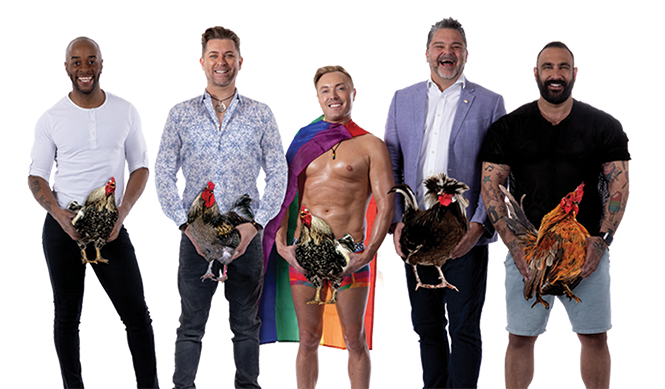

Birds of a feather: The familiar faces of Ogden Own Five Husbands

  • Birds of a feather: The familiar faces of Ogden Own Five Husbands

Fab Five
This year, Ogden’s Own “husbands” are those we know and love.
By Jerre Wroble

Another Pride celebration, another opportunity to purchase a bottle of Odgen’s Own vodka—but the one with the unique name of “Five Husbands.” Ogden’s Own has been branding the vodka with a Pride moniker such for three Pride festivals.

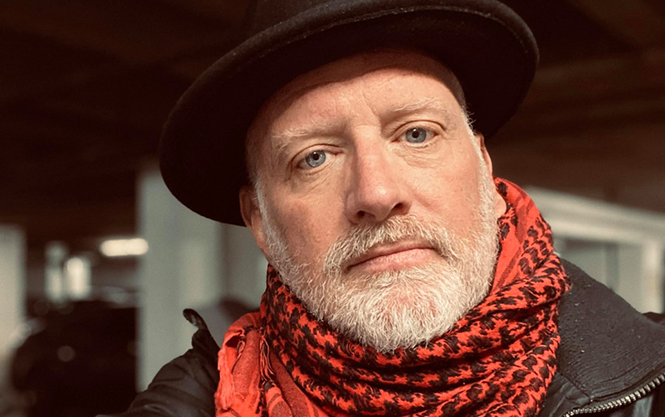
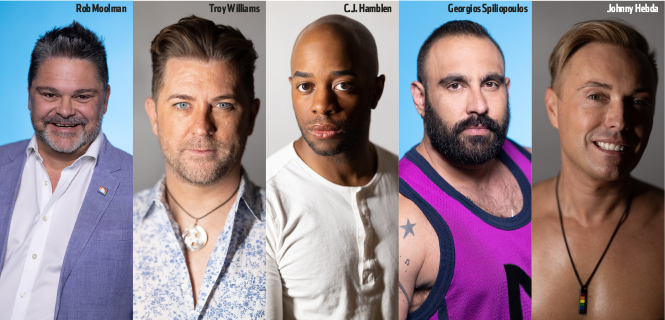
This year is noteworthy in that the bottles will feature the visages of real Utahns—namely Utah Pride Center’s Rob Moolman, Equality Utah’s Troy Williams, model and leasing agent C.J. Hamblen, DJ/music producer Georgios Spiliopoulos and entrepreneur Johnny Hebda.

Steve Conlin

  • Steve Conlin

Chatting With Ogden’s Own Steve Conlin
The man behind the brand and the photography for Five Husbands is none other than Steve Conlin, Ogden’s Own CEO. Prior to heading up a craft distillery, Conlin worked for the IRS, followed by stints as a photojournalist and forays into the real estate industry.

Tell us a little bit about Ogden’s Own Distillery
We started in Utah in 2009 making Underground Herbal Spirit as the brainchild of Tim Smith. We now make Five Wives Vodka, Madam Pattirini Gin, Porter’s Whiskies including our rye and huckleberry, peach, peanut butter, apple and cinnamon (fire) flavors. We just built a new 34,000 square-foot facility in Ogden with an outdoor music venue and a bar that will both be operational very soon.

And what’s the story behind this special edition of vodka?
This will be the third rendition of the Five Husbands Vodka label. Originally, we put members of our own staff on the product to show how much as a company we stand with the LGBTQ+ community. In 2020, we’d hoped to incorporate members of the community on the label but with COVID-19 stopping all of the events, we decided to hold off on that until now. We just put rainbow masks on the husbands in 2020. This year, we are lucky enough to have some of our favorite people in the Utah LGBTQ community take our spot on the label.

How has the reception been for Five Husbands?
The community has been so supportive of the product that the DABC is now stocking it year-round! So, we will make as much as the consumer demand is throughout the year.

How did you select the Five Husbands this year?
These guys all show support and commitment to the LGBTQ+ community. Through events, we’ve met some of amazing people doing great things in the community. It’s been an honor just to get know this year’s husbands. They truly embrace everything they do with passion and commitment and have welcomed Ogden’s Own as allies. Throughout the years, we’ve had the opportunity to support many events in Utah including Pride, Equality Utah galas, dance events, etc. We’ve always thought the bottle would be a great way to celebrate members of the community and are thrilled we get to do that this year. We hope that each year, we will change the label to highlight people who are making a difference. COVID-19 created a unique set of challenges getting the label done this year, but hopefully the next few years will be easier!

What’s your Pride cocktail?
If you’re feeling fancy:

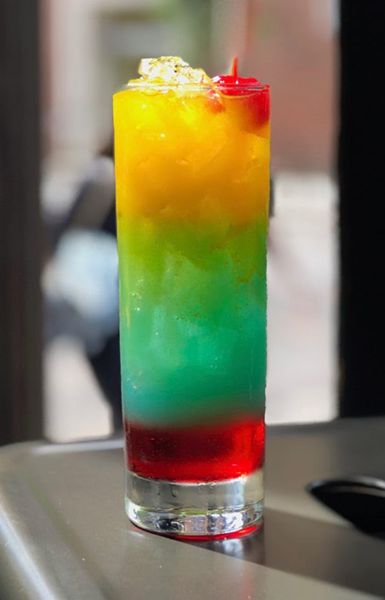
click to enlarge The Rainbow
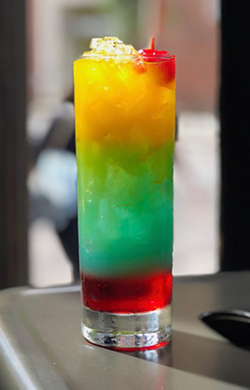
  • The Rainbow

The Rainbow
2 ounces Five Husbands Vodka
1 ounce peach schnapps
1 ounce Blue Curaçao
½ ounce grenadine
1 ounce pineapple juice

Pour slowly in a glass over ice. Using a spoon, guide the next layer on top and repeat.

Is there a charitable aspect to this clever marketing idea?
We do not donate a specific amount with each purchase, but we do use the money generated from the sales of Five Husbands to support LGBTQ+ events throughout the year including:
Equality Utah
Utah Pride Center
Numerous Skyfall events

What’s your driving force for giving so much back to the community?
My approach has always been if you see something that needs to be done, and you can do it, you do it. I also like making a difference and, hopefully, having good impact on my community. Whether that means building Ogden’s Own into a long-lasting part of the Utah community or supporting LGBTQ+ organizations that make Utah just that much more diverse, I get joy out of being part of it! To me, Pride Week is one of the most fun in Utah and getting to be involved and supportive is really a selfish act—I get to join in all the fun and feel like we contributed!

Your toast for Pride week?
I’ll be toasting to my favorite week of the year in Utah. A week where everyone from LGBTQ to allies and family get to feel comfortable simply expressing who they are. It always makes me smile.


knowyourhusbands.png

Know Your Husbands
They’re all Utah locals passionate about spreading the message of inclusiveness.

My name: Rob Moolman, Ph.D.
My gig: Executive director/CEO of the Utah Pride Center
Favorite vodka cocktail: Martini, Up, 3 olives
What Pride means to me: It is a public, and visible, moment where our community can be seen, celebrated and connected!
Favorite Pride anthem: “Raise your Glass”—Pink!
What I’ll be toasting to at Utah Pride 2021: The work, services, resources and amazing team of people serving our community at the Utah Pride Center!

My name: Troy Williams
My gig: Executive director of Equality Utah
Favorite vodka cocktail: a dirty filthy martini
What Pride means to me: Pride is the freedom to love and liberate the world.
Favorite Pride anthem: “Don’t Leave Me This Way” cover by the Communards. It was the first CD I ever bought as a kid. That should have told me everything.
What I’ll be toasting to at Utah Pride 2021? To Utah banning conversion therapy, and protecting transgender kids from proposed laws at the Legislature. Oh, and to surviving a pandemic. It’s time to reconnect, recharge and come back together.

My name: C.J. Hamblen
My gig: Leasing consultant for AMC, freelance modeling
Favorite vodka cocktail: Moscow Mule
What Pride means to me: Pride to me means being your truest self and not being afraid to express it! You’ve gotta own it!
Favorite Pride anthem: The one song that keeps me going and gets me through it all is definitely “Midnight Sky” by Miley Cyrus.
What I’ll be toasting to at Utah Pride 2021: Cheers to us all continuing to make serious moves!

My name: Georgios Spiliopoulos
My gig: DJ/music producer/ owner of Queen House Music & QSQUARED/event producer/
promoter
Favorite vodka cocktail: Moscow Mule
What Pride means to me: Pride is the biggest celebration of the LGBTQIA community. It means being your authentic self and being accepted even if you don’t feel it. Pride is about standing together and lifting each other up. Celebration of our community/chosen family that accepts us no matter what.
Favorite Pride anthem: “Born This Way” by Lady Gaga
What I’ll be toasting to at Utah Pride 2021: I will be toasting to equality and acceptance and to celebrate pride all year round!

My name: Johnny Hebda
My gig: Entrepreneur by day/ Life of the Party by night
Favorite vodka cocktail: Five Husbands Vodka with soda and a rainbow straw, please
What Pride means to me: A chance to celebrate my sexuality, freedom, diversity and be visible (and non-stop partying all weekend/pools and vodka)
Favorite Pride anthem: I’m pretty partial to Todrick Hall’s “Nails, Hair, Hips, Heels” (and hint, hint, Five Husbands is sponsoring a live performance of said anthem on June 4 right here in Salt Lake City)
What I’ll be toasting to at Utah Pride 2021: I mean only toasting once? My first toast will be at the end of the Pride Spectacular to an amazing event! My last toast will be at the end of the weekend, for having survived 10 or more parties and events (and thanking Five Husbands Vodka for the liquid fuel that got me through!)
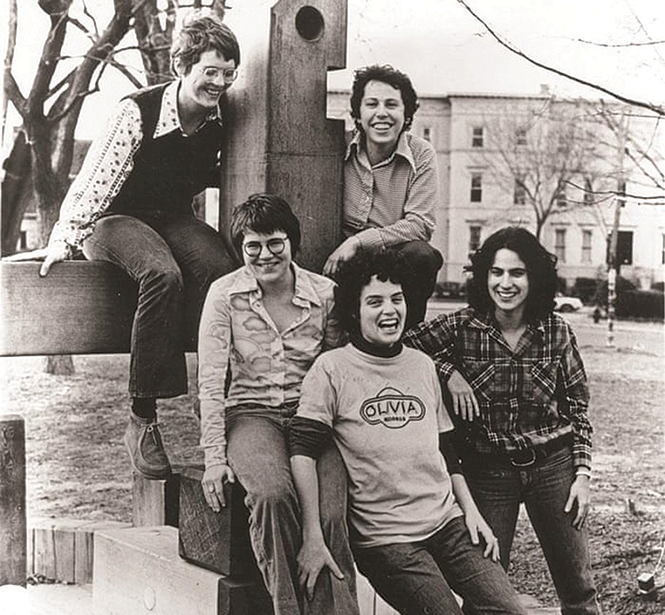

The Olivia Records collective in 1973, with co-founderJudy Dlugacz, far right. - JEB

  • JEB
  • The Olivia Records collective in 1973, with co-founderJudy Dlugacz, far right.

Women: The Third Decade
Those bygone years when women made beautiful music about women, for women.
By Babs De Lay

For 28 years, I produced Women: The Third Decade, the longest-running women in music program on public radio in the U.S. And it was broadcast here in Utah on KRCL 90.9 FM. I have hundreds and hundreds of LPs and CDs by women that I shared with my audience. It was one of the top shows for fundraising during membership drives, but new management felt the station needed to be more commercial and let the all-volunteer morning DJs go and hired replacements for the volunteers. We all lost our continued and consistent “herstory” of women in music and their accomplishments that allowed for the success of women artists today.

I first went on the radio in the 1980s a decade after the term “women’s music” was becoming a thing around the world. I was specifically recruited to replace a woman who had a program about women in music, mostly women vocalists from the 1960s such as Patti Page and Leslie Gore.

Meg Christian and Cris Williamson—two lesbian vocalists/songwriters—formed the record label Olivia Records. Poll any old Dyke and you can bet they have a copy of Williamson’s The Changer and the Changed album—one of the all-time bestselling albums on any independent label and the first LP known to be entirely produced by women. I introduced listeners to these early pioneers with gusto and tried to keep up with the quickly growing genre with feminist additions like Margie Adam, Ani DiFranco, Sweet Honey in the Rock, Teresa Trull and Barbara Higbie. These were women singing about women, loving women, who were being produced and backed up by women.

I began bringing these women to Utah concert-goers while traveling myself to out-of-state events and volunteering at the Michigan Women’s Music Festival. I never made a profit, but I had a hell of a good time and made many friends in the women’s music industry. Back then, we were a loud group of women becoming more and more empowered by the feminist movement, and some became radicalized as separatist feminists trying to succeed without the help of men. I remember visiting an all-woman-owned piece of land in the Pacific Northwest where they tried to live with as little interface with men as possible—they built all their living structures and bartered with other women for food and supplies. The experiment didn’t last long but some great poetry and music came out of the experience as well as films by the late Barbara Hammer.

Locally, the most successful all-women’s band of the era was My Sister Jane, whose last release was in 1994. It featured Julie Lueders (deceased), Sally Shaum, Trace Wiren, Martha Bourne and Shelly White.

As women’s music labels grew more, non-LGBTQ+ people experienced the songs, but sadly, the mainstream music industry didn’t see this potential added audience and didn’t invest or promote the women. A few did break through, like Fanny—the first all-women’s rock group that opened for Joe Cocker, Slade, Jethro Tull and Humble Pie tours. Olivia Records morphed from releasing albums into offering all-lesbian cruises to gay resorts on sold-out gay voyages. Most women’s labels fell by the wayside by the end of the 1990s.

The women performing, engineering, writing and producing today in the mainstream music industry stand on the backs of the early women’s music giants, whether they are gay or not. Queen Latifa, Sinead O’Connor, Tegan and Sara, Tracy Chapman, Melissa Etheridge, Janelle Monae and so many more successful performers hold back nothing of their LGBTQ+ roots with PRIDE.
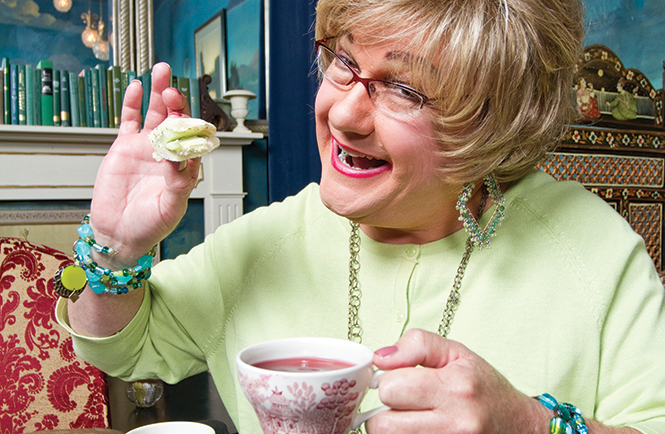

Charles Lynn Frost in character as Sister Dottie S. Dixon - JOHN TAYLOR

  • John Taylor
  • Charles Lynn Frost in character as Sister Dottie S. Dixon

You Were Our ‘Favert’
Remembering Charles Lynn Frost aka Sister Dottie S. Dixon
By Babs De Lay

Charles Lynn Frost passed away in his sleep on May 19, 2021. He will be remembered by many who were under his tutelage as a drama teacher at high schools in Utah County, an employee and promoter of Franklin Covey systems, and later, a life coach. Most of all, locals might remember him for his outstanding portrayal of a Mormon woman/widow named Sister Dottie S. Dixon that he developed originally on KRCL 90.9 FM radio and then took the character to the stage in the play The Passion of Sister Dottie S. Dixon that sold out every show.

Based in part on his own strong mother who was a terrific cook, Sister made gentle fun of living in Utah as a member of the church with a fictional gay son (Donnie) and their day-to-day escapades: Her marching with the PFLAG group in the PRIDE parade; Donnie’s boyfriends, visiting teachers, Jell-O recipes, etc. Some believed he was a drag queen, but no, Charles was an actor who transformed into a very funny lady for plays and public events. He hated getting dolled up in a wig, nylons and corset underthings to play the part of Dottie.

Charles was a member of AEA/SAG and City Weekly award him Best Actor for his role in the Laramie Project. He won Best Original Play and Best Production for The Passion of Sister Dottie S. Dixon, Second Helpings. He performed off-Broadway and in San Francisco for Facing East and was a frequent award winner from Q Salt Lake readers. KXRK 96.3 FM Radio From Hell listeners got a positive dose of Dottie each week for years and laughed along with her at Dottie’s take on local politics. He and Pat Bagley published The Mormon Kama Sutra, a handbook of sorts of her “favert positions” with cartoons by Bagley.

I knew him for decades as we ran in similar circles at times and supported charities such as the Utah AIDS Foundation. We loved dishing the T to each other, and I loved seeing that impish look in his eyes when he smelled BS in a room. Charles was not a fan of posers.

Sadly, he did not pay attention to selfcare and didn’t go for a colonoscopy for 10 years. When he finally did, he found out he had Stage 4 colon cancer and given a grim prognosis. We had him over to dinner virtually every Sunday during his battle with cancer, and he was a brave gentle soul through it all. He died while taking nap. The world has lost a brilliant talent and a passionate, silly man whom we will miss forever. He leaves four children and many sad grandkids.

Twitch adds ‘transgender’ tag as Big Tech vies to be inclusive – Reuters

LONDON, May 26 (Thomson Reuters Foundation) – The world’s largest game streaming service Twitch said on Wednesday that players will be able to add a transgender label to their videos – a move the company said would aid inclusion among its 30 million daily gamers.

Twitch, which lets users broadcast themselves playing video games, introduced “transgender”, “bisexual”, “Black” and “disabled” among more than 350 new tags – labels that users can add to their videos.

“This has been one of the most popular requests we’ve heard, and the simple truth is that we should have done this sooner,” Amazon-owned Twitch said in a blog last week.

It then broadcast the news to users on Wednesday.

Tech firms have come under pressure to make their products more inclusive of trans people, with Instagram and LinkedIn allowing users to add their pronouns to profiles, amid fierce debate over what it means to be male or female.

A raft of U.S. states want to bar young, trans Americans from playing school sports or getting medical help, with a record 18 “anti-LGBTQ” state bills signed into law this year, according to advocacy group Human Rights Campaign.

“Adding that trans tag it makes it very, very easy for us to find each other and to connect with each other,” Casey, who streams under the username CaseyExplosion and did not want to give her full name, told the Thomson Reuters Foundation.

“That’s something that is vital because for a lot of gaming spaces, if you’re LGBT, there’s a sort of unspoken, ‘Don’t ask, don’t tell’.”

The existing ‘LGBTQIA’ tag was not specific enough to help trans people easily connect, particularly as the ‘A’ meant ‘allies’ of the community were included, said Laura Dale, who streams herself playing Pokemon and Zelda games as LauraKBuzz.

“LGBT is a pretty broad range of identities,” she said.

Twitch says about 70% of its users are aged 13 to 34. They collectively watch 68 million to 73 million hours of game play each day, according to unofficial data site Twitch Tracker. (Reporting by Rachel Savage @rachelmsavage; Editing by Katy Migiro, Hugo Greenhalgh and Lyndsay Griffiths. Please credit the Thomson Reuters Foundation, the charitable arm of Thomson Reuters, that covers the lives of people around the world who struggle to live freely or fairly. Visit news.trust.org)

Tig Notaro On ‘Army Of The Dead,’ Comedy & The Advice She’d Give Herself – Bustle

In Bustle’s Q&A series 28, successful women describe exactly what their lives looked like when they were 28 — what they wore, where they worked, what stressed them out most, and what, if anything, they would do differently. This time Tig Notaro — who stars now in the new Netflix movie Army of the Dead — discusses the moment she began pursuing standup in earnest, and what she’s learned since.

It took the world 50 years — and a legion of zombies — to appreciate just how hot Tig Notaro is. When the trailer for Netflix’s Army of the Dead was released in April, amid the onslaught of CGI-augmented action sequences Notaro was all the internet could look at. Something about seeing her as a helicopter pilot, cigarette dangling from her lips, struck a nerve. “My wife was like, where has everyone been?” the comedian laughs.

If a younger Notaro were told of this online frenzy, she’d be “a little confused,” she tells Bustle. “I’d want to see the timeline of how I got there… even being a low-key stand-up or being gay, there’s not mainstream appeal there. Certainly for somebody to say, not only is all of that okay, but right after I turned 50 years old, I’m trending on Twitter for being a badass and being hot or sexy. There’s no part of me that would think that that was coming. No part of me thought that the day before it happened.”

Even if her wonderment at being deemed sexy hasn’t changed in that time, a lot else has. Nowadays, Notaro is a Grammy and Emmy-nominated comedian, and continues to earn acclaim for her writing, acting, and stand-up. But at 28, she had just started to seriously pursue a career in entertainment. It had always been the dream, but making it as a comedian seemed about as likely as becoming commander-in-chief. “Obviously, it’s been proven that anyone really can become the president of the United States,” she notes — but 1999 was a different time. Notaro had recently moved to LA with some friends who were pursuing careers in Hollywood; once she’d arrived and unpacked the U-Haul, she realized how many opportunities there were to get in front of an audience.

“That’s when I got on stage, in the first two weeks that I moved to LA,” she says. “And I haven’t stopped until the pandemic.”

Below, Notaro talks about finding a gay community in LA, embracing a career as a “professional clown,” and the advice she’d give her younger self.

Scott Garfield/Netflix

Take me back to 1999, when you were 28.

I was in Los Angeles, and I was working for Sam Raimi. I think I also worked at a coffee shop, yeah. I was doing stand-up comedy, open mics.

By then, were you already comfortable on stage? Was there ever an adjustment period?

Yeah, I was definitely comfortable by that time. I would say in my first year I really got comfortable pretty quickly. I always say it was similar to coming out or realizing my sexuality. Once I figured it out, I was like, “Oh, this is it.”

Were you ambitiously pursuing a career in standup?

I think there was a part of me that couldn’t take taking comedy seriously… I was like, I can’t be an ambitious comedian. That just sounds ridiculous. I didn’t understand how that even happened. It wasn’t really in my personality. I had been such a failure and dropout in my “school career,” I thought, what, I’m going to be a clown now and be ambitious? So I just didn’t.

Then one day it came over me, where I thought, well, this is what I really want to do. I’m so lucky that I’ve stumbled into this, only to find out that this dream of mine is a possibility. I’m in a town that can make that actually be something, so why would I not? Because I’m scared I’ll look stupid trying to be a professional clown? So I just made this decision to take this opportunity and give it everything I had. I already was giving it everything I had, and there’s no chance of half-assed stand-up. You just can’t do that. But just my intentions shifted, and the path started to clear in ways that I just hadn’t experienced before.

What did a typical Friday night look like for you?

I was pretty new in Los Angeles and I couldn’t believe that — I knew West Hollywood existed, but I didn’t really understand, like, wow, this is a gay town. I couldn’t believe that the coffee shop where I worked was predominantly a gay clientele, and that when I cleaned up for the night, I could just literally walk across the street to a bar and just hang out with the people that were just having coffee at the cafe and play pool … it didn’t even have to be Friday, honestly.

Was that the first time that you had encountered that kind of community?

No, I had lived in Denver and Austin and there was acceptance, and gay bars, and gay communities, but in Denver, Austin, you would go to a gay bar and you would see gay people. I had never been to a town where you walk around and it’s just, the police cars have gay pride flags on them. The whole thing blew my mind. That was very new to me. Even still, almost 25 years after moving to Los Angeles, when I drive through West Hollywood, I’m always a little like, “God, this is so great that this exists.”

What would 28-year-old you think of you now?

I think that 28-year-old me would be very excited about the opportunities and about the struggles that I’ve had that I’ve overcome or continued to work through. I think 28-year-old me would be surprised to find out that the struggles in life don’t go away.

It would be helpful to really know, “By the way, it’s never going to be an easy ride.” Once you put that out of your mind, just move forward knowing that all of the bumps, and detours, and difficult moments and stretches, it really is a part of the ride. You’re not going to get past one and be like, okay, now it’s smooth sailing. Because I really thought that’s how life went: once you get through the hard stuff, you’re done and it’s smooth sailing. There’s so much, always, so much good and so much bad. It’s all just going to be coming nonstop. But I wouldn’t change a thing.

It would be helpful to really know, “By the way, it’s never going to be an easy ride.”

Is there anything else you wish you could tell yourself, or that someone had told you?

I always mention this, and I try to live by it. I heard this and I tweaked it a little bit so it’s more universal: the best gift anybody can give anyone is a well-lived life of their own. I just find it really freeing when you think about how if any friend or family member of yours is living a full, happy life, it’s so freeing to you. When you do that for yourself, you free everybody around you.

In the spirit of Army of the Dead, would current you or 28-year-old you fare better in a zombie apocalypse?

I hate to be cliché, but it’s really astounding how much you don’t know at 28. It’s so much more helpful to have the time behind you and the experiences to make hopefully better judgments and decisions. I think I’m better equipped now to deal with a zombie apocalypse than I was at 28.

You’ve had time to think about it, gotten all your strategies down.

It’d be easy, easy peasy.

This interview has been edited and condensed.

Betty is going to be gay in the Rugrats Paramount Plus show – The A.V. Club

Howard who? Betty is now a single mom in Rugrats.

Howard who? Betty is now a single mom in Rugrats.
Photo: Paramount+

Phil and Lil’s mom Betty in Rugrats has low-key always been a queer icon. Sure, she’s married to boring ol’ Howard (we wouldn’t blame you if you forgot about him). But let’s be real: Betty was gay as fuck—and now that’s actually canon. Betty will be an openly gay woman in the Paramount+ Rugrats series, and she’ll be voiced by queer actor Natalie Morales. This time, instead of her sweater having the “female” symbol, Betty’s donning a Gemini sweater. The Rugrats showrunners clearly know queer ladies love astrology.

Advertisement

In an exclusive statement to The A.V. Club, Morales says she’s very excited to join part of Rugrats by voicing Betty and that she thinks “anyone who watched the original show may have had an inkling Betty was a member of the alphabet mafia.” She also shares what it means to revive the character in a way that brings queer representation to such a nostalgic show. “Betty is a single mom with her own business who has twins and still has time to hang out with her friends and her community, and I think it’s just so great because examples of living your life happily and healthily as an out queer person is just such a beacon for young queer people who may not have examples of that,” she explains. “And yeah, Betty is a fictional cartoon, but even cartoons were hugely influential for me as a kid and if I’d been watching Rugrats and seen Betty casually talking about her ex-girlfriend, I think at least a part of me would have felt like things might be okay in the future.”

Some things to know about this updated version of Betty: She loves football, owns a café called Betty’s Beans, and she cracks jokes about her ex-girlfriends. Now all we need is to know her thoughts on sharing a name with Taylor Swift’s gayest song. We’ll get to find out more about this new version of Betty when the show premieres May 27 on Paramount+.

Liz Truss says “fundamental differences” led to disbandment of LGBT advisory panel – Gay Times Magazine

Cabinet minister Liz Truss admits there were “fundamental disagreements” between herself and the panel over gender recognition policies.

The minister for women and equalities told MPs there was a “difference of opinion” regarding the Gender Recognition Act (GRA), specifically the inclusion of the Gender Recognition Certificate (GRC).

“The issue was a fundamental difference of opinion on that issue,” Truss told MPs.

The LGBT panel was established as part of Theresa May’s 2018 LGBT Action Plan.

The aim of the advisory panel was to offer insight “on issues and policies concerning lesbian, gay, bisexual and transgender people.”

The dissolving of the LGBT panel followed the resignation of three leading equality advisors: Jayne Ozanne, James Morton and Ellen Murray.

When questioned, at a Commons committee, the minister told MPs the panel was “appointed by the previous government” which was adopted on a “time-limited basis” until the end of March this year.

Truss added: “There were fundamental disagreements, namely that members of the panel supported self-ID for gender recognition certificates. I very strongly feel, as I’ve made clear, that there need to be checks and balances.”

Trans adults are able to qualify for GRC  under the GRA. The fee for a GRC originally stood at £140 but was lowered to £5 in May.

News of a price reduction first came to light in September 2020 after the Women and Equalities Minister, Liz Truss, said the GRC process would be “kinder and straightforward.”

Grand Rounds Health and Doctor On Demand are buying Included Health to expand care for LGBTQ communities – FierceHealthcare

The combined company of Grand Rounds Health and Doctor On Demand has expanded yet again to include a care concierge platform for the LGBTQ+ community.

The virtual care companies announced Wednesday they signed a definitive agreement to acquire Included Health to improve health outcomes and address the health challenges facing communities including lesbian, gay and transgender patients as well as black, indigenous and people of color (BIPOC), the companies said in a press release.

Terms of the agreement were not disclosed.

Included Health provides a care concierge and healthcare navigation platform for diverse and underserved populations. 

The acquisition of Included Health will strengthen the virtual care companies’ member-centric offering to support diverse and under-resourced populations, executives said.

“Our job is to make the healthcare system work for everyone, including those who’ve had to survive for far too long outside it,” said Owen Tripp, CEO of the combined Grand Rounds Health and Doctor On Demand in a statement.

“LGBTQ+ people face serious discrimination in healthcare settings, and are two to three times more likely than others to avoid care. This needs to change. So we are extremely proud to go into business and innovate with Included Health. Rightly, employers and health plans are asking for a navigation and virtual care partner who offers integrated personalized care to all their members. We will provide it.”

RELATED: Folx Health snaps up $25M to expand virtual care for the LGBTQIA+ community

The deal marks the first acquisition of an LGBTQ health care platform by a leading virtual care company.

There are a growing number of digital health companies tackling health issues for the LGBTQIA+ community. 

Queerly is an online marketplace where LGBTQ people can connect with vetted and trained providers, telehealth tools and concierge health. Violet is a mental healthcare startup run by and for the LGBTQ+ community, and Plume is a digital health service focused exclusively on the transgender community and has expanded into employee benefits
 
The LGBTQ+ community disproportionately experiences discrimination and health-related stigmas which result in deferred or delayed care. Denials of care, misgendering, and rude or uninformed comments about identity and sexual orientation are too common. In a national study conducted by Included Health with over 1,000 LGBTQ+ employees from Fortune 100 companies, nearly half of respondents reported a negative healthcare experience or discrimination in a healthcare setting. As a result, many are postponing or avoiding care at a rate that is two to three times greater than the broader U.S. population—putting their physical and mental health at risk.
 
Negative experiences are also common in the workplace. A 2020 Boston Consulting Group study found that 40% of LGBTQ+ employees are in the closet at work and 75% reported experiencing negative day-to-day workplace interactions related to their LGBTQ+ identity in the past year. Employees who experience negative interactions are less productive and more likely to quit.

RELATED: Doctor On Demand, Grand Rounds combine to form multibillion-dollar digital health company
 
“The past year has been a time of cultural awakening across the U.S., with employers, healthcare providers, and others stepping up to create more inclusive environments. But for many in the LGBTQ+ community, there is still much progress to be made,” said Colin Quinn, co-founder and CEO of Included Health in a statement.

“We are proud to join forces with Grand Rounds Health and Doctor On Demand to deliver on our shared vision of improving healthcare equity for underserved communities. Our combined team of care providers and care navigators mirrors the diverse population of our members, and together we can make affirmative, culturally competent healthcare a reality.”

Telehealth company Doctor On Demand announced in March plans to combine with Grand Rounds to form a “first of its kind patient-centric integrated virtual care company.” The deal was finalized earlier this month.

RELATED: Aetna grows coverage for gender-affirming surgeries for transgender women

San Francisco-based Doctor On Demand provides on-demand and scheduled visits with U.S.-licensed healthcare providers in both medical and behavioral health. 

Grand Rounds launched in 2011 and got its start with virtually connecting patients with top-ranked medical experts for a second opinion.  The company’s services are now used by more than 6 million workers at companies such as Walmart, Home Depot, Salesforce, Travelers and other firms. 

The combined company provides personalized, longitudinal care services include primary care, specialty care, integrated behavioral health, everyday and urgent care, chronic condition management and prevention and 24/7 triage. The companies serve nearly 100 million covered lives across commercial, Medicare and Medicaid.

Doctor On Demand and Grand Rounds say that their diverse clinical team boasts 43% people of color and 20% LGBTQ+. 

How the “Alliance” Doesn’t Make LGBT + Staff Feel Excluded in the Workplace – Illinoisnewstoday.com

Over 40% of lesbian, gay and bisexual people experience conflicts such as weakening, humiliation and discrimination at work. Recent reports.. This figure rises to 55% for transgender and non-binary staff, compared to 29% for heterosexual colleagues.

Report from Certified Personnel Education Association (CIPD) suggests that these issues often remain unresolved and that more needs to be done to protect and support LGBT + people in the workplace. And while some progress has been made, certain significant delays remain. Inclusion of transformer workers Understanding specific challenges Related to gender identity..

There is compelling evidence that you can work Difficult environment For transgender people whose voices often remain Never heard..Many, even organizations that aim to be inclusive Lack of necessary expertise..

This is reflected in the CIPD report, which indicates that most transworkers do not have sufficient support policies in their organizations. Positive effect..

The report also finds that some transgender workers feel isolated from their colleagues, have difficulty maintaining work-life balance, and have difficulty expressing or transitioning to gender identity. I emphasize that.

Many transgender workers said they did not feel that they were actively supported by their colleagues. This can help explain why up to half reported not. Open about gender identity in the workplace..

So it seems that concrete steps are needed to build more Inclusive workplace culture.. One way to do this is to engage in a concept known as an “alliance.”

alliance It refers to the daily activities of challenging the code of conduct and helping members of a group that has reached their limits through awareness of the problems facing others.

Conceptually, the alliance applies not only to everyone in the LGBT + spectrum, but also to other marginalized groups. Color people..Women can There are also benefits.. For transgender people, the alliance focuses on increasing knowledge of identity and experience and acquiring the personal skills needed for transgender.

How to make the alliance work

The important first step is Self-studyYou may need to explore the free resources available from your organization, such as Gender intelligence And Ishigaki..Widely available documentary, movies, Podcast And social media campaign A place where the trance experience is explored with nuances. This affects long-term everyday language and behavior, and one may feel embraced rather than excluded. As an example, Priority personal pronoun E-mail signing or during a meeting.

LGBT + Staff network group It also works, as well as the transition from one-off epic gestures (such as making large investments only in pride months) to regular small-scale support activities, especially visible role modeling from managers and leaders. It can help a person feel more inclusive.

Employers also need to consider how to deal with the various gender identities within Human Resources (HR) Policy Recruitment, vacation arrangements, dress code, etc. For example, what training and guidance will line managers provide on how to support transworkers, especially during the transition period?Is the website and internal communication properly scrutinized for problems? Gender language Or an image?

A similar approach developed by Black feminist writerIs an analytical idea known as “”.Crossing“This involves being more subtle and thoughtful in approaching others.

Cross-thinking means understanding how a person’s experience is conveyed by different aspects of life, such as socio-economic background and education.It also includes understanding how exclusionary experiences can be compounded, such as when color transgender people can experience it. Both racism and transphobia..

Actively tackle inclusion as a general approach Send a clear message To current and future employees about the value of an organization and how it supports its people. Some groups face greater challenges and barriers to joining the workplace than others, but everyone can benefit from the culture of the alliance.

The pandemic Dramatic change How many people have worked and changed the social dynamics of the workplace-perhaps in the long run. Businesses should take this time of adjustment as an opportunity to remind themselves of the importance of adapting a wide range of policies and practices to a particular minority group.

The pandemic also highlighted the need for everyone to support each other. The alliance provides a good opportunity for the organization as a whole, and for society as a whole, to build a stronger sense of community.

Author: Luke Fletcher-Associate Professor of Human Resources, University of Bath | Deborah Brewis-Associate Professor of Business Strategy and Organization, University of Bath | Rosa Marvel-Postdoctoral Fellow, Oxford Brookes University

How the “Alliance” Doesn’t Make LGBT + Staff Feel Excluded in the Workplace

Source link How the “Alliance” Doesn’t Make LGBT + Staff Feel Excluded in the Workplace

#AM_Equality: May 26, 2021 – HRC – Human Rights Campaign

NASHVILLE DA WON’T ENFORCE ‘HATE’ BILL REQUIRING BUSINESSES TO POST SIGNS FOR TRANSGENDER BATHROOM ACCESS: “I believe every person is welcome and valued in Nashville. Enforcement of transphobic or homophobic laws is contrary to those values,” District Attorney General Glenn Funk said in a statement Monday. “My office will not promote hate.” More from The Tennessean and News Channel 5.

ROXANE GAY, GIGI GORGEOUS, WILSON CRUZ AND OTHERS DISCUSS MENTAL HEALTH IN THE LGBTQ COMMUNITY: In an event hosted by PEOPLE and Bring Change to Mind, Roxane Gay (@rgay), Gigi Gorgeous (@TheGigiGorgeous), Wilson Cruz (@wcruz73) and others came together for a candid discussion about mental health and the LGBTQ community. More from PEOPLE.

TRANS YOUTH LESS LIKELY TO EXPERIENCE SUICIDAL IDEATION WHEN THEIR GENDER IS AFFIRMED: A new study from The Trevor Project on LGBTQ youth mental underscores how supporting trans and non-binary folks save lives. More from them.

HRC MOURNS THOMAS HARDIN, BLACK TRANSGENDER WOMAN KILLED IN SOUTH CAROLINA: HRC is deeply saddened to learn of the death of Thomas Hardin, a 35-year-old Black transgender woman, who was killed on May 2 in York, South Carolina. “In May alone, we know of the violent deaths of at least eight transgender or gender non-conforming people. This level of violence is both heartbreaking and horrifying. None of these individuals, including Thomas Hardin, deserved to have their lives cut short,” said HRC Director of Community Engagement for the Transgender Justice Initiative Tori Cooper (@MsToriCooper1, she/her). “Our hearts go out to all of her friends, family and community. We need everyone to speak up in defense of transgender and gender non-conforming lives.” More from Advocate and HRC.

🌈 17 BRANDS SUPPORTING LGBTQ PRIDE IN STYLE: From Bombas to Tevas, numerous organizations have taken the initiative to feature their support for the LGBTQ community. More from Good Morning America.

PENN STATE REMOVING BINARY GENDER LANGUAGE FROM COURSE DESCRIPTIONS: In an effort to promote an inclusive campus culture, the change will feature they/them pronouns in place of he/him or she/her in course and program descriptions. More from The Hill.

📺 GET CULTURED

🎀 LEGALLY BLONDE LIVE-READ HAS AN ALL-LGBTQ CAST WITH ALEXANDRA GREY, JEN RICHARDS, AND MORE: More from Entertainment Weekly.

🏆 DAN LEVY, ‘SCHITT’S CREEK’ WIN 8 CANADIAN SCREEN AWARDS: LGBTQ actor, writer and director Dan Levy (@danjlevy) won eight more awards last week for his work in the hit series Schitt’s Creek. More from Out.

🌍 GLOBAL EQUALITY

OUTCRY AFTER 21 PEOPLE ARRESTED IN GHANA FOR “ADVOCATING LGBTQ ACTIVITIES”: Since Friday police in Ghana have held 21 people for “advocating LGBTQ activities.” The arrests came after a group of journalists in Ghana were attending an event by Rightify Ghana, which was held to provide training for activists and paralegals that support LGBTQ people. More from The Guardian, Los Angeles Blade, and them.

HOW THIS QUEER VIETNAMESE ATHLETE WENT FROM HOMELESSNESS TO INTERNATIONAL ADVOCATE: Amazin LêThi (@amazinlethi) is making history as a bodybuilder and LGBTQ advocate, helping organize the first “Spirit Day” under the Obama Administration to celebrate AAPI Americans in the LGBTQ community. More from Outsports.

Have news? Send us your news and tips at AMEquality@hrc.org. Click here to subscribe to #AM_Equality and follow @HRC for all the latest news. Thanks for reading!