Actress Natalie Morales said her voice character Betty in the rebooted Paramount+ Rugrats series will be an openly gay woman.
Morales made the revelation in a statement to the A.V. Club. The character is mother to two children, Phil and Lil, and has been married to Howard in prior versions.
Morales said in her statement that she thinks “Anyone who watched the original show may have had an inkling Betty was a member of the alphabet mafia.”
She added, “Betty is a single mom with her own business who has twins and still has time to hang out with her friends and her community, and I think it’s just so great because examples of living your life happily and healthily as an out queer person is just such a beacon for young queer people who may not have examples of that.”
Morales said that “cartoons were hugely influential for me as a kid, and if I’d been watching Rugrats and seen Betty casually talking about her ex-girlfriend, I think at least a part of me would have felt like things might be okay in the future.”
Nicole Byer, Tony Hale and Morales are among the voice talent tapped for the adult roles in Paramount+’s Rugrats series revival. Hale will play Chuckie’s father and Byer, with Omar Miller, will be Susie’s parents.
Also joining the original cast members who voice the adventurous titular toddlers are Ashley Rae Spillers (Vice Principals) and Tommy Dewey, as Tommy’s parents; Anna Chlumsky and Timothy Simons, as Angelica’s parents; and Michael McKean, as Grandpa Lou Pickles. The reimagining is set to debut on Paramount+ this spring. The announcement was made in conjunction with Nickelodeon’s virtual upfront presentation.
Reprising their original Rugrats roles are E.G. Daily (Tommy), Nancy Cartwright (Chuckie), Cheryl Chase (Angelica), Cree Summer (Susie) and Kath Soucie (Phil and Lil).
In an interview with Deadline, Nickelodeon President Brian Robbins addressed the decision to keep the original core original cast voicing the kids but bring in new actors for the grown-up roles.
“First of all, we have all the original babies back, all the original cast back, which we are thrilled to have” Robbins said. “Some of the original actors — remember the show is 20-25+ years-old, and we thought there was an opportunity for new exciting comedic voices who grew up watching and being fans of the show and let them do cameos. So we are really excited about our adult cast on Rugrats.“
The original Rugrats series premiered 30 years ago, in August of 1991, and some of the actors who played adult characters are no longer alive. The original became a groundbreaking phenomenon, spawning consumer products and three hit theatrical releases, cementing its place in pop culture history through its iconic characters, storytelling and unique visual style. Rugrats was in production for nine seasons over the course of 13 years. The series earned four Daytime Emmy Awards, six Kids’ Choice Awards and its own star on the Hollywood Walk of Fame.
The all-new Rugrats is based on the series created by Arlene Klasky, Gabor Csupo and Paul Germain. Eryk Casemiro and Kate Boutilier are executive producers and Dave Pressler and Casey Leonard serve as co-executive producers, with Rachel Lipman as co-producer and Kellie Smith as line producer. Production is overseen by Mollie Freilich, Senior Manager, Current Series Animation, Nickelodeon.
Alexandra Del Rosario and Nellie Andreeva contributed to this report.
During the summer of 2018, a screenshot of comments Beckford made on a friend’s post about Kardashian’s alleged plastic surgery went viral. She, in turn, clapped back at him, writing “Sis, we all know why you don’t care for it.” The message was accompanied by the tea, frog and painting nails emoji.
June is right around the corner, and it’s a time when rainbow flags will be flying high and waved proudly as the LGBTQ+ community comes together to reflect on the past year and celebrate the lesbian, gay, bisexual, transgender and queer communities.
Pride festivities across the world take time to honor and remember victims of AIDS, so it’s a good time to remember the AIDS epidemic isn’t over.
According to the UK-based nonprofit Avert, HIV (human immunodeficiency virus) is believed to have organized in Kinshasa in the Democratic Republic of Congo around 1920 when HIV crossed species from chimpanzees to humans. An HIV infection can progress to the potentially life-threatening condition of AIDS (acquired immunodeficiency syndrome).
According to the Mayo Clinic, HIV is a sexually transmitted infection that can be spread by contact with infected blood, semen, vaginal fluids or other bodily fluids that enter the body primarily through sexual contact or the sharing of needles. HIV can also be transmitted from mother to child during pregnancy, childbirth or breast-feeding, and rarely from blood transfusions. HIV isn’t spread through the air, water or insect bites, and you cannot catch HIV or AIDS by touching someone who has the infection or touching something they touched.
Symptoms of HIV may take a while to appear. The first symptom is usually swollen lymph nodes followed by fever, fatigue, diarrhea, weight loss, thrush, shingles or pneumonia.
HIV is treated with antiretroviral therapy, and when the drugs are used, HIV rarely turns into AIDS. If left untreated, HIV can progress to AIDS in eight to 10 years.
Symptoms of AIDS include sweats, chills, recurring fever, chronic diarrhea, swollen lymph glands, persistent white spots or unusual lesions on your tongue or in your mouth, persistent and unexplained fatigue, weakness, weight loss and skin rashes or bumps, according to the Mayo clinic.
From 1920-1970, AIDS cases were only sporadically documented, and available data suggests that the current epidemic started in the mid- to late 1970s, according to Avert.
By 1980, HIV may have already spread to five continents (North America, South America, Europe, Africa and Australia). In this period, 100,000-300,000 people could have already been infected.
In June 5, 1981, the CDC reported cases of a rare lung infection called pneumocystis carinii pneumonia (PCP), published an article in their Morbidity and Mortality Weekly Report, found in five young, previously healthy gay men in Los Angeles. At the same time, there were reports of a group of men in New York and California with an unusually aggressive cancer named Kaposi’s Sarcoma.
The first news story on “an exotic new disease” appeared May 18, 1981, in the gay newspaper New York Native.
In December 1981 the first cases of PCP were reported in people who inject drugs. By the end of the year, there were 270 reported cases of severe immune deficiency among gay men — 121 of them had died.
In June 1982 a group of cases among gay men in Southern California suggested that the cause of the immune deficiency was sexual and the syndrome was initially called gay-related immune deficiency (GRID). Later that month, the disease was reported in hemophiliacs and Haitians, leading many to believe it had originated in Haiti.
In September 1982 the Centers for Disease Control used the term “AIDS.”
What people don’t realize is the AIDS crisis is not over. Today, there are more than 1.1 million people living with HIV, and more than 700,000 people with AIDS have died since the beginning of the epidemic.
HIV/AIDS has been falsely viewed as a “gay disease,” but it can affect anyone. It has hit the LGBTQ+ community the hardest, however.
In 2016 the CDC reported that 26,400 new HIV cases came from male-to-male sexual contact, 9,100 cases from heterosexual contact, 1,900 cases from injection drug use and 1,200 cases from male-to-male sexual contact and injection drug use.
The lifetime HIV risk for gay and bisexual men is 1 in 6, for African-American gay and bisexual men is 1 in 2 and for Latino gay and bisexual men is 1 in 4.
Currently we’re heading toward the finish line of the COVID-19 pandemic here in the United States. We’ve learned how important it is to address disease and virus outbreaks quickly and effectively. But somehow people have forgotten, especially heterosexual individuals, that the AIDS epidemic is ongoing.
We need to teach people how to prevent HIV/AIDS, especially teens, with extra focus on gay and bisexual men. You can prevent HIV by always using condoms, getting tested regularly for HIV especially if you’re in a high-risk group, being monogamous, limiting sexual partners, not douching, not abusing drugs or alcohol, not sharing or reusing needles, taking your antiretroviral therapy if you’re already infected and always informing your sexual partners you’re HIV+.
Parents — not only of LGBTQ+ children or teens but also heterosexual children or teens — should not make this topic taboo. Teens shouldn’t hesitate to talk about the risk of HIV with family, friends, counselors or health care professionals. The only way to put an end to the AIDS epidemic is through education, treatment and prevention.
The AIDS epidemic is not over, but let’s end it now!
For Pride, consider making a donation to an HIV/AIDS charity like AIDS United, Amfar: The Foundation for AIDS Research, Elton John AIDS Foundation, International AIDS Society or the AIDS Healthcare Foundation. For more information about HIV/AIDS, visit cdc.gov/hiv.
Roxane Gay accepts her Freedom to Write Award at the PEN Center USA’s 25th Annual Literacy Awards Festival at the Beverly Wilshire Hotel on Monday, Nov. 16, 2015, in Beverly Hills, Calif.Photo: Matt Sayles/Invision for PEN Center USA (AP)
If you’ve been hungry for more work from Roxane Gay, you are soon to be sated. Via a press release provided to The Root, publisher Grove Atlantic has entered into a partnership with the bestselling author of Hunger, Bad Feminist, Difficult Women and other incredible works (as well as meriting her own MasterClass) to form her own new imprint, Roxane Gay Books.
Advertisement
Per the release, the imprint is starting reasonably small with three titles annually, a “mix” of memoir, nonfiction, and fiction. “Gay has been editing and curating for years,” the release reminds us. “She has edited The Best American Short Stories, founded acclaimed Medium magazine Gay, and launched The Audacity newsletter and Audacious Book Club.”
“I love having a hand in bringing brilliant writing into the world, and over the past fifteen or so years, I’ve done that in various editorial capacities that have been incredibly gratifying,” said Gay. “It has been a lifelong dream to have a literary imprint of my own where I could publish great books and have the support of a storied publishing house behind me.”
In fact, the idea of an imprint was Gay’s, who approached her longtime publisher with the idea. “I’ve been publishing my own fiction with Grove Atlantic since 2014, when they published my debut novel An Untamed State,” she explained. “They are a passionate crew of book lovers who do everything in their power to make sure their writers are supported in every step of the publishing process.”
G/O Media may get a commission
“Roxane is one of those writers who is always reading and falling in love with and recommending other writers,” said VP and Executive Editor Amy Hundley, “and she has a fabulous eye for talent and a boundless energy for looking where others don’t. I can’t wait to see the treasures she will bring us.”
To find those treasures, Gay will open a call for submissions (agented and without) July 1, seeking out “writing that is beautifully written, provocative, and intelligent from writers who are willing to take risks on the page.” Per the release, Grove Atlantic has also announced a paid one-year fellowship program, shared between itself and Gay’s imprint, and “intended as a ‘crash course’ in publishing for candidates who might not have access to the industry through traditional avenues.”
Advertisement
“Roxane Gay is an extraordinary voice in American letters and we are thrilled to partner with her in this new venture at Grove,” said Morgan Entrekin, publisher of Grove Atlantic.
Kellogg’s hasn’t been sugar-coating its agenda for years. But its latest venture—a “create your own pronoun” cereal for kids—is bowling over parents.
“Boxes are for cereal, not people,” the company insists about its new Together With Pride rainbow edition that donates $3 from every box to an extreme LGBT group, GLAAD, which is out to recruit and confuse your children.
Of course, anyone who’s been online or walked the aisles of a grocery store knows that some companies will do anything to pander to the radical left. But this June, these brands are on a collision course with a group of fired-up American shoppers who might just eat them for breakfast.
Everyone from Coca-Cola to Major League Baseball could have told Kellogg’s it was a bad idea. After speaking out against Georgia’s election reforms, the fixture in American soda has taken a major hit—not just in profits, but in PR.
Thirty-seven percent of Americans (myself included) say they’re less likely to buy Coke products now, leading several CEOs to wonder: Go woke, go broke? And yet, misguided businesses from Lego to Disney and Mars and Nestle continue to poke the bear with in-your-face campaigns that target kids with their radical brands of extremism.
There are rainbow Skittles, gay Mickey Mouses, custom Converse, even Love Is Love Le Creuset, but they’re coming on the market at a time when most Americans are saying: “Enough!”
They don’t want their cereal preaching transgenderism or their drinks fighting voter ID. By a 3-to-1 margin, they don’t want corporations openly involved in political activism at all. So when Fruit Loops tries to serve up new genders, don’t be surprised if he, she, they, or them don’t buy it.
According to Gallup, the fatigue over LGBT extremism is finally starting to register on a national scale, too. In the last year, the enthusiasm for things like boys in girls sports and transgender-identifying people in the military is bottoming out.
In bad news for these brands and everyone else on the left’s bandwagon, a solid majority of Americans—62%—don’t want our daughters competing against biological boys in athletics. And there’s also been a 5-point dip in the number of people who think the military should encourage this sort of gender-confusion. Political independents, especially, saw pronounced drops in support for transgenderism in the ranks—down 11 points since just 2019.
And yet, when the media does acknowledge people’s reservations and tries (however nominally) to present both sides of the transgender issue, they’re torn to pieces for it.
Just this past Sunday, when “60 Minutes” aired a segment on the Arkansas law that protects minors from transgender treatments, Lesley Stahl dared to also talk to people who had transitioned—and regretted it. It was barely five minutes of content, but the network was hammered for it by leftist and LGBT extremists for even including it.
The young woman Stahl interviewed, Grace Lidinsky-Smith, explained how she’d started cross-sex hormones and later a double mastectomy.
When Stahl asked about the process, Lidinsky-Smith replied, “They asked, ‘So, why do you wanna go on testosterone?” And I said, “Well, being a woman just isn’t working for me anymore.” And they said, “OK.” That was it? Stahl asked. “Yup,” Lidinsky-Smith said, highlighting one of the strongest arguments against the trend, which is that there are almost no barriers to any patient—child or not—making decisions that could mutilate them for life.
“I can’t believe I transitioned then detransitioned, including hormones and surgery, in the course of, like, less than one year,” Lidinsky-Smith shook her head.
Garrett, a young man from Louisiana, was castrated just three months after starting female hormones.
“I didn’t get enough pushback on transitioning. I went for two appointments and after the second one, I had my letter to go get on cross-sex hormones,” he explained. “I had never really been suicidal before until I had my breast augmentation. And about a week afterward, I wanted to actually kill myself. I had a plan, and I was gonna do it—but I just kept thinking about my family to stop myself.”
Another part of the segment that created hysterics on the left was the admission by a youth gender psychologist that there’s a culture of intimidation around transgenderism in the medical field.
“Everyone is very scared to speak up because we’re afraid of not being seen as being affirming or being supportive of these young people,” Dr. Laura Edwards-Leeper conceded. “But even some of the providers are trans themselves and share these concerns.”
Almost immediately, CBS was bombarded with social media attacks from groups like GLAAD (Kellogg’s partner in crime), who said that even after months of meeting with “trans leaders” on the segment, “They delivered a piece which still promulgates the same anti-trans dog whistles that we hear from anti-LGBTQ activists and in state legislatures like Arkansas.”
Other so-called equality groups railed the show for “dehumanizing” trans-identifying children. “Where’s the love for trans people?” Laverne Cox tweeted.
The love, as it turns out, is in telling both sides of the story. That may be fatal to the left’s agenda, but it’s the only chance this generation has to know the truth. What psychology and medicine are doing by ignoring the risks and regrets is only leading more children down an irreversible and painful path.
“We already have girls, physically health girls, who are being referred for double mastectomies at age 13,” Dr. Michelle Cretella, president of the American College of Pediatricians, warns. “This is institutionalized child abuse.”
And companies like Lego, Levi, Kellogg’s, Disney, Mars, Target, and others are celebrating it with their specialized toys and fun rainbow colors. At the end of the day, those are all just a distraction from the real heartbreak: that changing genders won’t fix anyone’s problems. Only a changed heart, turned toward God, can.
To contact Kellogg’s and complain, email it here or Tweet it at @KelloggsUS. For a list of its family of brands, click over to its website, so that you aren’t unknowingly contributing to its mass deception of our young people.
Originally published in Tony Perkins’ “Washington Update,” which is written with the aid of Family Research Council senior writers.
The Daily Signal publishes a variety of perspectives. Nothing written here is to be construed as representing the views of The Heritage Foundation.
Have an opinion about this article? To sound off, please email [email protected] and we’ll consider publishing your remarks in our regular “We Hear You” feature. Remember to include the url or headline of the article plus your name and town and/or state.
Kellogg’s hasn’t been sugar-coating its agenda for years. But its latest venture—a “create your own pronoun” cereal for kids—is bowling over parents.
“Boxes are for cereal, not people,” the company insists about its new Together With Pride rainbow edition that donates $3 from every box to an extreme LGBT group, GLAAD, which is out to recruit and confuse your children.
Of course, anyone who’s been online or walked the aisles of a grocery store knows that some companies will do anything to pander to the radical left. But this June, these brands are on a collision course with a group of fired-up American shoppers who might just eat them for breakfast.
Everyone from Coca-Cola to Major League Baseball could have told Kellogg’s it was a bad idea. After speaking out against Georgia’s election reforms, the fixture in American soda has taken a major hit—not just in profits, but in PR.
Thirty-seven percent of Americans (myself included) say they’re less likely to buy Coke products now, leading several CEOs to wonder: Go woke, go broke? And yet, misguided businesses from Lego to Disney and Mars and Nestle continue to poke the bear with in-your-face campaigns that target kids with their radical brands of extremism.
There are rainbow Skittles, gay Mickey Mouses, custom Converse, even Love Is Love Le Creuset, but they’re coming on the market at a time when most Americans are saying: “Enough!”
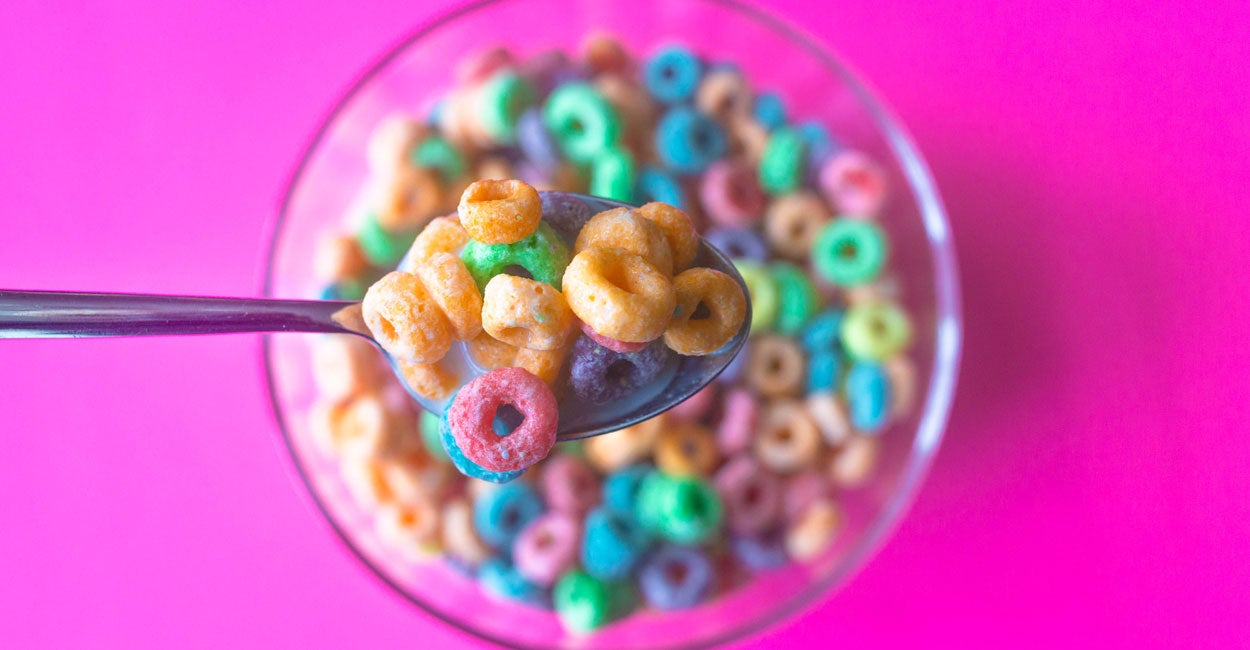
They don’t want their cereal preaching transgenderism or their drinks fighting voter ID. By a 3-to-1 margin, they don’t want corporations openly involved in political activism at all. So when Fruit Loops tries to serve up new genders, don’t be surprised if he, she, they, or them don’t buy it.
According to Gallup, the fatigue over LGBT extremism is finally starting to register on a national scale, too. In the last year, the enthusiasm for things like boys in girls sports and transgender-identifying people in the military is bottoming out.
In bad news for these brands and everyone else on the left’s bandwagon, a solid majority of Americans—62%—don’t want our daughters competing against biological boys in athletics. And there’s also been a 5-point dip in the number of people who think the military should encourage this sort of gender-confusion. Political independents, especially, saw pronounced drops in support for transgenderism in the ranks—down 11 points since just 2019.
And yet, when the media does acknowledge people’s reservations and tries (however nominally) to present both sides of the transgender issue, they’re torn to pieces for it.
Just this past Sunday, when “60 Minutes” aired a segment on the Arkansas law that protects minors from transgender treatments, Lesley Stahl dared to also talk to people who had transitioned—and regretted it. It was barely five minutes of content, but the network was hammered for it by leftist and LGBT extremists for even including it.
The young woman Stahl interviewed, Grace Lidinsky-Smith, explained how she’d started cross-sex hormones and later a double mastectomy.
When Stahl asked about the process, Lidinsky-Smith replied, “They asked, ‘So, why do you wanna go on testosterone?” And I said, “Well, being a woman just isn’t working for me anymore.” And they said, “OK.” That was it? Stahl asked. “Yup,” Lidinsky-Smith said, highlighting one of the strongest arguments against the trend, which is that there are almost no barriers to any patient—child or not—making decisions that could mutilate them for life.
“I can’t believe I transitioned then detransitioned, including hormones and surgery, in the course of, like, less than one year,” Lidinsky-Smith shook her head.
Garrett, a young man from Louisiana, was castrated just three months after starting female hormones.
“I didn’t get enough pushback on transitioning. I went for two appointments and after the second one, I had my letter to go get on cross-sex hormones,” he explained. “I had never really been suicidal before until I had my breast augmentation. And about a week afterward, I wanted to actually kill myself. I had a plan, and I was gonna do it—but I just kept thinking about my family to stop myself.”
Another part of the segment that created hysterics on the left was the admission by a youth gender psychologist that there’s a culture of intimidation around transgenderism in the medical field.
“Everyone is very scared to speak up because we’re afraid of not being seen as being affirming or being supportive of these young people,” Dr. Laura Edwards-Leeper conceded. “But even some of the providers are trans themselves and share these concerns.”
Almost immediately, CBS was bombarded with social media attacks from groups like GLAAD (Kellogg’s partner in crime), who said that even after months of meeting with “trans leaders” on the segment, “They delivered a piece which still promulgates the same anti-trans dog whistles that we hear from anti-LGBTQ activists and in state legislatures like Arkansas.”
Other so-called equality groups railed the show for “dehumanizing” trans-identifying children. “Where’s the love for trans people?” Laverne Cox tweeted.
The love, as it turns out, is in telling both sides of the story. That may be fatal to the left’s agenda, but it’s the only chance this generation has to know the truth. What psychology and medicine are doing by ignoring the risks and regrets is only leading more children down an irreversible and painful path.
“We already have girls, physically health girls, who are being referred for double mastectomies at age 13,” Dr. Michelle Cretella, president of the American College of Pediatricians, warns. “This is institutionalized child abuse.”
And companies like Lego, Levi, Kellogg’s, Disney, Mars, Target, and others are celebrating it with their specialized toys and fun rainbow colors. At the end of the day, those are all just a distraction from the real heartbreak: that changing genders won’t fix anyone’s problems. Only a changed heart, turned toward God, can.
To contact Kellogg’s and complain, email it here or Tweet it at @KelloggsUS. For a list of its family of brands, click over to its website, so that you aren’t unknowingly contributing to its mass deception of our young people.
Originally published in Tony Perkins’ “Washington Update,” which is written with the aid of Family Research Council senior writers.
The Daily Signal publishes a variety of perspectives. Nothing written here is to be construed as representing the views of The Heritage Foundation.
Have an opinion about this article? To sound off, please email [email protected] and we’ll consider publishing your remarks in our regular “We Hear You” feature. Remember to include the url or headline of the article plus your name and town and/or state.
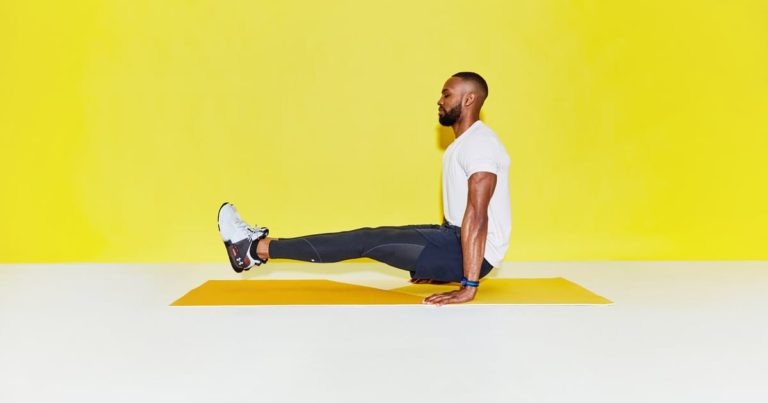
Chill music plays in the background of a sunny day as yoga instructor Pasch (RYT200), known as @blissful.pasch on TikTok, strengthens her shoulders and core while practicing three drills. She uses two yoga blocks, a yoga mat, and two sliders to support Lolasana holds, transition crunches, and plank to L-Sits. (Pro tip: Try activating your bandhas for added support from within.) If you’re sweating just watching Pasch move, wait until you try out her moves.
Image Source: POPSUGAR Photography / Matthew Kelly
The lines between online life and real life practically disappeared in 2020 when the COVID-19 pandemic forced us to replace social platforms and video apps for human contact.
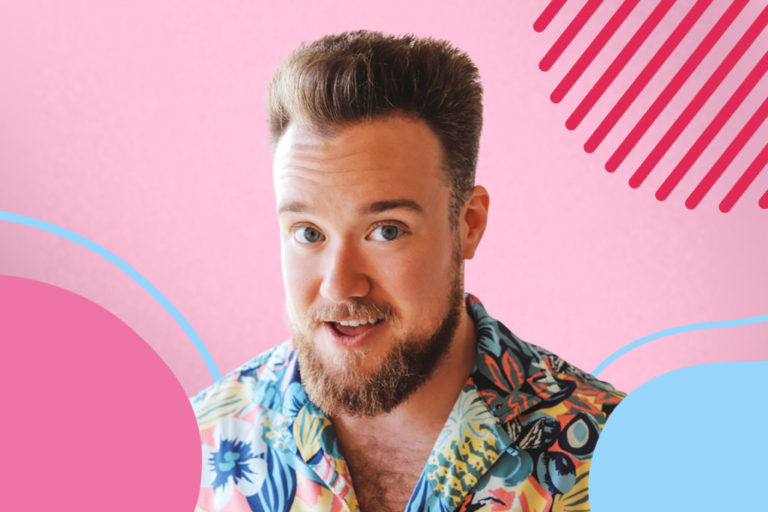
As part of our mental health awareness month coverage this May, we are talking to people about how their online lives impact their mental health. We connected with Zeke Smith, the comedy writer who was known to fans of CBS’s Survivor as “the goofy guy with the mustache and the Hawaiian shirt” over two seasons of the show until another contestant outed Smith as a trans man. Smith found himself suddenly in the spotlight as an activist and voice of an often-invisible community.
Smith talked to us about how to think about online haters, when it’s time to log off and why a puppy pic is usually more useful than a hot take.
It’s been 15 months since the world came to a halt. How are you doing?
I’ve been fully vaccinated for about five weeks at this point, and it has been a game changer. During the pandemic my boyfriend [actor Nico Santos (Crazy Rich Asians, Superstore)] and I have been slowly having friends, vaccinated friends, over and just being able to see and talk to people who are not my boyfriend or are not on a computer screen has been great. I’m probably like 60 percent introverted, 40 percent extroverted and that 40 percent of me has not been getting fed at all.
Were you replacing in-person with online interaction?
Yeah I was, and I don’t think that’s a good place for anybody to be getting their social interaction. But it’s just been me and my boyfriend the whole time and I found myself feeling lonely and going on Twitter and being like, alright well what are my Twitter friends doing? What are they reading? What podcasts have they just been on?
The hardest part about interacting with people online — and I’m guilty of this as well — is that nobody’s willing to listen, everyone just wants to say their opinion and mic drop and walk away. And I feel like conversations where you have them in person over coffee or cocktails or whatever, where people listen and engage with you, you can’t do that online, because, in my opinion, people are only looking to be validated in their current beliefs.
There is a pull you feel in your career with your aspirations and your life and activism toward social media. Some of this, you have to do, right?
There is a significant portion of our culture that is happening online via various social media platforms and if you live in a major city, particularly if you’re in entertainment, it’s the equivalent of reading the newspaper. You have to sort of be where trends are found and grown, and that’s how you keep up. I think, for me, the quarantine has both accelerated and also troubled this conversation of “Have we reached peak social media?” Because we’ve realized that it’s not good for anyone’s mental health.
It’s bad for our eyes and it’s bad for our sleep to be looking at screens all the time. And it has created really toxic ripples in our culture on both social and political levels.
How do you know it’s time to log off?
When [Harry Potter author] JK Rowling came out as a TERF (trans-exclusionary radical feminist) this summer, I was trying to engage with her and it brought out all of these trans-phobic feminists. I’m making a very well-reasoned argument and then more and more trash comes at you, and it makes you very angry, because you feel threatened.
And when you’re at a moment where all of your notifications on Twitter are just someone yelling at you or saying mean things about you, or trying to undermine something very fundamental about you, it does make you feel very lonely. It does make you feel very defeated.
Those are moments when I have to catch myself because I won’t be able to focus on other things. I’ll just be thinking about a response to what that person said, and those are the moments where I’m like, “Okay, we are deleting the apps off the phone. We are logging out on the browser. We need to take a step back and reset.”
Speaking of how online interactions will never replace the real, lived experience… I think this very much ties into one of the things that’s been on your mind lately: that there aren’t any trans men that we know of working in writers rooms for television. Why does that real-life experience matter?
There was a time not too long ago, and it still exists today, where the only people writing television were straight, cisgender, white guys. The reason why stereotypes develop in television is because they’re written by people who do not have a particular experience.
In the trans context, people who don’t know trans people intimately probably think lives revolve a lot around bathrooms and saying our pronouns.
Right. The mechanics of transition or how your family reacted.
Sure, those are all artifacts of being trans but a lot of times when I sit down with writers, who are not trans but who want to write a trans story and they send me their script, I’m like this is not true to the lived experience of being trans. And they’re confused because they say they did all this research. They watched all these movies. And I say, written by people who weren’t trans, portrayed by people who weren’t trans, directed by people who weren’t trans. It’s what you believe versus our real experience.
Without really being in charge of it, you became a trans person that an awful lot of people knew all of a sudden.
Totally, and I think that’s one of the reasons why my Survivor experience seems to have had an impact on so many people. For a season and a half of being on Survivor, nobody knew I was trans. I was just the goofy guy with the mustache and the Hawaiian shirt. And people liked me. They liked my sense of humor, they liked my passion. Hopefully that rewrites a person’s understanding of what it means to be trans.
My Pocket Joy List: Zeke Smith
Read it
You obviously experienced this on a much bigger stage. On a smaller scale though, we all maybe have moments like this if we’re passionate or vocal. Whether that’s being out as a trans person or being in favor of something, that puts you in such a vulnerable position online. What do you think people should do in a situation where they’re passionate about an issue?
I don’t know that any problems have been solved by a single individual with a Twitter account engaging. Unlike me, if you find lots of joy in getting into those squabbles, it fills you with energy and it doesn’t make you feel bad about yourself, then squabble away.
But if it does not bring you joy, then I think it is worth reminding yourself that the weight of the world is not on your shoulders alone. There’s always a way to support a cause or people you care about without directly engaging with those people who are trying to shut them down.
There are ways to donate. There are ways to volunteer. Make phone calls. On a personal level, channel your feelings into a creative endeavor. Instead of engaging with, as we’d colloquially say, “the haters,” send positive messages of support.
I love what you said. If someone is in the middle of a firestorm, send them a supportive message. It’s simple, but better than just having a hot take.
Exactly. Just you know, say, ‘Hey, I’m rooting for you.’ Or send pictures of puppies.
When I was on Survivor I got mostly positive comments from everybody. And then I would go on Reddit and there would be a gaggle of people who were saying nasty things about me and being critical to what I was doing, and it really shook me because that was the first time I ever saw myself commented upon publicly.
My friend Hannah [Shapiro], another contestant on Survivor (Season 33: Millennials vs. Gen-X), and I were both dealing with the haters, and so we decided to pretend we were dating. I’m very gay and she is very straight. We did this series of Instagram and Twitter posts that made it seem like we were dating. But the captions were all musical theater lyrics and if you were above the age of 18 you would know that we were pulling a prank.
But so many people fell for it and were confused and didn’t know what was going on. And what it made us realize is that, oh, a lot of these people who’ve been saying hateful things are middle schoolers. That was such a profound experience of realizing, “Oh, you have been upset about what some 13 year olds have been saying.”
And so if you are seeking community exclusively online, that’s not a path that’s necessarily going to lead you to self love and self acceptance. It’s not a recipe for finding your truth or how you can be happy within yourself.
There are millions of people for whom the internet has been a place that has helped them find themselves or express themselves or be safe, when there is no other safe place to be.
But I do think that a full life can’t be fully lived on the internet. I think you do have to at some point find your chosen family. You find a community and find people that can hold your hand and sing you “Happy Birthday.”
This interview has been edited for length and clarity.
Social stigma, lack of access to mental health support, bullying, discrimination, and shame may compound the effects of depression among people who are gay.
Estimates of depression among members of LGB+ communities vary widely. Some data suggest that depression rates are similar to those of members of heterosexual communities. In contrast, other studies point to much higher rates.
Depression is a complex illness. Researchers have not identified a single cause that explains all cases of depression.
Most data suggest that a range of factors contribute to the development of depression. These include physical health issues, genetic and family history, lifestyle factors, and environmental factors such as trauma and discrimination.
Some factors that may play a role include:
Bullying and discrimination: A 2014 survey of youth who identified as LGBQ found that 74% experienced verbal harassment at school and 17% reported physical assaults.
Rejection: Rejection by loved ones, especially parents, increases the risk of depression among gay youth.
Stress and trauma: Stress and trauma are both risk factors for depression. People who are gay are more likely to experience certain traumas, such as discrimination, harassment, and rejection.
Physical health: Gay and bisexual men are at higher risk for HIV. Members of the gay community tend to have worse outcomes and face more healthcare discrimination. This can cause poor health. Physical health issues are also a risk factor for depression.
Heterosexism: The idea that heterosexuality is the default or norm can affect gay well-being. Some gay people may internalize heterosexist beliefs. They may experience shame and conflict over their identities and sexual choices.
Estimates of depression rates in the gay community vary widely. Moreover, more recent studies often group LGBTQ identities together. This makes it difficult to identify a consistent depression rate among people who are gay.
Some recent data include:
While mental health support is vital to overall health, many members of the gay community find that accessing mental healthcare intensifies feelings of depression and stigma. This is particularly true among gay teenagers and children, who may face parental rejection when they ask for help.
Gay adults may experience rejection when their mental health providers are insensitive to their identities and experiences.
Some options for getting help:
School counseling centers: Students who cannot afford to pay for help may be able to find support from a school guidance counselor or college counseling center.
Local support organizations: LGBTQIA+ support organizations may be able to connect a person to helpful resources. They also offer identity-affirming support that can help a person feel less stigmatized or alone.
Support groups: Support groups specifically for gay people with mental health issues may help a person develop coping skills and meaningful friendships.
Affirming therapy: People considering therapy should ask a potential therapist if they are affirming of non-heterosexual identities.
Medication: Depression is more than just an emotional state – it is a medical condition. Antidepressants may help a person feel better. They can be especially helpful for boosting mood while a person pursues therapy.
The GLBT National Help Center has a dedicated collection of resources to help people find support groups, communities, and other sources of information in their area.
Commit to not self-harming for a period of time, such as 24 or 48 hours.
Reach out for help. Contact a trusted friend, a therapist, or a doctor.
Avoid being alone. Try staying with a loved one.
Call 911 or go to the emergency room if the impulse to harm is overwhelming. Emergency medical care may open up treatment options for prompt care.
People helping a loved one who is having suicidal thoughts should:
Listen attentively. Do not dismiss the person’s feelings or problems. Do not mock them or suggest they are seeking attention.
Take the risk seriously. Offer strategies to reduce risk, such as arranging a visit.
Ask the person if they have a plan. Knowing a person’s plan to self-harm may make it easier to help them.
Ask for help. Call a suicide hotline for additional help.
Be supportive. Offer to go with them to therapy or help them get treatment.
Avoid arguing. Try not to be confrontational, but encourage them to keep talking.
Depression is a serious and potentially life-threatening medical condition. It is not a choice and not something a person can talk themselves out of.
While social factors can contribute to depression, the right support can help a person manage an unsupportive or discriminatory environment and reduce symptoms of depression.
China’s top streaming platforms censored around six minutes of material from HBO Max’s “Friends: The Reunion” special on the day of its debut Thursday, deleting footage of artists like BTS previously deemed to have “insulted” China, gay fans, references to pee and a shot of Matt LeBlanc in his underwear, among other moments.
“Friends” has amassed a huge, devoted following in China over the years, and thousands of fans had expressed their excitement for the special across all local social media platforms ahead of its release.
But many said they were “bewildered” to find that all three of the country’s major streaming platforms with rights to officially broadcast the show — iQiyi, Alibaba’s Youku and Tencent Video — had entirely cut appearances by musicians BTS, Lady Gaga and Justin Bieber, as well as other scenes.
“Are we reverting to the isolationist Qing dynasty, closed off to the rest of the world?” a commenter on the Weibo social media platform railed.
Many, however, expressed support for the censorship, stating that those who have slandered China should indeed be banned.
BTS, Gaga and Bieber are all artists who have run afoul of Beijing in the past.
Last October, Chinese nationalists slammed BTS for insulting China by not mentioning the sacrifices of Chinese soldiers in the Korean War in an acceptance speech for a prize celebrating the group’s contributions to U.S.-Korea relations, which had no direct relation to China.
Gaga has been a persona non grata in China since she met in 2016 with the Dalai Lama, with whom she discussed compassion. Beijing accuses the Nobel Peace Prize laureate of being a dangerous separatist.
Bieber first came under fire in China in 2014 for photographing himself visiting Tokyo’s controversial Yasukuni war shrine, a site that honors Japanese World War II war criminals alongside other casualties of war. In 2017, the Beijing Municipal Bureau of Culture formally banned him from performing in the country, citing “a series of bad behaviors” both on- and off-stage.
All three Chinese platforms cut the musicians out of the “Friends” special entirely.
In BTS’ offending 13-second clip, the K-pop superstars express their love for the series, with member RM saying the show “really taught [him] things about life and true friendship.”
In the uncut HBO Max version of the special, Gaga appears for nearly three minutes to sing a rendition of “Smelly Cat” with Lisa Kudrow’s Phoebe, backed by a gospel choir. She thanks Kudrow for being “the different one, the one who was really herself” on the show.
The Chinese version allows Kudrow to sing a verse of the song for about 45 seconds on her own before jumping to the next post-Gaga segment.
Later, Bieber’s strut down a catwalk to show off a beloved potato costume from the show, “Spudnik,” disappears without a trace.
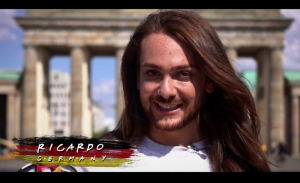
Where is Ricardo?
HBO Max
Even more troubling, perhaps, is China’s erasure of LGBTQ references. All three platforms deleted the testimony of German “Friends” fan Ricardo, who described how the show gave him a sense of belonging.
“I was a gay man who wanted to have hair like Jennifer Aniston, so you can imagine how lonely I sometimes felt,” he says.
Additionally, Youku deleted a subsequent scene in which a woman pulls her girlfriend on camera. “Like every Chandler, I found my Monica,” she says.
Youku also cut out shots of a separate scene in which LeBlanc’s Joey opens his bathrobe to reveal himself in his skivvies with a picture of Ross stuck to the front of his underwear.
More confusingly, iQiyi and Tencent both censored a seemingly innocuous classic scene in which Monica recounts how Chandler and Joey helped her overcome a severe jellyfish sting by peeing on her, as the rest of the gang squeals in horror.
Though Youku kept the pee references, it cut banter just after that scene about what the cast was wearing the first time they met.
Chinese platforms are responsible for executing their own censorship in-house, and either hire battalions of employees for the task or outsource the resource-intensive business to a third-party firm. Many prefer to overshoot than face potential repercussions for letting content deemed politically sensitive slip through the cracks.
While all of China’s official “Friends” streamers censored the special for its debut, some were more heavy-handed than others. The original runtime for the HBO Max version is 1:43:50, but iQiyi’s version initially clocked in at 1:37:54, Tencent Video’s at 1:39:23 and Youku’s at 1:40:16. By around 11:30 p.m. local time, about eight hours after its release, the latter two channels made further cuts to match iQiyi’s runtime.
‘Global Stars’
The runtime discrepancies and later changes highlight the caution with which Chinese platforms are currently approaching online entertainment, celebrity “morality” and fan culture.
In recent months, social and governmental pressure to clean up and “purify” what is described as a wayward, immoral industry has been mounting, spurred on by the fact that this year marks the sensitive 100th anniversary of the founding of the ruling Communist Party and censors are on overdrive.
Earlier this month, for instance, a handful of BTS Weibo fan accounts were issued a month-long ban from posting for inciting what the platform described as undesirable fan fervor.
The Douban platform has shut off the user rating function for the “Friends” episode, potentially to head off any backlash over the censorship. It seems, however, that the deleted clips are not yet entirely banned from the Chinese web, since some continue to circulate on social media.
Fed up with censored versions, many viewers have downloaded pirated copies of the HBO Max version to bypass local streamers entirely. Others have turned to unauthorized, uncensored versions posted elsewhere, like the Bilibili platform.
In bullet comments over the brief, uncut BTS segment on Bilibili, one user addressed the censorship with frustration. “What does a Korean group appearing on here have anything to do with us? It’s not like we can actually stop them.”
Others delighted at Kudrow’s bristling response to Gaga’s rendition of her song. “That’s so Phoebe!!” one cheered.
Overall, the response in China to the episode has been overwhelmingly positive, with countless fans describing how the special brought tears to their eyes.
“This whole show brings up so many memories — I’ve watched all ten seasons more than a dozen times. I don’t have many friends, but they are really like friends of mine,” one wrote.
Another eulogized: “These six people are truly global stars. No matter how many years have passed, they represent an important part of American culture, and popularized that American culture across the whole world.”
In Libya’s Bani Walid, flags of ousted autocrat Muammar Gaddafi still fly in some places and streets are ragged with neglect, but its residents have new hope for their town and country. During a recent visit by Prime Minister Abdulhamid Dbeibeh, head of a new unity government, people waved olive branches as his armoured motorcade passed through the town, which has long been isolated by political disputes. Dbeibeh was appointed in March, sworn in by Libya’s divided parliament after his selection via a U.N. talks process, a step widely seen as offering the best chance for peace in years – slender though it might be.
WORCESTER — The Board of Health Monday voted to support calls for a police civilian review board, with member David Fort castigating city and department leaders over the topic.
“I’m tired of the police department leadership and the city manager’s office basically putting a middle finger to the people of Worcester,” Fort said, adding he believes residents calling for change are being disrespected.
Such boards have the ability to investigate police misconduct by subpoenaing witnesses and documents, and are considered by police critics to be necessary to ensure transparency.
Worcester obstructed attempts at transparency
Worcester, like other large cities, has often obstructed attempts at transparency, with the administration of City Manager Edward M. Augustus Jr. currently fighting a Telegram & Gazette lawsuit over police records.
Augustus, who declined an interview request for this story, has said he will not be recommending a civilian review board.
City manager: State created review board to certify, decertify officers
Augustus said earlier this month he does not believe such boards have acted as an “end all, be all” for other communities, specifically Boston or Springfield. He noted his administration is already implementing numerous reforms, including a racial equity audit of police, and that the state has created a review board that will certify and decertify officers.
“I’m of the opinion that we should focus on bringing all these efforts into fruition,” Augustus wrote in a statement.
Fort critical
Fort said Monday that Augustus’ comments were “not wise,” and smacked of police “excuses” on the topic that he referred to as “BS.”
Fort said that many communities, including Springfield and Boston, have not seen success with civilian review boards because those boards did not have subpoena power.
He noted that Springfield may soon have such authority, as a Hampden Superior Court Judge recently ordered the mayor to create a civilian police commission that the City Council had approved.
That commission would go further than many review boards, allowing the civilian commissioners to hire, fire and discipline officers.
Boston, Springfield ‘beefing up civilian review’ while Worcester opposes it
In an interview Wednesday, Fort told the Telegram & Gazette he viewed Augustus’ comments as disingenuous. Both Boston and Springfield are beefing up civilian review at a time when Worcester is opposing it, he noted, so comments about prior, less-empowered boards in those cities, he reasoned, are irrelevant.
Fort said at Monday’s meeting that he did not believe a civilian review board would be a panacea — nor does it need to be.
He likened the issue to COVID-19, where a number of different recommendations — like social distancing and mask wearing — are paired to attack a problem.
Fort said he believes city and police leaders are treating residents calling for change like “fools,” calling their response “insane.”
Legislators largely silent
The May 12 letter sent by the 18 community groups was sent to Augustus, and copied to all members of the city council and all members of the city Legislative delegation.
The T&> emailed all those to whom the letter was addressed and requested comment the day the letter was sent, and again, Thursday.
The only city councilor to respond thus far has been Councilor at-Large Khrystian E. King, who supports and has been pushing for such a board.
The only legislator to respond has been State Sen. Michael Moore, who said Thursday he would need to see more details about the makeup of the board.
“I have a big concern over any attempt to give subpoena authority to this commission,” he said, adding the membership would be important.
Moore said any board with subpoena power must be made up of fair-minded people who respect the rights of due process.
“The appointment shouldn’t be based on any political philosophy,” he said.
Moore also noted that the forthcoming state POST commission will have subpoena and disciplinary power.
“Every community has the right to determine how they want to oversee the police department,” he said, but too many boards could create regulatory headaches and contradictory rulings.
“We have to make sure these rulings are based on fact, and not political philosophies,” he said.
Unions criticized
Fort Monday said he doesn’t believe police reforms the city has announced go far enough. He specifically criticized the value of the city police equity audit Augustus has ordered.
“It’s simple — there’s no Latinos in leadership, captain and above. There’s one Black person who is a captain, and he had to sue the (department) just to be able to get an opportunity,” he said.
Fort added he does not believe there are any openly gay people or women in “leadership.”
“If you want to know your racial or gender audit, I just did it for you,” he said.
Fort, seemingly speaking to Augustus, argued that the city appears to be disregarding something many people in the community, and now the Board of Health, supports in the review board.
“Who are you listening to?” he asked. “Because outside of the community of the citizens of Worcester and the Board of Health, the only voice you’re hearing, and the only commands you’re following, are the police department’s.”
The unions, in pushing back, repeated what unions have said in other cities — that they do not believe civilians have a firm enough grasp of policing to do the job fairly.
Daniel J. Gilbert, head of the officer’s union, told the T&> that “people appointed to such boards with no relevant experience and with an axe to grind against the police would not serve to help the city.”
Fort said he believes that kind of comment about civilians is “codeword” for Blacks, Latinos and white people who support justice.
Gilbert could not be immediately reached Thursday for comment.
Fort was sharply critical of Sgt. Richard P. Cipro, who represents the police officials union, for past comments defending the department in public meetings.
Cipro, who is running to be District 1 Councilor, has challenged detractors to provide evidence that police are racist. He has dismissed anecdotes raised by some as insufficient, said the Board is throwing the word racism around recklessly, and said members lack authority on the topic.
Fort said Monday that Cipro is “spewing the line” of white supremacists, calling his comments on the topic “insulting,” “inflammatory” and “disheartening.”
Fort, asked by the T&> whether he believes Cipro to be a white supremacist, said he does not know whether that is the case.
He reiterated that the words Cipro used are the same that many in white supremacist circles use.
Fort also took aim at the unions’ argument that a civilian review board could be divisive.
“Divisive is when you say things like there’s no racism that exists (in WPD),” Fort said Monday.
Fort opined that Cipro, who was not present at the meeting, should take anti-racism training and reconsider both his job and political ambitions.
“When someone denies racism and biasedness (sic) in a police force that has life and death situations, I think that person shouldn’t even run for office,” he said.
Cipro responds
In an interview Thursday, Cipro said Fort’s words were unfair and untruthful.
Cipro said while he did — and does — believe the department is not racist, he has not maintained there is no bias or prejudice within the department.
Cipro said he does not believe that racism — defined as the belief that racial differences produce inherent superiority of a particular race — exists within Worcester police.
He said he does believe that biases and prejudices — including racial bias, gender bias and bias based on sexual orientation — exist throughout society including within police departments.
He said he is open to receiving more information, but at this point has not been shown evidence that racial bias or prejudice exists more in the WPD than other organizations.
“I welcome the equity audit. I welcome it in full, and I welcome further dialogue on this topic,” Cipro said, echoing comments he made at a prior Board of Health meeting.
Cipro took exception to Fort characterizing his remarks as similar to those made by white supremacists.
“He doesn’t know who I am, or what I’ve done,” Cipro said, going on to list a number of responsibilities he’s held teaching police bias and hate training in Worcester and at the state level.
Cipro, who earned his bachelor’s degree in history, said he’s outraged by the treatment Black people have suffered in the past in America, and understands the systemic injustices of Reconstruction and the Jim Crow south.
But police officers serving today did not create those systems, he noted, and he has not been shown evidence of any discriminatory policy or practice within WPD.
“I keep asking, and I ask it again, please point to these policies. Where are they?” he said.
Cipro added that it’s possible police have a “jaded view from the inside looking out,” and said he’s open to others helping them identify blind spots.
But he believes there has been a lack of specificity, and hostility coming from Fort, that makes reasoned and productive discussion impossible.
The approach Fort has taken, he said, is more akin to one a race-baiter takes than a person who is trying to bridge divides.
Cipro, a colonel in the Army National Guard, said he has been commended for work he has done on diversity from superiors.
He provided a recent email from a National Guard superior complimenting him on a diversity policy he put together.
“I’m sharing this with the team as a best practice,” the superior wrote.
Cirpro said in his 28 years as a Worcester officer, including five in Great Brook Valley, he has “never had a problem with anyone,” from a minority group.
Cipro said he believes reforms at the state level will foster greater police transparency, which he said he welcomes. He said he is also an advocate of reforms to civil service that will make promotional processes fairer to all.
Board stresses anti-racism
Fort said he believes the police are resisting the civilian review board simply because they don’t want the community to have eyes on what’s going on.
“How can the city manager, or how can the police department, expect the community to feel safe?” he asked.
Fort’s comments were the sharpest of any board member Monday. Others spoke for less time, and all agreed a civilian review board was needed.
Member Frances Anthes said she believed the Board of Health should frame its support for such a board in the context of wanting to make the city the “best anti-racist city” nationwide.
“It seems to me that since we’ve dealt with over 400 years of a system that was racist, there’s no middle ground around policies anymore,” she said.
Anthes said policies in her view are either racist or anti-racist, adding she agreed the Board needs to “take a stand.”
Board Chairman Jerry Gurwitz said the recent Human Rights Commission meeting was a “real wakeup call” for him, adding he would like to coordinate efforts more closely with HRC.
Gurwitz said he feels badly that the board’s conversations around race could be construed as anti-police, saying he believes city officers “are overall amazingly dedicated people, and good people.”
Fort at one point Monday paused to recognize two officers he said recently worked extremely hard to save a dog near his home that became trapped beneath a storage container.
Fort: Can’t have leadership that basically says ‘racism doesn’t exist’
“They are the best of Worcester police,” he said. “But you can’t have leadership that’s basically said what they’ve said — that racism doesn’t exist.”
Fort said he believes Police Chief Steven M. Sargent has good intentions and could benefit from learning about anti-racism.
But he said the department’s de facto position that racism does not exist within its ranks has eroded community trust.
“It’s up to the city manager to adopt an anti-racist process,” he said, starting with the creation of the civilian review board.
“(It’s needed) so that we in the community can become more trusting,” he said. “Because right now, the credibility, the accountability when it comes to this issue is gone.”
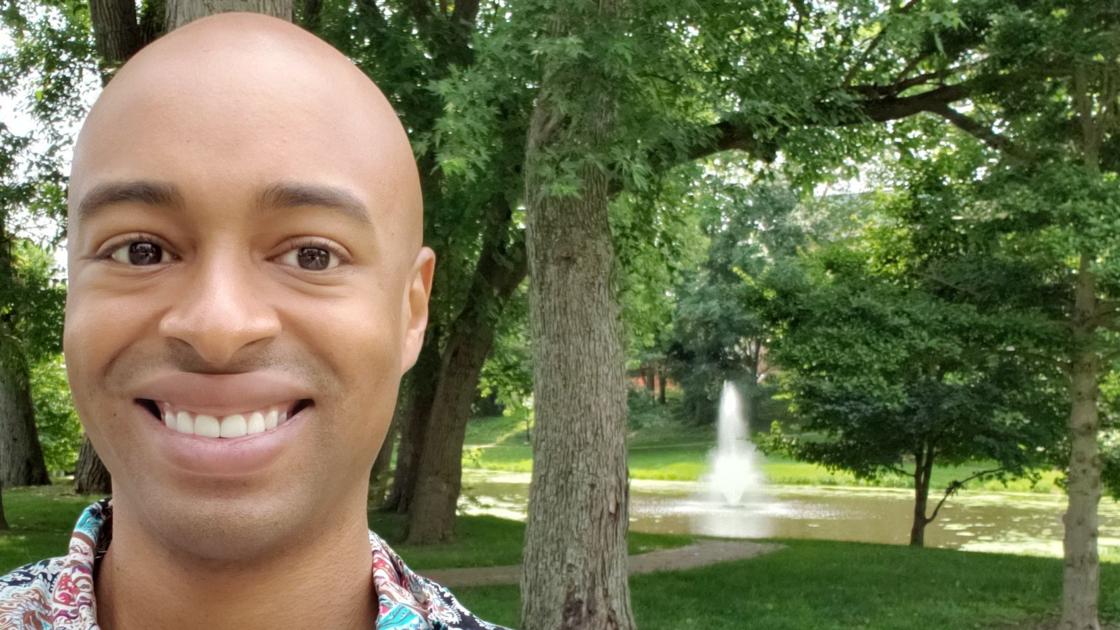
The Athens city Democratic Central Committee voted unanimously Thursday to appoint Ohio University LGBT Center Director Micah McCarey to an at-large seat on Athens City Council, replacing former Councilmember Beth Clodfelter who resigned earlier in May for a job with Sen. Sherrod Brown’s office.
McCarey, 35, a Black, gay man who rents a house on the East Side with his partner, in many ways embodies precisely what many of City Council’s critics, including former councilmember Peter Kotses and rival at-large Independent candidate Damon Krane, say the body lacks — diverse leadership along the lines of age, race, sexual orientation and living situation.
“I want to live in a city were there’s a queer person of color on Council … sometimes you have to be the change you want to see in the world,” he said Wednesday in an interview prior to the appointment.
For McCarey, diversity, inclusion and progressive race relations are mantras that inform his worldview and policy considerations. He said City Council feels like a “calling” for him.
“It feels like the right time to share my background, my perspective, my academic strengths,” McCarey said.
Reforming law enforcement with diversity in mind is also key for McCarey. He said the city still has a long way to go before policing arrives at a place deemed acceptable. In an interview, he told an anecdote about his recent experience walking into the Athens Police Department, recalling that many officers were friendly and helpful, but that one wouldn’t speak with him and refused to return his greeting.
He’s also interested in expanding input in City Council’s 2040 comprehensive plan to hear the needs of more diverse groups of people.
McCarey, the second Democratic appointment to the body in recent weeks and the only candidate the central committee considered for the role, will be up for re-election in November to a position he wasn’t elected to.
But since Clodfelter had already gathered enough signatures to get on the ballot, the central committee was able ensure he will also be on the ballot, despite voters having no say in his candidacy. Some central committee members seemed unsure of the legality of him being placed on the ballot.
Athens County Board of Elections Director Debbie Quivey has suggested in the past there are mechanisms within state laws for the Democrats to allow Clodfelter’s replacement on the ballot.
“I recognize that (running a campaign) will be some significant work, but it’s well worth doing if it means I’ll be in a better position to help the community in this way. I would absolutely plan on pursuing that opportunity,” McCarey said.
The newly appointed councilmember was installed as interim director of OU’s LGBT Center in May 2019 after his predecessor, deflin bautista, was ousted for misusing university funds.
McCarey became full-time director of the office in December that year. He also served a two-year term on the OU Board of Trustees as a student trustee.
Growing up in Oberlin, Ohio, he moved to Athens for college at age 18 and never looked back. He earned an undergraduate degree in organizational and interpersonal communication, a master’s degree in human development, and is almost finished with his PhD in positive psychology and decision making, all from OU.
On the central committee voting for McCarey’s appointment was Councilmember Sarah Grace, who he will effectively run against in the at-large general election race. Also in the race is Ziff, Krane and Independent Iris Virjee, a bartender at the Smiling Skull Saloon.
A Tasmanian senator has been banned by Qantas from flying on any of its planes for the next six months after she allegedly launched into a foul-mouthed tirade at airport ground staff who had refused her access to the exclusive ‘Chairman’s Club’ lounge at Melbourne Tullamarine Airport.
Jacqui Lambie, an independent lawmaker who founded her own political party called the Jacqui Lambie Network, has since apologised following the incident on March 25 in which she was accused of abusing staff and using apparently homophobic slurs.
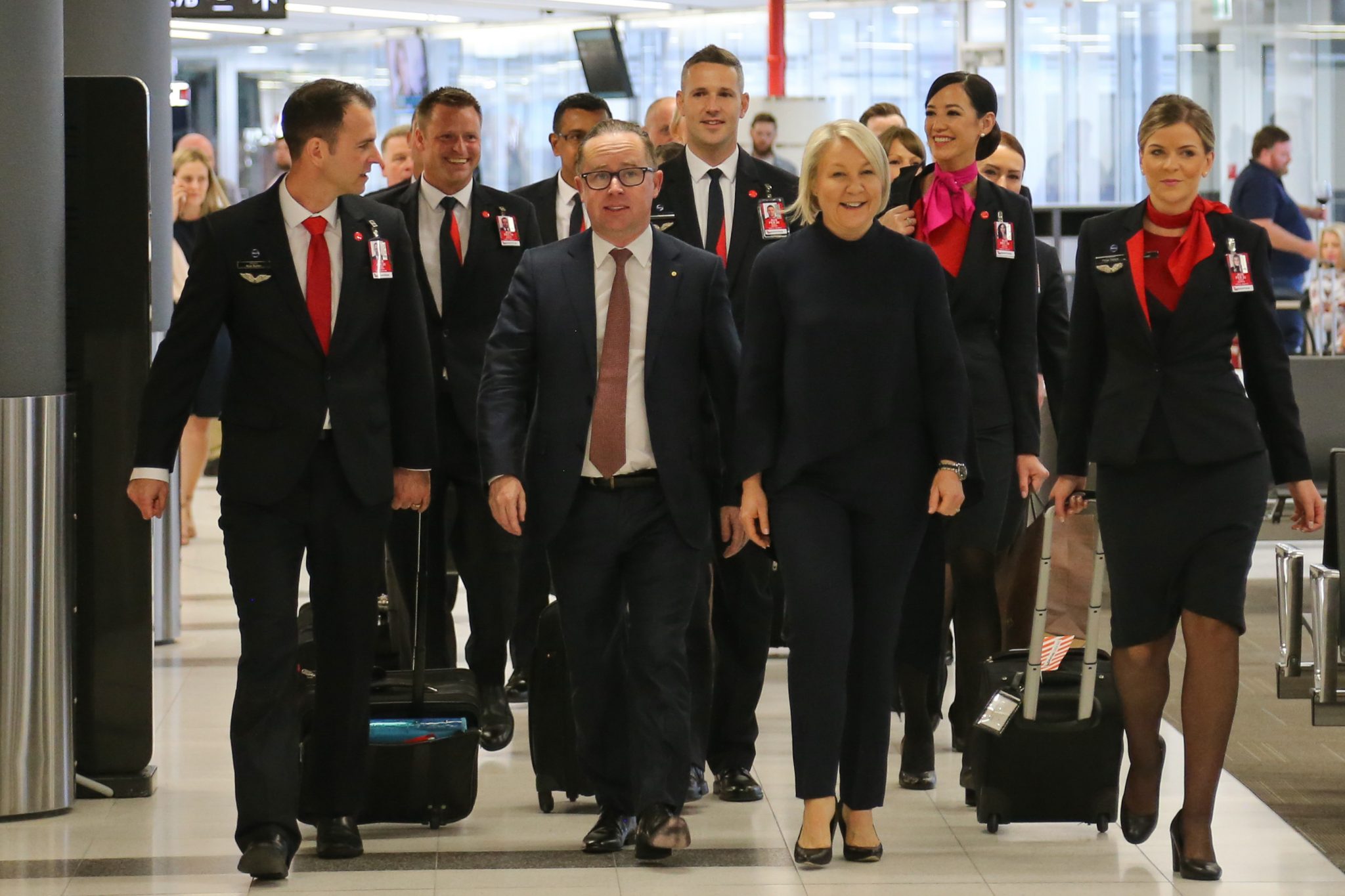
During her tirade, Lambie allegedly called the openly gay chief executive of the Australian flag carrier a “poof” and referred to the use of “pussy power” to get her way with harassed check-in staff. Alan Joyce was appointed CEO of Qantas in 2008 and is one of the most high-profile LGBTQ business leaders in the world.
Lambie hasn’t denied using the slur or abusing Qantas staffers but apologised for her actions which she blamed on a long week and other life stresses.
“It had been a long few weeks up in Parliament. It’s just been a really, really long year,” Lambie said. “Basically I just blew my stack and unfortunately there was a couple of Qantas staff members that wore that.”
“I’m extremely apologetic for my behaviour for that few minutes,” she continued, saying it was “unfair” to put the check-in staff through her tirade.
Her behaviour has landed Lambie with a six-month ban from flying with Qantas and its budget subsidiary Jetstar. The ban was, according to the Sydney Morning Herald, decided after to and fro negotiations between the airline and the senator’s office. The suspension will kick in from early April.
“I’ll take whatever punishment Qantas throws at me. I’ve done the crime and I’ll do the time because that’s what I deserve,” Lambie conceded.