Home Blog Page 175

US, World Bank caution Ghana against crackdown on LGBT group – Pulse Ghana

An official of the US Senate is quoted as saying: “We urge national leaders in Ghana to uphold constitutional human rights protections and to adhere to international human rights obligations and commitments for all individuals. This includes members of the LGBTQI+ community.”

“We call on all Ghanaians to respect the provisions under Ghana’s Constitution that guarantee freedom of speech, expression, and peaceful assembly.”

A World Bank spokesperson is also quoted to have said that the institution is keeping tabs on the situation in Ghana.

“We are aware of the challenging context for LGBTI people in Ghana and are watching the developments closely.

“As a member country of the World Bank Group, Ghana endorsed the Bank’s Environment and Social Framework that has clear, explicit, and mandatory requirements on inclusion and non-discrimination for World Bank financed projects.”

In recent months, the LGBT community in Ghana has increased calls for homosexual activities and same-sex marriages to be legalised.

The community recently opened an office in Accra, which was attended by some ambassadors to Ghana, including the Australia High Commissioner.

The said office has since been closed down by the Ghana Police Service following backlash from the public.

Last week, 21 persons were arrested in Ho for promoting LGBT activities in Ho in the Volta Region.

Appearing before a court presided over by Justice Felix Datsomor, the suspects, 16 females and five males, were denied bail.

They have since been remanded in prison and asked to reappear in court on Friday, June 4, 2021.

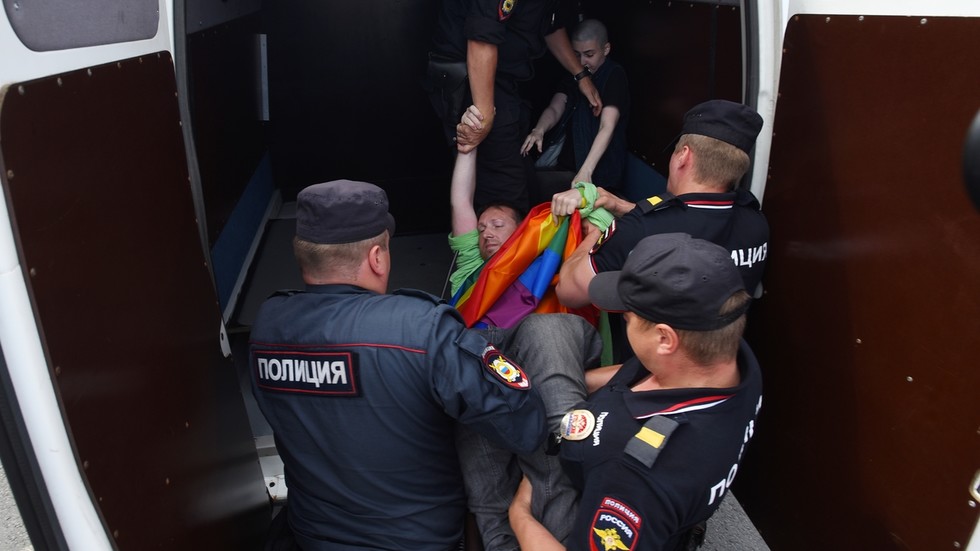
Russian LGBT Network in court as Saint Petersburg prosecutors demand its Facebook page be blocked for ‘negative impact’ on kids – RT

Prosecutors in Russia have demanded that Facebook block the page of the Russian LGBT Network, with the authorities alleging that it harms the development and health of minors. The profile is followed by over 5,000 people.

The initial complaint was filed by MP Igor Sapko, the former mayor of Perm and a representative of the ruling United Russia party, who said that “propaganda of non-traditional sexual relationships is becoming mainstream on many Internet platforms.”

According to the prosecutors, the group creates “an attractive image of homosexuality, leading to the involvement of citizens, especially teenagers, in destructive lifestyles.”

Also on rt.com Controversial anti-gay Russian MP Milonov blocked from TikTok, blames ban on ‘foreign sodomites’ abusing his freedom of speech

“The materials on the page may have a negative impact on the development of children, provoking an unhealthy interest [in LGBT culture], instilling LGBT values, and involving minors in the LGBT community,” said the press service of a Saint Petersburg court, the city where the group is based.

According to Alexander Belik, a lawyer for the Russian LGBT Network, this is not the first time Saint Petersburg prosecutors have tried to block the organization’s pages.

“It started in 2019 when they targeted a group on [Russian social network] VKontakte,” Belik explained. “Two times they tried to do something with our website. Now they have switched to Facebook.”

READ MORE: HIV-positive blogger has nose broken in broad daylight street attack after interview about challenges of life with virus in Russia

The LGBT Network is run by the ‘Sphere’ charity fund, which is deemed by Russia’s Ministry of Justice to be a foreign agent. Founded in 2006, the group seeks to promote LGBT rights inside the country and aspires “to a society in which discrimination based on sexual orientation, gender identity, gender expression or sex variances does not exist.”

If you like this story, share it with a friend!

Global Goat Milk Market 2021 Key Players Insights and Outlook || Delamere Dairy, Emmi Group, Gay Lea Foods, Granarolo – Sports Talk Line LLC – Sports Talk Line LLC

Top 7 Benefits of Goat's Milk | TheHealthSite.com

Global Goat Milk Market 2021 by Manufacturers, Regions, Type and Application, Forecast to 2026 published by MarketQuest.biz explores the present outlook in the global market from the perspective of major players, countries, product types, and end industries. The report shows market drivers and restraints to offers an idea about the production strategy. An exclusive and in-depth study covers the current and future trends of the global Goat Milk market with respect to the products/services. The report presents a comprehensive overview of the market, encompassing growth drivers and restraints. The report features the detailed segmentation by components, end-user, and region through an in-depth traction analysis of the overall global Goat Milk industry.

Introduction:

Nowadays, businesses get highly benefited from the different segments featured in this report which provides better market insights for the, with which they can drive the business in the correct direction. The report then reveals hidden opportunities across key segments. The report evaluates the key vendors by assessing all the relevant products/services to understand the positioning of the major players in the global Goat Milk market. For the mentioned segments, sales revenue and consumption estimates growth analysis, price estimation and trend analysis have been provided in the quantitative information.

NOTE: Our analysts monitoring the situation across the globe explains that the market will generate remunerative prospects for producers post COVID-19 crisis. The report aims to provide an additional illustration of the latest scenario, economic slowdown, and COVID-19 impact on the overall industry.

DOWNLOAD FREE SAMPLE REPORT: https://www.marketquest.biz/sample-request/89599

The report analyzes top players in the global market and divides the global Goat Milk market into several parameters. In addition, the competitive landscape of the industry is covered to understand the competition at an international level in the market. This report study describes the projected growth of the global market for approaching years. The research on various sectors including opportunities, volume, growth, technology, demand, and trend of high leading players has been examined. An external analysis looks at the wider business environment that affects the business.

The major players covered in this report:

  • Delamere Dairy
  • Emmi Group
  • Gay Lea Foods
  • Granarolo
  • Groupe Lactalis
  • Hay Dairies
  • KAVLI
  • SUMMERHILL GOAT DAIRY

Market segment by type, the market is segmented into

  • Goat Milk
  • No Fat Goat Milk

Market segment by application, the market is segmented into:

  • Food
  • Cosmetics
  • Other

From a global perspective, this report represents the overall global Goat Milk market size by analyzing historical data and future prospects. Regionally, this report focuses on several key regions:

  • North America (United States, Canada and Mexico)
  • Europe (Germany, France, United Kingdom, Russia, Italy, and Rest of Europe)
  • Asia-Pacific (China, Japan, Korea, India, Southeast Asia, and Australia)
  • South America (Brazil, Argentina, Colombia, and Rest of South America)
  • Middle East & Africa (Saudi Arabia, UAE, Egypt, South Africa, and Rest of Middle East & Africa)

Marketing Strategies Carry Out As Below:

  • The report comprises innovative strategies undertaken by potential stakeholders with regard to the marketing of the product.
  • The sales channels chosen by the companies including direct as well as indirect marketing are briefly explained in the global Goat Milk market report.
  • The distributors of these products and a gist of the customers for the same are also encompassed in the study.

ACCESS FULL REPORT: https://www.marketquest.biz/report/89599/global-goat-milk-market-2021-by-manufacturers-regions-type-and-application-forecast-to-2026

Data regarding the Goat Milk market consumption rate of all the provinces, based on applicable regions and the product types is inculcated in the report. The study contains a vast regional examination with different standard affiliations, manufacturers, and merchants. Moreover, new project SWOT analysis, investment practicable business analysis, investment come analysis, and development trend analysis have been provided in the report.

Global Goat Milk market report analysts have studied the data of revenue, production, and manufacturers of each region. This section analyses region-wise revenue and volume for the forecast period. These analyses will help the reader to understand the potential worth of investment in a particular region. Report specialists moreover talk about viewpoints on theoretical perspectives, for example, difficulties, hurdles, new participants, and existing shortcomings of the existing merchants.

Customization of the Report:

This report can be customized to meet the client’s requirements. Please connect with our sales team ([email protected]), who will ensure that you get a report that suits your needs. You can also get in touch with our executives on +1-201-465-4211 to share your research requirements.

Contact Us
Mark Stone
Head of Business Development
Phone: +1-201-465-4211
Email: [email protected]
Web: www.marketquest.biz

China Censors BTS, Lady Gaga, LGBT References in ‘Friends Reunion’ – The Quint

The Friends Reunion special episode in China was quite different. Appearances by Lady Gaga, Justin Bieber and the K-pop group BTS were dropped from different versions of the special when they streamed on Thursday on three Chinese video platforms, as per a report by The New York Times.

The missing cameos involved celebrities who had reportedly managed to irk Beijing. Lady Gaga has been forbidden in China since her meeting with the Dalai Lama in 2016. Justin Bieber made China angry when he posted a photo from the Yasukuni Shrine in Tokyo, which honors Japan’s war dead, including war criminals from World War II, in 2014. On the other hand, BTS neglected to mention the sacrifice of China’s troops when recalling the pain of the Korean War last year, despite troops fighting on the North Korean side.

Gay Balenciaga and pub chic from Martine Rose: What’s in fashion? – i-D

From left: Image courtesy of Balenciaga; Photography Roxy Lee. Image courtesy of Martine Rose; Image courtesy of Levi’s

Readers, there is nothing more chic than the act of giving, as this week’s round-up proves. Whether it’s Pride capsules from Balenciaga and Levi’s (the proceeds of which are to be donated to a range of LGBTQ+ charities), initiatives to end period poverty in India, or Tom Ford’s sustainability prize, we’re bringing you news of how some of fashion’s biggest names are digging deep and donating some coin to help make the world a better place. That’s not all though! From pub-inspired capsules to power moves in Milan, here’s what’s in fashion.

Martine Rose SS21 Pub Capsule

Photography Roxy Lee. Image courtesy of Martine Rose

Martine Rose pours out a pub-themed capsule

Over the long winter months of lockdown, there are few things that we Brits craved more than the pub. The sticky wooden countertops, the fruit machines, the beer towels steeps in dregs of ale spilled over the decades…

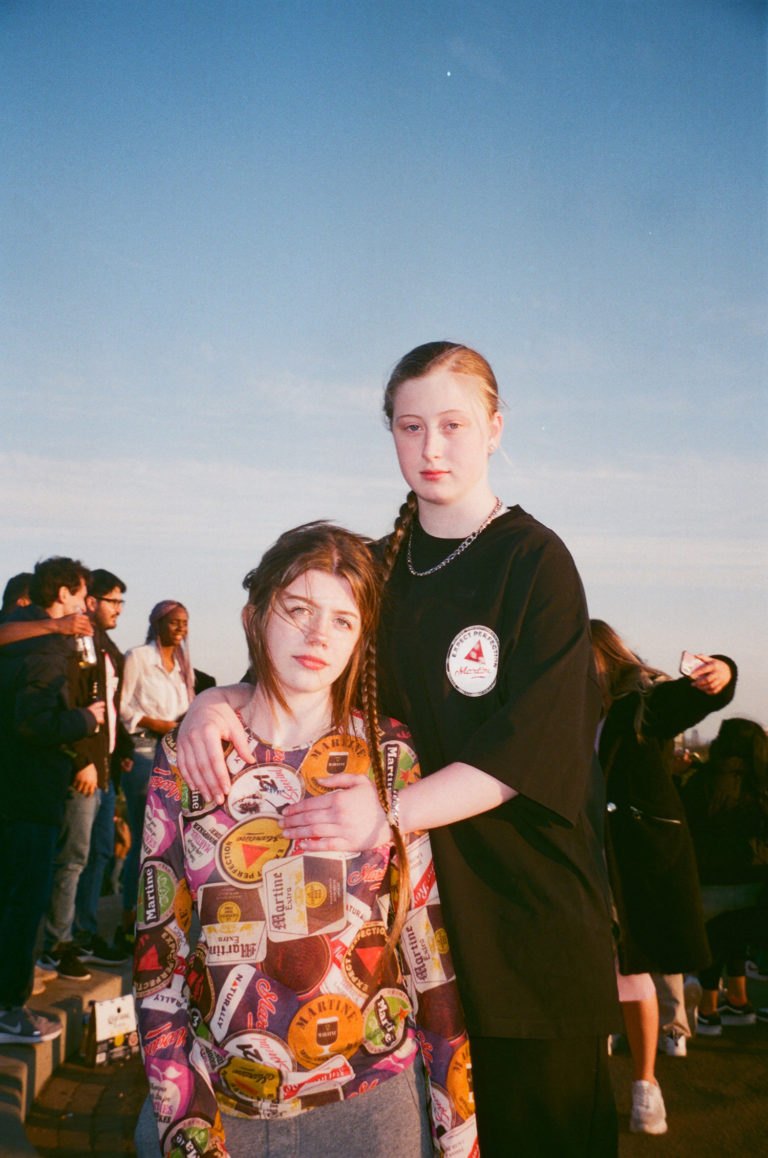
Naturally, their reopening on April 12 was a moment of national celebration — a boozy British Bastille Day, if you will. Of all the nation’s fashion talents, there are few who show their love for pints and their associated paraphernalia quite as proudly as Martine Rose. Looking for proof? Well, this week, the Tottenham-based designer released a whole SS21 capsule collection that riffs on the humble beermat.

Comprising characteristically oversized jersey tops and bottoms, pieces either come in sober (well…) black hand-drawn coaster placement graphics, or an all-over beermat print that gets you giddy at the mere sight! Rather than the typical brewers’ logos you’re probably familiar with, each graphic bears one of Martine’s classic logo hacks, which date back all the way to AW13. Carlsberg couture, anyone? Get your hands on yours before last orders! MS

A model posing in a look from Balenciaga's Pride capsule

Balenciagay! Demna’s ‘Pride’ collection is here…

Pride month is nearly upon us! While that means we’ll be seeing a LOT of rainbow-branded products, we’re choosing to spotlight the brands that are doing the work, too.

You may remember the sweats and sportswear from Balenciaga’s pre-fall 2021 collection, which spelled out ‘GAY Pride’ in varsity-style letters, a tongue-in-cheek riff on those Gap hoodies we all regrettably wore back in the day. Well, Balenciaga’s creative director Demna Gvasalia has only gone and expanded on them, creating a capsule collection of Pride-themed fashion with 15 per cent of profits going to The Trevor Project, the world’s leading suicide prevention and crisis intervention organisation for young LGBTQI+ people. That means you can wear those pink hoodies with more than just one reason to feel proud. OA

Two models posing in Levi's Pride campaign

Image courtesy of Levis

… and so is Levi’s’!

Did you know that in 1992, Levi’s was the first Fortune 500 company to extend health benefits to its LGBTQI+ employees and later worked to overturn Proposition 8, which banned same-sex marriage in California? Turns out our favourite denim brand has long been an ally! Hence, 100 percent of the proceeds from its rainbow-emblazoned Pride collection will go to Outright Action International, an organisation that works to advance the rights of LGBTQI+ people around the world. Bravo! OA

Kai Isaiah Jamal and Ottawa Kwami in Louis Vuitton NBA collection

Photography Theo de Gueltzl. Image courtesy of Louis Vuitton

Louis Vuitton shoots a three-pointer with its NBA collaboration

If you didn’t already know, sport is fashion’s new hot topic. Of course, the two worlds have always enjoyed a pretty sturdy relationship, but in recent years that’s been turbocharged. The latest, and perhaps most exciting, proof Louis Vuitton’s latest menswear capsule with the National Basketball Association, released as part of the house’s Pre-Fall 2021 collection.

Fusing the luxury codes of the Parisian Maison with those of the NBA, the sporty edit boasts blousons quilted with Vuitton’s floral insignia, leather-sleeved sweaters, embroidered shorts, and even a keep-all with basketball net details. Captured in a campaign starring Ottawa Kwami and Kai-Isaiah Jamal, if this doesn’t have you hot-footing it to your nearest court to shoot some hoops, we don’t know what will. A real slam dunk with this one, Virgil! MS

Britain’s independent designers get a (New)Gen-erous boost

This week is really about giving back, it seems. Look no further than the British Fashion Council’s newly announced recipients of its £1.7 million BFC Foundation, including 34 up-and-coming designers, as well as a number of students in fashion colleges across the country.

The initiative was paused last year for obvious reasons, so its return heralds a much-needed boost for emerging talent in the British fashion industry. Even better, the NewGen recipients are some of our favourite designers: Ahluwalia, Art School, Asai, Bianca Saunders, Conner Ives, Eftychia, Feben, Helen Kirkum, Labrum London, Matty Bovan, Nensi Dojaka, Paolo Carzana, Per Götesson, Richard Quinn, Robyn Lynch, Roker, SS Daley, Saul Nash, Stefan Cooke, Supriya Lele, and Yuhan Wang. Oh, and the principal sponsor of NewGen is now… TikTok! Which means a new fash-filled account for you to follow, too. OA

Dior slippers, an eyemask, a pouch and a blanket

Image courtesy of Dior

Dior makes a case for cosiness

Look, we know we said that cosy wear was over — that it was time to cast of our slippers in favour of stilettos, and so on — but that was before we saw Kim Jones’ first series of interior accessories for Dior.

Comprising silk-lined slippers, an eye mask, and a pochette in the House’s iconic Oblique canvas, as well as a cashmere-blend stole, this is an offering that has us wondering what all the fuss about the outside world was in the first place. Like, sure it’s dining out is great, but it doesn’t quite hit like shuffling to the front door to greet your Deliveroo rider in a pair of Dior slippers, does it? MS

Sex sells, but science and sustainability win Tom Ford’s new prize

You get a prize, you get a prize, you get a prize! Fashion is feeling philanthropic this week, and the latest fashion prize comes with a difference. None other than Tom Ford, fashion’s King of Sex, has launched his namesake Plastics Innovation Prize: the first competition to be dedicated to encouraging the creative development and adoption of affordable and scalable alternatives to thin-film plastics, which accounts for 46 per cent of ocean pollution (and is expected to triple by 2040), through material innovation. Thinking of applying? Think science, not just style. This is a competition for fabric geeks eager to make a difference in the world, and create solutions to fashion’s horrifying impact on the planet.

The cash prize, you ask? A whopping $1.2 million! Yes, you read that right. The two-year prize is followed by a further three years of support for finalists, offering financial aid to help them reach scale and market adoption by 2025. A judging panel including leaders in environmentalism and science will be led by Tom Ford, and applications are open now until 24 October. We caught up with the designer himself to find out more…

As a designer, what is your advice to fellow creators, entrepreneurs and innovators who are thinking about applying to the prize? There is so much creativity, talent and innovation out there in the world and it just takes one amazing idea and the drive to tap into one’s potential to make the impossible, possible. I would encourage all inventors who feel passionate about the cause to really believe in their ability to change the world. The environment is in desperate need of a solution for plastic waste so it is up to us to come together to develop an innovative solution to make the environment a safer place for generations to come. How do you think the fashion industry could benefit from a thin film plastic alternative? Just two products alone, single-use resealable sandwich storage bags along with plastic polybags used by the fashion industry — represent over 300 billion thin-film plastic bags disposed of annually. By creating the alternative, we will not only benefit the fashion industry but the whole planet. Thin-film plastic is used in households and industries worldwide, and I would like to make a positive change that expands even beyond my personal and professional worlds. Will you adopt the winning thin-film alternative innovation into your own supply chain and if so, how? Sure, I would hope so! It would be amazing to find an alternative for polybags and every other place where thin filmed plastic is used. What is your role within the prize? For the duration of the five-year prize program, I will be involved throughout as a founder and a judge to help find a solution for thin-film plastic with the goal to make a positive impact on our oceans. As part of the prize, we will be working with scientific researchers over several months to review and refine the final submissions to help find a more sustainable solution to thin-film plastic use. OA

Serhat Işık and Benjamin Huseby

GmbH take over Trussardi

In one of the most exciting new faces announcements that we’ve heard in some time, Berlin-based duo Serhat Işık and Benjamin Huseby — best known as the minds behind GmbH — have been handed the keys to a heritage house. That’s right, this week, it was announced that the pair will be splitting their time between their studio in the German capital and Milan, where they’ll be heading up Italian label Trussardi. Best known for its leather goods, the pair will no doubt reinvigorate the Milanese grande dame with their directional perspective, championing virtues on inclusivity, responsibility and nuanced representation as they have done at GmbH.

“Trussardi comes charged with pedigree and enormous untapped potential,” Serhat and Benjamin say in a statement, noting that they “were drawn to the possibility of building a house anew.” While we won’t see the first fruits of their vision until next February, we’re pretty damn sure this is one house you’ll want to be part of. MS

Pose, pout (and donate) to end period poverty in India

“For millions of children in India, when your period starts, your life stops,” says Padmapriya TS, chief executive of Sanitation First, a non-profit that has been installing ecosan toilets and educating teachers and parents in communities across India for more than 20 years. To put it in perspective, every year 10 million children drop out of school early when they start to menstruate. Given that today is Menstrual Hygiene Day, a new campaign has been launched by the charity to encourage people to donate to the important work they are doing — and a roster of fashion brands, from Matches Fashion to Anissa Kermiche to Wool and the Gang, are backing it.

Taking Barbara Kruger’s iconic ‘Your Body is a Battleground’ artwork, an Instagram filter has been designed to spread awareness. Donate through the @sanfirst Instagram — for just £10/$14, Sanitation First can help keep a child in school for a year — then upload your picture with their Barbara Kruger-inspired filter. As if you needed an excuse to take a selfie… OA

Follow i-D on Instagram and TikTok for more fashion news

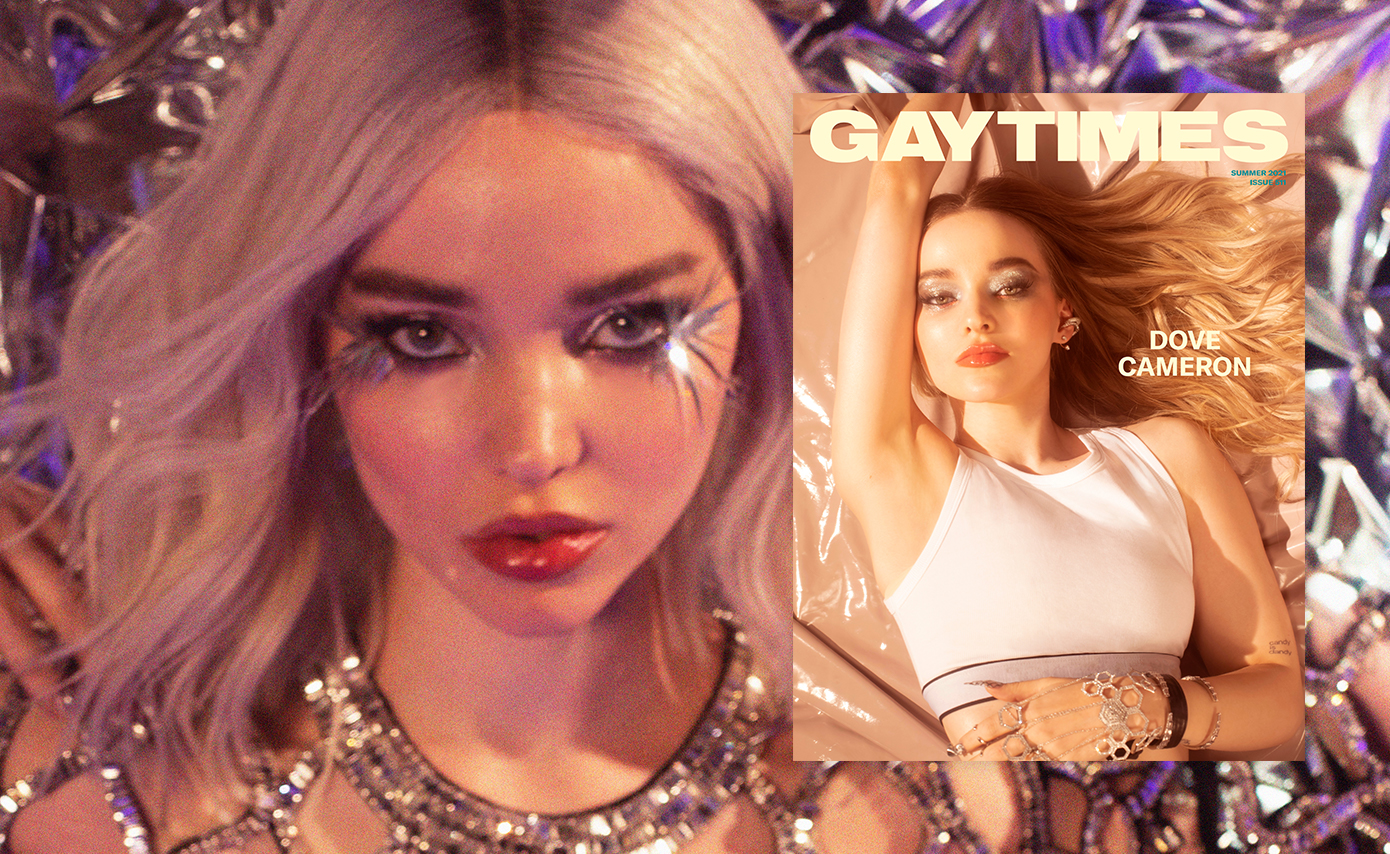
Dove Cameron covers GAY TIMES Magazine: “I felt like I wouldn’t be accepted” – Gay Times Magazine

Details of the 25-year-old’s latest ventures have been kept securely under wraps, so we sat down with the star to find out more in the latest GAY TIMES Magazine’s Summer Issue.

In her first LGBTQ+ cover, Dove speaks openly about her choice to come out as queer, her relationship with LGBTQ+ fans, and how she is no longer refusing to compromise on her identity. “I’ve hinted about my sexuality for years while being afraid to spell it out for everybody,” Dove says.

While opening up to fans online, the singer felt the need to clarify her sexuality in hopes speaking up would help others.

“I went on Instagram Live and said ‘Guys, I really needed to explain something to you. Maybe I haven’t said it, but I’m super queer. This is something I want to represent through my music because it’s who I am.’”

Dove Cameron’s latest single, LazyBaby, is out now on Apple Music and all available streaming platforms.

You can buy the Summer Issue of GAY TIMES Magazine now, or read the issue in full on Apple News+.

Nurse practitioner who started Spektrum Health in 2018 opens LGBTQ medical clinic in Melbourne – Florida Today

Support local journalism. An unlimited digital subscription to floridatoday.com is just $1 for 6 months. Click here and subscribe today.

Joseph Knoll began his work with the LGBTQ community at his dining room table. 

As a nurse practitioner and a member of the community, he saw a lack of resources for LGBTQ people and worked to mend that gap.

This work led him to create Spektrum Health in 2018, an organization that offers primary care, mental health treatment, medical transition care, HIV treatment and prevention, STD treatment and prevention and weight management.

The Melbourne office opened May 18; an Orlando office opened in January 2019.

Knoll said that as a gay man, he first noticed many healthcare providers didn’t understand his own health needs.

“I always hated the way I was treated,” he said. “And I realized it was not just gay men — it was a lot of people in the LGBTQ umbrella.”

That led him to create Spektrum.

New LGBTQ health center opened in Melbourne on May 18.

Knoll said his goal was to create an experience that was “high-quality, patient-centered, patient-focused and driven by positive outcomes and health goals.”

In addition to serving the specific needs of the LGBTQ community, Spektrum provides employment for care providers who are part of the community.

“We’re all in some way, shape or form part of the community,” Knoll said. “We’re invested in it.”

Lana Dunn first came to Knoll as a patient. She had just moved to Florida and was beginning to start her gender transition. After she and Knoll got to know each other, he offered her a position at Spektrum as a part-time receptionist.

That position has since grown into her current role as office manager at the Orlando clinic.

“Anyone who works with Spektrum Health has got to have their heart in it,” Dunn said. “That is our biggest core value.”

More:Facing mounting pressure, Pritchett announces public forum on Mims water fluoridation

More:Rolling Thunder organizers expect up to 40,000 motorcyclists to descend on Merritt Island

Having local healthcare providers who understand the LGBTQ experience will help those who may be newly out and exploring their options, said Evangeline Minet, an aerospace student at Florida Tech.

Minet has been out as transgender since 2017. While she began navigating gender-affirming healthcare several years ago, she said she thinks the new clinic will be good for people who haven’t taken those steps yet.

“I think having more people that can help us, especially for those very particular needs where you don’t necessarily feel comfortable opening up to someone the first time — it’s nice to have something that you know ahead of time will help you and be safe,” Minet said.

She said that while she considers herself lucky in how her healthcare providers have treated her, she’s still faced challenges in areas such as finding a local endocrinologist with knowledge in hormone replacement therapy.

“That was a particular nightmare,” she said. “Just thinking about it makes my head hurt.”

Part of the gender-affirming healthcare provided at Spektrum includes hormone replacement therapy, Knoll said. He added that he specializes in transgender medicine, saying that “it is [his] passion.”

Knoll said both he and Dunn are working with Florida legislators to advocate for the LGBTQ community.

“I’m never going to stop doing what I do,” Knoll said. “I’m never going to stop fighting for the community.”

Spektrum Health of Melbourne, 1920 S. Babcock St.. is open 9 a.m. to 5 p.m. Monday through Friday.

Contact Walker at elwalker@floridatoday.com, 321-290-4744 or on Twitter @_emilylwalker. Support her work by subscribing to FloridaToday.com.  

Warsaw university aims to shape future conservative lawyers | News, Sports, Jobs – Warren Tribune Chronicle

People attend a conference inaugurating a new conservative university, Collegium Intermarium, which aims to educate a new generation of lawyers in central Europe, in Warsaw, Poland, Friday, May 28, 2021. The founders say the university is meant as a counterweight to liberal institutions, including the Central European University, which was founded by the liberal Hungarian-American investor George Soros, and which recently relocated from Budapest to Vienna undern pressure from Hungary’s nationalist conservative government. (AP Photo/Czarek Sokolowski)

WARSAW, Poland (AP) — An increasingly influential Polish Catholic legal institute on Friday inaugurated a university in Warsaw that aims to educate a new generation of conservative lawyers in central Europe who it hopes will also shape wider European culture.

The institute, Ordo Iuris, works to promote conservative causes, including restrictions on abortion and opposition to same-sex legal unions as its seeks to support traditional family structures. It successfully lobbied for the recent restriction of abortion rights in Poland and is also urging countries not to ratify the Istanbul Convention, an international treaty against domestic violence, due to objections over how the treaty depicts gender relations in the family.

Jerzy Kwasniewski, a Warsaw lawyer who heads Ordo Iuris, said that the university, Collegium Intermarium, is meant to be a space of free academic inquiry at a time of censorship in traditional academic settings that overwhelmingly targets and silences conservative thinkers.

Kwasniewski also described the college as a counterweight to existing institutions, including the Central European University, which was founded by the liberal Hungarian-American investor George Soros and which recently relocated from Budapest to Vienna under pressure from Hungary’s nationalist conservative government.

“We all hope that Collegium Intermarium will bring change to the academic sphere of central Europe,” he said.

Intermarium (Latin for “between the seas”) is a historical term that refers to a swath of central Europe between the Baltic, Black and Adriatic seas. It’s a region of ex-communist countries that are largely more conservative than in Western Europe and where conservative and nationalist parties have seen their support grow in recent years.

The name points to a larger ambition, with Kwasniewski saying he also hopes the institution will allow conservatives from central Europe to one day shape the larger — often more secular culture — dominant elsewhere in the European Union.

“We don’t follow the French way of a division between church and state. We rather follow the more American way of an alliance of the spiritual with the republic,” Kwasniewski told The Associated Press on the sidelines of the conference. “We are not able to to follow the motto of the European Union, ‘United in diversity,’ without acknowledging the diversity of different cultural spheres of Europe.”

The Polish culture and education ministers praised the university as a place that will nurture Europe’s traditional Christian traditions, while a letter was read out from Prime Minister Mateusz Morawiecki, underscoring the conservative government’s support for the new institution. Representatives of the Hungarian government also voiced their support.

Ordo Iuris is widely viewed with suspicion by LGBT and women’s rights groups, which accuse the Catholic group of being part of an international network seeking to erode the rights they have gained in recent decades.

Ordo Iuris successfully backed a successful effort to restrict abortion rights in Poland. It provided legal arguments to the constitutional court, which ruled last year that abortions in cases of fetal abnormalities are not constitutional. The result is that Polish women are now required to carry very sick or even unviable fetuses to term — a ruling that in practice drives more women to have abortions abroad. The ruling sparked weeks of mass protests in the country, which already had one of Europe’s most restrictive abortion laws.

The institute has worked across the region, for instance assisting a Romanian group that successfully lobbied to block the legalization of same-sex unions.

Neil Datta, the head of the Brussels-based European Parliamentary Forum on Sexual and Reproductive Rights who has extensively researched Ordo Iuris, says he believes the university will become a center for training “a new cadre of elites that basically can transform and whitewash far-right thinking so it appears professional and acceptable in a certain political discourse.”

He said the plan reminds him of what happened in the United States, where the Christian right years ago began funding universities which over time produced new elites with influence at think tanks and in politics.

“This is a first step in the same thing,” Datta said.

Ordo Iuris members say the group is unfairly portrayed by activists and the media.

Kwasniewski told the AP that the group is not against women, arguing that the institute includes many women and that its anti-abortion position is a human rights position.

“Abortion is not about women’s rights. Abortion is also performed on girls in the prenatal stage of development. It’s just about the violation of the right to life,” he said.

The university will offer accredited degrees at the master’s level in law, with the curriculum to include related subjects like the history of law and philosophy. It plans to offer a PhD program in four to five years. It will be privately funded at first but plans to seek public funding in the future, Kwasniewski said.

Namibia considers scrapping colonial-era gay sex ban – Reuters

JOHANNESBURG (Thomson Reuters Foundation) – Namibia could soon scrap a colonial-era law that criminalises gay sex between men, the justice minister said on Friday, calling the legislation “outdated and discriminatory”.

The law is rarely enforced in the Southern African country and is among several dozen laws that the government will consider abolishing following recommendations by a reform commission.

“The LGBTQI community are human beings and we must not allow them being excluded from the bouquet of rights enunciated in our constitution,” Justice Minister Yvonne Dausab told the Thomson Reuters Foundation.

“This sodomy law is outdated and discriminatory … All Namibians should enjoy life, dignity, liberty and the pursuit of happiness,” she said, adding that the cabinet was expected to discuss the recommendations at its next meeting.

There were 115 reported cases under the law between 2003 and 2019, according to the report by the Law Reform and Development Commission (LRDC), which works to repeal outdated legislation dating from South African colonial-rule.

Rights campaigners said that while convictions were relatively rare, the fact that the law remained on the statutes perpetuated discrimination against the LGBT+ community and meant gay men lived in fear of arrest.

“The fact that the law even exists leaves gay men feeling stigmatised, ostracised and marginalised,” said Omar van Reenen, co-founder of LGBT+ group the Namibia Equal Rights Movement.

“These laws were written by colonialists and imposed on the Namibian people … the whole narrative of homosexuality being a Western import is false, homophobia is the Western import,” he added.

The law allows police to use “deadly force” when arresting men suspected of having sex with other men, and they can do so without a warrant.

It does not mention gay sexual relations between women or ban same-sex relationships.

According to the reform commission, the law breaches the constitutional and international rights of LGBT+ people in Namibia, such as the right to dignity and protection from discrimination.

It said protection from non-consensual sex is enforced through other Acts, making the law redundant.

Van Reenen said his group would follow the reform process closely as it monitors other ongoing legal cases related to recognition of same-sex marriages and the citizenship of children born through surrogacy to same-sex couples.

“We will keep up the pressure until we are all equal before the law,” he said.

Reporting by Kim Harrisberg @KimHarrisberg; Editing by Helen Popper. Please credit the Thomson Reuters Foundation, the charitable arm of Thomson Reuters, that covers the lives of people around the world who struggle to live freely or fairly. Visit news.trust.org

The Negative Impact of Current Legislation on Gender Diverse Adolescents – Psychiatric Times

CASE VIGNETTE

“Jessica,” a 13-year-old transgender girl, lives in a rural community where no other individuals identify as transgender. She has a supportive family and was able to safely come out to her parents. She socially transitioned 2 years ago. Despite support at home, Jessica and her family have faced challenges at school. The other teens in her grade did not accept her when she came out. They started to call her names such as “she-male” or “it.” She started feeling depressed and avoiding school. Her parents intervened and spoke with a counselor at school. The counselor remembered a training by the State Department of Education where they discussed a comprehensive bill supporting transgender youth. The school was required to educate staff and eliminate any discrimination. The teachers were given resources to help them better understand Jessica’s journey, and those resources helped them support her better. The bullying decreased and Jessica’s depression, anxiety, and school attendance improved.

“John,” a 16-year-old transgender boy, lives in a large city and recently started high school. He received a diagnosis of depression and has had 2 hospital admissions for suicide attempts beginning at age 12. He has explored his gender over the past 3 years and came out to his parents a year ago after discussing it with his therapist and psychiatrist, both of whom have been supportive. The treating team was able to help his parents learn about John’s gender development, and his parents also became supportive.

Unfortunately, John’s school has been a major stressor for him. He was bullied for being a tomboy at school and is scared to come out. He wants to start testosterone treatment but fears a negative reaction from his peers. His parents have spoken to the school, asking administrators to help with his transition and provide a safe environment to come out.

One of the parents of another student who was involved in bullying John raised issues with his transitioning and referred to the recent bill that their state passed, which bans transgender children from using their bathroom of choice. John has been holding his urine at school until he gets home. His depression escalated, and his grades dropped. His family is struggling to find a safe environment for him.

Gender-diverse individuals have been marginalized and discriminated against in many communities throughout history. Modern psychiatry initially adopted a pathological view of transgender identity as well. However, the work of human rights advocates, supported by growing medical evidence, has caused medical and health care organizations to reverse their discriminatory stances against transgender individuals over the past few decades.1 Compelling evidence shows that transgender identities or nonconforming gender presentations are not pathological nor indicate a disorder. These individuals may require medical interventions to stop the course of endogenous pubertal changes in order to match their desired gender identity, as outlined in guidelines from the World Professional Association for Transgender Health Standards of Care and Endocrine Society.2

It is well established that discrimination negatively impacts transgender and gender-nonconforming youth. The rate of depression and anxiety among transgender and gender-nonconforming youth is several times higher than the rate of their cisgender peers.3 These youths are more likely to seriously consider suicide or illegally use substances. These effects are mainly due to structural discrimination, both in society’s attitudes and the legislative system.4 Coercive interventions that even try to alter gender identity, sometimes called “conversion therapy,” are harmful and ineffective.5

Lack of school belonging as well as interpersonal microaggressions have been shown to be directly linked to suicidality and lifetime suicide attempts.6 Conversely, simple acts of affirmation have demonstrated profound positive effects. Even the repeated use of a transgender or gender-nonconforming youth’s chosen name can reduce suicidal thoughts and behavior.7 The more widely it is used, the stronger the effect.

The positive effects of gender-affirming care on transgender or gender diverse youth are similarly well-documented. Gender-affirming care improves positive mental health outcomes, and youth who receive it are less likely to attempt suicide.8 Pubertal suppression decreases depressive symptoms, as well as behavioral and emotional problems.9 Likewise, gender-affirming hormone therapy also decreases behavioral and emotional issues and improves body image and psychological well-being.10

Recently, Jessica began puberty. She is not certain whether she wants to take gender-affirming hormones. Her family physician recommended that Jessica and her family speak with an endocrinologist. Jessica’s town does not have an endocrinologist. In fact, the nearest endocrinologist is Dr Sanchez, whose practice is about an hour away.

Dr Sanchez keeps up with the latest literature and knows about the beneficial effects of gender-affirming care. He mentioned the possibility of taking leuprolide to temporarily suppress puberty while Jessica decides what she would like to do in the future. He consulted with a colleague who is more experienced in this area to ensure the correct dosing. He also helped Jessica decide to preserve fertility by freezing her sperm. Jessica’s family enlisted a psychiatrist to ensure good psychological support. The psychiatrist coordinated with Jessica’s school counselor for wraparound care.

John’s parents decided to pull him out of his district high school. He enrolled in a day treatment program, and they are working with their psychiatrist to find an alternative school environment where John can continue his education without discrimination. Most schools are pressured by the recent legislation and fear an antitransgender parent at school can sue them. For now, the parents decided to home-school John and focus on his recovery from depression. They consulted with a pediatric endocrinologist to discuss hormonal treatment options. Dr Smith has treated a few other transgender youths.

The state where John lives recently proposed a law to block gender-affirming care in transgender youth. Under this law, the psychologist and psychiatrist who both directly participated in John’s care would be fined, and Dr Smith would be fined and jailed for prescribing hormonal treatment. Without his treatment team, John feels hopeless. If this bill is passed, John will not be able to start testosterone treatment until he is 18 years old.

Despondent, John contemplated suicide. The focus of his care shifted toward keeping him alive. His mental health team reached out to their local professional organizations to mobilize other colleagues against this discriminatory bill.

The rights of transgender youth have become a battleground for political agendas at the intersection of structural discrimination and gender-affirming care. Dozens of states have proposed bills that would criminalize gender-affirming care (Figure). Doctors who perform this care would be subject to fines, imprisonment, or even loss of licensure. Laws criminalizing gender-affirming care are a major legislative theme this session, but dozens of other antitransgender bills join them. Currently there are more than 45 such antitransgender bills in local governments across the United States, following failed proposal bills in several states last year and similar so-called “bathroom bills” over previous years.11 A majority of these bills seek to deny transgender youth their affirmed gender, forcing them to use restrooms or play on sports teams according to their sex assigned at birth (so-called sport and bathroom bills). Only 8 of the proposed antitransgender bills this session were discriminatory in a way other than these 2 categories.

The stories of Jessica and John are the same stories of hundreds of thousands of youth in the United States. Child psychiatrists and other mental health professionals are treating many of these youth. Their presentation can be complex, and treatment requires an in-depth understanding of their gender development, family dynamics, and psychosocial environment. Care can also be further complicated by state legislation. Physicians and other health care professionals are bound ethically not to harm their patients and provide medically necessary services to help them. Discriminatory bills, such as those proposed where John lives, can create a conflict for health care professionals between ethically appropriate care and legally acceptable guidelines. Although some think that delaying affirmative care until the age of majority is a harmless option, there is solid and growing evidence that affirmative care improves a transgender youth’s mental health.

Establishing good mental health for a transgender youth often starts from a nucleus of support, whether that is in the home, the school, or a close group of friends. This support can buffer these youth from the negative impacts of antitransgender legislation. As in the care of many other youths, identifying ways to increase available support or add additional support provides significant benefit to overall psychological well-being. Psychiatrists can be a part of that nucleus of support for these youth.

In a more active role, doctors can be crucial in advocating for the well-being of transgender youth. Major medical and health care associations have local organizations in each state. Educating members of these organizations and mobilizing them to advocate against discriminatory bills can be an important tool to help youth like John, whose life can change significantly with a single law. As such, it is vital that advocates call their state representatives when antitransgender legislation is introduced. If mental health experts do not educate legislators on the mental health impacts of these bills, no one else will. Psychiatrists have a duty to patients that goes beyond the boundaries of the office; in some instances, the ethical dilemmas may help psychiatrists recognize the need to raise their voices and stand up for their patients (Table).

Concluding Thoughts

There is much that psychiatrists and other mental health professionals can do to support transgender youth patients: donate time or money to organizations that support transgender youth; speak and advocate for transgender youth by working with state professional organizations; call state legislature representatives when antitransgender legislation arises, highlighting the adverse mental health impacts such legislation would cause; and help establish more support at the family and school level.

Dr Chavez is a psychiatrist in the United States Department of Veterans Affairs’ newly created lesbian, gay, bisexual, transgender, queer specialty service in Colorado. Dr Shadianloo is a clinical assistant professor of psychiatry at the Donald and Barbara Zucker School of Medicine at Hofstra/Northwell.

References

1. Davies RD, Davies ME. The (slow) depathologizing of gender incongruence. J Nerv Ment Dis. 2020;208(2):152-154.

2. Coleman E, Bockting W, Botzer M, et al. Standards of care for the health of transsexual, transgender, and gender-nonconforming people, version 7. Int J Transgend. 2012;13(4):165-232.

3. Becerra-Culqui TA, Liu Y, Nash R, et al. Mental health of transgender and gender nonconforming youth compared with their peers. Pediatrics. 2018;141(5):e20173845.

4. Chavez, AM, Janssen A. Structural stigma. JAACAP Connect. 2019;6(3):11-13.

5. Turban JL, Beckwith N, Reisner SL, Keuroghlian AS. Association between recalled exposure to gender identity conversion efforts and psychological distress and suicide attempts among transgender adults. JAMA Psychiatry. 2020;77(1):68-76.

6. Austin A, Craig SL, D’Souza S, McInroy LB. Suicidality among transgender youth: elucidating the role of interpersonal risk factors. J Interpers Violence. 2020:886260520915554.

7. Russell ST, Pollitt AM, Li G, Grossman AH. Chosen name use is linked to reduced depressive symptoms, suicidal ideation, and suicidal behavior among transgender youth. J Adolesc Health. 2018;63(4):503-505.

8. Turban JL, King D, Carswell JM, Keuroghlian AS. Pubertal suppression for transgender youth and risk of suicidal ideation. Pediatrics. 2020;145(2):
e20191725.

9. de Vries AL, Steensma TD, Doreleijers TA, Cohen-Kettenis PT. Puberty suppression in adolescents with gender identity disorder: a prospective follow-up study. J Sex Med. 2011;8(8):2276-2283.

10. de Vries AL, McGuire JK, Steensma TD, et al. Young adult psychological outcome after puberty suppression and gender reassignment. Pediatrics. 2014;134(4):696-704.

11. Legislative tracker: anti-transgender legislation. Freedom for All Americans. Accessed March 23, 2021. https://freedomforallamericans.org/legislative-tracker/anti-transgender-legislation

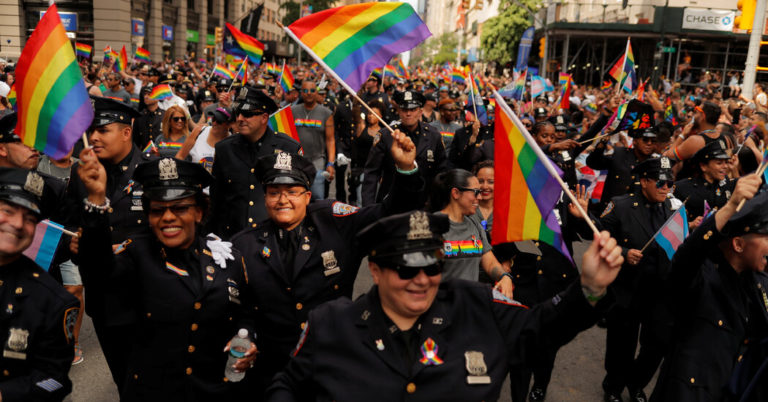
Pride Said Gay Cops Aren’t Welcome. Then Came the Backlash. – The New York Times

She added, “At some point, hopefully, they’ll try to step in my shoes, and maybe they can see the other side.”

As members argued about the ban, Mr. Thomas angrily accused some of dismissing the negative experiences so many African Americans had with police. In the past week, he told them, he had received online messages of hate consistently from white gay men, to the extent that his family feared for his safety. “This organization will no longer get any more of my Black life, my Black labor and my Black body,” he told them, according to his own account. “You’ll receive my resignation tomorrow.”

After members voted to rescind the ban, the meeting broke up, with hard feelings all around. “Everyone was frustrated, on principle and on process,” said Hannah Simpson, an associate member who opposed the ban.

The 13-member board then met — without Mr. Thomas, who did not attend — and overruled the vote, sending notice to members just before midnight. “My jaw hit the floor,” said Ms. Fisher, who had called for the vote of no confidence.

Brian Downey, president of the gay officers group, said he felt “betrayed” by the ban, especially because the officers “put so much of themselves on the chopping block” by working to change practices and attitudes within their departments.

“I understand that there’s community sensitivities towards law enforcement, and justified,” Mr. Downey said. “We’re working to change the system from within, which we have for 40 years. I don’t know how this got here in the flick of a light switch.”

In the meantime, Pride month approaches.

Heritage of Pride is planning a mostly virtual slate of events, creating a vacuum for other marches to fill. Dan Dimant, the organization’s media director, said no sponsors had withdrawn their support after the ban on police officers. VIP ticket packages run to $475 for full access, which includes ingredients for a virtual cooking lesson.

DC casts Jeremy Irvine as gay superhero Green Lantern. Y’know, the guy from that awful Stonewall film – Yahoo Eurosport UK

DC has finally cast its gay Green Lantern, with British actor Jeremy Irvine playing Alan Scott in a new series.

Irvine announced on Instagram that he’ll be starring in the new live-action TV series from HBO Max, which will portray the classic superhero as gay.

“Very excited to be joining the DC Universe!! Can’t wait to get started,” Irvine wrote, adding the oath of the Lantern Corps: “In brightest day, in blackest night/ No evil shall escape my sight/ Let those who worship evil’s might/ Beware my power – Green Lantern’s light!”

The new series will mark the first time Green Lantern is depicted on-screen as gay. The show will open in 1941, with a closeted Alan Scott working as an FBI agent.

You might remember Jeremy Irvine from such films as War Horse and Mamma Mia! Here We Go Again, or if you’re really unlucky, 2015’s Stonewall.

The widely-loathed movie from director Roland Emmerich was slammed by critics and campaigners alike for its “whitewashed, sex-shaming” portrayal of the 1969 Stonewall riots, which birthed the modern-day LGBT+ rights movement.

Queer veterans condemned the film for “misrepresenting” history by framing the story around Danny, a fictional cis white man – played by Irvine, a cis white man – instead of the trans and queer revolutionaries that spearheaded the movement.

One scene even saw Irvine’s character take the famous Stonewall brick from the hands of a queer person of colour and throw it himself to spark the riot, a perfect symbol of how the film sidelined Black and Brown people.

The backlash was worsened by Emmerich’s fierce defence of his choice to diminish the contributions of real-life trans women, butch dykes, and drag queens of colour.

“You have to understand one thing: I didn’t make this movie only for gay people, I made it also for straight people,” he said in a controversial Buzzfeed interview.

“I kind of found out, in the testing process, that actually, for straight people, [Danny] is a very easy in. Danny’s very straight-acting. He gets mistreated because of that. [Straight audiences] can feel for him.”

Irvine also spoke in defence of the film, telling the The Daily Beast in 2017 it was something he was “genuinely really proud of”.

He acknowledged the criticism but still managed to completely miss the point by suggesting that the controversy surrounding Stonewall actually helped educate audiences.

“I don’t think any of us expected it to get the attention that it has,” he optimistically told the outlet. “But now how many people have heard the name Marsha P Johnson, opposed to never having heard it before? Wow.

“I was out last night and had a few groups of people come up to me and wanted to talk about the film. They wanted to know if Marsha P Johnson was going to be a part of the movie and I was like, ‘Yeah! But also, how cool that you are all talking about that.’”

Perhaps if filmmakers had followed this thought a little further they might’ve been able to avoid the shocking nine per cent score on Rotten Tomatoes.

Drexel Celebrates Pride Month 2021 | Now – Drexel Now

The University will kick off and close out Pride Month 2021 with online events exploring and celebrating the wide spectrum of history, experiences and issues within the LGBTQIA+ community.

Drexel University will kick off and close out Pride Month 2021 with online events exploring and celebrating the wide spectrum of history, experiences and issues within the LGBTQIA+ community, which includes those who identify as lesbian, gay, bisexual, transgender, queer, intersex, asexual, and all other identities that fall under the gender and sexuality umbrella.

To get things started, the Office of Equality and Diversity (OED), in partnership with several other Drexel units and groups, is hosting a virtual panel discussion on Wednesday, June 2, grounded in the experiences of LGBTQIA+ students, faculty, and professional staff members. “Honoring Pride Month: A Frank Conversation About Gender and Sexuality” will be held from 11 a.m. to 12 p.m. on Zoom. Register via Zoom to RSVP and receive the link. It is the latest event in OED’s “Frank Conversations” series, which aims to provide diversity, equity and inclusion education specific to different dimensions of identity in partnership with other members of the University.

“We know from our work in OED that many in our community struggle with terms specific to gender and sexuality in general, including use of pronouns, which underscores the importance of these frank conversations,” said Executive Director for Diversity and Inclusive Culture Patience Ajoff-Foster (she/her), PhD, who will be moderating the panel discussion. “These events are intended to provide education through personal experiences grounded in broad contexts to promote an inclusive culture of belonging at the University,”

Joseph H. Hancock II (he/him), PhD, professor and program director for the masters in retail and merchandising program at the Westphal College of Media Arts & Design, will begin the June 2 discussion with a brief overview defining key gender- and sexuality-based terms and a history of Pride Month in the United States. The panelists will then discuss LGBTQIA+ visibility, political discrimination, microaggressions, and cultural and generational nuances. They will also explore the history of anti-LGBTQIA+ bias and violence in the United States and provide strategies and resources for allyship and other ways to get involved.

The panelists for this event are:

  • Scarlett Bellamy (she/her), ScD, professor of biostatistics, associate dean for diversity and inclusion, and director of biostatistics at the Dornsife School of Public Health
  • Charles Chiccarine (he/him), B.S. Computer Science, Drexel University Class of 2022, teaching assistant in the College of Computing and Informatics, and founding president/student advisor of Out in STEM
  • Giuseppe Salomone (he/him), PhD, assistant vice president and University Registrar, president of the LGBTQA+ Faculty and Professional Staff Network, and president of the LGBTQA+ Alumni Group
  • Gigi Wickline (they/she), assistant director for prevention and education in the Office of Equality and Diversity

Then to close out Pride Month, the Drexel University College of Medicine and Tower Health are hosting a day-long, virtual LGBTQ+ Symposium on June 30 featuring sessions exploring gender and sexuality terms, needs and barriers to care for LGBTQ+ community, and the care of transgender individuals. These events are open to all students, faculty and professional staff, and you can register here via EventBrite.

For more events celebrating Pride Month, please check the OED Events Calendar throughout the month of June. And for additional resources in support of the LGBTQIA+ community, please visit Drexel’s Gender and Sexuality Resource Page.

Swastika stickers slapped on Alaska Jewish museum, gay bar – The Times of Israel

ANCHORAGE, Alaska (AP) — A tall, thin man wearing a hood and a mask was caught on a security camera plastering Nazi stickers on a Jewish museum in Alaska’s largest city early Tuesday.

He drove a scooter to the Alaska Jewish Museum at 2 a.m., placed one sticker on the door and jumped to place three more symbols of hate on windows before driving off, Rabbi Yosef Greenberg, the president of the museum’s board of directors, said, citing security camera footage.

About 45 minutes later, another sticker was placed on the main entrance door to Mad Myrna’s, a gay bar in downtown Anchorage.

Each white sticker was emblazoned with a black swastika, the symbol of the Nazi party, and targeted two groups associated with Holocaust victims.

Written above and below the swastika were the words, “WE ARE EVERYWHERE.”

“There is no place for hate in our community,” Anchorage police said in a statement asking the public’s help in identifying those responsible.

“What that sticker symbolizes is hate,” Anchorage police spokesperson MJ Thim told The Associated Press. “And we’re not going to stand for it, and there’s no place for it. And we’re going to investigate it and figure out what this is all about.”

Tuesday in Anchorage, Alaska

Posted by Sara Bleier on Thursday, May 27, 2021

Spokesperson Chloe Martin said the Anchorage FBI office is in regular contact with Anchorage police.

“If, in the course of the local investigation, information comes to light of a potential federal civil rights violation, the FBI is prepared to investigate,” she said in an email to the AP.

Thim said that to his knowledge, these were the first reports of such stickers showing up in Anchorage. But in Washington state last October, similar stickers were placed on several businesses in Bellingham, the Bellingham Herald reported at the time.

“Swastikas have also become a symbol of white supremacy and the far right, and actions like this disproportionately impact people of color in the LGBTQ community,” said Laura Carpenter, executive director of Identity Inc., a statewide LGBTQ+ organization headquartered in Anchorage, not too far from Mad Myrna’s.

“This is just another example of people trying to demonize the LGBTQ community and Jewish people,” Carpenter said.

The Esformes Jewish Campus of Alaska in Anchorage, which houses the Chabad Lubavitch Jewish Center, a Hebrew school, and the Alaska Jewish Museum. (Courtesy)

Under Adolf Hitler, Nazis systematically murdered 6 million Jews during World War II. Nazis also persecuted gays, mostly men. About 15,000 were sent to camps and at least half were killed.

In concentration camps, Jews wore yellow stars, gays wore pink stars and gay Jews wore an emblem combining the two colors. Other Nazi targets included communists, Slavs, gypsies and Jehovah’s Witnesses.

“Jewish people have 4,000 years’ experience of persecution,” Greenberg said.

He called the person on the scooter, a man believed to be in his late 20s or 30s, a coward whose only purpose was to create fear.

“He is dealing with the wrong people,” Greenberg said. “We are not the people that fear.”

He said the FBI and police indicated it was not a serious or organized threat.

“One guy got excited about something he read on the internet and came and put a sticker,” he said.

Police are asking for the public’s help to find the person who did it and “to make a statement that the entire community is united, that such things cannot happen in this community,” Greenberg said.

With assistance from a local firm, security personnel will be on site at the museum and adjacent property for the foreseeable future.

Hines VA to host PRIDE events in June, honor Special Emphasis Program’s 10th year – VAntage Point – VAntage Point Blog

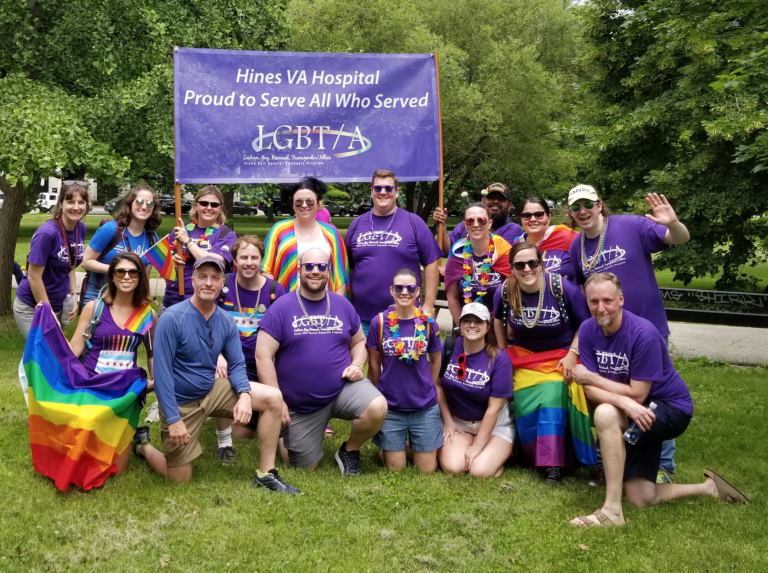
The Edward Hines, Jr. VA will be hosting a series of virtual and in-person PRIDE events in June to mark ten years of its LGBT/A (Lesbian, Gay, Bisexual, Transgender, and Allies) Special Emphasis Program (SEP).

Over the past ten years, Hines has celebrated the diversity of our staff and Veterans in many ways, including participating in local pride parades – like the photo above, from the 2019 parade in Chicago. A joint effort between the SEP and the LGBT Veteran Care Coordinator and committee, Hines engages both staff and Veterans in their Pride programs.

This year, the events will take place to celebrate LGBT Pride Month. Throughout June, rainbow and transgender flags will be placed at the main hospital entrance. Each week, activities will be sent to staff via email to allow them to explore aspects of LGBT culture, educate themselves on LGBT patient care, and to provide resources for their Veterans. The Patriot Café will create rainbow-themed desserts for sale, and staff will be encouraged to decorate their doors and bulletin boards to display their pride.

Specific, one-time events will also be held. A screening and discussion of the short film “Not Another Second” will be held in socially distanced in-person and virtual formats. A “lunch and learn” program for staff continuing education will be offered, titled “Practices for Evolving as LGBT Allyship.” This is part of an ongoing series from the local EVOLVE: Engaging Voices of LGBT Veterans Every day training program. Six sessions per year of the 4-hour training are held, as well as six one-hour lunch and learns to supplement the initial course.

During monthly employee and Veteran virtual town halls, the LGBT program will inform viewers on services available to LGBT Veterans and staff. This information will also be featured in the hospital director’s weekly “Hines Happenings” videos for staff. To cap the month’s events, a celebration marking 10 years of the LGBT/A Special Emphasis Program and LGBT programs at Hines will be held for all. The event will feature speakers as well as a video created with staff and Veterans sharing their experiences about the growth of Hines as an LGBT inclusive health care site. After the event, the video will also be featured on social media and other platforms.


Lorry Luscri is a Hines VA Hospital LGBT Veteran care coordinator and VISN 12 lead.