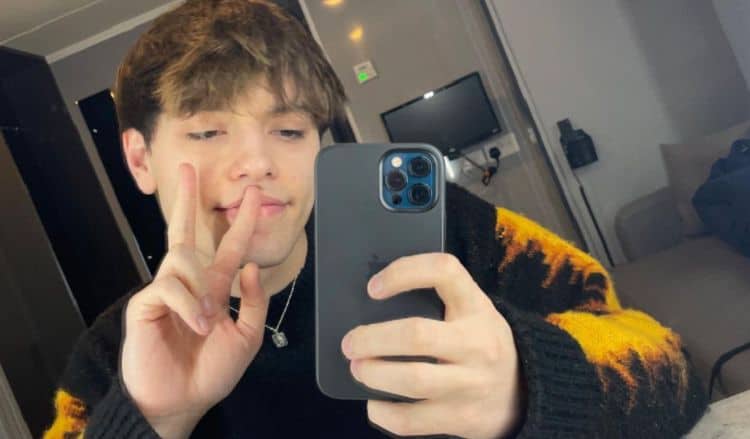
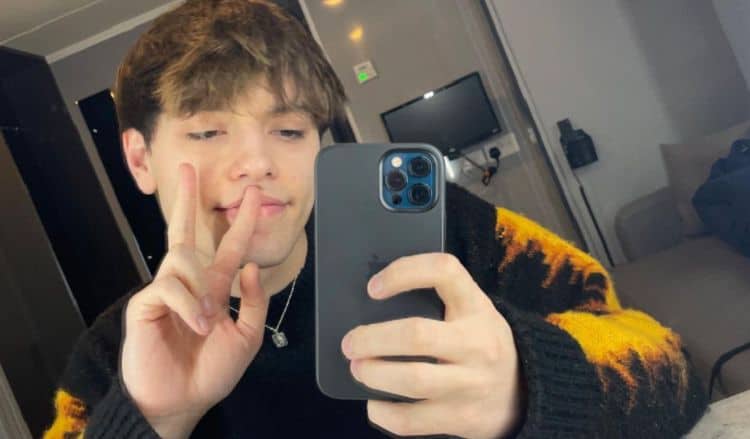
Max Harwood is very new to the Hollywood scene, but he’s already making a major impact. The rising young star has two film projects in the works, and both have the potential to take him from an unknown actor to a major name. His first movie, Everybody’s Talking About Jamie, features Max in the title role and is expected to be released sometime in 2021. The project has already been getting a lot of attention because it features an openly gay character and was originally set to be released by Disney. His second project, The Loneliest Boy in the World will be released in 2022. It’s not often that someone gets plucked from obscurity and thrust into stardom, but that’s the exact path that Max is currently on. Keep reading to learn 10 things you didn’t know about Max Harwood.
1. He’s British
Max was born and raised in England and he comes from a very close-knit family that has been supportive of him throughout his acting journey. While finding international stardom can take years, Max has already achieved that thanks to the anticipation surrounding Everybody’s Talking About Jamie.
2. He Has An Awesome Sense Of Style
Clothing is about much more than just following trends. What we wear can be an important part of our self-expression, and Max loves sharing his personality through his clothing. He has a great sense of style and he isn’t afraid to try new things and wear bold colors and/or patterns.
3. He’s Openly Gay
Max and Jamie may not be exactly alike, but they do have something in common: they’re both gay. Max has been open about his sexuality for several years and he’s grateful to have a platform that is providing some positive representation for the LGBTQ+ community.
4. He Studied At Guildford School Of Acting
Everybody’s Talking About Jamie is Max’s first professional role, but it doesn’t mean that he’s new to acting entirely. He’s been performing in one way or another since he was a kid, and prior to being cast in Jamie, Max was studying at the At Guildford School Of Acting. He ultimately chose to leave after one year.
5. He Was Already A Fan Of Everybody’s Talking About Jamie
Everybody’s Talking About Jamie is actually based on a musical of the same name. During an interview with V Magazine, Max shared that he was familiar with the musical before he even knew there was a movie in the works. Once an opportunity came along for him to audition, he knew he couldn’t pass it up.
6. He’s A Fan Of Ru Paul’s Drag Race
Although Jamie is a drag queen, Max had never dressed in drag prior to playing the role. However, he has always admired and respected drag queens. He loves to watch the popular competition show, Ru Paul’s Drag Race and he actually used it to help him get into character.
7. He Likes To Write Music
Music is a very important part of Max’s life and it’s one of his favorite ways to express himself. In an Instagram post, Max said, “I find singing and writing at the piano so therapeutic.” It’s unclear if Max has any plans to pursue music as anything more than a hobby.
8. He Didn’t Have An Agent When He Booked The Role In Everybody’s Talking About Jamie
For lots of actors, getting an agent is the first thing they do when they decide they want to really get into the agency. However, things were a little different for Max. When he auditioned for Everybody’s Talking About Jamie he was still in school and wasn’t supposed to be auditioning for any professional gigs. At the time, he didn’t have an agent or a manager. Essentially, he was just out there on his own doing his thing and hoping for the best.
9. He Hopes To Keep Playing Roles That Make People Think
Max is still very early on in his career, and there’s no telling how things will pan out for him over the years. One thing he does know, however, is that he wants to continue to portray characters who challenge viewers to think and have meaningful stories to tell.
10. His Social Media Following Is Already Growing
Once a person finds success in the entertainment industry, online popularity is usually the next thing to follow. Although Max has technically not even been on anyone’s screen yet, his fan base has started to grow rapidly. He already has more than 17,000 followers on Instagram and there’s no doubt that number is going to grow once Everybody’s Talking About Jamie is released.
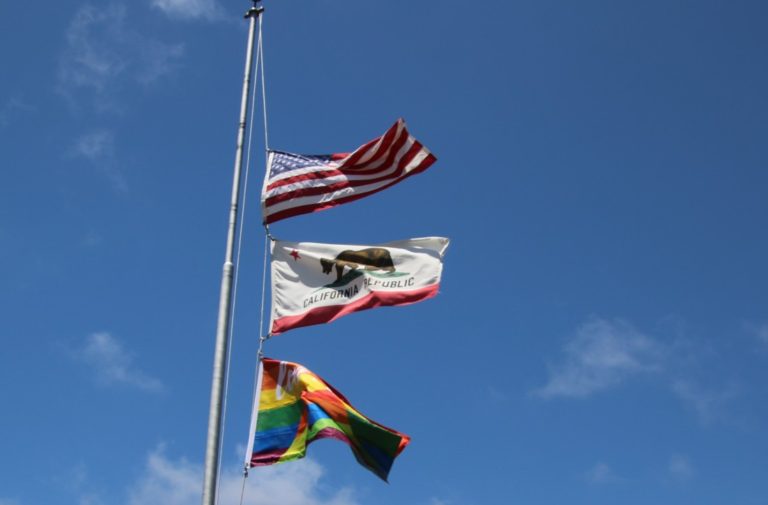
LGBTQ supporters comprised of about 30 residents and a half dozen politicians came together May 29 to raise the gay pride or rainbow flag in front of San Juan Bautista’s City Hall. The flag will remain there for the month of June, which was designated gay pride month in recognition of a 1970 march for the Lesbian, Gay, Bisexual and Transgender Society. The march was in commemoration of theStonewall Riot that took place June 28, 1969.
San Juan’s Mayor Leslie Jordan introduced Senator Anna Caballero (D-Salinas), Assembly member Robert Rivas (D-Calif. 30th District), San Benito County Supervisor Kollin Kosmicki, and Hollister Mayor Ignacio Velazquez to speak. Collectively, they spoke of their support of the LGBTQ community as marginalized citizens and a group that has faced discrimination.
Supervisor Kosmicki, however, said even though they were there to show how far society has come, it still had a distance to go. He said when the event was posted on Facebook the comments proved there was “still a level of intolerance and hate.”
“You don’t have to go farther than our own county board [of supervisors],” he said. “On May 11, I proposed that we put something on the agenda to do something exactly like this at the county administration building and a proclamation that supports June as pride month for San Benito County. I didn’t get the three votes I needed for that.”
He said he brought the topic up again May 25 and failed again. He told those present that he was putting the supervisors “on the spot.”
“We need to have a proclamation on our June 8 agenda to recognize June as pride month in San Benito County,” he said. “I encourage all of you to take part in that meeting.”
Mayor Velazquez said he and Vice Mayor Rolan Resendiz were at the event because San Juan Bautista supported Hollister’s first LGBTQ flag raising in 2020.
“That’s important because we are changing things in San Juan Bautista, Hollister, and next year we’re going to make sure we’re helping Supervisor Kosmicki raise their flag for the entire county,” he said.
Senator Caballero said she was proud to have been the first grand marshal of the gay pride parade [1970] in Salinas and a proud ally ofEquality California, a LGBTQ civil rights organization.
Rivas thanked the city staff and mayor for holding the ceremony. He said too many in the LGBT community are homeless and face harassment. He said they must keep pushing so the rural areas of the state have the same resources as urban areas.
Mayor Jordan said the city was founded on diversity and spoke of other marginalized groups of the past who led the way to equality, including indigenous women, and Japanese-Americans, who farmed in nearby fields and where forced into internment camps during World War II.
“It is our time to stand and fight for all of those who have been marginalized throughout the history of San Juan Bautista,” she said. “Thank you for those who gave your lives for what we’re here for, for loving who you want to love and being who you are. Thank you for fighting for our truth.”
While Hollister’s city council authorized up to $40,000 to pay for two flagpoles to accommodate raising the gay pride flag June 1, San Juan Bautista hoisted its gay pride flag up on the single pole beneath the American and California flags. City Manager Don Reynolds said the city issued a proclamation designating June as gay pride month and the council decided to raise the flag even though the city has no policy in place yet to determine which flags can be flown from the single pole. He said San Juan Bautista may also have to eventually erect another pole.
BenitoLink is a nonprofit news website that reports on San Benito County. Our team is working around the clock during this time when accurate information is essential. It is expensive to produce local news and community support is what keeps the news flowing. Please consider supporting BenitoLink, San Benito County’s news.
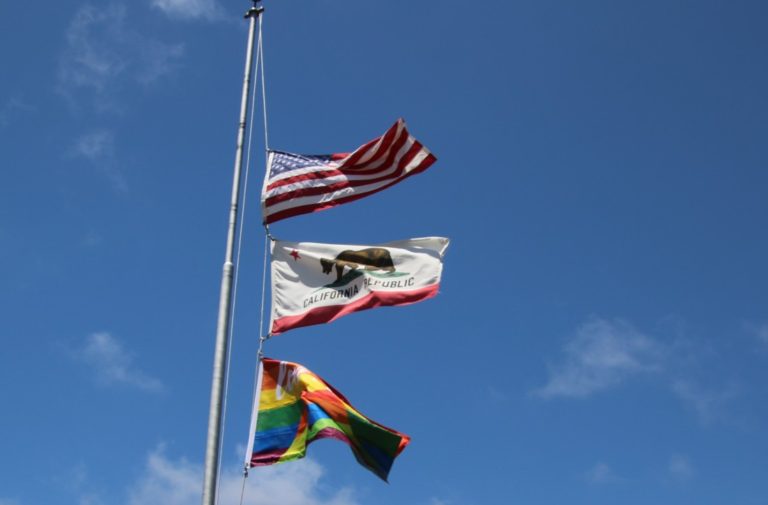
LGBTQ supporters comprised of about 30 residents and a half dozen politicians came together May 29 to raise the gay pride or rainbow flag in front of San Juan Bautista’s City Hall. The flag will remain there for the month of June, which was designated gay pride month in recognition of a 1970 march for the Lesbian, Gay, Bisexual and Transgender Society. The march was in commemoration of theStonewall Riot that took place June 28, 1969.
San Juan’s Mayor Leslie Jordan introduced Senator Anna Caballero (D-Salinas), Assembly member Robert Rivas (D-Calif. 30th District), San Benito County Supervisor Kollin Kosmicki, and Hollister Mayor Ignacio Velazquez to speak. Collectively, they spoke of their support of the LGBTQ community as marginalized citizens and a group that has faced discrimination.
Supervisor Kosmicki, however, said even though they were there to show how far society has come, it still had a distance to go. He said when the event was posted on Facebook the comments proved there was “still a level of intolerance and hate.”
“You don’t have to go farther than our own county board [of supervisors],” he said. “On May 11, I proposed that we put something on the agenda to do something exactly like this at the county administration building and a proclamation that supports June as pride month for San Benito County. I didn’t get the three votes I needed for that.”
He said he brought the topic up again May 25 and failed again. He told those present that he was putting the supervisors “on the spot.”
“We need to have a proclamation on our June 8 agenda to recognize June as pride month in San Benito County,” he said. “I encourage all of you to take part in that meeting.”
Mayor Velazquez said he and Vice Mayor Rolan Resendiz were at the event because San Juan Bautista supported Hollister’s first LGBTQ flag raising in 2020.
“That’s important because we are changing things in San Juan Bautista, Hollister, and next year we’re going to make sure we’re helping Supervisor Kosmicki raise their flag for the entire county,” he said.
Senator Caballero said she was proud to have been the first grand marshal of the gay pride parade [1970] in Salinas and a proud ally ofEquality California, a LGBTQ civil rights organization.
Rivas thanked the city staff and mayor for holding the ceremony. He said too many in the LGBT community are homeless and face harassment. He said they must keep pushing so the rural areas of the state have the same resources as urban areas.
Mayor Jordan said the city was founded on diversity and spoke of other marginalized groups of the past who led the way to equality, including indigenous women, and Japanese-Americans, who farmed in nearby fields and where forced into internment camps during World War II.
“It is our time to stand and fight for all of those who have been marginalized throughout the history of San Juan Bautista,” she said. “Thank you for those who gave your lives for what we’re here for, for loving who you want to love and being who you are. Thank you for fighting for our truth.”
While Hollister’s city council authorized up to $40,000 to pay for two flagpoles to accommodate raising the gay pride flag June 1, San Juan Bautista hoisted its gay pride flag up on the single pole beneath the American and California flags. City Manager Don Reynolds said the city issued a proclamation designating June as gay pride month and the council decided to raise the flag even though the city has no policy in place yet to determine which flags can be flown from the single pole. He said San Juan Bautista may also have to eventually erect another pole.
BenitoLink is a nonprofit news website that reports on San Benito County. Our team is working around the clock during this time when accurate information is essential. It is expensive to produce local news and community support is what keeps the news flowing. Please consider supporting BenitoLink, San Benito County’s news.
(NEW YORK) — The 1969 police raid of the Stonewall Inn, the famed gay bar in New York City, was no different than many others before it. For decades, before and after the riots, some law enforcement officers and agencies targeted known LGBTQ-friendly establishments in an effort to shut them down, brutalize patrons, and arrest people who violated the homophobic and transphobic policies of the time, according to the National Park Foundation, an organization that focuses on U.S. history and education.
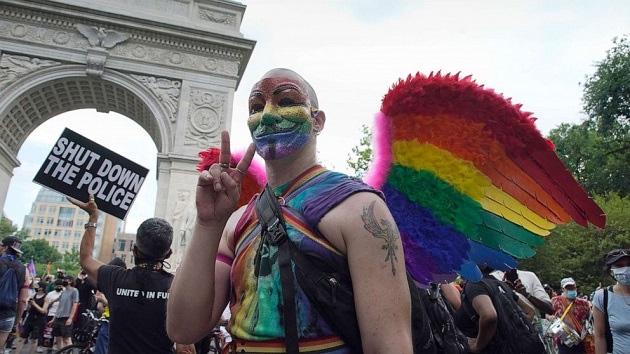
The Stonewall Uprising of 1969, the culmination of days of protests and clashes with police, was the catalyst for the modern gay rights movement and is what NYC Pride commemorates each year.
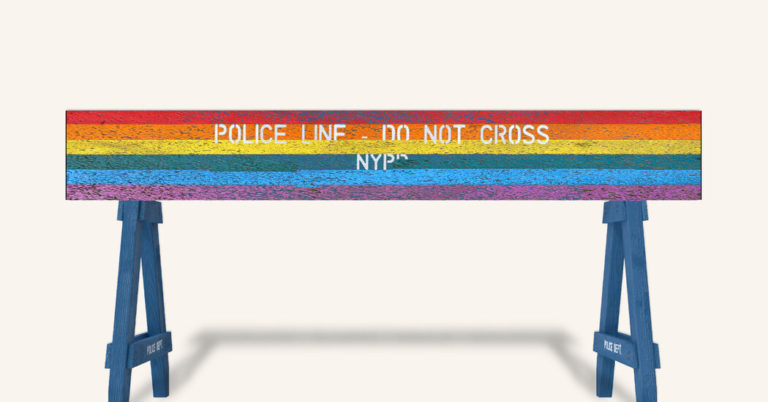
However, this June, the annual march will look slightly different — law enforcement officers won’t be marching in the parade for the first time since 1981 and there will be a reduced police presence at the organization’s events. The ban will remain in place until 2025. The decision comes as event organizers reckon with the legacy of brutality and abuse against the LGBTQ community by police that they say still continues today.
“Part of the trauma and triggers that our community faces are directly tied to that uniform,” said David A. Correa, the interim executive director at Heritage of Pride, Inc., the nonprofit organization that hosts most of the city’s major Pride events. “To be fully inclusive, you have to make the space safe for everyone. And that sometimes means compromise, and Black and brown people and indigenous people have been compromising for centuries.”
Heritage of Pride said they will be working with a private security team on the day of the parade, Saturday, June 27, to ensure the safety of event participants. They say that a clash between queer liberation demonstrators and the NYPD during Pride month in 2020 also played a role in the decision.
Police asserted that demonstrators were vandalizing NYPD vehicles near Washington Square Park. Viral videos of the confrontation showed officers rush the crowd of protesters, curse at them, and shove and hit them with batons. In some videos, officers seem to be using pepper spray against the crowd.
“Our organization, NYC Pride, was called to the table and asked to take a stance,” Correa said. “Members of our community said, ‘Please stand up for us queer people. We were pepper-sprayed and attacked.’ We took a stance of — ‘Well, we weren’t there. We hope everyone can get along’ … and it just wasn’t enough for folks.”
A spokesman for the NYPD said at the time that it arrested three people involved in the incident. Police said one was charged for graffiti, while two were charged with resisting arrests and assaulting an officer.
“We decided that it was imperative that we put the safety and security of the most marginalized in our communities first and that meant a reduction in policing,” Correa said.
The organizers said that there is still distrust in law enforcement due to ongoing discrimination and harassment against the LGBTQ community. A 2015 report from the UCLA School of Law found that 48% of surveyed LGBT violence survivors who interacted with law enforcement in the U.S. reported police misconduct, including unjustified arrest, use of excessive force and entrapment.
Jason Samuel, of the Gay Officers Action League, a nonprofit LGBTQIA law enforcement advocacy group, said that its members were upset by organizers’ decision to remove law enforcement groups from the lineup. He said he believes that GOAL has served as “a conscience” for the NYPD, of which several of its members serve for and has helped implement sensitivity and awareness training throughout the department.
“While we’d candidly admit there’s plenty of work remaining for us to address, it remains, nonetheless, a simple shame to discount what’s been accomplished, especially to those officers piloting reform efforts,” Samuel told ABC News. “We’d much rather continue on with bearing witness, maintaining our visibility, and serving a culture of openness, dialogue, and inclusivity.”
In a statement to ABC News, the NYPD said that the department will still be present at the parade in a limited capacity.
“Our annual work to ensure a safe, enjoyable Pride season has been increasingly embraced by its participants,” the statement read. “The idea of officers being excluded is disheartening and runs counter to our shared values of inclusion. That said, we’ll still be there to ensure traffic safety and good order during this huge, complex event.”
Criminalizing the LGBTQ community
Some laws, and many of those who’ve enforced them, have long criminalized the LGBTQ community across the country, and have made even daily activities much harder for the marginalized group.
Laws that prohibited lewdness, vagrancy, and disorderly conduct, like Michigan’s Section 750.338 which still remains in the state penal code, had been used by police to harass queer people when they gathered in public spaces since the 1800s. Law enforcement officers would raid bars and clubs or cruise queer-friendly locales as undercover cops to catch LGBTQ people in the places they felt most comfortable being themselves, according to Terry Beswick, the executive director of the GLBT Historical Society.
“The raids that we know about … just happened to be those few early cases and instances where people fought back,” said Beswick. “It wasn’t just a matter of clearing the bar. People would be brutalized and beaten, thrown into jail. Their names would be printed in the newspaper, they would lose their job if they were in the closet, lose their family.”
And sodomy laws, which have roots in some of the earliest laws of the U.S., made same-sex relations or sexual activity illegal, according to Jen Manion, a history professor at Amherst college. Throughout the 1900s, law enforcement had several avenues to pursue against LGBTQ people, via laws against disorderly conduct, indecency, loitering, lewdness, and more.
“There was just a lot of entrapment,” Manion said. “Undercover flirting, engaging in whatever the codes were that gay men used to flag each other, to attract each other. Cops were doing it intentionally to attract them and arrest them.”
Lawrence vs. Texas was a landmark Supreme Court case in 2003 that officially helped put an end to the criminalization of sodomy. The court ruled that Texas should not interfere with the private sexual decisions between consenting adults and that criminal punishment for sodomy was unconstitutional across the U.S.
“Gay sex was still illegal in, like, 15 States until 2003,” Manion said. “That was the justification for so much blackmailing and harassment of gay people and trans people by the police because they could still charge you with sodomy and you would actually go to jail for having consensual sex with another adult.”
Cross-dressing laws, which are believed to have first appeared in Columbus, Ohio in 1848, also encouraged officers to harass and abuse trans or queer people for dressing in clothes that didn’t correspond with their biological sex, Manion said.
Officers sexually assaulted and harassed arrestees, forcing underwear checks on people they suspected of cross-dressing, according to Manion.
“Being a feminine man or masculine woman was a signal that you might be gay,” Manion said. “That’s why the cross-dressing laws were such a kind of frontline, easy way to really police and harass everyone whether they were queer or trans.”
Fight continues
The fight against discriminatory laws continues to this day.
The New York policy from 1976 vaguely aimed to prevent sex work, and allowed for the arrests of people who were suspected of prostitution. But the oversexualization of transgender people led to the disproportionate arrests and harassment of trans people in public spaces for walking, standing and just being in a public space. It wasn’t repealed until this year.
Cuomo signed legislation to repeal the measure, saying it “is a critical step toward reforming our policing system and reducing the harassment and criminalization transgender people face simply for being themselves.” Mayor Bill de Blasio has also put forth reform to decriminalize sex work, and offer community-centered services for sex workers.
Still to this day, research shows that the LGBTQ community is affected by policing and incarceration than their heteronormative and heterosexual counterparts. According to the Prison Policy Initiative (PPI), a criminal justice research and advocacy group, LGBTQ people, of every age group, are overrepresented in the criminal justice system.
In 2019, a PPI study found that gay, lesbian, and bisexual individuals were 2.25 times as likely to be arrested than straight people. The disparity is heightened when the research is narrowed down to lesbian and bisexual individuals, who are 4 times as likely to be arrested than straight women.
Across the board, PPI’s research shows that LGBTQ people of color are disproportionately harassed and incarcerated by police. Historians say these disparities are long-standing and are part of the ongoing movement for gay rights.
“The relationship between the LGBTQ community police departments across the United States is, in a word, complicated, partly because of that history of brutality against LGBTQ people, but also because of the recognition to the LGBTQ community is not a monolith,” Beswick said. “We have members of our community that continue to be brutalized — are afraid of police — just on the basis of the number of killings that have happened of black and brown folks, black and brown trans folks.”
June’s Pride Month is a time to honor and celebrate the LGBTQ+ community and their allies. ABC7 Eyewitness News will have a series of reports on the LGBTQ+ community throughout the month.
ABC7 will also present the “Thrive with Pride Celebration,” Saturday, June 12 at 9pm on ABC7.
Join ABC7 anchors Ellen Leyva and Brandi Hitt, along with special guest host Raven-Symoné as they celebrate Pride in SoCal. Karl Schmid and Eric Resendiz will report during the special.
We’ll shine a spotlight on local LGBTQ+ people making a difference, from law makers to essential workers.
We’ll hear personal stories from the LGBTQ+ community, plus we’ll have special performances from LGBTQ+ ally and Backstreet Boy AJ McLean and the Gay Men’s Chorus of Los Angeles.
LGBTQ+ Support Organizations
AIDS Walk Los Angeles aidswalkla.org AIDS Walk L.A. is the world’s first walk to fight HIV and AIDS. It’s true – 35 years ago, a group of fed-up activists, patients, advocates, and friends put their soles on the line to shake the government into action during the AIDS crisis. And it happened on the streets of Los Angeles.
APLA Health aplahealth.org APLA Health’s mission is to achieve health care equity and promote well-being for the LGBT and other underserved communities and people living with and affected by HIV.
Asian Pacific AIDS Intervention Team (APAIT) apaitonline.org APAIT has held a distinctive record of providing high quality programming through its vision – to advocate, educate, and achieve optimal health and well-being for vulnerable communities. APAIT’s mission is to positively impact the quality of life for vulnerable communities experiencing behavioral health challenges, housing insecurity, and at-risk for HIV/AIDS. APAIT is grounded by its core values of compassion, commitment, communication, empowerment, integrity, mentorship, respect, and teamwork.
Diversity Collective diversitycollectivevc.org Diversity Collective is a community-based 501(c)3 nonprofit governed by a volunteer board of directors and volunteer advisory board. It is our mission to promote advocacy, education, mental and physical health for the LGBTQ community and those affected by HIV and AIDS in Ventura County, California. We do this work via our community resource center, programs, and community-building events.
Gay Therapy Center – LA thegaytherapycenter.com Since 2016, Gay Therapy Center in LA have helped hundreds of clients in LA at their offices in West Hollywood, Los Feliz, Westwood, and Santa Monica. While the aim is to make therapy convenient and near your home or office, their highest agenda is to match you to a therapist with whom you will really connect. Each Gay Therapy Center therapist is fully licensed by the State of California. LA psychotherapists have an average of ten years of experience and many have over twenty years’ experience.
GLAAD – LA Chapter glaad.org GLAAD Los Angeles hosts media series that highlight queer art and storytelling including OUTFEST. GLAAD rewrites the script for LGBTQ acceptance. As a dynamic media force, GLAAD tackles tough issues to shape the narrative and provoke dialogue that leads to cultural change. GLAAD protects all that has been accomplished and creates a world where everyone can live the life they love.
GLSEN – LA Chapter glsen.org GLSEN Los Angeles is a chapter of GLSEN, a national organization fighting for every student’s right to a safe, supportive education. GLSEN LA is a grassroots initiative, working locally in our community to ensure safe schools for all students, regardless of sexual orientation and gender identity. There are 43 chapters around the country.
LA Pride / Christopher Street West Association lapride.org Christopher Street West (CSW), a 501(c)(3) nonprofit, organized the world’s first permitted parade advocating for gay rights on June 28, 1970 to commemorate the Stonewall Rebellion on Christopher Street in New York City the year prior. Over 50 years later, we have built a rich history as an active voice for the LGBTQ+ community across the Greater Los Angeles area. While we’re best known for producing the LA Pride Parade & Festival, we also organize, sponsor or support other community events throughout the year, and work with our nonprofit, philanthropic, community and corporate partners to further diversity, equity and inclusion.
Latino Equality Alliance latinoequalityalliance.org The mission of Latino Equality Alliance (LEA) is to advocate for equity, safety, and wellness for the Latinx Lesbian, Gay, Bisexual, Transgender, Queer+ community. As a non-profit organization with a strong focus on family acceptance, LGBT equality, and immigration reform; LEA engages Latinx LGBT community leaders and organizations in direct action, organizing to address issues of bullying, homophobia, xenophobia, family separation, violence against youth, homelessness, high health risk behaviors and HIV/AIDS.
The LGBTQ Center Long Beach centerlb.org The LGBTQ Center Long Beach advances equity for LGBTQ people through culturally responsive advocacy, education, programs, and services. We envision affirming communities where all LGBTQ people live in health, wellness, safety, and prosperity.
LGBTQ Center OC lgbtqcenteroc.org At the LGBTQ Center OC, all members and allies of the Lesbian, Gay, Bisexual, and Transgender community of Orange County join together in a network of support and unity. Our life-affirming programs focus on empowerment, and our advocacy efforts focus on speaking out against hate and discrimination. We exist so that every segment of the LGBTQ population of Orange County has the resources needed to thrive in their own lives and communities. The LGBTQ Center Orange County provides services to more than 14,000 individuals annually across a broad spectrum of culture, ethnicity, age, and economic background.
LGBTQ+ Center of Riverside rivcocenter.org The vision of the LGBTQ+ Center of Riverside is: To guide and support the local LGBTQ+ community and its allies. To help them become who they aspire to be. To achieve their goals with courage and pride. To form friendships and connections with members of the community through different programs that will inspire them to be the best they can be. To be free. To love all and be loved by all.
Los Angeles LGBT Center lalgbtcenter.org Since 1969 the Los Angeles LGBT Center has cared for, championed, and celebrated LGBT individuals and families in Los Angeles and beyond. The Center provides services for more LGBT people than any other organization in the world, offering programs, services, and global advocacy that span four broad categories: Health, Social Services and Housing, Culture and Education, Leadership and Advocacy.
One Archives onearchives.org ONE Archives Foundation Inc. is the independent community partner that supports the ONE National Gay & Lesbian Archives at USC Libraries, the largest repository of Lesbian, Gay, Bisexual, Transgender, Queer (LGBTQ) materials in the world. Today, the organization is dedicated to promoting this important resource through diverse activities including educational initiatives, fundraising, and range of public programs.
Out & Equal Work Advocates outandequal.org Out & Equal is the premier organization working exclusively on LGBTQ workplace equality. They partner with Fortune 1000 companies, government agencies, and organizations across industries and diverse missions to provide LGBTQ executive leadership development, comprehensive D&I training and consultation, and professional networking opportunities that build inclusive and welcoming work environments.
South Bay LGBTQ Center southbaycenter.wixsite.com South Bay LGBTQ Center’s mission is to promote education, social interaction, personal growth, and political awareness. We hope to foster greater inclusion as well as understanding of our LGBTQ+/Queer and other intersecting communities in the South Bay area.
Trans Can Work transcanwork.org Trans Can Work (TCW) is a 501(c)(3) nonprofit organization based in Los Angeles, CA and is committed to advancing workplace inclusion through innovative training strategies and workforce development. Our tried-and-true system is based off decades of cumulative experience as transgender leaders working to advance inclusion in the public, private, and non-profit sectors across the country.
Trans Chorus of LA transchorusla.org Trans Chorus of Los Angeles is the first all Trans-Identified Chorus in America, consisting of Transgender, Non-Binary, Intersex, Gender-Non-Conforming and Gender-Fluid individuals. TCLA Celebrates diversity and acceptance in our acceptance and vocal presentation so that others can see and feel the joy we share. Through our music we bring to the world awareness, understanding, power and victory for the Trans Community.
The TransLatin@ Coalition translatinacoalition.org The mission of TransLatin@ Coalition (TLC) is to advocate for the specific needs of the Trans Latin@ community that resides in the U.S.A. and to plan strategies that improve our quality of life.
The Trevor Project thetrevorproject.org Founded in 1998 by the creators of the Academy Award-winning short film TREVOR, The Trevor Project is the leading national organization providing crisis intervention and suicide prevention services to lesbian, gay, bisexual, transgender, queer & questioning (LGBTQ) young people under 25.
Unique Woman’s Coalition theuwc.org Unique Woman’s Coalition (UWC) is dedicated to being a collective voice centering the narratives and needs of black trans culture. We’re Committed to fostering the next generation of black trans leadership from within the community through mentorship, scholarship, and community care engagement work.
The Wall Las Memorias thewalllasmemorias.org The Wall Las Memorias is a community health and wellness organization dedicated to serving Latino, LGBTQ and other under-served populations through advocacy, education and building the generation of leadership.
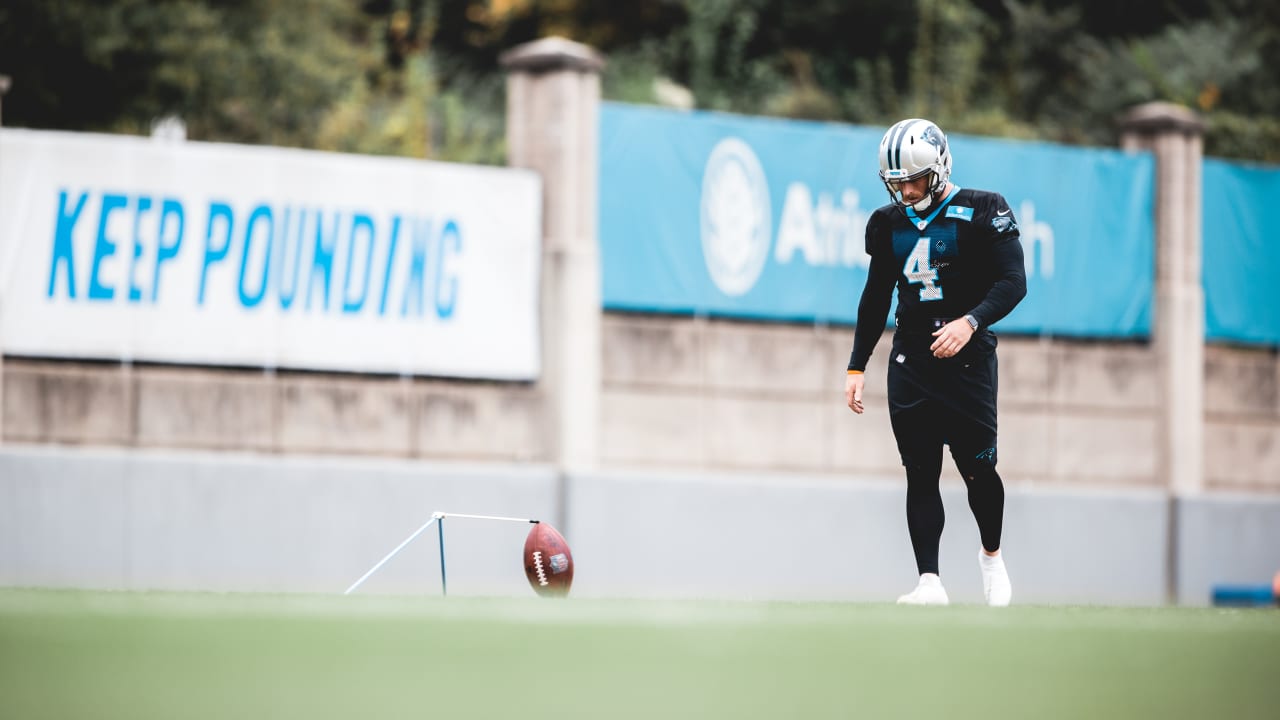
But those would have been miracles if he hit them. When he had a chance to win a game at Minnesota with a 54-yarder, Slye hooked it badly. Rhule would later describe it as the kind of kick Slye simply had to convert, saying: “that’s got to be a routine kick at the end of the game.”
Slye didn’t have another chance to hit such a home run the rest of the year, and the culmination of all the bad stuff down the stretch for the Panthers (who lost four of their last five and nine of their last 11 games) left plenty of jobs in doubt.
The Panthers signed a few kickers for offseason “competition,” but none of them lasted through the end of rookie minicamp.
Rhule said for now, the plan was to stick with Slye, as long as he kept showing progress.
“If he continues to do as well as we think he’s going to, great,” Rhule said. “If not, we know we can get someone off the street.
“I think Joey’s done a great job of really growing as a kicker, from the mental performance mindset perspective, from the end of last year until now. He’s taken that really seriously. That to me is the key. Usually, if you give me two swings at a golf ball, usually the second one I’ll hit pretty good. But you don’t get two swings when you’re kicking a field goal.
“So your mind has to be right, and I think he’s working really hard — and he’s such a young player — to make sure his mind is always right.”
Some of that work you can see. Some of it you can’t. Slye’s sessions with Dr. Perry have been a small part of an offseason devoted to making the change from having potential to delivering on it.
Slye’s description of his program reveals an incredible level of detail. In discussing his research on gaining a physical edge, he dropped a mention of “cortisol levels,” and how the body’s stress hormone can affect performance. That’s where his nutritional plan comes into play, as he’s learning how to keep things steady.
“Obviously, you can’t be worrying about food when you’re kicking,” he said. “To put it simplistically, it’s about putting all the pieces together ahead of time, so you can see the results.”
A gay pride flag hangs at half-staff during a memorial service for the victims of Florida’s Pulse nightclub shooting in San Diego, California, on June 12, 2016. SANDY HUFFAKER/AFP via Getty Images
It may seem surprising to American readers, but one of the most vibrant human rights movements around the world today is “gay reparations,” or policies intended to make amends for the legacy of systemic discrimination on the basis of sexual orientation and gender identity. In the last decade alone, Canada, Germany, Ireland, New Zealand, Spain, and the United Kingdom have embraced gay reparations.
This article is adapted from The Case for Gay Reparations, Omar G. Encarnación, Oxford University Press, 216 pp., $24.95, June 1, 2021.
The policies hardly comprise a homogenous experience, and they do not entail giving people money simply for being gay, as some suspect. In most countries, gay reparations are limited to a government apology to the LGBTQ community for past wrongs and a promise to do better in the future. In others, they have entailed memorializing the victims of state-sponsored repression of homosexual citizens. In 2008, the German government opened a monument to gay victims of the Holocaust, an unknown number whom perished in Nazi concentration camps, many of them victims of gruesome medical experiments intended to eradicate their homosexuality. In still other countries, gay reparations have centered on a pardon to anyone convicted under laws that criminalized same-sex attraction, as in the United Kingdom, which in 2017 issued a posthumous pardon to those convicted of “gross indecency,” including Alan Turing, the mathematician credited with shortening the end of World War II; or even financial compensation for wages or pensions lost due to having spent time in prison or in a mental institution because of a homosexual offense, as in Spain since 2009 and in Germany since 2016.
Gay German police members in uniform lay a wreath at the memorial to homosexuals murdered in the Holocaust by the Nazis in Berlin on June 21, 2014. Sean Gallup/Getty Images
Family members of World War II codebreaker Alan Turing deliver Change.org petition to 10 Downing Street in London on Feb. 23, 2015. The petition, signed by almost half a million people, called for a pardon for more than 49,000 British gay men convicted under historic anti-gay laws in the United Kingdom. The pardons were granted two years later. Pictures Ltd./Corbis via Getty Images
But none of this momentum has reached the United States. The closest the country has come to embracing gay reparations was in 2019, when, on the 50th anniversary of the Stonewall riots, the New York Police Department issued a belated apology for the raid that triggered the rebellion. “The actions taken by the NYPD were wrong—plain and simple … and for that I apologize,” said New York Police Commissioner James O’Neill. Surely, the absence of gay reparations—or even a discussion of them—in the United States is not out of a rosy history free of systemic discrimination toward the LGBTQ community, although a valid argument can be made that this history is not particularly well known, save, perhaps, for “don’t ask, don’t tell.” That infamous 1993 policy allowed gays, lesbians, and bisexuals to serve in the military as long as they kept their sexual orientation a secret. By the time the Obama administration lifted the policy in 2011, some 13,000 LGBTQ troops had been dismissed from their jobs.
Decades before “don’t ask, don’t tell,” from the 1920s through at least the 1960s, there was the policy of “entrapment,” which involved undercover police officers sending flirtatious signals to other men they presumed to be homosexual in the hopes of ensnarling them into illicit activity. According to the historian Eric Cervini’s book The Deviant’s War, War, which is about gay rights pioneer Frank Kameny, in the 15 years after World War II, “homosexual arrests—including those for sodomy, dancing, kissing, or holding hands—occurred at the rate of one every ten minutes,” for a grand total of 1 million arrests. Entrapment was followed by the Lavender Scare, the midcentury persecution of federal workers suspected of being homosexual.
Perhaps as many as 10,000 people were fired or expelled from their federal jobs during the 1950s and 1960s because they were homosexual or suspected of being homosexual based on evidence as flimsy as how they dressed, talked, or looked. The trigger for this witch hunt was President Dwight D. Eisenhower’s 1953 executive order banning “perverts” from working in the federal government. Some of the victims of the Lavender Scare took their own lives, while others were sent to government-run institutions, especially St. Elizabeths Hospital in Washington, D.C., where they were forced to undergo such dehumanizing treatments as lobotomies, insulin-induced comas, and gay conversion therapy, with the aim of changing their sexual orientation.
Gay activists have compared the treatments offered at St. Elizabeths to the government’s human experiments with syphilis on Black men in Tuskegee, Alabama, which between 1932 and 1972 left hundreds of diagnosed Black men with syphilis untreated so doctors could follow the progress of the illness. “As with the Tuskegee experiment, those subjected to experimentation at the hands of federal officials were a despised minority that never consented to be treated,” noted Charles Francis, president of the Mattachine Society of Washington, D.C., the main U.S.-based organization championing gay reparations—especially a formal apology from Congress.
Members of San Francisco’s gay community protest the Supreme Court’s decision upholding a sodomy law in Georgia on July 17, 1986. Tom Levy/San Francisco Chronicle via Getty Images
Adding to such mistreatment have been a host of court decisions that for decades stigmatized homosexual people. Two rulings in particular reveal the animus that American jurisprudence has in the past shown toward gays, lesbians, and bisexuals. In Bowers v. Hardwick (1986), a U.S. Supreme Court ruling that upheld the state of Georgia’s sodomy laws, the court determined that the Constitution did not protect the rights of gays, lesbians, and bisexuals to engage in private, consensual sexual relations, because, the justices concluded, homosexual sex has no connection to family, marriage, abortion, or procreation. In his concurring opinion, Chief Justice Warren E. Burger quoted the 18th-century English jurist William Blackstone’s characterization of homosexual sex as an “infamous crime against nature,” worse than rape, and “a crime not fit to be named.” Homosexuality remained criminalized in the United States until the Supreme Court overturned the Hardwick ruling in 2003. Meanwhile, in Bottoms v. Bottoms (1995), Virginia’s Supreme Court upheld a lower court’s ruling that awarded custody of a child to a grandmother, because the child’s biological mother, Sharon Bottoms, was in a lesbian relationship, which at the time was a crime under Virginia law. This ruling was not an aberration; at the time, it was customary for the courts to deny LGBTQ people the right to raise their own biological children and to adopt.
Acts of state-sponsored anti-gay discrimination sent an unambiguous message to ordinary Americans that it was acceptable to demean and demonize LGBTQ people, and even to engage in acts of violence against them. The infamous and bloody history of societal attacks on the American LGBTQ community includes singer and spokesperson Anita Bryant’s 1977 Save Our Children crusade, which depicted gay men as pedophiles; Evangelist Jerry Falwell’s “declaration of war” on homosexuality, a rhetorical tactic employed during the 1980s to raise funds for Falwell’s Moral Majority organization; and the 2016 attack on Pulse, a gay nightclub in Orlando, Florida. One of the deadliest mass shootings in U.S. history, the attack on Pulse killed 49 people and wounded 53, many of them young Hispanic men. Prior to Pulse, there was the now largely forgotten 1973 arson fire at Upstairs, a gay bar in New Orleans’ French Quarter, which left 32 people dead. The thick homophobia of the era precluded even an acknowledgement of the tragedy by the mayor of New Orleans or Louisiana’s governor.
Left: Singer and anti-gay activist Anita Bryant talks about her “Save Our Children” crusade to nullify a gay rights ordinance in Miami Beach, Florida, on Feb. 15, 1977. Right: Phyllis Schlafly and the Rev. Jerry Falwell hold a news conference on the “Moral Majority” in San Francisco on July 12, 1984. The Associated Press and Bettmann Archive/Getty Images
Given the terrible history of repression of LGBTQ people in the United States, the absence of gay reparations is puzzling. Canada, a country with a decidedly less troubled history when it comes to homosexuality, issued an apology to the gay community in 2017. The apology came with a multimillion-dollar payout to compensate victims of the “gay purge,” those fired from the military because of their sexual orientation, and authorized a memorial to the victims of those persecuted for their sexual orientation in the capital city of Ottawa.
An obvious factor behind the delayed arrival of gay reparations in the United States is that the subject of reparations is particularly vexing in American society, stemming from the still-unsettled legacy of slavery and from racism.
Some critics of gay reparations such as the conservative political commentator Michael Medved have maintained that gay people are not deserving of reparations because unlike Black Americans, gay people are not victims of multigenerational damage, meaning that whatever ills homophobia may have caused in the past, these ills are not the same as those left behind by slavery, as they do not carry over from generation to generation. Medved also points to the economic success of some in the American LGBTQ community (which has generated the mythical notion that LGBTQ Americans are more affluent than the population at large) as a reason for why gay reparations are redundant.
Others are opposed to all forms of reparations, racial and otherwise, believing that reparations are inherently divisive and that they lead to a slippery slope scenario in which all groups come to view themselves as victims and worthy of reparations. As argued by a writer for the right-wing website RedState, gay reparations would allow for reparation claims by the “obese, the disfigured, the disabled, the short, the bald,” and also by “[m]igrants who weren’t treated kindly when they tried to enter the U.S. illegally” and by “really smart Asians who were rejected from Harvard.”
Seen from a global perspective, though, there appears to be more compelling reasons the United States is a gay reparations laggard. The first one is the poor resonance of human rights in American politics and society. Gay reparations movements abroad, especially in Spain, Britain, and Germany—countries that pioneered the gay reparations movement—have waged their struggles as a human rights crusade. This has entailed borrowing the rhetoric and strategies of the international human rights movement to make their claims and push their agenda forward. Inspired by human rights activism, gay reparations activists have emphasized the need for reparations as a moral obligation intended to restore dignity to LGBTQ people. They have also leveraged historical narratives of homosexual repression to influence public opinion and policy toward the LGBTQ community, such as the oppression of gays and lesbians under Nazi Germany or under the homophobic laws of the Francisco Franco regime in Spain, and shamed public officials for failing to stand up for the human rights of LGBTQ people.
But in the United States, there’s not much in the way of precedent of social movements arising (much less succeeding) with human rights as their core focus. Even the American civil rights movement failed in its attempt in the 1960s to link its struggle for civil rights to the 1948 Universal Declaration of Human Rights. This was due in no small part to the effective demonization of human rights by American conservatives during the Cold War as un-American, never mind that Americans, such as former first lady Eleanor Roosevelt, were among the main drafters of the 1948 declaration and that this document drew on seminal American documents, such as the Declaration of Independence.
Firemen walk through the charred ruins at Upstairs, a gay bar in New Orleans’ French Quarter, which left 32 people dead June 24, 1973. Bettmann/Getty Images
In reaction to the mass shooting at a gay nightclub in Orlando, Florida people hug outside the Stonewall Inn near a vigil for the victims in New York on June 12, 2016. BRYAN R. SMITH/AFP via Getty Images
Curiously, the view of human rights as un-American lingers to this day. The Trump administration, for example, attempted to reframe the promotion of human rights at the global level as exclusively entailing property rights and religious freedom. That was the mission of then-Secretary of State Mike Pompeo’s Commission on Unalienable Rights. Predictably, the commission’s final report led women’s groups and LGBTQ activists to accuse President Donald Trump’s Department of State of choosing to promote the human rights it liked, while undermining those it did not support, such as LGBTQ rights.
A less apparent factor in the United States’ lagging on gay reparations lies with the American LGBTQ rights movement itself. The United States may have birthed the gay liberation movement that came in the wake of the Stonewall riots. Yet in recent decades, gay rights activism in the United States, when seen through international lenses, has been relatively conservative. Since at least the late 1990s, the legal struggle for same-sex marriage consumed American activists almost at the expense of anything else. And that struggle was less than radical. While activists in such countries as Argentina, Germany, and Spain stressed how same-sex marriage would serve to transform society and the culture at large by expanding freedom and equality and by deepening citizenship and democracy, in the United States activists were more inclined to emphasize how same-sex marriage would push same-sex couples toward existing norms, even taming their sexuality. That latter argument came to be known as “the conservative case for gay marriage,” which contended that American society, including conservatives, should support same-sex marriage because it would bolster traditional values.
Framing the struggle for same-sex marriage around such modest goals as strengthening homosexual households wasted a great opportunity to engage society in a broad debate about the role of LGBTQ people in society. It also made it harder for gay activists to expand the struggle for LGBTQ rights beyond marriage and into such areas as transgender rights and gay reparations. These shortcomings, however, should not portend the end of gay reparations in the United States beyond the Stonewall apology. The international experience demonstrates that it is never too late for nations to right past wrongs. It took the United Kingdom more than a century to reckon with its own persecution of gay men under the charge of gross indecency. And the payoff is more than worth it. Aside from restoring dignity to the victims of state-sponsored policies of anti-gay discrimination and violence, gay reparations hold the promise of putting an end to the history of oppression of LGBTQ people while reminding future generations of the sacrifices and struggles that came before them.
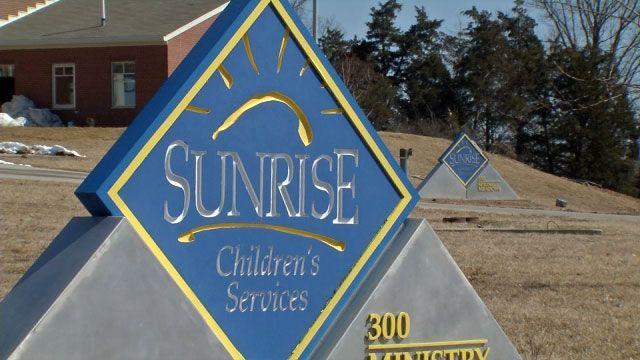
LOUISVILLE, Ky. (AP) — A cultural clash pitting religious beliefs against gay rights has jeopardized Kentucky’s long-running relationship with a foster care and adoption agency affiliated with the Baptist church that serves some of the state’s most vulnerable children.
The standoff revolves around a clause in a new contract with the state that bans discrimination based on sexual orientation and that Sunrise Children’s Services is refusing to sign.
It’s another round in a broader fight in states and the courts over religious liberty and LGBTQ rights, including whether businesses can refuse to provide services for same-sex weddings. An upcoming U.S. Supreme Court decision in a Pennsylvania case could be decisive in the Kentucky clash; it’s reviewing a refusal by Philadelphia Catholic Social Services to work with same-sex couples as foster parents.
In the Kentucky contract, Sunrise officials are concerned the disputed clause would compel them to violate deeply held religious principles by sponsoring same-sex couples as foster or adoptive parents. Supporters of the provision see it as a crucial safeguard against discrimination.
Child welfare advocates worry that losing Sunrise — which also offers residential treatment programs — would further strain a state system struggling to keep up with demand. Kentucky consistently has some of the nation’s worst child abuse rates.
“You cannot pivot from losing such a large provider of child welfare services … and not anticipate some degree of disruption,” said Terry Brooks, executive director of Kentucky Youth Advocates.
The state set a June 30 deadline for Sunrise to sign. If it refuses, the state has threatened to stop placing children with the agency. Formerly called Kentucky Baptist Homes for Children, Sunrise’s history dates to caring for Civil War orphans. It has contracted with the state for 50-plus years, becoming one of Kentucky’s largest service providers for abused or neglected children.
Sunrise’s supporters say the agency is the target of a political correctness campaign. Critics say allowing exceptions to the LGBTQ-inclusive clause would sanction discrimination.
“If Sunrise doesn’t want to abide by that, that’s fine. They shouldn’t have access to state money, state contracts or children in the state’s care,” said Chris Hartman, executive director of the Fairness Campaign, a Louisville-based gay rights advocacy group.
Hartman said he worries LGBTQ children in Sunrise’s care are “deeply closeted,” hiding their sexual orientation out of fear of “indoctrination and proselytization.”
A long-running federal lawsuit has alleged that Sunrise imposed religious indoctrination on children. Sunrise’s attorney, John Sheller, calls it an “outrageous accusation.”
Sheller said Sunrise “willingly and gladly” accepts LGBTQ youths and does not put children in conversion therapy, which tries to change a person’s sexual orientation or gender identity. Sunrise’s focus is on finding good homes for children and treating mental health, substance abuse or other problems they are battling, he said.
When same-sex couples contact Sunrise about becoming foster parents, the agency offers to help steer them to other child services agencies that are a “better fit,” Sheller said. He was aware of a handful of such instances.
“There is clearly a tension between LGBT issues and traditional Christian values,” Sheller said. “And it does not have to be winner-take-all. There is room for both principles to survive and thrive in our pluralistic society, and we can accommodate both.”
Kentucky’s Cabinet for Health and Family Services says it hopes for a “positive resolution.” Sunrise President Dale Suttles says he wants the relationship to continue.
“Sunrise would act on a contract today that allows them to care for Kentucky’s needy and abused children while protecting their deeply held religious beliefs,” said Todd Gray, executive director-treasurer of the Kentucky Baptist Convention.
Like many other states, Kentucky contracts with private agencies like Sunrise for some of its child welfare services. Overall, about 5,000 of the 9,100 children in Kentucky’s care are in foster homes or other placements managed by the state. About 4,000 receive care through private agencies.
Sunrise, which only operates in Kentucky, says it currently cares for nearly 800 children. The state reimburses Sunrise for about 65% of its costs, with private donations covering the rest.
The state insists it’s bound by an Obama-era federal rule to include the contract clause Sunrise opposes. The rule included sexual orientation as a protected class under anti-discrimination provisions.
“It would be a mistake not to place kids with wonderful couples that want to be foster parents that are gay,” Democratic Gov. Andy Beshear said this week. “People make wonderful foster parents in all types of couples, and we shouldn’t be eliminating or discriminating against any of them.”
Sunrise argues that the federal rule was invalidated under former President Donald Trump, giving the state leeway to exclude the clause. Sheller said the agency is “open to any reasonable process” as long as it’s “not compelled by that language to violate its faith principles.”
“The state’s position is that it’s going to try to compel Sunrise to sign the same form contract that it uses with secular providers,” Sheller said. “And Sunrise cannot and will not sign that form contract by July 1st or any other date.”
Sunrise is affiliated with the Kentucky Baptist Convention, consisting of nearly 2,400 churches with a total membership of about 600,000 people. The faith views homosexuality as a sin.
If Sunrise loses its state contract, it would have to change its model and raise new capital to continue its services, said Suttles, the agency’s president.
“We do know that there are many children in need of help that are not in state custody,” he added.
The dispute has had political fallout. Kentucky House Republicans and state GOP officials have urged Beshear’s administration to maintain ties with Sunrise. Republican Attorney General Daniel Cameron said the administration was forcing Sunrise to “choose between continuing to serve Kentucky children or abandon its religious beliefs.”
Meanwhile, other agencies contracting with the state welcome LGBTQ people as foster or adoptive parents.
“Gay-lesbian families want to grow their families just like heterosexual families do,” said Grace Akers, CEO of St. Joseph Children’s Home in Louisville.
She applauded Beshear’s administration for taking a stand she said will benefit children.
“There are children in Kentucky who are not just working through their trauma, but they’re working through who they are as gay, lesbian, bisexual or transgender,” Akers said. “And for us to celebrate those children, I just think is critical.”
If it cuts ties to Sunrise, the state must be prepared to fill the gaps if it loses some foster parents in the agency’s network, said Brooks of Kentucky Youth Advocates. His biggest concern is ensuring a smooth transition for the children who require “intense and specialized treatment” that Sunrise now provides.
Brooks said he’s confident the state can move children to other agencies but added that “the challenge cannot and should not be minimized.”
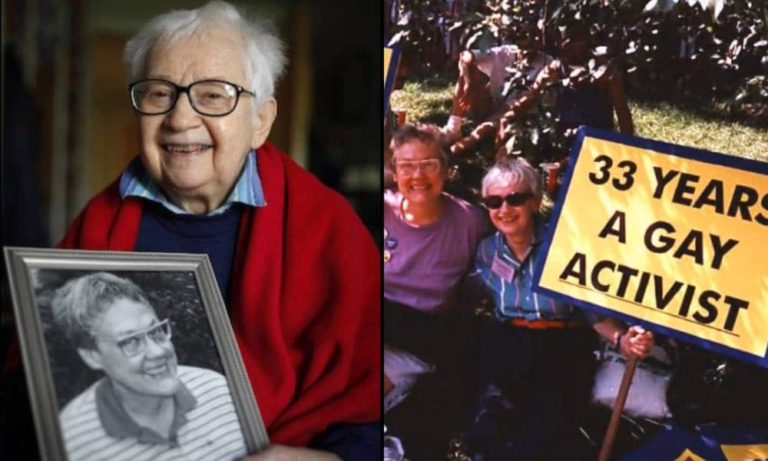
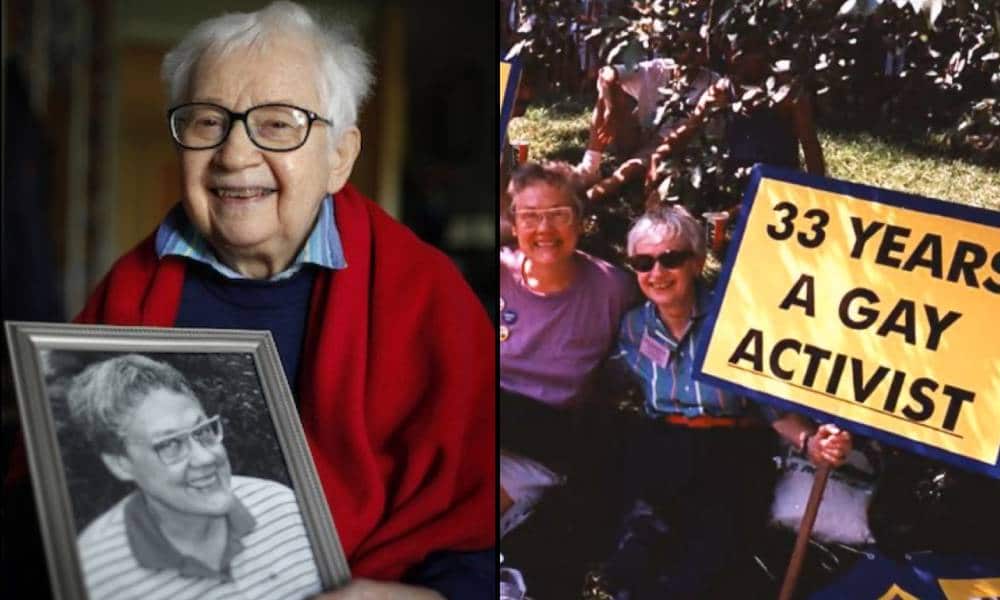
Kay Tobin Lahusen, a pioneering LGBT+ rights activist and photojournalist, has died after a brief illness at the age of 91. (Photo provided by Mark Segal/YouTube/Harbinger Media)
Kay Tobin Lahusen, a pioneering LGBT+ rights activist and photojournalist, has died after a brief illness at the age of 91.
Lahusen was born in Cincinnati, Ohio in 1930 and was adopted as an infant by her grandparents, who raised her. She attended Ohio State University, and after graduating, she moved to Boston, Massachusetts.
It was in Boston where she first met Barbara Gettings, who would become her life partner. The two women met at a 1961 picnic of the Daughters of Bilitis, the first lesbian rights organisation in the US.
Lahusen and Gittings lived in New York, Philadelphia and Wilmington, Delaware throughout their 46-year relationship. The couple remained fierce LGBT+ rights activists throughout their lives. The Associated Press reported Lahusen was a founding member of the Gay Activists Alliance and took part in Philadelphia’s first Pride march in 1972.
Kay Tobin Lahusen’s photographs chronicle the early days of the gay civil rights movement in the US. Her photos appeared on the cover of The Ladder, the first nationally distributed lesbian publication in America, between 1964 and 1966. Gittings was the editor.
The New York Public Library has archived a large collection of Gittings and Lausen’s publications, papers and photographs.
Gittings died in 2007, but Lahusen continued on their work to advance LGBT+ rights.
Mark Segal, a close friend of Lahusen and founder and publisher of the Philadelphia Gay News, wrote in an emotional tribute to Lahusen that the queer community “lost a major figure in LGBT history this week”. He added that he will miss “our rather animated discussions”, her “stubbornness” and “her friendship that went back 53 incredible years”.
Activist and filmmaker Grete Miller told The Philadelphia Inquirer that she became friends with Lahusen after the two worked on a documentary project. Miller shared that she learned a lot from Lahusen.
“I learned that activism is a daily thing,” Miller said. “It is not about glory. It is not about family. It is about getting up every day, which is what Kay did, and fighting the good fight, doing all the things for the people you care about for something that is bigger than yourself when no one is looking.”
The Philadelphia Inquirer reported Lahusen is survived by her close friends Judith Armstrong, Ada Bellow, John Cunningham, James Oakes and many others.
Kay Tobin Lahusen’s ashes will be interred alongside Gittings’ at the Congressional Cemetery in Washington. The news outlet said the ashes will come to rest within a bench designed to express the couple’s love for each other. The Philadelphia Inquirer reported the bench is inscribed with the slogan: “Gay is Good”.
A public memorial will be held on a future date due to the ongoing COVID-19 pandemic.
Take chances, ignore the naysayers and, instead of pulling up the ladder after you’ve made the climb, lend a hand to those on the lower rungs.
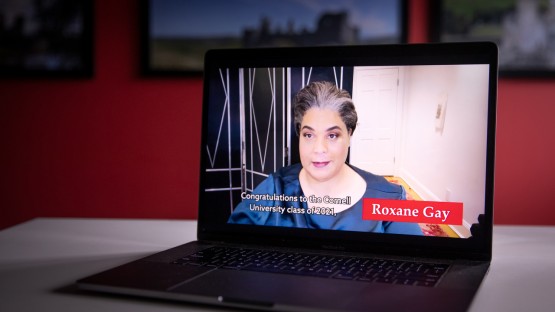
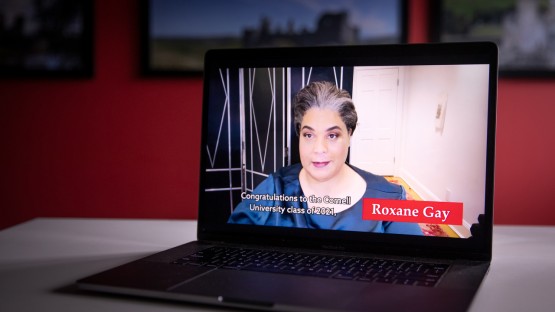
In a recorded Convocation address, author and social commentator Roxane Gay challenged the Cornell Class of 2021 to be true to themselves and to their dreams, however wild they may be.
“As you walk into the unknown of the rest of your life, please tear down the borders around your imagination and what you believe is possible for yourself and for your community,” Gay said. “Do not let the fears and insecurities of others keep you from your ambitions for a remarkable life.”
Ryan Lombardi, vice president for student and campus life, delivers remarks at the close of the virtual Convocation ceremony.
Gay, a New York Times contributing opinion writer and visiting professor at Yale University, is the author of “Bad Feminist” (2014), the New York Times bestselling essay collection, as well as the 2014 novel “An Untamed State” and her 2017 memoir, “Hunger: A Memoir of (My) Body.” She recently began her own publishing imprint, Roxane Gay Books, with publisher Grove Atlantic.
Gay’s address to the senior class touched on her childhood; on her determination to be a writer in the face of constant rejection and doubts; on the realities of “a flawed and unjust world” that rewards the mediocrity of the majority and punishes the marginalized; and on her hopes for the graduating class.
The recorded event, which will be available to the public on CornellCast in June, began with a reading from Laurence Minter ’21 of his poem, “History is Ours”:
“Farewell to the hill, look how far we’ve come / From the analyst to the actor, the future doctors to the diplomats / The engineers to the athletes, tell your story wherever you go,” he read.
Minter’s reading was followed by welcoming remarks from President Martha E. Pollack, after which Convocation Committee Chair Hassaan Bin Sabir ’21 gave the class address. He broke with tradition, however, and gave his speech alongside fellow committee members Sarah Brice ’21 and Gloria Oladipo ’21, who also spoke.
“Here’s why: I just don’t think I know more about life than the rest of you,” Bin Sabir said. “I’m 22, and I’m still figuring it all out. But most importantly, if there’s any lesson I’ve learned over the last four years, and over the pandemic in particular, it’s that I need other people to sustain me, to make me more human … and to get me through the every day. We all do.”
Gay began her remarks by recalling her lifelong desire to be a writer, even when encouragement and validation were in short supply.
“There was a time, in my 20s and 30s, where rejection was constant,” she said. “And that rejection wasn’t an opening. It did not make me a better person. It made me salty, mostly. It also made me work harder.”
As a child, she and her brothers would create imaginary worlds, she said, digging holes in an adjacent empty lot and connecting them with ravines so they could visit one another. They also spent hours exploring the abandoned appliances and car parts in a nearby patch of woods. Her imagination and love of storytelling was born in those worlds.
“Adults never interfered with these magical places,” she said. “There were no rules. I took that carefree energy to my writing; the borders of my imagination expanded.”
Like many, she said, she has been changed by trauma. But she did not dwell on those things. “Bad things happened to all of us,” she said. “And I don’t say that to minimize my trauma or anyone else’s. Instead, I say that to mean we are all more than our suffering.”
In her youth, she said, if little else was reliable, writing always was. Her parents encouraged her to consider a career as a doctor, lawyer or engineer – what she called “the Haitian career trifecta.” But after some starts and stops in college, writing eventually won out.
Convocation Committee Chair Hassaan Bin Sabir ’21, center, gives the class address alongside fellow committee members Gloria Oladipo ’21, left, and Sarah Brice ’21.
“No matter what I had going on, I wrote and I read and I wrote and I read,” she said. “I made the time to write whether I was in high school or college or grad school, working an overnight shift in a video store, or as a bartender … I was able to honor this commitment to my craft because writing was, and is, my true north.”
Since 2014, when her essay collection and novel put her on the literary map, she has been “living a dream I did not even know I had,” she said. “The dream I thought I had was to write a book worthy of being published. The dream was for a few people to read and maybe love that book. I did not dare to dream of anything more than that.”
While her literary dreams were small at first (“It is hard for modest expectations to be disappointed, and so I kept my expectations incredibly modest”), she encourages others to be bold in their aspirations.
“My students often talk about how their parents disapprove of their desires to major in creative or other supposedly impractical fields. I can’t stand it,” she said. “As a writer, I often see people discouraging new writers by cataloging every single challenge they might face … It makes me wonder why they are trying to pull up the ladder they climbed.”
She closed with words of advice.
“Be fiercely committed and fiercely kind,” she said. “Be relentless. Find your true north – that thing that makes your world make sense. Always follow your true north, wherever it may lead.”
My wife, Debbie, came out as a lesbian when she was 50 years old. Her first Pride parade in New York City was also the first time, she told me early in our courtship, that she was able to understand what it feels like to be proud. There is a picture of her on Christopher Street, beaming. She is wearing a T-shirt that says, “Yep, I’m Gay.” Around her are hundreds of people from the L.G.B.T.Q. community, and allies, celebrating our right to be.
I came out as a lesbian when I was 19 and would, in later years, identify as bisexual. It was a relatively unremarkable experience. But after a misadventure in Arizona, I found myself in Lincoln, Neb., my home state. I didn’t know many people, and I certainly didn’t know other queer people. I had no role models. I didn’t know how to ask a girl out on a date or where to get the right haircut. My first Pride parade, in Omaha, was a modest one — but there were rainbow flags everywhere and beautiful queer people of every stripe. There was music and dancing. There were pamphlets about marriage equality and activists giving fiery speeches. I knew, deep in my bones, that I was among my people.
Our experiences mirror those of millions of other queer people who have needed, at some point in their lives, to find their people. Pride parades are and have been a way for the L.G.B.T.Q. community to march proudly through the streets of our cities, to claim our identity in a world that criminalized our sexuality, demanded our shame, expected us to hide in the dark.
Modern Pride celebrations began with a rebellion against the police. In June 1969, at the Stonewall Inn, a gay bar in Greenwich Village, there was yet another police raid — but this time it was met with a raucous protest. The bar patrons fought back and continued to protest for the next several days. A movement, largely ignited by Black trans women and young gay hustlers, was born. The first gay pride parade was held the following year in New York City.
Now, after Pride organizers asked police officers to refrain from marching in uniform as a group in the New York parade (as Pride organizations have done in other cities), there has been an outcry and complaints that L.G.B.T.Q. officers are now the ones being marginalized. But many of us want no part of a display of police pride. Our history is young, and we have not forgotten it. For decades, the police have tormented our communities. They enforced laws about how we dressed, where we congregated and whom we had sex with. They beat us, blackmailed us and put us in jail.
Police harassment didn’t begin or end in 1969 — nor did queer resistance. Ten years before the Stonewall uprising, there was a similar incident in Los Angeles. The police began harassing patrons at Cooper Donuts, a cafe that welcomed not only gays and lesbians but also transgender patrons. When the police tried to arrest several people, they were pelted with debris until they fled the area.
And even now, the police across the United States can be incredibly hostile to the L.G.B.T.Q. community, whether it is mishandling intimate partner violence in our relationships, physically and verbally assaulting us, refusing to investigate the crimes we suffer or abusing their power when they police our events.
Violence against Black trans women remains disproportionately high, with many reporting that they don’t feel safe going to the police for fear of encountering more violence or facing disbelief and indifference. According to the Human Rights Campaign, at least 27 trans or gender-nonconforming people, most of them Black or Latinx, have been murdered so far in 2021, and many of their killings have gone unsolved. And then, of course, a year after the murder of George Floyd, it’s hard to ignore the ever-growing list of Black and brown people killed by police officers.
Over the past 50 years, Pride has evolved. At times, it feels unrecognizable because it has gone so mainstream. It has taken on the feel of a holiday, but with corporate sponsorship. What began in New York City is now celebrated in cities all across the world. Pride is a month of marches, parties and events. The celebrations are dynamic and broadly inclusive. Straight allies bring their children. Queer people bring our children. I love seeing how Pride has grown, but it sometimes feels as if we have forgotten who Pride is for. And it is frustrating that some corporations have commodified it, drenching their marketing materials with rainbow colors but doing little to celebrate and support the L.G.B.T.Q. community during the rest of the year. Nonetheless, at its best, Pride celebrations continue to offer space for us to know we belong to a community in which we are embraced for who we are.
We are a sprawling, unruly community. As we continue to think about who belongs at Pride, questions and, inevitably, controversies arise. Some people, for example, want to exclude the kink community or at least expect kinky queers to tone down their public expressions of sexuality to make Pride more family-friendly. This kind of respectability politics is nothing new. There have always been calls for the L.G.B.T.Q. community to neuter the sex from our sexuality, to temper our flamboyance, to bend to heterosexual norms. Let’s be clear: We should not have to contort ourselves to make straight people more comfortable with our lives. Assimilation cannot be the price we must pay for freedom.
The idea that we should now forgive the past and make peace with oppressive police forces is ludicrous. It is infuriating. In an essay for The Washington Post, the columnist Jonathan Capehart wrote a vigorous entreaty for L.G.B.T.Q. officers to be welcomed at Pride celebrations. The New York Times editorial board took a similar stance. Mr. Capehart empathizes with people who don’t want police officers at Pride, but he argues that they are wrong, calling it “beyond troubling that a community made up of so many who’ve been rejected by their families because of who they are is now turning on its members because of what they do for a living.”
This false equivalence defies credulity. We are not turning on anyone. Law enforcement is not an innate identity. The police are not marginalized. They aren’t disowned by their families for carrying a gun and badge. They haven’t been brutalized or arrested because of how they make a living.
And they aren’t actually being rejected; they are being asked to respect boundaries. L.G.B.T.Q. officers are more than welcome to join Pride celebrations — unarmed and in civilian clothing. They are being asked to confront their complicity with an institution that does more harm than good to vulnerable communities. It is telling that some of these officers refuse to do so. We don’t need the police marching alongside us. We don’t need them at Pride providing security.
What we need, what we’ve always wanted and deserved, is what Debbie and I found when we first marched at Pride: a welcoming space where we can be safe and free.
Roxane Gay (@RGay) is a contributing Opinion writer. She was the editor, most recently, of “The Selected Works of Audre Lorde.” She is the author of the memoir “Hunger.”
The Times is committed to publishing a diversity of letters to the editor. We’d like to hear what you think about this or any of our articles. Here are some tips. And here’s our email: letters@nytimes.com.
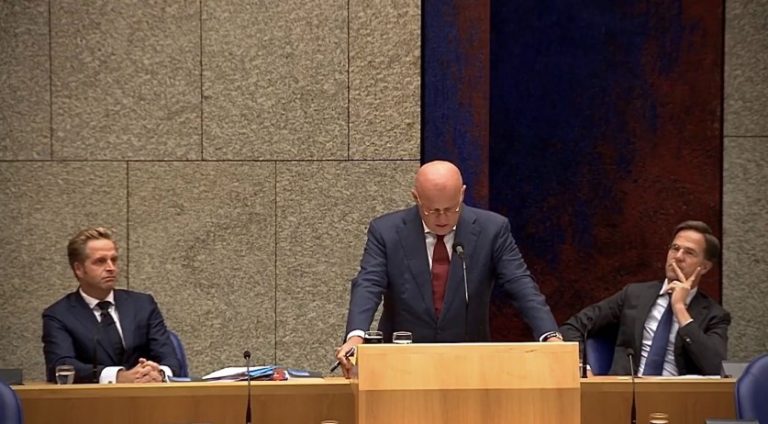
The outgoing Cabinet has not yet proposed a ban on gay conversion therapies, despite the vast majority of the Tweede Kamer in favor of criminalizing the practice as soon as possible.
The goal of gay conversion therapy is to try and change someone’s sexual orientation or gender identity. These practices include talking therapies and prayer but can also result in more extreme forms involving physical violence and food deprivation.
Health Minister, Hugo de Jonge and Minister of Justice and Security, Ferd Grapperhaus wrote that the focus would instead lie on a code of conduct and “support measures” for the LGBTQ+ community.
Instead of banning gay conversion therapies, the ministry asked the Humanist Association to come up with a code of conduct for religious communities on how to interact with members of the LGBTQ+ community.
“Everyone must be able to fully be themselves at all times and everywhere”, the ministers wrote. They acknowledged that not everyone in the Netherlands may experience this safety.
According to the Cabinet, it is difficult to determine when a practice is able to be called gay conversion therapy. Oftentimes, such acts take place within closed, religious circles and are labeled as ‘therapeutic’ or ‘philosophical’.
The minister did dismiss the argument that members of the LGTBTQ+ community would voluntarily undergo such a measure. “After all, the question is to what extent gay conversion therapy is voluntary if you grow up in a faith community that disapproves of your sexual orientation and gender identity.”
In the Netherlands, there are around 15 organizations or individuals that offer such therapies. The activities can lead to depression, suicidal thoughts, loneliness and sexual problems.
A bill that is currently making its way through the Michigan state Senate would ban transgender students from playing school sport on teams that align with their gender identity. Introduced by Sen. Lana Theis (R-Brighton) in March, Senate Bill 218 mimics two dozen similar ones introduced in other states as of late. A committee hearing was held on May 25.
“Clearly it’s discriminatory,” said Jay Kaplan, staff attorney for the ACLU of Michigan’s LGBT Project. “It targets transgender youth to deny them the opportunity provided to every other student and it’s based on myths and mistruth in regards to transgender kids participating in high school sports.”
Kaplan said the bill is based on false assumptions about transgender girls taking away opportunities from cisgender girls and/or that they have a competitive advantage.
“That’s not borne out in actual facts and information. Athletic ability depends on the individual, it depends on the sport, it depends on many, many factors, and trans athletes have been participating in [school] sports as far as we know for almost two decades,” he said. “This is a solution looking for a problem.”
Kaplan added that the best way to improve conditions for girls in sports is to put more money and resources into programming for them, not by attacking transgender students.
Not only that, excluding trans youth as this bill dictates could further marginalize this population, which is already at increased risk for depression, suicidal ideation and suicide attempts, according to Dr. Maureen Connolly, who treats transgender adolescents and who testified at the hearing.
Also opposed to the bill is Sen. Dayna Polehanki (D-Livonia) who sits on the Education and Career Readiness Committee. Like Kaplan, she called it “a solution in search of a problem” and referenced similar legislation making its way across the country.
“Not only is it cruel, it’s unnecessary,” Polehanki said. “The bill’s sponsor evidently couldn’t find anyone from Michigan to testify … but she brought in a slew of people from all over the country. It seems to me that these are “circuit testifiers” that go from state to state in this kind of cookie-cutter legislation that’s being handed down. And our state legislators obediently pick it up, and their marching orders are to hold hearings … and they don’t know Michigan. They didn’t even pretend to know Michigan.”
The Michigan High School Athletic Association has had a plan for years, Polehanki said, whereby an individual student can apply to play on a team that aligns with their gender identity. She referred to the procedure as seamless, and further, pointed out that the MHSAA opposes this sort of legislation.
“I don’t think that my GOP colleagues have the best interest of our transgender children at heart,” Polehanki said. “However, they claim to be fighting for girls in sports. Girls assigned female at birth. However, it you’re thinking of like a female kicker on the boys’ football team, or a boy cheerleader on the girls’ cheer squad, this will also kick them off. And there’s about 800 of those children also who would be affected by this ridiculous and cruel law.”
Polehanki knows this from more than observation as a lawmaker. A high school English teacher for more than 20 years, she also served for several of those years as co-advisor of a “Diversity Club.” In her experience, she said, most trans kids “just wanted to walk down the halls and be accepted.”
Both Kaplan and Polehanki believe what’s likely behind this is an attempt to “stir up the base” ahead of the 2022 elections.
“In the most cynical sense, this is a political move,” Kaplan said. “Some of the folks behind this are politically conservative on social issues … and they’ve decided that his is an important tactic for political purposes. It helps them raise money for the political party and they’ve decided they’re gonna go with this tactic.”
At the hearings, it was pointed out that there’s only been eight self-identified transgender students playing in high school interscholastic sports, Kaplan said. He added that goes to show this is hardly a problem plaguing school sports in the state.
Beyond the bill being a partisan political move, it reflects a misunderstanding and mischaracterization of what it means to be transgender.
“To refer to a transgender girl as a male body is simply incorrect,” Kaplan said. “And it’s a dehumanizing way of looking at a young transgender person.”
Kaplan explained that the law would violate Title IX, which prohibits discrimination on the basis of sex in educational opportunities, including sports, because the Supreme Court ruled in the Bostock decision last year that sex discrimination includes discrimination on the basis of transgender status.
In addition, the law would violate the 14th Amendment Equal Protection Clause, because it wouldn’t survive the scrutiny whereby evidence would be required to demonstrate that transgender girls have an unfair competitive advantage or that the existence of transgender girls in sports takes away opportunities from cisgender girls.
At this point, Kaplan said he was unaware of whether more hearings or when an eventual vote may be held.
“Our hope is that it doesn’t go anywhere,” Kaplan said. “It’s wrong, it’s flawed, it’s cruel. We’re fortunate that we live in a state with a governor who would not support something like this and sees it for what it is. Other states are not that fortunate. The worst circumstance is if it became a law, the ACLU and I’m sure other organizations would bring legal challenges. And we would win.”
Polehanki suggested that those who wish to weigh in on the issue contact Sen. Theis, who chairs the education committee. Because she is the chair, her office will take note of calls beyond those exclusively from her constituents. Individuals may call their own state Senator as well. Phone is preferable to email. Callers should refer to Senate Bill 218.
“If they have a Republican senator, it would be very beneficial for them to call whoever it is,” Polehanki said. “And it makes a difference.”
The swastika stickers were placed on the Alaska Jewish Museum and Mad Myrna’s gay bar. (Anchorage Police Department)
A hooded man was caught on camera plastering hateful Swastika stickers on the Jewish museum and a gay bar in Anchorage, Alaska.
At around 2am on Tuesday morning (25 May), the unidentified man was caught on camera driving a scooter up to the Alaska Jewish Museum and pasting stickers on the door and two windows, according to the Associated Press.
Each white sticker was emblazoned with a black swastika, and the words: “We are everywhere.”
Just under an hour later, the same stickers were found on the door of Mad Myrna’s, a gay bar in downtown Anchorage, the largest city in Alaska.
In a statement calling for the public’s help in identifying the culprit, the Anchorage Police Department said: “There is no place for hate in our community. The Anchorage Police Department takes these matters seriously.
“As part of our on-going investigation, we’ve partnered with the FBI to determine any potential state and federal violations.”
The man appears to have vandalised spaces connected to groups targeted by the Nazi party, as both Jewish and gay people were murdered during the Holocaust.
Rabbi Yosef Greenberg, president of the Alaska Jewish Museum’s board of directors, said police had not deemed the incident a serious or organised threat, and branded the man who placed the stickers a “coward”.
He said: “Jewish people have 4,000 years’ experience of persecution.
“He is dealing with the wrong people. We are not the people that fear.”
Greenberg believes the man “got excited about something he read on the internet and came and put a sticker”, but added that if police catch him, it will “make a statement that the entire community is united, that such things cannot happen in this community”.
Laura Carpenter, the head of the Alaska LGBT+ organisation Identity Inc which has offices near the gay bar Mad Myrna’s, said: “Swastikas have also become a symbol of white supremacy and the far right, and actions like this disproportionately impact people of colour in the LGBT+ community… This is just another example of people trying to demonise the LGBT+ community and Jewish people.”
In a Facebook post, staff at Mad Myrna’s insisted they would “not be focusing or dwelling on the hateful sticker slapped on our door in the night”.
However, they added: “We do wish to thank everyone for the comments of love and support… We are here, we are queer and we have some damn good chicken wings on special tonight.”
A hooded man was caught on camera plastering hateful Swastika stickers on the Jewish museum and a gay bar in Anchorage, Alaska.
At around 2am on Tuesday morning (25 May), the unidentified man was caught on camera driving a scooter up to the Alaska Jewish Museum and pasting stickers on the door and two windows, according to the Associated Press.
Each white sticker was emblazoned with a black swastika, and the words: “We are everywhere.”
Just under an hour later, the same stickers were found on the door of Mad Myrna’s, a gay bar in downtown Anchorage, the largest city in Alaska.
In a statement calling for the public’s help in identifying the culprit, the Anchorage Police Department said: “There is no place for hate in our community. The Anchorage Police Department takes these matters seriously.
“As part of our on-going investigation, we’ve partnered with the FBI to determine any potential state and federal violations.”
The man appears to have vandalised spaces connected to groups targeted by the Nazi party, as both Jewish and gay people were murdered during the Holocaust.
Rabbi Yosef Greenberg, president of the Alaska Jewish Museum’s board of directors, said police had not deemed the incident a serious or organised threat, and branded the man who placed the stickers a “coward”.
He said: “Jewish people have 4,000 years’ experience of persecution.
“He is dealing with the wrong people. We are not the people that fear.”
Greenberg believes the man “got excited about something he read on the internet and came and put a sticker”, but added that if police catch him, it will “make a statement that the entire community is united, that such things cannot happen in this community”.
Laura Carpenter, the head of the Alaska LGBT+ organisation Identity Inc which has offices near the gay bar Mad Myrna’s, said: “Swastikas have also become a symbol of white supremacy and the far right, and actions like this disproportionately impact people of colour in the LGBT+ community… This is just another example of people trying to demonise the LGBT+ community and Jewish people.”
In a Facebook post, staff at Mad Myrna’s insisted they would “not be focusing or dwelling on the hateful sticker slapped on our door in the night”.
However, they added: “We do wish to thank everyone for the comments of love and support… We are here, we are queer and we have some damn good chicken wings on special tonight.”