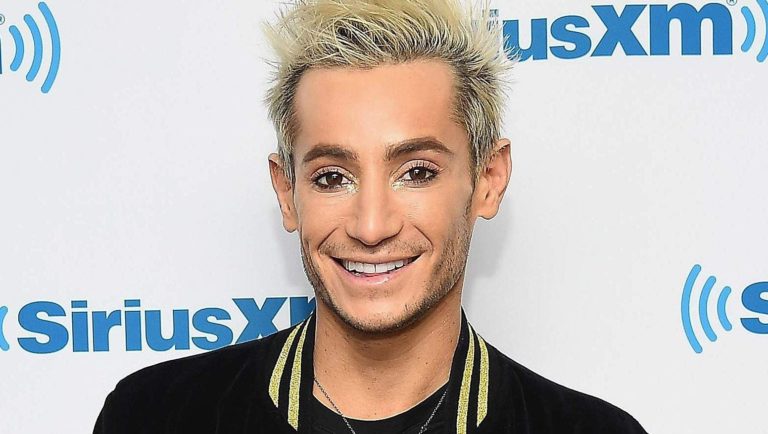
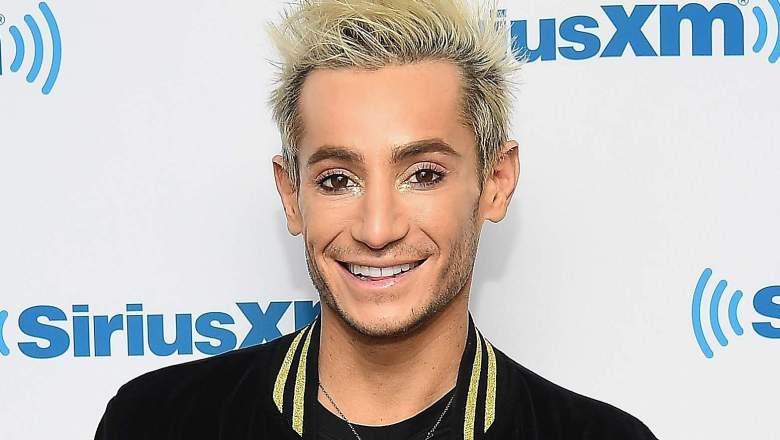
Getty Frankie Grande visits SiriusXM Studios on January 15, 2019
Popular “Big Brother” cast member Frankie Grande recently took the show to task for the way it has cast its LGBTQ contestants in the past. Find out what he said and also the impact he saw himself making on fans after his time on the show.
Grande Said ‘Big Brother’ Typically Only Casts a ‘Certain Type of Homosexual’
All 9 competitions won by Frankie Grande on Big Brother 16Frankie was a contestant on Big Brother 16 on CBS and won the most competitons. This video shows all the comps he won. Year: 20142018-04-21T12:53:36Z
In an interview with the “Behind the Velvet Rope” podcast, Grande said that he thinks “Big Brother” casting always goes after the same type of gay male.
“‘Big Brother’ has done a very good job of casting a very certain type of homosexual on that show every single season — they’re the meek, conniving, kind of backseat, like scheme-y gay and they want that.”
Grande said that he “truly” believes that the only reason he got cast was that CBS “couldn’t deny” that he brought “a certain level of fame” to the show.
“They were so obsessed with the fact that they were going to get a YouTuber and a personality on their show for the very first time — I was the first influencer to ever be on ‘Big Brother,’” said Grande. “They kind of let the fact that I wasn’t that type of gay go.”
Grande expanded on that by saying that most of the gay men cast on the show were not competition beasts like he was.
“I was more of a like comp beast player — like in your face, like try to beat me, like, come on, try to beat me. Like if you were going to beat me, then you have to put your money where your mouth is kind of kind of person,” said Grande. “And I don’t think that that’s always been the strategy that’s been employed. It wasn’t the strategy that was employed by other gay people prior to me, which was interesting.”
Grande is not wrong about being a competition beast. In case you have forgotten, he won three Head of Household competitions, two Battle of the Block competitions, and three Power of Veto competitions during season 16.
Grande Said Once He Was Off ‘Big Brother,’ He Realized What an Impact He Had Made
VideoVideo related to frankie grande criticizes ‘big brother’2021-06-01T09:00:33-04:00
After being on “Big Brother,” Grande said that he realized he had “given the world such a different concept of what a gay man was.”
“Many people around the world were telling me, like, ‘wow, we didn’t know gay men could be like you,’” he said. “We didn’t know gay men were competition beasts. We didn’t know that they were aggressive, that they could stand up for themselves in situations and not just cower.”
He added, “I just kind of showed the world a whole different side of the homosexual Kinsey scale. People were so receptive … people come up to me and they’re like, you know, my family accepted me as gay when I came out to them because they saw you on ‘Big Brother.’ And I was like, that’s unbelievable.”
On the smae podcast, Grande also revealed if he would ever play “Big Brother” again and why he thought all-stars was “unfair,” even if he was “so proud” of his “Big Brother 16” castmate Cody Calafiore for winning.
As Pride Month rolls along, it’s worth noting that legal weed — not just in California but across the country — owes a huge debt of gratitude to the LGBTQ community.
That’s because activists fighting for access to medical marijuana for terminally ill patients during the HIV/AIDS epidemic of the 1980s and ’90s (most notably Dennis Peron) helped get California’s first-in-the-nation medical marijuana law on the books in 1996. Other states followed suit, setting the stage for legal, nonmedical cannabis use in 16 U.S. states and the District of Columbia (though it remains illegal under federal law).
“You can draw a direct line from this particular period in time and the work of these queer activists and the legalization that created the modern cannabis industry in California,” said Andrew Freeman, co-founder of the L.A.-based Drew Martin cannabis brand with his partner, (in and out of business) Drew Martin Gosselin, and another business partner.
“However, it sometimes feels like that history has been a bit forgotten — especially when you look at queer representation in today’s cannabis space, which tends to be straight, white and male. That’s not reflective of the demographics of those that consume products, and that’s not reflective of those who fought for the decriminalization and legalization of the plant.”
Advertisement
Given the legal cannabis movement’s deep roots in the gay activist community, Freeman thinks there’s a larger role LGBTQ-founded brands should play moving forward. “I think as queer-owned companies today, we have a unique opportunity — and a responsibility — to continue the work that was started generations ago,” he said. “The struggle for decriminalization and legalization that was led by these activists is inextricably linked to today’s struggle to repair the damage the war on drugs has caused the Black and brown communities.”
In acknowledgment of the LGBTQ community’s contributions to cannabis commerce and culture, here’s a look at some of the Golden State’s queer-founded, -owned or -helmed cannabis brands with a few other marijuana movers and shakers — activists, educators and artists — thrown in.
Altered Plates Run by the brother-sister team of chef Holden Jagger and Rachel Burkons, this L.A.-based hospitality consulting group helps big brands and cannabis clients make on-site social consumption of cannabis and CBD compliant and educational. Burkons also serves as the executive director of California-based culinary cannabis advocacy group Crop to Kitchen.
Besito Maggie Connors launched the female-founded, queer-led Besito (Spanish for “little kiss”) brand in 2019 with sleek, brushed-metal single-use 2:1 THC:CBD ratio vape pens with a hexagonal shape that makes them stand out and stay put (as opposed to round, pen-like vapes that tend to roll across the coffee table). The L.A.-based brand has since expanded into 1 gram prerolls and 10-packs of mini prerolls that clock in at 0.35 mg each. besito.la
Cann
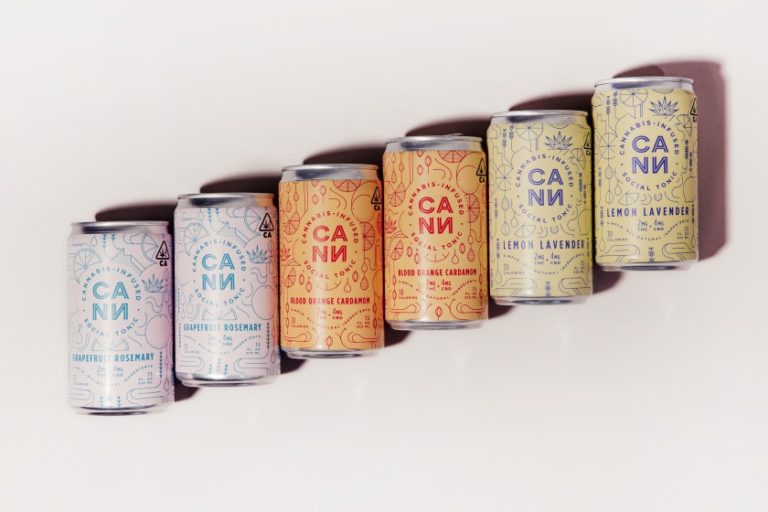
Venice-based Cann’s THC-infused “social tonics” contain 2 milligrams of THC and 4 milligrams of CBD per 7.5-ounce can. Flavors include lemon lavender, grapefruit rosemary and blood orange cardamom.
(Cann)
Founded by Luke Anderson and Jake Bullock, this Venice-based, wildly popular sparkling beverage brand specializes in low-calorie, low-dose, THC-infused “social tonics” (8 to 35 calories, 2 milligrams of THC and 4 milligrams of CBD per 7.5-ounce can) in mad refreshing flavors that include lemon lavender, grapefruit rosemary, blood orange cardamom, ginger lemongrass and pineapple jalapeño. Bonus? They’re vegan and gluten-free. drinkcann.com
Advertisement
Calexo Oakland- and L.A.-based Calexo, co-founded by Brandon Andrew, Ken Pelletier, Ian Colon and Aiko Oshima and launched last year, is a relative newcomer to the cannabis-infused drink business but is already a standout thanks to the boldly patterned artwork on its bottles and the bubbly beverages inside them. Each 22-ounce, fruit juice-based, single-serving, 80-calorie bottle (offered in two flavors, citrus rose and cucumber citron) contains 10 milligrams of nano-emulsified THC. The smaller particles mean there’s less lag time between consumption and onset — about 15 minutes for most people. calexo.co
Drew Martin
The Parade Me Around Pride bundle ($75), available at Sweet Flower and MedMen dispensaries in Los Angeles, includes two boxes of Drew Martin prerolled joints, four packets of Sonder Space Crystals, a four-pack of Cann’s low-dose THC-infused cranberry sage social tonic and a limited-edition sweatshirt (while supplies last). Proceeds will benefit queer BIPOC organizations working in the cannabis space.
(Cann / Drew Martin / Sonder)
Advertisement
A joint effort among Freeman, Gosselin and business partner Nicholas Pritzker, this year-old brand offers low-dose, prerolled joints that combine sun-grown cannabis with one of four botanical blends: rose petals and peppermint; ginger root, lemon balm and damiana; lavender and passionflower; and chamomile, yerba santa and calendula. (On top of that, they source their flower from queer-farmer-owned Spirit Chicken Farm in Mendocino County.)
For the month of June, the company has partnered with two other LGBTQ-owned brands on this list (Cann and Sonder) to create a Pride bundle (including a sweatshirt while supplies last) that will benefit queer BIPOC organizations working in the cannabis space, including Copper House, Supernova Women and the scholarship program at pottery studio Pot LA. The Pride package of goodies will be available exclusively at Sweet Flower and MedMen in the L.A. area, Sava and Airfield Supply Co. in the Bay Area and Lighthouse in Palm Springs. drewmartin.co
Emily Eizen
Advertisement
“EYEZEN VZN” ($25) is a limited-edition poster print by multimedia artist and frequent cannabis-brand collaborator Emily Eizen.
(Emily Eizen)
In addition to creating psychedelic, color-saturated photo-based images for cannabis clients (including Flower by Edie Parker, Besito and the Sweet Flower dispensary chain) that manage to perfectly capture the vibe of getting high, L.A.-based queer multimedia artist Emily Eizen turns out trippy takes on furniture, home decor and limited-edition 16-by-20-inch poster prints, the last of which can be ordered via her website ($25). emilyeizen.com
Laganja Estranja The nom du drag of L.A.-based choreographer and musical artist Jay Jackson, Laganja Estranja has appeared on “RuPaul’s Drag Race” (2014) and “So You Think You Can Dance” (2018 and 2019) and parlayed her role as an LGBTQ+ icon and cannabis advocate into a series of partnerships within the traditionally bro-centric weed business, including a 2016 preroll collaboration with the Hepburns and a 2019 edibles collaboration with Fruit Slabs.
Drag queen and cannabis advocate Laganja Estranja’s fashion-focused offerings include pot-leaf-emblazoned T-shirts that declare “High Top,” left, and “Baked Bottom” (each $40).
(Laganja Estranja)
Advertisement
She’s also created an assortment of merchandise that hits the fashion-meets-flower sweet spot, including T-shirts and totes bearing pot-leaf designs that call to mind the Louis Vuitton and Versace logos as well as two of the funniest stoner tees out there: One proudly proclaims “High Top” and the other “Baked Bottom” ($40 each).
“The Baked Bottom and High Top shirts were actually an idea from one of my #BUDS on Instagram for 4/20,” Estranja said, “but the punchy graphics and athletic font make them great for Pride too.” laganjaestranja.com
Sonder Faun Chapin and M. Paradise launched Sonder in the Bay Area in 2018, and the brand quickly made a name for itself with stylish, eye-catching vape pens. Its newest product, a sublingual called Space Crystals, is sort of a grown-up, THC-infused version of Pop Rocks that snaps and crackles under the tongue. It’s available in three flavors, including a perfect-for-Pride-Month strawberry Champagne flavor called Cheers Queers. sondertime.com
Stone Road
A pouch of roll-your-own preground flower from Venice-based Stone Road, an LGBTQ-owned cannabis brand.
(Stone Road)
Advertisement
A Venice-based brand that sources its cannabis from Northern California family farms (including its own 57-acre, off-the-grid farm in Nevada City), Stone Road was launched by Chief Executive Lex Corwin in 2016 and offers jars of flower, hash-infused joints (rolled by hand using French paper), concentrates and its newest product, roll-your-own pouches of preground flower about the size of an envelope clutch purse.
In a nod to Pride Month, the brand is donating 10% of its June profits to the LGBTQ Freedom Fund, a group that pays bail for members of the LGBTQ community in U.S. jails and immigration facilities. stoneroad.org
Sundae School Dae Lim and Mia Park started their 4-year-old brand in New York City as a Korean-inspired unisex smokewear label (we first met them at New York Fashion Week Men’s in 2018) but relocated to L.A. — and expanded into cannabis — in 2019. The star of their THC-based offerings (which include joints and edibles) is the 0.3-gram tiny but mighty mini preroll (eight to a pack). sundae.school(wearables) andsundae.flowers (combustibles and edibles)
Lovingly known as Ireland’s Godfather of Gay, Tonie Walsh is a historian, writer, activist, and renowned DJ. Here he writes about co-curating the Living With Pride programme at the National Library of Ireland.
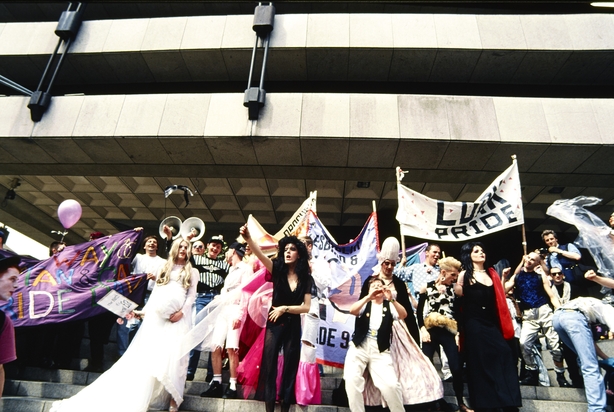
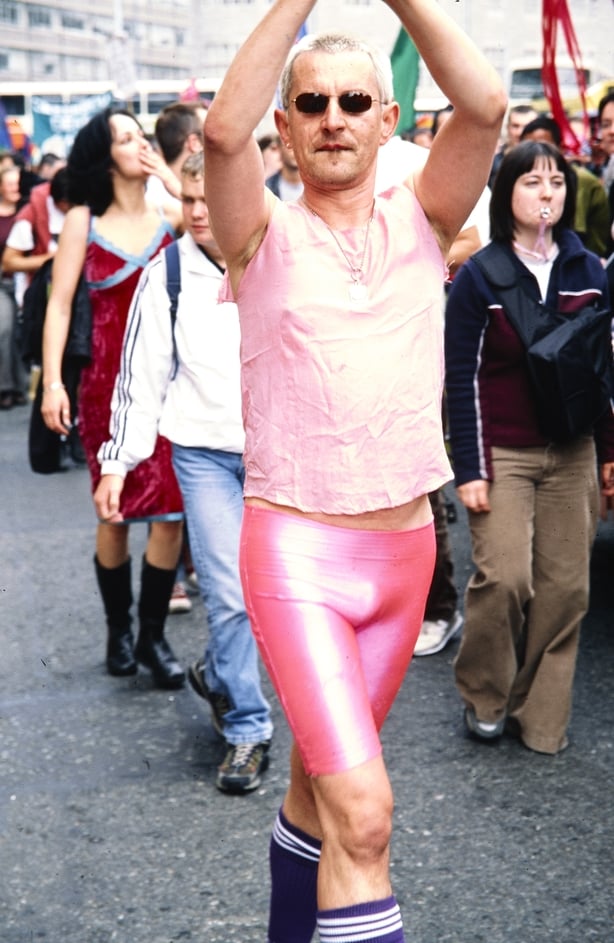
Christopher Robson, a trained architect and lifetime civil rights activist, spent many years documenting LGBT Pride festivals in Ireland and abroad.
After his death, his husband, Bill Foley, donated his sizable collection of slides and prints to the National Library, a selection of which forms the basis for the exhibition, Living With Pride, that will open to the public on 9 June, and run until November at the National Library’s Photographic Archive in Dublin’s Meeting House Square.
I got a sneak peek last week of the exhibition and the first thing that hit me was the huge scale and riotous color of Robson’s prints.
Indeed, “Riotous Colour” could so easily apply as an alternative title to the exhibition and to the evolution of Pride protests and festivals that were the subject of Robson’s eye for several decades and which are also documented in other deposits at NLI’s Irish Queer Archive collection.
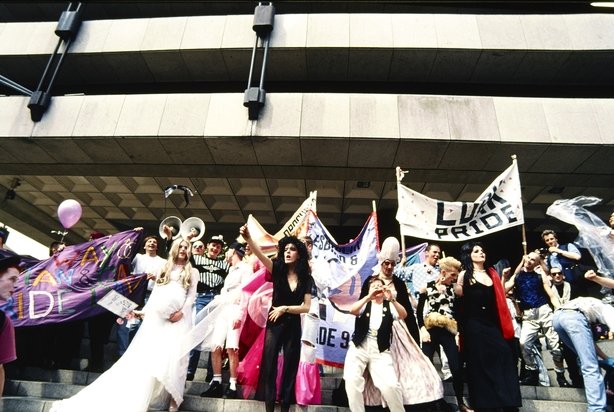
A photo of a celebratory gathering after the decriminalisation of homosexuality from the NLI’s exhibition.
We may take LGBT Pride festivals for granted, especially post-Marriage Equality. Each year, another one pops up with queer abandon in the most unexpected of places (Clonmel, Tipperary anyone?) but there was a time – just two lifetimes ago – when trying to get people out on the street to protest our pride seemed like an impossible task.
Just ask the 10 brave men and women, who risked enormous social opprobrium (and worse) to mark Ireland’s first Pride Day on June 27, 1974, marching from Ballsbridge to the Department of Justice on Dublin’s Stephen’s Green.
LGBT Pride is the most visible expression of a once invisible, hugely victimised and oppressed minority asserting its rights. It’s about us reclaiming a previously hostile space, marching to our rightful place at the centre of Irish society. And doing it with noisy conviction and a lot of colourful glamour. Christopher Robson’s photographs capture all of this in spectacular and intimate fashion.
A photo of Tonie Walsh from the NLI’s exhibition.
Two years ago, the National Library approached me to help curate a cultural sidebar to the Robson exhibition. I jumped at the opportunity to explore the current “state of the queer nation” and especially remind people of the riches that form the Irish Queer Archive (IQA), one of the largest LGBT collections of its kind in the world.
It was such a big deal when the IQA special collection was transferred to NLI in 2008. Here was the state finally taking ownership of LGBT heritage, both symbolically and physically.
As Ireland’s primary memory keeper, the National Library has a duty of care to all the citizens of Ireland, including those of our sexual and gender minorities, whose lived experience has too often been willfully ignored and excised from our formal historical narratives.
The Living With Pride photographic exhibition and cultural programme not only reinstates some of that queer lived experience but has much to say about the type of modern, outward-looking and, most importantly, compassionate society we’ve been building these recent years.
Enjoy the journey.
‘Living With Pride: Photographs by Christopher Robson’ opens to the public at the National Library’s National Photographic Archive, Meeting House Square, Temple Bar, on 9 June.
(NEW YORK) — While the global coronavirus pandemic may have put a damper on many annual Pride festivities across the world in 2020, this year is already looking to be better and brighter.
Whether you are heading out for festivities or planning to celebrate in your own unique special way, there are a lot of brands that are ready to help you commemorate in style.
Every year, loads of beauty and fashion brands band together to create Pride-inspired products that not only help you look good but also feel good as they support organizations that empower and uplift LGBTQ communities.
This year is no different, and lots of companies have continued to share their efforts.
From Disney’s exhilarating Rainbow Pride collection to Reebok’s “All Types of Love” Pride collection and campaign, there is truly something for everyone to smile about.
Ahead, check out 27 brands that will help you celebrate in style:
Ralph Lauren
Ralph Lauren has launched a gender-neutral Polo Pride collection for adults and children, including everything from sweatshirts to polo tops.
One-hundred percent of the purchase price from the sale of each polo shirt, and 25% of the purchase price from the sale of each graphic tee, sweatshirt, flag sweater, fanny pack, baseball cap and socks will be given to Stonewall Community Foundation.
Athleta
Athleta has launched its Love Proudly bra and tights set featuring a beautiful bright design and breathable material that allows for easy airflow.
The brand will be also supporting and donating to LGBT SportSafe throughout the month of June.
Adidas
The global athletic label unveiled its long-running “Love Unites” campaign with a 30+ piece Pride collection. Additionally, the campaign is spotlighting influential members and allies of the LGBTQ community.
John Frieda
The hair care brand has aligned with GLSEN for Pride Month to boost awareness and make schools safe and inclusive for LGBTQ youth.
Additionally, the company will be including Pride-themed packaging on some of its products along with rainbow-colored Teleties.
Abercrombie & Fitch
Along with The Trevor Project, Abercrombie & Fitch has co-designed a Pride collection featuring 24 gender-inclusive items in sizes XXS-XXXL.
In addition to a yearlong round-up campaign, Abercrombie & Fitch will be making an initial $200,000 donation to The Trevor Project and has donated over $2 million since 2010.
Nordstrom
Nordstrom and Nordstrom Rack have partnered with The Phluid Project to create an exclusive Pride capsule featuring gender-free hats, bags and more starting at $12.
The retailer is also providing a grant to the Trans Lifeline x GOLX Hormone Replacement Therapy (HRT) Care Fund in support of transgender, nonbinary and gender nonconforming individuals — with 75% of funds reserved for Black and Indigenous people.
Morphe
Morphe has teamed up with Todrick Hall and The Trevor Project for a beautifying Pride cosmetics collection. The brand’s annual Pride collections have raised $895,000 in support of services and opportunities for LGBTQ youth and students.
Additionally, 100% of net proceeds will be donated to the organization this year.
Rhone
Rhone has launched a stylish unisex Pride capsule collection including everything from bright joggers to hoodies in fresh white, navy and rainbow hues.
With this new collection, the brand is also making a $10,000 donation from the sales to Mental Health America to help the development of LGBTQ-focused resources and initiatives.
Lord Jones
The CBD-focused brand has launched a Pride box that includes a sweatshirt and hemp-derived CBD gumdrops. Lord Jones also plans to continue to annually align with West Hollywood-based LA Pride I Christopher Street West Association to donate 50% of its limited edition Lord Jones Pride launches in support of its initiative focused on trans and non-binary communities.
Peloton
Peloton is honoring the diversity of LGBTQ experiences and the uniqueness of the journey with a “My Truth Is Our Power” Pride-themed apparel collection as well as a “Giving Back Globally” initiative, which works with The Ali Forney Center in Canada, London Friend in U.K. and GLADT in Germany to donate $100,000 collectively.
Disney
This year’s Rainbow Disney collection includes everything from apparel to accessories featuring some of the company’s all-star characters from Pixar, Marvel, Star Wars and more.
To further celebrate Pride Month 2021 and the company’s Pride collection, The Walt Disney Company is donating funds as part of an ongoing commitment to organizations around the world that support LGBTQ communities. To learn more, visit RainbowDisneyCollection.com.
Bombas
Bombas’ Pride 2021 collection includes a wide assortment of socks, T-shirts and underwear. For items purchased, the brand is donating a specially designed item to someone in need within the LGBTQ community through three year-round partners including Casa Ruby, Mozaic and the Transgender Resource Center of New Mexico.
Olay
Olay is launching a limited-edition Pride-inspired version of its best-selling Regenerist Micro-Sculpting Cream along with two gift sets.
The brand will also be supporting the LGBTQ community with a $75,000 donation to The Trevor Project. Additionally, for the second year in a row, Olay is supporting P&G’s Can’t Cancel Pride to bring together the most inspirational voices in the LGBTQ community, along with allies, to help those who had been adversely affected by COVID-19.
UGG
Along with the Pacific Pride Foundation, UGG is celebrating the LGBTQ community with its fifth annual “Proud Prom” event that hosts local LGBTQ and allied youth from Santa Barbara and the coastal communities of California. It’s a celebration of self-identity and love, and this year’s virtual prom and campaign include notables such as musician Lil Nas X, writer Hari Nef, brand ambassador Maya Samaha and several others.
Further supporting the LGBTQ community, for each pair of Disco Stripe slides sold on UGG.com, the brand will donate $25 of the marked retail price to GLAAD — with up to a maximum guaranteed donation of $125,000.
1-800-FLOWERS.COM
1-800-FLOWERS.COM, Inc. has created a special Pride Bouquet featuring vibrant rainbow-toned flowers for customers to shop, and now through June 30, 20% of net proceeds made from each purchase will be donated to GLAAD.
Plus, the company has made a monetary donation of $25,000 to GLAAD.
Madewell
Madewell collaborated with American fine artist, author and illustrator Lisa Congdon to celebrate Pride with a love-inspired lineup of clothing. Fifty percent of proceeds from the collection will be donated to the American Civil Liberties Union.
Parade
Parade is celebrating Pride this month and everyday with the launch of its Color Outside the Lines campaign, which features an expressive collection of over 130 mix-and-match undergarments.
To further support colorful expression for all, Parade is also donating 2,000 pairs of underwear to various LGBTQ organizations and has also included an entirely queer cast and crew in their latest campaign directed by West Dakota and styled by Becky Akinyode.
Hanna Andersson
Hanna Andersson has launched a “Pride Rainbow” capsule collection, which includes “Colorful Rainbow Stripe,” “Loved,” “Peanuts Pride” and “Storytime Rainbow”-themed matching family pajamas as well as dresses, tees, recycled swimwear, sweatsuits and more for children and adults.
Teletubbies
Teletubbies has released a Pride Collection inspired by on-trend ’90s streetwear and centered around two themes: “Big Hug Big Love” and “Teletubbies Love Pride.”
Proceeds from the collection will benefit GLAAD’s culturally changing work to accelerate acceptance for the LGBTQ community.
Rue21
Rue21 has rolled out an exclusive Pride collection featuring everything from hoodies to sandals. The retailer has also teamed up with The Trevor Project to raise awareness about the organization’s important work and made a $50,000 donation to aid in efforts.
Starface
Starface is celebrating Pride all year long with the brand’s Rainbow Hydro-Stars pimple patches — which are a permanent part of the brand’s product lineup.
All net proceeds from Rainbow Hydro-Stars will be donated to the Black-Led Movement Fund and the Hetrick-Martin Institute for LGBTQ youth.
Gap
Gap’s latest Pride capsule highlights a range of meaningful designs by artists Star Casimir, Rachel Lindsey and Abayomi “AC” Carey — all members of G.E.A.R., Gap Inc.’s employee resource group that aims to create an inclusive and supportive environment.
To further amplify these voices and celebrate the expressive designs, Gap is also donating $50,000 to GLAAD.
Teva
This year, the footwear brand has unveiled a lineup of all-gender sandals and accessories that aim to celebrate individuality and equality. Additionally, Teva is donating $35,000 to the Human Rights Campaign Foundation in support of the LGBTQ community.
Fossil
Fossil has unveiled a limited-edition Pride watch collection designed to celebrate individuality, the spirit of love and equality. The latest iteration features the brand’s best-selling Minimalist 40mm watch case, reimagined with rainbow flag-inspired indexes and 10 vibrant straps.
The brand has also committed to donating 100% of proceeds from sales made from the Pride watch case and straps to The Trevor Project — with a minimum donation of $25,000.
Harper Wilde
Harper Wilde has debuted a Pride capsule line featuring a limited-edition tote and the company’s best-selling The Bliss bralette. Fifteen percent of proceeds will be donated to The Trevor Project.
Reebok
Reebok has released its “All Types of Love” Pride footwear and apparel collection designed by the footwear company’s LGBTQ employee community, Colorful Soles, which partnered with Iconic Ballroom House of Ninja to pay homage to ballroom culture and what it has brought to the LGBTQ community as well as humanity as a whole on a global scale.
The brand is also donating $75,000 to the Sylvia Rivera Law Project, an organization working to guarantee that all people are free to self-determine their gender identity and expression, regardless of income or race and without facing harassment, discrimination or violence.
BH Cosmetics
BH Cosmetics is unveiling an exciting limited-edition Give Back 12 Color Shadow Palette for Pride month starting on June 9, and $10 from every purchase of the new shadow palette will be donated to The Trevor Project.
When Hawaiian broadcast engineer Genora Dancel fell in love with Ninia Baehr, the daughter of a co-worker, in the summer of 1990, she had no qualms about proposing. But the pair soon faced an obstacle beyond their control: Hawaii, like every other American state at the time, prohibited same-sex couples from marrying. “Maybe I was just living in fantasyland, but, when you want to marry someone, that’s all you think about,” Dancel told Honolulu magazine in 2015.
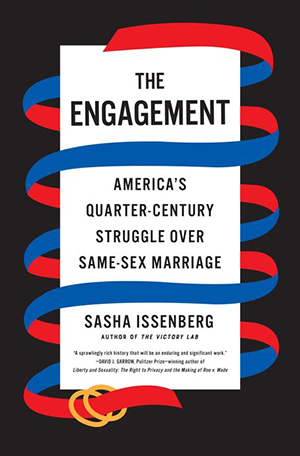
Galvanized to action after learning that Baehr was barred from registering as a domestic partner on Dancel’s health insurance, the couple joined a lawsuit with far-reaching consequences. As journalist Sasha Issenberg writes in The Engagement, the State Supreme Court case Baehr v. Miike—which suggested that denying same-sex marriage licenses could constitute discrimination—marked a milestone in the decades-long struggle to legalize gay marriage, paving the way for Obergefell v. Hodges, the landmark U.S. Supreme Court decision that recognized such unions nationwide in 2015.
The latest installment in our series highlighting new book releases, which launched last year to support authors whose work has been overshadowed amid the Covid-19 pandemic, explores the battle to legalize gay marriage, the life of a 19th-century woman who exposed dire conditions in a psychiatric institution, a writer’s reckoning with slavery’s legacy in America, the stories of two people who gained sight and hearing as adults, and the reasons for humanity’s love of alcohol.
Representing the fields of history, science, arts and culture, innovation, and travel, selections include texts that piqued our curiosity with their new approaches to oft-discussed topics, elevation of overlooked stories and artful prose. We’ve linked to Amazon for your convenience, but be sure to check with your local bookstore to see if it supports social distancing–appropriate delivery or pickup measures, too.
In this weighty, 928-page tome, Issenberg traces gay rights activists’ protracted fight to legalize same-sex marriage. Covering the years 1990 to 2015, the book begins with Dancel and Baehr’s case, offering an intimate look at the couple’s love story and how it shaped the next 25 years of legal debate. Far from intentionally sparking a national movement, Baehr v. Miike’s architect, Bill Woods—an activist and the director of the Gay and Lesbian Community Center of Honolulu—actually set his plan in motion as part of a “petty rivalry” with other local reformers, Issenberg tells Honolulu news outlet KHON2. “[It] was just a PR stunt that spiraled out of his control.”
Regardless of Wood’s motivations, the court case garnered attention nationally on both sides of the aisle, with LGBTQ activists building on the momentum to push for gay marriage in more states and conservatives taking the first steps toward the passage of the 1996 Defense of Marriage Act. In addition to navigating backlash from “political and religious foes” outside of the movement, gay rights proponents faced infighting between those who dismissed marriage as a flawed, patriarchal institution and others “who saw anything less than marriage as second-class status for same-sex couples,” notes Kirkus in its review.
Engagingly told, the volume seeks to provide a “definitive” account of how “gay marriage went from being a test of the moral and political imagination to settled policy in fifty states and a simple, even banal, fact of everyday life,” according to Issenberg.
Kate Moore, author of 2017’s bestseller The Radium Girls, continues her efforts to shed light on women’s untold stories with the tale of 19th-century activist Elizabeth Packard. An Illinois mother of six, Packard’s outspoken support of women’s rights attracted the ire of her husband, a Calvinist minister. Feeling increasingly threatened “by Elizabeth’s intellect, independence and unwillingness to stifle her own thoughts,” per the book’s description, he had his wife committed to the Illinois State Asylum in the summer of 1860.
Packard spent the next three years under the watchful eye of physician Andrew McFarland, enduring involuntary confinement by bonding with other patients and refusing to cave in to calls to admit her “insanity.” As she quickly realized, many of the women imprisoned at the facility had only been placed there after angering their husbands; far from requiring treatment for mental illnesses, these individuals were institutionalized in order to keep them in line.
In 1863, Packard was released into her husband’s custody after being declared “incurably insane,” according to the Illinois History and Lincoln Collections. Made a virtual prisoner in her own home, she eventually managed to alert a neighbor to her plight and take her case to court. A jury took just seven minutes to find her legally sane. After this victory, Packard tirelessly advocated for women and the mentally ill, taking such steps as founding the Anti-Insane Asylum Society, publishing several books and campaigning for legal reform.
When Clint Smith’s hometown of New Orleans removed four Confederate monuments in 2017, the Atlantic staff writer and poet found himself wondering “about what it meant to grow up with all these homages to the oppressors of enslaved people.” As he told Publishers Weekly earlier this year, “I thought about how these statues were not just statues, but memorialized the lives of slave owners and how history was reflected in different places.”
This initial idea led Smith on a cross-country, multi-year journey to sites associated with slavery, from Thomas Jefferson’s Monticello estate to the Whitney Plantation to the Louisiana State Penitentiary at Angola, a maximum-security prison built atop a former plantation. (The writer also visited one international destination: the House of Slaves in Dakar, Senegal.) Drawing on interviews, insightful observation and scholarship, he examines how each location addresses its painful past, concluding that “the more purposefully some places have attempted to tell the truth about their proximity to slavery and its aftermath, the more staunchly other places have refused.”
Due to the dominance of the cult of the Lost Cause, the Confederacy is memorialized far more readily than the institution of slavery itself, according to Smith. But “the history of slavery is the history of the United States,” he argues, “not peripheral to our founding [but] central to it.” To move forward as a country, Smith adds, the nation must embark on “a collective endeavor to learn and confront the story of slavery and how it has shaped the world we live in today. … At some point it is no longer a question of whether we can learn this history but whether we have the collective will to reckon with it.”
The book’s epilogue finds the author visiting the Smithsonian’s National Museum of African American History and Culture with his grandparents, who grew up in the Jim Crow South. After the trip, Smith’s grandmother tells him that she recognized the museum’s recounting of segregation and racism as her own. “I lived it,” she says simply. To her, reflects Smith, “This museum is a mirror.”
For much of her life, neurobiologist Susan R. Barry saw the world in two dimensions. “Space was very contracted and compacted,” she told NPR in 2010. “So if I looked at a tree, the leaves or the branches would appear to overlap one in front of another. But I didn’t actually see the pockets of space between the actual branches.” Born cross-eyed, Barry was 48 when she underwent vision therapy that enabled her to see in three dimensions—a life-changing journey cataloged in the 2010 memoir Fixing My Gaze.
The scientist’s latest book, Coming to Our Senses, moves beyond her personal experience to tell the stories of two people who similarly gained senses after childhood. As Barry writes, Liam McCoy was 15 years old when surgeons inserted a second lens into his eye, allowing him to see beyond a “cocoon of visual blur.” Zohra Damji, meanwhile, was 12 when she received a cochlear implant that introduced her to a “loud, scary and uncomfortable” cacophony of sounds.
Interweaving McCoy and Damji’s accounts with scholarly investigations of how perception works, Barry celebrates her subjects’ determination to adapt to their newfound senses. This resilience, she argues, speaks to the fact that asking “the blind or deaf to acquire a new sense past childhood is to ask them to reshape their identity.”
The human body, writes scholar Edward Slingerland in this immensely readable exploration of drunkenness, “clearly see[s] alcohol as a serious threat.” Not only does the alternatively beloved and reviled vice temporarily impair “a big chunk of the brain,” but it also “involves the ingestion of a toxin, a substance so harmful to the human body that we possess elaborate, multi-layered physiological machinery dedicated to breaking it down and getting it out of our systems as quickly as possible.” Why then, have humans dedicated millennia to developing new means of imbibing?
Blending history, anthropology, neuroscience, genetics, archaeology and a range of other disciplines, Drunk outlines the manifold merits of intoxication, from fostering creativity to relieving stress to building social bonds. Though Slingerland is perhaps too quick to underplay alcohol’s dangers (“We may have started relaxing with Dr. Jekyll, but we risk ending up wasted with Mr. Hyde,” notes the Wall Street Journal in its review), his argument is compelling and, above all, a whole lot of irreverent fun.
“My central argument is that getting drunk, high, or otherwise cognitively altered must have, over evolutionary time, helped individuals to survive and flourish, and cultures to endure and expand,” the author notes in the book’s introduction. “… To have survived this long, and remained so central to human social life, intoxication’s advantages must have—over the course of human history—outweighed the more obvious negative consequences.”
Austin Head sure was busy at the start of 2020, teaching 30-plus fitness classes a week at six different gym – and almost every class was sold-out. He also had a running podcast, personal training clients, and more.
“I was using my classes as a way to not deal with myself and my sexuality,” said Head, 27, a Texas native who moved to Chicago in August 2015. “I was working so much, I had no time for myself.”
Then, of course, the COVID-19 pandemic hit.
And at about the same time, he also started coming-out to friends.
By the end of 2020 Head had come out as gay to everyone.
“I feel that now in my classes I’m able to be my authentic self and in return my classes are even better than before,” he said.
Head, the owner of Austin Head Fitness, will truly be in the sunshine spotlight on Saturday, June 6 – through his passion for fitness, helping others and the LGBT community. He is hosting and leading the inaugural Pride Workout to benefit Chicago House. The 60-minute bodyweight, high-intensity interval workout will be held in the parking lot at Replay Lakeview (3439 N. Halsted Street), starting at 10 a.m. The fee to participate is $35 – and $20 will go to Chicago House, which is celebrating its 35th year helping the LGBTQ community and beyond.
Head will be joined by DJ Calvin Cornell.
“I have dreamed for years of hosting a pride workout party in Boystown, but felt I never could (because) I was out,” Head said. “This year, I am so excited to be my authentic self and host a party like never before, particularly since it benefits Chicago House.”
After the workout, participants are welcome to stick around for a party at Replay, with drink specials and brunch from Crispy Chicks.
“The event is for everyone. Pride is all about being inclusive and with this event that’s at the top of our minds,” Head said. “The workout will be tailored to all (fitness) levels. It will be challenging, but doable for everyone. I will be using my skills of training clients of all age ranges and athletic abilities for this.”
Head said he is “honored” to help support Chicago House through the Pride Workout. “I’ve always looked at fitness as a way to help people and now we can raise money, have an incredible workout and have a great time supporting Chicago House.”
Head started personal training when he moved to Chicago, “but helping people has always been a part of my life,” he said. “Growing up, I helped my mom take care of my handicapped brother. When I moved to Chicago I felt this void in my life, (but) when I started to help people through personal training, I knew that’s what was missing. I started group fitness a few years after personal training, and absolutely fell in love with it. The energy, the community, the feeling that I could impact so many people at once, I loved it!”
Head now trains Chicagoans ranging in age from about 20 to 80 – and many from the LGBT community.
“One big thing I focus on in my fitness community is being inclusive,” he said. “I actually have three words for my (fitness) community: Inclusive, Uplifting and Loving. Inclusive, because I want everyone to feel welcomed and that they matter in my classes. Uplifting, because after every class I want people to feel better than when they started. Loving, because everything I do with group fitness comes from love.”
Head added: “The Pride Workout will be amazing and the weather looks (to be) fantastic. Being (held) outside we are able to get more people to (participate in the) event, which in turn raises more money for Chicago House.”
[June is Pride Month, and this year we’re celebrating by honoring 30 LGBTQ firsts. To see the full list, visit nbcnews.com/pride30.]
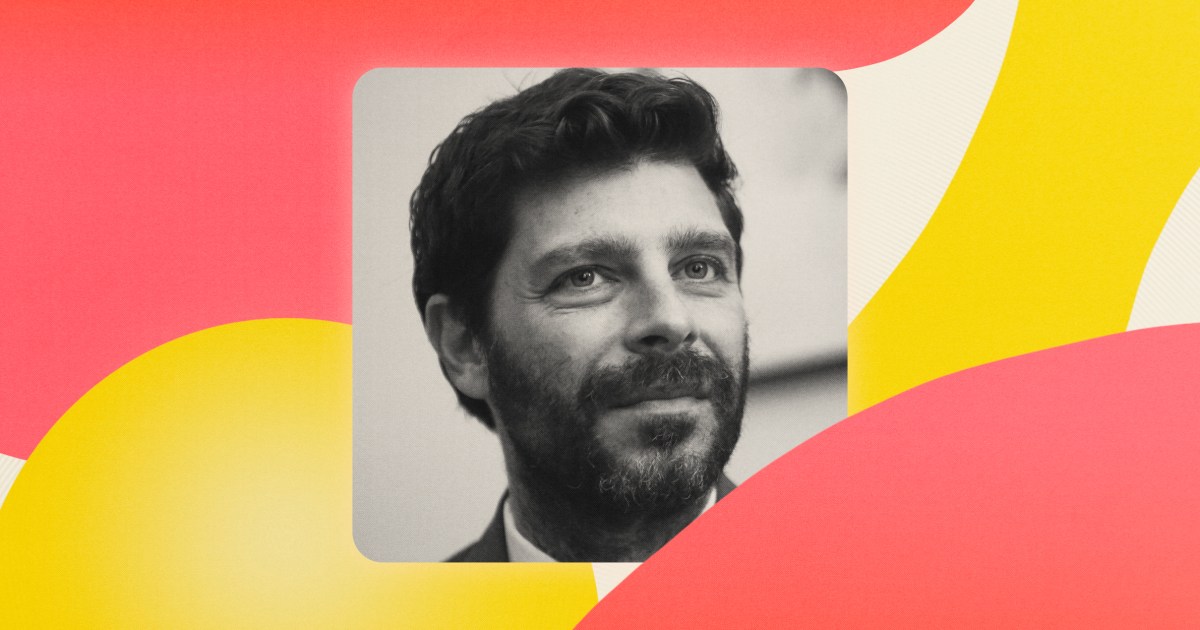
Nicholas Yatromanolakis became the first openly gay person to serve as a Greek government minister this year. Until a few years ago, Yatromanolakis never imagined he could one day be both out and a politician
“I wish there was someone before me,” Yatromanolakis, Greece’s deputy minister of culture, said about openly LGBTQ people in the Greek government. “I think that the open-mindedness that maybe exists on a private level is finally starting to seep to the public sphere.”
In January, the Greek government promoted Yatromanolakis, then the general secretary at the Ministry of Culture, to deputy minister during a Cabinet reshuffle. In his current role, he works to support the Greek creative sector, creates educational initiatives to help artists with their fine art skills and ensures intellectual property is protected. Yatromanolakis’ work is focused on Greek theater, literature, movies and dance.
Yatromanolakis, 46, said he always wanted to work in politics, but after receiving a graduate degree in public policy from Harvard, he pursued a career in communications. He said he was initially discouraged from pursuing his dream after consulting people in the industry who communicated to him that he would not be able to get far in politics as an out gay man. So, thinking he had to choose one or the other, he chose to live openly.
“Why would I want to pretend to be someone else?” Yatromanolakis said. “It would also mean that I am ashamed of who I am, and I’m not.”
In 2014, after just starting to dip his toes into politics as a campaign manager, Yatromanolakis was approached by advisers of a newly established liberal political party in Greece. He said they encouraged him to come out in his professional life. On a political panel about LGBTQ rights shortly after, Yatromanolakis did just that. He said he didn’t fully appreciate the impact of his public coming out much later.
To LGBTQ people that are the first in their respective fields, Yatromanolakis said talent and hard work speaks for itself, and to not take negative comments personally. He said LGBTQ people should not second-guess themselves when pursuing their professional goals.
“We owe it to ourselves to be able to dream about doing what we want to do and trying to actually achieve it,” Yatromanolakis said. “Our sexual orientation or identity, no matter what it is, should not be an issue.”
While he acknowledged that being “the first” is a big responsibility, one that causes him to put pressure on himself, he said being visible is important for equality.
“It’s important that there is visibility so people in their teens or early 20s feel that there’s nothing they cannot achieve because of who they are,” he said.
[June is Pride Month, and this year we’re celebrating by honoring 30 LGBTQ firsts. To see the full list, visit nbcnews.com/pride30.]
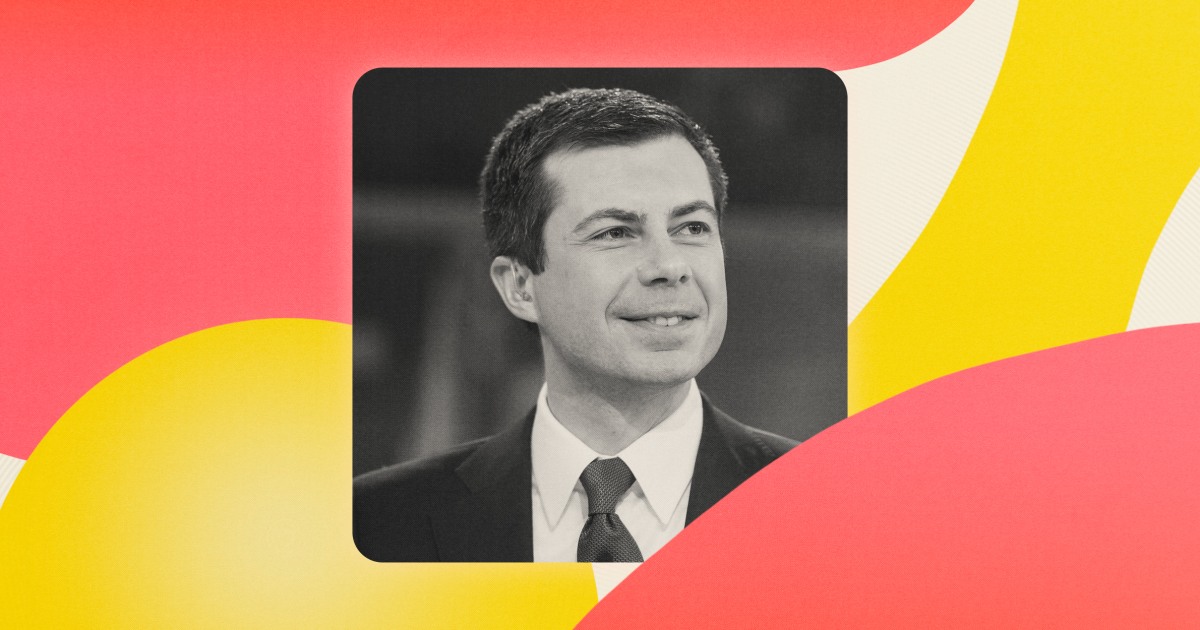
Pete Buttigieg wasn’t the first openly gay candidate in a major political party to run for president. That honor went to Fred Karger, the California political consultant who launched a long-shot campaign during the 2012 Republican primary.
Karger failed to secure a single delegate and was denied invitations to any of the debates. Buttigieg (narrowly) took the Iowa caucuses, becoming the first gay candidate to win a primary contest, and he performed well in New Hampshire.
Their success and party affiliations aren’t the only differences between the two men: Karger was a wealthy 62-year-old former actor who donated almost $6 million of his own money toward his campaign and bragged that he was in the race specifically “to throw a wrench into Romney’s run,” referring to Mitt Romney, the eventual Republican nominee.
Buttigieg was the 38-year-old former mayor of South Bend, Indiana — the youngest candidate in a primary with four candidates over 70. He was also a graduate of Harvard and Oxford, a Rhodes scholar, a polyglot and a Navy lieutenant who saw combat in Afghanistan. Buttigieg campaigned on health care and immigration reform, addressing climate change and earmarking $1 trillion for infrastructure projects.
Transportation Secretary Pete Buttigieg speaks at a news conference in front of new EV charging stations at Union Station in Washington, D.C., on April 22.Evelyn Hockstein / Reuters
Now 39, Buttigieg is the youngest person to have led the Transportation Department and the only primary rival Joe Biden tapped to serve in his administration after he picked Kamala Harris as his running mate. It was Harris — the first woman and the first Black and South Asian vice president — who swore Buttigieg in to office.
“You can really feel the history swirling around us when the vice president was swearing me in with my husband, Chasten, at my side,” he said this year.
“There have been times in living memory where you couldn’t have any job in the federal government if you were gay,” he said. “Thousands of people lost their jobs, lost their livelihoods because of that kind of discrimination. So it’s a really encouraging sign about the change that can happen but also a reminder that we’ve got a long way to go.”
He’s rolling up his sleeves to promote Biden’s $1.7 trillion plan to revamp America’s long-neglected infrastructure, including $88 billion for roads, rail and other transportation. While it has been a hard pill for Senate Republicans to swallow, it appears, as in the presidential race, that Buttigieg’s sexuality isn’t part of the debate.
“The great thing about public service is that you have an opportunity to deliver,” Buttigieg said in February. “If you do a good job, nobody cares how old you are, nobody cares if you’re gay. Nobody cares about anything in your life so much as you’re making their lives better.”
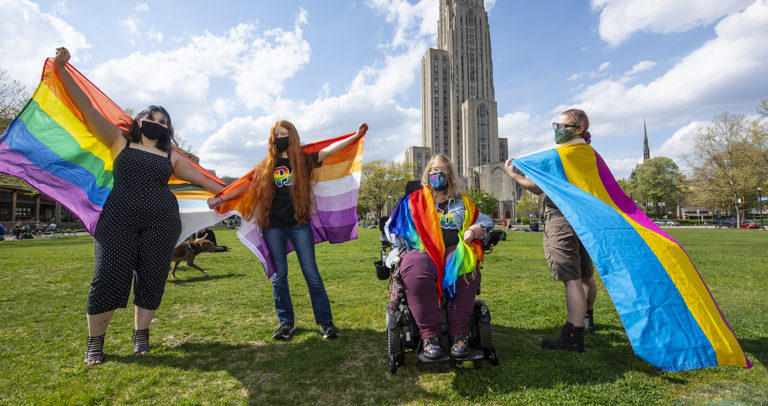
As Pride Month begins, revisit some of the achievements, research and conversations going on at the University of Pittsburgh about and with the LGBTQ+ community.
This year’s events at Pitt begin with a Rainbow Alliance and Pitt Figure Skating conversation with figure skater Adam Rippon on June 2.
Beyond Pronouns: Supporting Transgender Members of the Campus Community This spring, Pitt’s Minoritized Orientation and Gender Identities Graduate and Professional Alliance (MOGI) convened a panel of transgender members of the University community to share their own experiences and offer thoughts on what Pitt does well—and what it could do better.
Photos, Personal Stories Featured in ‘I Am’ Project on Transgender Young Adults During her time at Pitt, now-alumna Kate Koenig created the “I Am_” Project to chronicle the lives of transgender young people through in-depth Q&A interviews and photos. Her work was awarded the Iris Marion Young Award for Community Engagement.
Tackling An Emerging Public Health Crisis Postdoctoral associate Daniel Jacobson López, who studies sexual assault survivors in the Black, Latino and LGBTQ communities, says the problem is a public health crisis that is getting little attention.
Undergraduate Researcher Takes Deep Dive Into LGBTQ Publications Now an alum, Regina Futcher used their Summer Undergraduate Research Award to examine a decade of gay print media from the 1960s and 1970s. “I like looking at the archives because history tends to repeat itself. If I can see trends in the 70s and 80s, I can extrapolate from that and see what we can learn in 2020.”
The Feeling’s Mutual As the pandemic began, members of AQUARIUS, a Pitt student group supporting Asian American members of the LGBTQ+ community, jumped to support communities on and off campus.
Pride Initiatives Earn National Recognition In 2018, Pitt student Amy Kelley received a $10,000 scholarship and $2,500 in funding support from the first-ever, nationwide Live Proud on Campus contest, sponsored by AT&T and the Human Rights Campaign. The contest’s charge: Develop a project to increase LGBTQIA+ awareness and acceptance on their college campuses.
WARSAW, Poland (AP) — A Nobel laureate, a Netflix star and a fashion model are among the board members who helped launch an initiative Tuesday to raise money for LGBT rights groups in Poland, where gay men, lesbians, and bisexual and transgender people face a backlash from the country’s conservative government and Catholic Church.
The Equaversity Foundation plans to seek international donations to fund organizations working on the ground in Poland. Activists with the foundation say the help is needed to counter homophobic rhetoric from the highest levels of Poland’s government and from Catholic leaders.
“We can’t count on aid from within the country,” said model Anja Rubik, who is one of the board members.
Along with Rubik, the foundation’s board includes Nobel-winning Polish writer Olga Tokarczuk, film director Agnieszka Holland and Antoni Porowski, a Polish-Canadian cook who is one of the stars of the Netflix show “Queer Eye.”
During an online conference Tuesday, several initiators described the new foundation as a way to push back against a rising tide of anti-LGBT discrimination that they view as part of a wider assault on democratic values in Poland, a nation wedged between Western Europe and eastern autocracies.
Polish President Andrzej Duda said last year while running for reelection that the term “LGBT” is “not people” but an “ideology” more dangerous than communism. The country’s education minister has said LGBT people are not equal to “normal people.”
Meanwhile, Catholic Church leaders have also used the term “rainbow plague” to describe the movement for greater rights for lesbians, gays, bisexual and transgender people.
The atmosphere has led some LGBT people to leave the country. Equaversity board member Holland said that 70% of LGBT youth in Poland have suicidal thoughts.
“We just have to fight for their lives,” she said.
Sebastian Hejnowski, a public relations professional who is part of the foundation’s management, said he sees a standoff in Poland between conservative forces and a new generation of young people who favor acceptance of sexual minorities.
He said that unlike Russia, where LGBT rights have been severely curtailed and there is little chance of progress in the near future, Poland could still choose a different path.
“People should support Poland because there is a clear chance to win this fight in Poland,” Hejnowski said.
Among the designated to receive the funds are Campaign Against Homophobia, the Love Does Not Exclude Association and the Polish Association of Anti-Discriminatory Law.
WARSAW, Poland (AP) — A Nobel laureate, a Netflix star and a fashion model are among the board members who helped launch an initiative Tuesday to raise money for LGBT rights groups in Poland, where gay men, lesbians, and bisexual and transgender people face a backlash from the country’s conservative government and Catholic Church.
The Equaversity Foundation plans to seek international donations to fund organizations working on the ground in Poland. Activists with the foundation say the help is needed to counter homophobic rhetoric from the highest levels of Poland’s government and from Catholic leaders.
“We can’t count on aid from within the country,” said model Anja Rubik, who is one of the board members.
Along with Rubik, the foundation’s board includes Nobel-winning Polish writer Olga Tokarczuk, film director Agnieszka Holland and Antoni Porowski, a Polish-Canadian cook who is one of the stars of the Netflix show “Queer Eye.”
During an online conference Tuesday, several initiators described the new foundation as a way to push back against a rising tide of anti-LGBT discrimination that they view as part of a wider assault on democratic values in Poland, a nation wedged between Western Europe and eastern autocracies.
Polish President Andrzej Duda said last year while running for reelection that the term “LGBT” is “not people” but an “ideology” more dangerous than communism. The country’s education minister has said LGBT people are not equal to “normal people.”
Meanwhile, Catholic Church leaders have also used the term “rainbow plague” to describe the movement for greater rights for lesbians, gays, bisexual and transgender people.
The atmosphere has led some LGBT people to leave the country. Equaversity board member Holland said that 70% of LGBT youth in Poland have suicidal thoughts.
“We just have to fight for their lives,” she said.
Sebastian Hejnowski, a public relations professional who is part of the foundation’s management, said he sees a standoff in Poland between conservative forces and a new generation of young people who favor acceptance of sexual minorities.
He said that unlike Russia, where LGBT rights have been severely curtailed and there is little chance of progress in the near future, Poland could still choose a different path.
“People should support Poland because there is a clear chance to win this fight in Poland,” Hejnowski said.
Among the designated to receive the funds are Campaign Against Homophobia, the Love Does Not Exclude Association and the Polish Association of Anti-Discriminatory Law.
WARSAW – A Nobel laureate, a Netflix star and a fashion model are among the board members who helped launch an initiative Tuesday to raise money for LGBT rights groups in Poland, where gay men, lesbians, and bisexual and transgender people face a backlash from the country’s conservative government and Catholic Church.
The Equaversity Foundation plans to seek international donations to fund organizations working on the ground in Poland. Activists with the foundation say the help is needed to counter homophobic rhetoric from the highest levels of Poland’s government and from Catholic leaders.
“We can’t count on aid from within the country,” said model Anja Rubik, who is one of the board members.
Along with Rubik, the foundation’s board includes Nobel-winning Polish writer Olga Tokarczuk, film director Agnieszka Holland and Antoni Porowski, a Polish-Canadian cook who is one of the stars of the Netflix show “Queer Eye.”
During an online conference Tuesday, several initiators described the new foundation as a way to push back against a rising tide of anti-LGBT discrimination that they view as part of a wider assault on democratic values in Poland, a nation wedged between Western Europe and eastern autocracies.
Polish President Andrzej Duda said last year while running for reelection that the term “LGBT” is “not people” but an “ideology” more dangerous than communism. The country’s education minister has said LGBT people are not equal to “normal people.”
Meanwhile, Catholic Church leaders have also used the term “rainbow plague” to describe the movement for greater rights for lesbians, gays, bisexual and transgender people.
The atmosphere has led some LGBT people to leave the country. Equaversity board member Holland said that 70% of LGBT youth in Poland have suicidal thoughts.
“We just have to fight for their lives,” she said.
Sebastian Hejnowski, a public relations professional who is part of the foundation’s management, said he sees a standoff in Poland between conservative forces and a new generation of young people who favor acceptance of sexual minorities.
He said that unlike Russia, where LGBT rights have been severely curtailed and there is little chance of progress in the near future, Poland could still choose a different path.
“People should support Poland because there is a clear chance to win this fight in Poland,” Hejnowski said.
Among the designated to receive the funds are Campaign Against Homophobia, the Love Does Not Exclude Association and the Polish Association of Anti-Discriminatory Law.
WARSAW, Poland (AP) — A Nobel laureate, a Netflix star and a fashion model are among the board members who helped launch an initiative Tuesday to raise money for LGBT rights groups in Poland, where gay men, lesbians, and bisexual and transgender people face a backlash from the country’s conservative government and Catholic Church.
The Equaversity Foundation plans to seek international donations to fund organizations working on the ground in Poland. Activists with the foundation say the help is needed to counter homophobic rhetoric from the highest levels of Poland’s government and from Catholic leaders.
“We can’t count on aid from within the country,” said model Anja Rubik, who is one of the board members.
Along with Rubik, the foundation’s board includes Nobel-winning Polish writer Olga Tokarczuk, film director Agnieszka Holland and Antoni Porowski, a Polish-Canadian cook who is one of the stars of the Netflix show “Queer Eye.”
During an online conference Tuesday, several initiators described the new foundation as a way to push back against a rising tide of anti-LGBT discrimination that they view as part of a wider assault on democratic values in Poland, a nation wedged between Western Europe and eastern autocracies.
Polish President Andrzej Duda said last year while running for reelection that the term “LGBT” is “not people” but an “ideology” more dangerous than communism. The country’s education minister has said LGBT people are not equal to “normal people.”
Meanwhile, Catholic Church leaders have also used the term “rainbow plague” to describe the movement for greater rights for lesbians, gays, bisexual and transgender people.
The atmosphere has led some LGBT people to leave the country. Equaversity board member Holland said that 70% of LGBT youth in Poland have suicidal thoughts.
“We just have to fight for their lives,” she said.
Sebastian Hejnowski, a public relations professional who is part of the foundation’s management, said he sees a standoff in Poland between conservative forces and a new generation of young people who favor acceptance of sexual minorities.
He said that unlike Russia, where LGBT rights have been severely curtailed and there is little chance of progress in the near future, Poland could still choose a different path.
“People should support Poland because there is a clear chance to win this fight in Poland,” Hejnowski said.
Among the designated to receive the funds are Campaign Against Homophobia, the Love Does Not Exclude Association and the Polish Association of Anti-Discriminatory Law.
(Micah Fluellen / Los Angeles Times; Getty Images)
In a nod to Pride Month, here’s a look back at some editor-curated, best-of, LGBTQ-themed, reader-submitted L.A. Affairs columns. Listed here chronologically, they range from as far back as 2014 (a lesbian dating app mishap) to as recently as late March (a tale that starts with the author re-entering the dating scene in his 40s and ends with — spoiler alert — a baby). And all underscore, to crib from composer-actor-playwright Lin-Manuel Miranda’s 2016 Tony Award acceptance speech, that: “Love is love is love is love is love is love is love is love, cannot be killed or swept aside.”
Community is also an important part of language, especially among queer people. And it’s always been a part of meme culture, too: After watching a show, experiencing something painful, or even reading the news, someone can log onto Twitter or TikTok and find an endless supply of jokes, observations, and witty exchanges. Boiled down to its essence, a meme is kind of like an inside joke that welcomes anyone, which can be affirming in an invaluable way if you grow up feeling like you’re, well, on the outside of mainstream conversations about identity, dating, sex, gender, and more. Queer memes, Sabatine says, “can be funny, but it’s also like, ‘Hey, we all kind of feel like that. Isn’t that kind of cool?’”




 As Pride Month begins, revisit some of the achievements, research and conversations going on at the University of Pittsburgh about and with the LGBTQ+ community.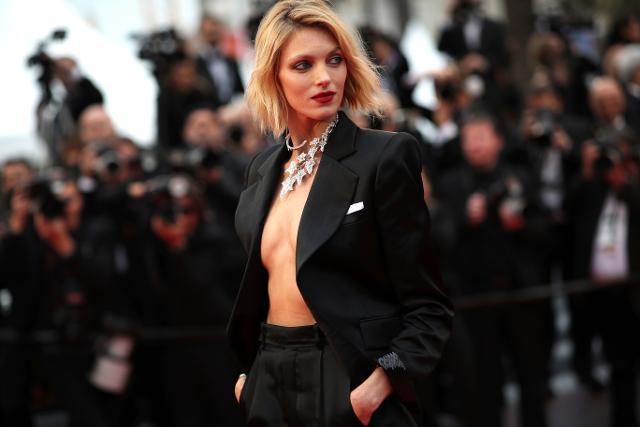


:strip_exif(true):strip_icc(true):no_upscale(true):quality(65):fill(FFF)/cloudfront-us-east-1.images.arcpublishing.com/gmg/NZ7ZN7P5FFEZXC4SWDIWDTUPQY.jpg)