Home Blog Page 147

Playing with Pride – outsmartmagazine.com

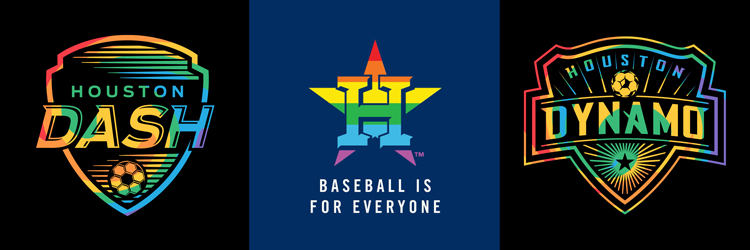
Professional Houston sports teams the Dash, Astros, and Dynamo are each hosting Pride Nights this June.

One year after the Houston Astros first announced plans to inaugurate their annual Pride celebrations, that promise is becoming a reality.

When the Astros face off against the Texas Rangers on June 16 at Minute Maid Park,  it will be happening on their first annual Pride Night. The celebration will be a historic event for Houston’s LGBTQ community because both Major League Baseball (MLB) teams lagged behind the rest of the league in adopting the tradition, according to the LGBTQ sports publication Outsports. The Texas Rangers are now the lone holdout among the 30 MLB teams.

Greater Houston LGBT Chamber of Commerce President Tammi Wallace says the staging of a Pride celebration by the Astros is important—both to the LGBTQ community and to the city’s economic development. Events like these can show the nation that Houston lives up to its promise of being an open, inclusive, and welcoming city.

“I’ve been to tons of Astro games over 36 years, but it’s a whole different experience when we walk through the doors of the stadium to celebrate Pride,” Wallace says. “It speaks volumes about the team, and about our city.”

The Astros’ Pride celebration is just one of the Pride Nights that the LGBT Chamber has been encouraging Houston’s sports teams to host, including the Houston Dash, the Houston Dynamo, the Houston Rockets, and the Houston SaberCats. Those teams have each had (or will have) LGBTQ-themed events this year.

The Astros had announced a Pride celebration at a June 2020 game, but pandemic restrictions canceled those plans. “We were incredibly disappointed that we couldn’t hold a Pride Night. We had been working on big plans with them.”

Astros LGBTQ Pride merch is available online now.

The Chicago Cubs started the Pride Night tradition among MLB clubs in 2001, and their event is now called Out at Wrigley Field.

After reading the discouraging story published by Outsports, Wallace decided to reach out to Astros management. She drafted a letter to owner Jim Crane that pointed out how diverse Houston is, and the negative optics of his team being viewed nationally as behind the times. “It was a huge miss not to have a Pride Night. To their credit, they were very supportive.”

Only two MLB players are known to have been openly gay. Glenn Lawrence Burke, who played for the Los Angeles Dodgers and the Oakland Athletics, came out as gay to his teams’ owners and teammates. Burke is credited with inventing the “high-five” tradition after he ran on the field to congratulate a player for hitting a home run. He finally came out publicly by saying, “They can’t ever say now that a gay man can’t play in the majors, because I’m a gay man and I made it.” Sadly, Burke died of AIDS-related causes in 1995.

In 1999, MLB player Bill Bean revealed his sexual orientation, but not until four years after his retirement.

The Houston Rockets had also planned a Pride celebration for 2020 that had to be canceled, and it finally happened this year at a game on April 14. The Rockets are now one of the few National Basketball Association (NBA) teams observing Pride with an LGBTQ-themed event. The Golden State Warriors hosted the first NBA Pride celebration in 2018. Rick Welts, the team’s former president, is openly gay.

The Rockets reached out to Wallace and the LGBT Chamber of Commerce for help in staging their April event. “The Rockets have just been so supportive, from the front office all the way down,” she says.

There are currently no NBA athletes who are out. Jason Paul Collins, formerly of the Washington Wizards, became the first active player to come out in 2013. He retired a year later.

The Houston Dynamo and the Houston Dash soccer clubs have been celebrating Pride since at least 2015—longer than any other Houston sports teams. In 2018, Dash
goalkeeper Bianca Henniger came out as gay, saying she wanted to encourage other LGBTQ people as they struggled with coming out. The Houston Dynamo will celebrate Pride on June 23 during a game against the Portland Timbers; the Houston Dash Pride Night game will be June 26 against the Orlando Pride. Both games start at 7:30 p.m. at BBVA Stadium.

The Pride Project analyzed social-media responses to MLB’s Pride Night events nationwide in 2020 after the Outsports story was published. (MLB’s Pride Nights range from large productions to simple discounts on game tickets.) The analysis showed that Pride events draw large numbers of LGBTQ fans to the games, including many who otherwise might not feel comfortable attending professional sporting events. The bottom line is that teams benefit financially from the additional ticket sales, and the positive optics of helping to normalize a marginalized group may also help active team members become more comfortable about coming out.

For Astros June 16 Pride Night information, visit astros.com/pride
For Dynamo June 23 Pride Night information, visit houstondynamo.com
For Dash June 26 Pride Night information, visit houstondashsoccer.com

This article appears in the June 2021 edition of OutSmart magazine.
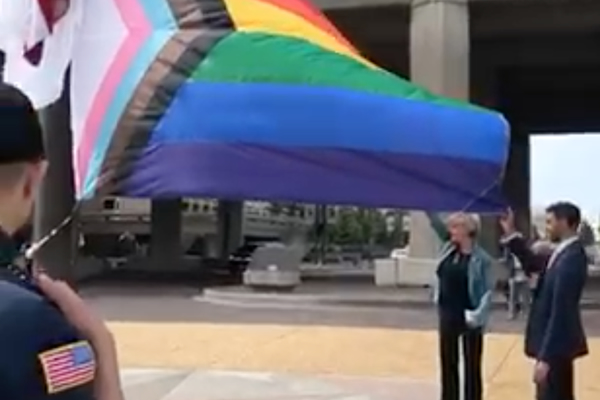
PHOTOS: North Andover LGBT Pride Flag ceremony – Wicked Local

© Copyright Gannett 2021

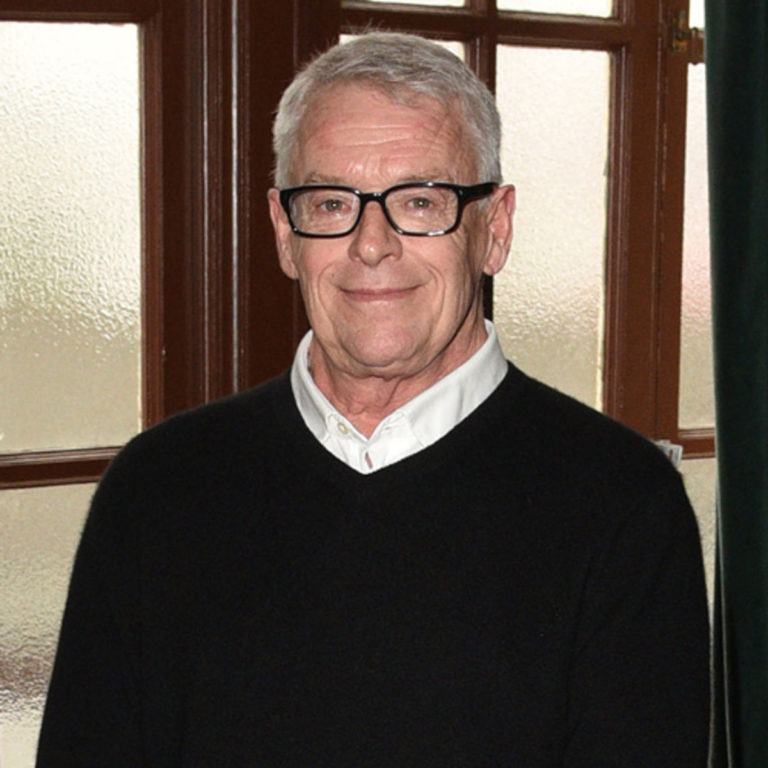
Cleve Jones – Biography

Activist Cleve Jones was mentored by Harvey Milk and came up with the idea for the NAMES Project AIDS Memorial Quilt.

Who Is Cleve Jones?

Cleve Jones is an LGBT activist who initiated the NAMES Project AIDS Memorial Quilt, an endeavor that brought attention to the AIDS epidemic in the 1980s and ’90s.”Everyone told me it wouldn’t work,” he said of the quilt in 2017. “But it ended up being the largest community-arts project in the world and touched the hearts of tens of millions of people across the planet.” In the 1970s, Jones was mentored by gay politician Harvey Milk; he later served as a consultant for the 2008 film Milk. Jones’ memoir When We Rise: My Life In The Movement was published in 2016; it served as inspiration for a miniseries of the same name that aired in 2017.

Early Life

Jones was born on October 11, 1954, in West Lafayette, Indiana. Jones’ childhood was spent in New York, Pennsylvania and Arizona. He was raised as a Quaker. As his father was a psychologist, Jones had access to materials that delineated the era’s views on homosexuality; he has stated,”It was pretty horrifying for a 13, 14-year-old kid to learn suddenly that his feelings are not only deemed criminal, but, you know, psychologically an illness.”

Jones was bullied in middle school and high school and felt isolated due to his sexuality. He has said that at the age of15 he planned to kill himself. What changed his plan was a 1971 article in Life magazine, “Homosexuals in Revolt.” The story alerted Jones to the fact that there was a community of gay people he could join.

Jones did not inform his parents he was gay until he was an adult. He made this choice because he feared his father would force him into aversion therapy or electroshock treatments.

Entry Into Activism

Jones moved to San Francisco in the early 1970s. There, he interned for Milk, a barrier-breaking openly gay politician, while also studying political science at San Francisco State University.

In 1978, California’s Proposition 6, which would have prevented gay people from holding any positions in the state’s public schools, was on the ballot. Jones helped arrange for gay student groups to organize against the proposition. Defying predictions, it was defeated at the polls.

Milk was elected to the San Francisco Board of Supervisors in 1977 but was assassinated by a former supervisor in 1978. Jones arrived on the scene that day and saw his mentor’s dead body. He said in 2016,”I knew by the end of the day that that was the single-most important moment of my life, and it was the single most important thing that had happened to me. Meeting Harvey, seeing his death, it’s — it fixed my course.”

HIV Diagnosis

Following Milk’s death, Jones began working with the speaker of the California state assembly. His portfolio comprised gay rights and health issues. In 1981, this job’s duties meant Jones was reviewing reports that gay men were experiencing illnesses such as pneumocystis pneumonia and Kaposi’s sarcoma. In 1983, he co-founded the San Francisco AIDS Foundation. Jones was diagnosed with HIV in 1985 after a test became available for the first time.

After Jones went public with his diagnosis, he received death threats, and one night was stabbed on the sidewalk outside his apartment. He survived, but people around him were succumbing to AIDS.”My circle was hit hard and hit early,” he told Frontline. “By 1985, almost everyone I knew was dying or already dead.”

The AIDS Quilt

In 1985, Jones was frustrated by a lack of action and official help in the AIDS crisis.”Nobody cared. Nobody cared,” he said. “There was no response of any kind from the government, from the medical establishment. We were completely on our own.” Prior to a candlelight tribute to Milk and George Moscone, the mayor of San Francisco who was murdered along with Jones’ mentor, Jones read that 1,000 people in San Francisco had died of AIDS. At the gathering on November 27, 1985, Jones decided to have attendees commemorate the dead by writing their names on poster board.

After the march, the pieces of cardboard bearing names of the dead were taped to the Health and Human Services building in San Francisco. Seeing this display reminded Jones of a quilt, and provided inspiration for what would become the NAMES Project AIDS Memorial Quilt. The project would allow friends and family to honor people lost to AIDS by adding their names to panels of fabric that were joined together to form a quilt.

Initially few people agreed that Jones’ idea was worthwhile. But a friendencouraged him, and in 1987 Jones and others began making their own panels. When about 40 of these were finished, they went on display at San Francisco’s City Hall during the Lesbian and Gay Pride Parade, demonstrating the quilt’s potential. Soon the quilt began to receive submissions from across the country.

During the National March on Washington for Lesbian and Gay Rights in October 1987, 1,920 panels of the AIDS Memorial Quilt were shown. After this, the quilt toured the country and raised awareness of the toll of the disease. In 2020, Jones said,”The Quilt helped change the hearts and minds of millions of people. It showed that all the lives had value, that all of these people were loved, had family and friends, and were part of a community.”

AIDS Treatment

Even as awareness of AIDS grew with the quilt, people were still dying. Jones lost a former partner to suicide in the early 1990s when his health started to deteriorate and became gravely ill himself in 1993. But in November 1994, Jones began taking a medical cocktail that saved his life. With this type of treatment, AIDS was no longer a death sentence for Jones and others.

‘Milk’ Movie

In 2008, Milk, a movie about Harvey Milk, was released. Jones served as a historical consultant on the film. He was also a character in the movie, played by actor Emile Hirsch.

Continuing Activism

Jones has remained an activist throughout his life. In 2005, he began working for UNITE HERE! to organize hospitality workers. Following the success of Proposition 8 in California in 2008, which banned same-sex marriage in the state, he helped organize a National Equality March that was held in Washington, D.C., on October 11, 2009 (marriage equality was legalized nationwide by the Supreme Court in 2015).

As the COVID-19 pandemic took hold in 2020, Jones compared the bigotry of calling AIDS a “gay cancer” to those who named COVID the “Chinese virus”. He declared,”No virus has a nationality. No virus has sexuality.” He also spoke out against how the deaths of older people were dismissed during the pandemic, saying,”During AIDS, I was disposable because I’m a faggot. Now I’m disposable because I’m a fogie.”

The AIDS Memorial Quilt had been stored in Atlanta for years, but in 2020 Jones was gratified when it returned to San Francisco. The quilt, with more than50,000 panels and 105,000 names, is in the care of the National AIDS Memorial in San Francisco.

Books

Jones wrote Stitching a Revolution (2000). He also authored the memoir When We Rise: My Life In The Movement (2016). When We Rise inspired a miniseries of the same name that aired in 2017. Jones was a consultant on the project. Onscreen he was portrayed by Guy Pearce as an adult and by Austin P. McKenzie as a young man.

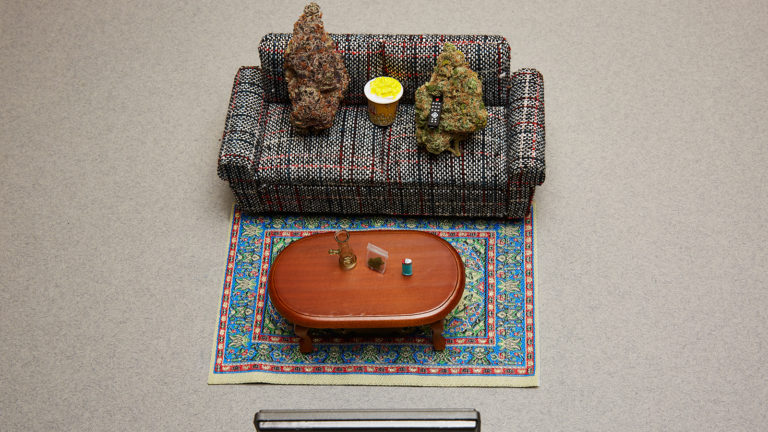
7 of the best gay shows to watch while high – Weedmaps News

Gay stoners, rejoice. We are living in two simultaneous golden ages — one being television and the other being weed. But with the surge of high-quality gay television and even higher quality cannabis, it’s hard to know where to start. As an out and proud gay stoner, I’ve watched and smoked — and vaped and eaten and sublingually absorbed — enough to steer you toward only the best. 

Rest easy and treat yourself with this pairing menu of must-watch gay shows and the cannabis products to go with them.

Pose

Centered around the 1980s New York ballroom scene, Pose is equal parts historic tribute, trans celebration, and 80s outfit porn. Trans model Angel, played by Indya Moore, is so smoking hot my retinas are burning by the end of each episode. Blanca, played by Mj Rodriguez, is the House of Evangelista matriarch and the mother we all wish we had. And Billy Porter plays Pray Tell, the patriarch of the Ball scene who brings more than enough talent to carry the whole show. 

It’s a total joy to watch, a tear-jerker, and corny enough at times to feel like an after-school special, but we love it anyway.

Product pairing: Kiva’s Tropical Punch Camino gummies because these special-edition Pride treats are delightfully on the nose.

Available: California

RuPaul’s Drag Race Season 9 

This show is a no-brainer for too many reasons to list. So instead of cataloging them all, I want to narrow my scope and highlight Season 9. Pound for pound, this season has the most iconic moments of any other — Valentina’s dramatic mask moment being one of them. Season 9 has the unselfconscious air of early seasons and the high production value of later seasons, making it the perfect season to start if you haven’t gotten sucked into RPDR yet. It’s also the choicest season to rewatch if you’ve already seen them all. 

Product pairing: Pure Beauty’s Indica Babies because they’re excellent.

Available: California

The L Word: Generation Q

The original L Word is perfectly watchable while high, but Gen Q is peak gay stoner entertainment because it is both sexy and so, so dumb. The AV Club explains why much more articulately than I ever could, but let’s just say there are comically unconvincing relationships, leisurely weekday breakfast meet-ups, and a debate about whether there was a merkin involved with some extremely lush armpit hair. 

It’s so bad it’s good and perfect for those nights when all you want to do is take your pants off, curl up on the couch with a bowl of pasta, and turn your brain off. 

Product pairing: A Strawberry Shortcake Jeeter joint because you wanna be high for this. 

Available: California

The Golden Girls

There aren’t any LGBTQ main characters in this show about senior citizen friendship, but it’s a gay staple thanks to Blanche’s legendary ho status and Dorothy’s devastating reads. The Miami ranch-style they call home will give you decor inspo for days — specifically Blanche’s frond-tastic pink and green bedroom. There are also approximately 1,000 episodes, so it’s just the thing to turn on when you’re glued to the couch.

Product pairings: OG Kush flower because it’s timeless, plus some Papa & Barkley’s Releaf Balm for when your high-pochondria sets in and you, too, suddenly feel aches in your knees.

Available: California (THC), Nationwide (CBD)

Schitt’s Creek 

It took me a while to climb aboard the Schitt’s Creek train, but after miscalculating the dose of a tincture one night, it proved to be the perfect thing to level me out. 

Every character on this show deserves a spot in the Gay Hall of Fame, but Dan Levy’s character, David Rose, is one of the most endearing gay icons to grace our screens. Come for Alexis’s hit single, “A Little Bit Alexis,” stay for David’s master class on snark, and rewatch every season a dozen times just to marvel at Moira Rose’s unhinged outfits. 

Product pairings: Heavy Hitters’ Ultra Potent Strawberry gummies because I imagine them inspiring one of Alexis’s wild anecdotes. You should also pick up a bottle of Rebel Coast’s weed wine just for the fruit wine episode.

Available: California

Bargain Block 

Pretty much any show on HGTV is fit for gays, but Bargain Block features the sweetest, most precious couple to grace the network since Fixer Upper‘s Chip and Jojo. Power couple Keith Bynum and Evan Thomas buy rundown Detroit homes, remodel them while living in them to save money, and sell them for an affordable price once they’re fixed up. It’s pretty incredible what they’re able to do on such limited time and funds. Their 1970s-inspired desert-modern home, for example, is what millennial homeowner dreams are made of. 

Between the geometric accent walls, budget-friendly hacks, and couple goals, Bargain Block is guaranteed to be your new favorite homo-improvement show. 

Product pairing: Cann’s Grapefruit Rosemary Social Tonic because there’s a surprising dose of edginess to balance out the sweet.

Available: California

The Nanny

Much like The Golden Girls, this sitcom isn’t explicitly gay, but a gay staple nonetheless. Fran Drescher plays Fran Fine, the fashion-forward nanny from Flushing who lands on the doorstep of rich British dude Maxwell Sheffield and his three over-caffeinated kids. She’s not actually a nanny, but a recently dumped and fired bridal store assistant with a lot of wacky anecdotes, so naturally hilarious gaffes ensue. In contrast with most ’90s sitcoms, each minute is packed with jokes that’ll go right over your head if you’re sufficiently stoned, making all 146 episodes perfect for rewatching. You’ll be rewarded even if you only watch this show to understand why so many RPDR queens do Fran Fine for Snatch Game.

Product pairing: Forbidden Fruit flower because the berry notes in this strain are as palpable as the sexual tension between Fran and Mr. Sheffield.

Featured image by Gina Coleman/Weedmaps

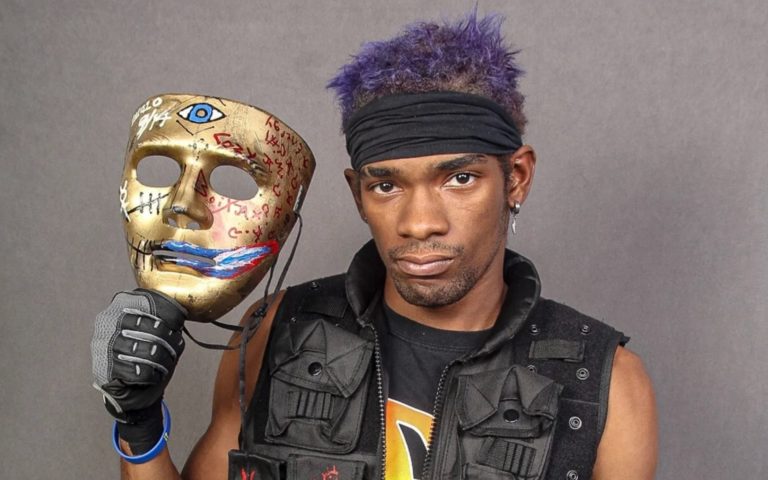
Trailblazing wrestler Jack Andrews proudly comes out as gay on Facebook and Twitter – PinkNews

Jack Andrews. (Dorri Ariana/Twitter)

Independent professional wrestler Jack Andrews has come out publicly as gay in a proud, defiant social media post.

Andrews made the announcement on Twitter last Wednesday (26 May), telling his followers that he had already come out on Facebook.

“I came out [as] gay on Facebook, Twitter your [sic] late,” Jack Andrews wrote. “Don’t feel like it’s necessary but lk how people are.”

The wrestler previously opened up about his sexuality in February on Facebook – however, his news largely went under the radar.

In the Facebook post, Andrews referenced the designation of LGBT+ people as “gatekeepers” by the Dagara tribe, an Indigenous African group.

Professional wrestler Jack Andrews said he stands ‘on the threshold of the gender line’

“I’m a Gatekeeper, I bring balance to this earth force (If you don’t know what a gatekeeper represents: They stand on the threshold of the gender line),” Andrews wrote on Facebook in February.

“They are mediators between the two genders. They make sure there is peace and balance between women and men. If the two genders are in conflict and the whole village is caught in it, the gatekeepers are the ones to bring peace.”

Just in case anyone didn’t figure out what he meant, Andrews subsequently commented: “AKA I’m gay.”

Andrews has been flooded with supportive messages since he came out as gay.

“Love you brother!” one person commented.

“Happy that you are able to be yourself without any barriers! Congratulations!” another wrote.

Professional wrestling referee Max Recon tweeted: “I’m still going to tell you to wait on the outside to get tagged in, the same as before. Proud of you for being you!”

Another Twitter user replied: “So happy you’re finally getting to live your true authentic self. Proud of you for taking this major step.”

According to Outsports, Andrews has made a name for himself in the wrestling world in Ohio Valley alongside his tag team partner Chris Copeland.

Together, the pair are known as The Awesome Odyssey. Andrews also competes on his own.

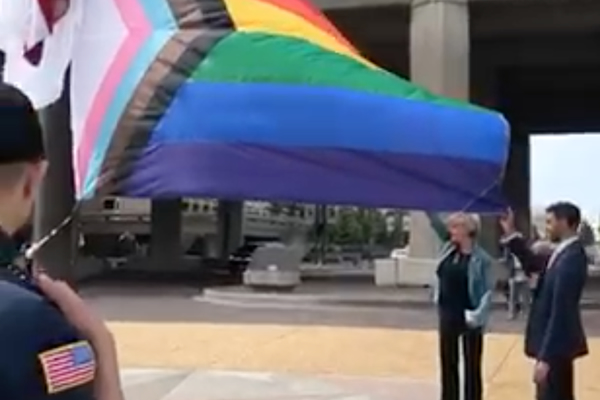
Energy Secretary Jennifer Granholm raises LGBTQ flag in recognition of Pride Month – Washington Blade

Editor’s note: The Washington Blade on Thursday published a Spanish version of this story.

SANTIAGO, Chile — Chilean President Sebastián Piñera on Tuesday announced he supports a marriage equality bill, marking a historic change of heart since he had previously opposed two people of the same sex being able to marry.

“I think the time has come for marriage equality in our country,” said Piñera in a surprising declaration that left no doubts.

“We must deepen the value of freedom, including the freedom to love and to form a family with a loved one, and (we must) also expand upon the value of the dignity of all relationships of love and affection between two people,” stressed the president during his last speech to Congress.

Justice Minister Hernán Larraín on Thursday confirmed “great urgency will be placed on it so that it can proceed with some speed and I believe it shouldn’t be very difficult because there are majorities in Congress to approve this measure. The president’s intention is not to introduce a new bill, but to move forward with the one that was already in the Senate.”

The bill that Larraín mentioned is the one that former President Michelle Bachelet sent to Congress in 2017 soon after the country entered into an agreement with the Inter-American Court of Human Rights after the Movement for Homosexual Integration and Liberation (Movilh), the country’s oldest LGBTQ rights organization, filed a lawsuit.

This means each chamber of Congress should dispatch the bill within 15 days, which Movilh President Rolando Jiménez says is a “great and hopeful sign for same-sex couples and same-sex families who live in complete legal inequality.”

“After 30 years of struggle, we are closing one of the most important battles for LGBTIQ people,” he said. “All families will finally have the dignity they deserve.”

Jiménez, who has been fighting for LGBTQ rights in the country for many years, pointed out that “we value this change in attitude by Piñera.”

“We hope that the Congress between today and tomorrow will recognize the utmost urgency (to pass the marriage equality bill.),” said Jiménez. “We especially recognize and highlight that Piñera decided to promote the same bill that we drafted together with former President Michelle Bachelet within the framework of the agreement that the State and Movilh signed before the Inter-American Commission on Human Rights.”

Jiménez added that he and Movilh “declare ourselves especially excited because this announcement is taking place during Pride month and weeks before Movilh celebrates 30 years of struggle on June 28.”

Same-sex couples in Chile since 2015 has been able to enter into civil unions, but LGBTQ activists say this legal status is insufficient. Seven Latin American countries — Argentina, Brazil, Colombia, México, Uruguay, Ecuador and Costa Rica — are among the nations that have extended marriage rights to same-sex couples.  

Piñera’s announcement generated a genuine political earthquake. #MarriageEquality immediately became a trending topic on Twitter. Members of Piñera’s party in Congress accused him of “treason” for deciding to push forward with the bill.

The opposition, meanwhile, celebrated the decision, but resentments remain since its relationship with Piñera’s government has been broken for a long time because of its handling of the pandemic, human rights violations during social unrest and other differences.

The Catholic Church, on the other hand, through a statement declared itself in opposition to the measure. “What is established and wanted by God is that it (marriage) is only between a man and a woman,” it said.

“From the point of view of the rights of people who decide to live together, national legislation has established a regime that legally protects their decision and grants it recognition,” the church pointed out, referring to the civil union law that does not allow adoption and does not recognize paternity.

The church also affirmed that “those of us who follow Jesus Christ as Lord and savior and are guided by his teaching hold the truth that marriage established and willed by God is only between a man and a woman, a communion that creates life and establishes the family.”

Piñera’s announcement coincides with a dramatic increase in violence against queer people in Chile. The judiciary system and the government have not responded to the majority of cases in a timely manner.

Fundación Iguales, a Chilean group allied with the Human Rights Campaign, in partnership with AllOut recently launched a campaign to stop the violence and to urge Piñera’s government to reform the Anti-Discrimination Law passed in 2012 in the wake of the anti-gay attack against Daniel Zamudio, a case that sparked outrage in Chile and around the world.

The goal of the “No More Laws with Name” campaign is to raise awareness about the need to improve the current legislation to ensure that it actually prevents hate crimes.  

Fundación Iguales said it based the campaign on a survey to which 1,454 LGBTQ adults from across the country responded. Two-thirds of respondents said they had been verbally attacked over the last five years.

The results also show that a quarter of respondents said they have been physically assaulted at some point in their life because of their sexual orientation, identity or gender expression. Most of these attacks occurred in public.

“Fundación Iguales has a zero-tolerance policy for violence against LGBTI people,” said Fundación Iguales Executive Director Isabel Amor. “For this reason, we have, in addition to preparing our own survey, created an interactive platform that will allow everyone, regardless of their sexual orientation, identity or gender expression, to know about their chances of suffering an attack or hate crime.”

“The numbers make clear the need for urgency to respond to the demands of sexual diversity (activists), to have full inclusion in terms of rights and benefits,” added Amor. “The first thing we have to do to achieve this is to establish that the demands for security and inclusion, as well as for marriage equality, are not niche things, but those for the majority of the population.”

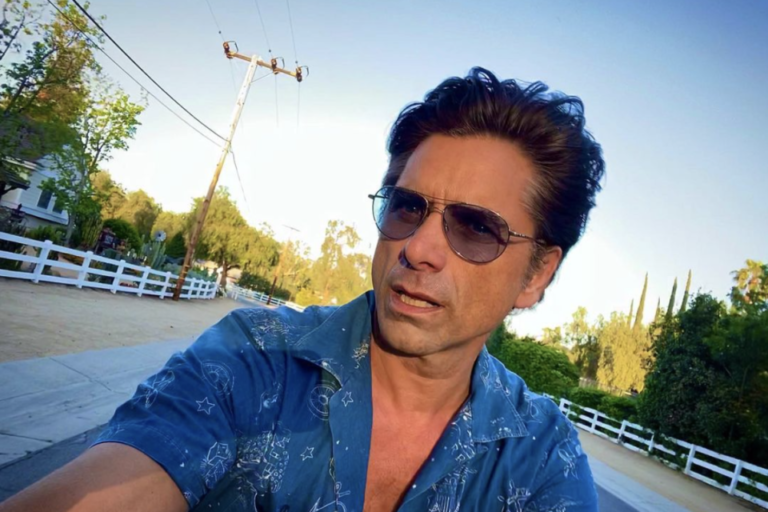
John Stamos claps back at Omar Navarro’s anti-gay comments – Sports Grind Entertainment

credit: @johnstamos

LGBTQ activists and allies seem to have 101 reasons to criticize Republican congressional candidate Omar Navarro after he publicly dissed Disney’s Cruella for making one of its characters openly gay. And Fuller House star John Stamos is no exception.

Navarro, who is running for the seat of California’s 43rd congressional district against Democrat Maxine Waters, recently called out Disney for featuring a gay character named Artie (John McCrea) in its latest adaption highlighting the backstory of the villainous Cruella de Vil, who first appeared in 1961’s 101 Dalmatians.

The film had a remake in 1996 starring Glenn Close in the titular role before this year’s adaption, which stars Emma Stone as the fur-loving, eccentric fashion designer during her earlier years.

“The new Disney Cruella with Emma Stone just ruined my childhood with an openly flamboyant gay in the movie,” Navarro tweeted this week. “Disney persist shoving the LGBT agenda down our throat.”

Stamos wasted no time in clapping back to Navarro’s statement.

“If that ruined your childhood, I hope you didn’t watch Full House,” the actor wrote. “Three single men, living under one roof, raising kids in San Francisco…”

Of course, Stamos was referring to his famous role as Uncle Jesse on the 1990s ABC sitcom Full House (1987 – 1995). In the show, Stamos plays Jesse Katspolis, the sexy brother-in-law of Danny Tanner (Bob Saget). Alongside Danny’s best friend Joey (Dave Coulier), the three largely-single men raise Danny’s three daughters together in the midst of 1990s San Fransisco.

In a recent interview with Attitude, McCrea explained the genesis of developing Artie, confirming that the character indeed identifies as queer.

“For me, yes, it’s official: he’s queer,” McCrea said to the British-based gay publication. “But we don’t see him falling in love. There’s no social aspect to the character. It’s not beating you on the head with a stick. But his lifestyle is fabulous, he loves his life and it was so fun to play him.”

He added, “In one of the original scripts he was a drag queen, so I think he was always intended to be queer-representing I suppose, or somehow a member of the LGBTQ community. I imagine that was always the case.”

McCrea continued, “If I had a character growing up like that to watch on the screen I would’ve fallen in love. Also, with the idea that he’s completely well-adjusted, very happy, and has a real lust for life. Those are things I’d find so exciting.”

Still, despite how progressive Disney has been recently in elevating LGBTQ characters both on film and in television, Navarro isn’t keeping his thoughts to himself.

Last year, Navarro, shared his concern over the Disney Channel’s The Owl House over its out bisexual protagonist.

”Disney confirms its first bisexual lead character,” Navarro, who spent six months in prison in 2019 after pleading guilty to stalking his ex-girlfriend, wrote on Facebook at the time. “I don’t agree with this crap being pushed down our throats. What people do at home is there business but publicly I shouldn’t have to be forced. Will Christians please stand up?”

Despite Navarro’s vitriol, Twitter certainly had a field day with Stamos’s clever clap back. Navarro, however, kept the shots coming (see below)

Read more from Yahoo Life:

Want lifestyle and wellness news delivered to your inbox? Sign up here for Yahoo Life’s newsletter.

Texas Rangers have pledged inclusivity, but pride game remains absent – Austin American-Statesman

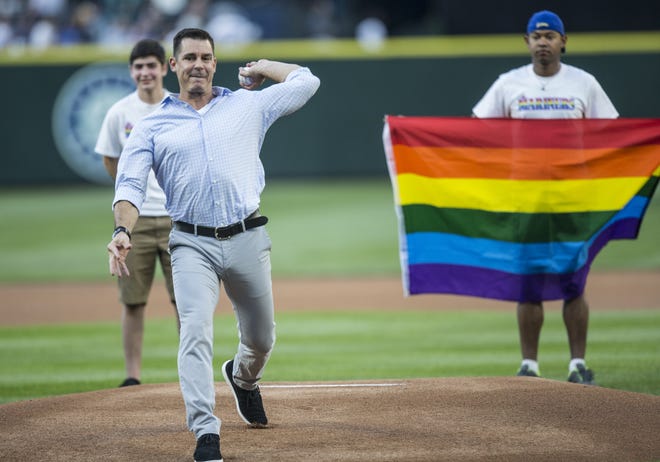
Major League Baseball's Ambassador for Inclusion Billy Bean throws out the ceremonial first pitch during Pride Night before a game between the Milwaukee Brewers and Seattle Mariners in 2016. The Texas Rangers are the only team that doesn’t have a pride game promotion of any kind this season.

DALLAS — The baseball calendar in June is populated annually by game promotions to celebrate pride month and welcome the LGBTQ portion of an MLB team’s fanbase.

They’ve been known by various titles over the years: “Gay Day,” “Out at the Ballpark,” or just simply “Pride Night.”

The Rangers are the only team that doesn’t have a pride game promotion of any kind. There’s no indication they’re planning to have one in the near future, either.

Experts and advocates say there’s value in hosting a pride night — specifically in celebrating that portion of the fanbase as a way to grow it and retain it — as well as highlighting other efforts.

The Rangers haven’t publicly spoken about their specific internal initiatives to promote LGBTQ inclusion, instead highlighting their overall work on broader issues such as diversity and inclusion.

The Rangers declined to speak about their stance on hosting a pride day and the franchise’s work supporting the LGBTQ community. The Rangers haven’t done an external, public facing event, akin to the 29 other MLB franchises.

The majority of other professional teams in North Texans have also celebrated pride in some fashion during a game.

“They’ve made some efforts, but it’s very much a start,” said Rafael McDonnell, who works as a liaison between pro sports teams and the Resource Center, the community center that serves LGBTQ North Texas. “Compared to their peer professional sports teams, they have some distance to go.”

Still waiting

The Chicago Cubs first debuted pride games in 2001. The inaugural “Out at Wrigley” game set the blueprint for nearly every other team to adopt similar events, although most did so many years later.

They’ve begun in full force over the last decade, with the Rangers as the lone holdout after the Astros scheduled one in 2020 that was later canceled due to the COVID-19 pandemic. The Astros are scheduled to host their first Pride Night on June 16 against the Rangers. The Yankees, who have no theme nights whatsoever, hosted a Legacy of Pride night in 2019 to commemorate the 50th anniversary of the Stonewall riots.

The ongoing pandemic has interfered with teams’ abilities for many promotions, including pride games, though more than half of the 30 MLB teams already have them on the calendar this year.

Curious why the Rangers didn’t have one, McDonnell decided to reach out to the Rangers in 2019 why that was the case.

“I got a statement from the Rangers and it was pretty bland,” said McDonnell, the Resource Center’s advocacy and communications manager.

He then reached out to MLB ambassador for inclusion Billy Bean, who came out as gay after a six-year MLB playing career. The two sat down for a meeting in Dallas. That led to Bean helping to set up a meeting between the Resource Center and the Rangers in October 2019.

He showed two Texas staffers how other teams were doing pride promotions and merchandising. The meeting set up a line of communication with the Resource Center.

Two years later, McDonnell said he’d still like to see the Rangers have a pride night. The Rangers have indicated previously they have no plans to schedule one.

The team did not respond to follow-up questions from The Dallas Morning News regarding future plans.

In a written statement, the team pointed to its work internally on topics surrounding diversity and inclusion.

“Our commitment is to make everyone feel welcome and included in Rangers baseball,” said Executive VP for Communications John Blake. “That means in our ballpark, at every game, and in all we do — for both our fans and our employees. We deliver on that promise across our many programs to have a positive impact across our entire community.”

The Rangers had a promotional game in 2003, where it invited LGBT community groups, according to the LGBT magazine, The Advocate. It wasn’t a formal pride game promotion, according to the article, but groups such as Dallas’ gay and lesbian volleyball league, gay rugby and softball leagues as well as the Texas Gay Rodeo Association were invited.

The event drew anti-gay protests, though.

No similar event has since been scheduled. The Rangers do schedule community-based theme nights, including multiple military appreciation nights, first-responder games and multiple heritage nights for fans from different ethnic backgrounds.

The last time anyone from the team publicly addressed a possible Rangers pride game was in August 2020, when Rangers COO Neil Leibman indicated one wasn’t in the Rangers’ plans.

“With respect to Pride Night, we reached out to the Resource Center and said what can we do internally,” Rangers COO Neil Leibman told the Dallas Morning News last summer. “We immediately adopted some changes they suggested to be more inclusive in hiring practices. I think that’s more meaningful than just saying ‘OK, we had a Pride Night.’”

But McDonnell said teams should still do both, similar to other teams around the sports world.

“If you say, ‘We’re doing one and not the other,’ is where you run into a problem,” McDonnell said. “… I don’t think it’s mutually exclusive. I think you can do both.”

Recognizing diversity

The Rangers highlighted other community initiatives they currently participate in, including the development of their Inclusion and Community Impact Council. The team’s foundation participated in MLB’s Shred Hate campaign, directed at anti-bullying and has volunteered with the Resource Center.

But none of the initiatives relate directly to LGBTQ language, and others around baseball say it’s important to back up strong internal work with external support, such as a pride game.

“Every market has gay, lesbian, transgender fans,” said Greg Bader, Senior Vice President of Administration and Experience for the Baltimore Orioles. “And for them to feel like they are wanted at the ballpark and valued as a fan is important.

“Part of what we did with our LGBTQ pride night — that sent a very clear message that members of that community are valued by the club, by the organization, and that we want them to be fans and we want them to come to games.”

Typically Pride nights across baseball involve clubs inviting LGBTQ groups to games. There’s LGBTQ signage and other ways for the team to show its support.

The Tampa Bay Rays hosted a pride night in 2016 just days after the Pulse shooting in Orlando, in which a gunman killed 49 people inside the gay nightclub venue.

Tickets to the Rays game that night at Tropicana Field were $5 and proceeds were donated to the Pulse Victims Fund. The game sold out.

When the Astros scheduled their first pride night for 2020, a team spokesperson told The Houston Chronicle: “We recognize this is one of the most diverse cities in the country and we recognize the city has one of the strongest, if not the strongest, LGBTQ communities in the state.”

Lagging behind

The Rangers scheduling a pride night is “inevitable,” Bean said, but the timing is ultimately up to the club. Bean works with MLB’s commissioner’s office, and regularly meets with players, coaches and front office personnel across all 30 teams to assist in inclusion initiatives.

His 2014 hire has coincided with more and more teams scheduling pride games, and he’s part of that driving force.

“I think their engagement with the LGBTQ-plus community is going to continue to grow,” Bean said. “But how that is, is up to them.”

To have a successful pride game, Bean believes relationships first need to be fostered within the community. A pride game, in his view, is more of the culmination of the work that the Rangers are doing.

“I try to engage in the LGBTQ communities to give the clubs resources that will allow them to feel confident to have a night like that so people will come to the ballpark,” Bean said. “I think if there’s no history or nothing behind the origin of the night, I think the community is probably going to wonder, ‘Why are they doing it?’”

Geography also plays into it, he said.

The political backdrop of Arlington isn’t the same as it might be in Chicago, which isn’t the same as it might be in any other MLB city. Is it relevant to why the Rangers haven’t hosted a pride game?

“Of course,” Bean said.

But the Mavericks, Stars, FC Dallas and the Wings — a franchise also located in Arlington — all have pride games. The Dallas Cowboys, like most NFL teams, do not have a pride game.

The Rangers have taken steps to improve inclusivity over the last two years. They’ve improved language to make sexual orientation and gender identity protected classes in their hiring practices — McDonnell even said they were a “leader” in this area. They’ve started conversations and done training that wasn’t previously happening.

Behind the scenes, there’s some work being done. Publicly, though, the Rangers remain behind their counterparts across the sport.

“I think when all 30 clubs do a pride night, this question is never going to be asked again,” Bean said. “Because it only sounds interesting when someone is not doing something.”

Police offer $1 million reward for information on the 1980s ‘gay hate’ murder of martial arts expert Raymond Keam – Yahoo Eurosport UK

The New South Wales government and police force have announced a $1 million reward for information on the unsolved 1980s “gay hate” murder of martial arts expert Raymond Keam.

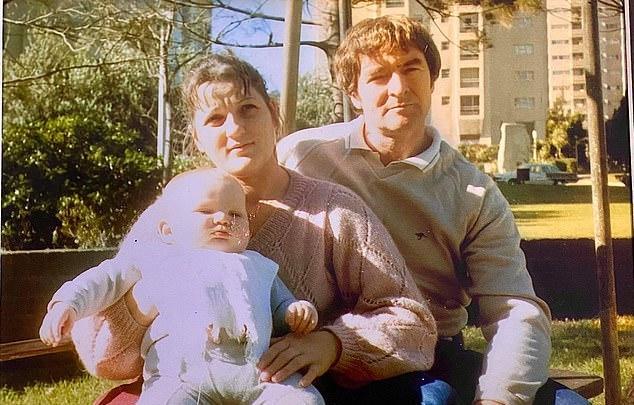
Keam, 43, was killed in a suspected homophobic hate crime on 13 January, 1987.

The father-of-four’s body was discovered by a member of the public in the grass at the northern end of Alison Park, in the eastern suburbs of Sydney, Australia.

A post-mortem at the time found that he had died from severe head injuries in an area where gay men were being violently targeted at the time, and a later inquest ruled that he was murdered.

But in the 34 years since his death, no one has ever been charged with his murder.

New South Wales police want to provide the family of Raymond Keam with
‘answers’

Announcing the $1 million reward, the New South Wales government admitted that authorities at the time may have been “dismissive” of the case because of Keam’s suspected sexuality.

New South Wales minister for police and emergency services David Elliott said in a statement: “Raymond Keam was a young father of four children when his life was viciously taken more than three decades ago in Sydney’s east.

“We acknowledge that there was a dark and violent period in our state’s history when people were dismissive of suspected hate crimes and NSW Police have been working tirelessly to ensure every possible resource available is utilised when reviewing and reinvestigating these cases.

“It is my hope that the NSW Government $1 million reward will encourage any member of the public that may have information about Raymond’s murder – not matter how big or small – will come forward.”

Homicide squad commander detective superintendent Danny Doherty added: “A reinvestigation into the murder of Raymond Keam has commenced, with officers now re-examining all available physical and forensic evidence and re-interviewing key witnesses.

“Detectives are particularly interested in speaking with anyone who may have been a victim of an assault or who may have witnessed assaults at Alison Park, Randwick, in the years prior to and after Raymond’s death.

“After more three decades, investigators hope to be able to provide Raymond’s family – including his four children – with some answers.”

Exclusive – Love Island boss promises diverse 2021 line-up but says including gay contestants presents “a logistical difficulty” – RadioTimes


ITV commissioner Amanda Stavri tells RadioTimes.com all about the Love Island 2021-line-up.

love island

It’s only a matter of time until we see this year’s singletons make their way into the Love Island villa, and naturally we’re dying to know who the Love Island 2021 contestants are!

Advertisement

Recently there has been a lot of speculation about whether the show, which sees individuals coupling up, will feature contestants who are gay or bisexual.

RadioTimes.com spoke to ITV’s commissioner Amada Stavri who set the record straight on the recent rumours, and whether we’ll see more diversity when it comes to sexuality on the upcoming seventh series.

“There’s been quite a few rumours circulating about featuring gay Islanders, so it’s worth touching on that really,” Stavri told us exclusively.

“The line-up will be announced within time and it goes without saying that we want to encourage greater inclusivity and diversity.”

While contestants aren’t strictly required to identify as heterosexual, the format of Love Island typically promotes relationships with the opposite sex, with the boys and girls choosing to couple up with one another ahead of each dumping.

Some contestants have appeared to form connections with the same sex in the past, but this has been quite limited – something Stavri says is difficult on Love Island in particular.

She continued: “In terms of gay Islanders, I think the main challenge is regarding the format of Love Island. There’s a sort of logistical difficulty, because although Islanders don’t have to be 100 per cent straight, the format must sort of give [the] Islanders an equal choice when coupling up.

“With our dating shows, such as The Cabins, there is much more sexual diversity. The formats don’t have as much restrictions as Love Island. So we’re very sort of mindful of that across our programming on ITV and dating series. But that’s the difficulty with Love Island.”

Love Island contestants
Love Island contestants 2020
ITV

Nevertheless, the team are hoping this year’s line-up will be more representative, with Stavri adding: “We’re always very mindful of diversity and inclusion and hopefully you’ll see that when we announce the line-up.”

So far, Stavri tells us the casting team have met with over 1,000 applicants, and the starting line-up and bombshells are currently being decided.

“There’s been more applications than ever. They’ve whittled it down and we’re all very pleased. We’ve got a big sort of pool at the moment and  we need to sort of work out who to put in the opening line-up and who sort of to hold back, you know as a bombshell – we need the bombshells!” she said.

ITV recently released two 10-second teaser clips ahead of the show’s return, in which Iain Stirling can be heard calling out “This is not a drill!”.

It comes after ITV spoke out on the Love Island 2021 location, calling Mallorca the show’s “home”.

With the promo going out, the location almost confirmed and the line-up shaping up nicely, it looks like our summer will be back as we know and love it very, very soon.

We can’t wait!

Advertisement

Love Island will return to ITV2 this Summer. In the meantime if you’re looking for something to watch, check out our TV Guide or visit our dedicated Entertainment hub.  

Off the Record with Sloane Brown: Terri Hett, Maryland LGBT Chamber of Commerce – Maryland Daily Record

Sloane Brown talks with Terri Hett, president of the Maryland LGBT Chamber of Commerce, which is celebrating its fourth anniversary. Terri explains why the Chamber was founded, why she joined and took the role she has, and how the Chamber not only is working to help its own community professionally, but also to better inform the business community at large. Terri discusses how the past year of COVID-19 affected the Chamber’s goals and programs to bring in more members and connect with more businesses. And she reveals a major change in her life that also occurred last year.


Pottery Barn’s New Collaboration With The Trevor Project Is Here, and It’s a Rainbow-Lover’s Dream – POPSUGAR

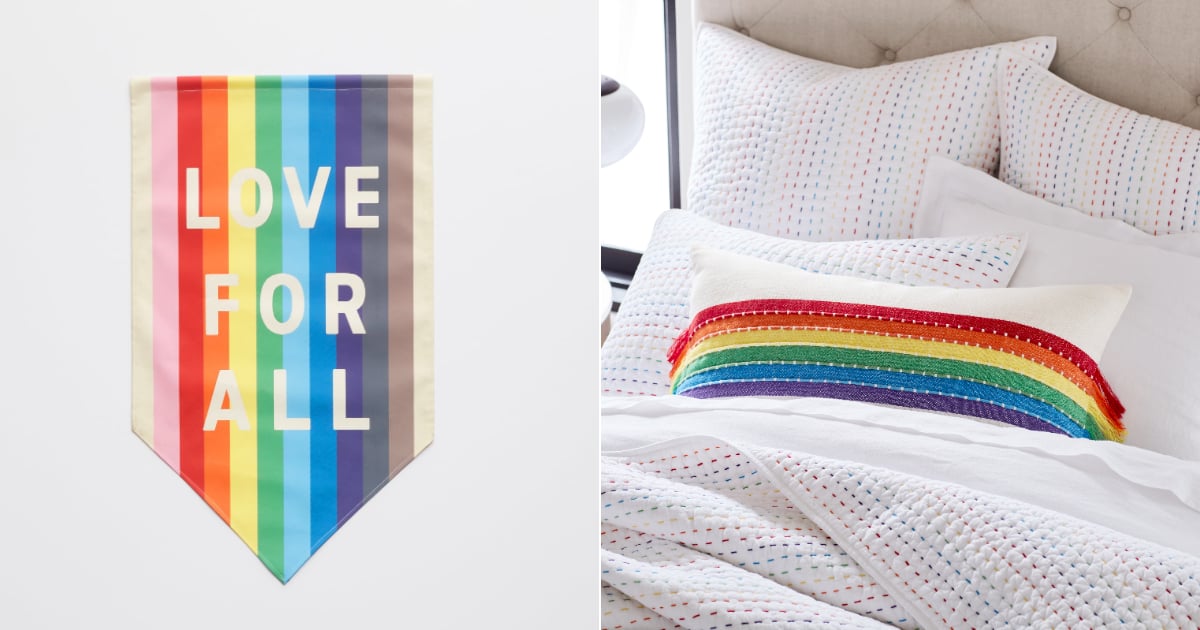
Pottery Barn’s collection with The Trevor Project is here, and it’s a Pride-themed dream! The home brand teamed up with the world’s largest suicide prevention and crisis intervention organization for LGBTQ+ young people to create the bright and beautiful home pieces, and they do not disappoint. And the best part about this line is that 25 percent of proceeds from the products are donated to The Trevor Project, meaning your money is going to a good cause. There’s also a direct donation page to The Trevor Project on Pottery Barn’s website that shoppers can access.

The new collection features vibrant tea lights, pretty napkins, gorgeous bedding, and more Pride-inspired pieces that’ll add a pop of color to any room. Whether you’re looking to decorate your living room with rainbow-colored decor or you want to make your bedroom a sweet escape, these Pottery Barn items will let you do all that and more while supporting a great cause. Learn more about The Trevor Project here and shop the collection ahead. Cheers to Pride!

Love Island boss says including gay islanders would be a ‘logistical difficulty’ – The Tab

‘The format must give Islanders an equal choice when coupling up’

An ITV boss has said including gay contestants on Love Island would be a “logistical difficulty”, due to the format of the show.

Speaking to RadioTimes.com, ITV commissioner Amada Stavri said the show required contestants to have an equal choice when coupling up, but that producers are aiming for more diversity when the cast for this year’s show is announced.

“In terms of gay Islanders, I think the main challenge is regarding the format of Love Island,” Stavri said.

“There’s a sort of logistical difficulty, because although Islanders don’t have to be 100 per cent straight, the format must sort of give Islanders an equal choice when coupling up.”

The show has been seeking out LGBTQ+ contestants for this series, which is due to start later this month, with bosses encouraging applications on Tinder.

“Our only stipulation for applicants on Love Island is that they are over 18, single and looking for love,” a spokesperson said.

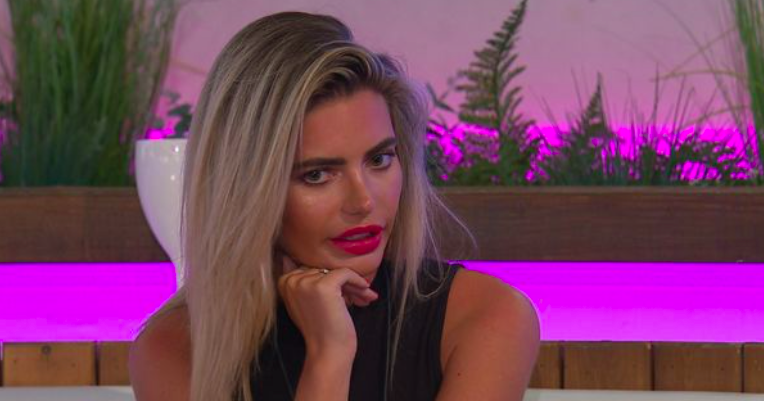
Former contestant Megan Barton Hanson has also raised the issue of LGBTQ+ representation, with headlines saying she’d return to the show if they did a gay series. In an interview with The Tab, she urged fans to keep pushing on social media, as “producers do pay attention to what the audience wants to see”.

Comparing the situation to The Cabins, which featured more diversity than Love Island, ITV boss Stavri said: “The formats don’t have as much restrictions as Love Island. So we’re very sort of mindful of that across our programming on ITV and dating series. But that’s the difficulty with Love Island.”

Stavri added that a cast announcement would come soon, and promised more diversity. “The line-up will be announced within time and it goes without saying that we want to encourage greater inclusivity and diversity in terms of gay islanders,” she said.

It’s not the first time the issue has been raised by producers. In 2017, executive producer Richard Cowles said: “I would like to see what a gay version of the show would be but trying to mix the two would be difficult.”

Love Island 2021 will air on ITV2 in June. For all the latest Love Island gossip, news, rumours and memes, make sure you like The Holy Church of Love Island on Facebook. 

Related stories recommended by this writer:

Love Island is accepting applications from LGBTQ+ contestants

Megan Barton Hanson: A bisexual Love Island, OnlyFans, and empowering yourself

It’s back and ‘bigger than ever’: Here’s everything we know about Love Island 2021

There’s Never Been a Better Time To Be LGBT in America – Reason

Welcome to Pride Month, a celebration of LGBT culture and activism across the world!

Unless you live in a cave, you probably already know this. That the general public knows it’s Pride Month is itself a massive marker of huge culture shifts in public attitudes about LGBT people. Just a decade or so ago, most Americans only knew it was Pride Month from news coverage of local parades.

Back in my college days, I would march in those parades. It feels like more than a lifetime ago, though in reality it’s been only 25 years. I was in the parade representing a very small college LGBT organization that I had founded myself. When I marched on the streets of St. Louis, there was no legal recognition of gay marriage, the military banned service by anybody discovered to be gay or transgender, and AIDS was still a life-threatening virus. Missouri had sodomy laws on the books.

There were corporate supporters of Pride activities, even then—primarily alcohol companies. Absolut Vodka was famous for marketing to LGBT people, and their full-page magazine ads are well-remembered by many LGBT boomers and Gen Xers.

There was little by way of ad marketing directed toward the general audience that was developed with LGBT people in mind, or inclusive of them at all. That has certainly changed. Now almost all major brands commemorate Pride Month, putting rainbow colors on their products. If anybody really, really wants a rainbow-colored sonic toothbrush with a “yaaas” setting (for teeth whitening), it’s out there.

One of the last big barriers to LGBT equality in America tumbled last year—during Pride Month, actually—when the Supreme Court ruled 6–3 that the Civil Rights Act of 1964 protected gay and trans people from workplace discrimination. This Pride Month, we’re waiting for a ruling from the Supreme Court on whether church-sponsored foster care agencies can reject gay couples as potential caretakers.

But had the court ruled against LGBT employees, and even if they ultimately rule against LGBT foster parents, our culture has shifted so much that the impact of these rulings is much more limited than it would’ve been just a few decades ago. Employers these days jockey to be on lists of “best workplaces for LGBT people” (and my inbox is flooded with press releases about them every June). The rejection of a Catholic foster agency, for example, does not actually stand in the way of a same-sex couple becoming caretakers for needy children; there are alternatives. For every Christian baker who refuses to make a gay wedding cake, there are hundreds of bakeries who are happy to oblige.

The market was adjusting to these cultural shifts way before government, as it always does.

We’re in the midst of a culture war over trans acceptance, a bit of a backlash to this advancement that has resulted in some bad state-level legislation based on bathroom panics. Some of it is a terribly blatant attempt by trans skeptics to interfere with medical treatment decisions that should be made by trans teens and their guardians in consultation with medical professionals and should not involve the government.

The backlash is real, is significant, and shouldn’t be ignored. It’s also worth noting, though, that even the nature of this fight represents how far we’ve advanced culturally. At the exact same time I was coming out as gay in 1990, a friend of mine was coming out as trans (back then the term was transsexual) after becoming an adult and graduating high school. Most LGBT people didn’t come out until adulthood, even though many of us had known for years before then that we were gay or trans. Transitioning was generally something a trans person did as an adult, not a teen.

So this culture war battle we’re having now isn’t fundamentally about whether people are really trans but about when and how to recognize it. Obviously, there’s a big chunk of opposition still motivated by a belief that there really isn’t such a thing as a trans person and that these people are mentally ill or liars, regardless of what science says. Those anti-trans folks may be able to pass legislation in some states, but polling shows them as cultural dead-enders. A majority of Americans oppose laws targeting trans people for discriminatory treatment. Politics remains a lagging indicator.

Further evidence of the LGBT movement’s overall successes comes from the increasingly petty fight over who gets to take credit for its successes and pettier gatekeeping over who gets to celebrate it. It seems as though every June brings with it a debate over who was actually “responsible” for the Stonewall riots, as though that was where the gay rights battle began. (Activists had been protesting for better treatment under the law for years prior.) Some people seem to want to argue the opinions or desires of those who look most like those early organizers should carry additional weight 50 years later. It’s a silly and wholly unnecessary fight. The riots were the handiwork of a diverse crew of LGBT folks drawn together at Stonewall by virtue of having few other options available at a time where police were targeting gay and trans people—of all ethnicities and backgrounds—for cruelty.

Pride Month’s transformation from a political organizing tool to a celebration to what it’s becoming now—an entrenched, marketable institution—is a marvelous accomplishment of cultural accommodation. As a former newspaper editor who was in California for the passage of Proposition 8, which temporarily blocked same-sex marriage recognition in the Golden State, fighting over who gets credit for the gay rights movement’s successes is certainly preferable to bickering over failures.

But better than either of those is actually celebrating this success and taking time to enjoy a life that was impossible in 1969. It was impossible in ’79, ’89, and ’99 as well. After Pride Month ends, I’ll be turning 50. The world for an LGBT person in 2021 is wholly unrecognizable from what I grew up through in the ’70s and ’80s in the best possible way.

I’ll be blunt: I thought I would be dead decades ago, from getting AIDS or from despair-driven suicide. I had no concept of my own future beyond day-to-day living for most of my teens and early adulthood. It was unfathomable to my teenage self that someday I’d be, legally and culturally, treated pretty much the same as heterosexual people.

Though there’s still work to be done, we should reject anybody who wants to sell the idea that life is still very, very bad for LGBT folks in America. Perfect? Of course not. The targeting of trans people through state legislation is a cynical manipulation often pushed by people who have opposed LGBT rights all along.

To throw a common anti-gay refrain right back in their faces: It’s just a phase. It is a backlash that has come with the enormous success of LGBT people in changing the dominant culture.

I am not going to buy a stupid rainbow toothbrush. It even fails at virtue signaling—who is going to see the thing besides you and those you live with? But a world where there’s a market for something as silly as that is a world I’m very happy to live in.

30 LGBTQ Shows Now Streaming On Netflix To Watch This June For Pride – BuzzFeed

0

Okay, we’re starting with Sex Education, because it is my favorite show on this list (perhaps currently on TV) and if you get nothing else from this list it should be WATCH SEX EDUCATION. The British dramedy centers on Otis (Asa Butterfield aka the boy in Hugo), a high school student who decides to make some extra cash working as a sex therapist for his fellow classmates, as his mom (played by The Crown’s ibble dibbleing Margaret Thatcher, Gillian Anderson) is an actual sex therapist. 

Better than a thousand YouTube tutorials or Cosmo articles, this show dives into all of the nooks and crannies of sex, highlighting homosexuality, bisexuality, pansexuality, asexuality, douching, scissoring, masturbation, fellatio, crossdressing, erotica, roleplay, fetishes, vaginas with teeth, and yes, even heterosexuality (boring I know). Otis’s friendship with his gay bestie Eric (the LUMINOUS Ncuti Gatwa who should be the lead of at least fifteen shows by now) is a beautiful depiction of allyship, and Eric’s relationship with Rahim (Sami Oualbali) in Season 2 is the freaking cutest. Also Maeve (Emma Mackey, soon to be in Death on the Nile) is not gay but is a badass. So like just go watch the show okay?

Watch it on Netflix.