Home Blog Page 144

How AIDS Activists Used ‘Die-Ins’ to Demand Attention to the Growing Epidemic – History

As the AIDS crisis took hold in the 1980s, killing thousands of Americans and ravaging gay communities, the deadly epidemic went unaddressed by U.S. public health agencies—and unacknowledged by President Ronald Reagan—for years. In response, a political group called ACT UP emerged, deciding it needed to do something shocking to draw attention to the crisis and jolt government agencies, drug companies and the mainstream media into action.

So it began organizing protest events where masses of people lay down in a public space, feigning death.

“The strongest thing we can do is something in silence,” declared writer, filmmaker and AIDS activist Robert Hilferty at a November 1989 meeting of ACT UP (AIDS Coalition to Unleash Power). “A die-in. A massive die-in.” 

Founded in 1987, ACT UP ultimately organized thousands of protests, with die-ins becoming a signature tactic. And while AIDS activists weren’t the first to simulate death to call attention to lethal threats, the action became a powerful tool to show that, because the epidemic was being stigmatized and ignored, bodies were piling up. In ACT UP’s case, “they forced social and cultural institutions to take responsibility for the AIDS deaths by having to physically move the protesters’ bodies,” says Matt Brim, professor of queer studies at City University of New York.

READ MORE: How AIDS Remained an Unspoken—but Deadly—Epidemic for Years

The History of Die-Ins

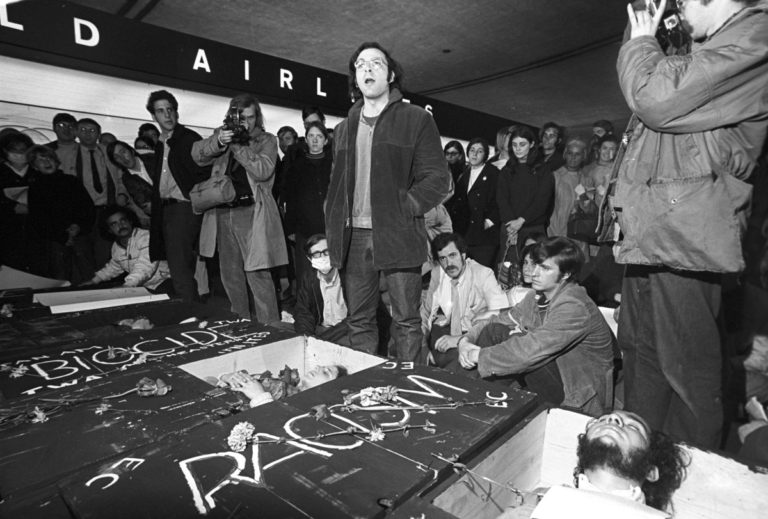
Earth Day Die-In protest, 1970

Earth Day protesters at Boston’s Logan Airport stand next to coffins displayed for a demonstration, 1970. 

The AIDS die-ins emerged from a longer history of activism that made bodies the focal point of protest, such as suffragettes chaining themselves to railings and civil rights activists staging sit-ins.

One of earliest known references to the term “die-in” came nearly two decades prior to ACT UP, when environmentalists demonstrated on Earth Day, 1970, in Boston, to raise awareness about the deadly impact of air pollution. About a month later, protesters in Seattle fell to the ground at a busy downtown intersection to oppose dangerous nerve gas shipments.

Since then, public die-in stunts have been used to decry everything from war and weapons testing to police violence and cycling deaths. To ratchet up the visual drama, some protesters have employed fake blood and bandages. Others brought coffins.

READ MORE: How the AIDS Quilt Allowed Millions to Memorialize the Epidemic

ACT UP: Fighting for Gay People’s Lives

Larry Kramer

Author, AIDS campaigner and gay rights activist Larry Kramer, founder of ACT UP and the Gay Men’s Health Crisis group, sitting in front of a bookshelf at his New York City home, March 26, 1987. 

When playwright and LGBTQ activist Larry Kramer took center stage at the New York Lesbian and Gay Community Services Center on March 10, 1987, and delivered the rousing speech that helped launch ACT UP, the epidemic had entered its sixth year. The U.S. government had yet to approve the prescription sale of a single drug to treat AIDS, and the deaths were largely being ignored by the media. “Unless we fight for our lives, we shall die,” Kramer wrote that month for the New York Native, a bi-weekly magazine aimed at the city’s gay community. As a result, ACT UP worked urgently to train as many individuals as possible in civil disobedience tactics. As an unidentified activist in the documentary United in Anger: A History of ACT UP put it, “you don’t always know when it’s going to happen or when you’ll want to do it.”

Die-ins became important for ACT UP, Michael Bronski, author of A Queer History of the United States for Young People and professor of practice in media and activism at Harvard University, told HISTORY.com in an interview. That’s because “there’s a cultural hesitation to think about death—and the protest made it physical.”

And AIDS activists knew their best chance to affect policies was by affecting public opinion—making the media, rather than politicians or chief executives, die-ins’ primary targets. In United in Anger, an activist remembered how ACT UP clearly viewed civil disobediences, like die-ins, as a “safe tactic for making a stronger statement and as a way of getting media attention.”

READ MORE: History of Gay Rights

From Play-Acting Death to Conducting Public Funerals

ACT UP protesters outside the FDA headquarters in Rockville, Maryland on October 11, 1988. They demanded the release of experimental medication for those living with HIV/AIDS with slogans reading: 'Never Had A Chance.' 'I Got the Placebo' and 'I Died for the Sins of the FDA.' 

ACT UP protesters outside the FDA headquarters in Rockville, Maryland on October 11, 1988. They demanded the release of experimental medication for those living with HIV/AIDS with slogans reading: ‘Never Had A Chance.’ ‘I Got the Placebo’ and ‘I Died for the Sins of the FDA.’ 

In its first decade, ACT UP held thousands of demonstrations across the country and around the world. But not all die-ins focused on the same issue.

On October 11, 1988, ACT UP held its first national demonstration on the doorstep of the Food and Drug Administration, which activists perceived as slow to approve and release new drugs. In front of helmeted police officers guarding the building’s entrances, some activists staged a die-in, holding tombstone-cutouts that read, “DEAD FROM LACK OF DRUGS” and “VICTIM OF F.D.A. RED TAPE.” Less than a year later, the F.D.A approved one other drug and expanded access to another.

Outside the Centers for Disease Control in Georgia, die-ins targeted the narrow definition of AIDS that encompassed diseases observed in gay men, but not those specific to women and IV drug users. “C.D.C. is killing women, redefine AIDS,” activists chanted amid demonstrators sprawled on the sidewalk. In 1993, the C.D.C delivered AIDS activists a victory to their years-long campaign by adding CD4+ T-lymphocyte (T-cell) count to the definition, a count the C.D.C. viewed as having “clinical importance” in categorizing HIV-related conditions. The agency also added invasive cervical cancer to its list of AIDS-indicator diseases, an acknowledgement of the impact HIV was having on women.

Die-ins also occurred on Wall Street, targeting drug prices; at the vacation home of President George Bush, targeting national AIDS funding; at the National Institutes of Health; New York’s Grand Central Station; and in Chicago and San Francisco, among other places and locations.

But in the fall of 1992, the theatrically of die-ins gave way to real artifacts of death.

On October 11, in a demonstration known as Ashes Action, activists gathered in Washington, D.C., some carrying the ashes and bone chips of loved ones who had died of AIDS to disperse over the White House lawn. Others carried corpses that rested in open-faced coffins.

Literally bringing real death to activism was the next logical thing to do, says Bronski. “It came out of frustration that things were not getting better quickly—or at all.”

READ MORE: The Pink Triangle: From Nazi Label to Symbol of Gay Pride

Die-Ins: Part of a Larger Strategy

AIDS activist Wayne Turner strokes the hair of his dead partner Steve Michael during a protest in front of the White House in Washington, D.C. on June 4, 1998. The protesters mourned the death of Michael, ACT UP's Washington, D.C. founder, who died from AIDS on May 25, 1998.

AIDS activist Wayne Turner strokes the hair of his dead partner Steve Michael during a protest in front of the White House in Washington, D.C. on June 4, 1998. The protesters mourned the death of Michael, ACT UP’s Washington, D.C. founder, who died from AIDS on May 25, 1998.

ACT UP used civil disobedience, like die-ins, not only to vent frustration, but to strategically draw attention to its own proposals and presentations. In the United in Anger documentaryone of the group’s activists succinctly summed up the strategy: “When we get arrested, we usually are aiming to get a meeting set up or deliver a set of demands.”

“Any political movement has to be multifaceted, so that doing aggressive, in-your-face actions have to happen in tandem with people making arguments with politicians,” says Bronski.

Their aggressive actions at the F.D.A. and the C.D.C., for example, helped activists gain meetings that ultimately moved the needle on their pursuit of an AIDS cure. 

“Before AIDS and before ACT UP, all experimental medical decisions were made by physicians,” Dr. Anthony Fauci of the National Institutes of Health told New Yorker magazine in 2002. “Larry [Kramer, founder of ACT UP], by assuring consumer input to the F.D.A., put us on the defensive at the N.I.H. He put Congress on the defensive over appropriations. ACT UP put medical treatment in the hands of the patients. And that is the way it ought to be.”

READ MORE: How Activists Plotted the First Gay Pride Parades

Billie Eilish Went Monochrome in Her New “Lost Cause” Video and Wait — Are Those Skims? – POPSUGAR

A new era of Billie Eilish is upon us, and just like her frosty blond hair, the “Therefore I Am” singer is swapping out her multipatterned wardrobe for a look that’s all monochrome. Like her ensemble in the “Your Power” video, Billie’s looks in her “Lost Cause” music video, which premiered on June 2, are made up of oversized shirts and cozy loungewear in toned-back neutrals. After a closer inspection of her new style, we couldn’t help but feel like Billie’s outfits looked strikingly familiar.

“I spy Skims,” Kim Kardashian captioned a screenshot of the video on her Instagram Stories on Wednesday, and she was spot on! Aside from a few satin looks, Billie and the dancers in the video were slumber partying it up in pieces from the Skims Cozy Collection and more. So re-creating the outfits for ourselves might not be a lost cause after all (pun intended). Check out our favorite looks from Billie’s new video and shop similar pieces ahead.

John Stamos Claps Back at Troll’s Criticism Over Disney’s ‘Cruella’ Portraying ‘LGBT Agenda’ – PopCulture.com

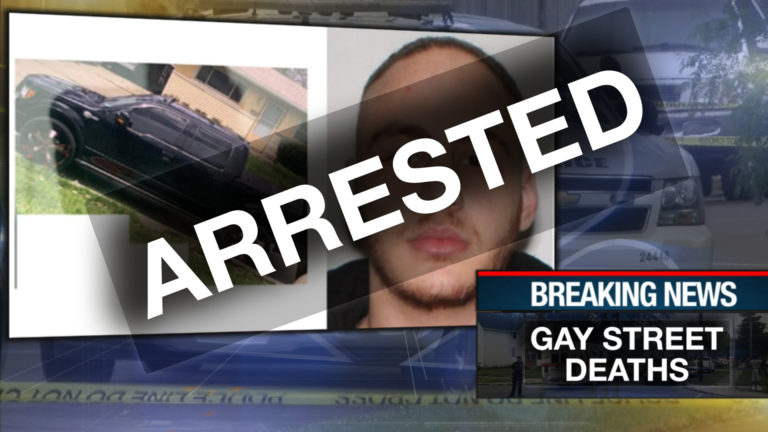
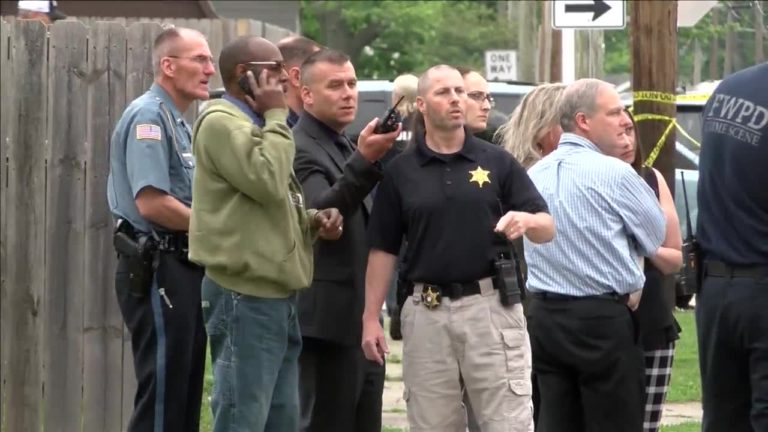
IN CUSTODY: Police arrest suspect in Gay Street deaths in Lafayette – Fort Wayne’s NBC

FORT WAYNE, Ind. (Fort Wayne’s NBC) – Indiana State Police arrested a suspect in connection with a multi-homicide investigation Wednesday in The Fort.

According to authorities, the Fort Wayne Police Department and the Indiana State Police located 21-year-old Cohen Hancz-Barron in Lafayette, Indiana.

Police say they located him in an apartment complex Wednesday afternoon.

Barron is now being transported back to Allen County where police say where he will face four murder charges.

READ MORE: Police looking for ‘armed and extremely dangerous’ man in homicide investigation

Authorities say they want to thank the public for their assistance with locating the suspect.

Stay with Fort Wayne’s NBC News for more information on this developing story.

11 LGBT-Friendly Hotels in Palm Springs for the Perfect Pride Month Escape – Locale Magazine

Pride Month is here with a welcoming rainbow of deals and amenities at local Palm Springs hotels! To celebrate this special month, treat you and your partner to a luxurious stay at any one of these LGBT-friendly hotels for a romantic getaway filled with sleek charm and poolside fun. Palm Springs caters to the LGBT community, and we’ve rounded up some luxury destinations to provide you with plenty of choices for your Palm Springs Pride getaway. LGBT Hotels Palm Springs

Tucked at the base of the San Jacinto Mountains, La Dolce Vita is located five minutes from some of Downtown Palm Springs’ most popular attractions, shops, restaurants and nightlife. The beautiful hotel provides guests with a peaceful and comfortable environment that’s ideal for relaxing, socializing and making new life-long friends. Amenities include the only professional men’s spa in Palm Springs and 18 guest rooms, ranging from studios to spacious one-bedroom apartments that are perfect for longer stays. Additional perks include access to two heated outdoor pools, a steam room, hot tub and an outdoor barbecue, as well as a daily continental breakfast. 

La Dolce Vita Resort & Spa
1491 Via Soledad
Palm Springs, CA 92264
760.325.2686
@ladolcevitaresort

Vista Grande Resort is the premium clothing-optional gay men’s resort in Palm Springs. Come swim in the two crystal-clear pools, which are heated to a comfortable 90 degrees. When not swimming, you can sunbathe under the cool micro-fine water misters on padded lounge chairs in the warm Palm Springs sunshine and make new friends. From reasonably priced poolside studios to the luxurious villas surrounding the waterfalls, this resort has rooms suitable for short- or long-term stays—many of the rooms have fully equipped kitchens!

Vista Grande Resort
574 S Warm Sands Dr
Palm Springs, CA 92264
760.322.2404
@vistagranderesort

Since 1975, El Mirasol Villas has been a resort of choice in Palm Springs for gay men. Custom-designed furnishings, shutters, French doors and California king beds make each accommodation a comfortable and elegant experience. Relax Palm Springs-style on your own private patio as you gaze down at the pools below. The gardens are charmed with the sounds of trickling fountains and a Dolby sound system. Serene walkways lead to fountains, fireplaces, two swimming pools and a new 10-man Jacuzzi spa and outdoor shower. The hotel even has a eucalyptus steam room for guests to use at their leisure.

El Mirasol Villas
525 S Warm Sands Dr 
Palm Springs, CA 92264
760.327.5913

INNdulge Palm Springs is the perfect place to stay for a sun-soaked getaway. The hotel boasts a 12-man Jacuzzi and heated/chilled saltwater pool, both of which are open 24 hours a day. Hotel amenities include free Wi-Fi, a daily continental breakfast, complimentary local gym access, air conditioning, on-site guest laundry, outdoor misters and assistance with restaurant and activity bookings. The morning breakfasts, evening social hours, Thursday pizza and weekend pool parties are all ideal ways to meet new friends. INNdulge in a vacation to be remembered as you relish an opportunity to relax, meet new friends or catch up on some rest.

INNdulge Palm Springs
601 Grenfall Rd
Palm Springs, CA 92264
760.327.1408
@inndulgeps

5 | Bearfoot Inn LGBT Hotels Palm Springs

Located in sunny Palm Springs, Bearfoot Inn is your oasis in the desert and home away from home. Casual and elegant yet masculine, Bearfoot Inn has been faithfully restored to reflect its midcentury modern architecture and upgraded with modern amenities so you can relax and be yourself. The Barefoot Inn is the only clothing-optional resort for gay men in the historic Movie Colony neighborhood, adjacent to the Palm Springs Uptown Design District and within walking distance to great restaurants and shopping. Palm Springs’ gay epicenter, Arenas Rd, is also within walking distance or a quick car ride away.

Bearfoot Inn
888 N Indian Canyon Dr 
Palm Springs, CA 92262
760.699.7641

Resting at the foot of the San Jacinto Mountains, Santiago is a private escape for gay men and is a place where the stillness and serenity of the desert take form. It’s a place where the bubbling spa, rustling palms and singing birds become your personal soundtrack—where your only commute is the one from your room to the pool. Hotel amenities include an expansive, heated saline swimming pool, outdoor heated saline spa, outdoor mist cooling system and luxurious poolside day beds. Santiago’s professional staff effortlessly provides attentive service while allowing you just the right degree of solitude.

Santiago Resort
650 E San Lorenzo Rd 
Palm Springs, CA 92264
760.322.1300
@santiagoresort

Built in 1957 and faithfully restored by owners John and Chris, the Canyon Club Hotel exudes a 1950s Palm Springs style with the comforts and amenities of today. Nestled around a 52-foot pool, the resort’s 32 rooms are surrounded by swaying palms and are cooled by misters that fend off the desert heat. Enjoy the large, sunny courtyard completely surrounded by beautifully renovated suites on the pet-friendly property. Guests can also take advantage of wet and dry saunas and a Jacuzzi large enough to accommodate up to 20 people!

Canyon Club Hotel
960 N Palm Canyon Dr 
Palm Springs, CA 92262
760.778.8042

Desert Paradise Resort Hotel is one of the longest-standing resorts in Palm Springs. Desert Paradise is proudly gay-owned and -operated, welcoming all guests and seeking to provide the perfect destination for the like-minded traveler. Immerse yourself in spectacular views and tropical grounds. Take in views of the beautiful San Jacinto Mountains from the large sundeck, complete with a misting system and more padded loungers. Desert Paradise offers an ideal escape where you can relax, be yourself and discover what it means to be truly welcome.

Local Insight: Desert Paradise Resort Hotel offers a deluxe continental breakfast from 8-10 a.m. Place your order at the Paradise Cafe, and one of the guest attendants will bring it to your room or your poolside table!

Desert Paradise Resort Hotel
615 S Warm Sands Dr
Palm Springs, CA 92264
760.320.5650

The Hacienda at Warm Sands offers gay male resort features, extensive grounds with lush foliage and Southwestern plantings, 10,000 square feet of Saltillo-tiled patios and walkways highlighted by a Japanese water feature and a large, multi-tiered gurgling fountain. It also features two large swimming pools, a jetted inground spa and an adjacent fireplace. Massages are provided in your suite from the best independent Palm Springs therapists, and a full range of treatments are available, including sports, therapeutic, Swedish and deep-tissue massages. The Hacienda staff is at your disposal to pamper and discreetly be of service.

Local Insight: “The Logo” TV series’ final episode was filmed at The Hacienda at Warm Sands.

The Hacienda at Warm Sands
586 S Warm Sands Dr
Palm Springs, CA 92264
760.327.8111
@haciendacantina

Triangle Inn Palm Springs offers desert-dwellers a choice of eight elegantly appointed suites within the hotel grounds, plus an adjacent four-bedroom, two-bath house with a second pool and Jacuzzi for groups of up to 10 people. Accommodations are graciously appointed and feature all the comforts of a typical home with fully equipped kitchens or kitchenettes, large baths with top-quality linens, plenty of closet space, private reading libraries, TVs and stereos. A quality breakfast is served poolside each morning, and afternoon mixers provide the perfect setting for meeting fellow guests.

Triangle Inn Palm Springs
555 E San Lorenzo Rd
Palm Springs, CA 92264
760.322.7993
@triangleinnps

All Worlds Resort is one of the largest clothing-optional gay men’s resorts in California. The grounds feature seven pools (including a reflection pool), four spas, community showers, misters, a barbecue and a sand volleyball court. Guests also have access to a lounge with a big-screen television and a gym. The property has a total of 38 rooms, and day and weekend night passes are available. Plus, on Sundays, there are often pool parties with free barbecue bites. All Worlds Resorts features two properties that connect on South Warm Sands Drive—All Worlds and All Worlds Annex—and guests have access to both.

All Worlds Resorts & The Annex
526 S Warm Sands Dr 
Palm Springs, CA 92264
760.323.7505
@allworldsannex

Photography Provided By: JNS Next

Concord-Carlisle Regional School District: Anti-Gay Incident At CCHS – Patch.com

It is with anger and sadness that I share Principal Mastrullo’s message to the CCHS community late last night regarding a homophobic slur found in a bathroom at CCHS.  We will continue to only tolerate an inclusive, welcoming environment for all students.

Laurie

A note from the principal

Dear Concord-Carlisle High School Community:

I am saddened to report that today we found a homophobic slur on a girls’ bathroom wall at CCHS. The timing of this could not be more disappointing. Today marks the start of LGBTQ+ Pride Month, which is recognized both locally and nationally to honor the profound impact that our LGBTQ+ community members have made on our school, our community, and our country.

Words will not lessen or dull the pain and disappointment this incident brings to our LGBTQ+ students, families, employees, and community. Please be assured that our school administration is proactively investigating this incident, and we will work to find the individual(s) responsible for this unacceptable display of hate.

We will never tolerate this kind of behavior in our schools or community. Slurs and other forms of homophobia are unacceptable, and we are saddened to learn that this language was used and directed toward members of our school community. We ask our students to speak out when they witness hate in our schools and the community. We encourage everyone to lend their support to members of our LGBTQ+ community who, on this day, month, and beyond, should not be attacked by slurs, violence, and hatred.

There are resources for all students who may feel negatively impacted by this incident. Also, as always, guidance counselors are available to anyone in need of support. In addition, parents should feel empowered to engage with their students in using the aforementioned resource as a valuable guide for honest and authentic conversation.

This day and every day should be about love and respect for one another; our differences should be celebrated and bind us, not insulted and used to divide us. Our school community, comprised of students from Boston, Concord, and Carlisle, stands with our LGBTQ+ community in recognition that any form of hate, bias, and discrimination will never be tolerated.

I take solace knowing that this incident does not reflect the values of our community, and with confidence, I suggest that the tolerant and welcoming environment we hold dear will denounce this act in no uncertain terms and rally behind members of our community in need of support.

Sincerely,

Michael J. Mastrullo

Principal


This press release was produced by Concord-Carlisle Regional School District. The views expressed here are the author’s own.

Gay Byrne ‘brought terror for some and liberation for others’ – The Irish Times

Gay Byrne was more than a broadcaster, and for that reason this celebration of his role as national agony uncle makes for bittersweet viewing. Dear Gay (RTÉ One, Wednesday, 9.35pm) is a big-hearted homage to Byrne’s humanity and courage as presenter of his morning radio show, which began in 1972 and ran for 27 years.

But it also asks us to reckon with the dismal hellscape that was late-20th-century Ireland – a place of suppressed sexuality, unchecked homophobia and asphyxiating religiosity. Life in Ireland is often challenging today. Back then it was unbearable. We were all living inside a giant open-air confession box.

The thesis of Dear Gay is that Byrne’s radio broadcasts were every bit as influential as his more lionised role on The Late Late Show as a conduit for social change. That argument is movingly conveyed, and the case is made for Byrne as an important ally to feminism in 1970s and 1980s Ireland.

Housewives would tune in and, later, write to Gay Byrne. Sometimes their letters were pleasant distractions; others had darker stories. They may have had an unfaithful spouse or perhaps were simply struggling with the bills

Housewives would tune in and, later, write to Byrne. Sometimes their letters were pleasant distractions; others had darker stories. They may have had an unfaithful spouse or perhaps were simply struggling with the bills. Or maybe the letter writer was gay and had grown up in a country where their mere existence was perceived to be an abomination. That was the Ireland of the time.

“An unmarried mother – nothing like that was ever broadcast before,” recalls Maura Connolly, special assistant to Byrne for 32 years. “With some trepidation we decided we would broadcast. That was the beginning of what followed.”

Women, young or old, married or single, were expected to be dutiful and silent. Byrne’s show, it is argued, helped give them a voice. Senator David Norris goes so far as praise Byrne as a liberalising force comparable to Mary Robinson.

“There were a lot more women at home,” says Catherine Corless, one of the many who wrote to Byrne; she would later do crucial work chronicling the deaths of children at the Tuam mother-and-baby home. “Gay Byrne brought Ireland into my kitchen every day. You could potter around the kitchen and do everything and still tune in to Gay.”

Dear Gay grows darker as it goes along. We see Byrne offhandedly read a newspaper headline about the discovery of the body of 15-year-old Ann Lovett, who, in 1984, died in childbirth in a grotto in Granard, Co Longford, having concealed the pregnancy from her family.

The story quickly becomes a national scandal. Byrne is forced to acknowledge his glibness. “I was dismissive – I take that accusation,” he says on air. You can only imagine how his comments would have gone down on Twitter.

Byrne did his part, too, in laying bare the depravity of the religious institutions as custodians of children. He interviews the survivor and campaigner Christine Buckley in November 1992, and she breaks down describing the beatings at the hands of nuns.

“We were an insular society … very, very repressed and obedient,’ says Maura Connolly. Byrne’s radio show “certainly opened our minds. It brought terror for some and liberation for others.”

How LGBTQ Activists Fought a Stigmatizing Misdiagnosis in ‘CURED’ – Rewire.org

An old photograph of LGBTQ activists marching with signs. 'CURED' documentary, Rewire, PBS
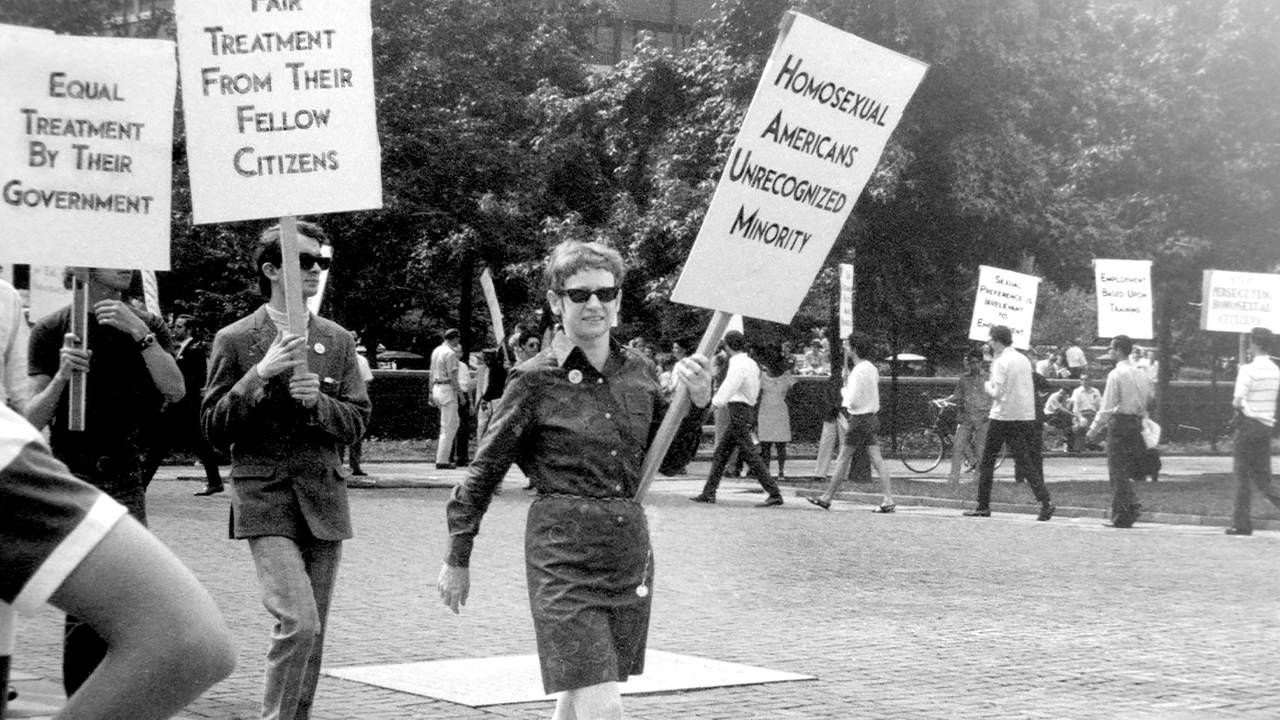
Kay Lahausen joined protestors on a picket line in Philadelphia on July 4, 1969 for the ‘Annual Reminder’ march  |  Credit: Photo by Nancy Tucker, courtesy of Lesbian Herstory Archives

(This article originally appeared on Next Avenue.)

As the modern LGBTQ rights movement gained momentum in the late 1950s, activists realized they faced a major roadblock.

Being gay wasn’t just considered a bad “choice” or something immoral, it was an actual medical condition listed in the American Psychiatric Association’s (APA) Diagnostic and Statistical Manual of Mental Disorders (DSM).

If you were mentally ill, the reasoning went, how could you successfully lobby for equal rights or any rights at all?

The new documentary “CURED” details how pioneering LGBTQ-rights activists decided to take a stand against the medical establishment and eventually won. The APA finally removed homosexuality from the DSM in December, 1973.

“This is a little known story about a group of tenacious activists who refused to accept this oppressive label,” says Bennett Singer, who co-directed, produced and wrote “CURED” with Patrick Sammon. “They not only challenged it but won their battle and transformed the social fabric of American society.”

The film, which has been screened at festivals and other events, is slated to debut this October on PBS’ “Independent Lens.” “CURED” has won audience awards at both the New York and San Francisco LGBTQ+ film festivals, has several virtual screenings available and has been optioned by 20 Century Television for a scripted series from the co-creator of “Pose.”

Without this “instant cure,” as one newspaper put it, LGBTQ-rights milestones like marriage equality, the repeal of Don’t Ask, Don’t Tell and the inclusion of transgender people in the military might not have been possible or might have taken even longer to accomplish.

“The ripple consequences and legacy of the change to the DSM can’t be underestimated,” Singer says. “It was illuminating and inspiring to see how consequential this fight became and how far the ripples extended.”

‘Instant cure’ took years

Combining archival footage and materials with on-camera interviews with key figures, the film vividly captures a battle fought over 81 words and waged at professional meetings, on TV and via live protests.

“We tried to create a sense of suspense and tried to underscore that victory was by no means inevitable,” Singer says.

Led by the late Frank Kameny, Barbara Gittings and other pioneering activists, this effort straddled different eras — and approaches — of the LGBTQ-rights movement, incorporating in-your-face tactics with working for change from within.

An old photograph of LGBTQ activists on a TV program. Rewire, PBS, cured
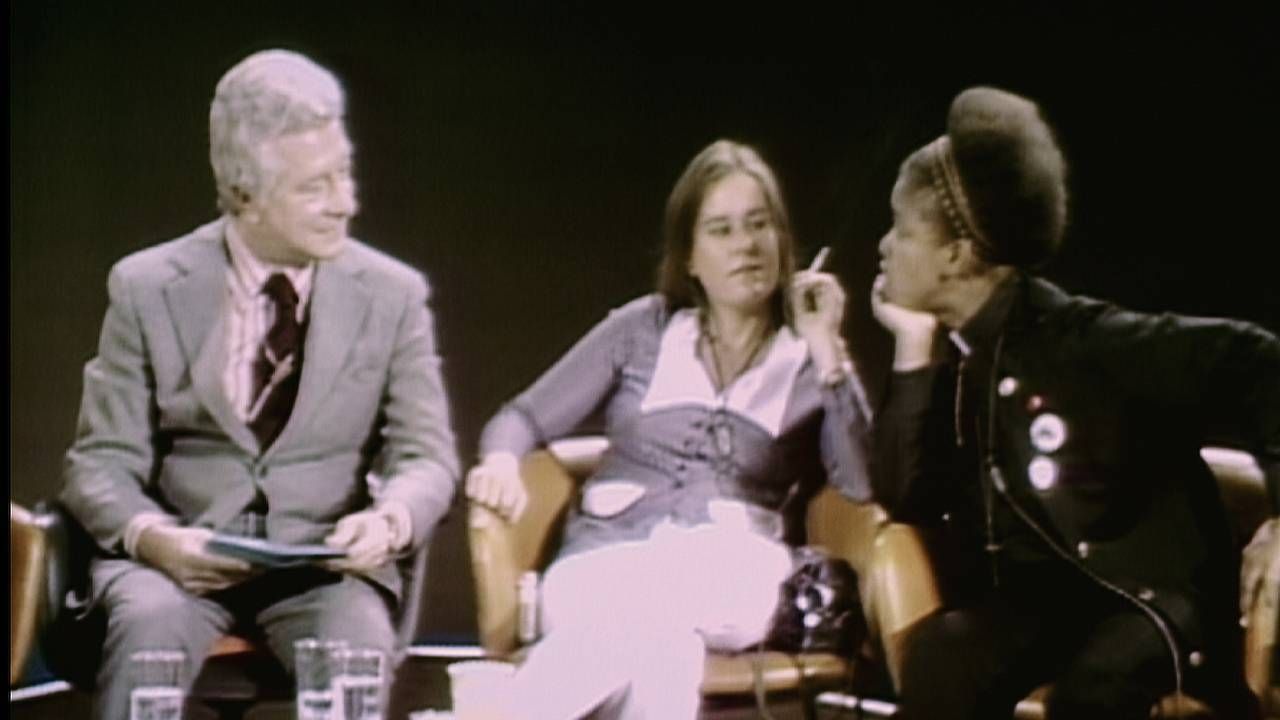
In 1971, Rev. Magora Kennedy (right) and six lesbians including Lyn Kupferman (center) on ‘The David Susskind Show’ — it was the first time a group of out lesbians appeared on national TV.   |  Credit: Historic Films Archive

Starting in 1970, activists began to disrupt APA meetings, culminating in a dramatic moment at the 1972 meeting in Dallas. There, a man wearing a Nixon mask and known at the time only as Dr. H. Anonymous stood up and declared: “I am homosexual. I am a psychiatrist.”

To have a member of their own profession declare he was gay, even while in disguise, represented a completely new experience for many and helped foster more constructive dialogue between activists and APA members.

“One fascinating piece of the evolution is to think about the shift from confrontation and invasion of APA meetings and gatherings of mental health professionals to dialogue,” Singer says. “For many of these mental health professionals, it seemed like the first time they had sat down with healthy gay people who didn’t want to be viewed as sick.”

“It was the beginning of a transformation of how gay people presented themselves and how psychiatrists and psychologists perceived these people,” Singer added.

Given the advanced ages of the surviving participants, the filmmakers felt an “urgency” to capture their remembrances on film.

Leaders like Kameny and Gittings had already died. But they were able to speak with people like Kay Tobin Lahusen, who photographed the LGBTQ rights movement extensively and was Gittings’ life partner; Harry Adamson, a friend of Dr. H. Anonymous, aka Dr. John Fryer, who helped preserve his papers; and Ronald Gold, a former journalist who gave a key speech to the APA called “Stop it, you’re making me sick!”

Lahusen died on May 26, 2021 at 91; Adamson passed away in April 2021 and Gold in 2017, shortly after sharing his story for “CURED”.

An old photograph of a group of LGBTQ activists. Rewire, PBS, Cured
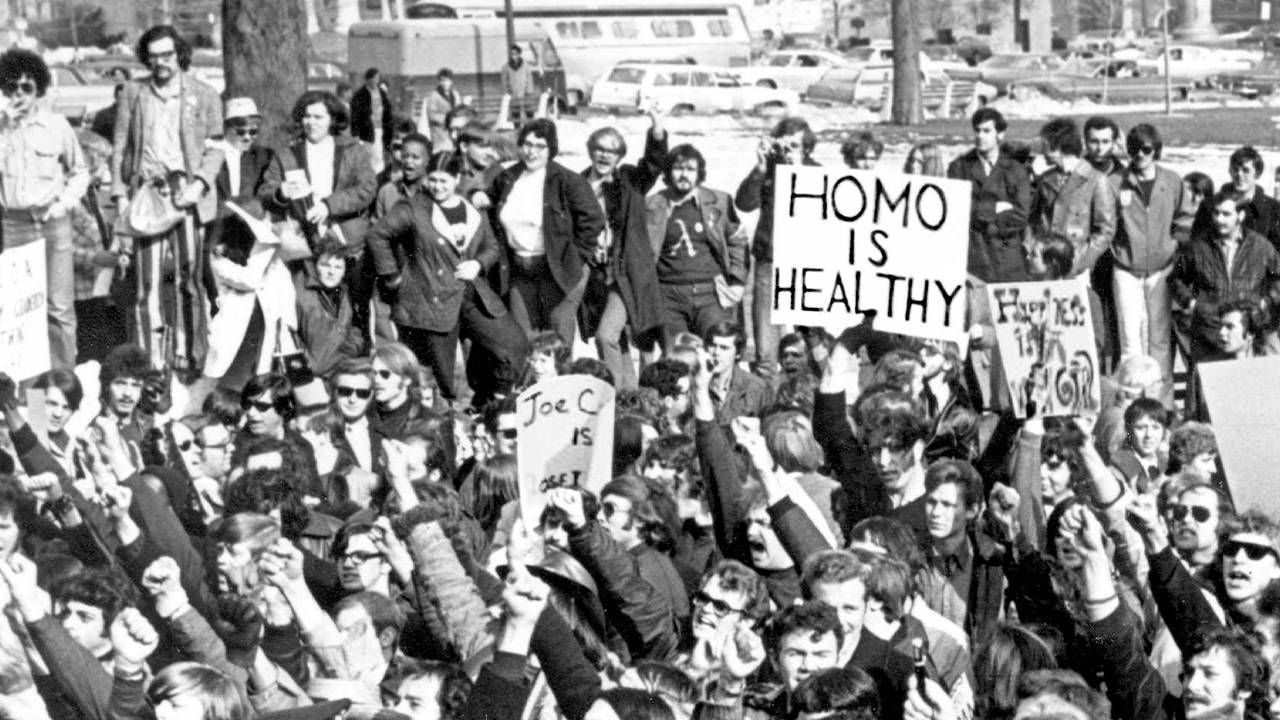
Demonstrators gathered in Albany, NY in 1971 to demand gay rights and to declare “Homo is Healthy.”  |  Credit: Richard C. Wandel Photographs, the LGBT Community Center National History Archive

“His [Gold’s] death was a really poignant reminder that the main storytellers in this film are in their 80’s and 90’s, and our goal was to have their first-person testimony driving the narrative,” Singer says.

Using science to debunk myths

Key to the strategy to win over skeptical clinicians was to include gay psychiatrists like Fryer, who practiced in Philadelphia, as well as straight allies from within the profession.

There’s no film footage of Fryer’s landmark speech, but the “CURED” team unearthed the audio tape from among the 217 boxes of his materials at the Historical Society of Pennsylvania.

“I spent some time dutifully listening to those tapes because it wasn’t clear from the inventory what was there,” Singer recalls. “It was miraculous to find that one tape of his historic 1972 speech from the APA meeting in Dallas.”

Although both sides of this issue claimed that facts supported them, LGBTQ activists and their allies successfully debunked the junk science behind conversion therapy, electroshock therapy and other failed treatments of the time.

“It was an astounding twist of fate that Frank Kameny had gotten his Ph.D. in astronomy from Harvard and was a scientist at the core,” Singer says. “He was the absolutely perfect person to pick at the rigor and arguments being made by the proponents of the mental illness label. The debate over science and what constitutes good science — where is the data? — all of the questions that Kameny raised so cogently are at the heart of the story.”

The battle still isn’t over

Despite the steady progress of the LGBTQ-rights movement in recent decades, this battle to be seen as whole people entitled to the same civil rights as everyone else isn’t over. Witness the drive in many states to block transgender rights or deny access to medical treatments for transgender youth.

“There are very clear and chilling parallels between the way gay men and lesbians were treated and perceived in the ’60s and ’70s and the way trans people are being attacked now and being considered ‘disordered,'” Singer says.

The film also shows the benefits of lifting the stigma of being misdiagnosed as sick.

“It speaks to the importance of having dignity and self-worth and the value of being treated as healthy individuals by an institution like the APA,” Singer says. “Barbara Gittings put it brilliantly when she said that an albatross has been lifted from our neck.”

Neighbors react to Gay Street quadruple homicide investigation – wpta21.com

FORT WAYNE, Ind. (WPTA21) – Neighbors are grieving following the killing of four children, three of them were children.

Karen Whittaker was visiting her daughter who lives just down the street from the home where the killings happened.

“You hear this happen in other states and in different area, but this is really close to home,” Whittaker said. “I didn’t see anything, just heard crying, loud sobbing and heard a woman say ‘They’re all gone.'”

Whittaker said even though she didn’t know the victims, it doesn’t make loosing four neighbors any easier.

“I picked her up and held her until she was okay,” Whittaker said.

Another person who lived in the area didn’t want to be identified, but told ABC21 that violence like this never happens in his neighborhood.

“I was at home and I heard police sirens and police sirens are not common around here,” the neighbor said.

As police try to find out what led up to these killings, neighbors say it’s time to come together to support a grieving family.

“It’s heartbreaking right now and you probably can’t see past the hurt, but right now you have to come together as a family and lean on each other,” the neighbor said.

The neighbors said they hope to honor the victims. ABC 21 is working to find out when some kind of vigil or memorial will take place.

Guest Opinion: HIV/AIDS is not over – Bay Area Reporter, America’s highest circulation LGBT newspaper

Oaklawn, Dallas, 1984. Back then, I stopped into the Crossroads Market about once a week to pick up the latest issue of the New York Native, a gay political newsprint magazine where I could get the very latest information about AIDS. I detached a copy of the March 14 issue from a tied bundle on the shelf and saw the blazing front-page headline: “1,112 and Counting,” by Larry Kramer. I stopped in the middle of the aisle where gay magazines from around the world were stocked and read the first sentence that seemed to scream out from the page: “If this article doesn’t scare the shit out of you, we’re in real trouble. If this article doesn’t rouse you to anger, fury, rage, and action, gay men may have no future on this earth. Our continued existence depends on just how angry you can get.”

I knew of Kramer’s rhetorical fireworks when I lived in New York City prior to moving to West Hollywood for a short spell. Forty years ago, in June 1981, I landed in Dallas as the first report of AIDS was released by the federal Centers for Disease Control and Prevention in its Morbidity and Mortality Weekly Report. As I read over the rest of the essay that day at the Crossroads Market, I instinctually knew I needed to sound an alarm. So I wrote a letter to the editor of This Week in Texas, a statewide gay entertainment publication where I could share Kramer’s powerful essay about AIDS. The Texas gay community had little political power then, confronted with formidable conservative pressure. If there was ever a time for mobilization it was at that time. In only a few months, HIV was discovered as the cause of AIDS. By the end of 1986, 1,292 people — about half of the number of U.S. AIDS cases — had died.

I mention this story to tell of my first attempt at AIDS activism, which was about 38 years ago, still five years before I tested HIV-positive. As of this 40th anniversary of the first cases of AIDS, I have not stopped my fight with HIV. Early on I was faced with a life-changing choice, I knew no other recourse than to stay active and learn all I could about HIV science, advocate for myself, and survive. Now, I believe I’m able to assess the lessons I’ve learned through not one, but two pandemics to guide me into a future I never dreamed was possible.

Our community has suffered a great deal with HIV and COVID-19. While the globe still struggles with both pandemics, we are witnessing the incredible effectiveness of the COVID vaccines such that in short order have slowed the infection rate, and ending the tragic sickness and death from which the world is still grieving. COVID affected everyone’s psyche, everything was interrupted or stopped. I don’t think it will be long until society corrects itself, and our economy builds back. And I’m personally optimistic about the COVID pandemic because dammit — HIV/AIDS IS NOT OVER. After 40 years, despite eventual medical advances to treat and prevent HIV with antiretroviral drugs, developed, rich parts of the globe are able to maintain the disease. Without an effective vaccine the HIV spigot has a tragic leak. As long as maintenance of HIV in rich countries is accepted and allowed as the only strategy, the HIV pandemic has not ended.

And so the HIV community and all the stakeholders, allies, and impacted populations must come together to take advantage of this post-COVID period that is already exploding with technological advances in many areas that will change the world as we know it. Already we see shifts in the innovation, development, and implementation in the environmental field. The search for an HIV cure is ongoing despite what you hear from scam artists in social media and the internet. Gene editing is a field that is burgeoning, and the average person most likely doesn’t know there are at least a half-dozen FDA gene-editing products now approved.

On this 40th year mark of the first reported AIDS cases, everyone can agree on an end to HIV. There is plenty of spoken hope and commitment to go around. Yet the collective HIV community has a pandemic-changing choice to make. Until we use our power to DEMAND an end we’ll maintain HIV until the next pandemic strikes.

Matt Sharp is an independent HIV education and advocacy consultant.

Help keep the Bay Area Reporter going in these tough times. To support local, independent, LGBTQ journalism, consider becoming a BAR member.

Author Andrew Maraniss on Glenn Burke, Social Justice in Sports, and the ’82 Brewers – Door County Pulse

Myles Dannhausen Jr. talks to New York Times best-selling author Andrew Maraniss, author of “Singled Out,” the story of Glenn Burke, Major League Baseball’s first openly gay player and the inventor of the high five. Maraniss discusses why Burke was run out of baseball in his prime, as well as the importance of writing trusting young readers with difficult subjects.

‘Never Alone’ mural to commemorate Maitri hospice – Bay Area Reporter, America’s highest circulation LGBT newspaper

As the city and the LGBTQ community commemorate four decades since the first reported cases of what became known as HIV/AIDS, Maitri Compassionate Care in San Francisco’s Duboce Triangle neighborhood is set to become the home of a new mural bringing into focus the meaning of that anniversary.

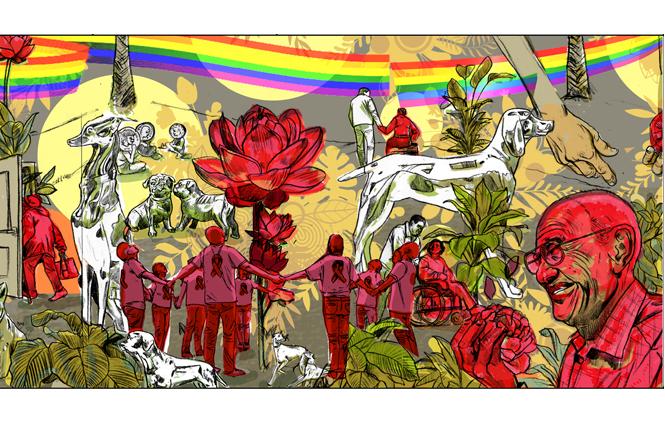
The mural, titled “Never Alone,” will be painted by Serge Gay Jr., who told the Bay Area Reporter he wanted to tell a story through the art, which will be on the side of the building at 401 Duboce Avenue that houses the hospice that opened in 1986. While Maitri still cares for people living with AIDS, it also serves those who are homeless with short-term stabilization services, as the B.A.R. previously reported. (https://www.ebar.com/news/news//285966)

“Definitely I wanted to tell the story of what Maitri represents, their history, the people there, and the diversity of the community in the Duboce Triangle,” Gay, a 36-year-old gay man, told the B.A.R. “Overall, it talks about Maitri and the HIV/AIDS pandemic, and the people left behind. I want that story really strongly stamped within the wall.”

Gay said that the mural, which has been designed in draft and will be tweaked considering community feedback, includes “a lot of symbols of people who have died from AIDS and HIV and what has happened, and is still happening.”

For example, people in red symbolize those lost to AIDS. A lotus flower symbolizes life and rebirth. Animals symbolize both caregivers and companions, and are a reminder of nearby Duboce Park, which is a favorite spot for dogs and their owners.

People interested in providing their input were invited to a recent virtual meeting, according to Joaquin Castillo Arana, a member of Maitri’s board of directors, who also said that Maitri has been keeping the Duboce Triangle Neighborhood Association involved in the process.

DTNA did not respond to a request for comment.

Work on the mural is scheduled to begin in “late June or early July” and be “completed by the end of the summer at the latest,” the Reverend Rusty Smith, a gay man and Anglican priest who is the executive director of Maitri, told the B.A.R.

Third AIDS-related mural
It will be the third mural in the Castro district that addresses the AIDS epidemic. On 16th Street at Market is the mural “The Hope For A World Cure.” Elba Rivera and Clif Cox created it in 1998 in collaboration with a number of other artists under the purview of Precita Eyes Muralists. It was damaged in 2017 by a graffiti artist.

The “Laughing Gorilla” mural, on the side of the building at 19th Street at Castro, was inspired both by the AIDS epidemic and the 1989 Loma Prieta earthquake. Created by David Seibold, a gay man, during the height of the AIDS crisis, it was restored in 2019.

It was June 5, 1981, of course, that the U.S. Centers for Disease Control and Prevention’s Morbidity and Mortality Weekly Report noted five cases of pneumocystis pneumonia among previously healthy gay men in Los Angeles. Later, it was understood the men had developed the condition due to HIV infection (though the viral agent was not discovered until 1983).

“That’s what this is about,” Smith said. “The reason we wanted our building to have a mural is the stigma of HIV/AIDS continues today. Maitri was an instrumental place where care, love, and outreach to people with AIDS was one of a kind. … Through ‘Never Alone,’ we look at the bravery that Maitri was part of for people totally alone and abandoned by the community.”

Smith told the B.A.R. that the project was brought to Maitri by the Castro/Upper Market Community Benefit District.

“When this mural came to us, Serge had been chosen by a prior process,” Smith said, adding that Gay is a “rock star.” “We started our process back in September [2020] with different listening groups.”

Gay — also known for a mural on the side of the newly reopened Castro bar Moby Dick at 18th and Noe streets — said that he was selected in 2019 for a CBD-funded mural “that was going to be at the site of Fitness SF” but that “the project failed.”

“The design was completely different because that was for the Castro but this is for the Duboce Triangle community, so I wanted to make sure the design [worked with] the neighborhood,” Gay said. “This is a brand new, different design.”

Gay said that the mural at Fitness SF Castro (which is located at Market and Noe streets) “didn’t work out” due to “complications with the building owner.”

Fitness SF did not respond to a request for comment.

Andrea Aiello, a lesbian who is the executive director of the CBD, stated to the B.A.R. that Gay was chosen through an open, competitive process.

“The mural on Maitri is funded through a grant from the CBD from the SF Arts Commission,” Aiello stated in an email, adding subsequently that the money comes from $25,000 awarded in Fiscal Year 2019-2020.

Arana stated to the B.A.R., “Though the location has changed, the underpinning rationale for why [Gay] was picked not only still holds true, but they are underscored by the location and context. … His ability to present a cohesive and comprehensive submission that indicated not only his artistic ability but his understanding of resourcing (time, supplies, space, etc.) required to execute a mural of this size.”

Smith said that it is his fervent hope that the mural leads to greater awareness of the HIV/AIDS epidemic and Maitri’s work as the city and country emerge from the COVID-19 pandemic this summer.

“HIV/AIDS is still here, in these marginalized communities where people don’t have access to health care,” Smith said. “Maitri is still that place of love, care and acceptance. As a young person in the 1980s, that’s what we said to people we cared for: that we’ll never forget you, and will continue to fight until there’s a cure, and so this 40 year anniversary is hopeful and heartbreaking at the same moment.”

Help keep the Bay Area Reporter going in these tough times. To support local, independent, LGBTQ journalism, consider becoming a BAR member.

SF leads HIV response for 40 years – Bay Area Reporter, America’s highest circulation LGBT newspaper

0

On June 5, 1981, the Centers for Disease Control and Prevention’s Morbidity and Mortality Weekly Report published the first report on AIDS. Over the following four decades, San Francisco has been at the forefront in responding to the HIV pandemic.

“The message is especially important now, given what we’re going through with COVID,” Dr. Paul Volberding, one of the first doctors to treat people with HIV and now director of the UCSF AIDS Research Institute, told the Bay Area Reporter. “The two pandemics are obviously very different in many ways, but it’s encouraging to see that San Francisco has responded so well to both of them, in many ways leading the world.”

That report 40 years ago concerned five cases of unusual Pneumocystis pneumonia (PCP) among young gay men in Los Angeles. The first mention of “gay men’s pneumonia” in the Bay Area Reporter appeared in the July 2, 1981 issue. A second MMWR report published on July 3 described 10 more cases of PCP among gay men in Los Angeles and San Francisco, as well as 26 cases of Kaposi sarcoma, a rare cancer. A follow-up report in August included more than 100 cases.

Volberding, then 31, saw the first Kaposi sarcoma patient admitted to San Francisco General Hospital on July 1 — his first day on the job. Along with Dr. Marcus Conant, he soon started the nation’s first KS clinic. Two years later, Volberding, the late Dr. Constance Wofsy, Dr. Donald Abrams, and others created the first HIV outpatient clinic, known as Ward 86. The first inpatient AIDS unit, Ward 5B, was established the following summer.

“Ward 86 opened its doors in January 1983 recognizing that a designated outpatient clinic to treat patients with HIV with compassion and designated care was important,” current Ward 86 medical director Dr. Monica Gandhi told the B.A.R. “Ward 86 has since had many innovations, including the RAPID program providing same-day HIV therapy after diagnosis, a PrEP clinic, the Golden Compass program for HIV and aging, and the POP-UP clinic providing HIV care for marginally housed people.”

In May 1982, Volberding, Conant, the late B.A.R. publisher Bob Ross, activist Cleve Jones, and others started the Kaposi’s Sarcoma Research and Education Foundation, which later became the San Francisco AIDS Foundation. It was the second such organization in the United States, after Gay Men’s Health Crisis in New York City, founded by the late author and playwright Larry Kramer and others that January.

Ward 86 and Ward 5B, SFAF, Project Inform (started by the late Martin Delaney and Joseph Brewer in 1985), and Shanti (created in 1974 to care for people with other life-threatening illnesses) were among the components of the San Francisco Model of HIV care. The model involved multidisciplinary medical care in collaboration with community organizations that provided complementary services ranging from food delivery to buddy programs to hospice care.

“I don’t think we ever had a great strategic plan — it was really quite organic,” Volberding recalled. “We had a great university, we had a great health department, we obviously had a very organized and politically powerful gay community, and local political leadership was really quite advanced. We in the medical community benefited from the information networks that were out there in the gay community. We knew that we couldn’t deliver the at-home services our patients needed, but organizations in the community could. We had our different roles, and we respected each other in those roles.”

Prevention, activism, and treatment
From the earliest days, San Francisco was a leader in HIV prevention. In 1982, the Sisters of Perpetual Indulgence produced the Play Fair safer sex brochure, featuring what might be the first published advice that gay men use condoms. The Stop AIDS Project, started in 1985, came under fire from congressional Republicans for its sexually explicit educational materials and workshops. Taking another prevention tack, San Francisco’s Prevention Point, started in 1988, was one of the first needle exchange programs in the United States.

In December 2010, UCSF researcher Dr. Robert Grant and colleagues published results from a study showing that daily Truvada (tenofovir disoproxil fumarate/emtricitabine) reduced the risk of HIV infection by more than 90%. Gay and bisexual men in San Francisco were among the earliest and most enthusiastic adopters of PrEP, which was approved by the federal Food and Drug Administration in 2012.

In the same way as the Stonewall riots in New York City are commonly regarded as the first militant LGBT activism, even though the Compton’s Cafeteria riot took place in the Tenderloin three years prior, San Francisco saw some of the earliest AIDS activism before the founding of ACT UP/New York in March 1987.

The AIDS/ARC vigil outside the federal building at United Nations Plaza — perhaps the first act of civil disobedience related to HIV — started in October 1985 and went on for 10 years. That November, people with AIDS and their supporters organized a candlelight march from the Castro to the vigil site. Marchers taped hundreds of placards bearing the names of people who had died to the walls. Jones would later recall that this gave him the idea for the Names Project AIDS Memorial Quilt.

A San Francisco group called Citizens for Medical Justice carried out some of the earliest AIDS protests. The group changed its name to AIDS Action Pledge and later to ACT UP/San Francisco. ACT UP spearheaded a week of actions around the Sixth International AIDS Conference at Moscone Center in 1990, focusing on issues including the U.S. ban on travel and immigration by HIV-positive people and the crumbling of the San Francisco Model due to inadequate funding.

San Francisco also played a key role in the development of HIV treatment. Prior to the FDA approval of the first antiretroviral drug, AZT, in 1987, Project Inform educated the community about experimental therapies and helped people obtain them through buyer’s clubs. Researchers and clinicians at UCSF, SFGH, and Kaiser Permanente conducted clinical trials that would lead to more effective medications.

The first protease inhibitor, saquinavir, was approved in December 1995. This finally enabled people to put together drug cocktails that could keep HIV in check. Within a year after the debut of combination therapy, AIDS mortality had dropped dramatically in San Francisco and nationwide. On August 13, 1998, the B.A.R. ran its famous “No obits” cover, reporting that for the first time since the epidemic started, no obituaries were submitted for that week’s paper.

The new antiretrovirals came with unexpected side effects, leading some advocates and clinicians to favor later treatment and medication breaks. But two major studies, SMART and START, showed that delaying or stopping treatment is risky. In 2010, San Francisco was the first city to recommend that everyone should start treatment as soon as they are diagnosed with HIV. Federal treatment guidelines followed suit in 2012, as did the World Health Organization in 2015.

The advent of highly effective biomedical prevention and treatment raised the hope of eliminating new HIV infections and AIDS deaths. With this goal in mind, San Francisco launched its Getting to Zero initiative in 2014. According to the latest SF DPH HIV Epidemiology Report, there were 166 new HIV diagnoses and just over 15,900 people living with HIV in 2019, 69% of whom were age 50 or older. (See related story.)

Challenges remain
Despite the advances over the past 40 years, challenges remain. Black and Latino people are less likely to use PrEP and have a higher rate of HIV infection, but are less likely to start treatment promptly and achieve an undetectable viral load. People experiencing homelessness have the lowest rate of viral suppression, at just 39%. And after decades of research, there is still no vaccine for HIV and a cure remains elusive.

“I would love to have seen a vaccine for HIV the way we have now for COVID. On the other hand, I’d also love a treatment for COVID that was as effective as the ones we have for HIV,” Volberding said. “Just think how far we’ve come with HIV treatment — the fact that we have one pill once a day or even one injection once every month. Our [HIV] drugs are now available even in the most resource-limited settings around the world. Now we need to do that for the COVID vaccines.”

Help keep the Bay Area Reporter going in these tough times. To support local, independent, LGBTQ journalism, consider becoming a BAR member.

The “Gay Thanos” meme took over the internet just in time for Pride – LGBTQ Nation

Thanos, the notorious villain of the Avengers in the Marvel Cinematic Universe, is no stranger to memes. The antagonist of the blockbuster film Avengers: Endgame has continued living online as the face of social media’s favorite jokes.

But when a user on Twitter jokingly called himself the “gay Thanos,” others began talking about it, actually considering how much the Josh Brolin-portrayed character being gay or queer would make sense.

Related: Tom Holland would be okay playing a gay Spider-Man, but don’t hold your breath

It started when Scott Smajor, an out video gamer who is known for playing Minecraft, tweeted about a competition he was taking part in. His participation on all the different teams in the competition made him “basically gay Thanos.”

“Who’s to say Thanos wasn’t gay in the first place Scott?” one user responded.

The topic began trending on May 14 and users were fascinated with considering the idea.

Throughout his arc in the Avengers series of movies, Thanos strives to collect six colored gems to put on his infinity gauntlet, which grants him the ultimate power to obliterate half of all life with a snap of his fingers.

Reasoning in favor of the cult theory include the fact that the gems’ colors also correspond with the Pride flag’s colors, and that his infinity gauntlet needs to be bejeweled to grant him power in the first place.

Also, “he was a lil too experienced in choking someone,” a user pointed out while including a screencap of Thanos holding Loki up by his neck.

Some other posts took, well, liberties with their imagining of the concept.

Once it became the buzz of Twitter, People across the internet were bemused with the idea.

The main question left is if we’re imagining gay and queer people in the MCU, what other main characters are actually gay too?

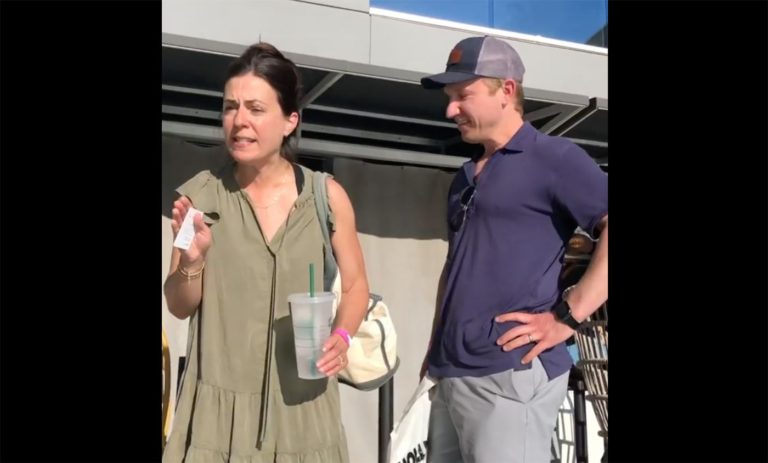
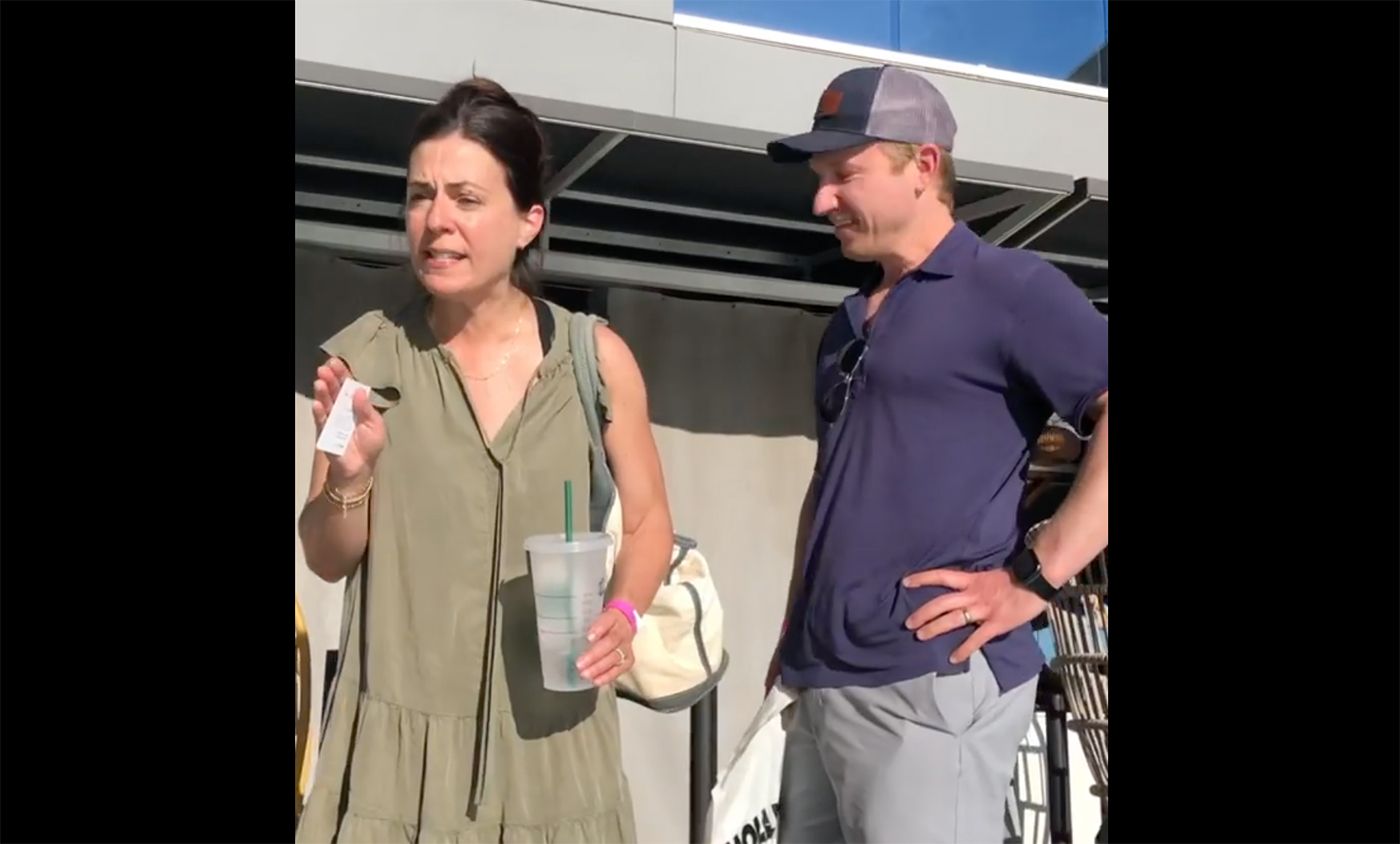
Anti-LGBT ‘Karen’ Video Emerges From Hotel Pool In Sacramento; Oakland Woman Was Allegedly Upset Over Women Kissing – SFist

Just in time for Pride Month, we have a new video going viral of an outraged white woman being escorted out of a hotel pool area in Sacramento after allegedly complaining about the fact that two women were publicly kissing with children present.

Now, we should preface this by saying we have no idea what transpired before the video was shot, and we have only the Instagrammer’s description of events and this report by CBS Sacramento to go on. The incident took place Sunday at the Kimpton Sawyer hotel in Sacramento, and a rep for the hotel calls it an “unfortunate disagreement between guests” that was later resolved peacefully.

But according to witnesses and those in the pool, including one of the women who was yelled at by these other guests, a group of people were being affectionate in the hotel pool, but two women in the group who were kissing were the only ones approached by these two outraged mothers — who didn’t want their children exposed to what was going on.

In the video seen below, people in the pool can be heard shouting, “Shame! Shame!” at the outraged people as they leave the pool area. CBS Sacramento reports that the complainants and the two kissing women were questioned by hotel staff about the conflict, and it looks like the “Karens” in question decided to pack up and leave.

A blond woman storms out and confronts the group for apparently calling them racist “for being white,” and she says, “Fuck off!” while flipping off the camera.

One woman does not want to go quietly, and declares herself a “Jewish woman from New Jersey” who now lives in Oakland — when accused of being “suburban” she replies, “I live in Oakland, you fucking asshole.”

This woman’s name appears to be “Deb,” according to the Starbucks cup in her hand, and to be more precise, she says to the people yelling “Shame!”, “I have never met anyone like you guys. Are you kidding me? I have never been more embarrassed in my life for the human race. I am a Jewish woman from New Jersey, you’re a disgusting piece of shit.”

It should be noted that the woman’s children appear to still be nearby as she’s swearing like a sailor.

She also pulls the “Do you have any children?” card, to which they reply that they don’t want kids, and she throws in, “Good, ’cause you’d be a fucking terrible dad.”

The Instagram poster is named Art Kaligos, and he writes, “This woman asked a female couple to stop kissing in a public pool because her kids were present. So we gave her the Cersei Lannister treatment while they were escorted out by security.”

One of the women who was scolded for kissing, Domonique Veasley, told CBS Sacramento, “This is not okay anymore, it’s 2021.” As she explains, “My initial reaction for the children was ‘Oh yeah,’ and then I was like ‘You are asking me to stop being me.'”

The pandemic brought out a lot of white outrage about public-health orders and mask wearing, with a lot of Trump supporters and virus skeptics who wanted the world to know that they believed such orders violated their rights.

Now we’re back to some good old-fashioned conflict between some libertine LGBT people living their lives and some more socially conservative moms who probably can’t hang in your average boutique-hotel pool party situation anyway, children or no.

Fun stuff!

Update: The families involved claim they are now being harassed thanks to all the media coverage and the video going viral. And they’ve enlisted a lawyer, who said in a statement to SFGate that the version of events being reported is “false and defamatory,” and had to do with observed “sexual activity” and not with kissing or homophobia.

“Young children should not be forced to witness explicit sexual activity in a hotel swimming pool in the middle of a summer afternoon irrespective of gender or sexual identity,” attorney Terry Fahn said. “When members of the party politely and respectfully asked that some of the sexual activity be toned down because children were close by in the pool, they were met with aggressive verbal attacks.”

As stated above, witnesses and one of the parties involved claim that the two women were singled out more than the straight people. But also, as stated above, we can’t confirm what exactly was happening in the pool before this confrontation took place.

Also, the Chronicle spoke to Kaligos, who shot the video, who does not say he saw anything very sexual happening when he heard shouting back and forth between women in the pool and the families in a poolside cabana. “This is about accountability and changing social norms,” he says. “The more we see these sorts of reactions, the more we can say this is not acceptable behavior.” And of the angry mothers, he says, “They’re the ones who made it go viral with what they were saying, their reaction.”