Home Blog Page 141

Sonya Deville Talks Being WWE’s First Openly Gay Female Wrestler – SEScoops

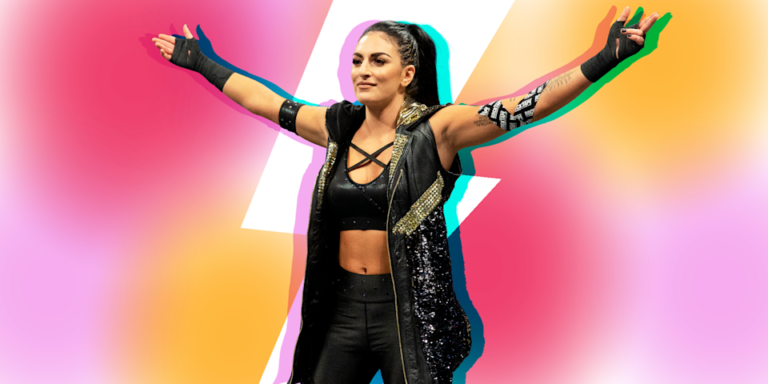
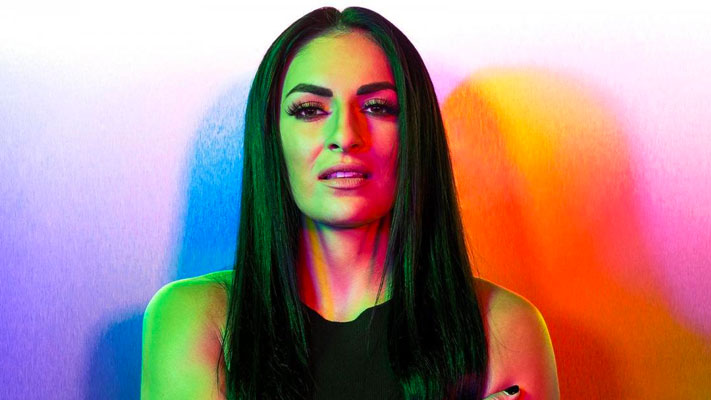
Sonya Deville was recently interviewed by Variety and spoke about being WWE‘s first openly gay female wrestler. She also spoke about the incident last summer involving an obsessed fan breaking into her home.

With Pride month kicking off this week, Deville spoke about being a role model and voice for the LGBTQ+ community.

“I really just want to be a voice for the community in sports — specifically, in the WWE,” said Deville. “I want to let people know that their sexuality doesn’t define them and how they identify doesn’t define them. And I’m a perfect example of it.”

She also spoke about coming out on an episode of Tough Enough and worrying that it would hurt her chances of getting hired by WWE.

“I honestly thought that was going to hurt my chances of get­ting hired. That’s just how naive I was,” she continued. “I didn’t accept myself, so I didn’t think anyone else was going to accept me.”

Deville was also asked about the incident involving an obsessed fan breaking into her home last summer.

“So the trial hasn’t even begun yet,” Deville said of the case. “We’ll probably be dealing with that for the next sev­eral months. But I will definitely speak on it once it’s all legally wrapped up. There are things that I want to say that I think could help performers, and just people in general, in the future.”

Sonya Deville on Receiving Messages From Fans

Despite the ordeal, Deville still loves hearing from her fans. She won’t stop being a voice for those who look up to her.

“I would say that about 70% of my fan base is part of the commu­nity somehow, some way. I get messages constantly on Insta­gram and Twitter and emails, just all the people always asking me like, ‘Hey, do you have any advice on how I should come out?’ Or ‘Thank you. You helped me feel OK with myself and my sexuality.’ That’s literally the reason I use my voice.”

38 Of The Funniest Gay Tweets Of 2021 – BuzzFeed

Sometimes I’m a little too honest with my parents… My mom: “you make it back home safe last night?” Me: “well actually I went home with a boy but I made it home this morning 😀” My dad in back of the car: 👁👄👁

62% of Americans oppose allowing boys who identify as female to compete in girls’ sports: Gallup – The Christian Post

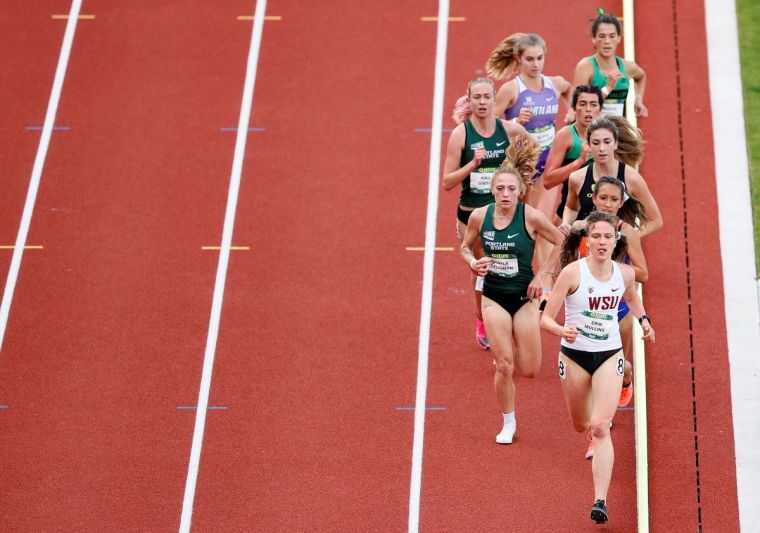
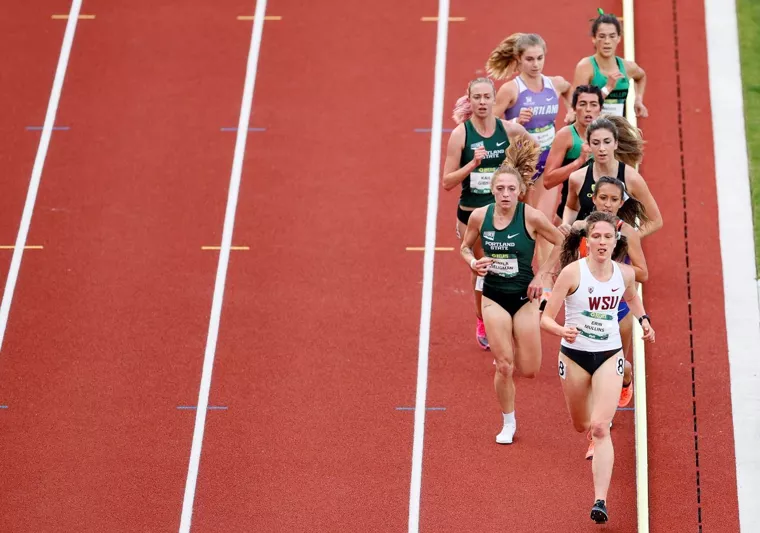
Track and field
Athletes compete in the 5,000-meter final during the Oregon Relays at Hayward Field on April 23, 2021 in Eugene, Oregon. |

A new Gallup poll reveals that a supermajority of Americans oppose allowing boys who identify as female to compete in girls’ sports.

The poll, released last week and conducted between May 3–18, assessed 1,016 American adults’ views about transgender-related issues. The survey had a margin of error of 5 percentage points. One question asked the respondents if “transgender athletes should be able to play on sports teams that match their current gender identity (or) should only be allowed to play on sports teams that match their biological gender.” 

Just 34% of Americans believed that trans-identified athletes should be allowed to play on sports teams that correspond to their gender identity. Support was highest among self-described liberals (63%), Democrats (55%), women (43%) and college graduates (40%).

Meanwhile, 62% of Americans expressed support for requiring trans-identified athletes to play on the team that matches their biological sex. Support was highest among Republicans (86%), self-described conservatives (85%) and males (72%). 

The release of the Gallup survey comes as several states have worked to pass legislation requiring student athletes to compete in sports that correspond with their biological sex. This week, Florida became the most recent and most populous state to enact a law banning boys who identify as female from competing in girls’ sports. 

According to the Women’s Liberation Front, an organization that supports such legislation, seven additional states have enacted bills designed to prevent female athletes from having to compete against biological males who have inherent physiological advantages over them: Alabama, Arkansas, Idaho, Mississippi, Montana, Tennessee and West Virginia. State legislators in more than two dozen other states have introduced similar bills that are still pending.

Meanwhile, at the federal level, congressional Democrats are pushing for the passage of the Equality Act, a legislative initiative billed as a necessary measure to enshrine protections for the LGBT community into law. Critics of the legislation on both sides of the aisle warn that its provision preventing discrimination on the basis of sexual orientation and gender identity will require allowing athletes to compete on teams that correspond with their gender identity. 

In an interview with The Christian Post, Beth Stelzer of the grassroots organization Save Women’s Sports, warned that with the passage of the Equality Act, “women’s sports will fade away” because “it will not take long until all of the records will be held by males.” 

While a majority of Americans were lukewarm to the idea of allowing boys to compete in girls’ sports, allowing transgenders to serve openly in the military registered much stronger support. Overall, 66% of Americans said that they had no problem with the idea. 

Although the support for letting transgenders serve in the military was substantial, support has decreased since Gallup last conducted a survey on the matter in 2019. The previous survey found that 71% of Americans supported letting transgender Americans serve in the military. Earlier this year, in the time between the two surveys, President Joe Biden signed an executive order reversing former President Donald Trump’s ban preventing transgender individuals from serving in the military.

In the 2021 survey, the demographic subgroup most supportive of letting transgenders serve in the military was self-described liberals, 92% of whom think that the military should allow transgenders to serve openly. Majorities of self-described moderates (73%) and independents (66%) agreed, as did a large number of self-described conservatives (43%) and Republicans (42%).

Besides conservatives and Republicans, majorities of all other demographic subgroups expressed support for allowing transgender military service. There was a noticeable gender gap, with 57% of men and 74% of women believing that transgenders should be allowed to serve in the military. Support declined with age, registering at 74% among those between the ages of 18 and 34, 66% among those aged 35-54 and 61% among respondents 55 and older. 

The Gallup survey also asked people if they knew anyone who identified as transgender. Overall, 31% of respondents answered in the affirmative, with 69% saying that they did not personally know any transgender individuals. Forty-six percent of younger Americans said they knew someone who was transgender compared to just 19% of respondents in the oldest demographic subgroup. 

A previous survey conducted in 2019 by Rasmussen found that a smaller majority of Americans (51%) opposed allowing biological males who identified as females to compete in women’s sports. However, support for allowing boys who identify as girls to compete against women has remained mostly flat, registering at only 29% in 2019 compared to 34% in 2021.

Ryan Foley is a reporter for The Christian Post. He can be reached at: ryan.foley@christianpost.com

‘Family Karma’: Dillion Patel Says He Never Called Vishal Parvani ‘Gay,’ Says ‘His Response of Violence Is Absolutely Disgusting’ – Showbiz Cheat Sheet

Dillion Patel from Family Karma may not have confronted Vishal Parvani on the show, but wanted to set the record straight about exactly what he said about Parvani during the season 2 opening episode.

During the episode, Parvani was frustrated when he found out that Patel was talking smack about him behind his back. Parvani said he heard Patel referred to him as gay and made crude comments about his sexuality. When Parvani confronted Patel, he said, “I’m gonna put your f**king face in the ground” if he ever talked about him like that behind his back again. Patel initially giggled, but nervously.

But later Patel was clearly stunned and upset. When the cast gathered at Brian Benni’s birthday party, older brother Shaan Patel confronted Paravni. Of course, this became a messy situation with friends taking sides and no resolution in sight.

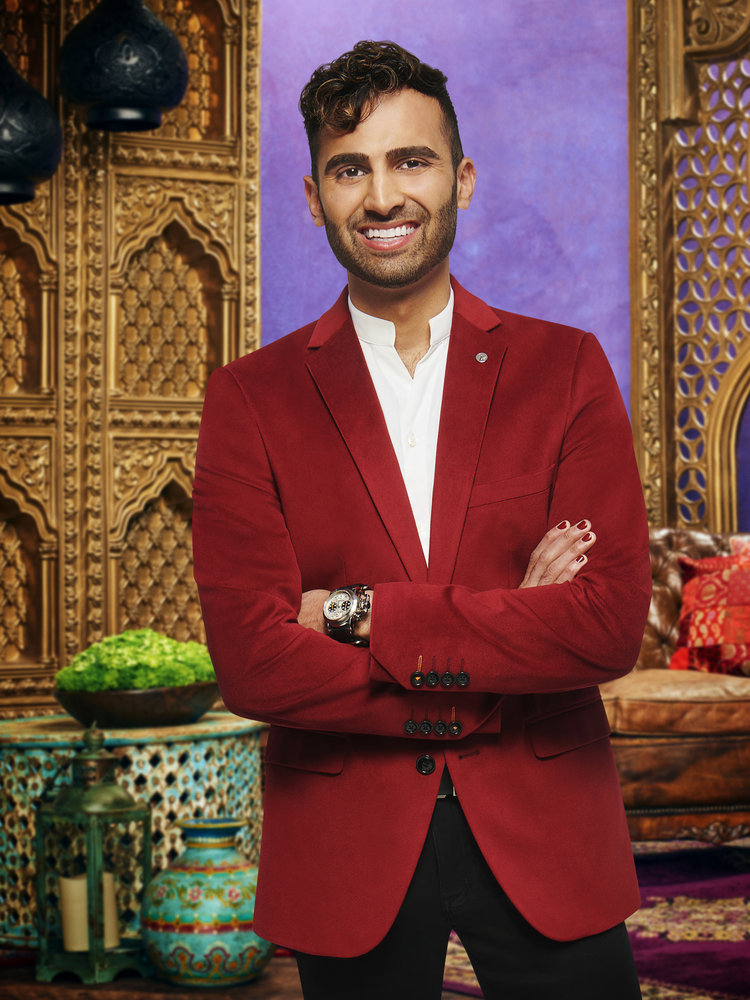
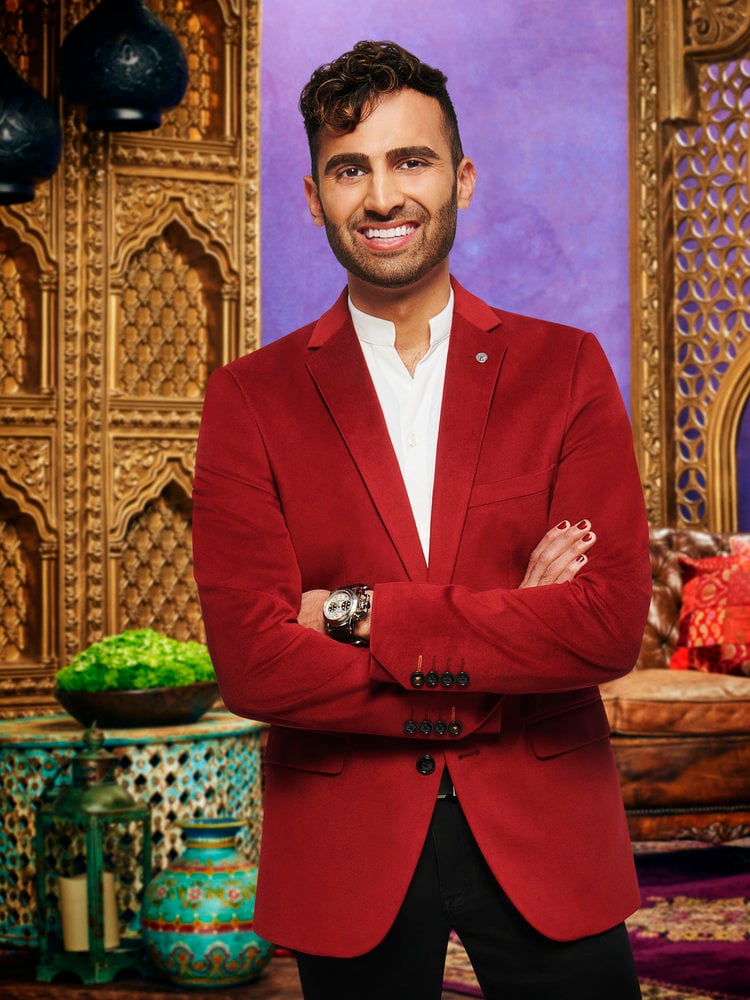
Family Karma Season 2 cast photo of Dillon Patel
Family Karma Season 2 cast photo of Dillon Patel |Juan Manuel Garcia/Bravo

Dillon Patel says he never called Vishal Parvani ‘gay’

Patel, who is a gay man, took to Twitter and insisted he never referred to Parvani as being gay. “I never called @vishal_parvani gay,” he tweeted. “I never said he s**ks d*ck.” Adding, “I did joke that he was on the Kinsey Scale (which LITERALLY includes straight people). Regardless, his response of violence is absolutely disgusting.”

Viewer opinions were divided. Some fans thought Patel was in the wrong to make the comments in the first place. Others thought Parvani was out of line with his response. “You shouldn’t say terrible things if you can’t stand the repercussions,” one person replied in the thread. “Your family are a terrible addition and it ruined the show. Your lack of remorse is astounding. How else was Vishal going to stop you? Why attack him in the first place?”

RELATED: ‘Family Karma’: Brian Benni and Monica Vaswani Describe Season 2 as ‘Courageous’ and ‘Vulnerable’ (Exclusive)

Another person tweeted, “Nothing says happy #PrideMonth like threatening to smash someone’s face into the ground,” which Patel retweeted. However, during the episode, Parvani insisted that Patel was like family and a little brother to the group. He said he had nothing but love for him, but felt the need to “teach him a lesson” by issuing the warning.

Dillon Patel later shaded Amrit Kapai for defending Vishal Parvani on ‘Family Karma’

Patel went further during the episode to shade Parvani. “The Richter Scale measures earthquakes,” he wrote in response to Parvani’s remark: “You called me gay and you compared to me a Richter scale of gayness.”  Patel added in his tweet, “The Kinsey Scale measures sexuality (including heterosexuality). @vishal_parvani doesn’t even know what he’s mad about.”

He then addressed Parvani’s best friend Amrit Kapai’s support for him when the encounter got heated. The argument came to a head during Benni’s birthday party. Everyone, especially Parvani had been drinking heavily and that’s when Shaan Patel decided to confront Parvani. Kapai saw the confrontation and jumped in to support Parvani.

RELATED: Family Karma Mic Drop: Anisha Ramakrishna Jokes to Her Mom That the Doctor Is the ‘First Man to Touch Me in Years’

“Vishal could say the earth was flat… and Amrit would feverishly support him,” Patel wrote. So where does the cast go from here?

Family Karma is on Wednesday at 9/8c on Bravo.

‘I Came Out On National Television And Became The First Openly Gay Woman In WWE’ – Women’s Health

I grew up in a very conservative, small town in south New Jersey where I didn’t know many gay people. That made it difficult for me to wrap my brain around the fact that I could be gay, even though I had a feeling I might be “different” since I was young. I stayed closeted because I didn’t think openness was an option. But, there was one way I was able to embrace part of my truest self, in spite of what I kept hidden: sports.

I’ve been into mixed martial arts since I was 16 years old. Bored of traditional high school sports, I started watching MMA on TV and became obsessed. I wanted to be a professional fighter before women in MMA took off, and before the UFC even allowed women to fight. Because my mom has always been my biggest supporter, she’d drive me to an MMA training over an hour away from our home each day throughout high school. There, I’d practice jiu jitsu, boxing, and Muay Thai.

I have so many varied interests, though, so I was also pursuing acting, and at 19 I moved to Los Angeles to pursue both of my passions. In my early twenties, a mentor and friend of mine, Maria Menonous, asked if I’d ever considered World Wrestling Entertainment, better known as WWE, because it’s the best of both worlds of what I loved to do: fighting and acting.

At 21, I ended up auditioning for the reality show WWE Tough Enough in 2015. They flew me out to Orlando, and I fell in love. WWE is everything I love to do rolled into one—the performance, the competitive nature, the acting, the character roles. It’s the best of Hollywood and fighting mixed into a single profession. For me, WWE is a dream come true, but my introduction into this world wasn’t exactly easy.

This content is imported from Instagram. You may be able to find the same content in another format, or you may be able to find more information, at their web site.

Because of WWE, I came out on national television.

On the premiere episode of WWE Tough Enough, I had to do a ring interview while wearing a bikini and high heels. (This, by the way, is not the attire in which I’m most comfortable. Now, I perform in my signature tuxedos.) In the interview, which was meant to help introduce my persona to the WWE audience, one of the executives asked me if I was “in a relationship.”

I froze. I stalled. Everyone was watching. At that point, I wasn’t out to anybody aside from my mom, my dad, and my sisters. In my head, I thought, do I lie on national television? I knew if I avoided the truth, I’d have to explain why to my girlfriend, who I’d see at home. I decided to speak from my heart.

I said, “Yeah, I have a girlfriend,” and everyone just started laughing and smiling—but they weren’t making fun of me. The crowd could tell that I had never said that before, and they felt for me. They were laughing with me.

Initially, I felt awkward, but seeing how much support, cheers, and smiles I was receiving from the audience shortly eased my nerves. After the interview, people took me aside and asked, “Did you just come out on national television?” It was a wild moment. I remember running upstairs in the performance center and being like, Oh my god. What did I just do?

I had no regrets, though, and for the first time I actually felt genuine relief about my sexuality. It felt so good to just say it once and for all, and my cheeks hurt because I couldn’t stop smiling. I called my girlfriend and my family, who all told me they were just proud to see me finally show my true self to the world.

quote

I realized how important coming out on TV was to others.

After coming out in such a public way, I was nervous and had all these mixed emotions: confusion, fear, excitement. To be honest, I thought being open about my sexuality was going to hinder my chances of making a name for myself in WWE. I didn’t know how the world and the WWE universe were going to perceive me, and I assumed it would impact me negatively. Luckily, and fortunately, it ended up being the opposite. I received nothing but love and support from the company and fans, both of which made it clear that my sexuality wouldn’t interfere with my WWE career.

About a year after the TV moment, I began to see just how impactful my coming out was for so many people. I’d received tons of messages through social media where people would say things like, “I saw you on TV, and you gave me the courage to come out to my parents,” or “Seeing you be so bold helps me feel comfortable with who I am and lets me know I’m represented in the WWE.” I realized that if I could use my openness to help other people, I’d also simultaneously become more comfortable with my own sexuality in my own skin—something that hadn’t been the case during most of my childhood.

It almost feels like, for the first 20 years of my life, I was wasting this amazing thing. And now, I want to scream it from the rooftops—as corny as that sounds. That’s why, as an out and proud adult, representation is so important in my work. Young people need to see that it’s okay to be a lesbian, or whatever sexuality and/or gender identity feels right to them. I just try to be myself and, hopefully, encourage as many people as I can to accept everybody, regardless of who they love.

Now, I dedicate my platform to promoting equality.

Because the reach of WWE is so widespread, I’m able to use my platform to create the change that I want to see. For the last six years, I’ve been using my social media channels to be a catalyst for equality, not just for the LGBTQ+ community, but to change stereotypical gender roles and promote gender equality in sport as well. I’ve partnered with groups like Comic-Con, The Trevor Project, GLAAD, the HRC Gala, and more to develop initiatives and campaigns that support and provide awareness to the queer community.

Had I not been put on the spot years ago, I may have waited even longer to come out, which would have felt suffocating. I feel as if I didn’t start really living my life until I was out, and now, I’m changing the WWE and the world simply by being who I’m meant to be. Yes, I work to be the best performer I can because of my love for the sport, but I also value paving the way for other LGBTQ+ folks in WWE and the industry more than anything.

This content is imported from Instagram. You may be able to find the same content in another format, or you may be able to find more information, at their web site.

Ultimately, I hope that sharing my story inspires others.

Coming out in any form is a personal journey, and everyone goes about it differently. Don’t ever be afraid to do it, but at the same time, don’t feel pressured to do so, either. Take your own path, and trust in finding your own timing.

That’s why I continue to share my story on WWE and other public platforms—to let people know it’s okay to be whoever you want to be. My biggest aim is to create a conversation that sparks change and promotes acceptance.

This is your life and your journey, so be proud of who you are, regardless of what you identify as or who you love.

This content is created and maintained by a third party, and imported onto this page to help users provide their email addresses. You may be able to find more information about this and similar content at piano.io
‘I Came Out On National Television And Became The First Openly Gay Woman In WWE’ – Yahoo Lifestyle

Photo credit: WWE

Photo credit: WWE

I grew up in a very conservative, small town in south New Jersey where I didn’t know many gay people. That made it difficult for me to wrap my brain around the fact that I could be gay, even though I had a feeling I might be “different” since I was young. I stayed closeted because I didn’t think openness was an option. But, there was one way I was able to embrace part of my truest self, in spite of what I kept hidden: sports.

I’ve been into mixed martial arts since I was 16 years old. Bored of traditional high school sports, I started watching MMA on TV and became obsessed. I wanted to be a professional fighter before women in MMA took off, and before the UFC even allowed women to fight. Because my mom has always been my biggest supporter, she’d drive me to an MMA training over an hour away from our home each day throughout high school. There, I’d practice jiu jitsu, boxing, and Muay Thai.

I have so many varied interests, though, so I was also pursuing acting, and at 19 I moved to Los Angeles to pursue both of my passions. In my early twenties, a mentor and friend of mine, Maria Menonous, asked if I’d ever considered World Wrestling Entertainment, better known as WWE, because it’s the best of both worlds of what I loved to do: fighting and acting.

At 21, I ended up auditioning for the reality show WWE Tough Enough in 2015. They flew me out to Orlando, and I fell in love. WWE is everything I love to do rolled into one—the performance, the competitive nature, the acting, the character roles. It’s the best of Hollywood and fighting mixed into a single profession. For me, WWE is a dream come true, but my introduction into this world wasn’t exactly easy.

Because of WWE, I came out on national television.

On the premiere episode of WWE Tough Enough, I had to do a ring interview while wearing a bikini and high heels. (This, by the way, is not the attire in which I’m most comfortable. Now, I perform in my signature tuxedos.) In the interview, which was meant to help introduce my persona to the WWE audience, one of the executives asked me if I was “in a relationship.”

I froze. I stalled. Everyone was watching. At that point, I wasn’t out to anybody aside from my mom, my dad, and my sisters. In my head, I thought, do I lie on national television? I knew if I avoided the truth, I’d have to explain why to my girlfriend, who I’d see at home. I decided to speak from my heart.

I said, “Yeah, I have a girlfriend,” and everyone just started laughing and smiling—but they weren’t making fun of me. The crowd could tell that I had never said that before, and they felt for me. They were laughing with me.

Initially, I felt awkward, but seeing how much support, cheers, and smiles I was receiving from the audience shortly eased my nerves. After the interview, people took me aside and asked, “Did you just come out on national television?” It was a wild moment. I remember running upstairs in the performance center and being like, Oh my god. What did I just do?

I had no regrets, though, and for the first time I actually felt genuine relief about my sexuality. It felt so good to just say it once and for all, and my cheeks hurt because I couldn’t stop smiling. I called my girlfriend and my family, who all told me they were just proud to see me finally show my true self to the world.

Photo credit: Hearst Owned

Photo credit: Hearst Owned

I realized how important coming out on TV was to others.

After coming out in such a public way, I was nervous and had all these mixed emotions: confusion, fear, excitement. To be honest, I thought being open about my sexuality was going to hinder my chances of making a name for myself in WWE. I didn’t know how the world and the WWE universe were going to perceive me, and I assumed it would impact me negatively. Luckily, and fortunately, it ended up being the opposite. I received nothing but love and support from the company and fans, both of which made it clear that my sexuality wouldn’t interfere with my WWE career.

About a year after the TV moment, I began to see just how impactful my coming out was for so many people. I’d received tons of messages through social media where people would say things like, “I saw you on TV, and you gave me the courage to come out to my parents,” or “Seeing you be so bold helps me feel comfortable with who I am and lets me know I’m represented in the WWE.” I realized that if I could use my openness to help other people, I’d also simultaneously become more comfortable with my own sexuality in my own skin—something that hadn’t been the case during most of my childhood.

It almost feels like, for the first 20 years of my life, I was wasting this amazing thing. And now, I want to scream it from the rooftops—as corny as that sounds. That’s why, as an out and proud adult, representation is so important in my work. Young people need to see that it’s okay to be a lesbian, or whatever sexuality and/or gender identity feels right to them. I just try to be myself and, hopefully, encourage as many people as I can to accept everybody, regardless of who they love.

Now, I dedicate my platform to promoting equality.

Because the reach of WWE is so widespread, I’m able to use my platform to create the change that I want to see. For the last six years, I’ve been using my social media channels to be a catalyst for equality, not just for the LGBTQ+ community, but to change stereotypical gender roles and promote gender equality in sport as well. I’ve partnered with groups like Comic-Con, The Trevor Project, GLAAD, the HRC Gala, and more to develop initiatives and campaigns that support and provide awareness to the queer community.

Had I not been put on the spot years ago, I may have waited even longer to come out, which would have felt suffocating. I feel as if I didn’t start really living my life until I was out, and now, I’m changing the WWE and the world simply by being who I’m meant to be. Yes, I work to be the best performer I can because of my love for the sport, but I also value paving the way for other LGBTQ+ folks in WWE and the industry more than anything.

Ultimately, I hope that sharing my story inspires others.

Coming out in any form is a personal journey, and everyone goes about it differently. Don’t ever be afraid to do it, but at the same time, don’t feel pressured to do so, either. Take your own path, and trust in finding your own timing.

That’s why I continue to share my story on WWE and other public platforms—to let people know it’s okay to be whoever you want to be. My biggest aim is to create a conversation that sparks change and promotes acceptance.

This is your life and your journey, so be proud of who you are, regardless of what you identify as or who you love.

You Might Also Like

Queer Eye star Antoni joins group fighting homophobia in Poland – PinkNews

Queer Eye guru Antoni Porowski is taking a stand against homophobia in Poland (Instagram/@antoni)

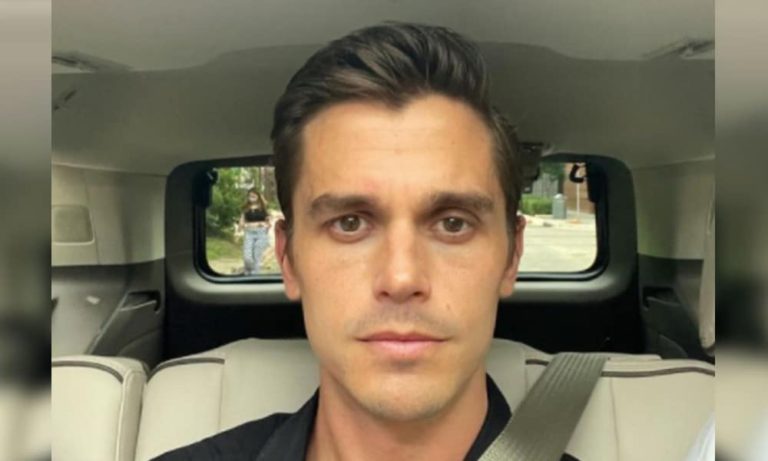
Queer Eye star Antoni Porowski has joined a “powerhouse” activist group fighting back against homophobia in Poland, the country of his parents’ birth.

The Polish-Canadian actor and reality TV chef is a new board member of Equaversity, an initiative organising fundraising support for the LGBT+ community in Poland.

He shared the news on Instagram on Wednesday (2 June), saying he felt he had “a responsibility to protect” his fellow Polish queers.

“On this commencement of Pride Month, I’m honoured and excited to announce that I am joining a powerhouse group of badass, selfless advocates in launching the Equaversity Foundation,” he said.

“Poland’s right-wing forces of the Catholic Church and state have left their own LGBTQIA+ citizens in a position where they have to chose whether to leave their homeland or defend themselves. As a descendant of Polish emigrants and fluid person, I have a responsibility to protect my queer Polish fellows.

“Today’s Poland is not representative of what it should be: A safe space for ALL people, irrespective of sexual preference or gender,” he continued. “This Pride Month and going forward, join me in supporting, however that looks like for you.”

He encouraged his 4.4 million followers to donate, educate and “repost the hell out of this so that Poland’s LGBTQIA+ know they are not alone and that the world is watching”.

Poland’s dizzying spiral into homophobia is led by country’s far-right president Andrzej Duda and amplified by the governing Law and Justice party, which has repeatedly positioned LGBT+ people as a corrosive threat to so-called traditional values.

Porowski has previously spoken out against the crisis, expressing his frustration to see people “fighting against their own”.

The Queer Eye star admitted that he hasn’t always been proud of his heritage, but felt he had a responsibility to stand for Poland’s LGBT+ community after hearing about rocks being thrown at a Polish Pride march in 2019.

“When you hear personal stories like that, it makes it a lot more difficult for me personally to turn a blind eye, and that’s where you feel like you have to do something,” he said.

Along with Porowski, the Equaversity board members include Nobel-winning Polish writer Olga Tokarczuk, film director Agnieszka Holland, and the fashion model Anja Rubik.

In an online conference on Tuesday the founders described Equaversity as a way to push back against a rising tide of anti-LGBT discrimination they view as part of a wider assault on democratic values in Poland.

Holland highlighted the shocking finding that 70 per cent of LGBT+ youth in Poland have suicidal thoughts. “We just have to fight for their lives,” she urged.

The funds collected by Equaversity will be passed on in the form of grants to other non-profit organisations or initiatives from all over Poland, including Warsaw Lambda, Trans-Fusion Foundation and Campaign against Homophobia.

“We can’t count on aid from within the country,” Rubik said.

Courage To Come Back: Mental Health award recipient helps LGBTQ youth find their place in the world – News 1130

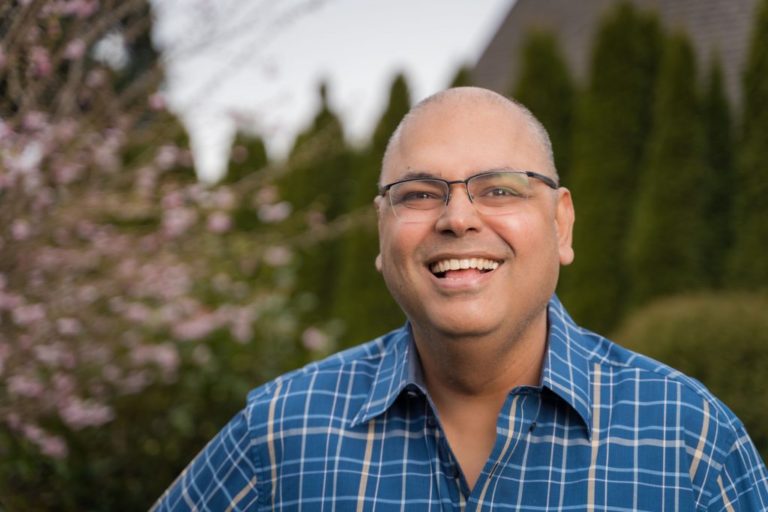
DELTA (NEWS 1130) – He has a mental illness, he is gay, and he is a person of colour. Today, Alex Sangha speaks up for others like him who don’t always have a voice. Our look at the recipients of the 2021 Coast Mental Health Courage To Come Back Awards continues with a profile of the winner in the Mental Health category.

It’s hard enough to talk about sexuality or mental health at the best times, but in some cultures it just isn’t done at all. Growing up in a South Asian household, that was certainly true for Sangha.

“You know, I can never understand why my brothers wanted to play with trucks and get all dirty and do all the rough stuff,” he recalls. “I wanted to be clean like a princess!

“When I was in preschool, I was dressing up in saris and putting on lipstick and wearing earrings and I didn’t know what was happening with me.”

Sangha admits he didn’t have an easy time as there weren’t the supports there are now.

“There was no Internet, there was no cell phones, there was no gay-straight alliances, there was nothing. There was no Grindr even,” he tells NEWS 1130.

“I secretly went to see a psychiatrist to help me to make me become straight. But during this whole process I always felt different.”

Eventually, Sangha was overtaken by thoughts of suicide. So he started his own resources, like Sher Vancouver, which supports South Asian LGBTQ youth.

“I started it because there was a number of very high-profile suicides in the community and it really hit me hard.”

Back in 2000, a young man threw himself off the Pattullo Bridge after being bullied at school for being gay, even though he wasn’t. For Sangha, this was a tipping point.

“Homophobia can impact anyone, it doesn’t matter if you’re gay or straight or bisexual or whatever,” he warns. “Discrimination is discrimination and we need to stop bullying, racism, homophobia, transphobia, period.”

Vancouver Pride would later name him its first Sikh Grand Marshal to recognize his achievements.

“The Pride thing was really amazing because I always felt like kind of an outsider in the gay community, to be honest, as someone who’s tall, brown, middle-aged, bald,” he admits. “You know, I’m not that good-looking young white guy with the six pack.”

Today, Sangha is a counselor in private practice, showing not only the Courage To Come Back, but the courage to give back. He’s even working on a documentary about growing up gay and South Asian. Emergence: Out of the Shadows is being released to film festivals this summer.

“What’s the point of me going through this if I’m not going to help others with what I’ve learned and what I’ve experienced?”


Read more:


NEWS 1130 is a proud sponsor of the Coast Mental Health Courage To Come Back Awards, which raises critical funds for people living with mental illness right here in B.C. You can make a difference by donating today. Visit couragetocomeback.ca to learn more.

Watch the full show below:

The New Paltz mayor who married gay couples before it was legal – Times Union

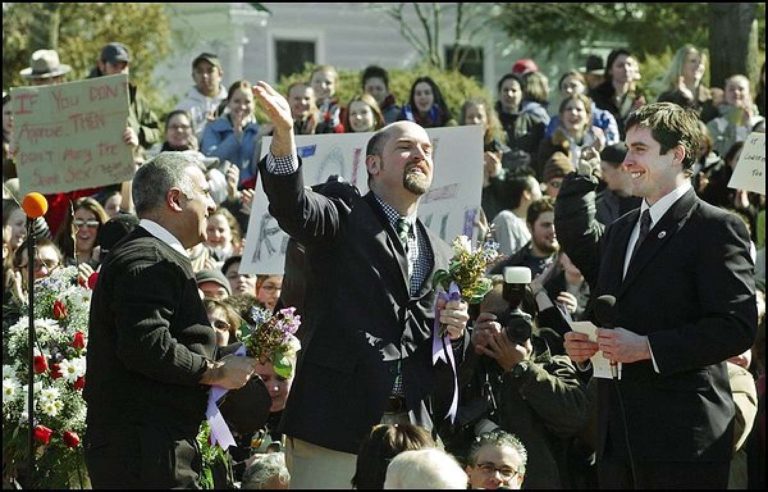
In February 2004, only one U.S. state — Massachusetts — legally allowed gay marriage, while states like Nevada and Missouri moved to ban it. Across the country the issue was hotly debated while in New Paltz, a 26-year-old mayor just one year into his term, decided to test the legal waters as he took a step for what he said he felt was right: by marrying 25 same-sex couples in a large-scale ceremony seven years before gay marriage was legal in New York.

“Back then, marriage equality seemed really far away. Now looking back, it feels as though it was inevitable,” said Jason West, who is currently the Energy Manager in the Albany Mayor’s Office of Energy & Sustainability. “I guess that’s how social change always looked. It’s always inevitable in hindsight but it is a struggle while you’re in the trenches.” 

It all began when West stumbled upon a legal loophole in New York State’s Domestic Relations Law, which governs marriages. The state had defined marriage as a contract between two people, not a man and a woman.  

“Mayors can perform weddings, so I was curious when I got into office and asked our village attorney if there is anything stopping me from marrying gay couples,” said West. “He came back and said, ‘It’s hazy – there is nothing in the law that forbids it, but nothing in the law that allows it either.’”  

Brook Garrett, center, blows a kiss to the audience after marrying Jay Blotcher, left, in February 2004. Blotcher recalled a sense of excitement and activism throughout the crowd as each person

Brook Garrett, center, blows a kiss to the audience after marrying Jay Blotcher, left, in February 2004. Blotcher recalled a sense of excitement and activism throughout the crowd as each person “realized they were taking a stand.”

DARRYL BAUTISTA/AP

West decided to go forward, and word travelled around town that same-sex couples who were looking to get married would have an officiant in their local mayor. 

West said at the time he thought two things would come out of the ceremony, aside from helping sweethearts seal the deal: first, that it would make local press; and, second, that it would lead to “good case law that might eventually lead to marriage equality.”  

“It was really the legal angle we were looking for,” said West. “The press angle was a nice bonus to do a little political theater that has some real-life meaning to it.” 

The news didn’t just get reported locally. In the days leading up to the big event, West did 11 radio interviews, seven satellite trucks sat outside Village Hall after the press release went out, and reporters travelled from Manhattan, an hour and a half from New Paltz. On February 27, 2004, hundreds sat in Peace Park on Plattekill Avenue to watch in support, while some protested, as same-sex couples went up one by one to get married by West.  

Protesters and supporters alike came out to witness the historic same-sex wedding ceremonies at New Paltz Village Hall on February 27, 2004.

Protesters and supporters alike came out to witness the historic same-sex wedding ceremonies at New Paltz Village Hall on February 27, 2004.

Paul Andrew Hawthorne/WireImage

First comes love, then comes marriage, then comes a legal fallout. Soon after, the Ulster County District Attorney Donald A. Williams charged West with 19 misdemeanors for solemnizing marriage without a license (police at the time could not provide eye witness accounts for all 25 ceremonies). Although the Domestic Relations Law stated that one does not need a license to be legally married so long as the ceremony is properly solemnized, Williams alleged that the couples did indeed need to also receive marriage licenses, which would be impossible to do because the licenses include language that specifies that the union must be between a bride and groom.

After a year and a half of court cases the district attorney dropped all charges.

‘Marriage is the cornerstone of American life’

Jay Blotcher and Brook Garrett, one of the couples who was married by West 17 years ago, is still married today. 

Blotcher, who participated in gay rights activism since 1989 in Manhattan and thought he would hang up his activism boots when relocating upstate to High Falls in 2001, defined the 2004 ceremony as a political act to prove same-sex couples should have marriage equality.  

“When we were offered to participate in this 2004 event, we said yes because we wanted to take a stand again, and we felt there was an injustice going on,” said Blotcher. “Marriage is the cornerstone of modern American life, and yet was being denied to LGBTQ+ people.” 

Jay Blotcher and his husband, Brook Garrett, received a New York City certificate of domestic partnership in April 2000 before their 2004 marriage.

Jay Blotcher and his husband, Brook Garrett, received a New York City certificate of domestic partnership in April 2000 before their 2004 marriage.

Andrew Velez

Their 2004 union marked a long road for the couple seeking legal backing for their relationship — in fact, they had traveled to multiple states across the country in search of the soundest legal documentation. They received a New York City certificate of domestic partnership in April 2000, and a Vermont certificate of civil union six months later that year.  

On the day of the 2004 ceremony, Blotcher recalled a sense of excitement and activism throughout the crowd as each person “realized they were taking a stand.” Despite a threat of West being arrested by the police before the first marriage, the event went smoothly to completion with no violence. 

“I drank in the joy, defiance and excitement of it,” said Blotcher. “As far as the eye could see in the park there were people. It was so exciting.” 

Not only was the February 2004 event a notable one for gay rights activism locally and beyond, it also led to “greater ramifications for this area,” said Blotcher, like the introduction of New Paltz’s first Pride march the following year in June. 

“Some people may have said they’ve never seen queer or LGBTQ people in the streets,” said Blotcher. “But the fact is LGBTQ people have been your friends and neighbors here in the Hudson Valley for decades, it’s just we’ve been hiding in plain sight. For the first time, people didn’t have to hide.” 

This landmark event arrived in the early stages of a larger public movement, which led to additional milestones like the 2007 opening of the Hudson Valley LGBTQ Community Center, which Blotcher co-founded.  

Now, this June, New York celebrates its 10-year anniversary of marriage equality in the state.  

“I have been a progressive activist for about 40 years, and I always say if you’re into immediate gratification, don’t get into civil rights, because the struggle is a long one,” said Blotcher.   

More Hudson Valley News


Construction worker hit and killed on I-95 by driver who sped away, FHP says – Yahoo News

Authorities are searching for a driver who hit and killed a construction worker on Interstate 95 North, according to the Florida Highway Patrol.

It happened about 3 a.m. Thursday in Deerfield Beach near the exit for West Sample Road. The interstate’s express lanes reopened shortly after 8 a.m.

The man died at the scene, according to FHP spokesman Lt Yanko Reyes. His name and age have not been released.

The highway patrol does not yet have a description of the car involved, Reyes said.

No other details were immediately available.

This is a developing story, so check back for updates. Click here to have breaking news alerts sent directly to your inbox.

HRC To Challenge Florida’s Transgender Sports Ban – On Top Magazine

The Human Rights Campaign (HRC), the
nation’s largest LGBT rights advocate, on Tuesday announced that it
would be filing a lawsuit to challenge a Florida law that prohibits
transgender athletes from competing on girls’ and women’s sports
teams.

The announcement came just hours after
Governor Ron DeSantis, a Republican, signed Senate Bill 1028 into
law.

“We will be filing a lawsuit to block
this arbitrary, discriminatory ban. #LetKidsPlay,” HRC said in a
tweet.

(Related: Florida
Governor Ron DeSantis signs transgender sports ban.
)

In a statement, HRC President Alphonso
David said that Florida is “on the wrong side of history.”

“The Human Rights Campaign will
always stand up to anti-equality forces on behalf of transgender
kids, and that is exactly what we plan to do by legally challenging
this ban on the participation of transgender girls and women in
sports,” David said. “Gov. DeSantis and Florida lawmakers are
legislating based on a false, discriminatory premise that puts the
safety and well-being of transgender children on the line.
Transgender kids are kids; transgender girls are girls. Like all
children, they deserve the opportunity to play sports with their
friends and be a part of a team. Transgender youth must not be
deprived of the opportunity to learn important skills of
sportsmanship, healthy competition, and teamwork.”

“The harmful provisions added to SB
1028 will not just impact transgender people in Florida. All
Floridians will have to face the consequences of this
anti-transgender legislation – including economic harm, expensive
taxpayer-funded legal battles, and a tarnished reputation. In
Florida, we are ensuring that there are legal consequences to pay for
being on the wrong side of history,” he added.

Florida is the ninth state to approve
such a ban. Other states include South Dakota, Mississippi, Arkansas,
Tennessee, West Virginia, Montana, Alabama, and Idaho. A federal
judge has blocked implementation of Idaho’s law.

Gov. Pritzker, other governors declare LGBT Pride month – ChicagoPride.com

With Republican-led state legislatures currently pressing for anti-transgender measures in 31 states, Democratic governors and one Republican governor have stepped up to show support as LGBT Pride month gets underway.

The president led the way.

On June 1, President Joe Biden issued a presidential proclamation officially making June ‘LGBT and Queer Pride Month.’

The proclamation says, “Pride is a time to recall the trials the lesbian, gay, bisexual, transgender, and queer community has endured and to rejoice in the triumphs of trailblazing individuals who have bravely fought—and continue to fight—for full equality. Pride is both a jubilant communal celebration of visibility and a personal celebration of self-worth and dignity.”

Biden also used the proclamation to highlight the Administration’s LGBT contributions so far, “Nearly 14 percent of my 1,500 agency appointees identify as LGBT, and I am particularly honored by the service of Transportation Secretary Pete Buttigieg, the first openly LGBT person to serve in the Cabinet, and Assistant Health Secretary Dr. Rachel Levine, the first openly transgender person to be confirmed by the Senate.”

The president also noted there is a lot yet to do on behalf of LGBT Americans.

He cited lack of protections in hospitals, schools, and other public spaces.

He noted a “tragic spike in violence against transgender women of color” and a rise in self-harm and death by suicide among trans youth of color.

“Some States have chosen to actively target transgender youth through discriminatory bills that defy our Nation’s values of inclusivity and freedom for all,” Biden said.

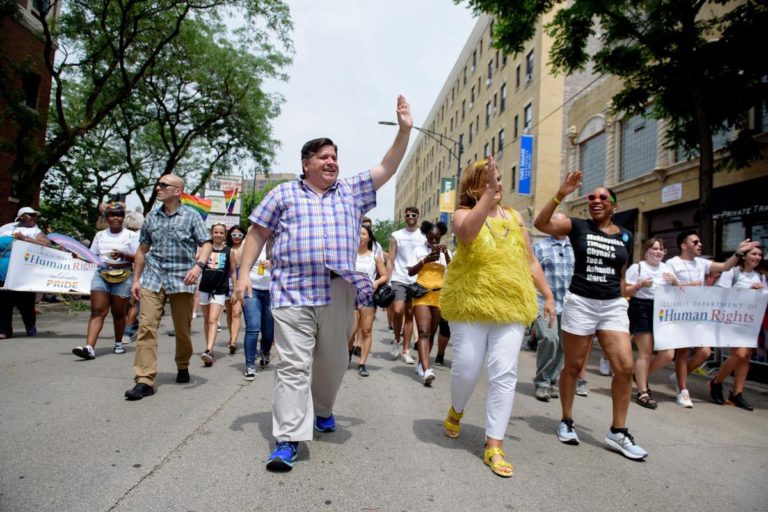
Illinois Gov. J.B. Pritzker said, “Celebrating the diversity of our society has been a cornerstone of my administration. And during LGBT Pride month, I remain committed to help Illinois become a beacon of hope for our LGBT community nationwide.”

Pritzker noted his administration’s achievements.

“Our state has brought inclusive LGBT curriculum into our schools. We expanded Medicaid coverage for gender affirming surgery. We required single occupancy restrooms be designated as gender neutral. And so much more,” he said.

“Though Illinois has made great strides in the fight for equality, it’s incumbent on all of us to keep up that fight. I’m proud that Illinois stands as a leader in equality and hope and I will continue to fight for LGBT rights so our state is affirming and inclusive for all.”

Utah Republican Gov. Spencer J. Cox, who was inaugurated earlier this year, bucked his own political party to become the first Utah governor to recognize Pride month.

“Here in Utah, we strive to create a culture of hope, love, understanding, and respect by celebrating our common humanity,” the Latter-day Saints church member said as he issued his Pride declaration.

The legal document says, “We must encourage relevant and vital conversations about what it means to love each other, understand our differences, and support our LGBT friends and family members.”

Republican Florida Gov. Ron DeSantis did the opposite to kick off Pride month. He vetoed funding for LGBT mental health and funding for the conversion of a former hotel to house homeless LGBT youth.

The day before the vetoes, DeSantis signed a law banning transgender athletes from participating in sports with their proper gender identity.

U.S. Rep. Val Demings (FL-10th district) responded, “The first day of Pride, Florida’s governor signed legislation targeting transgender children—again, children—for exclusion and discrimination. It’s wrong. We must protect our children.”

Other Democratic governors issued their own proclamations and declarations.

California Gov. Gavin Newsom flew the Pride flag over the state capitol building saying, “From West Hollywood to the Castro District, California is home to many vibrant LGBTQ communities. By flying the pride flag over the state capitol, we send a clear message that we believe in living authentically, no matter who you are or who you love.”

Colorado’s openly gay Gov. Jared Polis said, “I am so proud to be Governor of a state that celebrates love across the board and truly represents a Colorado for all.”

Michigan Gov. Gretchen Whitmer said, “The LGBT community is an essential part of who we are, and I am committed to making this state a place where you are protected and able to thrive while being your authentic self. We have come so far, but there is still so much work left to do.”

Nevada Gov. Steve Sisolak said, “I am proud to proclaim June as LGBT Pride month in Nevada as we remain committed to equality. And this month is an opportunity to recognize the impact that lesbian, gay, bisexual, and transgender individuals have had and will continue to have on our state and nation.”

Washington Gov. Jay Inslee said, “While Pride shouldn’t be limited to just a month, it is an opportunity to educate ourselves on systemic issues faced by the LGBT community. Let’s celebrate all the activists and leaders who got us here and commit to continuing the fight.”

Related: Pride is back in 2021! Everything you need to know for Pride Month in Chicago

Proud to Play kicks off Pride Month – Lethbridge Herald

By Alejandra Pulido-Guzman
For the Lethbridge Herald on June 3, 2021.

The Lethbridge Public Library hosted their first Proud to Play virtual panel event on this week to kick off Pride Month.
The event hosted Erin Silver, author of “Proud to Play Canadian LGBTQ+ athletes who made history”, Bonnie Provencal a Lethbridge softball and baseball coach, and Shawn Daye-Finley, Program and Event Coordinator at Lethbridge Sport Council and former national team Olympic wrestler.
The book Proud to Play came as a suggestion from a publisher while Erin Silver was pitching an idea for her next book.
Silver said they’d always wanted a book about the experience of LGBTQ+ athletes in Canadian professional sports. They were interested in a book about different Canadian athletes who made a difference, how things had changed over time and if it was different from sport to sport.
“I was really excited, but I also was very nervous. This topic is so important because everyone should feel safe and included playing sports and being part of a team, and they shouldn’t drop out because of who they love or who they are,” said Silver.
For her book, Silver spoke to many Canadian athletes, academics, non-profit and human rights organizations. She wanted to make sure that when the book came out, it would be a good reflection of the story of sports in Canada, where we have come from, how we’re doing and where we’re going.
Silver shared that the most challenging part about writing her book was hearing some of the stories of what the athletes had been through.
“Some of the athletes felt depressed, anxious, they felt like they couldn’t be themselves. They couldn’t perform their best, all because they were part of the LGBTQ+ community and teammates would say things that weren’t nice and made them feel bad,” said Silver.
“Some people turned to alcohol or drugs or felt like they wanted to kill themselves and that’s a terrible thing, we don’t want anyone to feel like that,” added Silver.
Not everything was negative though, there were many inspiring moments. Silver shared that one of the most inspiring things about writing this book, was hearing about how good it felt when those athletes came out and could be themselves.
Some of the athletes announced they were part of the LGBTQ+ community before going to certain countries for the Olympics, that might have different views and they were nervous. Some of them came out at a time when they could potentially put their life at risk. They weren’t sure what was going to happen when they went to the Olympics and everybody knew that they identified as part of the LGBTQ+ community.
When it came down to selecting which athletes would be part of her book, Silver said that it was a matter of finding those who were willing to share their stories, willing to be role models to others.
“There is tons of amazing Olympians and professional athletes who really wanted to share their message and talk about diversity and inclusiveness. It took a lot of research and narrowing down the list and finding people who wanted to be a spokesperson, because unfortunately a lot of people are still in the closet,” said Silver.
On the topic of racism and sexist discrimination in sports, Shawn Daye-Finley has seen a fair share of it growing up. Especially when traveling abroad.
“The turning point or eye opener for me around discrimination was when I traveled to Russia for the university role games. We were warned before going that there is some discrimination against openly gay people, or people from the LGBTQ+ community and they warned us about you should not be so open about your feelings and your sexuality,” said Daye-Finley.
Daye-Finley shared that during his stay in Russia for the games, some athletes took it upon themselves to advocate for members of the LGBTQ+ community. He highlighted a fellow Canadian wrestler who had a Canadian flag that had the rainbow colours. She placed it in her window and was asked to take it down, but she refused and wore it around her to the closing ceremonies.
“I remember that that flag vividly and being very proud of the Canadian flag and rainbow, because of our beliefs and in being accepting of our differences. Realizing that we’re there in the pursuit of excellence and not to discriminate against one another,” said Daye-Finley.
Bonnie Provencal shared her experience with sports by remembering what it was like growing up. When she was about 10 years old, she was the only girl on her baseball team. By the time she was 14, her parents made her stop and start to play girls softball.
“I always remember I felt like belonging and being a member of that team and being good enough to play. That was always the thing that I felt like I could control. I could practice all these things and I could always improve my skills to be good enough to play. But sometimes it doesn’t matter how good you are at something, you might feel like you have to do other things to belong,” said Provencal.

Share this story:

5


Rainbow Rovers FC launch ‘Eco-Kit’ for Pride ahead of Football United 2 match in August – Sports Media LGBT+

Their first outing back in summer 2019 was a huge success, and now Sophie Cook’s Rainbow Rovers FC are preparing for a follow-up fixture – and they’ll be running out at Whitehawk FC in shirts sporting a Pride flag sash made from recycled plastic bottles…

By Jon Holmes

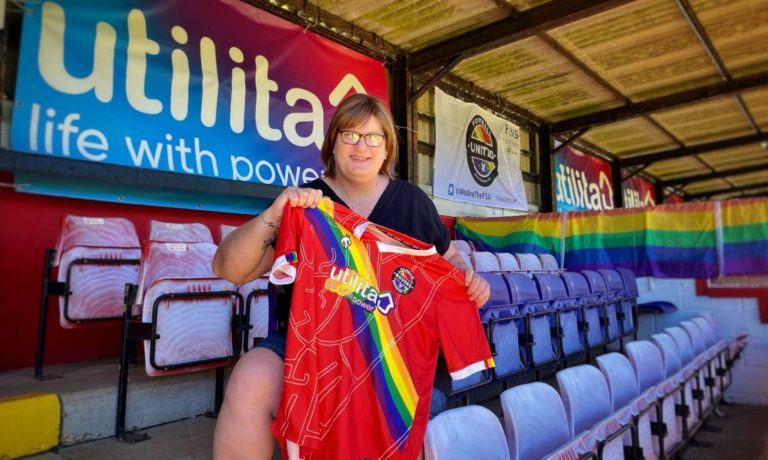
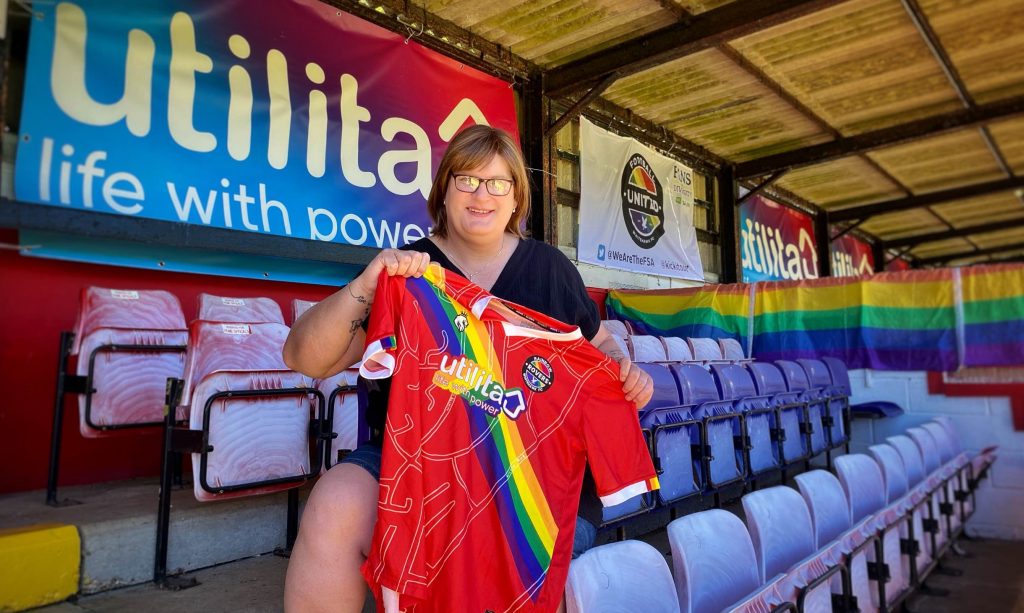
Sophie Cook with the David Shrigley-designed ‘Eco-Kit’ that Rainbow Rovers FC will wear for Football United 2

Rainbow Rovers FC will return to the pitch in August in a new eye-catching, eco-friendly kit with a Pride flag sash, designed by renowned visual artist David Shrigley.

The shirt which Rainbow Rovers players will wear in the ‘Football United 2’ match was proudly shown off on Wednesday by player-manager Sophie Cook at Whitehawk FC’s TerraPura Ground in Brighton, which will again be the venue for the team’s second charity match event.

Rovers, whose squad is made up of amateur LGBTQ+ footballers drawn from across the UK, beat a side of former professional players in their debut outing on Brighton Pride weekend in August 2019. The event was covered by Sky Sports.

Another Rovers vs ‘All Stars’ fixture has now been confirmed for Saturday, August 7, with a 3pm kick-off. Tickets for the Utilita-sponsored match are available to buy now, priced £5 adults and £2.50 for U16s, from the Whitehawk FC website.

“Football United created so much positivity within the game and I was so honoured to lead the Rainbow Rovers team,” Cook tells Sports Media LGBT+.

“Every single member of our squad was a groundbreaker, someone that contributed to breaking down prejudice within the game.

Highlights of the first Football United match at Whitehawk FC in August 2019 – skip to 4:44 to watch Anwar Uddin’s long-range wondergoal!

“It’s an exciting time to be launching Football United 2 after the lockdowns of the past year.

“The squad are coming back together, we’ve some new additions, plus the support of Utilita, Huxley Digital, Hope and Glory, the FSA and, of course, Whitehawk FC.”

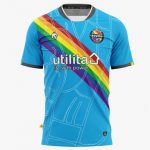
The Whitehawk club shop is already taking pre-orders for the new Rainbow Rovers shirt, as well as a blue goalkeeper’s jersey that also features the Pride flag sash (£40 adults, £30 juniors).

The ‘Eco-Kit’ by Hope and Glory Sportswear is made from recycled plastic bottles and features on the front the logo of sponsors Utilita.

The reverse of the shrt displays the logo of Huxley Digital who have designed the team’s new website, rainbowrovers.org.

The site outlines the Rainbow Rovers mission – to celebrate “football, community, and 100% inclusion” – and includes profiles of team members, including Cook herself.

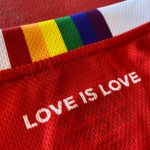
She added: “Our new shirts carry the slogan ‘love is love’ and we will continue to play for greater diversity throughout football. After all, there is no place for hate in the beautiful game.”

Cook dedicated Wednesday’s launch to the memory of Leviathen Hendricks, the founder of East End Phoenix FC and former GFSN fangroups co-ordinator and secretary who played for Rovers in the August 2019 match.

Leviathen sadly passed away on May 28 – read our obituary here.

For more information, visit the Rainbow Rovers FC website and follow on social on Twitter and Instagram. If you’re a footballer who is LGBTQ+ and interested in playing for Rovers, or you’re just keen to support the event in a different way, email rainbowrovers@whitehawkfc.com.

Further reading…

Rainbow Rovers founder Sophie Cook wins British LGBT Award (Sky Sports, November 2020)

Whitehawk FC’s Sophie Cook: ‘I had to change my life, or end it’ (Guardian, August 2020)

Guy Butters on the story behind Football United (Sky Sports, August 2019)


Sports Media LGBT+ is a network, advocacy, and consultancy group that is helping to build a community of LGBT+ people and allies in sport. We’re also a digital publisher. Learn more about us here.

LGBT+ in sports? Your visibility will inspire other people – sharing your story can be hugely rewarding and you don’t have to be famous to make a positive and lasting impact. We encourage you to start a conversation with us, in confidence, and we’ll provide the best advice on navigating the media as part of your journey so that you retain control of your own narrative.

Email jon@sportsmedialgbt.com or send a message anonymously on our Curious Cat.

Olivier Gay takes over as President & CEO of SCOR Canada Reinsurance – Reinsurance News

French reinsurer SCOR has announced the appointment of Olivier Gay as President and Chief Executive Officer (CEO) for SCOR Canada Reinsurance Company, in addition to his role as Chief Underwriting Officer (CUO) for the business, effective June 11th, 2021.

olivier-gay-scorGay takes over as President and CEO of the company from Paul Christoff; and will report to John Jenkins, CEO of Reinsurance Operations for the Americas.

In his new role, Gay assumes oversight of all aspects of SCOR’s Canadian operations and will be tasked with driving the superior level of service that the business delivers for its clients.

Gay, who has held roles of increasing responsibility since first joining SCOR in 2010, was most recently named as CUO for SCOR Canada Reinsurance. Previously, he served as Deputy Chief Financial Officer (CFO) with SCOR in Singapore for the Asia Pacific region.

In August of last year, he was named Senior Vice President for SCOR Canada Reinsurance Company. At this time, it was also revealed that Gay would serve as Deputy CEO of the company, supporting Christoff.

Jenkins commented: “With more than a decade of experience at SCOR across three continents, Olivier brings a wealth of experience to this expanded role. His success and leadership since joining the team in Canada will further enhance SCOR’s position as a key player in the Canadian market.”

Print Friendly, PDF & Email