Australian label Aqua Blu exploded on the runway at 2021 Afterpay Australian Fashion Week, showcasing designer Kristian Chase’s collection of stunning pieces in their ‘Enchantment Show’.
Beautifully patterned swimwear aside, the label has always been centred on diversity when it comes to the products they design but also extend that to the models they use in their shows.
From all ages, ethnicities, shapes and sizes and genders, the collection is made for real people and worn by real people.
‘MONEYBOYS’ will premiere at Cannes Film Festival in July. (Facebook, Flash Forward Entertainment photo) ‘MONEYBOYS’ will premiere at Cannes Film Festival in July. (Facebook, Flash Forward Entertainment photo)
TAIPEI (Taiwan News) — Taiwanese LGBT drama “MONEYBOYS” will premiere at the Cannes Film Festival in July.
On Thursday (June 3), the movie made it onto the list of the festival’s “Un Certain Regard” section. Directed by Chinese-Australian Chen Bo Yilin (陳熠霖), the production team features a number of European professionals.
Chen studied at Film Academy Vienna and was nominated by the Clermont-Ferrand International Short Film Festival for the short film “Little Precious,” CNA reported. Some of Taiwan’s youngest and brightest talents are in “MONEYBOYS,” including lead actors Kai Ko (柯震東, Ko Chen-tung) and JC Lin (林哲熹).
They are a gay couple in the movie, with Ko’s character Fei leaving his hometown to become a sex worker. They meet years after this, when Lin’s role has settled down as a husband and dad, but Fei’s feelings toward his ex return strongly.
As for the nomination, Ko expressed his gratitude and said, “I hope the pandemic will be over soon and people can go to the theater.”
Lin told UDN the way the film was made was really unique and that he is looking forward to the screening of the film and to sharing his joy with fans.
Award-winning actress Jodie Foster will be a special guest at the opening ceremony on July 6 and receive an honorary Palme d’Or. The world premiere of “MONEYBOYS” will take place at Cannes around the same time.
We’re obsessed with the Stan Original Series RuPaul’s Drag Race Down Under and now two of our worlds have collided with one of the queens making a surprise appearance on the runway at Fashion Week!
Etcetera Etcetera appeared on the runway show for label Iordanes Spyridon Gogos, serving us up catwalk realness!
Gogo’s Australian Fashion Week debut show was a result of his collaboration with 25 different artists and brands and included garments made from sustainably sourced materials and is gender fluid.
Etcetera looked FIERCE! Check out their chat with Justin Hill about their elimination from Drag Race below!
Download LiSTNR & enjoy a new world of audio with all your favourite shows and stations in one place!
When Naomi Osaka showed vulnerability, her sport put her in a headlock and drilled its knuckle into her forehead. Sport is what sport does. For all of the ways it can enrich our lives, it is also an unforgiving and heartless tramp.
This week it was unable to grasp the simple social construct of mental health. Not for the first time, even this week.
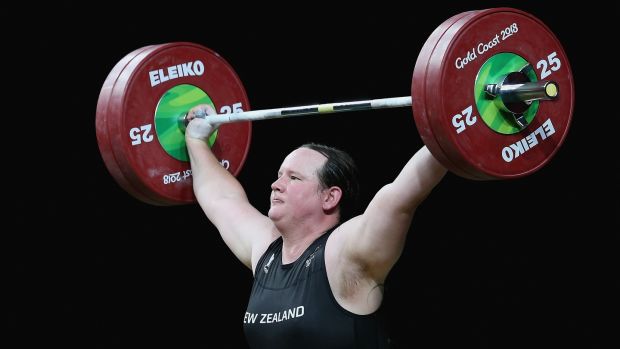
While Osaka was packing her bags at Roland Garros, in New Zealand a rival weightlifter was talking about the prospect of Kiwi transgender athlete Laurel Hubbard competing in the women’s event at the Tokyo Olympics. She said it is “like a bad joke” for female competitors.
The anti-trans volcano is rumbling. Hubbard is set to become the first transgender athlete to compete at the Olympics after weightlifting’s governing body modified qualifying requirements.
The 43-year-old, who competed in men’s competitions before transitioning in 2013, still has to meet the New Zealand Olympic Committee’s selection criteria before her place is confirmed. But Hubbard’s participation is likely.
Last July an unnamed Premier League footballer revealed he was gay in an open letter, but he wasn’t prepared to reveal himself publicly. The player explained how football isn’t yet “ready for a player to come out” and how “the game would need to make radical changes” in order for him to feel able to reveal his identity. Day-to-day, he said it was a total nightmare and affecting his mental health.
Watch now as Hubbard gets trashed in the coming weeks by her own sport and others. Too late Piers Morgan has already done it. If the gay footballer comes out watch as the trolls and fans pile on. Watch tennis do nothing when Wimbledon comes around, Osaka stewing in tabloid headlines.
Podium
You see sport just doesn’t care about issues or ‘isms – it cares about the result. It cares about home advantage. It cares about the podium. It cares about percentage first serves in. It cares about bonus point wins. It cares about the yellow jersey and the TKO. Dry your eyes.
Mental health, transgender, gay – elite sport doesn’t provide a safe space for those. It never has.
In the social construct they would require a considered, light touch. In the sporting construct you take out the man.
The elite game has never been about health, physical or mental. It doesn’t actually care about it. It has never been about community or the better good. It has never championed rounded individuals or sighed for caring souls.
At the deep end it has always been a shark pool with a zero sum mentality and more than the average population quota of halfwits, narcissists and cheaters.
There is a saying in tennis not meant to be an ageist slur. It goes if cannibalism could guarantee a world top 10 ranking, junior players would be fattening up granny in the back court.
New Zealand’s Laurel Hubbard: she is set to become the first transgender athlete to compete at the Olympics after weightlifting’s governing body modified qualifying requirements. Photograph: Alex Pantling/Getty Images
That’s a certain type of mindset. The same one that took a 21-inch collapsible baton to the right leg of ice skater Nancy Kerrigan in 1994, her attacker hired by the ex-husband of rival Tonya Harding.
The elite sports world is like being an astronaut in space. It’s not normal to be up among the stars or in the top percentile fractions. It’s a life lived under constant privilege and pressure, scrutiny and examination. Players are encouraged to be better than the friend they sit beside on the team bus, take his jersey, keep her on the bench, screw with his head.
By its nature it’s controlled and routine. There is monotony and repetition and it’s not always fair. But elite doesn’t care about equality. It cares about rules, how to bend and break them, what it can squeeze out. It cares about the scoreboard.
Five years
Goldman’s Dilemma. Remember that one. It was a question posed to elite athletes by physician, osteopath and publicist Robert M Goldman. Simple enough he asked whether they would take a drug that would guarantee them overwhelming success in sport, but cause them to die after five years.
Top of the class for coming up with that research question. But approximately half the athletes responded that they would take the drug.
A later survey conducted at an elite-level track and field event in USA showed lower levels of around 1 per cent of acceptance of the proposition of assured victory by illegal drug use followed by death.
If the proposed drug were legal but deadly, around 6 per cent said they would take it, and if it were illegal but harmless around 12 per cent said they would take it.
Legal but deadly 6 per cent. How badly do you want it?
What would you say Osaka’s opponent, Romanian Ana Bogdan ranked 102 in the world, did when she got bumped up to the third round for a guaranteed €113,000 and a match away from a take-home €170,000? (a) think poor Naomi (b) bust out a break dance.
Social construct and sports construct, the two are rarely on a collision course. Ask Hubbard when everybody has had a slice. Ask Osaka in July when her mental health is THE topic. Ask the petrified gay footballer how the sport will protect him on the field and off it.
For the caring chambers of the heart and soul, for life’s balance – elite sport, as useful as a sucked and spat out Smartie.
The city of San Jose is proposing changing a rule that would allow schools to more easily sell property, a potential win for education budgets and affordable housing. It seems like a win-win, but not everyone is in favor of the change
Video Transcript
– And there is growing debate in the South Bay over development, also about housing. The city of San Jose proposes changing a rule that would allow schools to more easily sell property, a potential win for education budgets and for affordable housing.
Now, one of the proposed properties is right in the middle of a residential neighborhood. And as ABC 7 News reporter Dustin Dorsey explains, not everyone is in favor of this change.
DUSTIN DORSEY: Empty playgrounds, no students in sight. It’s not summer vacation in the Oak Grove School District, but this school is permanently closed, a problem in San Jose, victim of budget cuts and declining enrollment. But this valuable real estate in the heart of Silicon Valley can’t be easily sold, at least not yet.
MICHAEL BRILLIOT: I’m trying to figure out a win-win. What is the way to allow some flexibility for school districts to monetize some of the value they have in their land to help, you know, pay for their services, while also getting at many– getting at some– some of the city’s [INAUDIBLE] that we have in our community.
DUSTIN DORSEY: The proposal, make it easier for schools to sell their land. Under current rules, San Jose school districts can only sell their properties for public use, such as private schools, churches, or day cares. But the new proposal will let them sell to private developers, who could build desperately needed housing and other projects.
Glider Elementary is one of the proposed sites for redevelopment, something that neighbors of the school are not excited about.
JANET WILLIAMS: We’re worried about our home values. We’re worried about our privacy.
DUSTIN DORSEY: One of the proposed projects is high-density housing in the middle of the residential neighborhood. Janet Williams and neighbors do not like that.
JANET WILLIAMS: We’re worried about our quality of life, the traffic, the parking. All of that plays into– into the decision.
DUSTIN DORSEY: Oak Grove School District Superintendent Jose Manzo said in a statement, “The specific future use and development of the site has not yet been decided. The district has been and will remain transparent through this process.”
Even outside of the development issues for themselves, neighbors say class sizes are already impacted due to closing schools, and this could make it worse.
CARLOS GONZALES: Just imagine, all along, how much chaos it’s going to create in this neighborhood. Even if they sell this area and do their redevelopment with 160 units, where are those kids going to go?
DUSTIN DORSEY: The neighbors plan to hold a rally at the school on June 10. In San Jose, Dustin Dorsey, ABC 7 News.
Actor Michael Cimino spills details on season two of “Love, Victor” Friday on “The Talk.” “Things pick up for Victor right where we left off. We left of on quite a cliff hanger, where Victor finally proclaims ‘I’m gay’ for the first time to his family, ‘says Cimino.” It’s super cool, but then after that, we kind of tell the story of Victor trying to find his place in the world and what it is to be a gay man in modern times.” He reacts to how the show reflects stories within the Latinx and LGBTQ+ community and how it’s struck a chord with viewers. ‘It’s honestly such an honor. I’ve received so many messages. The community has really welcomed me. It’s just cool to see that I’m making an impact through my art.”
When Laura and Kenny Chimeno lived in Louisiana, it seemed like a daiquiri bar was built on every corner. In Knoxville, they have noticed the same trend for beer.
The Tennessee transplants are hoping to provide more variety to the downtown bar scene by opening Fat Tuesday, a New Orleans-inspired brand of bars focused on frozen daiquiri drinks, which will be available in 12 sweet and sour flavors.
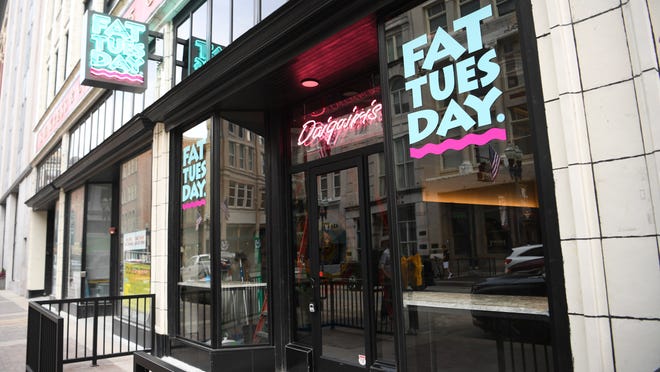
The married couple hopes to open the doors at 417 S. Gay St. by the end of June. It will be the first Fat Tuesday franchise in Tennessee.
All about the options
Daiquiri bars are more focused on to-go sales in New Orleans, where alcohol can be consumed in public. In Knoxville, alcohol laws will require the beverages to be consumed on site.
Each city is different and each daiquiri is different, with some containing 80-proof vodka and others containing 80-proof rum.
“I think it just brings something fun to the area that we don’t have,” Laura told Knox News. “It’s the flavors and the fact that it’s a one-stop shop. If you like sweet, you’ve got sweet. If you want sour, you have sour. If you want a little bit of both, you can mix.”
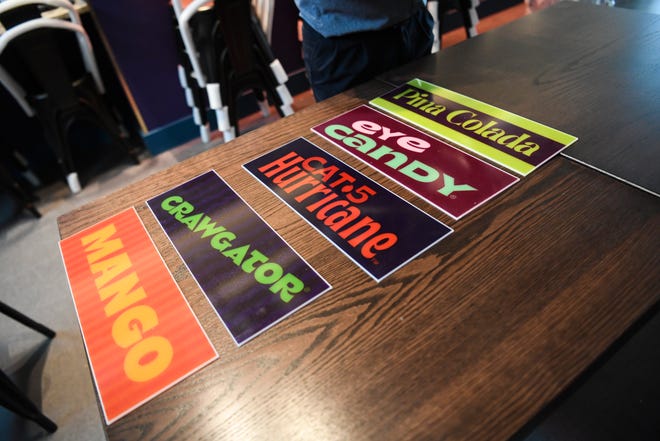
Some flavors will rotate depending on the season, but core flavors like margarita and Fat Tuesday’s signature 190 Octane will remain. Here are the flavors the Knoxville location plans to start with:
190 Octane
Amaretto & Pineapple
Bellini
Category 5 Hurricane
Crawgator
Eye Candy
Mango
Mardi Gras Mash
Margarita
Mudslide
Pina Colada
Strawberry
No, Crawgator doesn’t have a reptilian taste. It’s more like a tropical punch, Kenny said, while the 190 Octane is made with orange flavoring.
The drinks will be served in tumblers and are available in 16-ounce and 20-ounce portions. All flavors are the same price, Laura said, starting at $10 for the smaller option.
Guests will be able to sample the flavors and create whatever combination they feel might be tasty. Daiquiri service should be fairly quick, as bartenders and servers simply pull a plug to release the icy goodness into a cup.
The consistency is less like a slushie or an Icee and more like the frozen drinks people make in their blenders at home, Laura said.
“Everything’s mixed in the kitchen and then it gets put in containers and then stored in the cooler,” she said. “And then from there, you take that out and you fill the machine, and the machine freezes it to the perfect temperature. So, its completely mixed.”
Kenny will handle the mixing. He said a batch is usually between 30 and 50 gallons.
The bar also will have other alcohol options, including a selection of beer, wine and liquor. Laura said the food menu will be limited, with flatbreads, pretzel sticks, shrimp cocktail and spinach-artichoke dip.
“I think it gives us really good visibility,” Laura said. “This block in particular, there’s just a lot going on. And as they continue to develop the building I think it’s going to be a really fun place to hang out.”
The entire Fat Tuesday space is roughly 2,000 square feet, but most of that is the kitchen. Only about 650 square feet of space is the actual bar area, which can accommodate around 52 people.
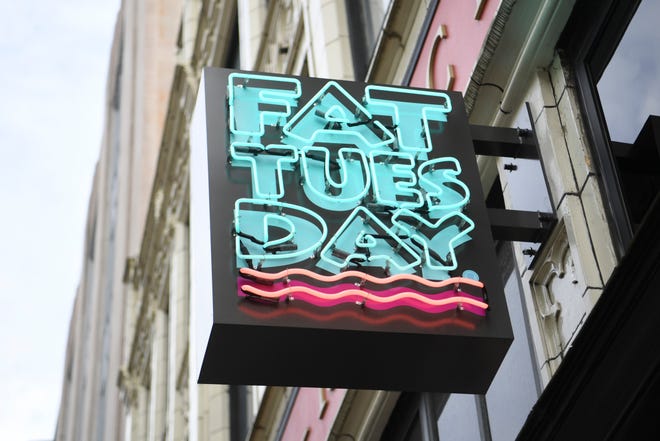
Fat Tuesday has bar-top and booth seating, as well as seats in the Gay Street windows and just outside the front door underneath the glowing neon sign.
There’s also a neon sign near the back of the bar room, but the two say these bright lights do not signal a party zone.
“We just want to sell some daiquiris and have a good time,” Laura said.
Planned hours are 11 a.m. to 11 p.m., but these times could be adjusted for special events and game days. A few TVs behind the bar will show sports and whatever else guests would like to watch
Don’t worry Vols fans: At least the bathroom walls are orange. But the Fat Tuesday brand colors bring a Louisiana vibe to Knoxville, with purple walls and a display case near the front door built to hold T-shirts, souvenir glasses and, of course, beads.
‘When life handed us lemons … ‘
Kenny said people may be surprised how many Louisianans live in Knoxville, and many of them have to bring daiquiris back to Knoxville after visiting Louisiana just to get their fix.
“We moved up here in 2007, two years after Katrina,” Laura said. “There’s just a lot of excitement out there and a lot of people that are familiar the brand, as well as probably even more who aren’t.”
Once Fat Tuesday opens, she expects people will get “hooked.”
Laura was laid off from her job in 2018 and took time to figure out her next path before investing in a Fat Tuesday franchise nearly a year later. Since finding the building, she said, “we started just pressing on pretty fast and furious.”
“When life handed us lemons, I said let’s just make daiquiris,” she said.
There are more than 70 Fat Tuesday and New Orleans Original Daiquiris locations, according to the company website. The latter is a separate trade name for the company, but both businesses offer similar menus.
In the meantime, she and her husband remain focused on their Knoxville endeavor in the heart of downtown.
“We do feel like it’s the 50-yard line,” Laura said about the location. “We’ll come down here on a Friday night … and we’re like, ‘Look at all these people.'”
Even in the winter, the couple has seen people standing in line for ice cream just a few doors down at Cruze Farm.
“I certainly hope they line up for a daiquiri,” she said.
A Texas man who used a dating app to target gay men to rob and assault has pleaded guilty to hate crimes, officials said.
Daniel Jenkins, 22, is the fourth and final person to plead guilty in the robberies, carjackings and other crimes in the Dallas area in December 2017.
He pleaded guilty Wednesday to a hate crime count, conspiracy to commit a hate crime count and also kidnapping, carjacking and using a firearm during a crime of violence, the U.S. Attorney’s Office for the Northern District of Texas said.
The four men used the dating app Grindr to lure people to locations where they were robbed, held at gunpoint, and either held captive while members of the group took out cash from their accounts or were forced to drive to ATMs and take out money, officials said.
There were at least nine victims in all, officials have said.
“These defendants brutalized multiple victims, singling them out due to their sexual orientation,” Prerak Shah, acting U.S. attorney for the district, said in a statement. “We cannot allow this sort of violence to fester unchecked.”
Members of the group taunted their victims with gay slurs. One of the robbers wiped feces on two people among other assaults, according to court documents.
An attorney listed as representing Jenkins did not immediately respond to a request for comment Thursday night.
Jenkins faces up to 26 years in prison when he is sentenced Oct. 6, prosecutors said.
Three other people — Michael Atkinson, Daryl Henry and Pablo Ceniceros-Deleon — have pleaded guilty in connection with the case. They are scheduled to be sentenced June 23.
Members of the group took their victims’ driver’s licenses and threatened to find them if they reported the crimes to police, court documents say.
In a different hate crimes case in Texas, four men were indicted in a series of home invasions in which Grindr was used to find their victims in 2017. They were sentenced to between 10 and 20 years in prison, officials have said.
A year ago, entrepreneur Josh Smith could barely get around downtown Knoxville without a GPS. Now he’s a downtown property owner and part-time resident.
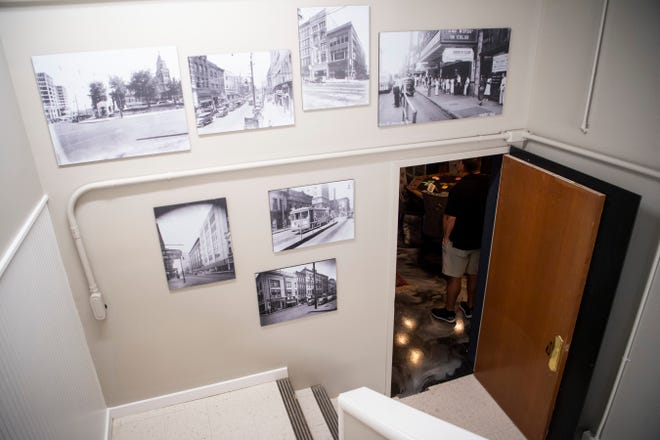
He also created downtown’s tiniest speakeasy, located at 304 S. Gay St.
Renting the speakeasy, located in a back hallway and behind a secret door, is extra.
Repurposing a vault
Smith bought the building in 2020 and wanted to make use of the vault inside, a relic from the historic Friedman’s Jewelers store.
The speakeasy, which includes the vault and an exterior room, transports guests back to the early 1900s with some period-accurate décor and antiques.
The vault has been transformed into a bar and features a full set of Pappy Van Winkle’s Bourbon, one of the rarest bourbons on the market. The main room has a poker table and comfortable seating.
The space also includes modern touches like neon lights, a state-of-the-art speaker system and a new elevator that reaches every floor in the building.
While the speakeasy itself isn’t very big, those renting the space out for an event will have access to the entire Friedman’s Loft. Smith estimated the building could accommodate 100-120 guests for a party.
Smith hosted a sneak peek party May 21 and toured about 200 guests through the loft and the speakeasy.
“When you’re working on (something), you don’t really realize how cool it is until someone else sees it,” Smith told Knox News. “To see some of the developers downtown come through and go ‘Oh my goodness, this is cool,’ felt pretty good.”
Renting the speakeasy, which Smith said he hasn’t set a price for, includes bartending and serving staff.
Loft available for rent
Smith originally planned to start renting the entire loft last year but held off as construction on the speakeasy and the lower level got going. It’s now available for rent on the Friedman’s Loft website as well as on Airbnb.
A stay in the loft, which sleeps 16, will cost you from $1,600-$3,000 a night. Smith and his team personally review each request to rent the luxury home or the speakeasy.
“I don’t believe in wasting, so I don’t want this space to sit empty,” Smith said. “I want people to enjoy it, but I don’t want to abuse it or wear this space out.”
Spread across multiple levels, the 10,000-square-foot residence has five bedrooms, a balcony overlooking Gay Street, two personal parking spaces, multiple kitchens, a spa room with personal saunas and massage tables, a pool table and a shuffleboard table.
Smith purchased the building for $2.8 million in September 2020. After selling Knoxville-based residential waterproofing and foundation services company Master Service Companies in 2019, Smith shifted his focus to create his prison reform nonprofit, 4th Purpose Foundation.
He’s purchased a number of properties in the last year and plans to construct a building next door at 308 S. Gay St.. He purchased that property for $950,000 in 2020.
News intern Jake Yoder can be reached at jake.yoder@knoxnews.com. Follow along with his work on Twitter @jakeywakeyy. Support our local news efforts by becoming a Knox News subscriber.
Florida Governor Ron DeSantis signed a bill into law Tuesday banning transgender girls and women from competing on female sports teams. The Republican governor says it’s to protect the fairness of women’s athletics, but LGBTQ advocates say the law is discriminatory. Jenny Pizer, the director of law and policy at Lambda Legal, joins CBSN’s Elaine Quijano with her analysis.
Video Transcript
ELAINE QUIJANO: Controversy is growing around legislation aimed at banning transgender athletes from playing in girls’ and women’s sports. On Tuesday, the first day of Pride Month, Florida Governor Ron DeSantis signed a law banning transgender girls from playing on female sports teams. The Republican governor says the legislation will protect athletes from competing against others who are physically superior to them.
Similar bills have been signed in several other states. This comes as the US awaits a significant Supreme Court decision on a case out of Philadelphia. It could demonstrate how the conservative 6-to-3 majority will rule in future LGBTQ rights cases.
For more, I want to bring in Jenny Pizer. She’s the Director of Law and Policy at Lambda Legal. Jenny, welcome. Thanks very much for joining us. First, why was Lambda Legal formed? What is the mission of your organization? And what are some of the current initiatives that you’re working on?
JENNY PIZER: It’s great to be with you. Lambda Legal is coming up close to our 50th anniversary. We were formed in New York City in 1973 to advocate for and provide legal services for LGBTQ people in a full range of areas of law– law reform, litigation, policy advocacy, and public education– about who we are as LGBT people and to provide the legal work that we need to secure full nondiscrimination rights at every level of government.
ELAINE QUIJANO: So as we mentioned, Jenny, Florida became the latest state on Tuesday to sign a transgender athlete ban into law. Governor Ron DeSantis says it’s an effort to, quote, “protect the fairness and integrity of women’s athletics.” What is your response to that? And what does this law mean for trans athletes who may already be playing on girls’ and women’s teams?
JENNY PIZER: Yeah. Unfortunately, this new Florida law has– is similar to a whole raft of similar proposals that we’ve seen this season. It’s really just exploded across the state legislative landscape.
To give you a sense of the magnitude of it, we have a count at this point of more than 300 bills proposed in states this year to limit LGBTQ legal rights. And about half of them have focused on limiting legal rights of transgender folks. About 40 of them would limit access to medically appropriate care. And about 75 are about access and participation in school sports and sports teams.
At this point, by our count, eight of those bills have been signed into law, including Florida’s that was just signed. Three have been vetoed. And unfortunately, a few more are expected.
What’s important for people to understand is that laws like Florida’s apply in a blanket way to kids at all levels of education. So Florida’s law applies to middle school, to high school, to sports clubs and intramural teams.
This is not just about competition for top prizes or scholarships. This is about students’ ability to participate in sports programs that can be for kids who like sports– and it’s not everybody that likes sports– but for those who do, an opportunity to be a member of a team and to be healthy and to participate and learn those life skills that can be really important, you know, sportsmanship and working together and self-discipline.
And the Florida law has a number of elements that I think may cause the state some serious problems because it creates a legal claim for students who feel that they were harmed somehow by there being a transgender girl participating in some sports program and can create liability for school districts that want to follow both medical science and the law that applies. There’s a federal law that governs sex discrimination in education that protects transgender kids in school.
And this new law seems like it may be on a collision course with federal law. So at Lambda Legal, we’ve been watching all of these bills closely and preparing to litigate in some places where we think it’s appropriate to do that.
The key thing to keep in mind is that the bill defines sex as male or female, and lots of people understand it that way. But by medical science, sex is a lot more complicated. What creates your sex is a lot more complicated than what somebody wrote on the birth certificate when you were born.
There’s hormones. There’s chromosomes. There’s any medical treatment you might have had growing up if you’ve been diagnosed with gender dysphoria. Sometimes anatomy is ambiguous. The reality is life is more complicated sometimes than these two options written on the birth certificate at the time of birth.
The courts have recognized that. The Biden administration has recognized that. And schools need to recognize that, too. And they have been.
Look, the reality is, in many states, there’s been protection requiring fair inclusion and nondiscrimination against transgender kids for many years now. And kids participate in sports. There hasn’t been a problem.
Certainly there’s not been a problem in Florida or these other states where these laws are being considered. It’s really legislation in search of a problem and a purpose as part of a social reaction to maybe a recognition of some kids that people didn’t realize were there. They’re just kids. And some of them are particularly vulnerable to bullying and exclusion.
So we think this law was a mistake. And as I said, we’re lawyers. And our mission is to protect LGBTQ people, including trans kids, from discrimination. And the Florida bill and the other bills like it– they’re discrimination.
ELAINE QUIJANO: Well, we know, according to one survey, transgender youth are far more likely than their nontransgender peers to experience depression, nearly four times the risk, according to one study. Jenny, as an advocate for the LGBTQ community, what message do you think these kinds of laws send? And what do you think they actually do mean for the future of trans rights? It sounds like you’re anticipating here some litigation moving forward.
JENNY PIZER: I think there will be litigation, just as we have seen litigation to deal with the so-called bathroom bills that said– limited where– which restrooms people could have access to and other kinds of limitations on access to facilities. And in fact, Idaho passed a law similar to the law that Florida and some other states have just passed. And the federal court blocked it, recognizing that it was about discrimination. There was not a good factual basis for it.
So I think there will be more litigation. The real answer longer term is that more trans people come out, just as it’s been so important for same-sex couples to come out, and that we as a society recognize that transgender people have always been among us, just like lesbian, gay, and bisexual people have always been part of the community. The question is whether people are respected for who they are and have a chance to participate in ways that are fair, don’t harm anybody, but actually can be very important for self-esteem, support, and to reduce bullying.
When there are laws that discriminate, it sends a message that people are not welcome. They’re not OK. There’s something different and wrong about them. And that tends to invite more bullying against the very kids that most need our support and our inclusion and the ability to just play.
This is just– the kids should be able to play. And recess time and sports time, club time is just as important sometimes as the classroom lessons. And all of the kids need to be allowed to participate and just recognized for who they are. They’re not causing anybody problems. They just need to be recognized and included for who they are.
ELAINE QUIJANO: You mentioned same-sex couples. Jenny, you have been a major proponent of same-sex marriage. What issues do same-sex couples continue to face here in the US?
JENNY PIZER: Yes. Well, certainly having won in the US Supreme Court a couple of years ago in the marriage equality litigation, we celebrated that. That has made a big difference. But it hasn’t resolved everything.
The reality is that there have been residual types of discrimination. And Lambda Legal is litigating to challenge some of that now– for example, the rules that require couples to have been married for at least nine months in order for a survivor, if one passes away, to be recognized for Social Security survivor benefits.
Well, some of our clients and some members of our community were not able to be married for nine months because the law discriminated. So folks who have been together sometimes for many decades who are elderly did marry but have been deemed by the federal government ineligible for those Social Security benefits in the program that they paid into just as other people have done. So we’re litigating about that, and we’ve had success so far.
And then there were other survivors of same-sex partnerships who never had a chance to marry because the law prevented that while they were together. Even if they were together for many decades, they didn’t both live long enough to marry. And again, the survivor, then, is denied the benefits that they should have from the system that we all pay into. So that’s just one example of residual, if you will, sort of cleanup litigation that we’re having to do.
And then there are just practical realities that are kind of specific to same-sex couples who have been together sometimes for many years and then, after being together for many years, got married. And the marriage and legal protections only cover part of their relationship. If they divorce or if there are some types of legal problems, their legal status doesn’t necessarily reflect the depth of the relationship, the amount of commingling of their assets, and so forth.
So winning equality under the law has been tremendously important both as a legal matter and as a social matter for appropriate recognition of of who we are and that our relationships are solid and committed family relationships just like other relationships. But we do– we do still have some ongoing cleanup work to do.
ELAINE QUIJANO: Jennifer Pizer with Lambda Legal, thank you very much for your time.
“Your client acknowledges that the riot that occurred on January 6, 2021, caused as of May 17, 2021, approximately $1,495,326.55 damage to the United States Capitol,” stated a plea agreement letter sent by Assistant U.S. Attorney Mona Sedky and signed by Hodgkins and his attorney in May.
I am corresponding with regard to Dear Gay, the recent RTÉ One programme about Gay Byrne’s contribution to Irish society, culture and the zeitgeist of the times.
t was bitterly disappointing that the show, somewhat predictably, was hijacked by the agendas of the feminist and woke constituencies. Furthermore, it was used, yet again, to bash the Church and the people of Ireland who still hold a sense of morality that may be at odds with those deemed trendy today.
The programme simply raked over the well-burned coals of scandals that have been brought to light in this country over the past several decades.
Naturally, this had the impact of allowing even more anger and judgment to be unleashed, as if there hasn’t been enough already.
Why was the opportunity to portray this man’s amazing broadcasting legacy ambushed by the usual liberal suspects? Are we not all so weary as a country of these horrendous, sad histories?
Can we not move on as a progressive nation and promote a future of hope?
Surely this would be a more progressive approach than constantly churning up and sensationalising the horrors of our past, just to keep getting one over on the Church, the establishment and the quiet majority of this country.
John Smith
Co Westmeath
Help is needed before fishing is lost for good to islanders
The following is an open letter to An Taoiseach Micheál Martin, on behalf of islanders who rely on fishing for their livelihood.
As the representative organisation for Ireland’s offshore islands, you can surely understand our significant concerns regarding the historic and ongoing treatment of our fisherpersons.
This is a matter of huge importance regarding island community livelihoods and sustainability, not to mention heritage and traditions.
Island communities are intimately acquainted with the consequences of changes to fishing rights and regulations inflicted through the years.
Islanders are, by their very nature, people of the sea. To sacrifice their ability to make a living through life-learned skills they are passionate about is beyond unreasonable.
This continued decimation of the Irish fleet has been magnified with the onset of Brexit. The Irish fishing industry is now fighting for its life.
As Taoiseach, we consider it appropriate for you to personally intervene in this serious situation.
We implore you to act to prevent the loss of hundreds of jobs, a way of life and a key element to coastal communities, Irish heritage and tradition.
We ask all involved with the control and regulation of the fishing industry to have a hard look at the consequences of their actions against a proud and respected Irish livelihood.
There is a better way.
Aisling Moran
Chair, Comhdháil Oileáin na hÉireann (The Irish Islands Federation)
Lockdown may be over, but restrictions unlikely to vanish
I see the Oireachtas Transport Committee wants to reduce our travelling options. Having shown that we can be locked down, will we now be locked in?
As Shakespeare’s Miranda put it: “O brave new world, that hath such people in ’t.”
Cal Hyland
Rosscarbery, Co Cork
Return of foreign travel is all too reminiscent of Father Ted
The Government has decided to open the country for foreign travel on July 19. Is it just a coincidence that this was also the date Father Ted, Dougal and Jack were going on holidays?
During the episode, Ted asks Dougal what is significant about July 19. Dougal responds by saying it was the date Marathon became Snickers. With that, Fr Jack bursts into the room and announces: “Holidays!”
Jim Hacker, of 1980s sitcom Yes Minister, often opined that all coincidences were perfectly harmless. July 19 could be called a classic Irish holiday coincidental date.
Kieran O’Regan
Dublin 9
Applying Local Property Tax to newer homes is only right
The announcement by the Government to apply Local Property Tax (LPT) for all properties built since 2013 is welcomed.
In fact, the LPT should be substantially increased from its present rate. How else can we raise revenue? In fact, it should be based on a higher percentage of the property value.
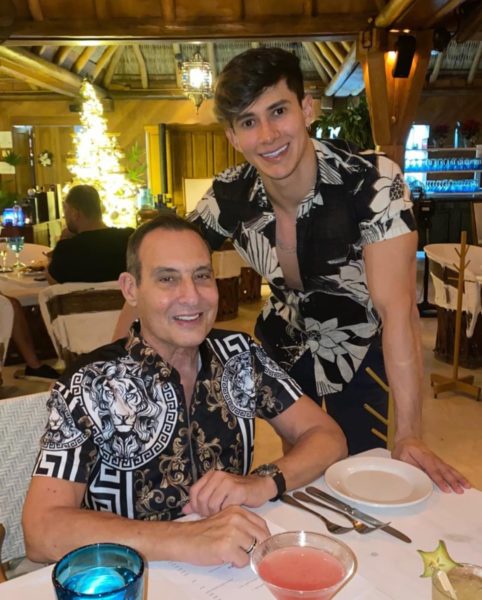
Gay circuit party impresario Jeffrey Sanker and an unidentified male friend earlier this year via Sanker’s Instagram
PUERTO VALLARTA – The disgust, anger, and recriminations over gay New Year’s Eve parties in this seaside resort area of the Mexican state of Jalisco and neighboring Riviera Nayarit, continues to spread in gay online social media- particularly in numerous Twitter threads and on Instagram. One Instagram account, @gaysovercovid has repeatedly called out party goers and party organizers.
Local media outlets in Jalisco and many Mexican social media users are also outraged.
The @gaysovercovid Instagram account has faced a wave after wave of backlash from gay influencers many of who are now embroiled in the controversy after having their Instagram posts publicly disclosed and then shamed by the anonymous account holder. There have been financial rewards offered to anyone who can unmask the account owner’s identity.
The account used the built-in abilities for tracking the influencers’ Facebook locations and Venmo transactions in an effort to uncover where they were attending parties. That brought about severe condemnation from those exposed while many other people celebrated that the account exposed the bad behavior of gay men.
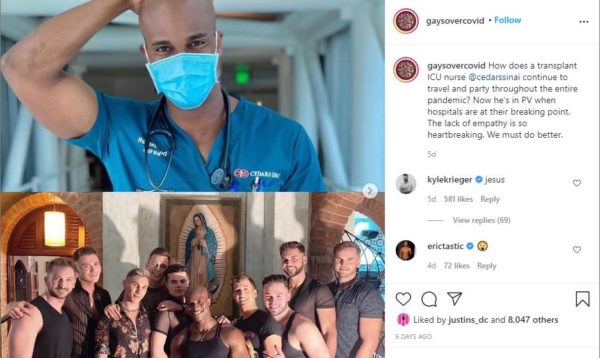
In one example, in response to a social media post that depicted a West Hollywood area ICU registered nurse as a participant, social media users tracked the pictures to an Instagram account (@legstrong) listed for 25 year old Armstrong Nworka. The Blade determined from online searches Tuesday, including Facebook using the handle ‘@legstrong’ and his surname, Nworka had profiled himself as gay, an RN, and employed at Cedars-Sinai in Beverly Hills.
Instagram post showing (@legstrong) via @gaysovercoid Instagram
One of the comments [left on his page] read; “Disgusting, you give us gay people a bad name. You’re truly nothing more than a plague rat.” Nworka has since taken his Instagram account private. Nworka did not respond to a Blade request for comment.
The Blade also reached out to Cedars-Sinai and was told that there would be no comment on personnel matters.
The ‘plague rat’ comment was mild in comparison to the thousands of other vitriolic responses to other party attendees and especially organizers- labeled by critics as ‘super-spreaders,’ who openly defied both U.S. and Mexican Public Health authorities mandates and restrictions to help stem the spread of the COVID-19 coronavirus.
Palm Springs resident and gay circuit party impresario Jeffrey Sanker held the largest New Year’s Eve weekend bash, which included several events. Originally set to take place in Puerto Vallarta, apparently ignoring the pleas from local health authorities, elected officials as well as residents, Sanker’s White Parity Entertainment company was forced to move the event to neighboring Riviera Nayarit after the Jalisco state government banned mass gatherings and implemented more restrictive coronavirus measures.
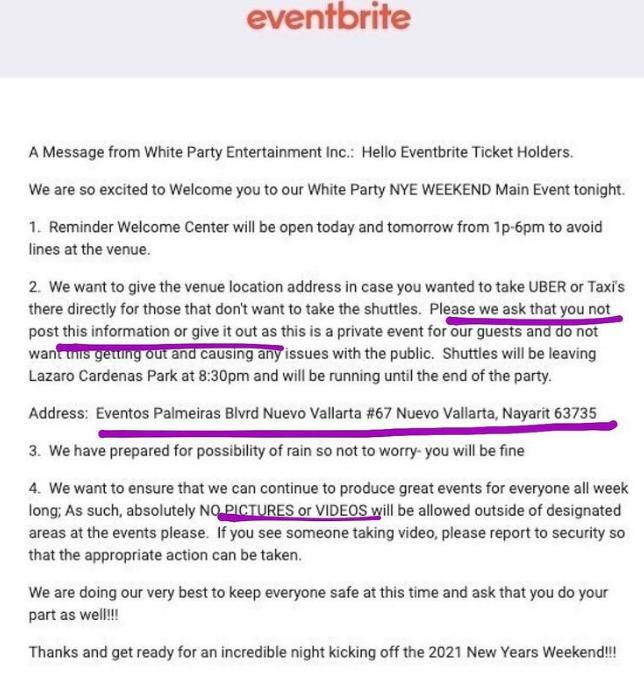
In a text to ticket holders, Sanker’s company told attendees to not reveal the location of the party. Nor could they take any photos or videos of the event. The text said the steps were necessary because they “do not want this getting out and causing any issues with the public.”
That text was screenshot and then posted by @gaysovercovid as well as other accounts which prompted one local news outlet in Puerto Vallarta, the Puerto Vallarta News, to editorialize on its social media accounts prior to the events;
“If you are interested in still visiting the COVID Superspreader New Years Eve Celebration where foreigners come to our community and throw big parties and leave COVID while causing our businesses to close and people lose their jobs- […] COVID isn’t causing businesses to suffer, it’s the actions of people. We are tired of it. We have supported this event in past years and given it positive coverage, but this year it’s irresponsible and should be canceled.”
In a phone call with an editor at PVN on Tuesday, the Blade was told that the area’s main healthcare facility, Puerto Vallarta Hospital was at 100% occupancy with COVID-19 patients – and that the state of Jalisco had reached 65% positivity rate.
Officials in Jalisco uniformly condemned the fact that so many had traveled from the United States just to party without seeming to care about the consequences to the local residents, many of who are employed as staff in the restaurants, bars, hotels and transportation systems.
“They came to have sex- to dance it seems and to make party without regard to spread of COVID,” one government source told the Blade. “They have no sense of responsibility- don’t care about peoples here,” he added.
As part of the weekend long event the PV Delice, a catamaran boat that featured a live band and open bar, began taking on water and sank off the coast of Puerto Vallarta on December 31, 2020 around 5 p.m. while crew frantically called for help to rescue passengers. Video posted on Instagram, Tik-Tok and Facebook documented at least 10 other boats rushing to aid the sinking vessel and plucking 60 victims out of the choppy water.
Witnesses to the sinking told local news outlets that the boat was filled with White Party celebrants and was overcrowded. The boat sank to the bottom of the bay and there were no reports of injuries.
Screenshot from @gaysovercoid Instagram
One passenger, a gay man from Chicago, Illinois, Emilio Blanco told the local LGBTQ news outlet, Out and About PV, “It was like the Titanic, it went all down slowly. I think the crew just didn’t know how to maneuver the catamaran very well, the sea was not very rough nor was it too windy. We were about to sail back to Puerto Vallarta, but the catamaran barely moved. I saw at least 10 small boats coming to help, I jumped in a private boat whose owners were graceful enough to send their captain help out. It was quite a scary situation.”
A spokesperson for Adrián Bobadilla García, head of the municipal agency, of Puerto Vallarta told the Blade Tuesday that the municipal government had made numerous notifications to the public regarding mandatory use of masks and maintaining social distance in public. He said that the boardwalk during the holiday however, wasn’t closed nor were the beaches. He conceded that enforcement was not as stringent as it should have been.
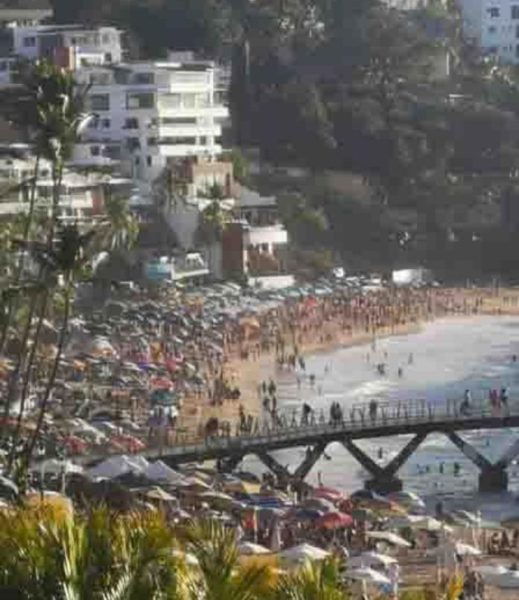
Beaches of of Puerto Vallarta Saturday. (Screenshot via NBC Palm Springs)
“It is with sadness and anger that we have Americans at the height of a pandemic surge travel to Mexico to participate in New Year’s Eve parties knowing that people of color are disproportionately impacted by the COVID-19,” said City of Huntington Park, California Councilman Eddie Martinez who also heads the Latino Equality Alliance.
“The action of these travelers has now put hotel workers, servers, janitors, and drivers at risk for the disease as well as to possibly put an additional strain on the hospital system in both Mexico and the United States. Party promoters and sponsors need to be held accountable if their actions result in more deaths for families, especially within the LGBTQ community,” Martinez added.
Washington D. C. based journalist Zack Ford documented a majority of Twitter responses to the controversy in a thread he published Sunday. (Link)
As we enter Pride Month, it’s a good time to reflect on where we are. President Biden recently announced a renewed push for full legal equality for LGBTQ individuals, but that takes place against a background of continuing bias, including a new legal focus in many states on rolling back civil rights protections. There are battles that are being fought in the statehouses and halls of Congress, in people’s hearts and minds, and that is where there’s been a great deal of evolution in the past few years. Looking at the levels of social and interpersonal bias, we are now in a much different situation than we were when this blog started 10 years ago.
To be sure, there is still bias against those whose sexuality differs from the norm, and that bias still matters in the courtroom: LGBTQ individuals may be accorded less credibility or trust, may be seen as more likely to have engaged in some crimes, and could be seen as subtly less worthy of money damages. In this post, I want to share a few conclusions on what we know about anti-gay bias especially, as it might impact evaluations of a party in a civil or criminal case
Society Has Come a Long Way
Anti-gay bias has been falling sharply. In a past post, I wrote about the sea change in attitudes leading up to and continuing from the Obergefell Supreme Court decision allowing gay marriages across the country. As entertainment culture adapted with more gay characters, and as our friends, neighbors, and family members became more comfortable living their lives openly, we saw a dramatic falloff in opposition to equal civil rights and social participation. Interesting, that change influenced both explicit and implicit biases, and the broad shift continues to serve as a novel and timely social science test case on the ways that even hardened social attitudes can change in a relatively short time.
Society Still Has a Long Way to Go
In controlled experimental settings, varying the sexuality of a party in litigation still impacts the results. In part, that occurs when mock jurors apply stereotypes (e.g., the myth that gay individuals are more likely than straight individuals to engage in child sexual abuse). Results are also impacted even when the case has nothing to do with those stereotypes. Even this year, a study (Mirabito & Lecci, 2021) demonstrated that anti-gay bias predicted convictions for gay defendants in both stereotype-consistent and stereotype-inconsistent scenarios.
Anti-gay bias is an attitude that can be measured as part of jury selection and is also a characteristic that tracks closely with a more generalized personality dimension that I’ve written about before: authoritarianism. The psychological tendency to support conventional beliefs and strong social rules and order also tracks with a bias against those perceived to be outside these norms. Given a tendency to deny explicit bias against individuals when asked about them in a courtroom context, it may be more productive for litigants seeking to uncover anti-gay bias, as well as bias against other perceived “outsiders,” to ask about attitudes on psychological authoritarianism instead.
While society has made some steps forward, there is also a pendulum effect to it, and perceived progress motivates a backlash. So when it could impact your case, anti-gay bias is still something you want to look out for.
____________________
Mirabito, L. A., & Lecci, L. (2020). The impact of anti-gay bias on verdicts and sentencing with gay defendants. Journal of Gay & Lesbian Social Services, 1-24.
Ben Brown’s century dug Sussex out of early trouble on day one of their LV= Insurance County Championship against Yorkshire at Emerald Headingley.
Wicketkeeper Brown’s 126 not out off 174 balls was a captain’s innings to lead a recovery from 68 for four shortly after lunch.
Sussex fielded two debutants – 20-year-old opener Ali Orr, who made 15, and all-rounder Dan Ibrahim.
Aged 16 years and 298 days, Ibrahim is the second youngest player to represent the county.
Under a grey sky with the floodlights on until early afternoon, the Hove side could have crumbled but impressively closed on 267 for five from 96 overs. Yorkshire’s Jordan Thompson claimed three for 42.
Brown shared 107 for the fifth wicket with Aaron Thomason from early afternoon until early evening and later 92 unbroken with Ibrahim, who finished with 37 not out.
Thomason was far more reserved for 40 off 181 balls as batting conditions eased through the day.
An eighth-wicket stand of 171 between centurion Lewis Gregory and Roelof Van Der Merwe transformed the opening day of Somerset’s match with Hampshire at Taunton.
The first paying spectators at the County Ground this season saw the hosts crash to 113 for seven after losing the toss, left-arm seamer Keith Barker claiming six of the wickets.
But Gregory, whose 107 featured 14 fours and two sixes, and Van Der Merwe (88) counter-attacked in thrilling fashion, staying together for 35 overs and helping Somerset recover to make 360.
Barker finished with six for 72 from 24 overs before bad light prevented Hampshire beginning their reply.
Marcus Harris continued his impressive form with a third century as Leicestershire closed on a dominant 357 for five on day one of their match against Group Two leaders Gloucestershire.
The left-handed opener, who hopes a strong season in England will be enough to retain his place in the Australia Test team when the Ashes series begins in December, followed his 183 in last week’s win over Middlesex with 148.
This is how @MarcusHarris14 brought up his third Leicestershire ton…
— Leicestershire County Cricket Club 🏏 (@leicsccc) June 3, 2021
Colin Ackermann, who posted his first hundred of the season against Middlesex and shared a match-winning 243-run partnership with Harris, made 57, the pair adding 160 for the third wicket before Lewis Hill, who made 56, helped add a further 75 before Harris was out.
Steven Mullaney and Lyndon James continued their domination of Essex as the Nottinghamshire middle-order duo clocked half-centuries on day one at the County Ground in Chelmsford.
Captain Mullaney and all-rounder James had put on 123 in the reverse fixture at Trent Bridge during an innings victory, before collecting 117 together for the fourth wicket.
They helped Nottinghamshire recover from an effective 48 for four, after Joe Clarke had retired hurt, with Mullaney eventually scoring 55 and James 54, his fourth score over 50 this campaign.
Australian fast bowler Peter Siddle was the pick of the attack, as he returned three for 76, while Clarke returned to smash a 78-ball fifty, as the visitors reached 248 for six by the close.
Brydon Carse continued his excellent form as he and Matthew Potts picked up four wickets apiece to help put Durham in command on day one against Worcestershire at New Road.
Carse took his wicket tally to 32 in seven games this summer and ended with four for 25 from 13 overs as Worcestershire were dismissed for 131 in 50.3 overs after being put in. He was given excellent support by Potts who achieved career-best figures of four for 32 from 12.2 overs.
It was high-quality bowling although they were aided by some undistinguished shots with only Brett D’Oliveira, who batted nearly three hours for an unbeaten 39, offering prolonged resistance.
Opener Alex Lees ensured Durham capitalised with a fine half-century before Josh Tongue claimed two late wickets in a total of 140 for four.
Sam Hain and Michael Burgess led Warwickshire’s recovery on an evenly-contested opening day of the match against Derbyshire at Derby.
Hain made 77 from 161 balls and Burgess 71 off 134 after Sam Conners reduced the visitors to 105 for four in the Group 1 game at the County Ground.
The 22-year-old fast bowler ended with four for 45 from 16 overs and Derbyshire claimed three wickets with the second new ball to limit Warwickshire to 272 for nine at the close.
Northamptonshire dominated most of the day against Kent.
— Warwickshire CCC 🏏 (@WarwickshireCCC) June 3, 2021
Kent fought back late on at Canterbury, but Northamptonshire closed on 362 for five. Emilio Gay hit 101, his maiden first-class century, while Luke Procter made 81 and Ricardo Vasconcelos 66 as Northamptonshire dominated until an hour after tea.
The new ball then helped bring Kent back into the Group Three game, Darren Stevens taking two for 52 and Matt Quinn two for 77.
Bowlers were king as the match between Glamorgan and Lancashire in Cardiff saw 19 wickets fall on the opening day.
Lancashire were put into bat and were bowled out for 173, with the highest partnership of the innings being the 36 put on between Luke Wood and Danny Lamb for the seventh wicket.
Michael Neser enjoyed a good day with the ball (Nick Potts/PA)
Michael Neser returned the best figures for the hosts with three for 46 with the other Glamorgan seamers all chipping in.
Glamorgan started solidly in reply with an opening stand of 39 between David Lloyd and Joe Cooke but from there on the wickets continued to tumble with Tom Bailey claiming three for 40 for Lancashire.
Glamorgan reached the close on 150 for nine, still trailing by 23 and in danger of conceding what could be a telling first-innings lead.
ID:450151: cacheID:450151:1false2false3false:QQ:: from db desktop :LenBod:restore:13238: