Home Blog Page 134

Travel to Leola’s Lady Land to Learn Gay History for Straight People – Baristanet

0

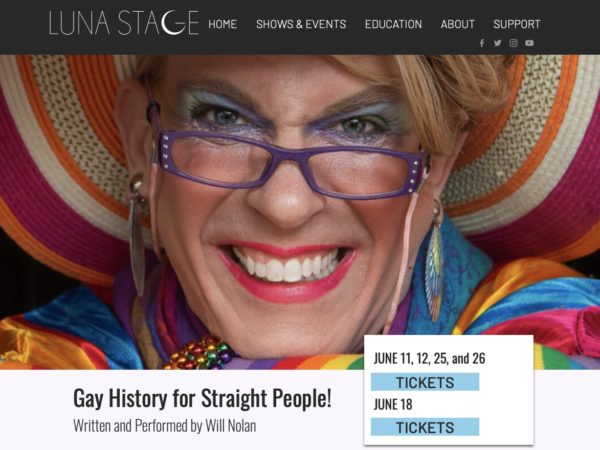
Throughout June, Luna Stage welcomes Leola’s Lady Land for five performances of Gay History for Straight People, a “Gay through Z guide through the complexities of the LGBTQYMCA+ community.” The Luna Stage performances will be held at Valley Arts in Orange, NJ and Van Vleck Gardens in Montclair. All five performances will be held outdoors. The Van Vleck Gardens performance is presented in association with Out Montclair in honor of Pride Month. The enthusiastic and loving personality of the show is exactly what we need as we ease back into life and live performances.

The delightful Leola, described as “your favorite Kelly Clarkson-worshipping, senior citizen, redneck lesbian,” is the sole character in the show, aimed at a 16+ audience. Leola’s goal is to help her audiences find the happiness that comes with living as our true selves. A 72-year-old who came out as a lesbian at age 70, Leola has jumped heels first into gay culture and spreading self-acceptance and celebrating love of all kinds. Leola was created and is performed by writer and comedian Will Nolan, who lives in Bergen County. 

Baristanet chatted with Will about Leola’s mission, Kelly Clarkson, getting past our Pandemic Year, and being voted the 2020 BroadwayWorld Cabaret Award Winner for Spoken Word. 

Baristanet: Your character, Leola, is described as being on “a mission to heal this country.” From what do we need healing? And how did she decide to approach that mission via entertaining “sermons”?

Will Nolan: Leola was born out of the idea that everyone, regardless of age, is still striving for some sort of acceptance in their life. Leola came out at 70 and now, at 72, is finding her way in a new gay world. I think during that process, she has realized how many people are denying who they really are and are afraid to be their true selves. She wants people to love themselves and then love each other. For her, coming out is like really good cake — once you have the cake you want everyone to try the cake and enjoy the cake too. She just wants everyone to find the happiness she has by becoming her true self.

Her closing mantra at every sermon is: Be proud. Be love. Be you. And she talks a lot about Kelly Clarkson because Leola believes Kelly is Jesus’s little sister and the second coming!

Because she’s more than just a performer and manager of the deli at the Piggly Wiggly, calling what she does a show seemed to lose some of the impact of her work. Sermon doesn’t quite work because it implies that the show is religious, which it’s not, though it does save souls. Leola prefers shermon because it is both a show and sermon combined. Plus she usually passes out some sort of snack, which is more like church than Broadway.

Baristanet: How does Will Nolan benefit from Leola? What inspired you to create such a joyfully flamboyant and lovingly fun character?

Will: Leola gets to say all the stuff I’m too shy to say. I’ve always been more of an introvert but playing Leola, who is really the ultimate extrovert, has forced me to be more social and connect with people. My mom is extremely outgoing – she’s the ultimate Southern woman – and that’s really who I’m playing. She’s just not a lesbian. Leola represents a rainbow mix of all the great women I’ve been raised by or grown up with. She’s inappropriate, embarrassing, completely un-PC, and yet full of heart and truly believes in the goodness of all folks.

Baristanet: Leola idolizes Kelly Clarkson, and describes her as “Jesus’ little sister.” What is so admirable about Kelly Clarkson that attracts Leola? Any other performers Leola admires?

Will: Leola would argue that she had no say in her love of Kelly Clarkson because it was God’s will. He always said he was going to send another one of his kiddos down to finish the work Jesus was just able to start, and then on September 4, 2002, Kelly was crowned the first American Idol and the Second Coming. She’s all of us, she’s the girl next door, but she’s quietly changing the world with her voice and her humor and her heart. It’s just that simple. And Leola has the receipts to back it up!

Her other favorite artists include Dolly Parton, Indigo Girls, kd lang, Amy Grant and her Jews: Barbra, Barry & Bette. Oh, and of course Harry Styles. None are the Second Coming, though now that Dolly has invented vaccines and bluegrass music and amusement parks, she’s pretty close.

Baristanet: Leola’s new show, Gay History for Straight People, sounds like it has a very specific intent. What do you hope audiences will takeaway from the performances?

Will: When Leola tumbled out of the closet at the age of 70, she fell into a community and a history that truly excited her. Gay History for Straight People is very much Leola’s interpretation and retelling of gay history, by going through the alphabet (Gay to Z, as she says). She may not get all the facts right, or even close to right, but at the end of the day I hope audiences will gain appreciation for the complex history the queer community has lived through, the progress the community has made in a short amount of time, and that everyone will take a moment to thank the incredible women and men (in particular trans women of color) who fought for the rights of the queer community. It’s also a celebration — 75 minutes to laugh and celebrate our pride!

Baristanet: Leola has five performances via Luna Stage (at Valley Arts) throughout June including one at Van Vleck Gardens in association with Out Montclair. All these shows will be outdoors. How does that change the performance for you?

Will: I’m excited about being outside. I had my first show inside in a theater last week in New York City at the Green Room 42 where I am in residency. I think people are still getting comfortable with the idea of being inside four walls with people they don’t know. Outside will give us all a little breathing room, literally, and help people relax into the idea of seeing live theater again. It will especially help for the audience participation elements! The great thing about playing this character is whatever happens happens, and we’ll just incorporate it into the show then and there. You have to go with the flow when you’re performing outside, and I think this show will work great for that.

Baristanet: How did you develop the current show’s content? Did you see gaps in knowledge, misunderstandings, prejudices to disrupt?

Will: The show stems from my own ignorance. There is so much I don’t know about queer history and doing the research for this piece opened my eyes to much I didn’t know about. I think younger generations (well I guess I’m not that young!), we tend to take for granted the hardwork our ancestors have put in to get us to where we are today. That is definitely the case in the LGBTQ+ community. I wanted to share a little bit of the history I uncovered for myself, with audiences who may not know either. When I say gay history for straight people, it’s really for all people because there is so much to our history to learn!

Baristanet: Leola’s Lady Land was originally slated for Luna Stage last March, but was postponed due to COVID19. Has the show changed over the last year? If so, how? Have you performed remotely, and how did that go (or not)?

Will: We talked early on in the pandemic about doing this show remotely, and we were going to give it a try. But last Pride month was so soon after George Floyd’s murder and the focus was on, as it should have been, the Black Lives Matter movement. There was also growing support for transgender rights and protections for trans people of color. I didn’t feel like my voice or this show was needed in that moment. There were other stories that needed to be told.

The show has always celebrated the women and trans women of color who really kicked off the modern gay rights movement in this country, starting at Stonewall. I think that celebration will be even more meaningful considering the climate we have lived in and what has happened the past year.

In terms of the pandemic, Leola is always of the moment, so I’m sure what we’ve been through the last year will pop up throughout the evening! Plus, she went into the pandemic a nominee for a 2020 BroadwayWorld Cabaret Award for Best Spoken Word and came out the other side of the pandemic, WINNER of the 2020 BroadwayWorld Cabaret Award for Best Spoken Word. So at least one element of the pandemic work to her advantage!

Baristanet: How did the past Pandemic Year affect your comedy and development of Leola as a character? What did you do to stay inspired and pass the time? How did Leola spend quarantine time?

Will: I have to say, I really struggled to be funny again for a long time. It just didn’t feel right. There was so much pain and fear and sadness from the pandemic, social justice issues, the election. It was overwhelming. The Voting Writes Project was a God-send because I felt like I could talk about something real but also slip back into Leola’s platform heels and caftan and try to make people smile again. The Lady Land Vapors in February helped inspire me to write a new show, and once vaccines hit, it felt like live theater could happen again.

I miss being an audience member almost as much as performing. My husband, son and I would see shows almost weekly and for that to not only disappear, but all of our friends in the industry lose work and security, has been heartbreaking. It feels like hope is finally returning though as people step on stages again. Thank God for good TV and a lot of great family binge-watching to keep me inspired and tapped into what pop culture there was during the insanity of the past year!

Leola has spent the corntine on the front lines, working nonstop at the Piggly Wiggly deli to make sure essential workers have their luncheon meat. You don’t stop serving cold cuts ‘cause of the corona. She and her ex-husband/best friend Gus, who she lives with in a trailer on the coast of a swamp in South Georgia, they did some home renovations and turned their doublewide into a triplewide. So she’s been busy. She tried to watch Tiger King, but after 7 or 8 episodes and the reunion special, she got too nostalgic because it felt like she was watching home movies. Plus she discovered WAP on the radio and is still trying to understand what the song means. Every time she tries, she ends up making mac & cheese.

Baristanet: We know that you, Will Nolan, now live in New Jersey, but Leola lives in Georgia, where you are originally from. How has Leola found our area, and does it reflect your experience of getting to know The Garden State?

Will: Leola is new to New Jersey, just learning recently that it is an actual place and really exists. Leola thought New Jersey was one of those things parents told their kids to make them behave, like stranger danger, razor blades in apples, or culottes. Now that she knows it is a real place, she is a huge fan and excited to wipe gay all over it!

My husband and I fell in love with New Jersey when we moved here 17 years ago. We had no idea how beautiful and inclusive New Jersey was. We’ve gotten every kind of married we can get here, and when we went through the adoption process with our son 14 years ago, we loved how supportive the state is of adoptive parents. This pandemic has really helped seal the deal for us. New Jersey has handled closures, vaccine distributions, mask mandates really well overall. As everyone knows all too well, this whole experience has been unprecedented. There’s no way to do everything right in a global pandemic. But New Jersey has done a good job and made us feel safe and protected. 

Leola’s Lady Land’s Gay History for Straight People will be performed via Luna Stage over five dates in June. The June 18th performance is at Van Vleck Gardens in association with Out Montclair. Seats are available in Pods of 4, Pairs of 2 and individually. During this time of pandemic, all Luna Stage programming is pay-what-you-wish. Your ticket purchase supports local arts programming, and ensures that creativity and connection is accessible to all. June 18th tickets also support the work of Out Montclair.

Reserve tickets here: https://www.lunastage.org/gayhistory
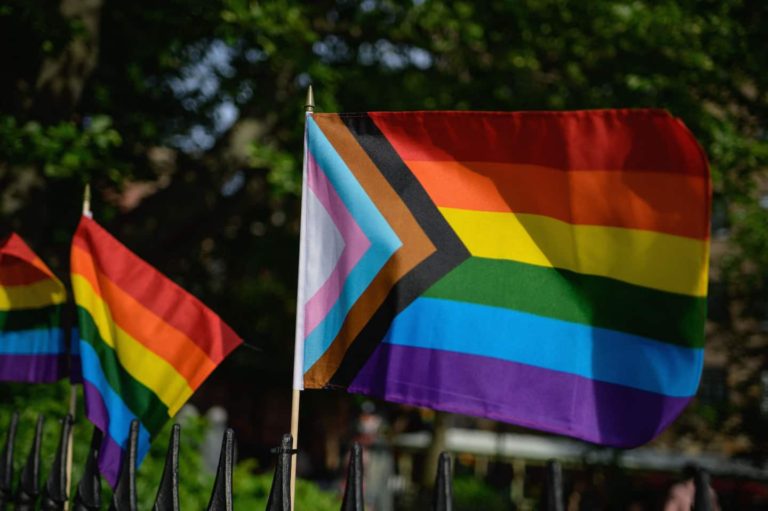
A nonbinary middle-schooler was ‘stomped on, and covered in water’ in a fight over LGBT pride flag – Washington Post

Officials at Seminole Middle School in Largo, Fla., said that the students who stole the flag have been suspended, and that some would be reassigned to other schools. The Pinellas County Sheriff’s Office told The Washington Post that it has opened an investigation into the incident, but could not provide additional details while the case is open.

40 years of AIDS taught us epidemiologic humility. We need to apply that lesson in fighting Covid-19 – STAT – STAT

Forty years later, I can still recall my visceral reaction to reading an article in the June 5, 1981, issue of Morbidity and Mortality Weekly Report (MMWR), which opened with this sentence: “In the period October 1980-May 1981, 5 young men, all active homosexuals, were treated for biopsy-confirmed Pneumocystis carinii pneumonia at 3 different hospitals in Los Angeles, California.”

I was an infectious disease fellow at Harvard Medical School at the time, trying to keep abreast of epidemic trends from the U.S. Centers for Disease Control, which published the weekly bulletin.

One of my first thoughts was that I couldn’t believe the MMWR had actually referred to gay men, albeit in the purple prose of the era. It was completely unexpected, since I could not recall the bulletin — or the CDC, for that matter — ever having discussing sexual and gender minority people before. I was then volunteering once a week at the Fenway Community Health Center which, at the time, was a small neighborhood health clinic not far from Boston’s Fenway Park used mostly by gay and bisexual men and transgender women. There, with only limited diagnostics and a fairly rudimentary therapeutic armamentarium, I treated the most challenging presentations of sexually transmitted infections, such as recurrent warts and ulcers.

advertisement

When I read the MMWR report, which many herald as the first report of AIDS, I was struck with how the cases described were quite distinctive in that the clinical conditions differed between the men, yet their problems suggested they were severely immunosuppressed without any identifiable cause such as chemotherapy. As a nascent infectious disease specialist, I had a lot of questions, not least of which was how being gay was associated with becoming ill.

The subsequent weeks and months blurred into years of misinformation, false leads, and agonizing deaths. In the earliest days, competing hypotheses for the cause of what was then known as gay-related immune deficiency (GRID) were proposed. The “burnout” hypothesis suggested that the diversity of illnesses was not due to a single pathogen, but that people who had numerous sexual partners and/or who used many different kinds of drugs were overwhelming their immune systems. Researchers also focused on party drugs such as volatile nitrites (known as poppers), which produced a sense of euphoria and increased sexual pleasure, in an attempt to demonstrate that these drugs were particularly toxic to the immune system.

advertisement

As reports emerged of individuals who had never used drugs and/or had few sex partners getting sick because they were sexual partners of individuals who became ill and died, researchers hypothesized that the disease was caused by a transmissible organism. The question then arose as to whether the microbe was a more virulent form of a common existing pathogen, such as ubiquitous herpes simplex, or if AIDS was caused by a new one. The lack of clarity about what was causing AIDS, and the lack of a diagnostic tool that could determine who was sick and who wasn’t, fueled hysteria.

In the midst of this uncertainty, the silence of the Reagan administration was palpable, especially when compared to the attention given to the limited number of people who had become sick and died of Legionnaires’ disease or toxic shock syndrome, two other public epidemics from the 1980s. The implicit message from the administration was that because AIDS seemed to be confined to groups of individuals who didn’t matter to society, the less said, the better.

Given what was then known about who was at greatest risk of AIDS and how they might have acquired the infection, people with AIDS also had to contend with high levels of stigma and discrimination. The press routinely referred to AIDS as “the 4H disease” because it affected Haitians, homosexuals, hemophiliacs, and heroin users.

One of the first patients with AIDS I took care of was a young college student who developed lesions of Kaposi sarcoma that covered his extremities and his face, made his lymph glands swell, and caused fevers, chills, and sweats. As he became sicker and frailer, his parents accompanied him to his medical appointments. His father, a school superintendent, asked perceptive questions about his son’s condition. But his son was terrified that any suggestion on my part that he had AIDS would out him to his parents and alienate them from him just when he needed them the most. So I would answer the father’s questions only by saying that his son had a very serious malignancy, and couldn’t discuss what was truly going on.

The focus of my research ever since has been HIV and AIDS, primarily how to reduce transmission of the virus. One of the primary lessons I’ve learned, however, has little to do with biology: It is how social forces can amplify the transmission of hitherto obscure pathogens. It is clear to me that we will not succeed against SARS-CoV-2 unless we apply the following lessons from the AIDS epidemic:

Science matters. Support for getting people trained to be able to do science matters. Promotion of scientific literacy matters. Science is the creation of new knowledge. There are no such thing as “alternative” facts. As scientific knowledge expands, so does our understanding of the facts.

Discrimination is toxic. The failure to address the upstream causes of discrimination at the outset of an infectious disease outbreak will make things much worse than they otherwise would be. Homophobia, transphobia, sexism, and racism fueled the HIV epidemic. Racism and economic inequality are fueling the Covid-19 pandemic. The disproportionate impact of Covid-19 infections and health outcomes among people of color in the United States is testament to the urgent need to reduce and eliminate racial and linguistic inequities in scientific research, medical treatment, and disease prevention.

We are all in this together. We live in a global village and share a global gene pool. The HIV epidemic began in Central Africa, and disseminated because of urbanization and increased global mobility. SARS-CoV-2 apparently first appeared in China. But no country “owns” any virus or other pathogen since the patterns of dissemination of any of these wild organisms depends on human behavior, in addition to intrinsic properties of the pathogen.

AIDS taught us epidemiologic humility: There is only so much we can do. But we can do a lot. Former President George W. Bush’s President’s Emergency Plan for AIDS Relief (PEPFAR) saved millions of lives and is one of the most successful global public health interventions in history. As we scale up to vaccinate increasing numbers of individuals against SARS-CoV-2 in the U.S., Americans must understand that the pandemic is not over here until it’s over everywhere.

Kenneth H. Mayer is an infectious disease physician, medical research director of Fenway Health, co-director of The Fenway Institute, attending physician in the Division of Infectious Diseases at Beth Israel Deaconess Medical Center, professor of medicine at Harvard Medical School, and professor of global health and population at the Harvard T.C. Chan School of Public Health.

LGBT activists slam DeSantis veto of funds for Pulse survivors before 5-year anniversary: ‘It’s shameful’ – Washington Post

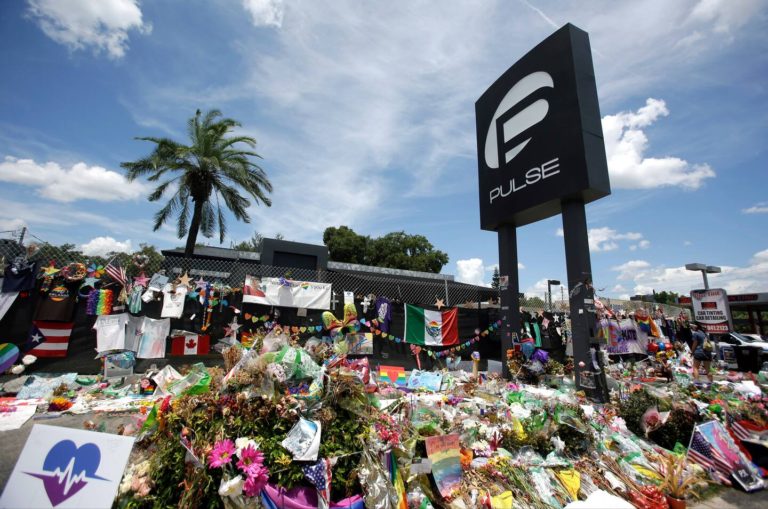
Joél Morales, The Center Orlando’s director of operations, said that earlier this year, the center took over a counseling services program offered to Pulse survivors and the families of those killed. A federal grant had previously paid for similar services in the state, but it ended in 2019. Without state funding, the center can’t afford to keep running the program, which currently serves 68 families and survivors.

LGBT rights campaigners celebrated in Hinckley exhibition – In Your Area

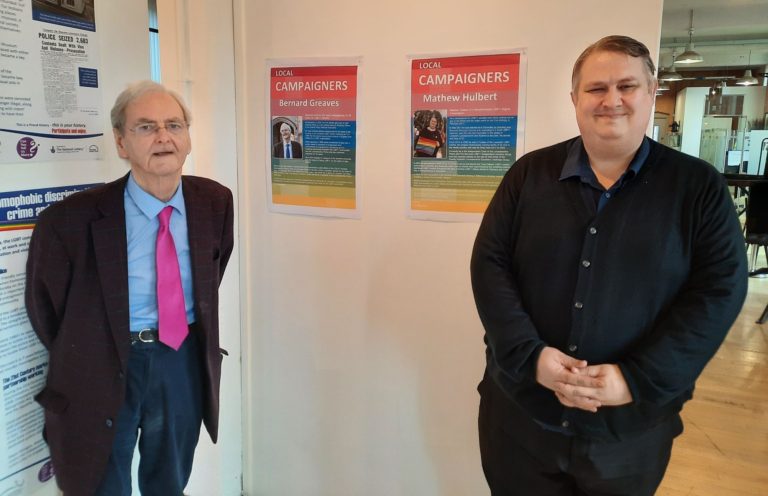
Above, from left: Bernard Greaves and Mathew Hulbert

LGBT rights campaigners have been celebrated in an exhibition at the Atkins building in Hinckley, Leicestershire.

The display went up to mark the recent International Day Against Homophobia, Biphobia, and Transphobia (IDAHoBiT).

Barwell-based campaigner, Mathew Hulbert, is one of the activists featured in the display.

He was chairman of the Leicester LGBT Centre from 2017 to 2020 and his work was recognised in Hinckley and Bosworth Borough Council’s Making A Difference volunteering awards last year.

He said: “I feel very honoured and humbled to be featured as part of this fantastic exhibition, which I very much hope people will take the opportunity to visit.

“I just try to play my small part in the much wider fight for  full recognition and equality for everyone in the LGBT communities.

“Because, as I always say, none are equal until all are equal and there remains a long way to go until that is the case.

“Especially in terms of rights and recognition for trans and non-binary individuals.

“I’ll continue to be part of this campaign for as long as there’s injustice and discrimination against LGBT people.”

Mr Hulbert is part of the ‘True Colours’ events partnership, which puts on various LGBT events throughout the year in the borough.

Also honoured in the exhibition is long-time Leicester-based campaigner, Bernard Greaves.

He has been active on these issues for more than 50 years and has served as chairman of Voluntary Action Leicester and of Leicester City West NHS Primary Care Trust.

He said: “I am delighted to be featured in this exhibition.

“But what is more important is that I hope it helps raise awareness that, for all the progress there’s been towards LGBT equality, there is still a need to address the great disadvantages faced by members of our communities, particularly those who come from deprived backgrounds.”

The IDAHoBiT exhibition is free to visit and will be running until June 23.

The lonely fate of a gay best friend – Sydney Morning Herald

Significant Other
New Theatre, June 2
★★★½

When you are single and your friends are your family, what happens when those friends settle down and make families of their own?

In Significant Other, Jordan (Tom Rodgers) is facing a lonely future as his close-knit group of friends, all straight women, find partners and marry. Straight and gay dating often operates on different timelines, and Jordan, who is gay, isn’t on the same track to lifetime commitment as Vanessa (Dominique Purdue), Laura (Laura McInnes) and Kiki (Isabella Williams); he’s currently hopelessly infatuated with Will (Matthew McDonald), a handsome and straight co-worker who does not return that interest.

Significant Other asks questions about the differences between gay and straight dating.

Significant Other asks questions about the differences between gay and straight dating.Credit:Bob Seary

In a world full of happy couples, and in the face of well-meaning but facile advice from his grandmother (Helen Tonkin) that doesn’t account for the complexity of the queer experience, Jordan can’t keep up the façade of a supportive best friend much longer.

Significant Other, by Joshua Harmon, is a spiky dark comedy about our worst anxieties; it delights in vocalising all those embarrassing, too-vulnerable thoughts we keep to ourselves. While the dialogue occasionally tries too hard to sound clever and cool, when Harmon trusts himself the laughs flow easily and the heart holds true.

Loading

Hayden Tonazzi directs a confident production that knows its characters and concerns well; his steady hand at the play’s centre makes space for bravely funny performances. While a few scenes lose steam, there’s a lot in this production to perk the play back to life – there’s some clever use of theatrical blocking and stage space to make a joke even funnier. Hamish Elliott’s set is attractively adaptable; it’s playfully lit by Morgan Moroney to create brand new atmospheres: office buildings, clubs, wedding venues.

This is a playful company, and while the accent work is wildly inconsistent, the character work is not. Jordan is the soul of the piece, and Rodgers brings him to wry and wistful life; Matthew McDonald makes the most of playing Will – and all the other male roles – with a twinkle in his eye that serves as gentle commentary on modern hetero-masculinity; Purdue, McInnes and Williams play Jordan’s friends with smart and subtle nuances.

It’s refreshing to see a play that feels in conversation with a contemporary experience of growing older alone; it’s wonderful to laugh often and freely and still feel involved in the story. This one’s a charmer.

Adam Lambert can’t wait for live performances again – Inside NoVA

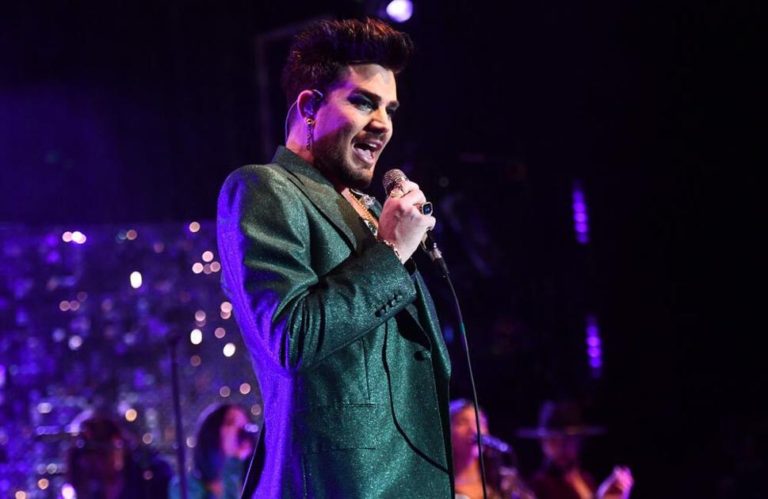
Adam Lambert can’t wait to perform in front of a live audience again.

The ‘For Your Entertainment’ hitmaker hasn’t been able to perform live in the last year and a half, owing to the coronavirus pandemic, but he is really looking forward to getting on stage soon.

He said: “I feel really excited to get in front of a live audience. I did a virtual concert around my birthday, and that was a lot of fun too, but it’s just not the same. Having a live audience, it’s like you tap into a collective energy and it’s an experience … there’s just nothing like it.”

And the 39-year-old singer is glad to see the mainstream music scene is supportive of LGBTQ+ artists like himself because there was a time where some artists worried whether or not they could be “out and proud” and still be “commercially viable” as an artist.

Speaking to People magazine, Adam added: “The mainstream music scene has opened up and expanded so much for us. It was initially a tricky situation because so many people in the business just weren’t sure if it was commercially viable to be out and proud.

“Now we know that there’s an audience for it, and it’s an audience beyond the queer audience. It’s a mainstream mixed audience. There are plenty of straight fans of gay artists, so it’s not just about superseding your own community. Now it’s about reaching out past it.”

Meanwhile, Adam previously revealed he is ready to be “more authentic” with his music.

He said: “I wanted to carve out my own lane. I think I’ve found a more authentic spot for myself. It feels like I’m not reaching or trying to be anything, I’m just being me.

“I followed my instincts on this, I didn’t consult a committee in an office about what was good and what wasn’t good and what I should do. I think I’ve found a new sense of self-assuredness, which is making me feel proud of the music and really comfortable with it.”

Japan LGBTQ activists push for equality law before Olympics – Associated Press

TOKYO (AP) — Japanese sexual minority groups and their supporters, in a last-ditch effort to get long-sought equality legislation passed before the Tokyo Olympics, submitted requests on Friday to the governing Liberal Democratic Party, whose conservative members have stalled the bill.

The groups also have widened their campaign to gain corporate support for their cause in hopes of pressuring Prime Minister Yoshihide Suga’s pro-business party to support the legislation.

“In order to protect the lives and livelihood of sexual minorities, enacting a LGBT law that states discrimination is not tolerated is an indispensable first step,” said Kane Doi, Japan director for the New York-based group Human Rights Watch.

“An enactment of such a law in Japan ahead of the Olympics is also necessary for the international community,” Doi said, adding that Japan needs to demonstrate its commitment to ensuring equality for LGBTQ athletes, journalists and other participants in the Olympics, set to begin July 23.

ADVERTISEMENT

Support and awareness of sexual diversity has slowly grown in Japan, but there is still a lack of legal protections for lesbian, gay, bisexual and transgender people. Japan does not legally recognize same-sex partnerships, and LGBTQ people often suffer discrimination at school, work and even at home, causing many to hide their sexual identities.

“Japan is far behind the international standard,” said Yuri Igarashi, co-chair of the Japan Alliance for LGBT Legislation. She noted growing support from the business community, including Panasonic, which on Friday became the 23rd company pledging support for the cause.

Rights groups are pushing for the passage of the equality act as international attention falls on Tokyo as it hosts the Olympics. The International Olympic Committee also issued a statement stressing the importance of inclusivity in sports.

Prospects for passage of the legislation before the current parliamentary session ends on June 16 are uncertain because of strong resistance from conservatives in Suga’s party.

On Friday, members of LGBTQ groups and supporters submitted requests at the governing party’s regional headquarters in Tokyo, Osaka, Aichi and other areas.

Remarks by some party members during discussions of the bill last month sparked outrage from rights groups.

Lawmaker Kazuo Yana was quoted as saying in an closed-door session that same-sex relationships “defy the preservation of the species, go against the biological basis.”

Eriko Yamatani, known for her support of traditional gender roles and paternalistic values, called it “ridiculous” that transgender people with male bodies say they have female hearts and want to use women’s restrooms or participate in women’s sports.

___

This story has been corrected to show the current parliamentary session ends on June 16.

How Hollywood’s first out gay star chose love over career – msnNOW


a person posing for the camera: In honor of Pride month, we delve into the groundbreaking life and career of 1930s movie star William Haines, who chose love over career.

© Provided by Entertainment Weekly In honor of Pride month, we delve into the groundbreaking life and career of 1930s movie star William Haines, who chose love over career.

In 1930, the wisecracking matinee idol William “Billy” Haines was America’s top box office star — and openly gay.

The Show People star regularly hit the town, including Hollywood premieres and parties, with his live-in partner, Jimmie Shields. But in 1933, as the Motion Picture Production Code ushered in narrow morality guidelines, MGM tyrant Louis B. Mayer issued an ultimatum: break up with Shields for a studio-arranged marriage or lose his career. Haines chose Shields.

“What makes him revolutionary is the authenticity with which he lived his life at a time when there were no role models,” says William J. Mann, author of Wisecracker: The Life and Times of William Haines. “He was an example of someone living with integrity and not letting himself be defined by others.”


William Haines posing for the camera: Hulton Archive/Getty Images William Haines

© Provided by Entertainment Weekly Hulton Archive/Getty Images William Haines

That even extended to his screen persona, the “wisecracker,” a figure who was both a romantic lead and tipping his hat to Haines’ sexuality. “He became popular as an actor not by hiding his gayness, but by actually making that part of his persona,” Mann explains. “The ‘wisecracker’ was a little campy, a little flashy, a little bit sneaky, a little bit frivolous, and he brought his very openly gay, unapologetic personality into his screen performances, even when he was playing ostensibly heterosexual.”

Mann adds, “The fact that he was able to do that and become the top box office star of 1930, it’s because he didn’t pretend to be anything other than what he was, and the industry knew that he was gay.”

Gallery: Amazon’s Top 10 books of 2021 so far, ranked (USA TODAY)

Haines’ openness clashed with the introduction of the Production Code, which partnered with the Catholic Legion of Decency and sought to instill a distinctly straight, white, Christian, middle-class set of values in Hollywood.

Haines was first asked to tone down his flamboyant nature on screen, before being presented with the ultimatum about Shields. “He loved Jimmie, he wasn’t about to give him up — and you don’t see that very often,” Mann says. “Someone so ambitious and focused on their career, they don’t walk away, but Billy Haines did. It’s an early example of affirming one’s queer identity as an essential part of who he was. He was not going to change to fit the expectations of the time.”

Legend has it that Haines told Mayer, “I’ll give up Jimmie when you give up your wife,” reasserting his commitment to Shields as a life partner.

Haines perhaps was overly convinced that his fame was robust enough to survive Mayer’s attempts to blackball him. He assumed he’d easily find work elsewhere but was quickly hit with the reality that only Poverty Row studios with low budgets and reputations for lesser product wanted to work with him.


William Haines wearing a suit and tie: Everett Collection William Haines in 'Just a Gigolo'

© Provided by Entertainment Weekly Everett Collection William Haines in ‘Just a Gigolo’

But Haines hardly left Hollywood with his tail between his legs. Though he retired from acting in 1935, there was no fade into obscurity. He flourished as an interior designer, decorating the homes of Joan Crawford, Carole Lombard, Nancy and Ronald Reagan, and even… Mayer.

His second career started rather accidentally, within the confines of his own home. His first big project was his own movie star abode, and his friends would often marvel at his good taste. Crawford was Haines’ best friend, and she hired him to do her house and promptly encouraged everyone in Hollywood to follow suit, leading to a slew of other big-name clients that left him with a career to fall back on when his acting opportunities petered out.

Haines did have one notable opportunity to return to the silver screen. Billy Wilder wanted him to portray one of the “waxworks” playing cards with Norma Desmond (Gloria Swanson) in Sunset Boulevard, alongside the likes of Buster Keaton. But Haines was an extremely prominent designer by that time, and he declined.

Haines and Shields’ love story had a tragic, if still bleakly romantic, end after nearly 50 years together. Haines died of lung cancer in 1973, and not long after, Shields took his own life, leaving behind a note intimating he couldn’t go on without the man he loved.

Though Haines’ choice was revolutionary in 1935, it remains monumental today. “It’s still a decision an actor has to make,” Mann says of the fraught nature of coming out in Hollywood and the implications it could have for the types of roles offered or assumptions made. “They still have to make that decision about how authentic they’re going to be in their public lives.”

Mann likens Haines to Edward VIII, giving up everything for love. “He put authenticity and integrity above career and ambition, recognizing there are more important things than material success,” he reflects. “Joan Crawford said [Haines and Shields] were the two happiest people in Hollywood, and that’s the legacy: recognizing what’s really important in life and standing up for it.”

If more actors today are able to live their truth, it’s in part because Haines laid the foundation — and then redecorated.

Related content:

Male sport must be ‘more open’ on sexuality – Considine – RTE.ie

Introverted by nature, Ailish Considine is not one to make a big deal out of something she knows is not a big deal.

‘Gay icon’ is not in the job description but she is quietly making her mark in the battle for equality and inclusion.

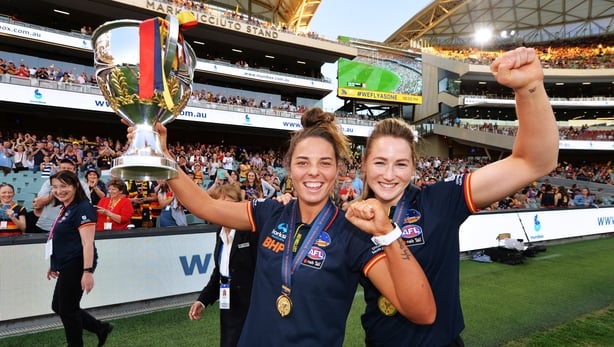
The Adelaide Crows player arrived back home to Clare from Australia just a week and half ago and has completed her five-day quarantine, and got the all clear from a drive-through Covid test.

In her column for this website she has briefly mentioned her partner in passing. That’s her style.

She wears it easy.

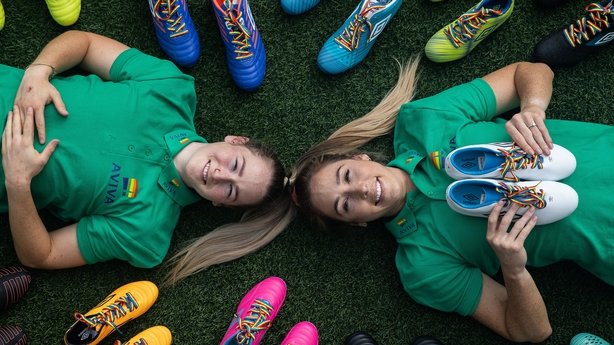
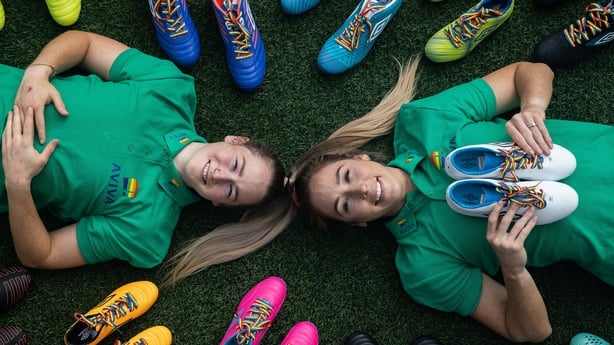
But now she’s front and centre, with sister, Ireland rugby international Eimear, as an ambassador for Aviva Ireland’s #LaceUpWithPride campaign.

They want people to show solidarity with the LGBTI+ community by wearing rainbow laces on 23 June.

She says her experience of the gay community in Australia, where she moved to in 2019, simply blew her away.

“You are the exception if you are not gay in AFLW,” she tells RTÉ Sport.

“There is just so many of the girls who are part of that community.

“It’s so open, it’s so normal to be gay over there.

“It blew me away initially because you are kind of an outlier if you are not.

“Out of the 30 girls, I think 22 are gay. It’s so normal.

“Having a ‘Pride’ round, the whole round dedicated to LGBTI is incredible.

Ailish (l) and sister Eimear

“It’s great not to hide who you are. The AFLW have had a really powerful stance on that and have had from the get-go. Having a Pride round cements that in their ethos.

“Australians are generally more open and honest about things. In Ireland we can be more reserved.

“A lot of the teams are based in the city and that helps too, they are far more open-minded people and have far more experience.

“I came from a remote, isolated west Clare village where the norm is boy meets girl, they get married after a few years.

“It wasn’t until I got a bit older and went to college and experienced different things and saw another side of the world that I hadn’t seen before.”

She would be reluctant to call it a mission but normalising gay relations is part of her profile now.

Ireland has come a long way in the last decade and Considine never wanted to make a headline out of her sexuality.

“The fact that I had to have that coming out for my family was enough for me,” says the 2019 AFLW Premiership winner, who is hoping to continue her career Down Under next season.

“Anything beyond that, if it’s something that’s mentioned in passing or I’m happy to share on my [social] media pages.

“I’m pretty open with who I am but I don’t think I ever felt the need to come out publicly and that kind of thing because the way I look at it is I shouldn’t have to have a coming out.

“I would prefer if this was a normal thing, that it became far more normalised, that you don’t have to make a big deal of it, you being different, it’s just who you are.

“My sister nailed it on the head: she said ‘I never had to come home and tell my mother than I’m not gay, that I’m hetero’.

“It’s no different, it doesn’t change who you are. That’s always been part of me, I don’t want to make a big deal of it because it should be far more normalised at this stage of our lives.

“It’s a conversation that probably has to be had with family and friends.

“Like I did in my RTÉ column, just dropping it into conversation, where it was normalised and not a big deal.

“It probably had far more impact than a big article saying that I’m gay.

“That’s what all these campaigns are for, to make people more aware, to make it more normal.”

Female sport has always been more welcoming for members of the gay community and for all the progress that has been made, it’s a different story in men’s sports.

As it stands there are no openly gay players in the AFL.

“It’s not as open and honest,” says the 28-year-old.

“I couldn’t tell you if any of the Adelaide team is… I’m assuming there is. You are dealing with a group of 45 men.

“Surely there is one at least who is gay in that.


AILISH CONSIDINE COLUMN


“I’ve seen Pride things for them as well, where they wear socks or whatever.

“I think society makes it a little bit easier for females to come out as gay in some shape or form.

“I’m not sure why that is, because it’s all the same. It doesn’t matter who you are, what gender you are.

“It is definitely something that needs to be worked on.

“In every sport, to be honest, it’s generally led by females. The campaigns are more open and honest with the female side of things.

“We probably make up for it in the fact that we support males and females when it comes to Pride round and that sort of thing.”

Catholic bishops oppose Chilean president’s move to legalize gay marriage – Crux Now

ROME – Chile’s president surprised friends and foes on Wednesday, when during his last remarks to Congress before his coalition government ends in March 2022, he asked legislators to treat with “urgency” a project to legalize gay marriage.

“I think that the time has come for equal marriage in our country,” said the right-wing President Sebastián Piñera. The bill, presented to Congress in 2017 by his predecessor, the left-wing Michelle Bachelet, has been collecting dust ever since.

“All people, regardless of their sexual orientation, will be able to live, love and form a family with all the protection and dignity they need and deserve,” the Catholic president said.

His request for legislators to treat this project with “urgency” goes beyond mere phrasing, as it allows speeding up the process of initiatives in Congress.

In a message released Wednesday afternoon, the Chilean bishops conference acknowledges that “no one doubts that Chile is living a complex time that demands the best of each one of us,” alluding to the referendum earlier this year that called for the re-writing of the country’s constitution.

“The deep health crisis caused by the pandemic and its economic, social and emotional consequences has placed large groups of Chileans in extreme precariousness, and they expect from their authorities measures and decisive actions to help, especially for the benefit of the most vulnerable,” the bishops wrote.

The prelates then note that in this context “of great expectation about how we will continue to face the pandemic and its effects,” Piñera set the priorities for the final months of his presidency – he cannot be reelected – including what they describe as “the so-called equal marriage law.”

“Those of us who follow Jesus Christ as Savior and Lord and are guided by his teaching, hold the certainty that the marriage established and willed by God is only between a man and a woman, a communion that gives birth to life and is the foundation of the family,” the bishops write, before quoting the Catechism of the Catholic Church to summarize the Church’s teaching on the matter: “the vocation to marriage is inscribed in the very nature of man and woman, as they came from the hand of the Creator.”

In their statement, the bishops also quote Pope Francis’s 2016 Apostolic Exhortation Amoris Laetitia, in which the pope writes that there is “no basis for assimilating or establishing analogies, even remote ones, between homosexual unions and God’s plan for marriage and the family.”

The Church’s teaching on marriage, the Chilean prelates write, does not contradict its conviction that “every person, regardless of his or her sexual orientation, is to be respected in his or her dignity and welcomed with respect, avoiding all signs of unjust discrimination.”

They bishops also defended the preposition that same-sex couples having their rights protected through national legislations that grant “persons who decide to live together” recognition.

To date, same-sex marriage is legal in a handful of Latin American countries: Argentina, Brazil, Colombia, Costa Rica, Ecuador, Uruguay, and several states in Mexico. Chile allows for civil unions.

Chile, once a predominantly Catholic and conservative country – civil divorce was only made legal in 2008 – has been undergoing a rapid process of secularization that has accelerated in the past three years, when a series of clerical sexual abuse scandals made the news.

Among the many Chilean prelates accused of wrongdoing is the president’s own uncle, the late Archbishop Bernardino Piñera, who served as Archbishop of Serena from 1983-1990 after previously serving as Bishop of Temuco. At the time of his death in June of last year, he was being investigated by the Vatican over allegations that he sexually abused a minor 50 years ago.

RELATED: World’s oldest living bishop, who is uncle of Chile’s president, accused of abuse

Soon after the Vatican’s embassy in Chile announced the archbishop was being investigated, the president said: “As a nephew, I find it hard to believe because I know his behavior, his attitude over a lifetime, and I find it hard to believe a complaint that is made against a man who’s 103 years old today, over an alleged event that occurred 50 years ago.”

The president attended his funeral together with his wife, but made no comments at the time.

Wednesday’s announcement by Piñera surprised even his own coalition, as same-sex marriage was not currently on the public agenda in Chile, it was never part of his government program.

Follow Inés San Martín on Twitter: @inesanma

MPs to submit own law banning gay conversion therapies – NL Times

MPs to submit own law banning gay conversion therapies | NL Times


HIV at 40: Racial disparities continue to drive the epidemic in Michigan ⋆ Michigan Advance – Michigan Advance

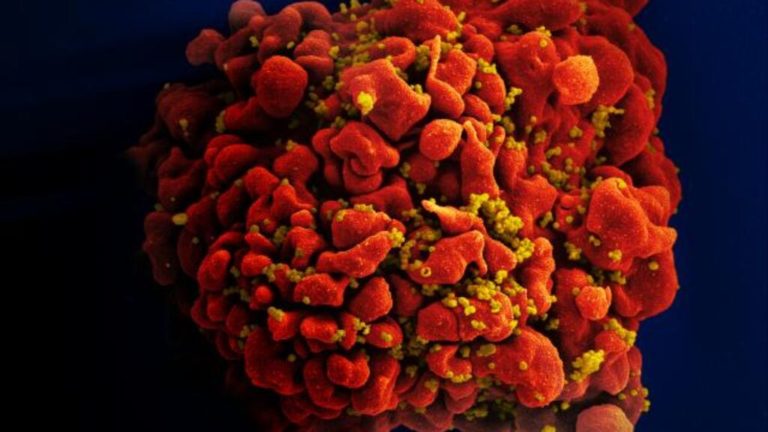
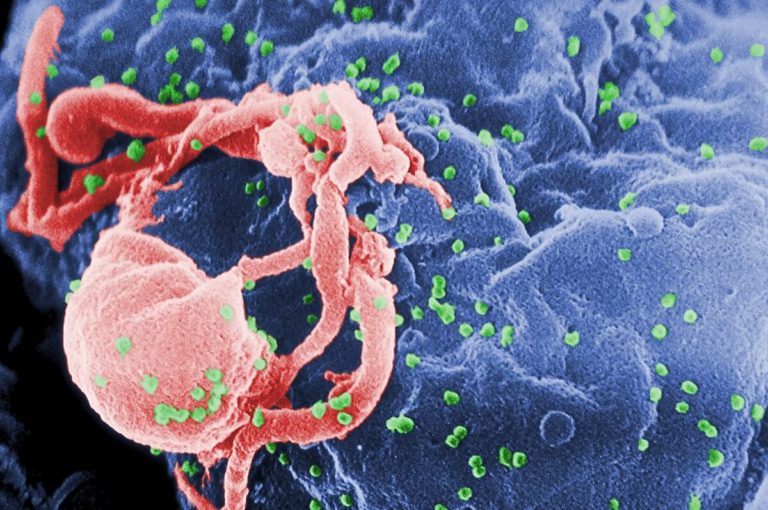
HIV budding from CD4 | Centers for Disease Control and Prevention

“Why are you talking to them?” Hank Millbourne remembers friends saying to him during the 1980s gay scene in Detroit about other gay men. “They have the package.”

Millbourne had only a passing idea of what the “package” was, but he was quickly taught the alleged telltale signs of it: darkened fingernails from using AZT, then the only approved treatment for HIV. In Black Americans, it had the odd side effect of turning some people’s fingernails dark black. 

Hank Millbourne

“The package” would consume Millbourne’s life for the next two decades. He was completing his master’s degree in social work at the University of Michigan when he was first confronted with the whispers of the disease. It had already washed over the large urban centers of the East and West coasts of the country, and by the mid-’80s was racing through Michigan’s population centers.

Forty years after the first published account of five previously healthy homosexual men in Los Angeles with a rare pneumonia tied to immune suppressed people, HIV remains an ongoing epidemic in the United States with thousands of Americans being diagnosed with the diseases every year. Most of the newly diagnosed people are young Black men who have sex with men and transgender women of color. 

The epidemic can be told in numbers. In 2018 — the most recent data available from the Michigan Department of Health and Human Services (DHHS) — Black men had a new HIV diagnosis rate of 45.6 per 100,000 Black men in Michigan. White men had a rate of just 4.8 per 100,000. Black women had a rate of 8.9 infections per 100,000, while white women had just .9 infections per 100,000. 

State health officials cheer small declines in the rates of new diagnoses of HIV, particularly among young Black men who have sex with men. Those rates were highest in 2013 at 133.1 young Black men to 103.8 in 2018.

DHHS graphic on HIV rates

Thousands of Michiganders have died from the disease since 1981. And right now, 16,306 Michiganders are living with the virus. An estimated 13% of Michiganders living with HIV do not yet know they have the virus. 

Of those 16,306 Michiganders living with HIV, 10,437 live in the Detroit metro area, which includes the city of Detroit, as well as the remainder of Wayne, and all of St. Clair, Oakland, Monroe, Macomb and Lapeer counties.

One of every 10 people diagnosed with HIV in metro Detroit has never been linked to care, similar to the rest of the state. (Care means a person is provided an opportunity to access antiviral medications, which in turn will lead to better health outcomes and a suppression of the virus, preventing them from sexually transmitting the infection.) But for those linked to care, 44% weren’t connected until 30 days after their diagnosis, 10% less than those in the rest of the state. 

Outside of Southeast Michigan, 92% of those in care have an undetectable, or suppressed, virus. In metro Detroit, 88% of those in care have achieved an undetectable viral load. In Detroit proper, only 84% of those in care have a suppressed virus. 

The racial disparity of HIV has existed from the beginning of the pandemic. While that first Morbidity and Mortality Weekly Report on June 5, 1981, failed to identify the race of the men impacted, Dr. Michael Gottlieb, the Los Angeles doctor who made the report to the Centers for Disease Control and Prevention (CDC), noted in 2011 that the men were white. In that same interview with the PBS show “Frontline,” he noted the next four cases of the rare pneumonia he treated were in people of color. First, it was two Black men, then a Haitian man, then a gay Black man. In the first nine documented cases of HIV he dealt with, 44% were in people of color. 

The disparities in who is getting HIV, and who is most at risk, are stark. Recent studies have found that one in two Black men who have sex with men will be infected with HIV in their lifetime. 

DHHS graphic on HIV rates

It’s a disparity that DHHS, as well as the state’s first Black lieutenant governor, Garlin Gilchrist, recognize that requires action. 

As the Lieutenant Governor, I have been focused on making improvements to addressing health disparities, especially within communities of color,” Gilchrist said in a statement responding to the Advance’s questions about addressing racial disparities in HIV cases in Michigan. “While we have made strides towards improvements, we recognize that we have more work to do to address all health disparities.”

DHHS officials said the department is working to expand access to the HIV prevention drugs, an intervention called Pre-exposure Prophylaxis (PrEP), by funding public health clinics to provide the testing and access to the expensive drugs. 

Katie Macomber, director of the Division of HIV/STD programs at DHHS, said the department is also working overtime in providing training for employees at the state and community organizations with the tools to review and address systemic racism and trauma. 

Michigan Public Health Institute CEO Renee Canady | Laina G. Stebbins

And the trauma of racism is a factor, said experts interviewed. Renee Canady, executive director of the Michigan Public Health Institute, noted that racism is a stressor that reduces the efficacy of the immune system. 

Teresa Spring, programs director for Wellness AIDS Services in Flint, said generational trauma also plays a role. 

“I don’t have any science to support it, but I do think the ongoing trauma of slavery and discrimination over generations has an impact, genetically,” she said. 

There is some evidence revealed in a 2013 study, published in the Sociology Compass, that generational trauma of racism can impact the genetics of people. 

Both Millbourne and Curtis Lipscomb, executive director of LGBT Detroit — the area’s only Black organization working with sexual minorities — said the focus of HIV has been as a “white man’s disease.” 

“The information we were providing early on didn’t speak to people like me,” said Millbourne. “It didn’t have pictures of people who looked like me. We had to recreate that information to distribute to the community.”

Curtis Lipscomb

Lipscomb recalls the rise of the radical AIDS Coalition to Unleash Power (ACT UP) in New York City in the mid- to late ‘80s. 

“I knew what they were doing was important for me, and about me, but it was not a space where I felt welcome,” he said of ACT UP activities. 

Both men told stories of the racial segregation in queer spaces in Detroit and New York. 

Tim Retzloff, a professor at MSU with a doctorate in history for Yale, is an expert in the pre-1985 history of gay cultures in Michigan. He said that most gay nightspots were segregated, with one clear stand out. That place was called Todd’s and was owned by an interracial gay couple. They made the space safe for black and white patrons.

But racial segregation and a fear of the so-called “tipping point” of allowing too many people of color into white queer spaces kept spaces separate for Black and white communities. 

Millbourne and Lipscomb spoke of Menjo’s, a popular gay nightspot in Detroit, that was infamous for having stricter identification requirements and dress codes for men of color, limiting how many Black men could get into the bar on a night. 

“And once you did get in, if you did,” said Millbourne, “all the Black men were in this corner of the bar, together.”

House committee OKs two bills reforming organ donations for those with disabilities or HIV

That segregation meant Black men who were engaging in risk-related behaviors for HIV were not getting information about HIV, said both Millbourne and Lipscomb. 

Treatments were released in 1996 that helped make living with HIV a manageable chronic disease. However, those interviewed for this story said community-based organizations in some ways failed to recognize the lack of access to resources to pay for the expensive, life-sustaining drugs. Prevention messaging continued to focus on white, gay men. And HIV continued to spread in social systems for Black men who had sex with men and transgender women. 

A study published in the American Journal of Public Health, found that while Black cisgender men who have sex with men do not engage in any more risky behavior that white men who have sex with men, they still have a significant likelihood of contracting the virus. No definitive explanation has been arrived on to understand this phenomenon, but literature points to significant racism, poverty, housing instability and higher prevalence of the virus within Black and Brown communities as likely drivers. 

“We have to deconstruct those race systems if we are going to address HIV and end it,” said Canady. “I tell my team leaders here all the time that if we are still doing something the same way we did five years ago, we are failing. We have to change. We have to evolve.”

Thousands join Jerusalem Pride march in call for LGBT rights – Euronews

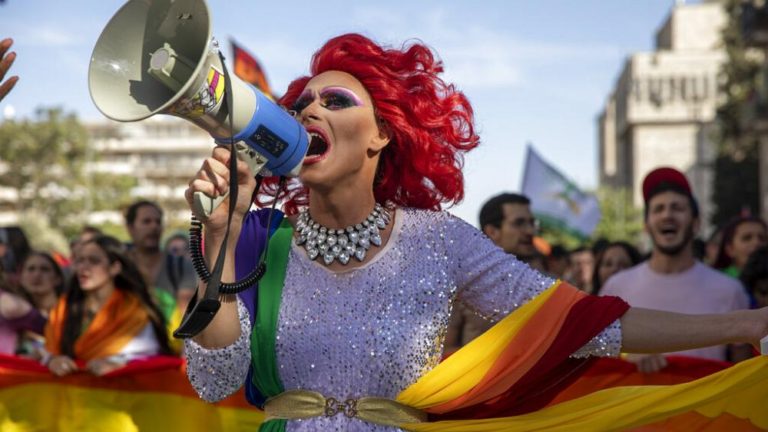
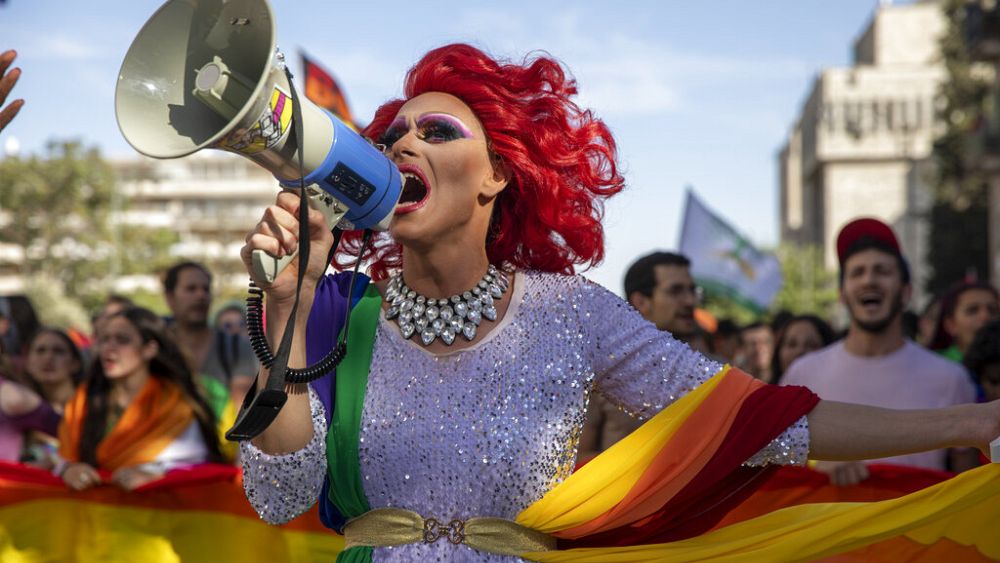
Thousands of people marched through Jerusalem on Thursday in the annual Pride parade, celebrating LGBTQ rights in the conservative city amid heavy police security.

Pride events in Jerusalem, which is home to a large ultra-Orthodox Jewish community, tend to be less raucous than those in more liberal Tel Aviv. A radical ultra-Orthodox Jew stabbed a 16-year-old girl to death at a Pride event in 2015, an attack that was condemned across the political spectrum.

Only a few dozen people turned out to protest the parade this year, and were largely drowned out by the blaring music.

“I think we are getting better and better,” said one of the marchers, Fabio Abulafiya, while acknowledging that more needed to be done. “It is very important to come to parades like this, not only to party… but also to protest for our rights.”
An alliance of far-right parties including openly homophobic candidates made a surprisingly strong showing in parliamentary elections in March and were set to be a key component in a new government led by Prime Minister Benjamin Netanyahu.

But his efforts to form a majority coalition failed, in part because the far-right parties refused to join with a small Arab party that emerged as a kingmaker of sorts. A coalition opposed to Netanyahu is now on the verge of ending his record-setting 12 years in office.

Jerusalem saw weeks of protests and clashes linked to the Israeli-Palestinian conflict that triggered an 11-day war in Gaza last month. The situation has been mostly calm since a cease-fire went into effect in Gaza on May 21.

Are LGBT high school students more likely to use illicit substances? – FIU News

It’s not easy being a teenager. Teens have to cope with the often chaotic onset of physical, psychological and emotional changes. For teens in high school, there’s the added pressure to perform academically. LGB (lesbian, gay, bisexual) high school students face additional stress factors, including stigma and discrimination due to their sexual orientation and gender identity.

A group of medical students at the Herbert Wertheim College of Medicine wondered if LGB high schoolers were more likely to use illicit substances.

“Studies have demonstrated a disparity in sexual minority adolescents and substance use, possibly due to factors contributing to minority stress,” said Juan Oves, a fourth-year medical student. “We set out to investigate the association between self-identifying as lesbian, gay or bisexual and illicit substance use compared to those who identify as heterosexual.”

As part of a medical school research course, Oves and classmates Jessica Fernandez and Roberto Gonzalez (with the help of HWCOM research staff) performed secondary data analysis of the Youth Risk Behavior Survey (YRBS). The survey has been administered to youth in grades 9 through 12 biennially since 1991. The most recent data is from 2017 and includes more than 12,000 adolescents attending public and private U.S. high schools. The YRBS asked students to identify as heterosexual, gay or lesbian, bisexual, or unsure. Illicit substances probed included marijuana and cocaine, among others.

“Our data revealed that high school students who identified as bisexual or “not sure” of their sexual identity were more likely to use illicit substances than their heterosexual counterparts,” said Oves. The HWCOM data study was recently published in the Journal of Adolescent Health.

Participants who identified as bisexual were 1.65 times as likely to use illicit substances than heterosexual high school students. Those who identified as “not sure” of their sexual identity were 1.37 times as likely. There were not enough replies among the gay and lesbian students to reach a scientifically significant conclusion.

Oves hopes this and other studies that have reported a similar association leads to further research and a better understanding of the health disparities associated with sexual and gender identity.

“We need to start shaping the way we practice medicine to address factors influencing the health outcomes of LGBT youth.”

The HWCOM data study revealed some interesting secondary findings. Most notably that cigarette and alcohol use each had a statistically significant association with illicit substance use.